印度国家水上运动学院 / MOFA Studio
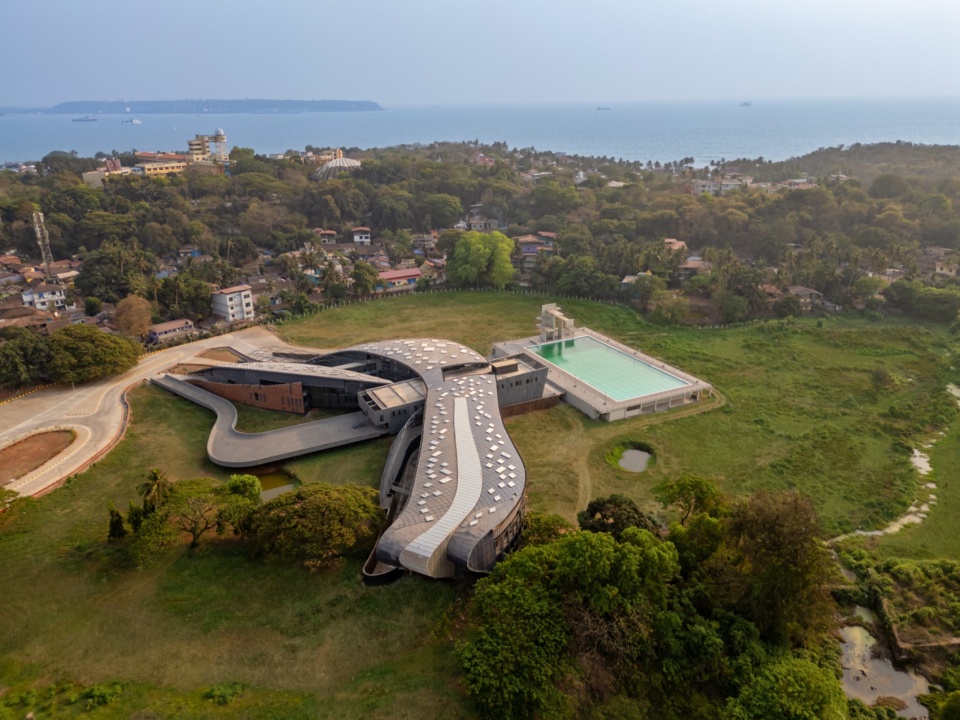
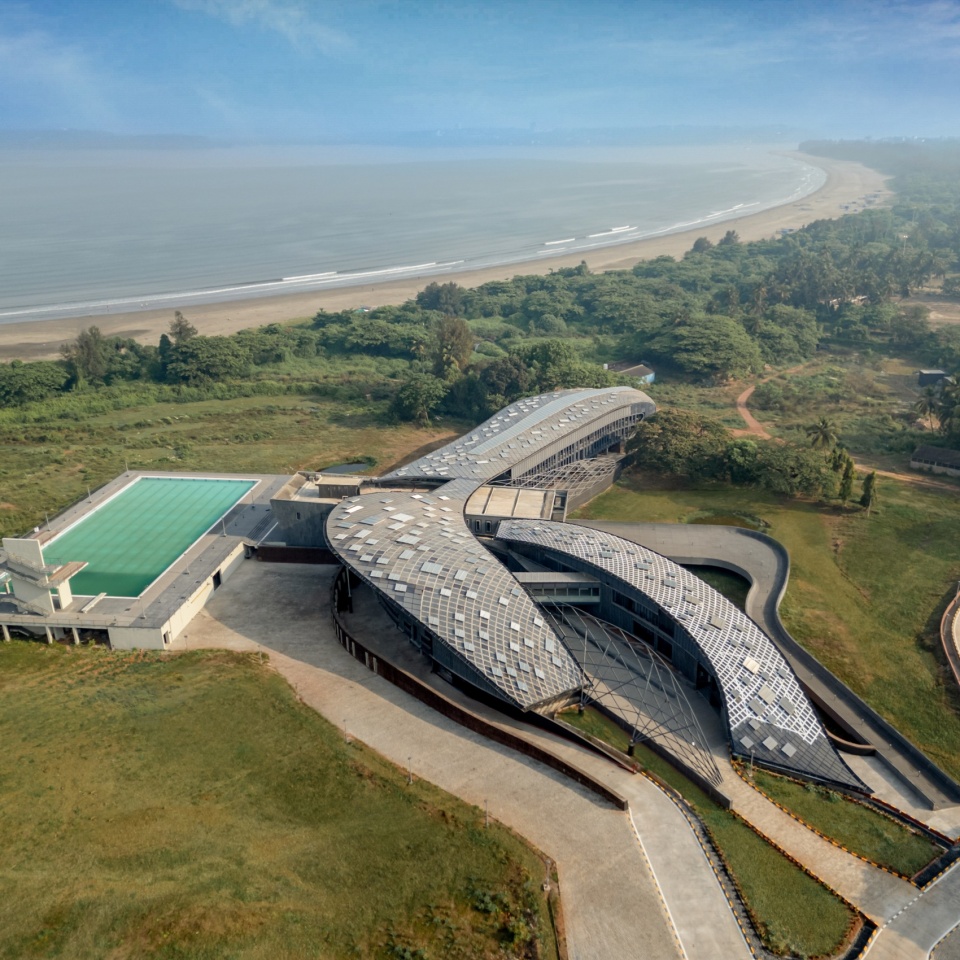
国家水上运动学院(NIWS)坐落于果阿海岸线旁,其设立旨在为不断扩张的海洋旅游与冒险运动产业建立正式的培训、研究与安全标准体系。NIWS始于一场国际设计竞赛,其双重目标在于:在公共采购现实条件下打造具备全球竞争力的基础设施,同时塑造一座表达果阿与海洋关系的公共地标。
Set along Goa’s coastline, the National Institute of Water Sports (NIWS) was commissioned to formalize training, research, and safety standards for an expanding marine tourism and adventure-sports economy. NIWS began through an international design competition with a dual ambition: deliver globally competitive infrastructure within public procurement realities, and create a civic landmark that expresses Goa’s relationship with the sea.
▼鸟瞰,aerial view
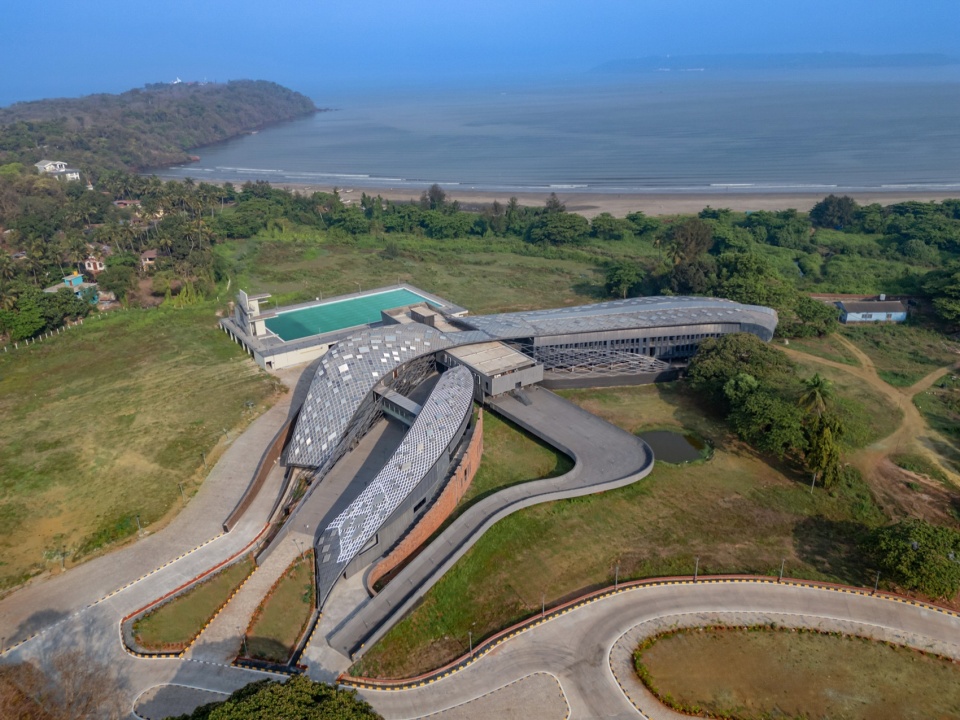
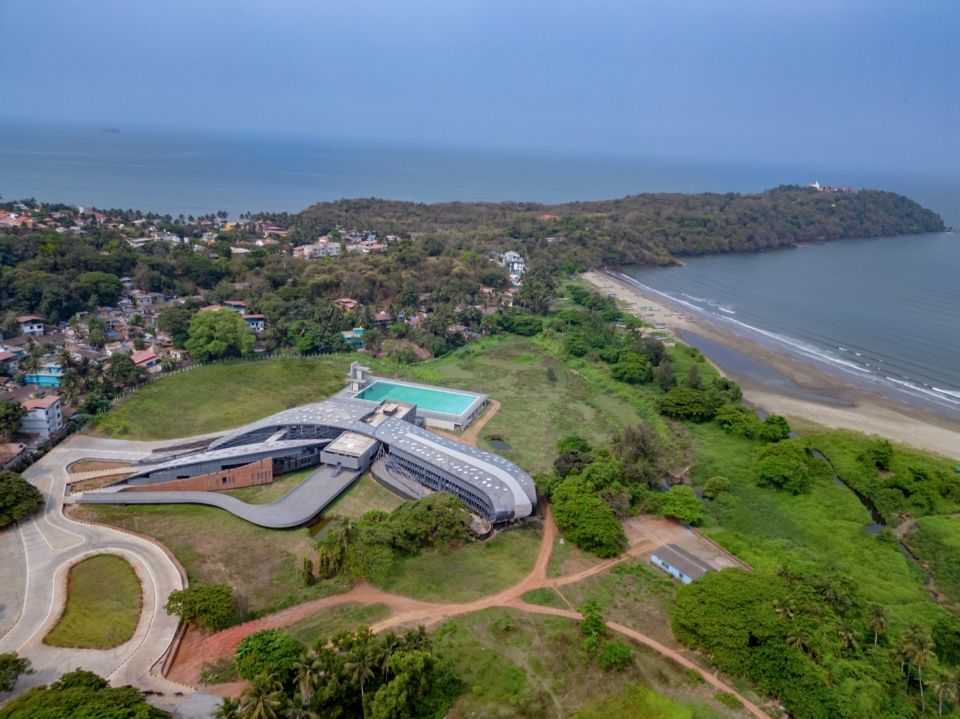
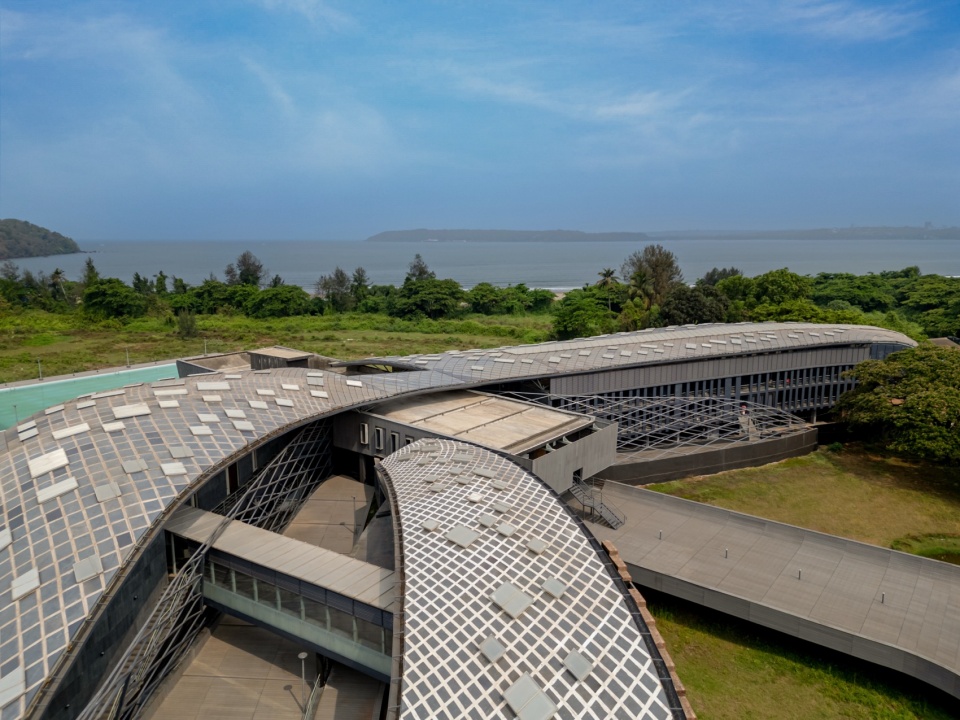
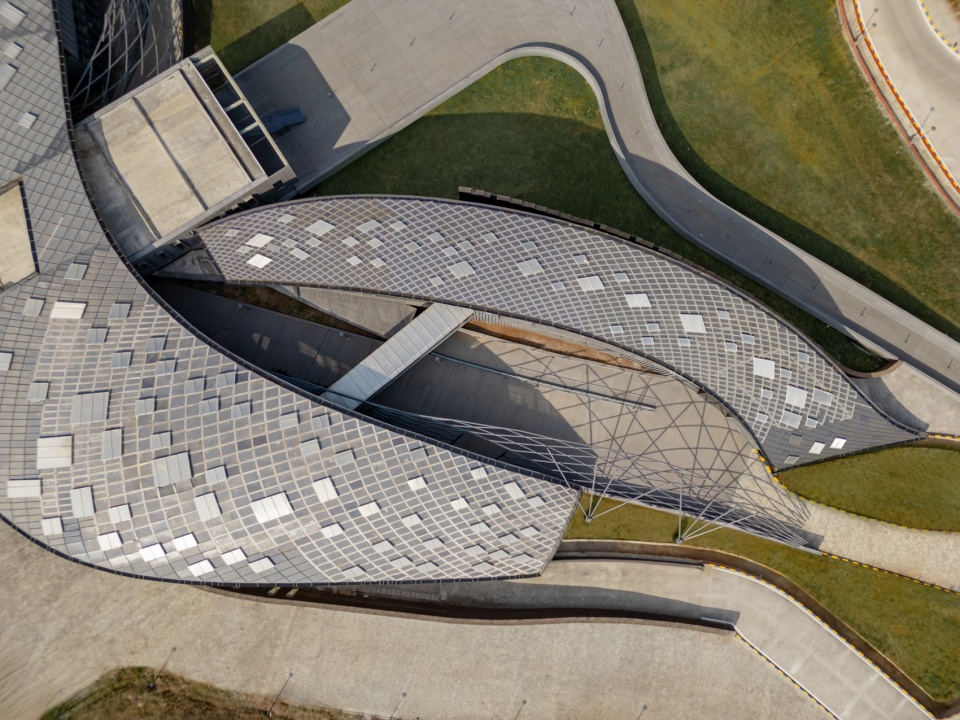
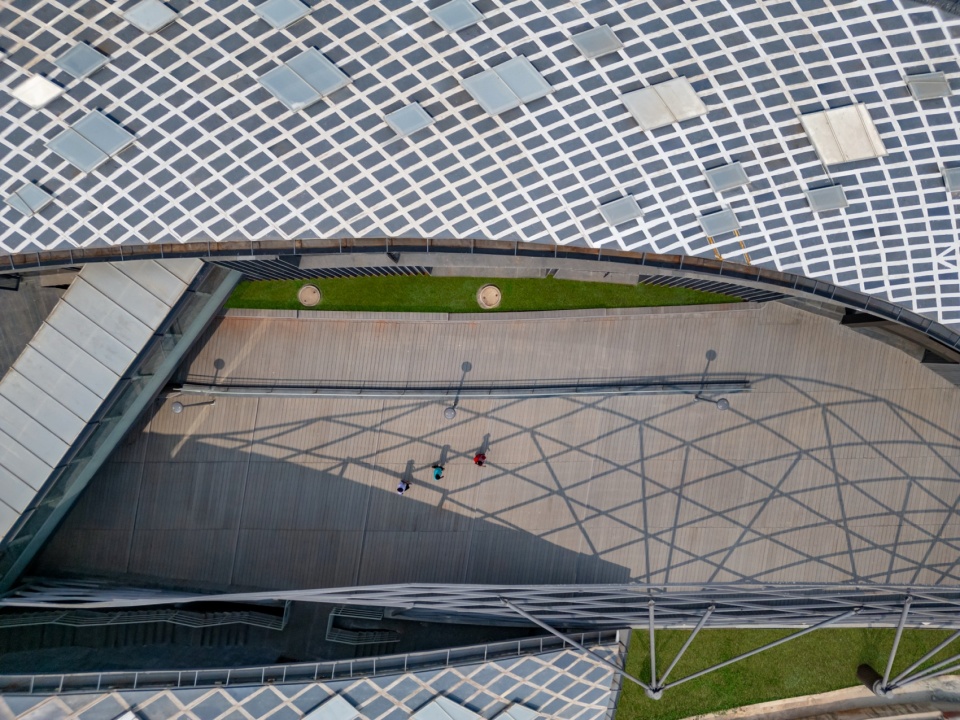
▼顶视,top view
MOFA的设计将水上运动中的动态、风险、预判与协作精神转译为空间语言,营造出一个始终充满流动感的校园。设计并未将“正式”学习与“非正式”实践割裂,而是将NIWS规划为一个连续的学习场域,使训练、观察、社交交流与休整彼此交织。学院服务于多样化的使用者,包括本地救生员、教练、学员、旅游运营者、访问专家与行政人员,同时避免将他们分隔成彼此孤立的区域。
▼模型,model
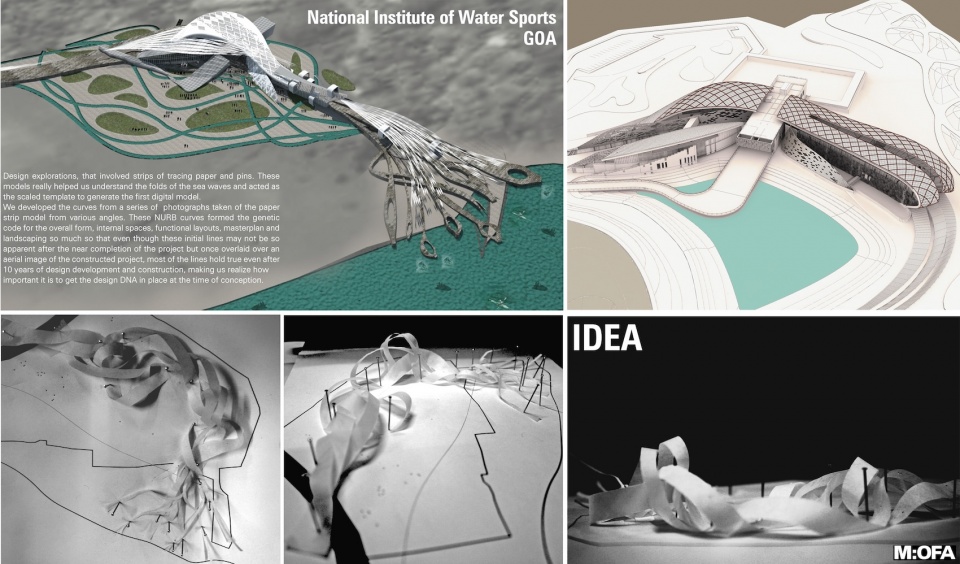
MOFA’s design translates the discipline of water sports – motion, risk, anticipation, and teamwork – into a campus that never feels static. Instead of separating “formal” learning from “informal” practice, NIWS is planned as a continuous learning landscape where training, observation, social exchange, and recovery are interwoven. The institute supports diverse users, including local lifeguards, instructors, trainees, tour operators, visiting experts, and administrators, without fragmenting them into isolated precincts.
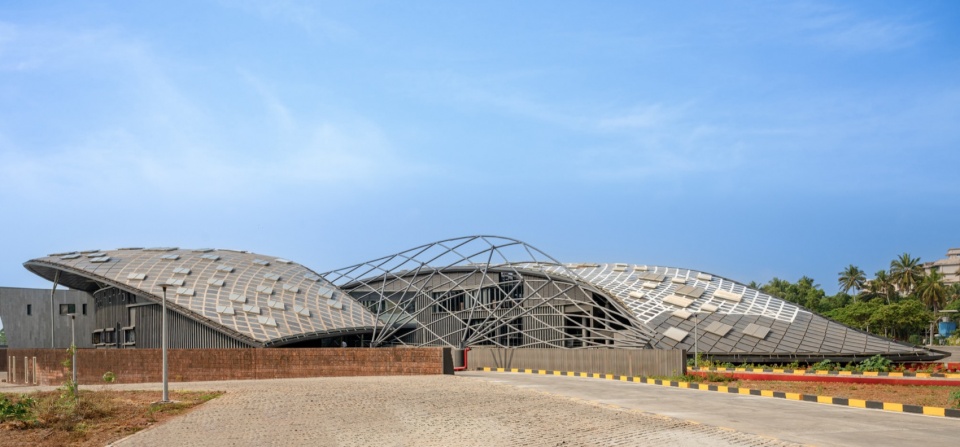
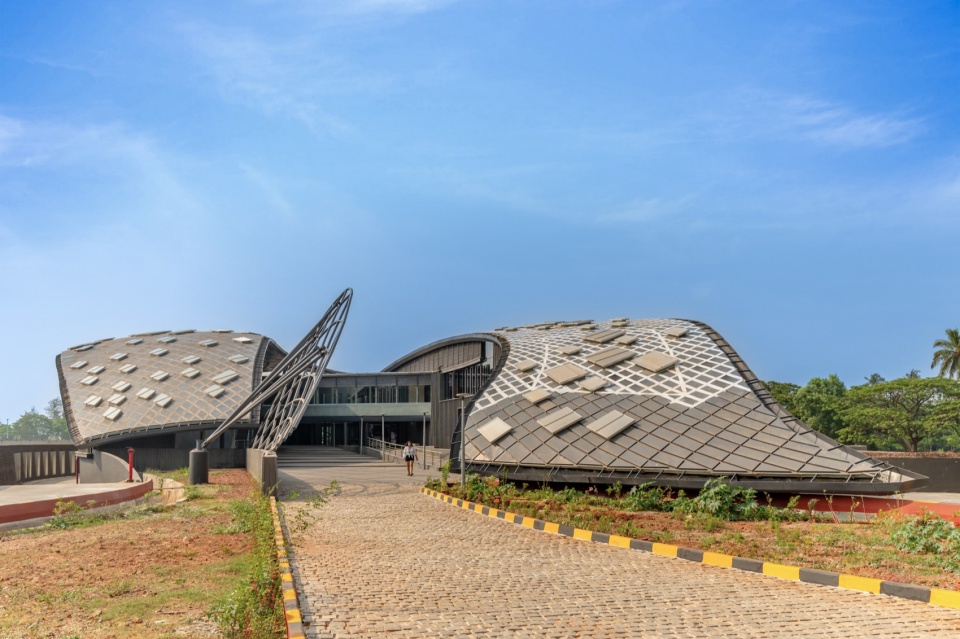
▼建筑外观,building appearance
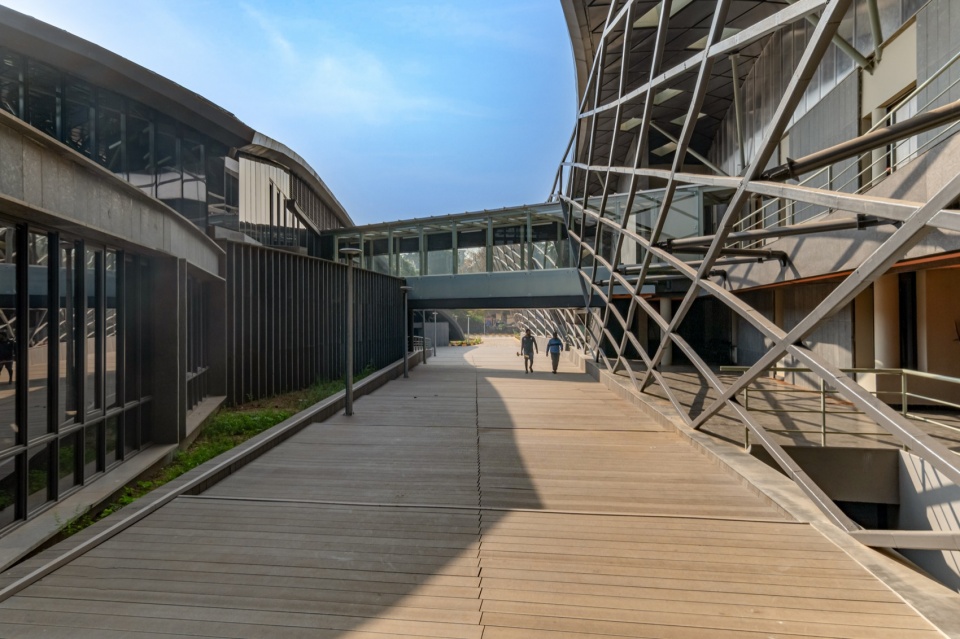
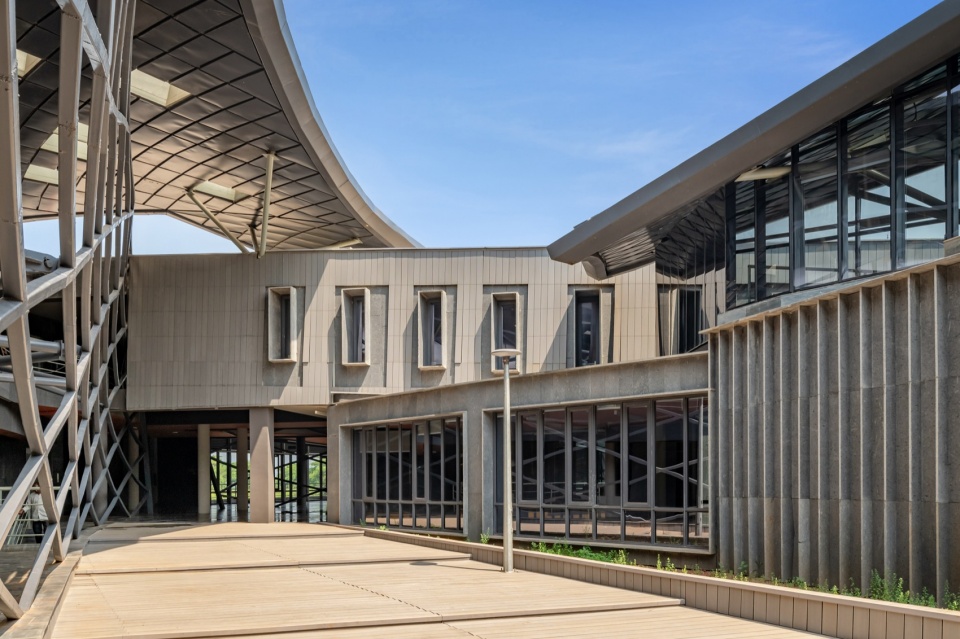
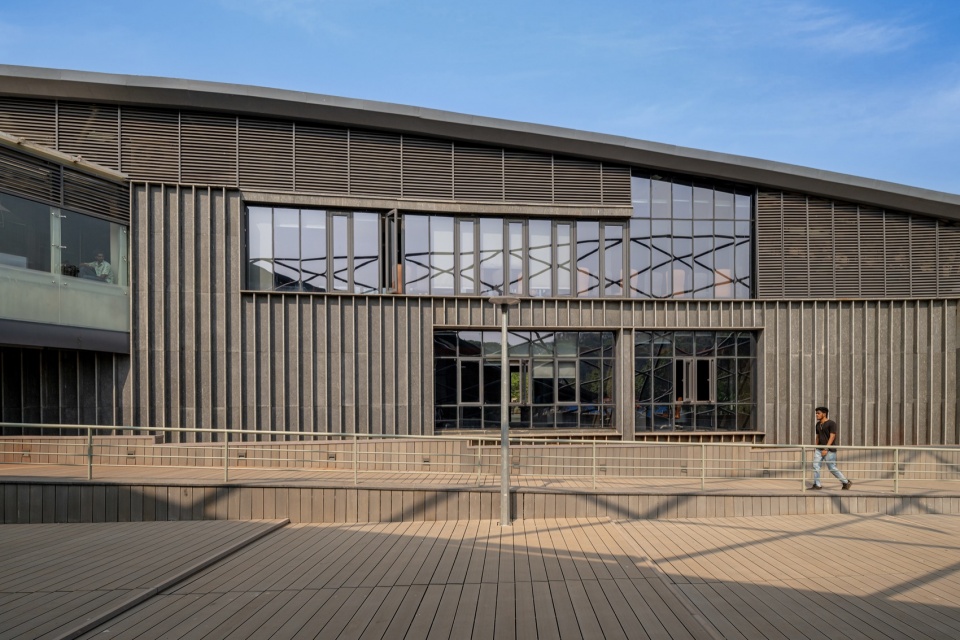
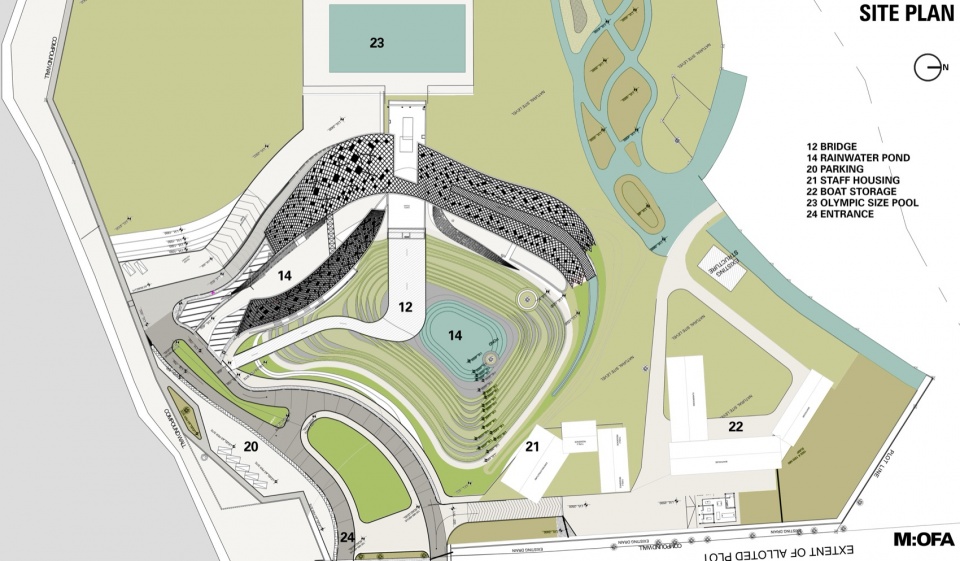
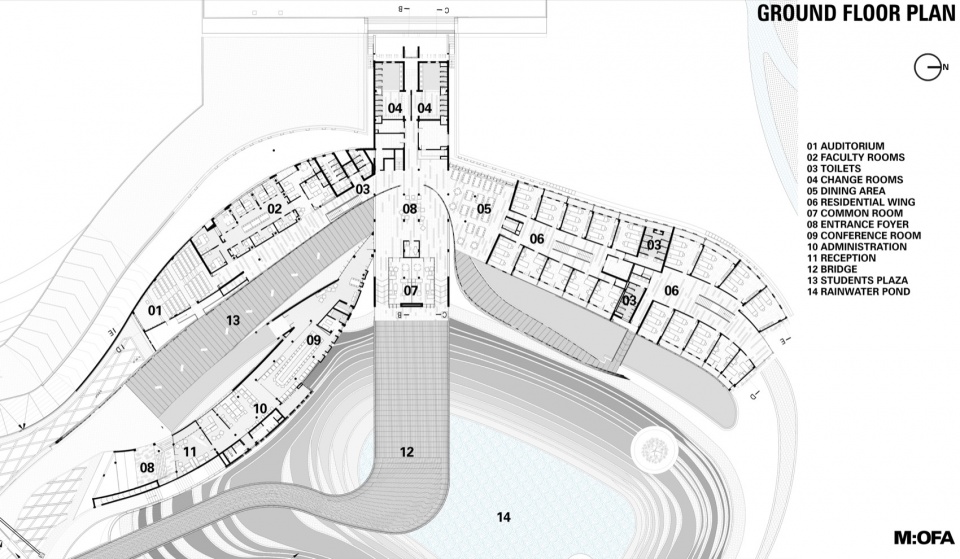
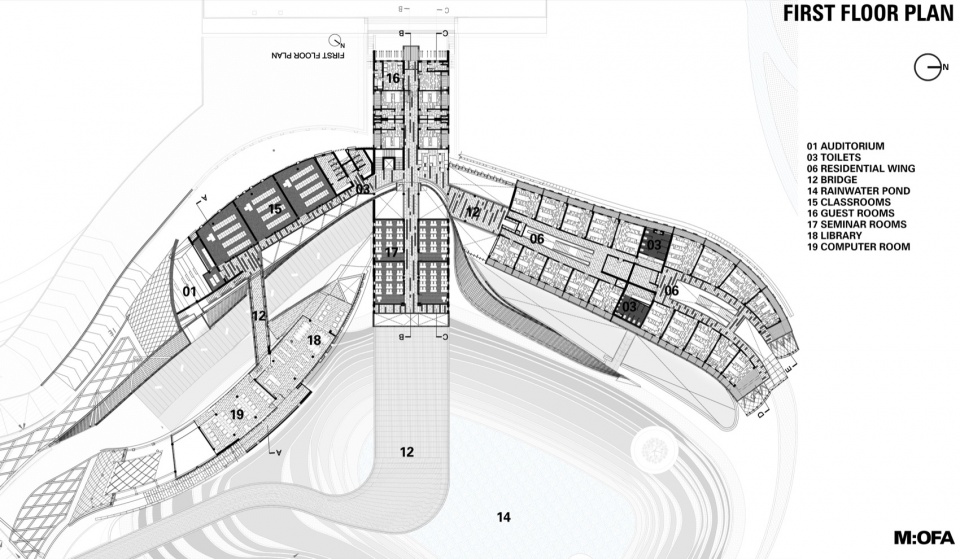
总体规划将功能组织为四个清晰的组团:教学/机构、行政、居住与休闲。这些组团通过“之间”的公共空间被串联起来,包括遮阴外摆空间、过渡性廊道、露台与共享庭院,它们共同构成校园的社会性基础设施。这些空间并非剩余空间,而是经过精心控制尺度、遮阴与布局,用于承载非正式简报、同伴学习、设备检查以及课表之外的日常交流。
The masterplan organizes the program into four clear clusters: academic/institutional, administration, residential, and recreation. These clusters are stitched together by in-between commons: shaded spill-outs, transitional corridors, terraces, and shared courts that act as the campus’s social infrastructure. These spaces are not residual but deliberately sized, shaded, and positioned to host informal briefings, peer learning, equipment checks, and everyday interaction beyond the timetable.
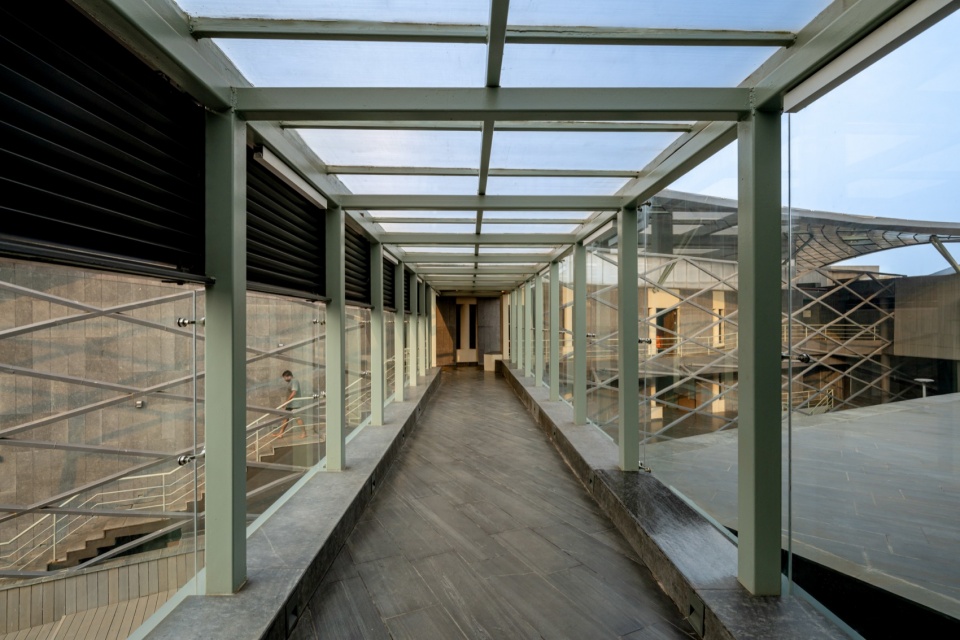
▼过渡性廊道,transitional corridors
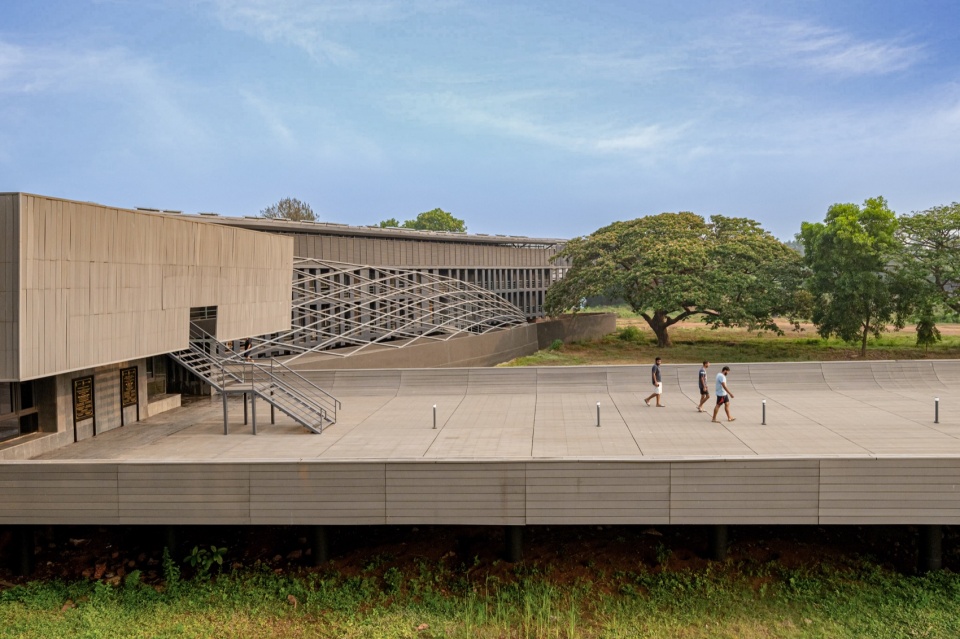
▼遮阴外摆空间,shaded spill-outs
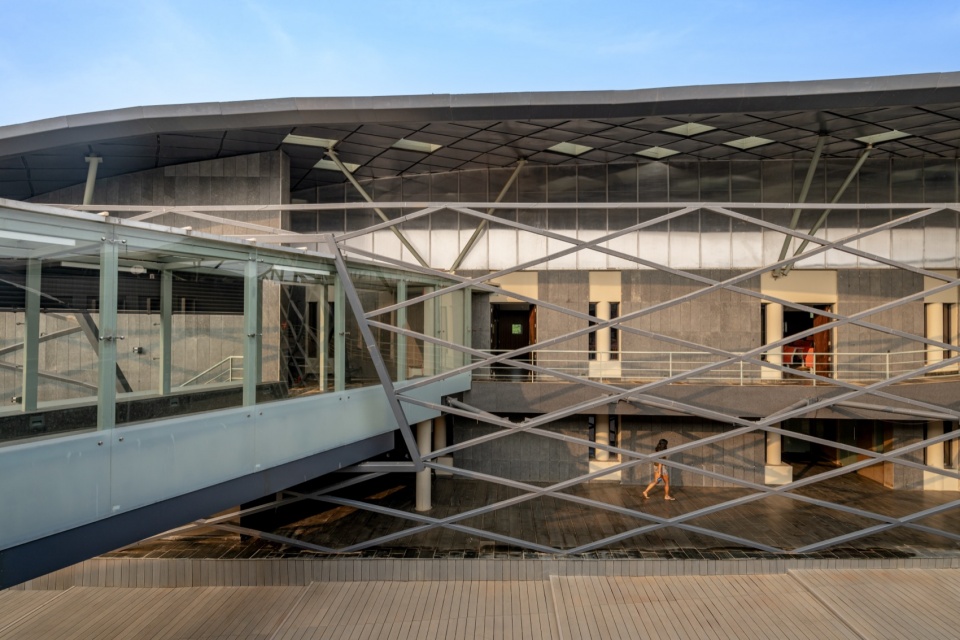
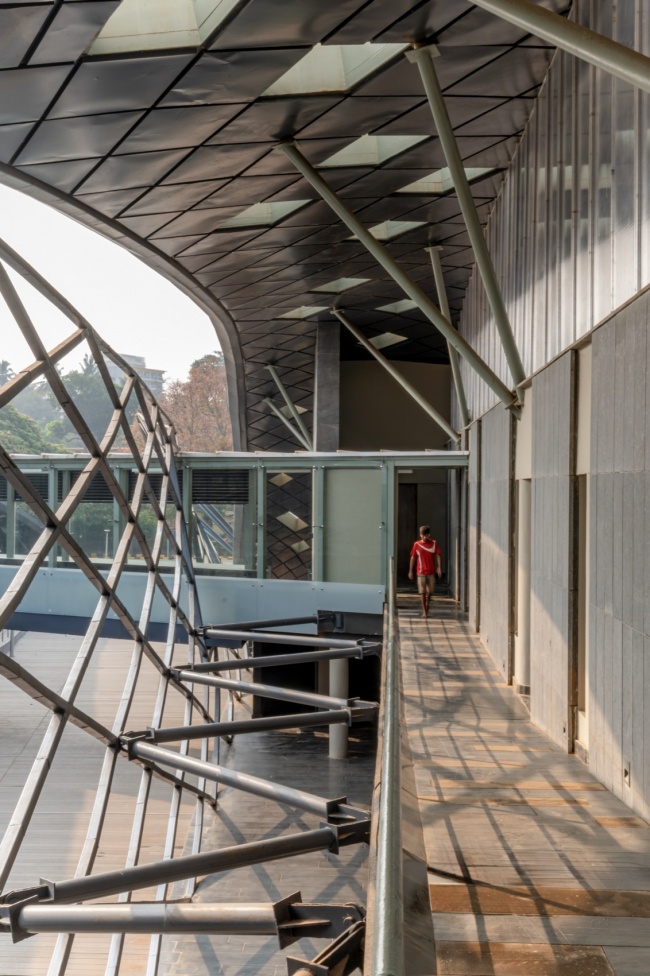
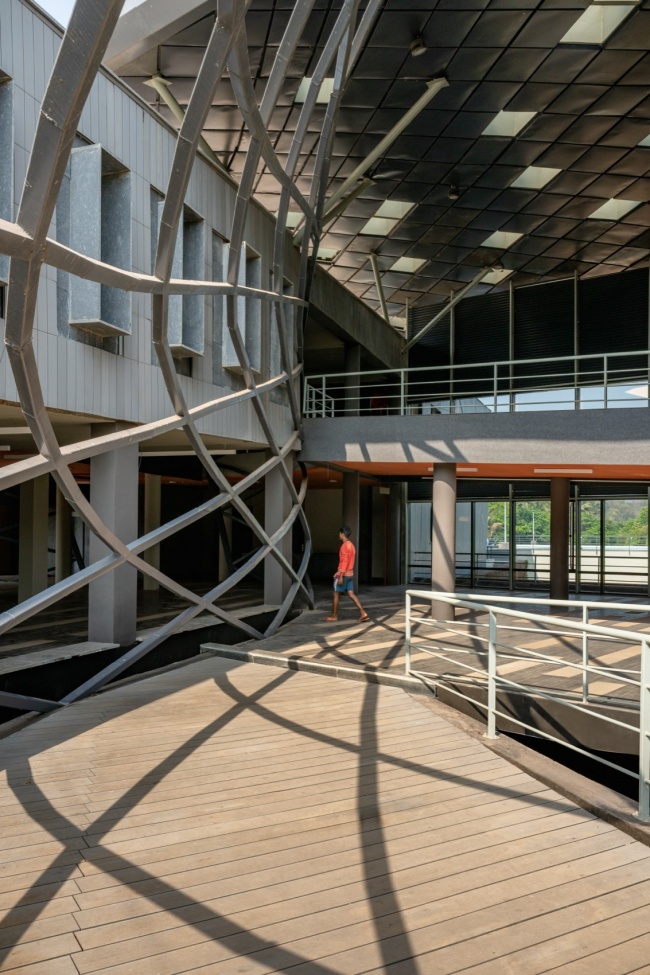
空间体验通过压缩与释放、视线变化以及一系列门槛空间被精心编排,使使用者不断重新感知海洋与天空。贯穿校园的流动性主轴,与学生广场、庭院、桥梁等停驻节点形成对照,营造出不断变化的视角与向前牵引的感受,映射出人们进入开放水域前的心理准备状态。这种动态感同时又被清晰性所平衡。主要流线保持直接且便于抵达,而次级路径则提供更丰富的捷径、遮阴停留点,以及回望水域与训练区域的框景视野。
Spatial experience is choreographed through compression and release, shifting views, and a sequence of thresholds that repeatedly re-anchor users to sea and sky. The fluid movement spine juxtaposed over pause points such as students’ plaza, courtyard, bridges etc. creates changing perspectives and a sense of forward pull, mirroring the mental state of preparation before entering open water. This dynamism is balanced with clarity. Primary routes remain direct and accessible, while secondary paths offer layered shortcuts, shaded pause points, and framed outlooks back to the water and across training zones.
▼水域与训练区,bridges
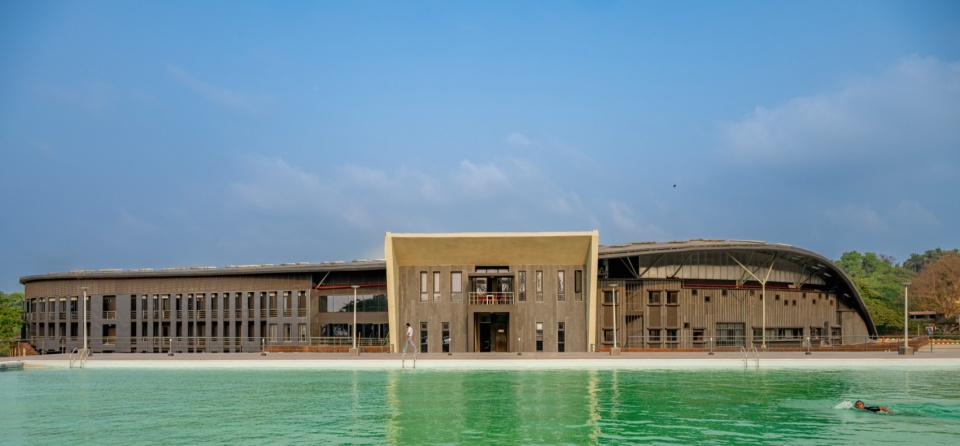
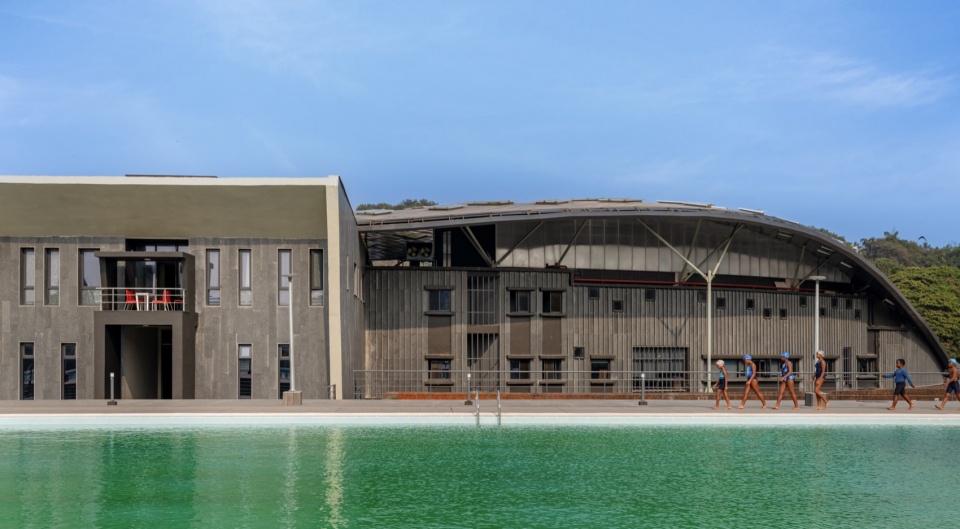
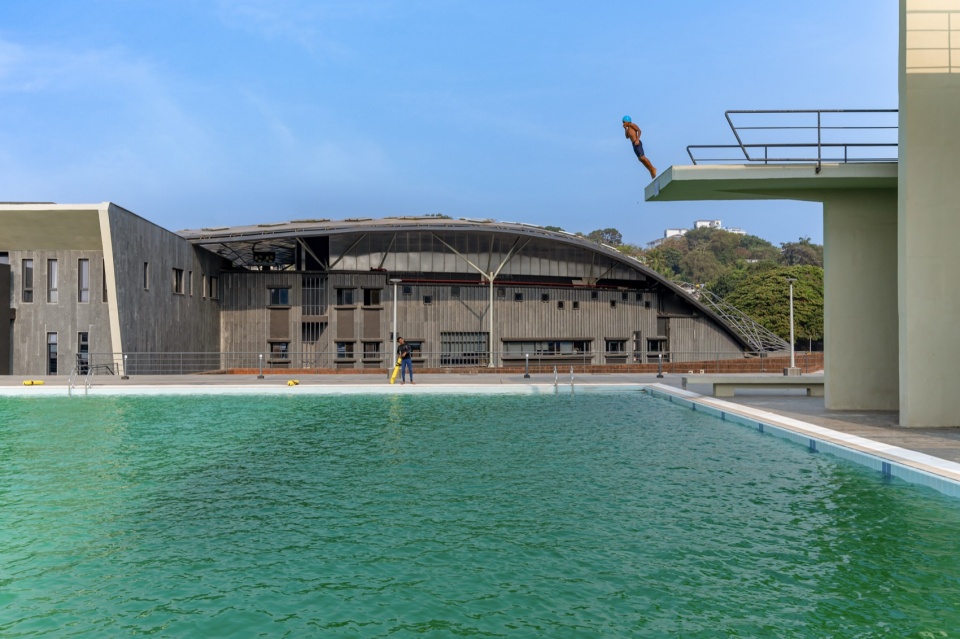
▼桥梁,bridges
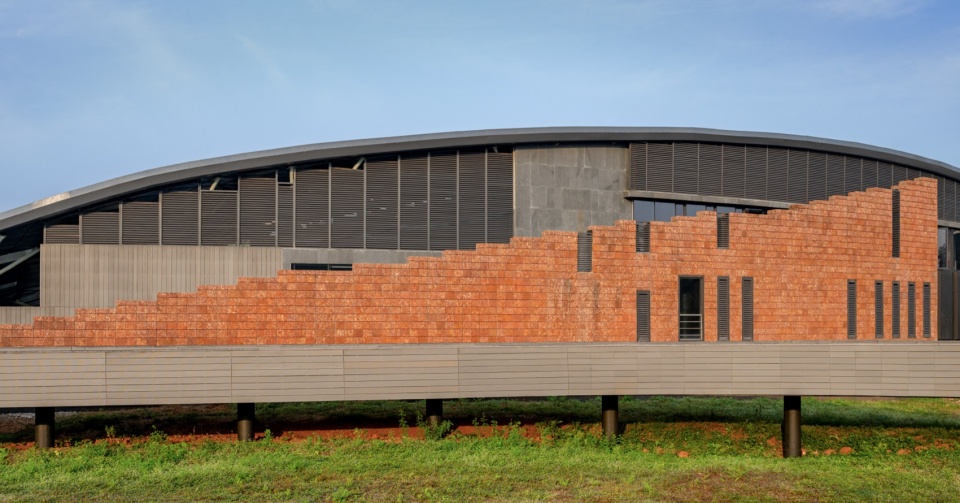
在概念层面,建筑形式汲取自旋轮线波浪(trochoidal wave)形态的启发,呈现出上升、折叠与向前涌动的姿态,但其形态始终建立于可建造性与气候性能基础之上。地面层采用本地花岗岩与红土石,以应对高强度使用与维护需求。其上方则覆盖着统一的屋顶系统,为整个学院提供遮阳、防雨保护以及统一的公共形象。
Conceptually, the architecture draws from trochoidal wave patterns, rising, folding, and surging forward, yet the form is anchored in buildability and climate performance. The ground plane is robust and durable, using local granite and laterite stone, where impact and maintenance demands are highest. Above, a unifying roof system provides shade, weather protection, and a single civic identity for the institute.
▼花岗岩与红土石,granite and laterite stone
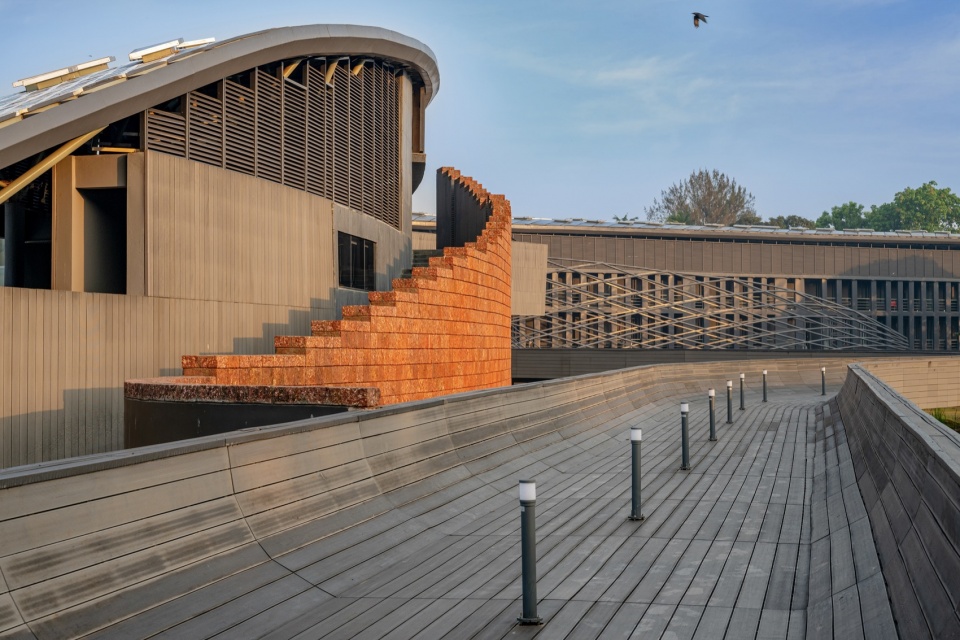
NIWS最具标志性的元素,是一片如海浪般覆盖整个校园的数字化建造巨型屋顶。该轻质网壳结构覆盖面积约4000平方米,通过梯形面板划分与压力平衡策略进行构造优化。结构由超过15000根不同长度的钢管组成,并被合理化为适合人工搬运与安装的模块化单元——这一点对于最低价中标制度与现场施工条件至关重要。超过5000块尺寸与形状各不相同的定制屋面板,通过CNC切割与折弯后,如拼图般组装于参数化曲面之上。连续排水沟被整合进几何体系之中,在不破坏整体轮廓的前提下处理季风雨水排放,使屋顶既成为空间标识,也成为环境装置。
▼墙面剖面细部,wall sections details
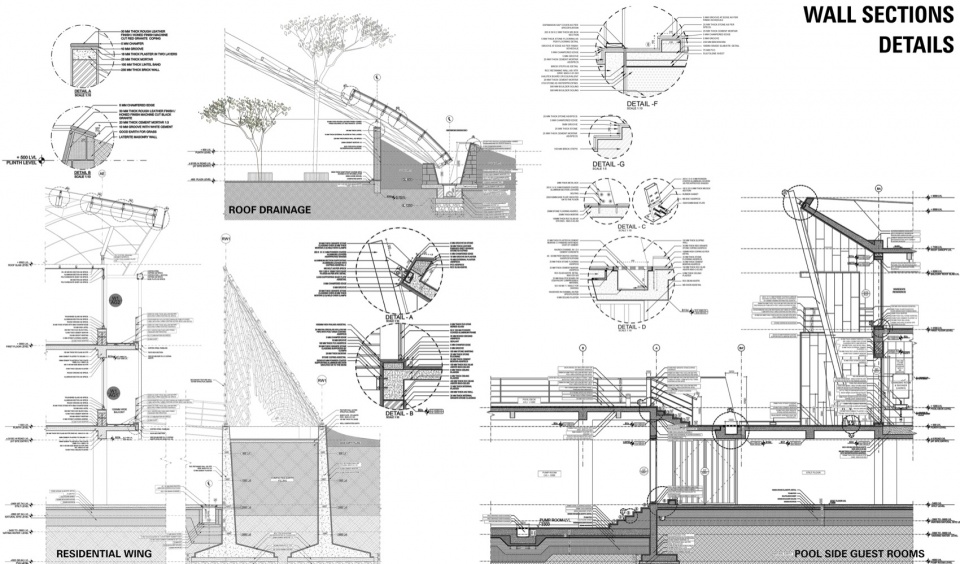
NIWS’s defining element is a digitally fabricated mega-roof that drapes the campus like a wave. Spanning approximately 4,000 sq. m., the lightweight grid-shell is resolved through trapezoidal paneling and a pressure-equalization strategy. The structure comprises over 15,000 pipes of varying lengths, rationalized into modular segments sized for manual lifting and placement — critical for construction under lowest-bid contracting and on-site labor realities. More than 5,000 customized roof panels, each unique in shape and size, were CNC-cut and folded to assemble like a jigsaw across the parametric surface. Continuous gutters are integrated into the geometry to carry monsoon runoff without interrupting the silhouette, turning the roof into both a spatial signature and an environmental device.
▼轻质网壳结构,the lightweight grid-shell
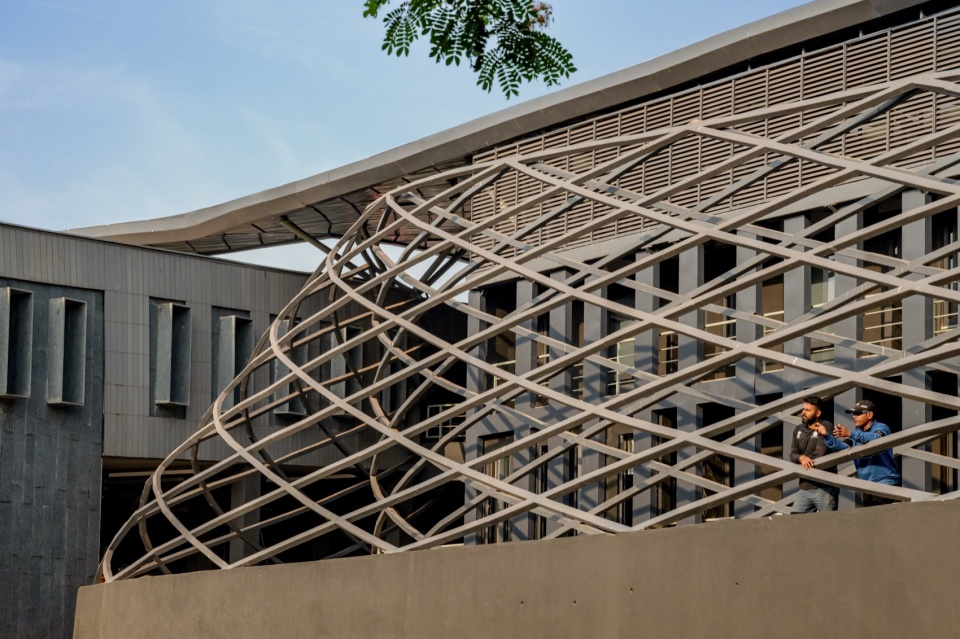
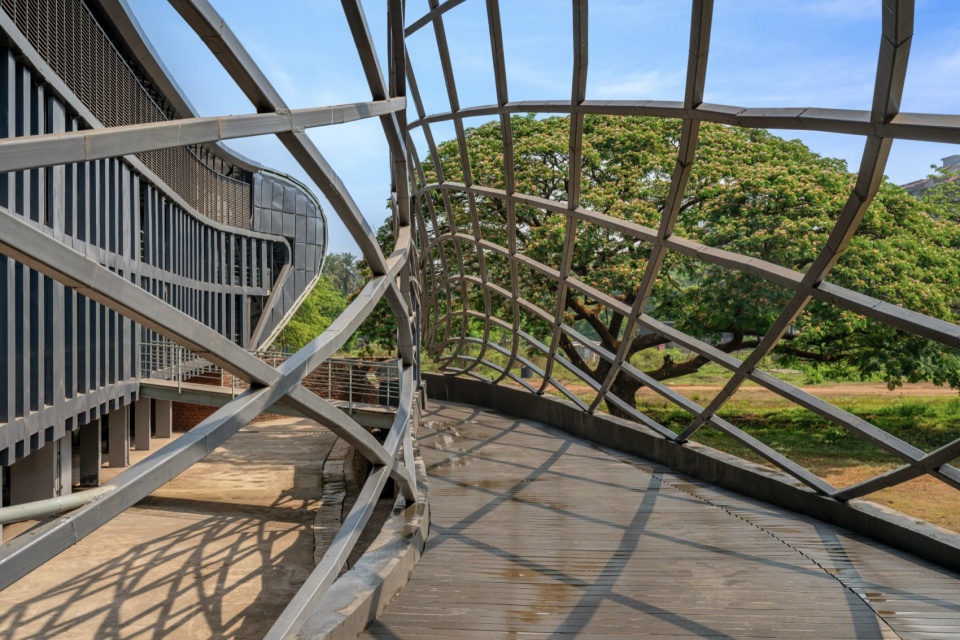
在严格预算条件下实现NIWS,意味着必须进行高度克制的资源分配。项目将投资重点放在结构、遮阳、耐久性与流线品质上,而非装饰性表面。复杂性被拆解为可重复的部件,细部构造也在不削弱设计意图的前提下进行了简化。一支团队负责法定审批与许可流程,另一支团队则专注于从设计到落地的原型研发,通过调整施工容差以适应现场工艺,并结合CNC流程与本地加工单元的模块化生产,最终以人工方式组装完整屋顶。
Delivering NIWS within tight budgets required disciplined resource allocation. Investment prioritized structure, shade, durability, and circulation quality over decorative finishes. Complexity was broken into repeatable parts and detailing was simplified without diluting intent. While one team navigated statutory approvals and clearances, the other focused on design-to-delivery prototyping modules, aligning tolerances to site workmanship, and streamlining fabrication and assembly through a combination of CNC workflow combined with on ground local fabrication units producing modular units, that were assembled into a complete roof manually.
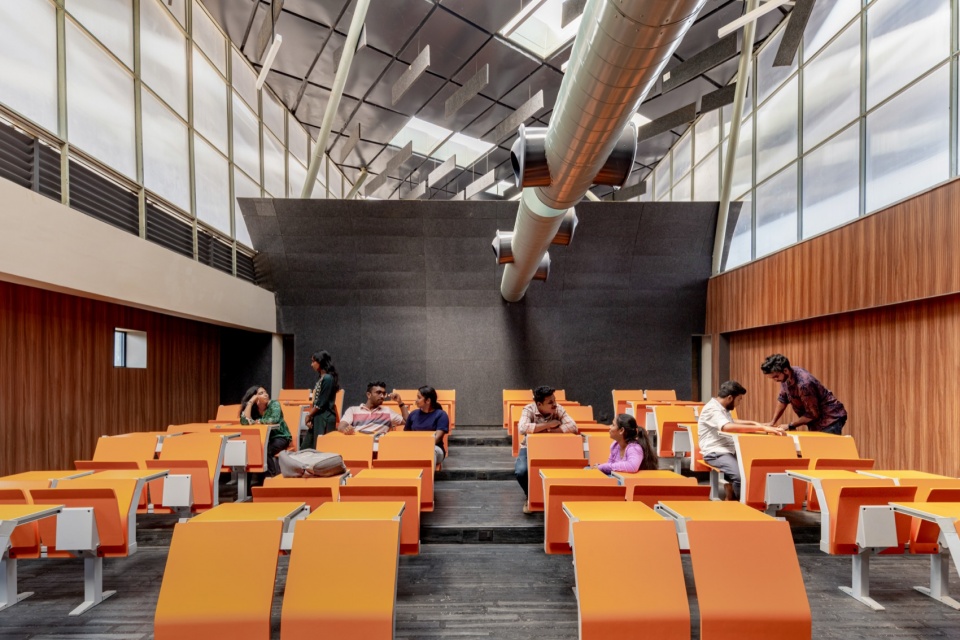
▼教室,classroom
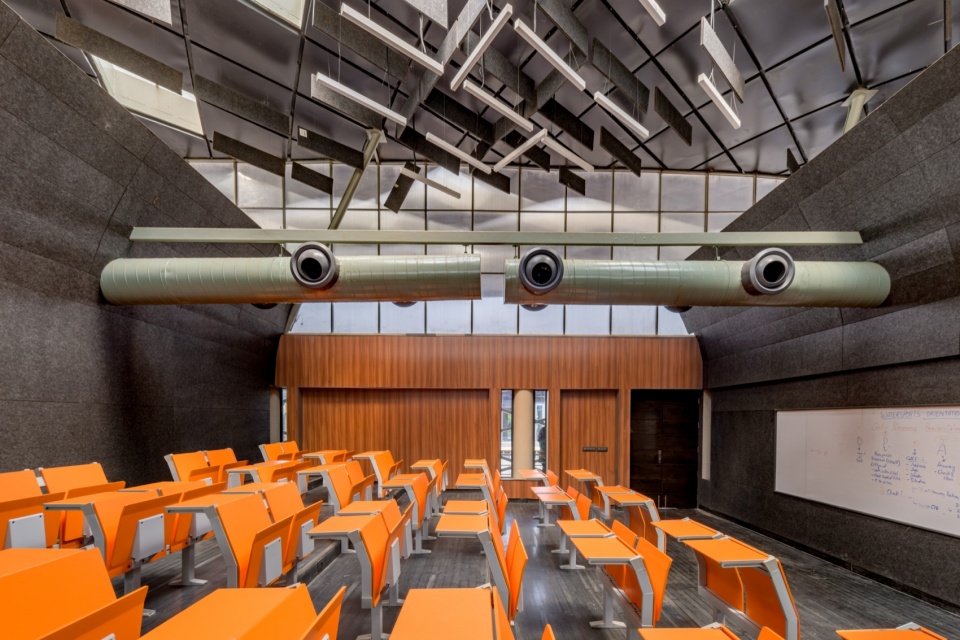
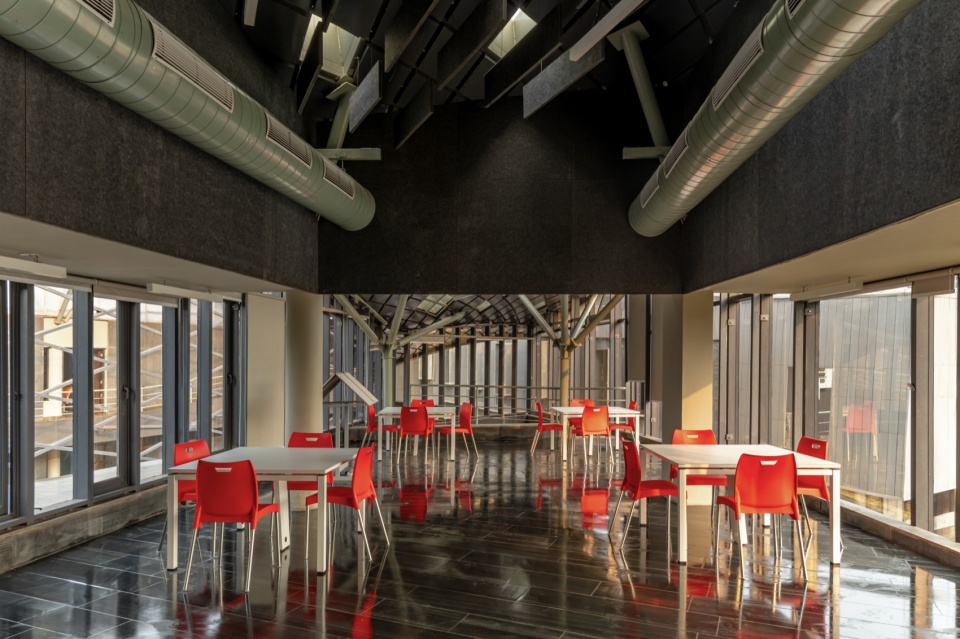
▼学习空间,learning space
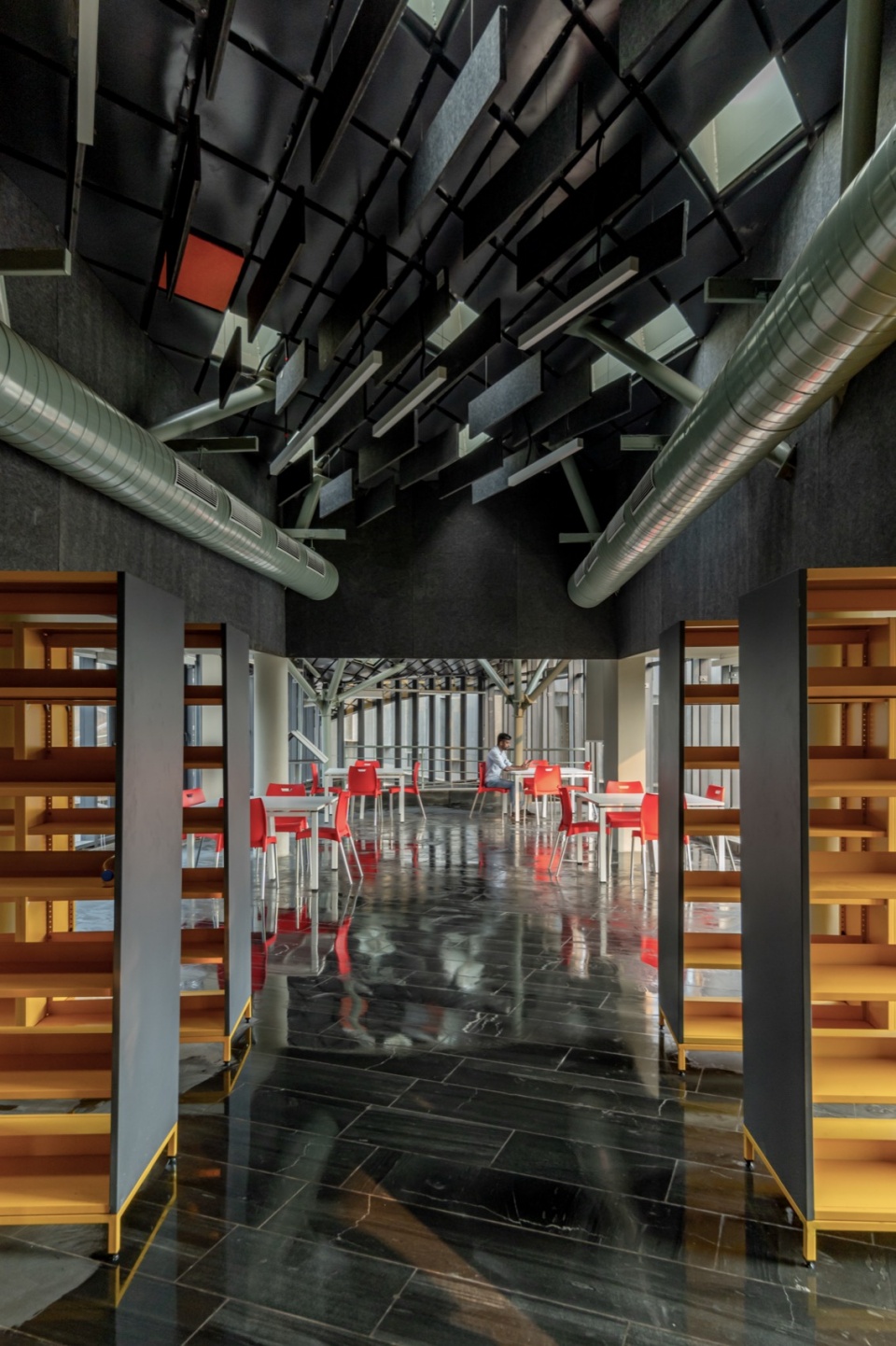
▼学习空间,learning space
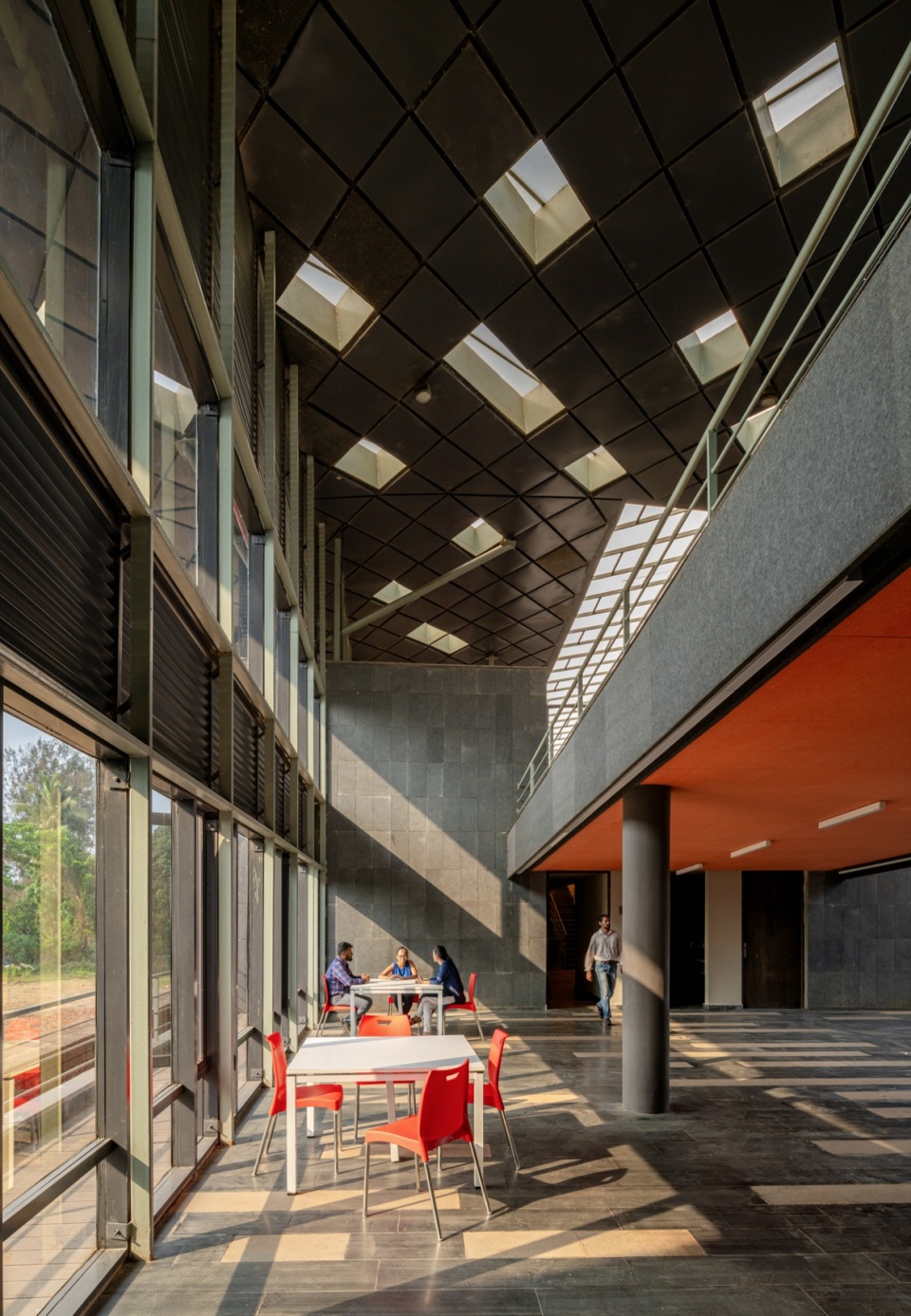
海岸韧性与生命周期性能被视为项目的基础标准。材料与涂层策略通过喷砂防腐钢材及三层聚氨酯涂层来应对盐雾侵蚀。深遮阳、受保护的室外流线,以及通过合理建筑朝向引入海风形成的交叉通风,共同提升了被动式舒适性。水管理系统则整合了屋面排水,将雨水汇集至入口桥下形成的水池中,以便在夏季高温时期用于景观灌溉。
Coastal resilience and lifecycle performance were treated as baseline criteria. Material and coating strategies address saline exposure through sandblasted corrosion resistant steel coated with three layers of polyurethane. Passive comfort is strengthened through deep shading, protected outdoor circulation, and cross-ventilation using cooler sea winds through the right orientation of buildings. Water management includes integrated roof drainage, with rainwater collected within the pond created under the entrance bridge, for the reuse of water for landscaping during peak summer months.
▼项目概览,overview of the project
NIWS将机构建筑视为一种文化基础设施。它不仅规范了一个新兴领域,也强化了地方生计,并塑造出扎根于场所精神的公共形象。通过将海洋的能量转化为一个有组织、可建造且具备气候响应能力的校园,这座学院既成为印度顶尖运动员的训练基地,也成为一座诉说着流动、开放与准备状态的地标。
NIWS positions institutional architecture as cultural infrastructure. It formalizes an emerging discipline, strengthens local livelihoods, and presents a public identity rooted in place. By converting the energy of the sea into an organized, buildable, and climate-aware campus, the institute becomes both a training ground for India’s finest athletes and a landmark that speaks of motion, openness, and preparedness.
▼场地平面,site plan
▼首层平面图,ground floor plan
▼二层平面图,first floor plan
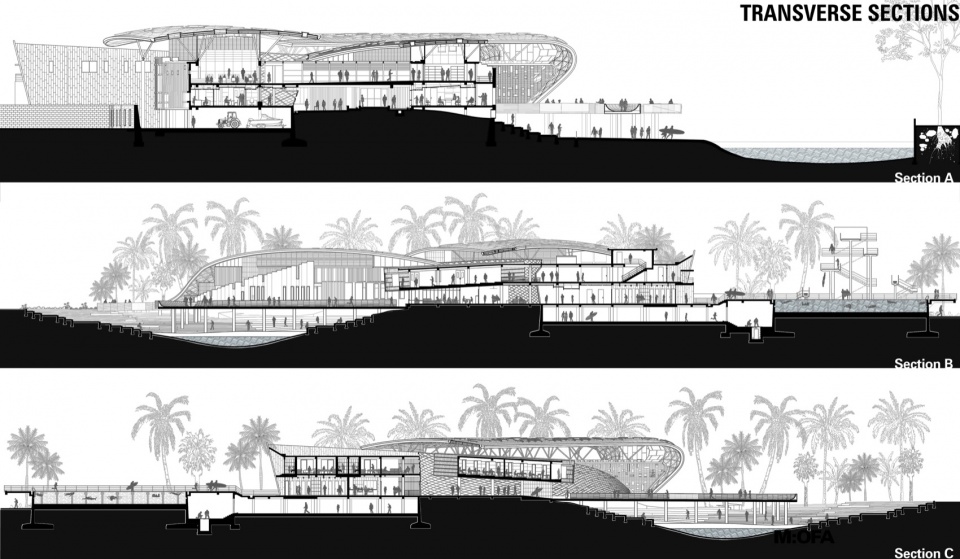
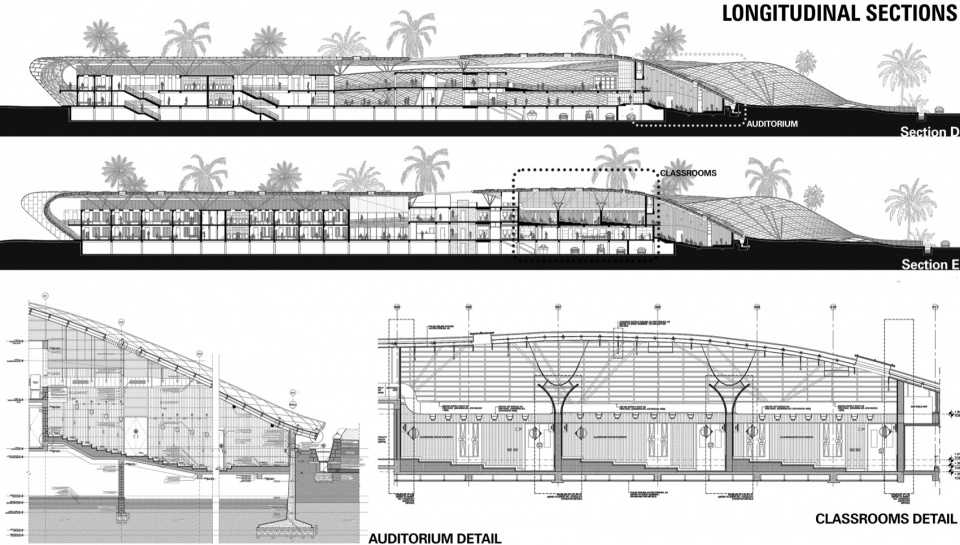
▼剖面,sections
Project Information Sheet
Typology: Institution
Name of Project: National Institute of Water Sports (NIWS), Goa
Location: Panjim, Goa
Name of Client: Ministry of Tourism
Principal Designer: Ar. Manish Gulati
Design Team: Abhishek Sorampuri, Anuj Mittal, Saurabh Singla, Aakanksha Hajela, Tanushree Verma, Sonakshi Madan
Site Area (sq ft & sq m): 65509 sqm
Built-Up Area (sq ft & sq m): 12075 sqm / 130,000 sq ft
Start Date: Competition held in 2012 | Duration of the project: 6+ years
Completion Date: 2024
Photographer: Vinay Panjwani