La Caserne扩建工程,魁北克 / SBTA inc. + Delort et Brochu architectes
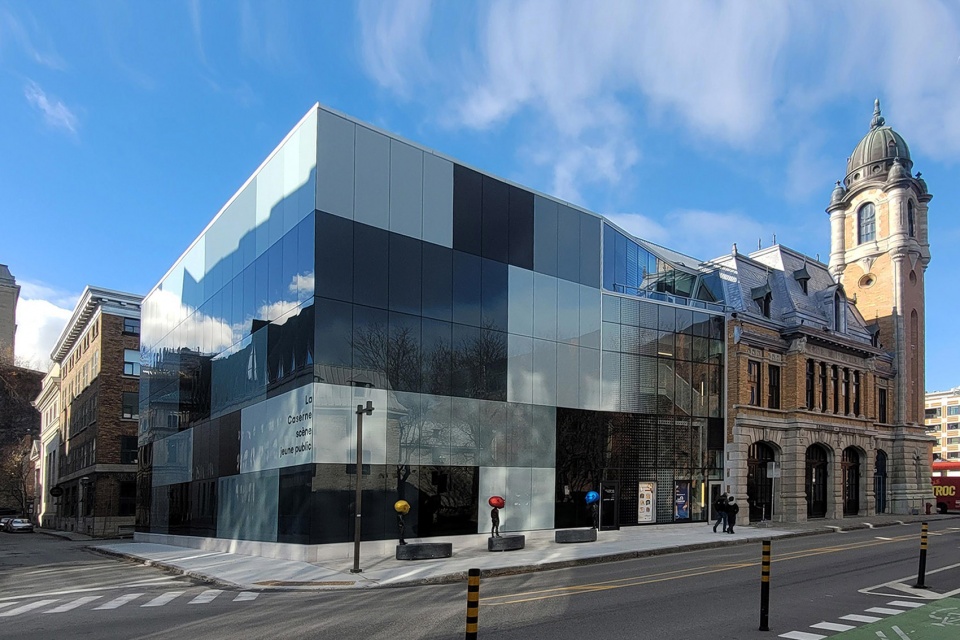
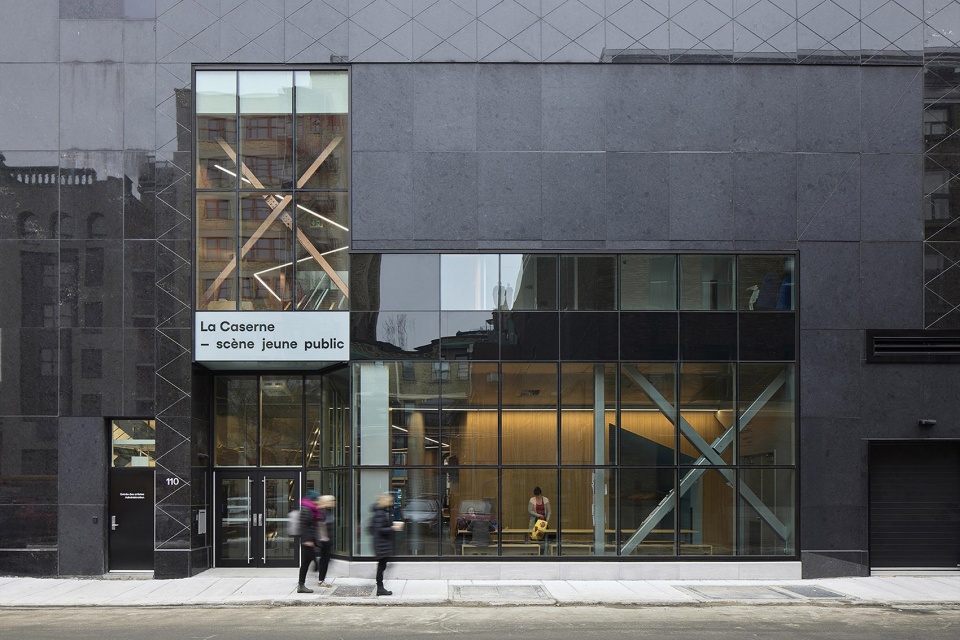
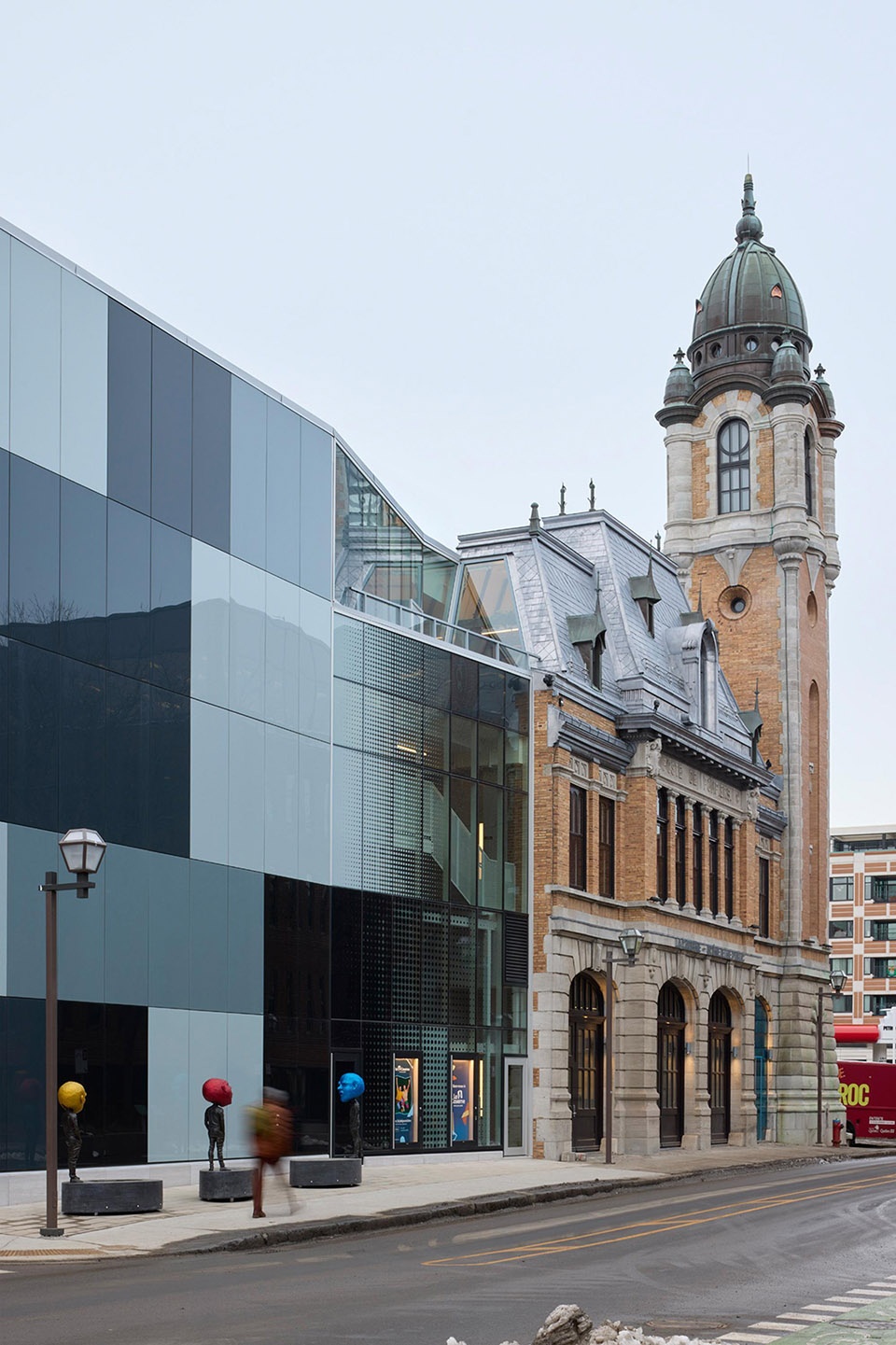
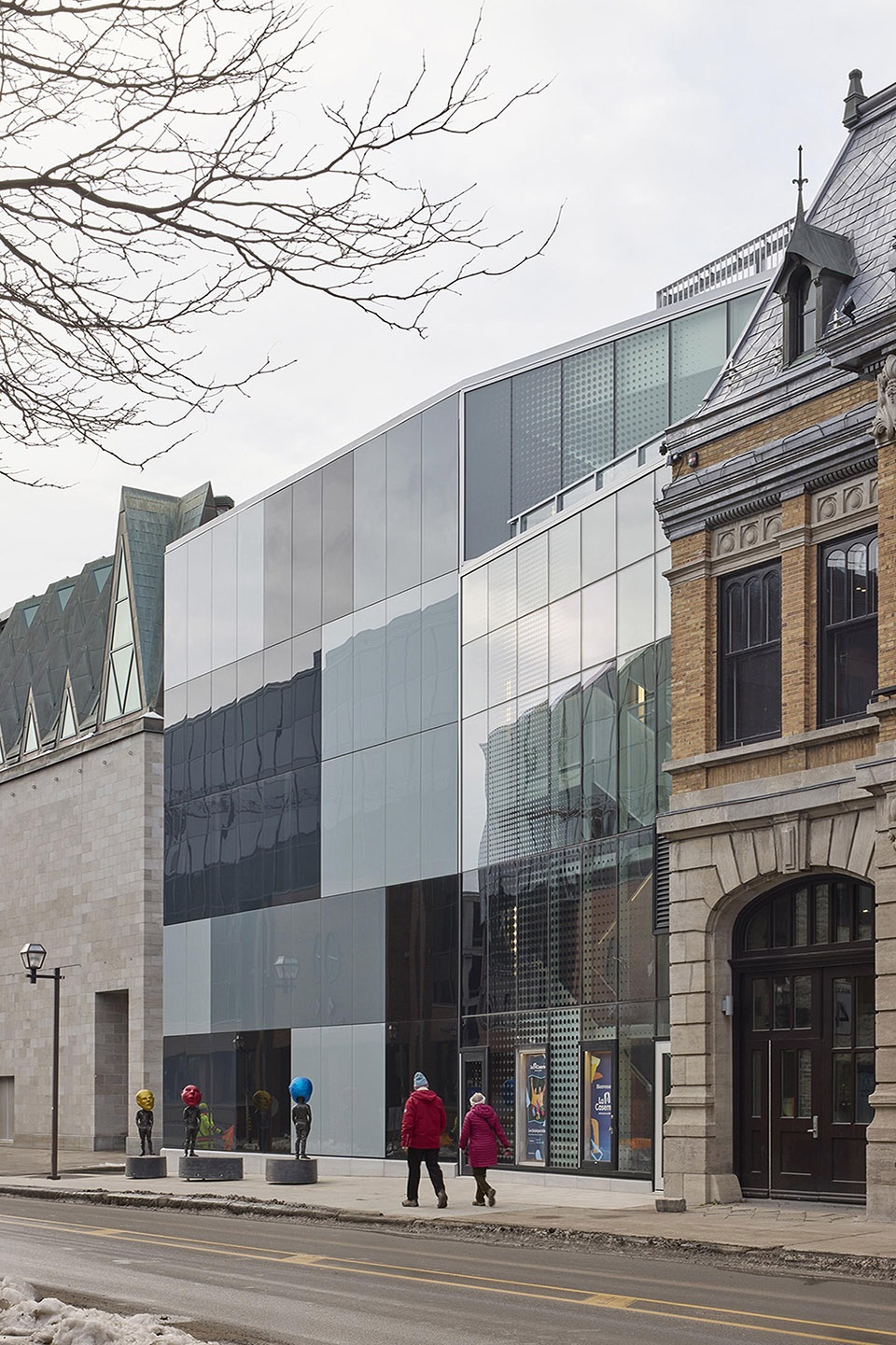
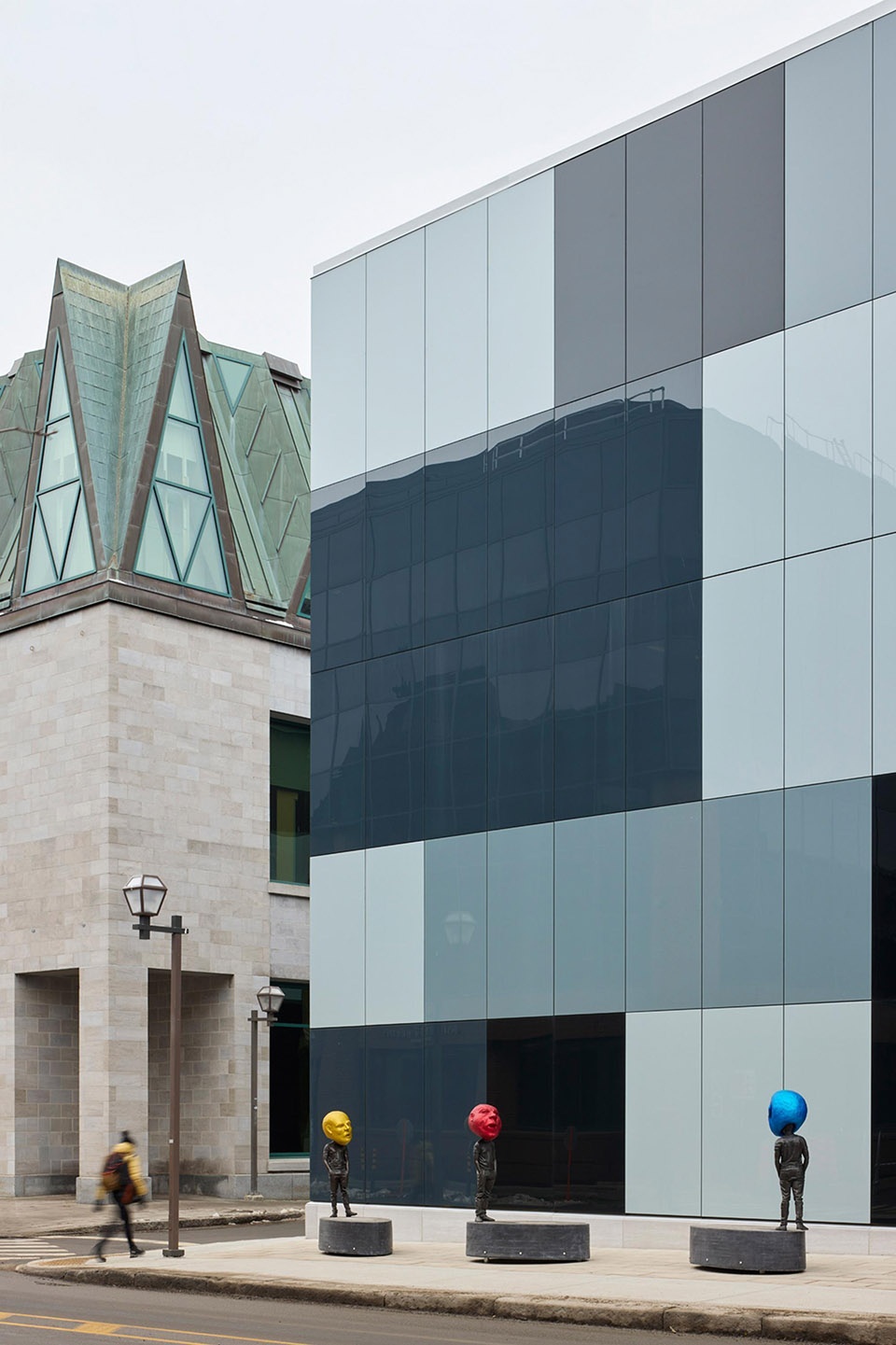
这座建于1912年的消防站(G. E. Tanguay设计)于1996年进行了扩建(Julien et Plante设计),以容纳罗伯特·勒帕吉的艺术实验室“Ex Machina”。这座外覆花岗岩的“黑匣子”建筑正对文明博物馆(1988年,M. Safdie设计),后者的灰色石材立面体现了老魁北克典型的建筑风格。
This 1912 fire station (G. E. Tanguay) was expanded in 1996 (Julien et Plante) to accommodate Ex Machina, Robert Lepage’s artistic laboratory. The granite-clad black box faces the Musée de la Civilisation (1988, M. Safdie), whose grey stone facades reflect the material character typical of Old Quebec.
▼项目外观,facade of the project
设计手法Approach
2021年,“Ex Machina”撤离该场地,由青年剧团“Les Gros Becs”接管。新机构需要扩建以容纳一座350座的剧场以及一个多功能厅。扩建工程位于魁北克老城区遗产区,该区域已被列入联合国教科文组织世界遗产名录。
In 2021, Ex Machina vacated the premises, which were taken over by the youth theatre company Les Gros Becs. The new institution required an expansion to house a 350-seat theatre as well as a multifunctional hall. The addition takes place on this site, part of the Old Quebec heritage district listed as a UNESCO World Heritage Site.
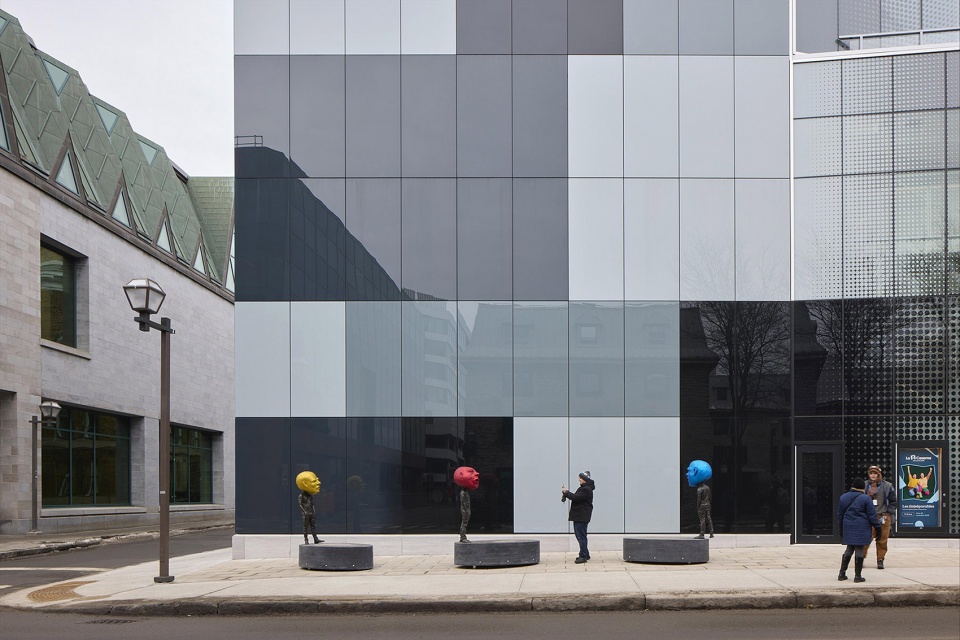
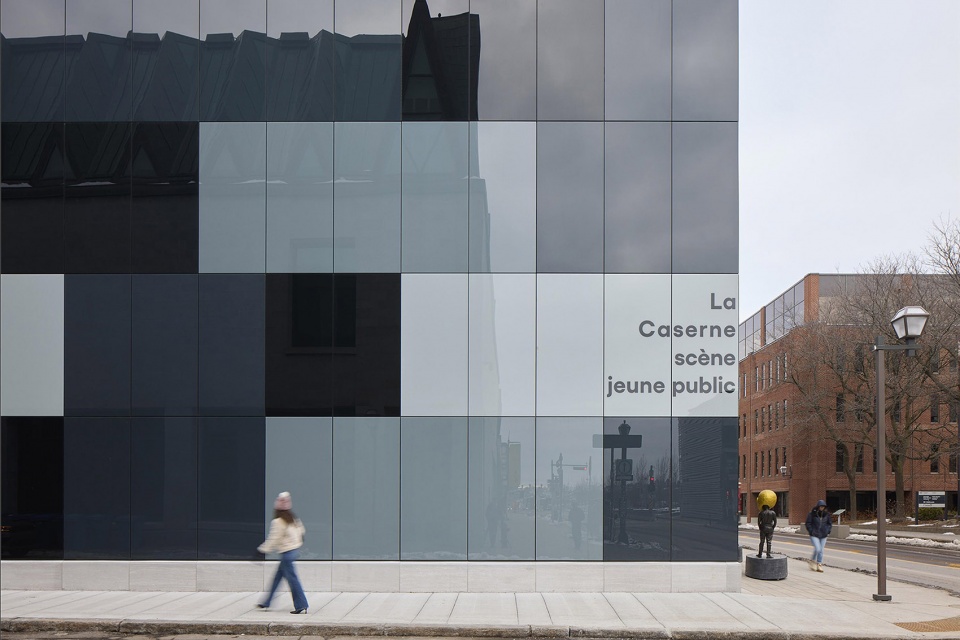
▼项目街景,street view of the project
设计过程如同多方声音的对话:历史城区与当代扩建部分之间;消防站、前Ex Machina剧场与场地新功能之间;内外空间之间——而最重要的是,与年轻观众之间的对话。
▼立面设计,facade design
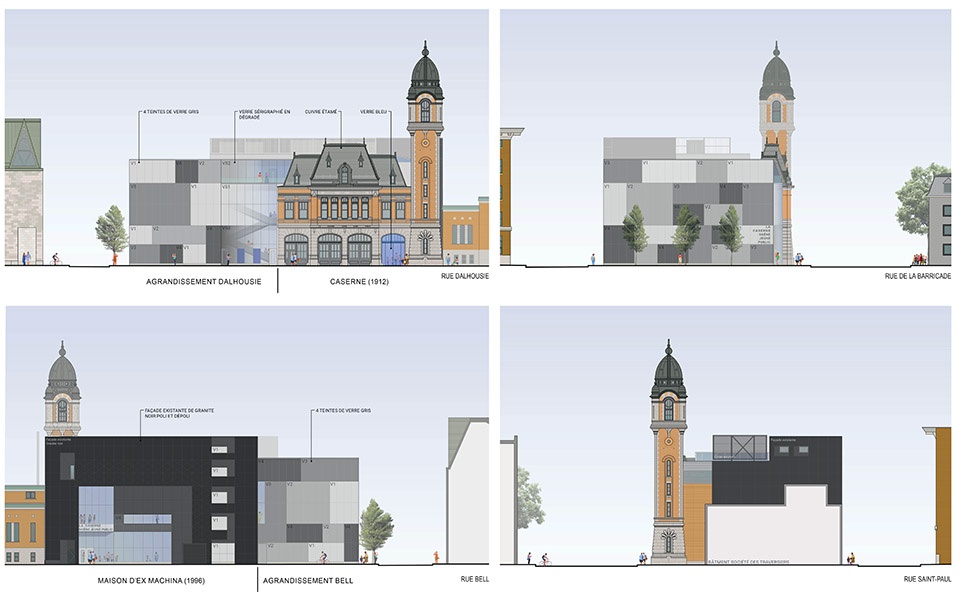
The design developed as a dialogue among multiple voices: between the historic city and the contemporary extension; between the fire station, the former Ex Machina venue, and the site’s new vocation; between exterior and interior — and above all, with its young audience.
▼项目街景,street view of the project
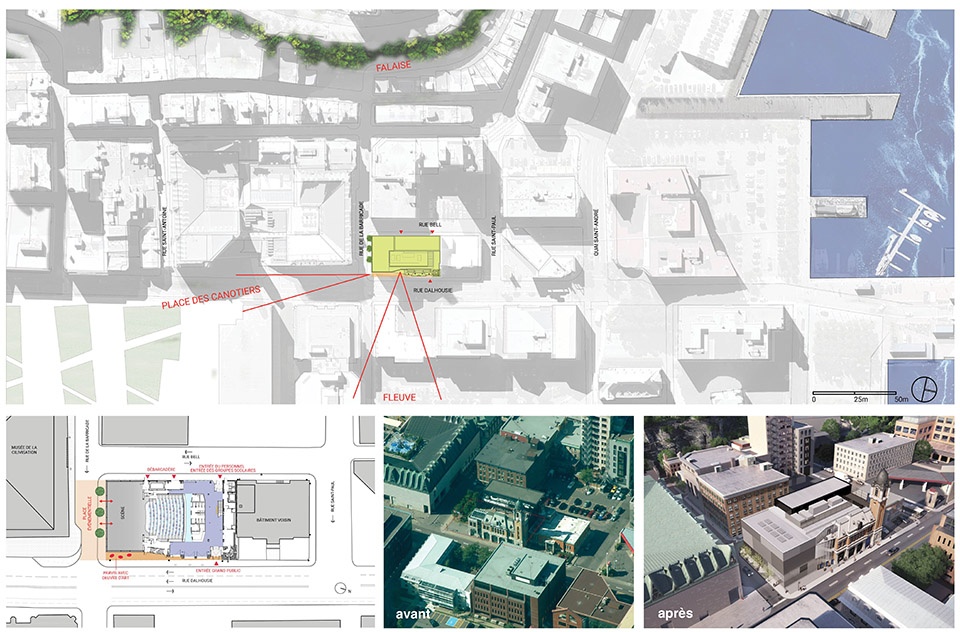
在达尔豪西街与巴里卡德街的转角处,一座小型广场及其艺术装置构成了生机勃勃的十字路口,向卡诺蒂耶公园、博物馆及圣劳伦斯河敞开。简洁的笛卡尔式体量构成了背景,突显了历史悠久的消防站——尤其是其塔楼,这是景观中一个醒目的地标。
At the corner of Dalhousie and Barricade streets, a small piazzetta and its artwork become a lively crossroads, opening toward Parc des Canotiers, the museum, and the St. Lawrence River. The sober, cartesian volumes compose a backdrop that highlights the historic fire station — and especially its tower, a strong landmark within the landscape.
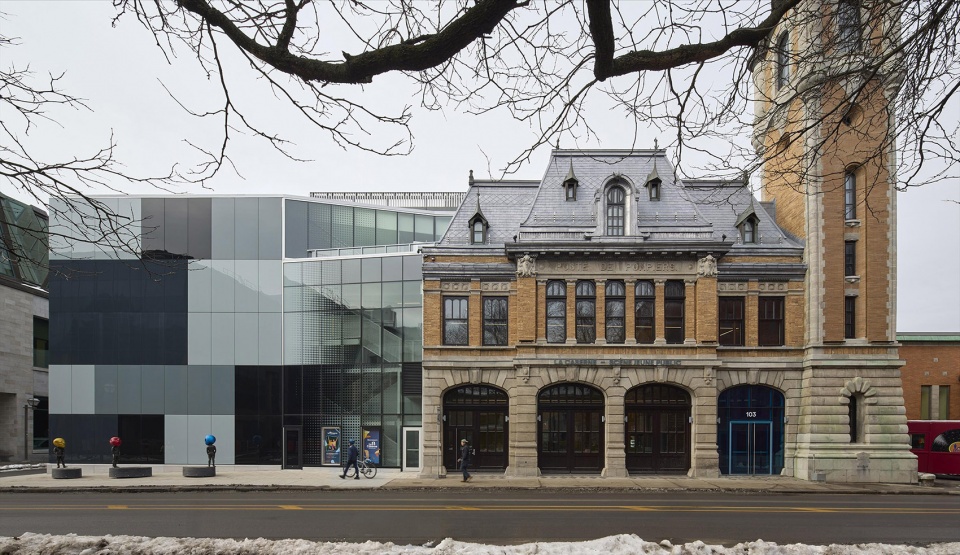
▼项目街景,street view of the project
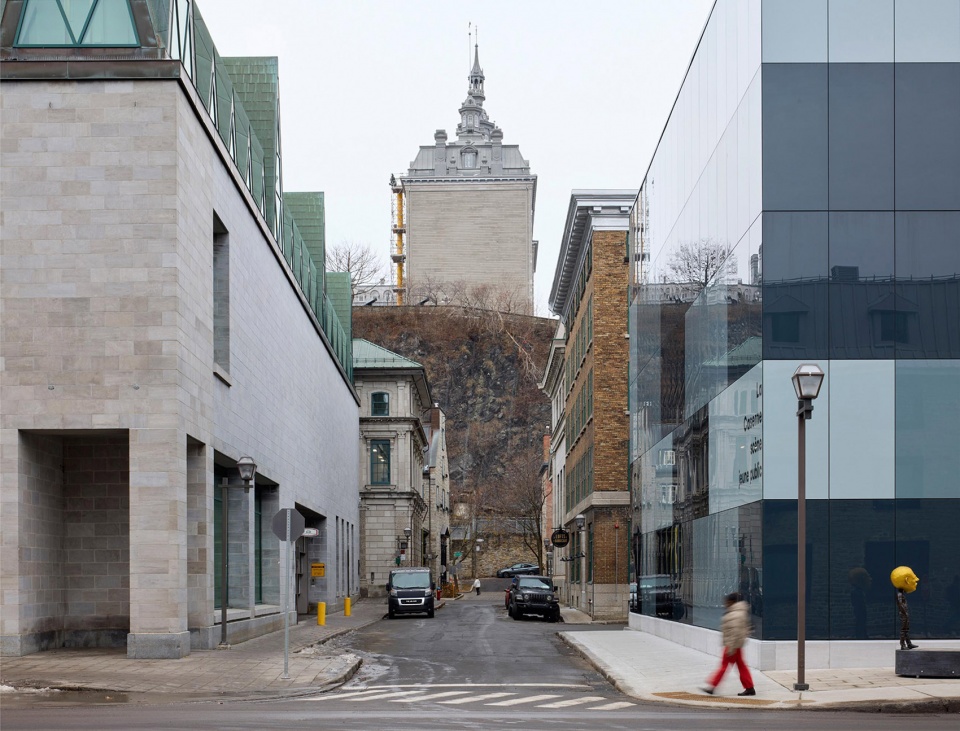
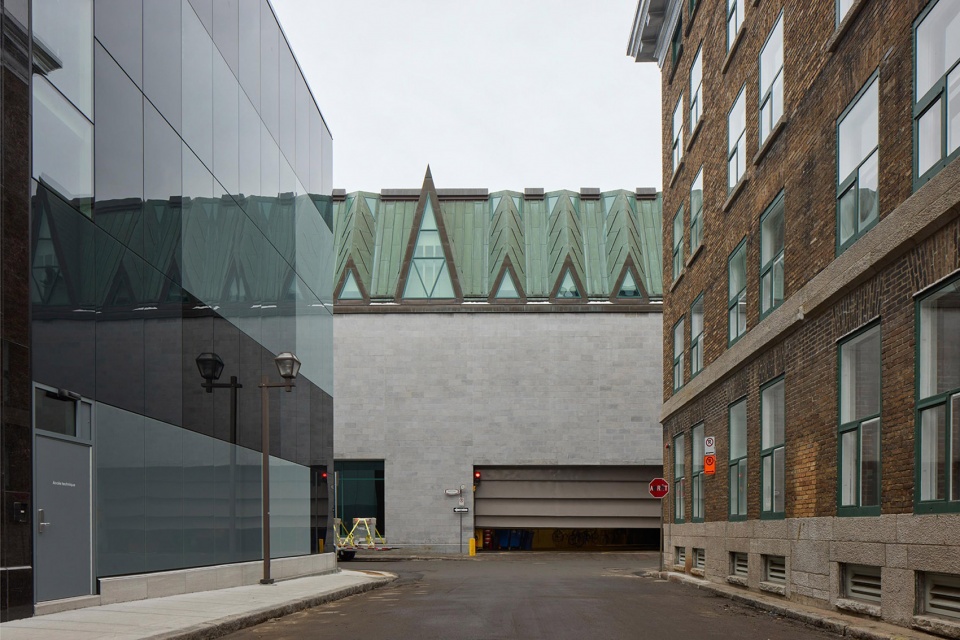
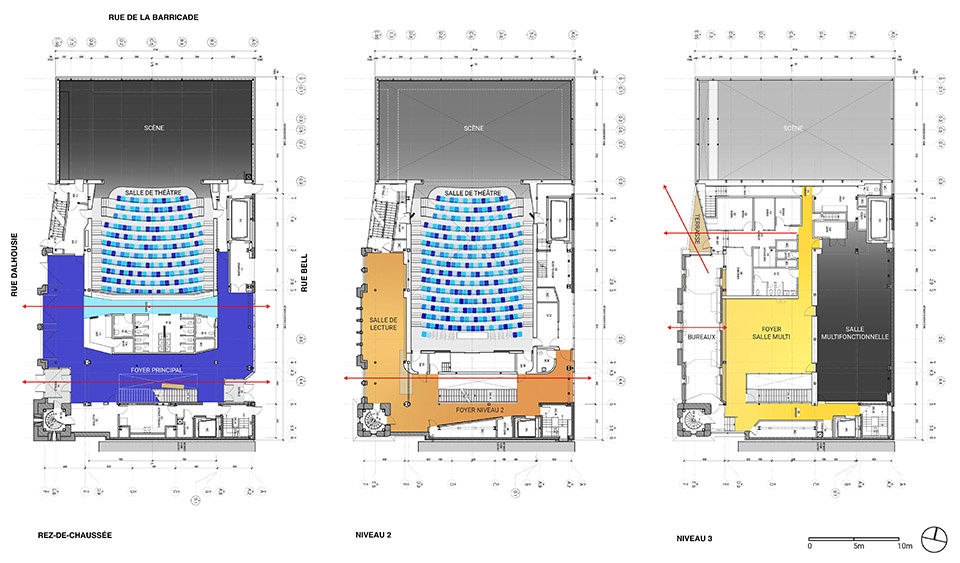
一条从达尔豪西街延伸至贝尔街的通道贯穿了这些受保护的建筑。它成为连接两个入口的门厅:一个是达尔豪西街上的主要公共入口,另一个是贝尔街上供校车使用的学生入口。为了标示入口并体现建筑的新功能,其中一扇木门与一扇蓝色玻璃门相配。跨过门槛后,地面映衬着这种色调,仿佛河流仍在该地彰显着它的存在。
A breach running from Dalhousie to Bell Street cuts through the preserved buildings. It becomes the foyer connecting the two entrances: the main public entrance on Dalhousie and the school group entrance served by buses on Bell. To signal the entry and the building’s new vocation, one of the wooden doors is paired with a blue glass door. Once across the threshold, the floor echoes this hue, as if the river still asserted its presence on the site.
▼主入口,main entrance
▼立面设计,main entrance
项目业态Program
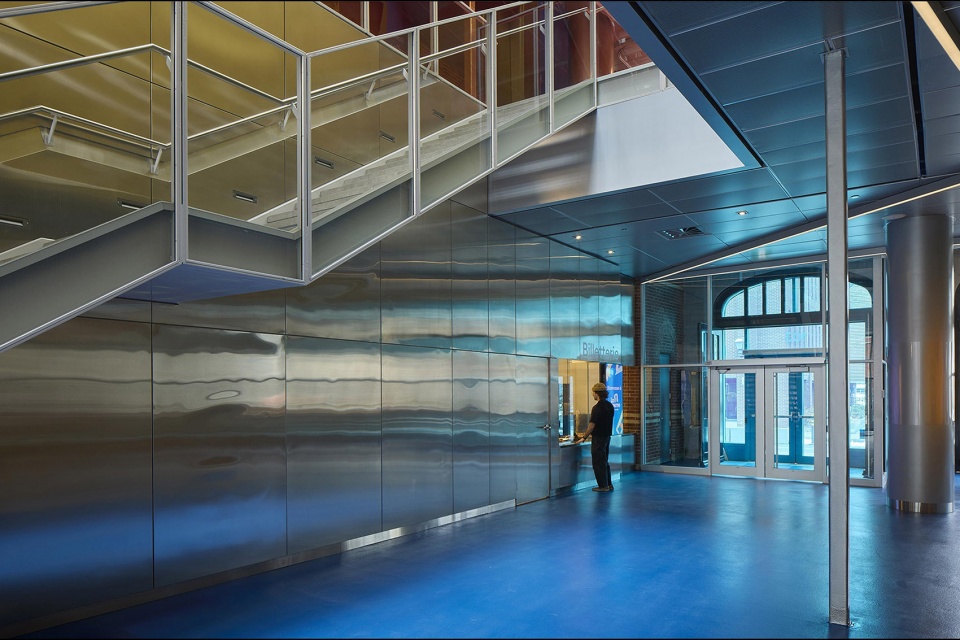
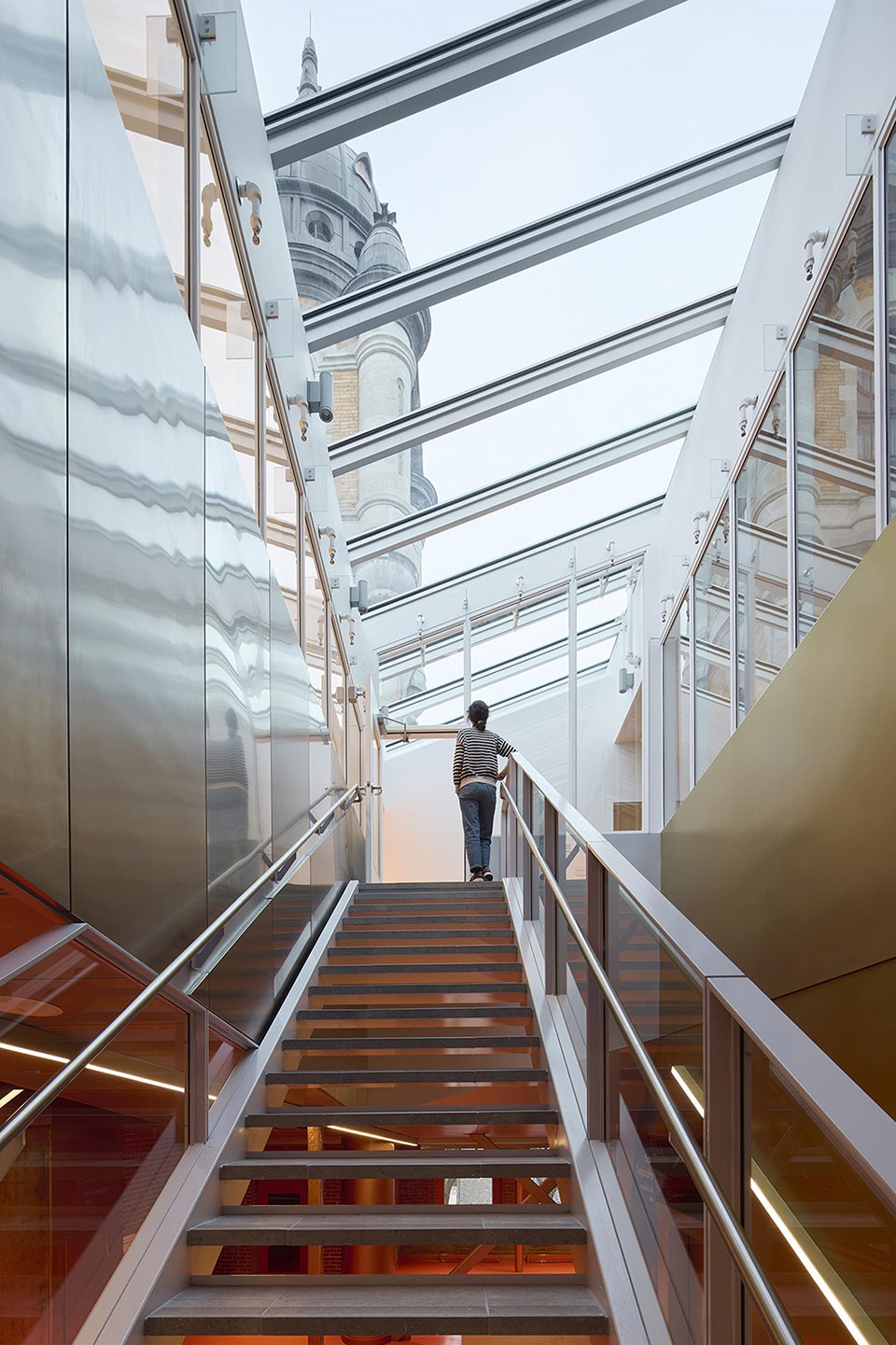
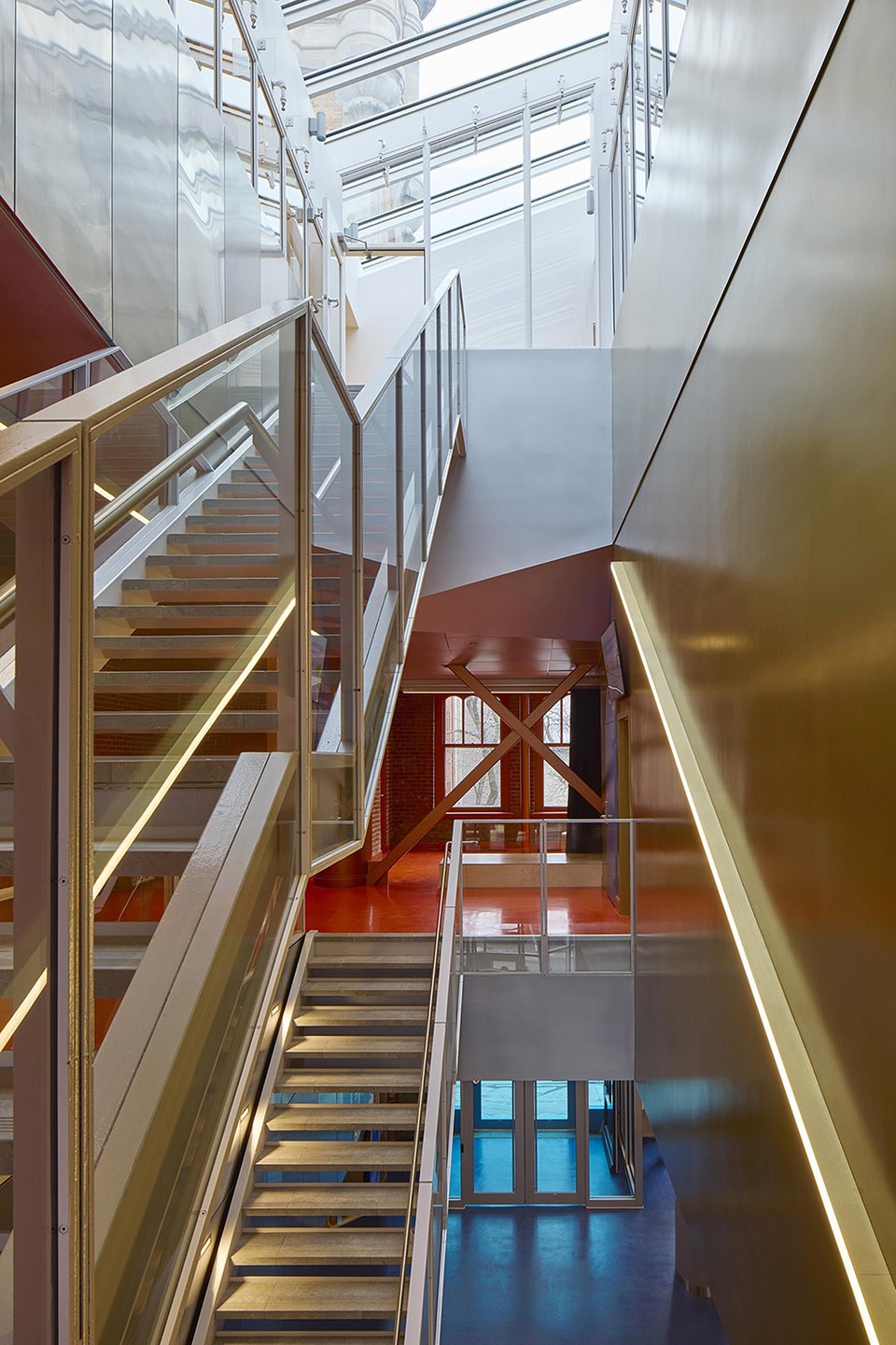
在门厅的中心,一座开放式楼梯引领着通往剧场、阅览室和多功能厅的动线。随着人们拾级而上,楼梯顶端灯笼形天窗的玻璃幕墙逐渐将塔楼的轮廓展现在眼前。
At the heart of the foyer, an open staircase initiates the sequence toward the theatre, the reading room, and the multifunctional hall. As one ascends, the tower gradually reveals itself through the glazing of the lantern that crowns the stair.
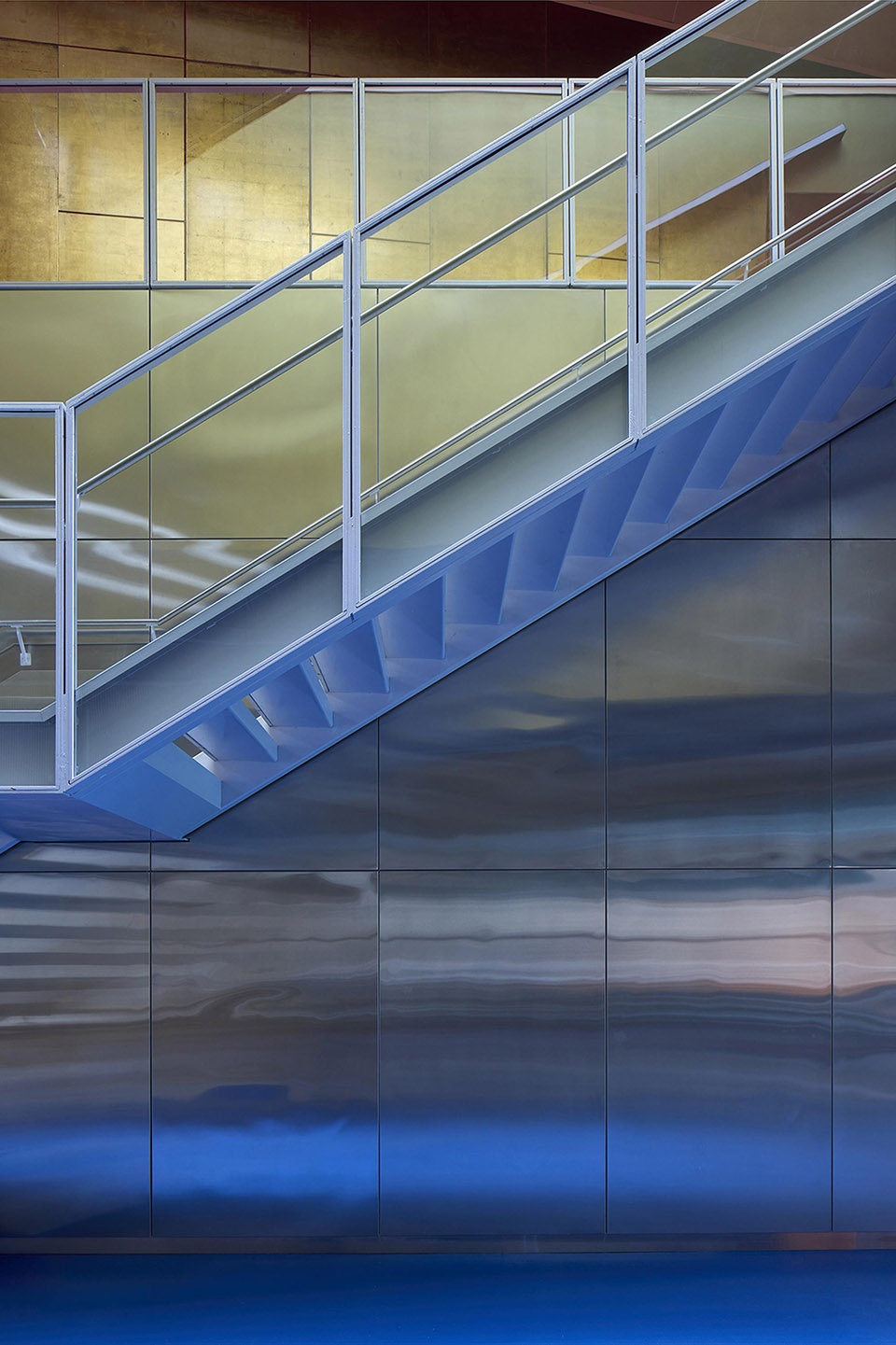
▼门厅中心的开放式楼梯,an open staircase at the heart of the foyer
▼门厅中心的开放式楼梯,an open staircase at the heart of the foyer
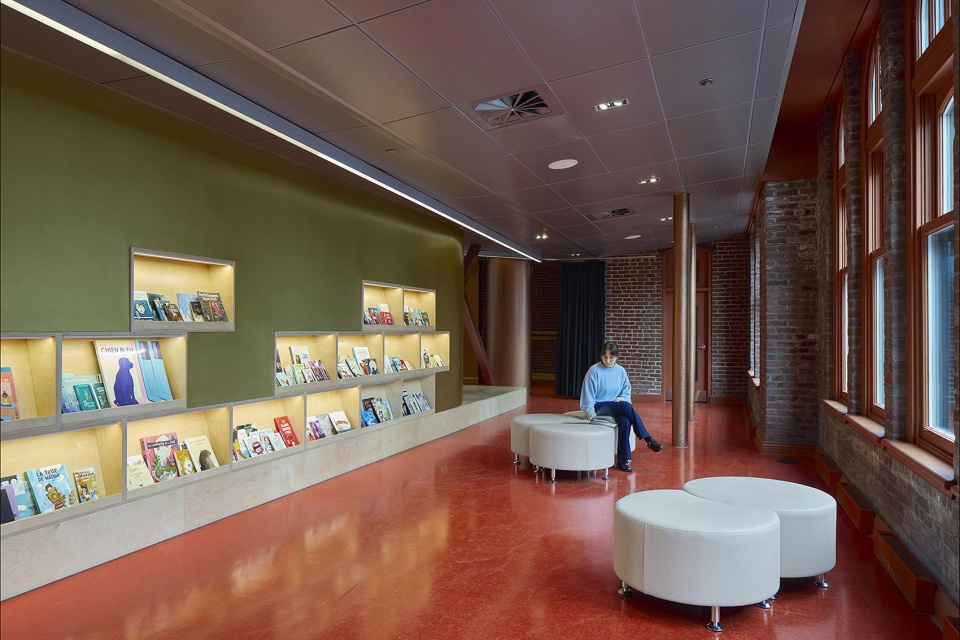
阅览室位于原消防站二层,得益于其高大的窗户,采光极佳。三层西侧的曼萨尔屋顶上开有天窗,为多功能厅的门厅引入了借光。一个小型三角形露台服务于行政办公室,并可眺望河景。
Located on the second floor of the original fire station, the reading room benefits from its tall windows. On the third floor, dormers piercing the west-facing mansard roof provide borrowed light to the foyer of the multifunctional hall. A small triangular terrace serves the administrative offices and opens views toward the river.
▼屋顶上开有天窗,dormers piercing the west-facing mansard roof provide borrowed light
丰富性Ambiance
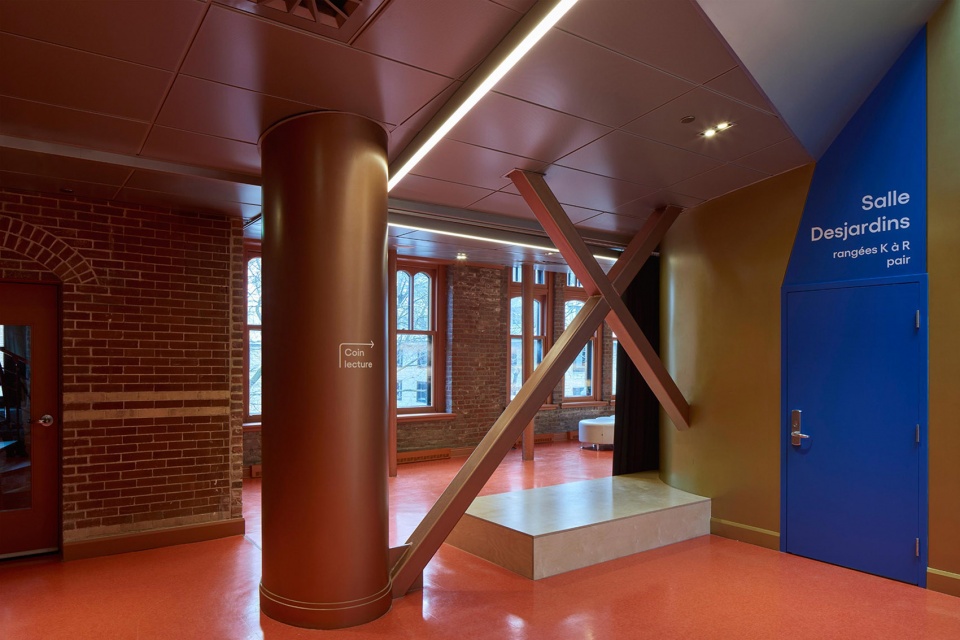
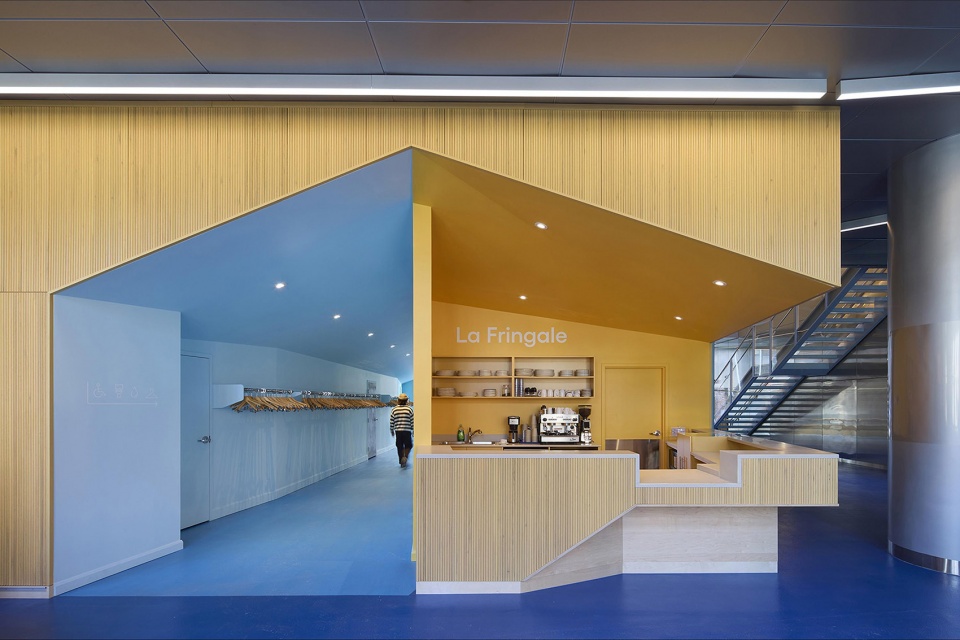
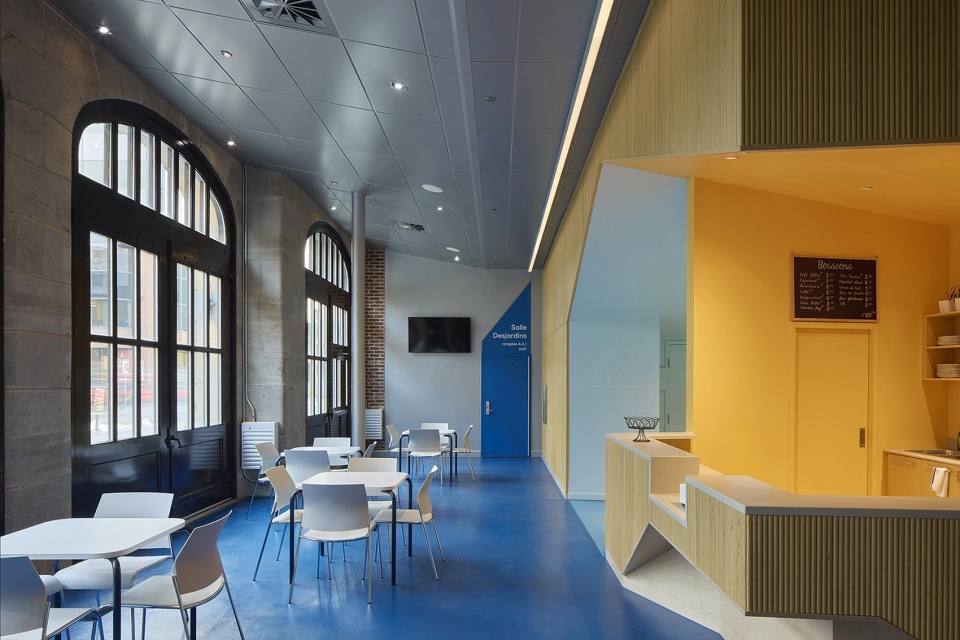
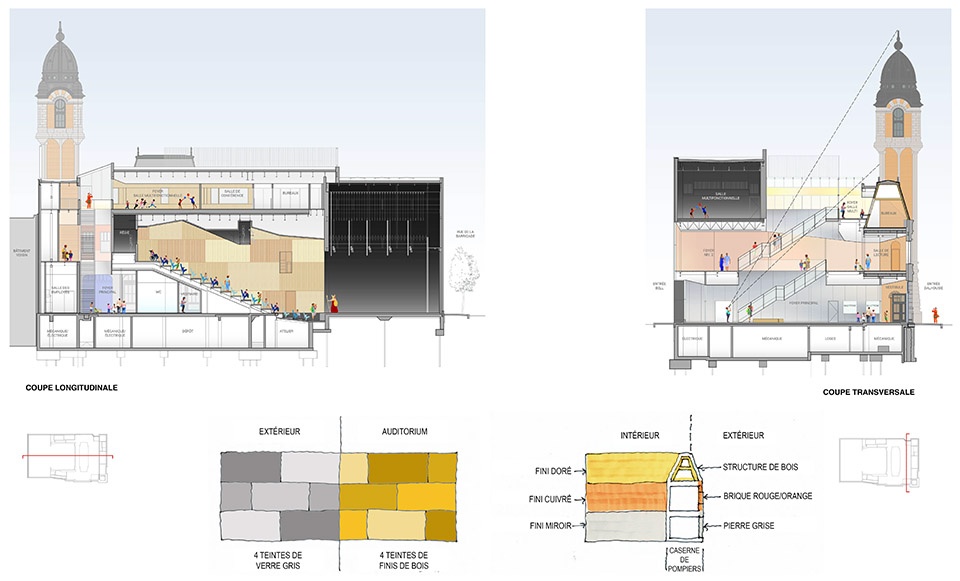
室内空间的形态与色彩所营造的氛围,为年轻观众打造了一段充满趣味的探索之旅,同时延续了这座历史悠久的消防站所特有的材质语言。一楼的灰色石材与镜面不锈钢墙面相呼应,既映照出剧场大厅的木质纹理,也折射出楼梯间的动态流转。二楼的橙色砖墙则与金属铜质饰面相互呼应。曼萨尔屋顶的木质元素,则与金属金色的色调以及多功能厅门厅的木质饰面相互呼应。
▼室内设计,interior design
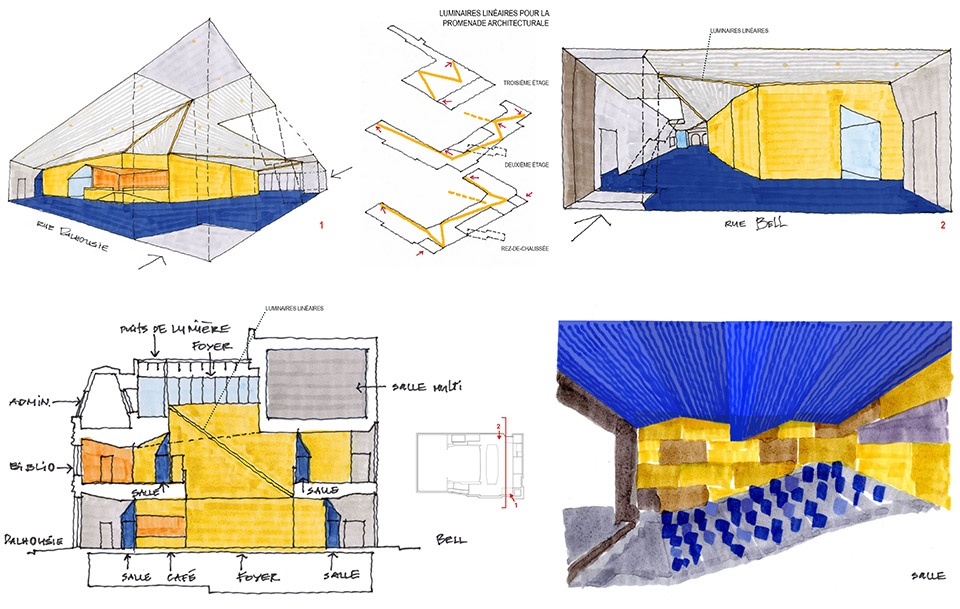
The atmospheres shaped by the forms and colours of the interior spaces create a playful journey for young audiences while extending the material language of the historic fire station. The grey stone of the ground floor is echoed by mirrored stainless-steel wall cladding, reflecting both the wood of the theatre hall and the movement within the staircase. The orange brick of the second floor finds resonance in a metallic copper finish. The wood of the mansard is answered by a metallic gold tone and by the wood cladding of the multifunctional hall foyer.
▼色彩所营造的氛围,colours of the interior spaces
▼剧场内部,interior of the theater
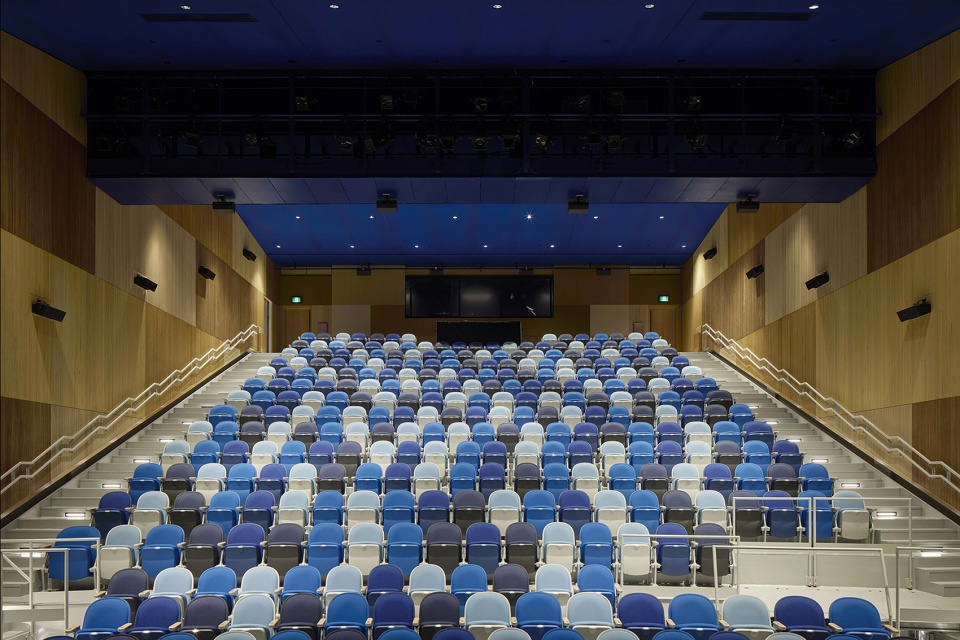
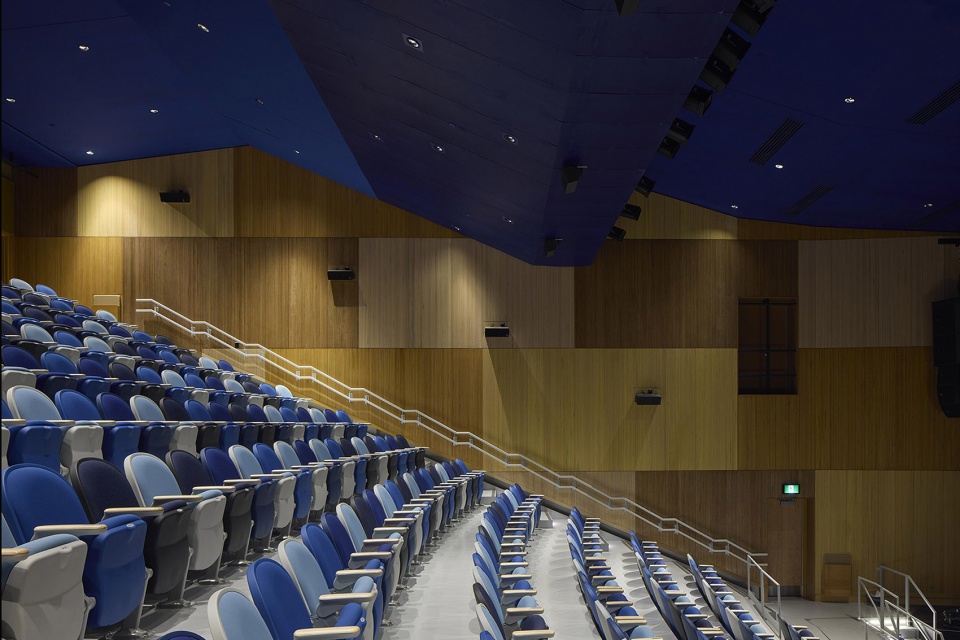
▼剧场内部,interior of the theater
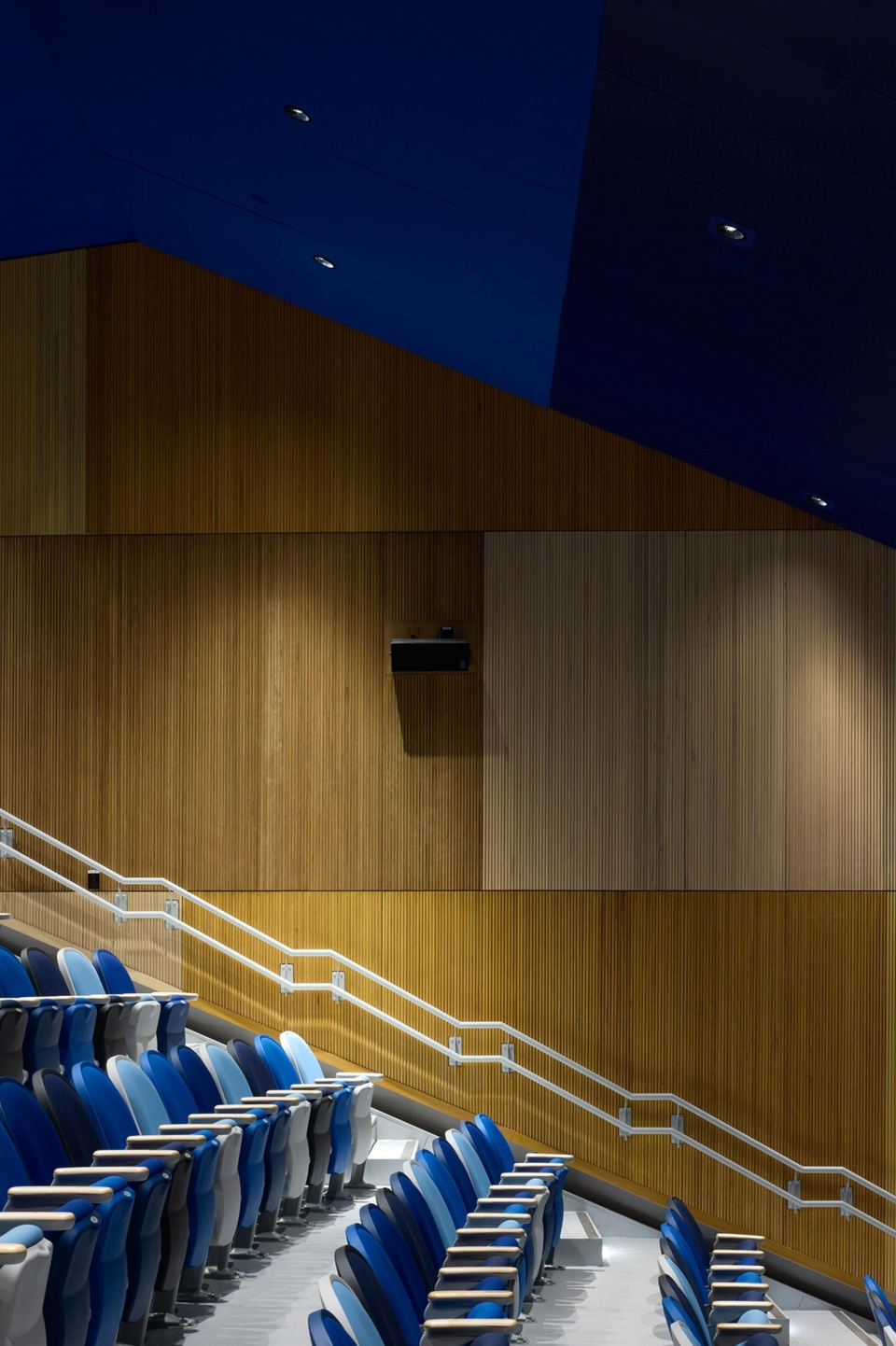
作为项目核心,剧场大厅以四种木色重新诠释了建筑外立面的设计元素。
At the heart of the project, the theatre hall reinterprets the exterior motif in four shades of wood.
▼以四种木色重新诠释了建筑外立面的设计元素,theatre hall reinterprets the exterior motif in four shades of wood
▼周围环境研究,surrounding environment analysis
▼平面图,plan
▼立面材料研究,facade material analysis
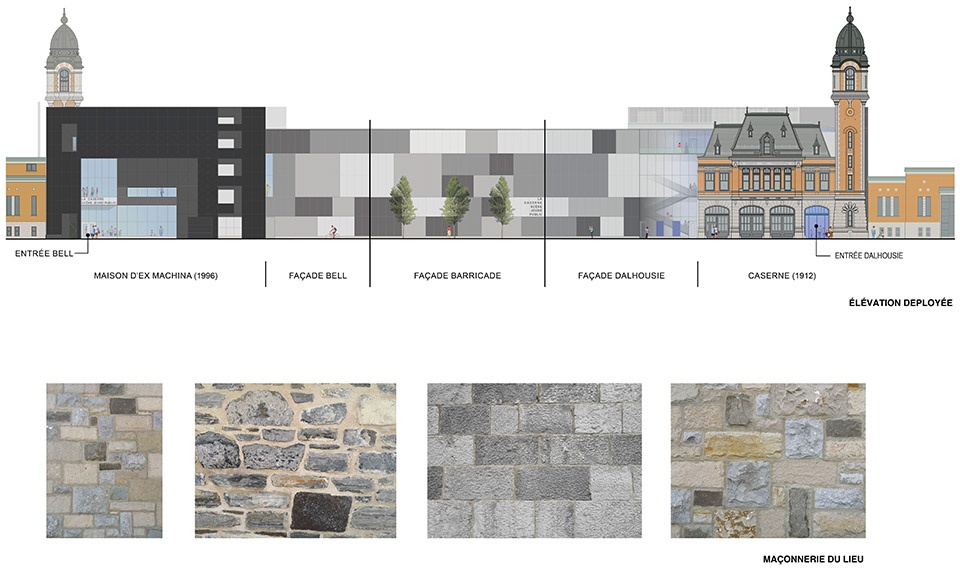
▼剖面图,section
Name: La Caserne – scène jeune public
Location: 103 Dalhousie Street, Quebec, QC, G1K 4B9
110 Bell Street, Quebec, QC, G1K 0L4
Opening date: November 4, 2025
Client: La Caserne – scène jeune public (Jean-Philippe Joubert, Executive Director and Co-Artistic Director)
Architects: SBTA Inc. + Delort and Brochu Architectes
Project team (design and construction):
Dino Barbarese, Vladimir Topouzanov, Sophie Trépanier-Laplante, Christopher Dubé, Marc Pape, Anna Zakharova, Louis-Guillaume Paquet, Flavia Socol, Julien Denault, Geneviève Deguire, Cédric Delort, Jean Brochu, Caroline Vinatier, Ghislain Dubé, Hugo Sénéchal, Caroline Lévesque, Léa Pasquet, Jonathan Estrade, Pierre Lépine