贝尔方丹住宅,加拿大 / UUfie
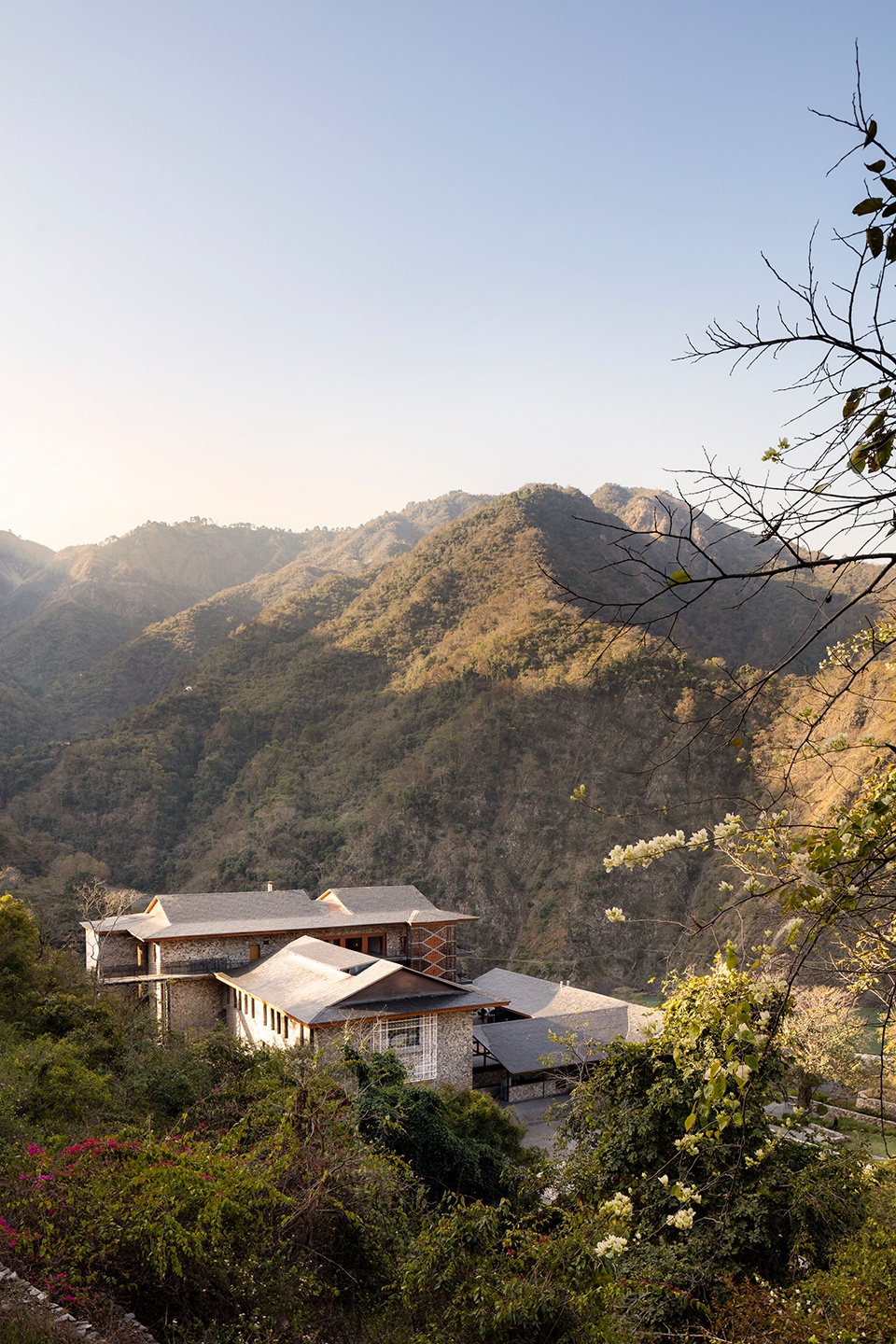
坐落于加拿大安大略省贝尔方丹尼亚加拉断崖陡峭而茂密的林地地形之中,贝尔方丹住宅以一条由地形、行走体验与家庭生活共同塑造的连续建筑漫游路径展开。
Set within the steep, wooded terrain of the Niagara Escarpment in Belfountain, Ontario, Belfountain House unfolds as a continuous architectural promenade shaped by topography, movement, and family life.
▼鸟瞰森林中的住宅,House within the forest aerial view
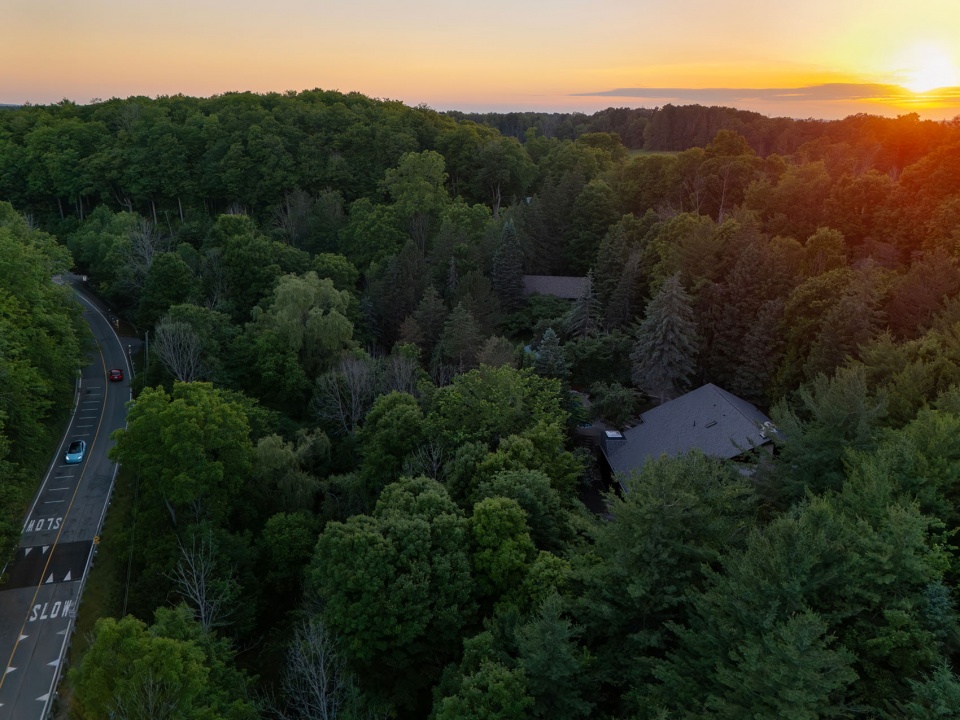
项目位于一片面积约3.21英亩的茂密断崖森林之中,将一座20世纪70年代的木屋改造为一座四层、面积400平方米的住宅,服务于一位哲学家、一位艺术家、他们的孩子以及一只狗的家庭生活。设计保留了原有建筑北侧部分结构,同时沿原有轮廓向南扩建,以最大限度减少对场地的干扰,并维持建筑与景观之间的紧密联系。项目并未依赖单纯扩张,而是通过减法、重组以及清晰的剖面关系来塑造空间。陡峭地势、成熟树冠以及对开放性的需求同时带来了空间与结构上的挑战,要求建筑必须细致回应坡地不断变化的场地条件。
Located on 3.21 acres of densely forested escarpment, the project transforms a 1970s chalet into a 400-square-metre, four-level residence for a philosopher, an artist, their children, and a dog. The design preserves the northern portion of the existing structure while extending the southern half along the original footprint, minimizing disturbance to the site and maintaining a close relationship with the landscape. Rather than relying on expansion, the project is shaped through subtraction, reorganization, and sectional clarity. The steep terrain, mature tree canopy, and desire for openness presented both spatial and structural challenges, requiring the architecture to respond carefully to the changing conditions of the slope.
▼外观概览,Exterior overview
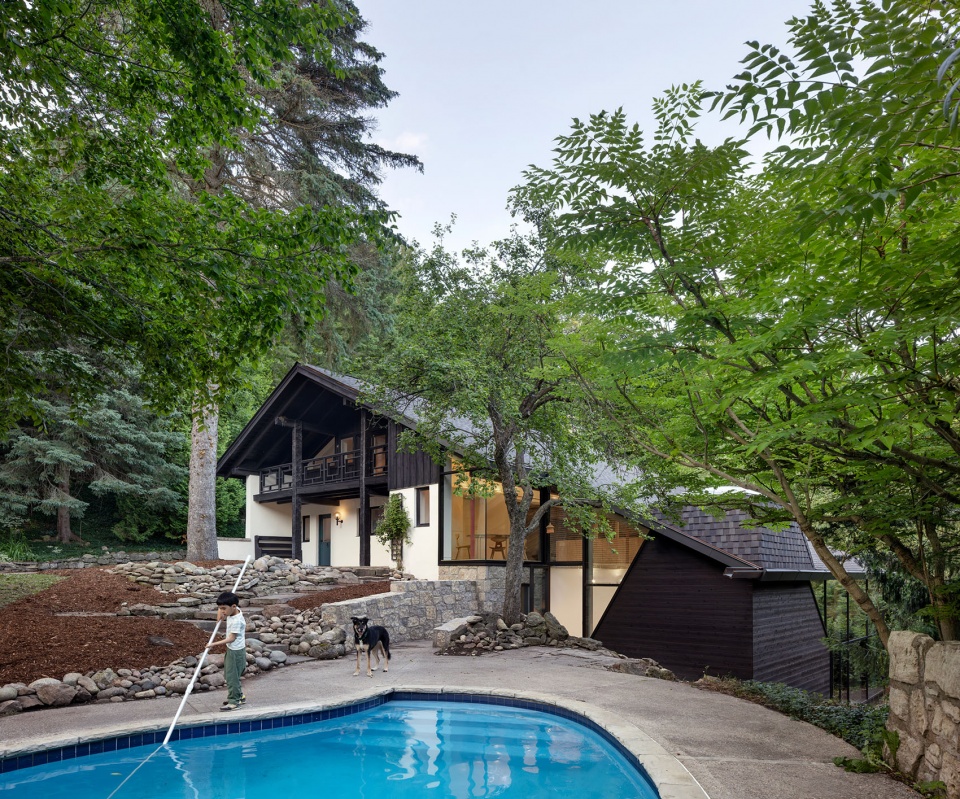
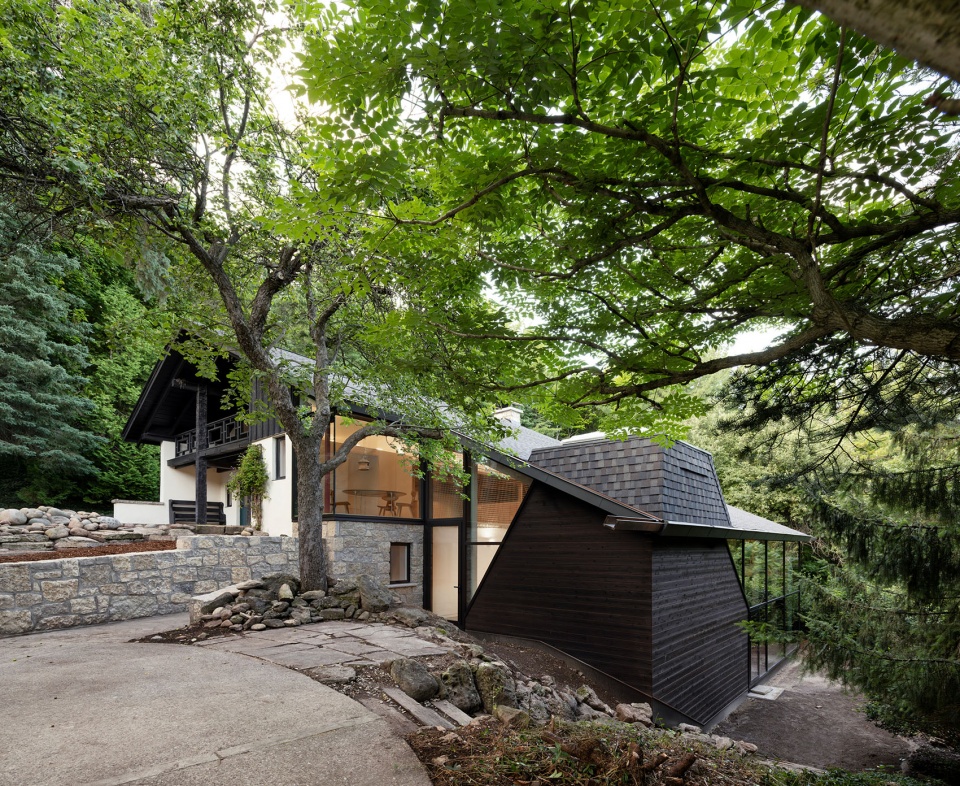
一片延展的长屋顶横跨山坡,将住宅生活统一收纳于连续的跨度之下。建筑被构想为对地形的剖面回应,通过高差变化、空间压缩与光线组织,而非僵硬的围合关系来构建空间秩序,从而形成一处与日常生活节奏相契合的流动性室内景观。
A single elongated roof stretches across the hillside, gathering the life of the house beneath one continuous span. Conceived as a sectional response to the terrain, the architecture organizes space through shifts in level, compression, and light rather than rigid enclosure, creating a fluid interior landscape attuned to the rhythms of daily life.
▼建筑立面,Building facades
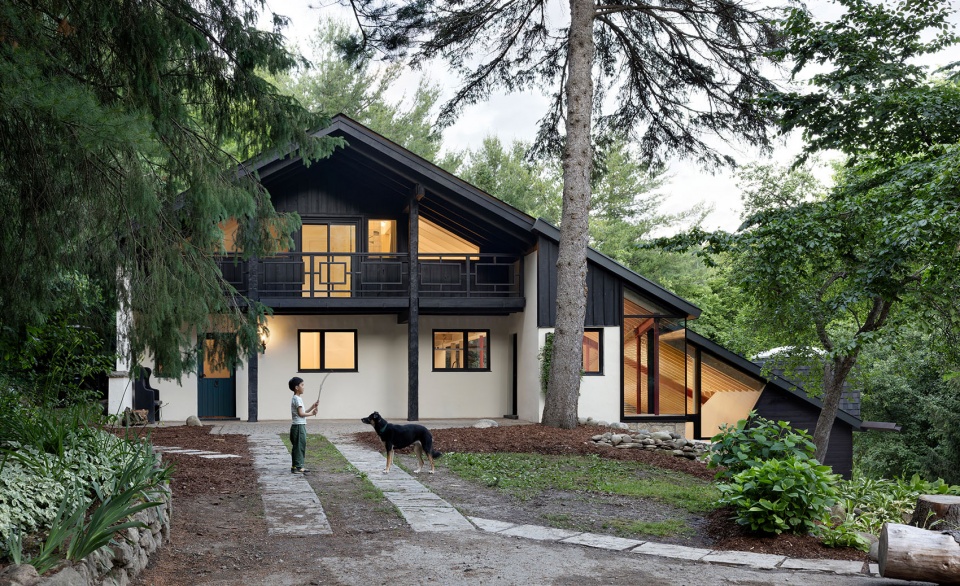
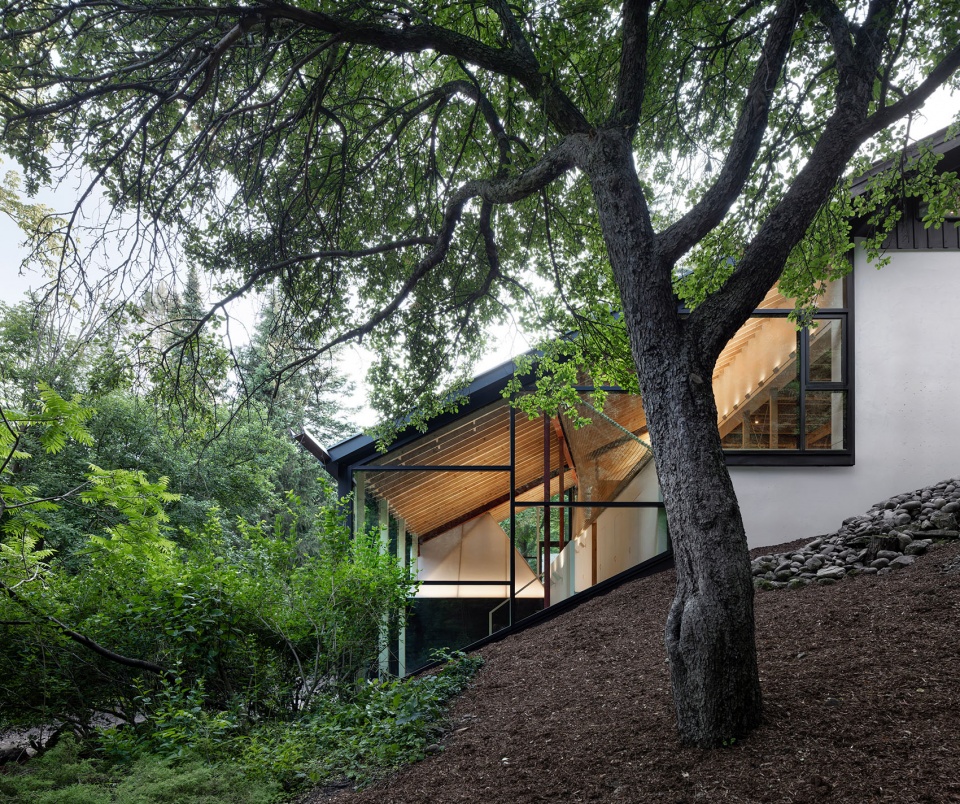
▼建筑立面近景,Building facade close view
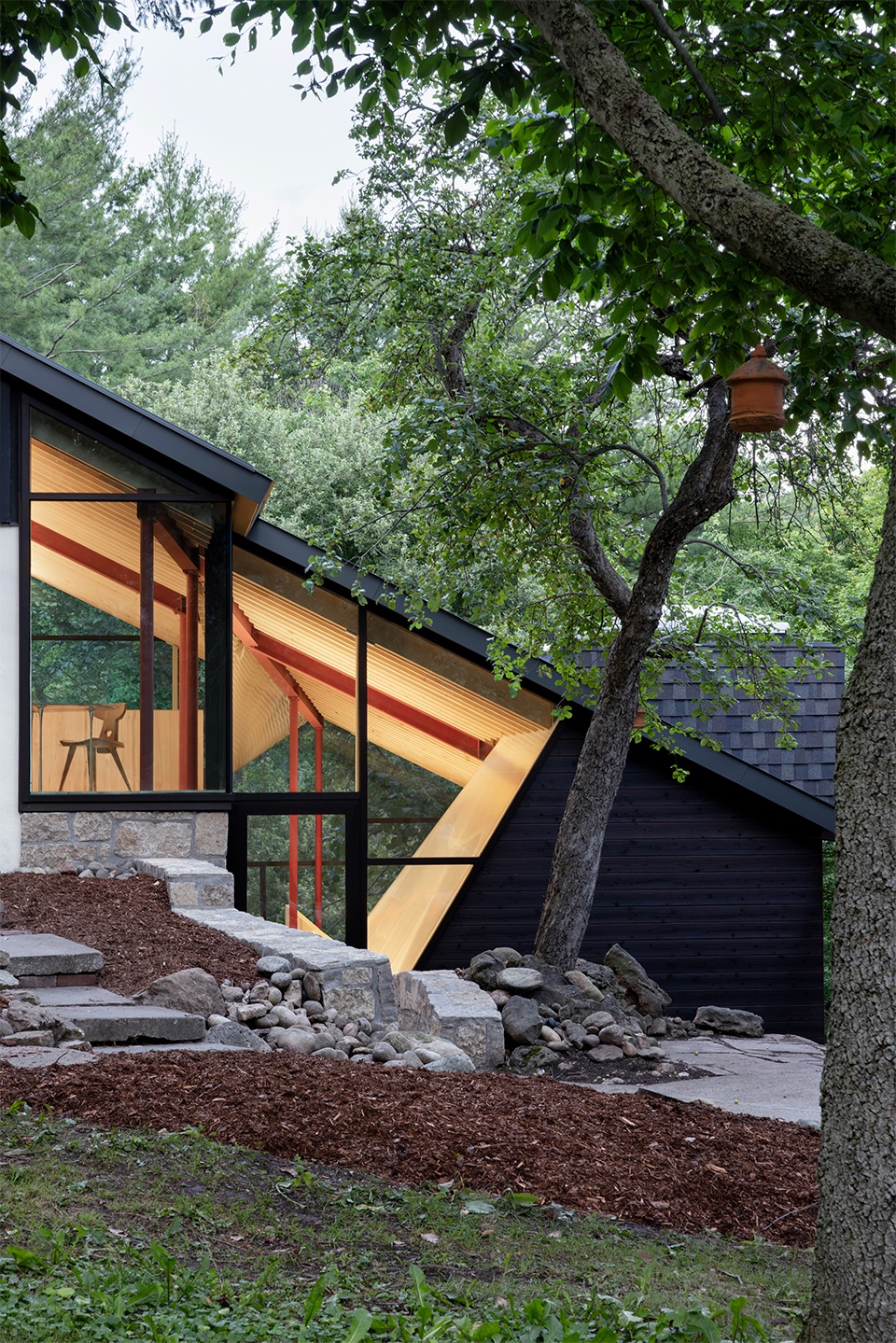
▼外观细部,Exterior detail
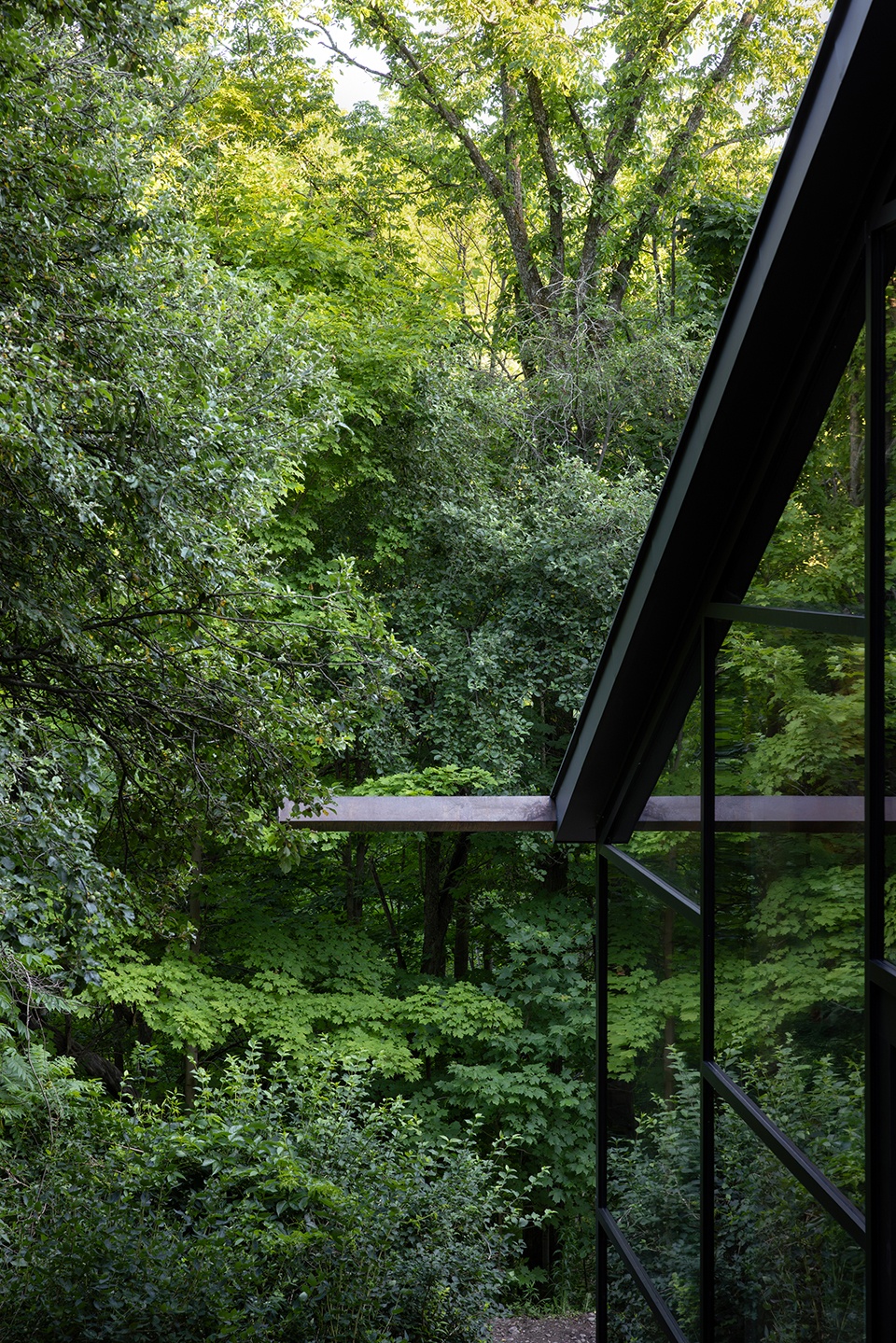
穿行于住宅中的体验令人联想到在周边森林中徒步的节奏——连续、片段化,并不断变化着空间氛围。抵达过程缓慢展开:访客经过艺术家的工作室与泳池后,住宅才静静显现于树林之间。入口通过一个被木材包覆、尺度压缩的门厅进入,随后豁然展开为一处由壁炉锚定的挑高客厅。裸露的椽架向外延伸至树冠方向,并由斜向红色钢梁穿插其中,在稳定结构跨度的同时形成鲜明的视觉对比。悬挂于主要起居空间上方的大型网面同时兼具防护、吊床与可使用的平台功能,可供玩耍、聚集与休憩。
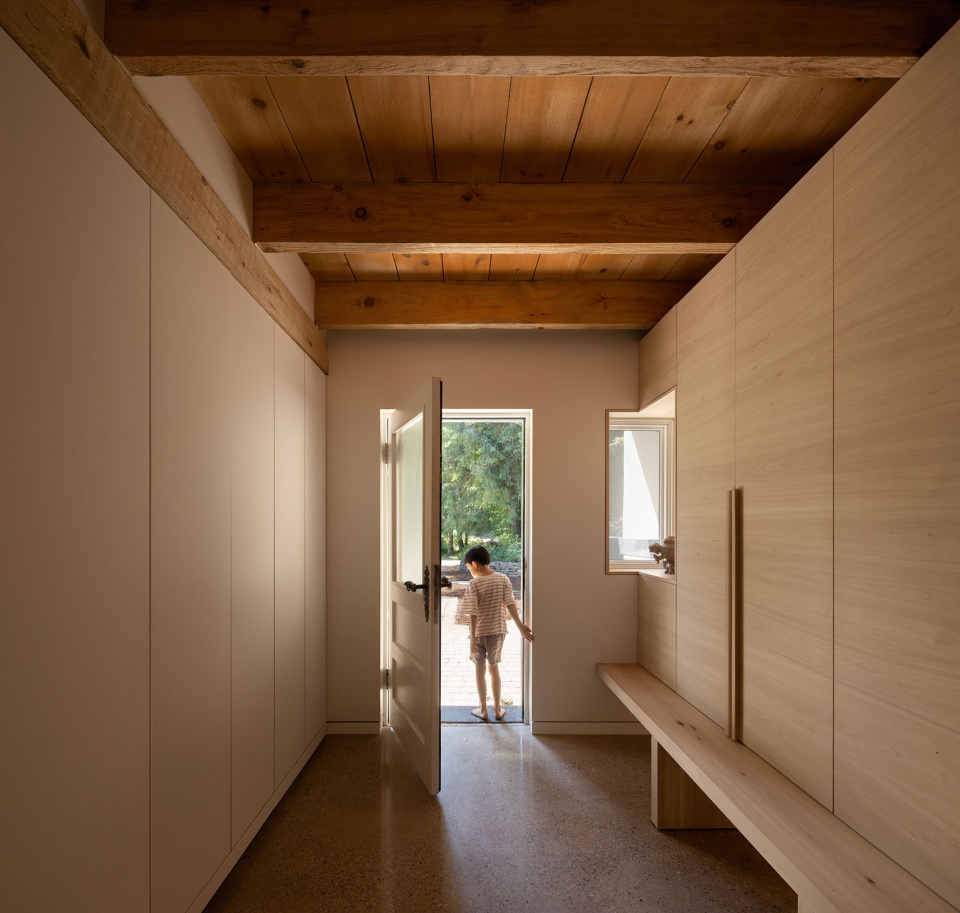
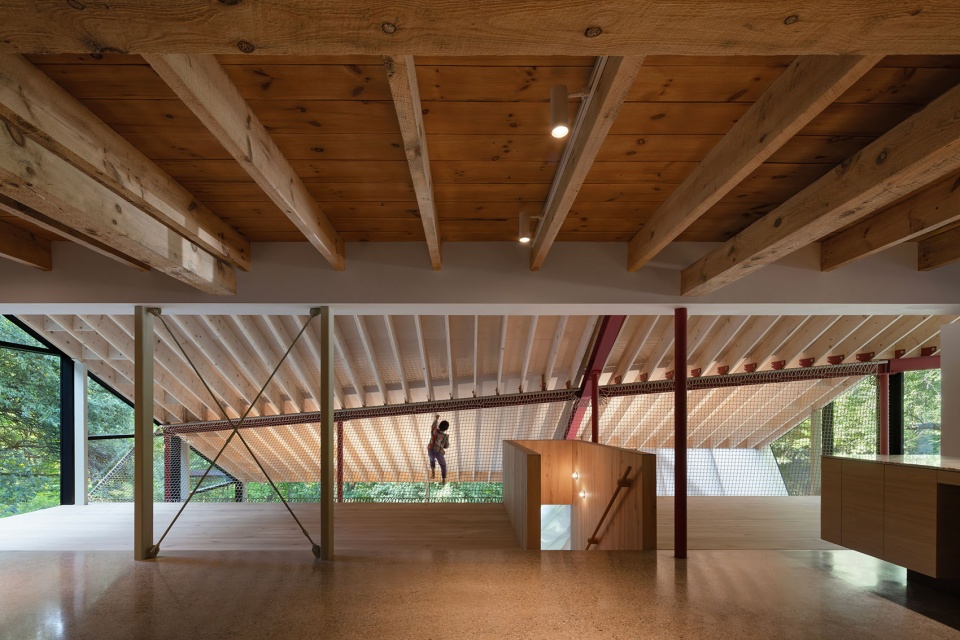
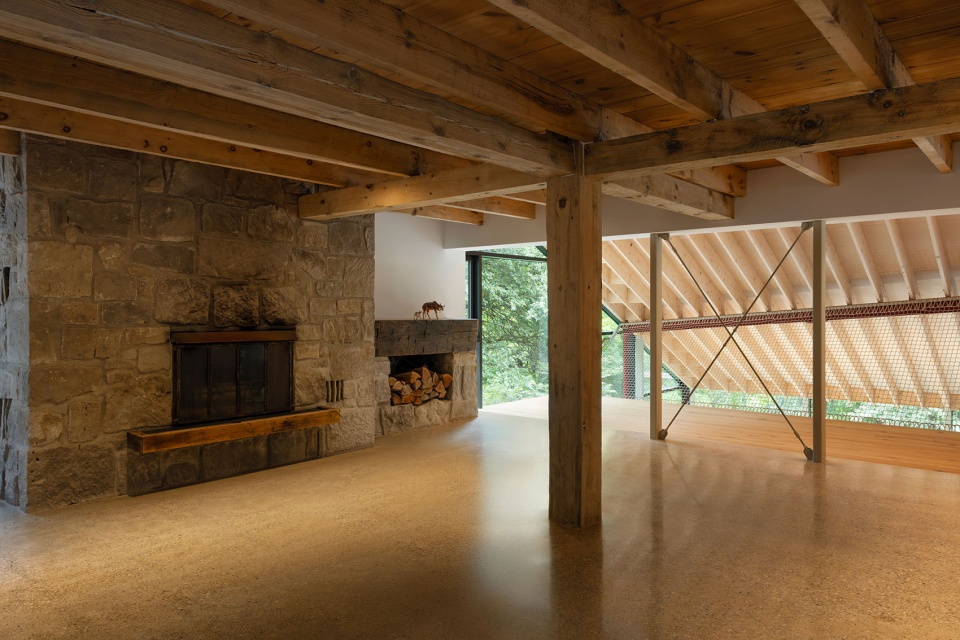
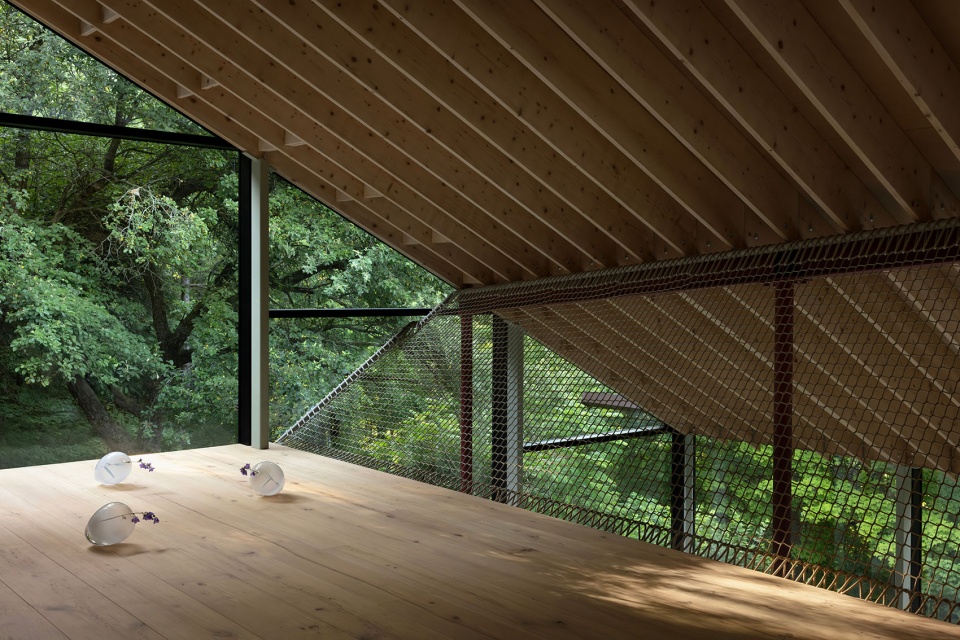
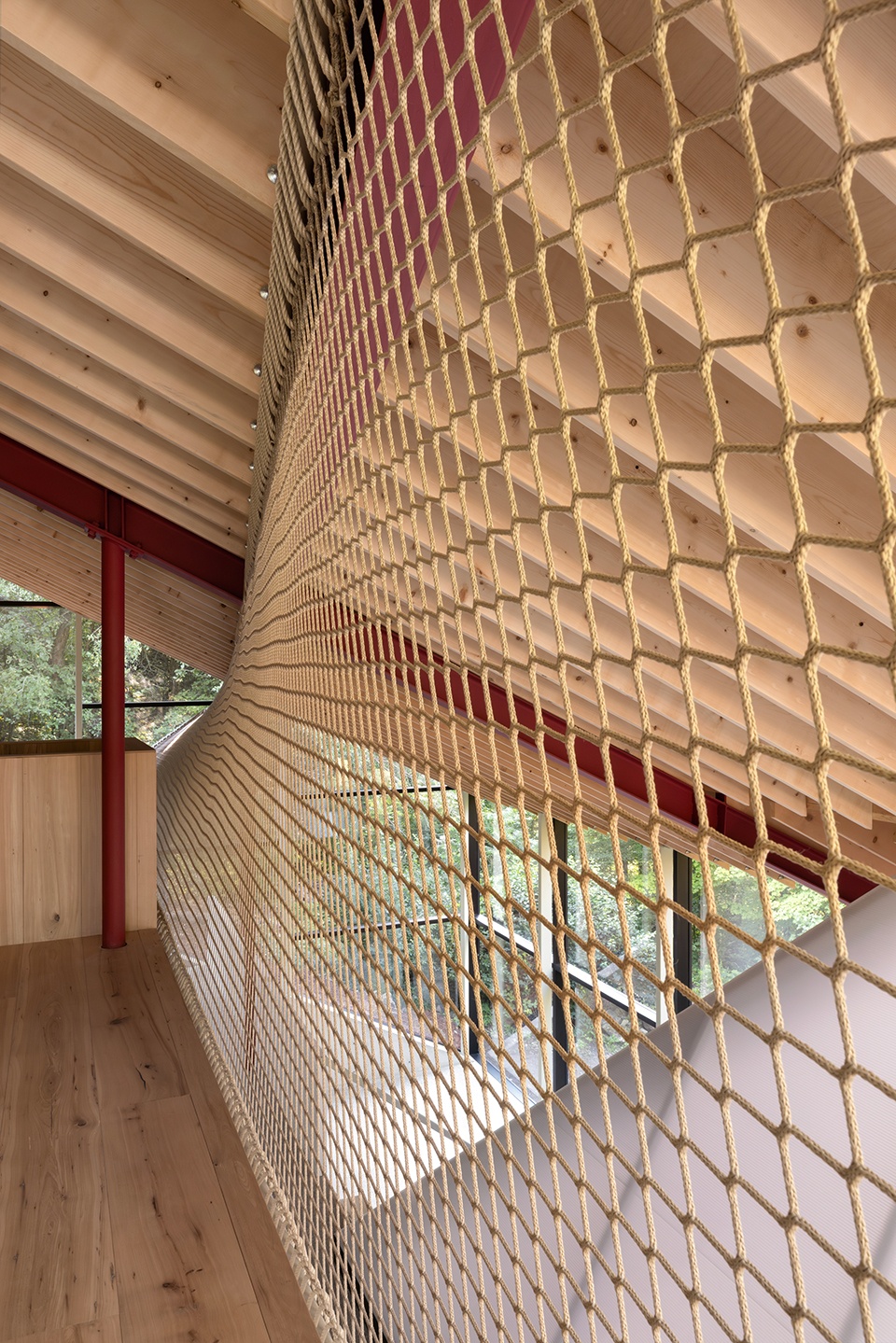
Movement through the house recalls the cadence of hiking through the surrounding forest—sequential, episodic, and constantly shifting in atmosphere. The approach is gradual: visitors pass the artist’s studio and pool before the house quietly emerges within the trees. Entry occurs through a compressed timber-lined mudroom that gives way to a soaring living room anchored by a fireplace. Exposed rafters extend outward toward the canopy, intersected by diagonal red steel beams that stabilize the span while introducing a bold visual counterpoint. Suspended above the main living space, a large net functions simultaneously as barrier, hammock, and inhabitable surface for play, gathering, and rest.
▼入口空间,Entry space
▼起居空间,Living space
▼厨房与餐厅,Kitchen and dining space
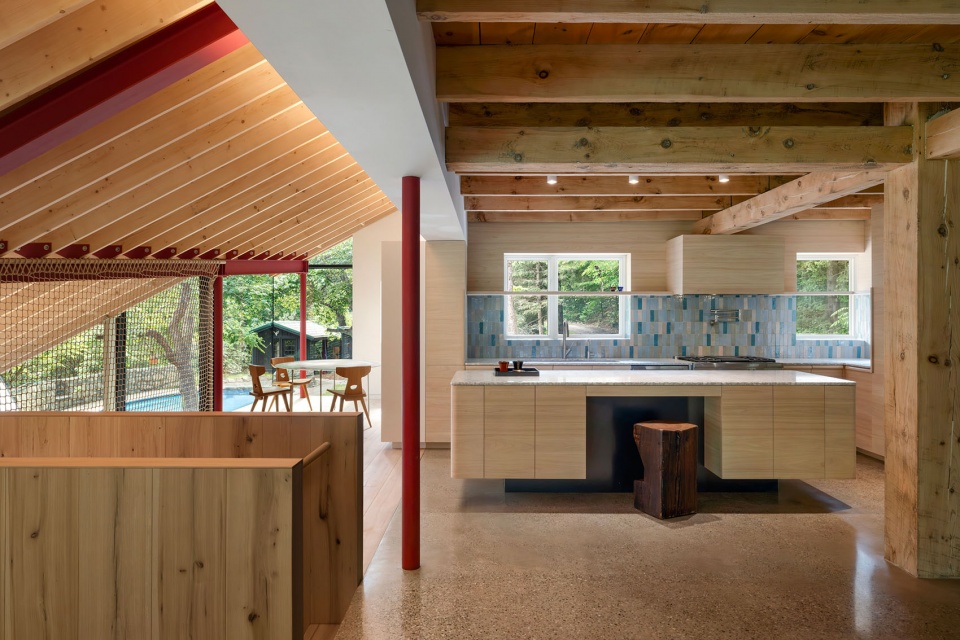
▼餐厅一角,A corner of dining space
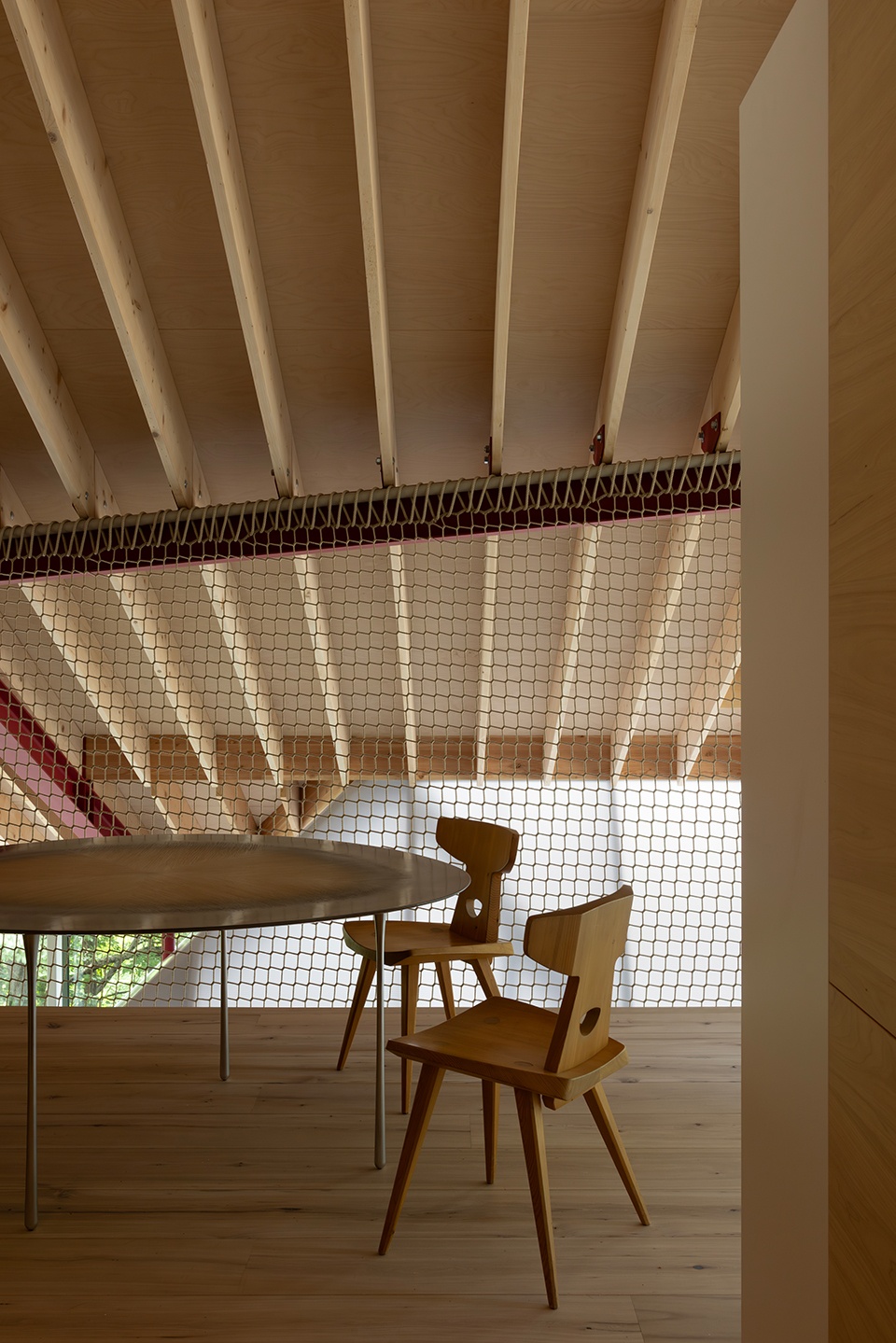
▼网面活动空间,Net play space
▼悬挂网面细部,Suspended inhabitable net detail
连续的木质与玻璃界面进一步强化了室内与景观之间的联系。季节性光线、天气变化与环境声响成为住宅中的积极组成元素,而再生榆木、本地石材、灰泥以及辐射混凝土地坪则在材料层面使项目扎根于场地环境之中。随着空间逐渐向坡地深处延伸,建筑也愈发嵌入地形之内。两种形成鲜明对比的楼梯系统——一处嵌入山坡,一处轻盈悬挑于其上——分别构建出不同的景观体验。较低楼层则容纳了娱乐与休憩功能,包括桑拿房、健身房、泳池连接空间,以及一间由倾斜聚碳酸酯包覆、夜间散发柔和灯笼般光晕的隐蔽客房。
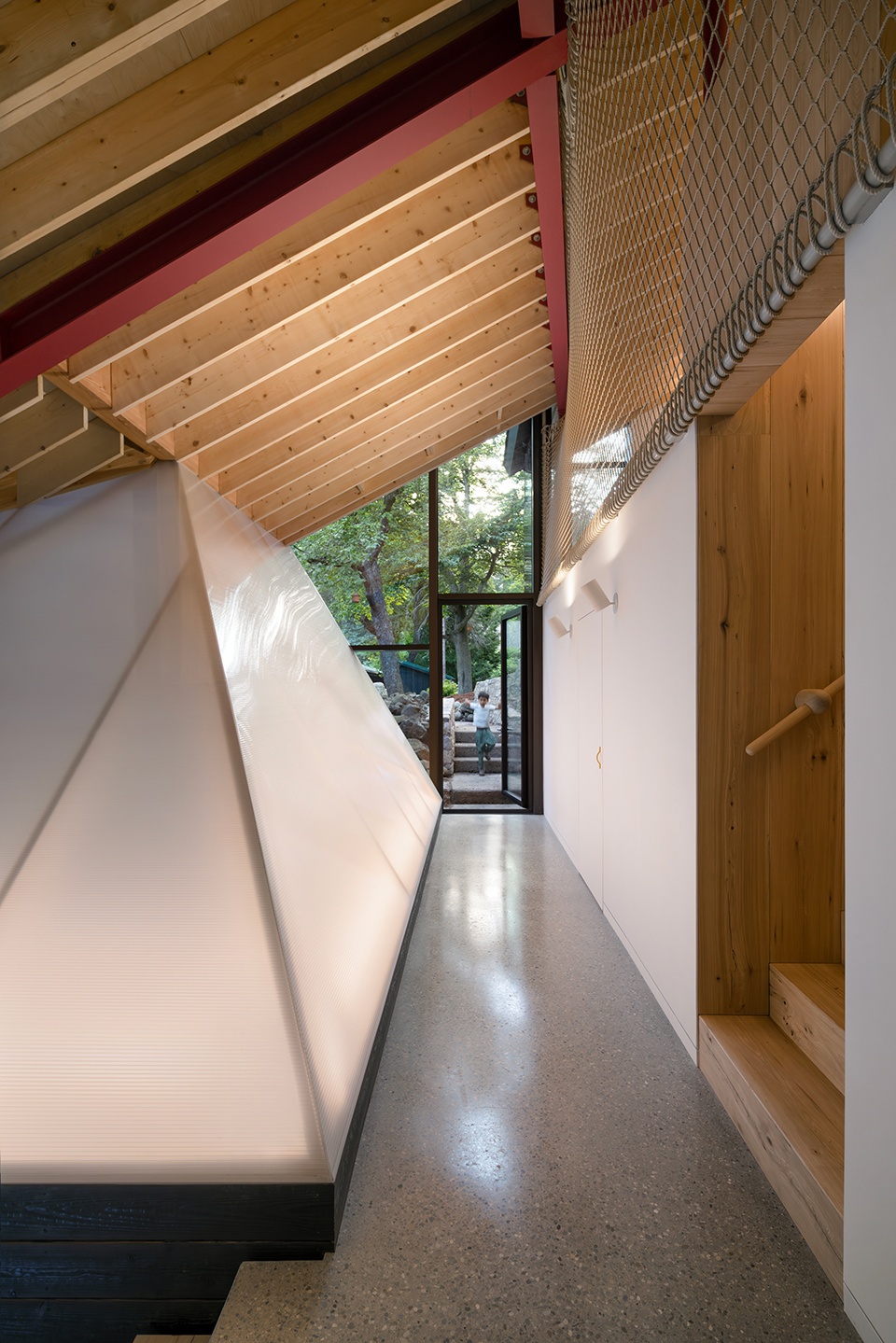
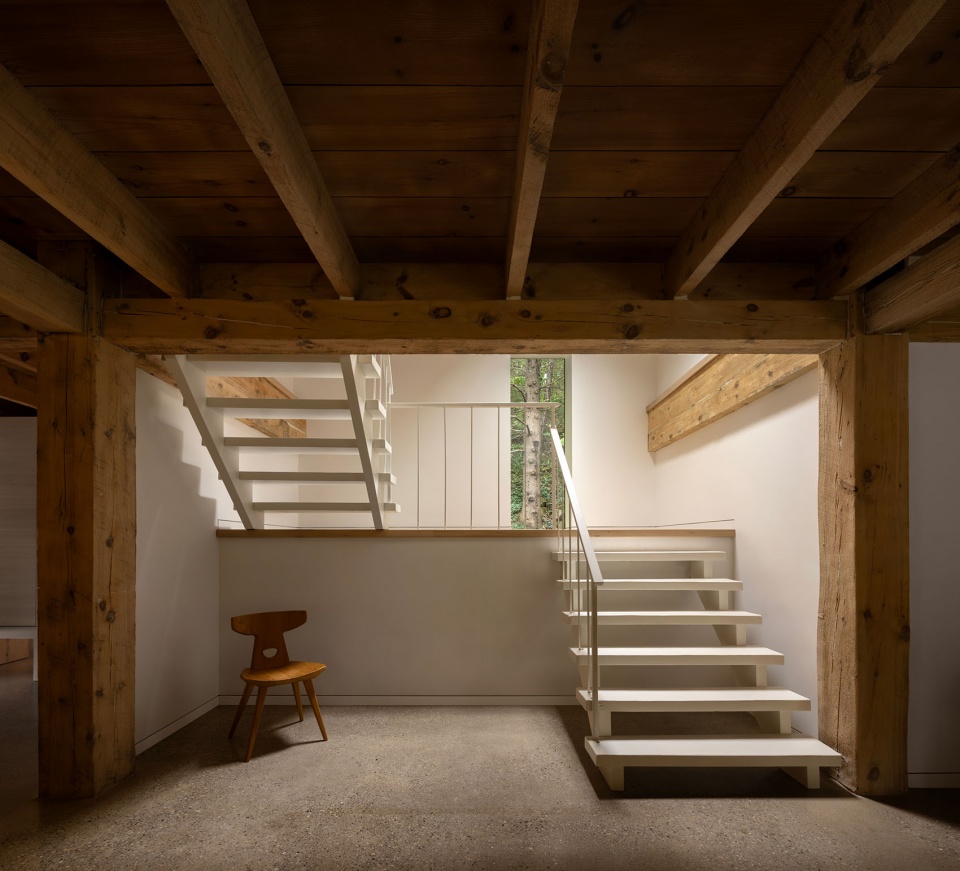
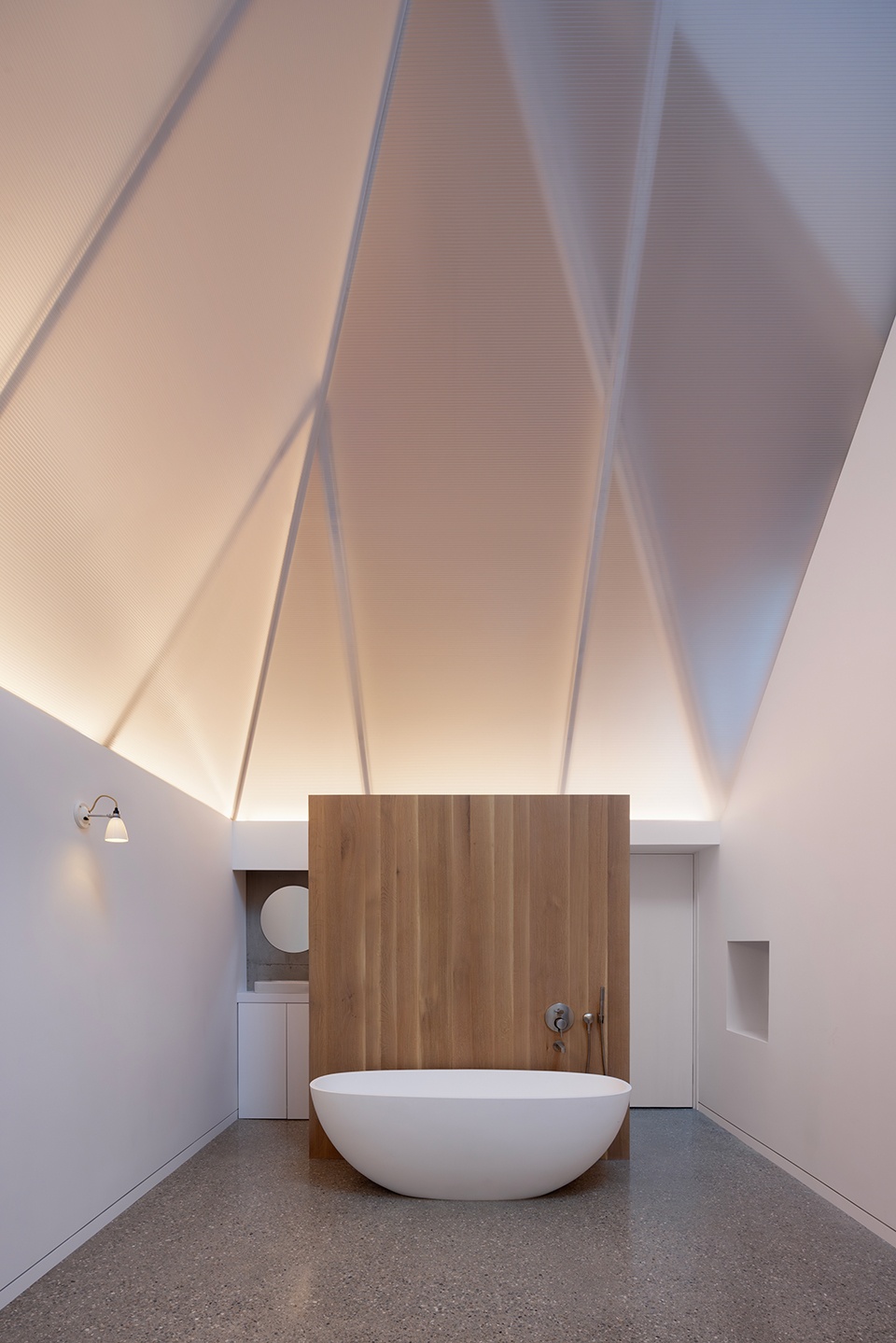
A continuous plane of wood and glazing reinforces the relationship between interior and landscape. Seasonal light, weather, and ambient sound become active elements within the home, while reclaimed elm, local stone, stucco, and radiant concrete floors ground the project materially within its setting. As the sequence descends into the slope, the architecture becomes increasingly embedded within the terrain. Contrasting stair elements—one carved into the hillside and the other suspended lightly above it—frame distinct encounters with the landscape. Lower levels contain spaces for recreation and retreat, including a sauna, gym, pool connection, and a concealed guest suite wrapped in angled polycarbonate that emits a soft lantern-like glow at night.
▼上层楼梯口,Upper stair entrance
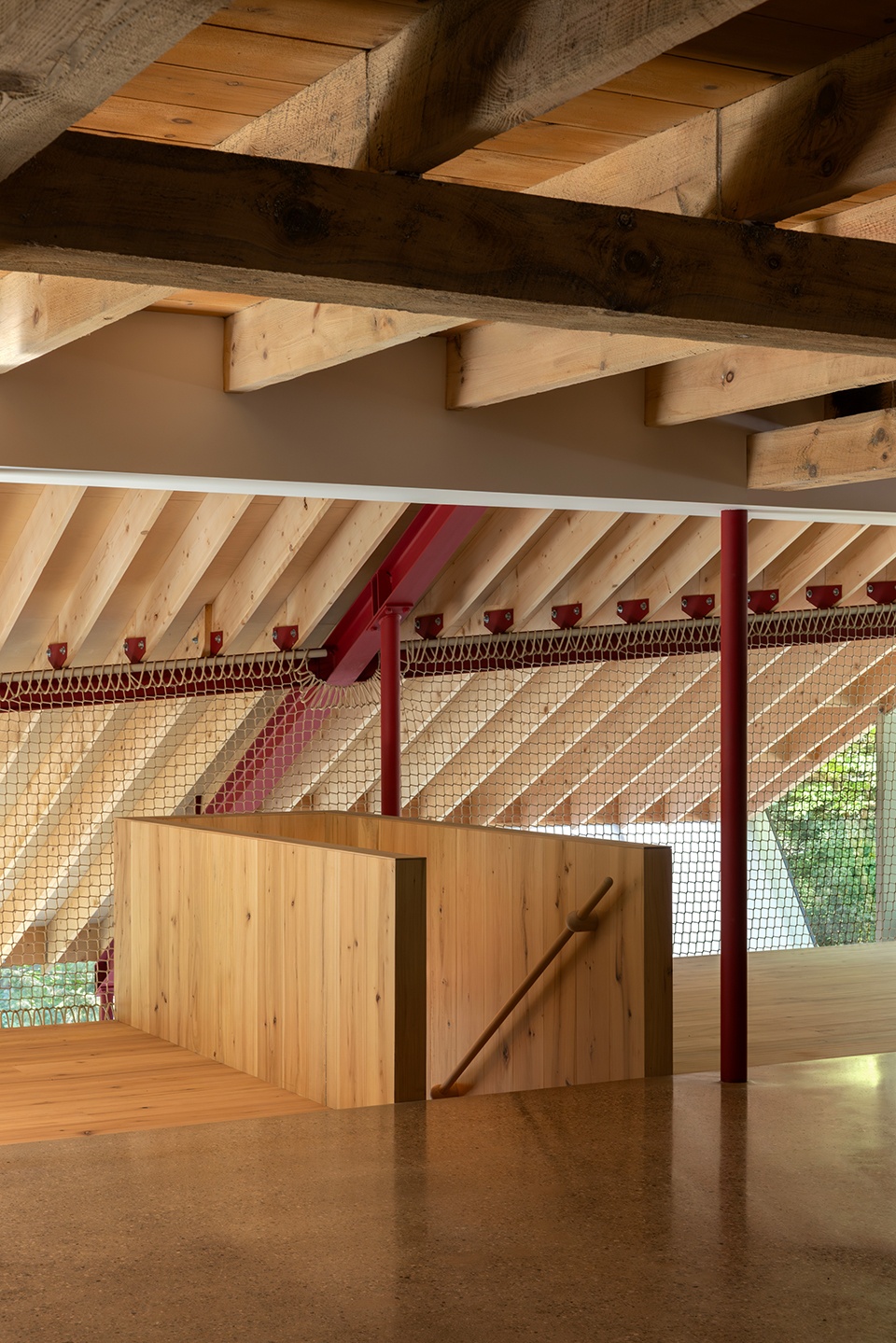
▼上层楼梯空间,Upper stair space
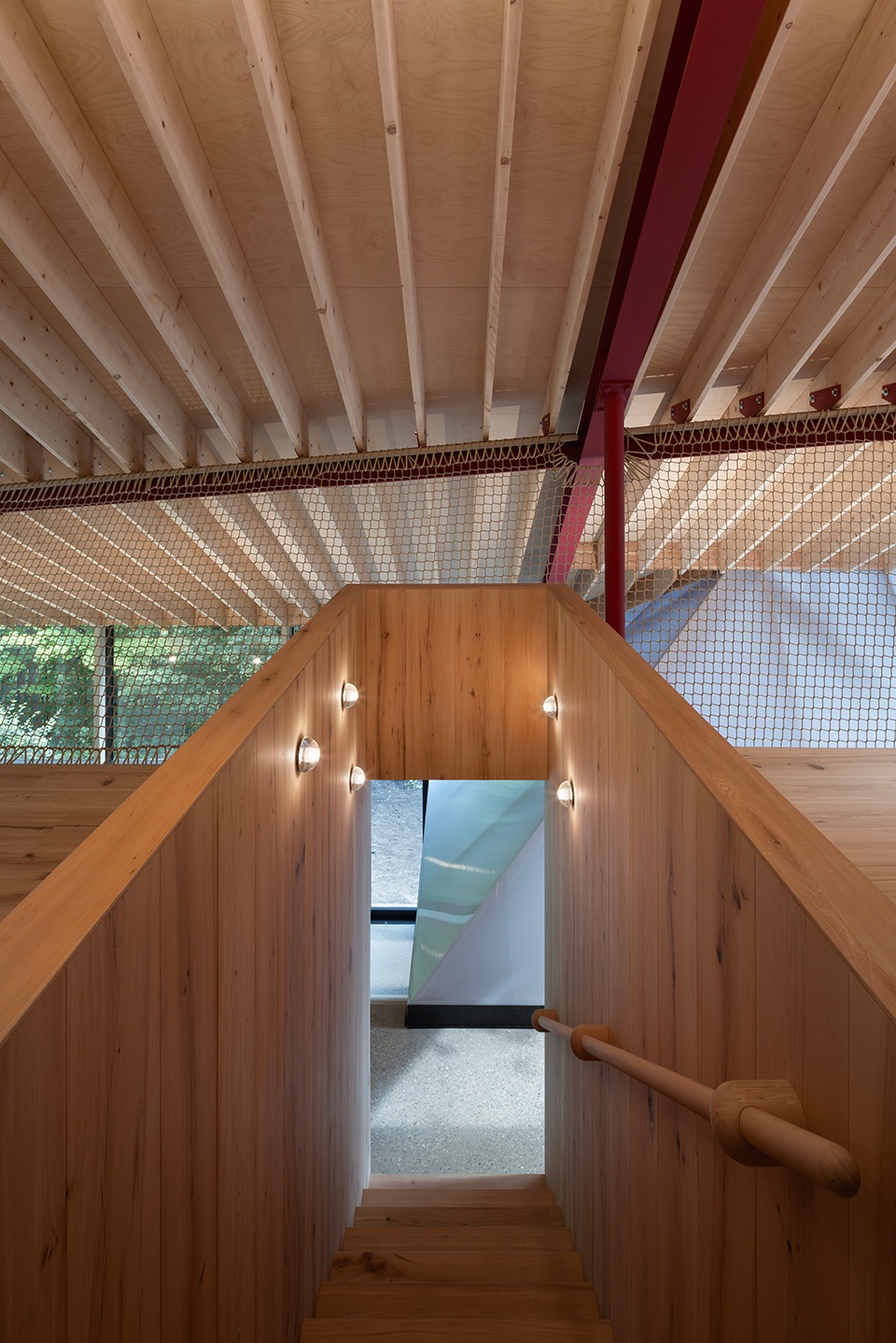
▼下层楼梯空间,Lower stair space
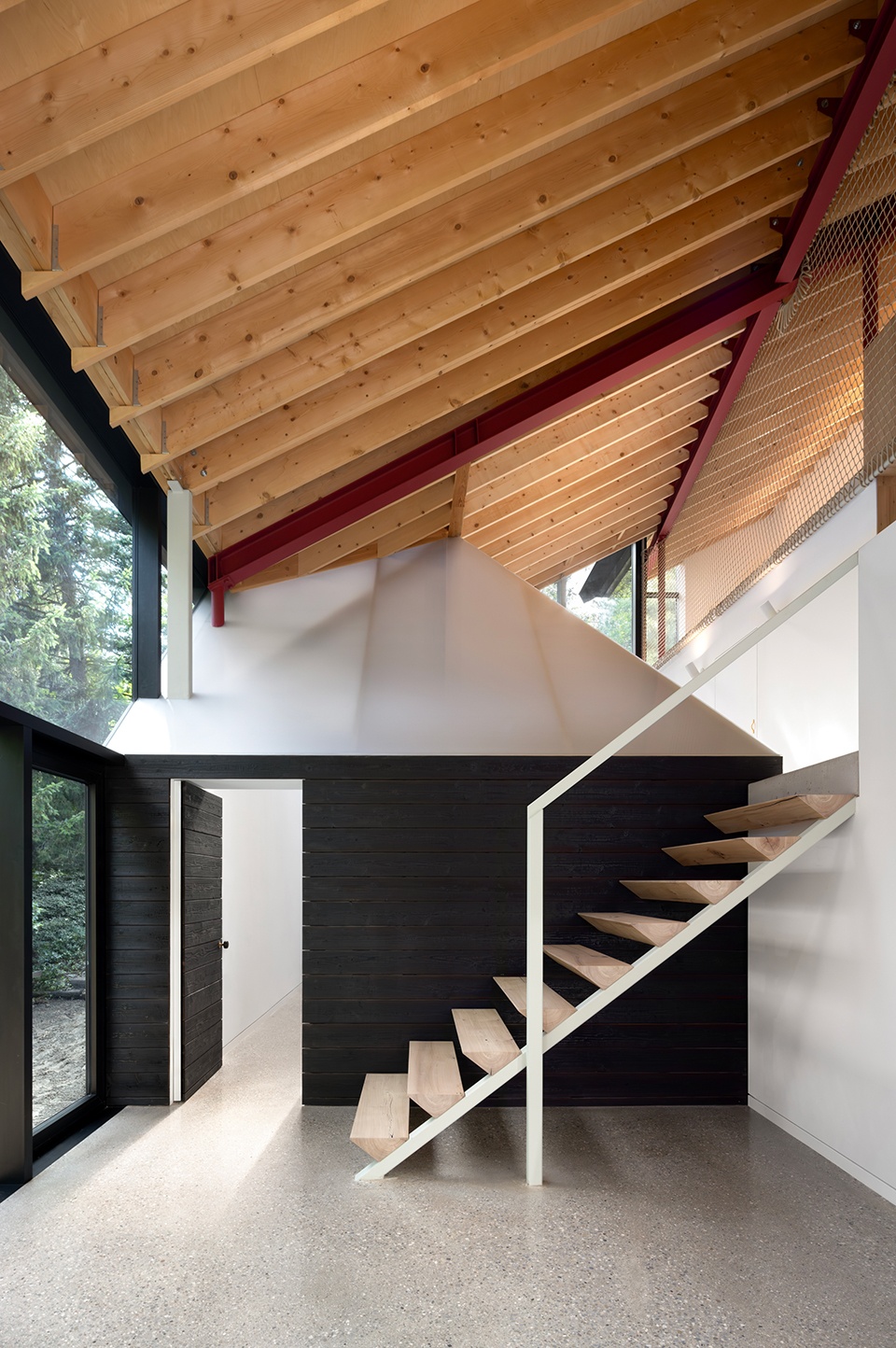
▼下层楼梯近景,Lower stair close view
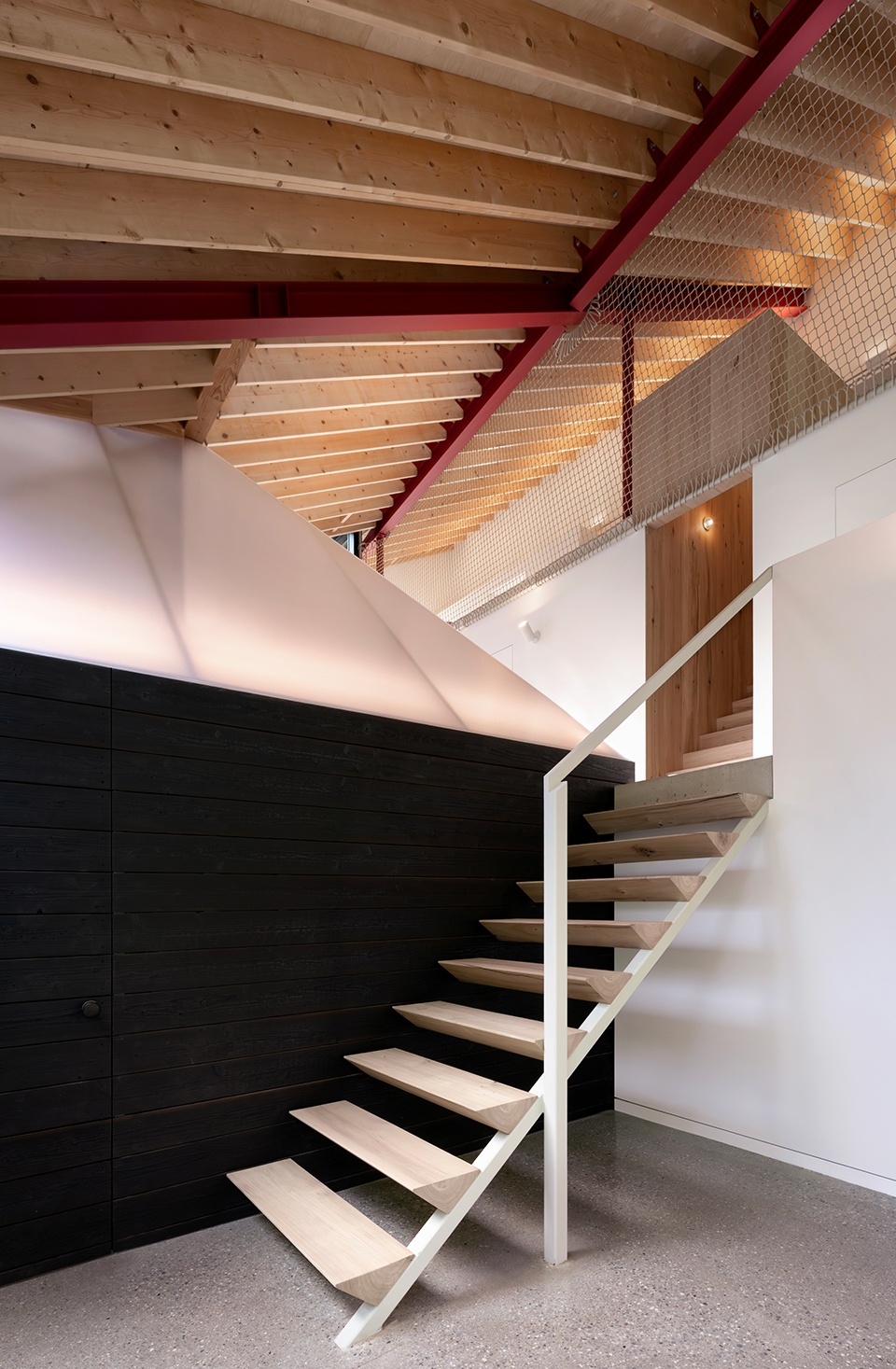
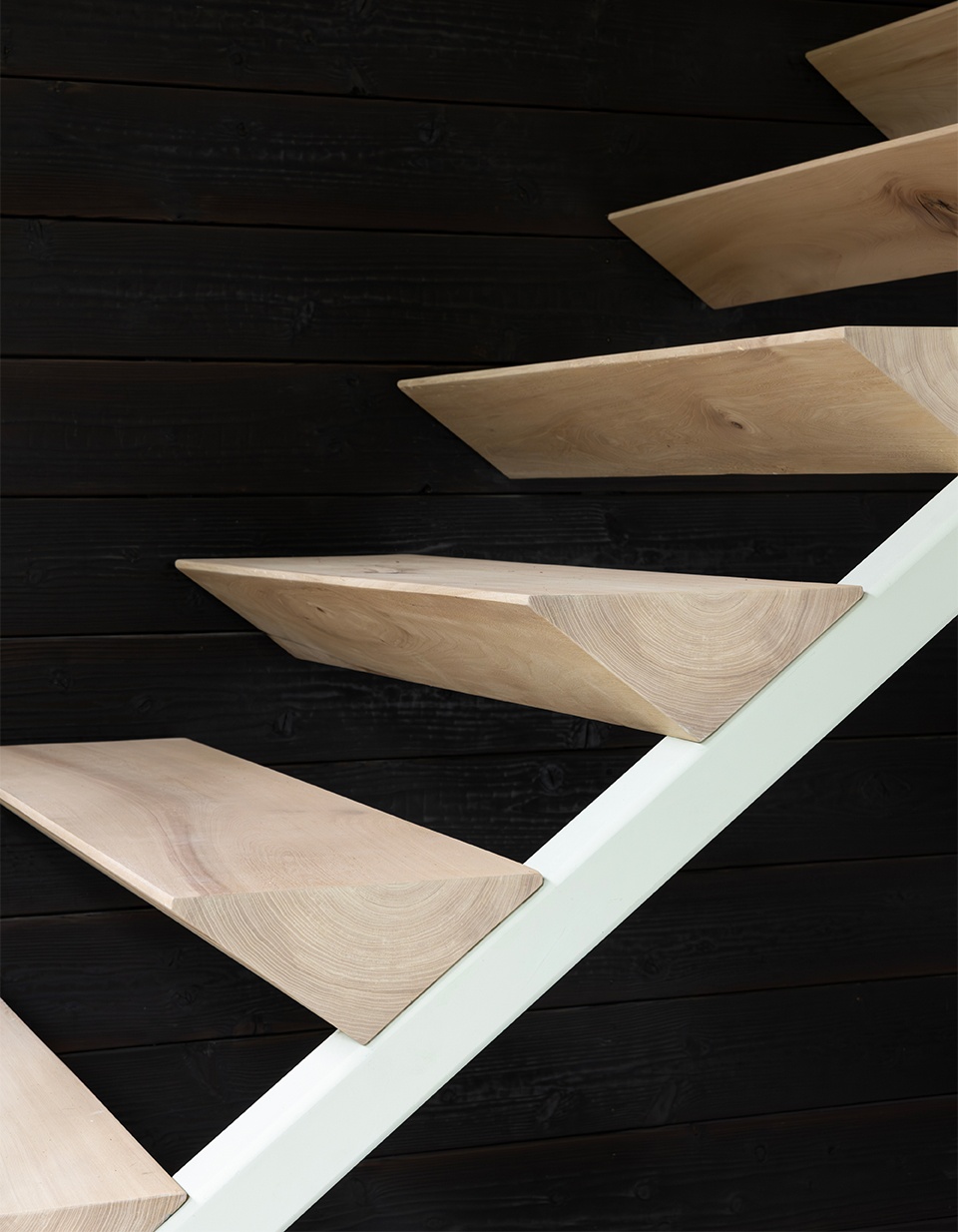
▼楼梯细部,Stair detail
▼下层室内廊道,Lower-level corridor
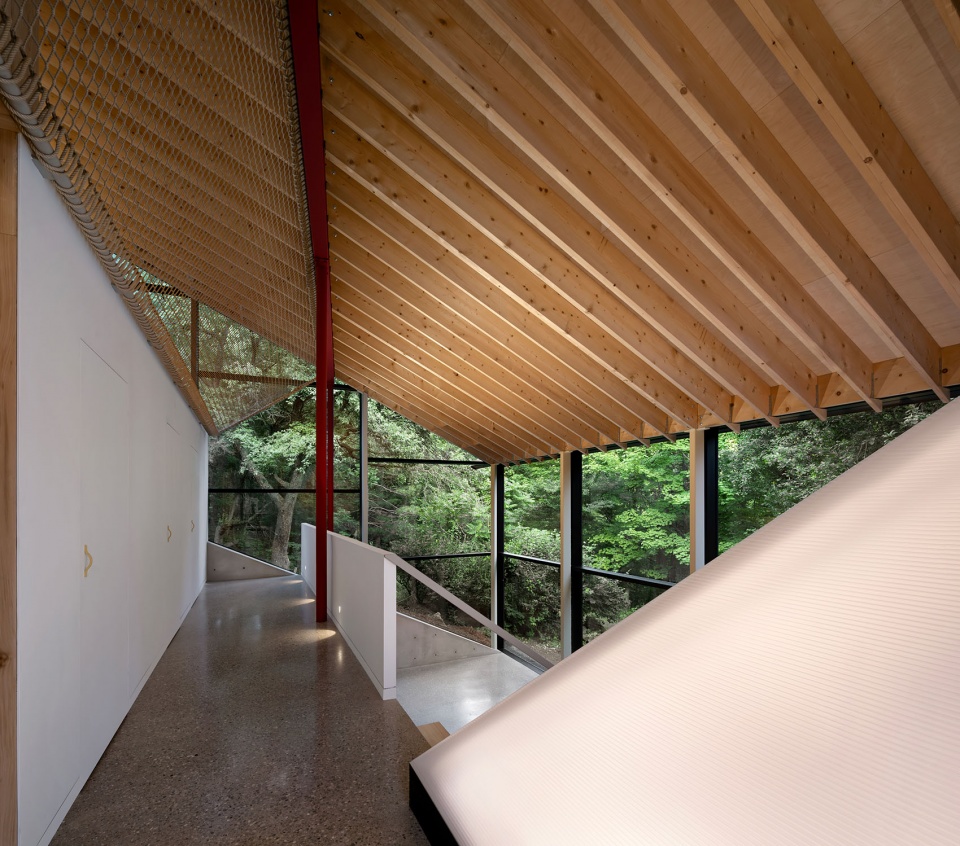
▼室内廊道,Interior corridor
▼下沉室内空间,Lower-level space
▼桑拿房,Sauna
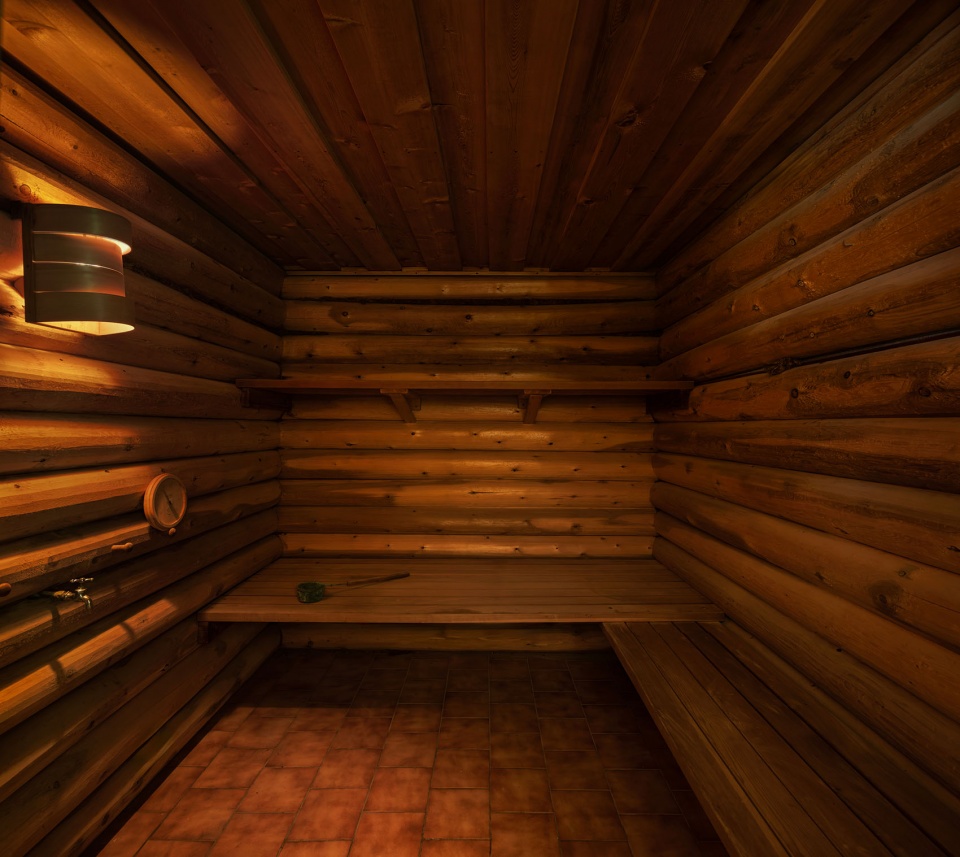
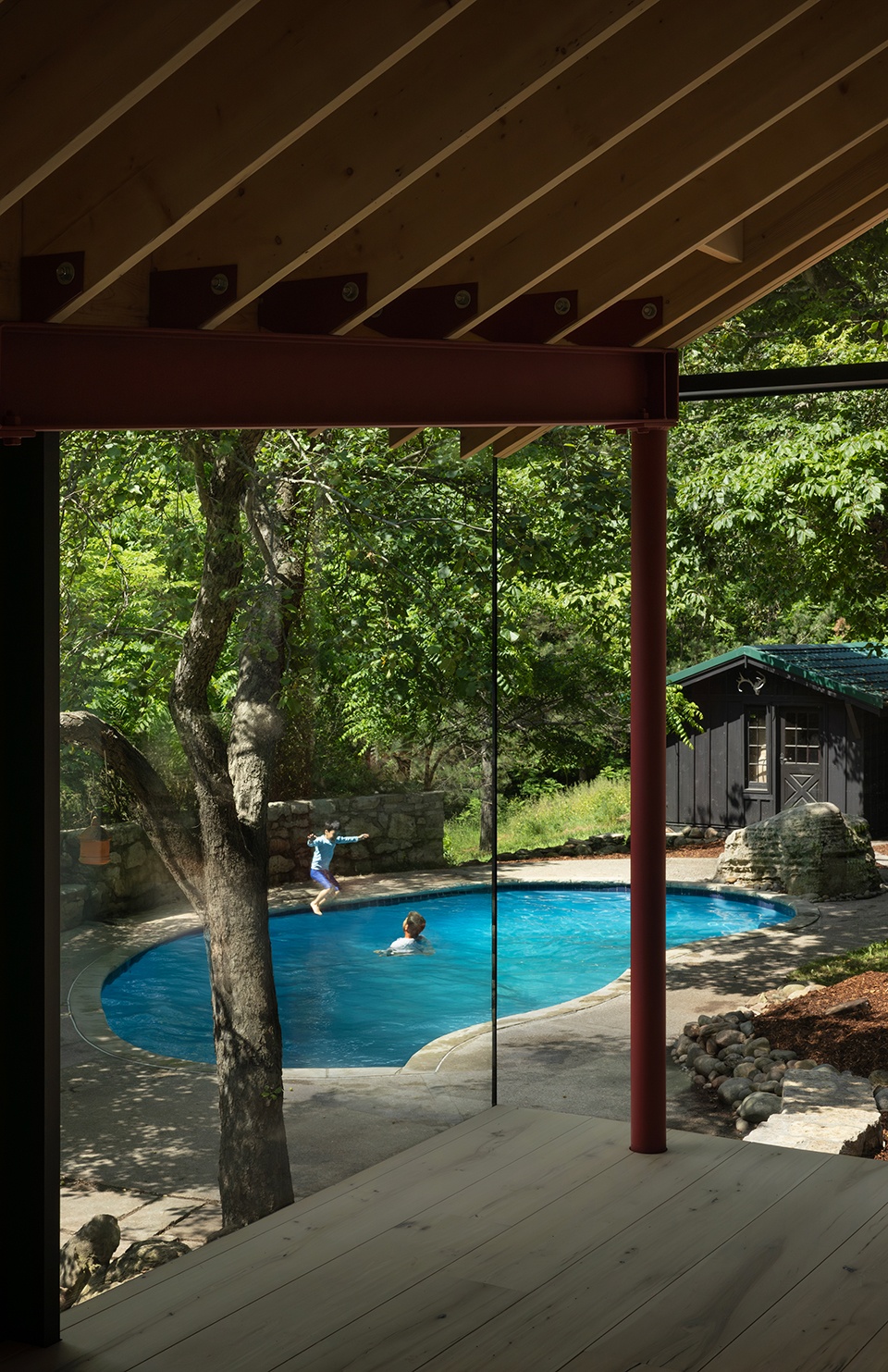
住宅旨在回应家庭生活不断变化的节奏,使孩子们能够自由穿梭于室内与室外之间,同时保持场地中的视觉联系。项目选用了耐久而富有触感的材料,使其能够优雅老化,并吸收日常生活留下的痕迹,让住宅成为真正被生活充分使用的空间,而非仅仅被保存的对象。
Designed to support the evolving rhythms of family life, the house allows children to move freely between indoors and outdoors while maintaining visual connections across the site. Durable, tactile materials were selected to weather gracefully and absorb the marks of everyday life, allowing the house to be fully inhabited rather than merely preserved.
▼室内看向泳池,Interior viewing towards pool
▼室内看向景观,Interior viewing towards landscape
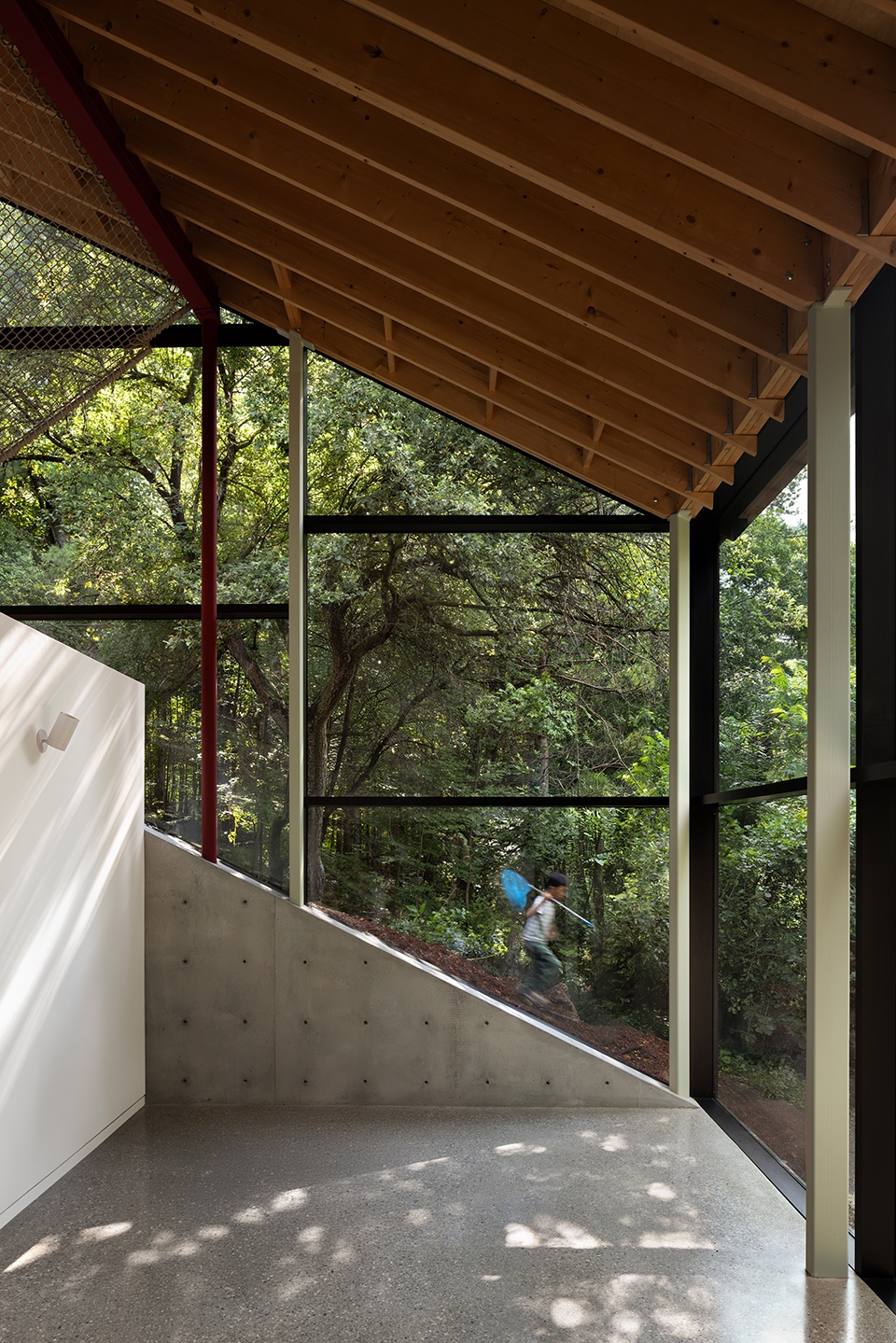
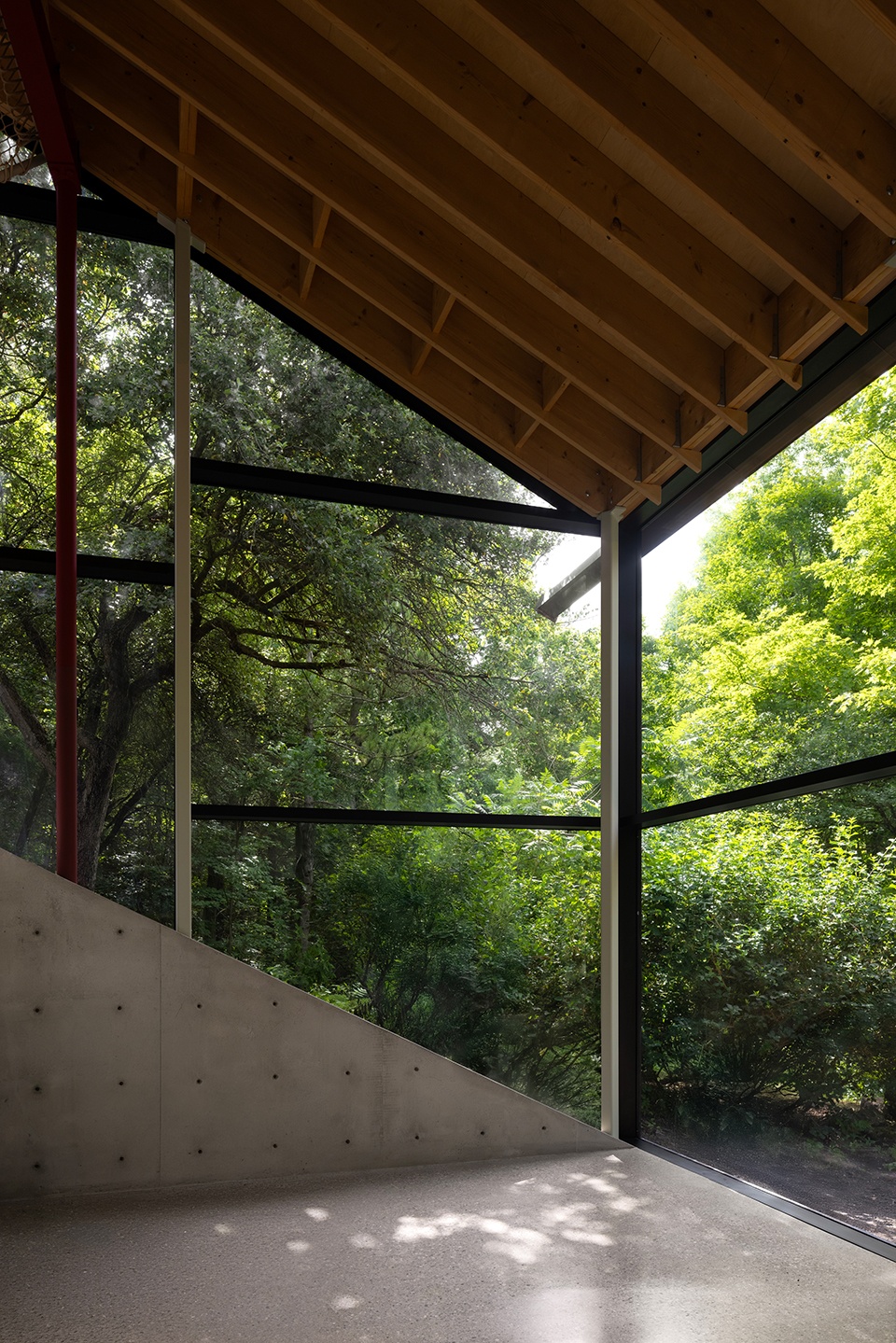
贝尔方丹住宅被构想为一处由行走与日常生活共同塑造的居所。空间通过上升与下降、停顿与释放不断展开,形成一座与其所处土地紧密相连的建筑。
Belfountain House is conceived as a dwelling shaped by movement and daily life. Its spaces unfold through ascent and descent, pause and release, creating an architecture closely tied to the land it inhabits.
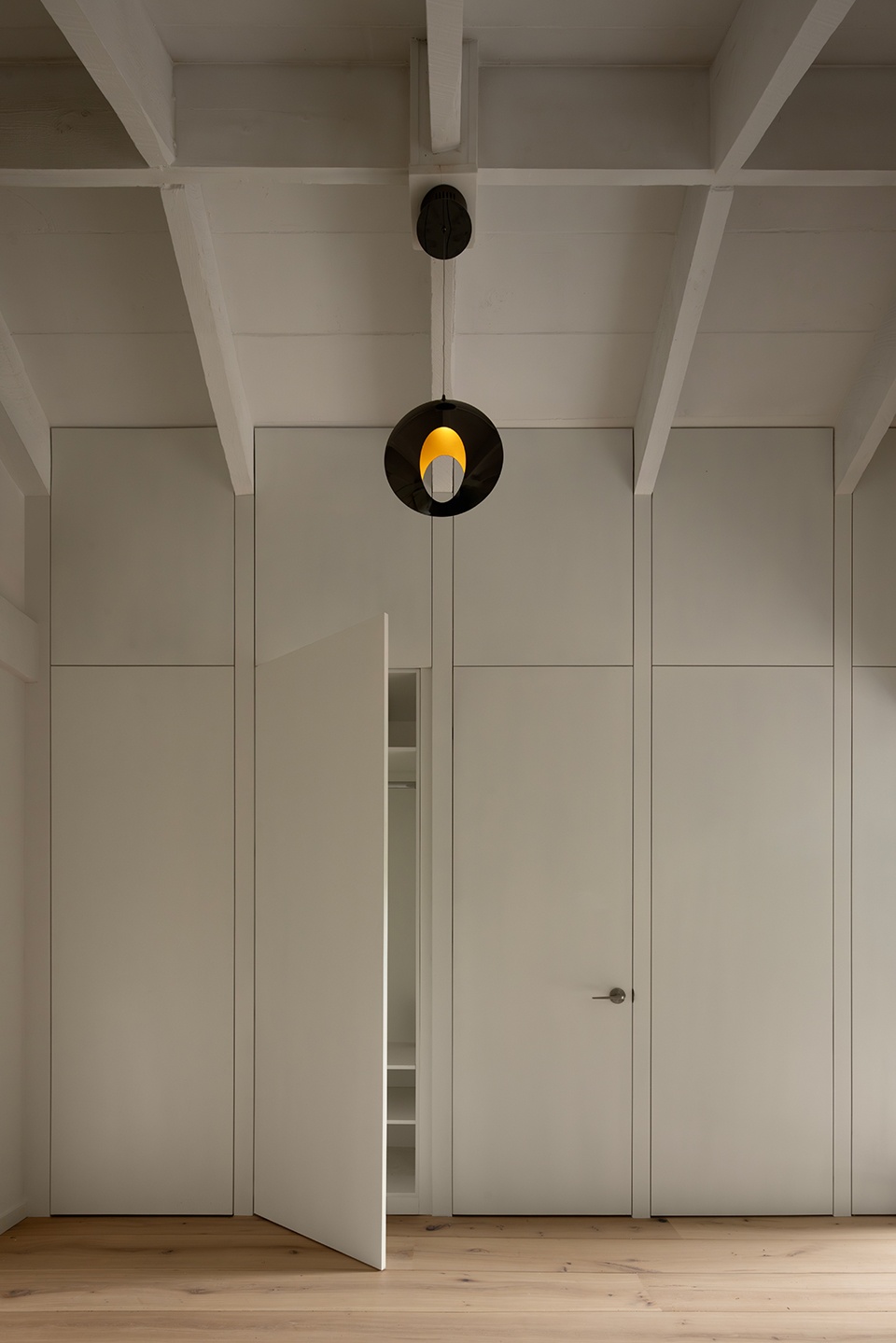
▼卧室,Bedroom
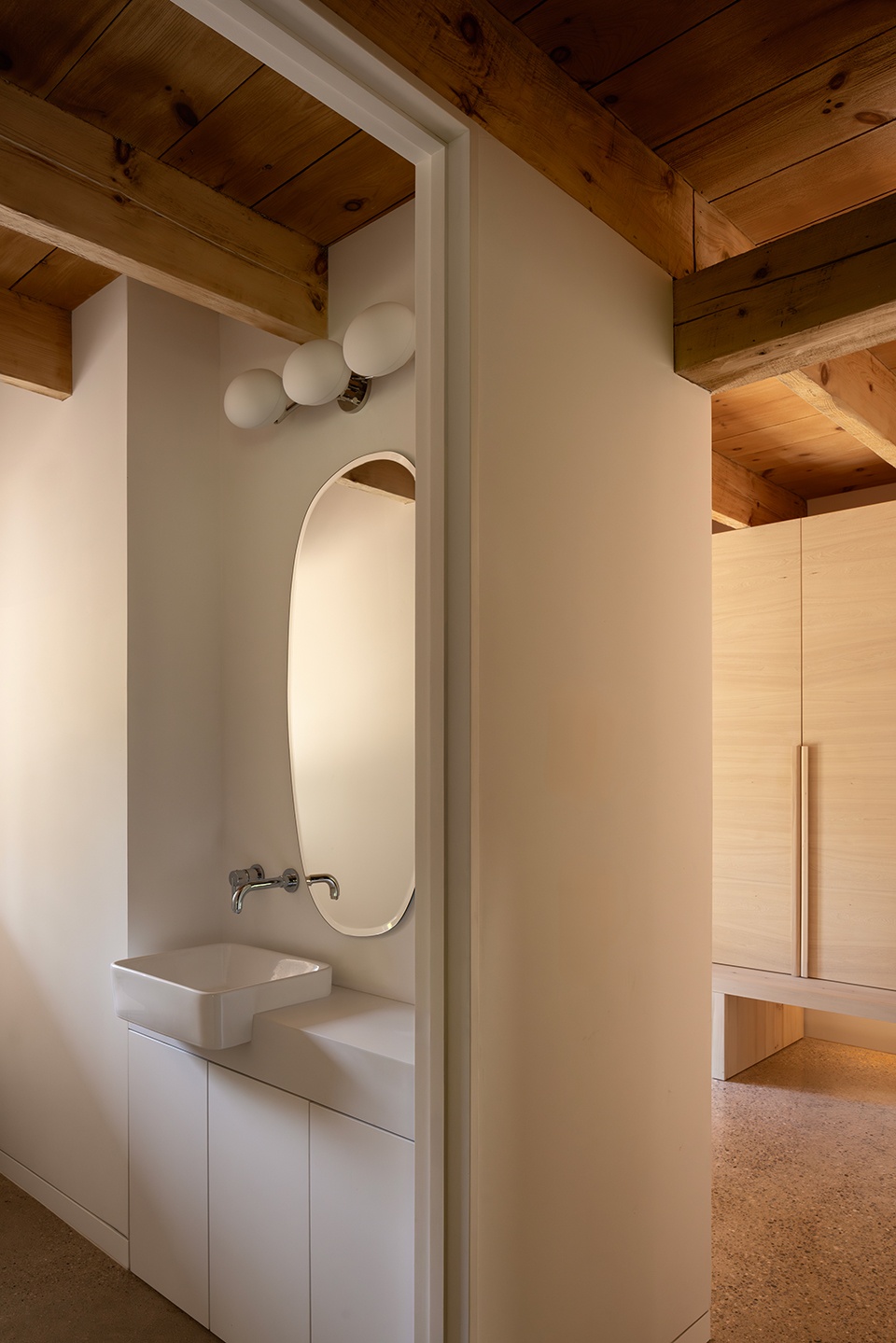
▼卫生间,Bathrooms
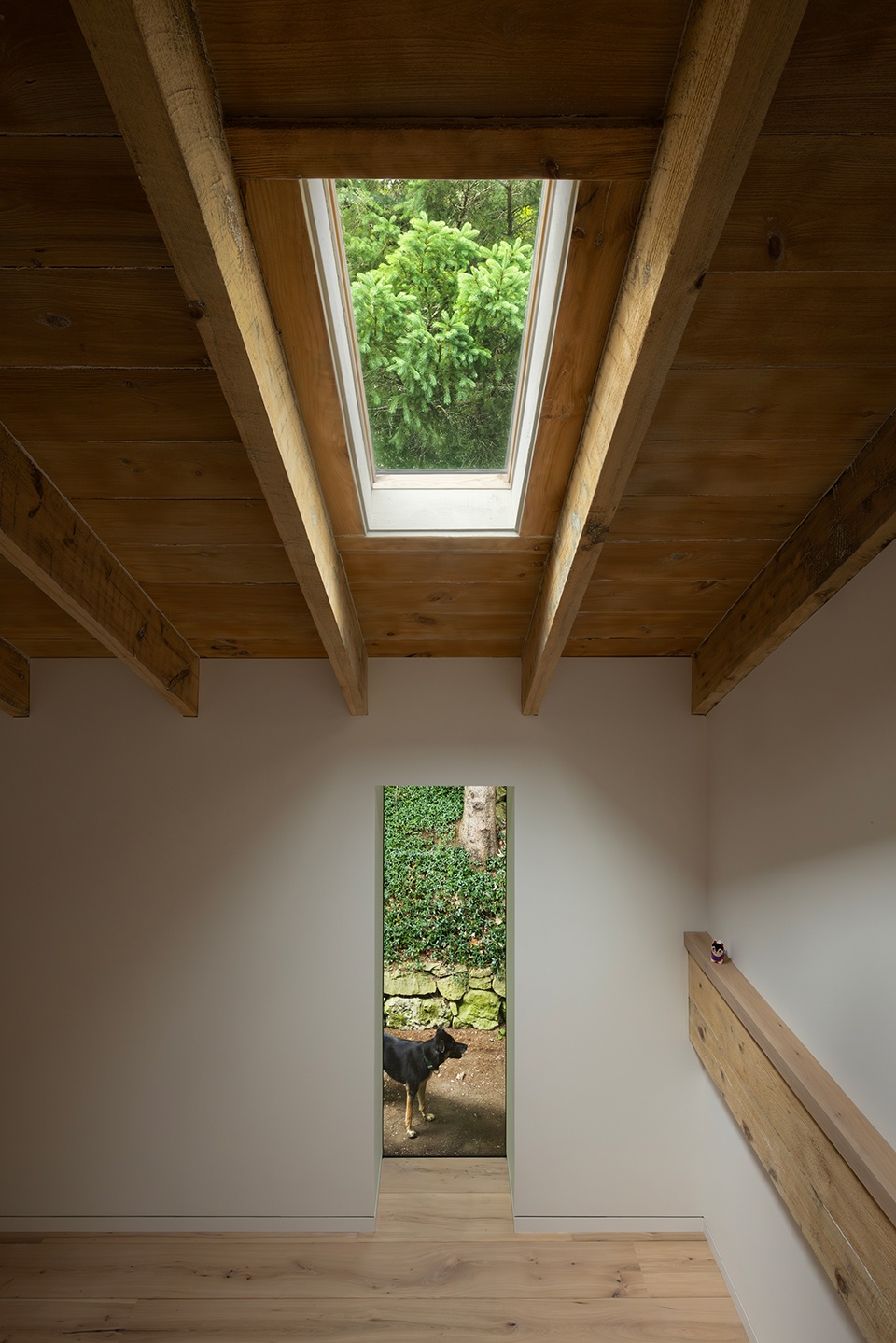
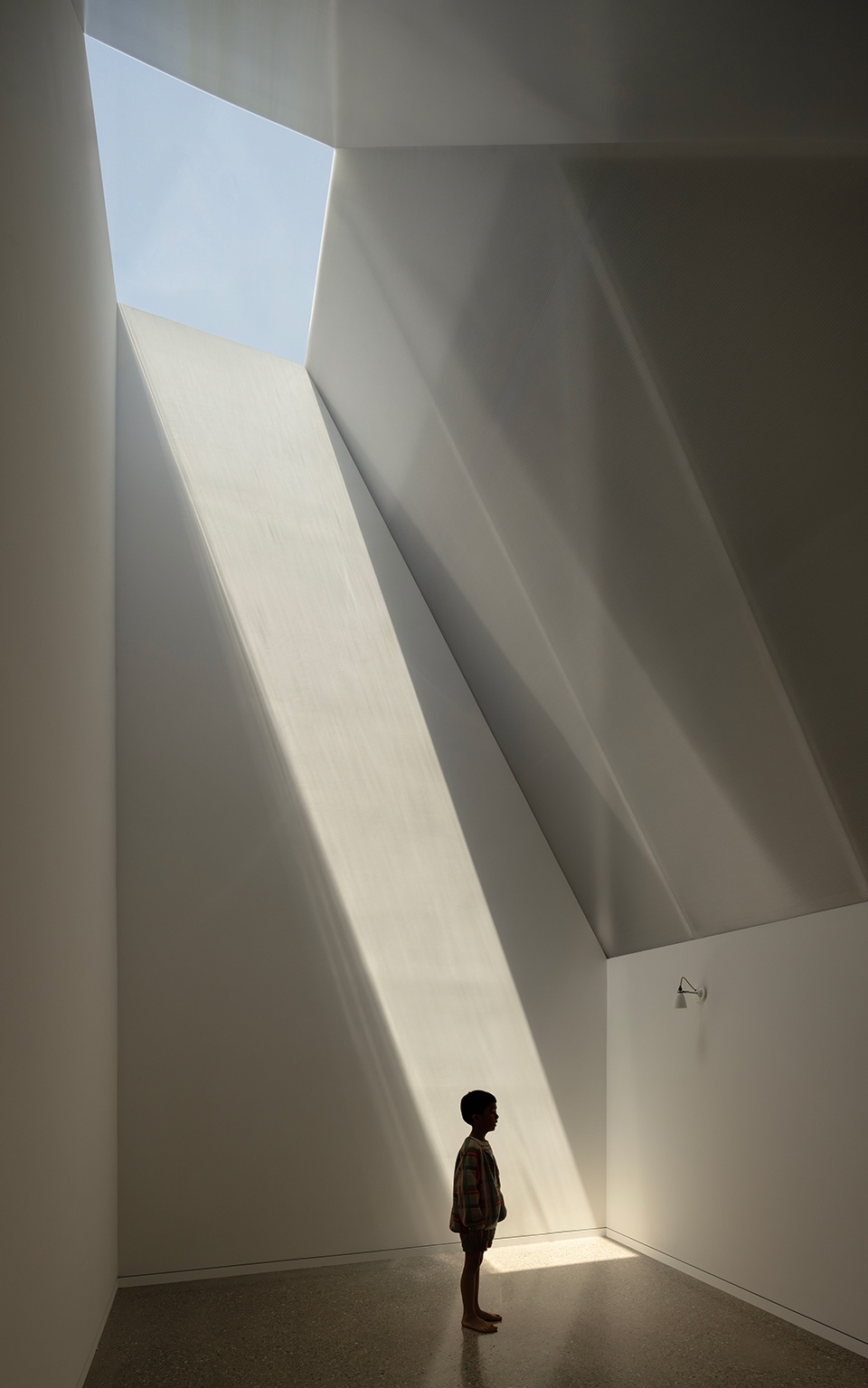
▼天窗采光,Skylight
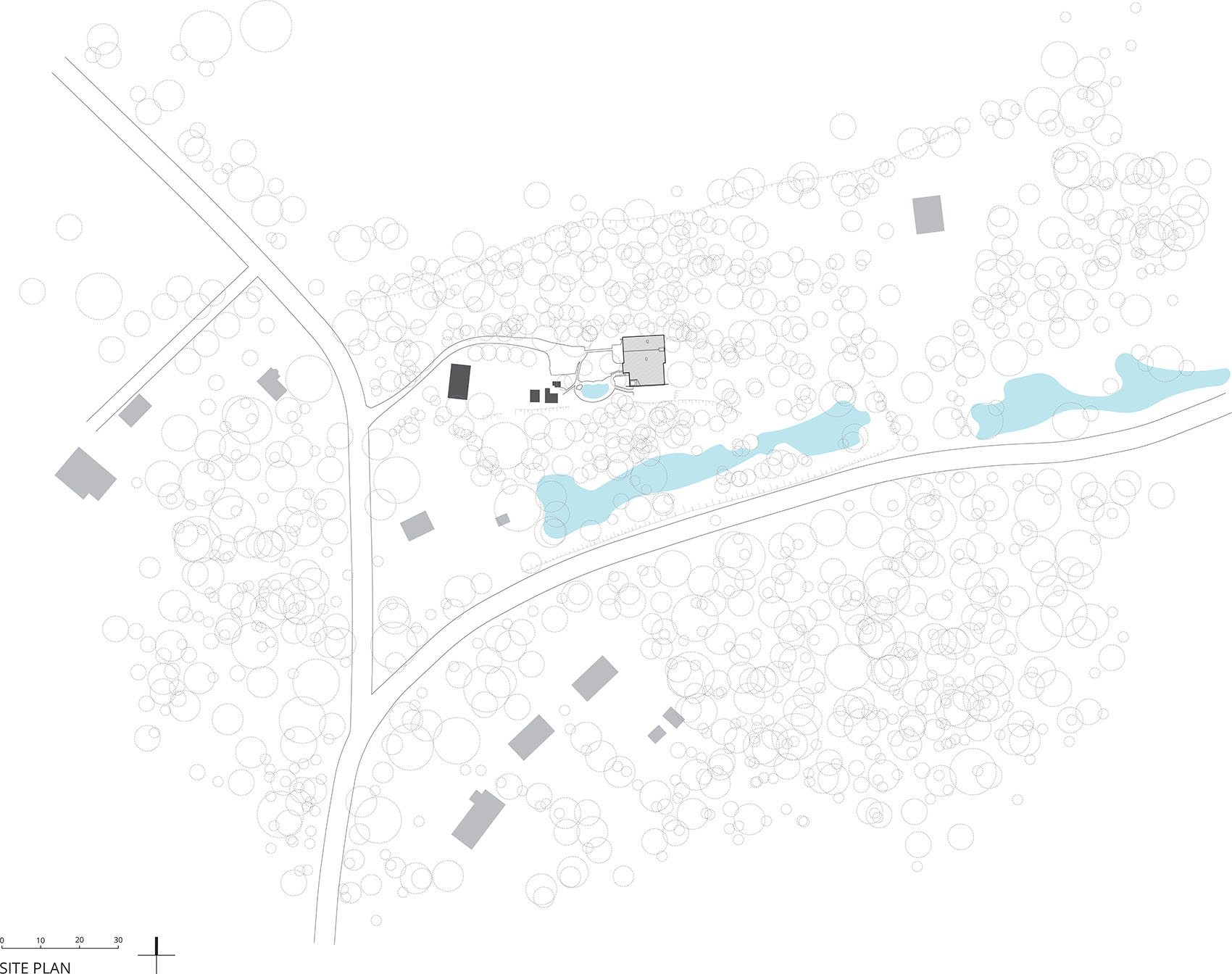
▼场地总平面图,Site plan
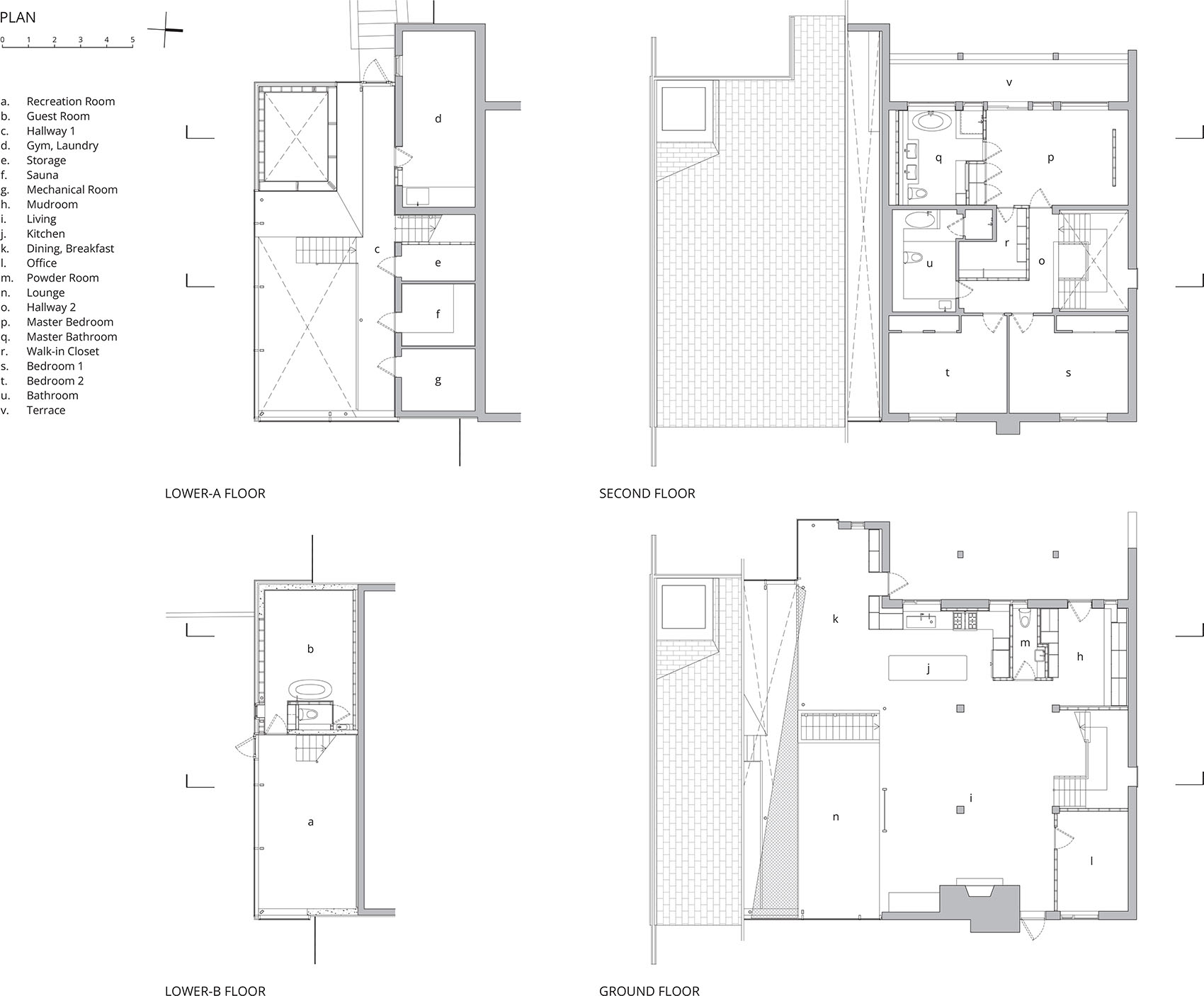
▼住宅平面图,Floor plans
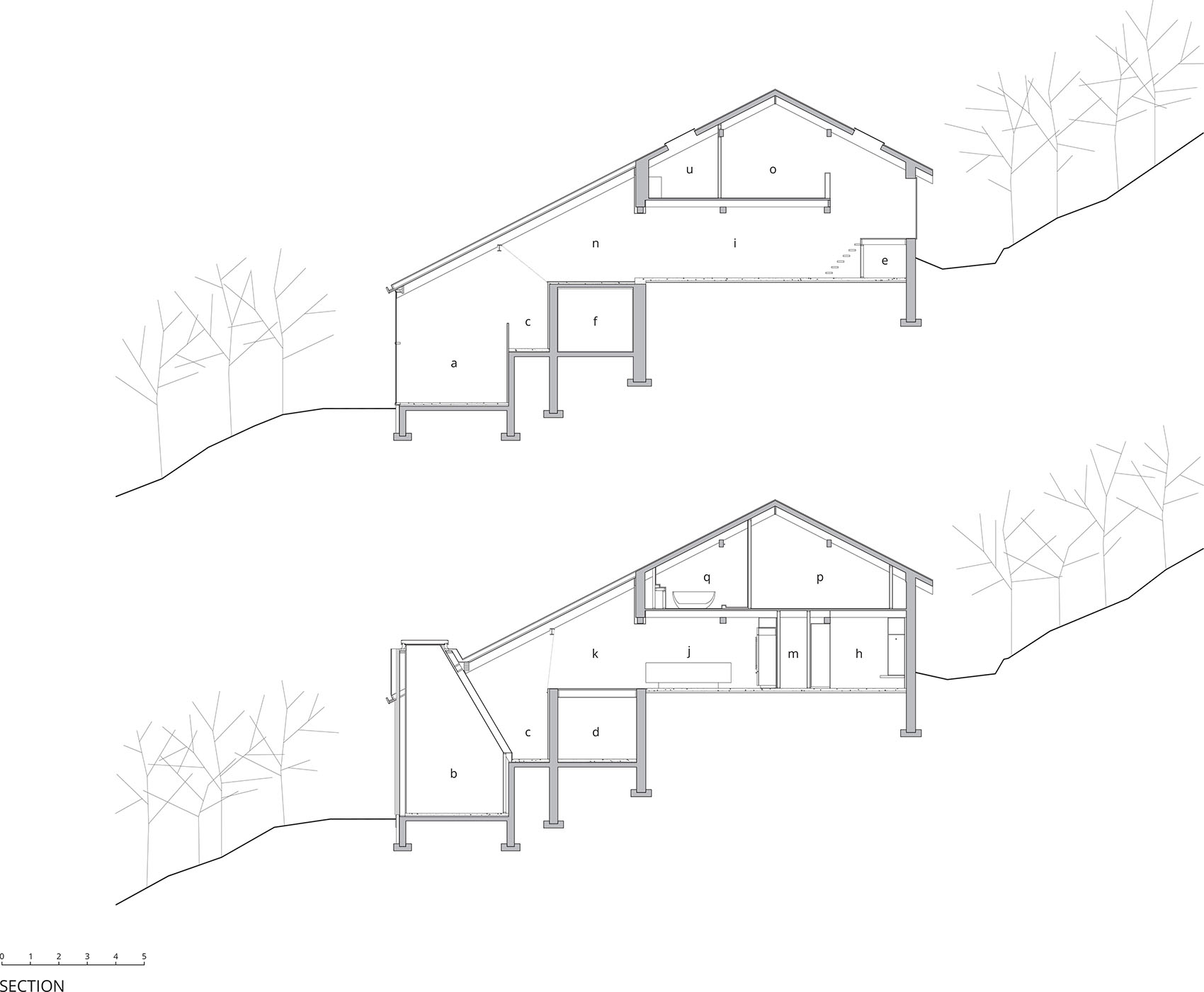
▼建筑剖面图,Building sections
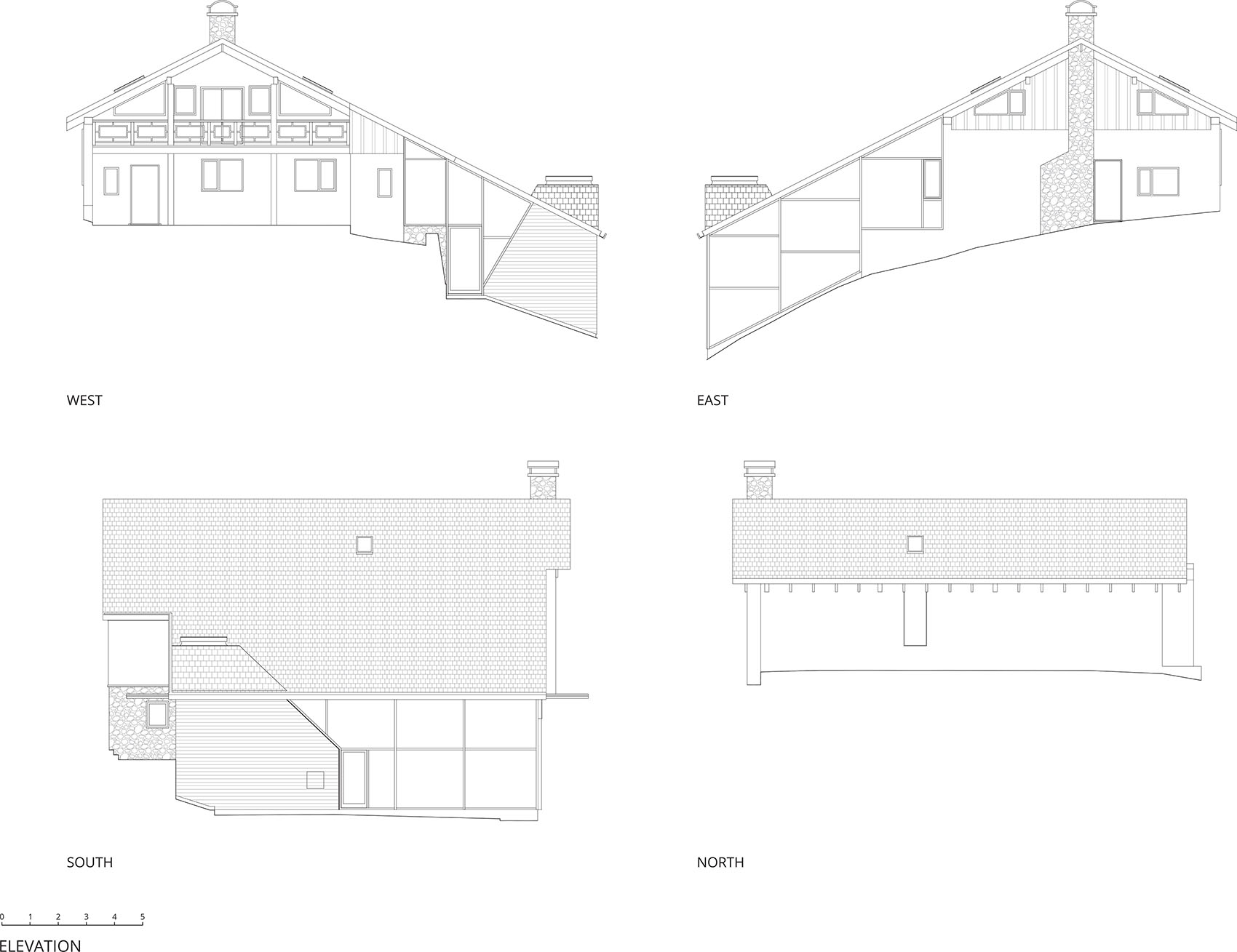
▼建筑立面图,Building elevations
Location: Belfountain, Ontario, Canada
Lot: 13,028 m2 / 3.21 acre
Building Area: 238 m2 /2,561 sf
Floor Area: 430 m2 / 4,628 sf
Architect: UUfie
Owner: Joanie Ellen/Artist; Alex Klein/Philosopher
Contractor: North Arrow Limited
Structural: Moses Structural Engineers
MEP: Hayward Consulting & Design
Photographer: Ema Peter Photography