LARUNS住宅,法国 / Mesnil Architectures
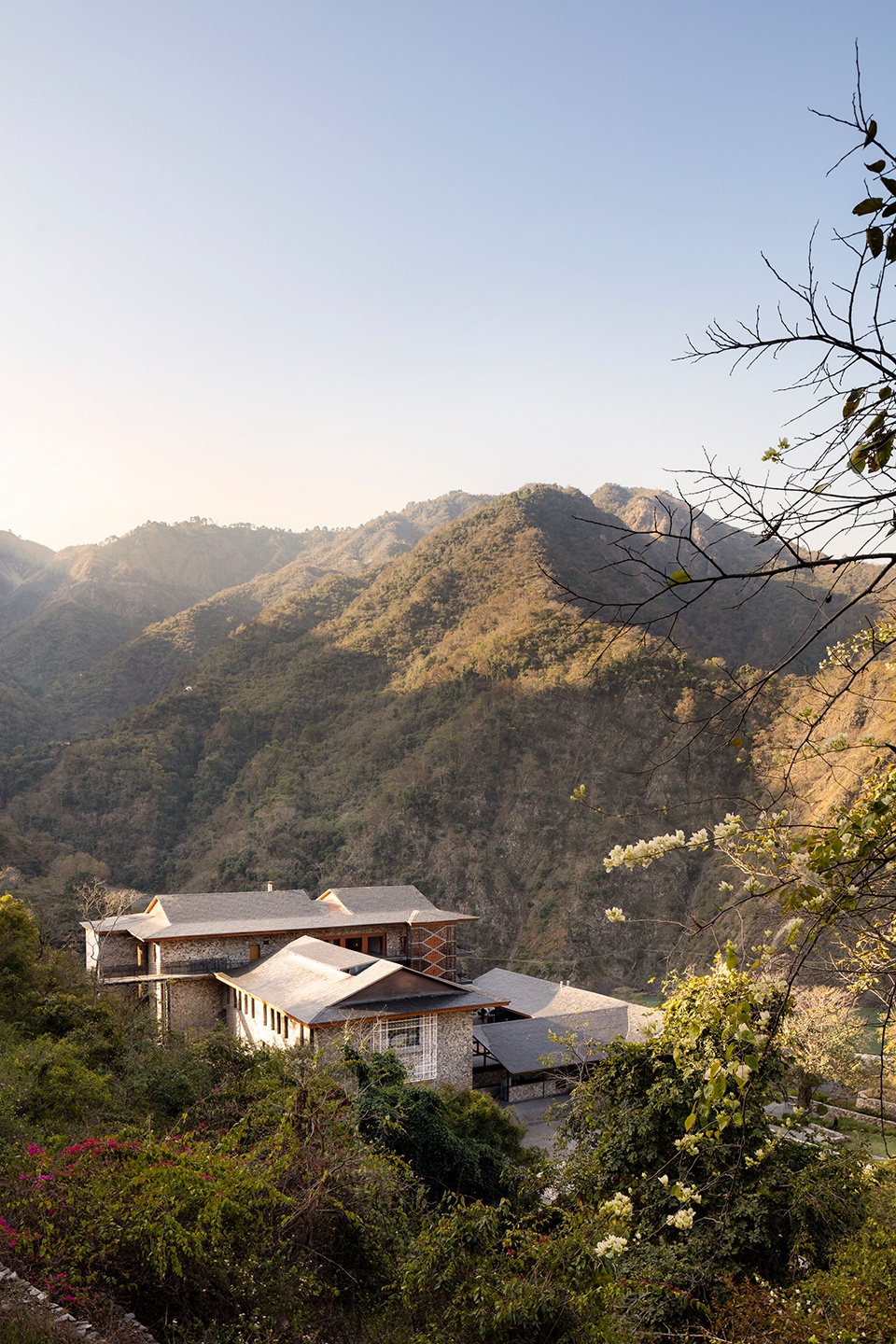
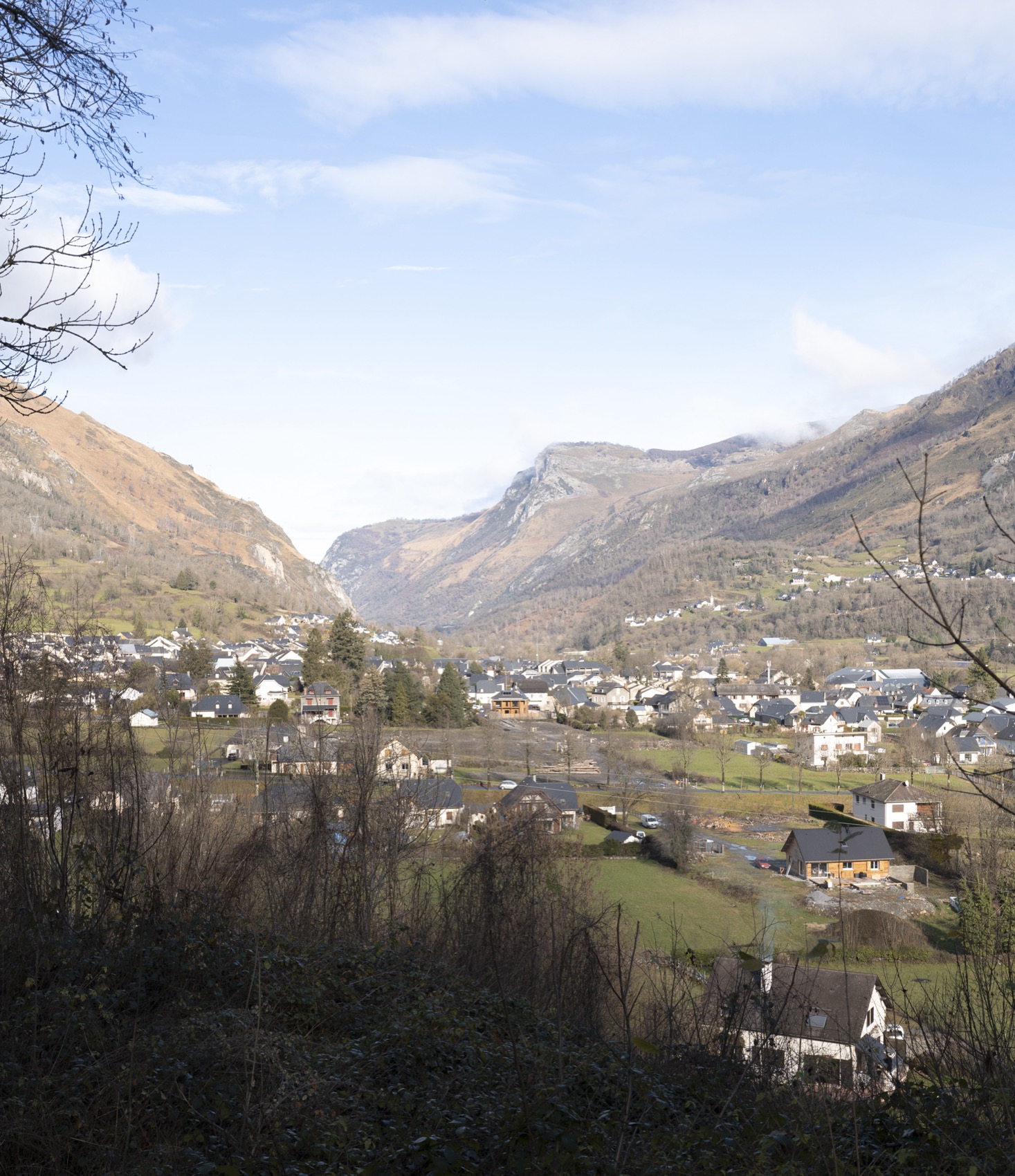
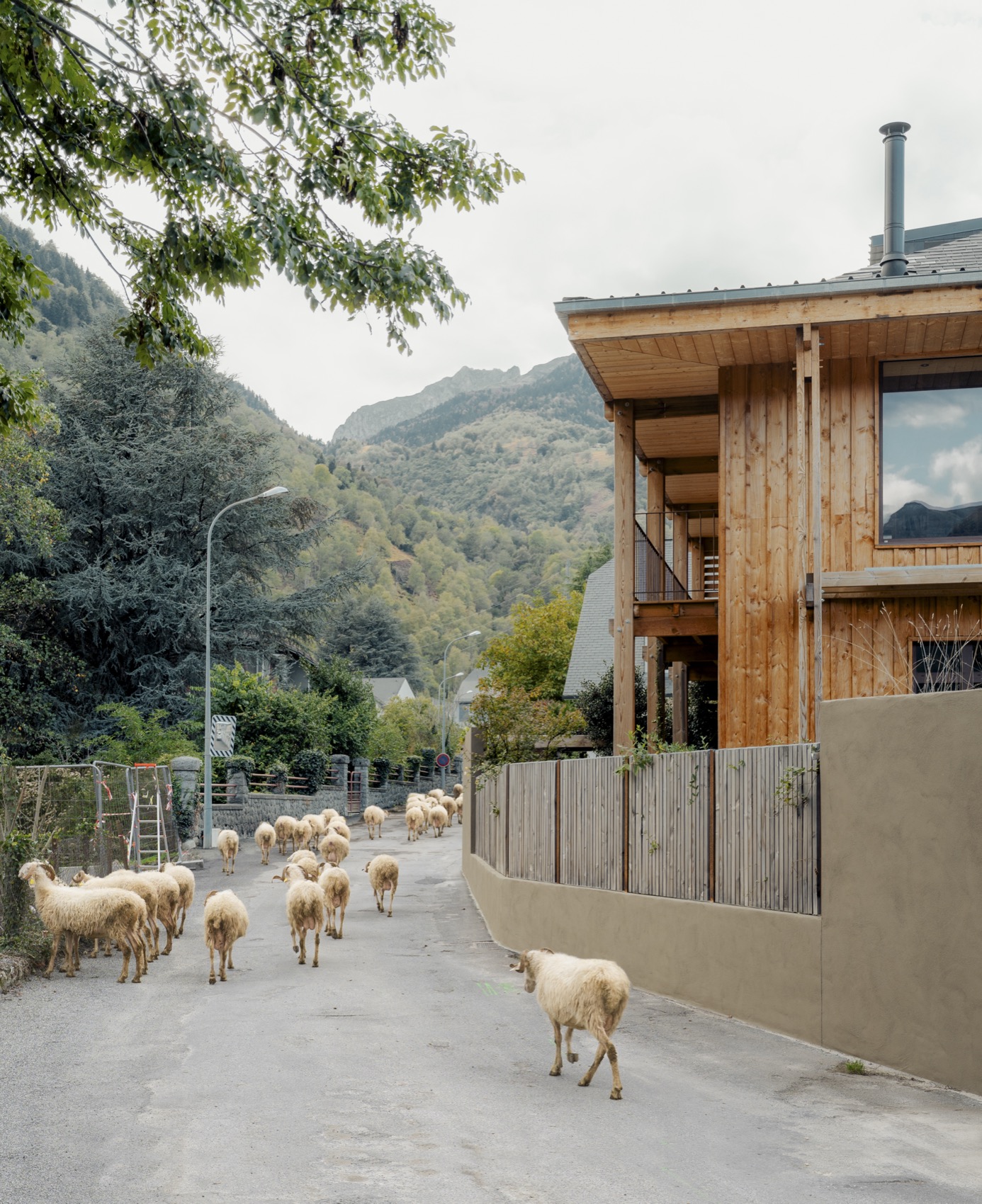
在奥索山谷(Ossau Valley)的尽头,地势逐渐向比利牛斯山脉展开,一栋由上下两层公寓叠置而成的普通建筑,起初似乎并不起眼。从街道望去,它与周围住宅肌理几乎没有区别,除了不一致的立面处理,以及与自然景观之间直接而紧密的关系。然而,在层层墙面饰层与吊顶之后,这栋建筑的空间完整性其实依旧保留。
At the end of the Ossau Valley, where the terrain opens toward the Pyrenees Mountains, a modest building composed of two stacked apartments seemed to hold little promise. From the street, it was indistinguishable from the surrounding residential fabric, apart from its disparate façades and an immediate relationship to the landscape. Yet behind successive layers of wall finishings and suspended ceilings, the architectural integrity of the building remained intact.
▼山地聚落与自然地形关系,Relationship between mountain village and terrain
改造项目:再利用与更新RENOVATION PROJECT: RE-USE AND RENEWAL
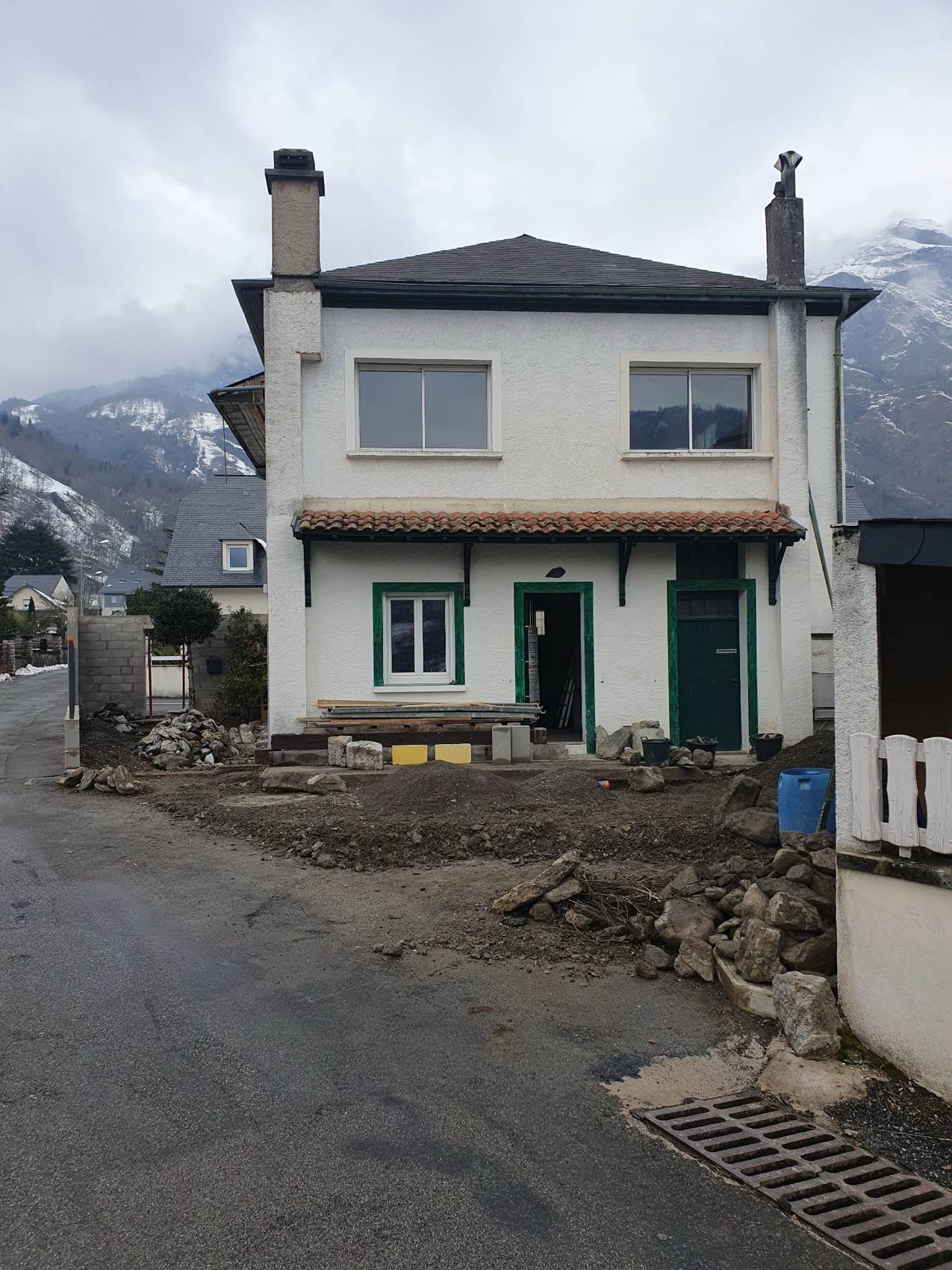
此次改造项目,正是从“表象”与“沉睡状态”之间的这一微妙间隙展开。随着后期覆盖层被逐步剥离,宽敞的空间重新显现,富有表现力的木结构框架也随之暴露,同时还浮现出建筑曾经使用过的痕迹。当地档案与邻居的讲述揭示了这处场地过去作为车辆维修车间的历史,这也解释了首层异常高挑的层高,而二层则曾是办公空间。
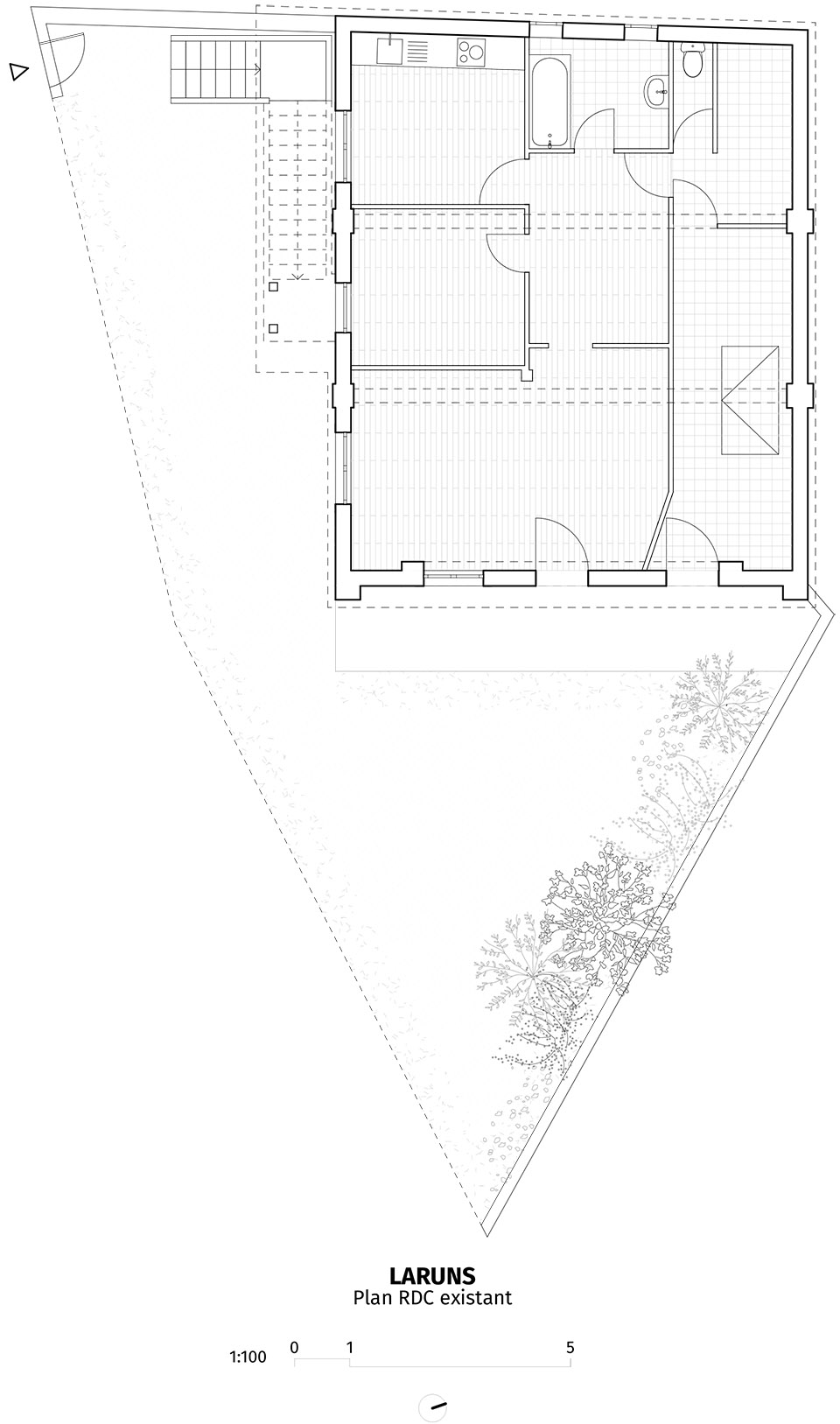
▼改造前平面,Floor plan before renovation
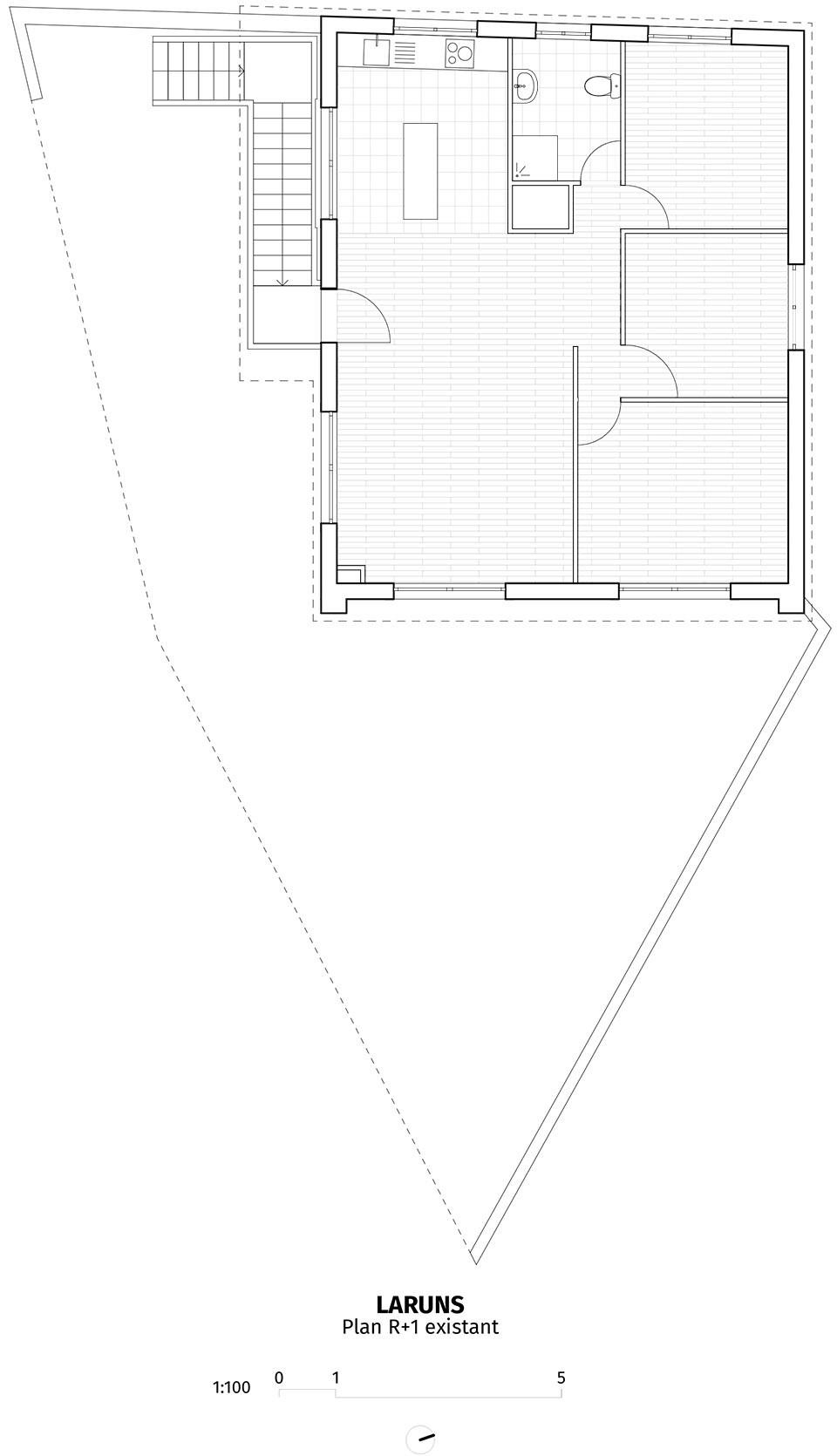
The renovation project begins in this precise interval between what is apparent and what lies dormant. As these veneers were stripped away, generous volumes re-emerged, along with an expressive timber frame and traces of a previous use. Local records and neighbors’ accounts revealed the site’s former life as a vehicle repair workshop, explaining the unusual ground-floor height, while the upper level once housed offices.
▼木结构住宅融入山谷聚落,Timber house integrated into the valley village
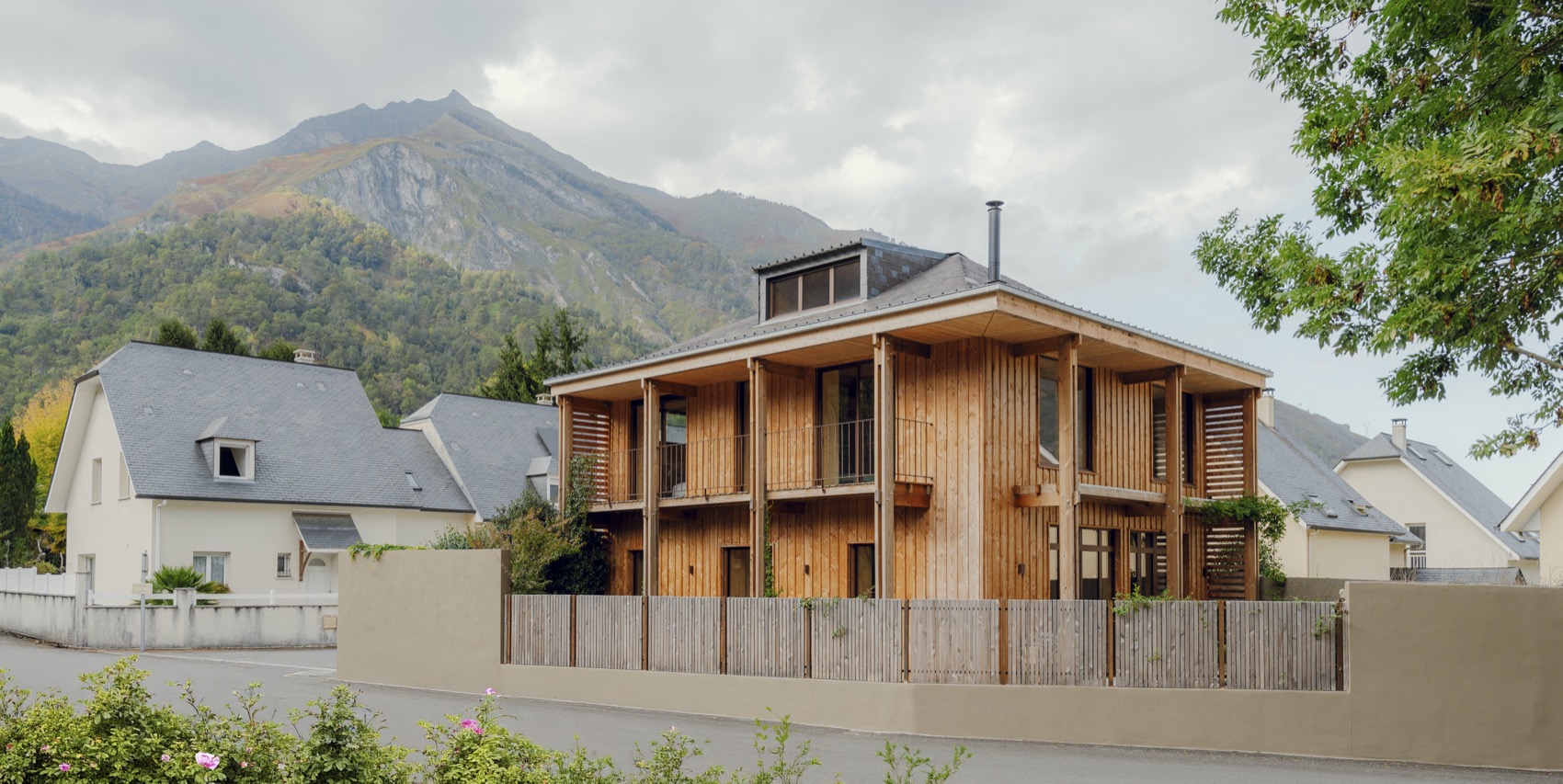
对于如今居住于此的一对艺术家夫妇而言,这次改造不仅需要容纳日常生活,还要满足纺织创作,以及一种与山地环境和谐共处的生活方式。重新连接上下两层、打开平面布局,并重新建立与自然景观之间的视线关系,很快成为设计的核心目标。与此同时,这也是一次关于经济性、材料与伦理的实践。任何构件都不会被轻易拆除。每一个被拆下的元素都经过分类、清洁、储存,并再次利用。这一过程也呼应了业主的艺术实践——他们习惯收集与归档旧画布,并在未来重新将其转化为新的作品。因此,这栋房子本身也成为一场关于元素重新组织的集合。
▼项目平面中拆掉的部分,Demolished portions in the project plan
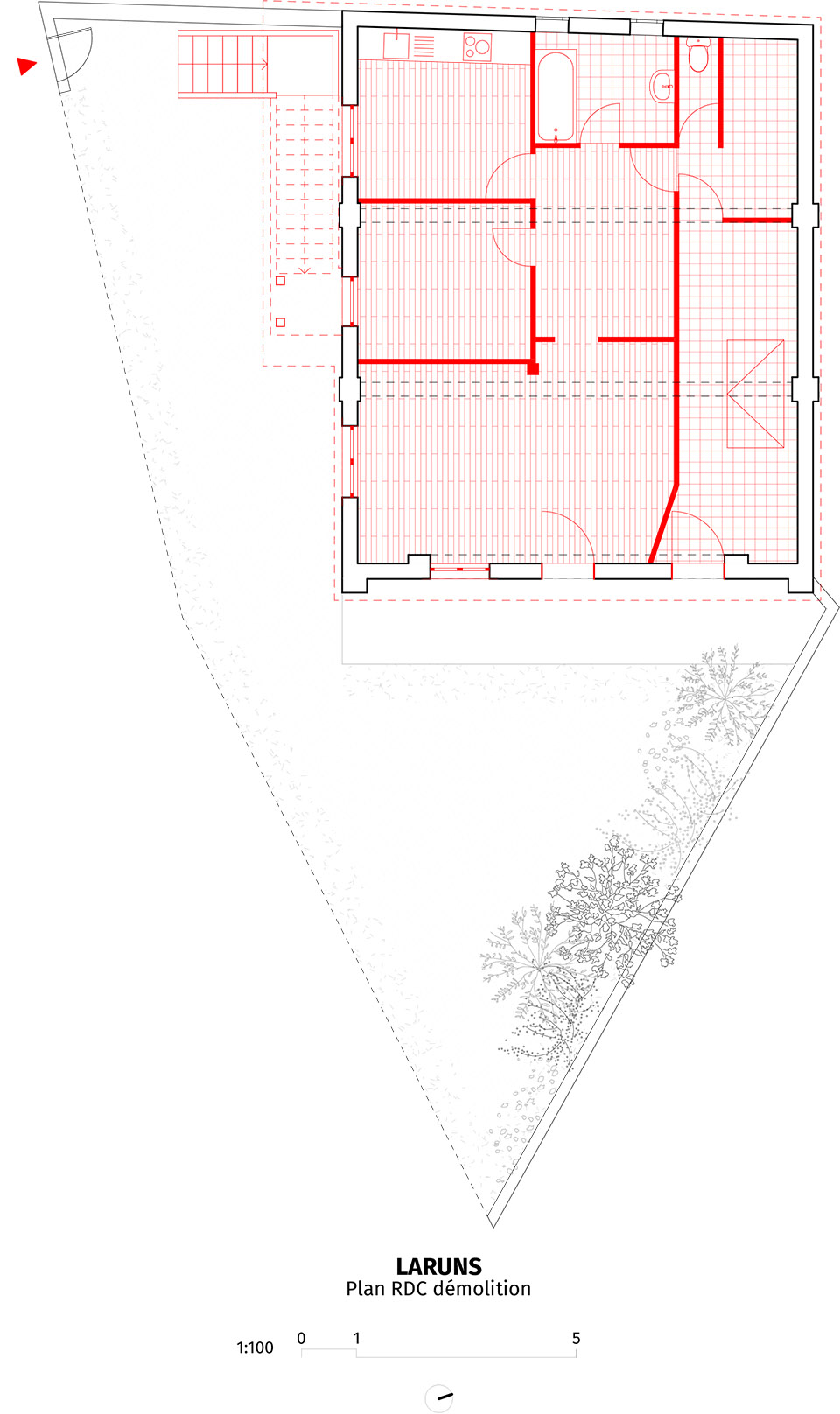
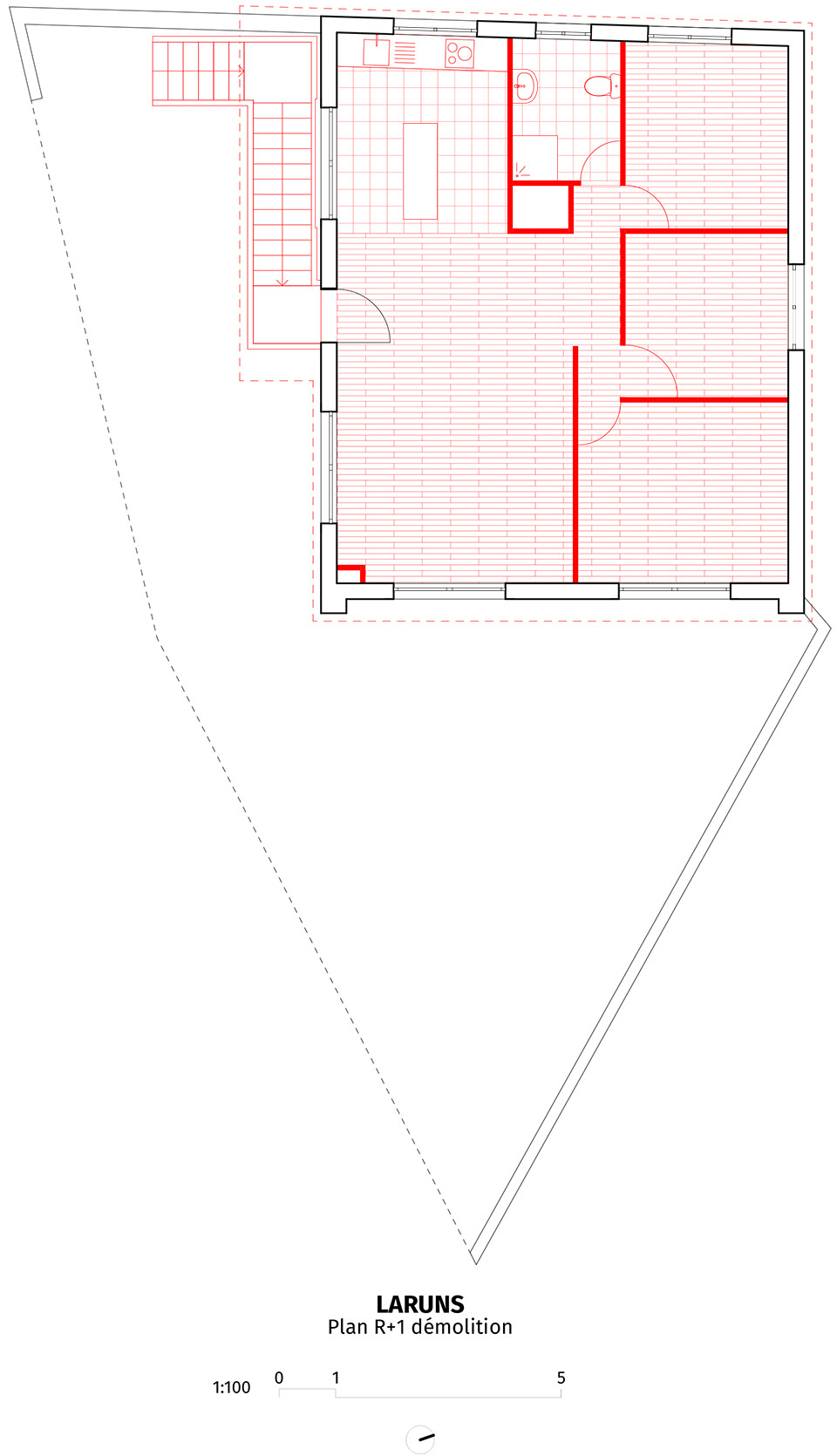
▼新旧介入之间的拆除痕迹,Traces of demolition between the old and new interventions
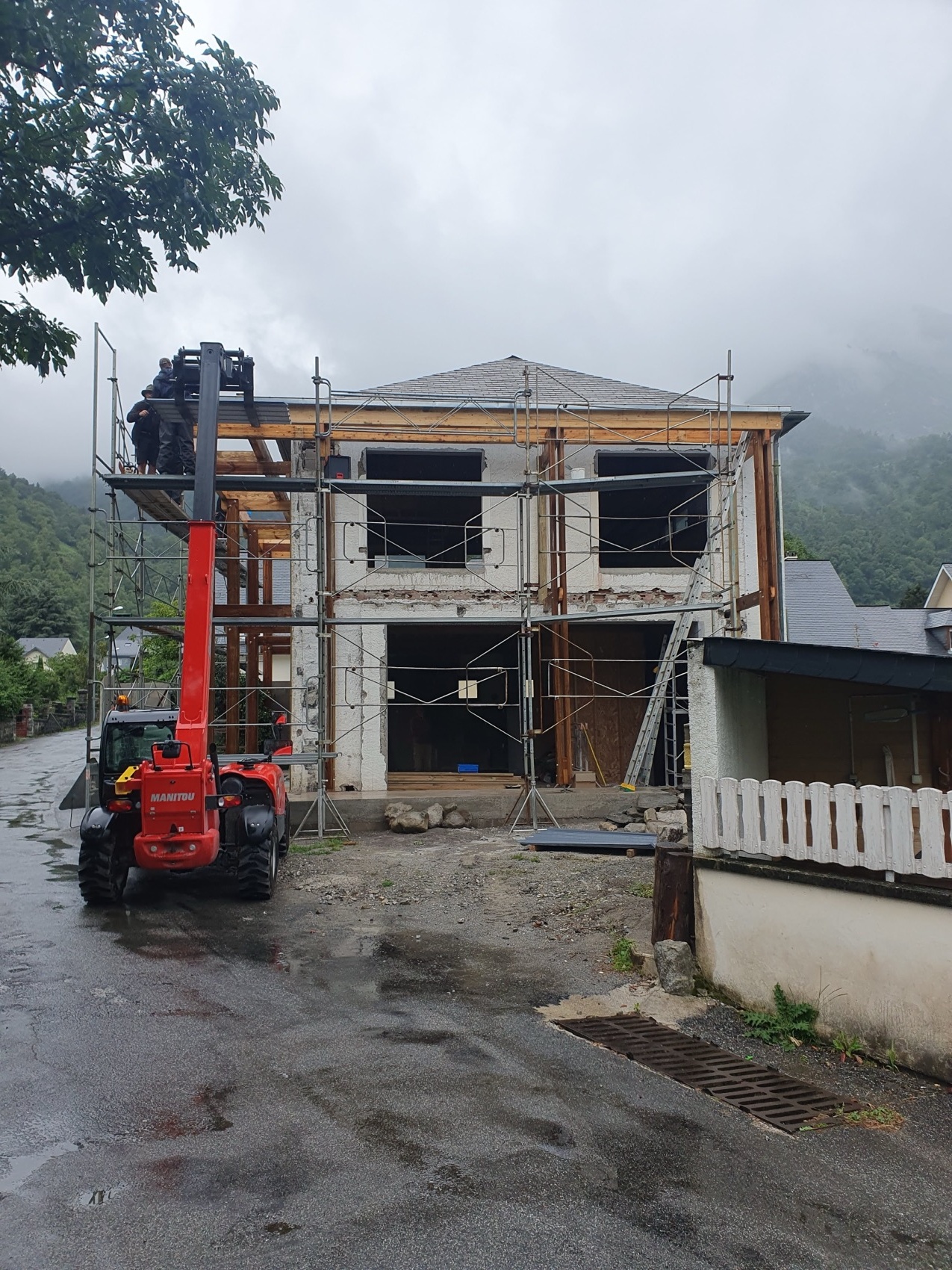
For the artist couple who now inhabit the house, the transformation needed to accommodate domestic life, textile production, and a way of living in harmony with the mountainous surroundings. Reuniting the two levels, opening the plan, and re-establishing views onto nature quickly became central intentions. The approach was also economic, material, and ethical. Nothing was removed without consideration. Each dismantled element was sorted, cleaned, stored, and reused. This process resonated with the clients’ artistic practice of collecting and cataloguing old canvases to later repurpose them into new works. The house therefore becomes a reorganized assembly of elements.
▼拆除后保留下来的木结构界面,Timber structure retained after partial demolition
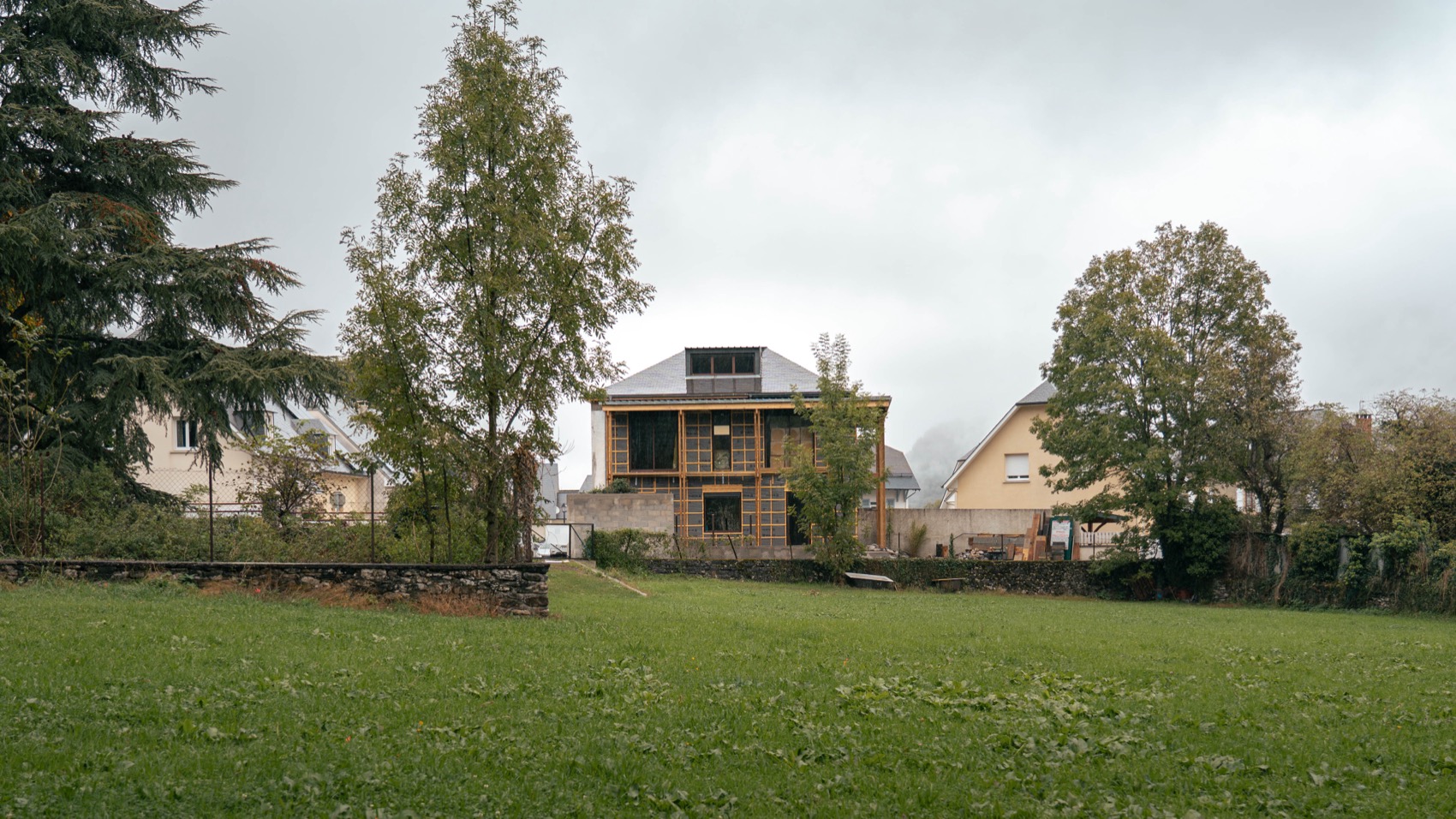
曾经的楼板被重新用作天花饰面、隔断与抽屉;搁栅被改造成柴房与户外家具;门扇、石材以及谷仓梯也被赋予新的用途。整个建造过程具有高度协作性。结构与主要施工由当地工匠完成,而大量室内施工则由业主亲自参与。材料再利用与自建同步推进,以便在设计与施工决策之间保持一致。建造不再意味着不断“增加”,而更像是一种关于删减与重新编排的过程——近似于缝补,材料在其中被持续地重新配置。此次改造并不追求戏剧性的表达或激烈的断裂,而是通过揭示、移位与重组逐步展开——一种关注地方语境、现有材料与持久性的当代乡土建筑居住方式。
▼项目改造过程轴测图,Axonometric drawing of the renovation process
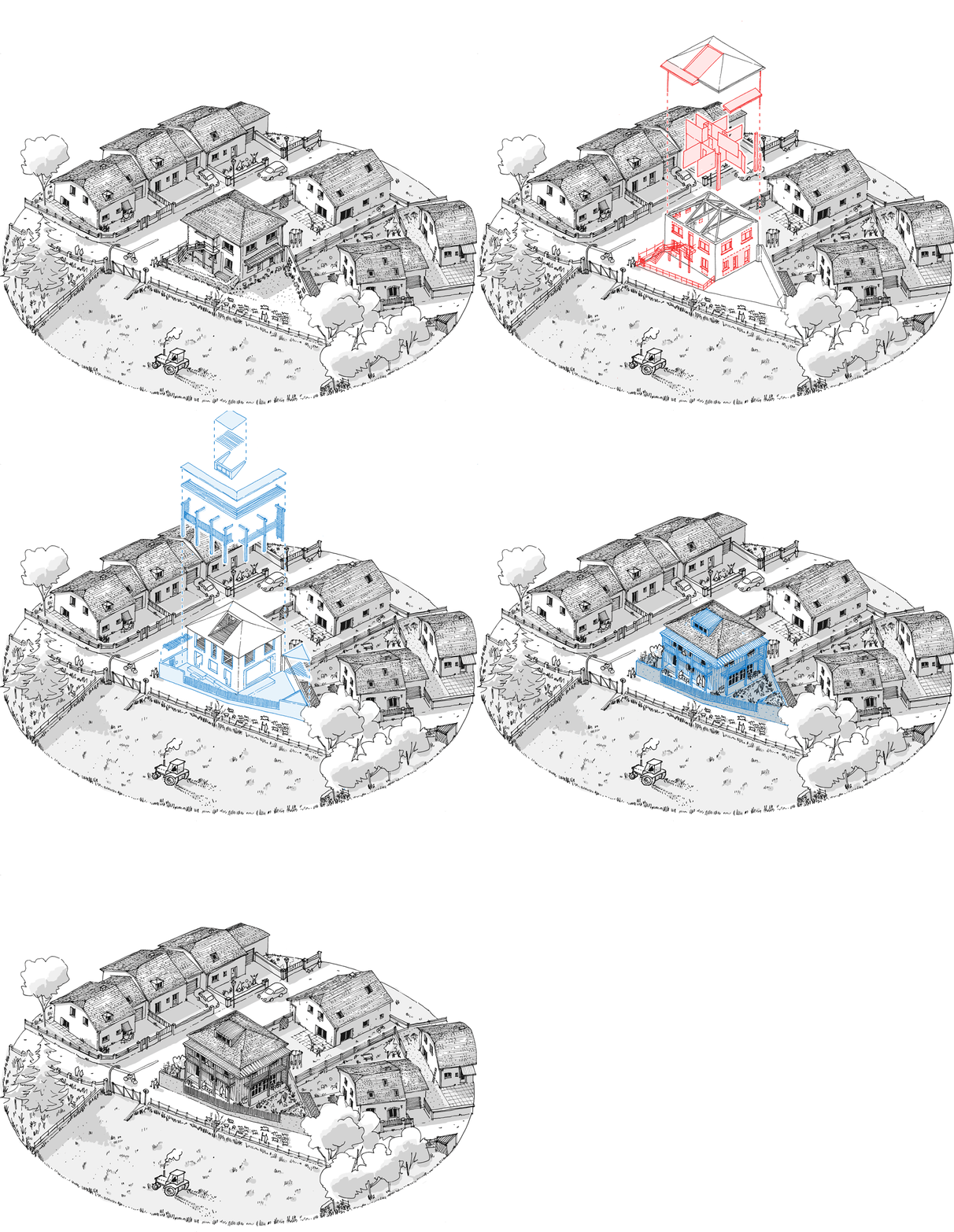
A former floor is repurposed as a ceiling finish, partitions, and drawers. Joists become a woodshed and outdoor furniture. Doors, stones, and a miller’s ladder are given new uses. The construction process was collaborative. Structural and primary works were undertaken by local trades, while much of the fit-out involved client participation. Reuse and auto-construction advanced simultaneously to align design and fabrication decisions. Building became less about addition and more about editing and re-composition-almost a form of stitching, where material is continuously reconfigured. The renovation project avoids spectacle or rupture. It proceeds through revelation, displacement, and reassembly-a contemporary approach to inhabiting vernacular architecture that is attentive to local context, existing materials, and durability.
▼住宅与山地村庄日常场景,House within the everyday life of the mountain village
▼建筑立面,Building facade
外部空间EXTERIOR
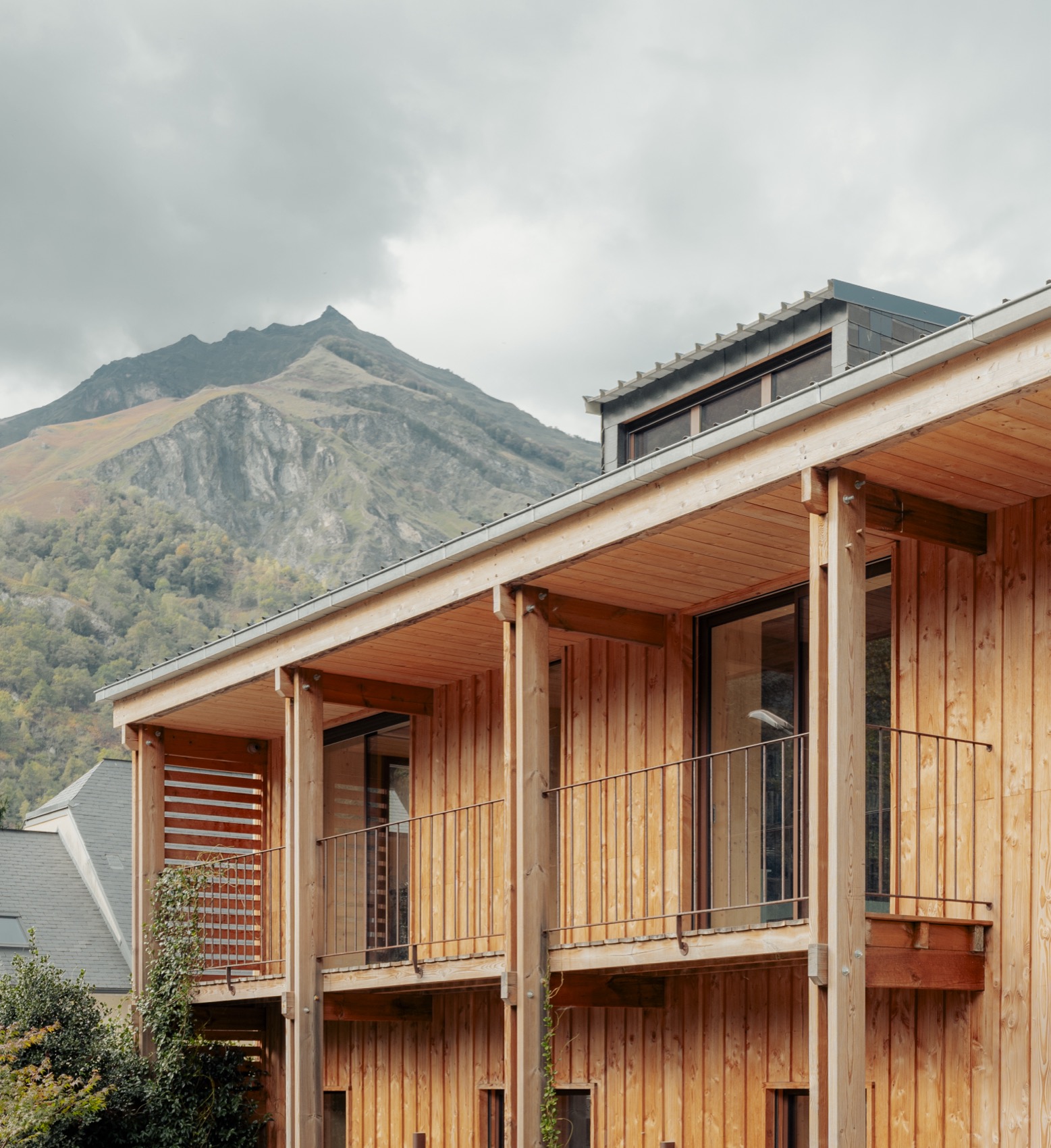
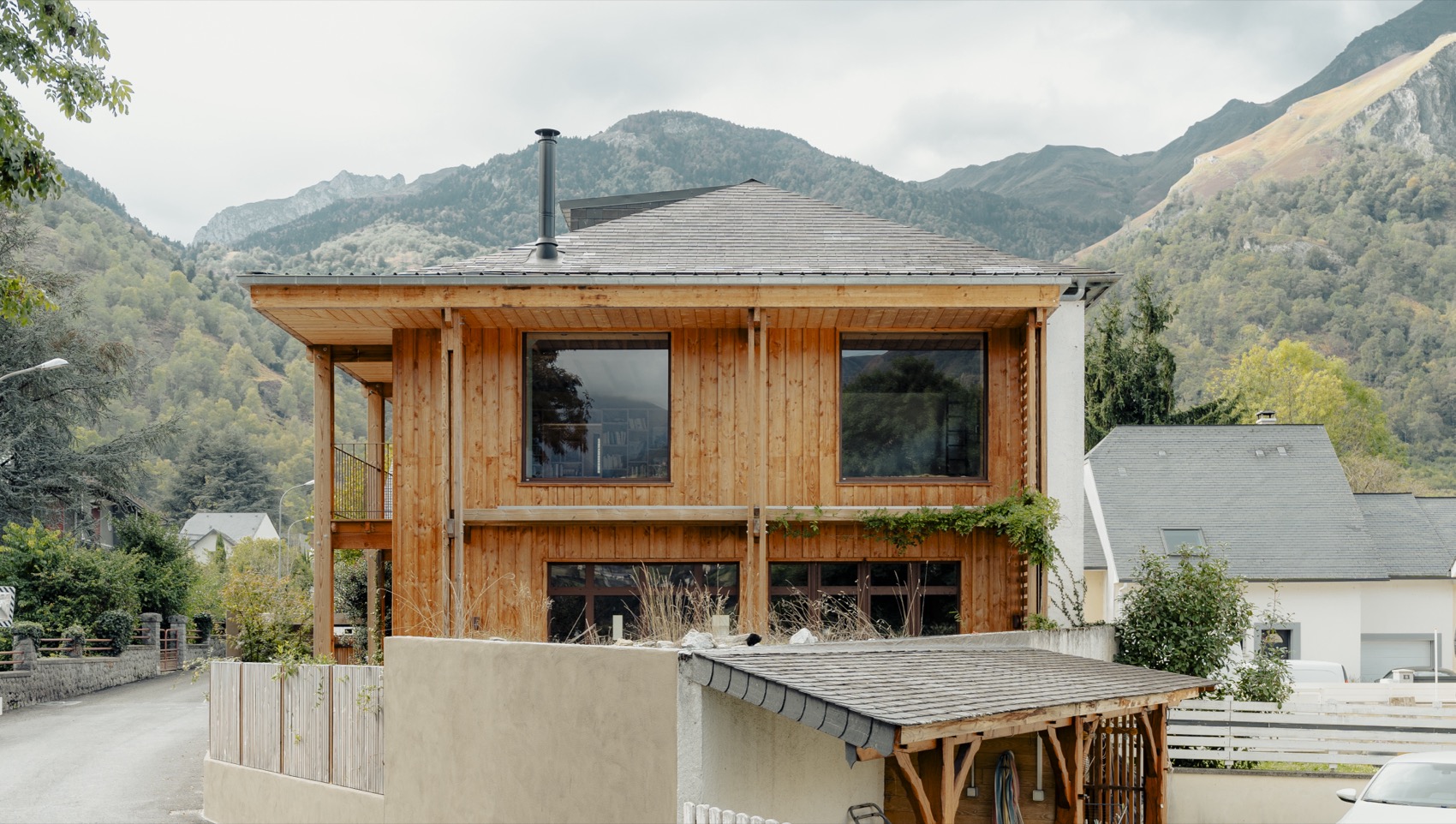
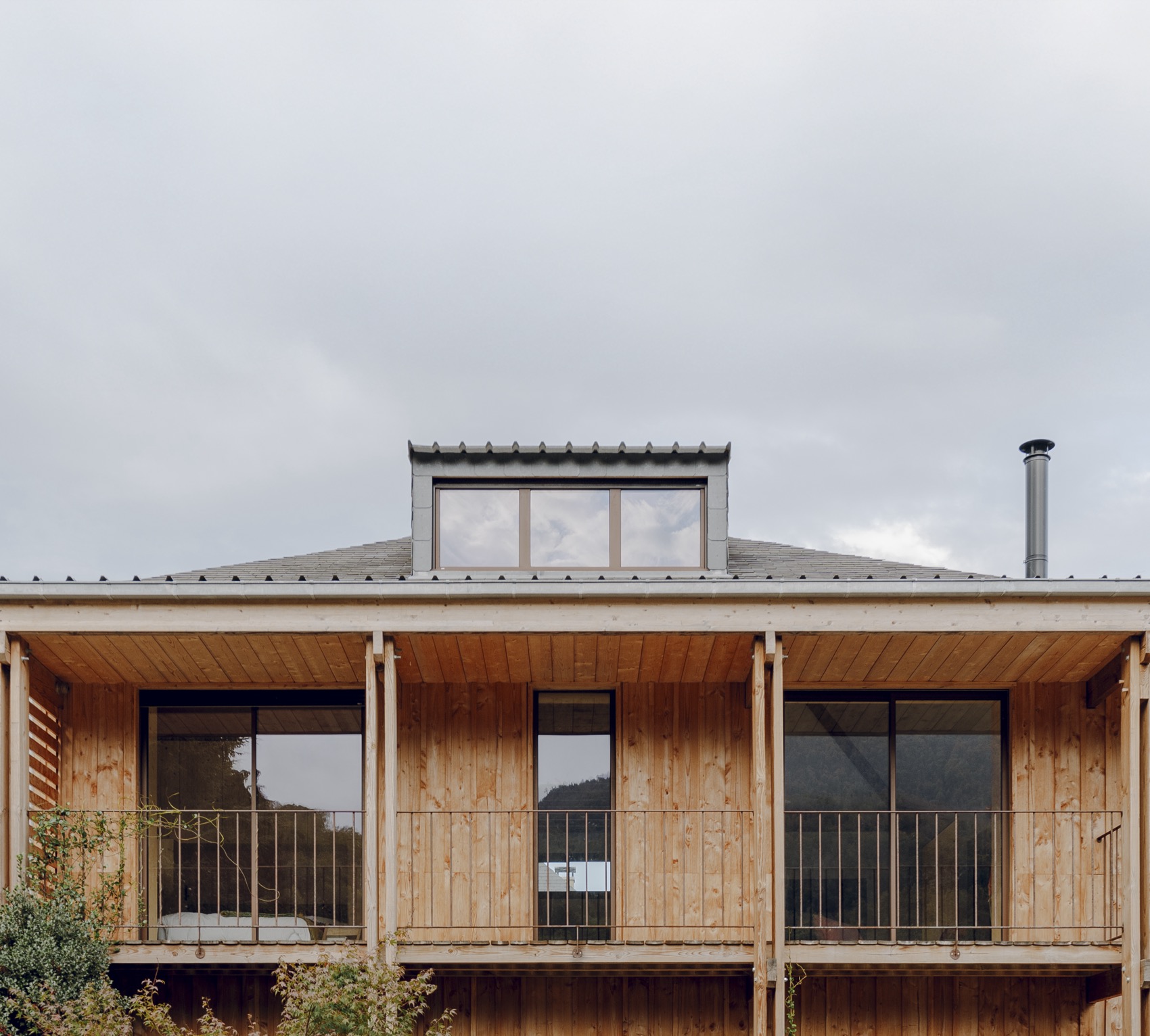
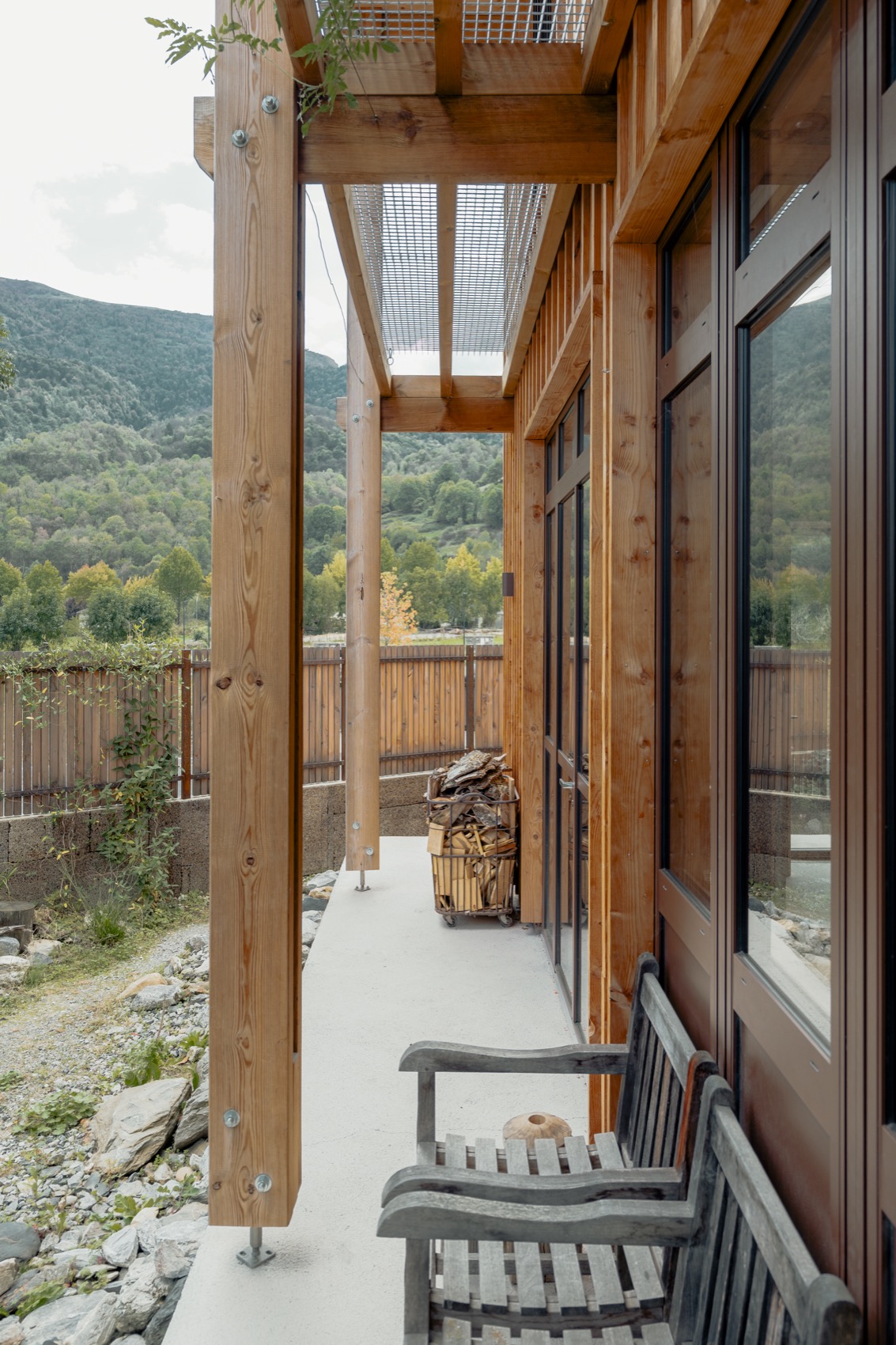
一处混凝土门式框架的发现——它是旧车间车辆入口遗留下来的结构——促成了一个关键性的建筑动作。原有立面开口被大幅拓宽并进行了细致加固,使自然光得以更深入地进入室内。沿花园一侧,一套木结构与宽大的金属覆面挑檐将居住空间进一步延展至室外。屋顶层面上,一个受贝阿恩(Béarn)地区乡土建筑启发的折线式屋顶体量,创造出一个额外的房间——像是一间朝向群山的小木屋,安置在原有结构主椽之上。南侧的露台则重新诠释了传统奥索地区(Ossau)的廊道空间,这类空间过去用于晾晒与储藏,而如今则被构想为全年可使用的半室外庇护空间。
The discovery of a concrete portal frame, a leftover from the former workshop’s vehicle entrance, informed a decisive architectural move. The façade opening was generously widened and carefully reinforced, allowing natural light deeper into the interior. Alongside the garden, a timber structure and a wide metal-clad overhang extend the domestic space outward. At roof level, a mansard volume inspired by Béarn vernacular architectural forms creates an additional room-like a small cabin pointing to the mountains-resting on the main rafters of the existing structure. To the south, a terrace reinterprets traditional Ossau galleries, once used for drying and storage, now conceived as a sheltered year-round outdoor space.
▼加大的开窗立面,Expanded facade opening
▼屋顶加建体量与木质立面,Roof extension volume and timber facade
室内空间INTERIOR
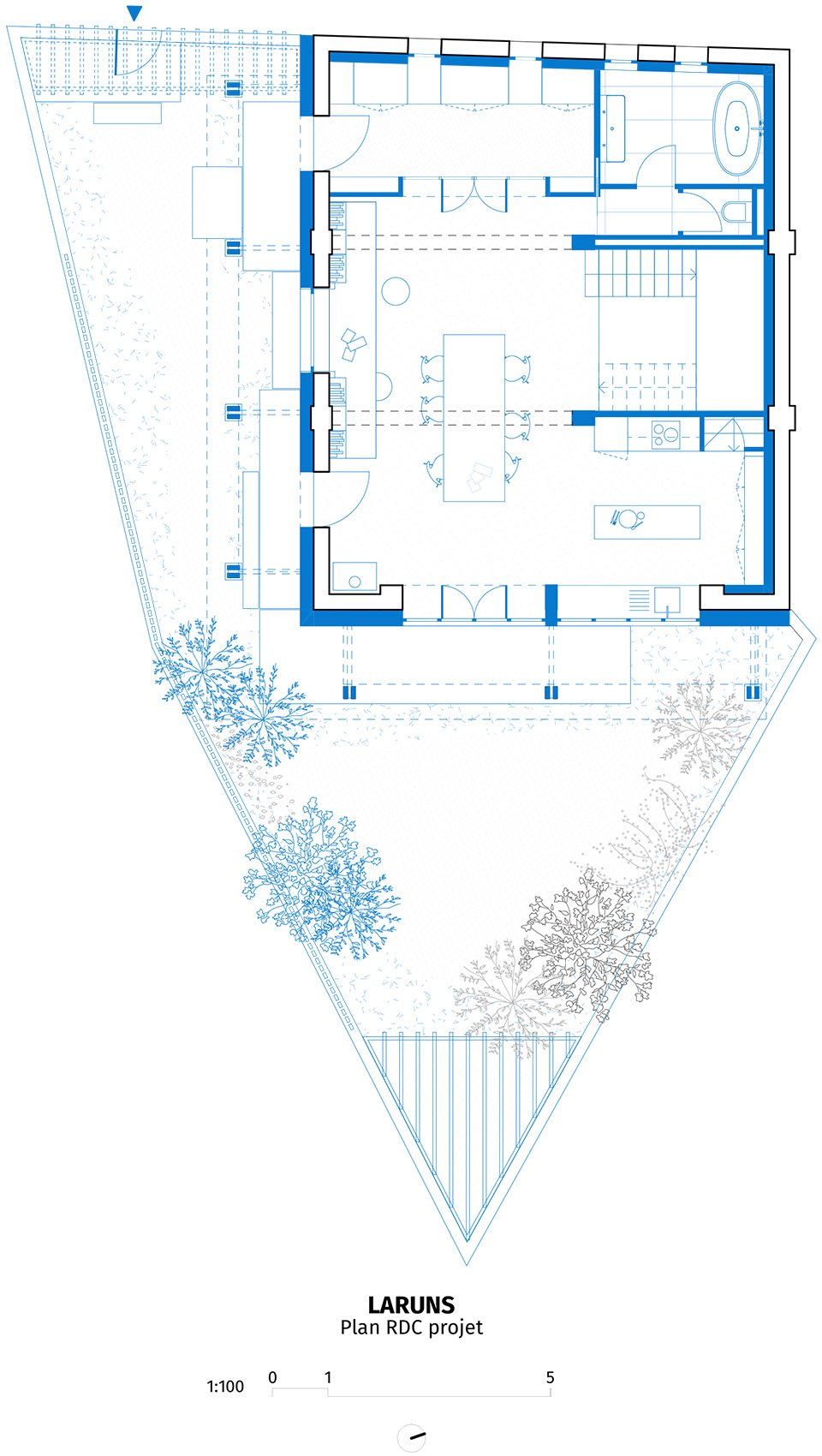
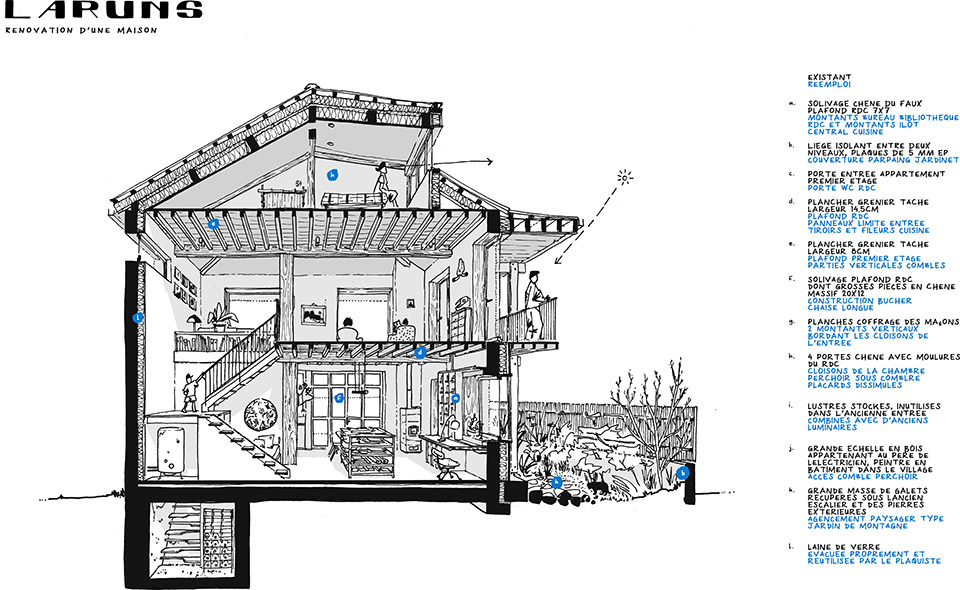
改造项目进一步梳理了空间功能布局。新的楼梯沿北立面布置,从而将主要起居空间释放给南侧以及外部景观。楼梯下方,一段紧凑的交替踏步梯通向原有地下室,这一空间通过自然通风被重新利用为储藏室。首层从入口门厅延伸至花园,形成一个连续的空间体量,将厨房、工作区与起居空间整合进同一个贯通空间之中。
The renovation clarifies the functional layout. A new staircase positioned along the north elevation frees the main living spaces toward the south and views to the outside. Beneath it, a compact alternating-tread stair leads to the existing cellar, naturally ventilated and repurposed as a pantry. The ground floor unfolds as a continuous volume from entrance vestibule to garden, uniting kitchen, workspace, and living area within a single through-space.
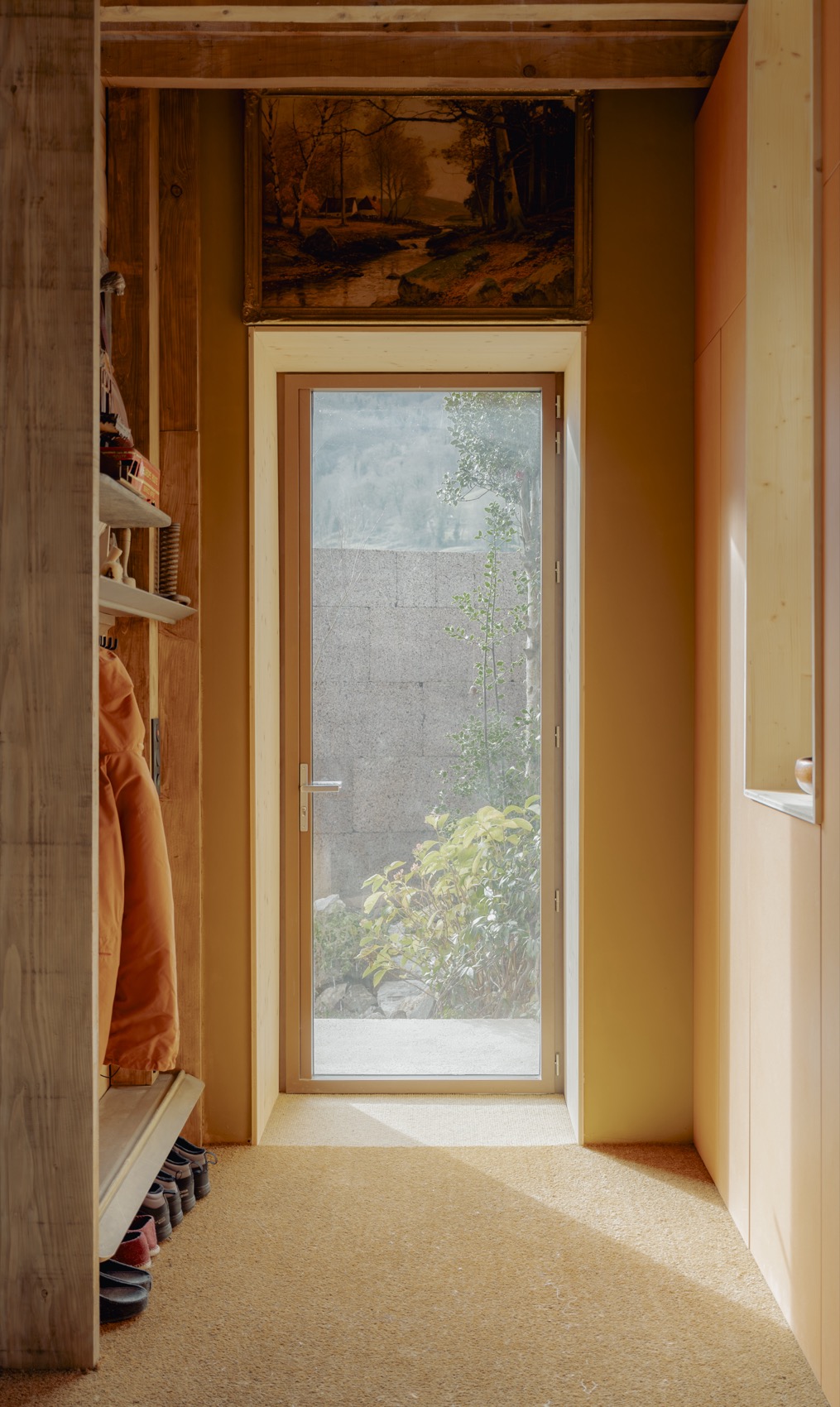
▼自然光进入狭长入口空间,Natural light entering the narrow entrance space
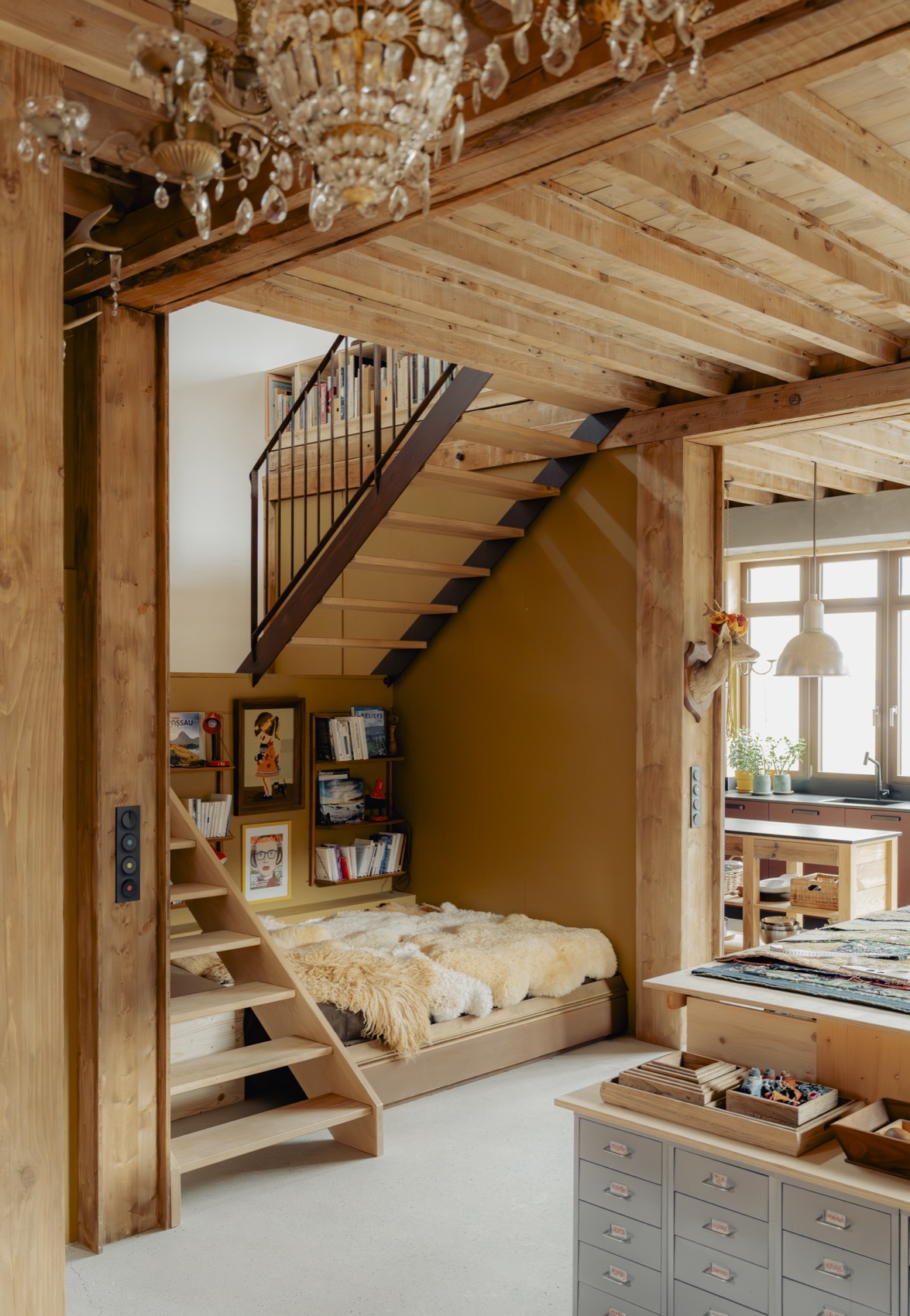
▼楼梯连接夹层与起居区域,Stair linking the mezzanine and living area
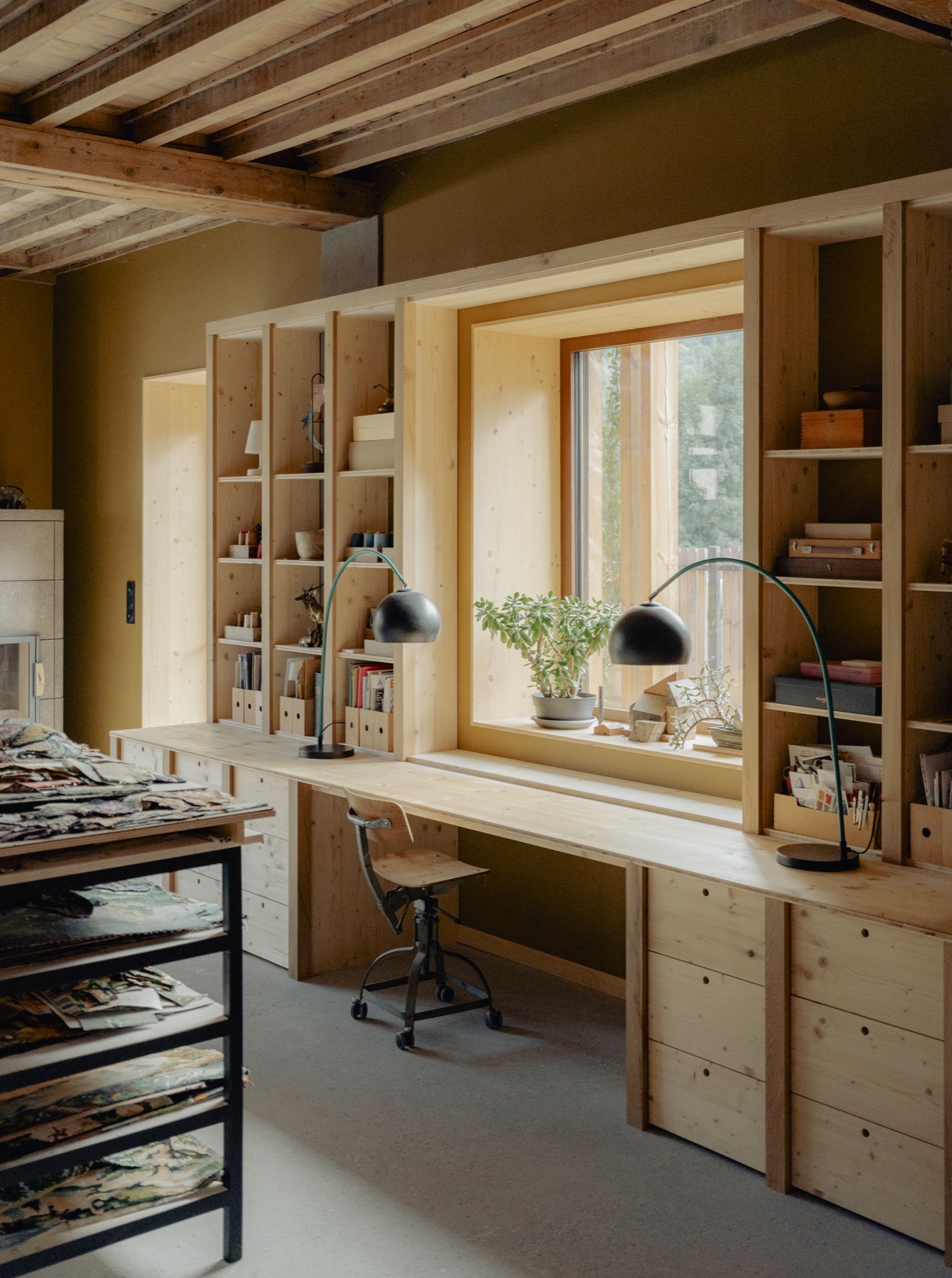
▼面向山景的木质工作台,Timber workspace oriented toward the mountain landscape
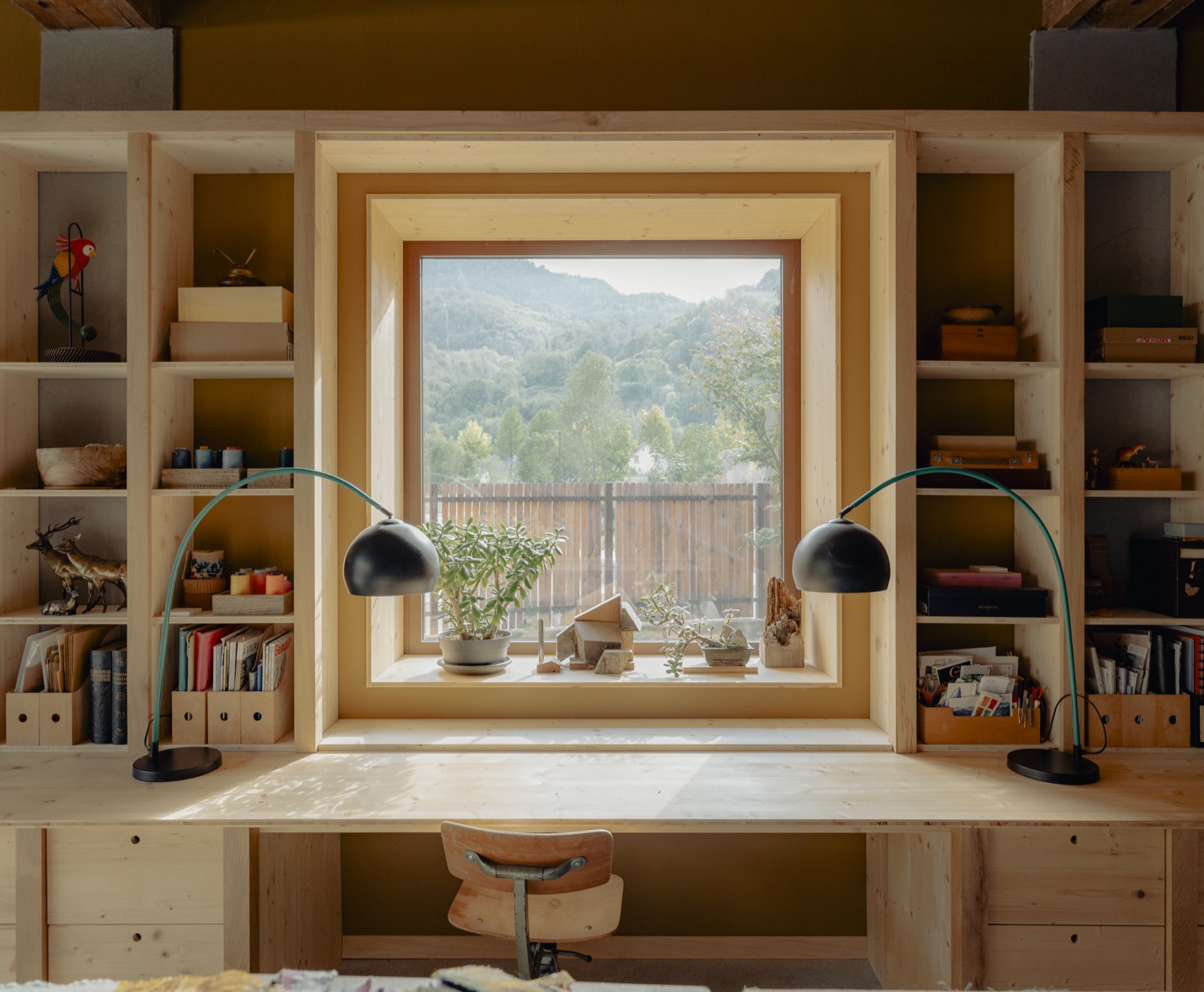
▼嵌入式书架与窗边工作区,Built-in shelving and window-side workspace
▼纺织工作台位于起居空间中央,Textile worktable positioned at the center of the living space
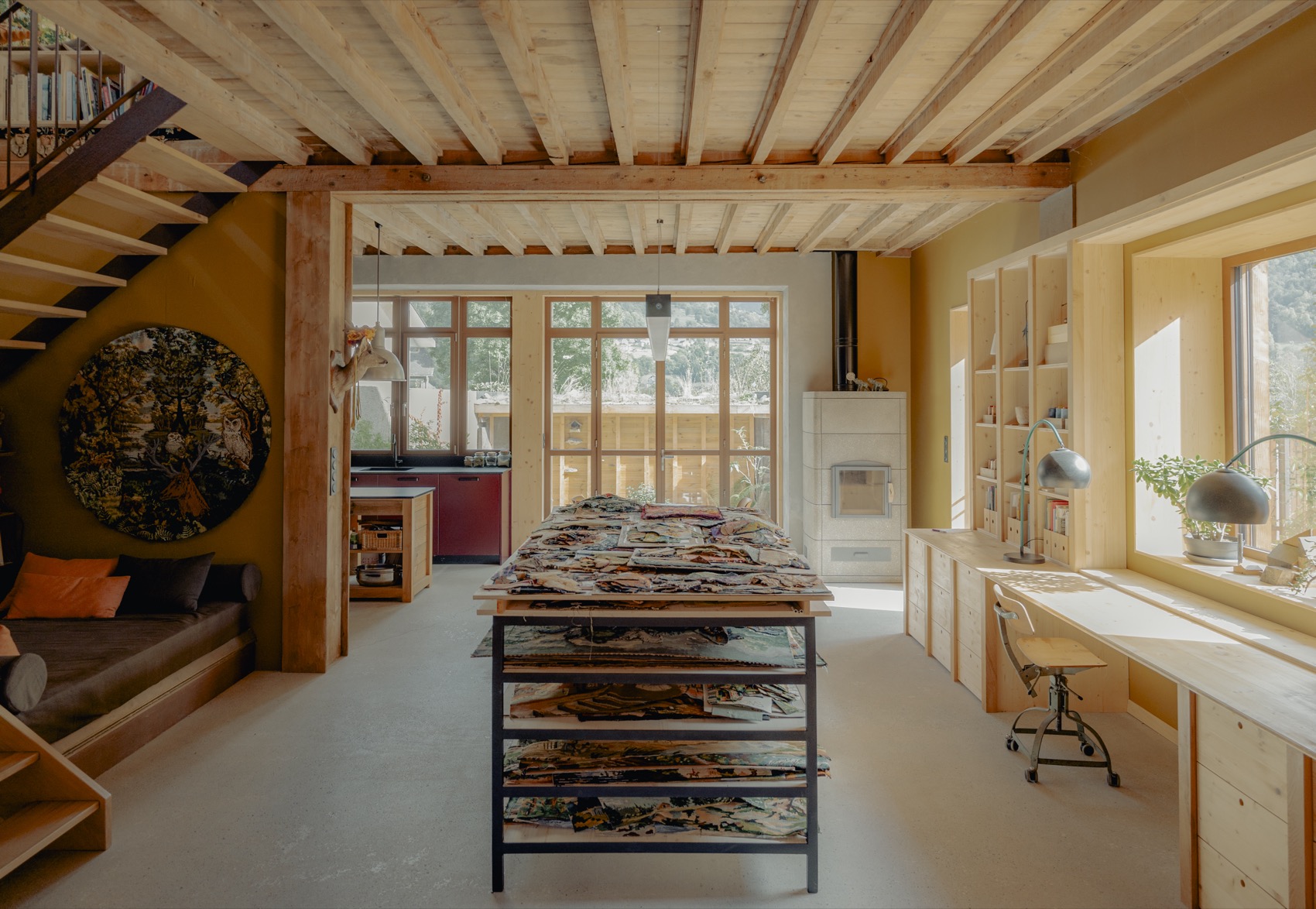
▼餐桌与工作空间相互交织,Dining and working spaces intertwined
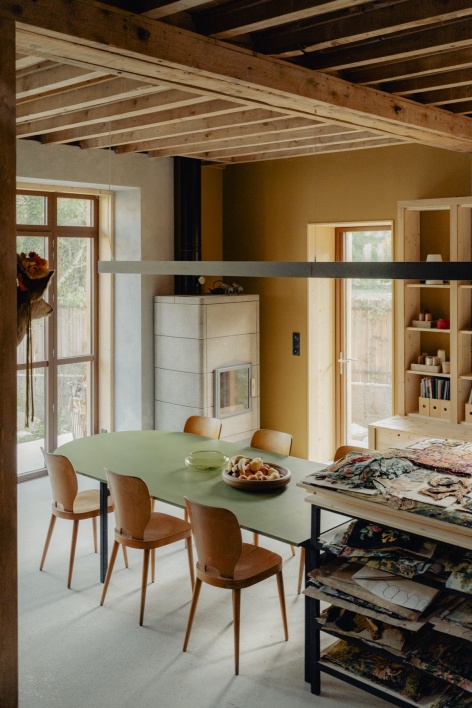
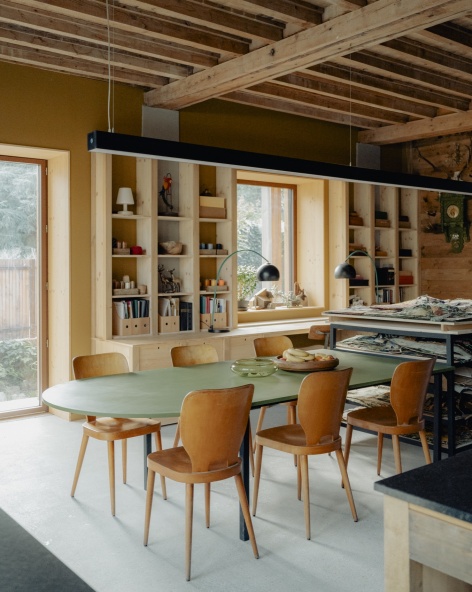
▼绿色圆角餐桌与暖木材形成对比,Rounded green table contrasting with warm timber surfaces
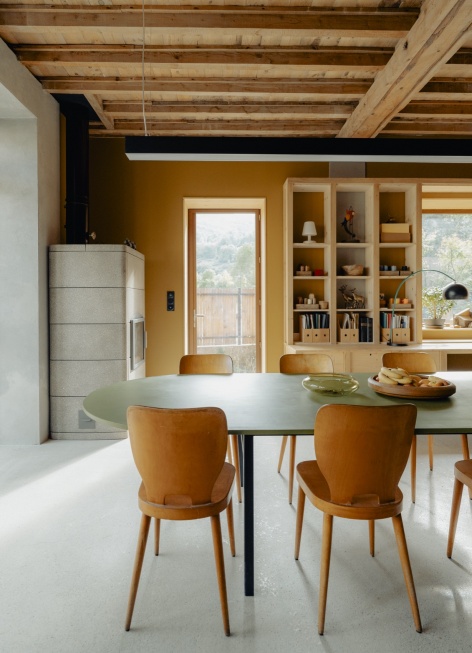
▼厨房面向庭院引入自然光,Kitchen opening to the courtyard light
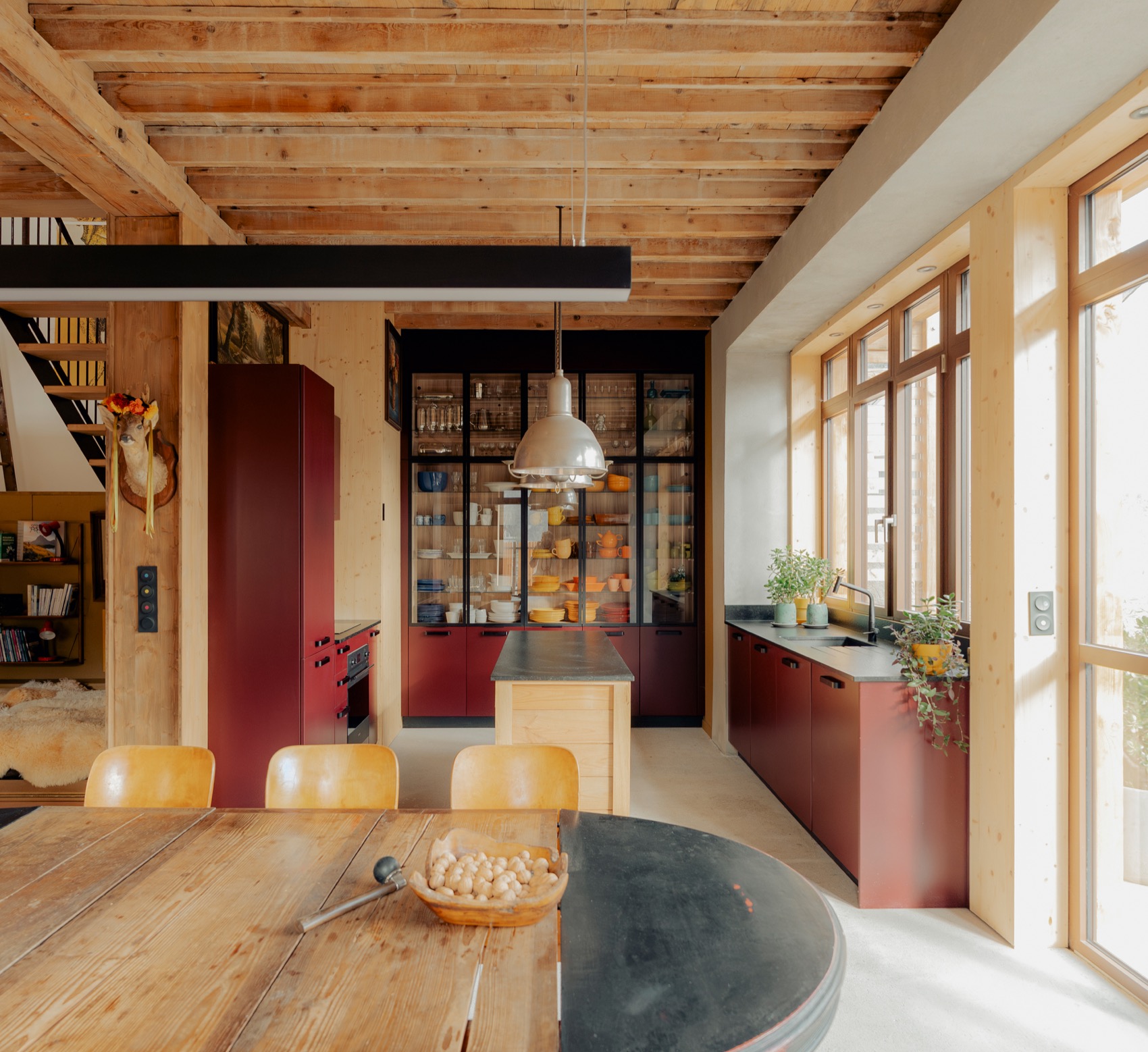
▼艺术收藏融入日常室内空间,Art collection integrated into the domestic interior
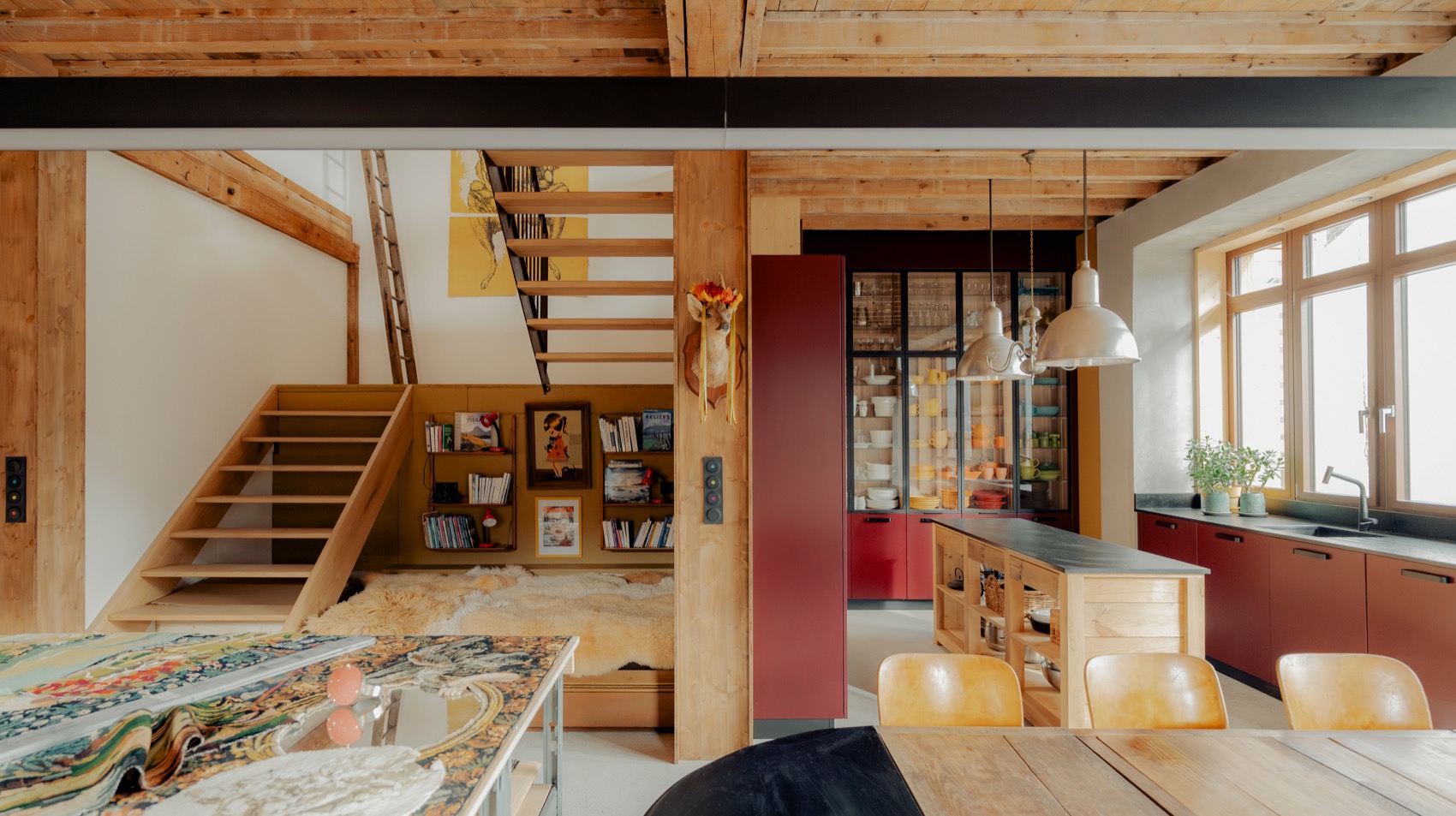
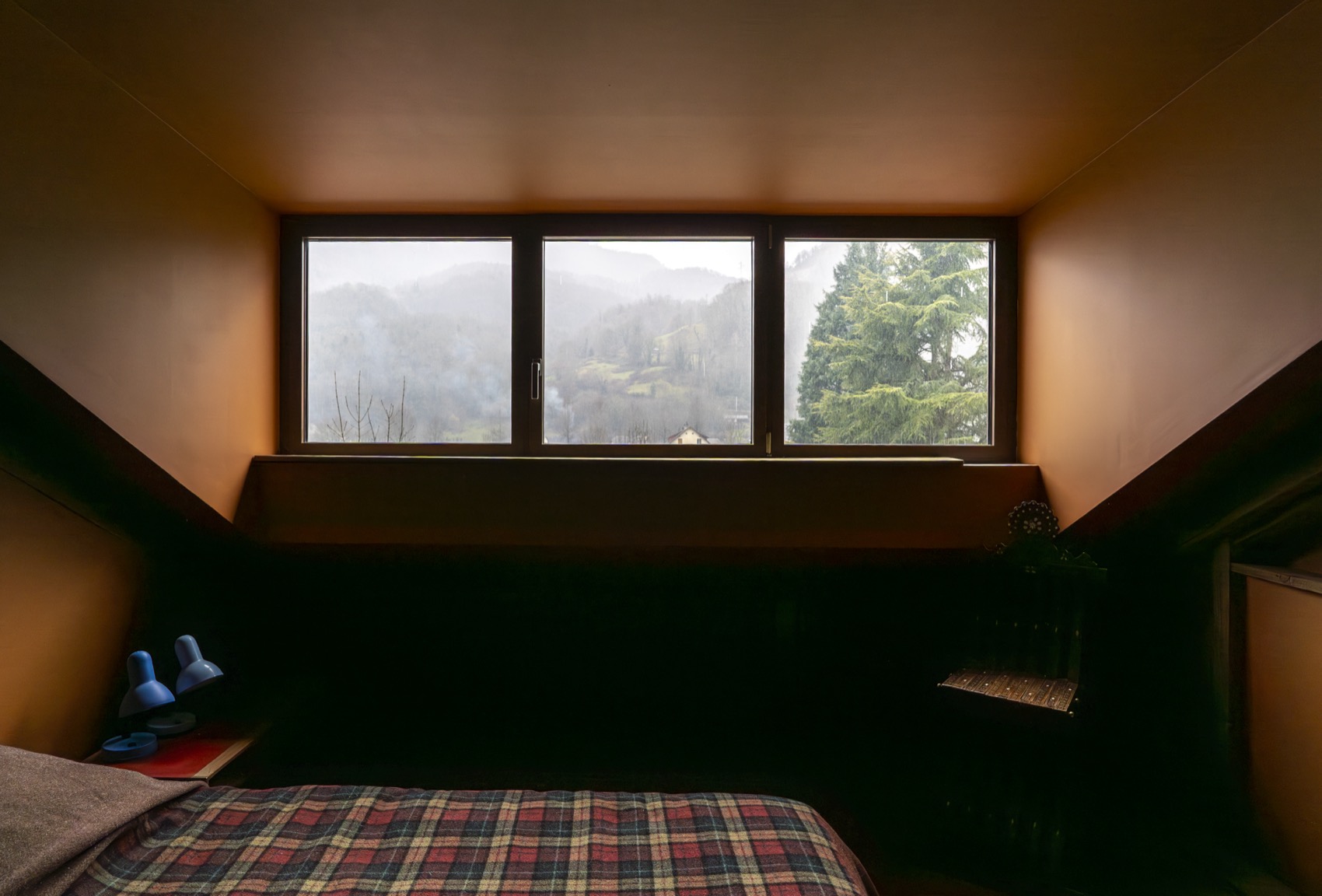
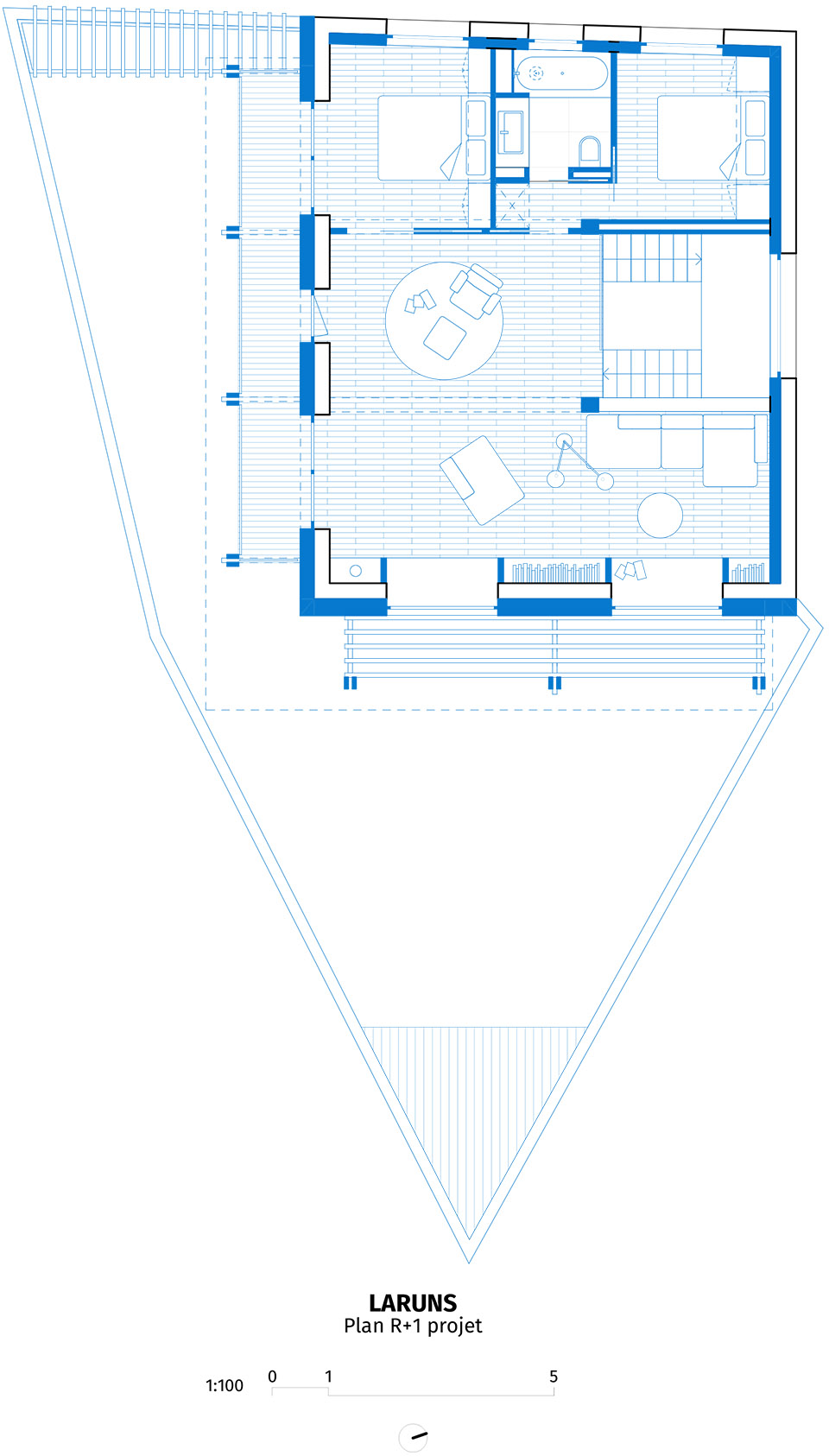
二层的卧室与浴室被整合为一列布置,从而使转角客厅能够向连续阳台打开。屋顶下方,一个置于木结构框架中的中央房间建立起双层高的空间关系,并通过重新利用的谷仓梯到达。室内构造始终保持有意的开放与可适应性,仅通过少量固定元素进行界定,例如大型工作台与储物空间、朝向景观设置的壁龛,以及面向山脉抬高布置的床铺。
Upstairs, the bedrooms and a bathroom are consolidated into a row, allowing a corner living room to open onto a continuous balcony. Under the roof, a centrally placed room set within the timber frame establishes double-height relationships and is accessed via the reused miller’s ladder. The interior fit-out remains deliberately open and adaptable, defined by a small number of built-in elements such as large worktables and storage, alcoves oriented toward the landscape, and a raised bed facing the mountains.
▼楼梯通往二层起居空间,Staircase leading to the upper living level
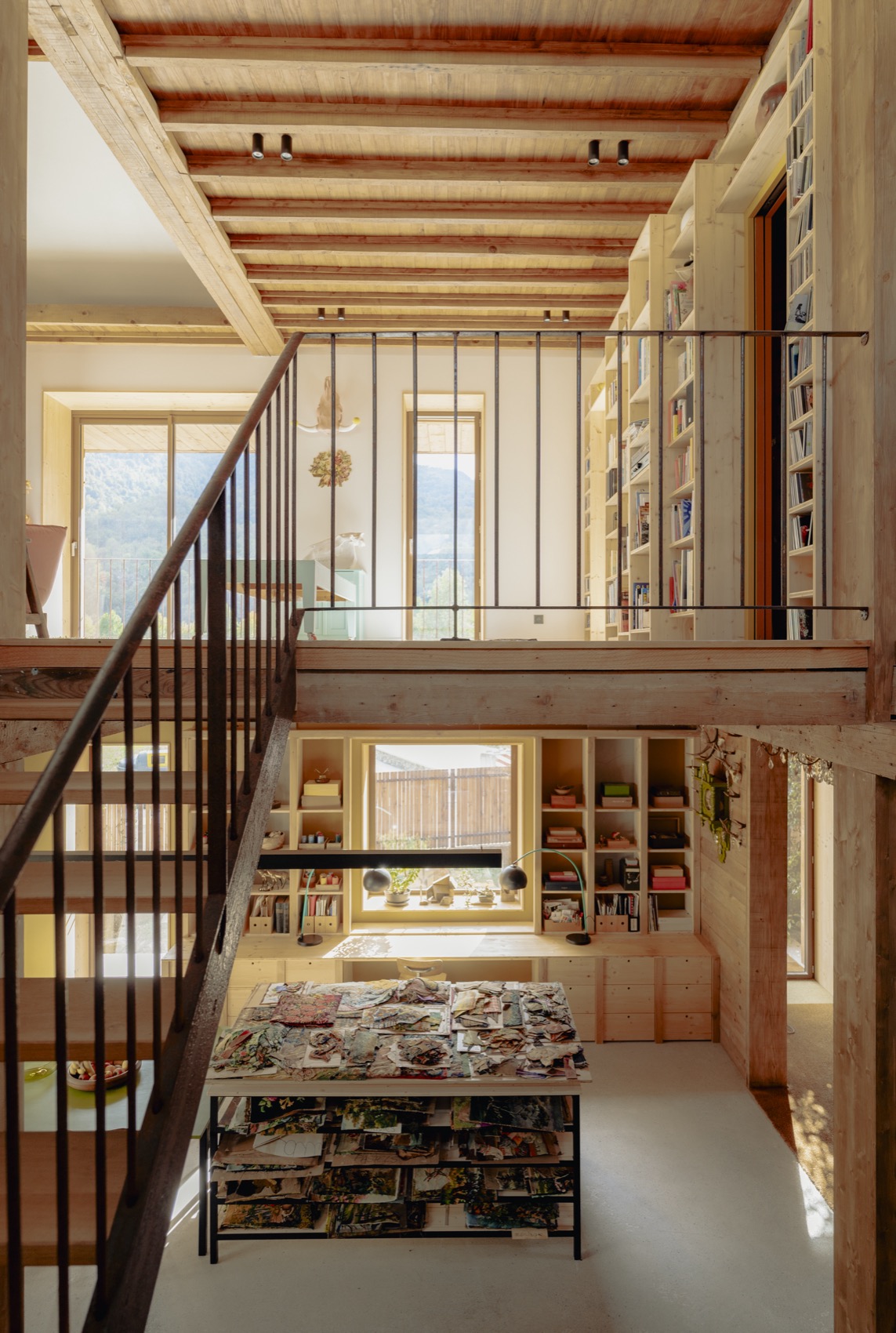
▼二层起居区与木构屋架,Upper living area beneath the timber roof structure
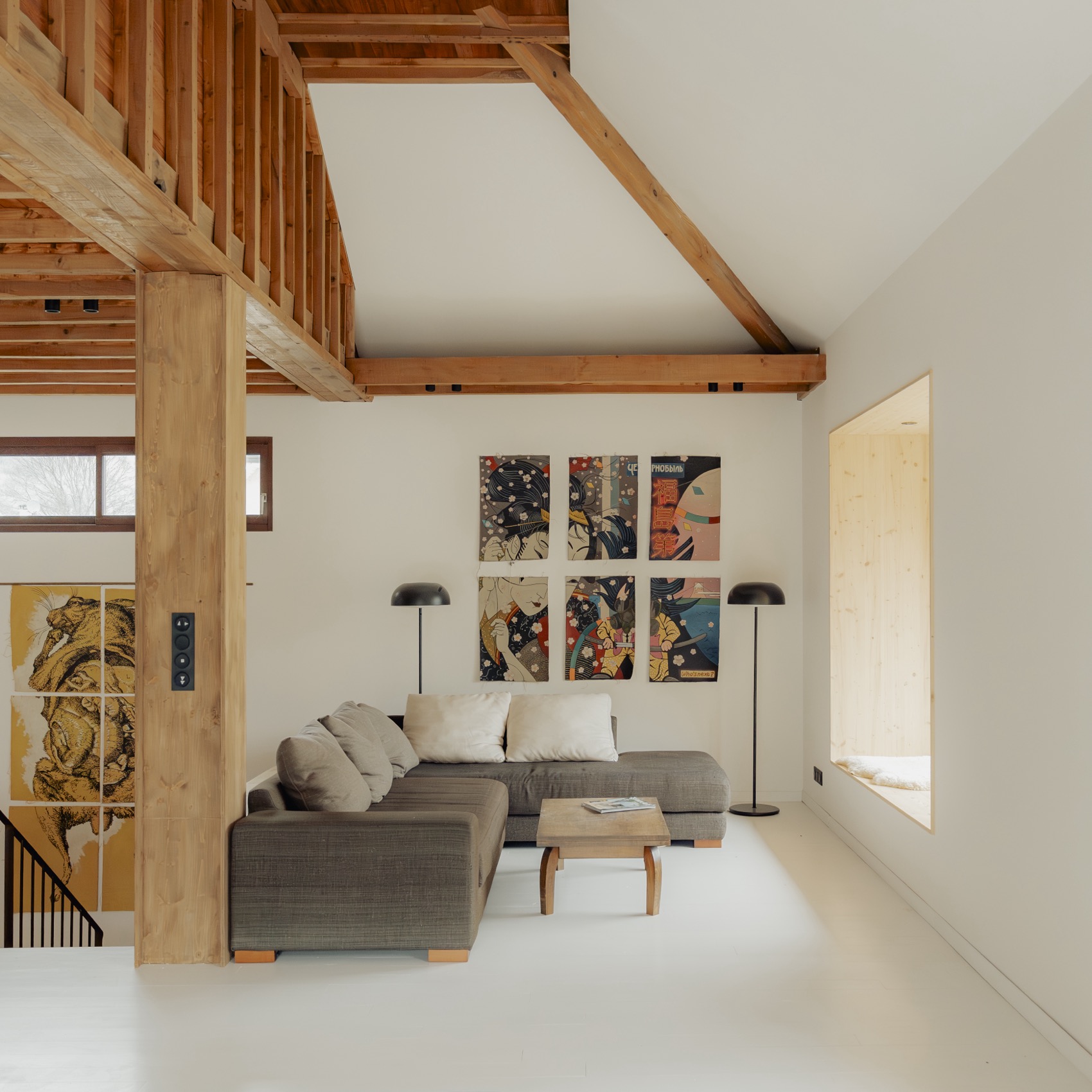
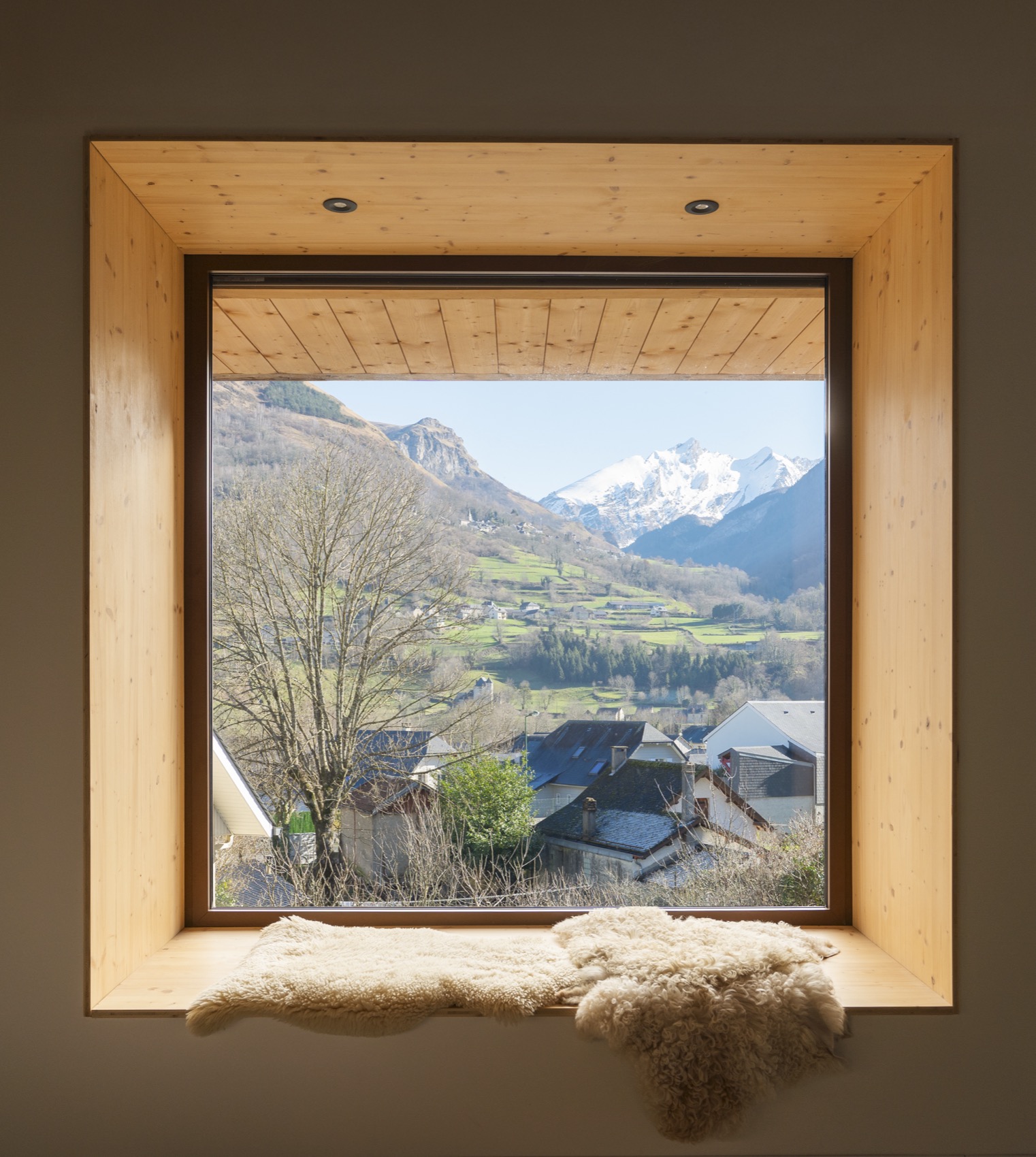
▼面向山谷景观的窗边坐席,Window seat overlooking the mountain valley
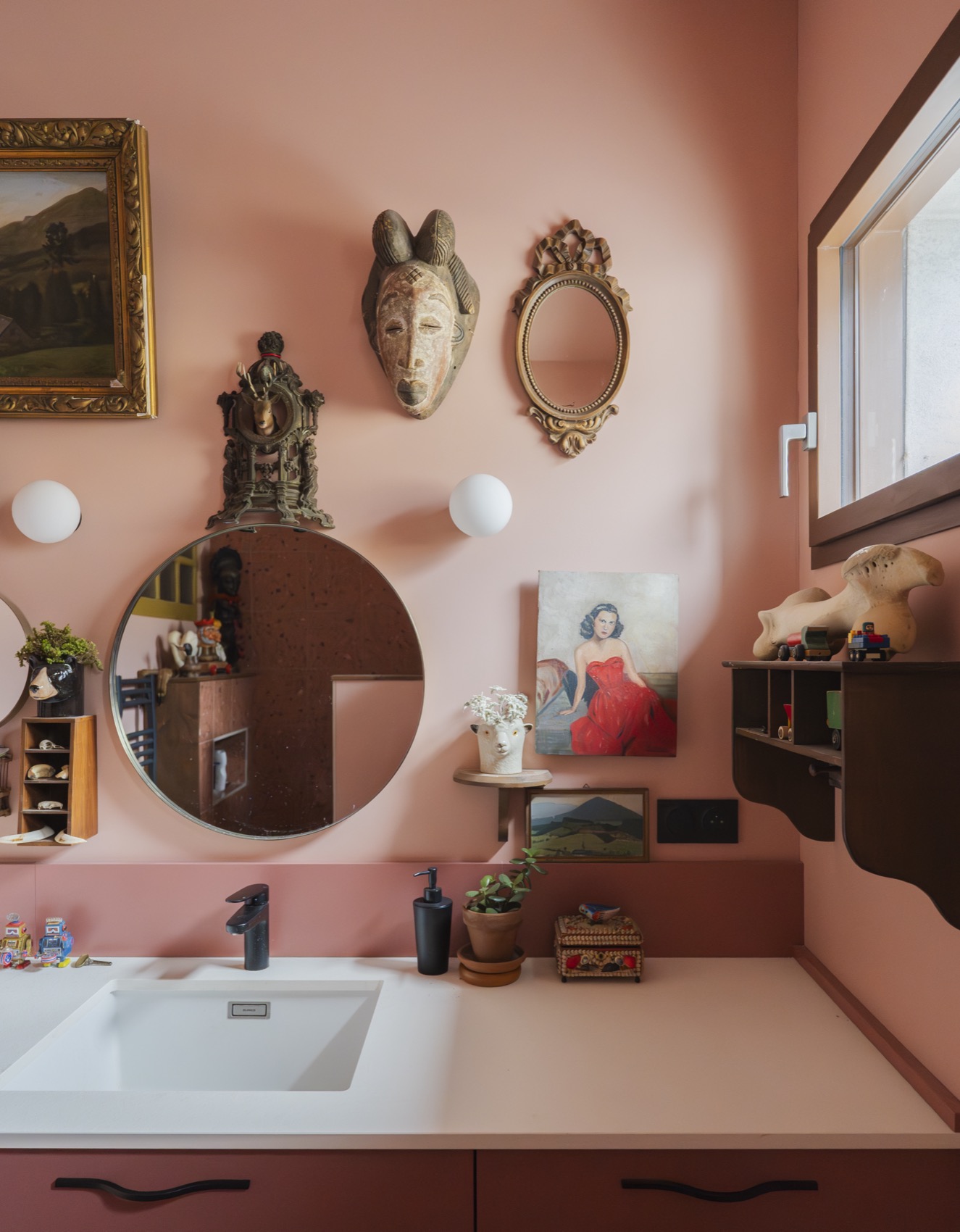
▼粉色墙面中的镜面与收藏陈设,Mirrors and collected objects against the pink-toned wall
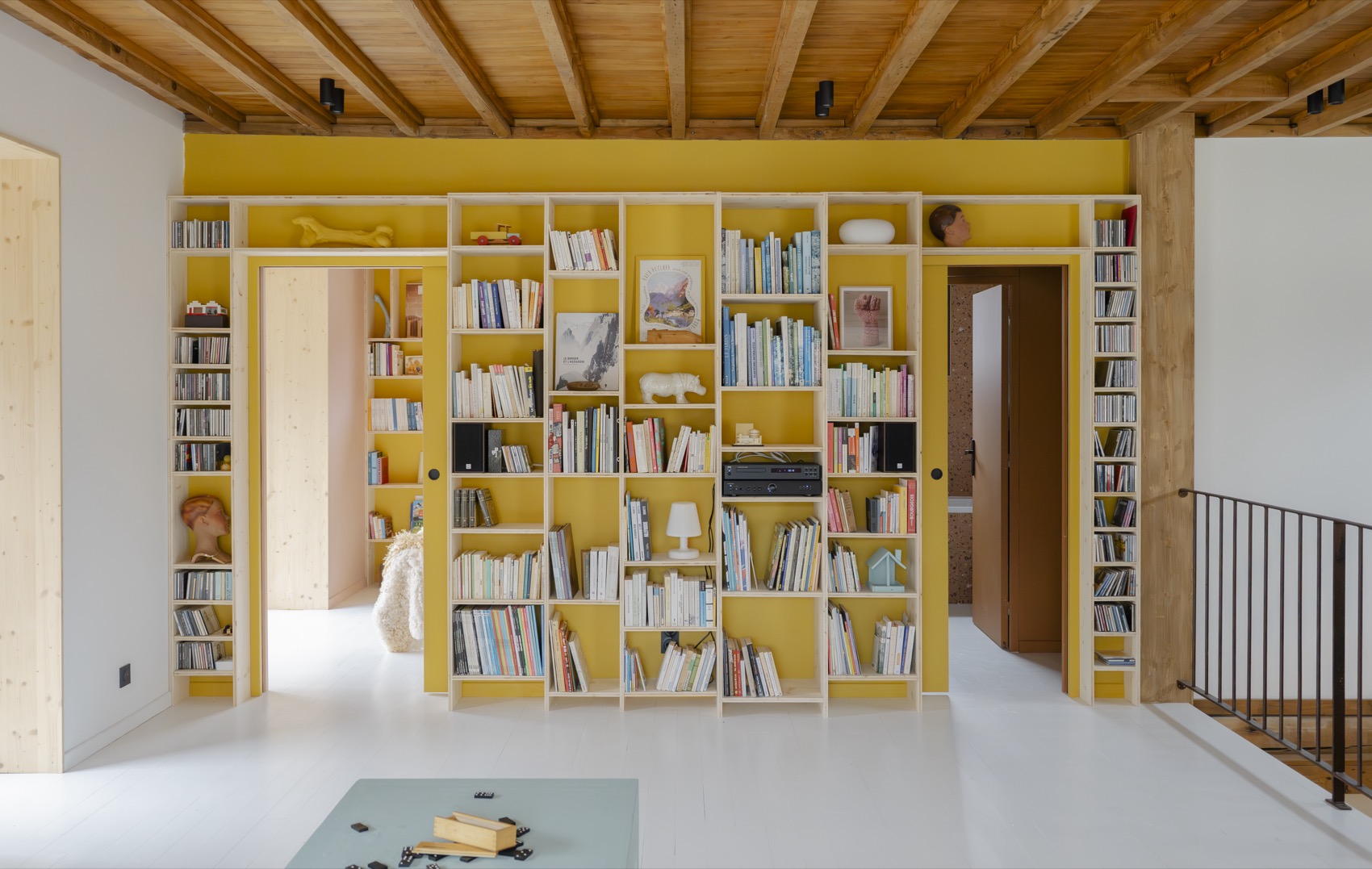
▼明黄色书架墙成为室内视觉焦点,Bright yellow bookshelf wall as the visual focal point of the interior
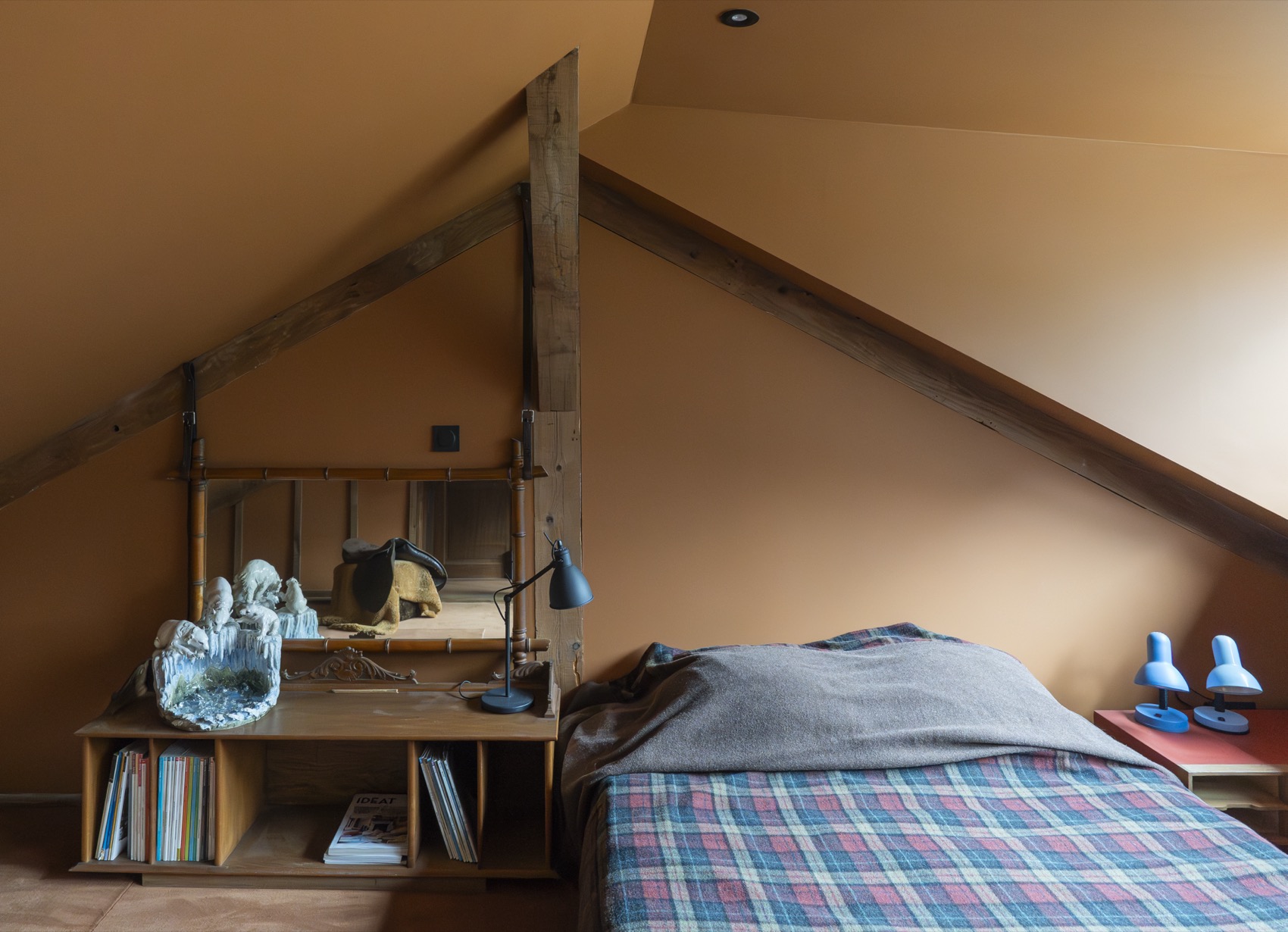
▼斜屋顶下的暖色卧室空间,Warm-toned bedroom beneath the pitched roof
花园GARDENS
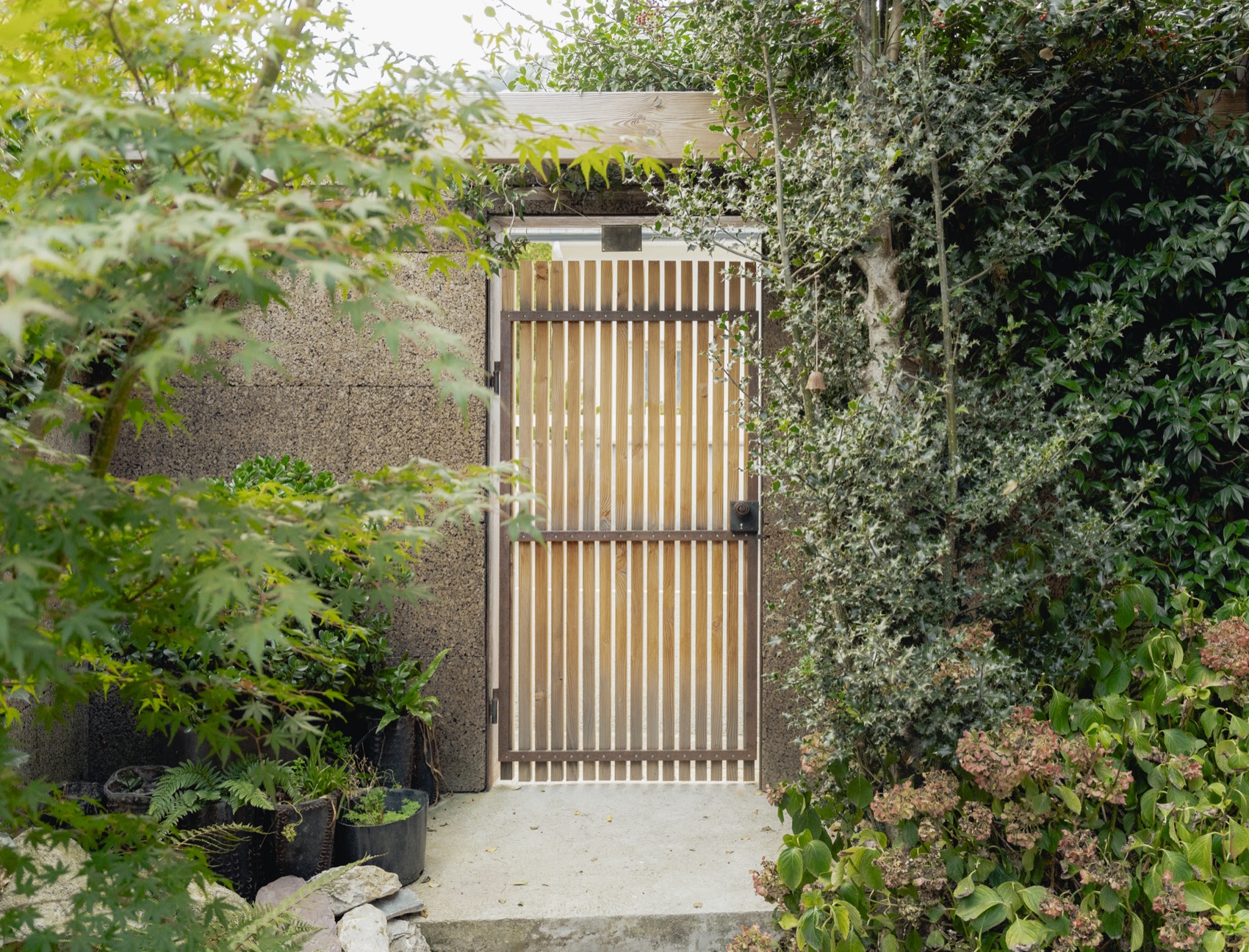
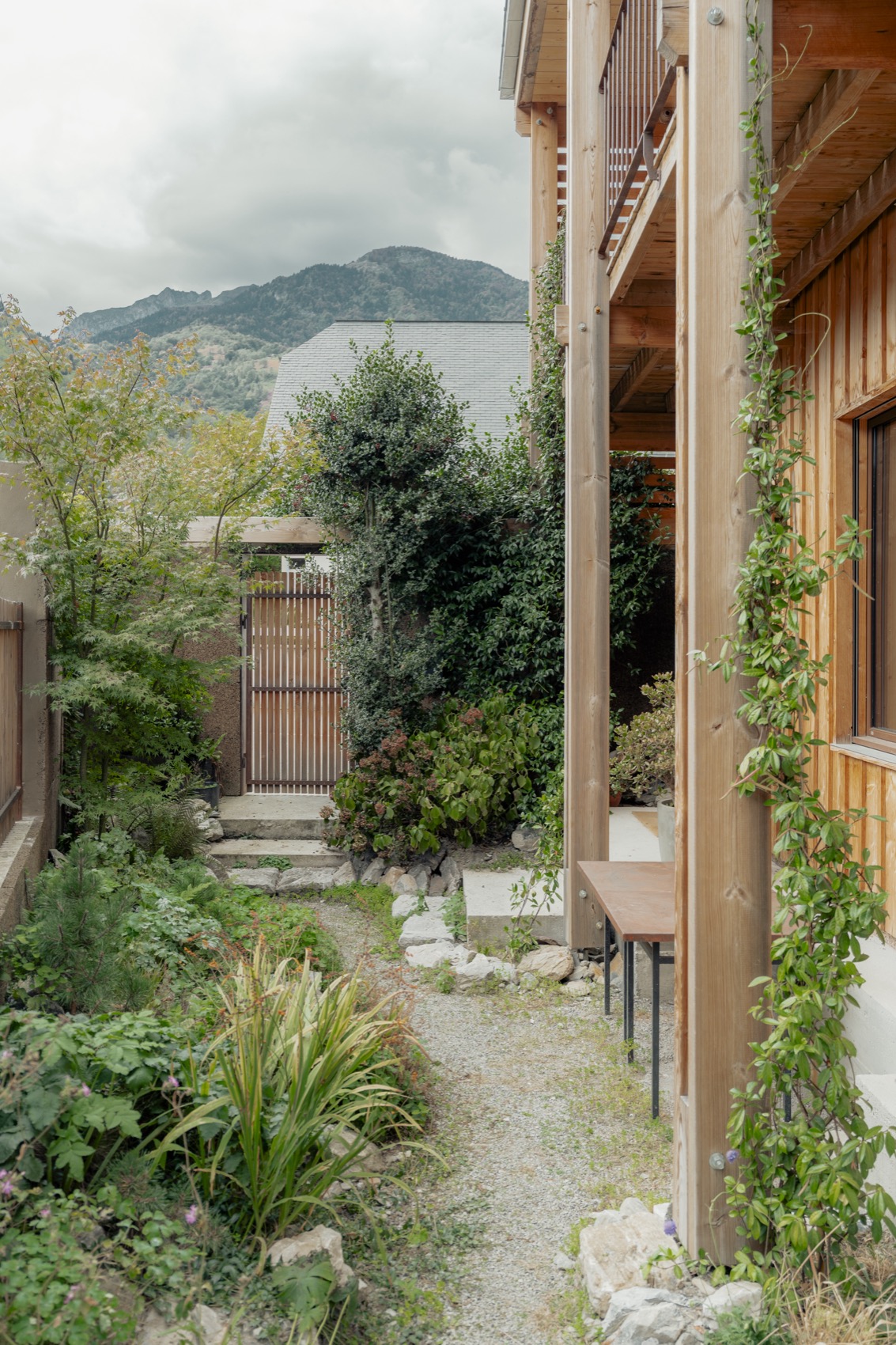
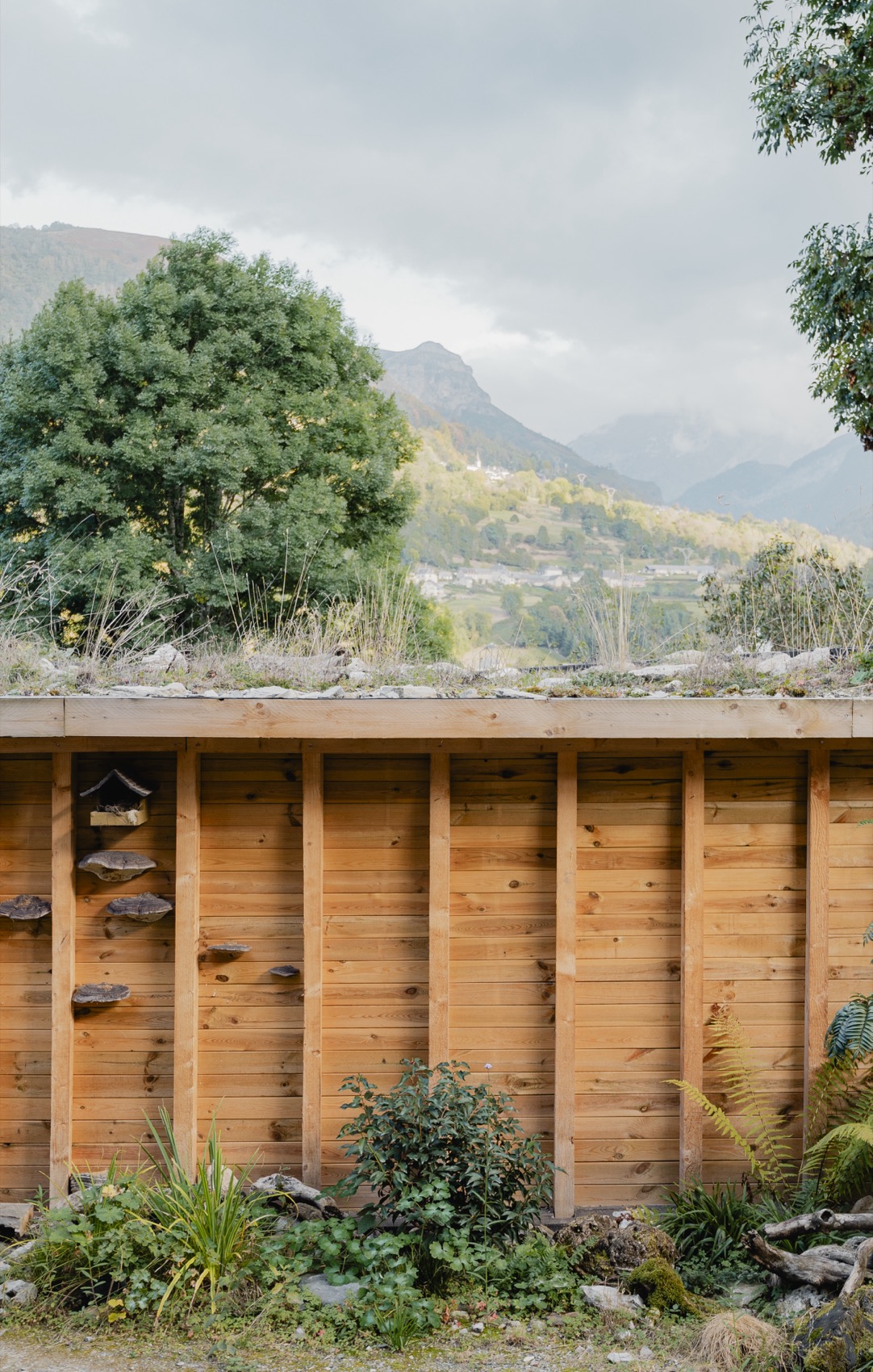
在室外,花园延续了项目整体的节制性策略。拆除过程中回收的石块与卵石,结合当地植物,共同构成了一种受干涸河床与融雪冲积地貌启发的矿物景观。柴房围合出场地三角形尽端,并通过其绿色屋顶在视觉上与远处山脉融为一体,进一步延展了空间视线。
Outside, the garden extends the project’s economical approach. Stones and pebbles salvaged from demolition, combined with local plant species, form a mineral landscape inspired by dry riverbeds and snowmelt debris. A woodshed encloses the triangular extremity of the plot and extends the perspective, as its green roof merges visually with the mountains in the distance.
▼木格栅庭院入口隐藏于绿植之间,Timber lattice courtyard entrance nestled within dense greenery
▼碎石小径穿行于庭院植物之间,Gravel pathway winding through the garden planting
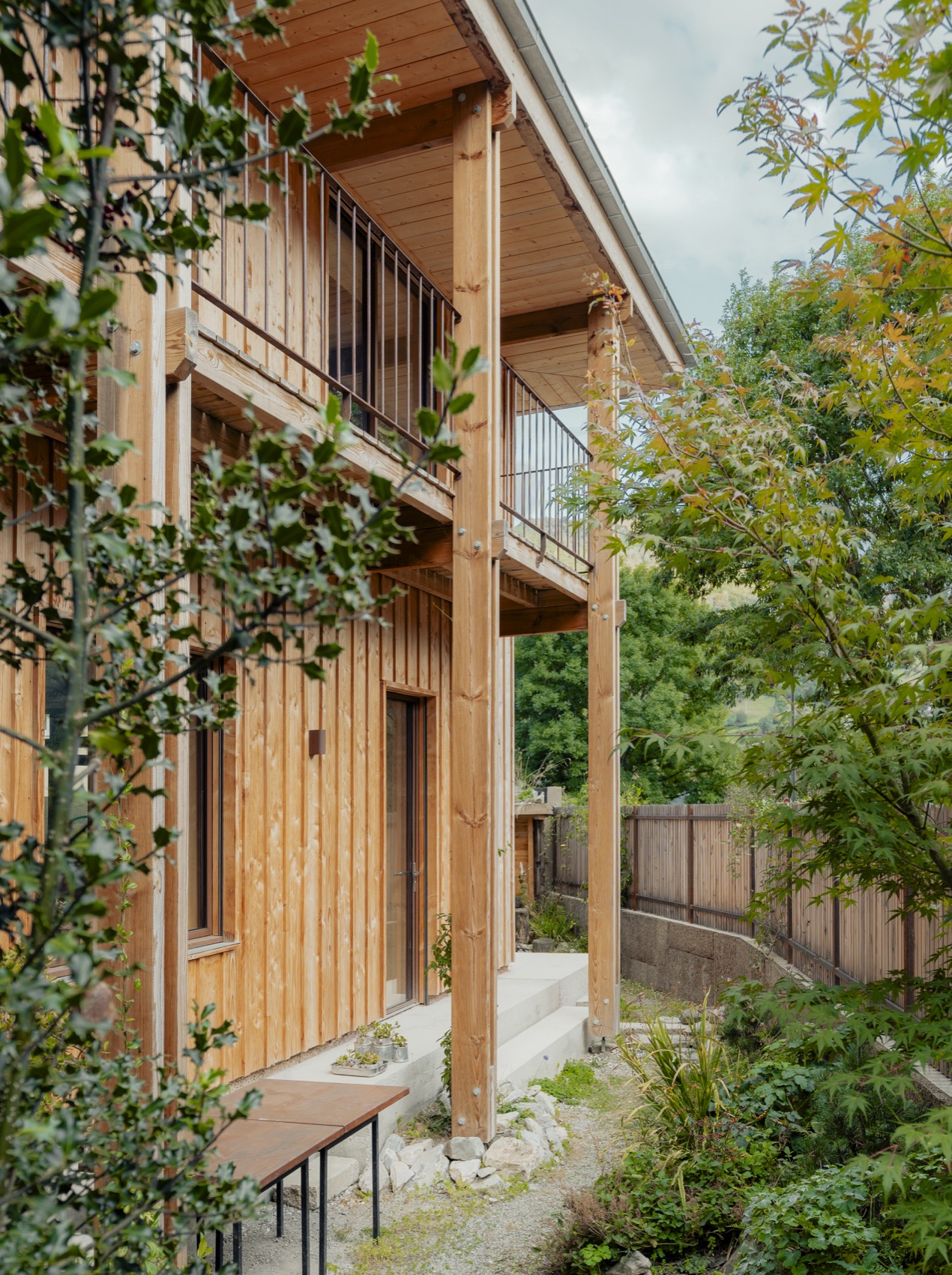
▼木质围墙后的山地景观,Mountain landscape rising beyond the timber enclosure
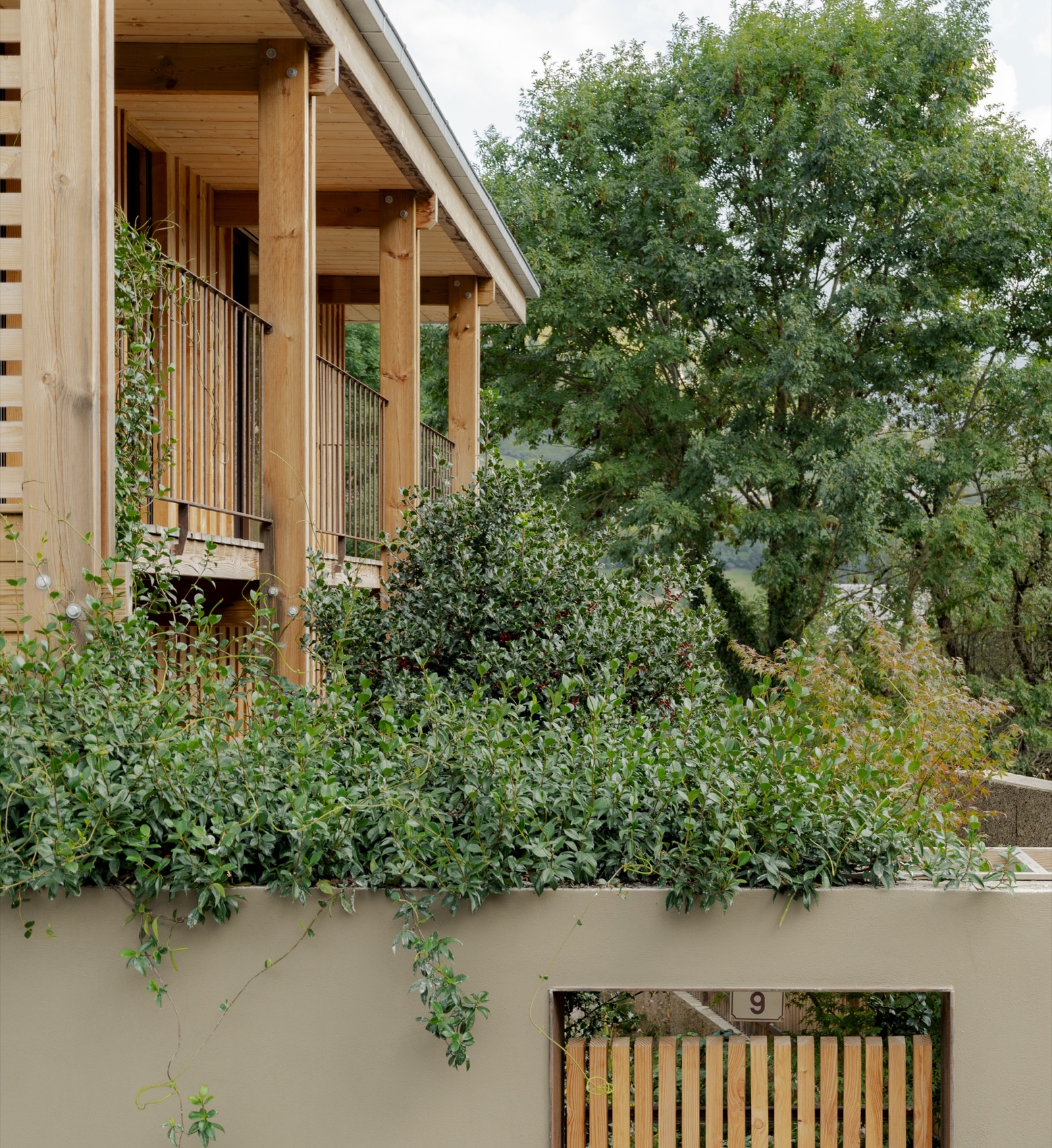
▼阳台边缘延伸出的自然绿意,Vegetation extending along the balcony edge
▼地面层平面,Ground floor plan
▼一层平面,First floor plan
▼剖面,Section
Project name: LARUNS
Location: Laruns, France
Client: Private
Architect: Mesnil Architectures
Program: Renovation of an individual dwelling, containing residence and studio
Area: 150 m²
Construction cost: €220,000 incl. VAT
Completion: 2025
Structure: Guicheteau Ossature
Masonry: SP Maçonnerie
Carpentry: Nicolas Iladoy
Metalwork: David Gabard Ferronnerie
Finishing works: Maçonnerie Queffelec
Photo credits and drawings: Mesnil Studio