San Martin市场,西班牙 / El Equipo Creativo
项目位于圣塞巴斯蒂安浪漫区(Romantic Area)的核心地带,圣马丁市场(San Martin Market)早已成为城市日常生活的一部分。这里不仅仅是一个购买食材的场所,更是一个人与人相遇交流的空间——地方身份不仅通过商品本身得以呈现,也通过围绕其建立起来的社会关系不断被强化。此次更新改造基于一个清晰的核心理念:重新找回市场作为充满活力的城市公共空间的本质,并使其重新与社区建立紧密联系。对我们的事务所而言,这一项目具有特殊意义。三位合伙人中有两位来自多诺斯蒂亚(Donostia,圣塞巴斯蒂安巴斯克语名称),能够参与这样一个深植于城市集体记忆中的场所更新,是一次难得的机会,让我们能够以熟悉、贴近与深度理解其日常使用方式的视角介入设计。
Located in the heart of San Sebastián’s Romantic Area, San Martin Market forms part of the city’s everyday identity. More than a place of provision, it is a space of encounter—a setting where local identity is expressed not only through its products, but through the relationships built around them. The recent renovation is grounded in a clear idea: to recover the essential character of the market as a vibrant urban space, deeply connected to its community. For our studio, this project is particularly meaningful. Two of the three partners are from Donostia, and working on a place so embedded in the city’s collective memory has been a unique opportunity to engage with it through proximity, familiarity, and a deep understanding of its everyday use.
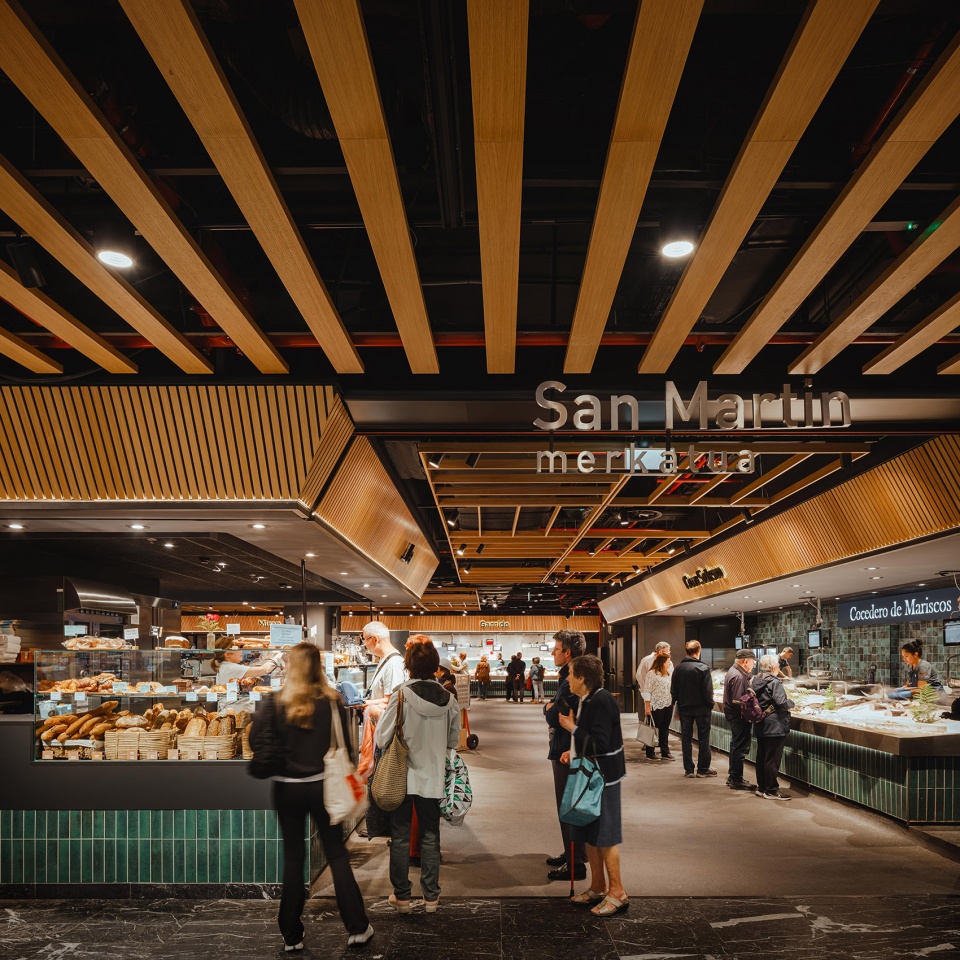
▼圣马丁市场入口,San Martin Market entrance
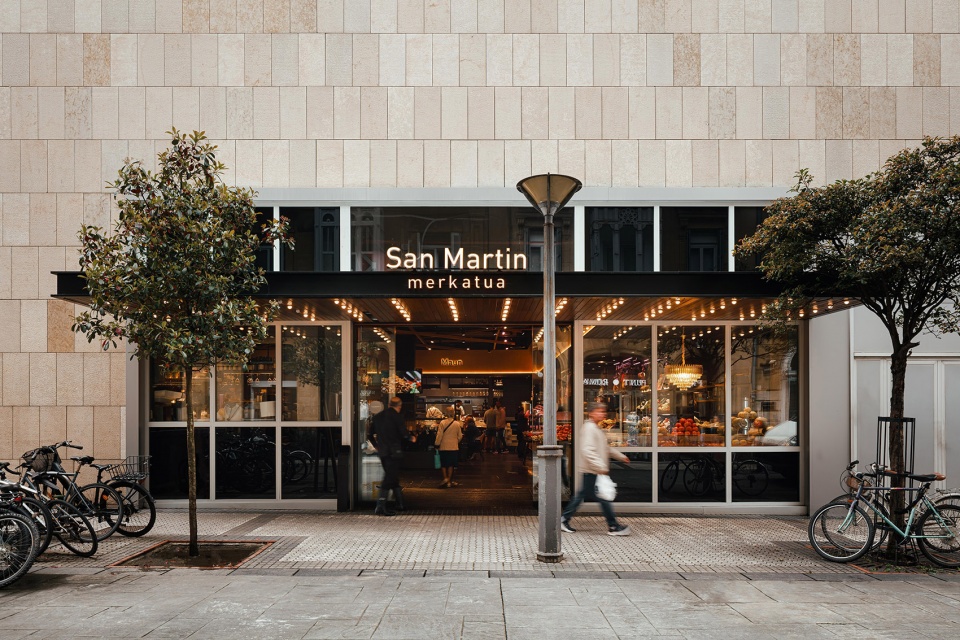
强化本地产品的在地联系A Local Connection that Enhances the Product
项目的首要目标,是突出本地产品这一市场真正的主角。建筑被构想为一种克制而安静的背景,以支持而非喧宾夺主的方式存在。设计采用了诚实且源于本地的材料——木材、石材与铁——赋予空间纹理、温度与历久弥新的身份感。克制而自然的色彩体系进一步强化了新鲜食材的视觉存在,营造出亲切、易于接近且极具辨识度的空间氛围。
The first objective is to highlight local product, the true protagonist of the market. The architecture is conceived as a quiet backdrop that supports without competing, using honest, locally sourced materials—wood, stone, and iron—that bring texture, warmth, and a timeless identity. A restrained and natural color palette enhances the presence of fresh products, creating a welcoming, approachable, and clearly recognizable environment.
▼圣马丁市场入口,San Martin Market entrance
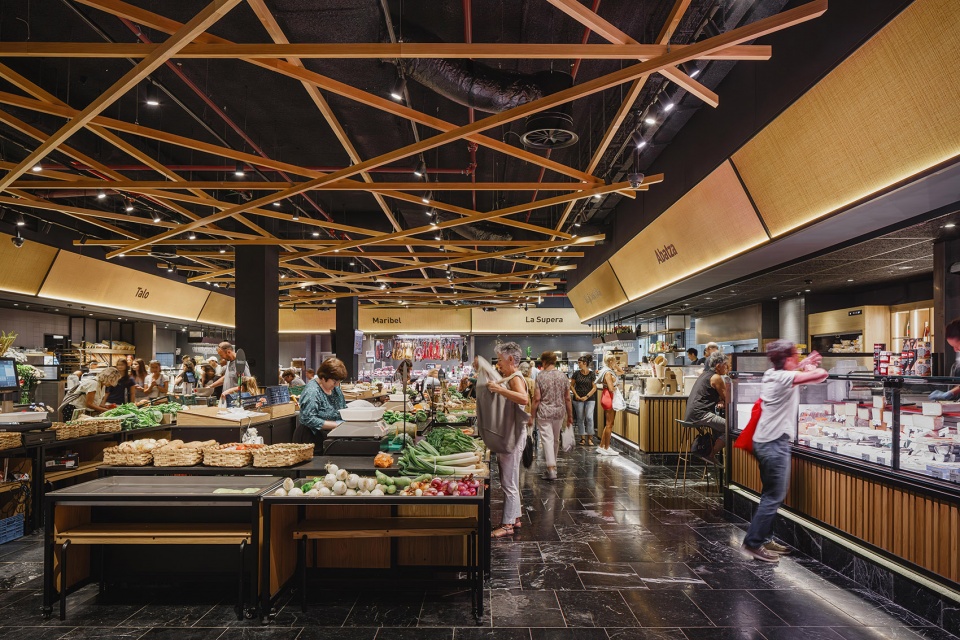
除了材料层面的表达,这一策略同样致力于创造一种开放、日常、令人放松的空间体验,使人们愿意在其中探索、停留与交流。市场被组织为上下两层:首层主要售卖农产品与肉类,地下层则专门用于鱼市经营。
Beyond its material expression, this strategy seeks to create an inviting, accessible, everyday space where users feel at ease to explore, pause, and engage。 The market is organized across two levels, each offering a distinct program: the ground floor brings together produce from the land and butcher shops, while the basement level is dedicated to fishmongers.
▼一种开放、日常、令人放松的空间体验,an inviting, accessible, everyday space
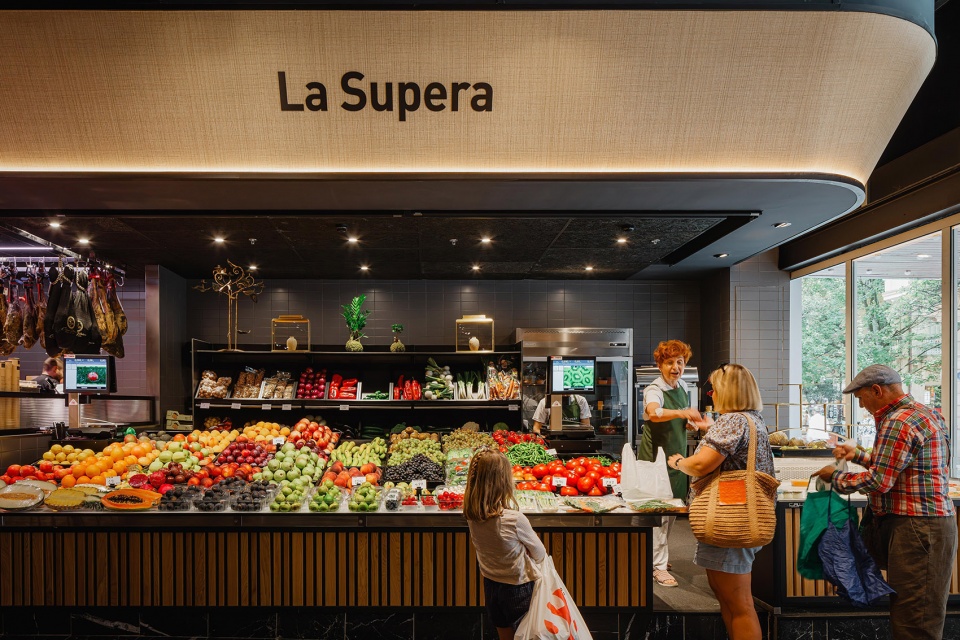
一个市场,两种体验One Market, Two Experiences
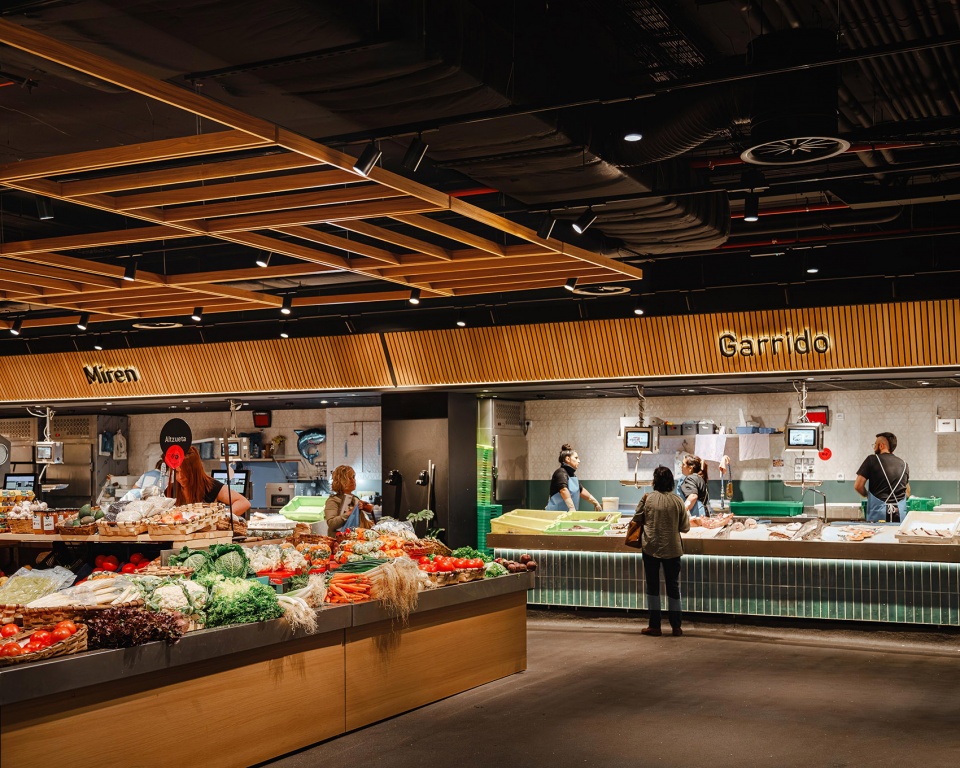
设计通过不同的材料与形式语言来回应这种双重属性:展示柜、柜台立面以及悬挂天花元素分别呼应“土地”与“海洋”的意象。这种叙事不仅解释了产品的来源,也在使用者与产地之间建立起情感连接,从而强化整体市场体验。
The design expresses this duality through different material and formal languages in showcases, counter fronts, and suspended ceiling elements, evoking the worlds of field and sea. This narrative not only explains the origin of the products but also creates an emotional connection between users and their provenance, reinforcing the overall market experience.
▼材料元素分别呼应“土地”与“海洋”的意象,material elements evoking the worlds of field and sea
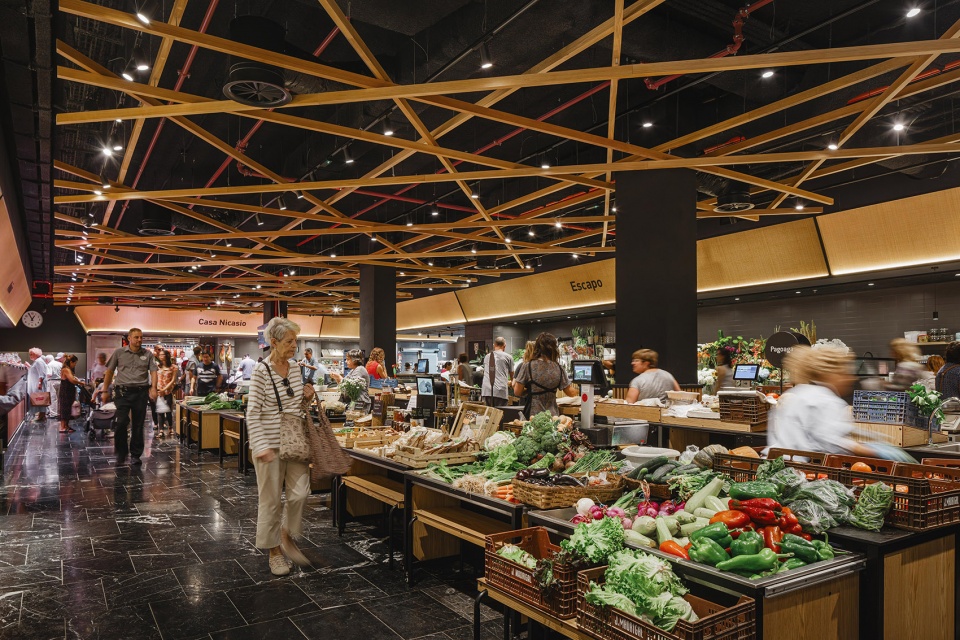
从田野到市场From Field to Market
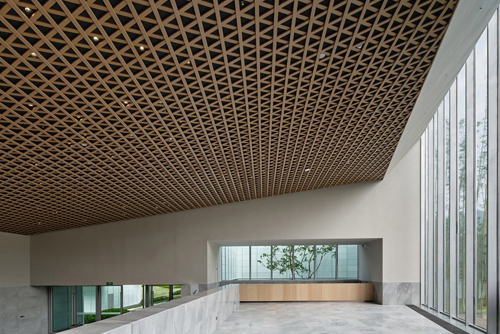
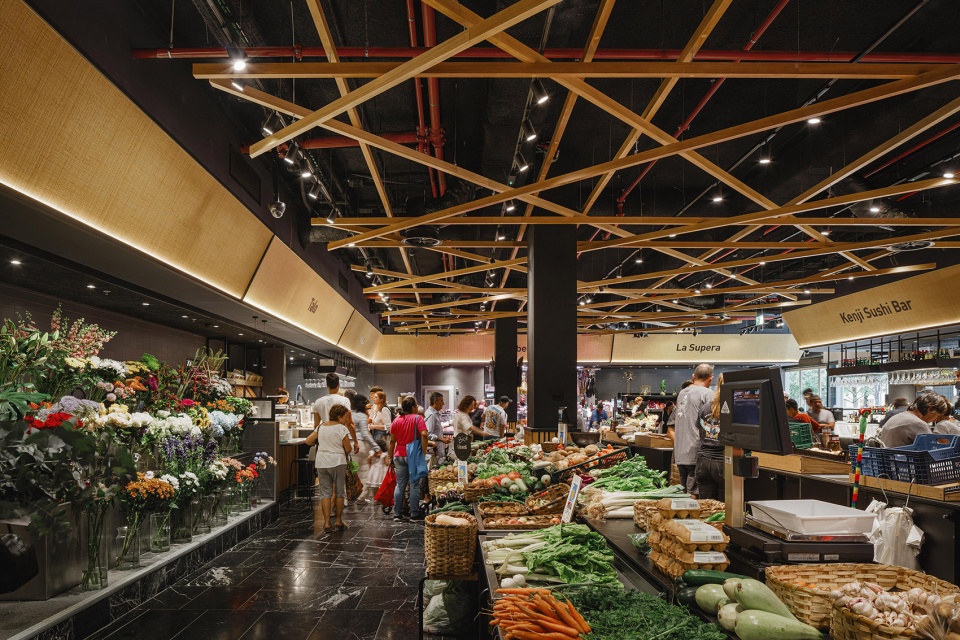
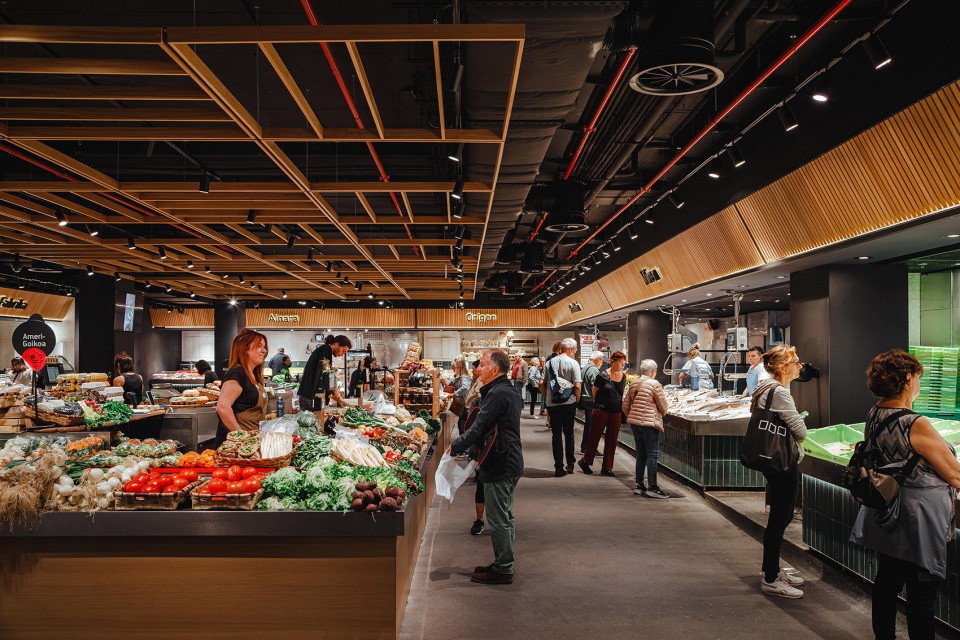
首层空间的设计灵感来源于农业传统,以及将土地上的产品带向消费者的过程。空间借鉴乡村景观,并引入与传统收获相关的编织篮元素作为参考。木质编织天花为空间带来温暖与更具亲和力的尺度感,而地面与台面所使用的本地石材,则进一步强化了其与地域之间的联系。
On the ground floor, the design draws on agricultural tradition and the idea of bringing products from the land closer to the consumer. The space is inspired by the rural landscape and incorporates references to woven baskets historically linked to harvesting. A woven wooden ceiling introduces warmth and a more domestic scale, while local stone in floors and countertops reinforces the connection to the territory.
▼木质编织天花,a woven wooden ceiling
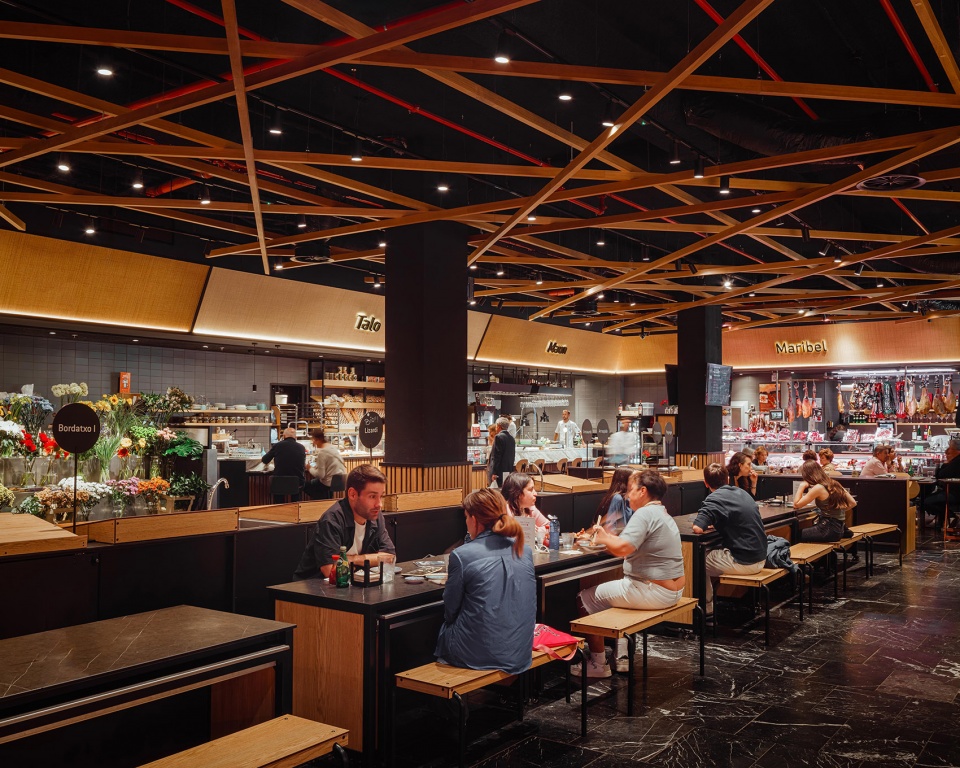
金属结构则形成一种当代性的对照,同时也唤起原有市场结构系统的记忆。最终呈现的是一个超越纯粹审美层面的空间:材料本身参与营造出熟悉、温暖而友好的氛围,并始终将焦点留给产品本身。
Metal structures provide a contemporary counterpoint, while also recalling the structural memory of the original market. The result is a space where materiality goes beyond aesthetics to create a warm, familiar, and welcoming atmosphere, always placing the focus on the product.
▼营造出熟悉、温暖而友好的氛围,create a warm, familiar, and welcoming atmosphere
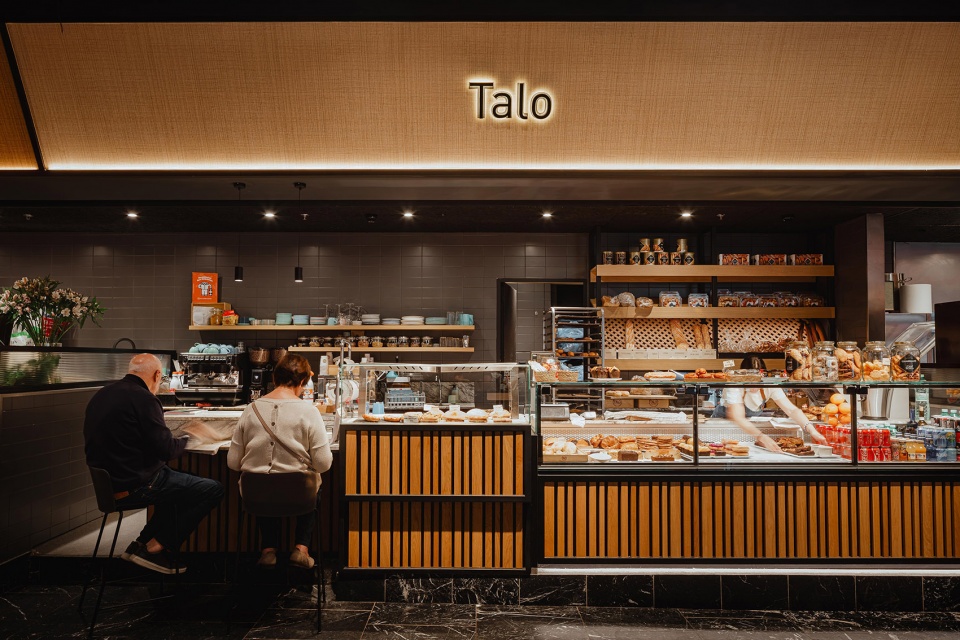
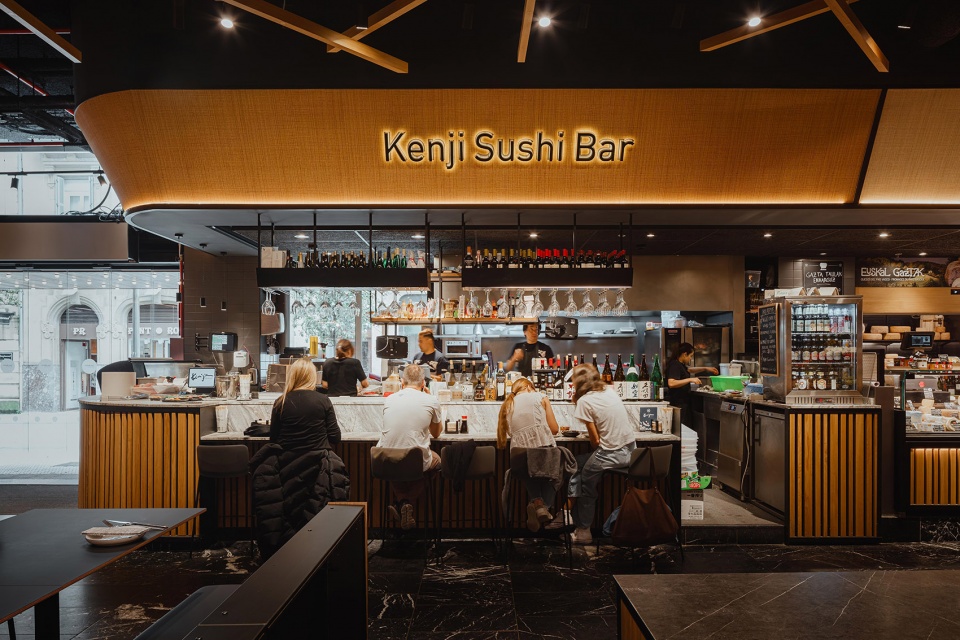
从港口到市场From Port to Market
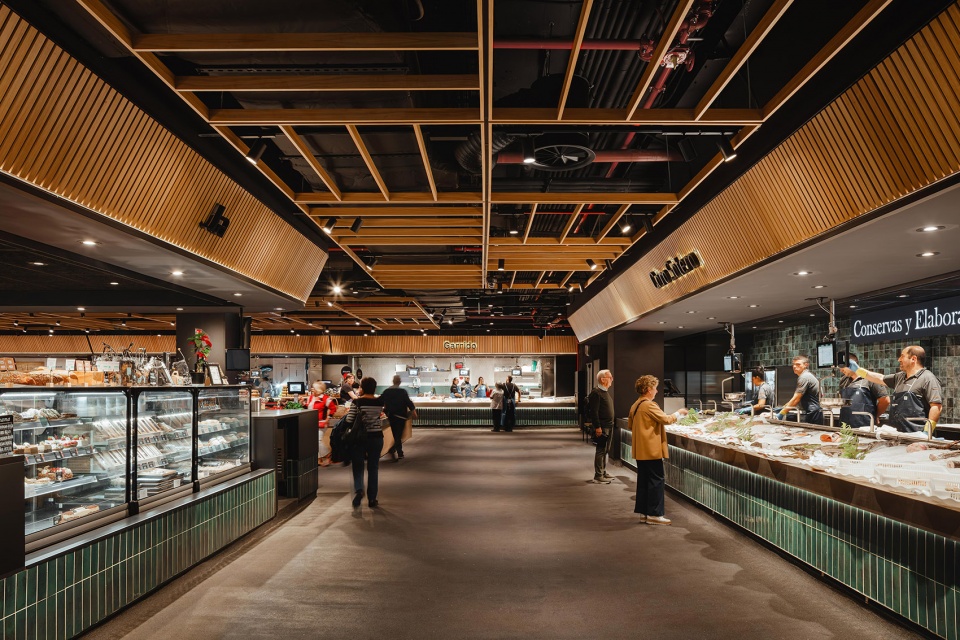
地下层则与海洋及港口活动建立联系,形成一种既独立又统一的空间身份。天花设计参考了传统鱼类运输木箱,而空间细部则呼应木船结构与渔网元素。以绿松石色与绿色为主的色彩体系令人联想到坎塔布连海(Cantabrian Sea),营造出清新、明亮且富有氛围感的环境。与此同时,空间也充分回应鱼市对于卫生与功能性的特殊需求,并将这些限制自然整合进统一的建筑语言之中。
On the basement level, the project is linked to the sea and port activity, establishing a distinct yet coherent identity. The ceiling design references the crates traditionally used for fish transport, while the finishes evoke the structure of wooden boats and fishing nets. A palette of turquoise and green tones recalls the Cantabrian Sea, creating a fresh, luminous, and evocative environment. At the same time, the space responds to the hygiene and functional requirements specific to fishmongers, integrating these constraints within a coherent architectural language.
▼空间细部则呼应木船结构与渔网元素,the finishes evoke the structure of wooden boats and fishing nets
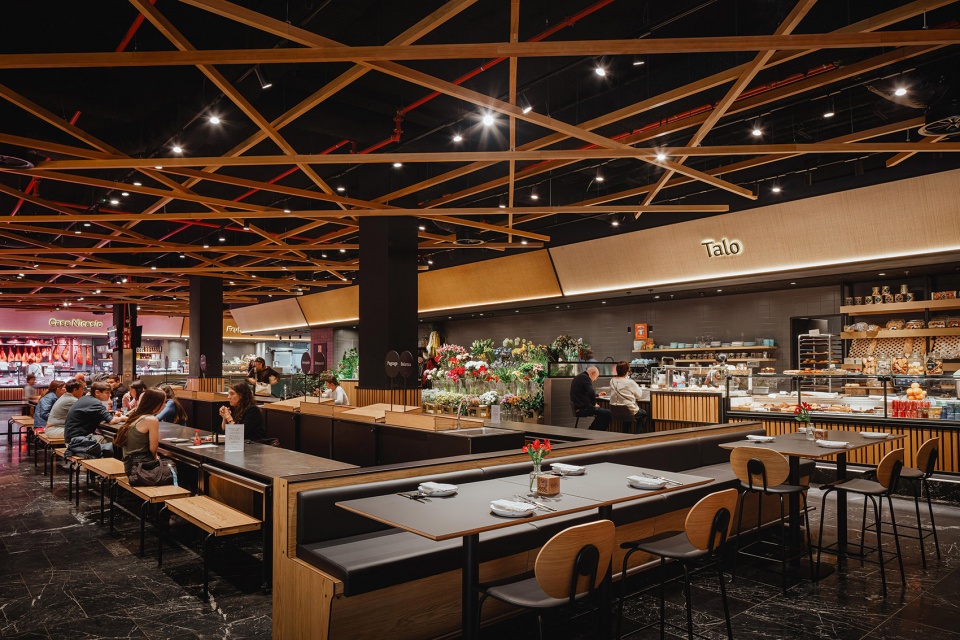
从市场到餐桌From Market to Table
设计还引入了品尝市场食材的可能性,人们既可以直接在摊位边体验,也可以在首层中央区域进行停留与用餐。这一策略回应了项目的第二个核心目标:强化市场作为社区社交空间的角色,让市场的价值不仅停留于“购买”,更体现在围绕其发生的一切活动之中。
The design incorporates the possibility of tasting market products, either at the stalls or in a central ground-floor area. This strategy responds to the project’s second key objective: reinforcing the market as a social space within the neighborhood, where value lies not only in buying, but in everything that happens around it.
▼人们可以直接在摊位边体验美食,People can directly experience the delicious food right at the stall
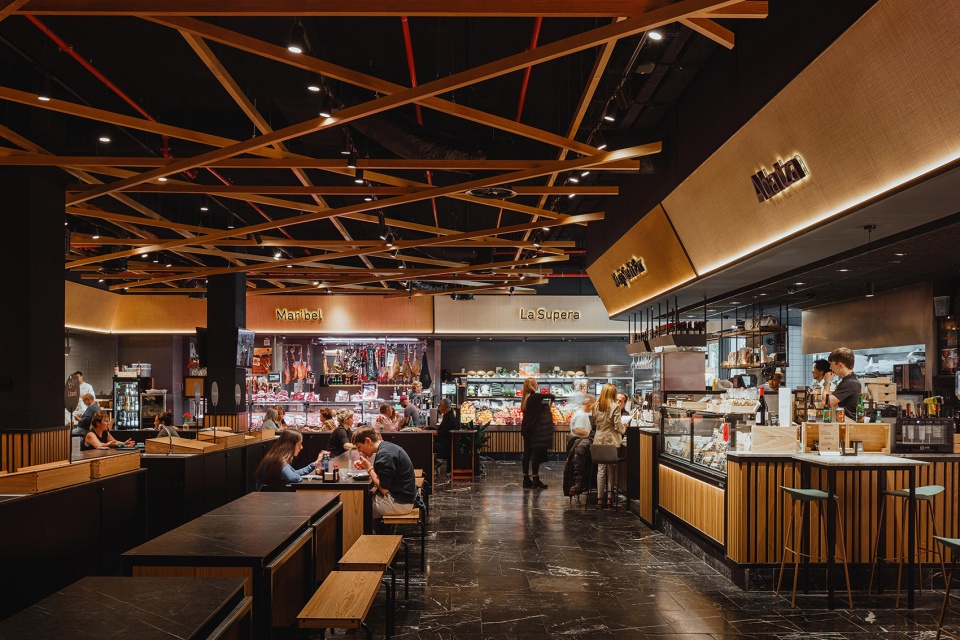
一个灵活可变的空间A Versatile Space
首层中央区域在这一转变中扮演了重要角色。清晨时分,这里属于“caseras”——这一传统称谓指的是那些将当地农庄新鲜农产品带入城市的人们,他们延续着一种深植于地方文化中的传统。
The central ground floor plays a key role in this transformation. In the morning, it is occupied by the caseras—a traditional term referring to the people who bring fresh produce from local farmhouses (caseríos) into the city—keeping a deeply rooted tradition alive.
▼延续着一种深植于地方文化中的传统,
Continuing a tradition deeply rooted in local culture
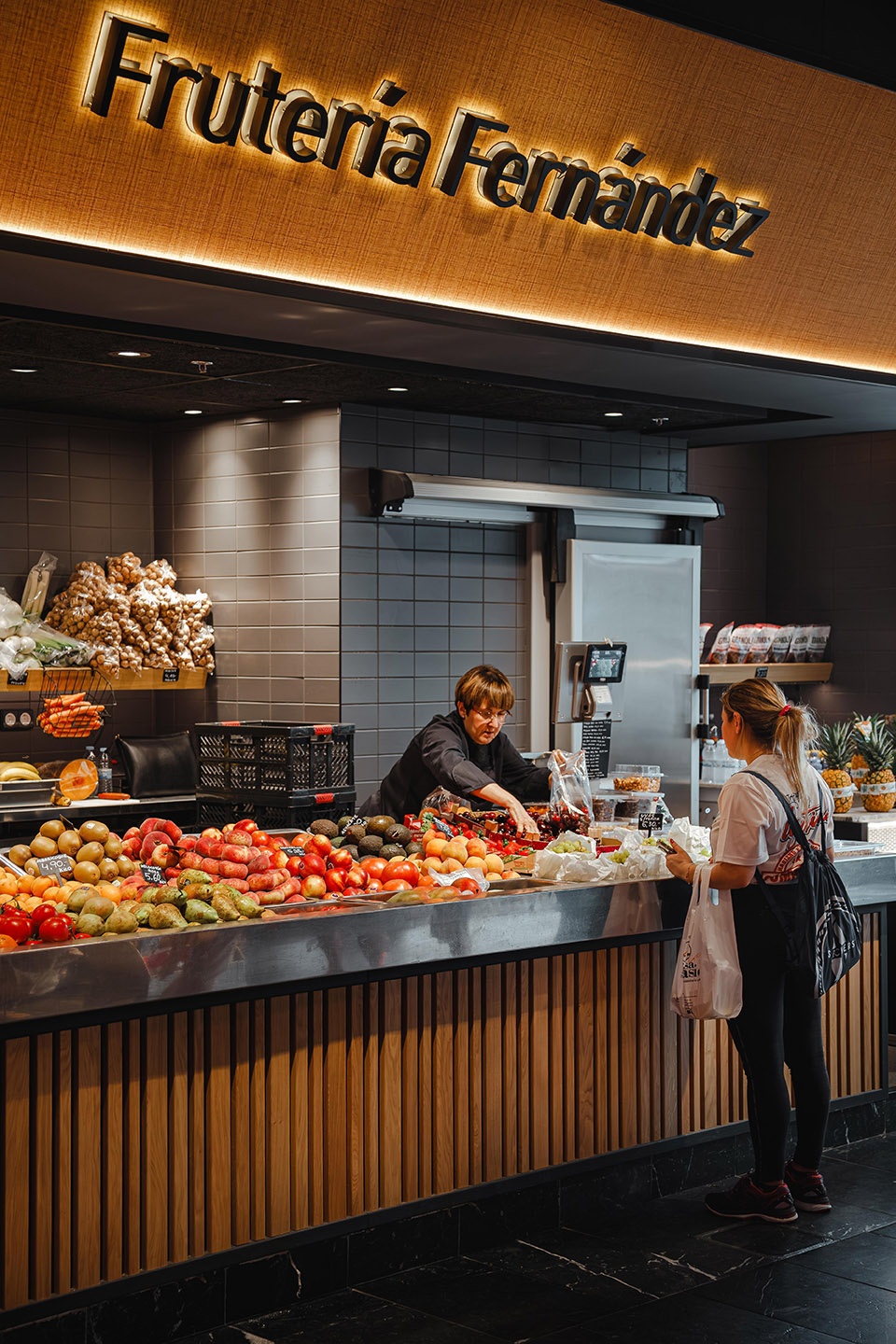
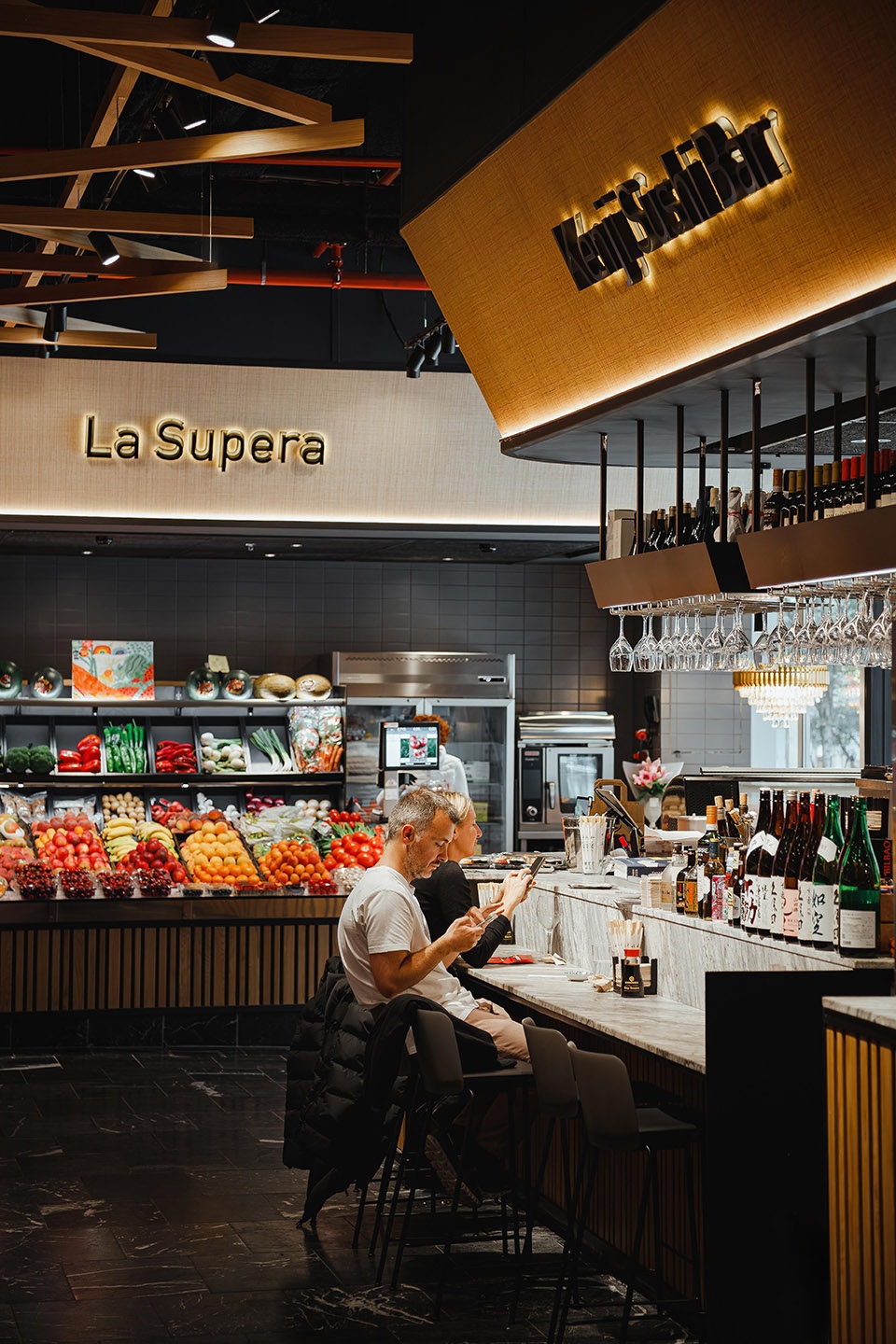
到了下午,同样的桌子则转变为共享座位,供访客品尝市场中的食物。这种灵活性延长了空间的使用时间,也拓展了其社交属性,吸引更多不同的人群进入市场,使多样化的使用方式在同一空间中共存。对于许多当地居民而言,每日逛市场本身就是一种关于相遇、交谈与归属感的仪式,而项目则通过鼓励人们停留、分享与交流,进一步强化了这一特质。
In the afternoon, the same tables become shared seating where visitors can enjoy market products. This flexibility extends the space’s use, broadens its social hours, and attracts new audiences, integrating different ways of inhabiting the market in one place. For many local residents the daily visit to the market is a ritual of encounter, conversation, and belonging—an aspect the project reinforces by encouraging people to stay, share, and build community.
▼吸引更多不同的人群进入市场,attracts new audiences into the market
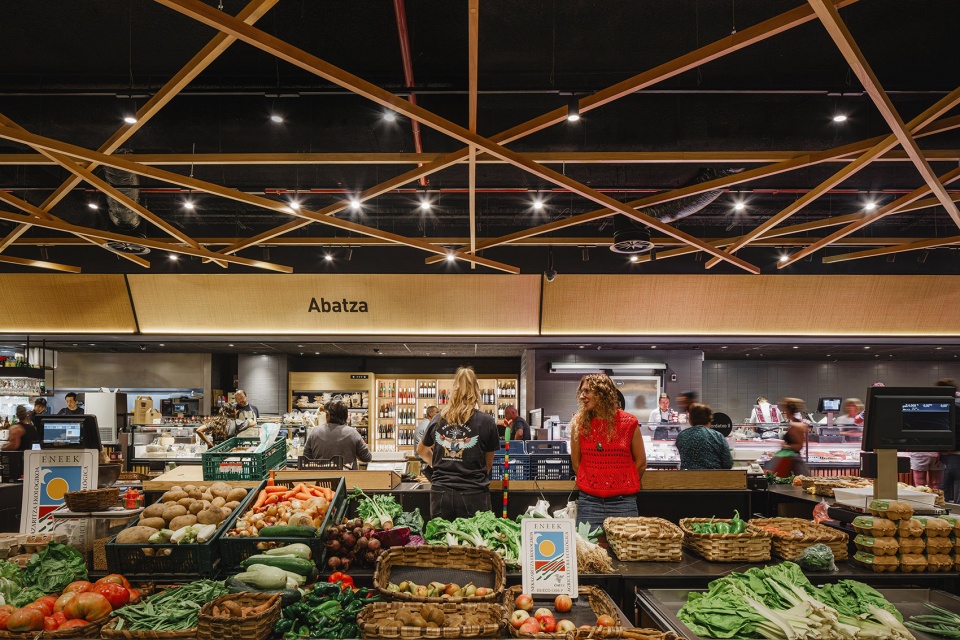
▼拓展了市场的社交属性,expanding the social attributes of the market
向街道开放Opening to the Street
项目的另一个关键点在于其与城市外部环境之间的关系。立面新增的开口使自然光能够进入室内,同时建立起内部与周边城市环境之间更直接的视觉联系,从而强化建筑的开放性、可达性与透明感。
Another key aspect of the project is its relationship with the exterior. The introduction of new openings in the façade allows natural light to enter and establishes a more direct visual connection between the interior and the surrounding urban environment, reinforcing the building’s sense of openness, accessibility, and transparency.
▼拓展了市场的社交属性,expanding the social attributes of the market
与城市建立新的关系Relationship with the City
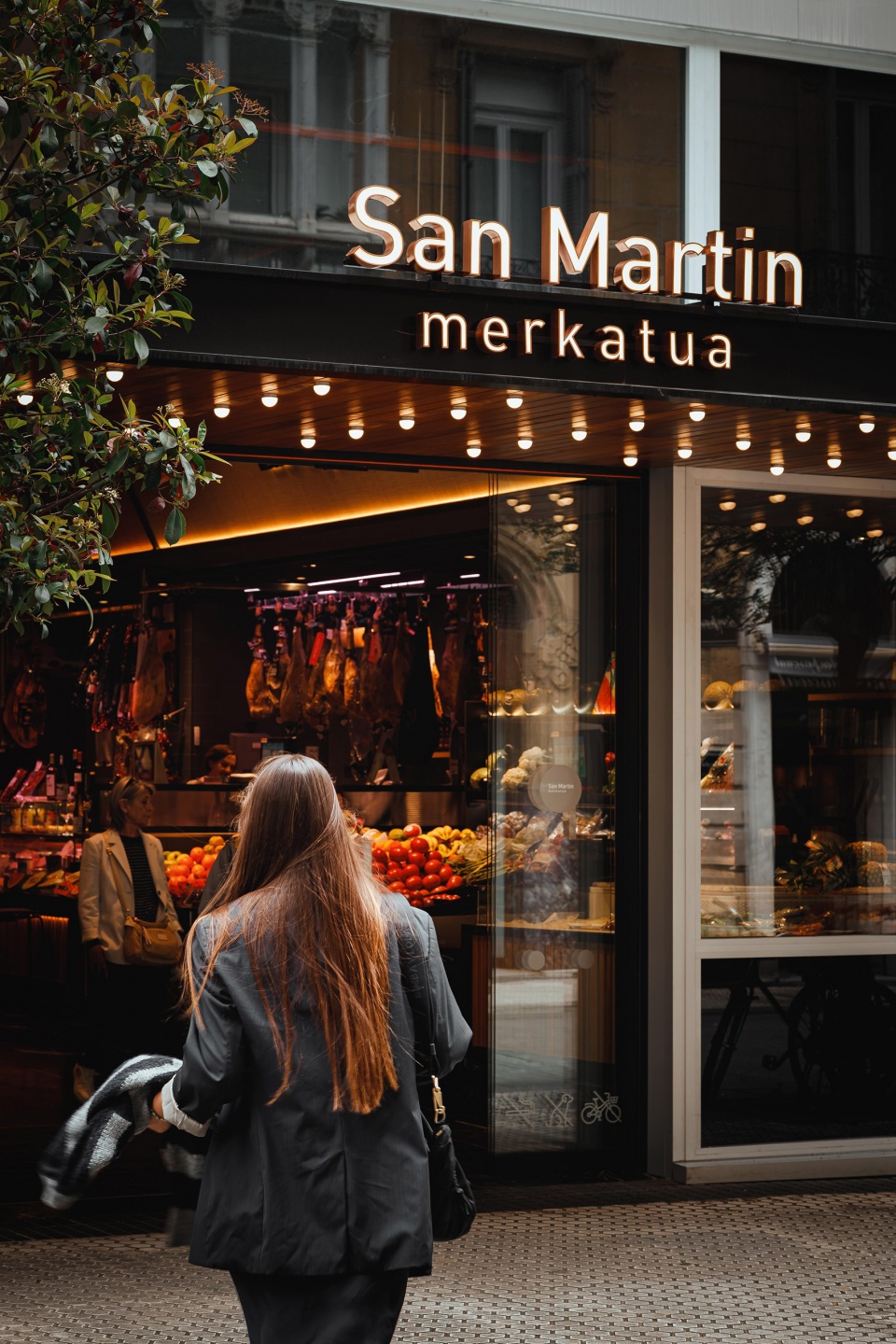
项目还通过新增雨棚以及更加醒目的入口,强化市场在城市中的存在感,使其成为街区中的重要地标。沿周边新增的带露台空间,则进一步将市场活动延伸至公共领域,模糊室内与室外之间的边界,使其在一天中的更多时间段都保持活力。
The project also strengthens the market’s urban presence through a new canopy and a more visible entrance, consolidating it as a reference point within the neighborhood. The addition of perimeter spaces with terraces allows the market’s activity to extend into the public realm, blurring the boundary between inside and outside and transforming it into an active place throughout the day.
▼圣马丁市场入口,San Martin Market entrance
结语Conclusion
最终呈现的是一个重新找回自身本质、同时又面向未来的市场:一个温暖、开放且深具城市性的空间。在这里,本地食材、建筑与日常生活彼此交织,共同创造新的相遇方式。
The result is a market that recovers its essence while projecting it into the future: a warm, welcoming, and deeply urban space where local produce, architecture, and everyday life come together to create new forms of encounter.
▼一个温暖、开放且深具城市性的空间,a warm, welcoming, and deeply urban space
Partners: Oliver Franz Schmidt, Natali Canas del
Pozo, Lucas Echeveste Lacy
Project lead: Lucas Echeveste Lacy
Client: Mercado San Martin
Contractor: Incoga Smart building
Lighting: lichtplanners
Photography: Aitor Estévez