《三界梵钟》 & 江苏扬州观音院设计 / 善祥建筑设计
心心念念-构思缘起Heartfelt Longing — Concept Origin
宗教和修行是两件事,但两者往往是在同一个躯壳里面,而且大多数情况下很难分清彼此。单纯的修行其实只要有个能够遮风挡雨的容身之所就足够了,但是宗教就不一样了,无论哪种宗教都是一种高度社会化的集体行为,必须有能满足人们进行各种仪式、训练和纪念、思考、居住的物质空间,最重要的是还要具有精神引领特色。
Religion and spiritual practice are two different things, yet they often coexist within the same vessel, and in most cases it is difficult to distinguish between them. Pure practice requires only a shelter that can protect from wind and rain. However, religion is different: regardless of its form, it is a highly social collective activity. It must be supported by a physical space that enables rituals, training, commemoration, reflection, and habitation. Most importantly, it must also possess the capacity to provide spiritual guidance.
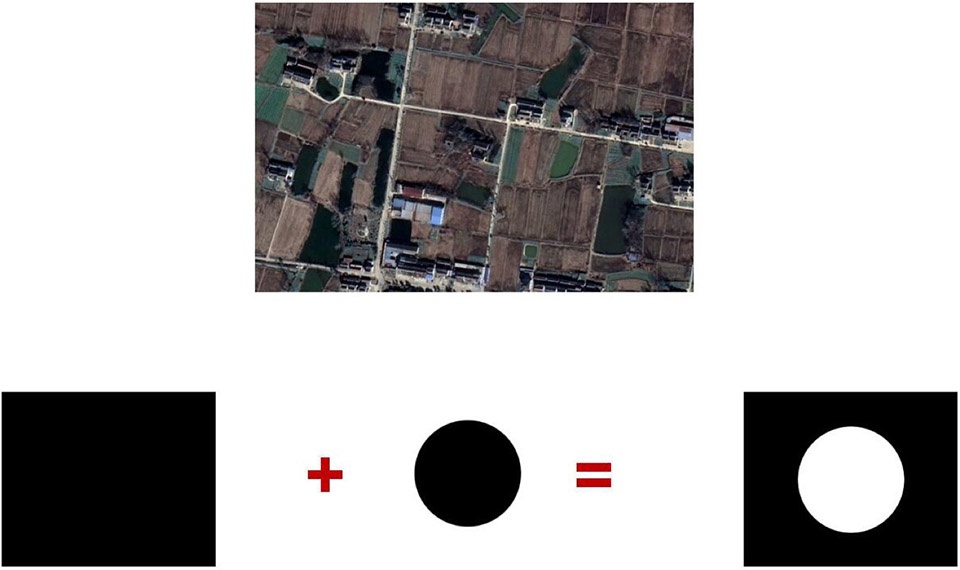
▼阡陌纵横的长三角乡村,The crisscrossing rural landscape of the Yangtze River Delta
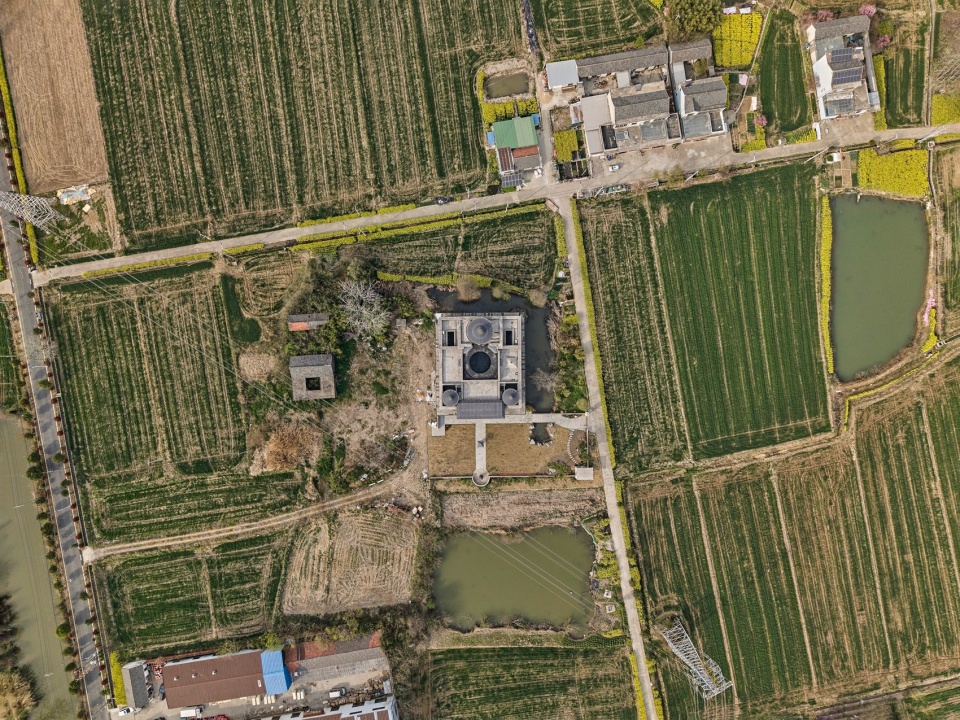
▼东南角鸟瞰,Southeast corner aerial view
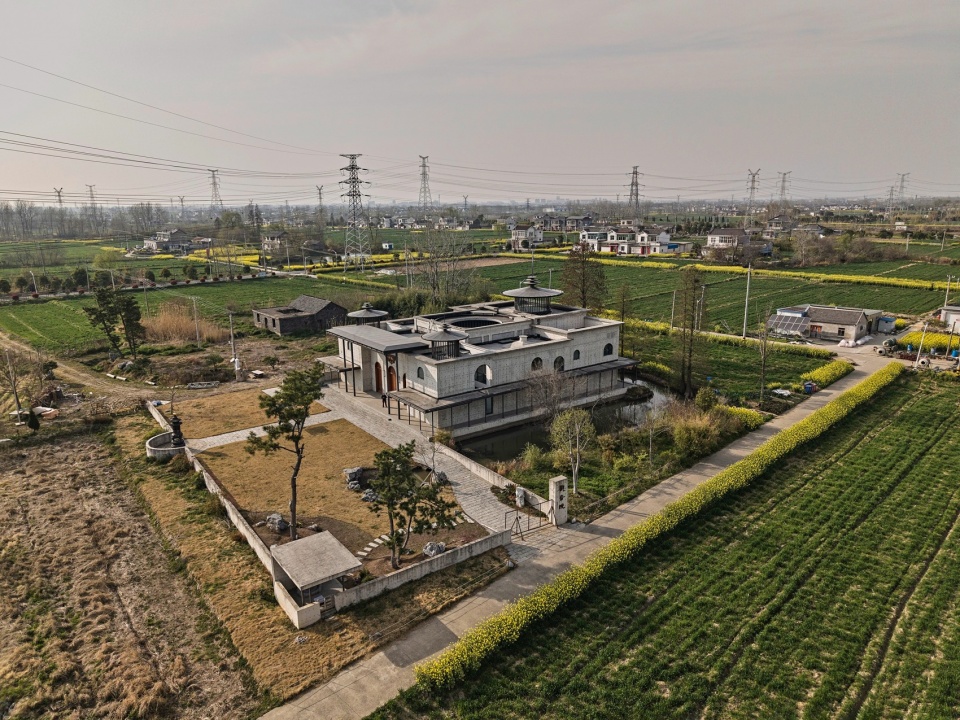
▼北侧鸟瞰,North-side aerial view
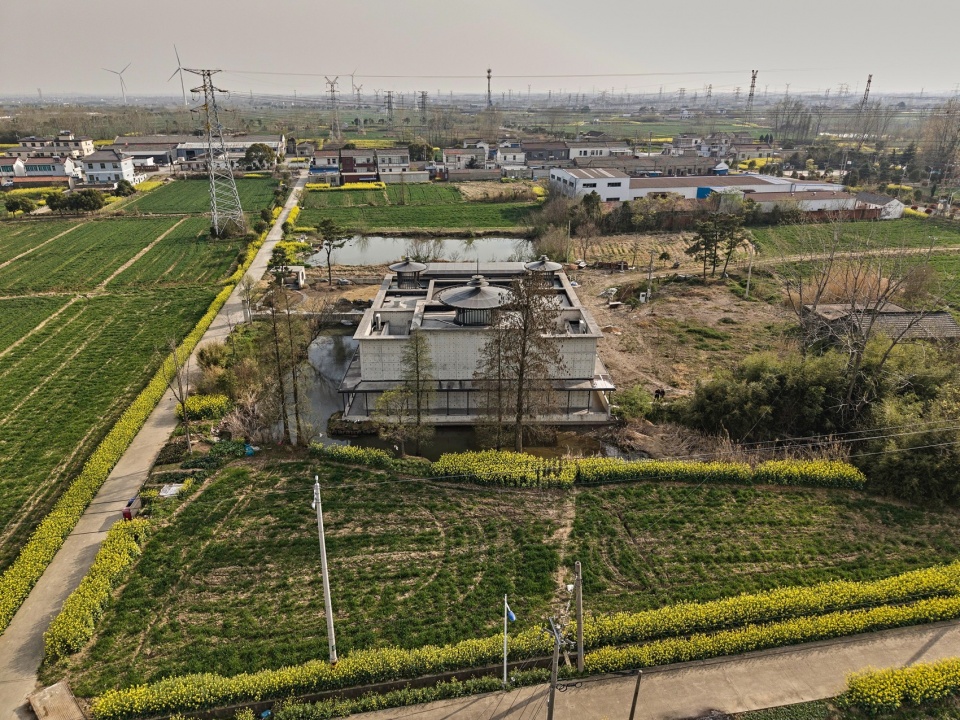
▼由东侧水塘远望,View from the eastern pond in distant perspective
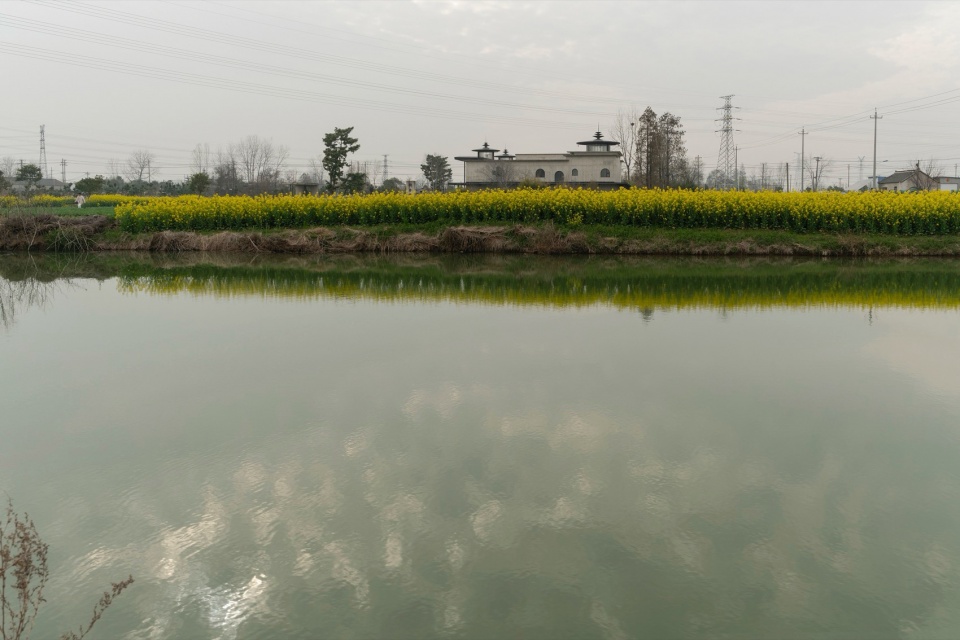
▼由东侧水塘远望,View from the eastern pond in distant perspective
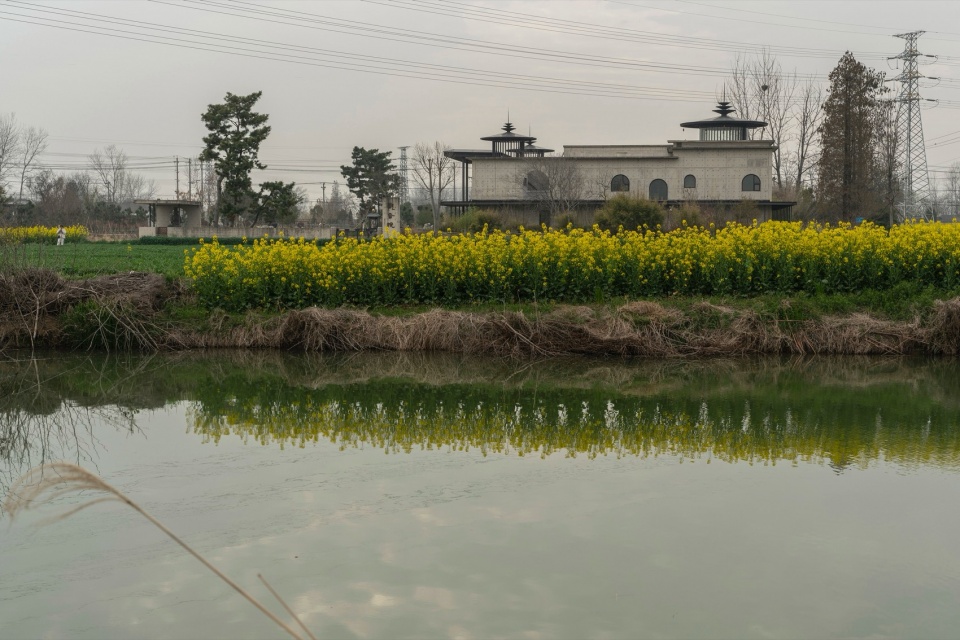
▼由东侧农田远望,View from the eastern farmland in distant perspective
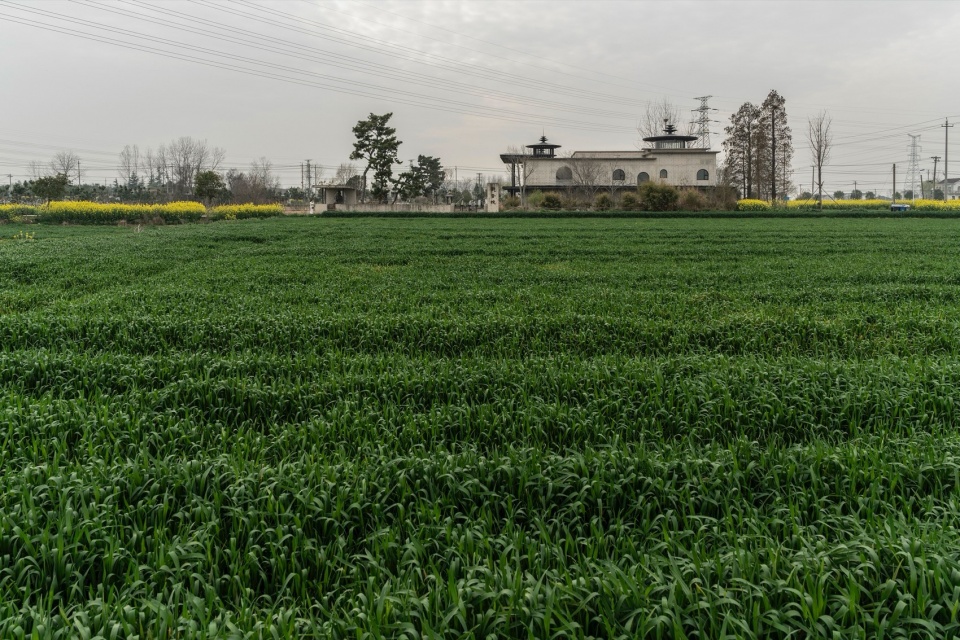
▼由东侧农田远望,View from the eastern farmland in distant perspective
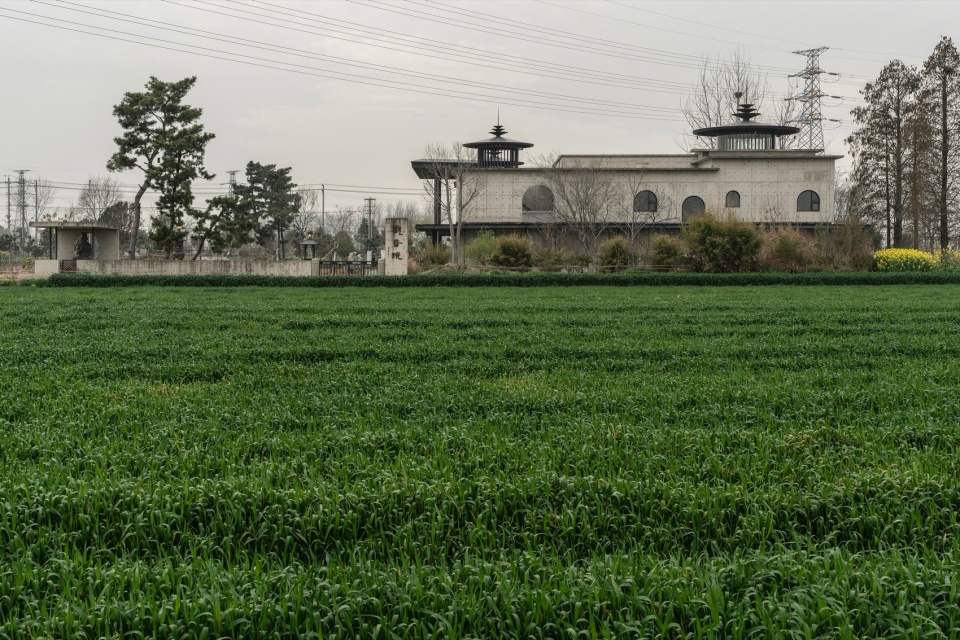
▼由东侧农田远望,View from the eastern farmland in distant perspective
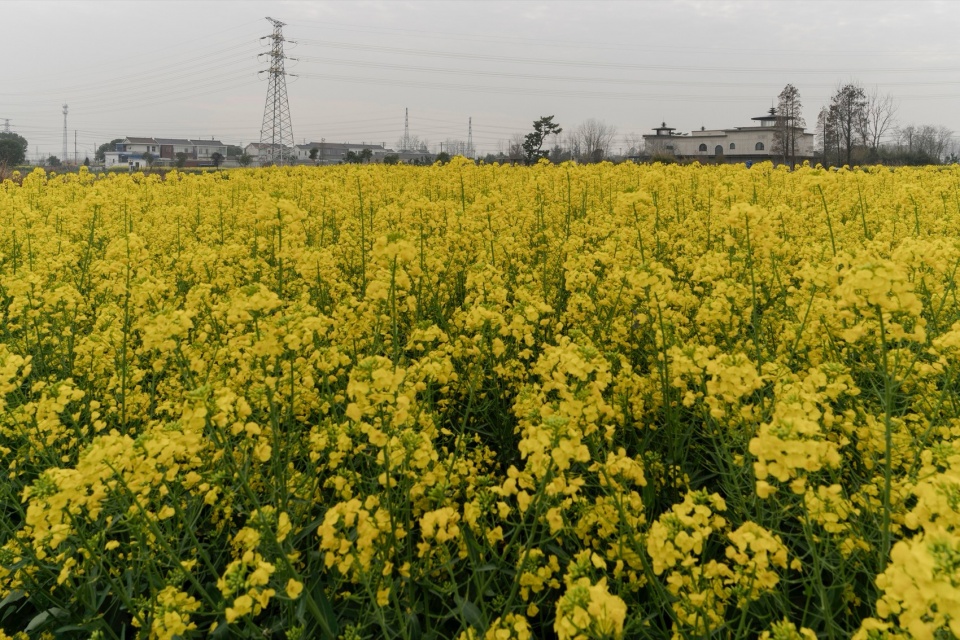
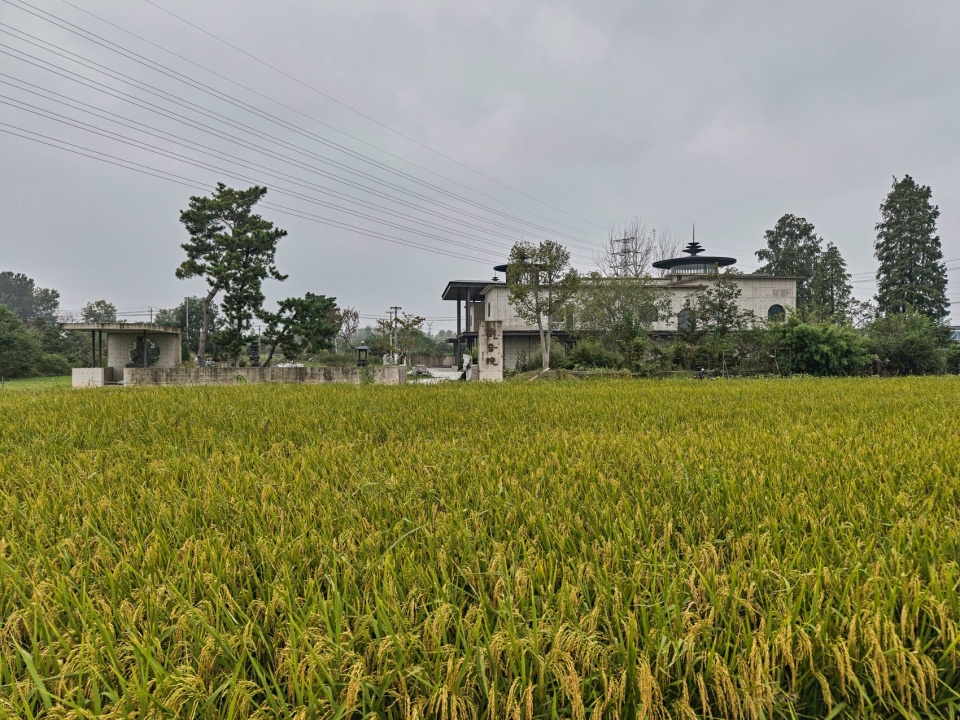
▼由东侧农田远望,View from the eastern farmland in distant perspective
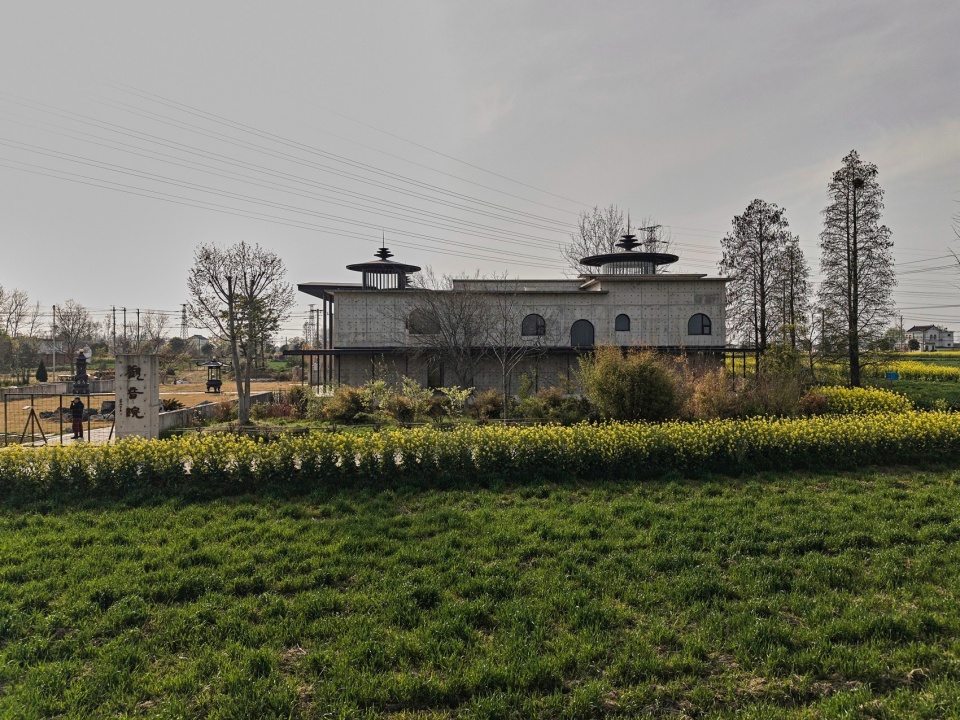
每种正信的宗教都有其核心思想,正信的教法传播与引领至关重要,文书经典和教职人员的言行给信众影响最大,同时包括建筑空间在内的宗教艺术对人的影响也至关重要。
▼方与圆的传统中国时空观,Traditional Chinese spatial conception of square and circle
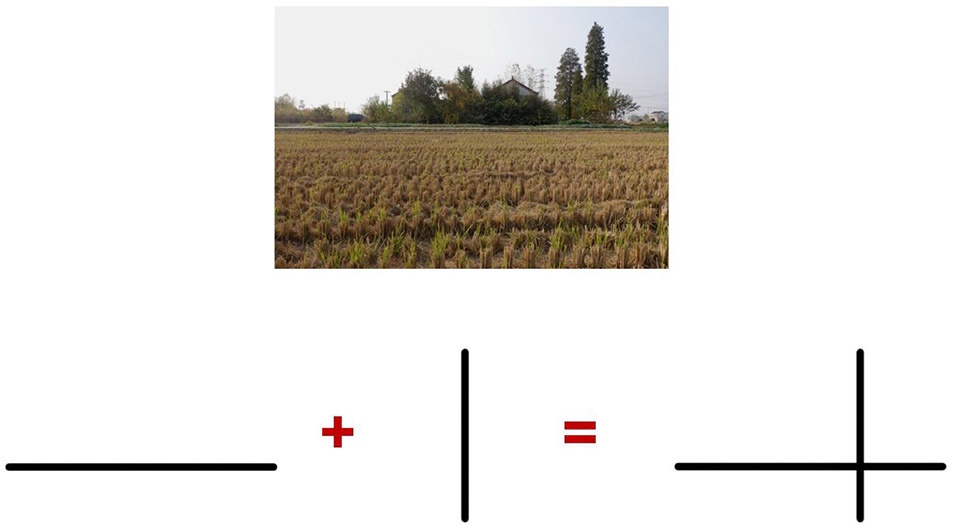
▼纵与横的基地视觉元素提炼,Extraction of vertical and horizontal visual elements of the site
Each orthodox religion has its own core doctrine. The dissemination and guidance of orthodox teachings are of vital importance. Scriptures and the words and conduct of clergy have the greatest influence on believers. At the same time, religious art including architectural space, also plays a crucial role in shaping human perception and experience.
▼由南侧农田远望,View from the southern farmland in distant perspective
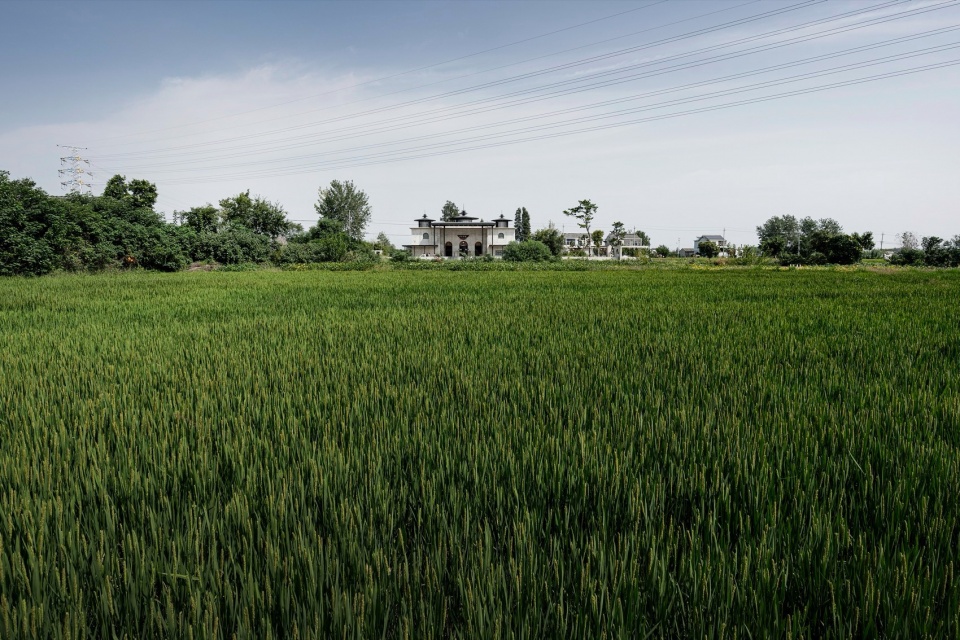
▼朝霞中的观音院,Guanyin Monastery in the morning glow
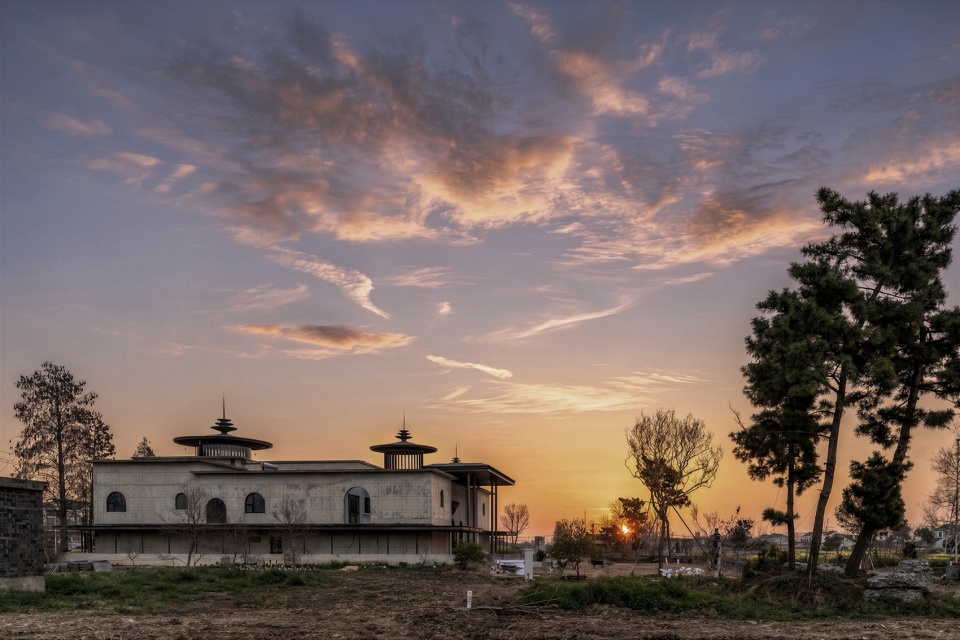
▼清晨的观音院,Guanyin Monastery in the early morning
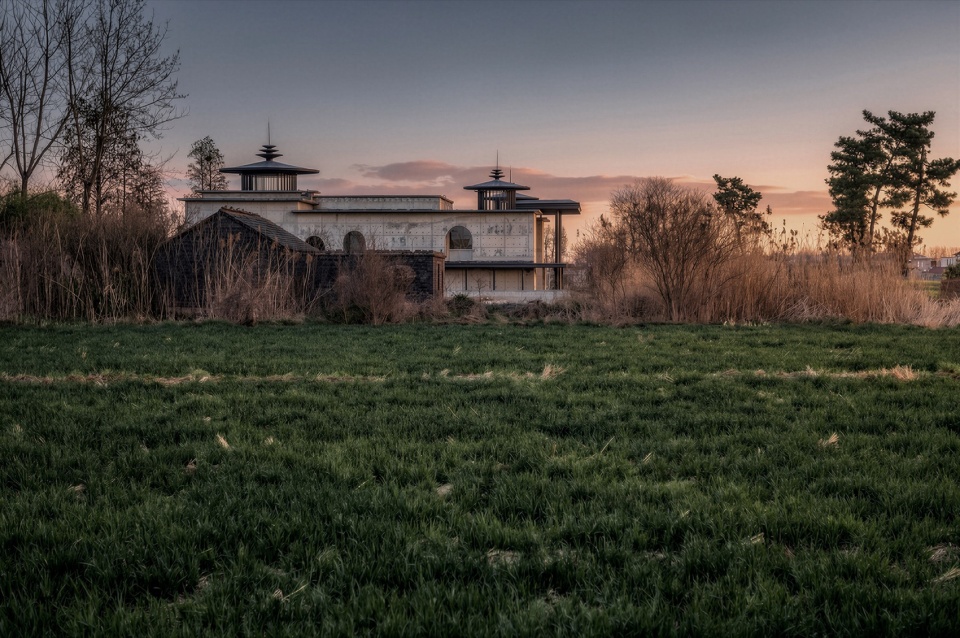
▼西立面,West elevation
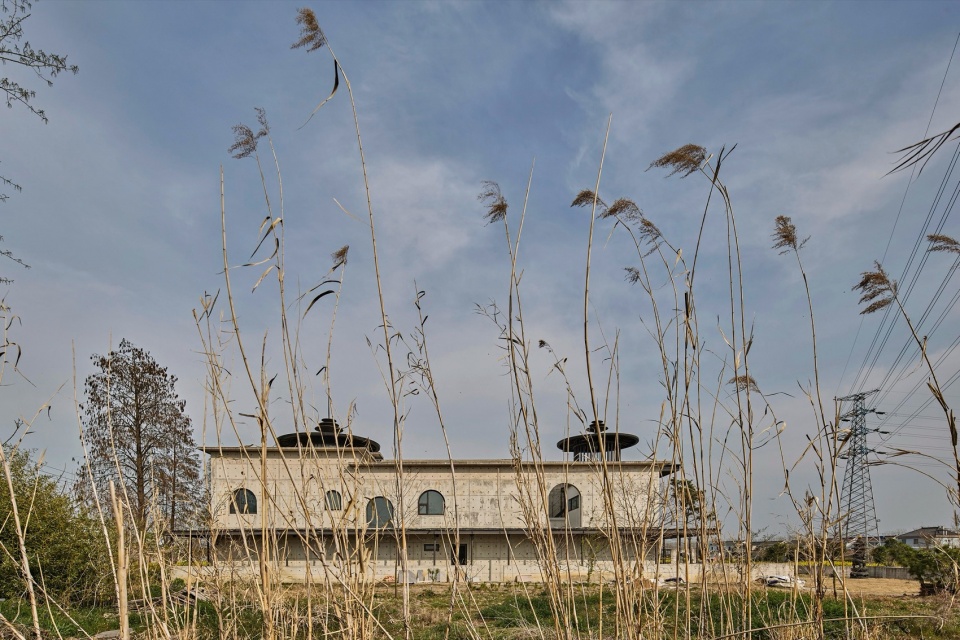
▼南侧远望,Distant view from the south
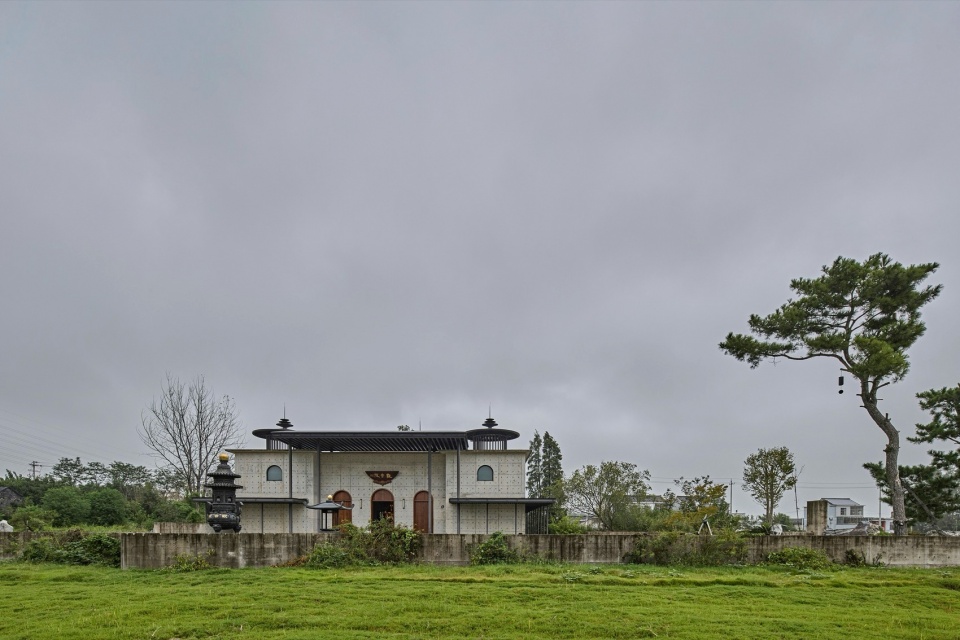
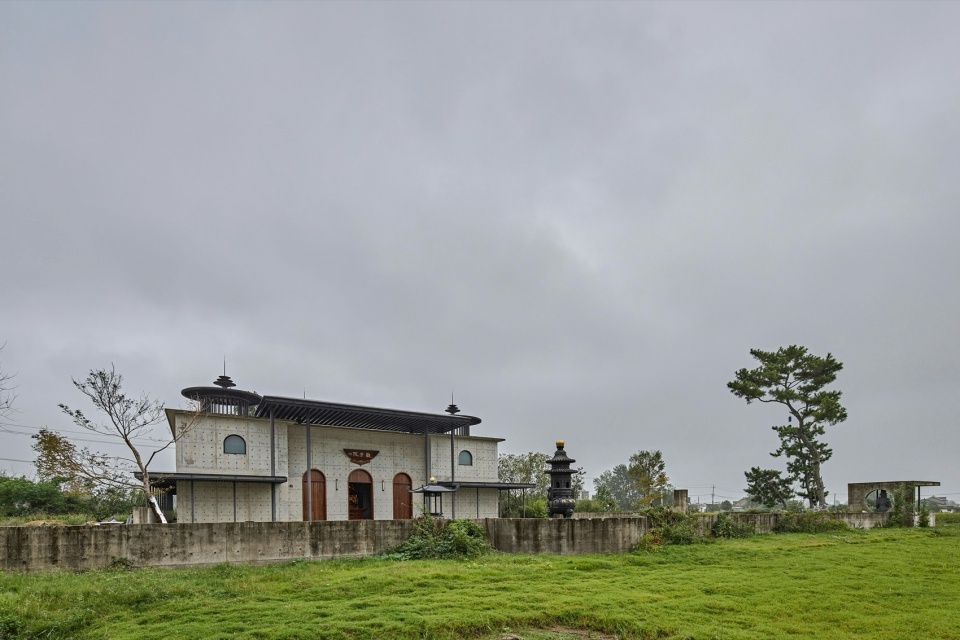
▼东南角远望,Distant View from the Southeast
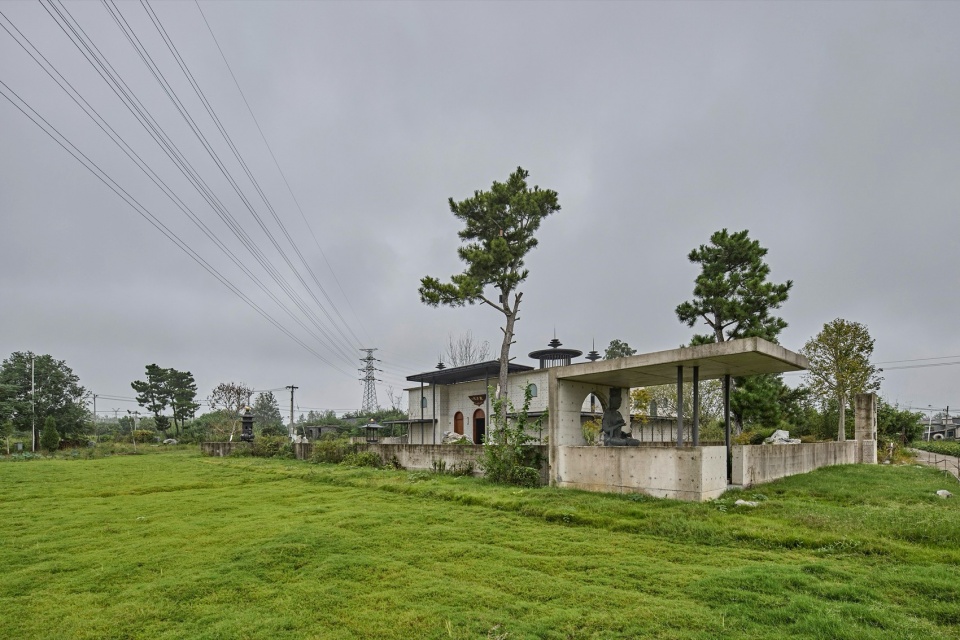
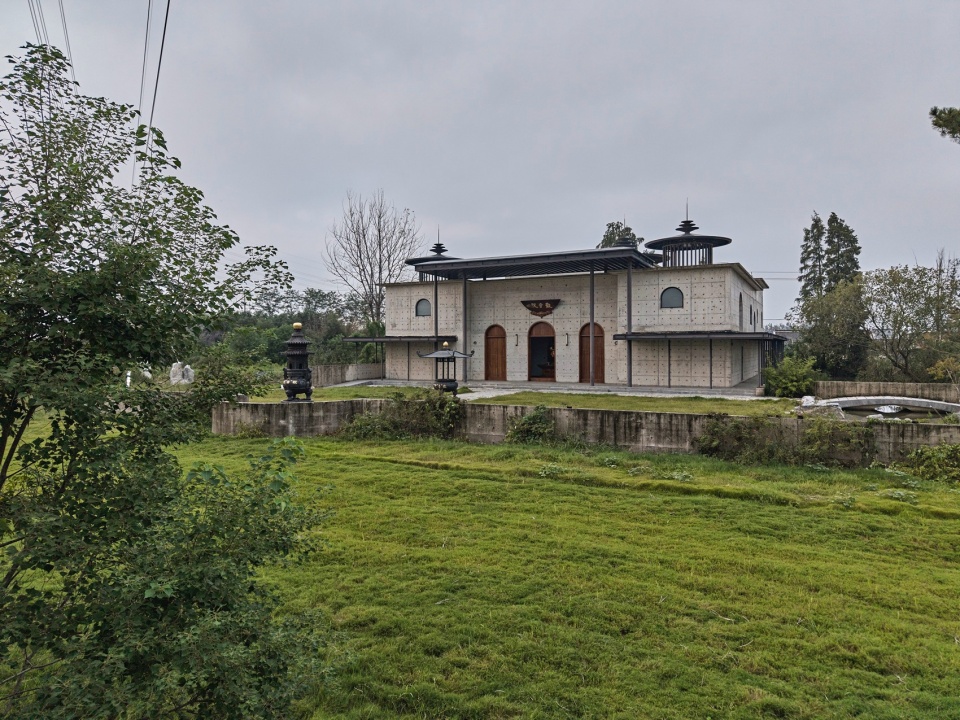
古今中外的宗教传播都有当时当地的传播语言,比如佛教从古印度向中国传播的时候,除了地理上的经典迁移和复制,还经过了从古梵文、巴利文向古汉语翻译的转化过程,在古代交通和信息传播的技术情况下这个过程持续了一千多年,近现代再完成从古汉语到现代白话文的转译。如今,从纸质书到互联网,从普通话到各地方言,经典文书传播在中国基本都已没有任何问题,但是建筑空间的现代转化并没有跟上时代语言的转化节奏。
▼构思手稿,Conceptual sketches
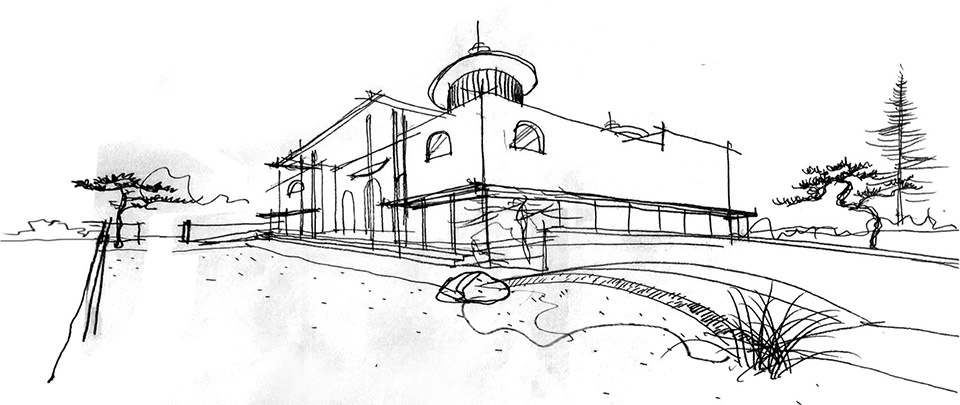
Across history and across cultures, the transmission of religions has always relied on the “language of communication” specific to each time and place. For example, when Buddhism spread from ancient India to China, in addition to the geographical migration and replication of scriptures, it also underwent a process of translation from Sanskrit and Pali into Classical Chinese. Under the conditions of ancient transportation and information technologies, this process lasted for over a thousand years. In the modern era, it was further translated from Classical Chinese into modern vernacular Chinese. Nowadays, from printed books to the internet, and from Mandarin to regional dialects, the dissemination of canonical texts in China has become largely unimpeded. However, the modern transformation of architectural space has not kept pace with the rhythm of this linguistic evolution.
▼由北侧农田远望,Distant View from Northern Farmlands
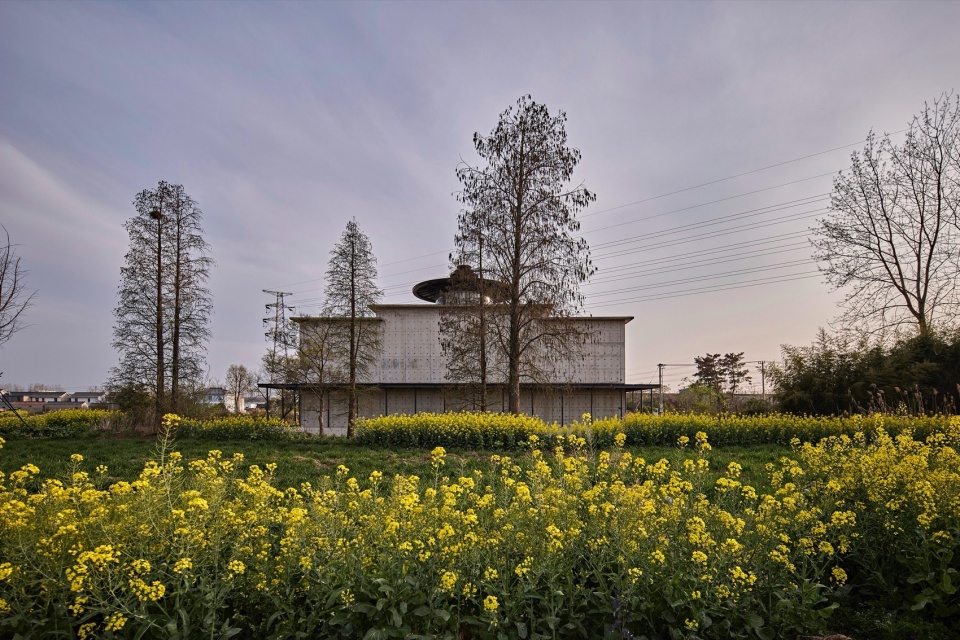
▼建筑北立面,North elevation of the building
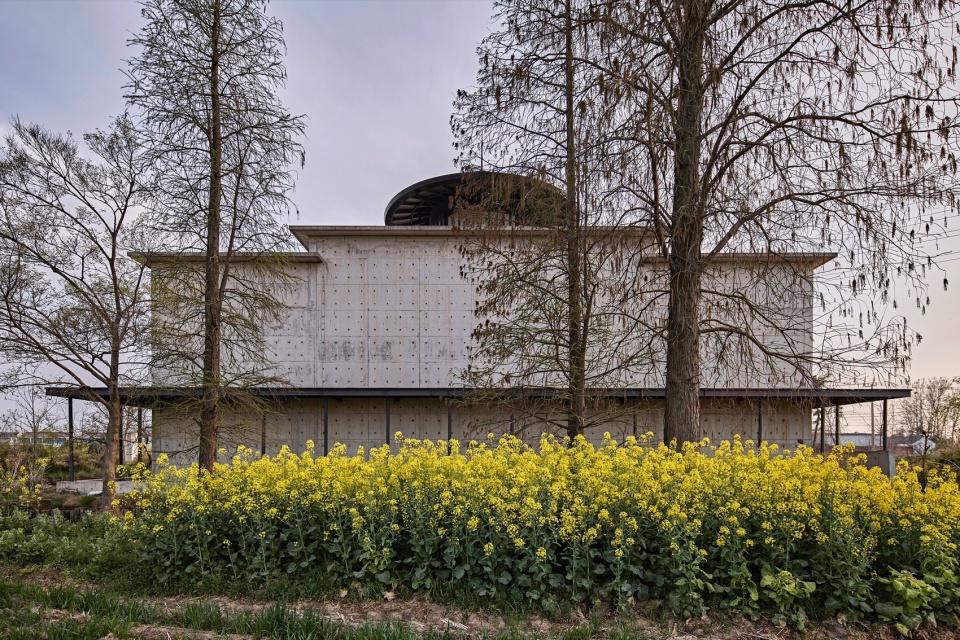
▼建筑东北角,Northeast corner of the building
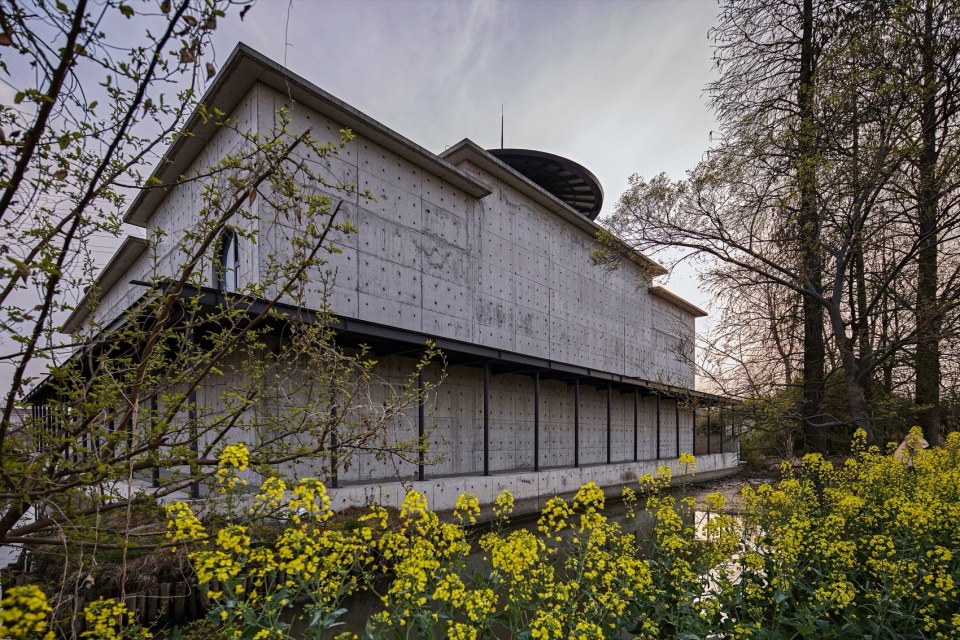
▼由西北侧农田远望,View from the northwest farmland in distant perspective
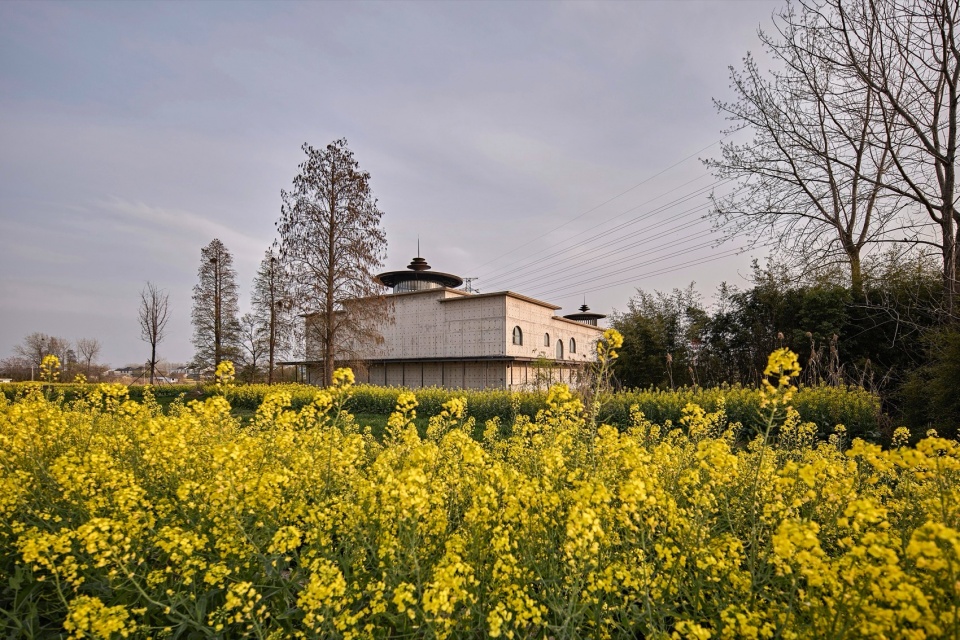
▼建筑西北角,Northwest corner of the building
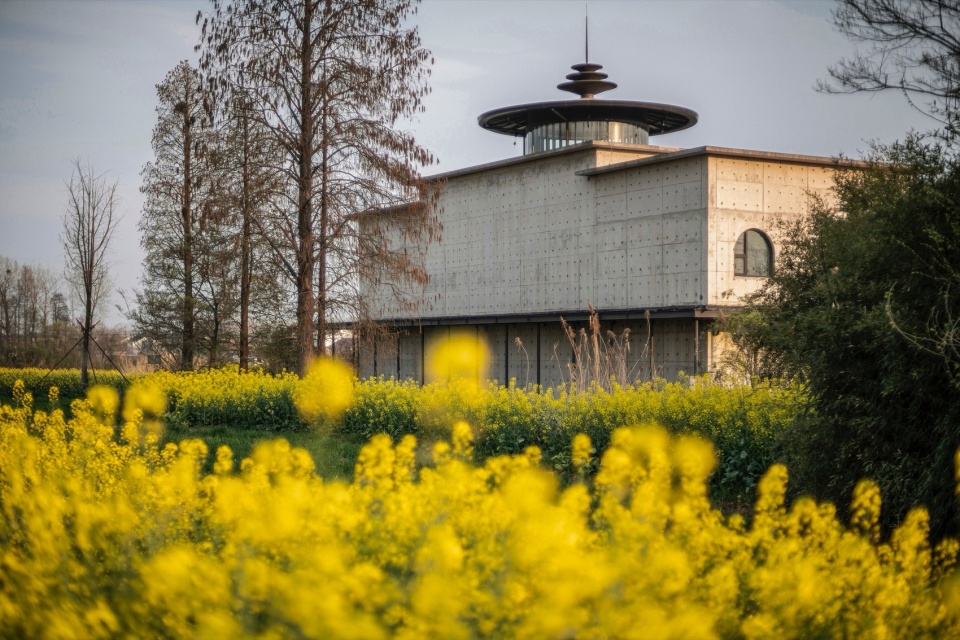
▼建筑东北角,Northeast corner of the building
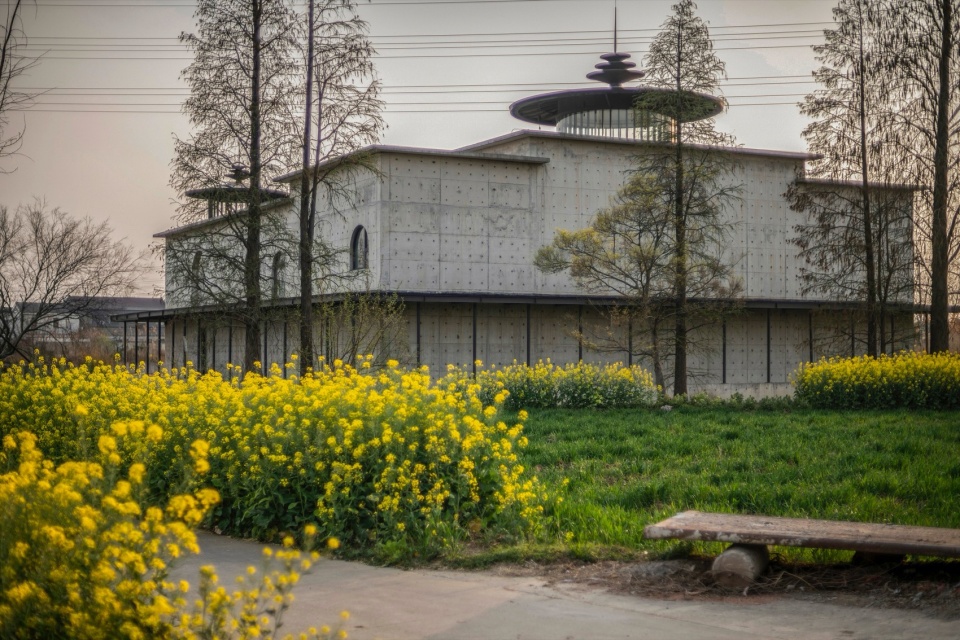
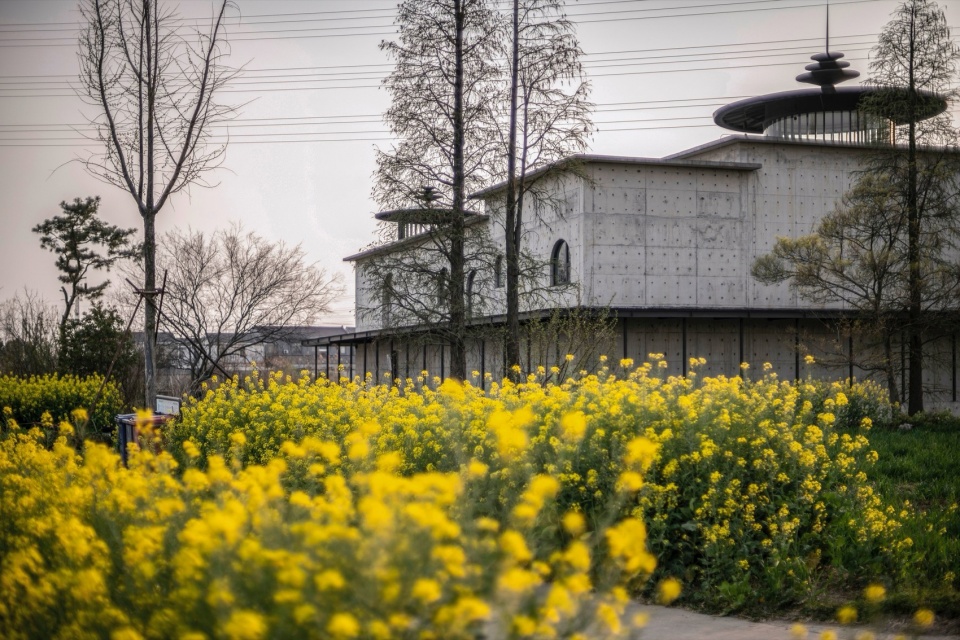
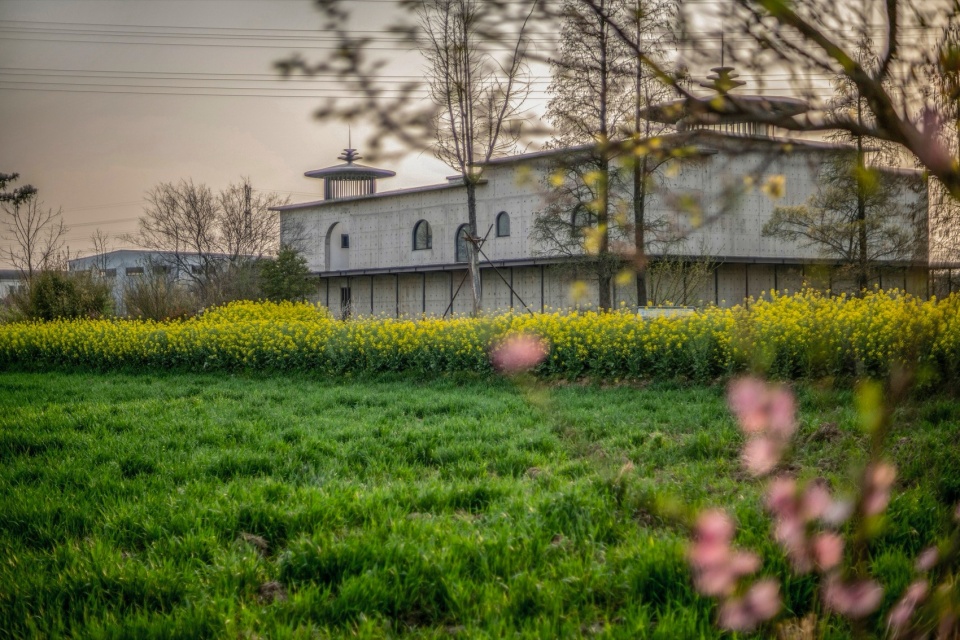
宗教场所需要庄严神圣,表达庄严神圣的手法有很多,不只是做成仿古建筑这一种。但是,设计师本人也并不赞成将寺庙直接照搬一个现代风格的建筑,照搬一个并不难,难的是既能有当代感,又能有佛教建筑特有的精神气质。那是需要一番探索的。
Religious spaces require solemnity and sanctity, and there are many ways to express such qualities; imitation of historical architecture is only one of them. However, the designer does not support simply transplanting a temple into a purely modern architectural language either. Copying a style is not difficult; what is difficult is to achieve both a contemporary expression and the distinctive spiritual essence of Buddhist architecture. This requires genuine exploration.
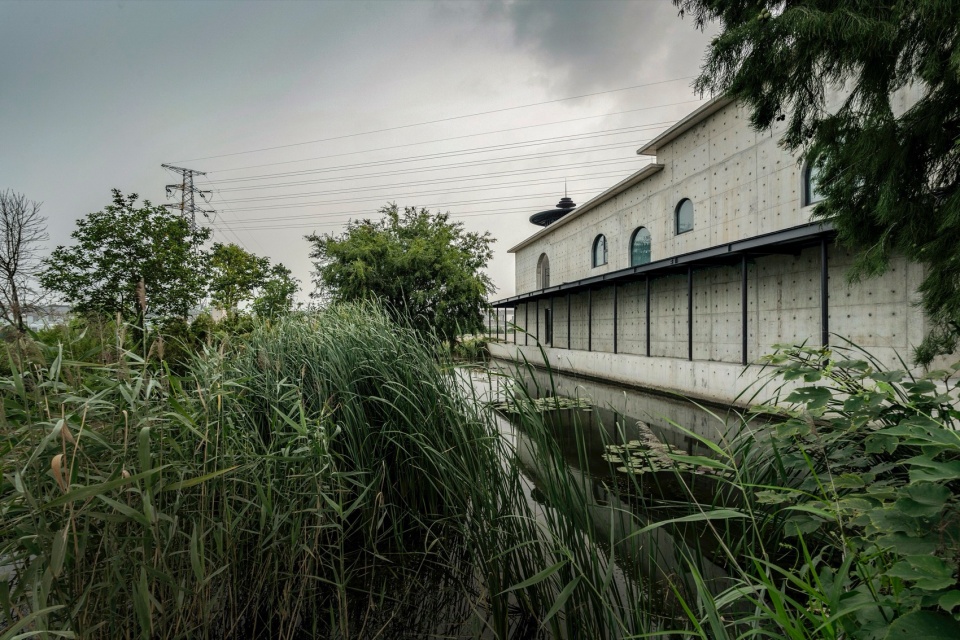
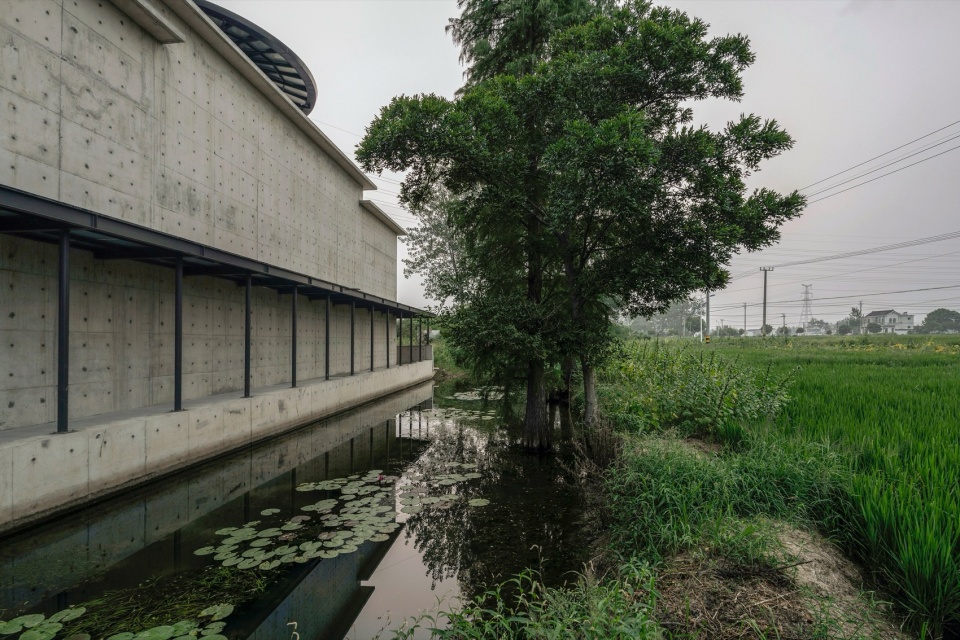
▼夏末的周边环境,Surrounding environment in late summer
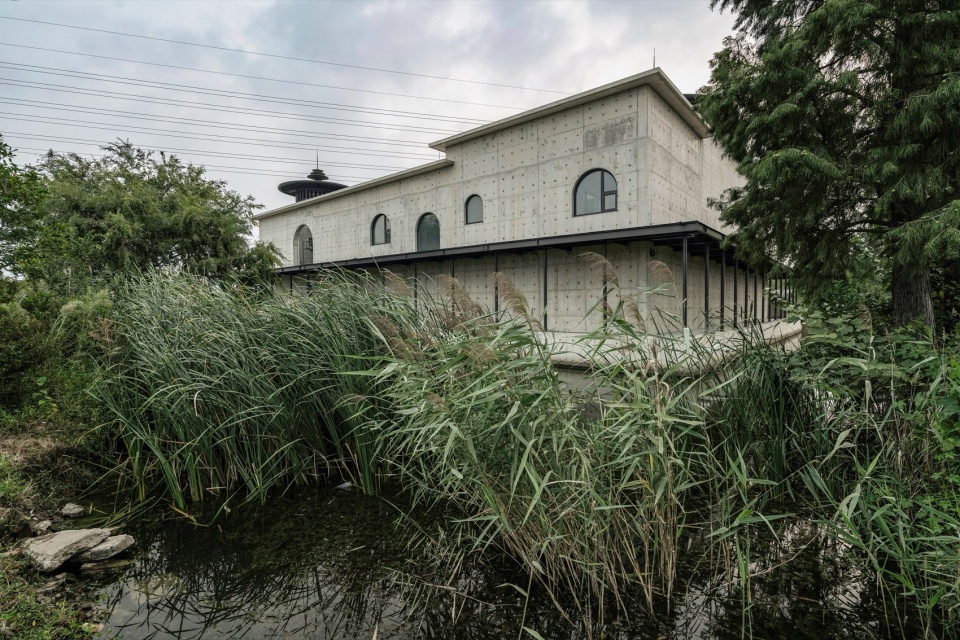
杳杳冥冥-文言启示Dim and indistinct – A Classical Chinese-inspired revelation
项目的设计构思时想到了基地旁边村庄的名称:三界村。村庄地处邗江区、高邮市、仪征市三地交界,传说古时候三位修行仙人(道、佛、俗仙)云游江淮,途经此地歇脚,从此定名三界,后世村民在三界交界点修过小土地庙、三界庵,也是后世村庄名称的由来。古庵遗址在谢家组地界,应该是寺庙原名谢家庵的来源。在当下交通和通信高度发达的时代,这三界越来越不明显了。
Project concept development was inspired by the name of the village adjacent to the site: Sanjie Village. The village sits at the tri-border junction of Hanjiang District, Gaoyou City and Yizheng City. According to local legend, three immortals representing Taoism, Buddhism and mortal enlightenment once roamed the Jianghuai region and paused here to rest during their travels. The place thus came to be known as Sanjie, meaning Three Realms. Later villagers built an earth god shrine and a small nunnery dedicated to the Three Realms right at the tri-boundary spot, which gave the village its permanent name passed down through generations. The ruins of this ancient nunnery lie within the land of Xie Family Hamlet, which explains why the shrine was originally named Xie Family Nunnery. Today, with highly accessible transport and seamless communication networks, the once distinct triple-boundary demarcations of Sanjie have grown far less discernible.
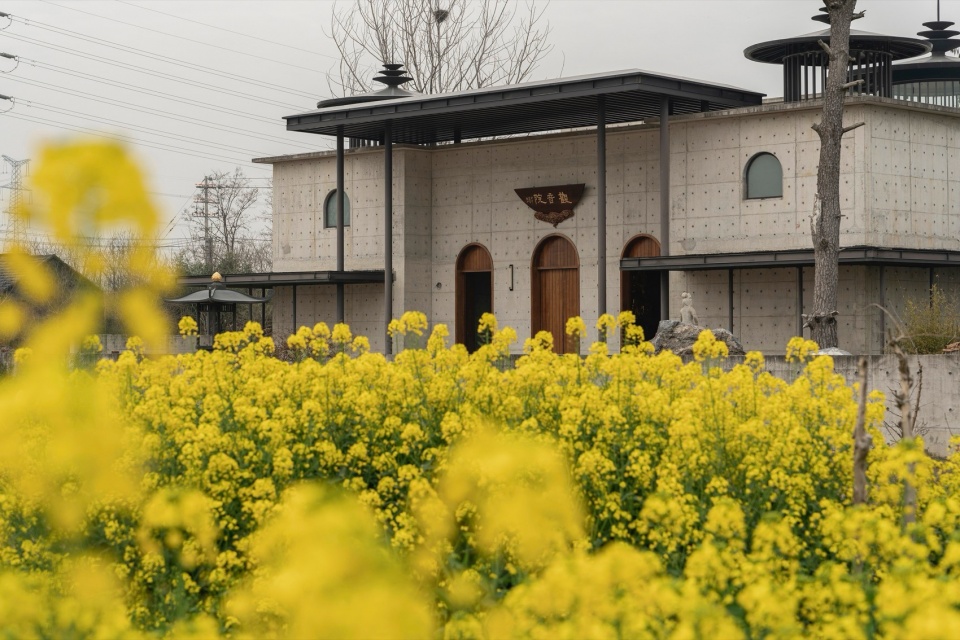
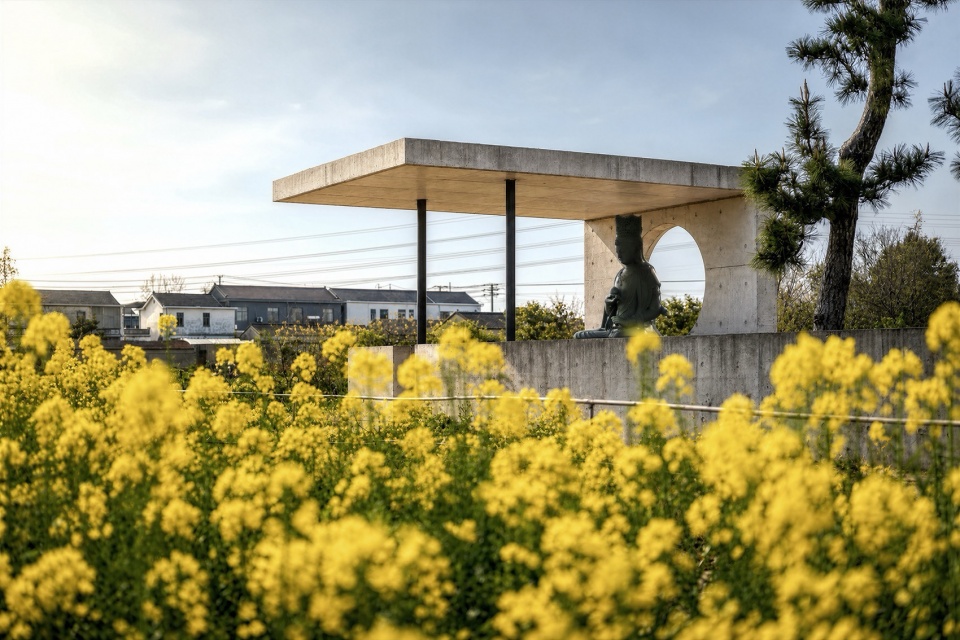
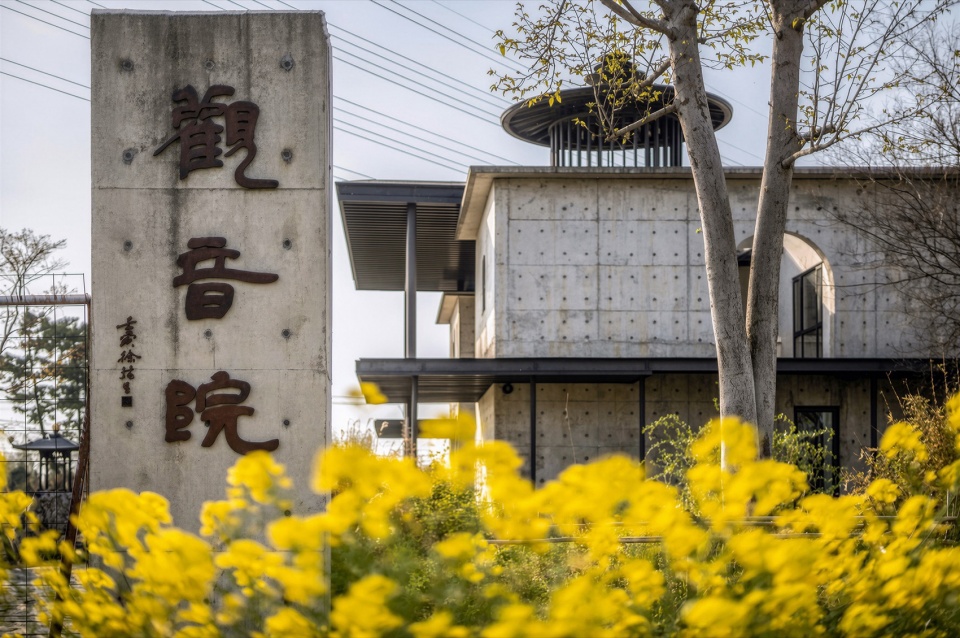
▼油菜花开的时节,In the season of blooming rapeseed flowers
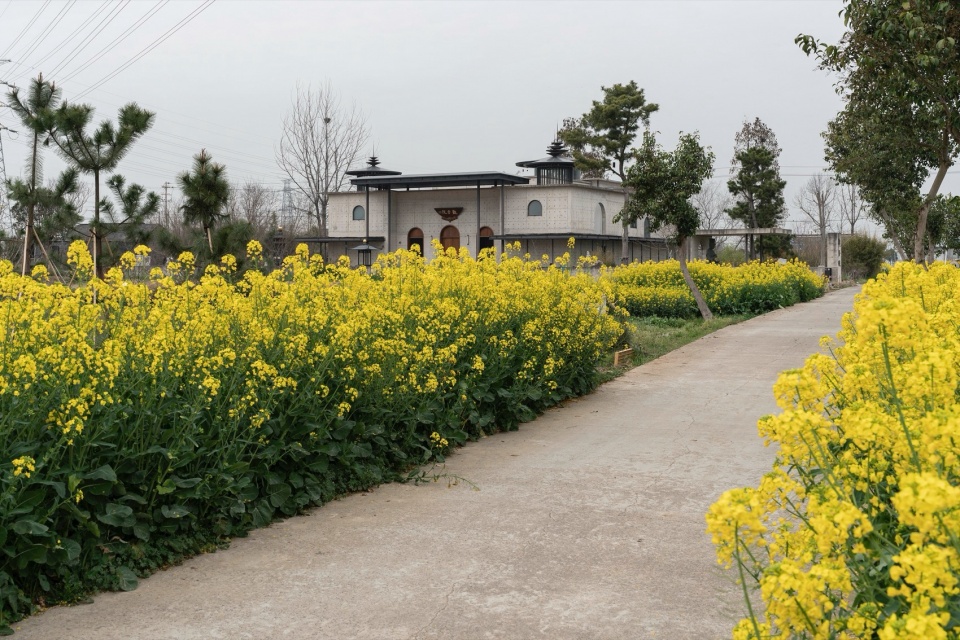
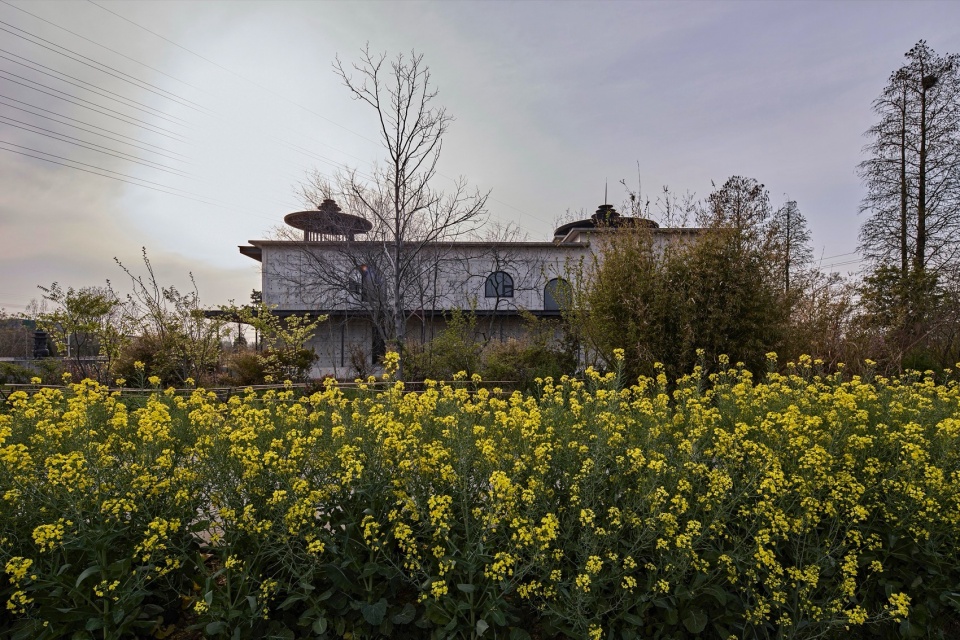
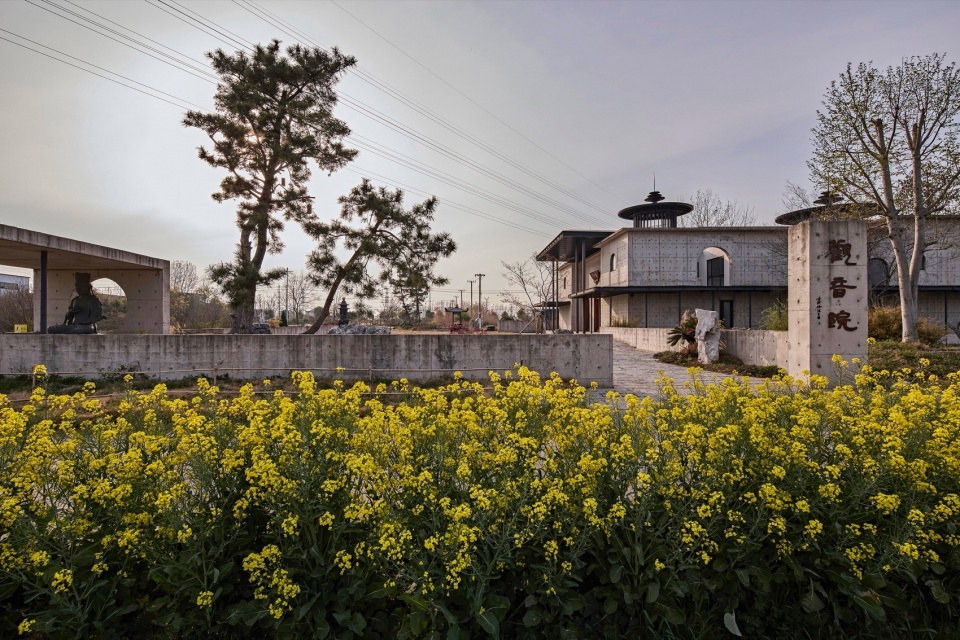
▼油菜花开的时节,In the season of blooming rapeseed flowers
此次设计需要处理以下三个三界的关系:This design needs to address the interrelations among the three “Three Realms” dimensions as follows:
1,佛说三界:欲界、色界、无色界。这是修行必须历经的三种生命境域,却非究竟归宿,最终要‘跳出三界外,不在五行中’,超越这三界。建设寺庙并非佛法的终极目的,作为宗教和修行的场所,建筑只是个躯壳而已。这一思想对建筑意境的启示在于:寺庙绝非仅仅满足使用功能的机器,而应成为一座指向超越建筑本身的精神桥梁。
In Buddhism, the “Three Realms” refer to: The realm of desire, the realm of form, and the formless realm. These are the three existential domains that practitioners must pass through, yet they are not the ultimate destination. The final aim is to “transcend beyond the Three Realms and not be bound by the Five Elements,” thereby surpassing them entirely. The construction of temples is not the ultimate purpose of Buddhist teaching; as places of religion and practice, architecture is only a vessel. This idea offers a key insight into architectural conception: a temple should never be reduced to a functional machine serving practical needs alone. Instead, it should become a spiritual bridge that points beyond architecture itself toward transcendence.
▼南侧的水塘,Southern pond
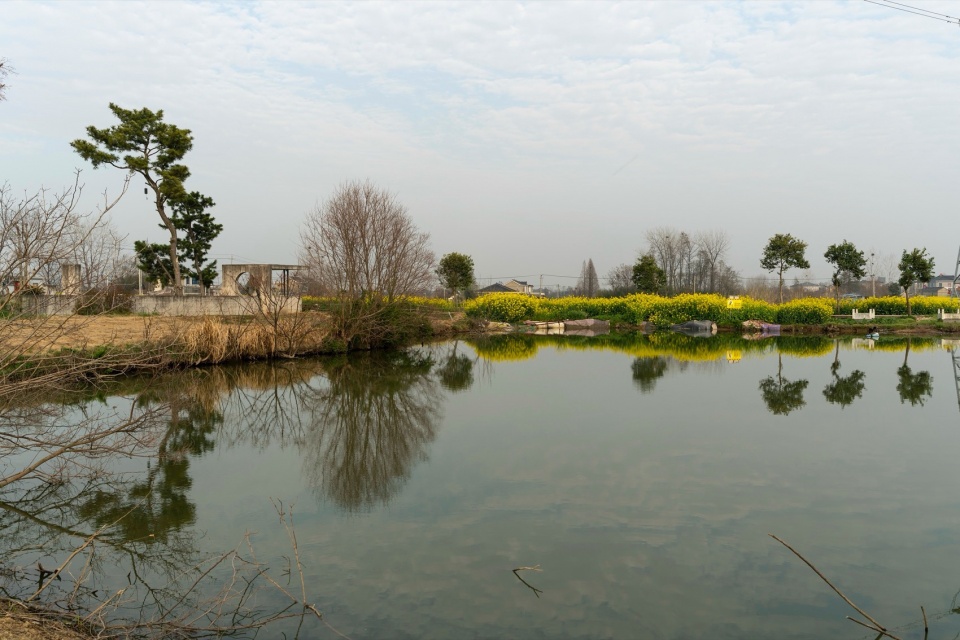
▼建筑东南角,Southeast corner of the building
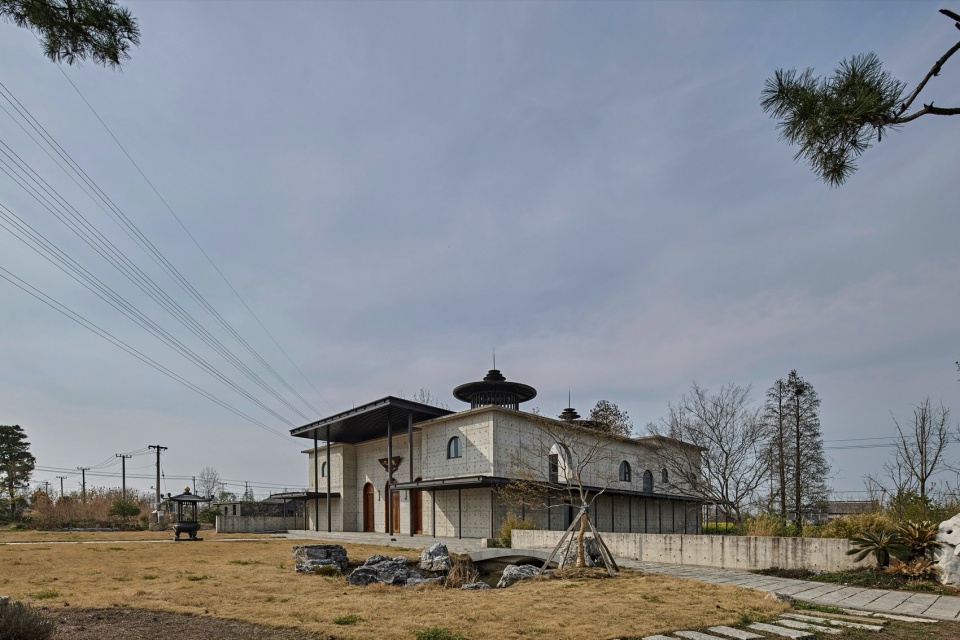
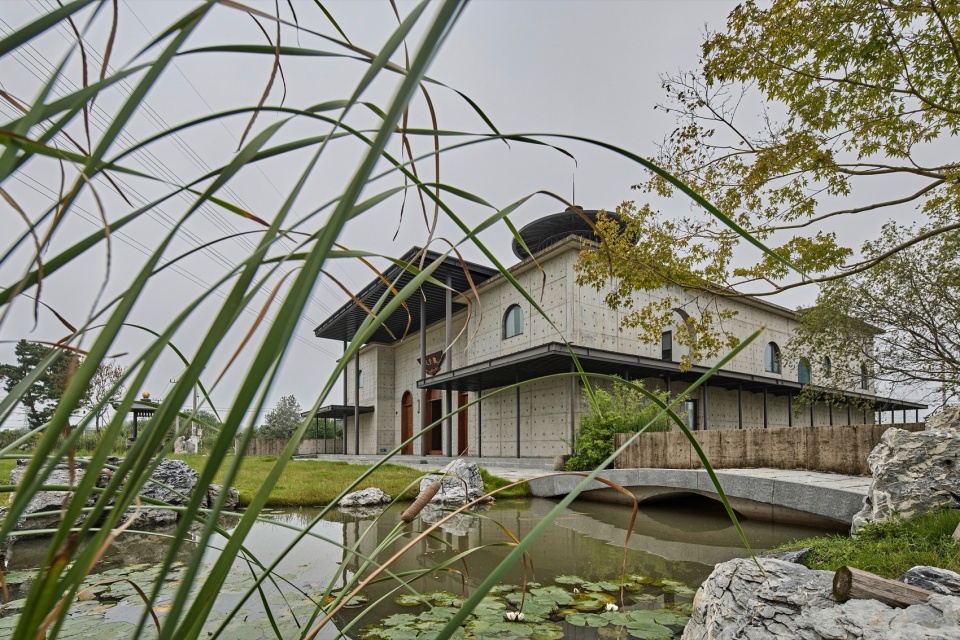
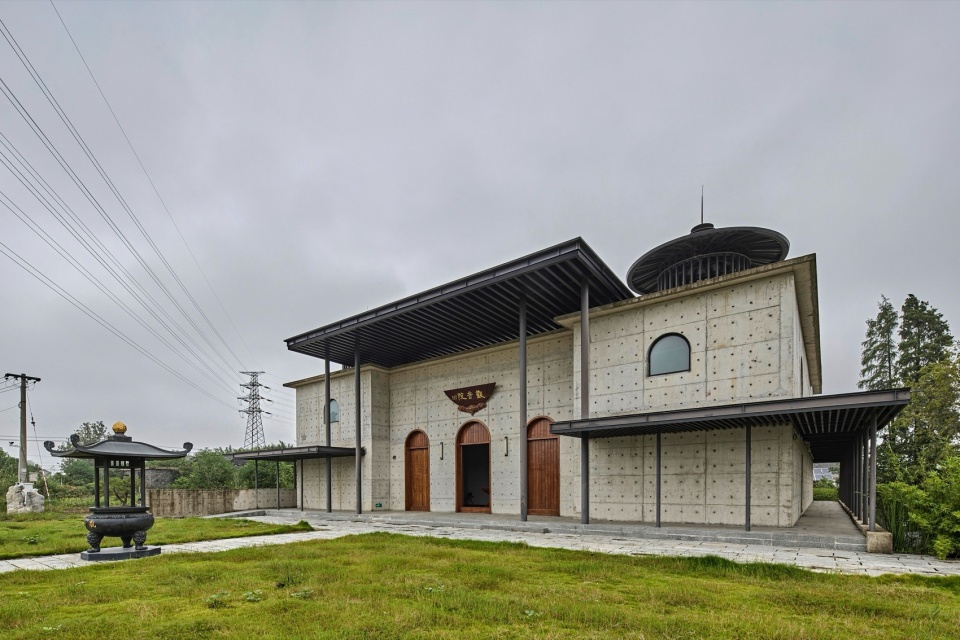
▼建筑东立面,East elevation of the building
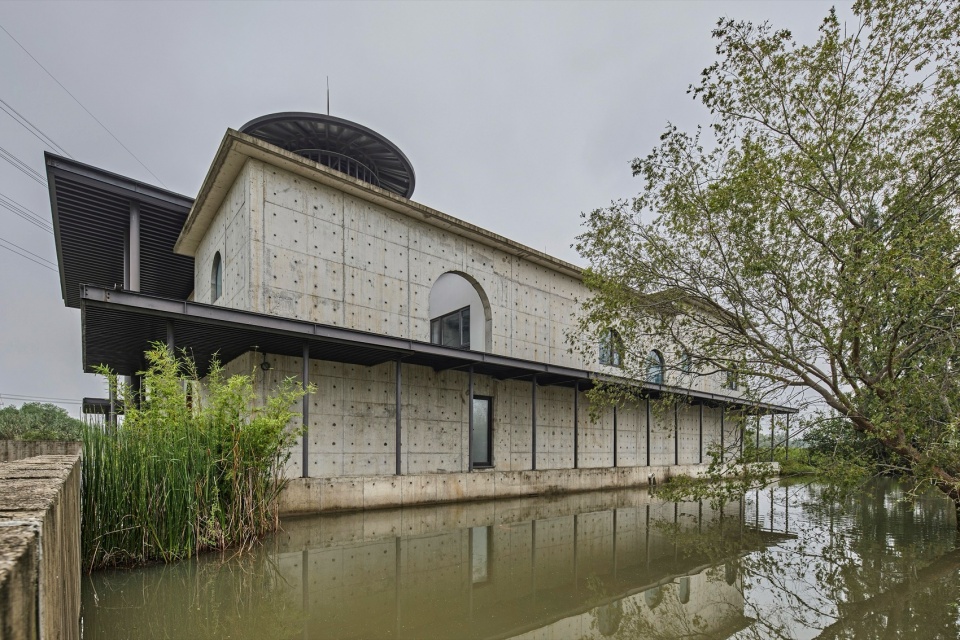
▼建筑西南角,Southwest corner of the building
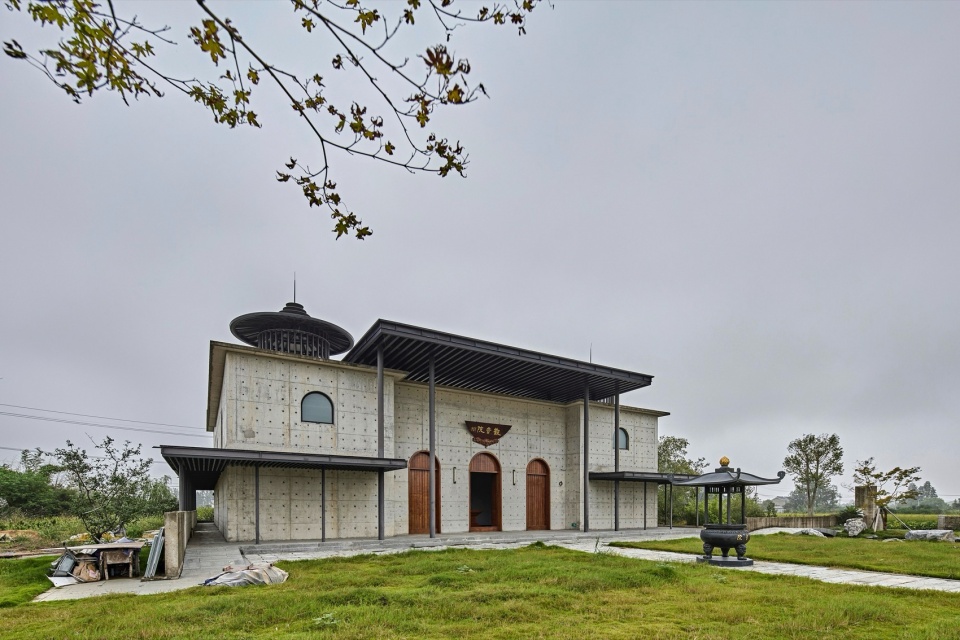
2,现实三界:生活、文化、宗教,这三界介于具象和抽象之间。一个人不管有没有宗教信仰,只要活在这世上都难免要受这三界的影响,这也是人类社会的特征。
The Three Realms of Reality: life, culture, and religion. These three realms exist between the concrete and the abstract. Regardless of whether one holds religious belief, as long as a person lives in this world, they are inevitably influenced by these three realms. This is also a defining characteristic of human society.
▼建筑入口前的广场,Plaza in front of the building entrance
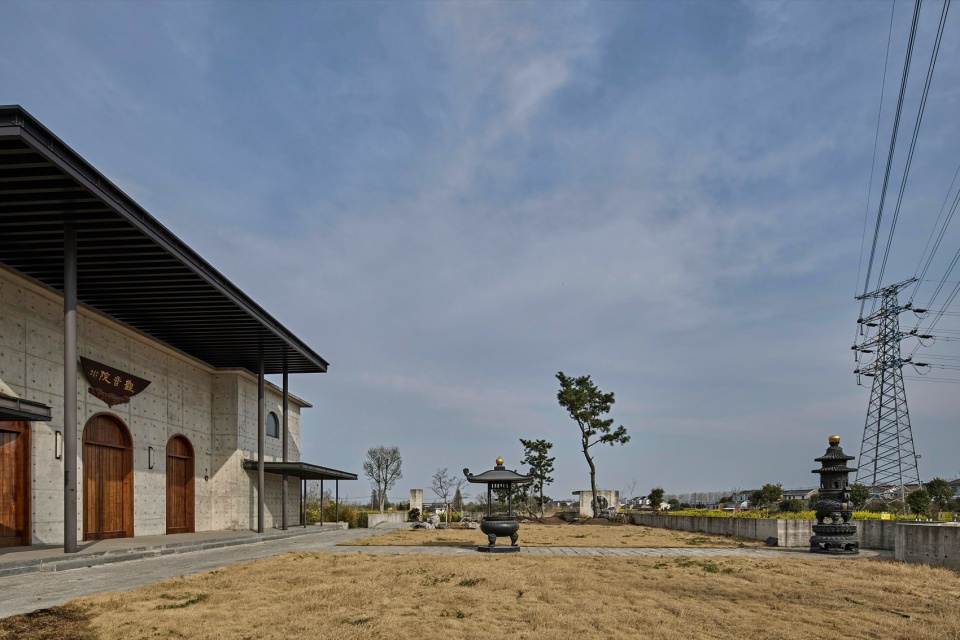
▼建筑南入口立面,South entrance elevation of the building
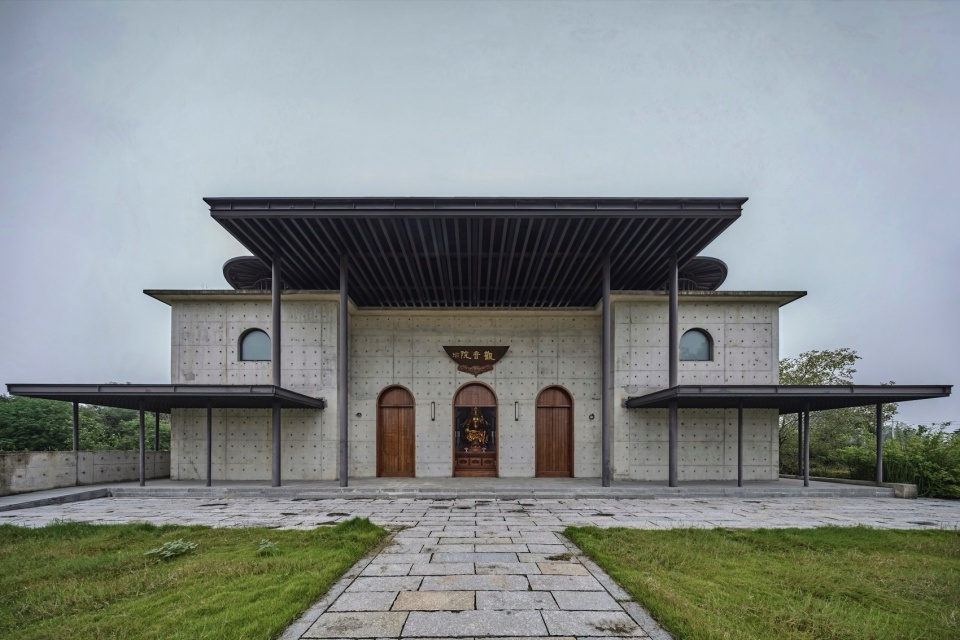
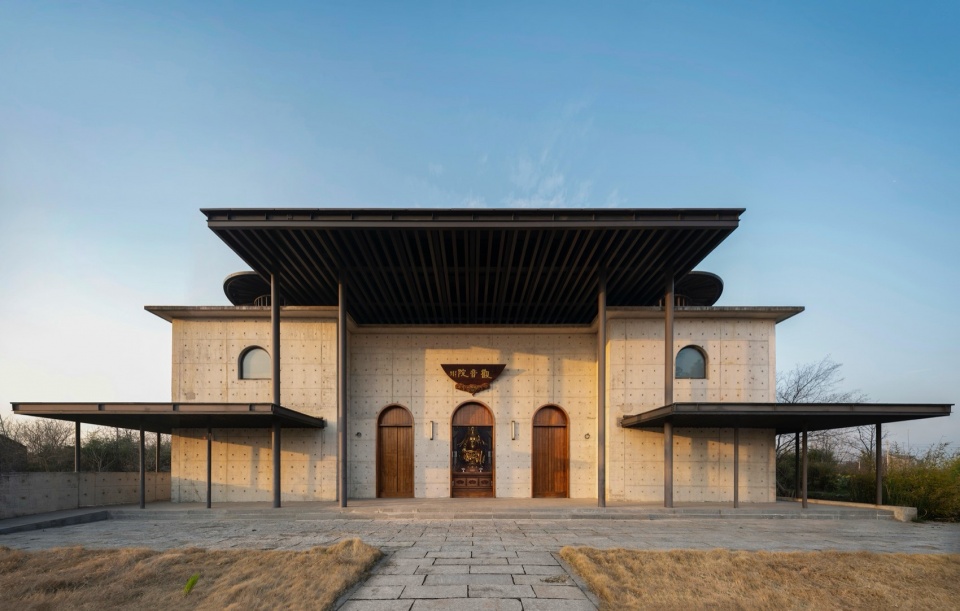
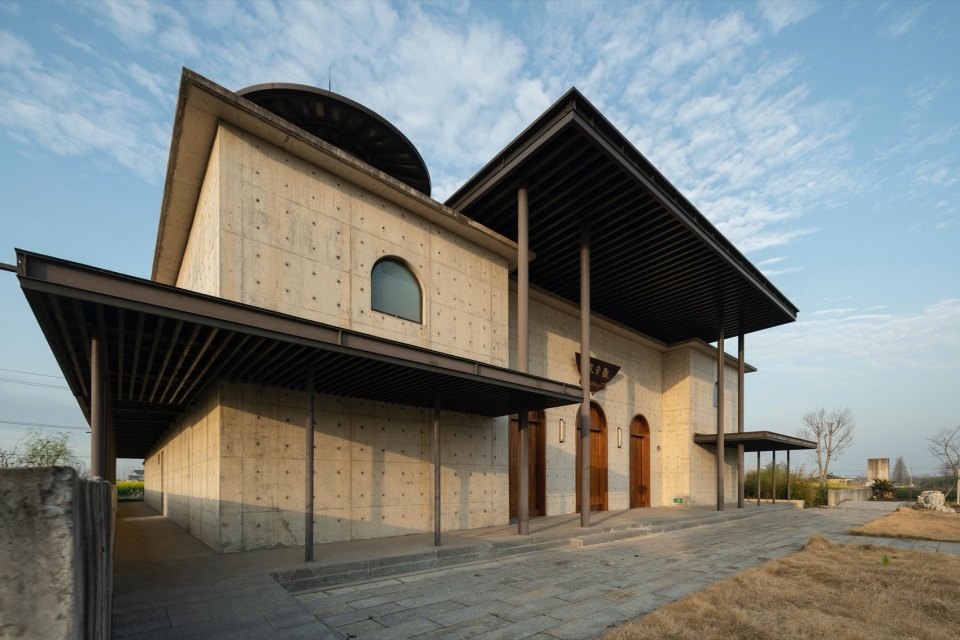
▼建筑西南角,Southwest corner of the building
▼夕阳下的大门,Gate in the sunset
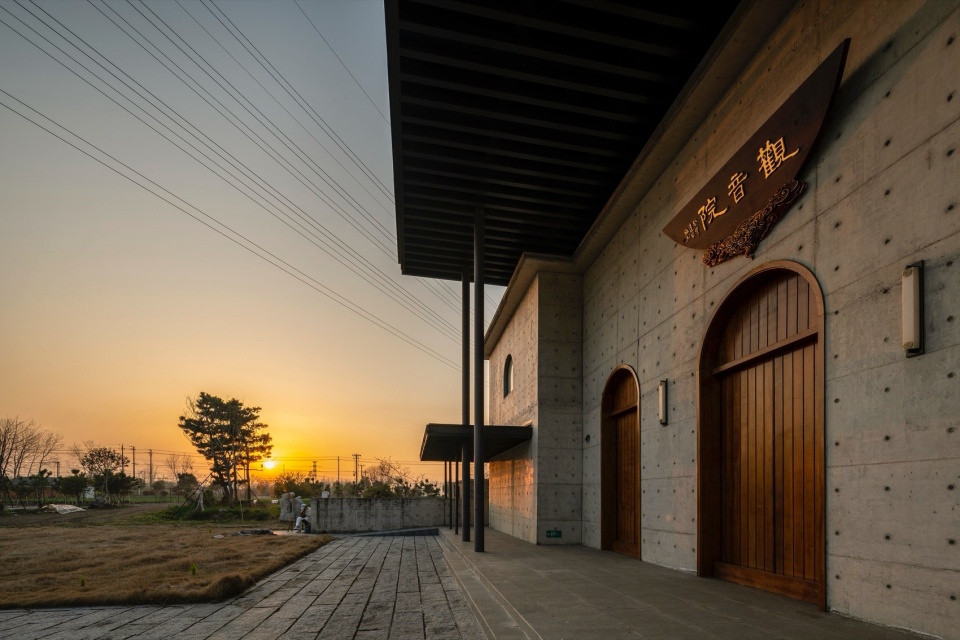
3,建筑三界:实用、坚固、美观。这是古罗马建筑师维特鲁威的建筑三原则,至今仍然是建筑设计的基本原则,这三界是需要运用实实在在的物质来实现,也可以说是上述两个界的实物载体。
The Three Realms of Architecture: utility, firmness, and beauty. These are the three principles of architecture proposed by the ancient Roman architect Vitruvius, and they remain fundamental principles of architectural design to this day. These three realms must be realized through tangible material means and can also be understood as the physical carriers of the two realms described above.
▼寺院前的庭院,Courtyard in front of the monastery
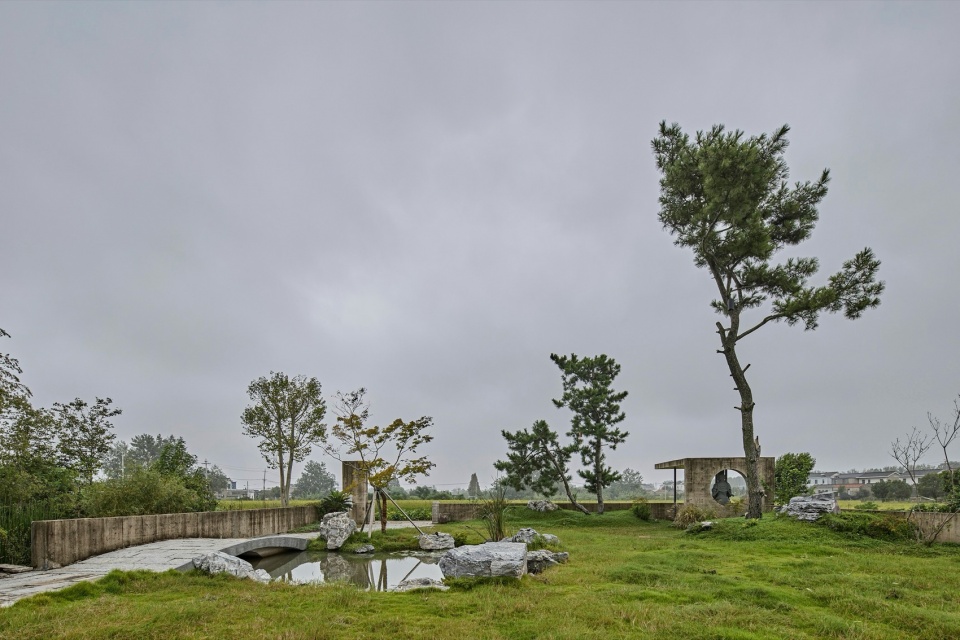
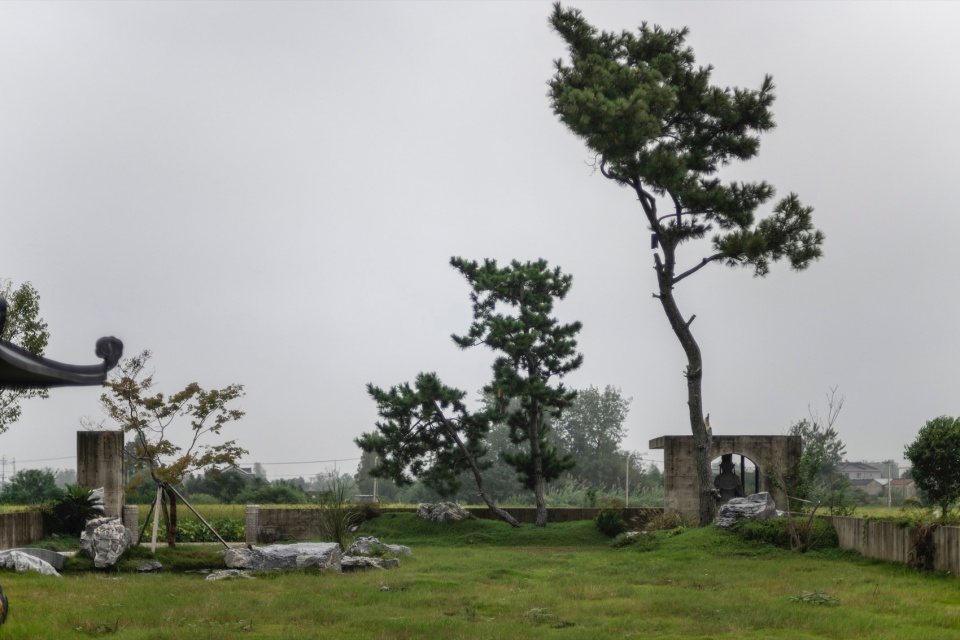
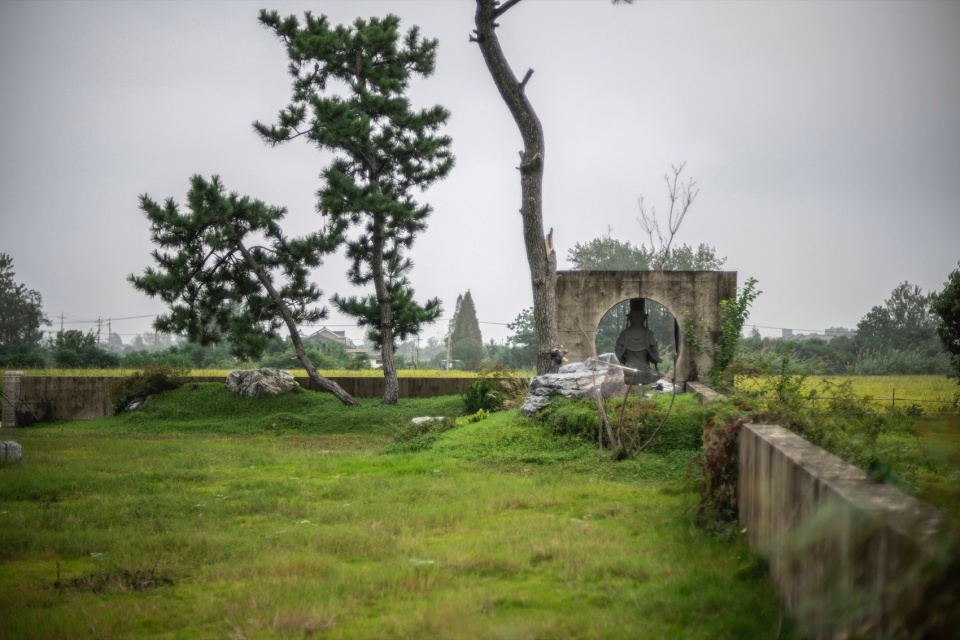
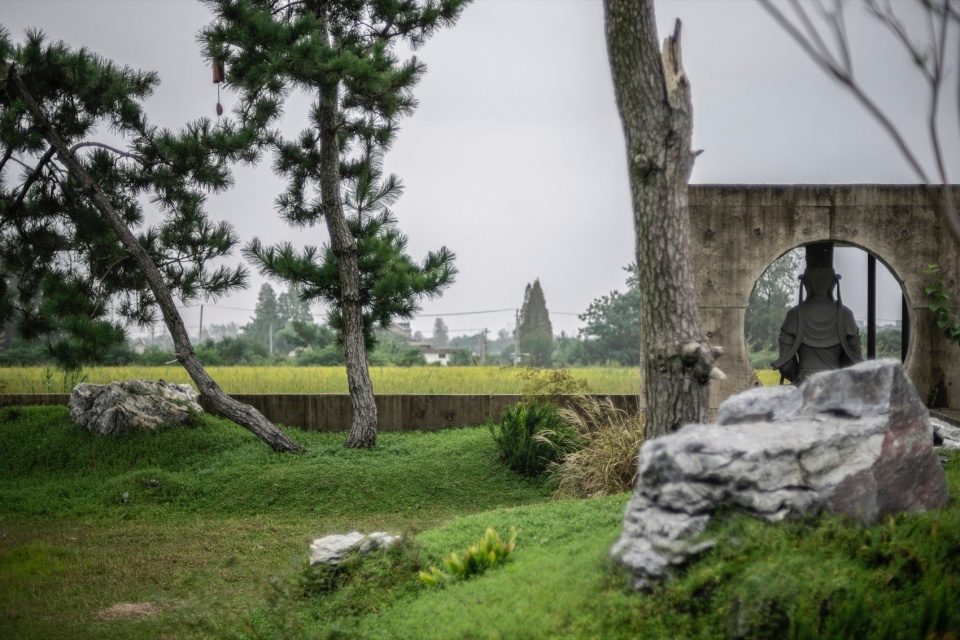
历史上的寺庙是什么样子已经无从考证,但不同时代的修建应该都有不同样子,当下时代就应该有当下时代的样子,这样才更顺应历史规律。而当下这个小寺庙应该是什么样子呢?
What temples looked like in history can no longer be precisely verified, but temples built in different eras must have taken different forms. The present age should likewise have its own expression, only then can it align with the logic of historical development. So, what should a small temple of our time look like?
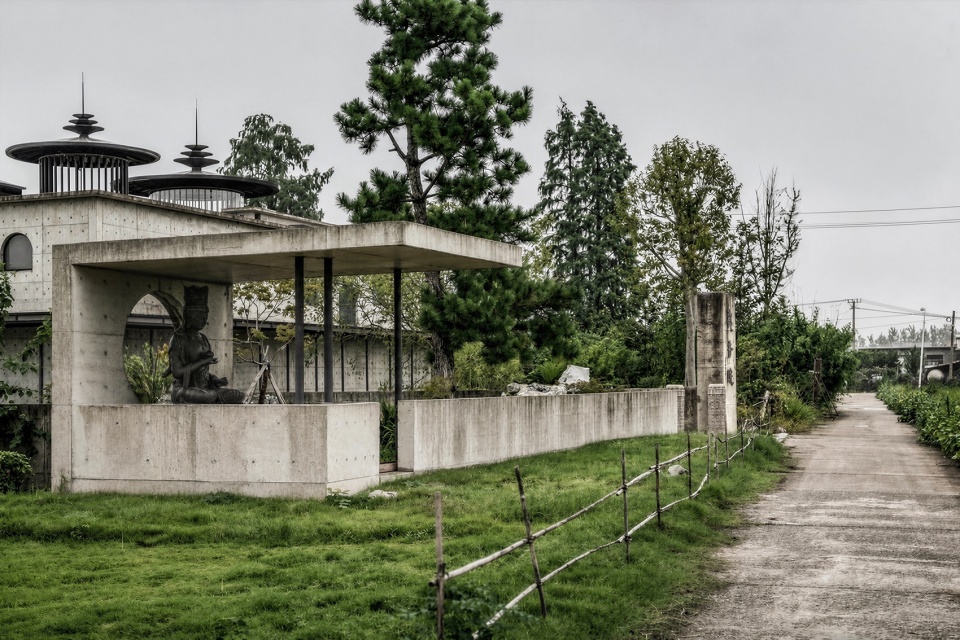
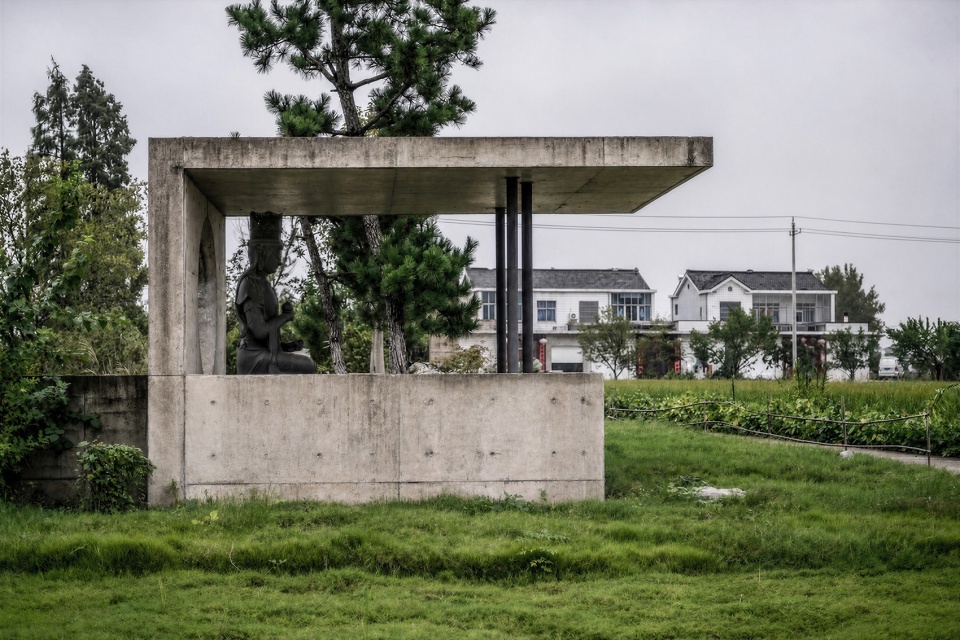
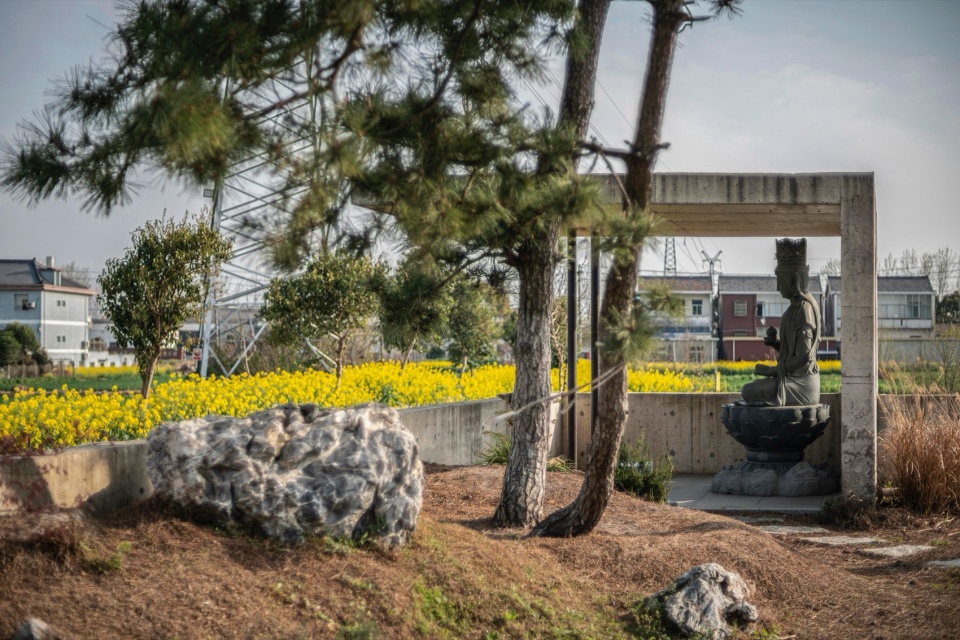
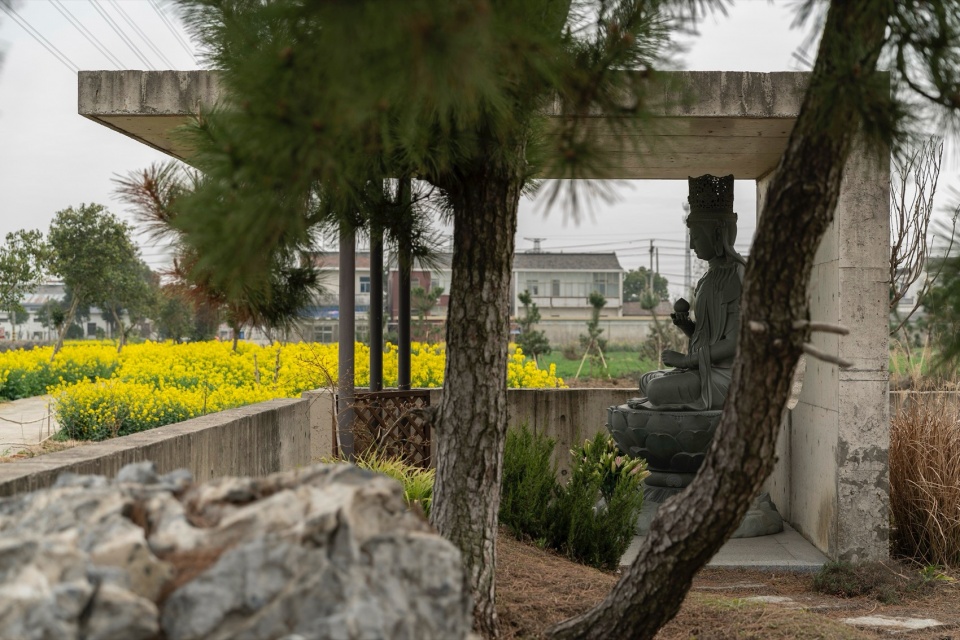
▼原本设计为凉亭供奉了地藏菩萨像,Originally designed as a pavilion enshrining a Kṣitigarbha Bodhisattva statue
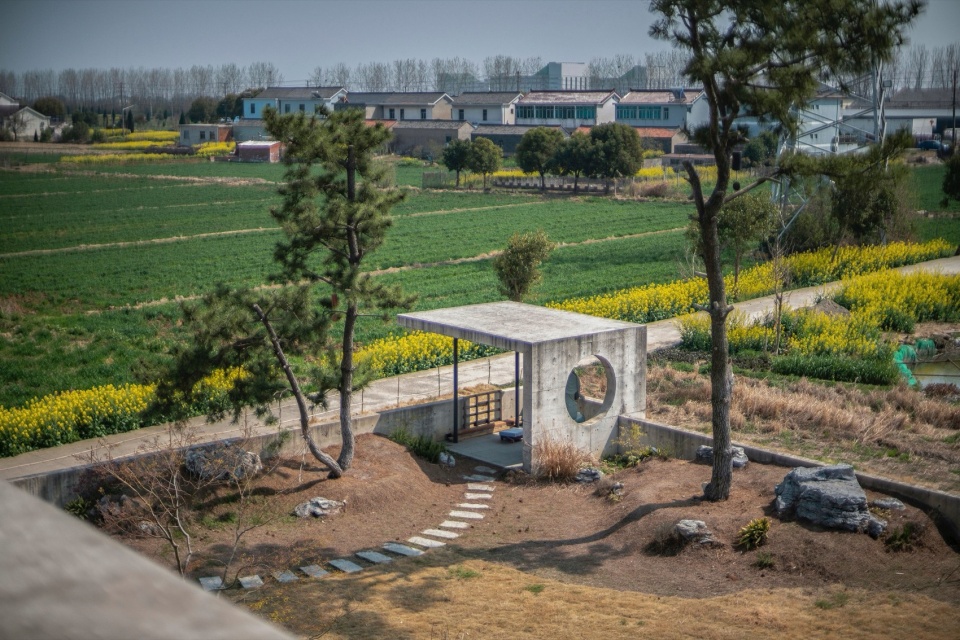
在在处处-项目背景Everywhere, at all times – Project Background
寺庙相传始建于明朝,坐落于典型的长三角阡陌纵横的平原田野和村庄之间,与村庄保持着一种若即若离的道路关系。原有建筑为二、三十年前所建,没有任何美学参考价值,也已经成为了危房,亟需拆除重建。寺庙门前有一个小广场,东侧和北侧围着个L型的水塘,使寺庙和周边以一种略有空灵的方式相连接。由于用地较小,布局紧凑也是这次设计的特点之,毕竟作为一个寺庙的朝拜、功课、接待、食宿等必备功能一样都不能少。相比之下,这个寺庙比扬州市里的几个著名私家园林的住宅部分尺度还要小,虽不在闹市,但也可谓寸土寸金。
The temple is said to have been originally founded during the Ming Dynasty. It is situated within a typical Jiangsu–Zhejiang plain landscape, characterized by crisscrossing fields and villages, and maintains a loosely connected yet distant relationship with the surrounding village roads. The existing buildings were constructed around twenty to thirty years ago, offering no architectural or aesthetic value, and have since become structurally unsafe, requiring urgent demolition and reconstruction. In front of the temple lies a small open plaza. To the east and north, an L-shaped pond encloses the site, establishing a subtly ethereal spatial connection between the temple and its surrounding environment. Given the limited land area, a compact layout stands as one core feature of this design. The temple must accommodate all essential functions without compromise, including pilgrimage, daily religious observances, visitor reception, dining and lodging. By comparison, its overall footprint is even smaller than the residential quarters of renowned classical private gardens in Yangzhou. Though situated far from bustling downtown areas, every inch of this plot remains precious.
▼原本设计为凉亭供奉了地藏菩萨像,Originally designed as a pavilion enshrining a Kṣitigarbha Bodhisattva statue
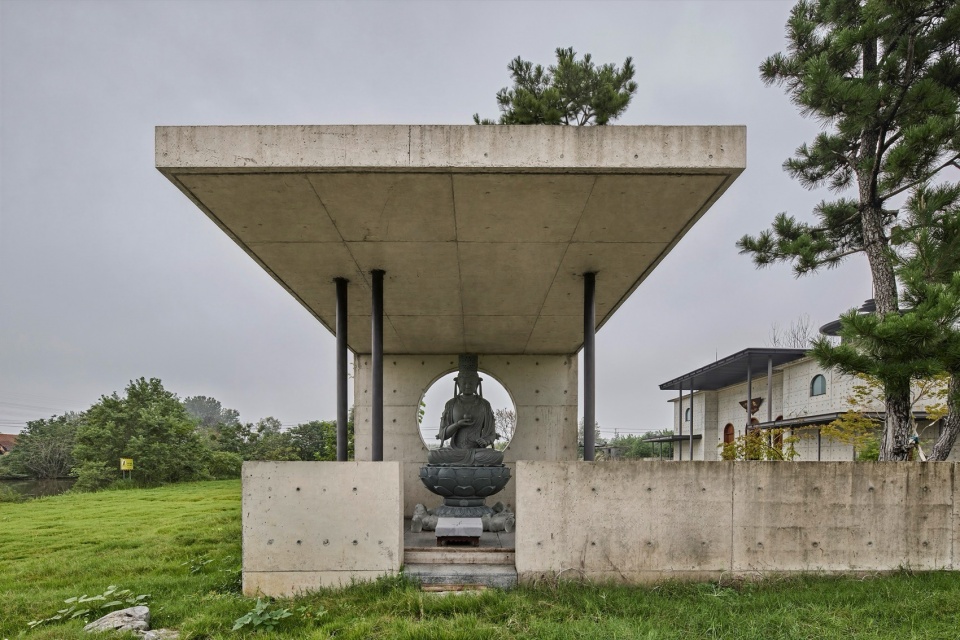
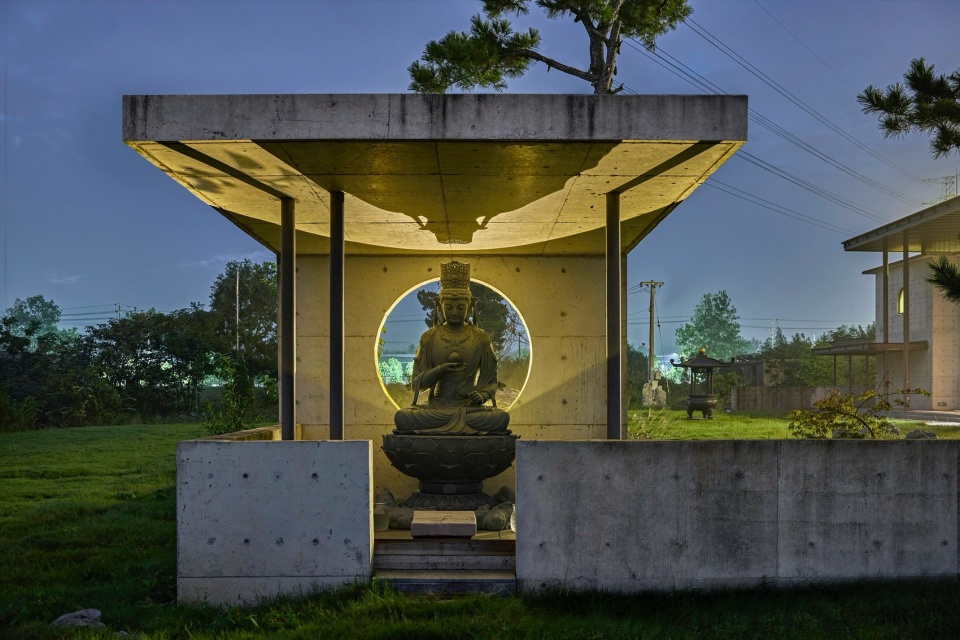
▼地藏菩萨像夜景,Night view of the Kṣitigarbha Bodhisattva statue
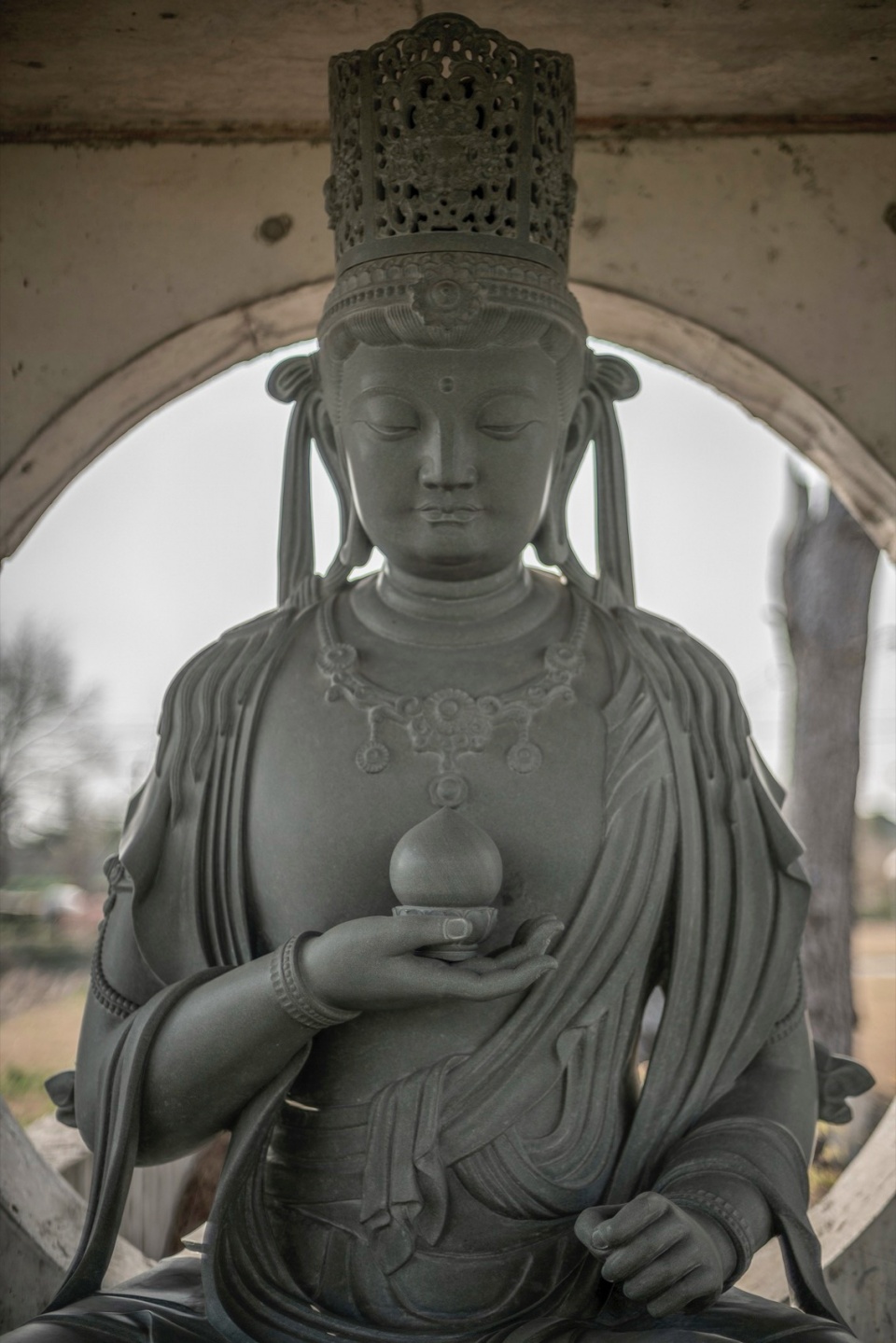
▼地藏菩萨像细部,Detail of the Kṣitigarbha Bodhisattva statue
步步隅隅-空间设计Step by step, corner by corner – Spatial Design
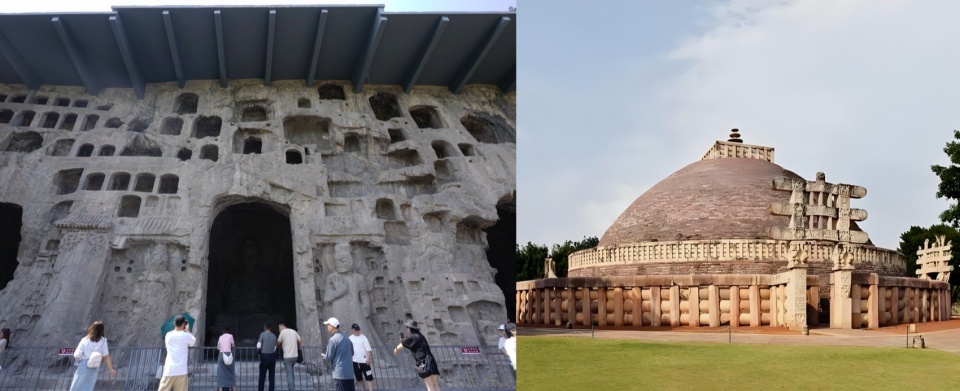
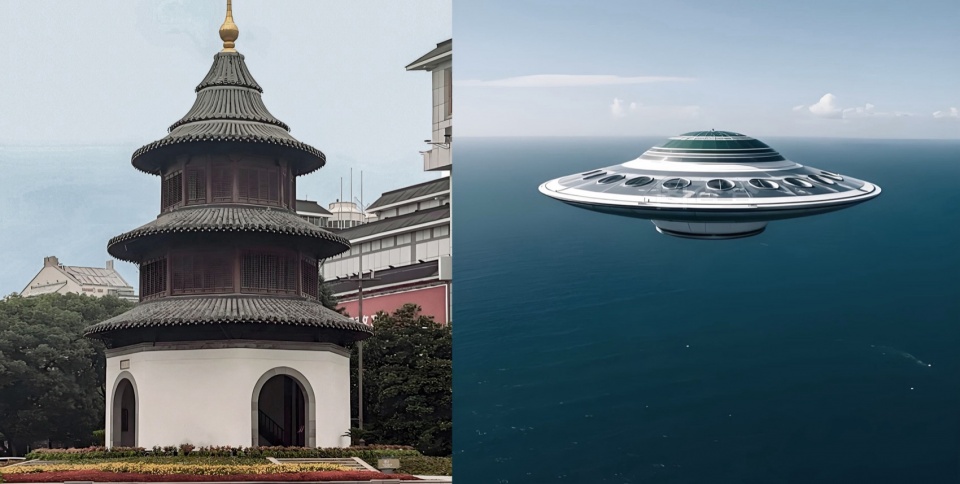
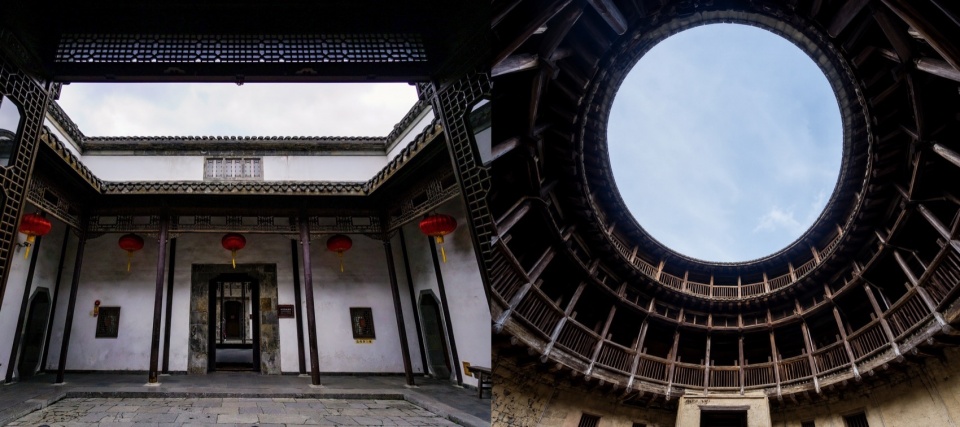
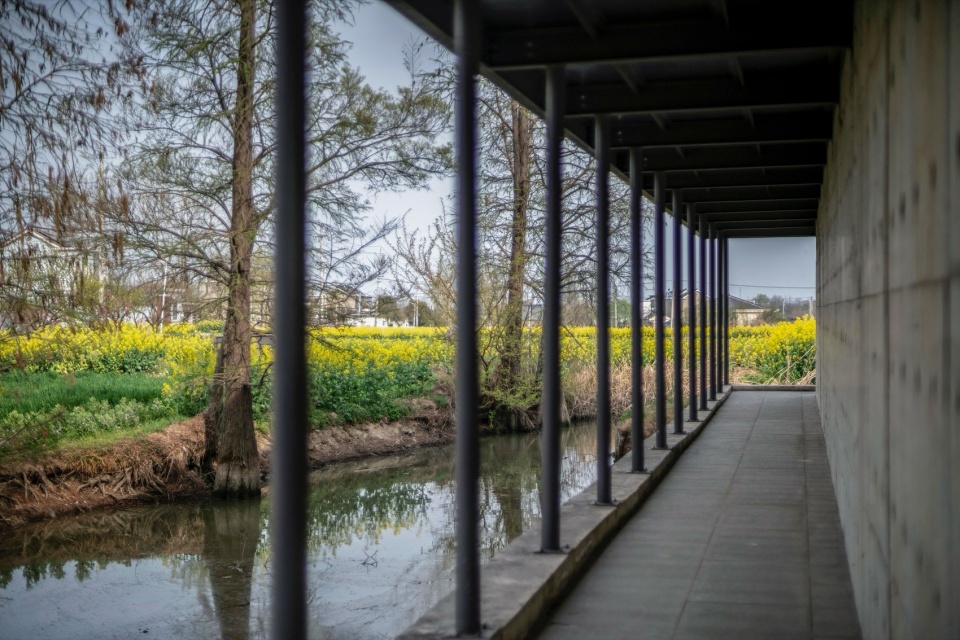
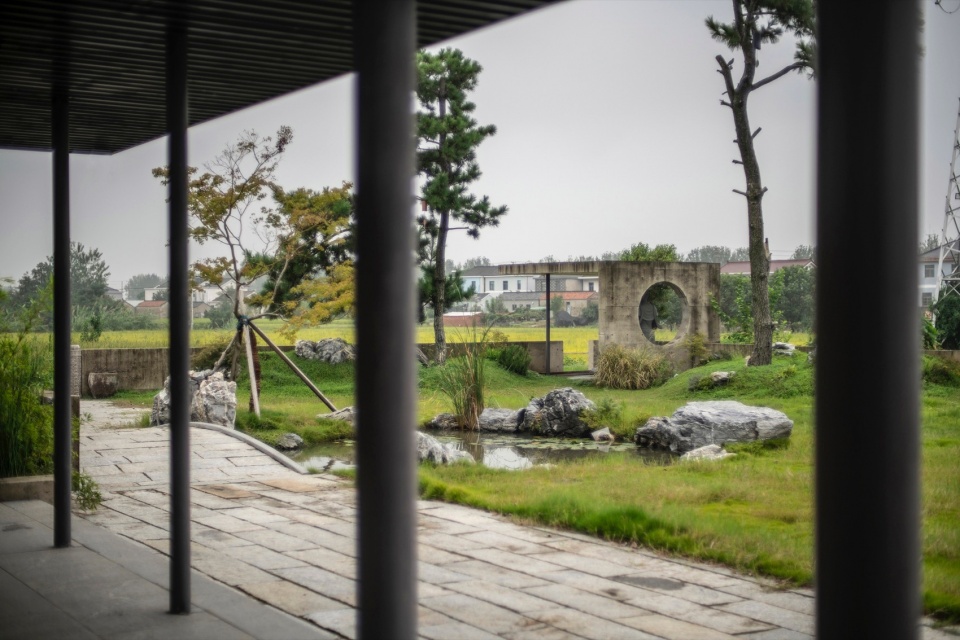
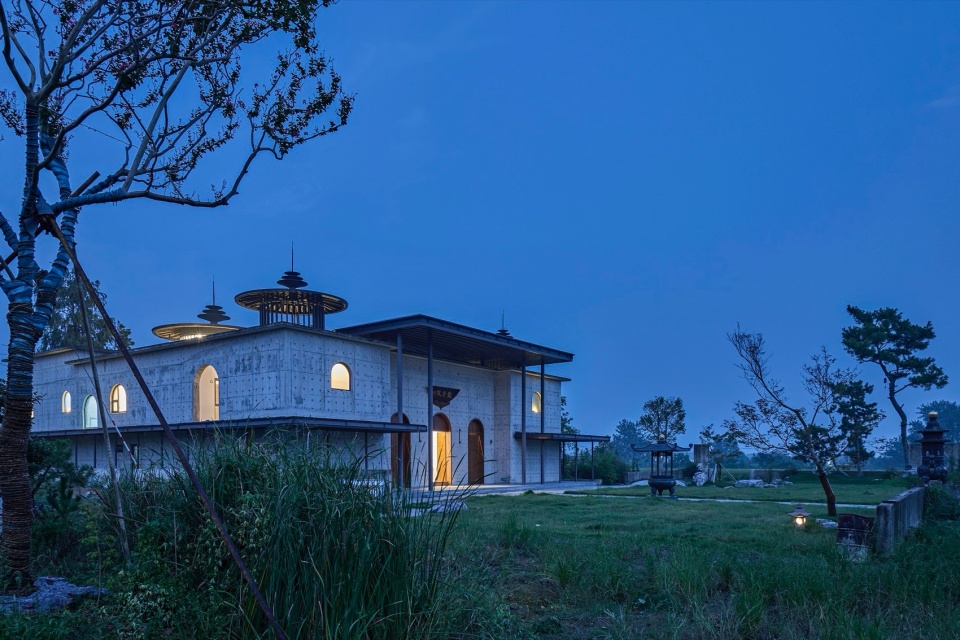
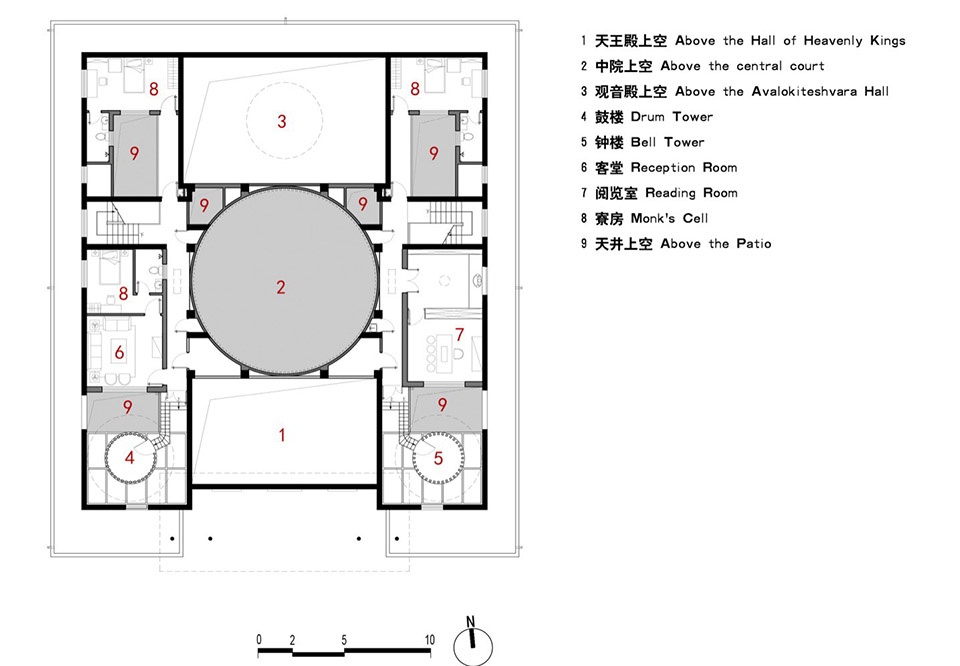
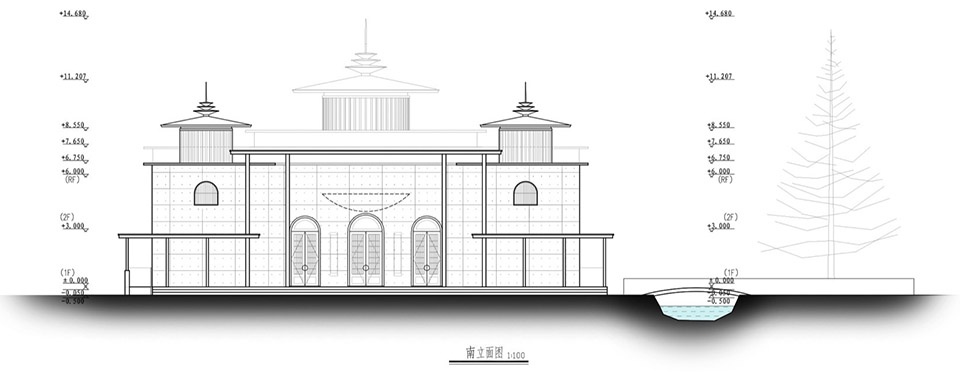
这次设计构思由内而外。中国传统寺庙都是在院子里的建房子,但是这次因为用地紧张,功能要求相对较多,只能采用房子里面留院子的做法,也就是说这次“房子”多,“院子”少。寺庙主体做成一个建筑,建筑里空出几处作为天井院,分别解决十几个房间的采光和通风问题,其实这种布局更像扬州老城里的传统天井宅院。整体分为三条轴线,中间是朝拜主轴线,也是主要交通要道,这条轴线上的建筑按照小型传统寺院的布局,天王殿也是山门。往里是一个圆形院落,举头仰望圆形天井,可以感受和思考“色即是空、空即是色”(《心经》语)。这个圆形院落参考并融合了扬州老城内古建筑的方形天井和福建土楼的圆形天井。屋顶采用平屋顶但有一个圆形天窗阁楼,是寺庙的最高点,也是室内采光的主要进口。还有两个很小的天井也是观音殿的通风和采光口。中轴线两侧各有东西两条内廊连接各个功能空间和4个天井。这种空间布局吸收了扬州城内传统建筑的布局特点。两个主要殿堂为一层,功能房间为两层。寺庙四周有一条外廊,可作为行禅的路径,同时这也可以环视周边的景色,亲水与游园的乐趣抵消了建筑一层外墙没有开窗的封闭性,增加了亲和力,回廊的屋顶水平线呼应了周边平原的水平向延展特性,同时,令人联想起传统江南园林亭台楼阁的空灵与飘逸,步移景异。建筑主体主要为方正的造型,与顶部的观音殿和钟鼓楼的圆形阁楼式造型共同营造了中国传统所讲究的天圆地方。汉代的儒家典籍《大戴礼记》中明确提出了“天道曰圆,地道曰方”,圆是动态流转无边无际的,代表着时间与变化。方是静态稳固的,代表着空间与安定。三个圆锥形屋顶使人联想到扬州城内著名的文昌阁,另外圆锥形屋顶有种机械美感,有点类似于“飞碟”的神秘感,其实最重要的一点,圆锥形屋顶追溯了古印度最早的佛塔——窣堵波(Stūpa)。
▼建筑的外立面令人联想起佛教石窟和最早的佛塔窣堵波(Stūpa),The architectural envelope draws inspiration from Buddhist cave sanctuaries and the archetypal Stūpa
▼建筑正立面融合了中国寺庙典型的山门和现代建筑的一些特征,The main façade blends the traditional gate of Chinese temples with certain features of modern architecture
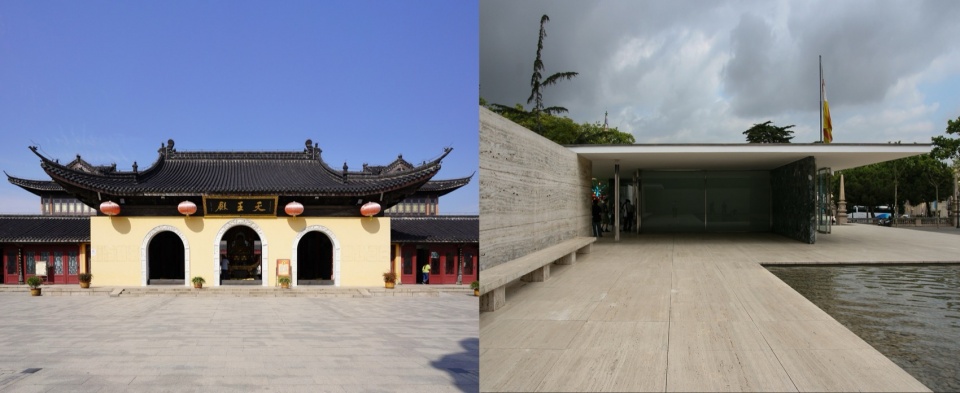
This design concept develops from the inside out. Traditional Chinese temples are typically built as houses within courtyards, but due to limited site area and relatively extensive functional requirements, this project adopts an approach of creating courtyards within buildings. In other words, there are “more buildings” and “fewer courtyards”. The main body of the temple is designed as a single building, within which several voids are carved out as skylit courtyards, each serving to address the lighting and ventilation needs of more than ten rooms. In fact, this spatial layout is closer to the traditional courtyard houses with light wells found in the old city of Yangzhou. The overall plan is organized along three axes. The central axis serves as the main axis for worship and the primary circulation route. Buildings along this axis follow the layout of a small traditional temple, where the Hall of the Heavenly Kings also functions as the main gate. Further inward lies a circular courtyard. Looking up into the circular skylight courtyard, one can contemplate the phrase “Form is emptiness, emptiness is form” (The Heart Sutra). This circular courtyard references and integrates both the square lightwells of traditional buildings in Yangzhou’s old city and the circular skylight courtyards of Fujian tulou. The roof is designed as a flat roof, with a circular skylight pavilion that forms the highest point of the temple and serves as the primary source of natural light for the interior. In addition, two smaller lightwells provide ventilation and daylight for the Guanyin Hall. On both sides of the central axis, east and west internal corridors connect the various functional spaces and the four courtyards. This spatial organization draws from the traditional architectural characteristics of Yangzhou’s urban fabric. The two main halls are single-story volumes, while the auxiliary functional rooms are arranged over two levels. A continuous external corridor wraps around the entire temple, serving both as a path for walking meditation and as a viewing route overlooking the surrounding landscape. The experience of water proximity and strolling within the garden offsets the enclosed nature of the ground-floor exterior walls without windows, enhancing the overall sense of openness and accessibility. The horizontal roofline of the cloister echoes the flat, expansive character of the surrounding plain, while also evoking the ethereal and flowing qualities of traditional Jiangnan garden [pavilions and towers, where scenery shifts with each step. The main body of the building adopts a predominantly square and upright form, which, together with the circular pavilion-like volumes of the Guanyin Hall and the bell and drum towers at the top, collectively expresses the traditional Chinese concept of “round heaven and square earth.” The Confucian classic “Da Dai Li Ji ”from the Han Dynasty explicitly states: “The Way of Heaven is round, the Way of Earth is square.” The circle symbolizes dynamic circulation without boundaries, representing time and change. The square represents stability and stillness, symbolizing space and permanence. The three conical roofs evoke associations with Yangzhou’s renowned Wenchang Pavilion. At the same time, the conical form carries a certain mechanical aesthetic, with a subtle sense of mystery reminiscent of a “flying saucer.” More importantly, the conical roof traces back to the earliest Buddhist stupa in ancient India—the Stūpa.
▼主入口立面,Main entrance elevation
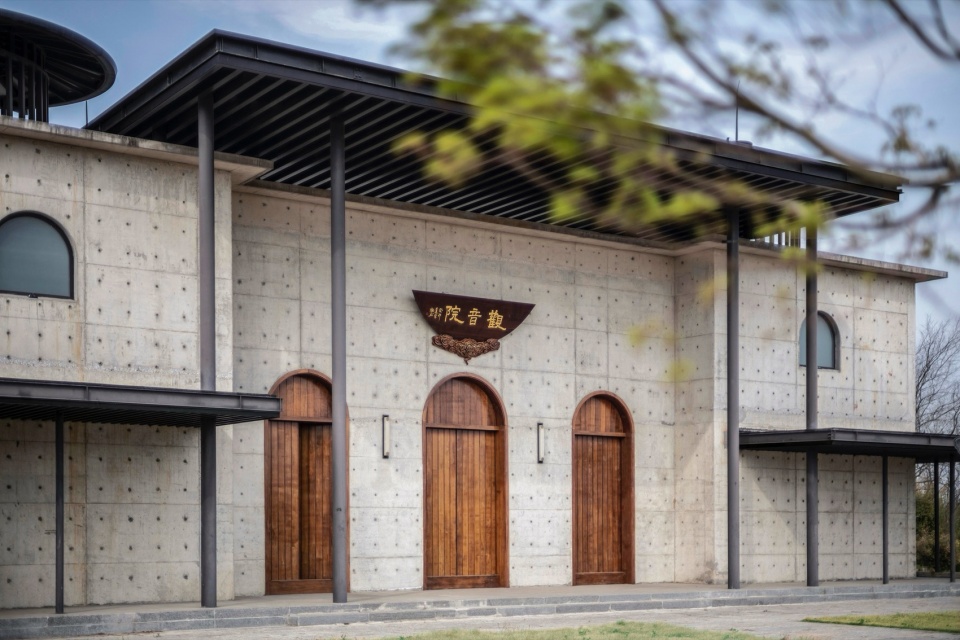
▼大门,Gate
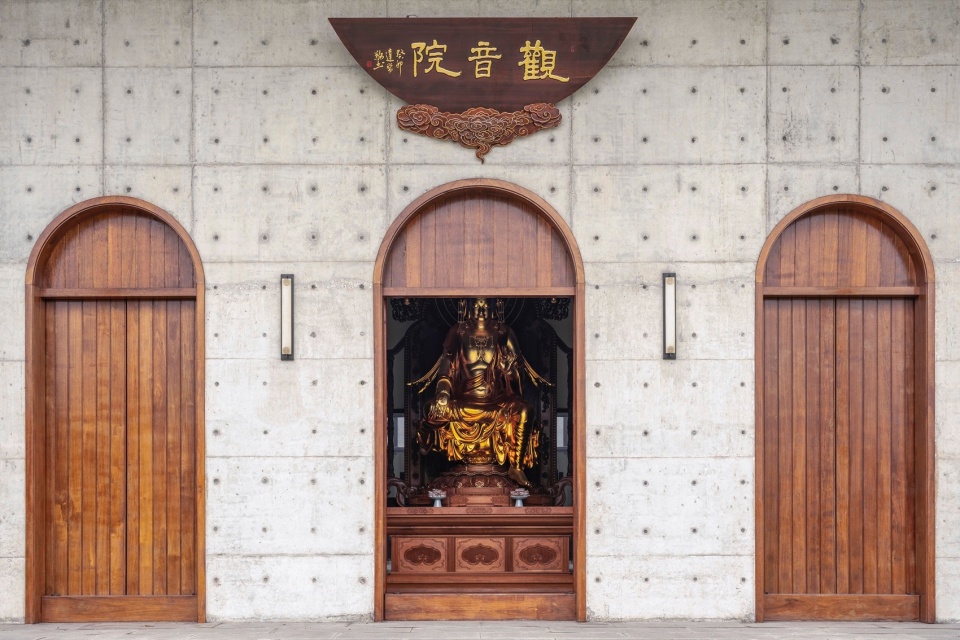
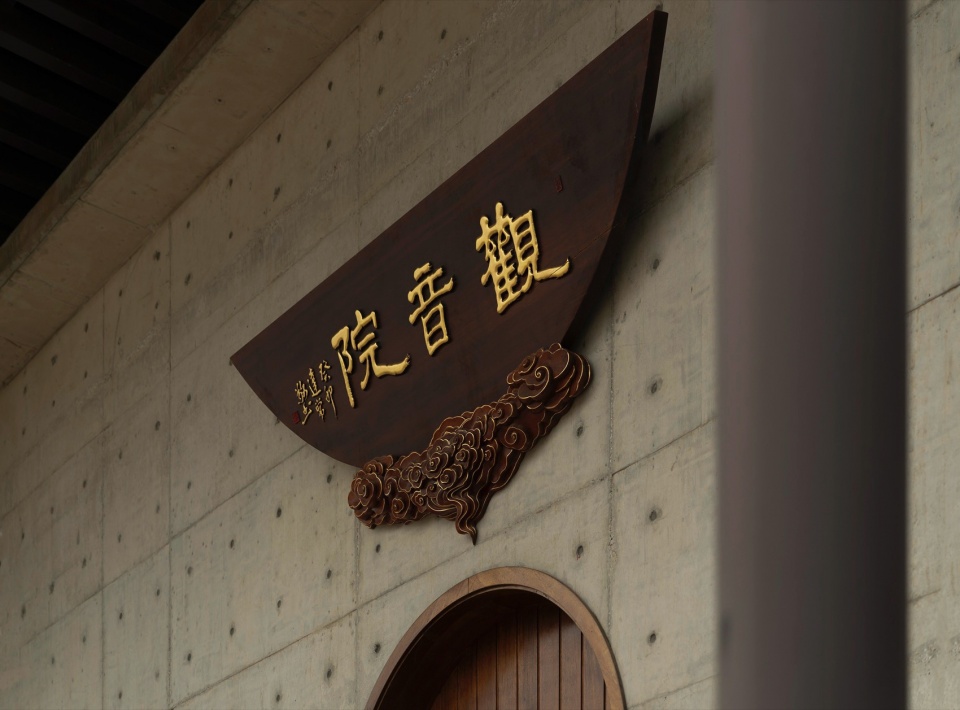
▼大门牌匾,Gate plaque
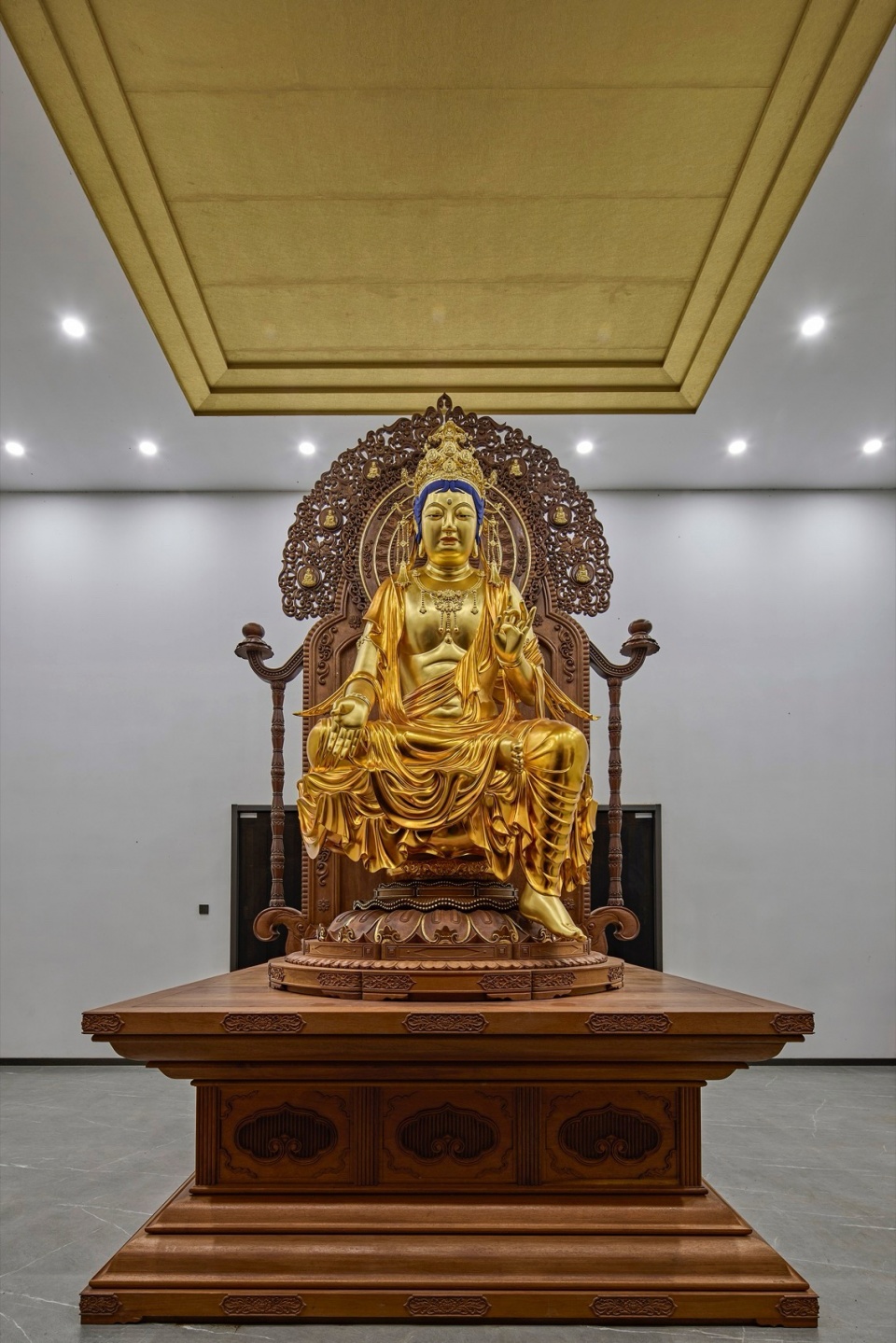
▼天王殿的天冠弥勒佛像,
Crowned Maitreya Buddha statue in the Heavenly Kings Hall
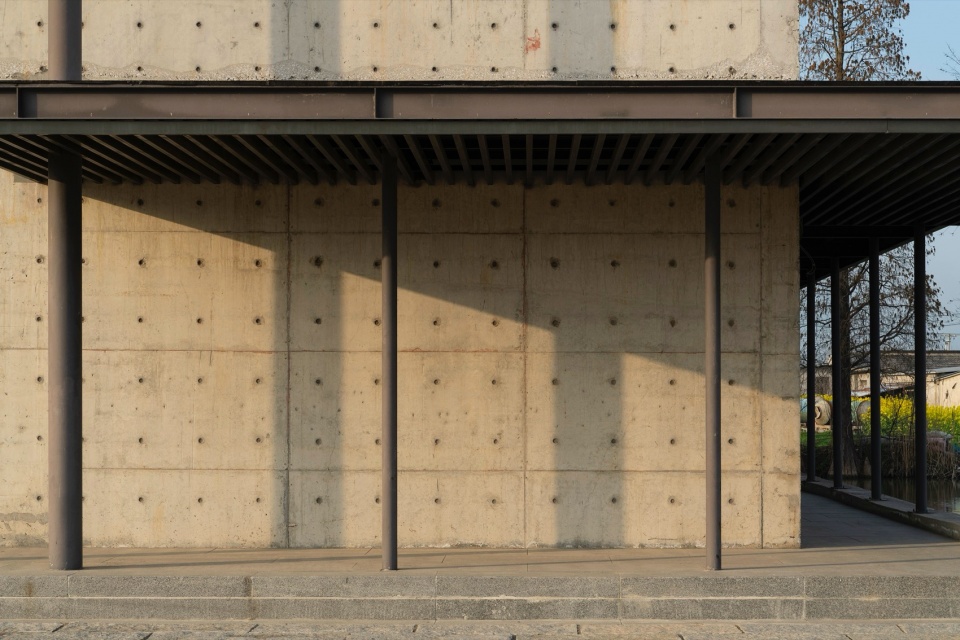
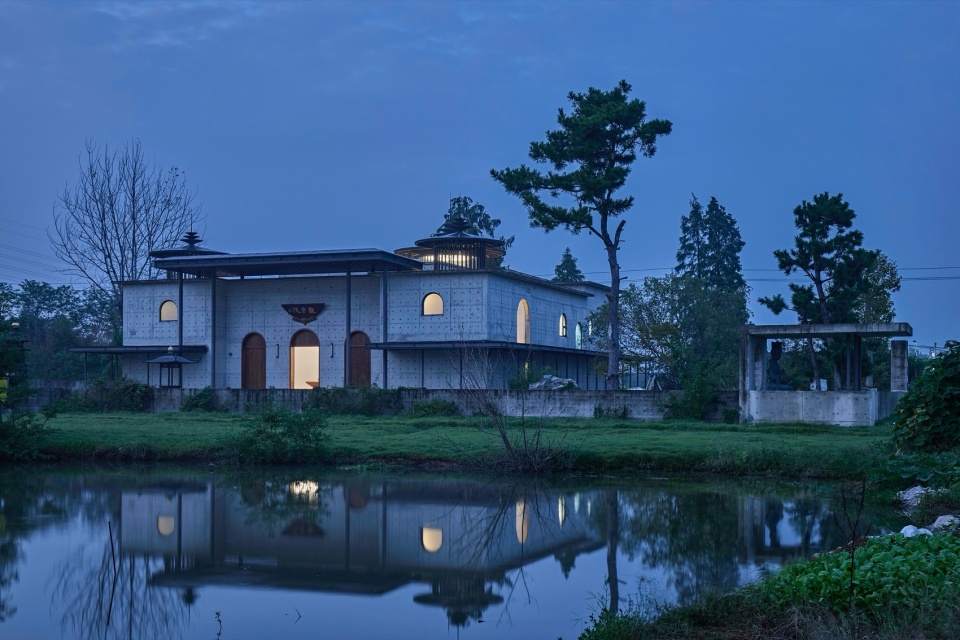
建筑主体采用清水混凝土作为主要结构材质,色调质朴。局部为深咖啡色的钢结构,整体色调也呼应了扬州城内古建筑的传统色调。建筑外形与水塘有点类似古代木船,能令人联想到佛法是苦海渡人舟的比喻;二层外墙的拱形窗则使人联想到古代佛教石窟的立面。建成后,寺庙的钟鼓声也将唤起当地乡村已经消失的传统记忆。
▼观音殿和钟鼓楼的圆顶设计时想到了扬州老城内的文昌阁和神秘的“外形飞碟”,The circular roofs of the Guanyin Hall and Bell-Drum Towers blend the imagery of Yangzhou’s iconic Wenchang Pavilion with the futuristic mystery of a UFO
▼中间圆院参考融合了扬州老城内古建筑的方形天井和福建土楼的圆形天井,The central circular courtyard integrates the square courtyards of ancient buildings in Yangzhou Old Town and the circular inner yards of Fujian Tulou for design reference
The main structure of the building is constructed using exposed concrete, giving it a simple and restrained tonal quality. Locally, dark coffee-colored steel structures are introduced, and the overall color palette echoes the traditional hues of historic architecture in Yangzhou. The building form, together with the adjacent pond, resembles an ancient wooden boat, evoking the Buddhist metaphor of Dharma as a vessel that ferries beings across the sea of suffering. The arched windows on the second-floor façade further recall the elevations of ancient Buddhist cave temples. Once completed, the sound of bells and drums from the temple will also awaken memories of traditional rural life that have gradually faded from the local context.
▼外回廊,Outer corridor
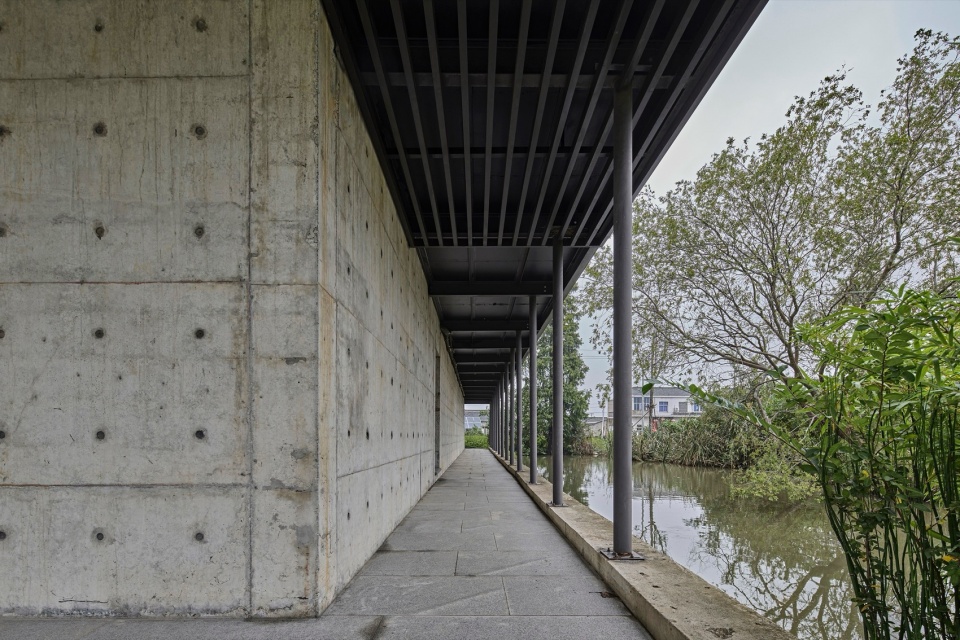
▼外回廊,Outer corridor
▼中间圆形院落,Central circular courtyard
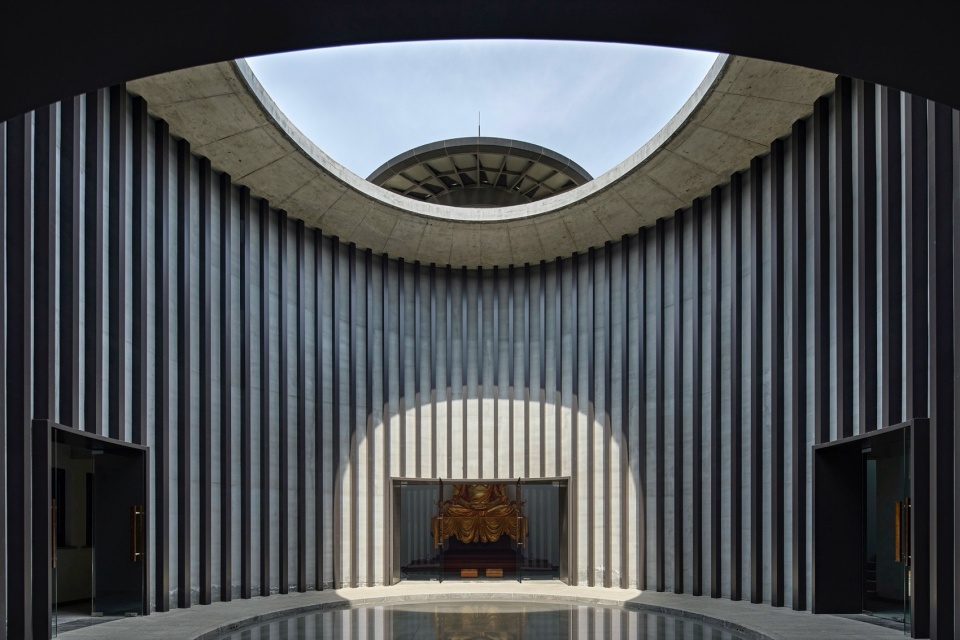
▼中间圆形院落回望,View back toward the central circular courtyard
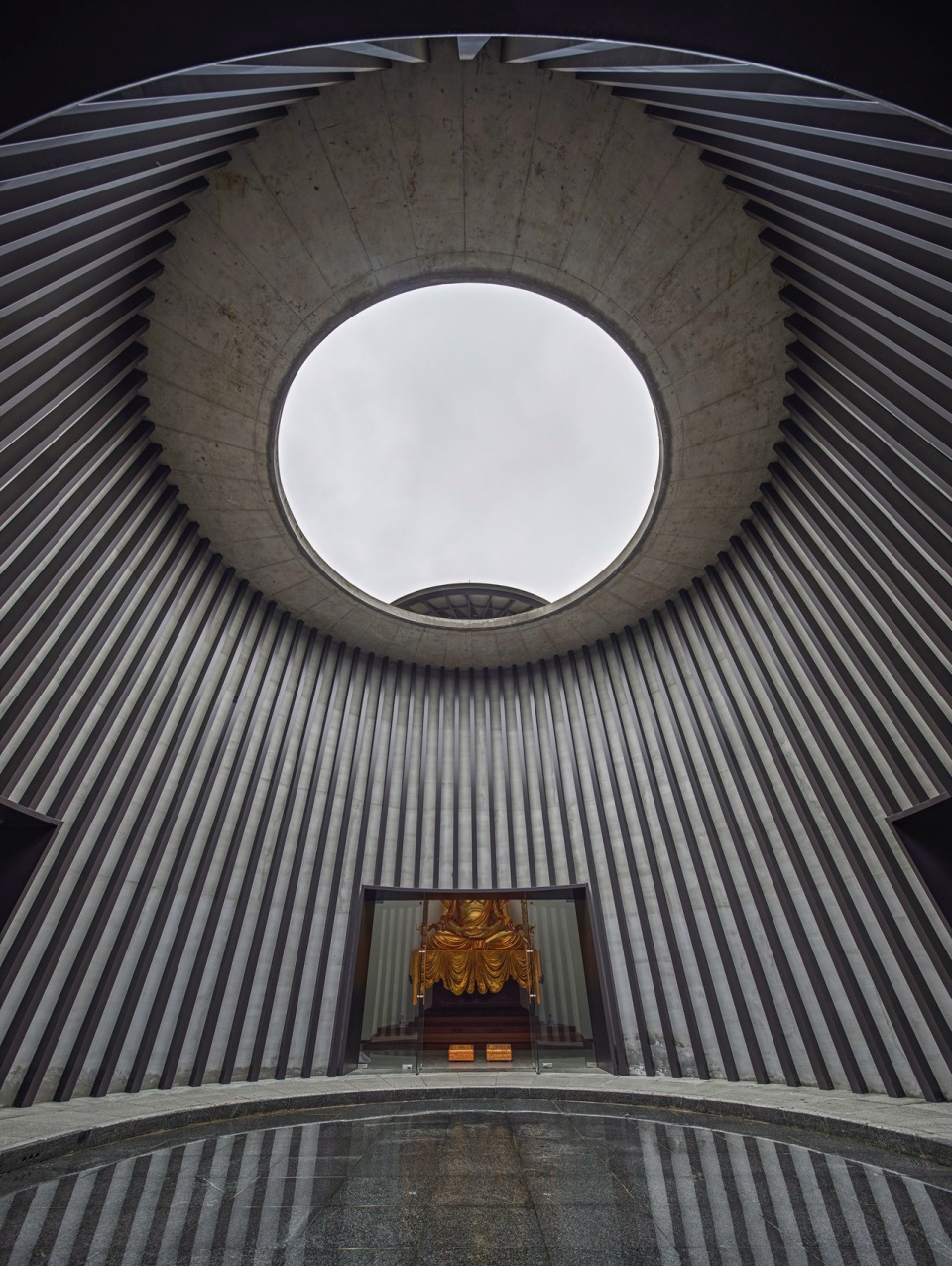
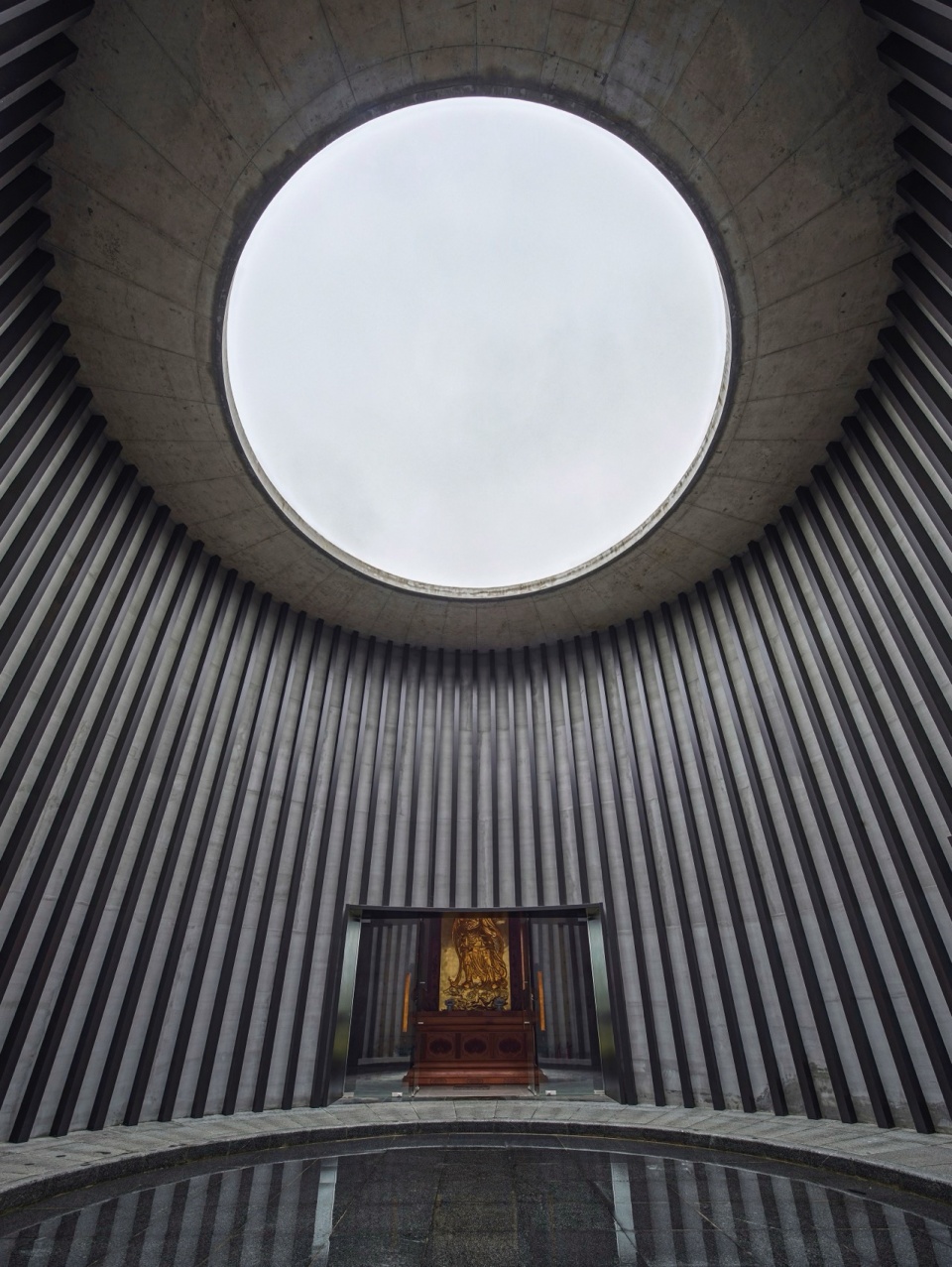
▼“色即是空、空即是色”,“Form is emptiness, emptiness is form”
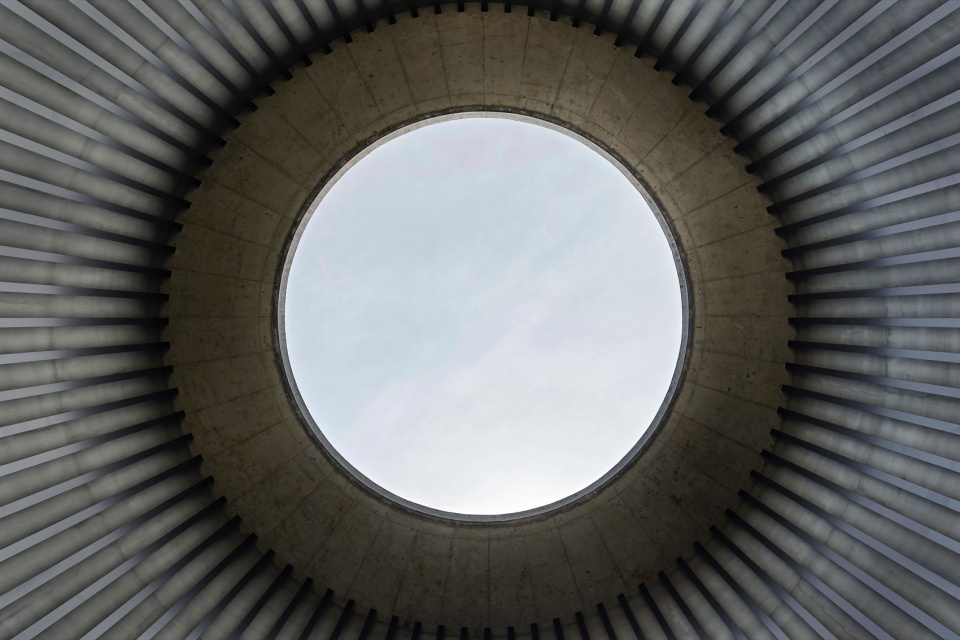
▼从中间圆形院子望向观音殿内部,View from the central circular courtyard toward the interior of the Guanyin Hall
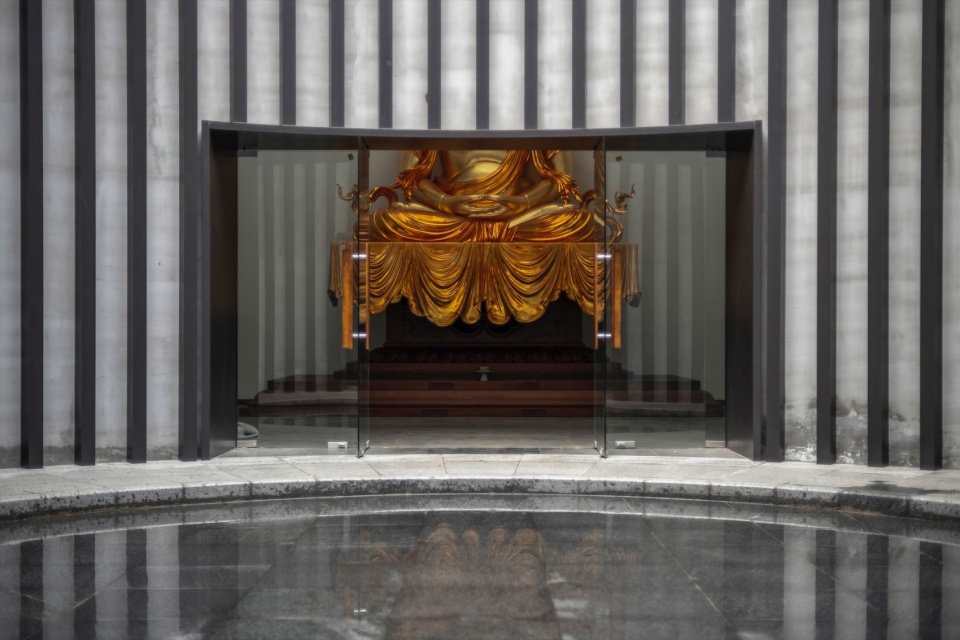
▼观音殿内,Interior of the Guanyin Hall
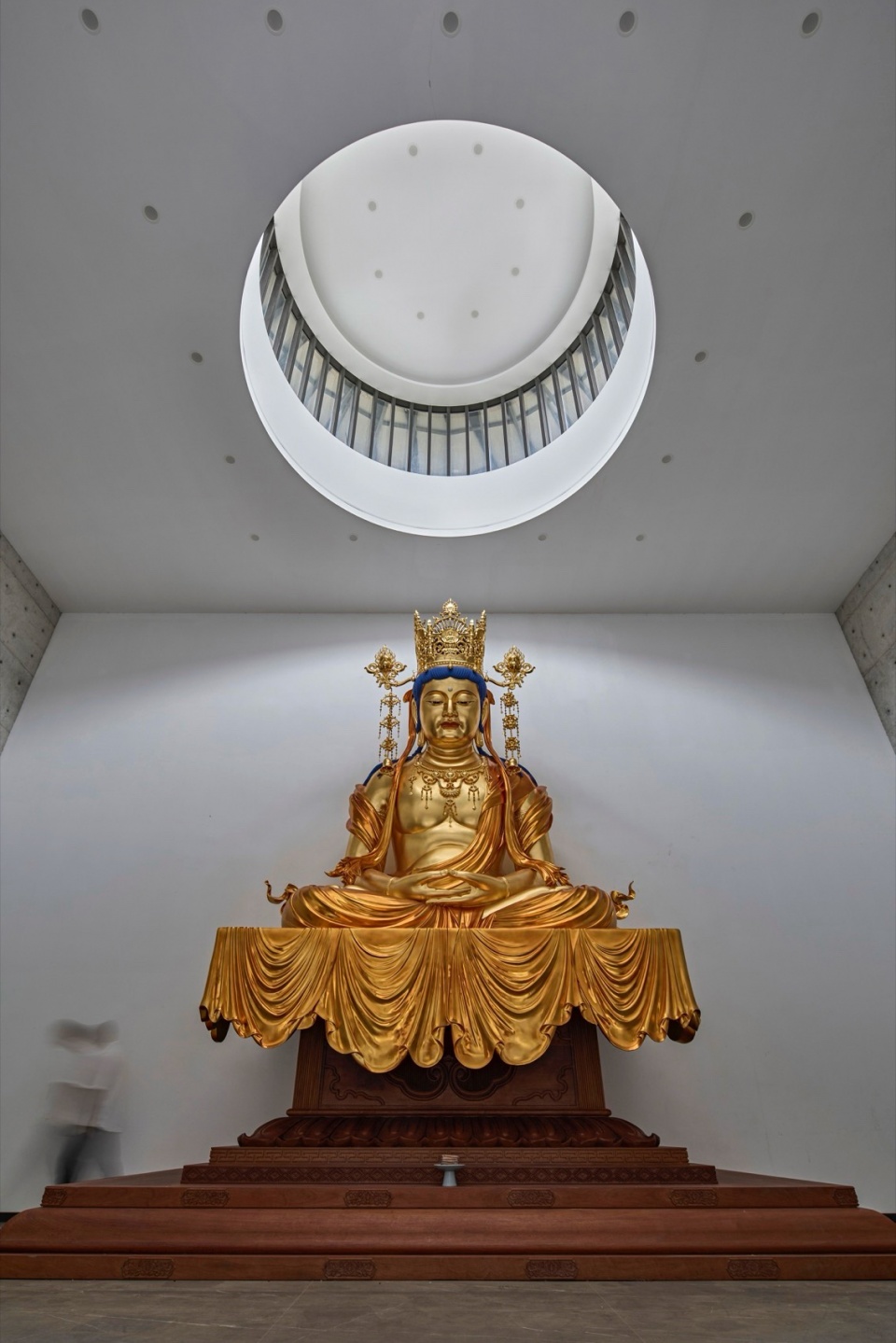
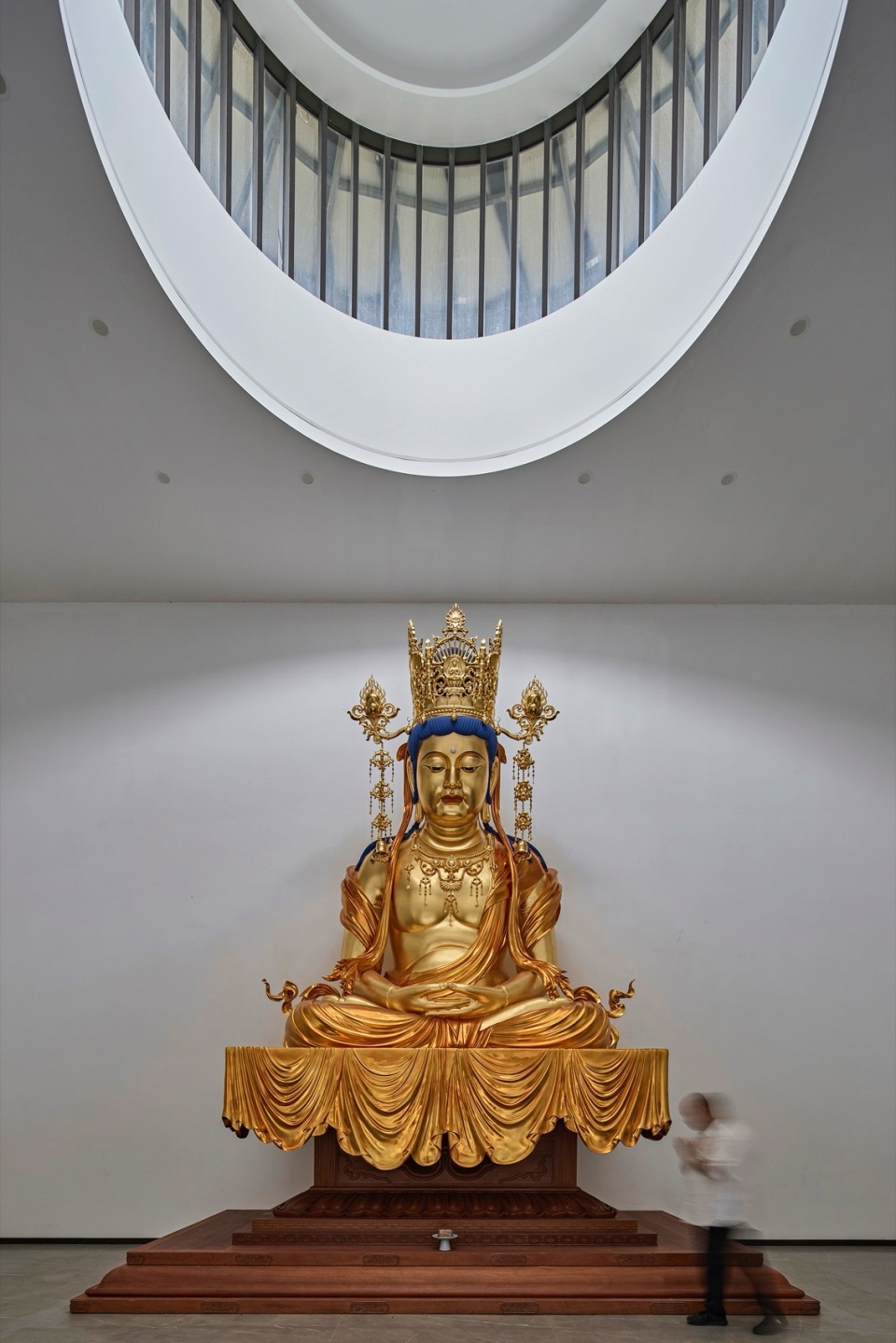
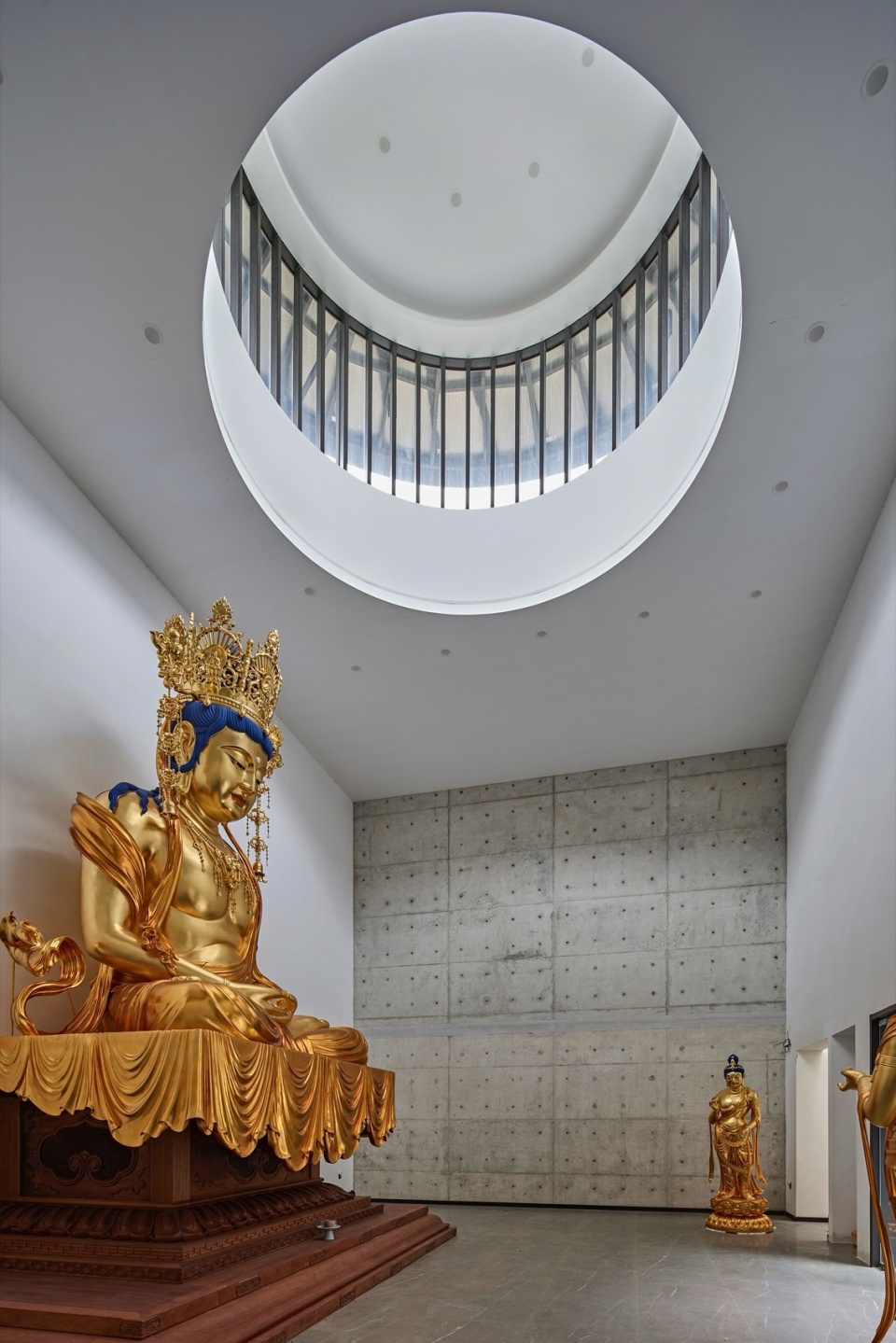
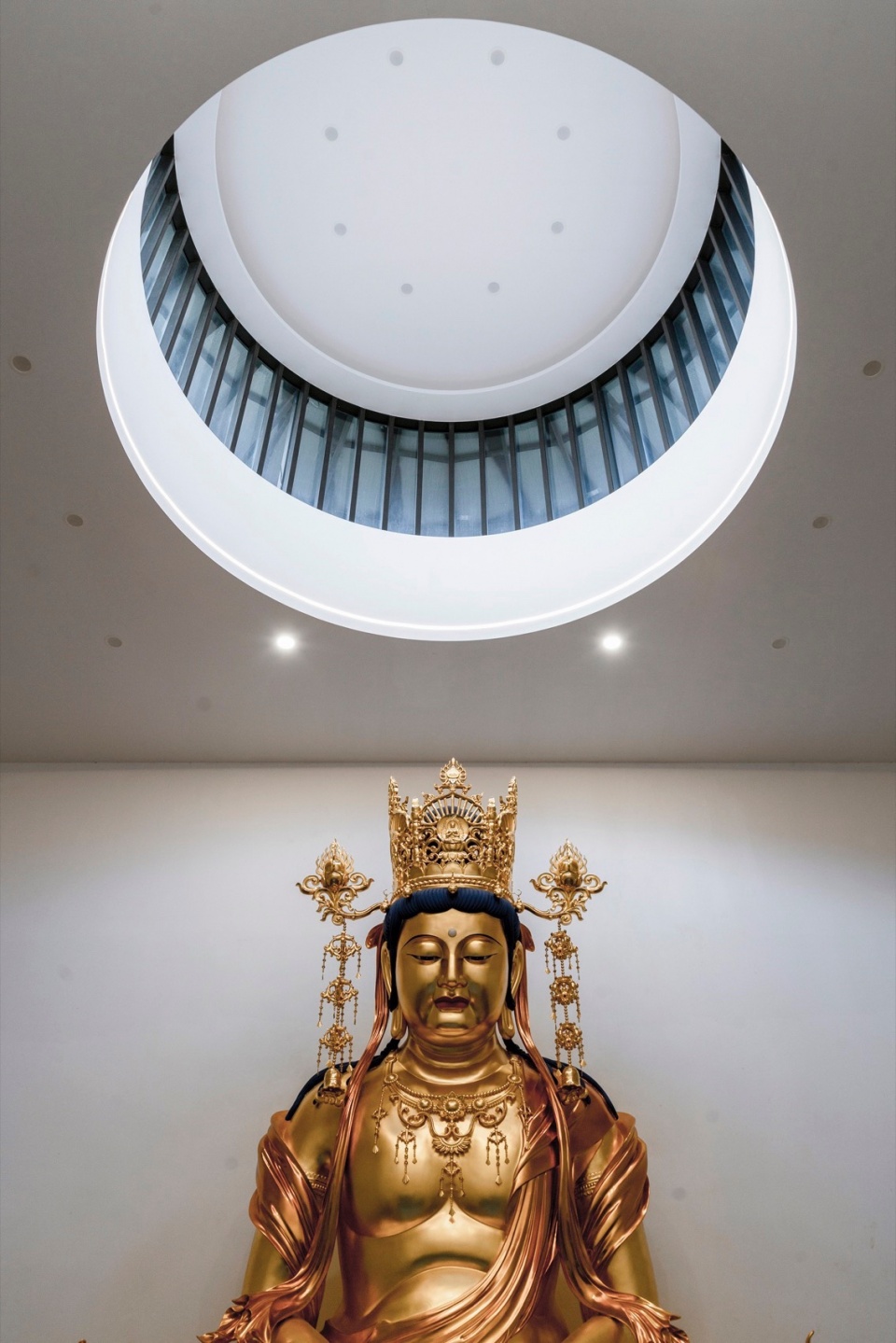
▼观音殿内,Interior of the Guanyin Hall
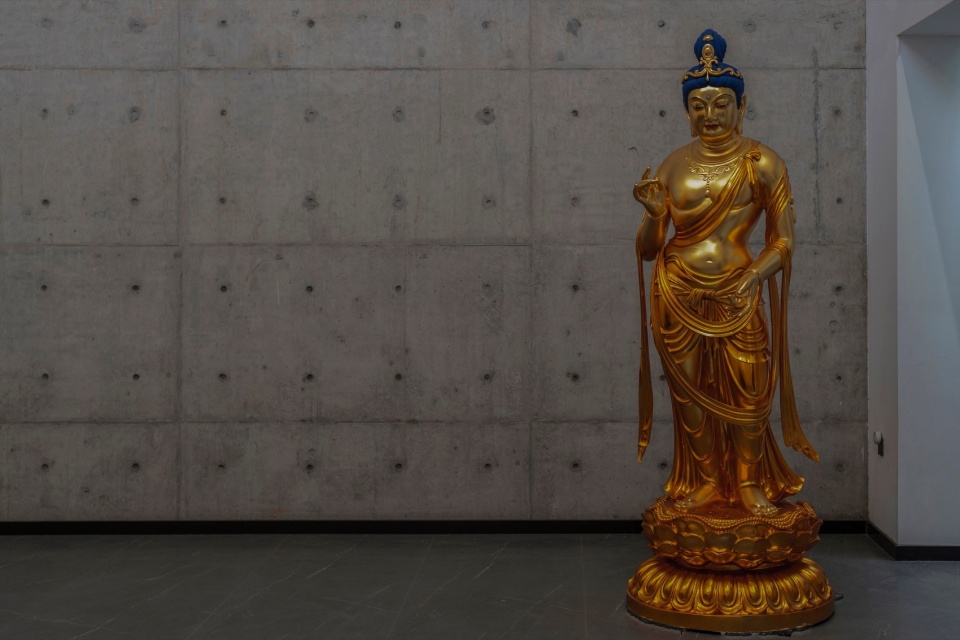
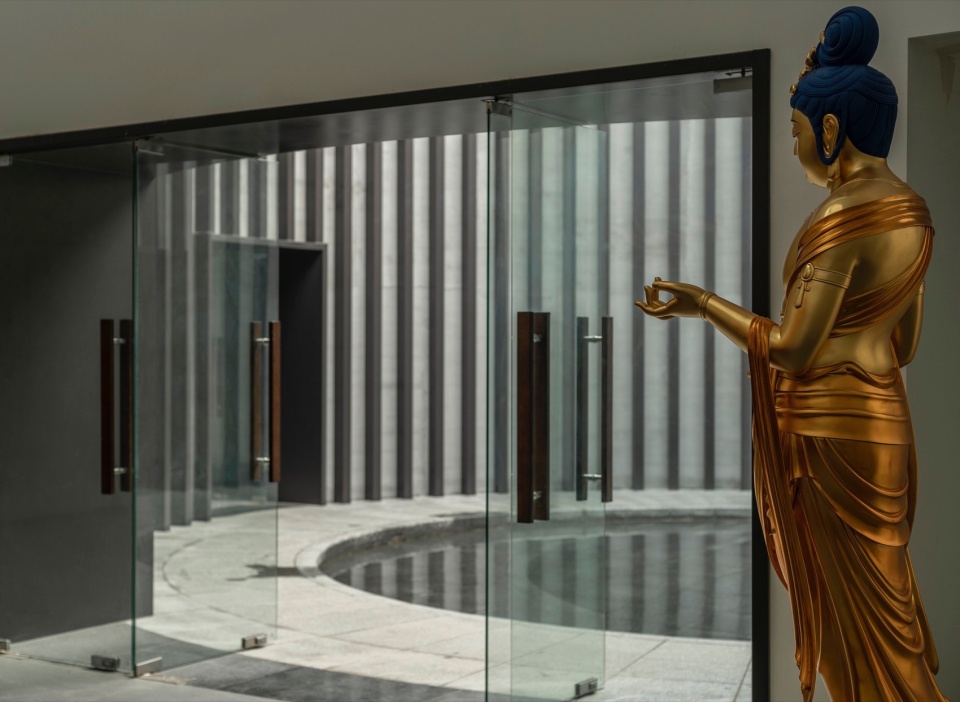
▼从观音殿望向门外,View from the Guanyin Hall toward the exterior
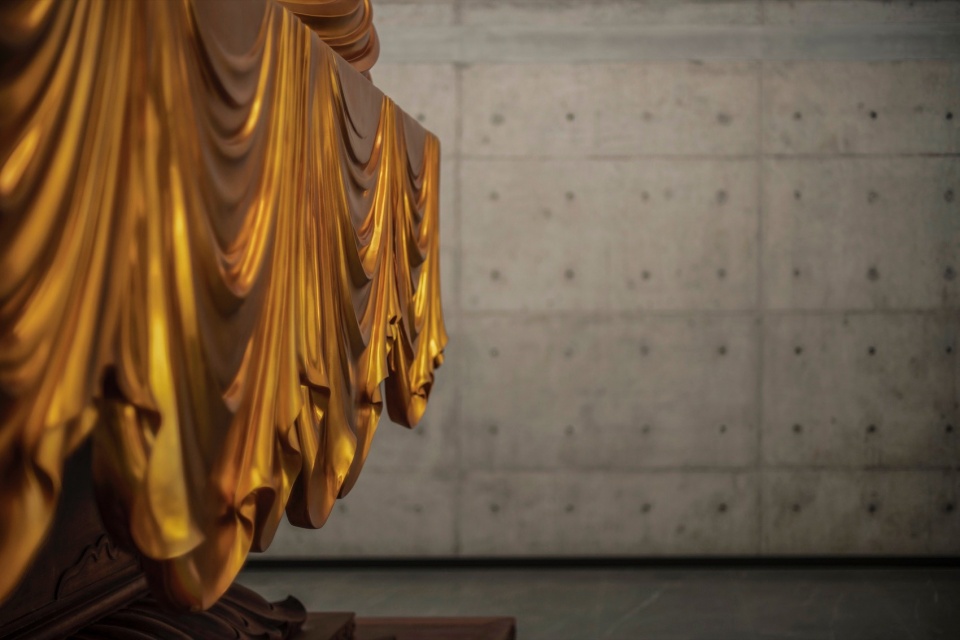
▼观音菩萨像细部,Detail of the Guanyin Bodhisattva statue
悠悠思思-结语回想Wandering thoughts, lingering reflections – Epilogue Reflection
1,历史证明,传统信仰对民间的安定祥和有着巨大作用,观音院今后一定会在地方上发挥出这一应有的作用,并相信这次的寺庙建筑小创新所产生的影响力应该也会逐步超越于地方传播至更远。
History has shown that traditional beliefs play a significant role in maintaining social stability and harmony among local communities. Guanyin Monastery will, in the future, undoubtedly fulfill this expected role within the region. It is also believed that the influence generated by this modest architectural innovation of the temple will gradually extend beyond the local context and reach a wider audience.
▼斋堂,Dining hall
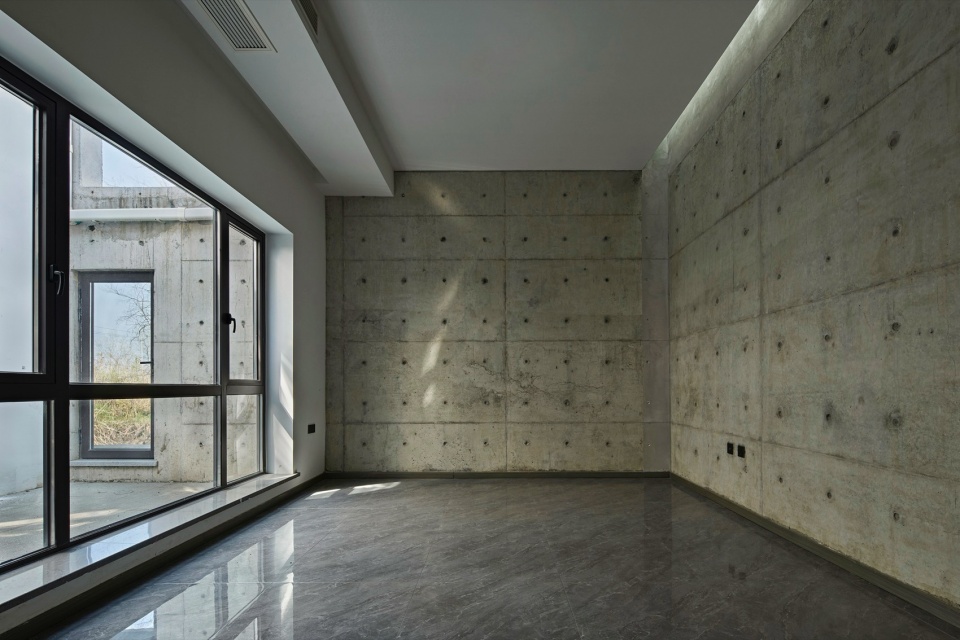
▼寮房,Monk quarters
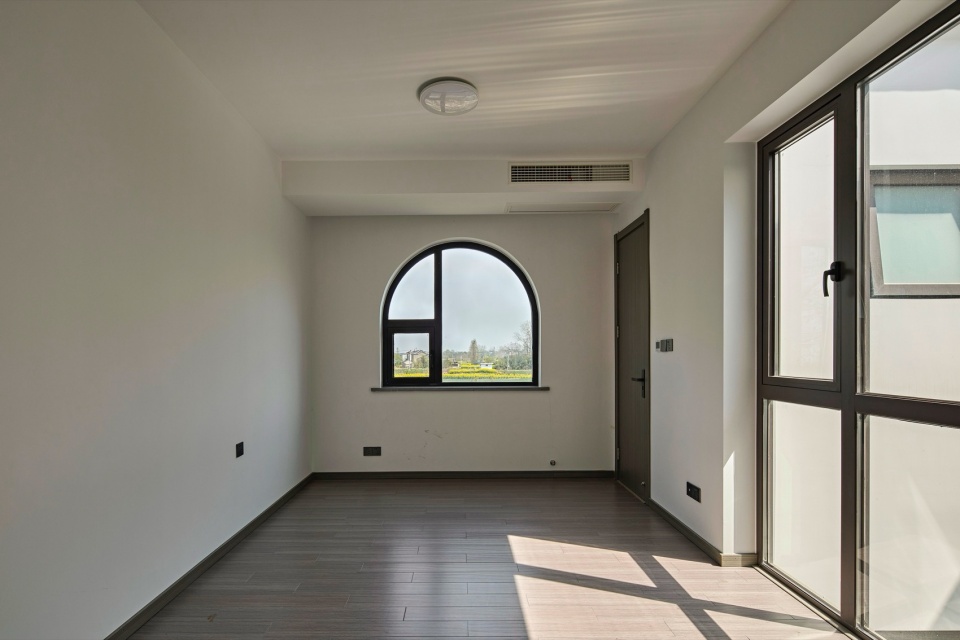
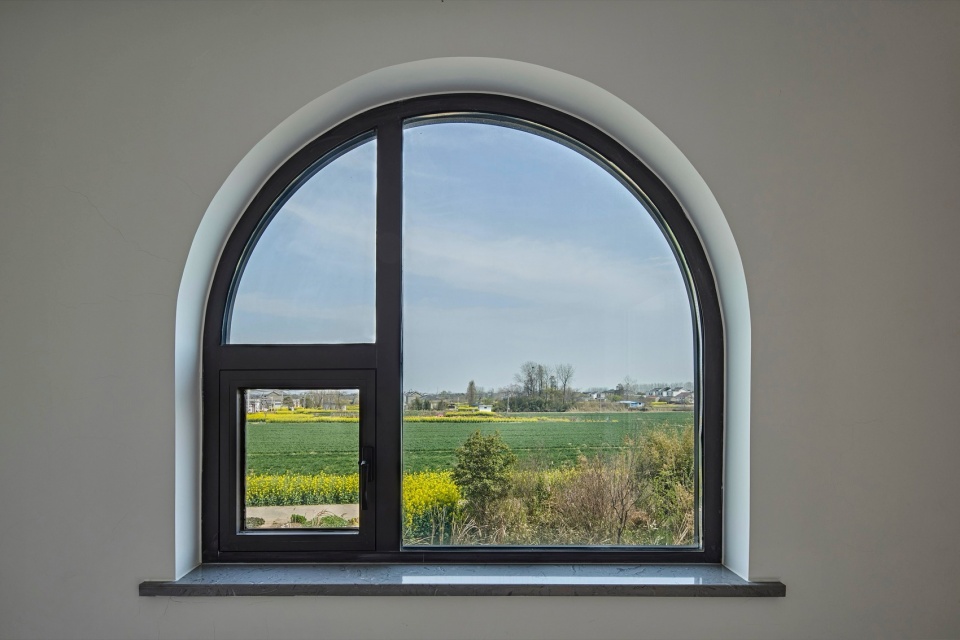
▼寮房窗景,Window view of monk quarters
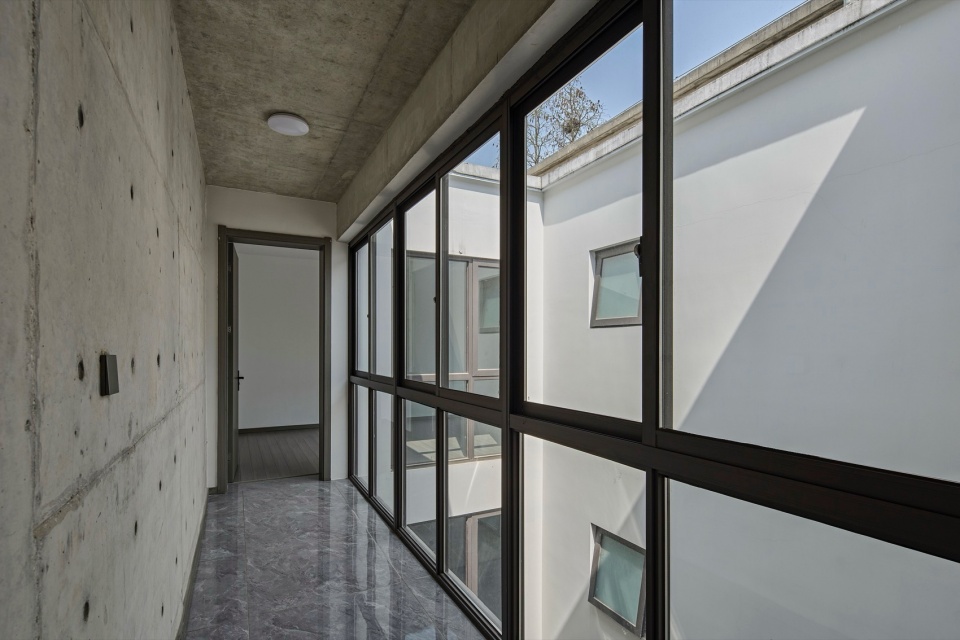
▼寮房走廊,Corridor of monk quarters
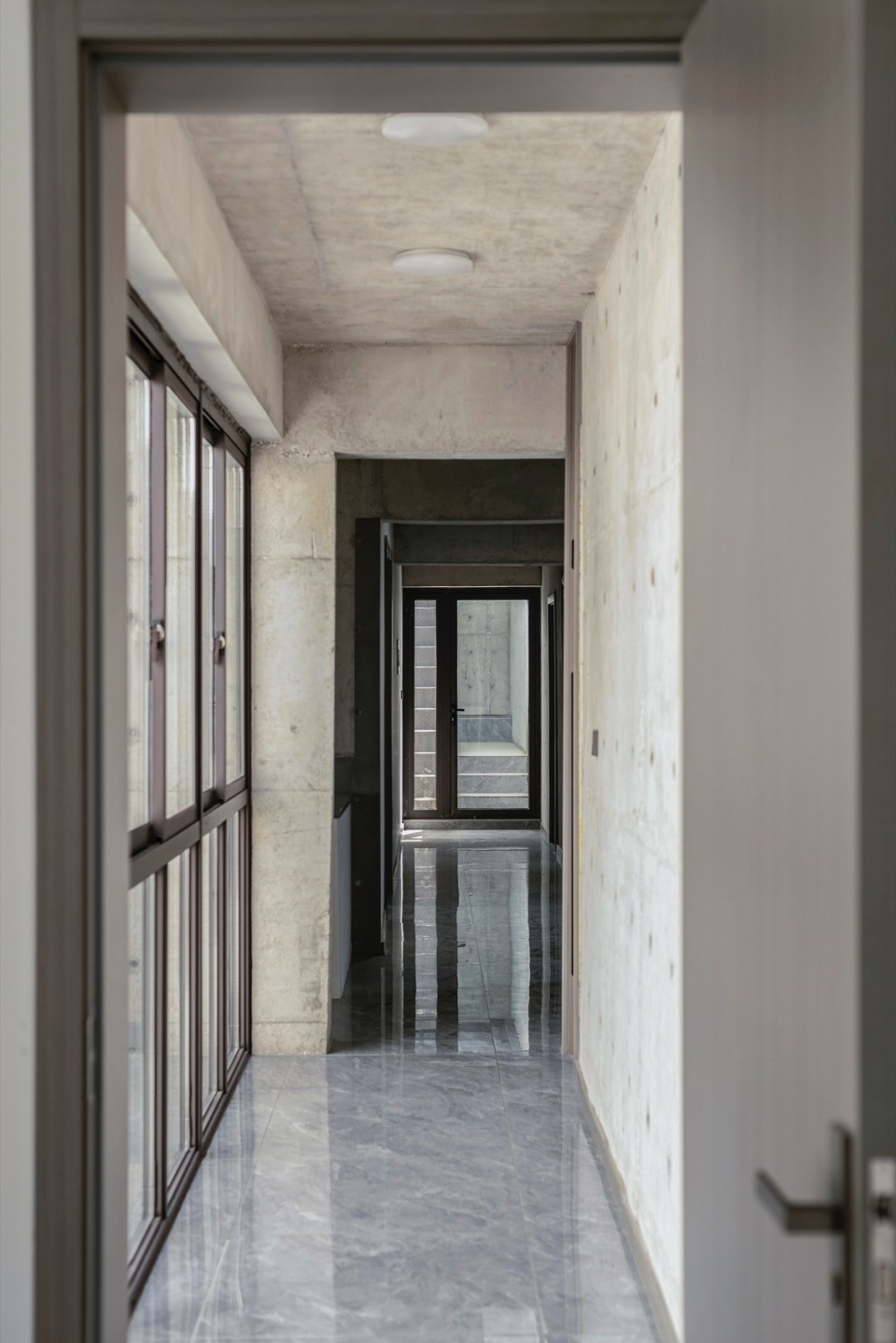
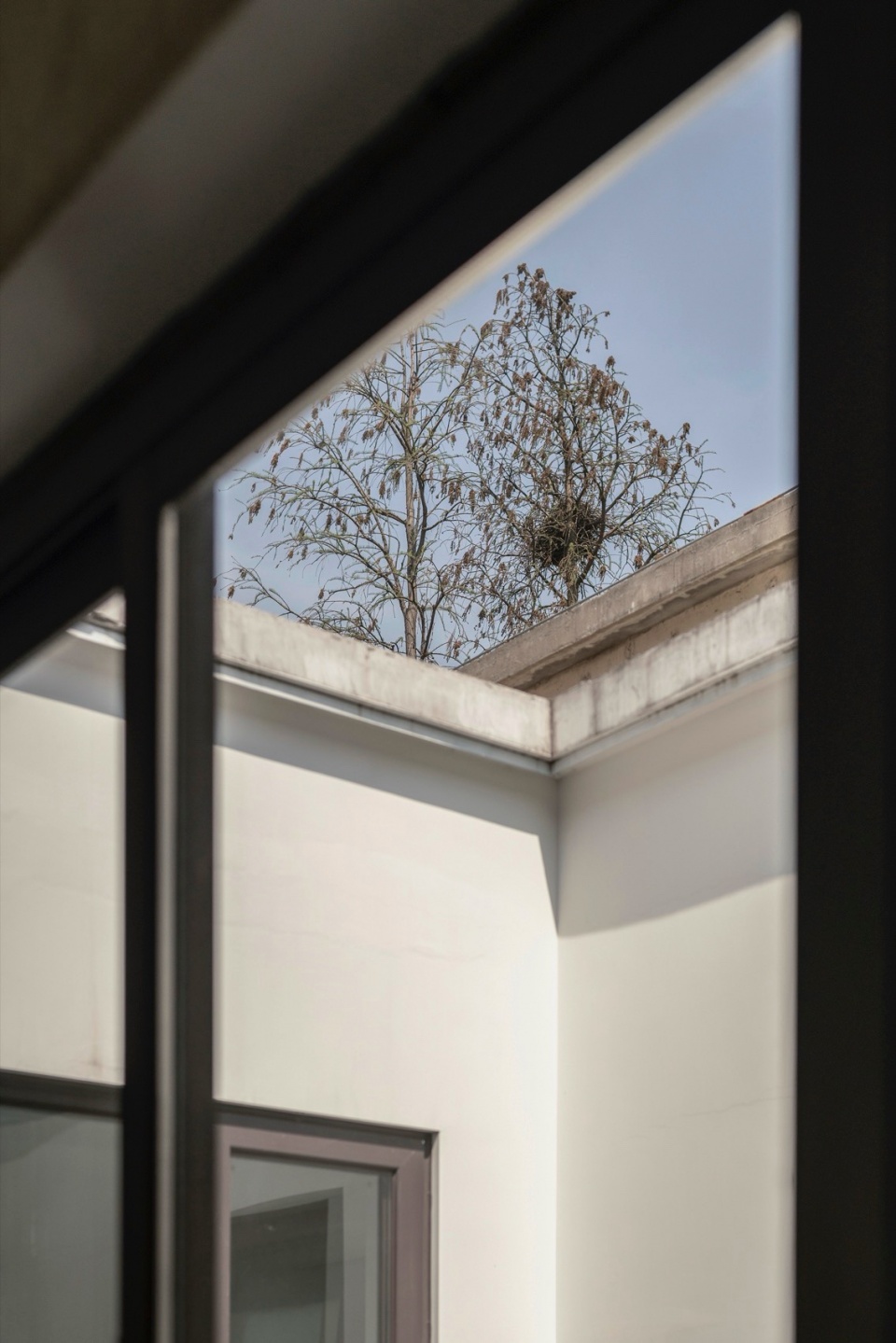
▼楼梯间,Stairwell
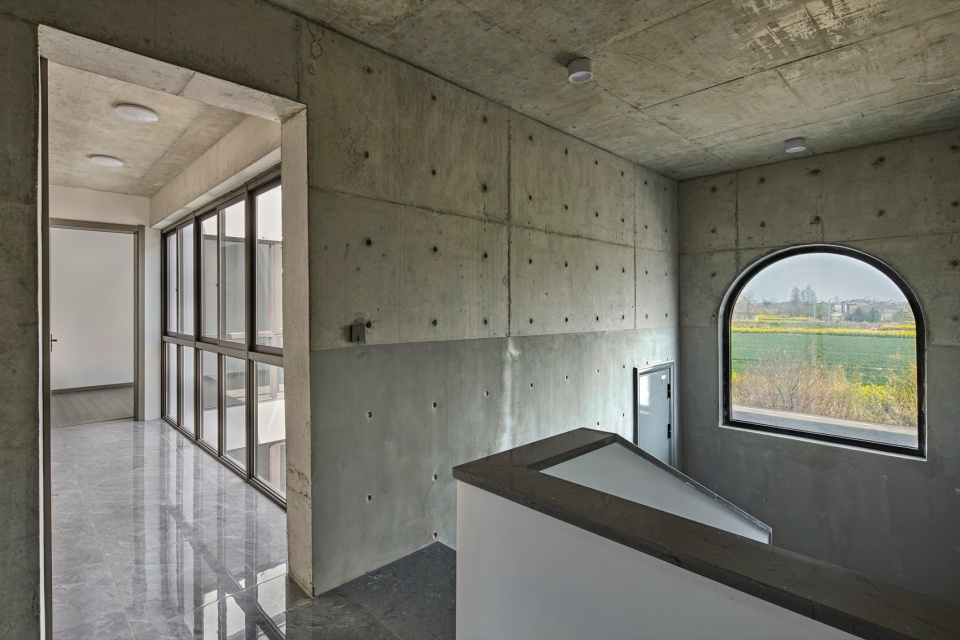
▼阅览室小佛堂,Reading Room & Small Buddha Hall
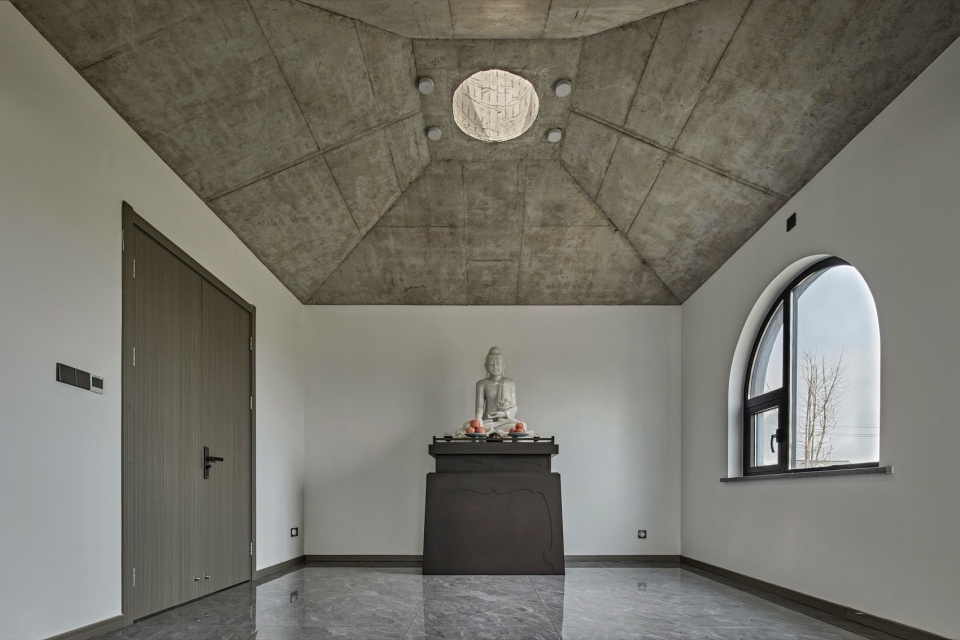
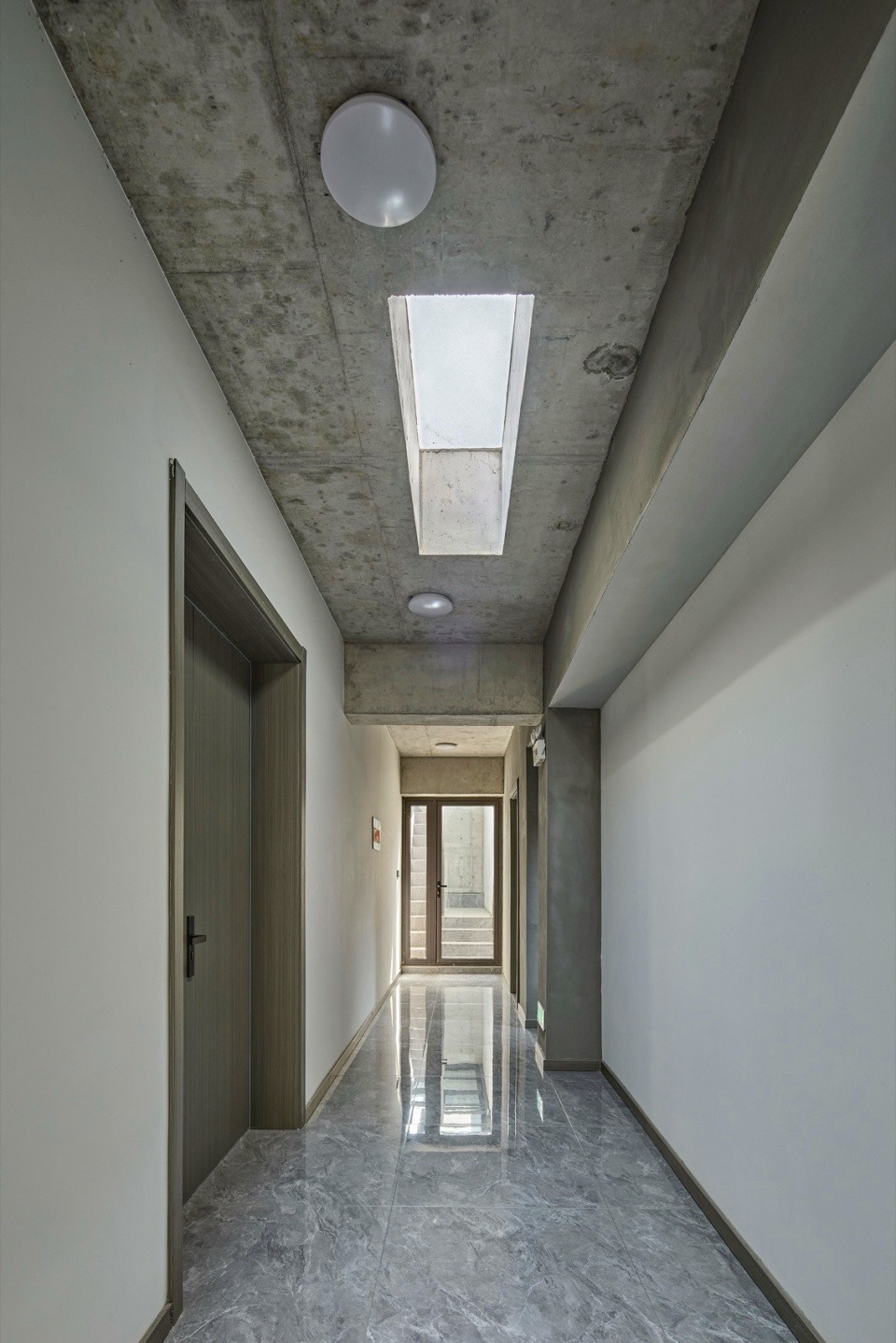
▼公共走廊,Public corridor
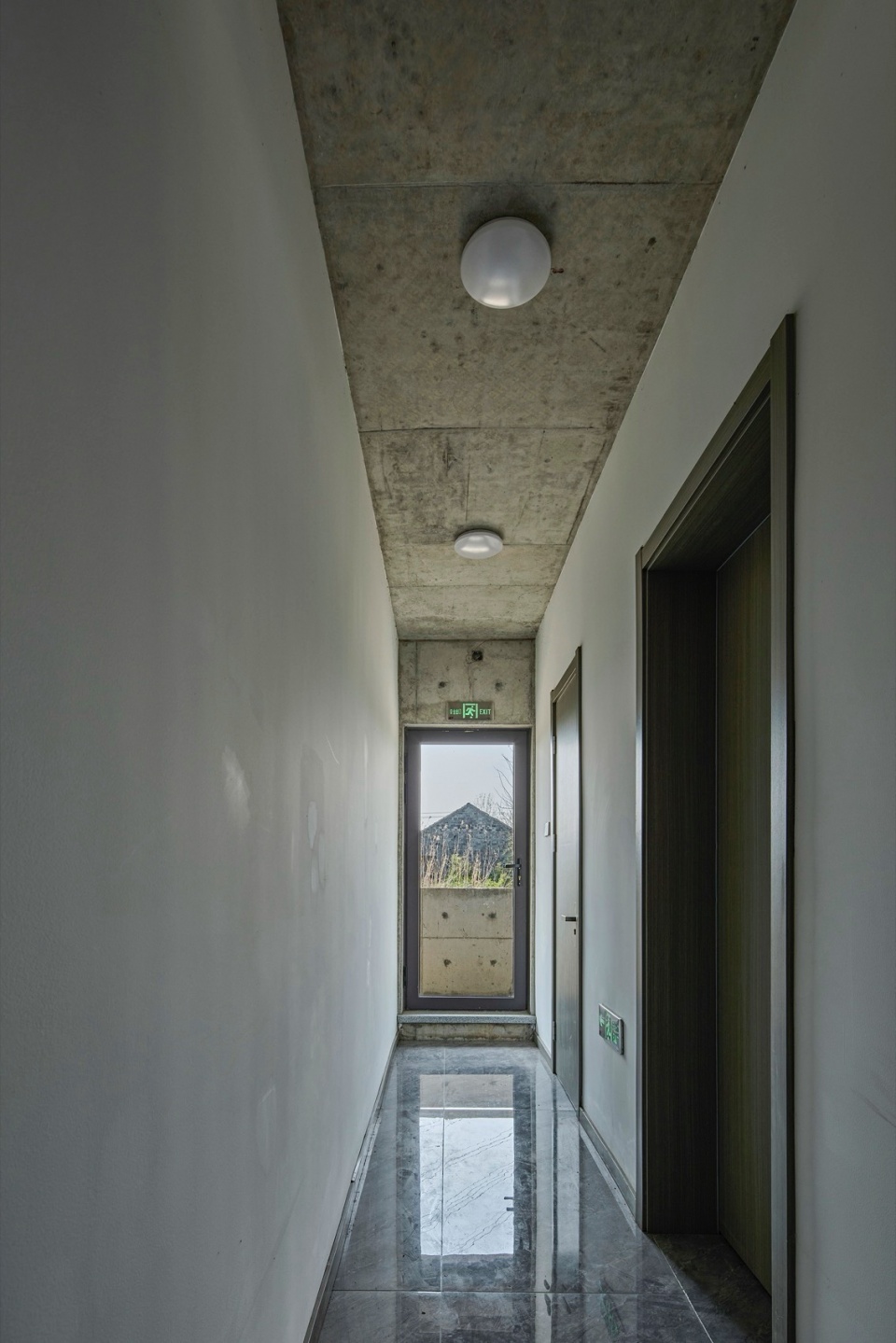
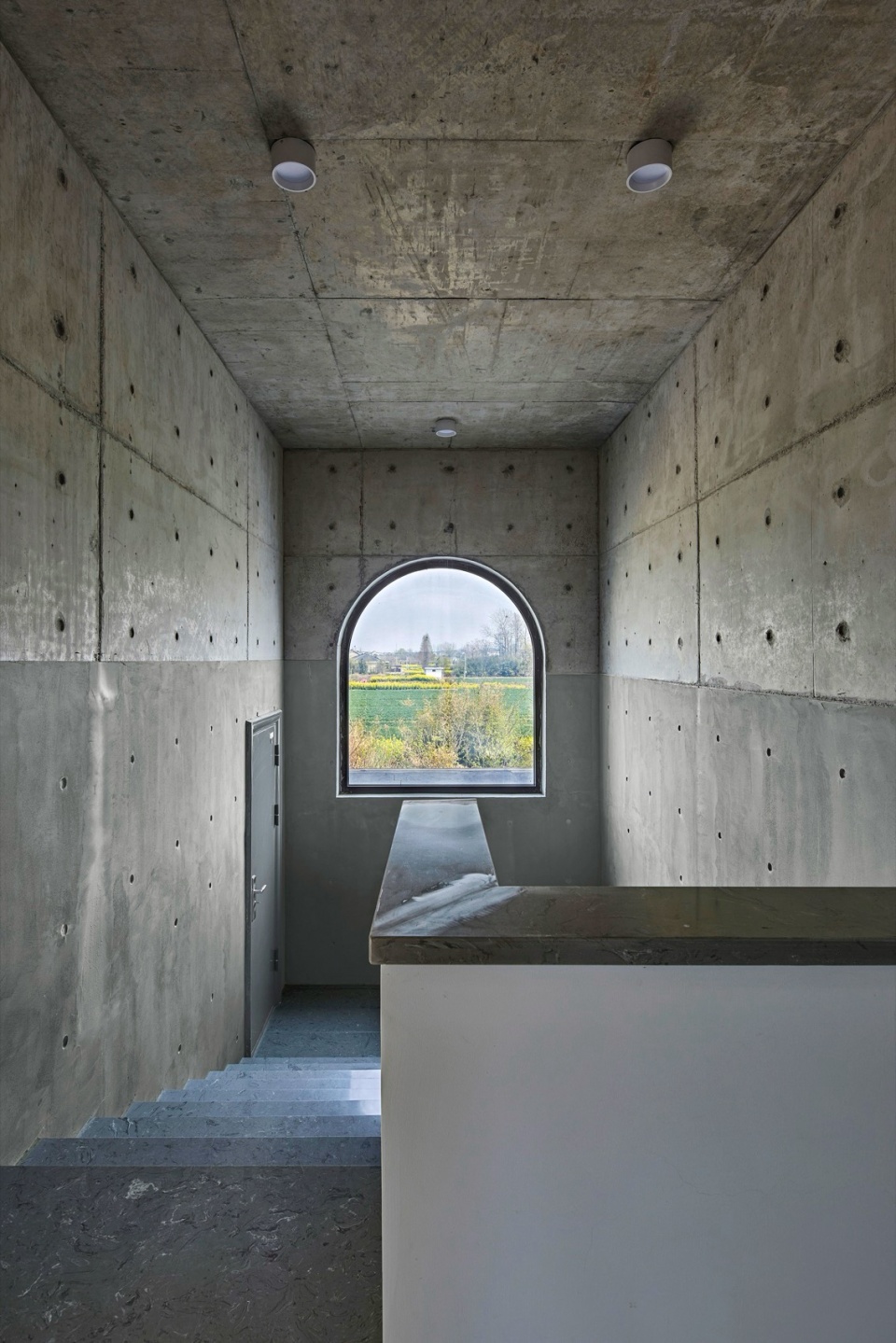
▼至钟楼的踏步,Steps leading to the bell tower
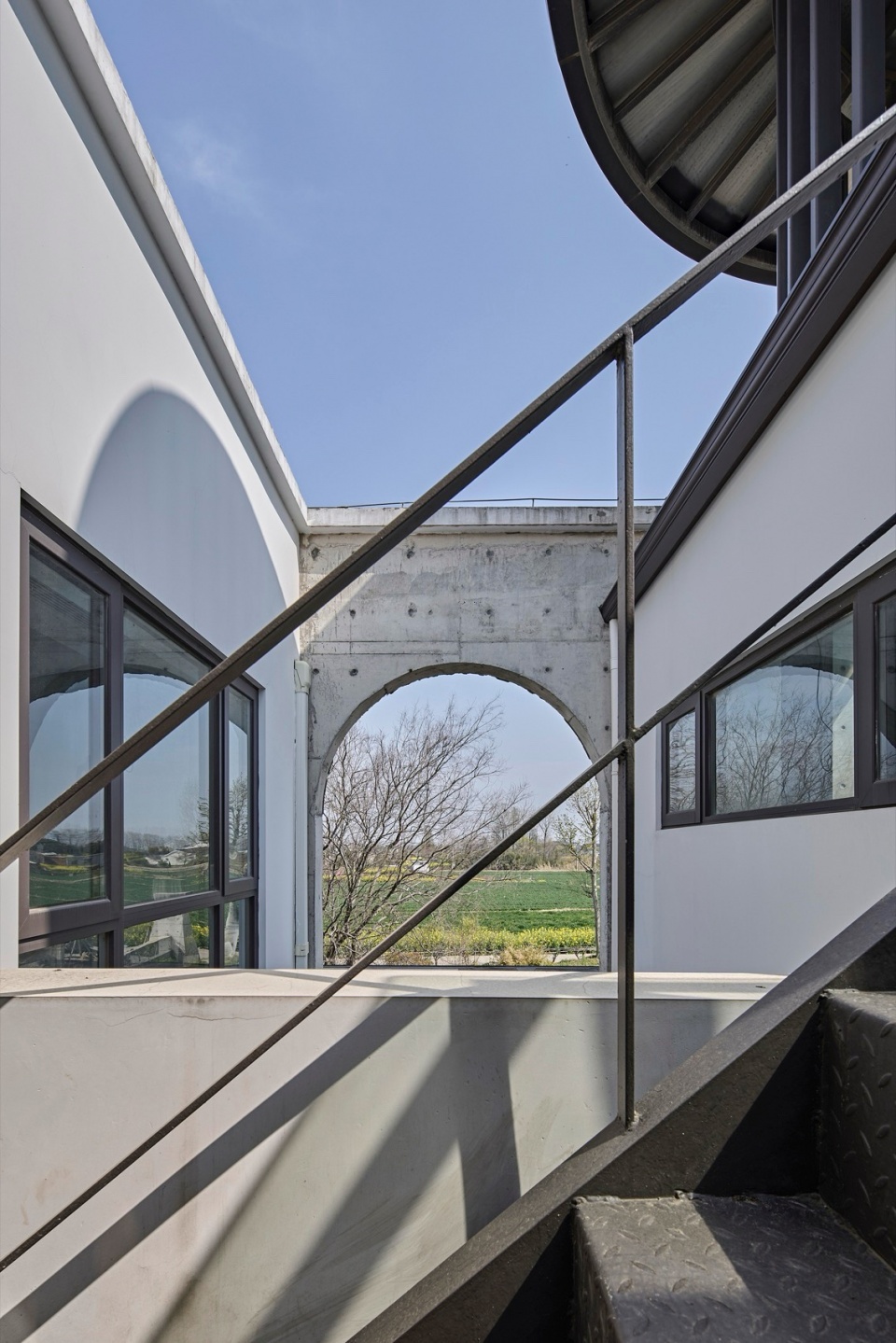
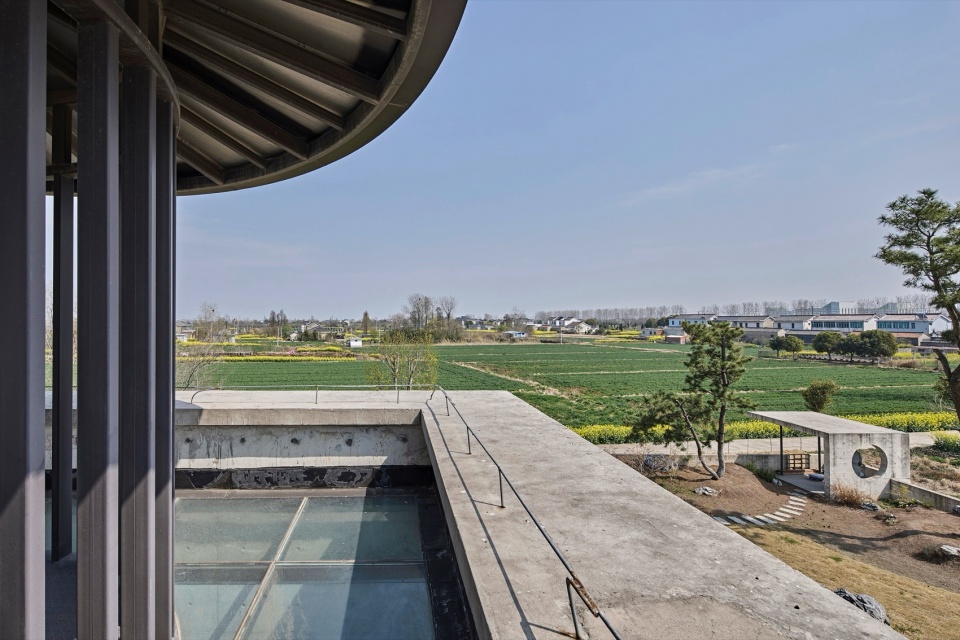
▼从钟楼向远处往,View from the bell tower toward the distance
▼内部天井,Interior lightwell courtyard
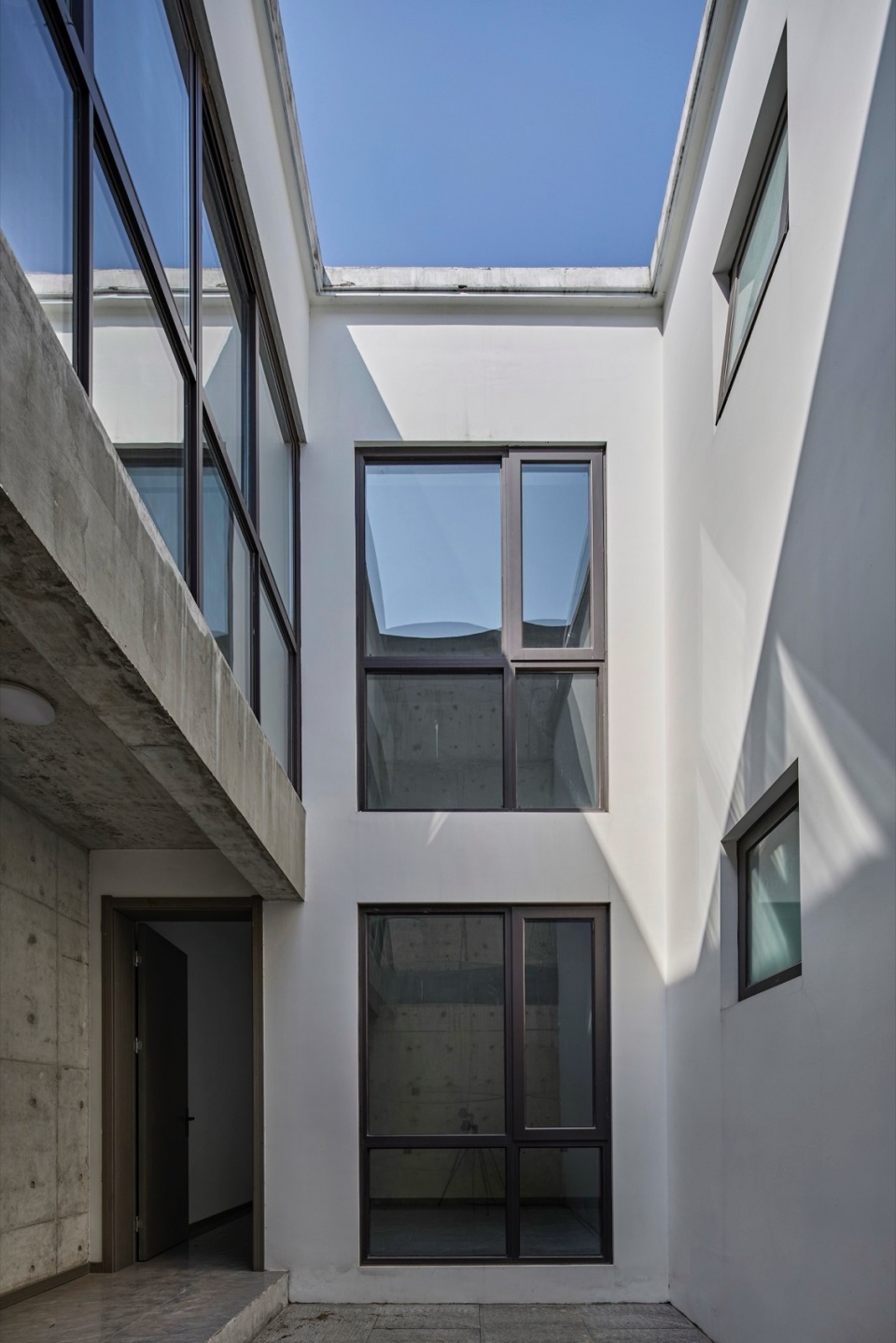
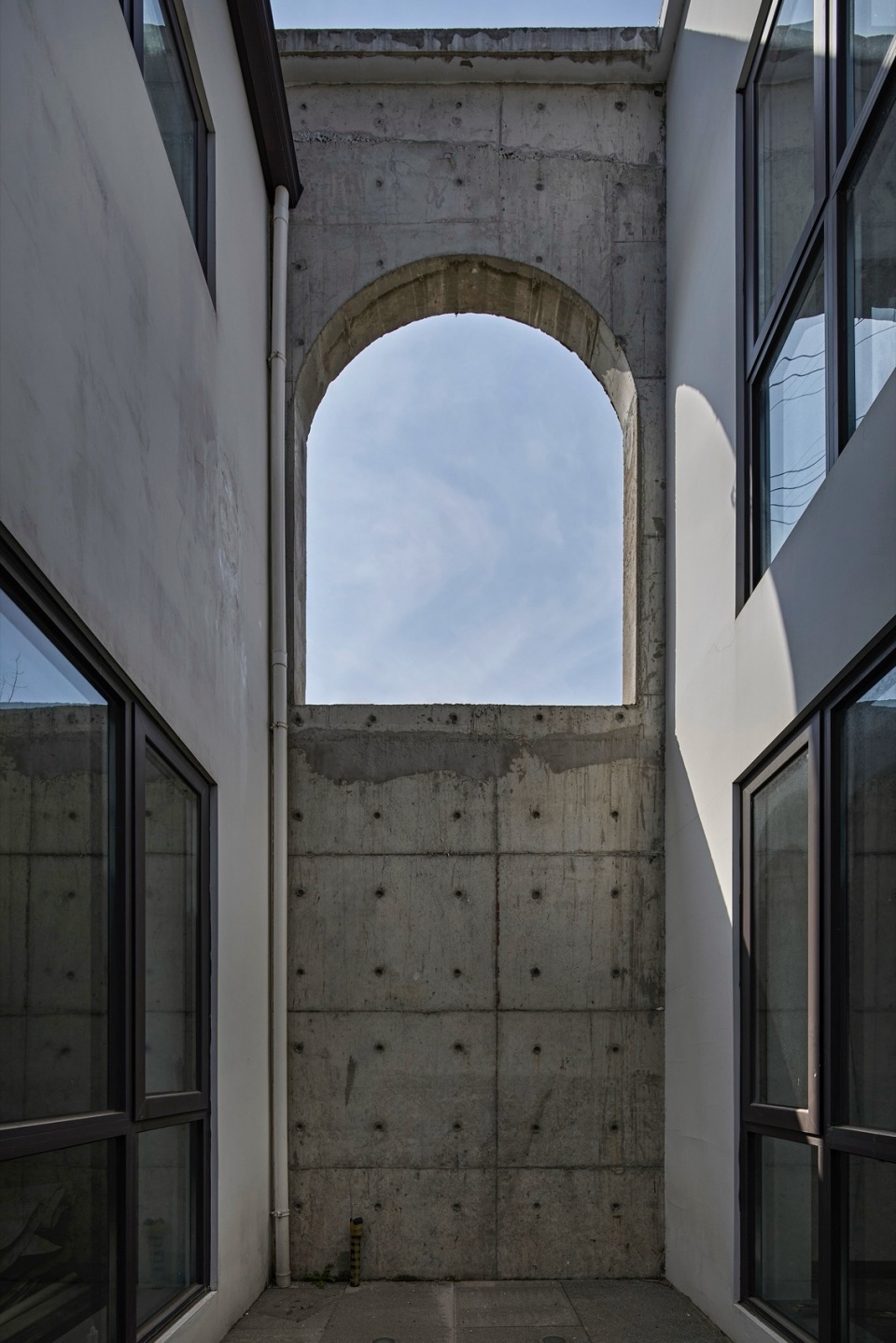
2,对于建设美丽乡村有些参考意义。如果把这个项目归到乡建类里,农村就应该有农村的新面貌,但不应该是模仿城市。这种局部的改善对乡村面貌还是有一定的画龙点睛的美化作用,这也是这次设计的社会意义之一。
It may offer some reference value for the construction of beautiful villages. If this project is categorized under rural development, then the countryside should present a renewed rural identity, rather than imitating the city. Such localized improvements can still play a subtle yet decisive role in enhancing the overall rural landscape, which is also one of the social significances of this design.
▼景观细部,Landscape detail
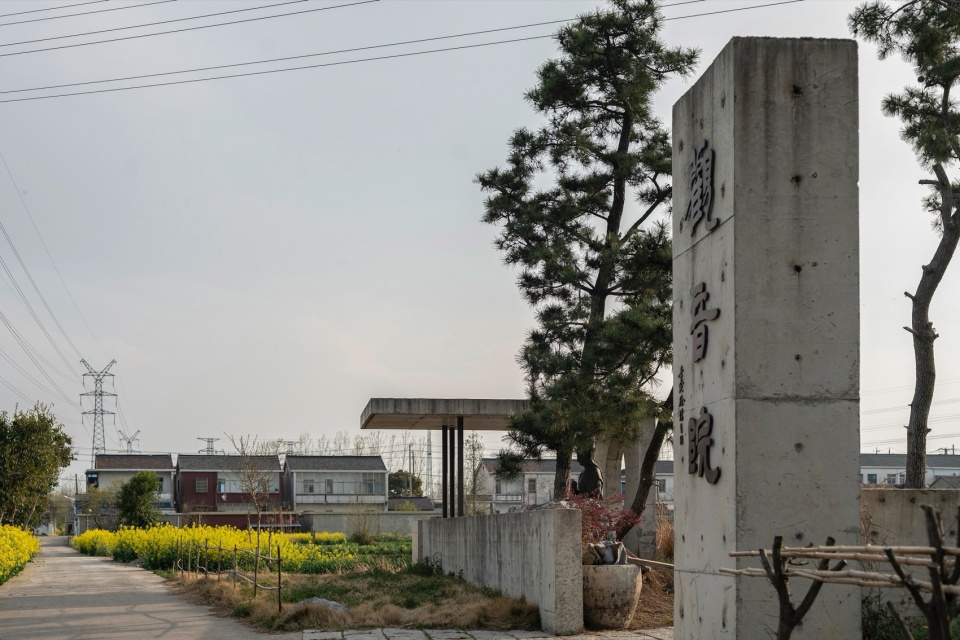
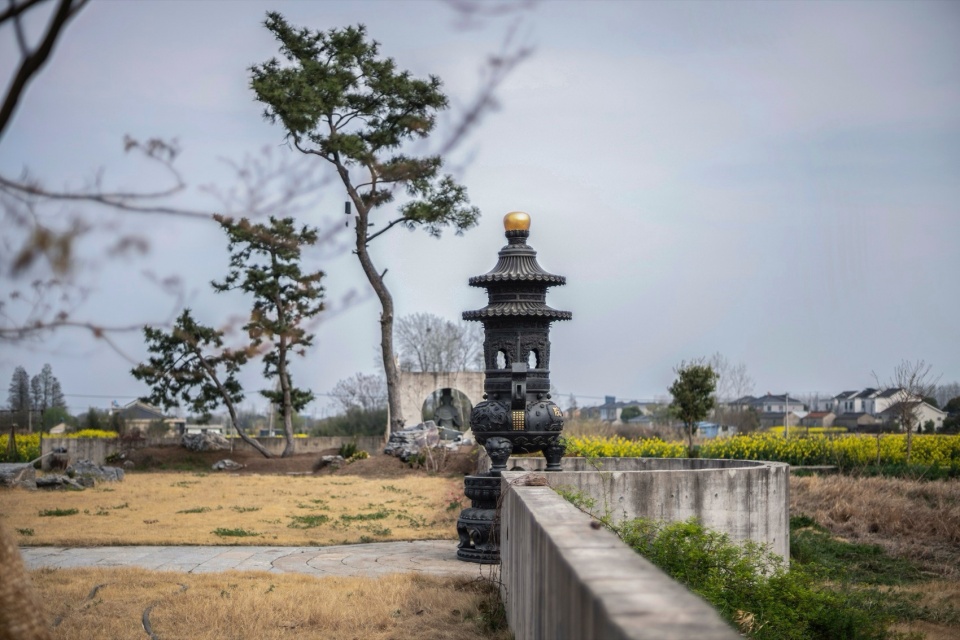
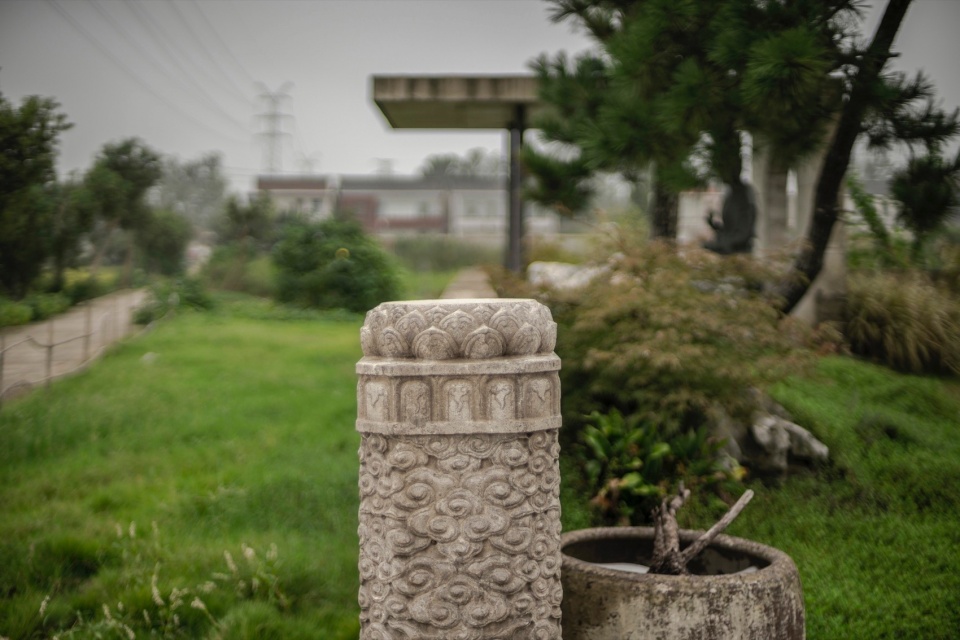
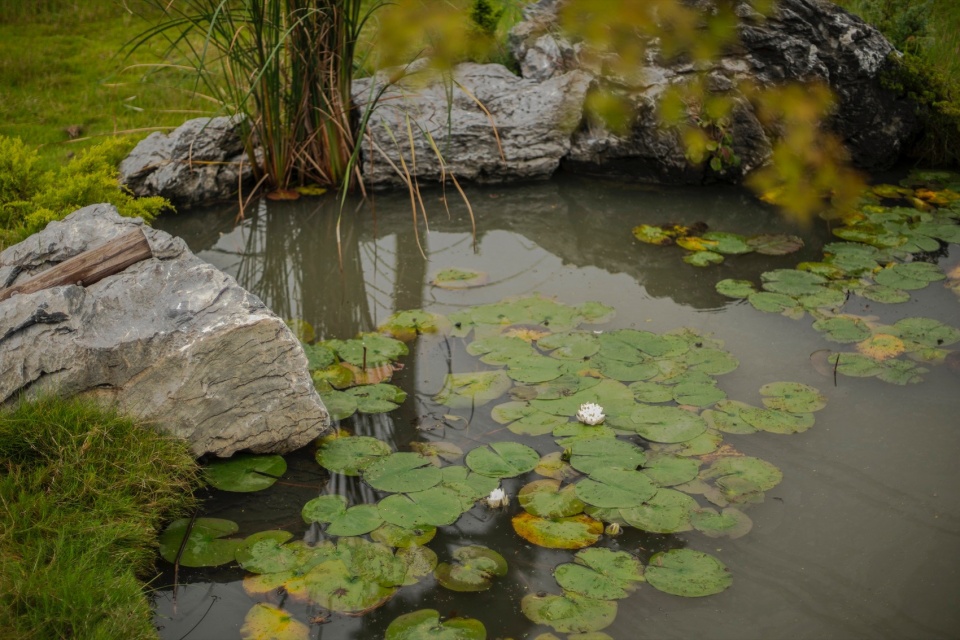
3,清水混凝土建筑后期装饰相对较少,但并非完全没有,而且也是至关重要。这个项目的装饰部分没有完全按照设计方案实施,局部材质、尺度比例、色调等有些走样,最初设想的通过物质世界的营造,让人超越物质世界的的精神感染力弱化了很多,留下了不少遗憾!
Exposed concrete buildings require relatively little post-finishing work, but this does not mean that detailing is absent; rather, it remains crucial. In this project, the decorative works were not fully implemented in accordance with the original design intent, and there are deviations in local materials, scale proportions, and tonal relationships. As a result, the intended spiritual impact—achieved through the construction of a material environment that leads one beyond the material world—has been significantly weakened, leaving considerable regret.
▼黄昏景象,Dusk scene
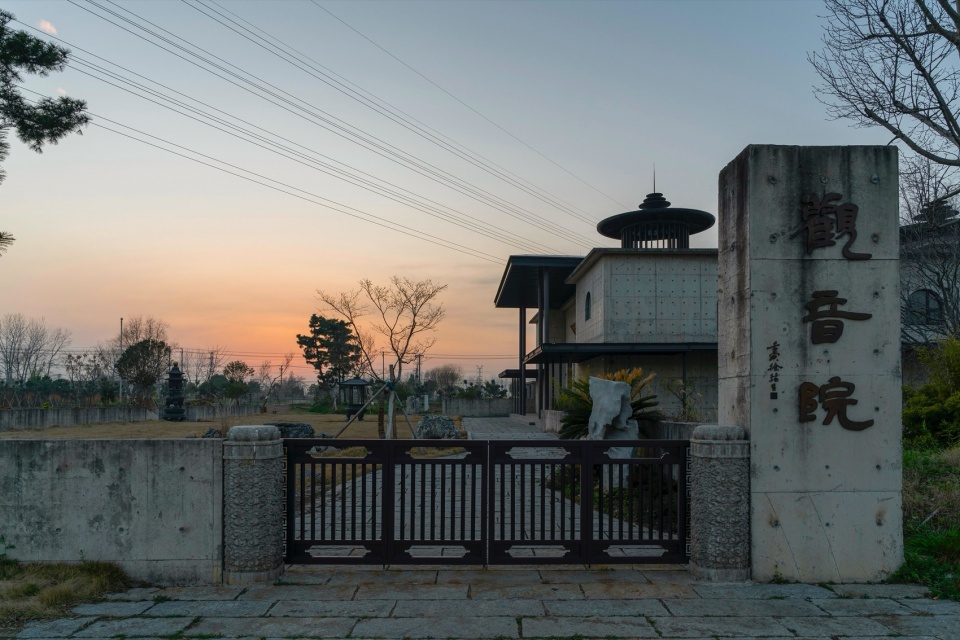
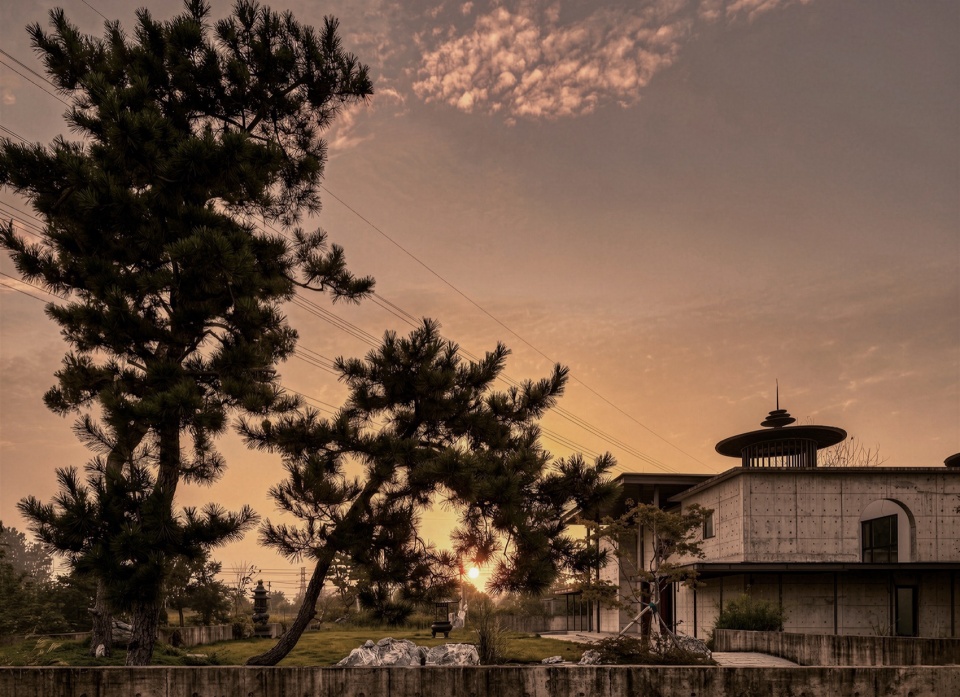
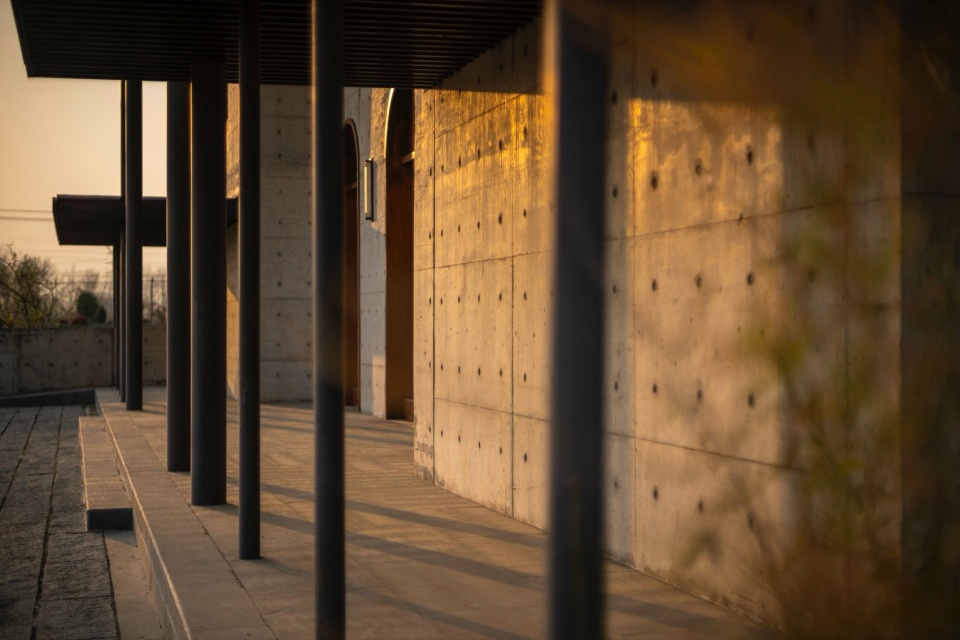
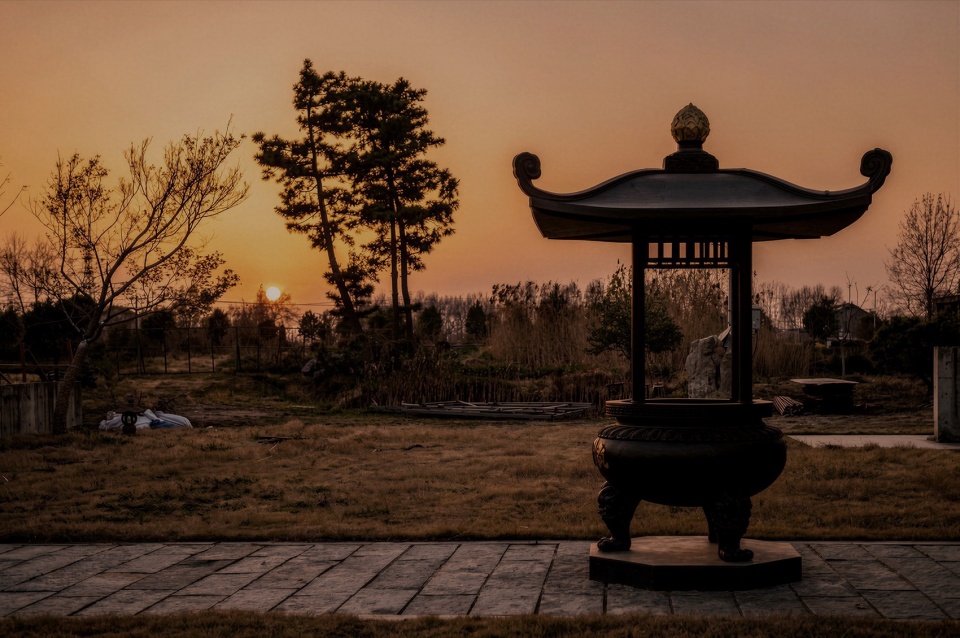
▼夜景,Night view
▼外立面本来应该实现的样貌(效果图与完成照片技术合成图),Intended final appearance of the façade (technical composite of rendering and as-built photograph)
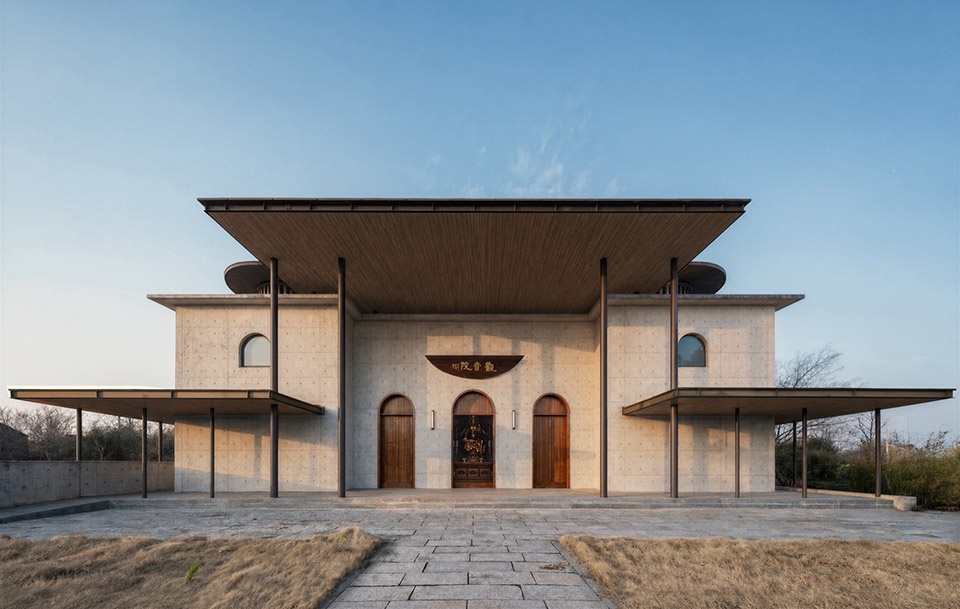
▼建筑东立面效果图,Rendering of building east elevation
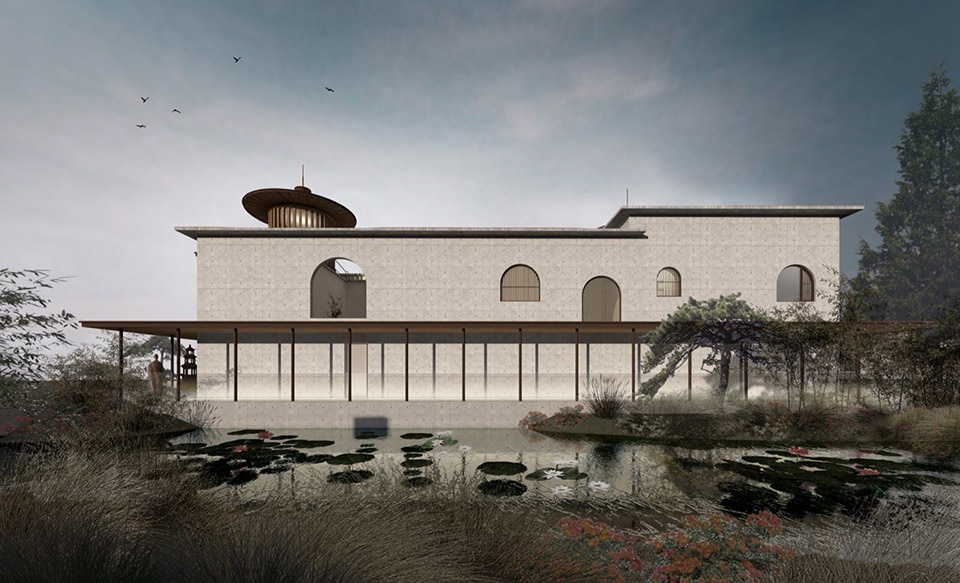
▼中院效果图,Rendering of central courtyard
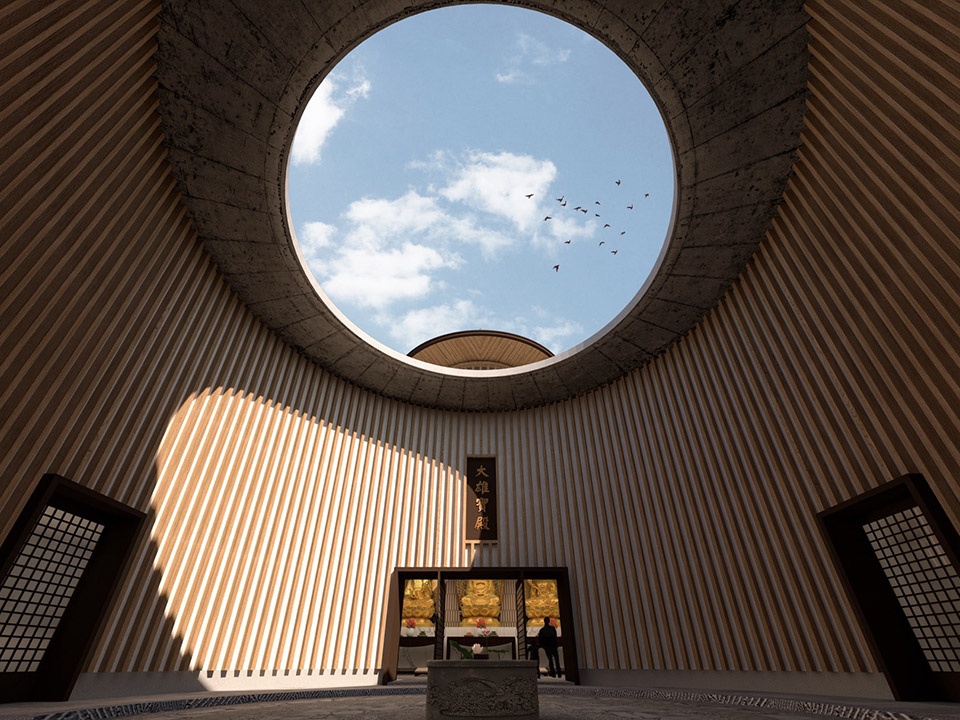
▼禅堂效果图,Rendering of Meditation Hall
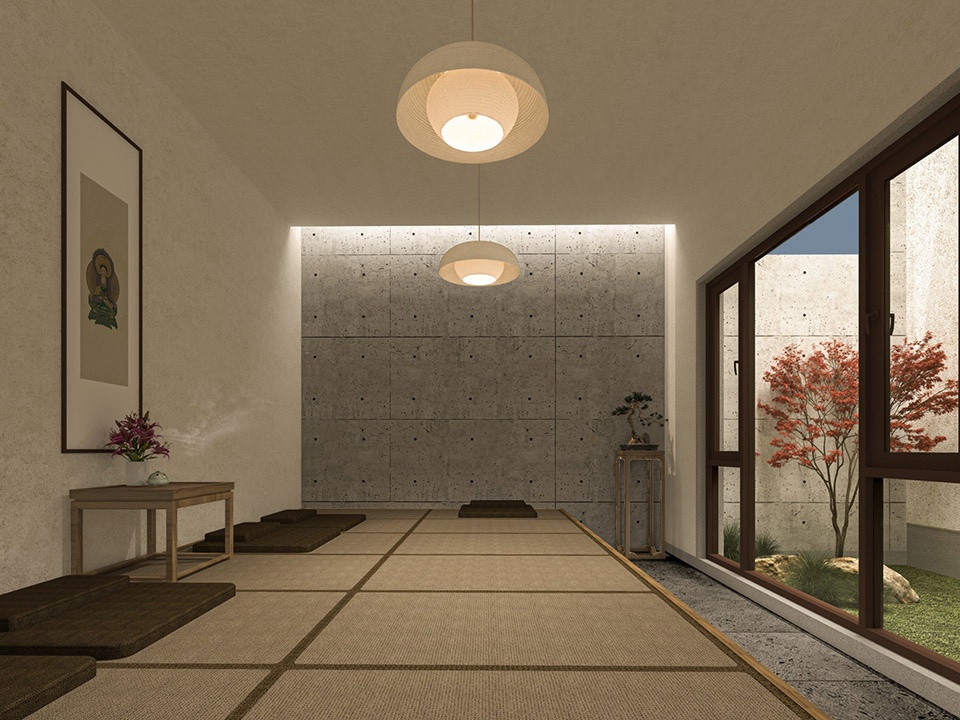
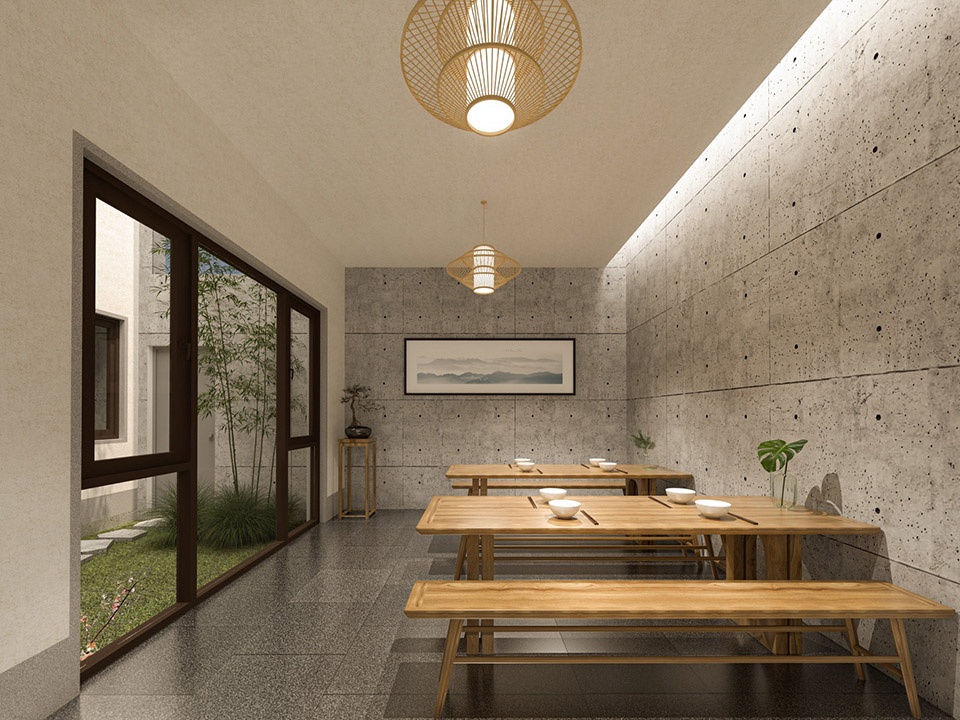
▼斋堂效果图,Rendering of Dining Hall
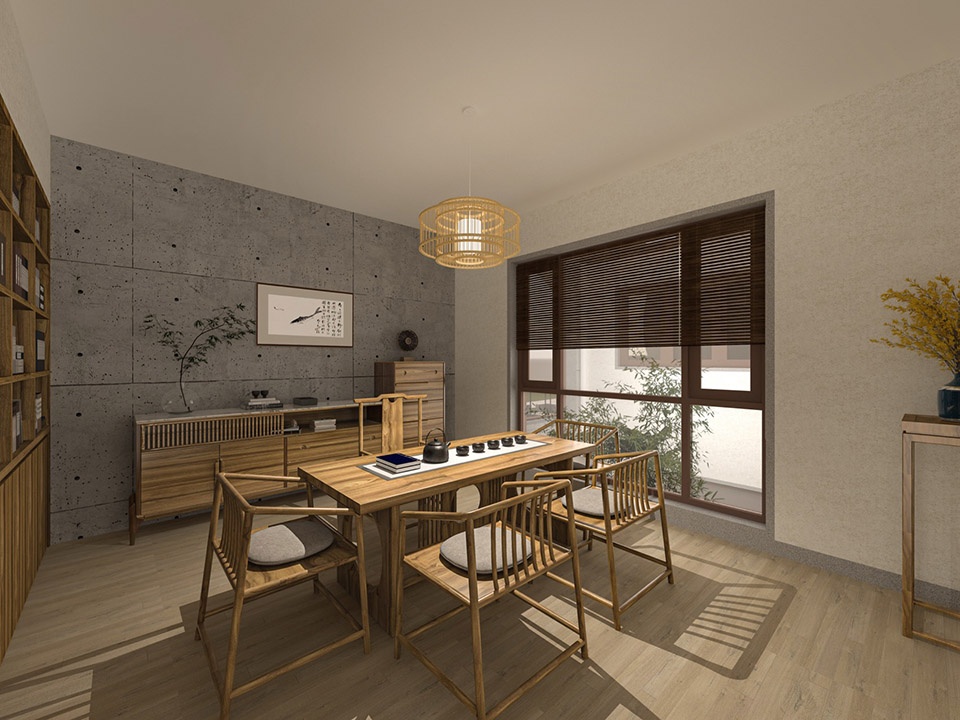
▼阅览茶室,Reading room and tea space
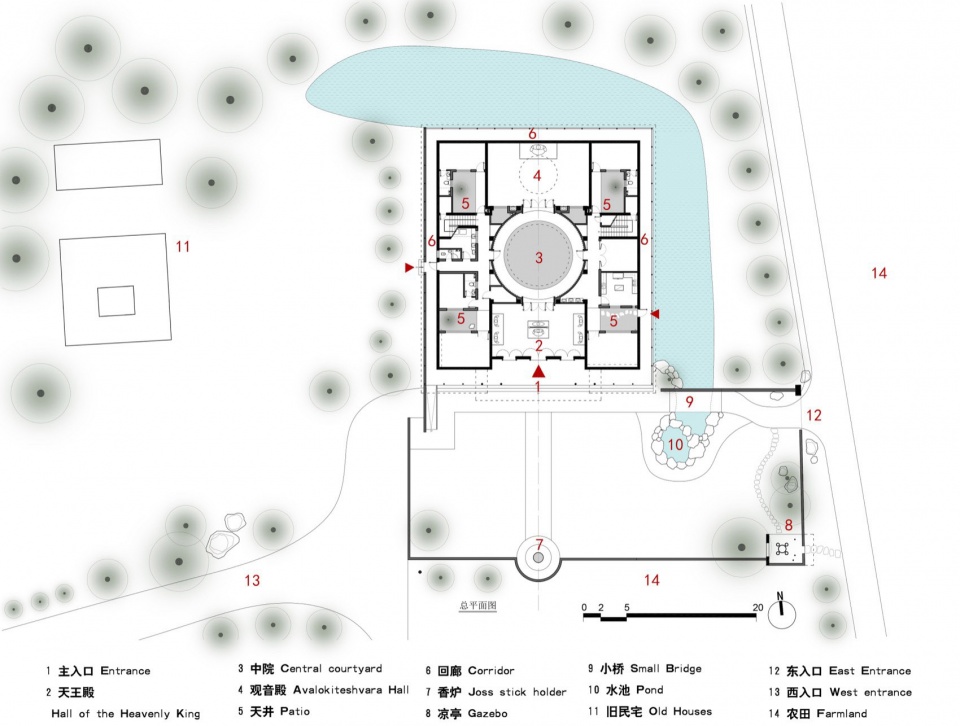
▼园区总平面,Site master plan
▼建筑平面1层,1st floor building plan
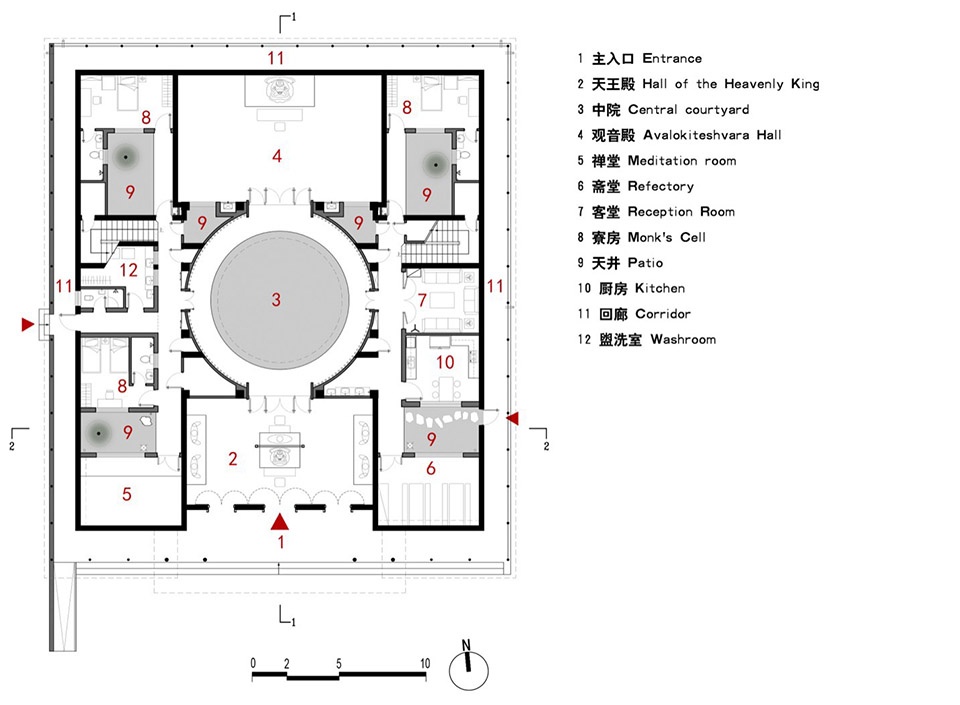
▼建筑平面2层,2st floor building plan
▼建筑正立面,Front elevation of the building
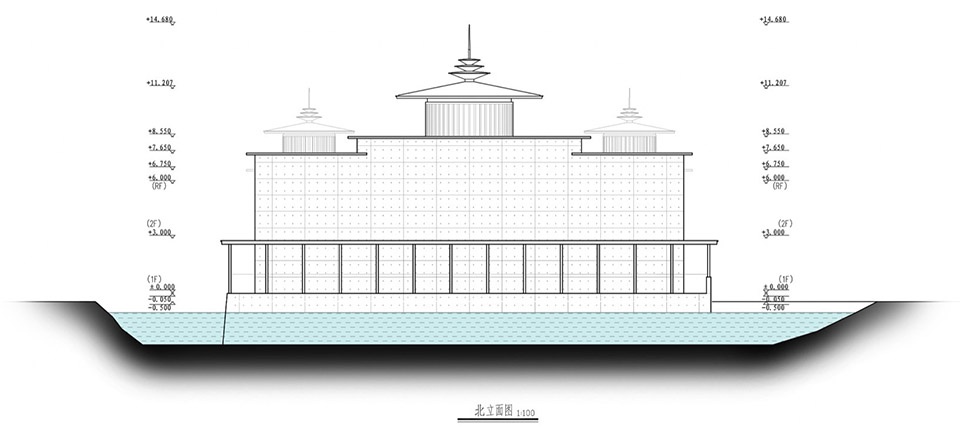
▼建筑背立面,Rear elevation of the building
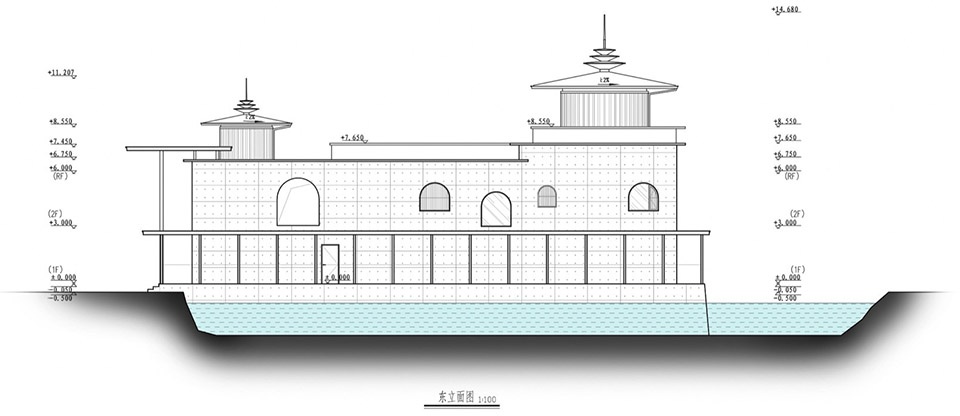
▼建筑侧立面,Side elevation of the building
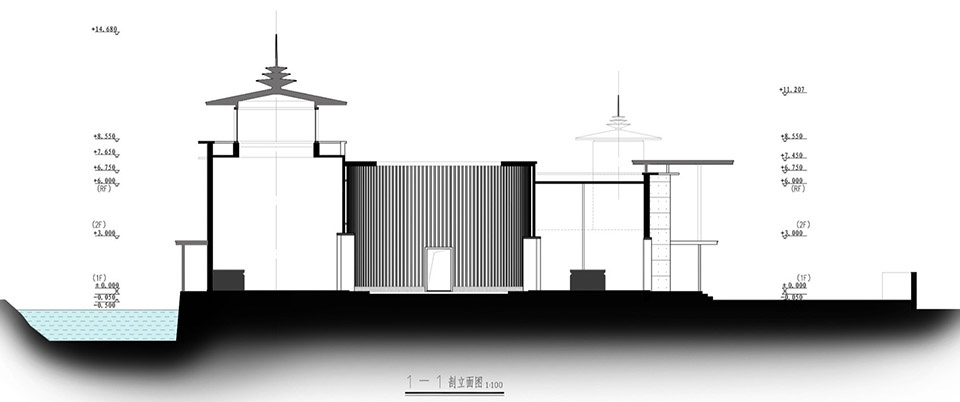
▼建筑1-1剖面,Section 1-1 of the building
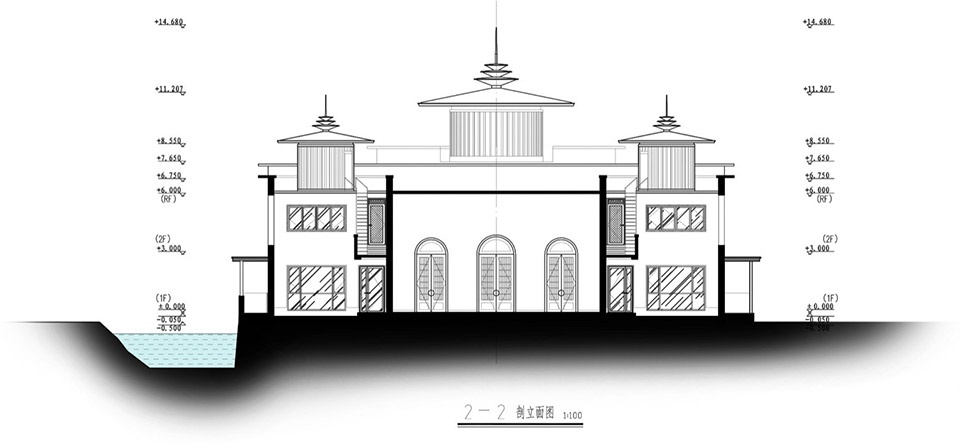
▼建筑2-2剖面,Section 2-2 of the building
工程名称:扬州观音院(原名谢家庵)
坐落地点:中国江苏省扬州市邗江区公道镇三界村
总用地面积:约9000㎡(不含水塘面积),建筑占地面积870㎡
总建筑面积:1053㎡
设计内容:建筑、室内、景观
结构形式:钢筋混凝土框剪结构,局部钢结构,整体筏板基础
设计单位:上海善祥建筑设计有限公司 http://www.sxarchi.com/
设计:王善祥
团队:王善辉 龚双艳
结构顾问:阎钟经
结构设计:王安庆
给排水及电气设计:刘斌
工程顾问:夏丹民
建筑施工单位:扬州市智恒园艺工程有限公司
装饰施工单位:江苏璞石建筑装饰工程有限公司
景观施工单位:扬州市重塑园林景观设计事务所
主要材质:混凝土、钢、木、玻璃、铝合金、石材
摄影:胡文杰/ http://www.pdoing.com/、王善祥
设计时间:2020年
竣工时间:装修间续施工中
Project Name: Yangzhou Guanyin Monastery (formerly Xiejia An)
Location: Sanjie Village, Gongdao Town, Hanjiang District, Yangzhou City, Jiangsu Province, China
Total Site Area: approx. 9,000 m² (excluding pond area); Building Footprint: 870 m²
Total Gross Floor Area: 1,053 m²
Design Scope: Architecture, Interior Design, Landscape Design
Structural System: Reinforced concrete frame-shear wall structure, partial steel structure, raft foundation
Design Institution: Shanghai Shanxiang Architectural Design Co., Ltd. http://www.sxarchi.com/
Design Architect: Wang Shanxiang
Team: Wang Shanhui, Gong Shuangyan
Structural Consultant: Yan Zhongjing
Structural Design: Wang Anqing
Plumbing & Electrical Design: Liu Bin
Engineering Consultant: Xia Danmin
Construction Contractor: Yangzhou Zhiheng Horticultural Engineering Co., Ltd.
Interior Decoration Contractor: Jiangsu Pushi Architectural Decoration Engineering Co., Ltd.
Landscape Construction Unit: Yangzhou Chongsu Landscape Design Studio
Primary Materials: Concrete, steel, timber, glass, aluminum alloy, stone
Photography: Hu Wenjie / http://www.pdoing.com/, Wang Shanxiang
Videography: Hu Wenjie / http://www.pdoing.com/
Design Year: Year 2020
Completion Status: Ongoing interior fit-out construction