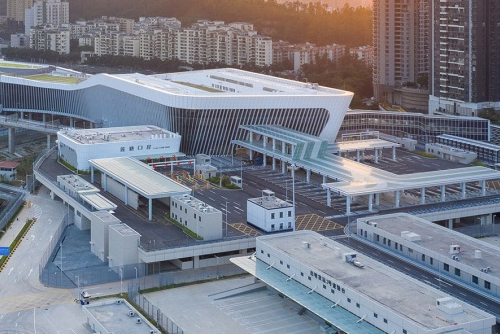
疗愈之家,韩国 / JK-AR
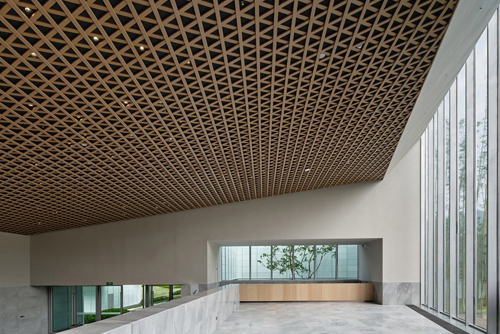
疗愈之家坐落于韩国历史名城庆州,在传统元素与现代设计理念之间建立起自然融合的关系。项目通过创新的木构架体系重新诠释传统木建筑结构,在新与旧之间创造出和谐统一的空间体验。
Located in the historic city of Gyeongju, the House of Rejuvenation seamlessly blends traditional elements with modern design principles. The project introduces innovative timber framing systems that reimagine traditional wooden structures, creating a harmonious fusion of old and new.
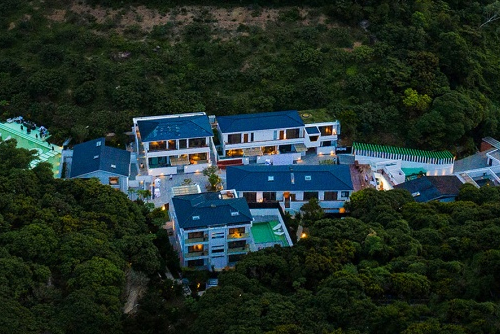
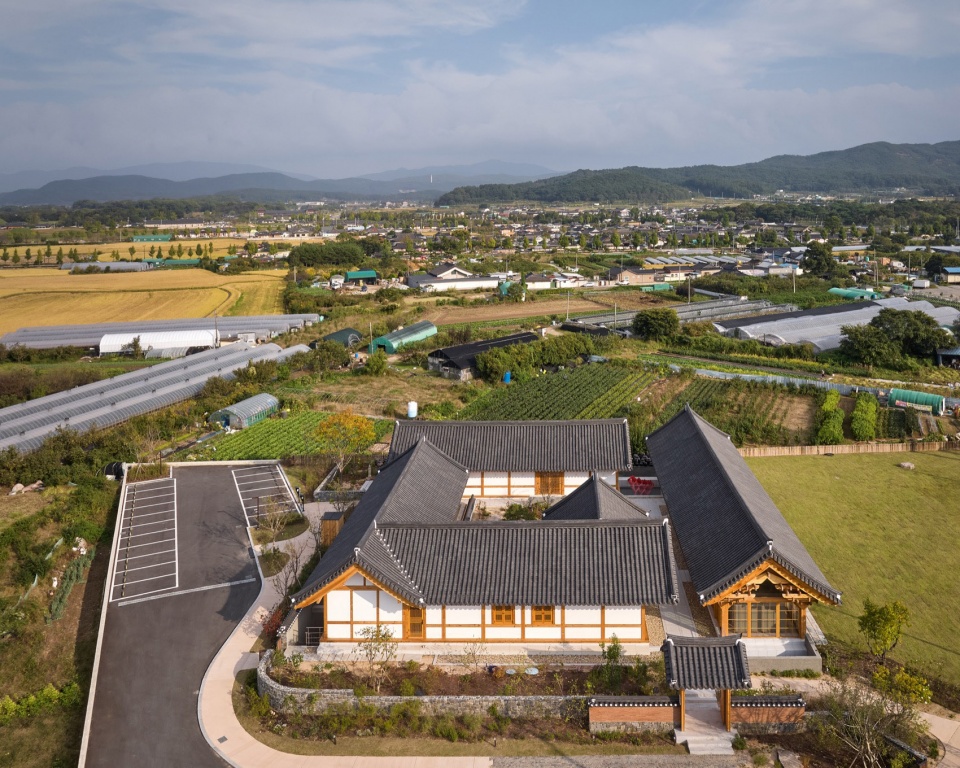
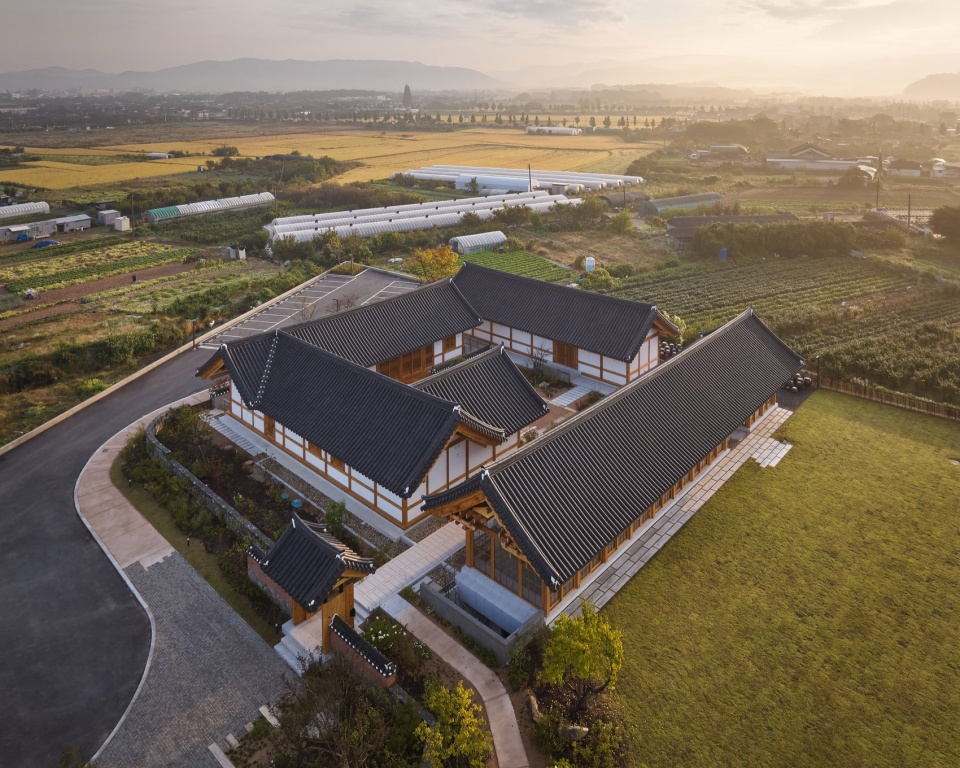
▼鸟瞰,aerial views
▼顶视图,top view
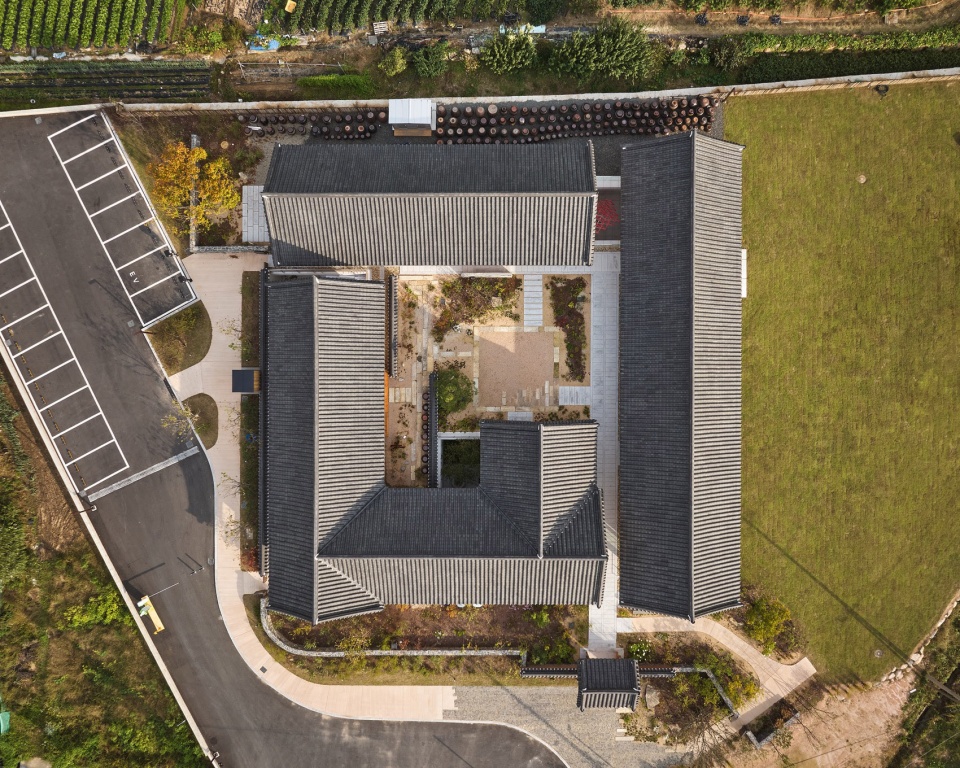
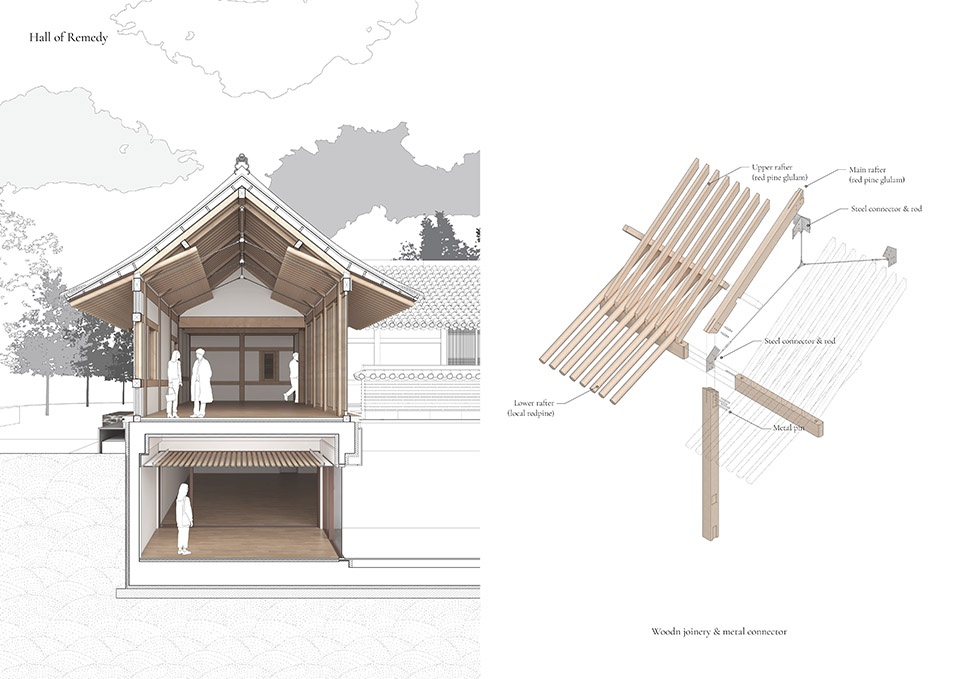
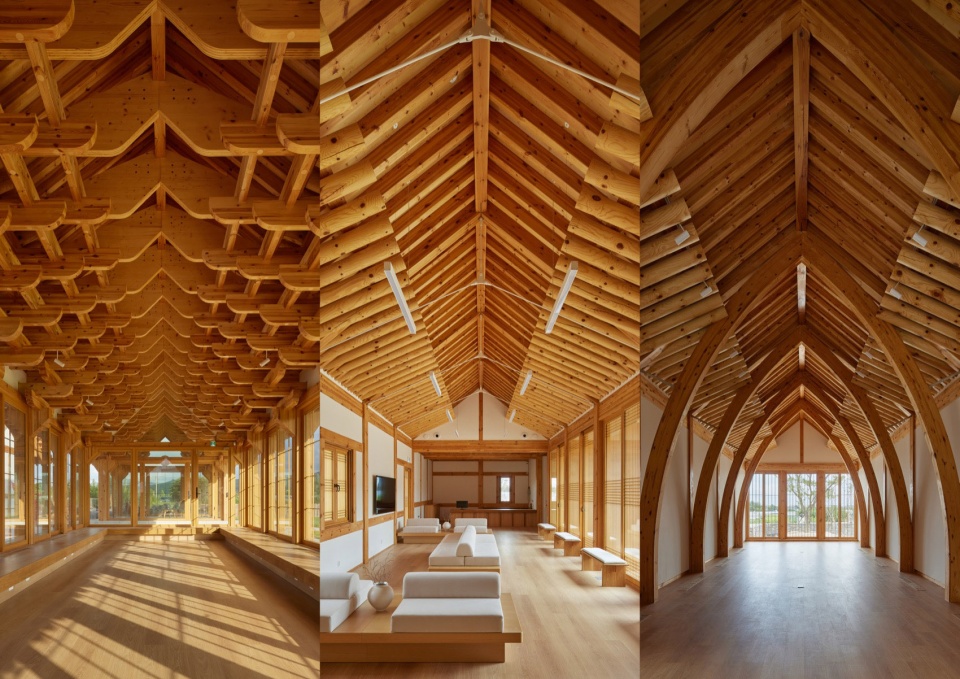
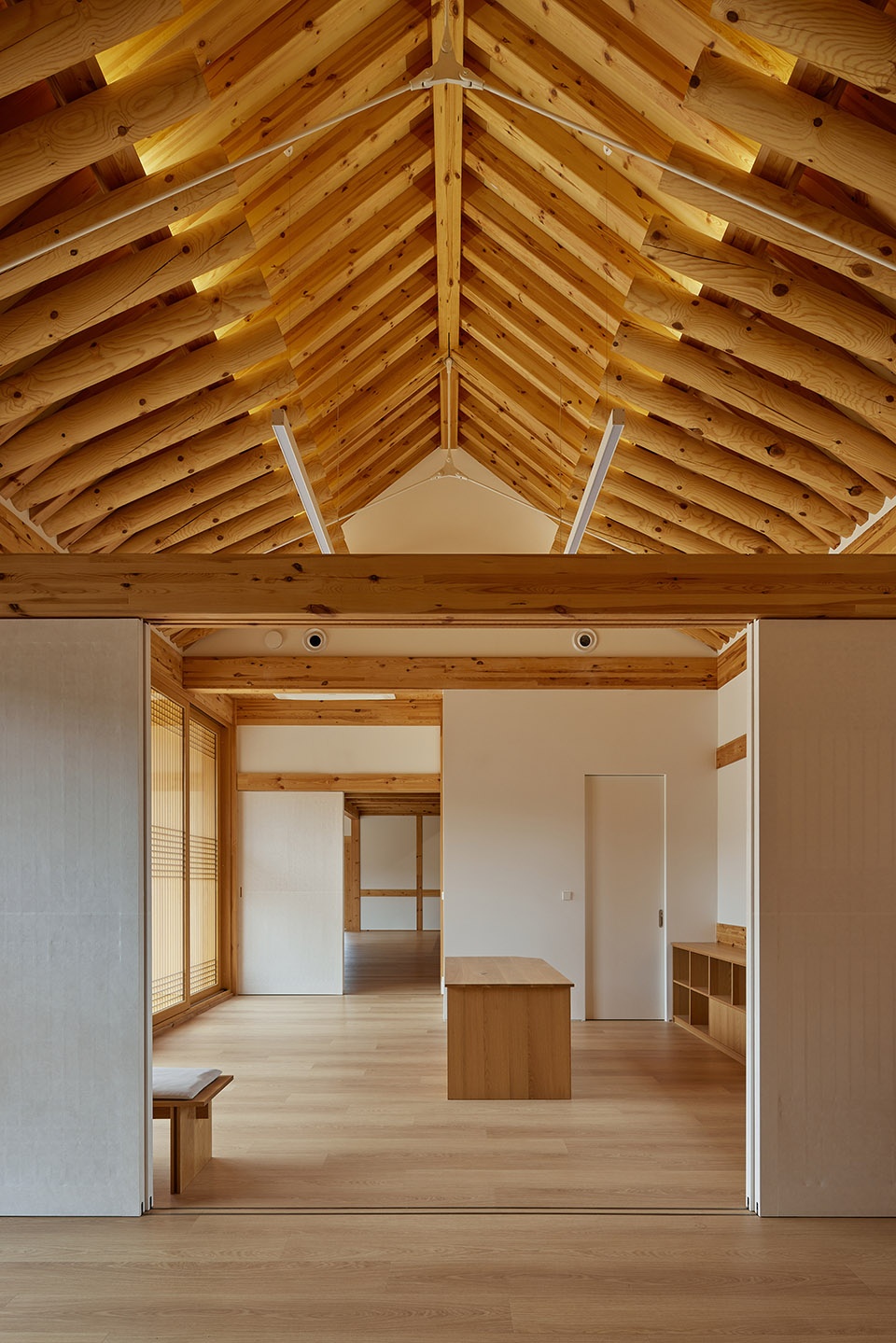
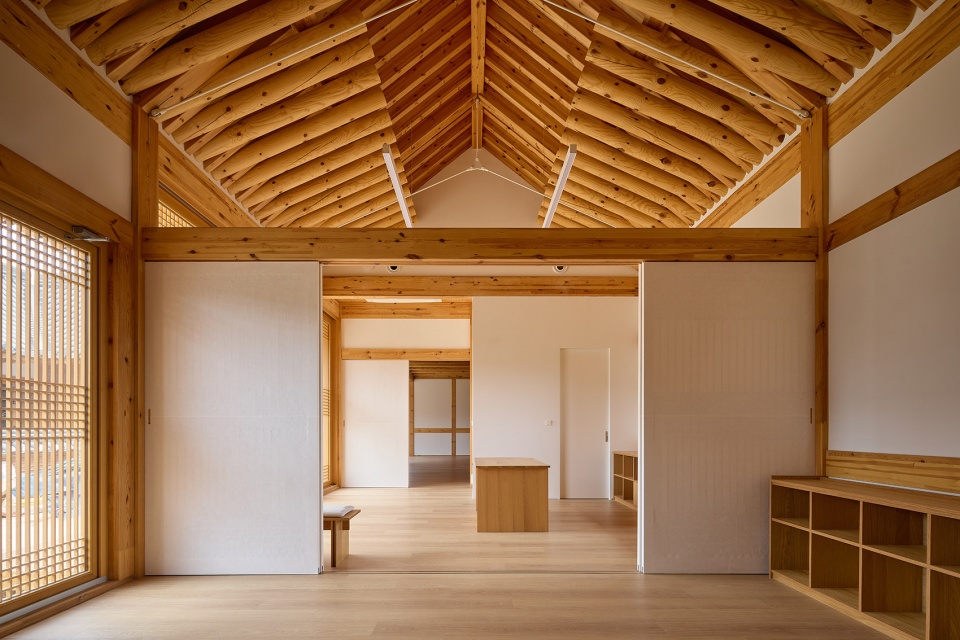
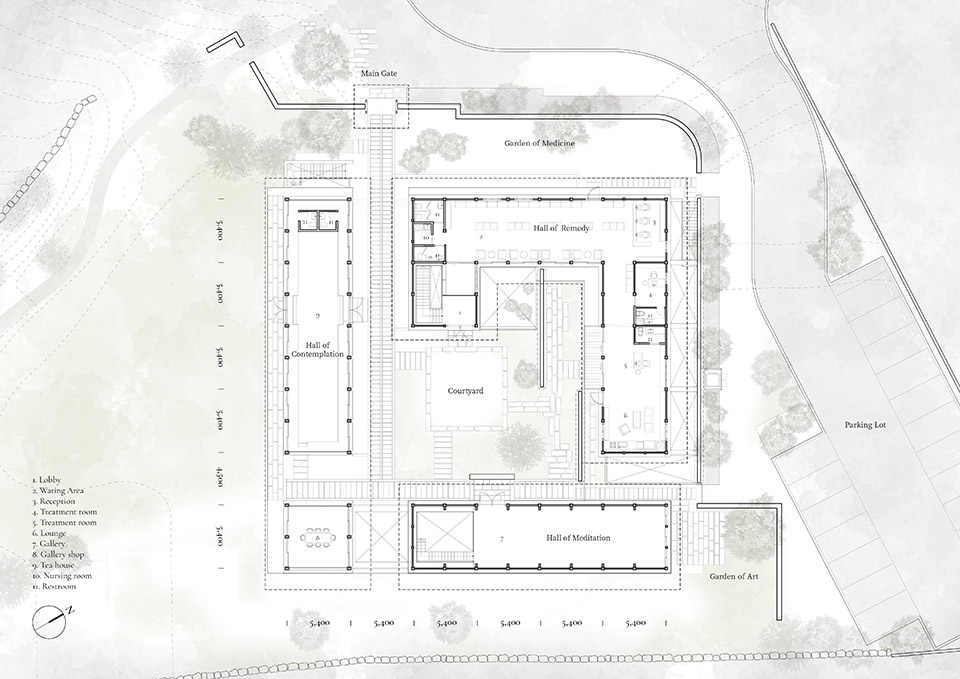
疗愈之家由三座功能各异的建筑组成,分别回应不同的使用需求。一间拥有150年历史的韩医诊所、一座艺术画廊以及一间茶室,共同构成了一个兼具文化与疗愈属性的复合环境。其中,“疗愈之厅(Hall of Remedy)”作为诊疗空间,在被重新塑造成现代化、高效能医疗设施的同时,也回应了传统韩屋在建造与经济性方面存在的局限性。
▼分析图,analysis diagram
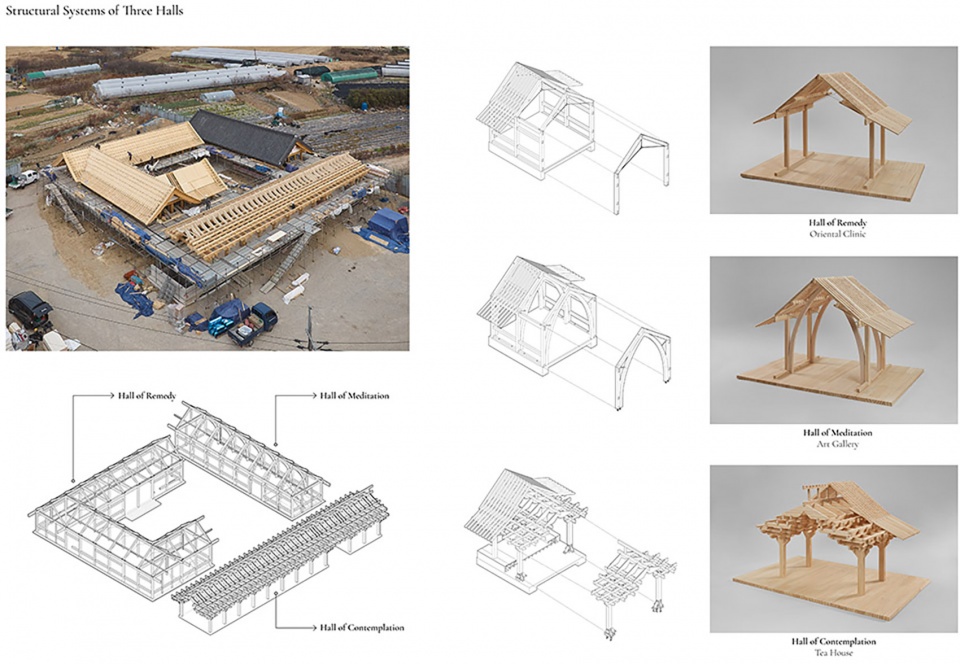
The three halls of the House of Rejuvenation are thoughtfully designed to cater to diverse needs. A 150-year-old traditional Korean medicine clinic, an art gallery, and a tea house create a dynamic environment. The Hall of Remedy, a clinic space is reimagined as a modern, functional facility while simultaneously addressing the constructional and economic inefficiencies inherent in traditional hanok houses.
▼远景,viewing the project at distance
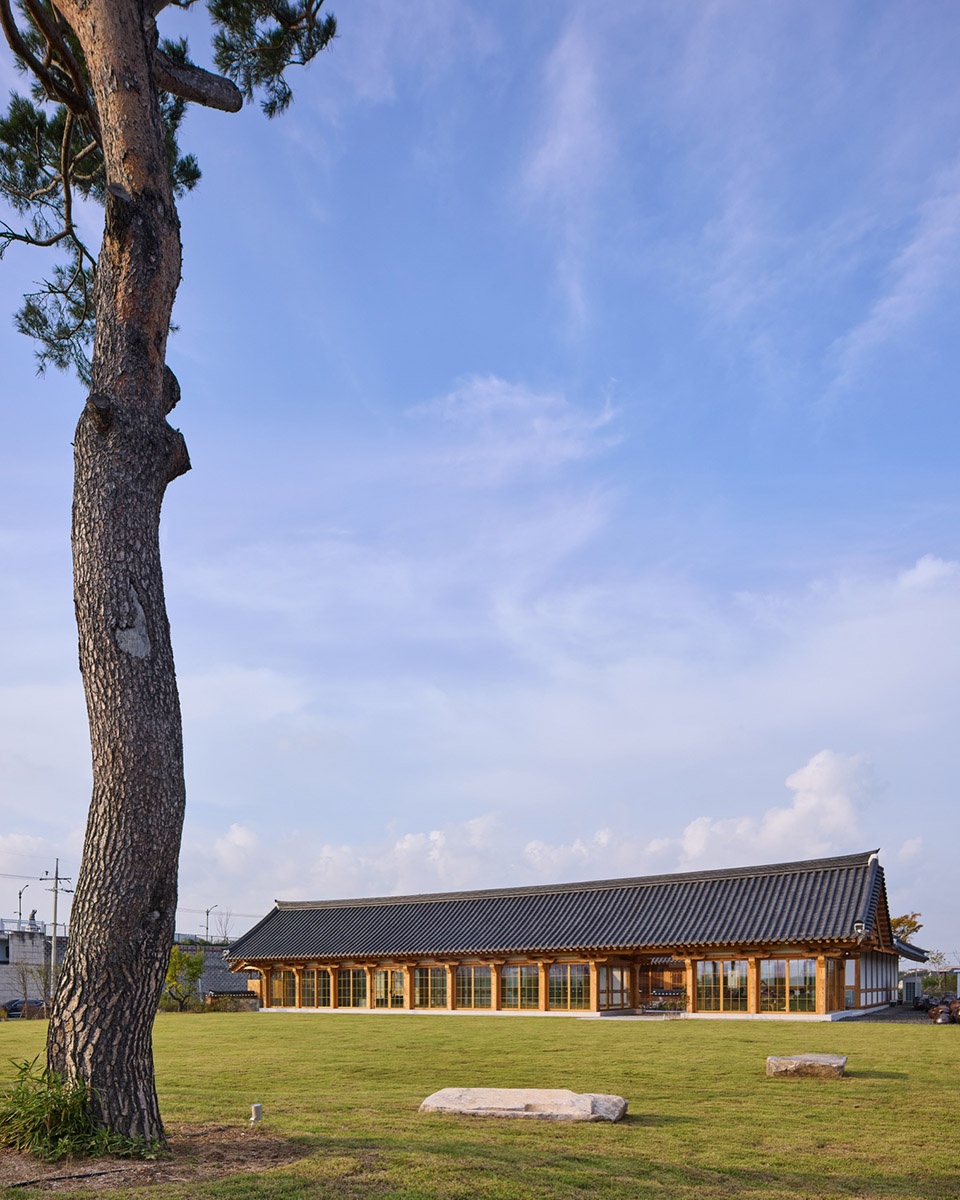
▼外立面,exterior view
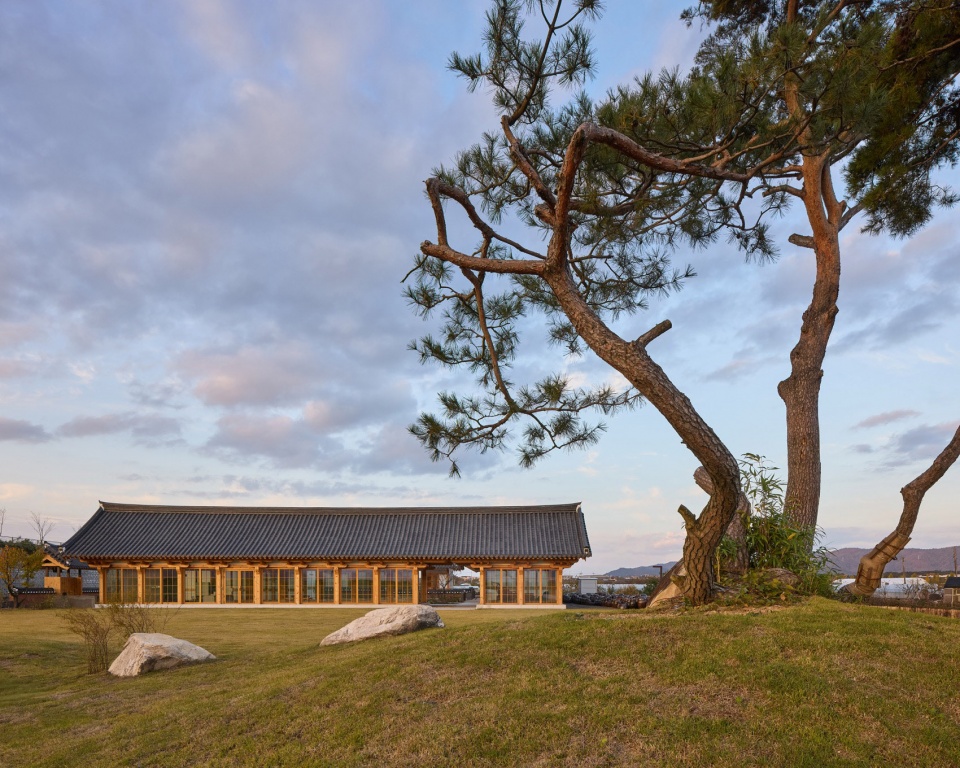
▼外观,exterior view
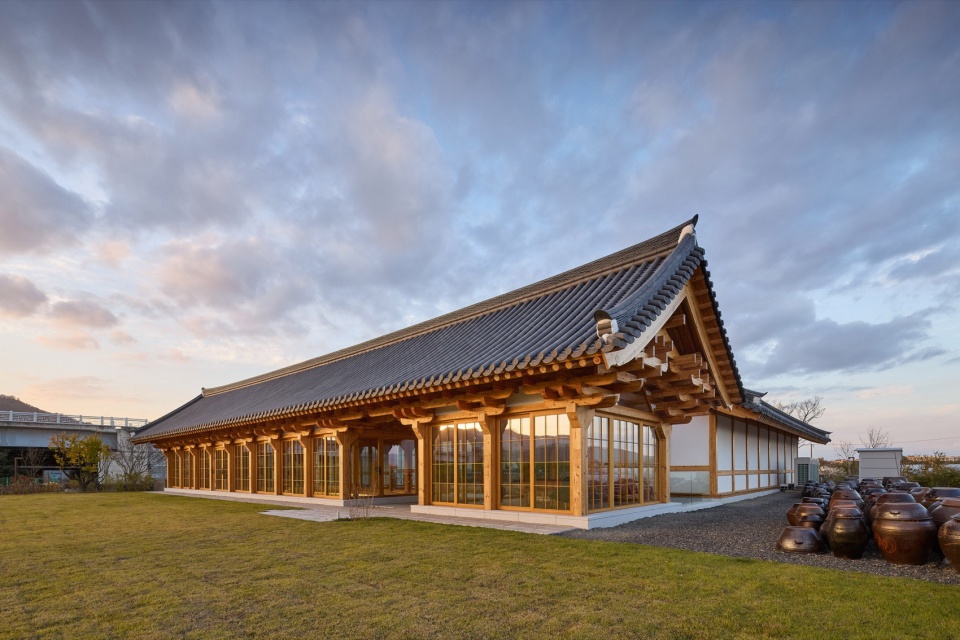
▼立面近景,closer view of the facade
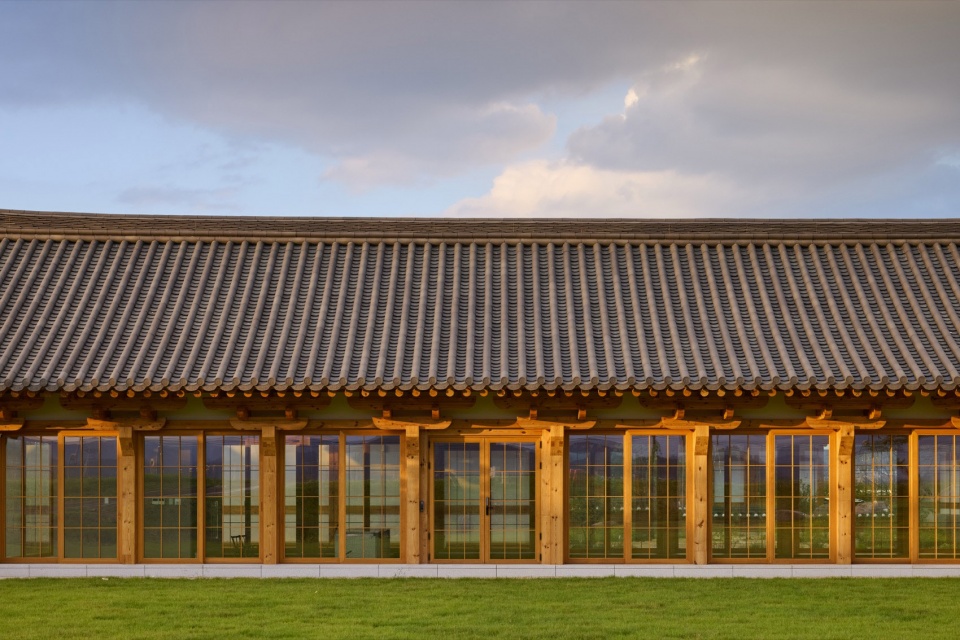
▼通道,passage
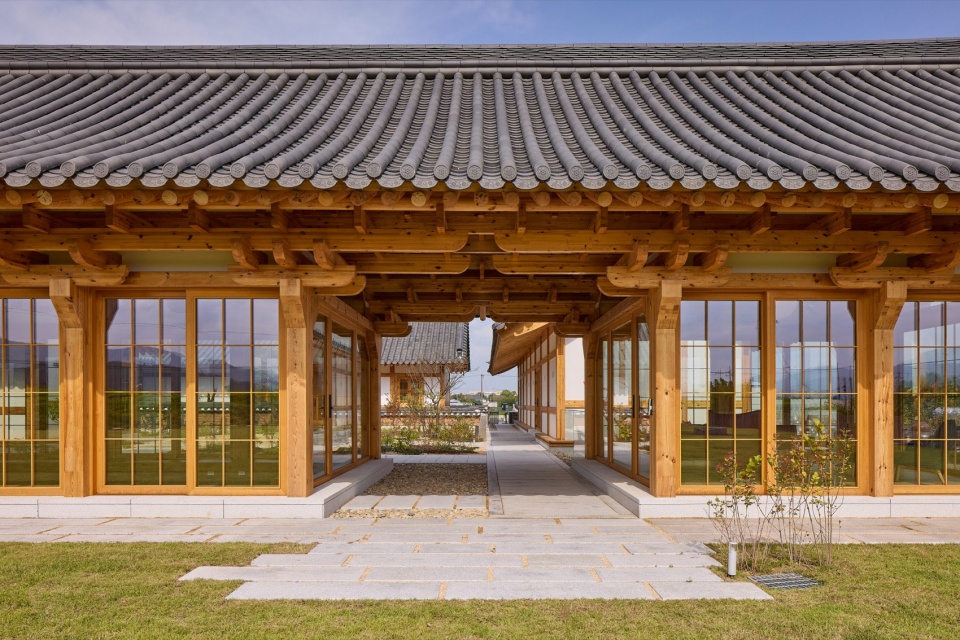
▼入口,entrance
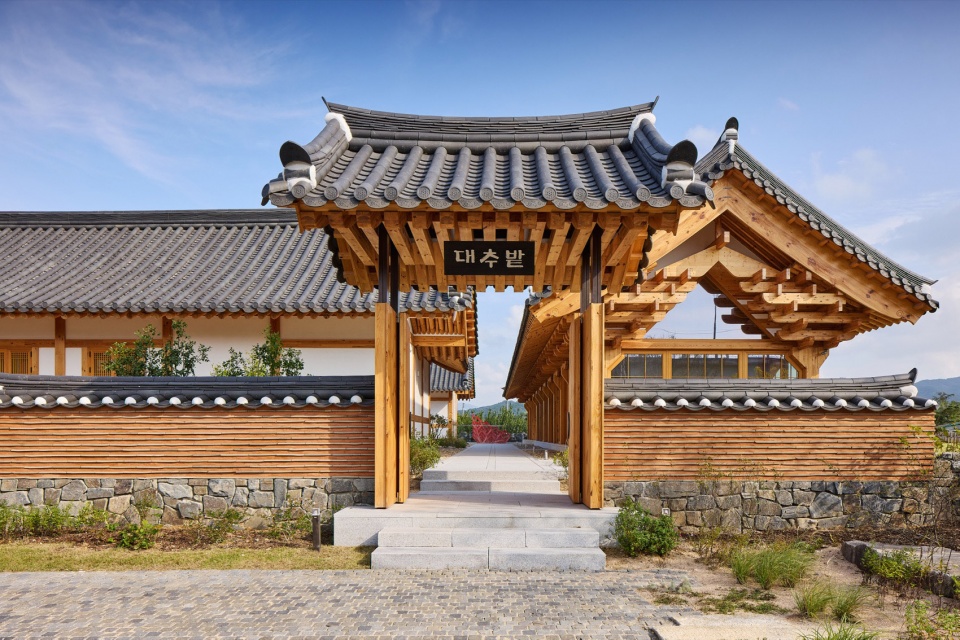
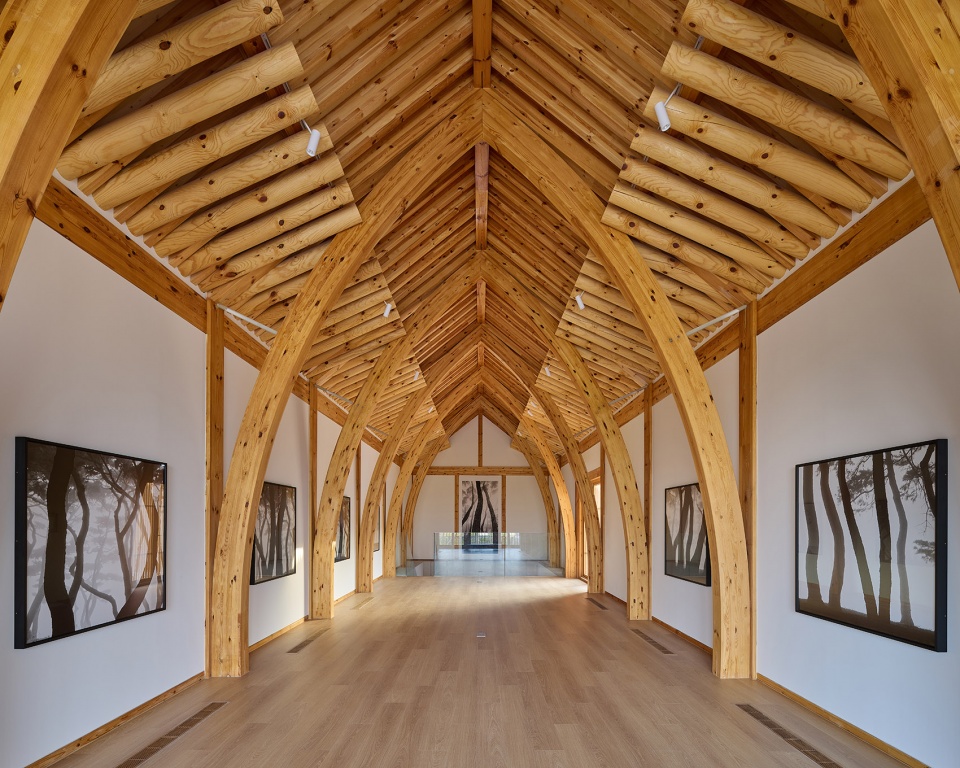
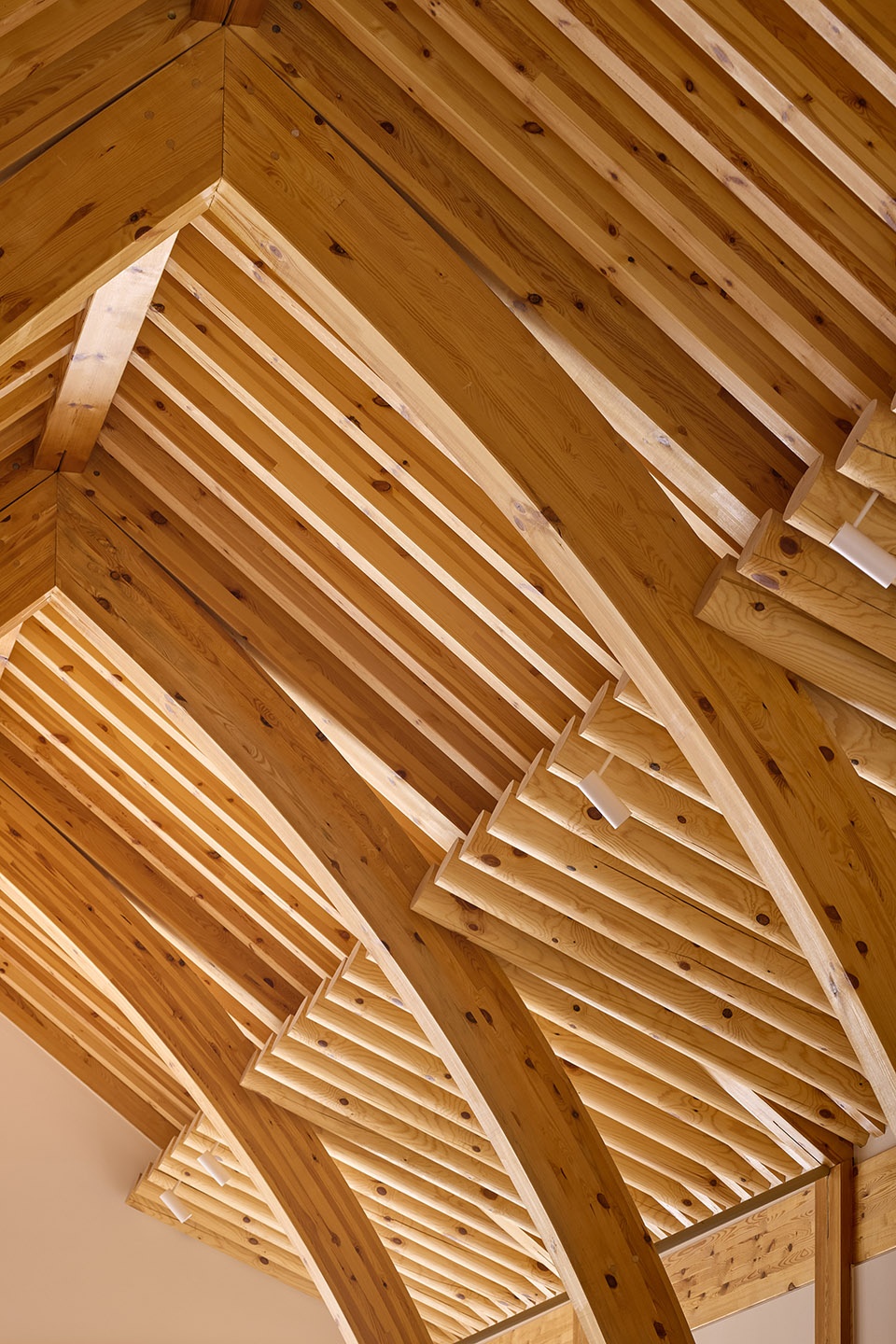
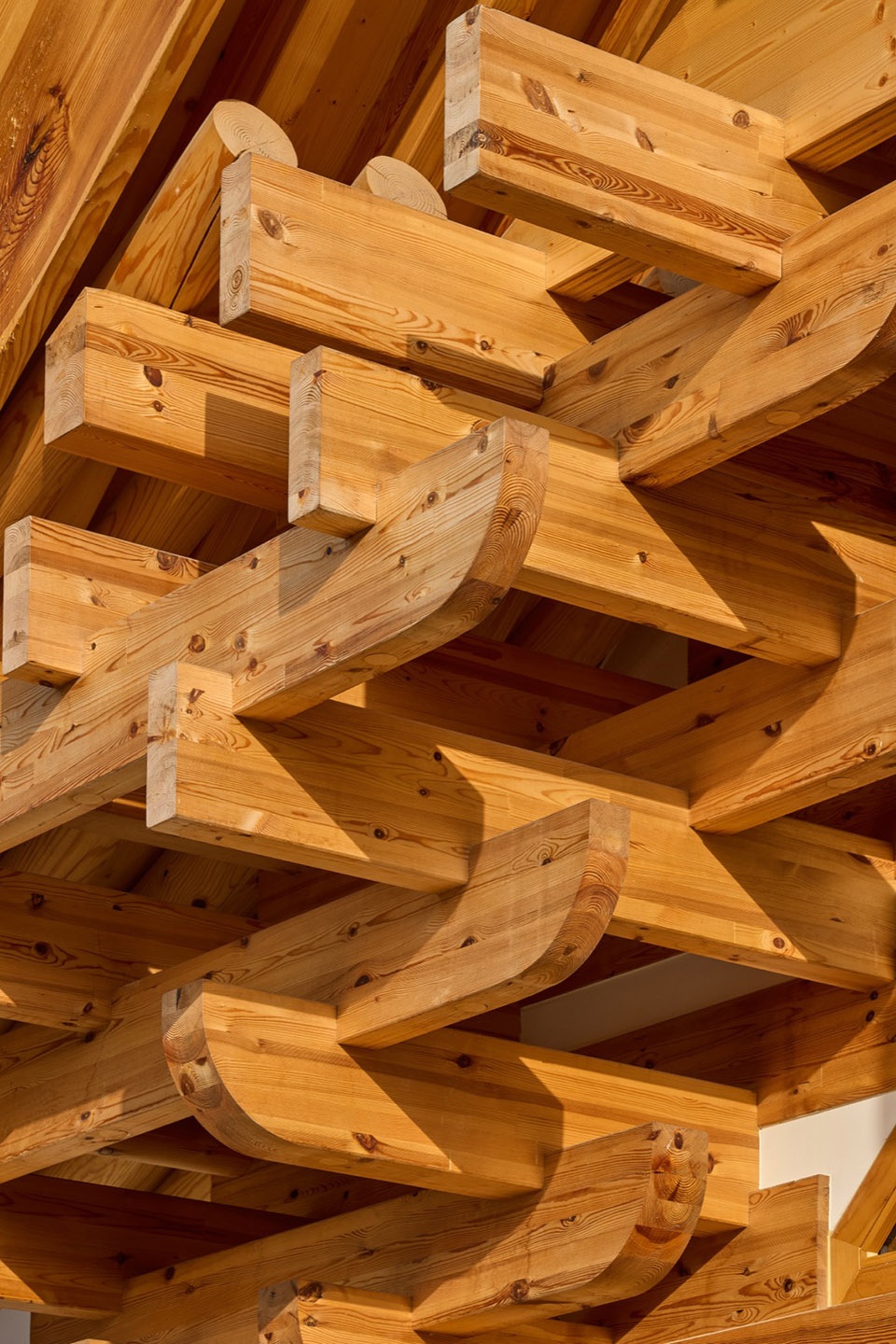
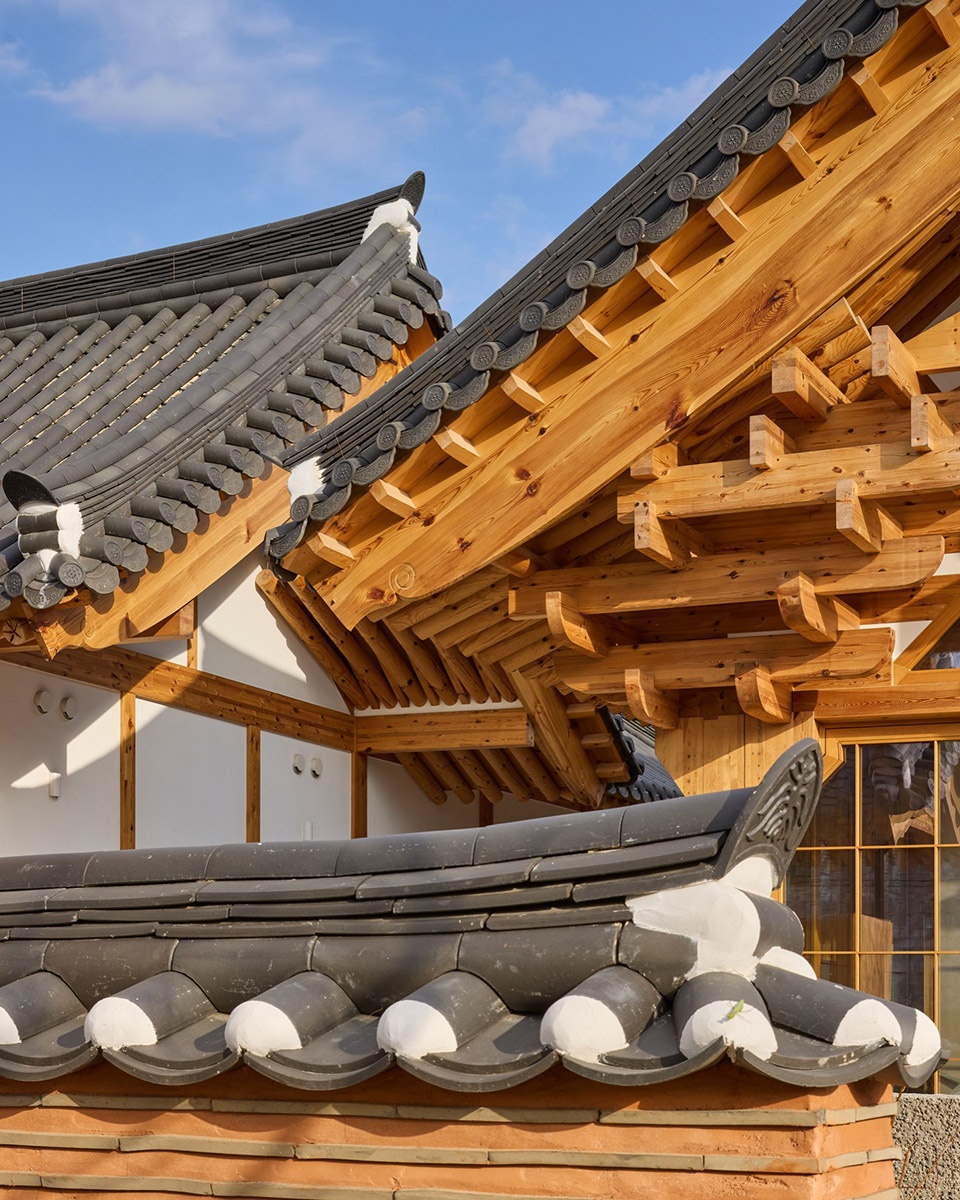
“冥想之厅(Hall of Meditation)”是一座艺术画廊,为冥想与沉思提供宁静的场所,并强调人与建筑空间之间的精神联系。项目中的曲线结构元素受到庆州200年历史传统住宅“三龟亭(Samguejeong)”以及佛国寺(Bulguksa)紫霞门(Jahamun)的启发。
▼冥想之厅构造图,structure detail of the Hall of Meditation
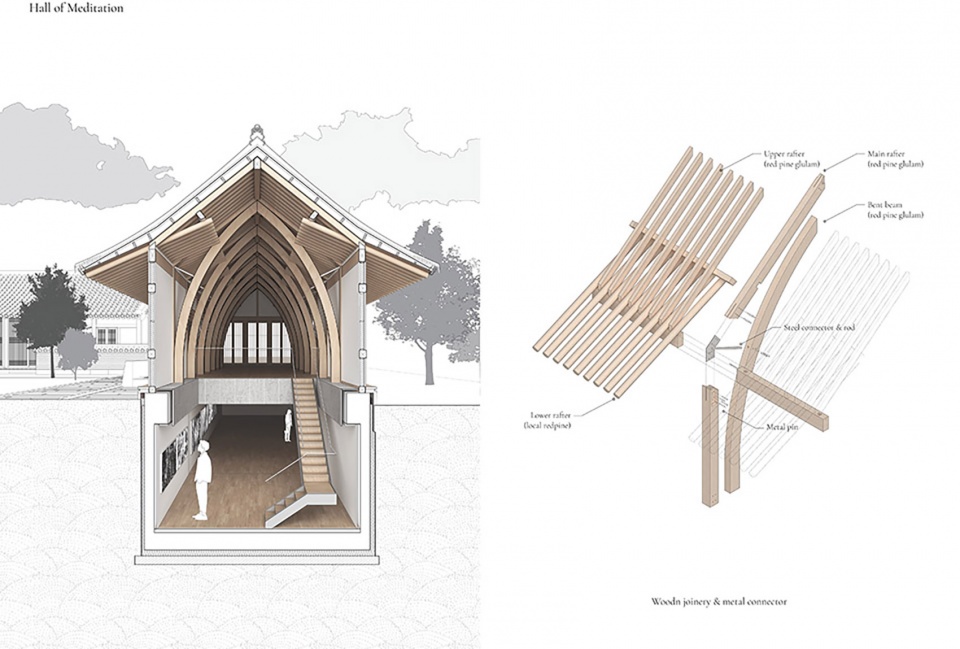
▼疗愈之厅构造图,structure detail of the Hall of Remedy
The Hall of Meditation, an art gallery offers a serene space for meditation, emphasizing the connection between individuals and the architectural space. The project’s curved structural elements draw inspiration from “Samguejeong,” a 200-year-old traditional house, and the Jahamun of Bulguksa temple in Gyeongju.
▼三厅,the three hall
▼疗愈之厅,the Hall of Remedy
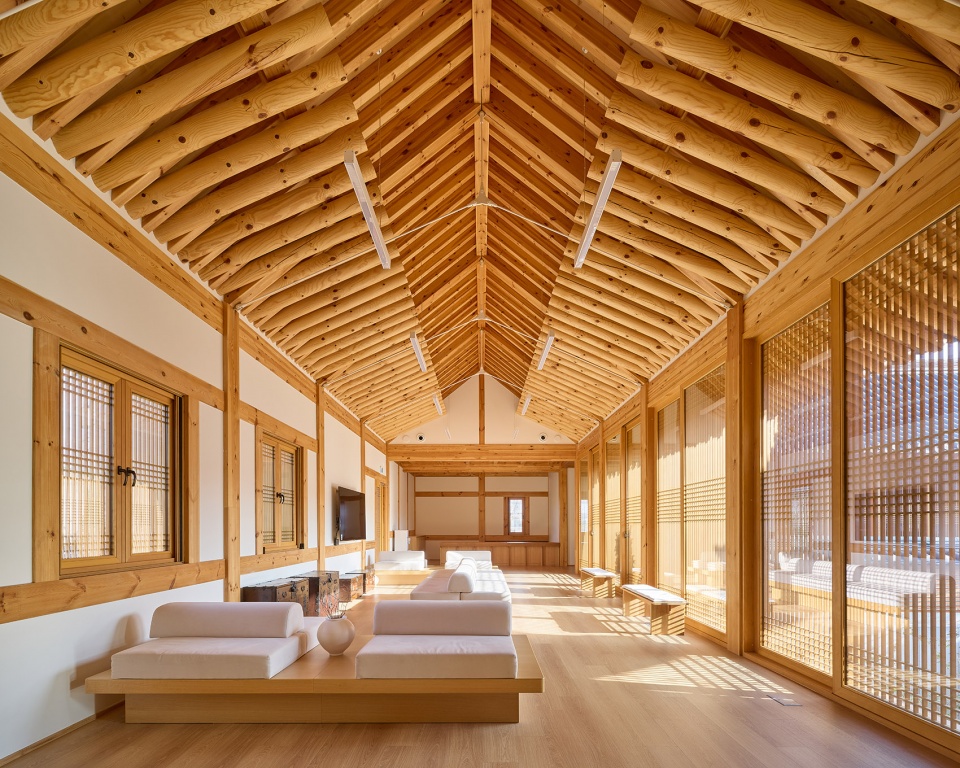
▼疗愈之厅,the Hall of Remedy
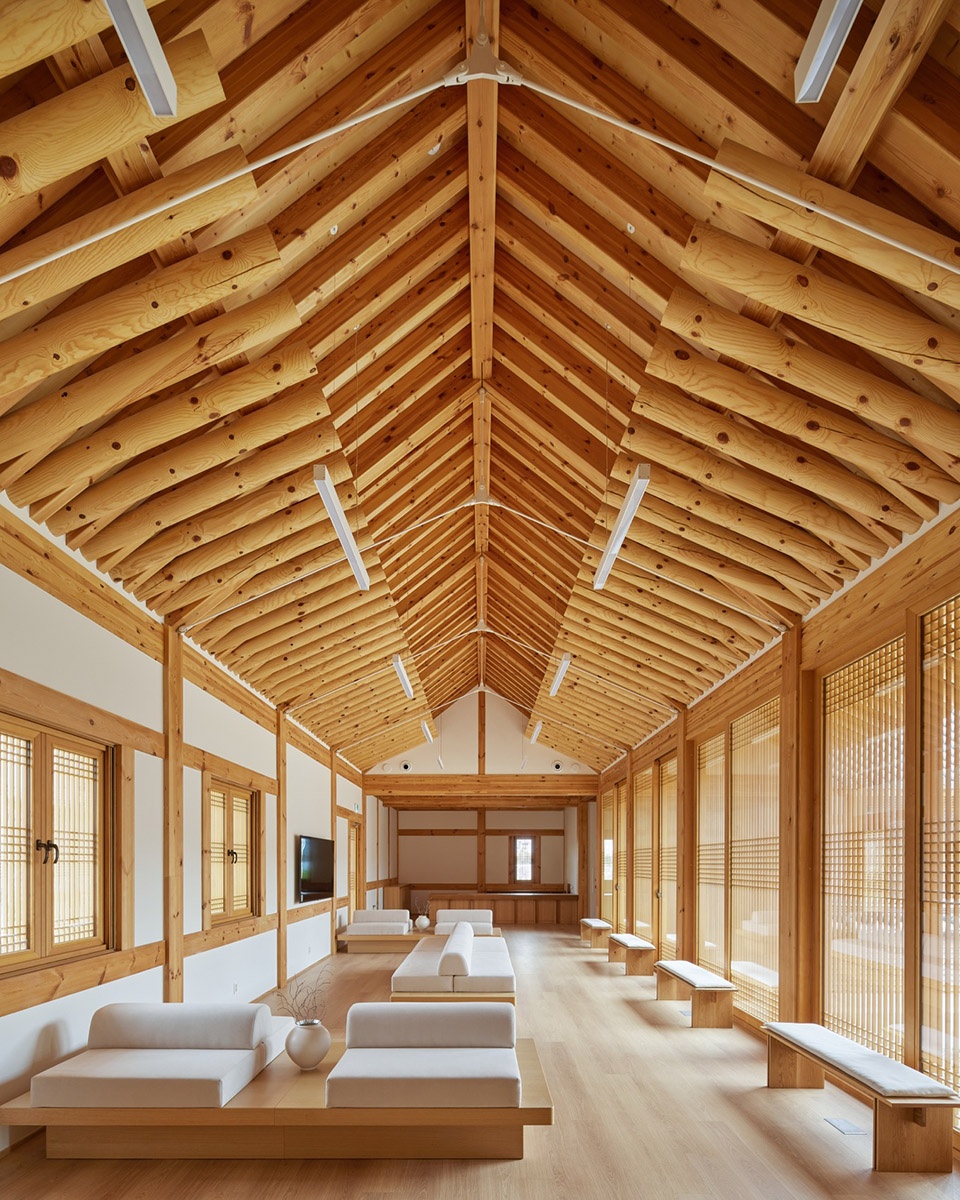
▼冥想之厅,the Hall of Meditation
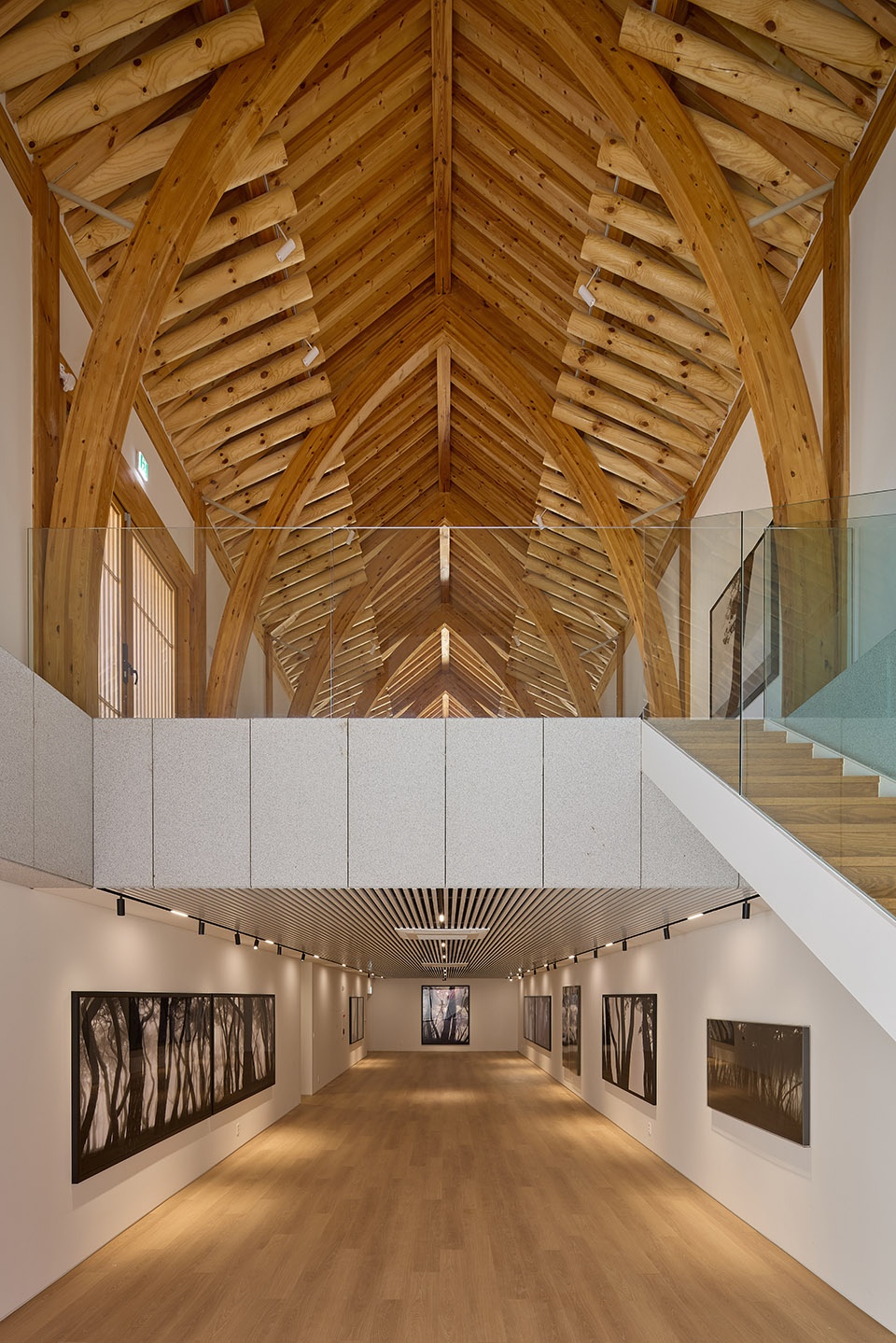
▼冥想之厅二层,upper floor of the Hall of Meditation
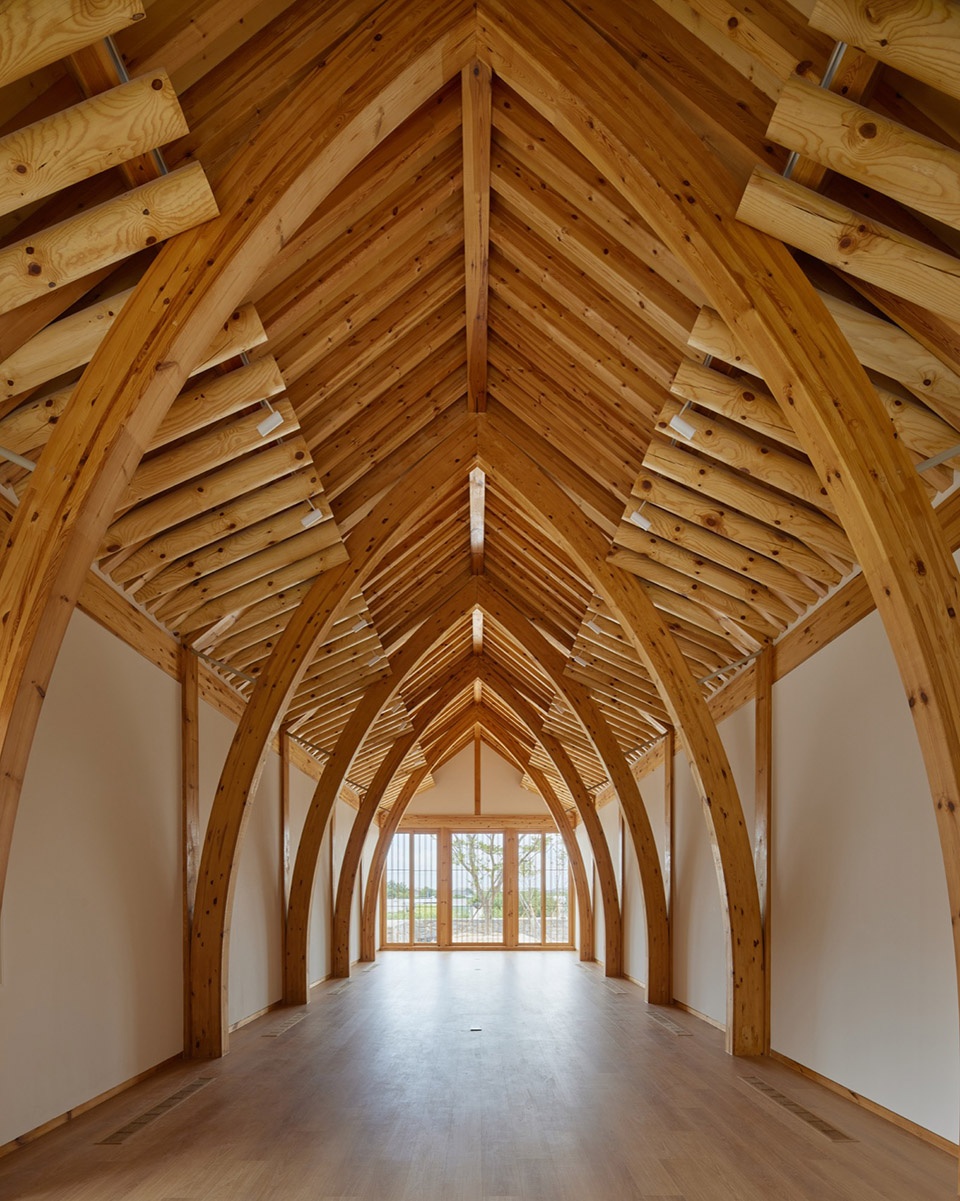
▼冥想之厅二层,upper floor of the Hall of Meditation
▼冥想之厅天花板细部,ceiling of the Hall of Meditation
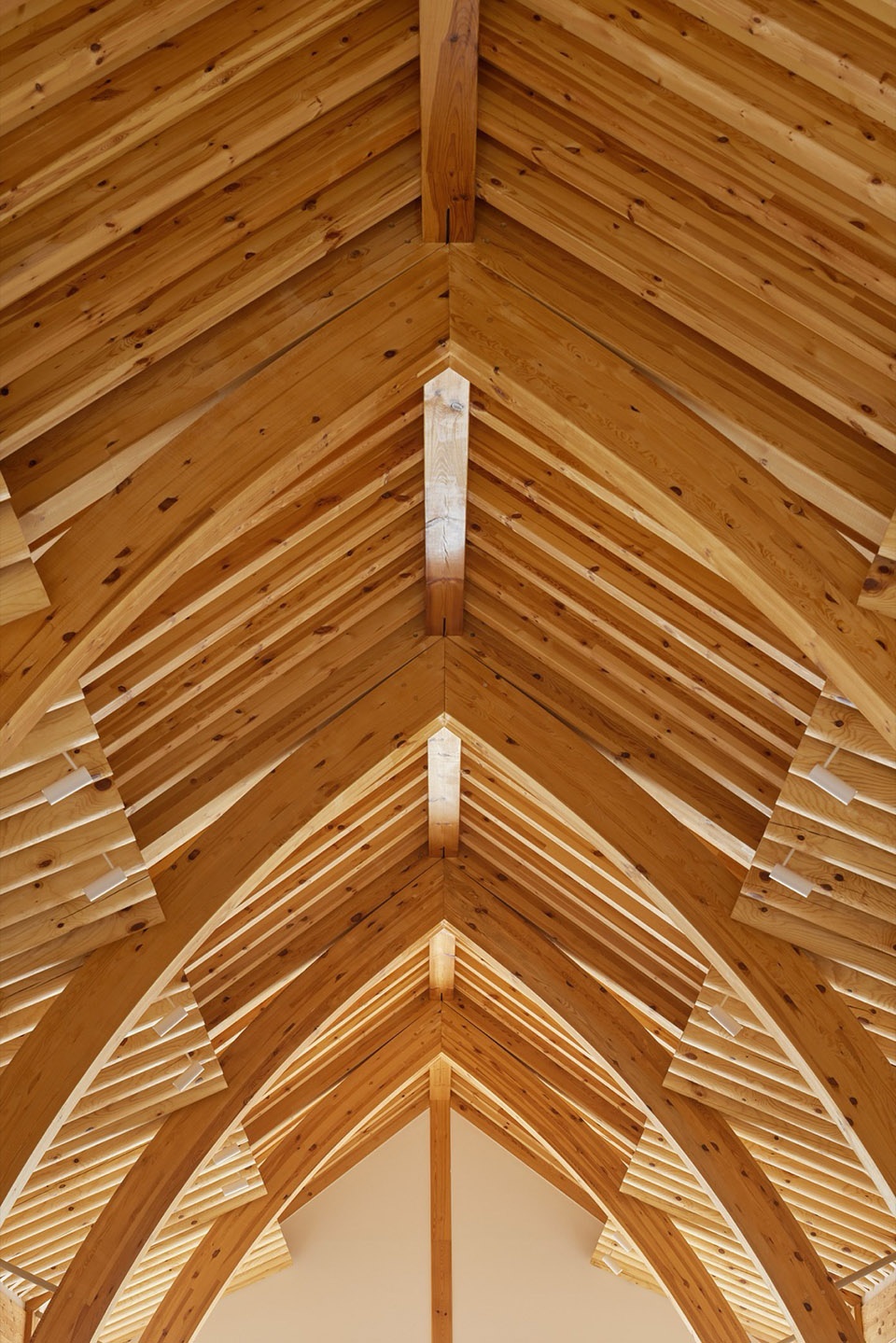
▼构造细部,structure detail
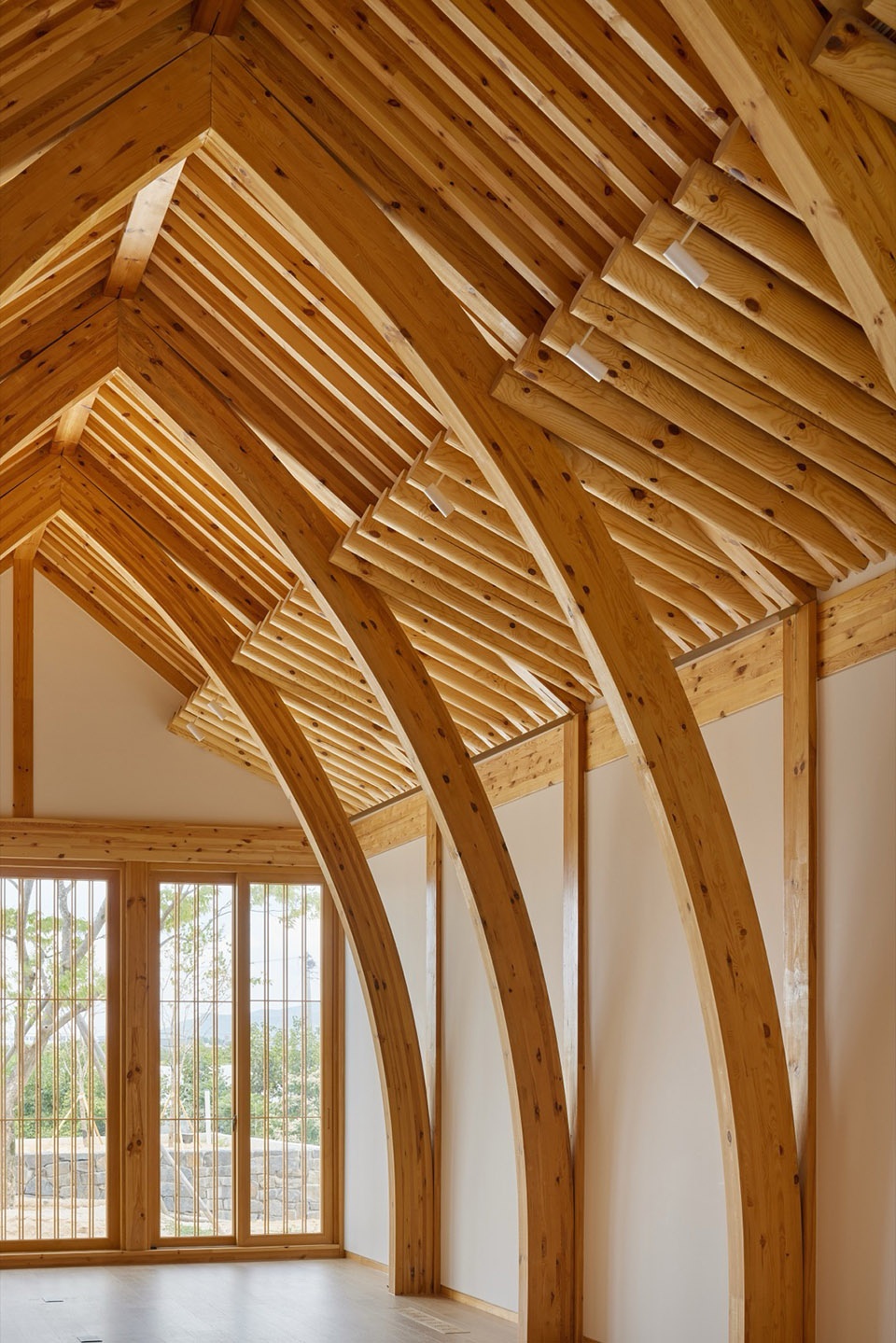
▼细部,details
▼疗愈之厅,the Hall of Remedy
▼疗愈之厅,the Hall of Remedy
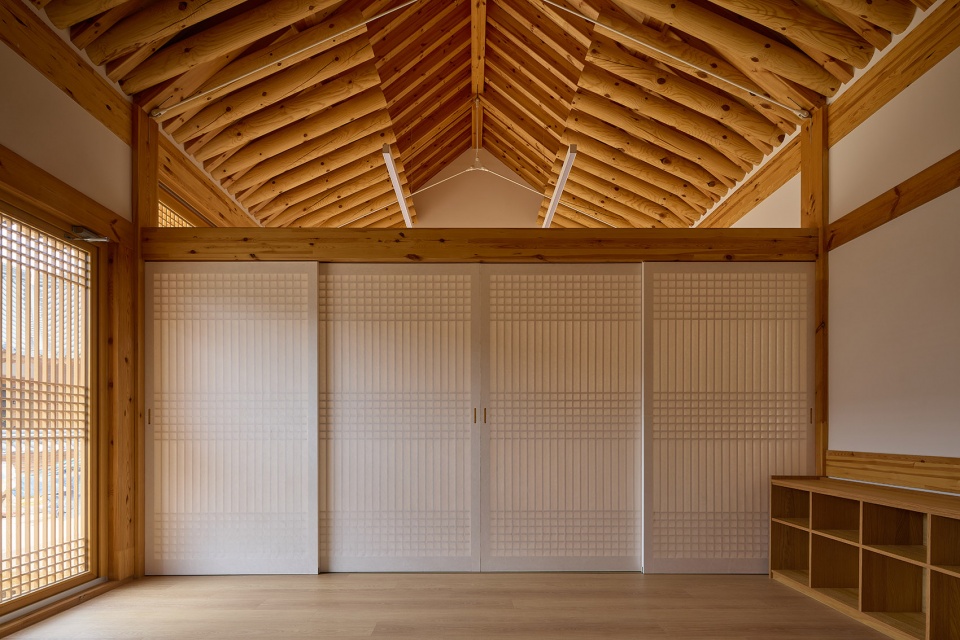
▼由疗愈之厅看庭院,viewing the courtyard from the Hall of Remedy
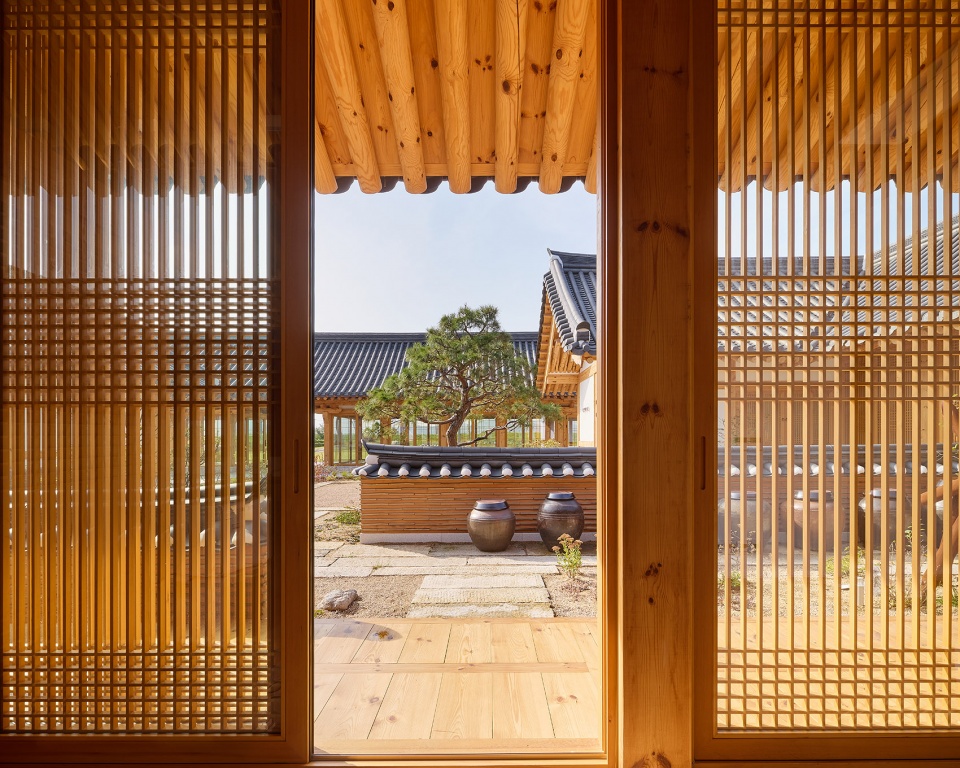
作为整个项目核心的“观照之厅(Hall of Contemplation)”是一间茶室,通过当代设计语言重新演绎东亚传统木构榫卯工艺。室内设置的“退间廊(Toenmaru)”——一种类似于西方门廊(veranda)的空间形式——强化了人与人之间相遇和交流的可能性。
▼观照之厅构造图,structure detail of the Hall of Contemplation
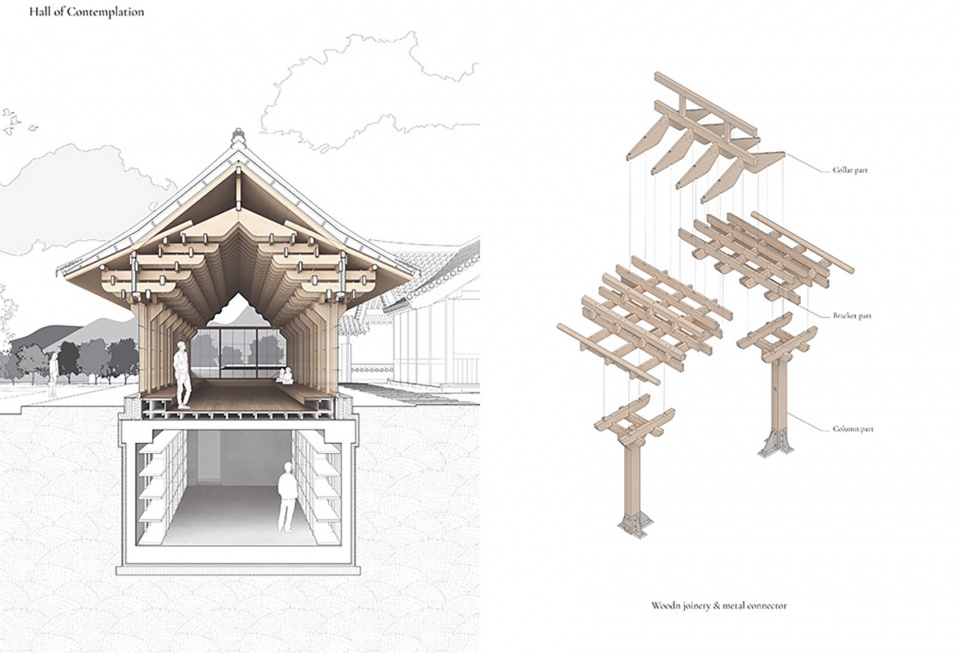
▼构造图,structure detail
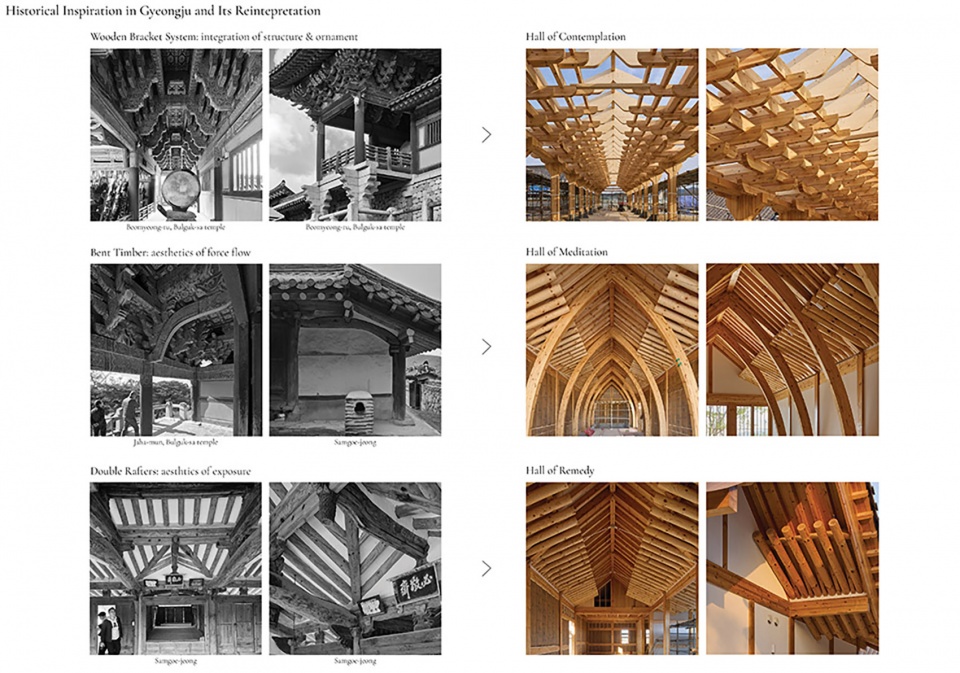
The Hall of Contemplation, a tea house as a central feature showcases a contemporary interpretation of traditional East Asian wooden joinery. The interior use of “Toenmaru,” equivalent to a western veranda, fosters a sense of encounter and interaction.
▼观照之厅,Hall of Contemplation
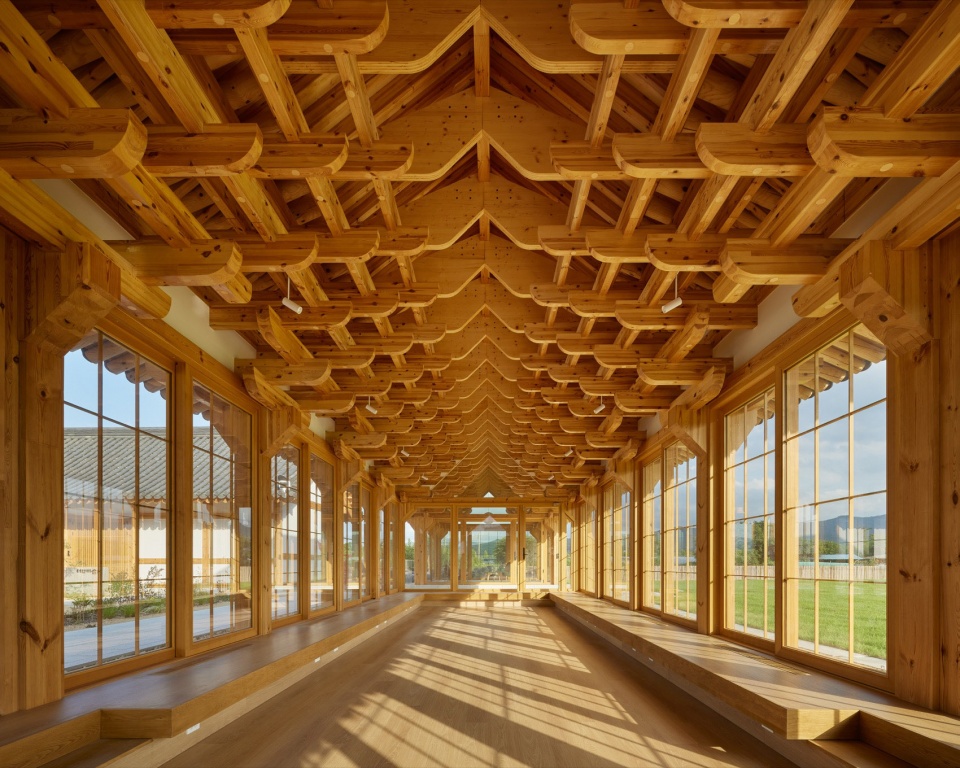
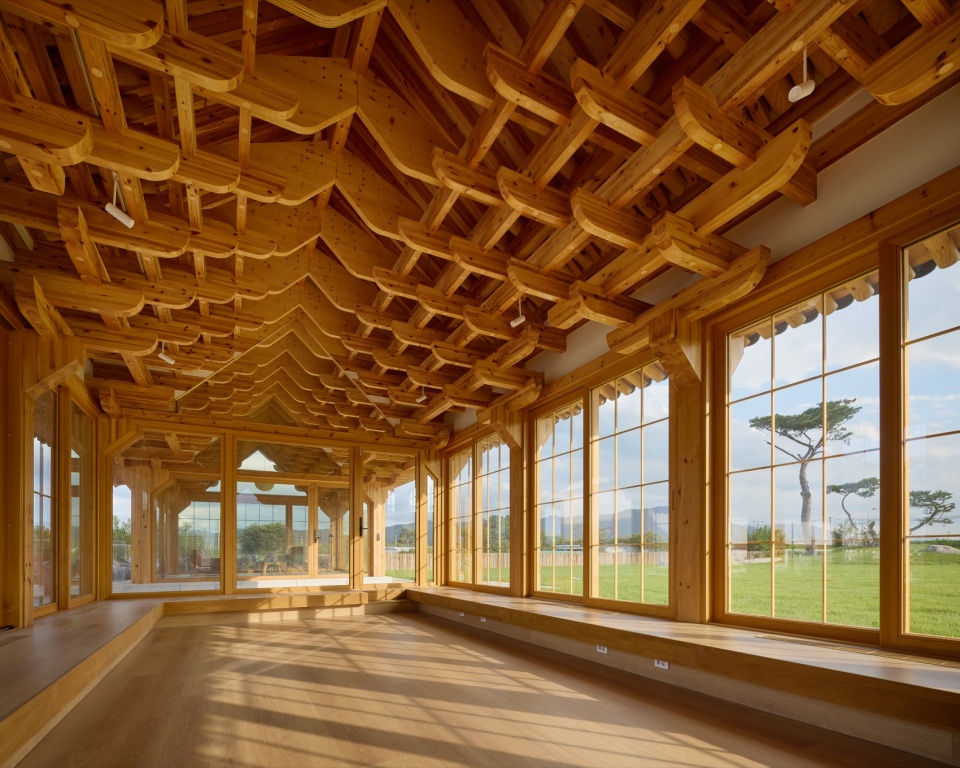
▼观照之厅室内立面,interior elevation of Hall of Contemplation
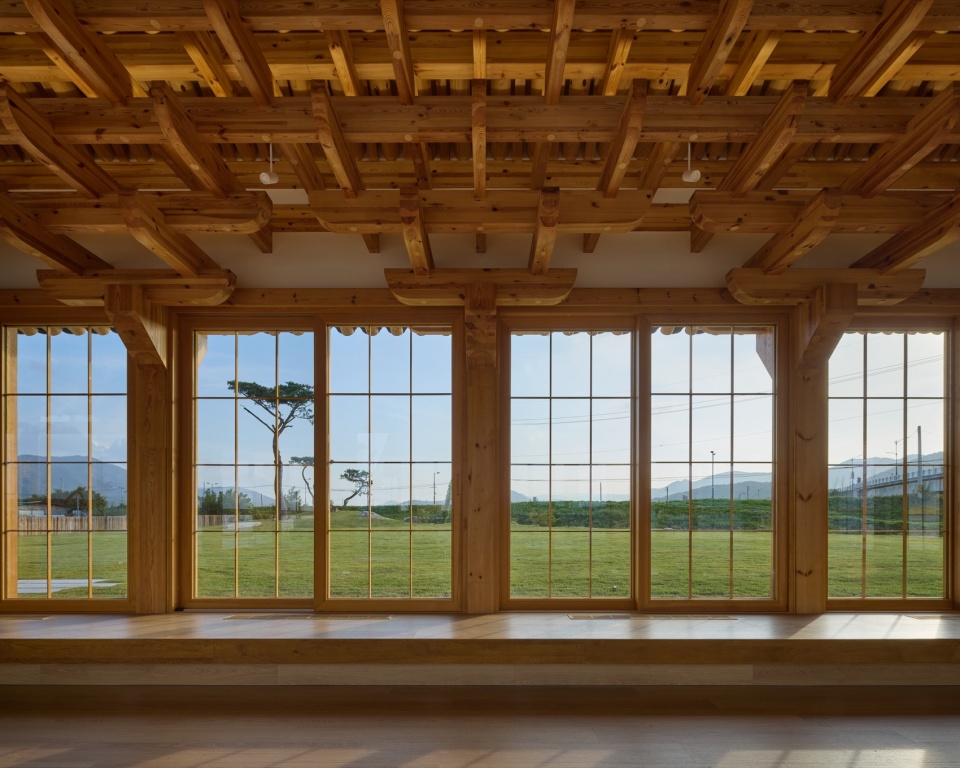
▼观照之厅天花板细部,ceiling of the Hall of Contemplation
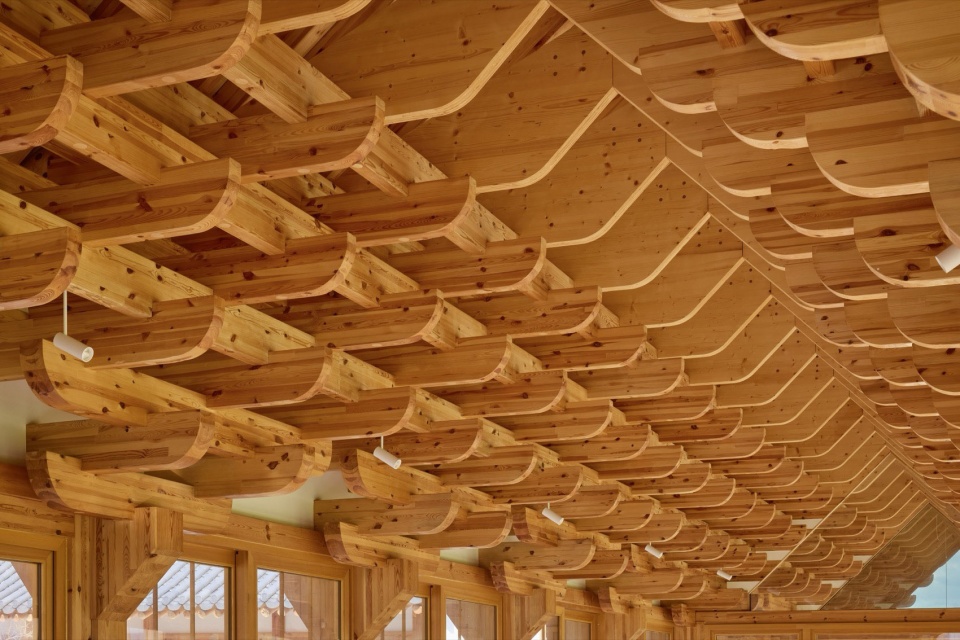
▼细部,details
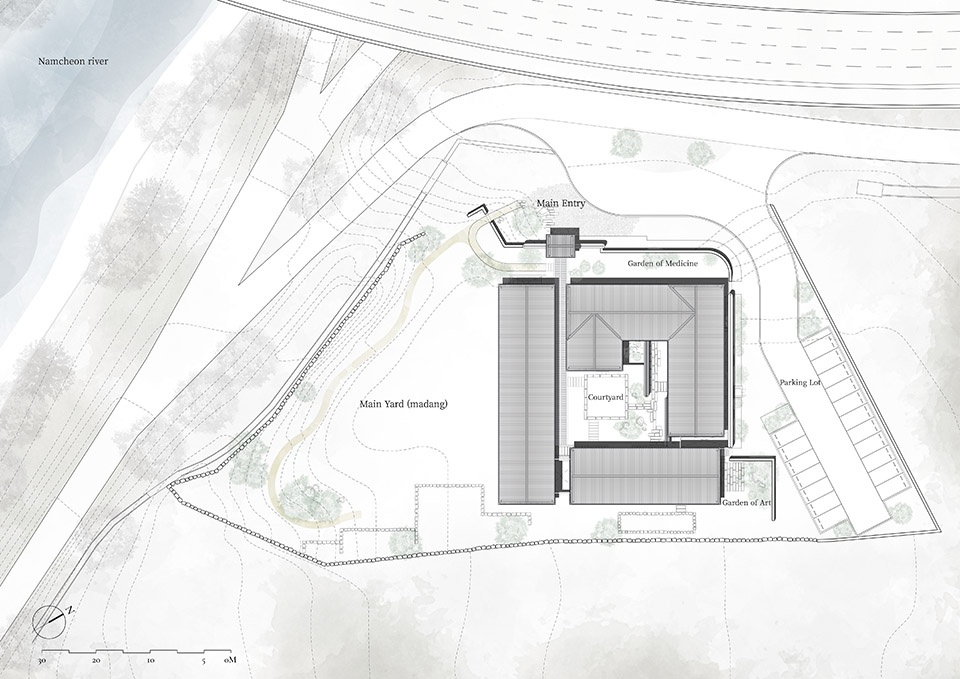
项目的室外空间由三个“Madang”(韩语中意为“院子”)构成,包括前院、中庭与后院,每一处都呈现出不同的空间体验。前院以壮丽的庆州南山为背景,为沉思与静观提供开阔而安宁的环境;尺度更为亲密的中庭则承担着主要交通组织功能,将入口与各栋建筑连接起来;后院则作为后勤服务区与停车空间使用。
The project’s exterior spaces, three “Madang”s (Korean for “yard”), comprise a front yard, courtyard, and back yard, each offering a distinct experience. The front yard, framed by the majestic Gyeongju Namsan, provides a serene setting for contemplation. The courtyard, on a more intimate scale, facilitates the circulation connecting the main entrance to each building. The back yard serves as a service area and parking space.
▼庭院,Madang
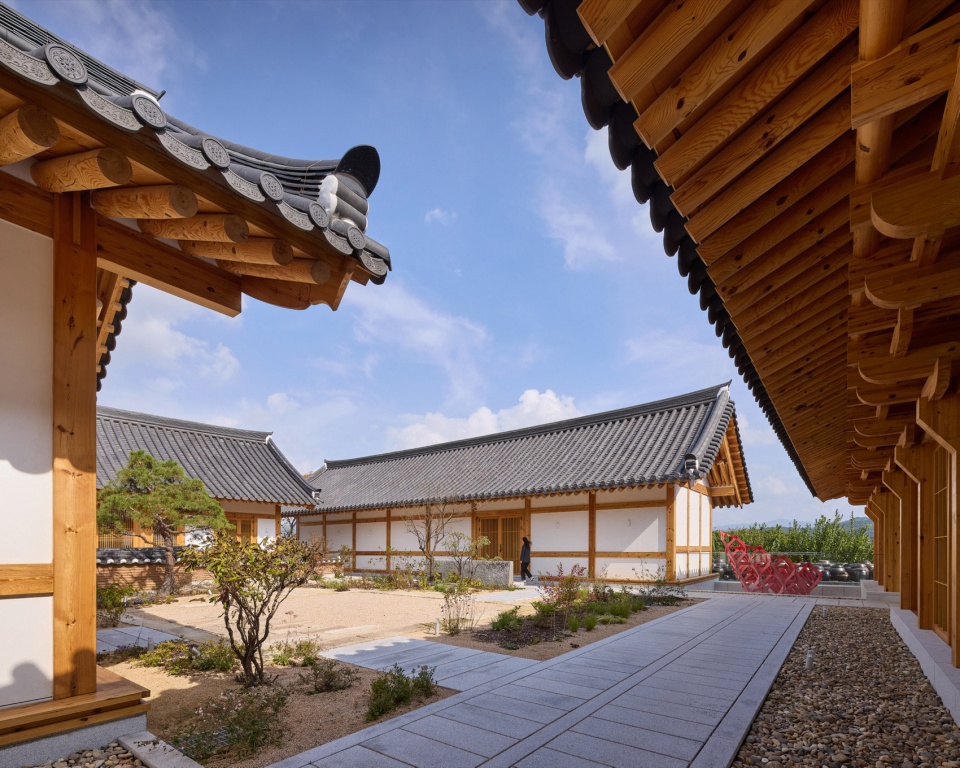
▼前院、中庭, front yard, courtyard
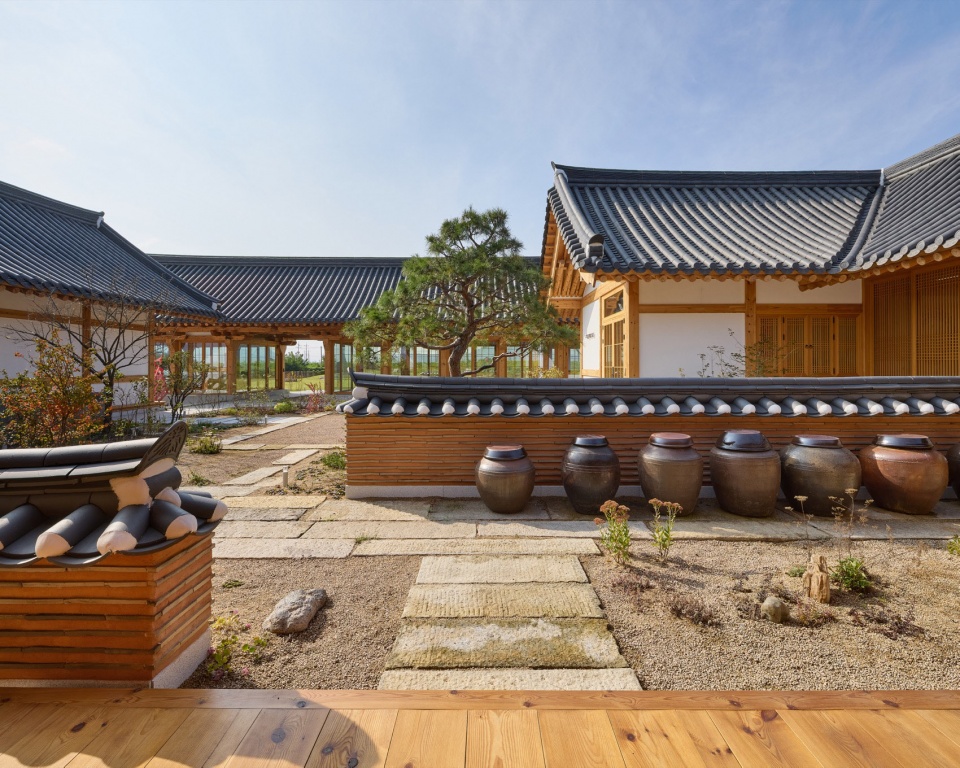
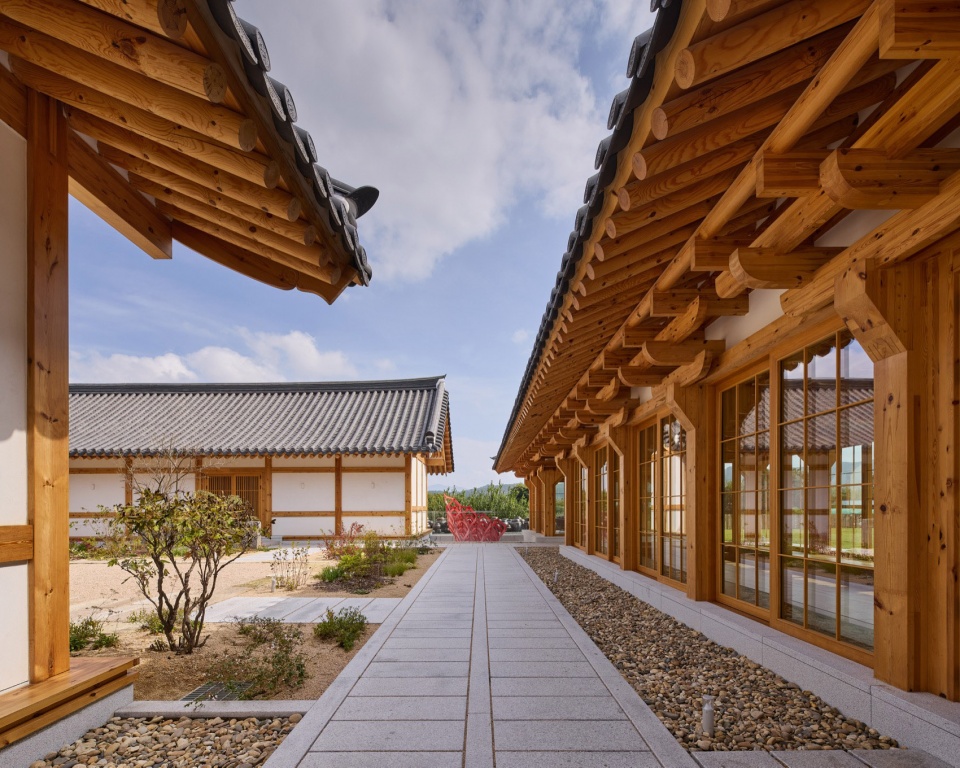
▼庭院,Madang
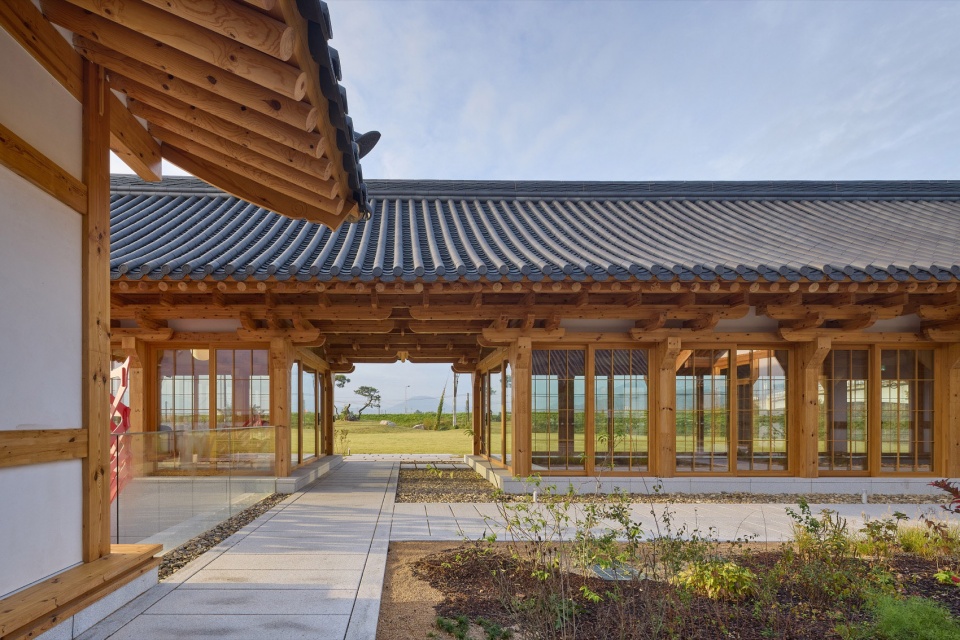
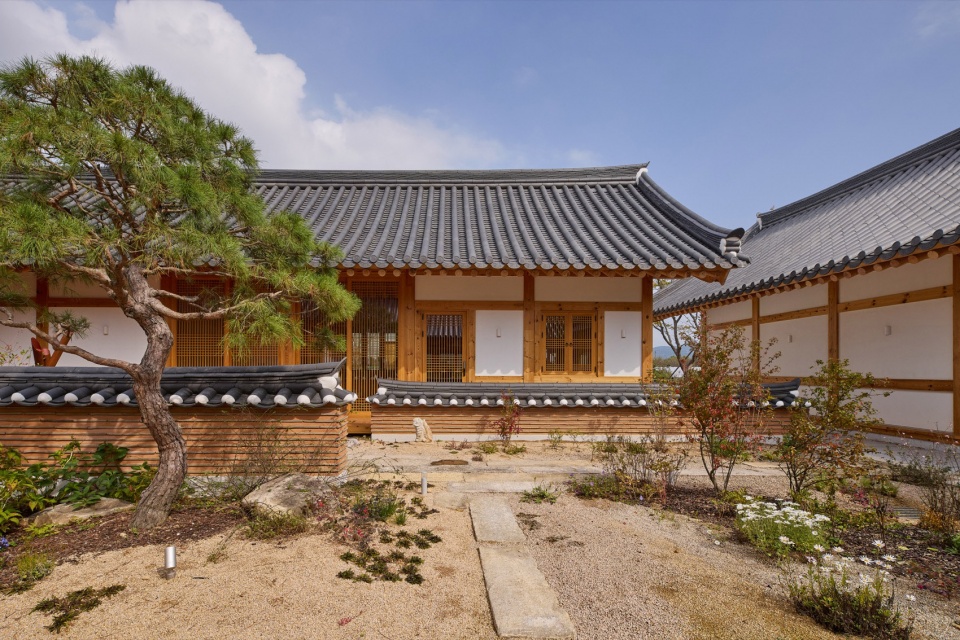
▼天井庭院,patio courtyard
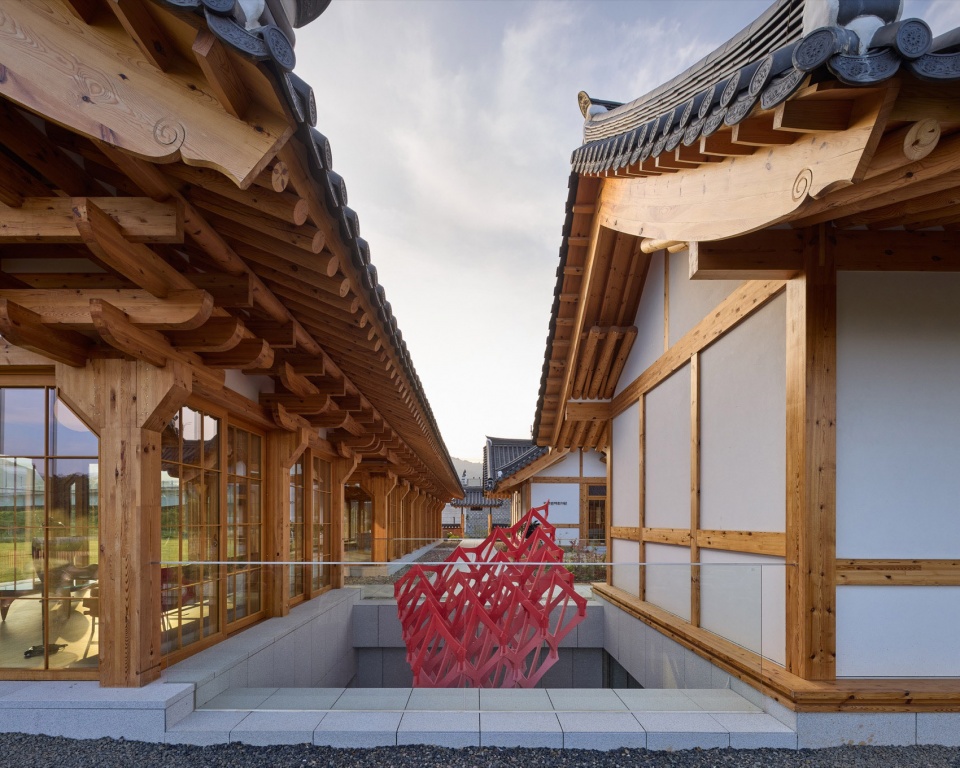
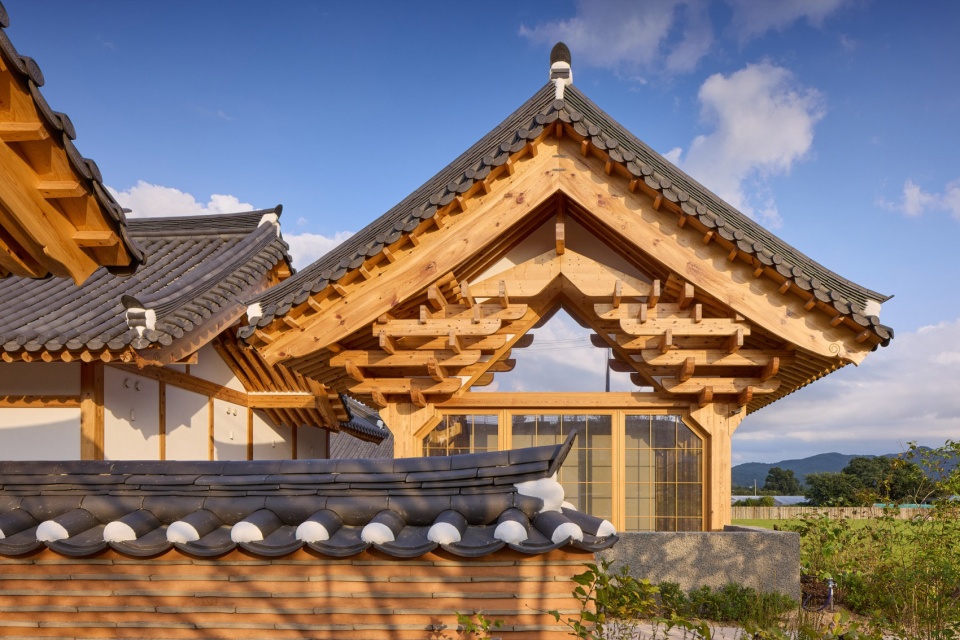
除了功能层面的考量之外,疗愈之家也是一项关于可持续建筑实践的探索。项目采用当地木材与环保材料建造,最大限度利用自然采光与自然通风,并针对传统韩屋屋顶保温性能不足的问题进行了改进,从而为传统建筑的可持续发展提供新的可能性。同时,项目对于地方文化元素的融入,也进一步强化了建筑与社区之间的联系。
Beyond its functional aspects, the House of Rejuvenation is a testament to sustainable architecture. By utilizing local wood and eco-friendly materials, maximizing natural light and ventilation, and addressing the insulation challenges of traditional hanok roofs, the project contributes to a more sustainable future for traditional architecture. Additionally, the project’s integration of regional cultural elements strengthens its connection to the local community.
▼项目采用当地木材与环保材料建造,
the structure utilizing local wood and eco-friendly materials
▼细部,details
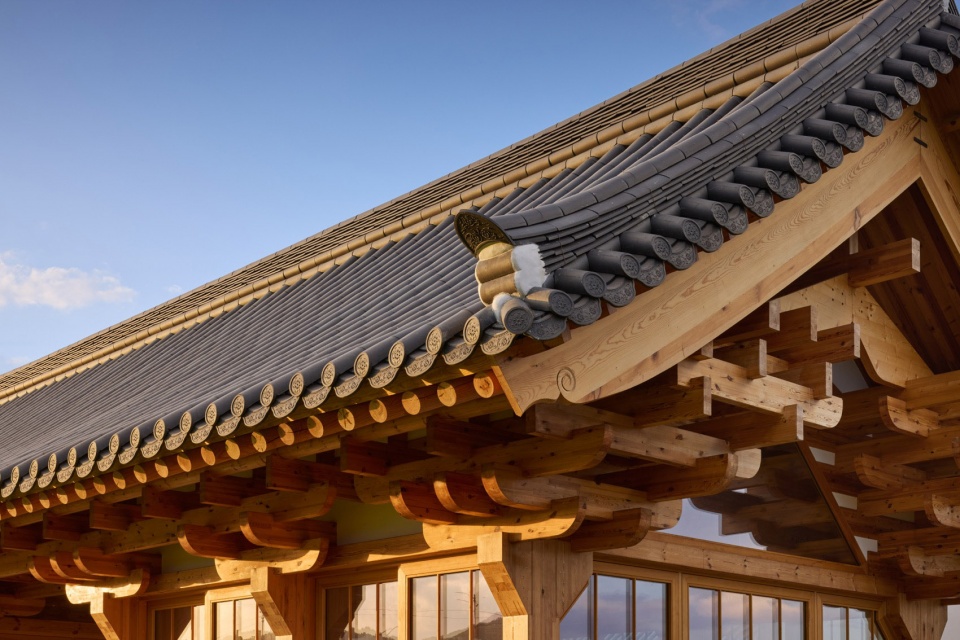
▼细部,details
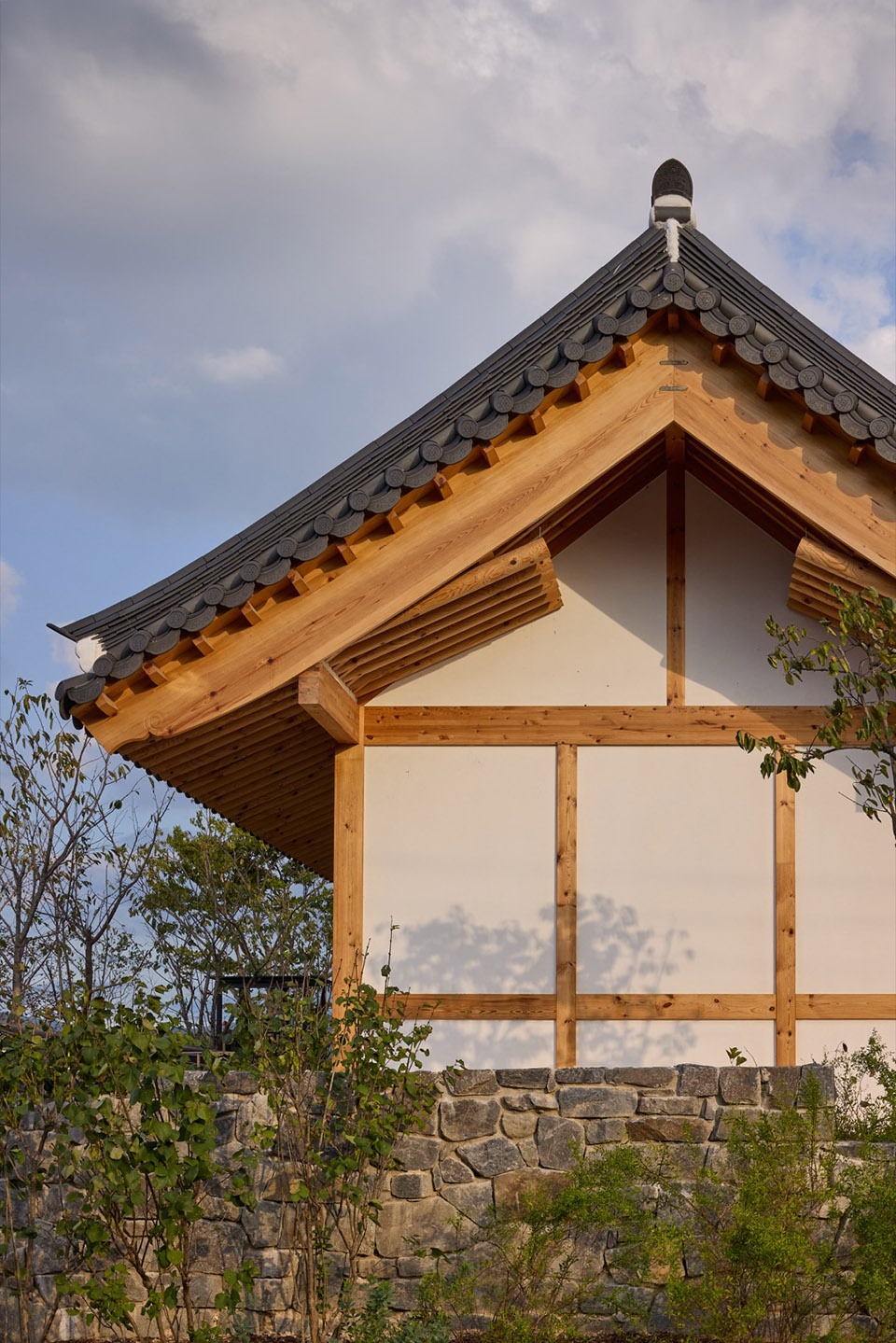
▼山墙立面,gable facade
总体而言,疗愈之家展示了韩国传统建筑如何通过当代诠释转化为兼具现代性、可持续性与文化相关性的空间典范。通过创新设计与对传统遗产的尊重,项目为传统建筑未来的发展方向提供了有价值的启示。
In conclusion, the House of Rejuvenation stands as a remarkable example of how traditional Korean architecture can be reinterpreted to create a modern, sustainable, and culturally relevant space. Through its innovative design and commitment to preserving heritage, the project offers valuable insights into the future of tradition.
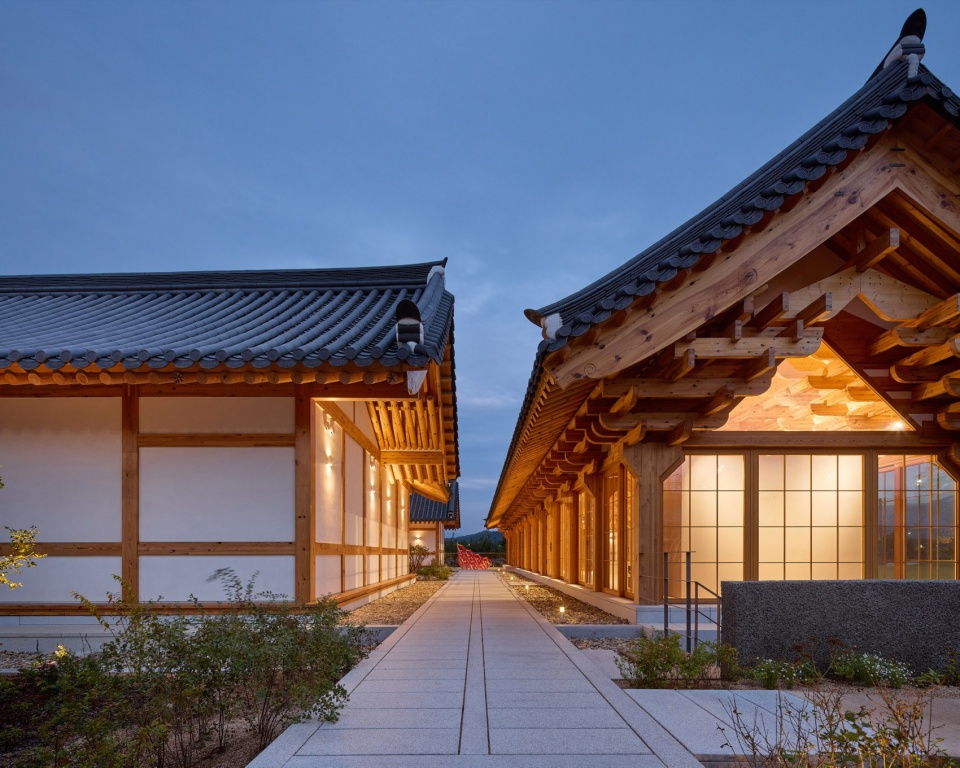
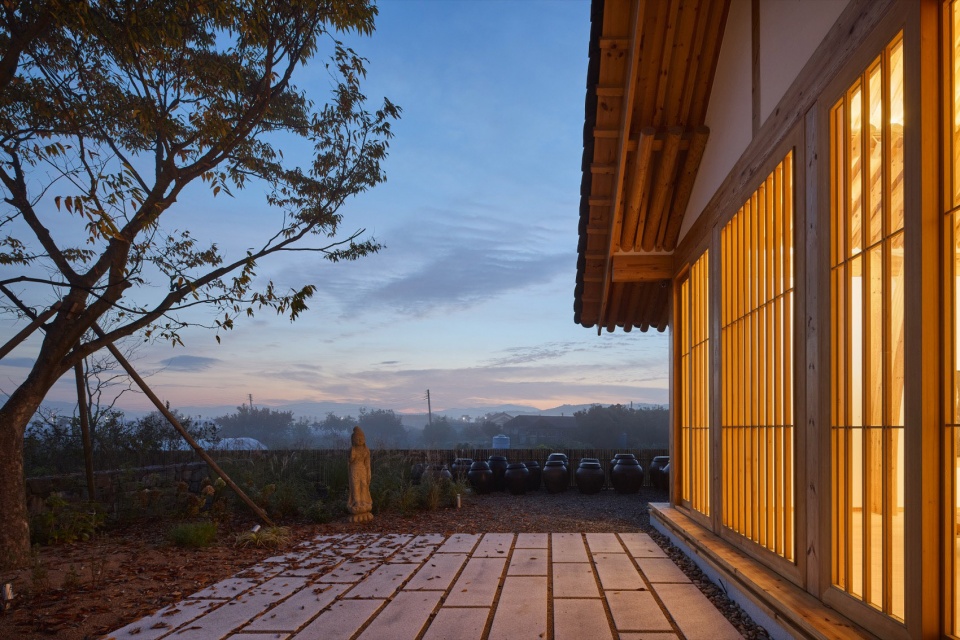
▼夜景,night views
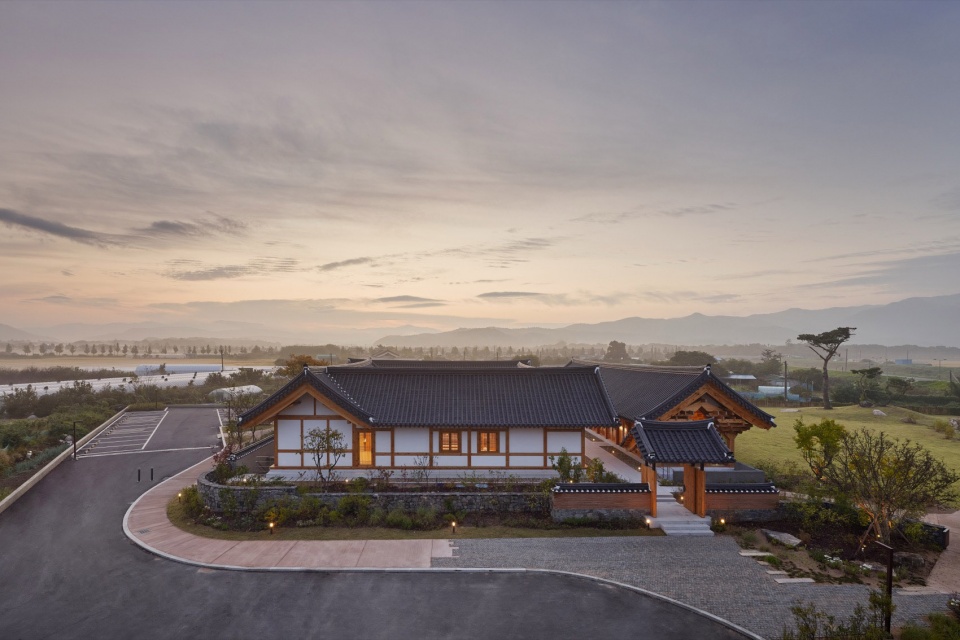
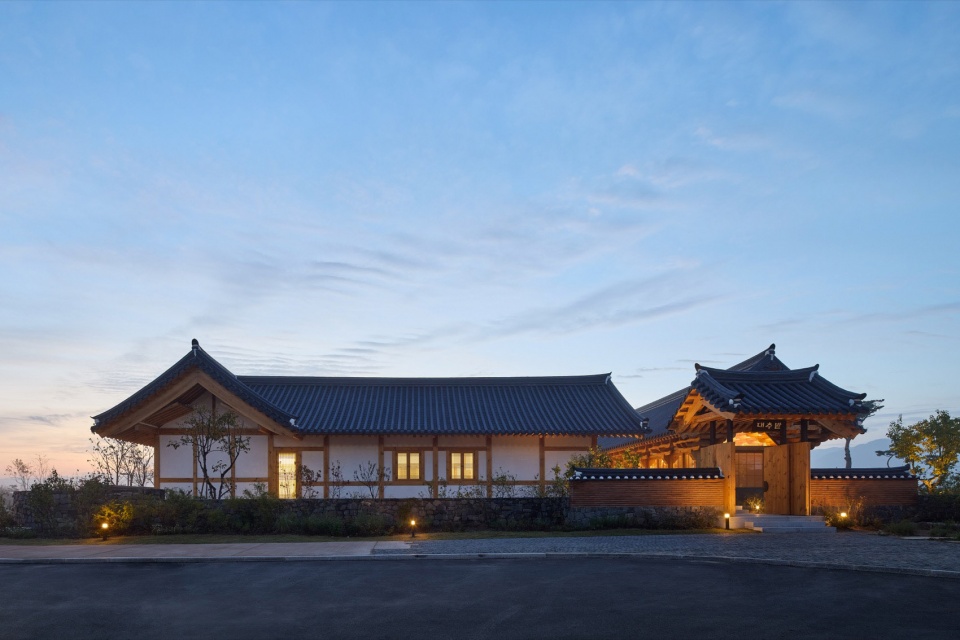
▼夜景近景,closer view of exterior at night
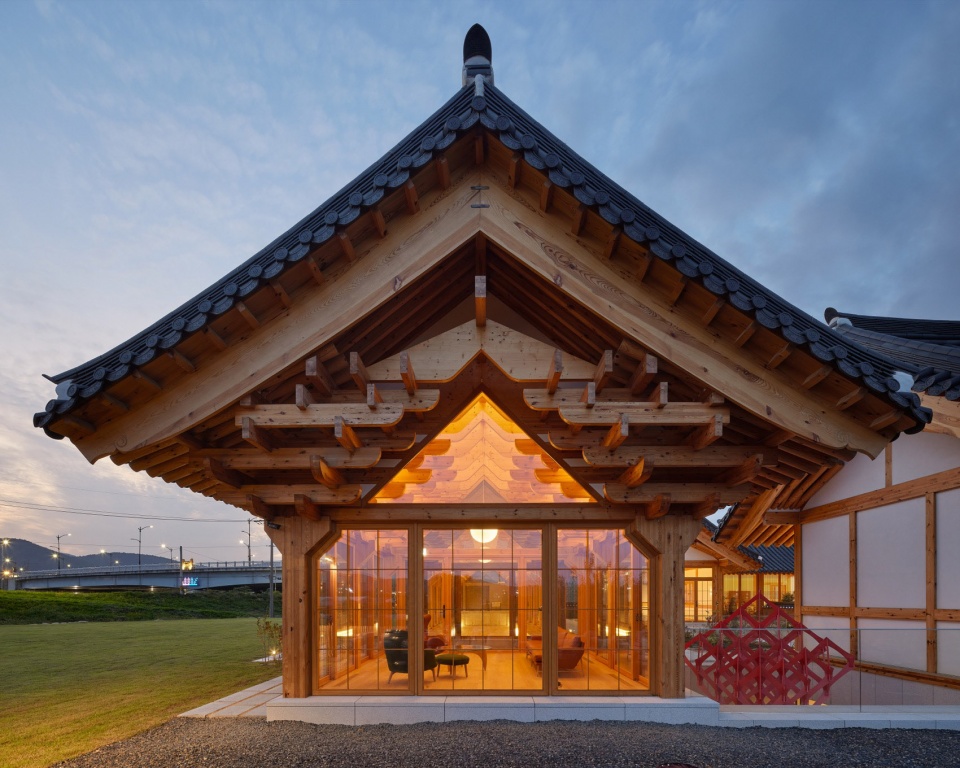
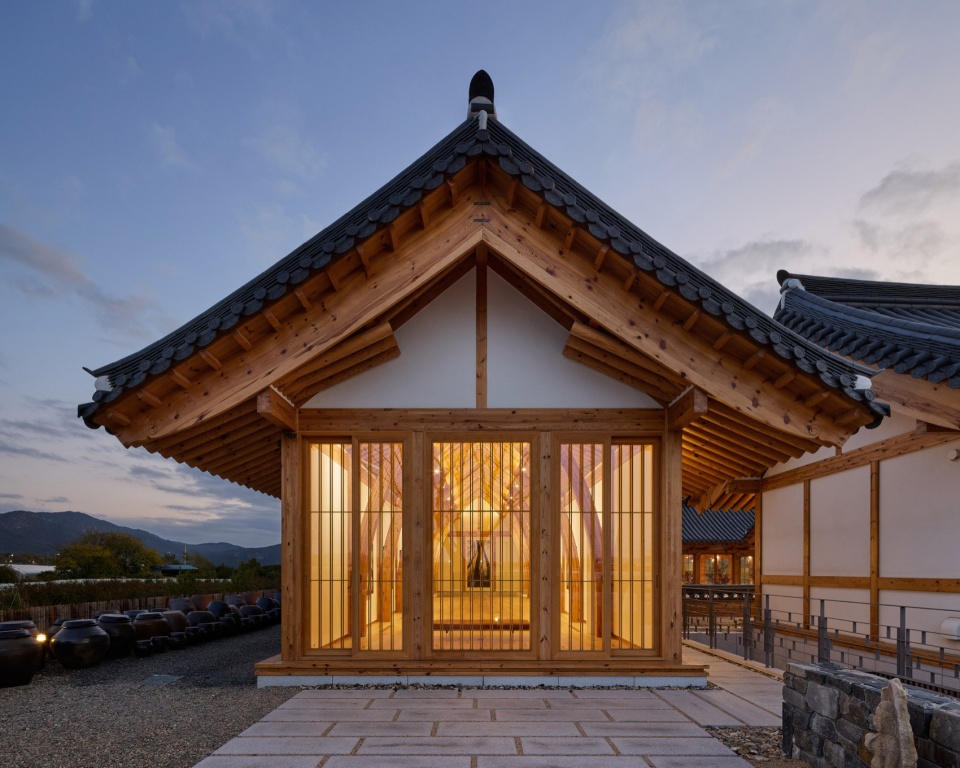
▼庭院夜景,night view of the courtyard
▼总平面图,master plan
▼底层平面图,ground floor plan
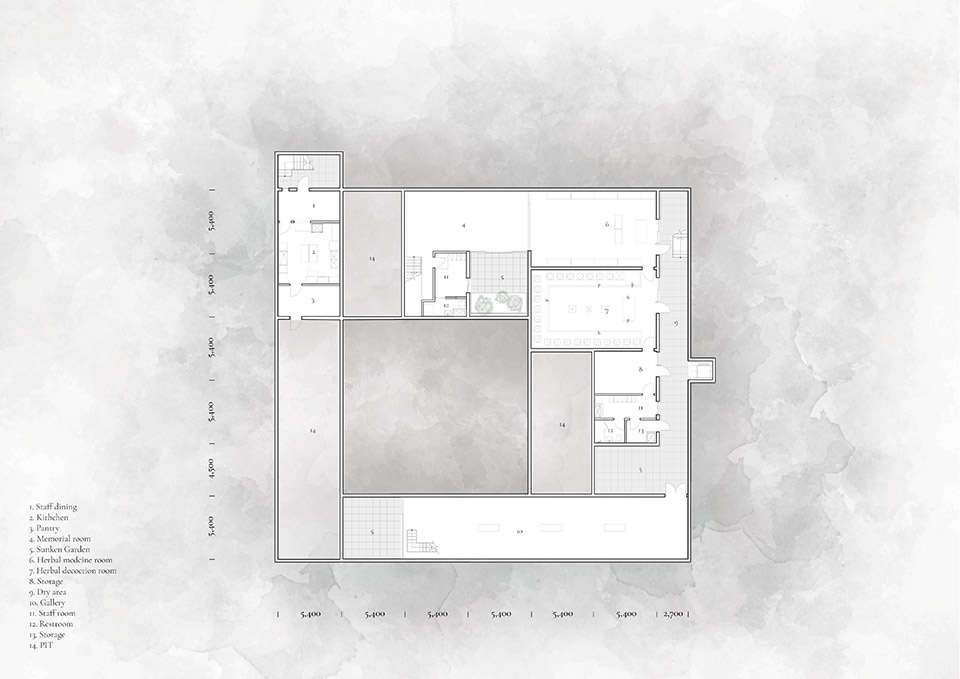
▼二层平面图,upper floor plan
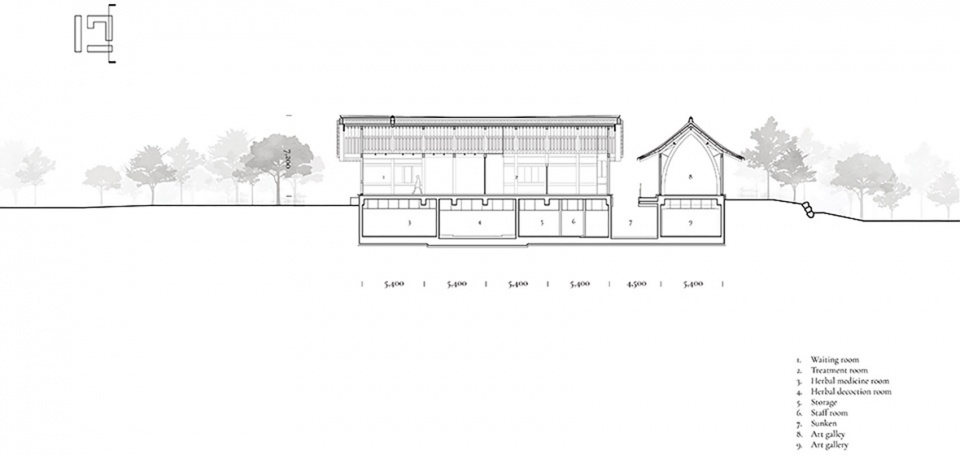
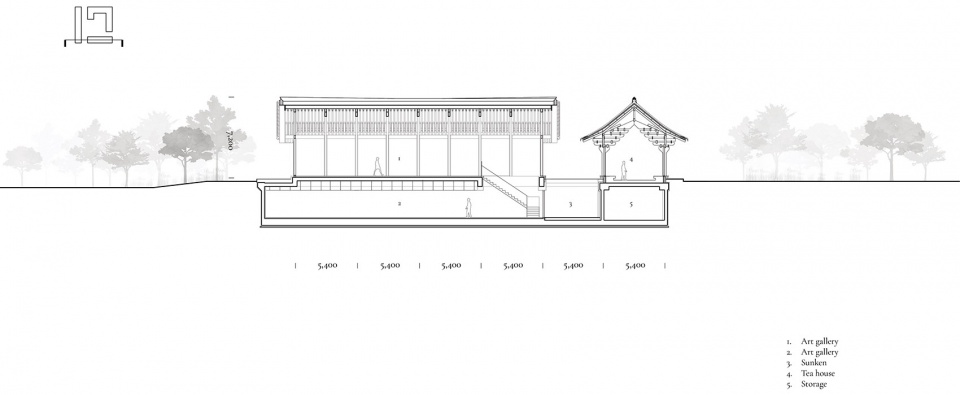
▼剖面图,sections
Project name: House for Rejuvenation
Architect : JK-AR (webpage: http://www.jk-ar.com)
Instagram: https://www.instagram.com/jaek_kim/
Design Team: Jae K. Kim (lead designer), Gyutae Kim, Yesol Lee, Sookran Kwak
Lcoation: 60, Gangbyeon-ro, Gyeongju-si, Gyeongsangbuk-do, Republic of Korea
Function Oriental medicine clinic, Gallery, Tea house
Site area : 4,976.00m2
Building Area : 520.02m2
Total Floor Area: 951.19m2
Building height: 7.37m
Building coverage: 10.45%
Floor area ration: 9.50%
Exterior material: European red pine glulam, Domestic red pine
Structural engeneer: Agehara Shigeo(Structural Net)
Byeongsoon: Park (Theo structure)
Contractor: Gapbong Kim, Dohyung Kim, Minho Kim (Stuga House)
MEP: Jongtaek Lee (Yoosung Engineering)
Landscape design: Jaehyeok Choi (Openness studio)
Design period: 2017.10~2022.09
Construction period: 2022.09.14~2025.08.22
Photo: Rohspace