岭子底便民桥,陕西 / 景观
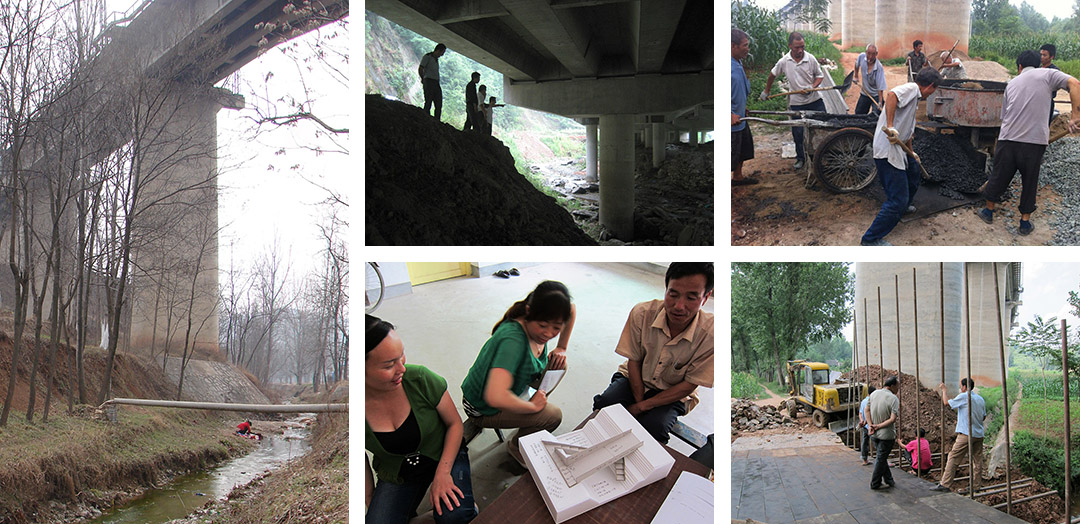
中国的地区差异化在市场发展下已成为阻碍点,在偏远落后地区修建完善公共基础设施不仅增加新的就业机会也会给未来发展带来更多可能性。比如陕西某条公路建设通过之处破坏了上百条当地桥梁。这个新建便民桥项目发生在桥梁同样被破坏的岭子底村。
As part of the country’s urbanisation scene, China’s infrastructure construction leads to myriad consequences that significantly impact not only the economic conditions of the respective locality, but also its existing social matrices. One example, highway infrastructure, undoubtedly brings to remote areas increased accessibility and new employment opportunities. Yet at the same time, this top-down planning approach often overlooks the specific needs of the local area. Construction of a new highway in southern Shaanxi Province required the destruction of hundreds of local bridges. This project involves the design of a pedestrian bridge in Lingzidi Village to service the disrupted network.
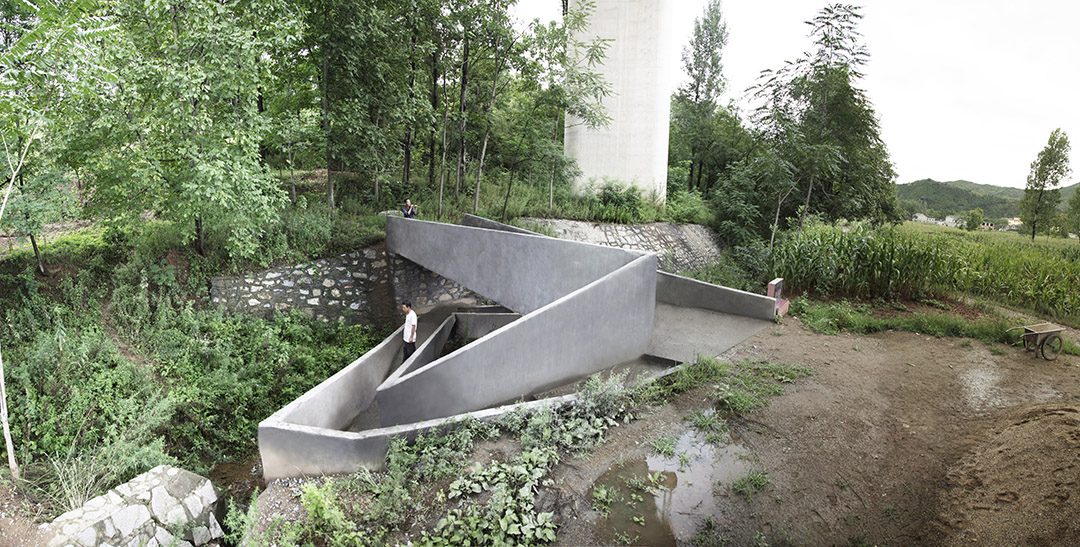
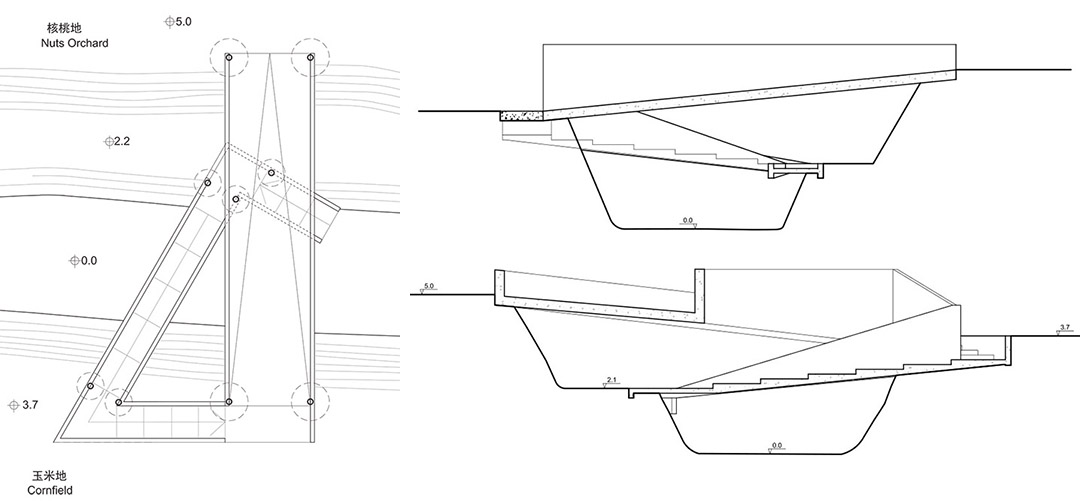
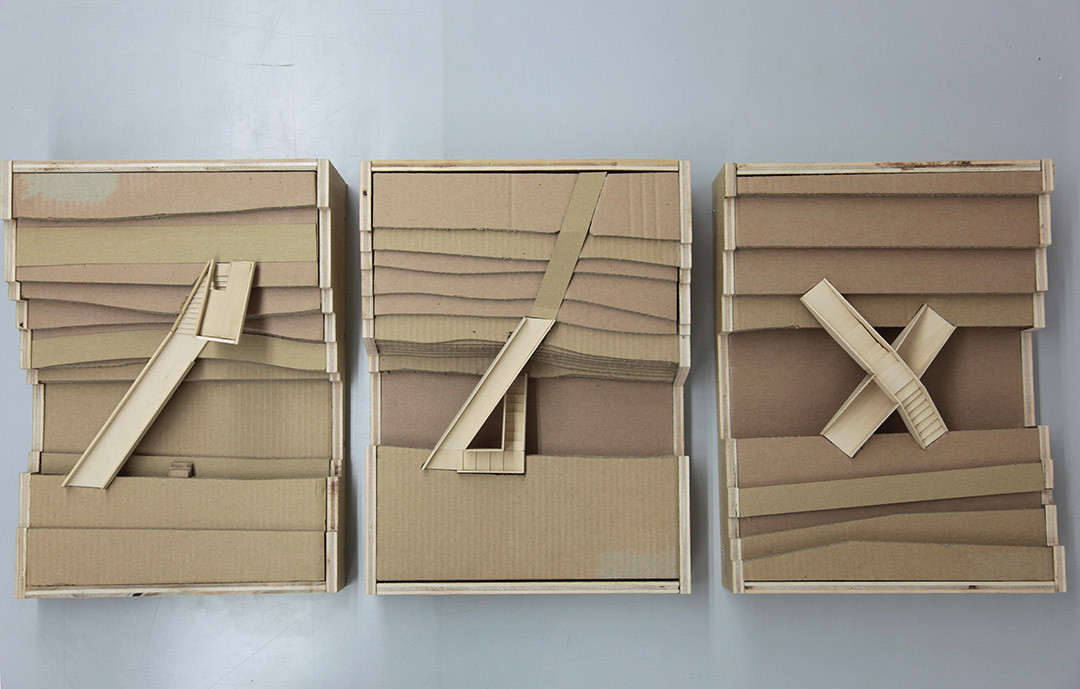
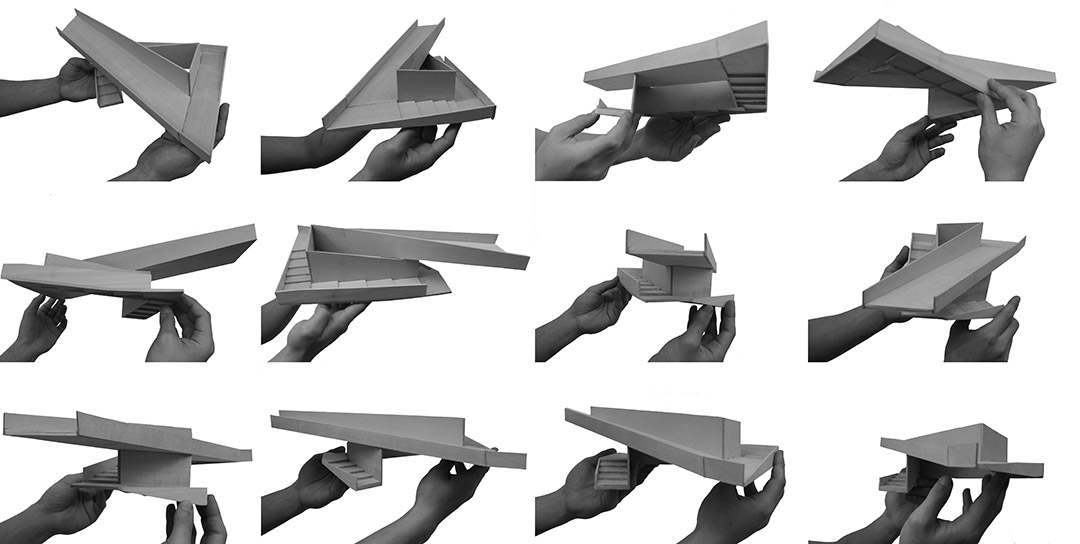
桥的设计主要是利用单环路衔接河堤的高差,并把河堤两岸连接。这样的设计一方面形成了宽阔、直接的行车通道供小型货车和摩托车来回两岸,另方面形成了一条人行道,让人们能够从桥下直达河边,方便钓鱼和日常的洗涤工作。荫蔽的台阶供村民坐下休憩。以前,河流把村民的聚落与农产品种植地分隔了。如今,村民在两岸间穿梭自如,并聚集在桥边做贸易生意,使桥成为村里的一个社交汇点。
The design of the bridge is a singular loop linking two levels of the riverbank and an additional arm connecting across the river. This produces a wide, direct path for small trucks and motorcycles and a pedestrian path that cuts under the bridge, allowing for access to the river for needs such as washing, cleaning, and fishing. Steps and shaded areas provide spaces for seating and relaxation. The river has long been an obstacle between the village settlement and the agricultural production farm. With the construction of this bridge, villagers are once again able to commute freely across the river, meeting at the bridge for trade and commerce.
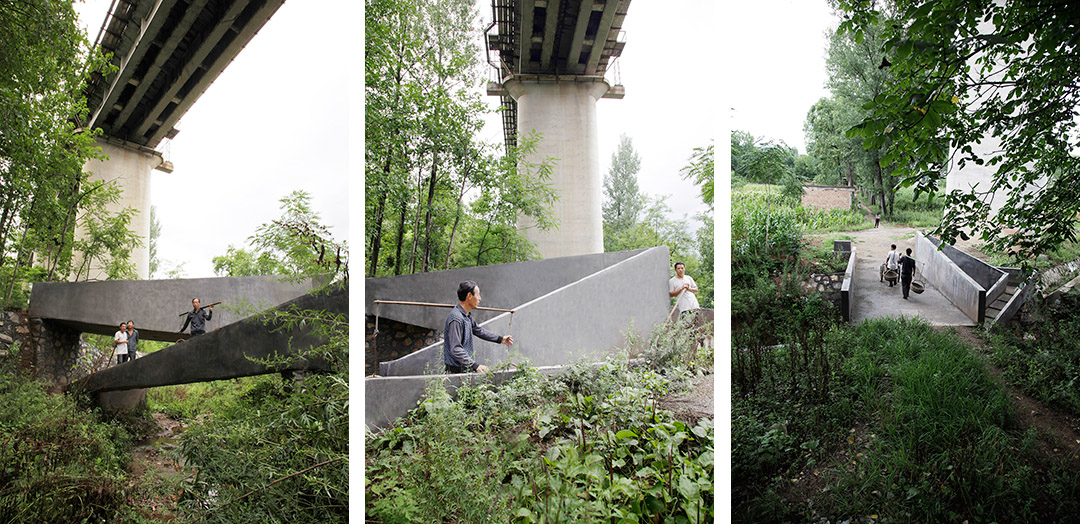
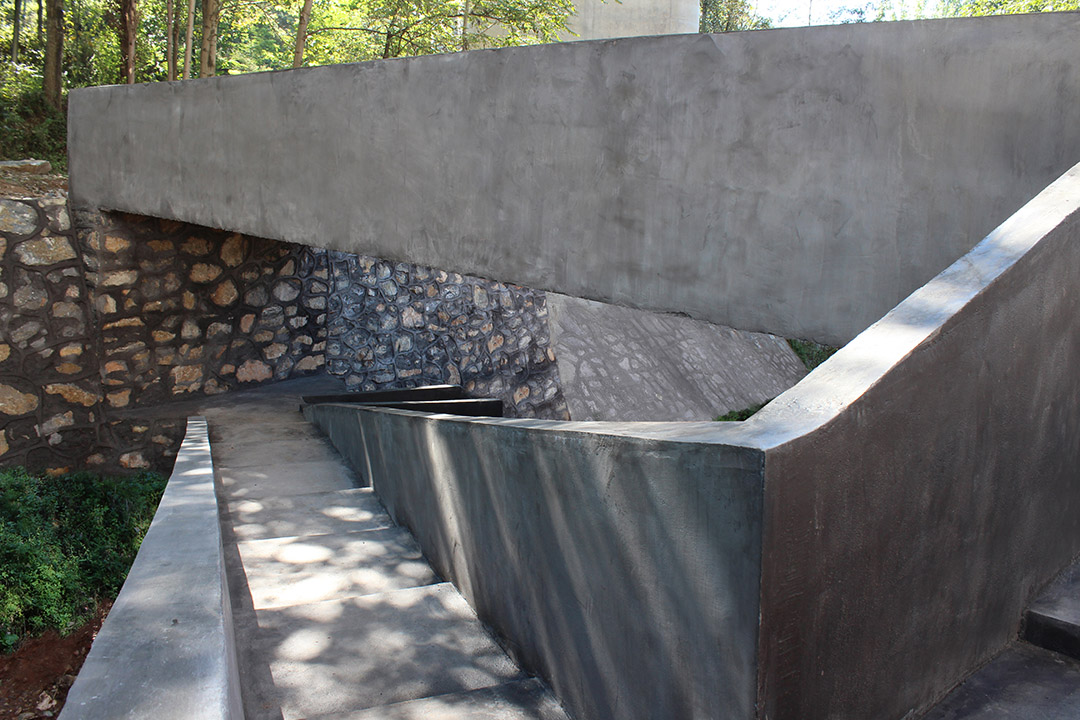
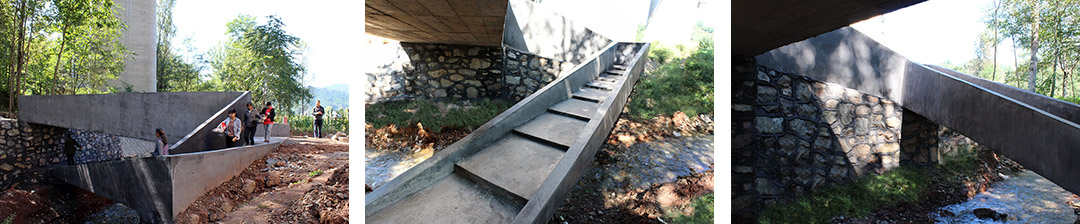
尽管这道桥的尺度很小,它促进了当地农村掌握经济命脉。它亦鼓励村民不要光依靠儿女从工厂市镇寄回来的资金来过活,而是尝试自力更生,维持并改善当地的农村经济。
Despite its small scale, this bridge is a critical link for the local village economy, emerging as a social hub and mitigating some of the many uprooting effects of large-scaled infrastructure construction. It encourages villagers to maintain and improve their local economy rather than rely on sources sent back from younger generations working in factory towns. Through its dyed cast-concrete, the bridge visually distinguishes itself form the adjacent, lighter grey highway viaduct, referencing subtly at the disparities between micro and macro approaches.