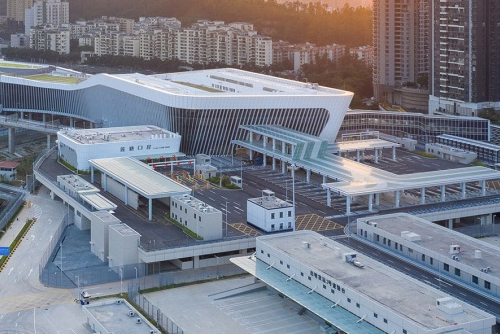
XPACE湾区数字公园,杭州/建筑
随着传统制造业生产模式向数字产业生产方式转型,大量旧工业厂房亟需通过空间改造表述并引导其未来的功能转型。在时间节奏紧张、成本严控的项目中,如何有效兼容新与旧是工业建筑改造设计的难点与要点。
With the transformation of traditional manufacturing production mode to digital industrial production mode, a large number of old industrial plants urgently need to express and guide their future functional transformation through space transformation. In projects with tight time rhythm and strict cost control, how to effectively integrate the new and the old is the difficulty and key point of industrial building renovation design.
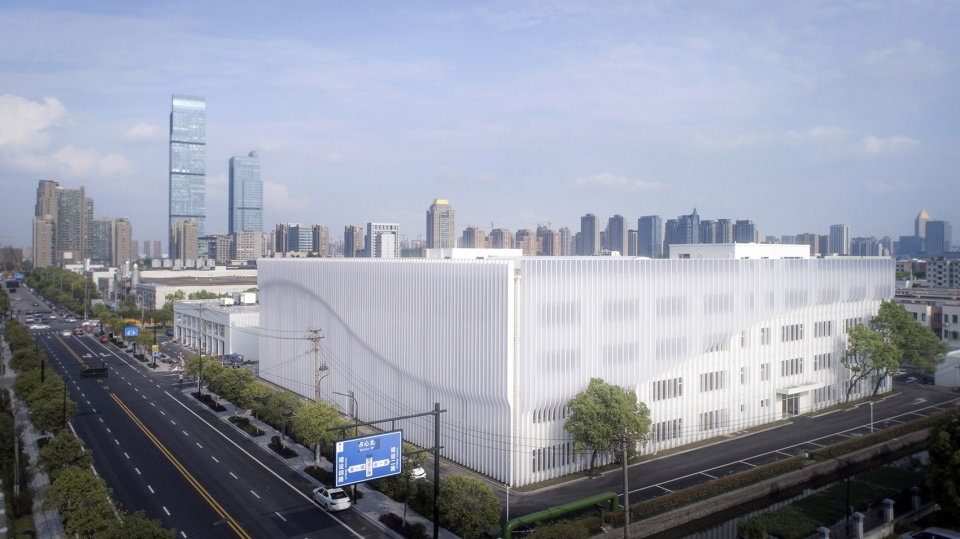
XPACE湾区数字公园是盈动资本的湾区孵化器,期望以互联网+、数字经济为导向,激活老旧、衰败的传统制造业园区,并通过空间整合手段、产业+资本+基地的特色孵化方式,使这些园区转型为培育人工智能、大数据、云计算、信息经济、创意经济及其上下游相关项目初创公司的孵化、创新场所。
XPACE Bay Area Digital Park is the incubator of Yingdong Capital in the Bay Area. It is expected to activate the old and decaying traditional manufacturing parks guided by Internet plus and digital economy, and transform these parks into incubators and innovation places for incubators of artificial intelligence, big data, cloud computing, information economy, creative economy and its upstream and downstream related projects by means of space integration, industry+capital+base incubation.
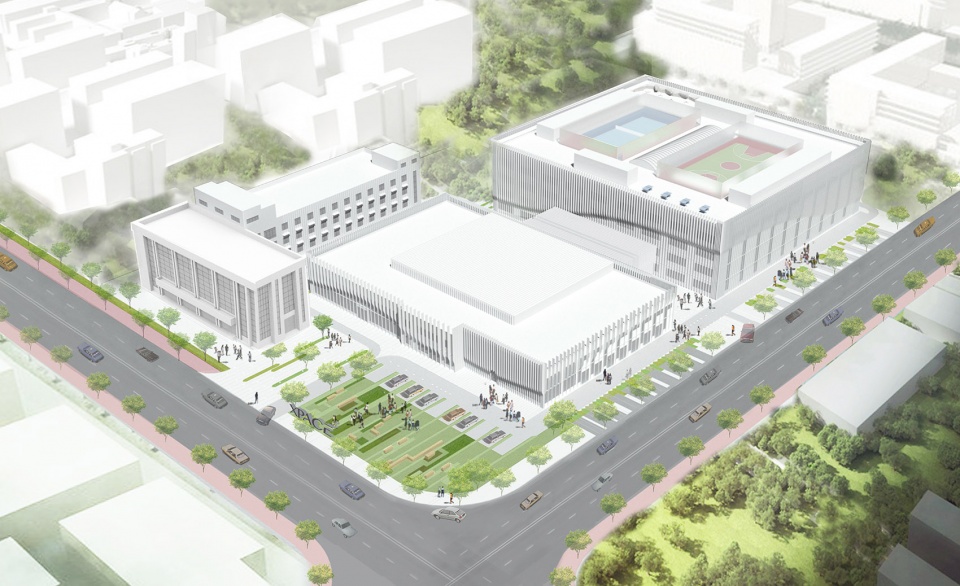
STUDIO QI建筑事务所一贯秉承自然建造与2.5维的建筑理念,同样期望在工业建筑改造中探索一种源自场地自身的,通过梳理与重建场地关系,并运用一直擅长的参数化手段,重新激活旧工业园区的设计方法。XPACE湾区数字公园改造项目便是在该理念指导中的设计实践。该项目中,STUDIO QI建筑事务所与JL-OFFICE合作,通过一体化改造,利用原有工业厂房,在以立面设计处理城市关系、以空间构造呈现数字理念两个方面展开改造实验,将XPACE湾区数字公园打造成国际化、地标性的未来城市科技创新园区。
STUDIO QI Architecture Firm has always adhered to the concept of natural construction and 2.5-dimensional architecture, and also expected to explore a design method that originated from the site itself in the transformation of industrial buildings, and reactivate the old industrial park by combing and reconstructing the site relationship, and using the parameterization method that has always been good at. XPACE Bay Area Digital Park Reconstruction Project is the design practice under the guidance of this concept. In this project, STUDIO QI Architects and JL-OFFICE cooperated to build the XPACE Bay Area Digital Park into an international and landmark future urban science and technology innovation park through integrated transformation, utilizing the original industrial plant, and carrying out transformation experiments in two aspects of dealing with urban relations with facade design and presenting digital concepts with spatial structure.
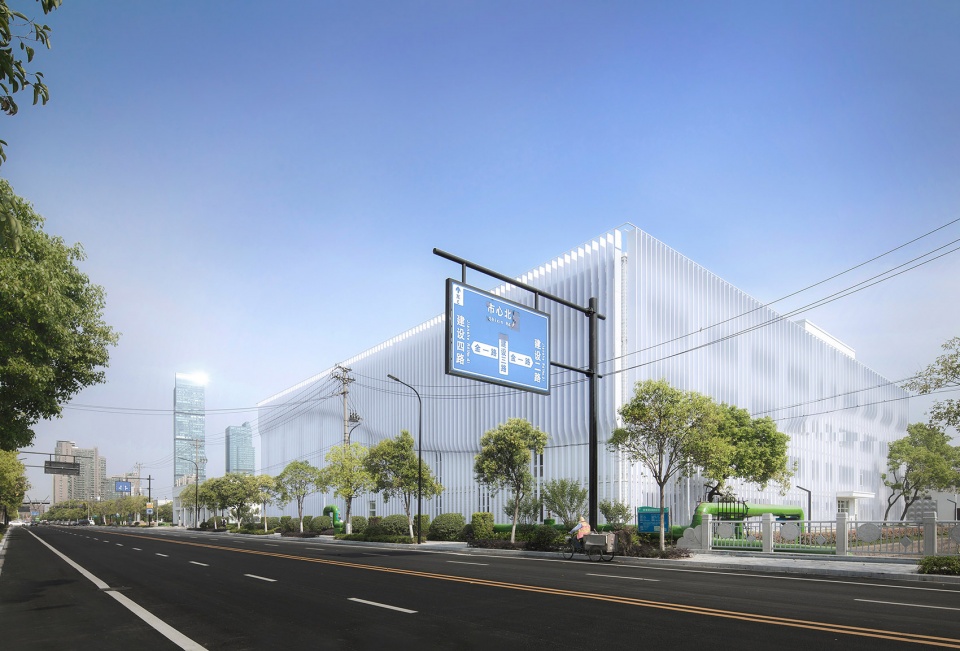
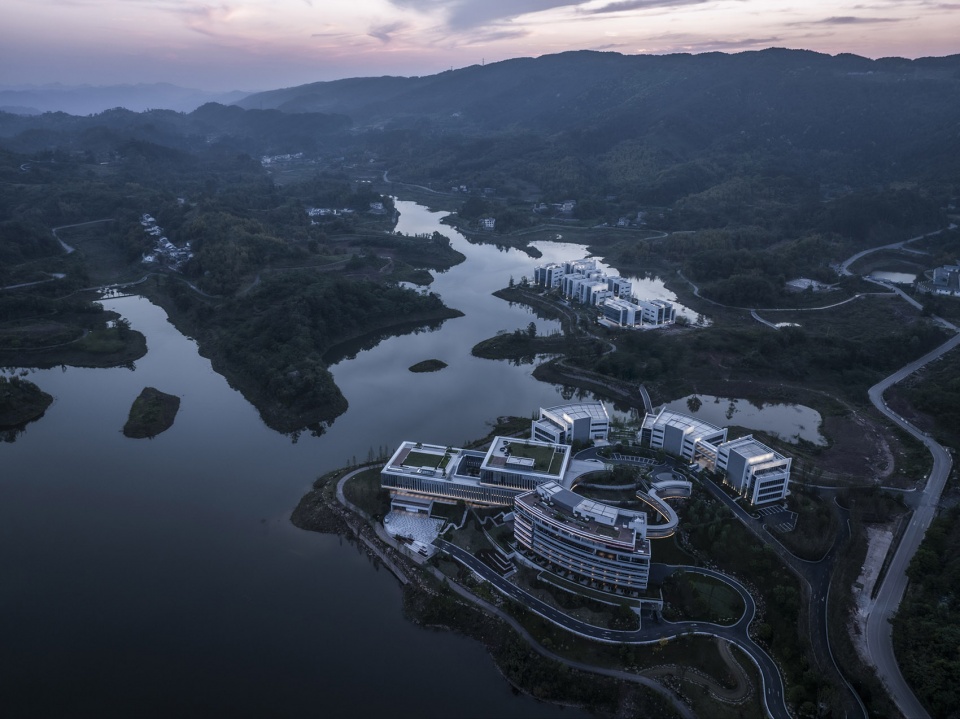
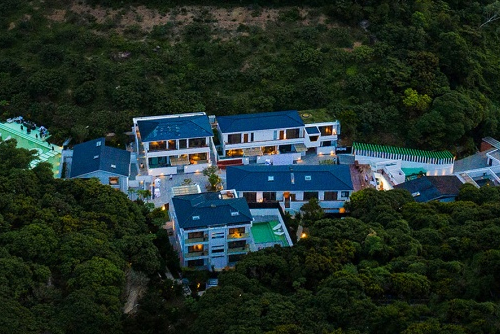
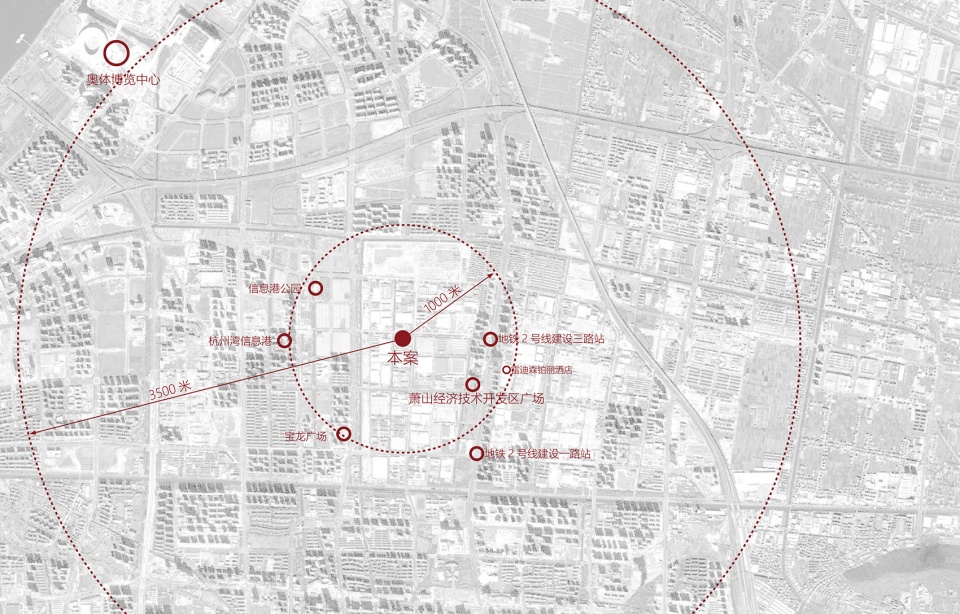
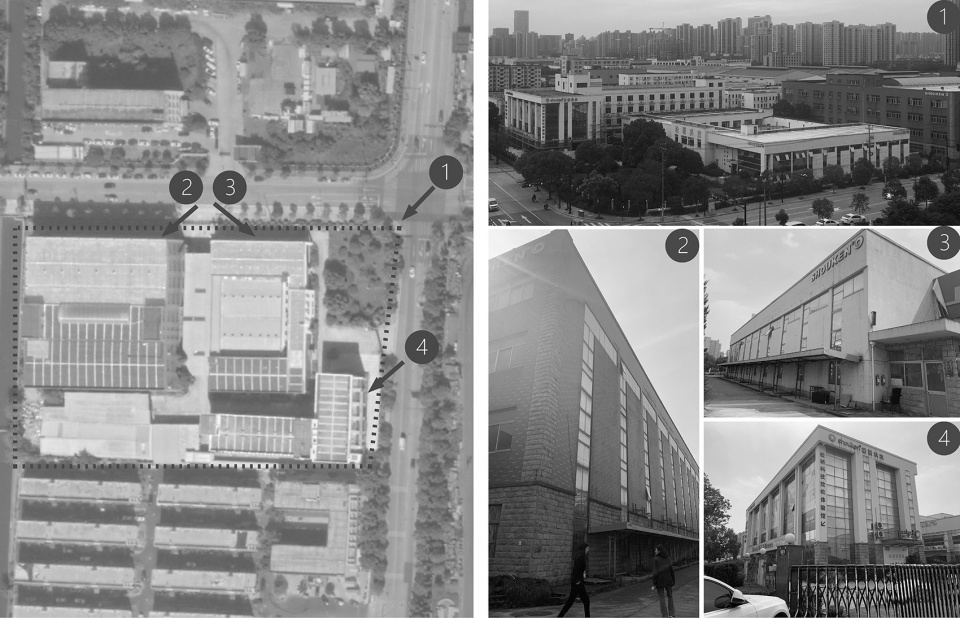
XPACE湾区数字公园,位于杭州市萧山经济技术开发区,园区占地面积约2万平方米。园区内有主体建筑四幢,建筑面积3万余平方米,包括在不同时期和条件下零散建设的2幢差异较大的制造业旧厂房建筑、1幢传统办公建筑与1幢招待所建筑。该项目时间进度节奏快、造价把控严格、需要保留原始建筑,在这三大限定条件中的改造设计,不仅需要STUDIO QI建筑事务所关注园区整体策略的统一和建筑语言的更新,还要用建筑思维切实地解决与应对实际问题。
XPACE Bay Area Digital Park, located in Xiaoshan Economic and Technological Development Zone, Hangzhou, covers an area of about 20000 square meters. There are four main buildings in the park, with a building area of more than 30000 square meters, including two old manufacturing buildings with large differences, one traditional office building and one guesthouse building built in different periods and under different conditions. The project has a fast time schedule, strict cost control and the need to retain the original building. The reconstruction design under these three constraints requires STUDIO QI Architecture Firm to pay attention to the unification of the overall strategy of the park and the update of the architectural language, and to solve and deal with practical problems with architectural thinking.
在项目的具体操作中,STUDIO QI建筑事务所保留并改造原有B幢厂区招待所为人才公寓,改造A幢原办公建筑为契合互联网企业办公需要的新型办公楼,并以新建入口空间连接多功能的C幢、D幢旧厂房建筑,从而营造了一处“创业-办公-居住”为一体,多功能互动运作的数字创业公司孵化场所。具体内容包括:
(1)场地整合:采用统一材料及色彩的立面与设施设计整合园区风貌。将车行路线围绕场地周边排布,以打造园区内伴随步行流线的景观环境。
(2)立面设计:以动态统一的百叶立面语言整合旧工业园区,处理建筑之间、建筑与城市之间的关系。
(3)空间组织:剖析数字理念下的办公生活与交互协作方式,并通过空间组织与协作建造使数字理念贯穿于项目设计中。
In the specific operation of the project, STUDIO QI Architecture Firm retained and transformed the original B factory guesthouse into a talent apartment, transformed the original A office building into a new office building that meets the office needs of Internet enterprises, and connected the multi-functional C and D old factory buildings with the new entrance space, thus creating a "entrepreneurial - office - residential" as one, multi-functional interactive operation of the digital startup company incubator. Specific contents include:
(1) Site integration: adopt the facade and facility design of uniform materials and colors to integrate the style and features of the park. Arrange the traffic routes around the site to create a landscape environment with walking streamline in the park.
(2) Facade design: integrate the old industrial park with dynamic and unified louver facade language, and deal with the relationship between buildings, buildings and cities.
(3) Spatial organization: analyze the office life and interactive cooperation mode under the digital concept, and make the digital concept run through the project design through spatial organization and collaborative construction.
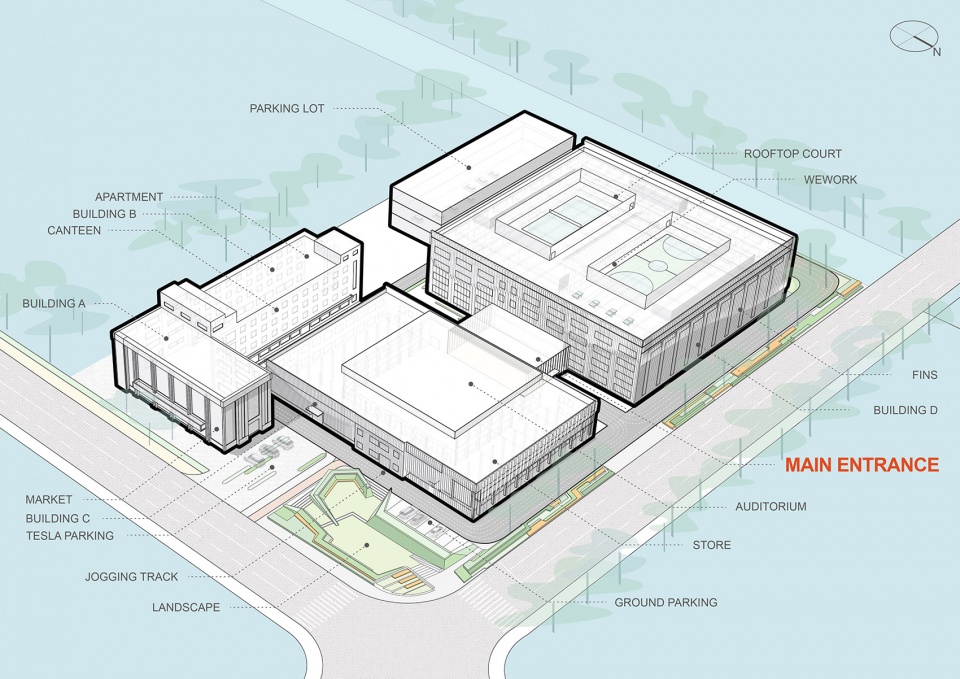
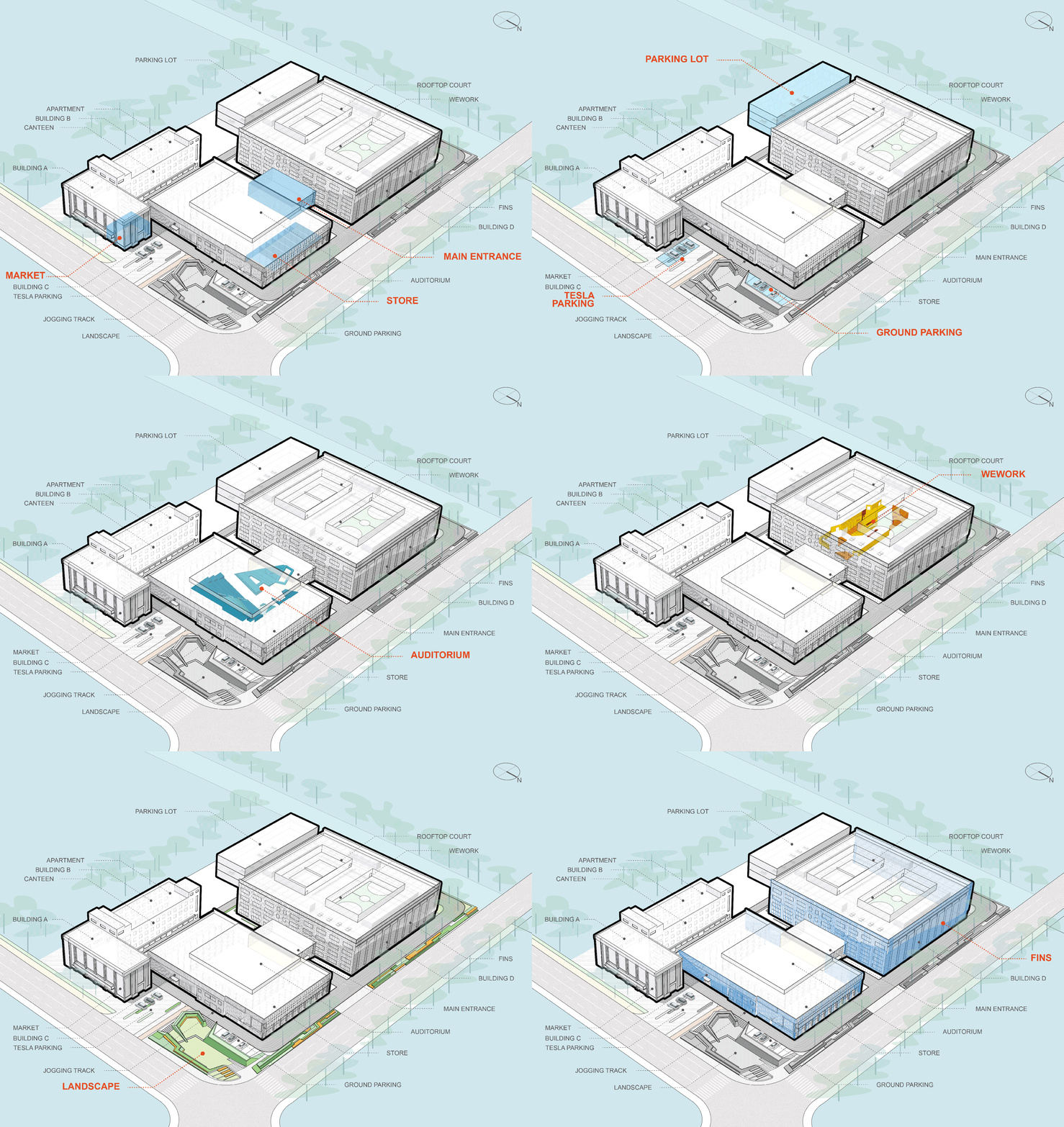
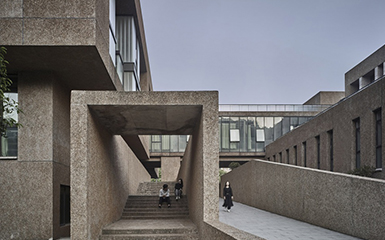
STUDIO QI建筑事务所采用统一材料及色彩的立面与设施设计整合园区风貌。改变入口位置,新建连结两个大体量建筑的入口大厅空间。新建的入口大厅以玻璃盒子的样貌,作为进入园区的前奏,营造开始创业的仪式感。入口大厅同时还是园区的信息大厅。与此同时,重新排布了场地内的步行流线,并将车行路线围绕场地周边排布,以打造园区内伴随步行流线的景观环境。
STUDIO QI Architecture Firm adopts the facade and facility design of uniform materials and colors to integrate the park style. Change the location of the entrance and build a new entrance hall space connecting two large buildings. The newly built entrance hall takes the appearance of a glass box as the prelude to entering the park, creating a sense of ceremony to start a business. The entrance hall is also the information hall of the park. At the same time, the pedestrian streamline in the park has been rearranged, and the vehicle route has been arranged around the perimeter of the park to create a landscape environment with pedestrian streamline in the park.
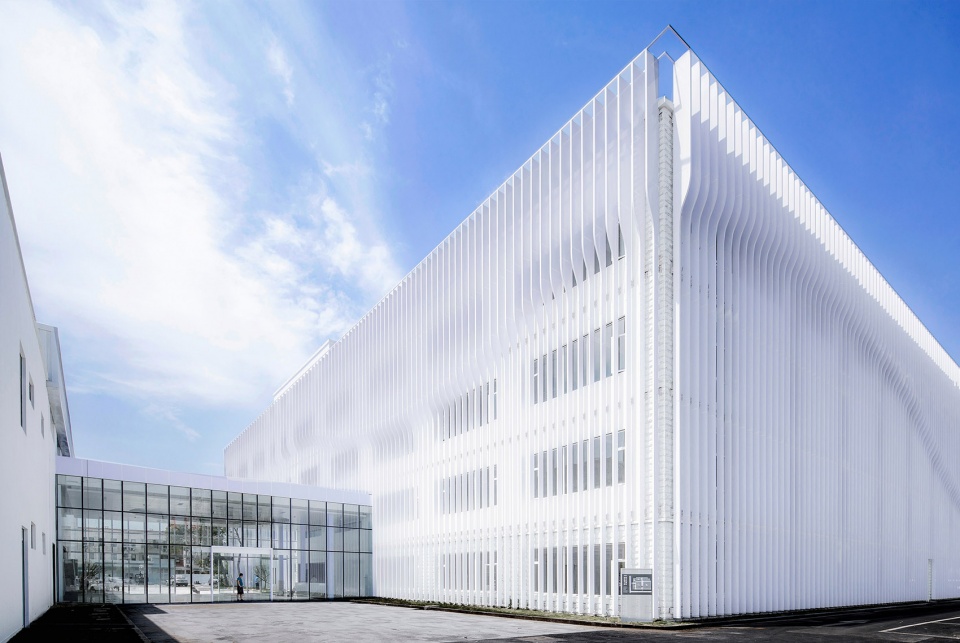
XPACE湾区数字公园所在的传统产业街区,正在向数字产业为主的办公与居住地区发展。然而,原有较为厚重的老旧厂房建筑形态难以表述数字产业新潮、开放的形象。因此,如何在极为有限的时间与造价要求中,不拆除原有建筑,设计营建崭新、轻盈的园区形象是本项目的重点所在。
The traditional industrial block where XPACE Bay Area Digital Park is located is developing into an office and residential area dominated by digital industry. However, it is difficult to express the new and open image of the digital industry in the original thick old factory building form. Therefore, how to design and build a new and lightweight park image without demolishing the original buildings in the extremely limited time and cost requirements is the focus of the project.
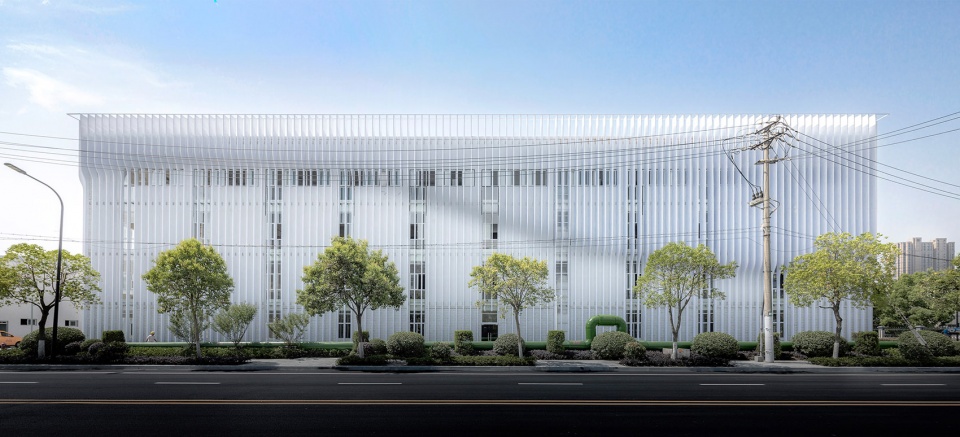
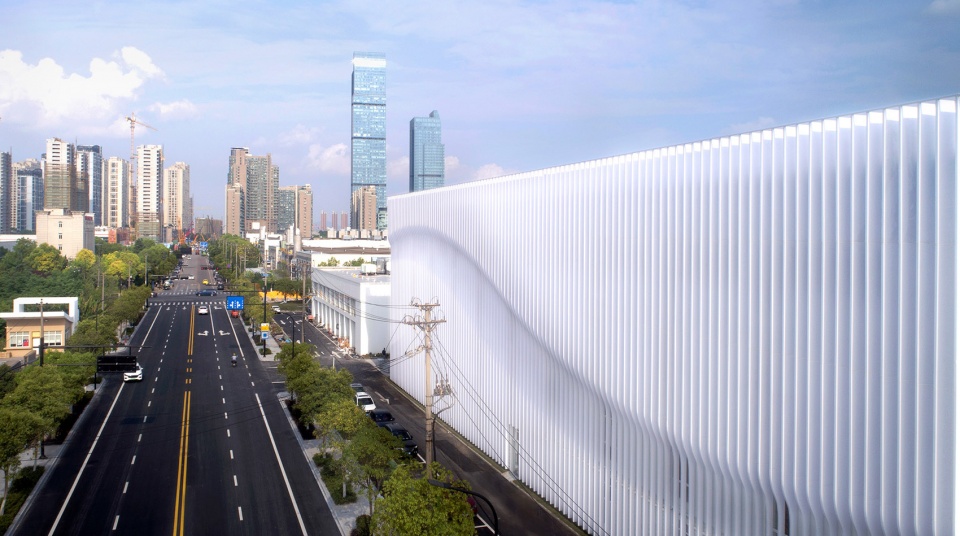
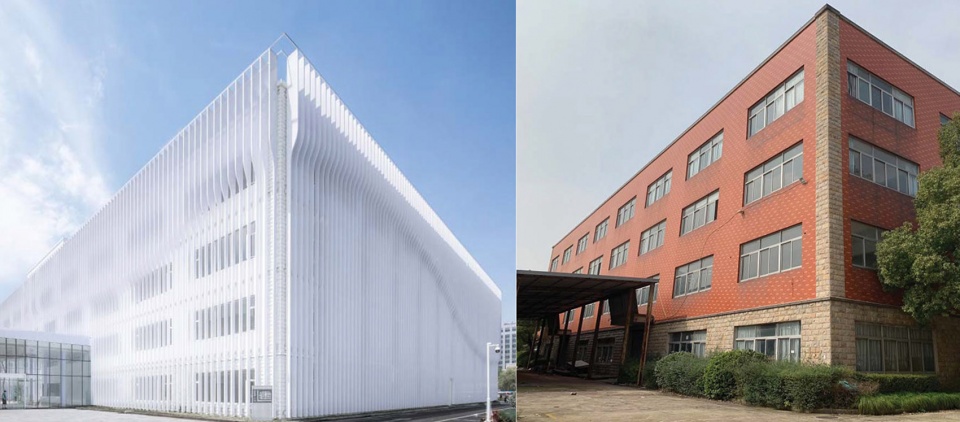
园区内的两幢旧厂房临街布置,二者体量较大且在高度、风格等多方面呈现差异,对于园区整体风貌的影响较大,设计需要将二者统合为一体。但两幢旧厂房建筑在包括图。几经商讨,STUDIO QI建筑事务所选用了参数化设计方法,以动态统一的立面语言设计整合两幢旧厂房建筑的外观。
The two old factories in the park are arranged on the street. They are large and different in height, style and other aspects. They have a great impact on the overall style of the park. The design needs to integrate the two into one. However, the two old factory buildings are included in the figure. After several discussions, STUDIO QI selected the parametric design method to integrate the appearance of the two old factory buildings with the dynamic and unified facade language design.
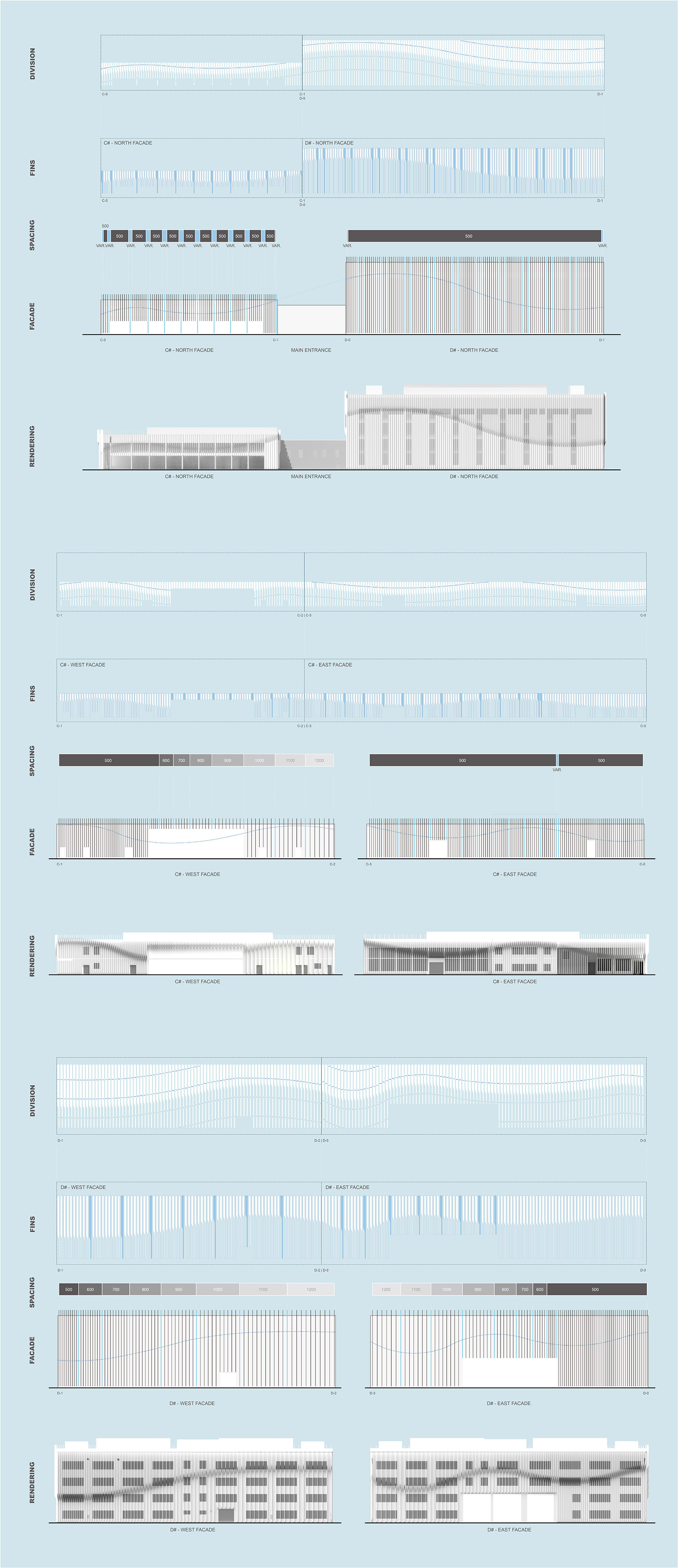
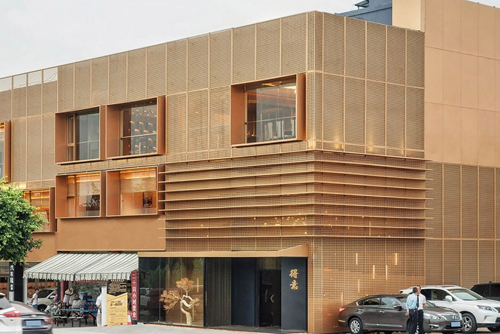
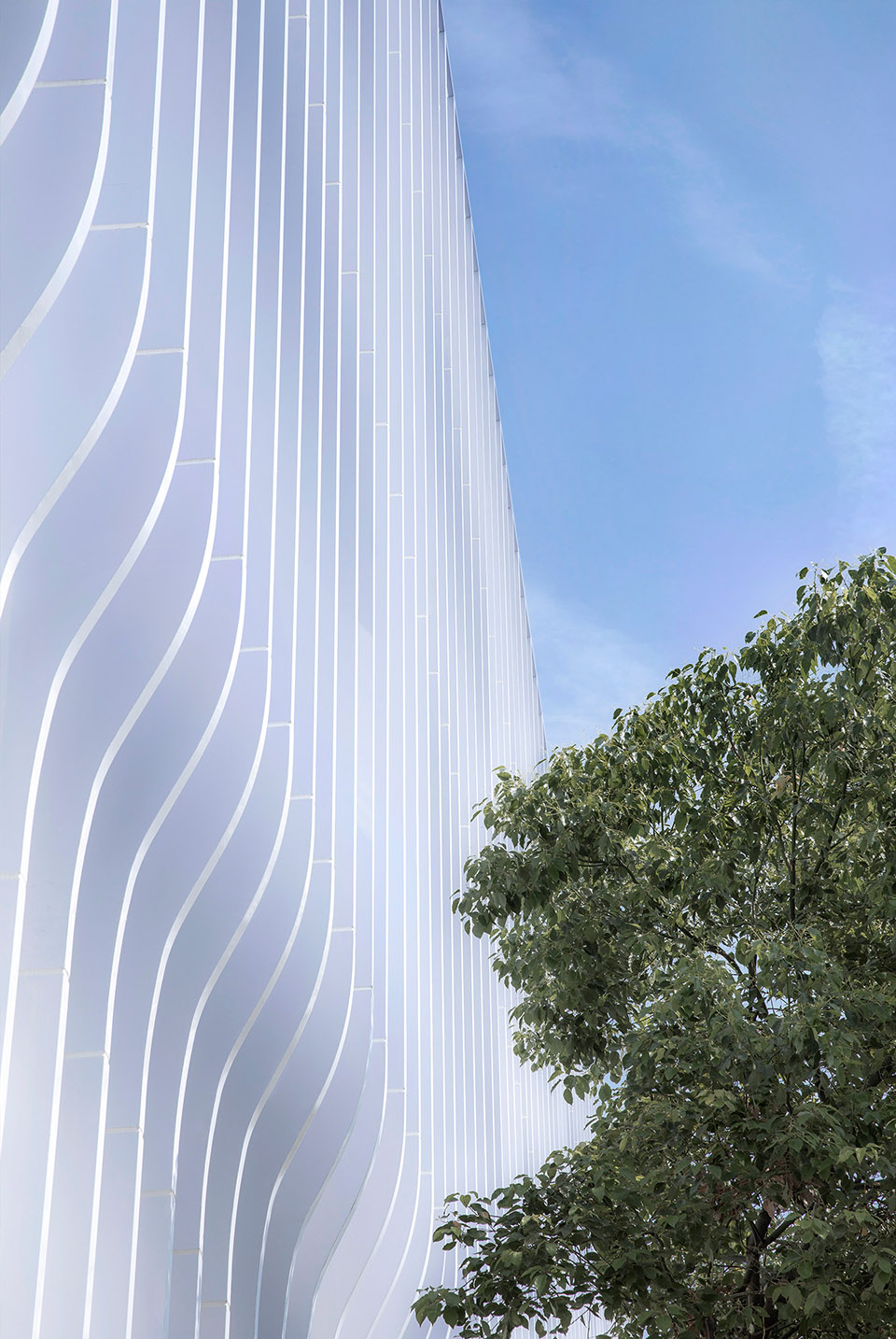
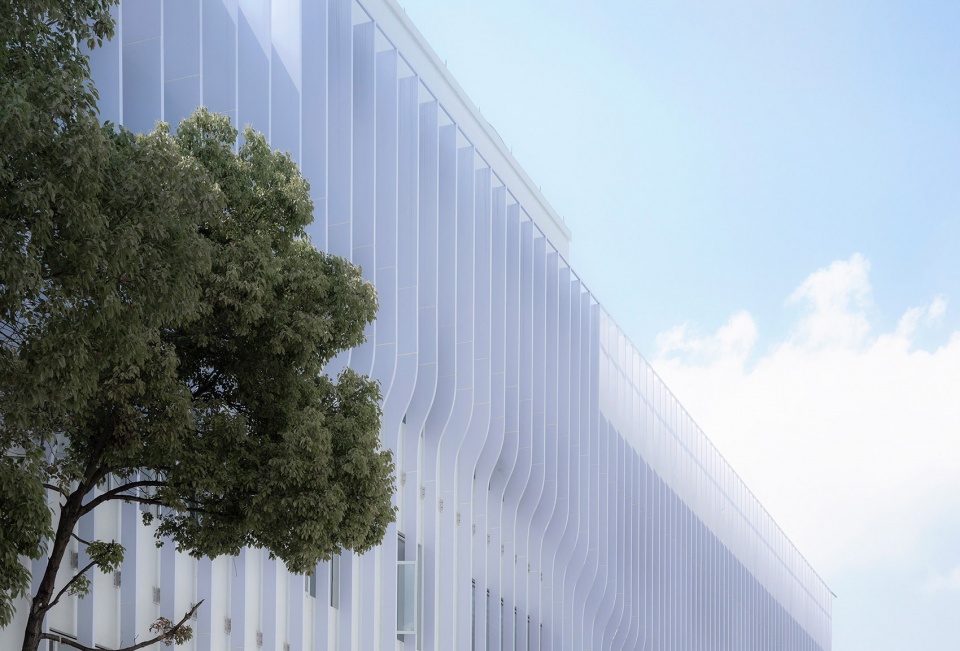
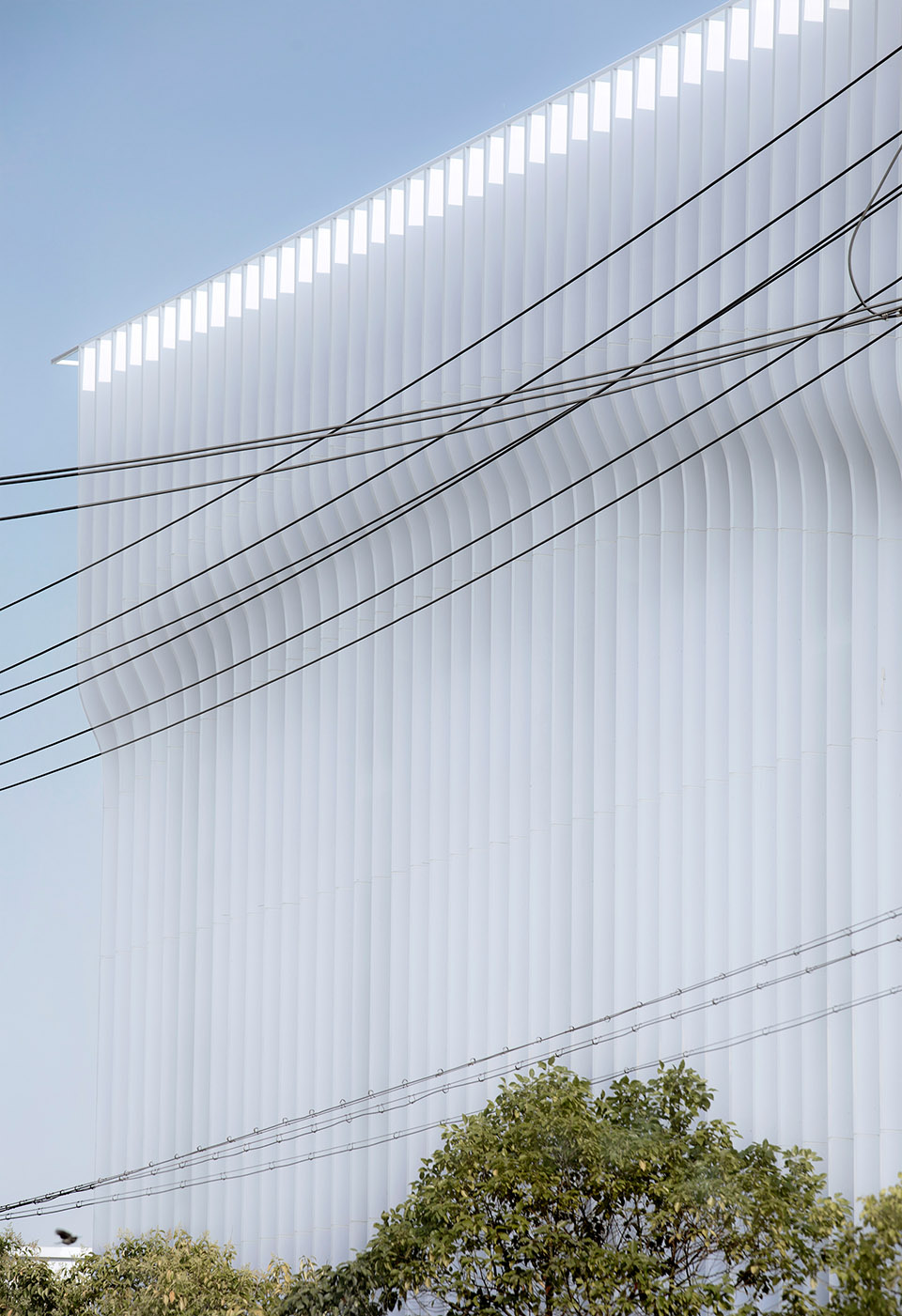
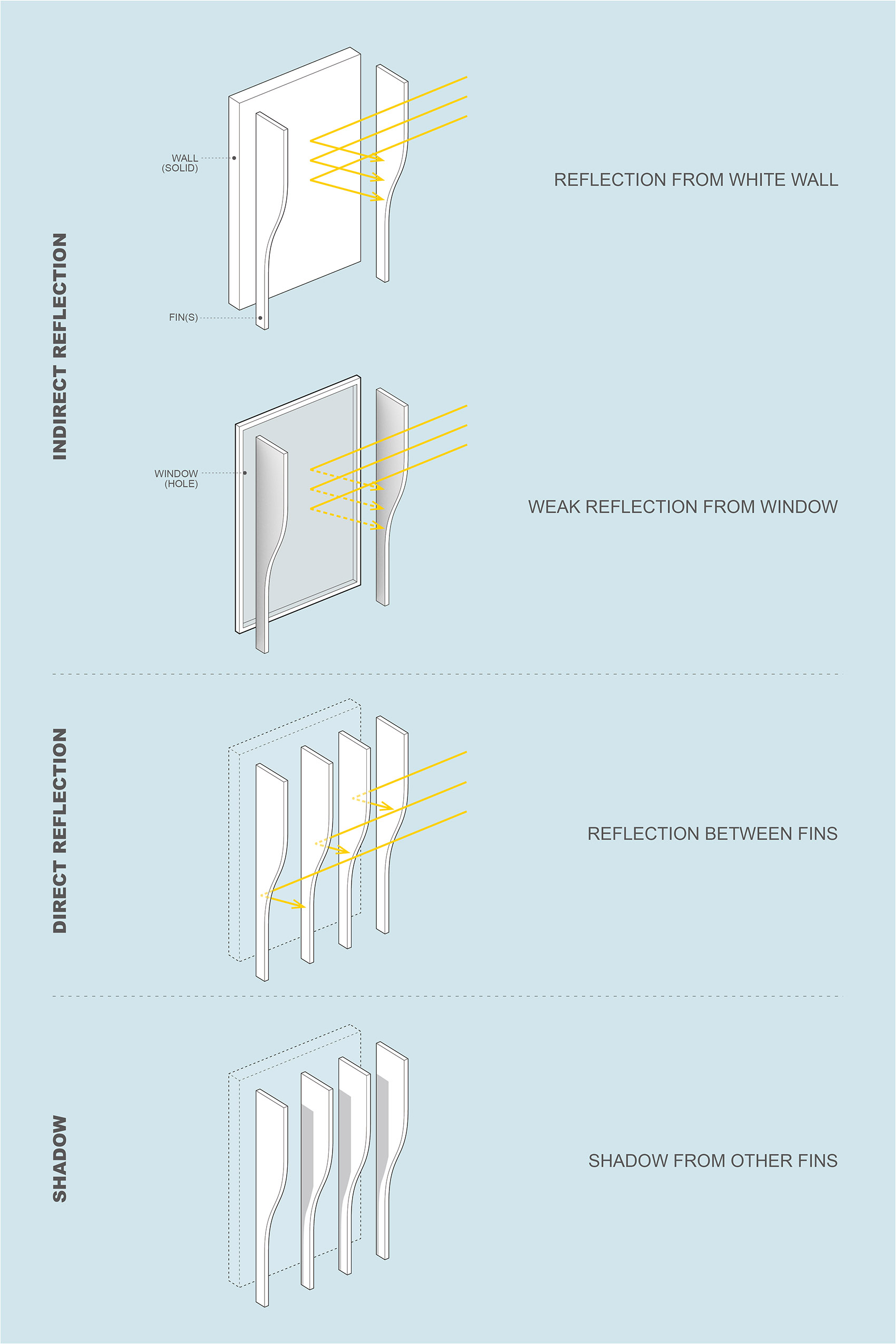
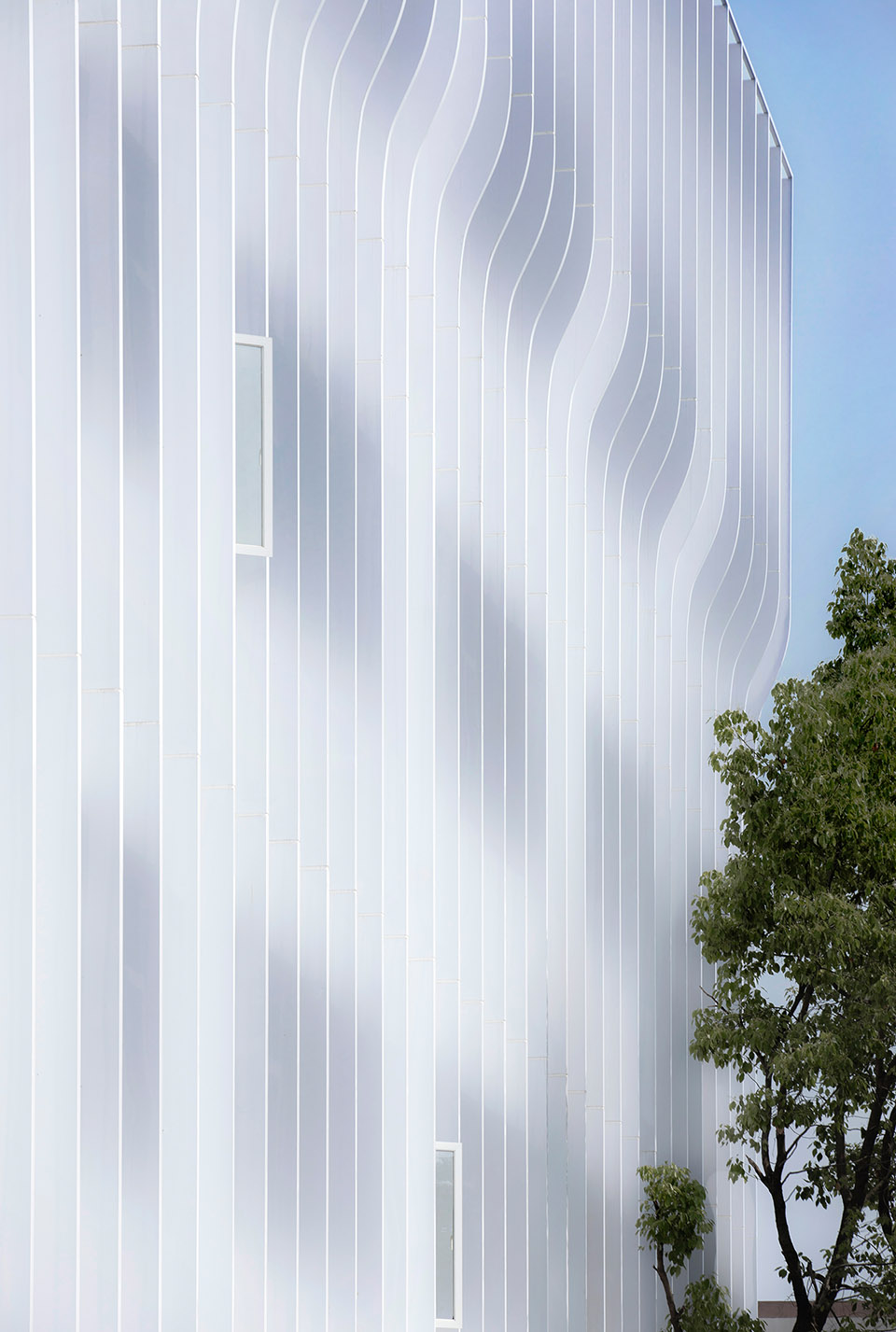
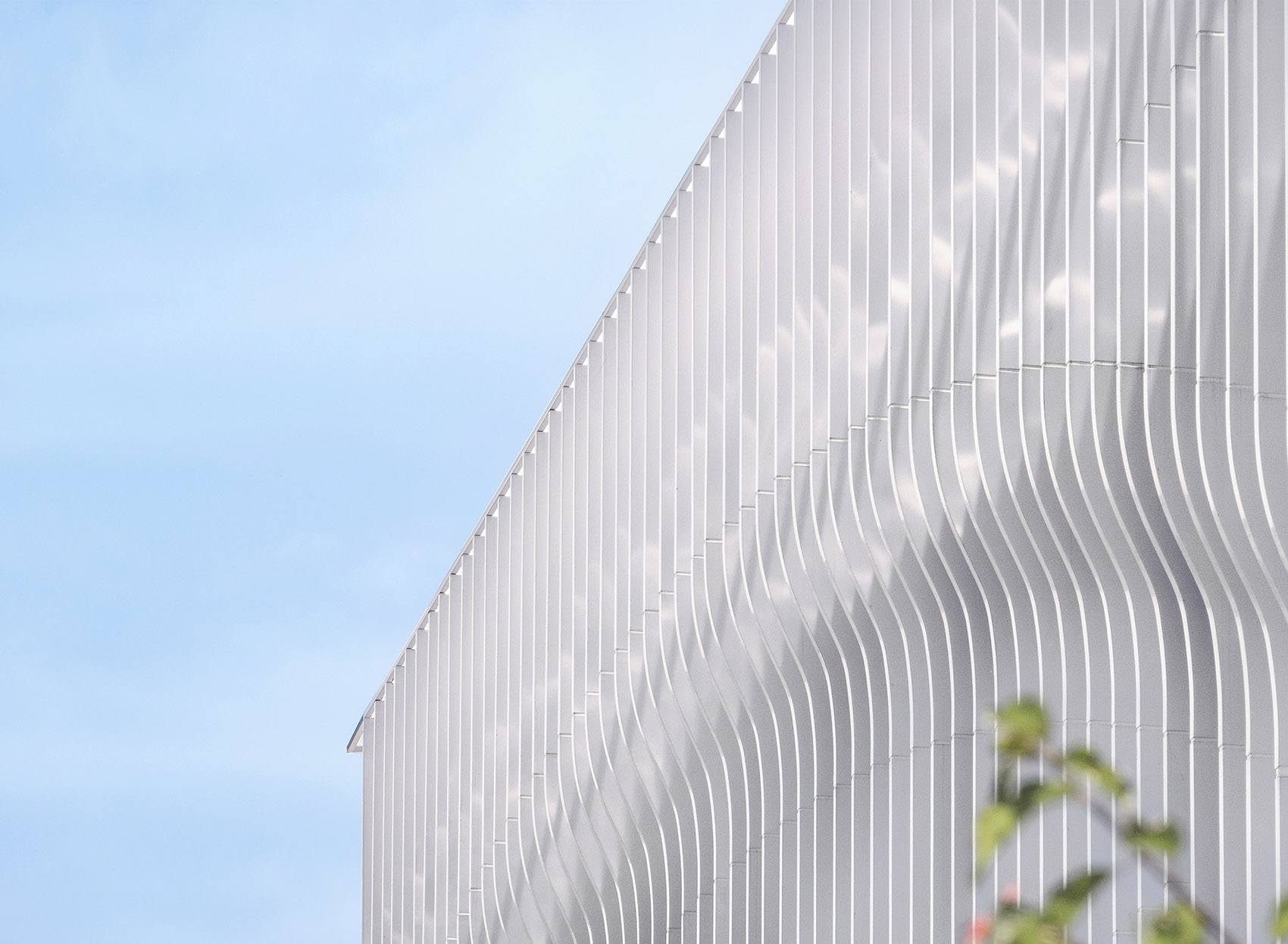
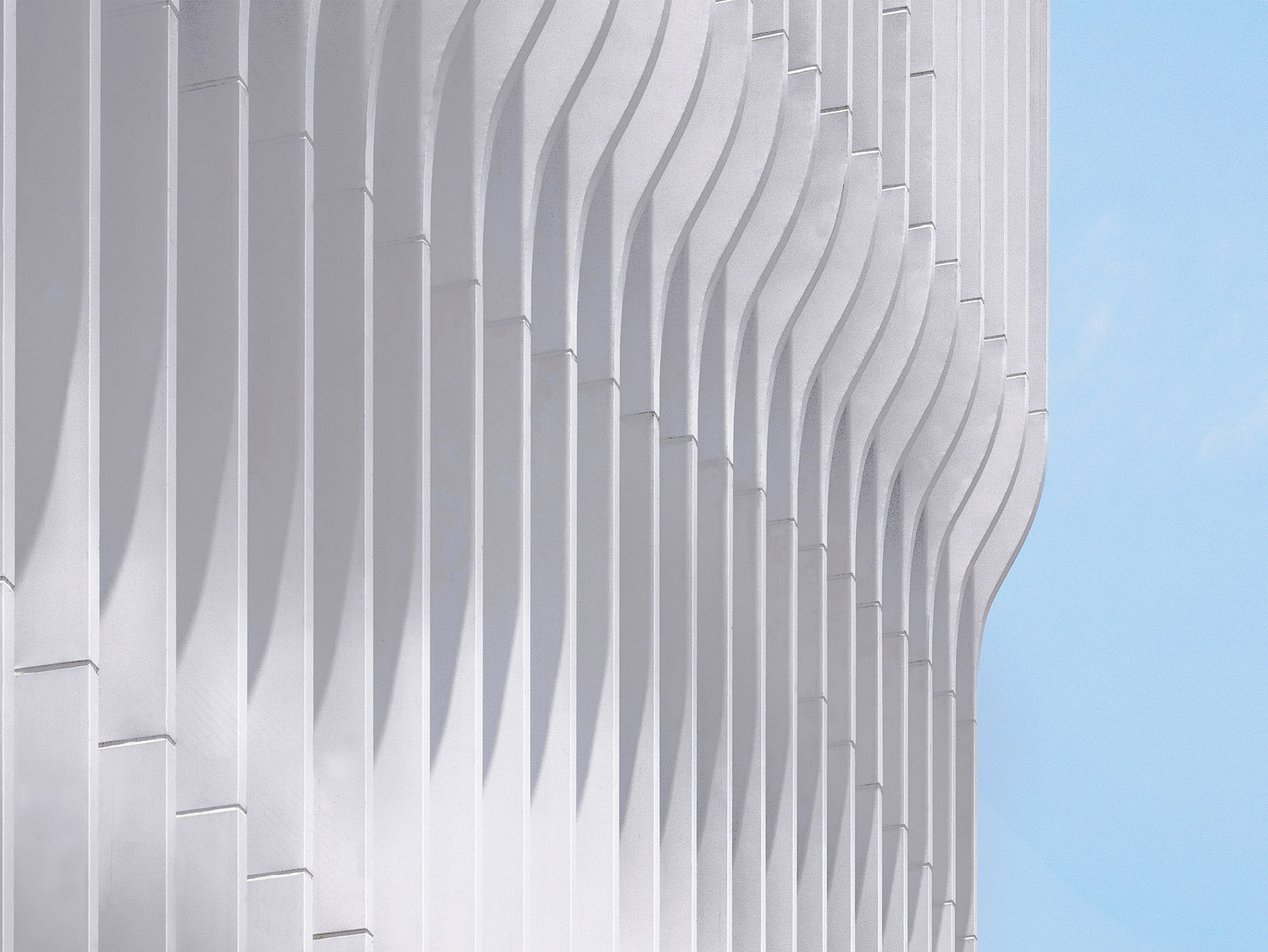
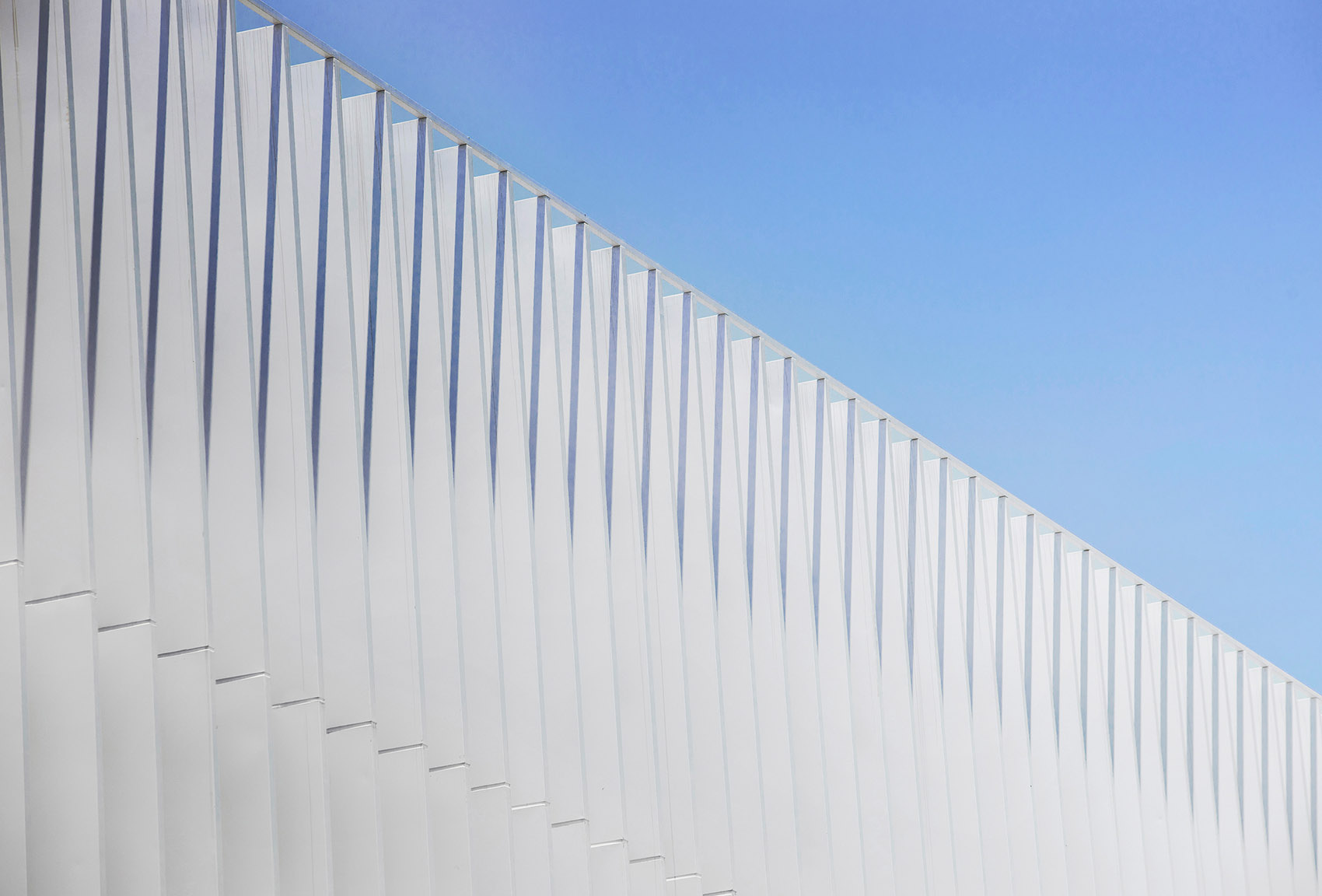
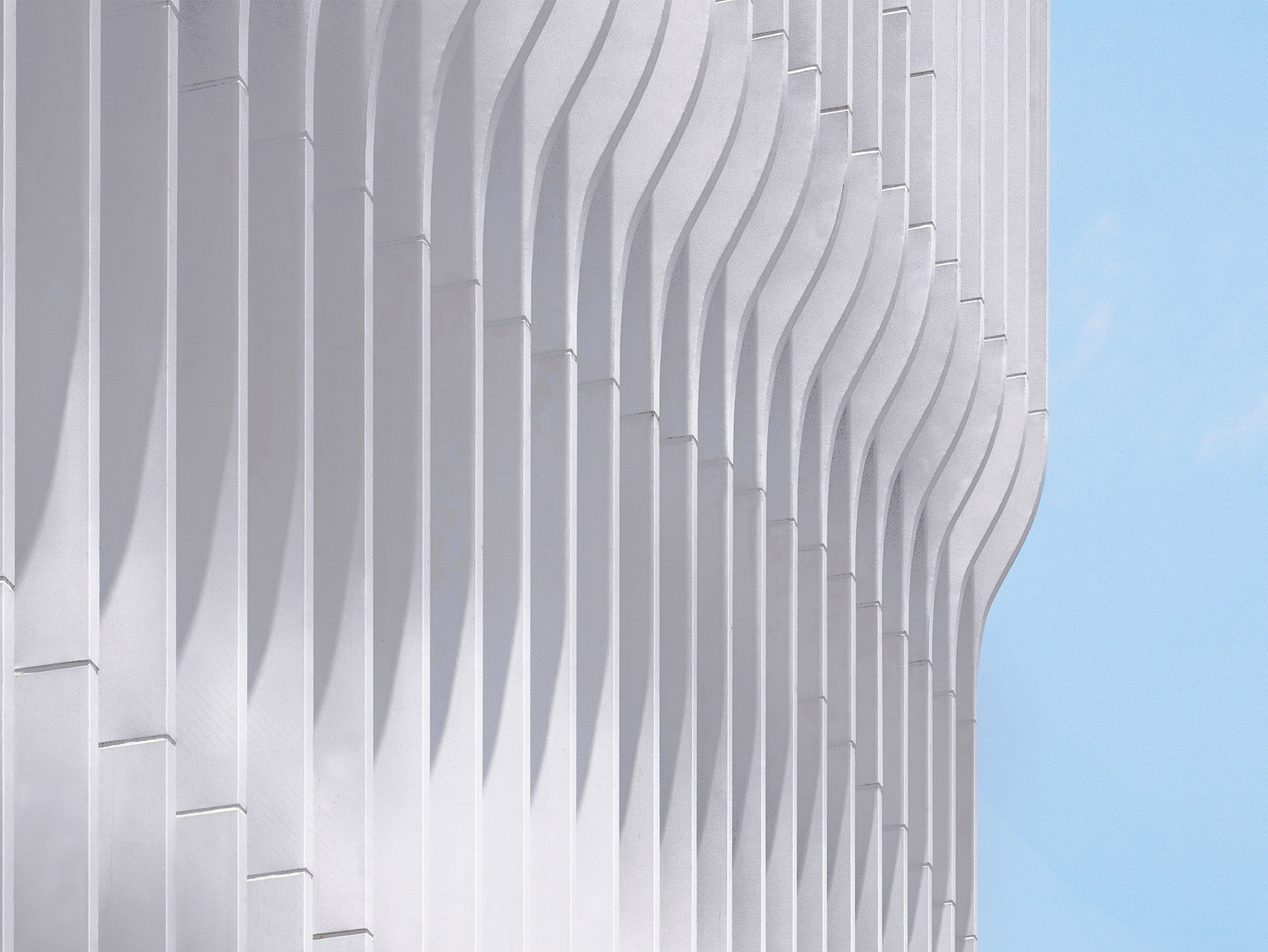
在具体的立面处理中,STUDIO QI建筑事务所营建了富有光影效果、且经济的铝板百叶立面景观,包裹于原建筑外立面。新建的百叶立面通过反射、折射阳光,在建筑立面呈现了波光粼粼的动态视觉体验。同时,百叶立面为室内提供柔和的侧向光源,也满足了数字化办公模式所要求的直射光源控制要求。“包”治百病的铝板百叶立面语言具有如下优势:
In the specific facade treatment, STUDIO QI Architects has built an aluminum shutter facade landscape with light and shadow effect and economy, which is wrapped in the original building facade. The newly-built louver facade reflects and refracts sunlight, presenting a sparkling dynamic visual experience on the building facade. At the same time, the shutter facade provides soft lateral light source for the interior, and also meets the requirements of direct light source control required by the digital office mode. The facade language of aluminum louvers used to cure all diseases has the following advantages:
(1)铝板百叶由工厂预制,工厂预制的流程和项目其它部分的改造同步进行,从而缩短工期、节约时间。
(2)百叶采用外挂的方法,减少对外立面的破坏。
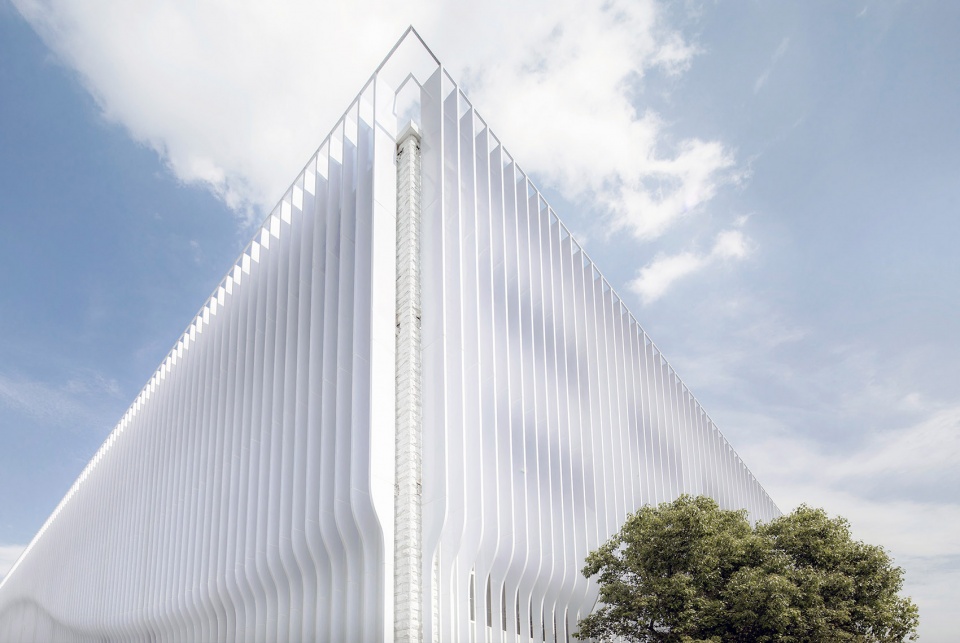
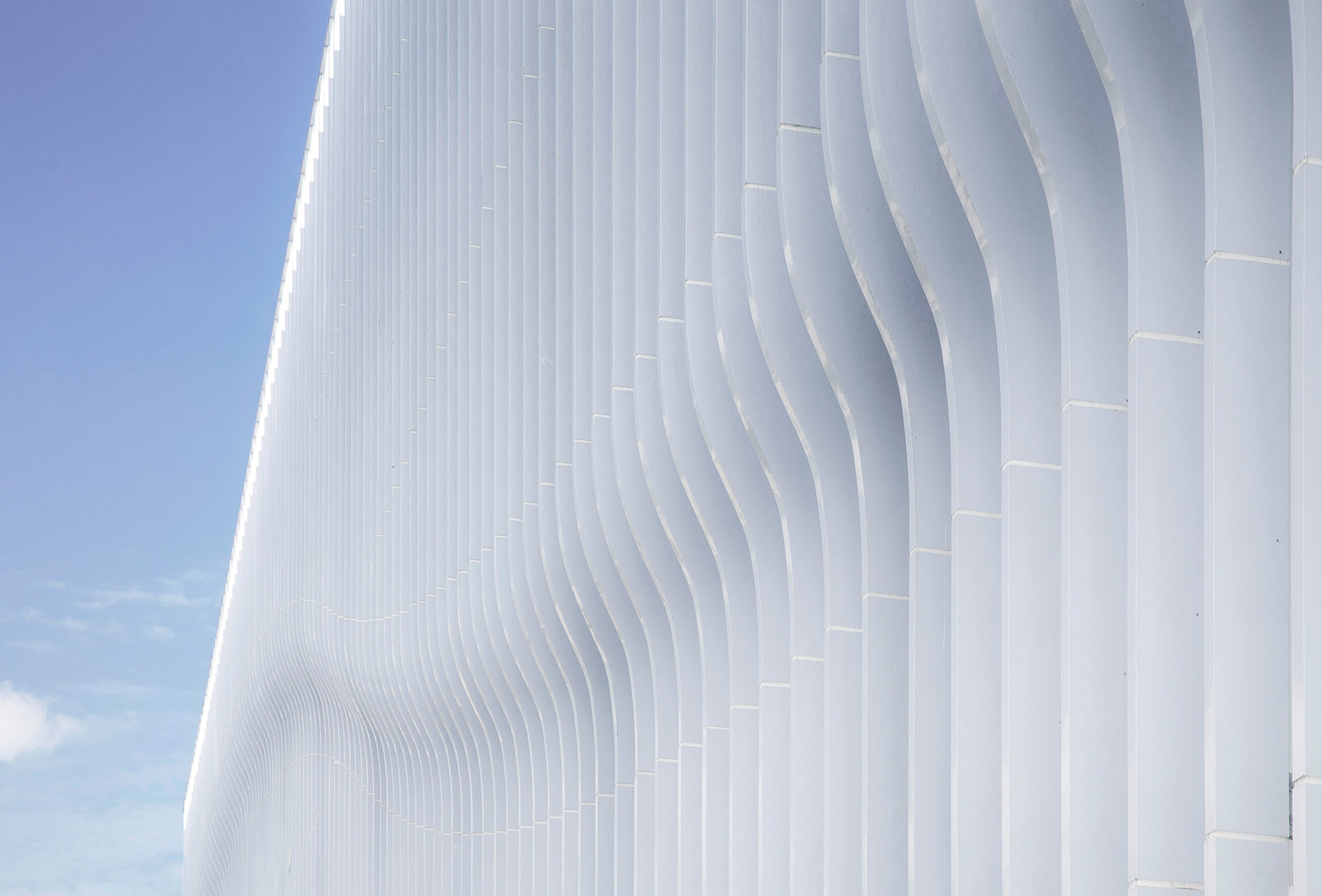
(3)立面通过百叶和弧线的形式语言可以形成一种视觉动势,引导视觉,平衡两座厂房的高差问题,通过这样一抑一扬的手法,同时可以调整两个大体量视觉比例。
(4)连贯的弧线形式语言可以将两个体量连接在一起。
(5)百叶有利于解决采光问题,原工厂建筑对采光要求不高,使用百叶有控制阳光和遮阳作用。
(1) The aluminum shutter is prefabricated in the factory, and the process of factory prefabrication is carried out simultaneously with the transformation of other parts of the project, thus shortening the construction period and saving time.
(2) The shutter is hung externally to reduce the damage to the external facade.
(3) The facade can form a visual momentum through the formal language of louvers and arcs, guide the vision, and balance the height difference between the two plants. Through such a method of suppressing and raising, it can also adjust the proportion of two large volumes of vision.
(4) A coherent arc form language can connect two volumes together.
(5) Louver is helpful to solve the lighting problem. The original factory building has low requirements for lighting, and the use of louver can control the sun and shade the sun.
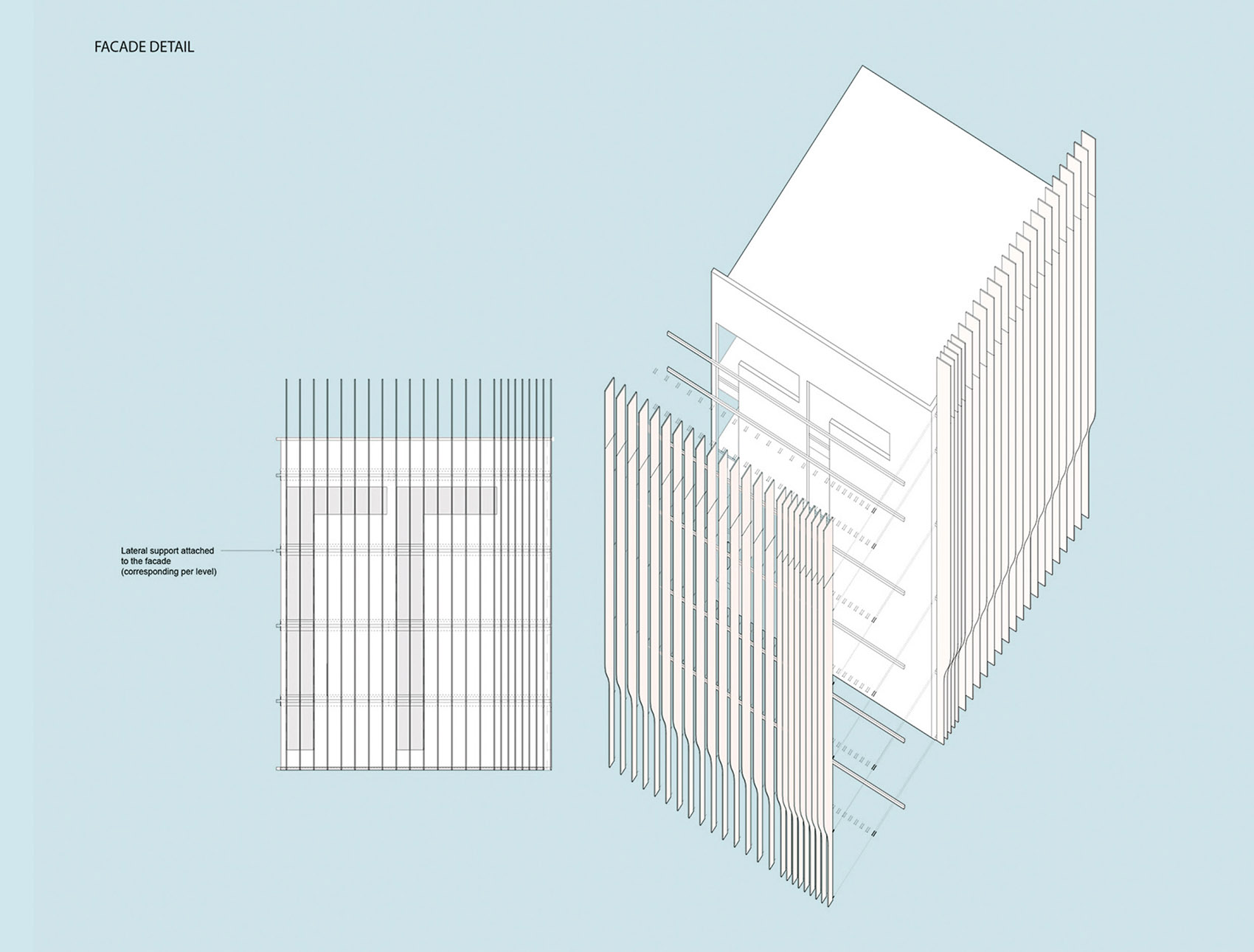
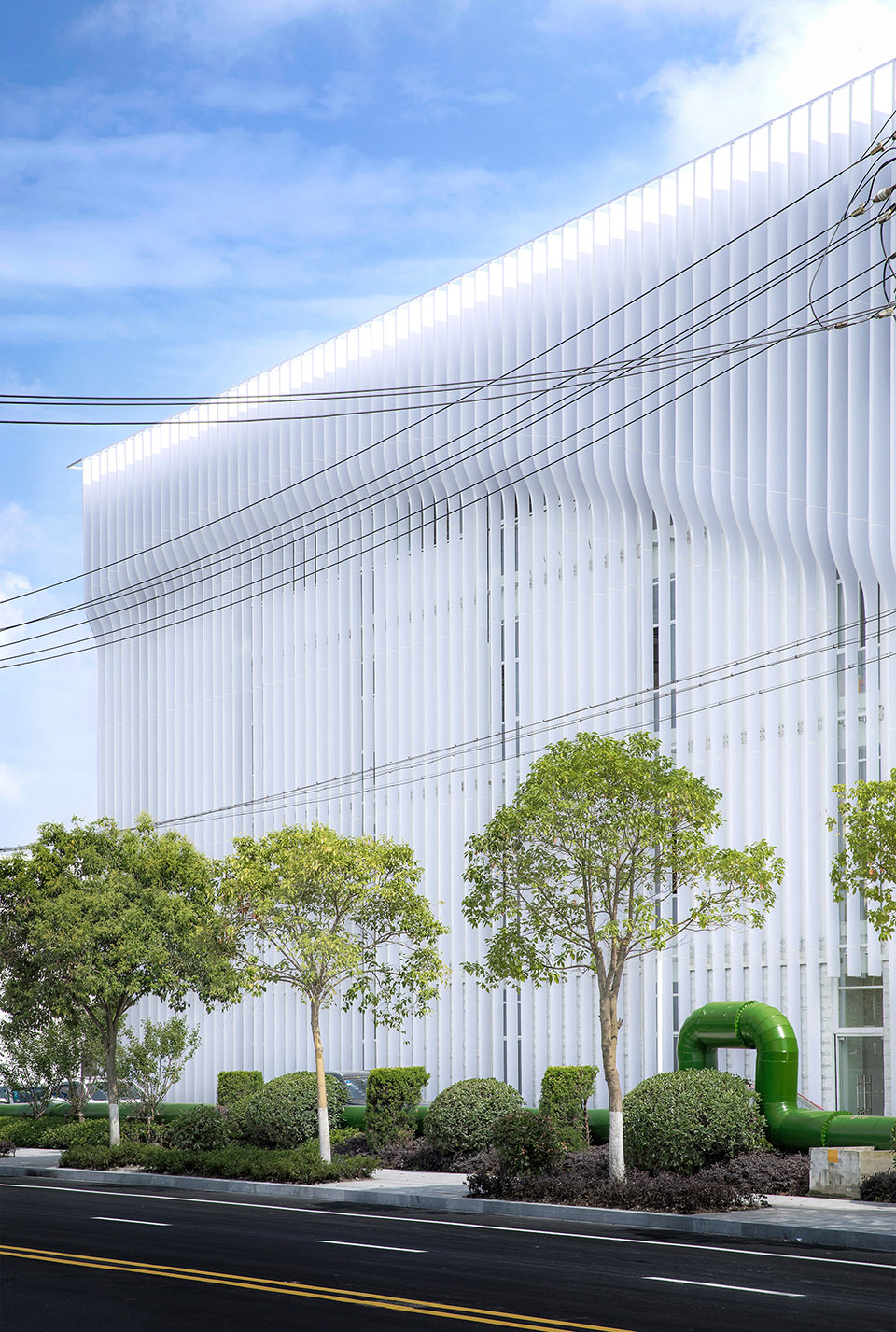
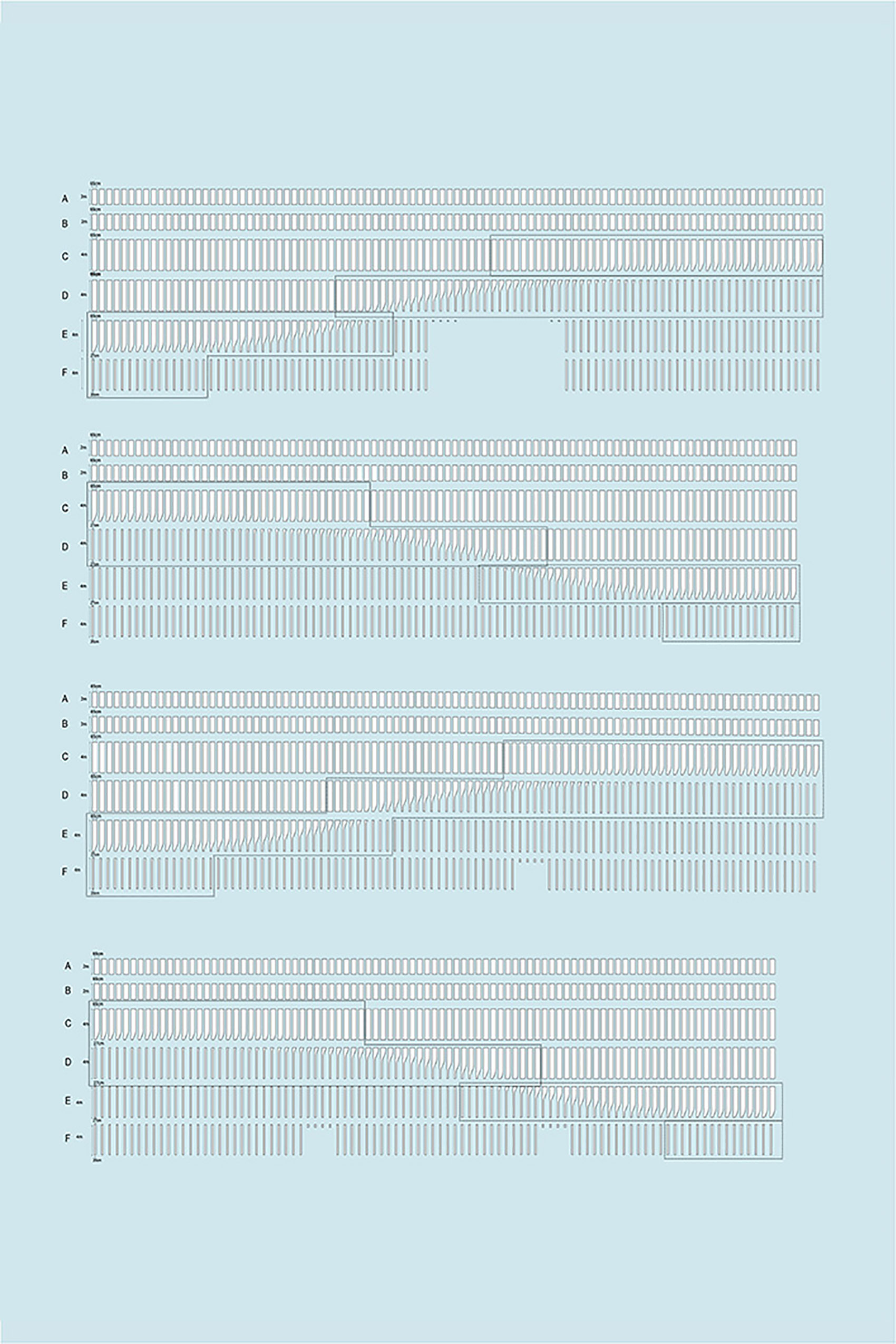
为适应场地条件,STUDIO QI建筑事务所采用了人工干预的参数化立面生成方法与反透视手法设计XPACE湾区数字公园的铝板百叶立面语言。在人工干预的参数化设计方面,为有效利用原有厂房建筑,设计团队还通过精细化的人工把控,手动调节铝板百叶的叶片间距和曲线定位,确保原有厂房建筑窗扇可开启。更进一步,STUDIO QI建筑事务所通过精细化的百叶模板设计减少了模板种类,具体根据下述原则:
(1)以最少数量的百叶模板应对全部百叶形态;
(2)减少百叶模板的形态与长度种类;
(3)有效利用原材料整板,通过几何排序,减少铝板废料;
(4)模板最长长度为6米。项目最终仅使用了6种百叶模板,大大减少了建设所需的百叶模板数量,降低了百叶模板制作与安装部分的总造价。
最终,设计以上部进深60厘米、下部进深20厘米的铝板百叶模板,由工厂预制,外挂方式安装,减少了对保留旧厂房建筑外立面的磨损,降低了安装工程成本,并有效缩短了建设工期,很好的应对了本项目较为严格的时间进度要求。
In order to adapt to the site conditions, STUDIO QI Architecture Firm adopted the parametric facade generation method of manual intervention and the anti-perspective method to design the aluminum shutter facade language of XPACE Bay Area Digital Park. In terms of parametric design of manual intervention, in order to make effective use of the original plant building, the design team also manually adjusted the blade spacing and curve positioning of aluminum louvers through refined manual control to ensure that the window sashes of the original plant building can be opened. Further, STUDIO QI Architecture Firm reduced the types of shutters through refined shutter formwork design, based on the following principles:
(1) The minimum number of louver formwork shall be used for all louver forms;
(2) Reduce the shape and length of shutter formwork;
(3) Effectively use the whole plate of raw materials to reduce aluminum scrap through geometric sorting;
(4) The maximum length of formwork is 6 meters. In the end, only 6 kinds of shutters were used in the project, which greatly reduced the number of shutters required for construction and the total cost of shutters fabrication and installation.
Finally, the aluminum shutter formwork with a depth of 60 cm in the upper part and 20 cm in the lower part was designed, which was prefabricated in the factory and installed externally, reducing the wear on the external facade of the old plant building, reducing the cost of the installation project, and effectively shortening the construction period, which well met the relatively strict schedule requirements of the project.
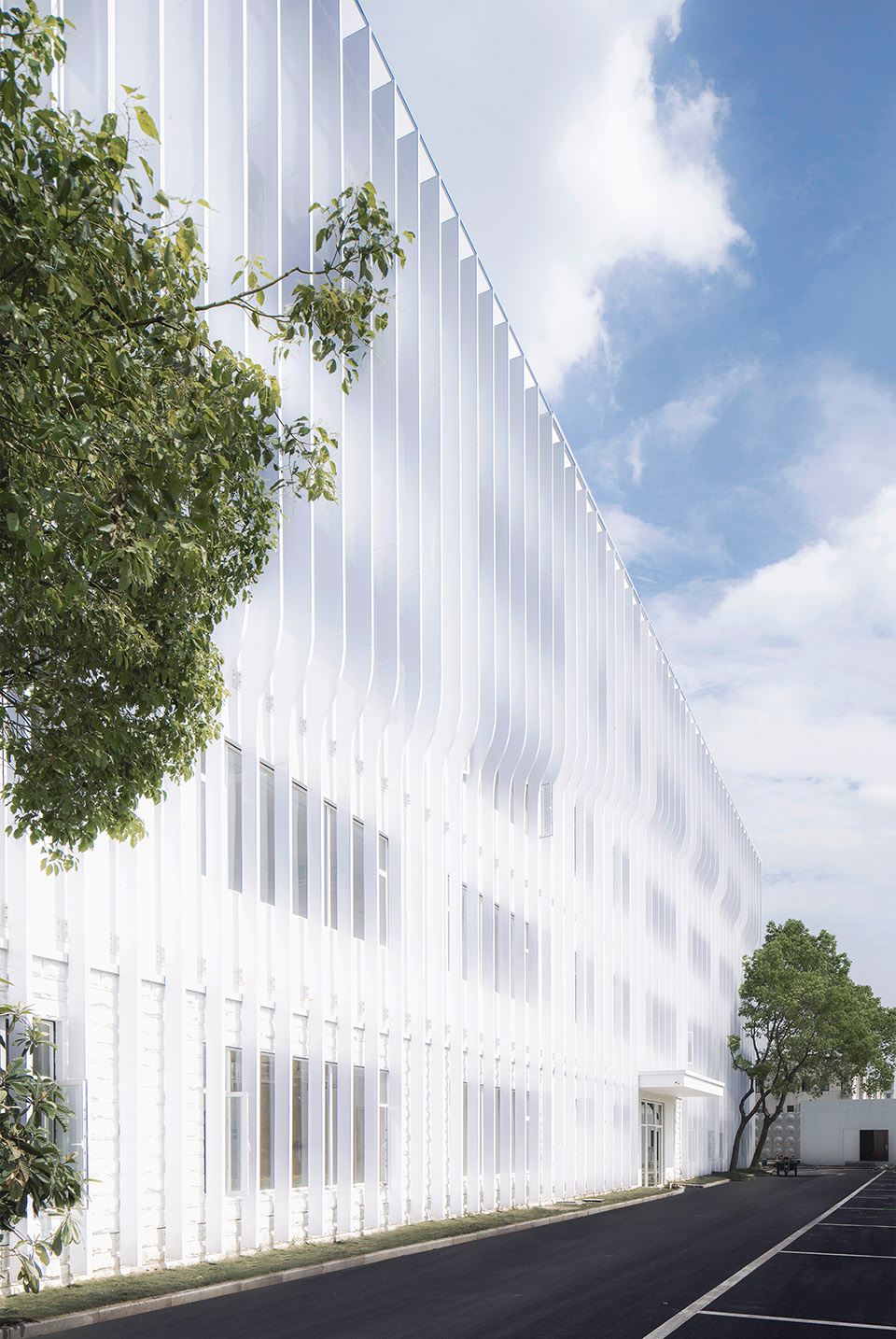
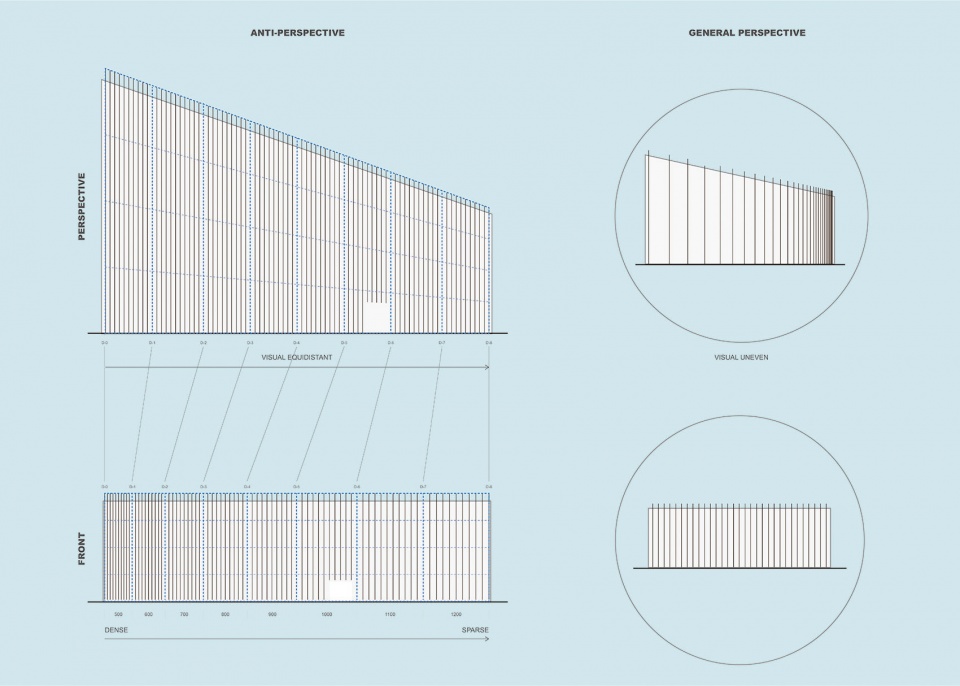
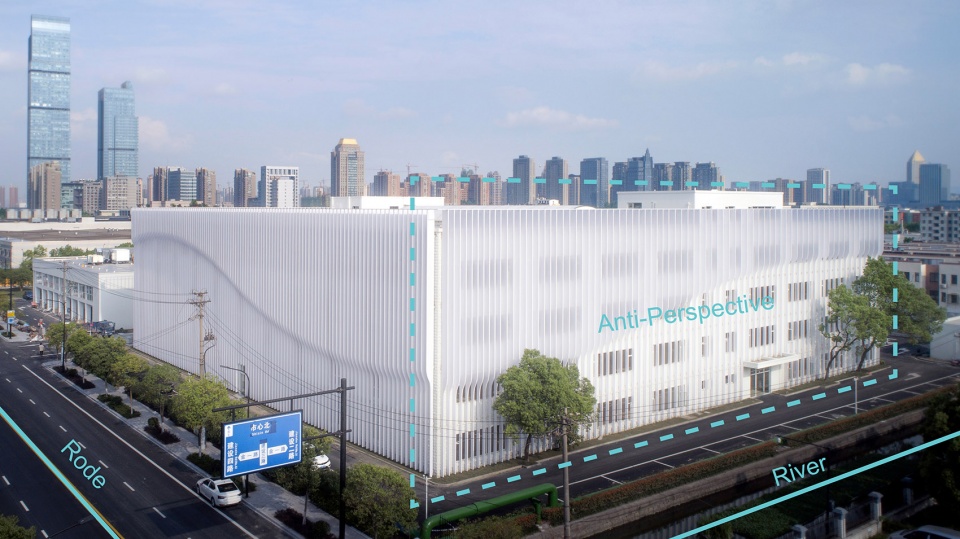
园区建筑西面临水侧的对岸实则没有能够回看建筑正立面的城市道路,而园区建筑西立面实则是自北向南观看的、呈现透视效果的侧立面。基于此,STUDIO QI建筑事务所将人视角度设为侧位制造该视野中百叶排布均质的西立面,采用反透视手法解决建造成本问题。
The opposite bank of the water side on the west side of the building in the park actually has no urban road that can look back at the front elevation of the building, while the west facade of the building in the park is actually a side elevation that looks from north to south and presents perspective effect. Based on this, STUDIO QI Architecture Firm set the human visual angle as the side position to produce the west facade with uniform louver arrangement in this view, and adopted the anti-perspective method to solve the construction cost problem.
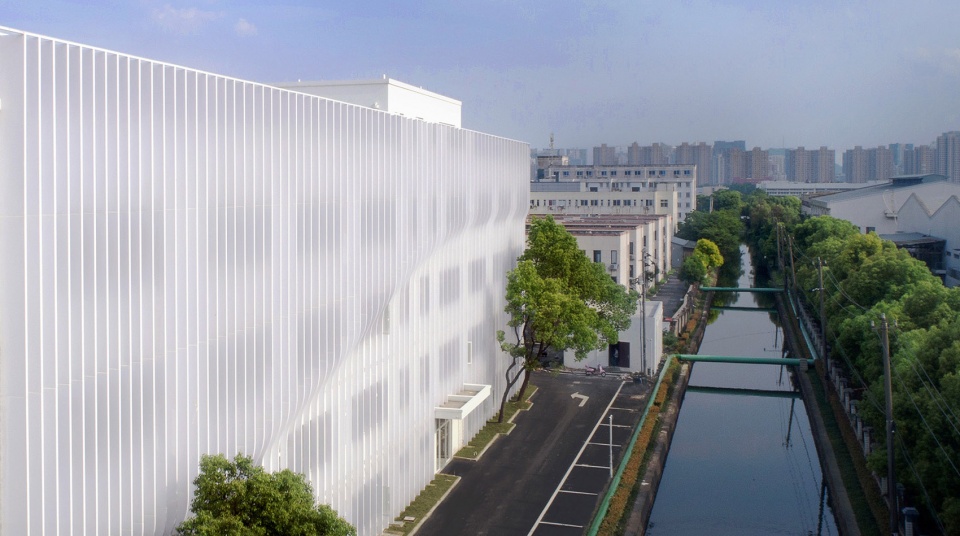
光线的反射使窗洞的阴影透过了立面,形成透明的效果;百叶在折射作用下呈现波光粼粼的效果;同时百叶在阳光下自发产生阴影,三种光影关系同时发生在立面上,简单的动作引发了丰富的视觉体验。最后完成的立面对于光线的控制以及光影效果是让我们出乎意料的。我们惊讶于百叶使用的不透明材料呈现出一种半透明的质感,形成了一种细腻的阴影变化。
The reflection of light makes the shadow of the window pass through the facade, forming a transparent effect; The shutter shows sparkling effect under refraction; At the same time, the blinds spontaneously produce shadows under the sun, and three kinds of light and shadow relations occur on the facade at the same time. Simple actions trigger rich visual experience. The light control and light and shadow effect of the finished facade were unexpected. We are surprised that the opaque material used in the shutter presents a translucent texture, forming a subtle shadow change.
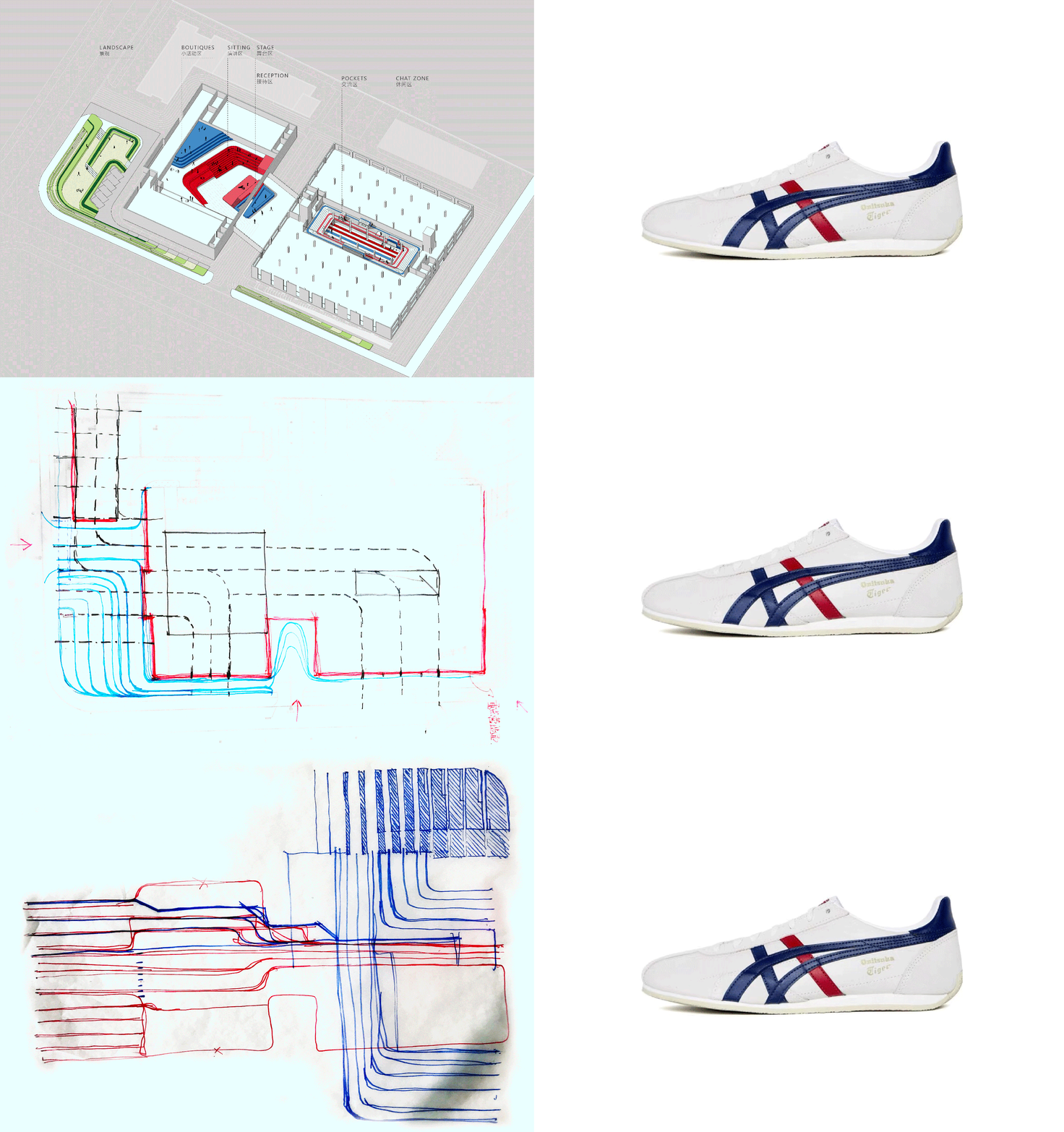
数字园区是容纳了数字化办公、居住、研发功能,并以数字程式化(programmatic)方式运转的产业基地。XPACE湾区数字公园建筑内部的空间策略,需要STUDIO QI建筑事务所在巧妙的利用高、大跨的旧厂房建筑空间的基础上,使之适应新型数字理念中的办公与生活方式。前期概念阶段中,STUDIO QI建筑事务所联想到要营造工作场域中的动态感。“运动、节奏、速度、循环”都是状态的关键词,工作场所成为一个TRACK,同时也有时空轨道、人生轨迹的寓意;希望营造一个有活力、时刻迸发创想的运转空间。
The digital park is an industrial base that contains the functions of digital office, residence, research and development, and operates in a digital programmatic way. The internal space strategy of XPACE Bay Digital Park requires STUDIO QI Architecture Firm to adapt to the office and lifestyle in the new digital concept on the basis of ingenious use of the high and large span old plant building space. In the early concept stage, STUDIO QI architectural firm was associated with creating a dynamic sense in the workplace. "Motion, rhythm, speed and cycle" are all keywords of state. The workplace becomes a TRACK, and also has the meaning of space-time track and life track; We hope to create a dynamic and creative operating space.
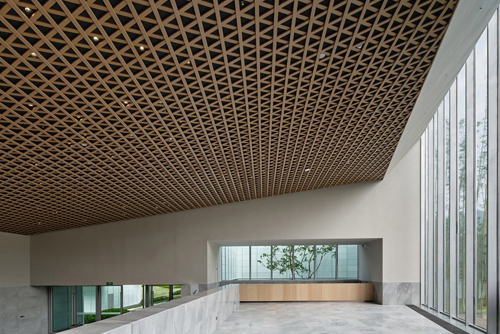
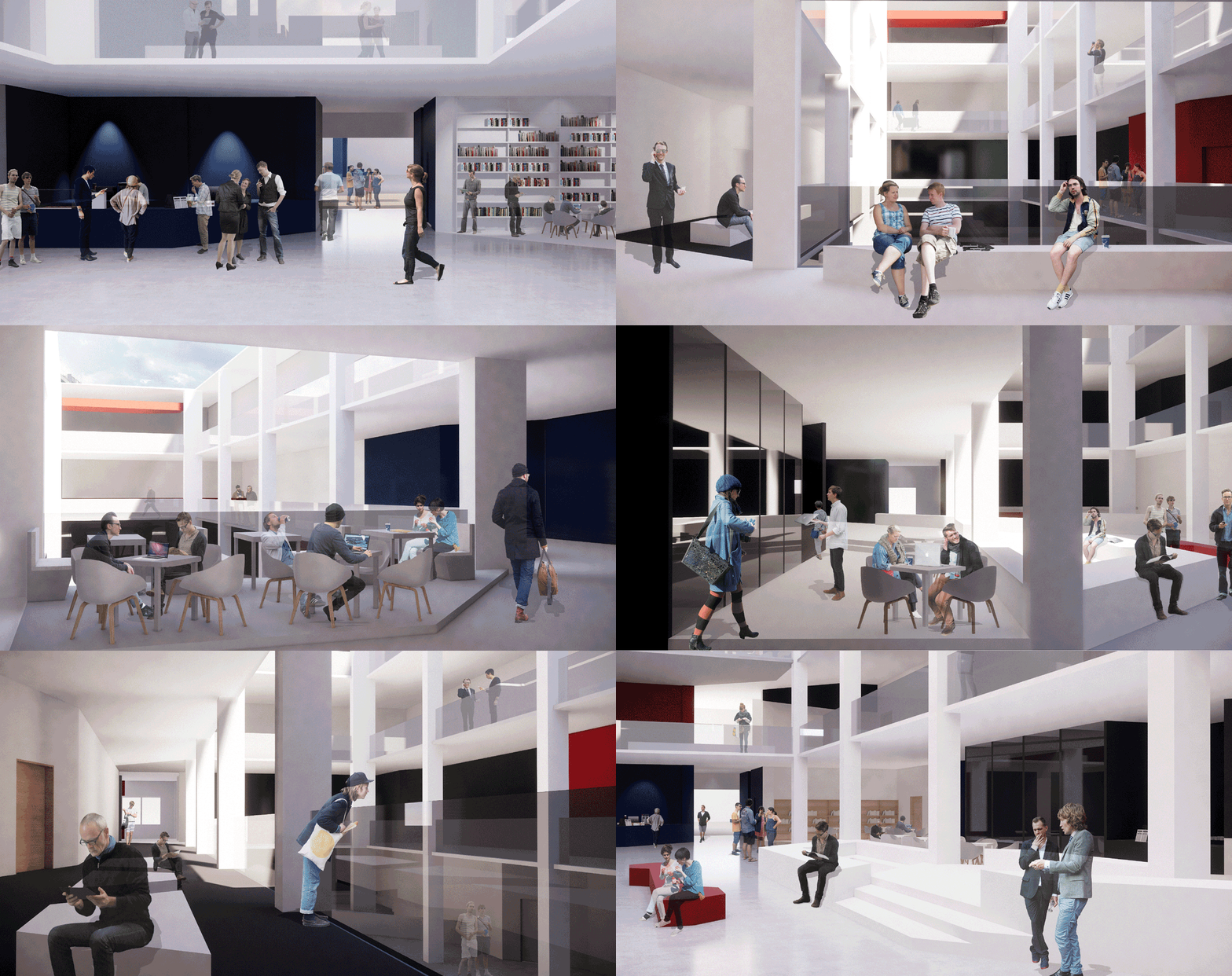
经多轮空间运用形式的商讨,STUDIO QI建筑事务所最终采用营造“岛屿”(islands)的空间策略。岛屿在许多文学作品中,都是孕育梦想与希望的场所。在岛屿间徘徊,一个创业者便可能遇见与他志同道合的合伙人。在岛屿间穿梭,一个初创公司便可能实现它的首轮融资、成长与发展。STUDIO QI建筑事务所在C、D两幢旧厂房建筑内部营建了众多岛屿,岛屿间不由墙体所区隔,而是由高差区分,相互连通的场所。它们以不同的形态、高度、围合程度与色彩彰显其独特属性,并容纳差异化的活动:相对开敞者容纳众多人群参与的讲演分享,半开放者容纳头脑风暴式的创意会议,由屏风半围合者容纳专注的办公与谈判。
After several rounds of discussion on the form of space use, STUDIO QI Architecture Firm finally adopted the space strategy of creating "islands". In many literary works, islands are places where dreams and hopes are nurtured. Wandering among the islands, an entrepreneur may meet partners who share the same interests with him. Shuttling between islands, a start-up company can realize its first round of financing, growth and development. STUDIO QI Architects has built many islands in the old factory buildings C and D. The islands are not separated by the walls, but are separated by the height difference and connected with each other. They show their unique attributes in different forms, heights, degrees of enclosure and colors, and accommodate differentiated activities: relatively open people can accommodate a large number of people to participate in the speech sharing, semi-open people can accommodate brainstorming creative meetings, and screen semi-enclosed people can accommodate focused office and negotiation.
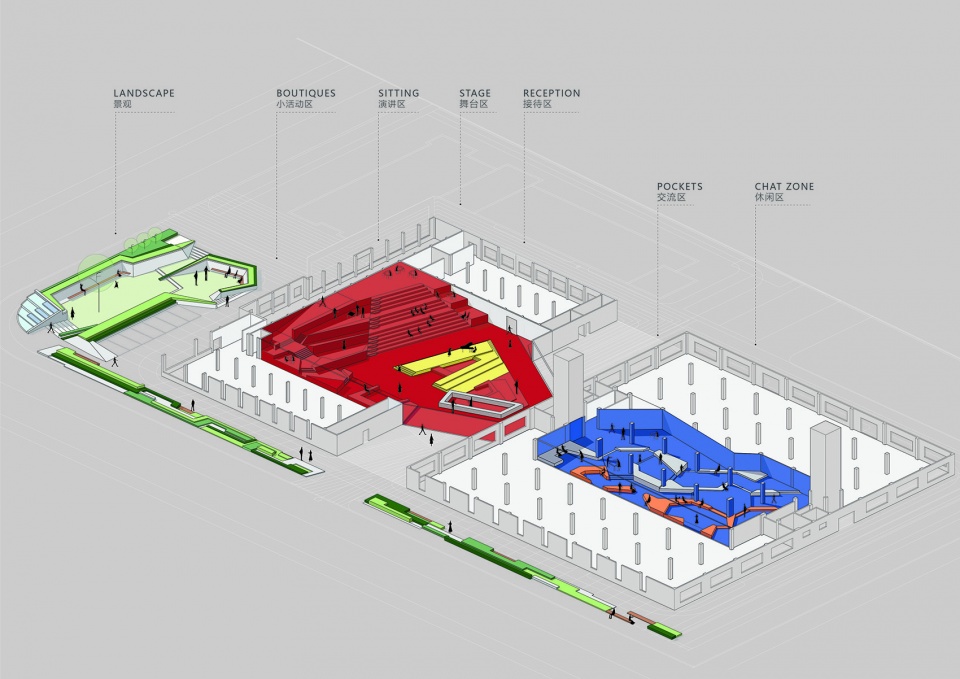
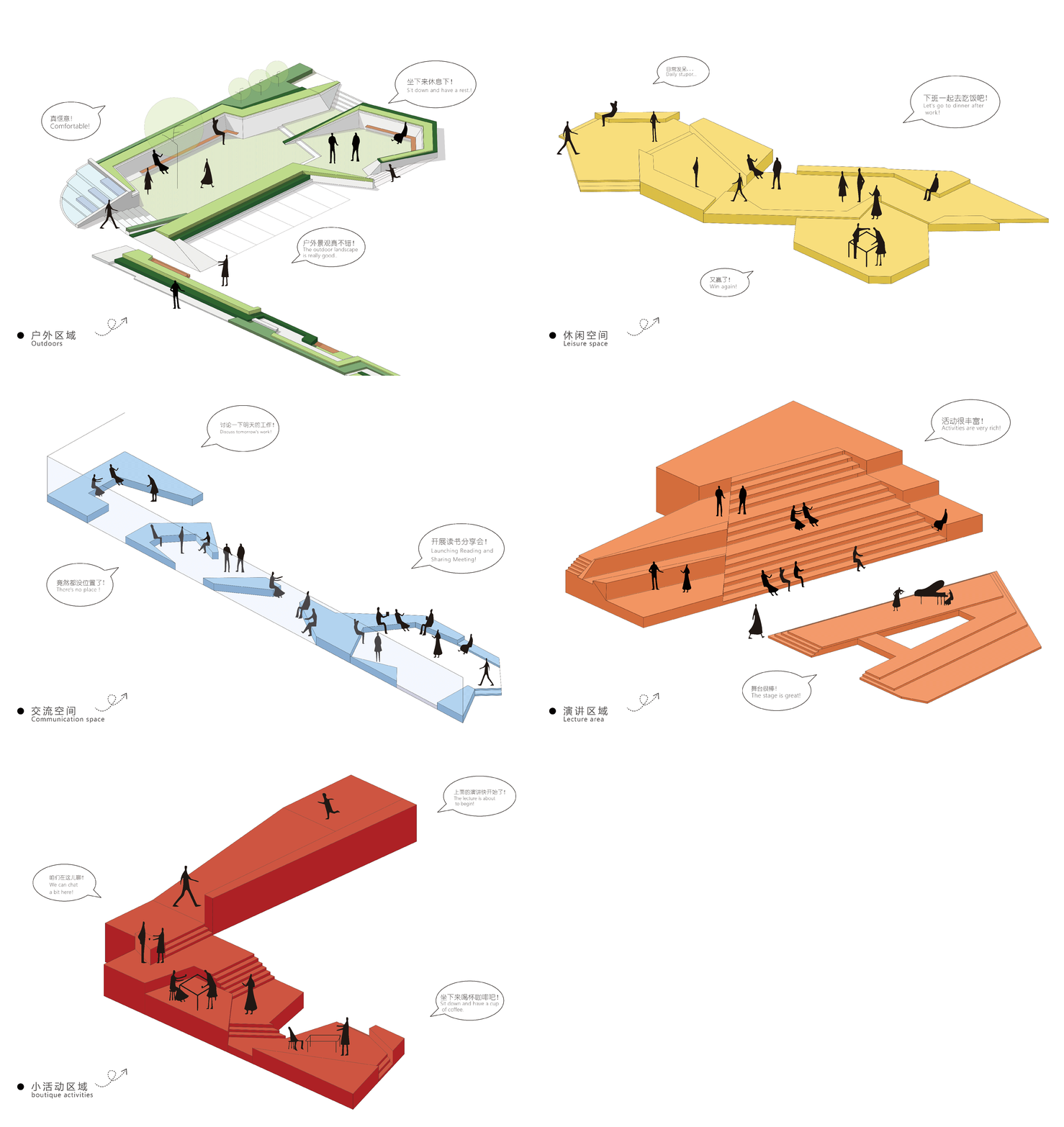
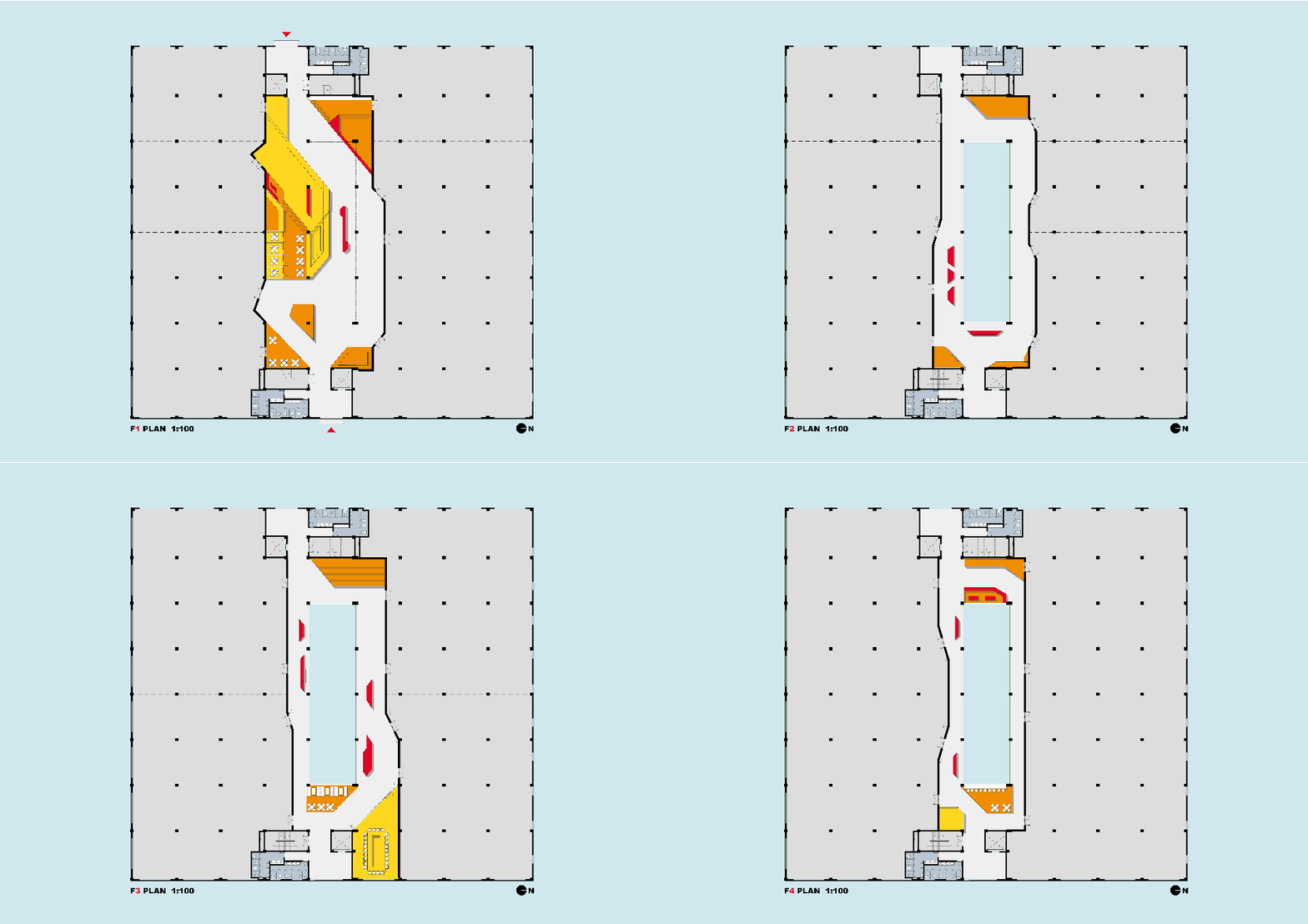
STUDIO QI建筑事务所同样考虑了不同阶段的创业公司的办公与生活方式,并以楼层为划分组织了针对于不同创业阶段的互联网公司初创空间:在C幢、D幢建筑的一层布置小型公司的办公场所。小型公司重视与多方人群的交流,需要较为开放、灵活且价格较低的办公场所。我们在一层设计部分较为安静的岛屿,供这些小型公司租用。在建筑的二、三层,则设计了由墙体分割的办公单元,服务于中等规模的初创公司。这部分初创公司采用长租的方式租赁单个办公室,并以层为单位共享会议室、活动室等设施。建筑四层则植入了面向成熟公司的空间,设计了整层完善的办公、会议、休闲设施服务于这部分公司。另外,在建筑的顶层,设计了网球场、篮球场等运动设施服务于C、D两幢建筑。
STUDIO QI Architecture Firm also considered the office and lifestyle of startups at different stages, and organized the Internet companies' start-up space for different stages of startups based on the floor: the office space of small companies was arranged on the first floor of buildings C and D. Small companies attach importance to the communication with multiple people, and need more open, flexible and low-cost office space. We designed some quiet islands on the first floor for these small companies to rent. On the second and third floors of the building, office units divided by walls are designed to serve medium-sized start-ups. This part of start-ups rent a single office in the form of long lease, and share facilities such as meeting rooms and activity rooms on a floor basis. The fourth floor of the building is embedded with space for mature companies, and the entire floor of the building is designed with perfect office, conference and leisure facilities to serve these companies. In addition, at the top of the building, sports facilities such as tennis court and basketball court are designed to serve the C and D buildings.
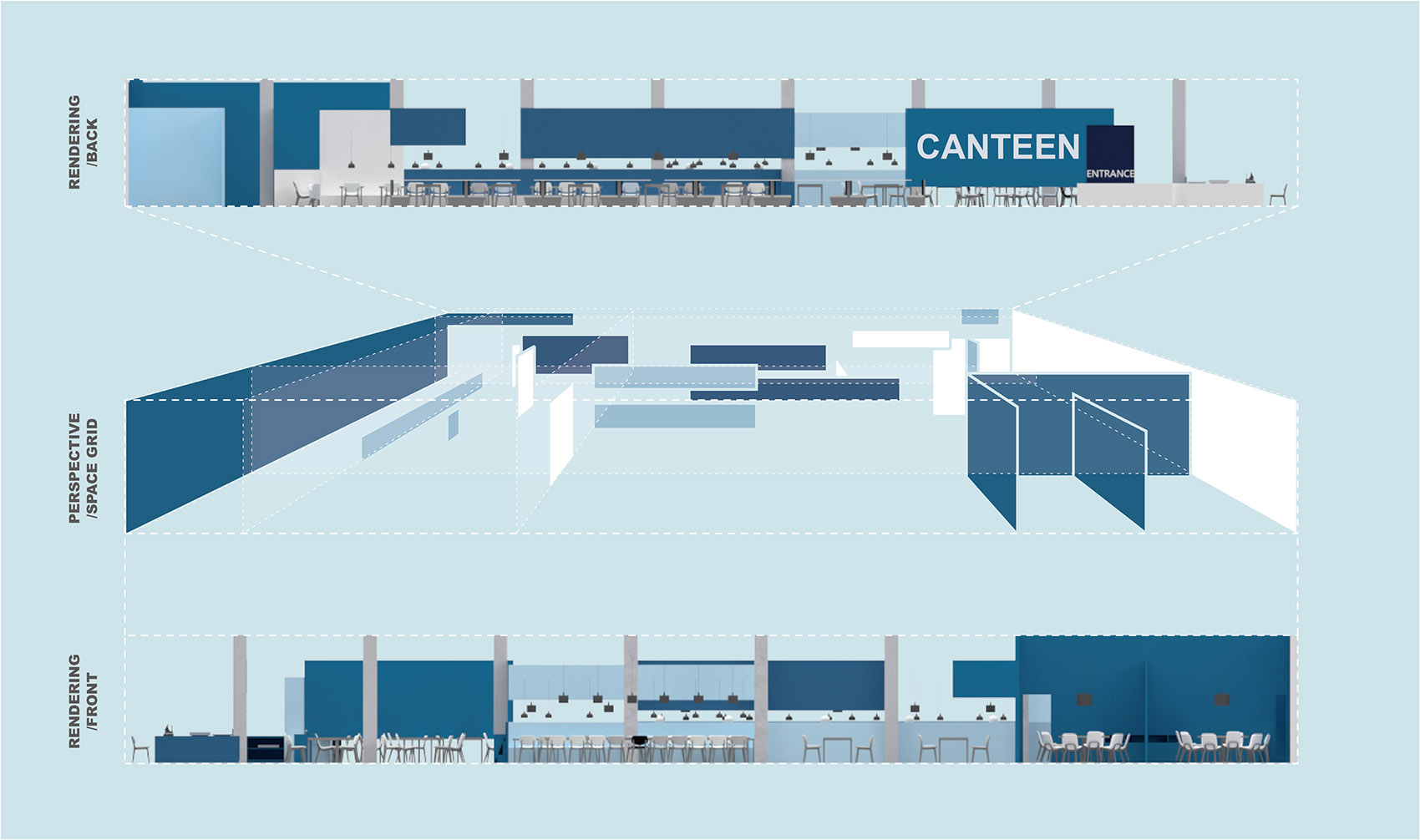
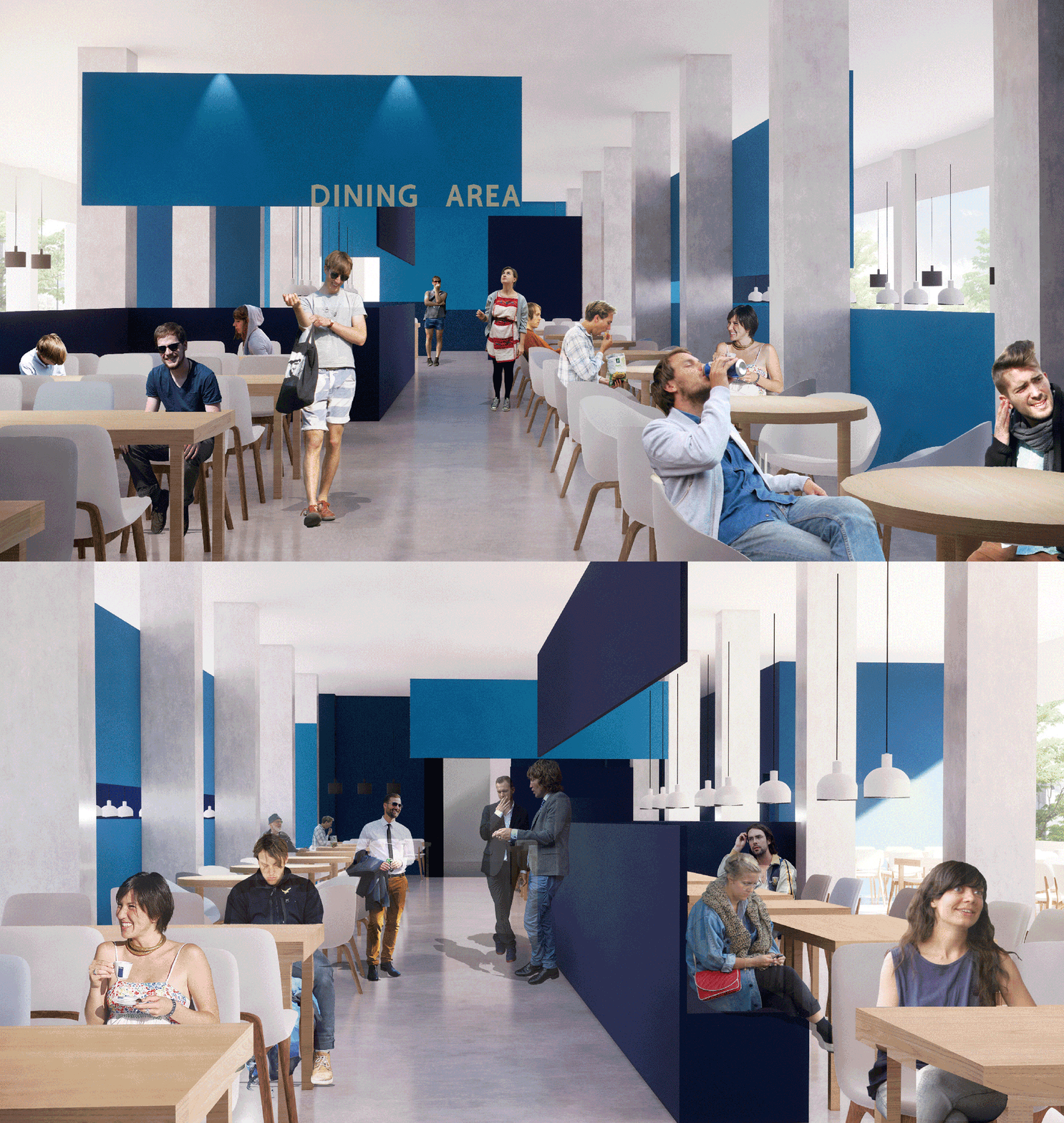
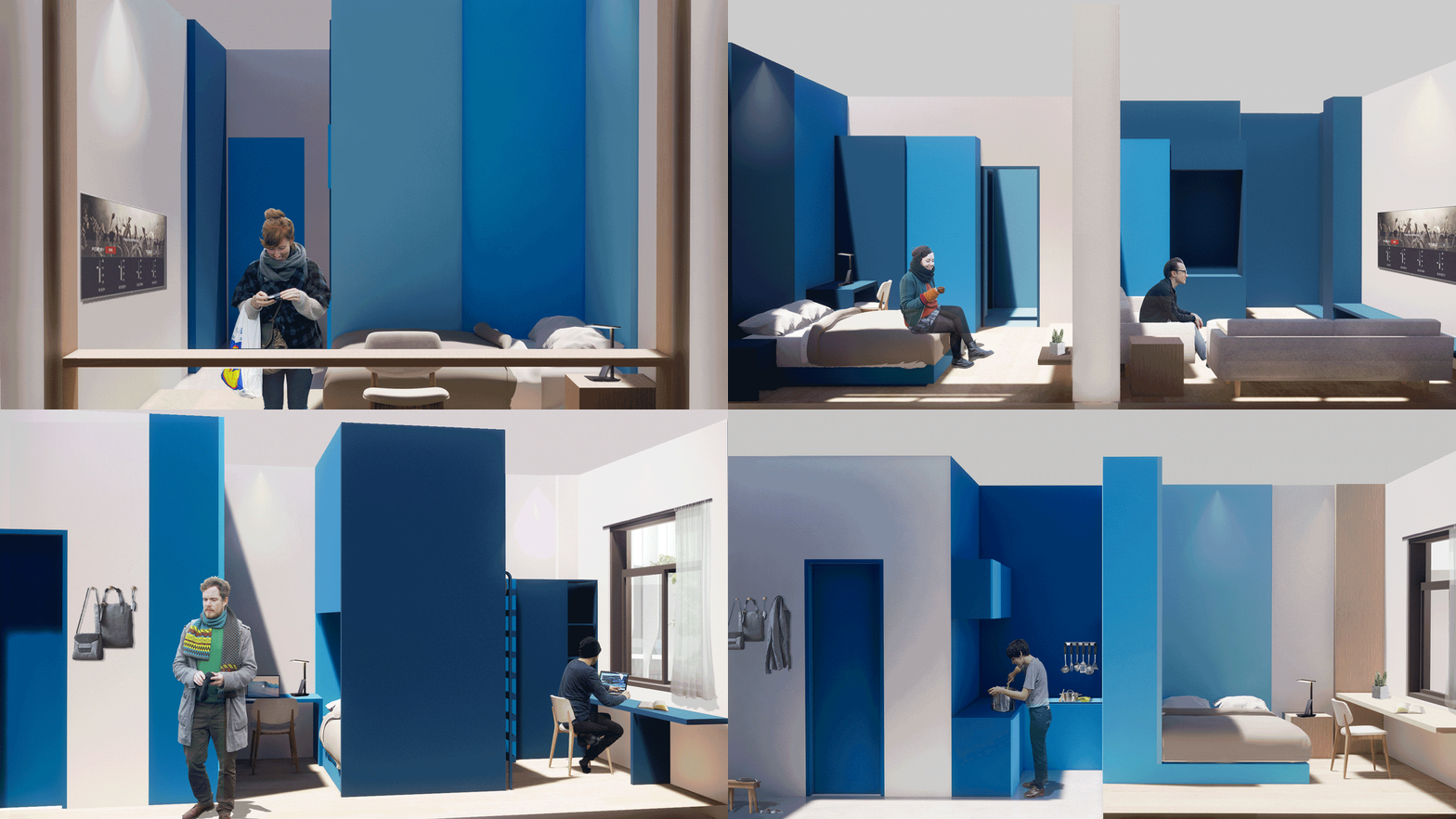
XPACE湾区数字公园采用将创业公司办公、创业人居住、生活整合为一体的运作模式。 在建筑设计中,STUDIO QI建筑事务所同样以数字化的思考方式园区的A幢、B幢两幢建筑。在B幢人才公寓,设计了将会客厅、办公、厨房、厕卫、卧室等多功能区块集合为一体的居室,服务于创业者办公、居住、生活集合为一处空间需求。人才公寓的底层食堂则设计了可互动的就餐与休憩场所,便于创业者日常交流。
XPACE Bay Area Digital Park adopts the operation mode of integrating the office, residence and life of startups. In the architectural design, STUDIO QI Architecture Firm also uses the digital thinking mode to build two buildings in the park, Building A and Building B. In the talent apartment of Building B, a living room integrating the living room, office, kitchen, toilet, bedroom and other multi-functional blocks is designed to serve the space needs of entrepreneurs' office, living and living. The canteen on the ground floor of the talent apartment is designed with interactive dining and rest places for entrepreneurs to communicate daily.
总体而言,在XPACE 湾区数字公园改造项目中,STUDIO QI 建筑事务所探索了一种短周期、低造价、有效利用原有建筑的老旧工业园区改造方法。在场所构建方面,设计团队在控制造价、 保留并充分利用原有建筑空间的基础上,通过梳理与重建场地关系,发觉源自场地自身的空间策略,从而构建出集人才、创意与科技为一体的数字产业孵化器公园。在数字化建筑设计方法方面,STUDIO QI 建筑事务所与 JL-OFFICE 合作,全过程使用的数字化协作共建方式,运用了人工干预的参数化设计,精细化的应对了新旧建筑关系、模板制作、功能组织等多方面问题,实现了数字理念中的空间营造,从而重新激活旧工业园区。
In general, in the XPACE Bay Area Digital Park Reconstruction Project, STUDIO QI Architects has explored a short-cycle, low-cost, and effective use of old industrial park reconstruction methods. In terms of site construction, the design team, on the basis of controlling the cost, reserving and making full use of the original building space, found the space strategy derived from the site itself by sorting out and reconstructing the site relationship, thus building a digital industry incubator park integrating talents, creativity and technology. In terms of digital architectural design methods, STUDIO QI Architects and JL-OFFICE cooperated to use the digital collaborative co-construction method in the whole process, using the parametric design of manual intervention, and meticulously addressed the relationship between new and old buildings, template production, functional organization and other issues, realizing the space creation in the digital concept, thus reactivating the old industrial park.
项目名称:XPACE湾区数字公园
设计方:STUDIO QI 建筑事务所、JL-OFFICE
项目设计 & 完成年份:2018.08-2019.06
主创及设计团队
主持建筑师:戚山山, Julia Capomaggi, Lluís Ortega
设计团队:罗洁滢,郭富豪, Aslinur Taskin, Juan Cantu, 黄梦雨, 洪欣欣,李盼云,吴诗敏
项目地址:中国浙江省杭州市萧山区
建筑面积:3万平方米
摄影版权:金玮琦
合作方
结构顾问:冯李慧
客户:杭州湾区数创发展有限公司
Project Name: XPACE Digital Park
The designer: STUDIO QI、JL-OFFICE
Project design & Year of completion: 2018.08-2019.06
Chief creator and design team
Architect in Lead: Shanshan QI Julia CAPOMAGGI, Lluís ORTEGA
Design Team: LUO Jiejin,GUO Fuhao, Aslinur TASKIN, Juan CANTU, HUANG Mengyu, HONG Xinxin, LI Panyun,WU Shimin
Project Location: Xiaoshan, Hangzhou, Zhejiang Province, China
Construction area: 30,000 square meters
Copyright: Weiqi Jin
Structural consultant: FENG Kevin
Customer: Hangzhou Bay Digital Innovation Development Co., Ltd