两江国际机场T2航站楼,桂林/建筑
本项目位于桂林市西南方28公里处的临桂区两江镇,占地面积4.06平方公里,飞行区等级为4E。作为西南地区的一座国际航空港,T1航站楼于1996年建成通航,建筑面积5万平米,可满足年运送旅客500万人次。2015年发改委批复新建10万平米T2航站楼及站坪和陆侧配套设施,以满足2025年航站区1200万人次旅客吞吐量。项目被纳入了广西壮族自治区成立70周年的重点项目名录。
This project is located in Liangjiang Town, Lingui District, 28 kilometers southwest of Guilin City. It covers an area of 4.06 square kilometers and has a flight zone rating of 4E. As an international airport in southwest China, T1 terminal was completed and opened to navigation in 1996, with a floor area of 50000 square meters, which can transport 5 million passengers annually. In 2015, the National Development and Reform Commission approved the construction of a 100000 square meter T2 terminal with apron and landside supporting facilities to meet the throughput of 12 million passengers in the terminal area by 2025. The project has been included in the list of key projects for the 70th anniversary of the establishment of Guangxi Zhuang Autonomous Region.
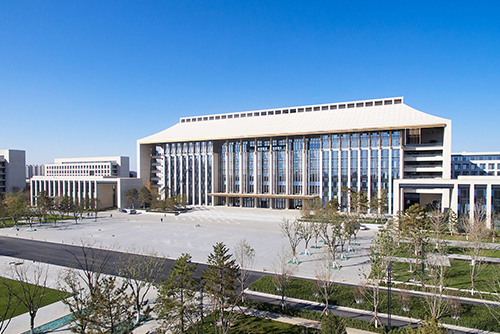
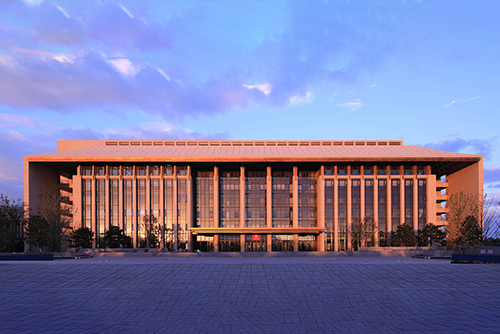
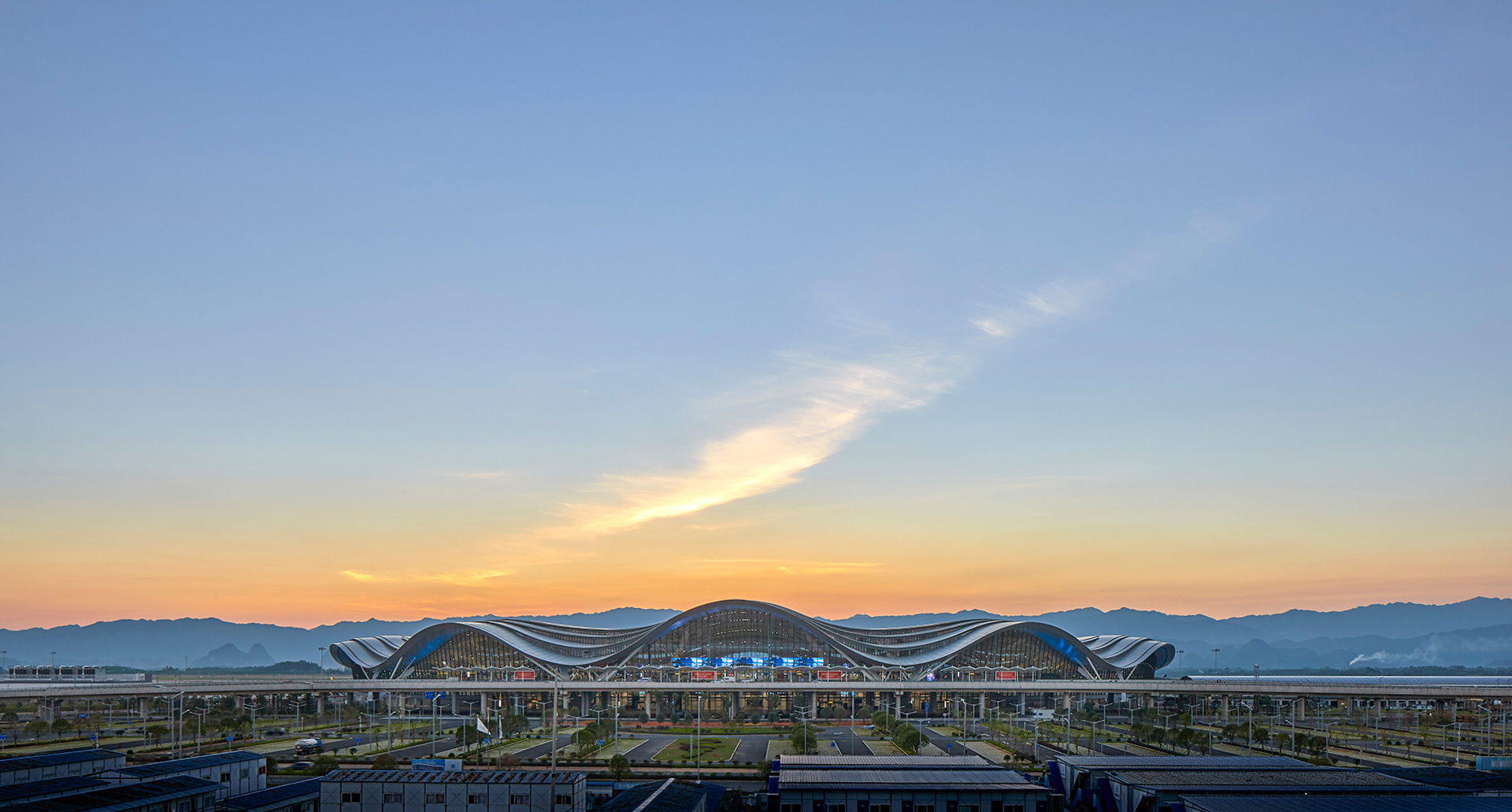
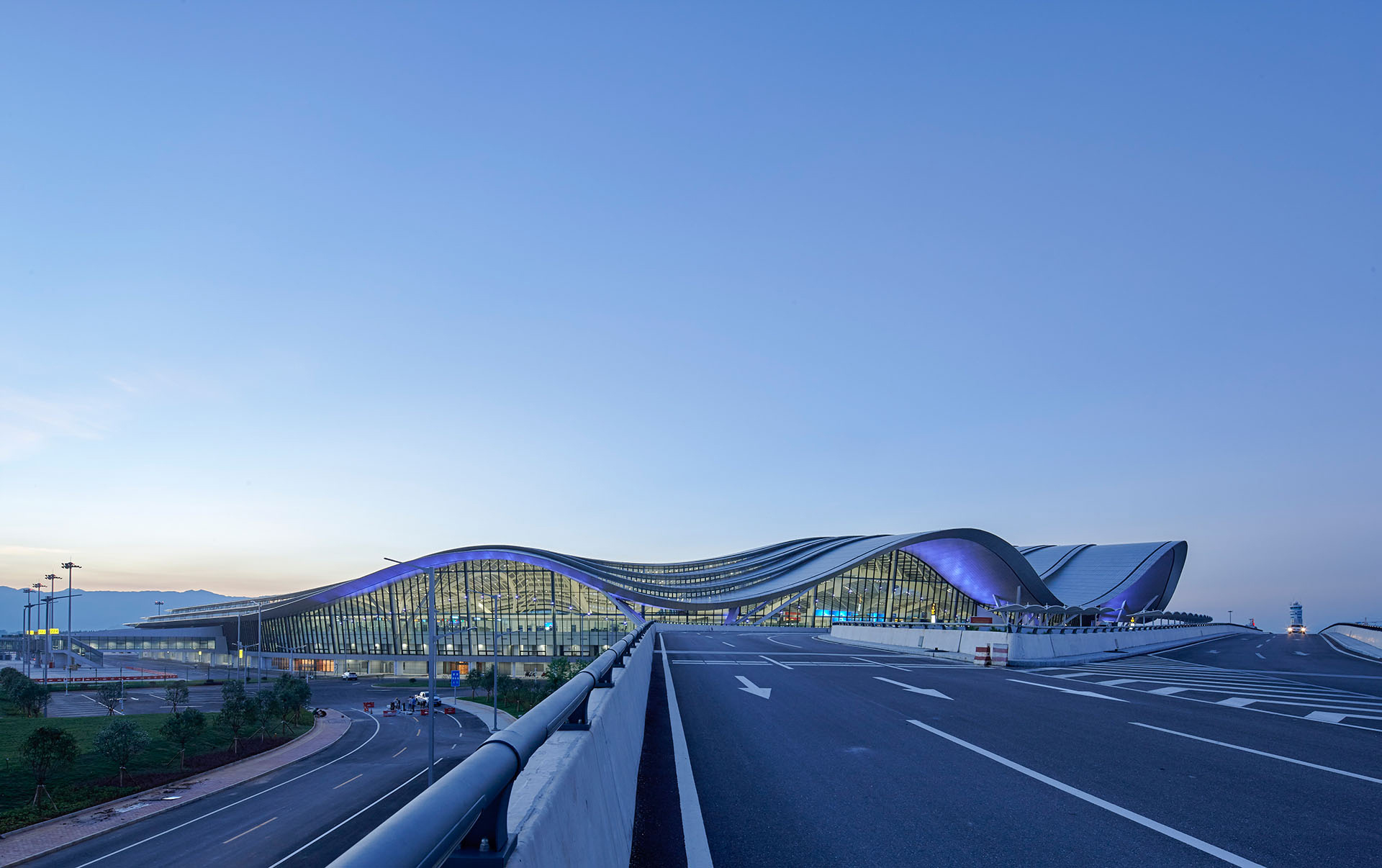
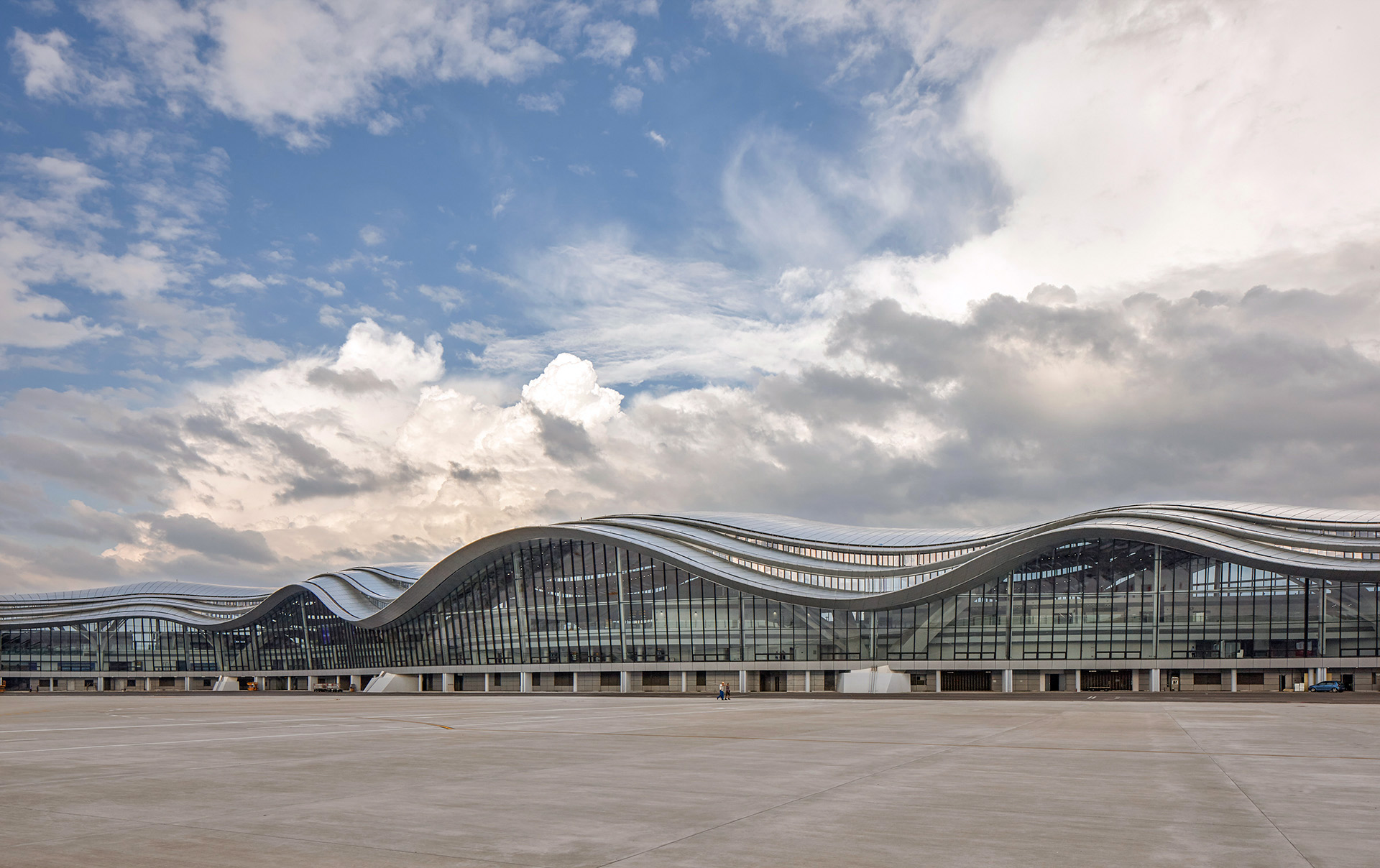
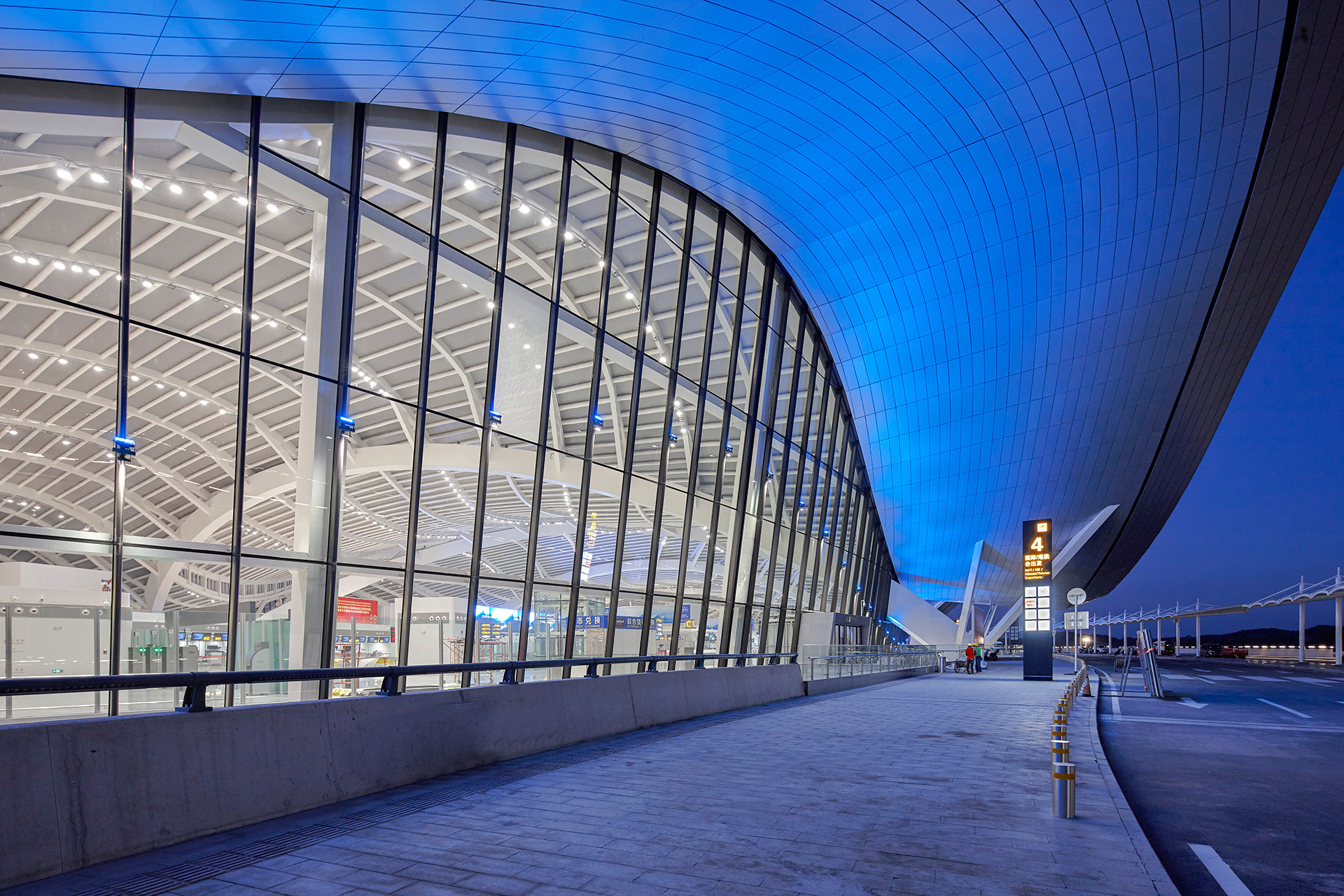
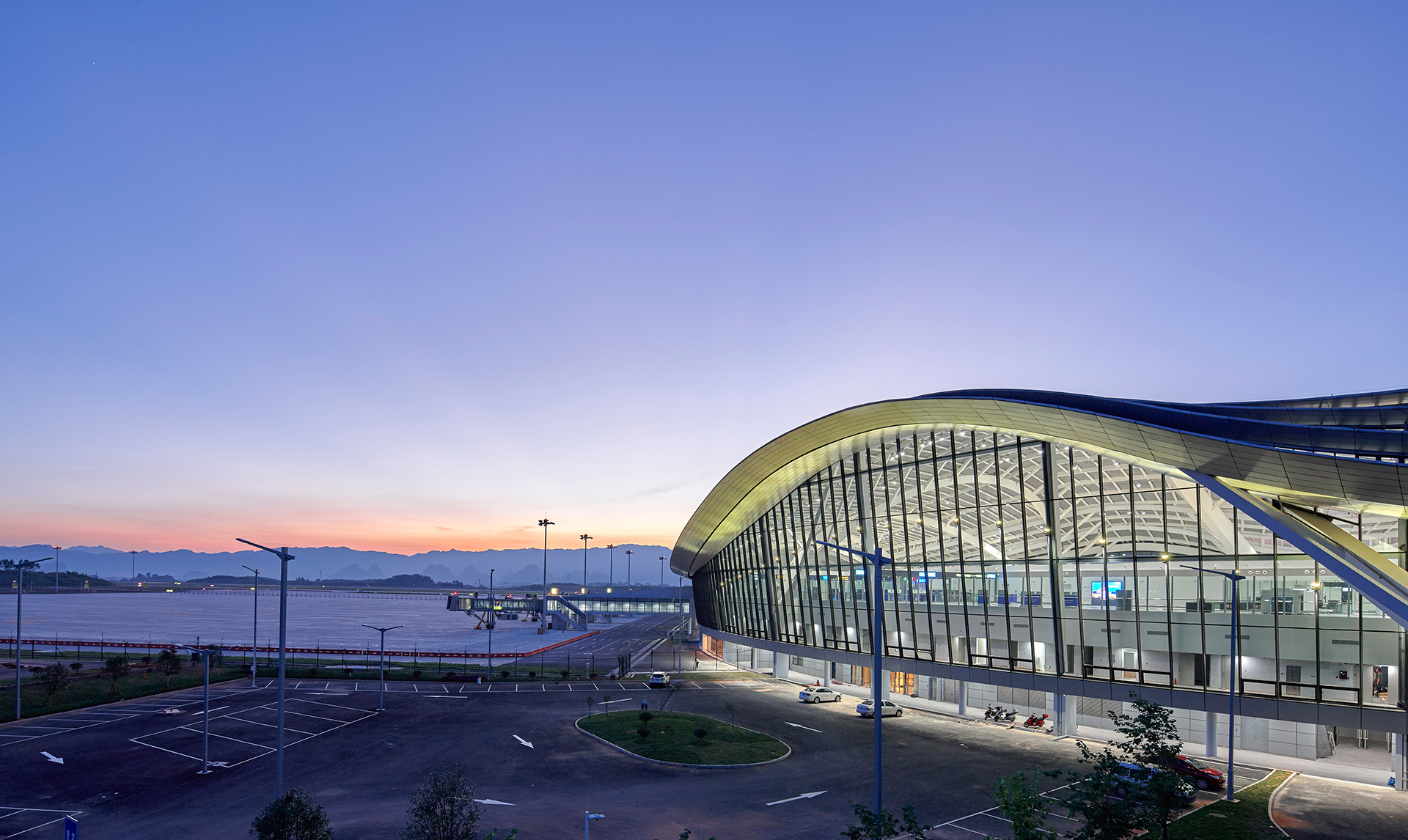
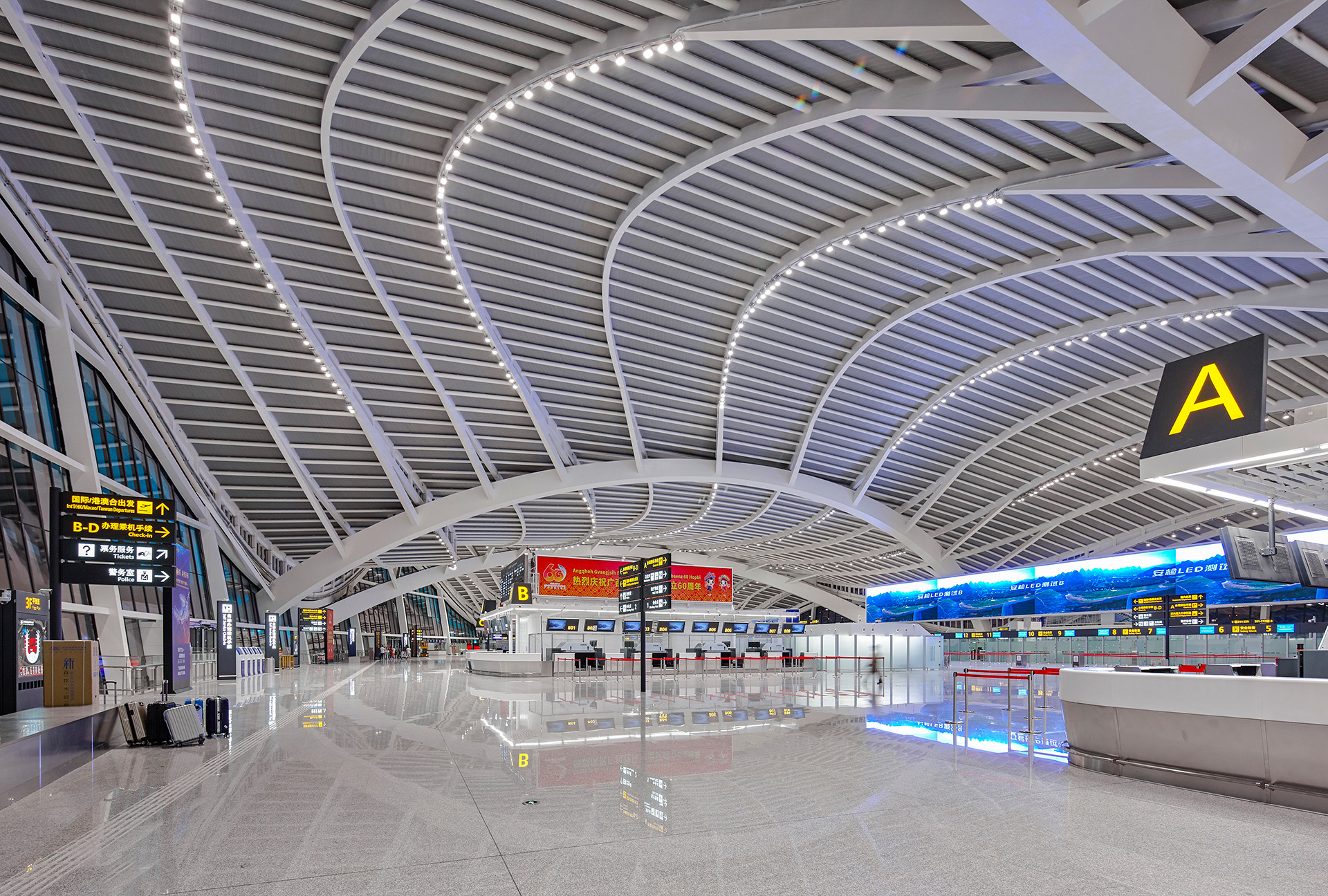
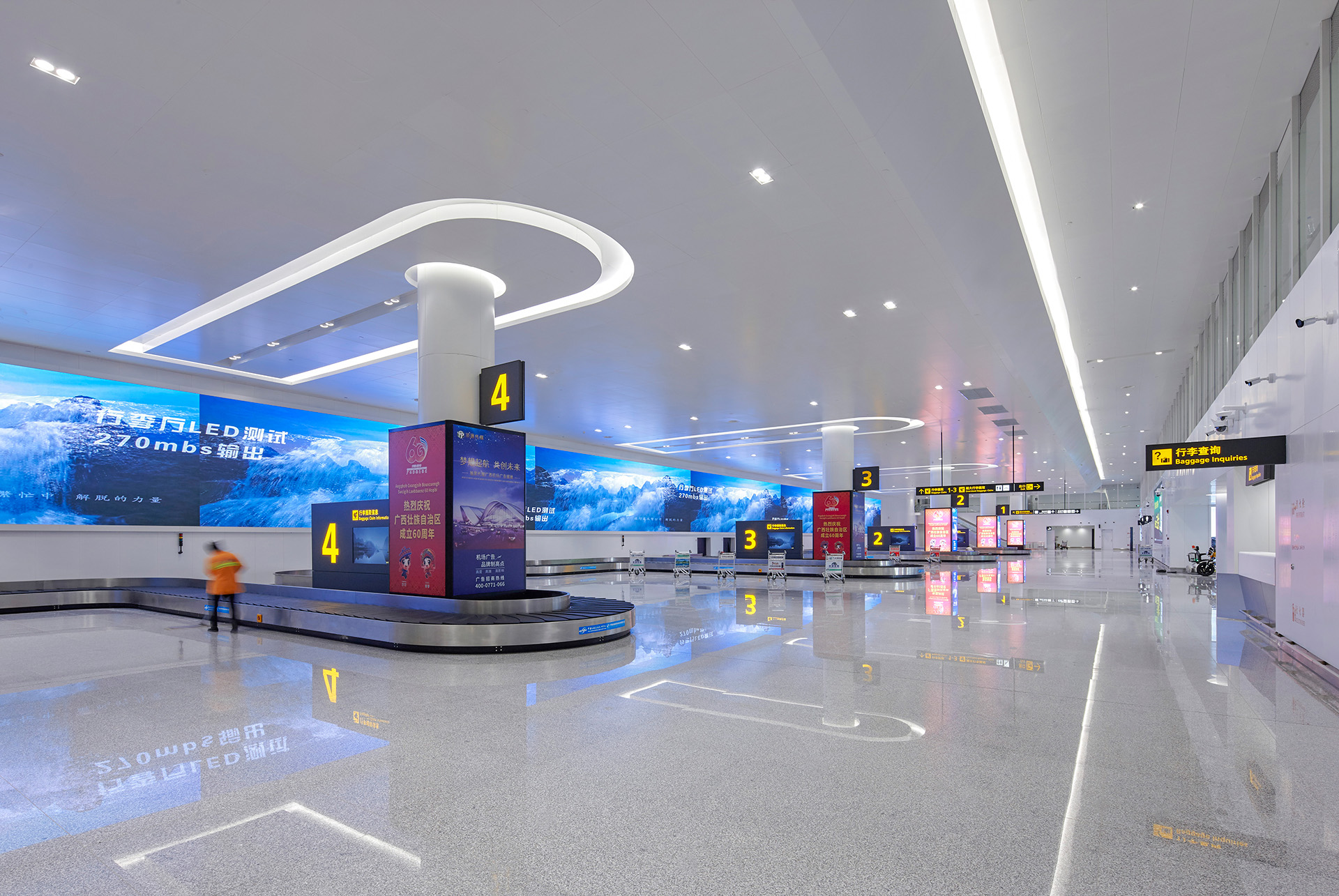
桂林机场现有一条跑道及一座T1航站楼及其场前配套设施。扩建工程在T1南侧用地新建一座T2航站楼及站坪和场前配套设施。T2航站楼以10万平米的建筑面积提供了年吞吐量850万人次的国内、国际进出港旅客流程。集中式主楼与两条直线型垂直指廊,提供了23~25个近机位接驳条件,挑战了接驳效率的极限,用最少的建设量提供了尽可能多的航空容量,是国内机场航站楼功能效率的典范。 五个连续起伏的拱形曲面与进出港大厅—商业或中转连接区域—指廊候机区和到达通廊的空间序列相对应,形成了由主楼到指廊的高—低空间过度,倾斜拱的设计实现了主楼120m的大跨度,整个离港层成为连续无柱空间。竖向分格的超白玻璃幕墙沿建筑立面舒展开。屋顶采用单层拱壳结构,五个高度递减的连续拱覆盖了主要的建筑空间,由多榀互相支撑的倾斜拱为骨架,顶部覆盖单层拱壳结构和屋面构造系统,通过建筑结构一体化精细化设计,实现了结构构件直接成为室内装饰要素。屋面采用双层TPO防水卷材,装饰层采用阳极氧化铝单板,实现了良好的防水性能,并实现了自然真实的金属质感和连续光滑的曲面效果。
Guilin Airport currently has a runway, a T1 terminal, and its supporting facilities in front of the airport. The expansion project will build a new T2 terminal building, apron, and supporting facilities in front of the site on the south side of T1. The T2 terminal provides an annual throughput of 8.5 million domestic and international inbound and outbound passengers with a building area of 100000 square meters. The centralized main building and two straight vertical corridors provide 23 to 25 nearby docking conditions, challenging the limit of docking efficiency and providing as much aviation capacity as possible with the minimum construction volume, making it a model of functional efficiency for domestic airport terminals. The five continuous undulating arched surfaces correspond to the spatial sequence of the entry and exit hall, commercial or transfer connecting area, terminal area, and arrival corridor, forming a transition from high to low space from the main building to the terminal. The design of the inclined arch achieves a large span of 120m in the main building, and the entire departure floor becomes a continuous columnless space. The vertically divided ultra white glass curtain wall unfolds along the building facade. The roof adopts a single layer arch shell structure, with five continuously decreasing height arches covering the main building space. It is framed by multiple tilted arches that support each other, and the top is covered with a single layer arch shell structure and roof construction system. Through the integrated and refined design of the building structure, the structural components directly become interior decoration elements. The roof is made of double-layer TPO waterproof rolls, and the decorative layer is made of anodized aluminum veneer, achieving good waterproof performance and achieving a natural and realistic metal texture and continuous smooth surface effect.
建筑专业-设计理念与技术策略
Architecture - Design Philosophy and Technical Strategy
桂林被冠以 “国际性旅游航运枢纽”等众多头衔,本项目作为广西壮族自治区成立70周年重点项目之一,承载了城市新门户和带动经济增长的重大责任。在用地紧张、容量目标压力巨大、与现状衔接难题的背景下,采用单一空侧、贯穿式陆侧及新楼与老楼平行式发展格局,南端开放保留下一期建设灵活性,北端与T1航站楼在空陆侧进行紧密便捷衔接,最大限度节省用地为远期发展预留更大灵活性,并为T1与T2航站楼协同运行提供最大便利。
Guilin has been awarded numerous titles such as "International Tourism and Shipping Hub". As one of the key projects for the 70th anniversary of the establishment of Guangxi Zhuang Autonomous Region, this project bears the significant responsibility of creating a new gateway for the city and driving economic growth. Against the backdrop of tight land use, huge pressure on capacity targets, and difficulties in connecting with the current situation, a single airside, a continuous landside, and a parallel development pattern between new and old buildings are adopted. The southern end is open to the public and retains the flexibility of the next phase of construction, while the northern end and T1 terminal are closely and conveniently connected on the airside and landside, minimizing land use and reserving greater flexibility for long-term development, and providing maximum convenience for the coordinated operation of T1 and T2 terminals.
本项目五个连续起伏的拱形曲面与建筑内部空间序列对应,成对的倾斜拱形支撑实现整个离港层大跨度的连续无柱空间。竖向分格的超白玻璃幕墙沿建筑立面展开,首层采用氟碳喷涂铝单板幕墙。屋顶采用单层拱壳结构以多榀倾斜拱为骨架,,顶部覆盖金属屋面系统,通过建筑结构一体化设计,结构构件直接成为室内装饰要素。屋面创新采用轻型金属屋面与卷材防水和金属装饰板结合的屋面构造系统,实现了结构底板作为装饰板、屋面防水与装饰双层构造等多方面的创新,并申请相关专利,实现了良好的防水性能及自然的金属质感和连续平滑的曲面效果。
The five continuous undulating arched surfaces of this project correspond to the sequence of internal spaces in the building, and the paired inclined arch supports achieve a continuous columnless space with a large span throughout the departure level. The vertically divided ultra white glass curtain wall unfolds along the building facade, and the first floor adopts fluorocarbon sprayed aluminum veneer curtain wall. The roof adopts a single-layer arch shell structure with multiple inclined arches as the skeleton, and the top is covered with a metal roof system. Through the integrated design of the building structure, the structural components directly become indoor decorative elements. The roof innovation adopts a roof construction system that combines lightweight metal roofs with roll waterproofing and metal decorative panels, achieving various innovations such as using structural base plates as decorative panels, and applying for relevant patents to achieve good waterproof performance, natural metal texture, and continuous and smooth surface effects.
结构专业-设计特点
Structural Specialty - Design Features
广西桂林国际机场T2航站楼,为广西壮族自治区面向“一带一路”的重点建设项目。航站楼总面积约十万平米。地上三层,地下设置一层管廊层。建筑为U字型布局,东西长约353米,南北宽约372米。建成后旅客年吞吐量850万人次。
T2 terminal of Guangxi Guilin International Airport is a key construction project facing the "the Belt and Road" in Guangxi Zhuang Autonomous Region. The total area of the terminal is approximately 100000 square meters. There are three floors above ground and one underground pipe gallery layer. The building has a U-shaped layout, with a length of approximately 353 meters from east to west and a width of approximately 372 meters from north to south. After completion, the annual passenger throughput will be 8.5 million.
新航站楼屋面采用钢结构,下部主体采用现浇混凝土框架结构。下部主体柱网为9x9米柱网,中央大厅区域大量采用12x18米柱网;并设置大跨度预应力砼梁。
The roof of the new terminal building adopts a steel structure, and the lower main body adopts a cast-in-place concrete frame structure. The lower main column grid is a 9x9 meter column grid, and a large number of 12x18 meter column grids are used in the central hall area; And set up large-span prestressed concrete beams.
本工程基础,采用泥浆护壁的大直径钻孔灌注桩基础,持力层为中风化泥质灰岩。由于工程位于广西桂林岩溶发育地区,要求逐桩进行施工超前钻探,并根据每个桩的勘探情况,逐桩进行桩基础设计,并在施工现场逐桩配合施工单位进行施工。
For the foundation of the project, large diameter bored cast-in-place pile foundation with slurry retaining wall is adopted, and the bearing stratum is moderately weathered argillaceous limestone. As the project is located in the karst development area of Guilin, Guangxi, it is required to carry out construction advance drilling pile by pile, and design the pile foundation pile by pile according to the exploration of each pile, and cooperate with the construction unit to carry out construction pile by pile on the construction site.
本工程上部屋盖采用钢拱壳体结构,最大跨度达120m,最大悬挑20m。所有支撑体系均采用大跨度钢拱支撑(大厅内无任何结构钢柱)。其中中心区采用倾斜方向相反的大跨度对拱支撑,指廊采用单片拱支撑。中心区拱轴方向随屋盖走向旋转。屋顶钢结构采用单层网壳结构,为建筑美观,网壳采用环向梁与径向梁成矩形的布置方式,网壳节点采用刚接节点。支撑拱与网壳之间采用斜撑杆过渡连接。壳体屋盖的推力及竖向力通过撑杆传至拱体,拱与屋盖构件互为整体,受力合理。按照各杆件重要程度分别考虑支撑拱、撑杆、屋盖环向杆件、屋盖径向杆件的性能指标。屋盖投影面积约6万平米。
The upper roof of this project adopts a steel arch shell structure, with a maximum span of 120m and a maximum overhang of 20m. All support systems are supported by large-span steel arches (there are no structural steel columns in the hall). The central area is supported by a large span arch with opposite inclined directions, and the corridor is supported by a single arch. The direction of the central arch axis rotates with the direction of the roof. The roof steel structure adopts a single-layer grid shell structure, which is arranged in a rectangular manner with circumferential and radial beams for the sake of building aesthetics. The grid shell nodes adopt rigid joints. The transition connection between the supporting arch and the reticulated shell is made by diagonal brace. The thrust and vertical force of the shell roof are transmitted to the arch body through support rods, and the arch and roof components are integrated, with reasonable stress. Consider the performance indicators of support arches, support rods, roof circumferential members, and roof radial members based on the importance of each member. The projected area of the roof is approximately 60000 square meters.
在钢结构大拱的拱脚基础中设置对拉预应力拉杆,解决主要钢拱的侧推力问题。
Install tension prestressed tension rods in the arch foot foundation of the steel structure arch to solve the lateral thrust problem of the main steel arch.
暖通专业-技术特点
HVAC Specialty - Technical Features
1)空调冷水系统采用6/13℃大温差运行,减少系统流量,节省水泵能耗。
2)新风系统设排风热回收装置,热回收效率不低于60%。
3)全空气空调系统过渡季可加大新风运行,最大新风比100%。
4)全空气变风量系统送、排风机均根据系统所需风量,进行变频调速控制。
1) The air conditioning cold water system operates with a large temperature difference of 6/13 ℃, reducing system flow and saving water pump energy consumption.
2) The fresh air system is equipped with an exhaust heat recovery device, with a heat recovery efficiency of no less than 60%.
3) The all-air air conditioning system can increase fresh air operation during the transition season, with a maximum fresh air ratio of 100%.
4) The supply and exhaust fans of the all air variable air volume system are controlled by frequency conversion and speed regulation based on the required air volume of the system.
给排水、消防系统-技术特点
Water supply and drainage, fire protection system - technical characteristics
1. 卫生器具用水效率为国家现行有关卫生器具用水等级标准规定的1级;
2.水池、水箱溢流水位均设报警装置,防止进水管阀门故障时,水池、水箱长时间溢流排水。
3.节水设备使用率达到100%。
4.航站楼电气管廊采用高压细水雾系统保护,将火灾损失降到最低。
1. The water use efficiency of sanitary appliances shall be level 1 according to the current national standards for the water use level of sanitary appliances;
2. Alarm devices are installed for the overflow level of the water tank and water tank to prevent long-term overflow and drainage in the event of valve failure in the inlet pipe.
3. The utilization rate of water-saving equipment reaches 100%.
4. The electrical pipe gallery of the terminal building is protected by a high-pressure water mist system to minimize fire losses.
电气专业-综合效益
Electrical major - comprehensive benefits
本工程上级35KV变电站向航站楼内每个开闭站提供相互独立的两路10KV高压电源。航站楼设2个开闭站,4个公共变配电所,2个柴油发电机房。电力监控系统随变配电系统实施。航站楼内一级负荷中特别重要负荷由发电机组提供备用电源;信息及弱电系统网络与控制设备设置不间断电源装置UPS。航站楼内变频设备多。专项系统多,驻场单位多,需求不尽相同。航站楼空间复杂,机电系统多,线路敷设超长复杂。公共空间照明配合照明顾问与建筑效果具体实施。本工程在低压配电系统中第一级电源进线、变配电室各出线回路上、以及业主运行管理需要的重点监测回路上,设置计量或测量仪表,对用电负荷进行连续监测。各场所的照明功率密度值不高于现行国家标准规定的目标值。变配电站尽量靠近负荷中心以缩短配电半径并减少线路损耗。航站楼规划IBMS,通过管理相关的内外部系统集成架构一个标准化、有限开放式的系统。IBMS应符合整体业务管理及网络模型规划需求,并满足对其接口、配置及功能的要求。包括:建筑设备监控系统;照明监控系统;电梯监控系统;电力监控系统等。信息集成系统建立生产运行系统数据的机场营运中央数据库(AODB),并建立提供外部系统接口的智能中间件平台,从而将各自有独立的应用服务器和本地数据库的外部系统进行统一接入和管理。合理选择光源和高效率的节能灯具;设置智能照明控制系统,采用照明节能技术和管理相结合,减少航站楼照明系统日常运行的用电量。结合亮度传感器设置,控制灯具的点亮时间,充分利用自然采光照明。照明功率密度值LPD符合要求。变配电所在航站楼内的合理布置,尽量靠近负荷中心。建筑设备监控系统的应用。
The superior 35KV substation of this project provides two independent 10KV high-voltage power supplies to each switching station in the terminal building. The terminal is equipped with 2 switching stations, 4 public transformer substations and 2 diesel generator rooms. The power monitoring system is implemented along with the power transformation and distribution system. The generator set provides backup power for particularly important loads in the first level load of the terminal building; The information and weak current system network and control equipment are equipped with an uninterruptible power supply device (UPS). There are many frequency conversion equipment in the terminal building. There are many specialized systems and resident units, with varying demands. The terminal space is complex, there are many electromechanical systems, and the wiring is overlong and complex. Public space lighting coordination with lighting consultants and specific implementation of building effects. In this project, metering or measuring instruments are installed on the first level power supply incoming line, each outgoing line circuit in the transformation and distribution room, and key monitoring circuits required by the owner's operation and management in the low-voltage distribution system to continuously monitor the electrical load. The lighting power density value of each location shall not exceed the target value specified in the current national standard. The substation should be located as close as possible to the load center to shorten the distribution radius and reduce line losses. The terminal planning IBMS integrates internal and external systems to build a standardized, limited, and open system. IBMS should meet the overall business management and network model planning requirements, and meet the requirements for its interface, configuration, and functionality. Including: building equipment monitoring system; Lighting monitoring system; Elevator monitoring system; Power monitoring system, etc. The information integration system establishes the airport operation central database (AODB) of production and operation system data, and establishes an intelligent middleware platform that provides external system interfaces, so as to uniformly access and manage external systems with independent application servers and local databases. Reasonable selection of light sources and high-efficiency energy-saving lighting fixtures; Set up an intelligent lighting control system that combines energy-saving lighting technology and management to reduce the daily electricity consumption of the terminal lighting system. By combining brightness sensor settings, control the lighting time of the lamps and fully utilize natural lighting. The lighting power density value LPD meets the requirements. The reasonable layout of the substation in the terminal building should be as close as possible to the load center. The application of building equipment monitoring system.
项目名称:桂林两江国际机场T2航站楼
设计结束时间:2015 年 08 月
竣工时间:2018 年 08 月
建筑功能(地上、地下):航站楼、机电管廊
用地性质:机场用地
设计使用年限:50年
建设用地面积:5.9㎡
总建筑面积:99725㎡
地上面积:94434㎡
地下面积:5291㎡
合作设计:民航新时代机场设计研究院有限公司广州分公司
Project Name: T2 Terminal of Guilin Liangjiang International Airport
Design end date: August 2015
Completion date: August 2018
Building functions (above ground and underground): terminal building, mechanical and electrical pipe gallery
Nature of land use: Airport land
Design service life: 50 years
Construction land area: 5.9 square meters
Total construction area: 99725 square meters
Ground area: 94434 square meters
Underground area: 5291 square meters
Collaborative design: Guangzhou Branch of Civil Aviation New Era Airport Design and Research Institute Co., Ltd