靖江滨江新城长阳邻里中心 / 南大建筑钟华颖工作室
设计源起Design Genesis
靖江滨江新城南部片区几大社区中心建设是社区居民生活提升的重要载体,长阳邻里中心是其中之一。如何在有限用地范围内尽可能实现一日生活需求的同时创造邻里交往的机会,场所记忆再现,将邻里中心建设为一个得以持续性吸附居民生活的容器与载体。
The construction of several community centers in the southern district of Jingjiang Riverside New Town serves as a vital medium for enhancing the lives of community residents. The Changyang Neighborhood Center is one such endeavor. Within a constrained land area, the challenge lies in meeting daily life needs while creating opportunities for neighborly interaction, reviving the memory of place, and transforming the neighborhood center into a vessel and medium capable of continuously absorbing and enriching residents’ lives.
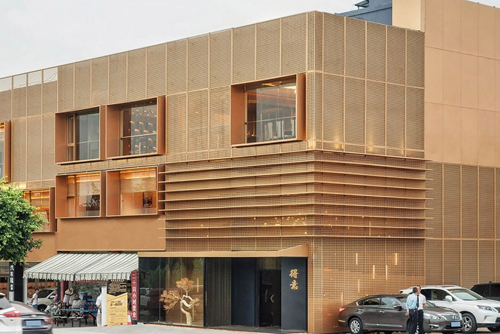
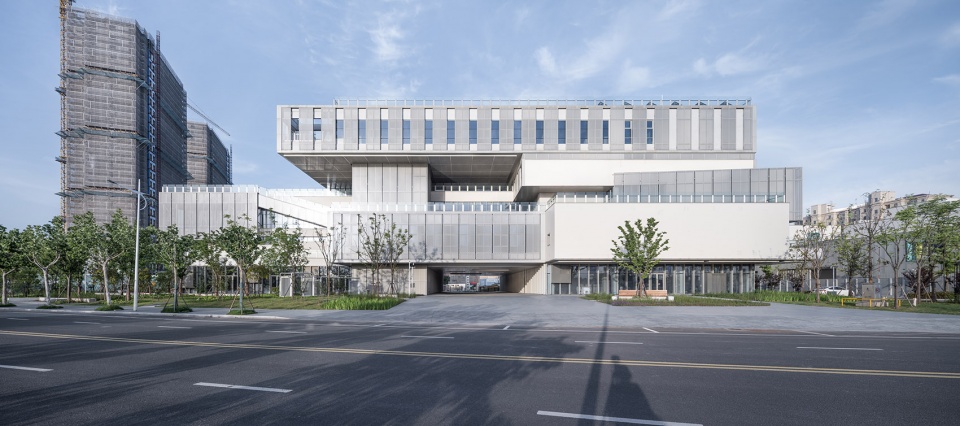
▼邻里中心主立面,Main Façade of the Neighborhood Center
社区中心一般问题与建筑选型Common Issues in Community Centers and Architectural Typology
社区中心建设用地一般较为紧凑,有最低容积率要求。用地条件决定了社区中心外部场地、交往空间有限。内部因为多种空间形态不同的功能复合叠加,垂直交通核及出入口的挤占影响内部空间使用效率。为社区生活提供具备粘附性的载体,是居民生活的栖居之树。长阳邻里中心因为三角形不规则用地客观条件,这一矛盾尤为突出。
Community center plots are often compact, with minimum floor area ratio requirements. These site conditions limit the availability of outdoor spaces and interaction areas. Internally, the overlapping of diverse spatial forms and functions, along with vertical circulation cores and entryways, encroaches on usable interior space efficiency. Providing a cohesive vessel for community living becomes the tree of dwelling for residents’ lives. The irregular triangular site conditions of the Changyang Neighborhood Center exacerbate these challenges.
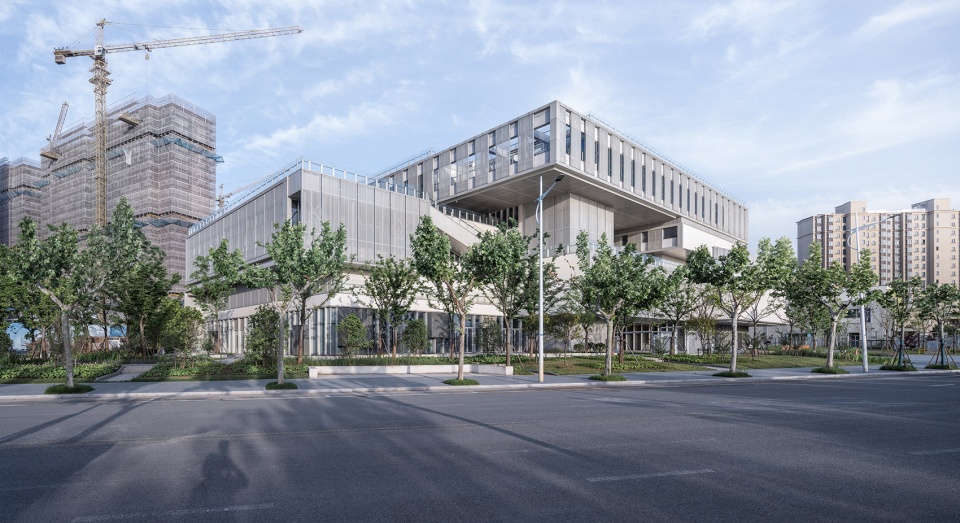
▼立体田园式的邻里中心,Three-Dimensional Garden-Style Neighborhood Center
场所精神再现的内驱力与空间媒介The Inner Drive for Recreating the Spirit of Place and the Spatial Medium
邻里中心设计业态组织、使用效率提升的依托是城市社区的需求。本案所处靖江新城东南部,依江而建,枕水而居。同时又是规划的两片三廊两核交汇点。所处位置所依附的城市结构,提供了需求的同时,决定了复合、交融、开放的建筑选型。
The organization of functional formats and the enhancement of efficiency in the neighborhood center design depend on the needs of urban communities. This project is located in the southeastern part of Jingjiang New Town, nestled along the river and surrounded by water. It also lies at the intersection of two planned zones, three corridors, and two cores. The urban structure of its location not only shapes its demands but also dictates an architectural typology of integration, fusion, and openness.
▼西南鸟瞰,Southwest Aerial View
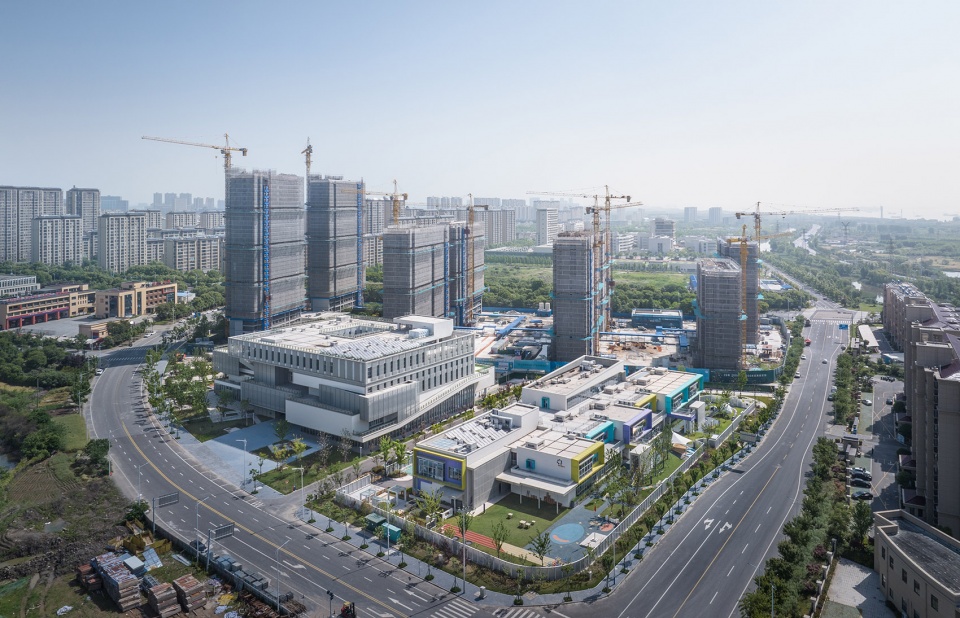
基地附近原住民住宅与耕地并存的生活生产模式依然存在,为社区中心的空间形态提供了一种原生态的样本。从中抽象出邻里关系自发形成的空间诱因。田间地头不经意的交往潜移默化地形成了一种自然且良好的邻里关系,正如西扎所认为的“场所精神“,新的建筑应该归属或融入该地区的传统,尊重场所与文脉。本案是对新地域主义进行了一种在地化的实验与验证。
▼邻里中心轴测图,Axonometric View of the Neighborhood Center
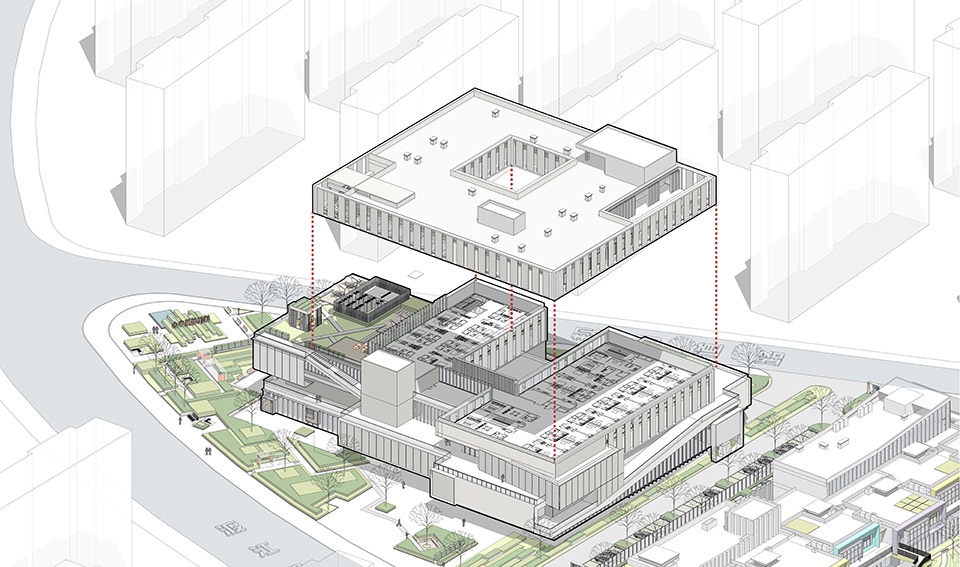
The coexistence of traditional residential housing and farmland near the site reflects a lifestyle blending living and production. This serves as an organic sample for the spatial form of the community center, from which the spontaneous spatial triggers of neighborly interactions are abstracted. Casual encounters at field edges gradually foster a natural and harmonious neighborly bond. As Álvaro Siza suggested with the concept of the “spirit of place,” new architecture should belong to or integrate with the traditions of its region, respecting the site and its context. This project undertakes a localized experiment and validation of new regionalism.
▼东南鸟瞰,Southeast Aerial View
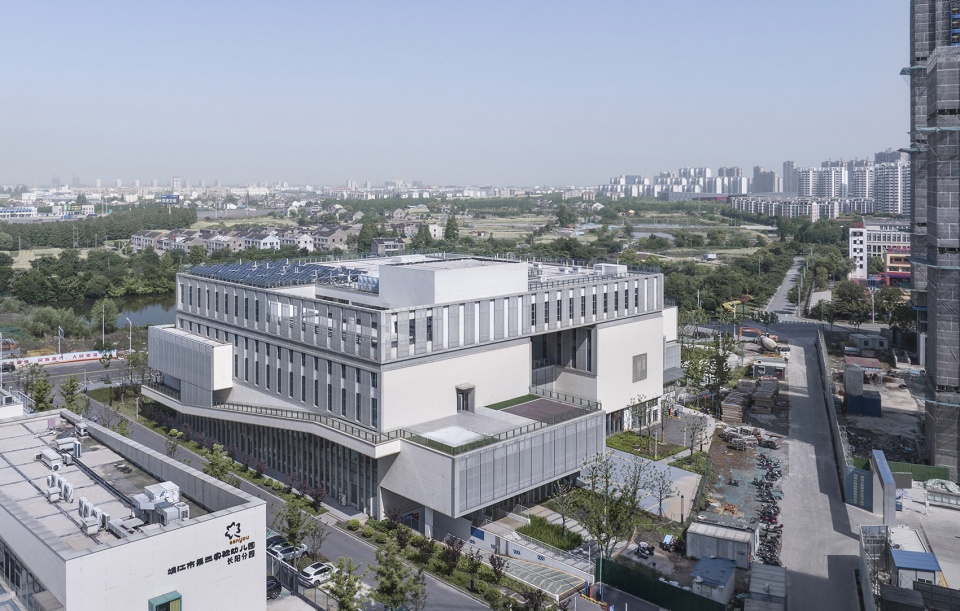
高密集条件下的场所营造Creating a Sense of Place Under High-Density Conditions
复合与叠加是社区中心在高密集城市地段、容积率要求下常用的设计策略,往往造成建筑形体空间的拥塞,失去创造场所精神的契机。复合叠加作为一种被动但有效的设计策略,如何在追求效率的同时赋予建筑空间的松弛感,错动是其中的关键手段。
Integration and layering are commonly employed design strategies for community centers in high-density urban areas with floor area ratio requirements. However, these approaches often result in congested architectural forms and spaces, losing opportunities to evoke the spirit of place. While integration and layering are passive yet effective strategies, achieving spatial relaxation in architecture amidst efficiency demands relies on offsetting as a key technique.
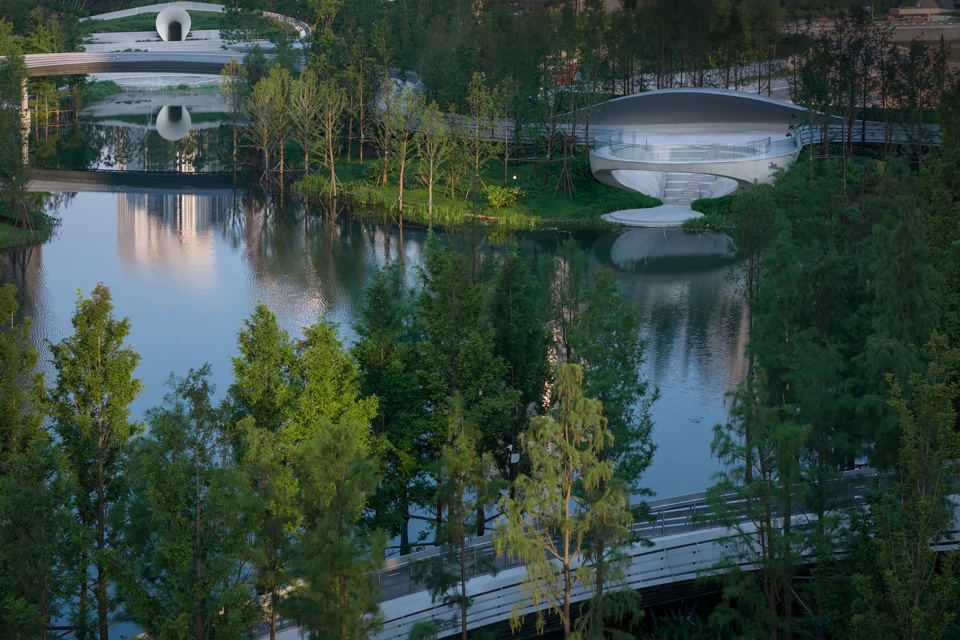
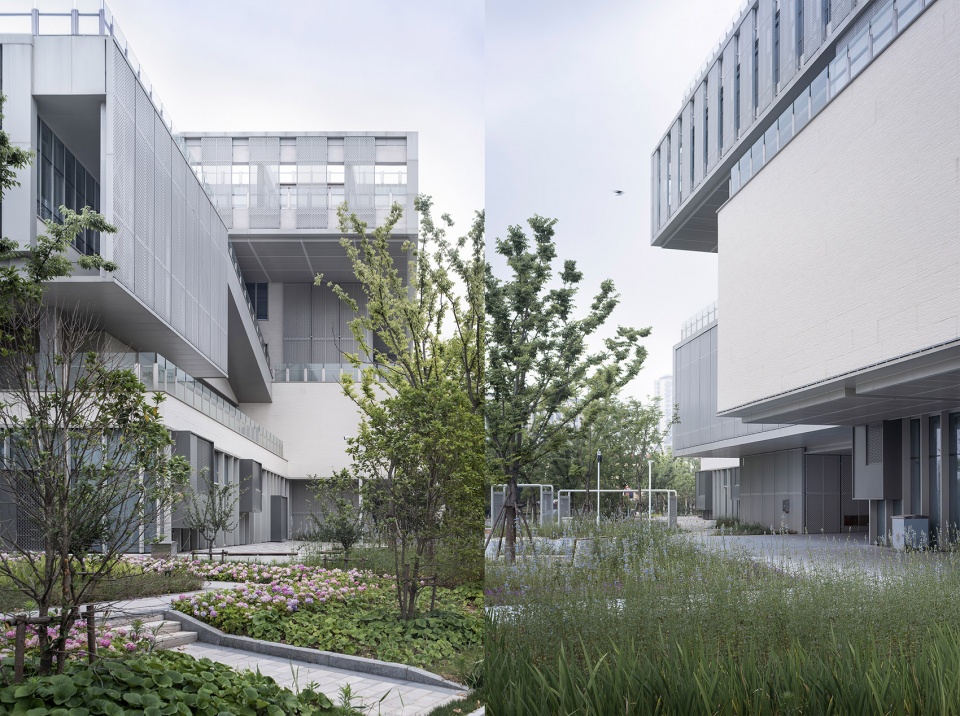
▼富有乡野情趣的景观环境,Landscape with Rustic Charm
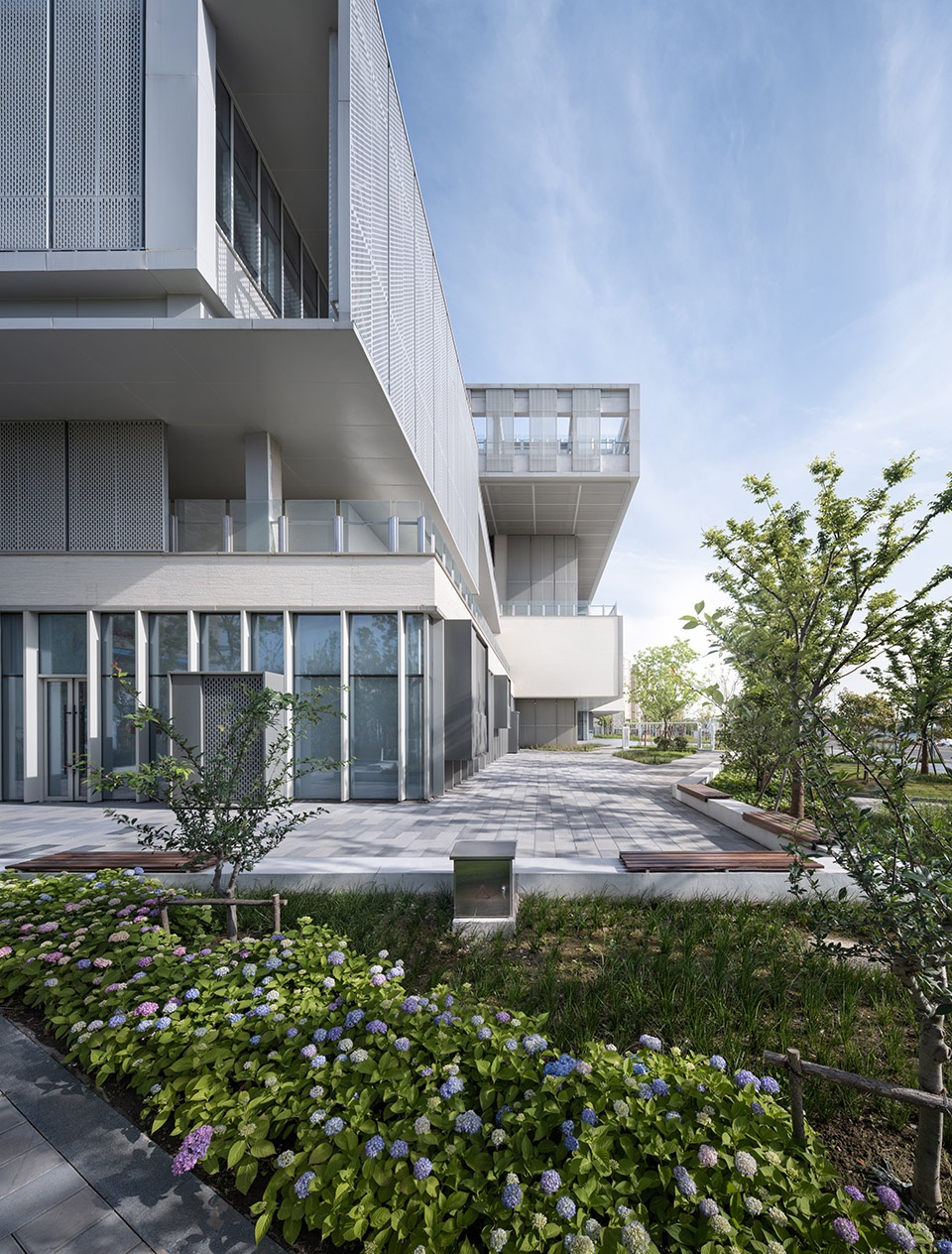
▼富有乡野情趣的景观环境,Landscape with Rustic Charm
邻里关系的重塑,邻居之间和睦的邻里关系是传统生活的典型记忆。当代城市生活这种记忆的减退,不仅在于现代城市建筑尺度的扩大,原住民居住、生产生活的并置,邻里中间田间地图不经意的接触社交的公共属性融入日常生活中。修复这种邻里关系的触动,源于制造邻里间不经意的遇见。坡道作为一种建筑元素串联了不同功能之间的非必要的连接。非必要制造了一种意外的相遇,不经意成为人与人之间关系重塑的催化剂。
Reconstructing Neighborly Relations: Harmonious neighborly relationships are a hallmark of traditional living. The diminishing memory of these bonds in contemporary urban life stems not only from the increased scale of modern urban architecture but also from the separation of residential and productive activities. In traditional settings, spontaneous interactions in shared spaces, such as field edges, imbued daily life with social connections. Reviving this sense of neighborly rapport depends on creating unexpected encounters among neighbors. As an architectural element, the ramp connects disparate functions in a non-essential manner, fostering serendipitous meetings. These unintended connections act as a catalyst for reshaping human relationships.
▼坡道,Ramps
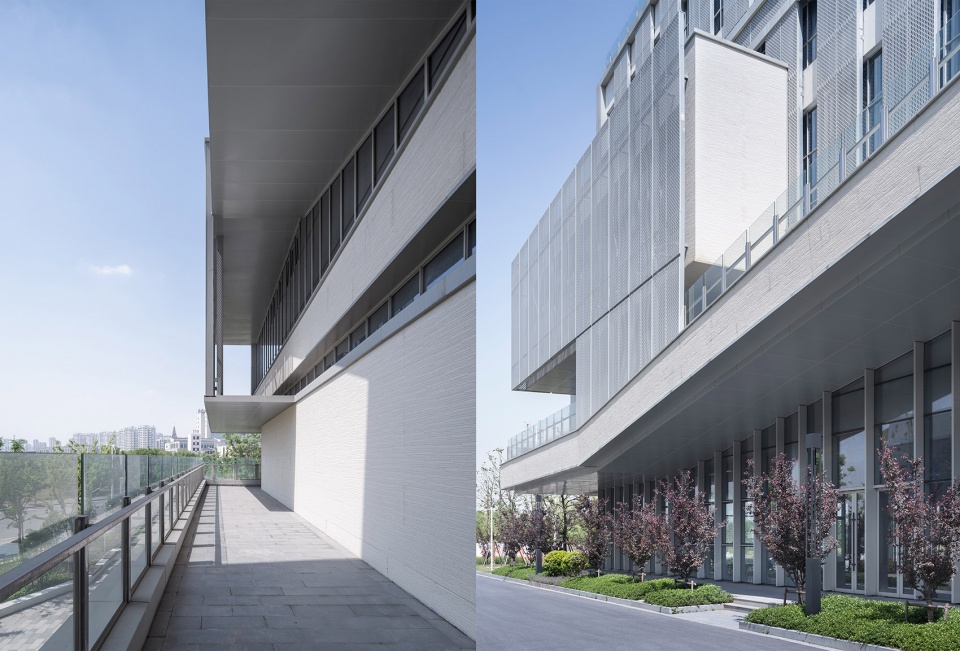
Public Activity Platforms
©侯博文
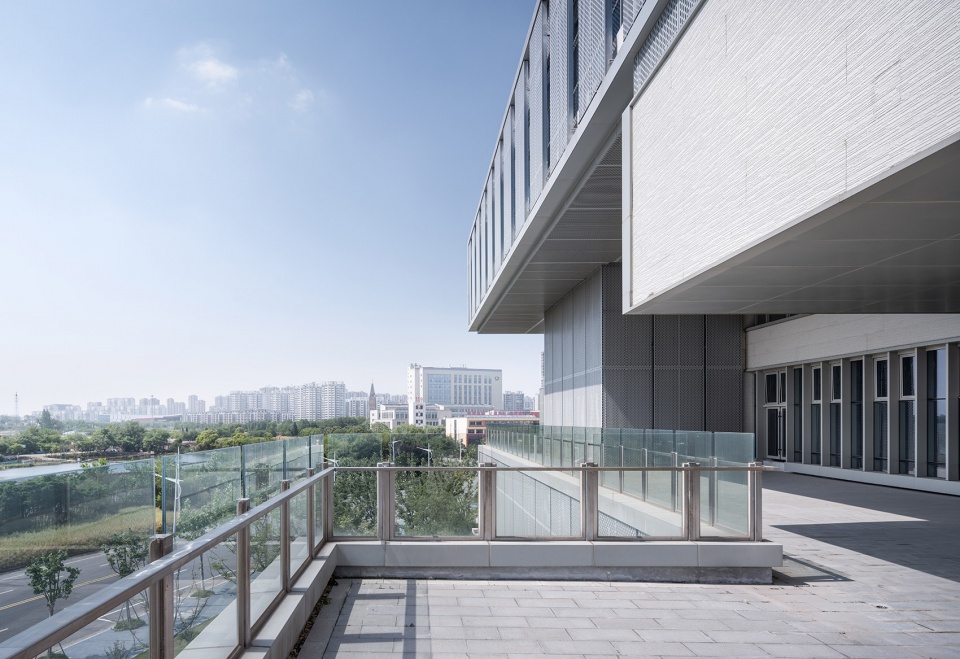
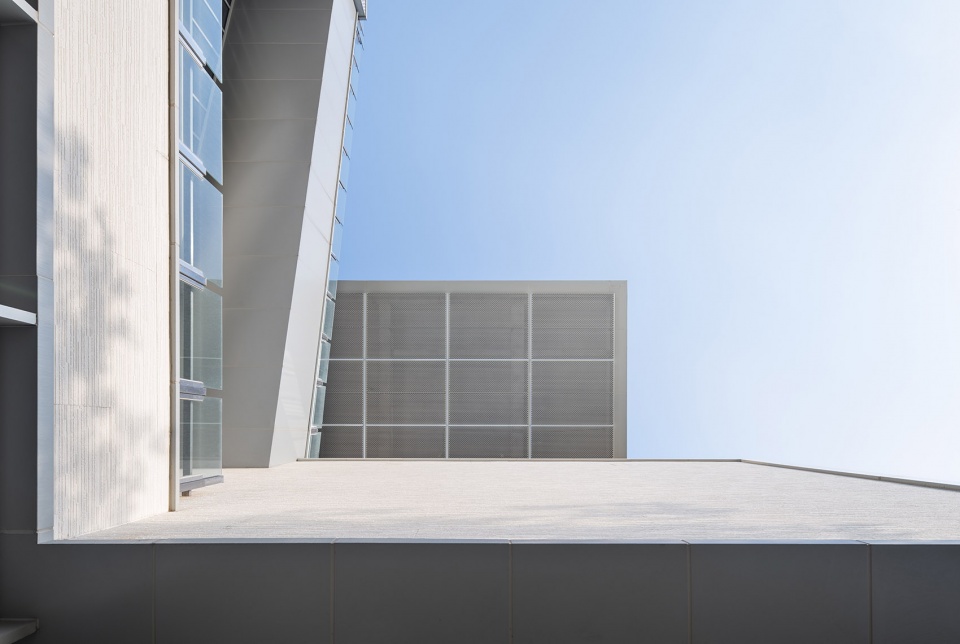
▼建筑细部,Architectural Details
社区生活,大人与小孩一起成长Community Life: Growing Together with Children
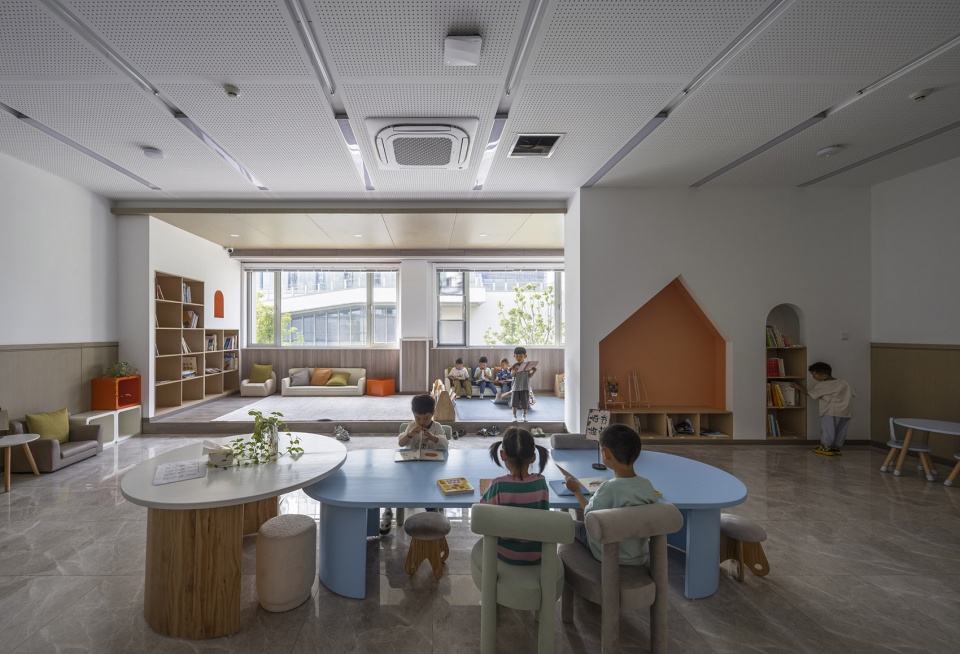
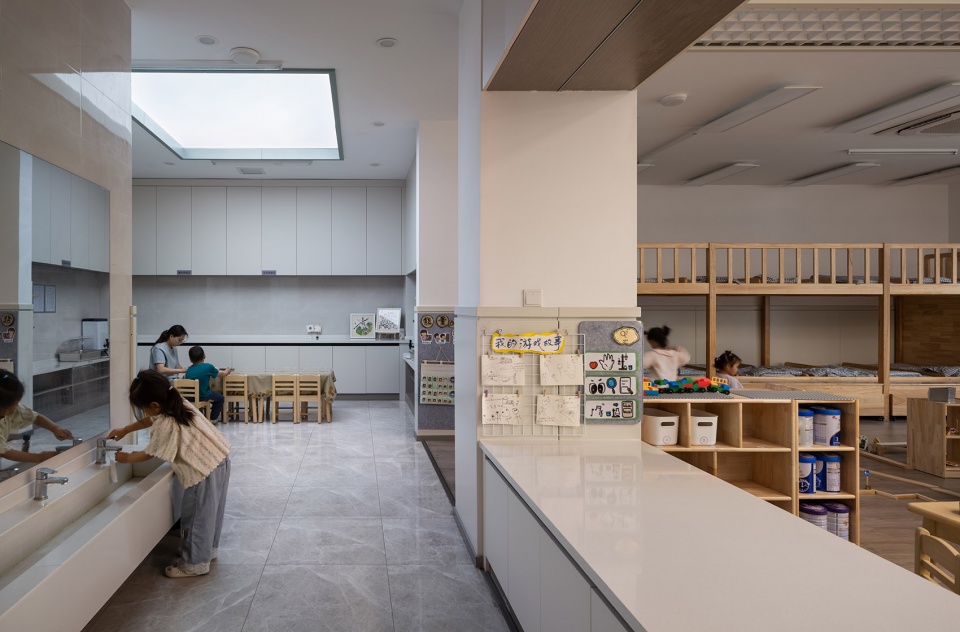
靖江随着新兴产业的发展,人才引入逐年加强。这一群体处于育龄人口占比较高。社区中心的功能配置重点考虑了幼教需求。小朋友成长背后是整个家庭的付出,这种不仅是关爱还有很多接送等日复一日的行为。让大人与小孩一起成长,解决育儿刚性需求的同时,寻找大人小孩各自时间表的共性,建立工作生活的链接,交集与外延。幼儿上下学、家长停车、接送、等候等一系列需求,社区中心从功能配置、空间串联等方面予以满足。
▼幼儿园轴测图,Kindergarten Axonometric View
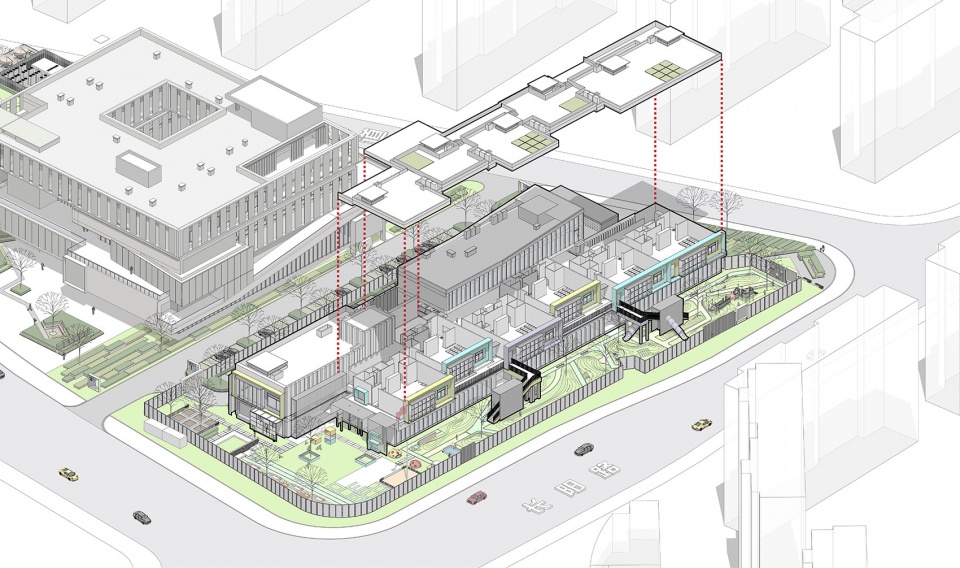
With the development of emerging industries in Jingjiang, the influx of talent has steadily increased, and a significant portion of this demographic comprises individuals of childbearing age. The functional design of the community center places emphasis on early childhood education needs. Behind the growth of every child is the dedication of an entire family, encompassing not only care but also daily routines such as pickups and drop-offs. By fostering the growth of both adults and children, the community center addresses rigid childcare needs while identifying overlaps in their schedules. This creates a bridge between work and life, blending intersections with extensions. From kindergarten drop-offs and pickups to parent parking, waiting, and more, the community center accommodates these needs through thoughtful functional design and spatial integration.
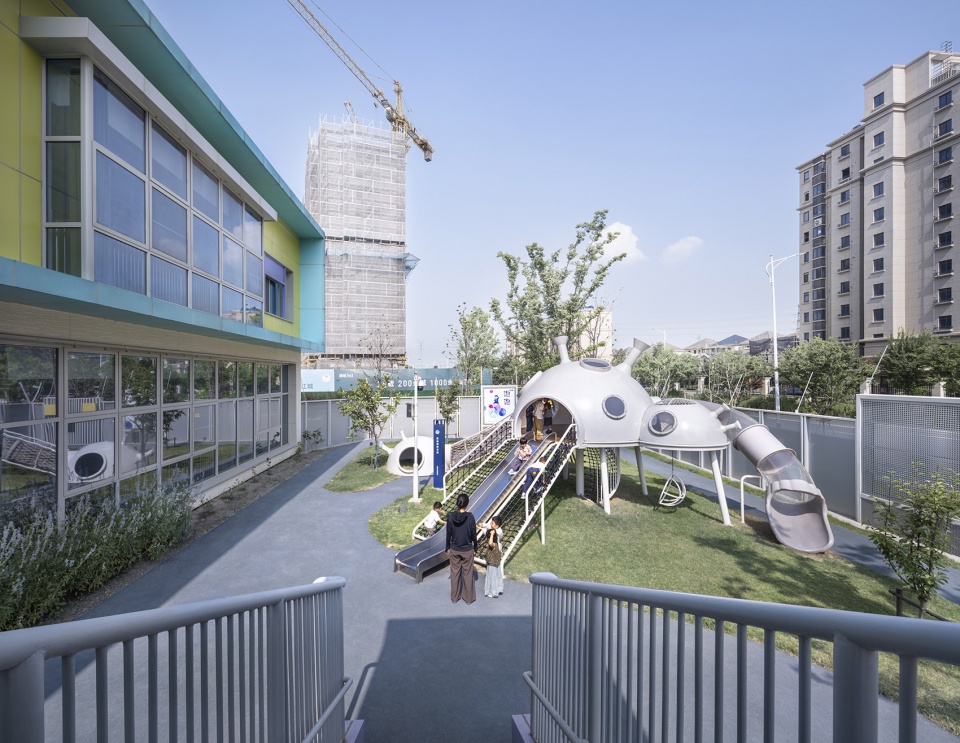
▼幼儿园活动场地,Kindergarten Activity Spaces
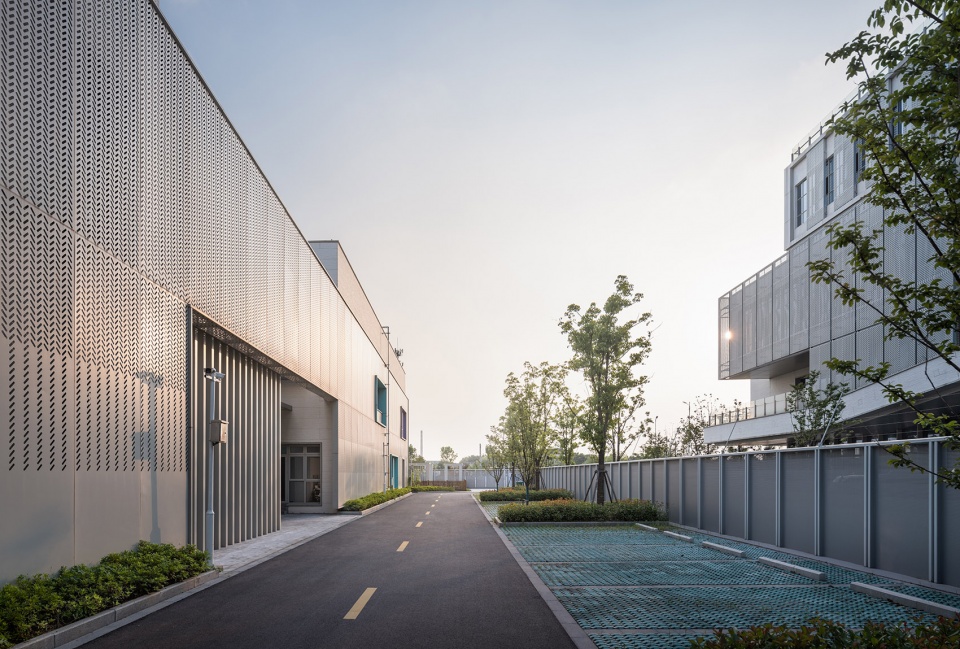
▼幼儿园北侧,North Side of the Kindergarten
Kindergarten
Public Activity Area
©侯博文
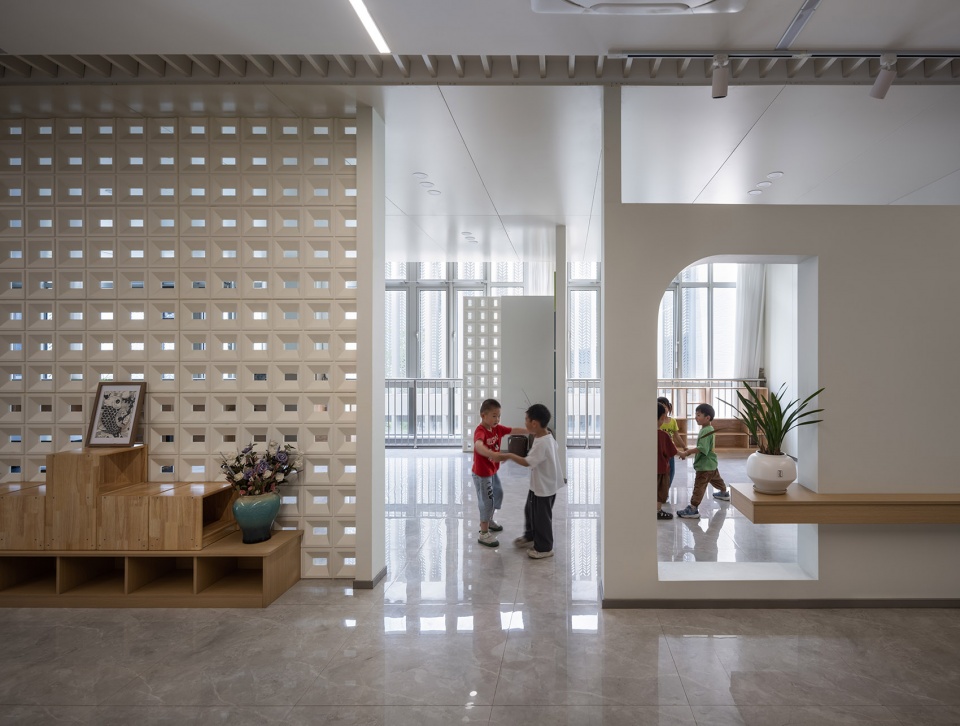
Kindergarten
©侯博文
结语Conclusion
社区中心远眺长江,建筑景框中的江阴大桥将时代的宏大叙事代入了细微的社区生活。社区中心解决的是最为平实的日常生活需求,提供人与人接触的机会。生活的日常提供了人与人相遇相知的机会,不经意的接触沉淀为新时代邻里关系,勾起往昔的记忆。创作过程是一次重新体会人与人关系的契机,希望良好的邻里关系能够成长为一棵宜居的栖居之树。
Overlooking the Yangtze River, the community center frames the grandeur of the Jiangyin Bridge within the intimate setting of community life. It addresses the most fundamental needs of daily living while offering opportunities for human connection. Everyday life becomes a stage for encounters, fostering understanding among people. Unintentional interactions evolve into the foundation of a new era of neighborly relations, evoking memories of the past. The creation process serves as an opportunity to rediscover human relationships, aspiring for harmonious neighborly bonds to grow into a livable tree of dwelling.
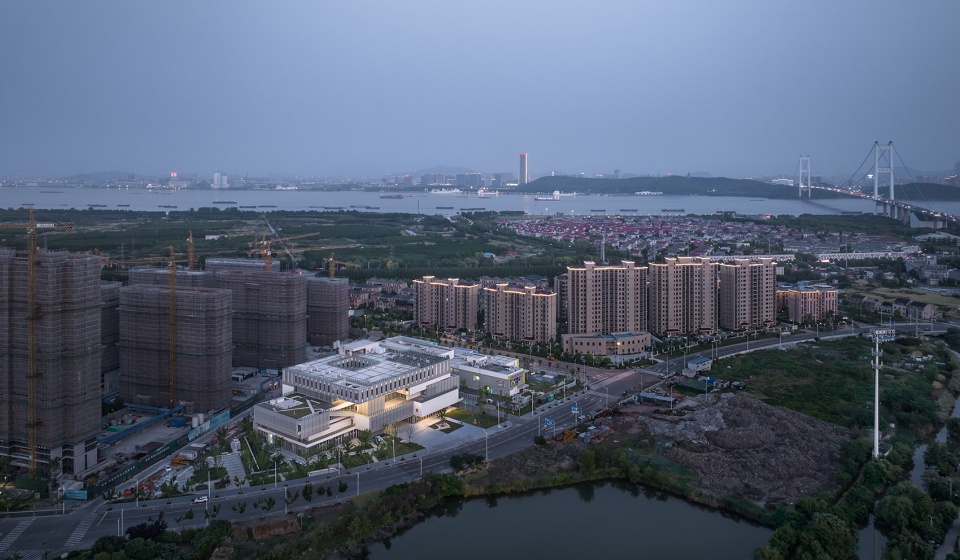
▼城市鸟瞰,Urban Aerial View
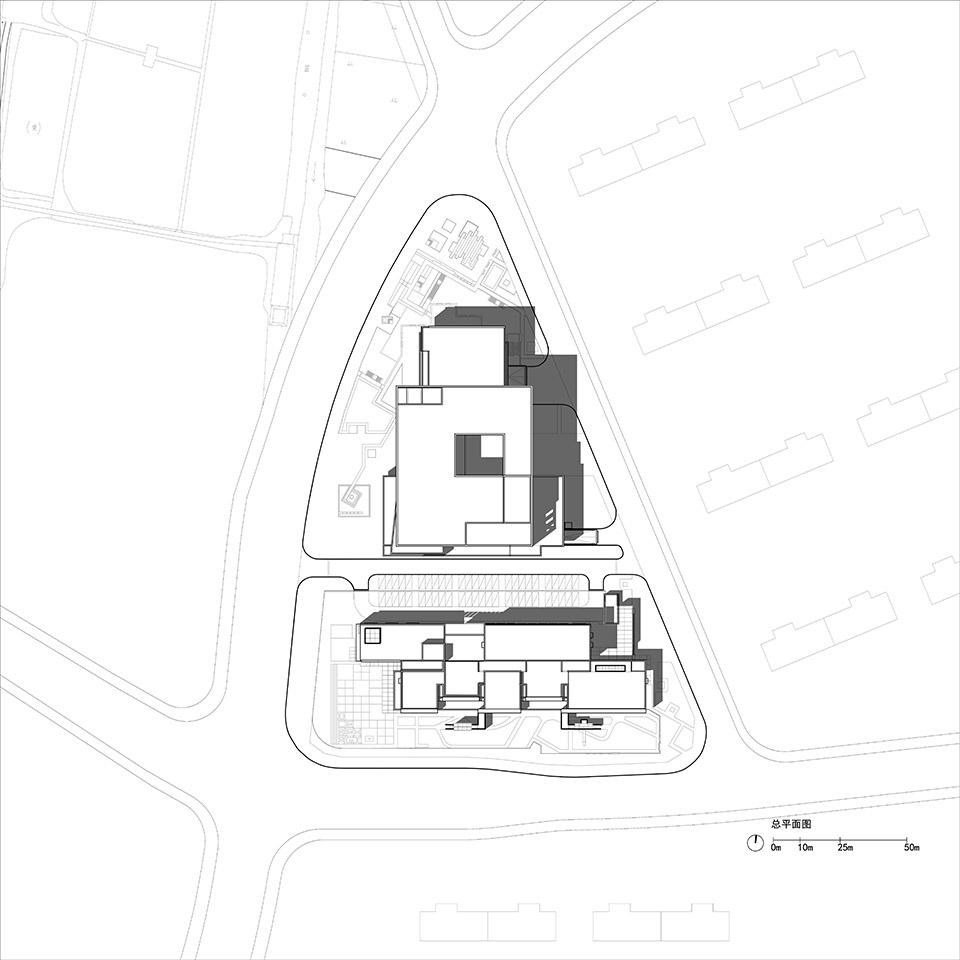
▼总平面图,Master Plan
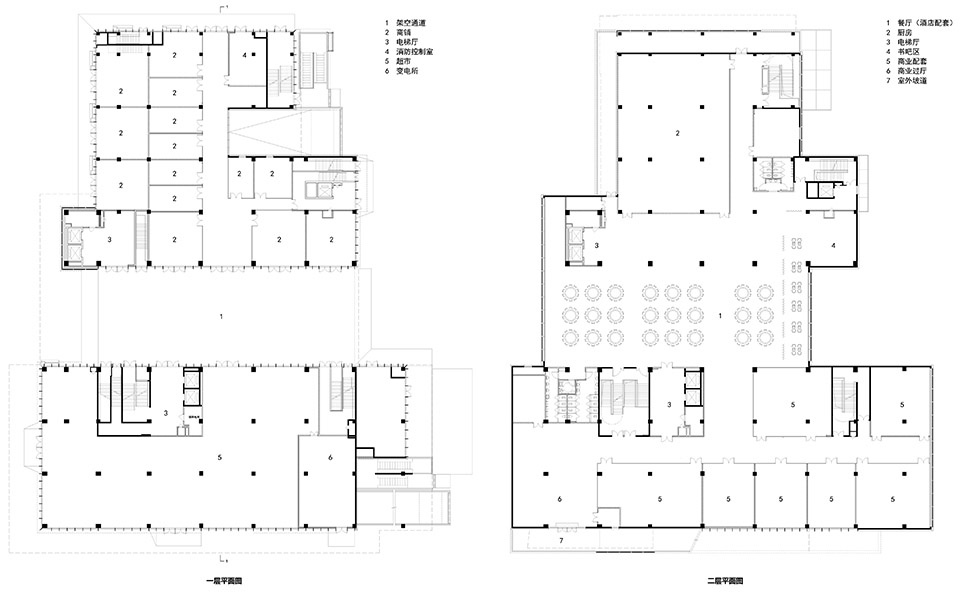
▼邻里中心一层及二层平面,Neighborhood Center ground floor & first floor plan
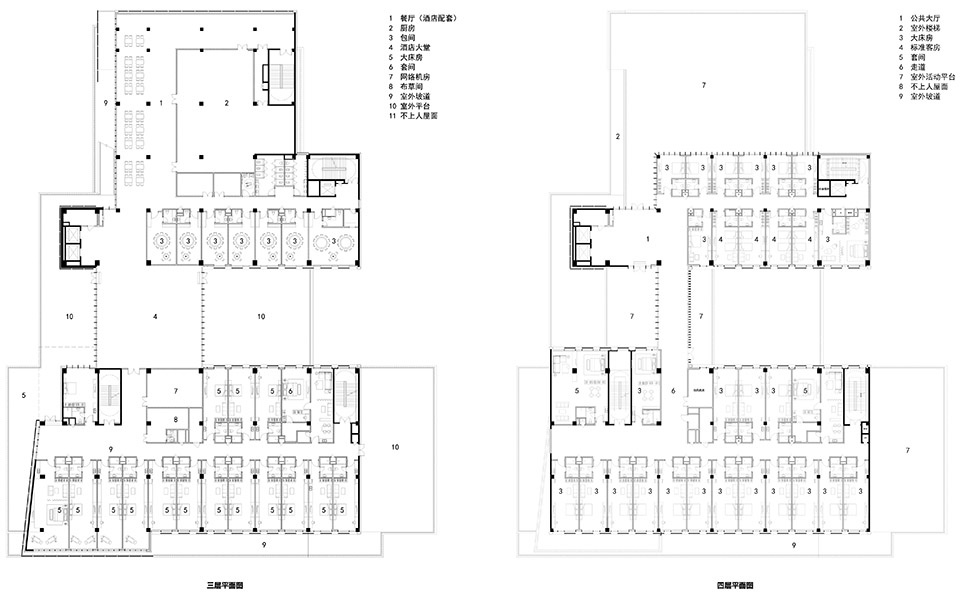
▼邻里中心三层及四层平面,Neighborhood Center third floor & fourth floor plan
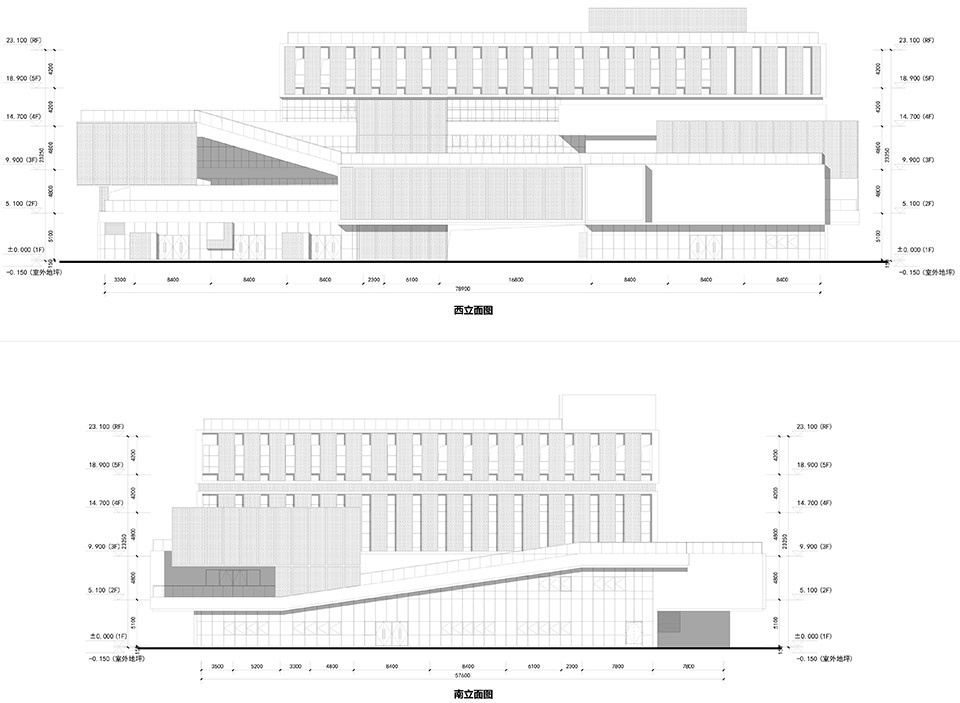
▼邻里中心立面图,Neighborhood Center elevation
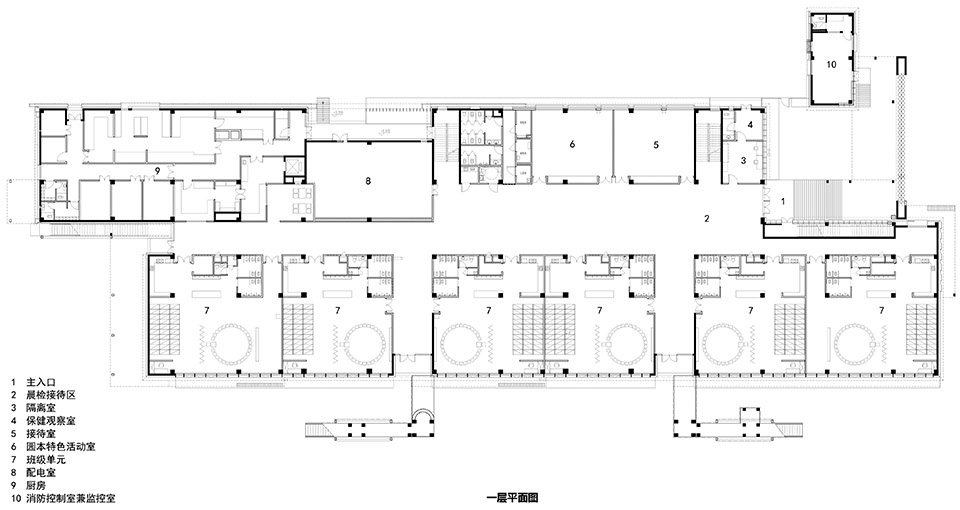
▼幼儿园一层平面图,Kindergarten ground floor plan
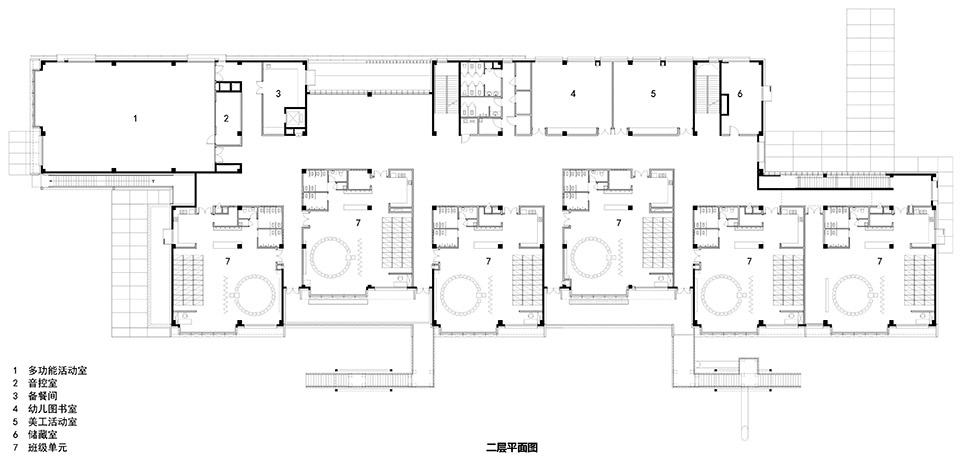
▼幼儿园二层平面图,Kindergarten first floor plan
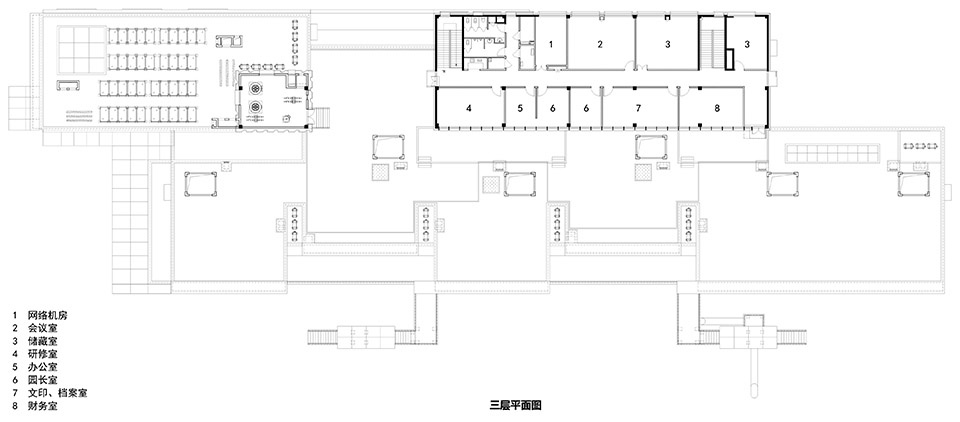
▼幼儿园三层平面图,Kindergarten third floor plan
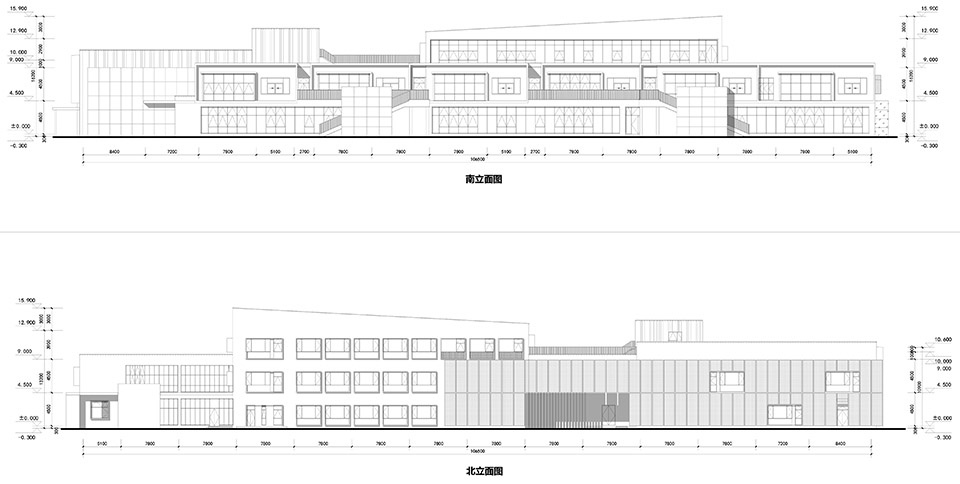
▼幼儿园立面图,Kindergarten elevation
Project Name: Changyang Neighborhood Center
Project Type: Public Building
Project Location: Intersection of Dujiang Road and Changyang Road, Binjiang New Town, Jingjiang
Design Period: 2020-2021
Construction Period: 2021-2023
Site Area: 18,601 square meters
Building Area: 29,400 square meters
Design Studio: Zhong Huaying Studio – School of Architecture and Urban Planning, Nanjing University
Constructer: Jingjiang Binjiang New Town Investment Development Co., Ltd.
Complete Design Team Roster:
Chief Architect: Zhong Huaying
Concept Design Team: Zhong Huaying, Han Yang, Dai Qinglai
Architectural Construction Drawings: Chen Junshi, Liu Fei, Yin Wei
Structural Drawings: Leng Bin, Xie Hongen
Water Supply and Drainage: Chen Dong, Chen Changxia
Electrical: Zhao Yue, Wang Liming, Xing Ziqiao
HVAC: Sun Jianguo, Zhang Mingming
Intelligent Systems: Chen Hongliang, Ma Yong
Interior Design: Fan Haijun, Zhu Xiaoyan, Tian Chunyang, Lu Kaifei
Landscape Design: Li Man, Ruan Ying, Ruan Chengtian
Curtain Wall Design: Liu Fanchun, Wu Lichao
Lighting Design: Wang Yujing
Sponge City Design: Zhu Dunxue, Cai Shipan, Shen Xiang
Photography: Hou Bowen
More: 南大建筑钟华颖工作室