奇特里奥宫,意大利 / MCA建筑事务所
经过52年的等待,意大利布雷拉美术馆的现代艺术收藏品终于向社会开放展出。这座座落于米兰布雷拉大街核心地带的18世纪宫殿—奇特里奥宫,也因此重获新生。这不仅是一座历史建筑的复兴,更是一场关于艺术、历史、文化与社区深度融合的探索,为城市注入新的活力。多元的空间设计,将文化从静态展品转化为流动的对话,成为现代都市生活的有机组成部分。
After 52 years of anticipation, the modern art collections of the Brera Art Gallery have finally been opened to the public. Palazzo Citterio, this 18th-century palace , located in the heart of Via Brera in Milan, has been brought back to life through this transformation. It is not merely the revival of a historic building but also an exploration of the deep integration of art, history, culture, and community, injecting new vitality into the city. The diverse spatial design transforms culture from static exhibits into dynamic conversations, making it an organic part of modern urban life.
▼项目概览,Overall view
“大布雷拉”(Grande Brera)的璀璨之星 A Piece of the Grande Brera
奇特里奥宫的改造,旨在创造独特的观展体验,一个历史与当代、建筑与城市对话的展览空间。历经多次修复的奇特里奥宫,是“大布雷拉”蓝图中的重要篇章,与布雷拉美术馆和布雷拉国家图书馆共同构建大布雷拉文化枢纽。作为布雷拉美术馆的扩建,奇泰里奥宫扩大了现代与当代艺术的展示空间,同时赋予了城市与社区新的意义——历史与当代在此交汇,艺术之美融入生活。
The renovation of Palazzo Citterio aims to create a unique exhibition experience—a space where history and modernity, architecture and the city engage in dialogue. After undergoing multiple restorations, Palazzo Citterio has become a vital chapter in the “Grande Brera” blueprint, forming a cultural hub alongside the Brera Art Gallery and the Brera National Library. As an extension of the Brera Art Gallery, Palazzo Citterio expands the display space for modern and contemporary art while endowing the city and community with new significance—a convergence of history and the present, where the beauty of art seamlessly integrates into everyday life.
▼主要展览空间,Main exhibition space
面向社区的开放空间 The Installation that Builds Community
MCA此次改造设计的核心,是将这一兼具文化与历史价值的地标性建筑归还社区,打造更具包容性的空间,成为布雷拉街区多元特质的象征和全新社交方式的表达。入口设计不仅仅是简单的出入通道,更是人们体验城市与文化的公共空间。无论是布雷拉街12号还是14号的入口,都通过设计引导观众停留,激发对宫殿内珍贵艺术藏品的好奇心。在奇特里奥宫与布雷拉植物园相连的庭院,将开设一间花园餐厅。在绿意萦绕中,享受美食与艺术交织的文化魅力。
The project led by MCA aims to return a culturally and socially significant piece of the city to the community, symbolizing a renewed connection between the diverse facets of Brera. This vision drove the creation of inclusive spaces, designed to welcome, build community, and express a new kind of social engagement. The entrances to Palazzo Citterio at 12 and 14 Via Brera are designed not just as access points but as living spaces that encourage interaction. The installations spark curiosity about the artistic heritage housed within, such as the Jesi and Vitali collections. In the future, the courtyard, connected to the Orto Botanico di Brera, will feature a bistro with a view of the garden, enhancing the cultural experience.
▼展览空间近景,Close view of exhibition space
庭院中的木制展亭 The Tempietto
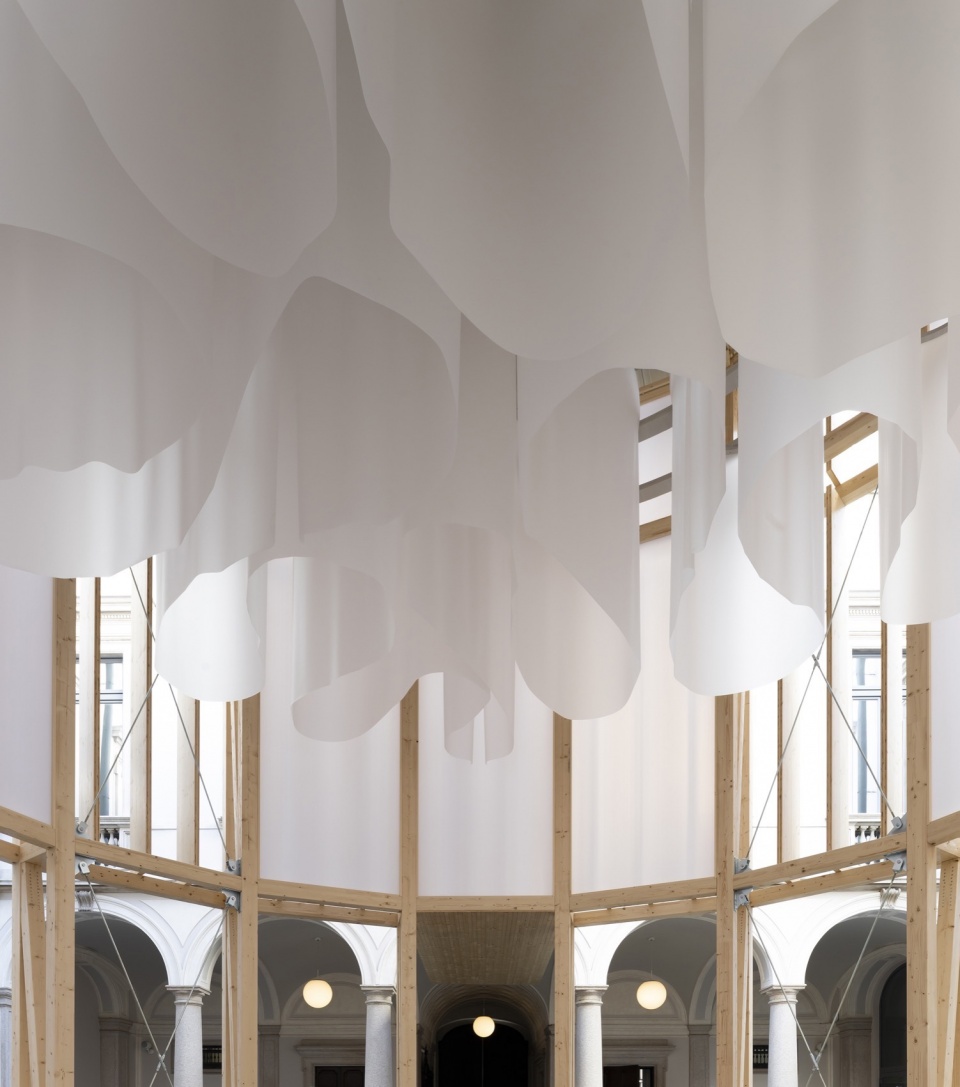
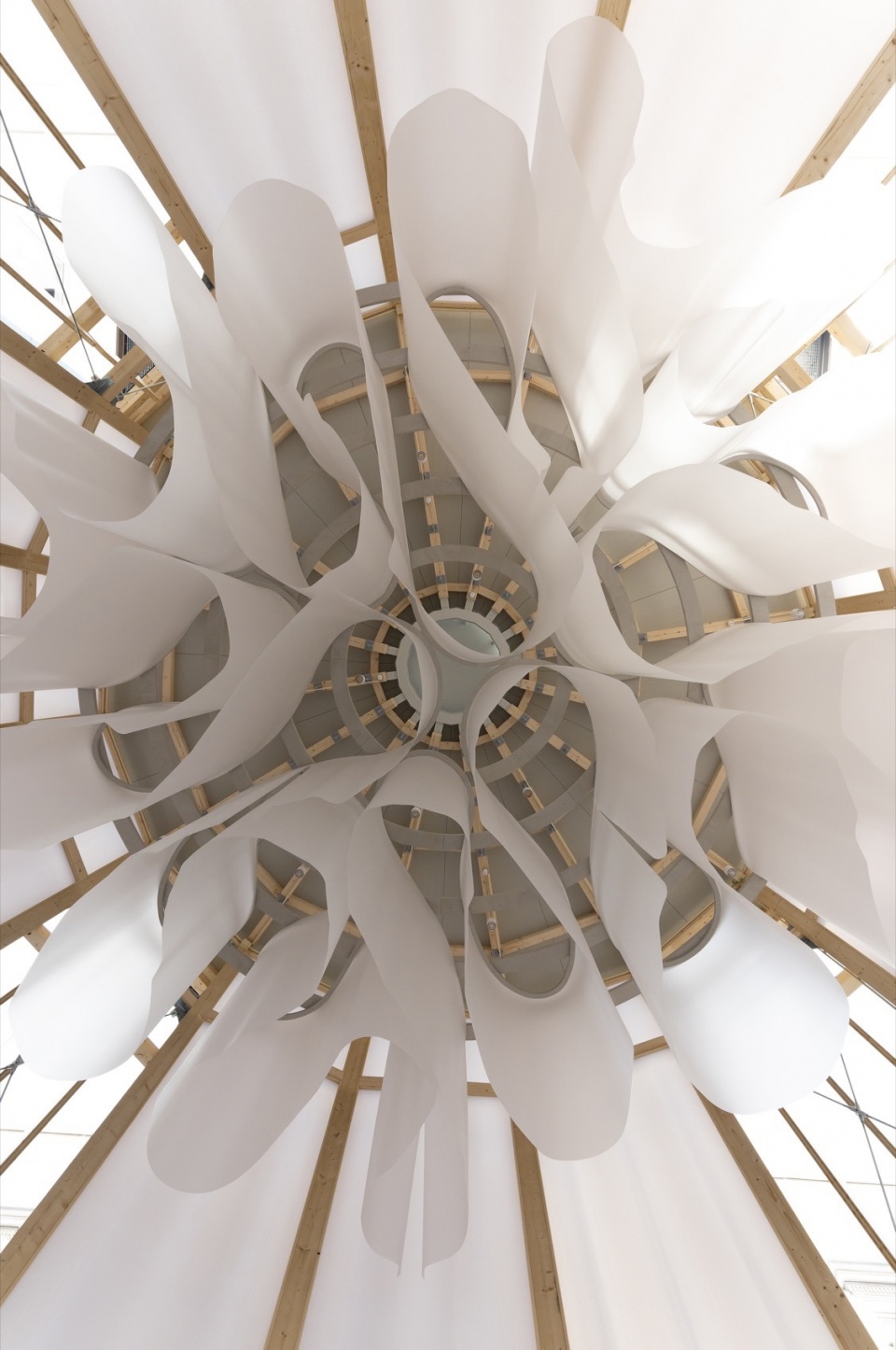
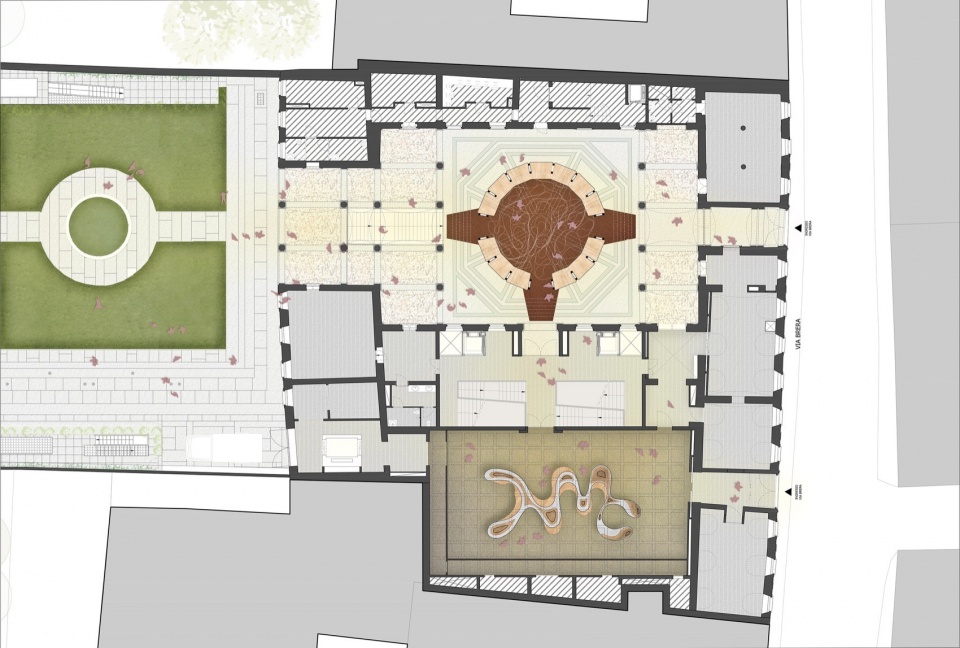
步入布雷拉街12号的入口,庭院中的一座圆形木制展亭映入眼帘。将外部空间与“大布雷拉”内的各个部分连接起来。展亭的设计从布雷拉美术馆的馆藏作品拉斐尔的《圣母婚礼》(Lo Sposalizio della Vergine)中汲取灵感,为观众打造一个休憩与沉思的空间。既与历史展开对话,又象征了奇泰里奥宫的现代化转型。展亭采用木质结构,简约的线条和横竖交错的支撑设计展现出独特的美感,同时保证了现场装配与拆卸的便利性。层层半透明薄片从屋顶洒下,在光线的映射下形成灵动的光影,营造出一片神圣与安宁。 (该展亭由米兰国际家具展Salone del Mobile.Milano捐赠。)
▼展亭手绘图,exterior overview
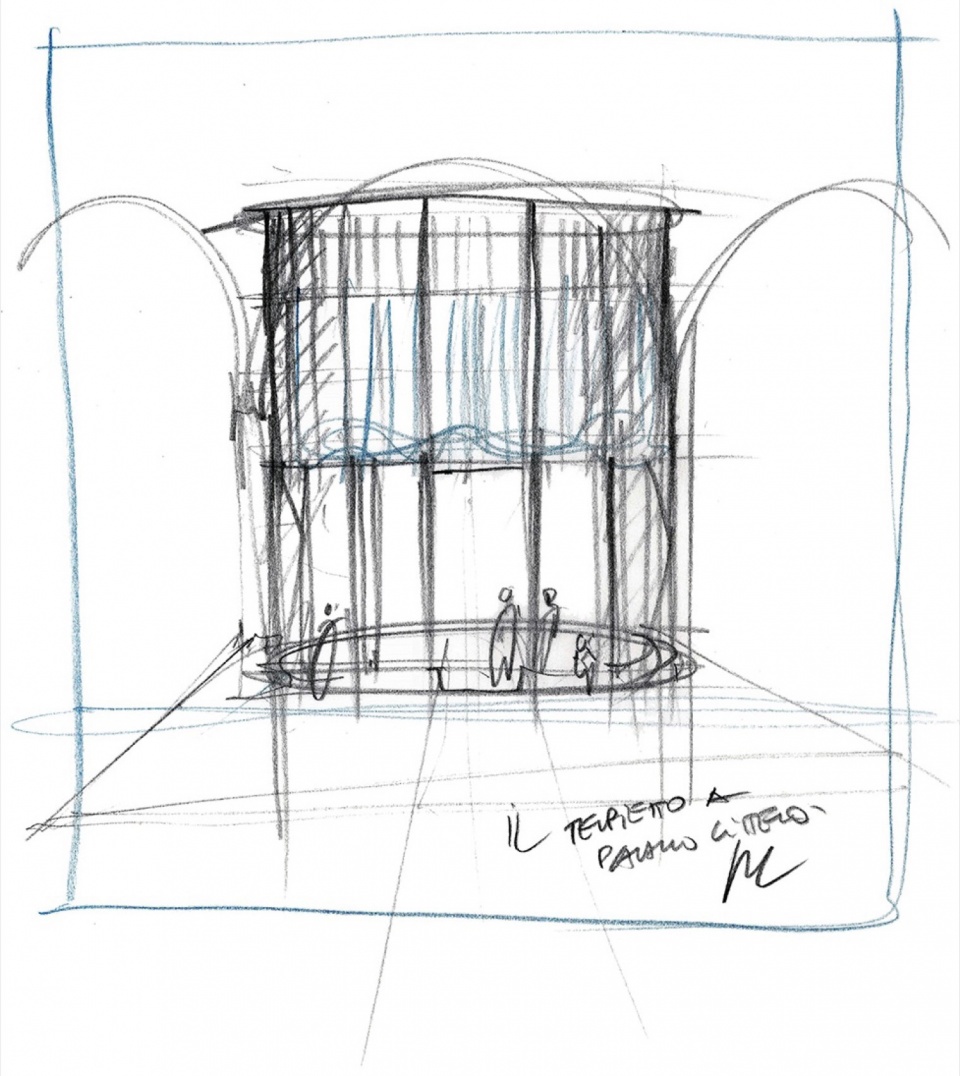
Located in the courtyard of Palazzo Citterio and accessible from 12 Via Brera, the circular Tempietto acts as a bridge between the exterior and the various spaces of the Grande Brera. This contemporary component offers access to the adjacent garden near the Orto Botanico, providing visitors with a covered space for resting and contemplation. The installation dialogues with the Pinacoteca, drawing inspiration from Raphael’s “The Marriage of the Virgin” while also representing a leap toward modernity, emblematic of Palazzo Citterio’s collections. Constructed in wood with clean, rhythmic lines alternating between horizontal and vertical elements, the Tempietto’s design enhances its aesthetic while ensuring easy assembly and disassembly on-site. Inside, a suspended canopy creates light effects, evoking a sacred atmosphere. (The Tempietto was donated by Salone del Mobile.Milano to the Pinacoteca di Brera.)
▼圆形木制展亭,Round wooden pavilion
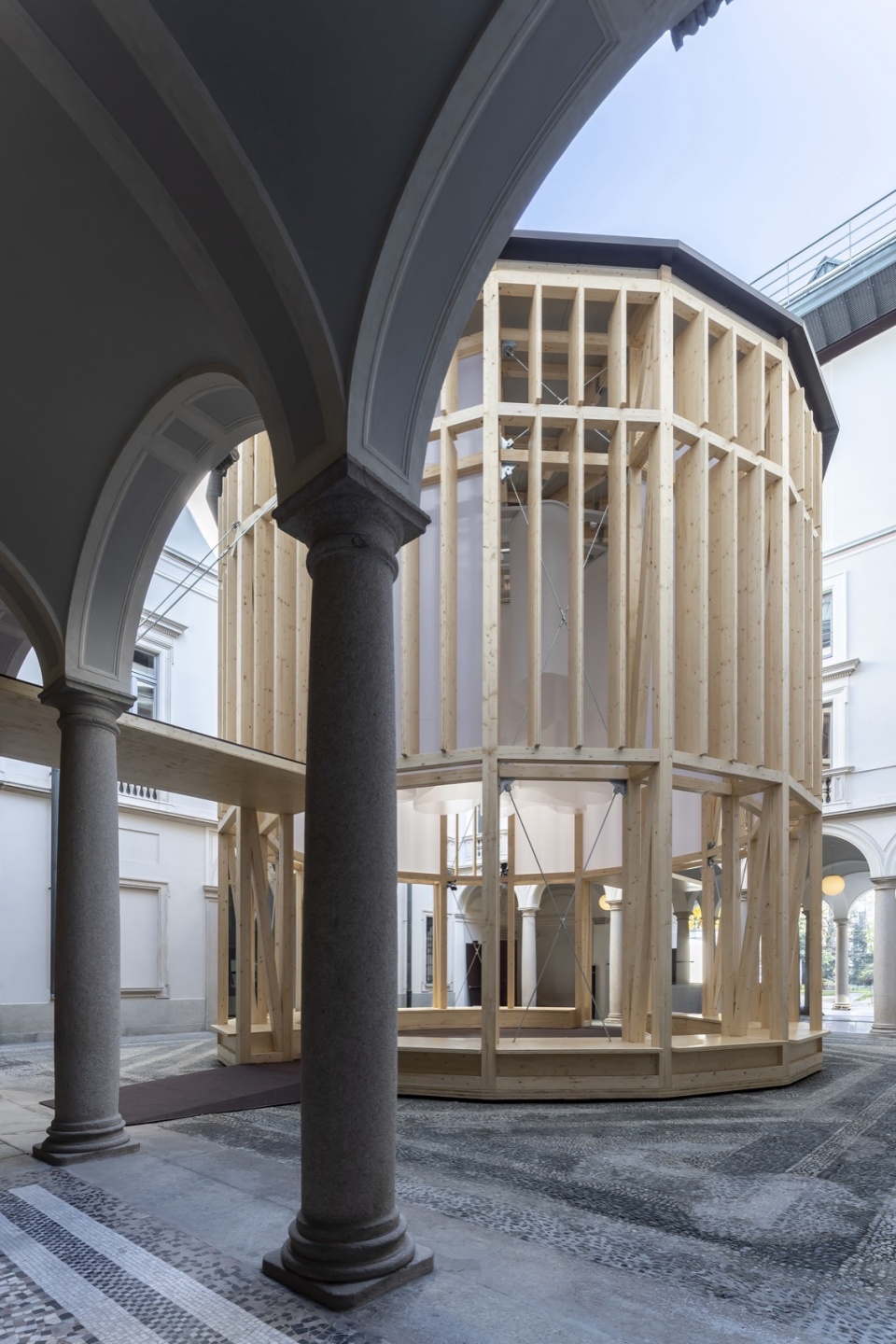
▼展亭夜览,Night view of the round wooden pavilion
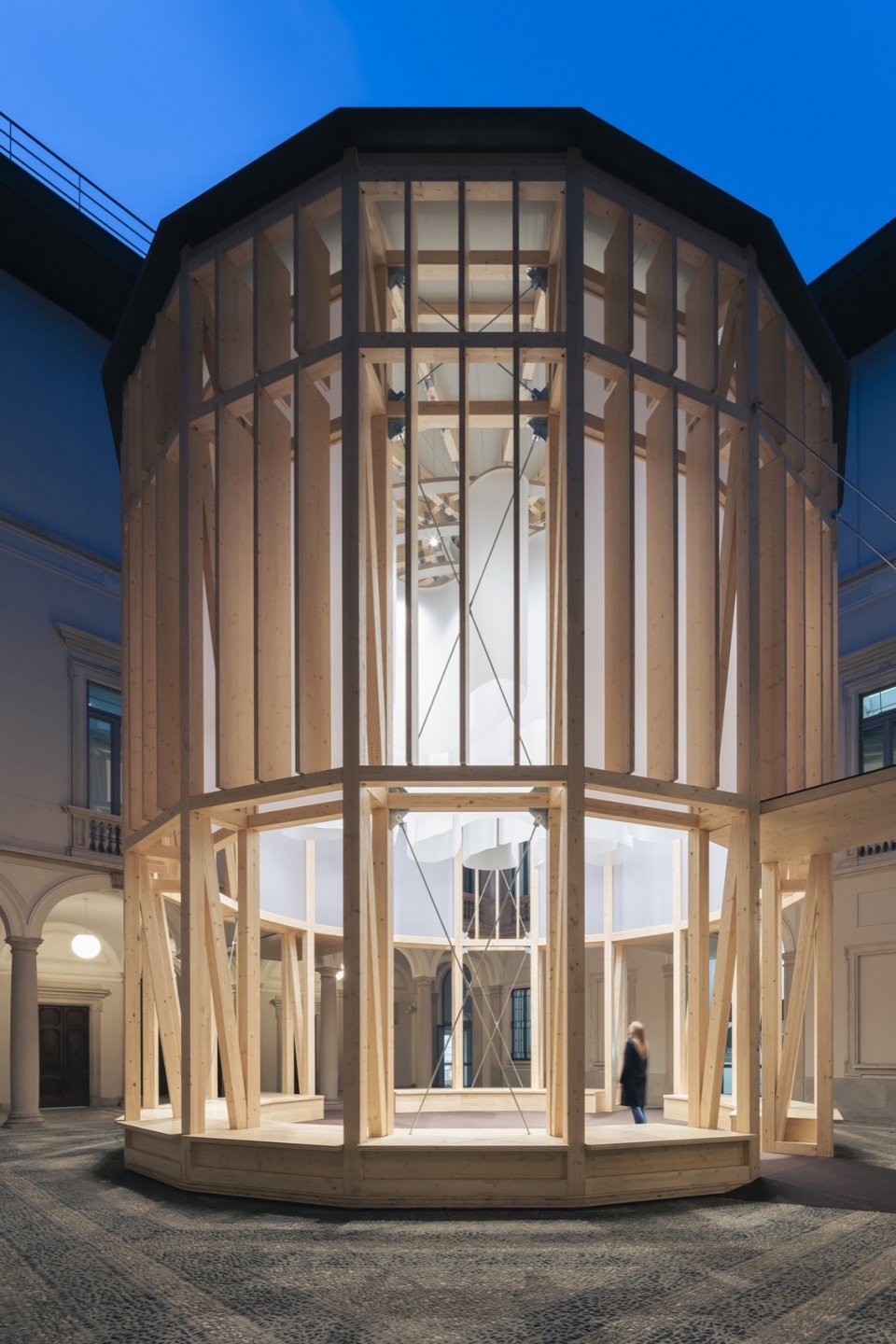
▼展亭内部,Interior view
入口大厅 The Entrance Hall
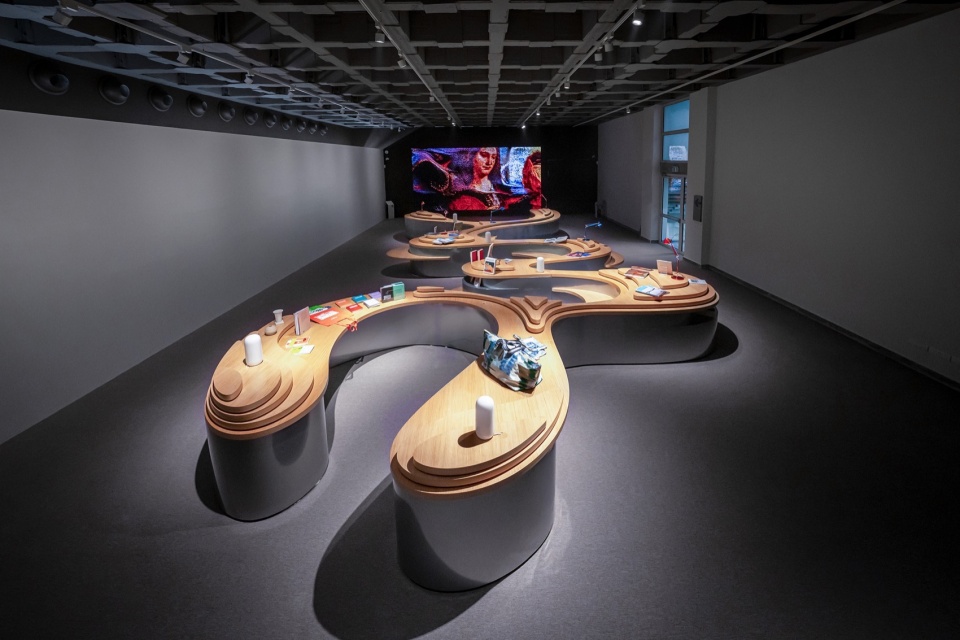
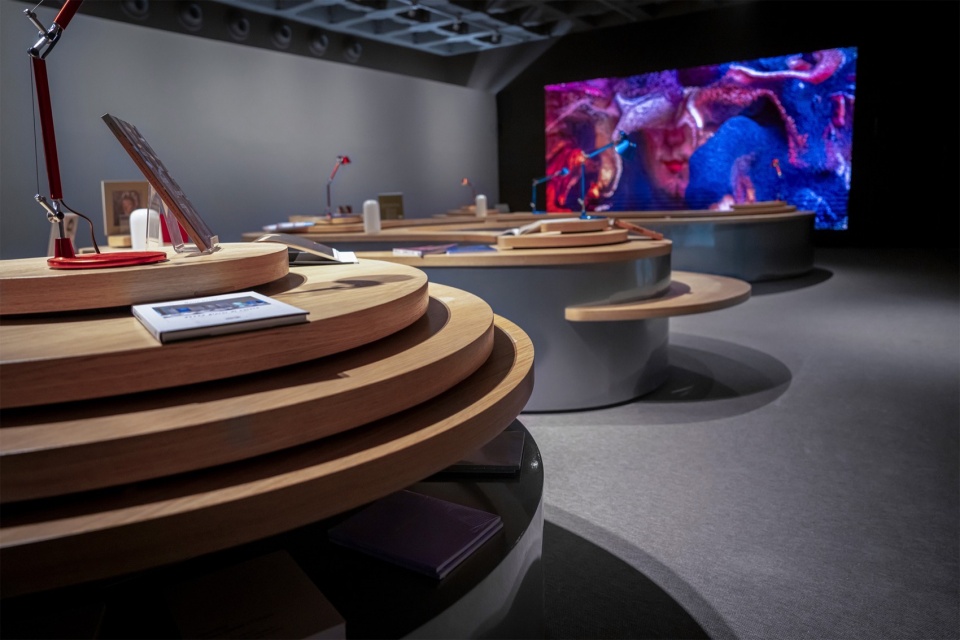
位于布雷拉街14号的入口大厅,是一个面向公众开放的活力空间。一张雕塑感十足的有机设计桌成为整个大厅的焦点,这个多功能装置集票务、信息咨询和书店功能于一体。展桌的曲线设计柔和流畅,内置的座椅为观众提供了聚会与休憩的场所。其设计遵循普适性原则,同时兼顾无障碍使用,处处体现出人性化的关怀。桌子的主体由一体式钢制底座构成,搭配对比鲜明的木质搁板,既是展示平台,又具备座椅功能。镜面底座拓展了视觉空间,让大厅倍感开放与温馨。
在这充满艺术氛围的环境中,展桌不仅是功能的承载,更是艺术探索的引导者。它正对一块大型LED屏幕,屏幕上播放着数字艺术作品,布局宛如一座迷你剧场,吸引观众停下脚步,探索艺术的独特魅力。
The entrance hall of Palazzo Citterio, accessible from 14 Via Brera, is another space open to the community. Within this completely renewed environment, an organic, contemporary sculptural table serves as a multifunctional hub for ticketing, information, and a bookshop. With its curved lines and integrated seating, the table embraces visitors arriving from outside, offering a meeting and resting point. This multifunctional design follows universal design principles, incorporating specific considerations to enhance accessibility. The structure features a monolithic steel base with contrasting wooden shelves that function as support surfaces and seating. The mirrored base visually expands the boundaries of the space, making it more welcoming. Situated in a captivating environment, the table is also intended to guide visitors in discovering the Grande Brera and its collections. Positioned in front of a large LED screen showcasing works by digital artists, the structure takes on the form of an amphitheatre, inviting visitors to pause and admire select pieces of art.
▼古典展桌,Classical exhibition table
▼现代风格展桌,Modern exhibition table
主楼层 The Piano Nobile
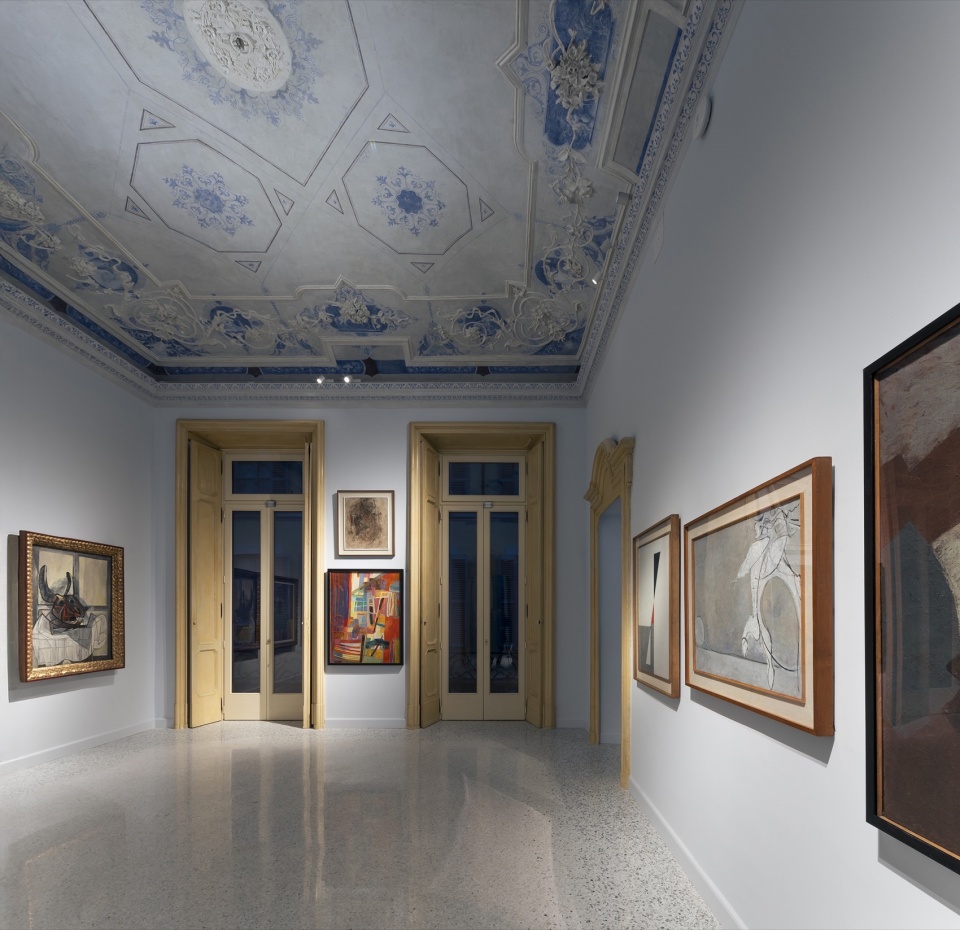
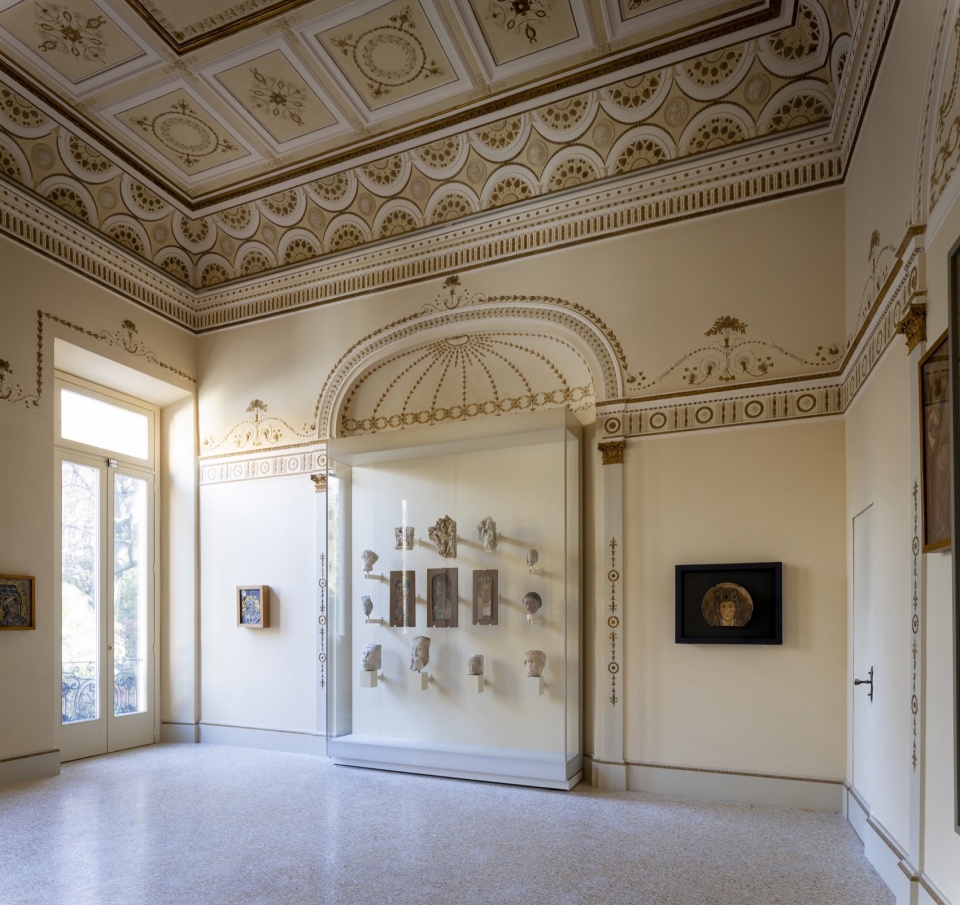
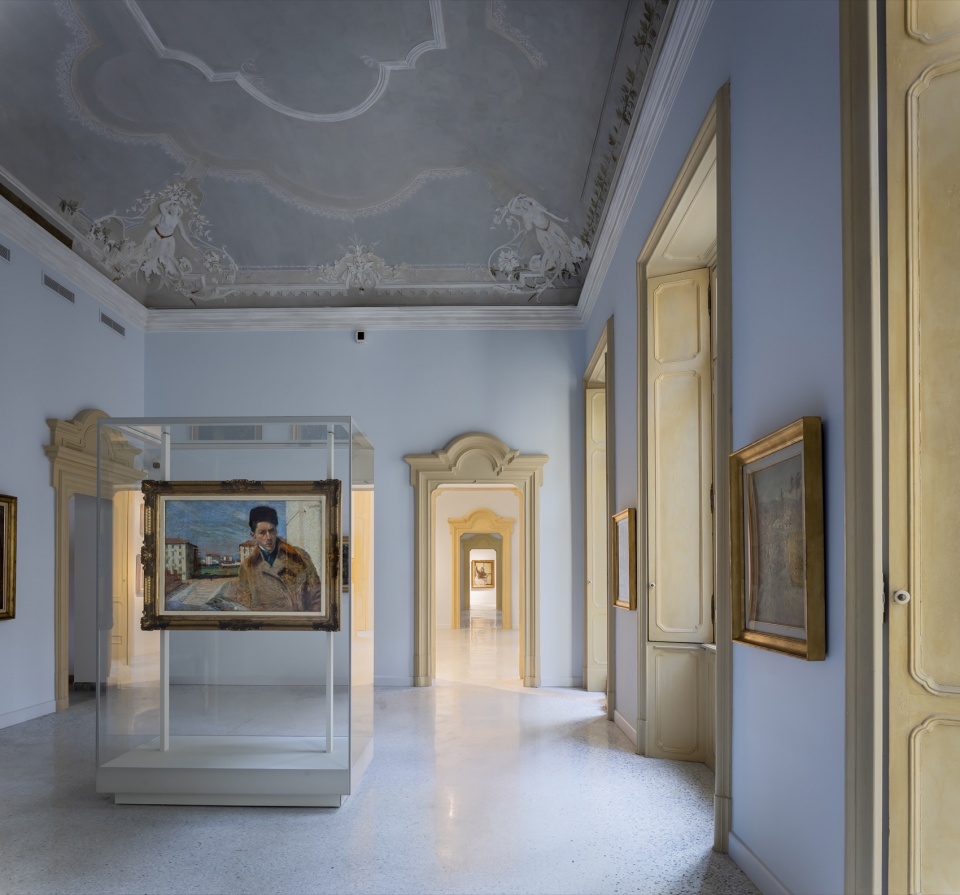
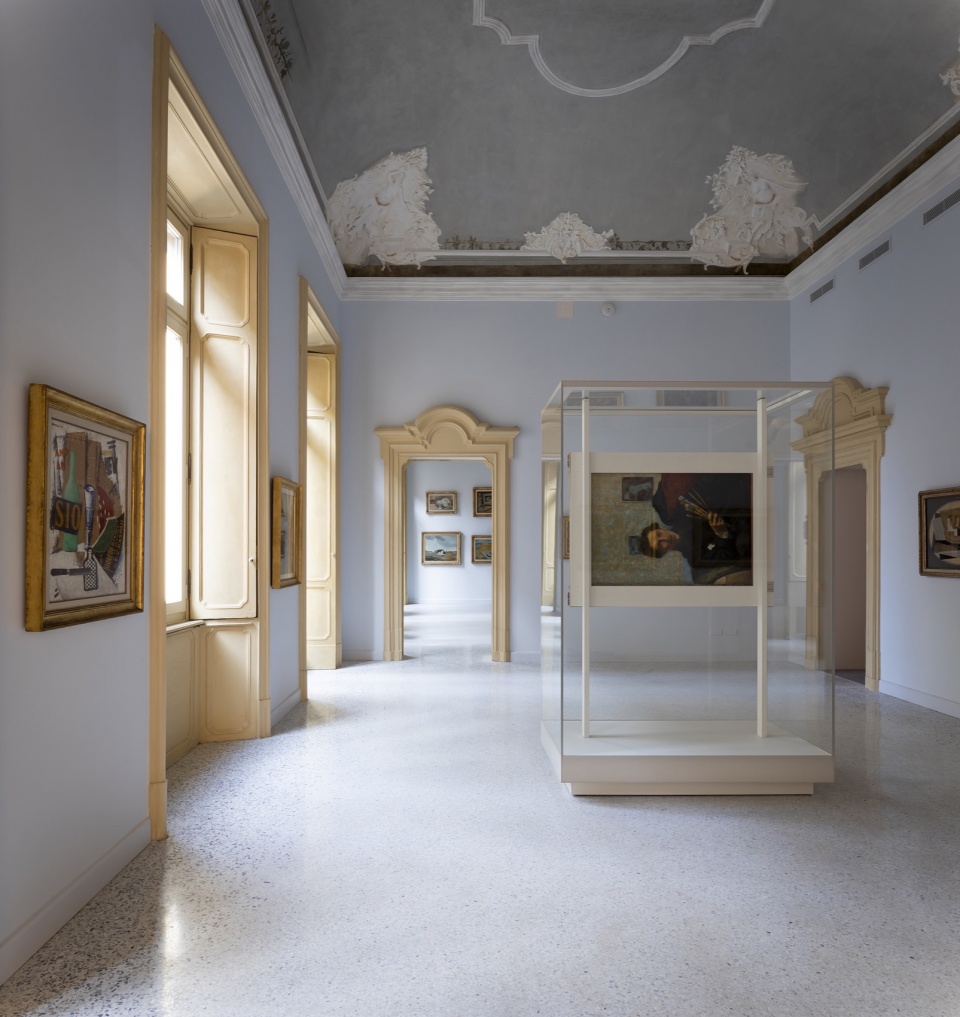
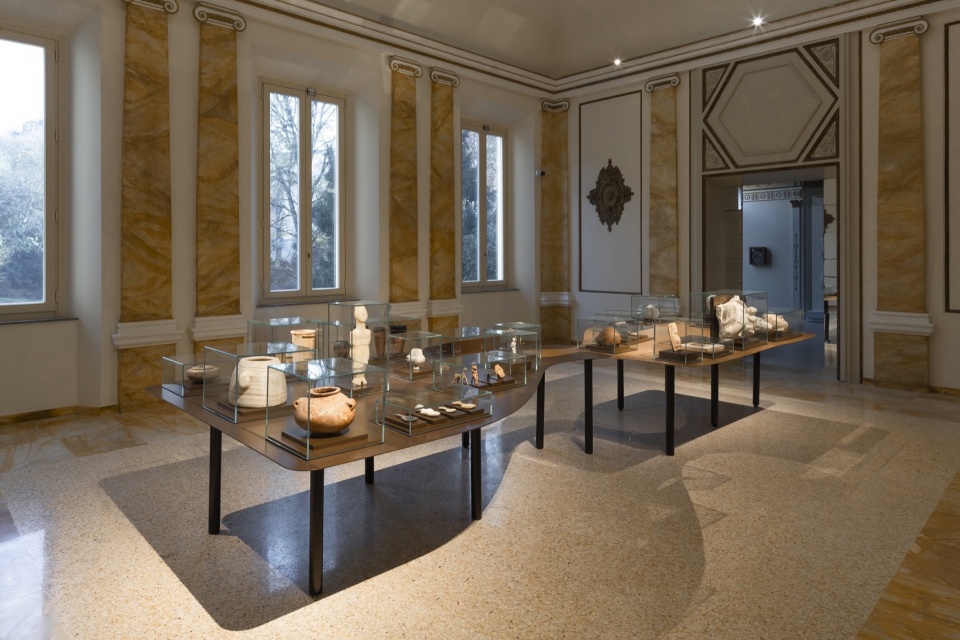
奇泰里奥宫的一楼用于展示永久收藏,陈列着Jesi和Vitali家族的艺术作品。这两大家族曾分别居住在宫殿的两翼。展览的设计灵感源自温暖的居家氛围,沿布雷拉街的房间展示Jesi家族的藏品,而面向内庭花园的房间则呈现Vitali家族的艺术珍品。通过巧妙的色彩搭配和灯光设计,空间更好地突显了艺术品的美感与内涵。由MCA设计的陈列柜,与房间内的装饰壁画融为一体,不仅提升了藏品的视觉魅力,同时延续了这座历史建筑的独特韵味。在奇泰里奥宫的“镜厅”(Hall of Mirrors),现代设计与历史文化继续展开对话。一张别具匠心的展台陈列着考古文物,高低错落的展示柜宛如一座微缩的城市天际线。这张展台巧妙地融合了两个独立设计元素,既统一和谐,又各自独立成趣,展现出极致的设计美学。为了延续历史宫殿沙龙式的文化氛围,一楼特别设有一处阅读空间,观众可以在这里停下脚步,翻阅书籍,享受片刻宁静。毗邻的房间还打造了一间图书馆,精心修复的木质柜体中陈列着珍贵的手稿与古籍。这一空间不仅散发着厚重的历史气息,更彰显了文化的永恒魅力。
Dedicated to the permanent collections, the first floor or Piano Nobile displays the works from the Jesi and Vitali families, who once lived in the two wings of the Palazzo. The design evokes a domestic atmosphere, with rooms along Via Brera housing the Jesi collection, while those overlooking the inner garden showcase the Vitali collection. The spaces are carefully harmonized with colours and lighting that enhance the artwork. Special display cases, designed by the studio, highlight specific pieces from the collections and integrate seamlessly with the frescoed rooms’ architecture. The dialogue between modernity and history continues in the Sala degli Specchi (Hall of Mirrors), where a display table holds archaeological artifacts arranged in cases of varying heights, evoking an urban skyline. The table itself combines two elements, harmoniously united yet capable of existing independently. In keeping with the ambiance of historic palazzo salons, the studio also designed a reading space on the first floor, allowing visitors to rest and explore books on display. Additionally, an adjacent room features a library showcasing ancient manuscripts and books within restored wooden cabinetry.
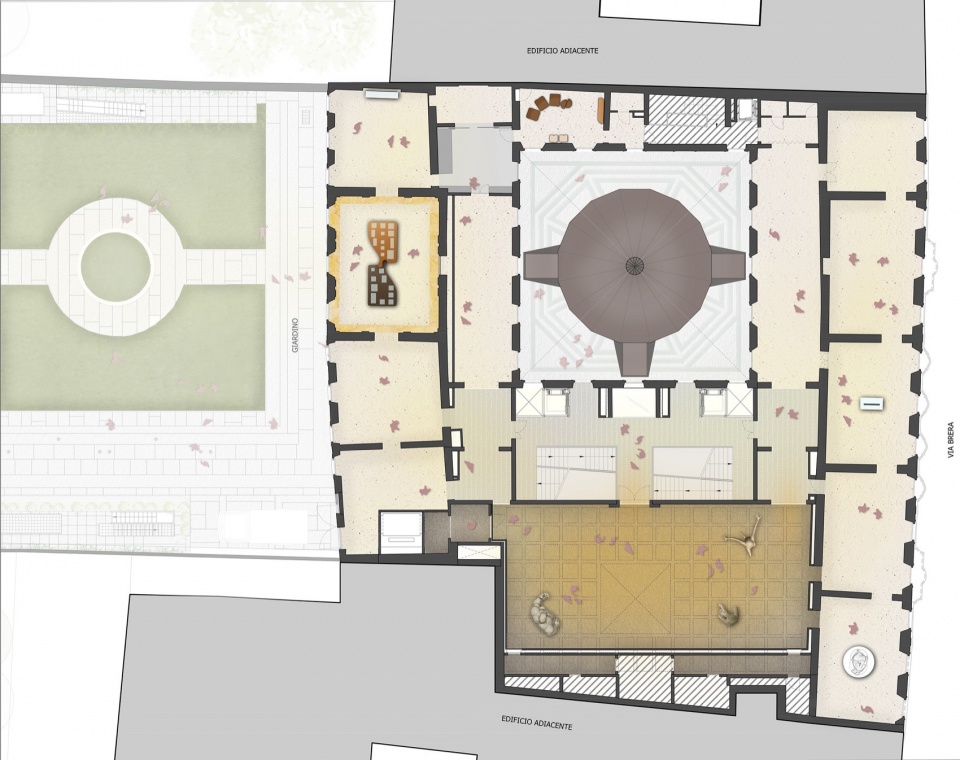
▼首层平面图,Ground floor plan
▼二层平面图,First floor plan
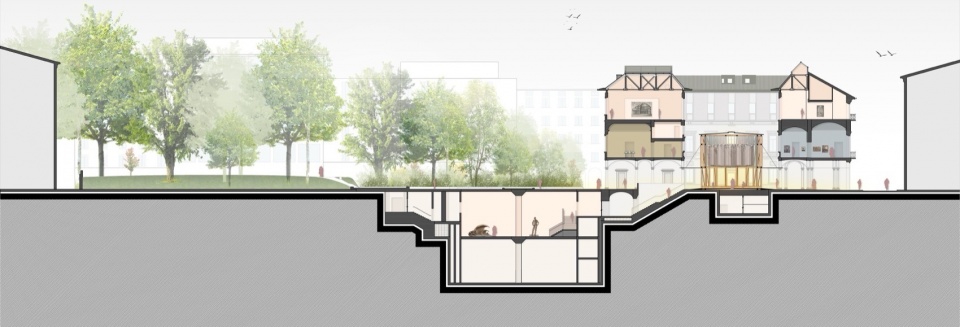
▼剖面图,section