镰仓工作室,日本 / YUJI OKITSU
本项目旨在将位于日本镰仓山坡边缘的一座已有90年历史的老宅翻新为一个工作室。这是业主主屋的新附属空间,主屋是他们日常生活的主要居所。他们希望拥有一个可以邀请艺术家与美食家共度创意时光,或款待朋友的场所。
This project was to renovate a 90-year-old house on the edge of a hillside in Kamakura, Japan into an atelier. It is a new annex to the main house where the clients spend most of their time. They wanted a space to invite artists and culinary experts and enjoy creative time together or entertain their friends.
▼场地入口,entrance of the site
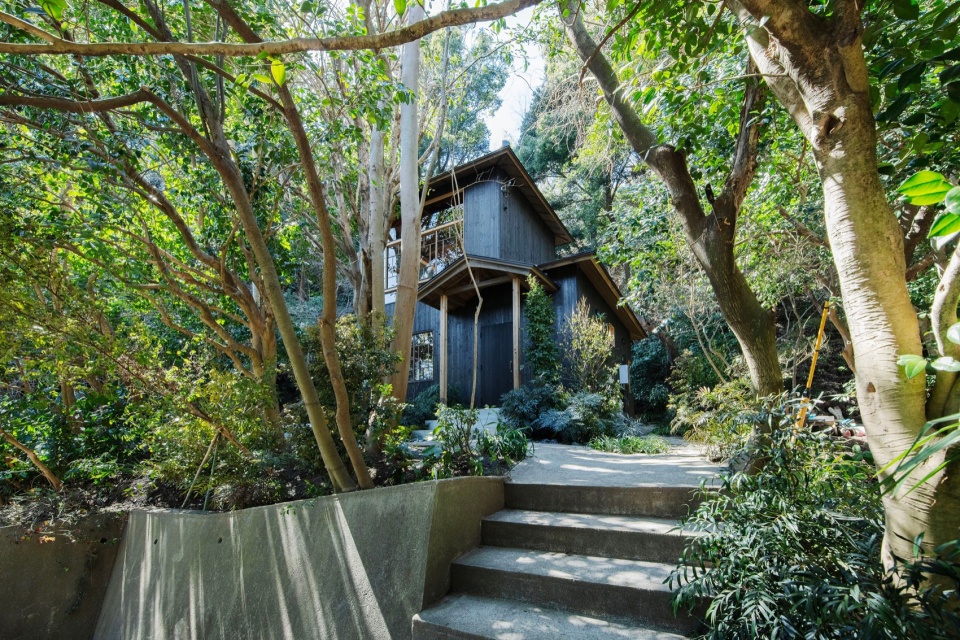
▼项目外观,exterior view of the project
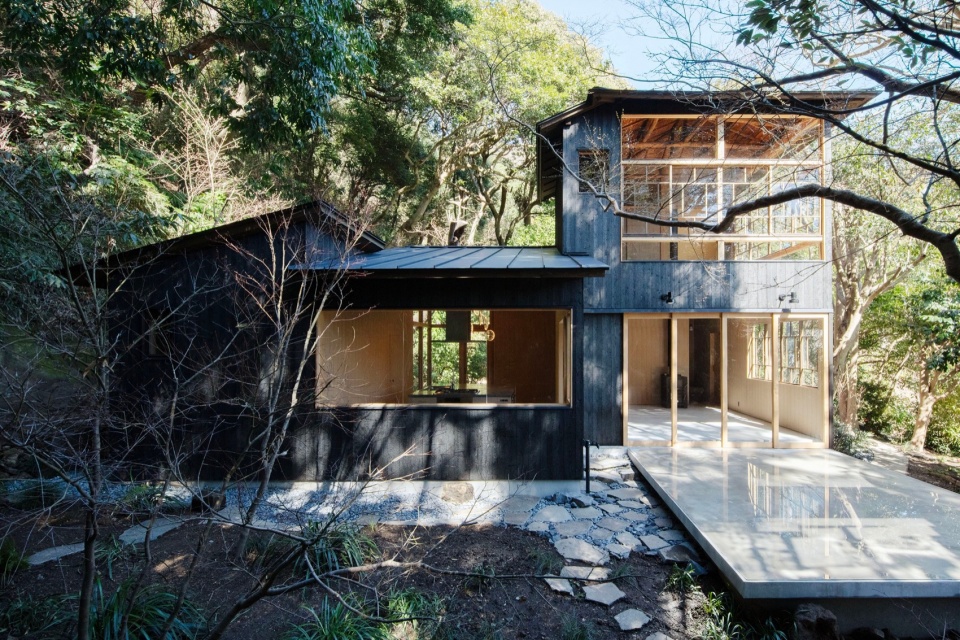
▼露台,terrace
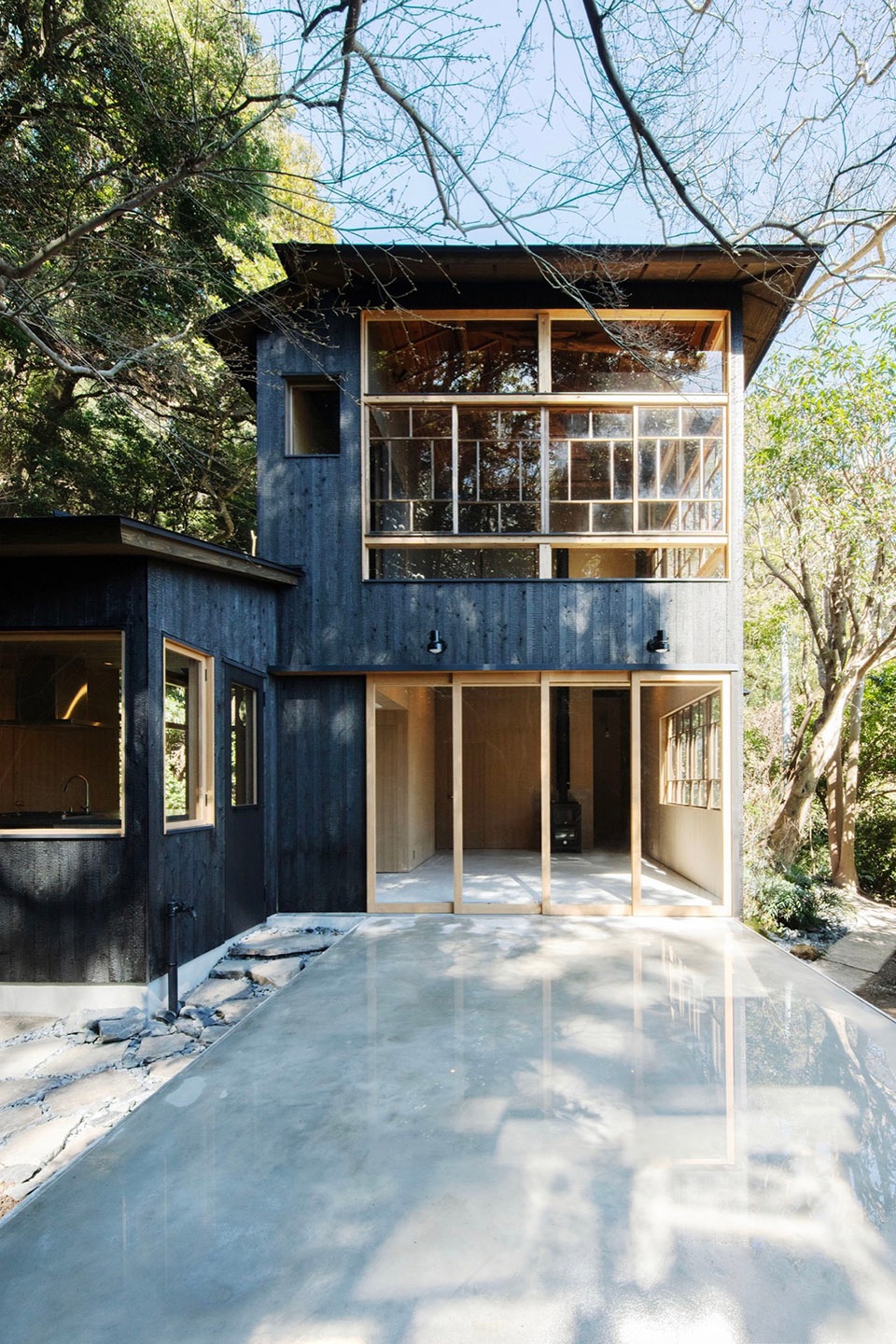
▼入口,entrance
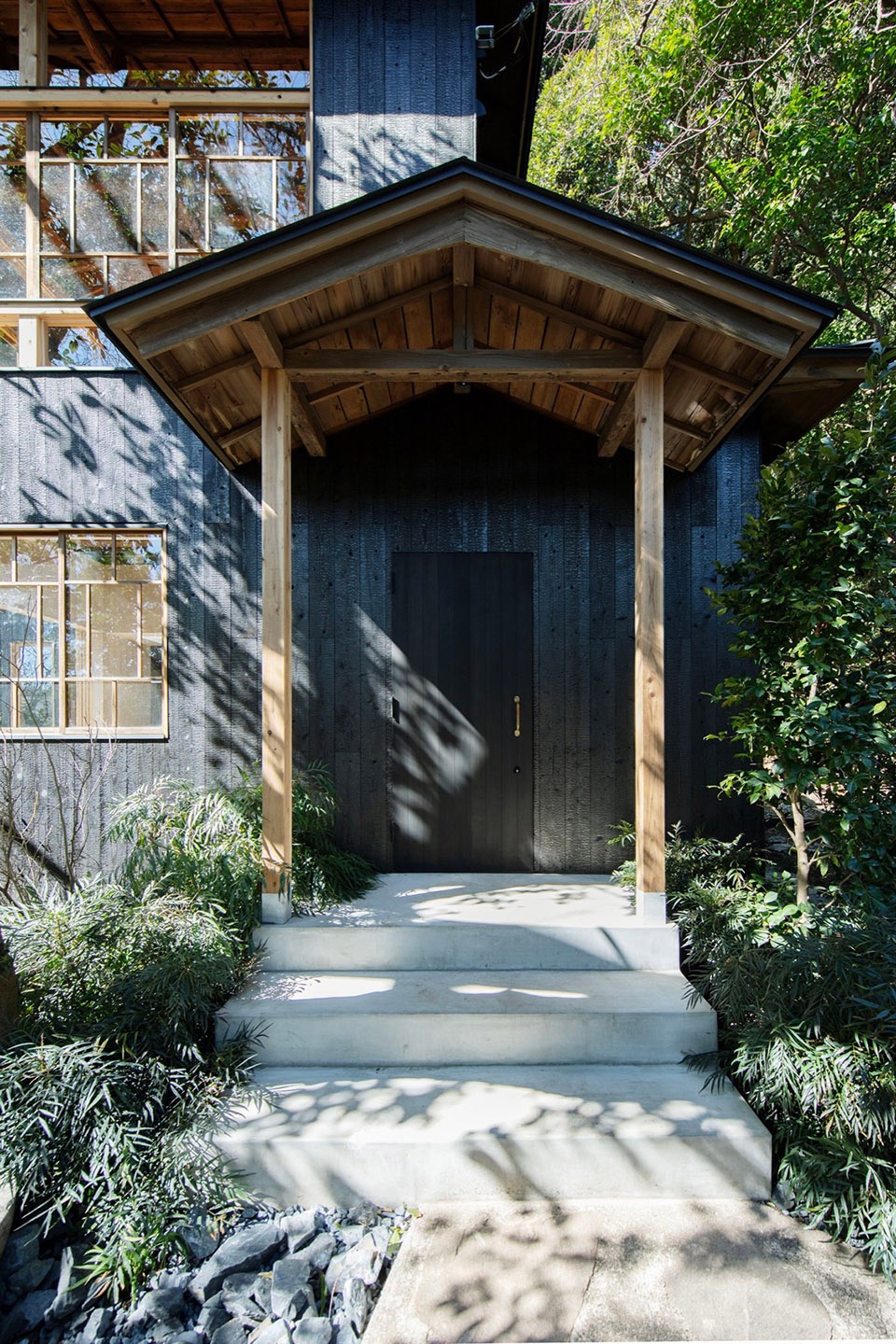
▼小径,path way
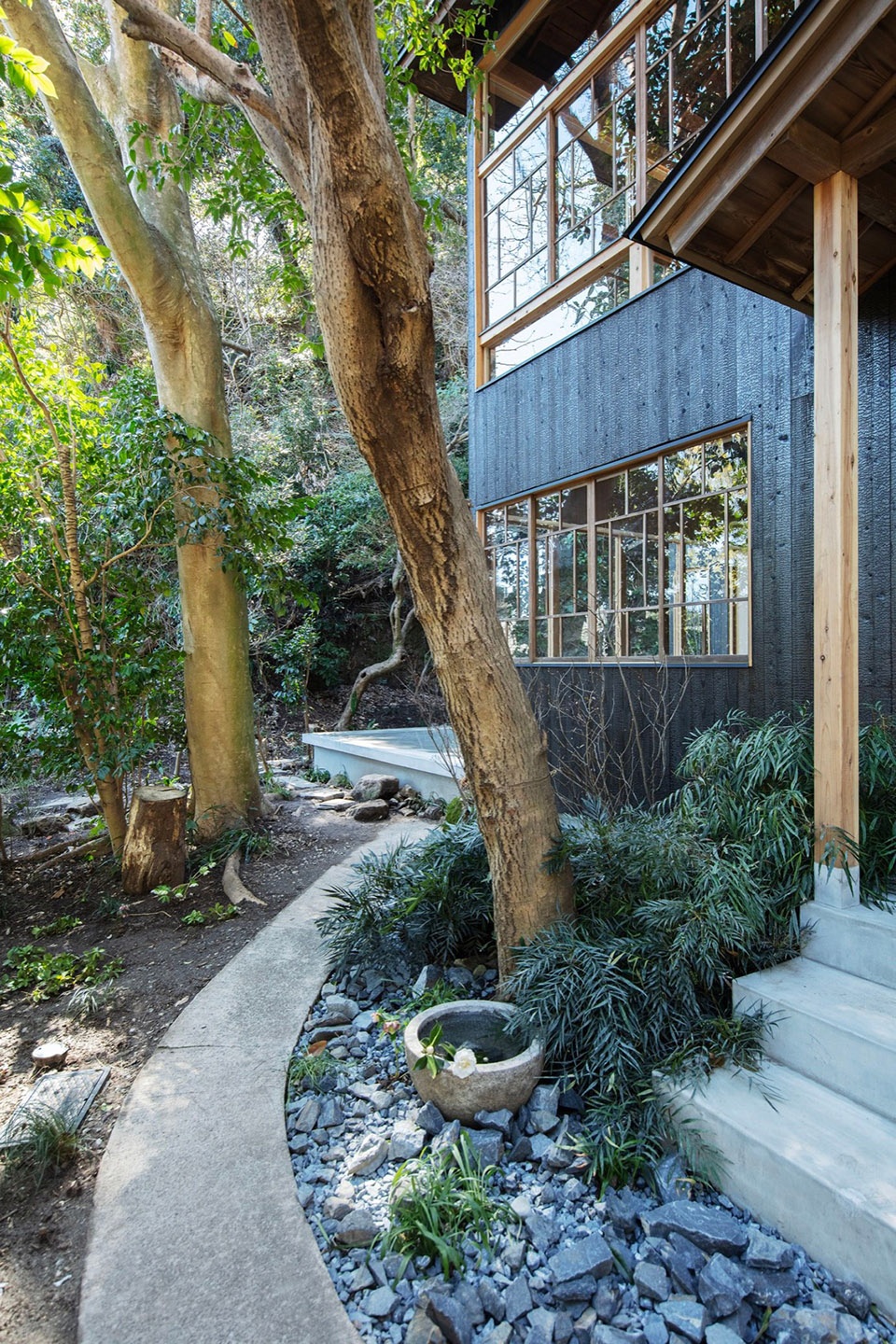
该建筑位于一个狭小的平坦地块上,坐落于镰仓特有的陡峭悬崖中段,空间仅足以容纳一座住宅。当建筑师首次踏足现场时,房屋的地板、墙体、天花板及设备均已被拆除,仅剩下骨架结构,原有的空间布局早已无法辨识。老旧的木柱散布于树木之间,阳光与岩壁从柱间洒落,意外地营造出建筑与自然环境交融的氛围。
The building is situated on a flat site in the middle of a steep cliff, characteristic of Kamakura, with a size just large enough for a single house. When the architect was first called to the site, the floors, walls, ceilings, and equipment of the house had all been removed, leaving only its framework, with its original room layout unrecognizable. The old wooden pillars interspersed with the surrounding trees, and sunlight and the rock surface peeked through the spaces between them, creating a space that coincidentally blended architecture and the environment.
▼底层室内空间,ground floor space
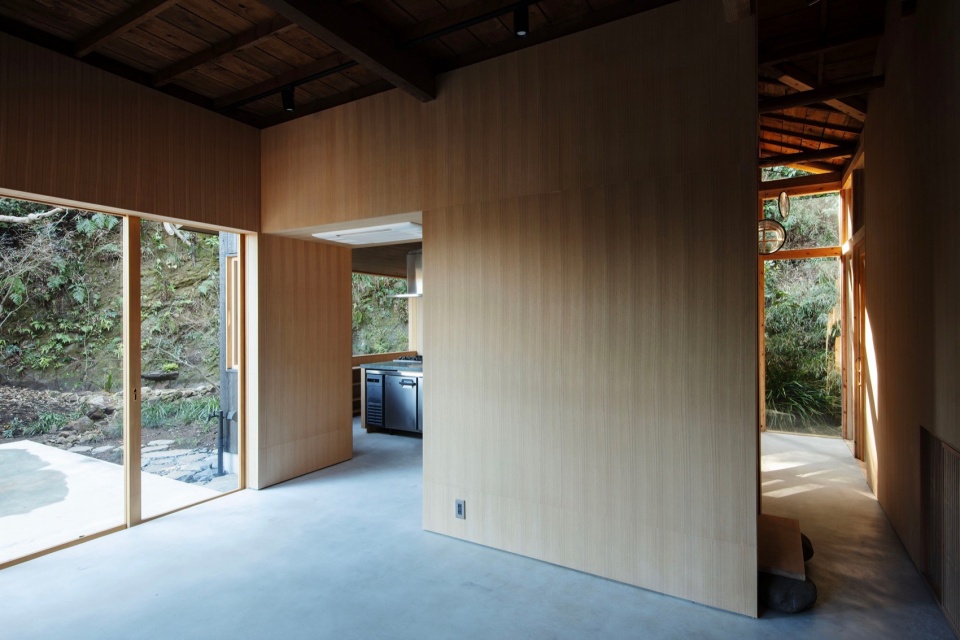
▼开放式厨房,open kitchen
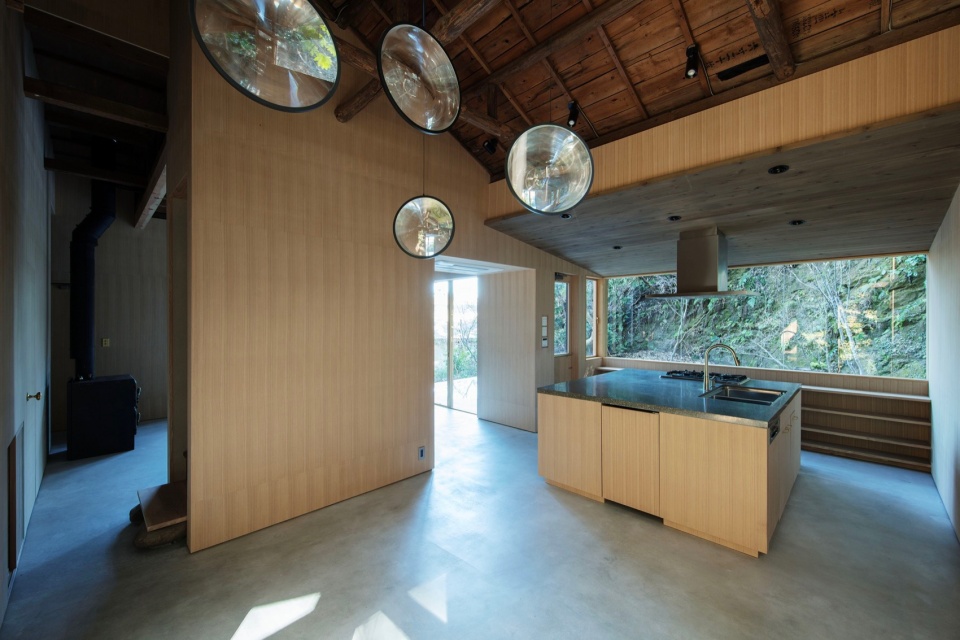
▼厨房餐厅一角,corner of the kitchen-dining
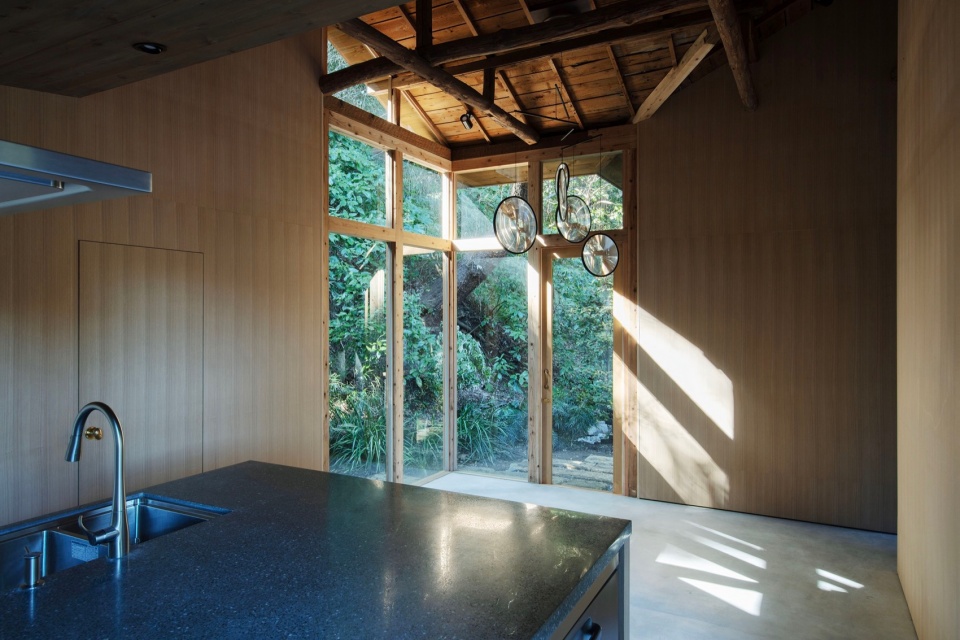
▼窗边置物架,shelves along the windew
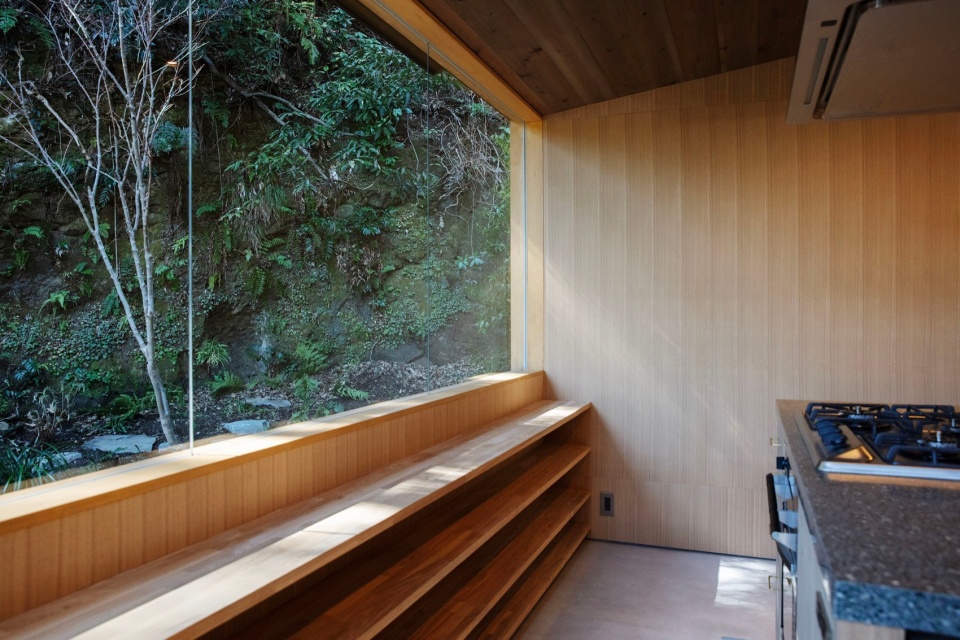
▼客厅与壁炉,living room and fireplace
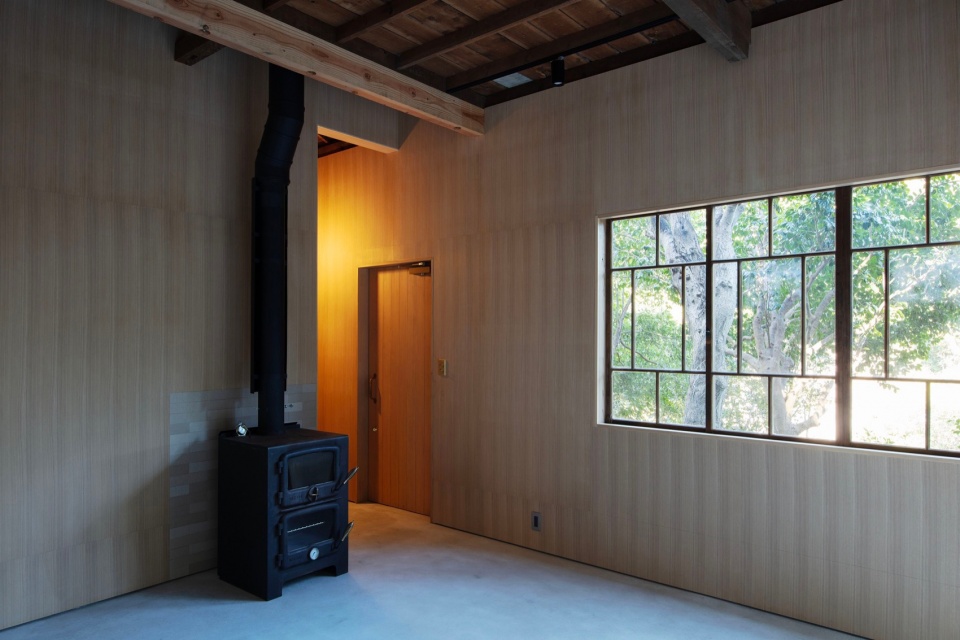
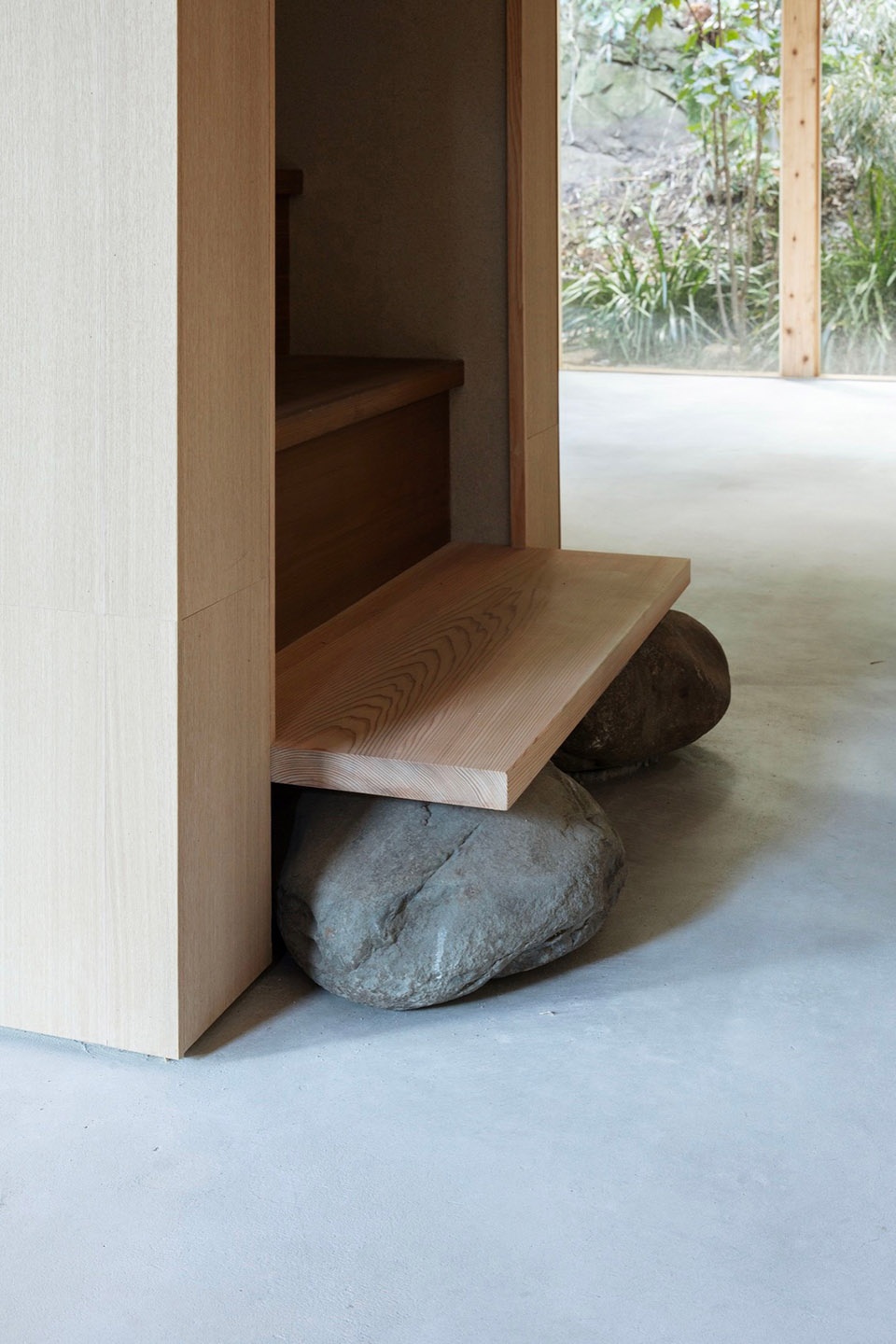
在翻新过程中,我们并未将加固修复后裸露的结构部分涂漆使其与新旧木材色调统一,而是保留了加固的痕迹。出于对这栋多年闲置却依然屹立不倒老屋的敬意,我们希望这座房子象征新与旧的共存,以及建筑自身的持久性。我们尽量保留原材料,通过修复仍保有建筑个性的旧窗框,以及将支撑房屋多年的基础石重新用于其他用途,将它们传承给下一代。
In renovating the building, we did not paint the exposed parts of the repaired and reinforced framework to match the color of the existing and new wood, but instead left the traces of the reinforcements as they were. With respect for the building, which stood the test of time despite being left unoccupied for many years, we wanted the house to symbolize the coexistence of old and new and its permanence. We tried to preserve the materials that sustained the building and pass them on to the next generation by repairing the existing window frames, which give a sense of the building’s identity, and reusing the foundation stones, which have supported the building for many years, for other purposes.
▼室内一角,corner of interior
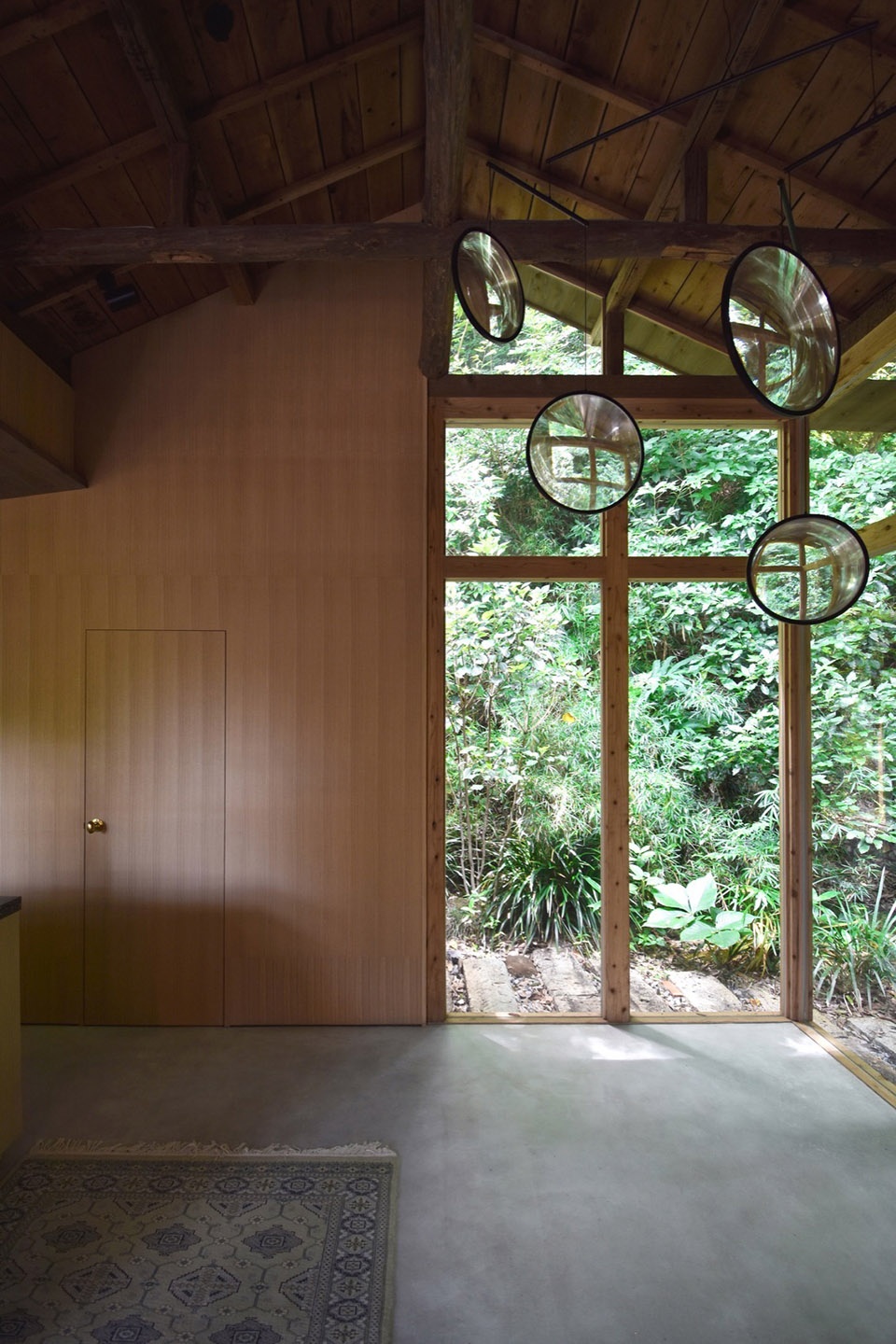
▼厨房近景,closer view of the kitchen
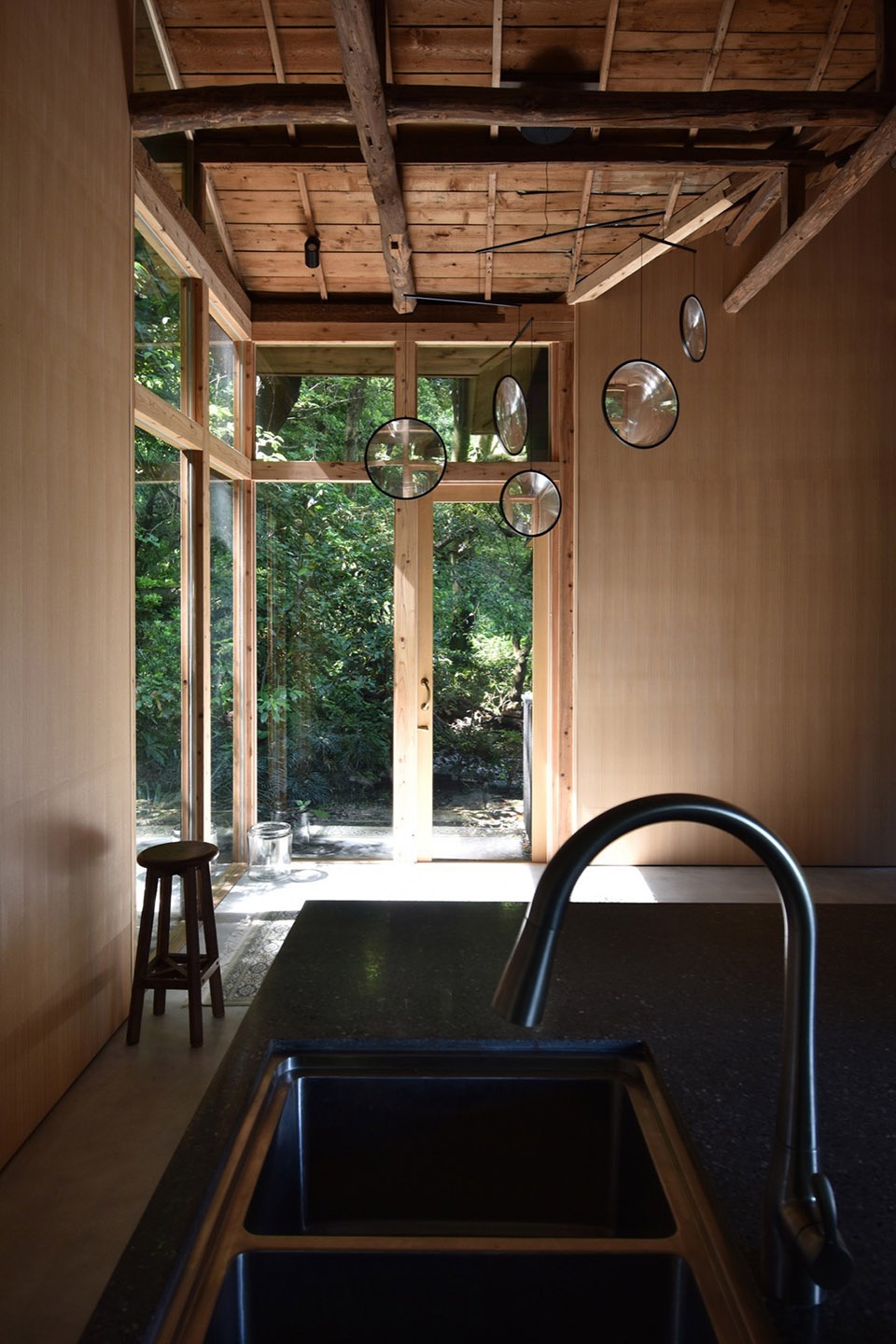
▼结构细部,details of the timber structure
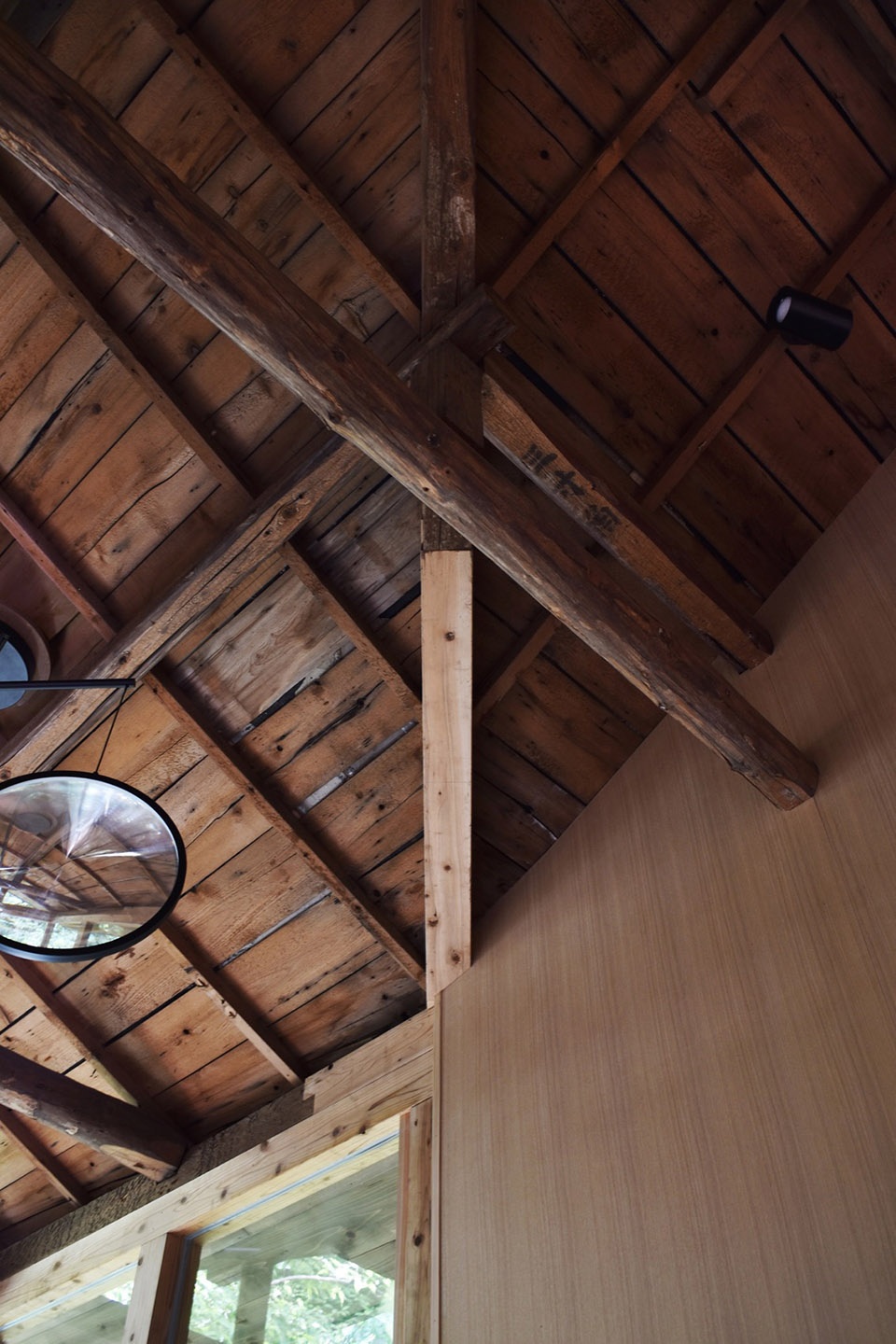
这种做法也源于项目秉持的理念——积极地看待时间带来的变化。我们精心挑选了能够随时间优雅老化的材料,如外墙使用了“烧杉板”(一种传统日本手法,通过烧灼杉木表面以增强耐候性),门把则选用黄铜。此外,地板使用了业主旧居储存多年的栗木实木地板,并融入了他们收藏的古董窗框。我们希望通过这些材料与建筑的融合,为焕然一新的空间赋予亲切感,让业主在其中感受到他们积累的时光。
This is also because the project’s policy is to view the changes over time positively. We also carefully selected materials that would age well, such as “Yakisugi” (a traditional Japanese technique of charring cedar boards) on the exterior walls and the brass door knobs. In addition, solid chestnut wood flooring that had been used in the client’s previous home and stored away for many years, as well as antique window frames that they owned, were also incorporated. We wanted to imbue the reborn building with a sense of affinity by harmonizing it with these building materials so the clients can feel the time they had accumulated in the past.
▼楼梯入口,entrance of the staircase
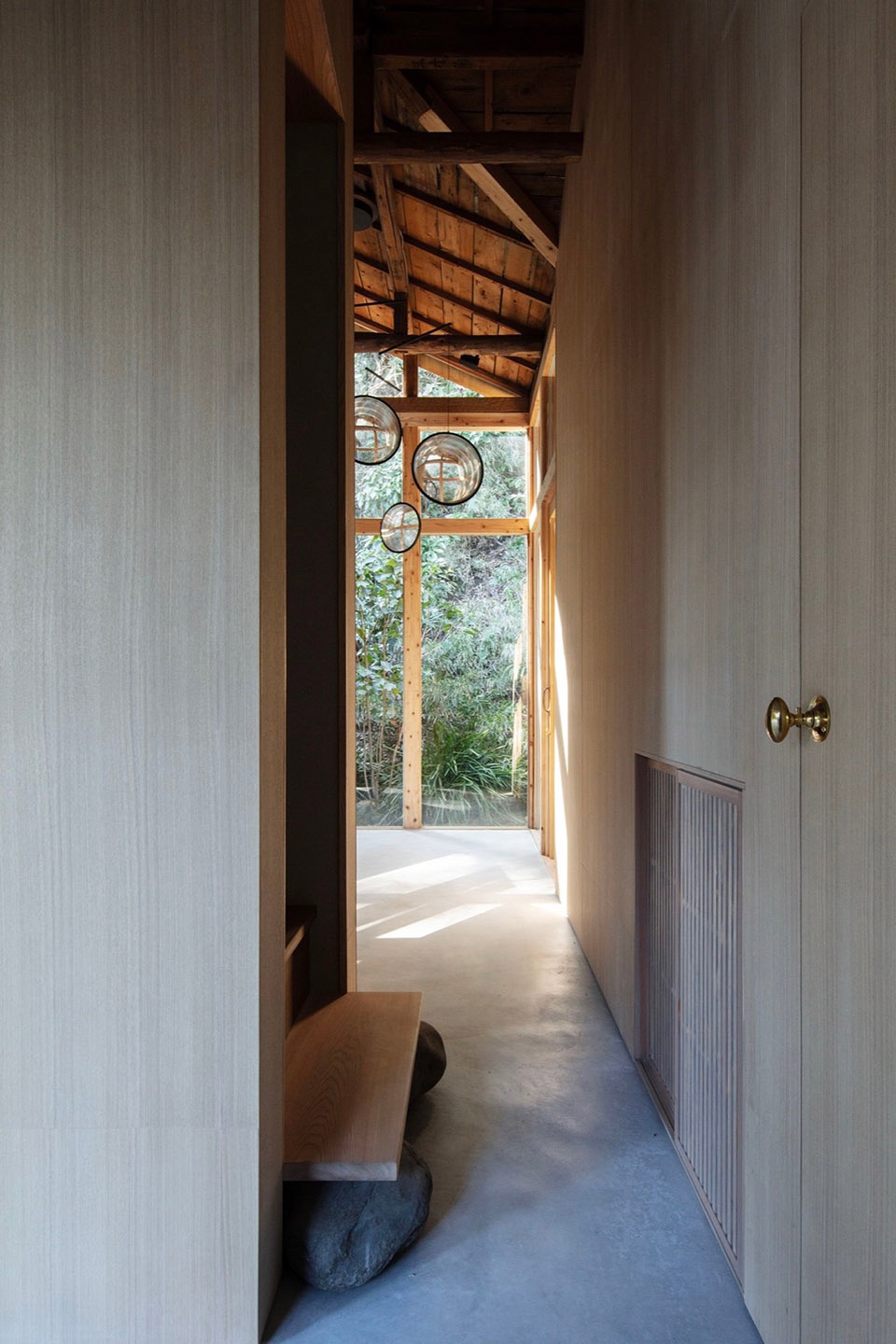
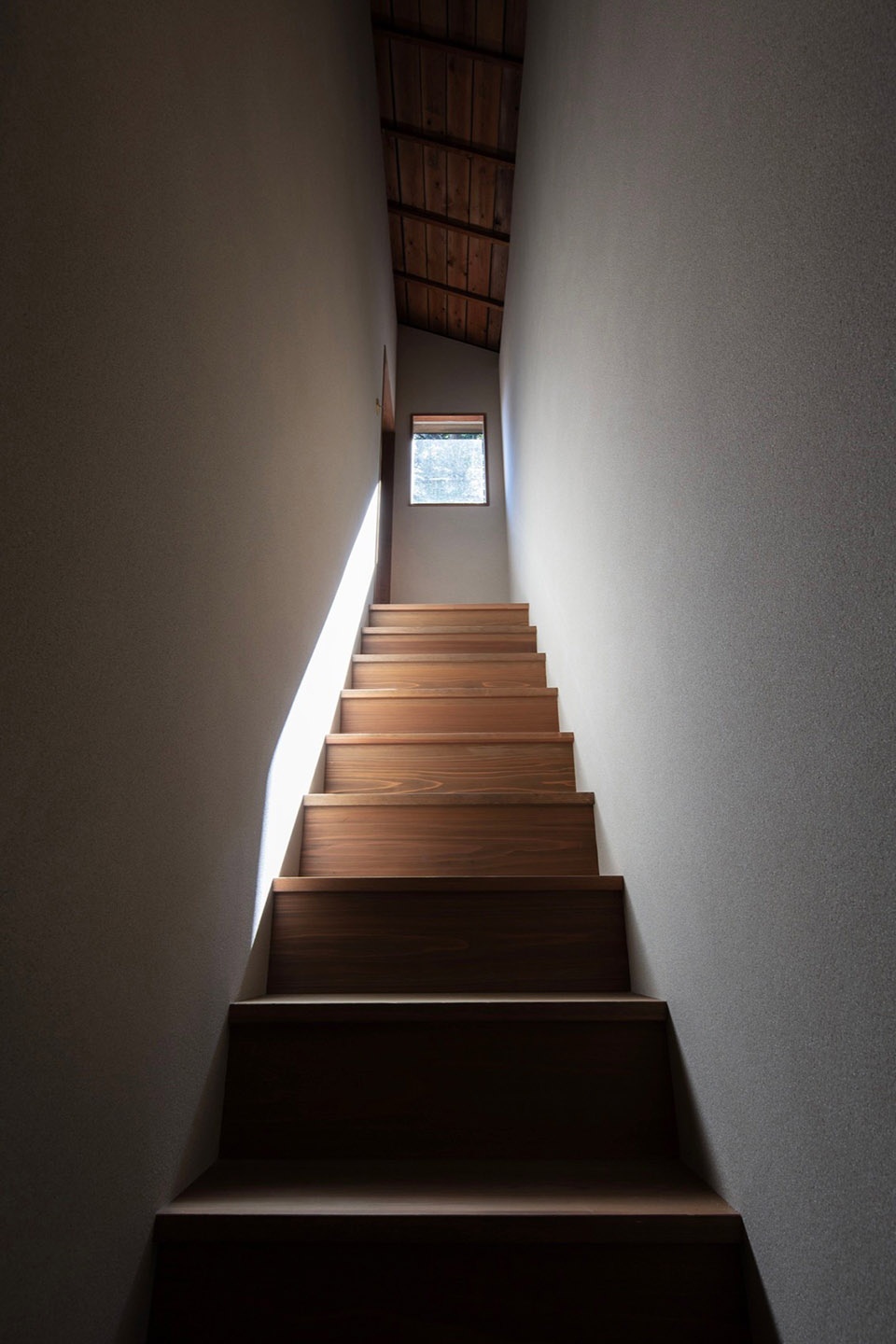
▼楼梯,staircase
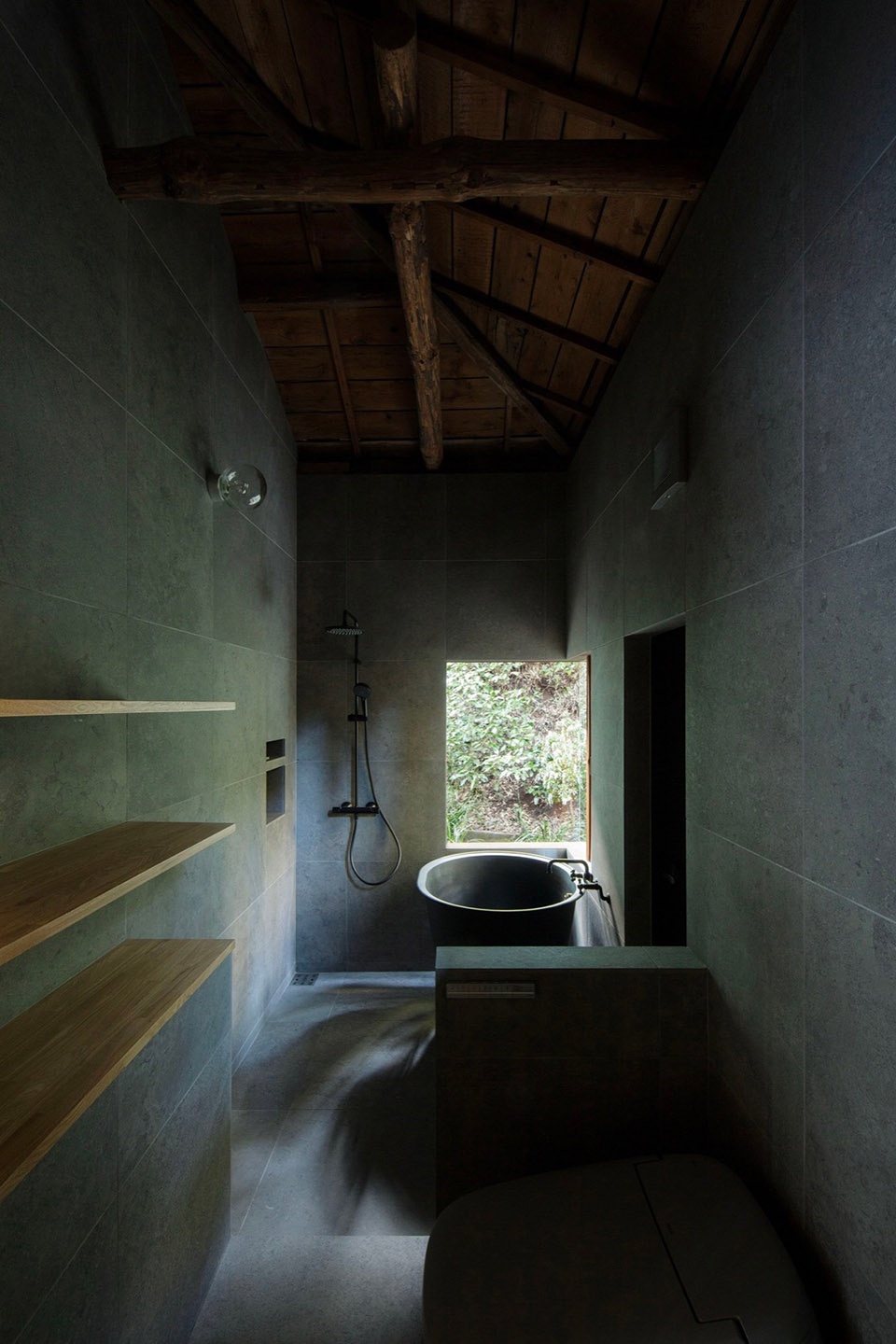
▼浴室,bathroom
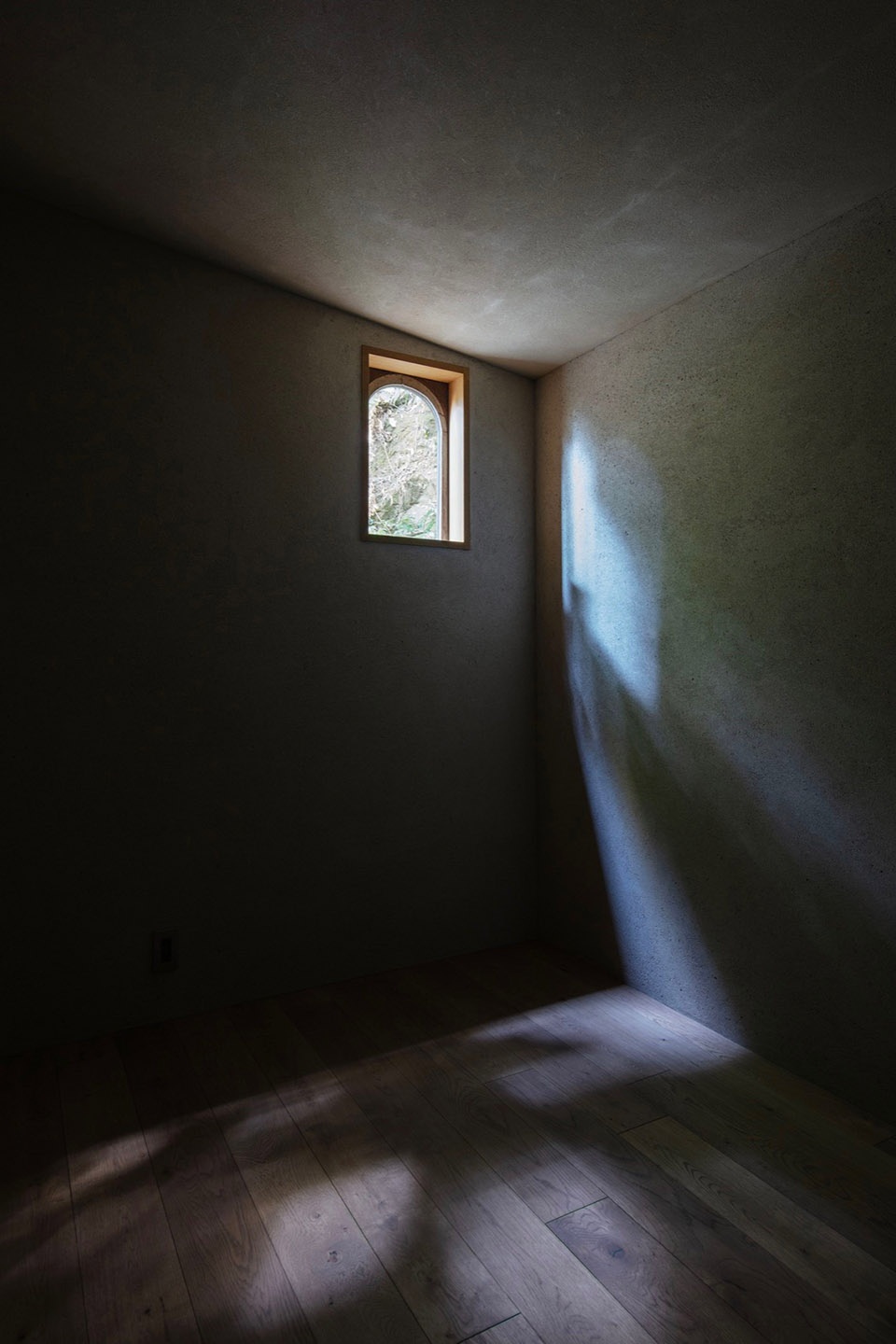
▼小窗,small window
新设计的平面中,一层主要为工作室、厨房与餐厅。楼梯间的位置及层高变化营造出无死角的流动空间,使用者可自由穿行。二层开向一层工作室的房间设置了靠地矮窗“无双窗”(一种配有可调节竖条的传统日本窗户),通过开合窗板,将木炉带来的暖气、声音与氛围传递至上层,让整栋建筑犹如一个开放通透的大空间。
In the new floor plan, the first floor mainly consists of the atelier, kitchen, and dining room. The location of the stairwell and the difference in ceiling height create a space without dead ends, allowing one to circulate freely. The floor-level low windows called “muso-mado” (traditional Japanese windows fitted with panels with vertical slats that can be opened and closed for ventilation) were installed in the second floor room that opened to the first floor atelier. By opening and closing the panels, the atmosphere, sounds, and warm air from the wood stove are transmitted to the upstairs, making the whole building feel like a spacious open-plan room.
▼工作室,the atelier
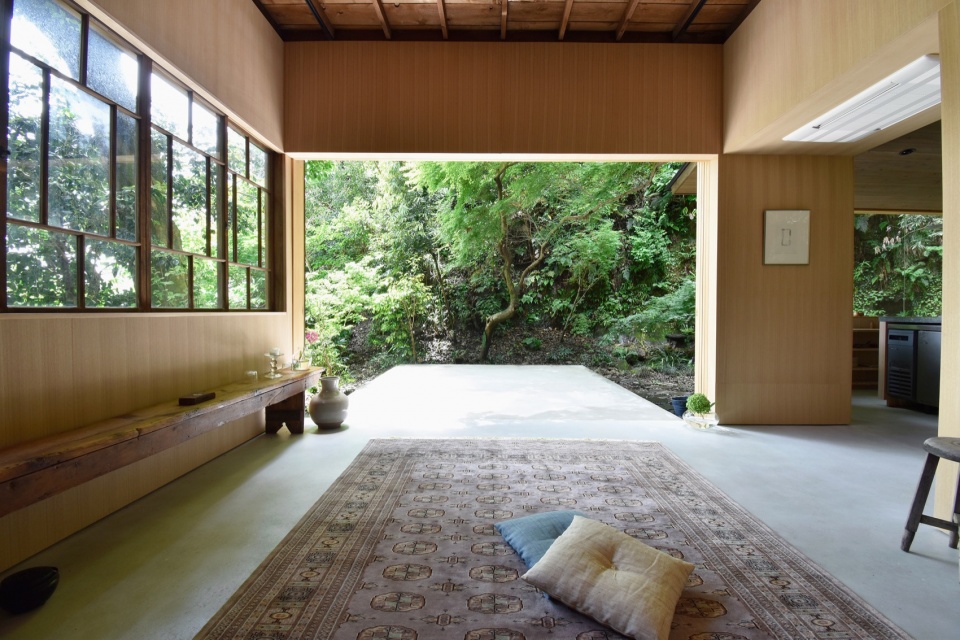
▼厨房与餐厅,kitchen and dining
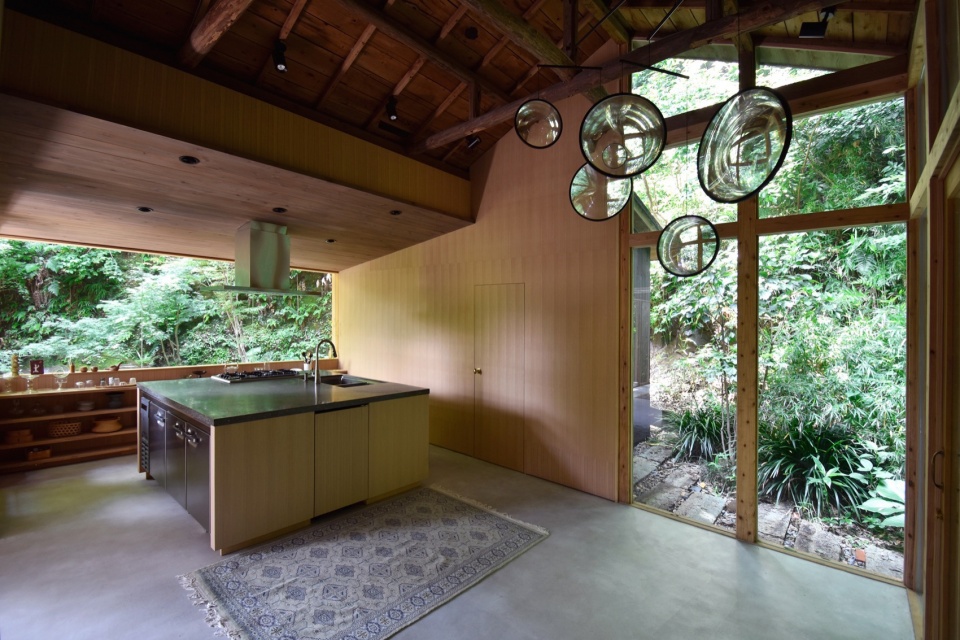
▼厨房台面,counter top of the kitchen island
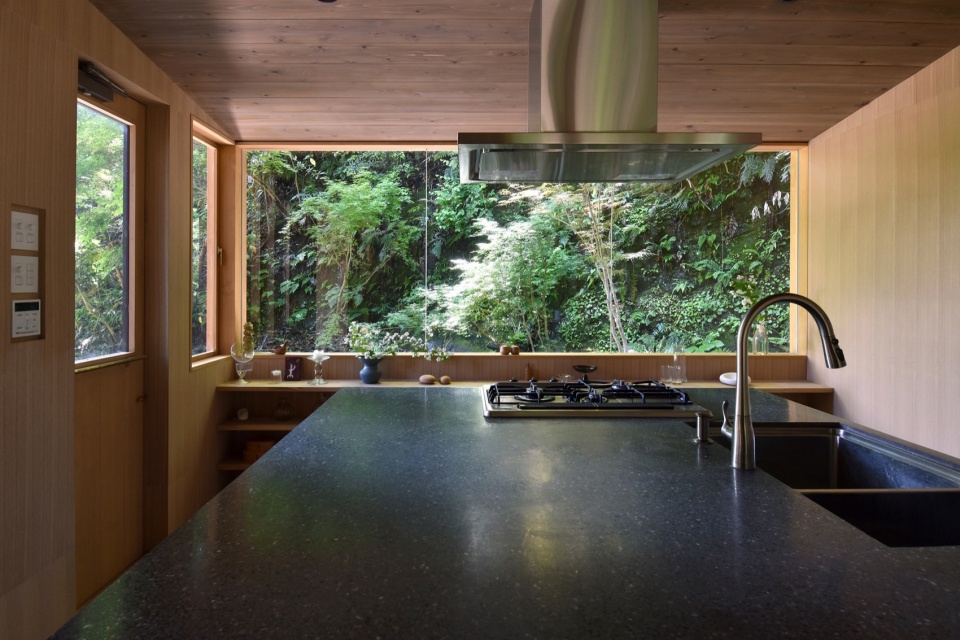
▼由厨房看工作室,viewing the atelier from the kitchen
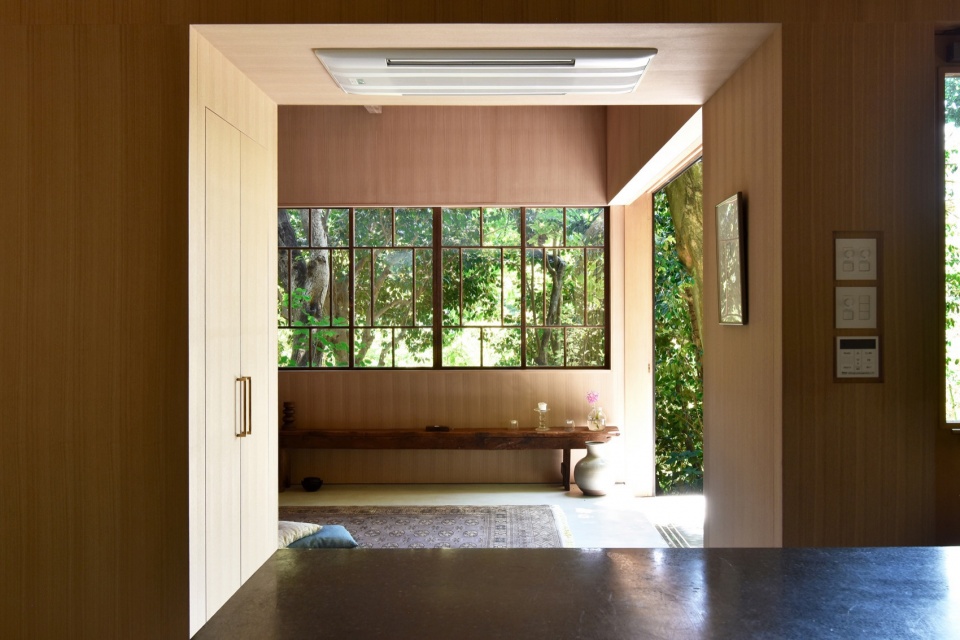
我们在设计中也巧妙处理了内外空间的开口。工作室地面与延伸至庭院的混凝土露台采用相同材质处理,通过一处大型开口贯通,室内外虽物理分隔,却在视觉上连成一体。二层房间的落地窗直接将地坪切断于玻璃界面,使人感知自然景观更为接近,实现了室内与室外空间的融合。
We used our ingenuity to create openings that harmonize the interior and exterior. The floor of the first floor atelier and the deck that extends into the garden have the same concrete finish, creating a single floor surface that traverses the large opening. Even though the inside and outside are separated by the opening, they can be perceived as one through a continuous visual experience from one to the other. The floor finish is cut off at the glass surface of the openings in the second-floor room to eliminate the sense of distance to the scenery. This creates a visual effect that makes the outside environment feel closer and integrates the indoor and outdoor spaces.
▼二层房间,upper floor space
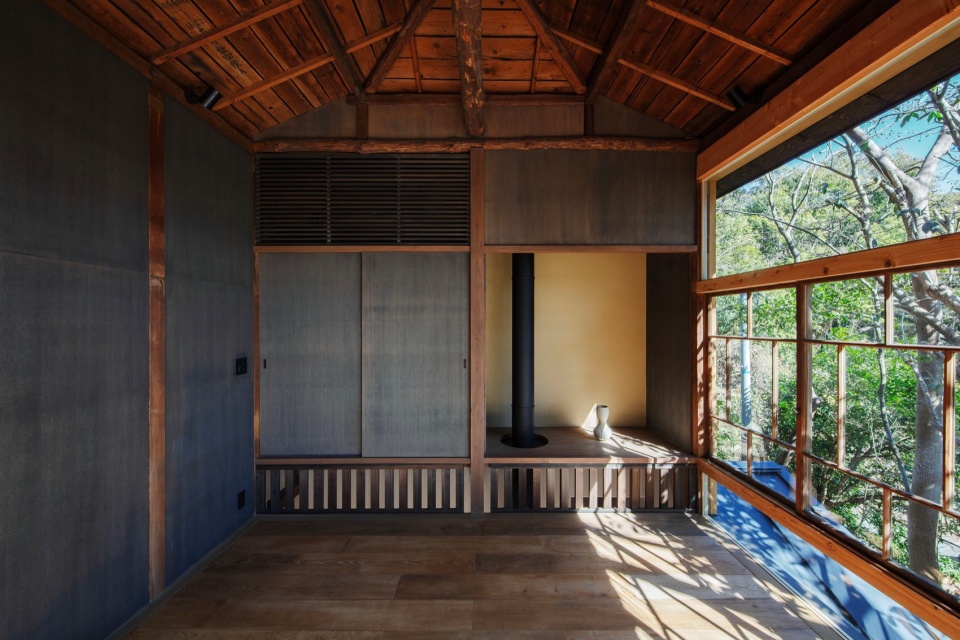
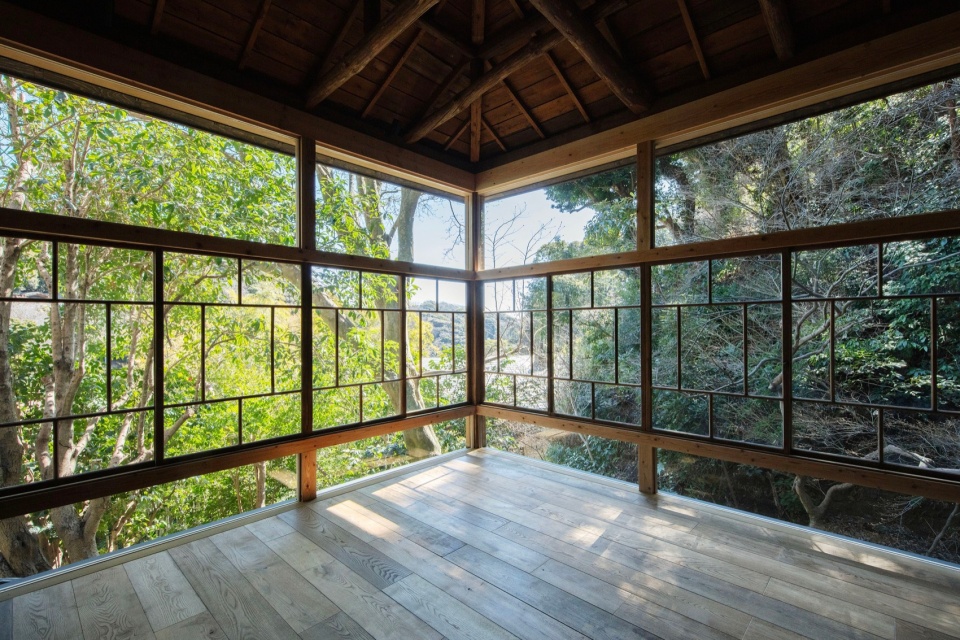
▼大面积的落地窗,large area of floor-to-ceiling windows
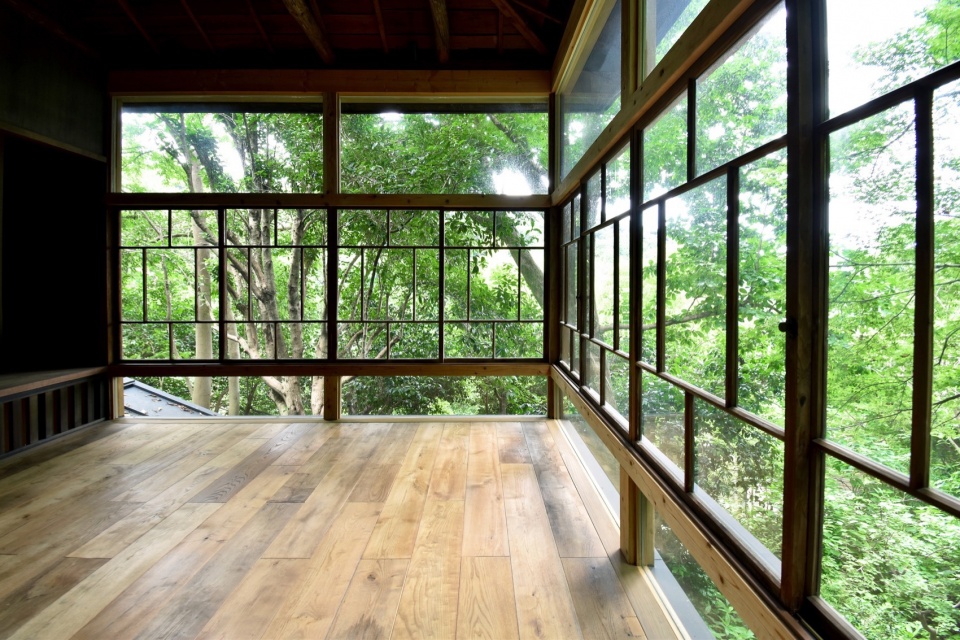
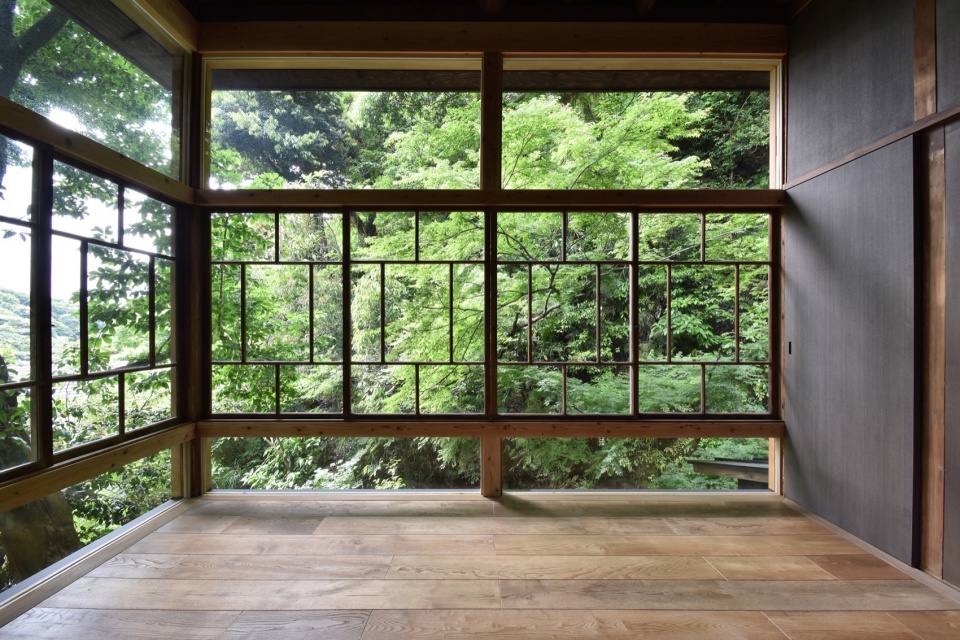
庭院中的混凝土露台设计成雨天可形成浅水层的构造。下雨时,涟漪在方形露台上扩散,大自然的动态图案投射于建筑表面;雨停后,这里变为一片短暂的水面,映照出树影与光影,自然与建筑交织为一体。
The concrete deck in the garden was designed to form a thin layer of water when it rains. While it rains, ripples spread across the rectangular deck, and the moving patterns created by nature are reflected upon the architecture. After the rain, it becomes a transient water basin, and the trees’ reflections and natural light reveal a fusion of landscape and architecture.
▼庭院一侧外观,exterior view of the garden side
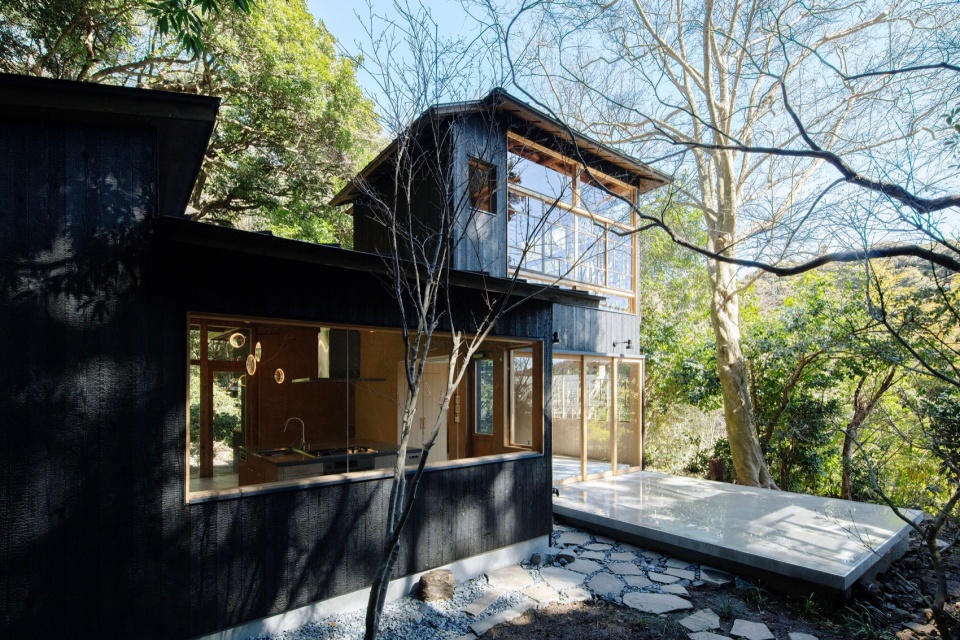
▼混凝土露台,concrete deck
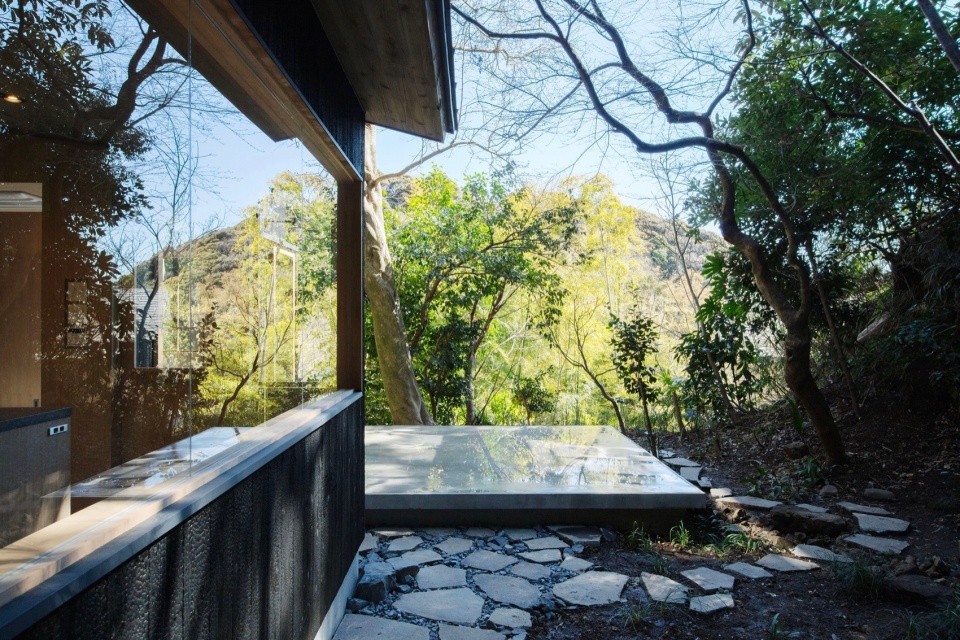
▼露台细部,details of the terrace
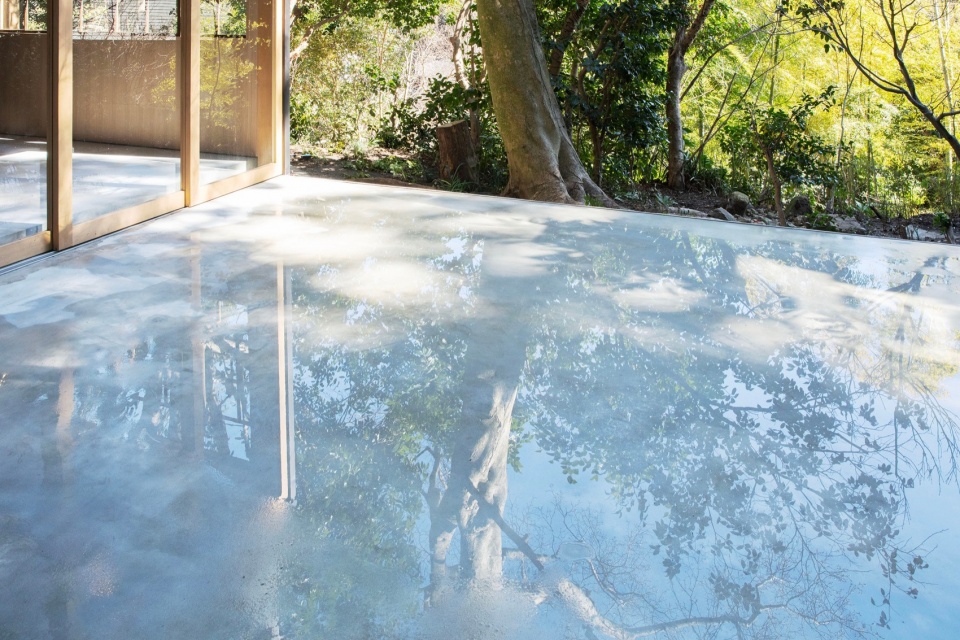
在翻新这座坐落于历史名城镰仓的老屋时,我们始终努力保留土地与建筑中沉淀的时间痕迹,并将之传递给未来。我们希望营造一种既有新旧平衡、又与环境与地景融合、并尊重时间流逝的建筑——以克制的方式表达,建造出一种包容性的建筑,使业主得以在其中与新生活共塑时间、延续记忆。
In renovating the old house in the historic city of Kamakura, we made sure to preserve the passage of time recorded in the land and architecture and pass it on to the future. We aimed to create a building that would combine a sense of balance between old and new, integration with the landscape, affinity with the environment, and respect for the passing of time through a modest approach. We believe that creating inclusive architecture that accommodates the coexistence of the accumulated time and new life will allow the client to preserve and harmonize the house with the time they create anew.
▼底层平面图,ground floor plan
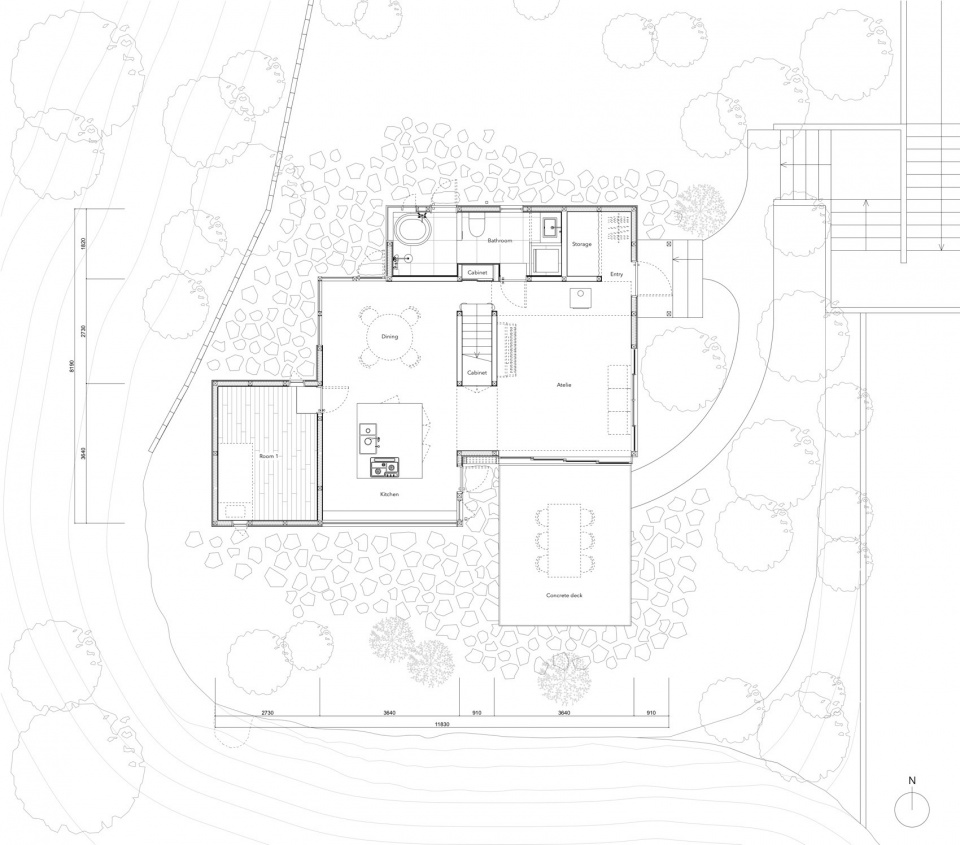
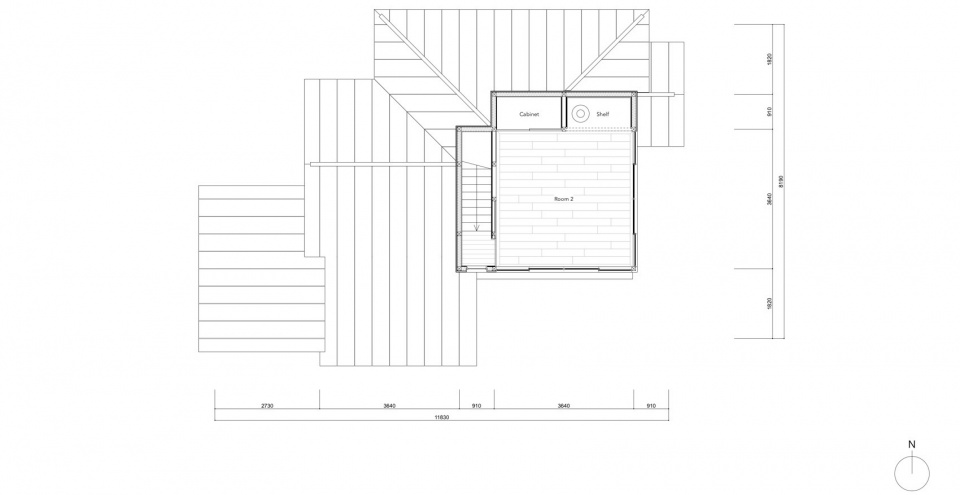
▼二层平面图,upper floor plan
Project Information
Project Name : Atelier in Kamakura
Usage : Annex (Atelier)
Completion Year : 2024
Built Area : 67.08m2
Total floor Area : 85.87m2
Project Location : Kamakura, Kanagawa, Japan
Office Name : YUJI OKITSU
Office Website : https://www.yujiokitsu.com/
Social Media Account : @yujiokitsu
Contact email : mail@yujiokitsu.com
Firm Location : Tokyo, Japan
Credits
Architect : YUJI OKITSU
Director : Tomoko Chris
Construction : Deguchitateguten CO.,Ltd
Landscape : Art Base Garden Obaen
Plastering : Junpei Hasado
Photographer1
Photo Credit : Satoshi Nagare
Website : https://nsphotographs.jp/
Photographer2
Photo Credit : YUJI OKITSU