AUM山景木屋,哈萨克斯坦 / Arthur Kariev Architects
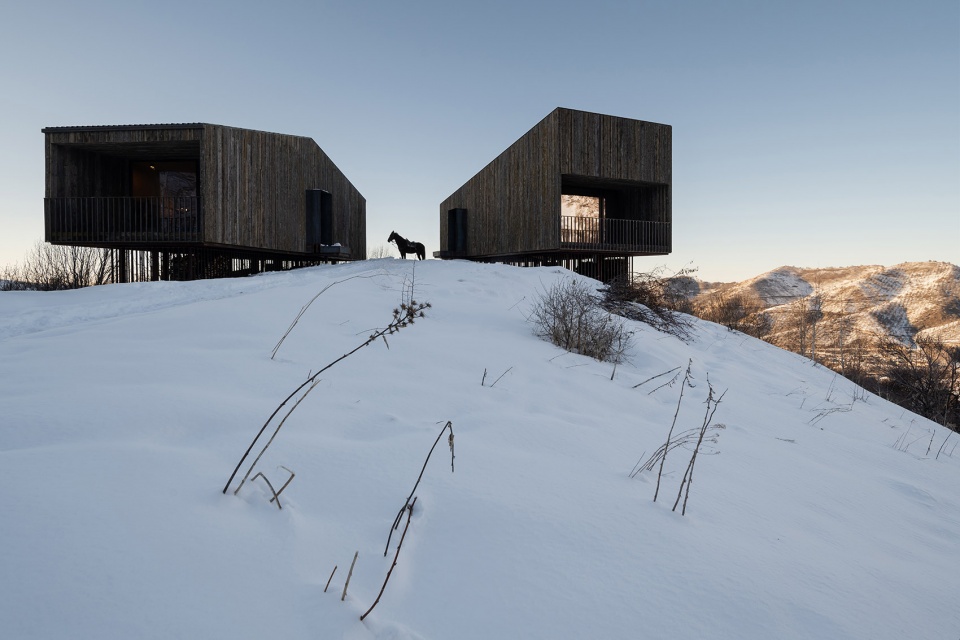
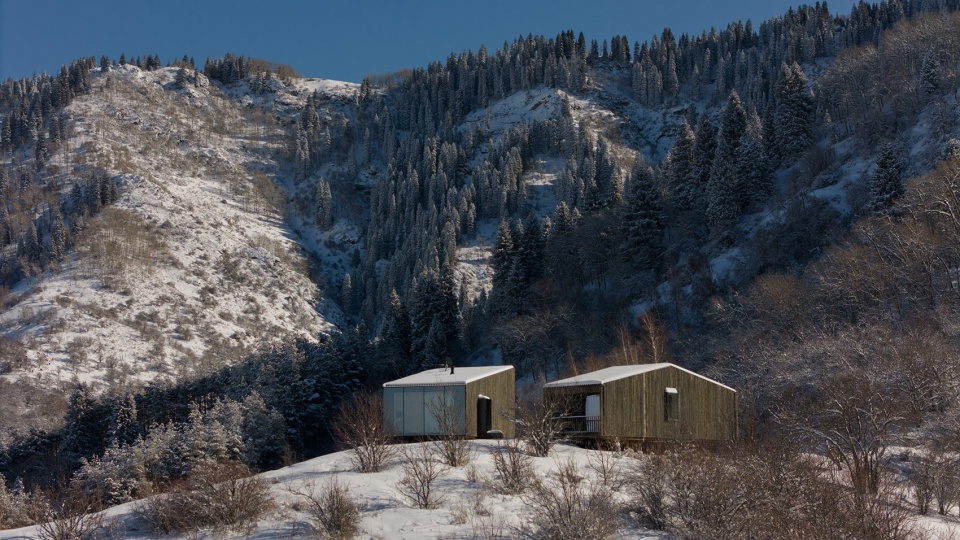
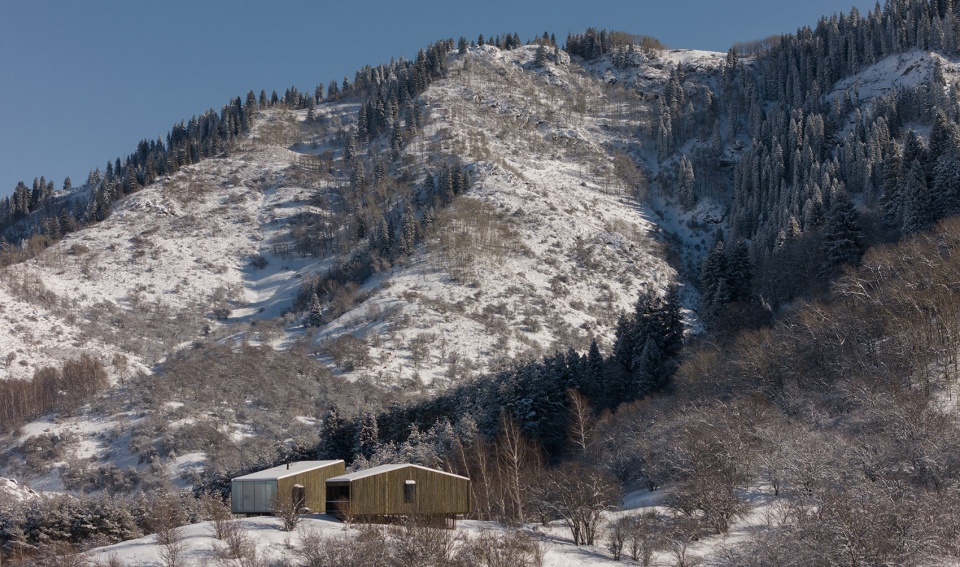
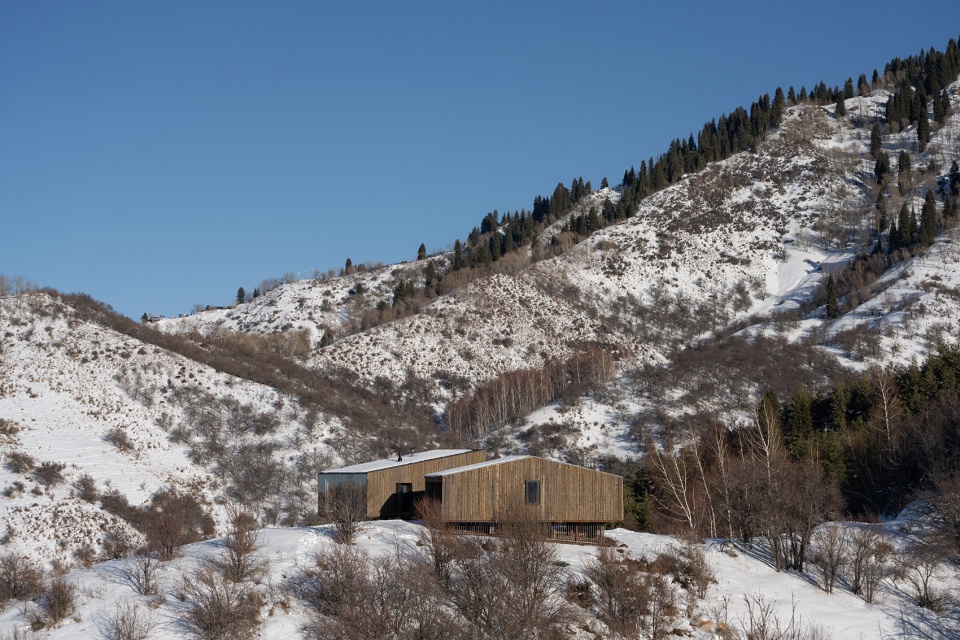
这些小屋坐落在海拔1650米处,位于哈萨克斯坦外伊犁Alatau国家公园外约25公里,距离阿拉木图市南部不远,位于外伊犁Alatau山脉的北坡。业主一家决定为他们的朋友建造两座客用小屋,以展示哈萨克天山壮丽的高地风光。项目的初衷是打造一个温暖宜人、同时又能够保护自然环境的地方。
The cabins are located 1,650 metres above sea level, just outside the Ile Alatau National Park, 25 kilometres south of Almaty, on the northern slope of Trans-Ili Alatau in Kazakhstan. The client’s family decided to build two guest cabins for their friends in order to showcase the magnificent highland landscapes of the Kazakh Tien Shan. The idea behind the project was to create a warm and welcoming place while safeguarding nature.
▼项目概览,overview of the project
如今,全球潮流推崇高端舒适的生活方式,但这片中亚大地仍然保留着古老的游牧传统。业主与建筑师Arthur Kariev相信,对于现代都市居民而言,真正的奢华在于能在不破坏生态系统的前提下亲近自然,在日常生活中重拾与自然的联系,并与亲友共度高质量的时光。关于潮流与本质的思考,成为了本项目设计的核心主题。
Today, global trends celebrate the high-end comforts, but this Central Asian land preserves ancient nomadic traditions. The clients and the architect, Arthur Kariev, believe that for the modern urban dweller, true luxury lies in creating an opportunity to enjoy nature without disturbing the ecosystem, retrace one’s roots in everyday life, and spend quality time with the near and dear ones. These reflections on the essence of trendy sophistication became the central theme of this project’s design.
▼项目位于外伊犁Alatau山脉的北坡,located on the northern slope of Trans-Ili Alatau
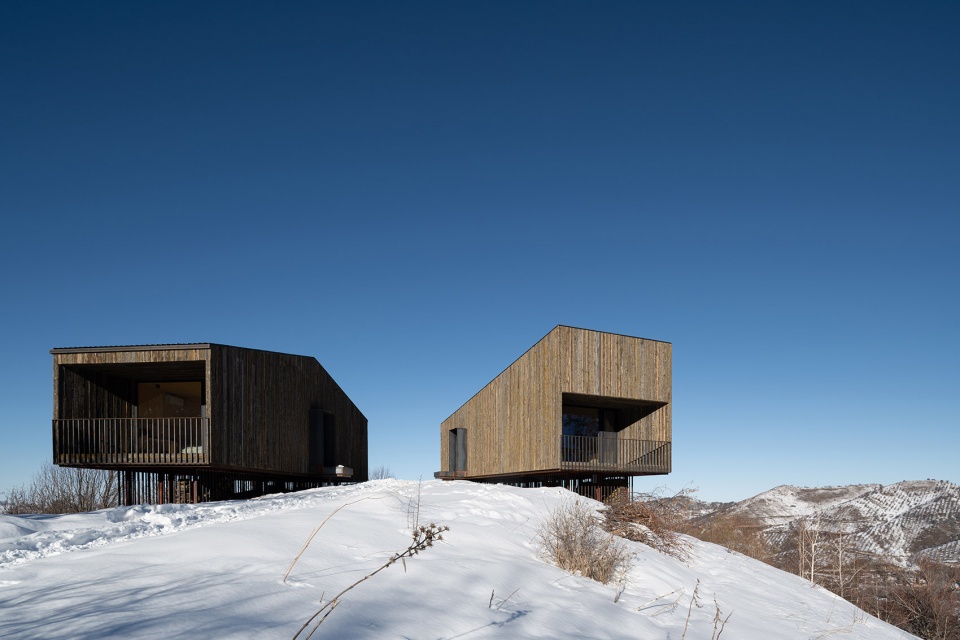
外部材料的选择至关重要。小屋外立面覆盖着从哈萨克斯坦东部阿尔泰山脉收集来的老落叶松木材。传说中,阿尔泰山脉的Belukha山附近便是通往神秘Shambhala之地。这些木板来自破旧的老房子。为了清理这片神圣土地并赋予遗产材料新的生命,设计师与业主亲自一同收集了这些木材。
The selection of exterior material was paramount. The façades are lined with old larchwood found in East Kazakhstan, in Altai Mountains, which are associated with the legendary Shambhala, entered supposedly near Belukha Mountain. The planks come from old, dilapidated houses. The designer and the client together collected the timber in order to clean the sacred lands and give a new life to heritage materials.
▼外立面选用落叶松木,the facade are lined with larch wood
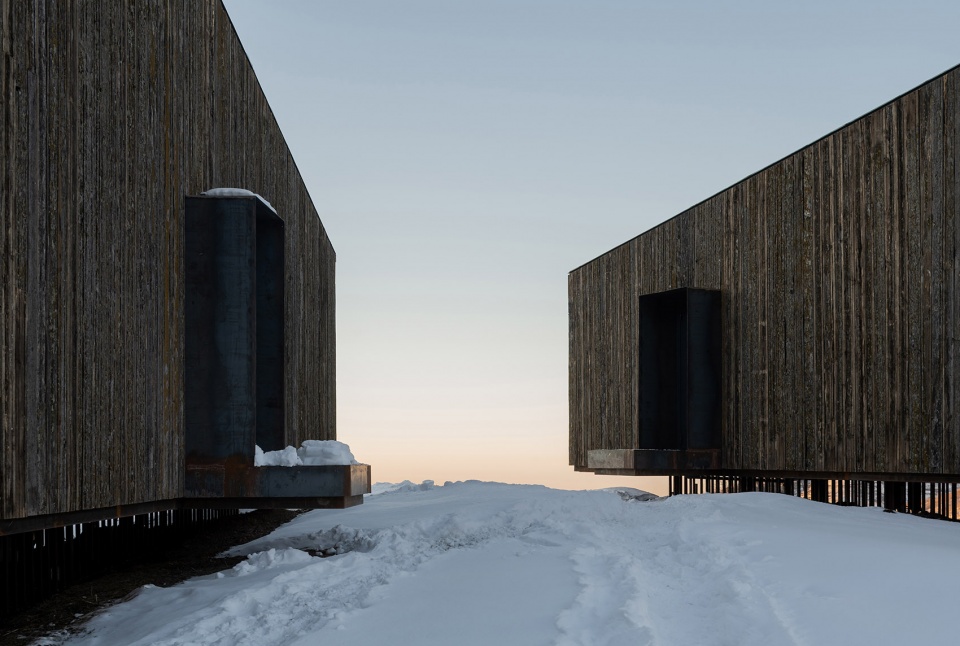
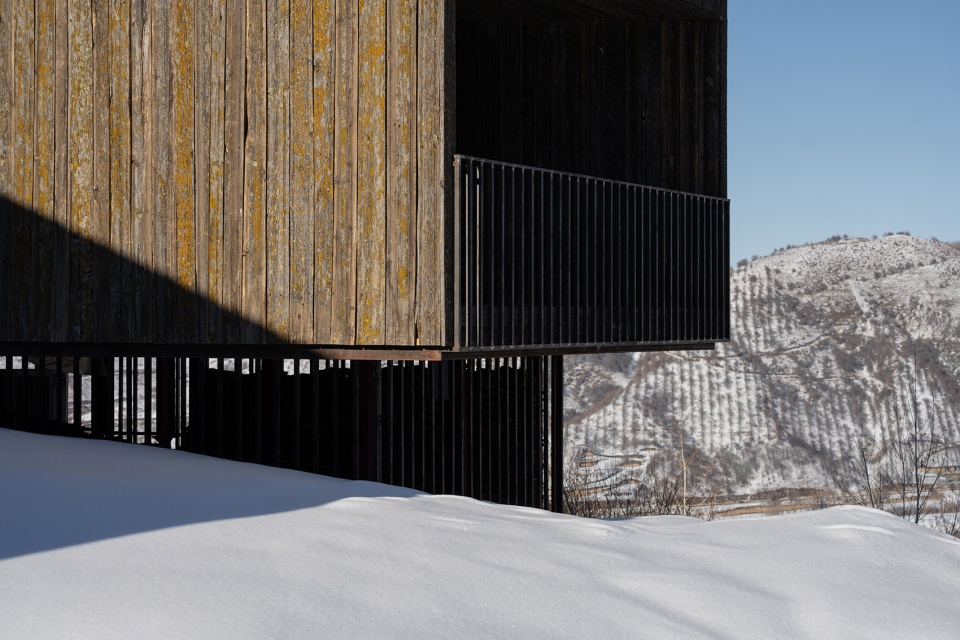
▼外立面选用落叶松木,the facade are lined with larch wood
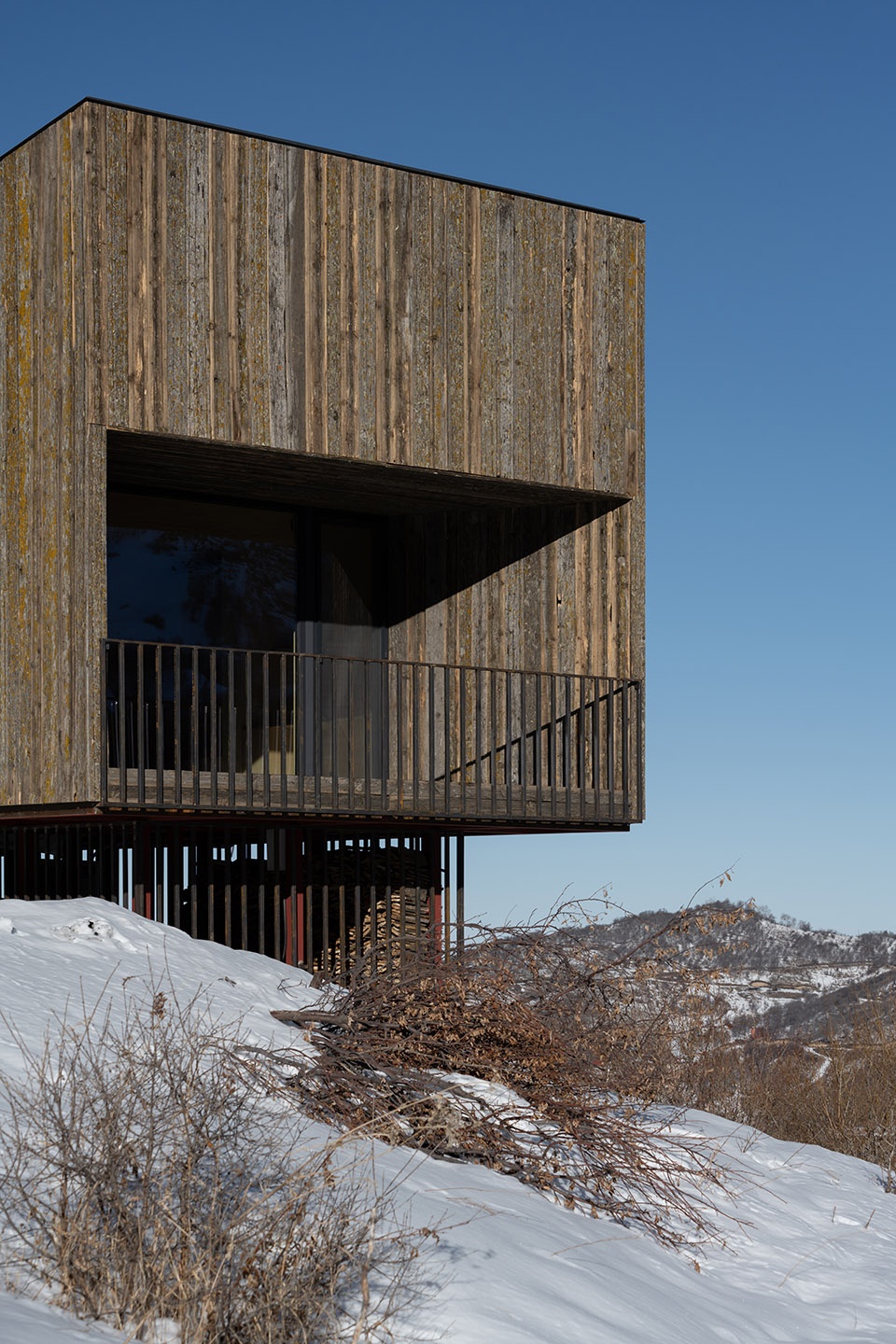
▼落叶松木细部,larch wood detail
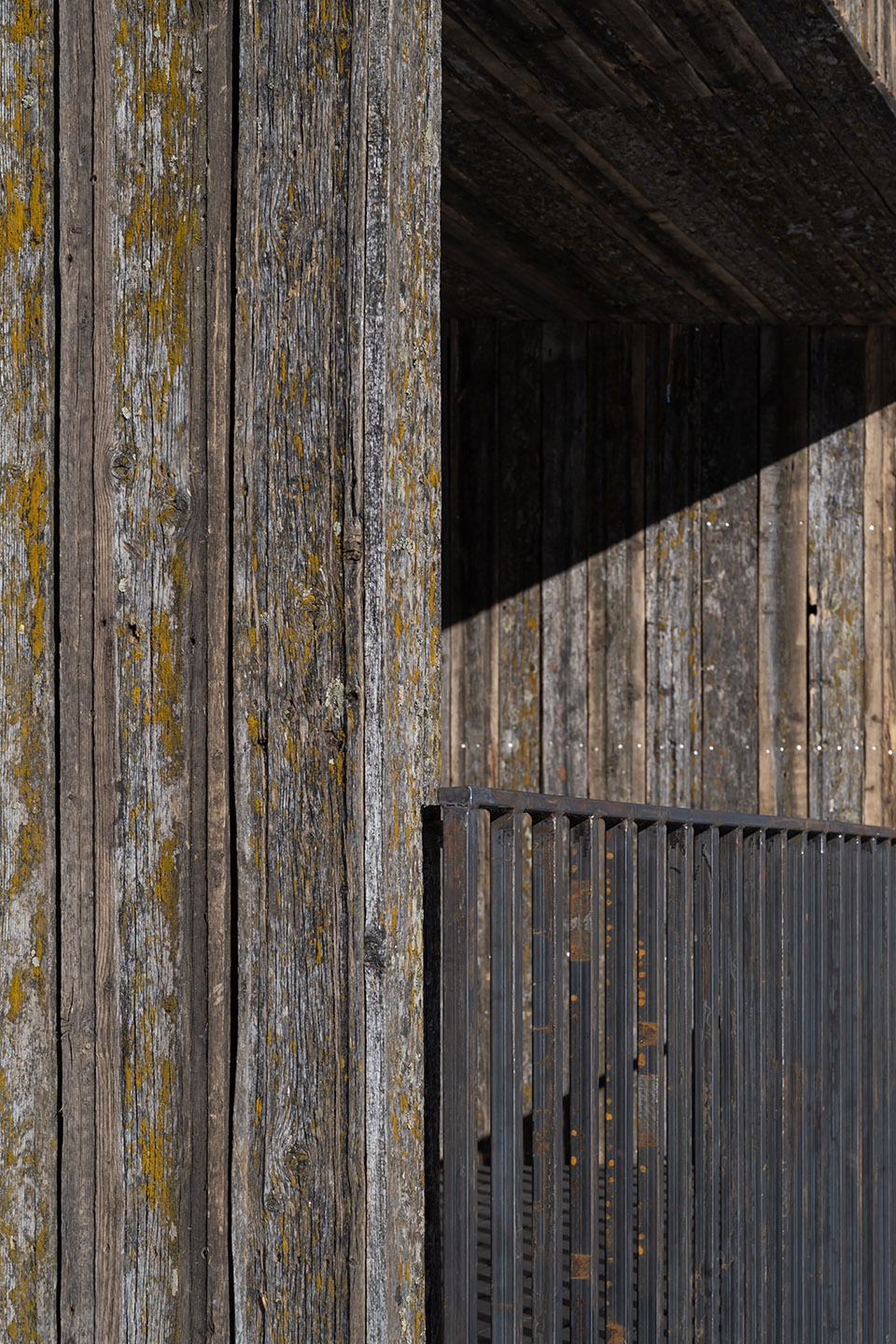
建筑师亲自挑选了每一块木板,他曾在阿尔泰山脉度过两个夏天。主要挑选的是屋顶木料,因为其质感更为独特,保留了时间、苔藓与霉菌留下的痕迹,历经百年沧桑。这些各异的木板连同原本的旧铁钉一同被运送到新址,并经过分类后安装于外立面上。
The architect selected each plank personally, having spent two summers in Altai Mountains. He picked mostly roof timber as its texture is more distinctive, encapsulating all manner of traces left by time, moss, and mold over a century. The sundry planks were transported across the country to their new location, complete with their old nails, then sorted and installed on façades.
▼建筑师亲自挑选了每一块木板,the architect selected each plank personally
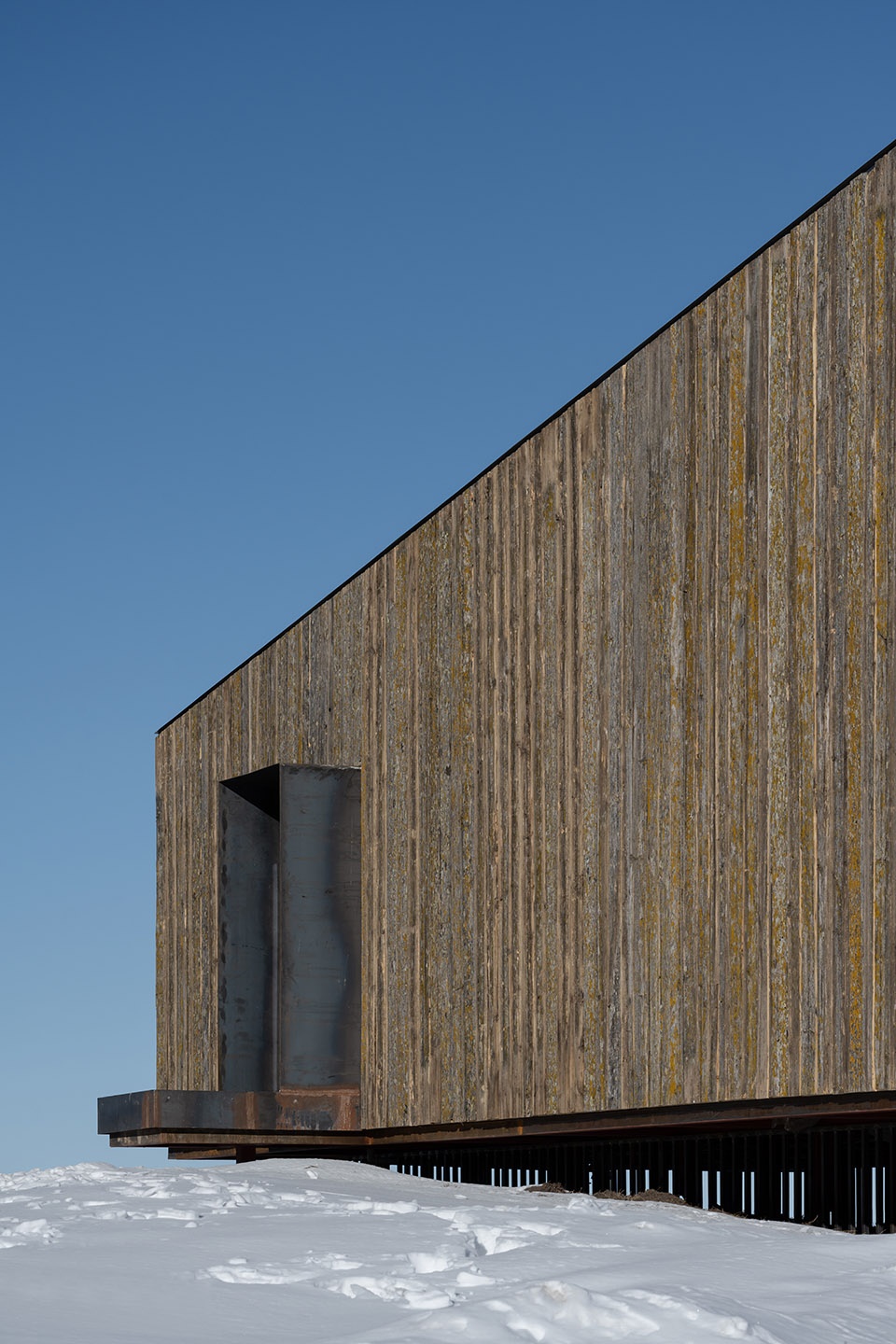
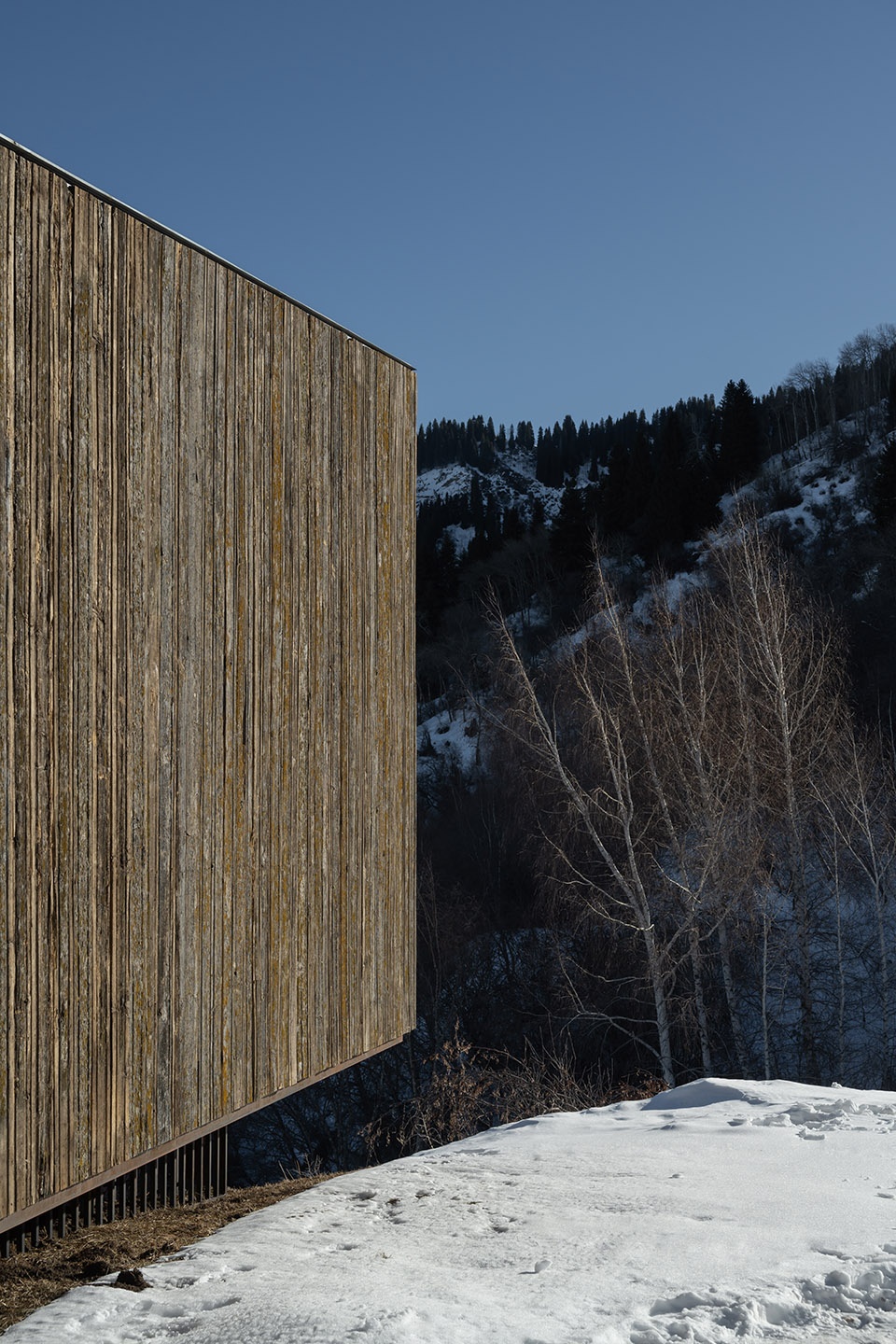
小屋本体采用金属桩基上的木结构SIP板建造,避免了深基础及其他破坏性施工手段。未来,建筑可以被拆解,材料亦可再次利用。
The cabins themselves are made of timber-framed SIP panels on metal piles. This way, their construction did not require deep foundations and other aggressive interventions. In the future, the buildings can be dismantled, and the materials reused.
▼主体采用木结构复合夹芯板建造,the cabins are made of timber-framed SIP panels
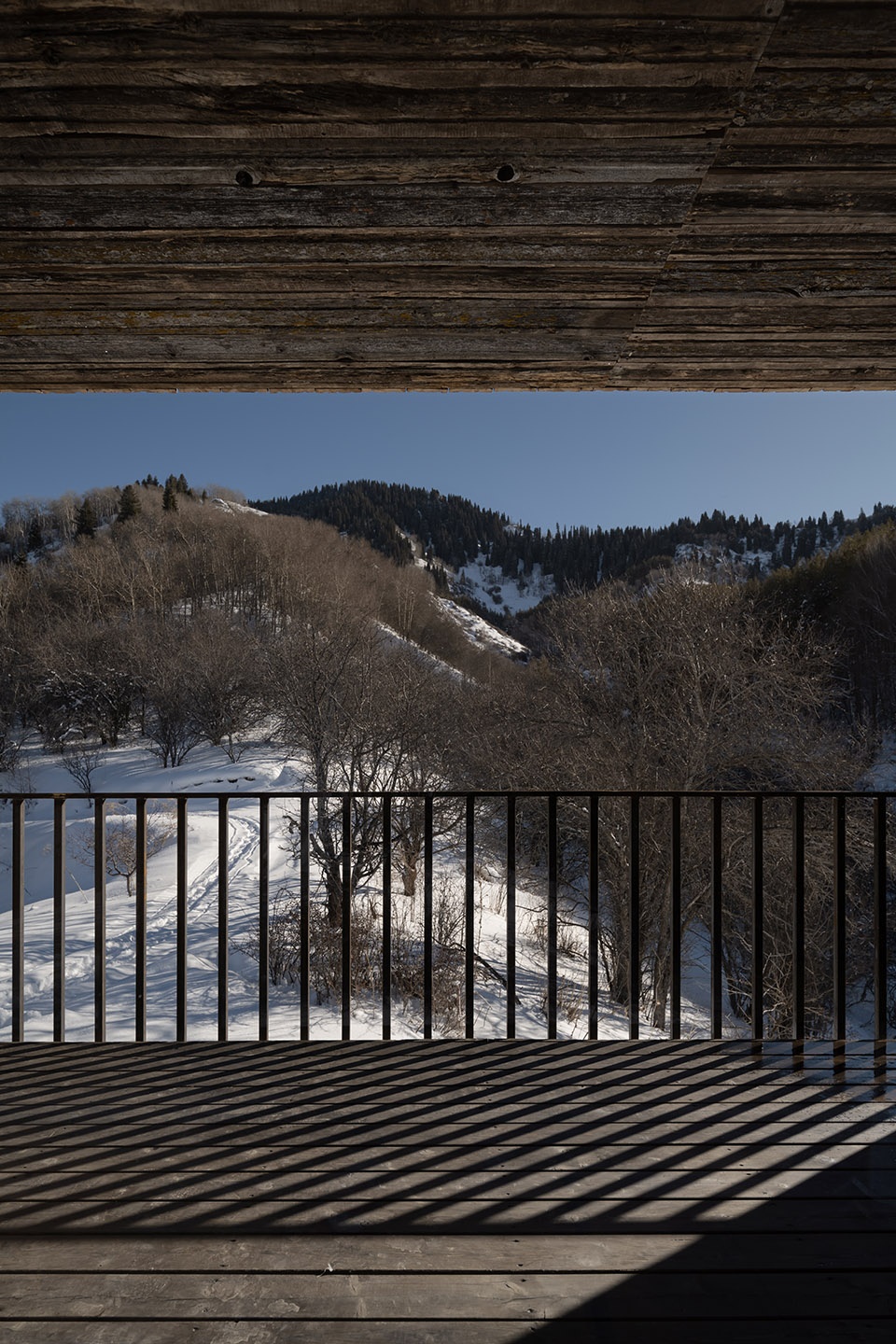
为小屋修建了一条通道,水电通讯等设施也全部铺设在地下,以最大程度保护原始自然地貌。清洁水源来自附近的一口天然泉眼。小屋内部配备了热水器,方便客人在徒步后洗一个热水澡。
An access track was built for the cabins, and communications were installed underground in order to protect the original natural landscape. Clear water is drawn from a nearby springwell. There are water heaters inside, so the guests can take a hot shower after their hikes.
▼室内空间,interiors
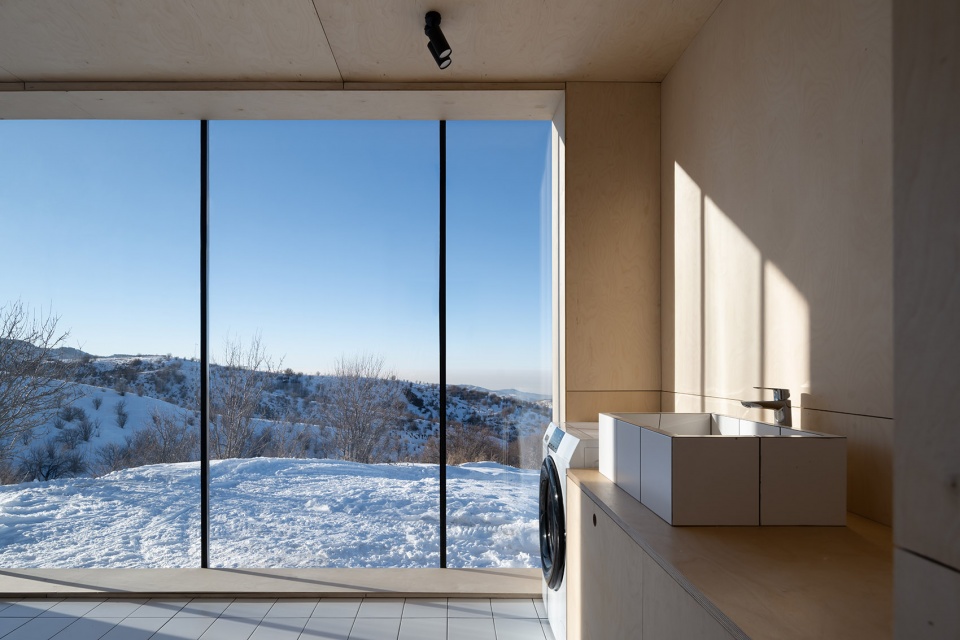
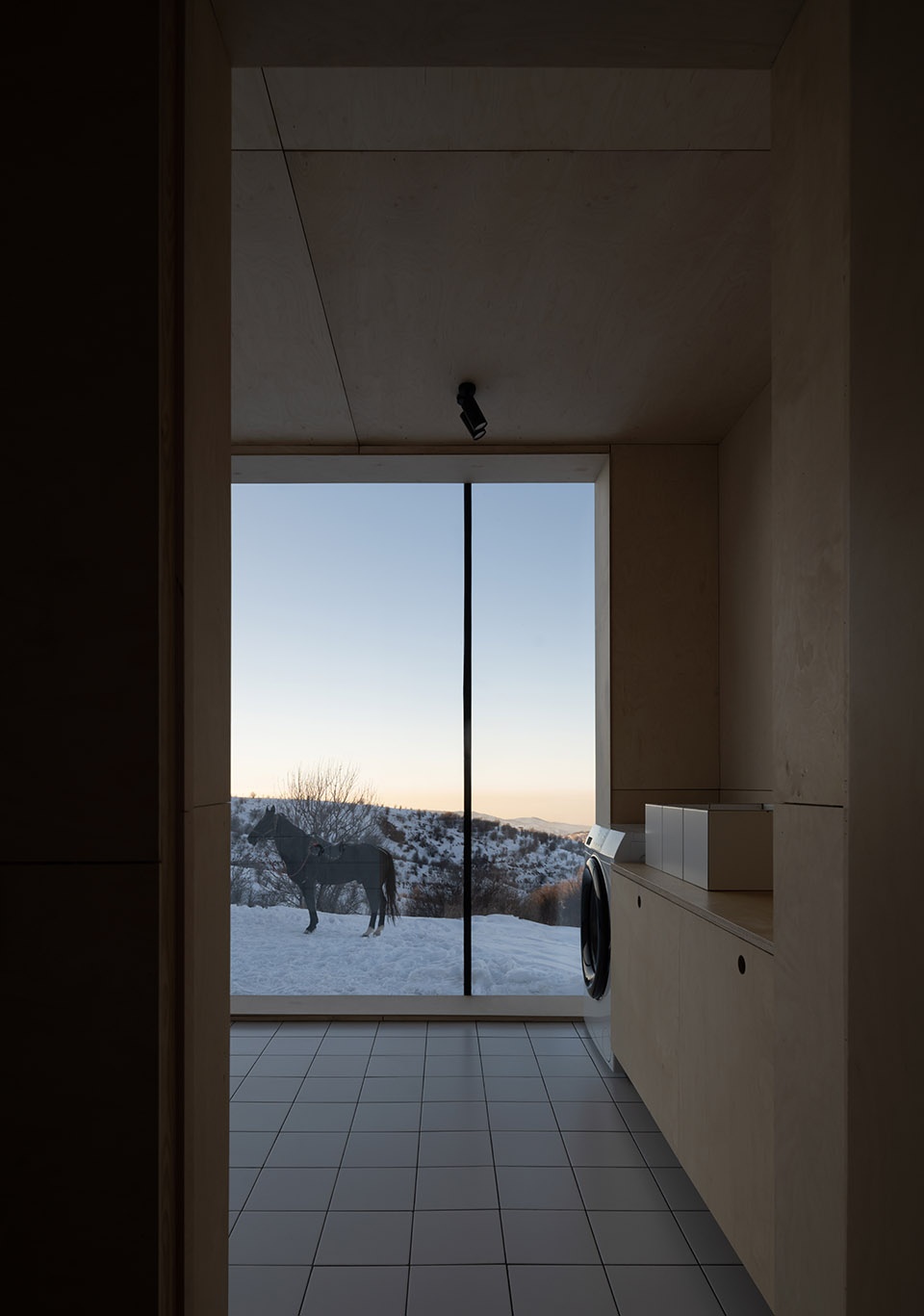
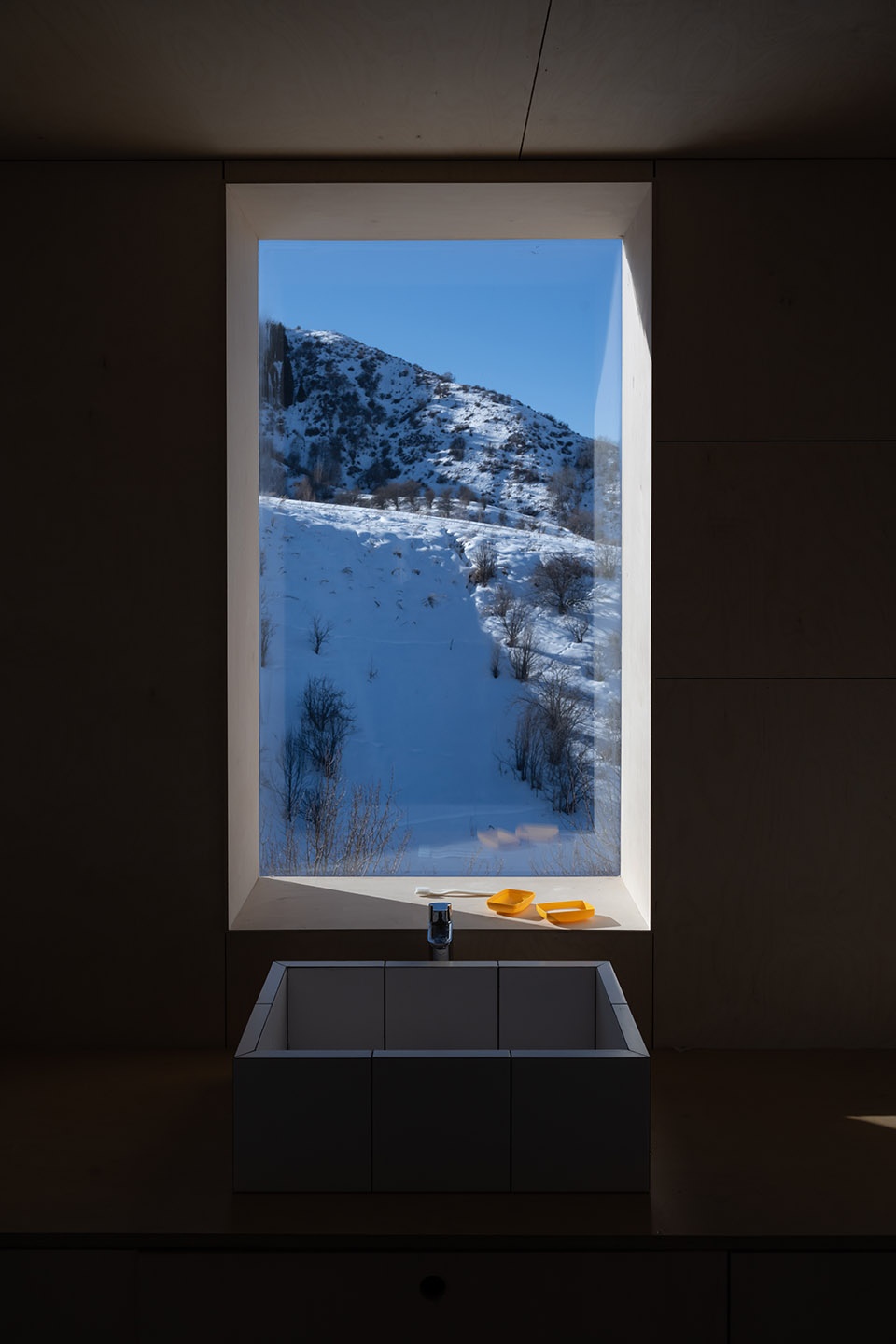
两座小屋的布局各异、功能不同。第一座设有两间独立卧室,朝东的落地全景窗能一览高地风光,两间卧室共用一个小型卫浴。第二座则设有一个小厨房、一个带图书馆的客厅,以及一个可以欣赏西侧山景的通透浴室。
▼小屋平面,cabins plan
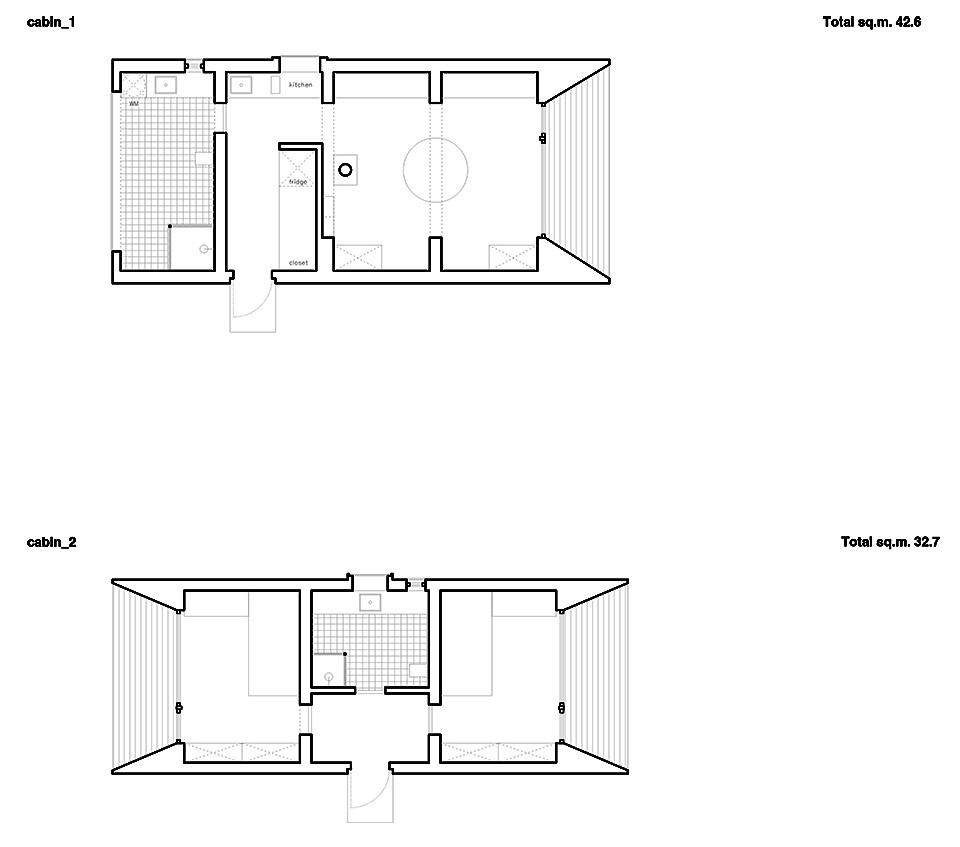
The two cabins have different layouts and play different roles. The first one has two separate bedrooms with floor-to-ceiling panoramic windows facing east that share a small bathroom. The second one features a kitchenette, a living room with a library, and an airy bathroom with stunning views of the west-side mountainscape.
▼尽享窗外美景,enjoy the view from the window
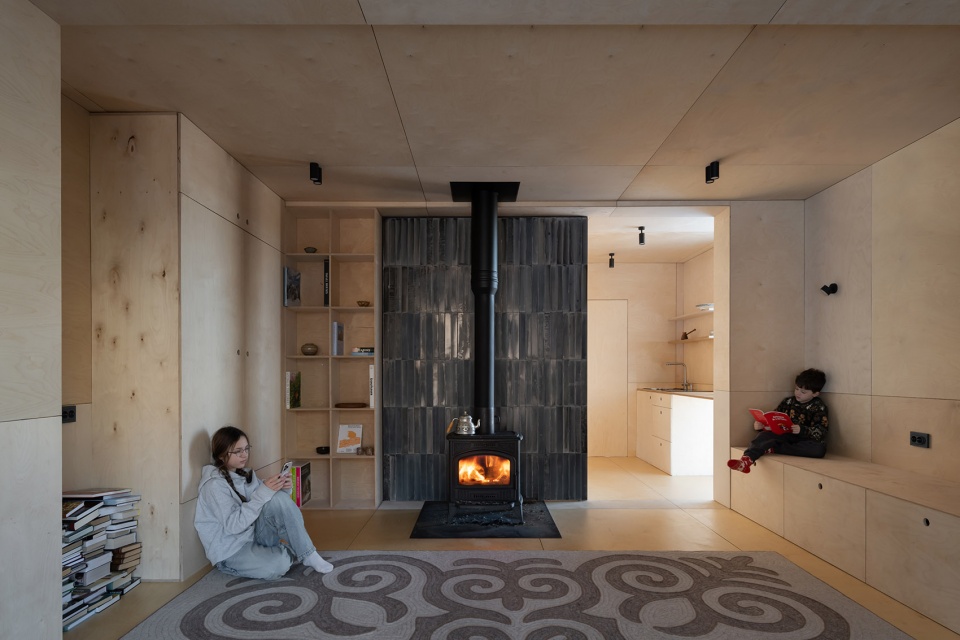
客厅围绕着一座金属柴火炉展开,炉身四周镶嵌着具有肌理感的祖母绿与深蓝色手工瓷砖。宾客可以围炉而坐,在传统手工syrmaq地毯上,手捧民族风格的茶碗(chyny),品饮草本茶。瓷砖与地毯均由当地工匠手工制作。
The living room revolves around a wood-burning metal stove surrounded by textured emerald and dark-blue tiles. The guests can gather around the fireplace, enjoying their chyny bowls of herbal tea while sitting down on the syrmaq, a traditional felt carpet with ethnic patterns. Both the tiles and the carpet are handmade by local craftsmen.
▼客厅围绕着一座金属柴火炉展开,the living room revolves around a wood-burning metal stove
▼卧室空间,bedroom
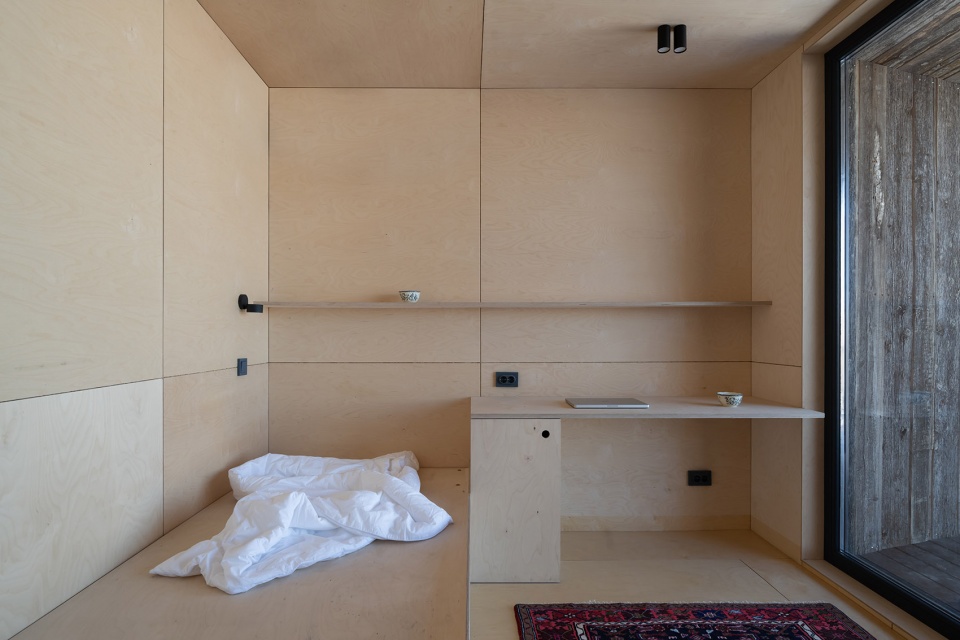
室内设计融合了传统游牧生活方式与现代舒适元素:空间通透灵活,风格简约环保且功能完善。除浴室外,其余空间均采用经过防水防火处理的未上漆胶合板饰面。内部没有繁复的装饰或固定布局:业主可以根据自己的喜好,随心添加个人珍藏,真正将这里布置成自己的家。
The interior blends traditional nomadic lifestyle with modern amenities: it is airy, flexible, austere, eco-friendly, and functional. The rooms, except the bathrooms, are finished with unpainted plywood with water- and fireproof treatment. There are no decorations or strict rules: the owners can make themselves at home in any way they choose by adding their personal treasures.
▼夕阳下的木屋,cabins under sunset
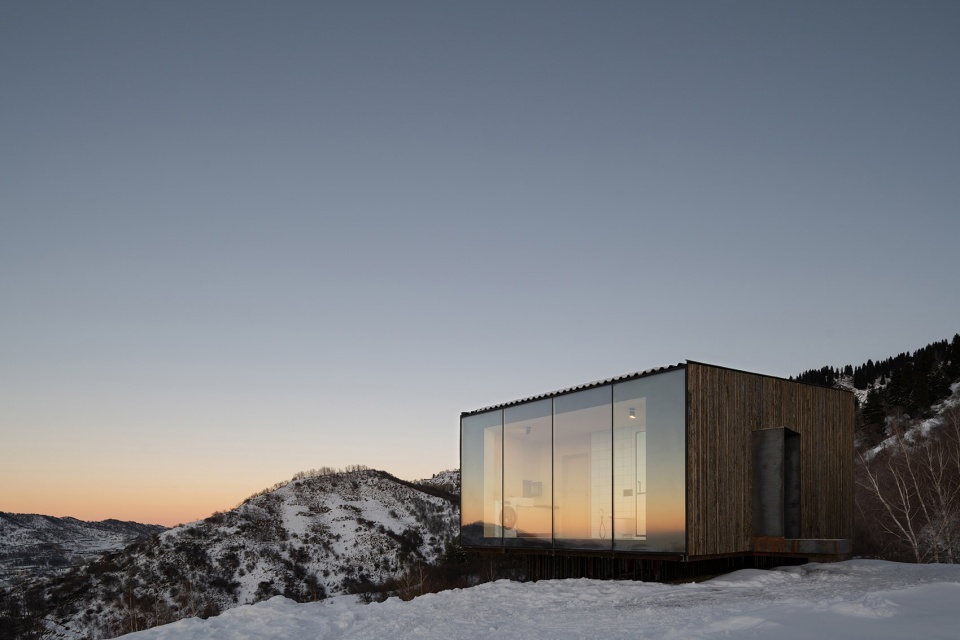
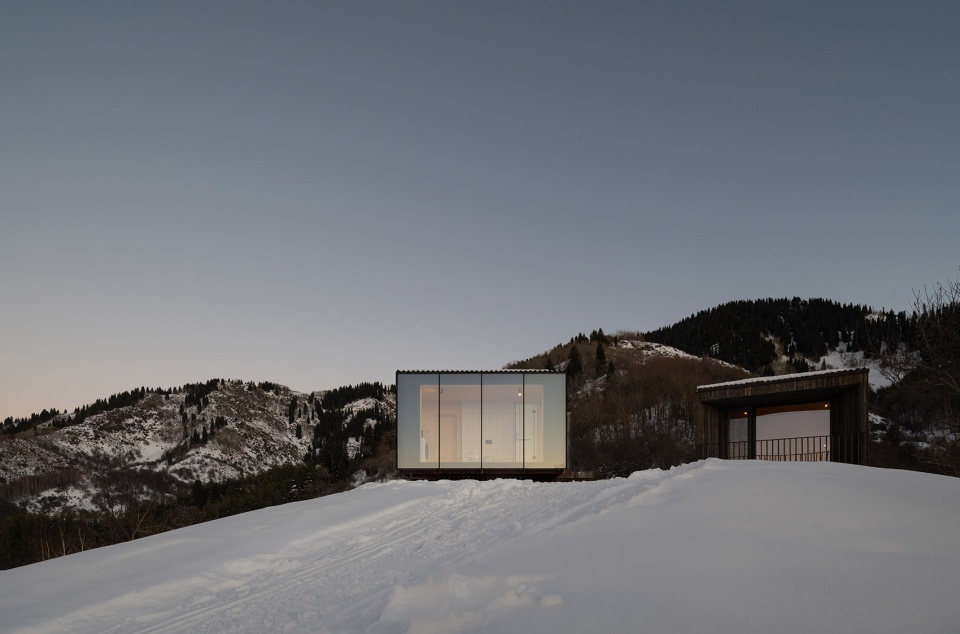
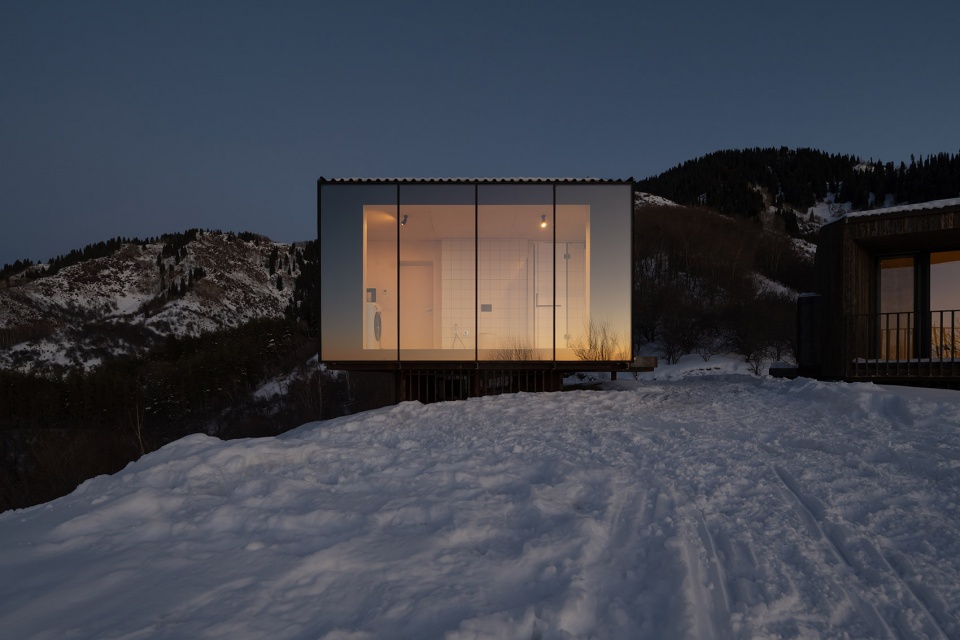
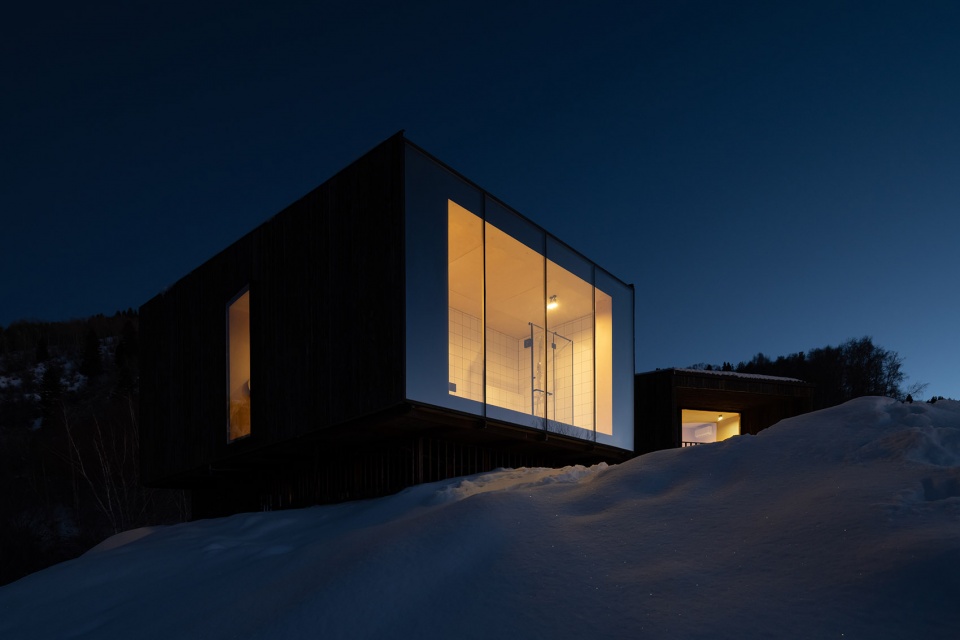
▼木屋夜景,cabins night view
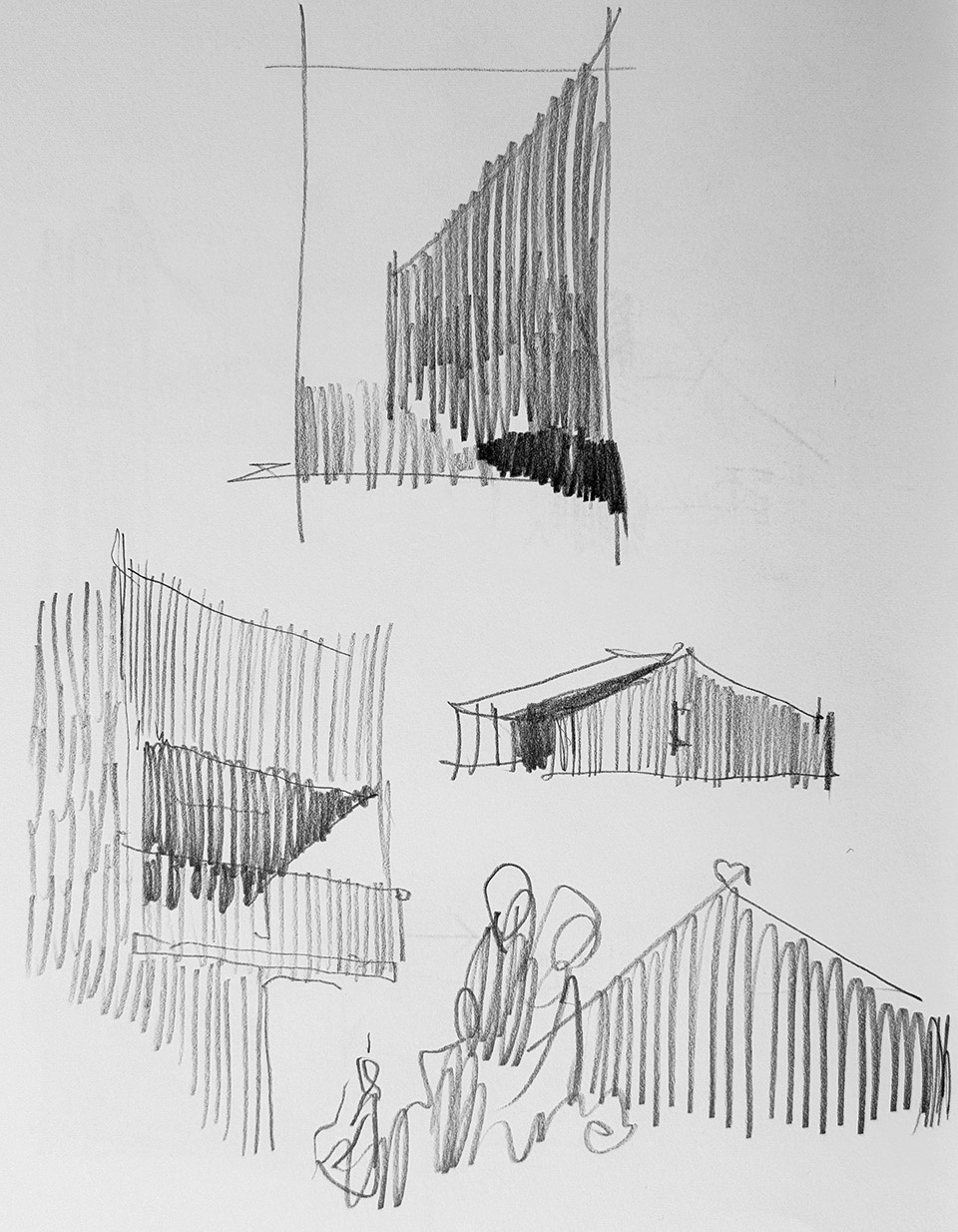
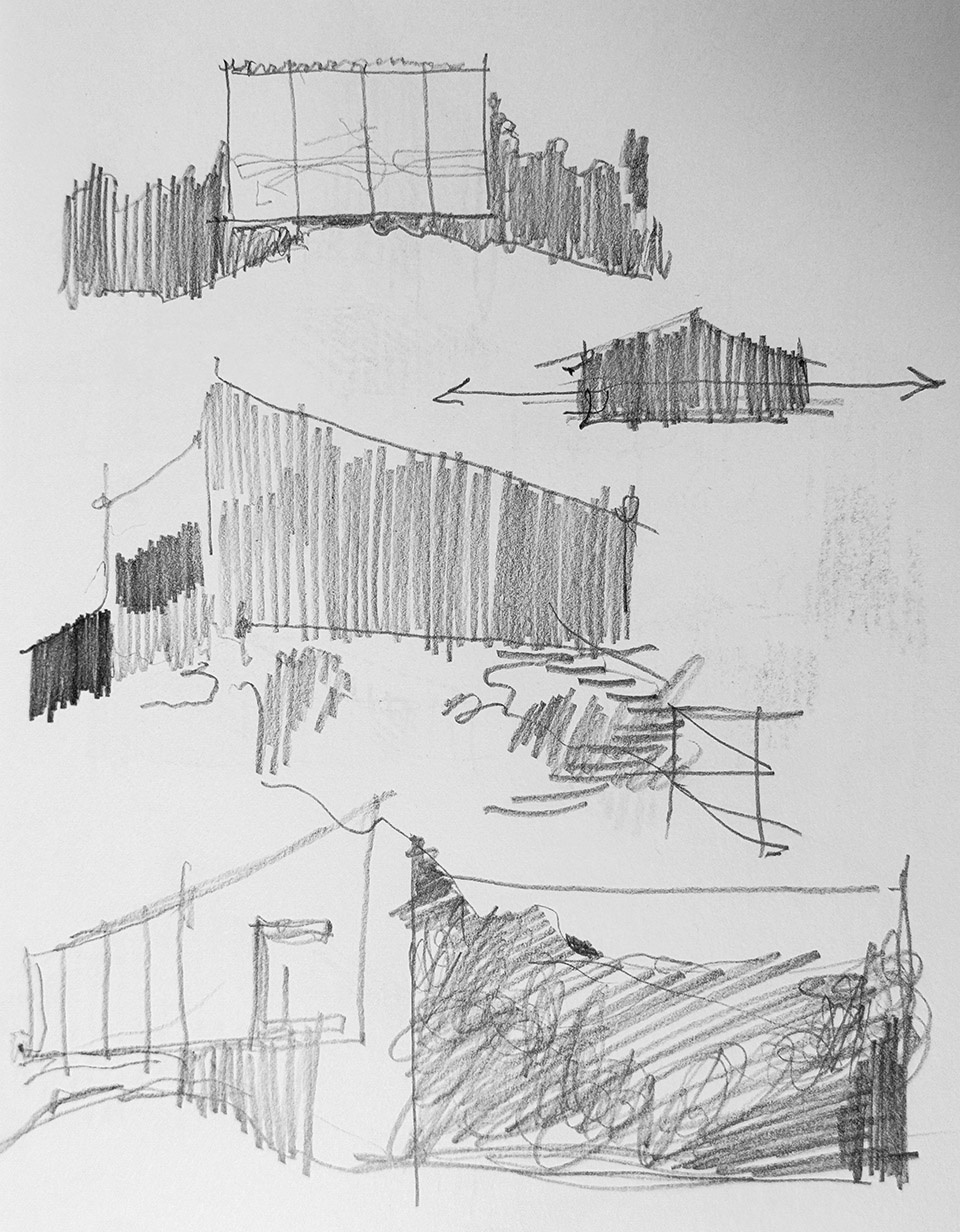
▼草图,sketch
Arthur Kariev Architects
Project team:
Arthur Kariev
Gulnara Mukasheva
Darkhan Amantaev
Baltabek M
Bakhtiyar Sayan
Ulan Medeu
Completion Year: 2025
Built Area: 75,3 m2Project Location: Almaty Region, Beskainar Village, Kazakhstan
Website https://arthurkariev.com/
Instagram https://www.instagram.com/arthurkariev
Photo by Ilya Ivanov ( https://photoivanov.com)