超链密码花园之“竹链”- 现代竹编装置,深圳 / 造源景观 + 深圳市贝尔雅环境艺术设计工程有有限公司 + 深圳盛世易百装饰设计工程有限公司
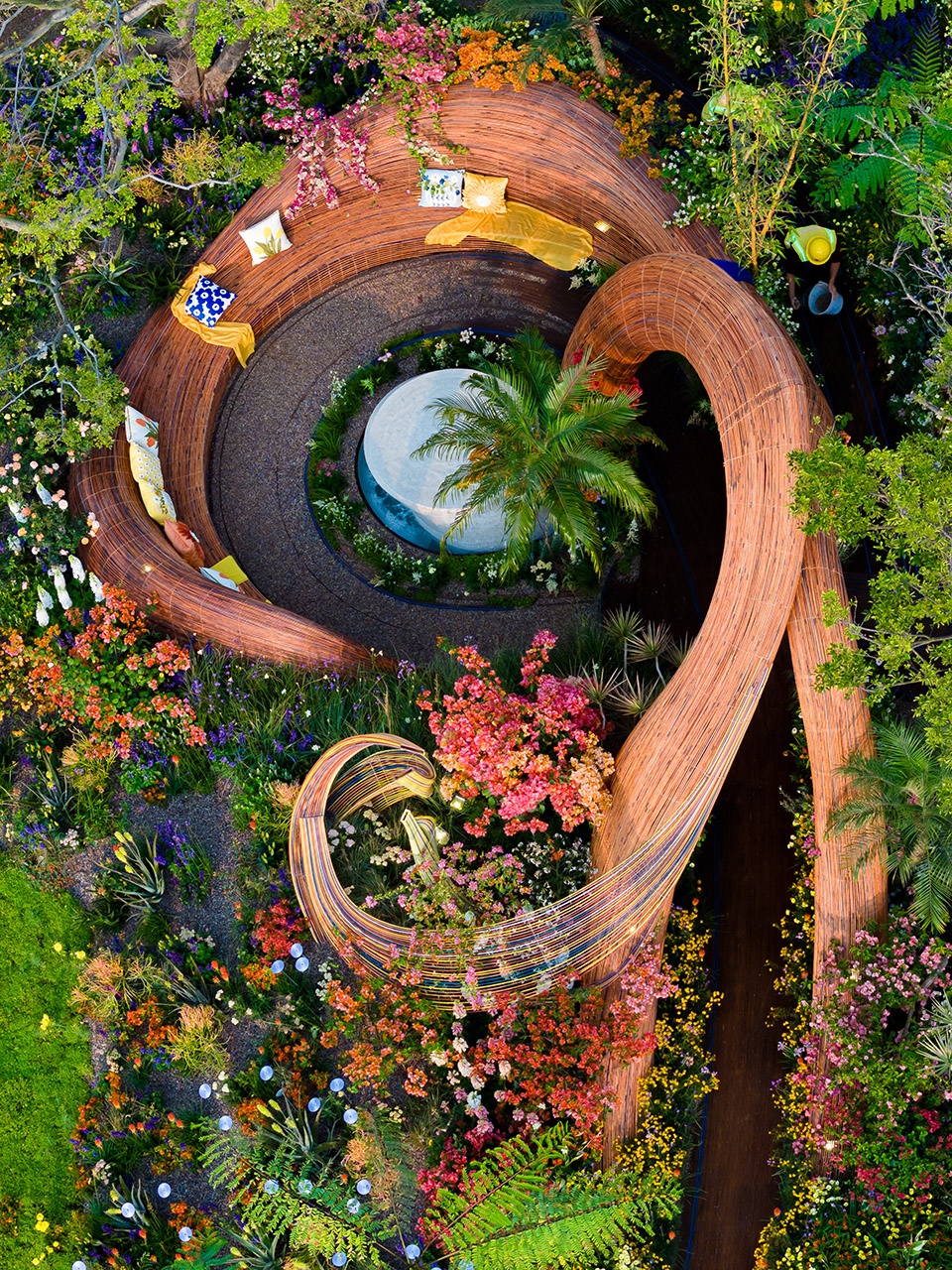
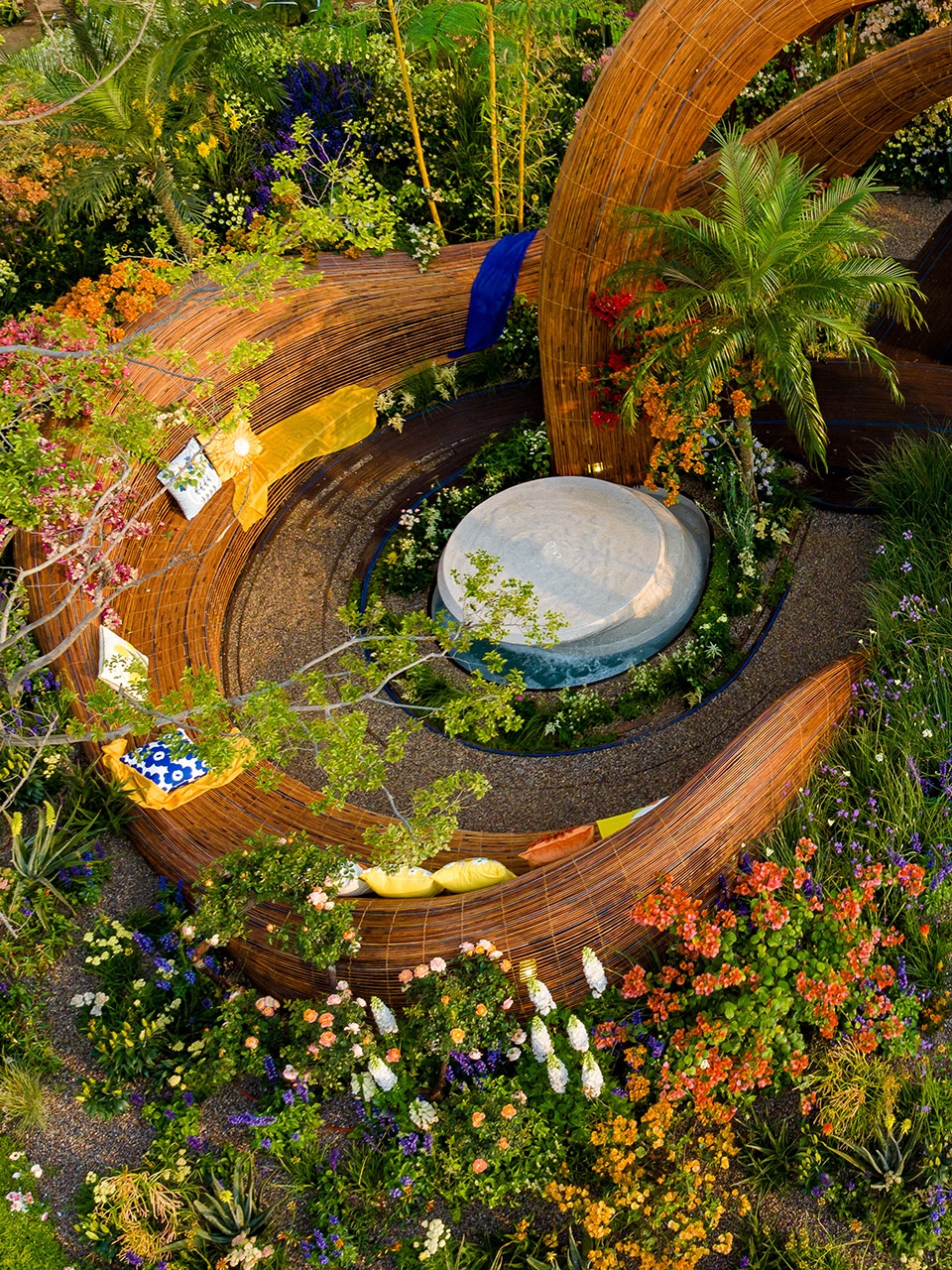
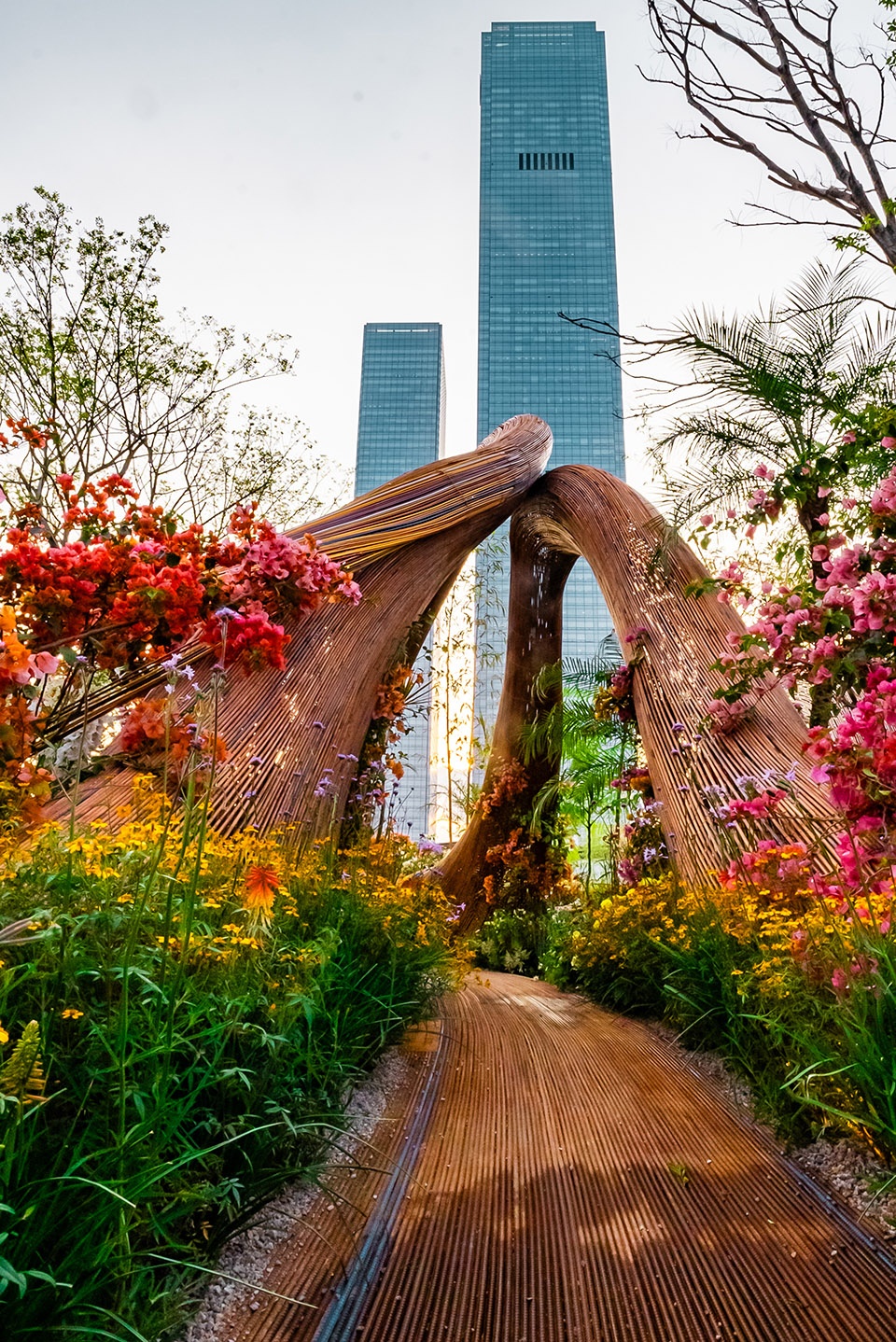
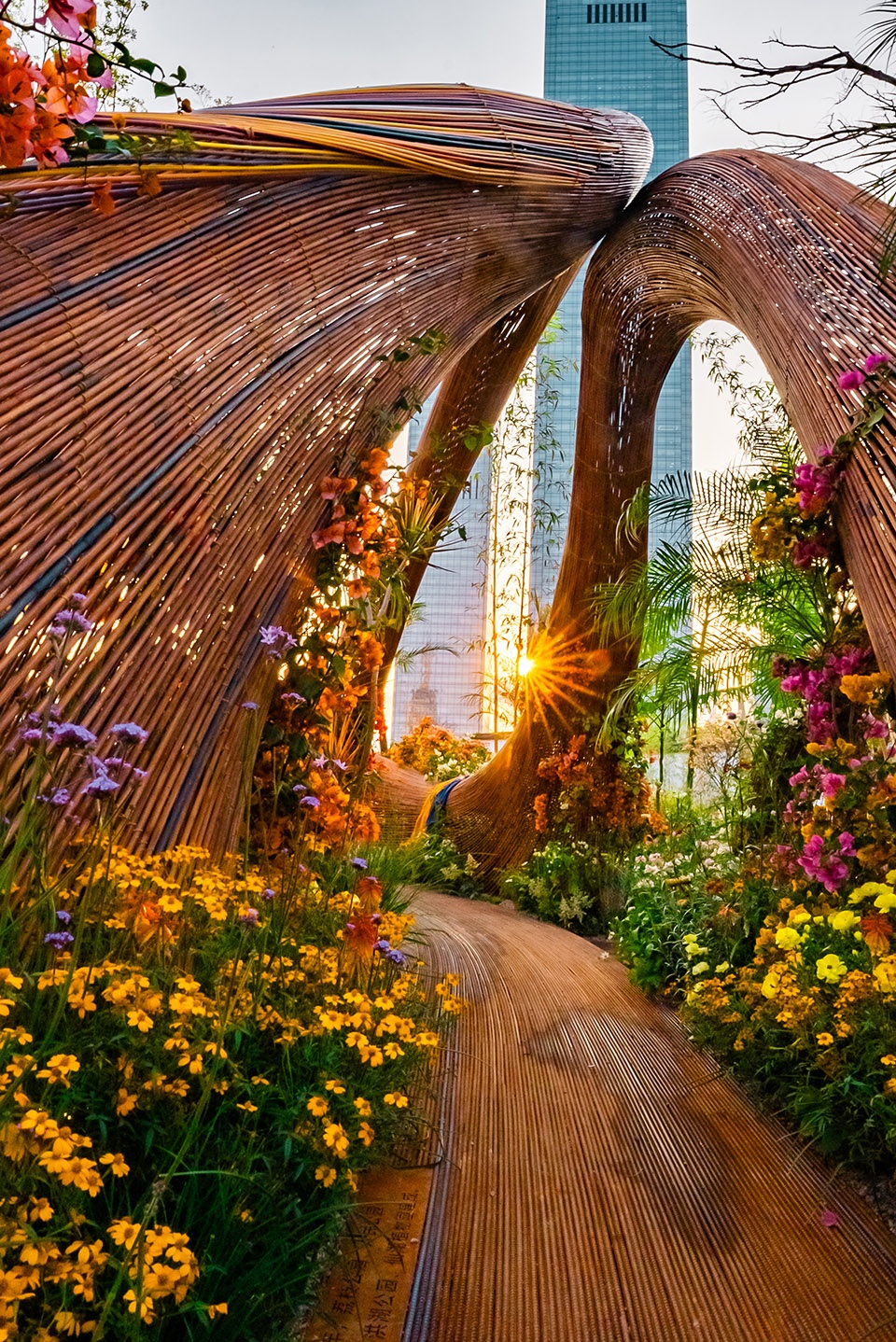
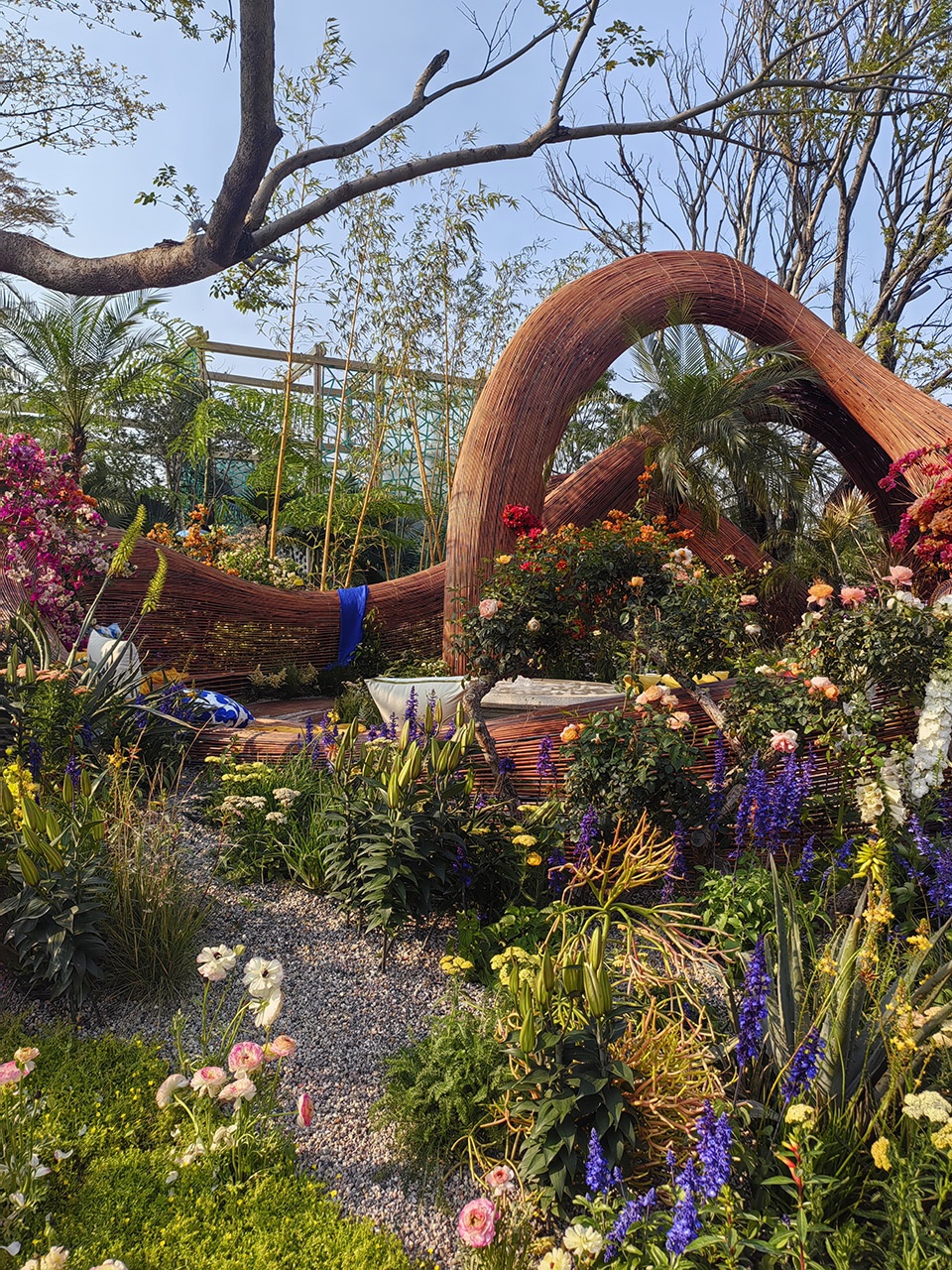
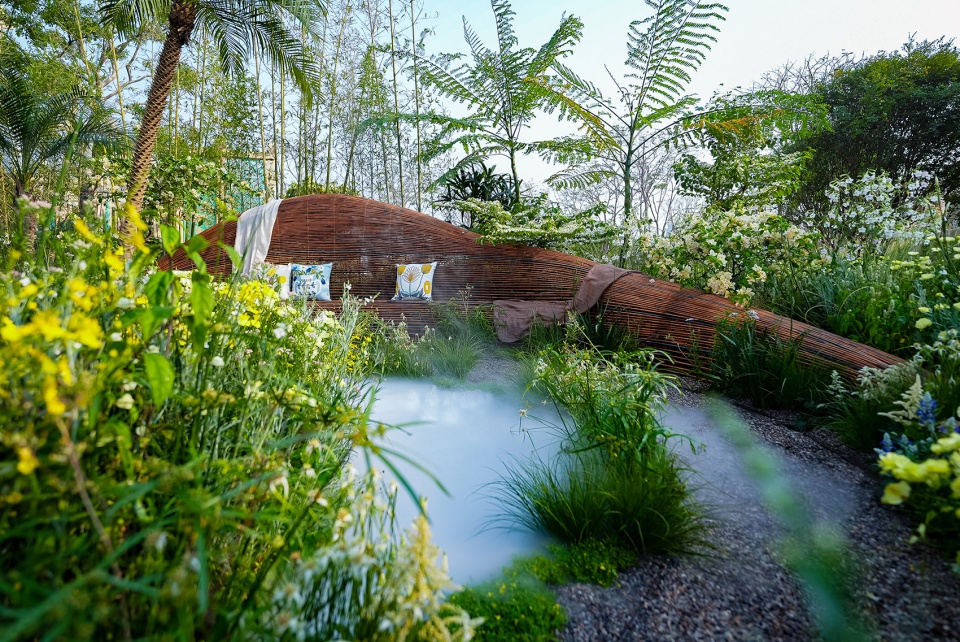
2025粤港澳大湾区花园大赛,成为这个春天最为火爆的流量担当。一座以“超链”为主题的花园成为大赛中一道靓丽的风景线。走进花园远远就可以看到一个立体多维的“莫比乌斯环”,这是用非遗竹编技艺编织成的“循环”线条。创意来源于无限串联“ ”,寓意着生产、生活、生态三重维度的互联关系。在无限的循环中彼此连接、相互影响。当我们过度强调某一维度的发展而忽视其他维度时,就如同在环上划出一条直线,最终只会回到问题的原点。只有遵循莫比乌斯环的互联逻辑,才能在螺旋上升的循环中实现可持续的发展。在这个万物互联的时代,疫情的全球蔓延让我们深刻体会到人类命运共同体的含义;气候危机的加剧让我们明白,保护生态环境就是保护人类自己。莫比乌斯环的 “循环” 线条,不仅是一个创意符号,更是一声时代的警钟 —— 它提醒我们,在追求发展的道路上,必须始终保持对万物关联的敬畏与尊重。
The 5th Guangdong-Hong Kong-Macao Greater Bay Area Garden Competition has become the most popular event this spring. A garden themed “Hyperlink” has emerged as a beautiful sight in the competition. When you enter the garden, from a distance, you can see a three-dimensional and multi-dimensional “Mobius strip”, which is composed of “circular” lines woven with the intangible cultural heritage bamboo weaving technique. The creativity is derived from the infinite series connection symbol, implying the interconnected relationship among the three dimensions of production, life, and ecology. They are connected to each other and influence one another in an infinite cycle. When we overemphasize the development of a certain dimension while ignoring the others, it is just like drawing a straight line on the Mobius strip, and eventually we will only return to the starting point of the problem. Only by following the interconnected logic of the Mobius strip can we achieve sustainable development in the spiraling cycle. In this era of everything being interconnected, the global spread of the pandemic has made us deeply understand the meaning of a community with a shared future for mankind. The intensification of the climate crisis has made us realize that protecting the ecological environment means protecting ourselves. The “circular” lines of the Mobius strip are not just a creative symbol, but also an alarm bell of the times. It reminds us that on the path of pursuing development, we must always maintain a sense of awe and respect for the interconnectedness of all things.
▼立体多维的“莫比乌斯环”,multi-dimensional “Mobius strip”
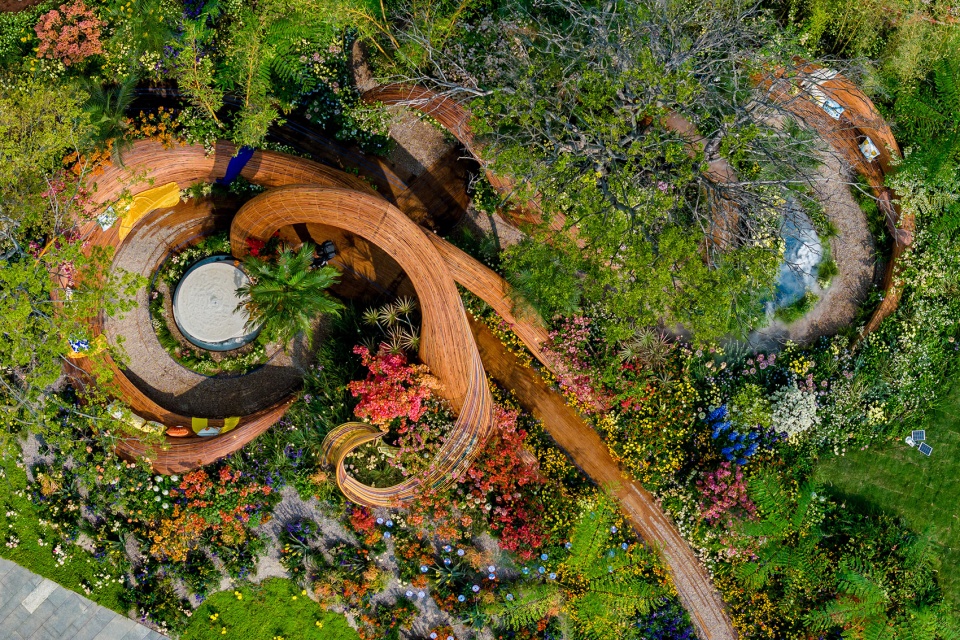
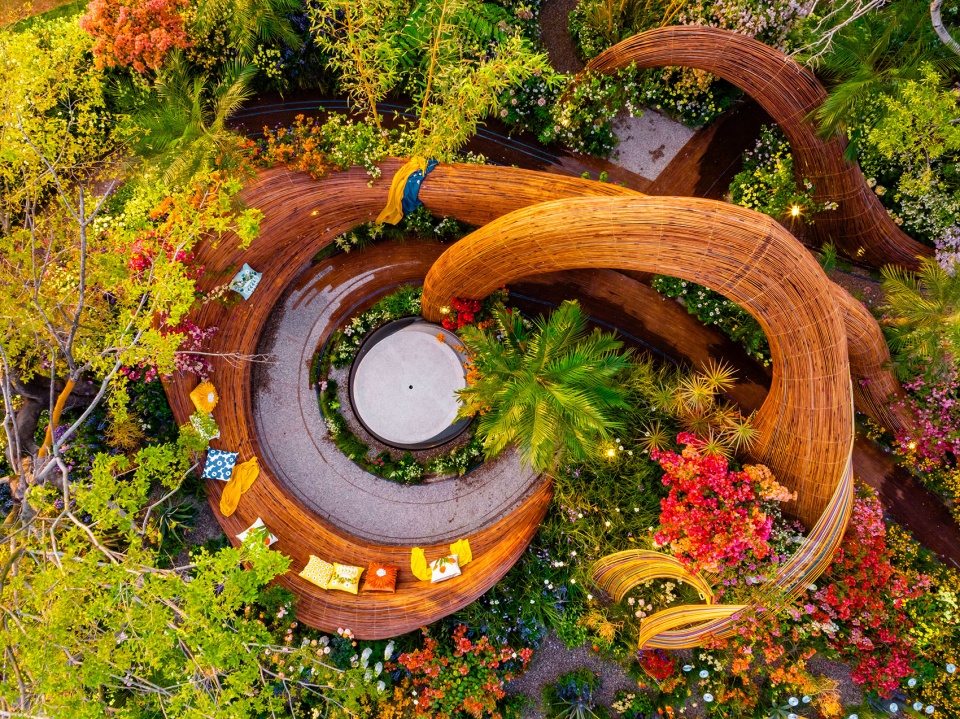
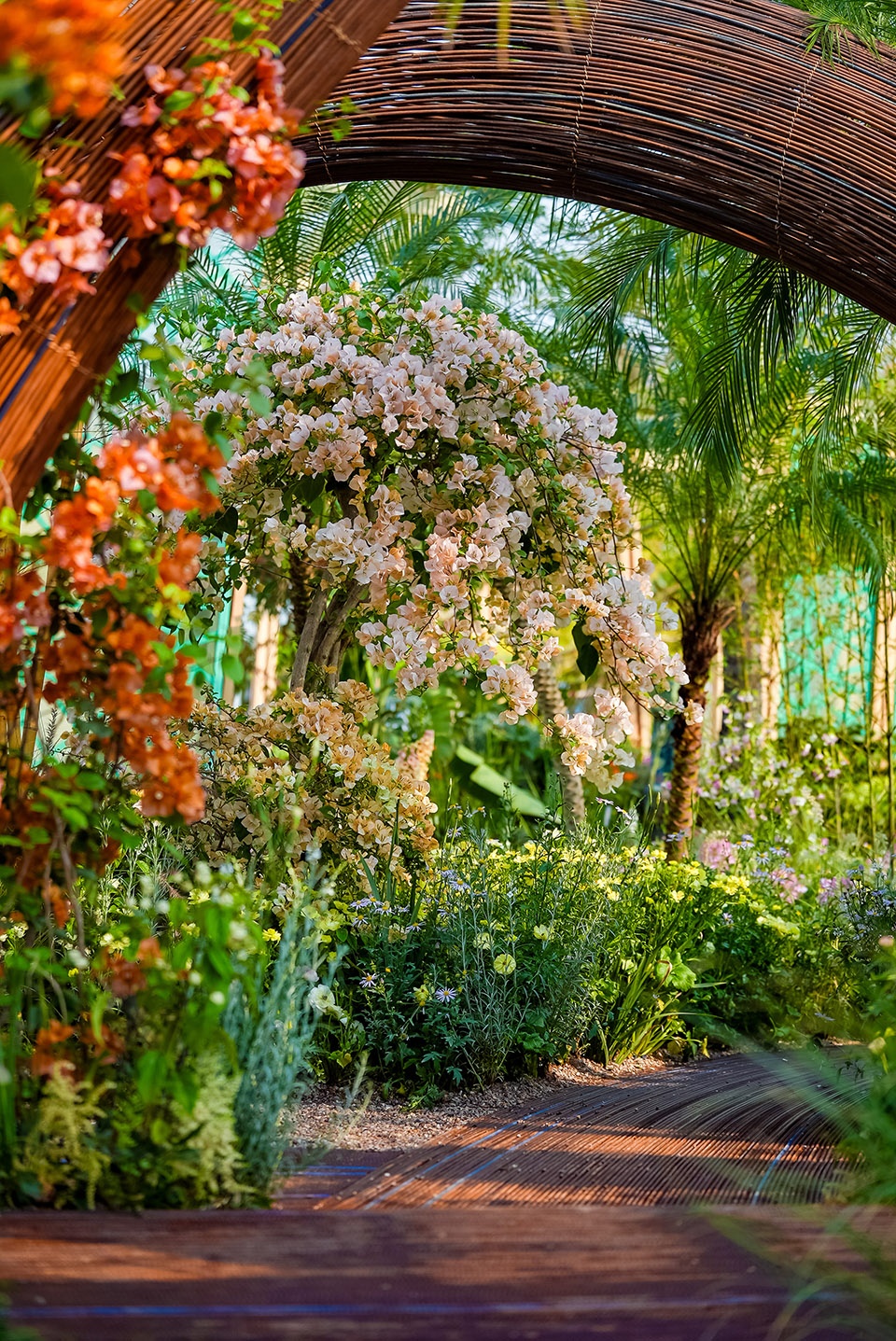
▼用非遗竹编技艺编织成的“循环”线条,composed of “circular” lines woven with the intangible cultural heritage bamboo weaving technique
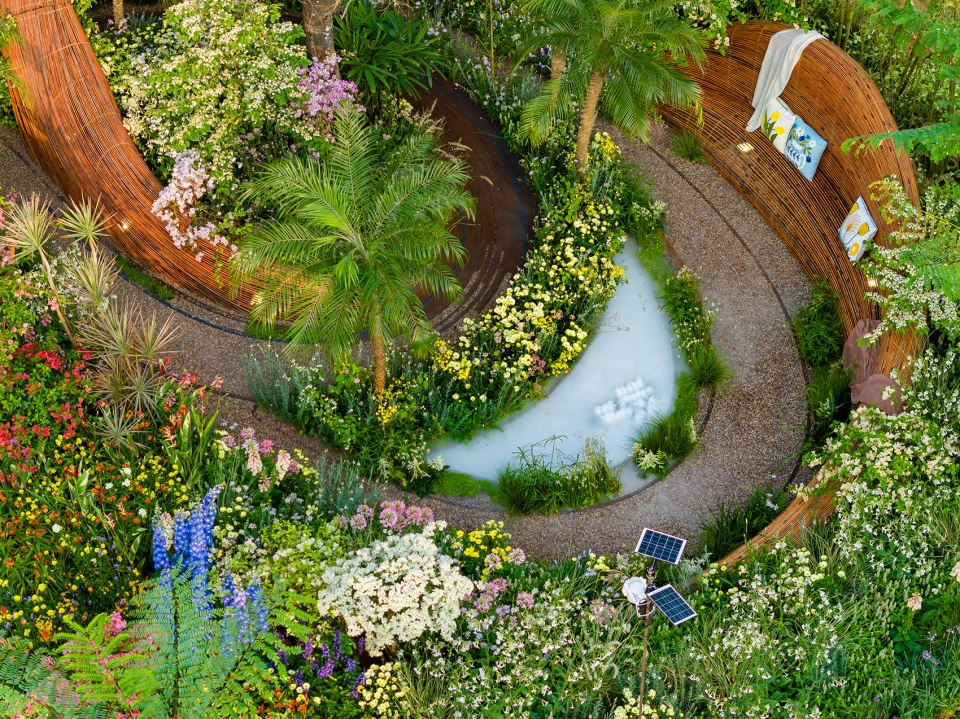
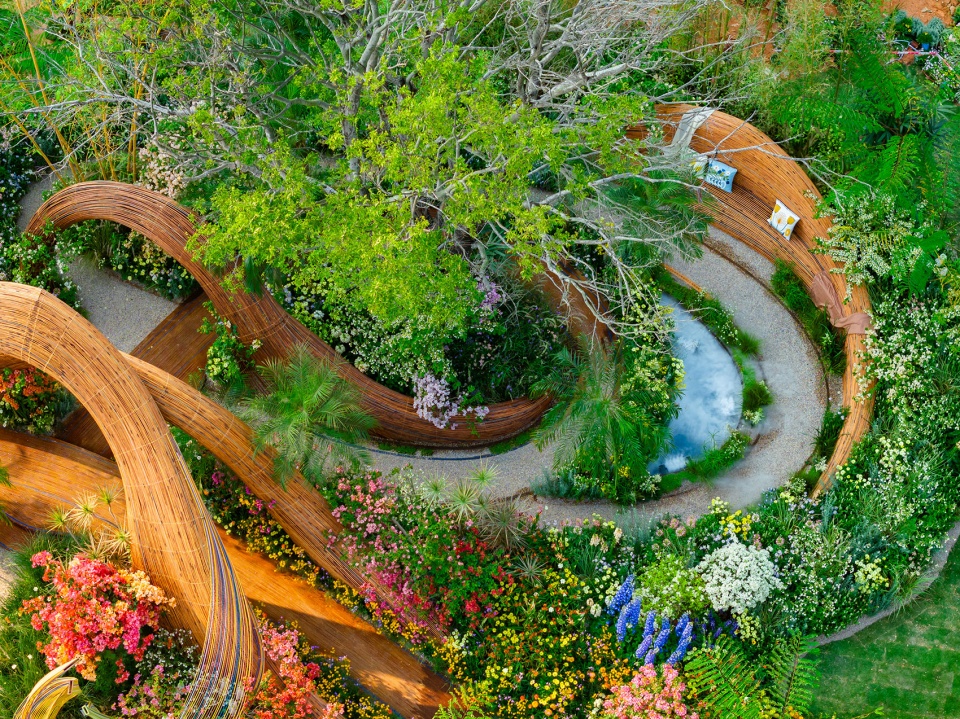
柔韧入魂——竹材的「骨骼美学」在现代装置艺术中的觉醒!Flexibility Embodied in Soul — The Awakening of Bamboo’s “Skeletal Aesthetics” in Modern Installation Art!
当混凝土与钢材统治建筑界时,竹子正以「自然钢筋」的姿态在艺术领域掀起一场柔性革命。作为传承千年的东方智慧材料,竹材凭借12GPa抗拉强度(超越部分钢材)与360°弹性曲率,正成为当代艺术家手中「会呼吸的雕塑语言」。
While concrete and steel reign over the architectural realm, bamboo is unleashing a flexible revolution in the artistic domain as “nature’s rebar”. This millennia-old Eastern wisdom material, boasting 12GPa tensile strength (surpassing certain steels) and 360-degree elastic curvature, is becoming the “breathing sculptural lexicon” in contemporary artists’ hands. Through its rhythmic fiber architecture and tension-compression duality, it reinterprets Newtonian mechanics in organic curves. The hollow segmented structure achieves spatial fractal expansion with 70% material efficiency. From parametric pavilions to kinetic installations, this carbon-negative “vegetal steel” is rewriting the syntax of spatial narratives, proving that true structural intelligence grows from the earth itself.
▼用非遗竹编技艺编织成的“循环”线条,composed of “circular” lines woven with the intangible cultural heritage bamboo weaving technique
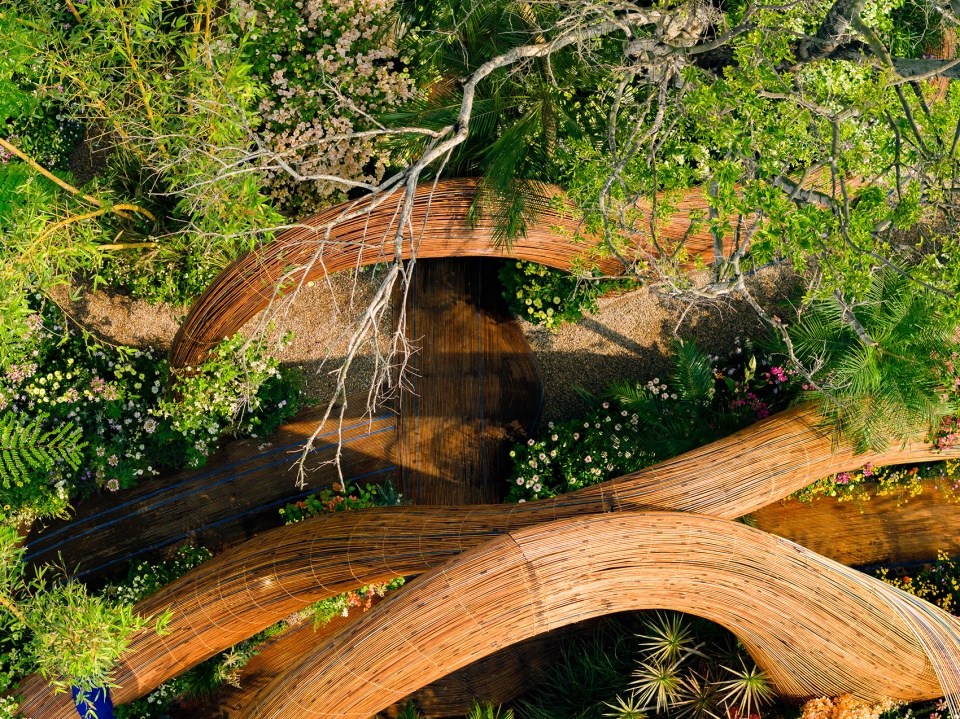
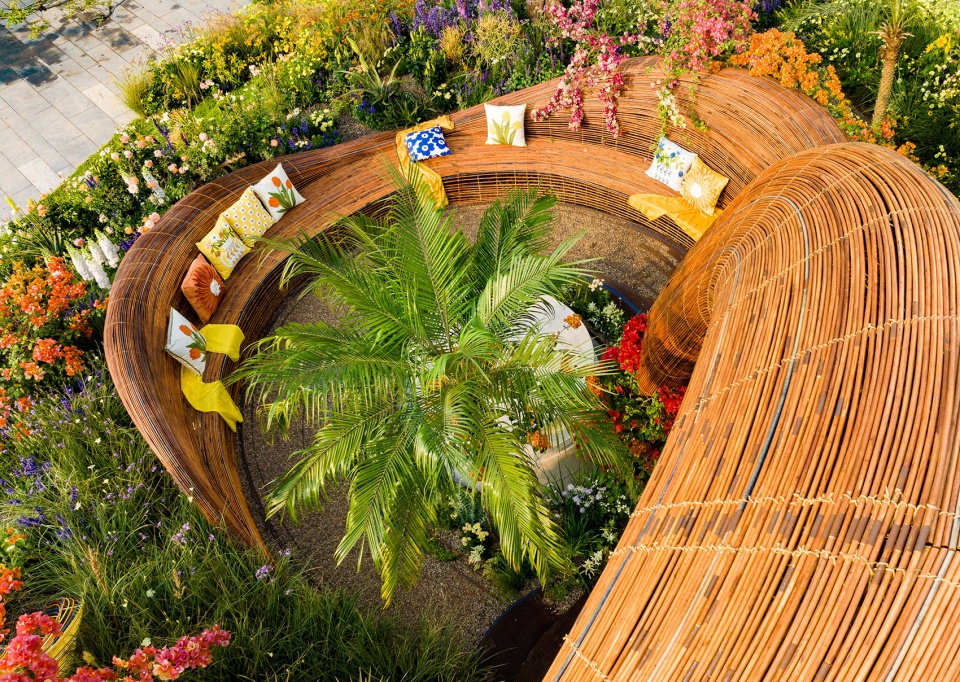
▼用非遗竹编技艺编织成的“循环”线条,composed of “circular” lines woven with the intangible cultural heritage bamboo weaving technique
韧性基因:自然馈赠的力学密码Flexgene: Nature’s Cryptographic Gift in Biomechanics
竹纤维纵向排列形成的「维管束矩阵」,赋予其每平方米承载800kg的惊人韧性。经过现代碳化、层压技术处理的竹材,弯曲形变恢复率高达95%,完美适配装置艺术所需的动态造型需求。
The longitudinally aligned “vascular bundle matrix” within bamboo fibers confers an astounding resilience of 800kg load-bearing capacity per square meter. Enhanced by modern carbonization and lamination processes, engineered bamboo achieves a 95% bending deformation recovery rate, seamlessly aligning with the kinetic formal language demanded by installation art. This carbon-negative, plant-derived “smart material” encodes self-stabilizing geometries and stress-responsive morphologies—proving ecological wisdom can sculpt space through tensile elegance.
▼竹纤维纵向排列形成的「维管束矩阵」,The longitudinally aligned “vascular bundle matrix” within bamboo fibers
▼竹纤维纵向排列形成的「维管束矩阵」,The longitudinally aligned “vascular bundle matrix” within bamboo fibers
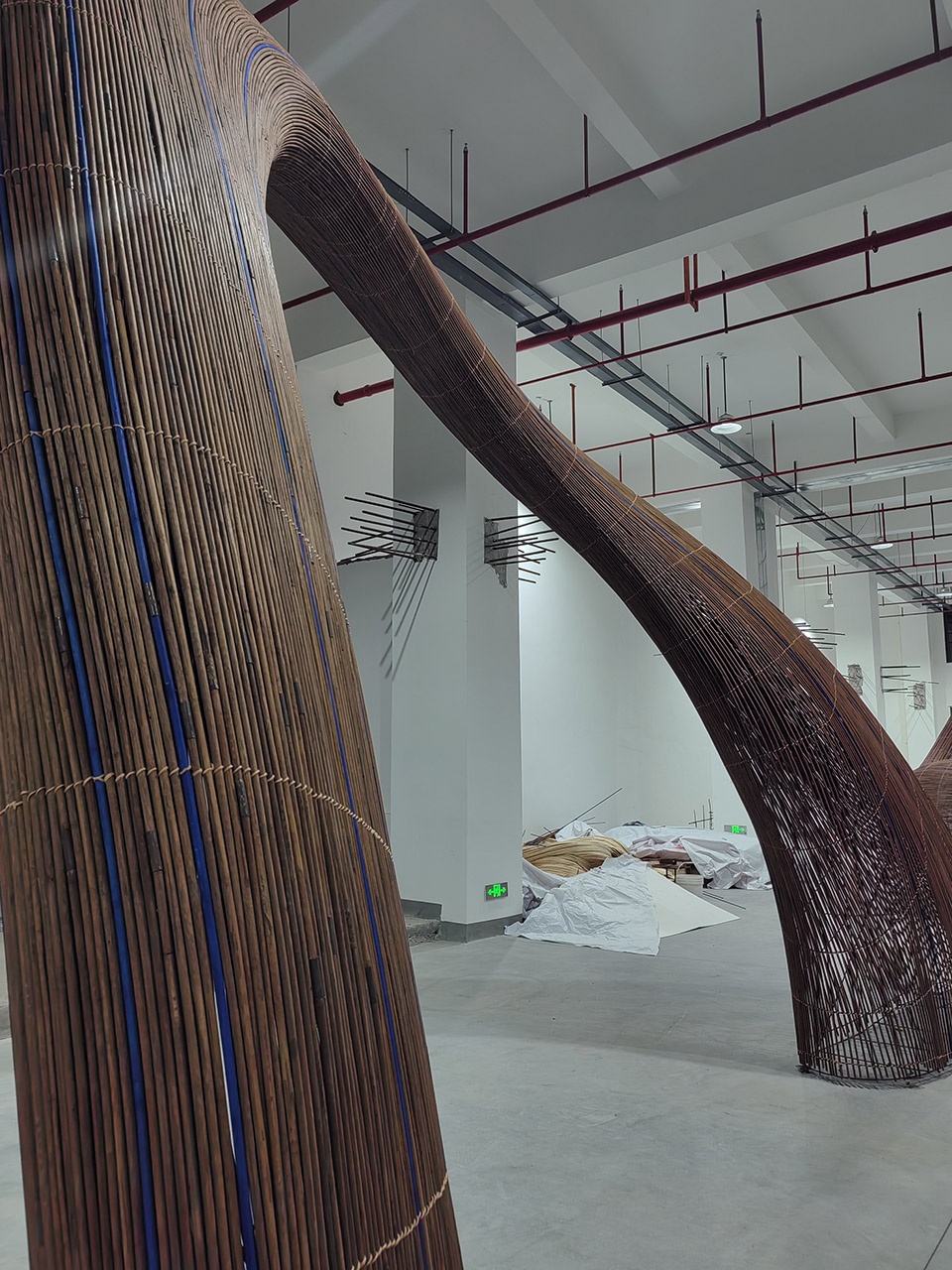
编织革命:曲与直的拓扑新生Weaving Revolution: Topological Rebirth of Curve and Line
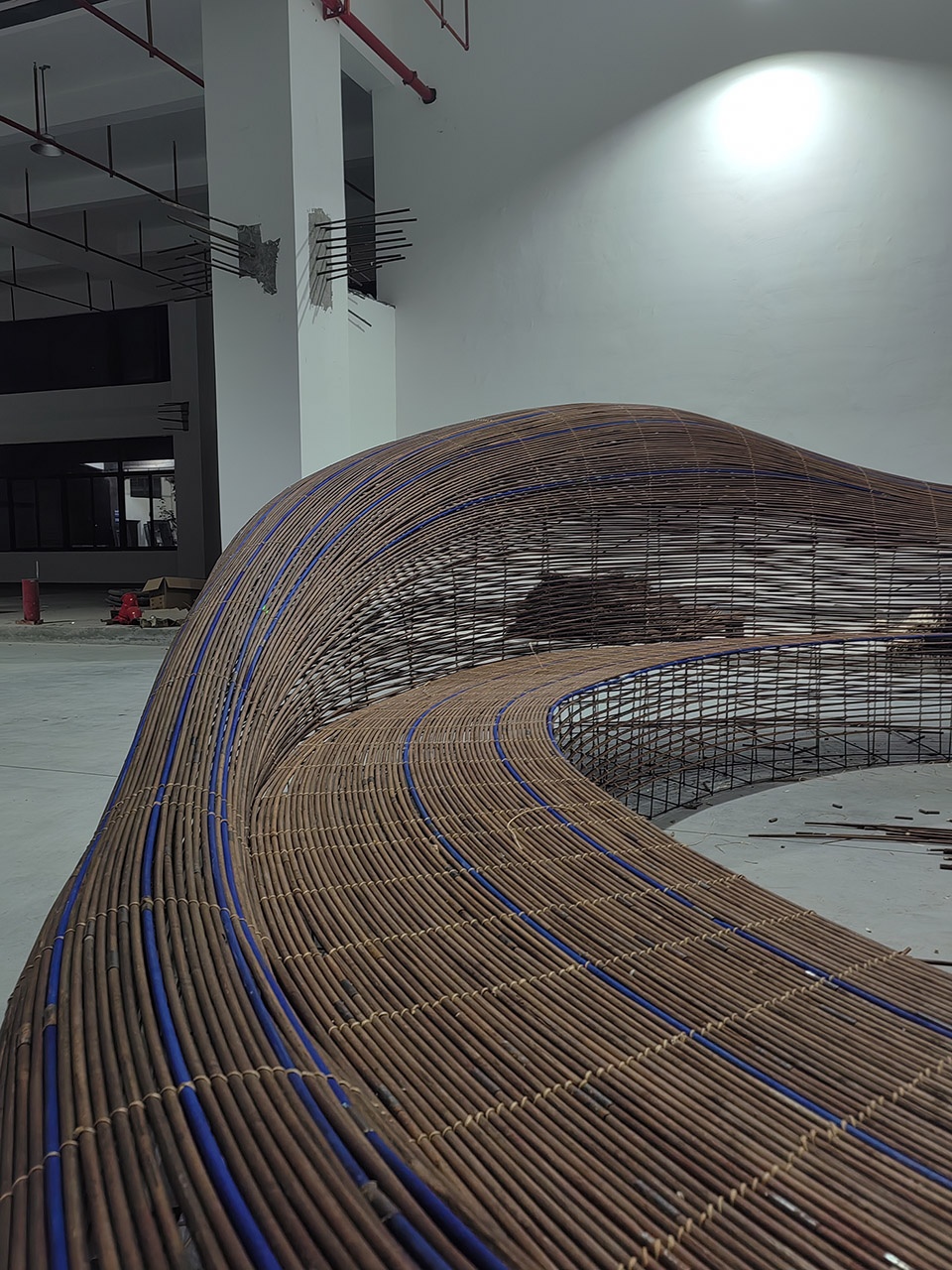
当代竹编艺术突破传统篮筐式结构,借助参数化设计实现非线性曲面建构。通过计算竹条曲率临界点,将竹丝与碳纤维复合,打造出随气流起伏的「活体竹林」将竹的韧性在此化作连接自然与科技的媒介,打造出适合现代审美的公共艺术品。
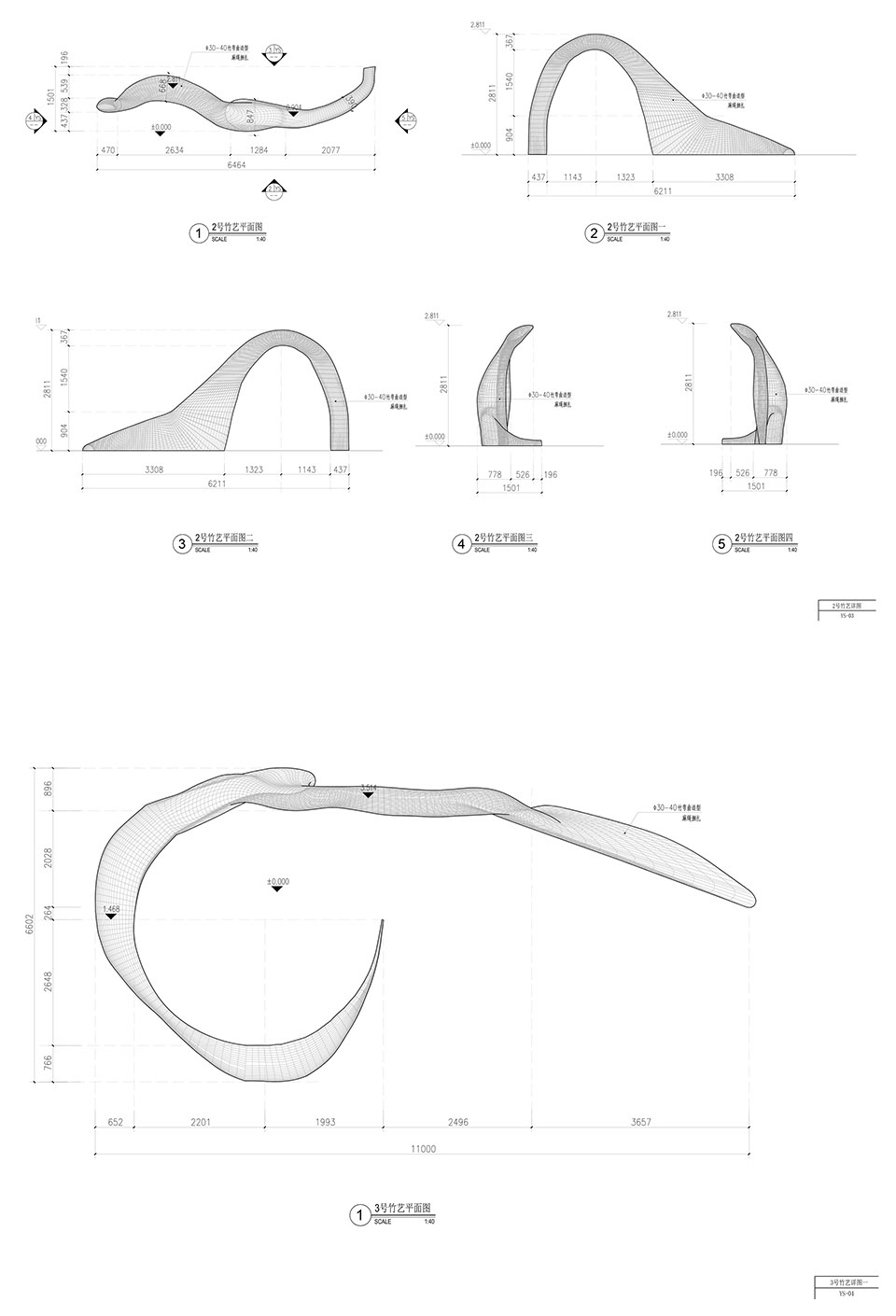
▼立面图,elevation
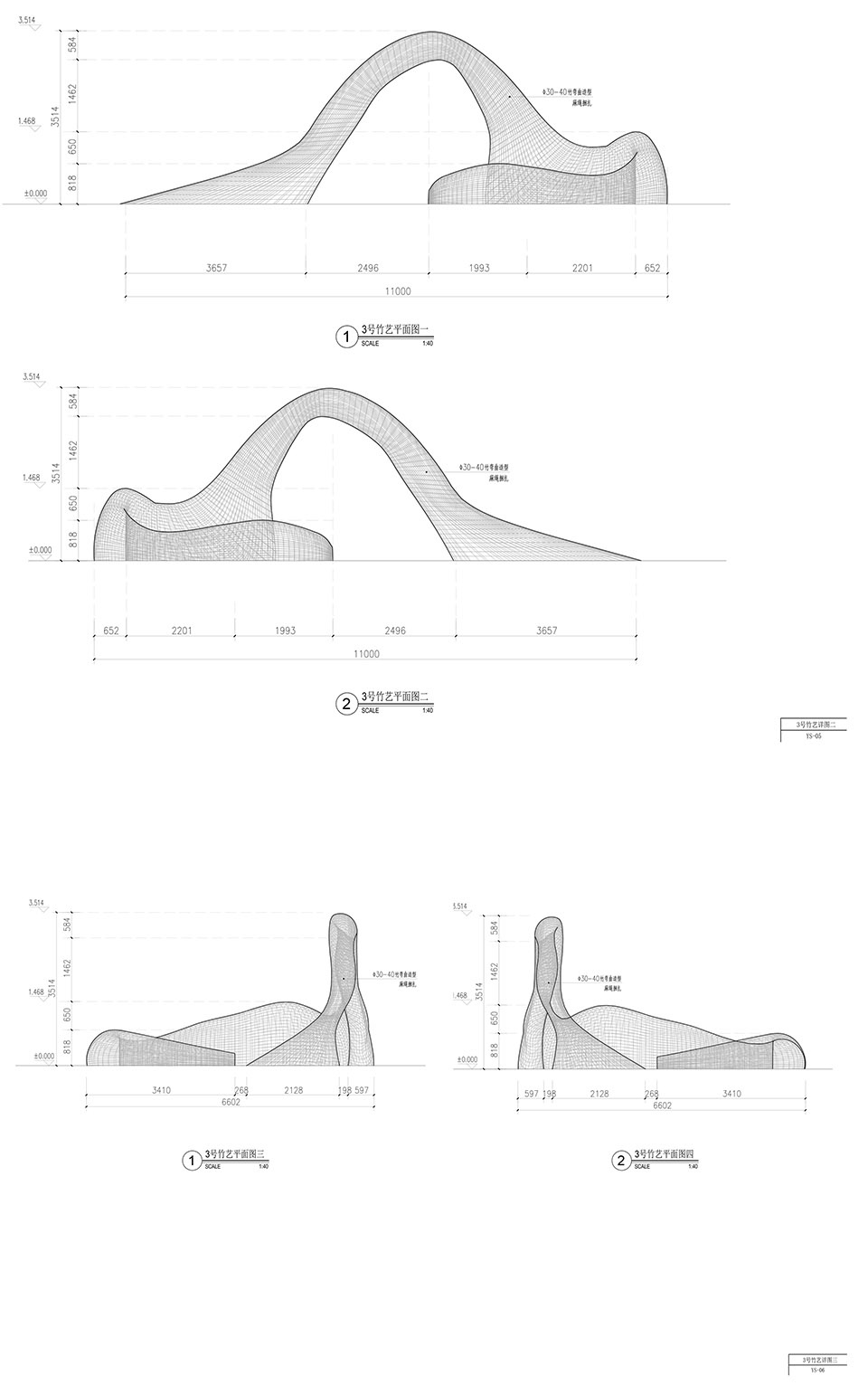
Contemporary bamboo weaving transcends traditional basket-style structures, harnessing parametric design to construct non-linear surfaces. By calculating curvature threshold points in bamboo strips and combining them with carbon fiber composites, artists create “living bamboo forests” that undulate with air currents. Here, bamboo’s legendary flexibility becomes a medium for techno-organic dialogue—its natural elasticity algorithmically amplified into responsive kinetic systems. This hybrid system transforms flexibility into responsive architecture, where cellular fiber networks and synthetic reinforcements co-evolve as breathing spatial membranes.
▼借助参数化设计实现非线性曲面建构,harnessing parametric design to construct non-linear surfaces
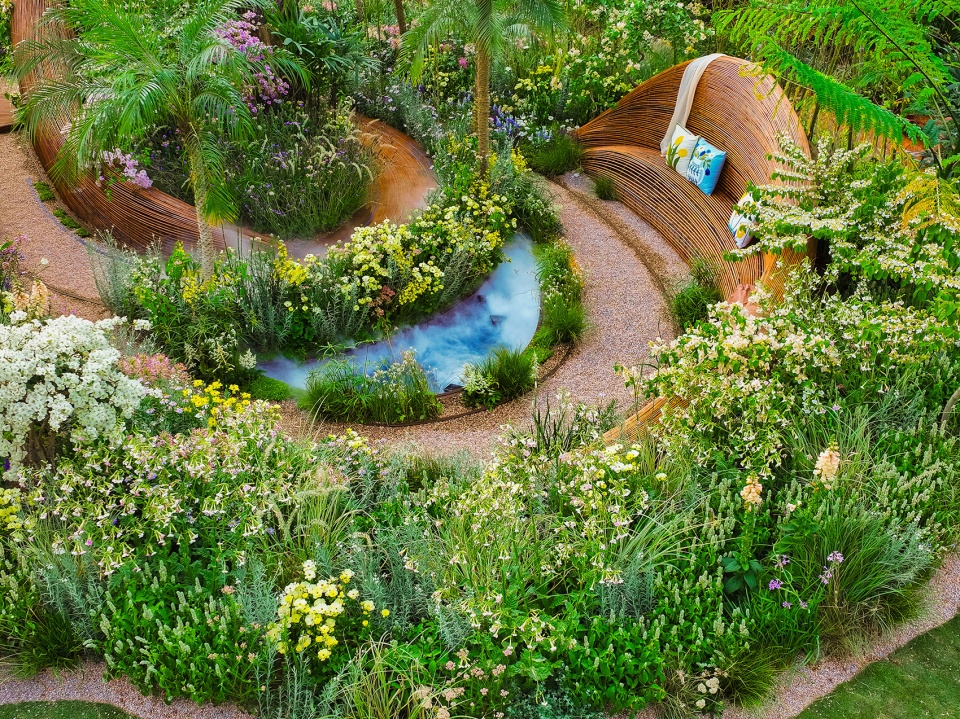
▼打造出随气流起伏的「活体竹林」,create “living bamboo forests”
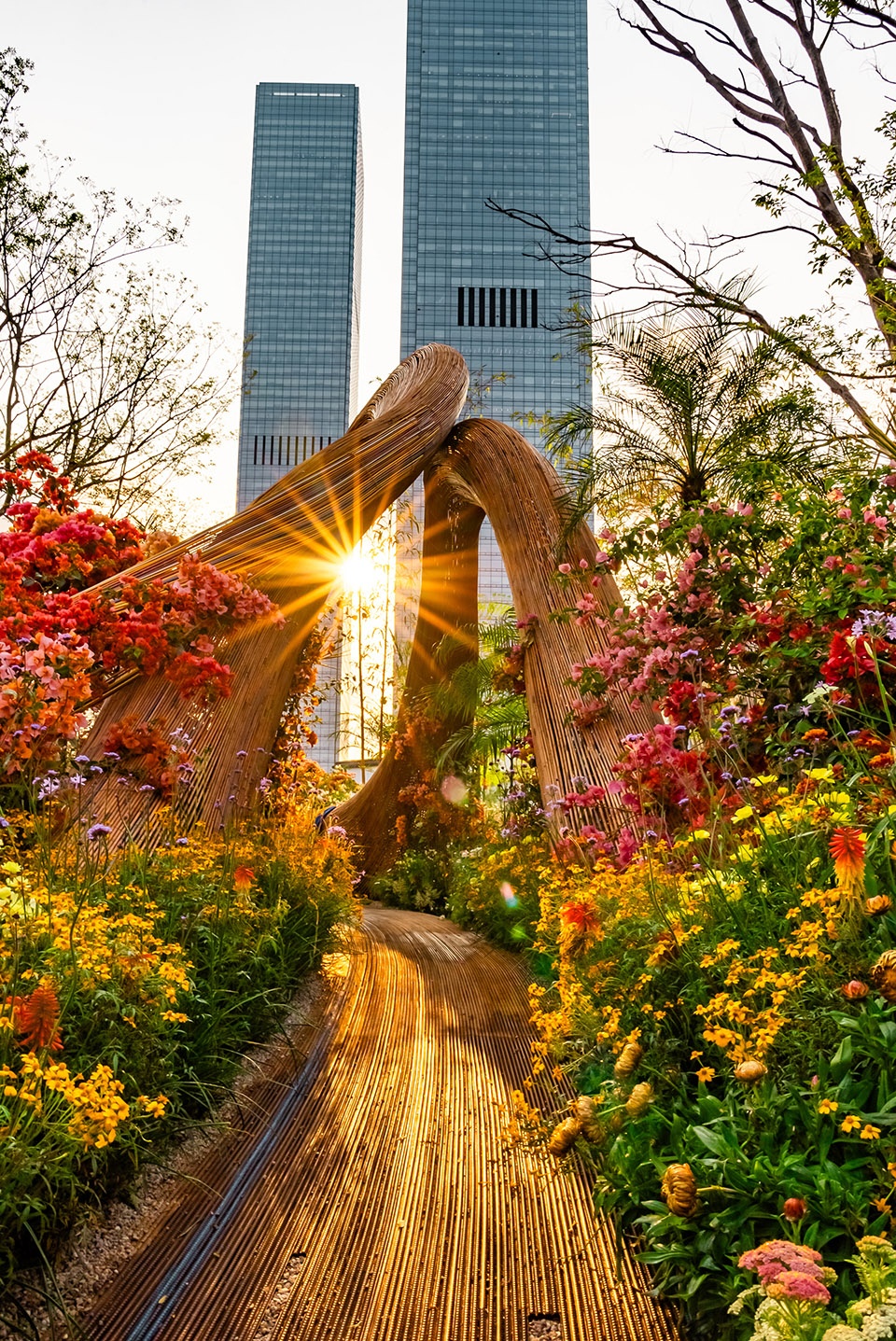
生态诗学:柔韧背后的可持续宣言Ecological Poetics: The Sustainable Manifesto Behind Resilience
相比消耗性布展材料,竹材的负碳属性(每吨竹吸收1.5吨CO₂)让装置艺术兼具生态批判价值。隐喻气候危机下自然物的「沉默韧性」,引发行业对材料伦理的深度思考。
In contrast to expendable exhibition materials, bamboo’s carbon-negative attribute (absorbing 1.5 tons of CO2per ton of material) endows installation art with ecological critical value. This approach metaphorically underscores the “silent resilience” of natural elements under climate crisis, provoking profound reflection within the industry on material ethics.
▼隐喻气候危机下自然物的「沉默韧性」,metaphorically underscores the “silent resilience” of natural elements under climate crisis
竹材的生态价值Ecological Value of Bamboo as a Building Material
固碳能力强:竹子生长迅速(3-5年成材),每公顷固碳量比硬木森林高 70%,且采伐后仍能再生,持续吸收CO2。 保护水土与生物多样性:根系发达,防止土壤流失,且自然生长模式比单一树种种植更利于生态平衡。 可自然降解:废弃后可完全分解,不产生持久污染,而混凝土、钢筋等传统材料难以回收,填埋后污染环境。
High Carbon Sequestration Capacity: Bamboo grows rapidly (maturing in 3-5 years), with 70% higher carbon sequestration per hectare compared to hardwood forests. It continues to regenerate after harvesting, maintaining its CO₂ absorption capability. Soil Conservation and Biodiversity Protection: Its extensive root system prevents soil erosion, and its natural growth patterns support ecological balance better than monoculture tree plantations. Biodegradability: Discarded bamboo decomposes completely without causing long-term pollution, whereas traditional materials like concrete and steel are difficult to recycle and contribute to landfill contamination.
▼体现竹材的生态价值,embrace the ecological value of bamboo
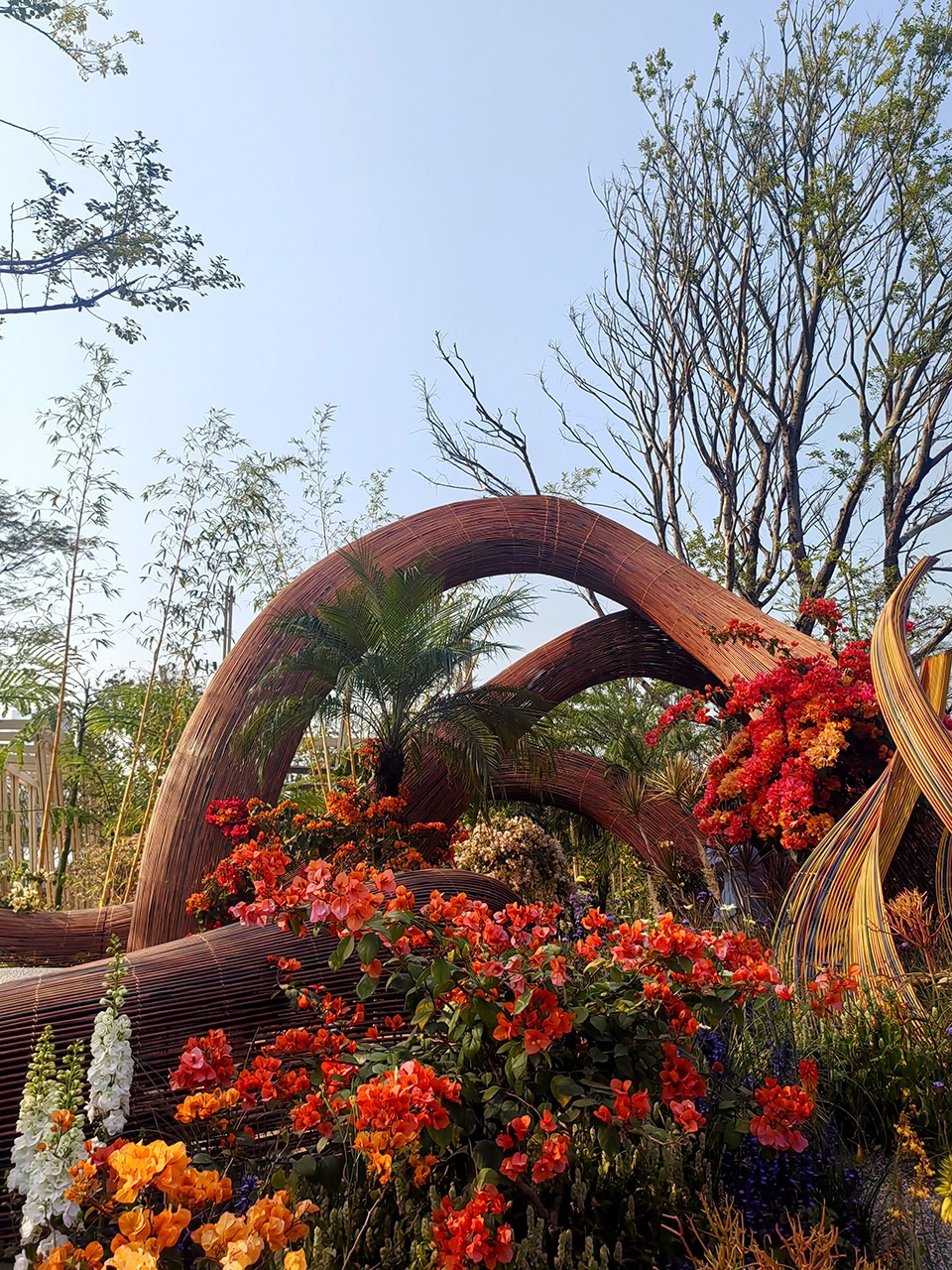
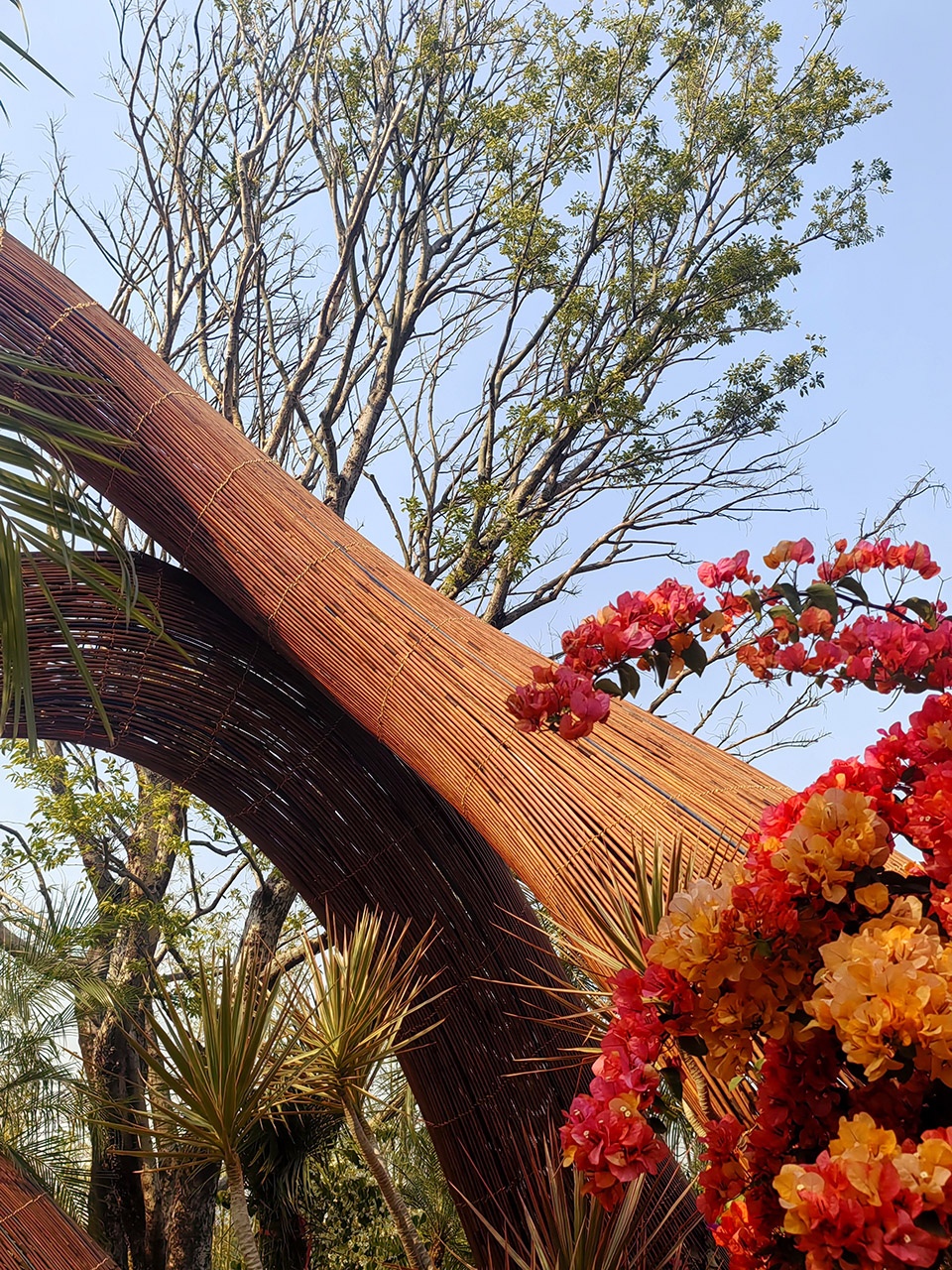
▼体现竹材的生态价值,embrace the ecological value of bamboo
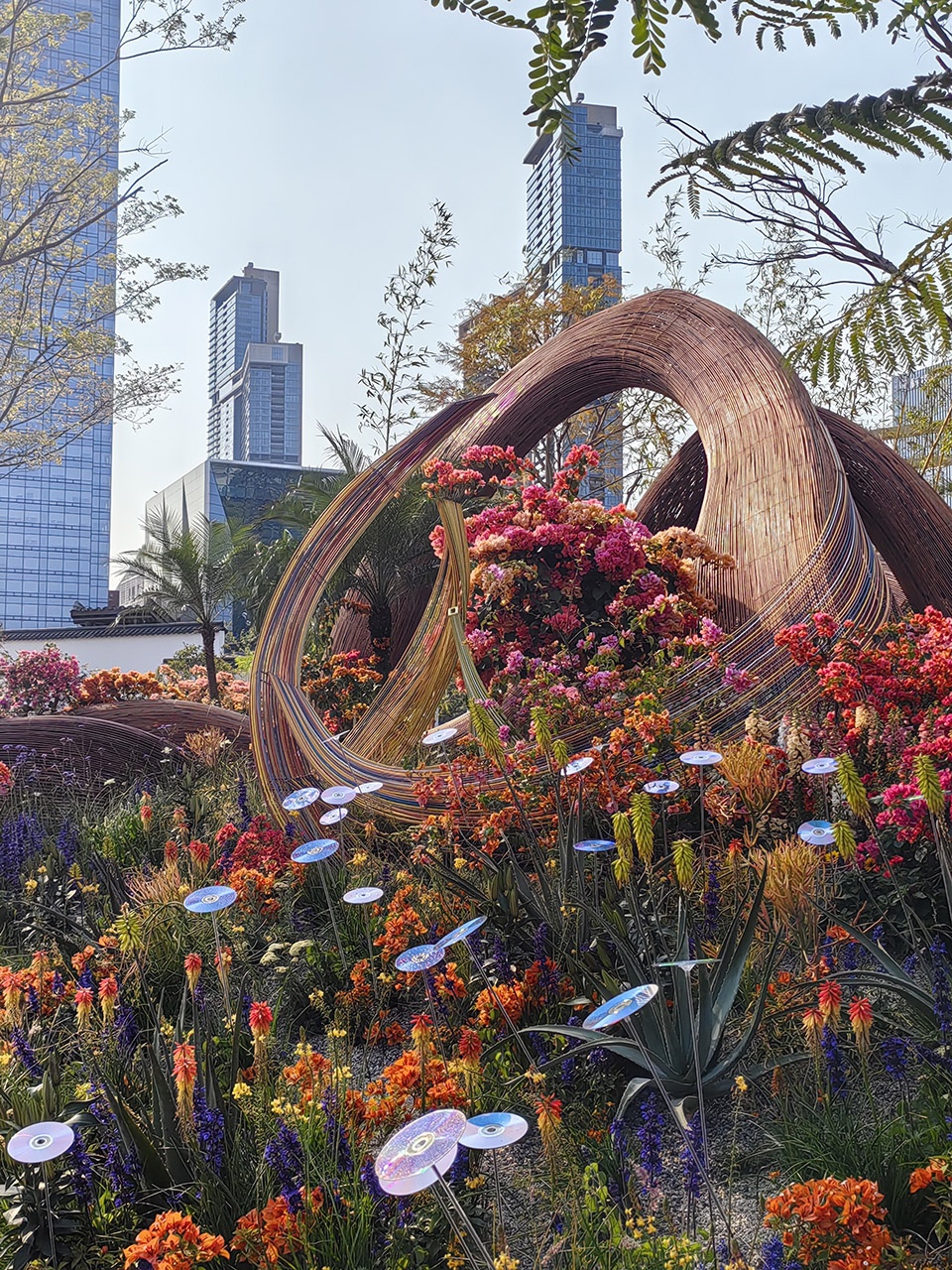
竹子在本质上是一种高效的结构材料:强度高,韧性大,并和钢铁一样具备拉张强度。分段的空腹结构,赋予其极为轻质同时又易弯成曲线轮廓的弹力特性。这些构造性能造就了竹子的材料特性。与木材相比,有着更强的弹力与柔韧性优势,且吸水膨胀率以及加热干燥收缩率都较小。
Bamboo is inherently a high-performance structural material: it possesses remarkable strength, exceptional toughness, and tensile strength comparable to steel. Its segmented hollow structure endows it with an extremely lightweight yet flexible nature, allowing it to be easily bent into curved profiles. These structural properties define bamboo’s material characteristics. Compared to timber, bamboo demonstrates superior elasticity and flexibility advantages, along with lower water-absorption expansion rates and reduced thermal shrinkage during drying.
▼竹子在本质上是一种高效的结构材料,bamboo is inherently a high-performance structural material
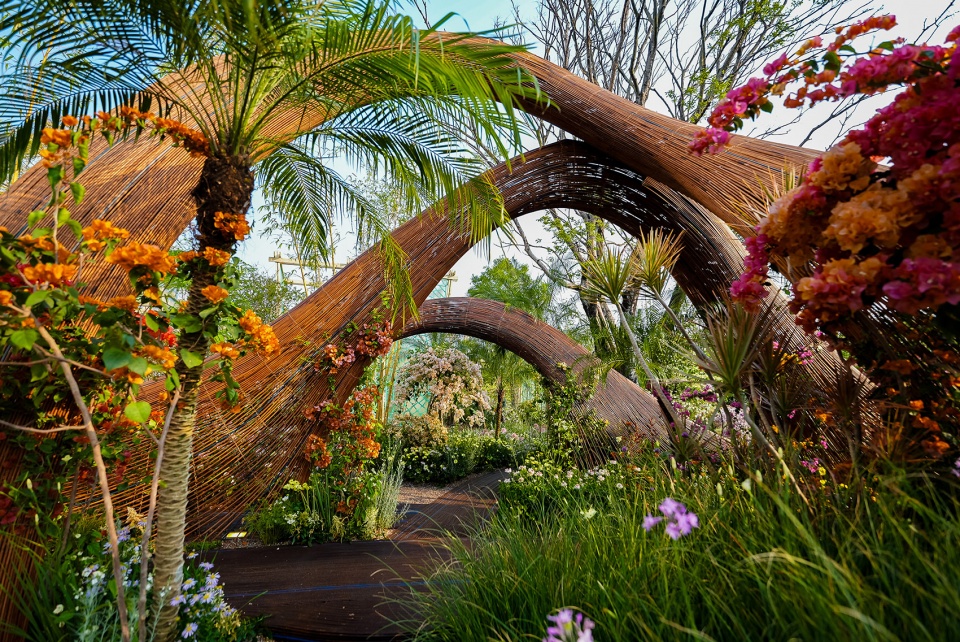
▼极为轻质同时又易弯成曲线轮廓,an extremely lightweight yet flexible nature
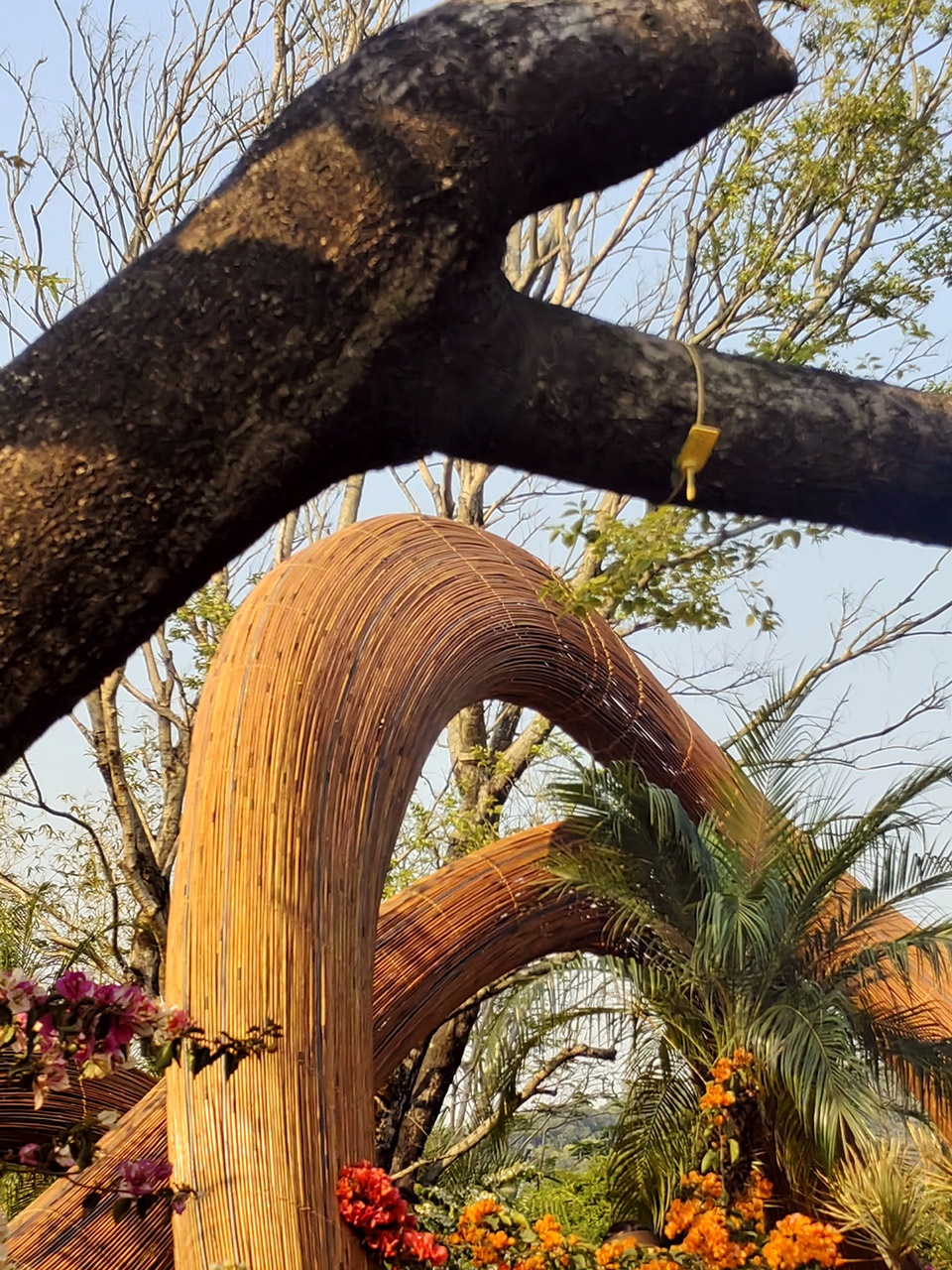
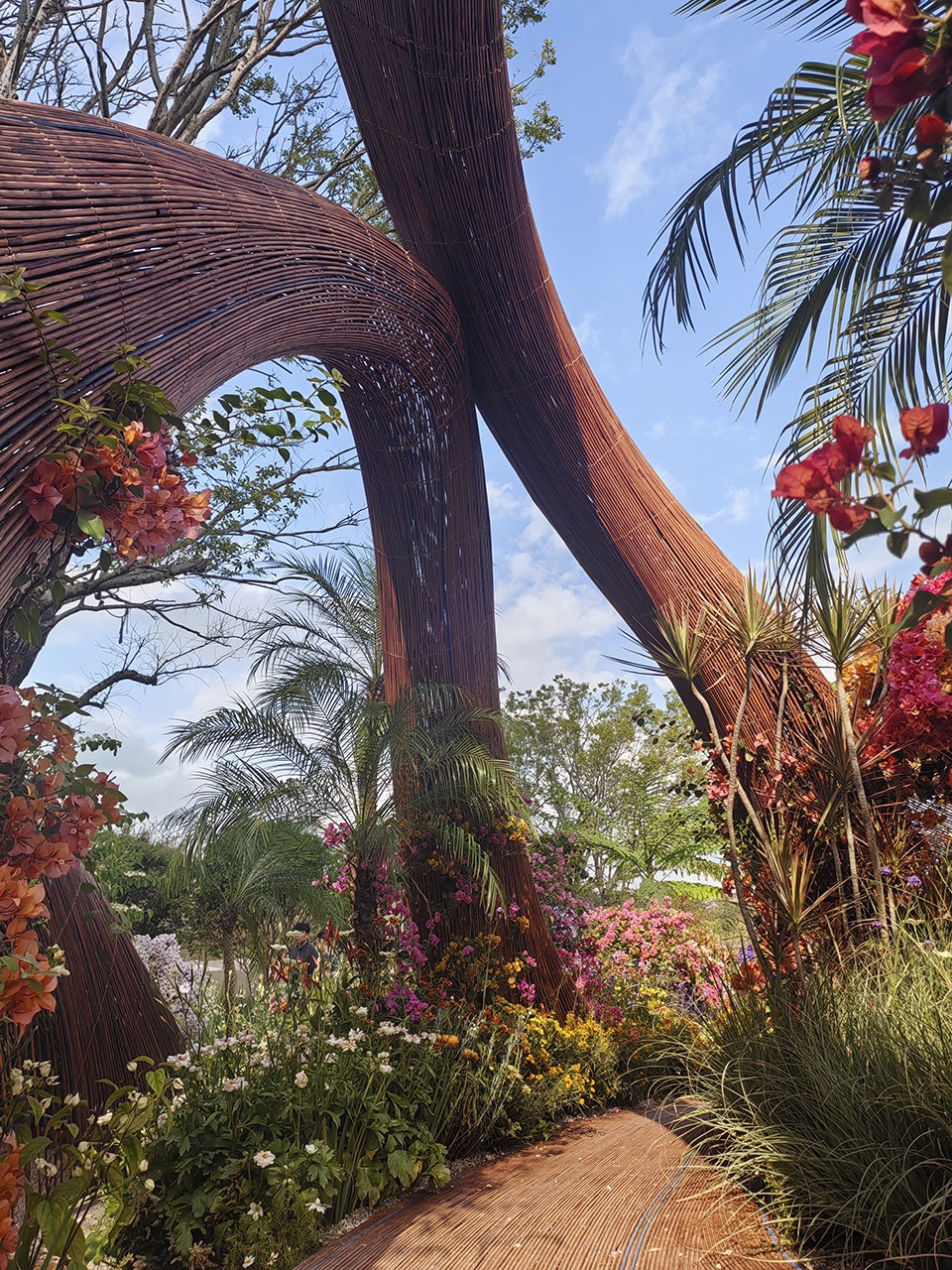
▼极为轻质同时又易弯成曲线轮廓,an extremely lightweight yet flexible nature
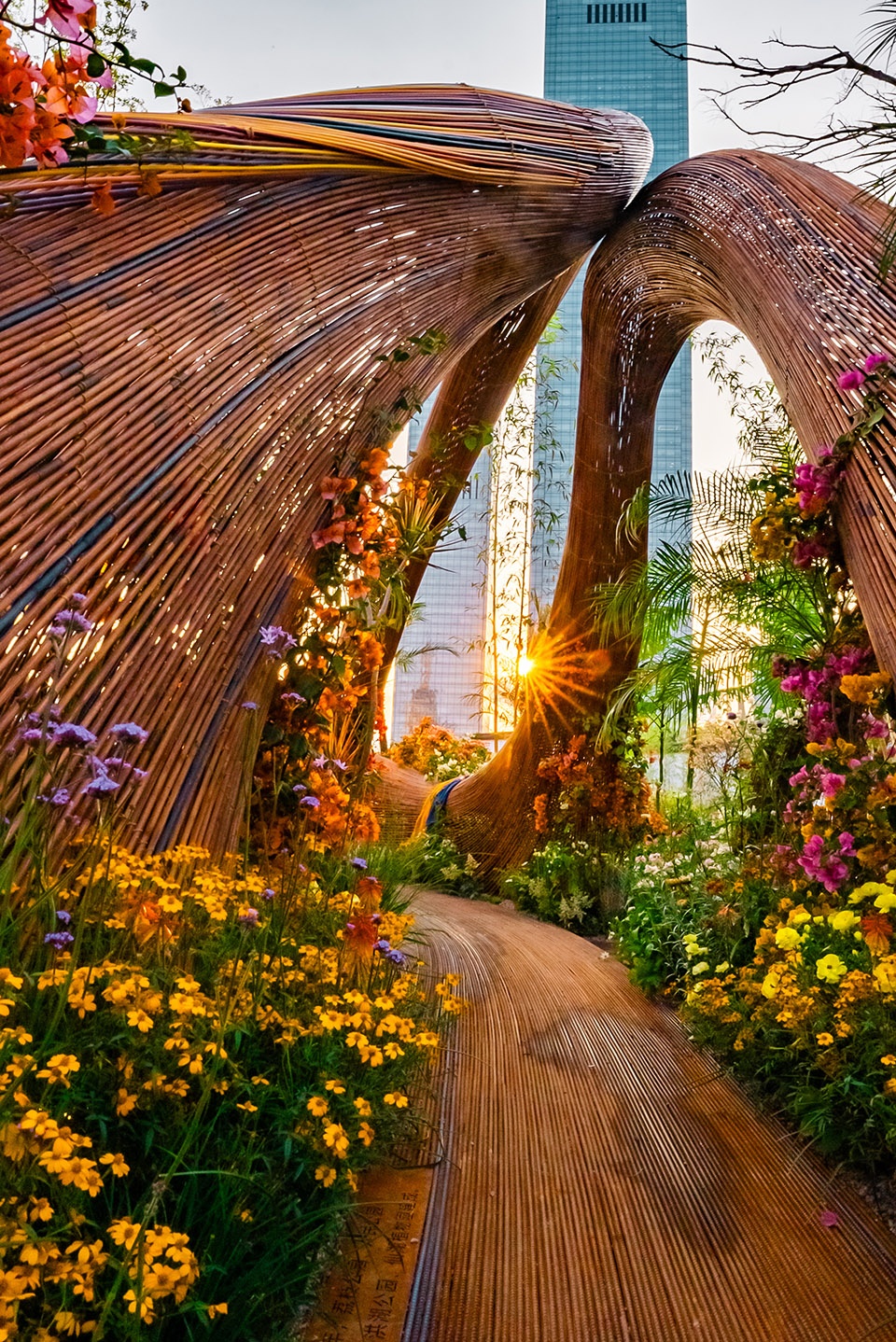
设计策略:释放韧性,塑造流动形态Design Strategy: Unleashing Resilience, Shaping Fluid Forms
仿生流动线条Biomimetic Fluid Lines
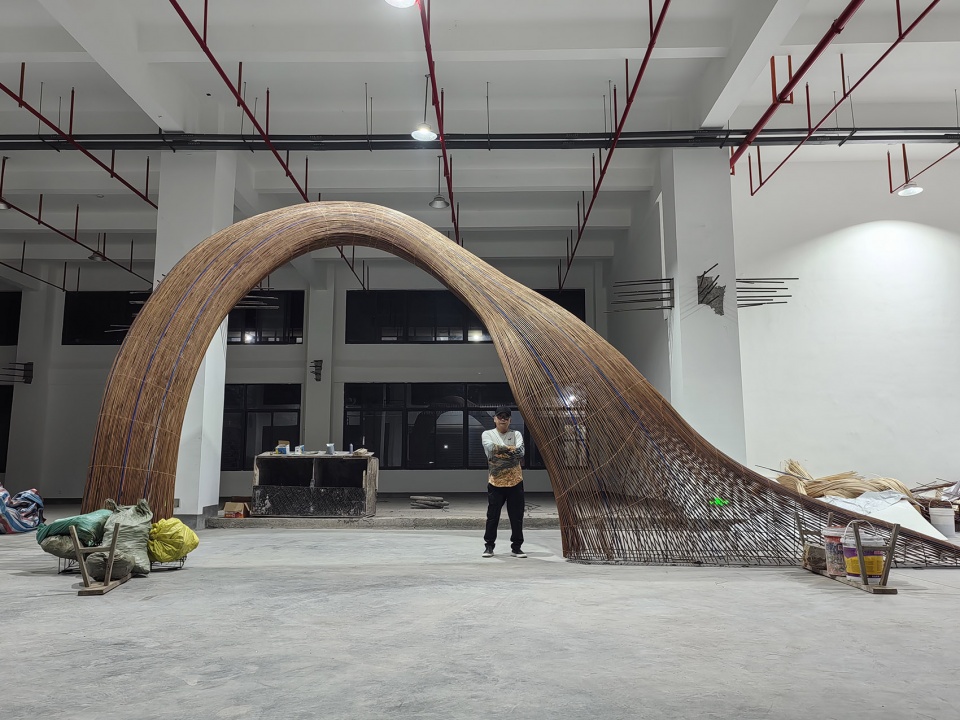
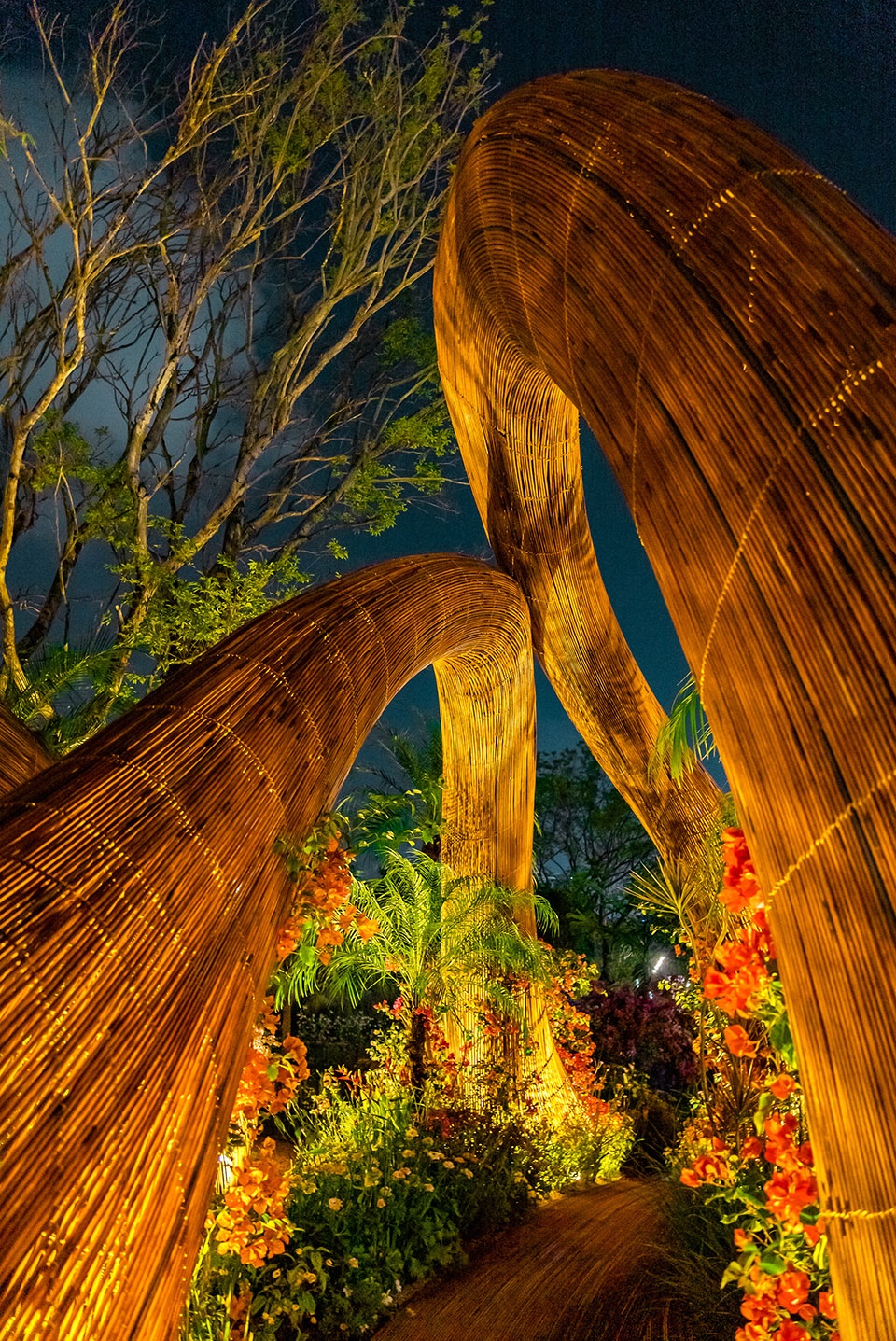
模仿自然中具有动态感的形态(如水流、藤蔓、羽翼、太极曲线),利用竹子的弯曲特性构建连续曲面或螺旋上升结构。以单根竹材弯曲形成弧形拱门,通过多组弧线层叠错位,营造“竹海波动”的韵律感;借鉴“莫比乌斯环”概念,用竹条编织扭转的闭环结构,展现无限循环的视觉张力。
Imitate dynamic forms found in nature (such as flowing water, vines, feathers, or Tai Chi curves), leveraging bamboo’s bending properties to construct continuous surfaces or spiraling ascending structures. Bend a single bamboo pole into an arched gateway, then layer and stagger multiple arcs to create a rhythmic sense of “undulating bamboo waves.” Draw inspiration from the “Möbius strip” concept, weaving and twisting bamboo strips into a closed-loop structure to convey a visually striking sense of infinite continuity.
▼模仿自然中具有动态感的形态,Imitate dynamic forms found in nature
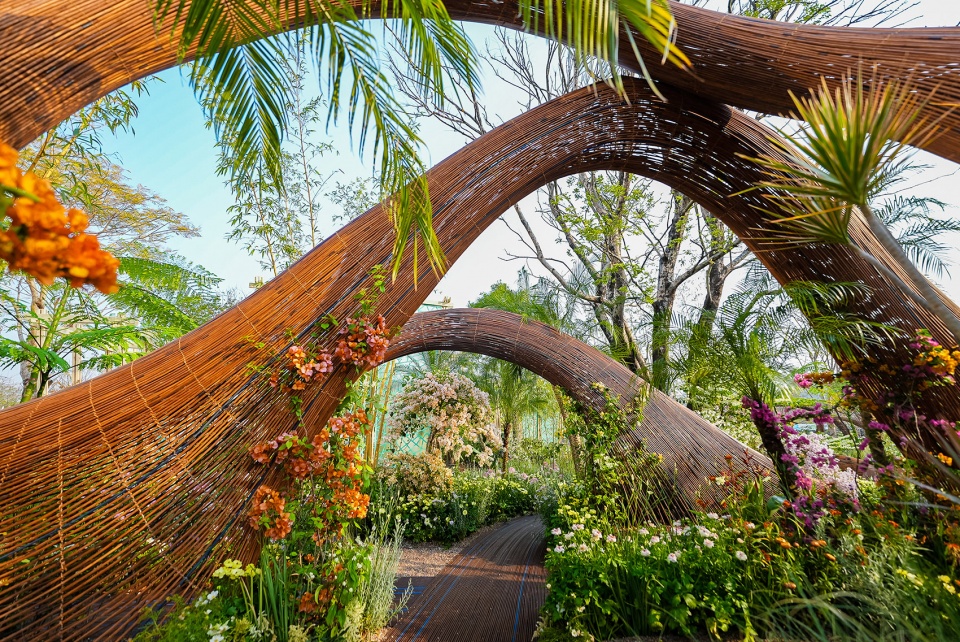
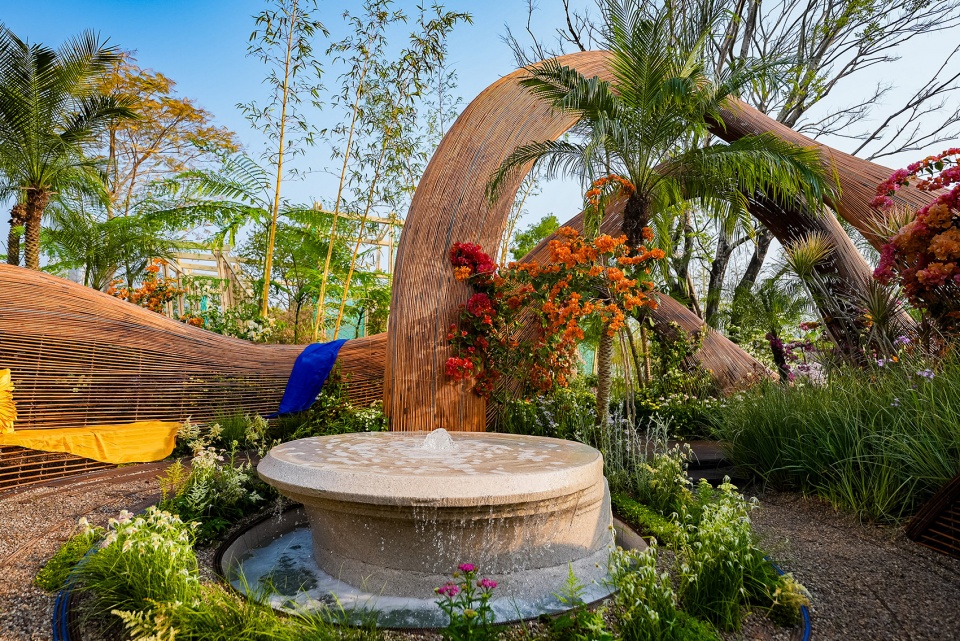
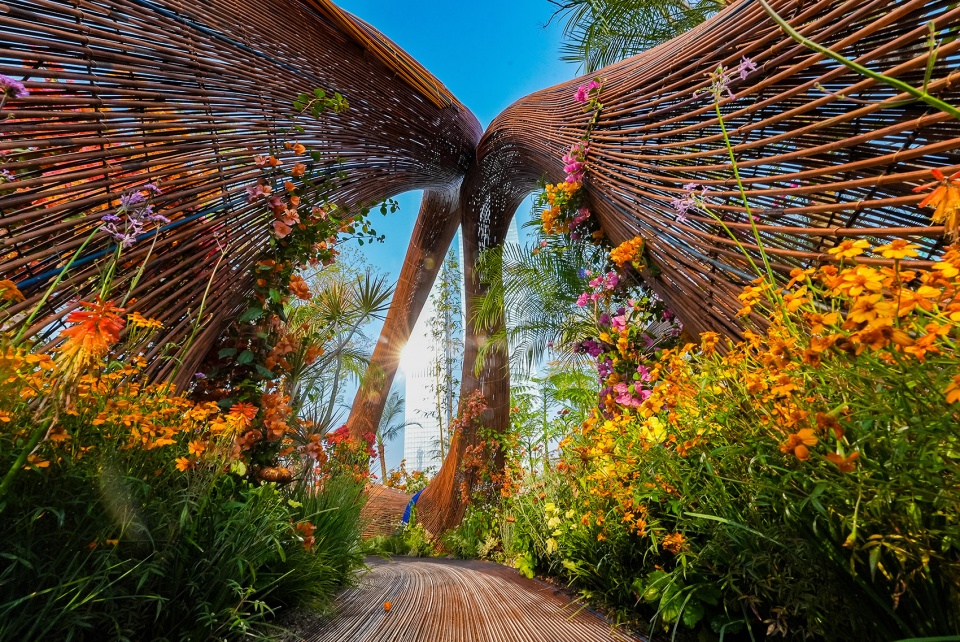
▼营造“竹海波动”的韵律感,create a rhythmic sense of “undulating bamboo waves.”
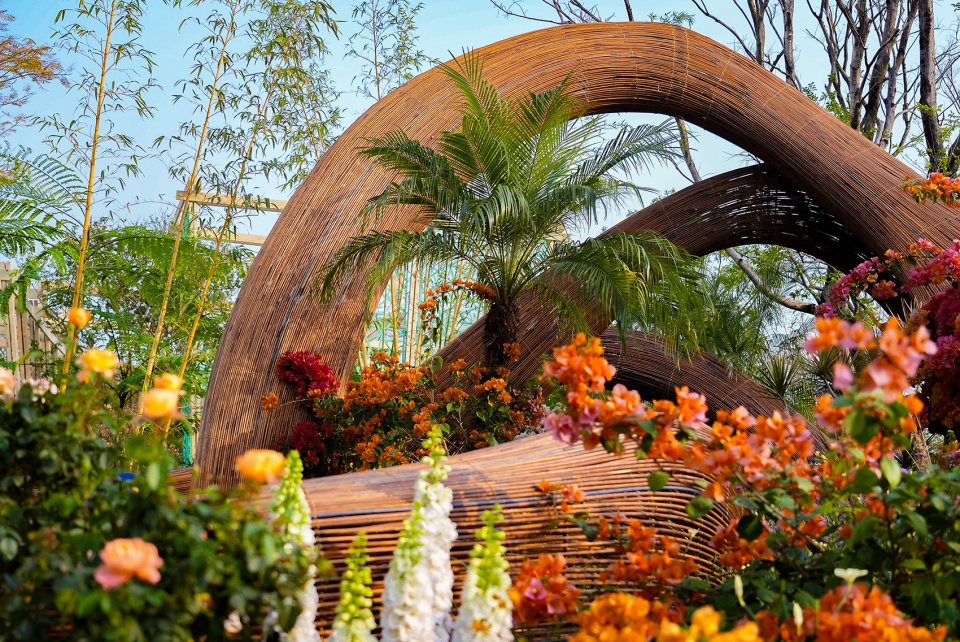
▼用竹条编织扭转的闭环结构,twisting bamboo strips into a closed-loop structure
参数化与模块化组合Parametric and Modular Assembly
通过算法生成参数化模型(如Grasshopper),将竹材弯曲角度、间距等数据化,实现标准化模块的灵活拼接。例如:设计可弯曲的“竹单元”,通过不同曲率的单元组合,形成曲面渐变的“流动表皮”。
Use algorithmic parametric modeling (e.g., Grasshopper) to digitize bamboo bending angles, spacing, and other parameters, enabling flexible assembly of standardized modules. For example: Design bendable “bamboo units” that, when combined with varying curvatures, form a “fluid surface” with gradient transitions.
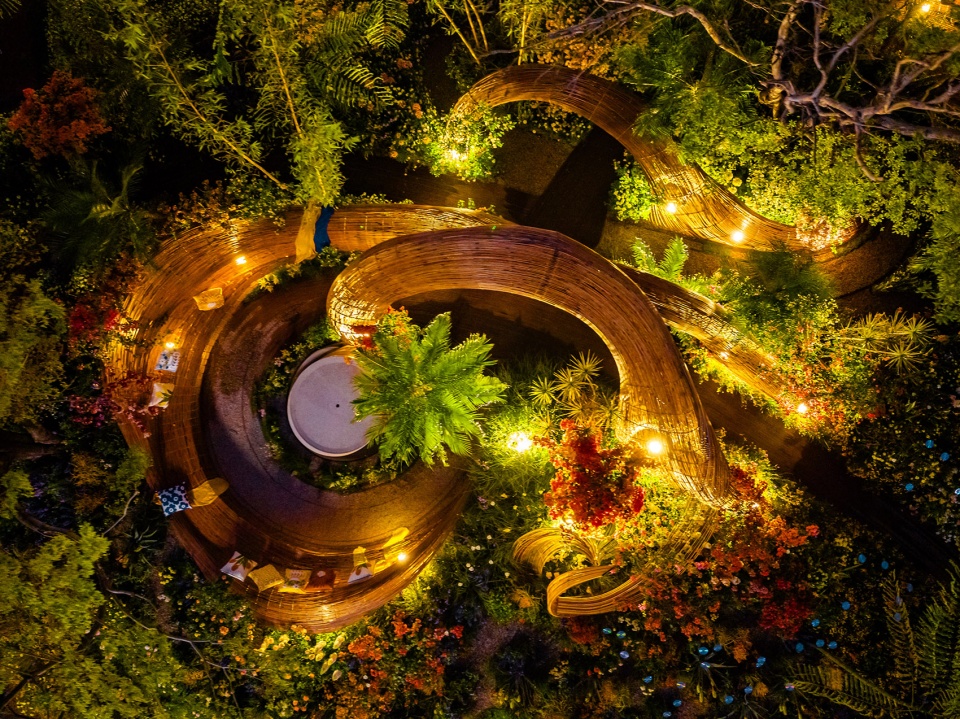
▼夜景,night view
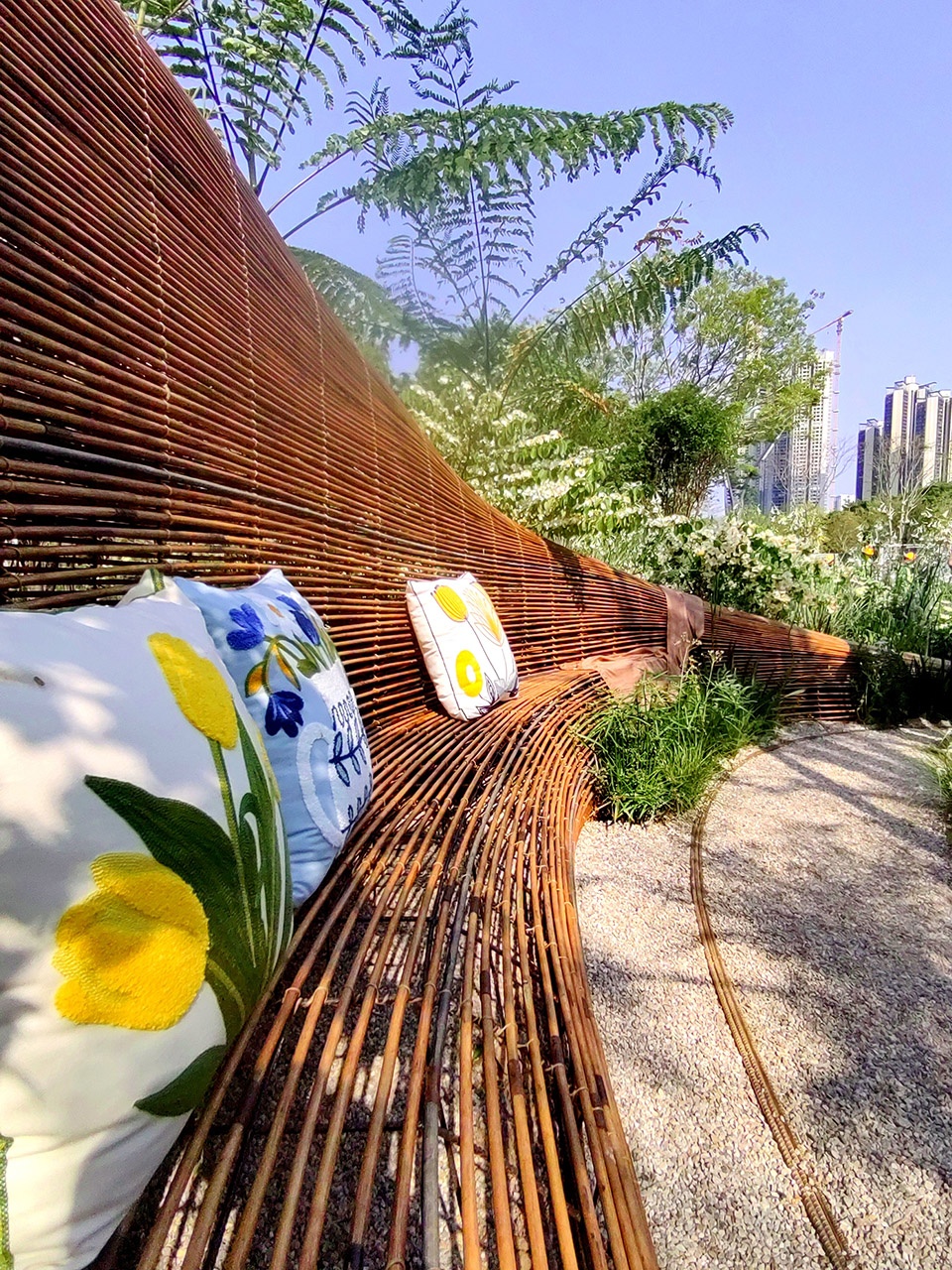
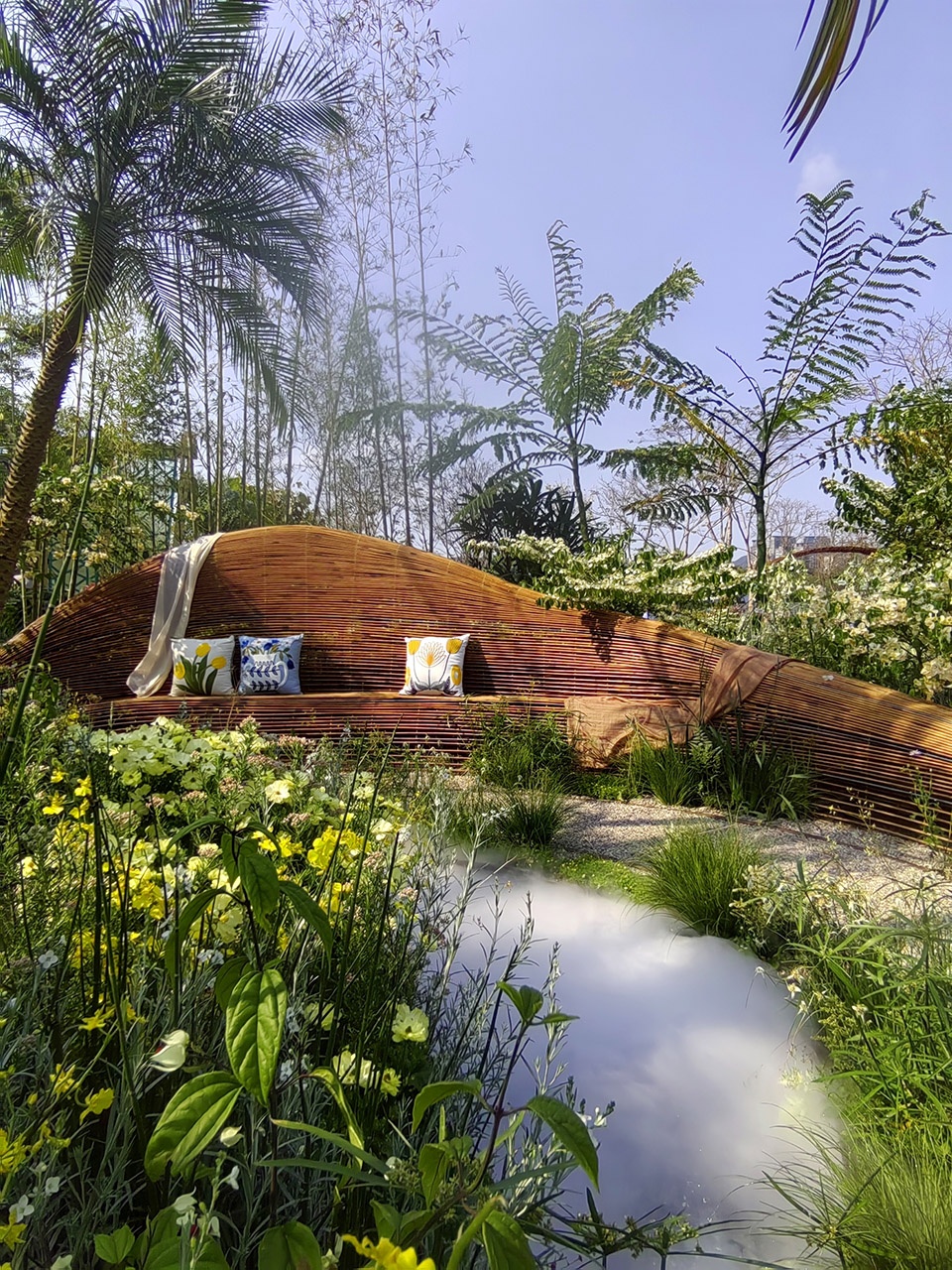
结合装置的使用场景(如公园、美术馆、商业空间),赋予功能性:如可坐的竹制曲线长椅、透光的竹编顶棚,让韧性之美服务于人的体验。竹子从生长、建造到废弃全程环保,是替代高耗能建材(钢筋、混凝土)的理想选择,助力建筑业实现碳中和目标。 通过“顺势而弯”的材料对话、“以柔克刚”的结构智慧、“自然形态”的艺术转译,可将竹材从传统建材升华为承载流动美学的媒介。尊重材料本性,释放其内在的动态潜力,让每一道曲线都成为韧性的视觉宣言。
Integrating Functional Adaptability for Diverse Spaces By tailoring designs to specific contexts—such as parks, art galleries, or commercial spaces—bamboo’s resilience is transformed into functional artistry: Sculptural Seating: Create ergonomic, curved bamboo benches that merge aesthetic fluidity with comfort, inviting interaction and rest. Light-Filtering Canopies: Craft woven bamboo ceilings that diffuse natural light, casting dynamic shadows while sheltering users beneath. Sustainability as Core Philosophy Bamboo’s lifecycle—from growth and construction to decomposition—embodies full-circle sustainability. As an eco-friendly alternative to energy-intensive materials (steel, concrete), it reduces carbon footprints and advances the construction industry’s carbon neutrality goals. Elevating Bamboo Through Design Principles “Bending with Nature”: Honor bamboo’s innate flexibility by shaping curves that align with its organic behavior, avoiding forced manipulation. “Softness Overcomes Rigidity”: Redefine structural logic through tensioned weaving and layered arcs, proving strength need not rely on rigidity. “Natural Morphology as Art”: Translate fluid, biomimetic forms into spatial experiences, elevating bamboo from utilitarian material to a medium of poetic(fluid aesthetics). By harmonizing materiality, structural innovation, and ecological ethos, every bamboo curve becomes both a visual ode to resilience and a step toward regenerative design.
▼夜景,night view
▼平面图,plan
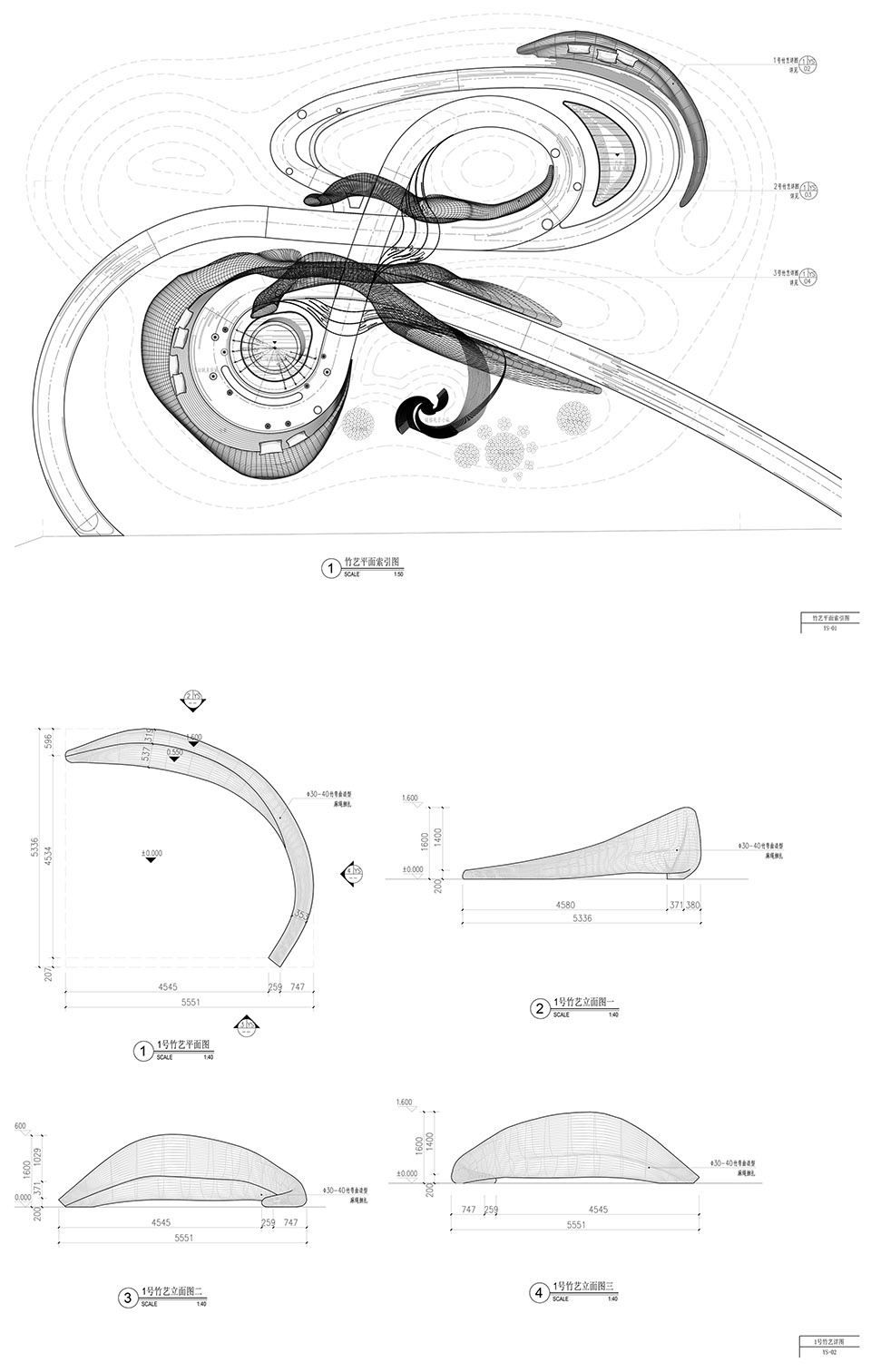
▼平面图,plan
Location: Bijia Mountain Park, Shenzhen City
Client: Shenzhen SEZ Construction Group Co., Ltd.
Category: Landscape installation
Bamboo Art Architect: Xie Jun
Deepening Design of Bamboo Art and construction: Shenzhen Beryl Environmental Art Design Engineering Co., Ltd.
Bamboo Art Designer:XIEJun、LUOJianxing、KEYukaiyu
Landscape Design: Shenzhen Zyeen Landscape Planning & Design Co., Ltd.
Designer:LIN Junying ZHeng Chunming
Decoration Design: Shenzhen Shengshi Yibai Decoration DesignEngineering Co., Ltd
Designer:HOUTing CHENGXuzhi
HOUTing CHENGXuzhi
Contact email: 974508478@qq.com
Completion time: March 2025
Building area:400square meters
Brand planning: Zhang Weimin brand design
Photography Team: LIUDong Jiahe Creative XIEYucheng
Building materials: Bamboo Steel members