工业化社会保障住房,巴塞罗那 / Vivas Arquitectos + EXE Arquitectura
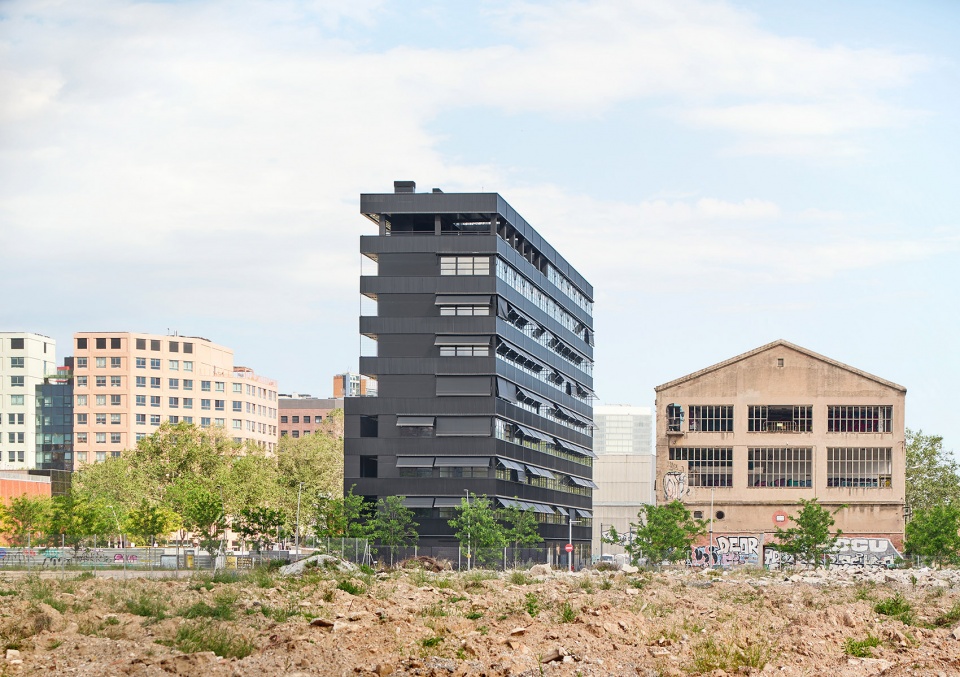
该项目由Vivas Arquitectos与EXE Arquitectura联合设计,采用预制模块化系统建造了一栋社会保障性住房建筑。设计不仅融入周边工业环境,同时具备空间分布上的灵活性。
The project, the work of Vivas Arquitectos and EXE Arquitectura, consists of the construction of a social housing building using a prefabricated modular system. Its design integrates with the industrial environment and allows for a flexible distribution of spaces.
▼住宅概览,overview of the social housing
建筑设有外部连廊,鼓励社区互动,并在公共与私人空间之间形成渐进的过渡。结构上结合了传统地基与预制三维模块,优化了施工时间、成本、材料利用率及可持续性。工业化材料的使用保障了建筑质量、耐久性与施工效率,同时降低了环境影响,改善了装配与后期维护过程。
The building incorporates exterior walkways that promote community in- teraction and generate a gradual transition between public and private space. The construction combines traditional foundations with prefab- ricated 3D modules, optimising time, costs, materials and sustainability. The use of industrialised materials guarantees quality, durability and effi- ciency, reducing environmental impact and improving the assembly and maintenance process.
▼住宅概览,overview of the social housing
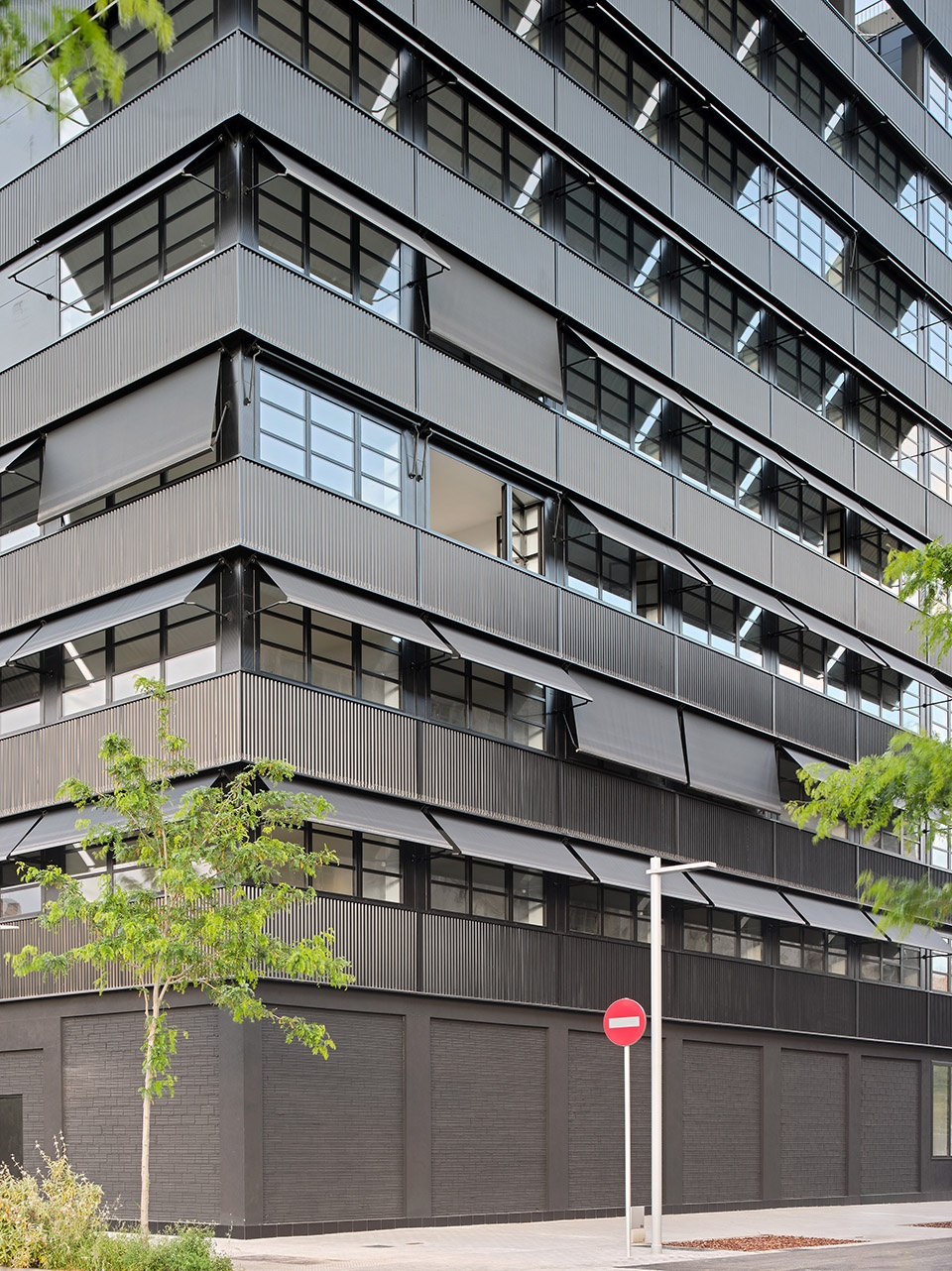
巴塞罗那的45套工业化社会保障住房单元45 Industrialised social housing units in Barcelona
该项目总建筑面积为 4,465 平方米,由一栋八层建筑构成,共设 45 套两居室社会住房,并在首层设置了共享公共设施空间。
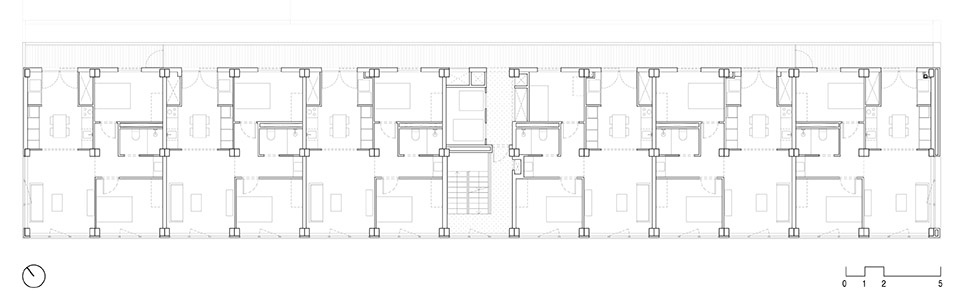
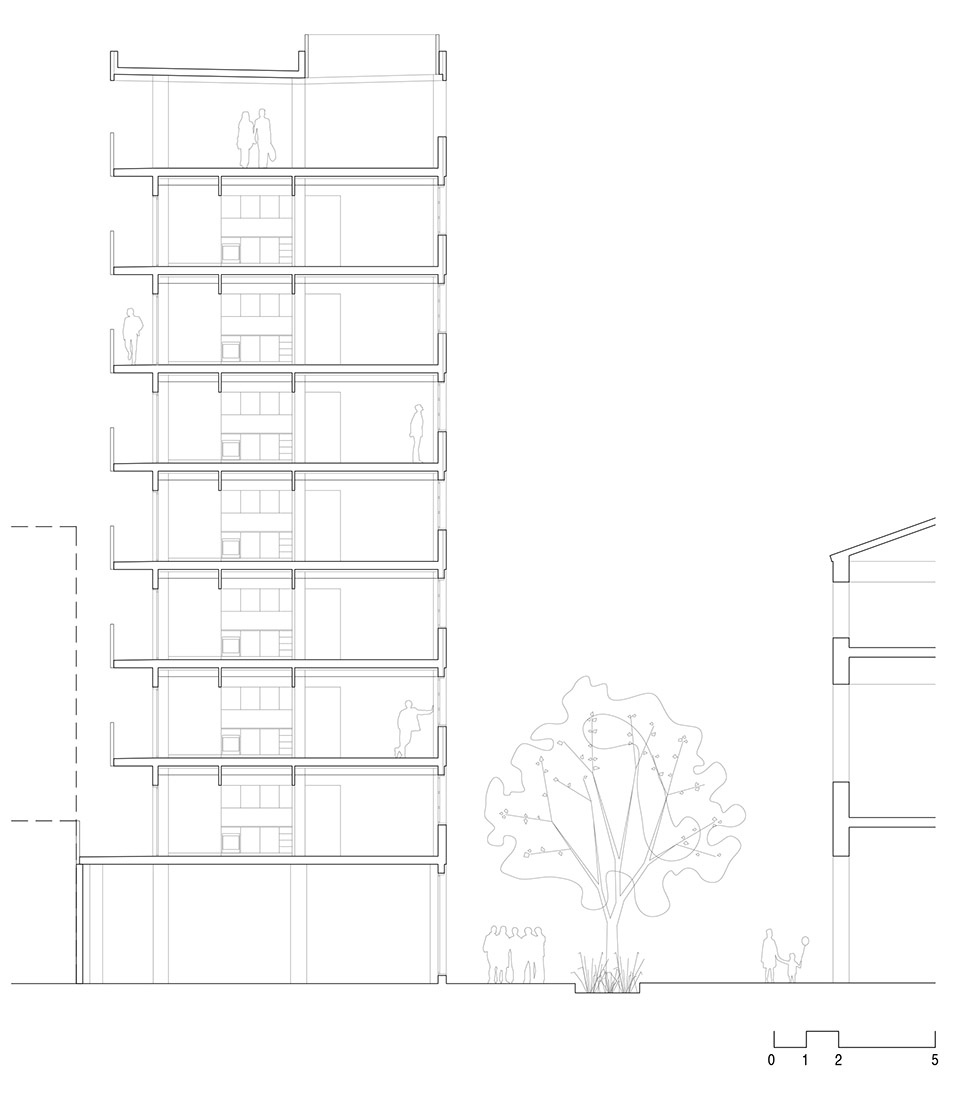
The project involves the construction of 45 social housing units, each with two bedrooms, distributed within an eight-storey building covering a to- tal area of 4.465 m², with communal facilities on the ground floor.
▼住宅由八层建筑构成,an eight-storey building
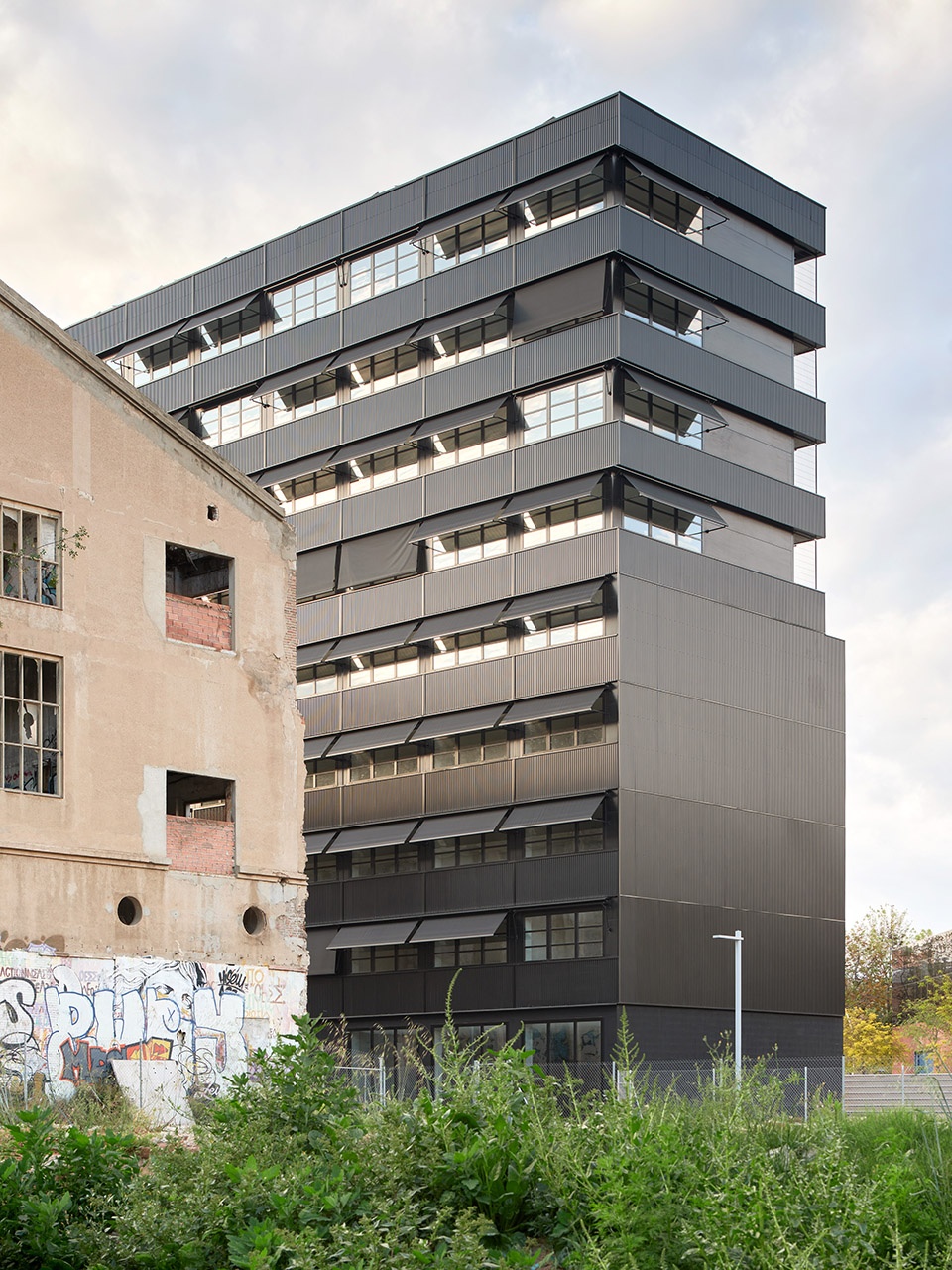
工业环境与适应性Industrial environment and adaptability
该提案将住宅建筑视为可居住的基础设施,结构清晰、模块化,采用预制三维模块建造方式,可灵活应对未来功能调整。建筑语言延续了周边纺织厂的工业美学,与现有工业背景形成对话。
The proposal is conceived as a residential building understood as a habit- able infrastructure with a clear and modulated structure, a prefabricated 3D modular construction that allows flexible use with possible changes in the future. The architectural proposal enters into dialogue with the existing textile factory, with a characteristic industrial architectural language.
▼延续了周边纺织厂的工业美学,dialogue with the existing textile factory
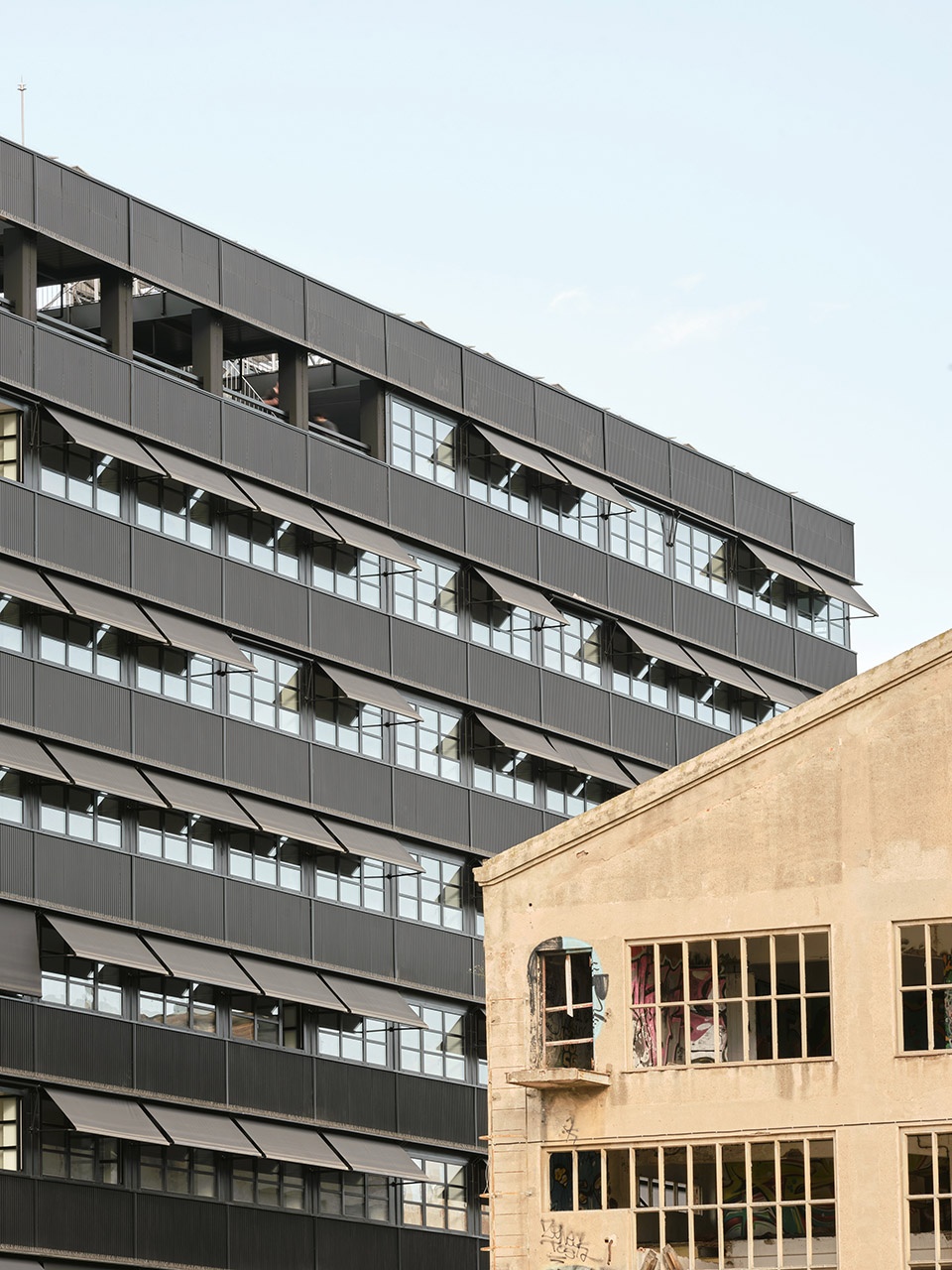
社区过渡空间设计Community transition
设计从主干道、过道、入口门廊逐步过渡至通往住宅的外部连廊,这些“架空外部通道”既处理了社区与住宅之间的关系,又作为过滤入口、加强邻里交流的中介空间。居民可将这些中间区域“占为己用”,形成生活的延伸空间。
A gradient is established from the main road, the passageway, the en- trance porch and the access walkways to the dwellings, which are under- stood as ‘elevated exterior passages’, resolving the transition between the community and the dwelling. The walkways fulfill the dual function of filtering the accesses to the dwellings and strengthening relations between neighbors through the appropriation of these intermediate spaces.
▼建筑立面,building facade
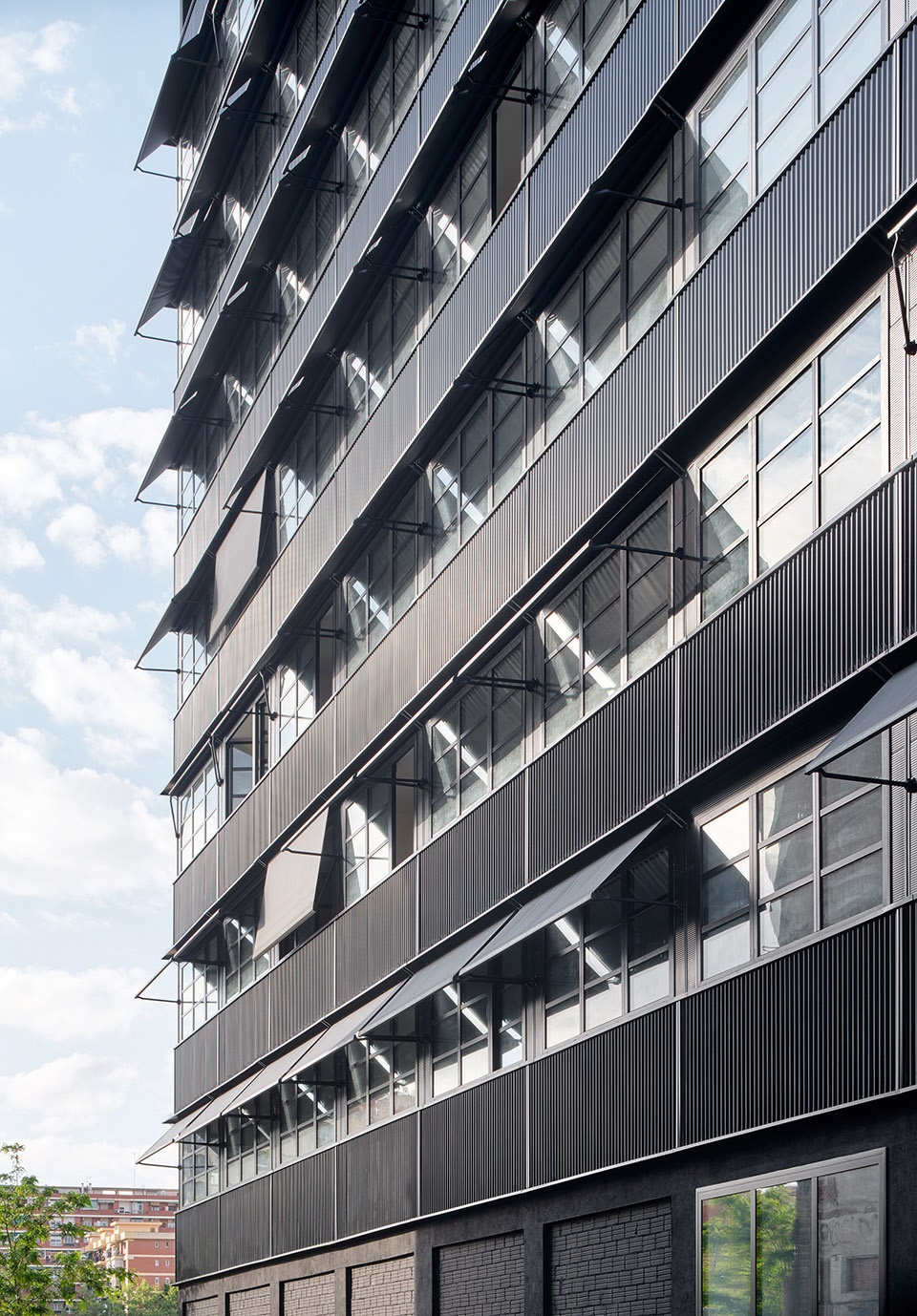
此外,建筑底层与屋顶还设有配套的共享空间,包括多功能活动区、大型社区露台、花园绿地及遮阳空间,服务于邻里使用。
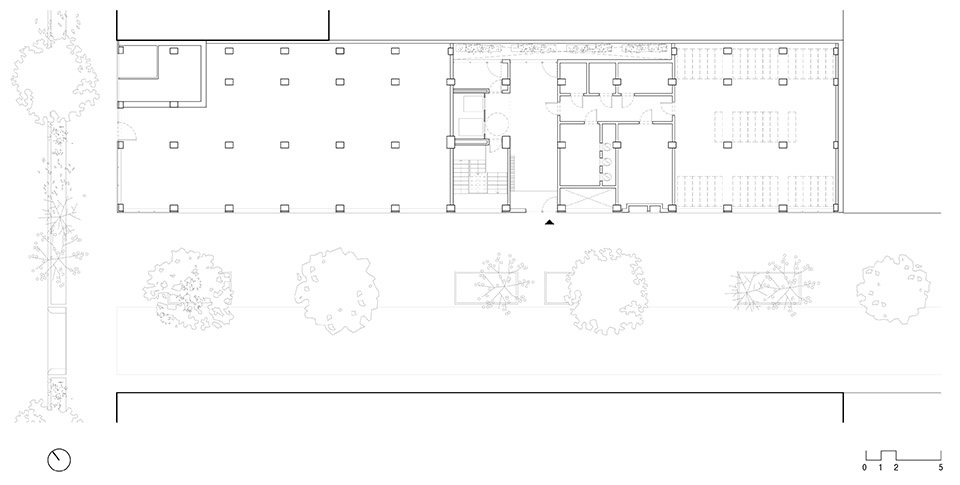
In addition, complementary communal spaces are proposed on the ground floor and roof of the building. These include multi-purpose areas, a large communal terrace with garden areas and shaded spaces for neighborhood use.
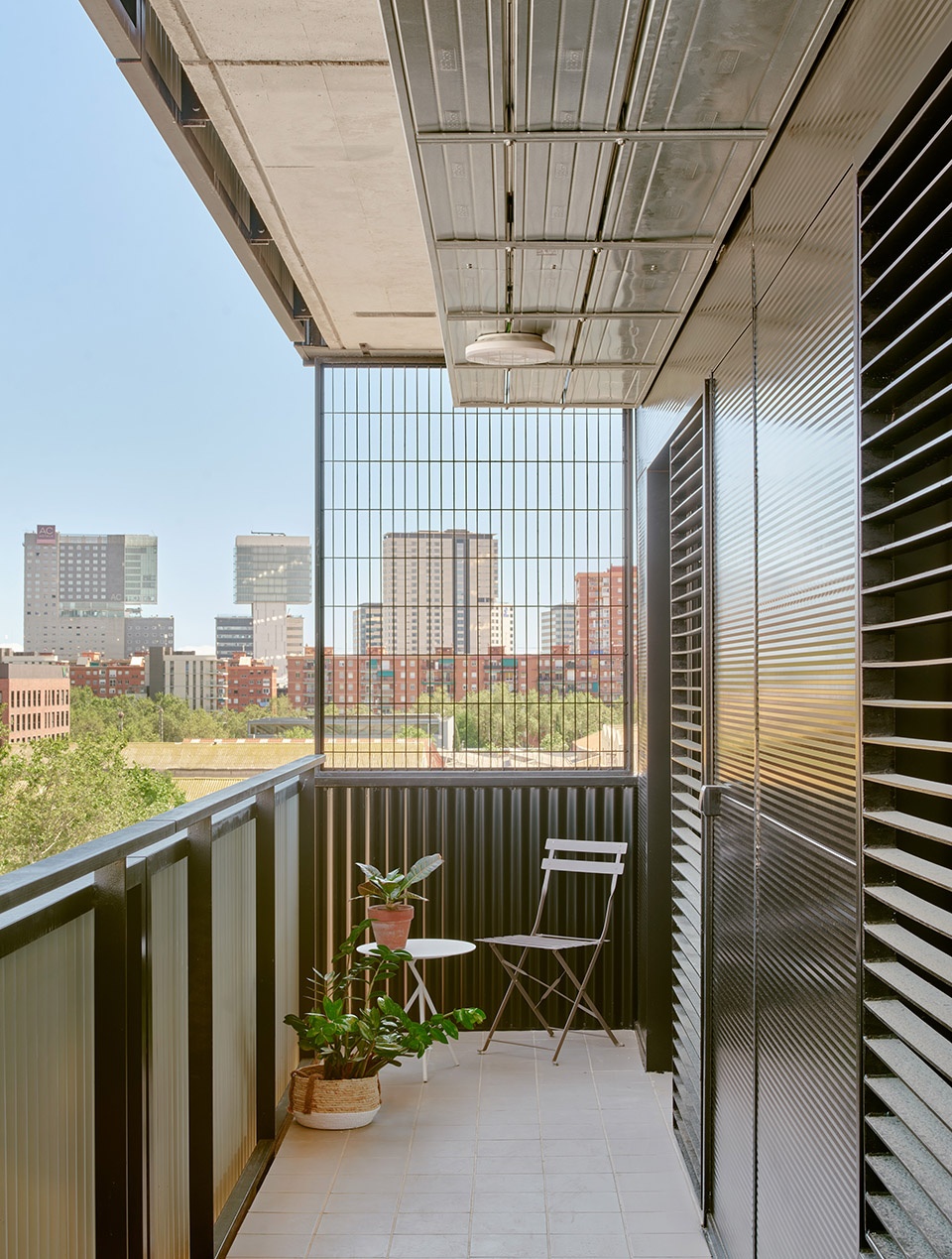
▼公寓阳台,apartment balcony
双重建造方式Construction duality
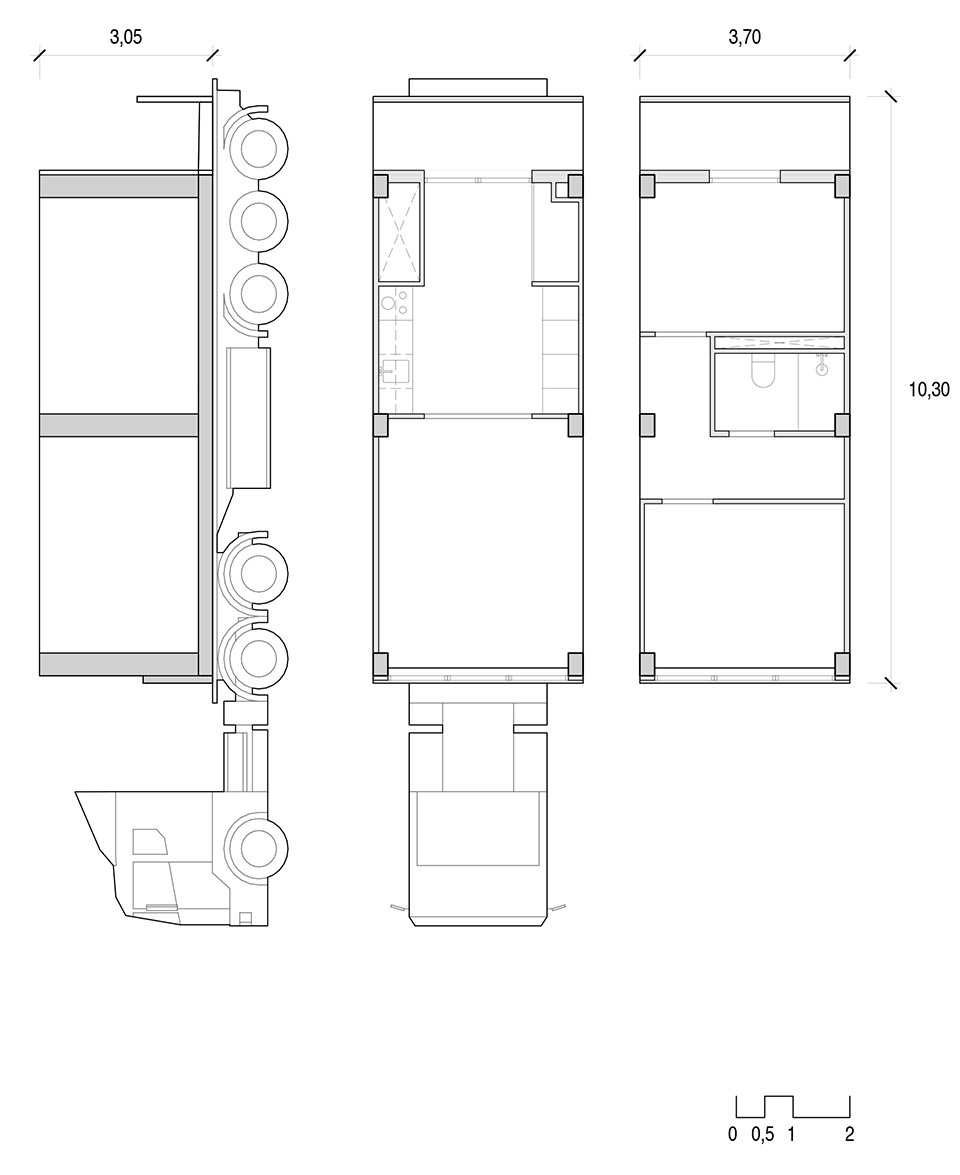
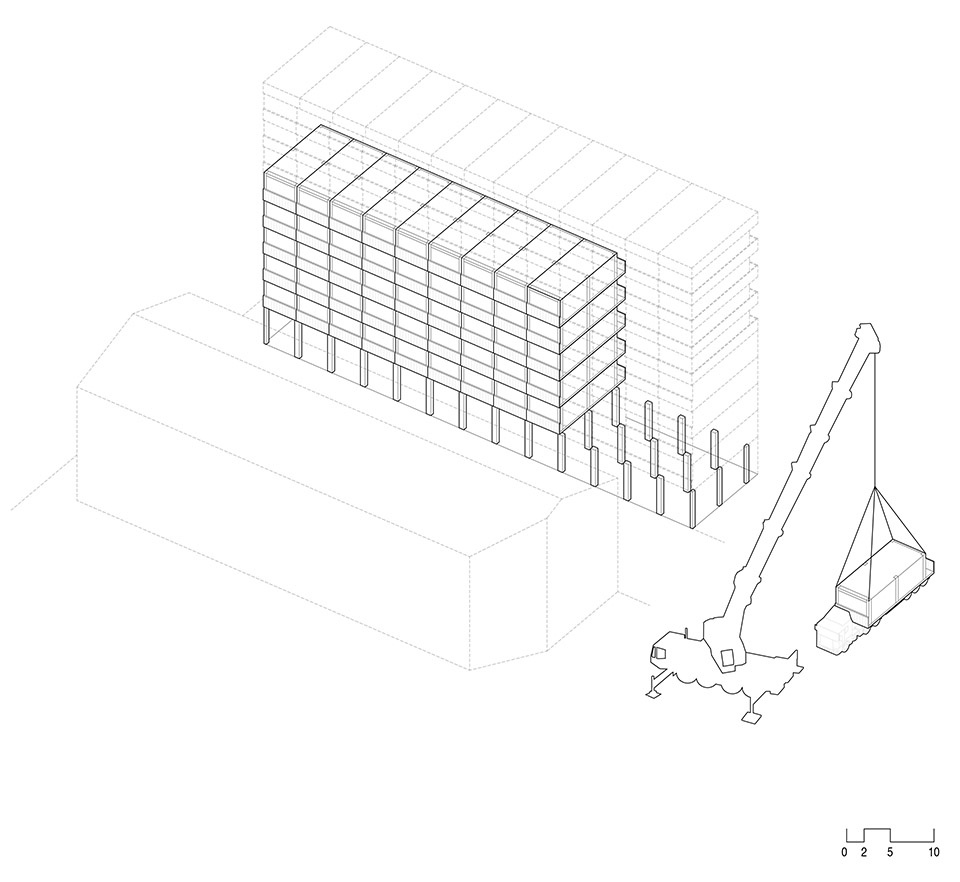
现场建造部分:地基与首层结构;工厂预制部分:依据制造方自有方法,在工厂完成结构、墙体、内部分隔、机电系统、饰面与设备一体化的三维模块。
– On-site construction: Foundations and ground floor.
– Off-Site construction: According to the manufacturing company’s own methodology of factory assembled 3D modules, equipped with structure, walls, internal divisions, installations, finishes and equipment.
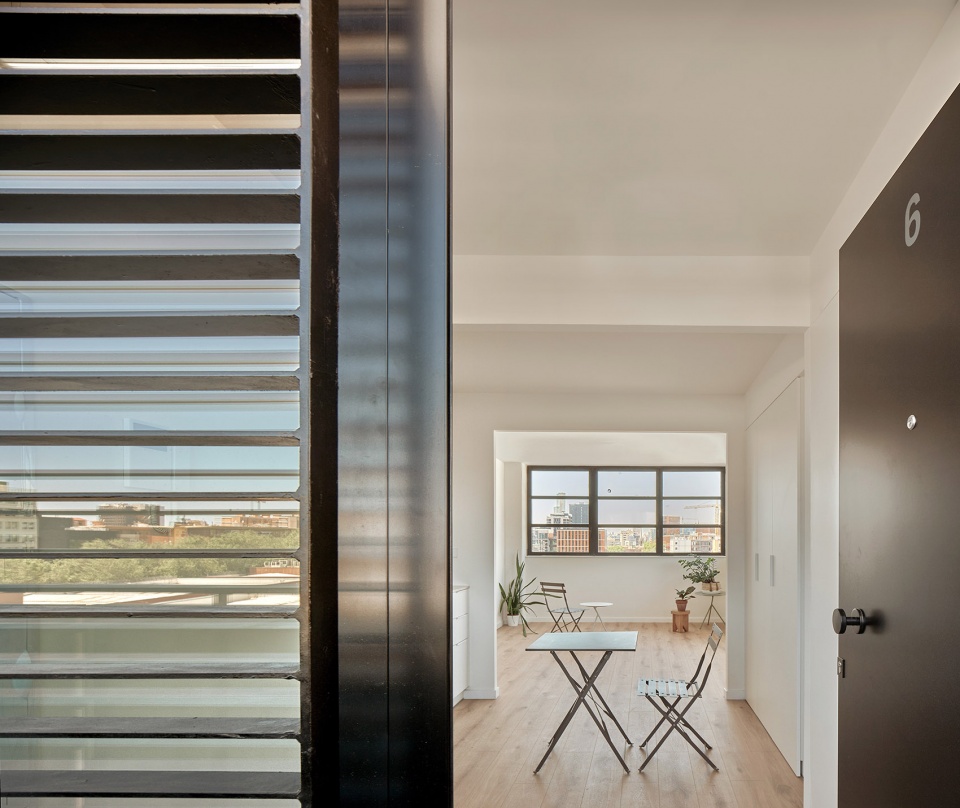
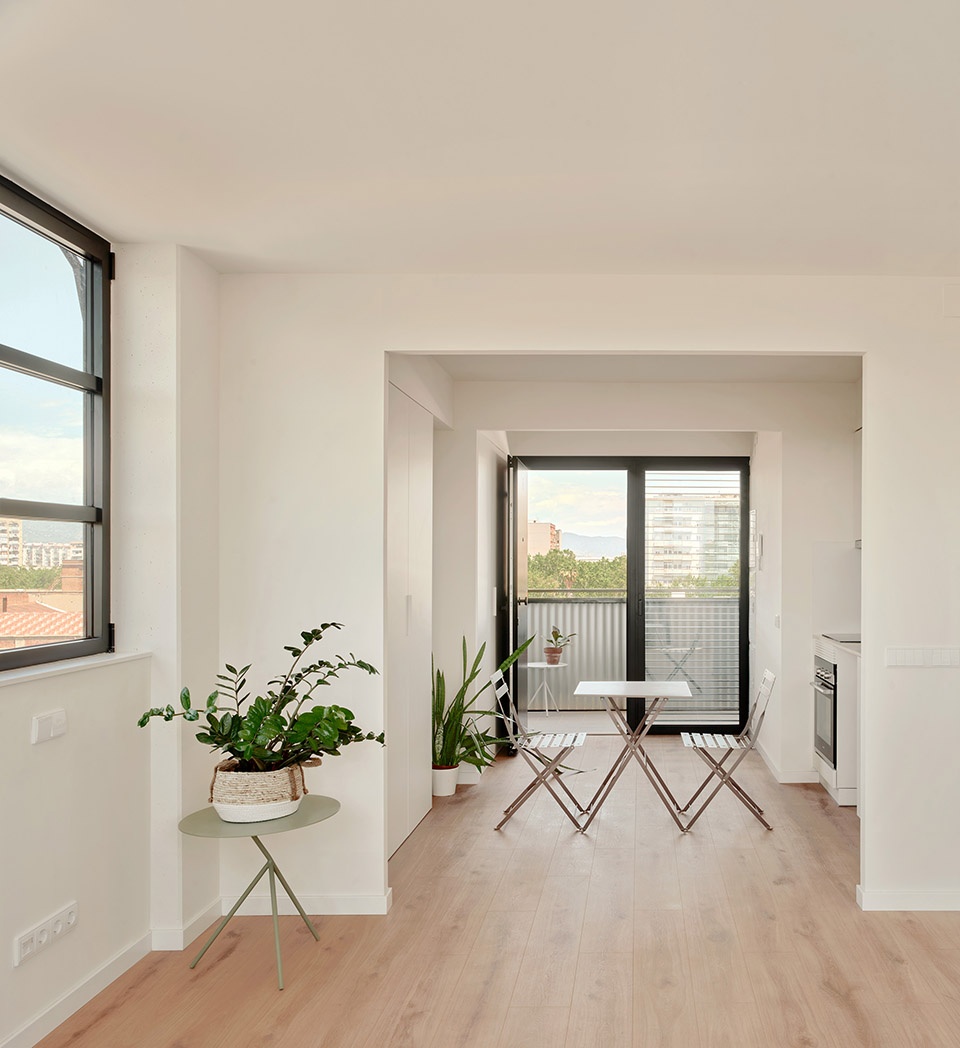
▼公寓内部空间,apartment interior
时间、成本与材料的优化Time, Cost and Material Optimisation
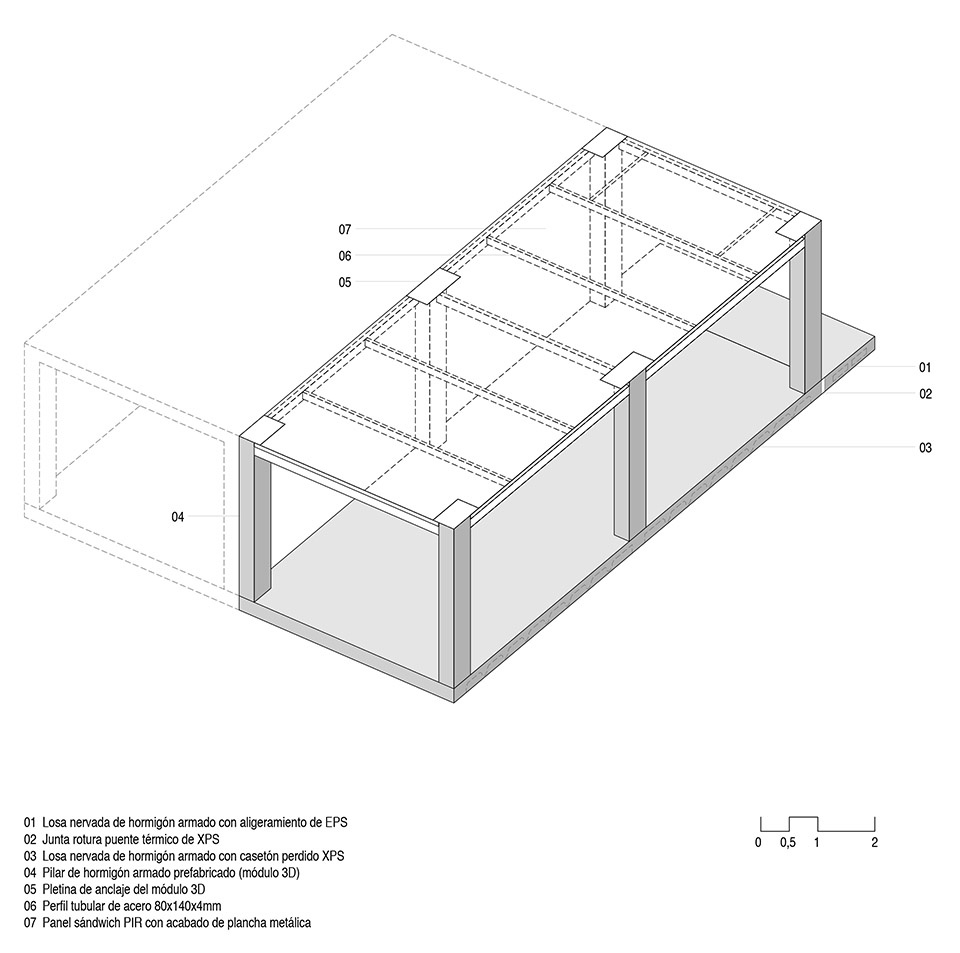
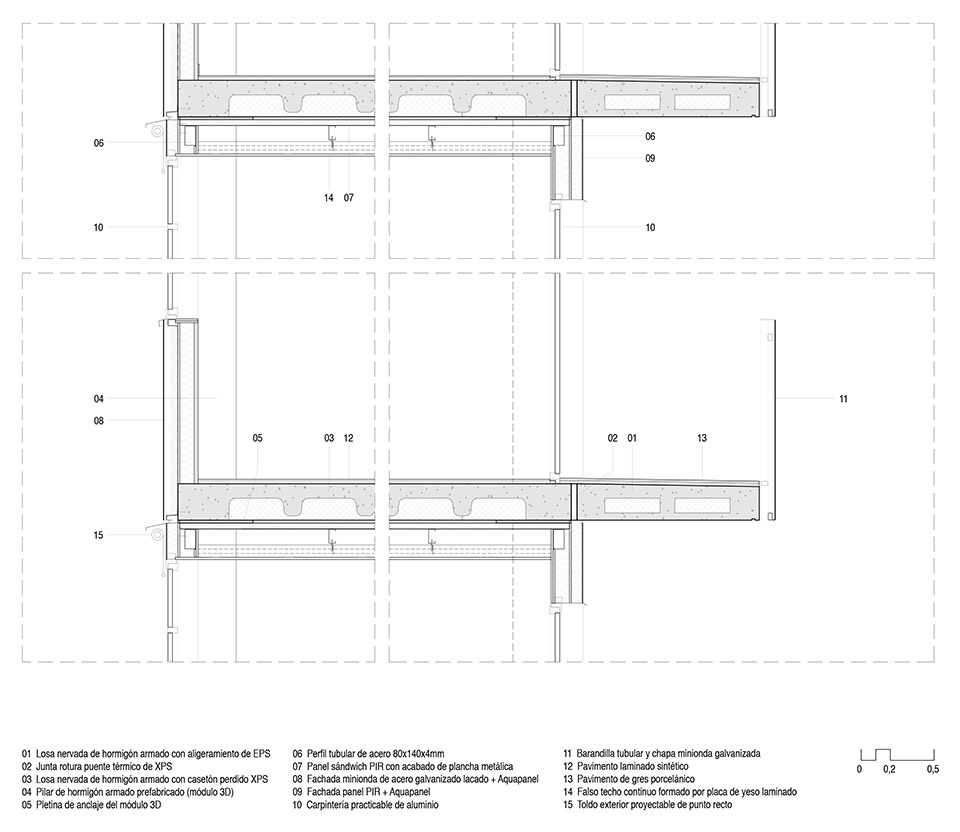
平面布局与跨度结构的理性组织促使设计采用框架式结构:混凝土柱与轻质钢筋混凝土楼板相结合。项目总计使用了 104 个预制三维模块,这些模块被运输至现场并在仅 15 天内完成拼装,大幅缩短了施工周期。由于所有建筑材料均为预制组件,项目通过精准计划、现场与工厂施工同步进行、最小运输距离等手段,全面提升了施工效率。这一策略还有效降低了建造成本(轻质结构与减少基础工程)、提升了质量控制(工厂标准化管理)、减少了施工过程中的环境影响(优化材料与减少废料),同时保障了材料生命周期闭环与施工过程中的安全与舒适性。
The structural rationality of the layout distribution and the spans to be covered led to the choice of a portico-like structures with concrete pillars and lightweight reinforced concrete slabs. The project consisted of a total of 104 prefabricated 3D modules, which were transported and assembled on site in just 15 days, enabling a signifi- cant reduction in construction times. As all building materials are prefabricated, construction times were optimised through precise planning, si- multaneous execution with the work on site and minimum displacements. This also helped to reduce construction costs: light structure and reduction of foundations; to improve quality control: factory controls; to reduce environmental impact during construction: optimization and reduction of waste; to ensure the closure of the life cycle of the materials at the end of the building’s life and to guarantee safety and comfort at work.
▼施工过程,construction progress
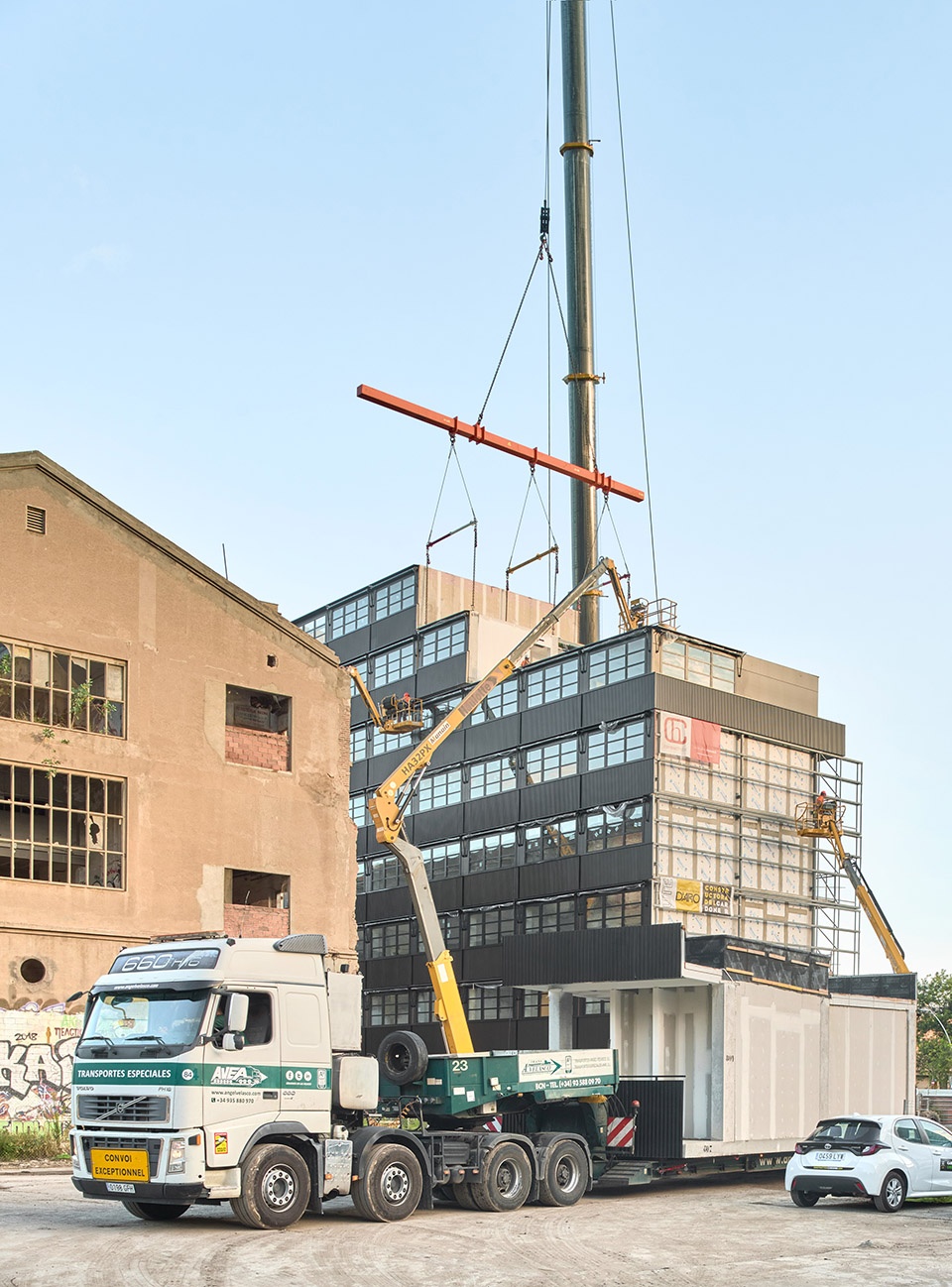
所有建筑构件的预制,确保了施工质量与材料耐用性。项目总工期仅为 13 个月。建筑机电系统的运行旨在最大限度降低能源与维护成本,相关设备已在工厂中进行测试,模块顶部采用防水处理,避免在运输与吊装过程中出现问题。
The prefabrication of all the elements has guaranteed the execution and durability of the materials. In addition, it allowed the work to be complet- ed in a total time of only 13 months. The operation of the installations has been designed to minimise energy and maintenance costs. The correct functioning of the installations has been tested in the factory, and the modules have been waterproofed at the top to avoid problems during transport and assembly with a heavy-duty mobile crane.
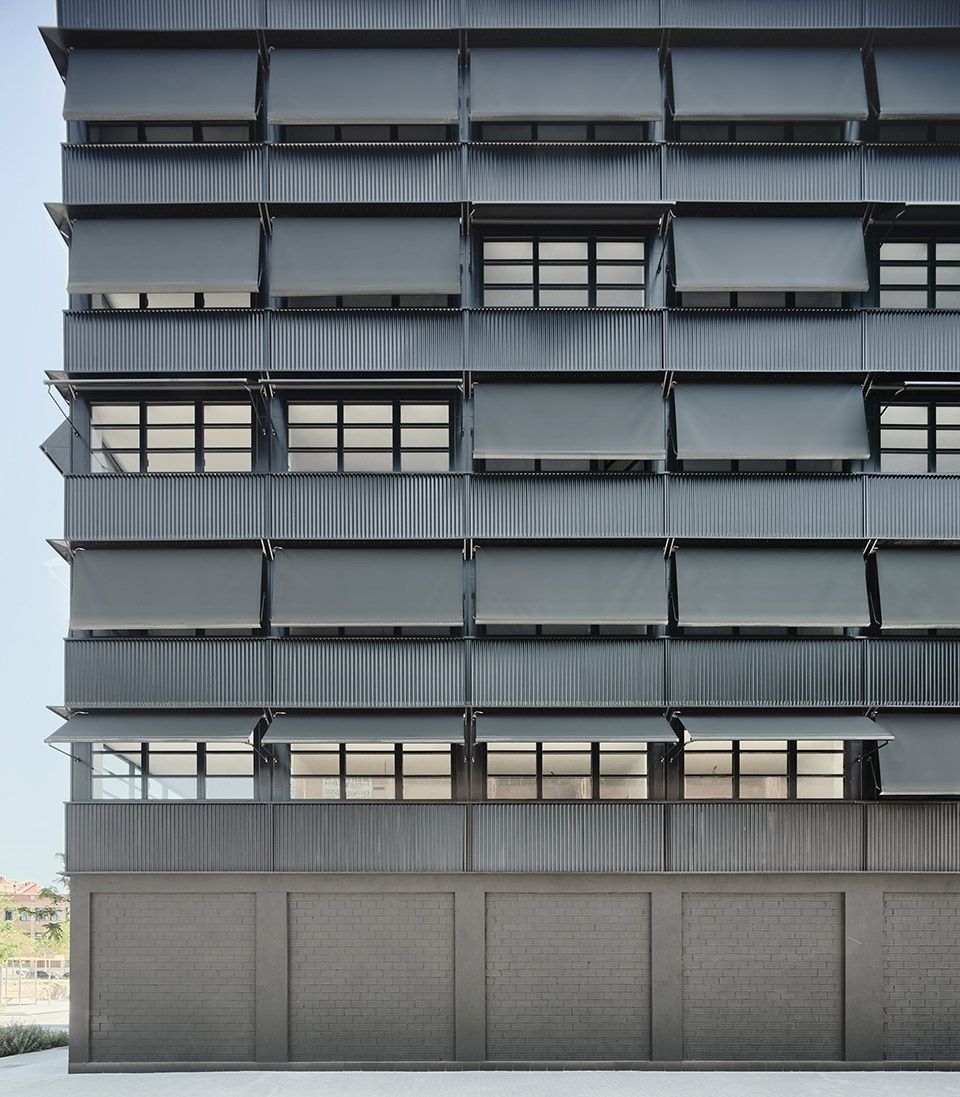
▼预制构件构成的立面,facade composed with prefabricated elements
可持续性设计Sustainability
建筑获得 A 级认证,结合了被动式与主动式策略以降低能源需求与消耗。其生物气候设计优化了热调节性能,同时引入高效系统,如 LED照明、空气源热泵与光伏系统,实现了近零非可再生能源的能耗水平。
The A-certified building combines passive and active strategies to re- duce energy demand and consumption. Its bioclimatic design optimists air conditioning, while efficient systems such as LED lighting, aero thermal and photovoltaic systems are incorporated to achieve near-zero consumption of non-renewable energy.
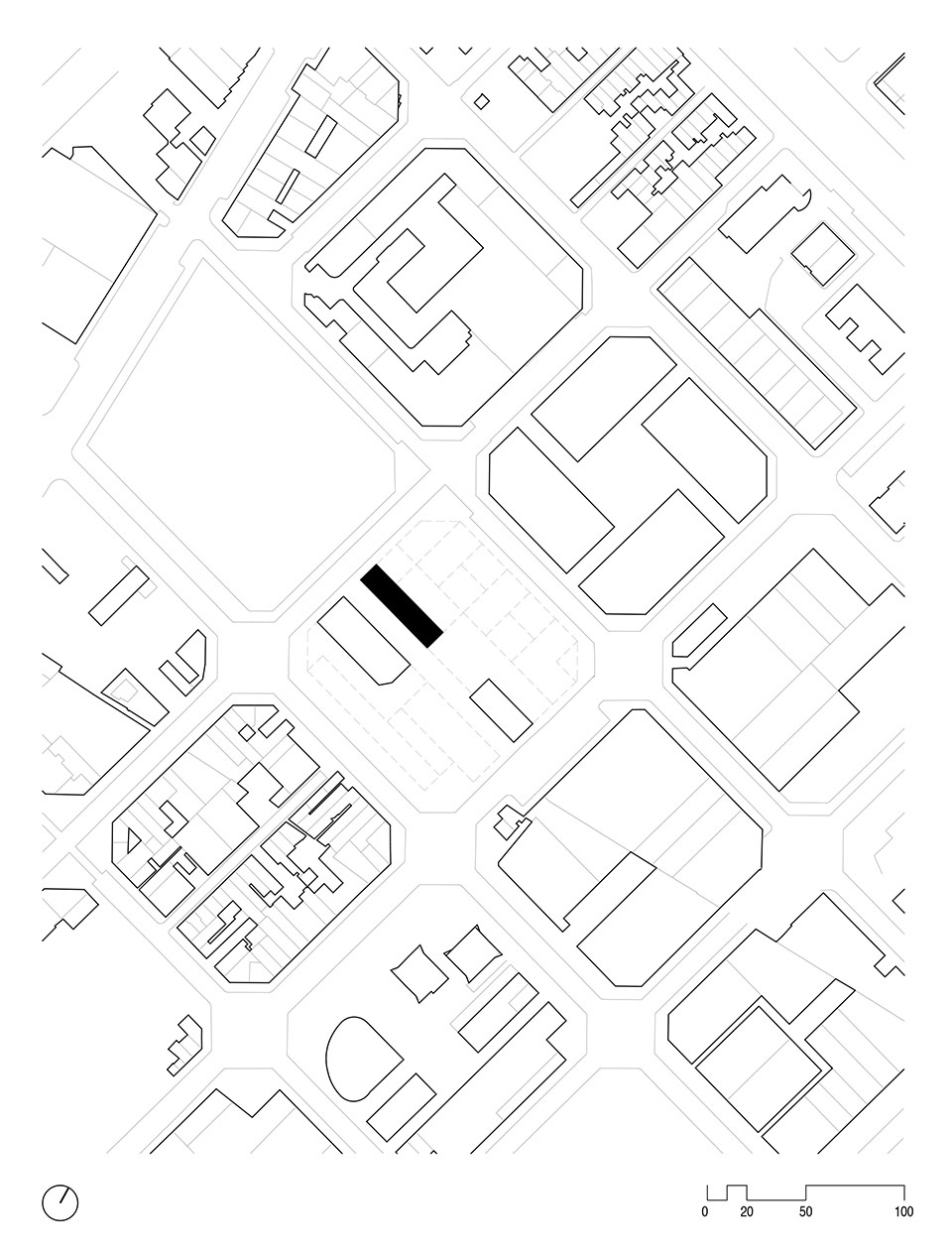
▼场地平面,site plan
▼一层平面,ground floor plan
▼标准层平面,standard floor plan
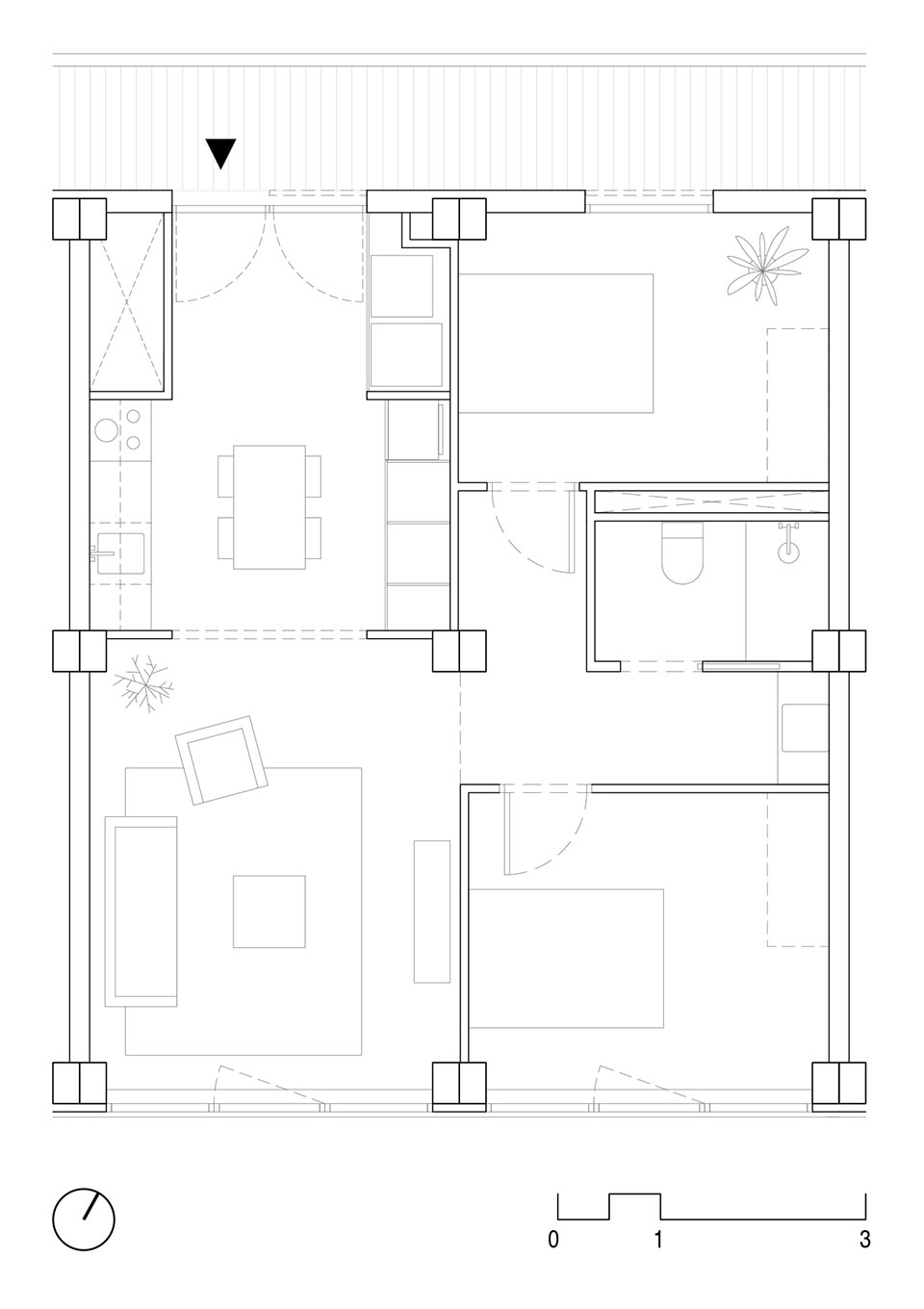
▼单元平面,dwelling unit detail
▼剖面,section
▼结构模块,structure module
▼居住模块,dwelling module
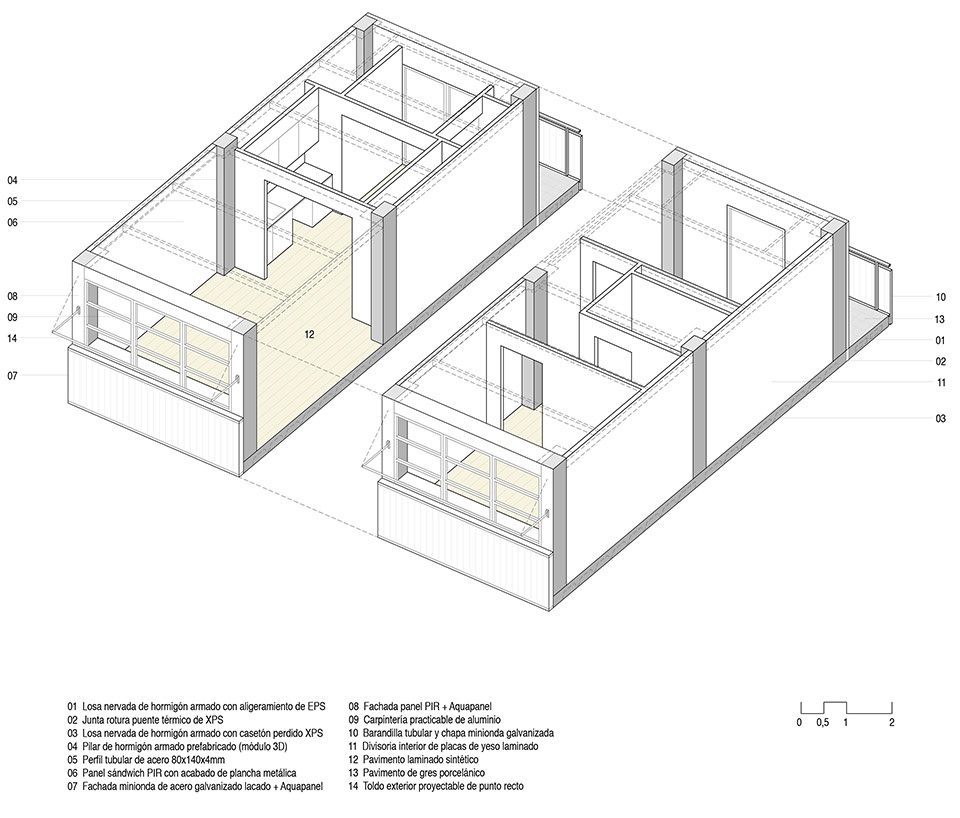
▼施工轴测,construction axonometry
▼细部,detail
▼预制件运输,transport scheme