pignic浅草店,日本 / KAMITOPEN
“土间”。Pignic Café 是一个让人们与迷你猪互动交流的空间。
“Doma” Pignic Café provides a space for people to interact with miniature pigs.
▼项目概览,overview of the project
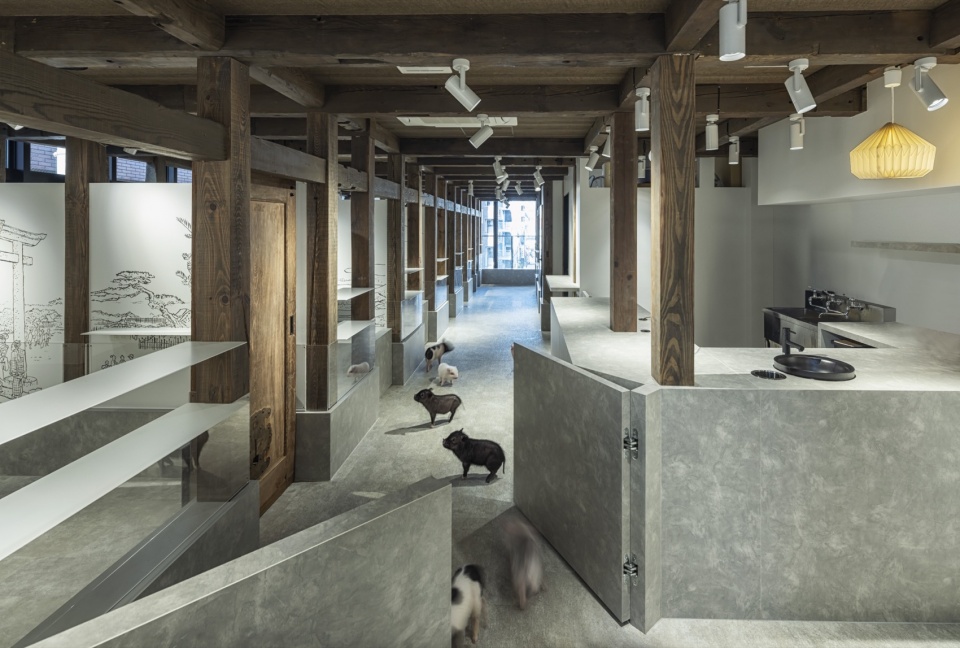
“土间(Doma)”是日本传统民居中常见的一种夯土地面空间。在过去,它承担着多种功能——用于维护和存放农具、烹饪食物、与邻里交谈,也是社区交流的重要场所。而在现代,“土间”的角色逐渐演变为迎接宾客的空间、兴趣爱好的活动区域,或是儿童的游乐空间。在pignic浅草店的设计中,我们将“土间”的概念融入空间之中,创造出一种人与猪之间全新的互动场所。
Doma refers to a traditional earthen-floored area often found in old Japanese farmhouses. It served many purposes—maintaining and storing farming tools, cooking, chatting with neighbors, and acting as a hub for community interaction. In modern times, its role has evolved into a welcoming space for guests, a hobby area, or a play space for children. At the Pignic Asakusa location, we incorporated the concept of doma into the design, creating a new kind of interaction space between people and pigs.
▼人们与迷你猪互动交流的空间,space for people to interact with miniature pigs
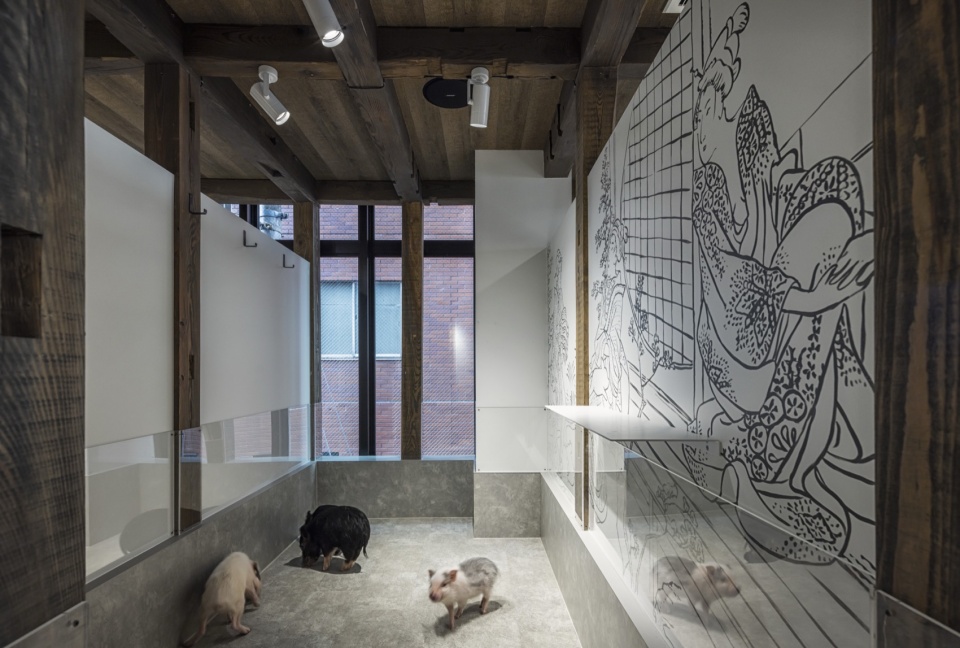
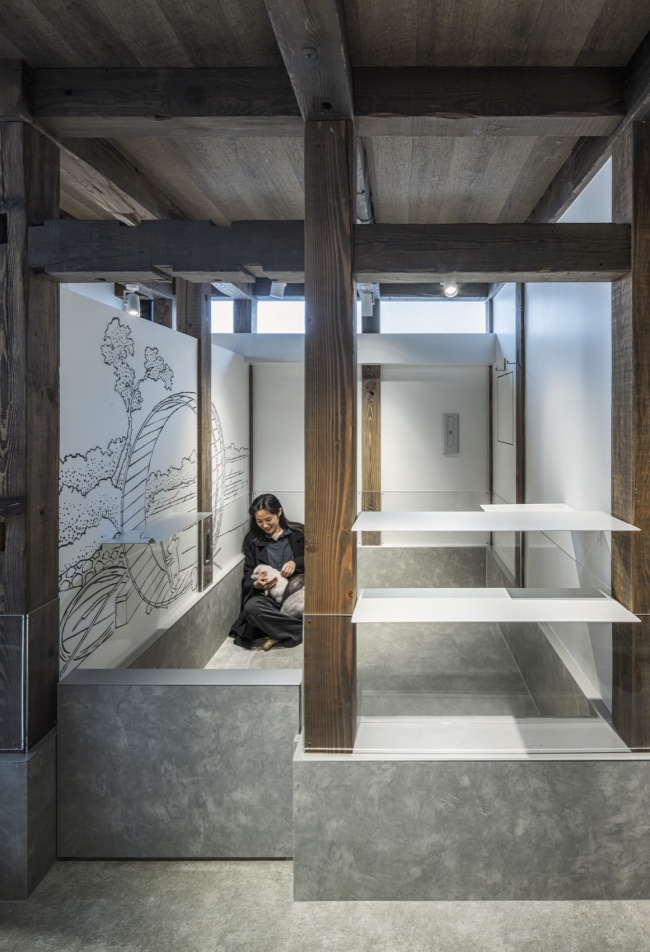
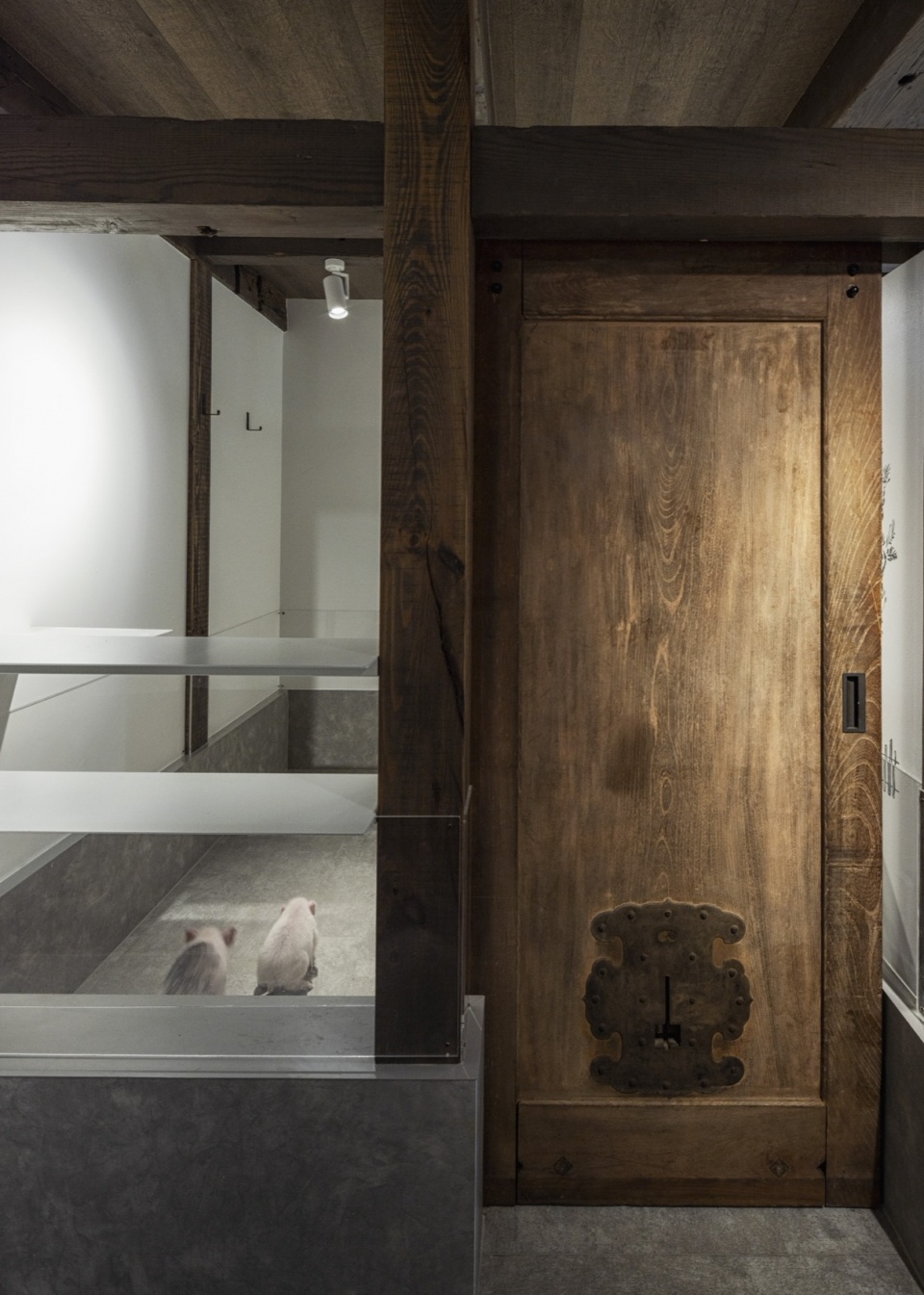
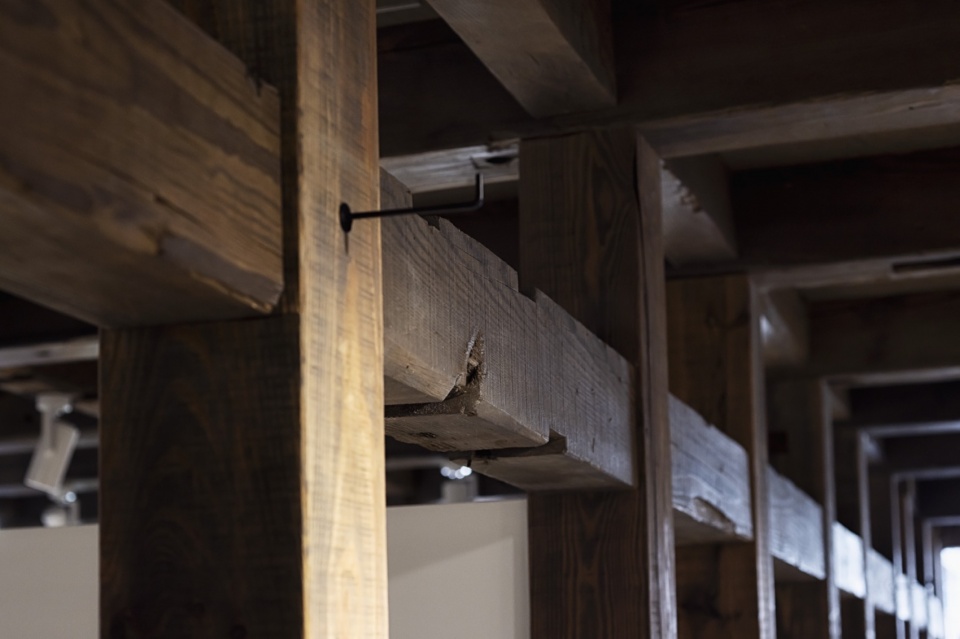
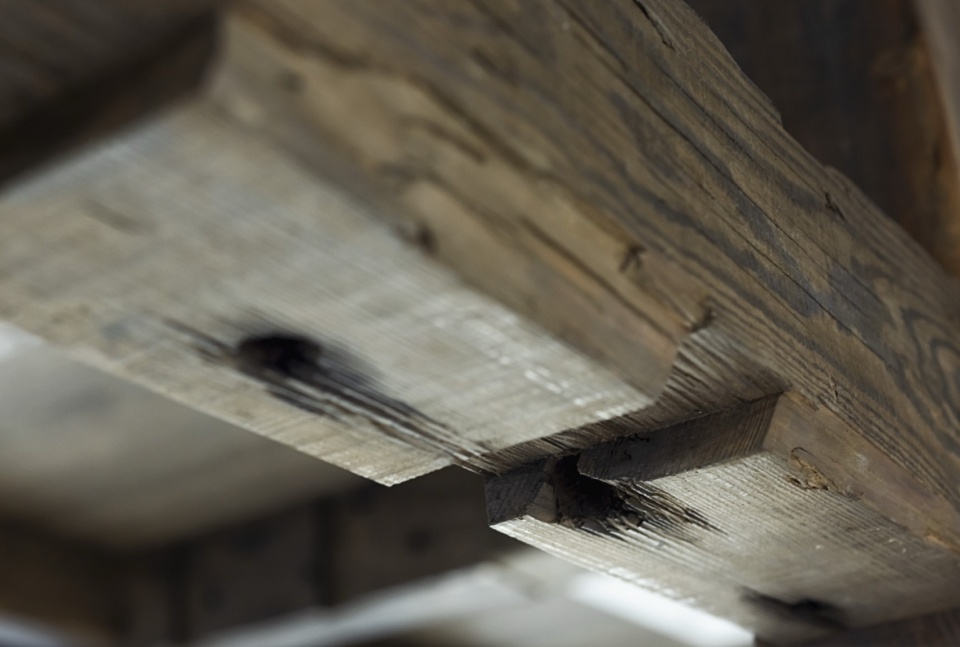
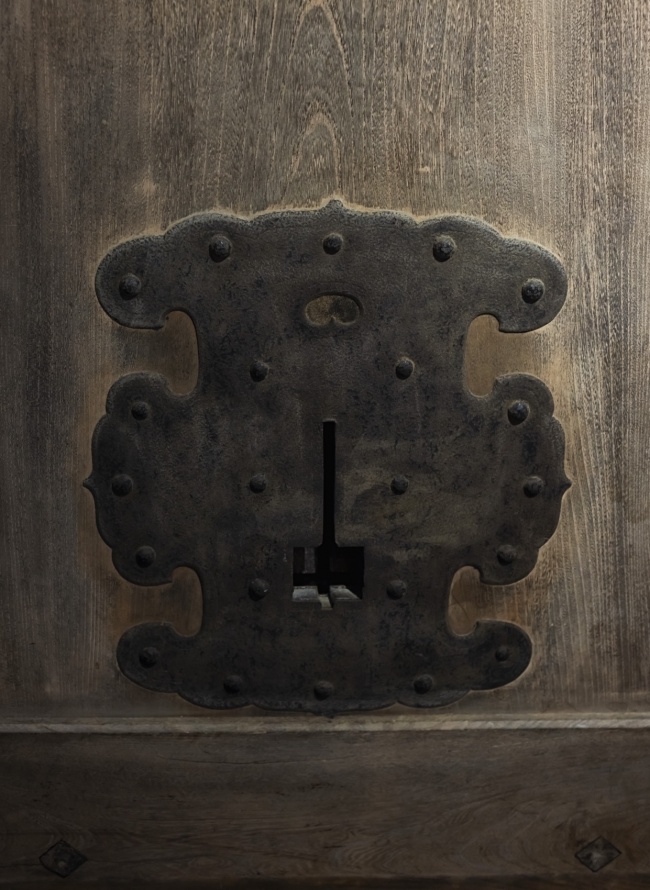
在实践层面,我们尝试将因地震受损的石川县能登地区传统民居中的旧木材重新利用,以探索一种新的灾后重建支援方式。同时,我们也希望营造一个能够让国际游客感受到日本精神的空间。
In practice, we reused old timber from a traditional house in the Noto region of Ishikawa Prefecture, which was damaged in an earthquake, as a way to explore new forms of reconstruction support. At the same time, we aimed to create a space where international visitors can feel the spirit of Japan.
▼旧木材重新利用,reused old timber
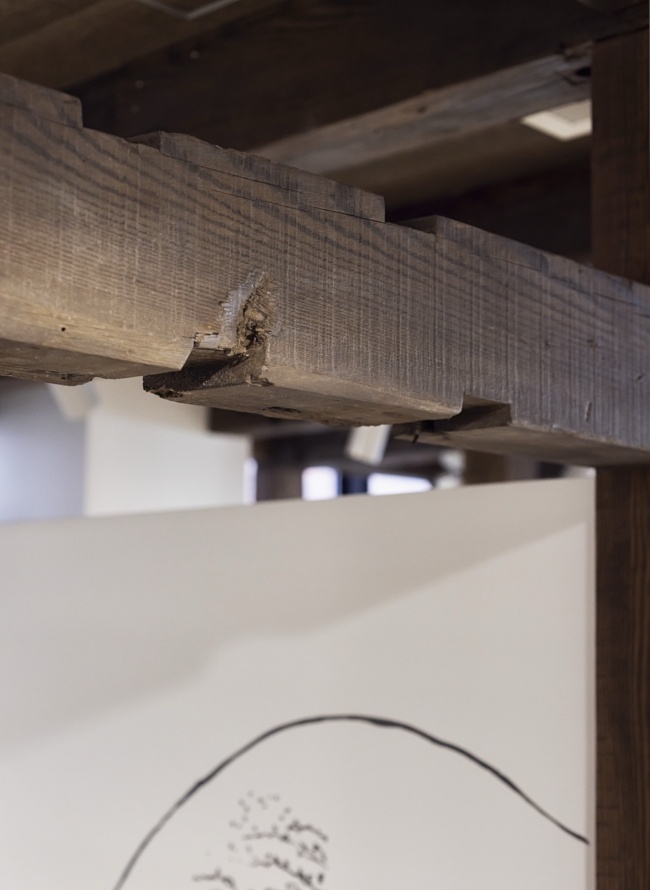
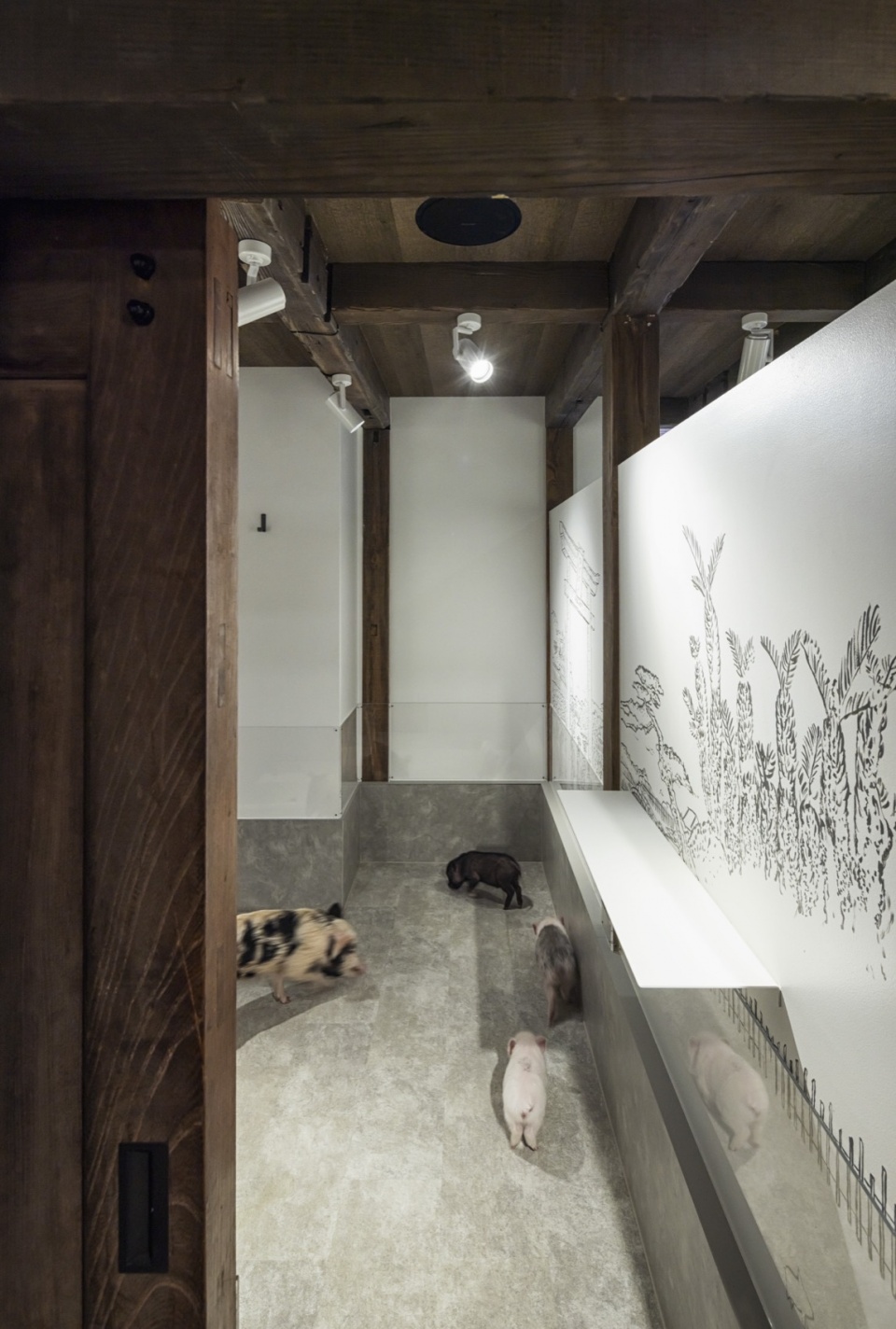
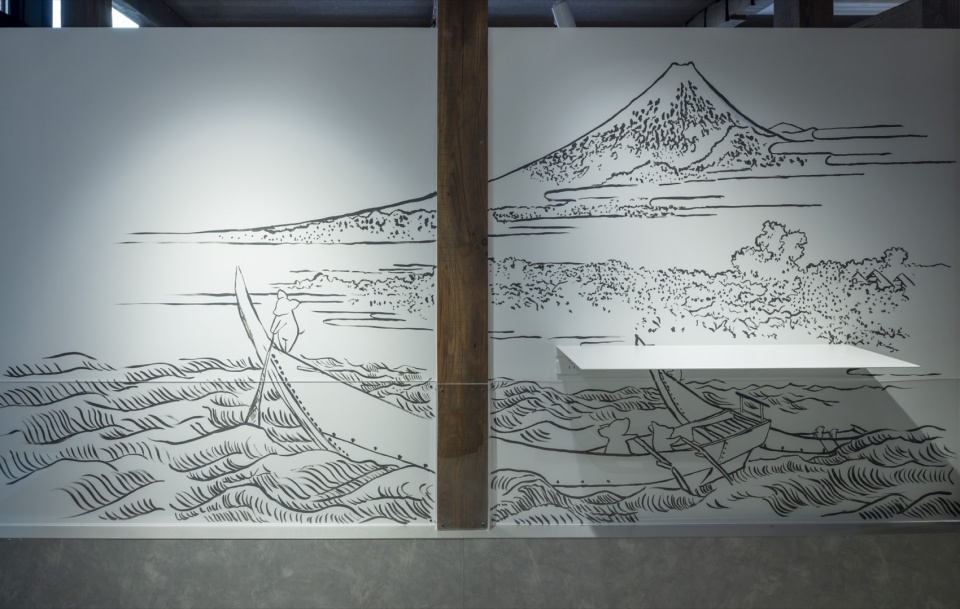
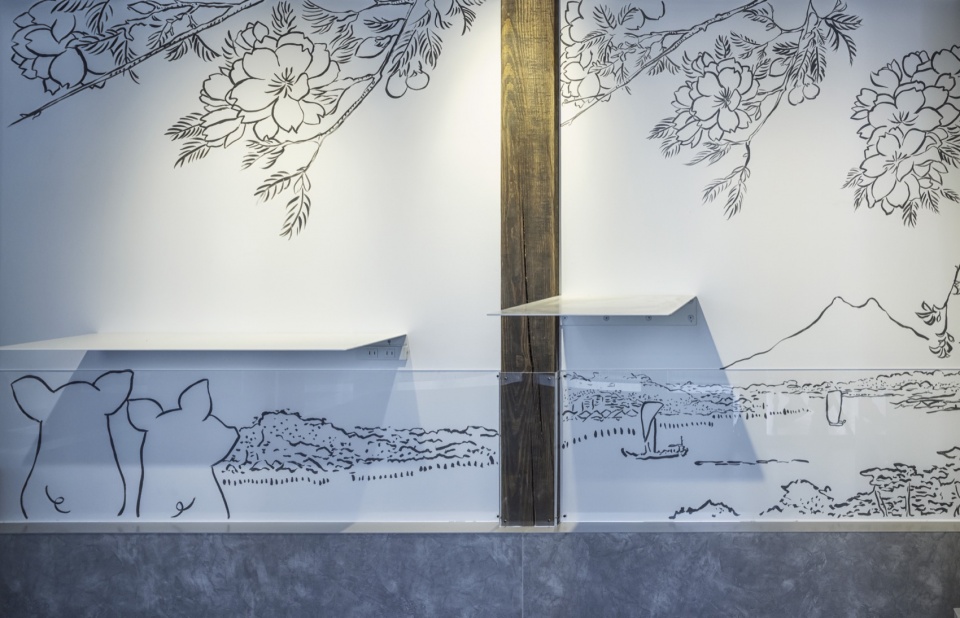
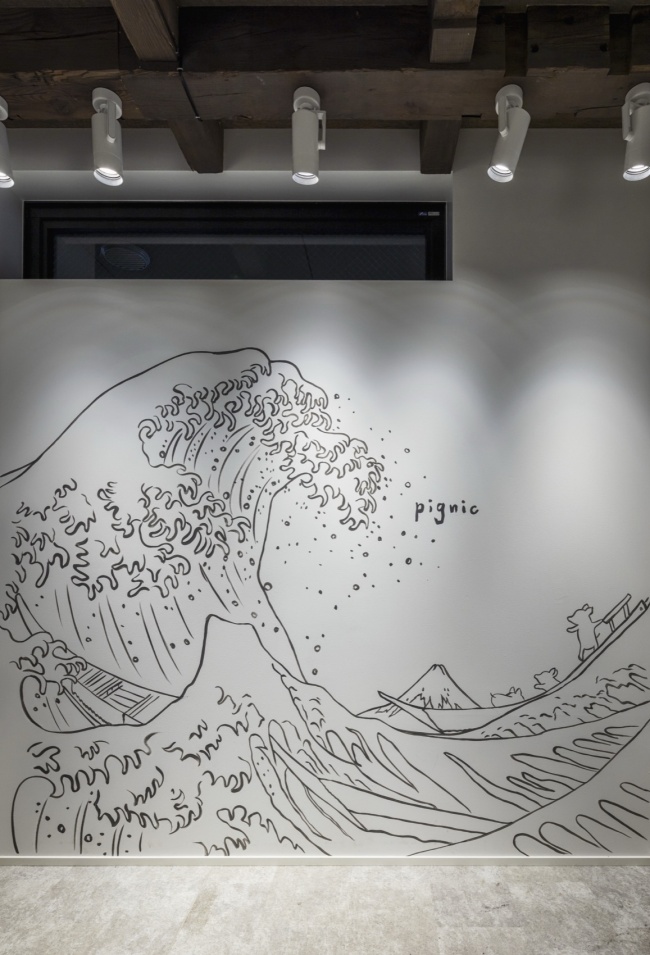
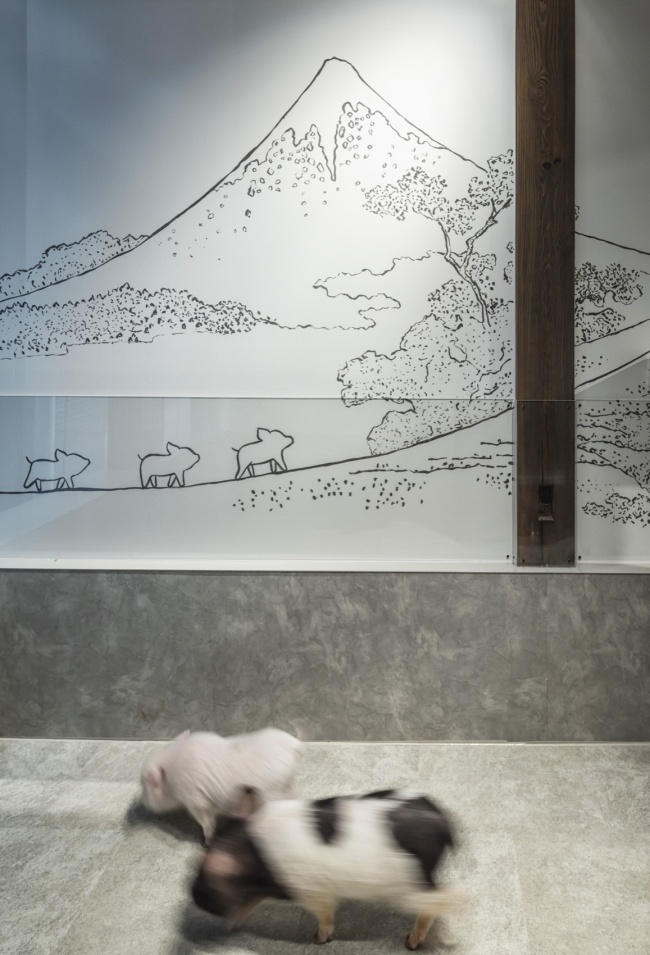
考虑到浅草聚集着大量海外游客,我们还以日本具有代表性的浮世绘元素为基础,通过新的诠释方式完成了墙面艺术设计。
Given that Asakusa attracts many foreign tourists, we also designed the wall art using new interpretations of Japan’s iconic ukiyo-e (woodblock print) motifs.
▼浮世绘元素,ukiyo-e
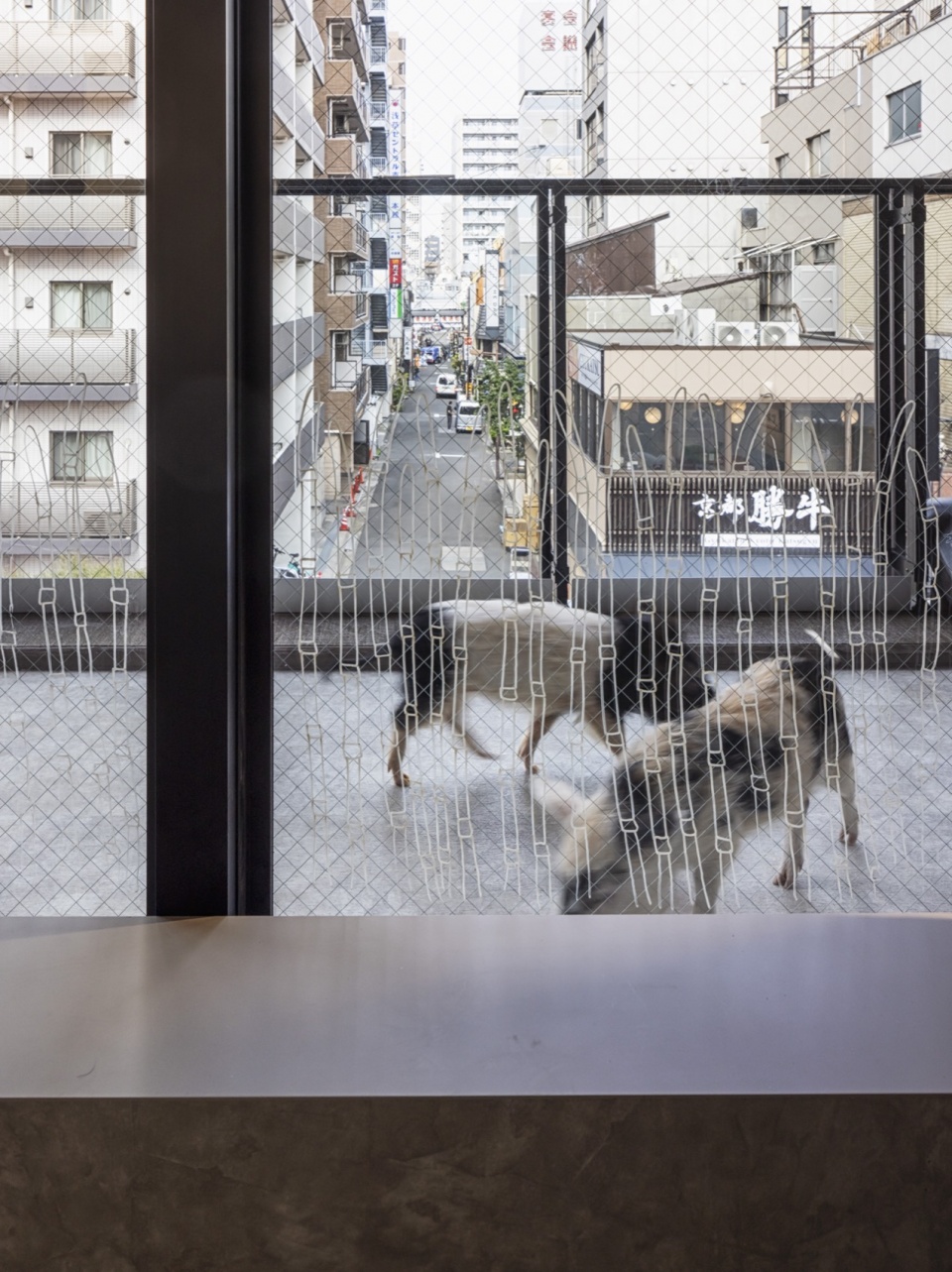
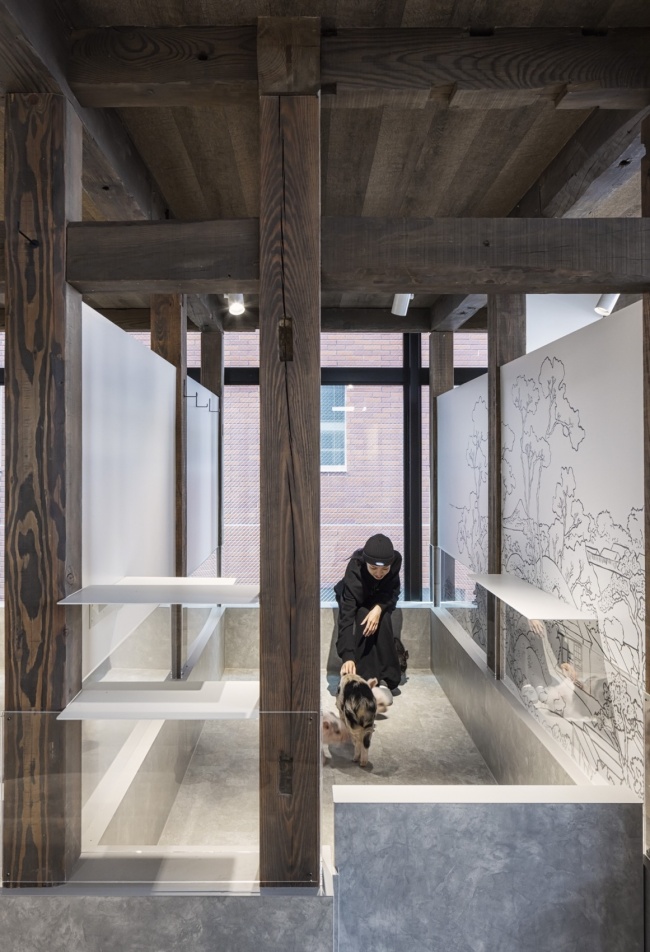
在这里,我希望能够诞生丰富多样的交流——无论是猪与人之间的交流,还是日本人与外国人之间的交流。
Here, I hope for the birth of many types of communication—between pigs and people, between Japanese and foreigners.
▼互动场所,interaction space