Studio Saransh新办公空间 & “绿洲”,印度 / Studio Saransh
从喧嚣的市中心搬迁至艾哈迈达巴德宁静的郊区,标志着Studio Saransh在工作空间与设计理念上的一次重要转变。这一迁移不仅是为了解决原有空间不足的问题,更源于远离城市快节奏生活混乱的渴望。新园区被恰如其名地命名为 “Oasis 绿洲”,坐落于一片开阔的自然环境中,旨在通过自然与建筑的无缝融合,重新定义办公空间。围绕这一理念,建筑顺应地形展开,激发创造力;空间布局经过精心规划,在鼓励协作与支持多样工作方式的同时,始终保持人与自然的紧密联系。
The relocation from a bustling city centre to the tranquil suburbs of Ahmedabad marks a significant shift in Studio Saransh’s workplace and philosophy. This move was transpired not only from the lack of space but also the desire to be away from the chaos of the city’s fast paced lifestyle. The new campus, aptly titled Oasis, sits within an expansive open area, with the aim to redefine workspace by seamlessly integrating nature with the built-fabric. Designed with that thought in mind, the studio adapts itself around the landscape to foster creativity. The spaces are carefully planned to encourage collaboration, support diverse work preferences while at the same time, maintaining a strong connection to nature.
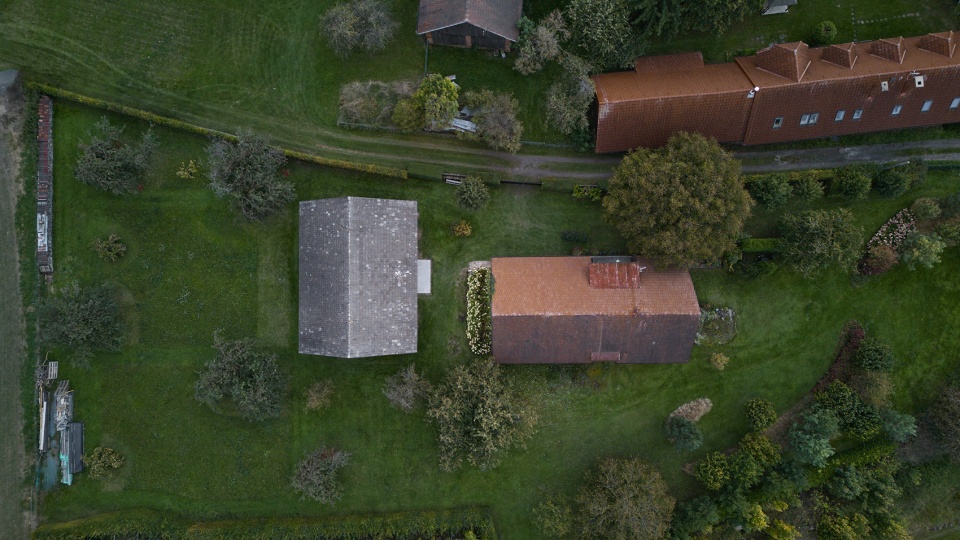
▼项目概览,overall of the project
▼建筑概览,overall of the building
我们的建筑事务所经历了一次转变性的迁址,从喧嚣的城市景观迁往艾哈迈达巴德宁静的郊区。这一决定不仅是因为原有工作室空间不足,更源于希望远离高速运转城市所带来的混乱。新的园区坐落于一片开阔的场地中,试图重新定义“工作空间”的含义,将自然与办公环境和谐地融合在一起。基于这一理念,事务所的建筑顺应地形展开,以滋养创造力的流动。空间布局经过精心组织,旨在促进协作,包容多样的工作偏好,同时实现与自然之间的无缝连接。
Our architectural studio has undergone a transformative relocation from a bustling urban landscape to the tranquil suburbs of Ahmedabad. This decision came from not only lack of space in the existing studio, but also the need to be away from the chaos of a very fast paced city. The new studio campus, set within an open expanse, attempts to redefine a workspace, harmoniously integrating nature with the working environment. Designed with this in mind, the Studio adapts itself around landscape to nurture a flow of creativity. The spatial planning is a careful orchestration to foster collaboration, accommodate diverse work preferences and seamlessly connect with nature.
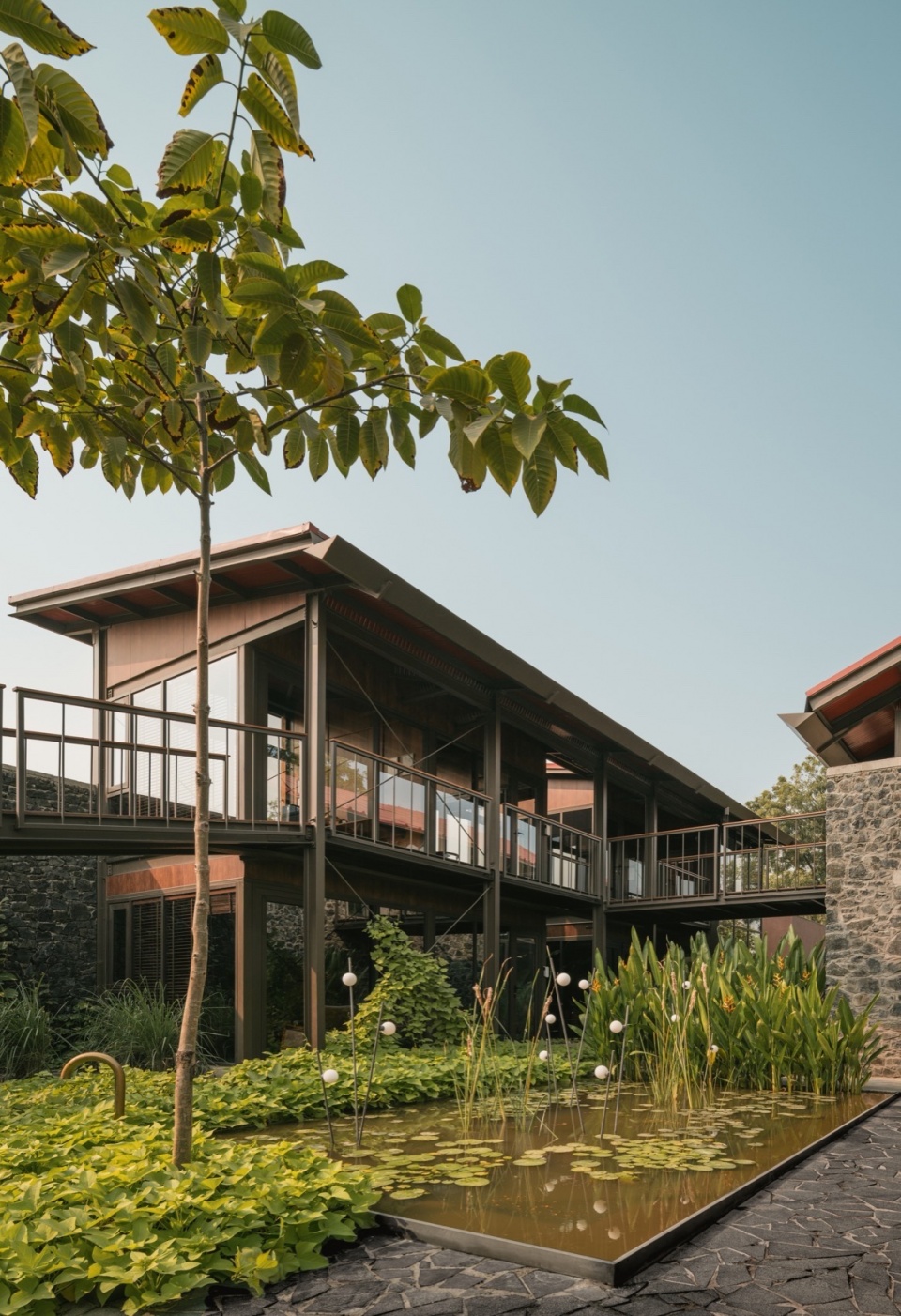
▼入口水景,waterscape at the entrance
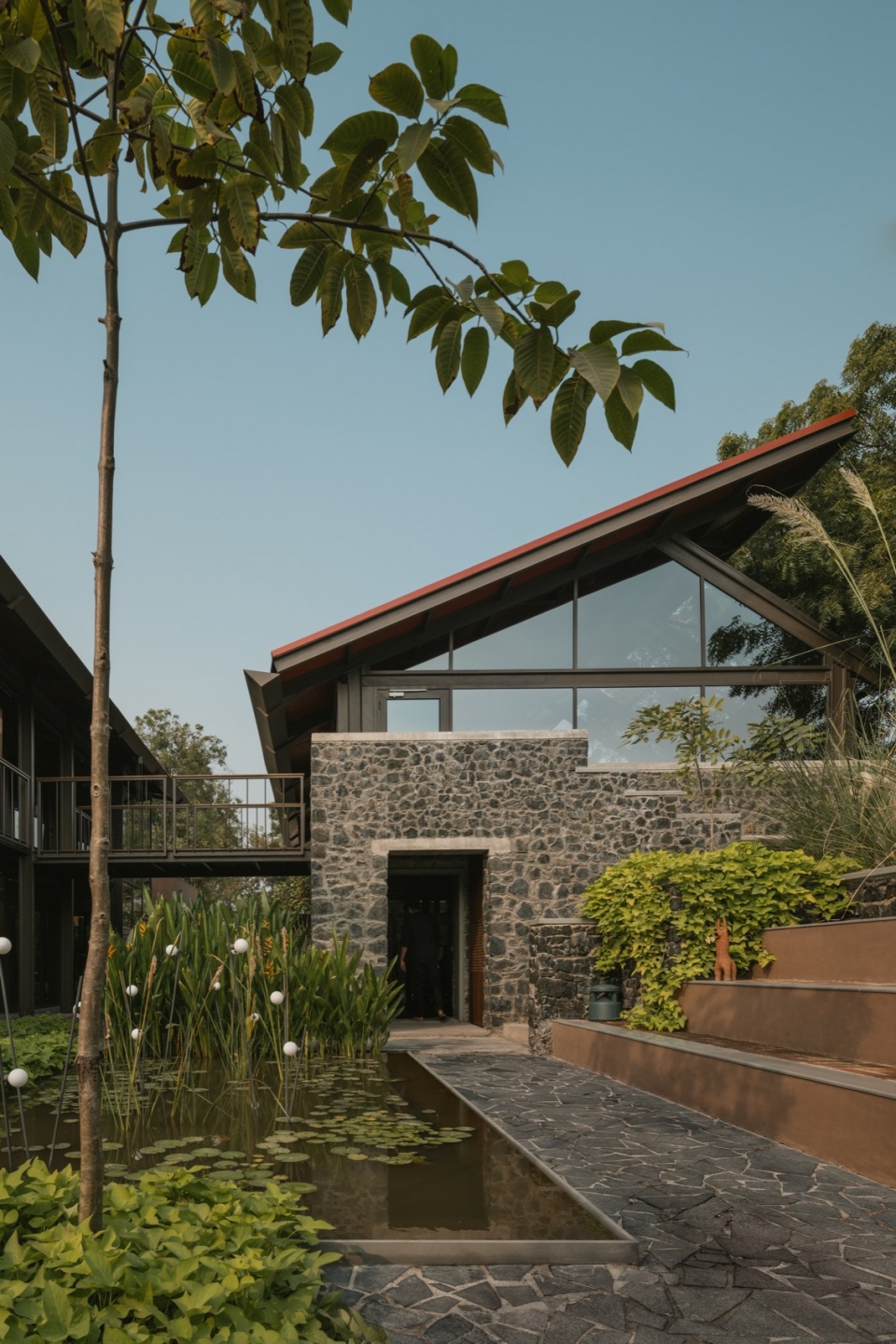
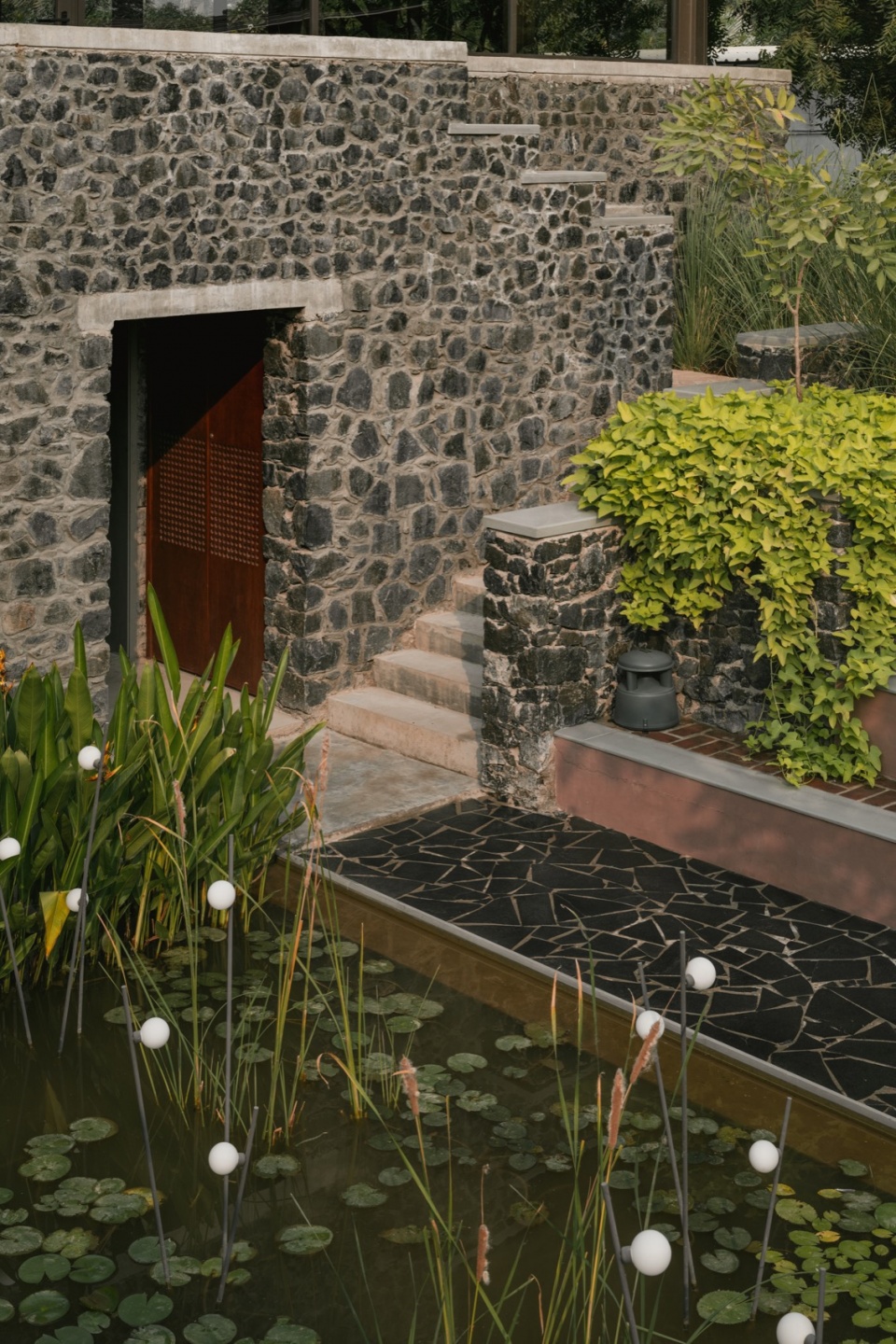
▼建筑之间由连桥相连,the buildings are connected by bridge
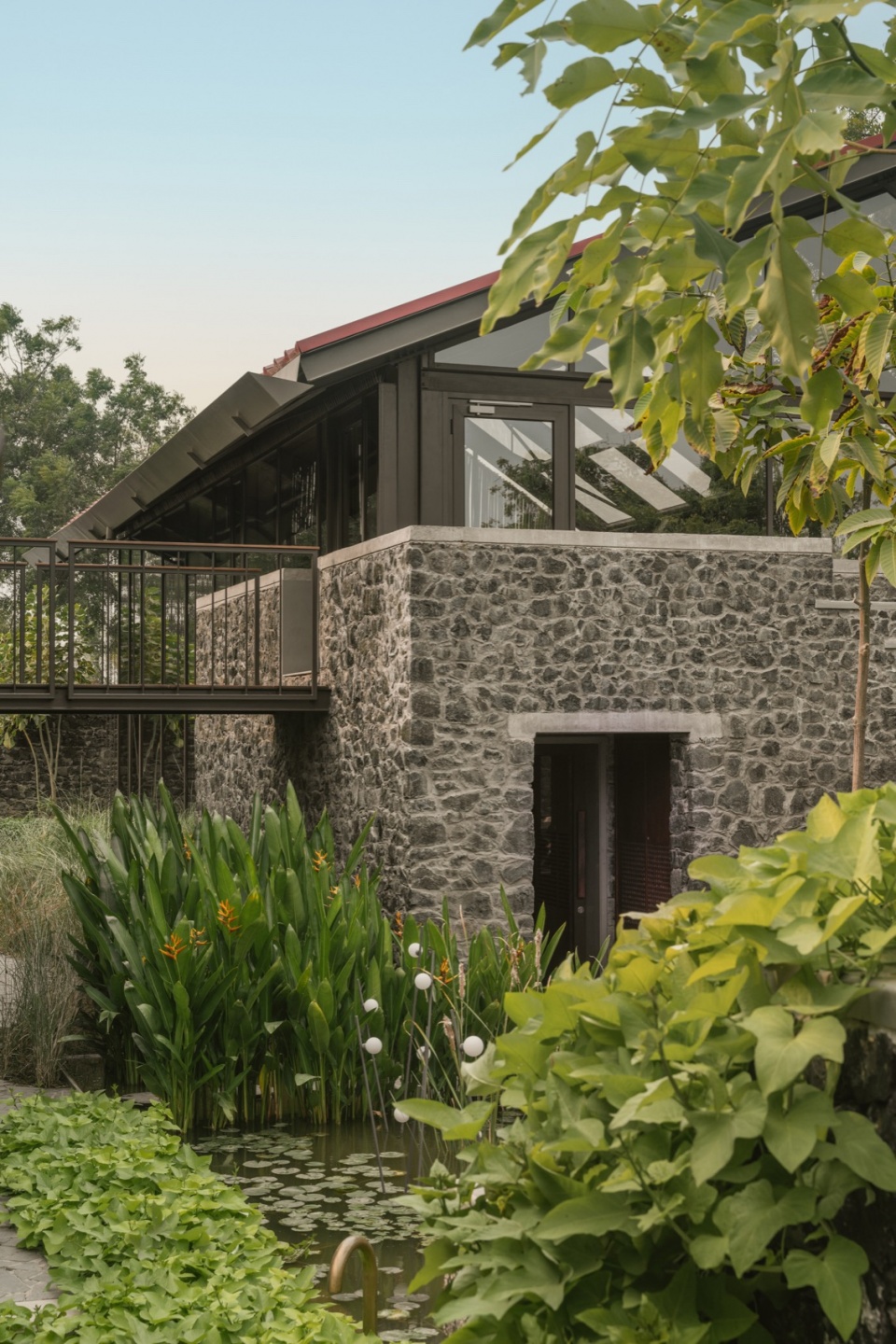
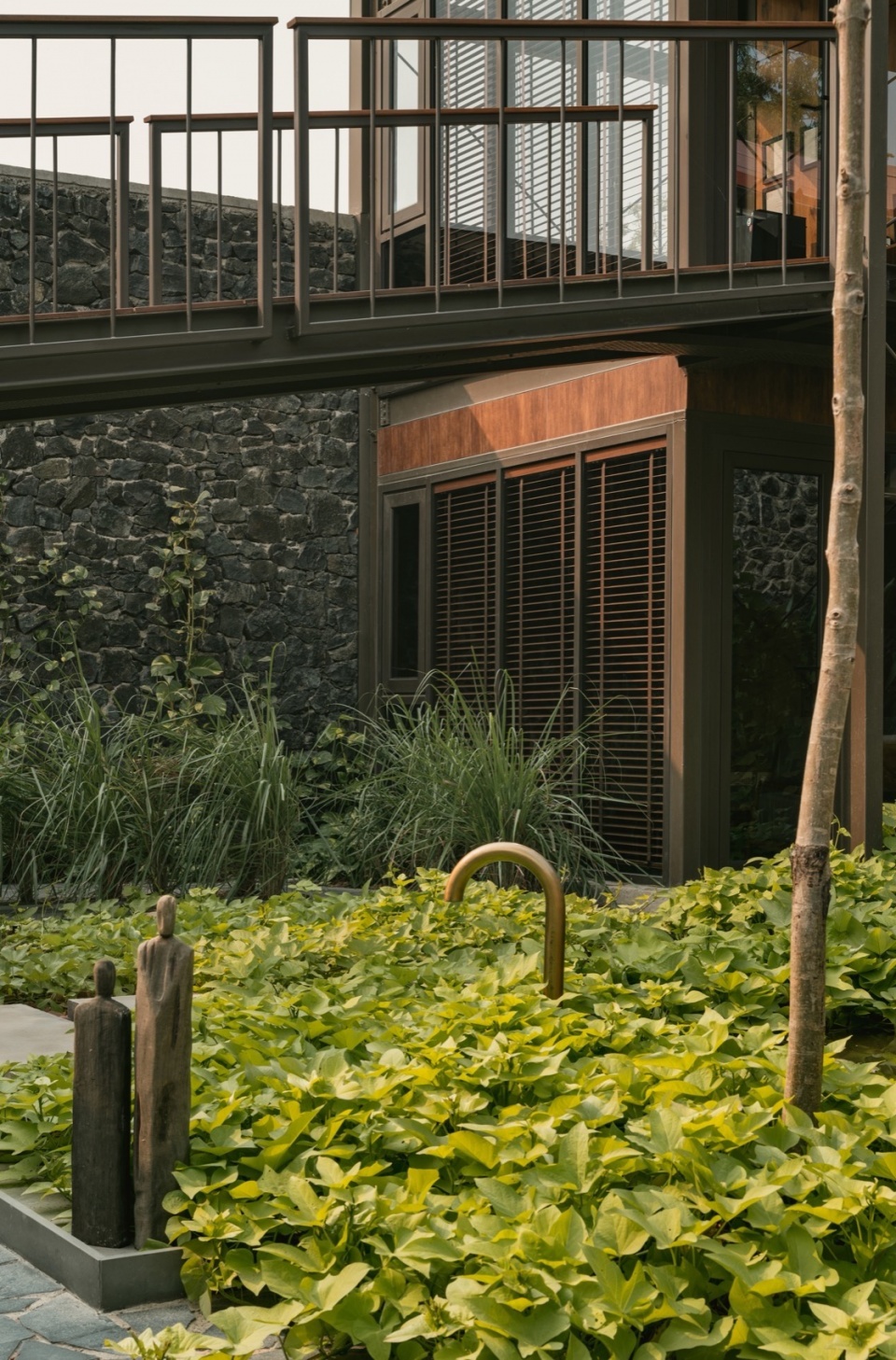
▼连桥细部,details of the bridge
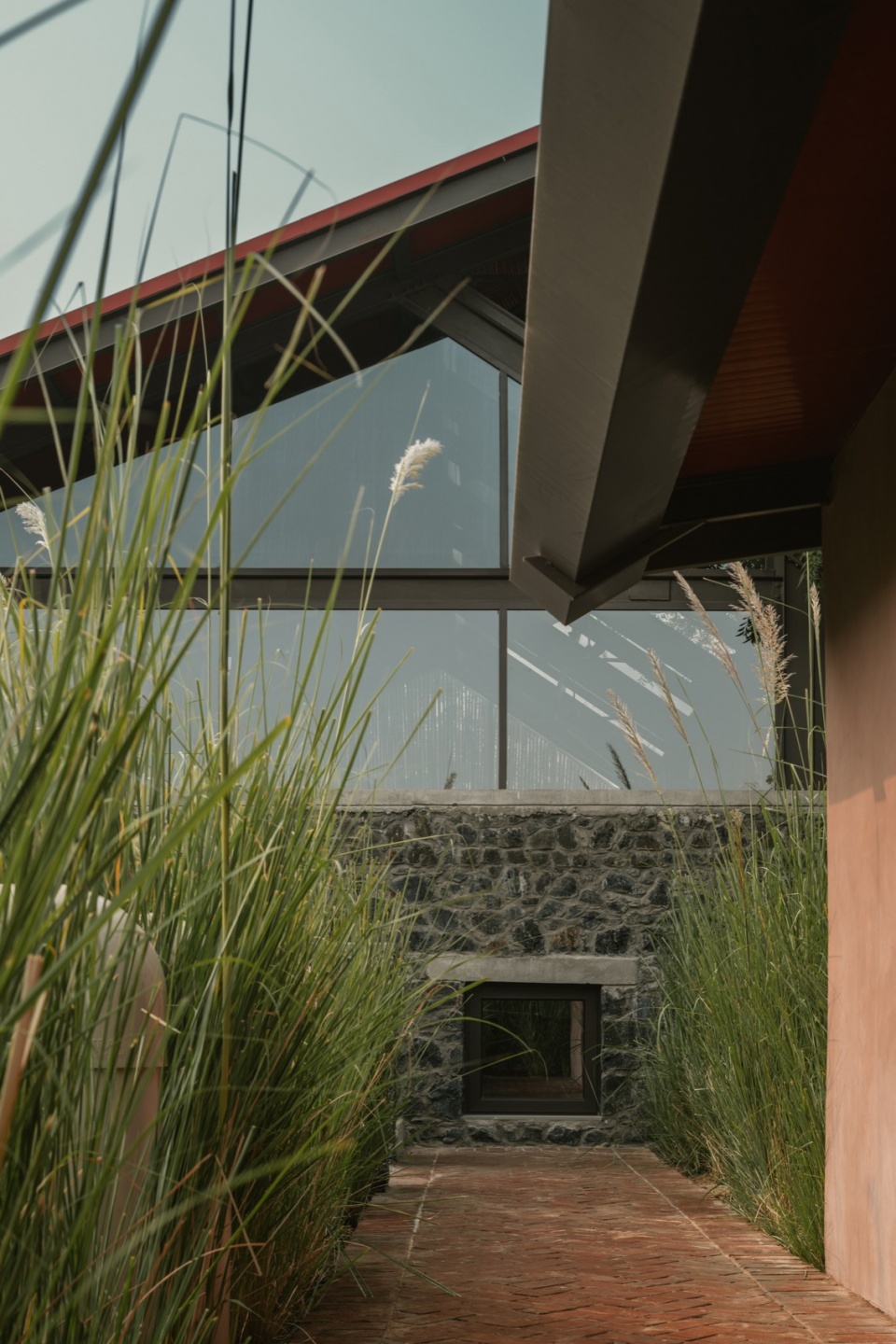
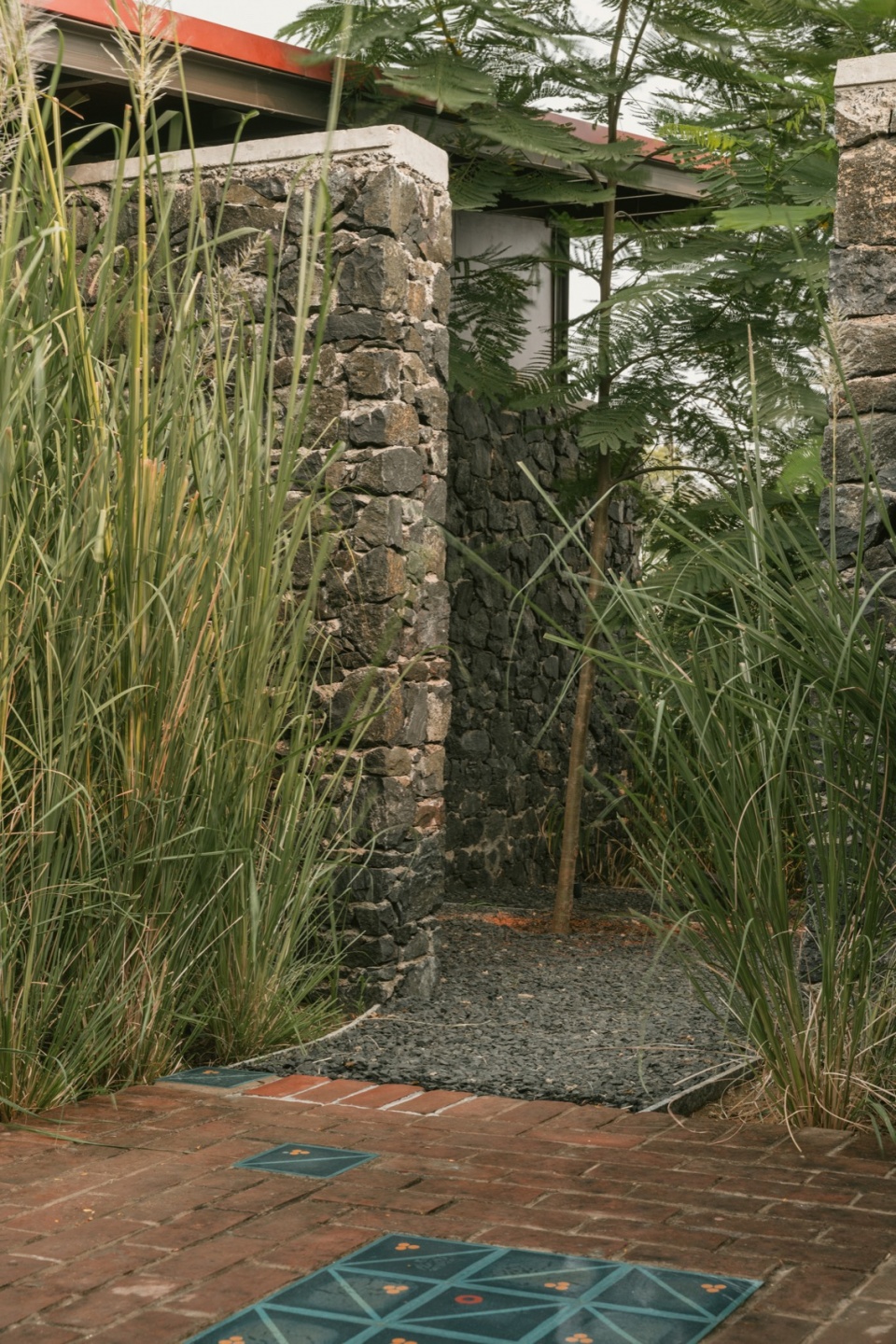
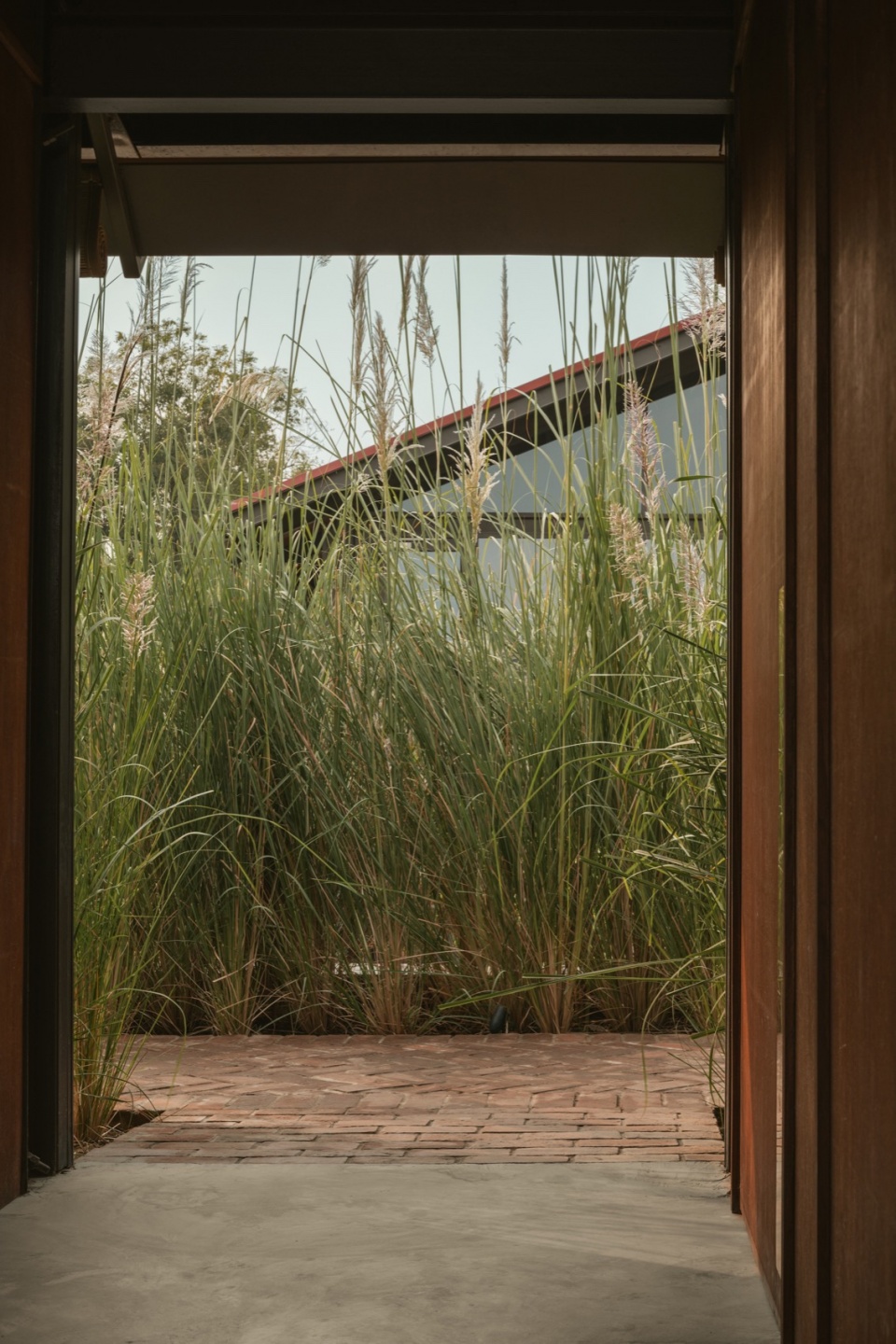
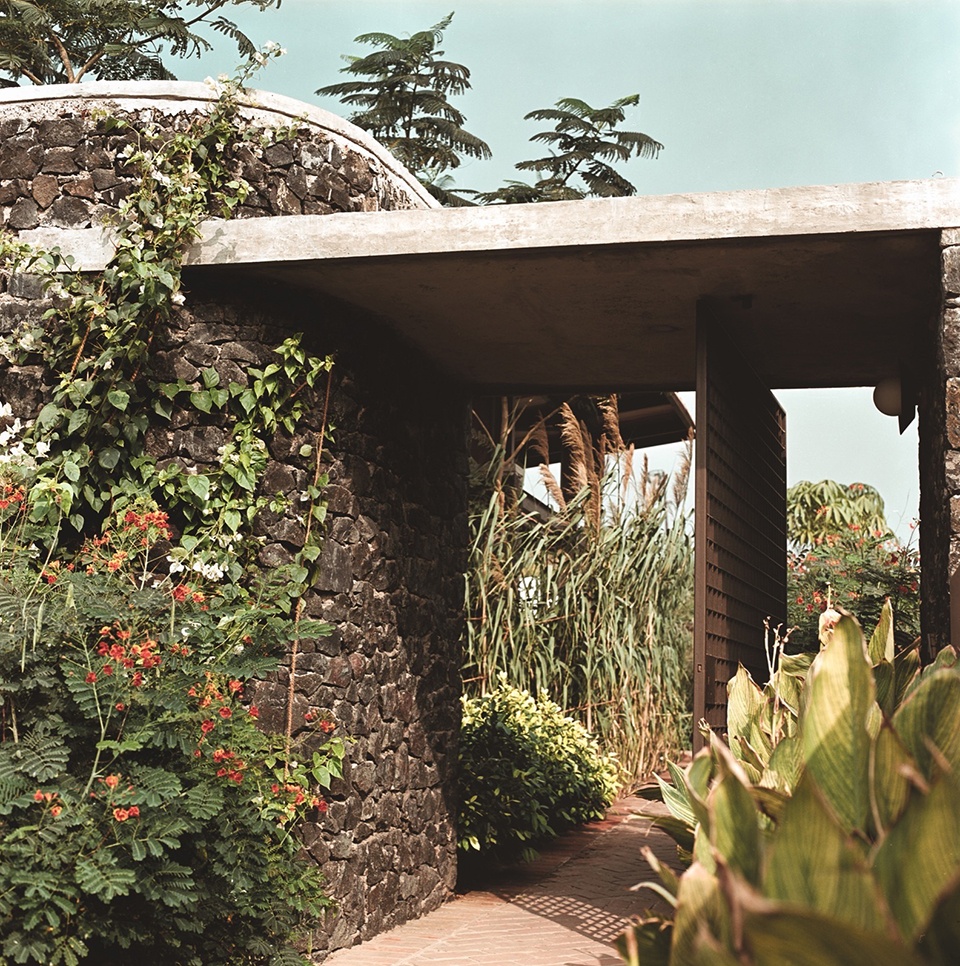
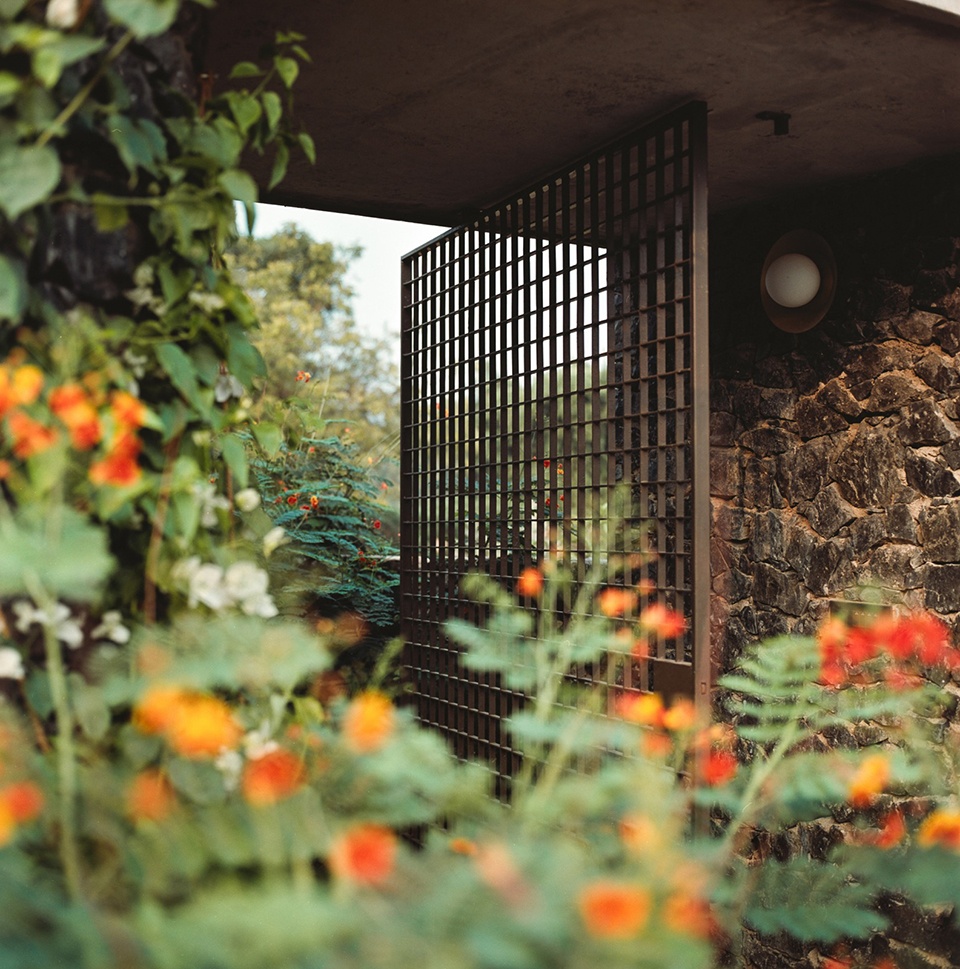
工作室的入口位于基地东南角,有意设置在最远端,以便每位来访者在停车后都需步行一段短路。这段路径沿着一堵高大而修长、几乎如堡垒般的毛石墙展开,墙上缠绕着繁茂的三角梅藤蔓。入口处是一座低矮的有顶门廊,作为空间的门槛,也为整个工作室定下了氛围的基调。接下来的动线穿过铺满碎石的庭院,庭院中点缀着8棵大型凤凰木,最终抵达园区内第一栋专为访客而设的建筑。该建筑设有一个小型入口门廊和两间会议室,其中一间面向东北角的另一个小庭院。庭院四周种植着高大的香茅草,可作为长时间会议后的放松延展空间。动线随后分为两个方向:南侧是一栋小型建筑,容纳管理职能;北侧则是一个服务用房,设有洗手间和茶水间。
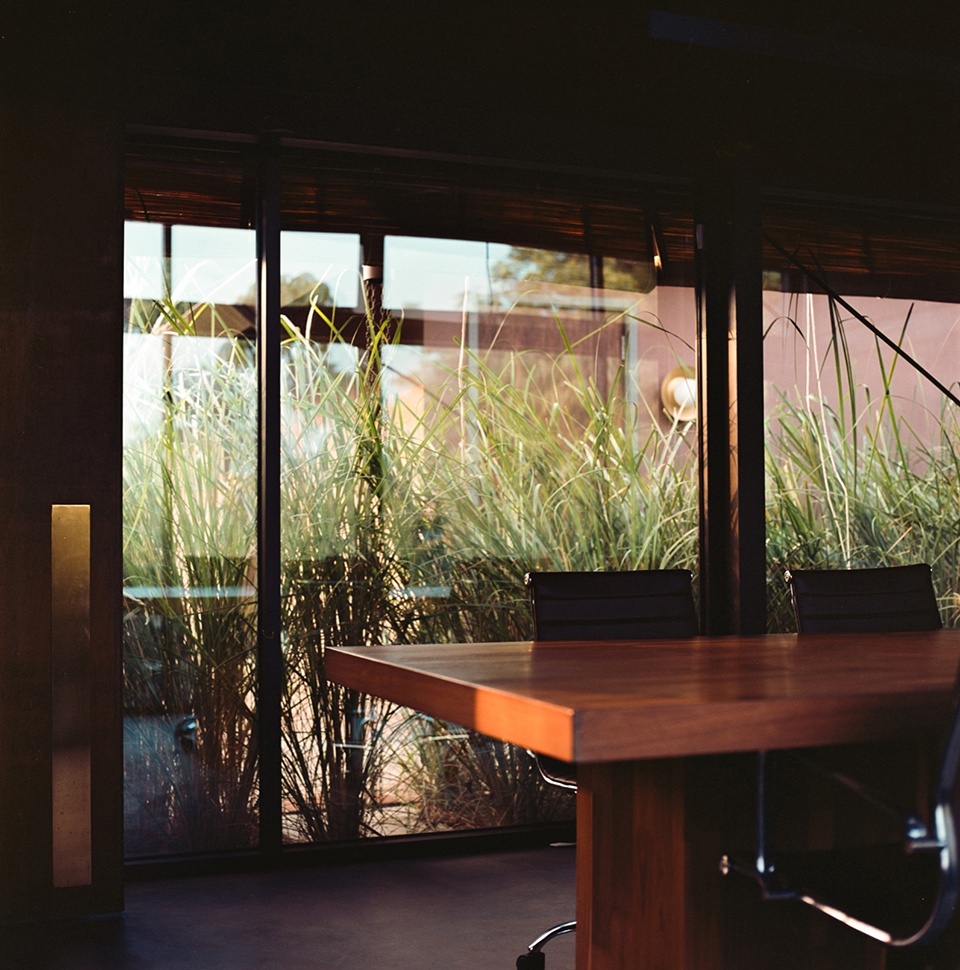
The entrance to the studio, which is to the southeast corner of the plot, is intentionally kept at the farthest end, making every individual take a short walk after parking their vehicle. This walk is along a tall and long, almost fort-like, stone rubble wall covered with bougainvillea creepers. The entrance itself is through a low covered gateway acting as a threshold which sets the tone for the studio’s mood. The journey then unfolds through a courtyard covered with gravel and 8 large gulmohar trees into the first built form of the campus dedicated to visitors. This building encompasses a small entry porch and a couple of meeting rooms, one of which overlooks another courtyard to the northeast. The court, surrounded by tall lemongrass, acts as a spill-out space from long meetings. The journey then further leads into two directions, with a small block in the south which houses management functions and a service block in the north with washroom and a pantry.
▼办公室入口,office entrance
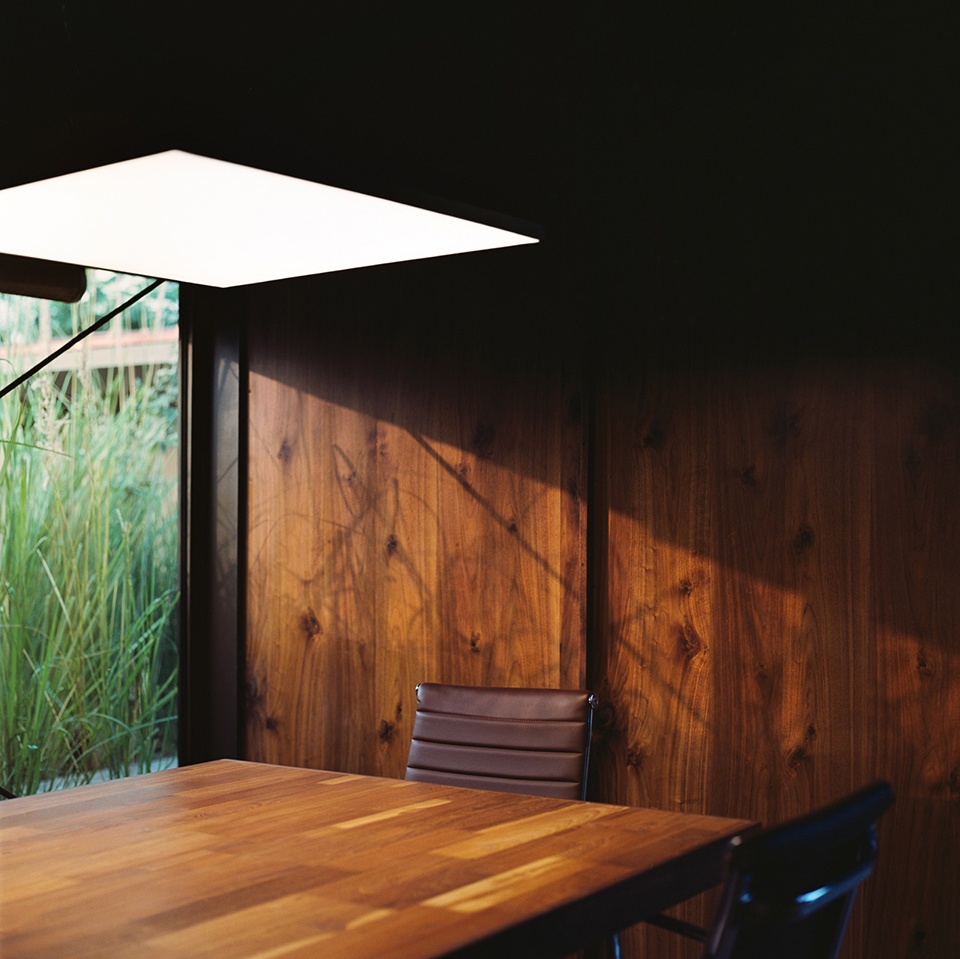
▼会议室,meeting room
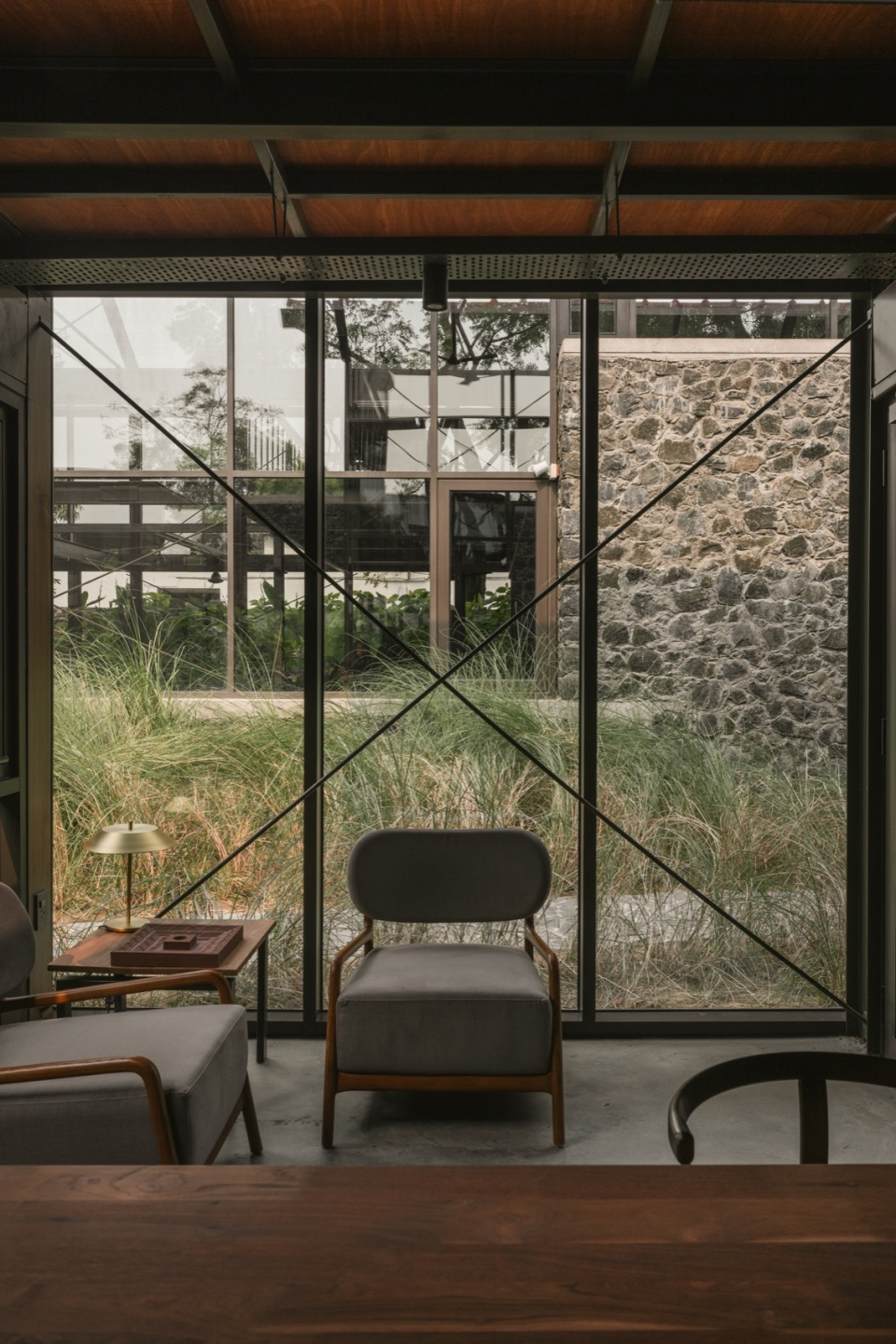
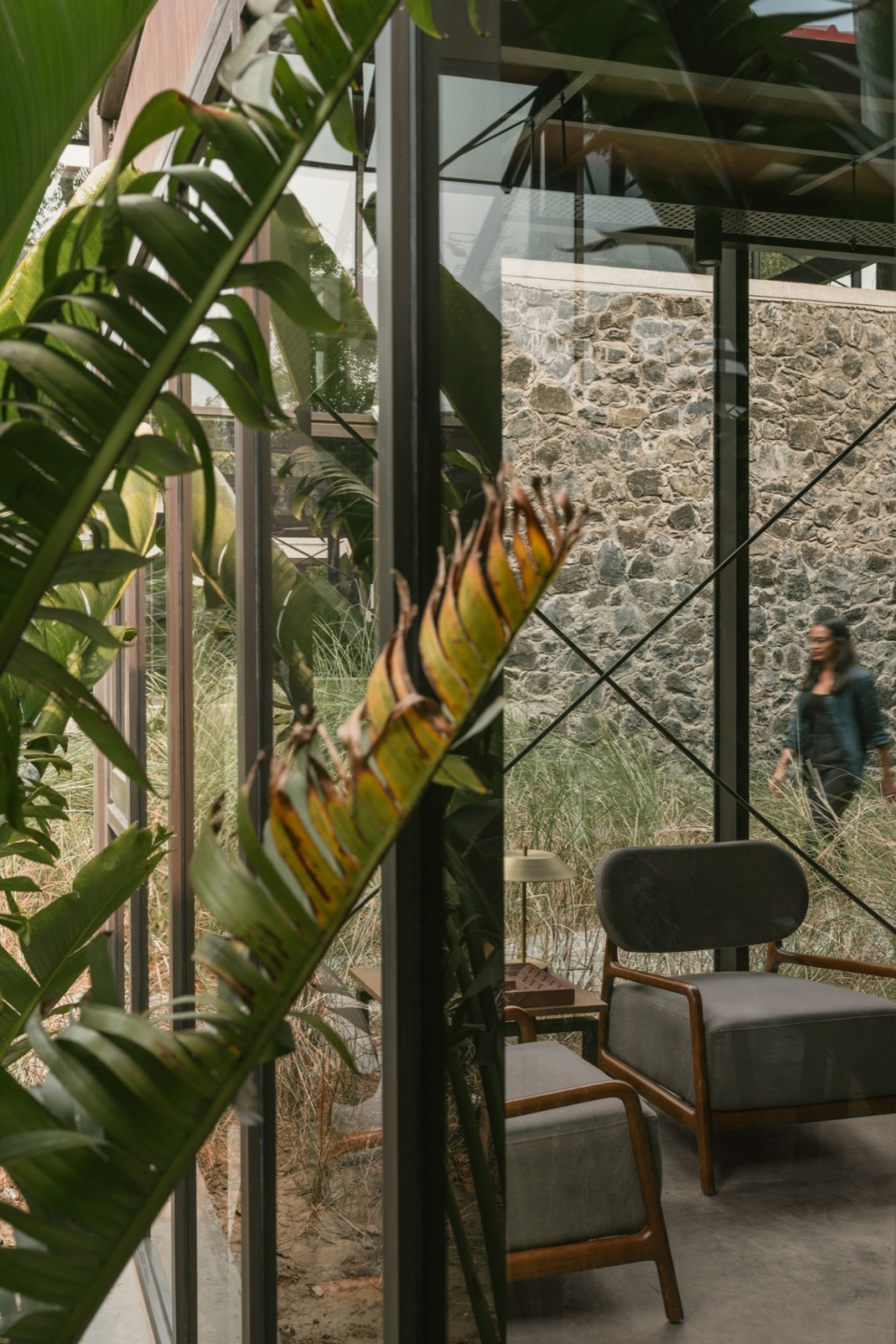
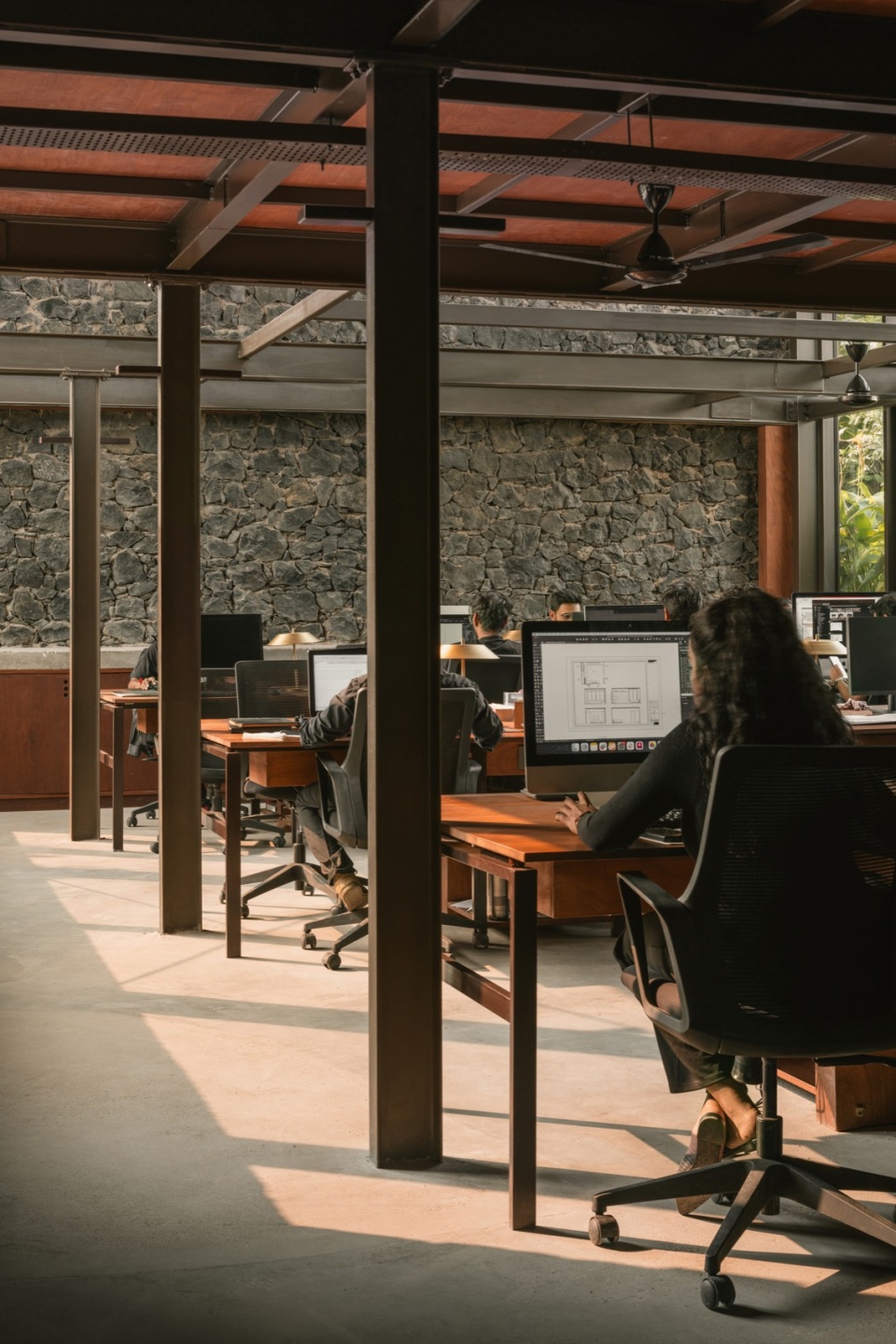
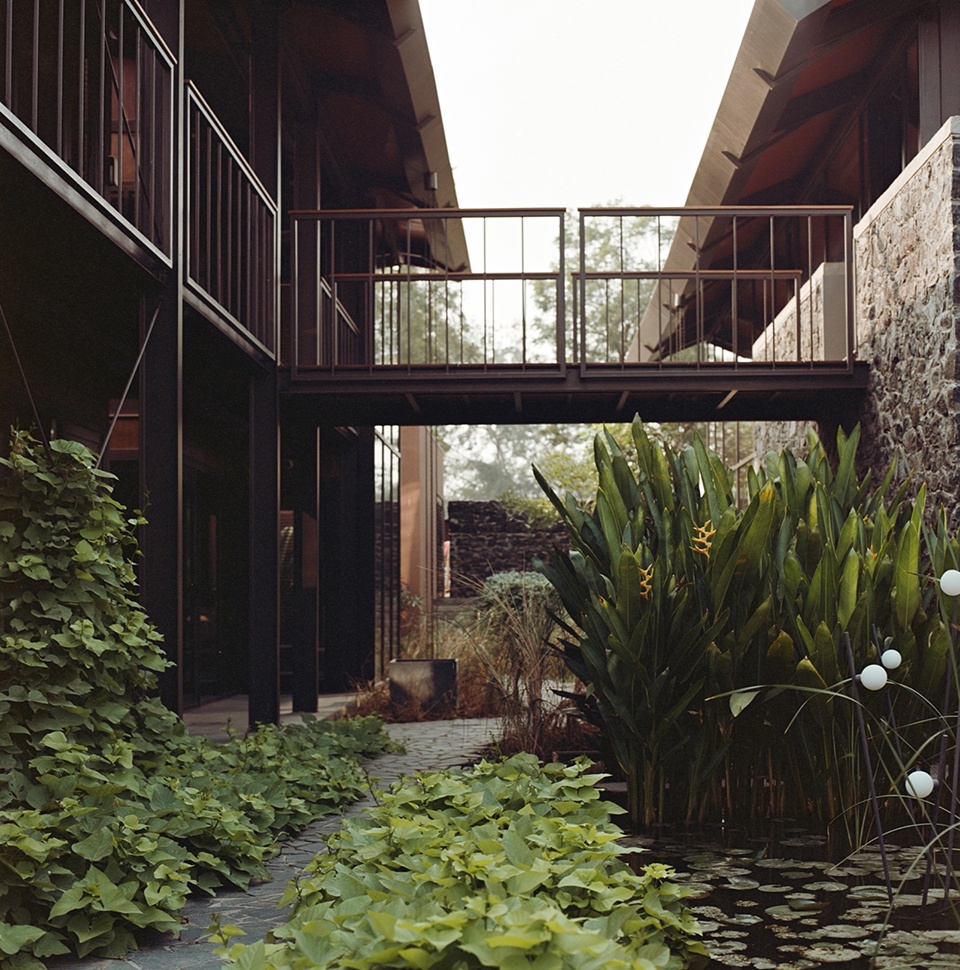
从这一点开始,场地通过设置下沉区域进行地形调节,以柔化西侧高耸建筑与东侧三座矮小建筑之间的高度差异。由五座建筑体围合而成的下沉中央庭院成为整个园区的视觉焦点,既促进协作交流,又保持了空间的连续性。位于西南角的建筑体内设有所有合伙人的独立办公舱,其布局经过精心安排,保障私密性,是专注工作的理想场所。西北角的最大建筑是主工作区,内设工作台、图书区、材料样品展示区以及打印区。工作室的一半为挑高双层空间,可通过北向天窗眺望两棵印度楝树;另一半设有夹层,作为午餐、模型制作等多功能区域使用。夹层的设计预留了未来扩展的可能,可进一步容纳更多工位。工作室与合伙人办公区通过上层的连桥及下层穿越水体的步道实现连接。
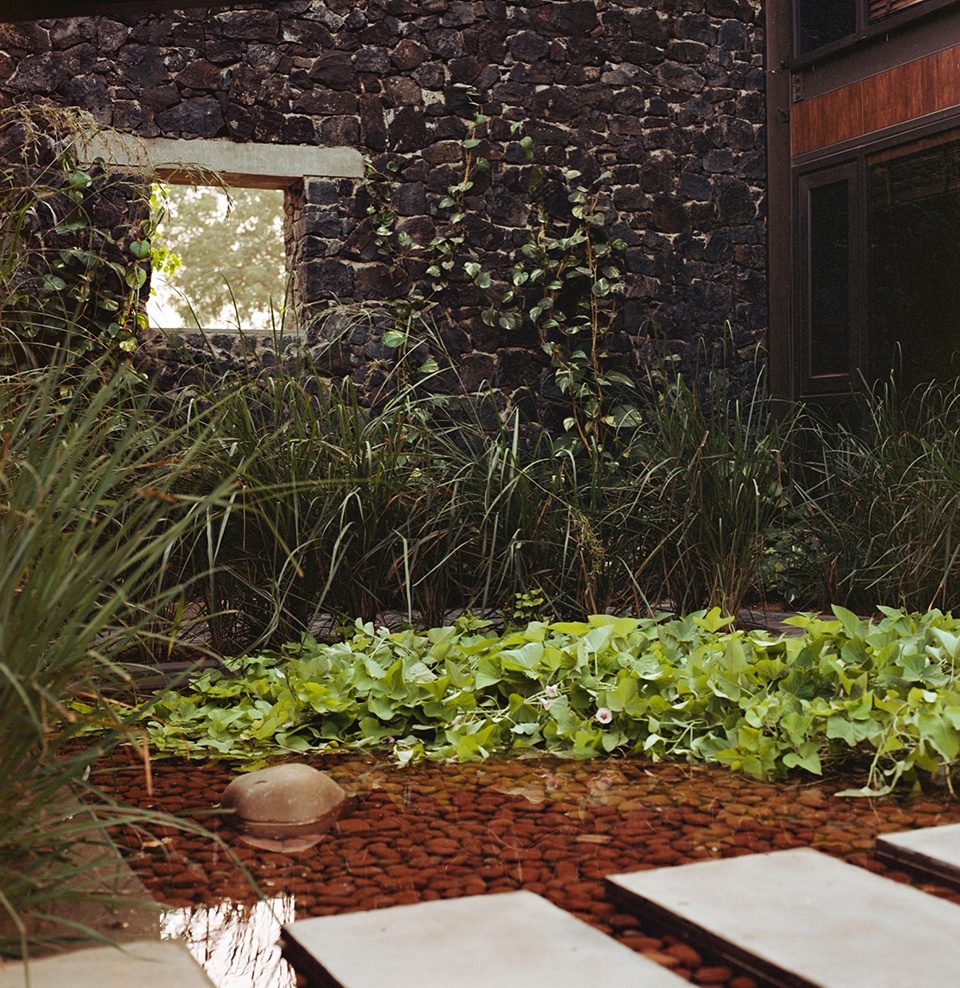
From this point onward, the site is modulated to incorporate sunken areas to soften the contrast between the towering blocks in the west and the shorter trio of buildings in the east. The sunken central courtyard formed by five surrounding building blocks, acts as a focal point, fostering collaboration and providing visual continuity. The block in the southwest which houses cabins for all the partners, strategically positioned for privacy, serves as a haven for focused work. The largest block is the main studio space in the northwest, which houses workstations along with a library, a material sample display and a printing area. Half the studio is currently a large double volume looking onto 2 Neem trees through a north light, while the other half has an upper level mezzanine which becomes a multipurpose space used for lunch, making models and so on. The upper level is designed with future expansion in mind such that it can later accommodate more workstations. Both the studio block and the block with the cabins are connected by a bridge on the upper level and a pathway through the water body on the lower level.
▼办公室空间,office area
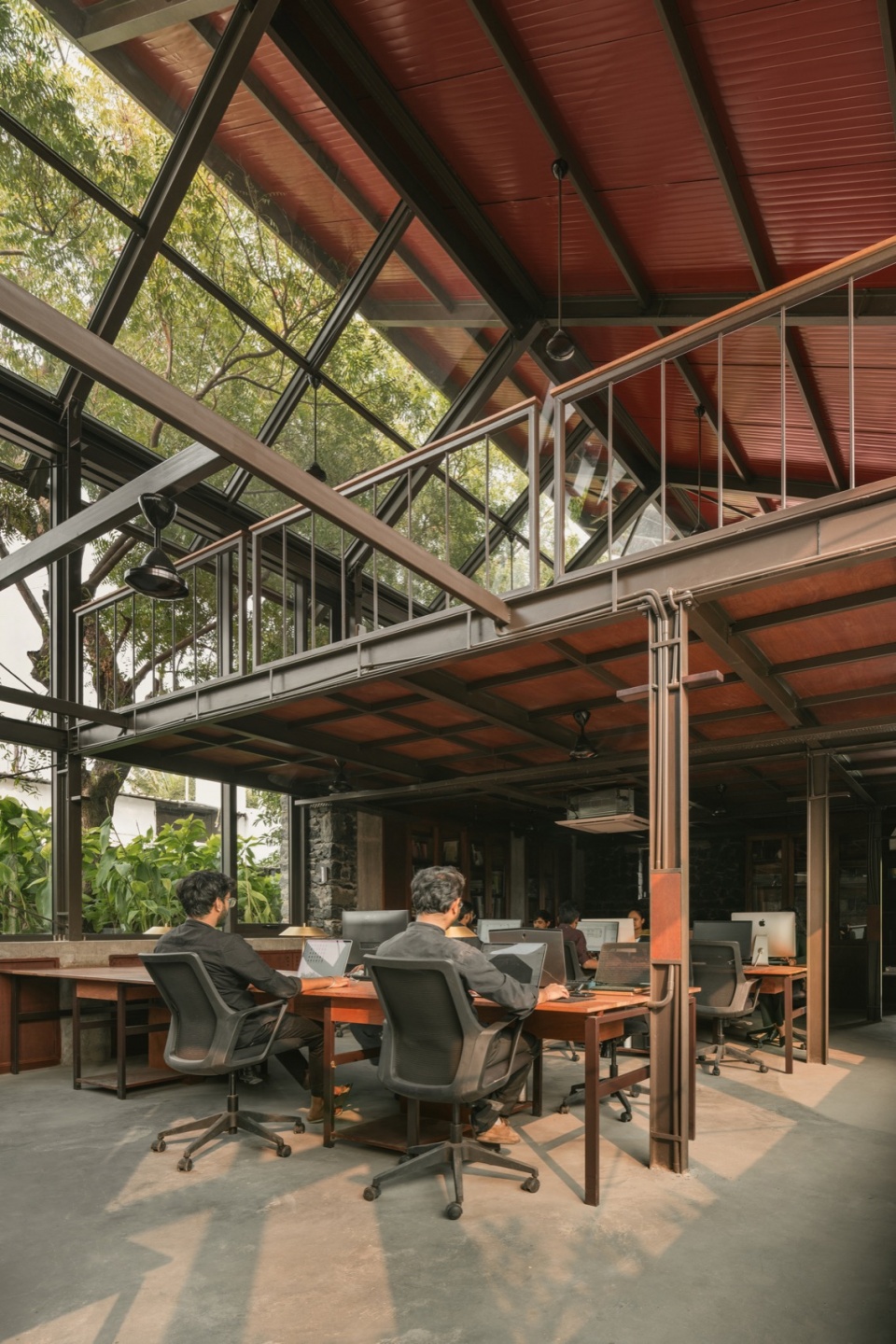
▼走廊,hallway
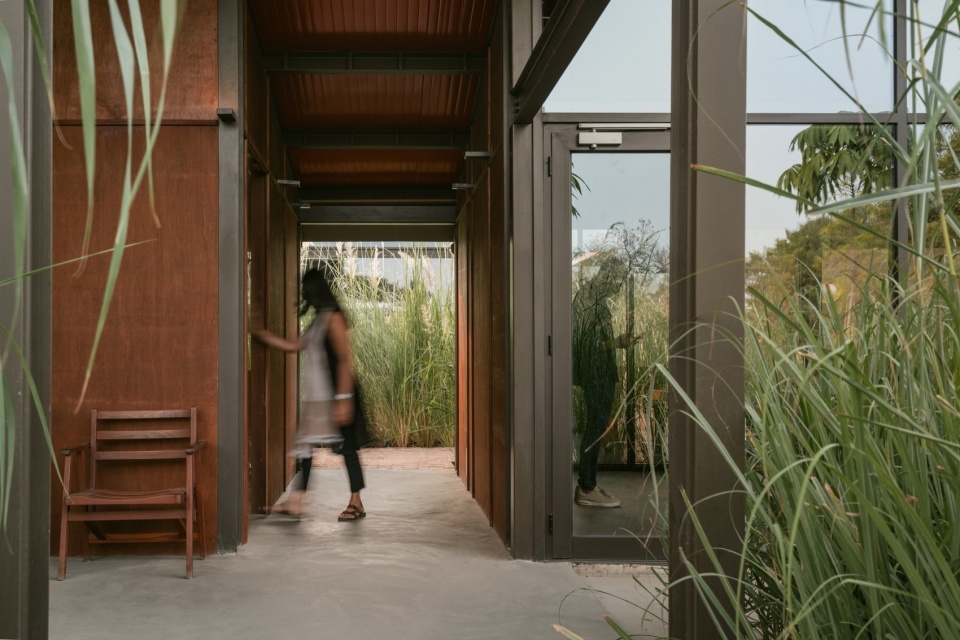
▼通透的空间感,circulation space
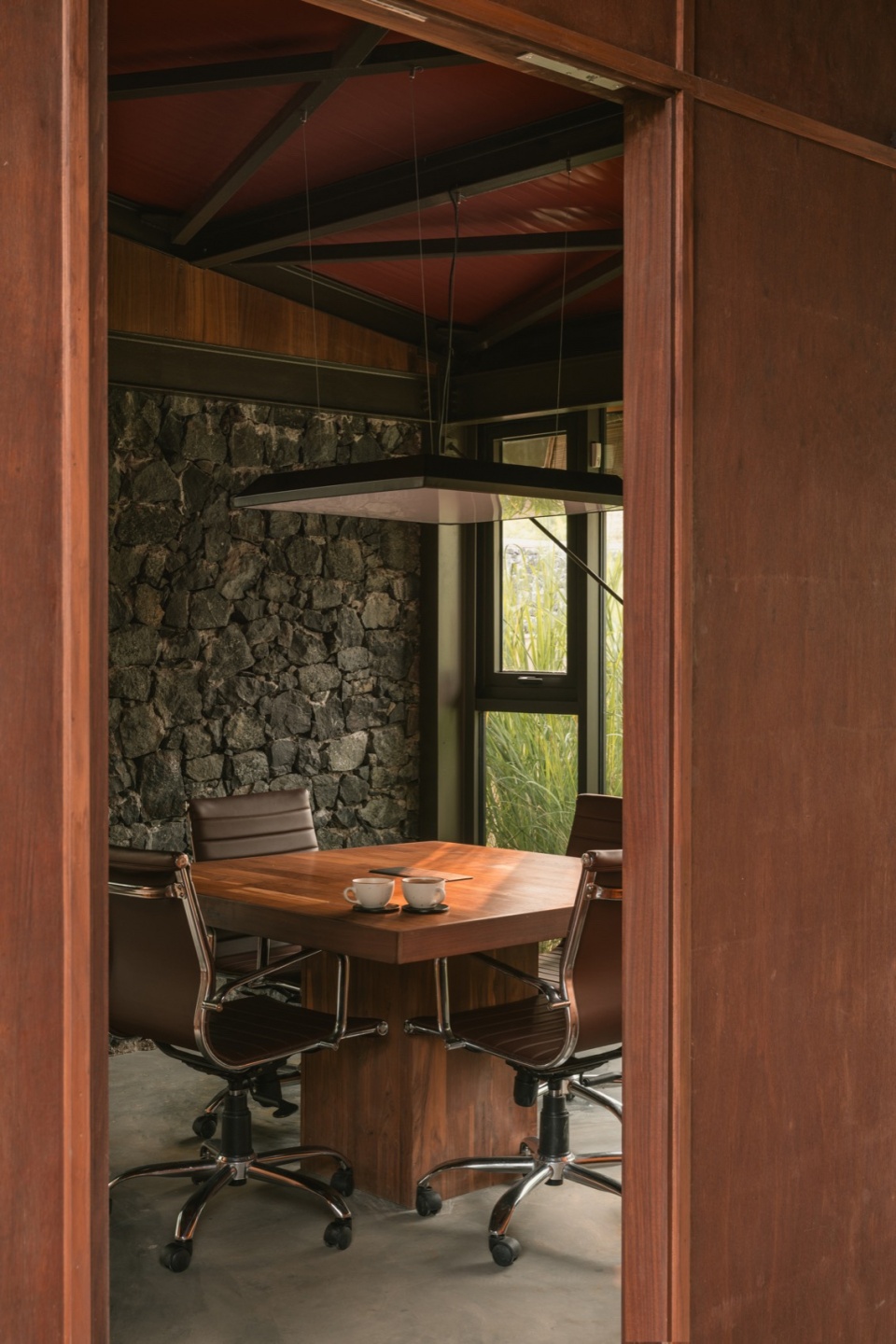
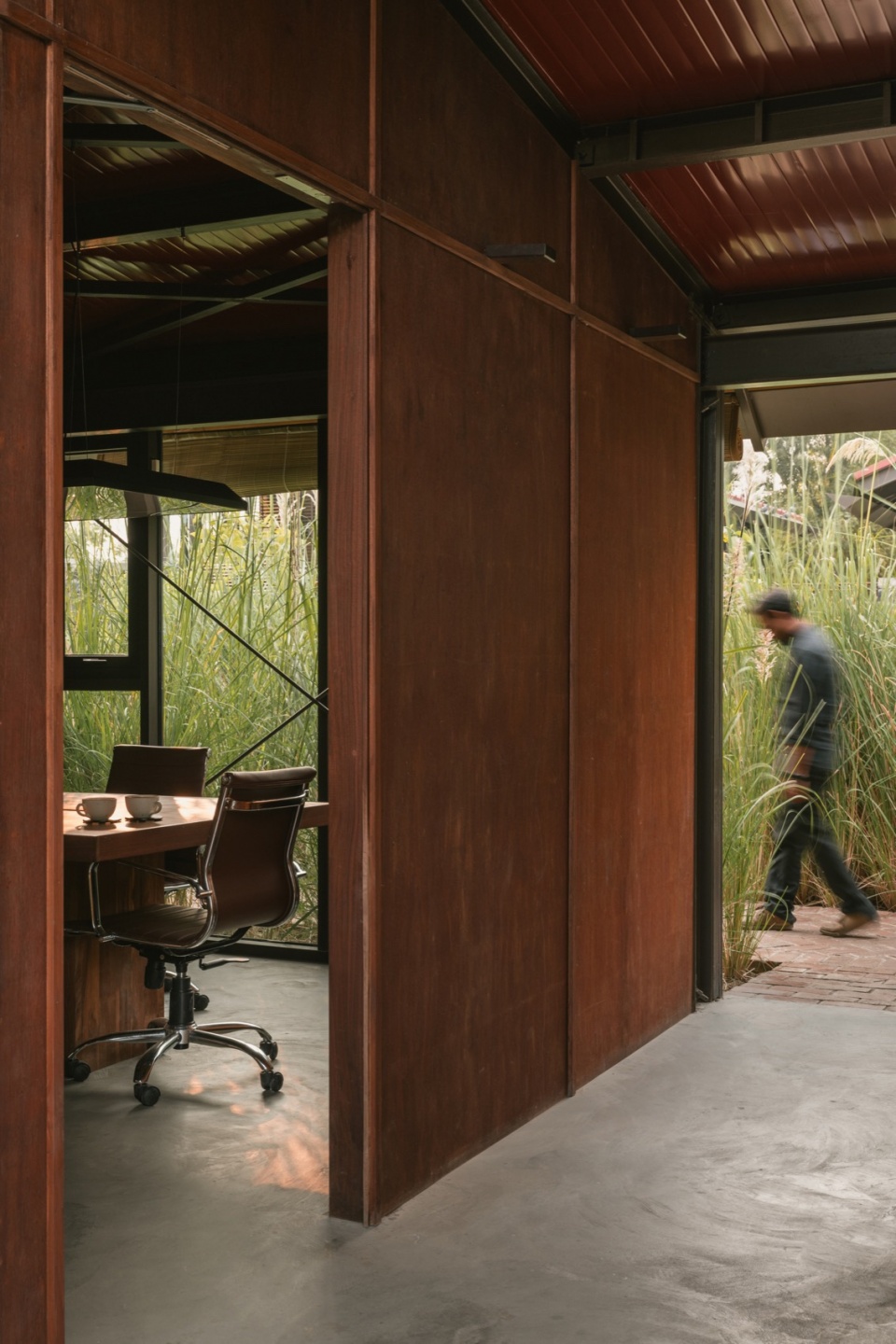
▼办公室细部,office details
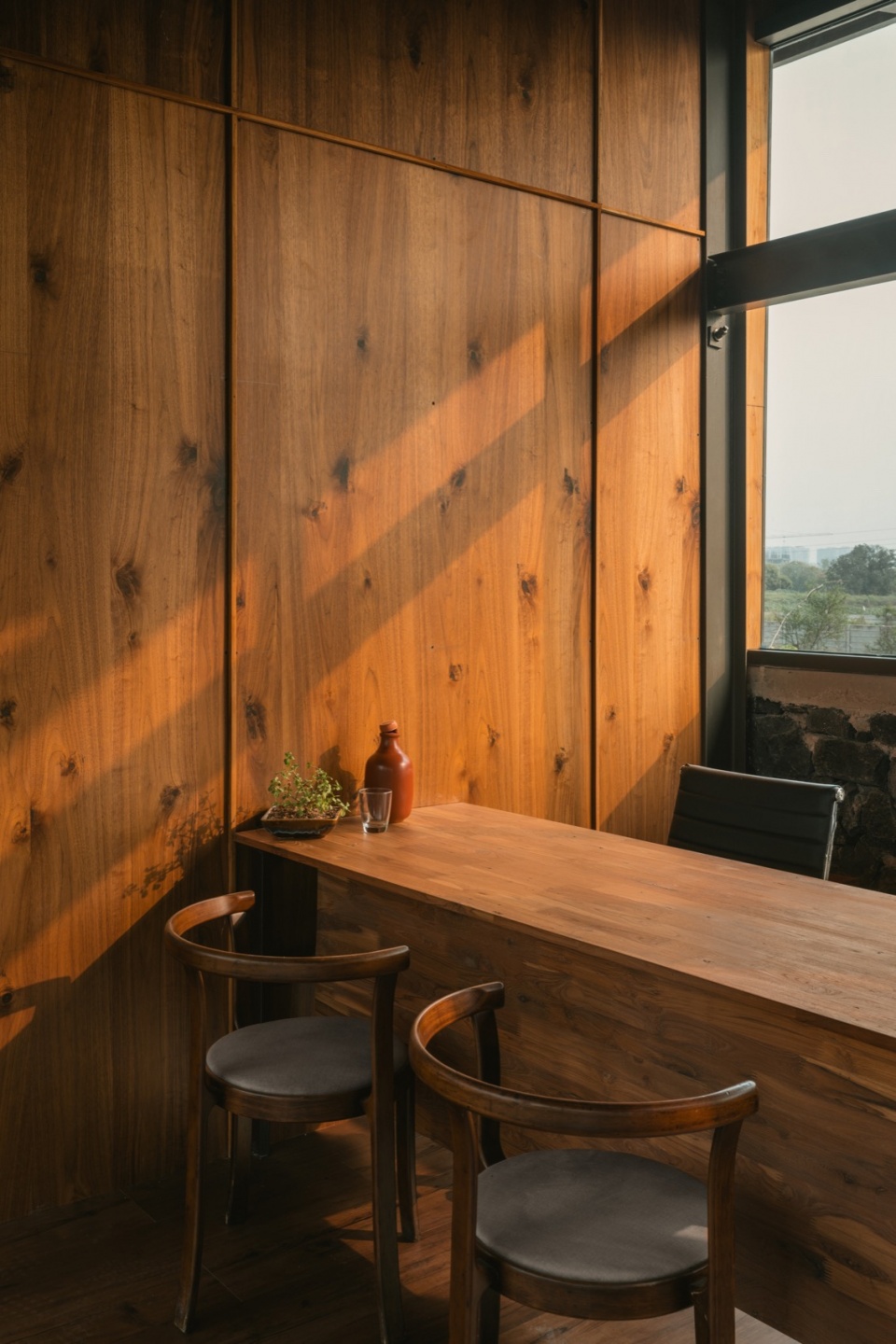
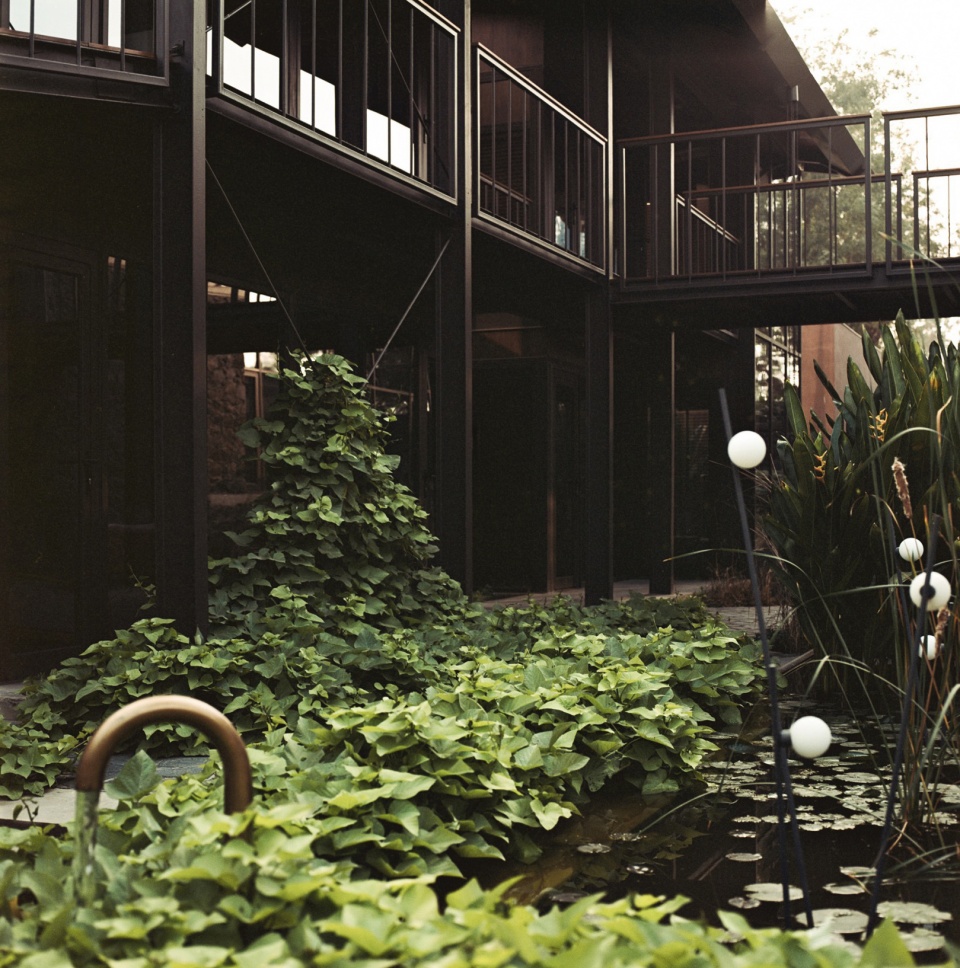
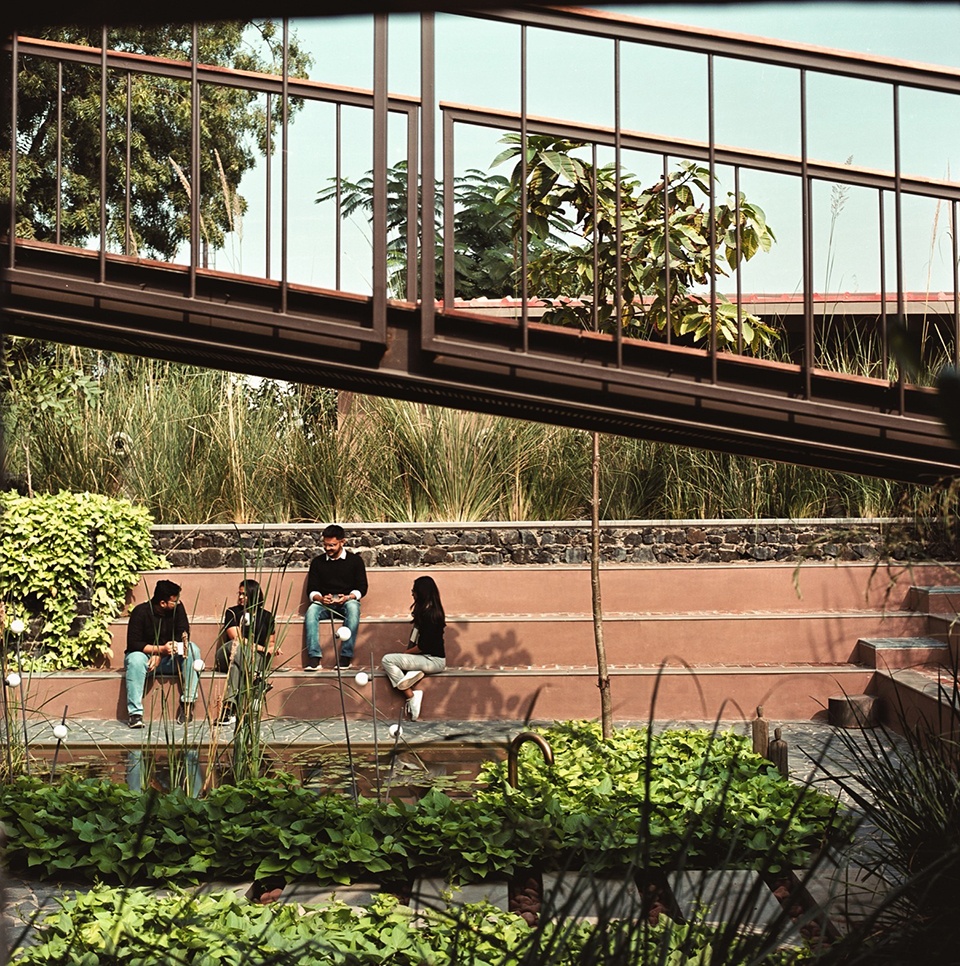
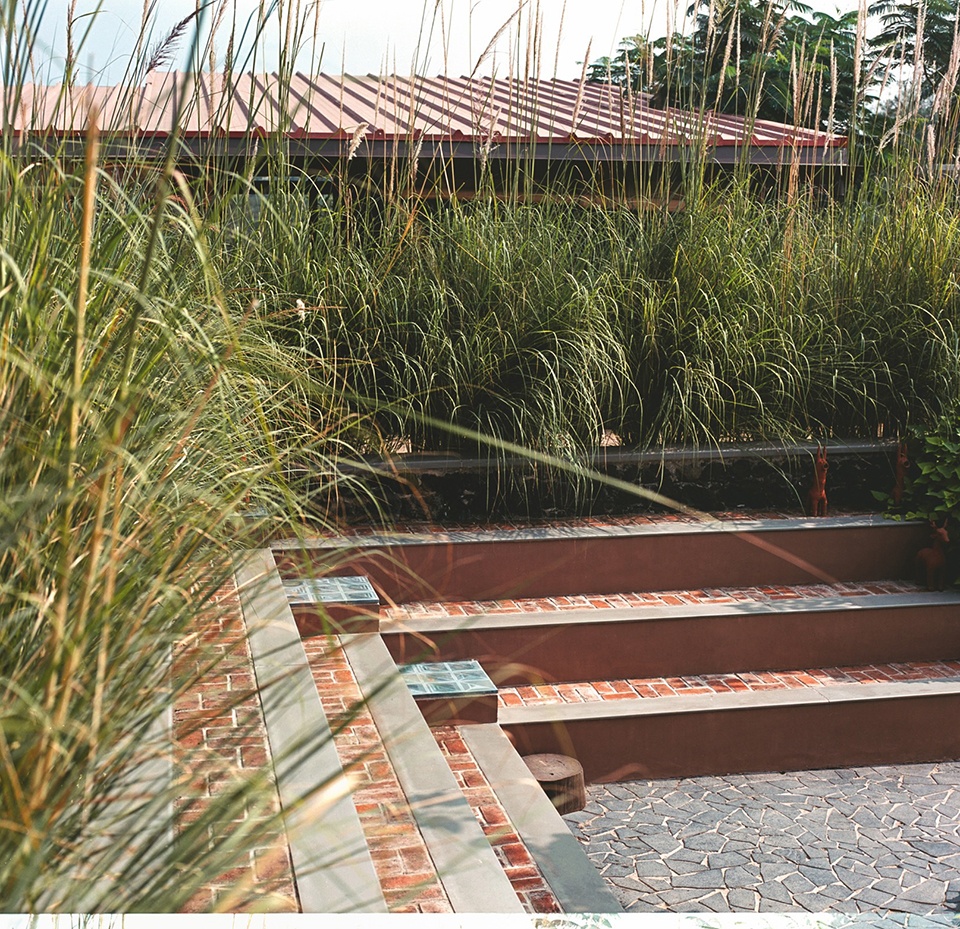
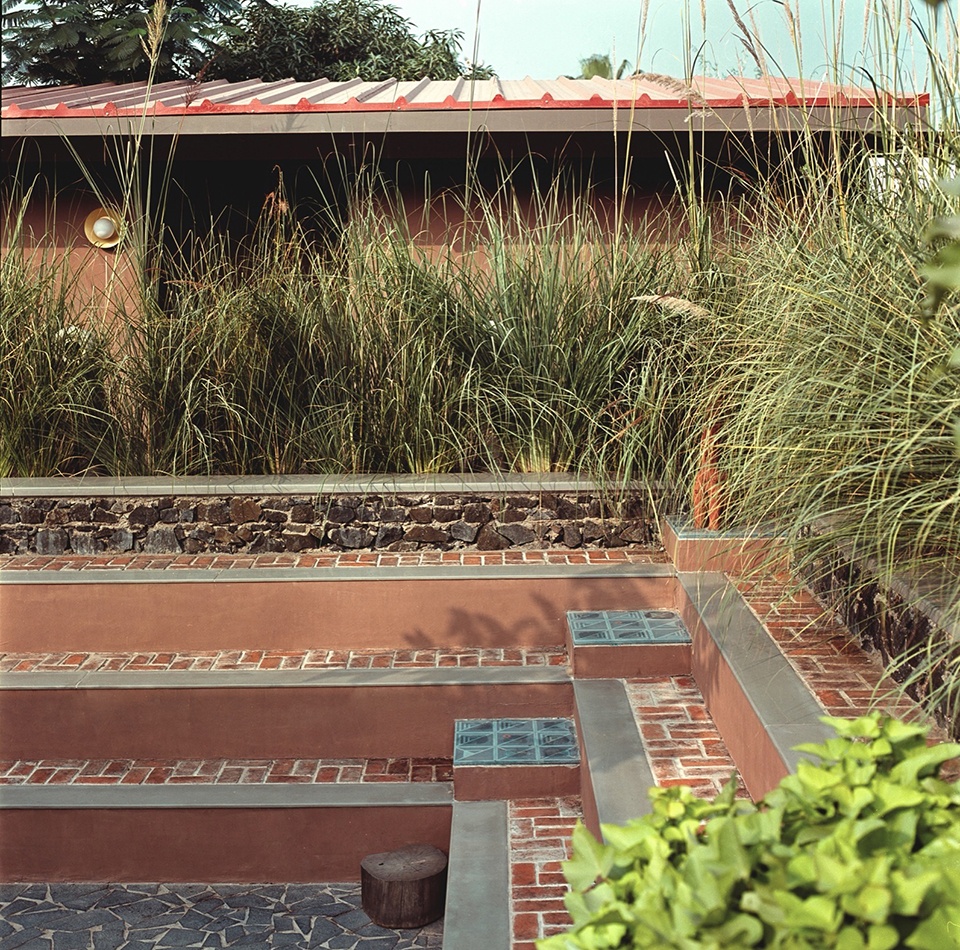
园区的每一个角落都经过精心设计,以优化对周围景观的视野,确保使用者在充分享受自然采光的同时,与自然保持联结。各建筑单元通过开放式步道连接,在不同高差之间实现无缝衔接,也促使工作室成员在日常中自然走出室外。这些步道不仅方便通行,也作为共享空间,激发偶遇与自发的交流合作。前文提及的地形调节不仅仅是雕塑性的尝试,更是有意识地提升东侧三座建筑的视觉高度感。与此相配合的是庭院北侧与东侧边缘栽种的高大草本植物,共同营造出亲切宜人的空间尺度。庭院中央是一方宽阔的睡莲池,面向池水的阶梯如同小型露天剧场,为人们提供了一个喝下午茶的理想去处。丰富的绿植与精心挑选的花卉点缀着庭院与水池,为空间注入宁静氛围;水体也增强了感官体验,营造出舒缓的环境,同时有助于保持庭院在白天的凉爽。在这里,造访者仿佛成为工作室日常叙事中的一部分。一天之中,总有人在这片庭院中喝着咖啡热烈讨论,或是在电话中激烈争论,也有人静静观察白鹭捕食池中小鱼,或只是安静地坐着画画。
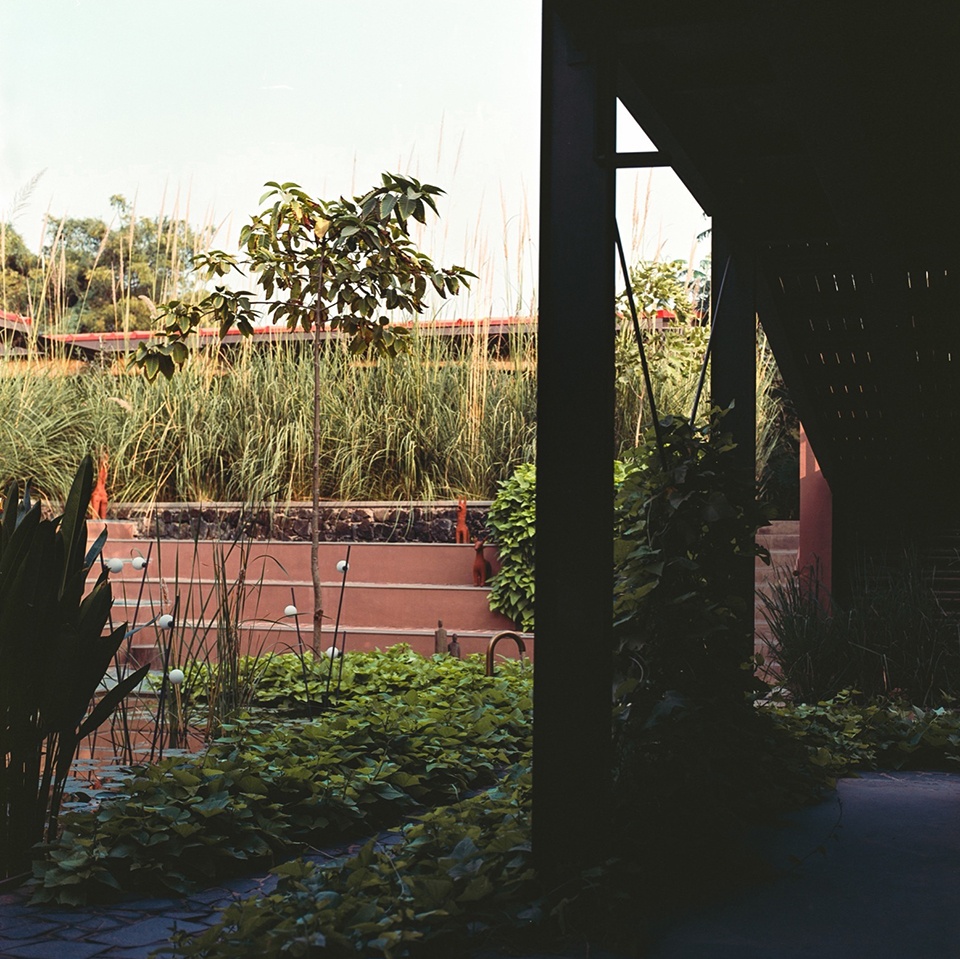
Every corner of the campus is designed for optimized views of the surrounding landscape, ensuring occupants can connect with nature while having ample natural light. All the building blocks are connected by open walkways, creating a seamless transition between different levels, while also forcing the people in the studio to step out through the day. These walkways not only facilitate movement but also serve as communal spaces, encouraging chance encounters and fostering spontaneous collaborations among the studio’s inhabitants. The aforementioned land modulation in the studio campus is not merely a sculptural endeavor, but a deliberate effort to increase the perceived height of the three blocks to the east. That, along with the peripheral tall grass on the northern and eastern edges of the courtyard, create a very cozy scale to the courtyard. Here, amphitheater-like steps face a large lily pond in the center, providing a perfect place for one to have their evening tea. Lush greenery and carefully selected flora adorn the courtyard as well as the pond, infusing the space with a sense of tranquility. The water contributes to the sensory experience, creating a soothing ambiance, while helping the courtyard stay cooler through the day. Visitors in the courtyard become active participants in this unfolding narrative of a day at the studio. One can find people in this space all through the day, having enthusiastic discussions over a coffee, having a heated argument with someone over a phone, watching tiny fishes in the pond getting eaten by herons or just sitting and sketching.
▼连桥,the bridge
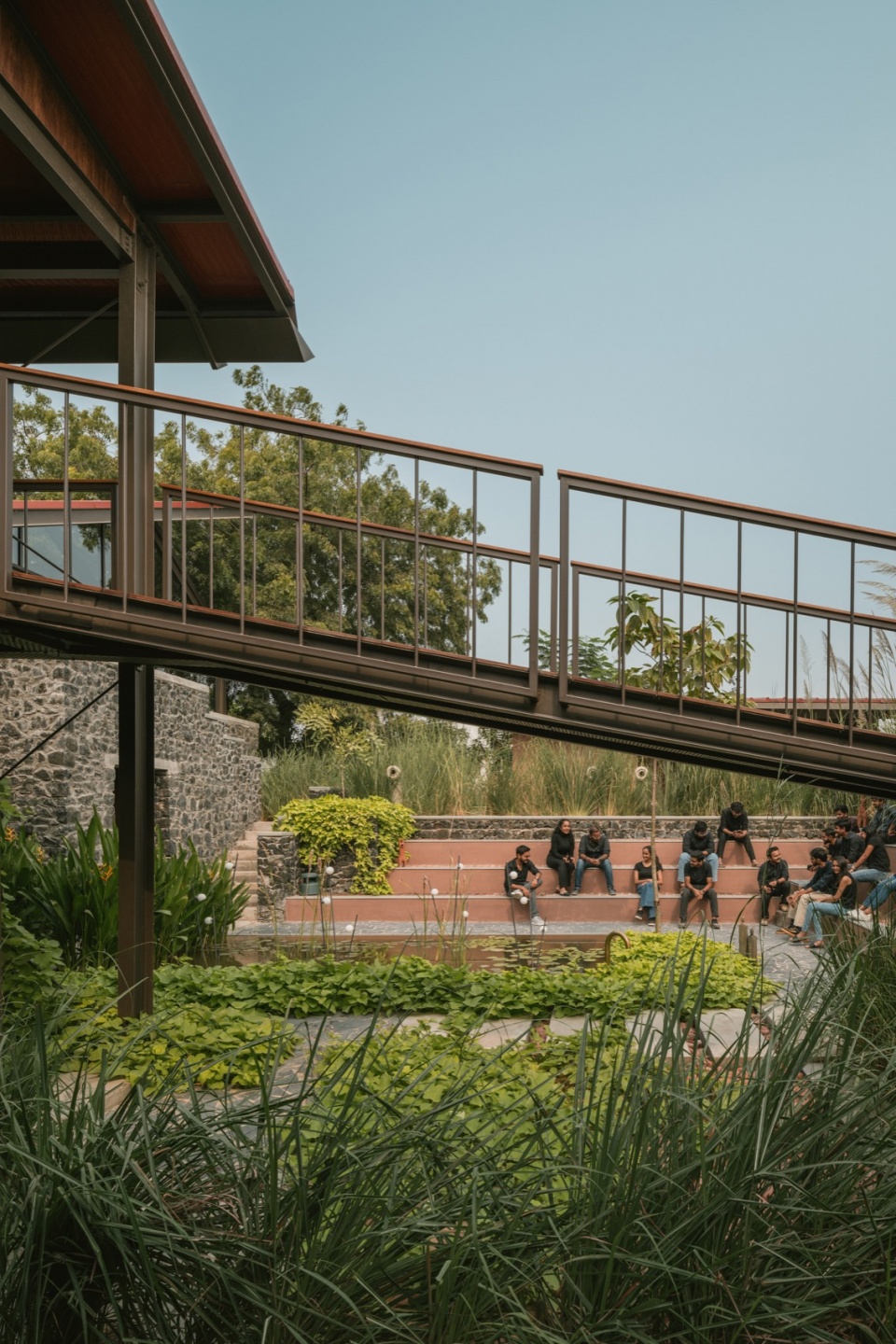
▼面向池水的阶梯如同小型露天剧场,
the steps facing the pool water are like a small open-air theater
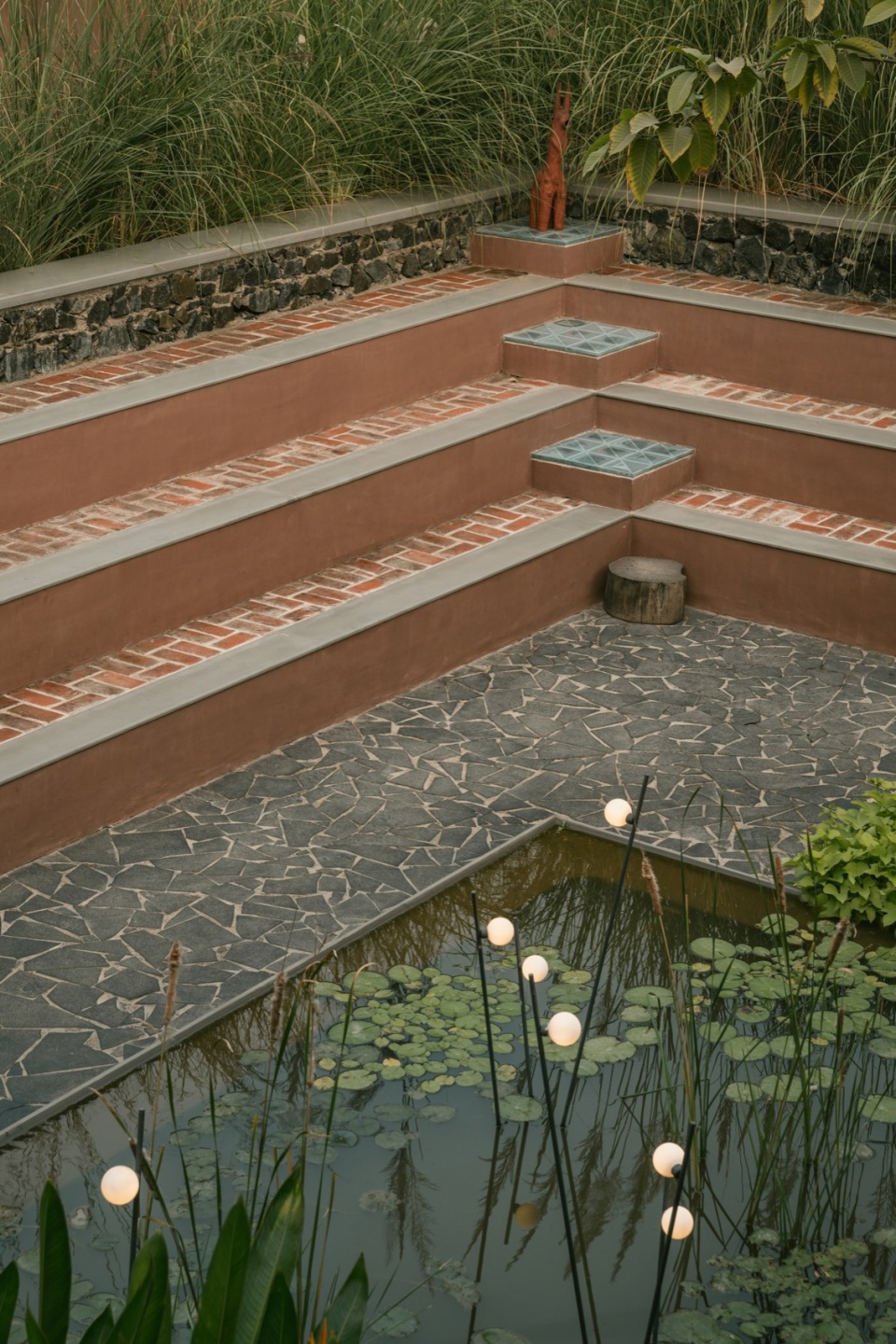
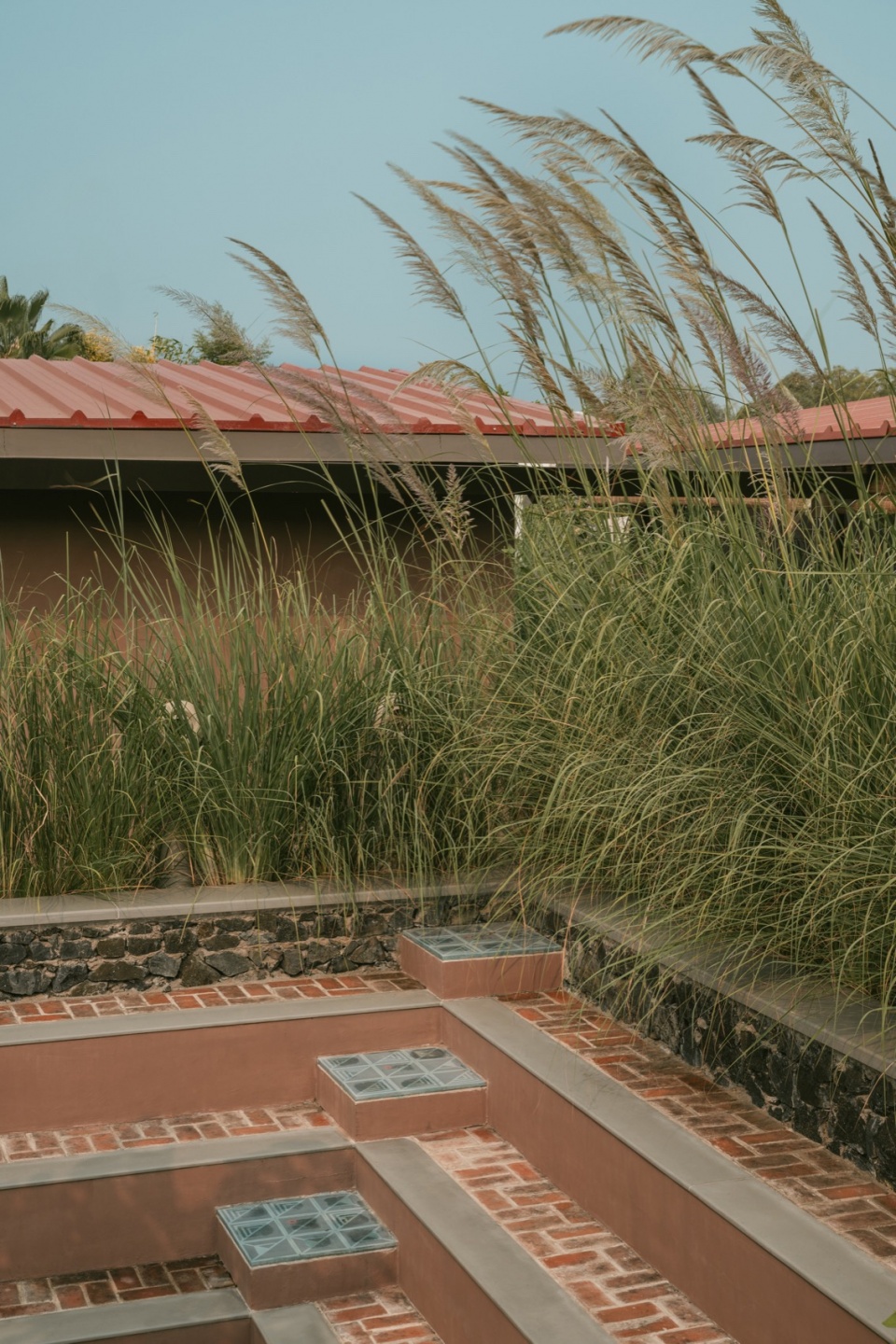
▼水池与步道细部,details of the pool and the path
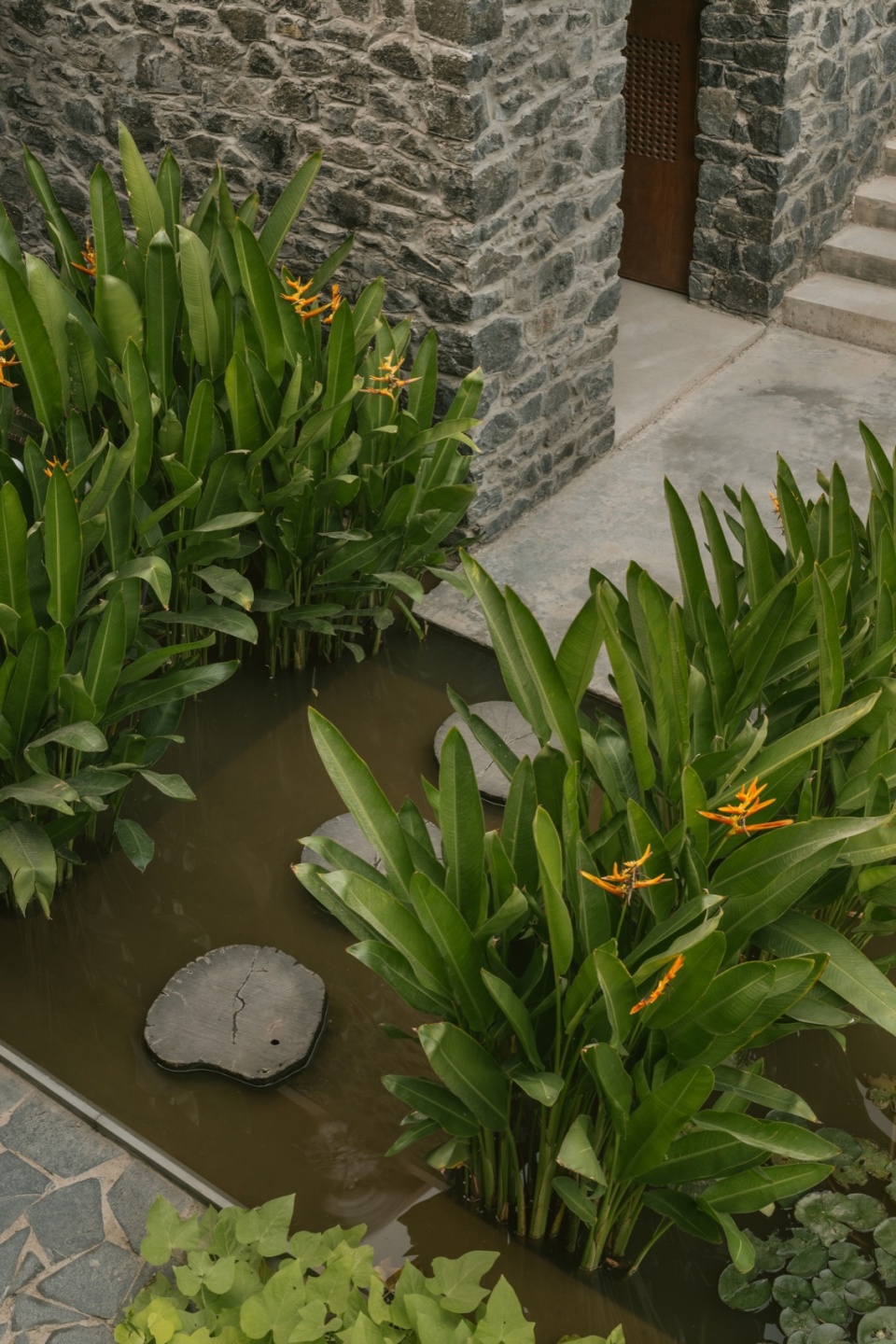
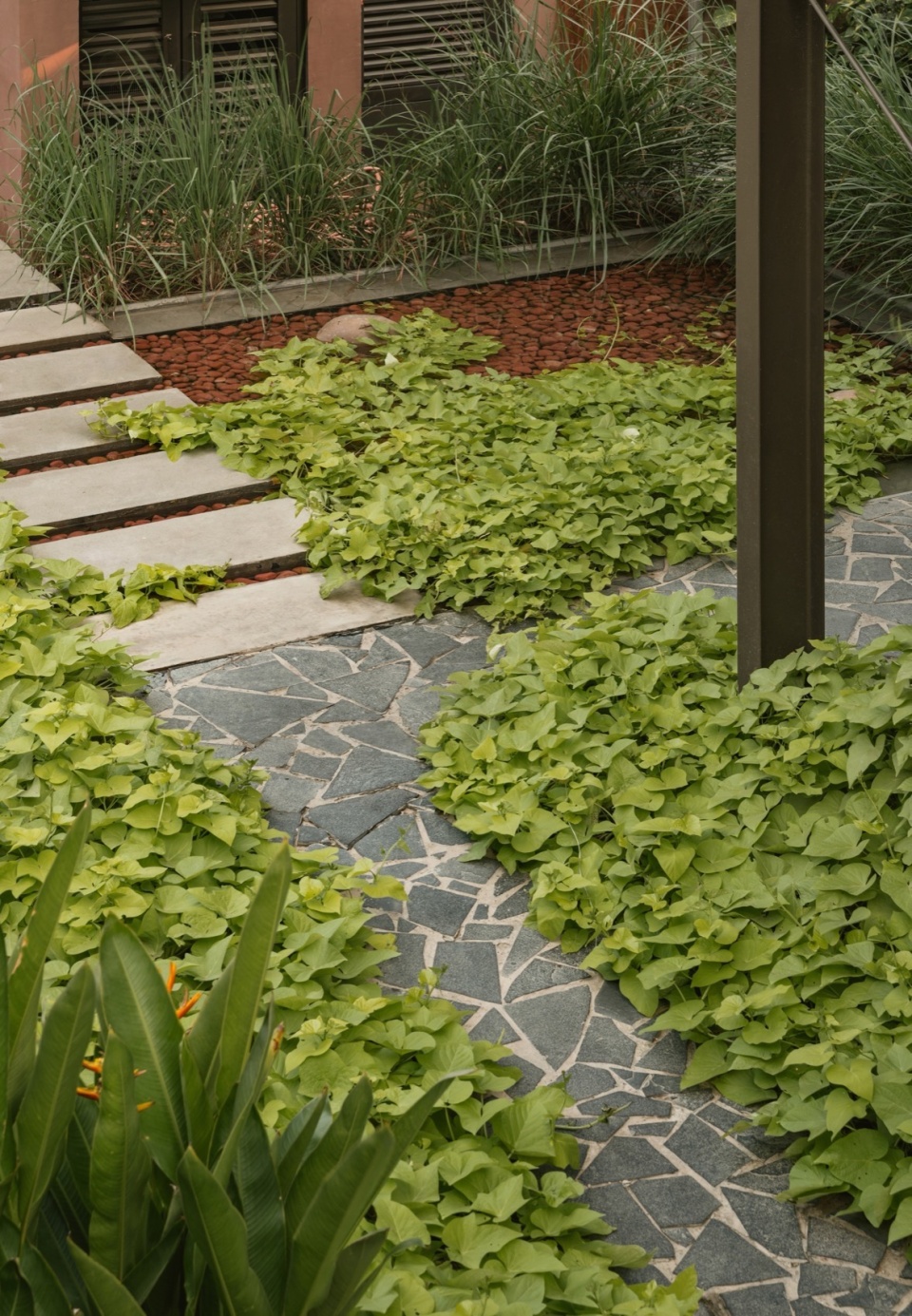
▼步道细部,details of the path
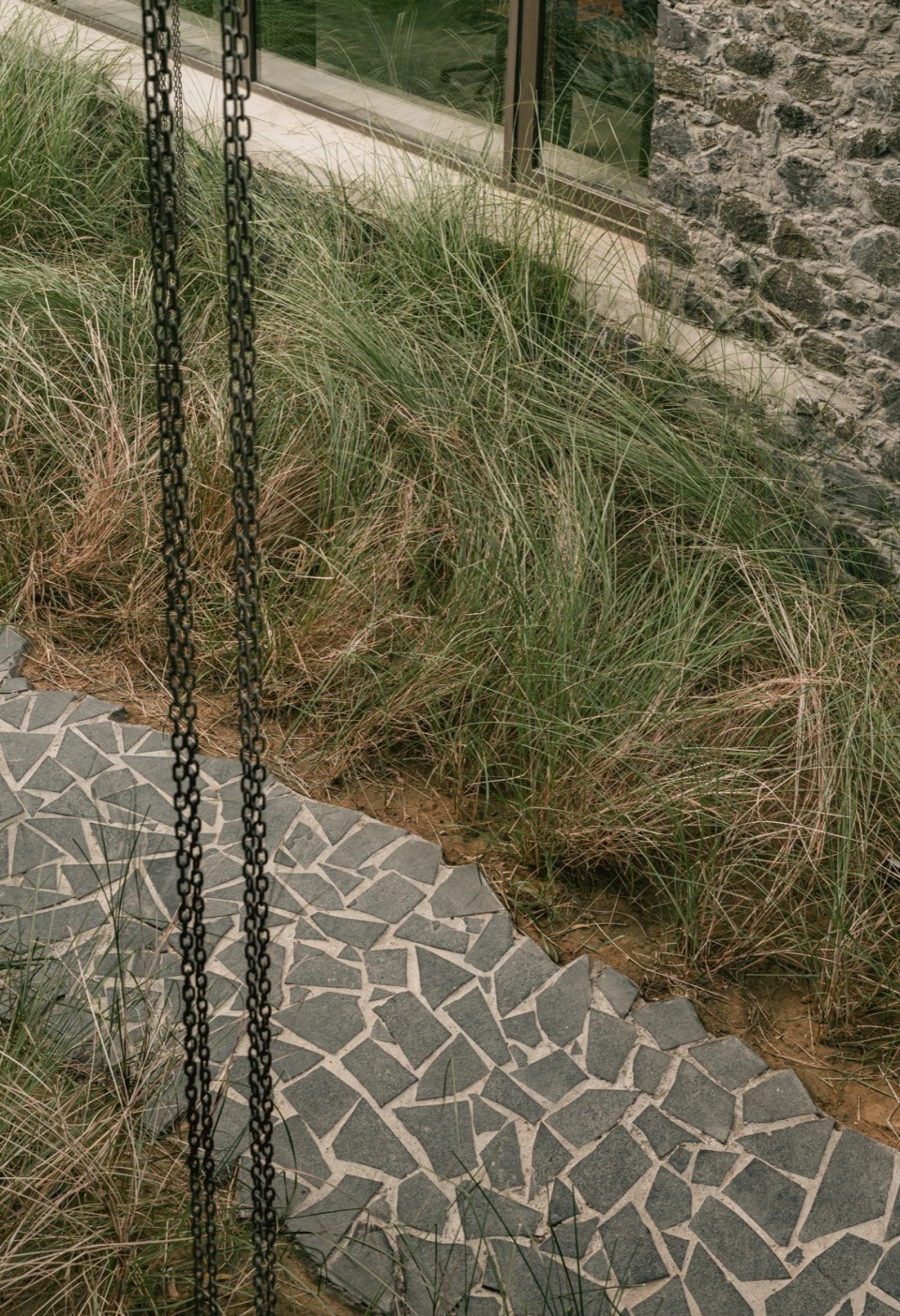
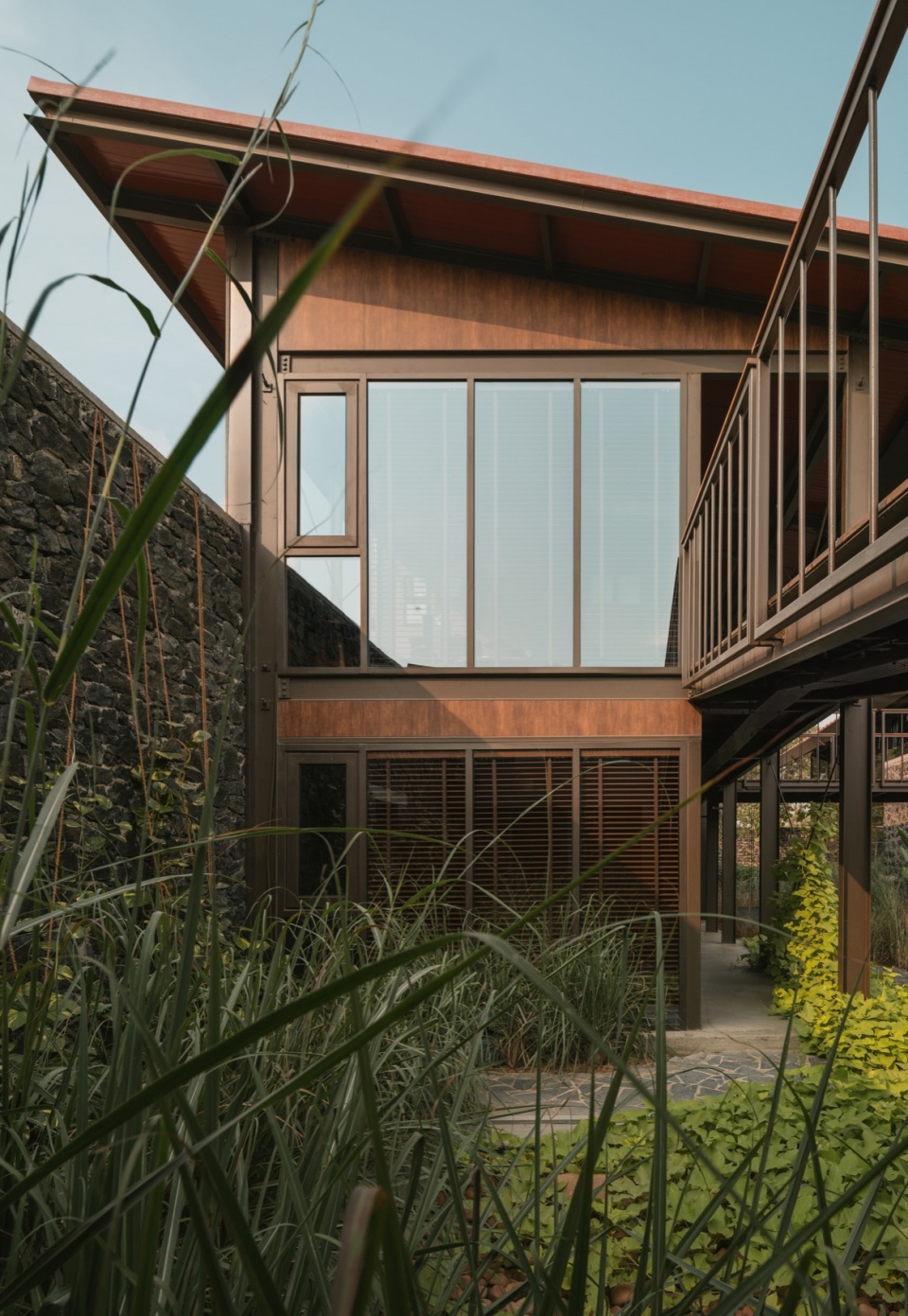
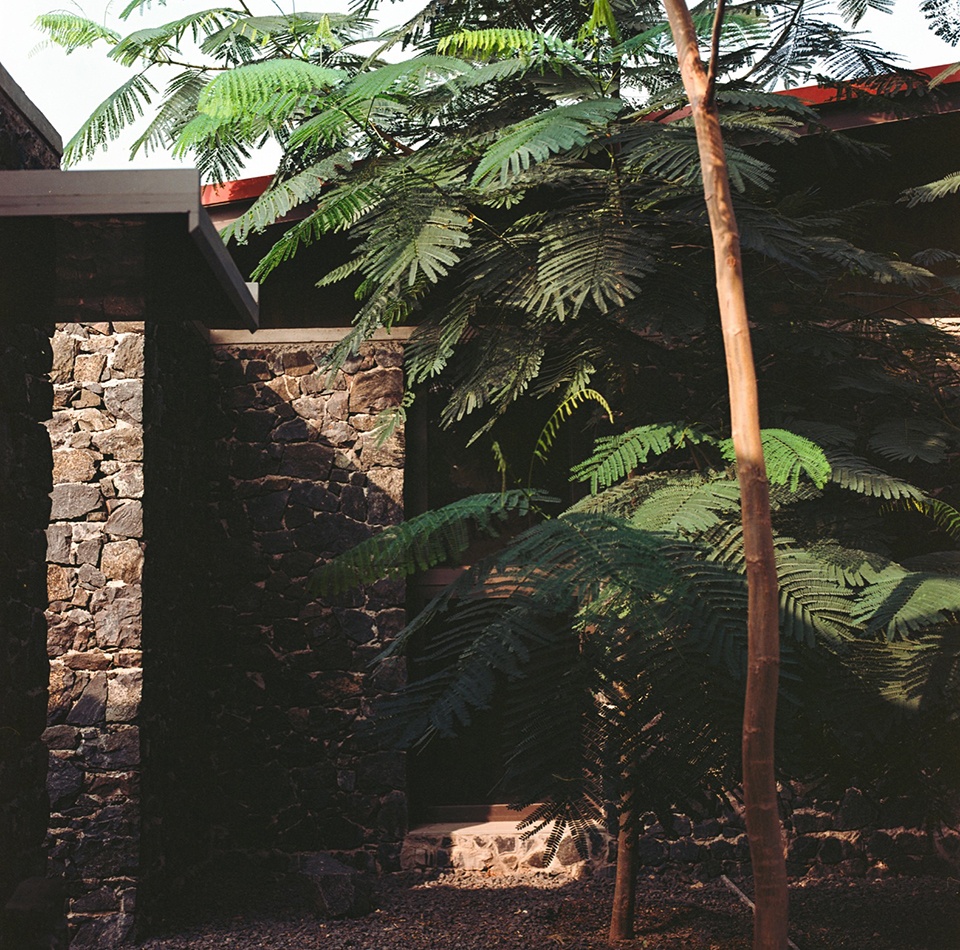
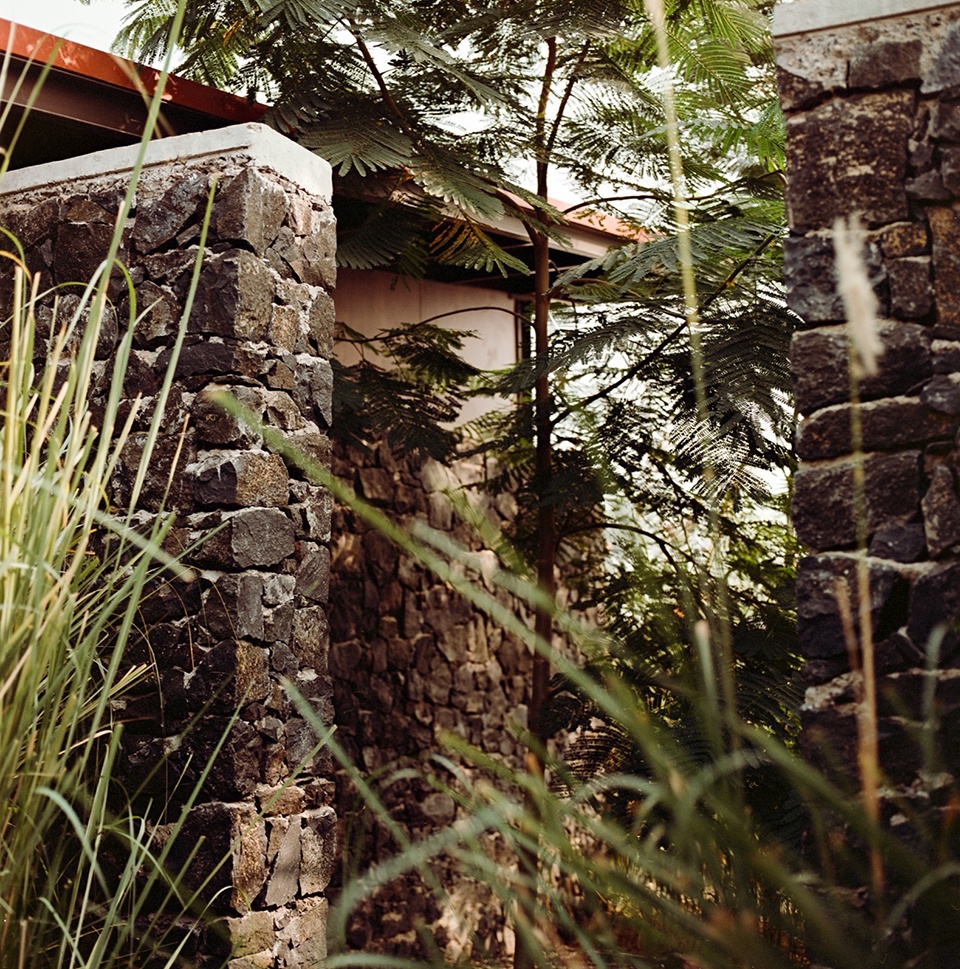
本地采购的玄武岩石墙厚达400毫米,有效阻挡来自南侧的强烈日晒。建筑整体采用钢结构,并配有波纹钢板斜屋顶,屋顶在构造中避免了焊接连接,使其具有“可拆卸性”,为未来的拆解与再利用提供了可能。夏季炎热的艾哈迈达巴德,建筑采用的反射型双层玻璃窗为室内提供了额外的隔热屏障,而位于工作区的大面积北向天窗,则带来充足自然光,同时避免了直射阳光。景观中的植物布置与开窗设计相辅相成,全天候柔和地过滤阳光,洒落至各个空间。黑色石墙、混凝土带与碎石等中性色材质,与砖铺小径、抹灰墙面和波纹屋顶的陶土色调,以及周围丰富的绿色植被,共同营造出一种静谧而平衡的美学氛围。
Locally sourced basalt stone walls, measuring 400mm in thickness, serve as an effective heat barrier against the southern sun. The building features a predominantly steel structure with corrugated steel sloping roofs, crafted without welded joints, imparting a temporary character that allows for future dismantling and reuse. Reflective double glazed windows provide another heat buffer in the summer months of Ahmedabad, while a large glass northlight in the studio block gives ample daylight without direct sun. Tactfully planted flora in the landscape goes hand in hand with the glazing, filtering beautiful sunlight in all spaces throughout the day. The neutrals of the black stone walls, concrete bands and gravel along with the earthy terracotta tones of the brick pathways, plastered walls and corrugated roofs blend harmoniously with the diverse shades of green in the surrounding landscape, contributing to a serene and balanced aesthetic.
▼办公室玄武岩石墙厚达400毫米,
locally sourced basalt stone walls, measuring 400mm in thickness
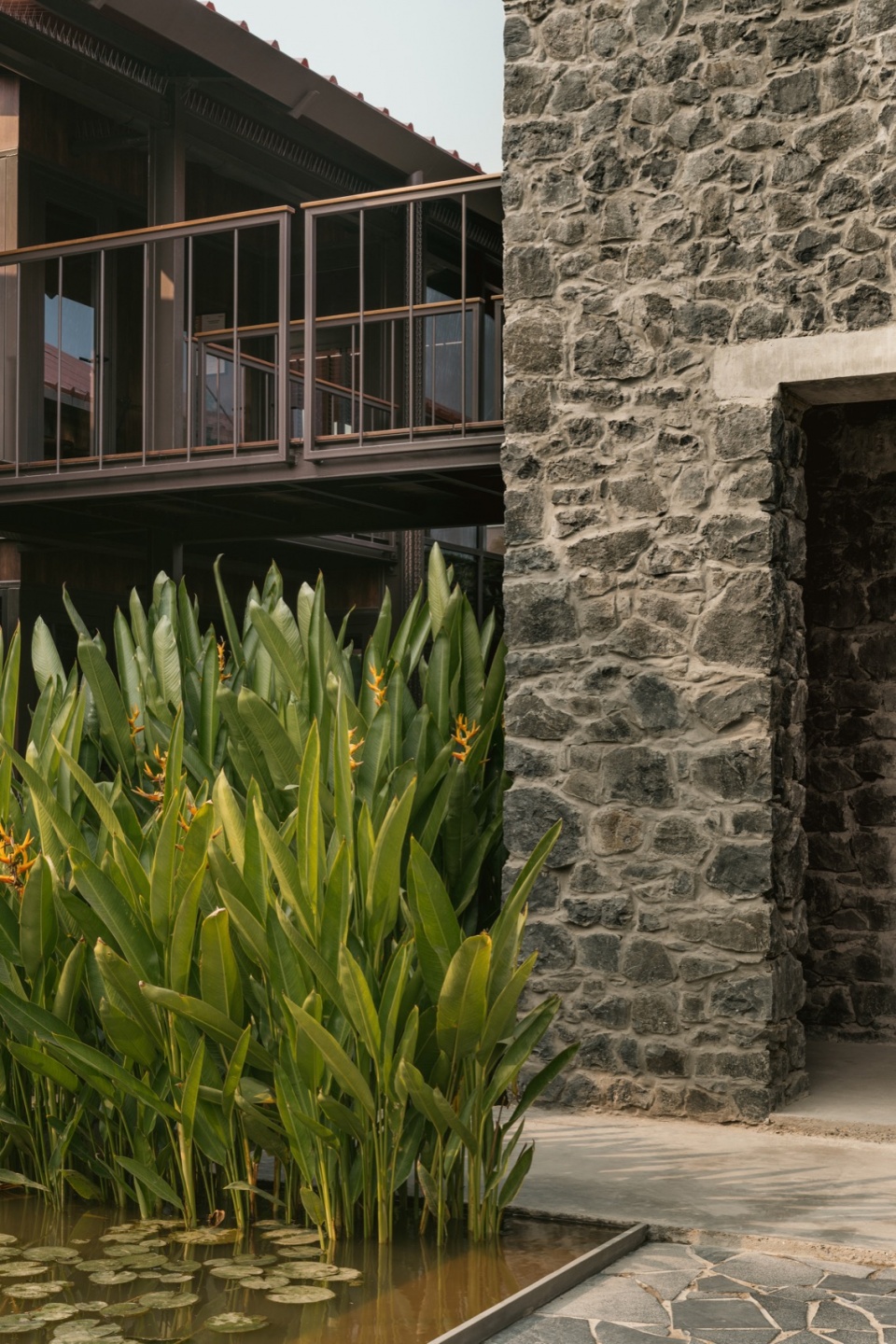
▼玄武岩石墙,the basalt stone walls
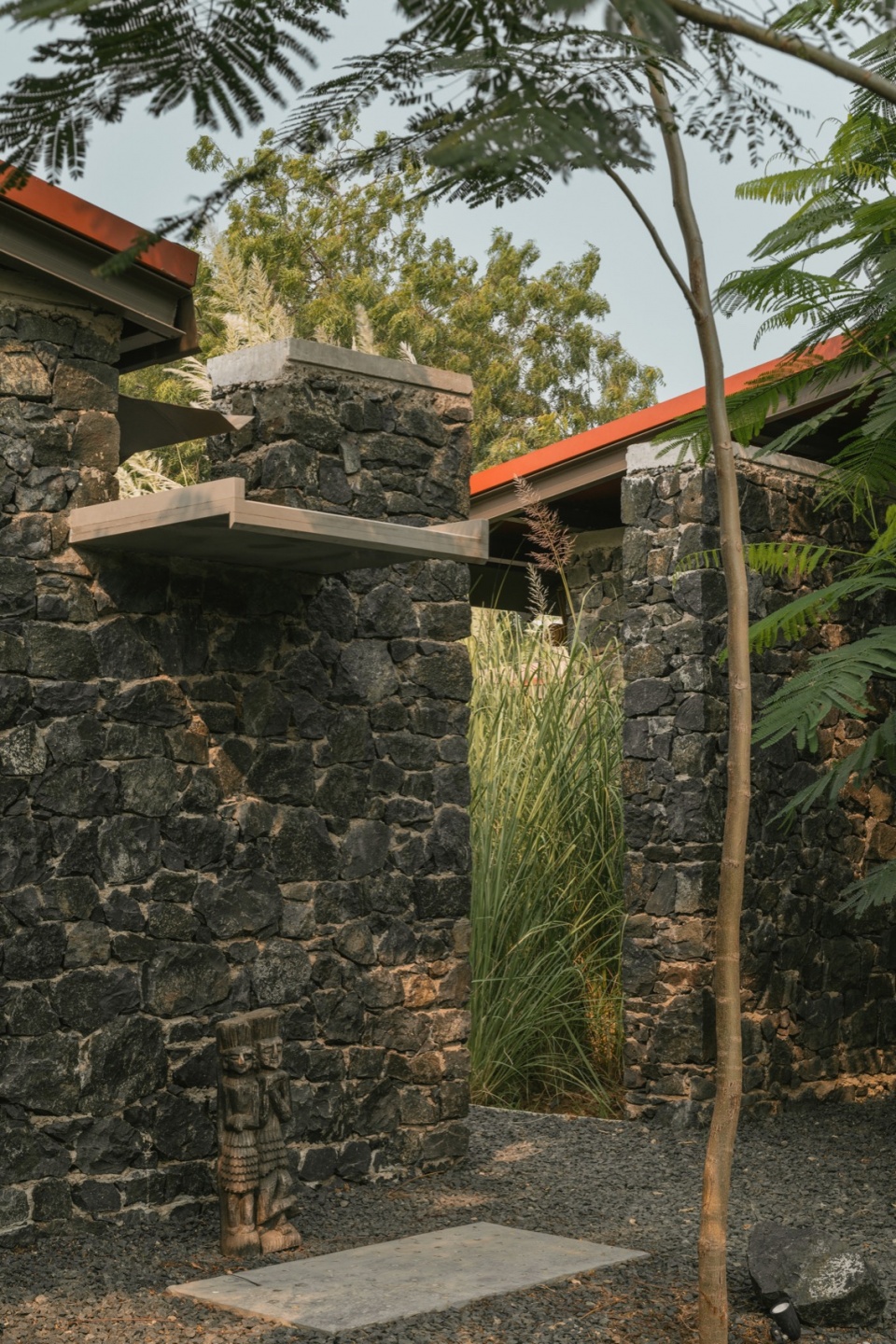
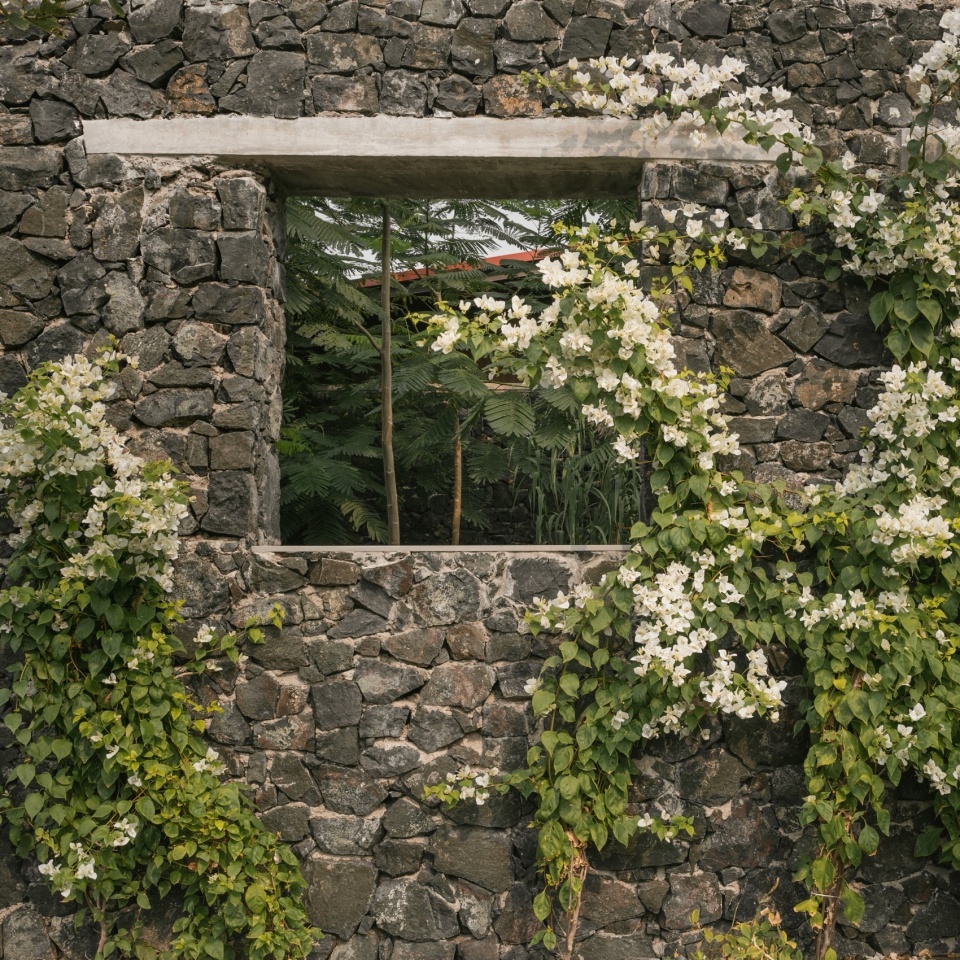
▼洗手间内的玄武岩石墙,basalt stone walls in the toilets
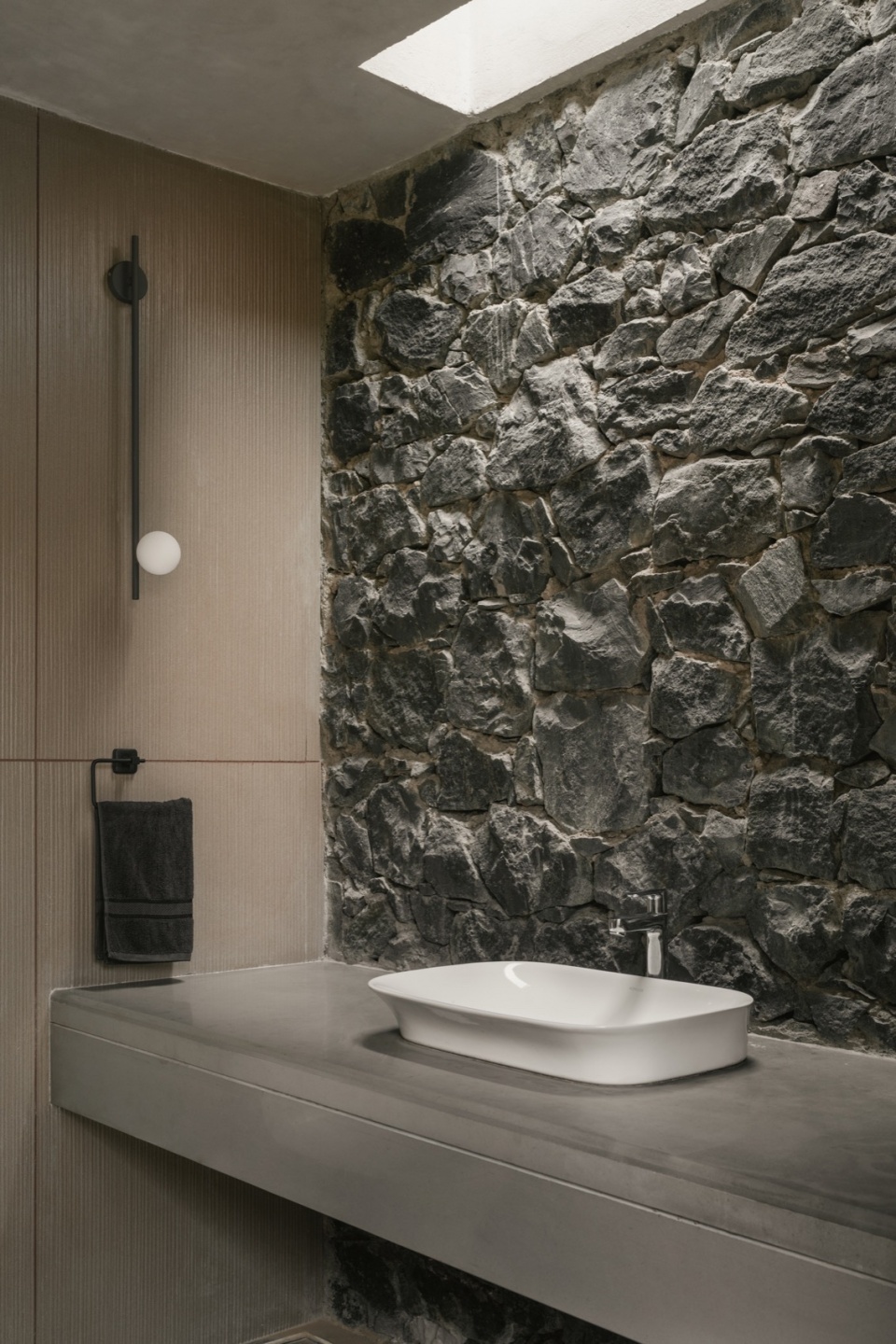
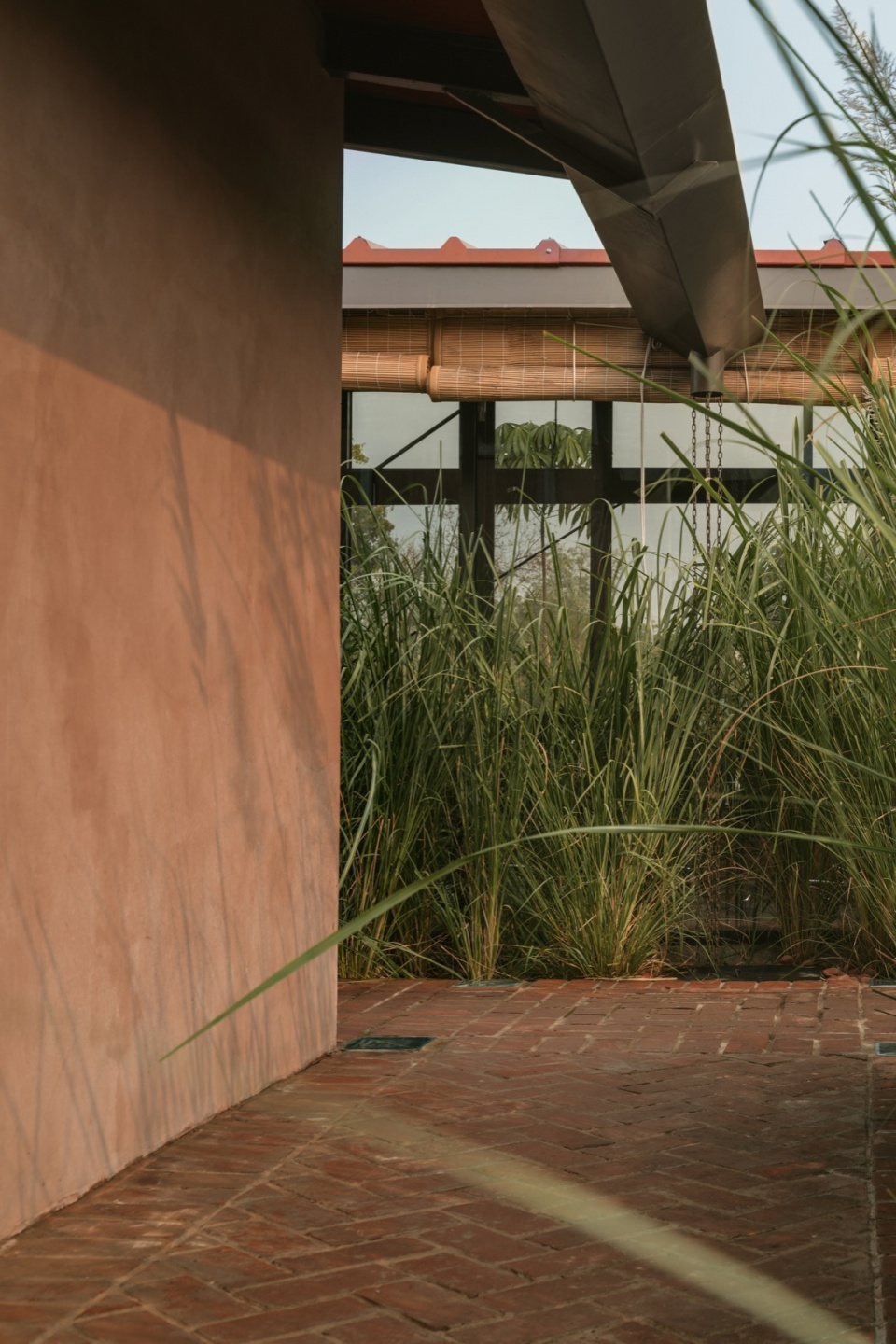
所有屋顶通过排水沟和雨链收集雨水,连同下沉庭院中的雨水,一并汇入位于停车区下方的蓄水池中。园区中面积最大的屋顶位于工作室主体,其倾斜角度经过专门设计,以最高效率布设太阳能电池板。大部分人工照明设备也均为定制,确保与整体建筑风格和功能无缝契合。设置在水体中的高灯设计灵感来自旁边的芦苇。工作室内的黄铜台灯营造出一种温暖的图书馆氛围,尤其在夜晚更为明显。整个空间被柔和的灯光照亮,这些灯具设计低调,特意避免刺眼眩光。室外照明被刻意保持在最低限度,以便人们能欣赏夜晚的天空,至少在城市尚未扩展至此之前。这样的设计也延续了工作室晚间的氛围和情调。
All the roofs gather rainwater through gutters and rain-chains, which along with the rainwater in the sunken courtyard, all get harvested to a tank under the parking. The largest roof of the campus on the studio block is designed at an angle to most efficiently accommodate solar panels. A majority of the artificial lighting is custom made to work seamlessly with the project. Tall lights positioned in the water body are designed to resemble the adjacent reeds. The brass table lamps in the studio are made to create almost a warm library-like vibe in the evenings. One can see a warm glow of lights uplighting all the spaces, where the lights are designed to be discreet and specifically avoiding a glare in one’s eyes. The outdoor lighting is consciously kept to a minimum such as to be able to enjoy the evening skies, at least until the city expands up to here. This extends the mood and atmosphere of the studio in the late evenings as well.
▼庭院,courtyard
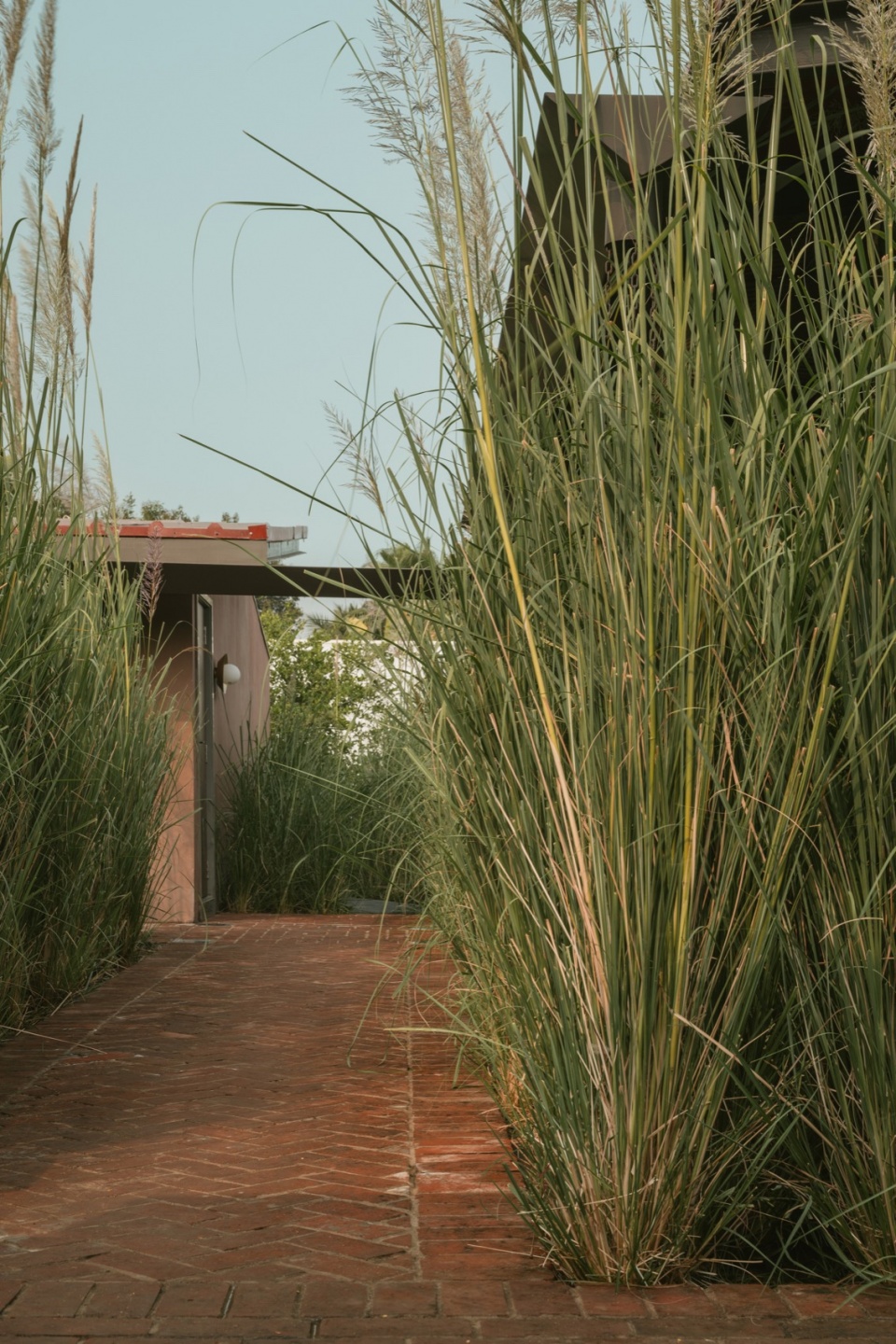
▼框景,frame view
▼细部,details
受西印度地区本土建筑核心传统理念的驱动,庭院及周围的坡屋顶建筑群赋予了工作室明确的当代形态。当地材料的运用、自然与人工照明的结合,以及空间在移动、工作与交流上的灵活性,共同提升了工作室的美学魅力,彰显了对使用者关怀的设计理念。最终呈现出一种传统与现代的宁静融合,使建筑成为自然环境的有机组成部分,散发出恒久的韵味。
Driven by the core vernacular principles of western Indian architecture, the courtyard and the surrounding pitched roof blocks give a definitive contemporary form to the studio. The integration of local materials, natural and artificial lighting, and flexibility to move, work and have conversations enhances the studio’s aesthetic appeal and underscores the commitment to creating a workspace that thinks about the people that use it. The result is a tranquil fusion of tradition and modernity, where architecture becomes an integral part of its natural surroundings, resonating with a sense of timelessness.
▼庭院,courtyard
▼石强,the stone wall
▼小剧场,the small open-air theater
▼连桥,the bridge
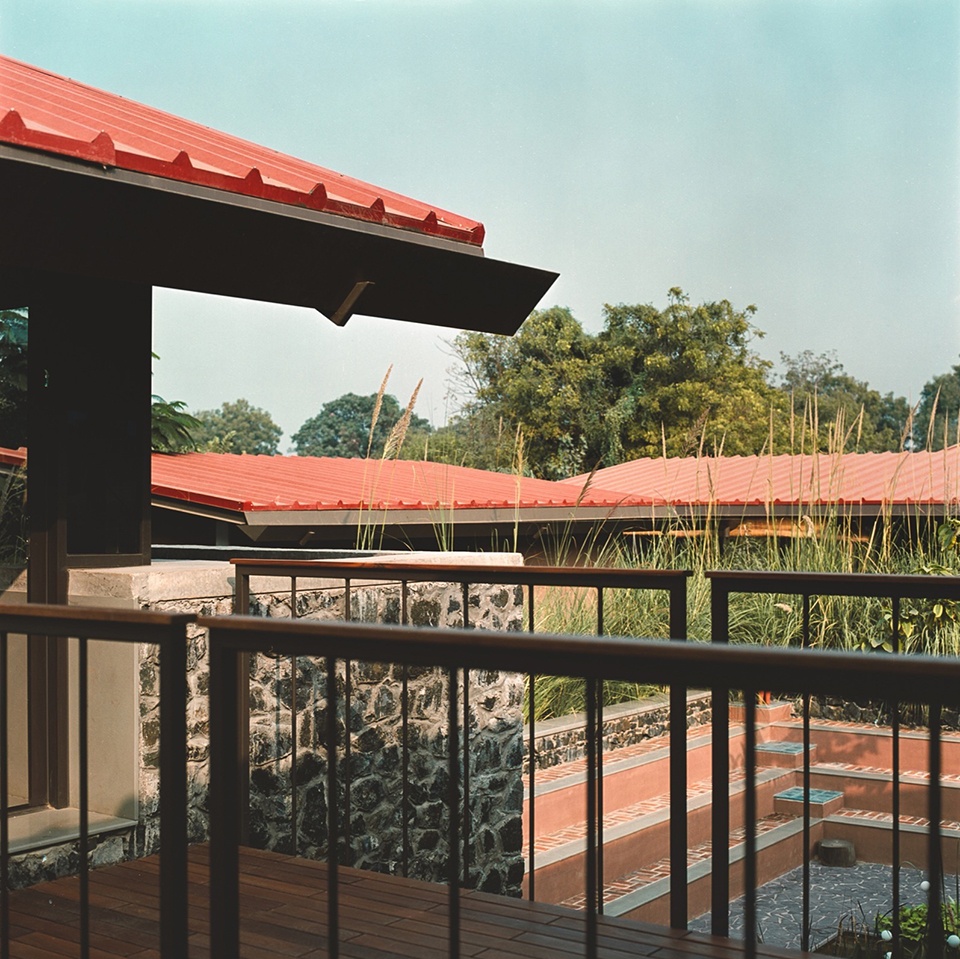
▼面向池水的阶梯,steps facing the pool water
▼石墙,the stone wall
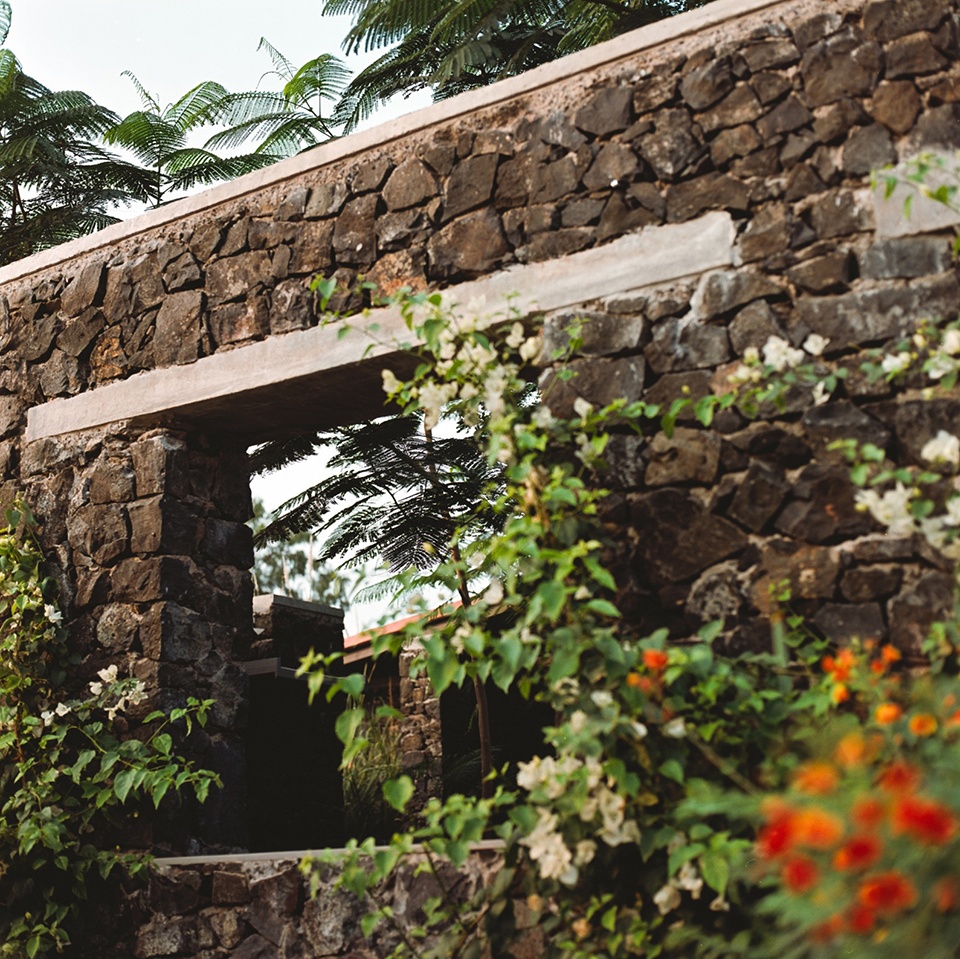
▼格栅,the door
▼水景,water feature
▼野生自然,wild nature
▼办公室室内,interior of the office
Fact file
Location: Ahmedabad, Gujarat
Size: 455 sq mt
Built Up Area: 1170 sq mt
Photography Credits: Ishita Sitwala
Website: https://studiosaransh.com/
Instagram: https://www.instagram.com/studio_saransh/