乌鹊JIU食肆 · 品牌全案概念店设计,苏州 / 木月建筑设计事务所
乌鹊JIU食肆是一个全时段的创意融合菜餐厅,主打醉鸡煲、小海鲜与烧鸟,木月建筑设计事务所 (MOON Architects)从品牌LOGO视觉系统到空间设计,负责了品牌全案概念店设计。
Wuque JIU Restaurant is an all-day dining establishment serving creative fusion cuisine, specializing in Drunken Chicken Hotpot, fresh seafood, and Yakitori. MOON Architects handled the comprehensive concept store design for the brand, covering everything from the brand logo and visual identity system to the spatial design.
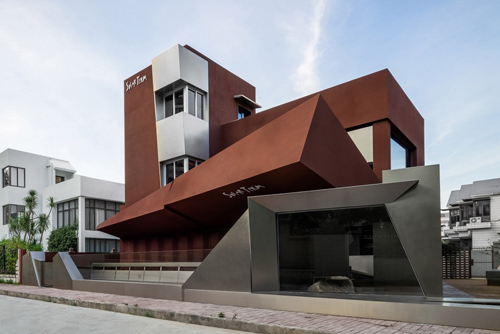
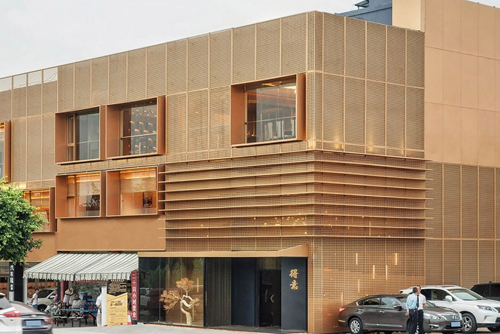
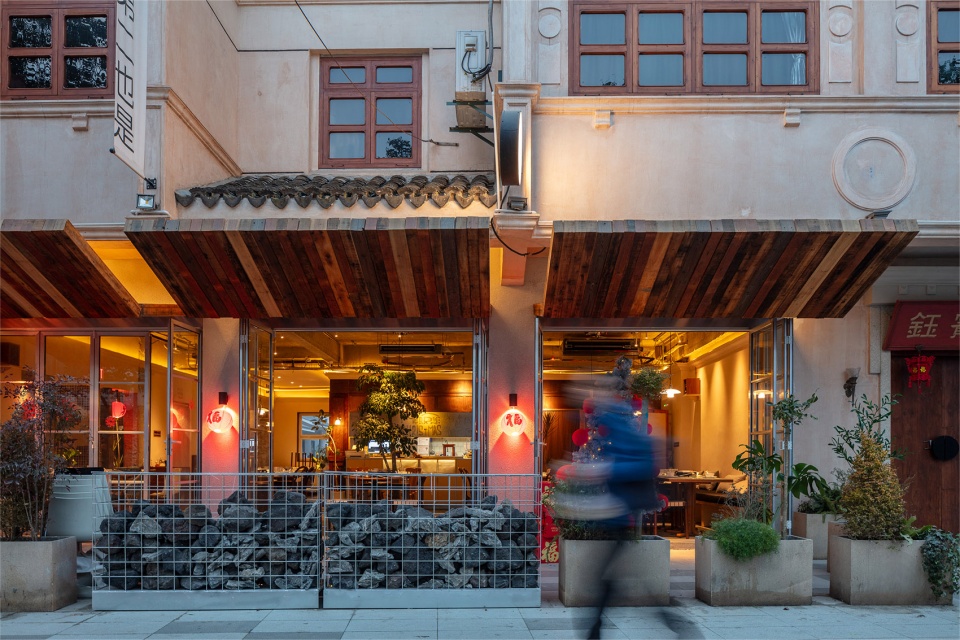
▼餐厅外观,exterior of the restaurant
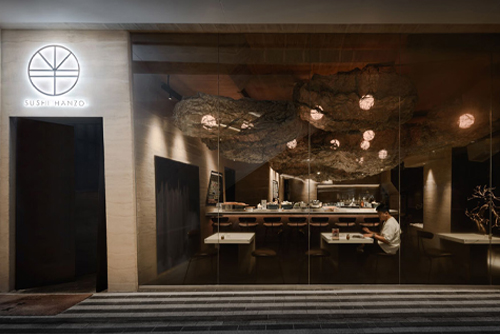
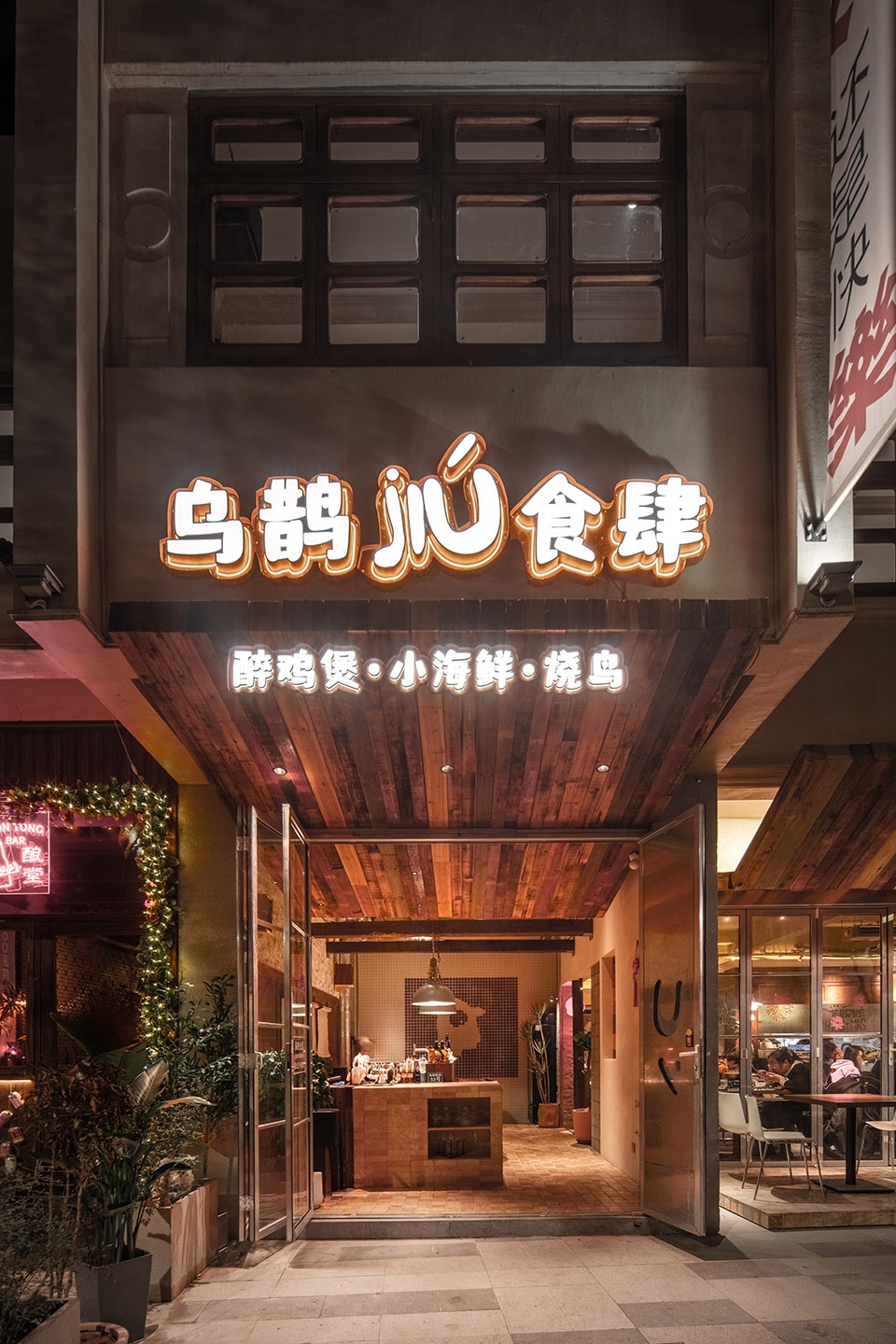
▼门头,storefront
乌鹊JIU食肆位于苏州的姑苏区乌鹊桥路,曾以90年代“电脑配件一条街”闻名,如今演变为传统苏式建筑与主理人店共生的年轻力街区。稀疏斑驳石板路上,老电脑城的江湖记忆与咖啡馆、小酒馆、手作工作室混合拼贴,窗棂雕花映着霓虹灯牌,评弹声里夹杂着吉他旋律,成为来自全国各地的年轻人拍照打卡的宝藏地。
MOON Architects implemented strict cost control in the design, achieving a remarkably low budget to create a brand store with distinctive character within limited resources. As the brand’s global flagship location, the birthplace of WUQUE JIU Restaurant established its foundational DNA, with locality serving as one of the deeply explored touchpoints in the design.
▼餐厅外观,exterior of the restaurant
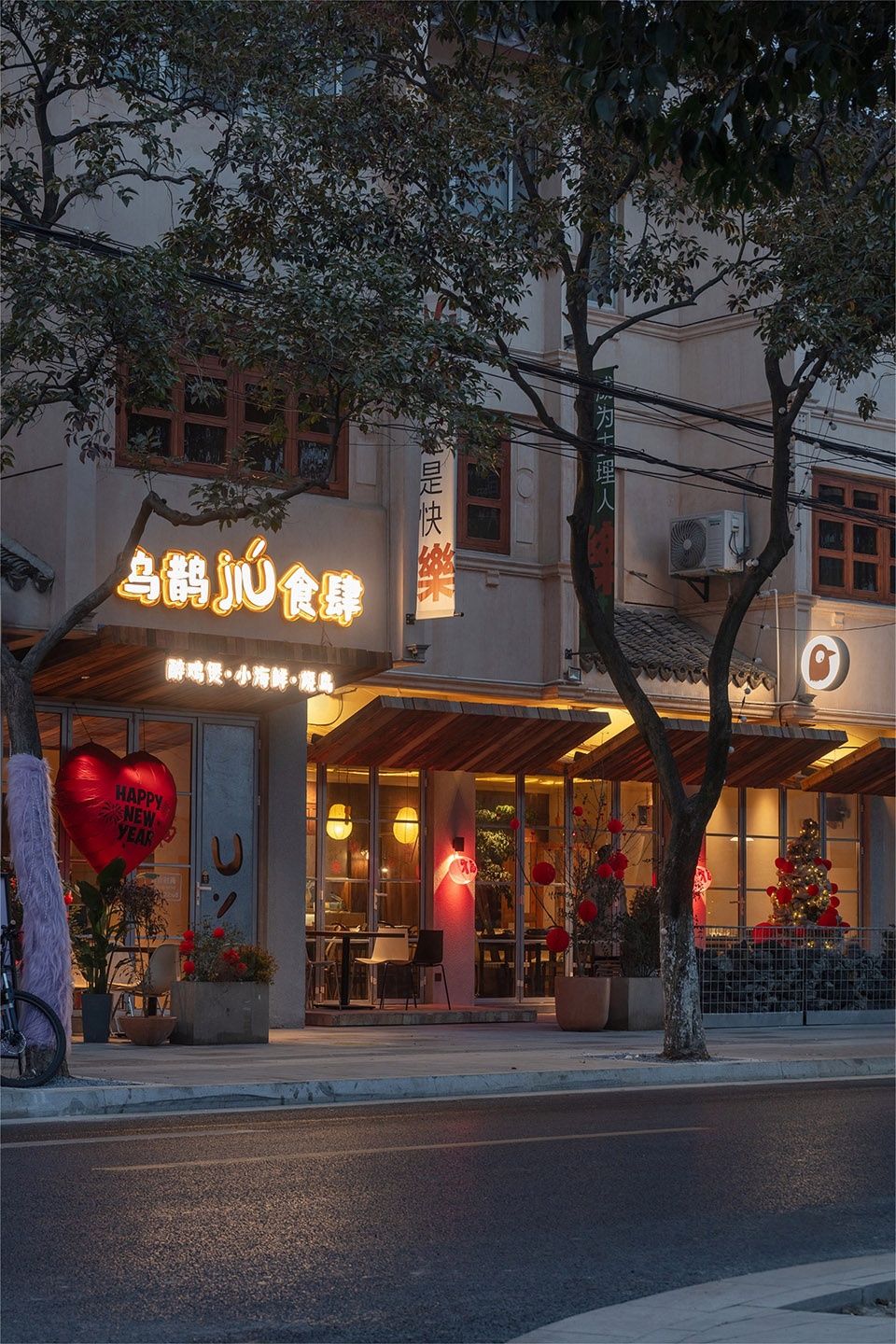
木月建筑设计事务所在设计上严格控制了成本,以极低的造价实现了在有限的成本里开出一家有灵魂的品牌店。作为一家全球首店,乌鹊JIU食肆的诞生地奠定了品牌的原始基因,以在地性为设计中深度挖掘的触点之一。木月建筑设计事务所在设计中以老物件利旧创造松弛美学,将老街的历史记忆与现代生活方式有机结合。从品牌符号“鹊鸟”的诞生到空间视觉系统的渗透,木月设计团队以“解构式共生”为理念回收再利用原址的在地材料,将改造拆除的旧物与建筑垃圾重新组合,打造出兼具年轻活力又充满趣味的餐饮空间。于是,乌鹊JIU食肆开业后自然很快地成为了串联历史记忆与当代生活的文化地标。
The architects cultivated a relaxed aesthetic through the repurposing of vintage elements, seamlessly blending the historical memory of the old street with contemporary lifestyles. Guided by the concept of “deconstructed symbiosis,” the MOON Architects team recycled locally sourced materials from the original site – from the inception of the brand symbol, the “Que Bird,” to the permeation of the spatial visual system. They creatively reassembled salvaged items from the renovation and construction debris, crafting a dining space that is both youthfully vibrant and full of playful charm. Consequently, after opening, WUQUE JIU Restaurant naturally and swiftly evolved into a cultural nexus, bridging historical memory with modern urban life.
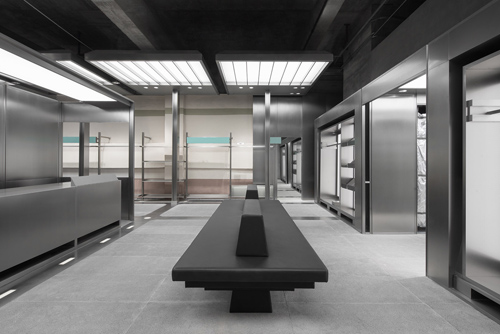
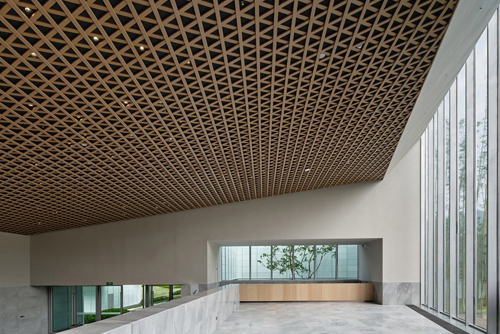
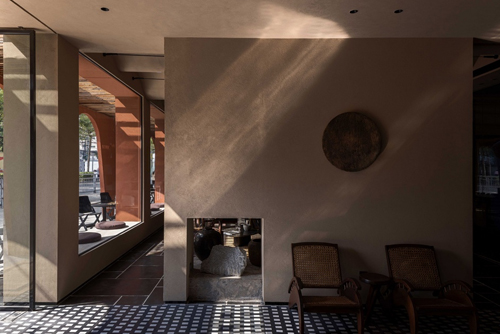
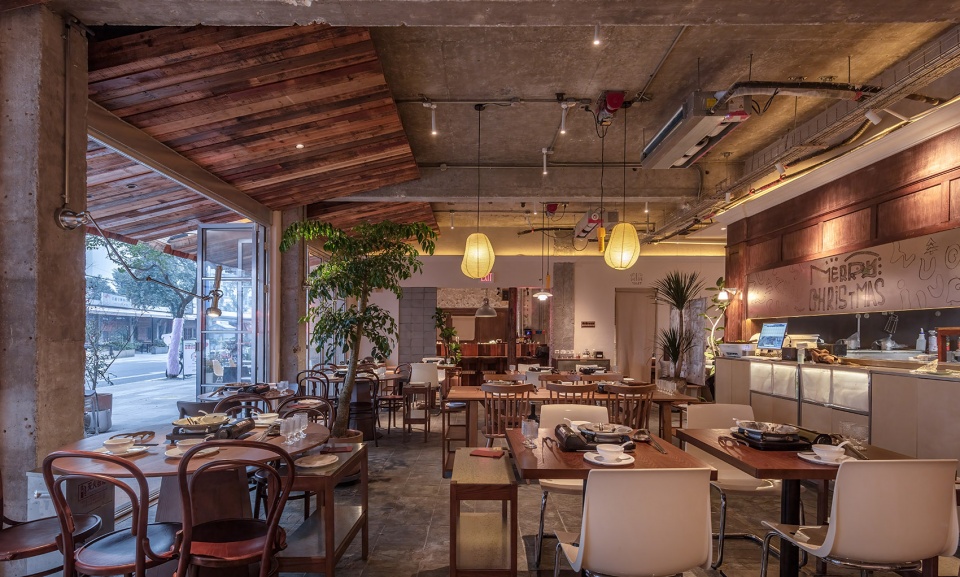
▼室内概览,interior overview
JIU“酒,久,就,旧”乌鹊街微醺醉鹊孵化记“JIU – Wine, Timelessness, Instantaneity, Nostalgia: The Tipsy Magpie’s Journey on Wuque Street”
通过品牌全案设计策略,木月建筑设计事务所将品牌基因植入每个细节。食肆得名于乌鹊桥的历史故事,将“鹊”作为形象识别图案,并结合品牌“JIU”传播多重的文化意义,“酒,久,就,旧”,它也像鸟儿一样JIUJIUJIU的叫,或是让食客发挥更多的想象去联想它。
Through comprehensive brand identity design, MOON Architects embedded the brand’s DNA into every detail. The restaurant draws its name from the historic tale of Wuque Bridge (Magpie Bridge), adopting the magpie (“Que”) as its visual symbol. The brand’s “JIU” carries layered cultural meanings—wine (酒), timelessness (久), instantaneity (就), and nostalgia (旧)—while also evoking the bird’s playful chirp (“JIU JIU JIU”), inviting diners to explore its many interpretations.
▼店铺招牌“鹊鸟”logo,magpie logo
▼店铺招牌“鹊鸟”logo,magpie logo
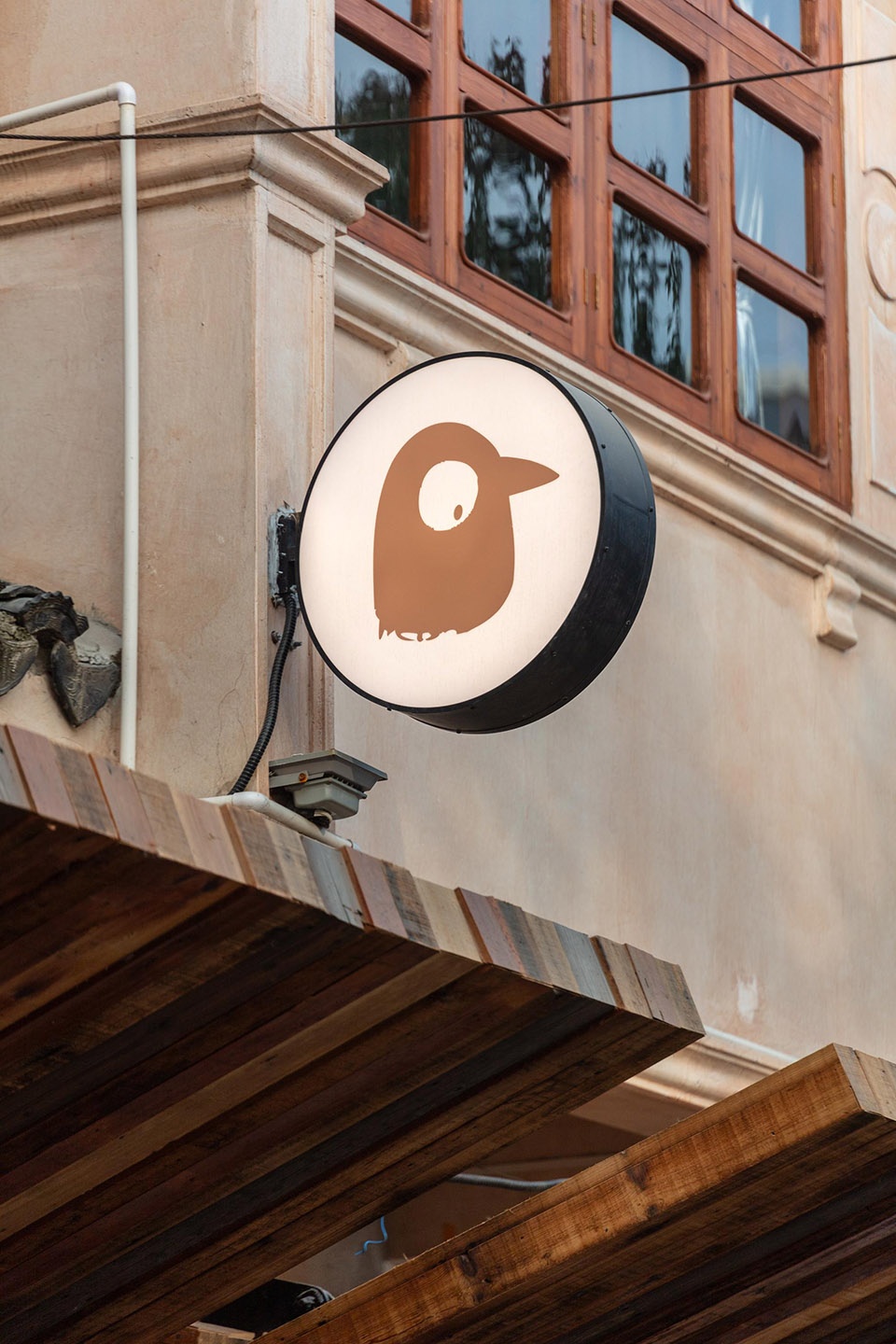
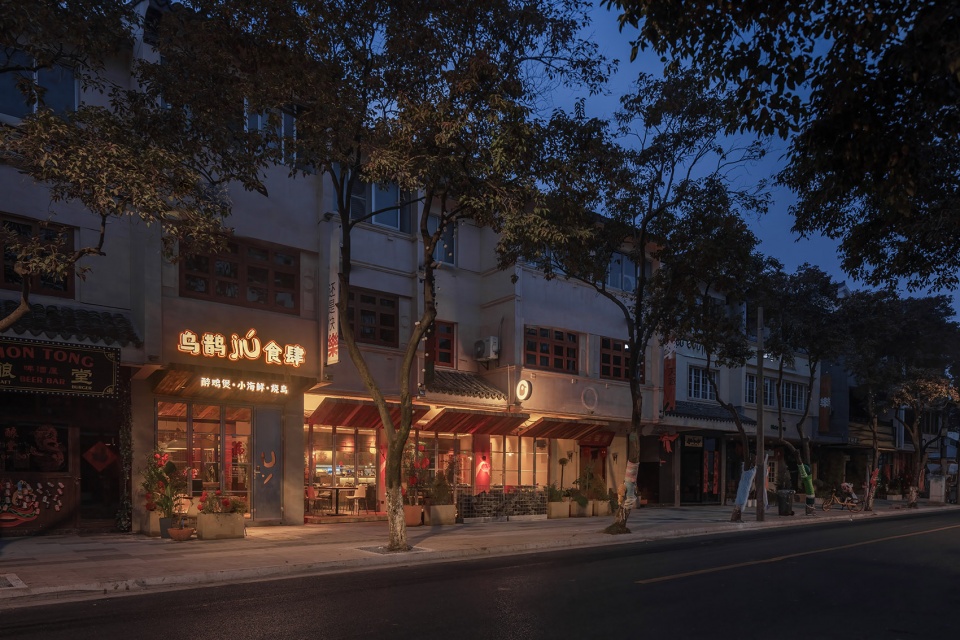
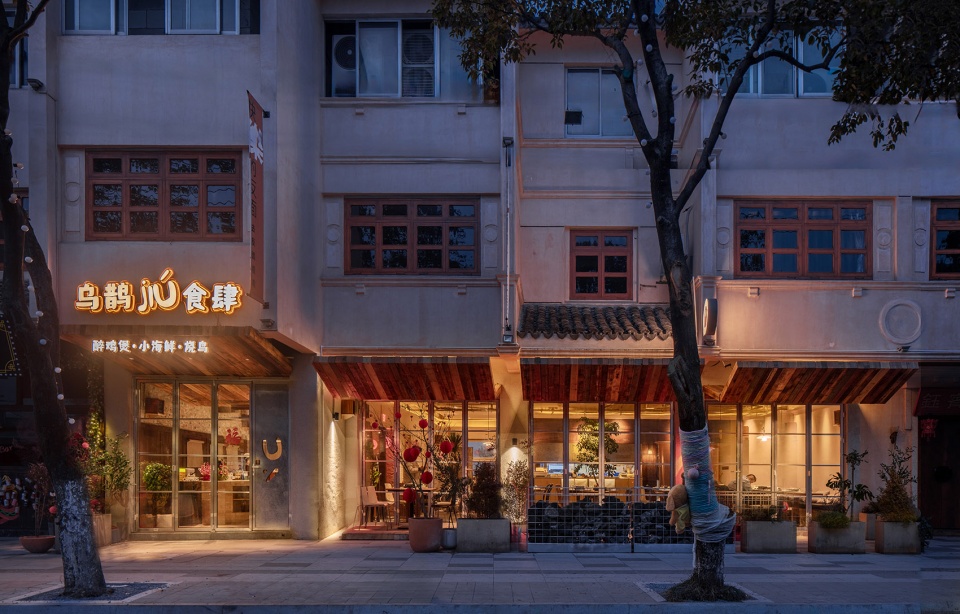
木月建筑设计事务所采用拟人化的设计手法,将偷喝酒的小鸡还有醉到现原形的鹊仙,变成食客的“酒搭子”——你微醺时看它,它也在微醺地看你。传统酒肆的烟火气与现代设计的松弛感,就在这醉眼迷离的对视中,达成了微妙的共鸣。每当夜幕降临,乌鹊JIU食肆的招牌亮起一抹暖光,食客第一眼便会被店外那只圆润俏皮的“鹊鸟”吸引——眼神似醉非醉微醉,仿佛刚从那锅招牌醉鸡煲里偷抿了一口酒,正摇摇晃晃地对你打招呼。
MOON Architects employed a personification approach, transforming a booze-sneaking chick and a magpie immortal drunk into revealing its true form into diners’ “drinking buddies”—when you gaze at them tipsily, they gaze tipsily right back. The warm, bustling energy of traditional taverns harmonizes with the effortless cool of modern design in this hazy, liquor-tinged exchange, creating a whimsical resonance. As night falls, the soft glow of WUQUE JIU Restaurant’s sign illuminates the street, drawing guests’ eyes first to the plump, mischievous “Que Bird” perched outside—its eyes dazed yet knowing, as if it just stole a sip from the signature Drunken Chicken Hotpot and is now swaying playfully in greeting.
▼夜幕降临,乌鹊JIU食肆的招牌亮起一抹暖光,As night falls, the soft glow of WUQUE JIU Restaurant’s sign illuminates the street
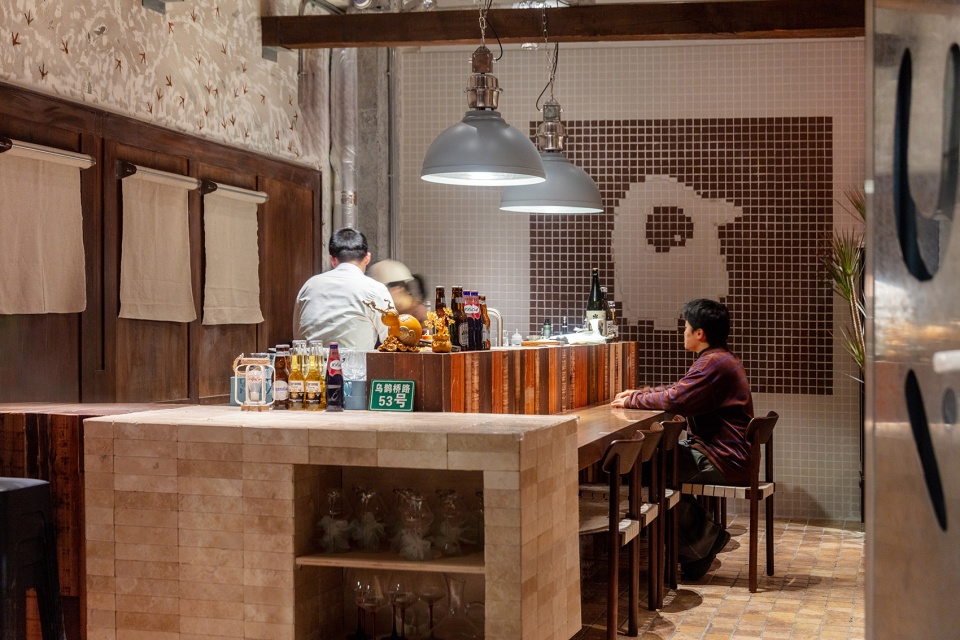
推开门的瞬间,门把上凸起的“JIU”,像被一只顽皮的雏鸟轻轻啄了下掌心,恍惚间耳畔似乎响起”啾啾”的啼鸣——视觉、触觉与听觉在此刻完成了一场微妙的通感游戏。品牌符号的触点设计还藏于各种的细节里——比如在吧台,我们采用马赛克瓷砖,手工拼贴出品牌鹊鸟的图案。
▼拼贴马赛克过程,Mosaic process
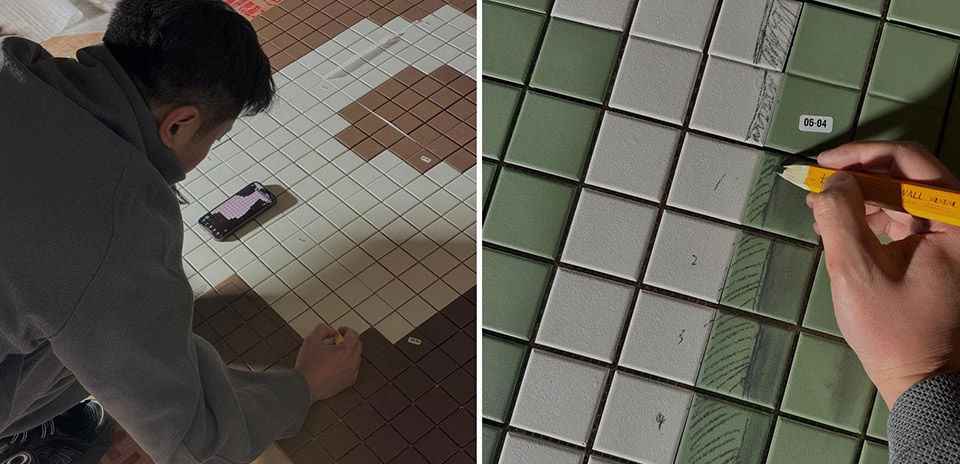
The moment you push open the door, the raised “JIU” on the handle taps your palm like a mischievous hatchling’s peck—and in that hazy instant, the whisper of a “JIU JIU” chirp seems to echo in your ears. Sight, touch, and sound converge in a subtle sensory interplay. This touchpoint is just one of many hidden details: At the bar, hand-laid mosaic tiles form the silhouette of the Que Bird, where refracted light creates a winking effect as guests raise their glasses.
▼用拟人的插画手法创作出乌鹊JIU食肆的品牌logo,Created the logo using anthropomorphic illustration techniques
▼用拟人的插画手法创作出乌鹊JIU食肆的品牌logo,Created the logo using anthropomorphic illustration techniques
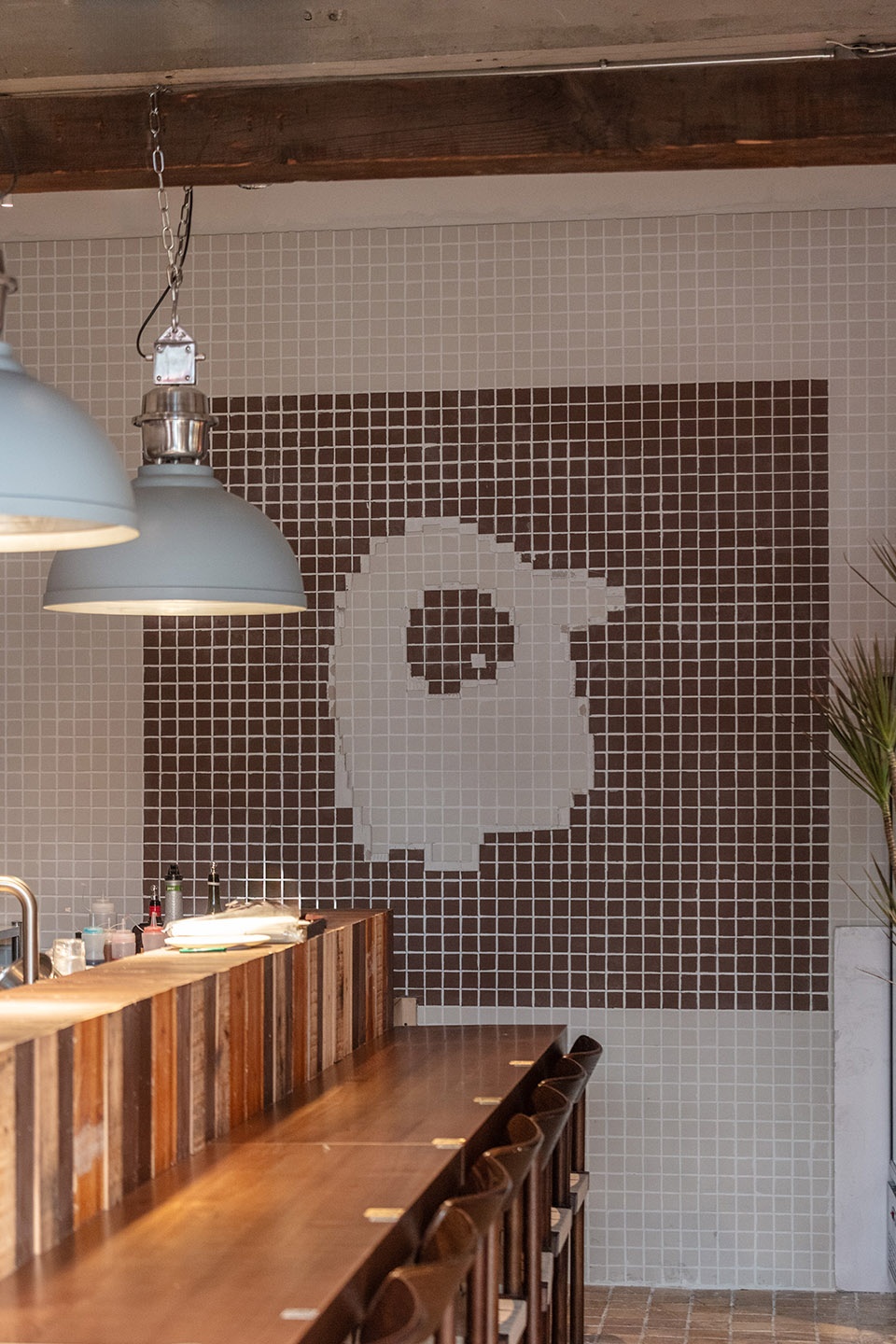
当客人举杯畅饮时,这个顽皮的精灵时而随着酒杯的晃动眨眨眼睛,时而因觥筹交错的热闹场景而微微侧首,仿佛一个贪杯的小酒客正躲在暗处,偷偷打量着人间烟火的热闹景象。
Watch as this playful sprite comes alive: its eyes blink with the sway of wine cups, its head tilts at the clink of toasting glasses—like a tippling little drinker observing the revelry from the shadows.
▼采用马赛克瓷砖手工拼贴出品牌鹊鸟的图案,Hand-collage of branded magpie birds using mosaic tiles
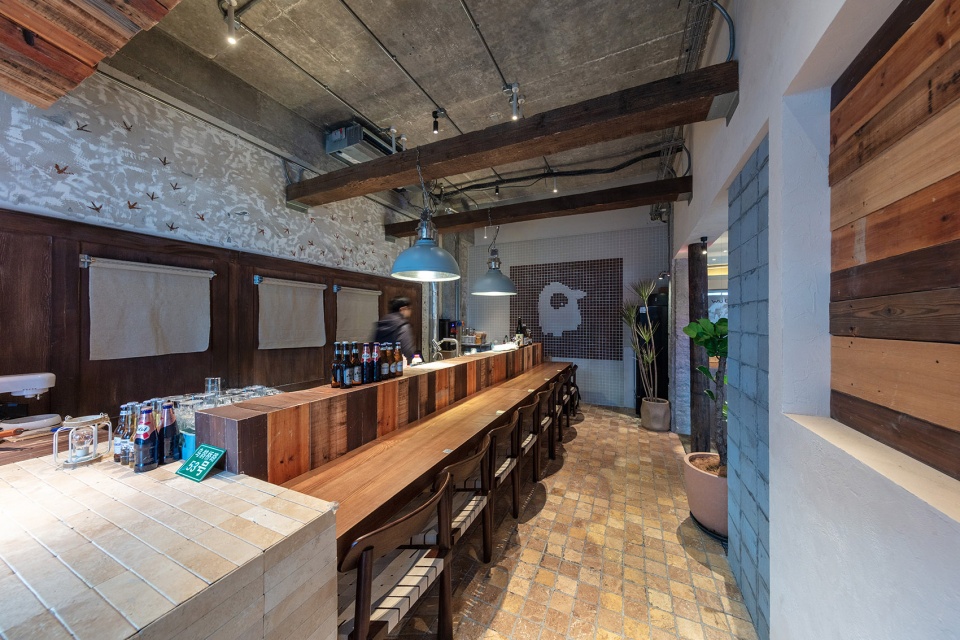
这只灵动的鹊鸟形象,作为贯穿整个空间的超级视觉符号,通过多维度的创意演绎,为品牌注入了独特的个性魅力。设计巧妙运用这一核心元素,在平面与空间中进行富有创意的转换与延伸,不仅强化了品牌的视觉识别度,更通过趣味性的互动设计,构建起丰富立体的品牌体验与消费者互动触点。
▼手绘过程,sketch process
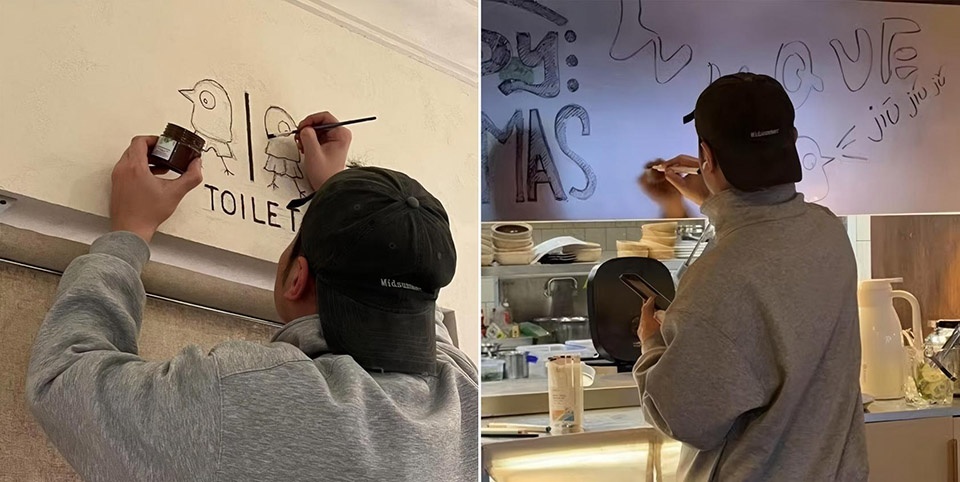
As the hero visual symbol permeating the space, this dynamic magpie is creatively reinterpreted across dimensions, injecting the brand with singular charm. Through inventive 2D-to-3D transformations, the design not only amplifies brand recognition but crafts multi-layered consumer interactions—turning every corner into a delightful brand conversation.
▼贯穿整个空间的超级视觉符号,this dynamic magpie is creatively reinterpreted across dimensions
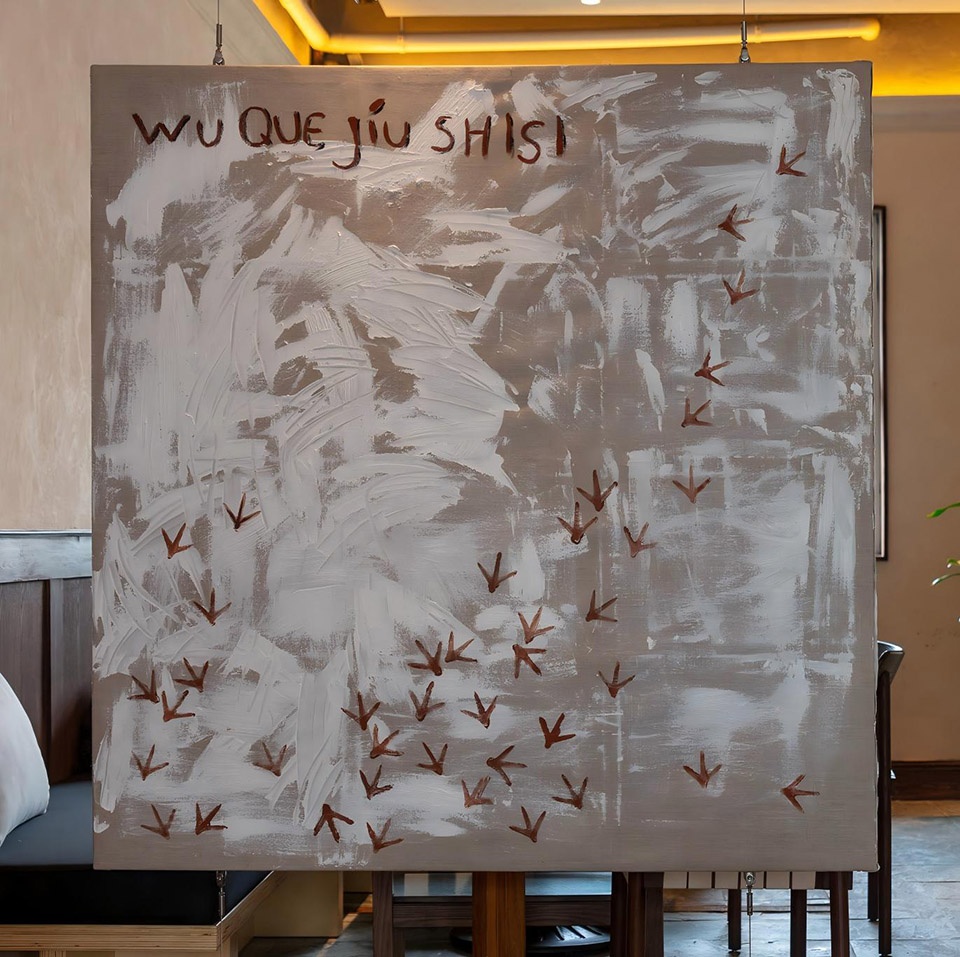
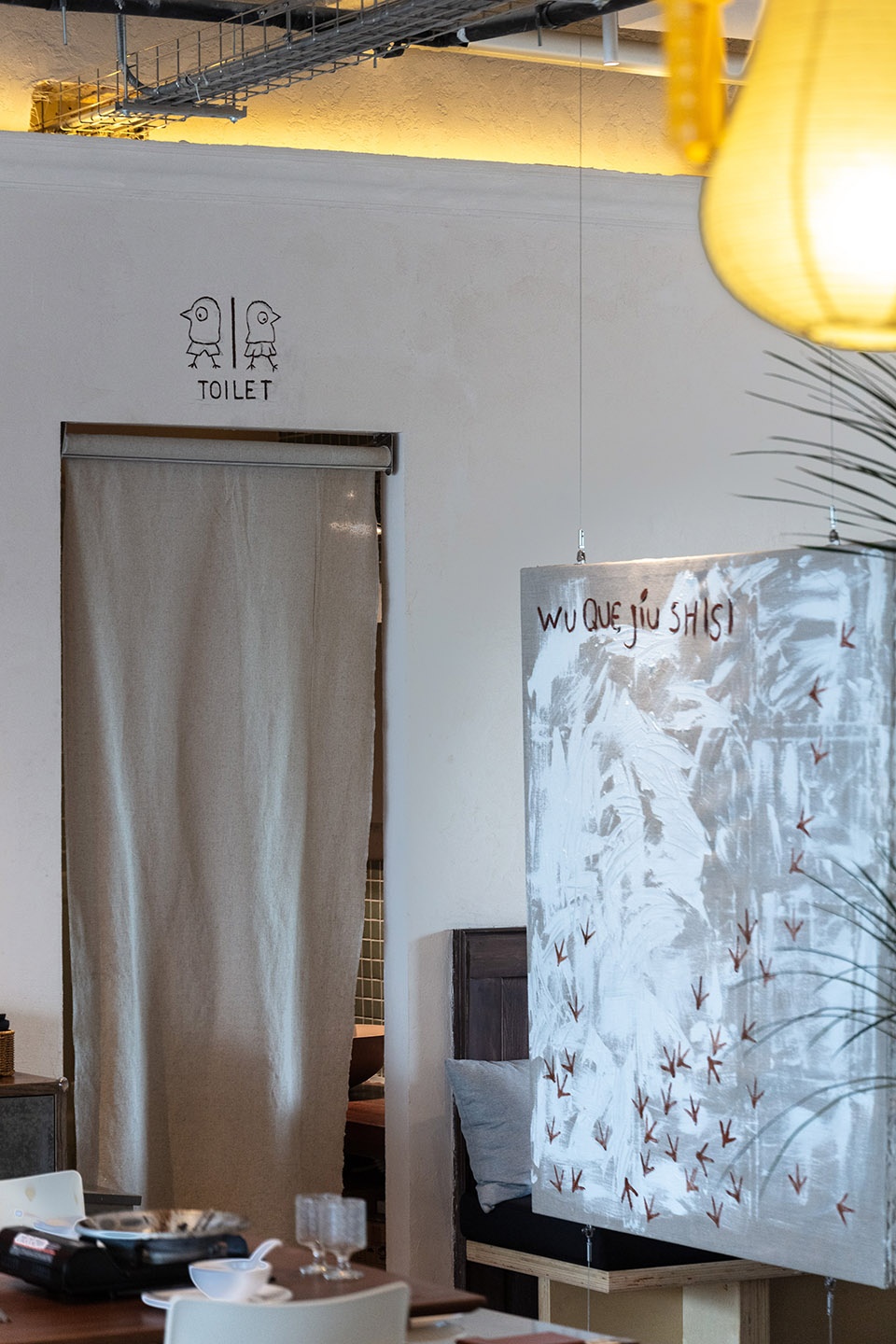
新旧共生,降本增效Old-New Symbiosis, Cost-Efficiency
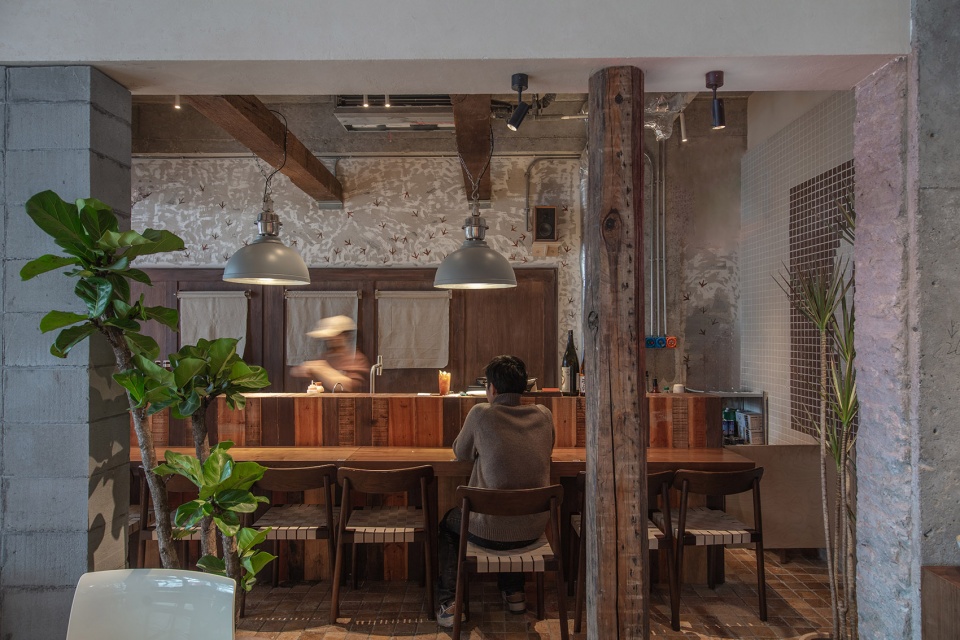
餐厅原址为一间苏式面馆,场地被拆除之前原有的实木雕花屏风隔断、木饰面墙板及青砖地面成为设计团队珍贵的改造基底。吧台由回收木板与莱姆石拼嵌而成,手写菜单垂落于老布料卷轴上,随每日特供更替而翻动。改造后的水吧作为过渡空间,保留原建筑的木护墙板肌理。
The restaurant occupies the site of a former Suzhou-style noodle shop. Before demolition, its original elements—carved wooden screens, timber-clad walls, and bluestone flooring—became the foundation for transformation. The bar counter embeds recycled timber with fossil limestone, while hand-inked menus drape from aged fabric scrolls, flipping with daily specials. In the redesigned bar area—a transitional space—the texture of original wooden wainscoting remains preserved.
▼营造出轻松自然的空间氛围,A relaxed ambiance
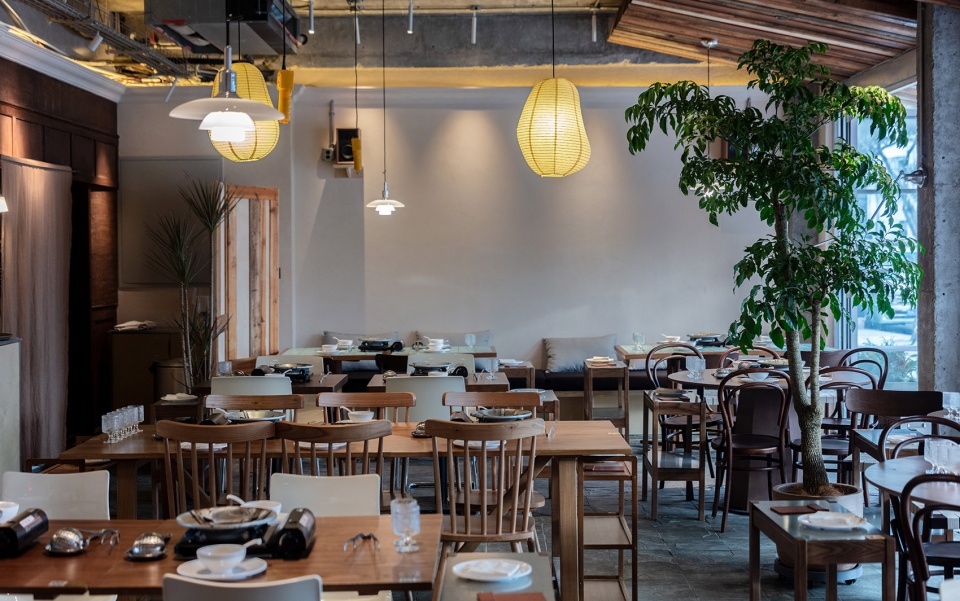
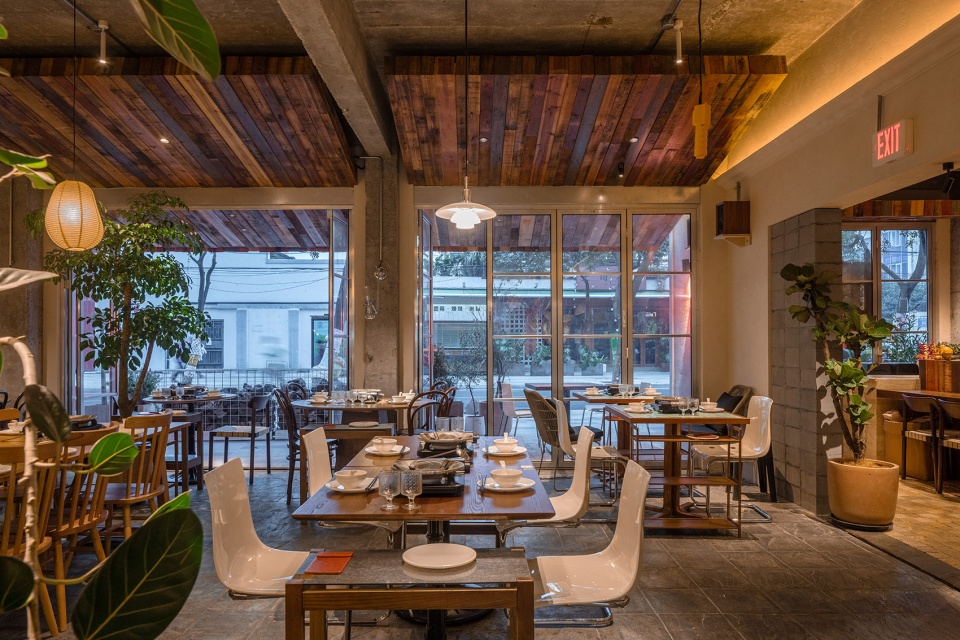
▼灵活的就餐空间,flexible dining space
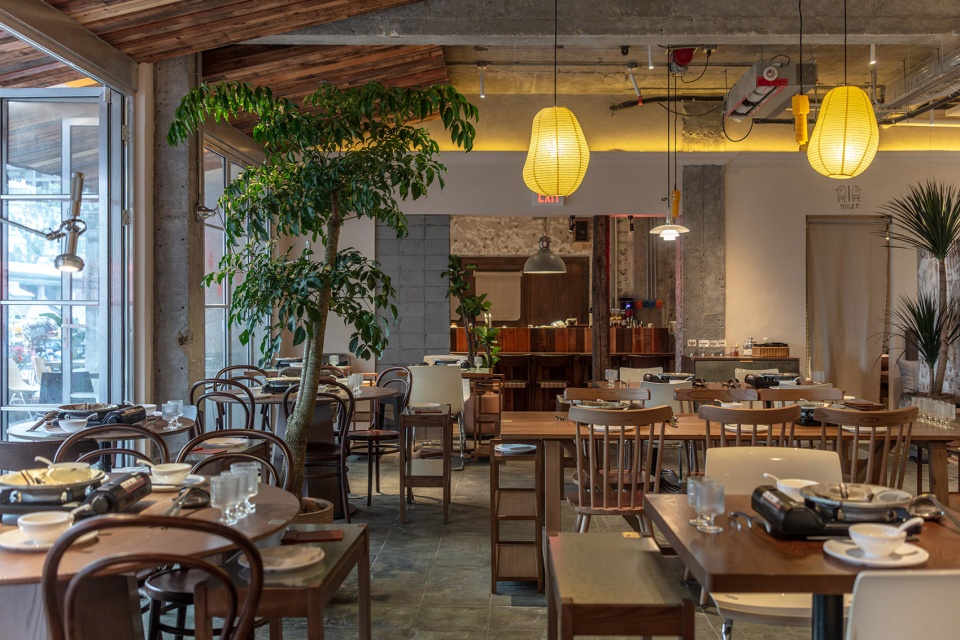
▼就餐区光影效果,lighting effect to the restaurant
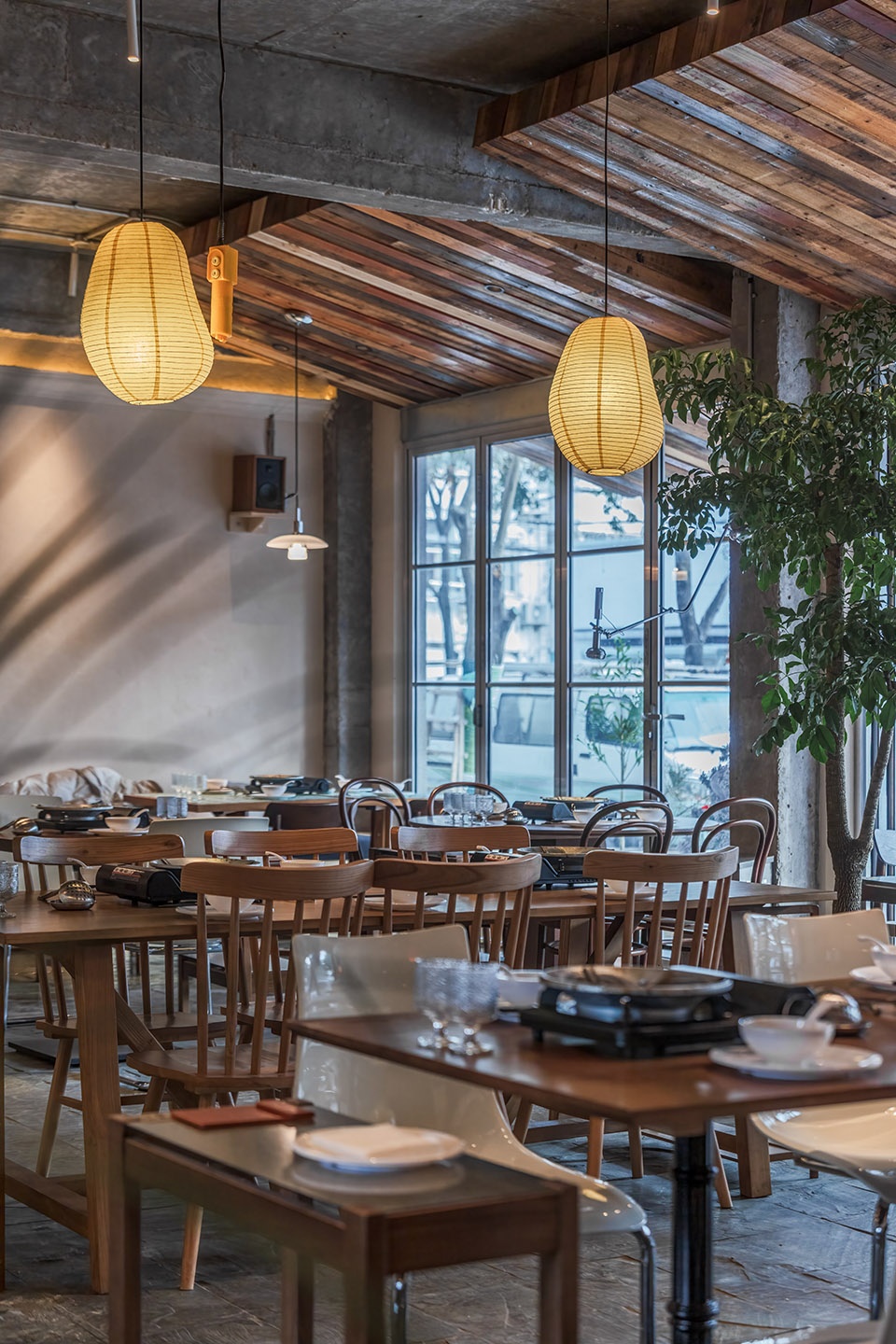
我们秉持”新旧共生”、降低造价的可持续理念,将青砖地面经过专业清洗后复用,木饰面墙板加入在地的新材料,改为四组向外延伸的屋檐板。主餐区利用轻质隔断划分出灵活场景,不锈钢与石膏线的碰撞既承载运营涂鸦的趣味,延续了新旧对话的语言。
Guided by our “Old-New Symbiosis” ethos and sustainable cost-saving approach: Bluestone flooring was professionally restored and reused. Timber wall panels were reimagined with local materials as four outward-arching eaves canopies. The main dining area uses lightweight partitions for flexible layouts.Stainless steel clashes playfully with plaster moldings, inviting dynamic graffiti while continuing the dialogue of eras.
▼吧台区域,bar counter
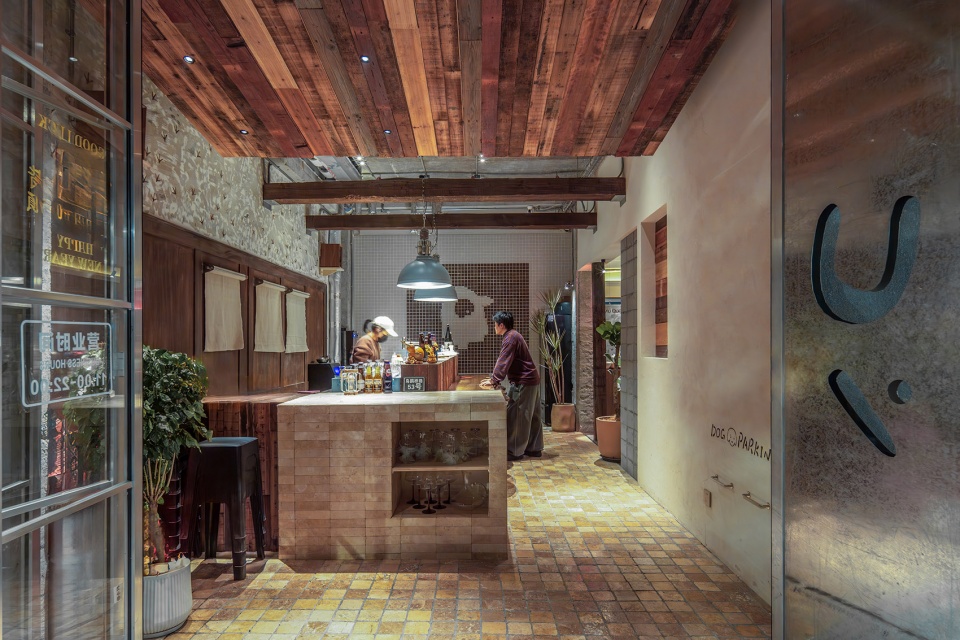
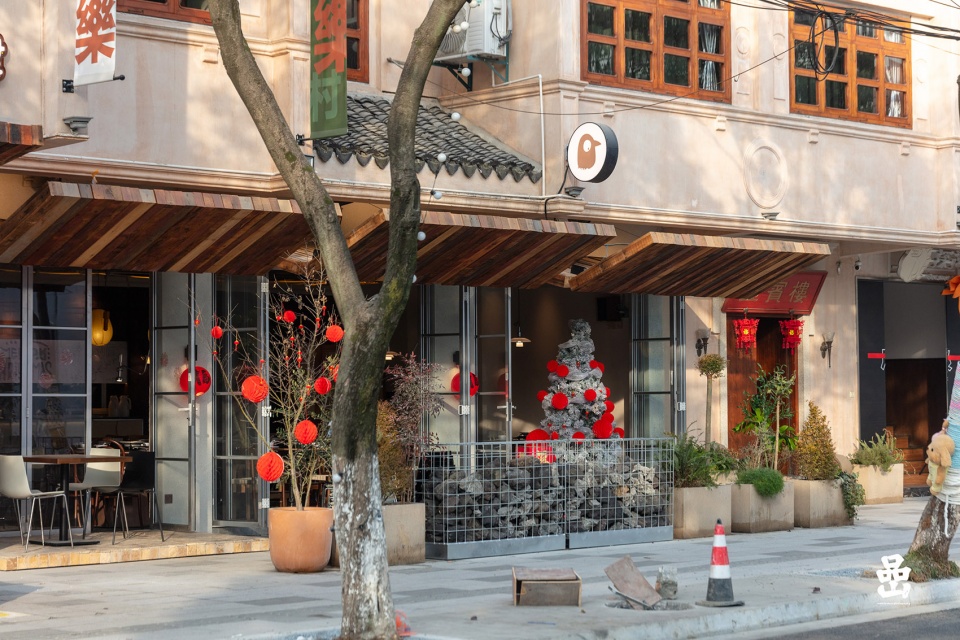
▼木饰面墙板改为四组向外延伸的屋檐板,timber wall panels were reimagined with local materials as four outward-arching eaves canopies
▼机械屋檐翻转,automated eaves flip
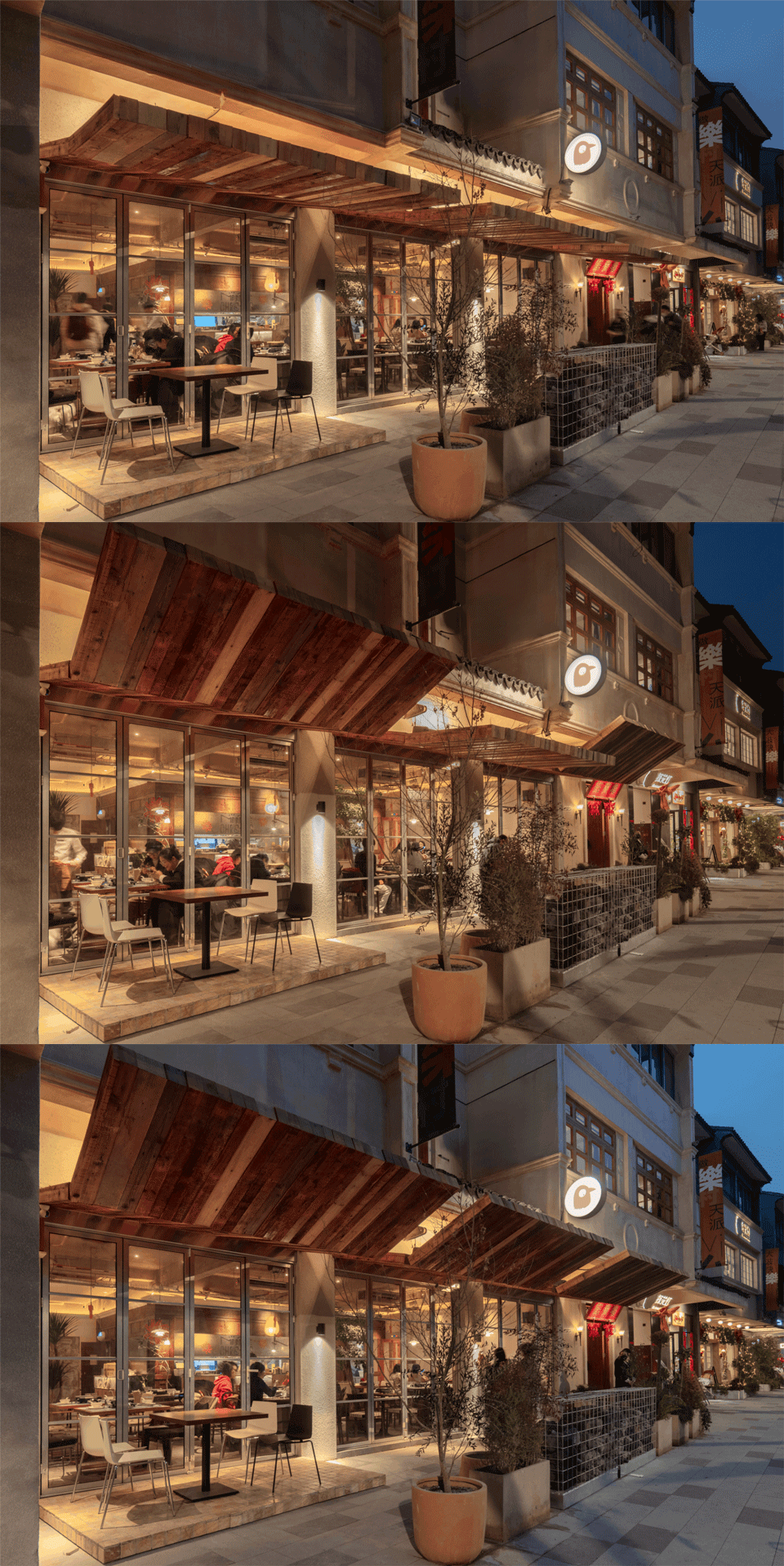
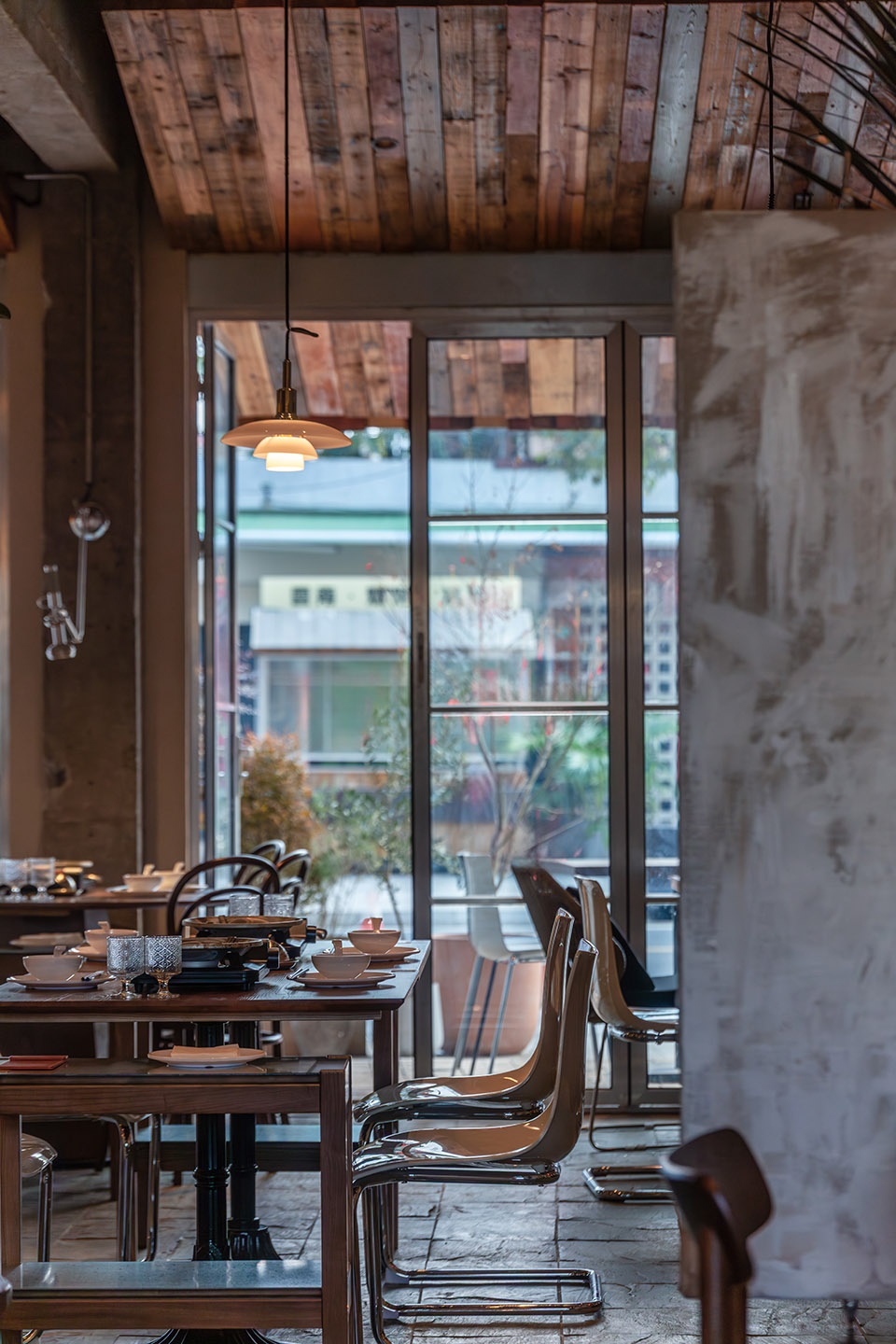
为最大化利用空间,营造出轻松开放的氛围,将原玻璃窗改为可开合的折叠落地窗,当折叠窗完全打开,屋檐下的光影切割街道风景,食客与行人隔窗相望。闭合时,窗户则化作动态画框——室内暖光晕染的木质调空间成为街角的立体插画,而窗外流动的市井生活又为餐厅注入鲜活背景音。这里没有刻意的空间界限,只有食物香气、碰杯声响与苏州老城的交响曲。
In order to maximise the use of space and create a relaxed and open atmosphere, the original glass windows are replaced with folding floor-to-ceiling windows that can be opened and closed. When the folding windows are fully open, the light and shadow from the eaves cuts the street scenery, and diners and pedestrians look at each other through the windows. When closed, the windows become dynamic picture frames – the wood-toned space dyed with warm light becomes a three-dimensional illustration of a street corner, while the flowing city life outside the window injects a vibrant background sound into the restaurant. There are no boundaries here, only the aroma of food, the clinking of glasses and the symphony of the old city of Suzhou.
▼当折叠窗完全打开,when the folding windows are fully open
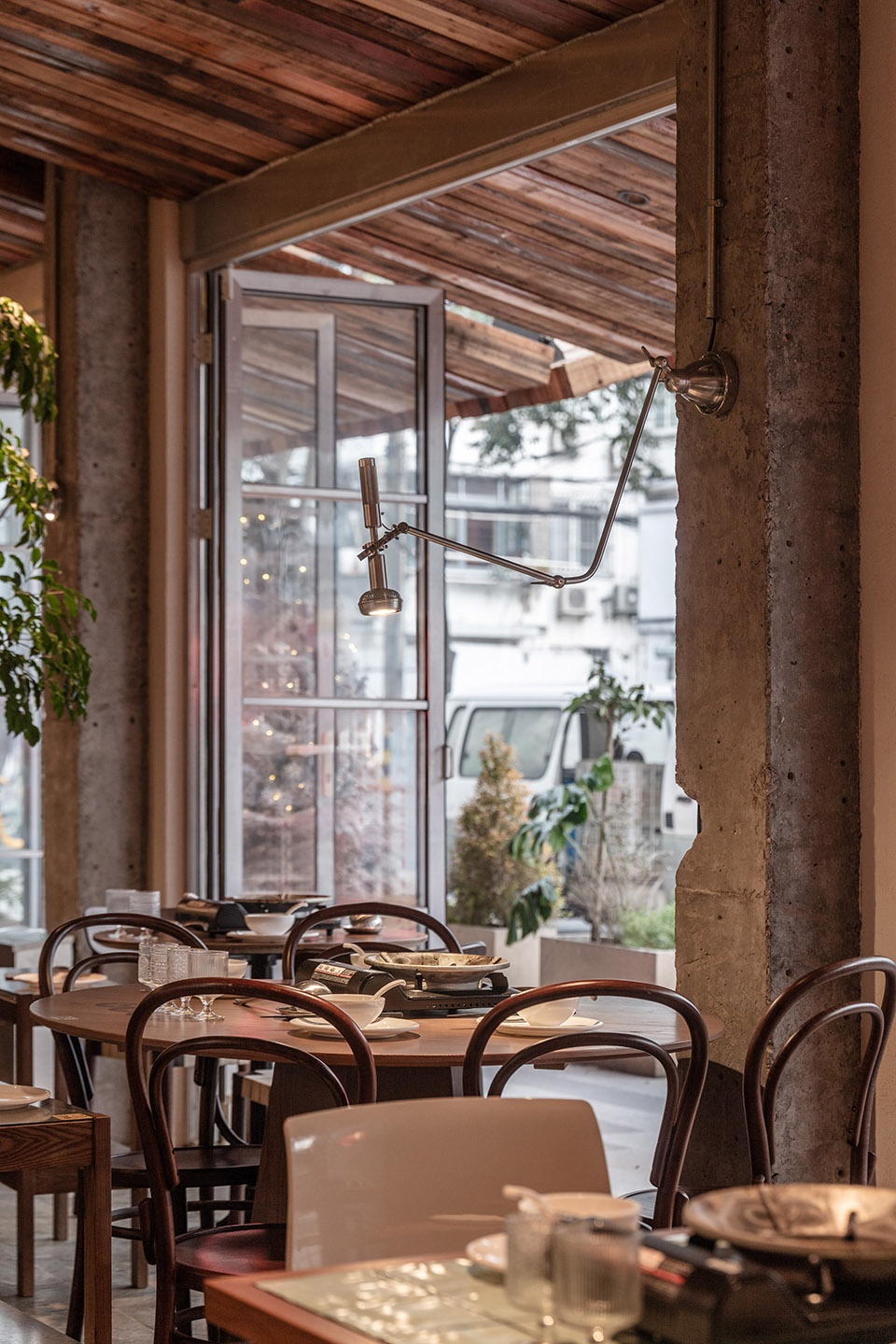
▼窗外流动的市井生活又为餐厅注入鲜活背景音,the flowing city life outside the window injects a vibrant background sound into the restaurant
木月建筑设计事务所(MOON Architects)以品牌全案设计打造乌鹊JIU食肆概念店,在严控造价的框架下,通过“在地材料再生+品牌符号渗透”的双轨策略,将乌鹊JIU食肆打造为苏州老街更新的标杆,为乌鹊JIU实现了“低成本高情感”的商业愿景,也为顾客构建出松弛温馨的社交场域。
MOON Architects delivered the comprehensive brand experience for WUQUE JIU Restaurant’s concept store, transforming it into a benchmark for historic neighborhood revitalization in Suzhou. Within strict budget parameters, the dual strategy of “revitalizing local materials + permeating brand symbols” achieved the brand’s vision of “low-cost, high-emotion” commerce while crafting an unhurried, warm gathering space for patrons.
▼夜景,night view
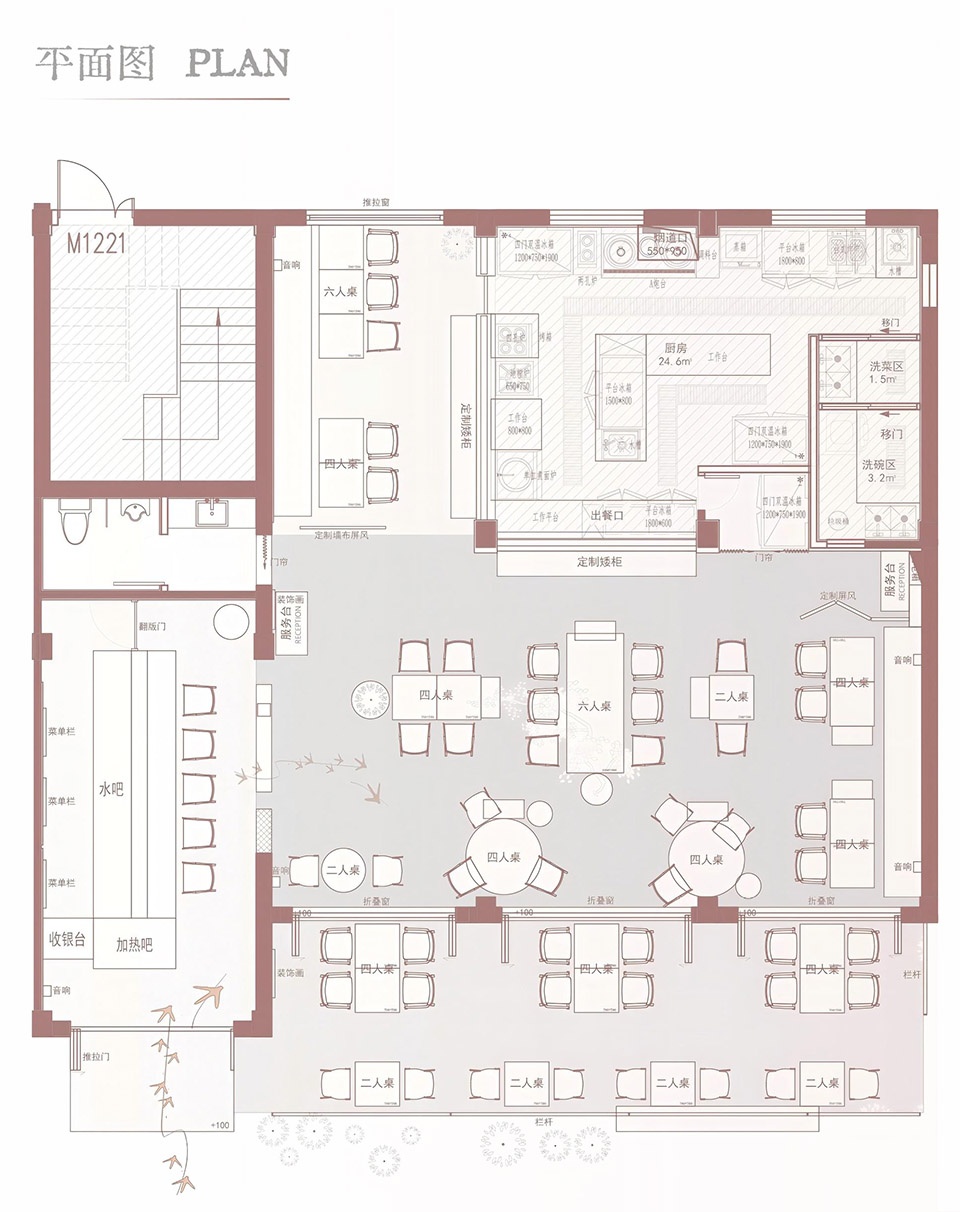
▼平面图,plan
Project name:WUQUE JIU Restaurant Brand Identity Design for Flagship Store
Project type:Interior Design
Design:MOON Architects
Website: http://www.moon-architecture.com
Contact e-mail:info@moon-architecture.com
Design year:2024
Completion Year:2024
Leader designer & Team:Mao Ying, Zhang Shuhang, Duan Benzhen, Chenying, Jia Wei
Project location:Suzhou
Gross built area: 150㎡
Photo credit: YAN Architectural Photography, MOON Architects