陶二厂文化提升,宜兴 / 予舍予筑
01 项目背景:三重断裂与再生命题Project Background: The Triple Fracture and Rebirth Proposition
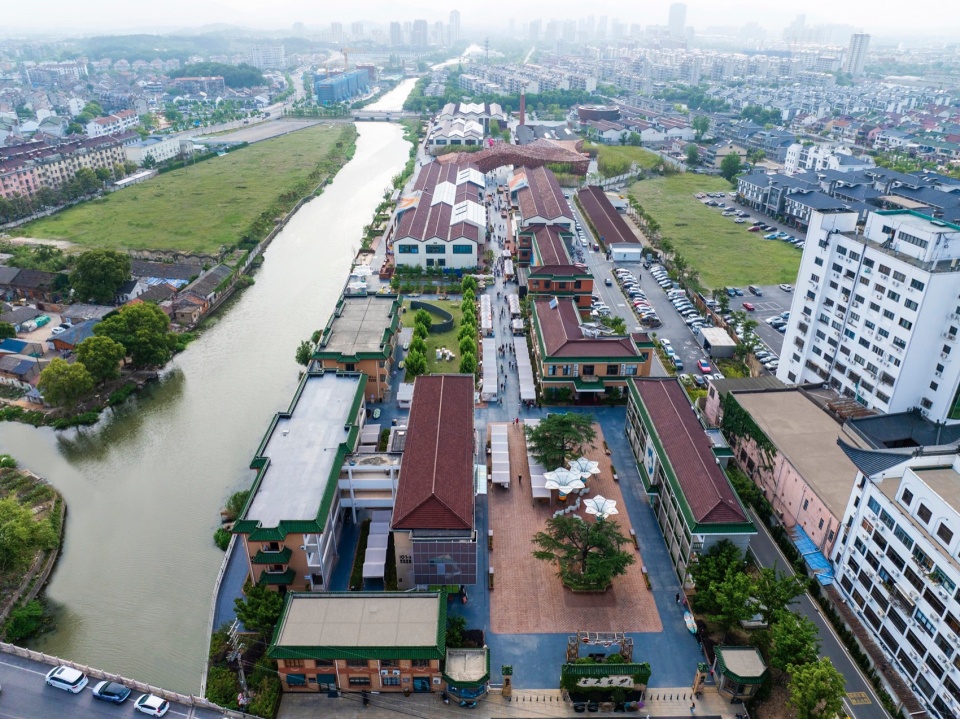
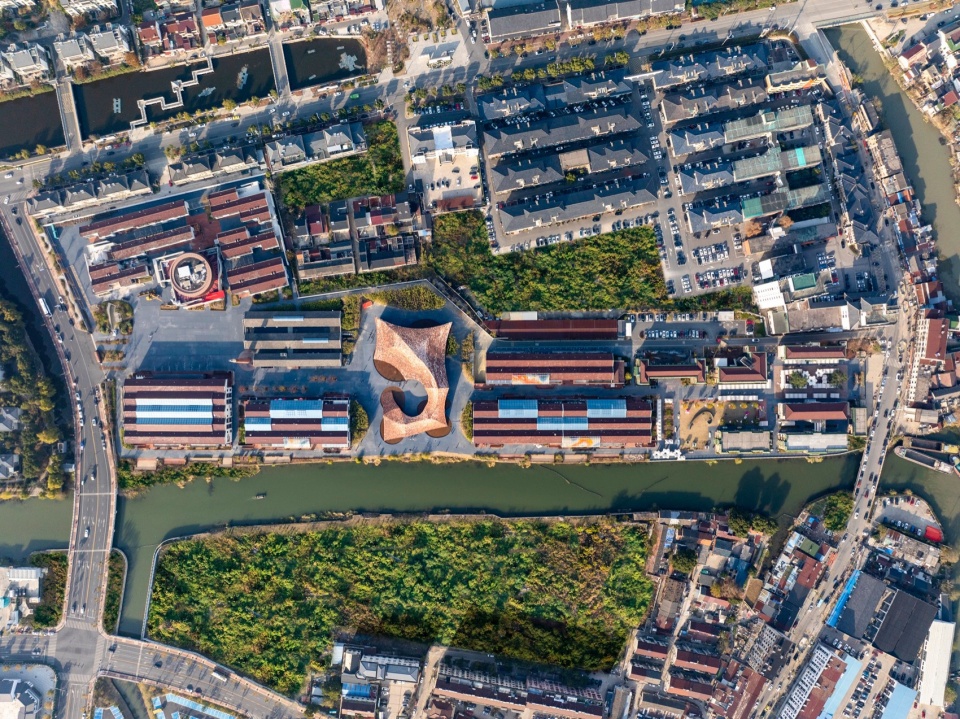
陶二厂,这座始建于上世纪80年代初的陶瓷厂,静静地蛰伏在宜兴丁蜀镇黄龙山南麓,占地6.8公顷的厂区曾是紫砂文化的核心腹地——这里不仅出产最优质的紫砂原矿,更孕育过完整的陶瓷产业生态。
YiXing Zisha Second Factory, a ceramics plant originally built in the early 1980s, lies quietly at the southern foot of Huanglong Mountain in Dingshu Town, Yixing. Spanning 6.8 hectares, this site was once the heart of Zisha (purple clay) culture—not only producing the finest raw Zisha ore but also nurturing a complete ceramic industry ecosystem.
▼鸟瞰,Aerial view
▼陶文化朝圣之路,Pilgrimage Path of Ceramic Culture
随着时代变迁,这座承载着集体记忆的国营老厂在世纪之交黯然退场。部分车间转为私营工作室和其他业态空间,形成自发的功能置换,建筑也在原先厂房的基础上加建、改建的风格各异;部分车间废弃,墙面斑驳,杂物四处堆放。
With the passage of time, this state-owned factory, carrying collective memories, faded into obsolescence by the turn of the century. Some workshops were repurposed into private studios and commercial spaces, forming a spontaneous functional transformation, with buildings modified or expanded in eclectic styles. Others were abandoned, their walls stained and weathered, scattered with debris.
▼平面分区,Plan Zoning
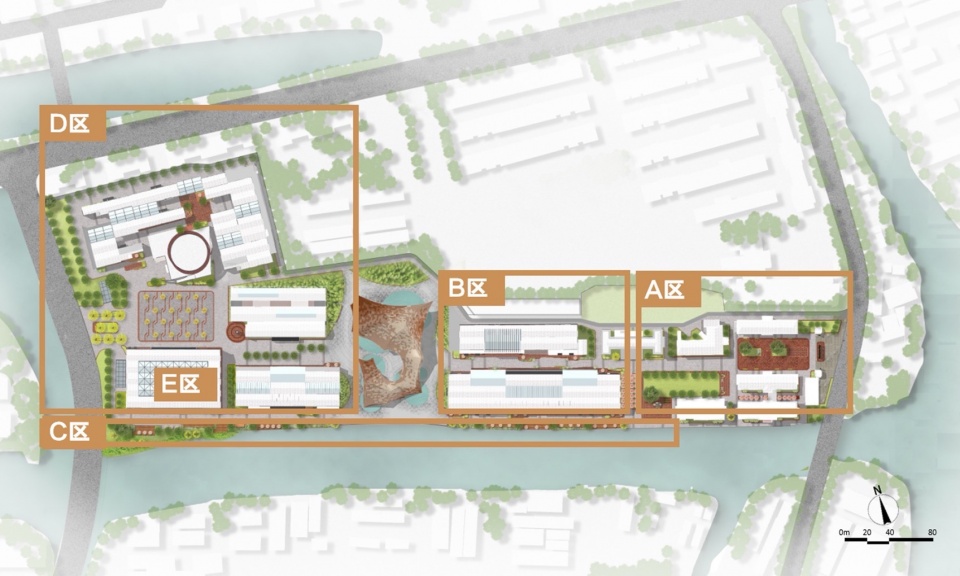
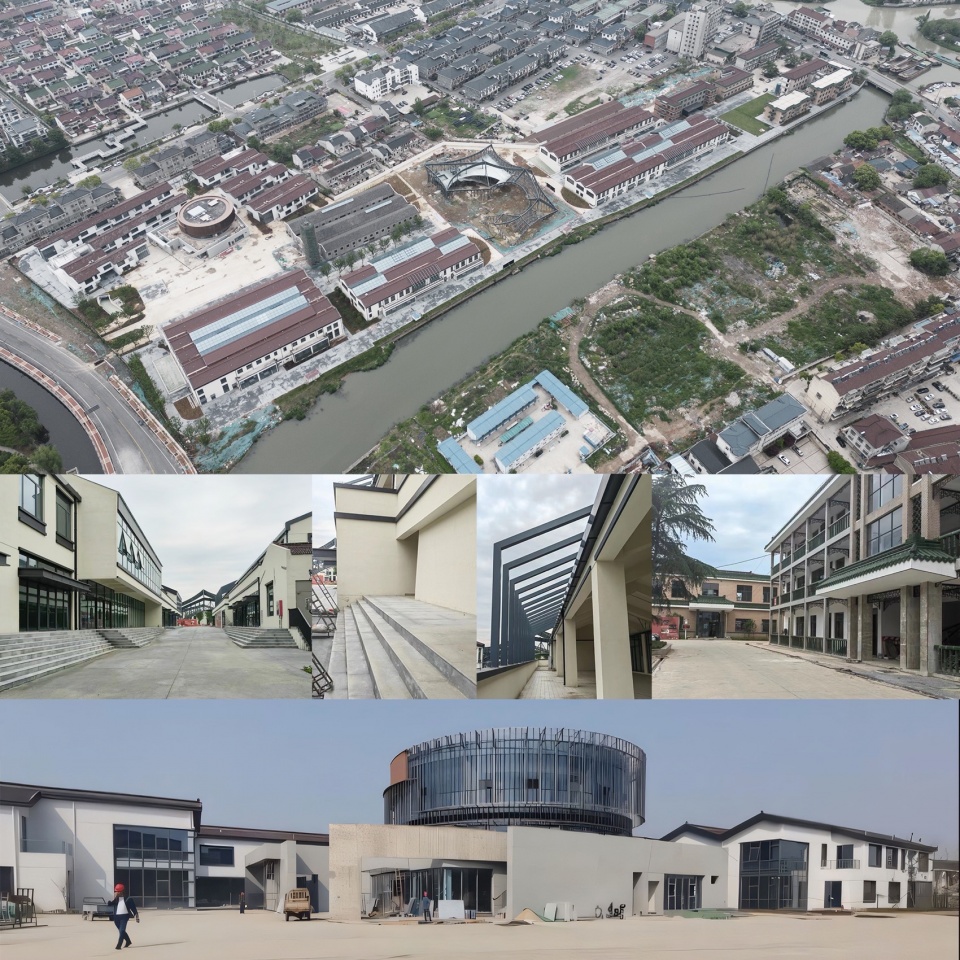
杂乱的建筑群与无序分布的场地设施导致了严重的空间割裂与流线混乱,使整个厂区呈现出一种衰败的工业”遗迹”状态。面对与隈研吾大师近期设计的UCCA陶美术馆之间形成的空间鸿沟,我们的设计策略从消解这种”工业遗迹”的断裂感入手,通过创造性的空间干预重新建立场所的连续性。
The chaotic cluster of structures and haphazardly distributed facilities resulted in severe spatial fragmentation and disorganized circulation, leaving the entire site in a state of decaying industrial “ruins.” Facing the spatial divide between the factory and the recently completed UCCA Tao Art Museum—designed by master architect Kengo Kuma—our design strategy begins by dissolving this sense of rupture inherent in the “industrial ruins.” Through creative spatial interventions, we seek to reestablish continuity within the site.
▼原厂区的“断裂感,“The “broken continuity” in the original plant area
02 文化提升策略: 破解“断裂魔咒”,最小干预实现最大文化唤醒Cultural Enhancement Strategy: Breaking the “Curse of Fragmentation”
——Minimal Intervention for Maximum Cultural Revitalization
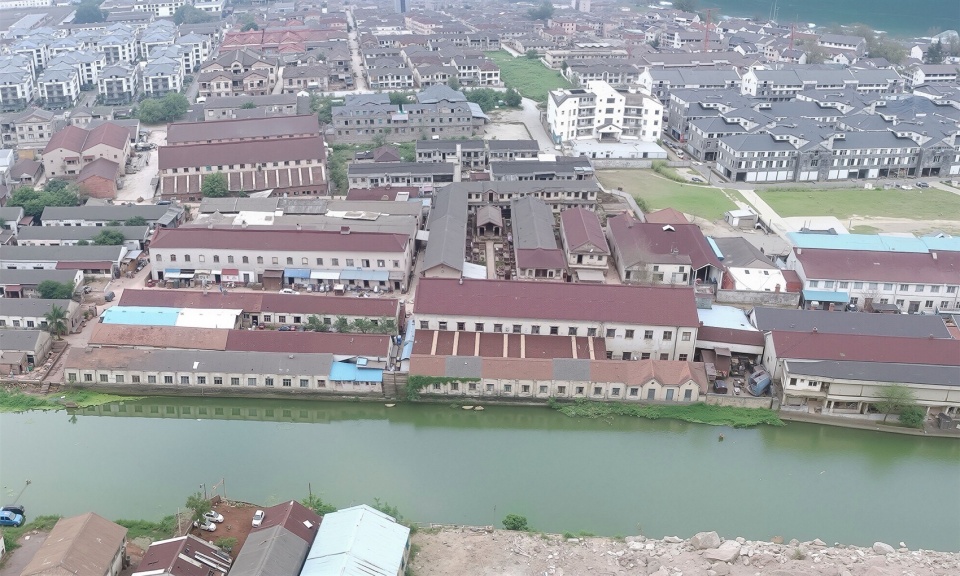
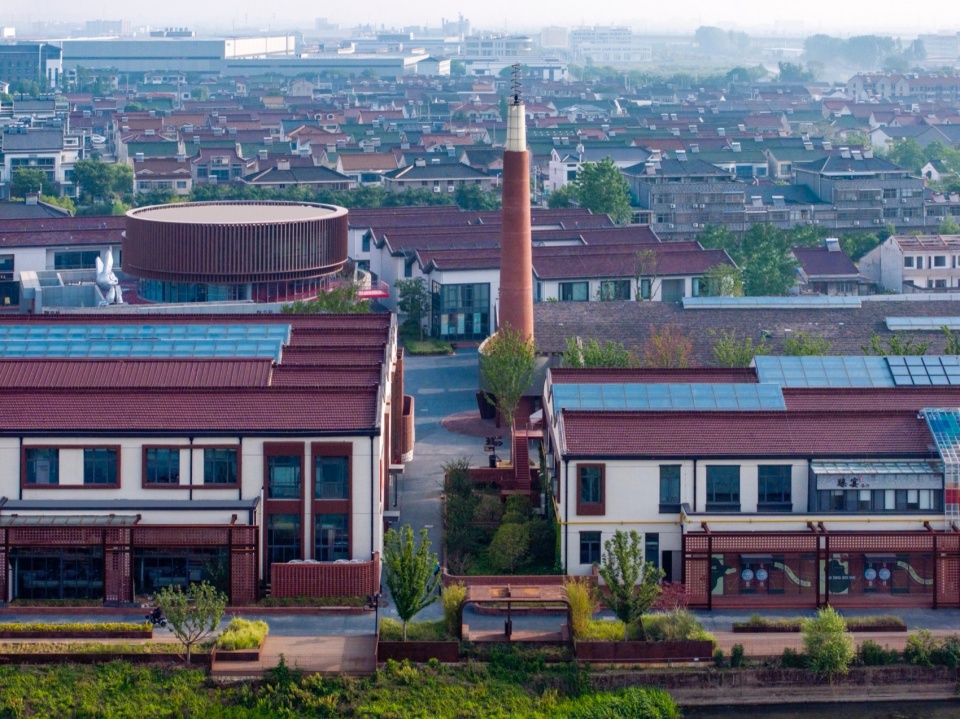
项目面临的核心制约在于时间+成本严格控制,这一现实条件深刻影响了我们的设计方法论:一方面,有限的预算排除了大规模改建的可能性;另一方面,经济性要求倒逼我们针对必须解决的问题精准把握改造力度。基于此,我们确立了”微创更新”的核心策略——通过点线面的建筑缝合术(Architectural Suture),在严格限制土建改动的框架下,以精准的局部干预实现整体空间的活化:保留既有建筑肌理,仅在关键节点植入新体量,修复整理、局部替换原有建筑表皮。通过材质转译与流线梳理,将悠久的紫砂文化、四十年的工业记忆与当代商业旅游有机融合。这种”最小干预”原则既是对在地性的尊重,更是以最高性价比实现场所文化精神的唤醒。
The project’s core challenge stemmed from strict time and budget constraints, which fundamentally shaped our design approach. With limited funds ruling out major reconstruction, we focused on precisely targeted interventions to maximize impact within tight economic parameters. Our solution adopted a “micro-renovation” strategy – what we term Architectural Suture – that preserves existing structures while strategically introducing new elements at key nodes. This involved repairing and selectively replacing aging facades, carefully blending material reinterpretations with circulation improvements to weave together three distinct historical layers: the centuries-old Zisha clay tradition, four decades of industrial heritage, and modern tourism-commerce needs. More than just cost-effective, this minimal intervention philosophy represents both deep respect for the site’s authentic character and the most efficient way to reactivate its cultural essence. Through these subtle but surgical adjustments, we’ve created a dialogue between past and present while honoring the location’s unique industrial and craft legacy.
▼改造前后对比,Comparison before and after renovation
重构空间:重建朝圣路径|Restructured Space: Reconstructing the Pilgrimage Path
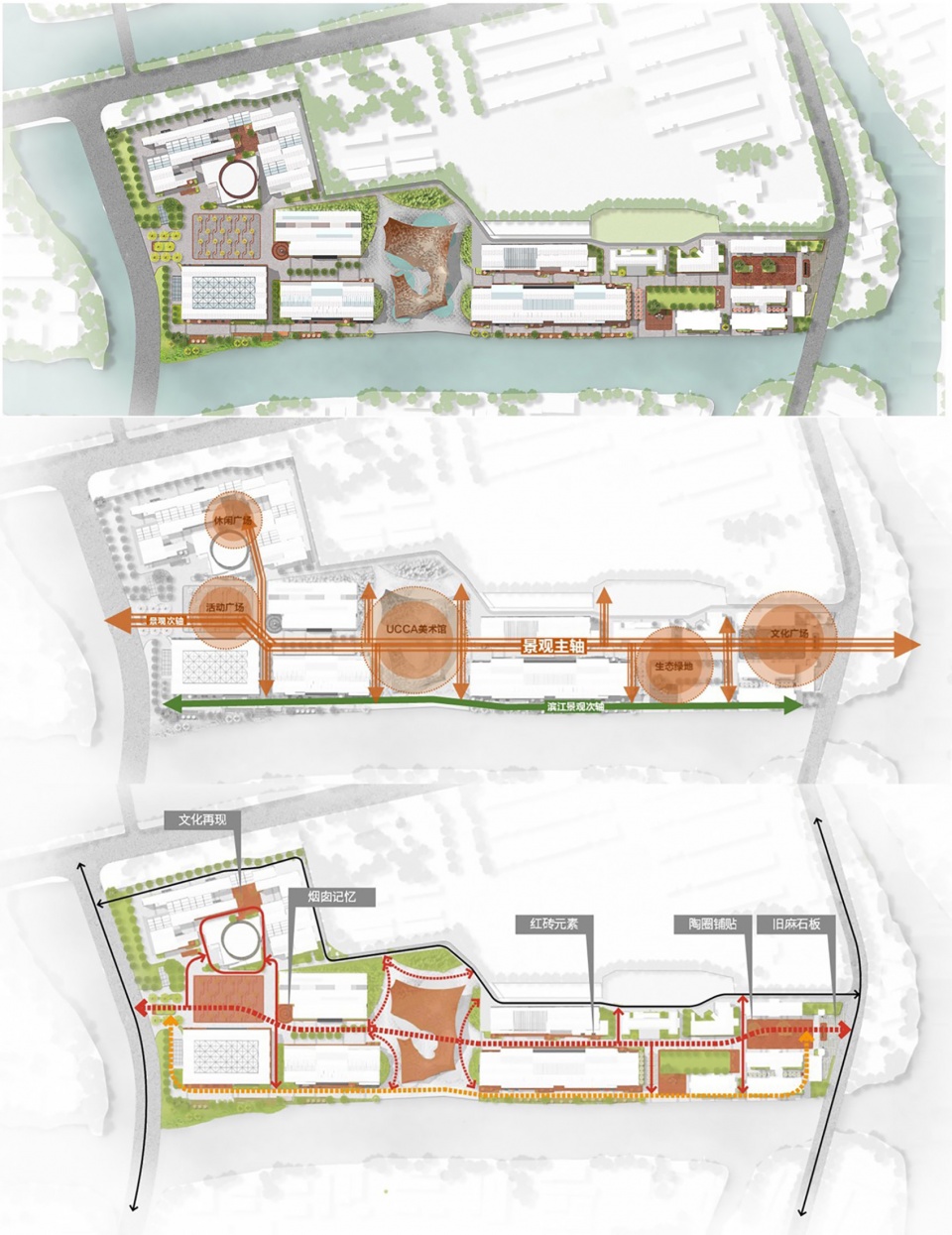
基于对场地历史脉络与空间肌理的系统性梳理,设计确立了以工业遗产为空间叙事基底的总体策略。围绕UCCA陶美术馆打造东西景观主轴与滨江次轴,形成连贯的游览路径。通过增设过渡空间作为叙事节点,让游客在移步换景中体验紫砂技艺与千年文化,实现文商旅融合,营造出”可观、可感、可游、可居”的沉浸式陶文化场域。
Based on a systematic analysis of the site’s historical context and spatial fabric, the design establishes an overarching strategy using industrial heritage as the foundational narrative of the space. Centered around the UCCA Tao Art Museum, an east-west landscape axis and a secondary riverside axis are created to form a coherent visitor circulation. By introducing transitional spaces as narrative nodes, the design allows visitors to experience the craftsmanship and millennia-old culture of Zisha pottery through shifting scenic views. This integration of culture, commerce, and tourism fosters an immersive ceramic cultural environment that is “observable, perceptible, explorable, and inhabitable.”
▼规划分析,Planning Analysis
在地实践:紫砂工艺转译|Local Practice: Translating Zisha Craftsmanship
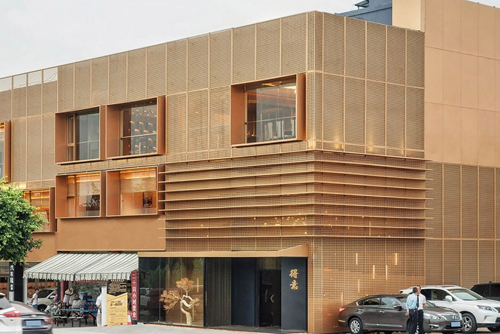
面对园区内紫砂工业特色日渐消逝的现状,设计以宜兴本土紫砂矿脉的天然肌理与地质层理为灵感原型,将其转化为建筑表皮的建构语言。通过锈钢的工业化质感与陶土花砖的手工温度形成戏剧性并置,在材质对话中巧妙缝合历史断裂。
Confronting the gradual erosion of Zisha industrial identity within the site, the design draws inspiration from the natural textures and geological stratigraphy of Yixing’s native purple clay veins, translating them into the tectonic language of architectural surfaces. Through a dramatic juxtaposition of rusted steel’s industrial austerity and the artisanal warmth of ceramic mosaic tiles, the intervention deftly sutures historical discontinuities within this material dialogue.
▼园区肌理,Park Texture
轻质介入:适应性再利用|Lightweight Intervention: Adaptive Reuse
在保留既有建筑主体结构的前提下,仅对不足8%的非承重外墙进行局部拆改与增建,以最小干预实现空间活化。设计以回收陶砖为媒介,通过材料叙事重新编织场所记忆——将拆迁废料转化为具有文化符号意义的景观装置,赋予废弃材料新的生命,在有限的时间与空间条件下,以精细化微调实现功能升级与空间重构,探索一种低冲击、高灵活性的工业遗产再生策略。
Under the premise of preserving the main structure of the existing building, only less than 8% of the non-load-bearing exterior walls were partially demolished and reconstructed, achieving spatial revitalization with minimal intervention. Using recycled ceramic bricks as a medium, the design reweaves the memory of the site through material narrative—transforming demolition waste into landscape installations imbued with cultural symbolism, breathing new life into discarded materials. Within limited time and spatial constraints, functional upgrades and spatial reconfiguration were accomplished through meticulous fine-tuning, exploring a low-impact, highly flexible strategy for industrial heritage regeneration.
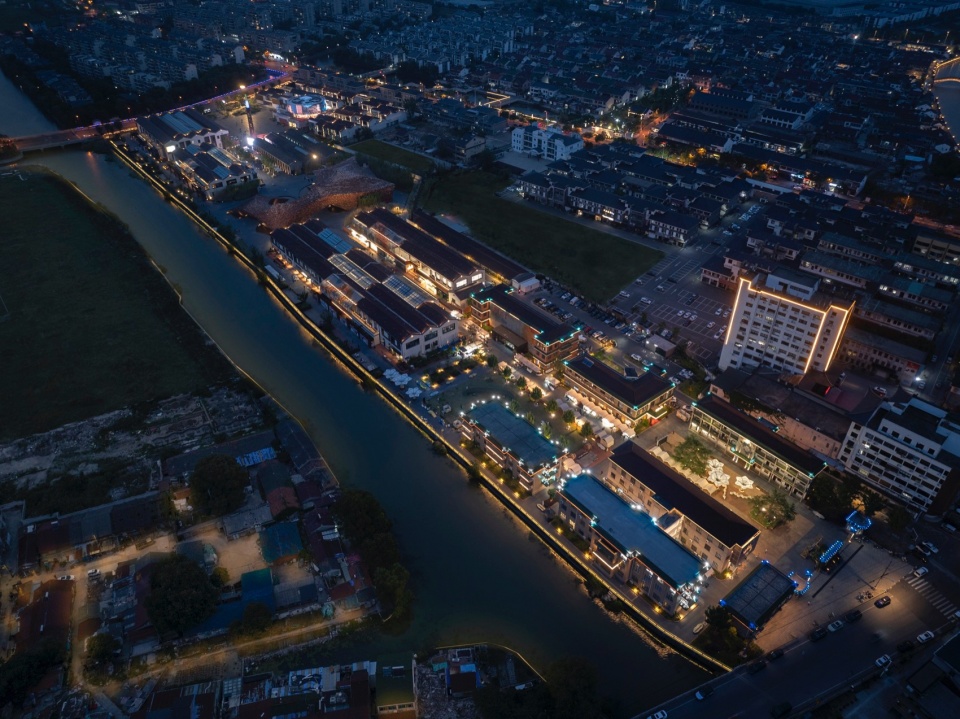
▼园区夜景,Night View of the Park
03 分区解码: ABCDE五重陶艺宇宙Zoning Decoding: The Five Ceramic Universes of ABCDE
A区·记忆重生场|A Zone · The Field of Reborn Memories
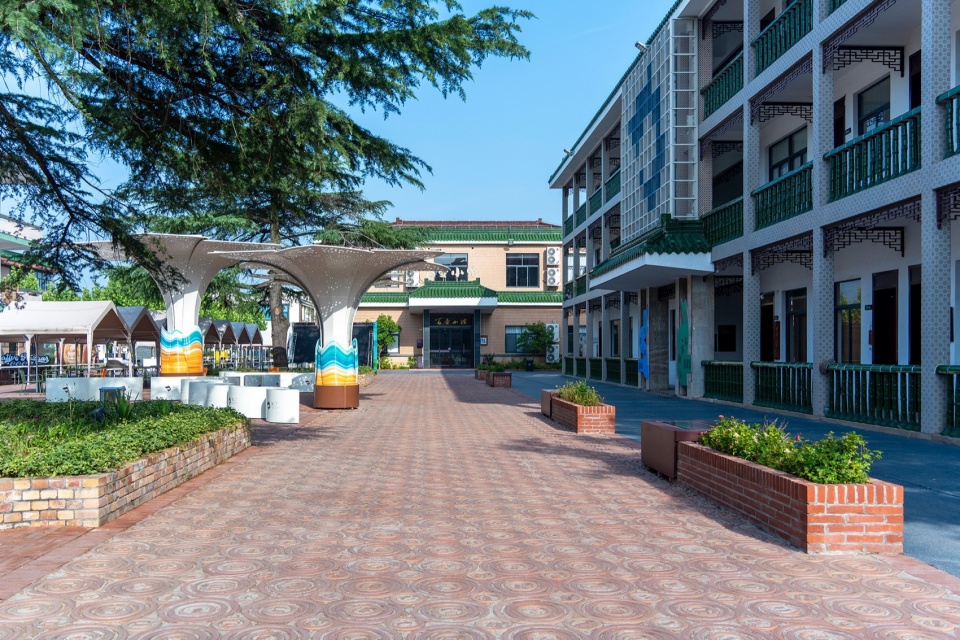
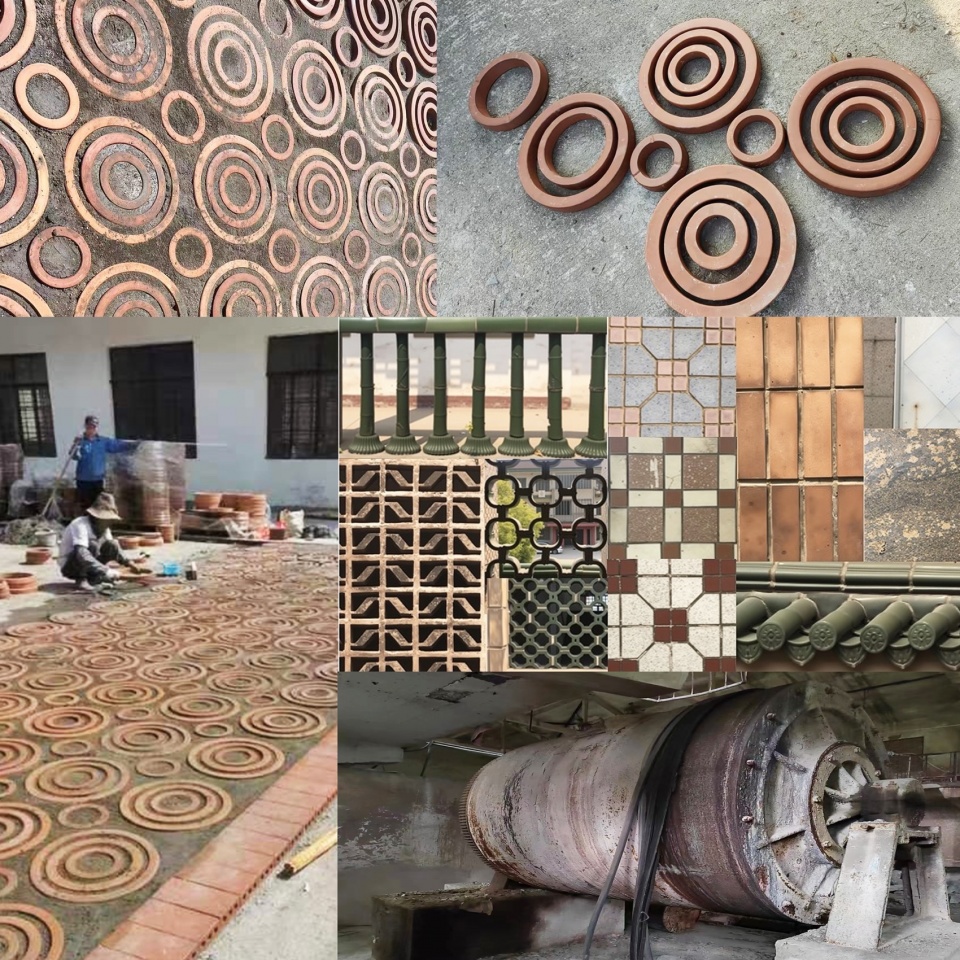
在此片区的更新设计中,设计尊重原有历史建筑风貌,尤其关注片区内的许多老建筑及保护建筑。保留传统工艺修复陶花砖、水泥砖、马赛克、琉璃瓦等老材料,并在入口区域以特色陶圈铺装限定空间序列,形成“陶”的文化场域。
In the regeneration design of this district, the scheme respects the original historic architectural character, with particular attention given to preserving the numerous heritage and protected structures. Traditional craftsmanship is employed to restore aged materials such as decorative ceramic tiles, cement tiles, mosaics, and glazed roof tiles. At the entrance zone, bespoke ceramic ring pavers define a spatial sequence, creating a cultural field centered on “ceramic artistry.”
▼A区设计亮点,A Zone Design Highlights
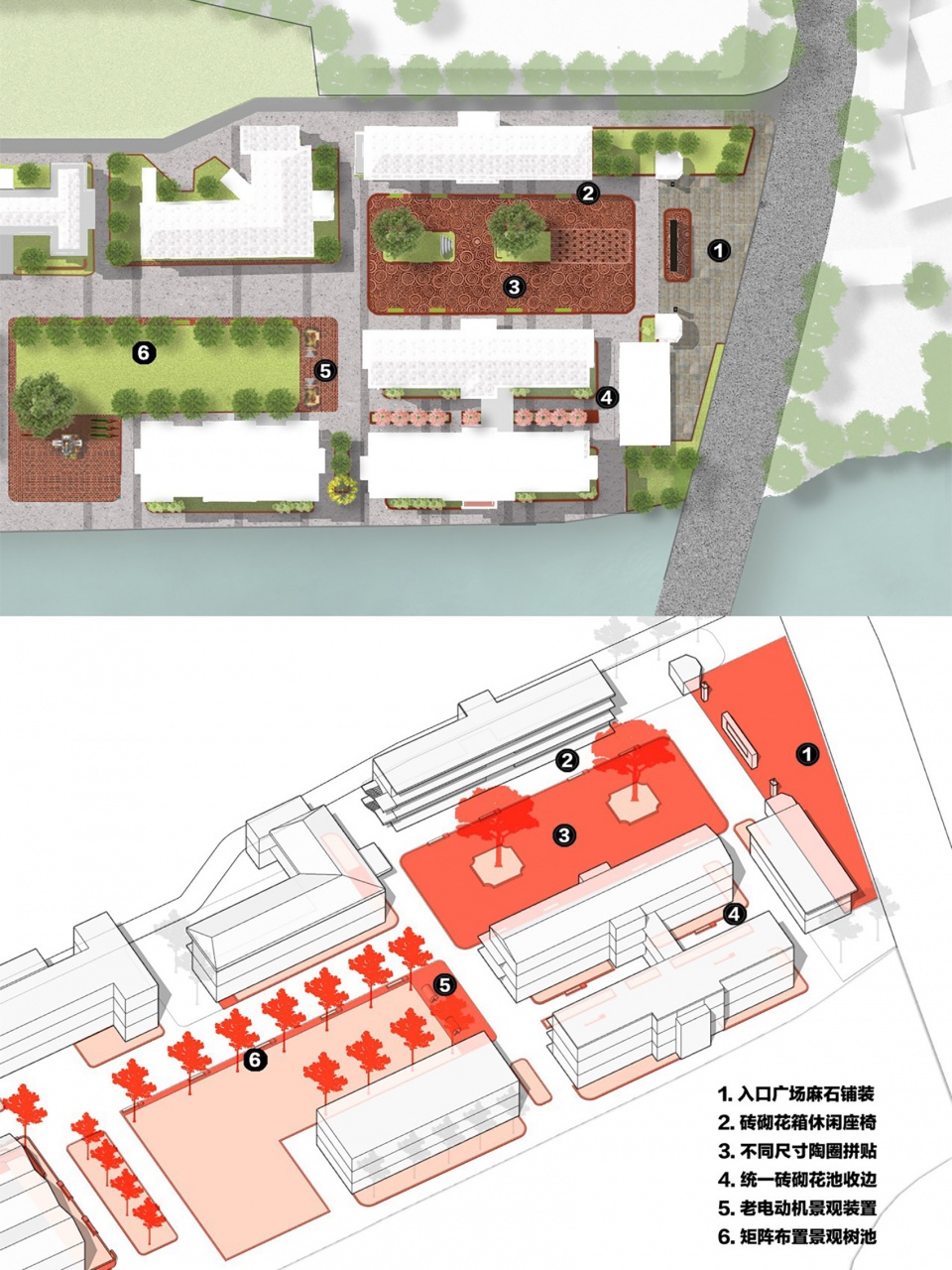
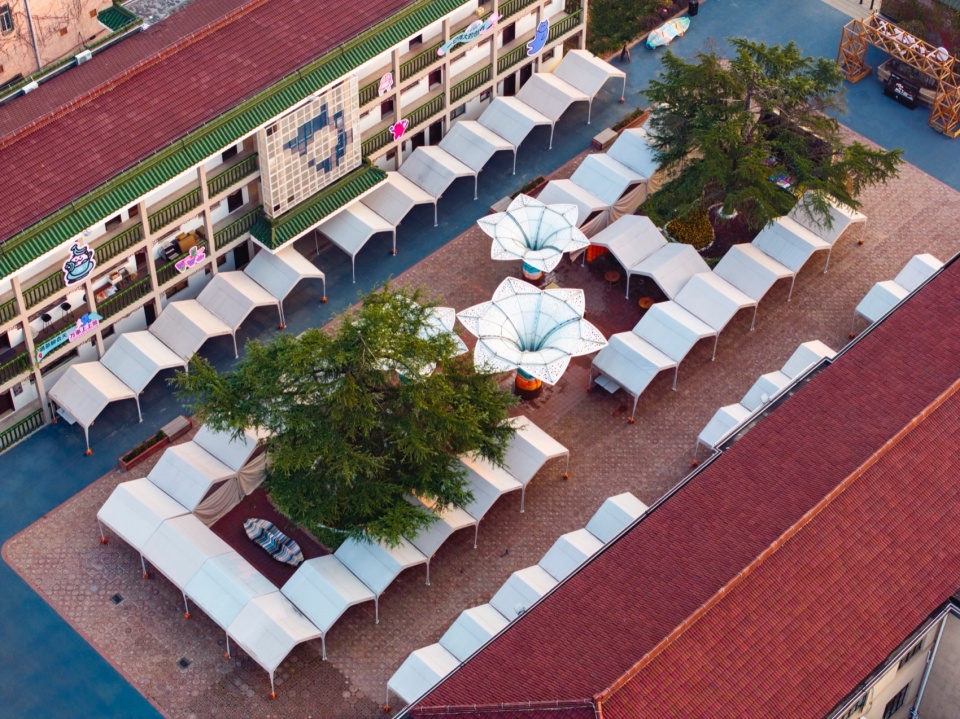
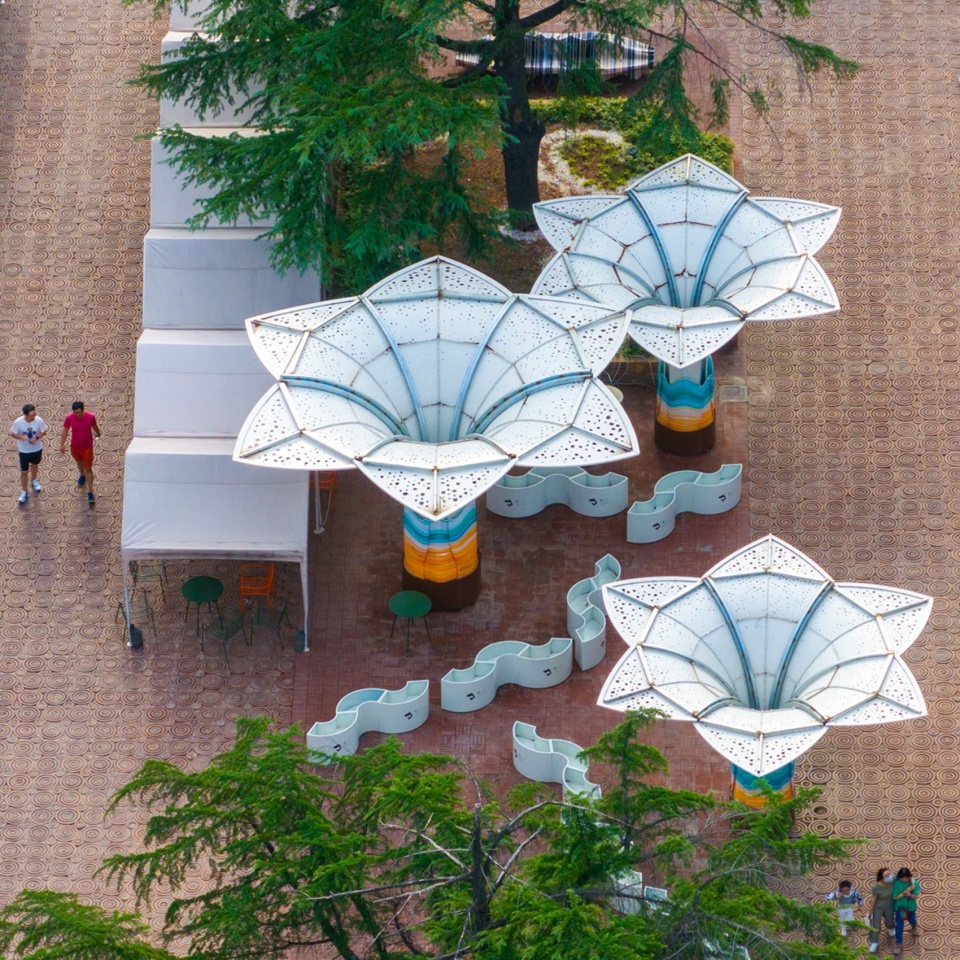
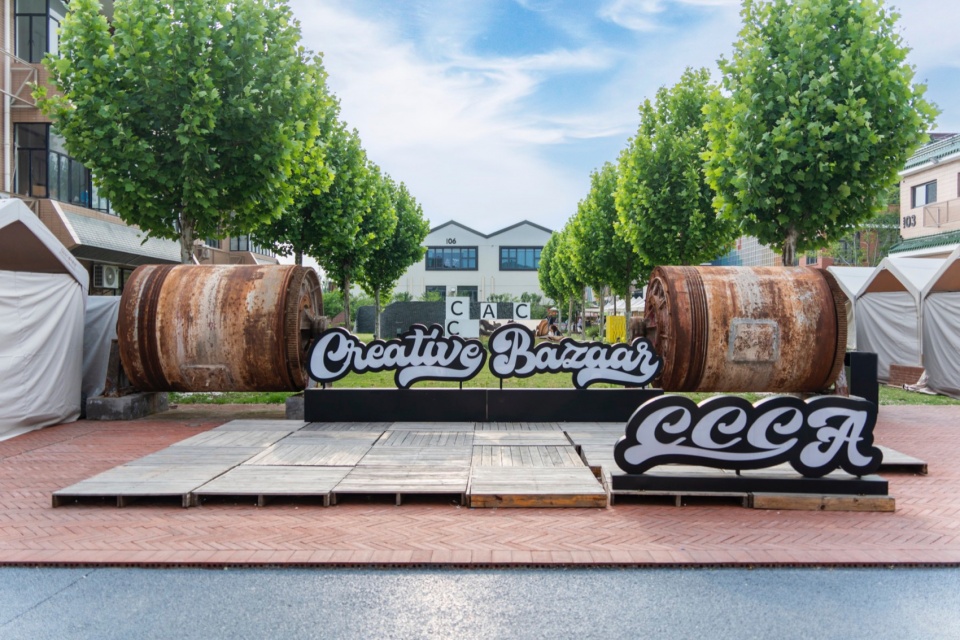
设计结合休闲座椅与艺术装置,为未来陶艺市集等活动预留弹性空间。同时,在绿化转角处以红砖铺地打造演艺区,将保留的老设备艺术化改造为露天舞台背景,使工业记忆以现代方式延续。这一系列措施既传承了历史文脉,又通过功能复合与空间重构,为场地注入新的活力,实现文化保护与空间复兴的有机统一。
The design thoughtfully integrates leisure seating and artistic installations to create versatile public spaces that can accommodate future ceramic art markets and cultural events. At strategic green corner spaces, the use of red brick paving establishes a dedicated performance zone, where carefully preserved vintage industrial equipment has been artfully repurposed as a striking backdrop for an open-air stage – seamlessly blending industrial heritage with contemporary design expression. This comprehensive approach successfully achieves a harmonious balance between cultural preservation and urban revitalization, where restored traditional craftsmanship coexists with modern placemaking, and historic industrial elements are transformed into dynamic storytelling features that engage the community while honoring the site’s unique heritage.
▼入口陶艺集市,Ceramic Art Market at the Entrance
▼老电动机装置,Vintage Electric Motor Installation
▼特色材质提取利用,Extraction and Application of Characteristic Materials
B区·陶文化街|B Zone · Pottery Culture Street
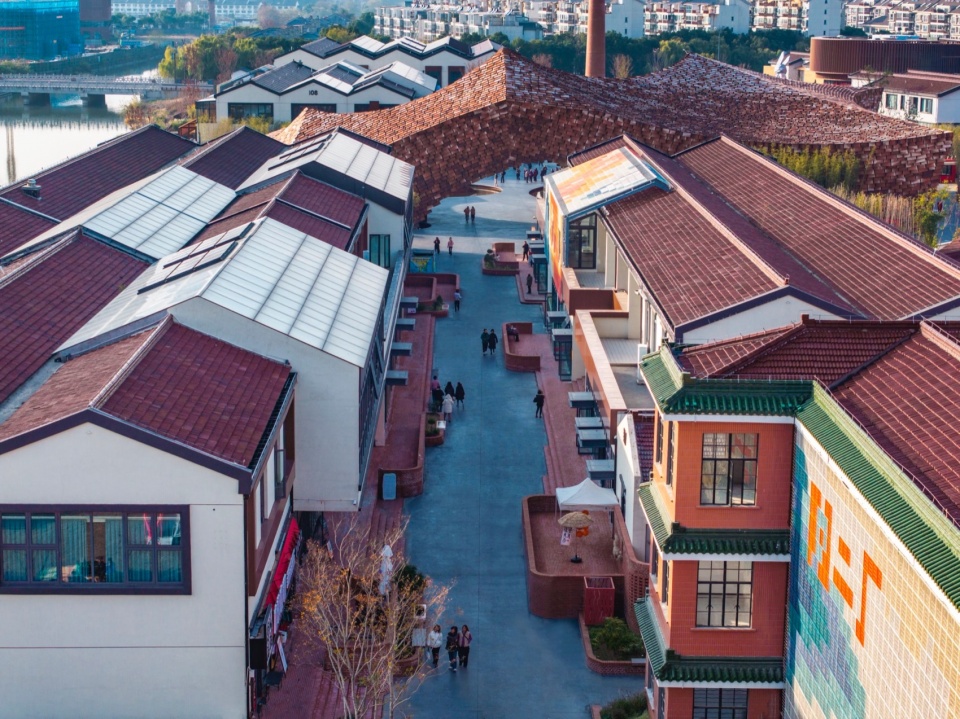
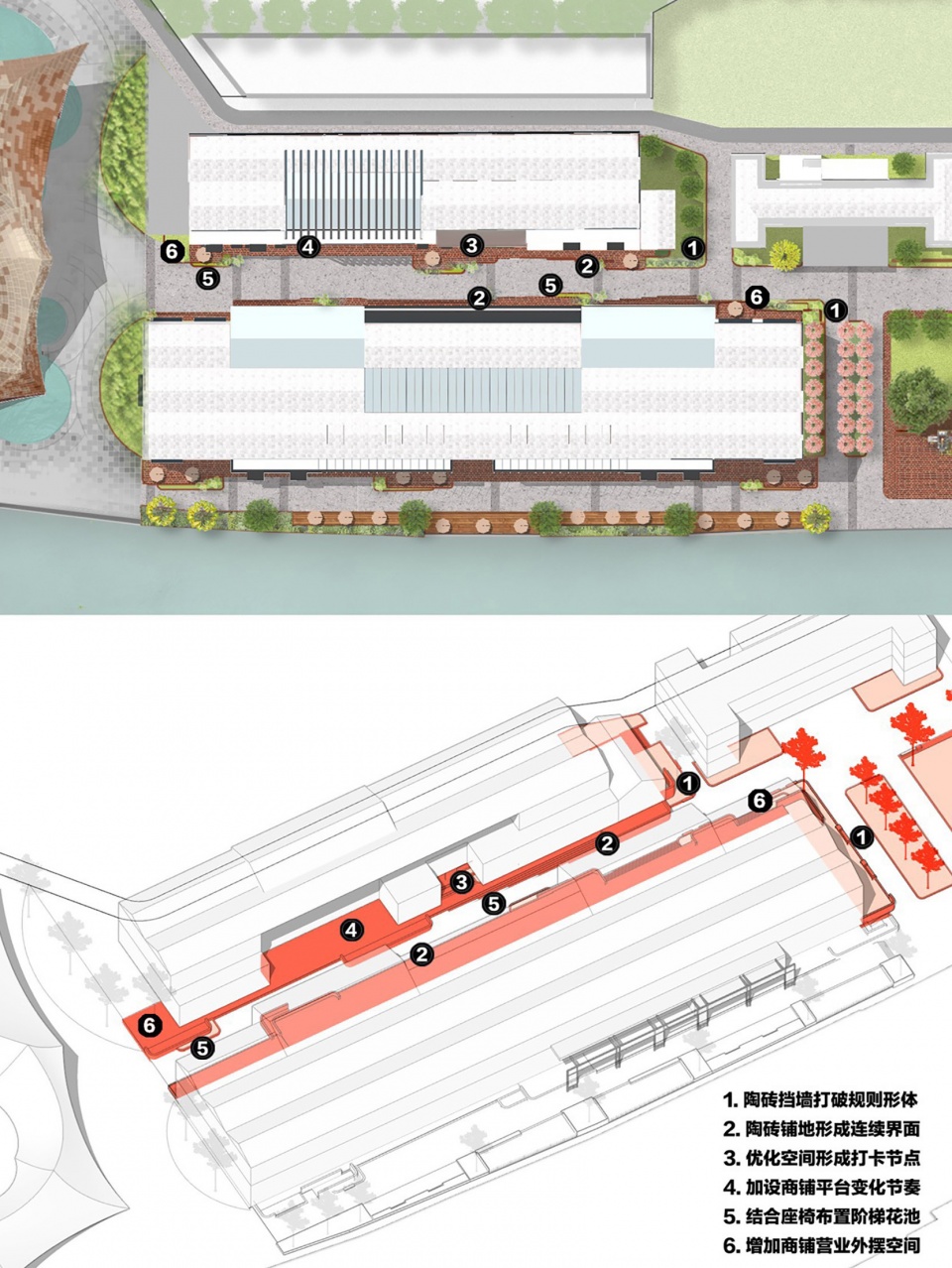
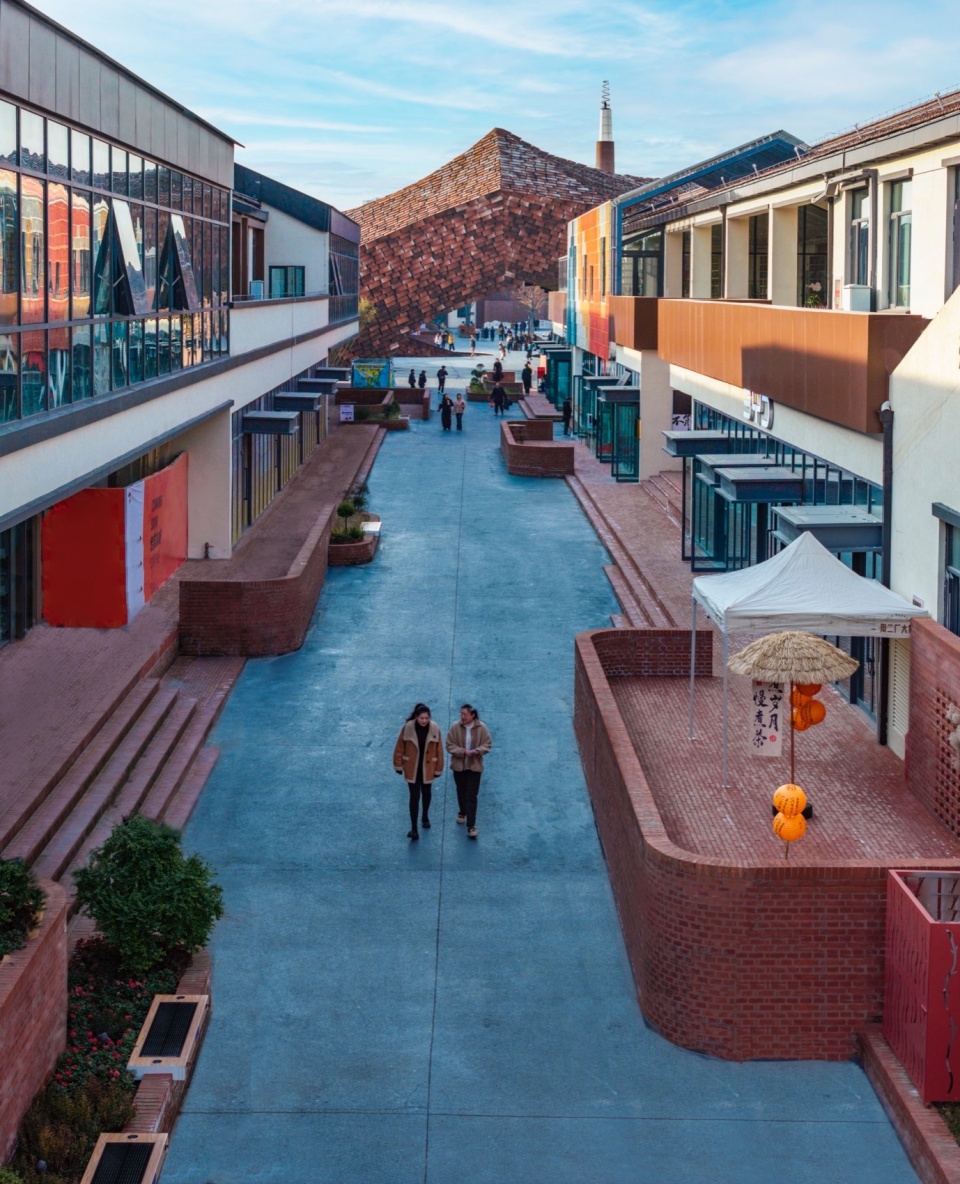
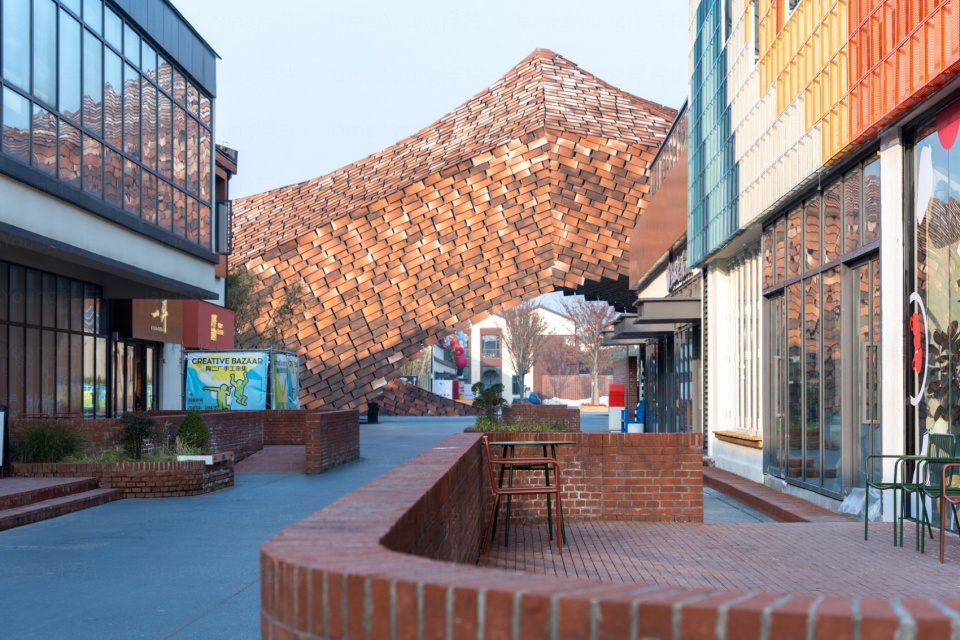
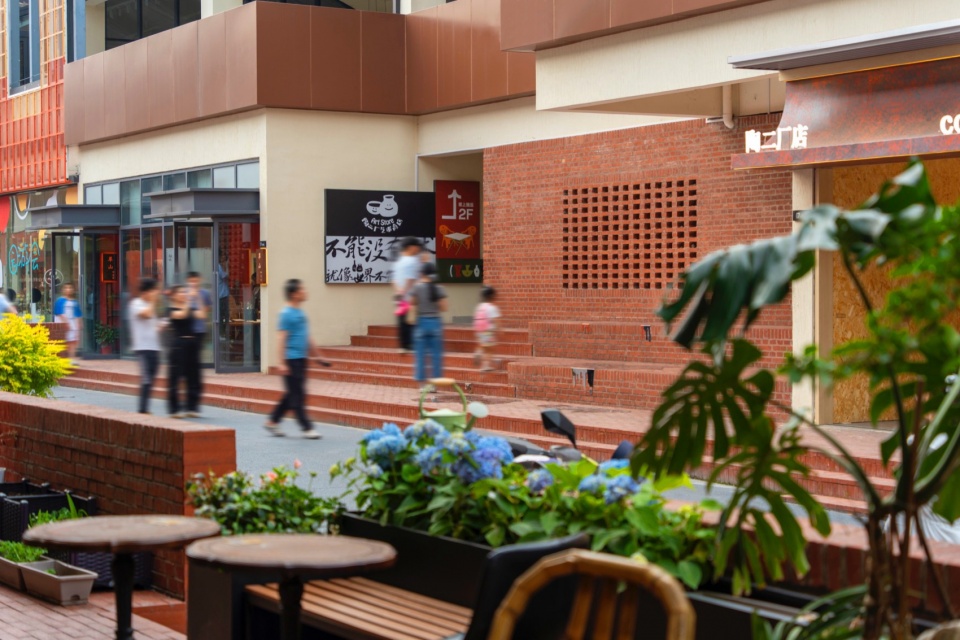
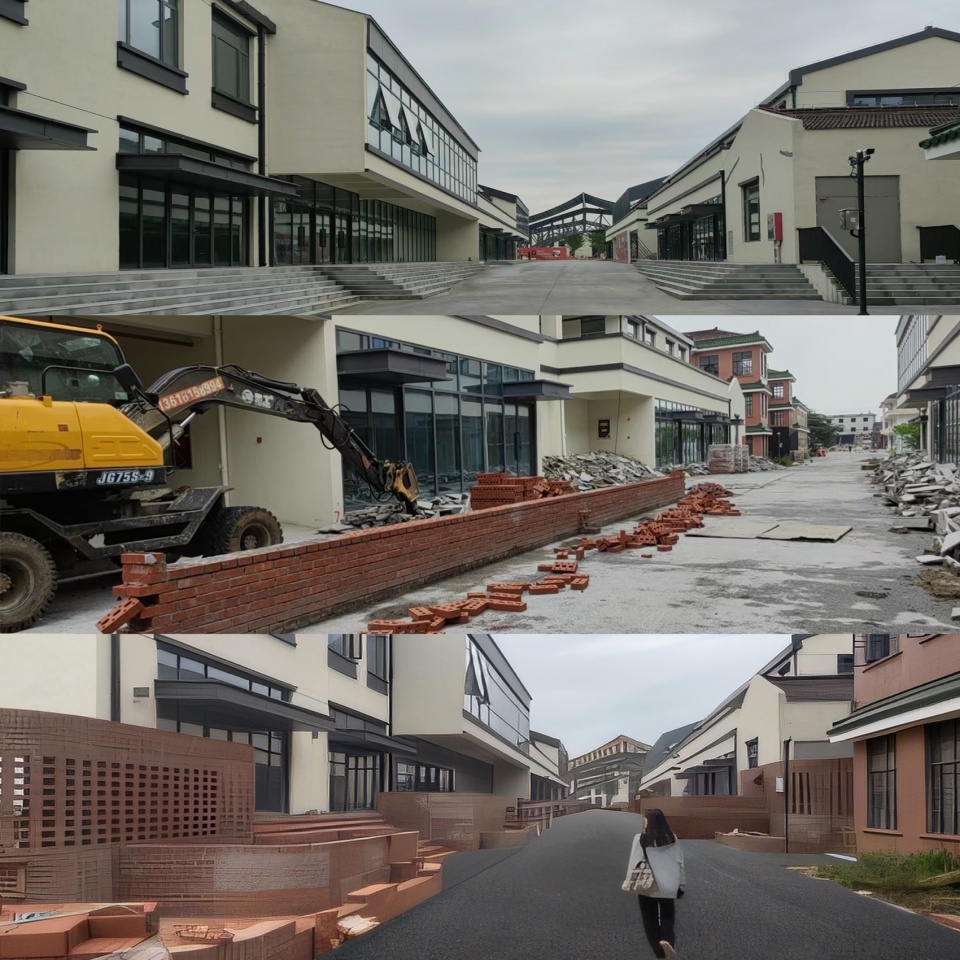
以UCCA陶美术馆作为陶文化的核心向外延展形成主要的商业街区,通过陶砖挡墙与花池丰富街道界面,设置手作工坊外摆区、商业与餐饮节点,形成丰富的室外停留空间;同时有机化解地形高差,自低向高,打造出一条兼具仪式感与文化内涵的”陶文化朝圣之路”。
The design takes UCCA Tao Art Museum as the cultural core of ceramic art and expands outward to form the main commercial district. Ceramic brick retaining walls and flower beds enrich the streetscape, while outdoor seating areas for handicraft workshops, commercial hubs, and dining nodes create vibrant outdoor gathering spaces. At the same time, the design organically resolves elevation changes, guiding visitors from lower to higher ground along a ceremonial and culturally rich “Pilgrimage Path of Ceramic Culture.”
▼B区设计亮点,B Zone Design Highlights
设计特别注重”视线节点”的营造,陶砖、绿植、通透玻璃橱窗虚实相映,通过精心规划的看与被看视觉关系,让参观者在移步换景间感受陶艺文化的独特魅力。
Special attention is given to crafting “visual nodes.” The interplay of ceramic bricks, greenery, and transparent glass storefronts—blending solid and void—creates a carefully choreographed visual dialogue between observer and observed. As visitors move through the space, the shifting scenery immerses them in the unique charm of ceramic art.
▼陶文化朝圣之路,Pilgrimage Path of Ceramic Culture
▼陶艺街商业节点,Ceramic Art Street Commercial Hub
▼陶砖挡墙、花池施工过程,Installation of Ceramic Brick Walls & Planters
C区·滨河陶观带|Zone C · Riverside Ceramic Art Promenade
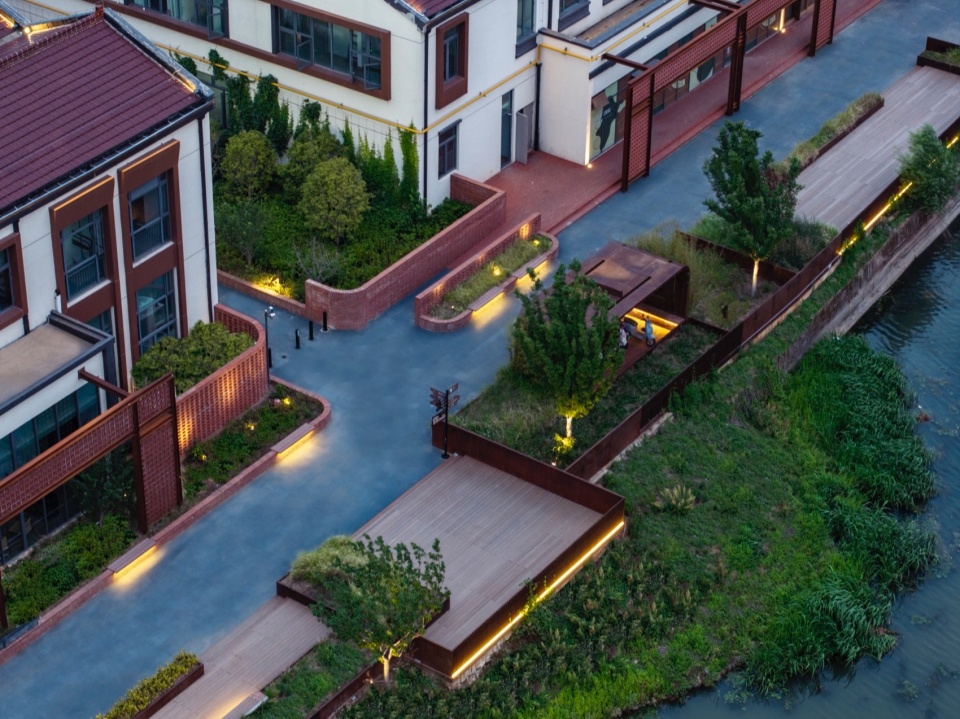
设计通过建筑与景观的有机融合,巧妙平衡了生态保护、历史延续与公共活力。在保留沿河原生自然界面的基础上,通过滨水露台的错落布局适度拓展步行空间,巧妙增强了公共区域的通达性与游憩舒适度。
The design achieves an organic integration of architecture and landscape, skillfully balancing ecological preservation, historical continuity, and public vibrancy. While retaining the original natural riverfront interface, it strategically expands pedestrian space through terraced waterfront platforms, significantly enhancing both accessibility and recreational comfort in public areas.
▼C区设计亮点 ,C Zone Design Highlights
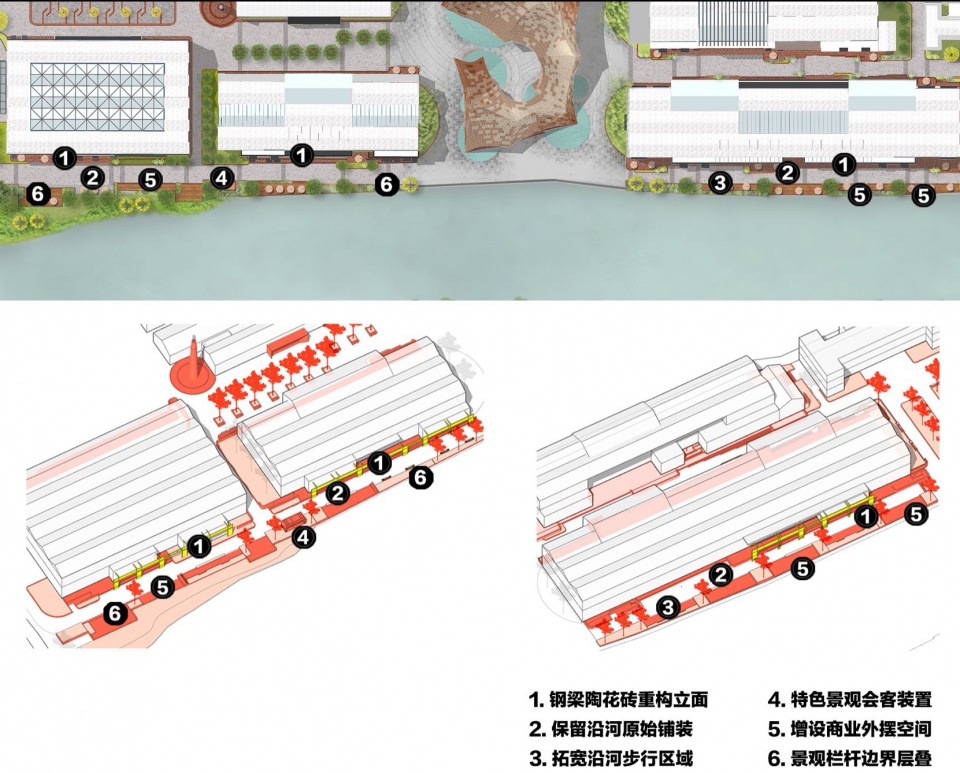
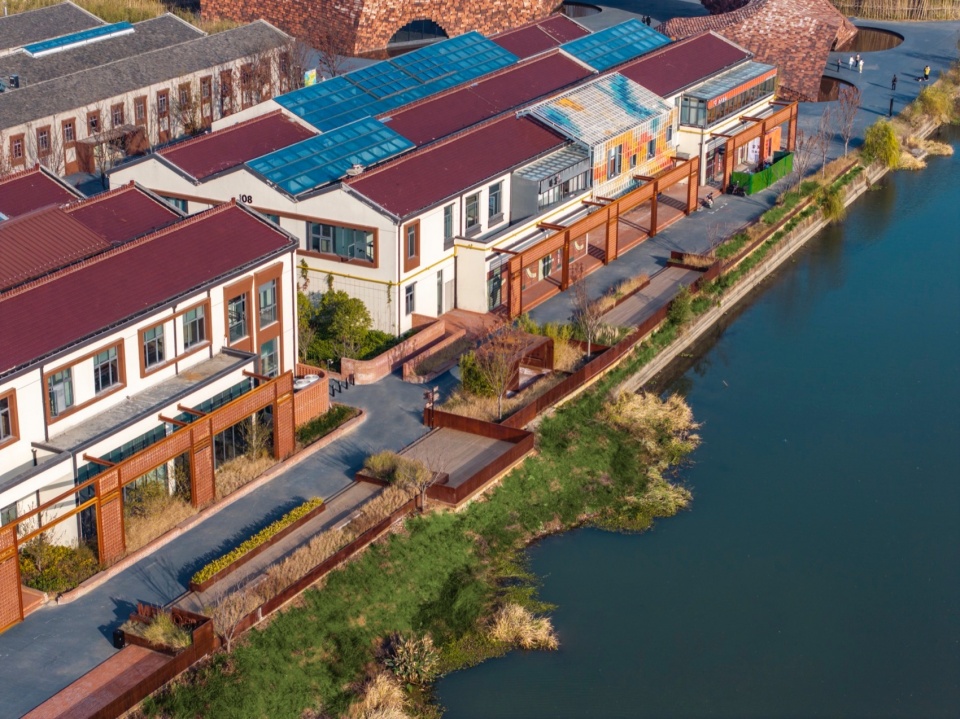
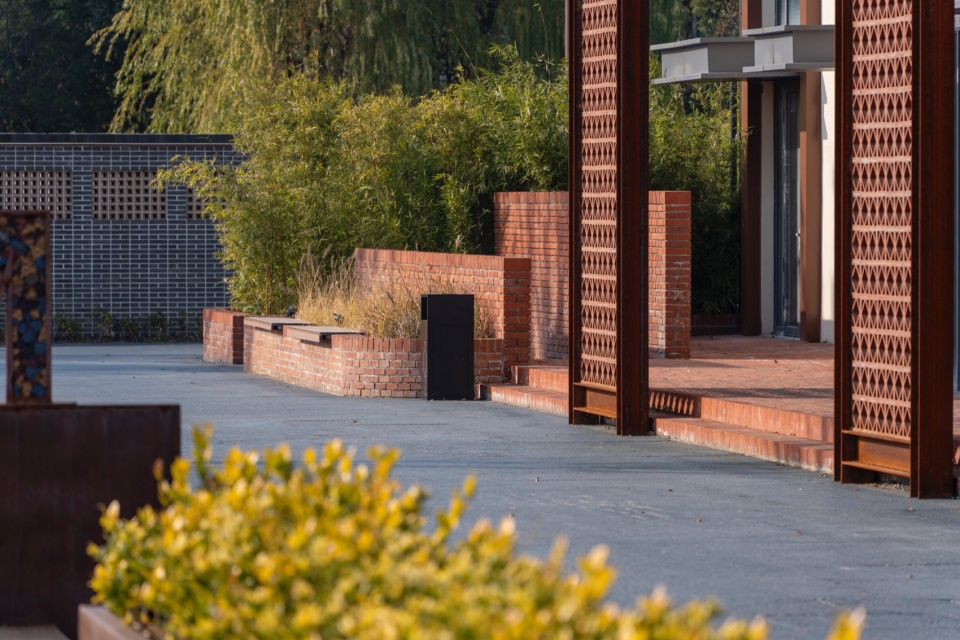
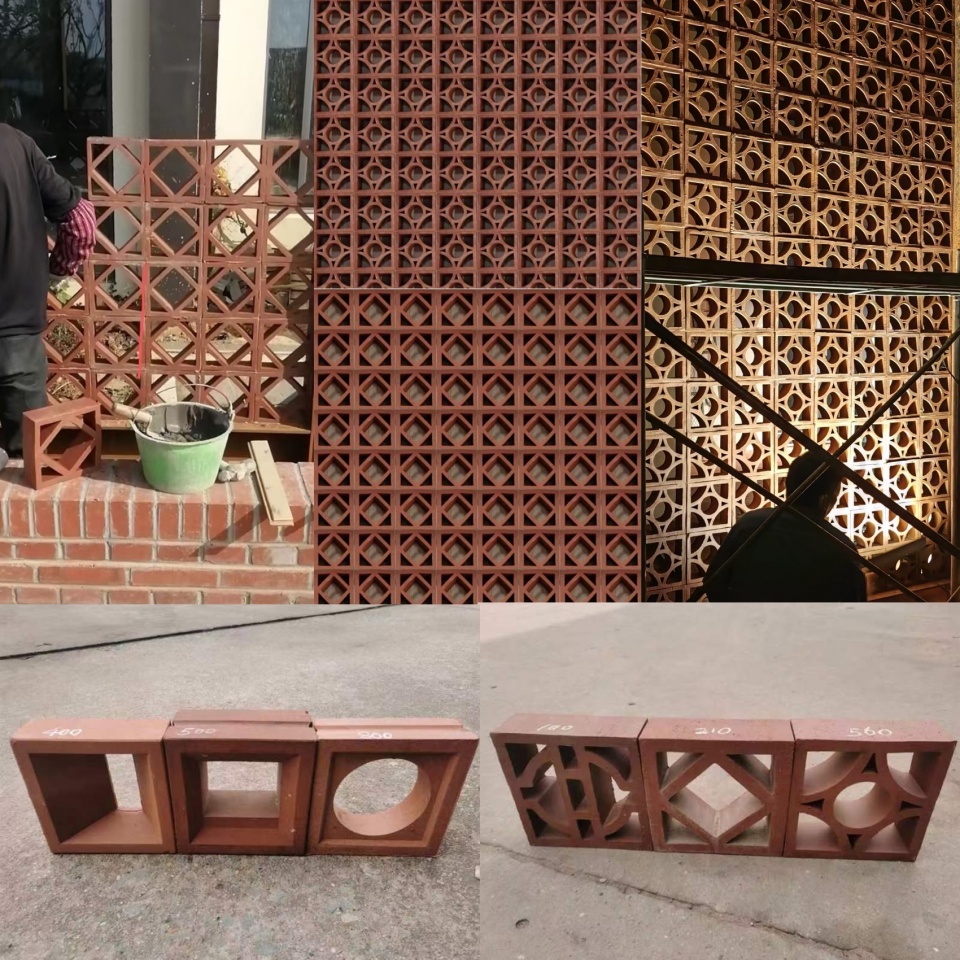
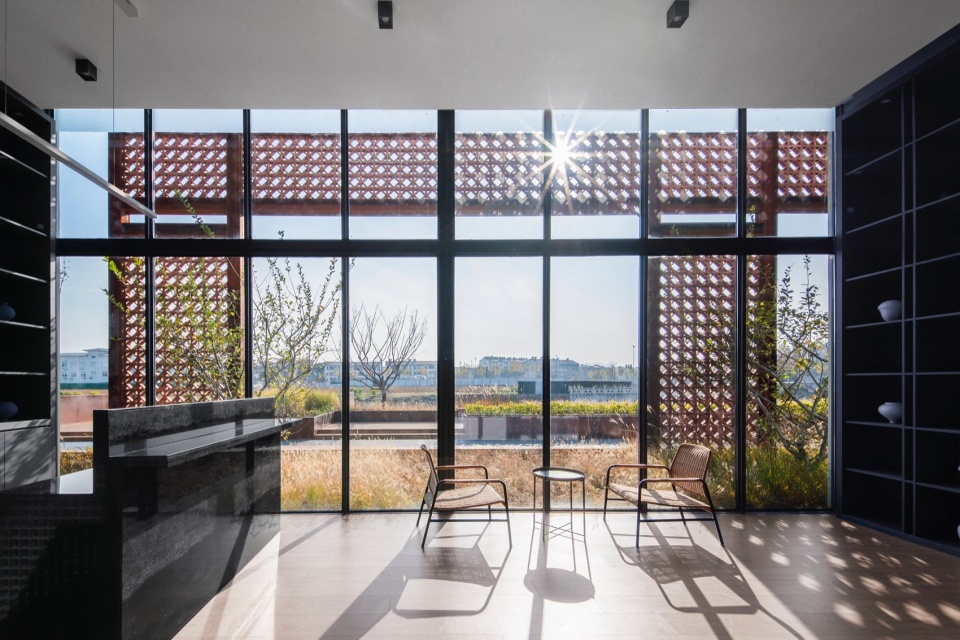
面对原有建筑立面单调的现状,创新性地采用工业遗存与本土材质相结合的解决策略:以工字钢梁构建结构性骨架,外置传统陶花砖幕墙系统,并精心配置多层次植被。这种复合式处理手法形成了虚实交织的立体韵律——钢构骨架勾勒出工业记忆的轮廓,陶砖幕墙以其特有的透光肌理与植被相互映衬,在阳光变幻中演绎出动态的光影交响,既实现了建筑与景观的有机对话,又通过材质语言的创新组合,在延续工业历史脉络的同时,塑造出富有生命力的内外过渡空间。
To address the monotony of the existing building facades, an innovative solution blends industrial heritage with local materials: structural frameworks built with I-beams are clad with traditional ceramic lattice brick curtain walls, complemented by meticulously arranged multi-layered vegetation. This composite approach creates a three-dimensional rhythm of solid and void—the steel skeleton outlines industrial memory, while the translucent ceramic brickwork and foliage interplay to compose a dynamic symphony of light and shadow that shifts with sunlight. The design not only fosters dialogue between architecture and landscape but also, through inventive material expression, revitalizes industrial heritage into vibrant transitional spaces that pulse with life.
▼滨水空间建筑与景观,Riverside Architecture and Landscape Design
▼立面陶砖构成,Facade Composition with Ceramic Bricks
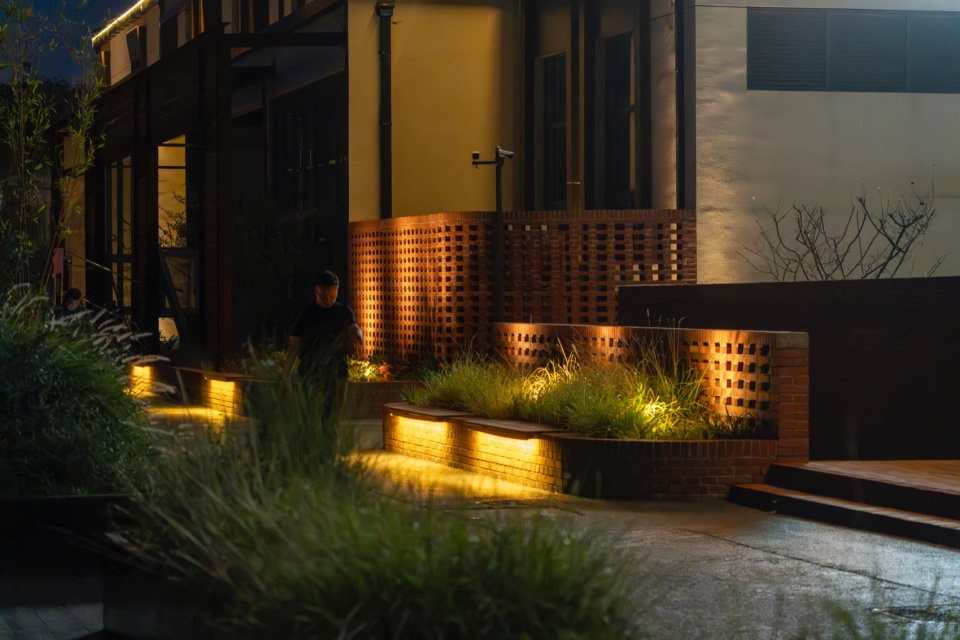
▼陶砖拼花施工过程,Construction Process of Ceramic Brick Mosaic
D区·陶文化活力场|Zone D · Ceramic Culture Plaza
陶文化活力场以陶书局与工业烟囱为双核心,打造了一个集创意、文化、展示、体验、工坊、活动于一体的文化片区。
The Ceramic Culture Plaza takes the Ceramic Library and industrial chimney as its dual cores, creating a cultural district that integrates creativity, culture, exhibition, experience, workshops, and events.
▼ D区设计亮点,D Zone Design Highlights
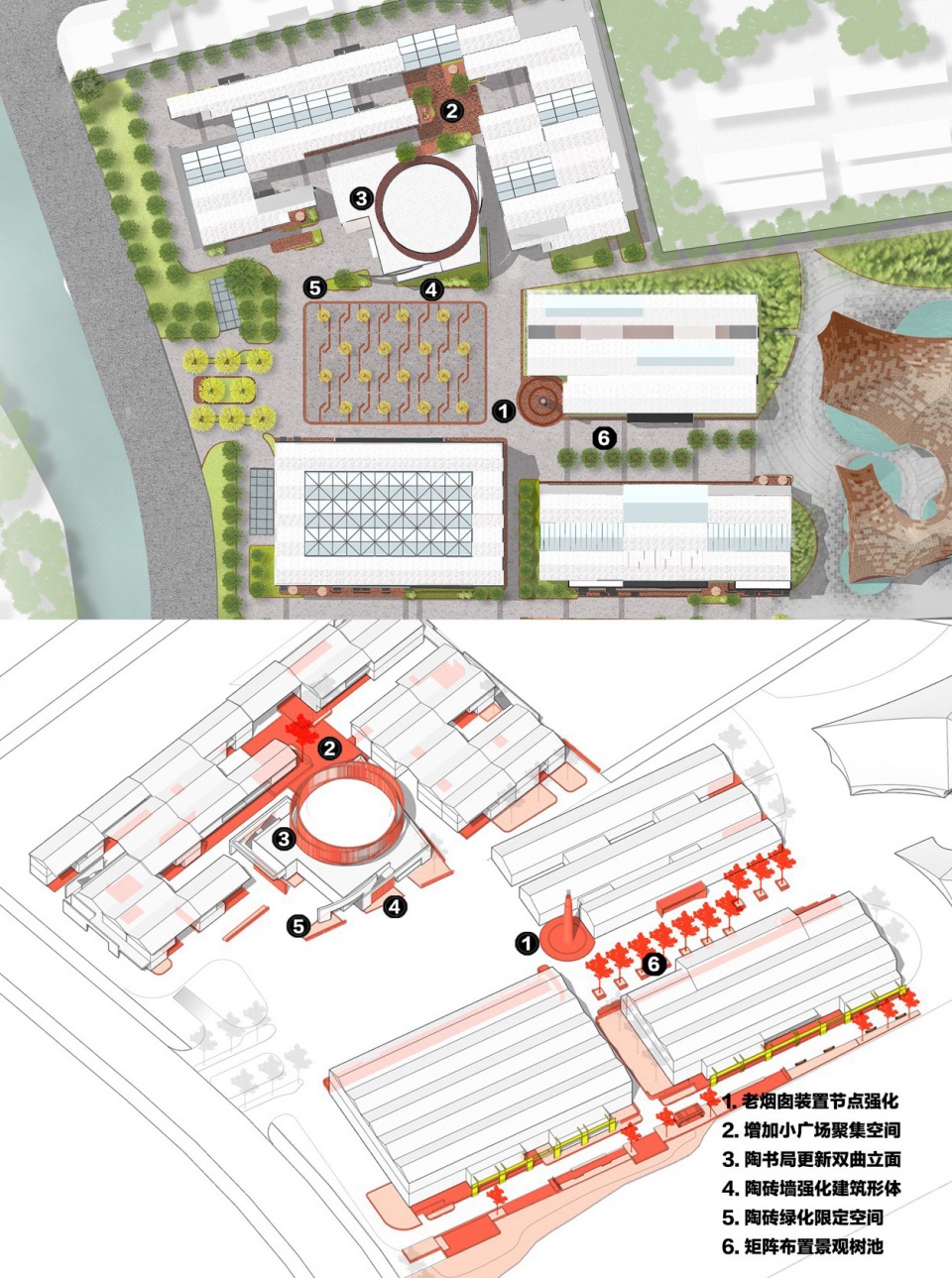
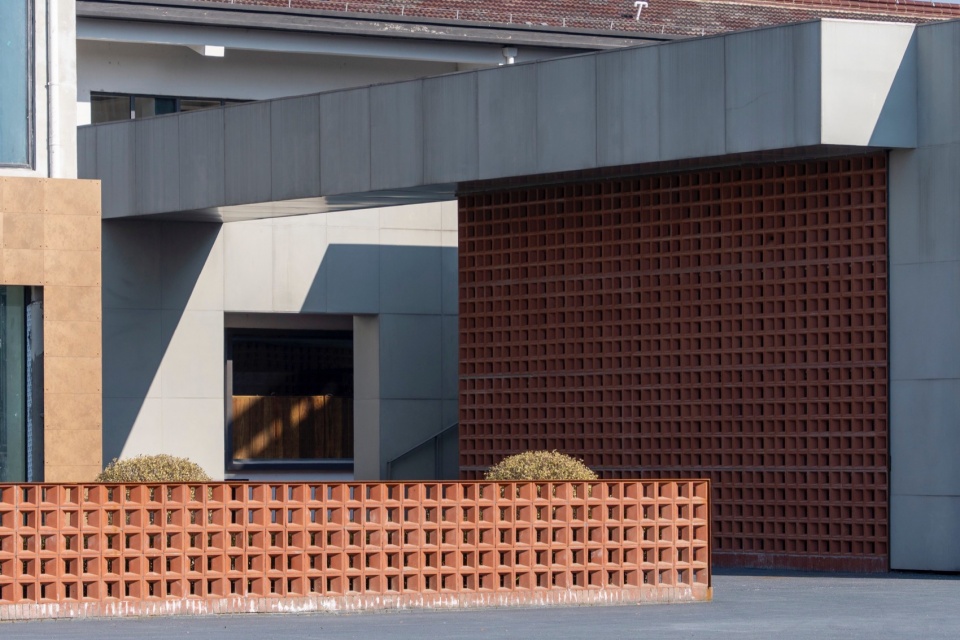
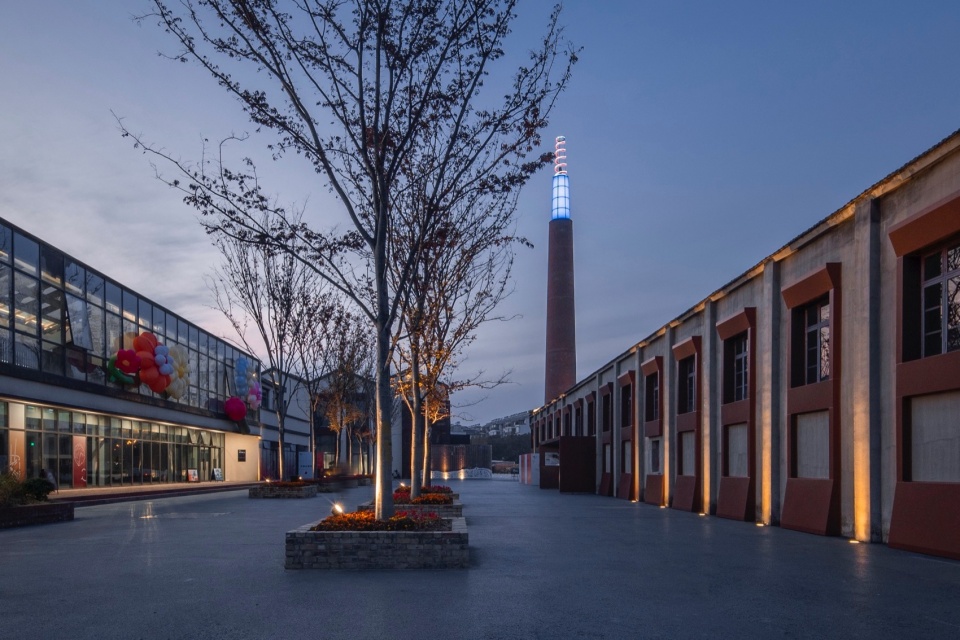
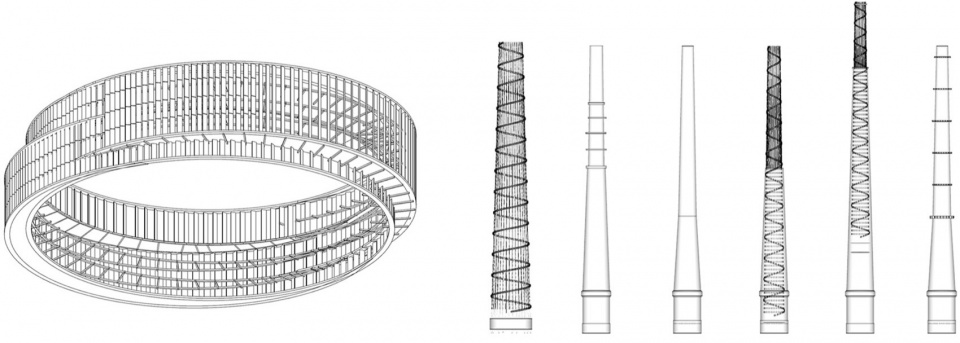
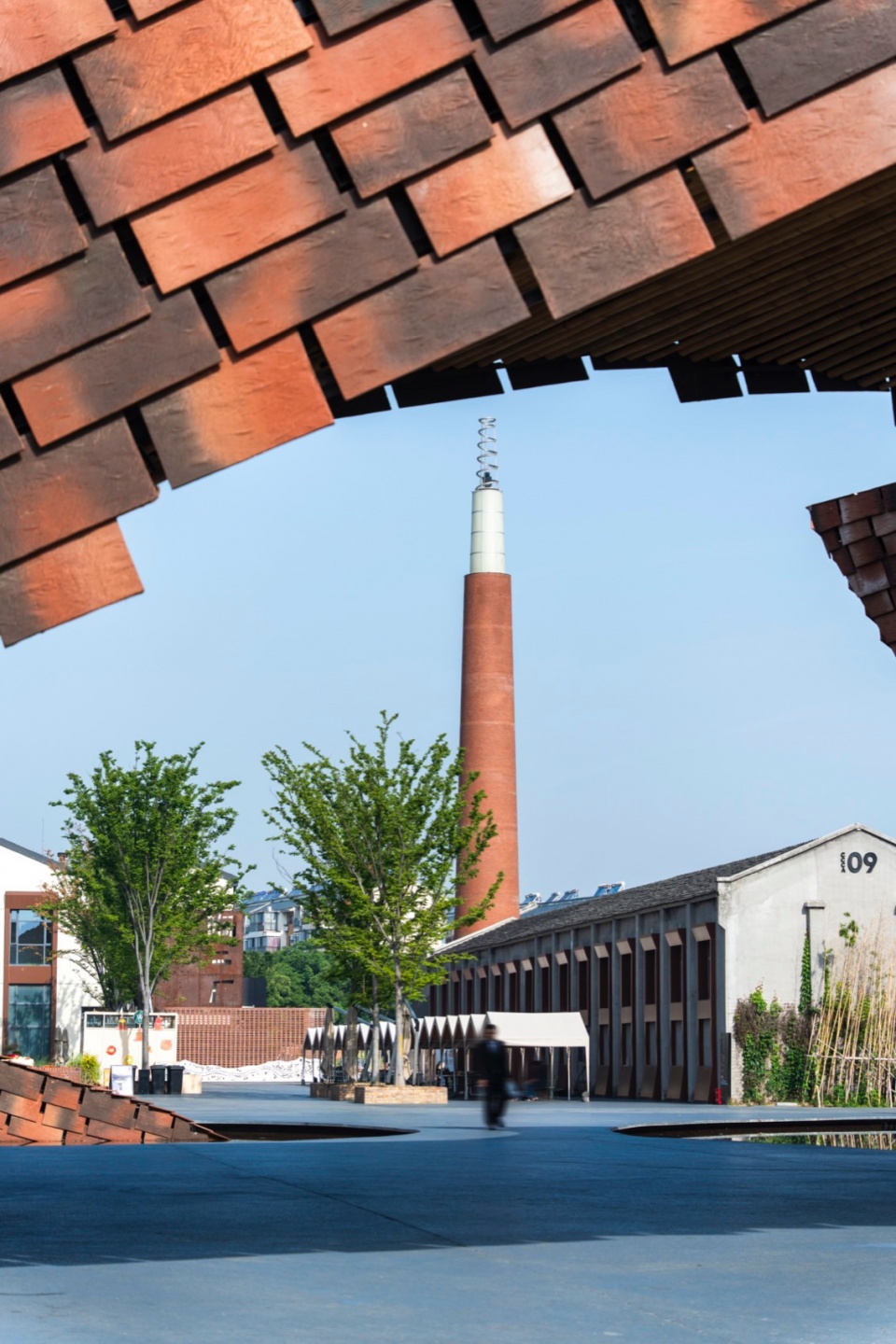
场地中央的老厂房烟囱保留并加高,改造为标志性艺术装置,通过分段材质隐喻”过去-现在-未来”的时间轴线,顶部以螺旋上升的”虚空之烟”造型形成视觉焦点,底部则保留陶砖材质连接地面,以放射状铺装限定空间,既扎根历史又象征向上精神。原陶书局原外立面采用水泥板铺贴缺乏表现力,设计拆除部分水泥板、替换镂空陶砖幕墙,强化了建筑形体的逻辑性与体块感,并将陶砖元素延伸至入口景墙、树池和地面铺装,形成统一的视觉系统。
The preserved chimney of the old factory building at the center of the site has been heightened and transformed into a landmark art installation. Through segmented materials, it metaphorically represents the timeline of “past-present-future.” The top features a spiraling “void smoke” design that forms a visual focal point, while the base retains ceramic brick materials to connect with the ground, using radial paving to define the space—rooted in history yet symbolizing an upward spirit.The original facade of the Ceramic Library, previously clad in lackluster cement panels, has been partially removed and replaced with perforated ceramic brick curtain walls, enhancing the building’s structural logic and volumetric expression. The ceramic brick motif extends to the entrance feature walls, tree planters, and ground paving, forming a cohesive visual system.
▼陶二厂西入口,West Entrance
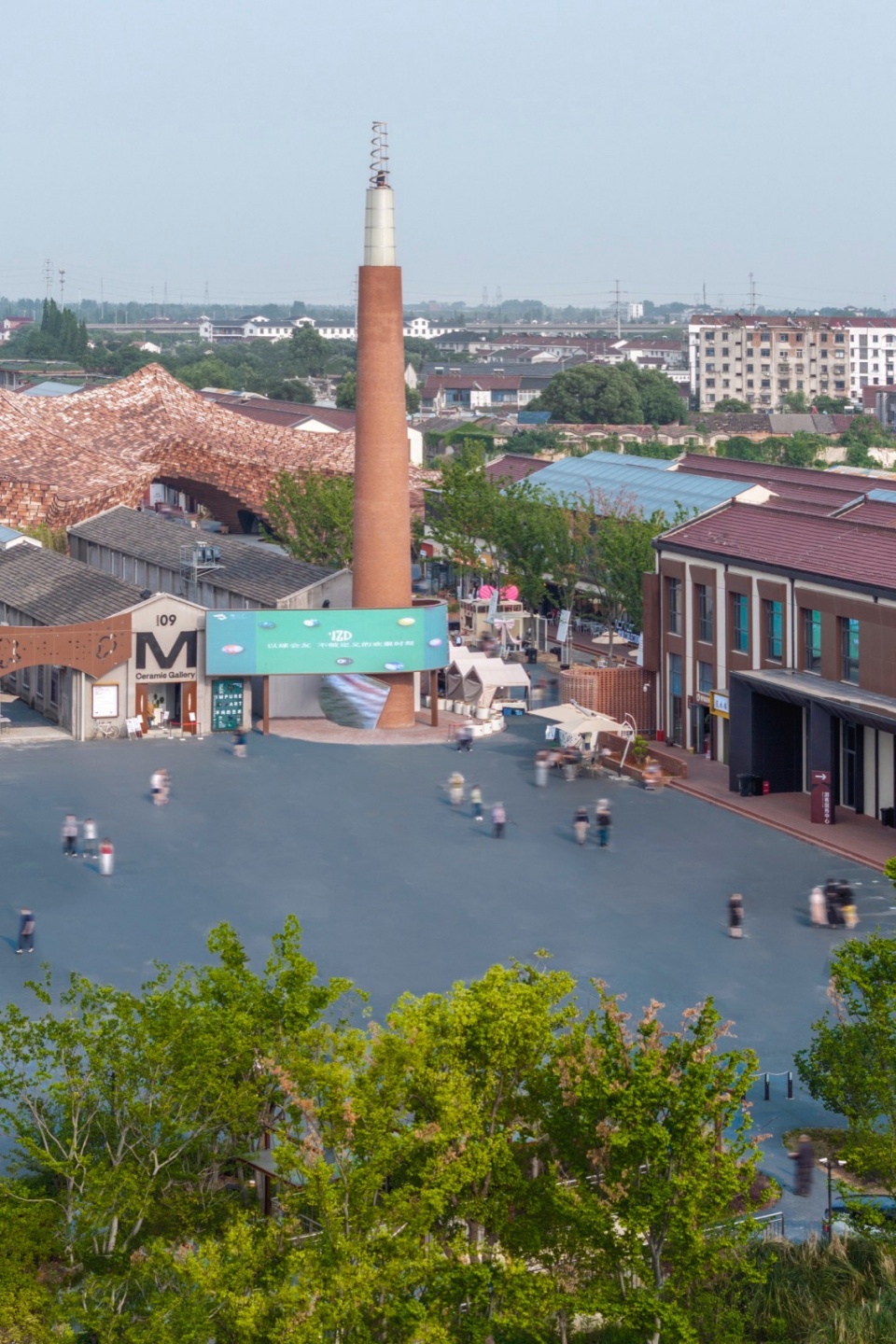
▼陶书局对话烟囱,Ceramic Pages in Dialogue with the Chimney
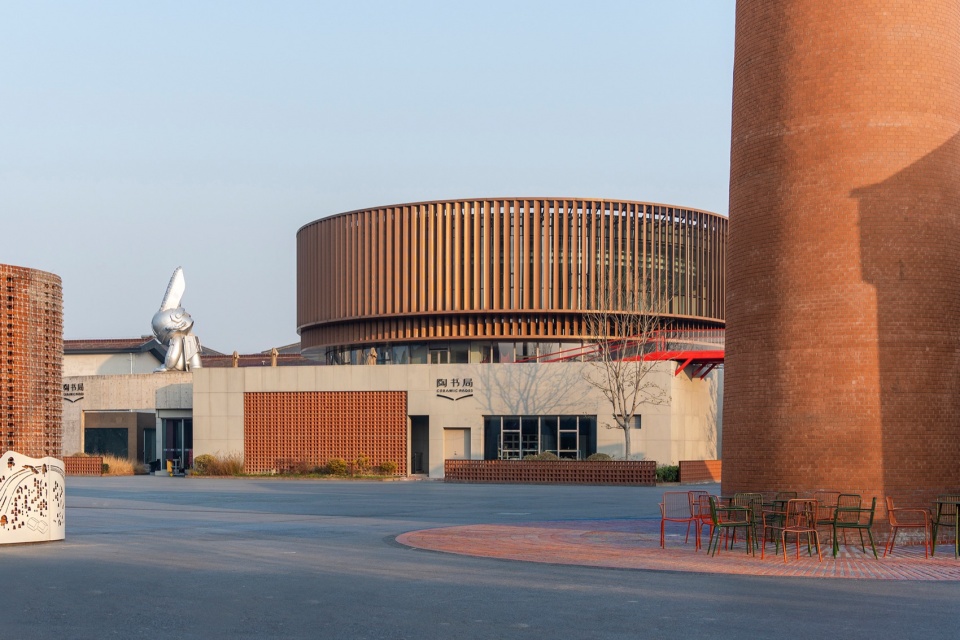
▼陶书局入口,Ceramic Pages Entrance
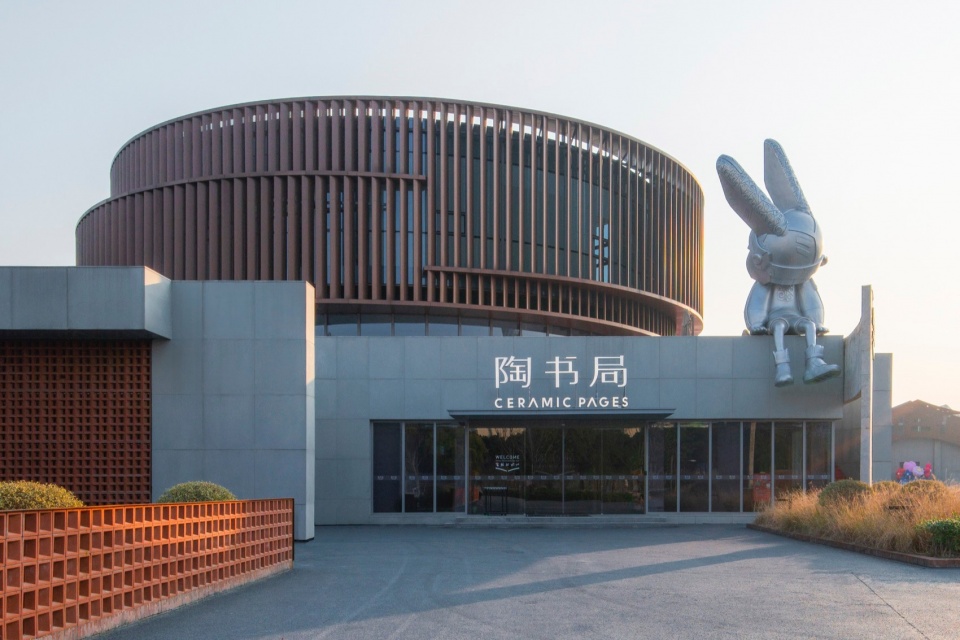
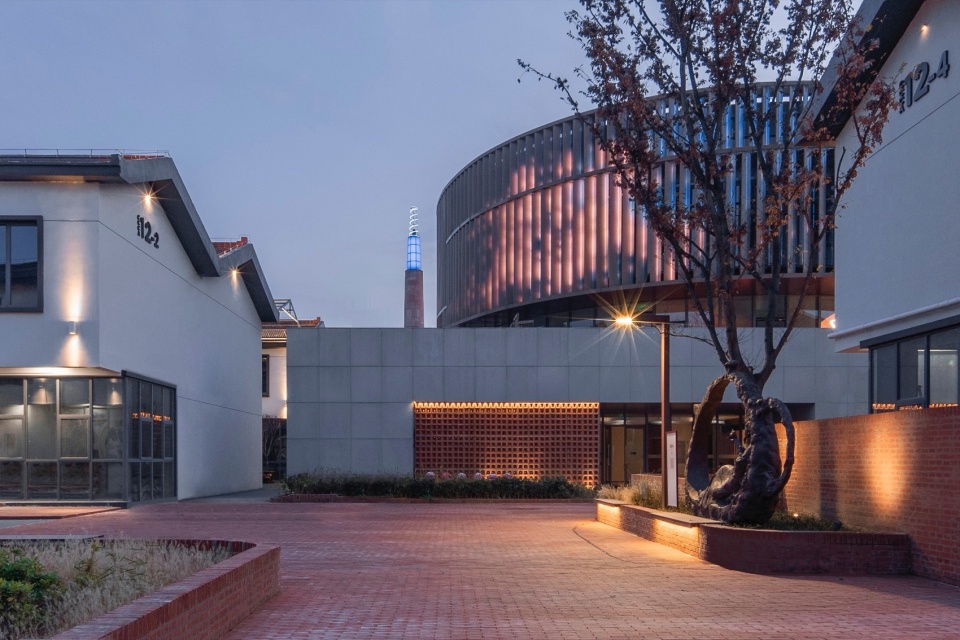
场地内红砖铺就的工坊街巷延续工业时代的肌理,与老烟囱、保留老厂房构成跨越时空的对话场域;工字钢框架、攀缘植物、围合的庭院空间内点缀吴为山大师的陶艺作品。不同时空元素的魔幻拼贴,创造出富有叙事性的沉浸式文化体验空间。
Within the site, red-brick-paved workshop alleys echo the industrial-era fabric, engaging in a cross-temporal dialogue with the old chimney and preserved factory structures. I-beam frames, climbing plants, and enclosed courtyard spaces are punctuated with ceramic artworks by master sculptor Wu Weishan. This surreal collage of elements from different eras crafts a narrative-rich, immersive cultural experience space.
▼庭院夜景,Courtyard Nightscape
▼设计分析,Design Analysis
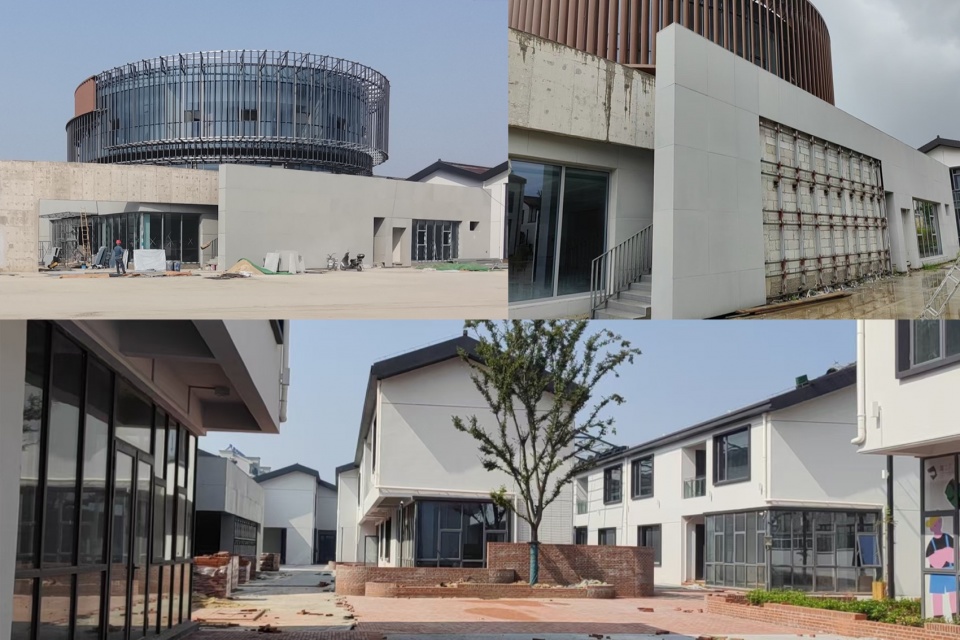
▼施工过程,Construction Process
E区·陶工业展示厅|Zone E · Ceramic Industry Exhibition Hall
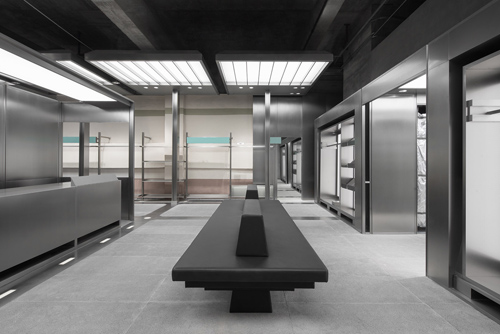
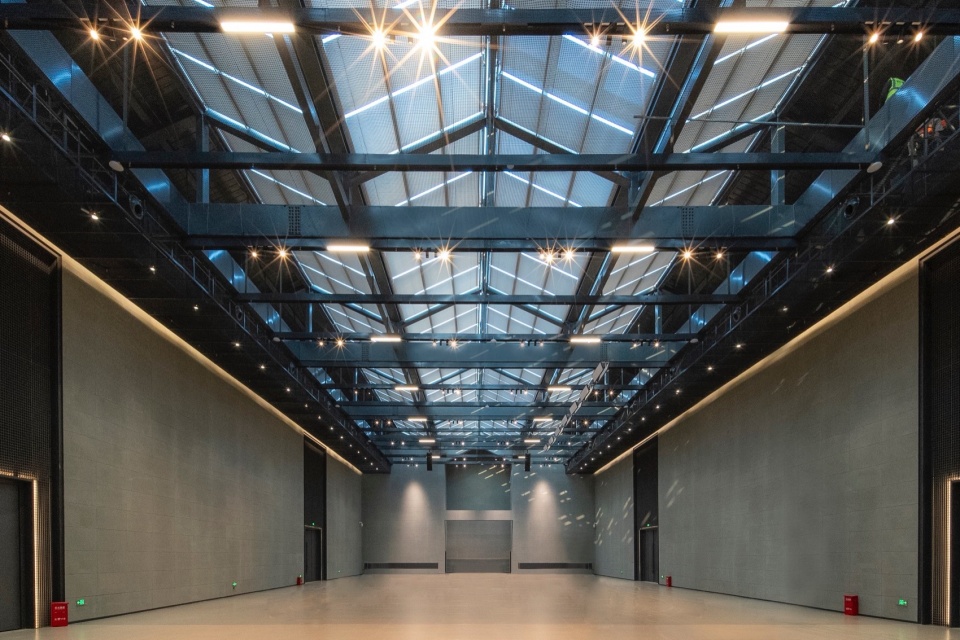
设计依据土建的深灰色钢结构,确定工业灰为主要基调,营造简洁大气的空间氛围。灰色系不仅与工业风元素完美融合,同时为展品提供中性背景。
The design adopts the dark gray steel structure of the civil construction as its foundation, establishing industrial gray as the dominant tone to create a clean and sophisticated spatial atmosphere. The gray palette not only seamlessly integrates with industrial-style elements but also provides a neutral backdrop for exhibited artworks.
▼E区设计亮点,E Zone Design Highlights
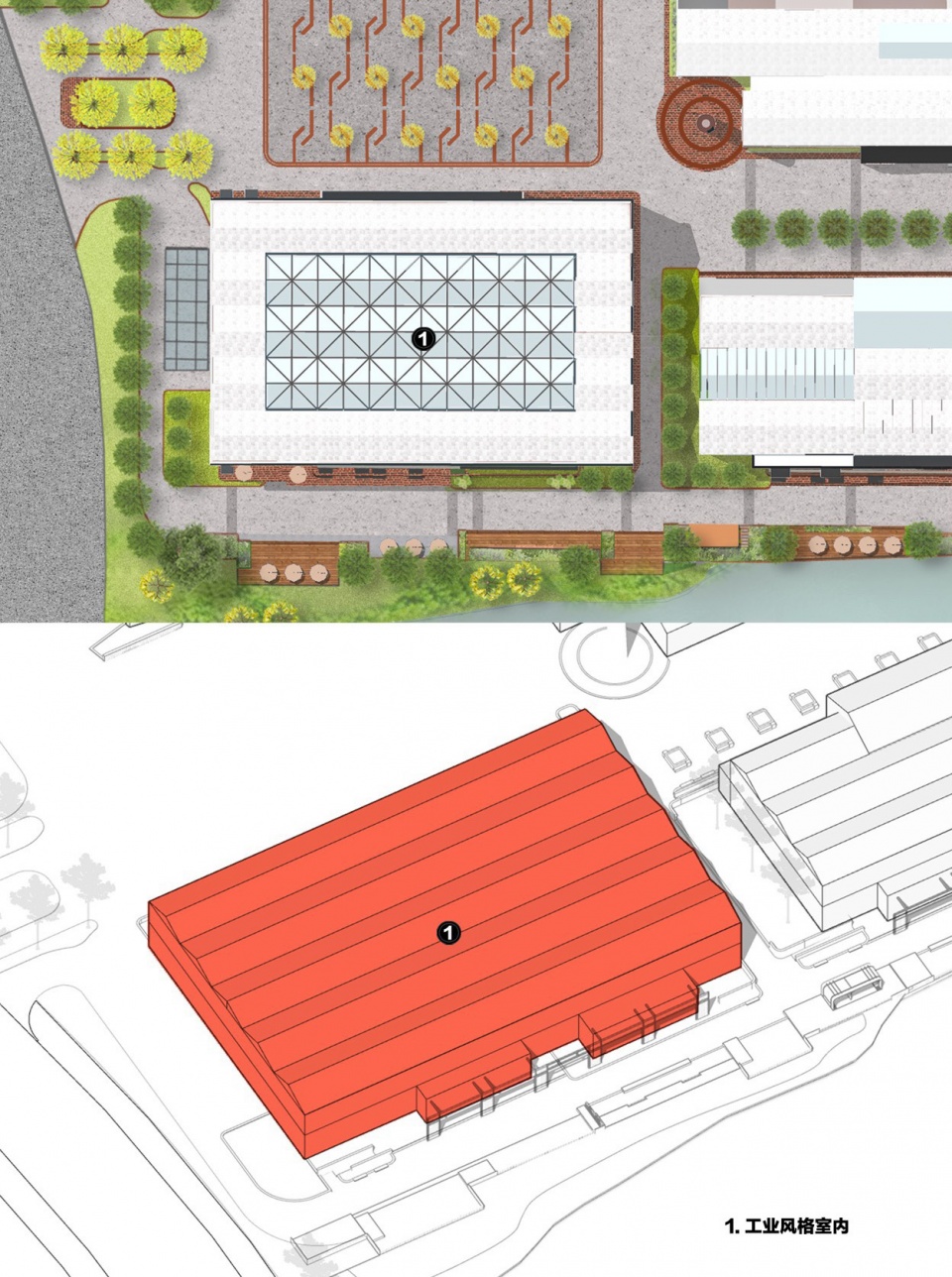
▼设计分析,Design Analysis
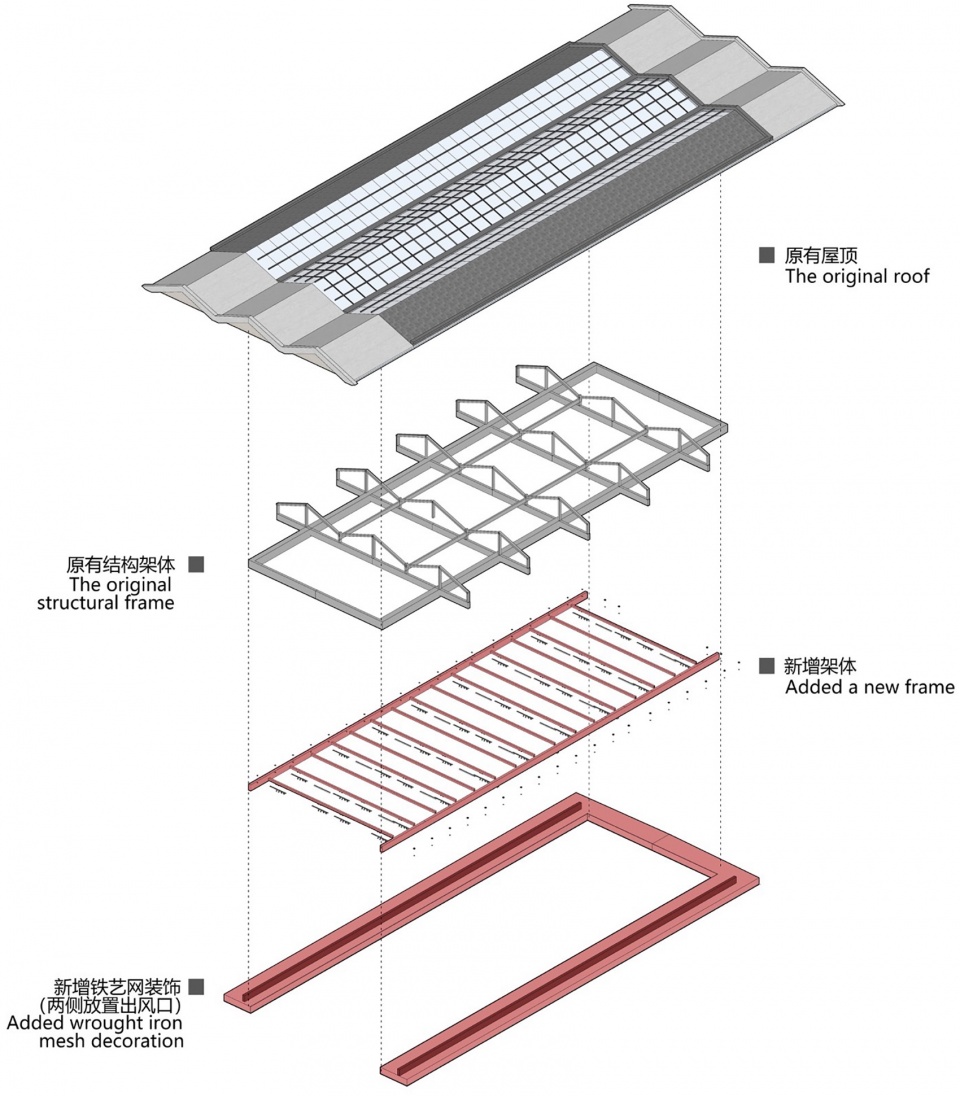
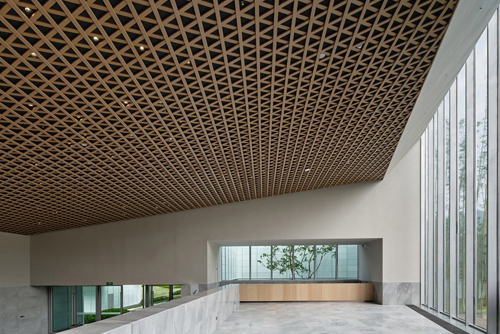
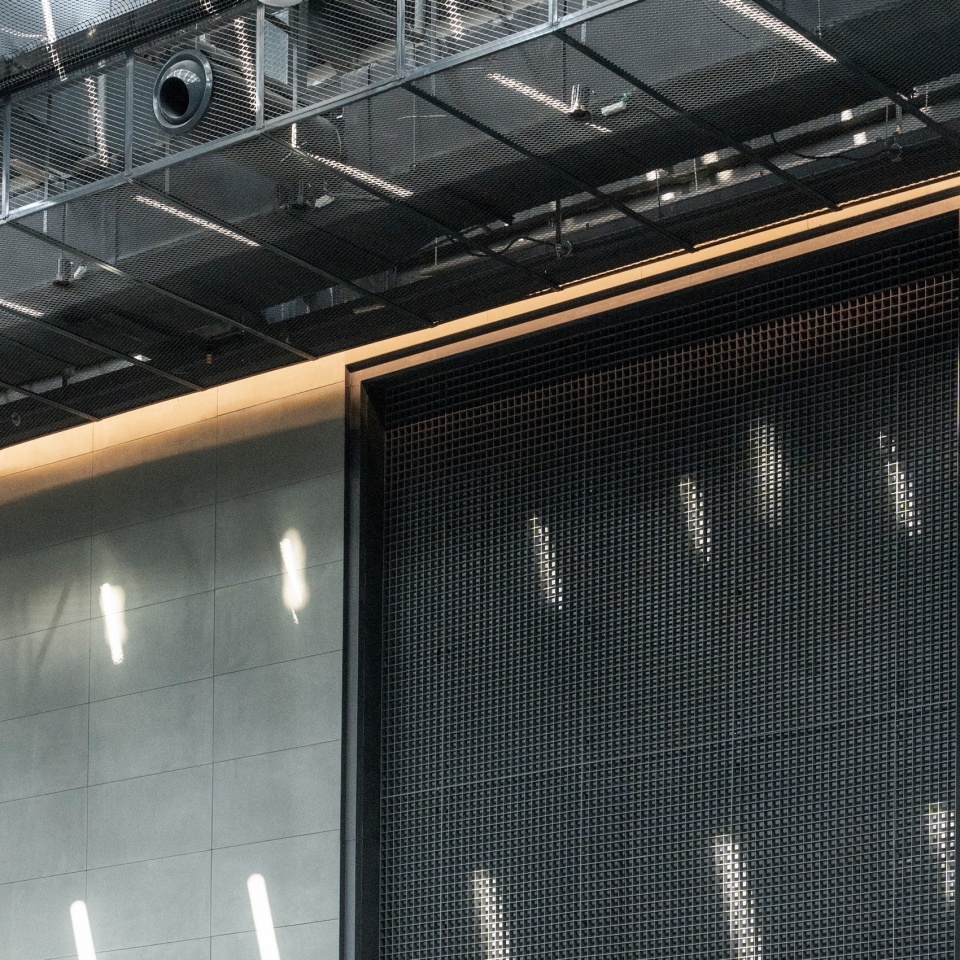
接待门厅通过蒋国兴陶艺作品的陈列,实现工业质感与艺术灵性的有机融合。透明玻璃体块的穿插运用,既划分空间功能,又提升整体通透感, 使工业、文化、艺术碰撞 。会展厅内强化保留工字钢、混凝土、金属方格等标志性工业材质。保留原始框架与钢结构屋顶,新增横向设备两边铺设,一体化整合,兼顾灯光系统与遮阳功能,实现技术与美学的平衡。
In the reception lobby, the display of Jiang Guoxing’s ceramic artworks achieves an organic fusion of industrial texture and artistic vitality. The strategic use of transparent glass volumes partitions functional spaces while enhancing overall transparency, facilitating a dynamic interplay between industry, culture, and art. The exhibition hall emphasizes the preservation of iconic industrial materials such as I-beams, exposed concrete, and metal grids. The original framework and steel roof structure are retained, with newly added horizontal equipment installed symmetrically along both sides. This integrated approach unifies lighting systems and sun-shading functions, achieving a perfect equilibrium between technology and aesthetics.
▼展厅入口,Exhibition Center Entrance
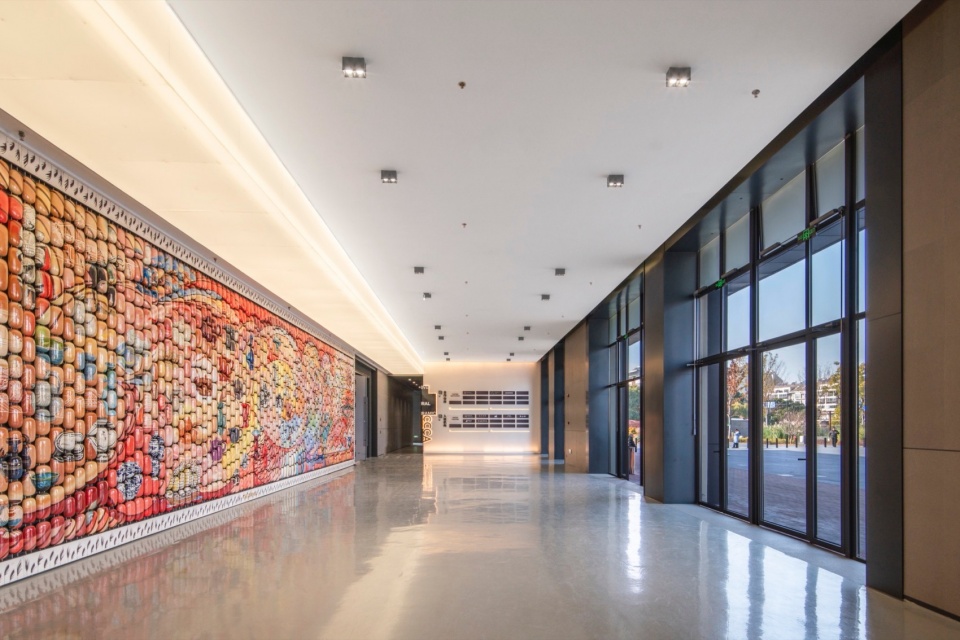
▼ 陶二厂展示中心,Exhibition Center
▼内外景色渗透,Interior-Exterior Scenic Integration
04 结语: 永恒的和解Conclusion: Eternal Reconciliation
陶二厂文化提升的设计实践生动的证明,正是种种限制条件,往往最能激发在地性的营造智慧。真正的地域性表达不在于炫技,而在于直面现实约束:有限的经费、紧迫的周期、在地的材料、朴素的建构逻辑。当改造策略不再一味追求颠覆性创新,而是着眼于空间体验的再生与文化脉络的延续,工业遗产便能与当代生活和谐共生,获得真正可持续的价值。
Cultural revitalization of Yixing Creative & Cultural Ceramic Avenue (CCCA) serves as vivid proof that constraints often inspire the most ingenious place-based solutions. Authentic regional expression lies not in technical flamboyance, but in confronting practical limitations: tight budgets, demanding schedules, local materials, and straightforward construction logic. When renovation strategies shift focus from pursuing disruptive innovation to regenerating spatial experiences and continuing cultural contexts, industrial heritage can achieve harmonious coexistence with contemporary life, attaining truly sustainable value.
▼陶二厂文化提升,Cultural revitalization of Yixing Creative & Cultural Ceramic Avenue (CCCA)
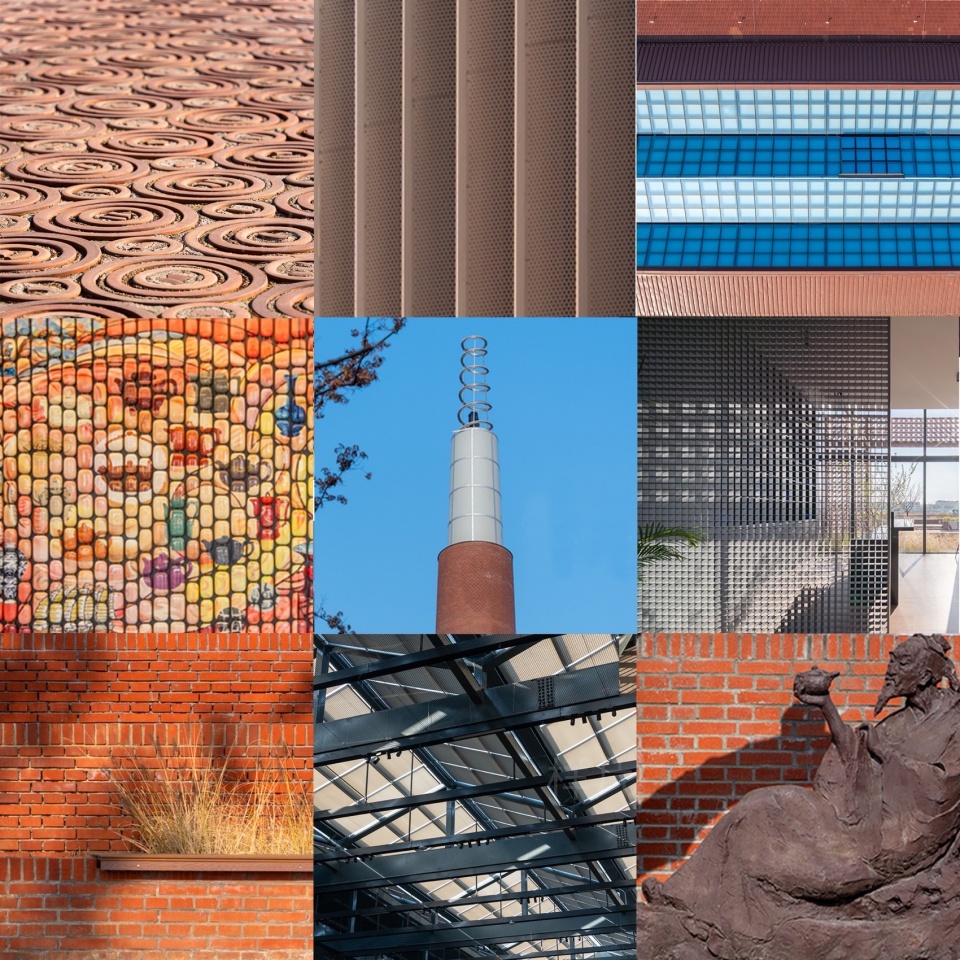
▼细部,details
Project Name: Taoer Factory Cultural Revitalization
Client: Yixing Taodu Asset Management Co., Ltd.
Location: Dingshu Town, Yixing City, Jiangsu Province
Site Area: 59,200 sqm
Project Duration: 2023–2024
Design Firm: YUSHE YUZHU
Lead Designers: Xu Yi, Li Zhiqiang, Chen Xiao
Design Team: Gao Fei, Zhao Lu, Ma Jiang, Cao Zhen, Zheng Yali, Liu Yazhe, Peng Jing, Zhang Jianwei, Pan Wenjun, Yang Huanli, Mao Lili, Li Na, Zhu Mincheng, Li Xinman, Zhou Ping
Construction Documents: Jianmeng Design Group Co., Ltd.
UCCA Ceramic Art Museum: Kengo Kuma & Associates
Ceramic Pages Interior: Wuto-mills by Wutopia Lab
Photography: James Young