Mezi Srnky小酒馆,捷克 / Markéta Bromová architekti
梅齐·斯尔恩基小酒馆位于布拉格维诺赫拉迪区Náměstí Míru附近,一栋近期翻新的公寓建筑内,该建筑拥有可追溯至19世纪末的历史主义立面。项目空间位于建筑首层,并包含地下两间房间,后者将在下一阶段进行改造。
The Mezi Srnky Bistro is located in a recently renovated apartment building with a historicist facade dating back to the late 19th century, near Náměstí Míru in Prague’s Vinohrady district. The space occupies the ground floor of the building, with two additional rooms in the basement that are set to be renovated in the next phase.
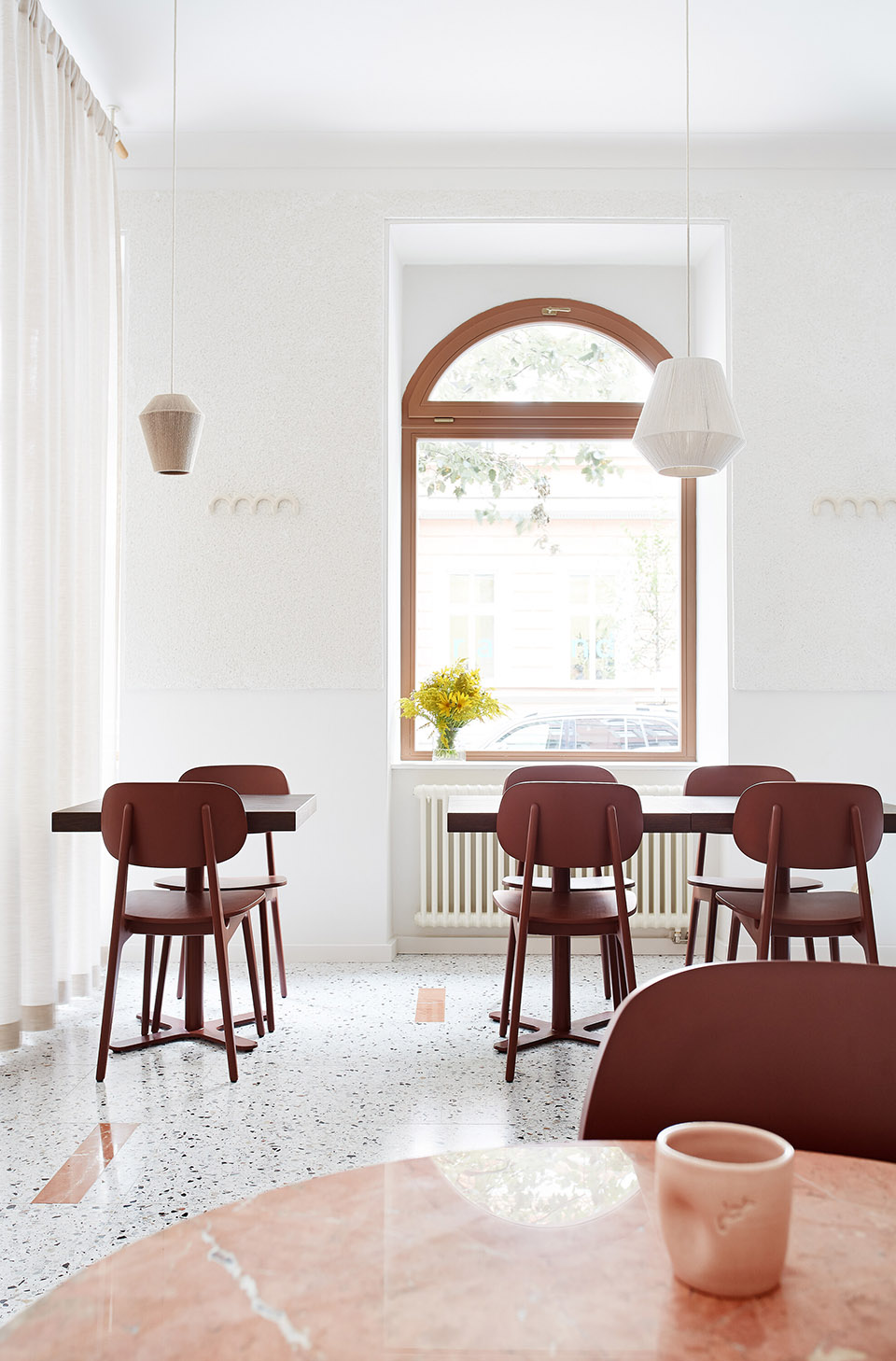
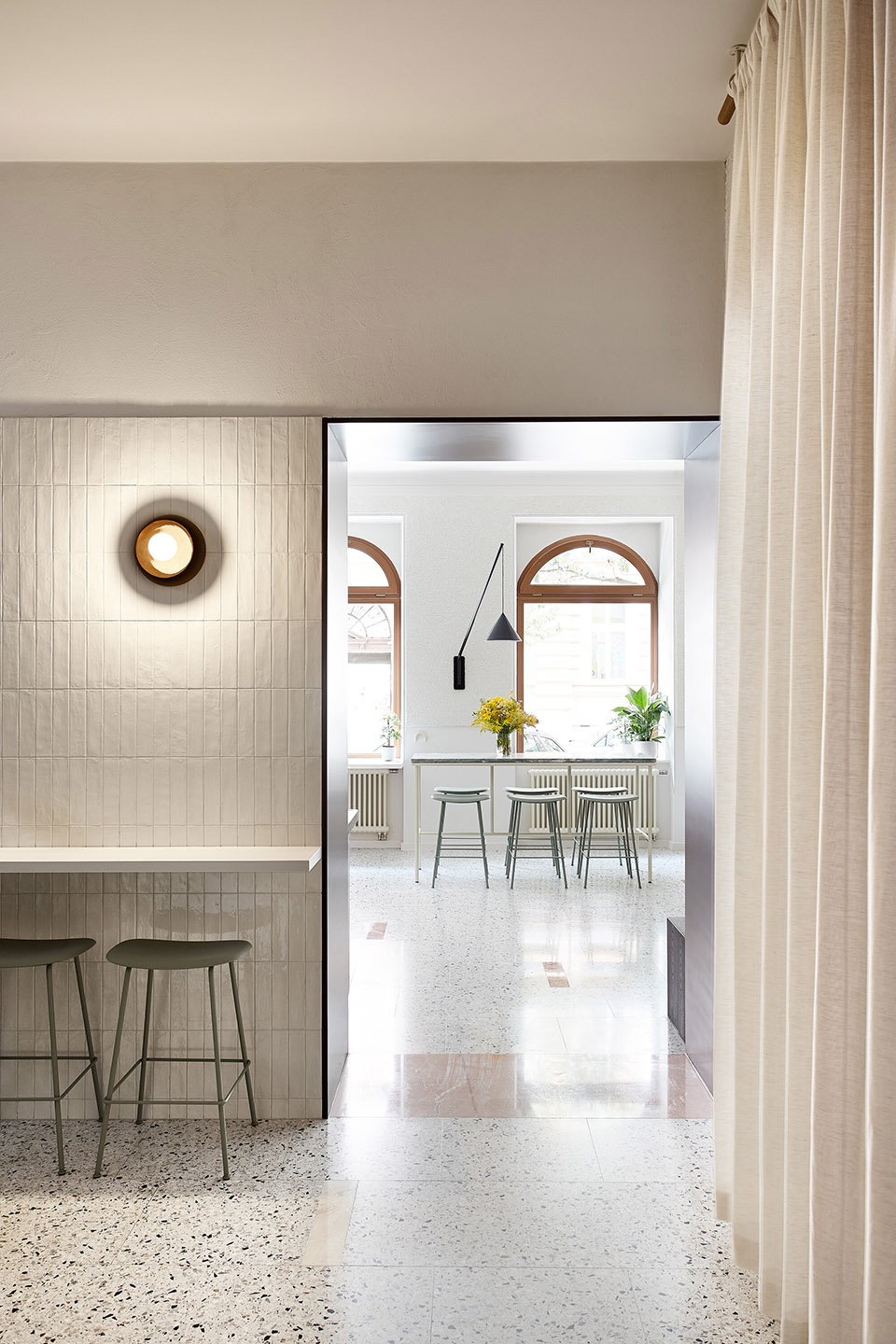
▼前厅开放通透的用餐空间,
Open and airy front dining area
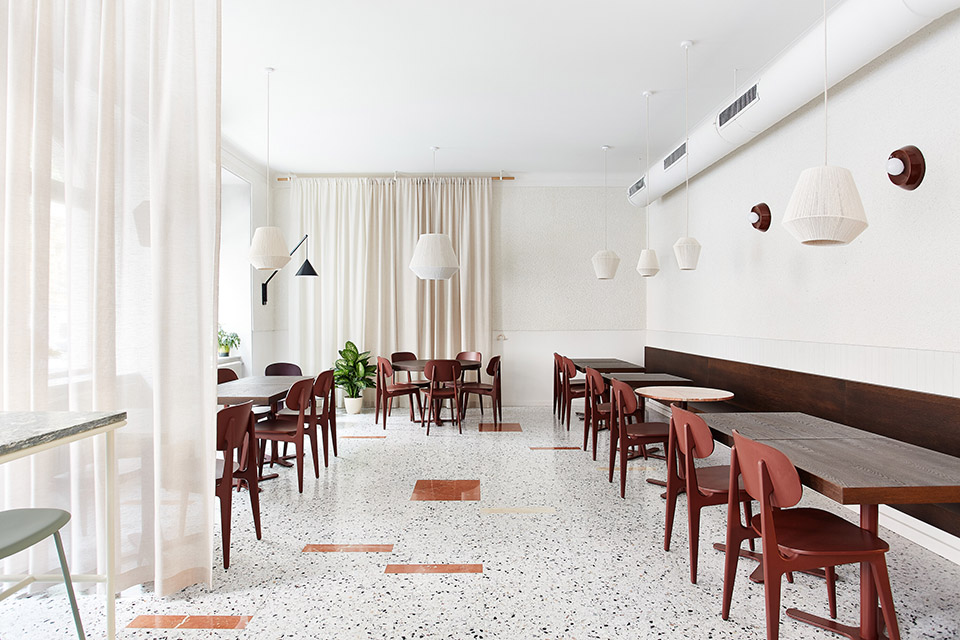
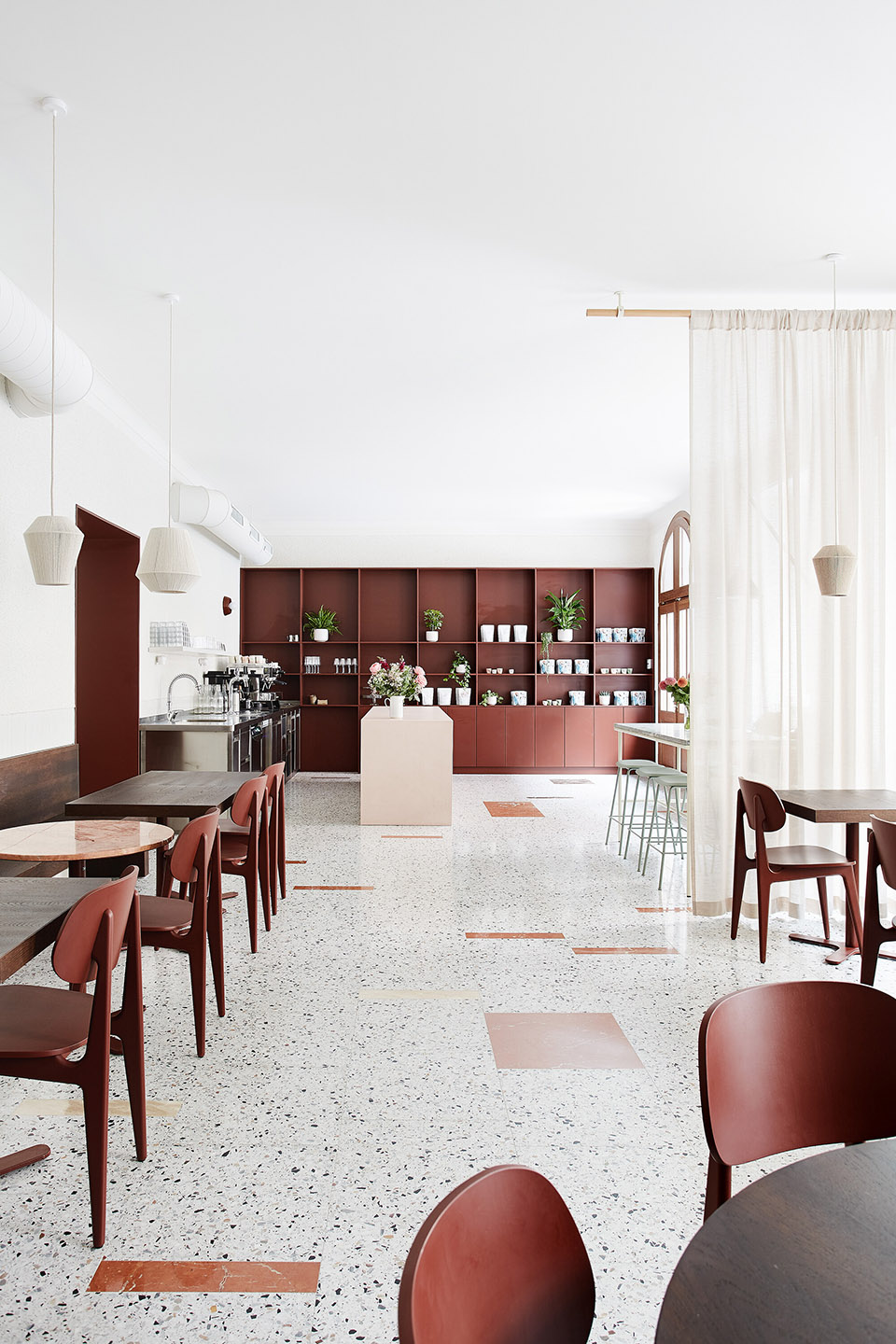
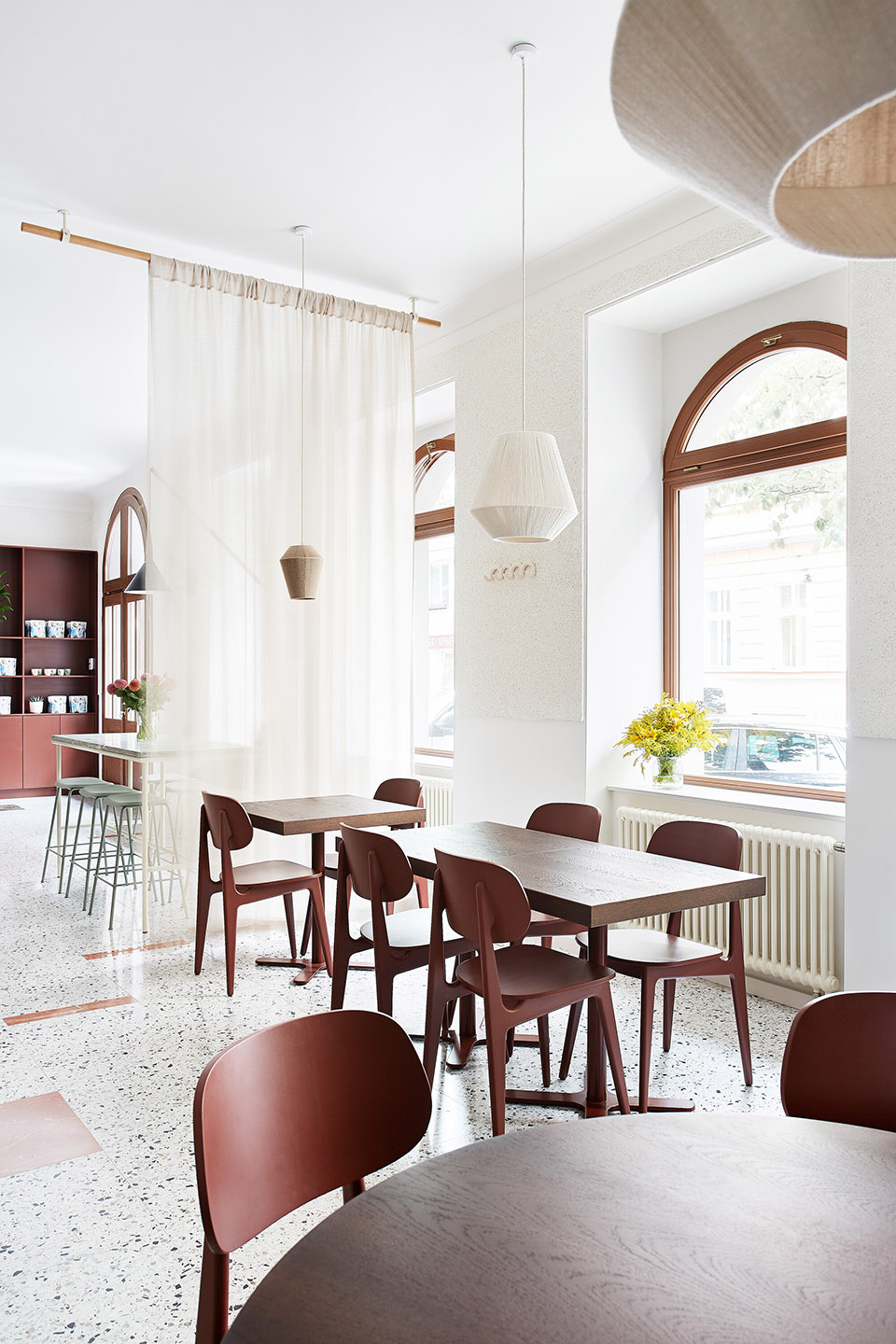
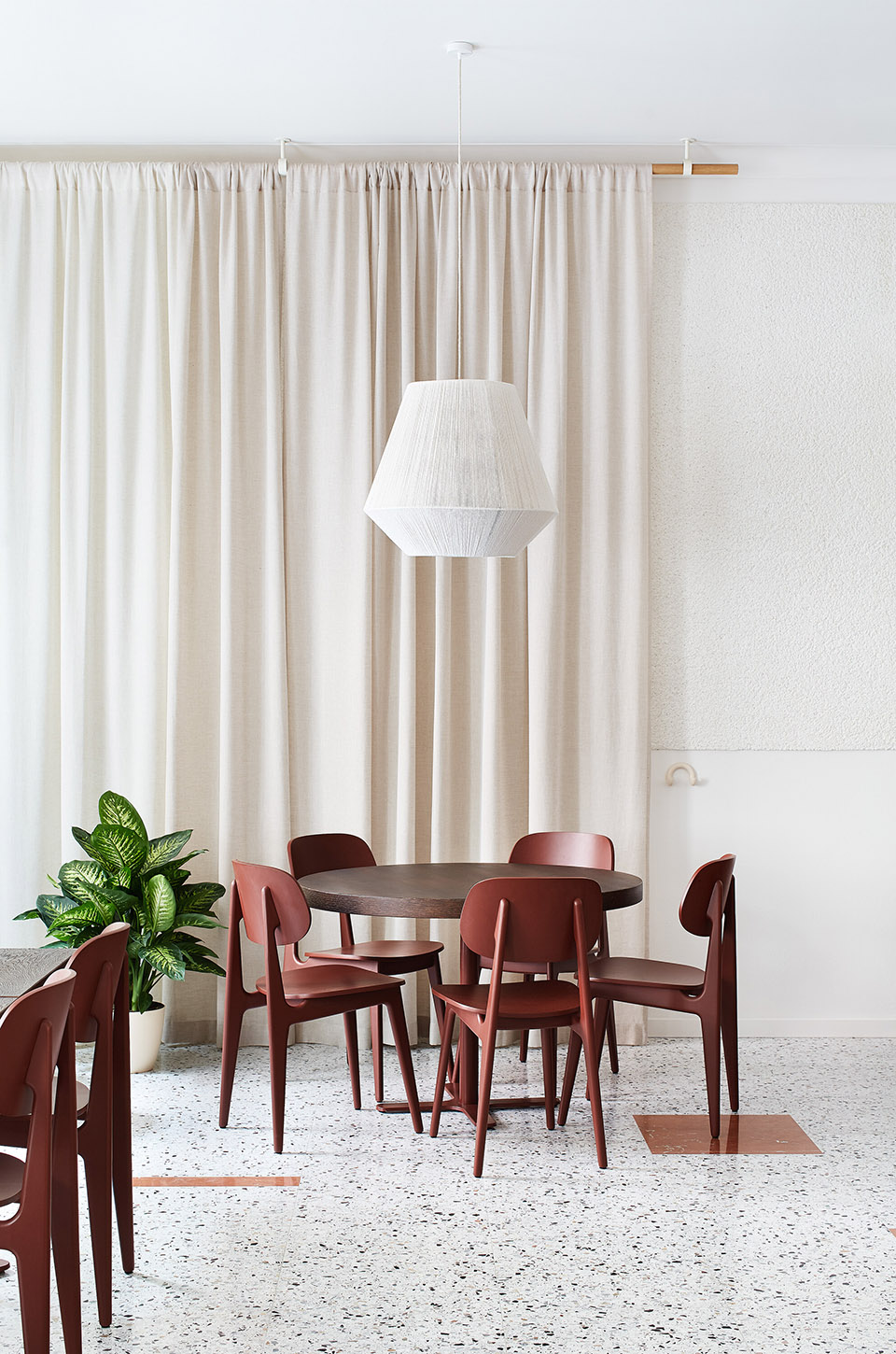
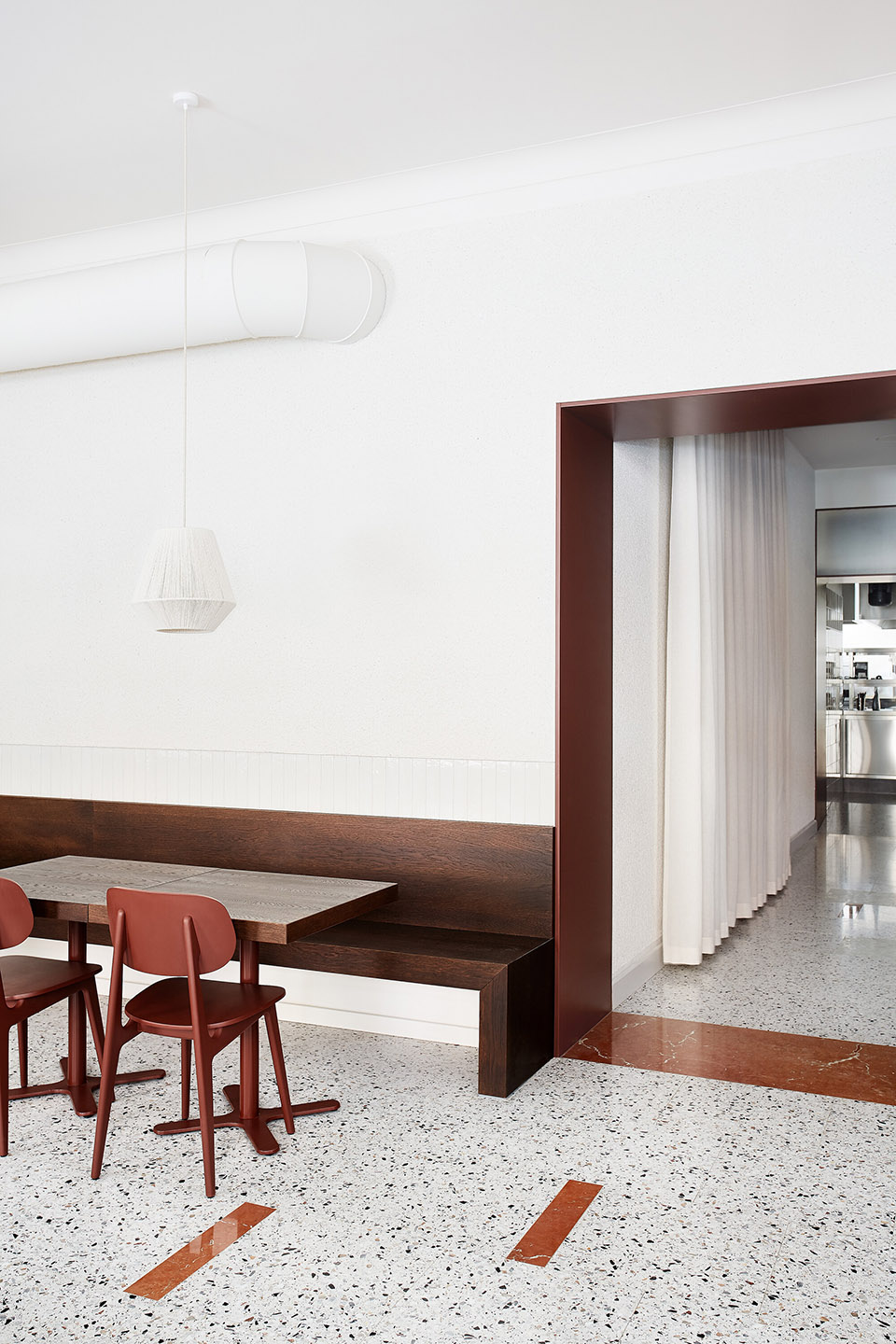
在室内设计之初,我们首先关注的是将被引入空间中的材料耐久性。整个设计概念以水磨石地面为基础,其在美学与功能上的表现确立了小酒馆设计的方向。考虑到这一高人流空间中的地面需要承受较大的磨损,材料选择尤其强调高耐久性能。最终选定的水磨石砖成为整个室内设计逐步展开的基础。在铺装网格中,局部嵌入了不同类型大理石的窄条或整块砖,这一富有趣味的处理在地面上形成了生动的图案,其主要意图在于打破地砖的重复网格,为空间增添精致而富有动感的表达。尽管材料对比鲜明,整体设计仍保持了和谐与优雅。
When designing the interior, we initially focused on the durability of the materials we wanted to incorporate into the space. The foundation of the entire concept was a terrazzo floor, which, with its aesthetics and functionality, set the direction for the bistro’s design. Given that the flooring in such a high-traffic area needs to withstand significant wear, great emphasis was placed on selecting a material that meets the highest durability standards. The final choice of terrazzo tiles became the basis upon which the entire interior design was gradually built. Narrow strips or even whole tiles of various types of marble are locally inserted into the grid of the tiling. This playful element creates an interesting pattern on the floor, but the primary intention was to disrupt the repetitive grid of the tiles, adding a sophisticated and dynamic style to the space. Despite the contrasting materials, the design retains a sense of harmony and elegance.
▼水磨石地面,Terrazzo floor
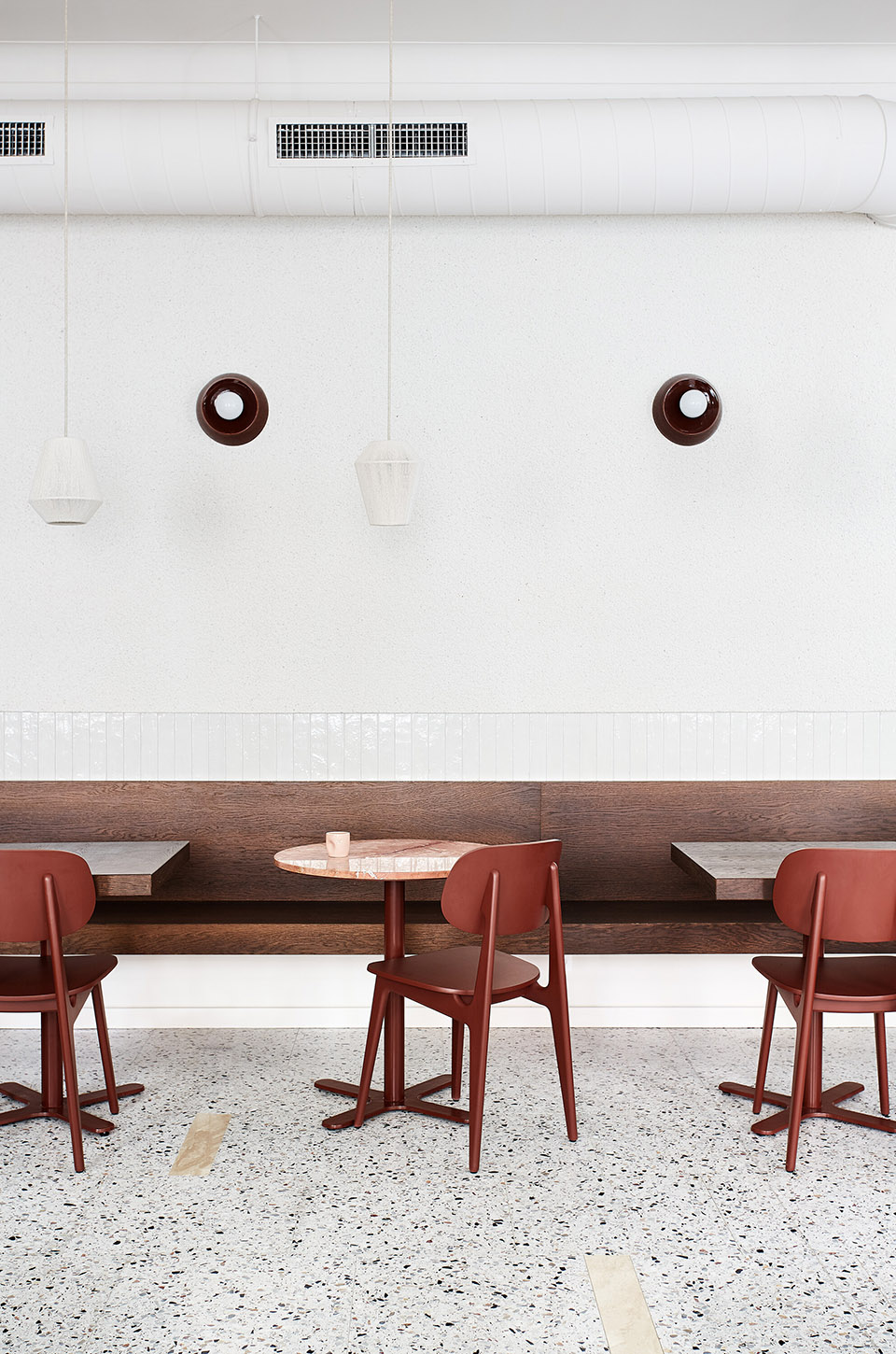
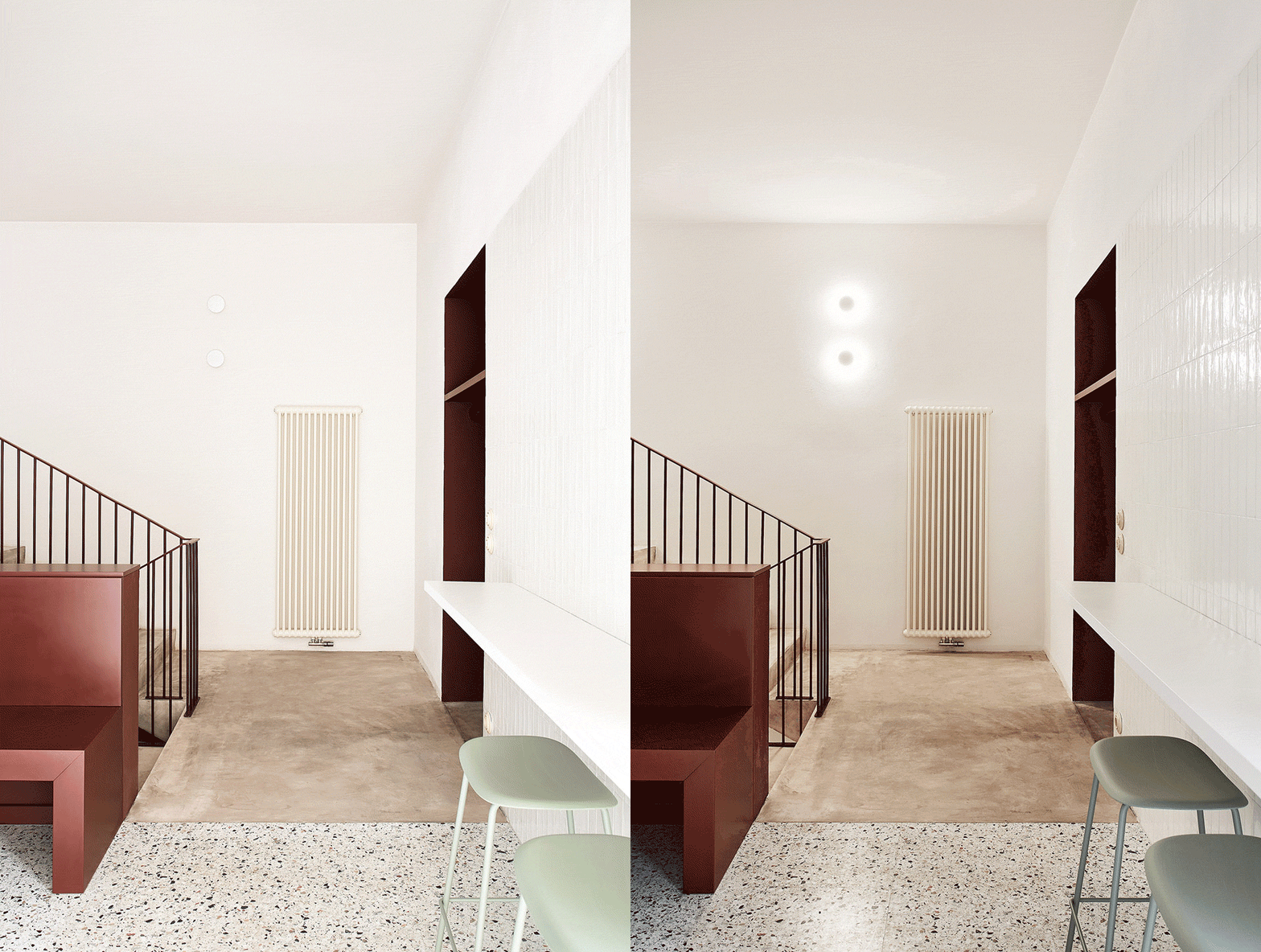
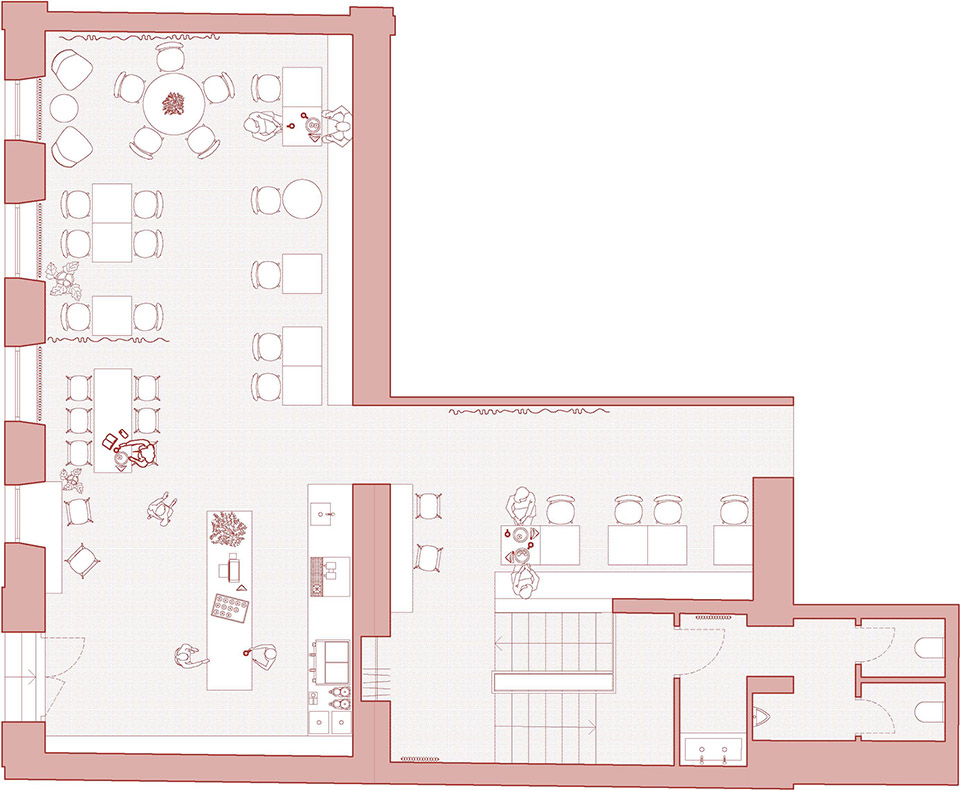
小酒馆由两个相互连通的空间组成,各自具有不同的空间特征。前部空间宽敞、开放且通透,营造出轻松而富有活力的氛围;后部空间则更加私密安静,适合寻求独处感的访客。后部空间旁设有通往卫生间的楼梯。从前厅走向后部的过程中,可以不时看到厨房的局部景象,厨房与后部空间相连。前部空间的墙面结合了粗糙肌理抹灰与光滑抹灰,并辅以浅色涂料完成。粗糙肌理抹灰自座椅上方开始,一直延伸至接近天花线脚的位置,在视觉上对空间高度进行细微分割。相比之下,后部空间以红棕色(栗色)墙面为主,该色调与一侧的长椅融为一体,并在另一侧延伸连接至楼梯与卫生间区域。楼梯、平台及中间平台的表面处理相较于小酒馆其他区域更加简化且统一。我们希望保留在最初勘察时发现的混凝土楼梯的原始质感,该楼梯属于业主最初规划但尚未完成的餐厅部分。
▼前厅灯光设计,Lighting design in the dining area
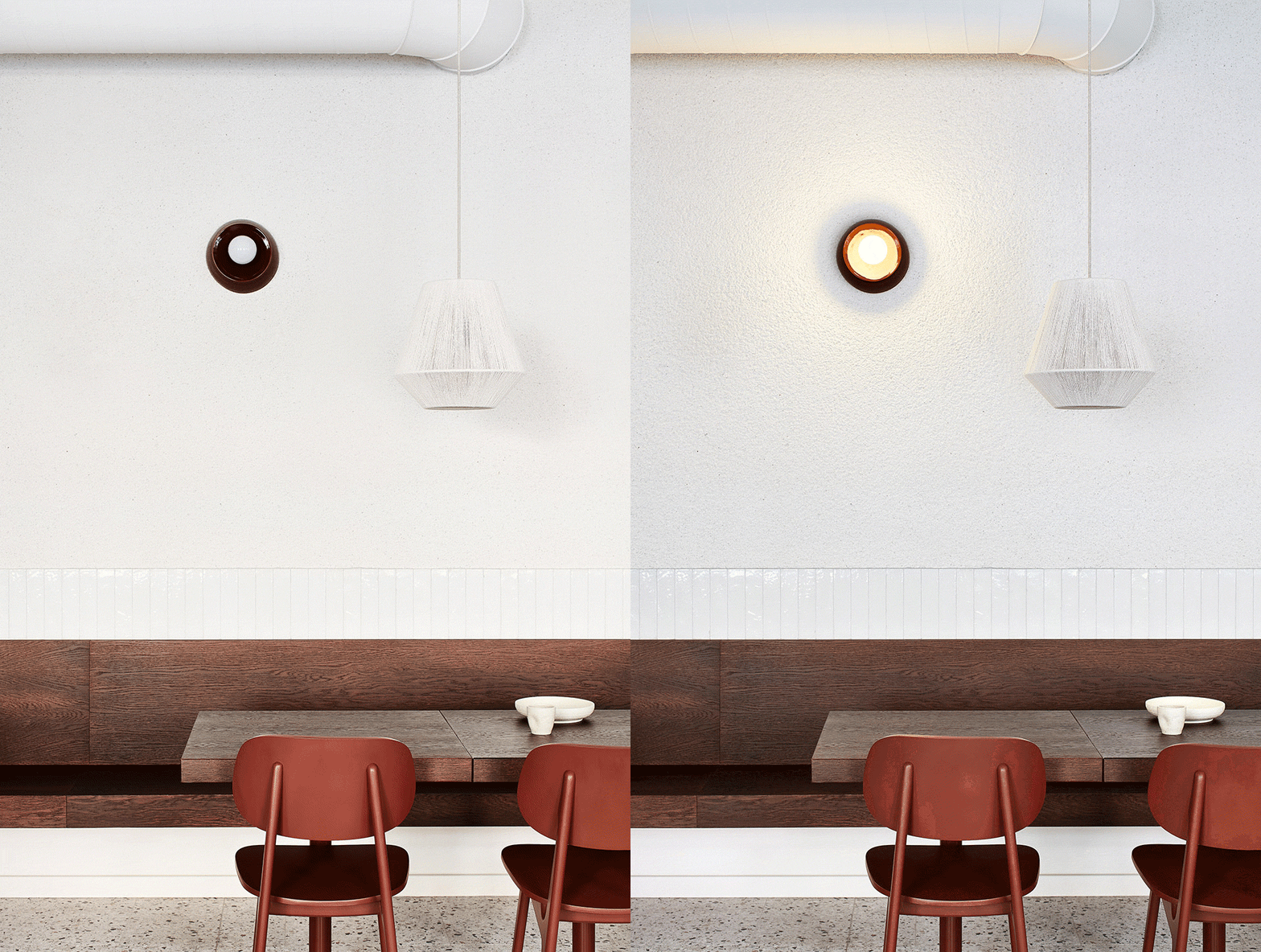
The bistro consists of two interconnected rooms, each with its own specific character. The front part is large, open, and airy, evoking a pleasant and lively atmosphere, while the rear part, more intimate and private, provides a quieter environment for those seeking more seclusion. Adjacent to the rear room is a staircase leading to the restrooms. As you move from the front to the back of the bistro, you can catch glimpses of the kitchen, which connects to the rear room. The walls in the front part combine rough textured plaster and smooth plaster with a light-colored paint finish. The rough textured plaster begins above the bench seating and ends just below the ceiling molding, subtly segmenting the visual height of the space. In contrast, the rear room is dominated by a reddish-brown (chestnut) colour wall, which integrates with the bench on one side and connects to the staircase and restrooms on the other. The concept of surfaces for the staircase, landings, and intermediate landings is simplified and more uniform compared to the rest of the bistro. We wanted to preserve the raw character of the concrete staircase, which we discovered during the first inspection of the unfinished restaurant originally planned by the owner.
▼多样的客座区设计,
Varied seating arrangements
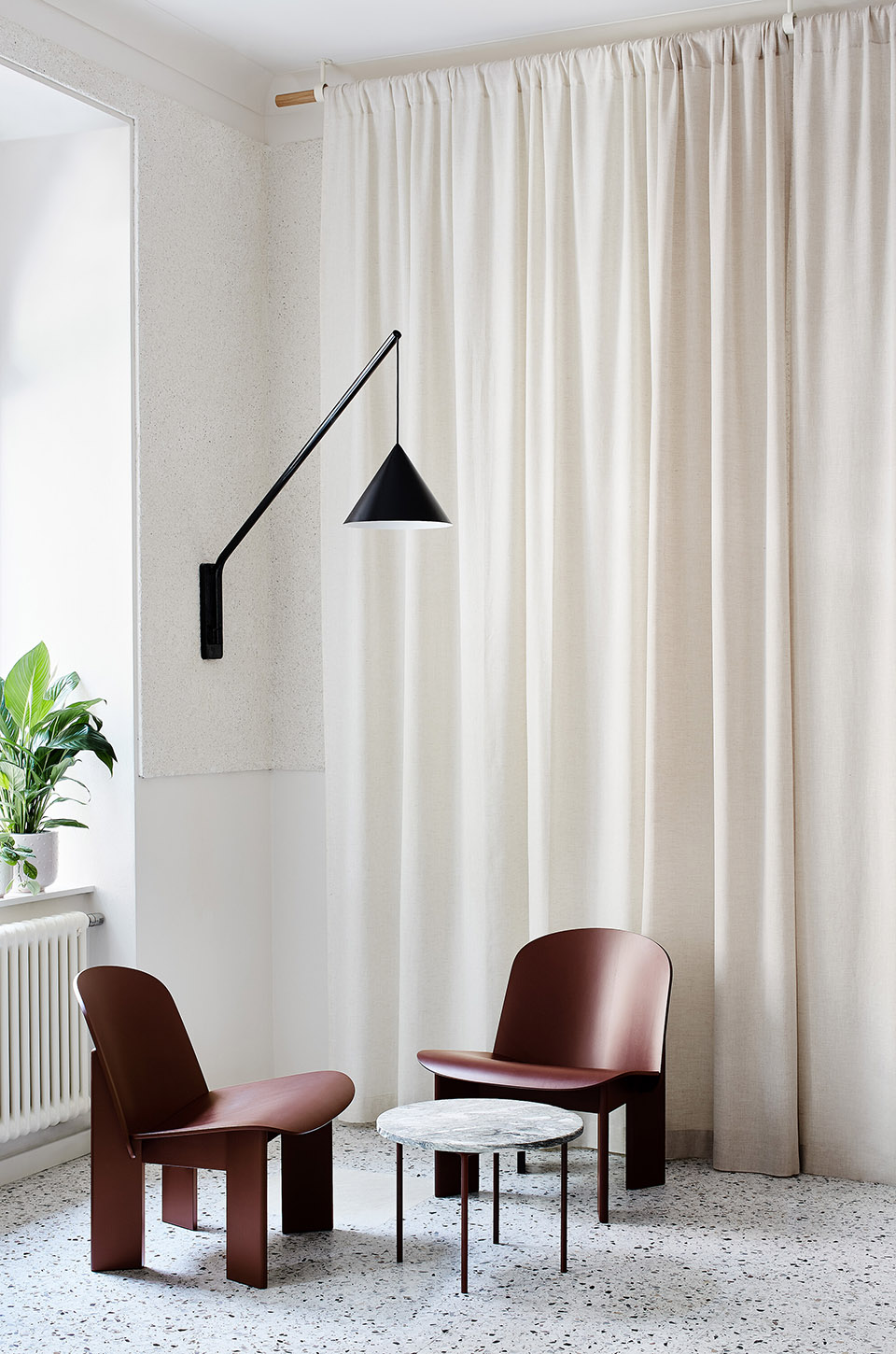
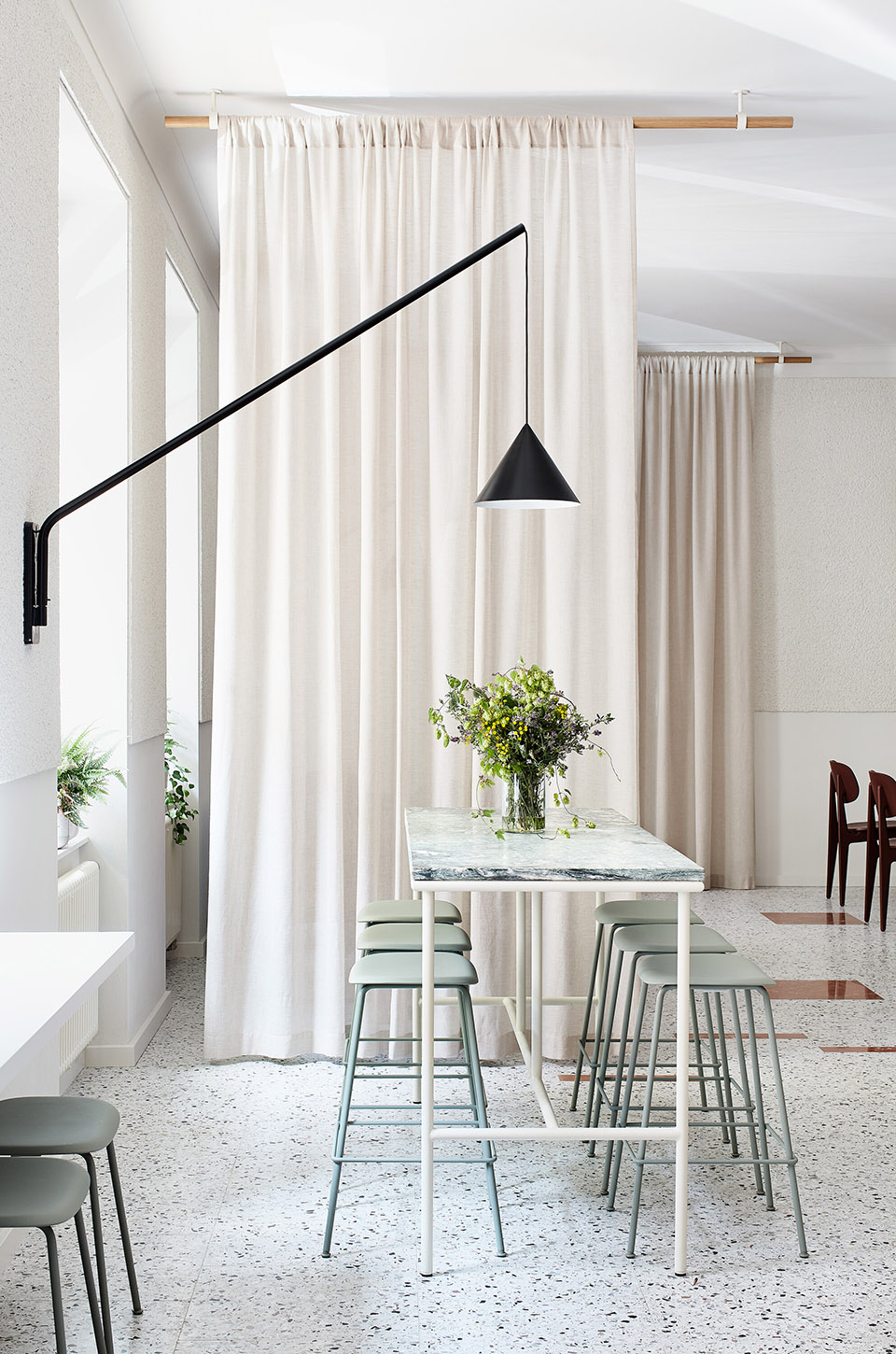
▼窗前客座区,
Seating area by the window
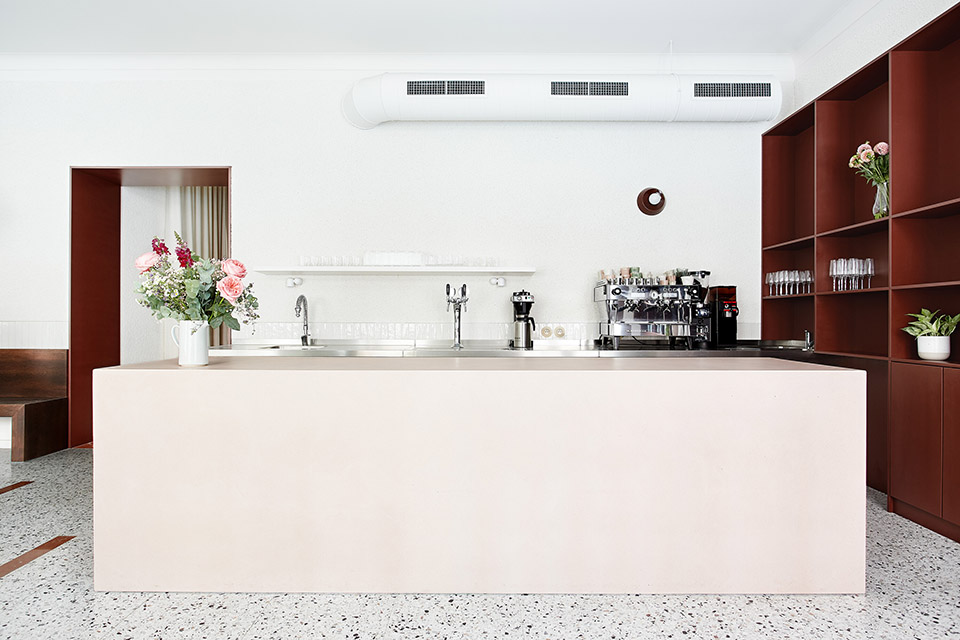
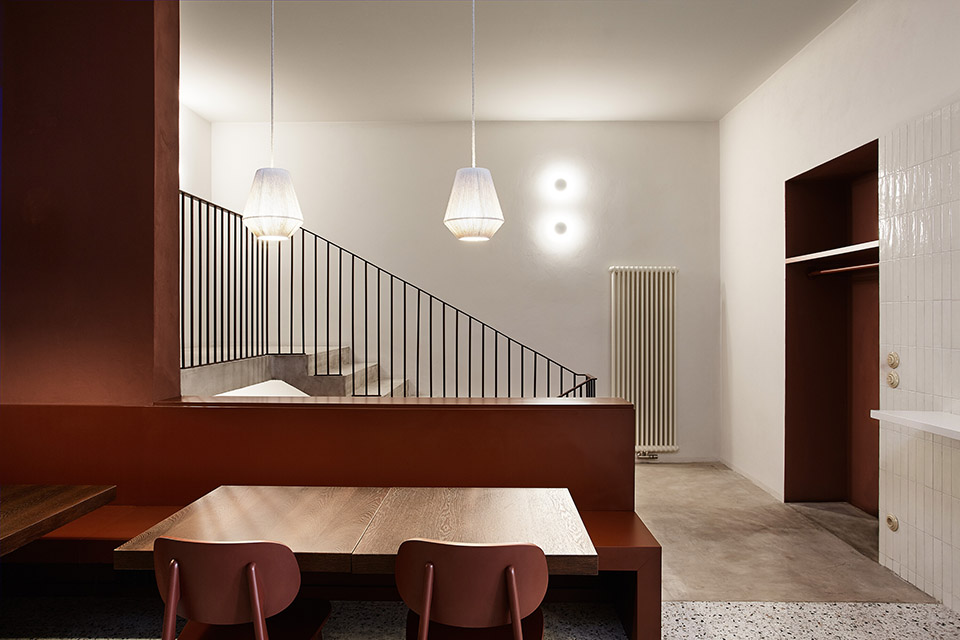
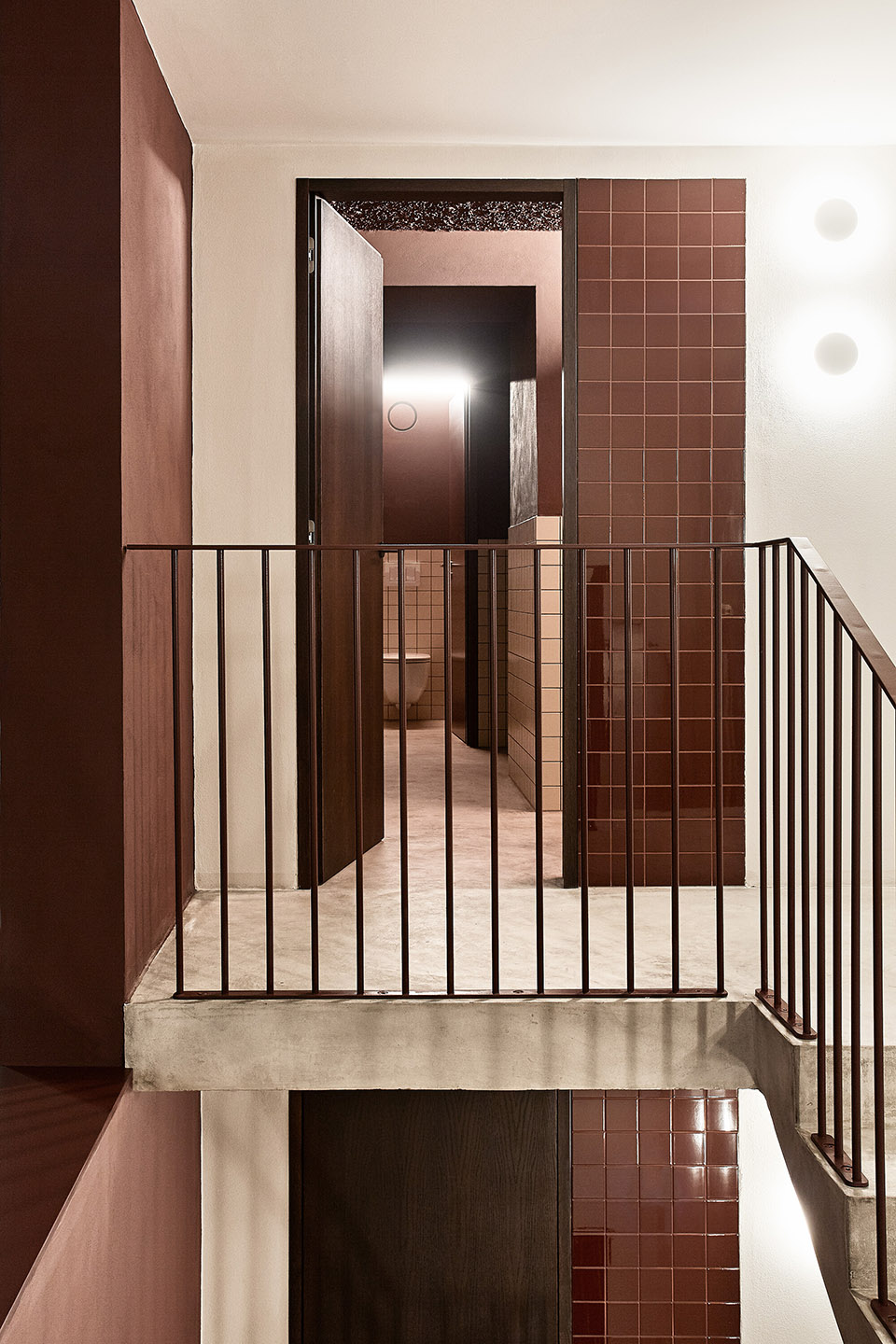
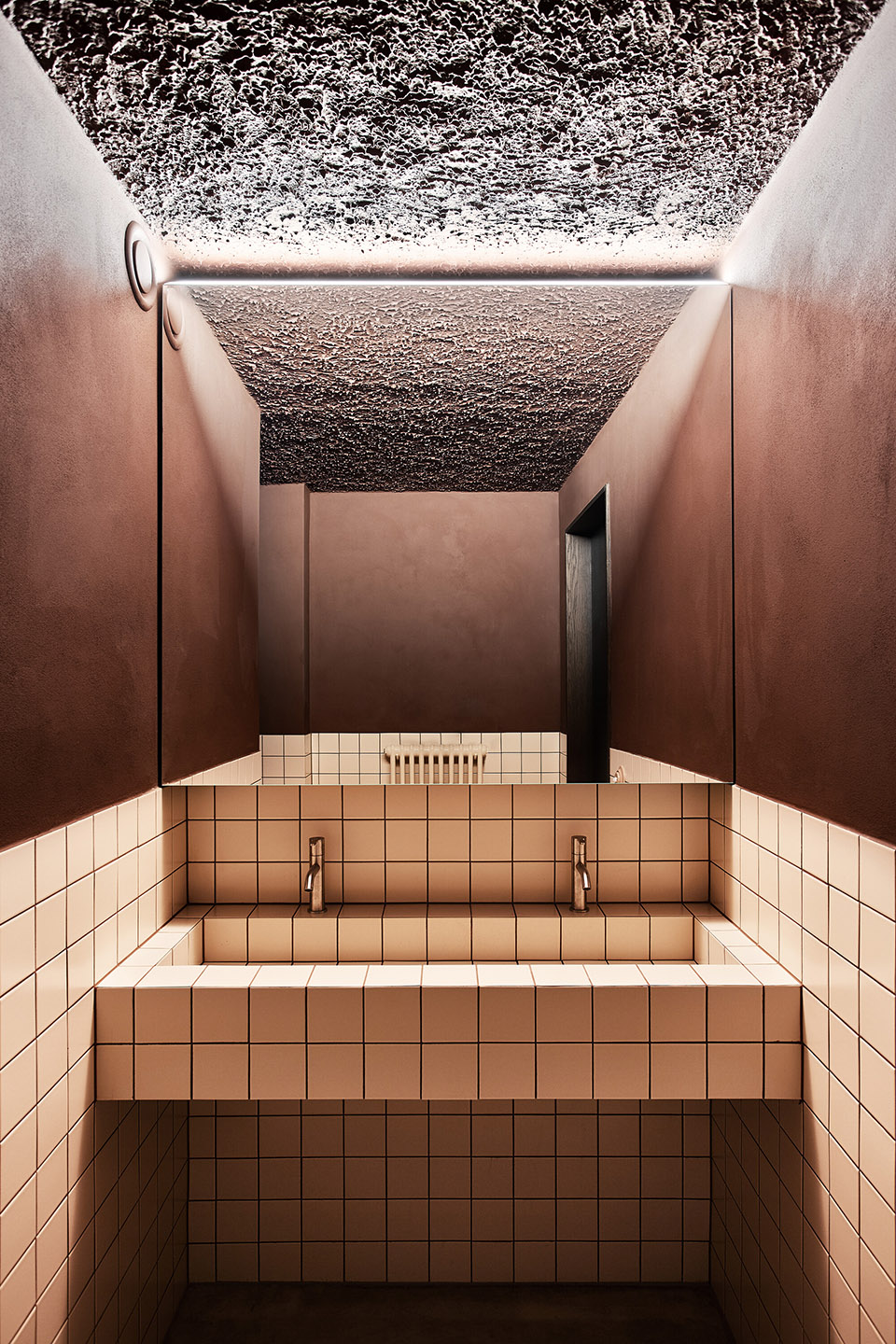
红棕色贯穿整个室内空间。进入时首先映入眼帘的是一组大型“展示架”,摆放着杯具、咖啡与植物,这一色调在此处即刻呈现。随后,这一色彩延续至座椅、水磨石地面中的大理石嵌条以及后部空间的墙面,该墙面将楼梯区域与就座区分隔开来。红棕色在两个卫生间中表现得尤为突出。天花采用粗糙抹灰处理,为空间增添工业气质。楼梯踏面的材料延伸至卫生间内部,使楼梯与卫生间之间在材质上形成联系。整个室内空间中一个精致而微妙的亮点无疑是粉色混凝土吧台岛。其设计旨在为空间引入一丝柔和的女性气质,但锐利的边角又赋予其坚定的存在感。这种对比使其在视觉上吸引注意力的同时又不会喧宾夺主。从材料角度来看,吧台岛作为水磨石地面的对比元素,形成了有趣的对话关系。细腻的粉色为室内增添优雅与柔和,而混凝土本身则在空间整体活跃氛围中提供了一种平衡与稳定。
▼楼梯间灯光设计,
Lighting design in the staircase
The reddish-brown shade permeates the entire bistro interior. It greets you immediately upon entry, appearing in the form of a large “shelving unit” filled with mugs, coffee, and plants. This tone continues on the chairs, in the marble accents within the terrazzo floor, and on the rear room’s wall, which separates the staircase area from the seating. The reddish-brown color stands out most prominently in the two restrooms. The ceilings are finished with rough plaster, adding an industrial charm to the spaces. The material of the staircase floor extends into the restrooms, creating a link between the raw elements of the staircase and the restrooms. A subtle jewel of the entire interior is undoubtedly the pink concrete bar island. Its design was created to bring a touch of femininity to the space, but its sharp edges give it a firm presence. This contrast allows it to visually capture attention without overpowering the interior. In terms of material, the bar island was designed as a counterpoint to the terrazzo floor, creating an intriguing dialogue between the elements. The delicate pink hue of the concrete adds elegance and softness to the room, while the concrete itself maintains a calm, balancing effect against the bistro’s vibrant energy.
▼粉色混凝土吧台岛,
Pink concrete bar island
▼楼梯间入口,
Entrance to the staircase
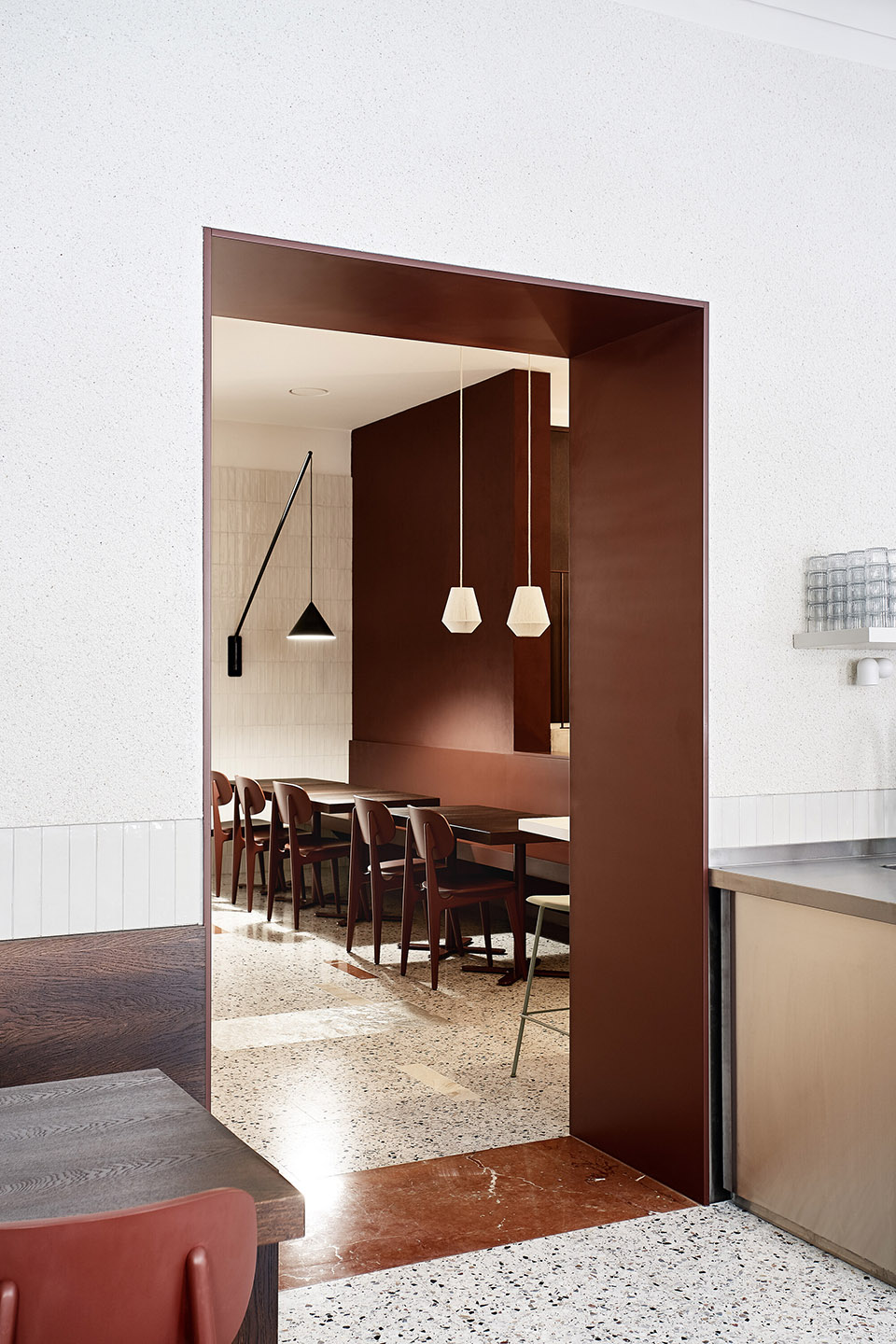
▼红色主调的楼梯间客座区,
Staircase seating area in red tones
空间设计旨在满足访客多样化的需求与偏好,这体现在多种座位形式的设置上。高桌配以吧椅,适合希望快速饮用或享用轻食,同时又保持与周围活跃氛围联系的访客。配有木质扶手椅与低矮桌面的休闲区,则提供一个安静品味咖啡的角落,同时仍可清晰感知整体空间。对于偏好传统用餐形式的访客,则设置了经典桌椅组合,适用于舒适就餐或专注工作。整体室内概念在美学与功能之间取得了细致的平衡,为所有使用者营造出舒适而愉悦的空间氛围。
The space is designed to accommodate the diverse needs and preferences of visitors, which is reflected in the variety of seating options. Bar stools at the high table are ideal for those looking to quickly enjoy a drink or light snack while remaining connected to the lively atmosphere around them. The lounge area, with its wooden armchairs and low table, offers a peaceful spot to savor coffee while maintaining a clear view of the space. For visitors who prefer traditional seating, classic table arrangements are available, perfect for comfortable dining or focused work. The overall concept of the interior thoughtfully combines aesthetics and functionality, creating a pleasant atmosphere for everyone.
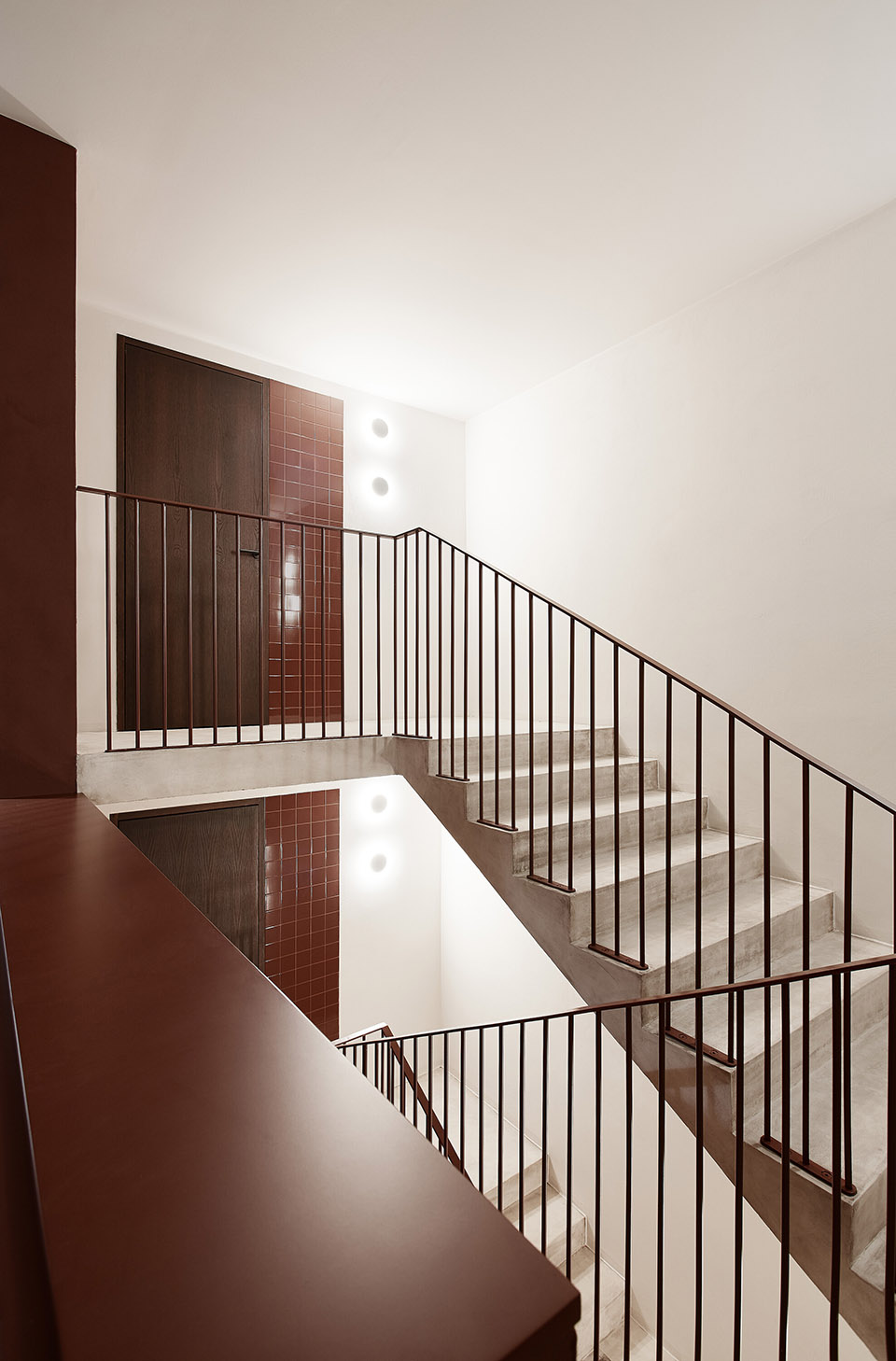
▼楼梯与洗手间空间关系,
Relationship between staircase and restrooms
▼平面图,Plan
Studio: Markéta Bromová architekti
Author: Markéta Bromová
Contact E-mail:email@marketabromova.cz
Website:www.marketabromova.cz
Social media:www.instagram.com/marketa_bromova_architekti
www.facebook.com/ArchitekturaMarketaBromova
Studio address: Hartigova155/4, 130 00 Prague, Czech Republic
Design team:Richard Mészáros
Zuzana Sagitariová
Kamila Mrázová
Nikol Janková
Project location: Americká 849/26, 120 00 Prague
Project country: Czech Republic
Project year:2024
Completion year:2024
Usable floor area:120 m²
Project website: www.mezisrnky.cz
Photographer:Veronika Raffajová, veronika.raffajova@gmail.com
Collaborators and suppliers:
Construction company: Petr Bartončík, www.renovaspace.cz
Custom made concrete bar island: Burning Vibe, www.burningvibe.cz
Stones: Projekt kámen, www.projektkamen.cz
Concrete floor screed surface: Jan Rezek
Carpenter works: RAPF Truhlářství, www.rapf-truhlarstvi.cz
Metal works: Sipamont, www.sipamont.cz
Curtains: AVOS, www.a-vos.cz