赛博时代的线下温度 & 爱慕未来商业中心 / Crossboundaries
如今,曾经出现在科幻小说中的生活方式已成为现实。人们只需在手机上打开应用程序,便可轻松选购商品,并等待送货上门。尽管这一过程极为便捷,但它似乎缺少了人与品牌之间更深层次的互动。为什么仅仅满足于一次简单的交易,而不是沉浸式地体验品牌,与其建立更紧密的联系?
Today, the lifestyle that used to be described in sci-fi stories has become a standard, anything that we desire, we open an app on our smart phones, order a product, and await its arrival at our doorsteps. Despite the convenience, something seems to be absent from the overall experience of the product. Why settle for just a transaction when you can immerse yourself in the brand and engage with it beyond the purchase?
▼项目概览,overall of the project
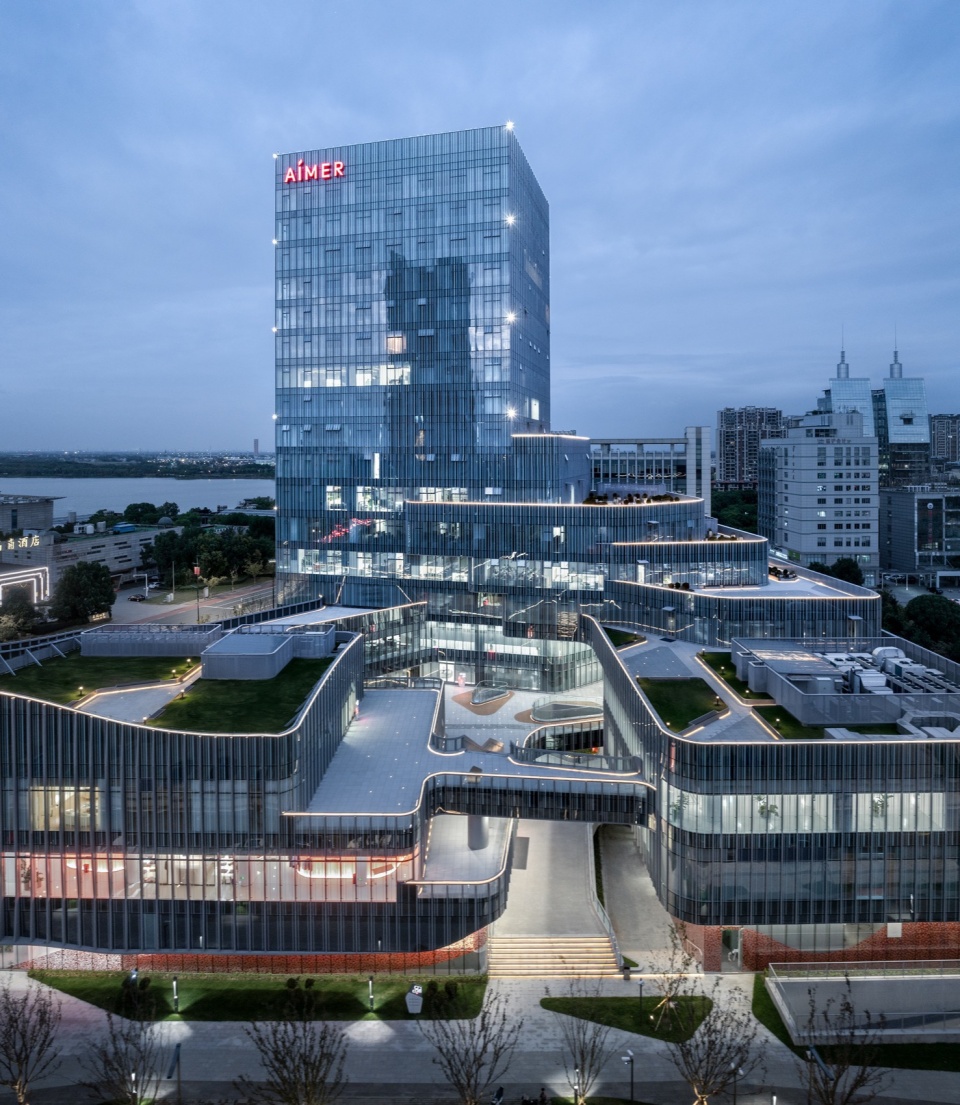
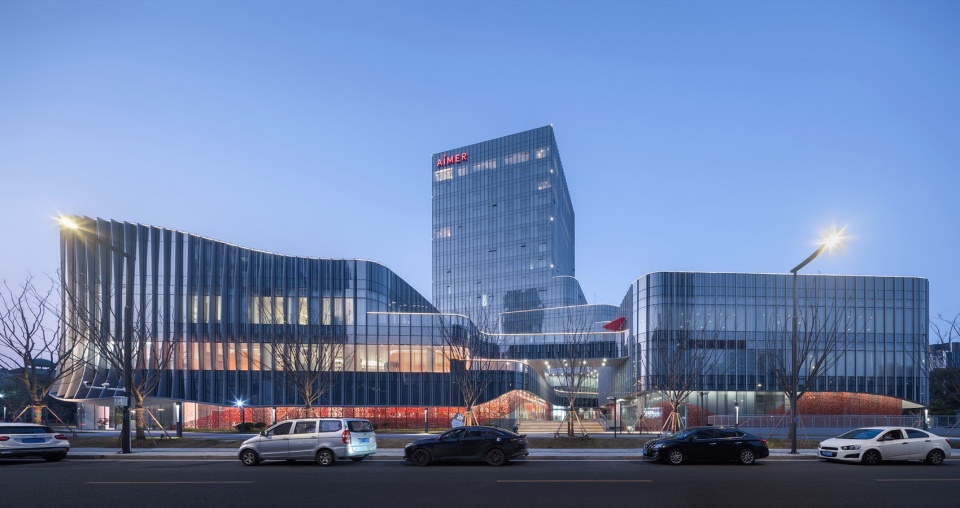
当代及未来的商业环境正越来越依赖于对用户线下消费习惯的深入理解。传统的产品展示模式正在向沉浸式体验转变。随着精准购物逐渐转向线上,线下商业空间不再仅仅是商品的展示场所,而是一个充满互动体验的场景。爱慕苏州第二总部正是对这一转变的积极响应。它不仅提供了深入的品牌互动体验,更营造了一个与人产生共鸣的空间。
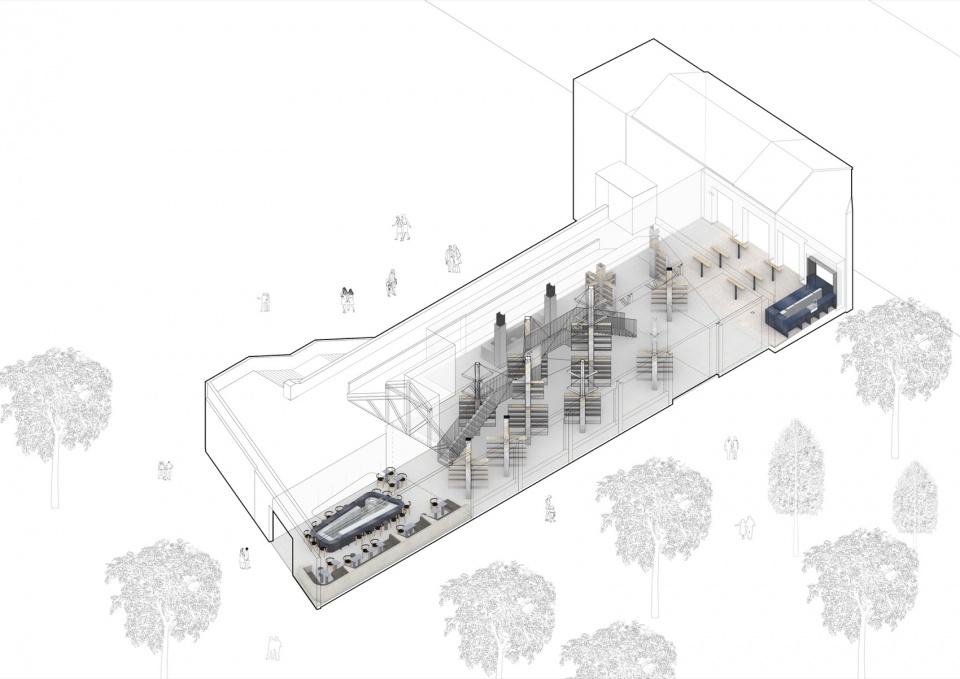
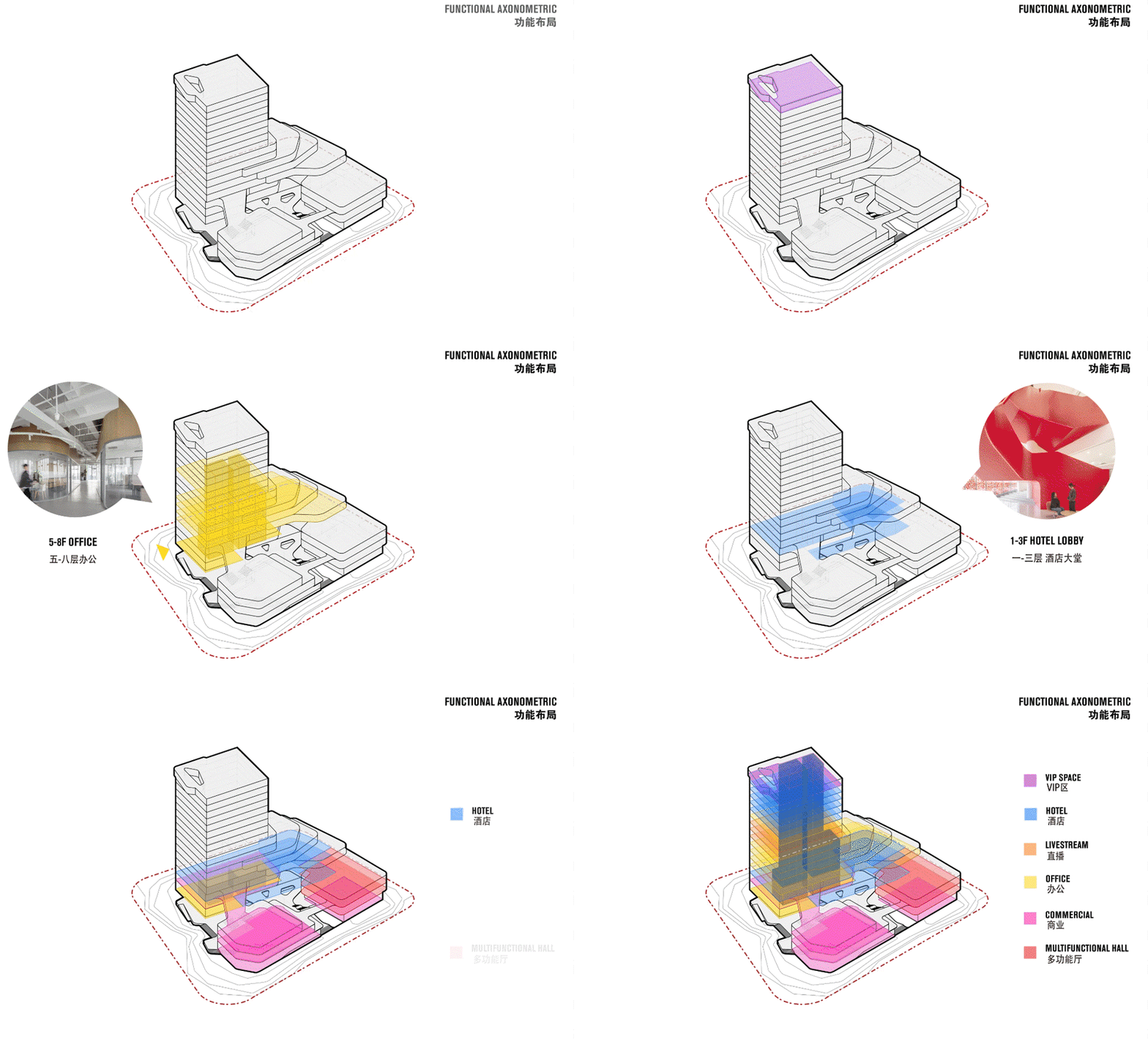
▼功能布局,functional axonometric
The current and future of commercial environments hinge on a profound understanding of the users’ offline consumption habits. Traditional and conventional product display is transitioning to experiential engagement. As targeted purchasing shifts towards online, today’s offline commerce is not merely about product display, but also about creating spaces rich in immersive experiences. The Aimer 2nd headquarters in Suzhou embraces this transformation, offering an experience that fosters deep brand interaction and creates an environment that resonates on a human level.
▼街景,street view
▼室内概览,overall of the project
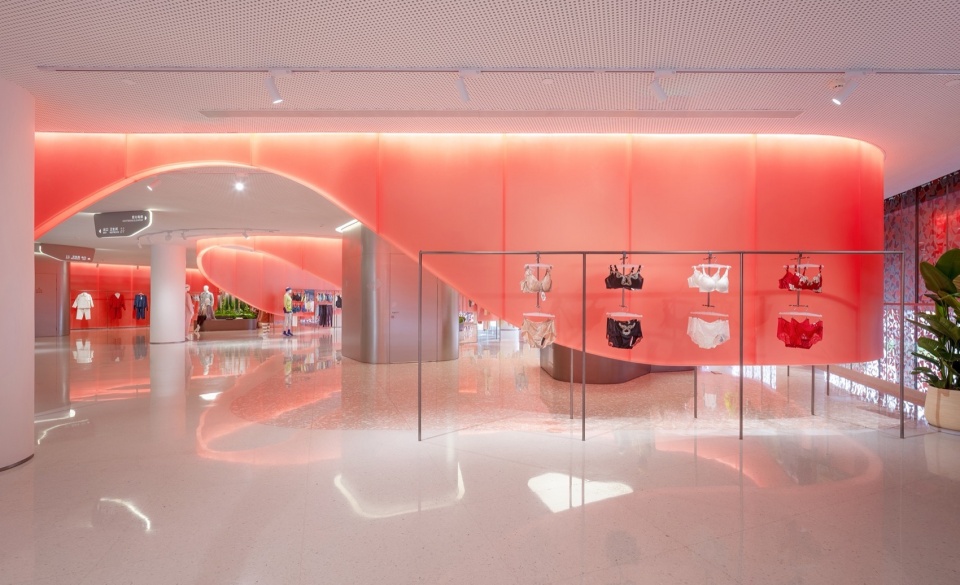
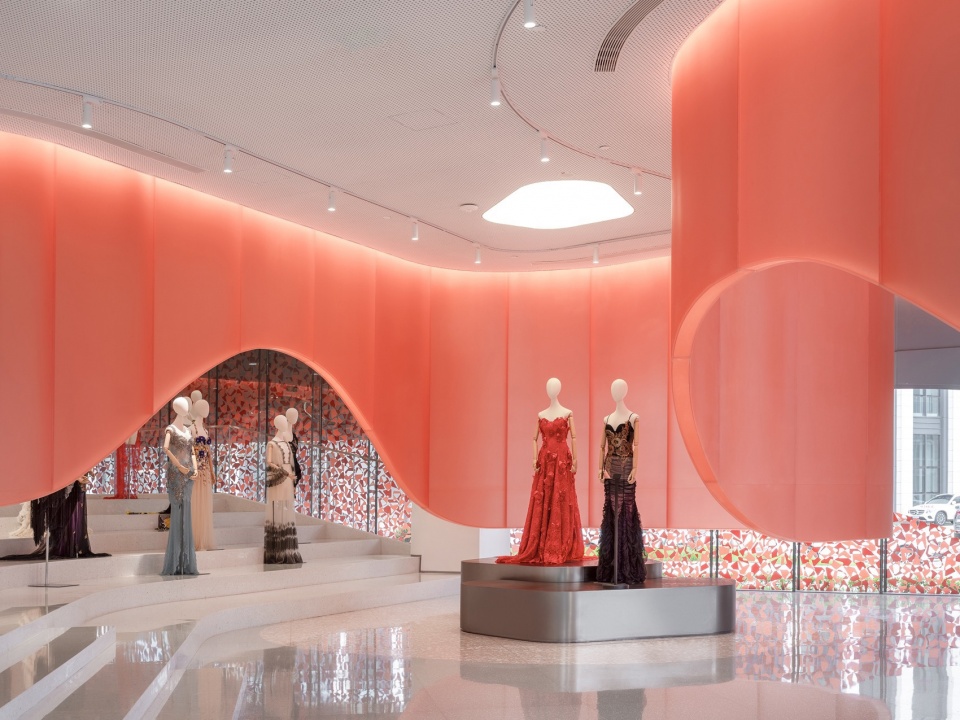
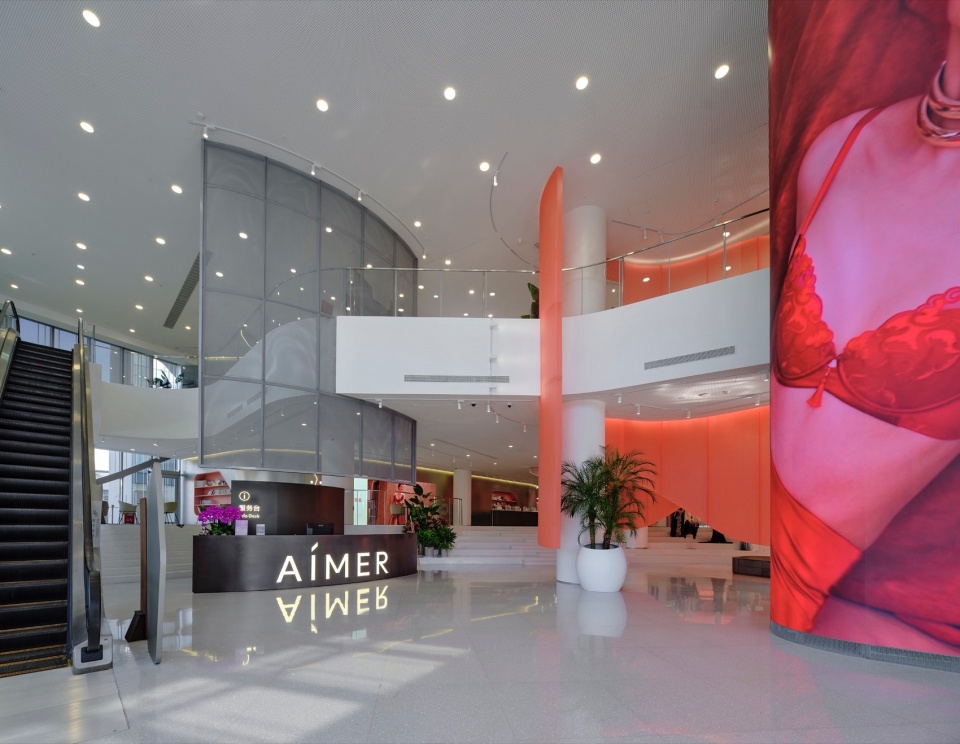
心理学家阿尔弗雷德·阿德勒曾说:“人们终其一生都在追寻归属感和自身价值。”在数字化零售逐渐拉开人与实体购物体验之间距离的时代,爱慕新总部这样的实体空间提供了一个重要的连接点,让访客能够通过视觉、触觉和精心策划的体验,与品牌建立更紧密的联系。
Psychologist Alfred Adler once said, “Throughout their lives, humans seek a sense of belonging and value.” As digital retail distances consumers from the tangible experience of shopping, physical spaces like Aimer’s new headquarters provide a vital point of connection, allowing visitors to engage with the brand through sight, touch, and curated experiences.
▼楼梯,staircase
选址与设计理念Location and Design Approach
爱慕苏州第二总部位于江苏省苏州市吴江区汾湖地区,这里水陆交汇,区位优势显著,是苏州与上海之间的重要交通枢纽。
Crossboundaries 于 2019 年接手该项目时,建筑已完成地下一层的施工。新的设计方案对原有空间进行了调整,使其更符合爱慕品牌的发展愿景和功能需求,将建筑、品牌形象和用户体验有机融合。
▼体块更新,Volume Adjustment
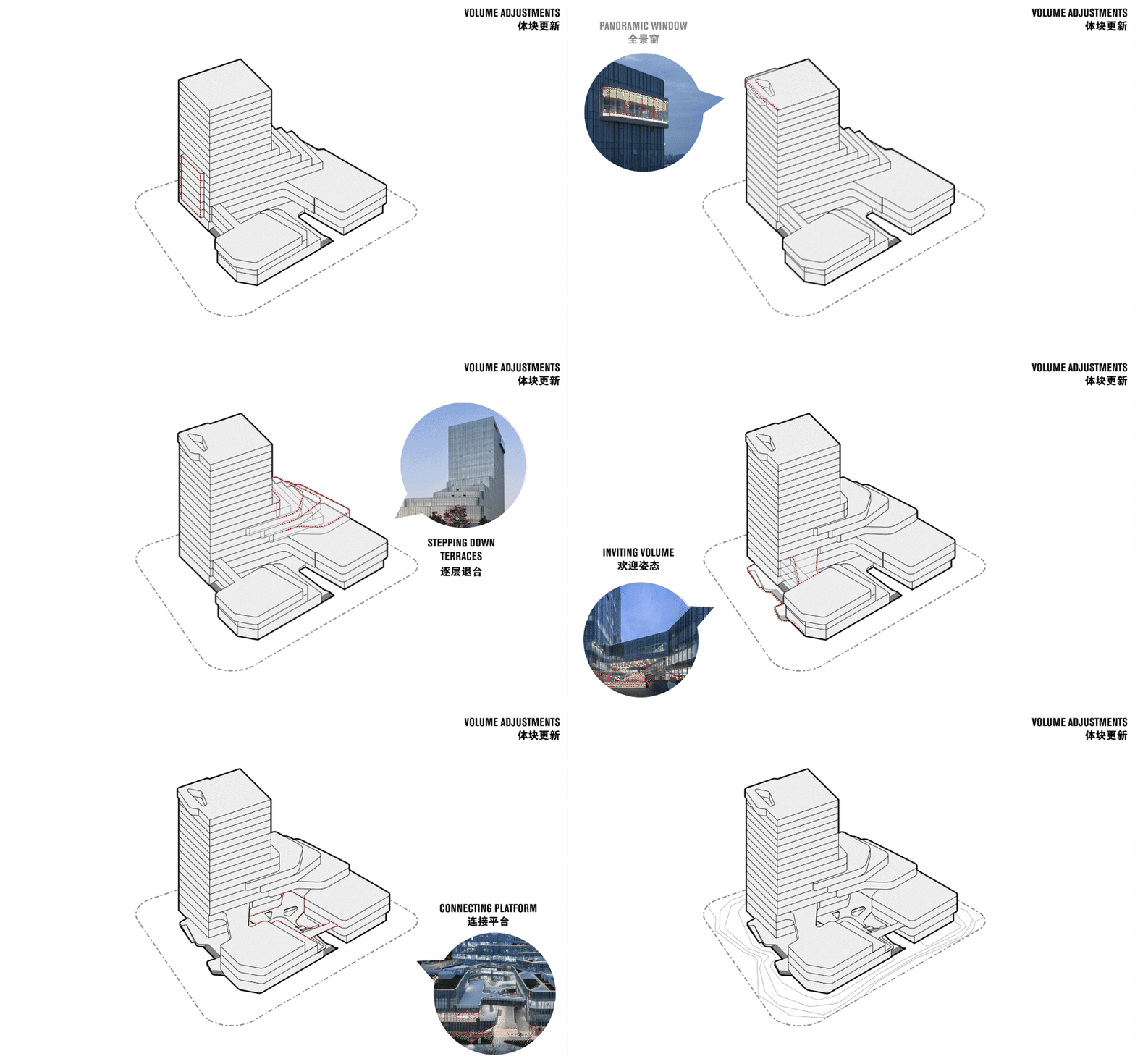
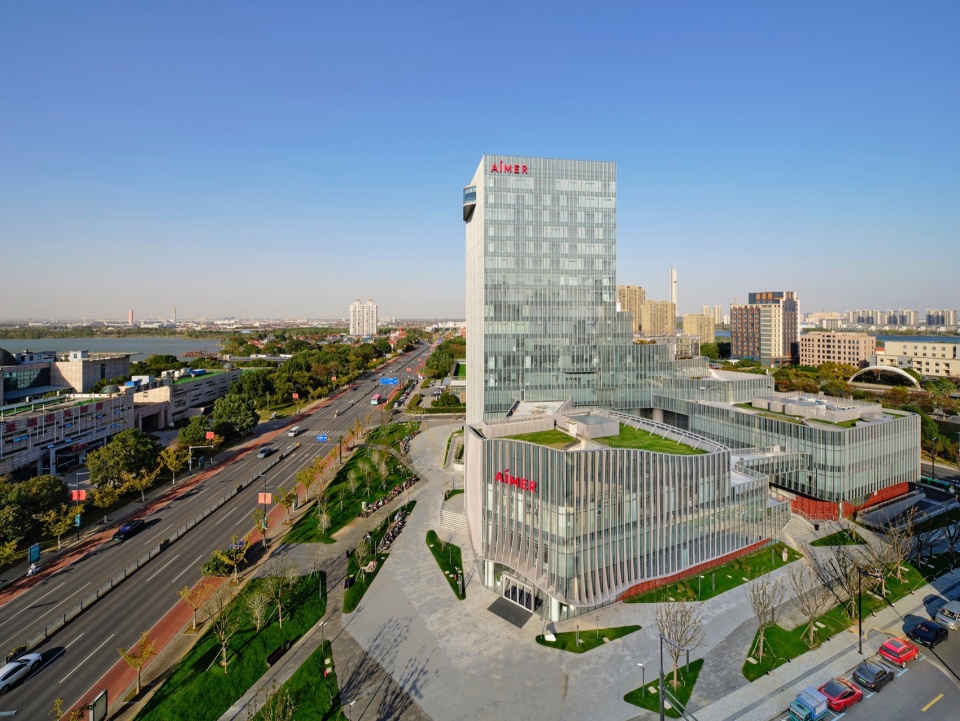
Located in Suzhou’s Fenhu district, where land and water intersect, the building benefits from its strategic position, as a transportation hub between Suzhou and Shanghai. When Crossboundaries took on the project in 2019, construction had already begun with the basement completed. The redesign aligned the space with Aimer’s evolving brand vision and functional needs, integrating architecture, identity, and user interaction.
▼鸟瞰,aerial view
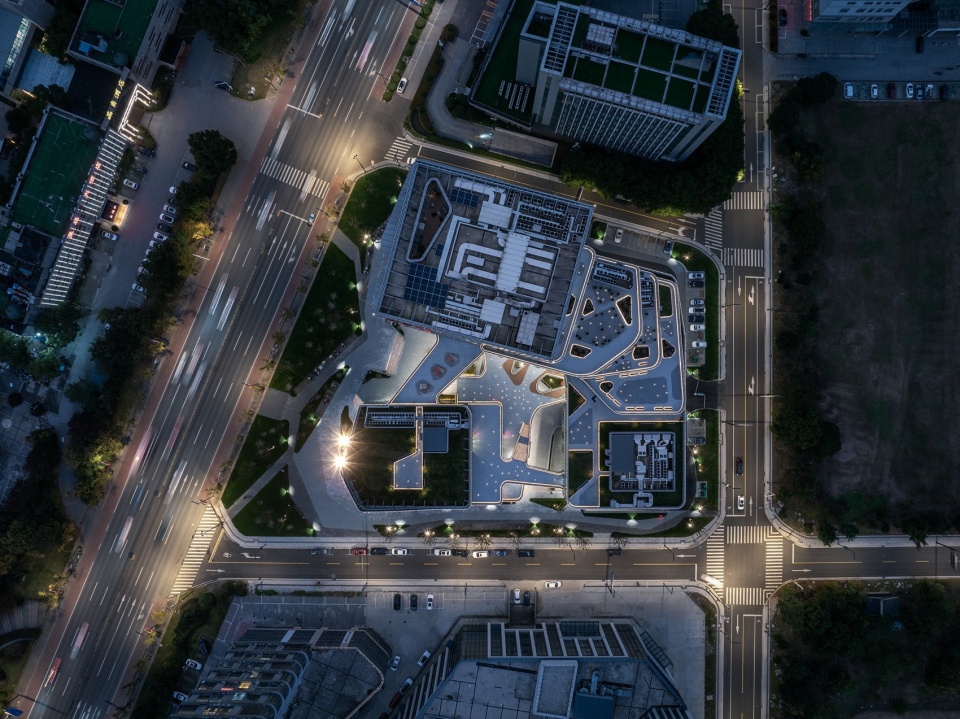
▼夜景鸟瞰,aerial view at night
重新构建原有设计Reworking the Original Design
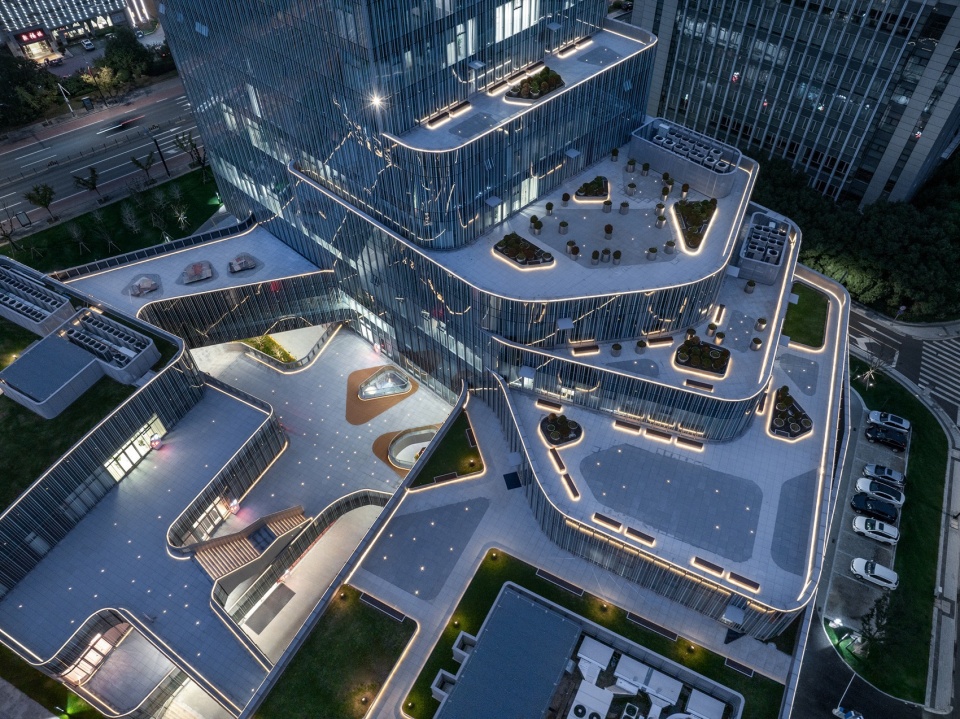
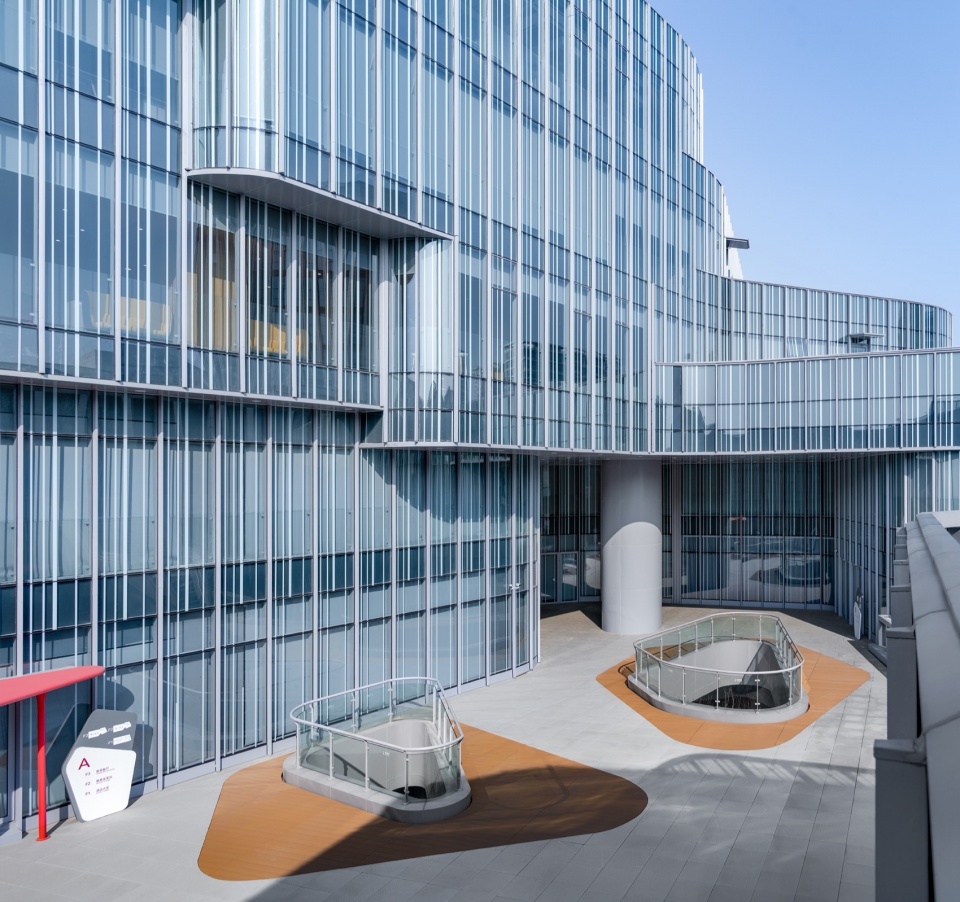
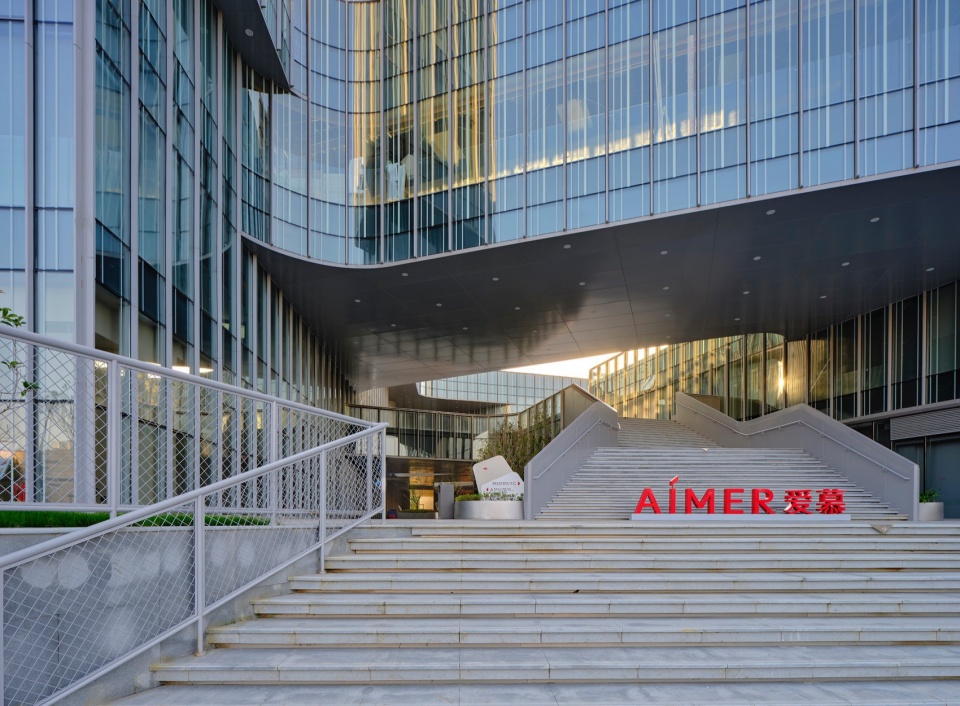
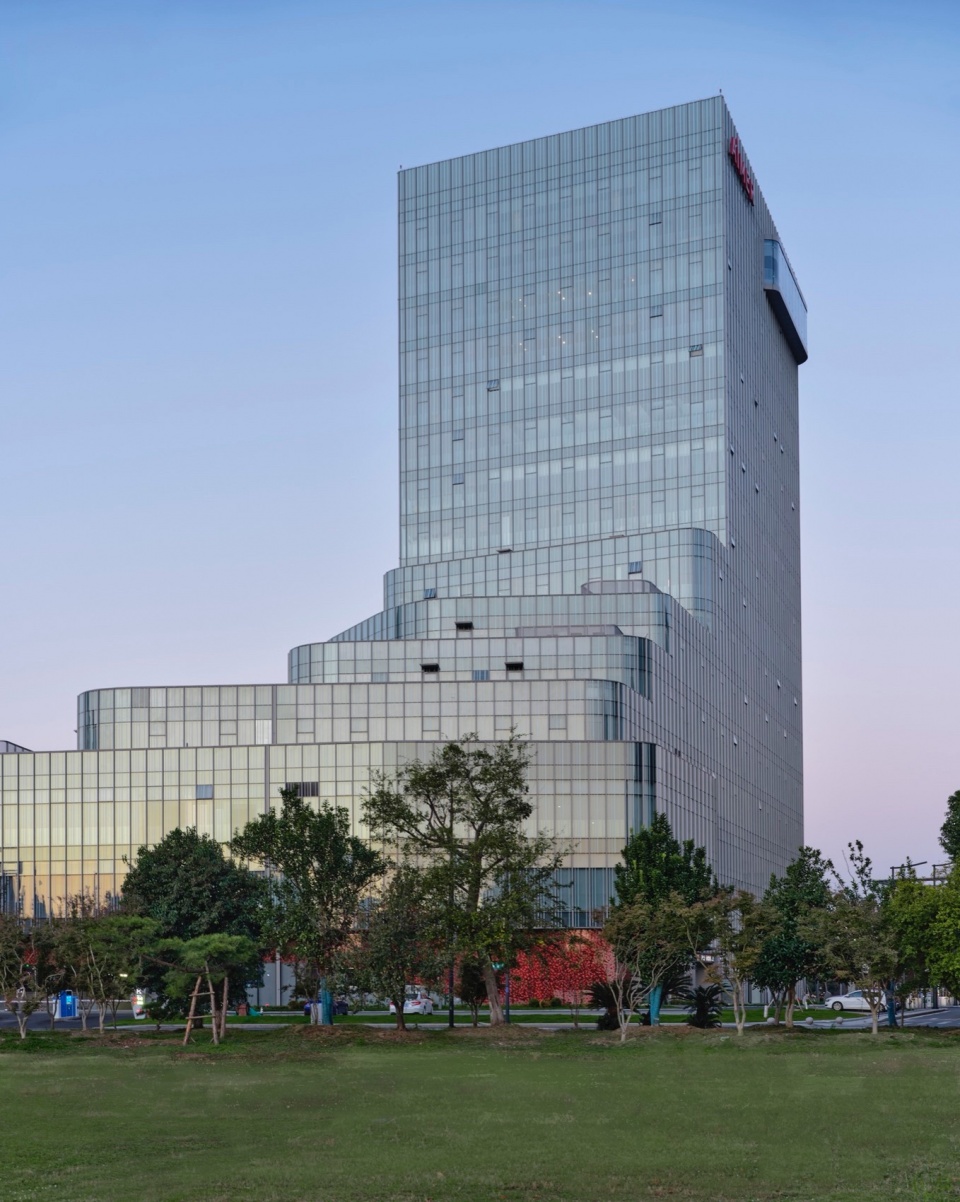
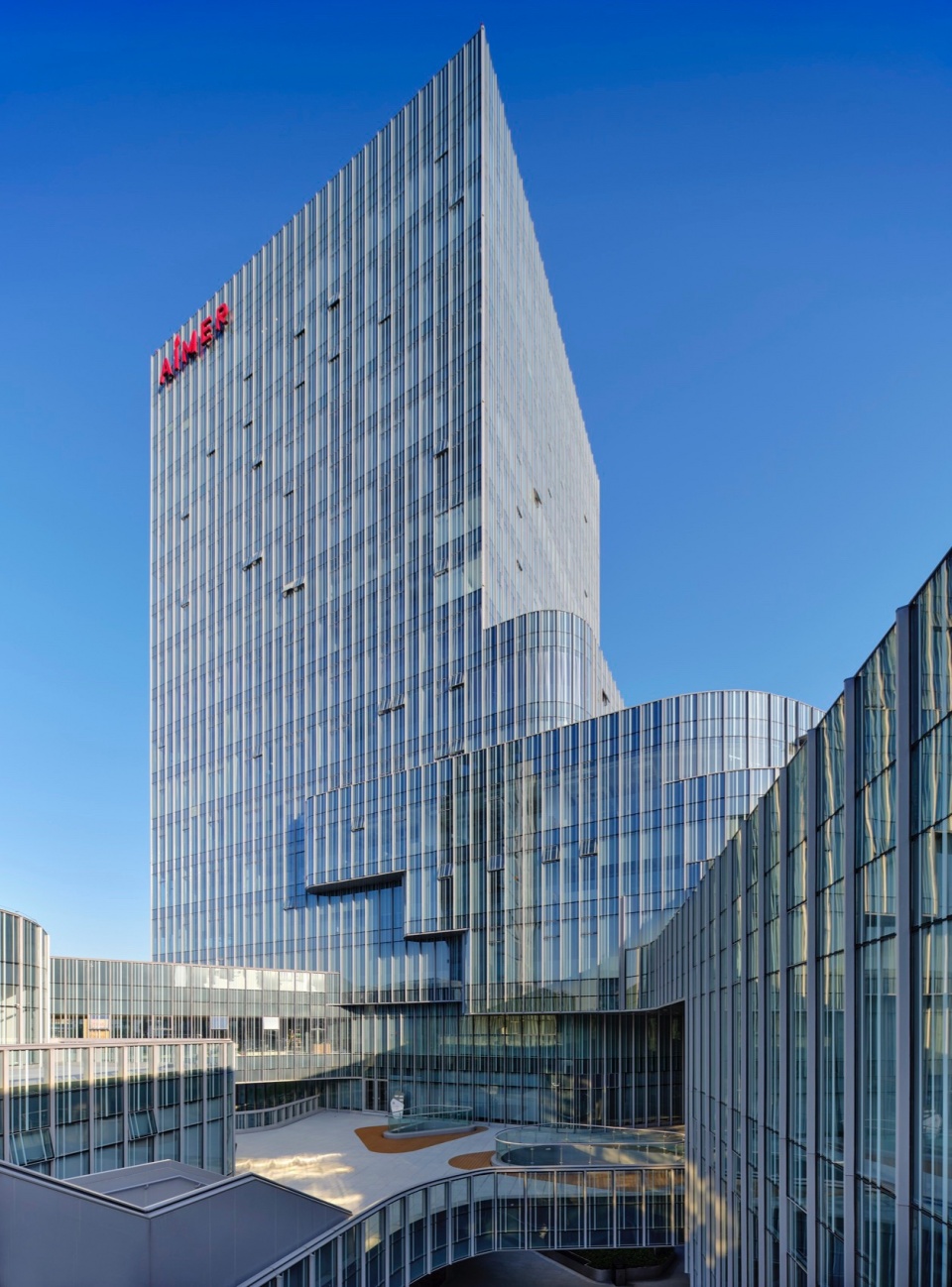
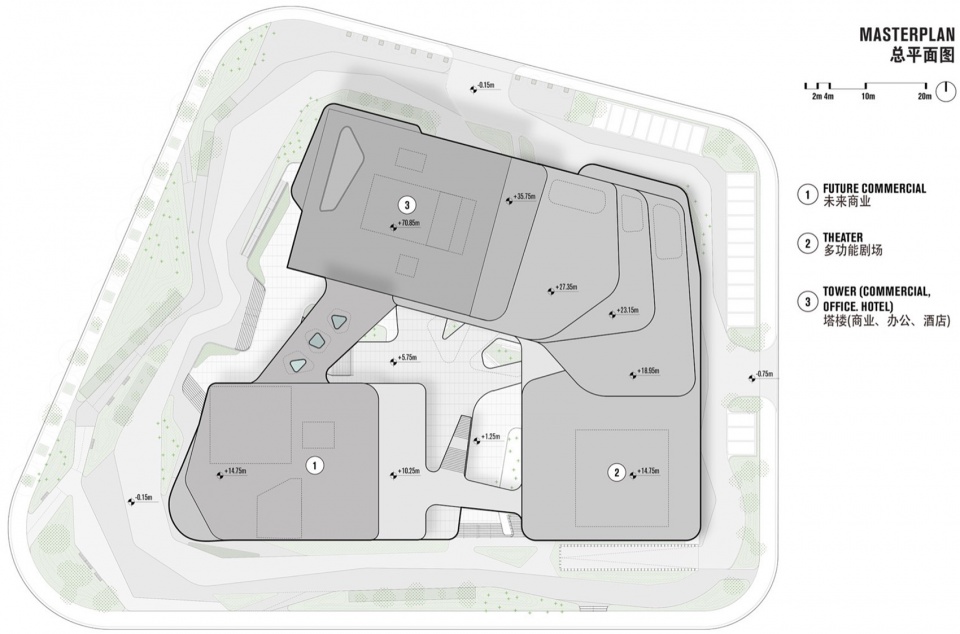
原本分散且单一的空间布局被重新整合为一个高度互联的多功能空间,提高了整体的连通性和多样性。改造后的建筑群由三个相互连接的体量组成,并由一座 17 层高的塔楼作为核心。塔楼的低层部分向外延展,并逐步形成多个露台,使建筑与周围环境形成视觉上的延续和融合。建筑之间规划了可步行的有机景观空间,形成两个重叠的平台,不仅起到过渡作用,也增强了空间的整体连贯性。南侧和西侧设有大型户外阶梯,引导访客进入建筑群,同时这些有机形态的开口与整体设计中的图案相呼应,保持了统一的视觉语言。
▼层叠景观,Layered Landscape
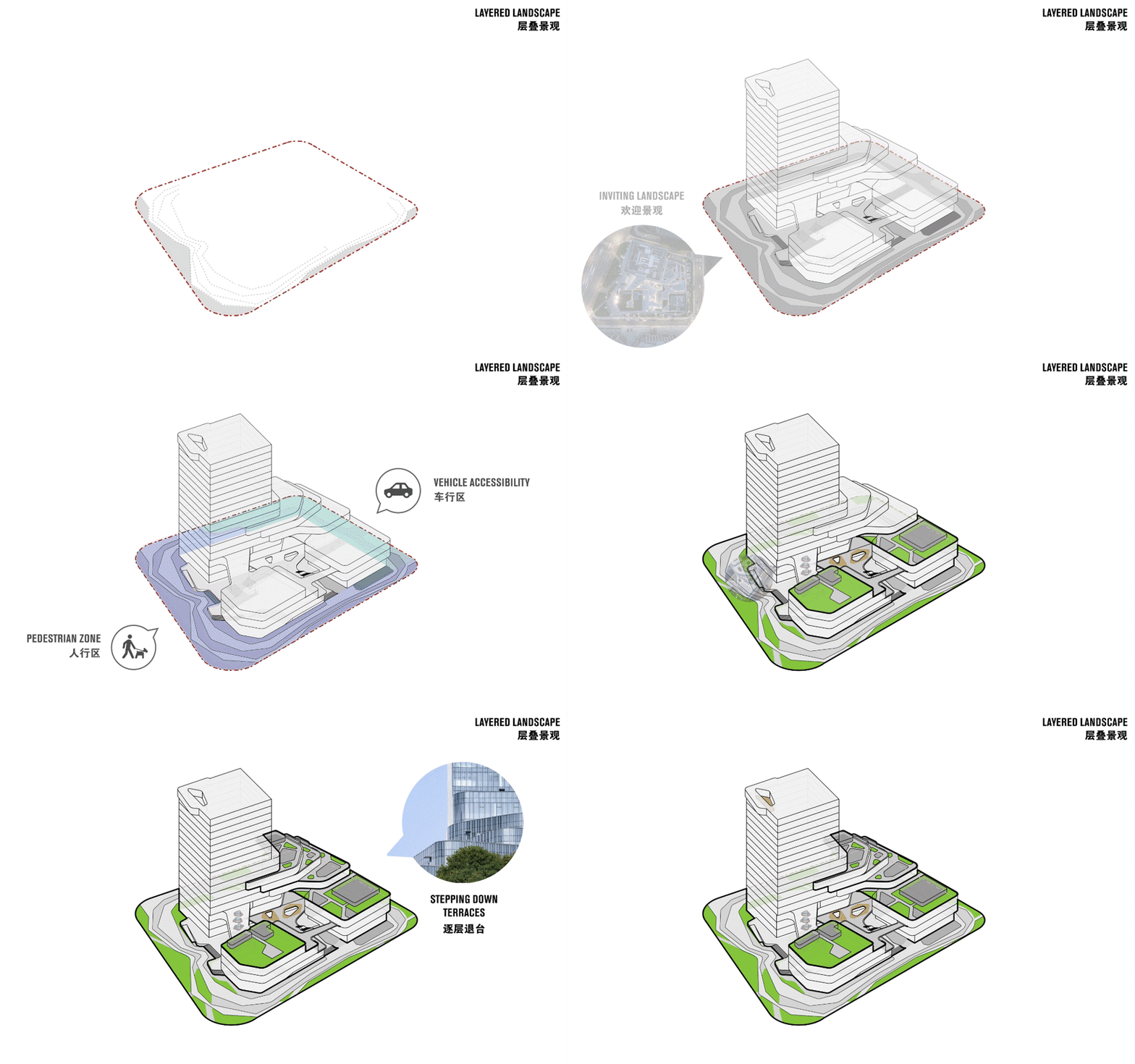
▼概念生成,Design Concept Generation
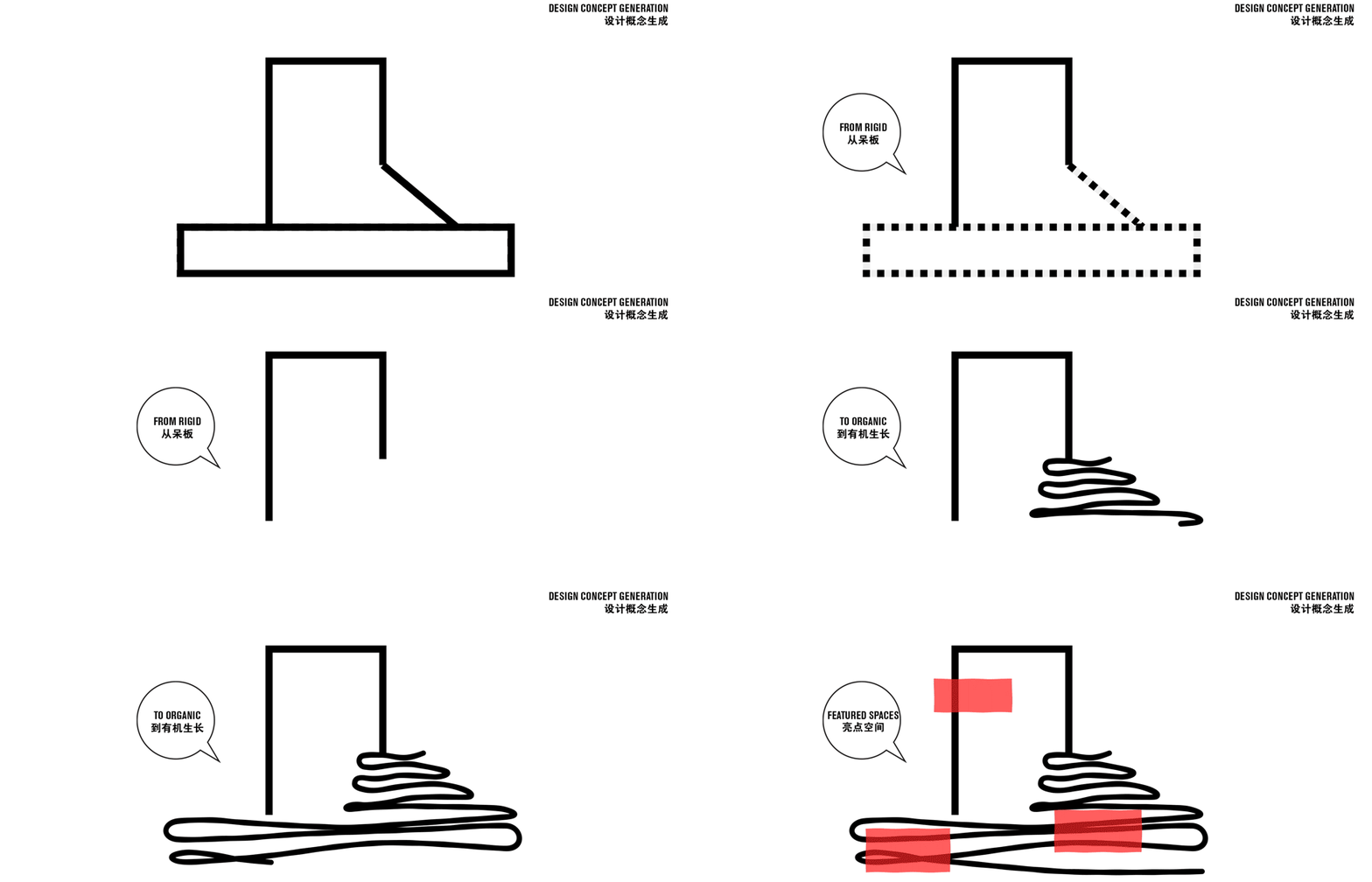
The original fragmented layout was reorganized into an integrated, multifunctional space, which enhances connectivity and program diversity. The redesigned complex consists of three interconnected volumes anchored by a 17-story tower. On the lower floors, the tower extends outward and gradually steps down into terraces, visually connecting the architecture to its surroundings. Between the buildings, an accessible organic landscape was introduced, forming two overlapping platforms that serve as both transitional and connective spaces. Grand outdoor staircases on the south and west sides, lead visitors into a layered environment with organically shaped openings, mirroring the patterns used throughout the building’s design.
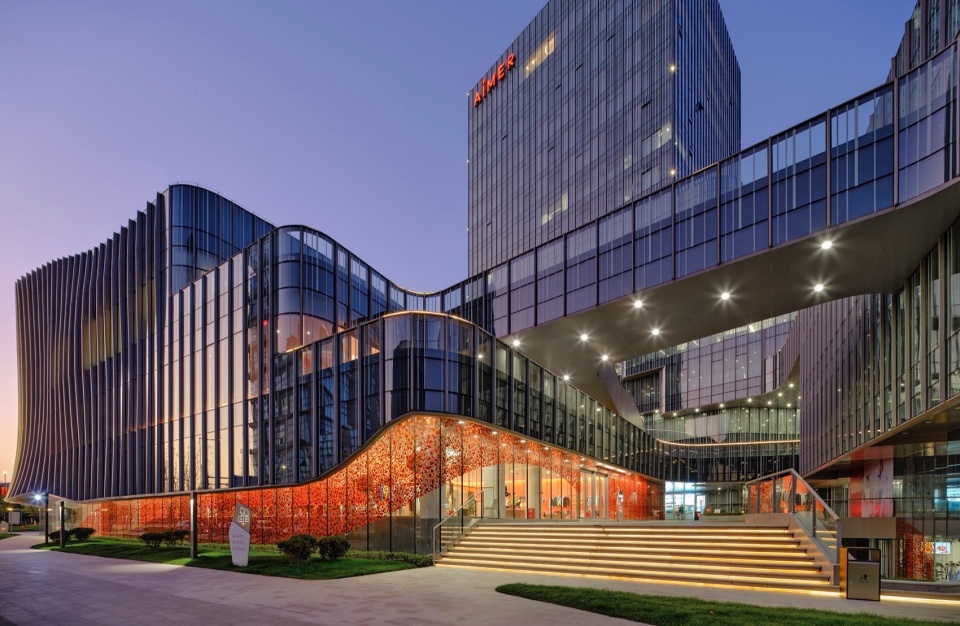
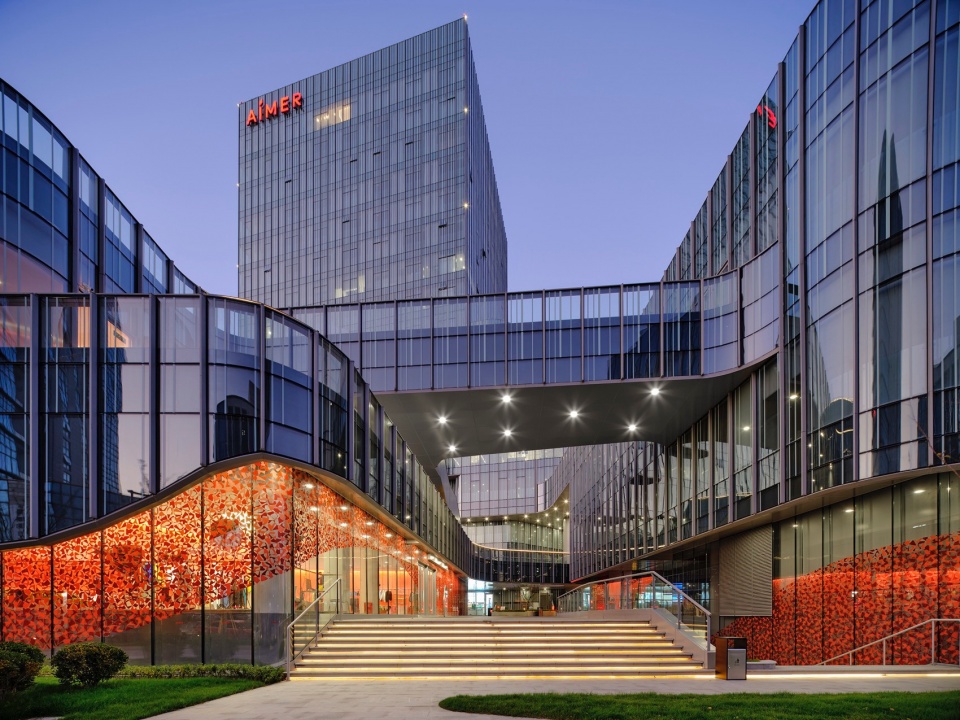
▼夜景,night view
兼容工作、商业与休闲的复合型空间A Hybrid Program for Work, Commerce, and Leisure
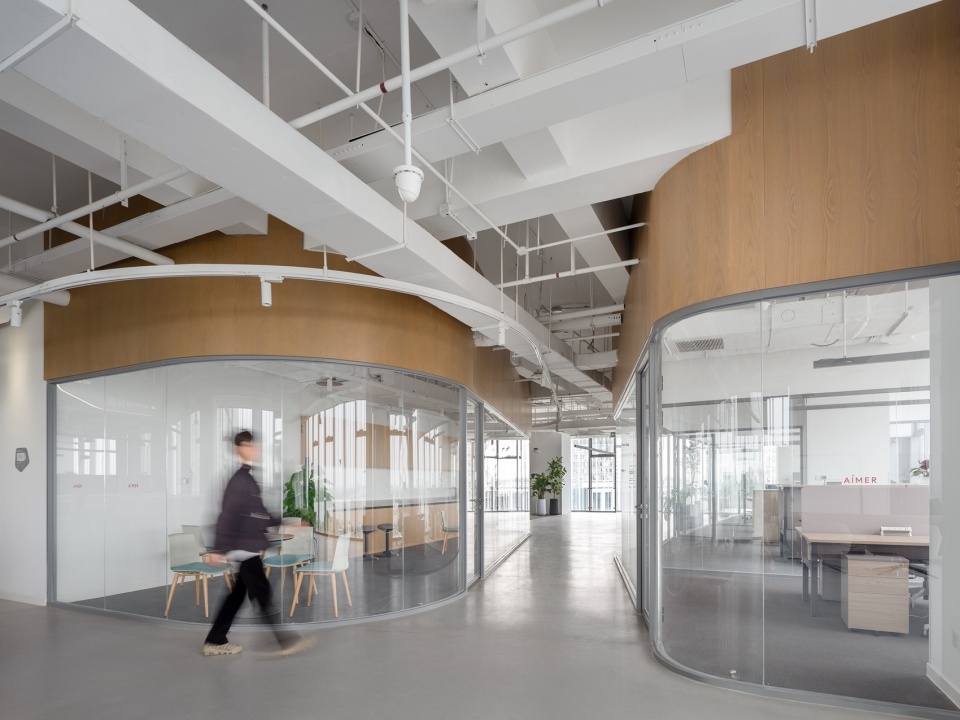
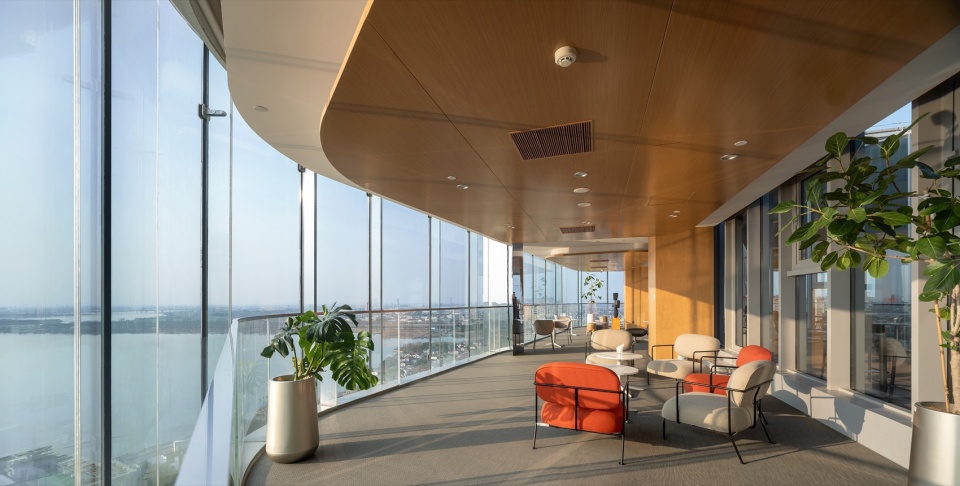
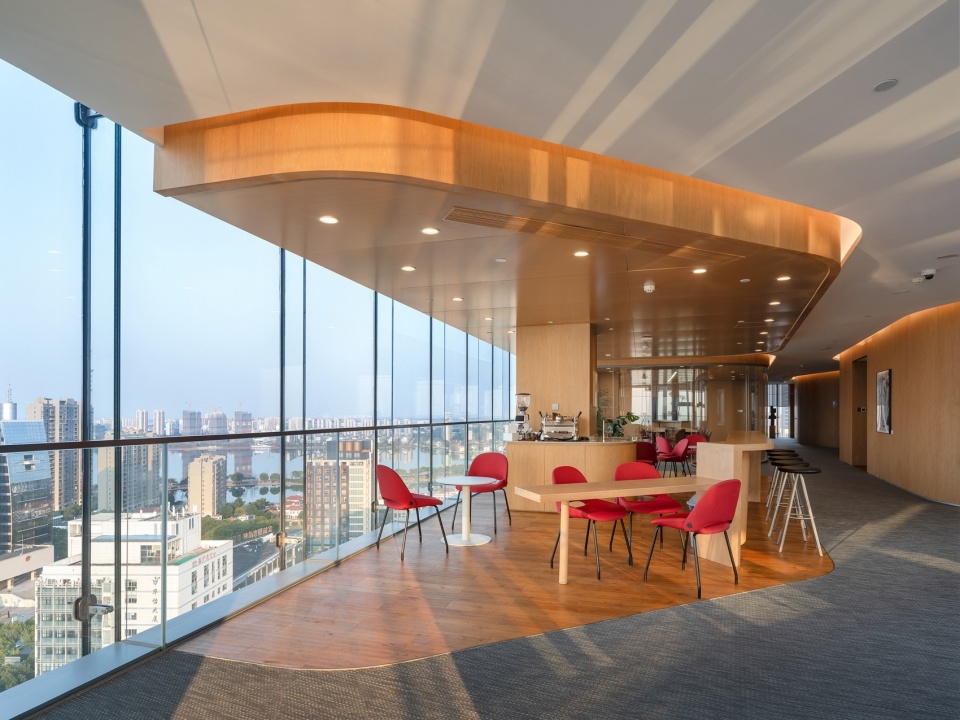
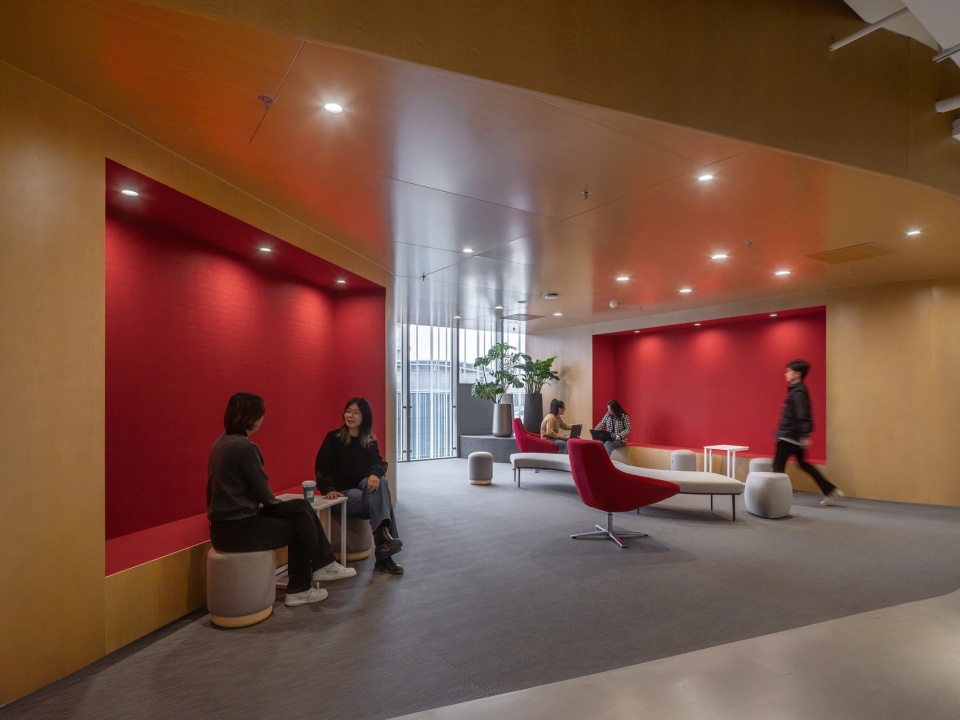
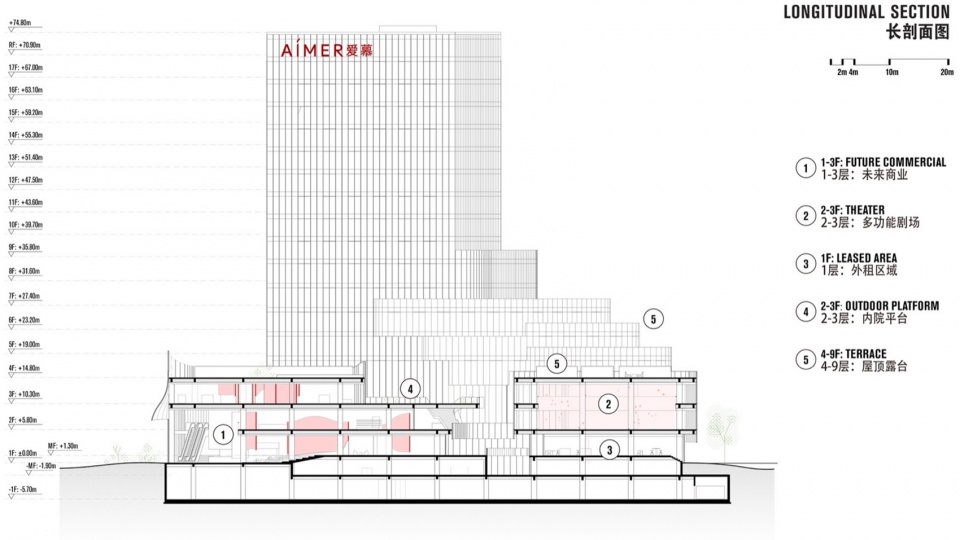
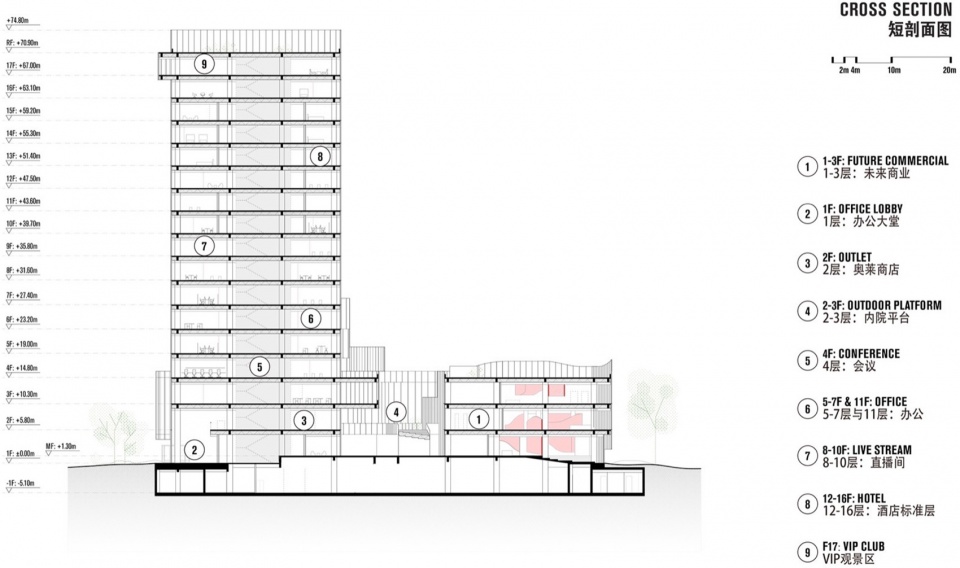
爱慕苏州第二总部集商业、零售、办公、直播、酒店、会议、多功能厅及 VIP 接待等多种功能于一体,为商务人士、购物者和创意从业者提供多层次的体验。一层西南入口连接爱慕品牌展厅与零售空间,沉浸式的建筑设计强化了个性化购物体验。东北侧入口的大型标志性阶梯通往展览及文化空间,拓展了建筑与艺术及公共活动的互动性。三层设有爱慕品牌专属的水疗中心,打造健康与放松的环境。四至七层的办公区域以开放布局、曲面玻璃隔断及木质饰面为特色,并结合品牌标志性的红色座椅空间,营造出透明灵活的工作氛围。
▼层叠景观,Layered Landscape
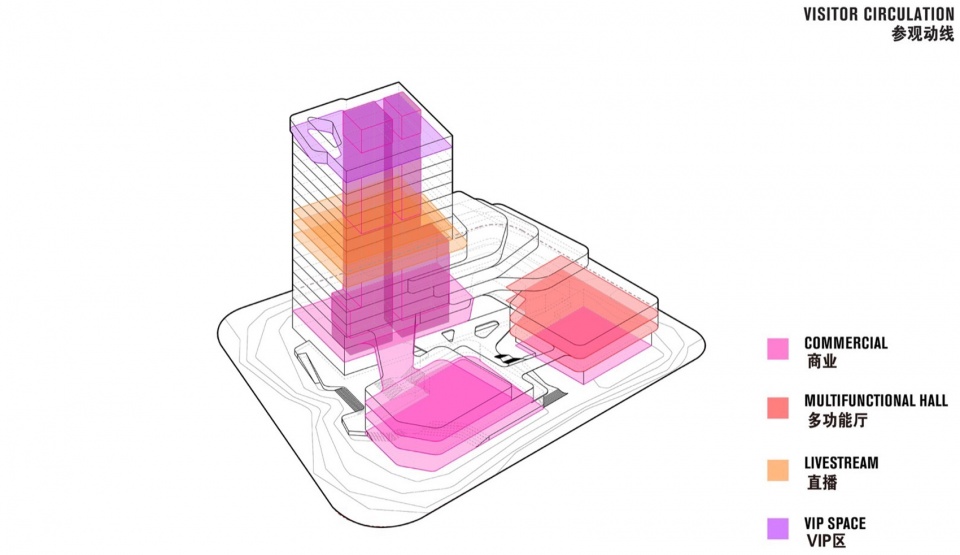
The Aimer 2nd Headquarters integrates a diverse range of functions. The combination of Commercial areas, outlet, offices, live streaming, hotel, conference functions, multifunctional hall, and VIP reception, complete a building that caters to business travelers, shoppers, and creative professionals alike. Beginning on the ground level, from the southwest into Aimer’s showroom and retail spaces, the immersive architecture enhances personalized shopping experiences. Exhibition and cultural spaces are made accessible from the northeast entrance via a grand signature staircase, expanding the building’s public engagement with arts and events. As we move upwards, the third floor provides a space dedicated to Aimer’s spa retreat, providing a wellness-focused environment. Above, office spaces on floors 4–7, with emphasis on transparency and flexibility, features open layouts, curved glass partitions, and wooden finishes, with red seating niches that subtly reinforcing Aimer’s brand identity.
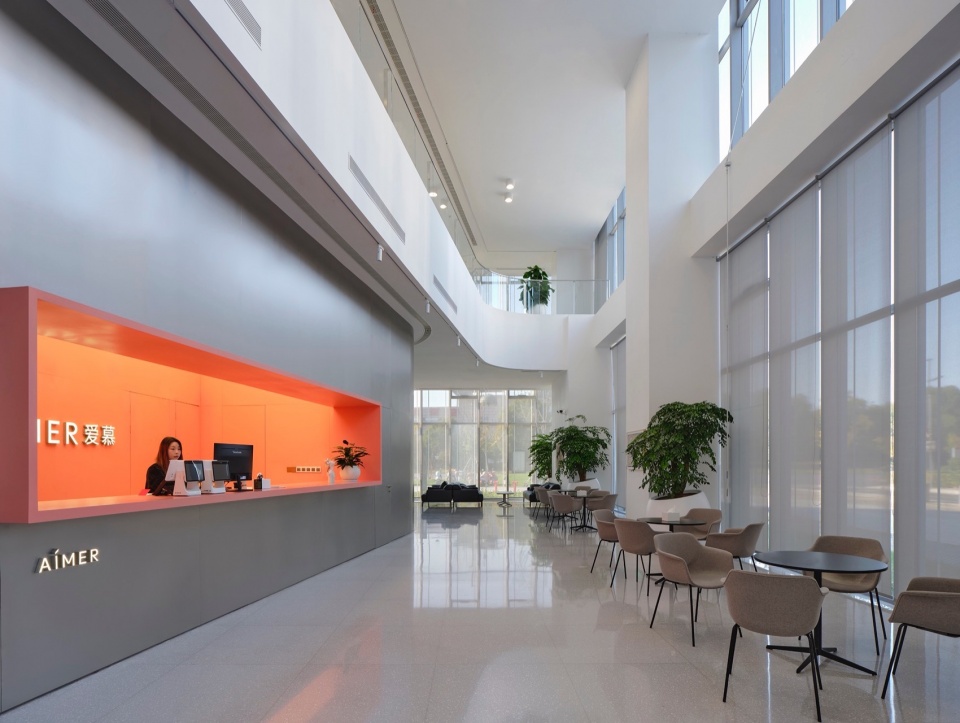
▼接待空间,reception
▼办公空间,office
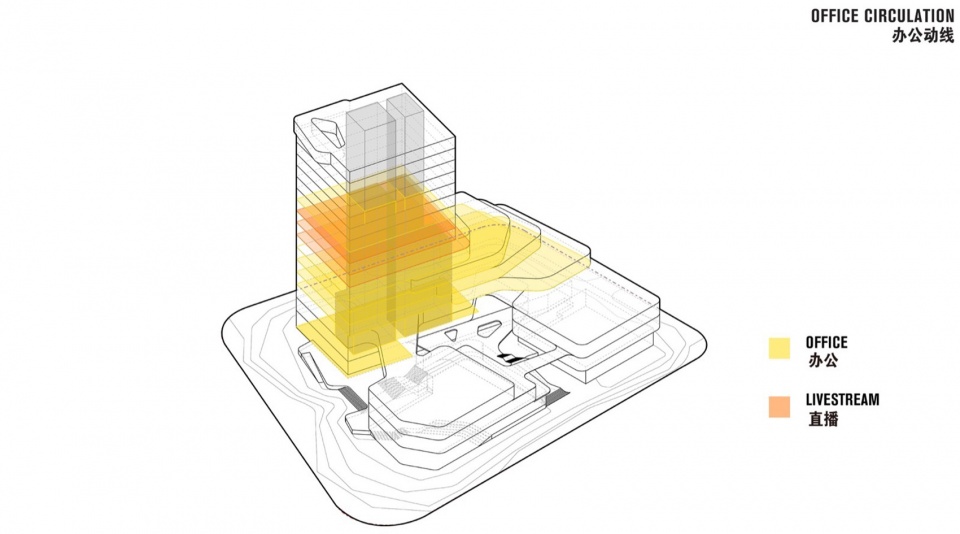
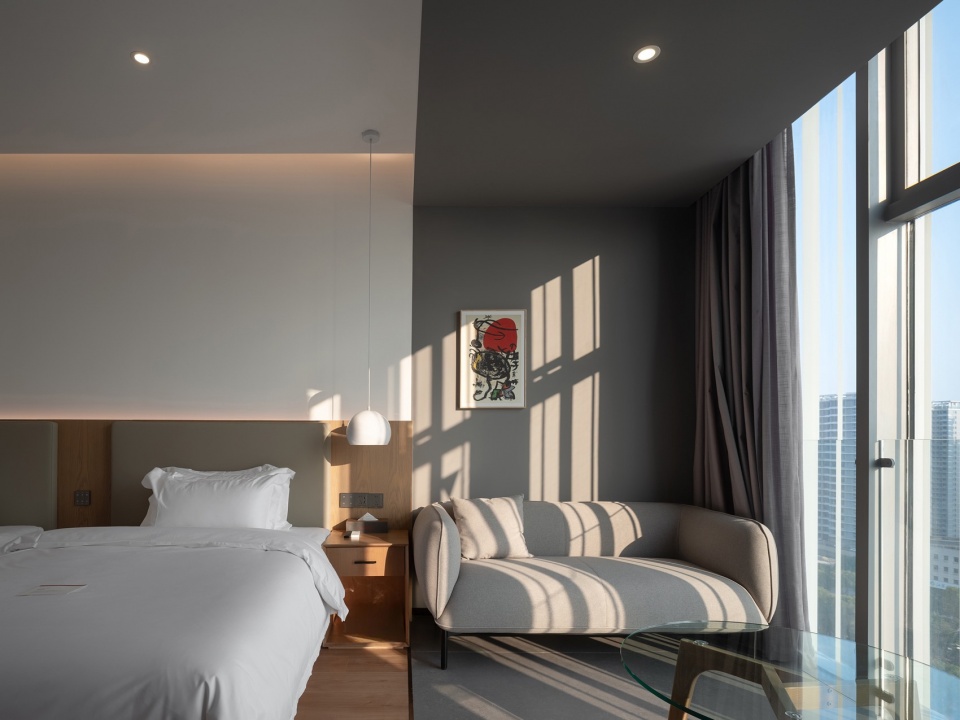
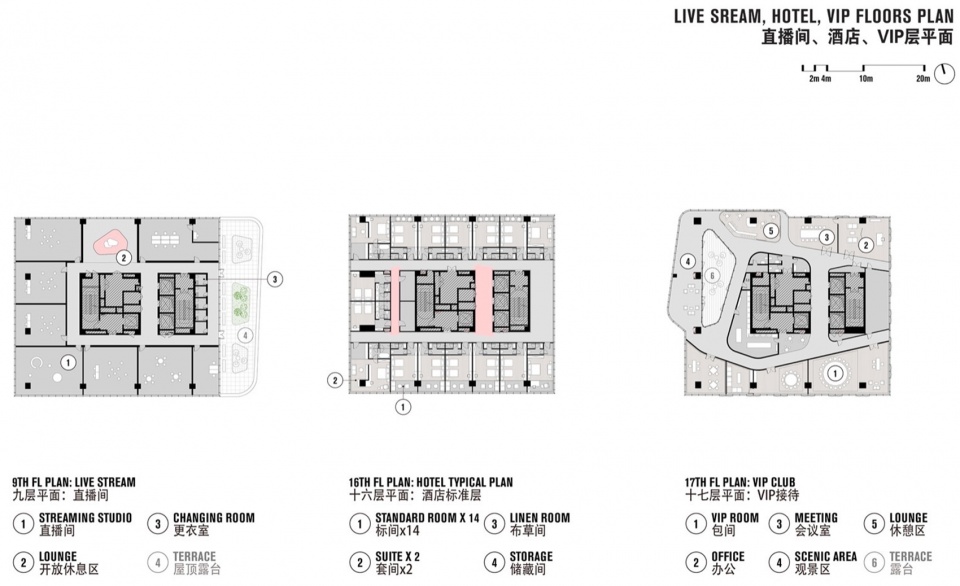
八至十层的直播空间成为连接实体与数字商业的关键场所。室内采用不锈钢材质和红色霓虹灯光,塑造高科技氛围,满足实时内容制作的需求。九层设有公共观摩区,访客可通过大面积玻璃窗直观感受直播运营的过程,进一步理解品牌的线上销售策略。十一至十六层则作为酒店区域,以温暖自然的材料和开阔的湖景营造静谧的休憩环境。木饰面、白色墙面及灰色编织地面相结合,并配以精心挑选的艺术品,使酒店内饰在视觉上形成与下层公共区域的柔和对比。塔楼的 17 层为行政楼层,设有向外延展的全景玻璃窗,提供无障碍的湖景及周边景观视野。
▼办公动线,office circulation
▼宾客动线,hospitality circulation
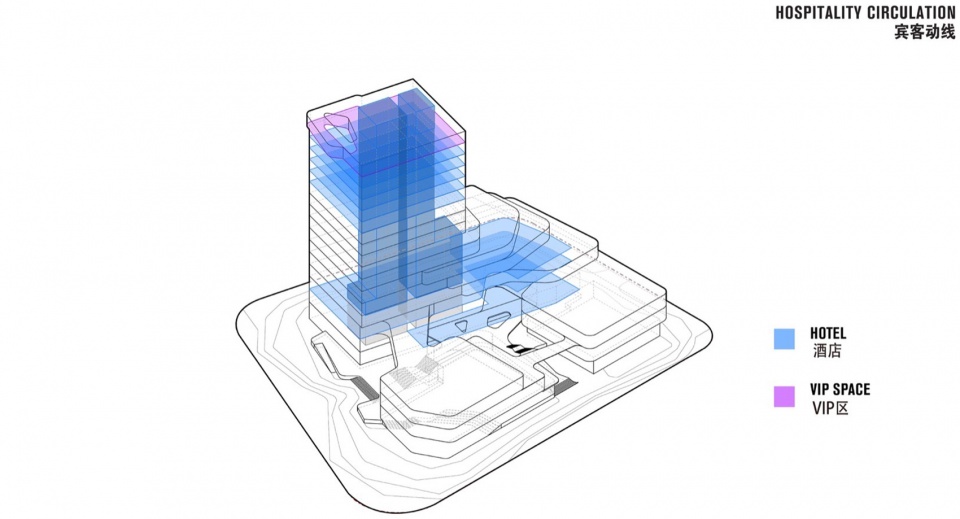
Continuing to the upper special functions, the live-streaming studios, located on floors 8–10, are places that bridges physical and digital commerce. Designed with stainless steel finishes and red neon lighting, these high-tech spaces complete the atmosphere for the production of real-time content. The 9th floor of the studio includes a public viewing area, where visitors can observe live-streaming operations through large windows, offering insight into the brand’s online retail strategy. Moving past the studios, the hotel, located on floors 11–16, offers a cozy retreat with warm, natural materials and panoramic lake views. Wooden finishes, white surfaces, and gray woven flooring are complemented by curated artworks. The hotel interiors provide a tranquil contrast to the more vibrant public areas below. Finally, the 17th floor of the tower is the executive level, offering unobstructed views of the nearby lake and surrounding landscape through an extruding panoramic glass window.
▼直播层,livesteam floor
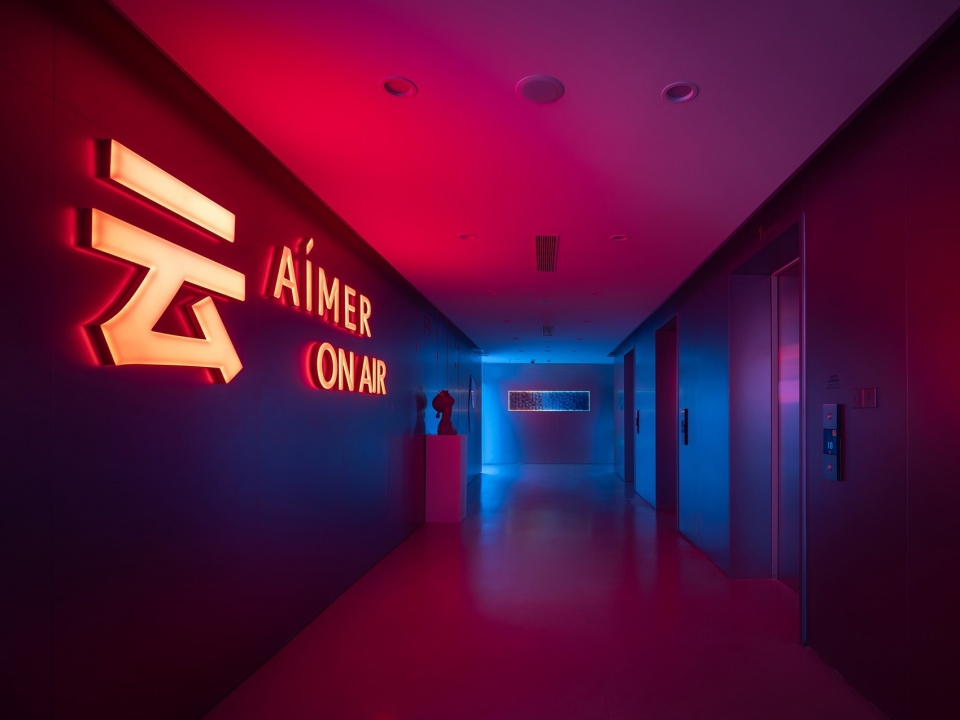
▼酒店,hotel
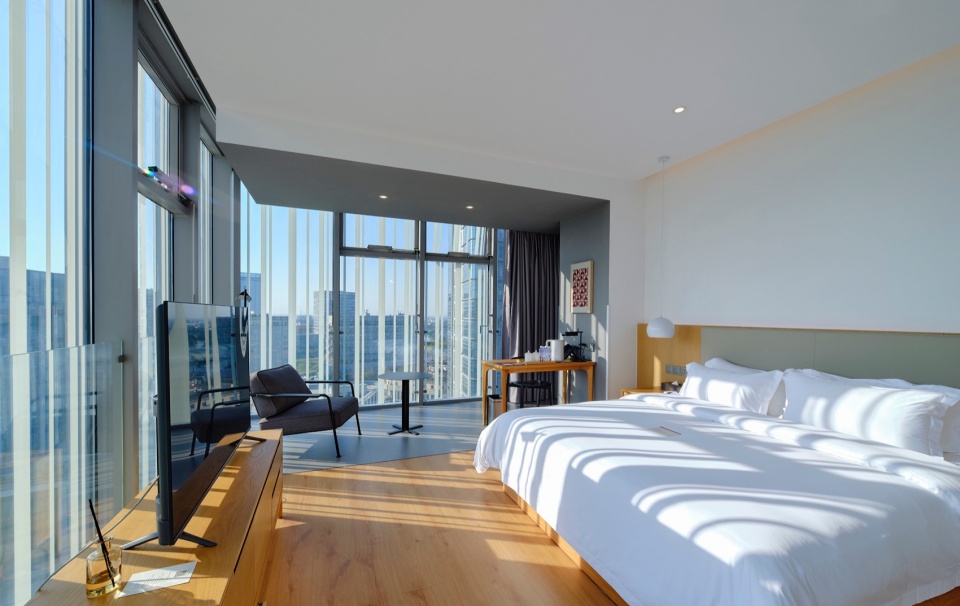
▼酒店,hotel
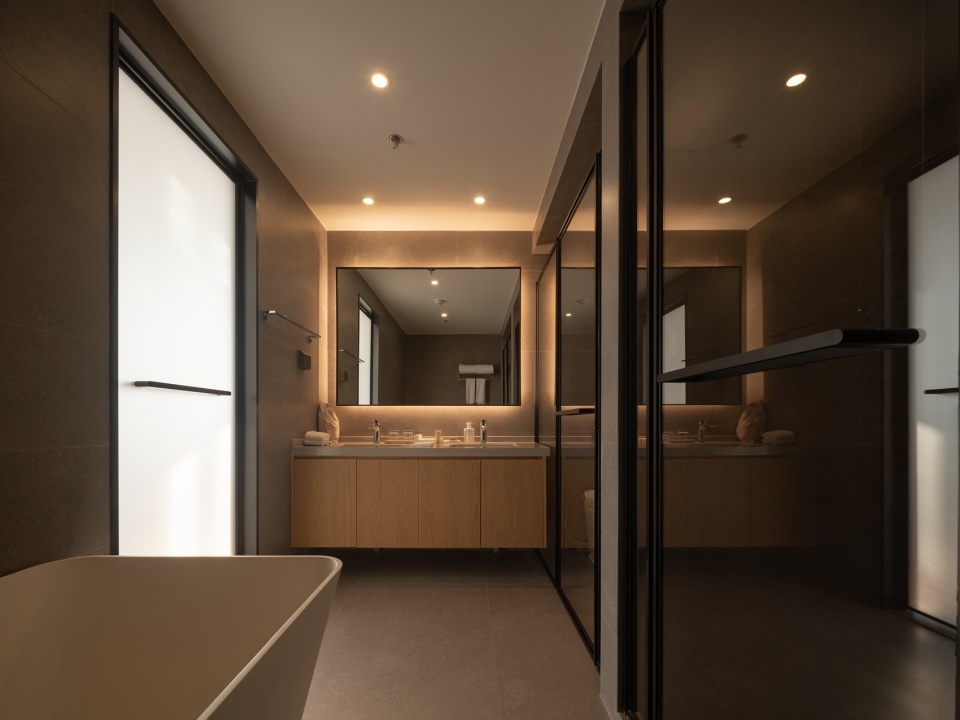
▼酒店,hotel
▼办公楼层,office floor
▼细部,details
室内设计:通过设计打造连接性Interior Fit-Out: Connection Through Design
Crossboundaries 负责的室内设计延续了建筑流动连接的概念,使其在空间体验上得以呈现。设计采用曲线元素,并结合嵌入式更衣室、金属表面的展示架,材料选择和色彩搭配确保了统一的视觉识别,进一步强化品牌的核心美学。
The interior design, also by Crossboundaries, extends the architectural concept of flowing connection into the spatial experience. Curved elements with integrated changing rooms and shelving with metal surfaces, – the material selection and color choices contribute to a consistent visual identity to reinforce the brand’s core aesthetic.
▼展示与销售空间,display and retail space
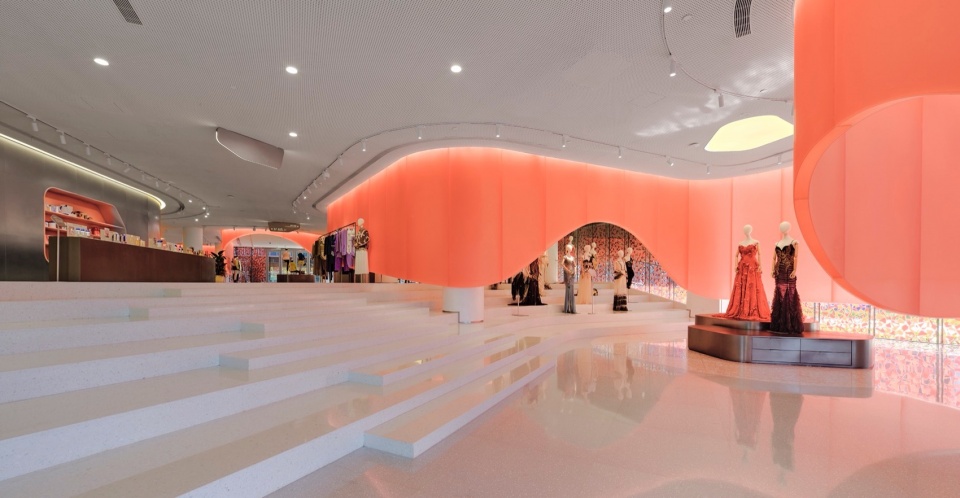
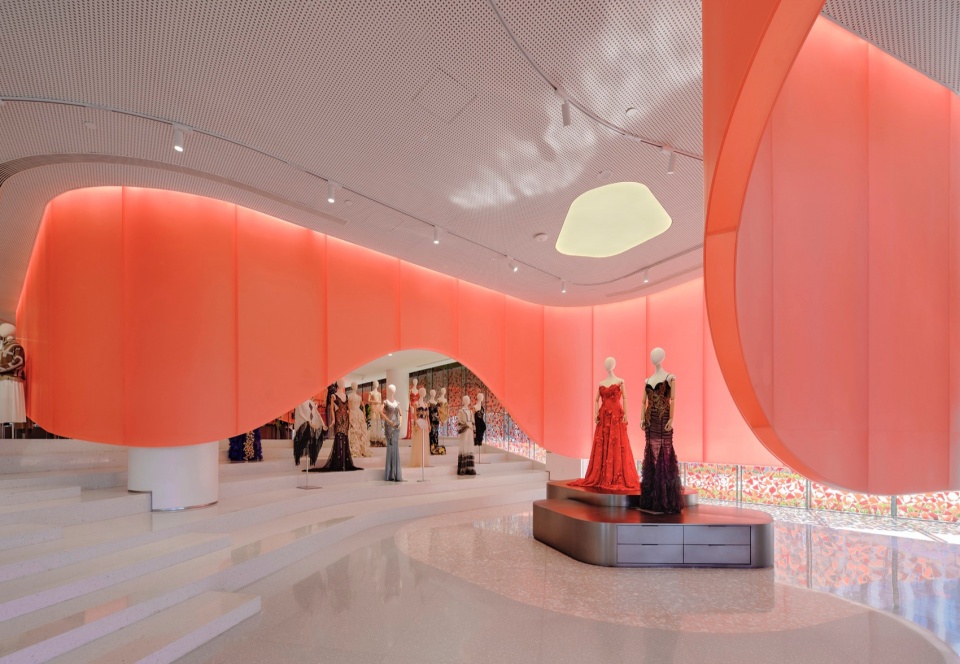
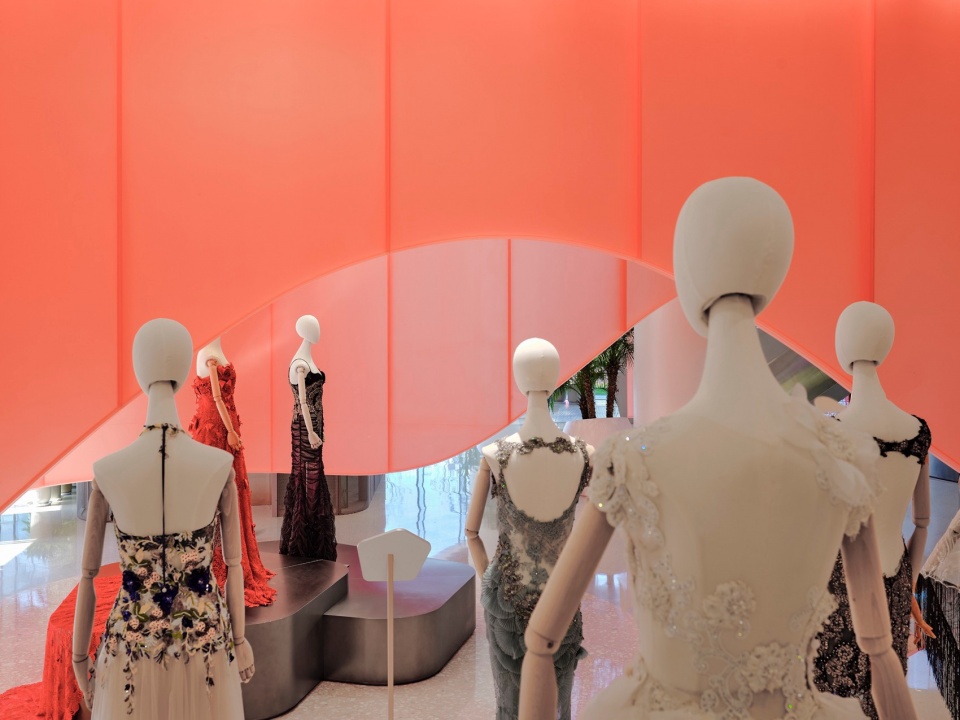
流动的连续性——连接空间的丝带Flowing Continuity – A Spatial Ribbon Connecting Levels
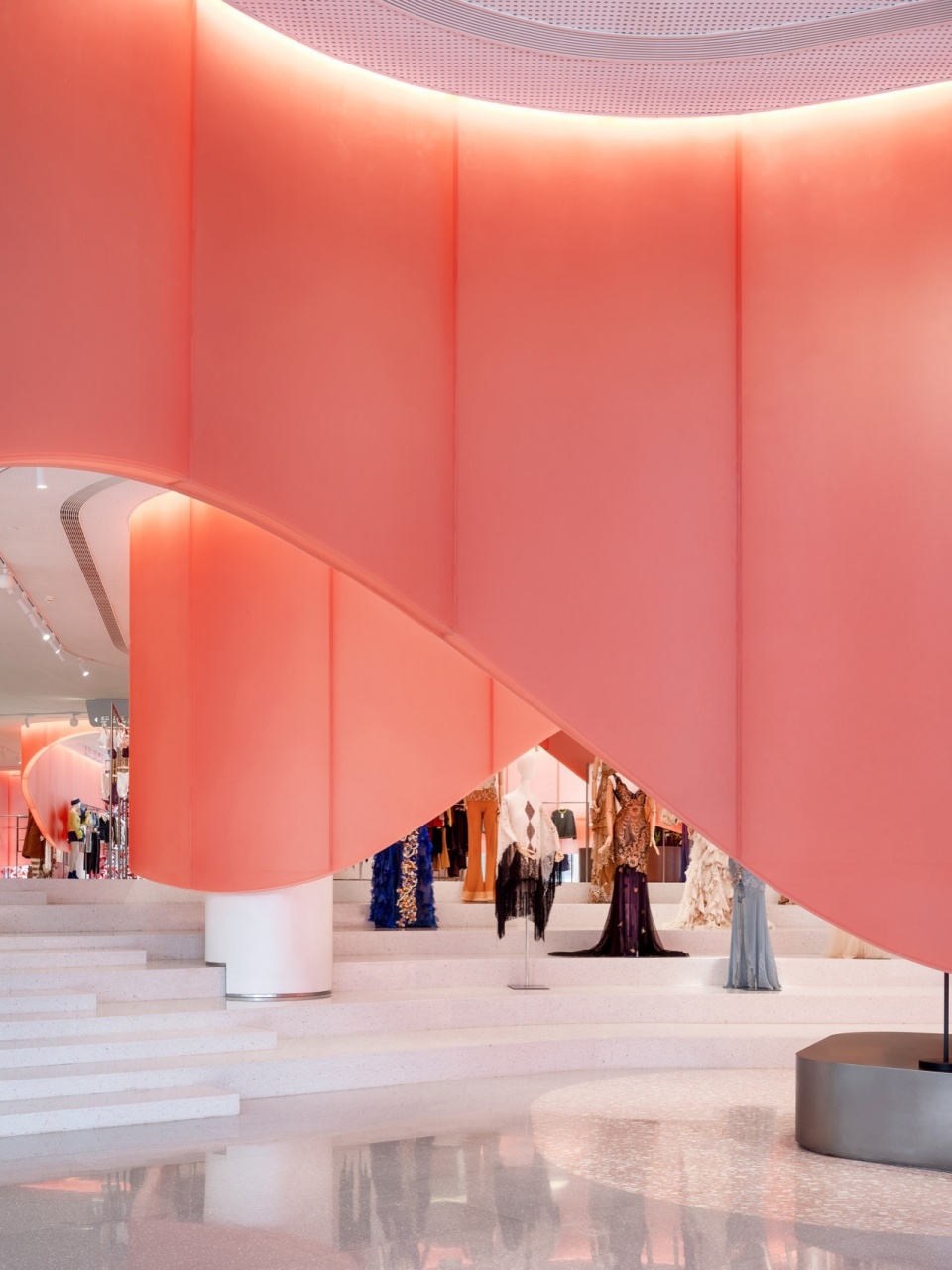
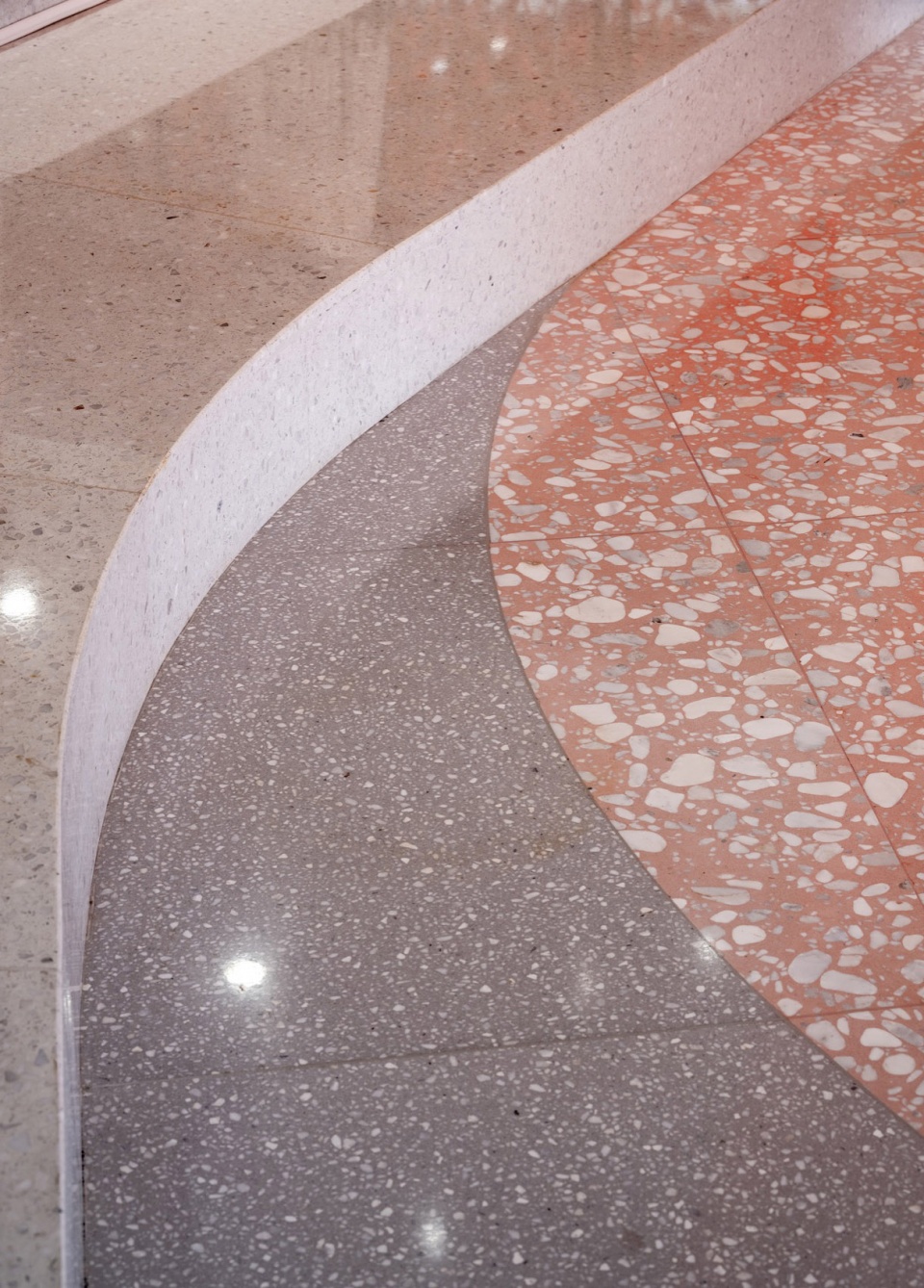
展厅内的核心设计元素是一条曲线形态的空间丝带。该结构采用浅珊瑚色的纹理聚碳酸酯材质,从地面穿透并延伸至两层空间,创造出视觉上的连续性。地面铺设玫瑰色水磨石,其中混合了浅色颗粒,形成温暖、自然的肌理效果。抛光表面增强了光线的反射,使自然光和人工照明在空间中交融,与红色丝带结构的色调相互呼应。宽敞且有角度的台阶引导访客流畅地穿梭于各个区域,优化了空间的动线,增强了整体的流动感。不同元素的相互作用构建了一种强调开放性和连续性的设计语言。
A key design element is the curved spatial ribbon in the showroom. The textured polycarbonate structure in light coral, visually penetrates the floor and extends across two levels, establishing a sense of continuity within the space. The flooring throughout the ground floors is finished with rose-colored terrazzo. The material incorporates light flecks, creating a warm, organic texture. The polished surface reflects natural and artificial light, complementing the vibrant red tones of interweaving ribbon structure. Wide, angular steps lead visitors through the space, contributing to a seamless transition between areas, enhancing spatial flow. The interplay of the elements establishes a cohesive design language centered around openness and continuity.
▼连接空间的丝带,the ribbon connecting space
复合空间的新范式A New Paradigm for Hybrid Spaces
爱慕苏州第二总部代表了一种全新的复合型商业建筑模式,在同一环境中融合了多种功能。通过整合零售、健康、办公及直播设施,该建筑为用户提供了多层次的互动体验。这一项目展示了商业建筑如何将文化、零售及体验元素合并为一个整体,并通过无缝衔接的形式和功能重新定义品牌的实体化体验。
The Aimer 2nd headquarters represents a new model of hybrid commercial architecture: where multiple functions intersect in a unified environment. Through integrating retail, wellness, office spaces, and live-streaming facilities, the center fosters a diverse and engaging user experience. The project demonstrates how commercial architecture can merge cultural, retail, and experiential elements into a unified space, redefining physical brand engagement by seamlessly integrating form and function.
▼复合型商业建筑模式,hybrid commercial architecture
重新构建功能布局Reorganizing the Functional Layout
基于原有建筑结构,功能布局进行了彻底优化。从最初单一、分散且垂直割裂的构成,转变为一个高度整合且互动性强的设计,使其更符合现代商业趋势。原有布局功能单一,用户互动受限,空间之间相对独立,而新的设计引入了多功能区域,提高了空间在垂直和水平维度上的连通性,不仅优化了流线和功能划分,更在品牌识别上形成了独特的标志性表达。通过在同一楼层整合不同功能,提升了空间的可达性和协同效应,同时也为未来的业务拓展提供了更多可能性。
▼层叠景观,Layered Landscape
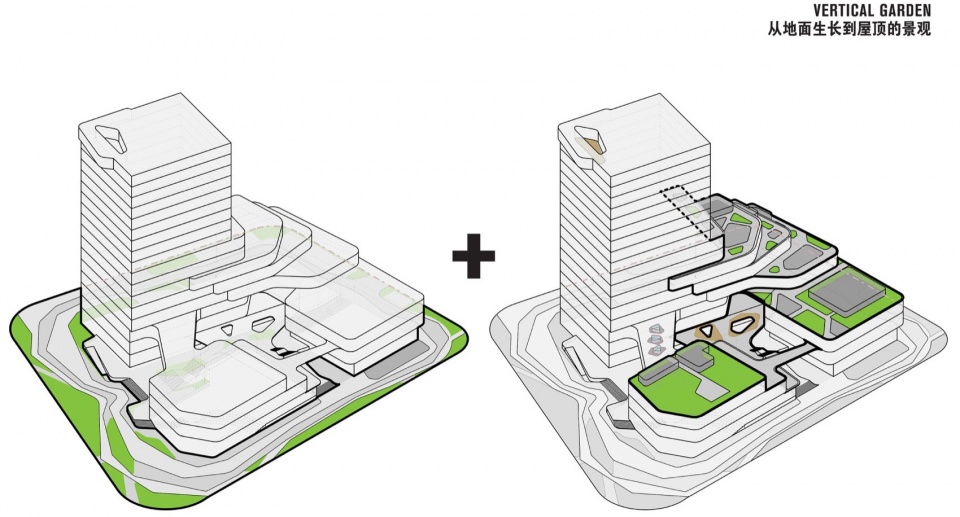
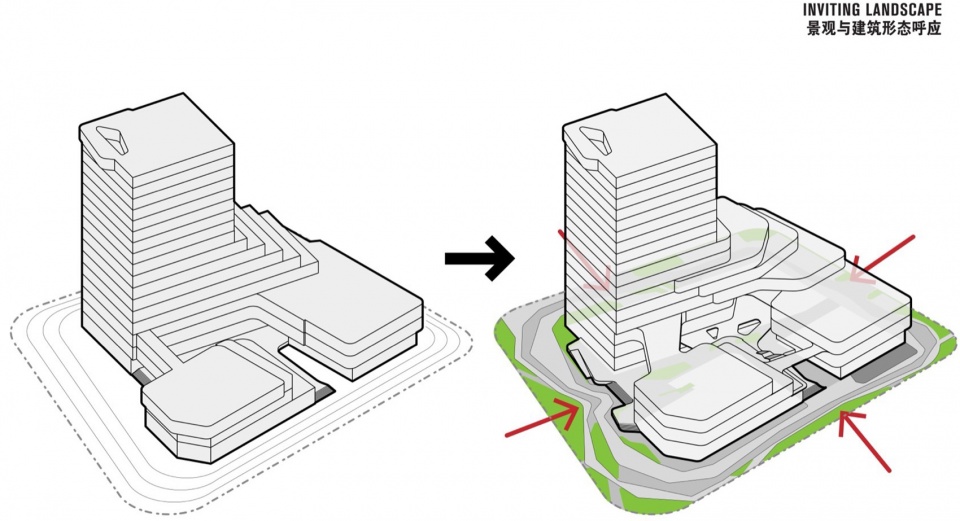
Building upon the original structure, the functional layout of the building was significantly reconfigured. A shift from a fragmented, monofunctional composition—characterized by a rigid vertical separation—toward a more integrated and interactive design, aligns the project with modern business trends. The previous layout offered little programmatic diversity and limited user engagement, with compartmentalized functions and constrained spatial use. In contrast, the revised design introduces multifunctional zones, enhancing both vertical and horizontal connectivity in terms of circulation, functional overlap, and, importantly, a clear brand identity. By integrating a variety of uses on the same floor, the new layout improves accessibility and synergy, while creating flexibility for future business growth.
▼外观,exterior view
建筑特色——连接空间,增强流动性Architectural Features – Connecting Spaces and Enhancing Flow
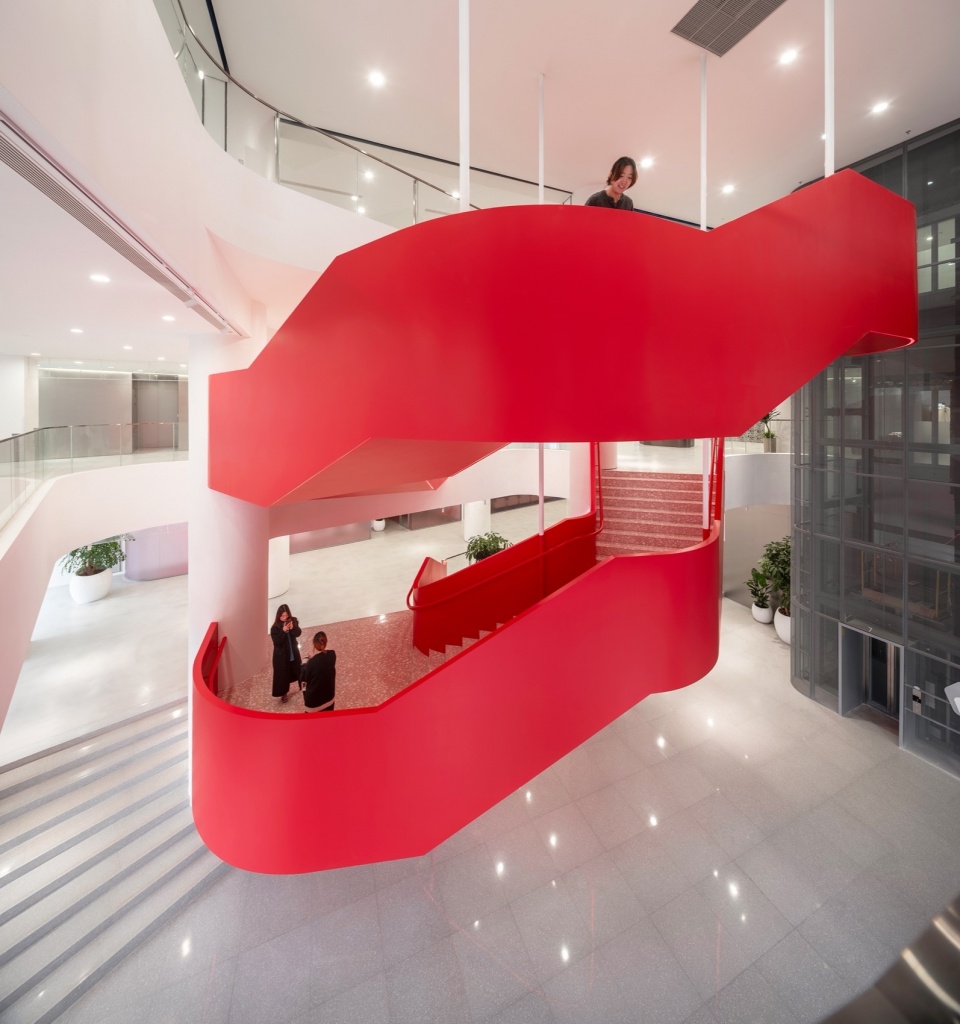
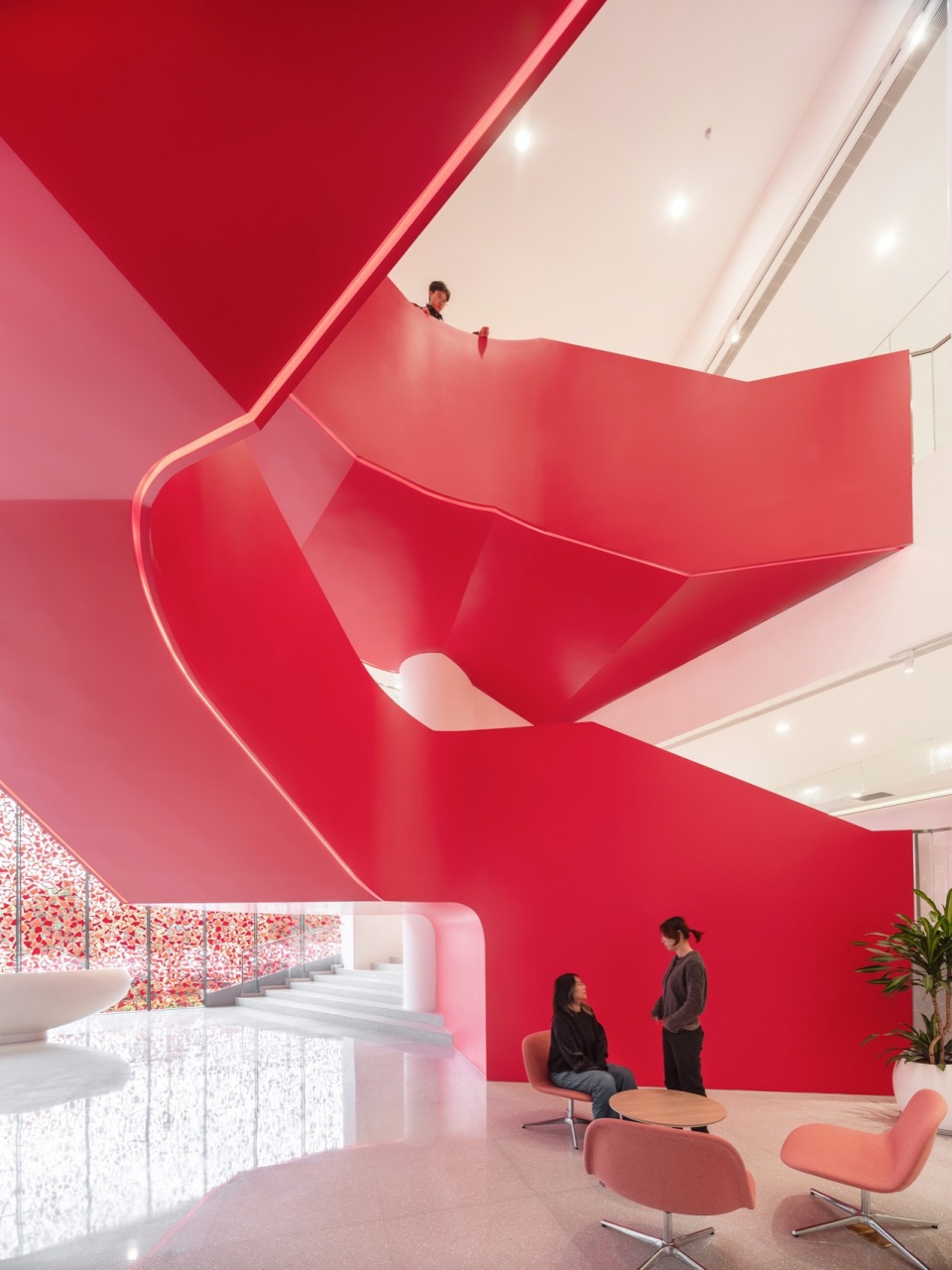
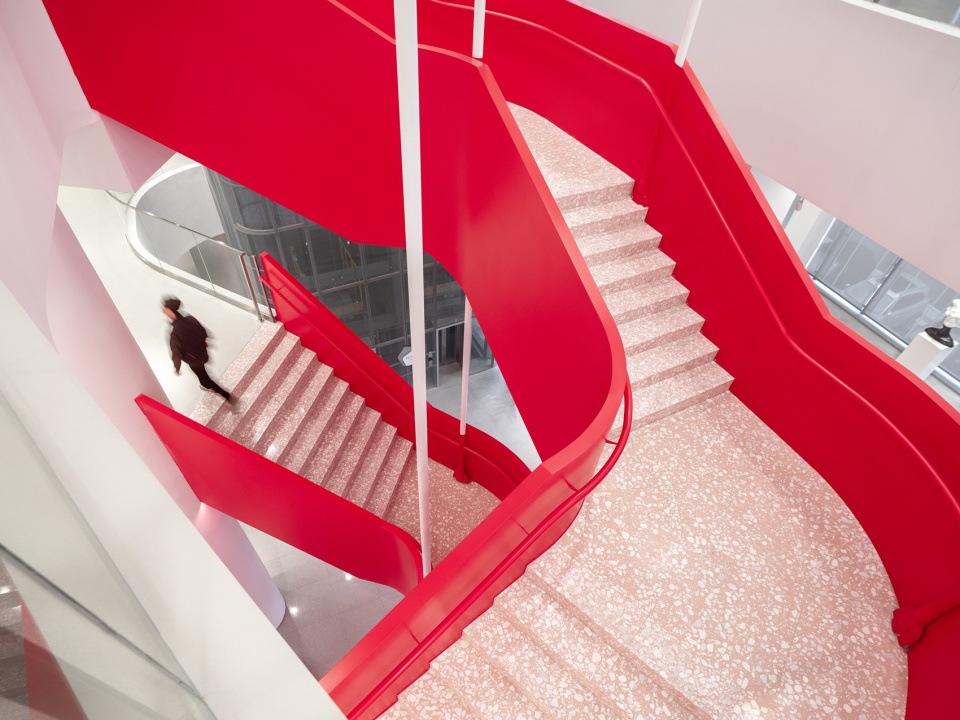
西北入口处设有一座自由造型的深红色楼梯。该雕塑般的结构通过钢杆悬吊于天花板,呈现出自立式螺旋的视觉效果,增强了整体空间的几何感。大胆的造型横跨三层楼,不仅作为功能性的垂直交通节点,也成为大堂内的视觉焦点,赋予空间更多动感。同时,这座楼梯不仅承担了通行功能,也能作为品牌活动和时尚展示的舞台。建筑整体延续了“流动性”这一设计主题。不同楼层之间的过渡通过层叠景观、中间平台和开放式楼梯来实现,强化了空间的连续性,使用户在整个建筑中的体验更加流畅。
The northwest entrance is marked by a free-shaped crimson colored staircase. Suspended from the ceiling with steel rods, the sculptural piece gives the illusion of a free-standing spiral, elevating the overall geometry of the space. The bold form enhances the arrival experience spanning three floors, serving as both a functional connector and a visual centerpiece, reinforcing the dynamism of the lobby. The staircase, normally utilized as the means of vertical circulation, also serves as a platform for brand events and as a fashion stage. Throughout the building, the motif of fluidity continues. Transitions between levels, achieved through layered landscapes, intermediate platforms, and open staircases, solidify the continuity in the spatial sense, echoing throughout the entirety of the user experience.
▼楼梯,staircase
▼外观,exterior views
立面——层次、质感与品牌形象Façade – Layers, Textures, and Brand Identity
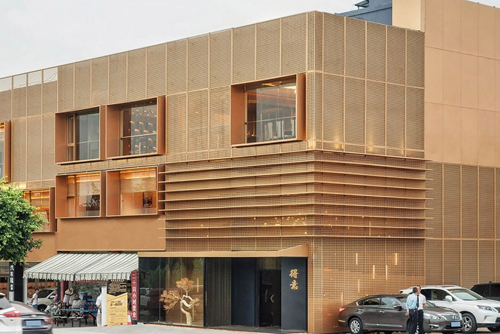
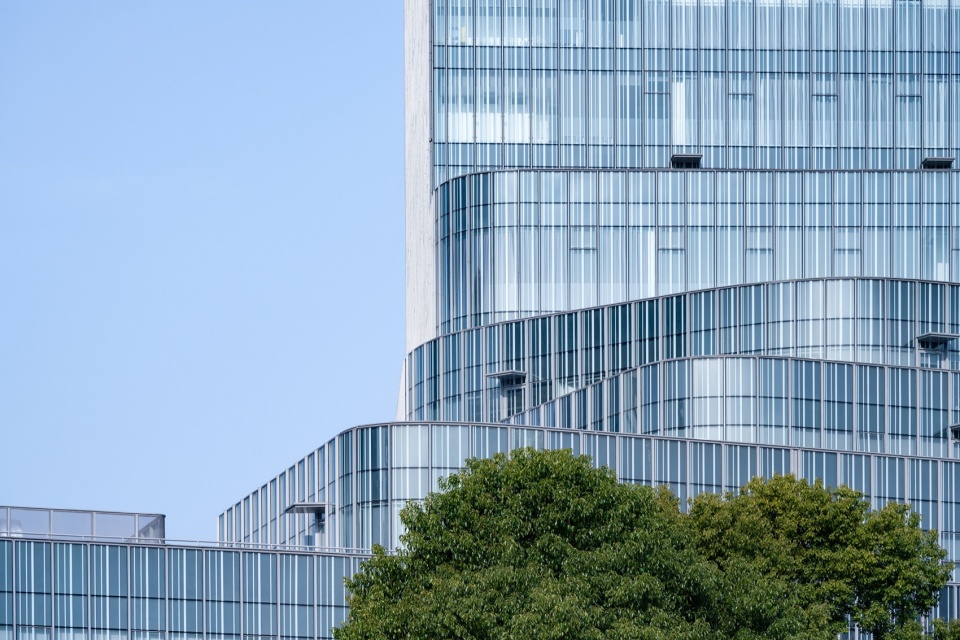
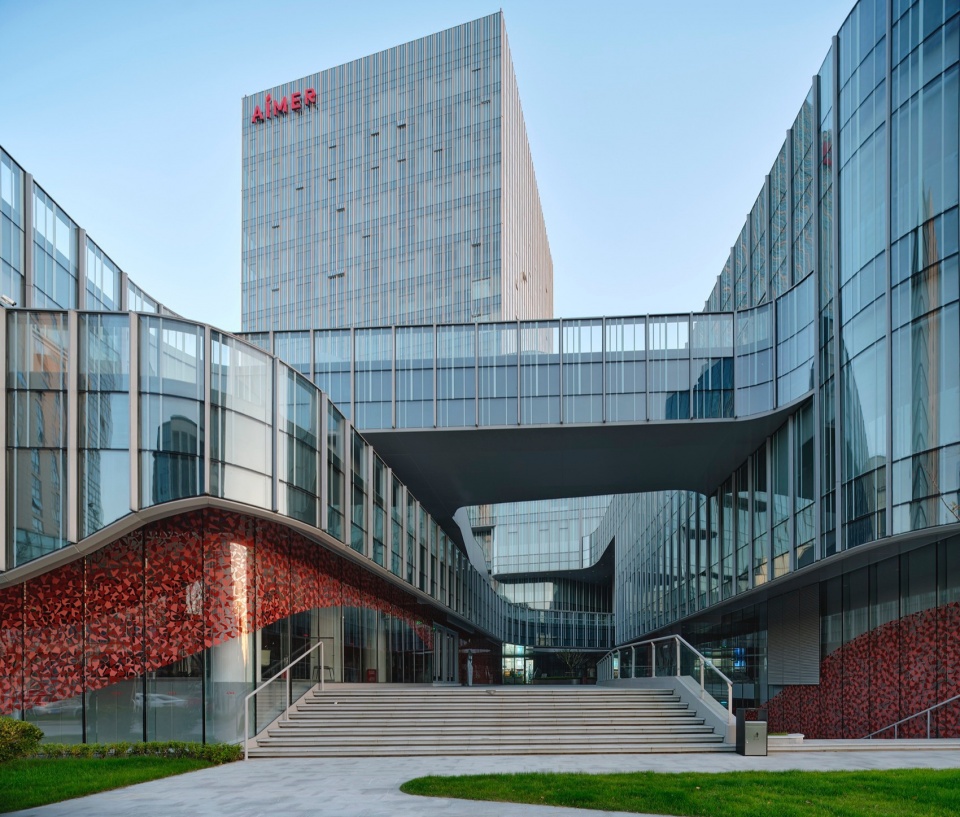
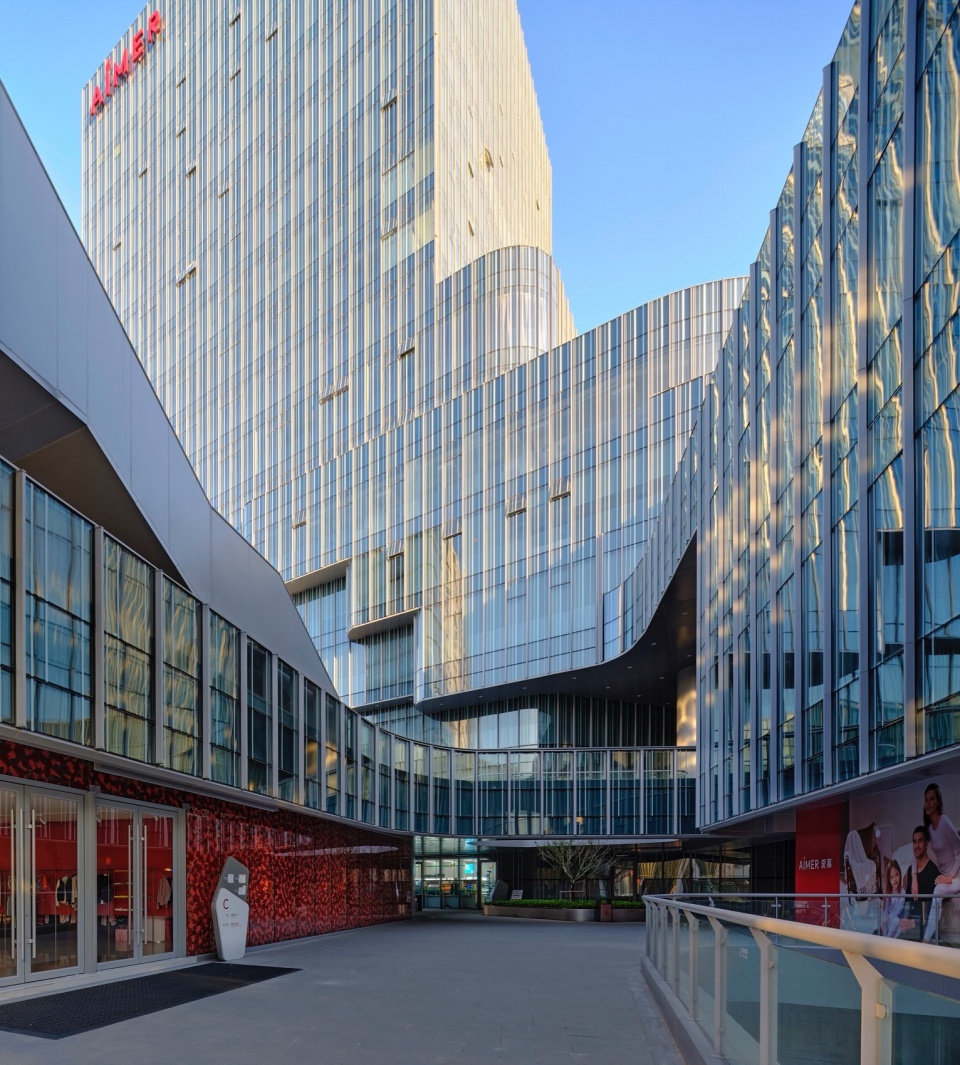
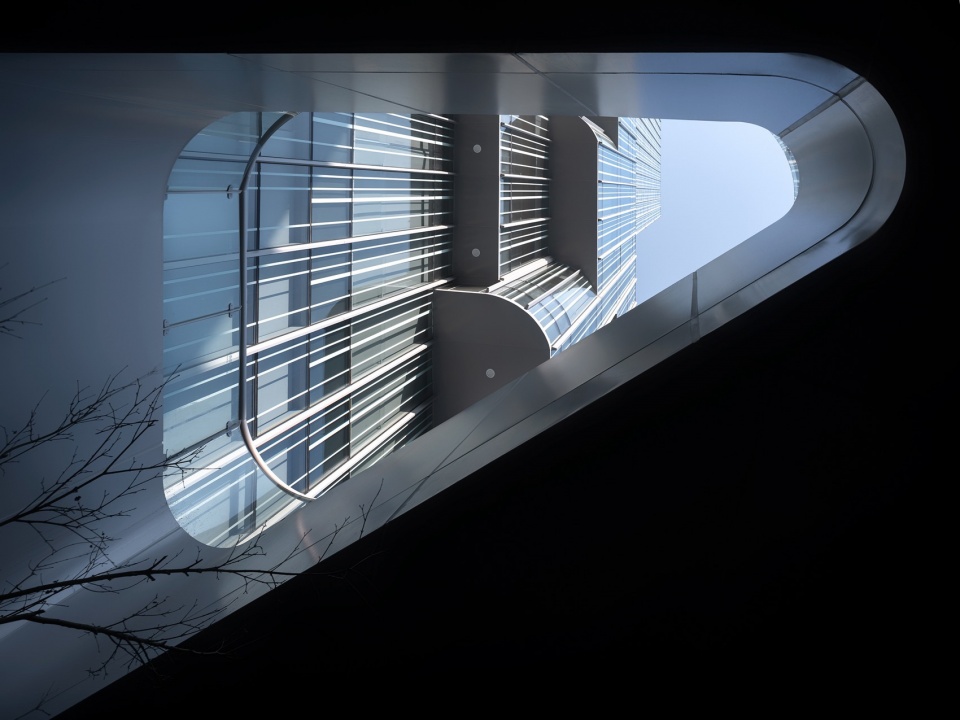
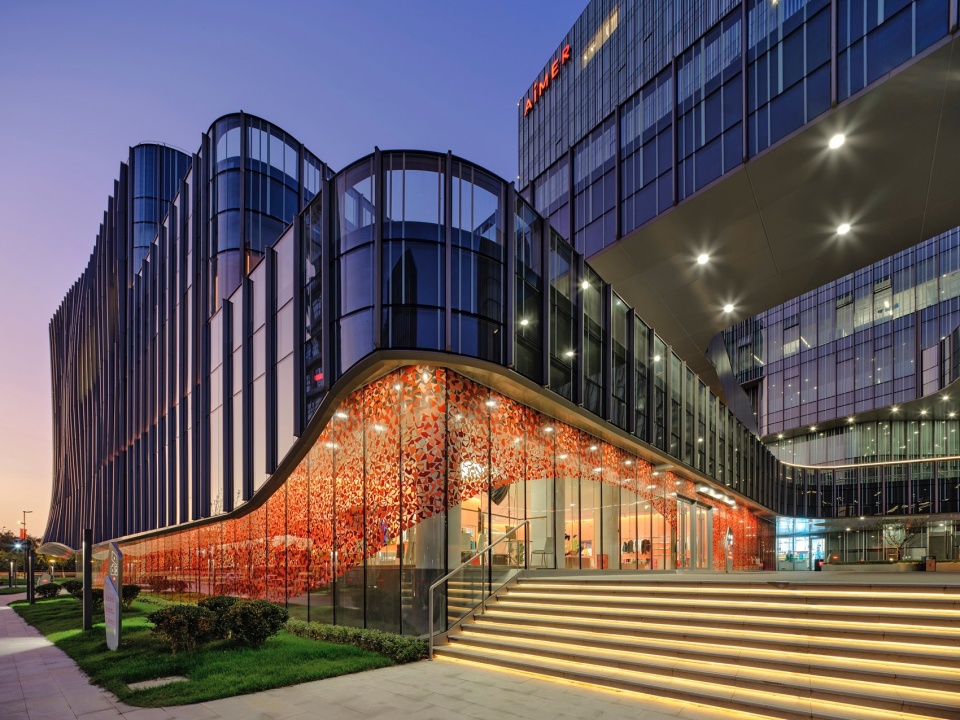
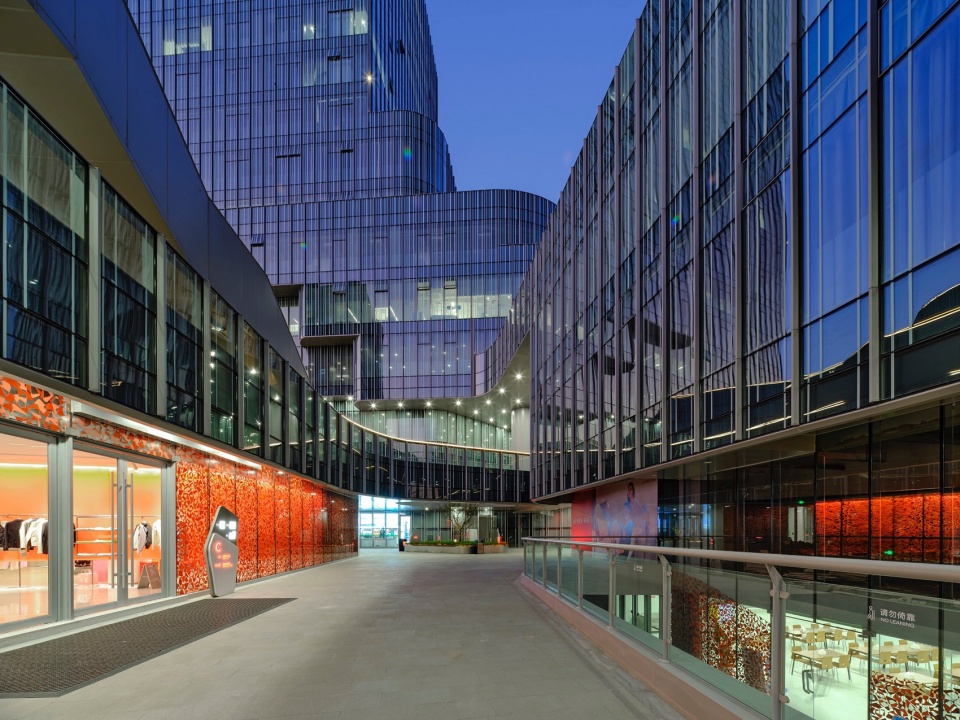
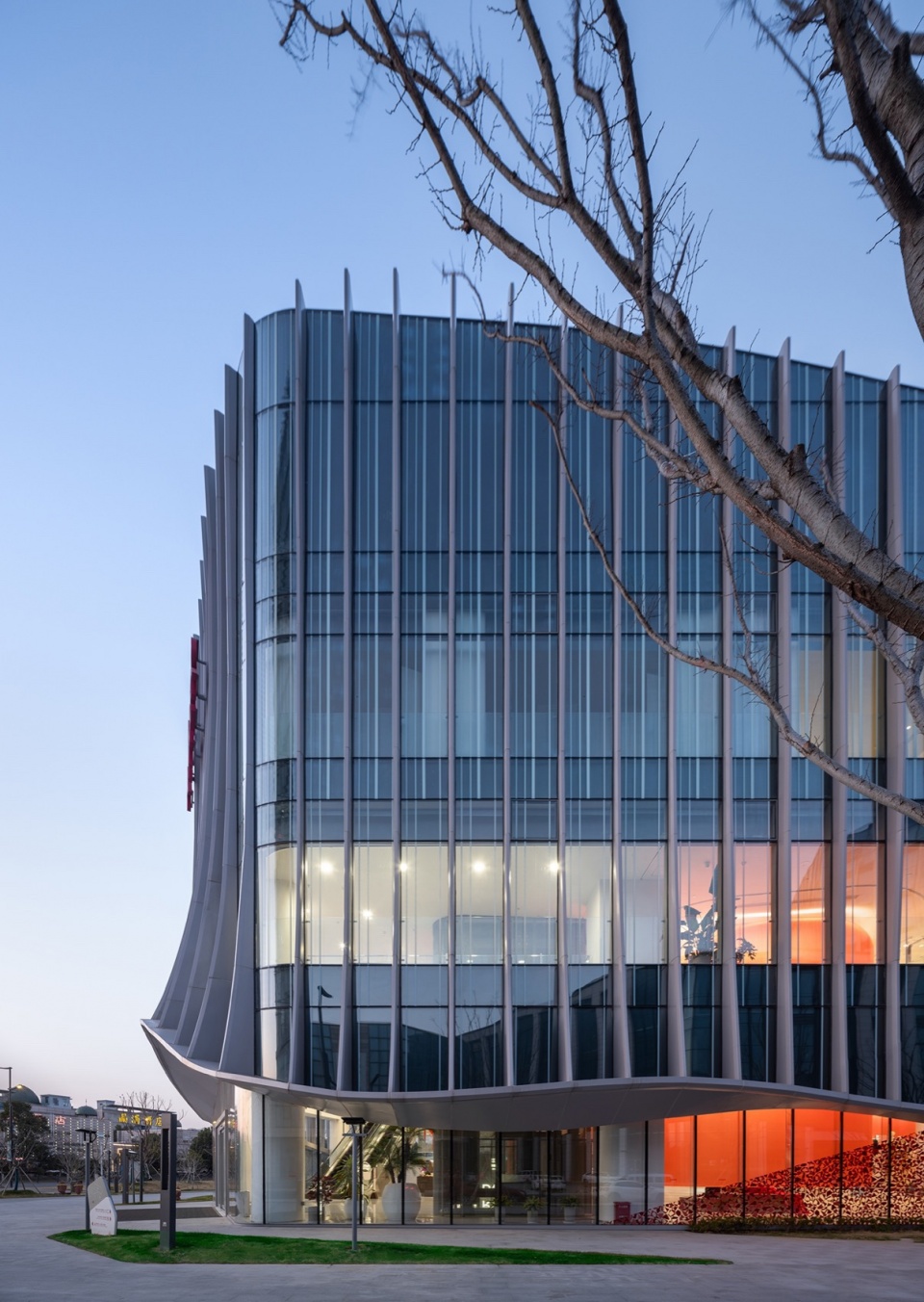
建筑立面采用幕墙系统,由垂直金属格栅与白色竖向线条构成。随着楼层的升高,立面图案的密度逐渐增加,使整栋建筑在视觉上更具层次感,同时微妙地映射出室内功能的变化。裙楼部分的立面展现出更具动感的表达方式。曲线转角与内凹区域塑造出波浪般的动态效果,强化了建筑底部更自由活跃的空间体验。塔楼上层的金属格栅延展至这些曲线之上,使建筑外观保持流动的整体性,同时加强了结构的统一性。
The façade incorporates a curtain wall system with a combination of vertical fins and white vertical lines. The pattern transition through the change in height, becoming denser as the floor levels get higher, adding intensity to the 17-story tall façade as well as subtly reflecting on the shift in the interior program. At the podium level, the façade transforms into a more dynamic expression. Curved corners and recessed sections create a wave-like motion, enticing the more active and free flowing aspect in which the lower levels of the campus can be experienced in. The metal fins of the upper floors extend over these curvatures, contributing to the building’s fluid aesthetic while also enwrapping the transition as part of a holistic design.
▼外立面,facade
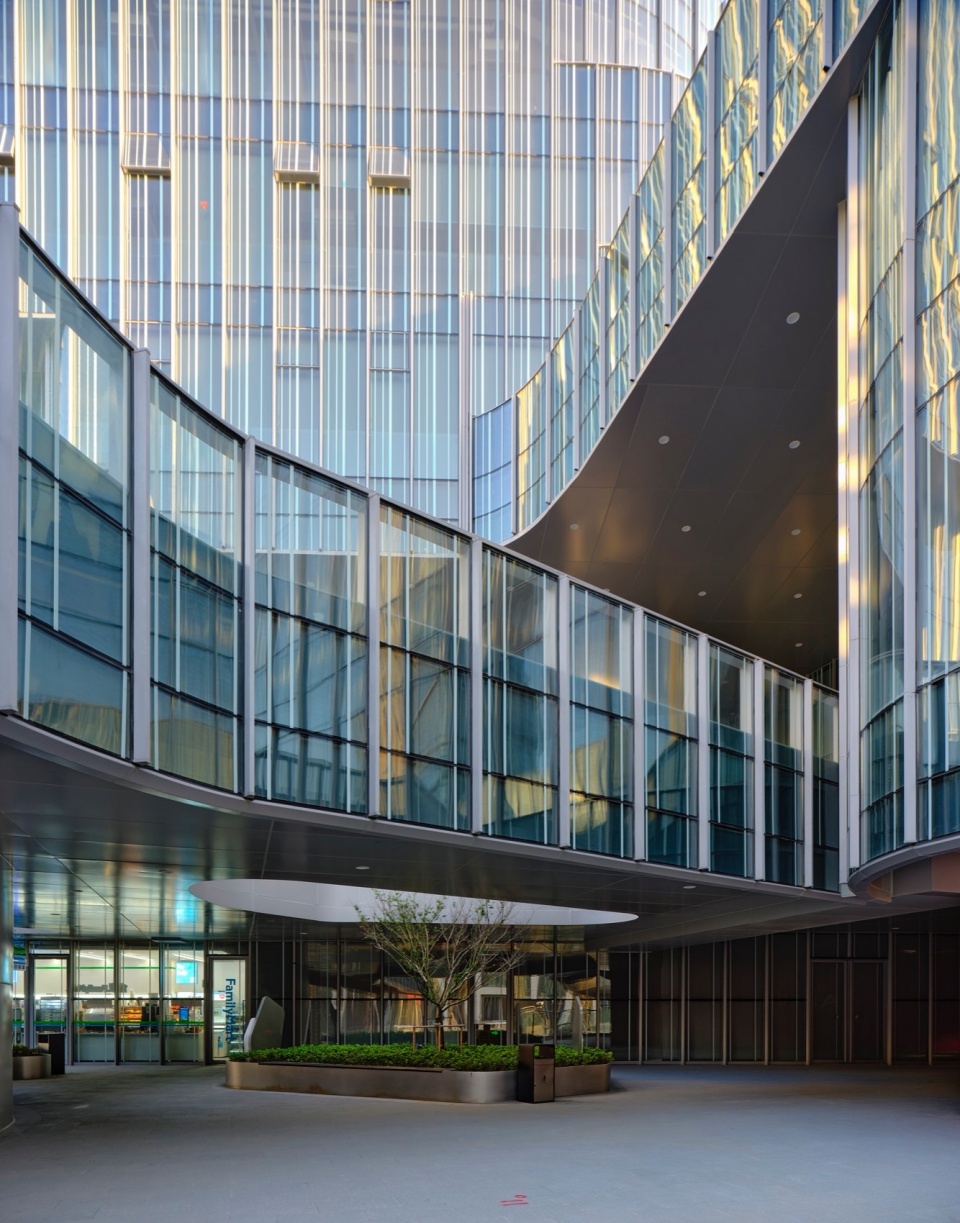
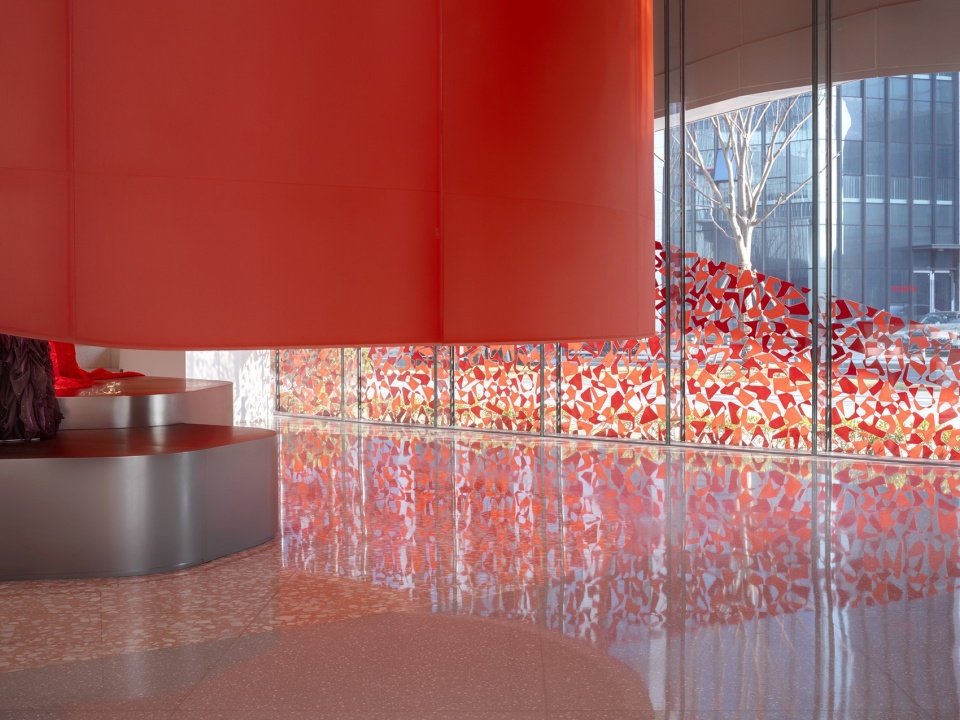
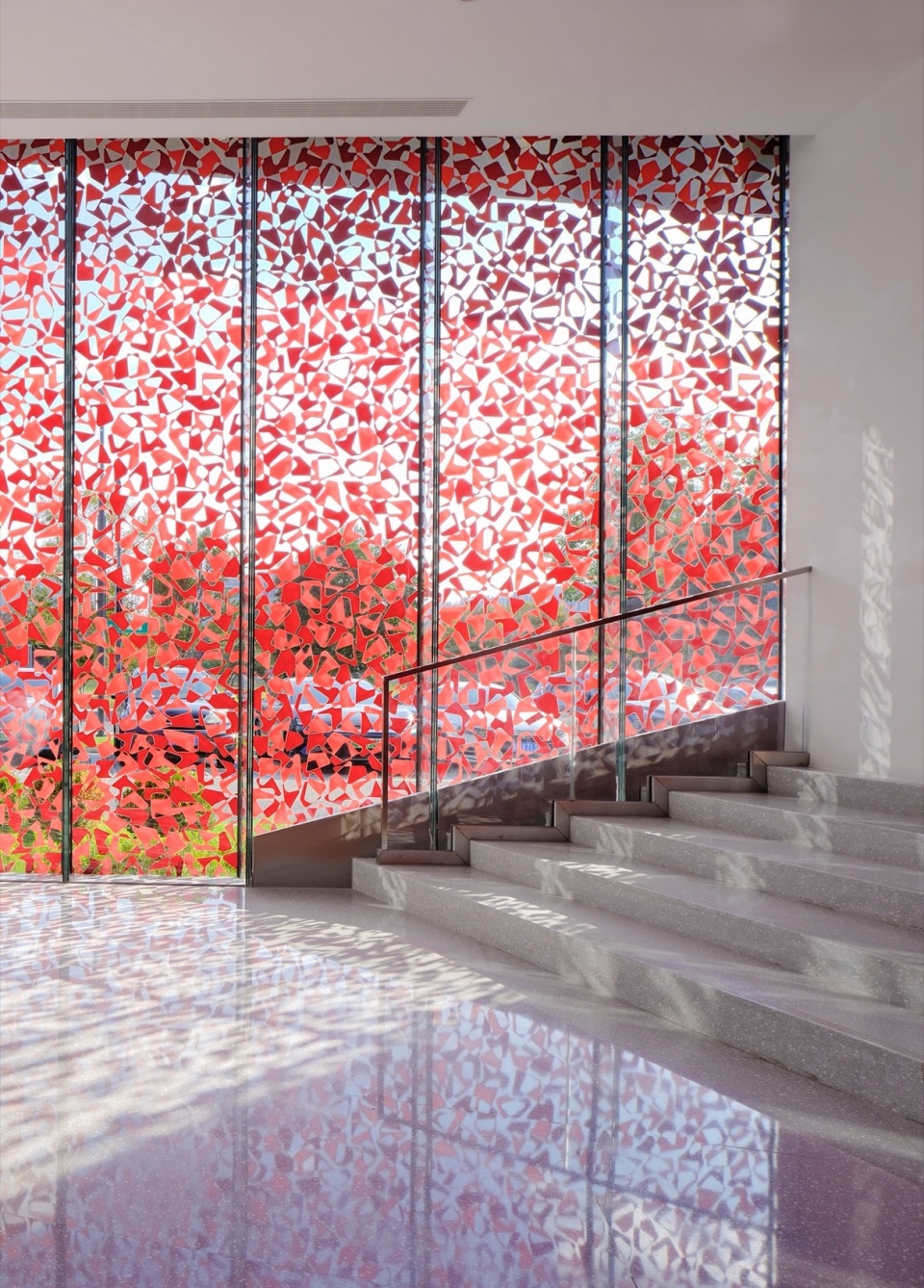
建筑基座部分,在玻璃幕墙下方还能看到一层红色的肌理图案,宛如蕾丝或织物,将立面设计与Aimer的品牌形象直接联系起来。这种层叠效果在西南入口尤为突出,玻璃似乎轻轻悬浮于地面之上,隐约展现出下方精致的图案。这一图案由两种不同色调的红色不规则几何形组成。形态大小各异,有些相互重叠或交错,在交汇处形成透明效果,模拟出蕾丝般的层次感。整体设计呈现出复杂的红色构图,与周围环境形成独特的互动。
At the base of the building, a secondary red patterned surface is also visible beneath the glass, resembling a lace or fabric, directly linking the façade to Aimer’s brand identity. This layering effect is particularly pronounced at the southwest entrance, where the glass appears to hover slightly above the ground, revealing the intricate pattern underneath. The pattern is composed of irregular, angular shapes in two shades of red. The shapes have varying sizes and orientations, some of which overlap or intersect with adjacent shapes, creating areas in between which are solidly colored. The transparency within the overlapping sections of the shapes results in a layering effect, mimicking the characteristics of a lace. The overall design appears as a complex arrangement of red forms, interacting with the background.
▼建筑基座部分,the base of the building
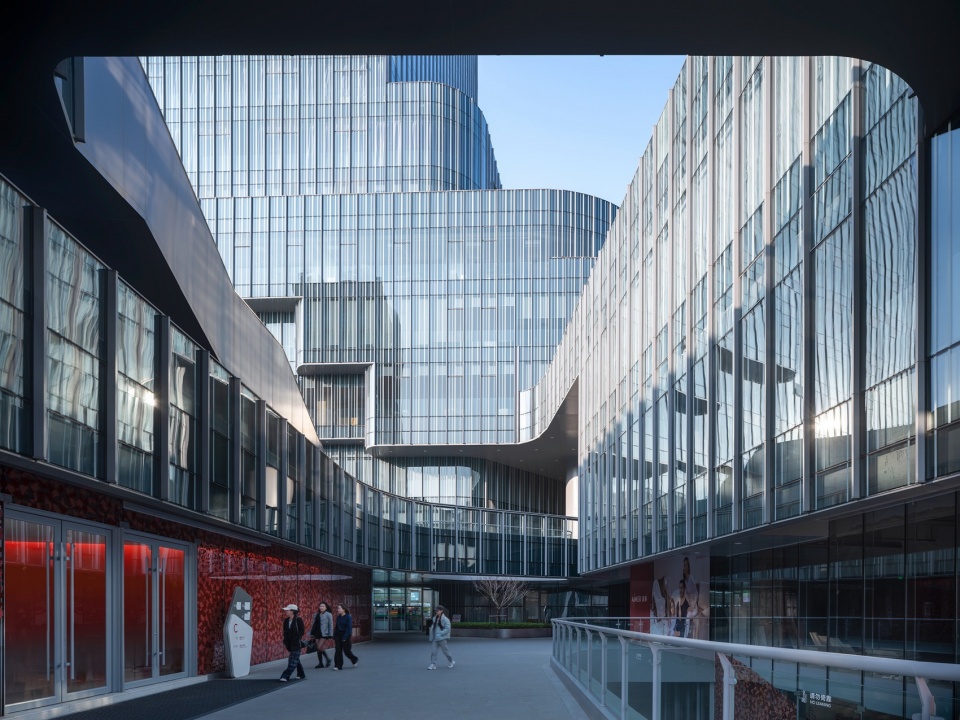
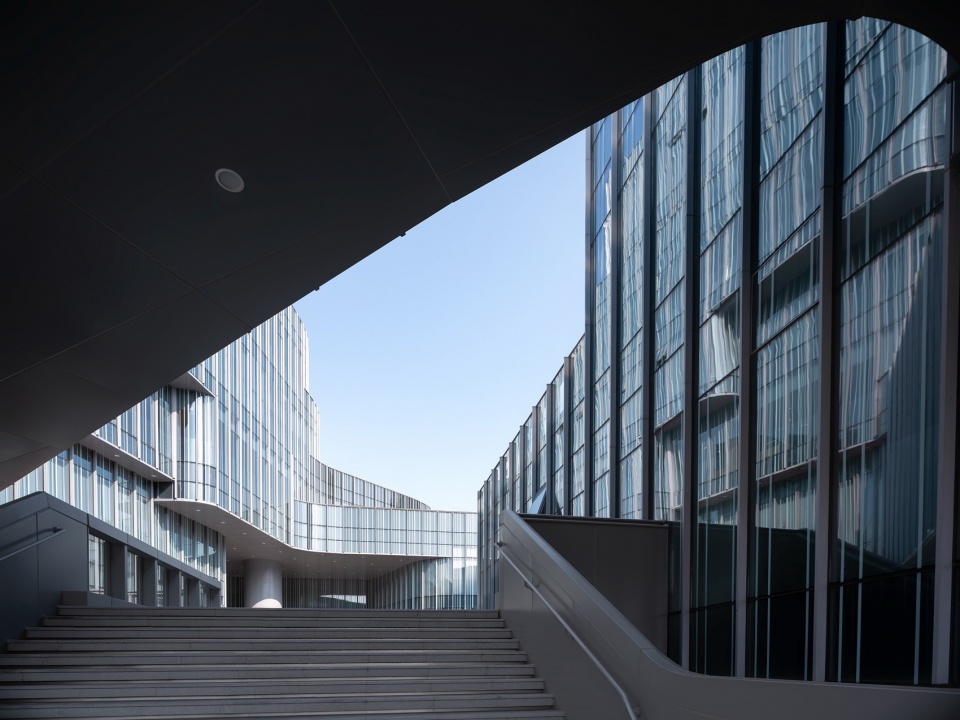
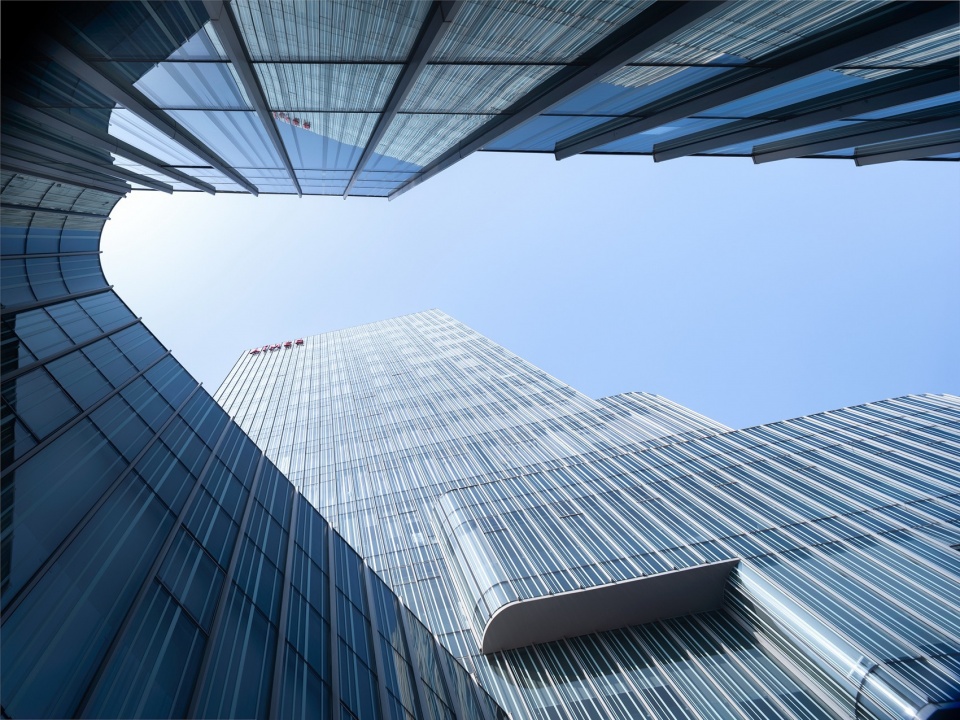
▼红色的肌理图案,red texture pattern
▼细部,details
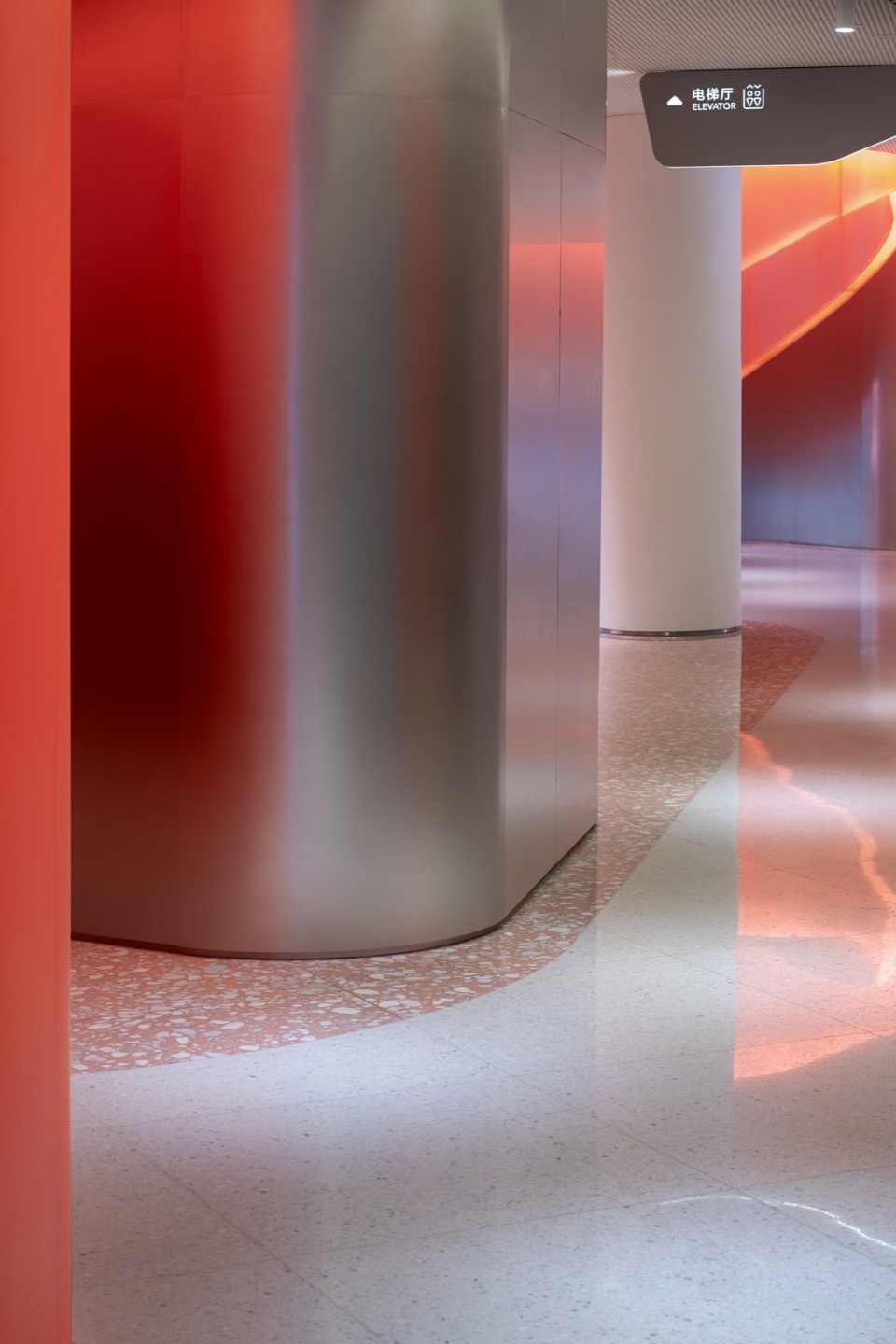
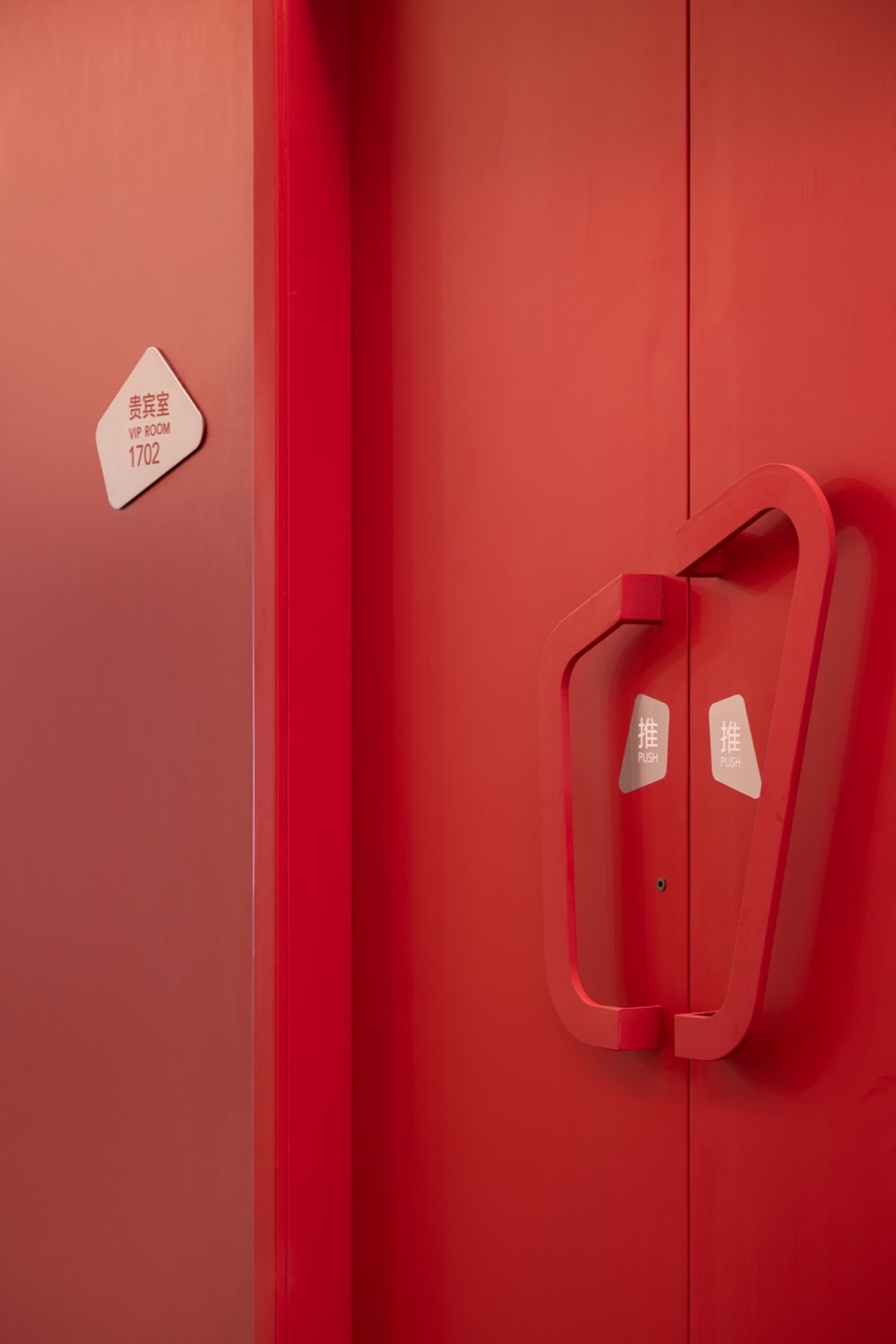
爱慕第二总部体现了一种向体验驱动型建筑的转变,不同功能在空间中交融,为商业、酒店和品牌叙事创造出富有活力的动态流线。建筑不局限于单一功能,而是基于适应性和互动性进行设计。这一理念正是Crossboundaries设计方法的体现——打造促进人与空间、产品与场所之间更紧密联系的建筑。
Aimer’s headquarters reflects a shift towards integrated, experience-driven architecture, where different functions come together to create a dynamic flow between commerce, hospitality, and brand storytelling. The building is not limited by one single function; it’s built on adaptability and interaction. This approach directly reflects how Crossboundaries design spaces that foster stronger connections between people, products, and place.
▼夜景,night view
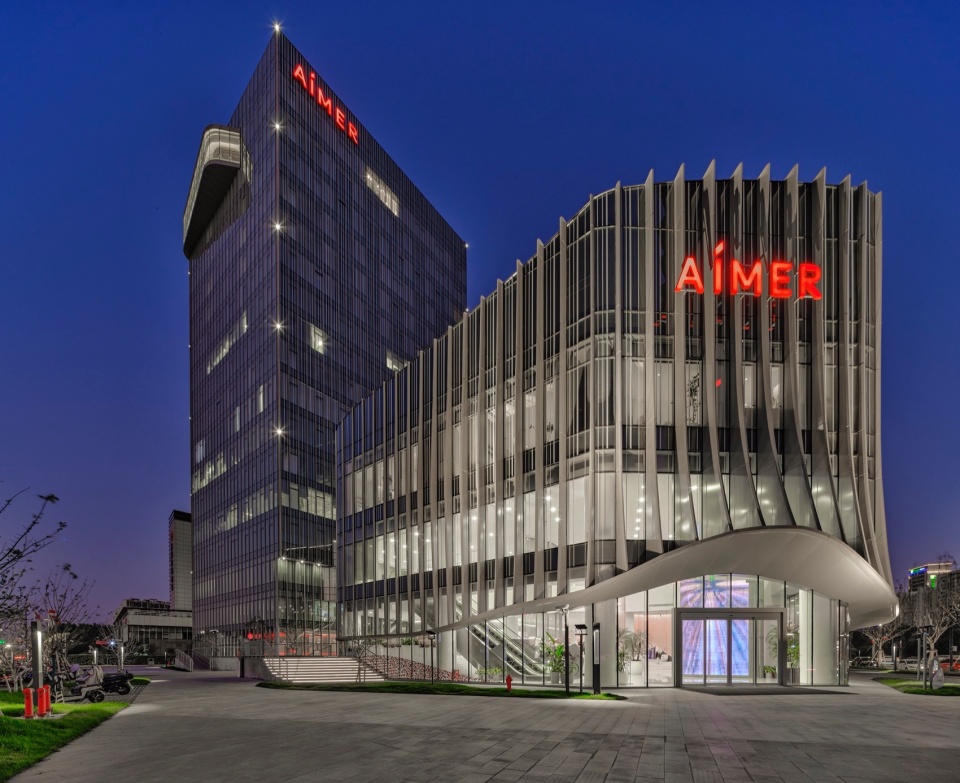
▼夜景,night view
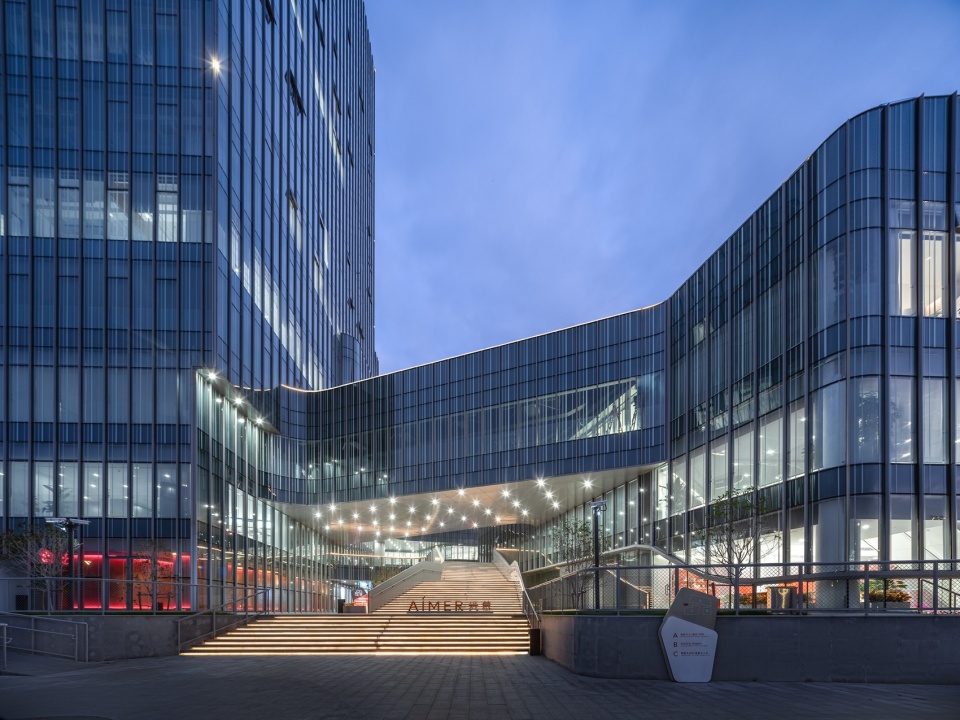
▼夜景,night view
▼外观近景,closer view
▼总平面图,master plan
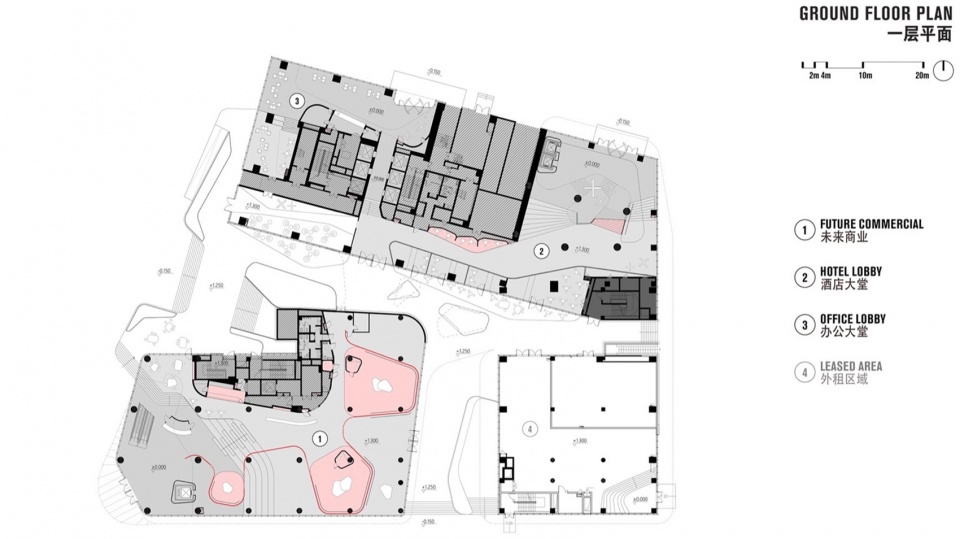
▼一层平面图,ground floor plan
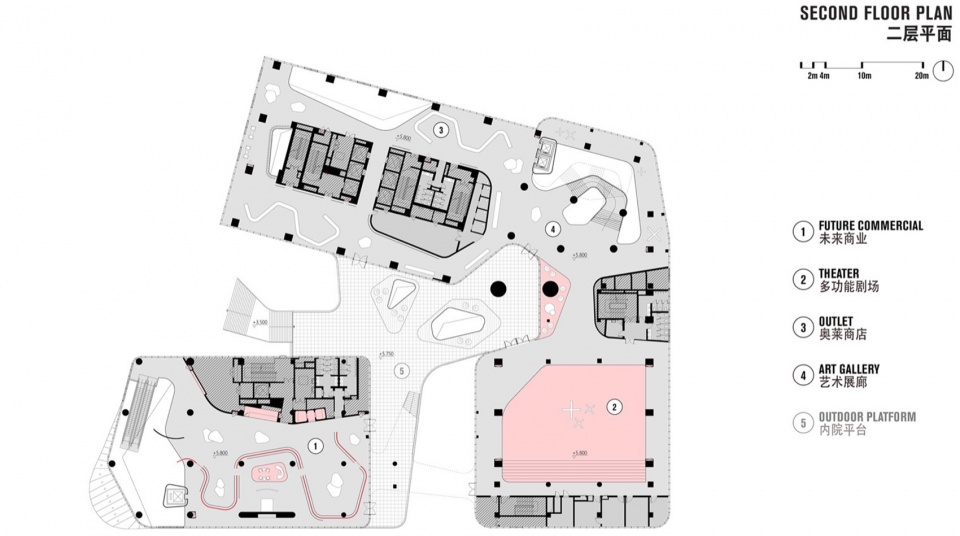
▼二层平面图,second floor plan
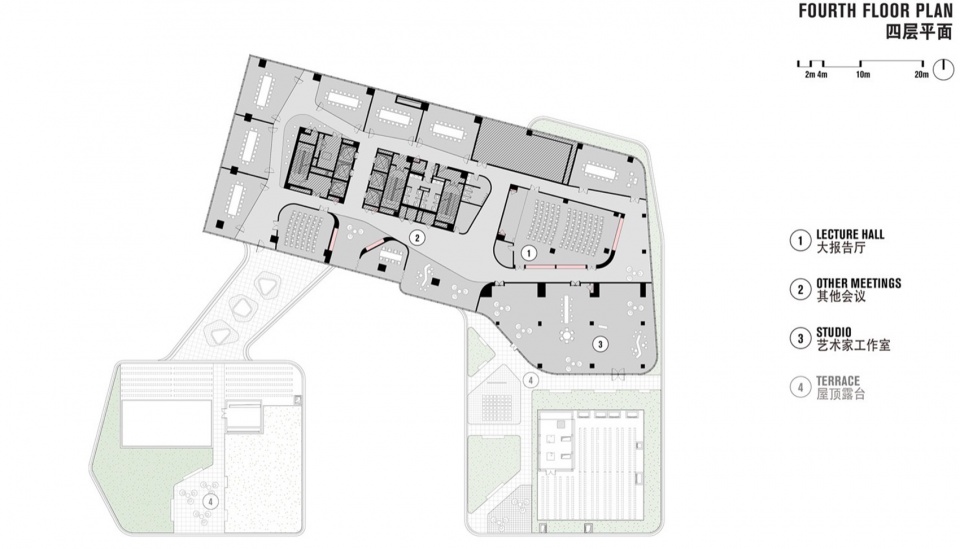
▼四层平面图,fourth floor plan
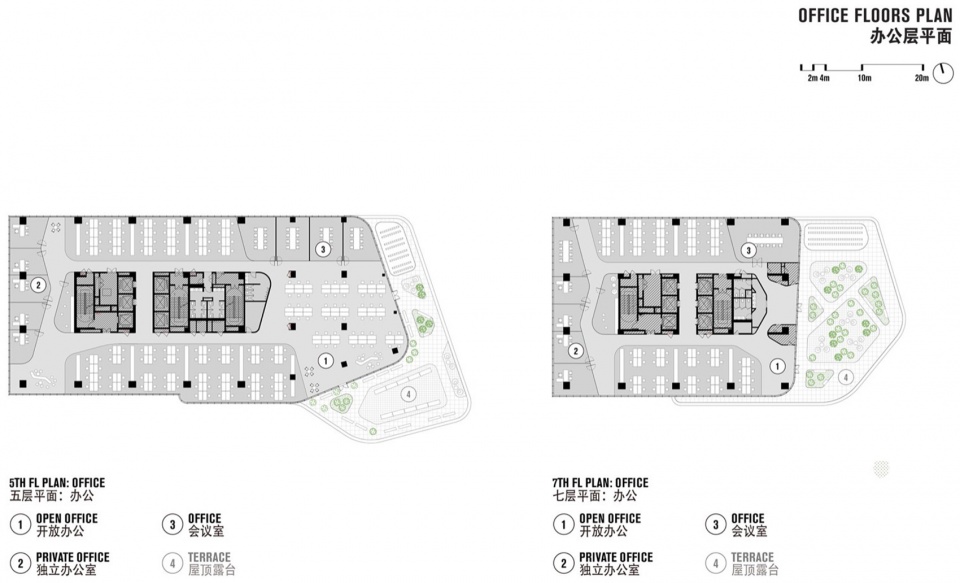
▼办公层平面图,office floor plan
▼直播间、酒店、VIP层平面图,live steam, hotel, VIP floor plan
▼剖面图,sections
项目基本信息
Project Information:
Project Name: Aimer Suzhou Headquarters
Location: Wujiang District, Suzhou, Jiangsu Province, China
Client: Aimer Co., Ltd.
Site Area: 11,330 m2
Architecture area: 41,062 sqm (Above Ground: 28,529 sqm, Below Ground: 12,533 sqm)
Design period: Jun. 2019 – Jun. 2022
Construction period: Mar. 2019 – Dec. 2024
Completion: Jan. 2025
Architect: Crossboundaries, Beijing, China
Partners in charge: Binke Lenhardt, DONG Hao
Lead Architect: GAO Yang
Design team: Marijana Simic, Silvia Campi, HUANG Biao, Ivan Chen, Sean Yu, HOU Jinghui,
Elena Gamez Miguelez, Erik Chen, GAN Li
Collaborative Design Team: ARTS GROUP CO.,LTD., Beijing Weisitu Architectural
Decoration Engineering Co., Ltd., Shanghai Tianjing Landscape Design Co., Ltd.
Contractor: Wujiang Construction Group
Photographers: Shan-jian images, YANG Chaoying