华南理工大学广州国际校区二期景观河道及配套水闸工程,广东 / 华南理工大学建筑设计研究院有限公司
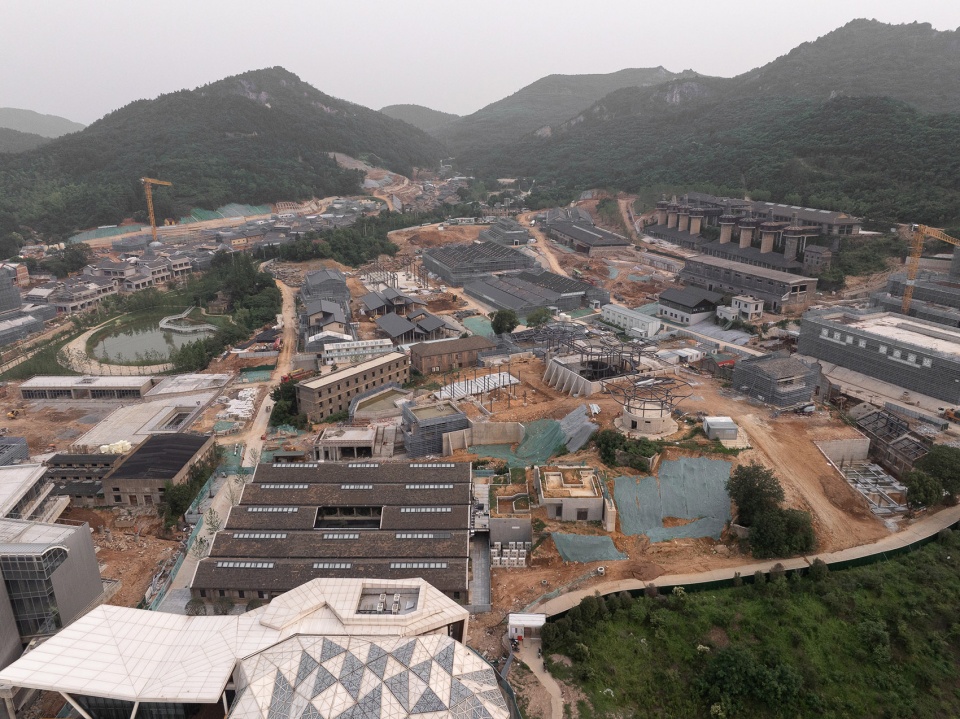
广州国际校区是华南理工大学继五山校区和大学城校区之后建设的第三个校区,作为国家级校区,粤港澳大湾区、广东省、广州市重点项目,由教育部、广东省、广州市、华南理工大学四方共建。选址于广州市番禺区广州国际创新城南岸核心区,与广州大学城隔岸相望,具有“四横七纵”的综合交通路网系统,占地面积约1700亩,总建筑面积为109万平方米,由广州市政府采用“交钥匙工程”完成基础建设及配套。在2023年7月,校区全面建成“中西合璧、博雅合璧、传统与现代合璧、生态与人文合璧”的校区。
Guangzhou International Campus is the third campus built by South China University of Technology after Wushan Campus and University Town Campus. As a national-level campus and a key project of the Guangdong-Hong Kong-Macao Greater Bay Area, Guangdong Province and Guangzhou City, it is jointly built by the Ministry of Education, Guangdong Province, Guangzhou City and South China University of Technology. Located in the core area of the south bank of Guangzhou International Innovation City in Panyu District, Guangzhou City, it faces Guangzhou University Town across the river. It has a comprehensive transportation network system of “four horizontal and seven vertical”, covering an area of approximately 1,700 mu and with a total construction area of 1.09 million square meters. The basic construction and supporting facilities were completed by the Guangzhou Municipal Government through a “turnkey project”. In July 2023, the campus was fully completed as a campus that combines Chinese and Western elements, liberal arts and elegance, tradition and modernity, as well as ecology and humanity.
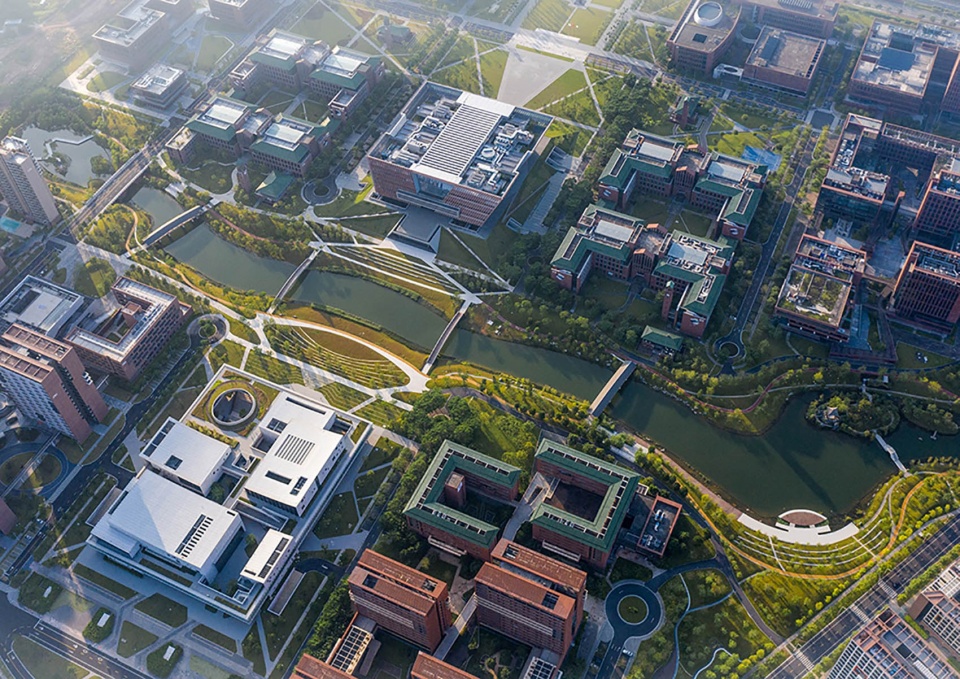
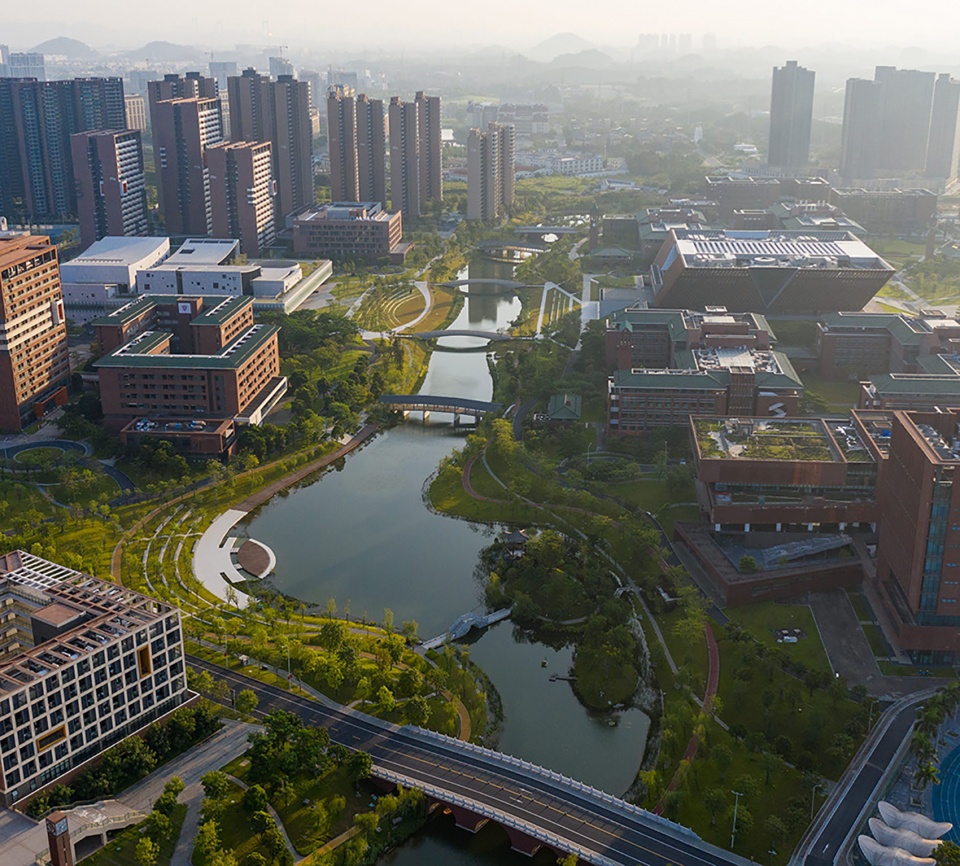
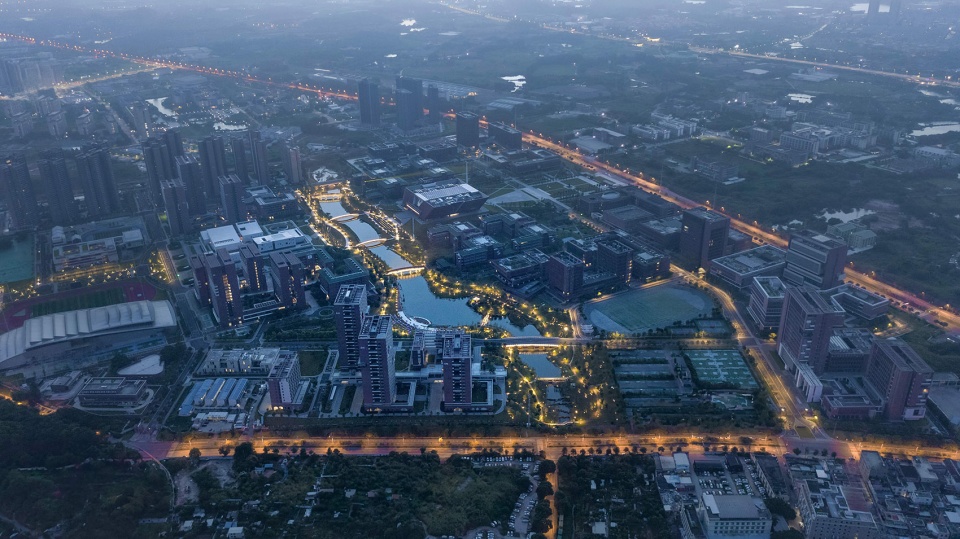
▼景观河道鸟瞰,Aerial view of the scenic river course
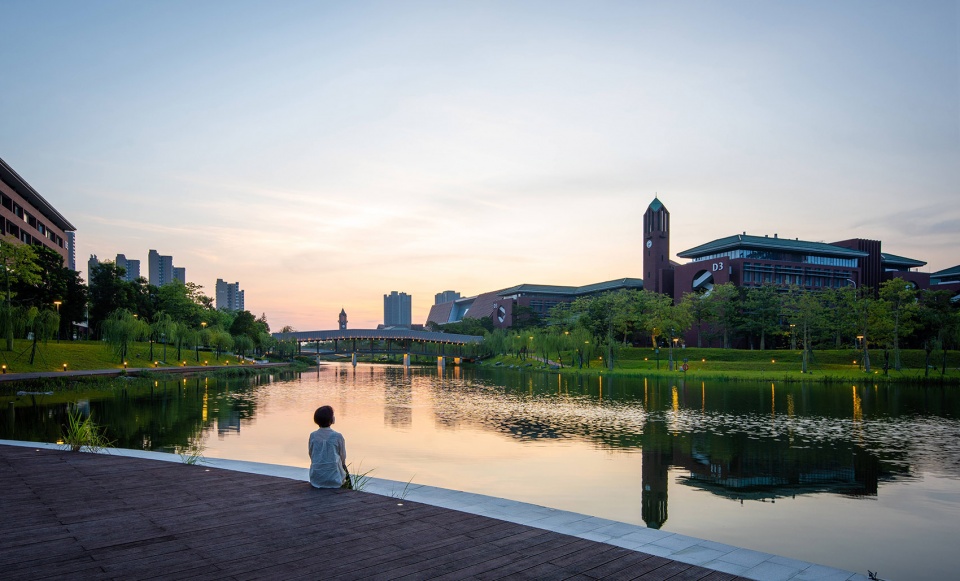
▼中轴水岸实景,The real scene of the central waterfront
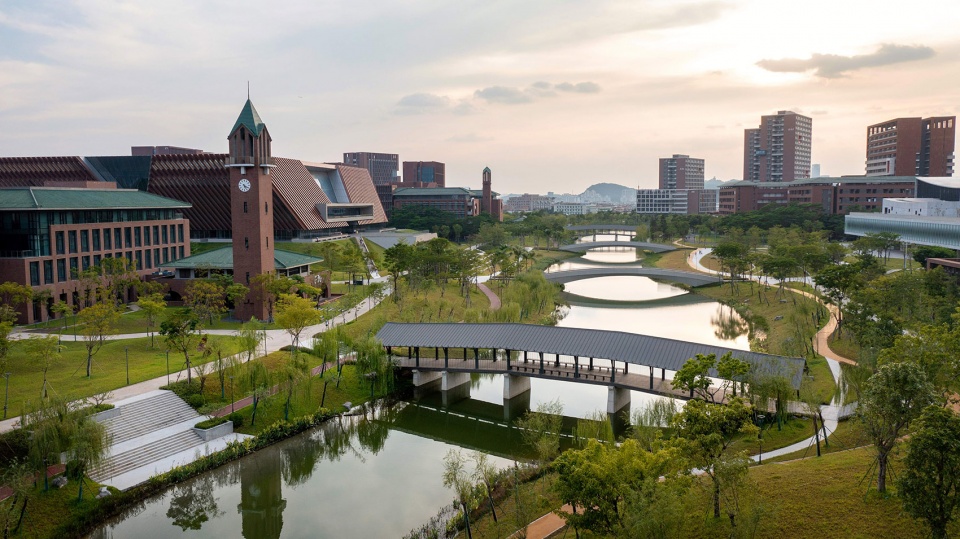
景观河道位于校区中部核心区,上下游分别与罗边涌、暨大景观河顺接,东西延展1公里,占地11万平方米,水域设计容积6.45万立方米,设计水深3米,建设内容有河道驳岸、桥梁、水利水闸、湿地水生态及水循环工程,总投资1.2亿元。
The landscape river is located in the core area in the middle of the campus. It connects with Luobian River and Jinan University’s landscape River in the upstream and downstream respectively, extending 1 kilometer from east to west. It covers an area of 110,000 square meters, with a designed water volume of 64,500 cubic meters and a designed water depth of 3 meters. The construction content includes river revetment, Bridges, water conservancy gates, wetland water ecology and water circulation projects, with a total investment of 120 million yuan.
▼国际校区景观鸟瞰,Aerial view of the international campus landscape
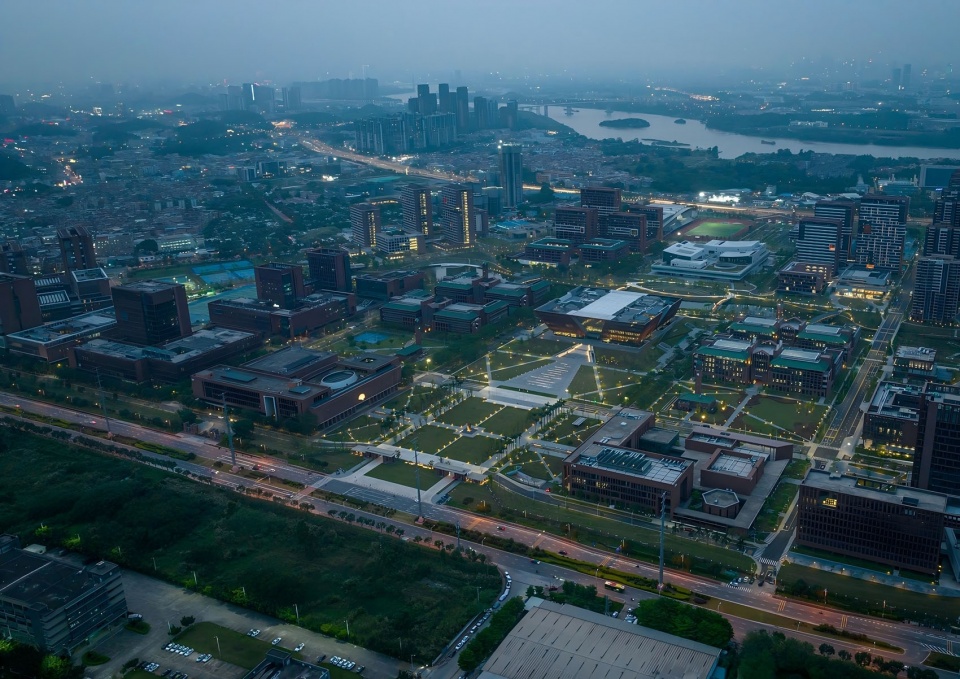
规划设计理念 Planning and design concept
一元复始,东西通济As the New Year begins, prosperity prevails between the East and the West
通过延续整体规划布局,以“一”字形的景观水系在校园中部向东西两侧延展,形成南北分区并置的景观格局,在国际校区街区式规划框架下构建连接性的生态核心。
By continuing the overall planning layout, a “one” shaped landscape water system extends from the middle of the campus to the east and west sides, forming a landscape pattern with parallel north and south zones. Under the block-style planning framework of the International campus, a connected ecological core is constructed.
▼水岸景观鸟瞰平面,Aerial view of waterfront landscape
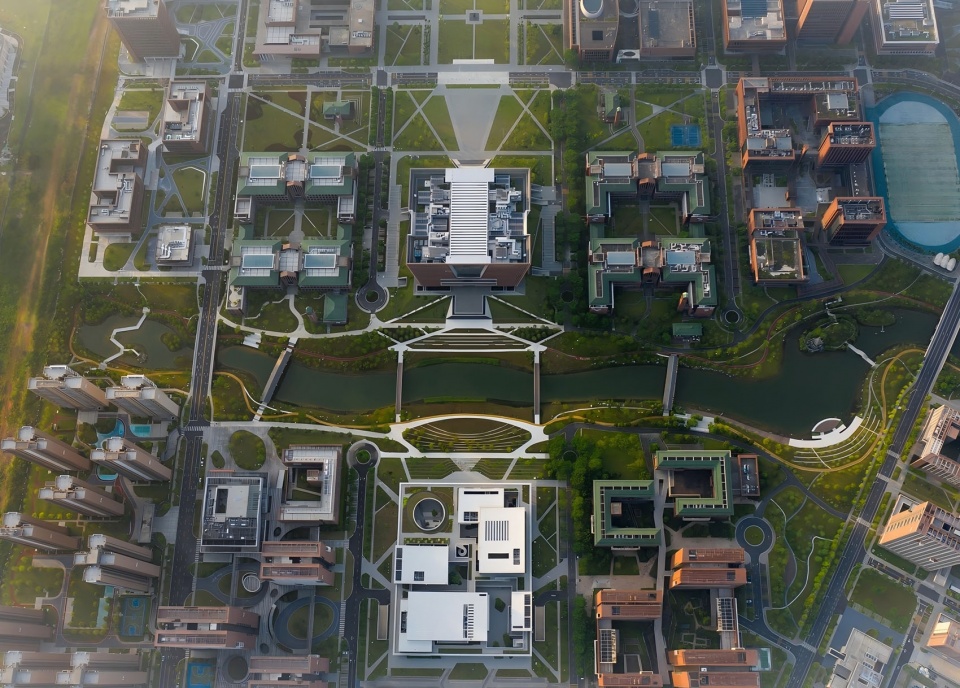
规划结构Planning Structure
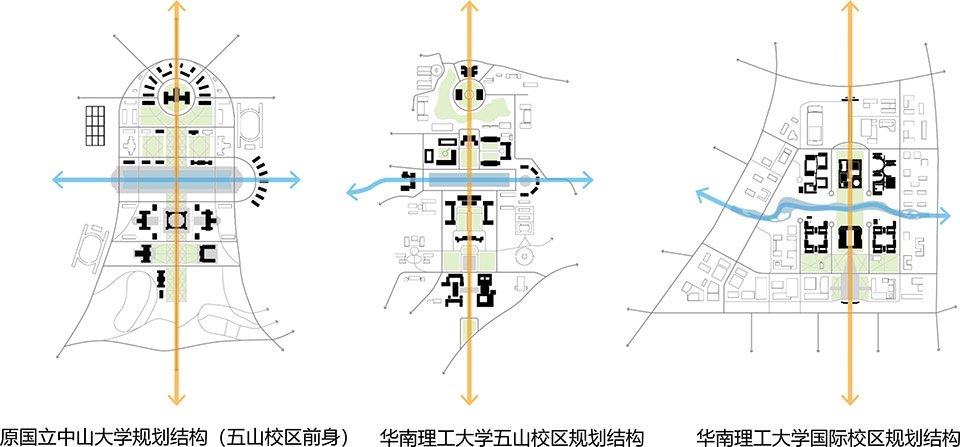
文脉传承 ,空间同构The inheritance of cultural heritage and the isomorphism of space
国际校区以五山老校区东西湖带状水体景观与纵轴的叠加的规划结构为基础,结合利用基地原有的水体并加以因势利导 ,在校园的腹地再现了老校区自西向东蜿蜒而行的带状水系。
The International Campus is based on the planning structure of the superimposition of the east-West Lake ribbon-shaped water landscape and the longitudinal axis of the old Wushan Campus. By making use of the original water bodies on the site and guiding them in accordance with the trend, the ribbon-shaped water system that meanders from west to east in the old campus has been recreated in the heart of the campus.
▼各校区规划结构分析图,Analysis diagram of the planning structure of each campus
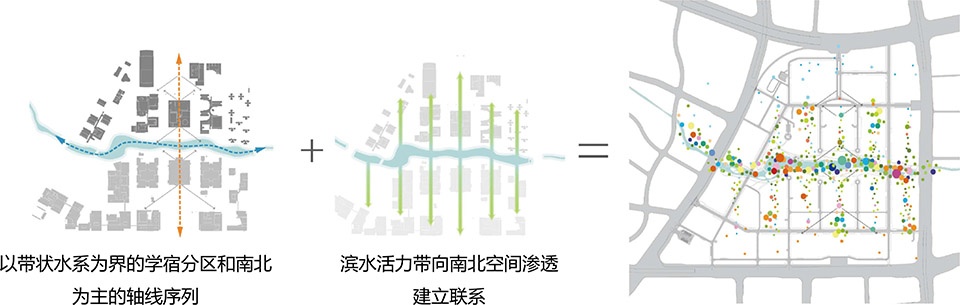
活力水带 ,生态渗透Vitality Water Belt, ecological infiltration
滨水带东西向总长1千米,两侧景观视线良好,空间开敞,是集工作、生活、运动、休闲于一体的复合区,往北逐渐过渡到运动区,往南过渡到学习休闲区,差异化的功能配置,造就了公共空间的多样性和丰富性。
The total length of the waterfront from east to west is 1 kilometer. The views on both sides are good and the space is open. It is a complex area integrating work, life, sports and leisure. It gradually transitions to the sports area to the north and to the study and leisure area to the south. The differentiated functional configuration has created the diversity and richness of the public space.
▼空间结构生成图,Spatial structure generation diagram
▼总平面图,General layout plan
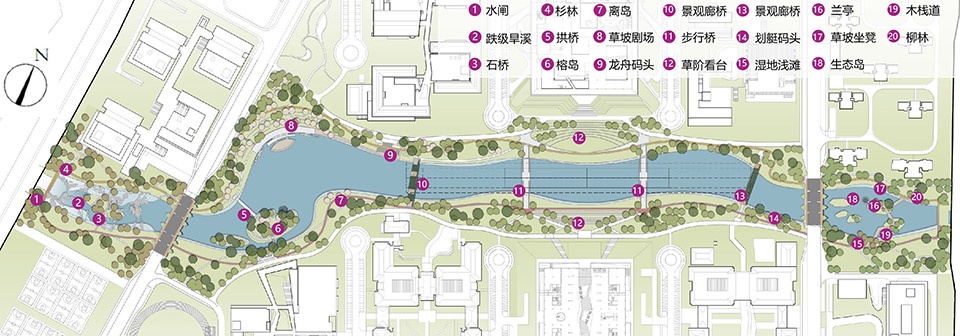
设计思路Design Concept
1.顺应整体规划,打造中西合璧水岸景观1. In accordance with the overall planning, create a waterfront landscape that integrates Chinese and Western styles.
将传统园林景观与现代园林相融合,通过赋予人文、生态与艺术功能空间,与水岸校园建筑共同构成和谐的设计秩序,并形成空间对话与互动,形成可游、可停、可赏的活力水岸空间。
Integrating traditional garden landscapes with modern ones, by endowing them with humanistic, ecological and artistic functional spaces, a harmonious design order is formed together with the waterfront campus buildings, and a spatial dialogue and interaction are created, resulting in a vibrant waterfront space that can be visited, stopped and appreciated.
▼中轴水岸实景,The real scene of the central waterfront
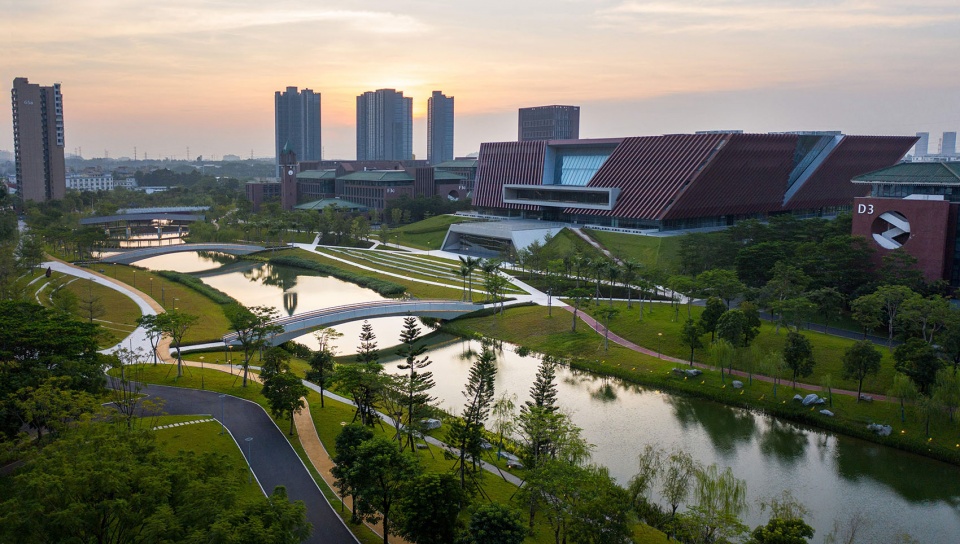
2.激发校园活力,建立完善校园慢行系统2. Stimulate campus vitality, establish a complete campus slow traffic system
通过沿岸健康活力跑道串联水岸景观空间,成为滨水驳岸的一条活力“动脉”,为了加强东西水岸联系,七条特色景观桥连通东西水岸空间,与校园步行系统畅通互联。
The waterfront landscape space is connected by the health and vitality running track along the shore, becoming a dynamic “artery” of the waterfront revetment. To enhance the connection between the east and west waterfront Spaces, seven distinctive landscape Bridges link the Spaces and are smoothly connected with the campus pedestrian system.
▼中轴及西水岸鸟瞰实景图,Aerial view of the central axis and the west waterfront
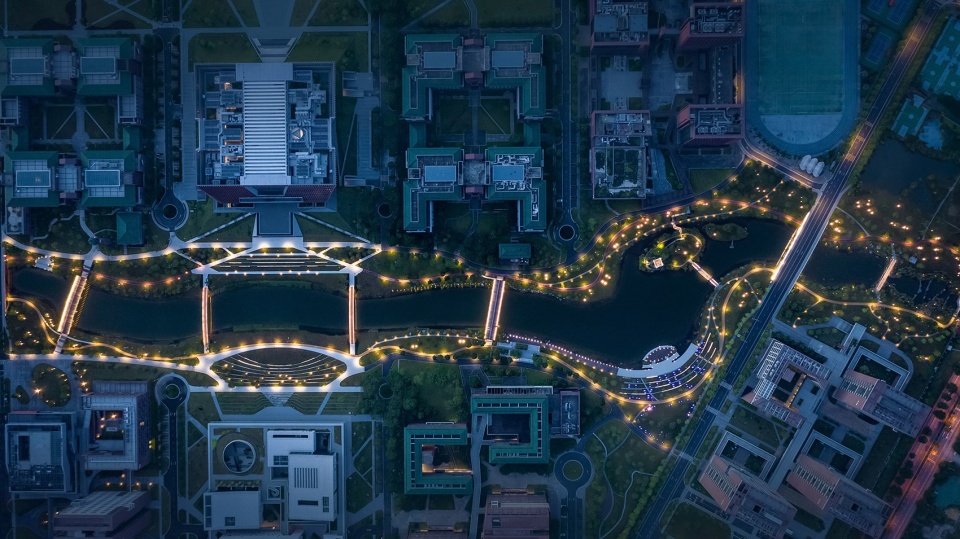
针对使用人群主要为在校师生,有着相对统一的作息规律,方案利用人群活动特质与设计相结合,区别于一贯参与性较低的单一园路设计,在路宽和路径设计上组织人流交通,来提高人与人碰面、相遇的概率,丰富游园趣味性。
The main user group is teachers and students on campus, who have a relatively unified daily routine. The plan combines the characteristics of the group’s activities with the design, which is different from the traditional single garden path design with low participation. In terms of road width and path design, it organizes the flow of people to increase the probability of people meeting and encountering each other, and enriches the fun of visiting the garden.
▼水岸鸟瞰夜景,Aerial view of the night scenery river channel
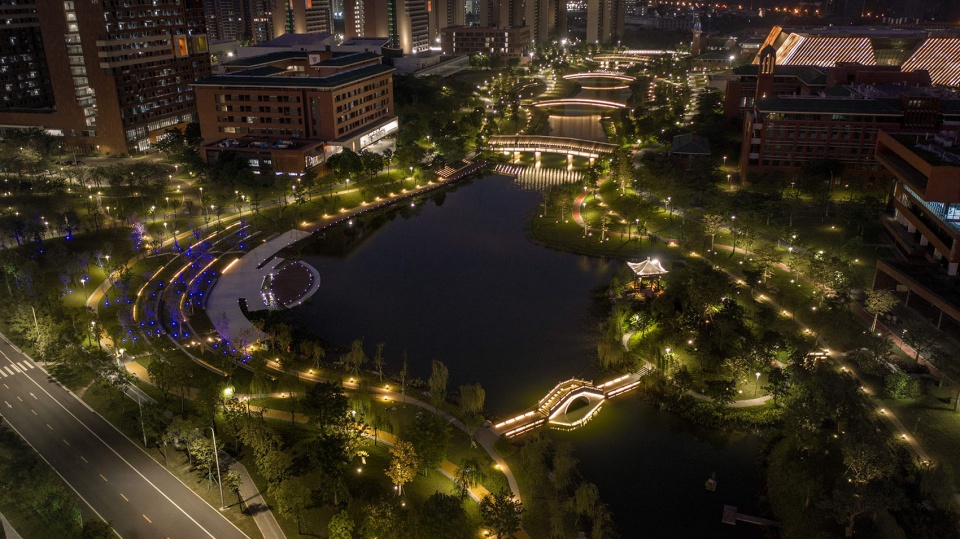
3.植物四季芳华,彰显岭南地域特色风貌3. The plants bloom splendidly throughout the four seasons, showcasing the distinctive regional characteristics and landscape of Lingnan.
水岸植物规划以“绿柳芳华,四季和鸣”为主题,林下空间疏朗,驳岸为草坡入水,创造出自然柔性的边界,让师生尽享生态自然的河岸风光。注重植物群落的整体性,以本土树种作为植物造景的主线,统领滨水绿地的整体风貌。
The waterfront plant planning is themed “Green Willows in Full Bloom, Harmony throughout the Four Seasons”. The space under the trees is spacious, and the revetment is a grassed slope leading into the water, creating a natural and flexible boundary, allowing teachers and students to fully enjoy the ecological and natural riverbank scenery. Emphasize the integrity of the plant community, take native tree species as the main line of plant landscaping, and lead the overall style of the waterfront green space.
▼水岸西区鸟瞰实景图,Aerial view of the waterfront west district
▼水岸西区草坡剧场实景图,The real scene picture of Grass Slope Theater in the West District of Waterfront
4.强化雨洪管理,提升校园景观生态价值4. Strengthen flood management, enhance the ecological value of campus landscapes.
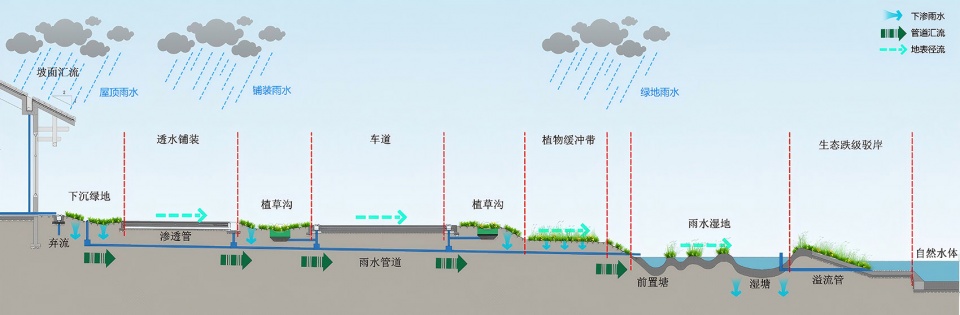
按照“源头减排、过程控制、系统治理”的思路,充分发挥海绵城市的“自然积存、自然渗透、自然净化”作用 ,实现雨水资源的全过程管控,保障校园防洪排涝安全。通过人工湿地及适地适树植物种植组团,为鸟类、青蛙、鱼类等营造栖息地,有利于营造完整的水生态系统。
In accordance with the concept of “source reduction, process control and systematic governance”, we should give full play to the role of sponge cities in “natural accumulation, natural infiltration and natural purification”, achieve full-process control of rainwater resources, and ensure the safety of flood control and drainage on campus. Through artificial wetlands and planting clusters of site-specific trees, habitats for birds, frogs, fish and other species can be created, which is conducive to building a complete aquatic ecosystem.
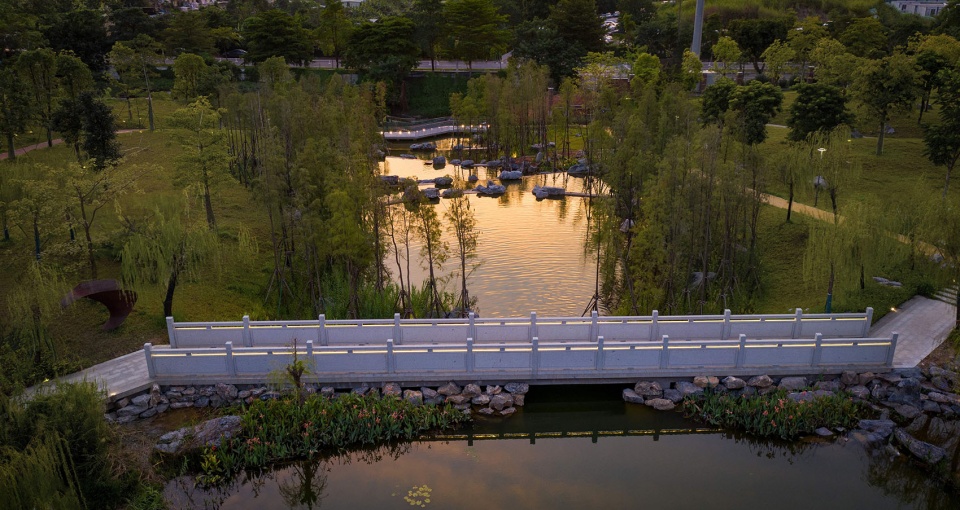
▼东水岸水闸实景,The real scene of the east waterfront Water Gate
植物规划Plant Planning
水岸植物规划以疏林草坡为主调,重点区域点缀特色树种。植物配置设计重点表达植物群落的自然生态形相,并以特色的造景树种为点缀。
The landscape planning for waterside plants primarily features sparse forests and grass slopes, with special tree species accentuating key areas. The plant configuration design emphasizes expressing the natural ecological form of plant communities, and highlights distinctive ornamental tree species as accents.
▼植物种植图,Plant planting diagram
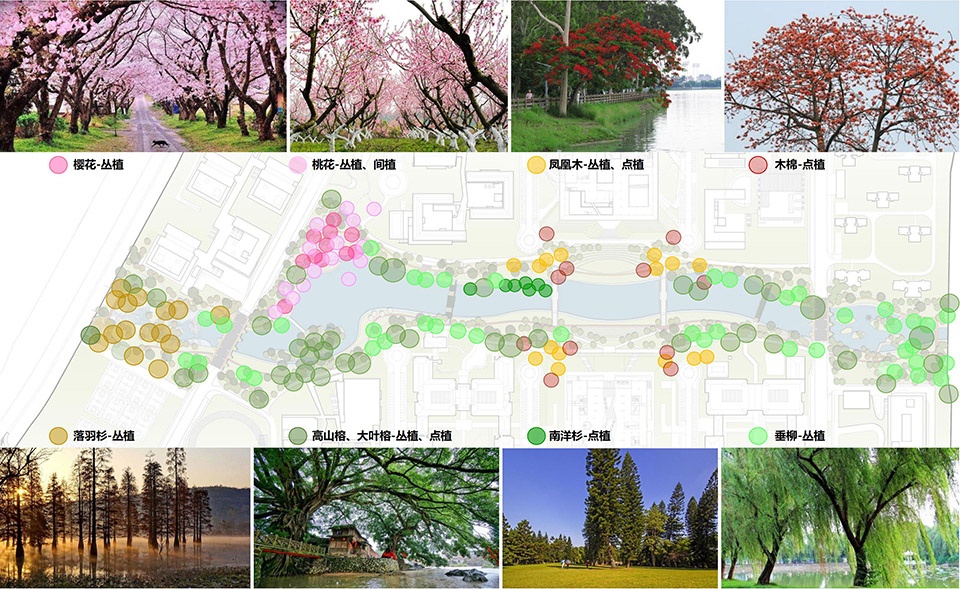
垂柳是植物造景的主线,统领着滨水绿地整体风貌;同时注重植物品类的多样性和选择季相树种,春有青翠绵连大叶榕;夏有热情灿烂凤凰木;秋有彩叶娇艳落羽杉;冬有浪漫素雅羊蹄甲,力图打造出季相丰富、应时而变的校园风景。
Willow trees serve as the main feature in landscape design, guiding the overall aesthetic of riverside green spaces; at the same time, attention is given to the diversity of plant species and the selection of seasonal trees, with banyan trees providing lush greenery in spring, flame trees offering vibrant colors in summer, larches displaying colorful foliage in autumn, and Bauhinia trees adding romantic simplicity in winter, aiming to create a campus landscape rich in seasonal variety and changing with the seasons.
▼中轴水岸实景,The real scene of the central waterfront
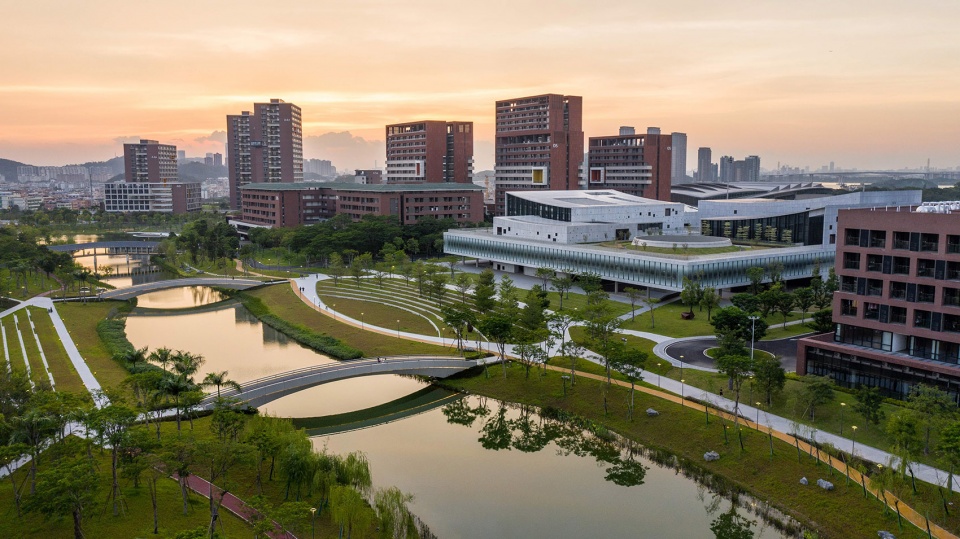
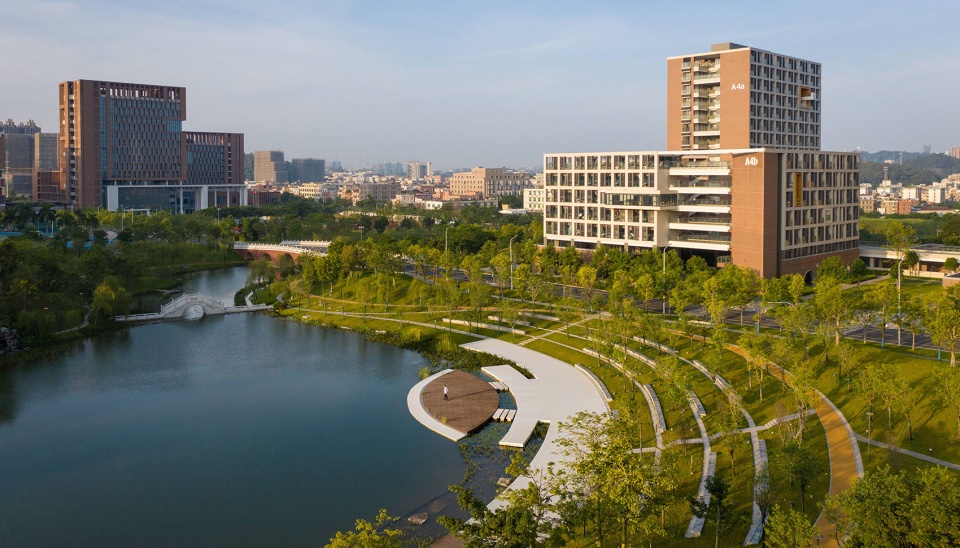
▼水岸西区草坡剧场实景图,The real photo of the grass slope theater in waterfront west district
设计细部 Design Details
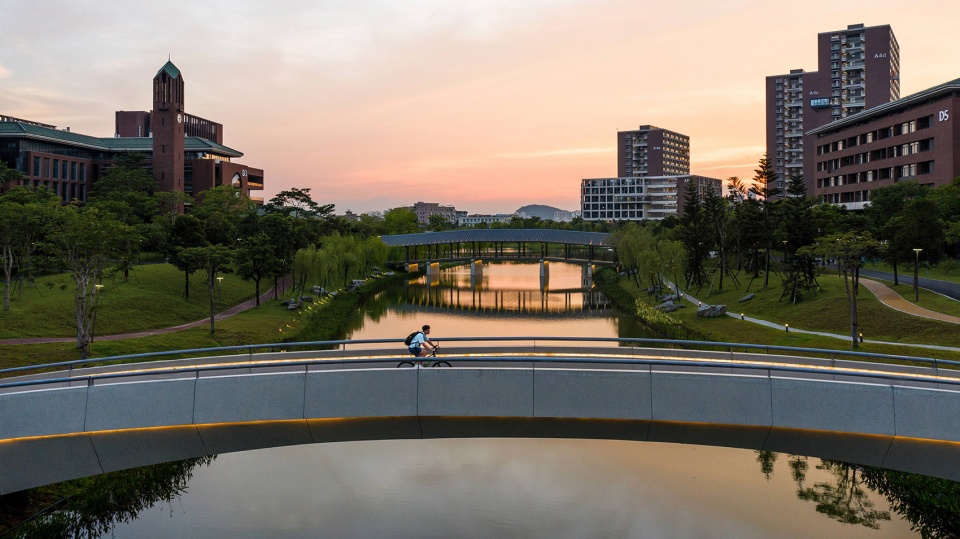
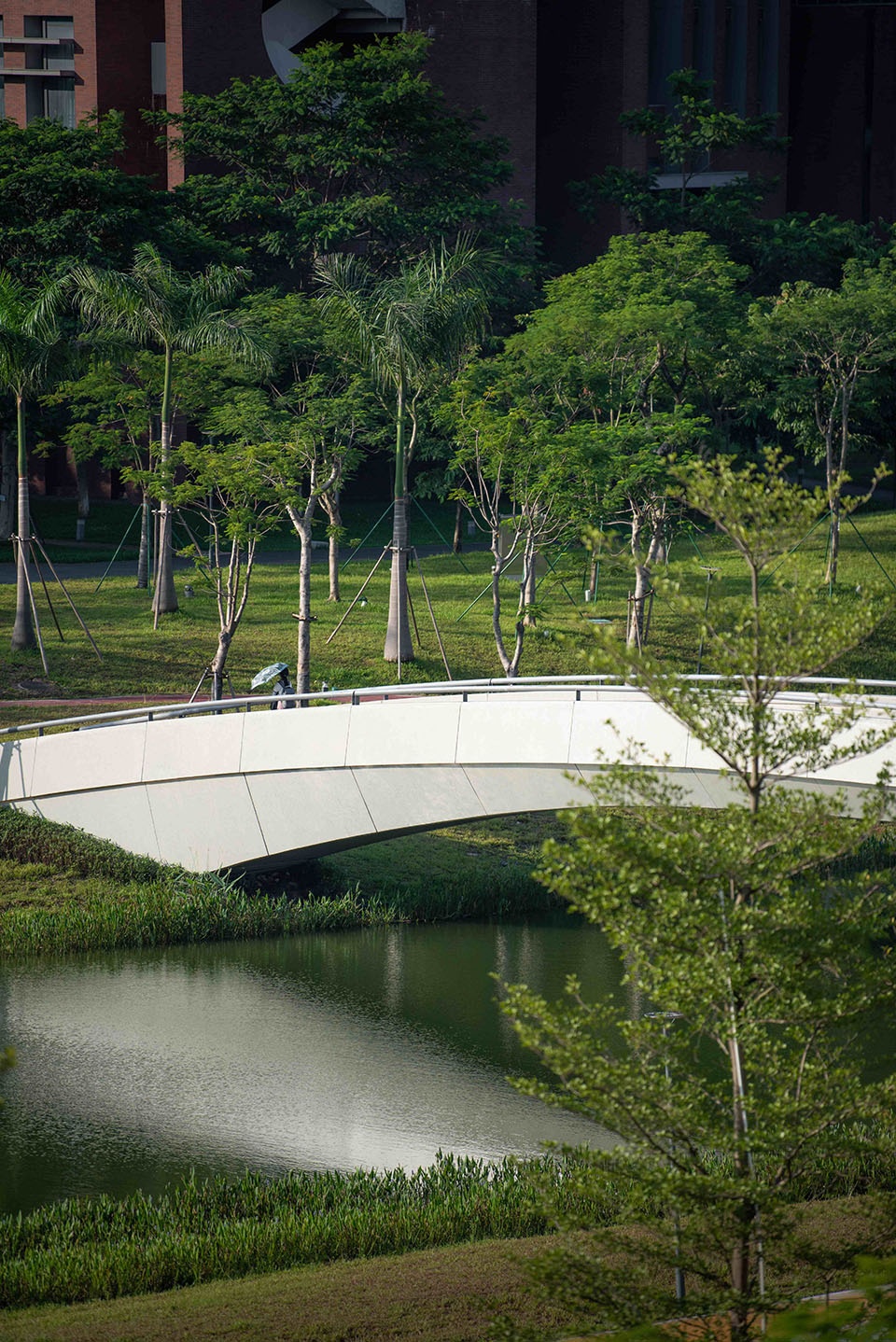
▼现代桥实景,The real scene of modern bridge
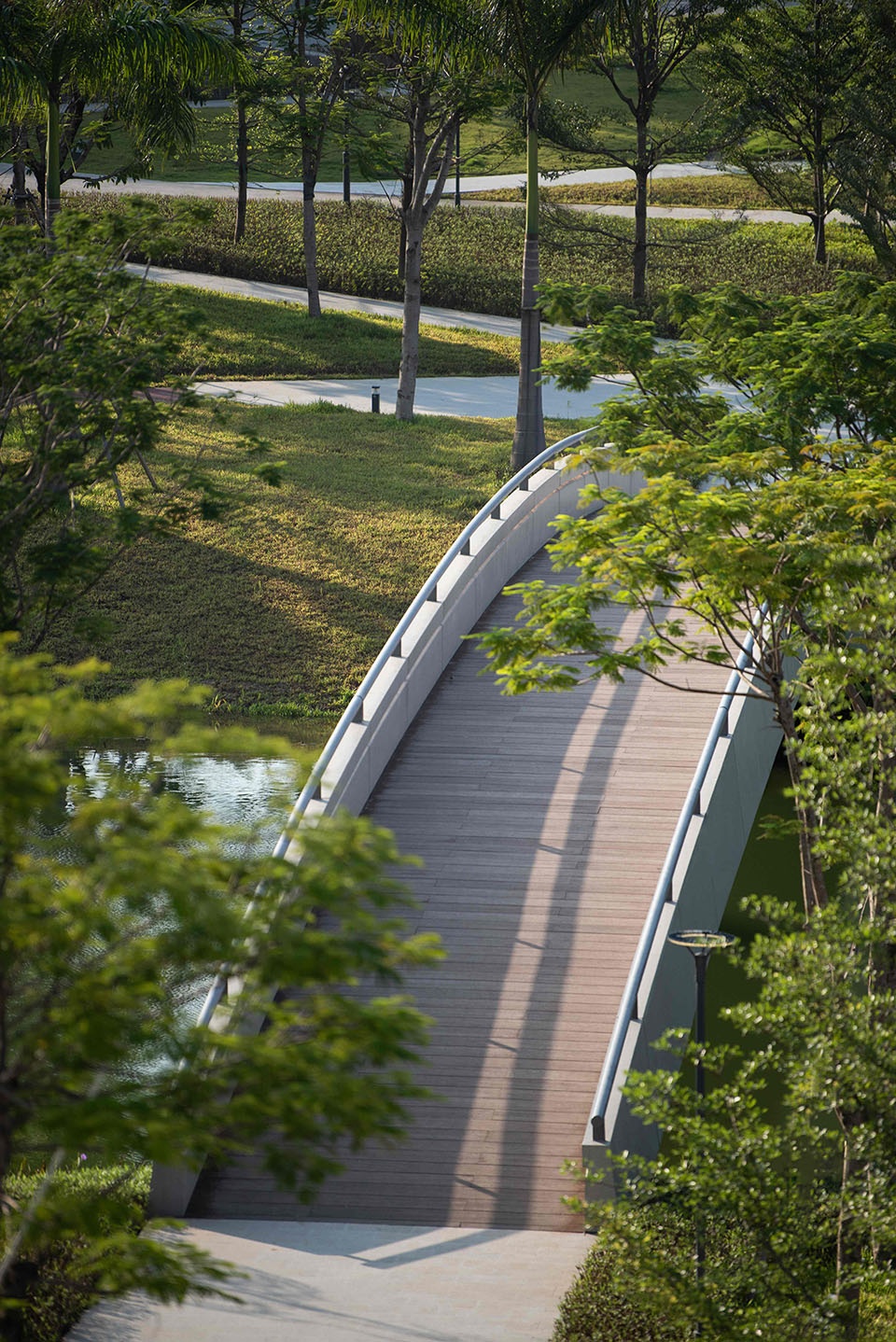
▼现代桥细部实景,The detailed real scene of modern bridge
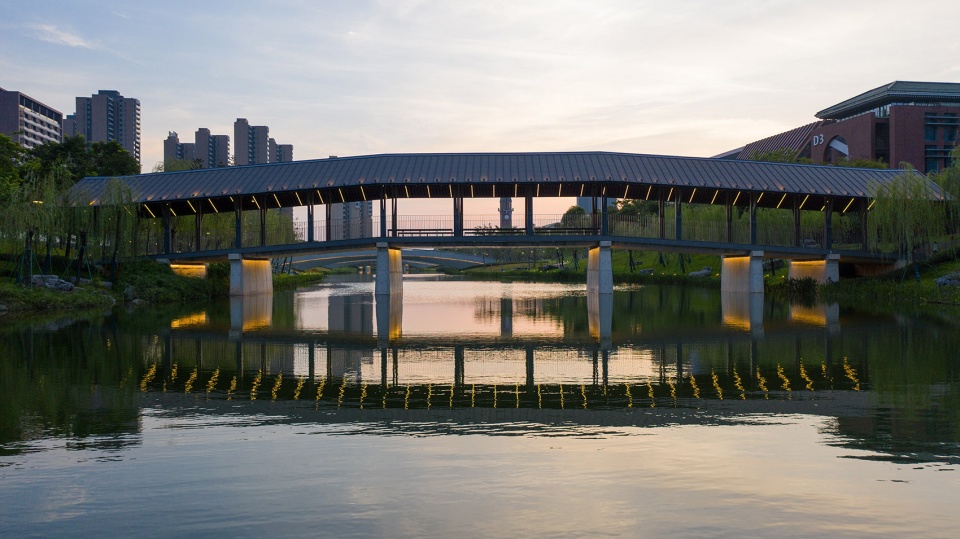
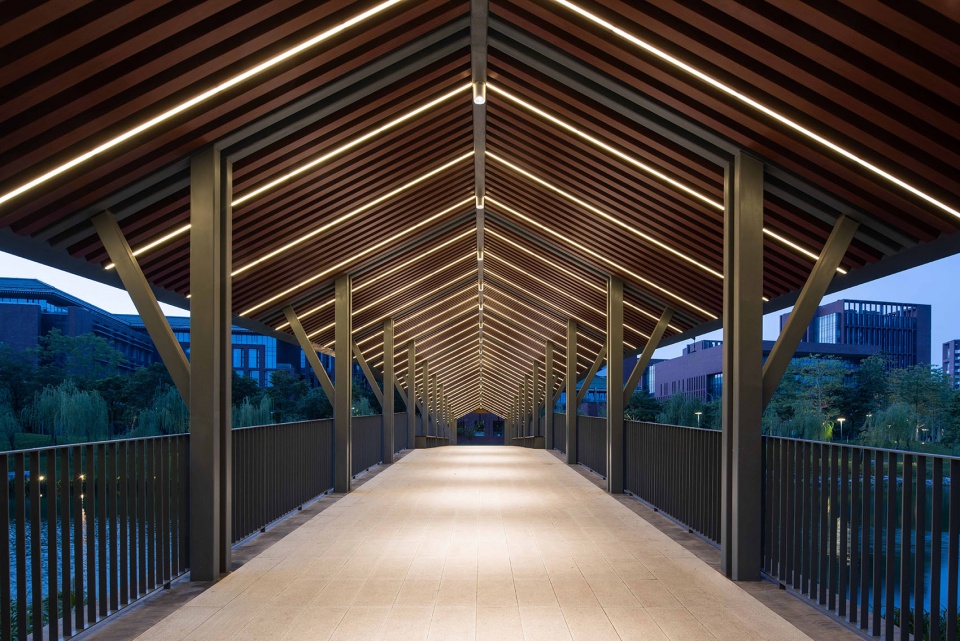
▼景观廊桥实景图,Real scene pictures of the landscape covered bridge
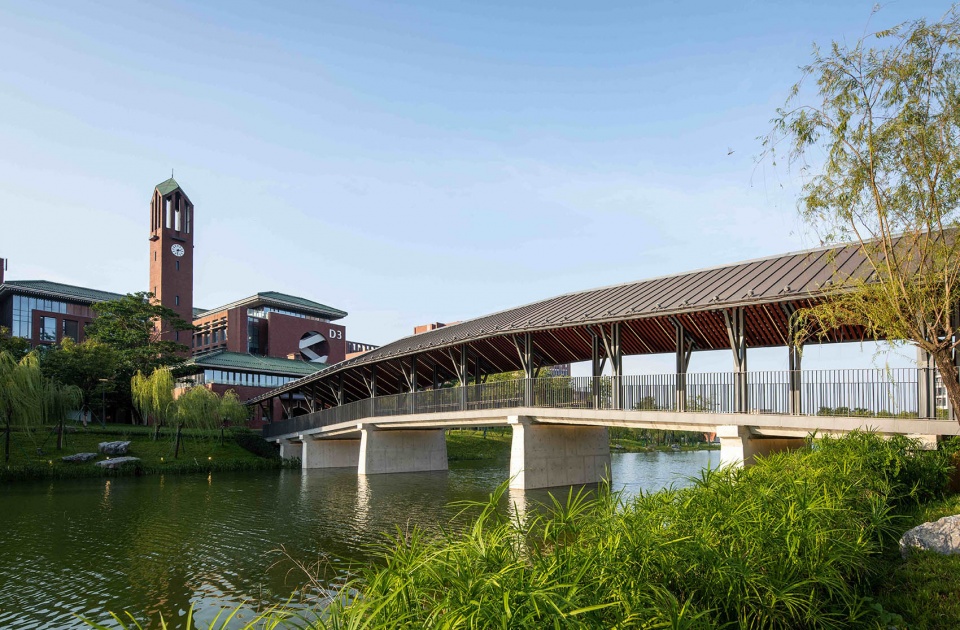
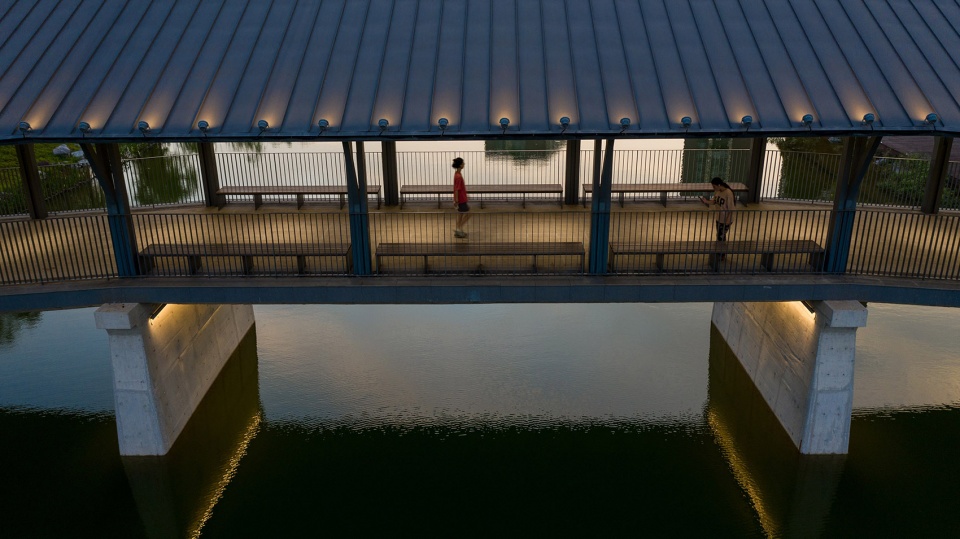
▼景观廊桥内部实景图,The real view of the interior of the landscape bridge
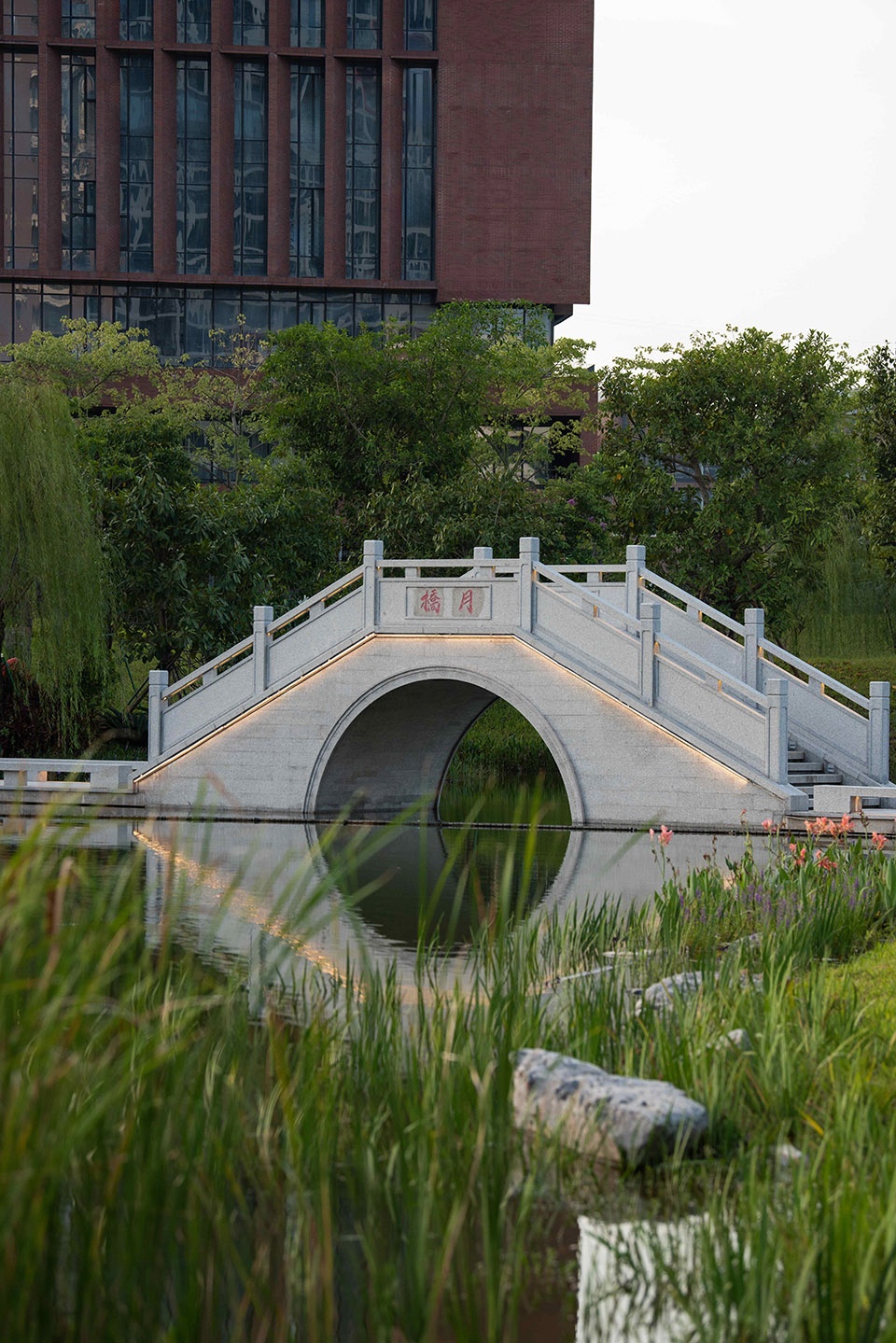
▼月桥水岸实景图,The real scene of the Moon Bridge waterfront
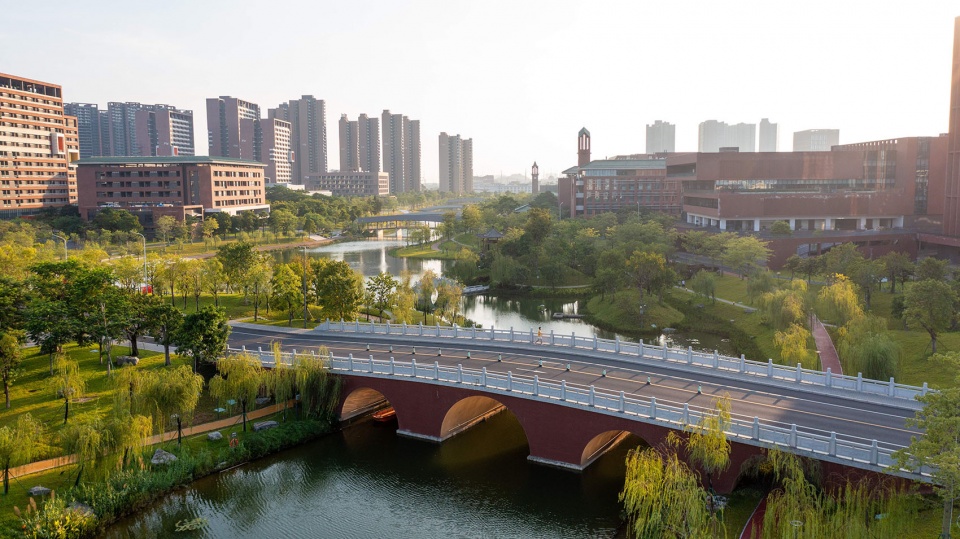
▼车行桥实景鸟瞰图,Aerial view of vehicle bridge
▼西水岸榕岛实景,The real scene of Rong Island in west waterfront
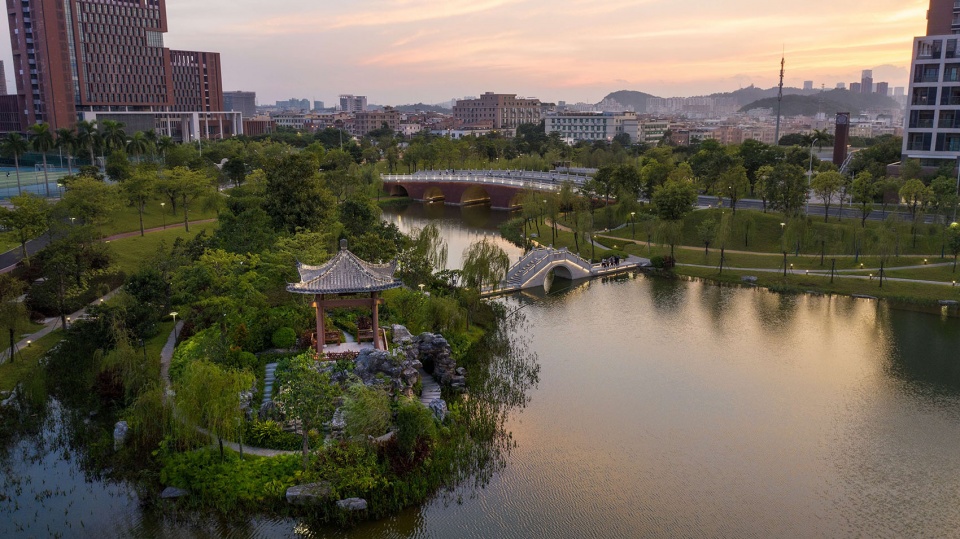
▼榕岛问月亭实景图,The real scene of the Moon-Asking Pavilion
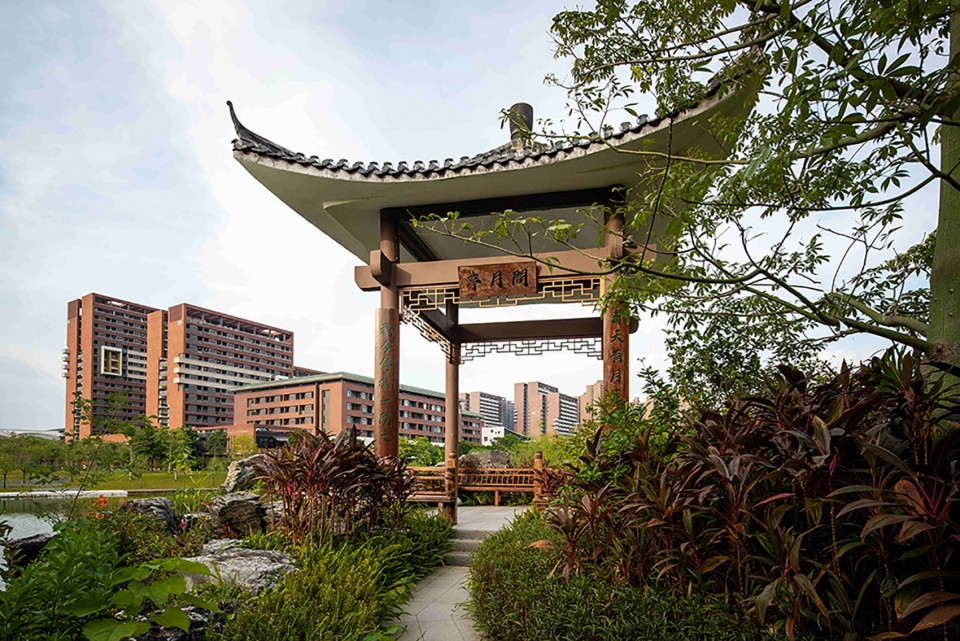
▼东水岸湿地景观实景图,The real scene of the wetland landscape in east waterfront
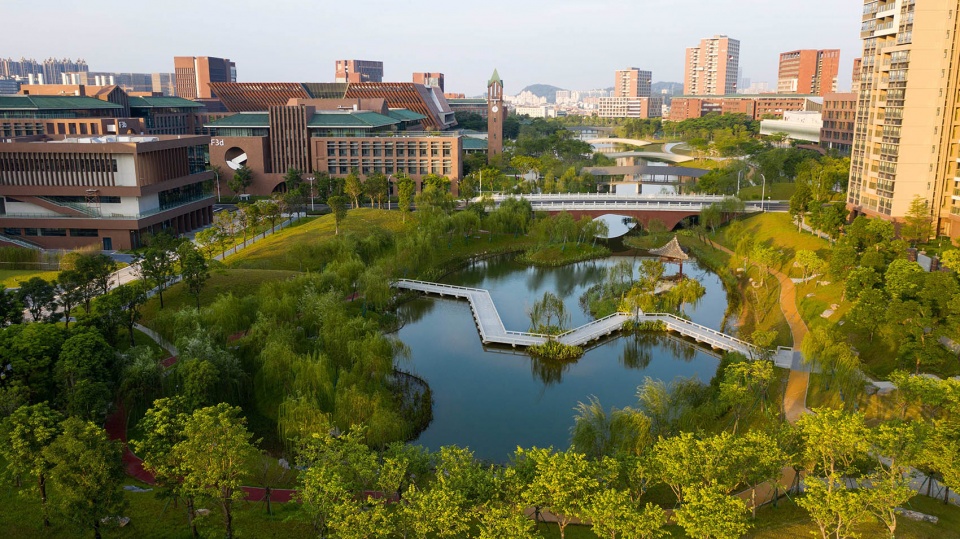
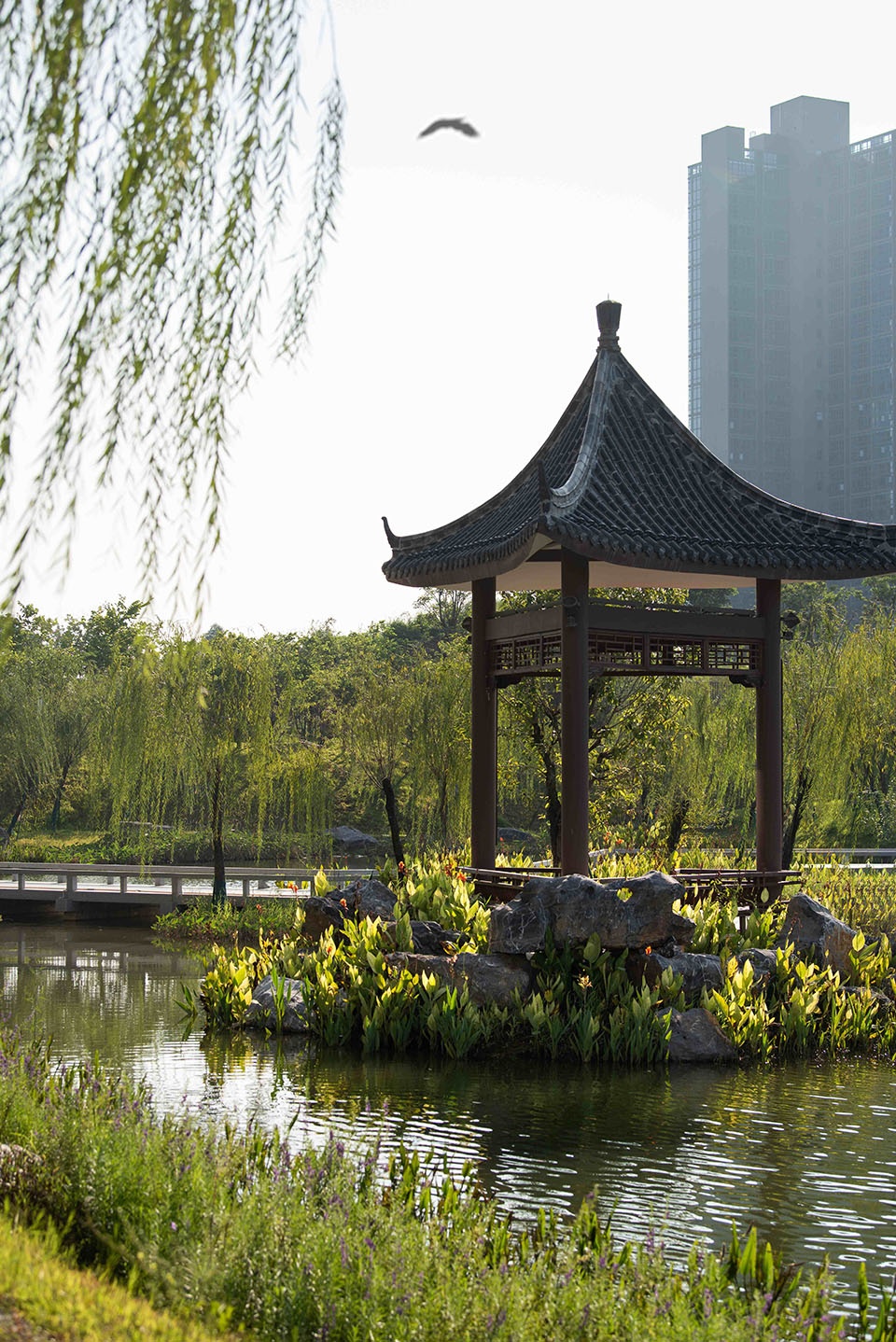
▼兰亭实景图,The real scene of the Moon-Asking Pavilion
生态措施Ecological Measures
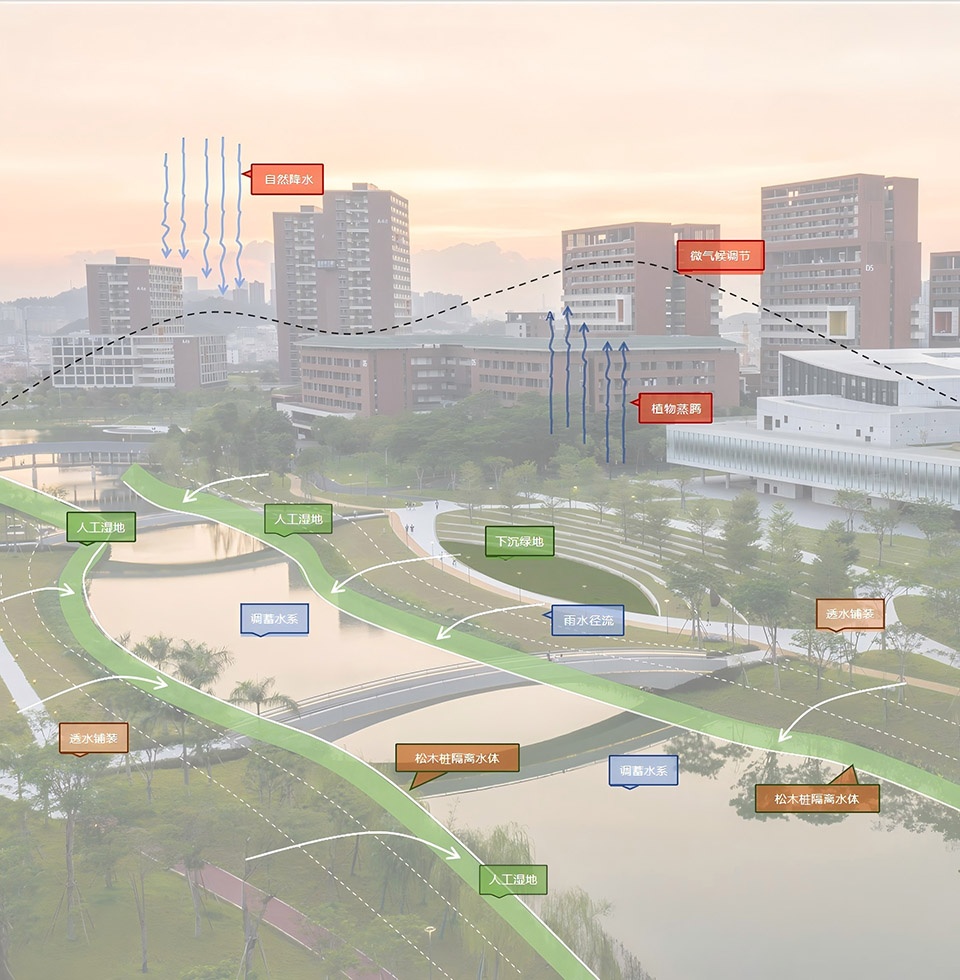
项目通过海绵设施建设,使生态做功,从而改善了校园景观空间微气候。景观水体采用人工湿地进行水质处理,利用松木桩与驳岸置 石将雨水与景观水体隔离。表流湿地种植有湿地植物6种,分别为水芹(1371㎡)、风车草(1038㎡)、慈姑(1629㎡)、马蹄莲(1679㎡)、茭草(952㎡)、莲(1331㎡),合计约8000㎡。
Through the construction of sponge facilities, the project has harnessed ecological functions to improve the microclimate of the campus landscape space. The landscape water body is treated for water quality using artificial wetlands, and rainwater is isolated from the landscape water body by means of pine wood piles and riprap. The surface flow wetland is planted with six types of wetland plants, namely water celery (1,371 square meters), Umbrella Papyrus (1,038 square meters), Arrowhead(1,629 square meters), Calla Lily (1,679 square meters), Wild Rice (952 square meters), and lotus (1,331 square meters), totaling approximately 8,000 square meters.
▼生态措施示意图,Schematic diagram of ecological measures
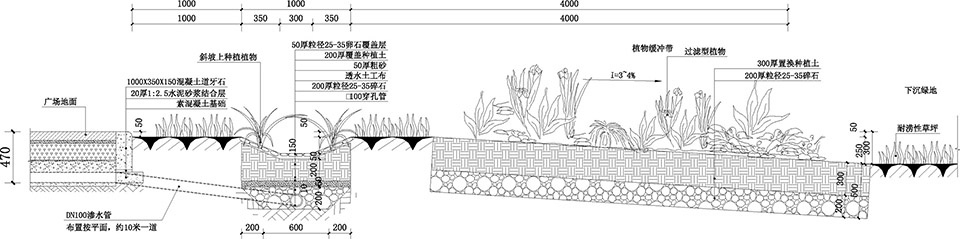
▼下沉绿地做法图,Construction diagram of sunken green space
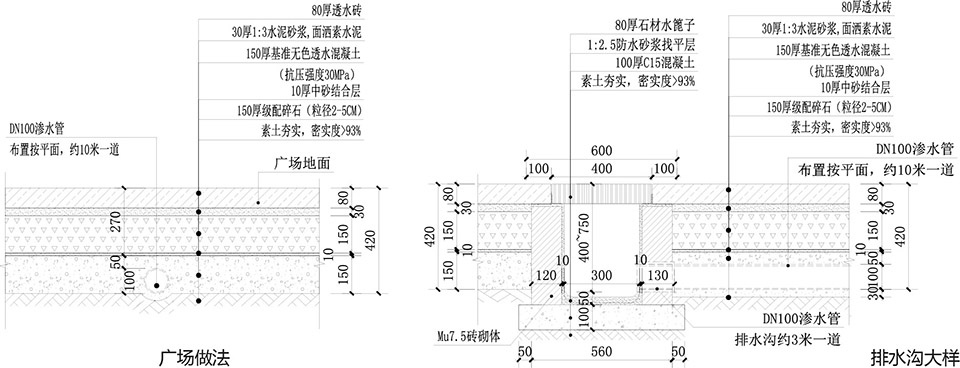
▼透水铺装做法图,Permeable pavement construction diagram
▼湿地雨水调蓄做法图,Diagram of wetland rainwater storage and regulation practices

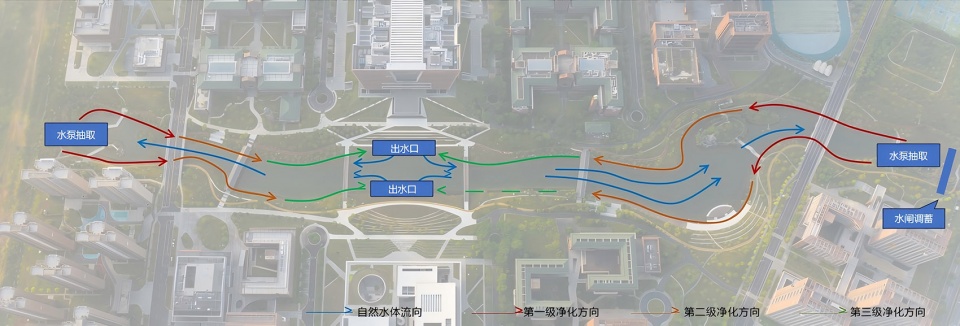
景观河道两端分别设置一体化智能水泵,提高河道水动力,河水在两岸共8000平方米的表流湿地循环,处理水量3200m³/d,满足河道水质保障需要,从而实现景观河道长治久清的目标。
Integrated intelligent water pumps are respectively installed at both ends of the landscape river to enhance the water dynamics of the river. The river water circulates in the 8,000-square-meter surface flow wetland on both banks, with a treatment capacity of 3,200 cubic meters per day, meeting the water quality guarantee needs of the river and thus achieving the goal of long-term governance and clear landscape river.
▼表流湿地纵断面图,Longitudinal section view of surface flow wetlands
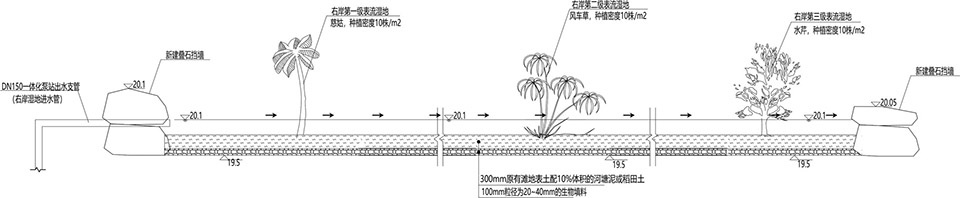
▼表流湿地横断面图,Cross-sectional view of surface flow wetlands
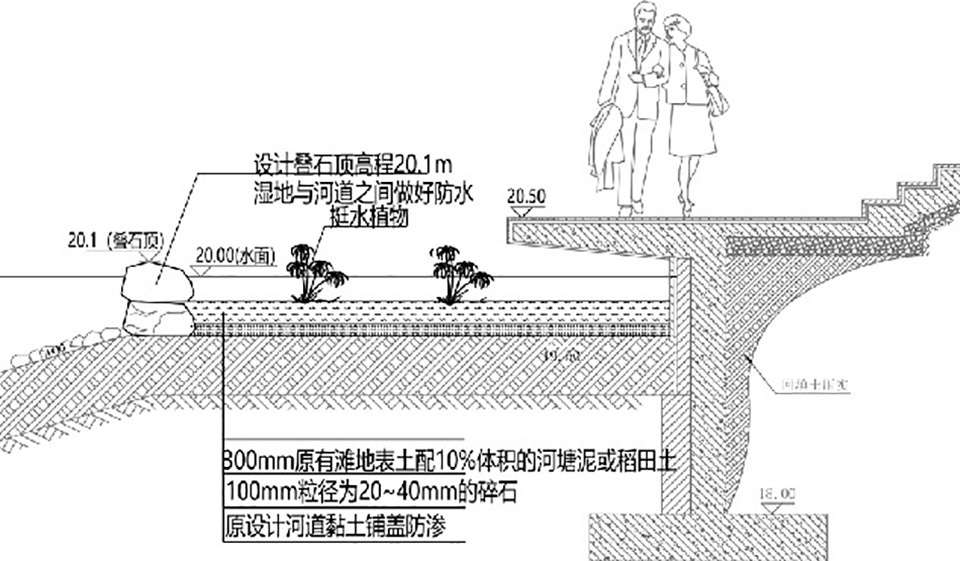
▼人工湿地水质管理系统示意图,Schematic diagram of the water quality treatment system for constructed wetlands
生态实践及成果Ecological Practices and Achievements
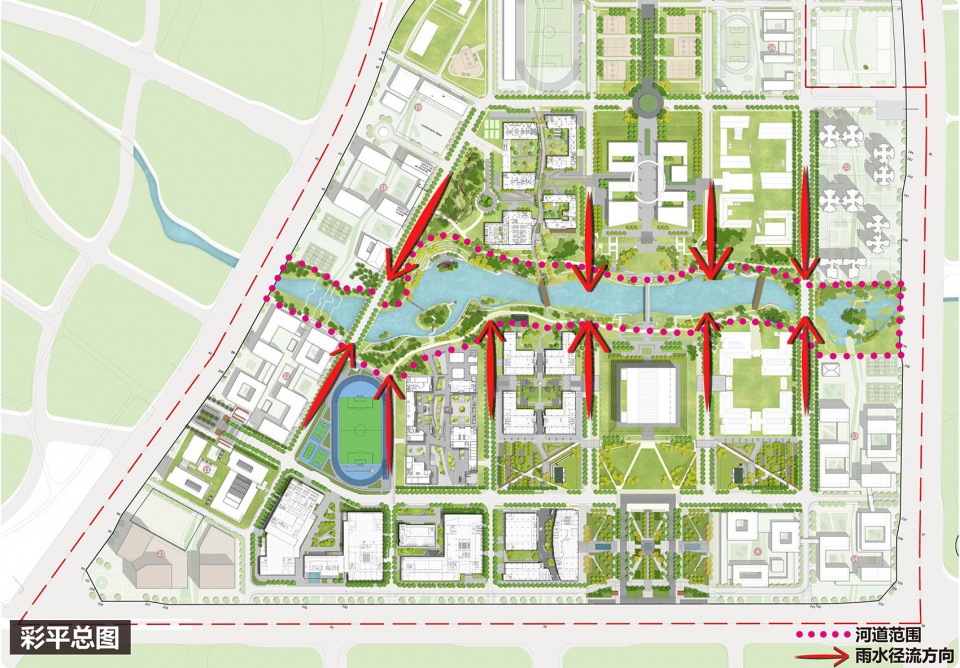
设计从总体布局和建筑设计层面考虑绿色节能,通过中央水系生态做功,将生态效益向校园内部区块进行渗透,同时吸纳校园内部汇水,积极引入污水处理、雨水回收、人工湿地等绿色生态技术,打造海绵校园示范点。
The design takes into account green energy conservation from the overall layout and architectural design aspects. Through the ecological work of the central water system, the ecological benefits are permeated into the internal blocks of the campus. At the same time, it absorbs the internal catchment water of the campus and actively introduces green ecological technologies such as sewage treatment, rainwater recycling, and artificial wetlands to create a demonstration site of a sponge campus.
▼校园汇水分析平面图,Campus catchment analysis floor plan
▼雨洪措施示意图,Schematic diagram of rain and flood measures
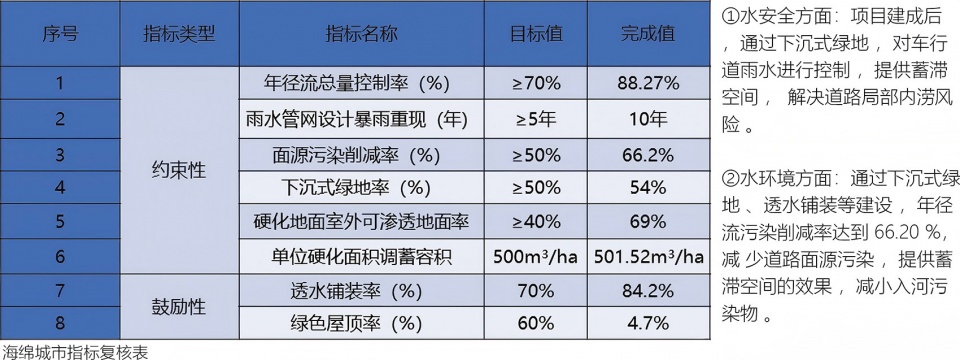
▼海绵城市指标复核表,Sponge City Index Review Form
项目使用后评价Project Post-use Evaluation
二期东西水岸投入使用以来,各项设备运行正常景观场地使用达到原设计要求, 同时较大改善了校园内部的环境小气候。该水岸设计充分融入绿色生态理念,适应岭南气候,彰显当代校园特色,为校区师生提供了高品质的生态水岸环境,为校园生活、教学、交流提供了一个新的大型生态活动场地。
Since the second phase of the east and west waterways was put into use, all the equipment has been operating normally. The use of the landscape site has met the original design requirements, and at the same time, the internal environment and microclimate of the campus have been greatly improved. This waterfront design fully integrates the concept of green ecology, ADAPTS to the climate of Lingnan, highlights the characteristics of contemporary campuses, and provides a high-quality ecological waterfront environment for teachers and students in the campus. It also offers a new large-scale ecological activity venue for campus life, teaching and communication.
▼景观河道夜景鸟瞰,Aerial view of the night scenery river channel
Project Name: South China University of Technology Guangzhou International Campus Phase II Landscape River and Associated Floodgates Project
Project Type: Campus Landscape, Riverside Space
Project Location: Panyu District, Guangzhou City, Guangdong Province, China
Design Firm: South China University of Technology Architectural Design Institute Co., Ltd.
Company Website: http://www.scutad.com.cn/
Contact Email: 306082457@qq.com
Project Design & Completion Year: 2019-2022
Site Area: 110,000 square meters
Overall Project Leader: Ni Yang, Yan Zhong, Wu Chaohui
Landscape Design: Zheng Yang, Shen Lei, Zhong Yingtao, Chen Lingfeng, He Zhongsen, Lin Xiaoting, Tan Hongjian, Pan Ming, Lin Xianyong, Li Binsi, Luo Huiling
Structural Design: Wang Fan, Niu Xishan, Luo Zhifeng, Huang Ze, Zeng Honghua, Liu Jincheng, Chen Yufei
Plumbing and Drainage: Chen Xinyan, Li Zongtai
Electrical Design: Yu Yang, Guo Shijia, Qu Jincun
Municipal Engineering: Jin Tao, He Weiming
Hydraulic Design Partner: Pearl River Water Resources Commission of the Ministry of Water Resources / Guangzhou Zhukeyuan Engineering Survey and Design Co., Ltd.: Xu Zhicai, Liao Zhihao, Ma Xirong
Illumination Design Partner: Guangzhou Hongbo Lighting Design Consultant Co., Ltd.: Lin Siwei, Huangfu Qiuyun
Photography Copyright: Beyond Vision
Construction Entity: South China University of Technology Guangzhou International Campus
Project award status: First Prize in the Design Category of the 2024 Guangdong Landscape Architecture and Planning Design Award
The First Batch of Guangzhou Construction Engineering Quality Awards for 2024