第19届威尼斯建筑双年展 & 墨西哥馆“浮园” / Estudio Ignacio Urquiza y Ana Paula de Alba
面对全球生态危机,由墨西哥文化部与国家美术与文学研究所选送至第19届威尼斯国际建筑双年展的项目,旨在促使人们反思我们如何栖居、耕种与设计这个共享的世界。Chinampa Veneta从中美洲起源、至今仍在墨西哥城南部索奇米尔科湖区延续的“浮园”(chinampas)农业系统出发。这一古老的智慧交织了景观、基础设施与技艺,并在威尼斯双年展的语境中被重新想象,激活了一处充满生命力的环境,与这座标志性城市展开对话。
Faced with the global ecological crisis, the project selected by the Ministry of Culture and the National Institute of Fine Arts and Literature for the 19th International Architecture Exhibition – La Biennale di Venezia promotes a reflection on how we inhabit, cultivate, and design the world we share. Chinampa Veneta starts with the chinampas agricultural system, of Mesoamerican origin and still in force in Xochimilco, a historic lake ecosystem south of Mexico City. This ancient knowledge, which interweaves landscape, infrastructure, and technique, is reimagined in the context of La Biennale, activating a living environment in an emblematic city.
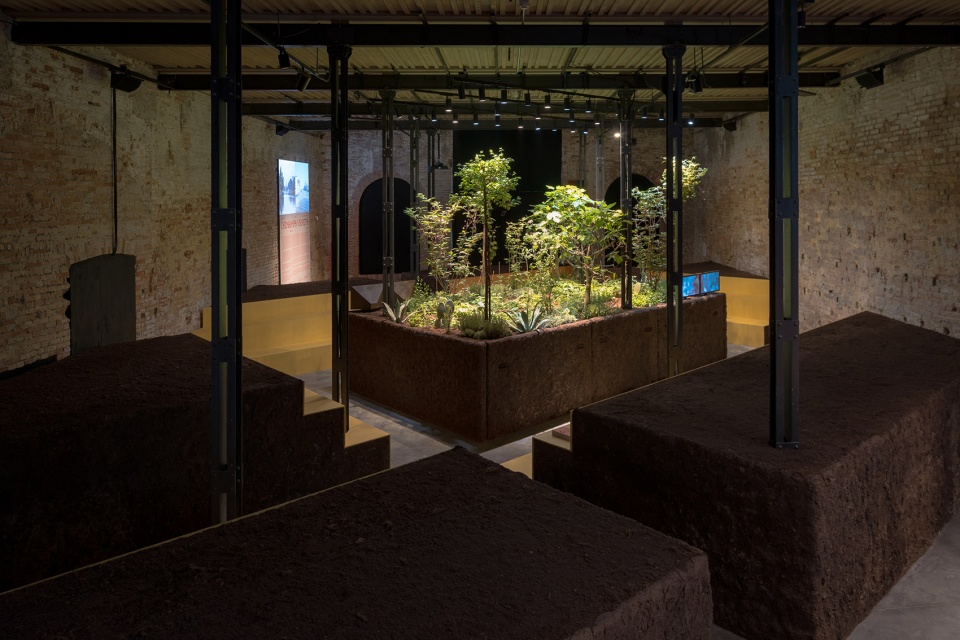
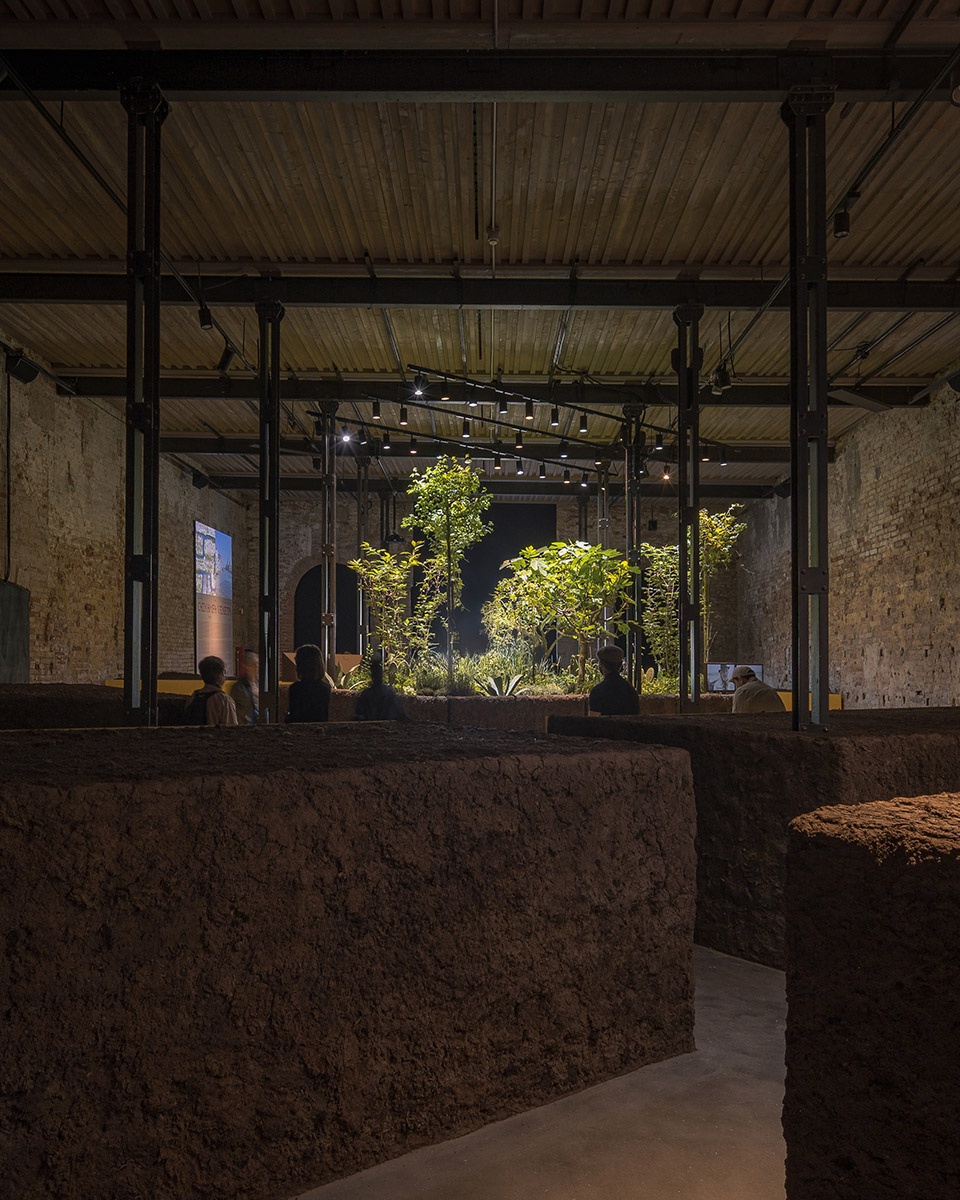
▼装置概览,overview of the installation
▼装置概览,overview of the installation
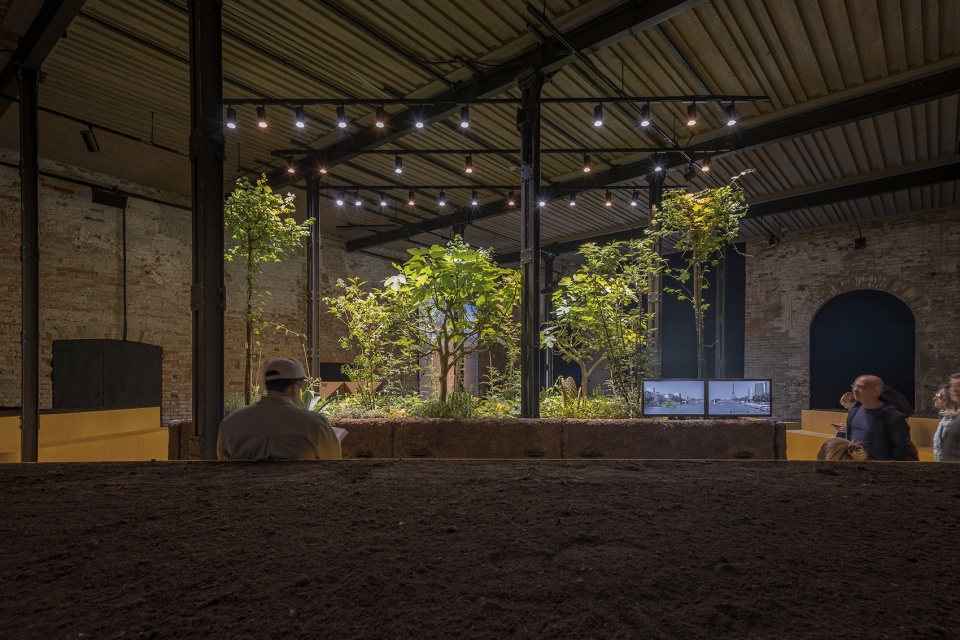
浮园(chinampas) 是一种拥有四千多年历史的古老农业系统,建于浅湖之上,以矩形土块构成,由沉积物、泥土与植被层层叠加而成。其上种植鲜花、蔬菜与其他食物。浮园的几何布局不仅形成水道,更倍增湖岸线,营造出适合觅食、繁殖与栖息的生态环境,引发生物多样性的爆发。浮园体系中的每个元素同等重要,彼此间形成共生关系,促进生命的延续、固碳、净化水源、生产食物与释放氧气。在濒临生态崩溃的今天,浮园向我们展示了一条通往未来的道路。浮园的起源基于一种祖先的世界观:人类是自然生命循环的积极参与者,而非像现代性那样拼命试图掌控它。在索奇米尔科,如同在威尼斯(两者均于1987年被列入世界遗产名录),我们都见证了城市发展吞噬繁盛生态系统的惊人速度。
▼浮园农业系统,chinampas agricultural system
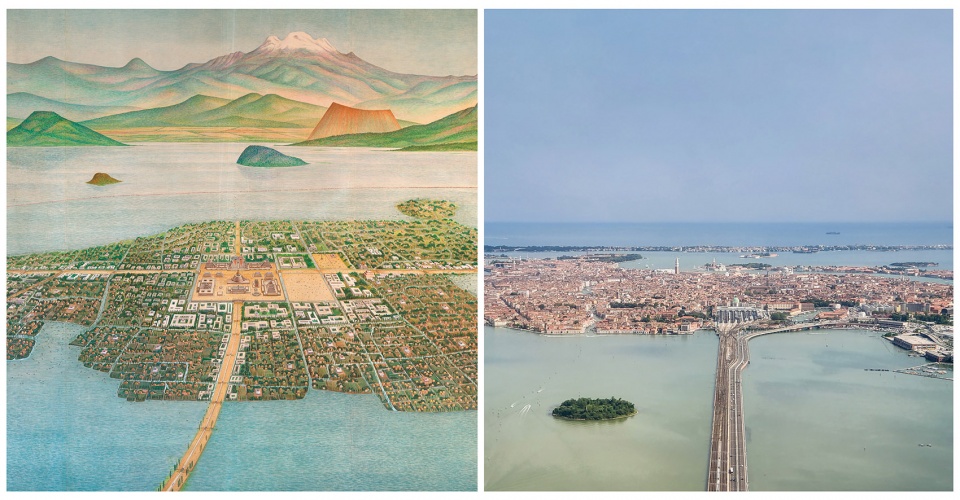
Chinampas are an ancient agricultural system with more than four thousand years of history. They are located in shallow lakes and are built in the form of rectangular blocks with layers of sediment, mud, and vegetation. Flowers, vegetables, and other foods are grown there. Their beautiful geometric arrangements, in addition to forming channels, multiply the banks of the lake, creating ecological niches for feeding, reproduction and shelter, which detonate an explosion of biodiversity. Each element of the chinampa system is equally important and generates symbiotic relationships that promote life, capture carbon, purify water, and produce food and oxygen. In a world on the brink of ecological collapse, chinampas show us a path to the future. The chinampas were conceived from an ancestral worldview in which humans were an active part of the natural cycles of life, unlike modernity, which desperately tries to control them. In Xochimilco, as in Venice—both declared World Heritage Sites in 1987—we have witnessed the alarming speed with which urban development can consume thriving ecosystems.
▼浮园农业系统,chinampas agricultural system
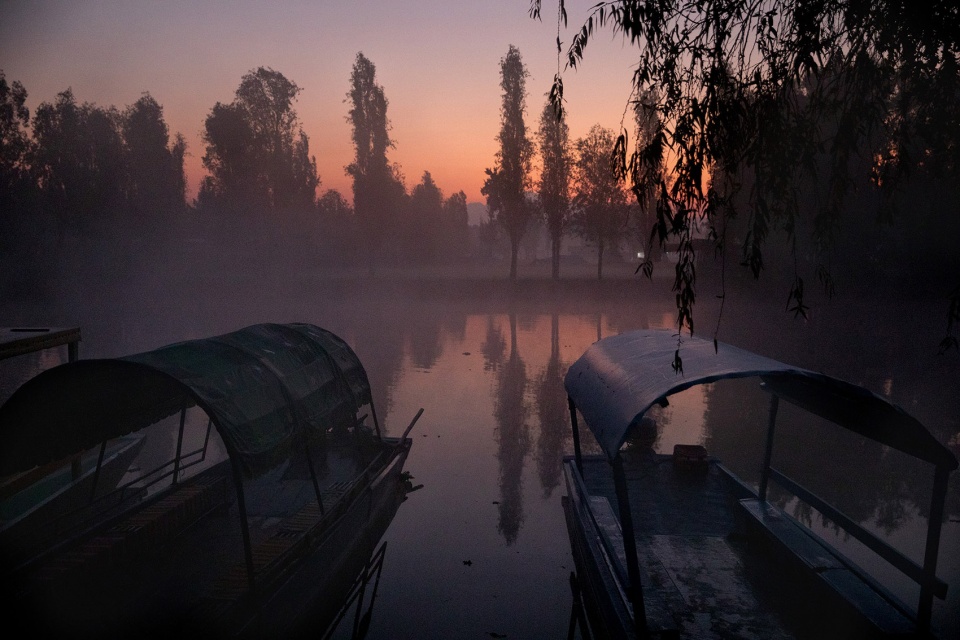
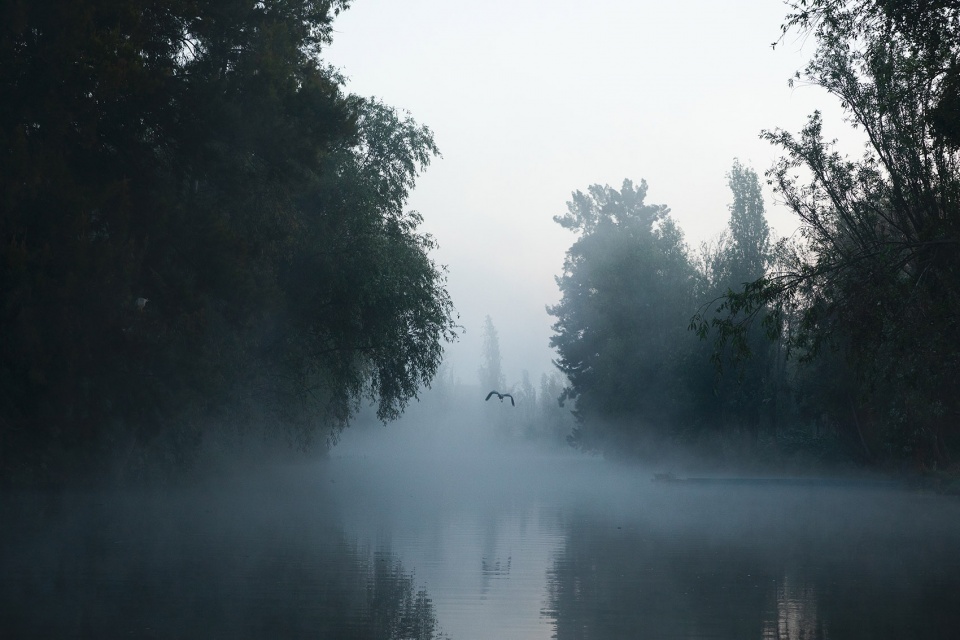
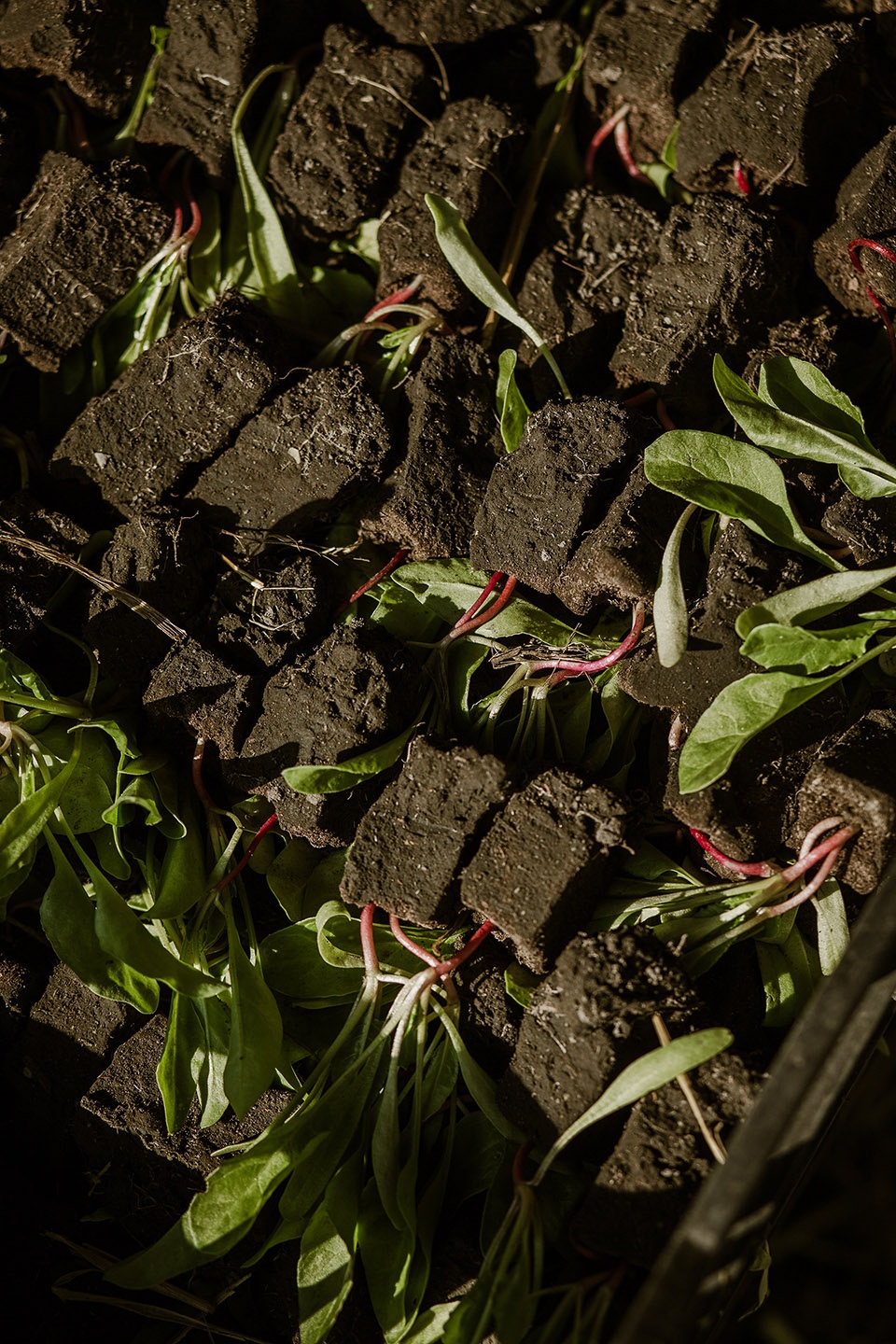
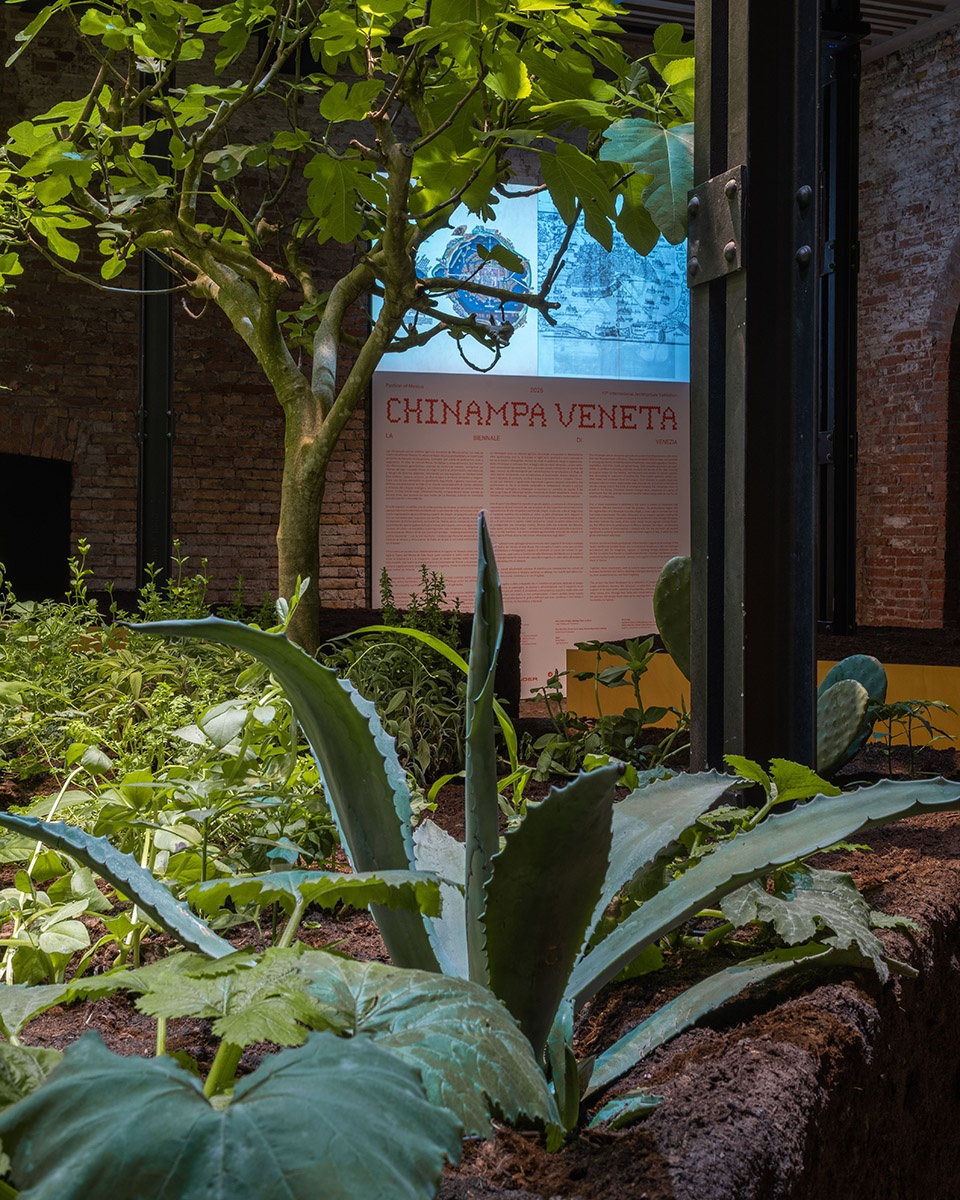
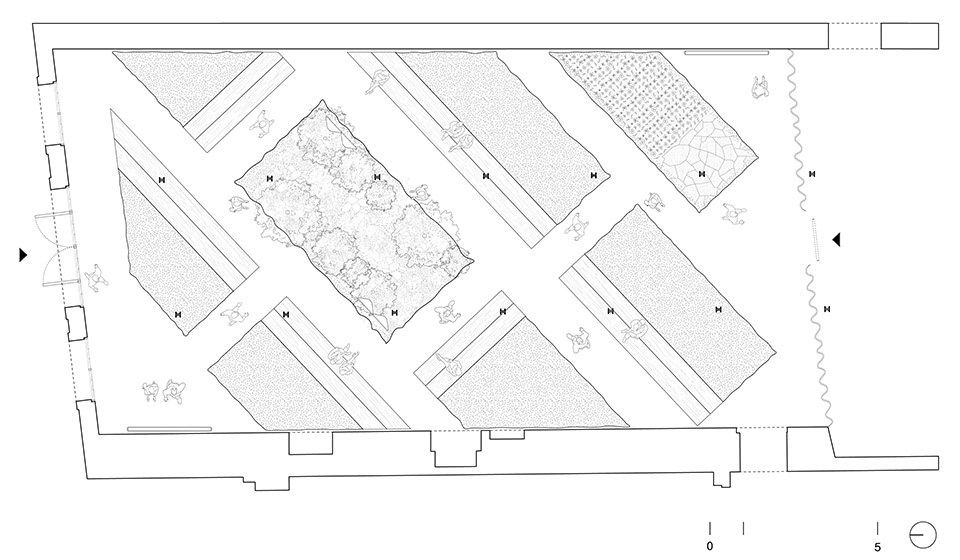
Chinampa Veneta 由多个“演绎”(enactments)构成。其中之一位于兵工厂(Arsenale)内部,呈现出一组浮园体系,每个浮园展示其生长过程中的不同阶段。演绎从“chapín”开始——这是一个含有种子的富营养泥土小立方体,用以再生一座浮园。作品的中心是一座活体浮园,它不同于墨西哥的传统浮园,而是种植了威尼托地区的农林复合系统——la vite maritata(葡萄藤攀附树木生长),与传统的中美洲多元复合种植体系 milpa 共存。
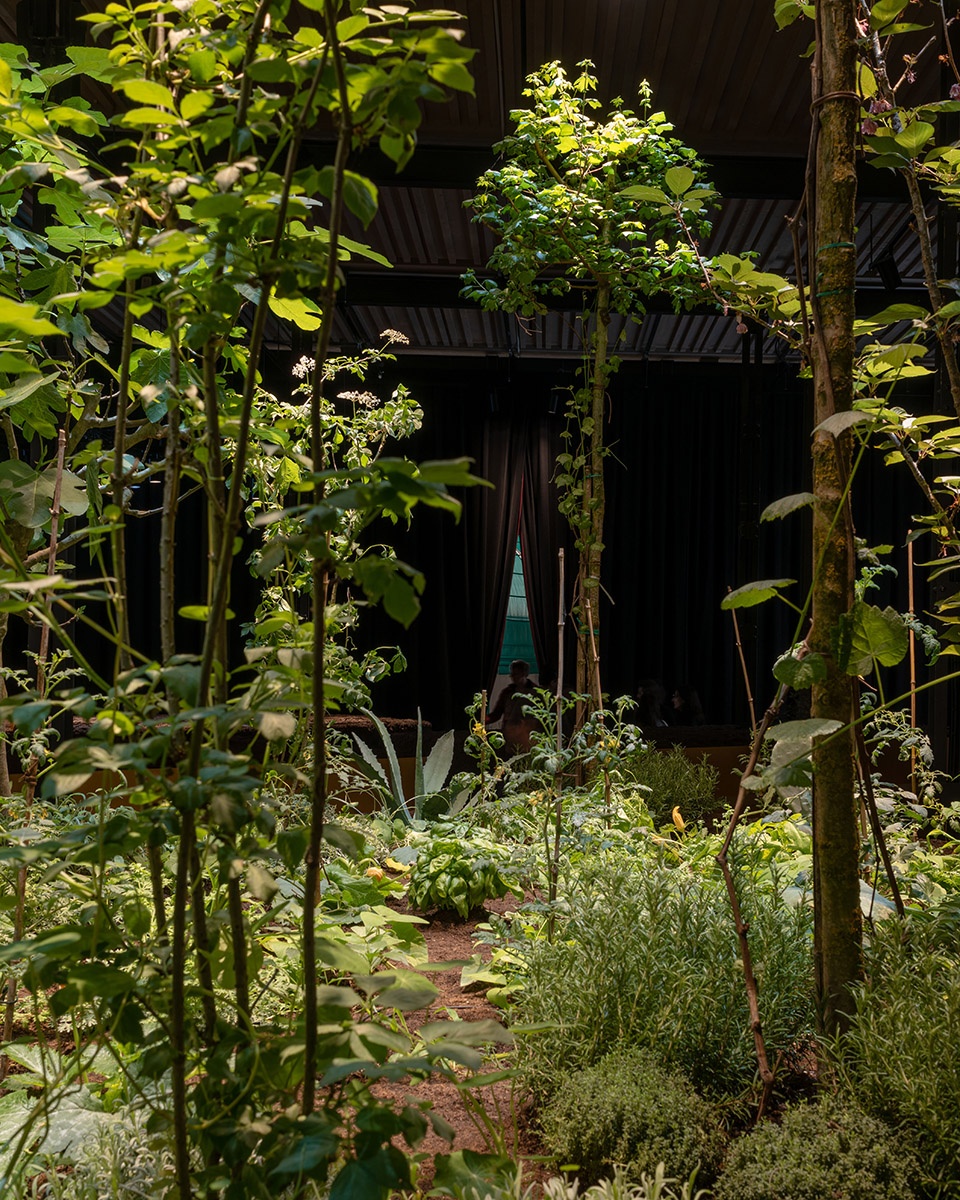
Chinampa Veneta is composed of several enactments. One of them is located inside the Arsenale, where a system of chinampas is represented. Each chinampa shows a different moment in their growth process. The enactment begins with the regeneration of a chinampa from a chapin, a small cube of nutrient-rich mud that holds a seed inside. The protagonist is in the center: a living chinampa, different from its predecessors in Mexico, planted with an agroforestry system practiced in the Veneto, la vite maritata—in which the vine grows intertwined with the trees—in coexistence with a traditional Mesoamerican polyculture system: the milpa.
▼浮园农业系统,chinampas agricultural system
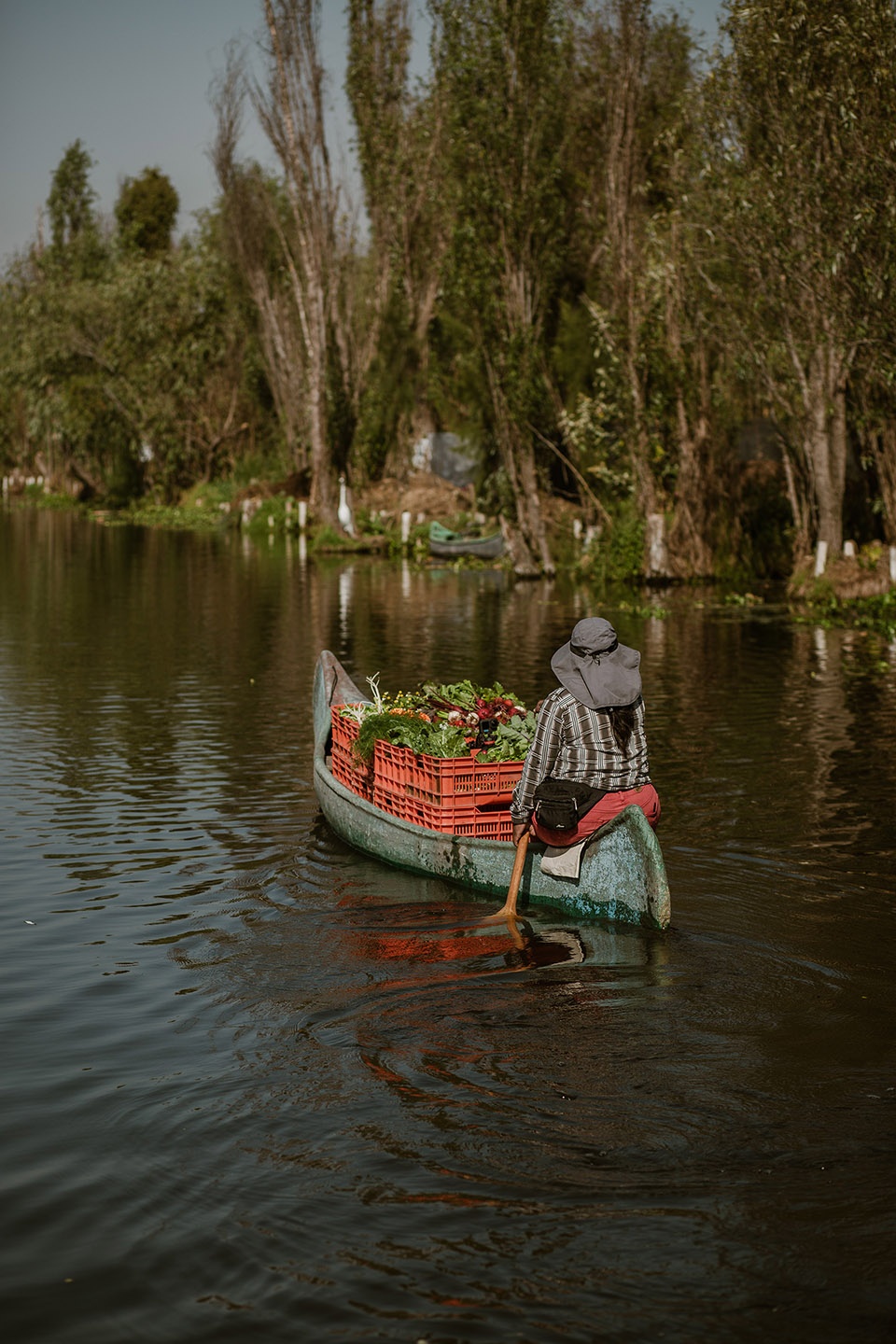
另一处“演绎”则象征性地漂浮在威尼斯潟湖之中,作为对阿尔多·罗西(Aldo Rossi)“世界剧院”(Teatro del Mondo)的呼应。罗西曾将剧院视为现实与想象之间的支点,能够在不同世界之间架起桥梁。而此刻,剧院化为“世界浮园”(Chinampa del Mondo),以自豪的祖先形态、自然且有机的姿态,直面威尼斯的建筑环境,建立起两座“水上城市”之间的新联系——它们的水之历史同样映射着关于饮用水与领土的政治斗争。Chinampa Veneta来到威尼斯,提醒我们:土壤的健康直接影响社会的福祉,并邀请我们重新想象设计过程,使其重新融入生命循环,让人类建造的环境不再与自然对立。
Another enactment floats symbolically in the Venetian Lagoon, as an analogy to the Teatro del Mondo by Aldo Rossi, who conceived of theater as a fulcrum between architecture and the imaginary, capable of building bridges between worlds. On this occasion, the theater becomes the Chinampa del Mondo and presents itself in a proudly ancestral, natural and organic way, in front of the built environment of the city of Venice, creating a new link between two lake cities whose water histories reflect a political struggle for drinking water and territory. Chinampa Veneta arrives in Venice to remind us that soil health directly impacts our well-being as a society, and invites us to imagine design processes that reintegrate life cycles, so that our built environment is no longer in opposition to nature.
▼装置入口,entrance of the installation
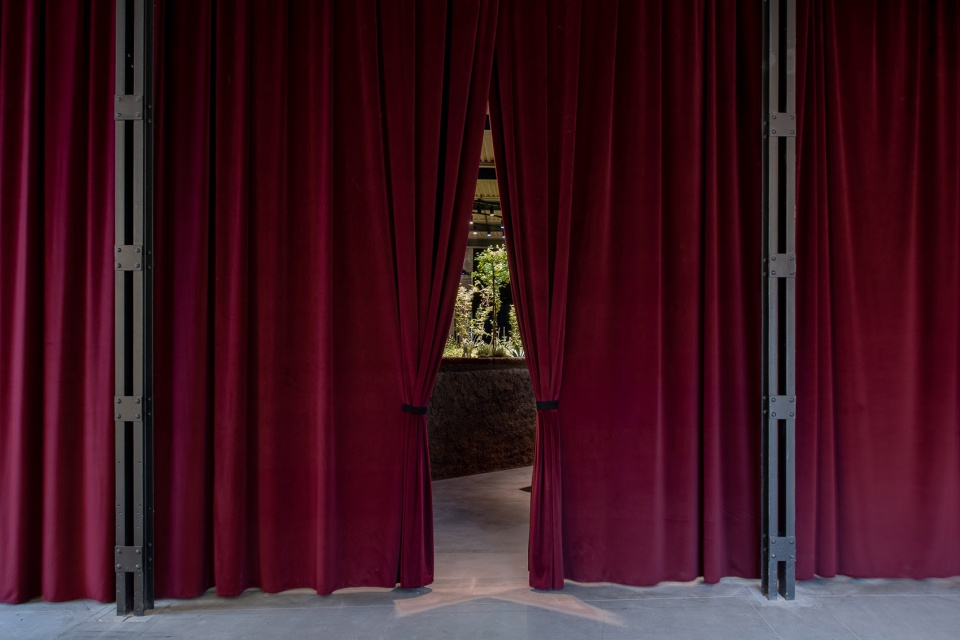
在一个不断扩张的世界里,浮园迫使我们停下脚步,回望过去。墨西哥国家美术与文学研究所选择 Chinampa Veneta,正是因为它作为一项创新提案,扩展了建筑设计的概念,指向一种与生态系统、与自然环境共生、并以集体方式共同设计的路径。
In a world that never ceases to grow and spread, chinampas force us to stop and look to the past. The National Institute of Fine Arts and Literature selected Chinampa Veneta for being an innovative proposal that expands the notion of architectural design towards a symbiotic process that co-designs with the ecosystem, with the natural environment, and in a collective manner.
▼”浮园”装置,the installation Chinampa Veneta
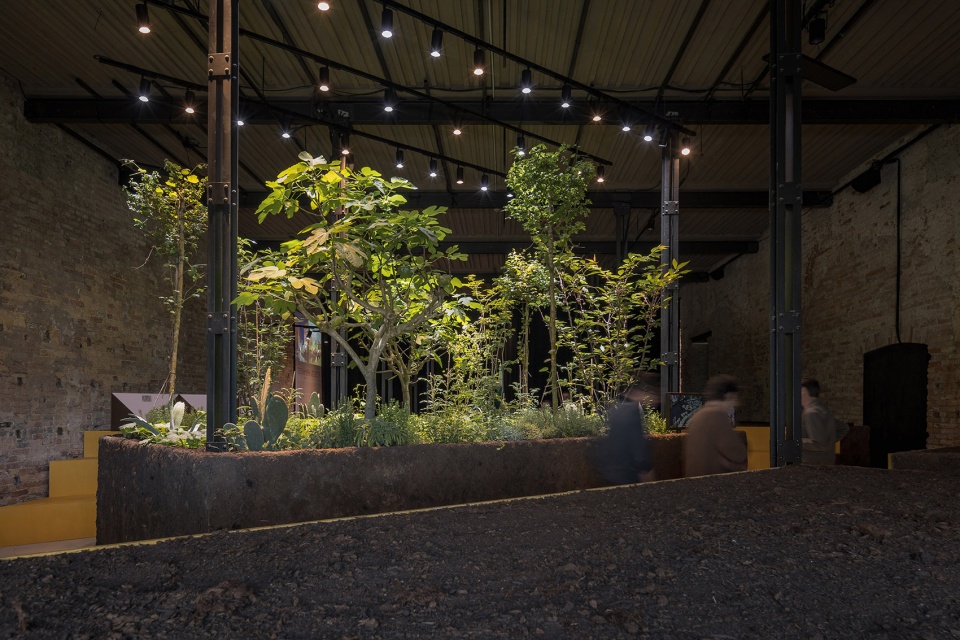
▼”浮园”装置,the installation Chinampa Veneta
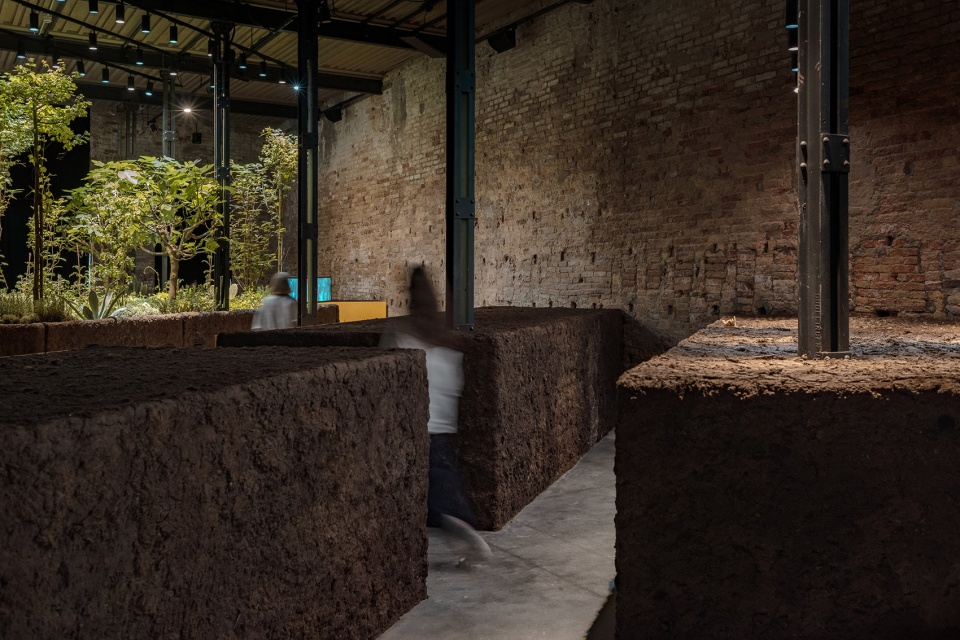
▼与自然环境共生,a symbiotic process with natural environment
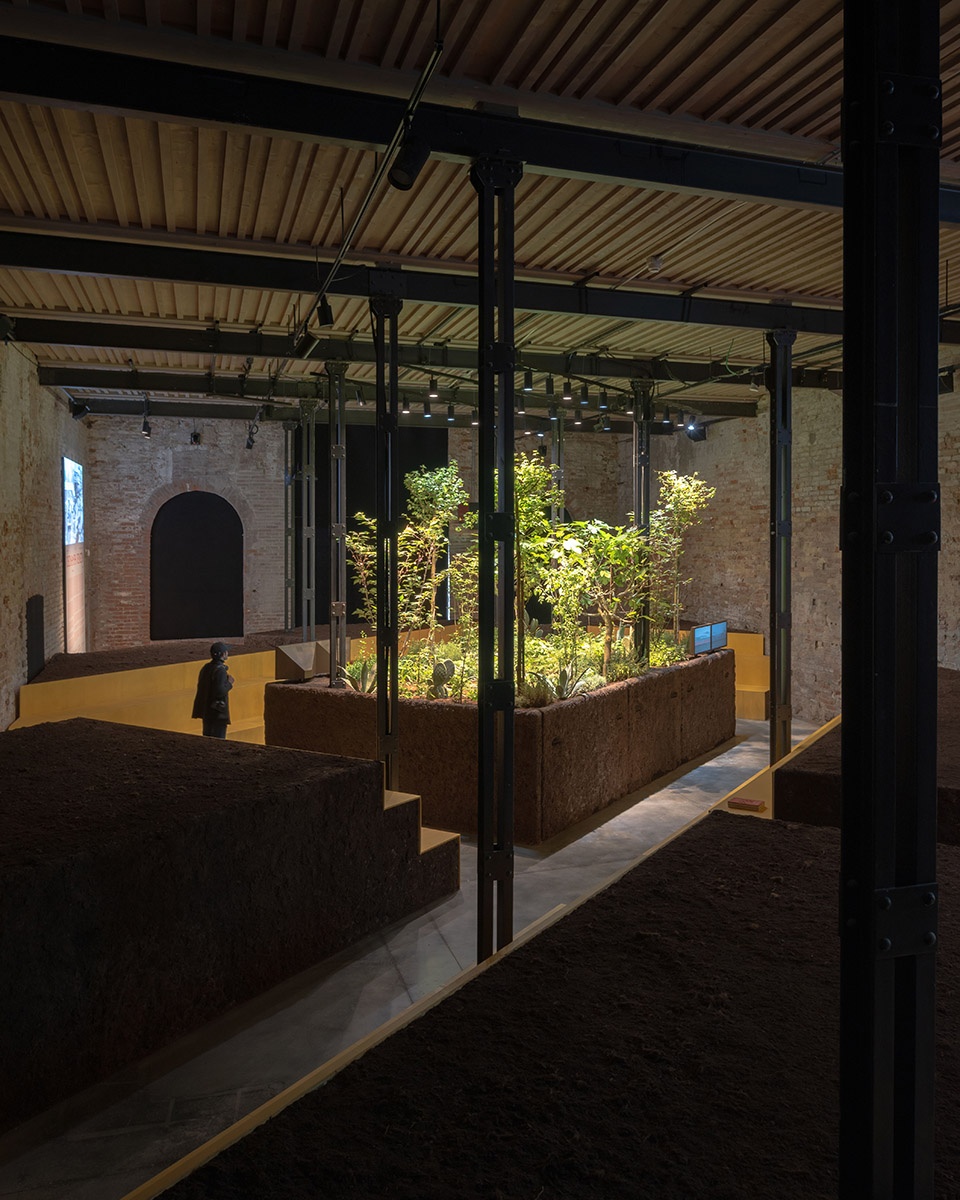
▼引发人们对农业生态环境的思考,It triggers people’s thoughts on the agricultural ecological environment
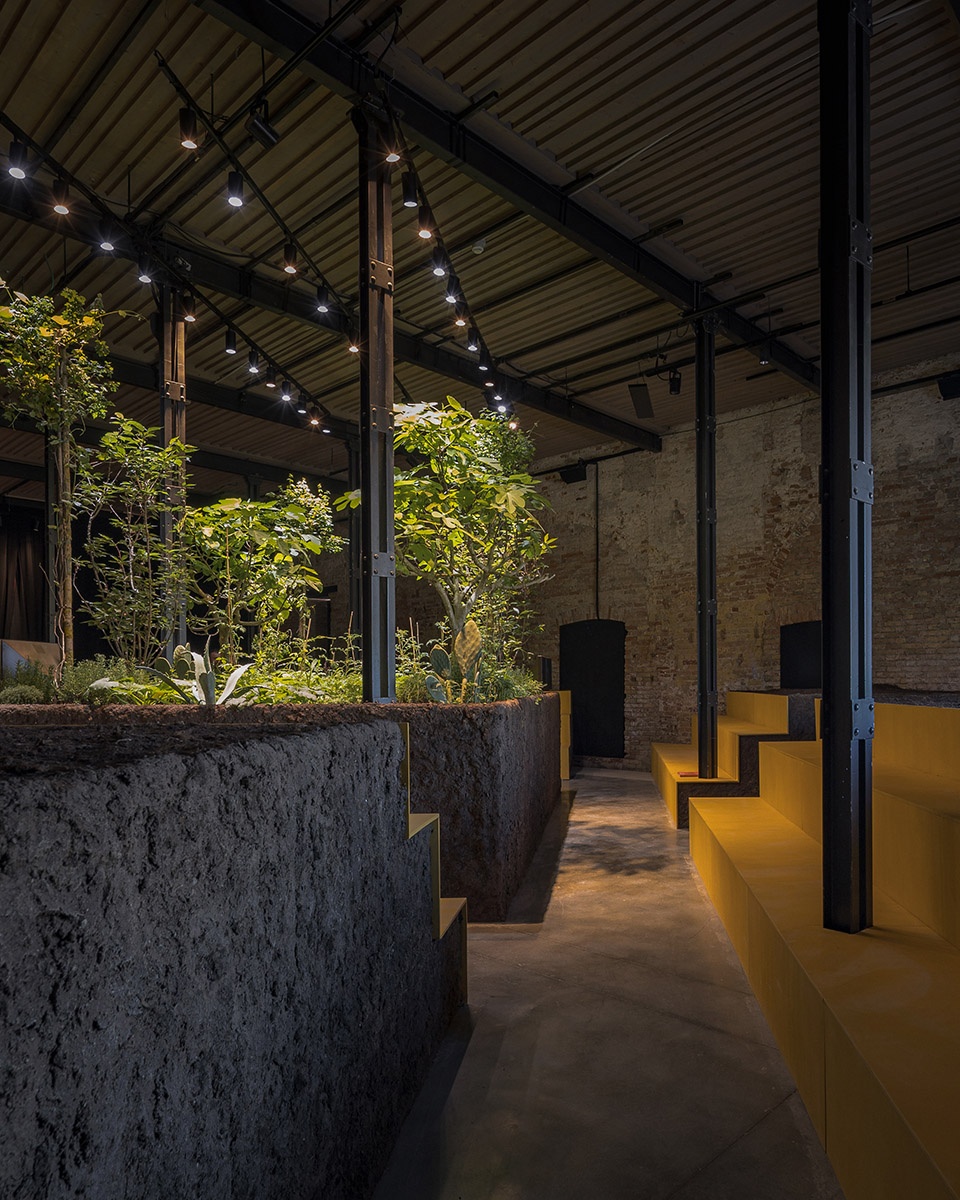
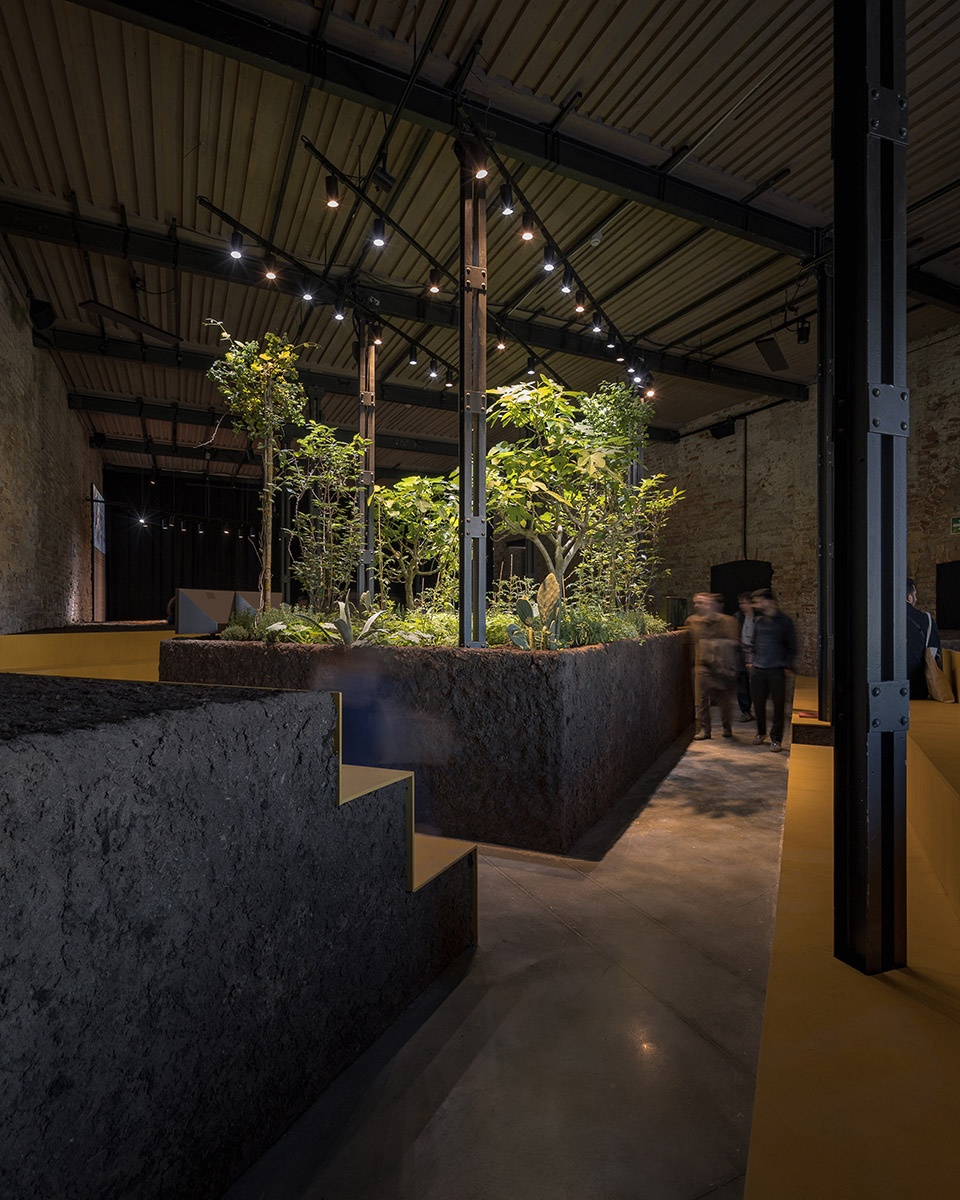
墨西哥馆位于前海军兵工厂旧址,将于2025年5月10日至11月23日对外开放。开幕活动于五月初举行,邀请来自索奇米尔科与威尼斯的农民展开对话,分享他们关于土地、耕作实践与再生农业的经验。
The Pavilion of Mexico is located in the former naval complex known as the Arsenale and will be open from May 10 to November 23, 2025. The opening took place in early May and featured a conversation between farmers from Xochimilco and Venice, who shared their experiences with their territories, cultivation practices, and approaches to regenerative agriculture.
▼对传统农业方式的思考,It triggers people’s thoughts on the traditional agricultural method
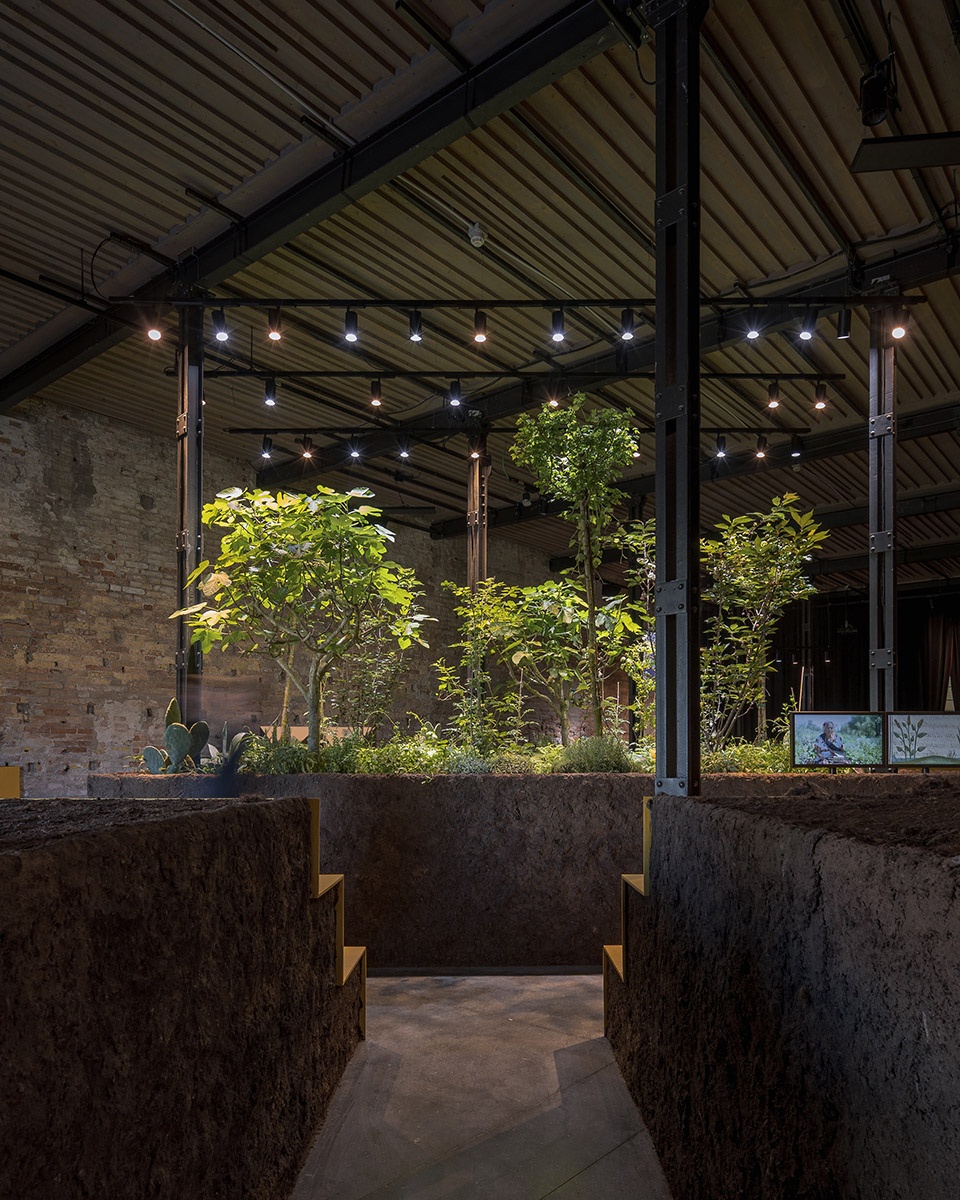
▼引发人们对农业生态环境的思考,It triggers people’s thoughts on the agricultural ecological environment
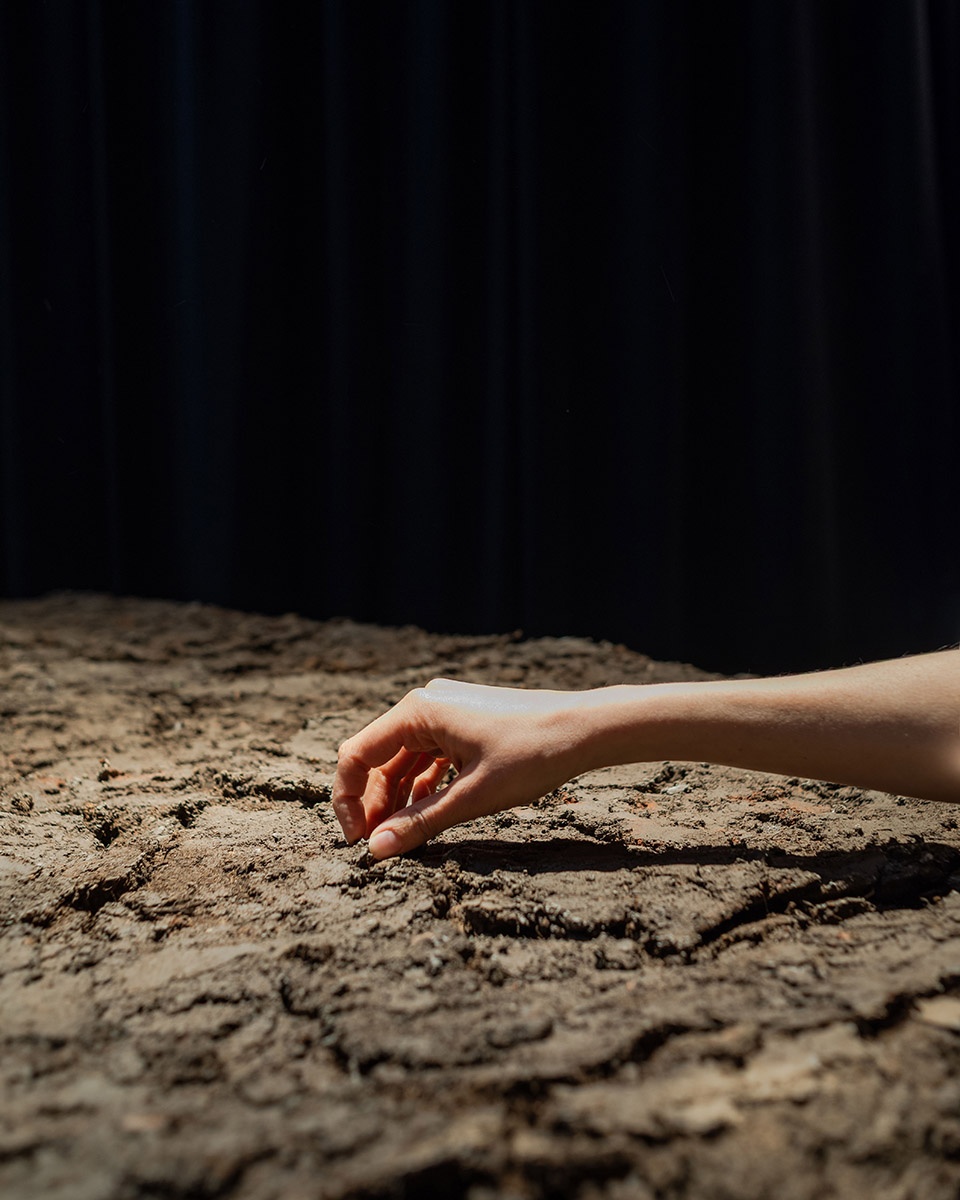
我们将浮园体系视为一种延续至今的祖先智慧。我们对那些通过劳动与坚持让浮园存续至今的人们表达感激与敬意——感谢那些守护它、抵御墨西哥城无情城市扩张与市场压力的双手。也特别感谢所有通过文字与对话,在这一过程中给予指引的人们。
We recognize the chinampa system as an ancestral form of intelligence that has endured to this day. We are grateful to and deeply admire all those who, through their work and perseverance, have kept it alive. Thank you to the hands that care for it and resist the overwhelming urban expansion of Mexico City and the pressures of the market. We are especially thankful to everyone who, through their texts and conversations, has guided us throughout this journey.
▼平面图,plan
Comissioner: José María Bilbao Rodríguez
Colectivo Chinampa Veneta: Estudio Ignacio Urquiza y Ana Paula de Alba, Estudio María Marín de Buen, ILWT, Locus, Lucio Usobiaga Hegewisch & Nathalia Muguet, Pedro&Juana
Chinampa Veneta team: Aldo Urban, Ana Paula de Alba, Ana Paula Ruiz Galindo, Andrea Mejía, Diego Manzano, Emilio M. Frausto, Federico de Antuñano, Ignacio Urquiza Seoane, Isabel Brocado, Jachen Schleich, Javiera Elicer, Lucio Usobiaga Hegewisch, Lucero Chaires, María Marín de Buen, Martina Duque, Mecky Reuss, Michela Lostia di Santa Sofia, Miguel Ángel Vega Ruiz, Nathalia Muguet, Paulina García Ortíz, Rodrigo Huesca, Sana Frini, Santiago Sitten, Shantal Gabriela Haddad Gómez, Xavier Delgado González, Yavanna Latapí
Photography: Yvonne Venegas, Uta Gleiser, Matteo Losurdo, Ricardo de la Concha
Image editing and digital processing: Arturo Arrieta