杨树浦电厂遗迹公园(杨浦滨江公共空间和综合环境(三期)工程,上海/景观
1、上世纪初远东最大火力发电厂的涅槃重生:杨树浦电厂滨水艺术空间前身为英商投资建于1913年的杨树浦发电厂。这座曾经的远东第一火力发电厂虽然在上海的城市发展中扮演了重要的角色。2015年,伴随着整个黄浦江公共空间工程计划的启动,电厂关停开始实施生态和艺术改造,从封闭的“闲人免入”生产岸线,向文化和生态共享的生活性滨水开放空间转型,“还江于民”,修复燃煤造成的生态污染,塑造电厂的场所精神,嵌入城市律动的滨水公共空间。
1. The nirvana and rebirth of the largest thermal power plant in the Far East at the beginning of the last century: the waterfront art space of Yangshupu power plant was formerly the Yangshupu power plant built in 1913 with British investment. This once the first thermal power plant in the Far East has played an important role in the urban development of Shanghai. In 2015, with the launch of the whole Huangpu River public space project plan, the power plant was shut down and began to implement ecological and artistic transformation, transforming from the closed "no admittance" production coastline to the living waterfront open space with cultural and ecological sharing, "returning the river to the people", repairing the ecological pollution caused by coal combustion, shaping the place spirit of the power plant, and embedding the waterfront public space with urban rhythm.
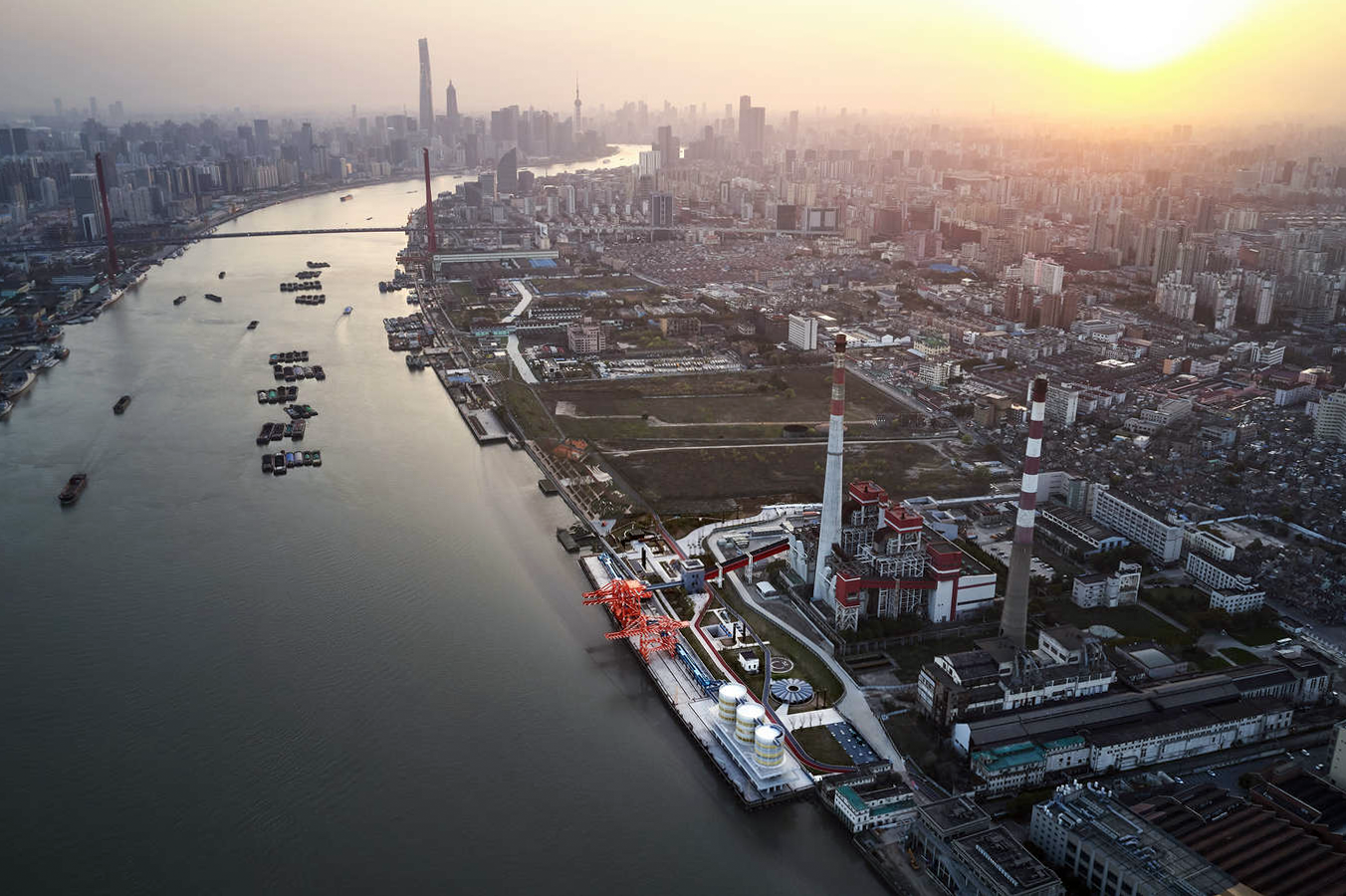
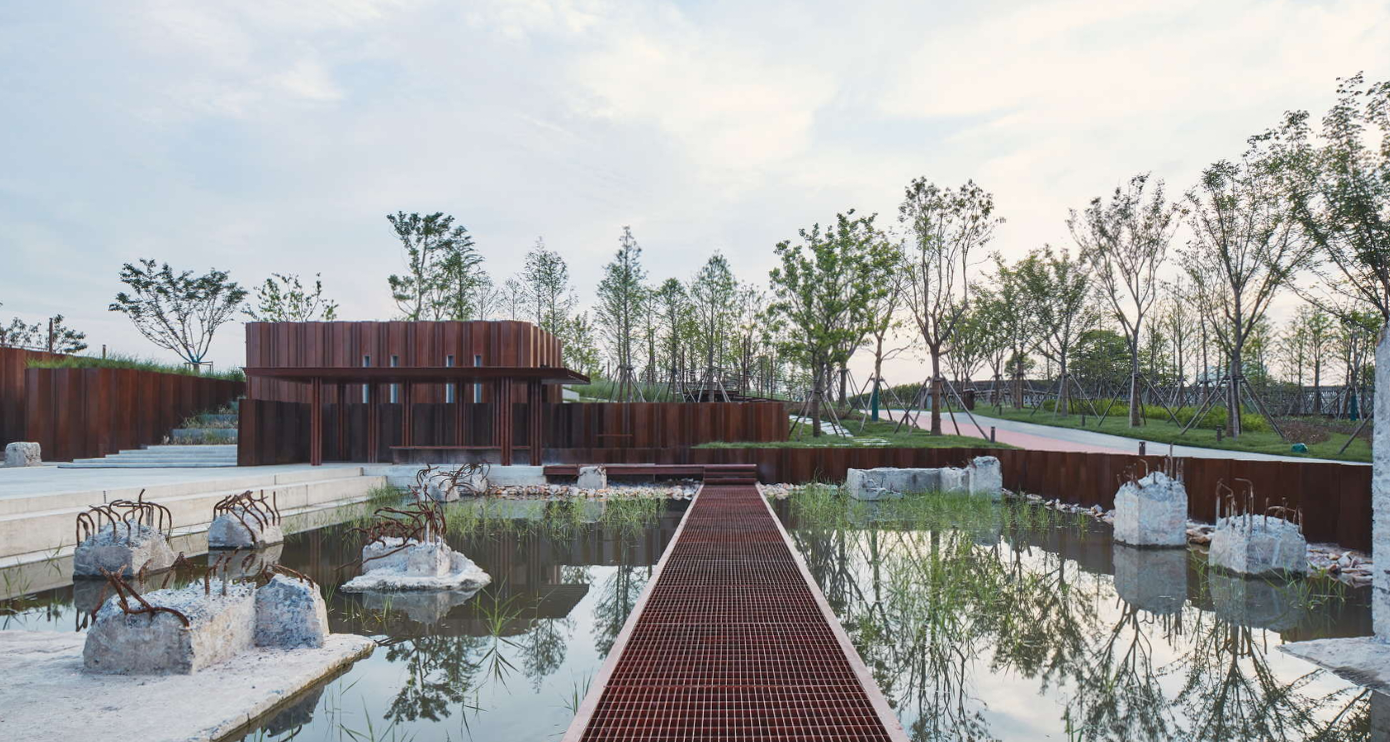
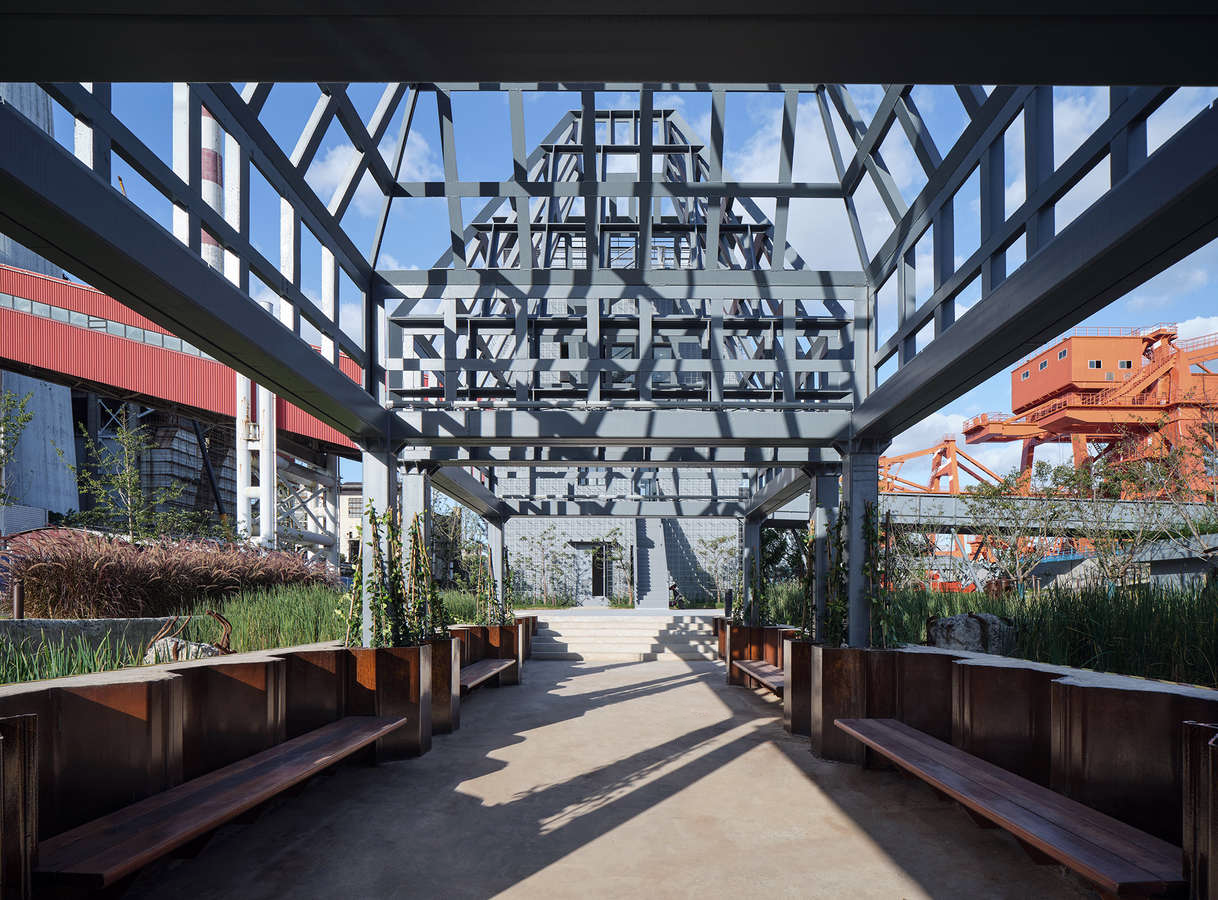
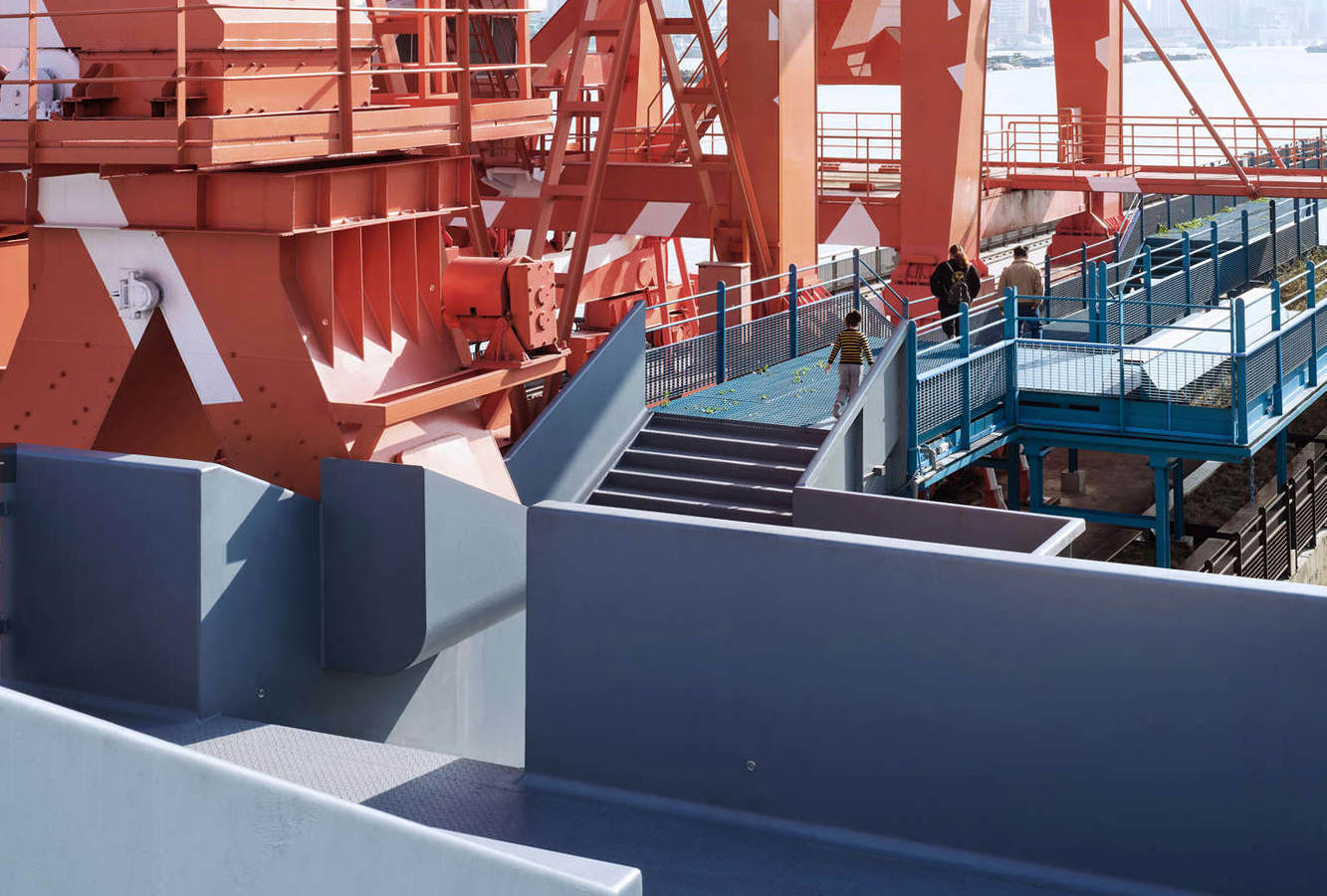
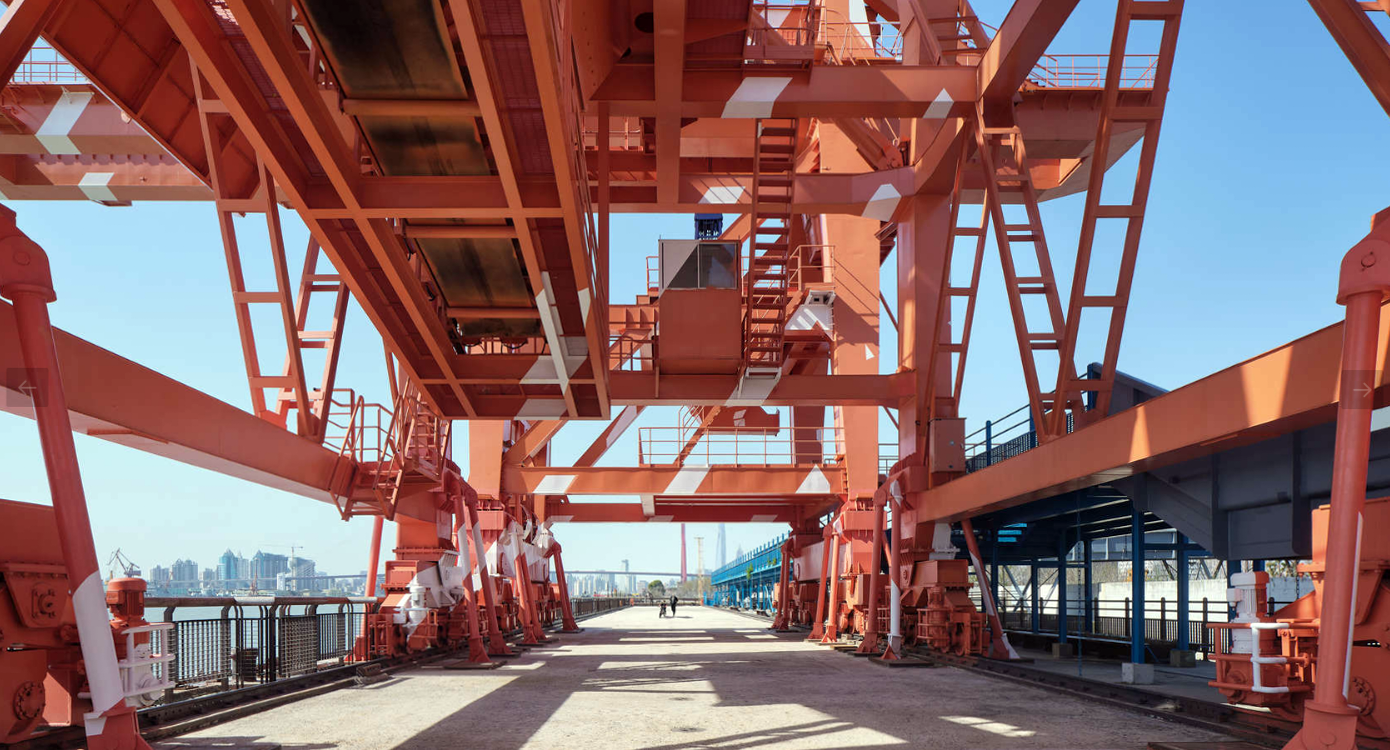
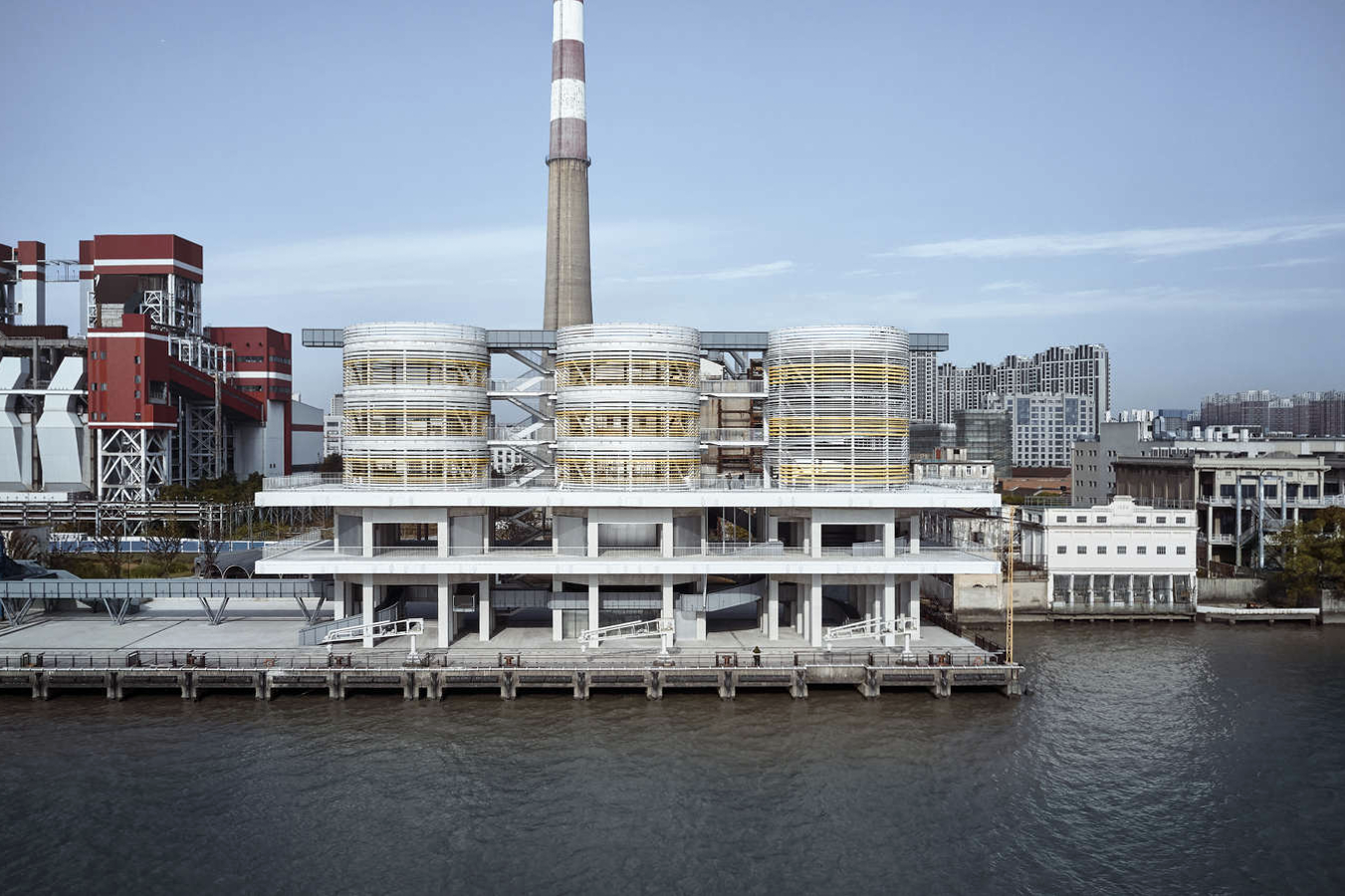
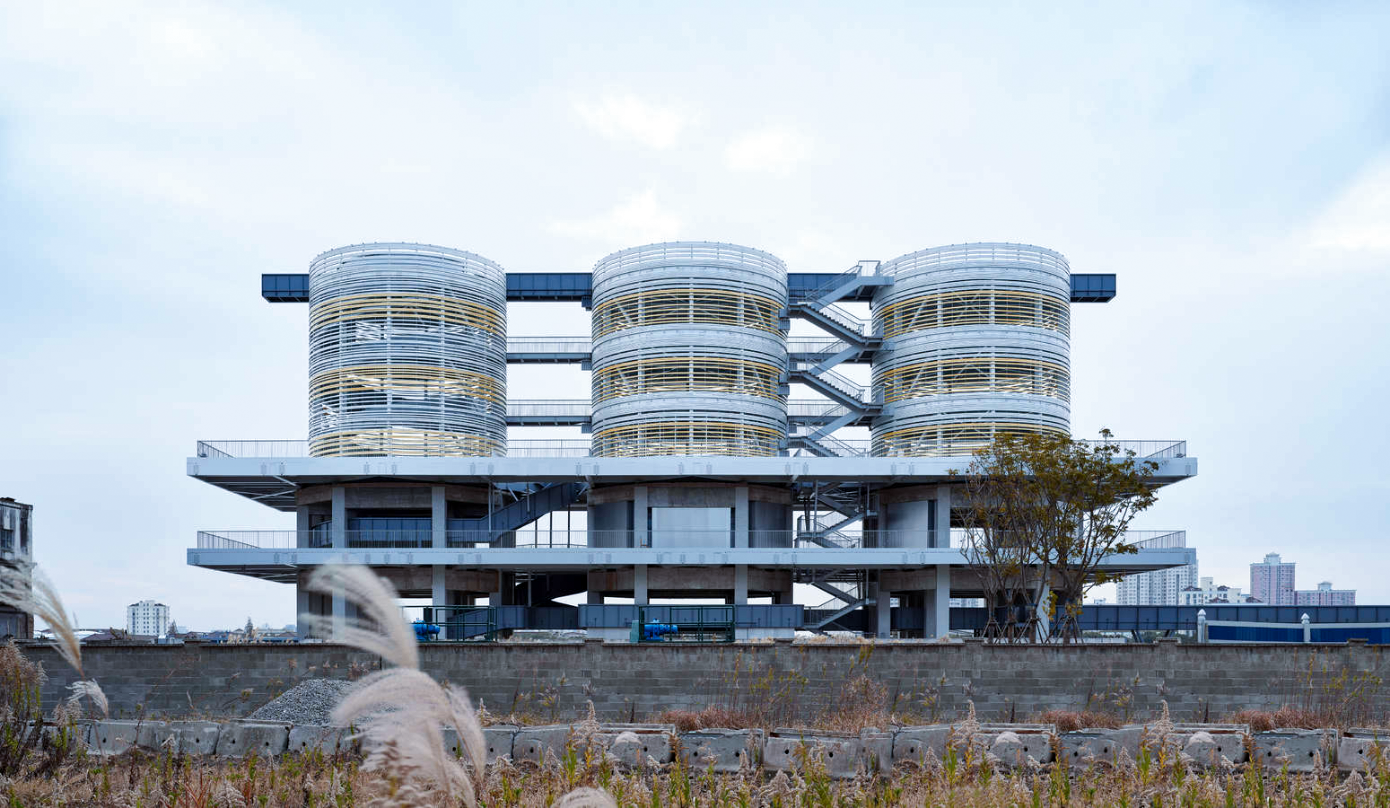
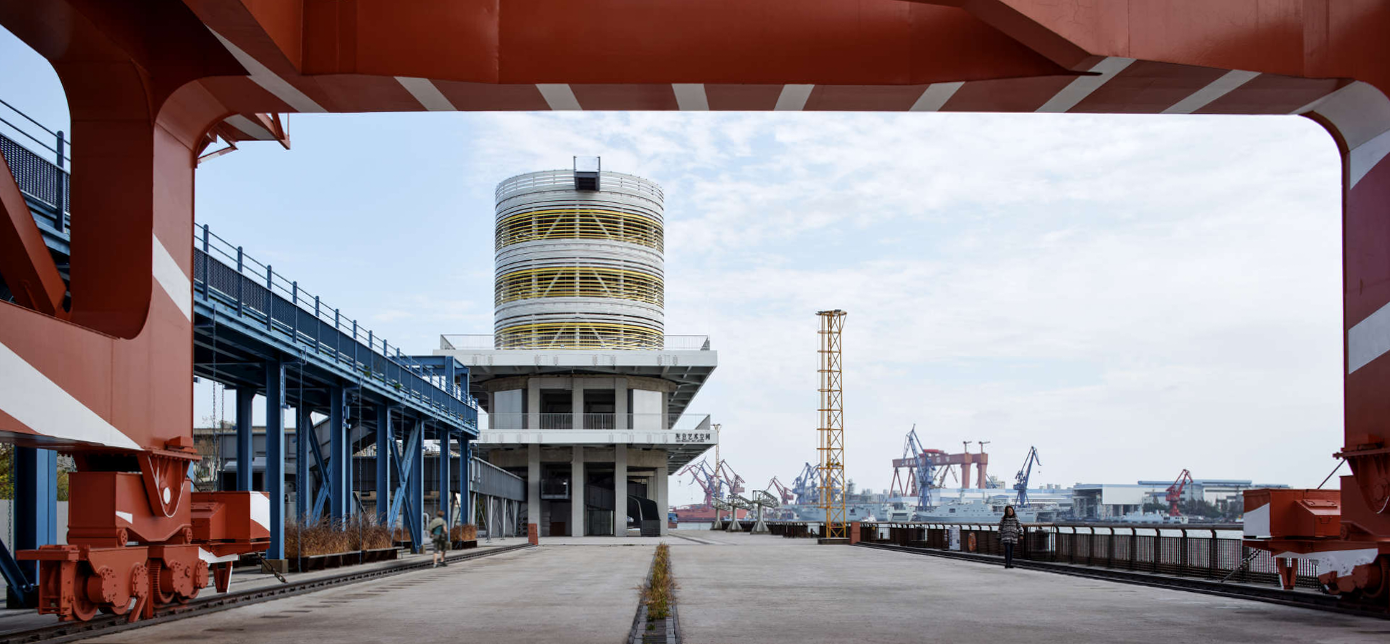
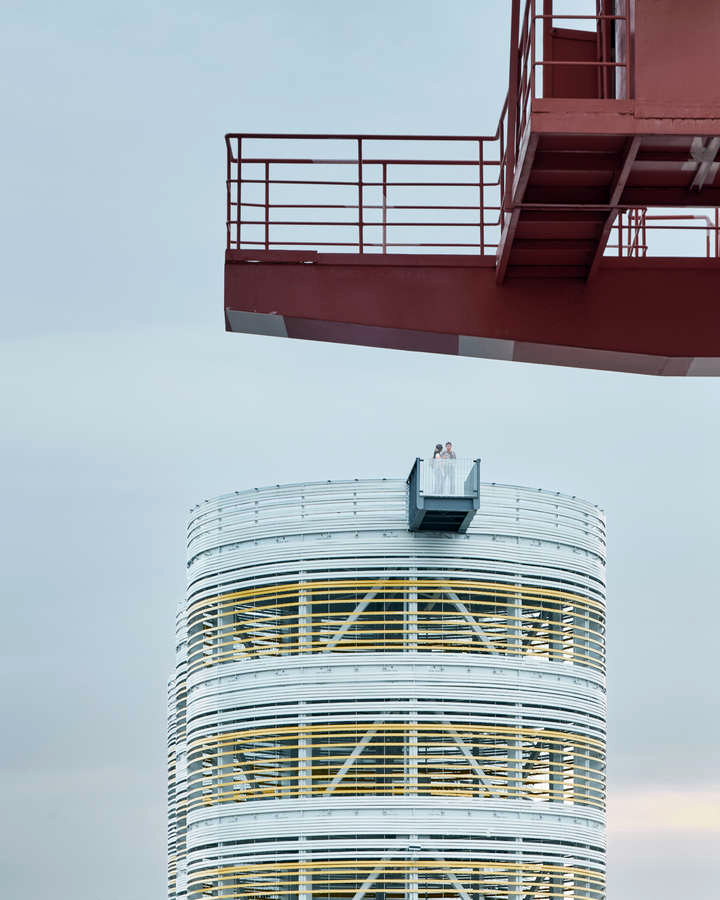
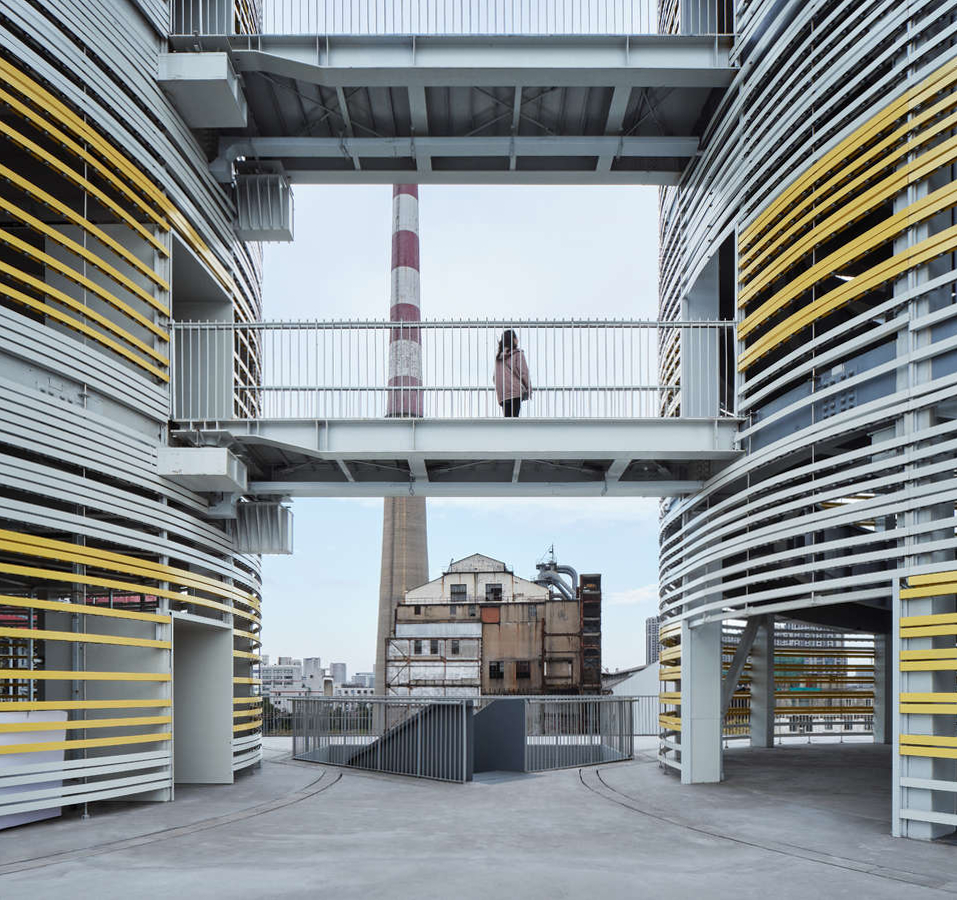
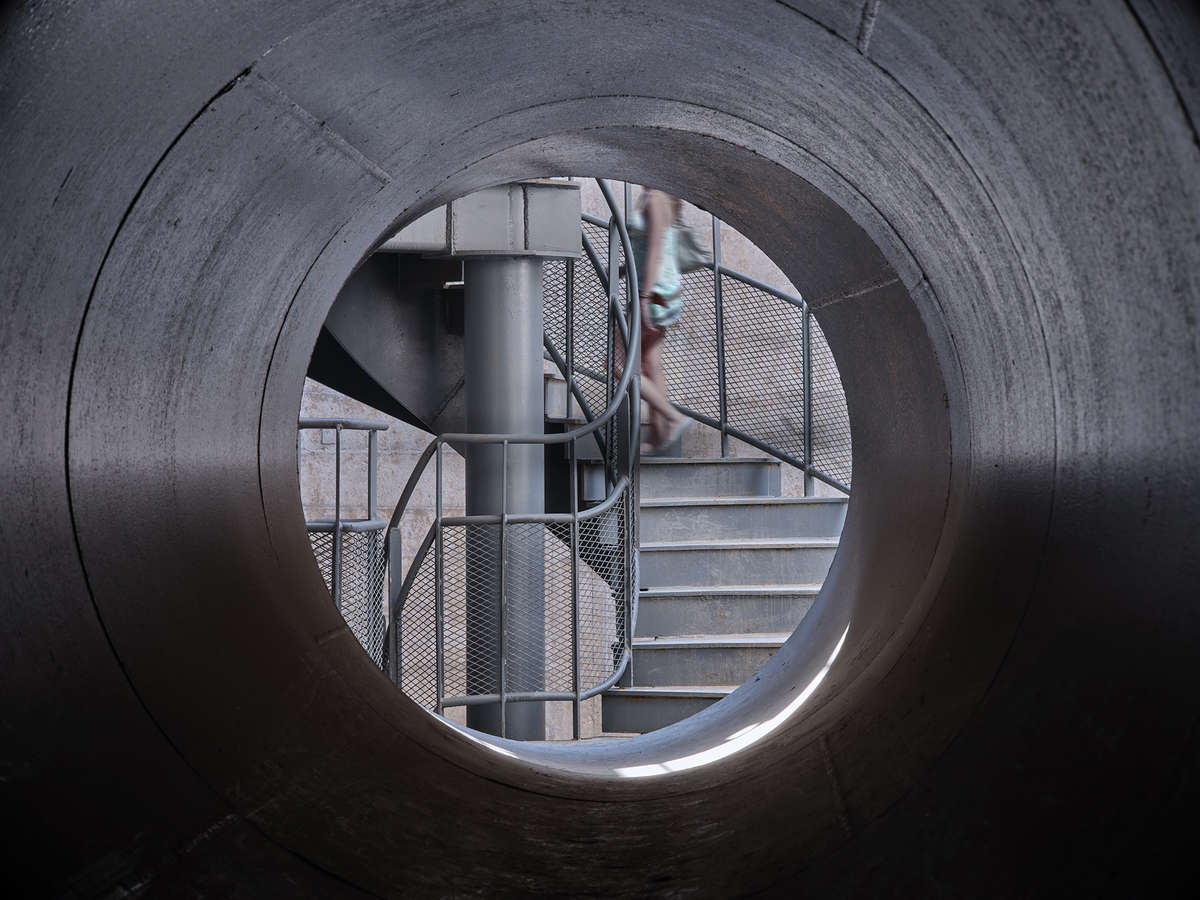
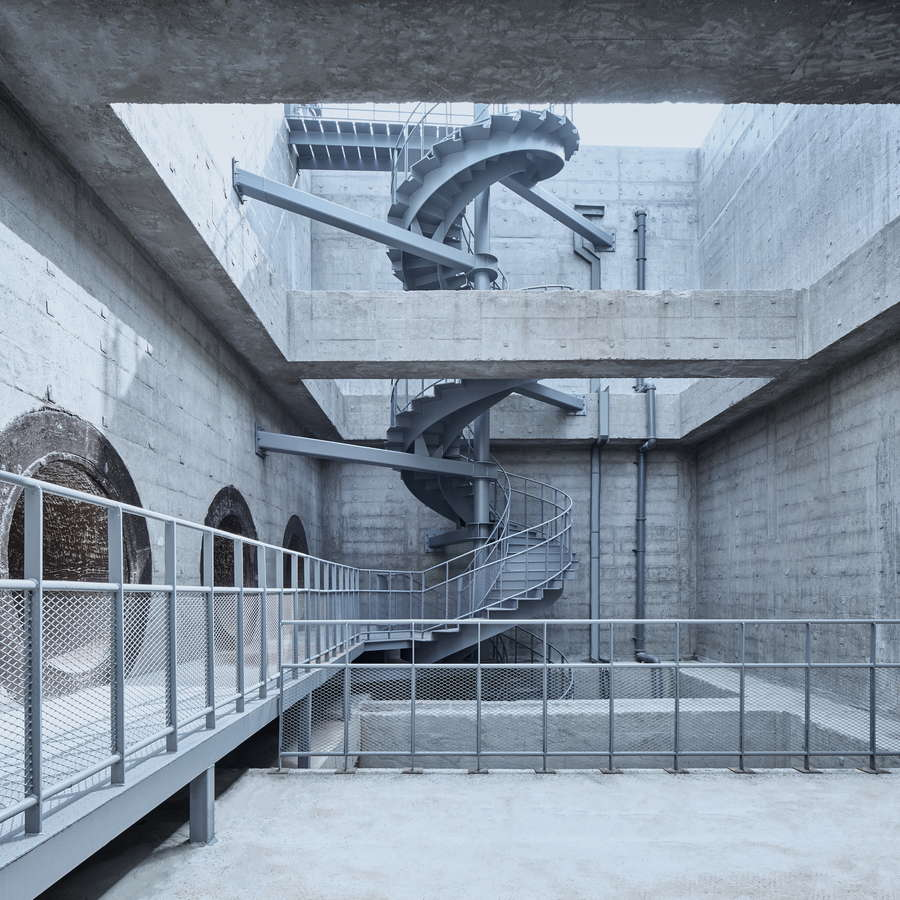
2、“向史而新”、原生态的景观设计理念:电厂段的工业遗构整饬始于两个锚点。一方面,公共空间的营造在理解原先工艺流程的基础上展开:江岸上的鹤嘴吊、输煤栈桥、传送带、清水池、湿灰储灰罐、干灰储灰罐等作业设施有着特殊的空间体量和形式,这些场地遗存为我们提供了塑造场所精神的出发点。另一方面,采用有限介入、低冲击开发的策略,在尊重原有厂区空间基础和原生形态的基础上进行生态修复改造。保留了原本的地貌状态,形成可以汇集雨水的低洼湿地。植物配植以原生草本植物和耐水乔木池杉为主,同时配以轻介入的钢结构景观构筑物,形成别具原生野趣和工业特色的景观环境。
2. "New to history" and original ecological landscape design concept: the rectification of the industrial heritage of the power plant section starts from two anchor points. On the one hand, the construction of public space is based on the understanding of the original process flow: crane cranes, coal conveying trestles, conveyor belts, clean water tanks, wet ash storage tanks, dry ash storage tanks and other operating facilities on the river bank have special space volume and form, and these site relics provide us with the starting point to shape the spirit of the place. On the other hand, adopt the strategy of limited intervention and low impact development, and carry out ecological restoration and transformation on the basis of respecting the original plant space foundation and original form. It retains the original landform and forms a low-lying wetland that can collect rainwater. The plants are mainly native herbaceous plants and water-resistant arbor Taxodium, and are equipped with light intervention steel structure landscape structures to form a landscape environment with unique native wild interests and industrial characteristics.
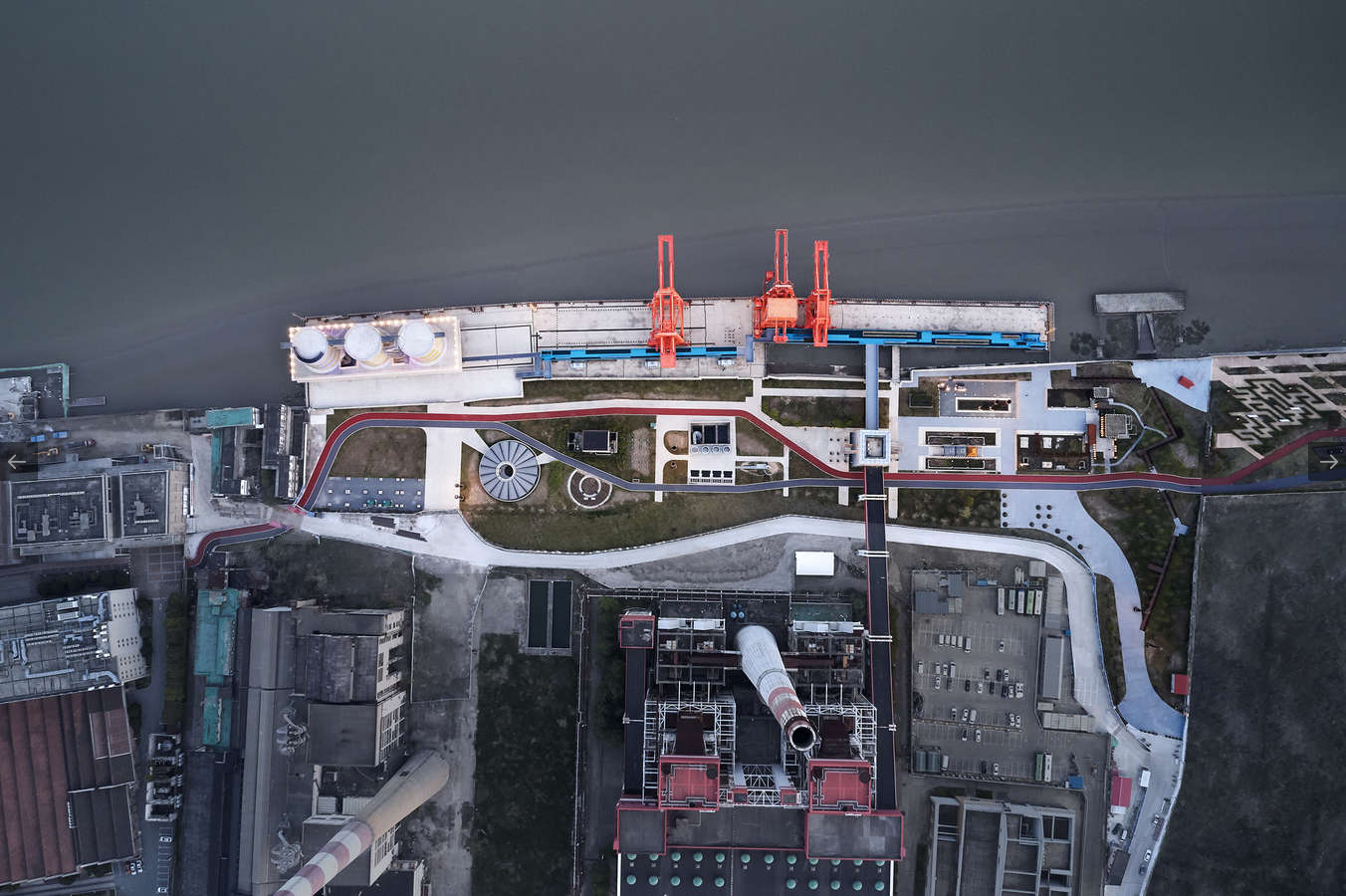
3、适应性的景观塑造:因地制宜、顺势而为的做法贯彻了整个电厂段的改造中。不同时期的人工痕迹被无差别地并置,表达了对不同历史的尊重;迥异的微气候被识别出来,运用有限介入、低冲击手段加以维护和修复。电厂段搭建了一个对话的平台,探讨“滨水空间为人类带来美好生活”这一世界性话题。
3. Adaptive landscape shaping: the practice of adjusting measures to local conditions and following the trend has been implemented in the reconstruction of the whole power plant section. Artificial traces in different periods are juxtaposed indiscriminately, expressing respect for different histories; Different microclimates are identified and maintained and repaired by means of limited intervention and low impact. The power plant section has built a platform for dialogue to discuss the world topic of "waterfront space brings a better life to mankind".
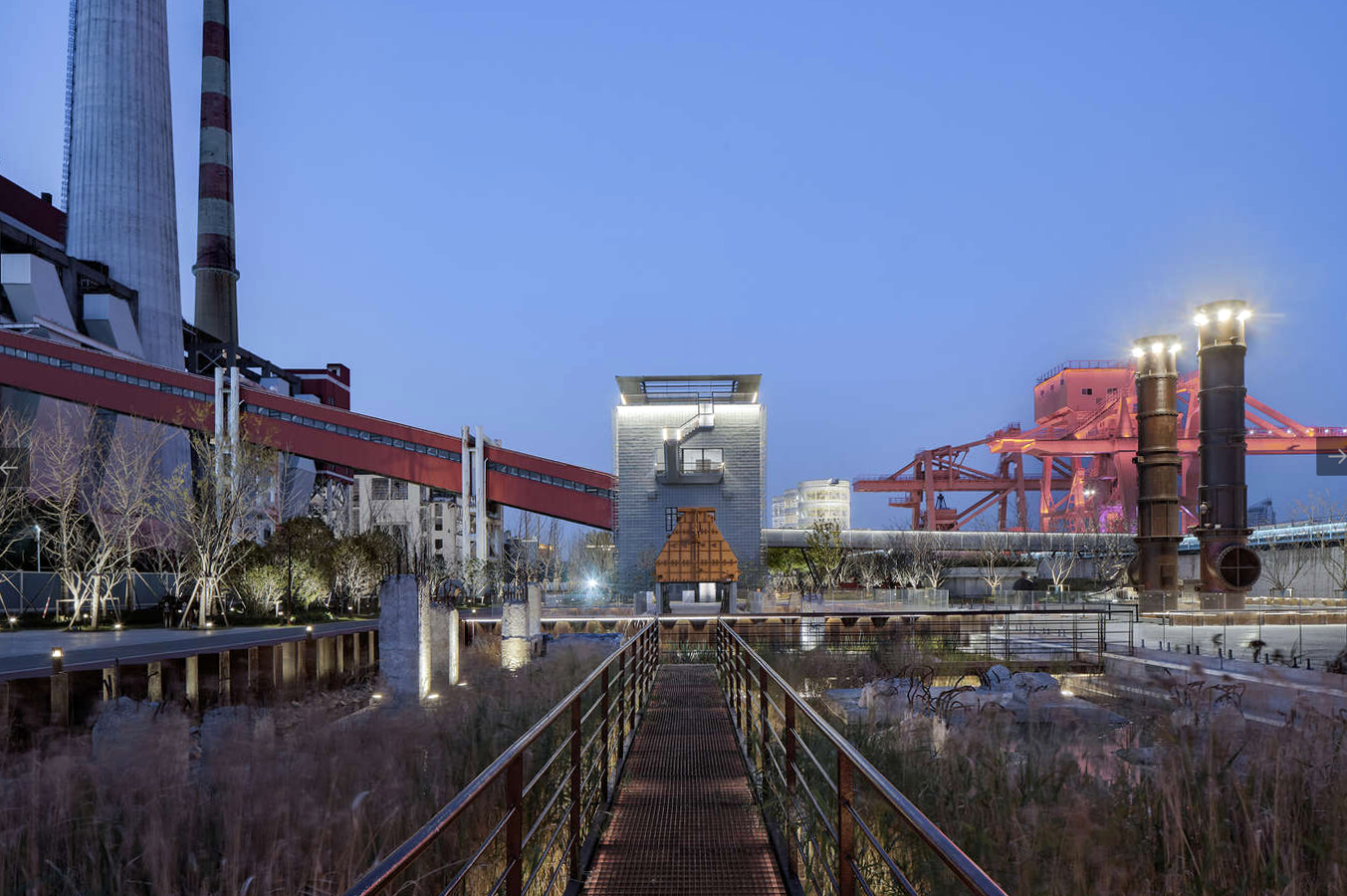
经历5年陪伴式设计将其建设成为了杨浦滨江最具工业特质的一段。我们保留了原有场地肌理,并且通过技术探索和创新对 7 处重要工业遗存进行了独具特色的改造,实现了工业遗存的保留再利用。
After five years of accompanying design, it has become the most industrial section of Yangpu Binjiang. We have preserved the original site texture, and through technological exploration and innovation, we have carried out unique transformation of seven important industrial relics, realizing the preservation and reuse of Industrial Relics.