东京Legato之家,日本 / HUGO KOHNO ARCHITECT ASSOCIATES
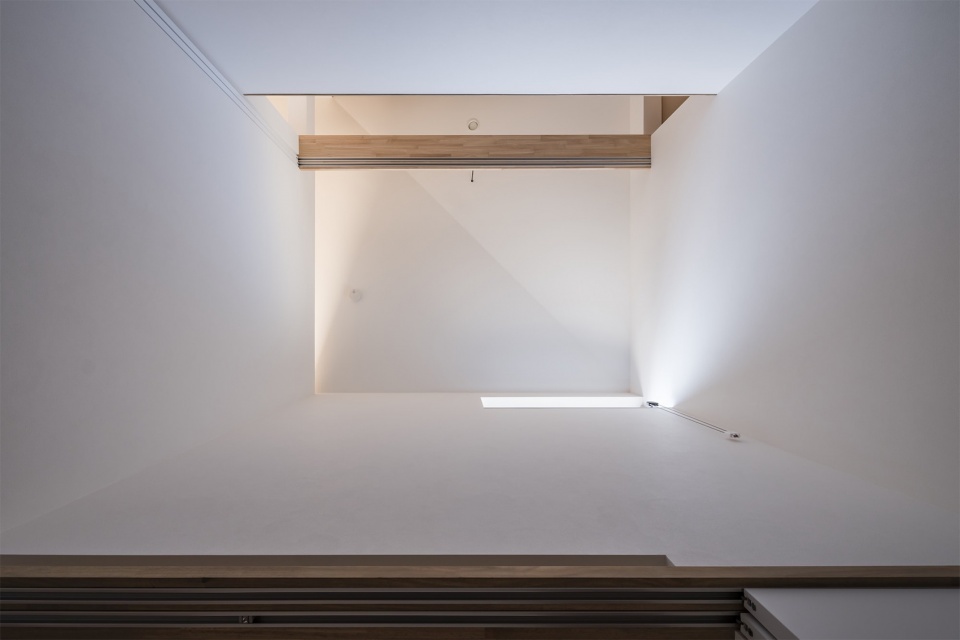
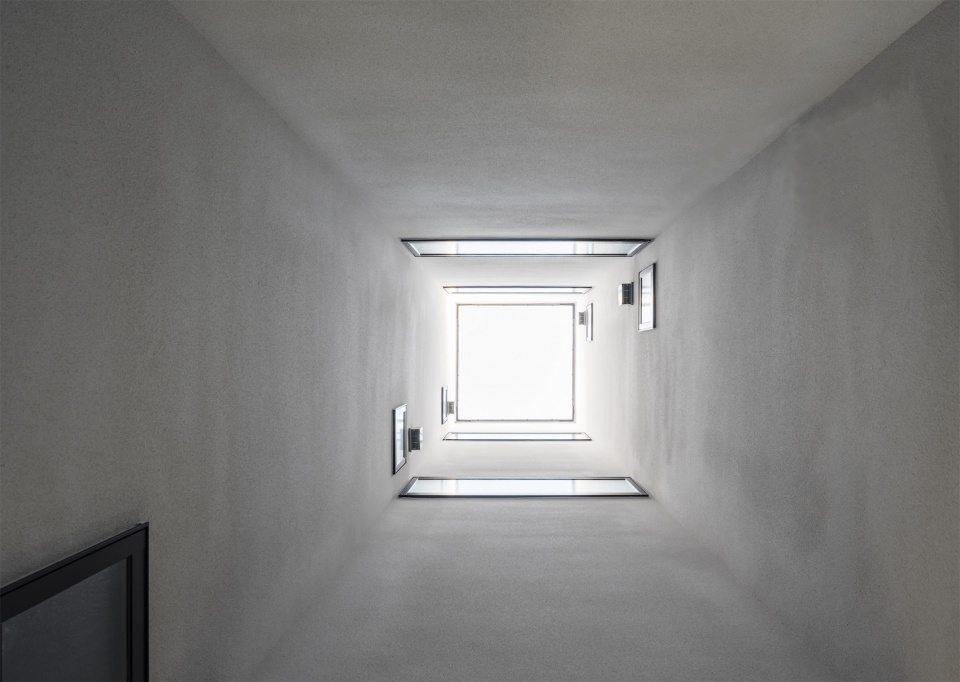
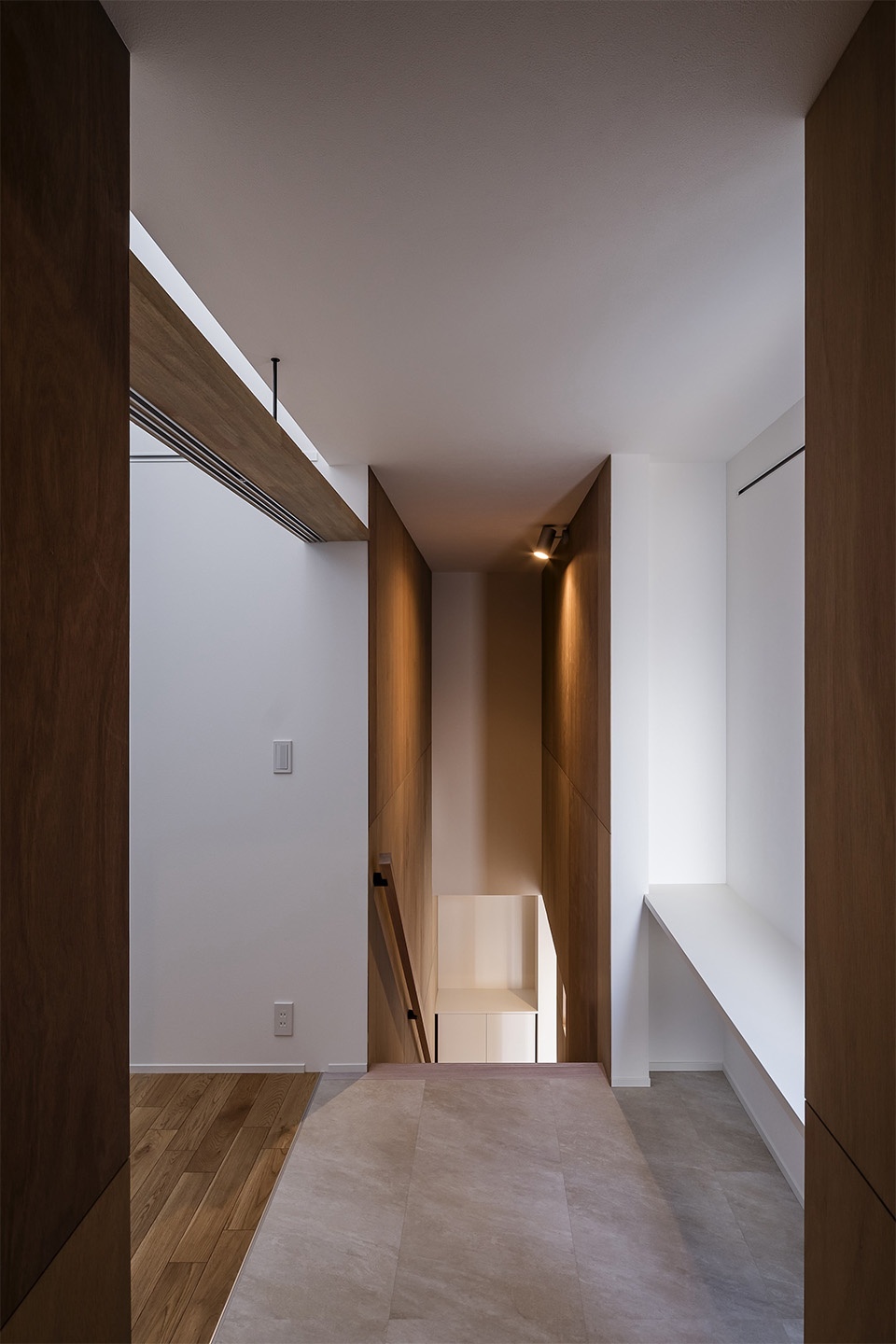
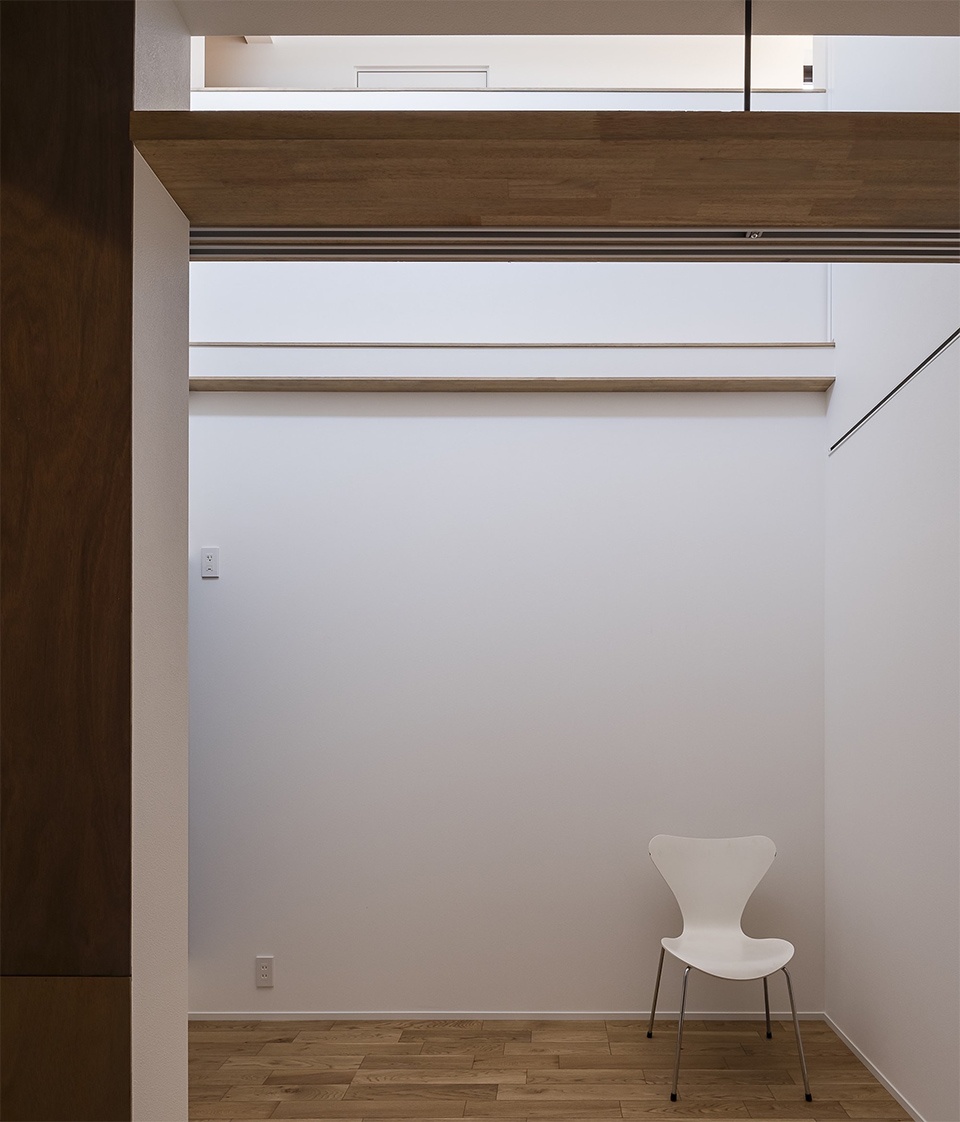
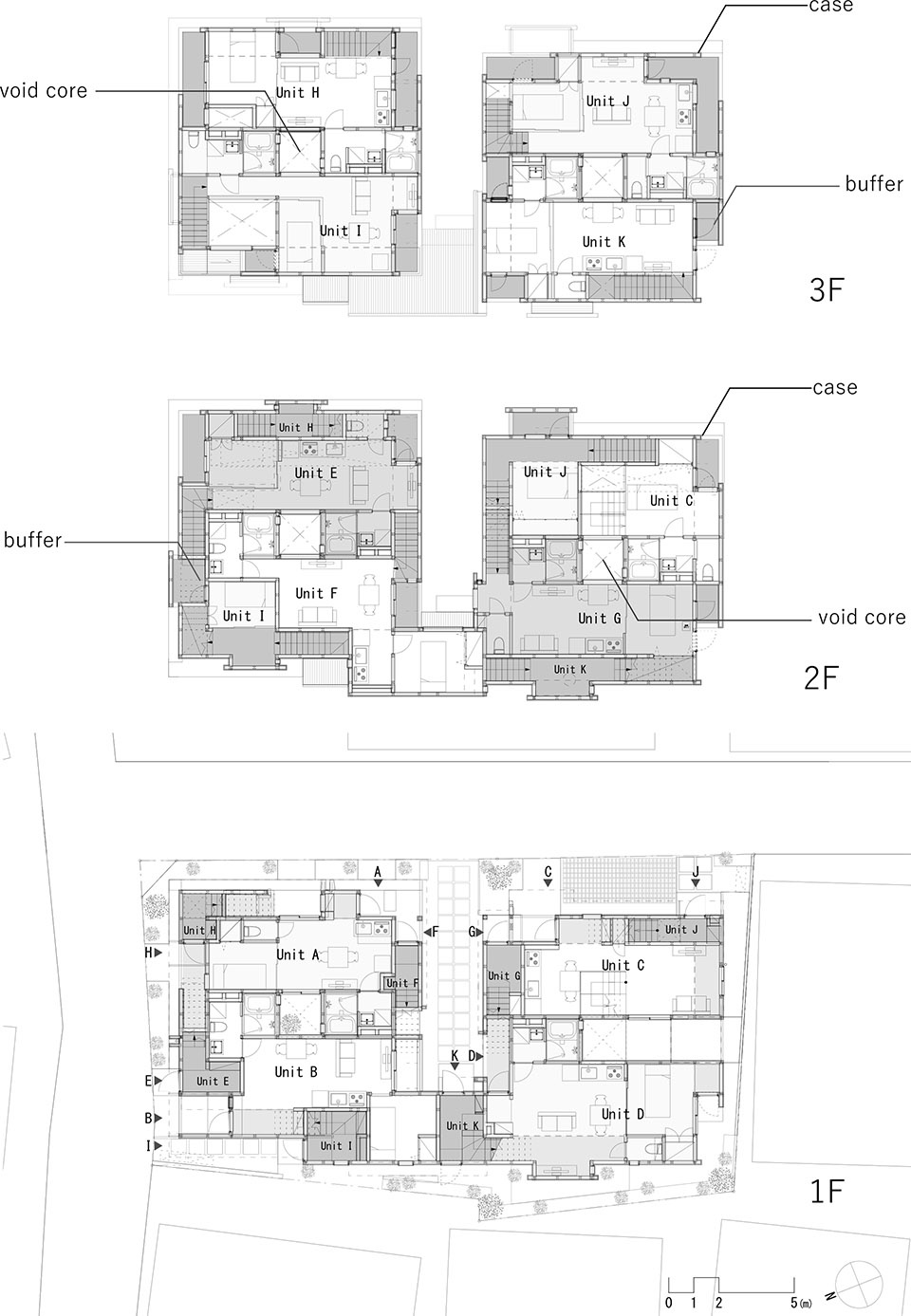
该住宅综合体的设计方案由11套复式单元组成,其概念基于一套嵌套空间体系:作为光与空气通道的“空核”;作为主要生活区域的“空间”;由走廊与楼梯构成的“缓冲层”;以及包裹生活区的“外壳”。
This plan for this residential complex, which includes 11 maisonette units, was based around a system of nested spaces: the “Void Core” as a conduit for light and air; the “Space” as the primary living zone; the “Buffer,” formed by corridors and stairs; and the “Case,” which envelops the living areas.
▼项目概览,Project overview
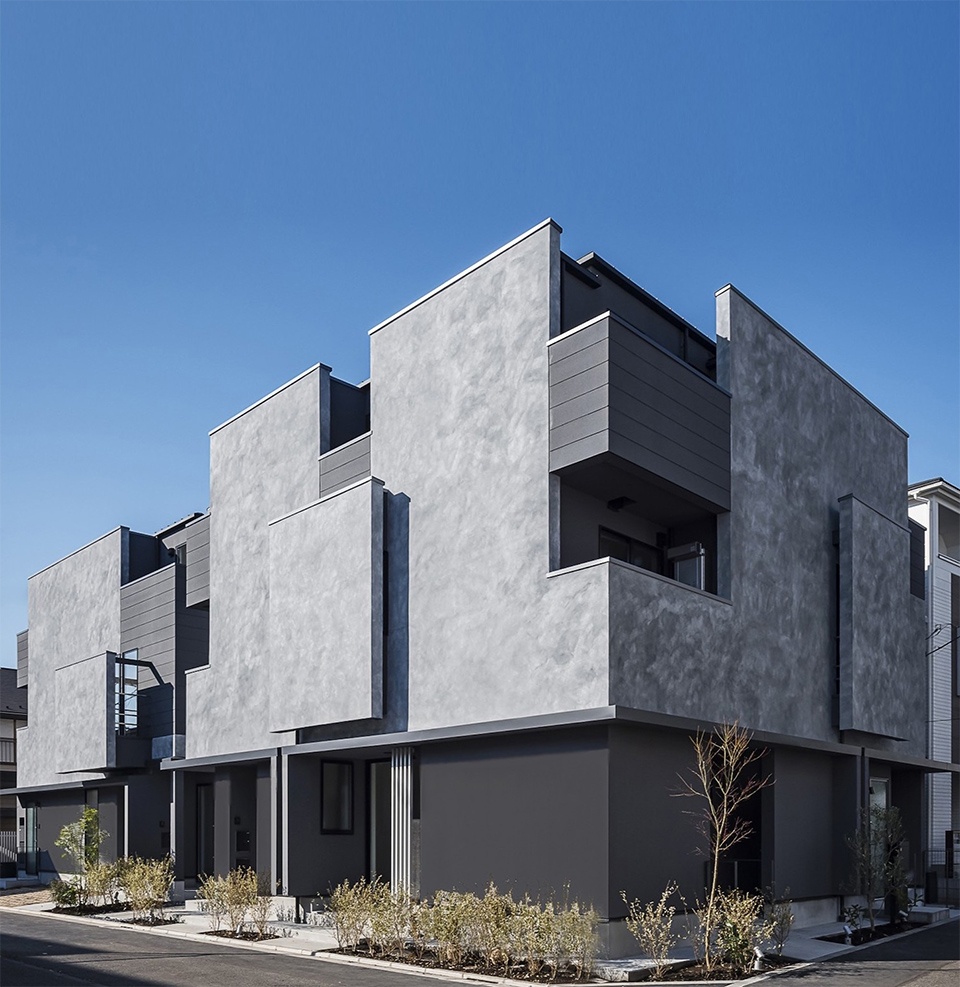
该项目毗邻铁路线路,且处于高密度住宅区内。因此,设计不仅要确保私密性与隔音性能,还需保证充足的采光与通风。同时,设计还需具备对住户不同生活方式的适应性。传统租赁住宅往往因标准化平面布局而忽视对环境语境的响应,而该项目则致力于营造一个既能让住户展现个性、又能获得归属感的居住环境。
The site lies adjacent to a railway line and within a dense residential area. This meant the design needed to ensure not only privacy and noise reduction but also sufficient daylight and ventilation. At the same time, the design also sought adaptability to individual lifestyles. While rental housing is often characterized by standardized floor plans that neglect contextual responsiveness, this complex creates a tailored environment that enables residents to both assert their individuality and feel at home.
▼独特的外立面,Unique facade
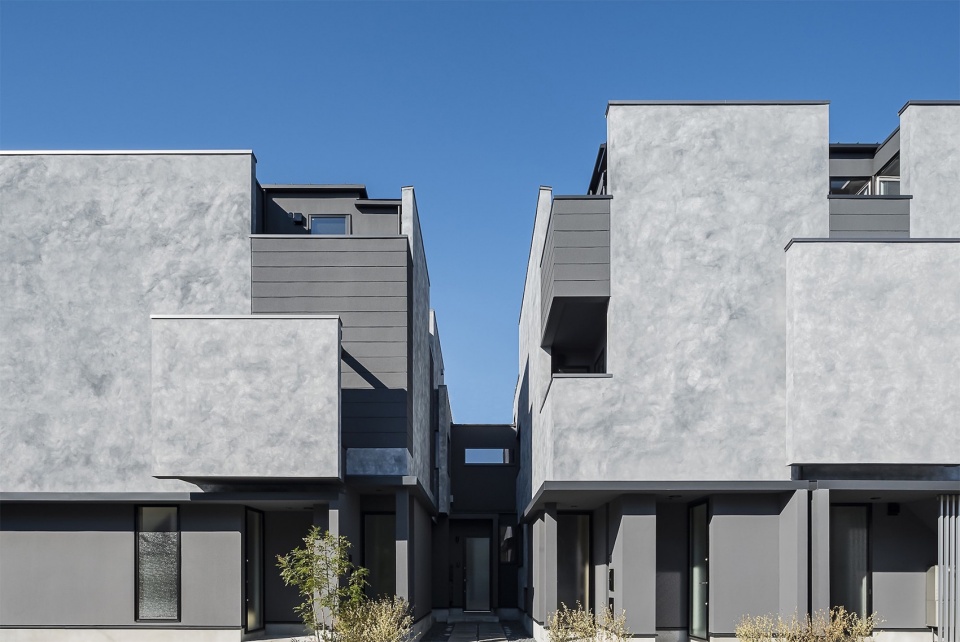
该项目设计聚焦于打造能够适应多样化生活条件的私密居住空间。其多层次构成将外部环境纳入体系之中,旨在使居住空间拥有更丰富的层次与共鸣。
The design was themed around the creation of private living spaces capable of accommodating diverse circumstances and conditions. The multilayered composition incorporates the exterior environment, endowing the living space with spatial depth and resonance.
▼居住室内空间概览,Living space overview
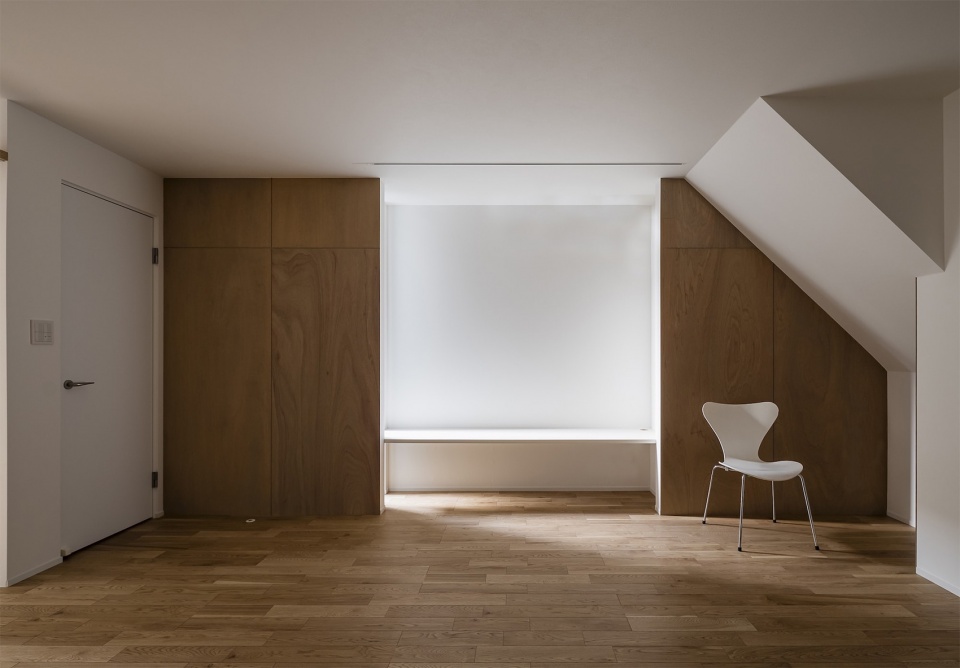
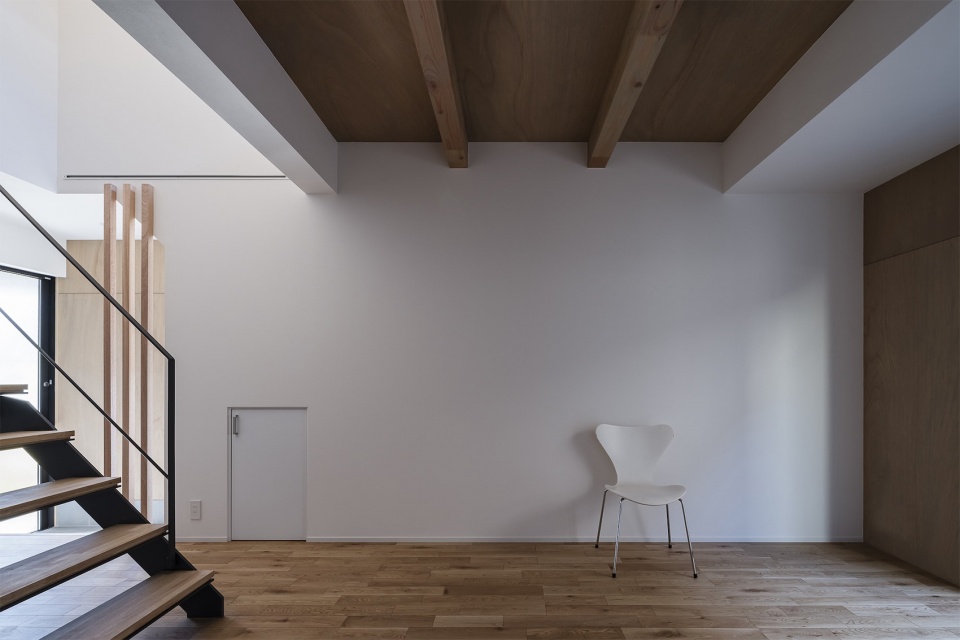
▼丰富的空间层次,Rich spatial hierarchy
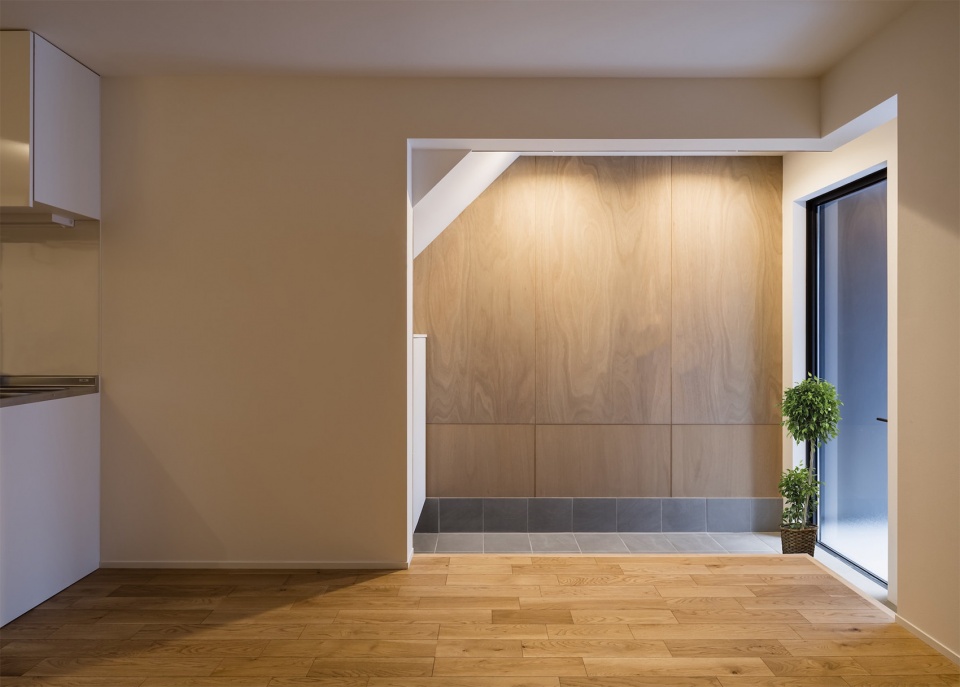
住宅综合体项目通常面临不同单元间在物理心理层面的过度接近问题,而该项目通过空间结构予以应对。该项目中的主要生活区(如客厅、餐厅、厨房与卧室)由“缓冲层”环绕,该层由楼梯井、储藏区等构成,用以调节与外部的关系。在某些节点,生活区向缓冲层外扩,使空间产生变化,同时建立起与外部的微妙联系。浴室等湿区则被设置在单元之间,进一步增强隔离与私密性。
Residential complexes often carry the drawback of physical and psychological proximity between units—an issue this project addresses through spatial structuring. Primary living areas such as the living/dining/kitchen areas and bedrooms are surrounded by the Buffer,” composed of stairwells, storage areas, and other spaces, which regulates the relationship with the exterior. At points, the living zone expands outward into this Buffer, creating variety within the space as well as subtle connections to the outside. Bathrooms and other wet areas are placed between units to create an additional layer of separation and privacy.
▼生活区,Living areas
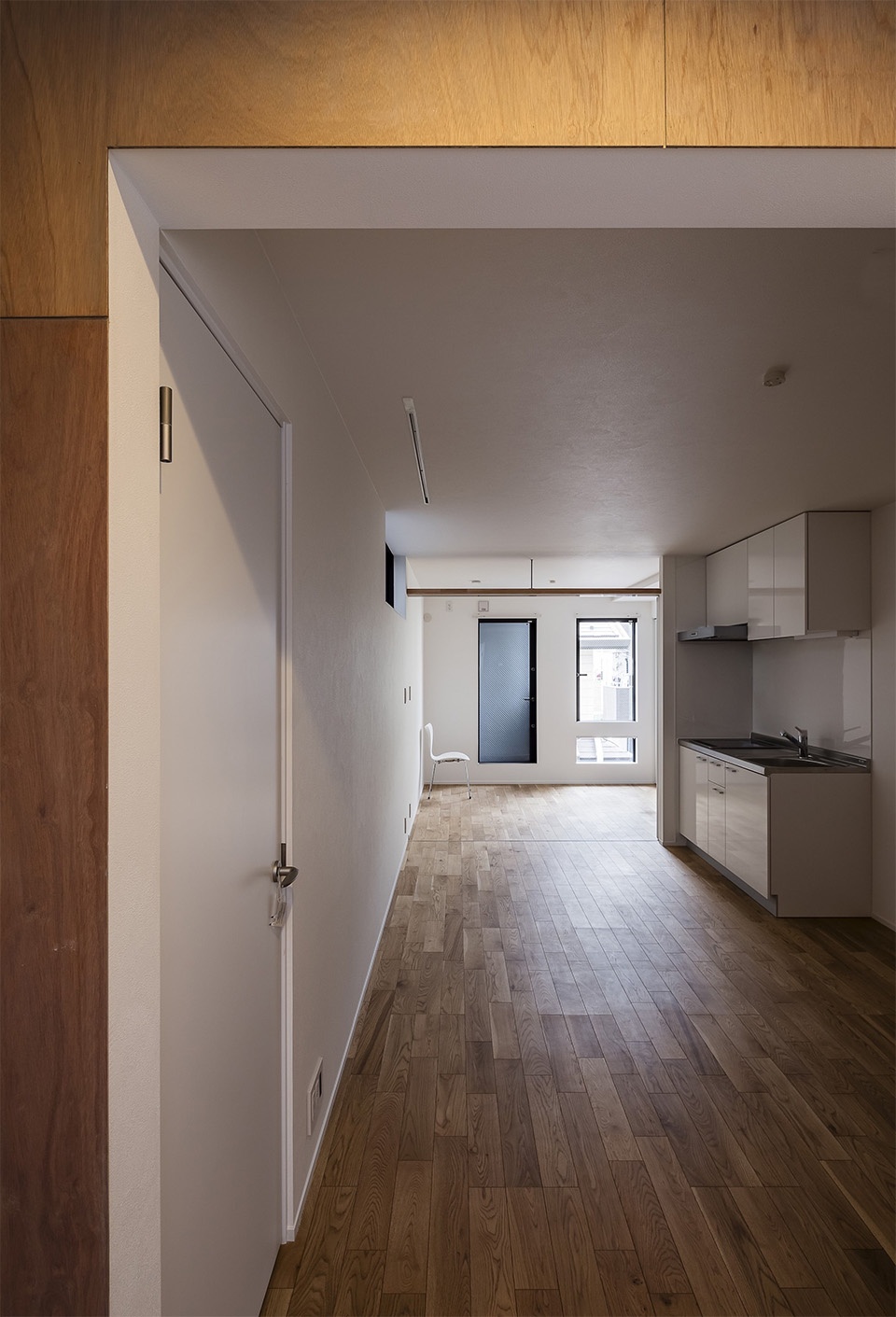
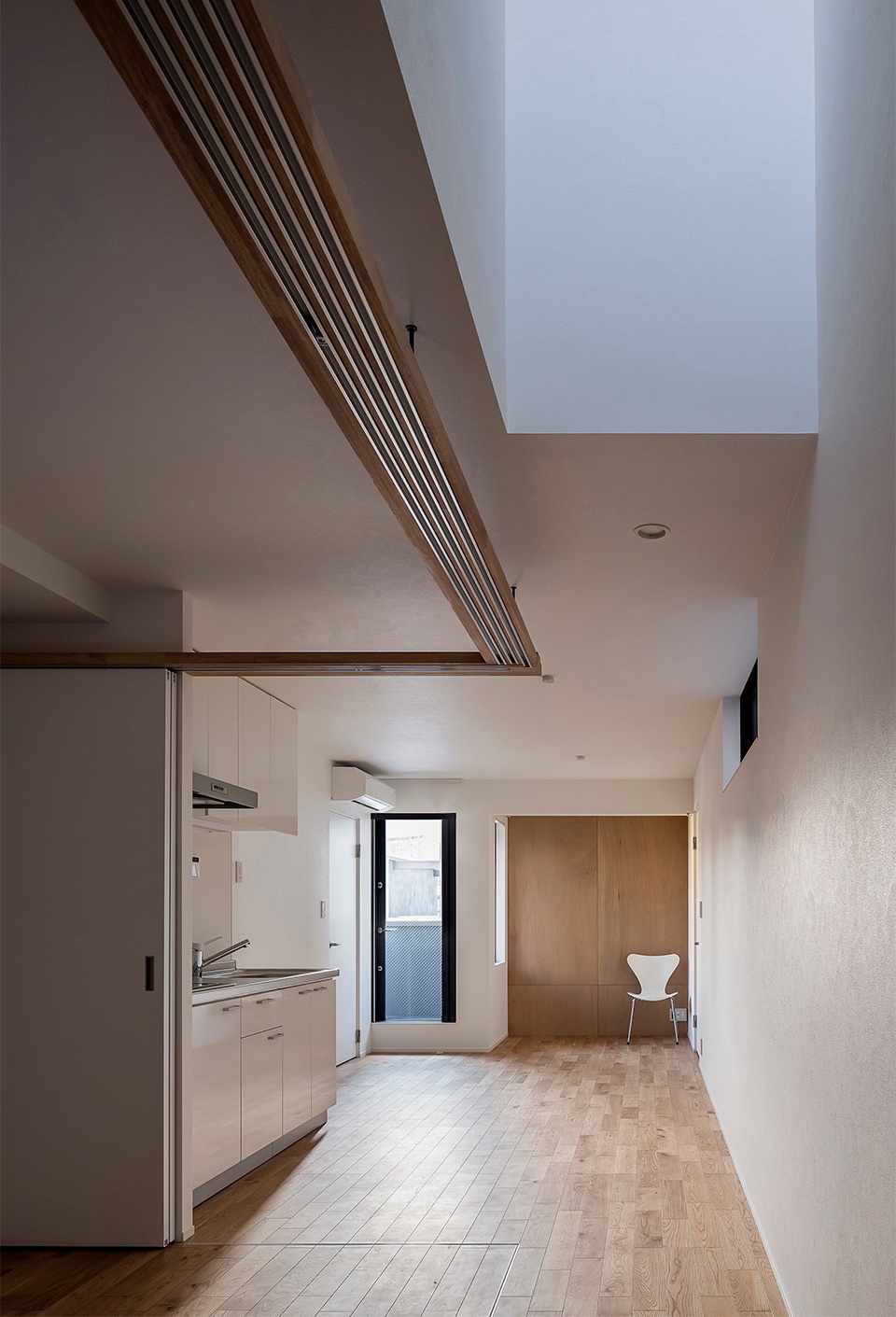
▼良好的采光,Good lighting
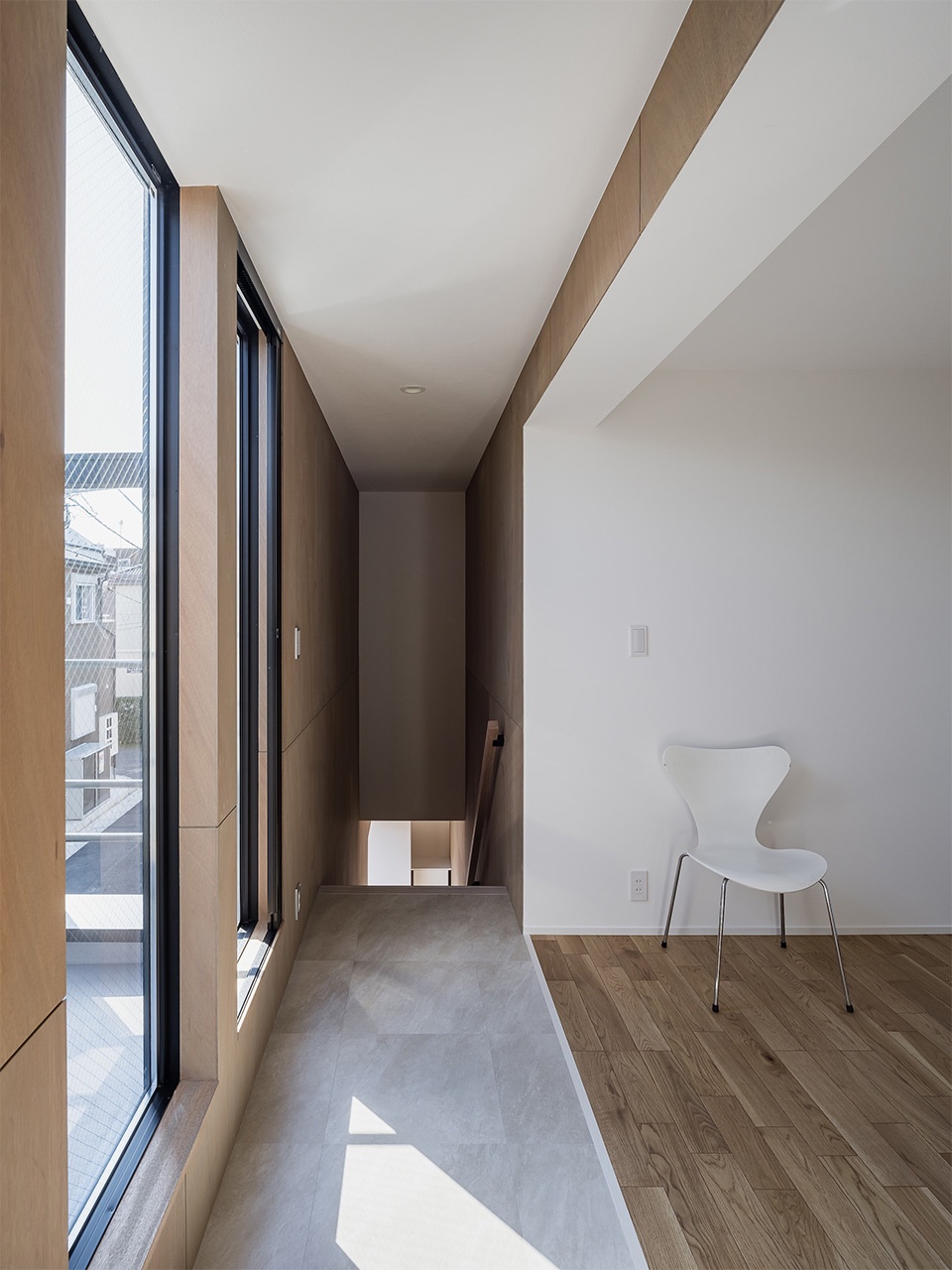
▼温暖的室内氛围,A warm indoor atmosphere
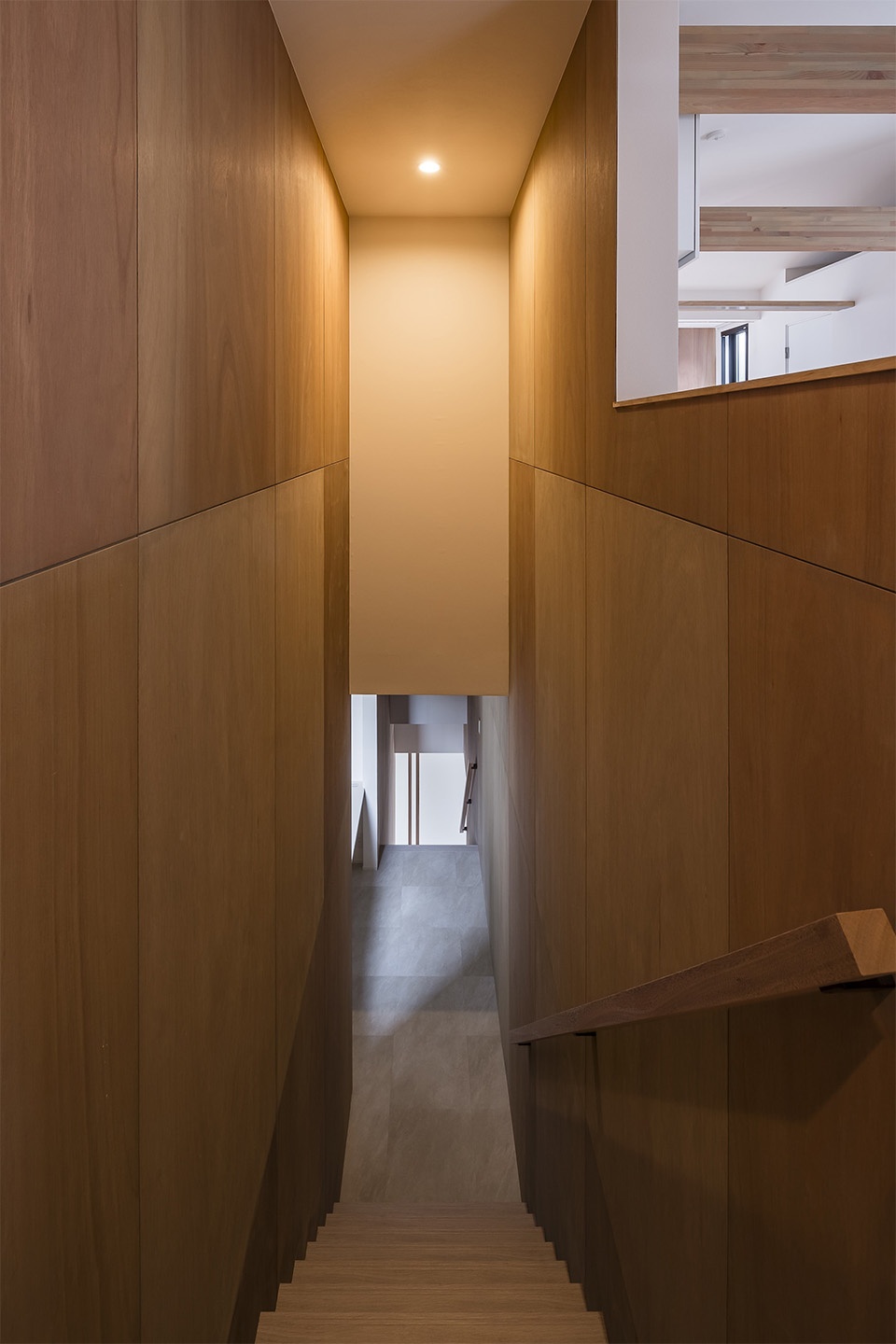
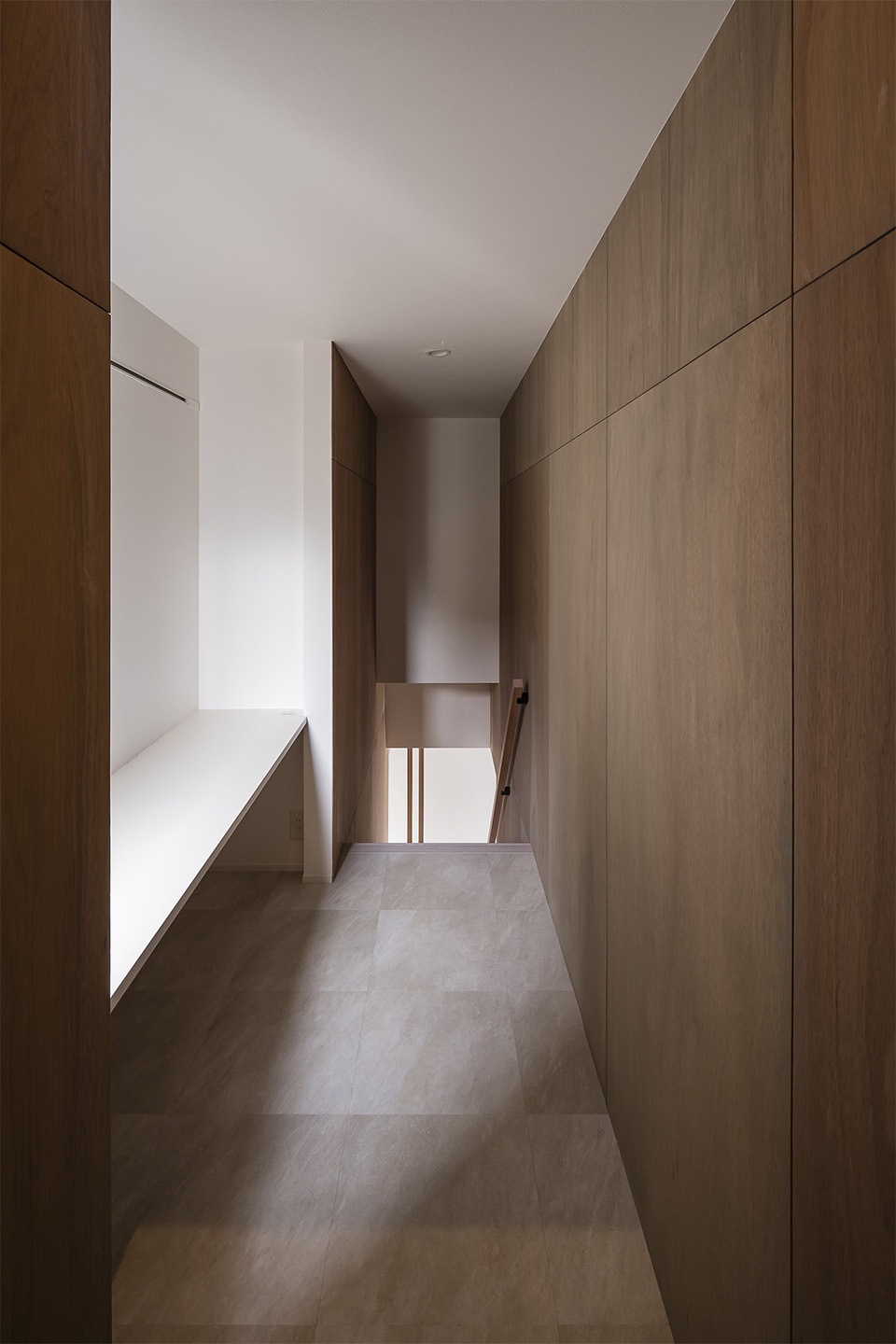
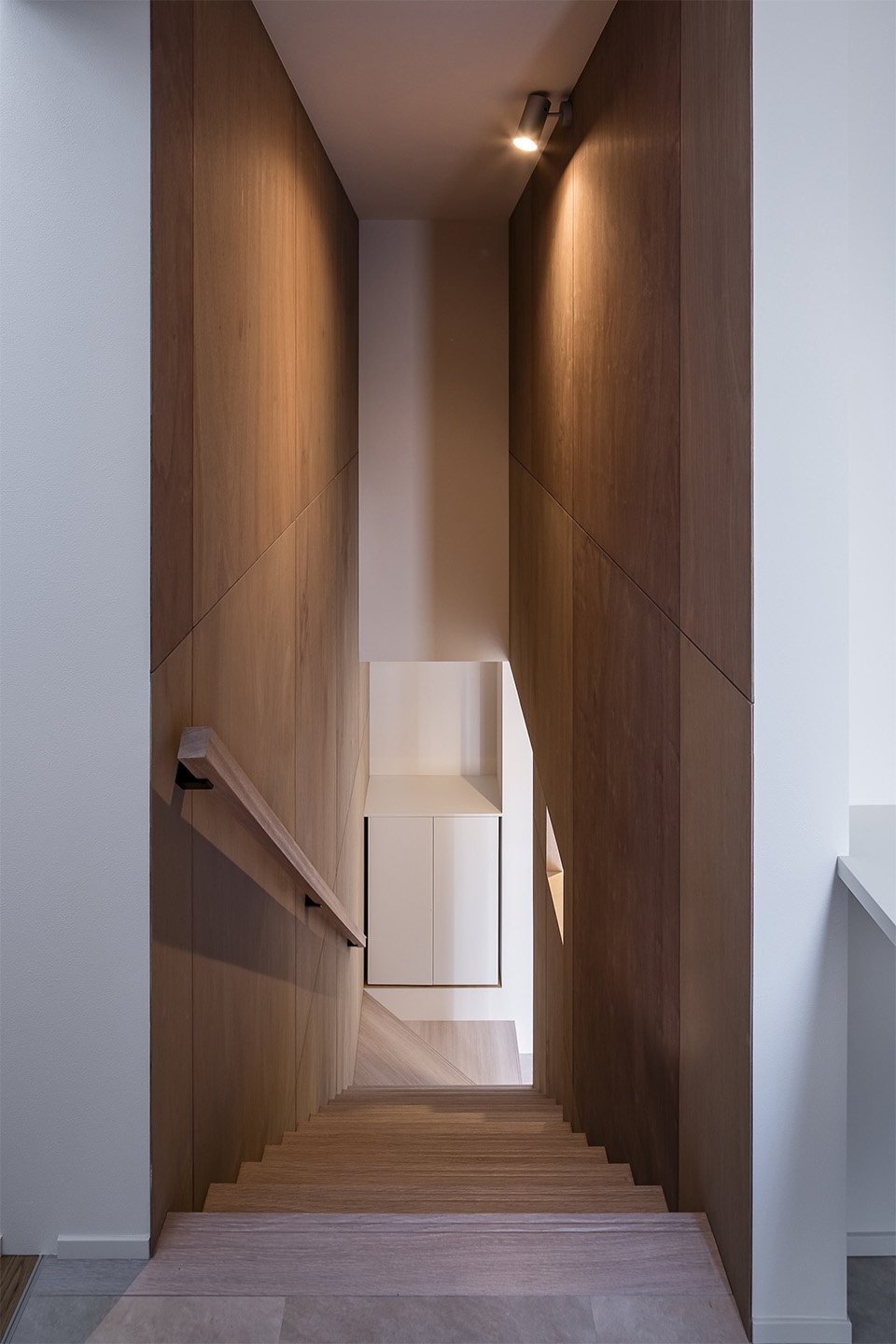
位于建筑中央的“空核”引入光线与风,旨在提升居住环境并塑造建筑的外部形象。“缓冲层”在私密性保护与环境性能之间取得平衡。楼梯在此不仅承担交通功能,更成为调节外部影响的装置,提升声学、光照与热舒适度。由于建筑避免了单元的机械重复,居民因此拥有更丰富的生活想象空间与自主性,而业主则因此获得更高的资产价值。
The Void Core, positioned at the center of the building, channels light and wind to enhance the living environment while simultaneously shaping the architecture’s outward expression. The Buffer smoothly balances protection of privacy and environmental performance. Stairs, which in many projects function solely for circulation, here serve as devices that temper the impact of the external environment, improving acoustic, luminous, and thermal comfort. Because the building avoids monotonous repetition of units, residents gain more opportunities to imagine and create their own style of living, while owners benefit from enhanced value.
▼“空核”空间,The Void Core
▼楼梯空间,Staircase space
▼过渡空间,Transitional space
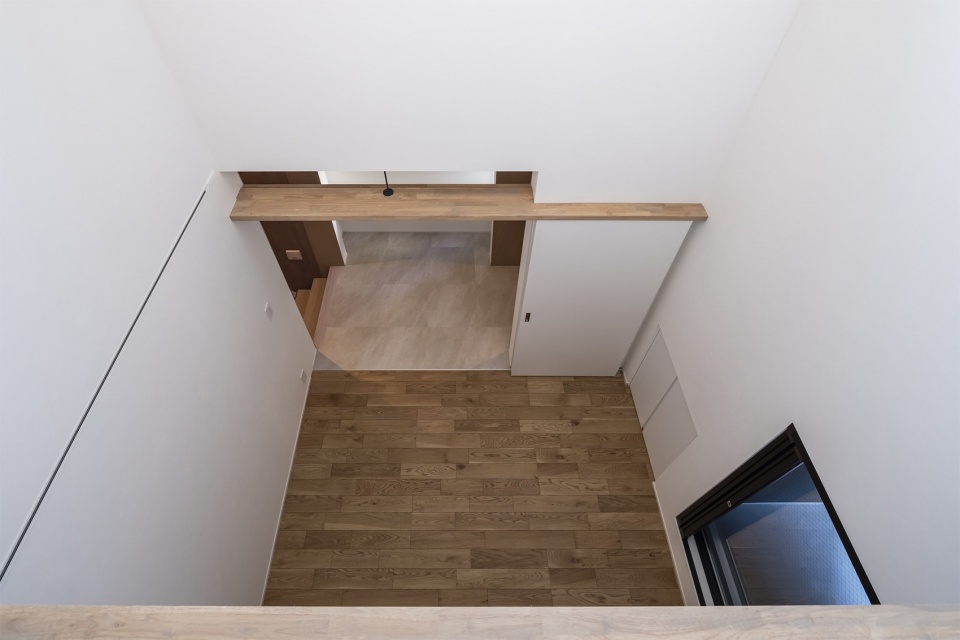
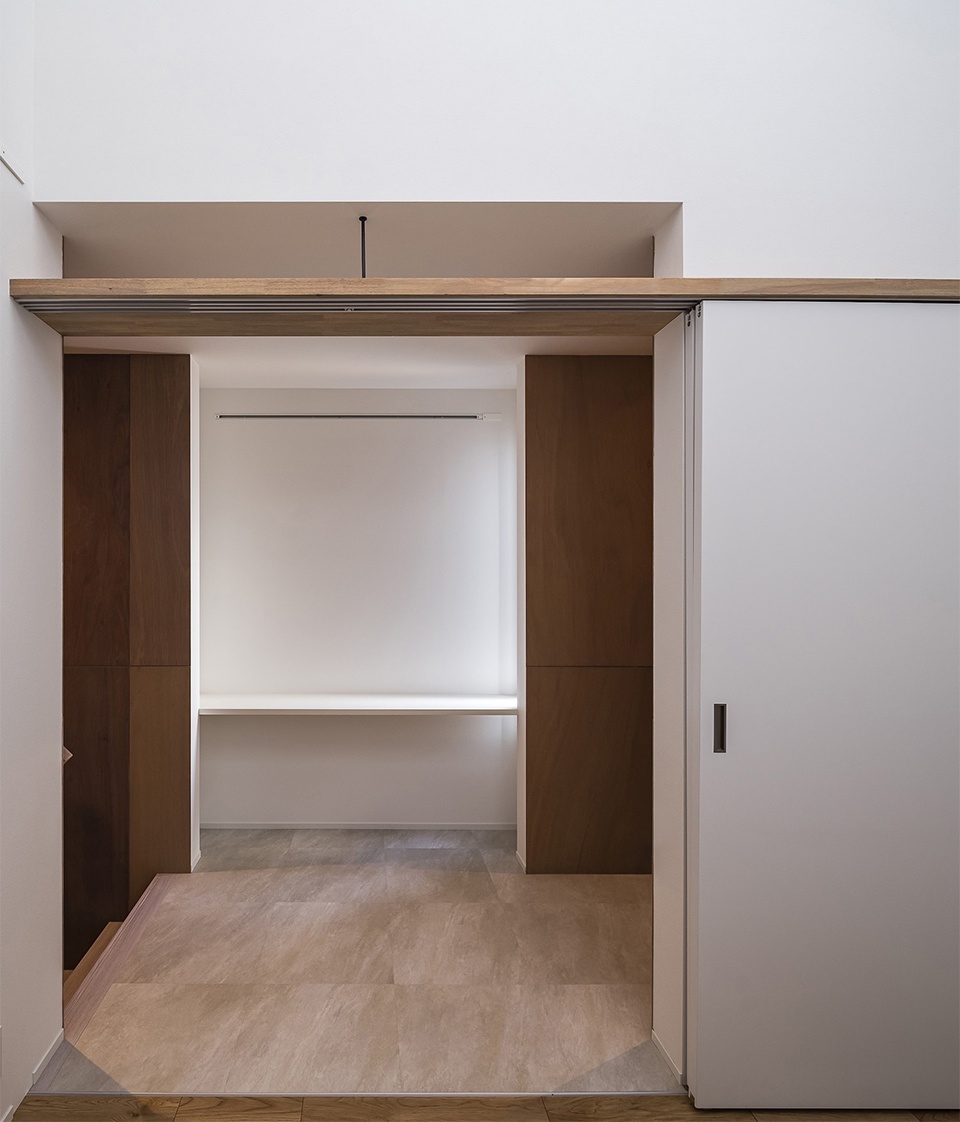
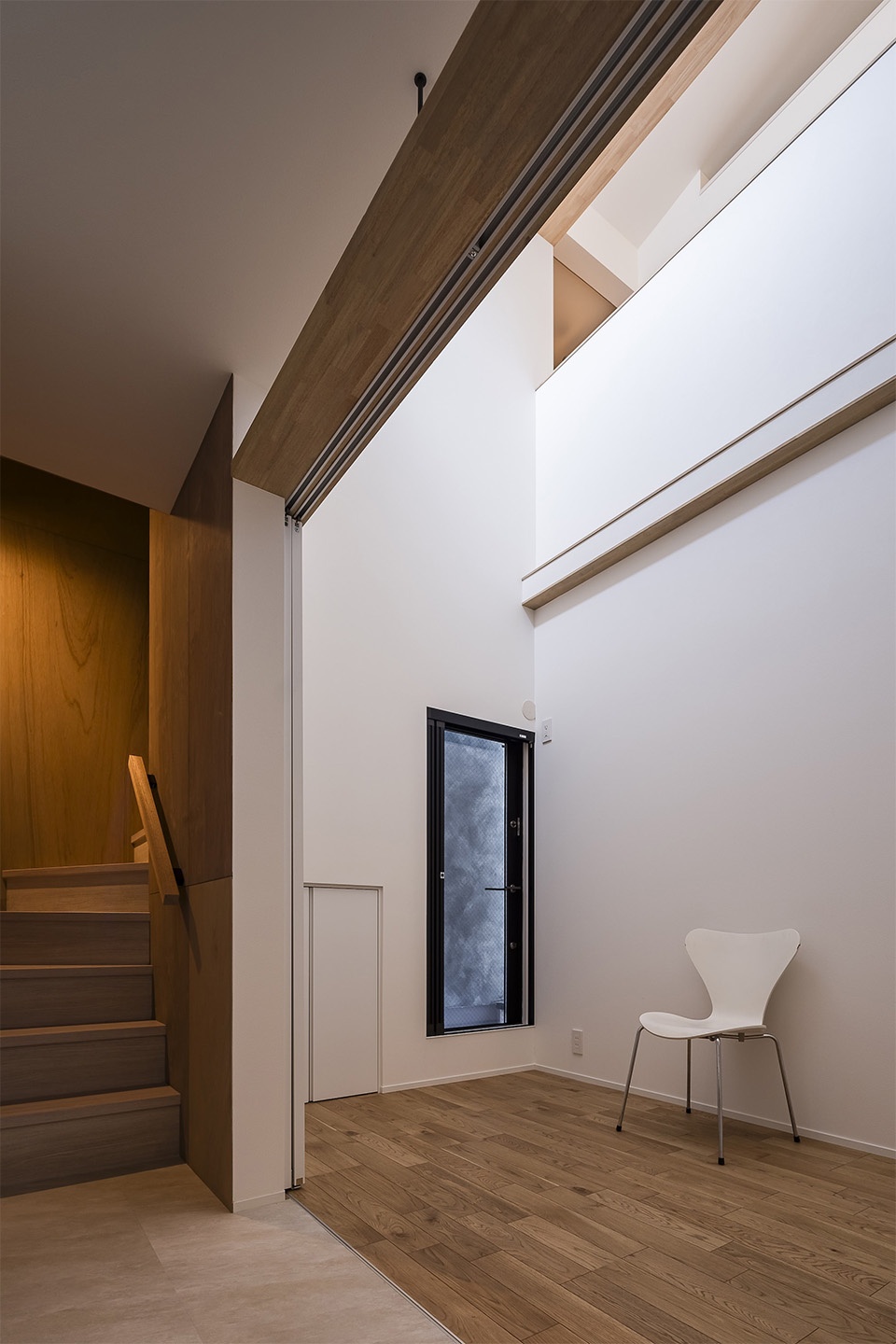
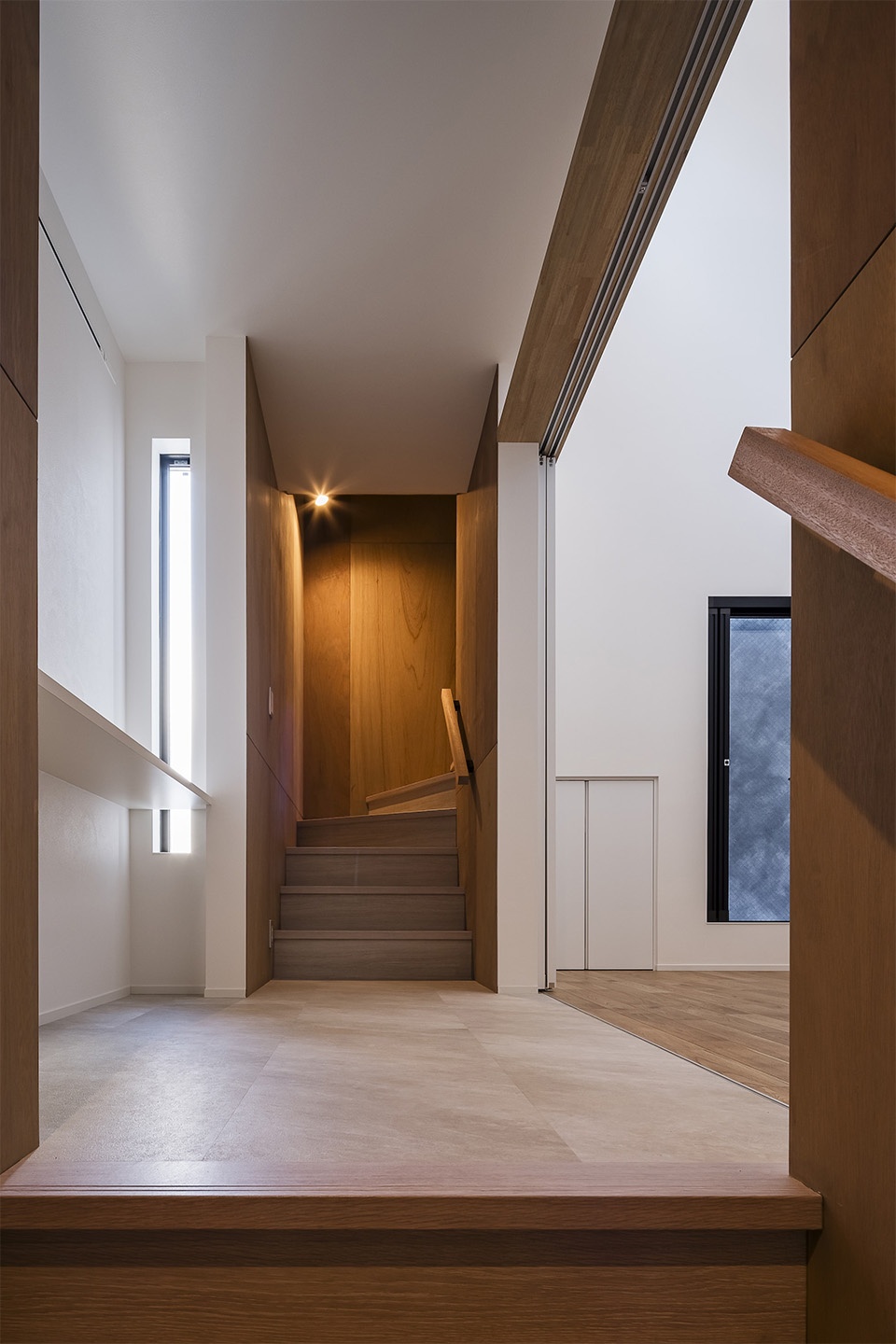
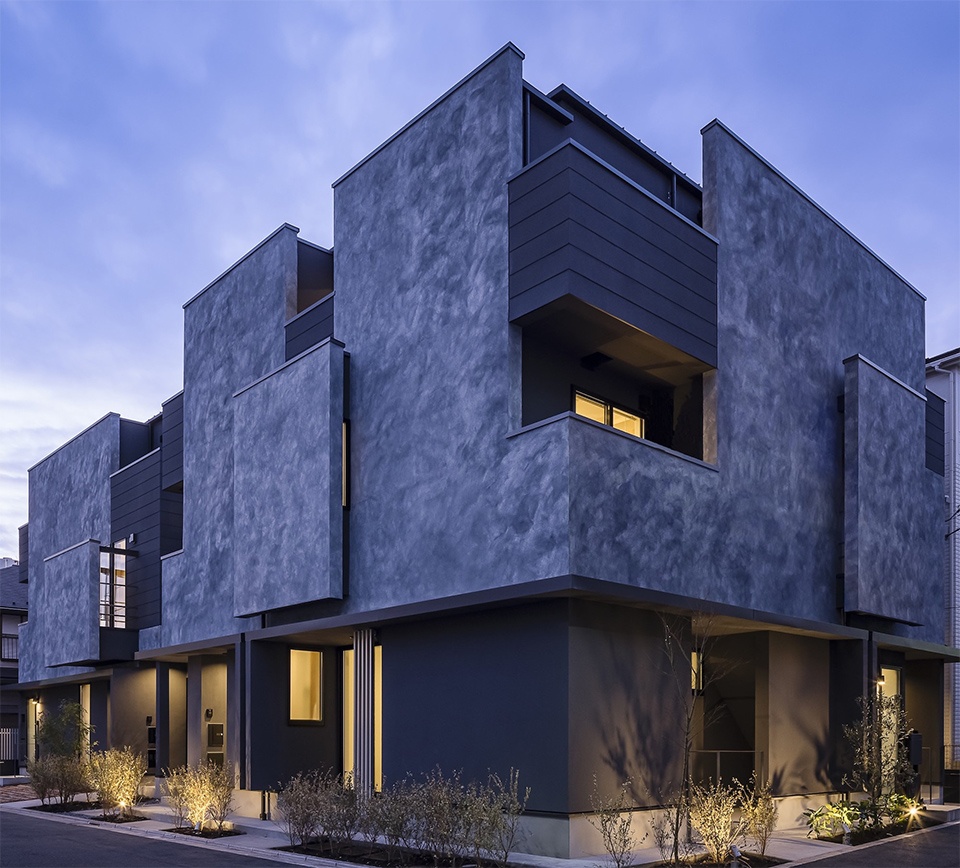
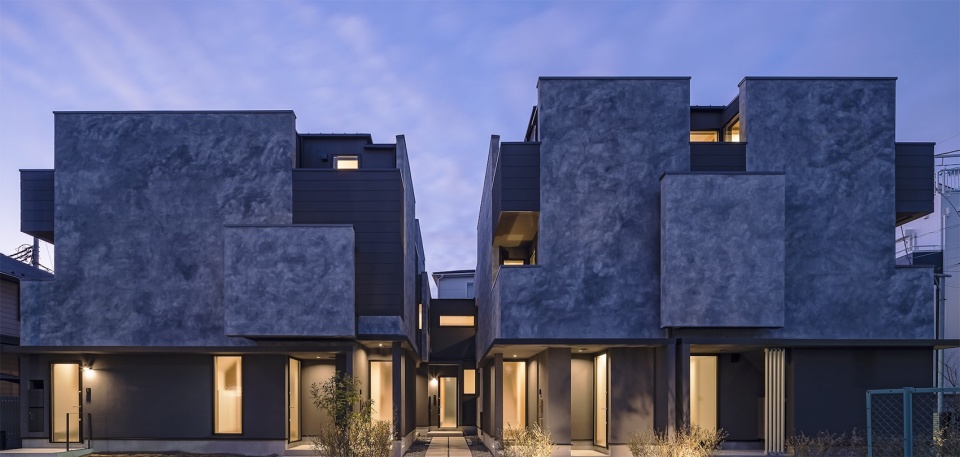
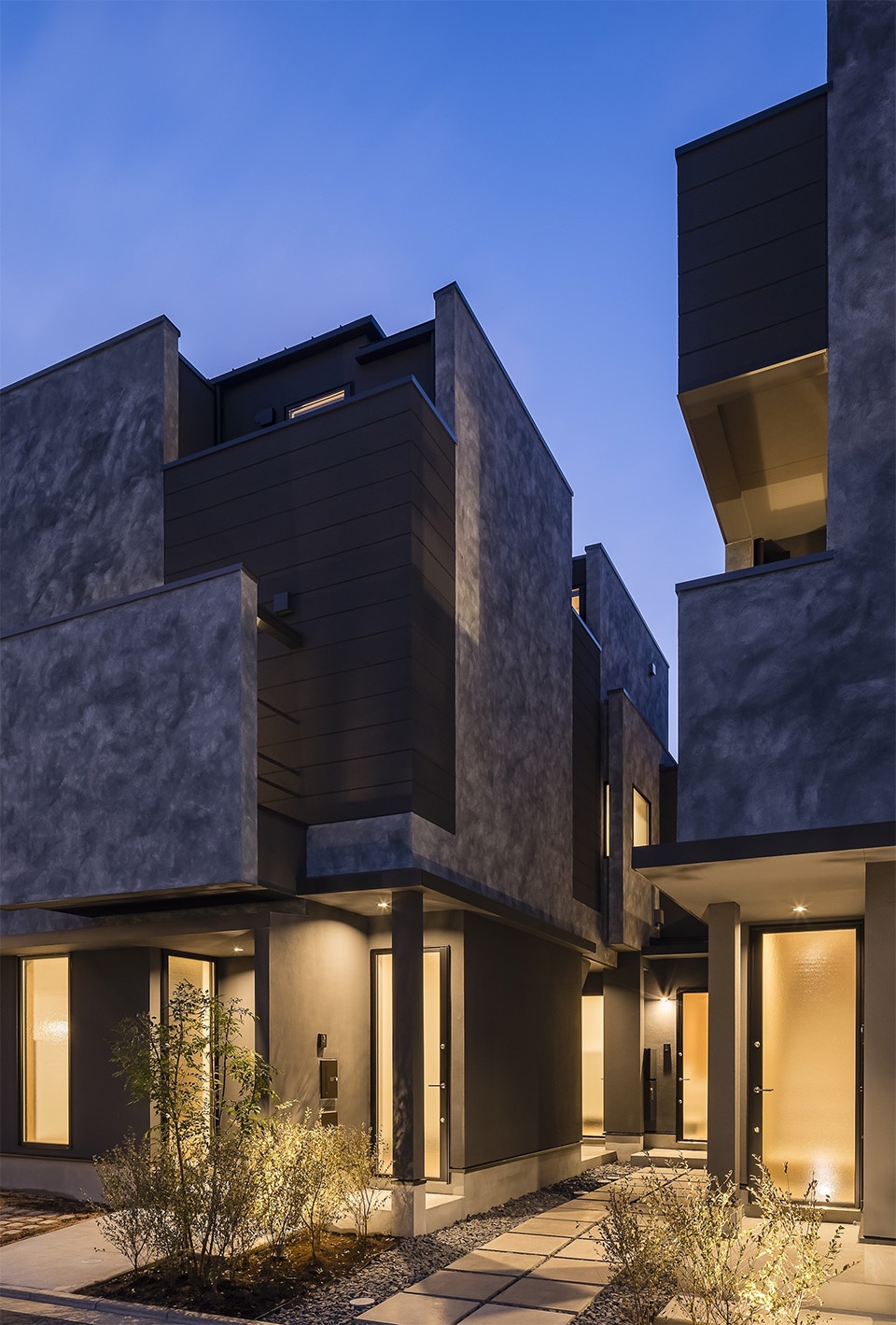
通过将建筑体量分为两部分,一条巷道式通道被引入场地,使原本易被包围的中央单元也能获得外部环境要素的介入。体量的分割与首层及上层之间的挑檐设计共同避免了建筑尺度对周边低层住宅的压迫感。在包含三层空间的复式单元中,楼梯不仅作为垂直连接的通道,还在中部位置扩展成独立的附属空间,以补充主要生活区。从外部观之,这些扩展形成立体的墙体起伏,为整体体量增添了轻盈的视觉效果。
By dividing the building into two volumes, a lane-like passage is drawn into the site, allowing even the central units, which typically feel enclosed or cut off, to incorporate elements of the external environment. This division, combined with canopies that articulate the first and upper floors, also prevents the scale from overwhelming the surrounding low-rise buildings. In the maisonette units that encompass the third floor, the stairs were conceived as more than mere linear connectors—they expand at intermediate points, creating detached annex-like spaces that complement the primary living areas. Viewed from the exterior, this gives rise to a distinctive visual articulation of projecting walls, adding a sense of lightness to the overall volume.
▼建筑夜景,night view
▼两部分的建筑体量,The two-part building volume
▼庭院夜景,Night view of the courtyard
▼楼层平面图,Floor plans
Architect Information
HUGO KOHNO ARCHITECT ASSOCIATES
6-1-3 #1102, Higashiueno Taito-ku Tokyo, 110-0015, Japan
Phone : +81-03-5948-7320
E-mail : contact@hugo-arc.com
URL : www.hugo-arc.com
Credit Information
Architecture : HUGO KOHNO ARCHITECT ASSOCIATES
Photography : Seiichi Ohsawa
Project Outline
Location : Kita-ku, Tokyo, Japan
Date of Completion : Jan. 2025
Principal Use : Row house (11 units)
Structure : Timber
Site Area : 315.77 m²
Building Area : 196.13 m²
Total Floor Area : 480.04 m²
Structural Engineer : Kuwako Architects and Engineers
Mechanical Engineer : Limited company Comodo
Contructor : OBA Company Limited