原宇宙-未来草原的生活范式,内蒙古 / 上海交通大学奥默默工作室
项目背景 Project Background
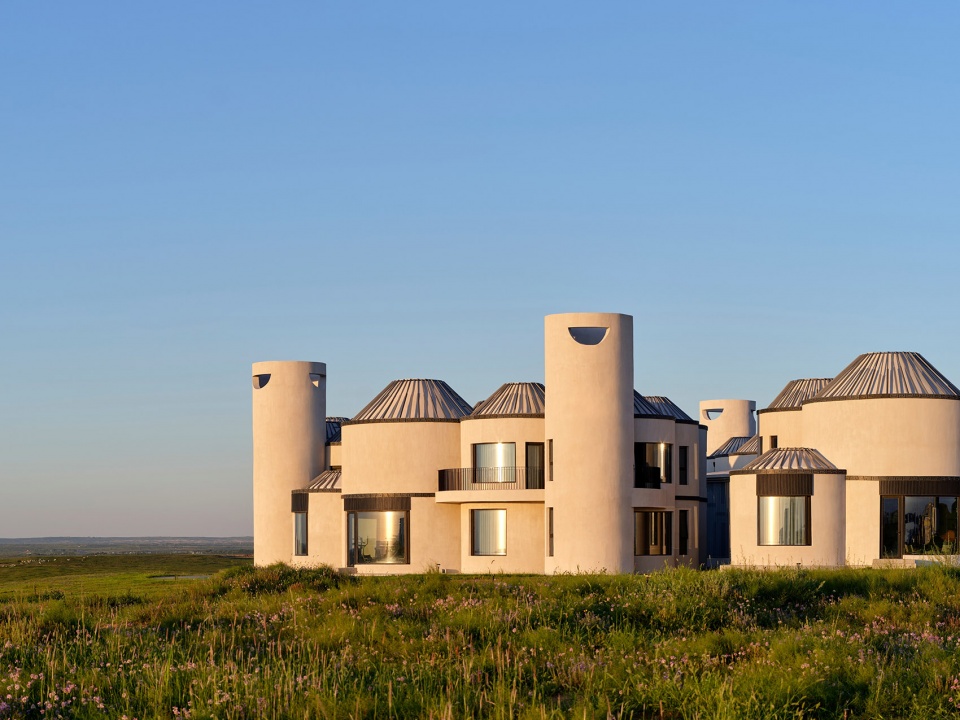
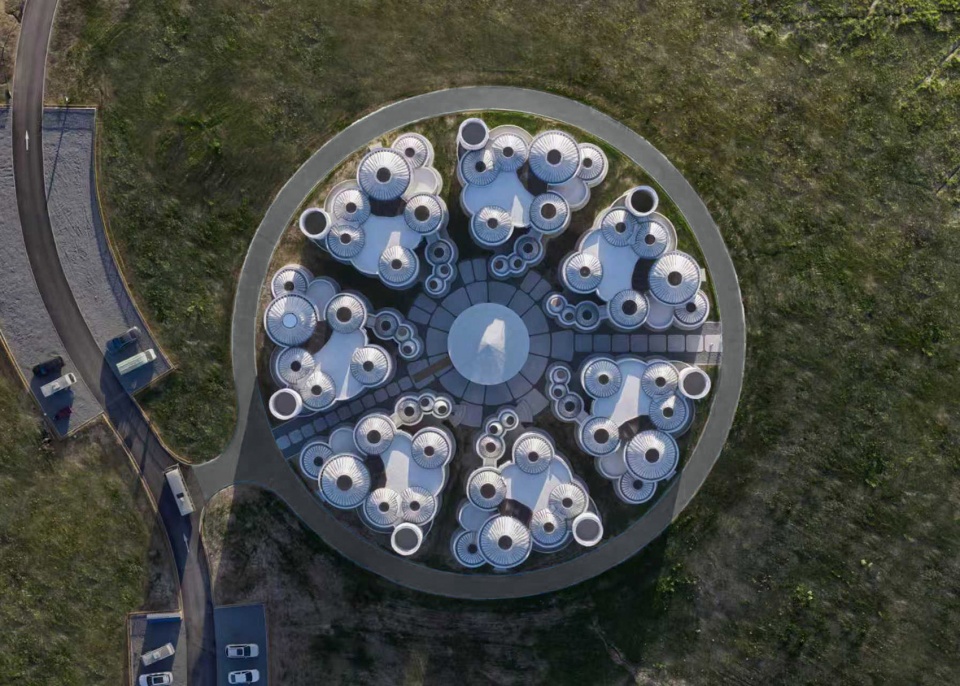
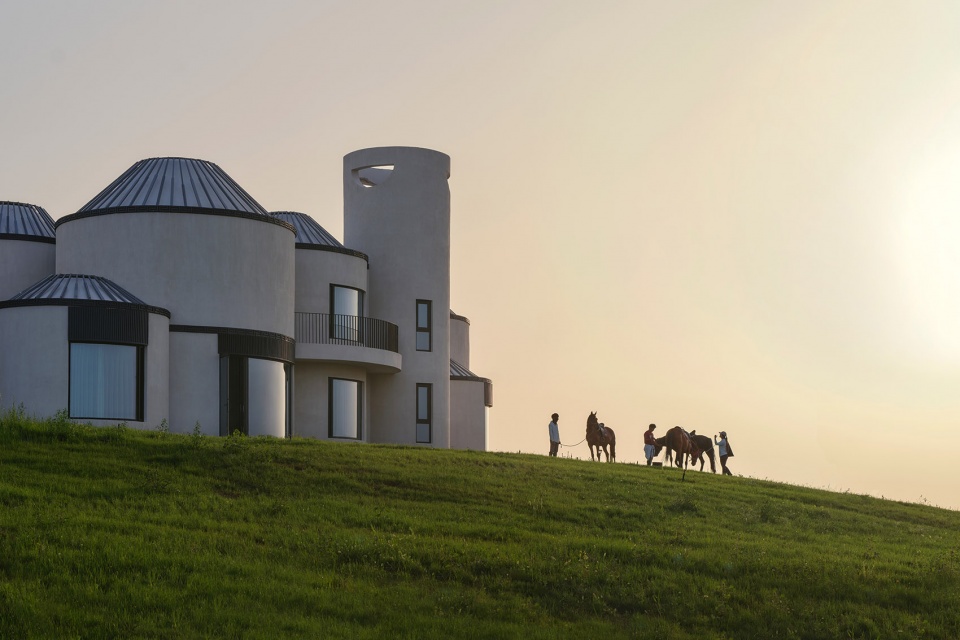
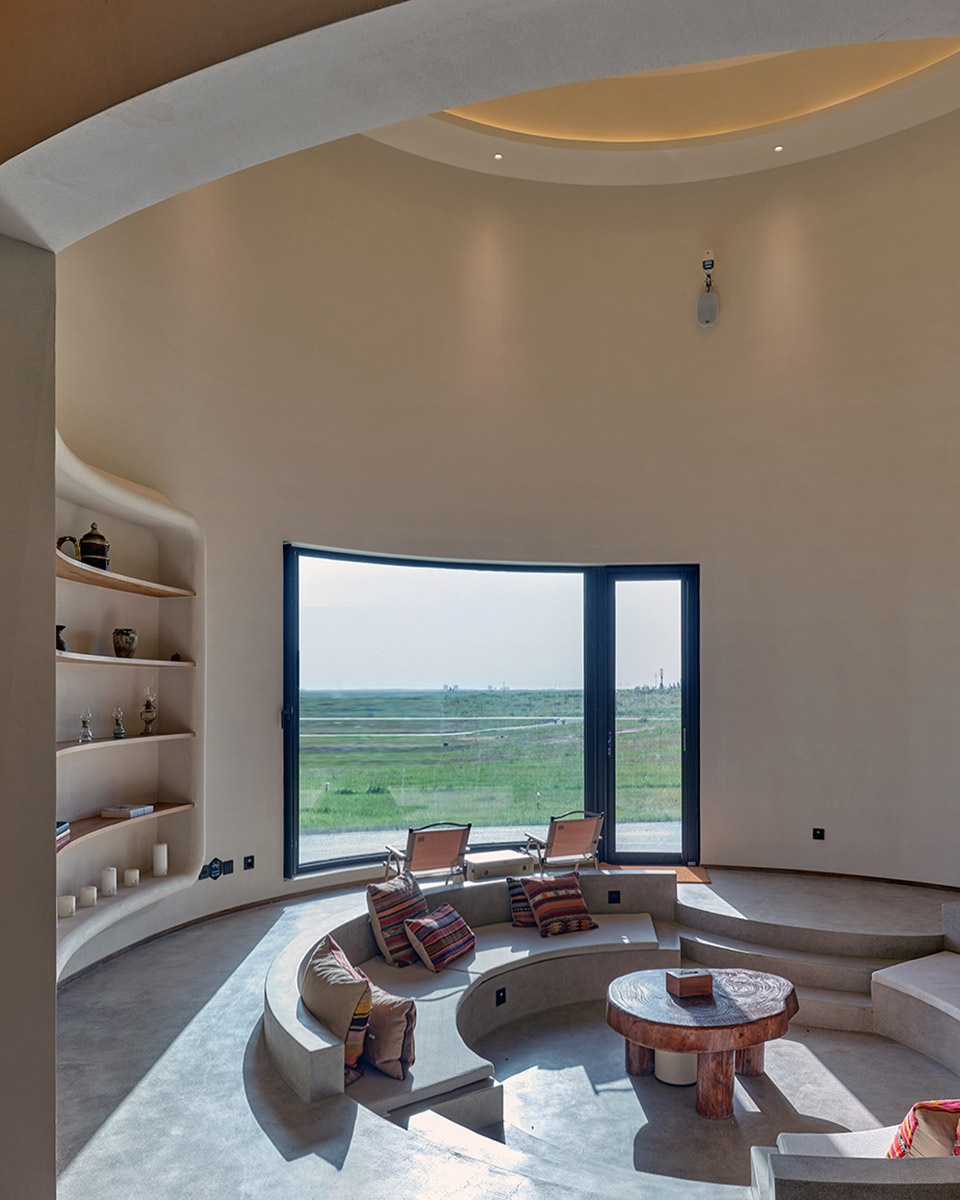
整体聚落由7个基本居住单元组成,每个单元的面积约305平方米。单个居住单元内包含了完整的客厅,厨房,起居室,茶室,4个卧室和一个瞭望塔。通过合理计算的人居尺度计算每个圆形空间的尺寸,同时通过相连接的通道形成有趣的室内空间氛围。在靠近草原的空间,落地玻璃窗提供了大面积的草原景观视野。
The entire settlement consists of 7 basic residential units, each covering approximately 305 square meters. A single unit includes a complete living room, kitchen, living quarters, tea room, 4 bedrooms, and an observation tower. The dimensions of each circular space are calculated based on rational human settlement scales, while interconnected corridors create an engaging indoor atmosphere. Spaces adjacent to the grassland feature floor-to-ceiling glass windows, offering expansive views of the grassland landscape.
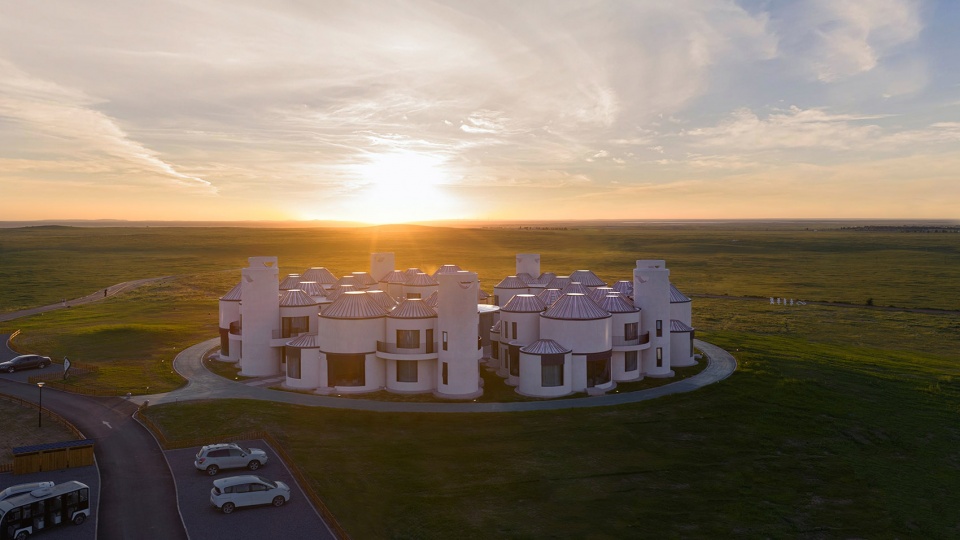
▼项目概览,overview of the project
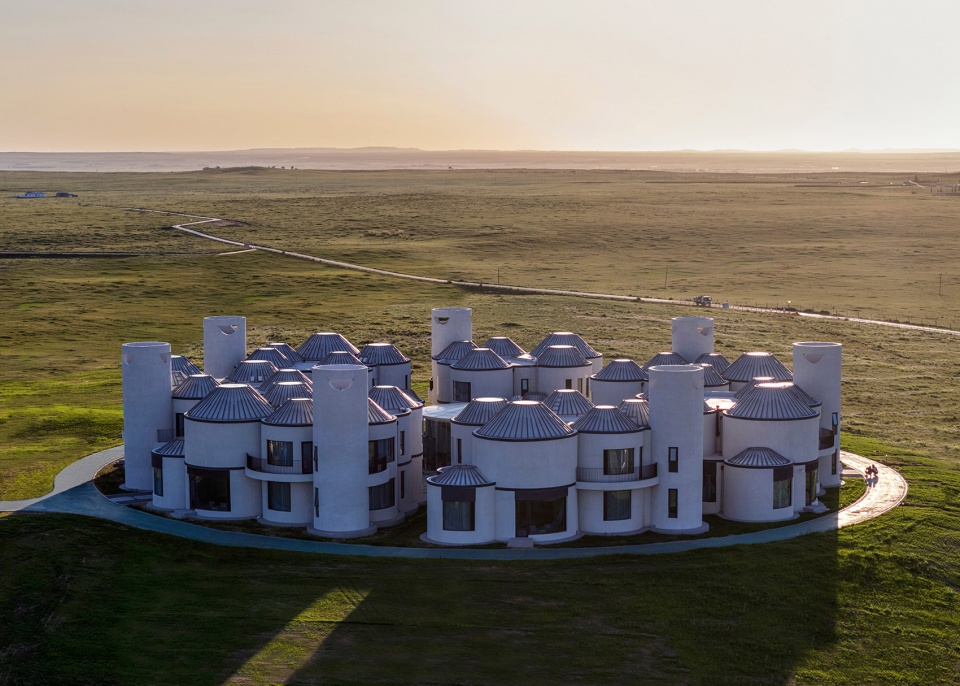
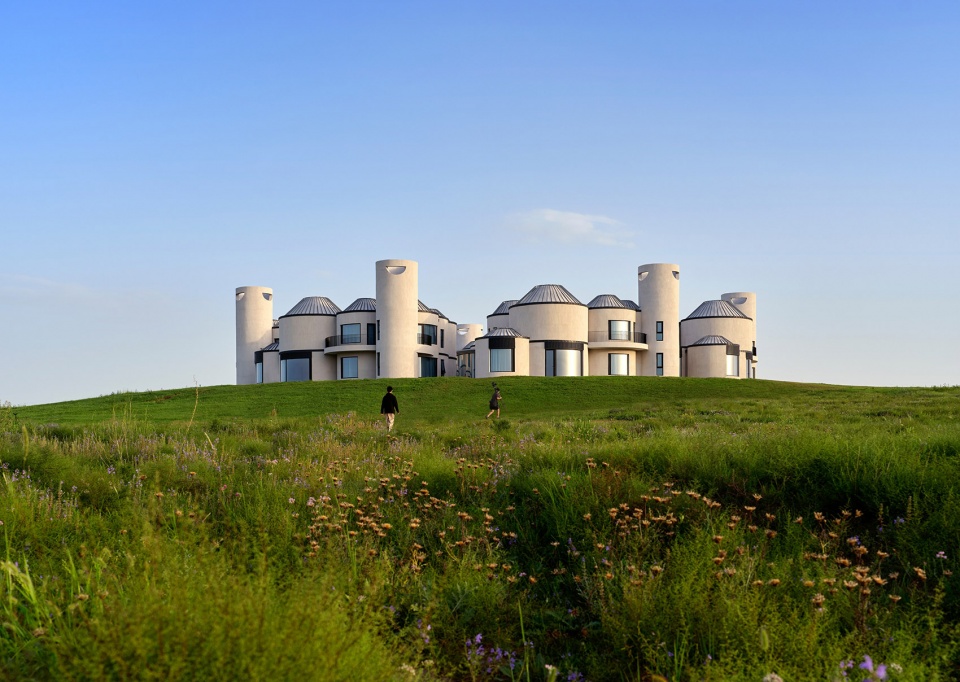
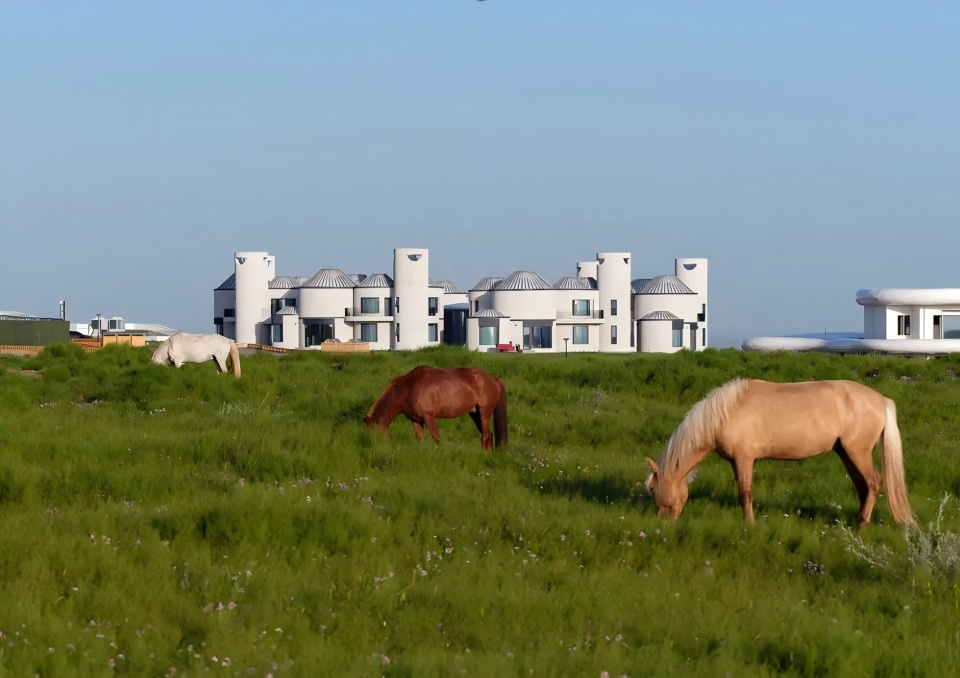
设计以“YUAN”为题,诠释对“原”(草原)、“院“(庭院聚落)、“圆”(圆形蒙古包)的理解,把场所的塑造和地域的特种融为一体。建筑师从蒙古包形象中提取圆柱+圆台形建筑体量,加以变形,成为独特的大小不一的建筑单元,由此聚合而成为一个独特的院落。
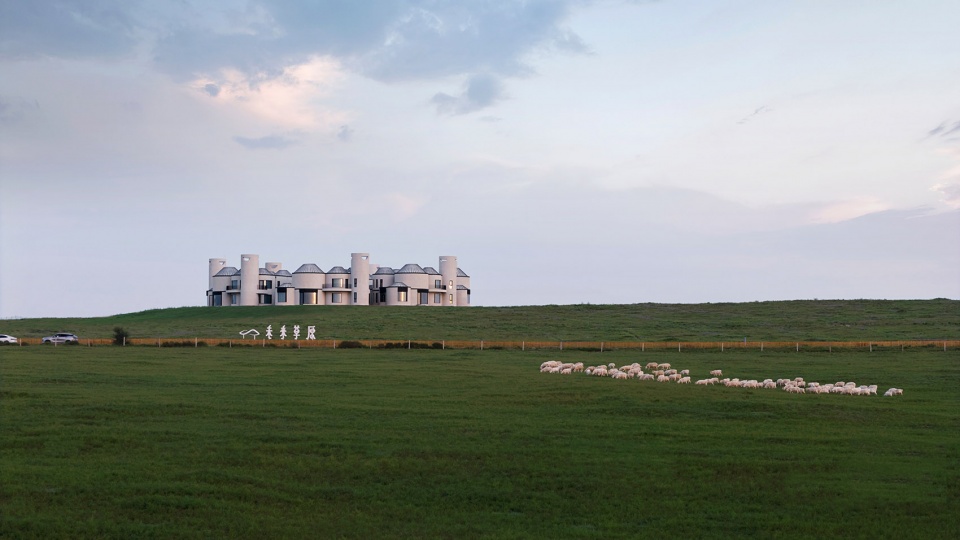
▼项目区位,project location
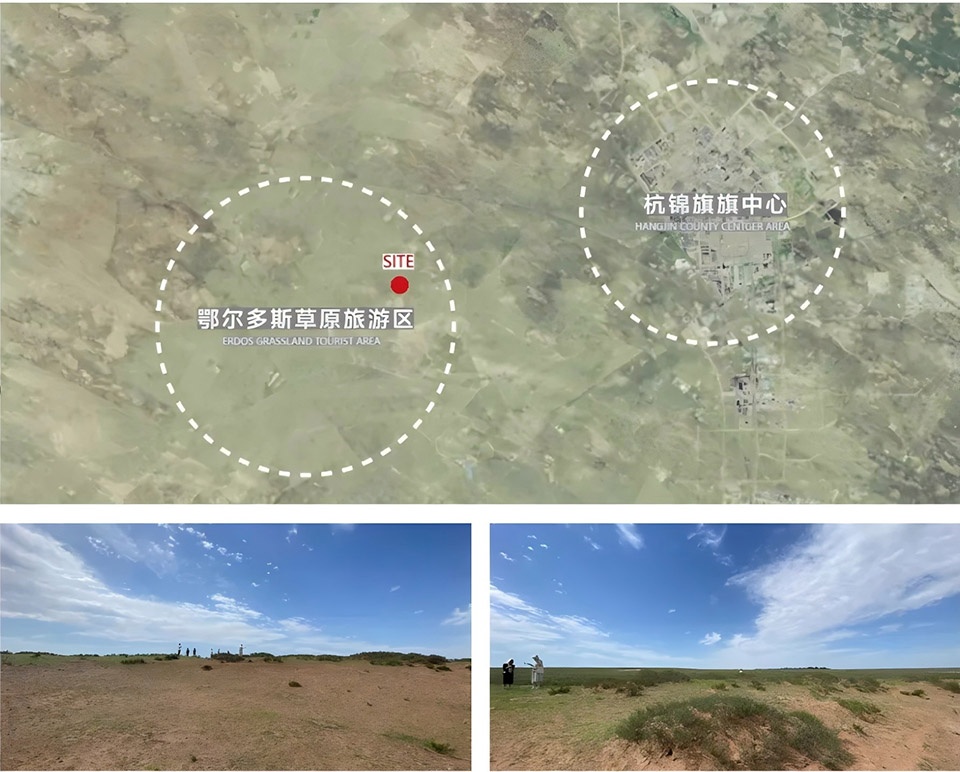
Centered on the theme “YUAN”, the design interprets three core concepts: “Yuan” (grassland), “Yuan” (courtyard settlement), and “Yuan” (circular yurt), integrating place-making with regional characteristics. Architects extracted cylindrical and frustum-shaped volumes from traditional yurt forms, transforming them into unique building units of varying sizes that converge into a distinctive courtyard complex.
▼整体聚落,the entire settlement
场地和母题
母题:消解的内与外 共生的院与原
Genius Loci: Site and Motif
Motif: Blurring Inside and Outside, Symbiosis of Courtyard and Grassland
人渴望定居,又总是向往游牧般的自由生活建筑则一直被用来摆平人类内心安居与浮生的矛盾。体现的不同于中西方传统院落的内外理解,更接近于海德格尔《人,诗意的栖居》中着力还原的栖居与建造的本质,即天地神人四相合一的生存理想“诗意的栖居意味着:置身于诸神的当前之中,受到物之本质切近的震颤。
▼模型照片,model photo
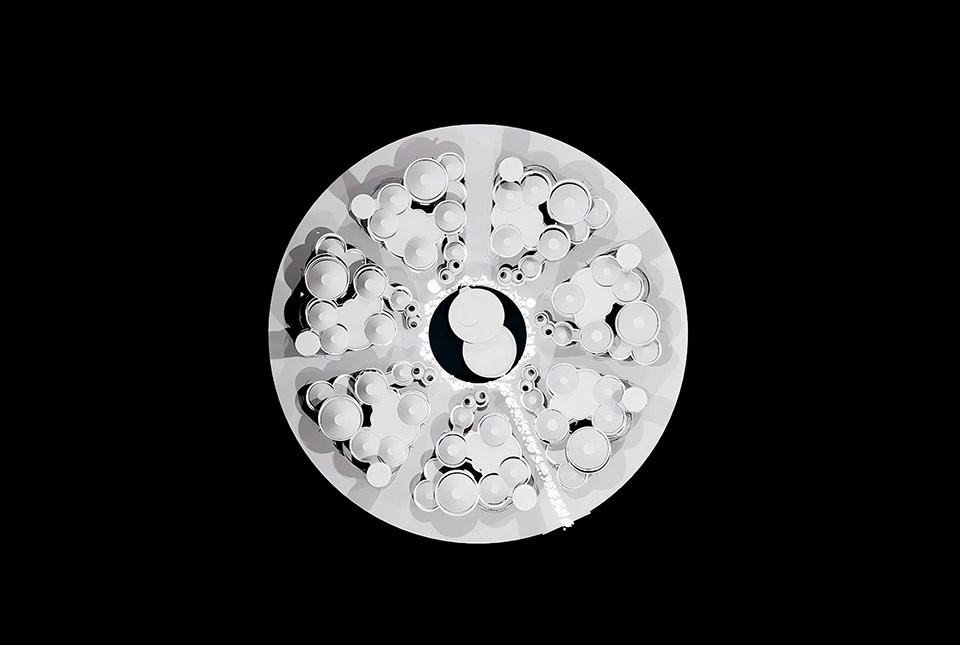
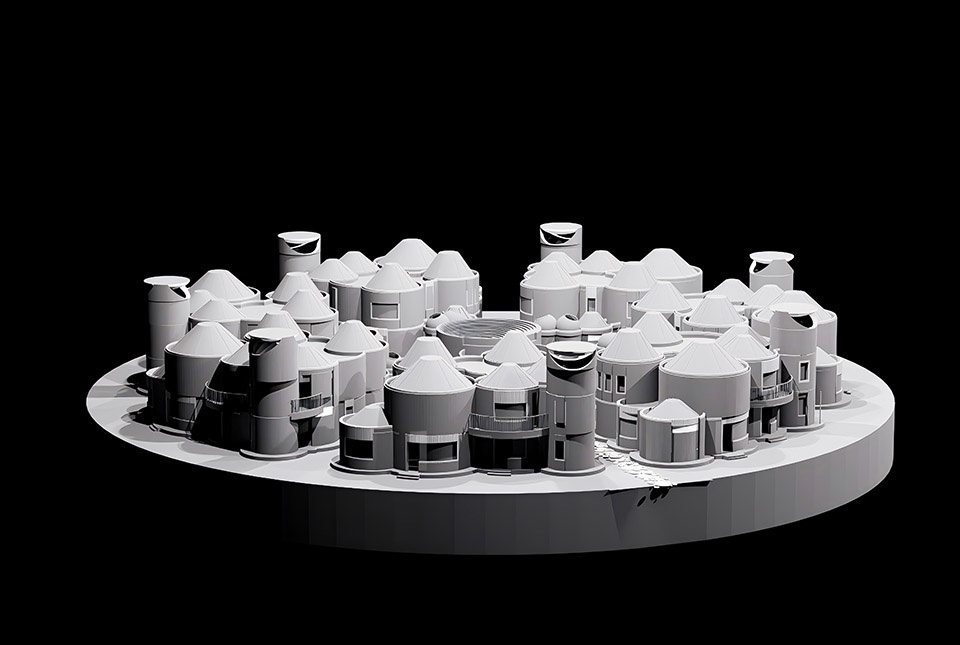
Humans yearn for settlement yet also crave the freedom of nomadic life. Architecture has long served to reconcile this inner conflict between stability and wandering. The design redefines the boundary between inside and outside—distinct from traditional Chinese and Western courtyards—aligning more closely with the essence of dwelling and construction as explored in Heidegger’s “Poetically Man Dwells”. This essence embodies the ideal of coexistence between heaven, earth, humans, and gods: “Poetic dwelling means being present among the gods and trembling at the nearness of things’ essence. To exist poetically at the core—this also signifies: Dasein, as created Dasein, is never an achievement but a gift.”
▼圆形聚落,the circular settlement
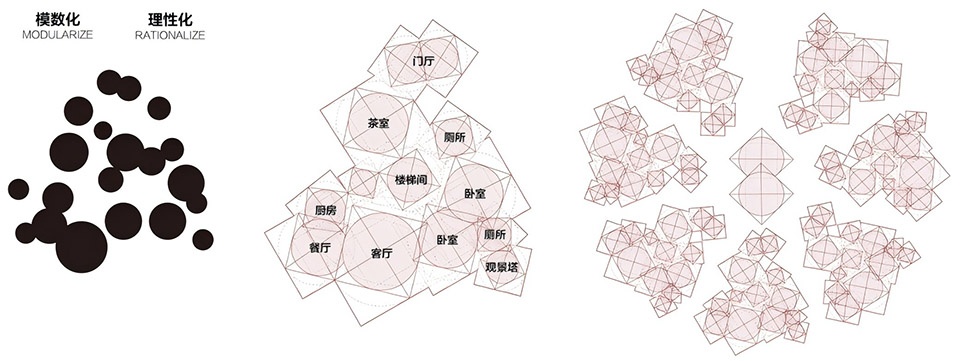
为什么选择数学?“诸神的馈赠”,草原建筑作为风土建筑的一种。风(场所精神geniusloci)和土(地脉topography)。所体现的不同于中西方传统院落的内外理解,更接近于海德格尔《人,诗意的栖居》中着力还原的栖居与建造的本质,即天地神人四相合一的生存理想“诗意的栖居意味着:置身于诸神的当前之中,受到物之本质切近的震颤。在其根基上诗意的存在——这同时表示:此在作为被创建的此在,绝不是劳绩,而是一种馈赠”以此形成一种有机与秩序融合的聚落特质,如同千百年来人类自然形成的村庄那样。
▼居住院落分析,Analysis of residential courtyards
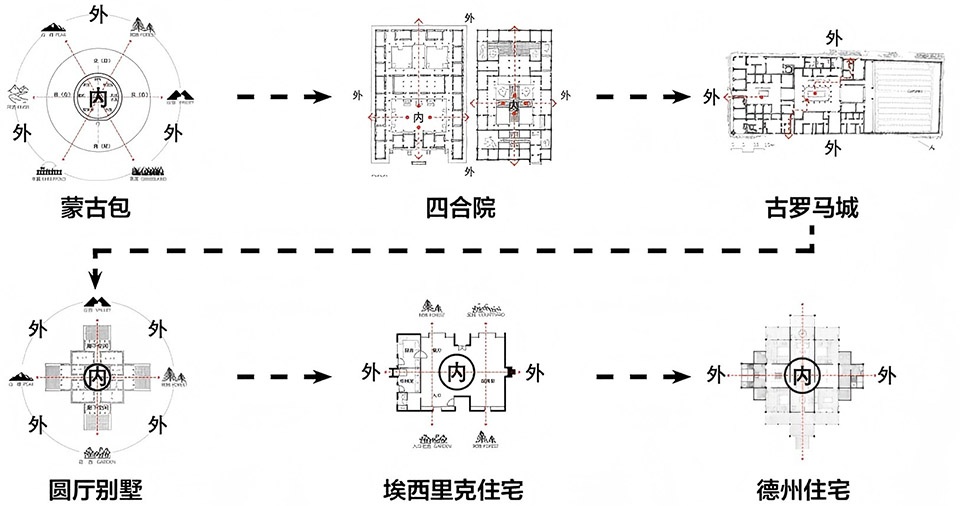
▼几何解法,Geometrical Solution
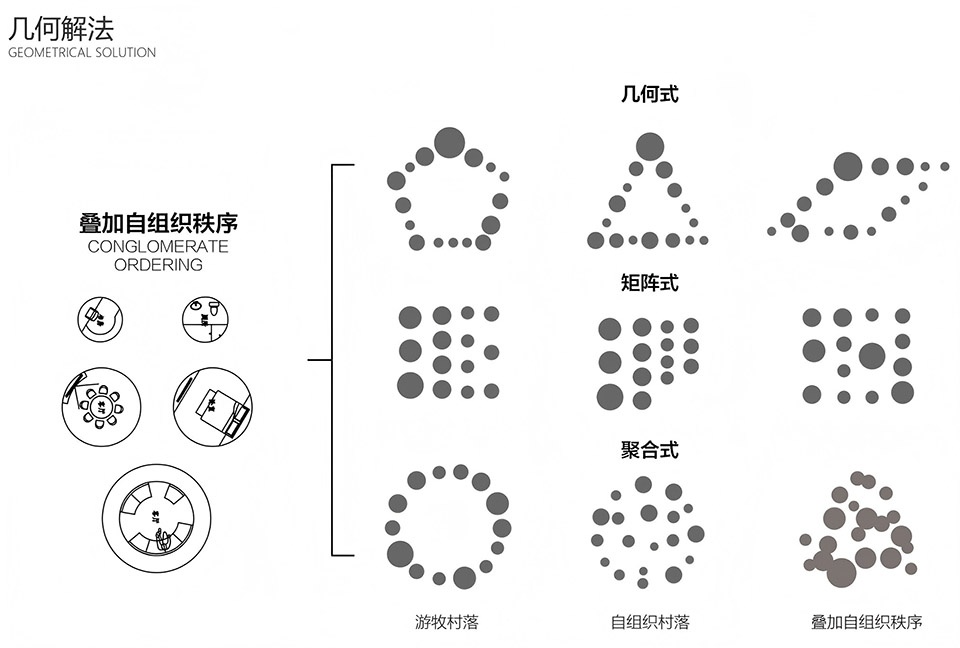
Why mathematics? As a “gift of the gods”, grassland architecture is a form of vernacular architecture shaped by wind (genius loci) and earth (topography). The settlement thus blends organicity and order, resembling villages naturally formed by humans over millennia.
▼有机与秩序融合的聚落特质,The characteristics of a settlement that integrates organic and orderly elements
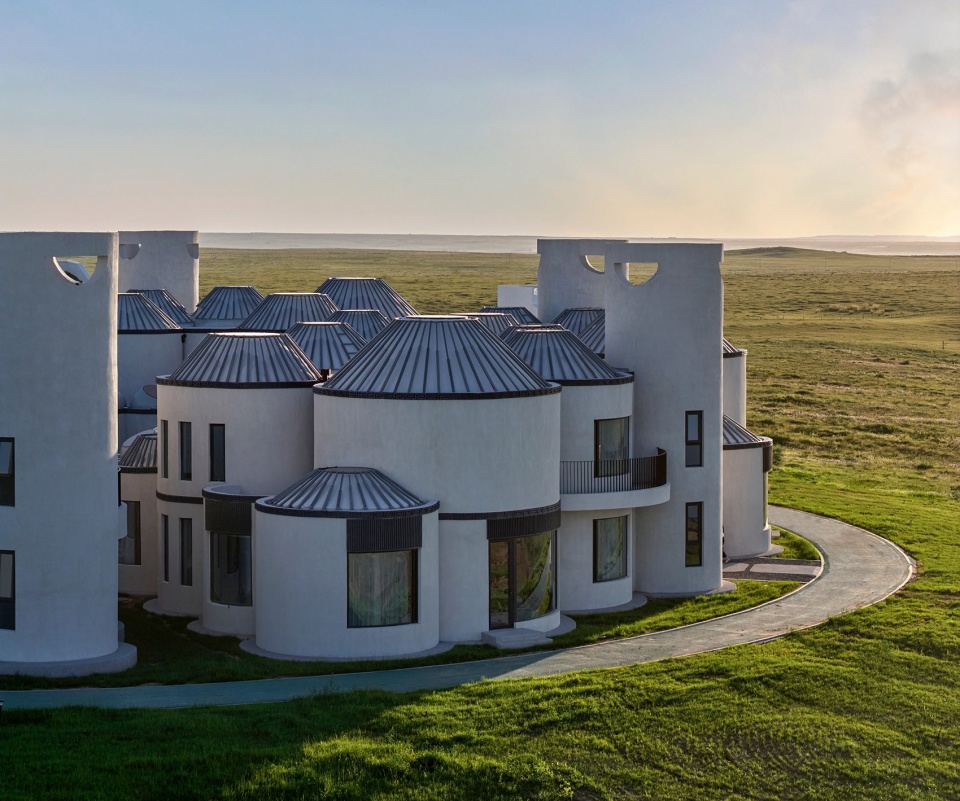
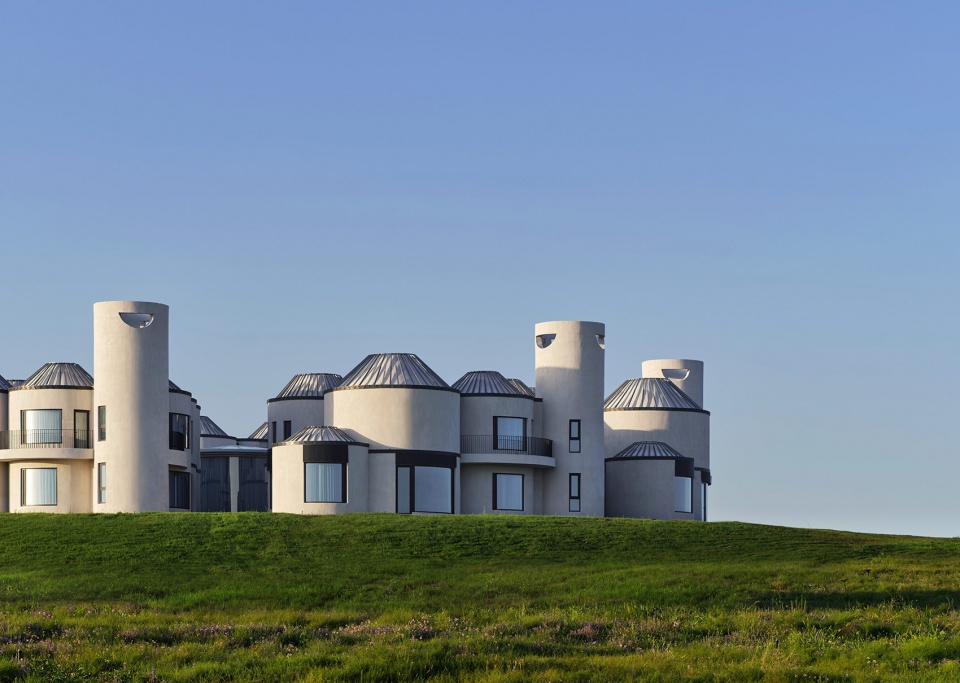
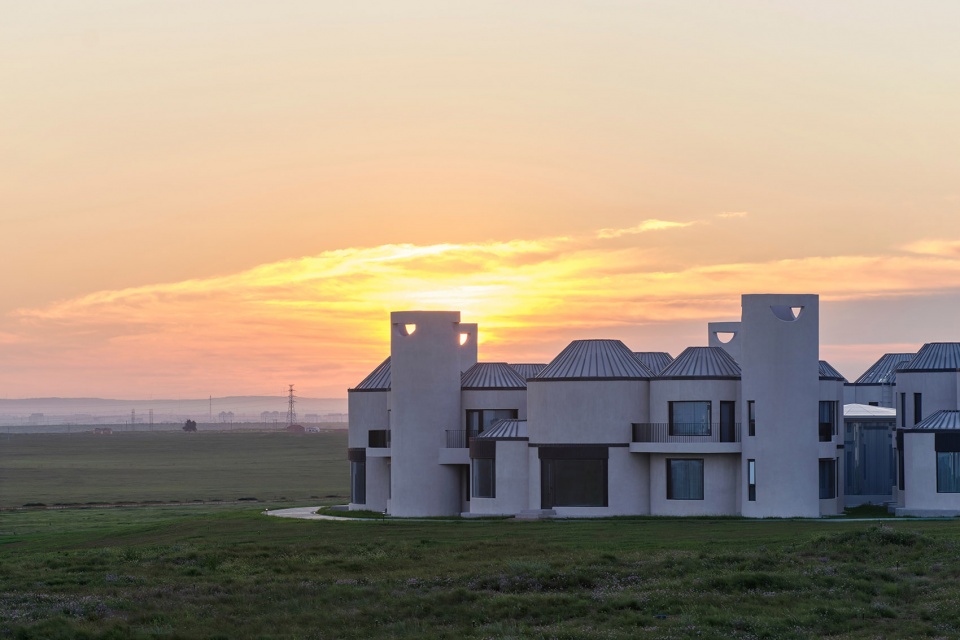
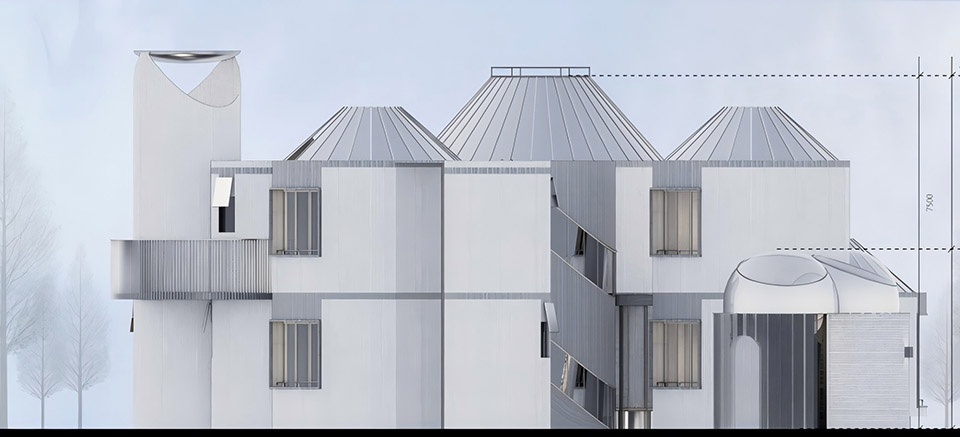
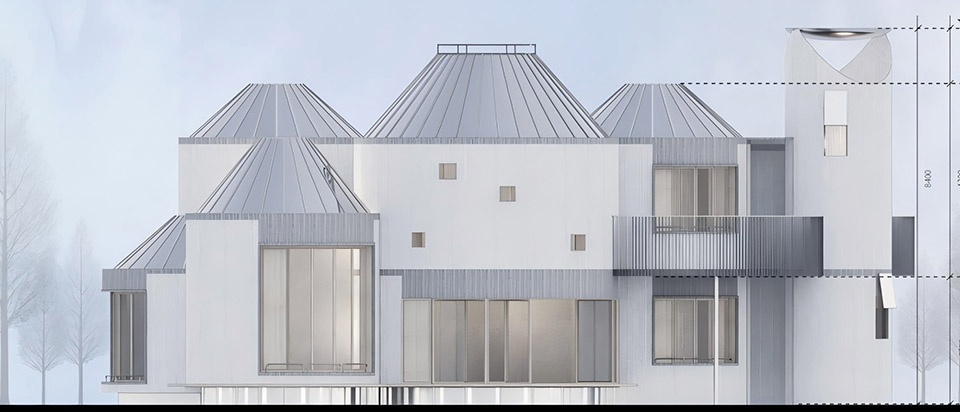
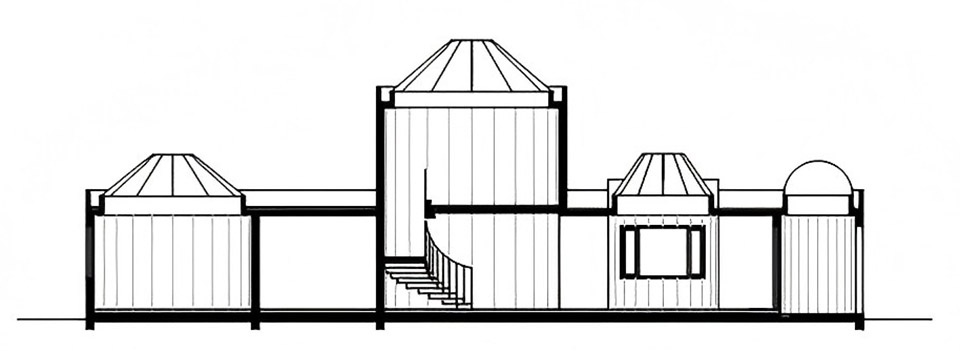
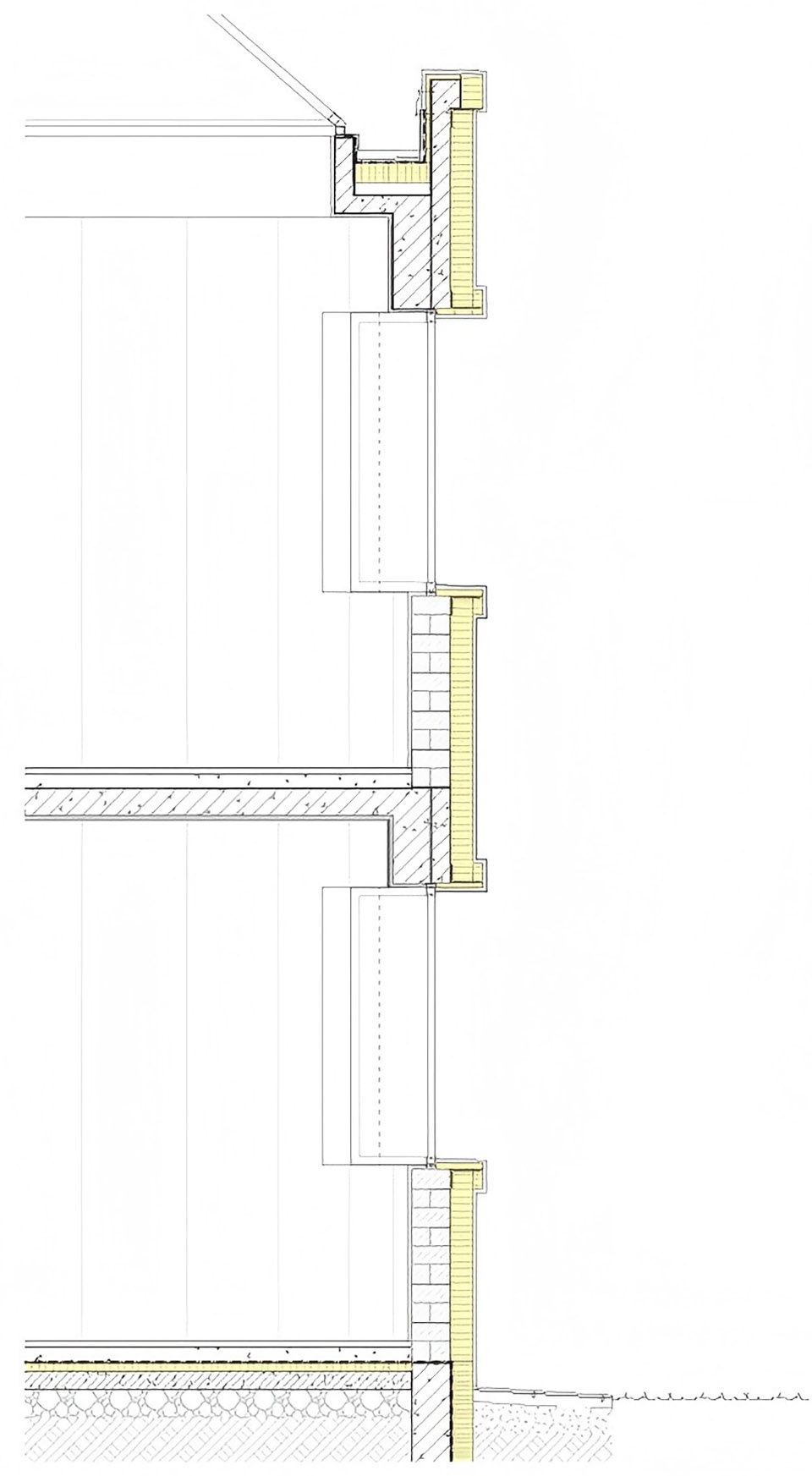
建筑平、立、剖三者是从不同的视角汇制的图纸,平面图是反应结构的长和宽,剖面图是平面图的补充。从剖面图中可以看到屋盖的构造,内门大小、窗的高度以及墙身与地面的连接关系等。
▼模数化分析,Modularize analysis
Plans, elevations, and sections depict the building from different perspectives. Plans show the length and width of the structure, while sections complement plans by revealing roof construction, interior door sizes, window heights, and the connection between walls and the ground.
▼聚落鸟瞰,Aerial view of the settlement
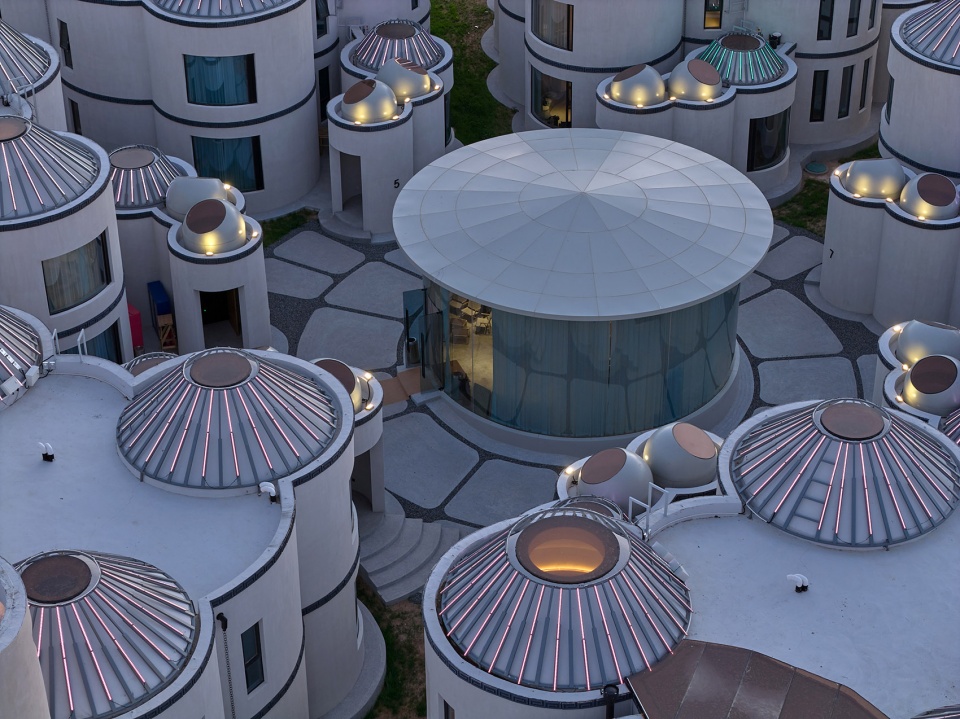
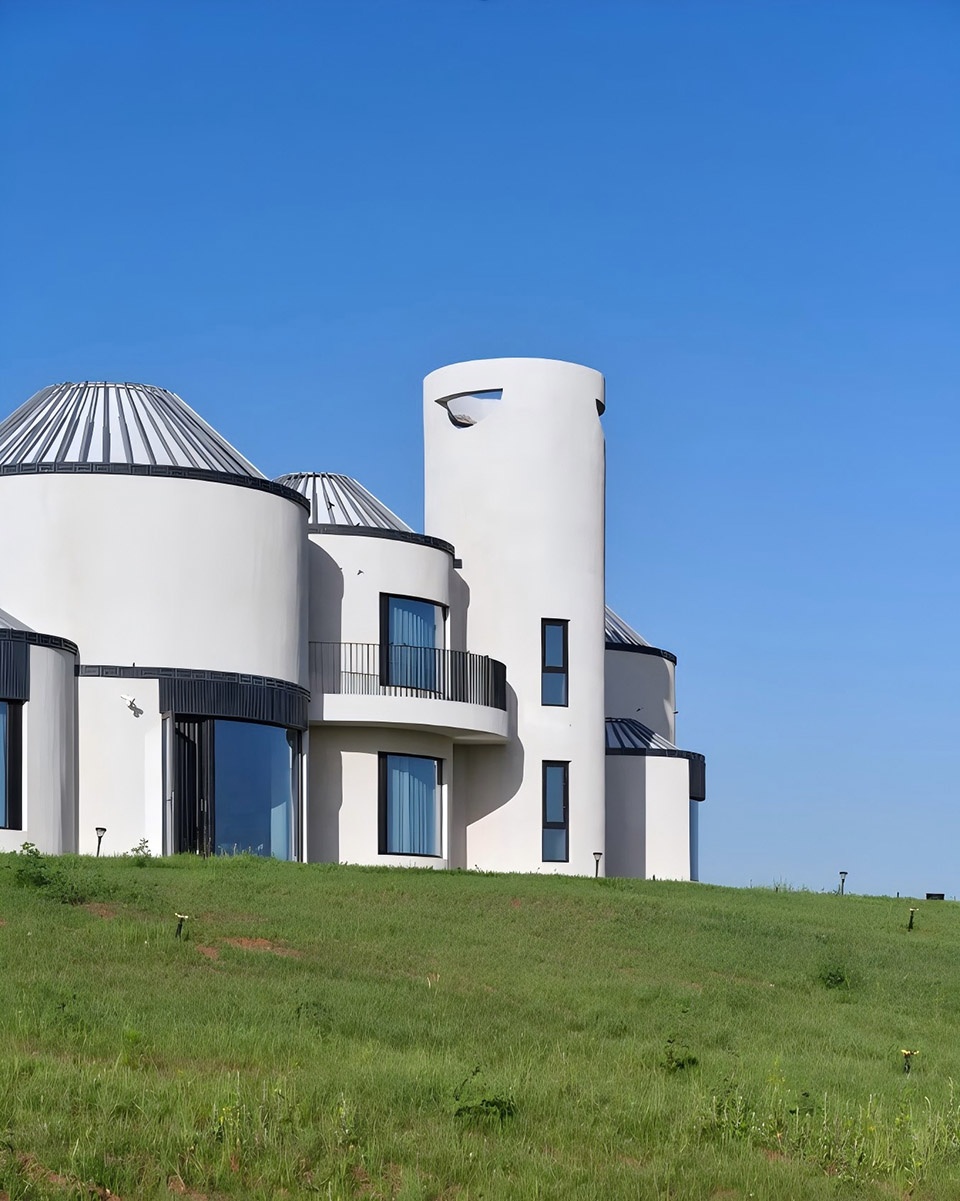
▼圆台外观,frustum-shaped exterior walls
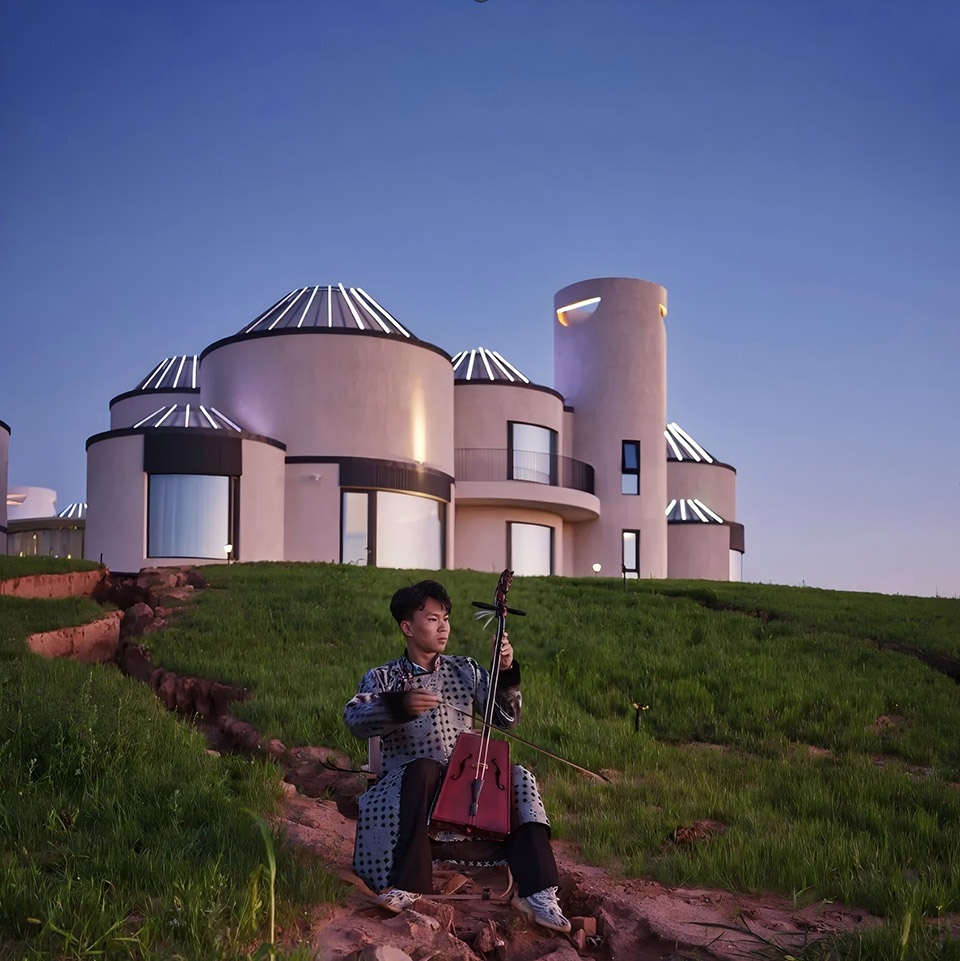
场地的 “生长脉络”|在自然里,铺展功能的有机网络 The “Growth Veins” of the Site: Unfolding an Organic Functional Network in Nature
在建筑形式上,大胆采用金属外墙的圆台,表达出时代的气息。在建筑外墙上,设计拟采用轻钢结构,外墙蒙纤维水泥板,用当代材料和构造来呼应传统的构造方式,也是非常有见地的。在此,建议在外墙上,可以采取更普通、更常见的混凝土结构,降低技术门槛,提高应对风雪的耐候度,同时找到更加质朴的表现方式,与金属屋顶加强对比。也建议在每个居室加强半室外空间的营造,为游客创造更多的“看点”。
The bold use of frustum-shaped metal exterior walls reflects a contemporary aesthetic. The design initially proposes light steel structures with fiber cement cladding—using modern materials and construction to echo traditional methods, a thoughtful approach. However, we suggest adopting more common concrete structures for the exterior walls to lower technical barriers, enhance weather resistance against wind and snow, and achieve a simpler, more rustic expression that contrasts sharply with the metal roof. We also recommend adding more semi-outdoor spaces in each dwelling to create additional viewing highlights for visitors.
▼用当代材料和构造来呼应传统的构造方式,using modern materials and construction to echo traditional methods
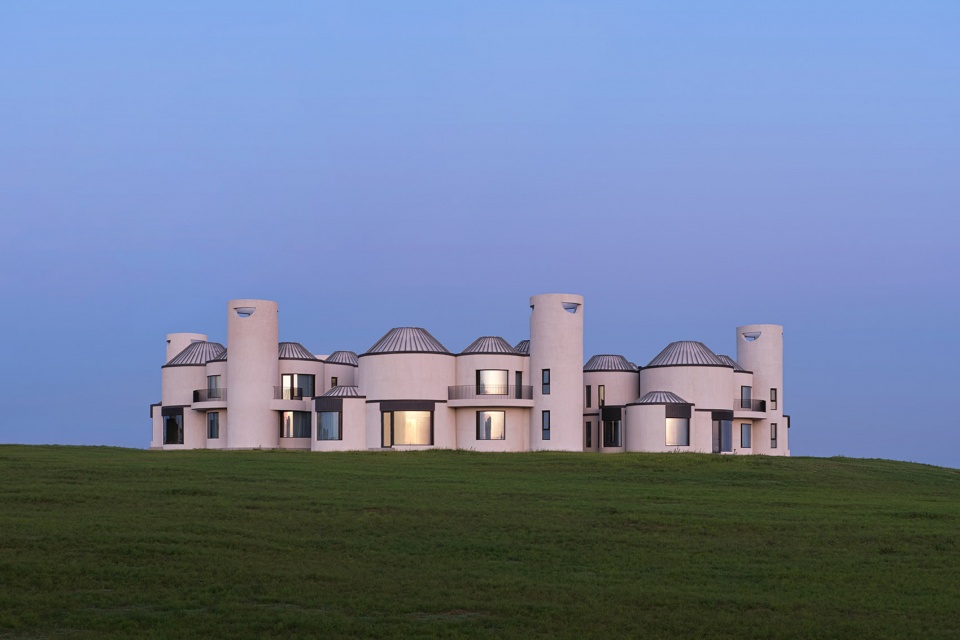
▼圆台外观,frustum-shaped exterior walls
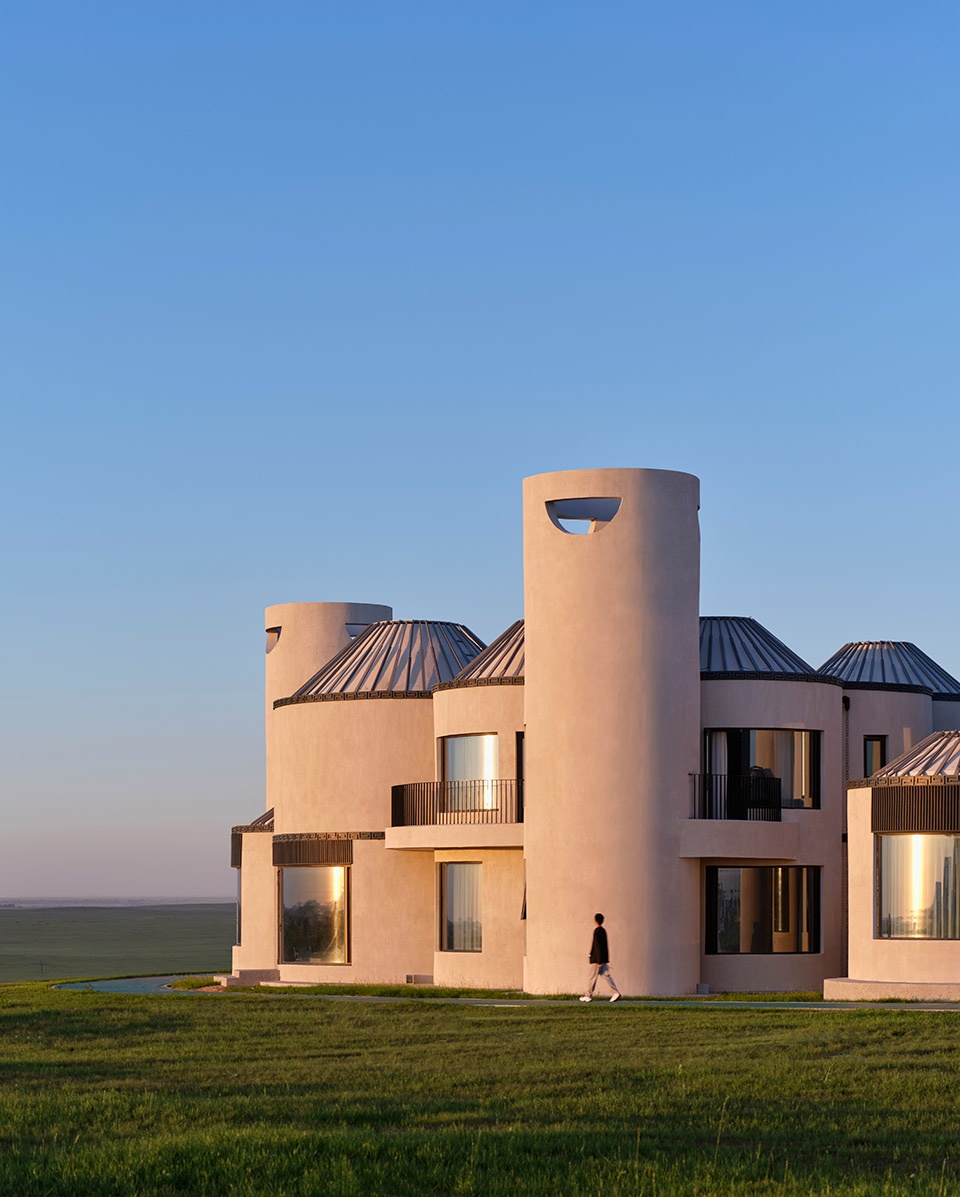
内部空间组织方面,本方案把门厅、茶室、客厅、楼梯间、卧室组合在一期,形成风格鲜明的圆柱组合建筑群体,非常有表现力。建筑单元中,生动地表达了传统蒙古包的重要元素,比如中部圆形的空洞,仿木构的杆件,能形成相应的隐喻和联想。
The scheme integrates foyers, tea rooms, living rooms, stairwells, and bedrooms into Phase I, forming a striking group of cylindrical buildings. Key elements of traditional yurts—such as central circular openings and wooden-structured imitations—are vividly expressed, evoking relevant metaphors and associations.
▼入口细部,entrance detail
▼室内空间,interior space
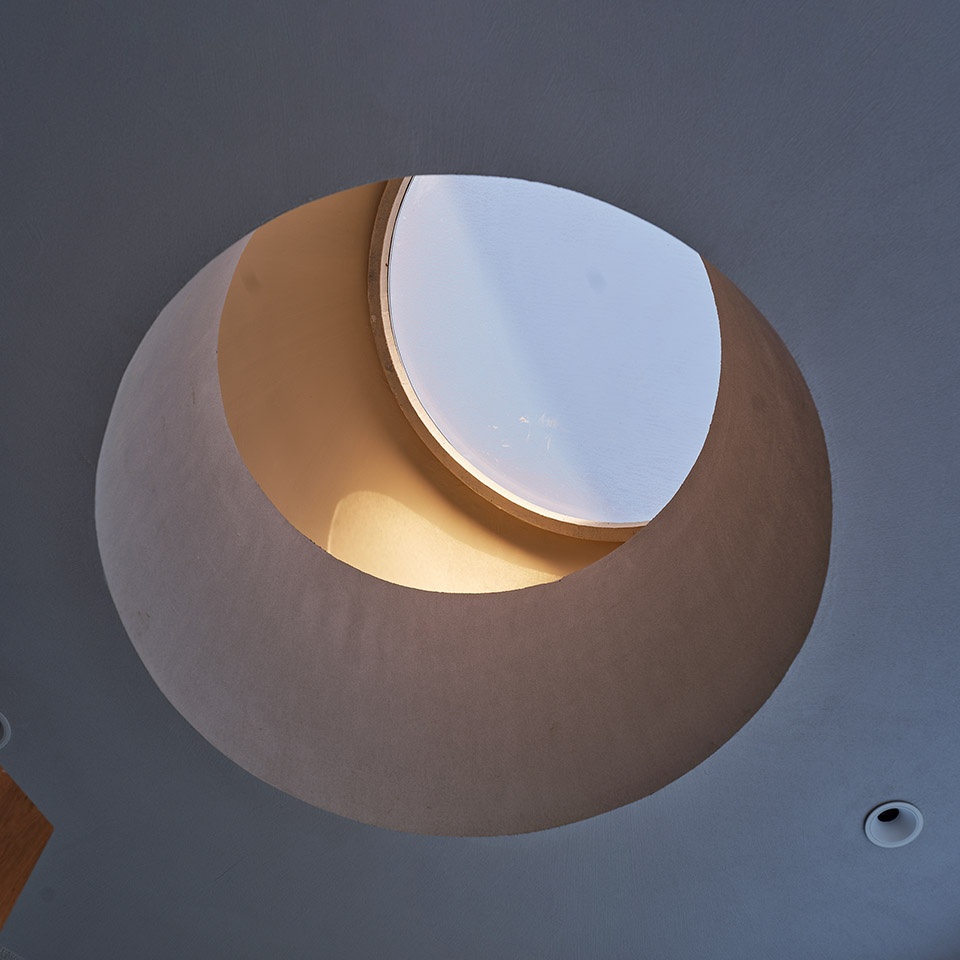
▼天窗细部,skylight detail
▼室内空间,interior space
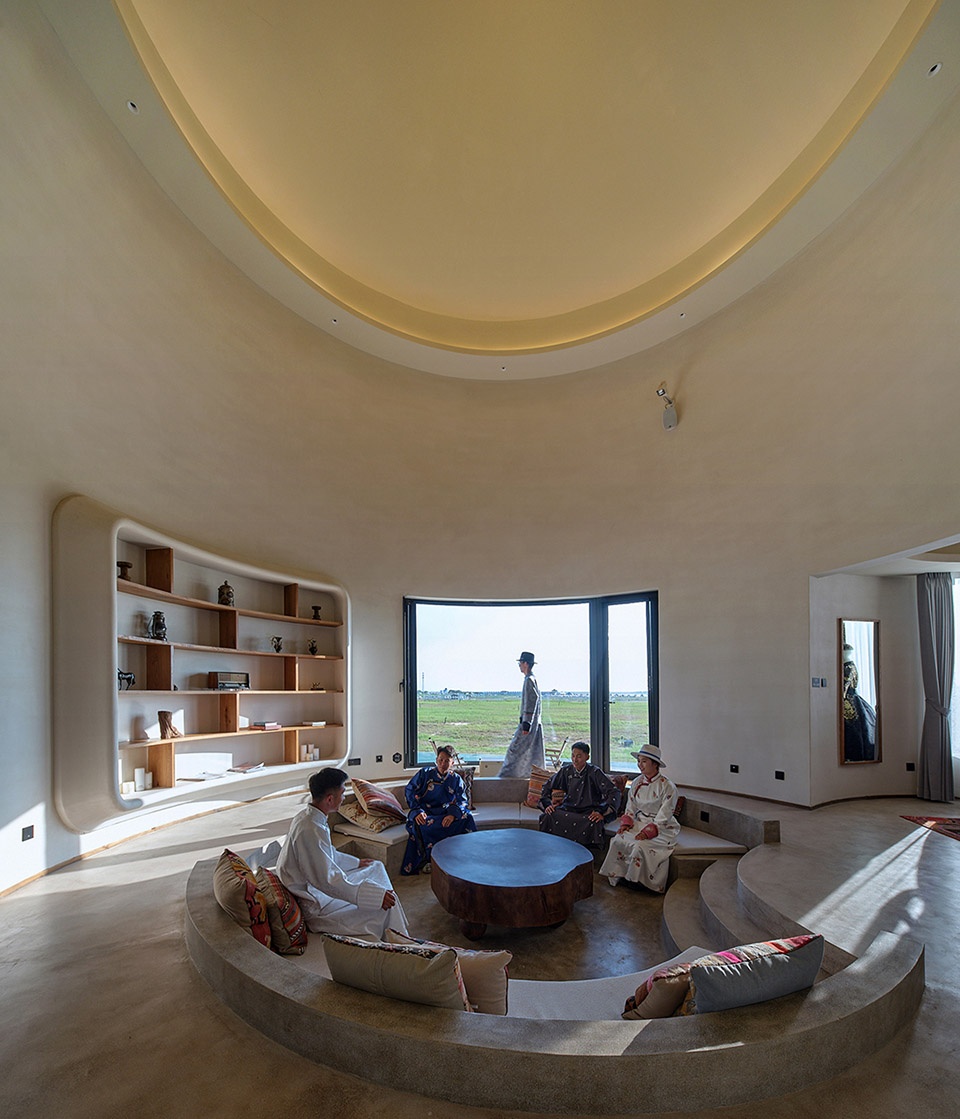
▼面向草原的全景视野,A panoramic view of the grassland
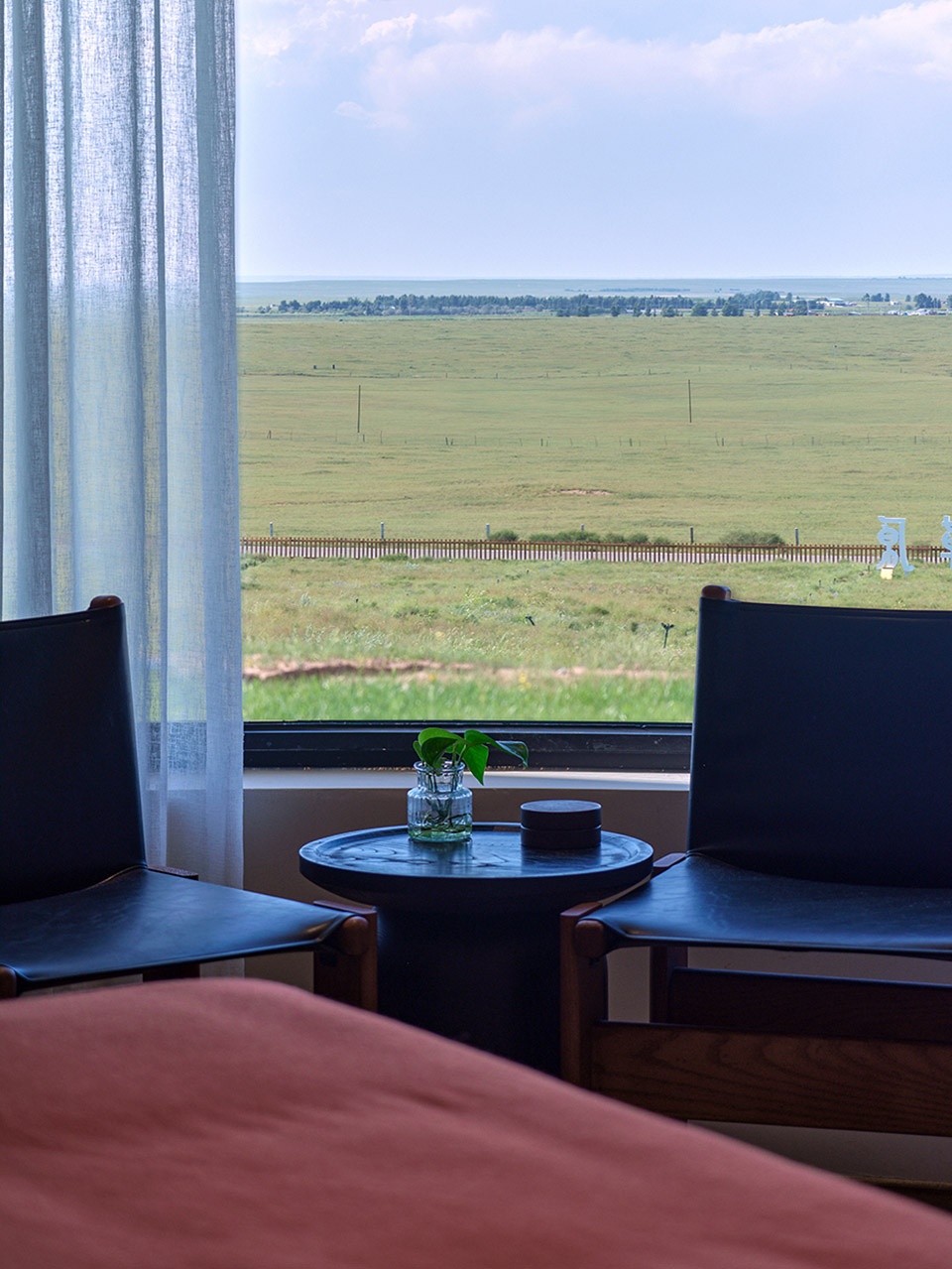
视线与景观与功能
视线:圆影引眸,光风穿草原
Vision, Landscape, and Function
Vision: Circular Shadows Guide Gaze, Light and Wind Traverse the Grassland
融入灰空间而非空隙,是内院微气候调节器,遮阳通风、户外休憩;圆单元错落成视线导航,引目远景与天空,穿院即穿草原,动线随光风呼吸,建筑与自然共生成有机序列。
Incorporating gray spaces (rather than empty gaps) acts as microclimate regulators for the inner courtyard, providing shade, ventilation, and outdoor leisure areas. Scattered circular units serve as visual guides, directing views toward distant scenery and the sky. Moving through the courtyard feels like traversing the grassland, with circulation flowing in rhythm with light and wind—creating an organic sequence where architecture and nature coexist.
▼建筑与自然共生成有机序列,creating an organic sequence where architecture and nature coexist
▼建筑与自然共生成有机序列,creating an organic sequence where architecture and nature coexist
视线的魔法|设计里的 “引导术”,让目光追向天地尽头 The Magic of Vision: “Guidance” in Design to Draw Gaze to the Horizon
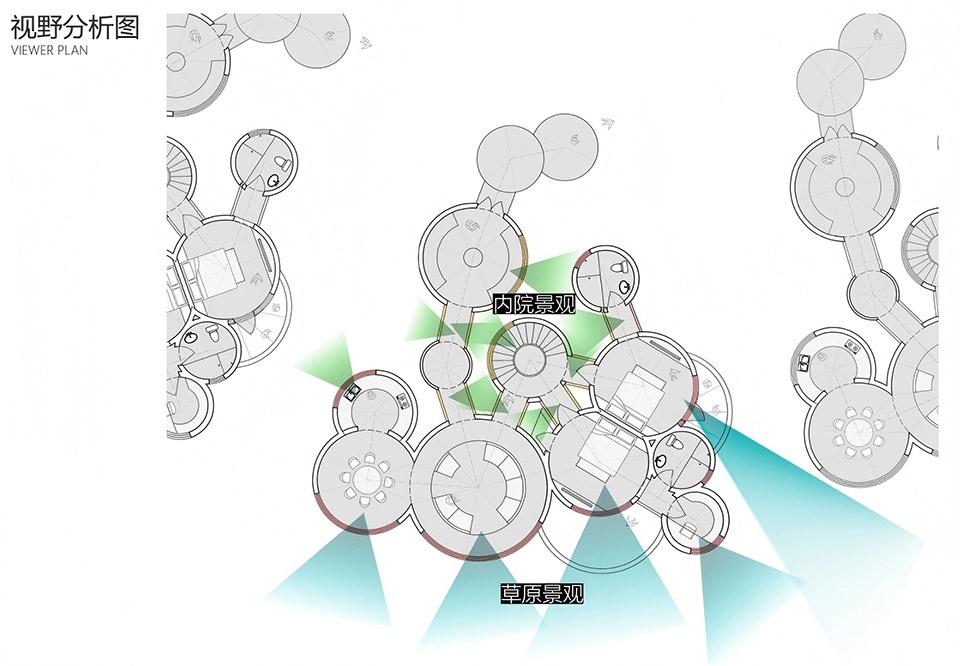
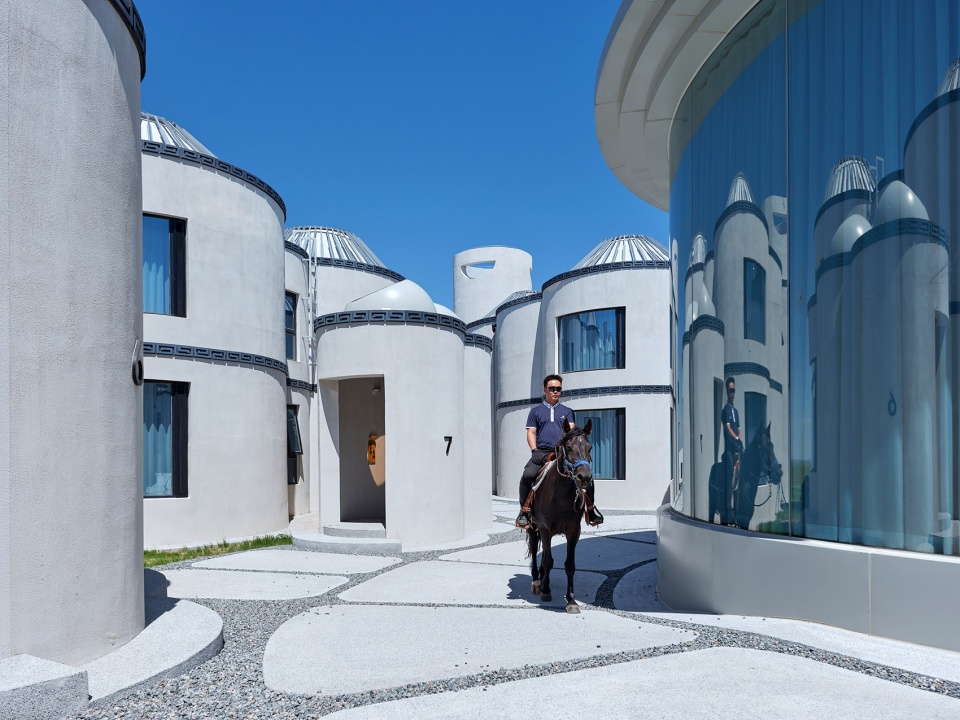
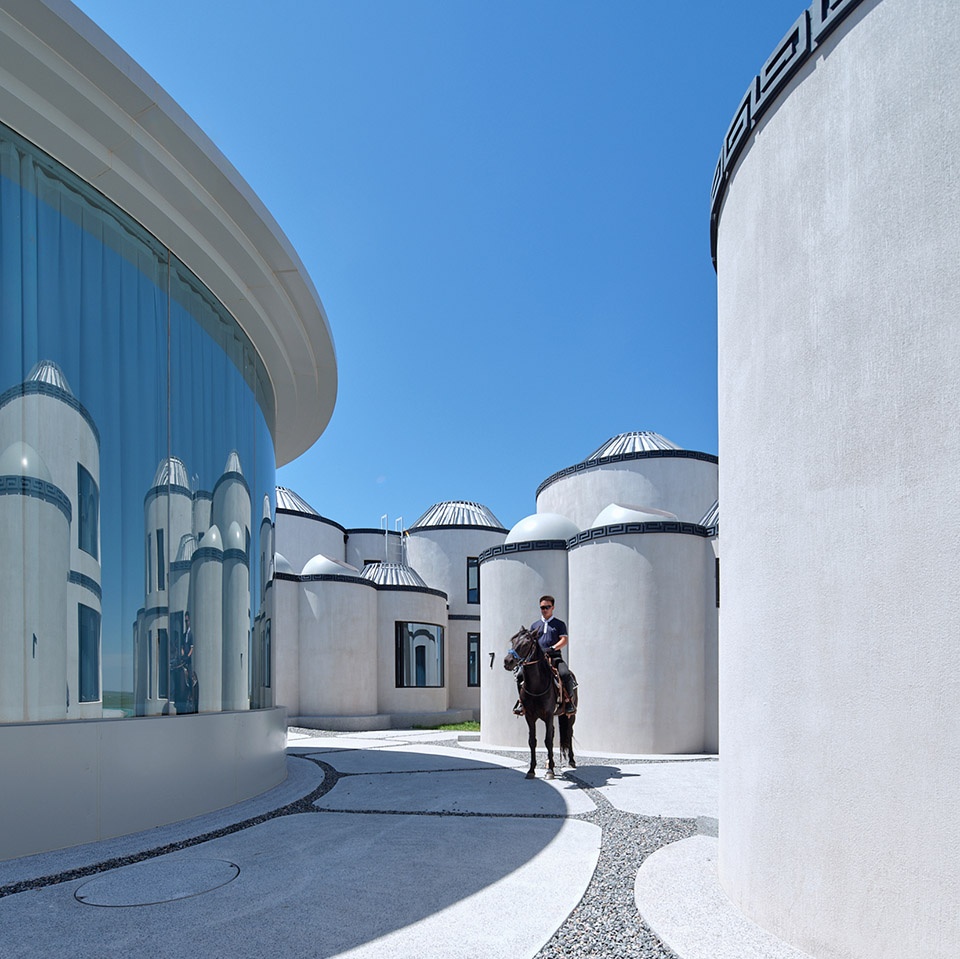
建筑与路径,成了天然的 “视线导演”。弧形建筑如张开的怀抱,巧妙地将视线聚拢,又顺着有序的路径,缓缓推向远方天地交融的边界。地面石材与砾石的几何排布,像是无声的指引线,一步步牵引着目光,从建筑的精致细节,滑向那片开阔无垠的自然,让每一次眺望,都成了一场从人工巧思到天地浩渺的沉浸式旅行。
▼视野分析图,viewer plan
Buildings and paths function as natural “vision directors”. Curved structures, like open arms, skillfully gather sightlines and guide them gently toward the distant boundary where sky meets earth along ordered paths. The geometric arrangement of ground stone and gravel acts as silent guide lines, leading the gaze from the intricate details of the architecture to the vast expanse of nature. Each overlook becomes an immersive journey from human ingenuity to cosmic grandeur.
▼建筑开口将视线引入自然,The opening of the building leads the line of sight into nature
功能:每一处空间,都装着实用与诗意的平衡 Function: Balancing Practicality and Poetry in Every Space
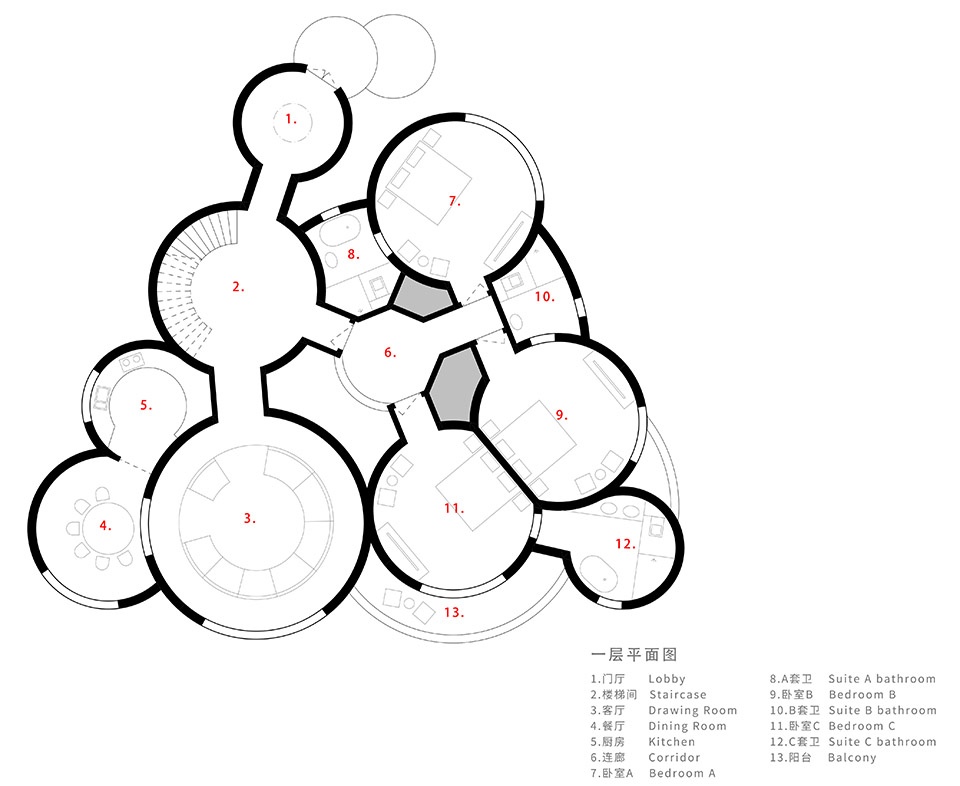
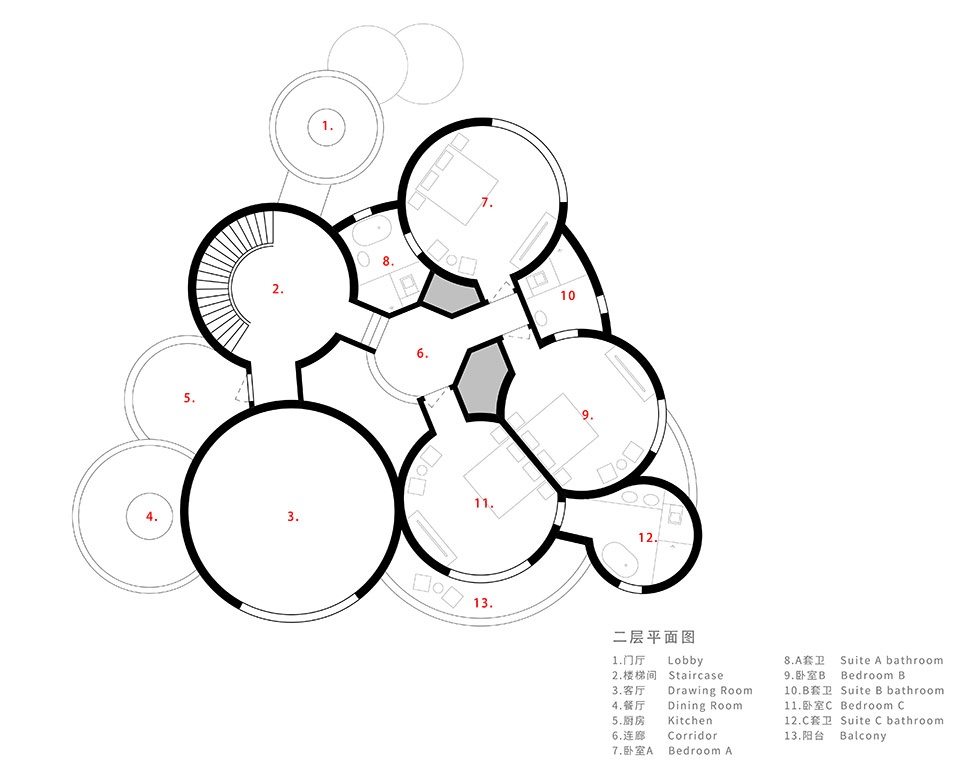
该建筑功能布局巧妙且丰富。以圆形为基本空间单元,围绕楼梯间,串联起客厅、茶室、卧室、阳台、厕所、观景塔等功能区。客厅作为核心公共区域,空间开阔,方便家人互动与待客。茶室相对独立,营造出静谧的品茗氛围。卧室提供休憩空间,搭配的阳台则拓展了休闲与观景的场所。厕所满足基本生活需求,分布合理。观景塔更是独特设计,为人们登高望远、饱览周边风光提供了好去处。各功能区既相互独立,保证了使用的私密性,又通过合理的动线设计,实现了便捷的联系,让居住者能在不同功能空间间顺畅切换,兼顾了生活的实用性与趣味性。
▼视野分析图,viewer plan
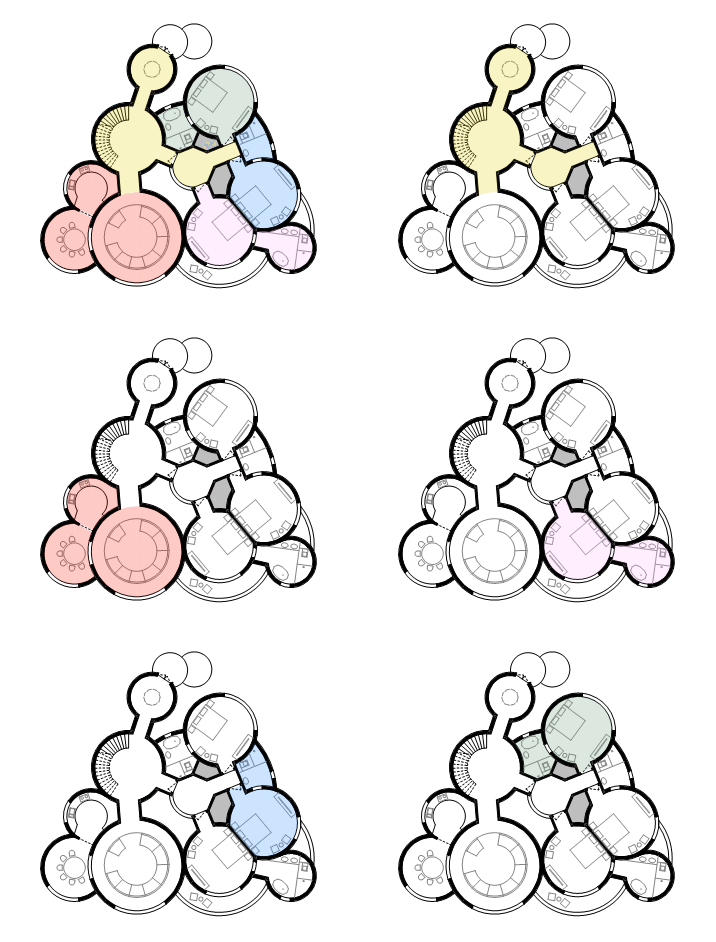
The building features an ingenious and rich functional layout. With circular spaces as basic units, living rooms, tea rooms, bedrooms, balconies, toilets, and observation towers are connected around stairwells. The living room, as the core public area, is spacious, facilitating family interaction and receiving guests. The relatively independent tea room creates a quiet atmosphere for tea appreciation. Bedrooms offer resting spaces, complemented by balconies that expand leisure and viewing opportunities. Toilets meet basic needs with rational distribution. The unique observation tower provides a perfect spot for climbing high and enjoying panoramic views of the surrounding scenery. Each functional area is independent to ensure privacy, while rational circulation design enables convenient connections, allowing residents to switch smoothly between spaces—balancing practicality and fun in daily life.
▼布局巧妙且丰富,The building features an ingenious and rich functional layout
视线的 “穿梭游戏”|来一场无界的视觉漫游 Vision “Shuttle Game”: An Unbounded Visual Journey
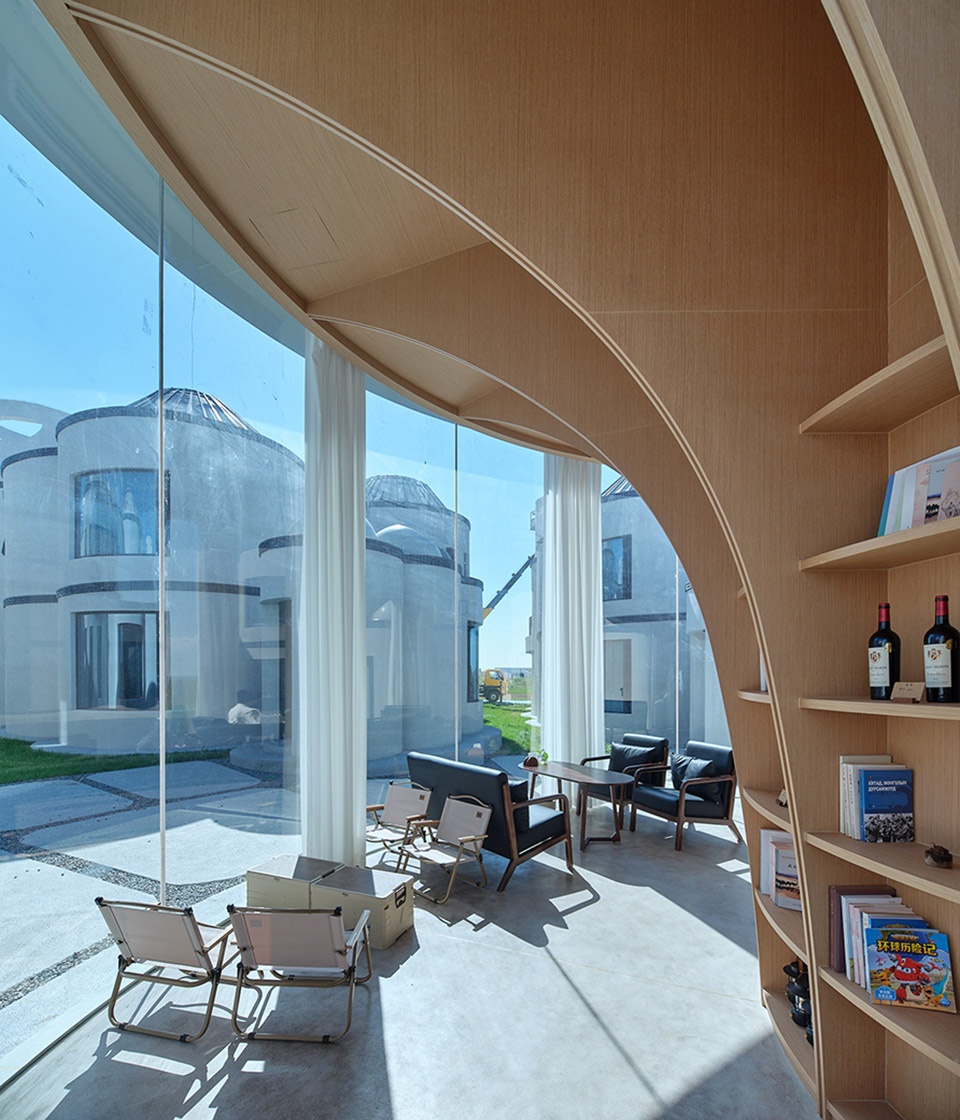
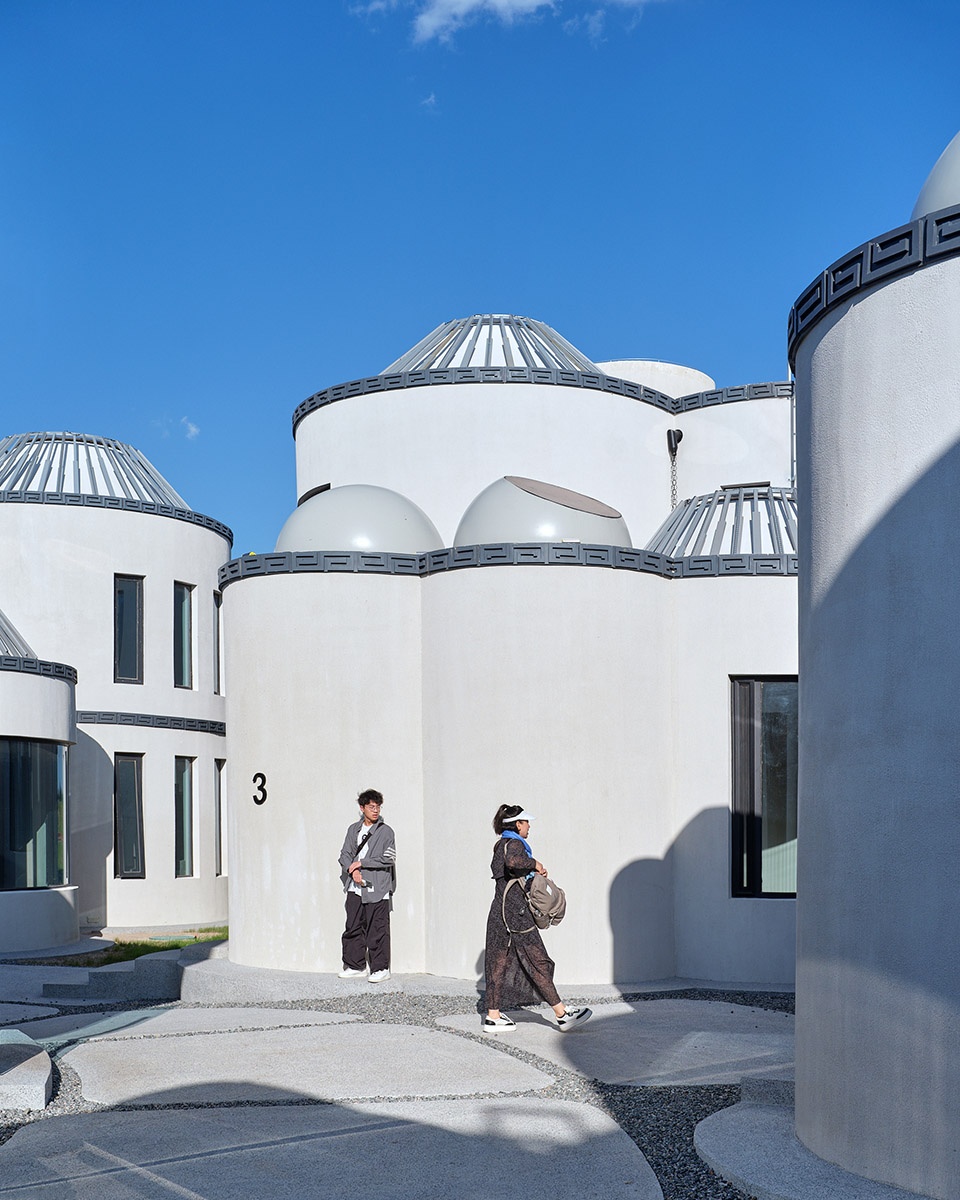
弧形大窗是绝对的 “视线磁石”,把室外建筑与蓝天绿地一股脑 “框” 进来,让目光瞬间被拉向天地间。室内弧形木构顺着窗的曲线延展,像温柔的指引带,带着视线在空间里轻盈滑动;书架上的书籍与陈设,又在局部锚定目光,让视线既能 “飞” 向室外的开阔,又能落回室内的细腻,在室内外、整体与细节间自由穿梭,就像一场没有边界的视觉漫游,把空间的每一处都变成了视线的游乐场。
Large curved windows act as absolute “visual magnets”, framing outdoor buildings, blue sky, and green land to instantly draw the gaze into the natural world. Indoor curved wooden structures extend along the window curves like gentle guide belts, leading the gaze to glide lightly through the space. Books and decorations on bookshelves anchor the gaze locally, allowing it to “fly” to the outdoor openness and settle on indoor details—wandering freely between interior and exterior, whole and part. It’s like an unbounded visual journey, turning every corner of the space into a playground for the eyes.
▼弧形大窗扩宽视觉边界,The arc-shaped large window widens the visual boundary
光与视线的协奏|让建筑在暮色里,成目光追逐的星辰 Symphony of Light and Vision: Making Architecture a Star Chased by Gaze at Dusk
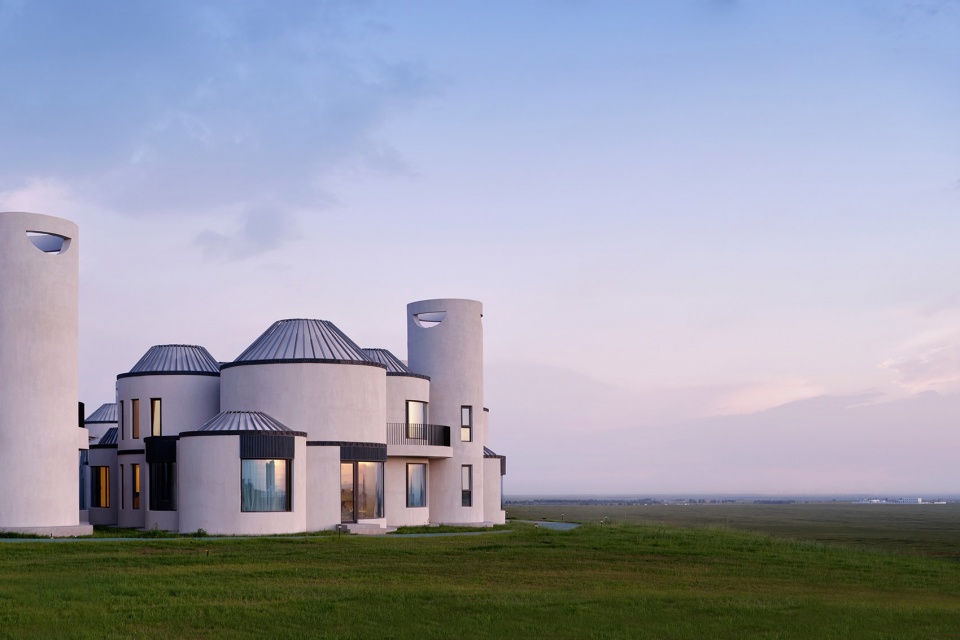
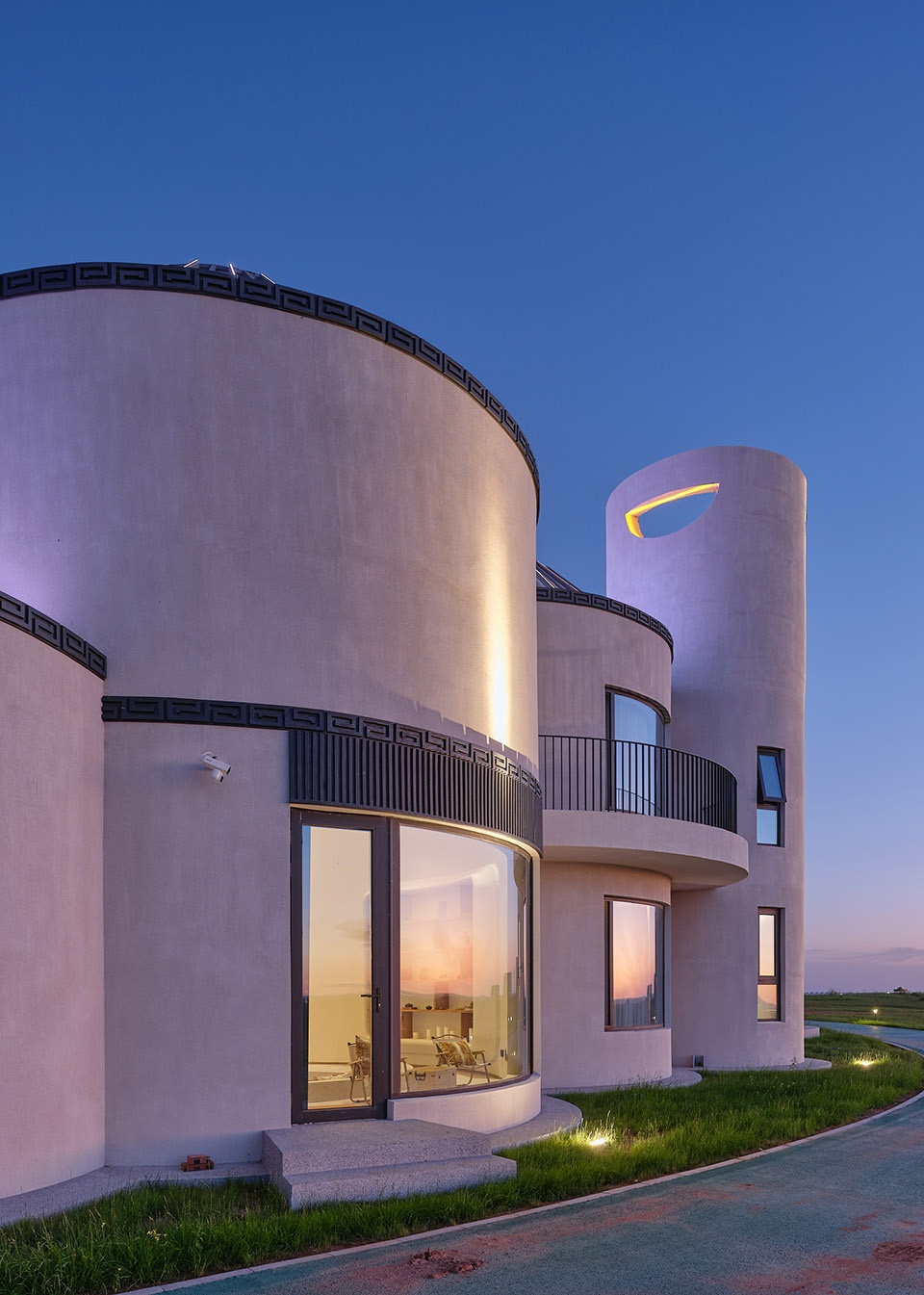
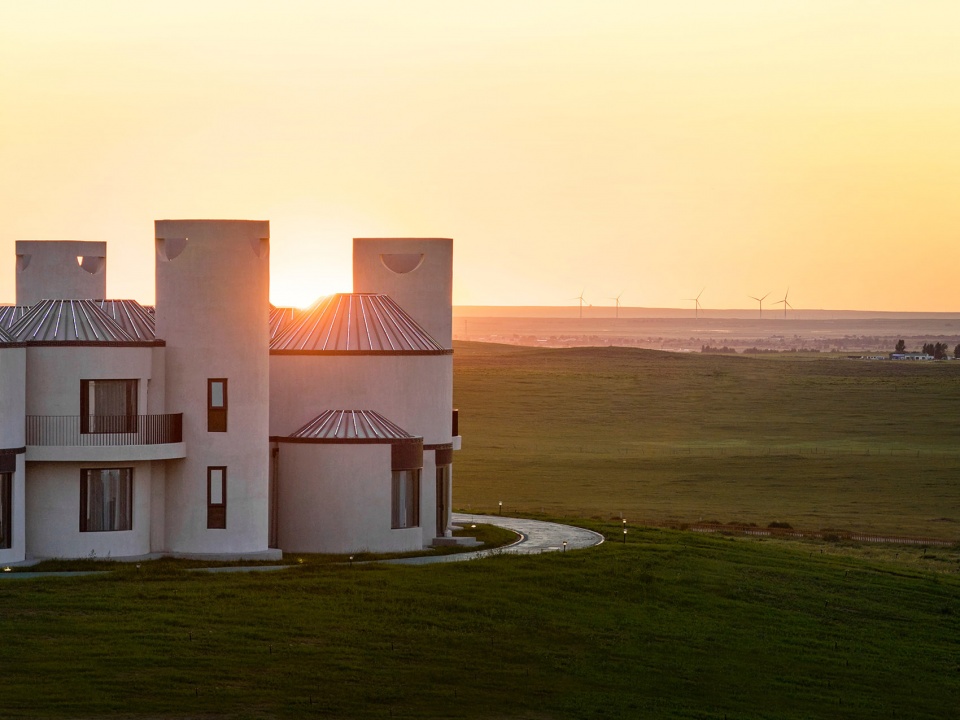
暮色时分,建筑成了光的 “画布”。暖黄的灯光从墙面倾泻而下,如灵动的丝带,瞬间抓住视线;高耸的柱体上,那圈透光的设计,像夜空中的月牙,把目光 “勾” 过去,又顺着建筑流畅的曲线,滑向室内透出的温馨光晕,再延伸到远处天际的朦胧色彩里。光在这里成了视线的 “指挥家”,带着目光在建筑的每一处流转、停留,让整个空间在暮色中,成了一场光与视线共舞的浪漫演出。
At dusk, the building becomes a “canvas for light”. Warm yellow light pours down the walls like flowing ribbons, instantly capturing attention. The translucent design around the tall columns, like crescent moons in the night sky, lures the gaze and guides it along the building’s smooth curves to the warm glow emanating from the interior, then extending into the hazy colors of the distant sky. Here, light acts as the “conductor” of vision, leading the gaze to wander and linger everywhere on the building—turning the entire space into a romantic performance where light and vision dance together at dusk.
▼暮色时分,At dusk
不断变化的小空间
小空间的 “变奏曲”|每一步,都踏入新的风景剧场
Ever-Changing Small Spaces
Variations of Small Spaces: Stepping into a New Scenic Theater with Every Step
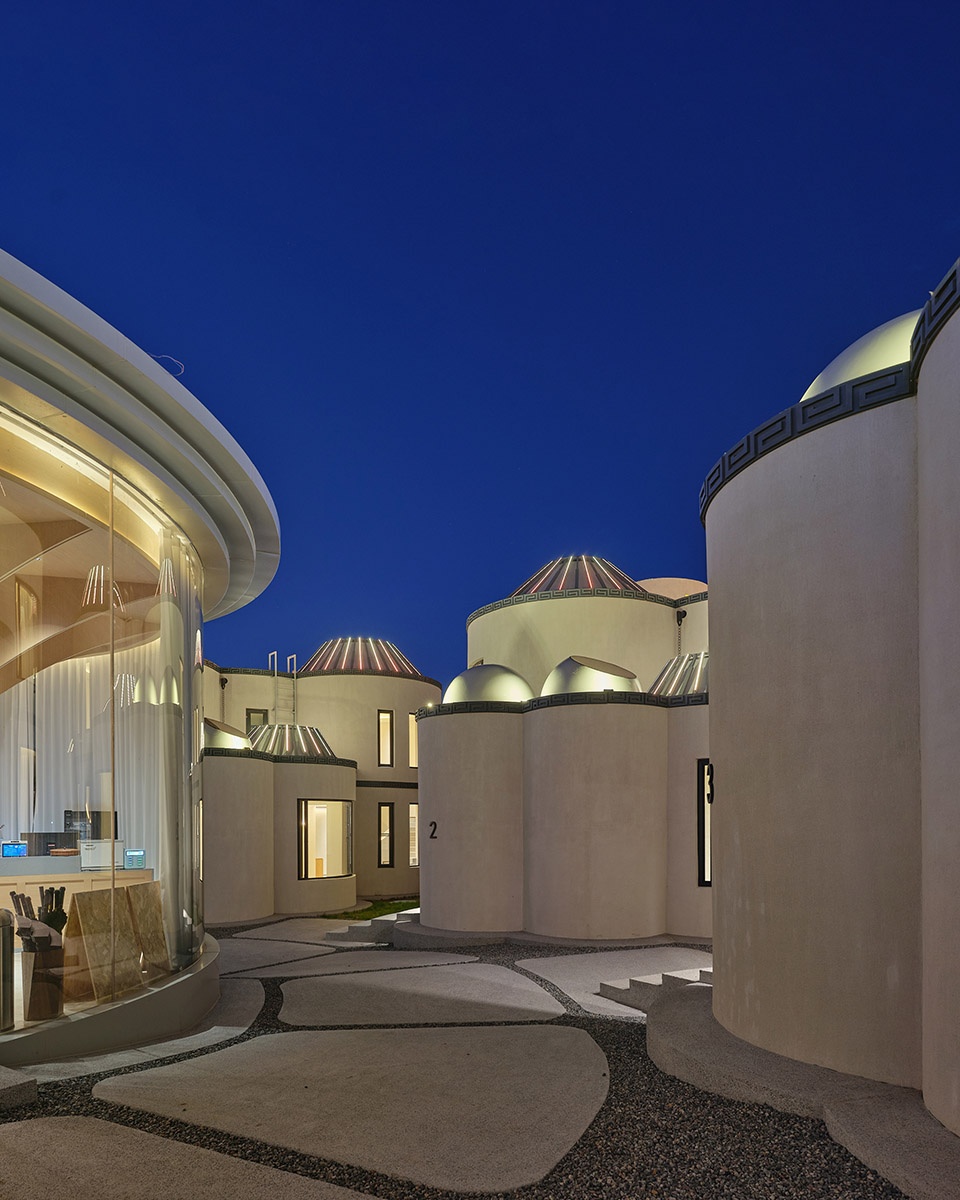
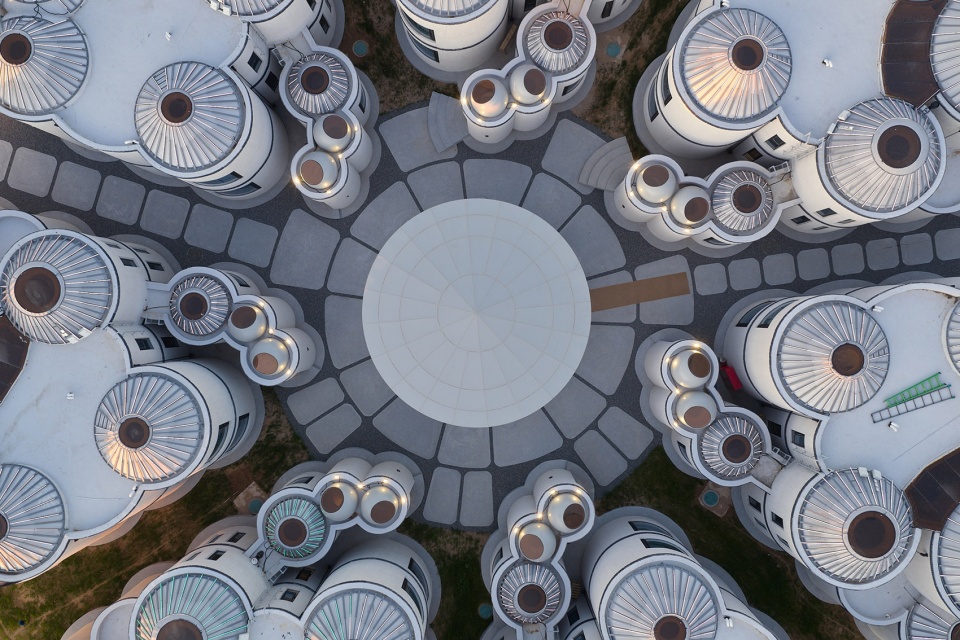
从高空俯瞰,这些如同细胞聚落般的小空间,以中心为原点向外铺展,形态各异却又和谐共生。当人置身其中,每迈一步,周围的空间形态、与其他 “小聚落” 的相对位置都在悄然变化。
From an aerial perspective, these small spaces—like a cluster of cells—spread outward from the center, with diverse yet harmonious forms. When wandering through them, the spatial form and relative position to other “small clusters” change subtly with each step.
▼如同细胞聚落般的小空间,small spaces—like a cluster of cells
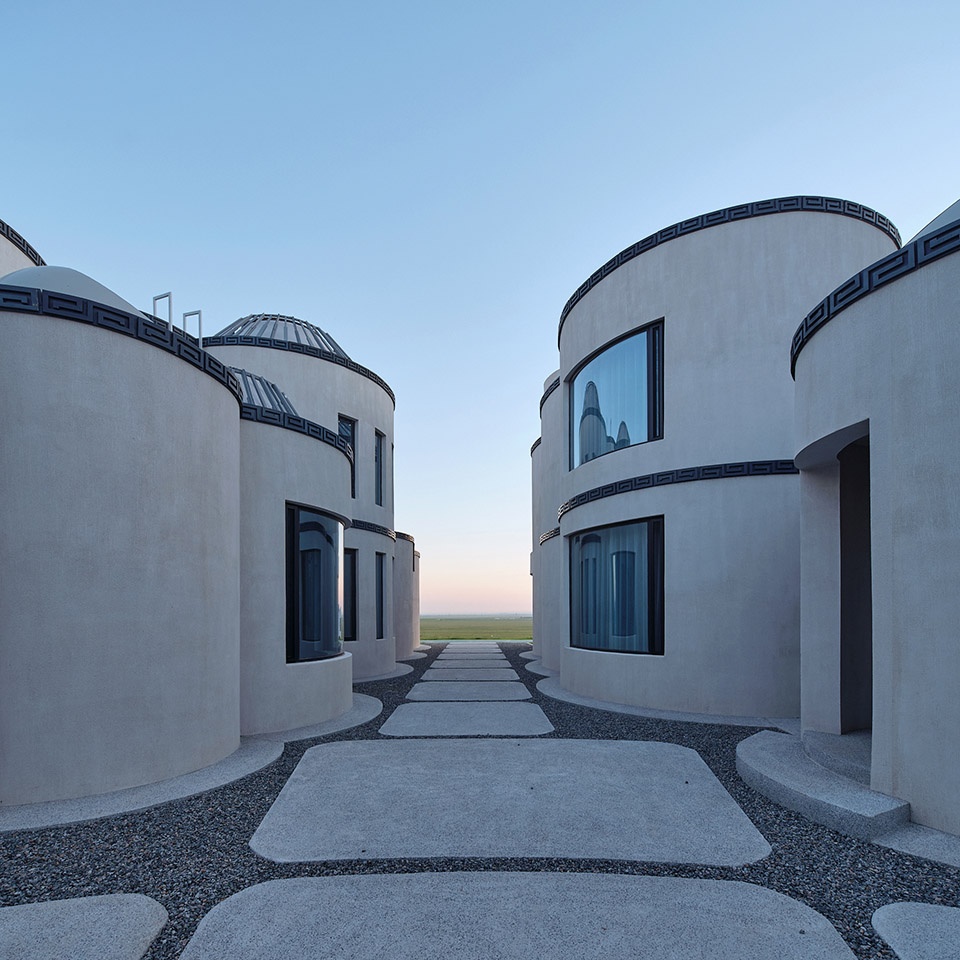
有的空间被弧形墙体温柔环抱,有的则因独特的屋顶造型形成别致光影,还有的与相邻空间通过巧妙的路径衔接,营造出 “转角遇惊喜” 的效果。就像在一座流动的建筑迷宫里,每一处小空间都是独立又关联的 “景框”,装着不同的建筑语汇与视觉意趣,让行走的过程,变成一场不断解锁新风景的探索之旅。
Some spaces are gently embraced by curved walls, others form unique light and shadow effects due to distinctive roof shapes, and still others connect with adjacent spaces through clever paths, creating a “pleasant surprise around every corner” experience. Like in a flowing architectural maze, each small space is an independent yet interconnected “frame”, containing different architectural vocabularies and visual delights—turning the act of walking into an exploratory journey of unlocking new scenery.
▼如同细胞聚落般的小空间,small spaces—like a cluster of cells
棚面的 “光影魔术”|每一处弧度,都藏着视线的引力场 Light and Shadow Magic of Canopies: Every Curve Hides a Visual Gravity Field
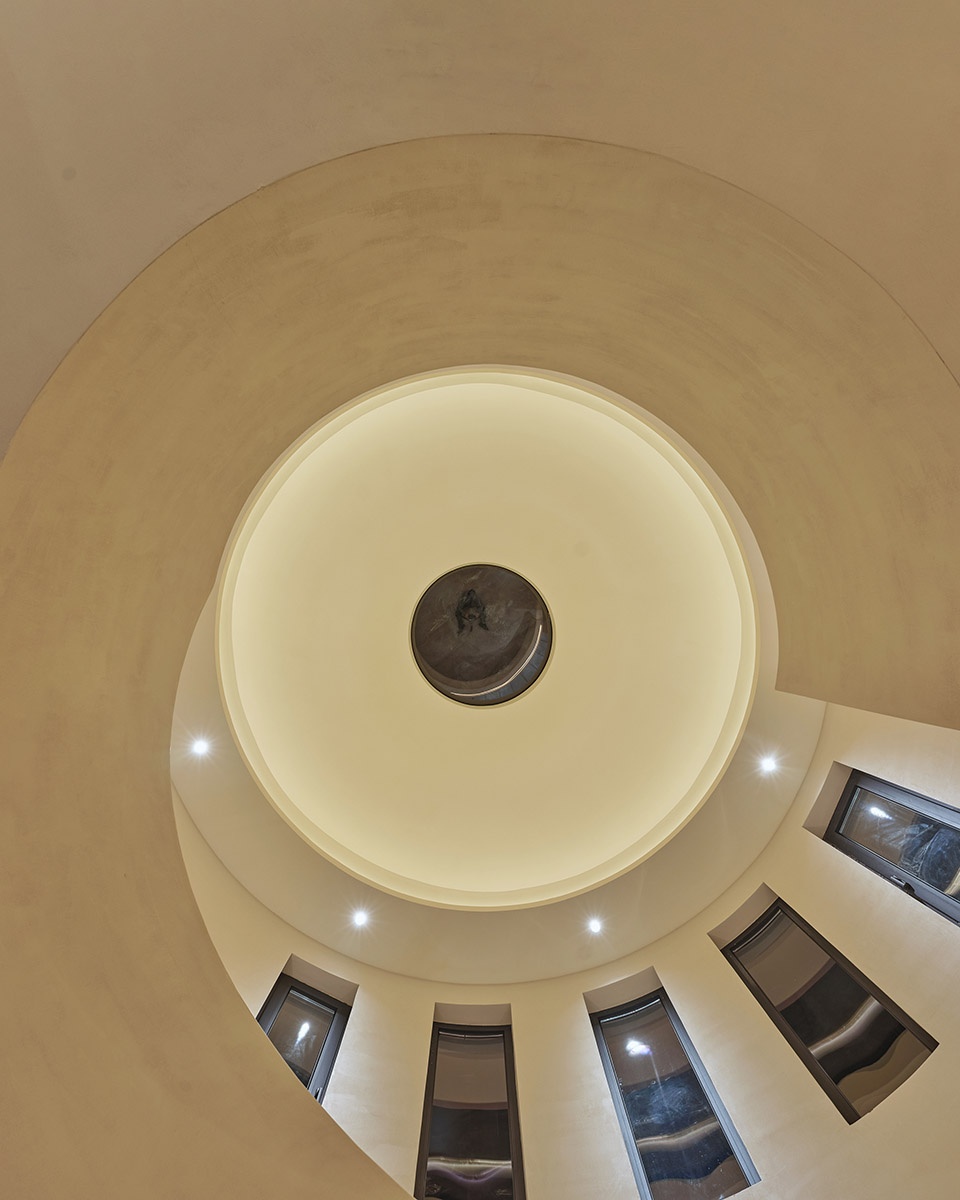
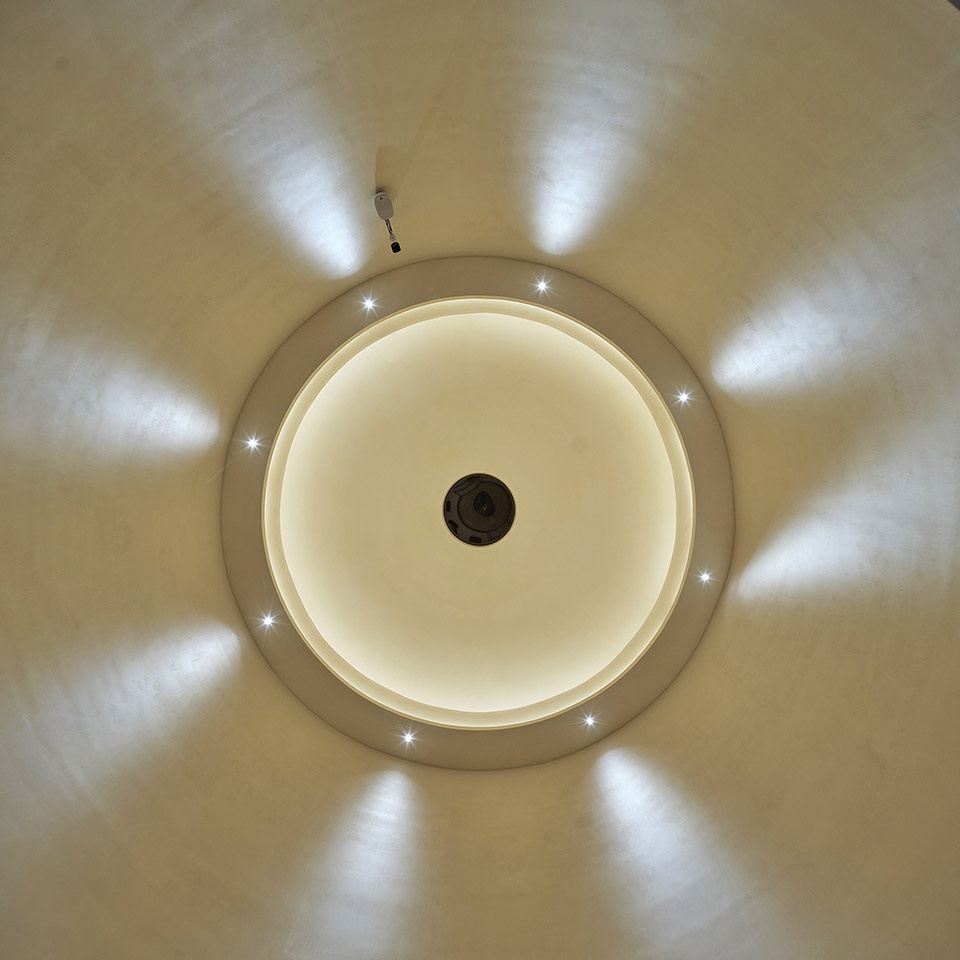
这些棚面堪称“视线捕手”,圆形穹顶、嵌套弧形结构如精心设计的漩涡,牢牢吸住目光。穹顶中央的圆形开口,或映出空间、或引入天光,引视线向上探寻;螺旋上升的棚面,借流畅曲线牵引视线盘旋延伸至顶端光亮处。每一道弧度、每一处光影,都打造出专属视线引力场,让目光在空间里完成充满韵律的漫游。
These canopies are worthy of the title “vision catchers”. Circular domes and nested curved structures, like meticulously designed vortices, firmly capture the gaze. The circular openings at the center of the domes either reflect the space or introduce natural light, inviting the gaze to explore upward. Spiraling canopies use smooth curves to guide the gaze to circle and extend to the light at the top. Every curve and every play of light and shadow creates a unique visual gravity field, allowing the gaze to wander rhythmically through the space.
▼穹顶中央的圆形开口,The circular openings at the center of the domes
曲线的 “牵引艺术”|每一道弧,都牵着视线赴一场漫游 Guiding Art of Curves: Every Arc Leads the Gaze on a Journey
曲线在这里成了 “视线导游”。螺旋的楼梯、弧形的墙面与棚顶,如灵动的丝带,自然牵引着目光游走。楼梯的弧面顺着走势,带视线从下方缓缓向上攀升;墙面与棚顶的弧形衔接,让目光在空间里顺畅流转,或是落向陈列的器物,或是追着光影,完成一场由曲线主导的、充满韵律的视觉漫游。
Curves here act as “visual guides”. Spiraling staircases, curved walls, and canopies—like flexible ribbons—naturally lead the gaze to wander. The curved surfaces of the staircases guide the gaze to climb slowly upward from below. The curved connection between walls and canopies allows the gaze to flow smoothly through the space, either settling on displayed artifacts or chasing light and shadow—completing a rhythmic visual journey led by curves.
▼墙面与棚顶的弧形衔接, The curved connection between walls and canopies
细部的 “精致密码”|每一处雕琢,都藏着设计的巧思 Exquisite Code of Details: Every Carving Hides Design Ingenuity
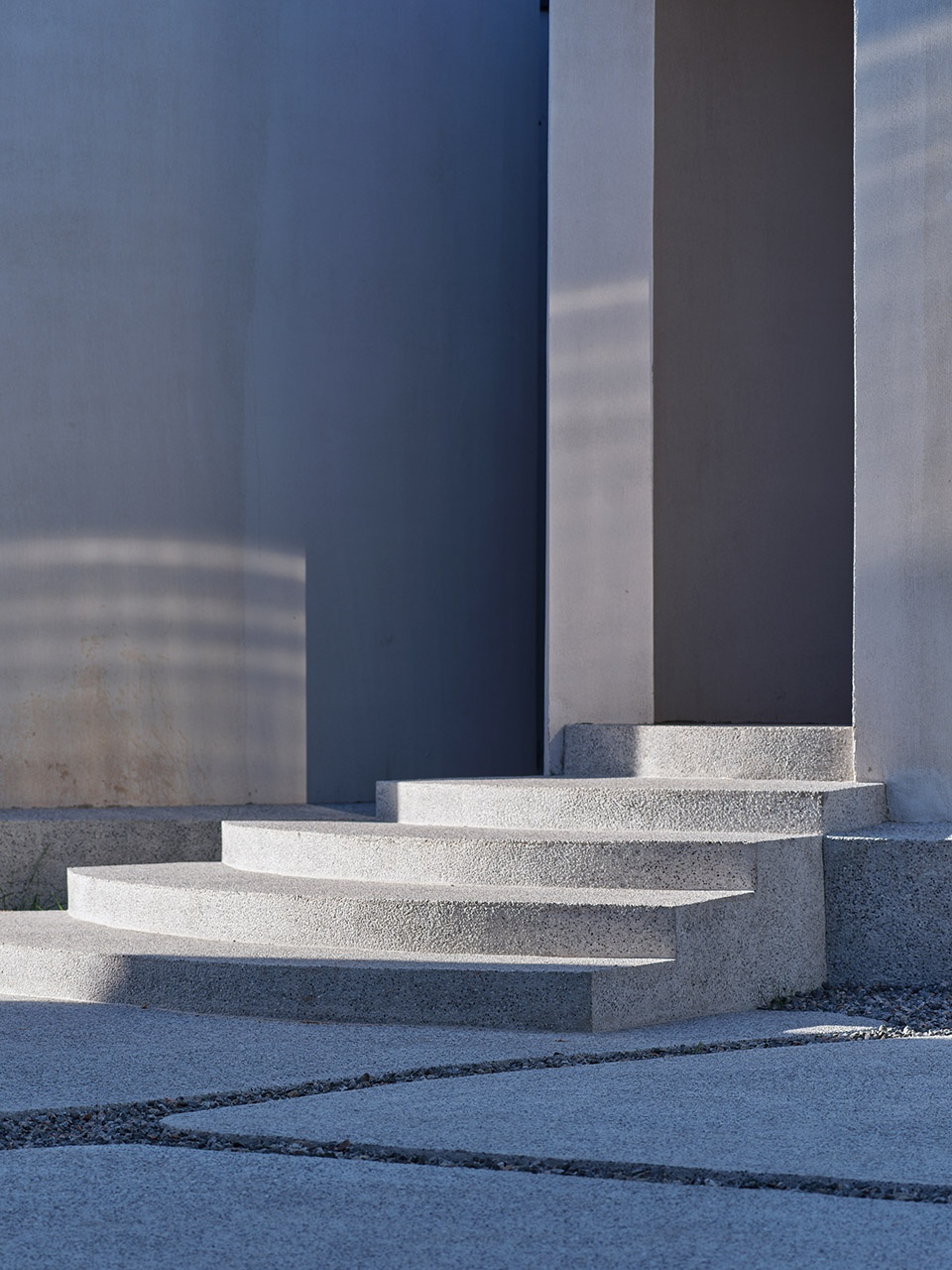
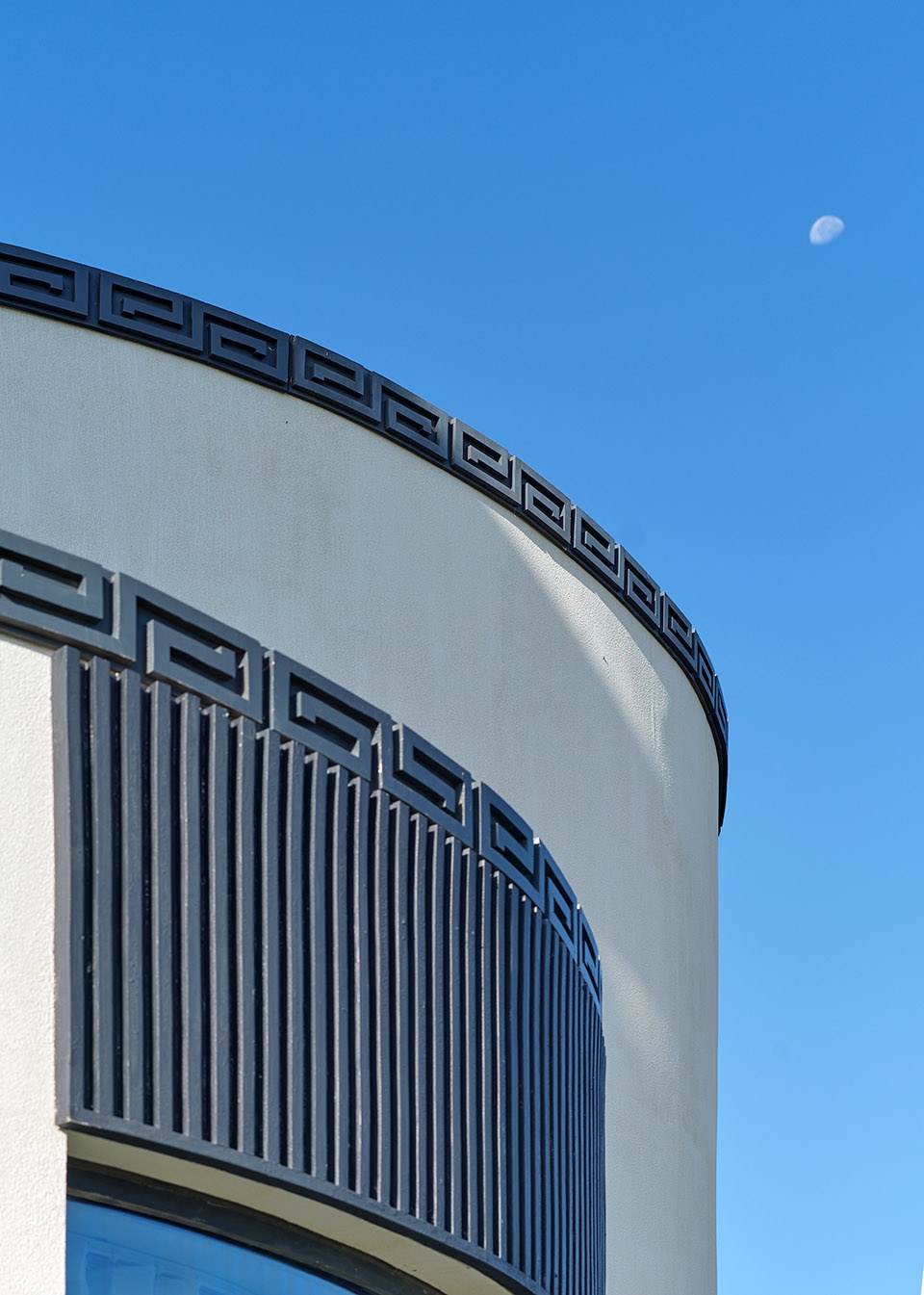
建筑的细部,满是设计的用心。那带有几何纹样的黑色饰边,沿着弧形建筑边缘延伸,似精致的 “丝带”,为简洁的建筑立面增添了层次与仪式感;还有那石阶,表面粗糙的质感与规整的形态相碰撞,既保留了自然的质朴,又通过有序的排布,引导着脚步与视线,每一处细部都像是精心打磨的 “小惊喜”,让建筑从整体到局部,都散发着精致的魅力。
The building’s details are full of thoughtful design. The black decorative edges with geometric patterns extend along the curved building edges like exquisite “ribbons”, adding layers and ritual sense to the simple building facade. The stone steps, with their rough texture and regular form, retain natural simplicity while guiding footsteps and sightlines through ordered arrangement. Every detail is like a carefully polished “small surprise”, making the building exude exquisite charm from overall to local.
▼弧形的墙面,curved walls
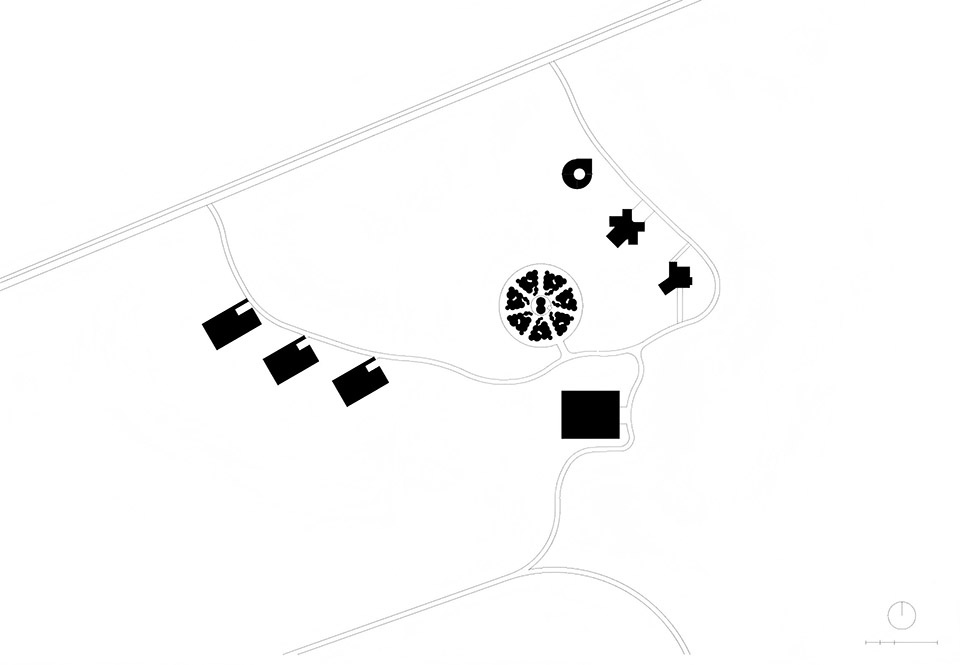
▼场地平面,site plan
▼一层平面,ground floor plan
▼二层平面,first floor plan
▼立面,elevation
▼剖面,section
▼细部,detail
Project Name: YUANVERSE – Future Grassland
Project Location: Ordos Grassland Scenic Area, Hangjin Banner, Ordos City
Client: Hangjin Banner Fuquan Trading Co., Ltd.
Design Firm: AOMOMO Studio, Shanghai Jiao Tong University
Design Team: Zhang Hai’ao, Yu Yang, Li Di, Xu Hang, Yang Ge, Pan Wenqi, Li Yihang, Tang Ling, Wu Changlong, Zhang Minghui, Zhu Jingwen
Construction Development Team: Zhongcheng Keze Engineering Design Co., Ltd.
Contractor: Inner Mongolia Hongshengda Construction Group Co., Ltd.
Operation Unit: Inner Mongolia Jiesu Hotel Management Co., Ltd
.Building Area: 3,349 m²
Design Period: May 2023
Construction Period: September 2025
Photography: Zhangyu Jianzhu (Octopus Architecture Photography)
Text Editor: Zhu Jingwen