张北海市,张家口 / BUZZ庄子玉工作室
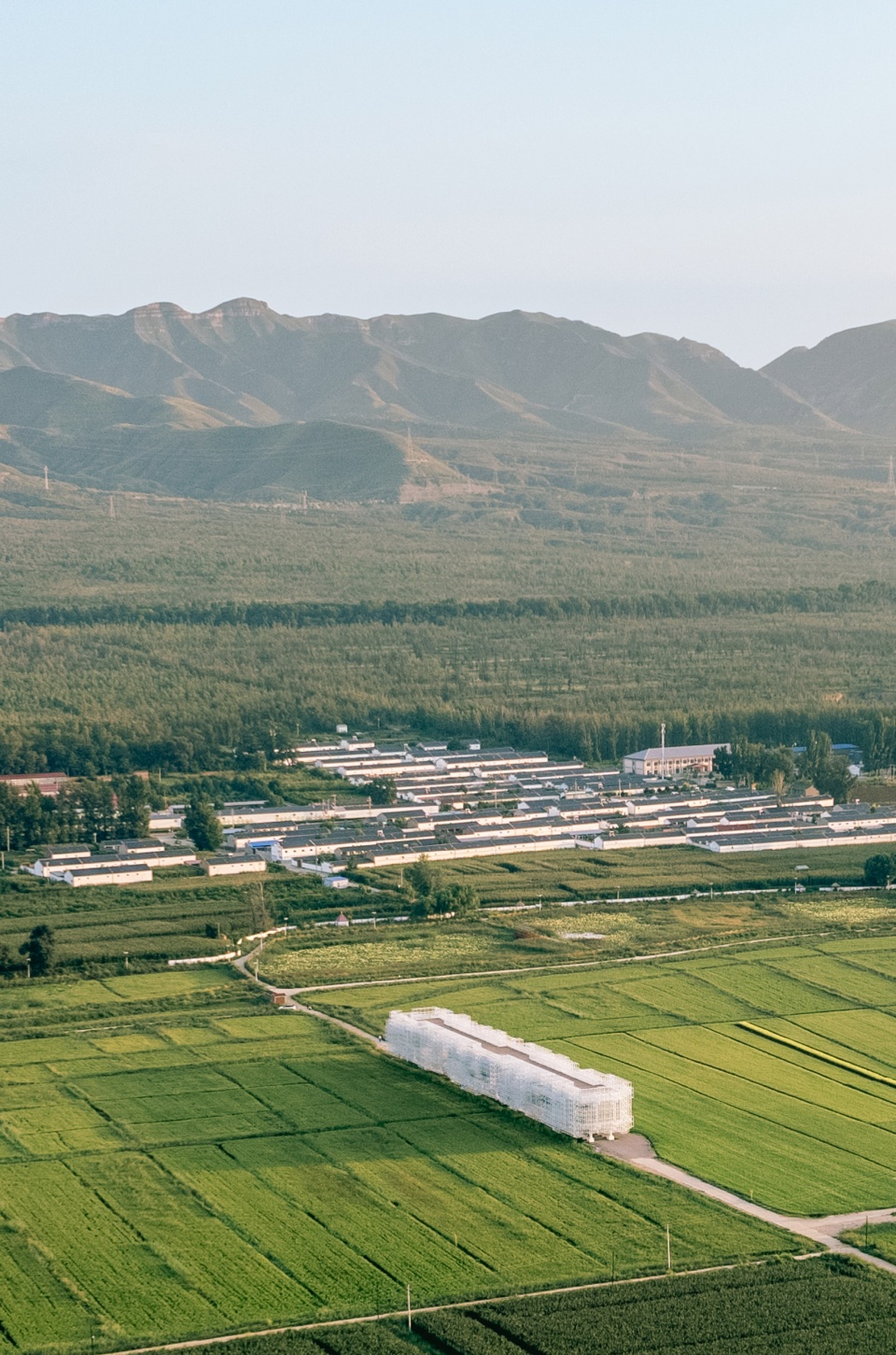
在河北省张家口市怀安县的原野上,一片麦田铺展至天际——这里向西不足40公里即达内蒙古乌兰察布与山西大同交界的三省交汇带,更紧邻以广袤草原闻名的张北地区。田野间,一座废弃混凝土桥体静静伫立:庞大的柱础深嵌土地,生硬的梁体割裂了天地与田野的视觉连贯性,它曾是平原地带的人工区域至高点,如今却成了场地中承载着村落记忆的沉默遗留物。
In the wilderness of Huai’an County, Zhangjiakou City, a vast wheat field stretches to the horizon. Less than 40 kilometers west of here lies the junction of three provinces—Ulanqab in Inner Mongolia, Datong in Shanxi, and the local area—while it is also adjacent to the Zhangbei region, renowned for its expansive grasslands. Amid the fields, an abandoned concrete bridge stands silently: its massive piers are deeply embedded in the soil, and its rigid beams disrupt the visual continuity between the sky, the earth, and the fields. Once the highest man-made point in this plain area, it now stands as a silent relic bearing the memory of the surrounding villages.
▼张北海市,Manor Mirage
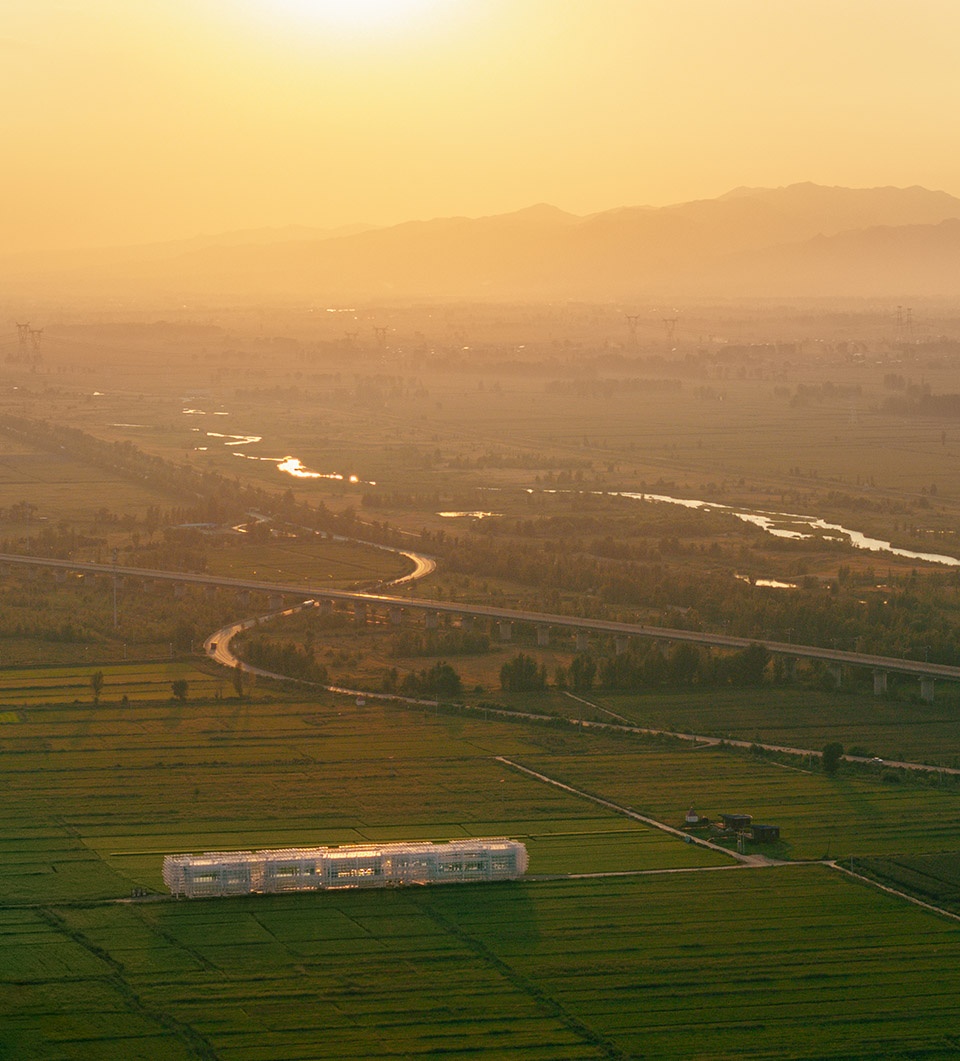
BUZZ的设计介入,并未以颠覆或覆盖的姿态消解这份遗留感,而是通过一系列轻质化的建构策略,完成对废桥的空间转译与功能再生。项目被命名为“张北海市”——张北直指其与张北地域草原文化的关联,海市则以海市蜃楼为隐喻,道破设计核心:用建筑构建一个兼具消失感与瞬时性的空间虚像,既悬浮于场地之上,又与原始桥体的厚重感形成辩证对话。
BUZZ’s design intervention does not seek to eliminate this sense of legacy through subversion or overlay; instead, it achieves the spatial translation and functional regeneration of the abandoned bridge through a series of lightweight construction strategies. The project is named Zhangbei “Manor Mirage”. This name directly references its connection to the grassland culture of the Zhangbei region, while “Mirage” reveals the core of the design—to use architecture to construct a spatial illusion that embodies both a sense of vanishing and transience. This illusion hovers above the site and engages in a dialectical dialogue with the heaviness of the original bridge.
▼张北海市鸟瞰,aerial view of the Manor Mirage
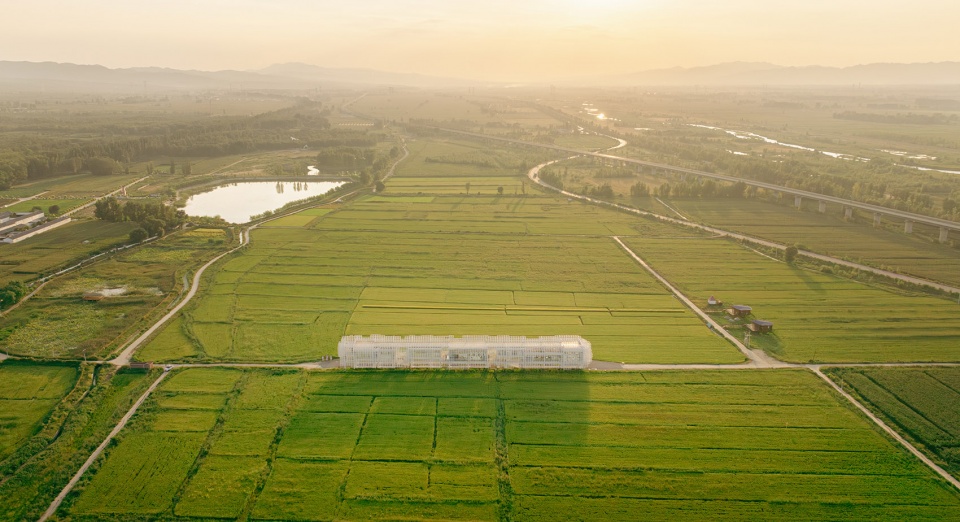
▼轻质化的建构策略,lightweight construction strategies
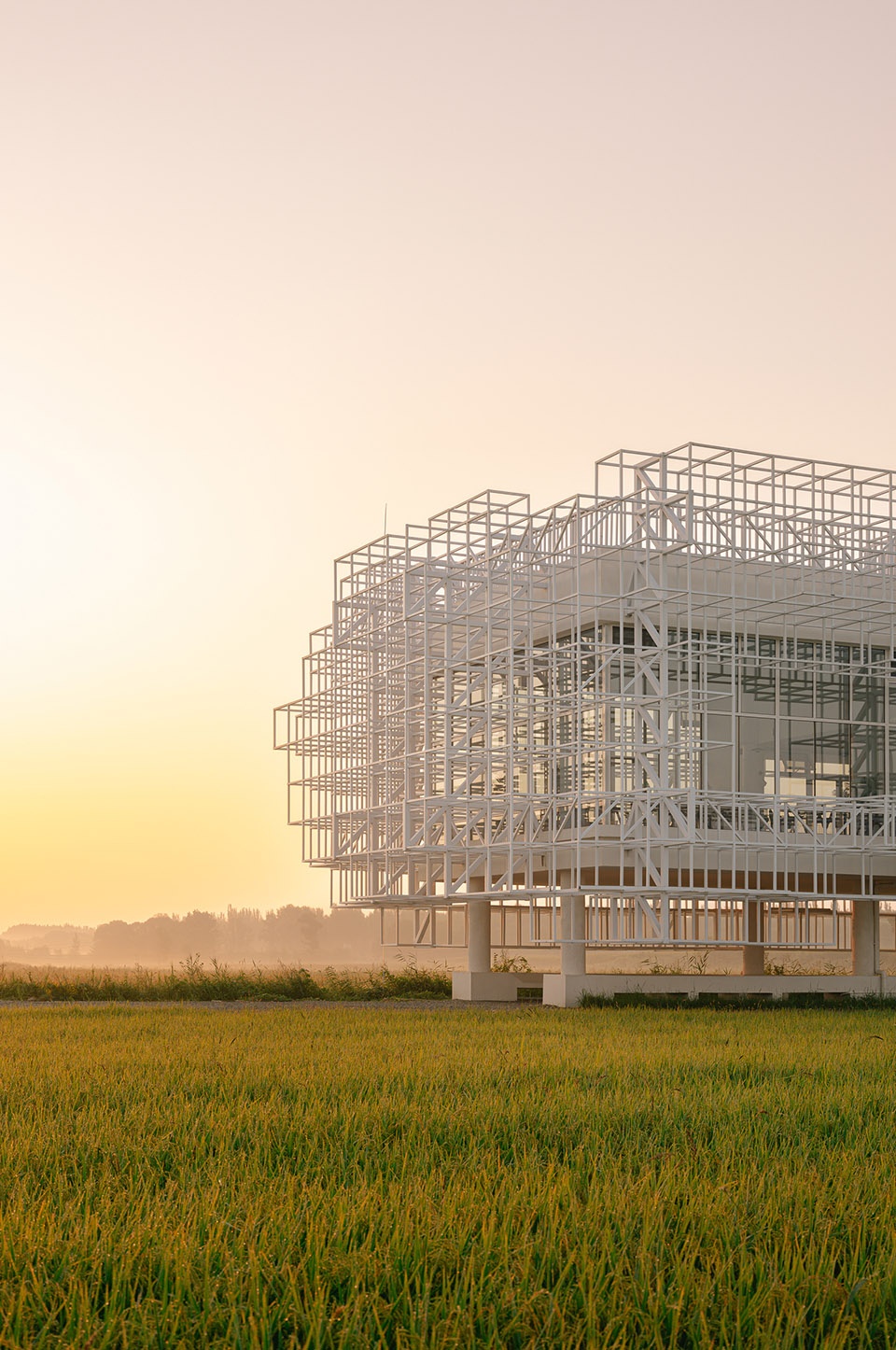
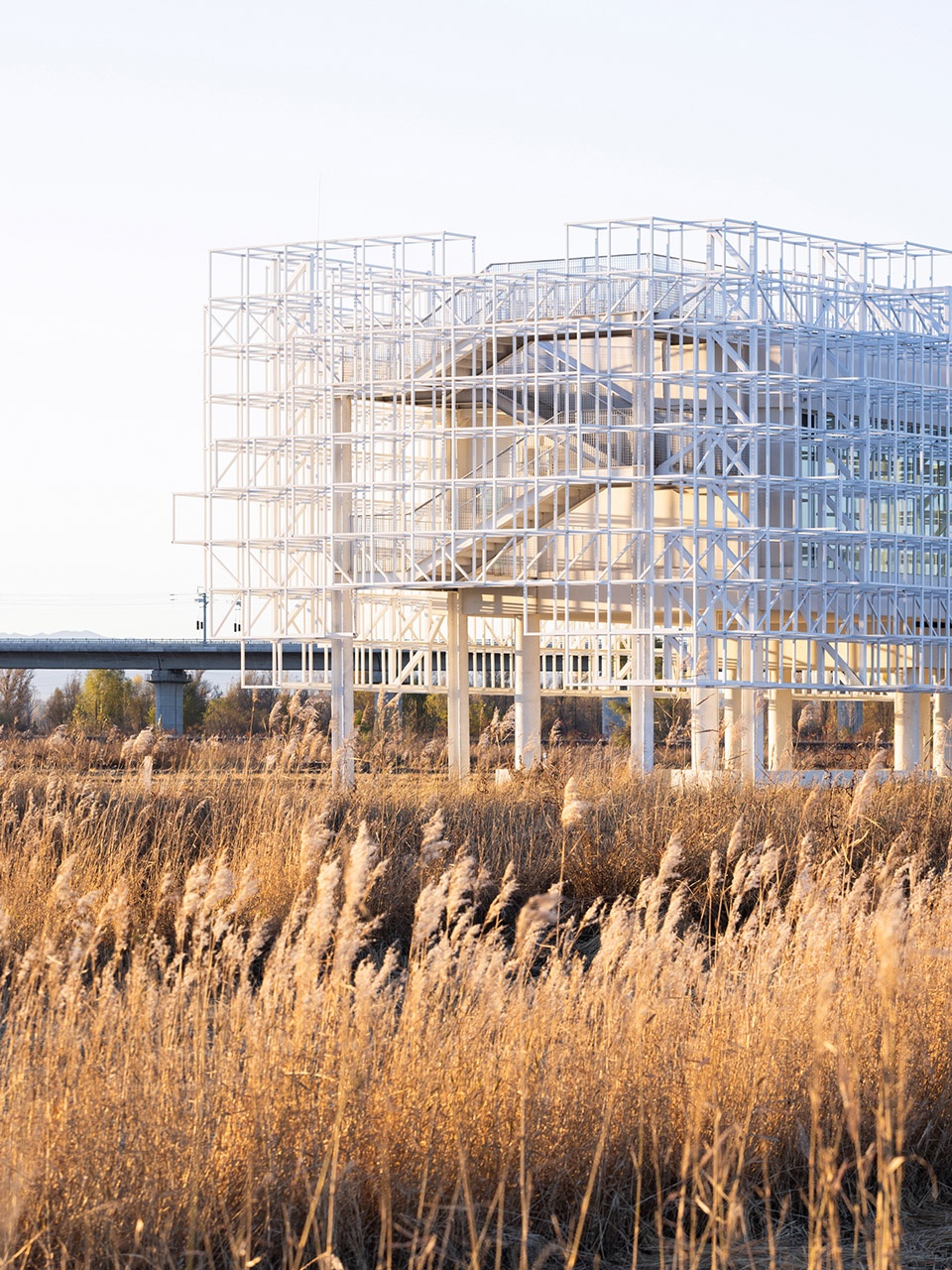
▼轻质化的建构策略,lightweight construction strategies
1. 从割裂者到消隐锚点:视觉秩序的重构实验 From Divider to Fading Anchor: An Experiment in Reconstructing Visual Order
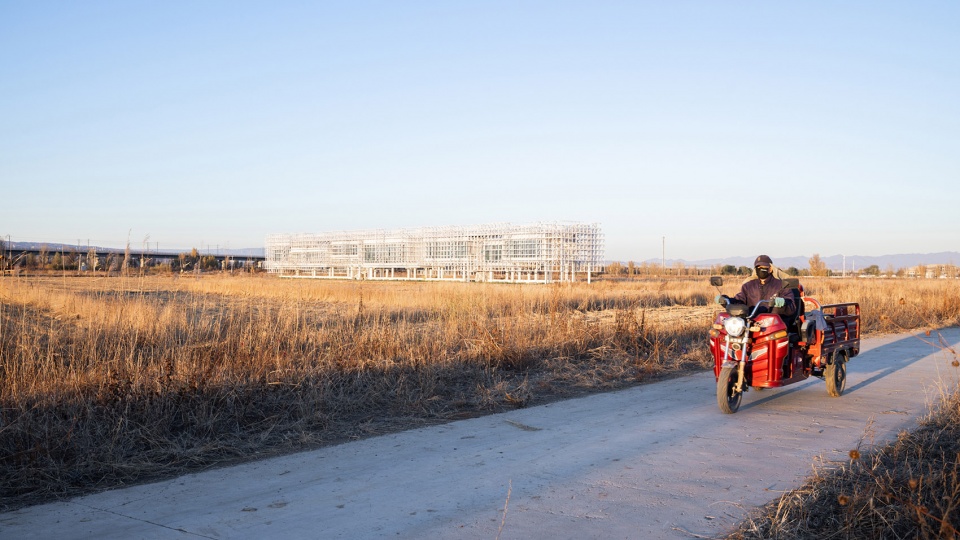
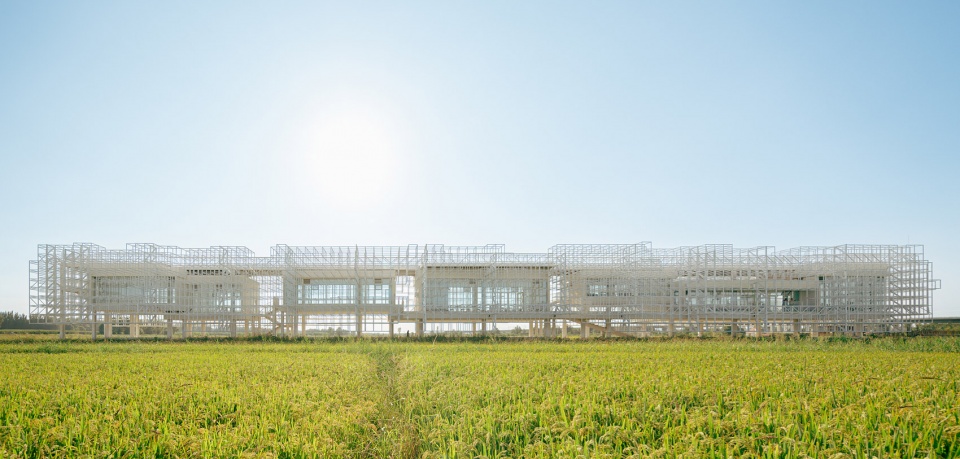
场地天然夹峙于南北山脉之间,向东望去,开阔地平线以强烈的水平性划分天地边界,而原有废弃桥体的混凝土硬壳,更像一道人工视觉裂痕,粗暴切断了麦田与天际线的自然叙事。设计的首要策略,是以轻盈消解割裂——在原有桥体结构基础上,新建筑以“漂浮形态”生长:通过底层架空与轻量化屋面系统,使其脱离地面压迫感,如从麦田中升腾的云团,暂时性模糊天与地的清晰界限,恰如张北草原上偶现的蜃景,在天地间呈现似有若无的状态。
▼BUZZ乌兰察布草原项目——草原方舟,BUZZ project-Grassland Ark
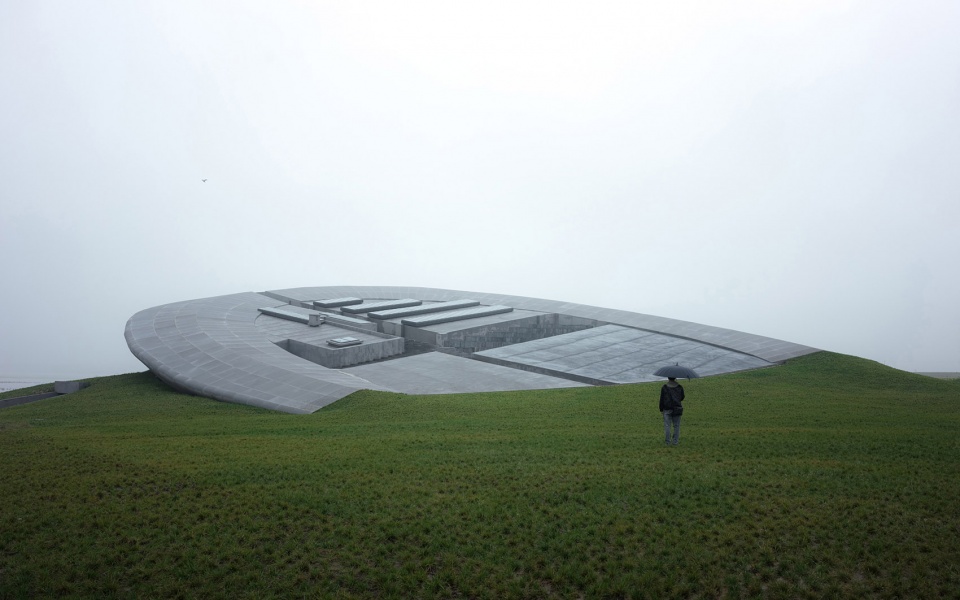
▼BUZZ乌兰察布草原项目——游牧人灯塔,BUZZ project-Nomad Lighthouse
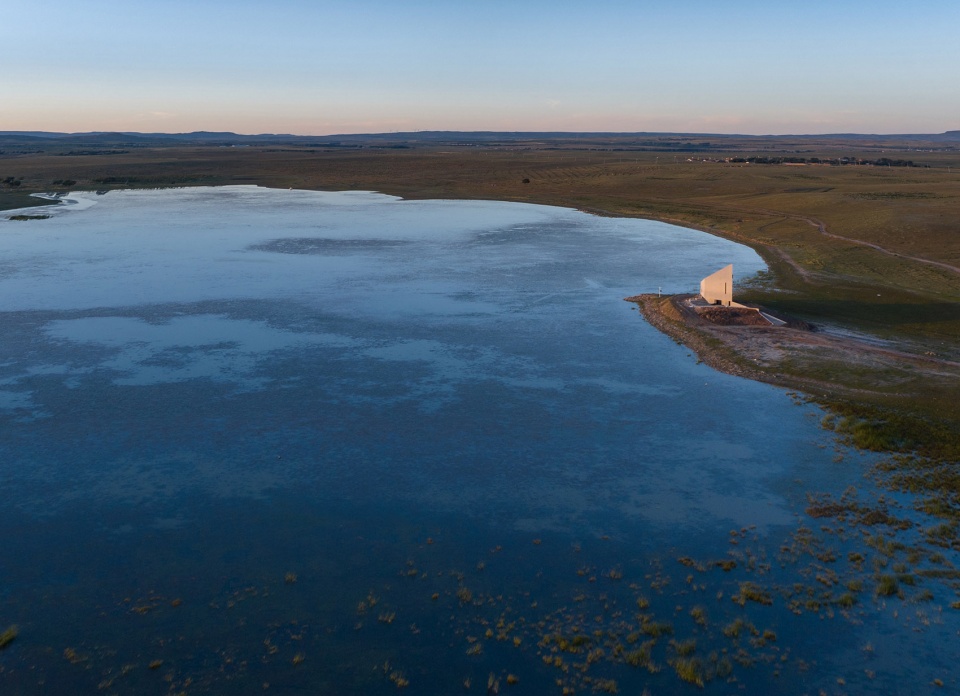
The site is naturally flanked by mountains to the north and south. Looking east, the broad horizon divides the boundary between the sky and the earth with a strong horizontal line. However, the concrete shell of the original abandoned bridge acts like an artificial visual rift, crudely severing the natural narrative between the wheat field and the skyline. The primary design strategy is to dissolve this division through lightness: built upon the existing bridge structure, the new building “grows” in a “floating form.” By elevating the ground floor and adopting a lightweight roof system, it breaks free from the sense of oppression exerted by the ground, rising like a cloud from the wheat field. This temporarily blurs the clear boundary between the sky and the earth, much like the occasional mirage on the Zhangbei Grassland, which appears indistinct yet present between the heavens and the earth.
▼张北海市,Manor Mirage
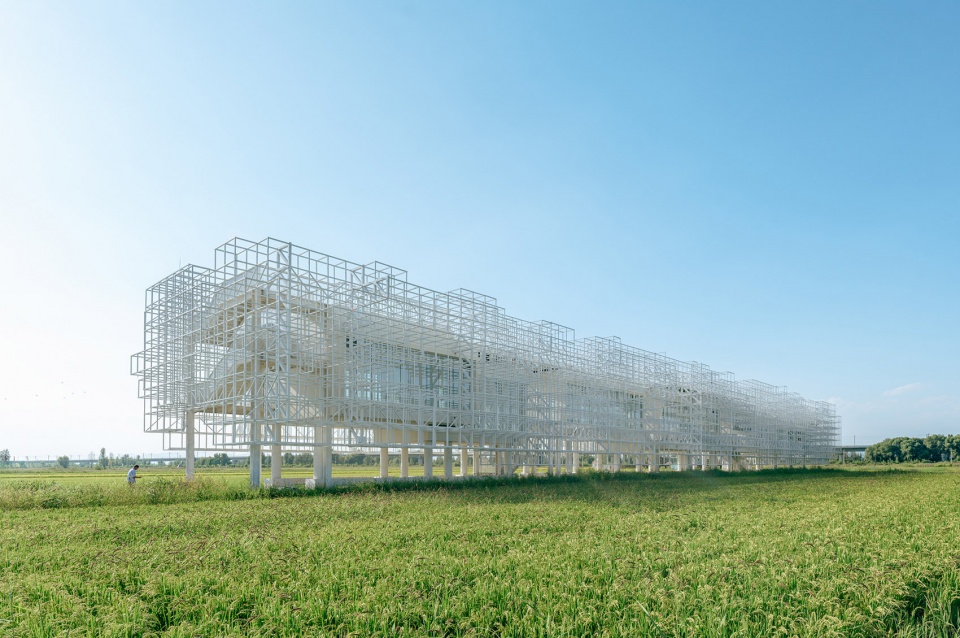
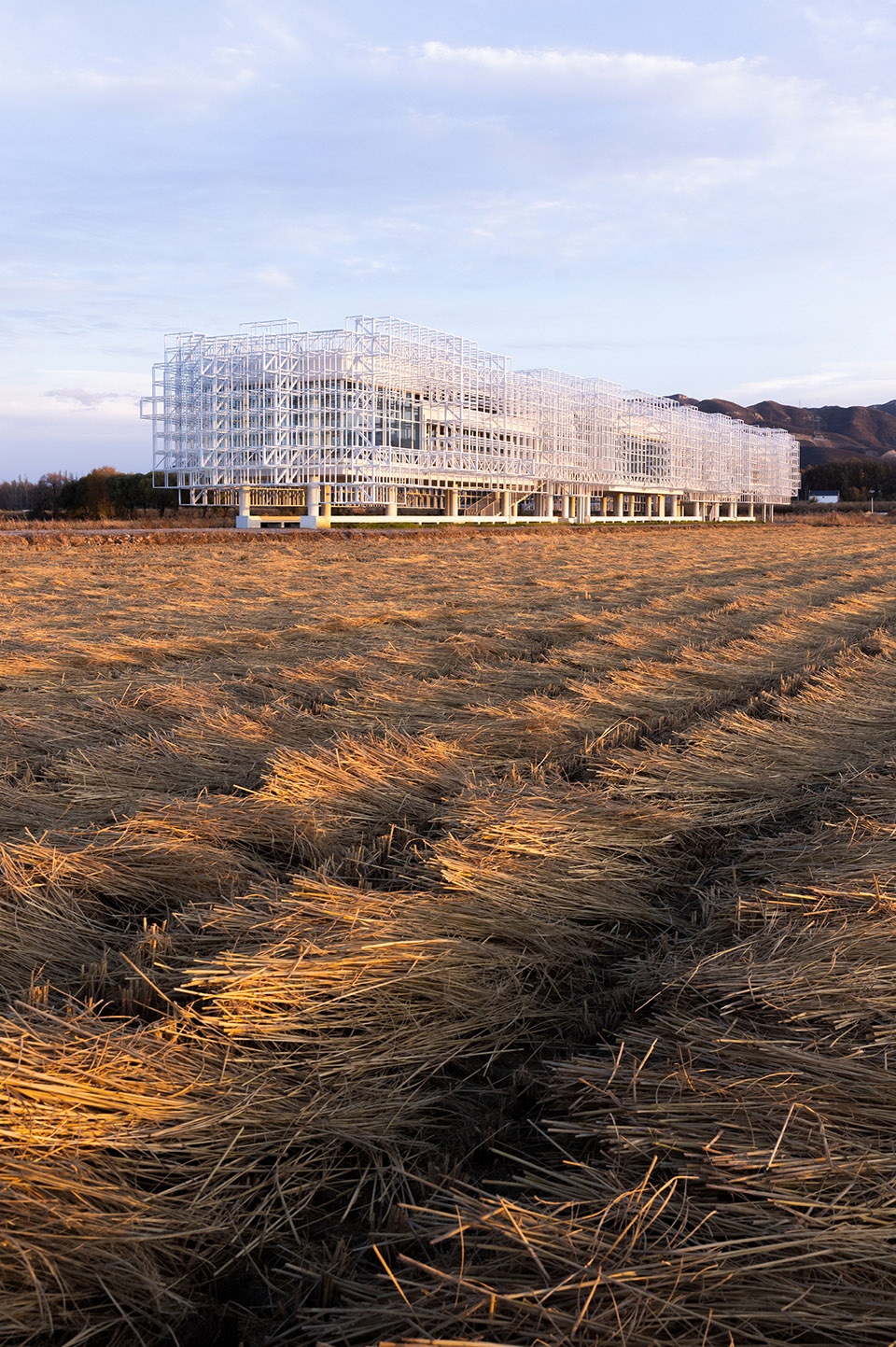
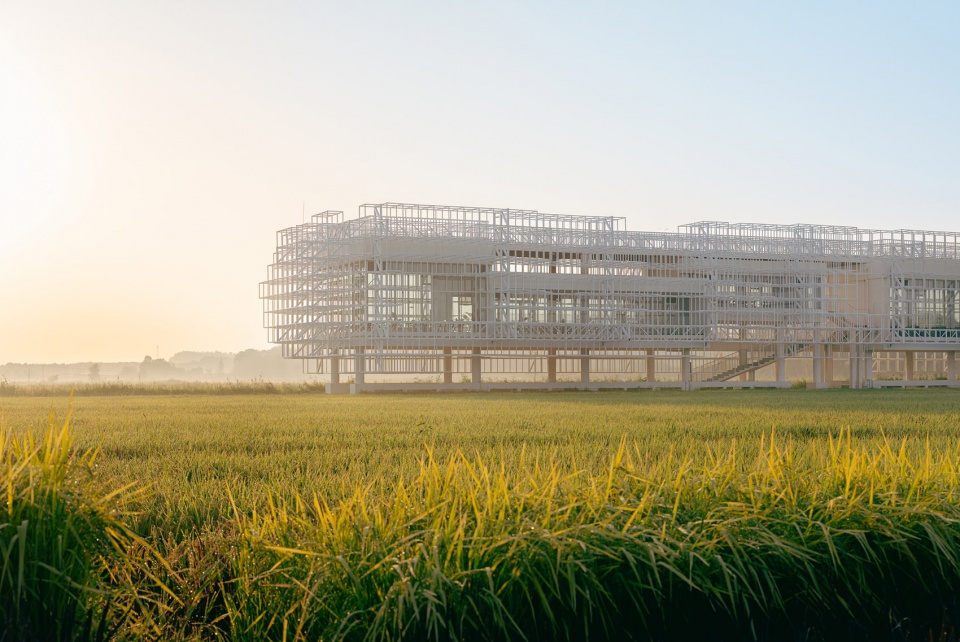
若将此项目置于BUZZ既往的作品谱系中,可视为一次反向设计实验:“草原方舟”以强烈的形态抽离感成为草原上跳脱性存在,“游牧人灯塔”则以垂直性姿态构建平原上的精神性坐标,而张北海市试图探索视觉锚点的另一种可能性——它不追求形态的显性突出,而是顺着麦田的起伏肌理舒展,在光线变化与麦穗掩映中呈现忽隐忽现的消隐感。这种消隐并非消失,而是以更含蓄的方式成为平原的视觉焦点:既通过水平延展的体量呼应张北地区的开阔地貌,又以若有似无的视觉语言融入天地肌理,最终完成对场地的自然缝合,构建起新的场地视觉秩序。
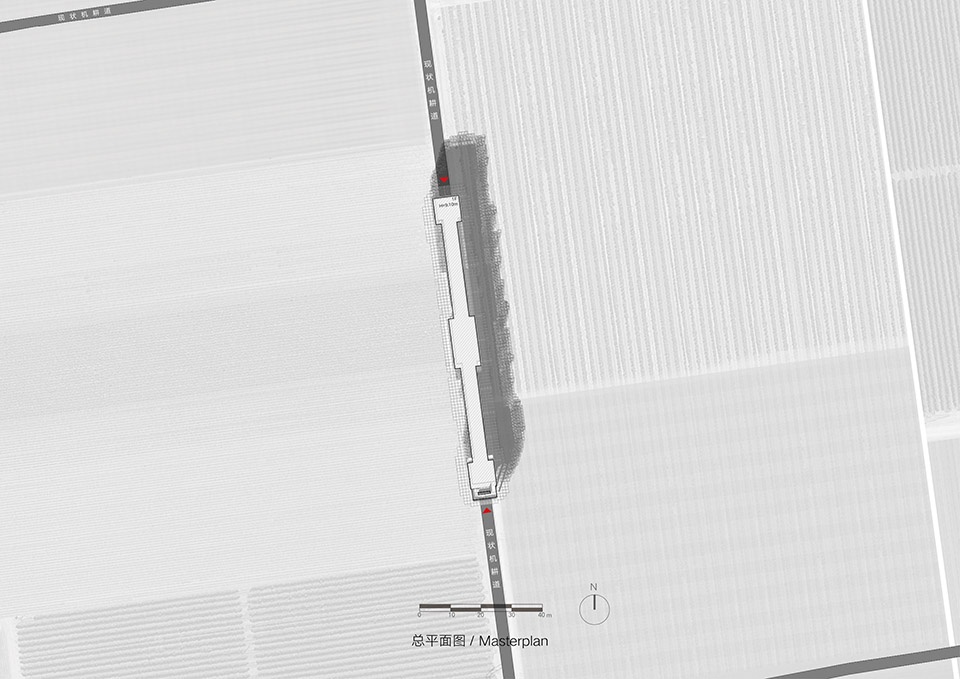
▼总平面图,site plan
Placed within BUZZ’s existing portfolio, this project can be seen as a reverse design experiment: “Grassland Ark” stands out as a striking presence on the grassland with its strong sense of formal detachment; “Nomad’s Lighthouse” establishes a spiritual landmark on the plain with its vertical posture. In contrast, the Manor Mirage explores an alternative possibility for a visual anchor—it does not pursue explicit prominence in form, but instead stretches along the undulating texture of the wheat field, appearing and disappearing amid changes in light and the shelter of wheat ears. This “fading” is not disappearance; rather, it becomes the visual focus of the plain in a more understated way: its horizontally extended volume echoes the vast landscape of the Zhangbei region, while its subtle visual language merges with the texture of the sky and earth. Ultimately, it seamlessly integrates the site and establishes a new visual order.
▼在光线变化与麦穗掩映中呈现忽隐忽现的消隐感,stretches along the undulating texture of the wheat field, appearing and disappearing amid changes in light and the shelter of wheat ears
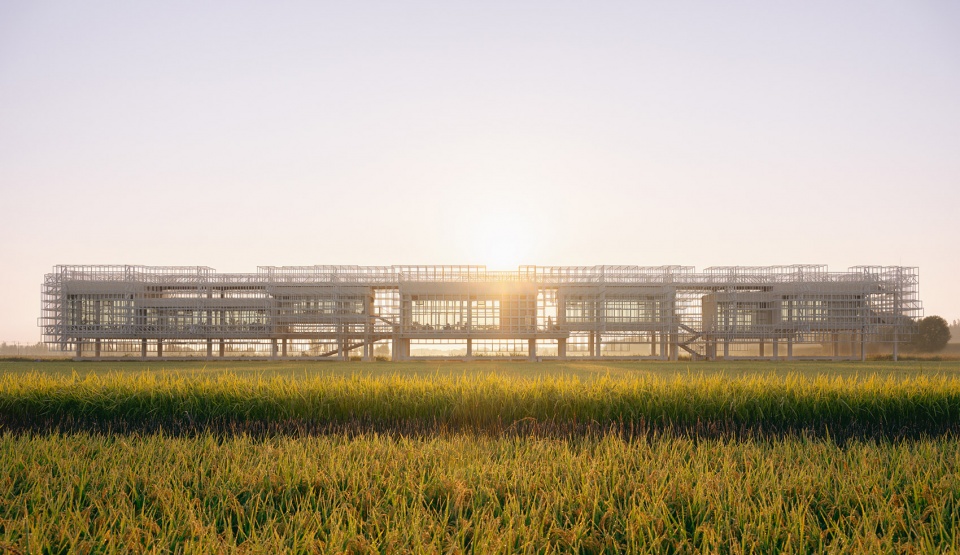
同时,这种设计策略进一步模糊了建筑与景观的二元边界:玻璃幕墙对麦田与天空的镜像反射、白色框架与麦浪的动态共振,使建筑脱离人工造物的孤立属性,转化为一个介入原野的巨型空间装置,让室内外的物理界限随视线流动自然消融,实现建筑与景观的互文共生。
Meanwhile, this design strategy further blurs the binary boundary between architecture and landscape: the glass curtain wall reflects the wheat field and the sky like a mirror, and the white frames resonate dynamically with the rippling wheat waves. This transforms the building from an isolated man-made structure into a massive spatial installation embedded in the wilderness, allowing the physical boundary between the interior and exterior to dissolve naturally as the line of sight flows—realizing the intertextual coexistence of architecture and landscape.
▼秋季稻田收割,Autumn rice field harvest
2. 像素化立面:肌理呼应与体量消解的双重策略 Pixelated Facade: A Dual Strategy of Texture Resonance and Volume Dissolution
原始桥体的混凝土柱础因尺寸庞大,对空间连续性构成显著物理干扰;而如何让新建筑体量与张北原野舒展的景观形成尺度协调,是设计需解决的核心建构问题。BUZZ给出的解决方案,是一层兼具肌理呼应与体量消解功能的像素化外层体系——这一设计不仅是形式语言的表达,更是对场地生态与建构逻辑的双重回应,也暗合海市蜃楼模糊轮廓的视觉特质。
▼概念生成,concept generation
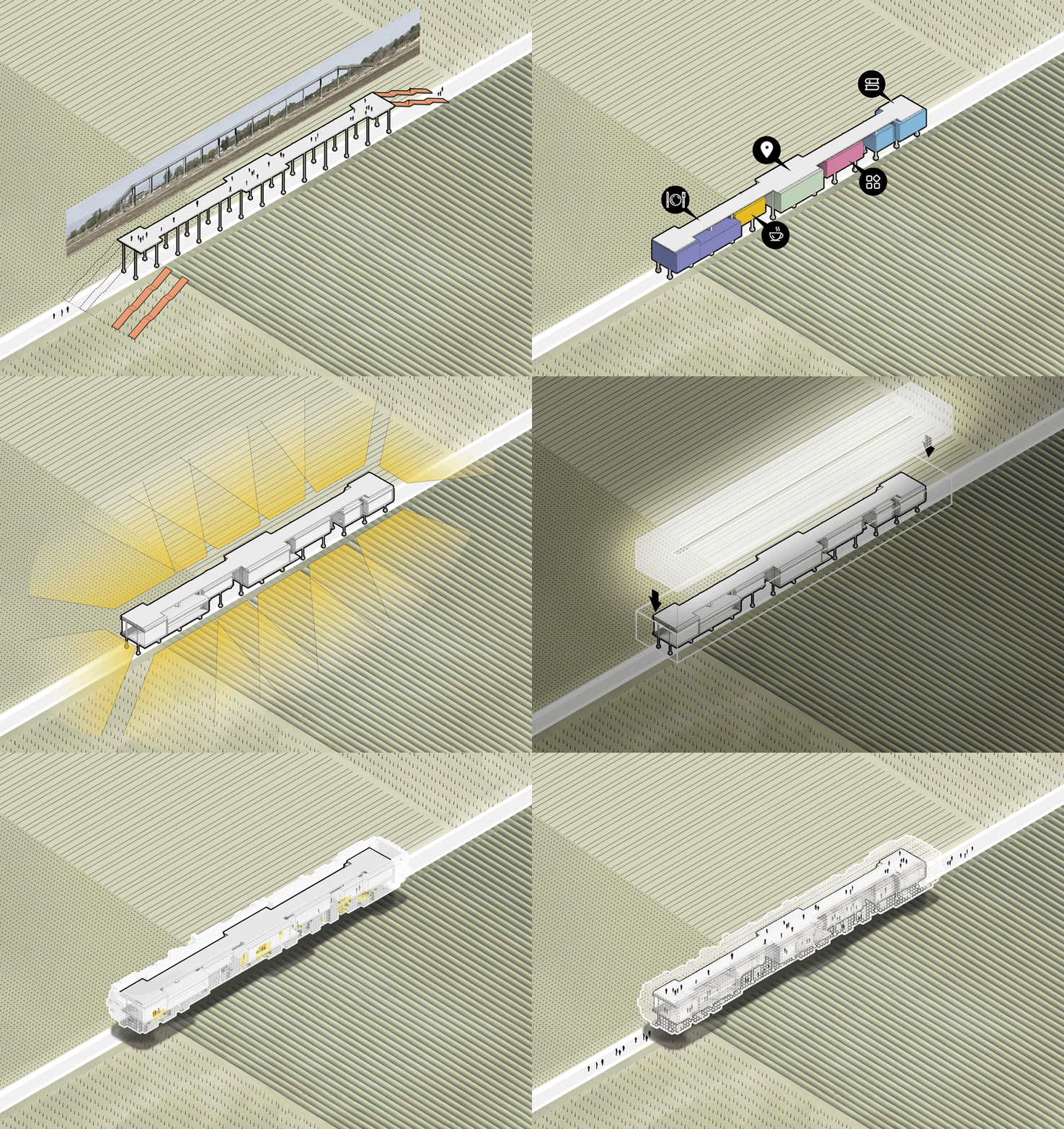
The massive concrete piers of the original bridge pose a significant physical obstacle to spatial continuity; meanwhile, reconciling the volume of the new building with the expansive landscape of the Zhangbei wilderness emerges as a core construction challenge. BUZZ’s solution lies in a pixelated outer layer system that serves both to resonate with the site’s texture and dissolve the building’s volume. This design is not merely an expression of formal language, but also a dual response to the site’s ecology and construction logic—while subtly echoing the blurred outline of a mirage.
▼漂浮体块,floating mass
▼透光网格立面,Translucent grid facade
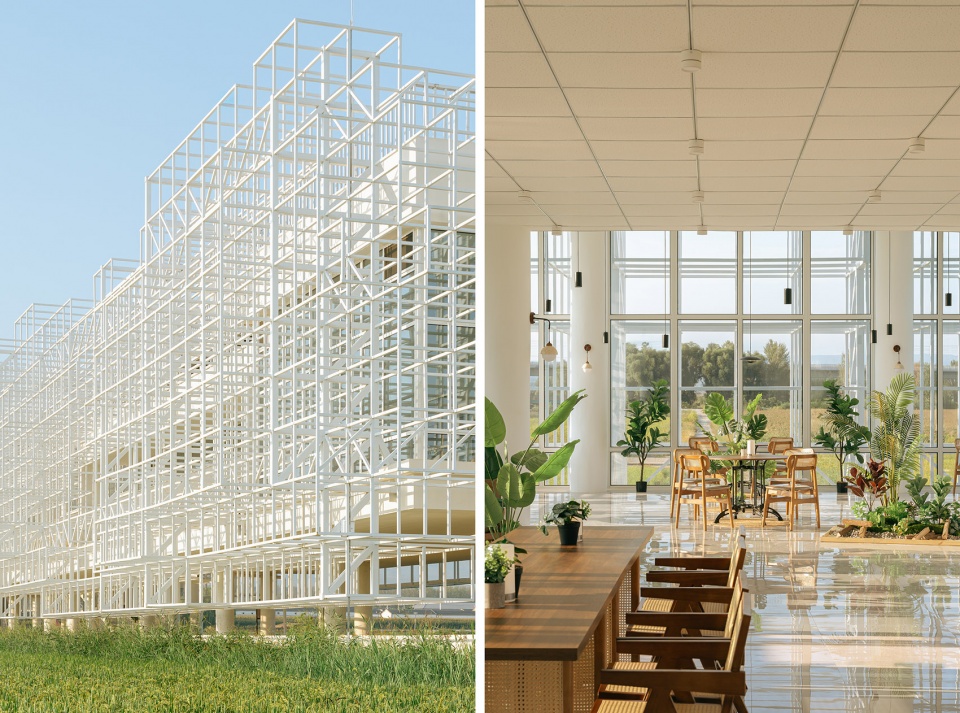
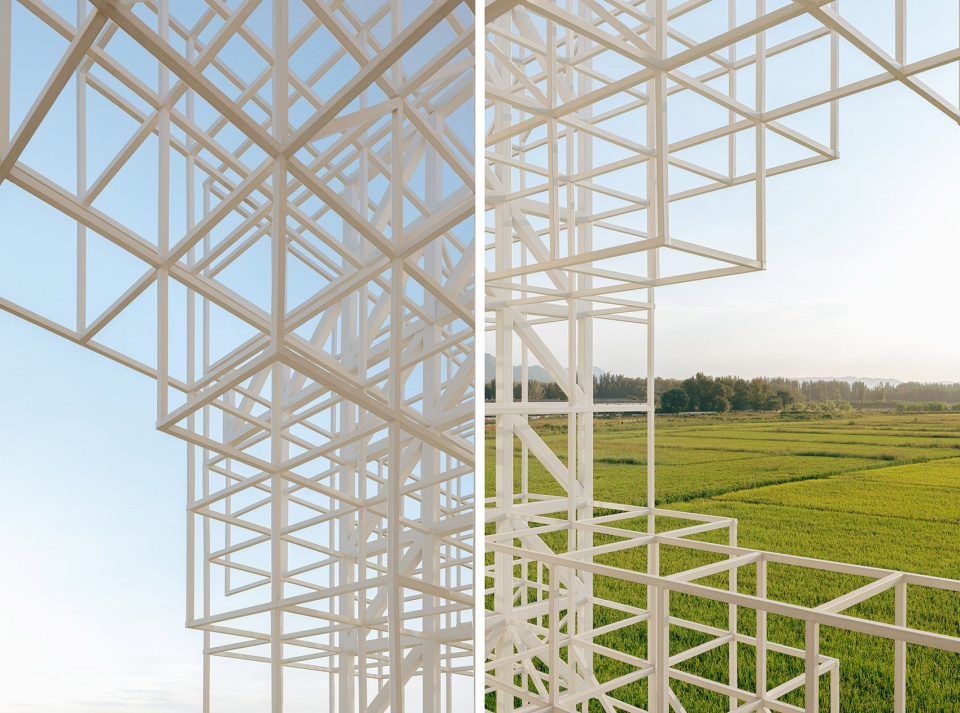
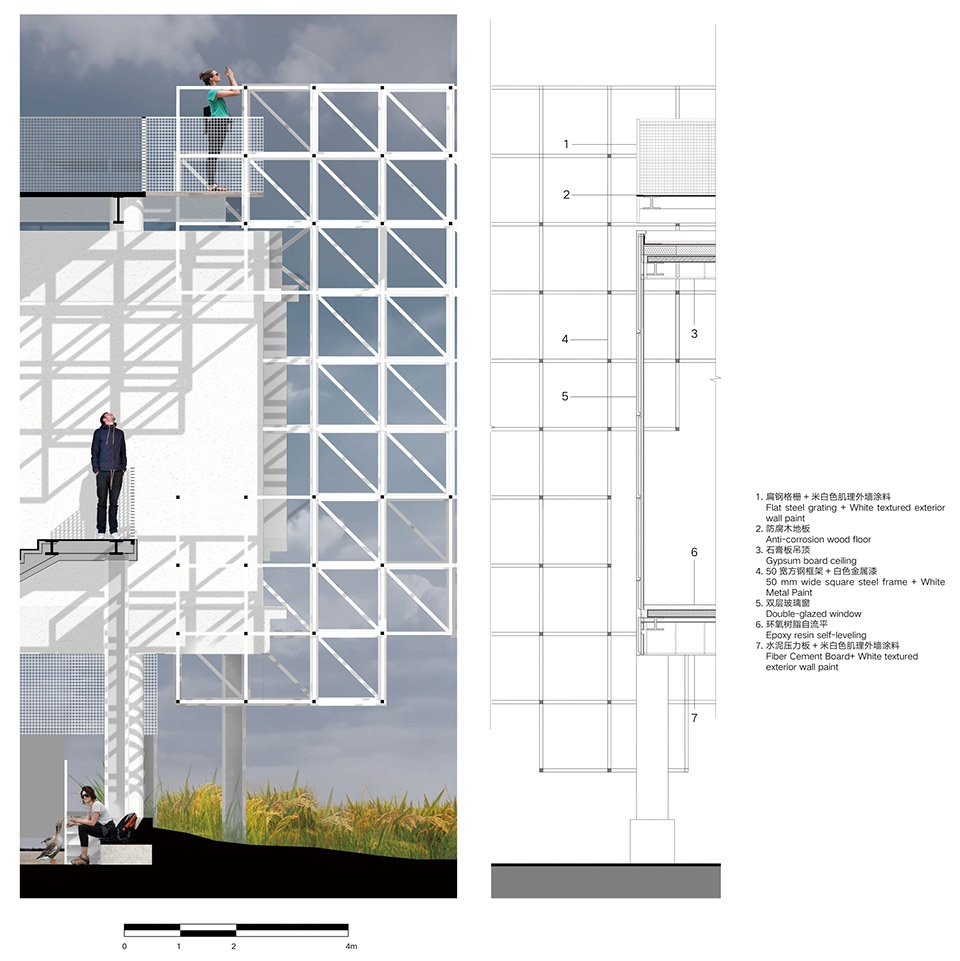
建筑维护结构以大面积超白玻璃幕墙为主,最大化保留空间通透度,使自然光能够穿透建筑洒向麦田,也让室内使用者获得无遮挡的原野视野。在玻璃幕墙外侧,设计延伸出多层白色金属框架:层叠交错的线条柔化了建筑的硬边轮廓,将原本突兀的块状体量分解为虚线条集合,从过境车辆与疾驰高铁上望去,既能被瞬间识别,又不会破坏场地的轻盈感,恰如蜃景在远处视线中清晰却不厚重的特质。
▼墙身详图,wall detail
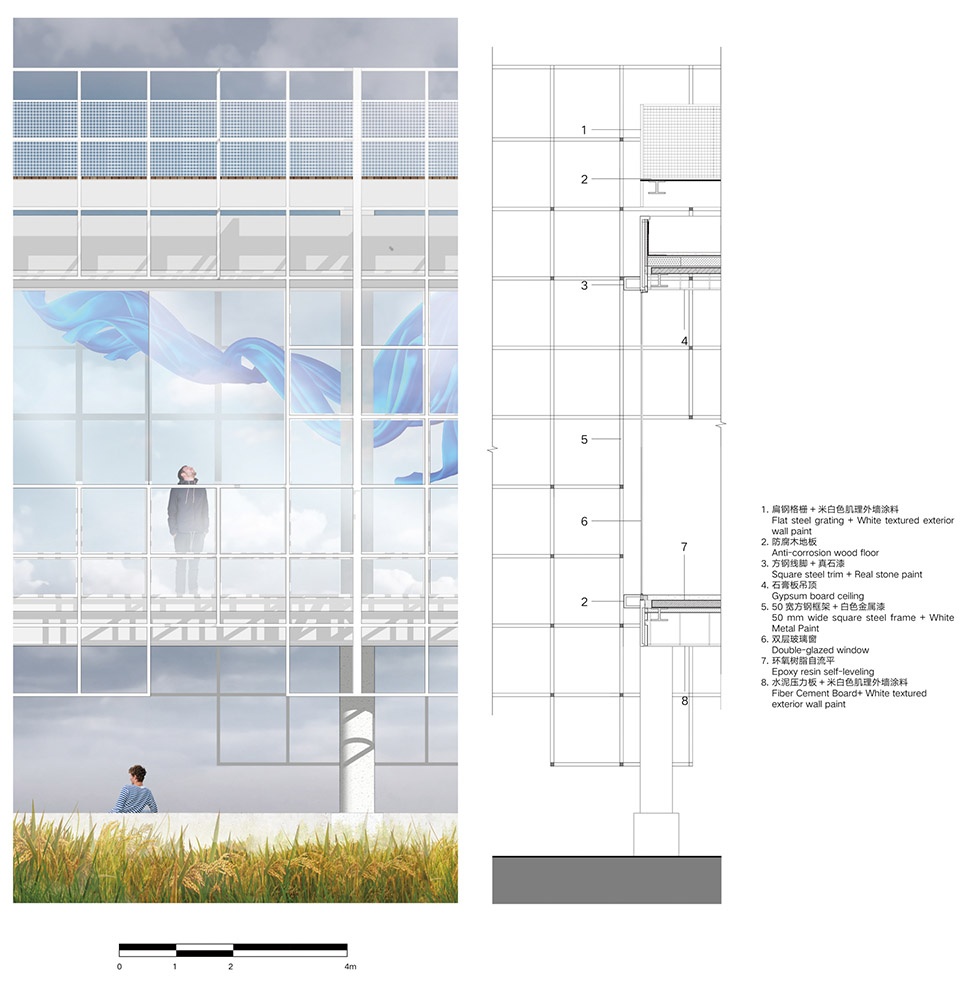
The building’s enclosure primarily consists of large-area ultra-white glass curtain walls, which maximize spatial transparency. This allows natural light to penetrate the building and spill onto the wheat field, while also providing indoor users with an unobstructed view of the wilderness. Extending outward from the glass curtain walls, the design incorporates multiple layers of white metal frames: the crisscrossing lines soften the building’s rigid edges, decomposing its originally abrupt block-like volume into a collection of virtual lines. When viewed from passing vehicles or high-speed trains, the building is instantly recognizable yet does not disrupt the site’s lightness—mirroring the clear yet non-heavy quality of a mirage seen from a distance.
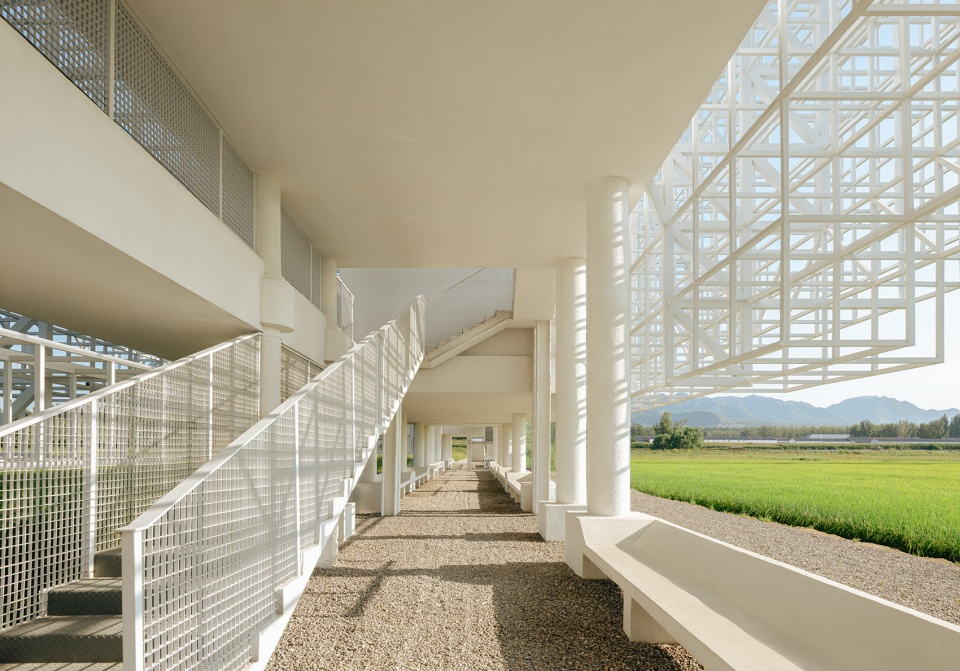
▼底层通过性空间,The underlying passability space
更深层的设计逻辑在于,像素化本身是对原野自然肌理的抽象转译:麦田中抽穗的麦芒、草丛中绽放的花苞,本质上都是自然中的点状元素集合,而人工构建的白色框架,既是对这种自然像素属性的呼应,又以空间取景器的角色,框定出不同尺度的原野画面——从远方的天际线到手边的麦芒细芽,建筑成为连接宏观原野与微观生命的中间态媒介,完成从自然肌理到空间语言的转译。
A deeper layer of the design logic lies in the fact that pixelation itself constitutes an abstract translation of the wilderness’s natural texture: the wheat awns sprouting in the fields and the flower buds blooming in the grass are, in essence, collections of point-like elements in nature. The artificially constructed white frames not only echo this natural pixel property but also act as spatial viewfinders, framing wilderness scenes of varying scales—from the distant skyline to the tiny wheat awns at hand. In this way, the building becomes an intermediate medium connecting the macro wilderness and micro life, completing the translation from natural texture to spatial language.
▼立面网格,Facade grid
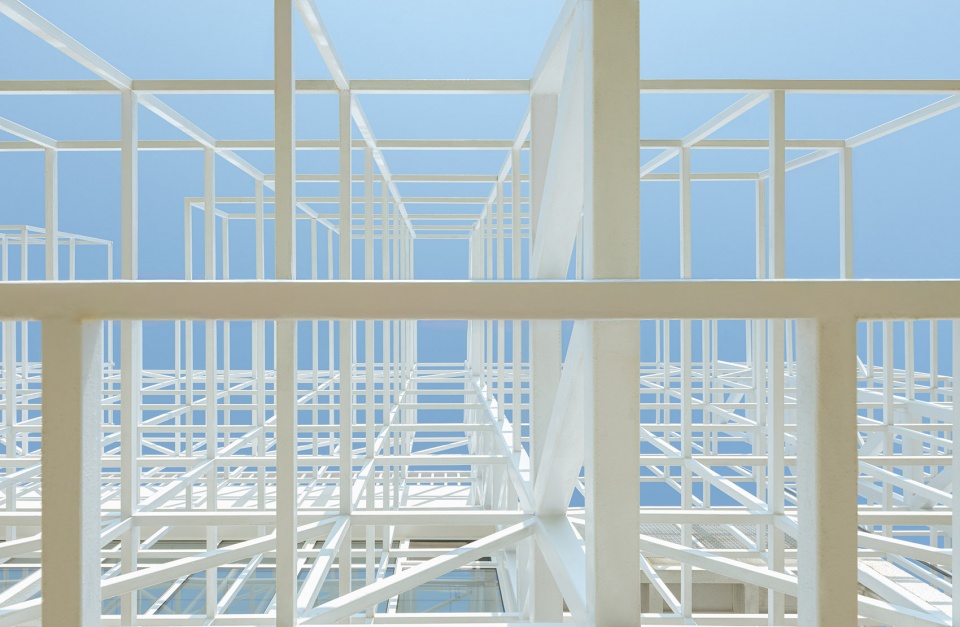
▼立面网格及洞口,Facade grid
3. 穿行与遮蔽:记忆延续与空间叙事的层叠设计 Movement and Shelter: Layered Design for Memory Continuity and Spatial Narrative
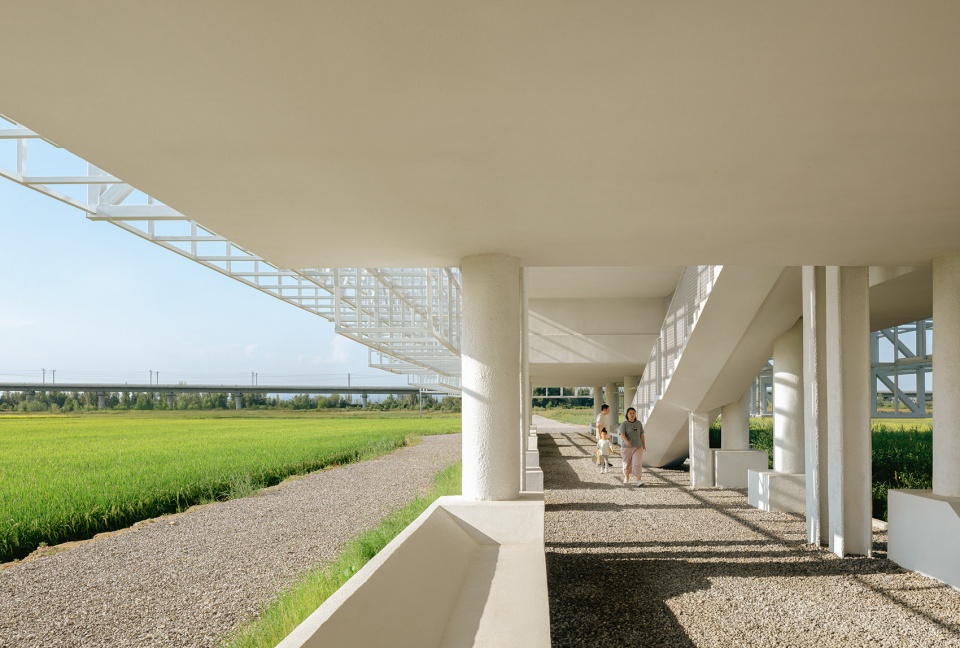
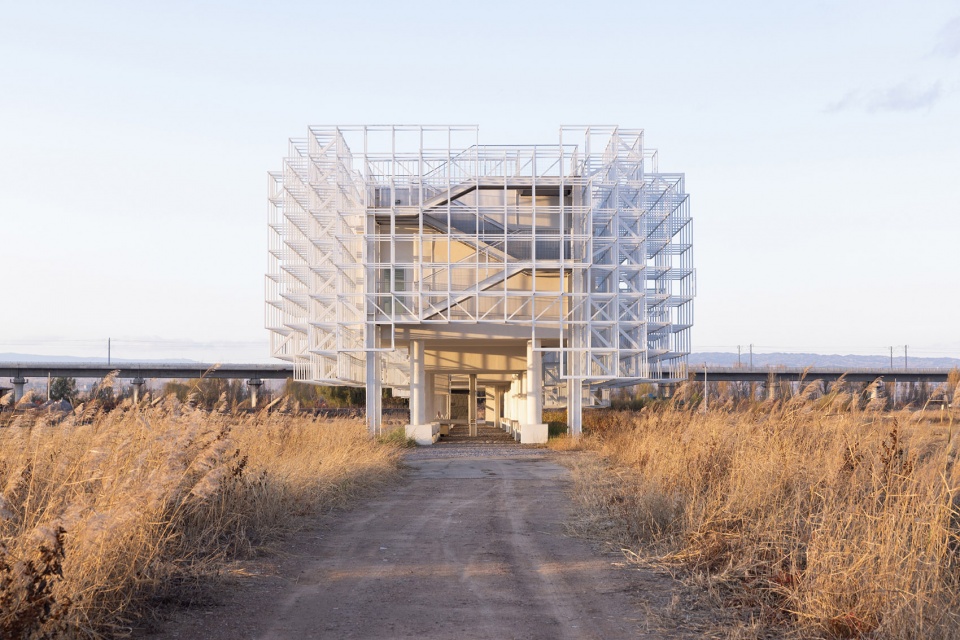
设计对人的体验与场地记忆的尊重,集中体现在对桥下原有道路的完整保留——村民可延续过往的通行轨迹穿行建筑,脚下的路径是对乡村记忆的物质性延续,头顶的漂浮遮蔽则带来新的空间体验,这种新旧交织的状态,也暗合张北海市作为瞬时场景容器的定位。
The design’s respect for human experience and site memory is concentrated in its complete preservation of the original road beneath the bridge. Villagers can continue to traverse the building along their accustomed routes: the path underfoot represents the material continuity of rural memory, while the floating shelter above offers a new spatial experience. This interweaving of old and new also aligns with the identity of the Manor Mirage as a container for ephemeral scenes.
▼田野远景,Field view
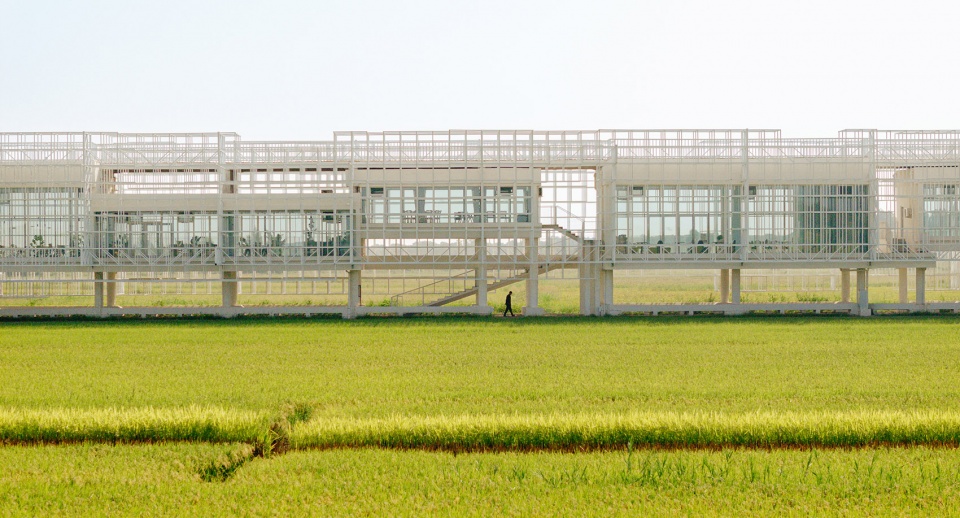
为使穿行体验与田野韵律深度耦合,设计通过楼板底面标高的梯度变化,构建出多样的空间感受:部分区域高阔如旷野,满足风的自由穿堂,适合聚集活动时的登高远眺;部分区域低缓如草坡,形成人与麦芒的亲密互动,适配咖啡简餐的休闲场景。这种标高变化并非随机,而是严格呼应两侧稻田的地形起伏,使建筑成为天地相接的过渡性灰空间——对村民而言,是记忆与日常的延续;对游客而言,是与田野的沉浸式对话。同时,建筑的轻量化构造与底层架空形式,暗合了人类对遮蔽物的原始心理依赖,如张北草原上游牧者的临时帐篷、自然生长的树荫,以最低干预的方式唤醒使用者深层的场所记忆与情感慰藉。
▼剖面图,section
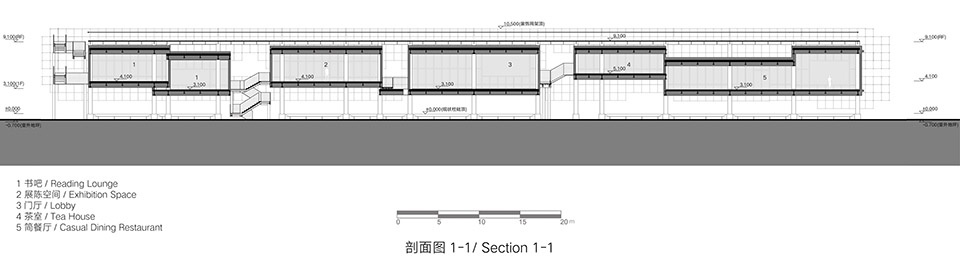
To deeply integrate the experience of traversal with the rhythm of the fields, the design creates diverse spatial sensations through gradient changes in the floor slab elevation: some areas are as broad and open as the wilderness, allowing wind to flow freely through and suiting gatherings and long-distance viewing; other areas are as gentle as grassy slopes, facilitating intimate interactions between people and wheat awns and accommodating casual scenarios such as coffee and light meals. These elevation changes are not random but strictly correspond to the topographic undulations of the wheat fields on either side, transforming the building into a transitional “grey space” where the sky meets the earth. For villagers, it represents the continuation of memory and daily life; for visitors, it enables an immersive dialogue with the fields. Meanwhile, the building’s lightweight construction and elevated ground floor subtly align with humanity’s primal psychological need for shelter—much like the temporary tents of nomads on the Zhangbei Grassland or the naturally growing tree shade—awakening users’ deep-seated site memory and emotional comfort through minimal intervention.
▼底层通过性空间及楼板标高变化,The changes in the ground floor passable space and floor slab elevation
▼底层通过性空间,The underlying passability space
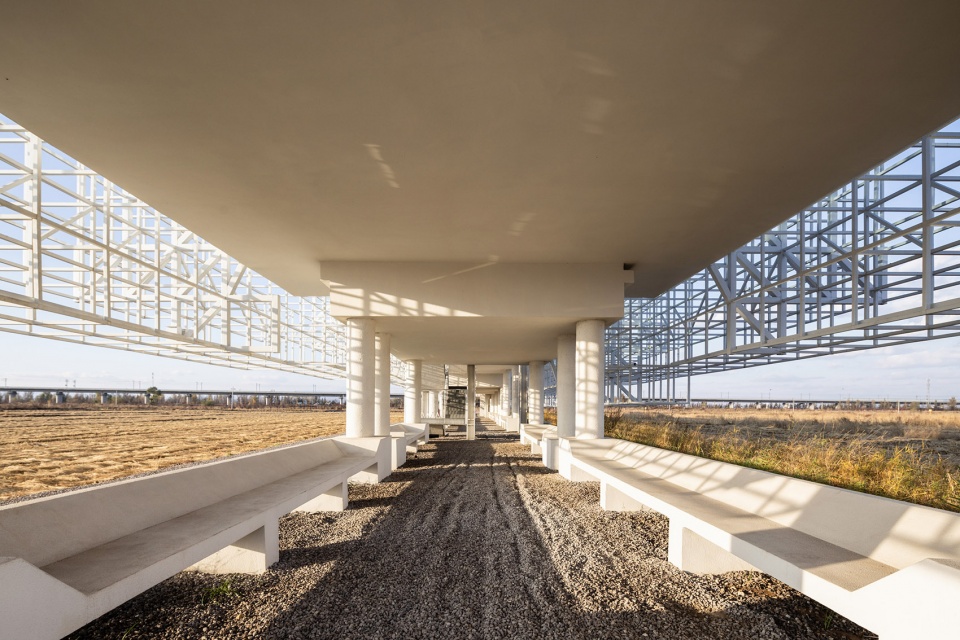
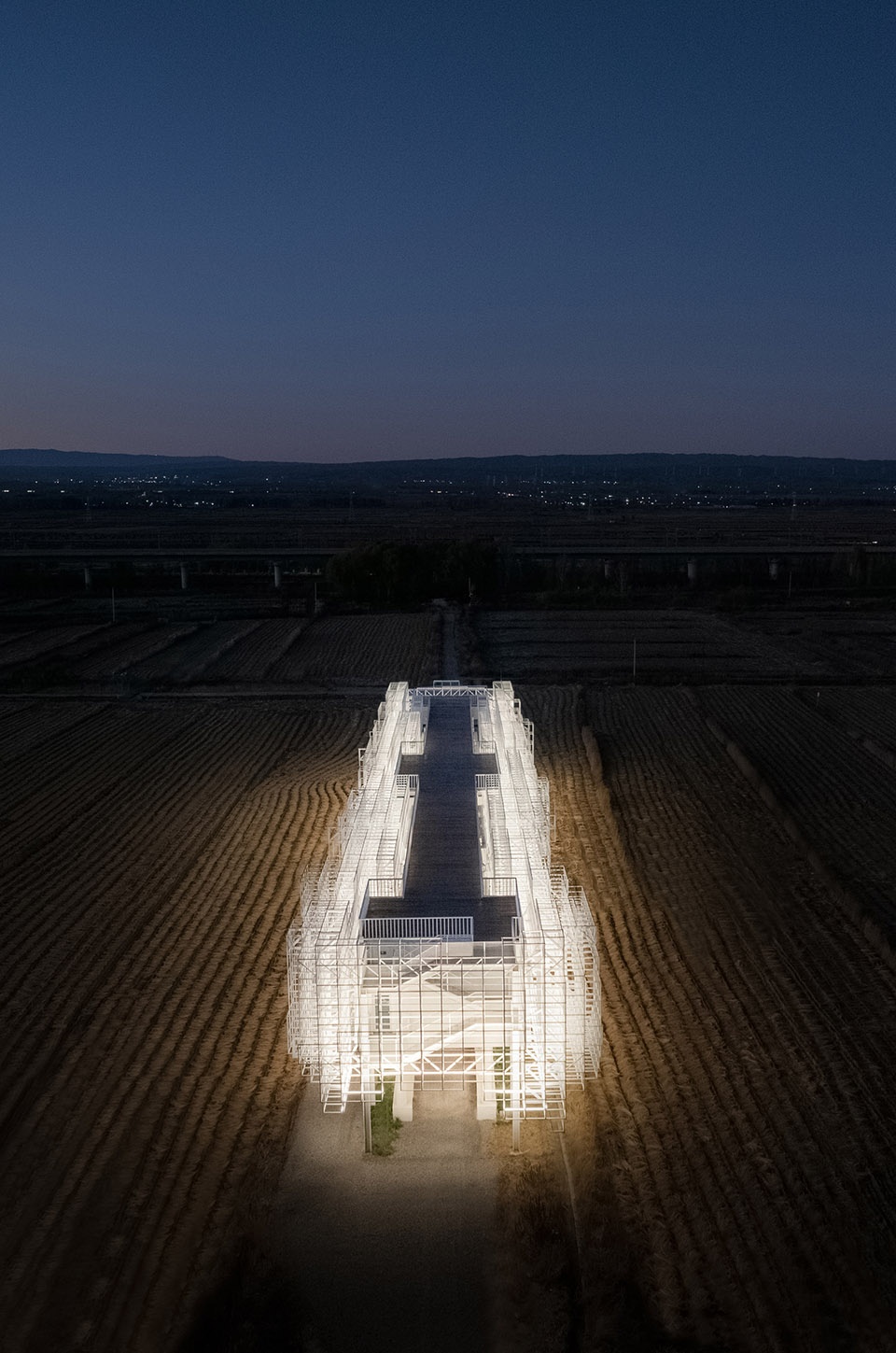
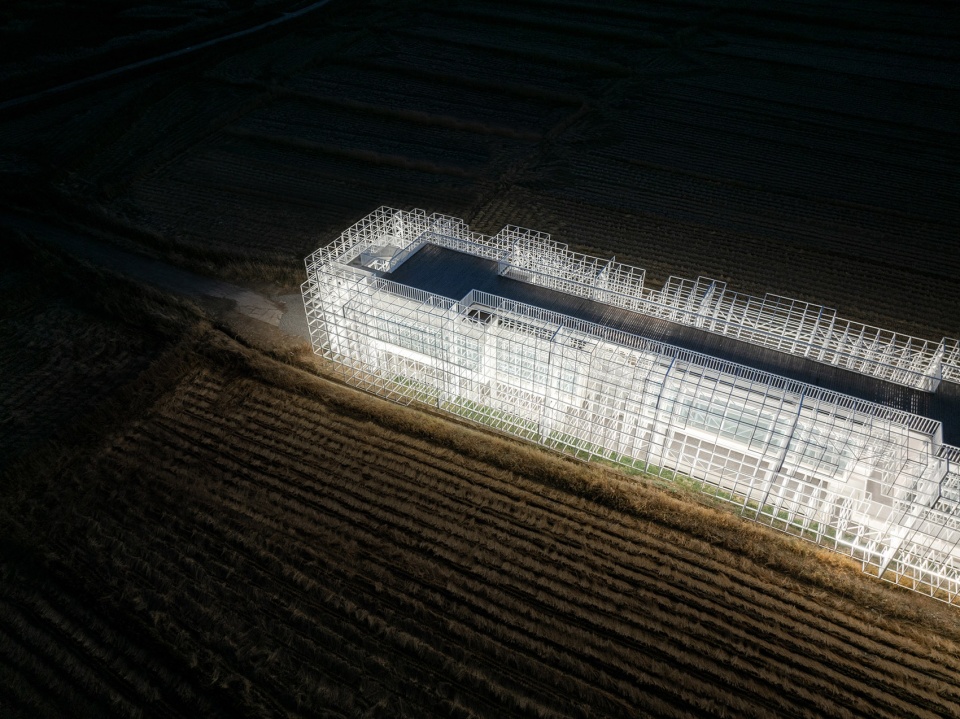
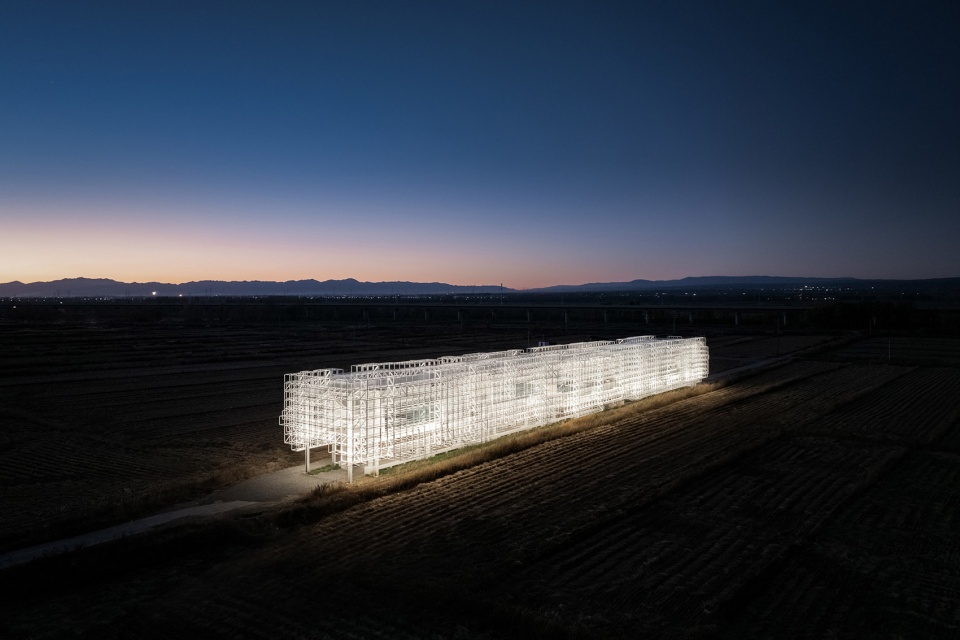
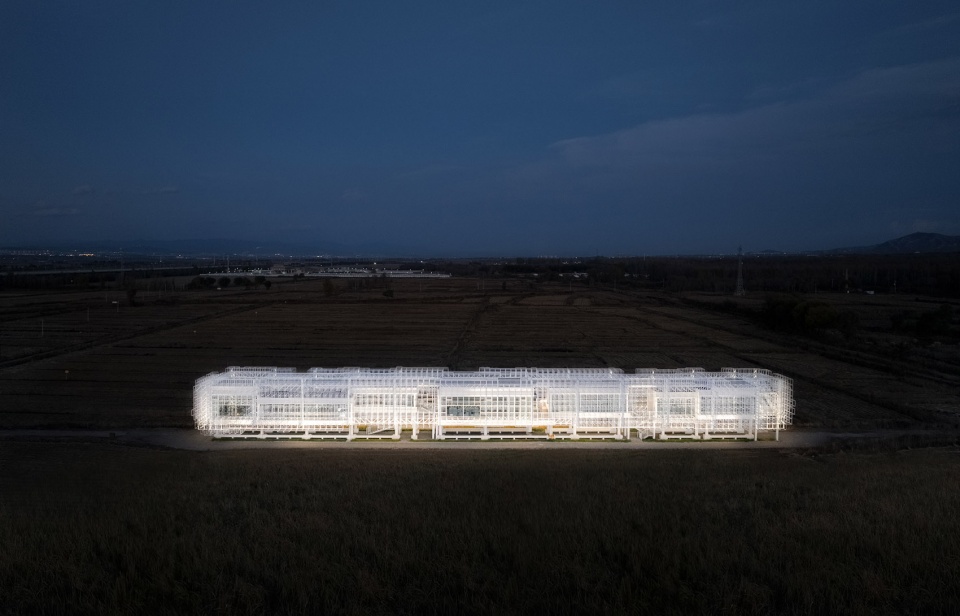
针对原始桥体柱础的厚重感,像素化外层再次发挥作用:白色线条的交错分割,在视觉上解构了柱础的块状体量,使其融入整体环境;夜晚,金属框架被线性灯光点亮,建筑转化为匍匐在地平线上的微光集合体,既成为园区内的标志性景观节点,又以柔和的光线语言避免对原野夜色的破坏,为夜间市集、小型活动提供兼具氛围与功能性的场景载体。
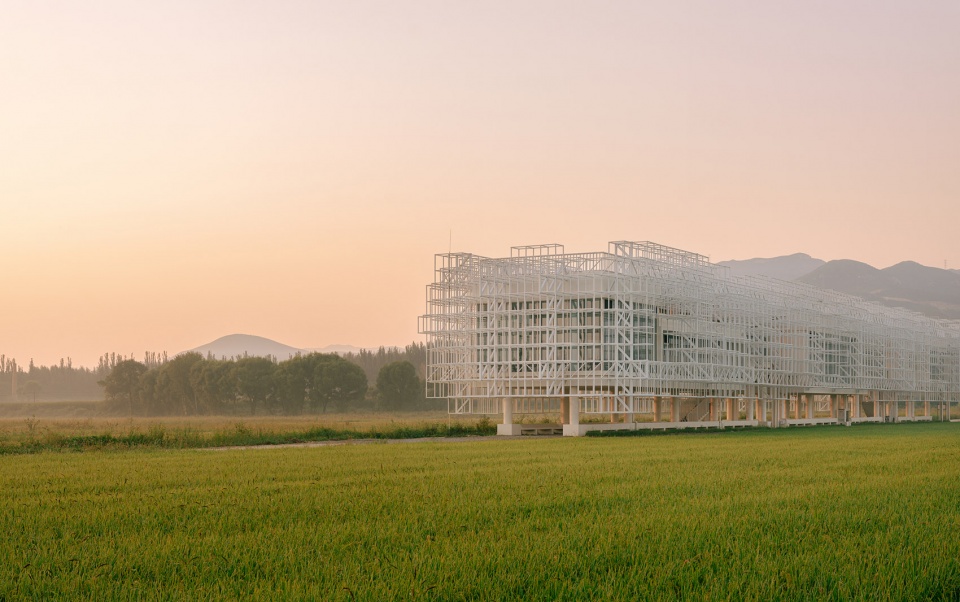
Addressing the heaviness of the original bridge’s piers, the pixelated outer layer comes into play once again: the crisscrossing white lines visually deconstruct the block-like volume of the piers, integrating them into the overall environment. At night, the metal frames are illuminated by linear lights, transforming the building into a cluster of faint glows lying on the horizon. It not only serves as a landmark scenic node within the area but also avoids disrupting the wilderness’s nightscape through its soft light language—providing a scenario carrier that balances atmosphere and functionality for night markets and small-scale events.
▼透光体块,Light-transmitting block
▼夕阳下的体块,Light-transmitting block at dusk
4. 瞬时与永恒:游牧精神与市集属性的建筑转译 Transience and Eternity: Architectural Translation of Nomadic Spirit and Market Attributes
在对瞬时性与永恒性的辩证讨论中,张北海市既呈现出对张北草原游牧文化的当代诠释,又深度契合市集式的瞬时使用逻辑。草原文明中逐水草而居的生活形态,本质上是流动性与暂时性的体现——帐篷的搭建与拆卸、人群的聚集与离散,构成草原生活的动态底色;而市集作为传统乡村的周期性聚集场景,同样以短时热闹、过后归静的特质,成为瞬时性的另一种表达。
In the dialectical discussion of transience and eternity, the Manor Mirage not only presents a contemporary interpretation of the nomadic culture of the Zhangbei Grassland but also deeply aligns with the ephemeral usage logic of a market. The nomadic lifestyle of following water and grass in grassland civilizations is, in essence, an expression of mobility and temporality—the setting up and taking down of tents, the gathering and dispersal of crowds, all form the dynamic backdrop of grassland life. Similarly, markets, as periodic gathering spaces in traditional villages, embody transience through their short bursts of bustle followed by a return to calm.
▼咖啡厅,Cafe
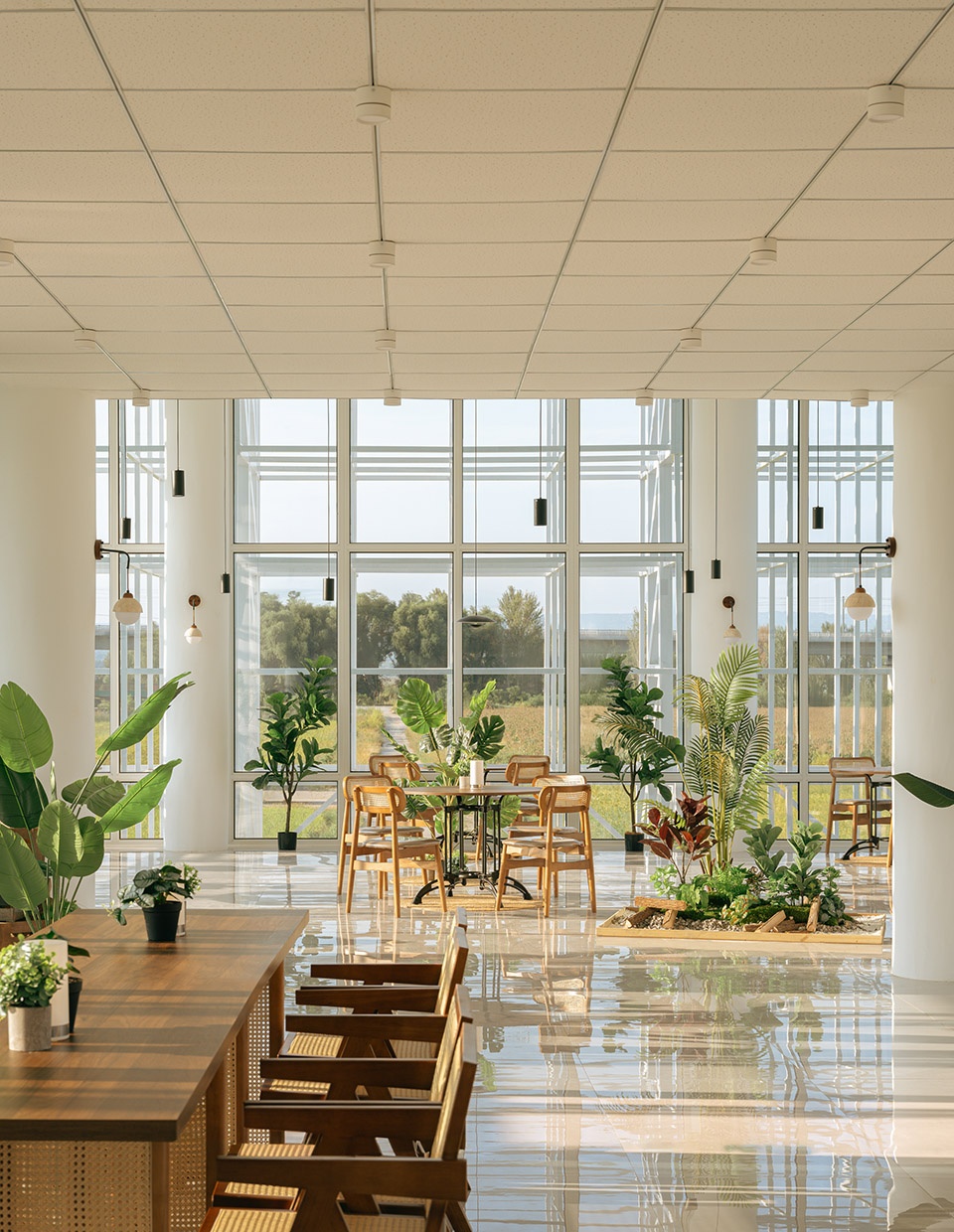
项目的瞬时性特质,正是通过市集化的功能策划与空间运营逻辑落地:建筑内部整合了文化创意展陈、咖啡简餐、图书阅读与屋顶露台空间等复合功能,形成一个以体验性为核心的临时文化聚落。周末时段,这里可承载田野市集、手作工坊、小型艺术展等多元活动,人群的涌入使建筑瞬间充满烟火气,如同张北草原上临时聚拢的游牧部落;活动结束后,人群散去,空间回归静谧,仅保留咖啡简餐等基础功能,如草原恢复原本的辽阔与沉静——这种热闹与静谧的交替,使其脱离了传统建筑的固定功能属性,转化为一个为短暂相聚而生的弹性容器,恰如其名中海市所喻示的瞬时存在。
The project’s transient quality is realized through the programmatic planning and spatial operation logic of a market: the building’s interior integrates diverse functions, including cultural and creative exhibitions, coffee and light meals, reading spaces, and rooftop terraces, forming a temporary cultural settlement centered on experientiality. On weekends, it can host a variety of activities such as field markets, handicraft workshops, and small art exhibitions; the influx of people instantly fills the building with vitality, much like a temporarily gathered nomadic tribe on the Zhangbei Grassland. After the events, the crowd disperses, and the space returns to tranquility, retaining only basic functions such as coffee and light meals—just as the grassland reverts to its original vastness and calm. This alternation between bustle and tranquility frees the building from the fixed functional attributes of traditional architecture, transforming it into a flexible container designed for short-term gatherings—aptly reflecting the ephemeral nature implied by “mirage“ in its name.
▼以体验性为核心的临时文化聚落,a temporary cultural settlement centered on experientiality
▼交通联络,Transportation liaison
这种设计策略实则是对建筑生命周期的重新定义:它不追求如纪念碑般的永恒凝固,而是以适应性与流动性为核心,让建筑成为时间的载体。远处的山丘以地质形态的稳定性呈现自然永恒,脚下的草原以生态循环的持续性演绎生命永恒,而张北海市则以市集活动的周期性、人群聚集的暂时性,诠释人为瞬时——三者形成的辩证关系,既是对草原游牧精神的当代转译,也是对建筑如何适配瞬时性使用场景的具体回应。
This design strategy redefines the building’s life cycle: it does not pursue eternal solidity like a monument, but instead centers on adaptability and mobility, allowing the building to become a carrier of time. The distant hills embody natural eternity through the stability of their geological form; the grassland beneath embodies the eternity of life through the continuity of its ecological cycle; in contrast, the Manor Mirage interprets human-made transience through the periodicity of market activities and the temporality of crowd gatherings. The dialectical relationship between these three not only constitutes a contemporary translation of the grassland’s nomadic spirit but also offers a concrete response to how architecture can adapt to ephemeral usage scenarios.
▼屋顶平台夜景,roof platform at night
▼夜景,night view
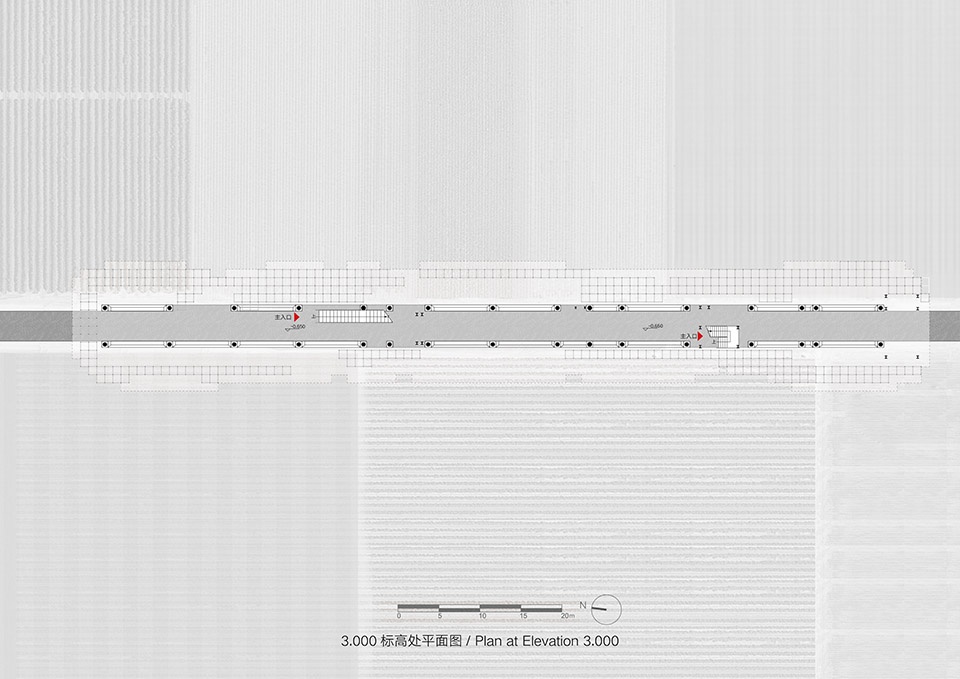
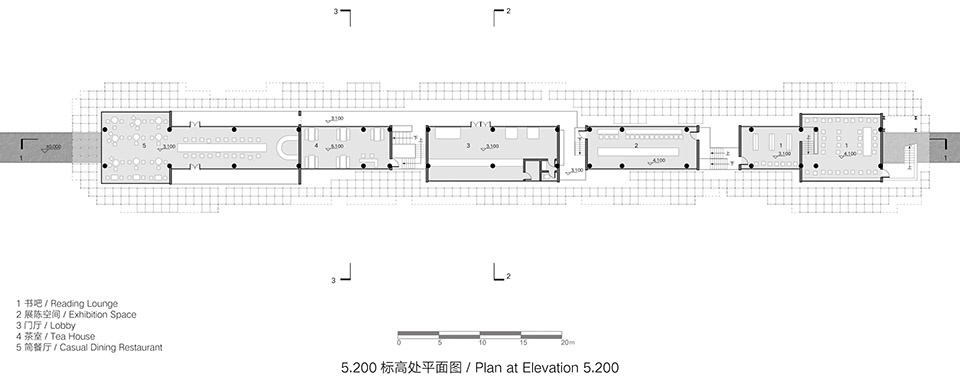
▼平面图,plan
▼立面图,elevation
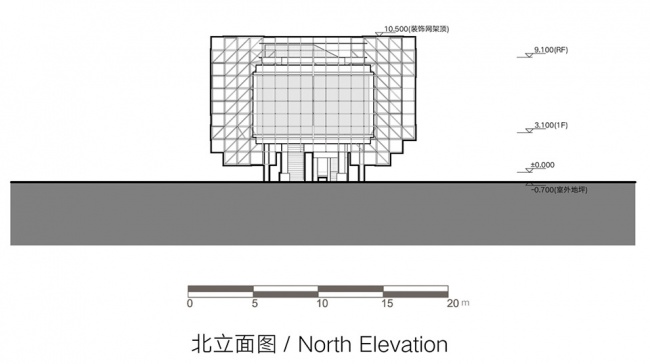
▼剖面图,section
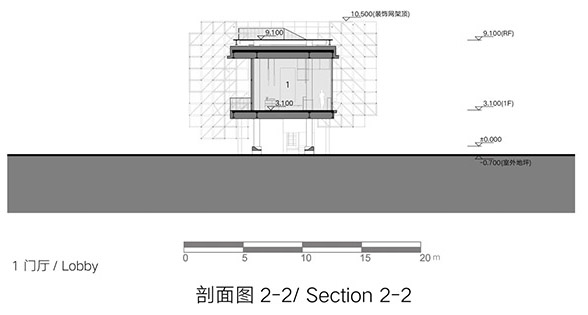
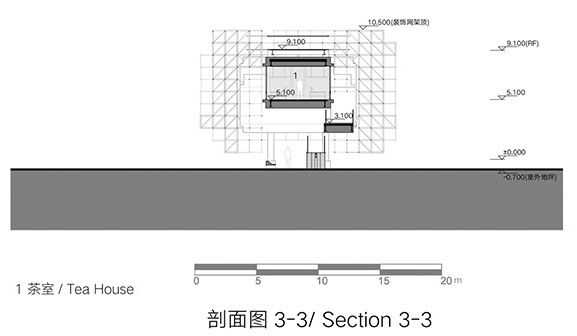
▼墙身细部,wall detail
项目地点:河北,张家口
建筑面积:400㎡
建成时间:2024.6
业主单位:张北德胜乡村旅游产业发展有限公司
建筑及室内设计:BUZZ建筑事务所
项目主创:庄子玉
设计团队:任中琦、星梦钊、李梦瑶(实习)、徐雅涵(实习)、李晓涵(实习)
景观设计单位:环球地景设计
照明顾问:北京光湖普瑞照明设计有限公司
建筑摄影:朱雨蒙、直译建筑摄影
出品图制作:任中琦、星梦钊、徐雅涵(实习)、何佳欣(实习)
项目文稿:庄子玉、王珊、任中琦