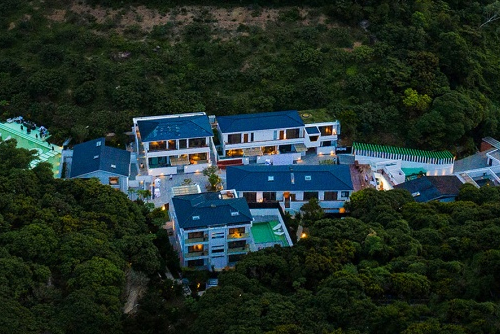
黄山紫阳烟雨度假酒店,安徽 / 风合睦晨
缘起与在地——新安江畔的徽州旧梦Origins and Context — A Nostalgic Dream of Huizhou by the Xin’an River
歙县,古称新安,为古徽州府治核心。地处皖南山地,新安江水蜿蜒东去,两岸青山连绵,孕育了此地独特的地理风貌与人文格局。自秦置县始,历经沿革,至宋宣和三年(1121年)敕改歙州为徽州,“一府六县”的格局自此确立。在此后近八百年中,歙县始终为徽州府治。尤其明清两代,徽商崛起,人文鼎盛,诞生了以渐江为首的“新安画派”,更发展为商贾云集、文风昌盛的东南都会,为其赢得了“千年府治、文献之邦”的深厚底蕴。
Shexian, historically known as Xin’an, served as the administrative core of the ancient Huizhou Prefecture.Nestled in the mountainous terrain of southern Anhui, the Xin’an River meanders eastward, flanked by continuous verdant peaks. This picturesque setting has nurtured the region’s unique geographical landscape and profound cultural fabric. Tracing its roots to the Qin Dynasty, the region was decreed Huizhou in 1121, establishing the ‘One Prefecture, Six Counties’ structure with Shexian as its capital for nearly eight centuries. The Ming and Qing eras saw the rise of Huizhou merchants and the ‘Xin’an School of Painting’ led by Master Jian Jiang. Blossoming into a cultural and commercial metropolis, Shexian earned its enduring title: a ‘Millennium Prefecture and Land of Distinguished Culture.’
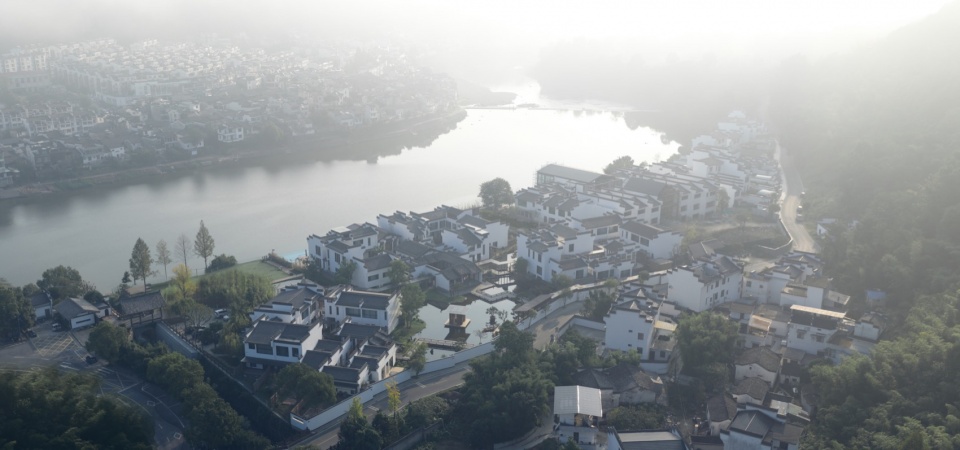
▼场地鸟瞰,aerial view of the site
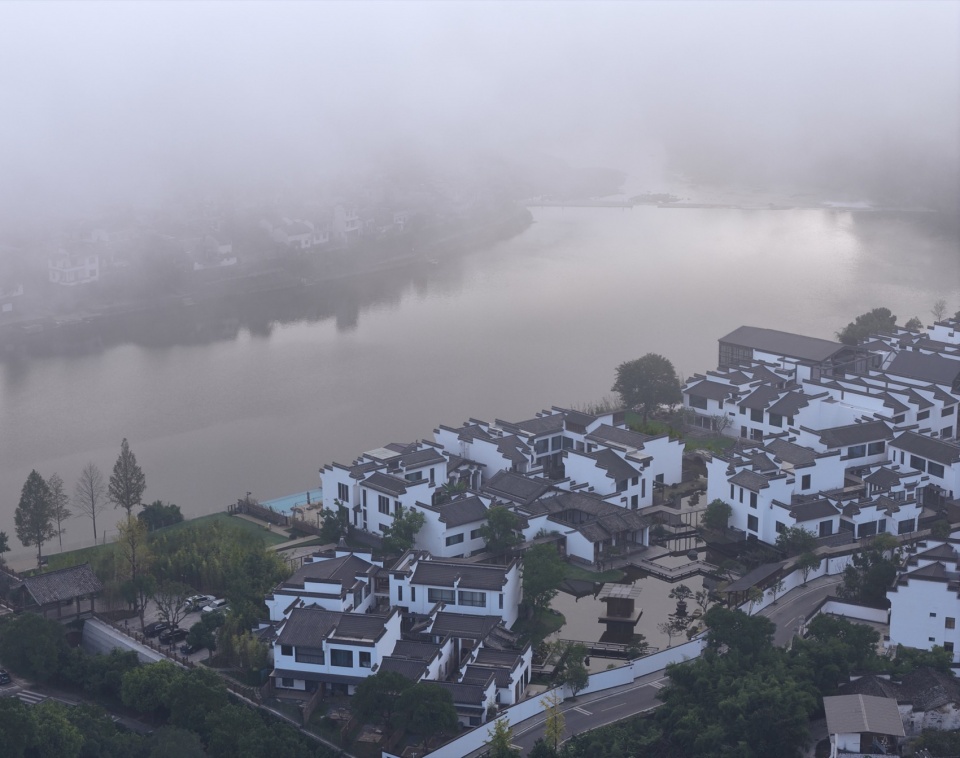
由YI+MU风合睦晨操刀设计的黄山紫阳烟雨度假酒店坐落于徽州古城紫阳山下,其名不仅源于此山,更是为了纪念南宋大儒朱熹,所创立的紫阳书院的文脉回响。酒店毗邻山水秀美的新安江画廊支流练江,与千年古镇渔梁隔江相望。虽处古徽州水路咽喉、历史繁华与人文蔚起的交汇之地,却仍可远避尘嚣,遁隐宁静之处,心与景会,神与物游。
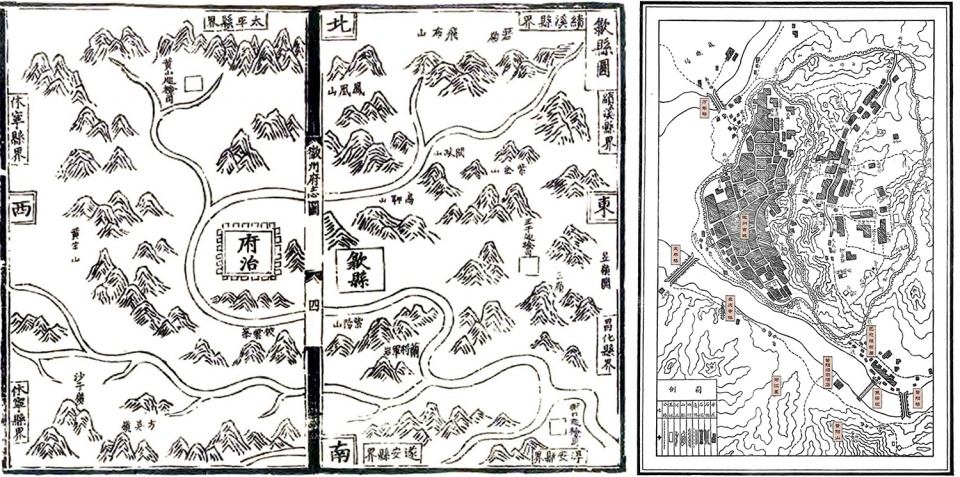
▼徽州府治地图(弘治)与项目地及周边国宝位置图,map of Huizhou Prefecture Government (during the Hongzhi period) and map showing the locations of the national treasures in the project site and its surrounding areas
Designed by YI+MU, the Huangshan Ziyang Yanyu Resort rests at the foot of Ziyang Mountain in the ancient city of Huizhou. Its name derives not only from the peak itself but stands as a tribute to Zhu Xi, the great Confucian scholar of the Southern Song Dynasty—echoing the cultural legacy of the Ziyang Academy he established. The resort is nestled beside the Lianjiang River, a scenic tributary of the Xin’an River Gallery, overlooking the millennium-old town of Yuliang across the water. Though situated at the historic gateway of ancient Huizhou’s waterways—a convergence of past prosperity and cultural richness—it remains a sanctuary far from the hustle and bustle. Here, in this secluded retreat, the heart resonates with the scenery, and the spirit roams freely with nature.
▼鸟瞰,aerial view of the site
文脉流长,国宝环立Profound Lineage, Surrounded by Treasures
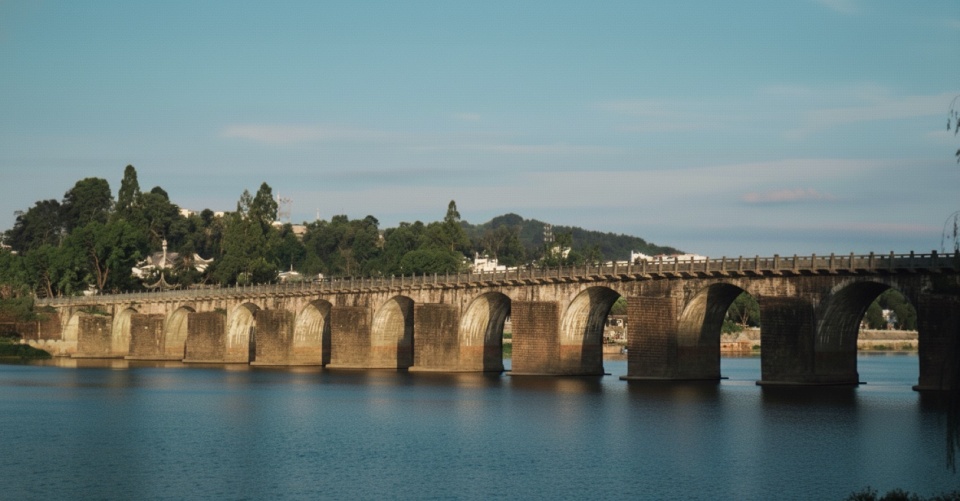
太平桥|Taiping Bridge
南宋端平元年(1234年)由当时徽州知府刘炳建造,以十六孔石拱横跨江上,徽州现存最大的古代石拱桥。
Constructed in 1234 (the first year of the Duanping Era, Southern Song Dynasty) by Liu Bing, the then-Prefect of Huizhou. Spanning the river with sixteen stone arches, it stands as the largest surviving ancient stone arch bridge in the Huizhou region.
▼太平桥,Taiping Bridge
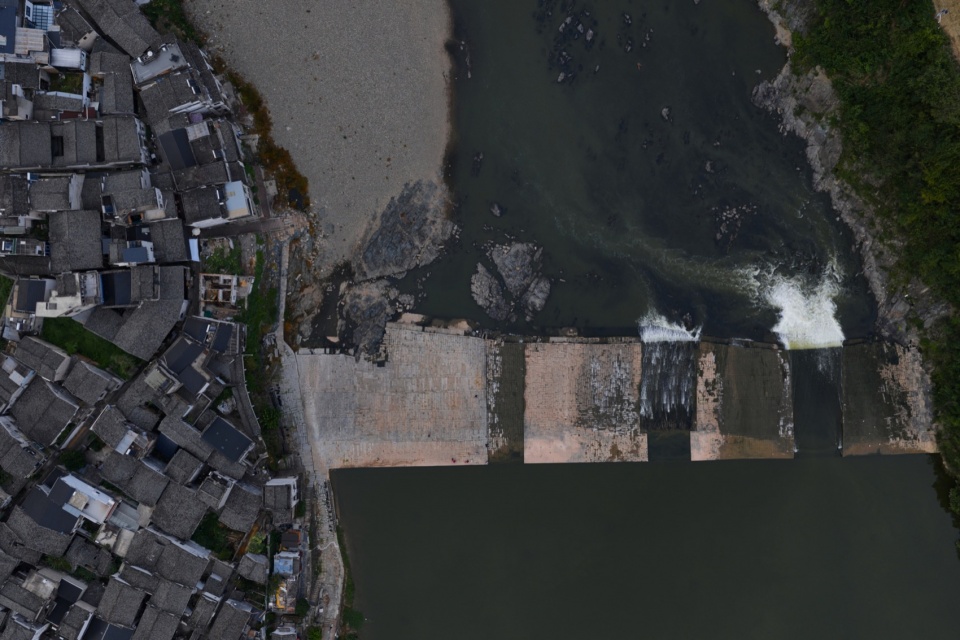
渔梁坝|Yuliang Dam
渔梁坝位于安徽省黄山市歙县渔梁村,始建于唐代,明代重建,距今有近 1400 年。是中国古代著名的水利工程之一,被称之为江南第一都江堰。
Located in Yuliang Village, Shexian County (Huangshan, Anhui), this dam dates back to the Tang Dynasty, with major reconstructions during the Ming Dynasty, spanning a history of nearly 1,400 years. As one of China’s most celebrated feats of ancient hydraulic engineering, it is widely hailed as the “Dujiangyan of Jiangnan.”
▼渔梁坝,Yuliang Dam
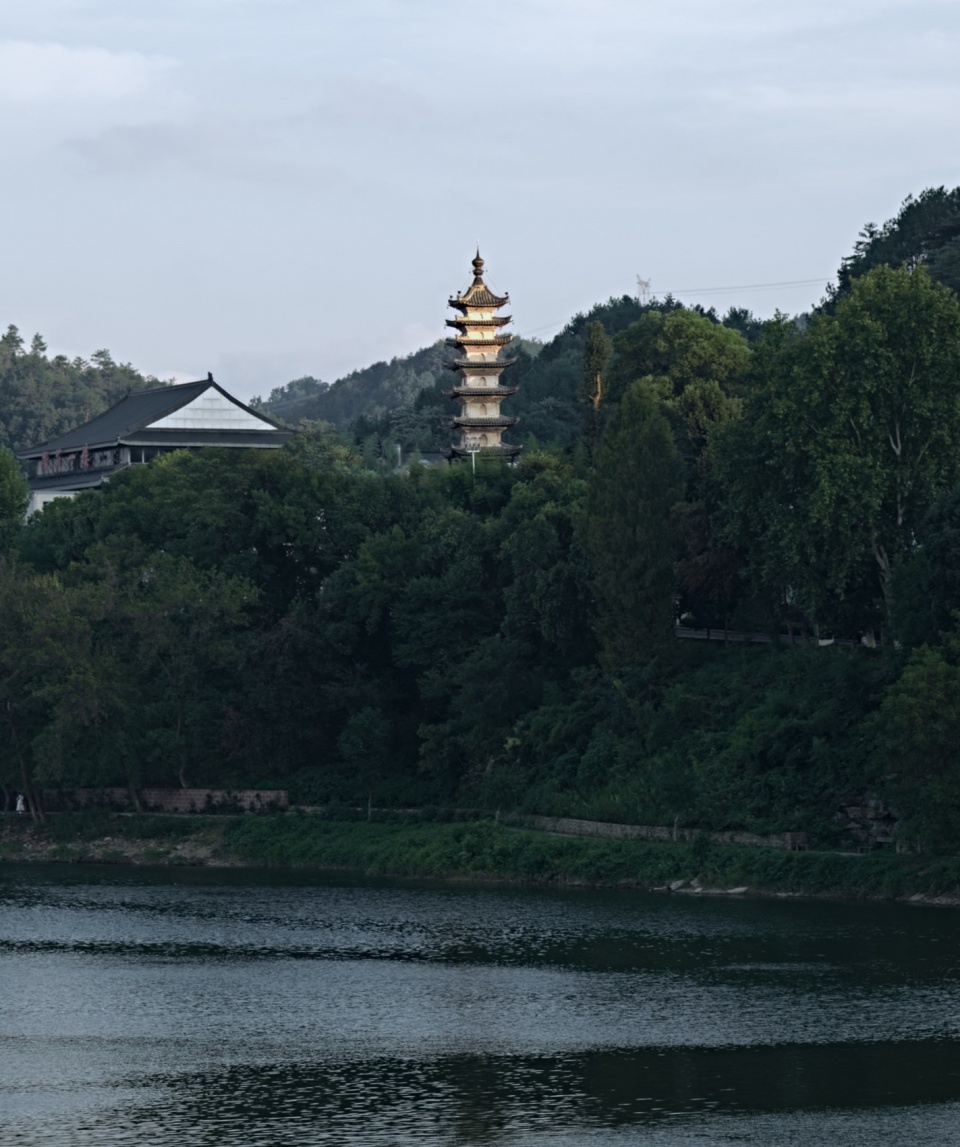
长庆寺塔|Changqing Temple Pagoda
长庆寺塔始建于宋重和二年(1119年),最古老的宋时期的方形佛塔,七层八角,造型挺拔秀丽。塔身砖雕精美,檐角风铃声声,为古城平添禅意。
Dating back to 1119, this is the oldest square pagoda of the Song era. With a seven-story, octagonal structure and a graceful, upright form, it is adorned with intricate brick carvings. The ringing of wind chimes adds a meditative Zen atmosphere to the city.
▼长庆寺塔,Changqing Temple Pagoda
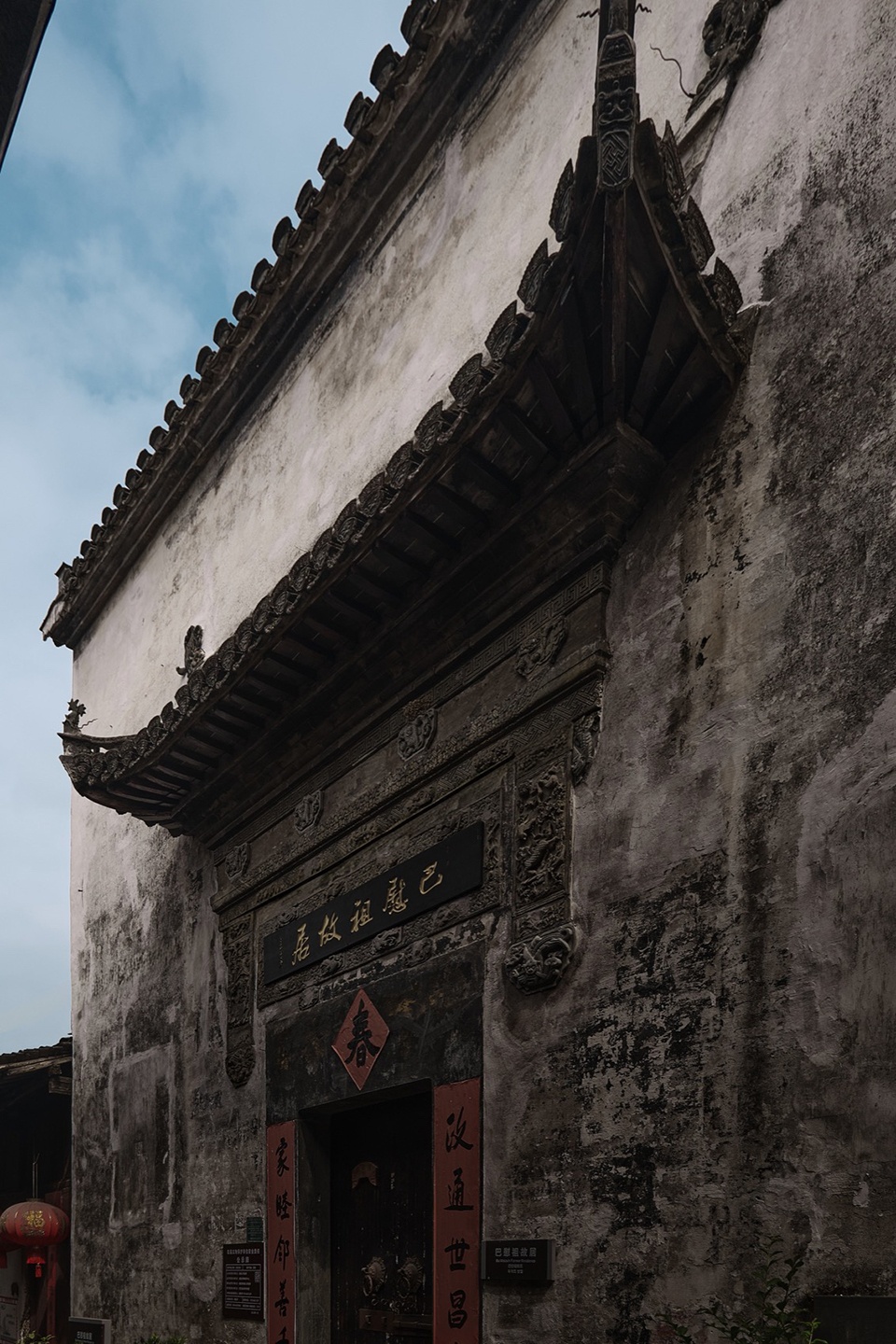
巴慰祖故居|Former Residence of Ba Weizu
这是一座建于明末清初的古民居,巴慰祖(1744-1793)歙县渔梁人,是我国著名的篆刻艺术家。
Constructed during the late Ming and early Qing Dynasties, this ancient residence was the home of Ba Weizu (1744–1793). A native of Yuliang, Shexian, Ba was a renowned master of seal carving (zhuan ke) in Chinese history.
▼巴慰祖故居,Former Residence of Ba Weizu
营造理念——当代理想的“精神原乡”Design Philosophy — A Spiritual Homeland for the Contemporary Soul
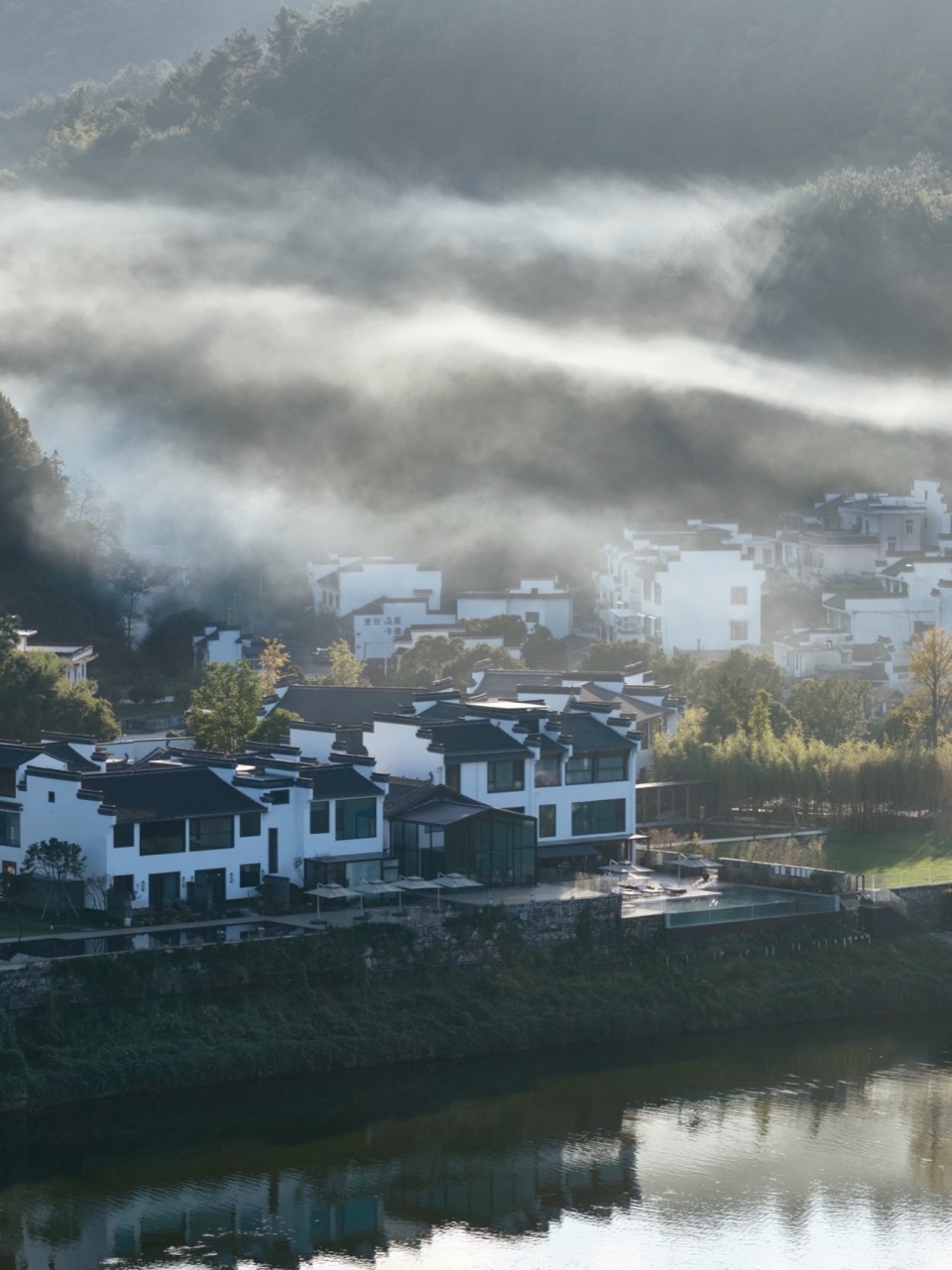
“外简内秀,院落叠进,枕水而栖”是项目的整体定位。高大的马头墙勾勒出起伏的天际线,立面则以纯粹的墙面“留白”,创造出一种“精神归隐”的氛围,让游者在抵达的第一时间,便能从心理上卸下疲惫,安享这一方静谧的景致。
Our overall positioning is defined by ‘outer simplicity and inner elegance, successive courtyards, and a waterfront repose.’ Towering Horse-head walls sketch an undulating skyline, while the facades employ the artistic concept of ‘negative space’ (Liu Bai) with pure, unadorned walls. This creates an atmosphere of ‘spiritual seclusion,’ allowing travelers to shed their worldly fatigue the moment they arrive, immersing themselves wholly in this tranquil scenery.
▼鸟瞰,aerial view
▼局部鸟瞰,closer aerial view
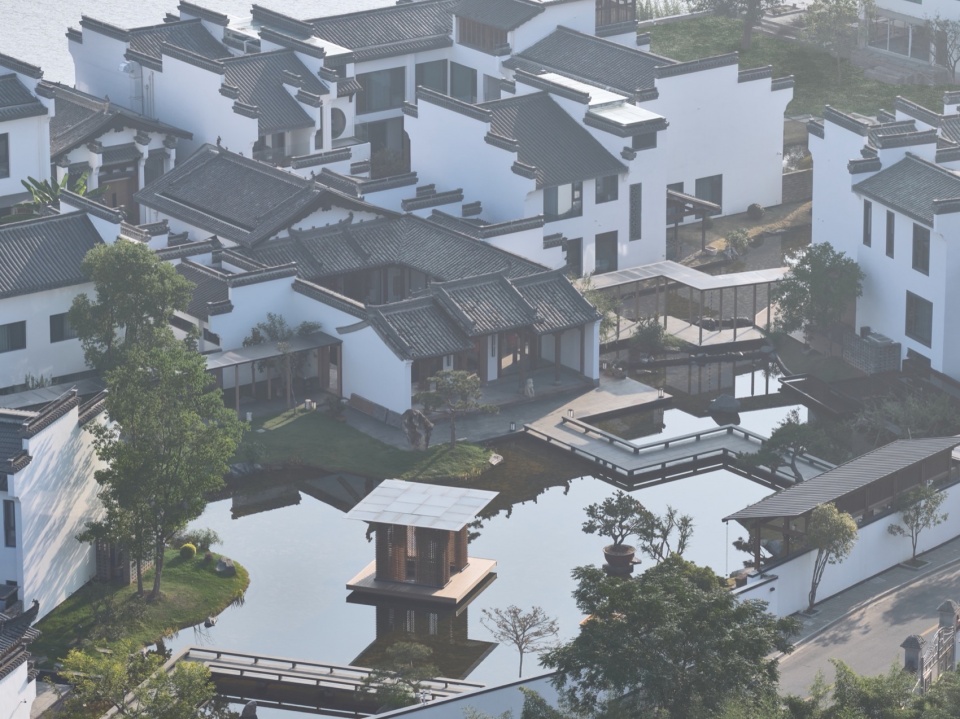
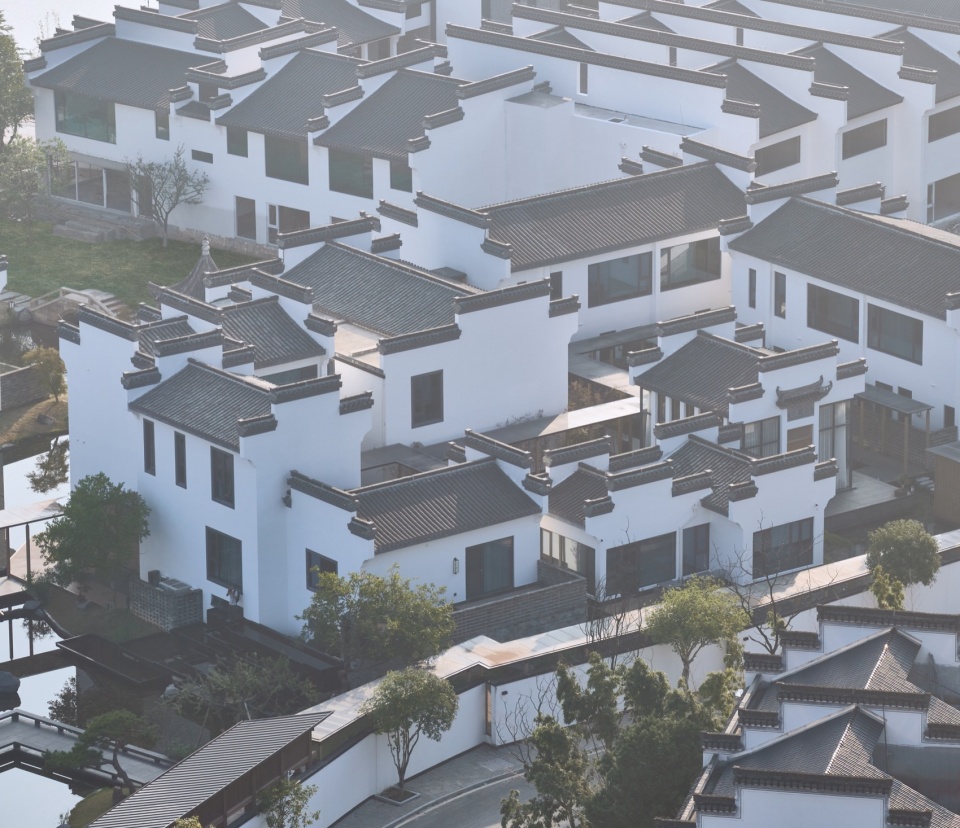
屋顶形制传承了徽派神韵——黛瓦铺陈,山墙起伏,转译着传统民居的风骨与神髓。色彩以水墨般的黑、白、灰奠定素淡悠远的基底,间或点缀木作与青翠,恰如泼墨山水画中那一抹赋予生机的温润点睛。
The roof form inherits the elusive spirit of Huizhou—clad in dark tiles with undulating gables, it reinterprets the very essence of traditional dwellings. The color palette, reminiscent of ink-wash paintings, establishes a serene foundation of black, white, and gray. Interspersed with warm wood and lush greenery, these accents act as the vital ‘finishing touch’, breathing life into the composition like the spirited strokes of a splash-ink landscape.
▼顶视图,top view
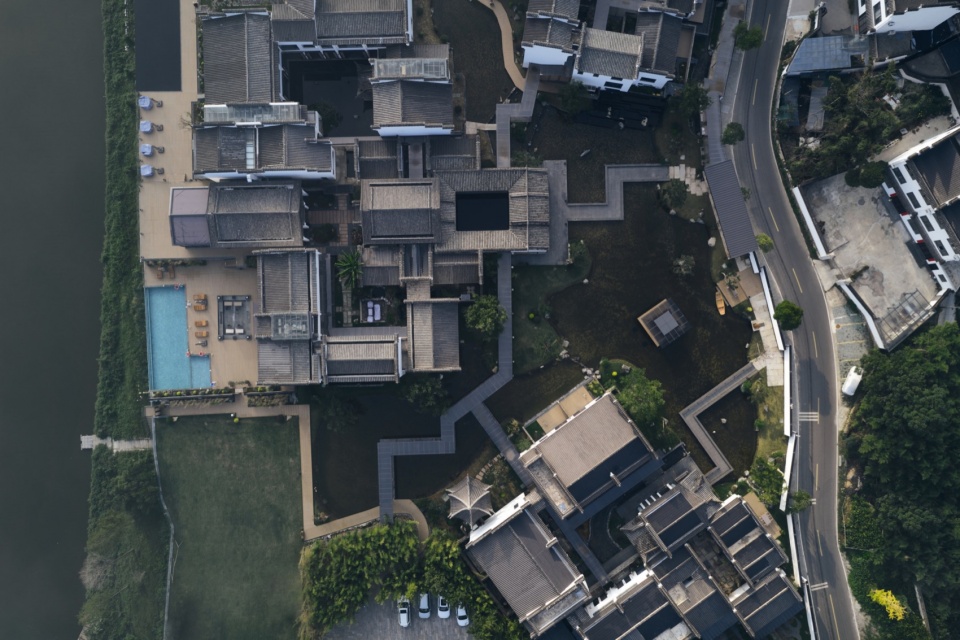
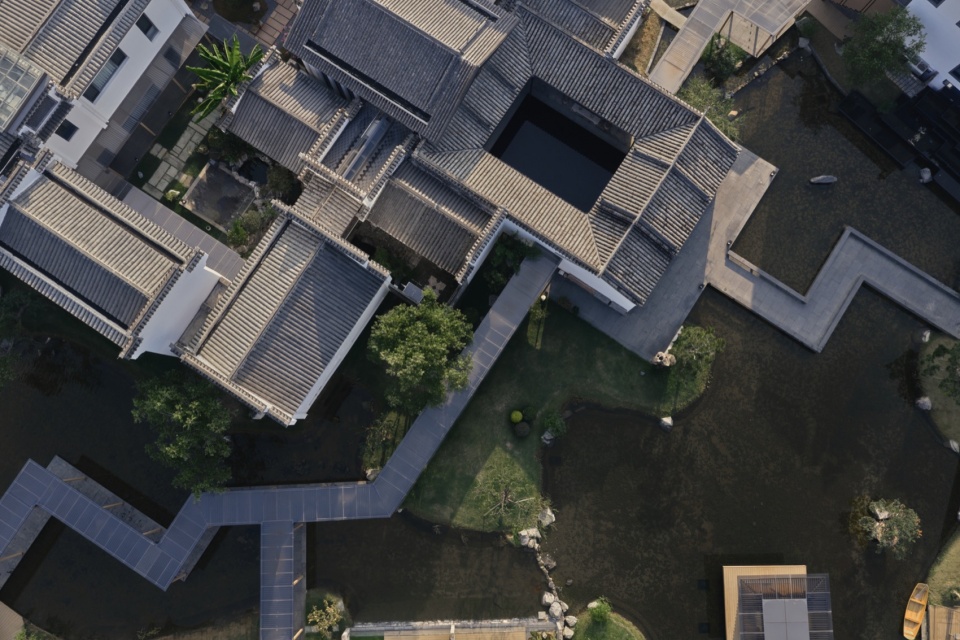
设计跳脱了对传统符号的表象摹写,更通过光影与材质的对话赋予其新生。大面积玻璃将江景无界地引入室内,与温润木作、质朴石材形成平衡。这不仅是框取风景,更是消弭人与自然的边界,让度假体验回归自然。设计既不突兀于山水,亦不盲从于复古,恰如一幅始于渔梁古坝、落笔于当代生活的山水长卷。
The design transcends the superficial imitation of traditional symbols, instead breathing new life into the space through a dialogue between light, shadow, and materiality. Expansive glass facades seamlessly invite the river scenery indoors, establishing a harmonious balance with warm wood and rustic stone. This goes beyond merely framing the landscape; it dissolves the boundaries between humanity and nature, allowing the resort experience to return to its natural essence. Harmonizing with nature rather than intruding, and honoring history without blind imitation, the design is a timeless scroll. It traces a line from the ancient Yuliang Dam, culminating in a vision of contemporary life.
▼夜景,night view
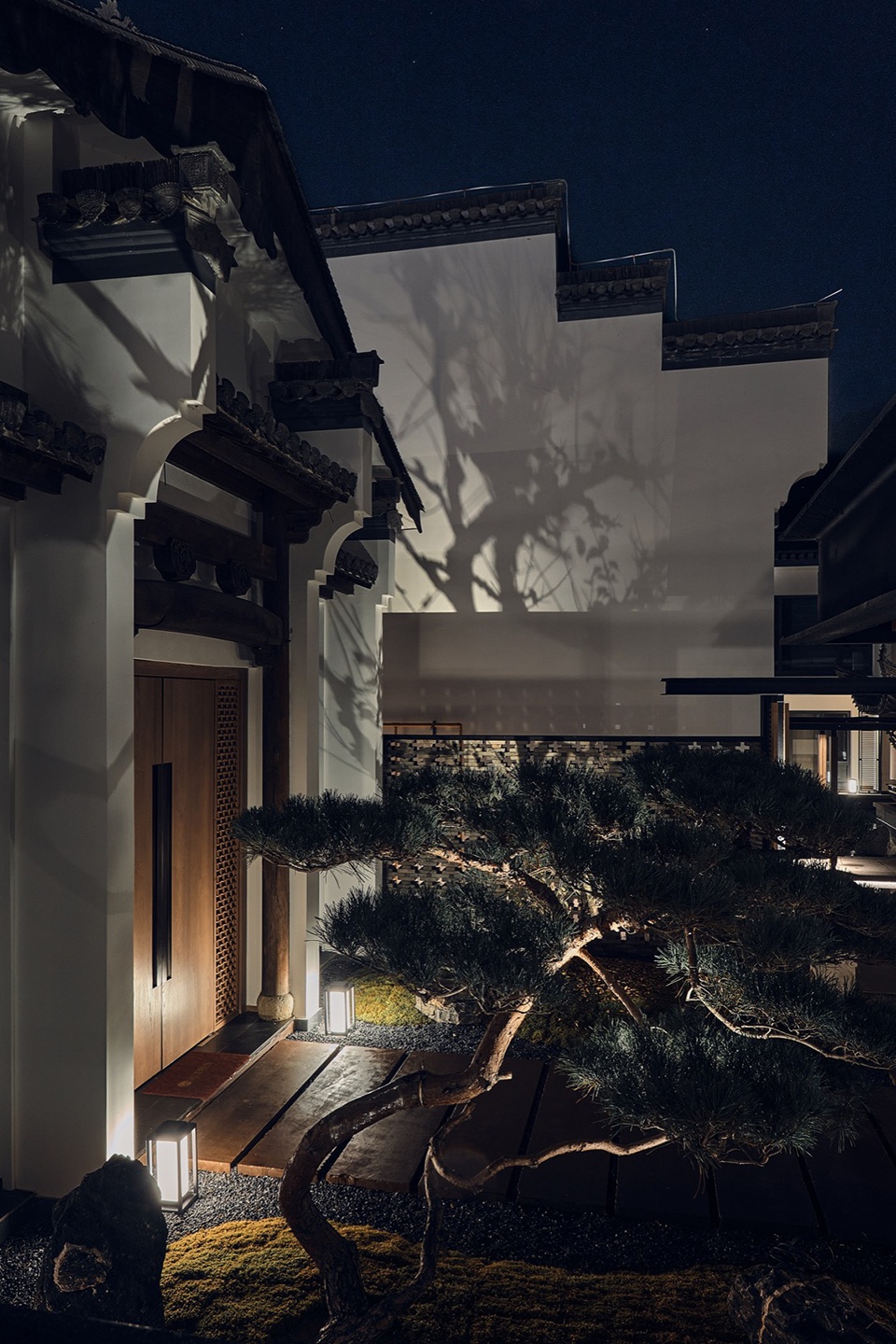
园林叙事——寻源入梦的东方意境Landscape Narrative — Tracing the Source into an Oriental Dream
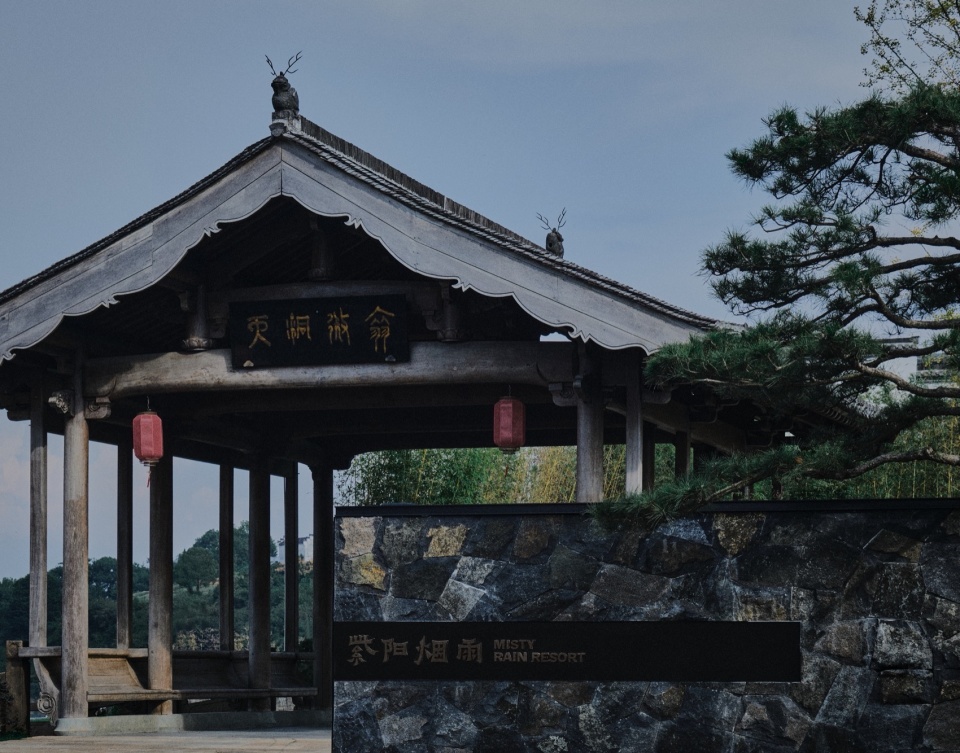
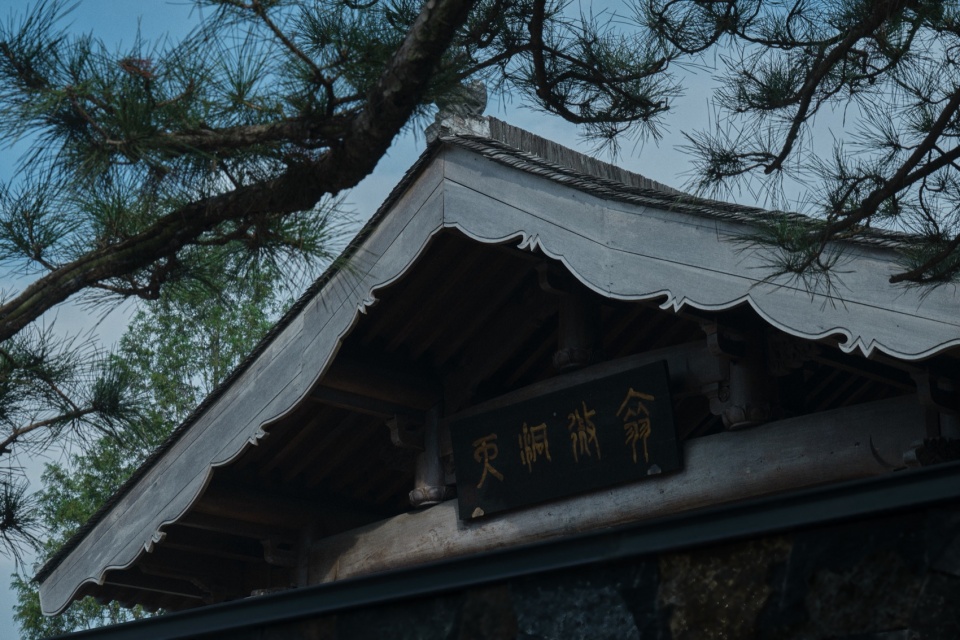
园林叙事,是以“水”为魂的“寻源入梦”之旅。入口从横跨溪流的古朴廊桥开始,穿过蜿蜒的竹林小径,最终抵达内部水景庭院。以“先抑后扬”的美学,完成了从抵达、洗尘到入境的完整仪式。
The landscape narrative unfolds as a journey of ‘tracing the source and entering the dream,’ with water as its soul. The sequence begins at a rustic covered bridge spanning the stream, winds through a meandering bamboo path, and culminates at the internal water courtyard. Utilizing the aesthetic principle of ‘spatial compression and release’ (Xian Yi Hou Yang), the design completes a ritualistic transition: from arrival and spiritual cleansing to full immersion in the realm.
▼古朴的廊桥,the rustic covered bridge
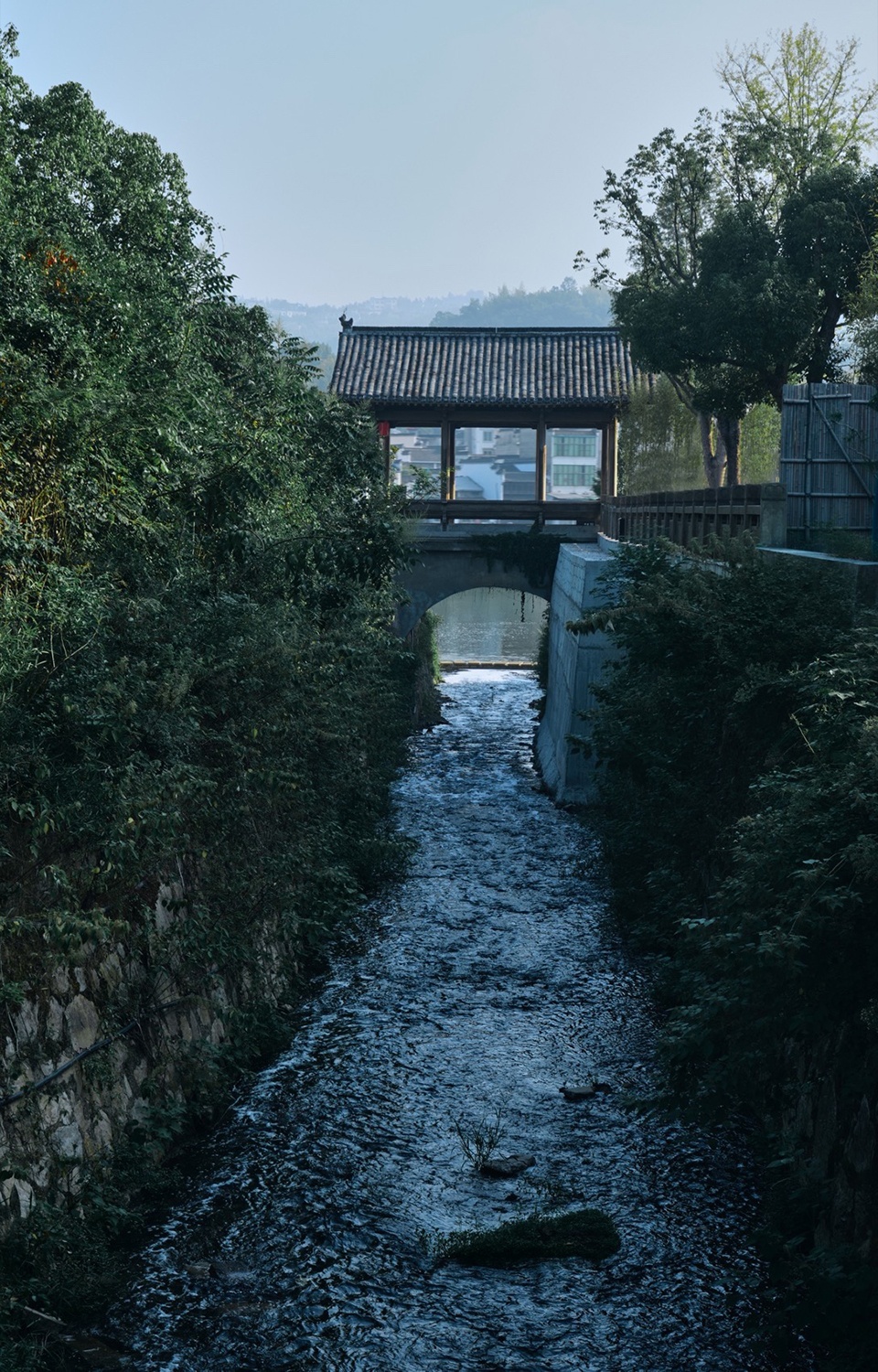
▼廊桥细部,details of the rustic covered bridge
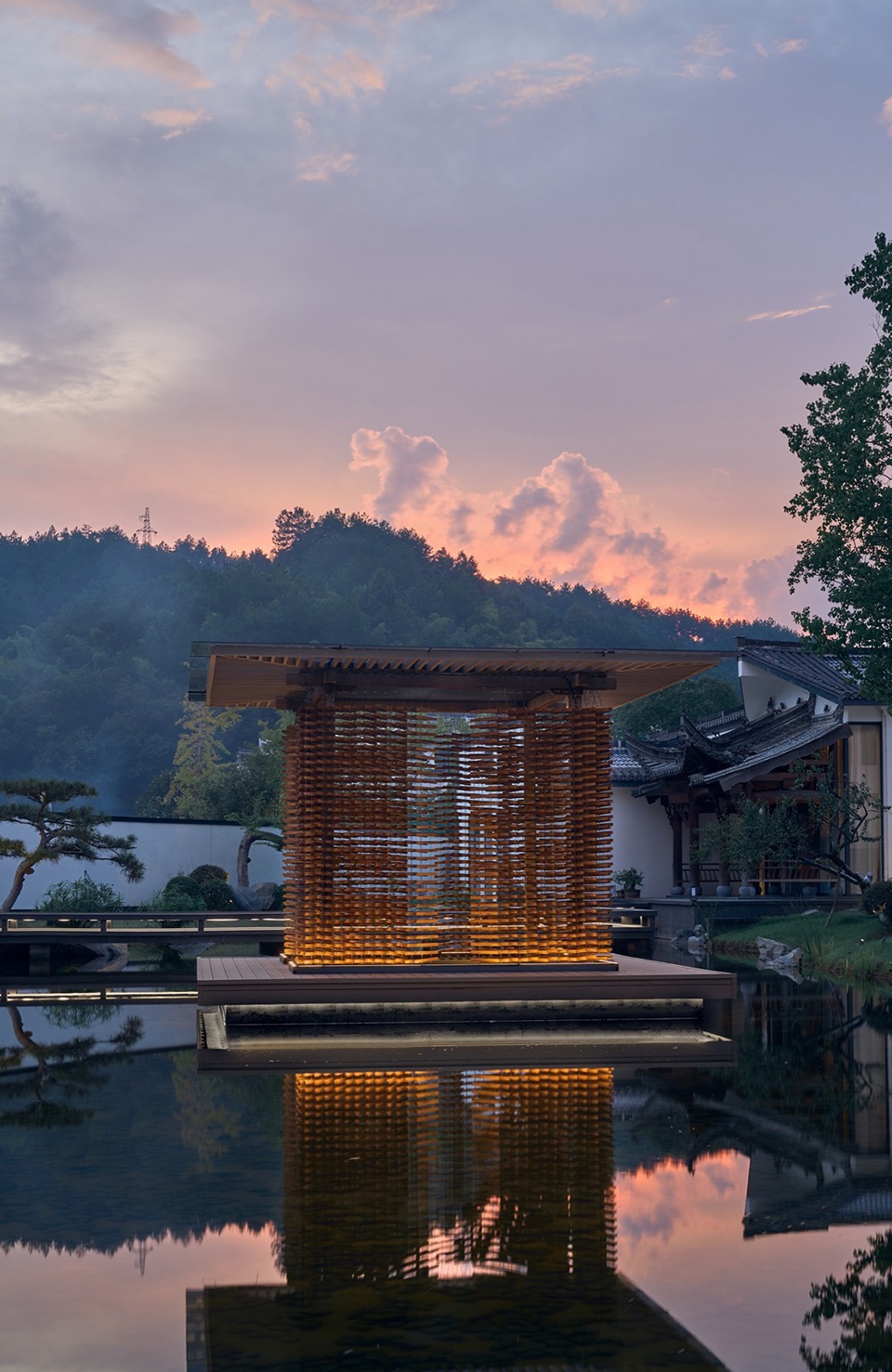
水系流转的中心,一座四面通透的水中茶亭轻盈地浮于水面,成为整个庭院的视觉与精神核心。它是一个邀请风、光与视线自由穿行的“空”的容器,一处可供人暂停下来,与自我、与自然真正对话的场域。
At the heart of the flowing water system, a tea pavilion—transparent on all sides—floats lightly upon the surface, serving as the visual and spiritual core of the courtyard. Conceived as a ‘vessel of void,’ it invites the free passage of wind, light, and sight. It acts as a sanctuary where one can pause to engage in a true dialogue with oneself and with nature.
▼四面通透的水中茶亭,the transparent tea pavilion floats lightly upon the surface
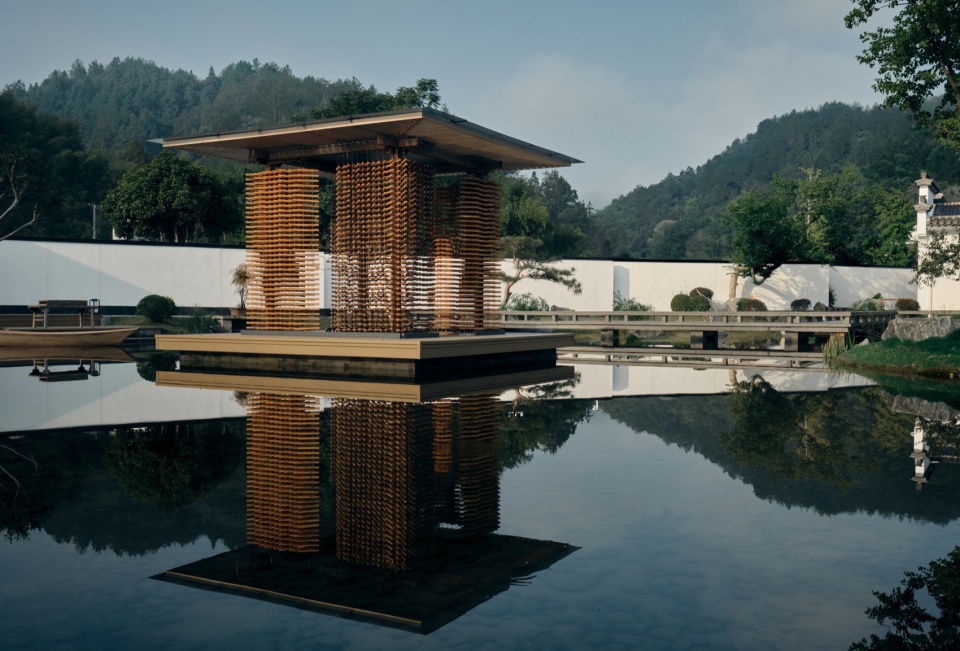
▼茶亭,the tea pavilion
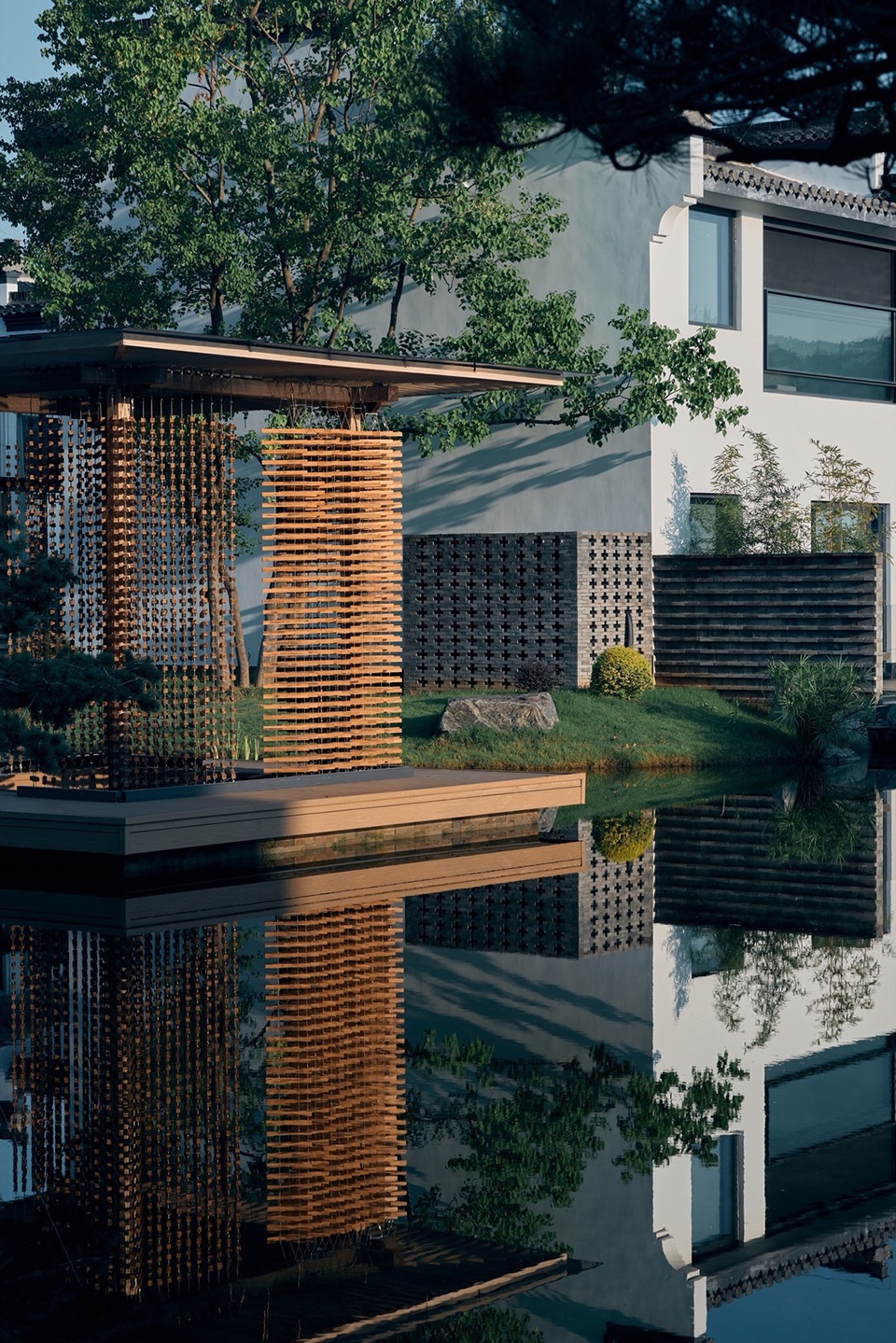
▼茶亭夜景,night view of the tea pavilion
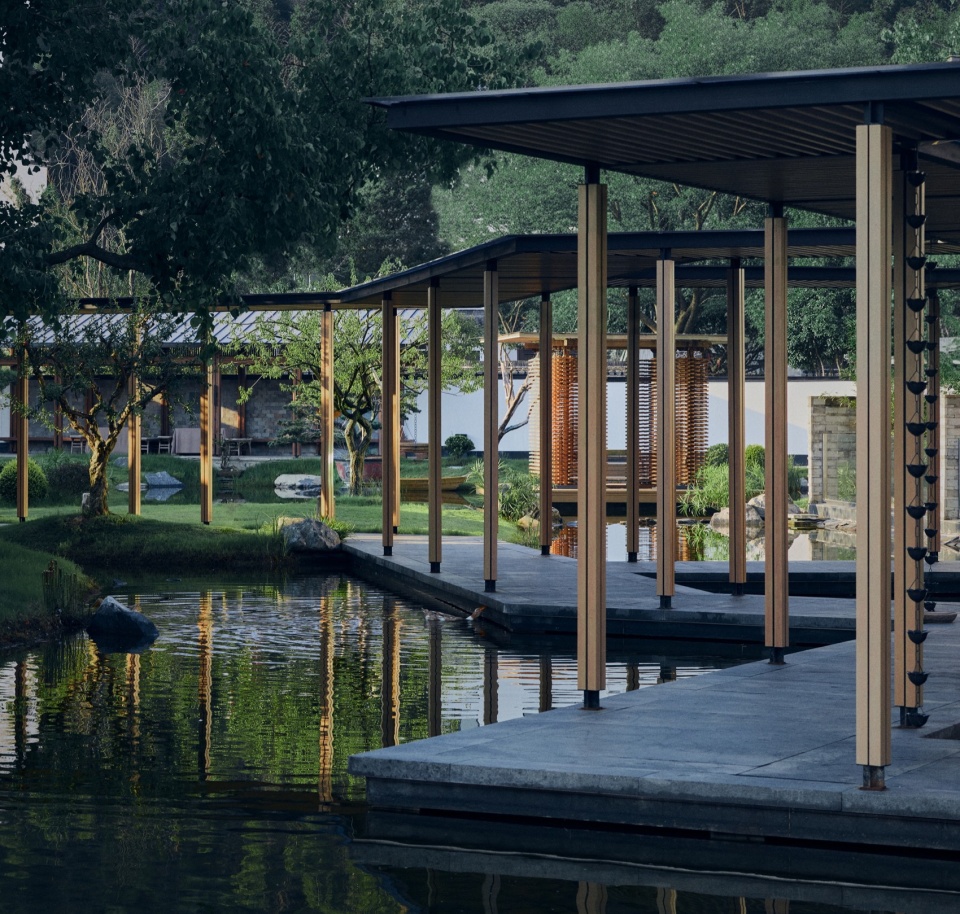
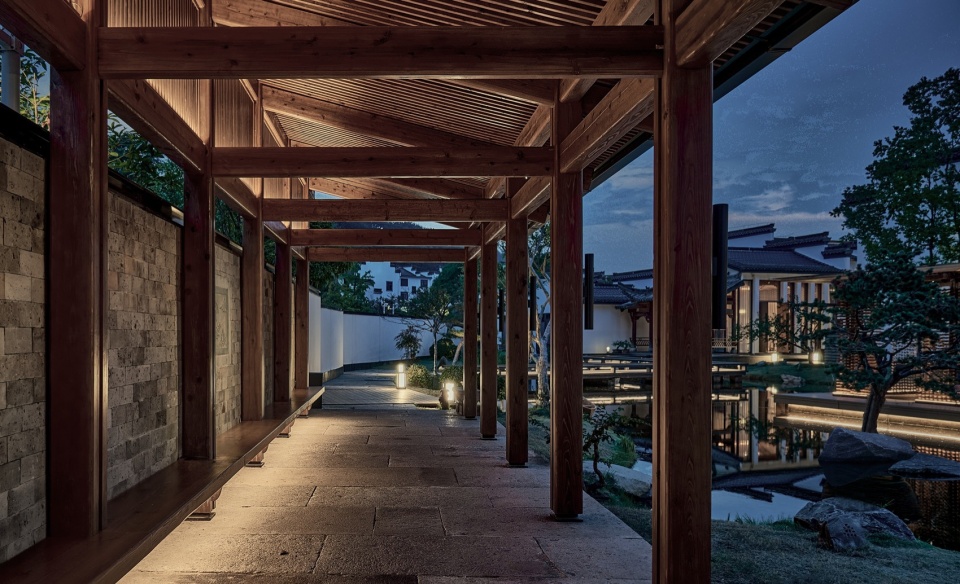
迴廊蜿蜒水庭之上,串联起四组院落,它不仅是连接动线的通道,其本身就是一条流动的风景线。行走其上,步移景异,左手是庭院深深,右手是天光云影。
A winding corridor meanders above the water, linking four distinct courtyard clusters. More than a mere circulation path, it serves as a flowing landscape in its own right. Walking along it, the scenery shifts with every step: to the left, the profound depth of secluded courtyards; to the right, the dance of light and clouds upon the water.
▼迴廊,the winding corridor
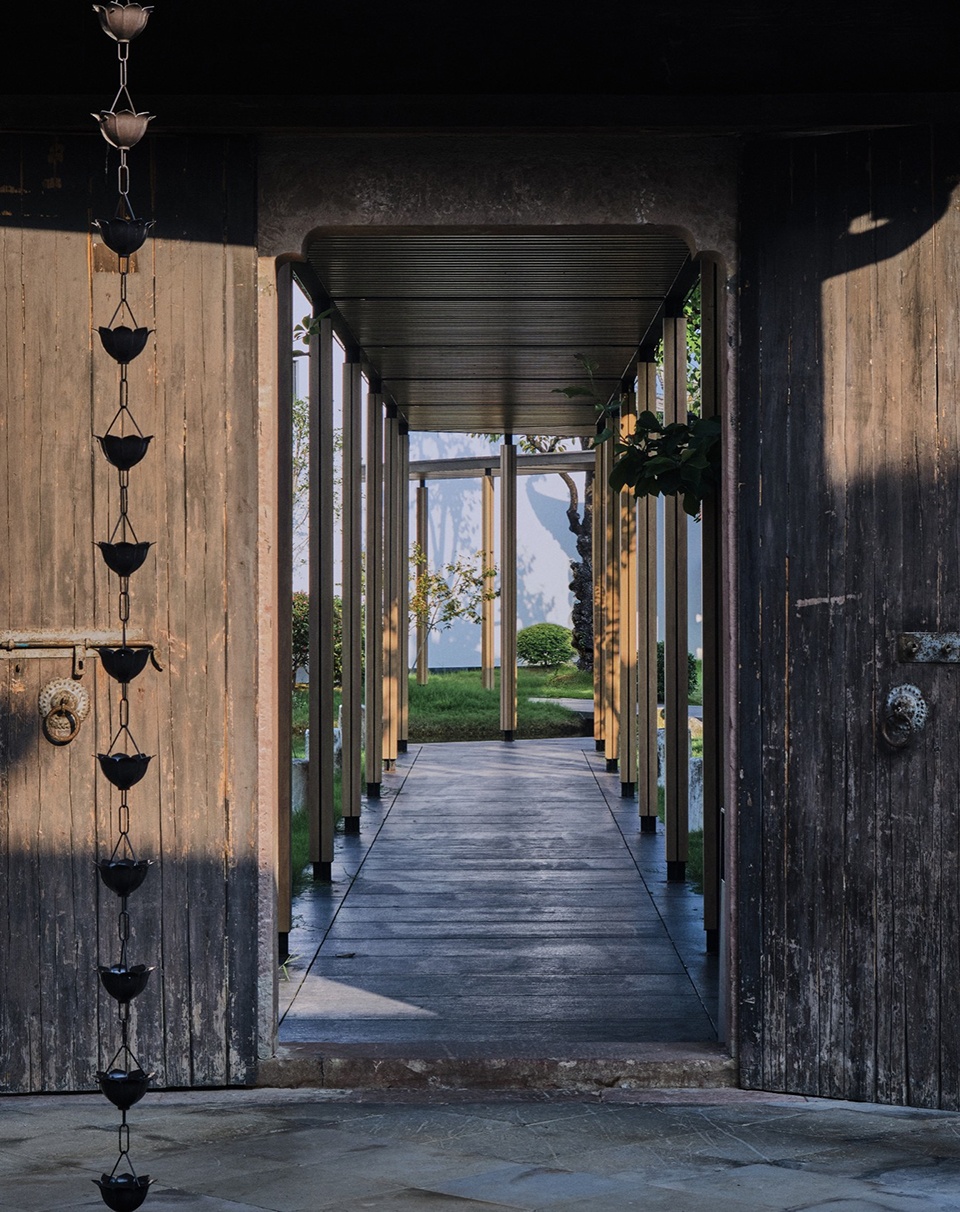
▼回廊入口,entrance of the corridor
▼回廊细部,details of the corridor
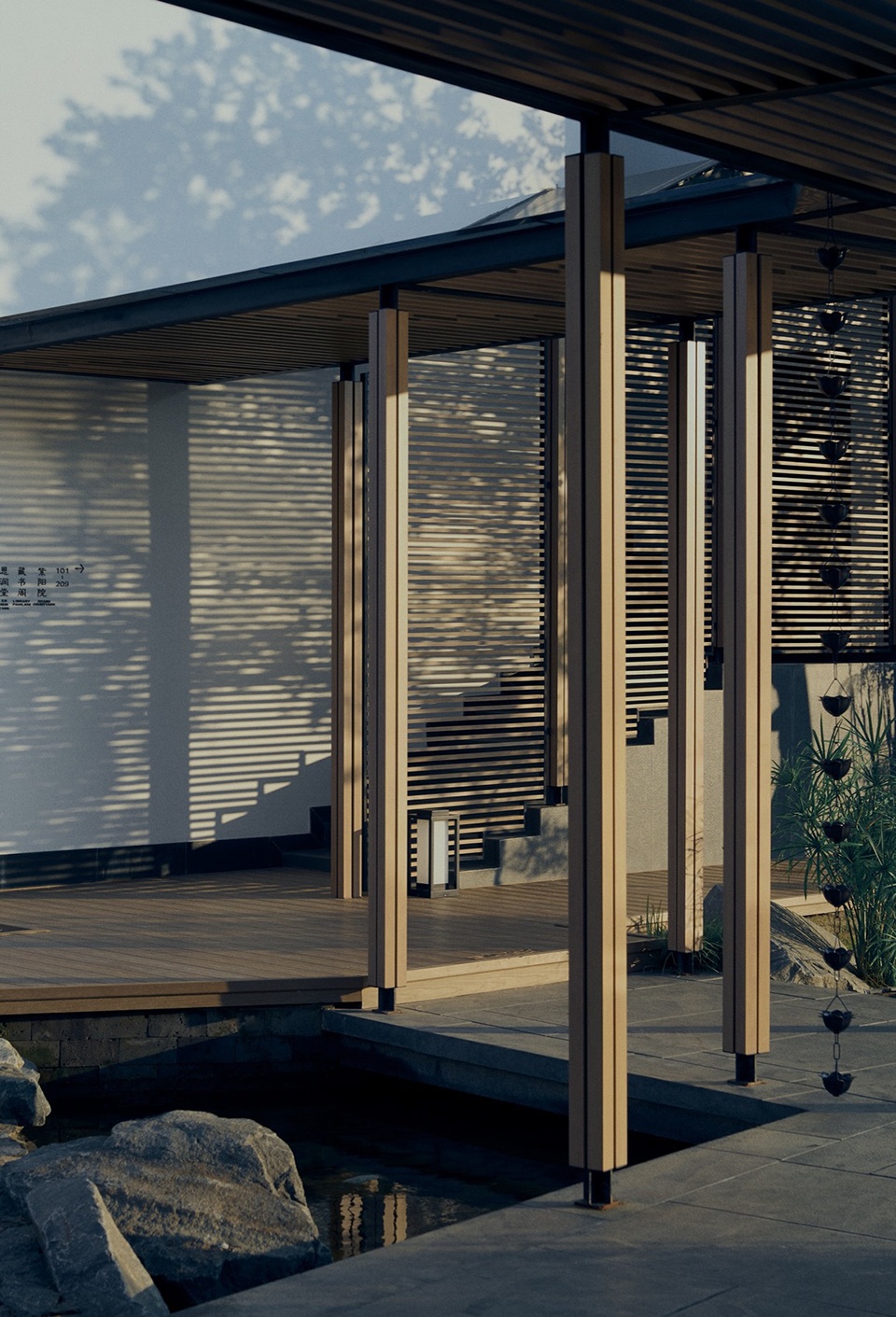
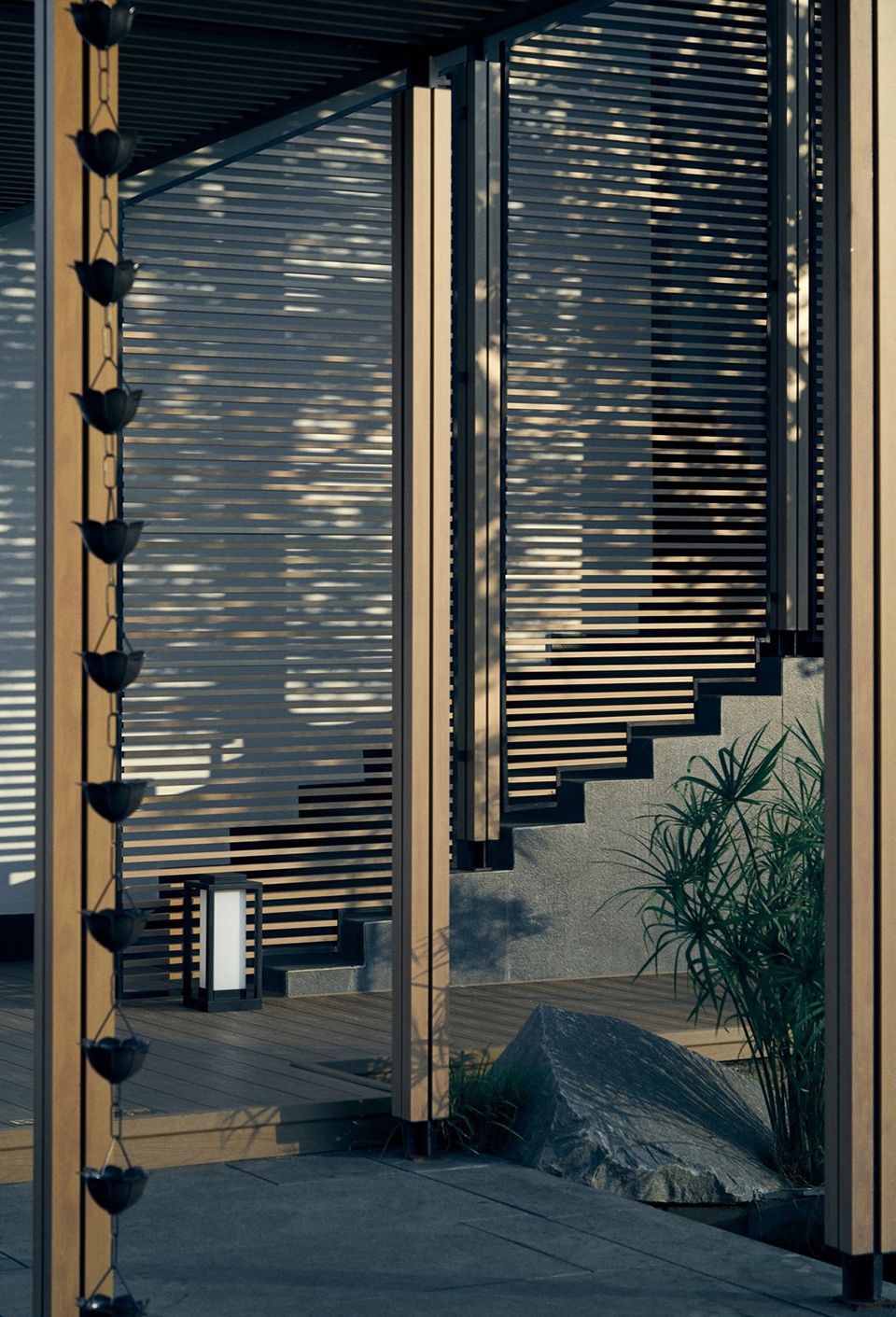
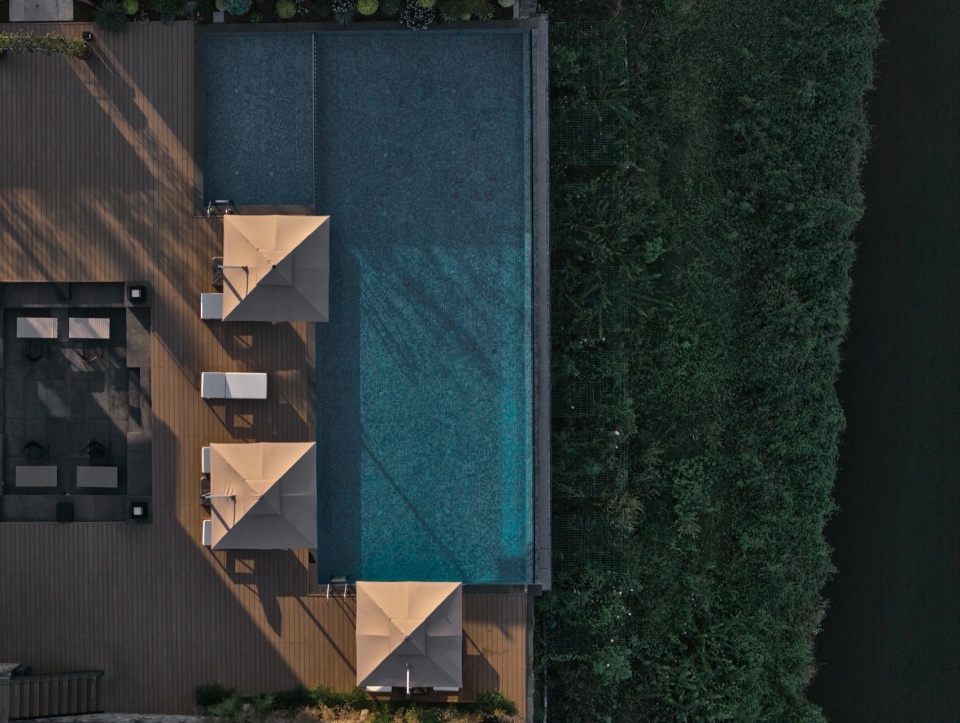
廊桥的存在,模糊了室内与室外的边界,巧妙地连接公共与私密、喧闹与宁静的过渡,让漫步于其上的人,也成为了这幅流动风景中最生动的一笔。旅程的深处,一方泳池如静谧水镜。它不仅向内倒映着马头墙与天空的轮廓,更将视线引向江的对岸。
The covered bridge dissolves the boundaries between indoors and outdoors, subtly mediating the transition between the public and the private, the bustling and the serene. Those who stroll across it become the most vivid brushstroke in this flowing landscape. Deep within the journey, a swimming pool lies like a tranquil mirror. It not only captures the internal reflections of Horse-head walls and the sky but also guides the gaze outward to the riverbank beyond.
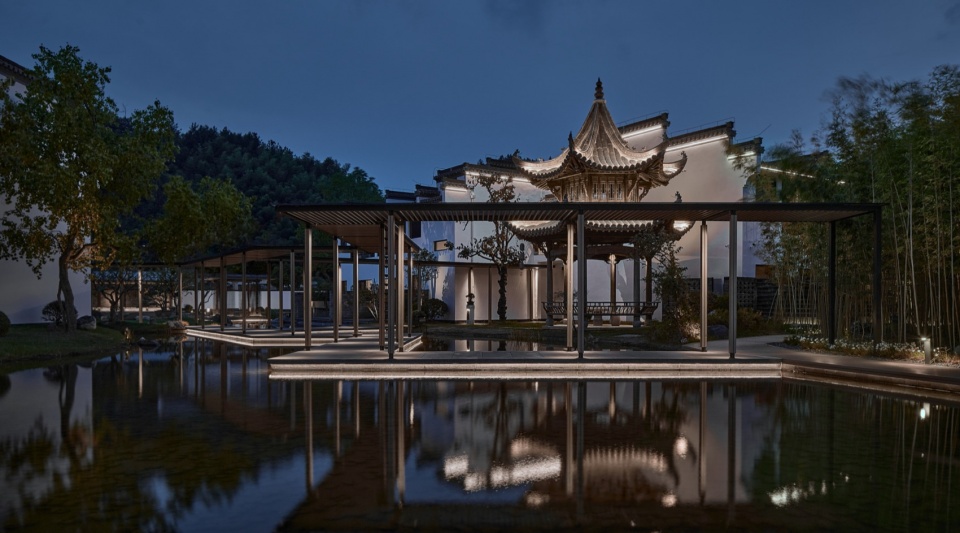
▼庭院夜景,night view of the courtyard
▼泳池顶视图,top view of the pool
▼泳池,pool
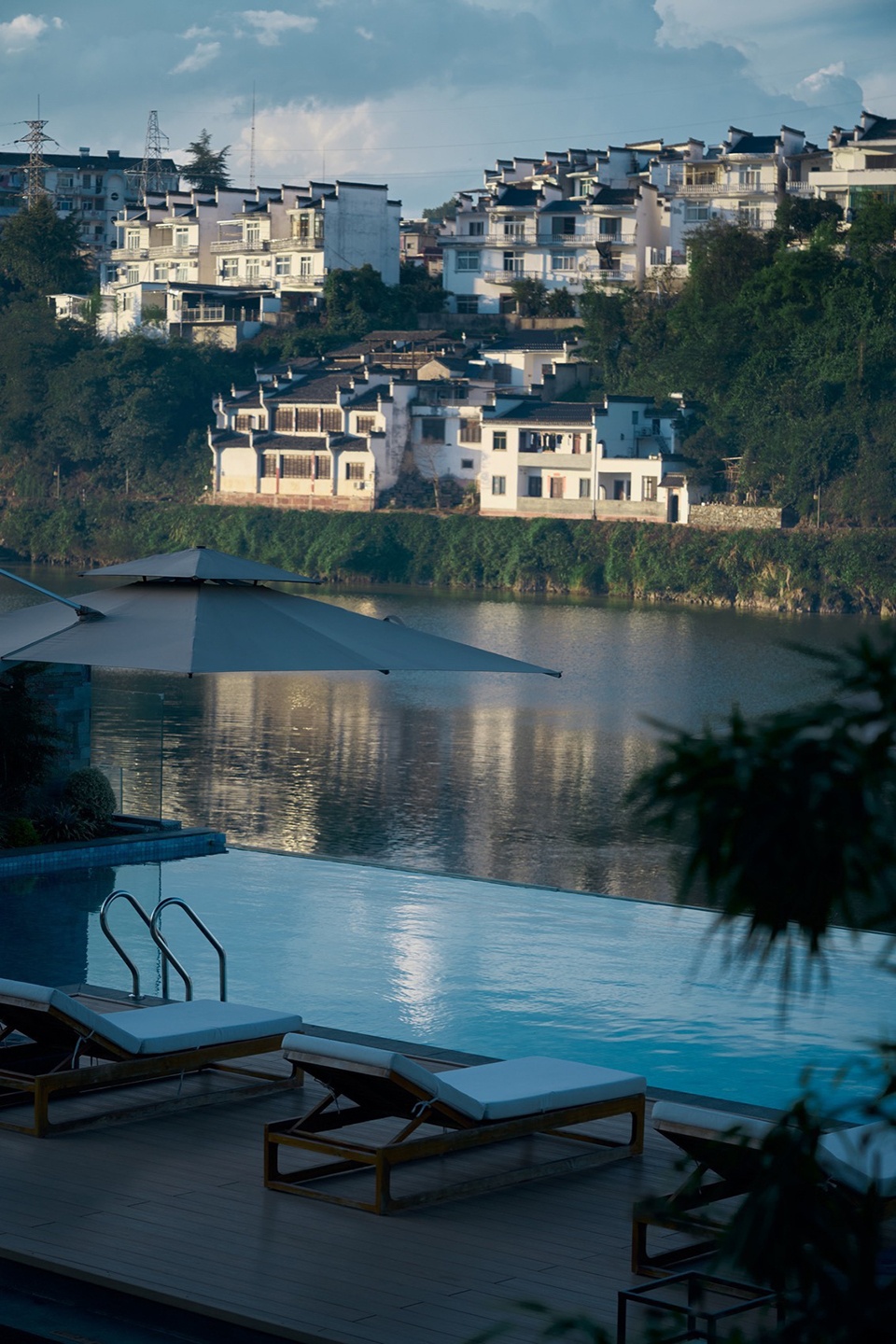
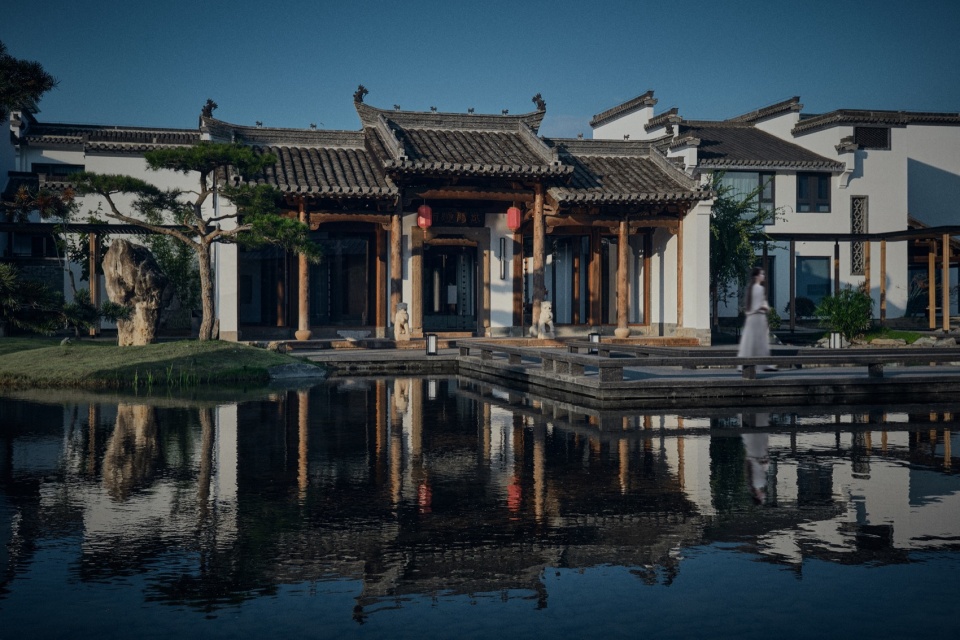
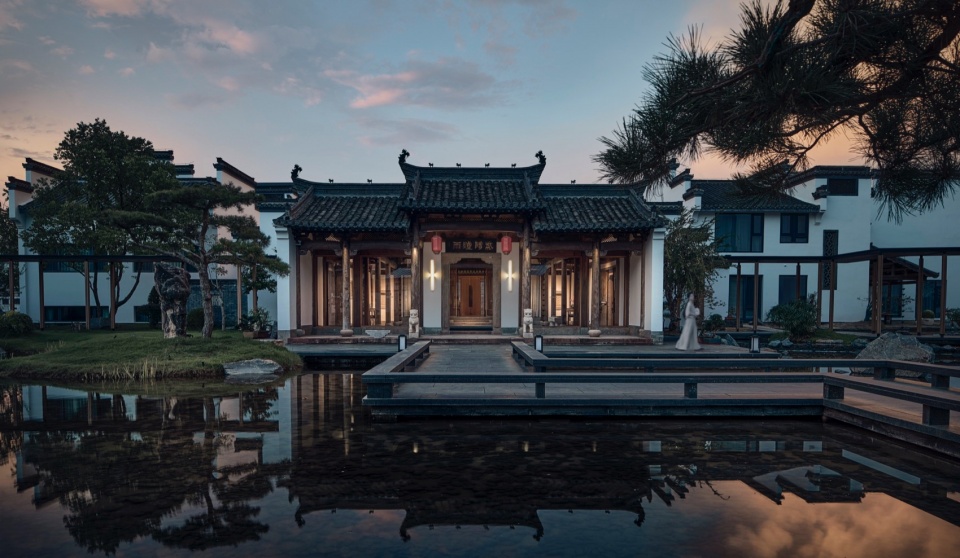
那里,千年古城的鳞次栉比与人间烟火,都化为这方水镜前最生动的背景,将当代生活方式与历史余韵无痕融合。园林之中,一座质朴的石桥是路径的转折,亦是心境的渡口。它引导着宾客跨越潺潺溪流,从一重景致渡向另一重。而桥的尽头,一座翼然的徽派门廊则静候于此,成为整个园林叙事中的“思绪锚点””,一个可供静侯观雨、让思绪全然放空的心灵归处。
There, the dense tapestry of the millennium-old city and its worldly warmth transform into a vivid backdrop for this water mirror, seamlessly fusing contemporary living with historical resonance. Within the garden, a rustic stone bridge marks not only a turn in the path but a ferry crossing for the spirit. It guides guests over murmuring streams, transitioning from one scenic realm to another. At the bridge’s end, a Huizhou-style porch with upswept eaves awaits quietly. It stands as an ‘anchor for wandering thoughts’ in the garden’s narrative—a spiritual refuge to simply watch the rain and let the mind drift into nothingness.
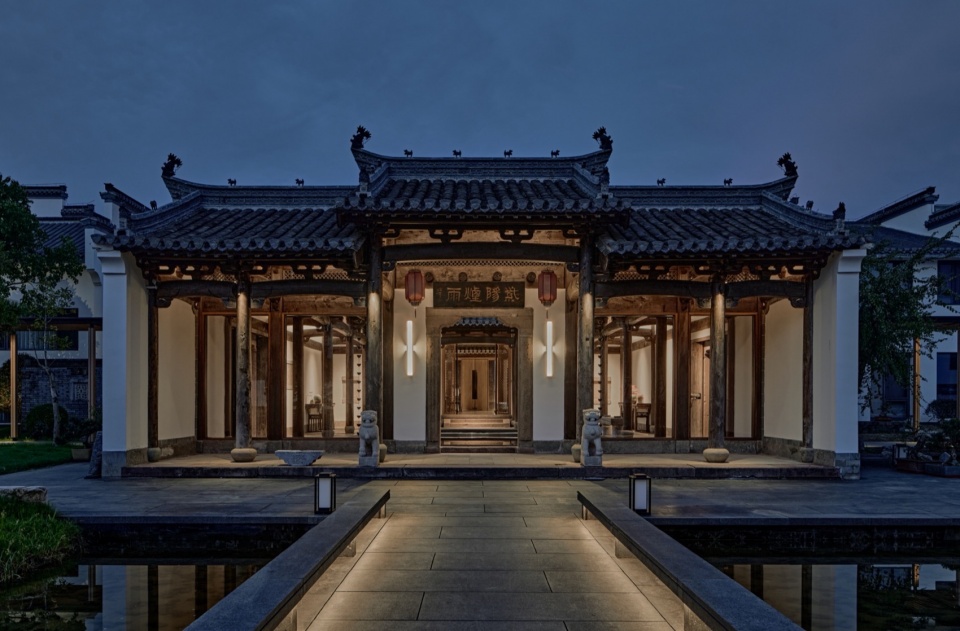
▼徽派门廊,the Huizhou-style porch
▼夜景,night views
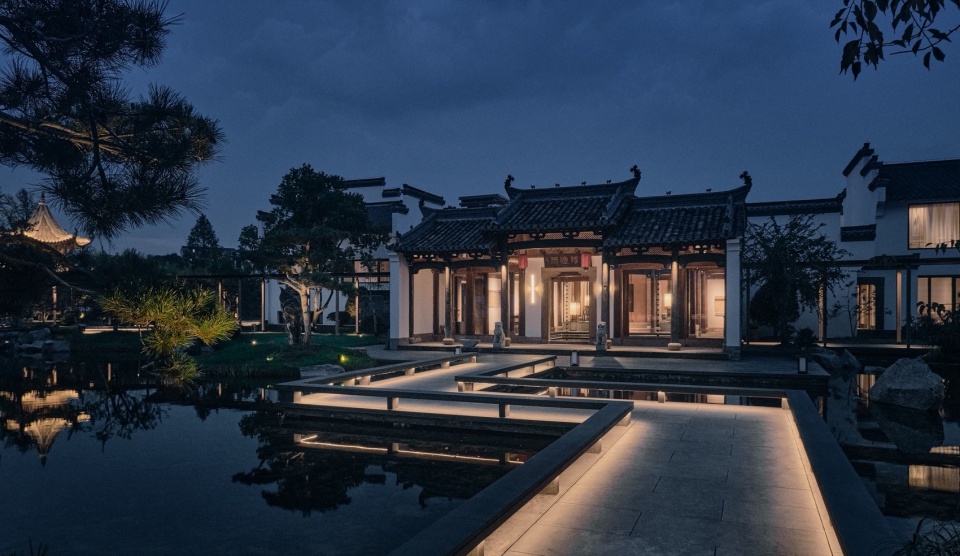
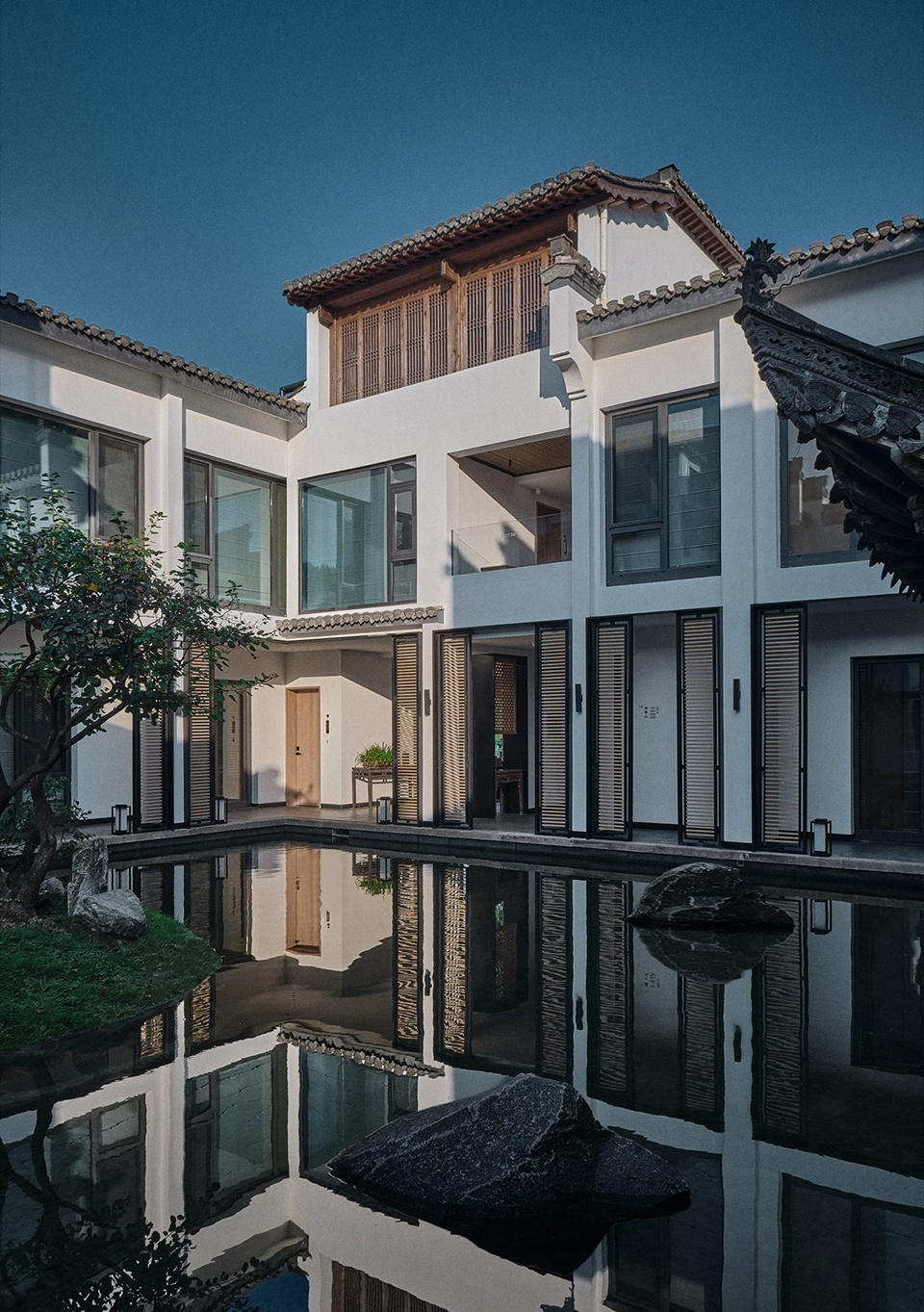
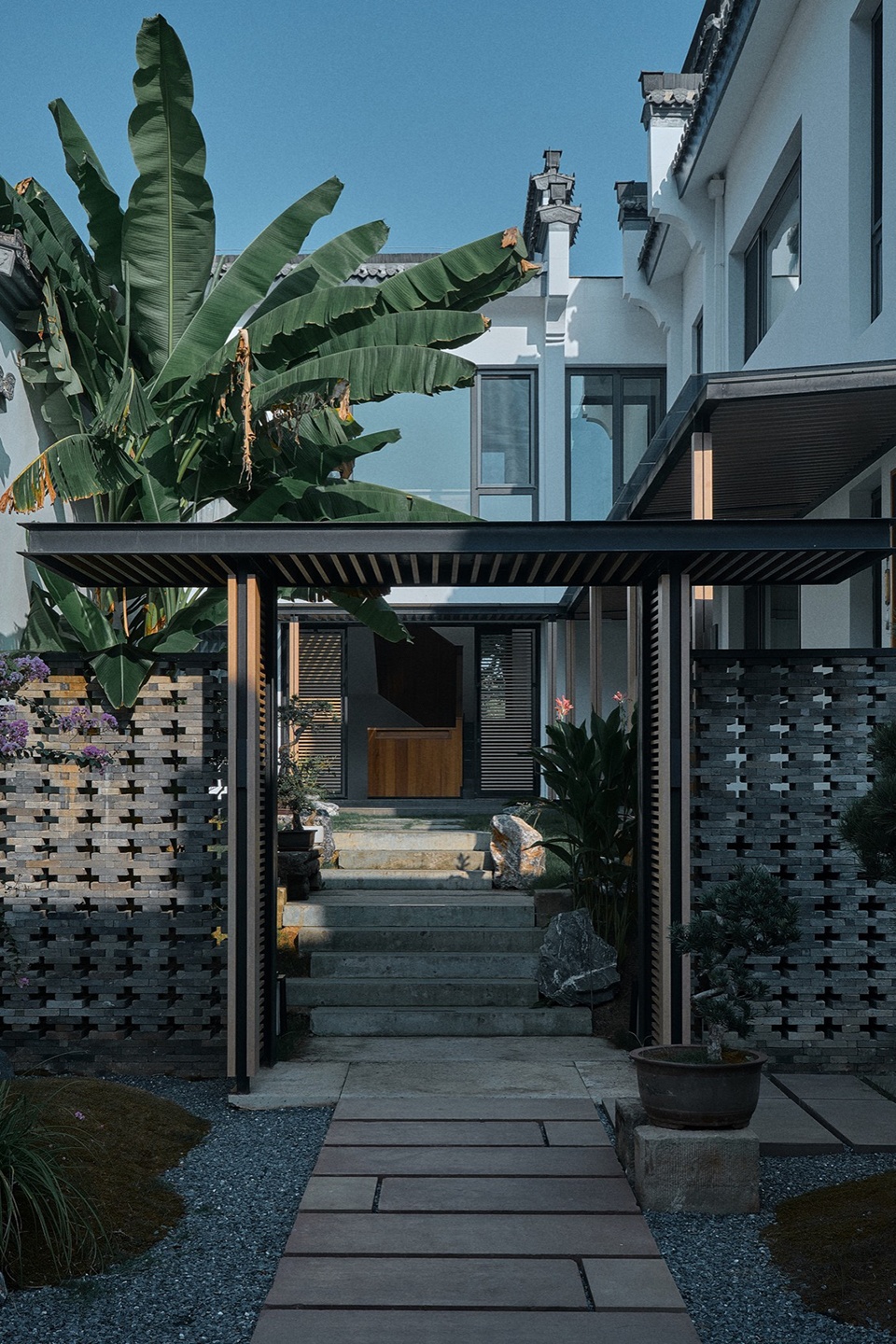
酒店的内庭院,是整个建筑的灵魂与“呼吸之眼”。设计在此营造的并非传统的园林复刻,而是一场关于时间、材质与光影的当代对话。粗粝的山石、温润的木作、素朴的青砖与生机盎然的芭蕉……每一种材质都在此和谐共生。庭院的精神核心,是一座从民间悉心收藏而来的古亭。它如一册时间的孤本,被轻盈地安放在一方静水之上。
The inner courtyard serves as the soul and the ‘breathing eye’ of the architecture. Rather than a mere replication of traditional gardens, it orchestrates a contemporary dialogue regarding time, materiality, and light. Rugged rocks, warm timber, rustic grey bricks, and lush plantain leaves—each element coexists in perfect harmony. The spiritual core of the courtyard is an ancient pavilion, painstakingly collected from the local region. Like a ‘rare manuscript of time,’ it rests lightly upon a surface of still water.
▼内庭院,inner courtyard
▼入口,entrance
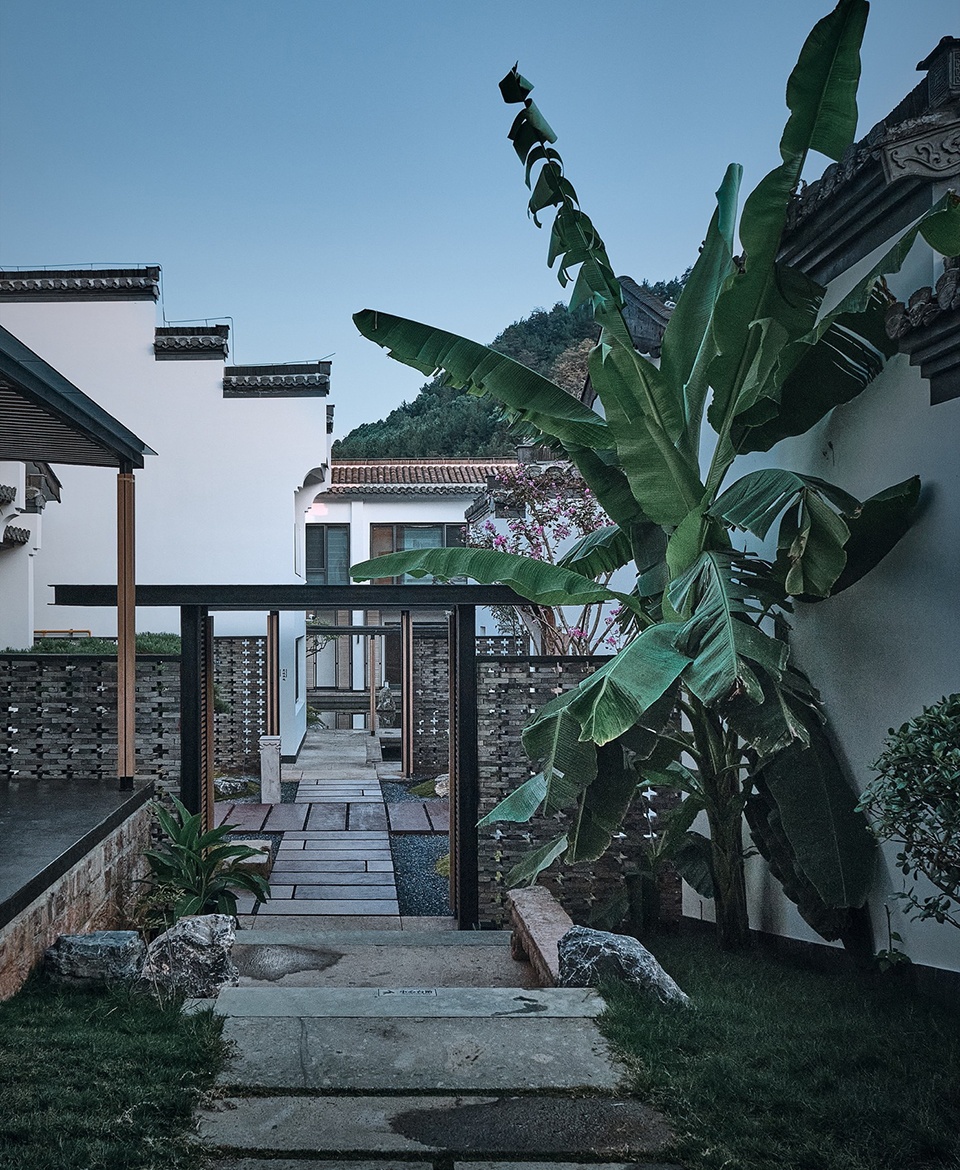
▼内庭院夜景,night views of the inner courtyard
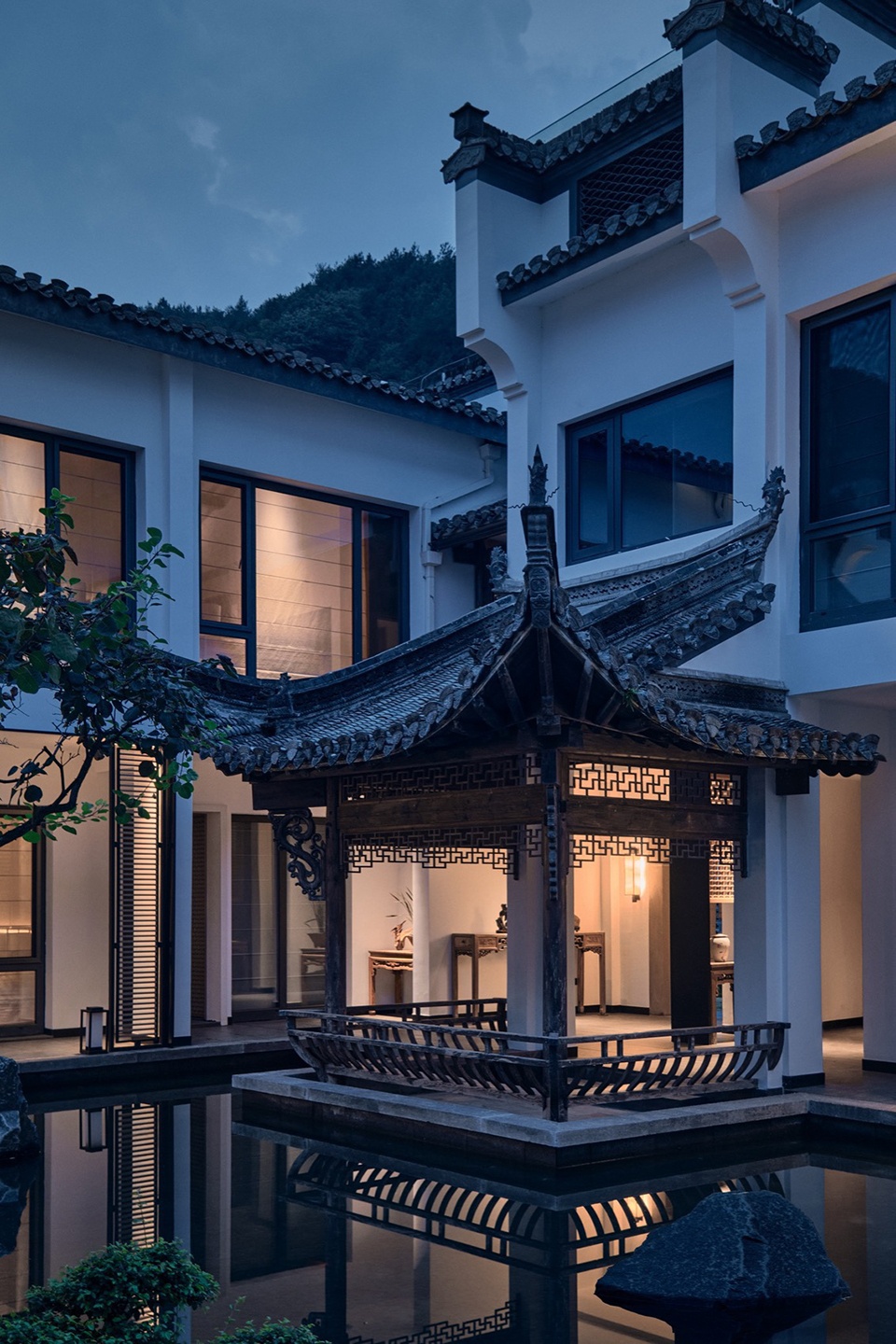
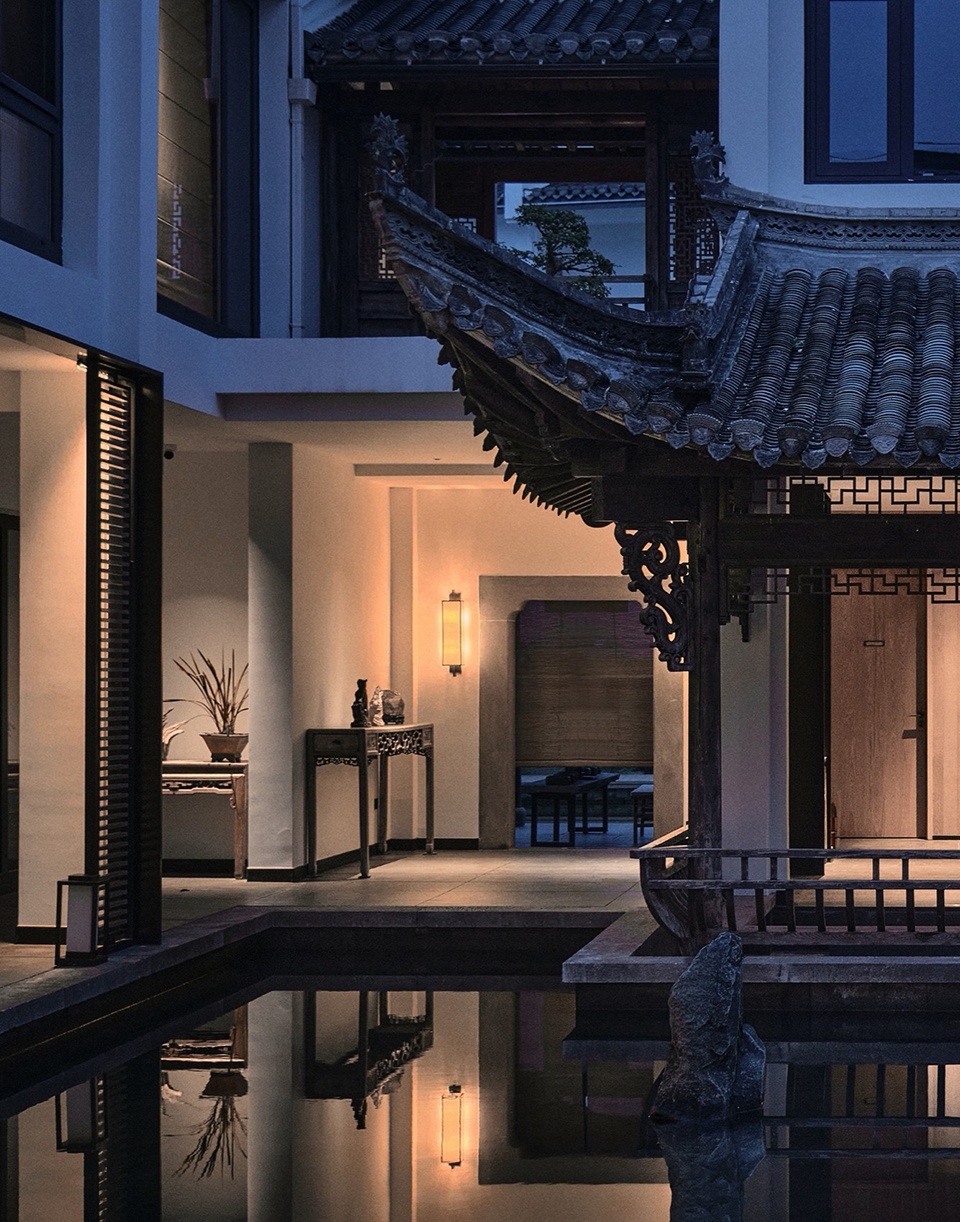
▼夜景细部,details of the inner courtyard
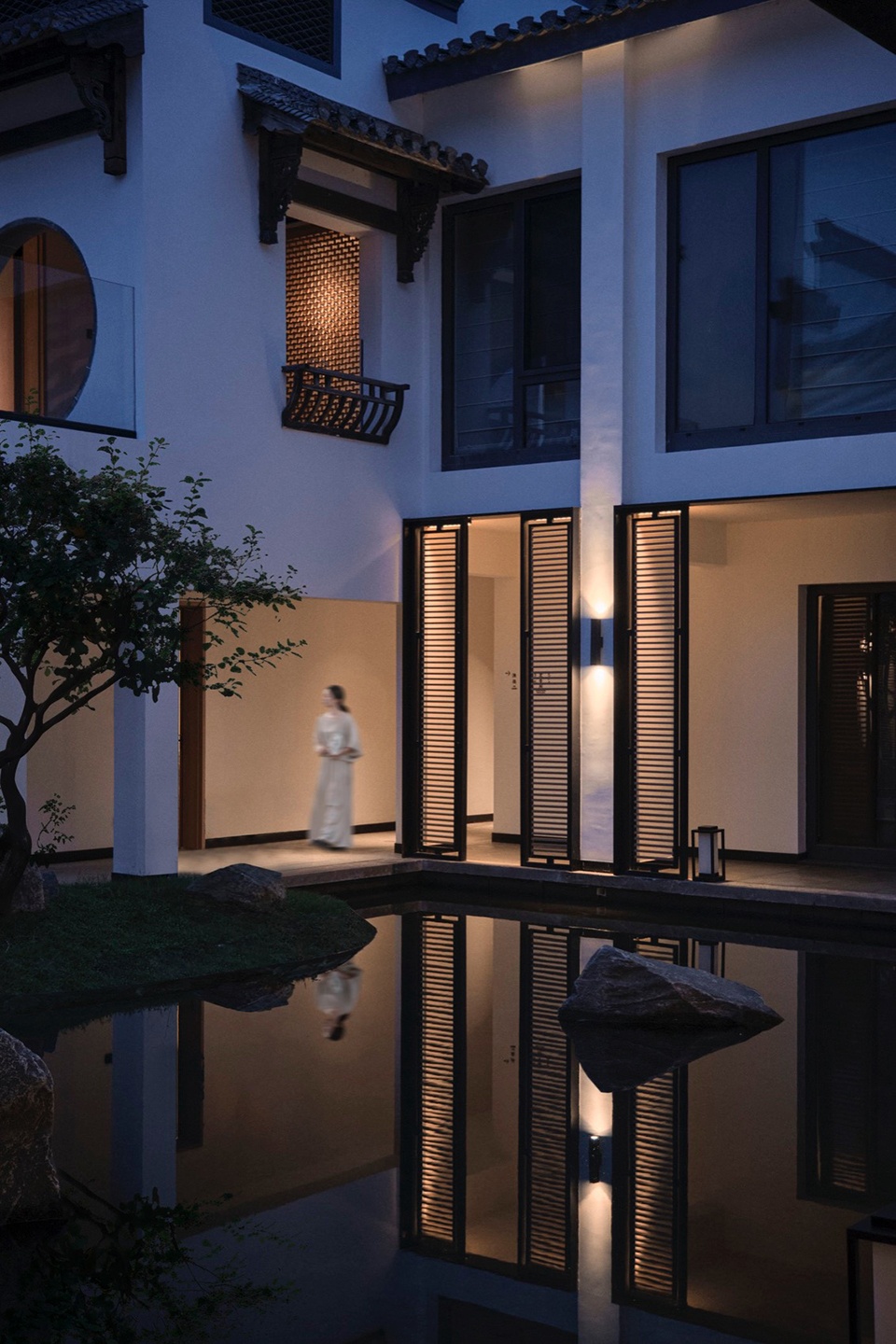
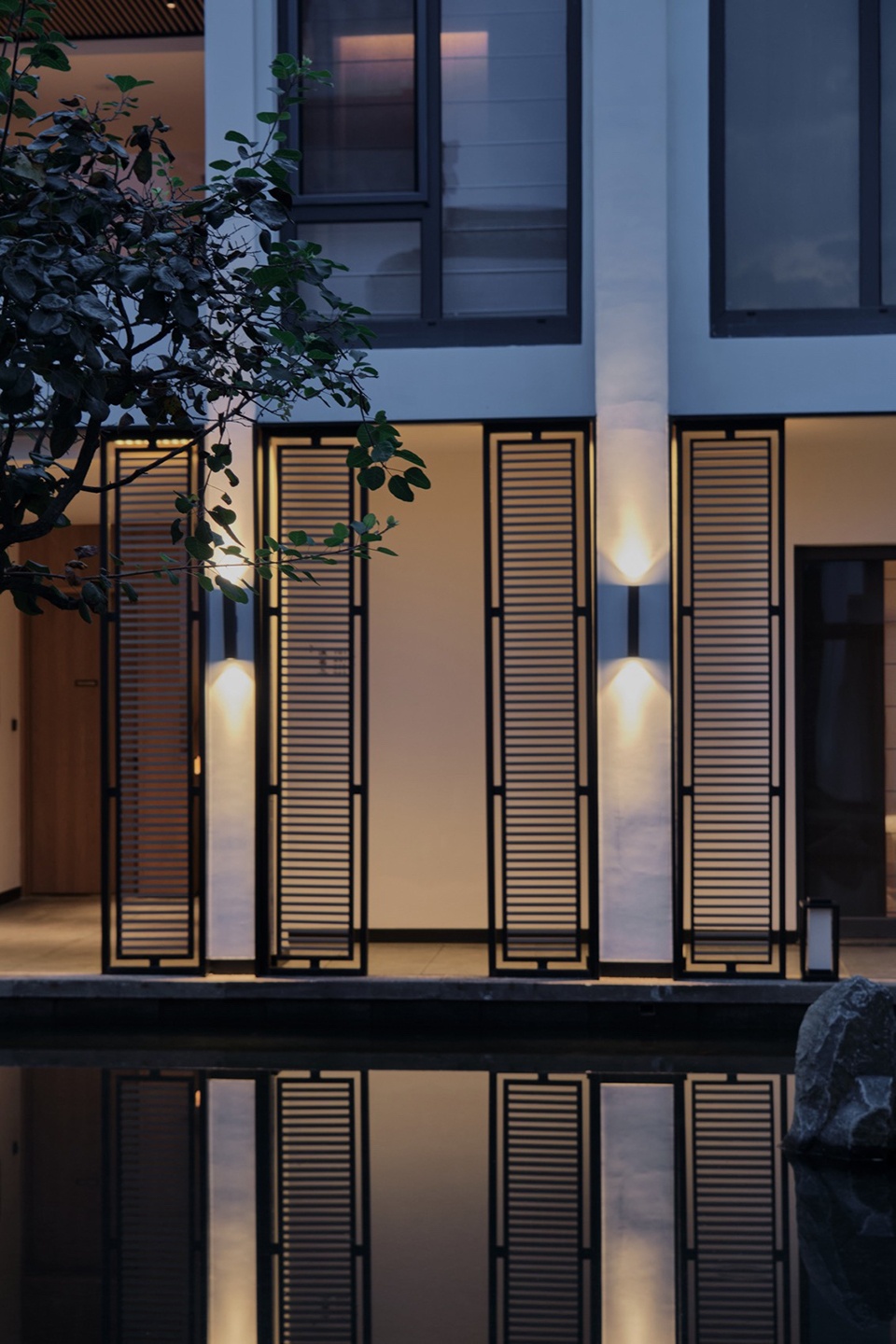
当暮色四合,暖光亮起,古亭与现代的白色建筑,便一同倒映在这片作为“镜面”的静水之中,构成了一幅古与今、天与人相互观照的深邃画卷。整个园林景观的设计哲学中,所领略的并非静态观赏对象,而是一系列精心编排的“事件”与“场景”。这趟游园之旅,其核心并非抵达,而是沉浸;其目的不是穿行,而是安住。这正是“寻源入梦”主题的空间转译:梦,始于足下,终于内心。
As twilight descends and a warm glow illuminates the scene, the ancient pavilion and the modern white architecture cast their reflections together upon the mirror-like still water. This creates a profound tableau—a visual poetry where the past and the present, nature and humanity, engage in a mutual contemplation. Central to our landscape philosophy is the idea that the garden is not a collection of static objects, but a series of carefully choreographed ‘events’ and ‘scenes.’ The essence of this journey lies not in the destination, but in the immersion; its purpose is not mere passage, but true dwelling. This constitutes the spatial translation of our theme, ‘Tracing the Source into a Dream’: a dream that begins beneath one’s feet, and finds its sanctuary within the heart.
▼古韵,ancient ambiance
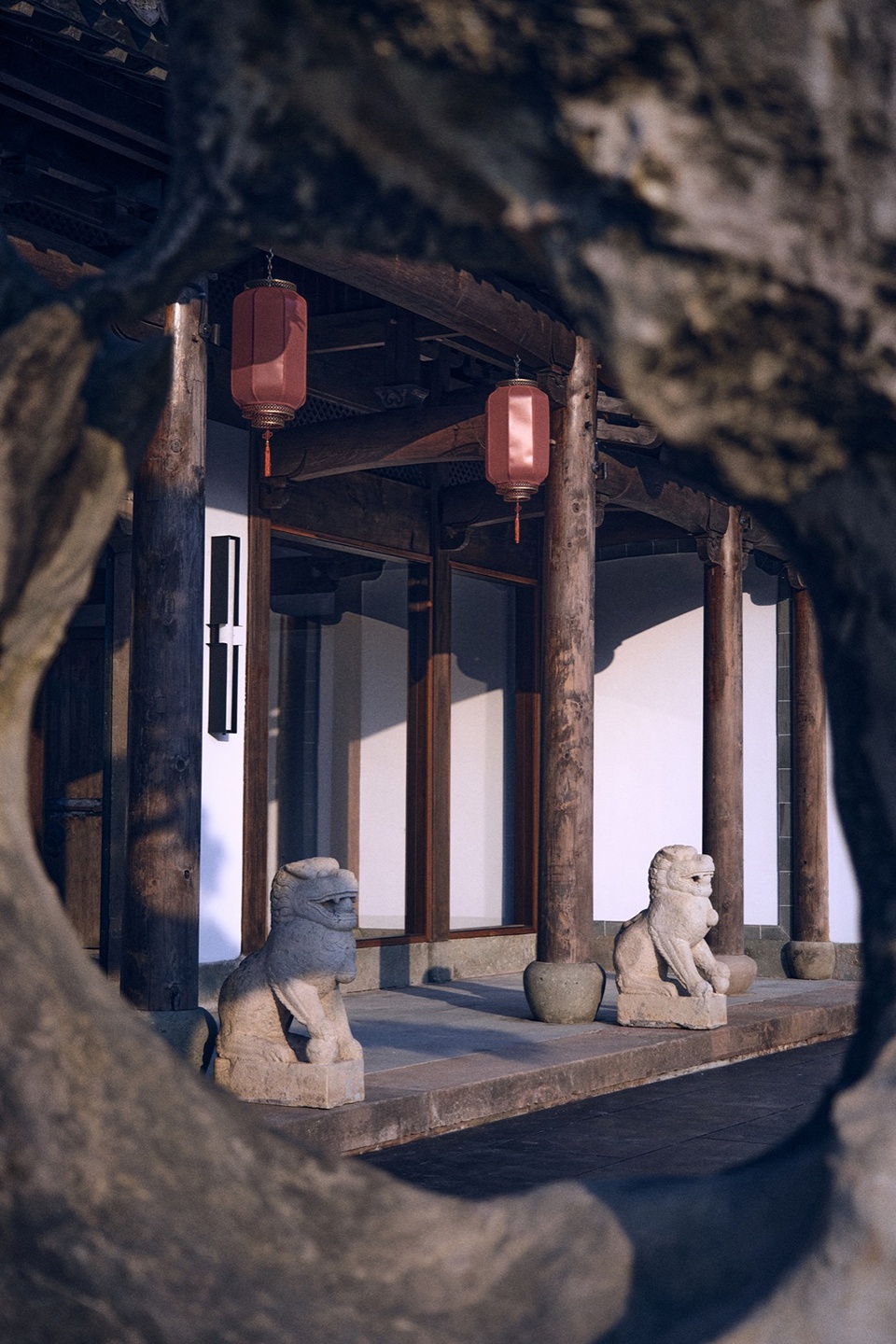
空间营造——枕水听雨的诗意栖居Spatial Crafting — A Poetic Dwelling: Repose by the Water, Listening to the Rain
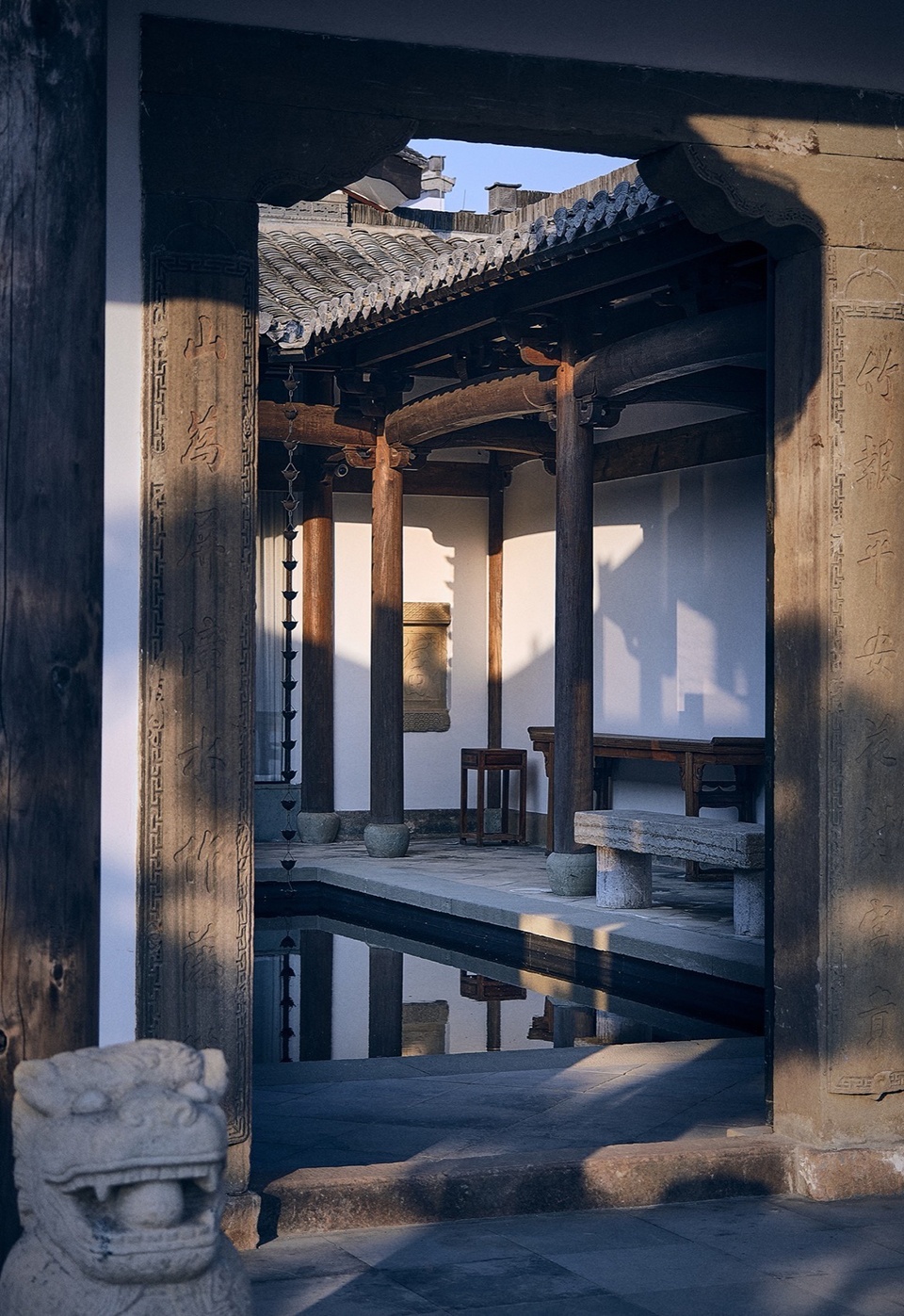
这方“四水归堂”的水院,正是整个空间序列的核心“归心之所”。设计在此精妙地构建了一场关于“内”与“外”、“天”与“人”的视觉对话。内聚的屋檐将天光云影框入画卷,倒映于中央静水,化为“天光云影共一池”的诗境,让宾客于此物我相融的澄澈中,寻得内心的安宁。
This ‘Quadrangle Water Courtyard’ (embodying the tradition of ‘Four Waters Returning to the Hall’) serves as the ‘Sanctuary of the Heart’—the very core of the spatial sequence. Here, the design orchestrates a subtle visual dialogue between the ‘inner and outer,’ between ‘Heaven and Humanity.’ The inward-sloping eaves frame the sky and clouds into a living painting, mirroring them in the central still water. This creates the poetic realm of ‘skylight and cloud shadows sharing a single pool,’ allowing guests to find inner peace in this limpid clarity where the self and the surroundings merge into one.
▼入口,entrance
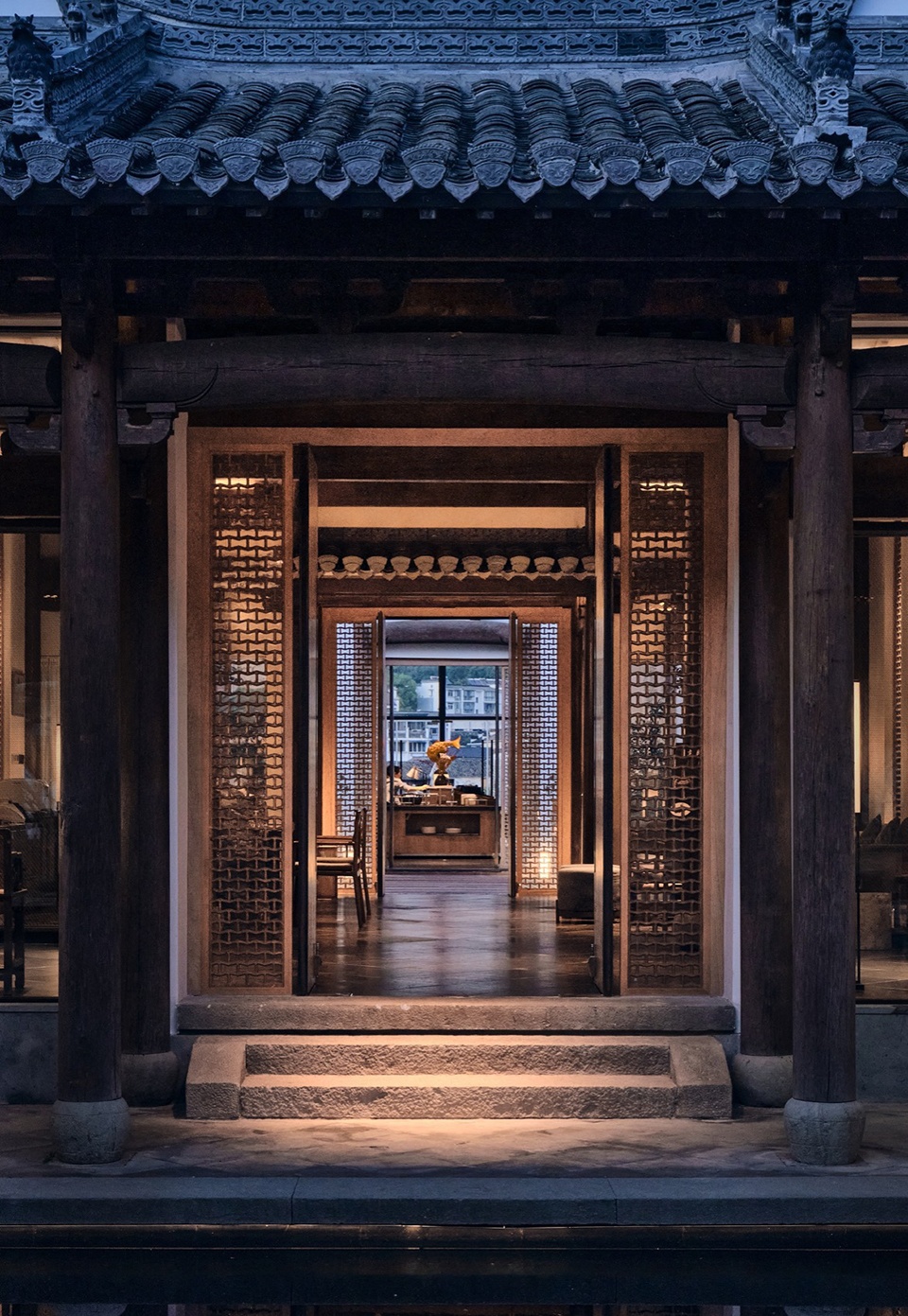
▼“四水归堂”的水院,the ‘Quadrangle Water Courtyard’
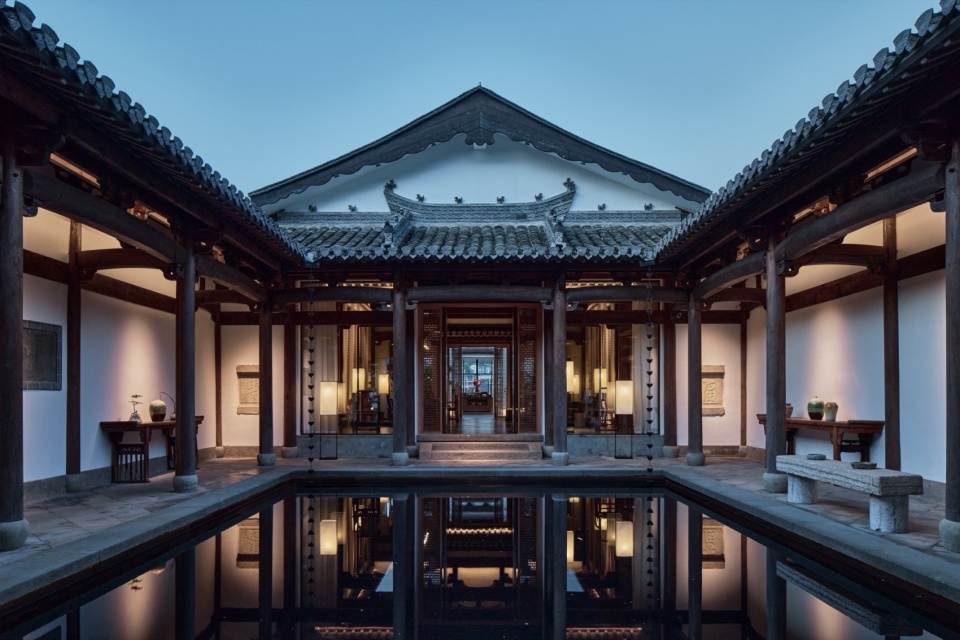
▼由走廊看水院,
viewing the water courtyard from the corridor
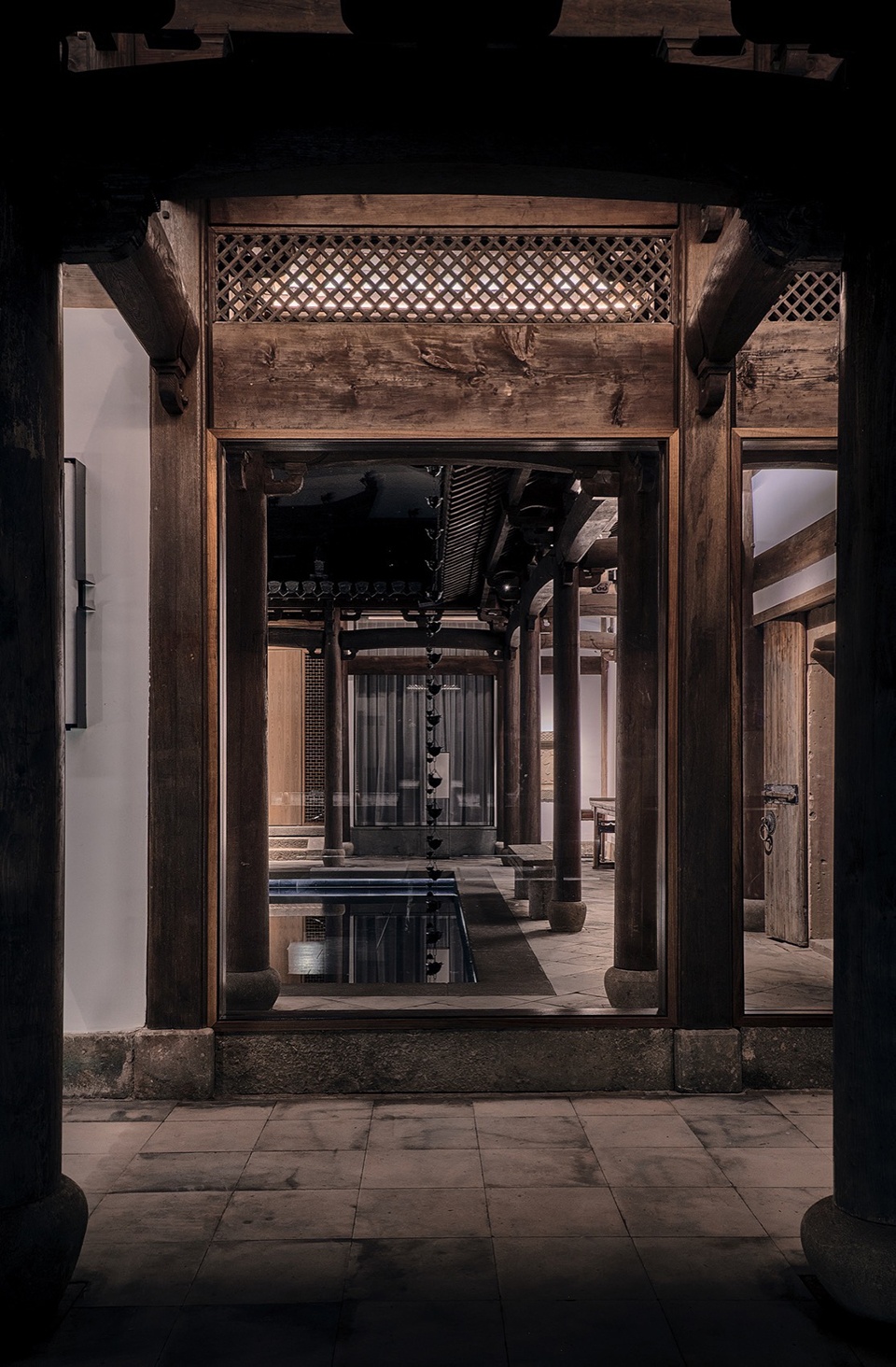
▼由入口看水院,viewing the water courtyard form the entrance
接待厅的设计,始于对古建筑风骨的尊重。裸露的抬梁式木构架成为最强有力的语言,构建出殿堂气韵。两侧花格屏风将光线转换为虚实的晕染,营造出层层递进的深邃感。空间器物亦是对自然质感的礼赞,没有浮华雕琢,唯有被时间打磨的朴素之美。
The design of the Reception Hall is rooted in a deep respect for the structural spirit of ancient architecture. The exposed ‘Tai-Liang’ (post-and-beam) timber frame serves as the most powerful visual language, establishing an aura of palatial grandeur. Flanking lattice screens filter the light into a soft interplay of void and solid, creating a profound sense of spatial layering. Even the furnishings and artifacts are an ode to natural textures. Devoid of superficial ornamentation, they possess only the unadorned beauty polished by time.
▼接待厅,the reception hall
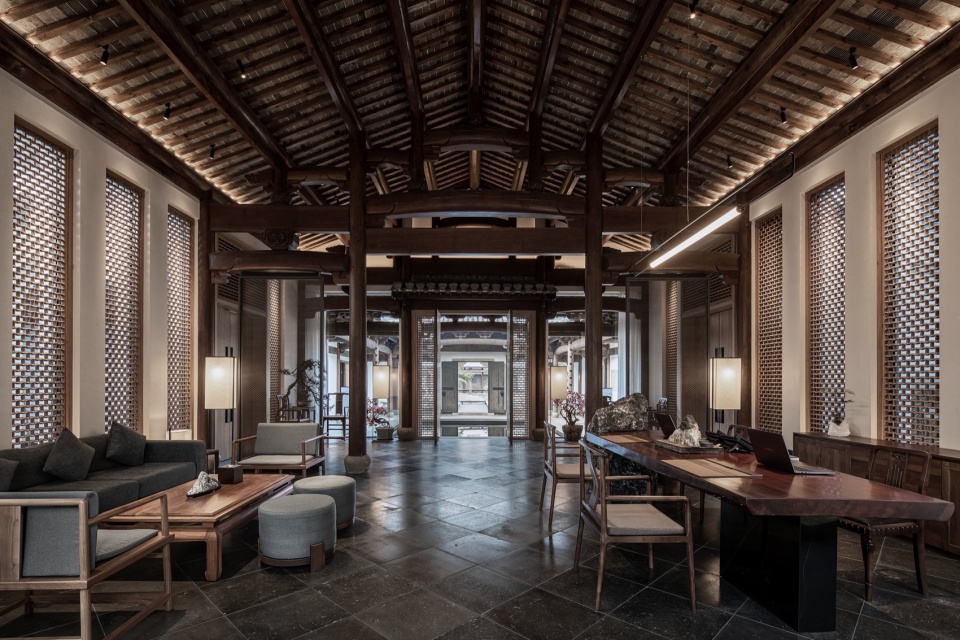
▼接待厅一角,corner of the reception hall
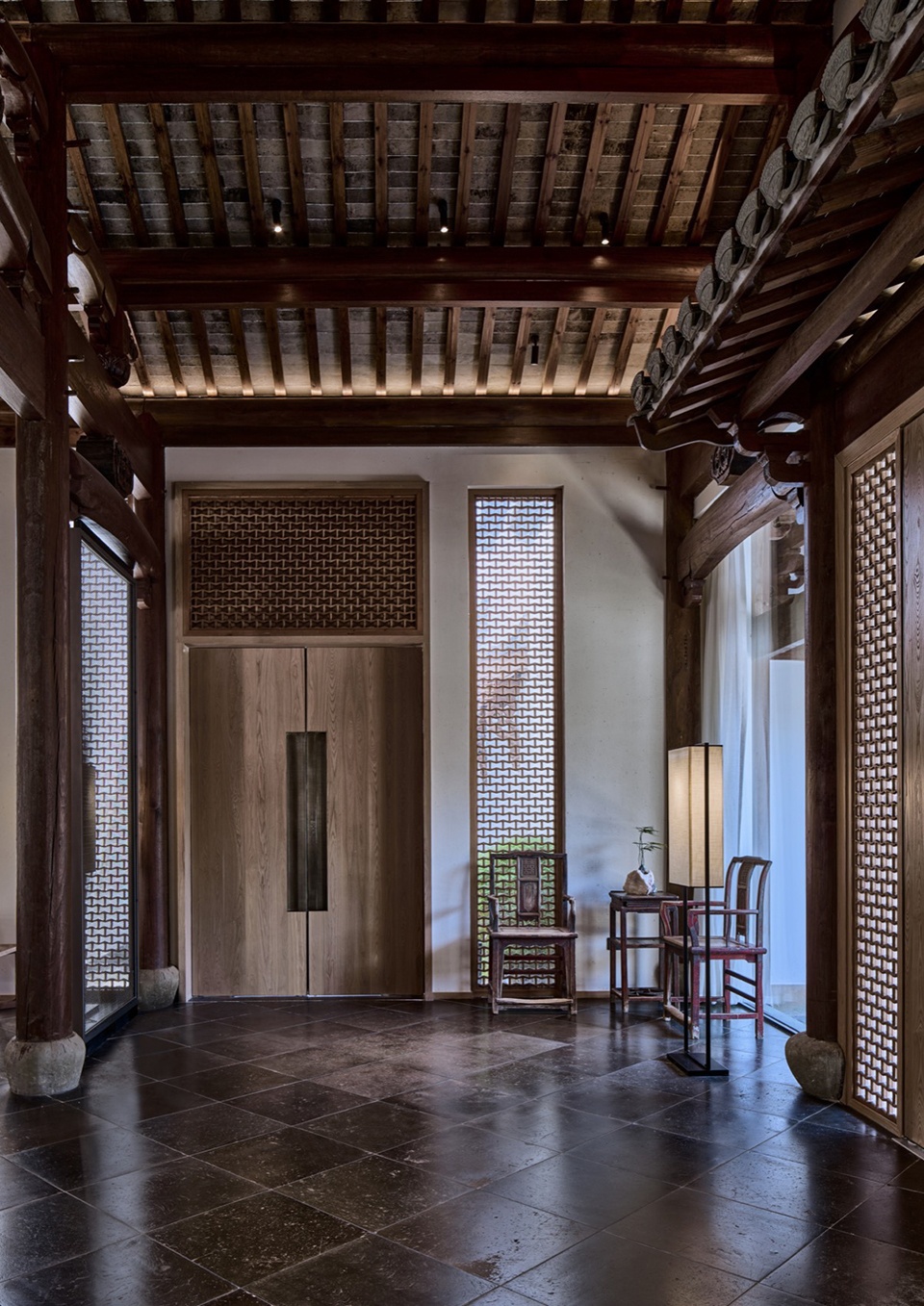
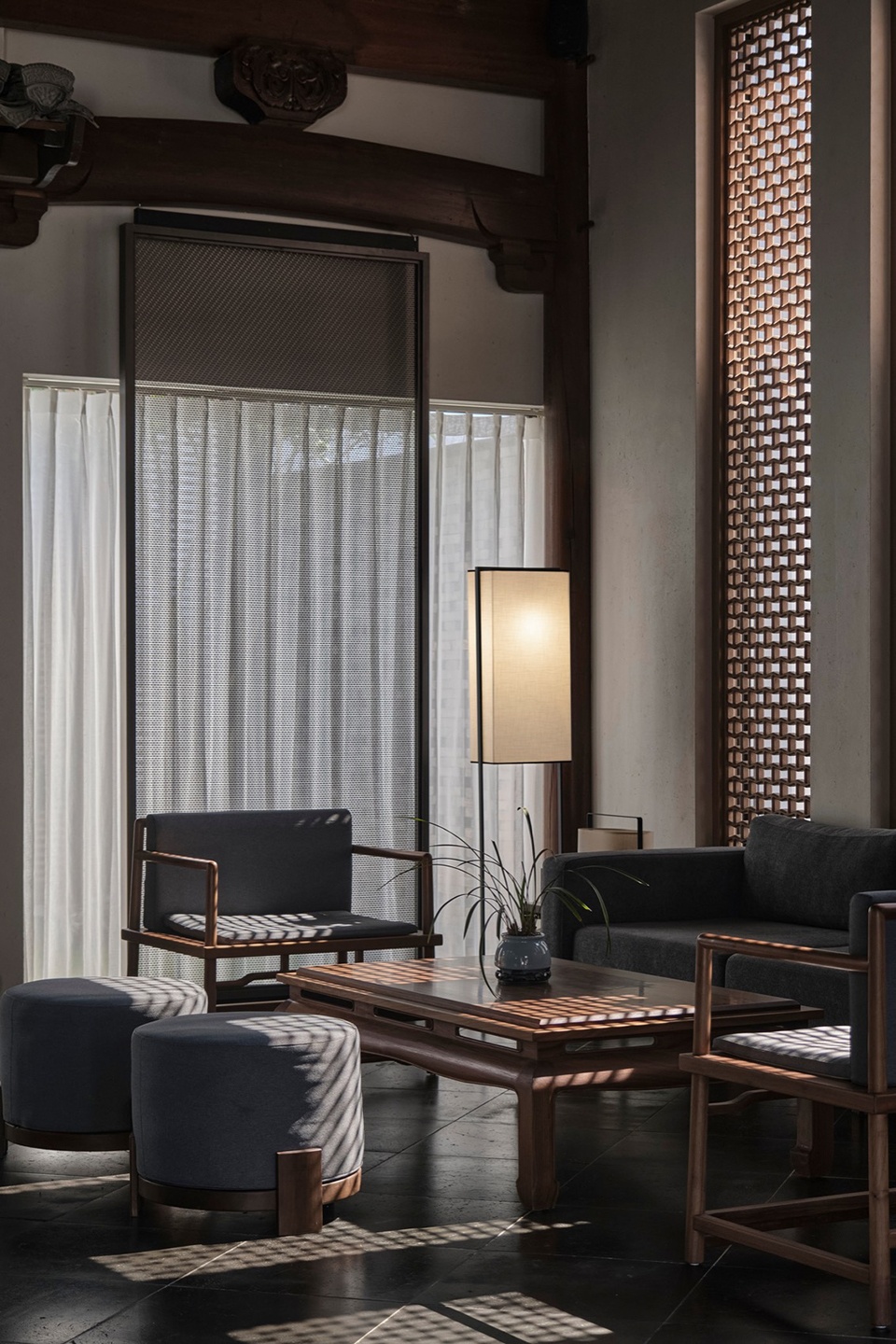
▼细部,details
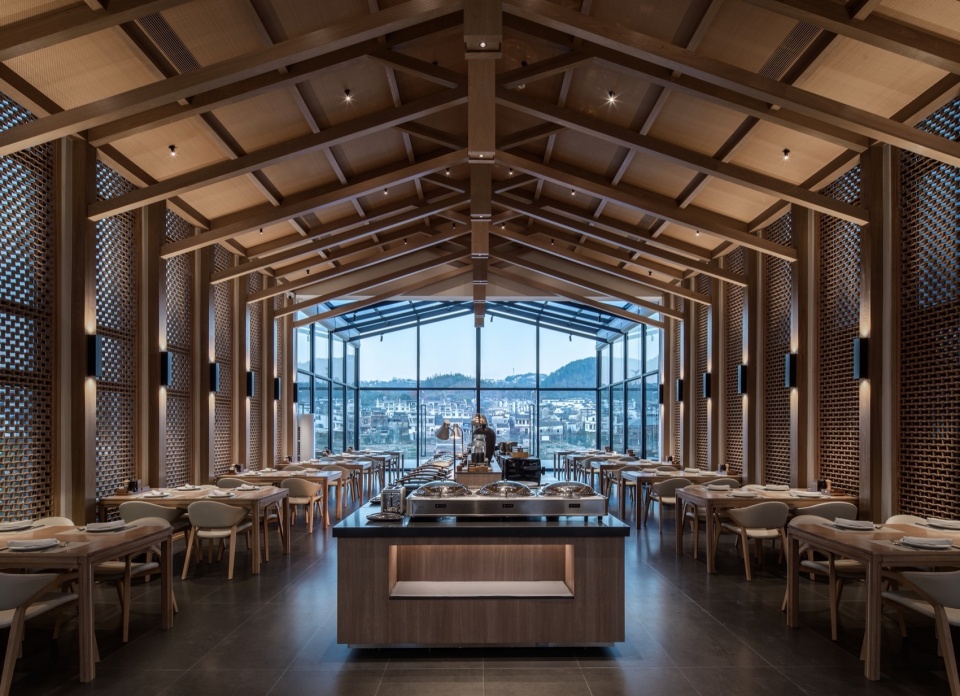
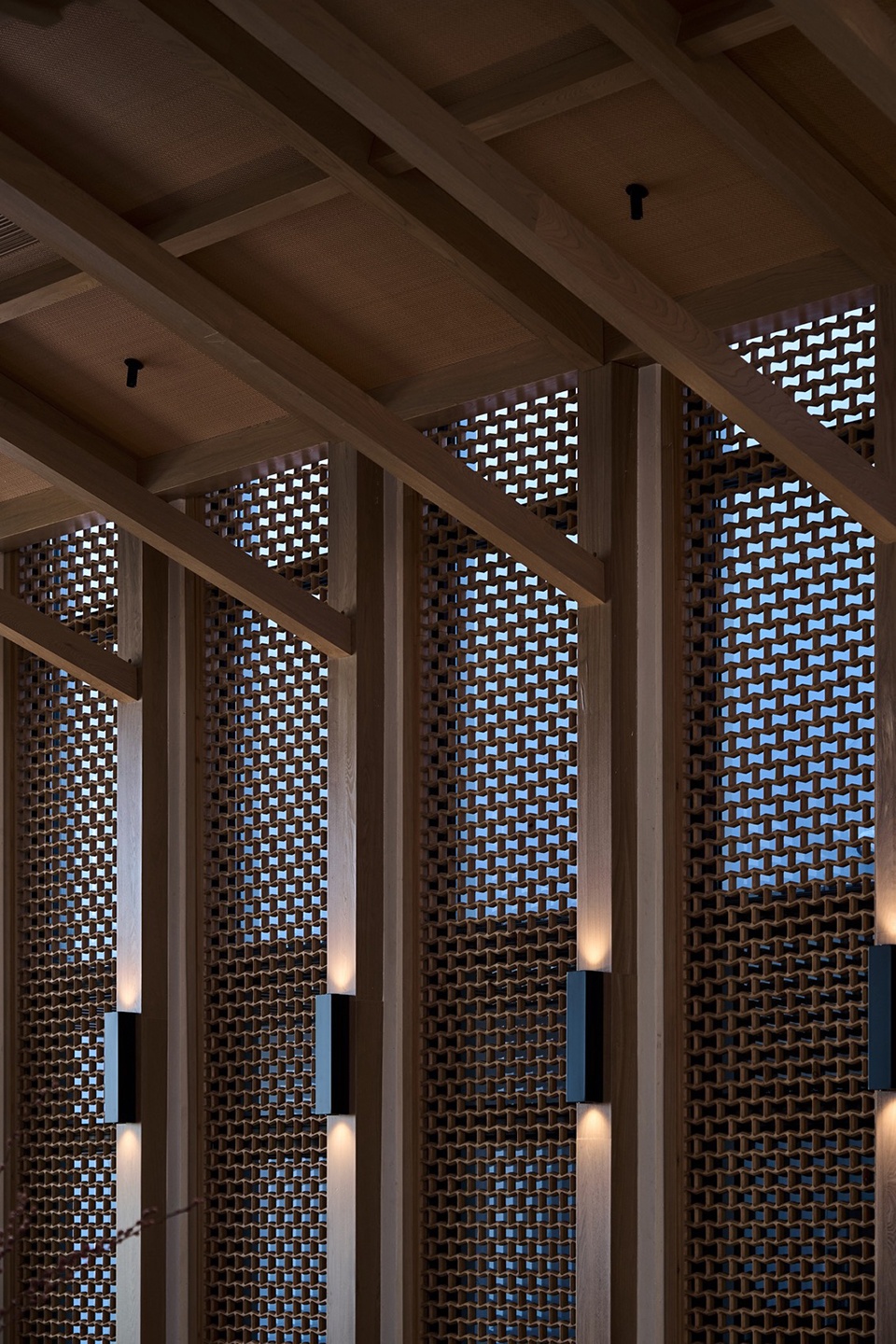
餐厅旨在构建一处“安坐于当下,与历史对望”的场域。极富仪式感的木构架笼罩空间,所有的内敛与秩序,都是为了端头那面通透玻璃幕墙的豁然开朗。安坐于此,新安江的波光与对岸的千年古城,化为一幅真实的古城长卷,让饮食升华为对在地风土与历史文脉的深度品尝。
The restaurant is conceived as a sanctuary to ‘rest in the present while gazing at history.’ A highly ritualistic timber structure envelops the space. All its introversion and order serve a singular purpose: to build anticipation for the dramatic revelation offered by the transparent glass wall at the far end. Seated here, the shimmering Xin’an River and the millennium-old city across the water transform into a living, panoramic scroll. This elevates the act of dining into a profound savoring of the local terroir and its historical lineage.
▼餐厅,the restaurant
▼细部,details
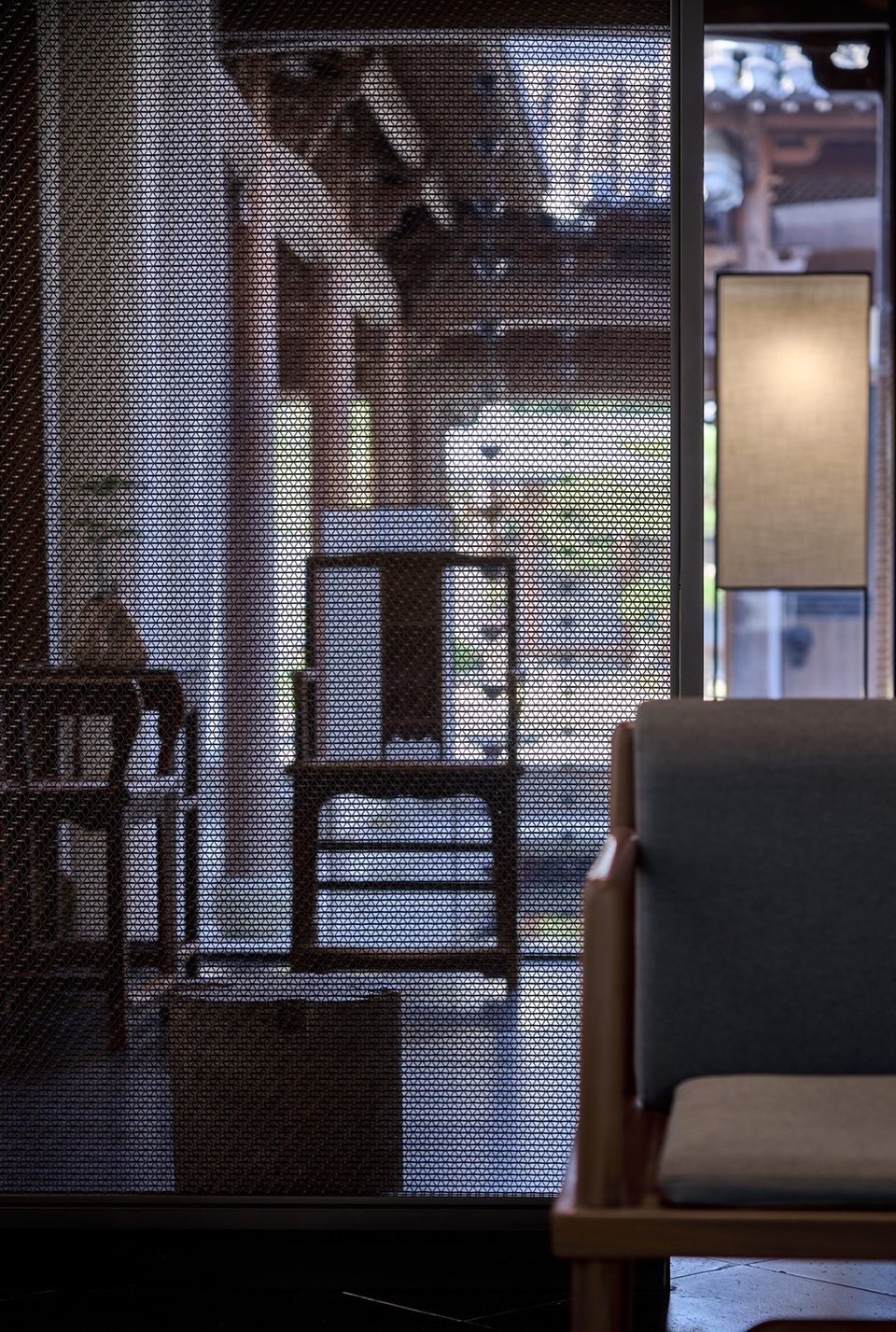
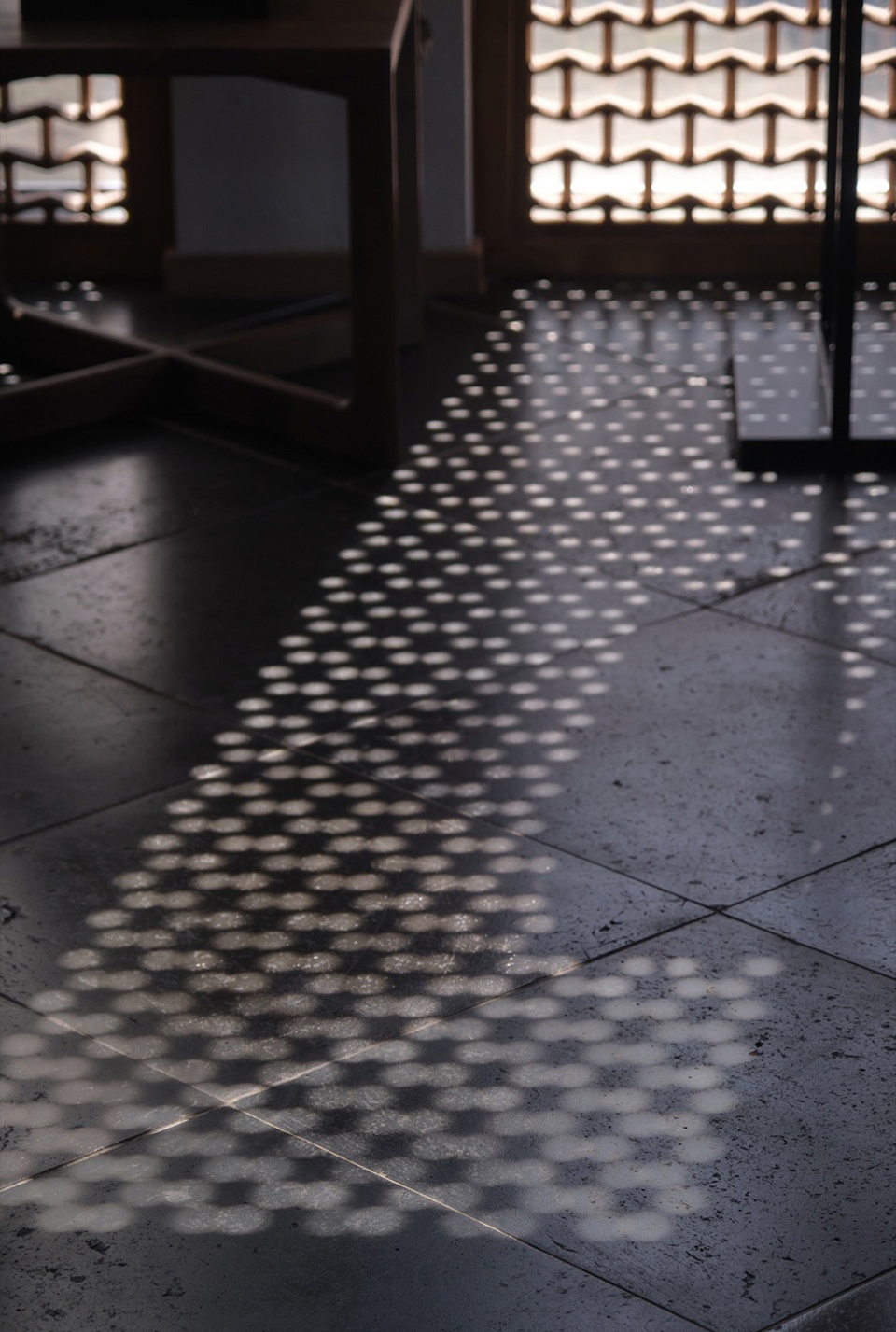
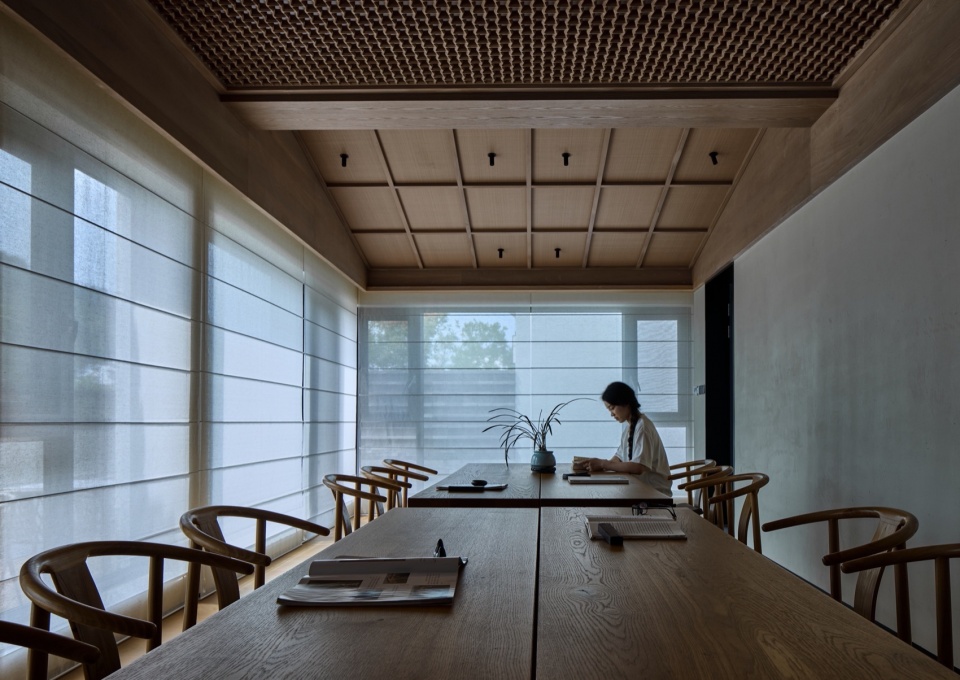
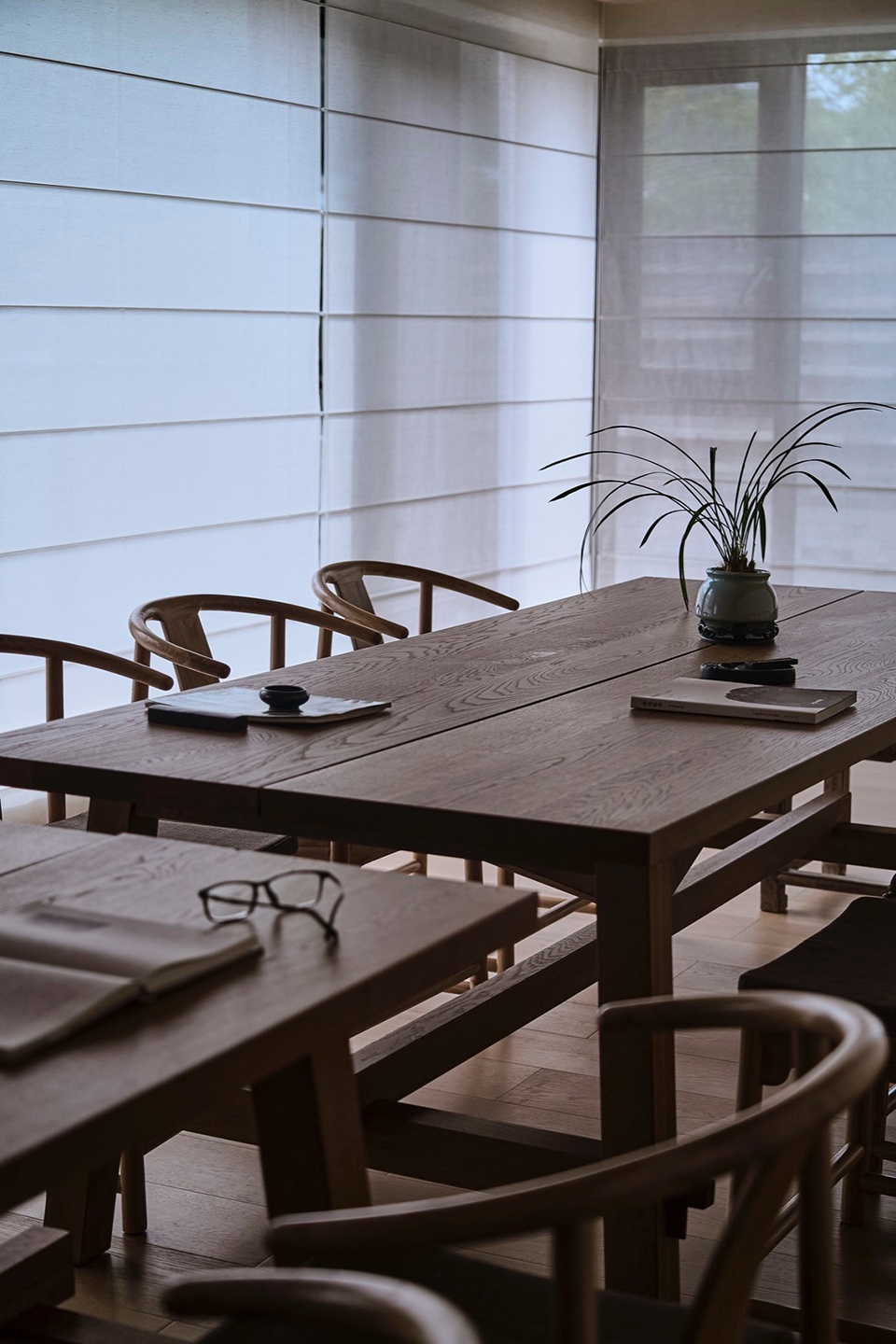
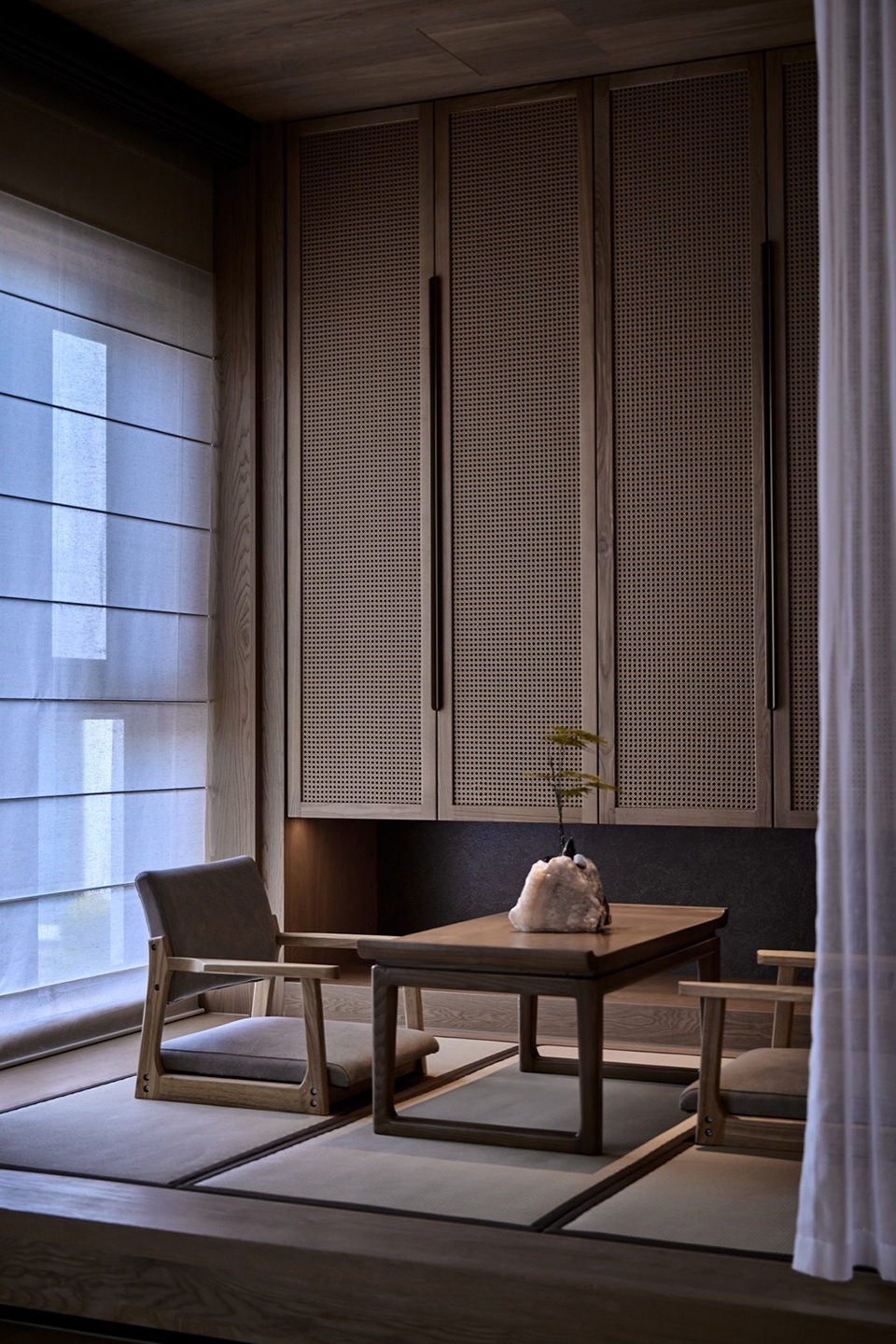
书房的设计,旨在营造一处可供静心沉潜的“精神斋房”,将外界的喧嚣过滤为温润的光影,为阅读营造出最佳的氛围。
The Study is conceived as a ‘spiritual sanctuary’ for deep contemplation. It acts as a filter, screening out the clamor of the outside world and transforming it into a gentle, diffused light. This interplay of shadow and warmth cultivates the ultimate atmosphere for reading and reflection.
▼书房,the study
▼书房细部,details of the study
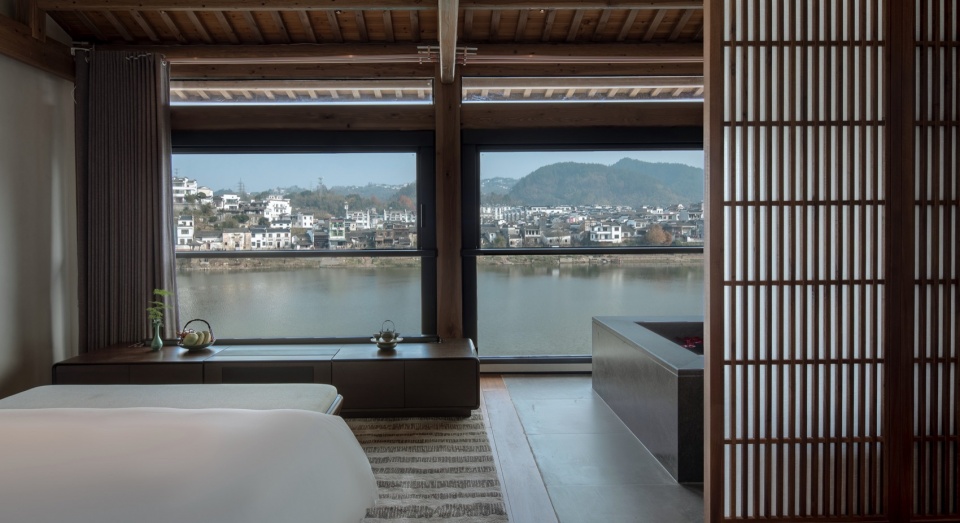
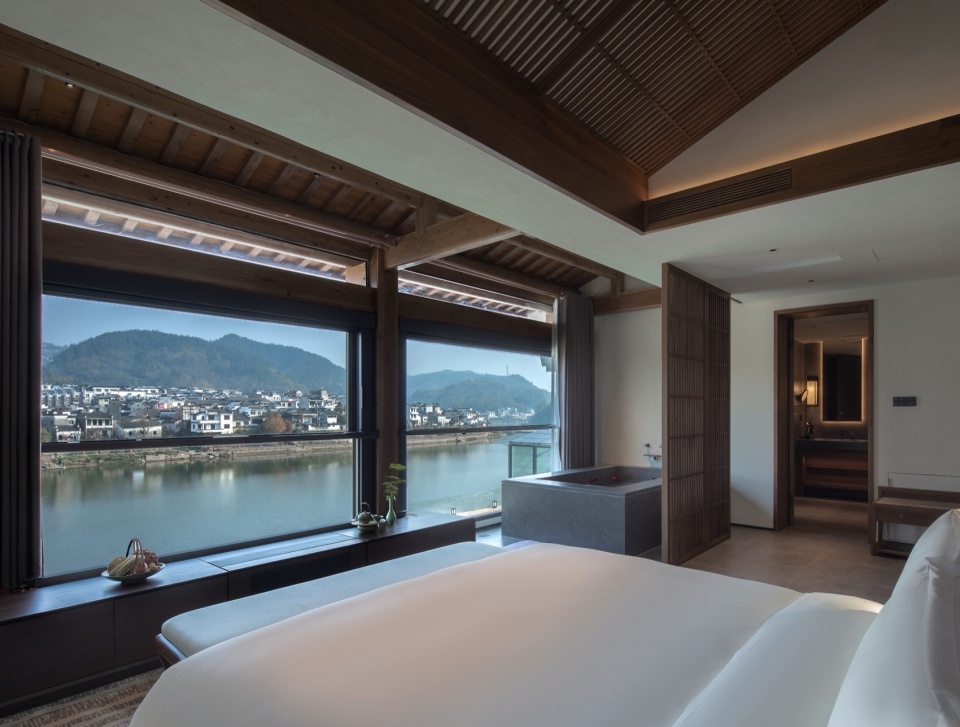
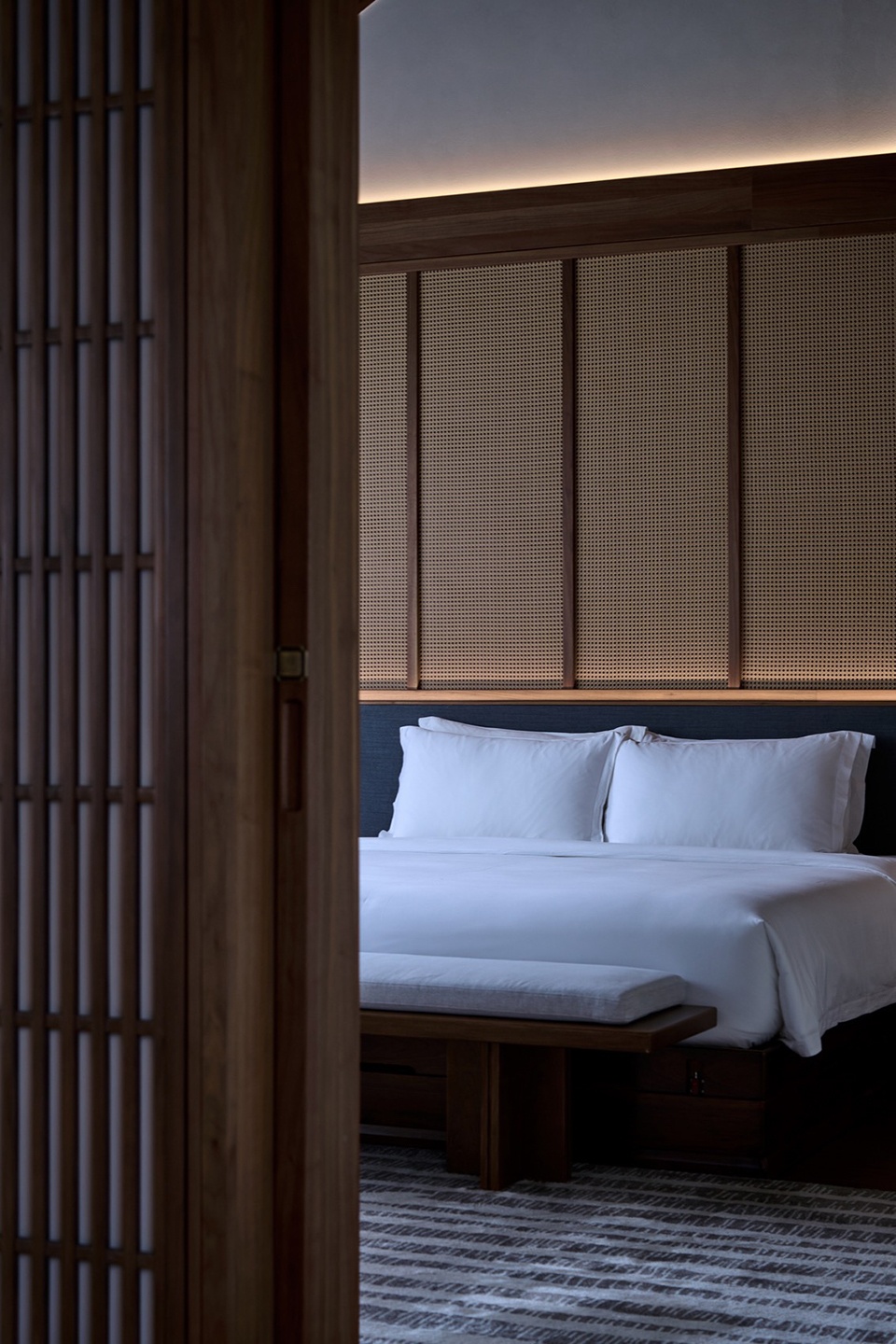
客房,是对“枕水而居”这一东方栖居理想的当代诠释。空间最大限度地退让于风景,让卧榻与江水仅一步之遥,使对岸的古城风貌成为一幅触手可及的床头画卷。室内则以温润原木与质朴竹编构建起安然居所,将感官焦点让位给窗外。最终,栖居于此,不再是单纯的休憩,而是成为一次身心沉浸于山水之间的深度疗愈。
“The guest rooms offer a contemporary interpretation of the Oriental ideal: ‘Repose by the water.’ The spatial design defers maximally to the landscape, bringing the bed into intimate proximity with the river. This transforms the ancient city view across the water into a tangible, living tableau at your bedside. Interiors are crafted with warm timber and rustic bamboo weaving to build a peaceful sanctuary, deliberately surrendering the sensory focus to the world outside. Ultimately, dwelling here transcends mere rest; it becomes a profound therapeutic journey, immersing body and mind in the healing embrace of the landscape.”
▼客房,the guest room
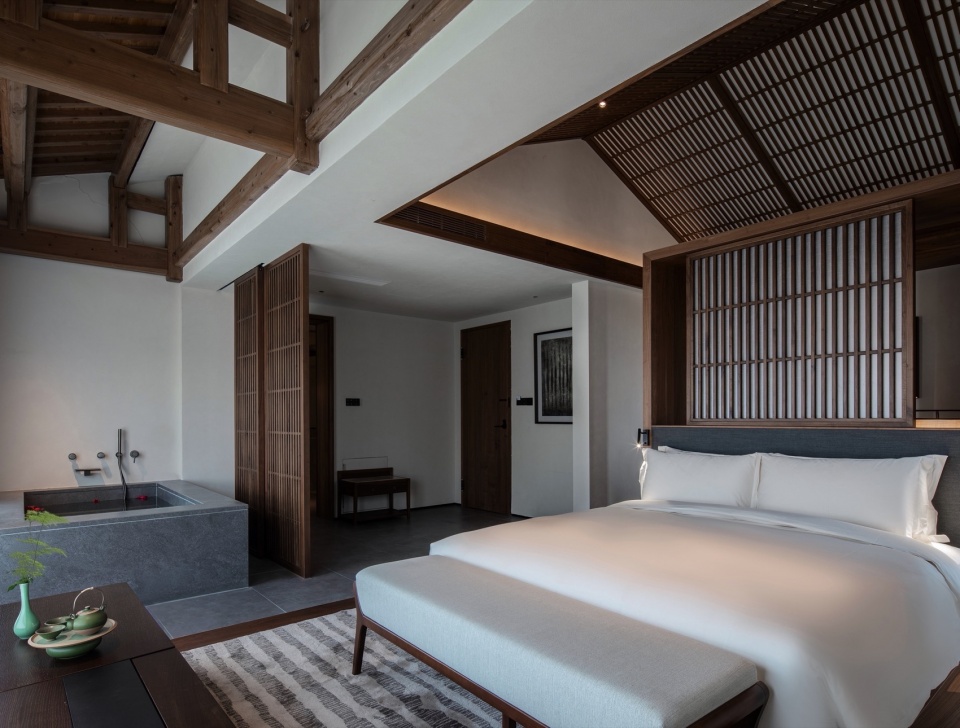
▼客房,the guest room
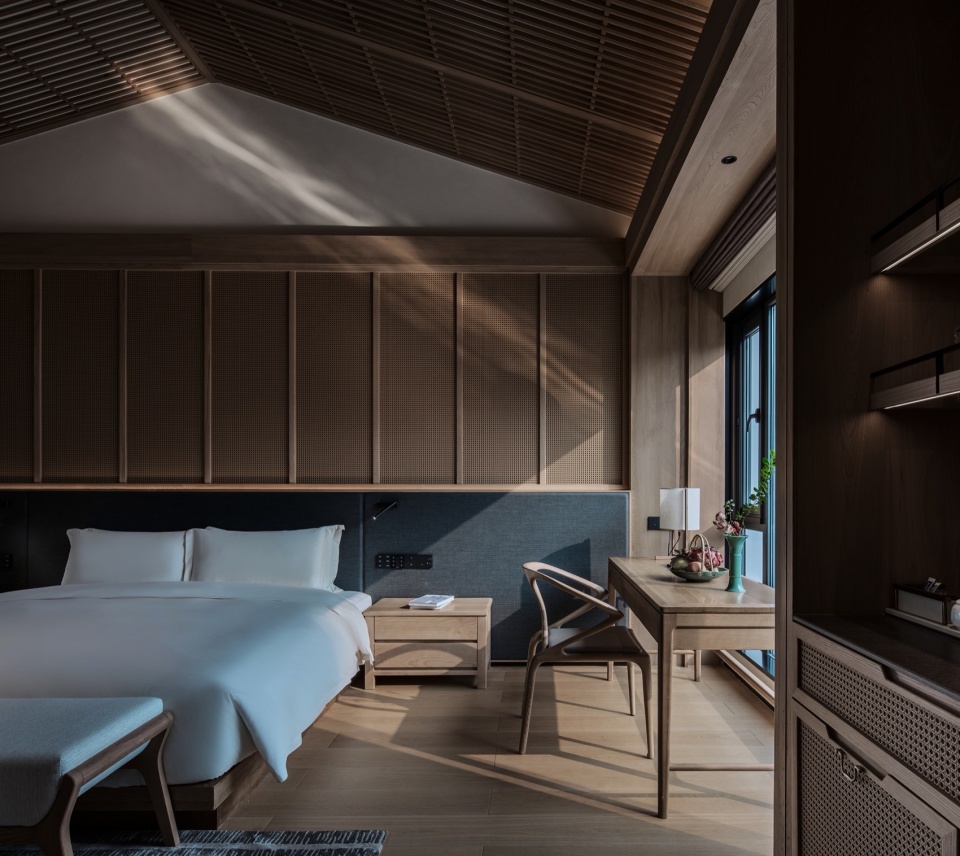
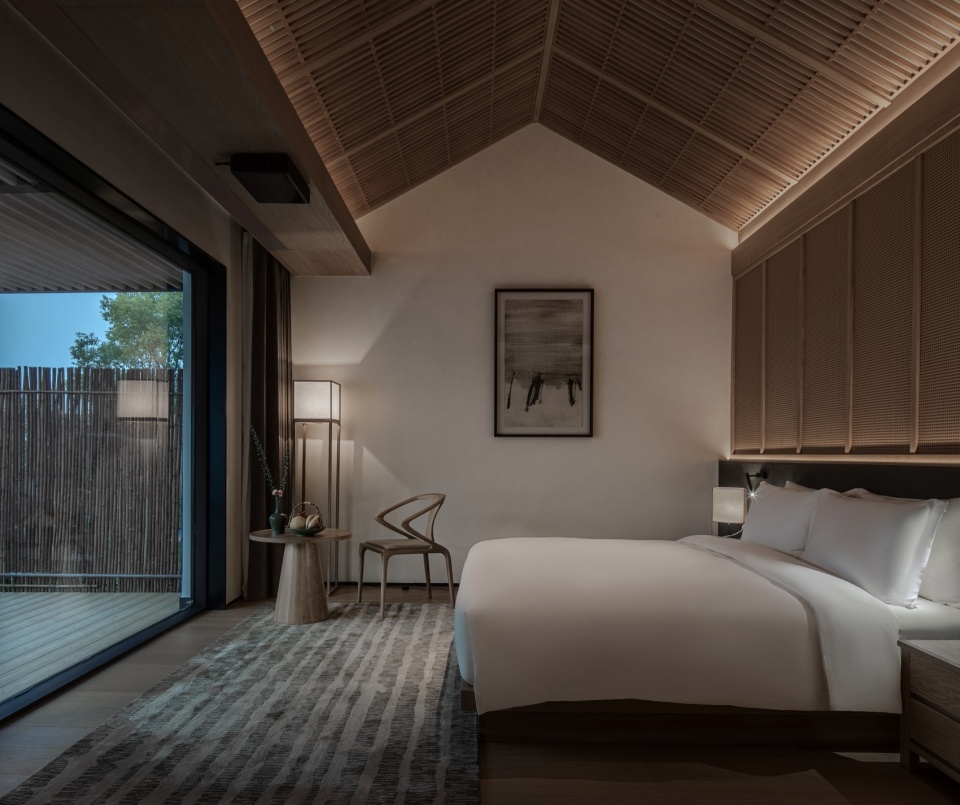
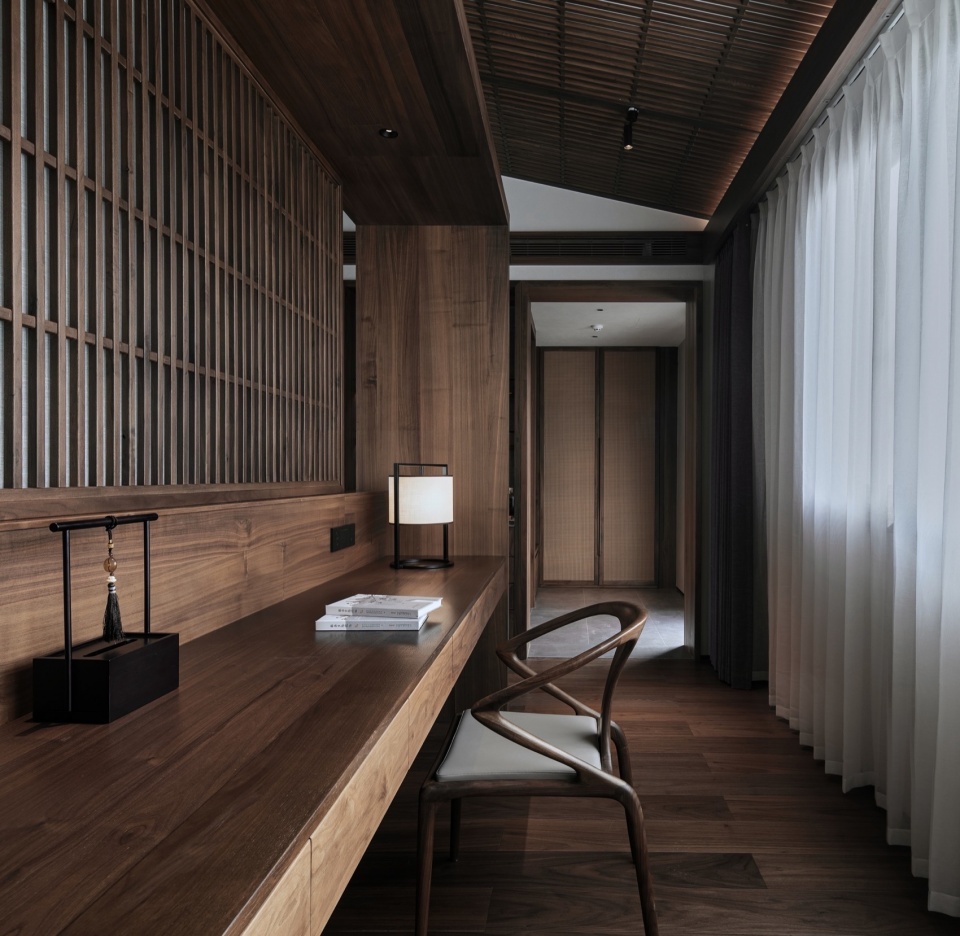
▼客房细部,details of the guest room
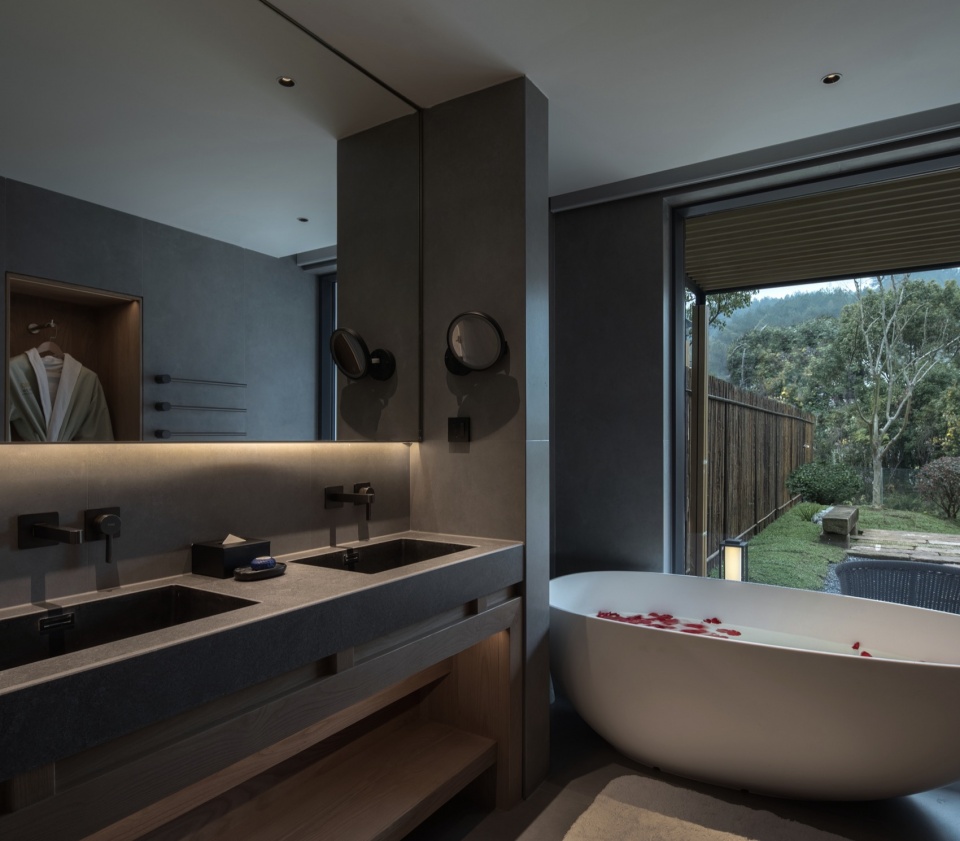
▼浴室,bathroom
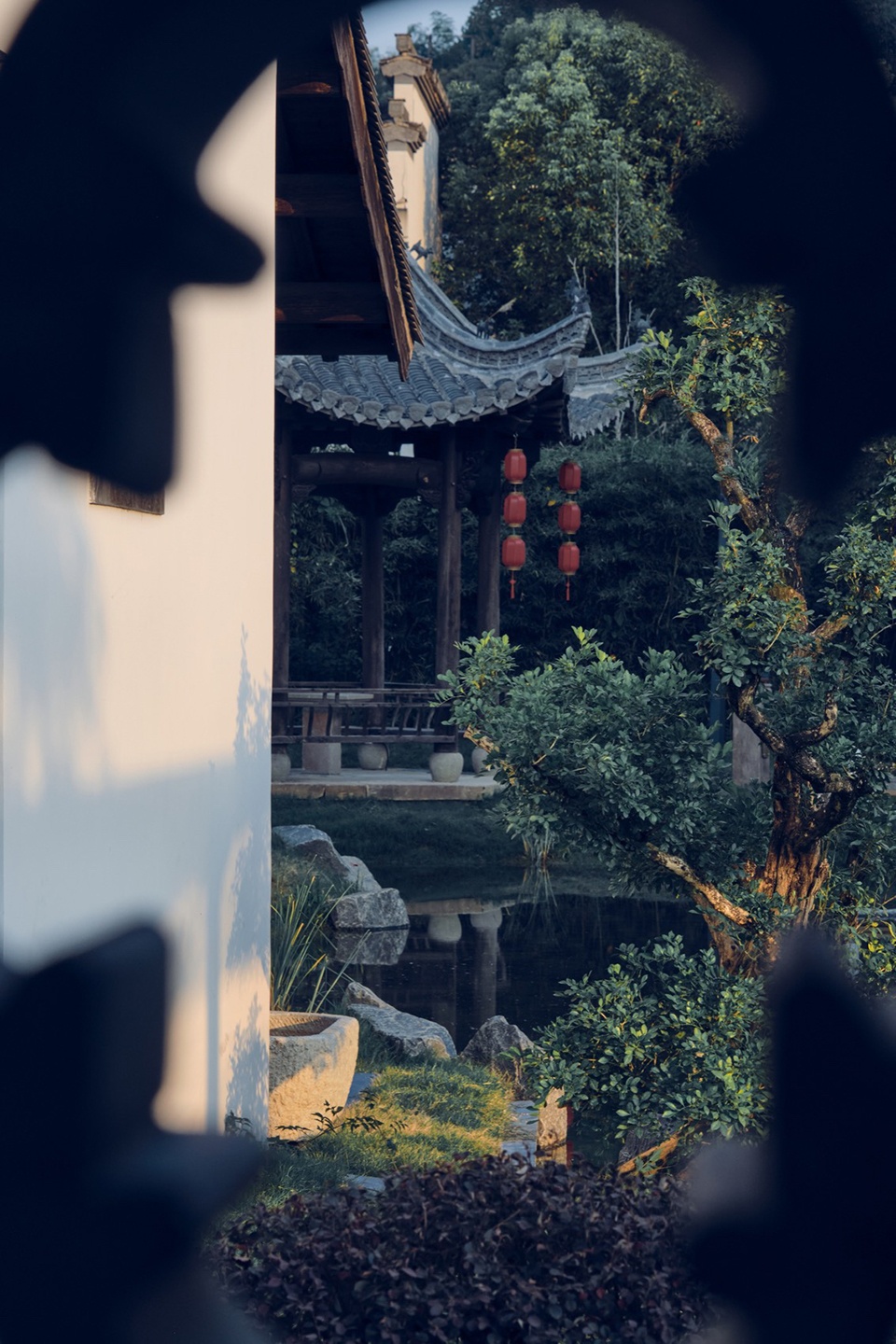
▼庭院,courtyard
不止于宿,归于烟雨Beyond a Stay, A Return to the Misty Rain
最终,我们希望酒店不止是旅途中的歇脚之处。它是一个载体,以当代建筑语言,承载着徽州山水的灵气与千年文脉;它也是一个“精神渡口”,让都市人紧绷的节奏,在此自然切换为悠然的“山水时序”。
Ultimately, we envision this hotel as far more than a mere stopover.It stands as a cultural vessel. Through contemporary architectural language, it encapsulates the ethereal spirit of Huizhou’s scenery and its millennial lineage. It also serves as a ‘spiritual ferry.’ Here, the high-strung pulse of urban life naturally transitions into the leisurely ‘sequence of the landscape’
▼水墨画般的氛围,an atmosphere like ink wash painting
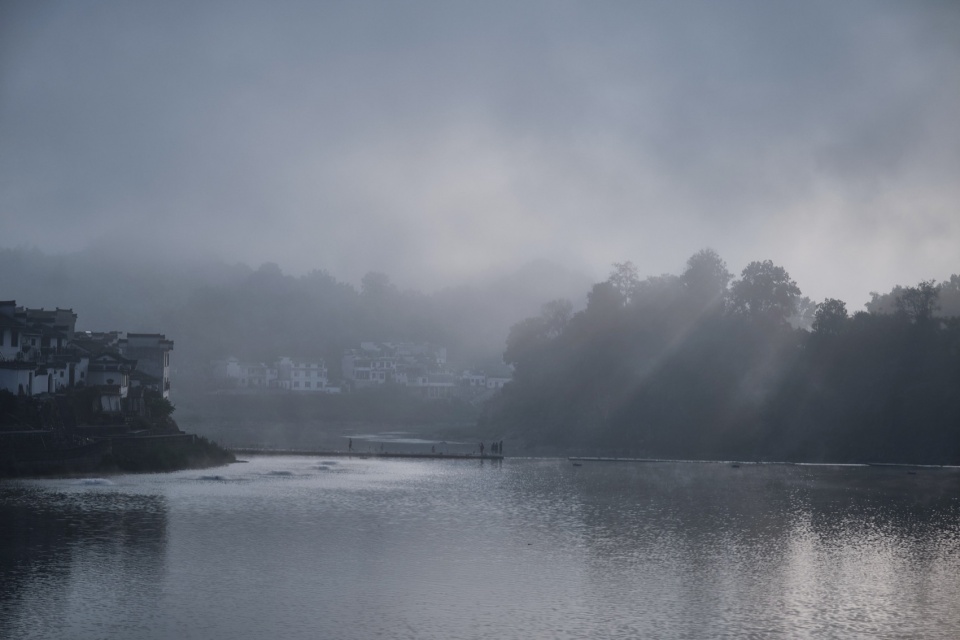
清晨,在渔梁坝的涛声中醒来;午后,于水中茶亭静看一江烟雨;入夜,枕着对岸古城的灯火安然入梦……我们希望每一次的停留,都是一次对在地文化的深度浸润,一次对理想生活的重新发现。烟雨,既是此地的天成之景,更是我们希望宾客能在此寻得的一种心境,一种观照自我、回归本然的澄澈与安宁。不止于宿,归于烟雨。这,便是紫阳烟雨的全部意义。
Awaken at dawn to the surging sound of the Yuliang Dam; spend the afternoon in the floating tea pavilion, quietly watching the river shrouded in mist; and at nightfall, drift into peaceful slumber, pillowed by the glimmering lights of the ancient city across the water…We envision every stay as a deep immersion into the local culture and a rediscovery of the ideal life. Here, ‘Misty Rain’ (Yanyu) is more than the natural scenery bestowed by the heavens; it is a state of mind we hope you find—a limpid clarity and serenity achieved through self-contemplation and a return to your true essence. Beyond a Stay, A Return to the Misty Rain. This is the very essence of Huangshan MISTYRAIN .
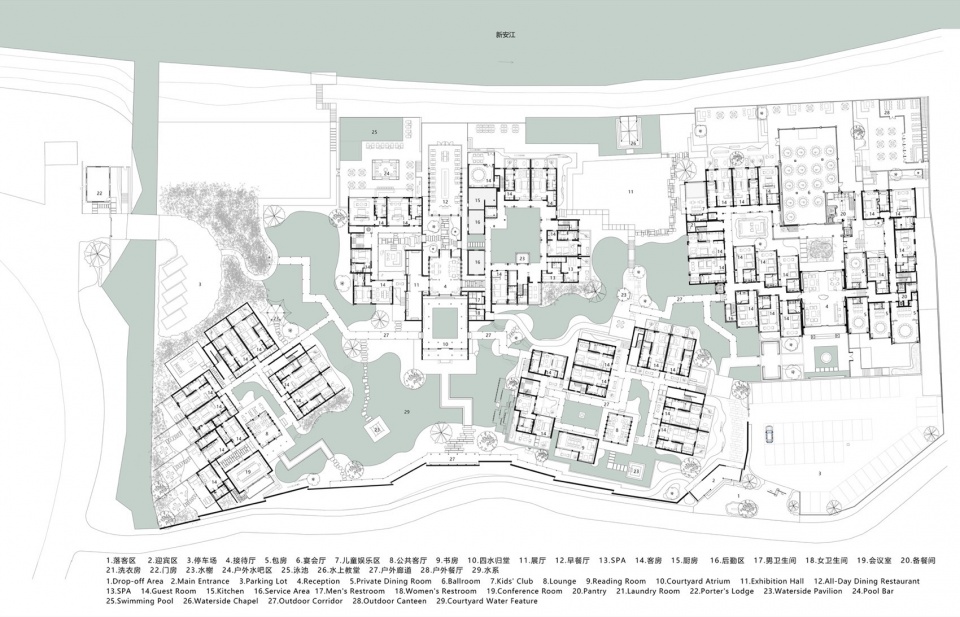
▼平面图,plan
Name|Huangshan Misty Rain Resort Hotel
Location|Anhui Province, Shexian
Indoor Design Area|8100m²
Landscape Design Area|13600m²
Design Date|Apr. 2023
Completion Date|Oct. 2024
Architectural Design|YI+MU Design Office
Landscape Design|YI+MU Design Office
Interior Design|YI+MU Design Office
Soft Decoration Design|YI+MU Design Office
Chief Designers|Yi Chen,Muchen Zhang
Design Team|Wujie Li、Zhiqiang Yang、Yi Xiao 、Xu Zhang、Shaobao Xu、Rongshan Zhang
Lighting Design|Jinl Lighting(Beijing)Designco.LTD
Exhibition Design|Anhui Huangshan Yulong Cultural Tourism Development Co., Ltd
Photography|YI+MU Design Office、Xuguo Tang
Copywriting|YI+MU Design Office
Materials| Landscape Stone、Antiseptic Wood Floor、Gold Brick、Walnut、Elm、
Terracotta Brick、Texture Paint、Rattan Plaited
Company Name:YI+MU Design Office
Add:4-B-1402,Bail Zi Wan,Hou Xian Dai Cheng,Chao Yang District ,Beijing,China
Web: http://www.fenghemuchen.com/
Email:fenghemuchen@163.com
Contact Person:Wujie Li
Mobile:13910181267