星之塔,深圳 / 哲外艺术设计
艺术说明Concept
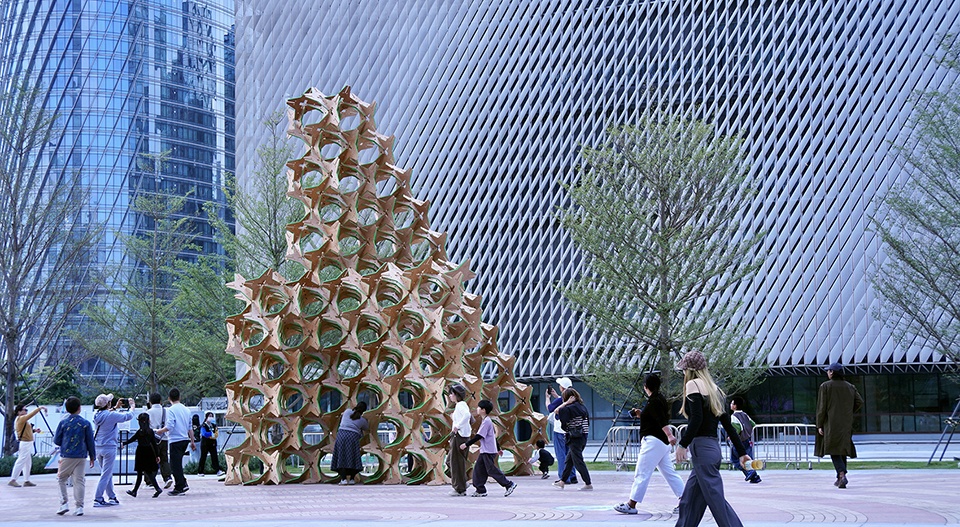
这是一件以可持续材料构建的大型在地装置,通过星型单元的重复与榫卯结构的当代转化,探讨几何形态、力学逻辑与空间感知之间的关系。作品以“自然”“几何”“力学”为关键词,将传统木构智慧与现代材料语言相结合,在正形与负形的交替中生成一种不断演变的视觉秩序。装置并非对自然物的模仿,而是对结构生成过程的呈现——每一块星型单元既承载着力学功能,也参与着空间图形的塑造。
Astral Ascent is a large-scale, site-specific installation constructed from sustainable materials. Through the repetition of star-shaped modules and the contemporary application of mortise-tenon joint logic, it investigates the relationship between geometric form, structural mechanics, and spatial perception. Centered on the keywords “nature,” “geometry,” and “mechanics,” the work synthesizes the wisdom of traditional wooden construction with a contemporary material language, generating an evolving visual order through the interplay of positive and negative forms.
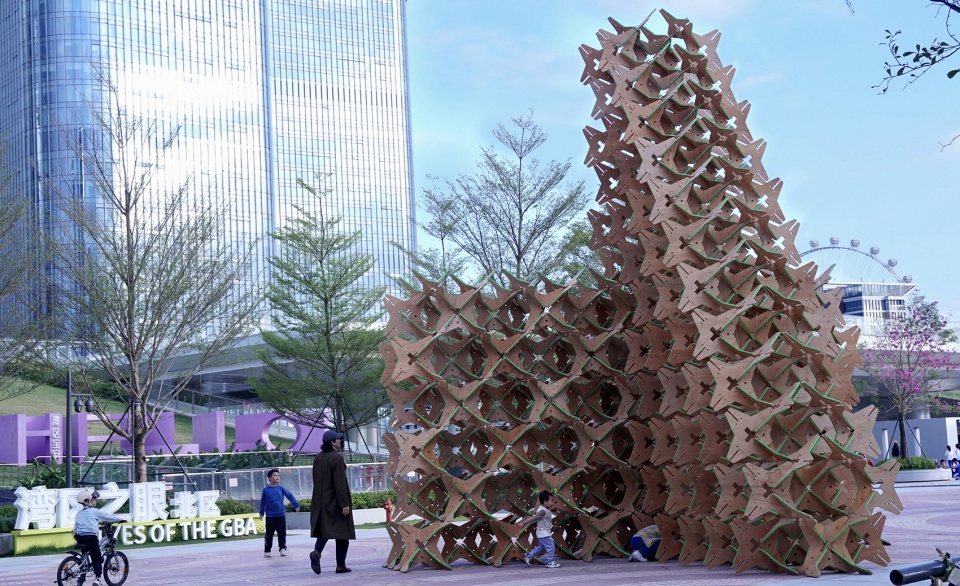
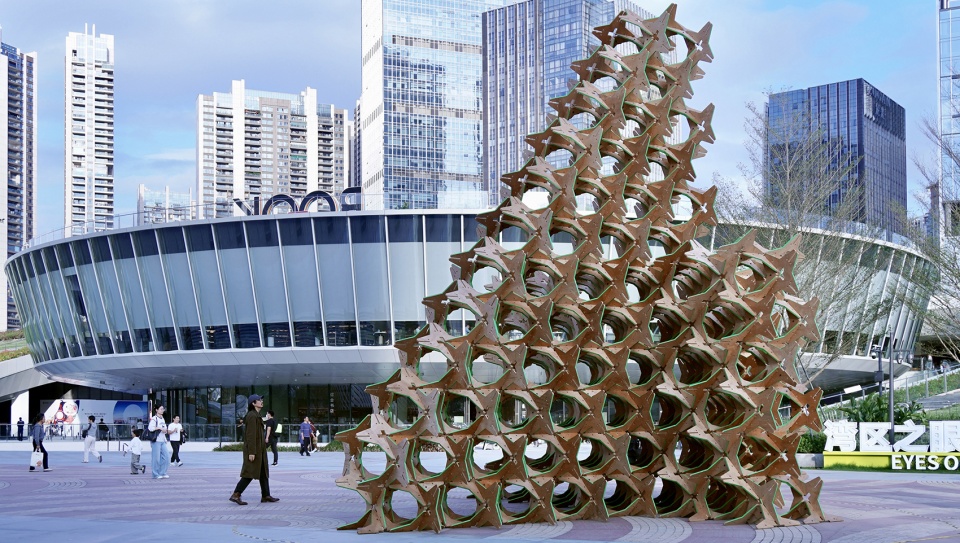
▼装置概览,Installation overview
形态与结构Form and Structure
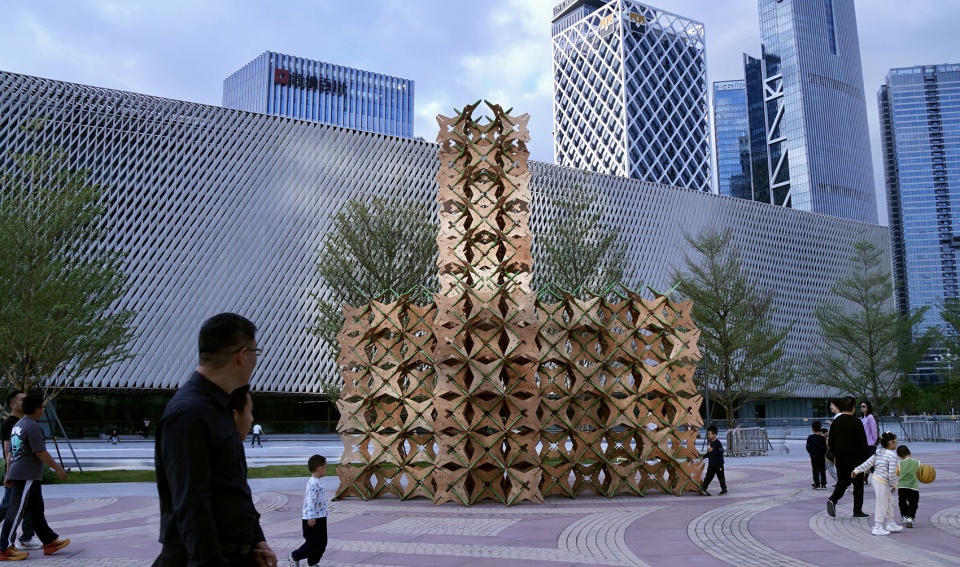
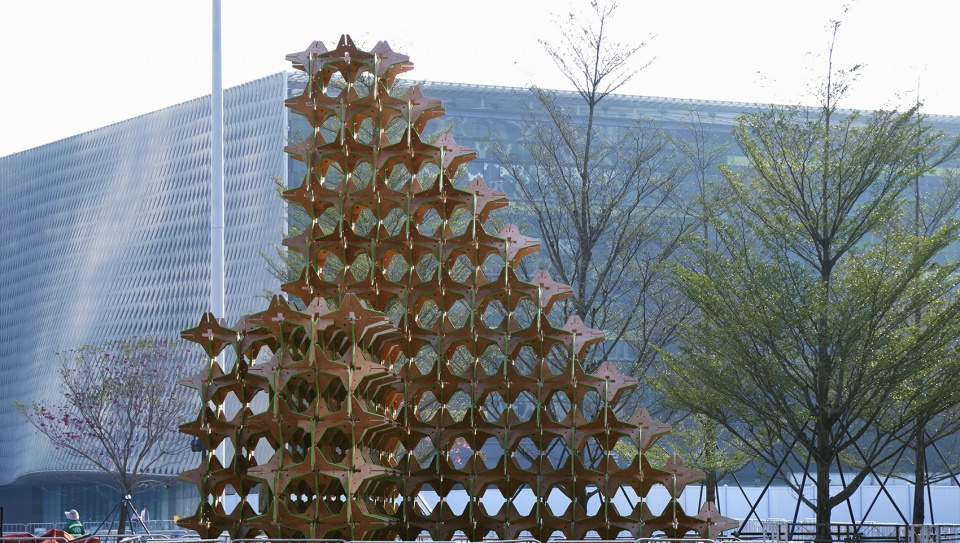
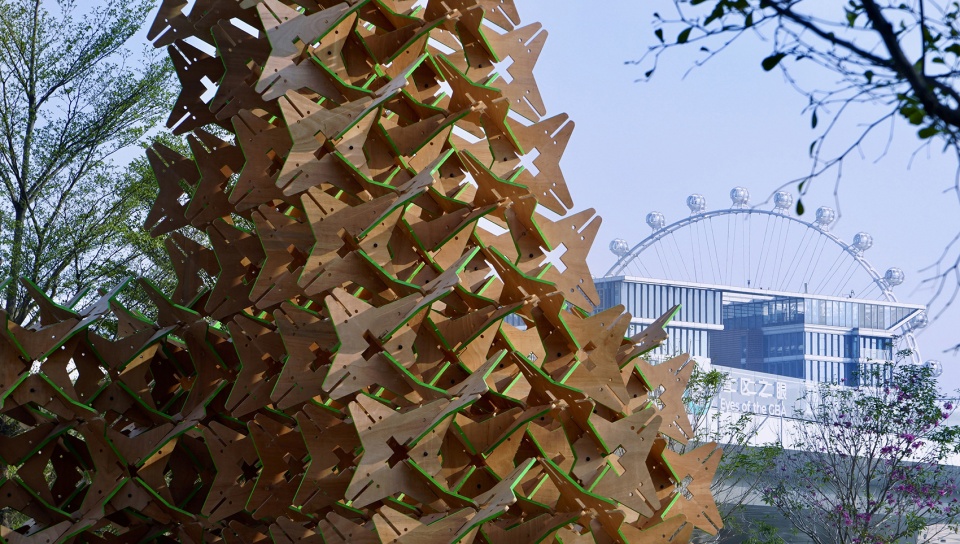
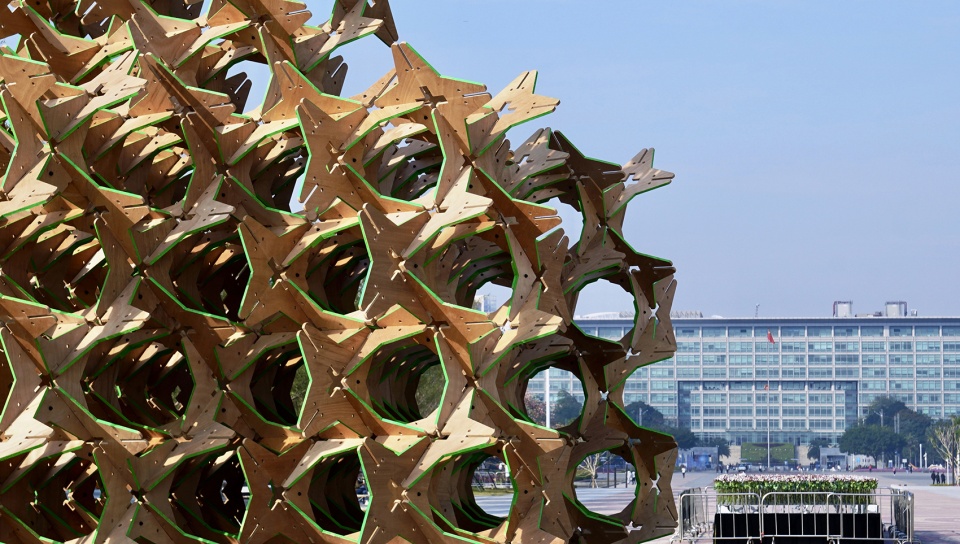
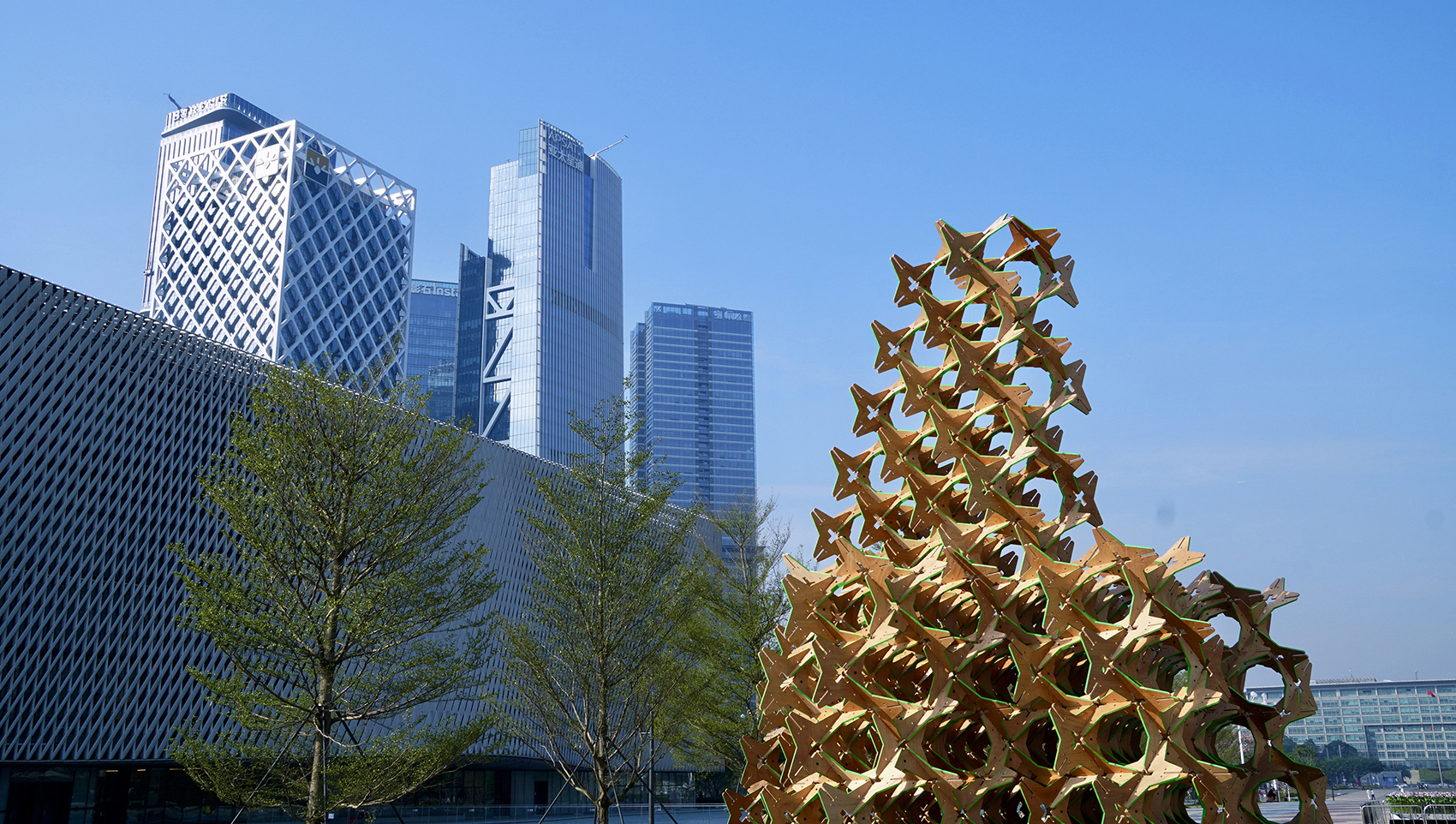
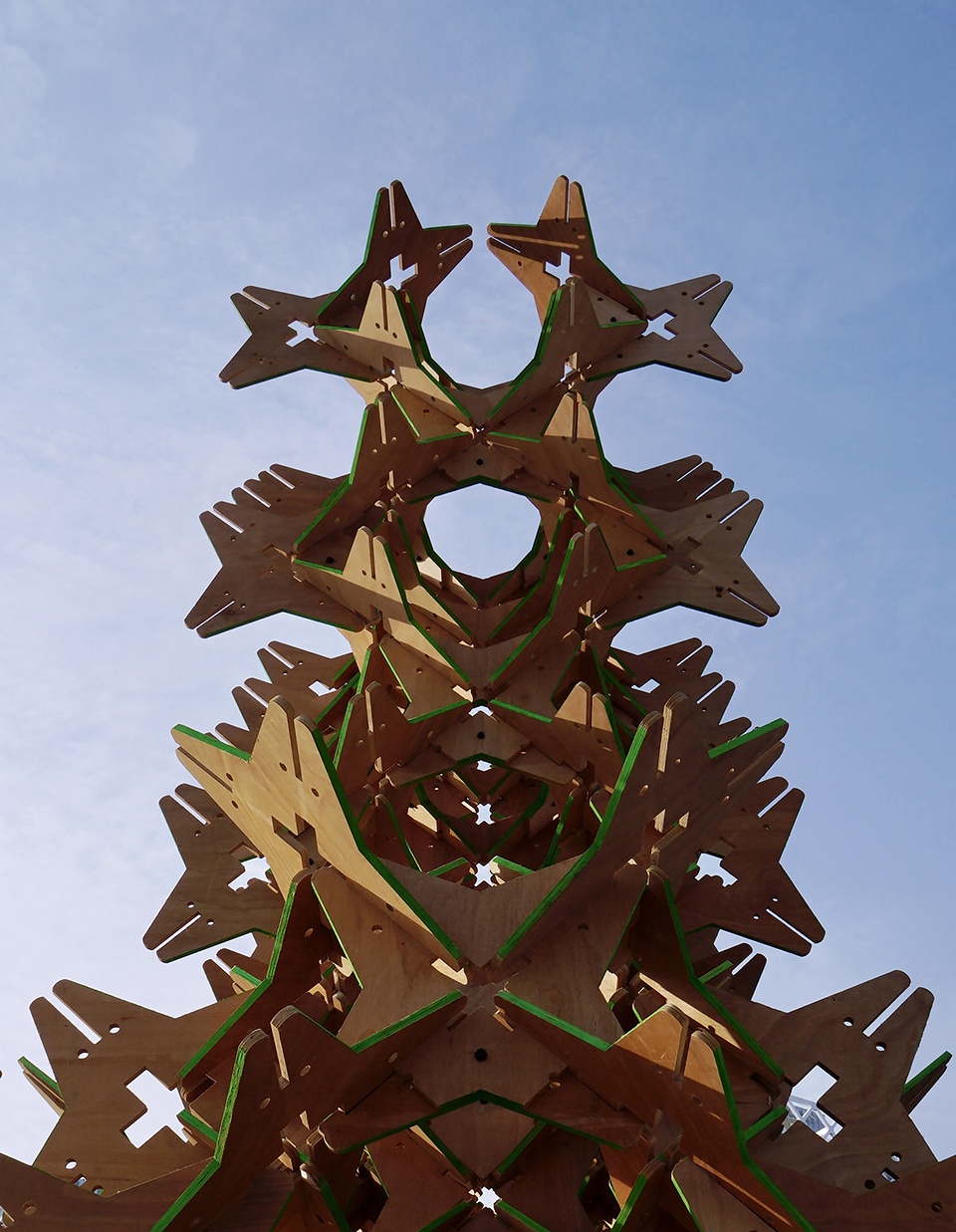
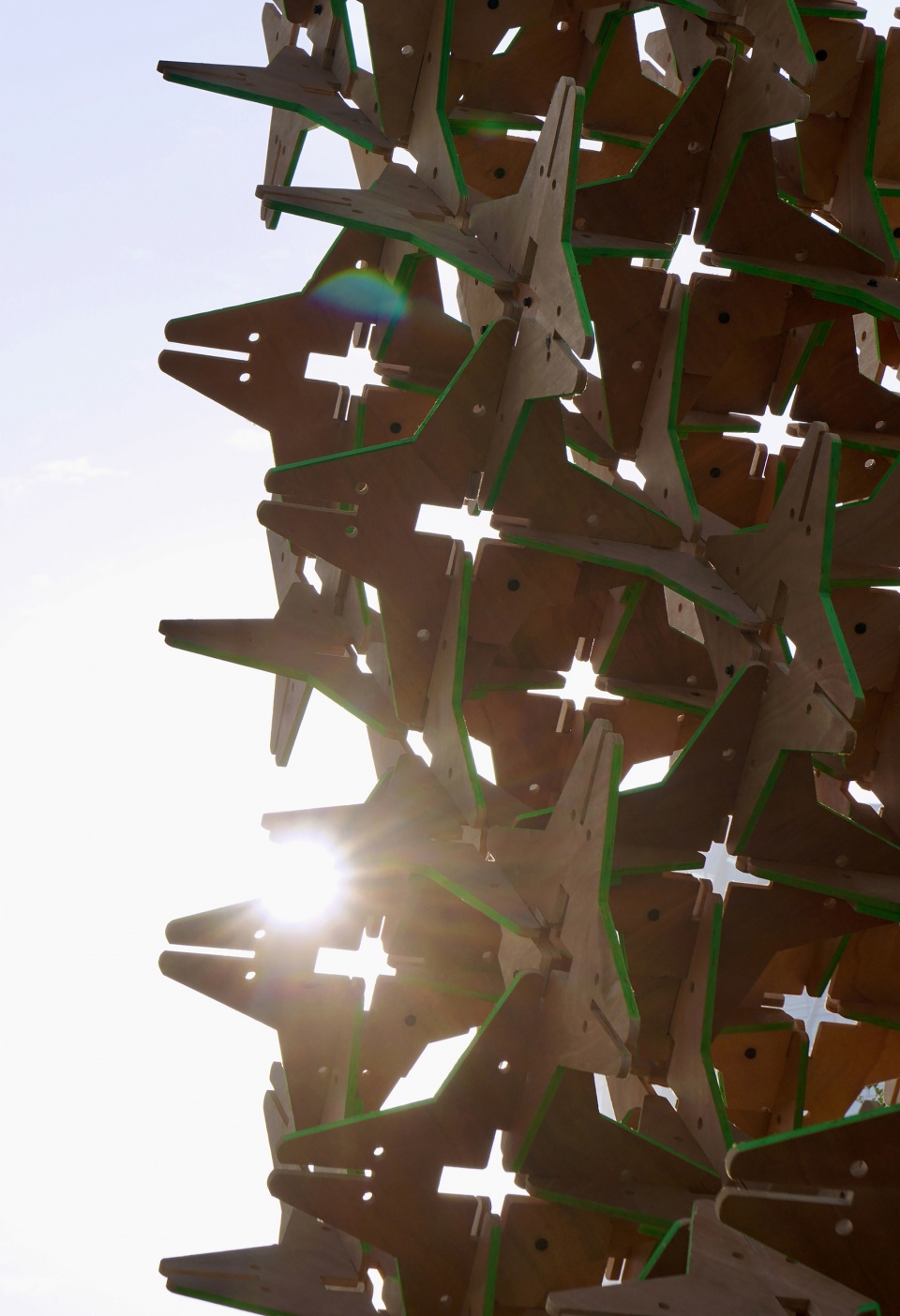
装置由七百余枚星型单元构成,这些单元采用环保板材切割成型,通过创新的榫卯咬合方式相互嵌接,形成自承重的稳定结构。艺术家从东方传统榫卯中提炼出“以扣合代替连接件”的逻辑,将其运用于多角度、多方向的单元组合中,使每一枚星体既是独立的形态单元,也是整体结构的力学节点。单元之间互为支撑、层层攀升,最终聚合成一座拔地而起的塔状构筑。其形态在垂直方向上呈现出由密到疏、由实到虚的渐变,暗示着生长与节律。
▼装置构成,Installation composition
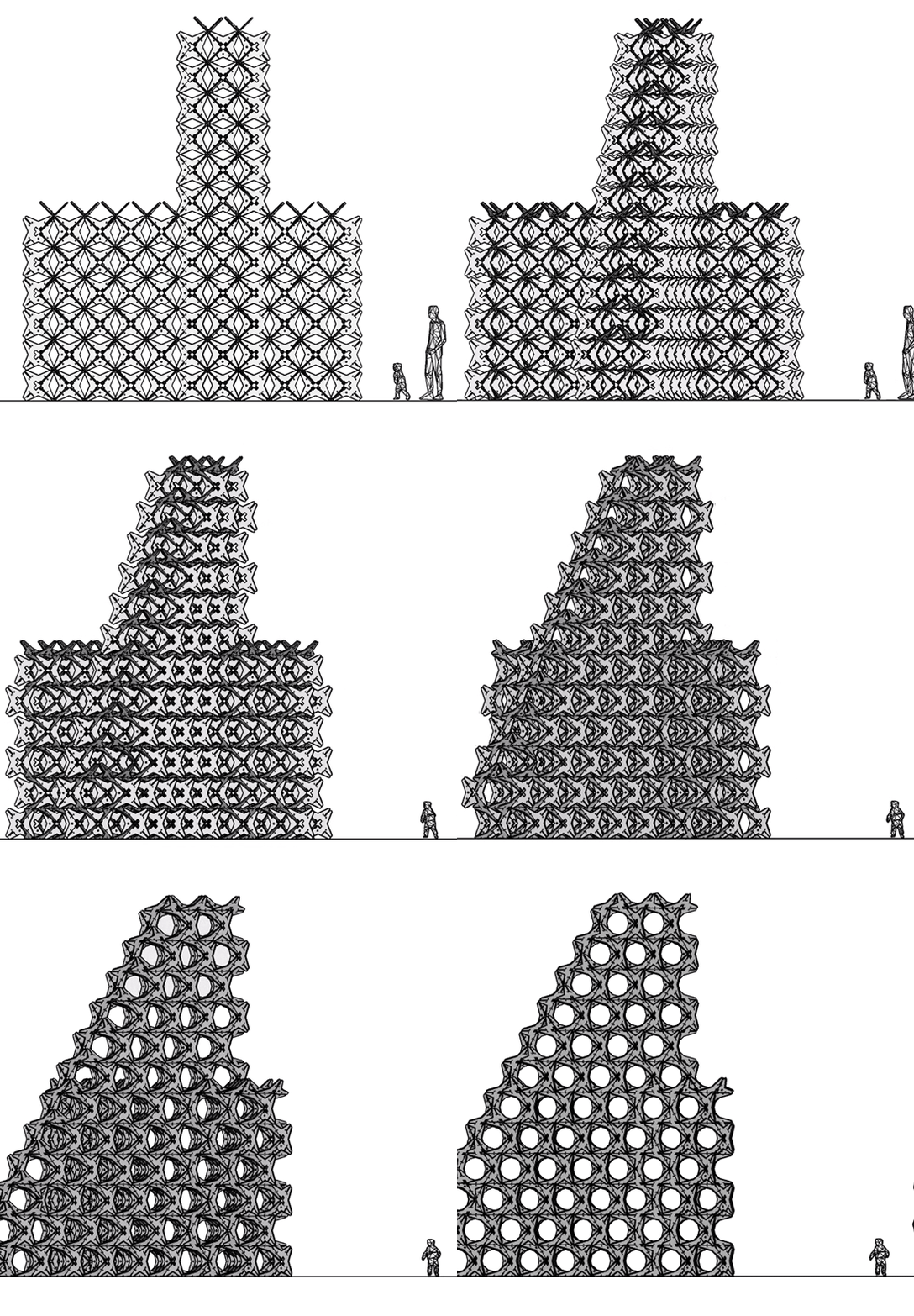
The installation comprises over seven hundred star-shaped units, cut from eco-friendly panels and interlocked using an innovative mortise-tenon system to form a self-supporting structure. The artist has extracted the fundamental logic of traditional sunmao—the principle of joining through interlocking rather than mechanical fasteners—and applied it to multi-directional modular combinations. Each star module functions both as an independent formal unit and a critical structural node within the overall system. The units support one another, ascending in layers to coalesce into a tower-like form, exhibiting a gradual vertical transition from density to sparsity and from solidity to void.
▼拔地而起的塔状构筑,Coalescing into a tower-like form
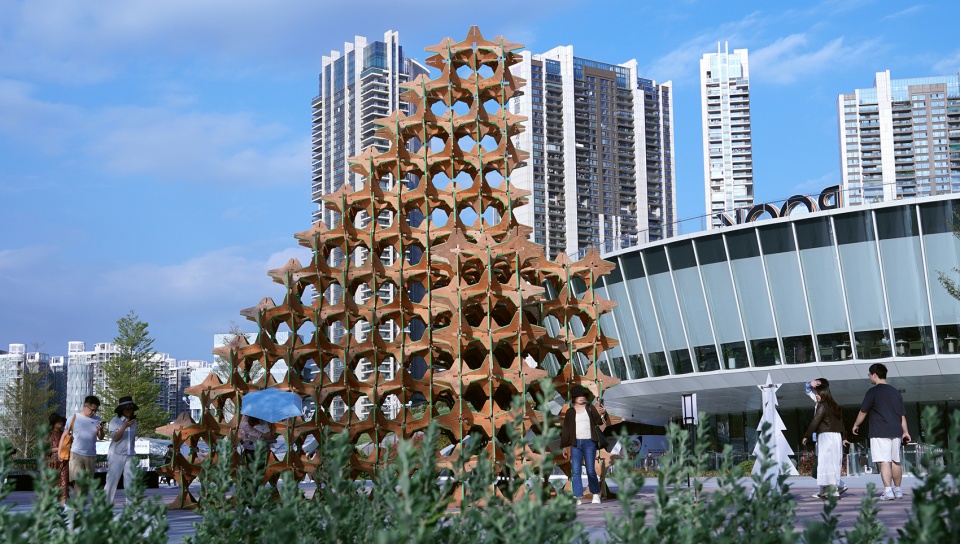
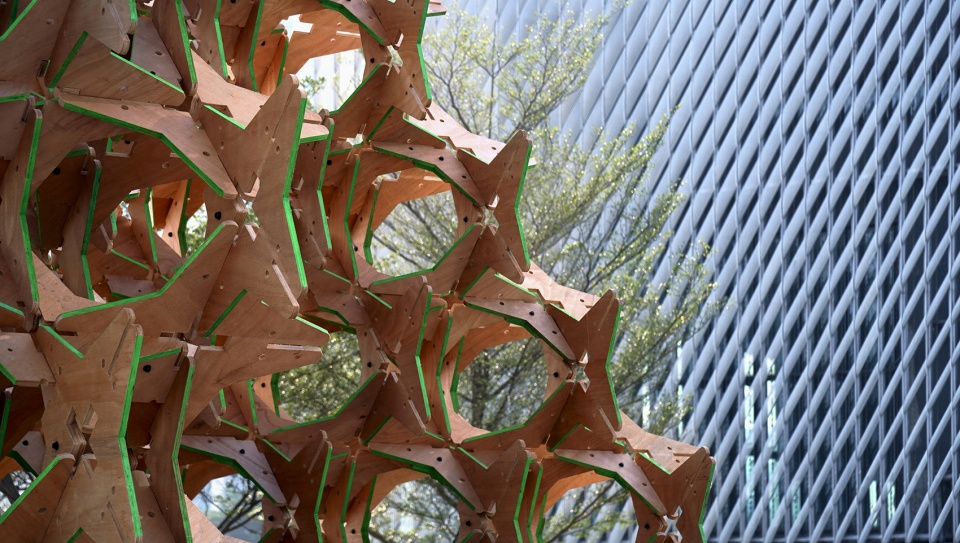
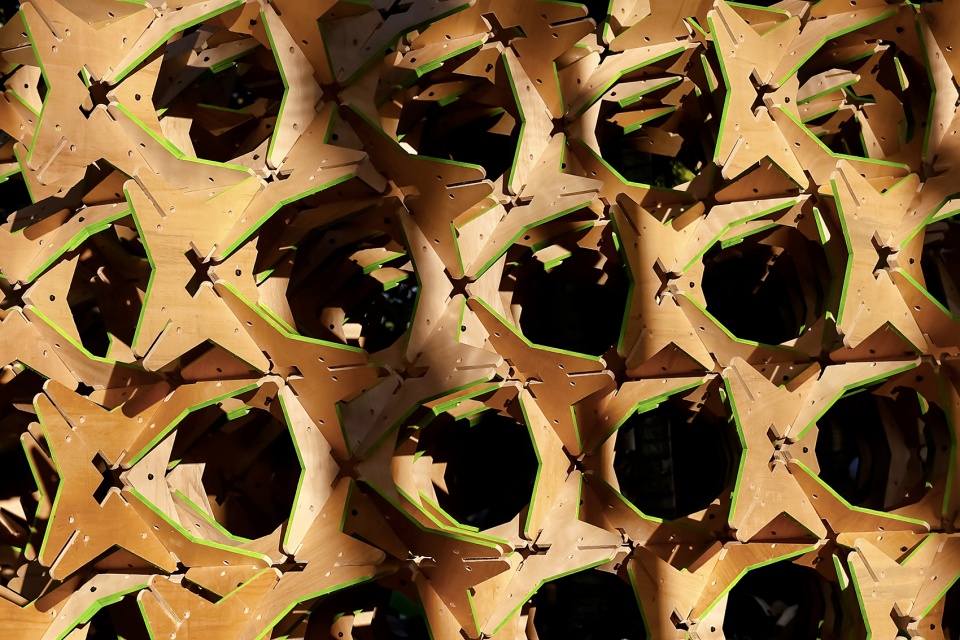
▼星体状的形态单元,Star module units
视觉秩序与空间体验Visual Order and Spatial Experience
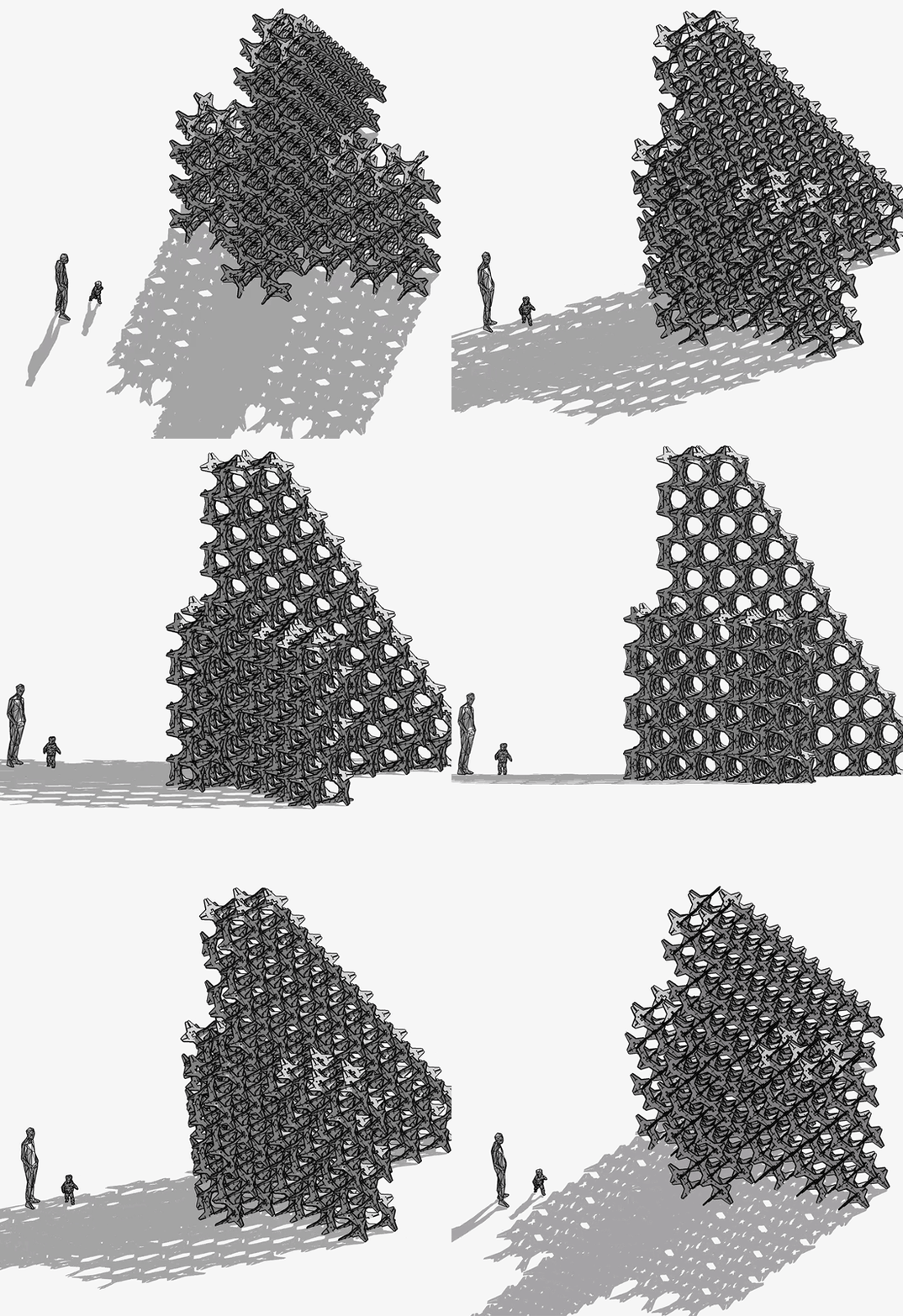
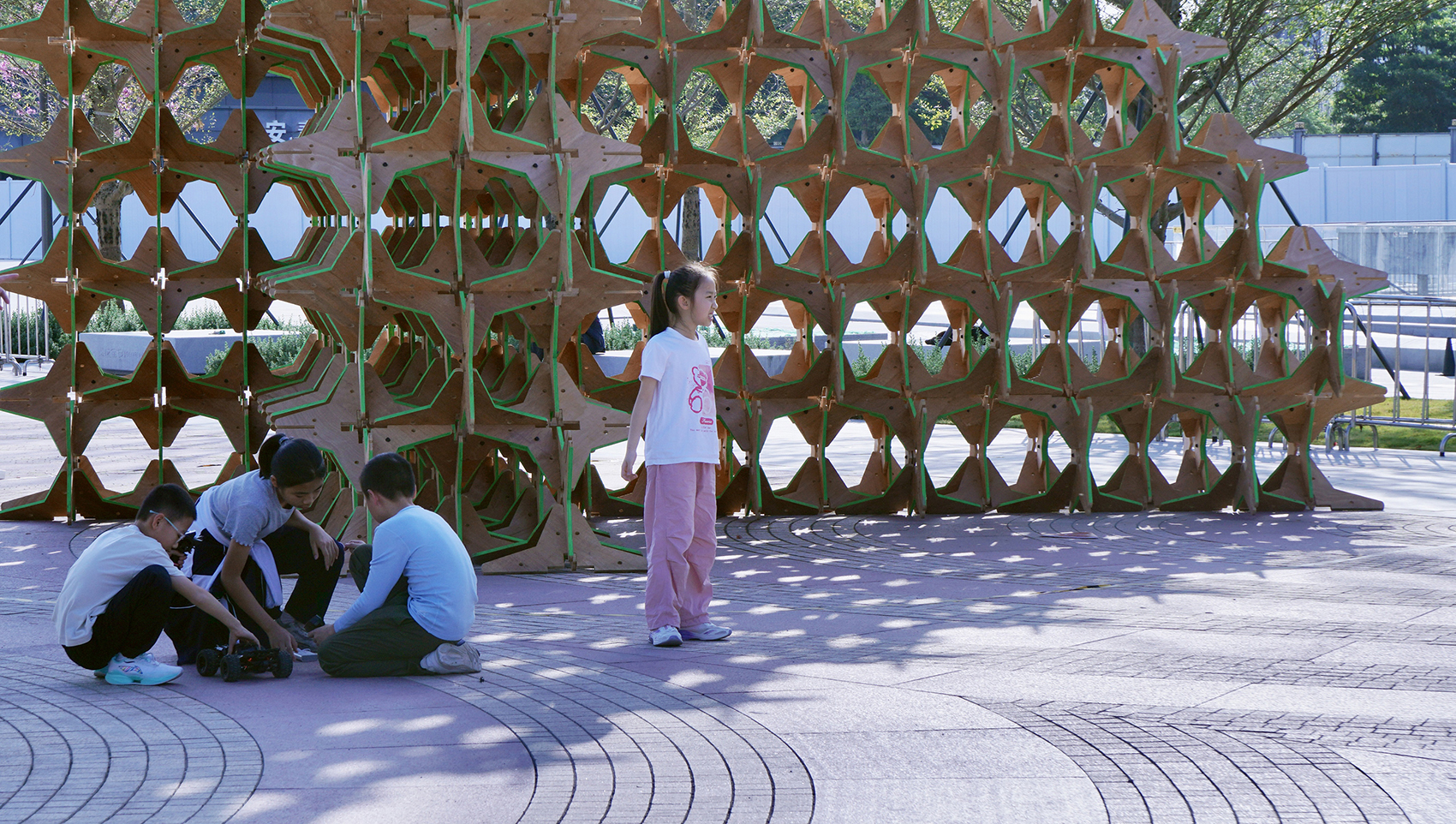
装置的视觉语言建立在正形与负形的辩证关系之上。星型单元的实体(正形)与单元之间的空隙(负形)相互界定,在观众移动的视角下持续变换。阳光穿过结构间隙,在地面和塔身表面投下不断位移的阴影,使负形的轮廓得以显影。正形与负形的交替既体现在静态的几何构成中,也通过光影的介入获得时间维度——午时的投影清晰而锐利,黄昏时分则拉长为离散的斑纹。观众穿行于装置之间,自身的移动不断重组正负形的对比关系,使每一刻的观看都成为唯一的视觉事件。这种秩序与变化并存的视觉经验,揭示出结构本身所具有的生成性潜能。
▼装置光影分析,Sunlight shadow diagram
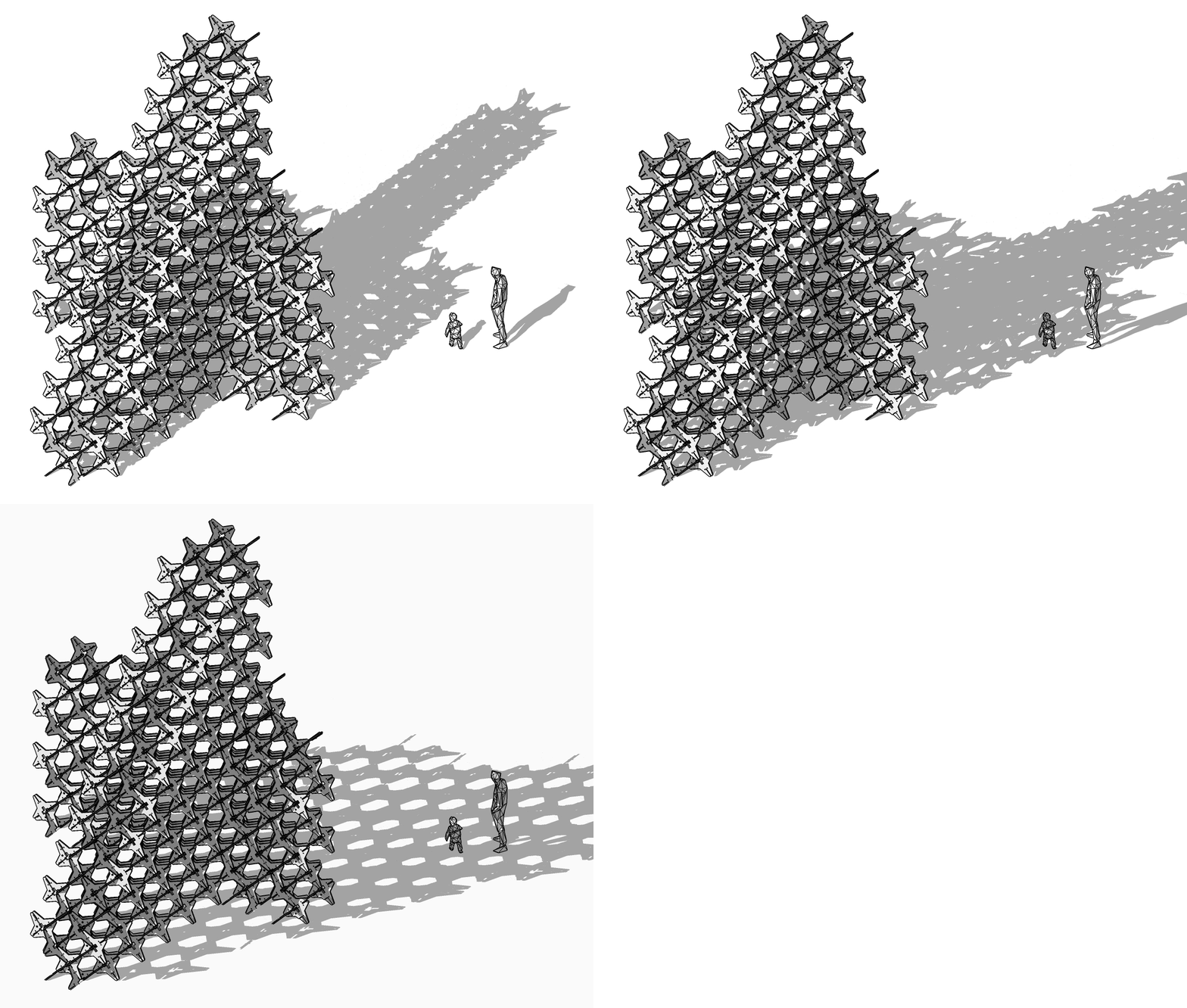
The visual language of the piece is predicated on the dialectical relationship between positive and negative form. The solid mass of the star-shaped units (positive form) and the interstitial voids between them (negative form) define each other, constantly shifting as the viewer’s perspective changes. Sunlight filtering through the structural gaps casts shifting shadows on the ground and the installation’s surface, rendering the contours of the negative space visible. The alternation between positive and negative form gains a temporal dimension through the intervention of light and shadow. As viewers move through the space, their own trajectories continuously reconfigure the visual relationships, revealing the structure’s generative potential.
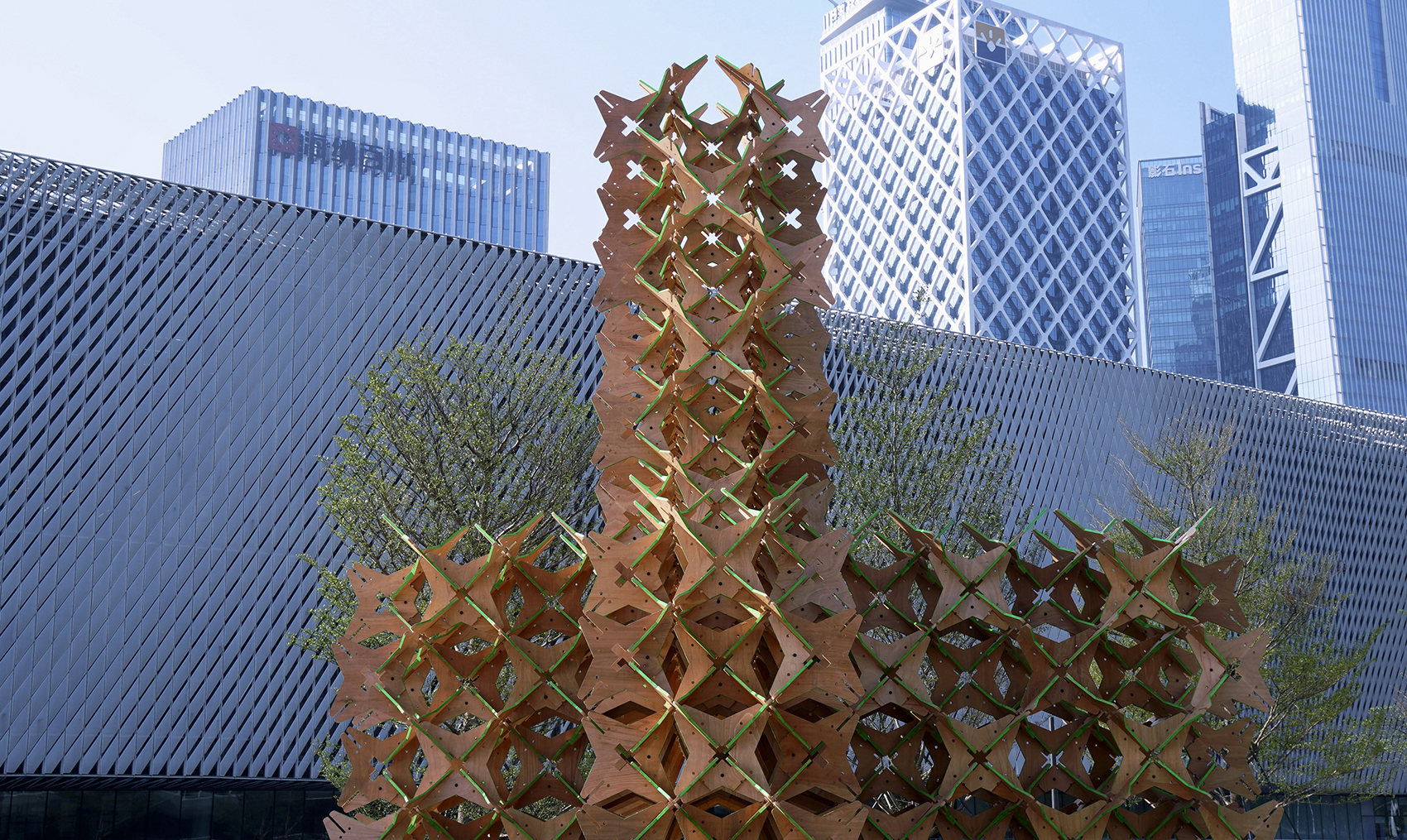
▼不断位移的阴影,Shifting shadow through daylight
材料与在地性Material and Site-specificity
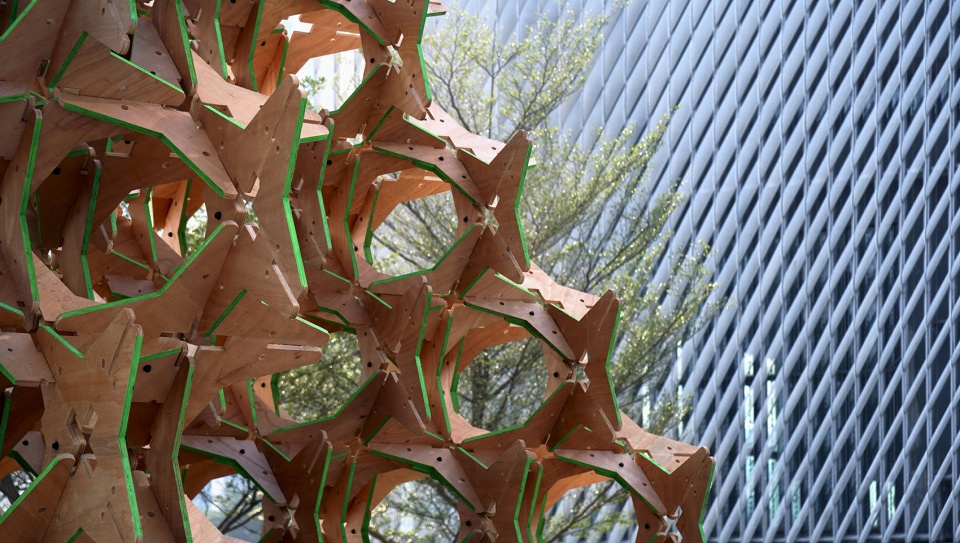
艺术家选用带有天然木纹的可持续环保板材,使工业加工的精确性与木材的原始质感形成对话。材料表面的切割痕迹与裸露纹理,既记录了制作过程,也保留了自然的记忆。装置所在环境的日照、风向与周边植被,将与结构产生的阴影共同构成完整的感官场域。作品通过材料的再生属性与结构的自承重逻辑,将传统工艺的智慧引入当代空间语境,成为连接人工构筑与自然秩序的中间界面。
The artist employs sustainable panels with natural wood grain, where cut marks and exposed textures on the surface document the process of making. The installation interacts with its specific environment—the quality of sunlight, prevailing winds, and surrounding vegetation—to create a complete sensory field. Through the use of renewable materials and a self-supporting structural logic, the work brings the intelligence of traditional craftsmanship into a contemporary spatial context.
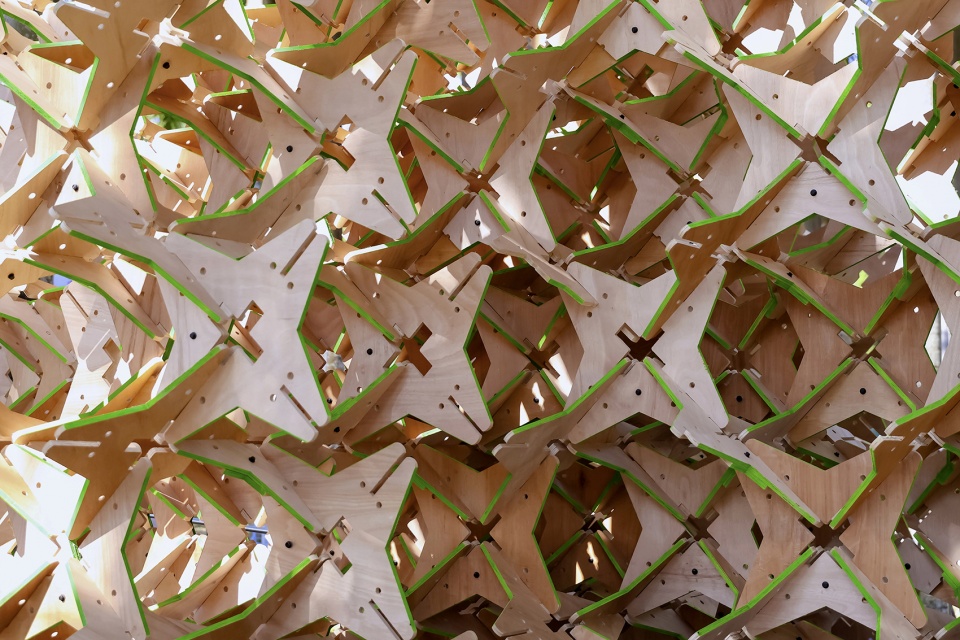
▼带有天然木纹的可持续环保板材,Sustainable panels with natural wood grain
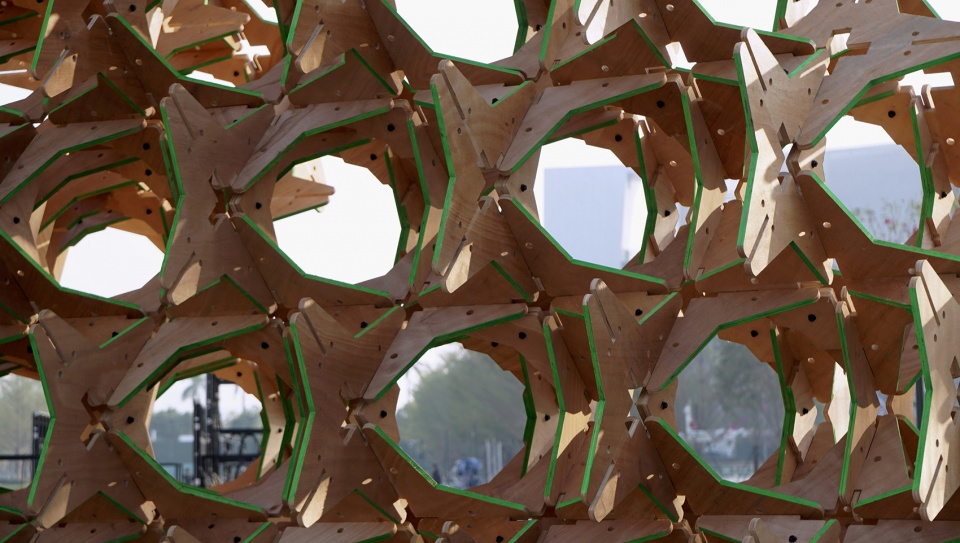
▼阴影构成完整的感官场域,Shadow create a complete sensory field
《星之塔》以星型单元的重复、榫卯结构的创新、正负形的视觉秩序,构建了一个可进入、可感知的空间装置。它既是对传统木构逻辑的致敬,也是通过几何与力学对形式生成可能性的持续追问。
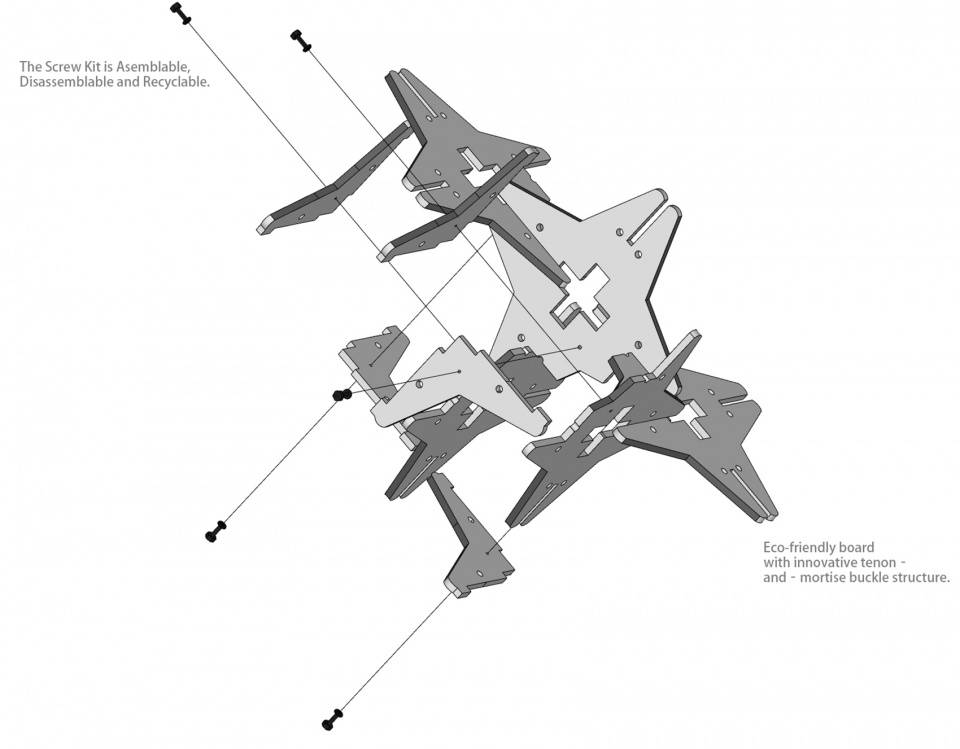
▼装置组装示意图,Installation assemble diagram
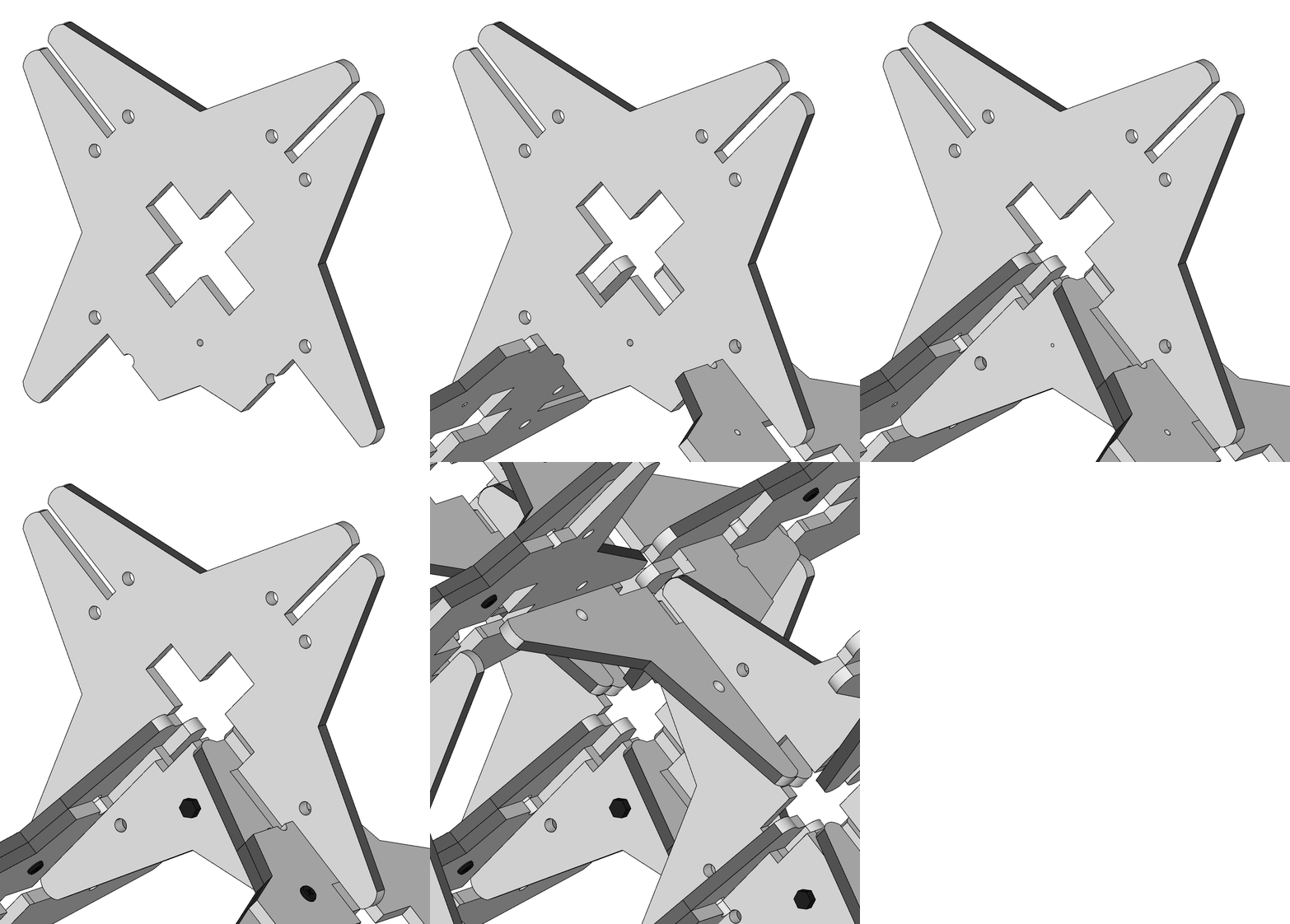
▼装置组装示意图,Installation assemble diagram
Astral Ascent constructs an accessible, perceptible spatial environment through the repetition of star-shaped units, the innovation of mortise-tenon joints, and the visual order of positive and negative forms. It stands as both an homage to traditional timber construction logic and an ongoing inquiry into the possibilities of form generation through geometry and mechanics.
▼细部,Details
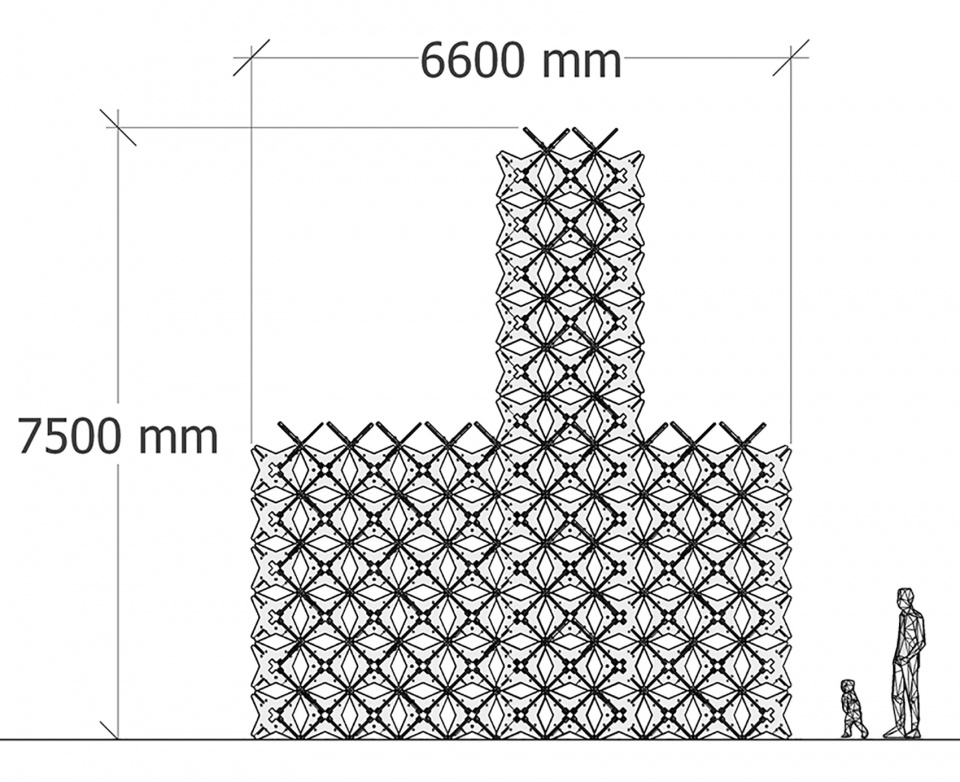
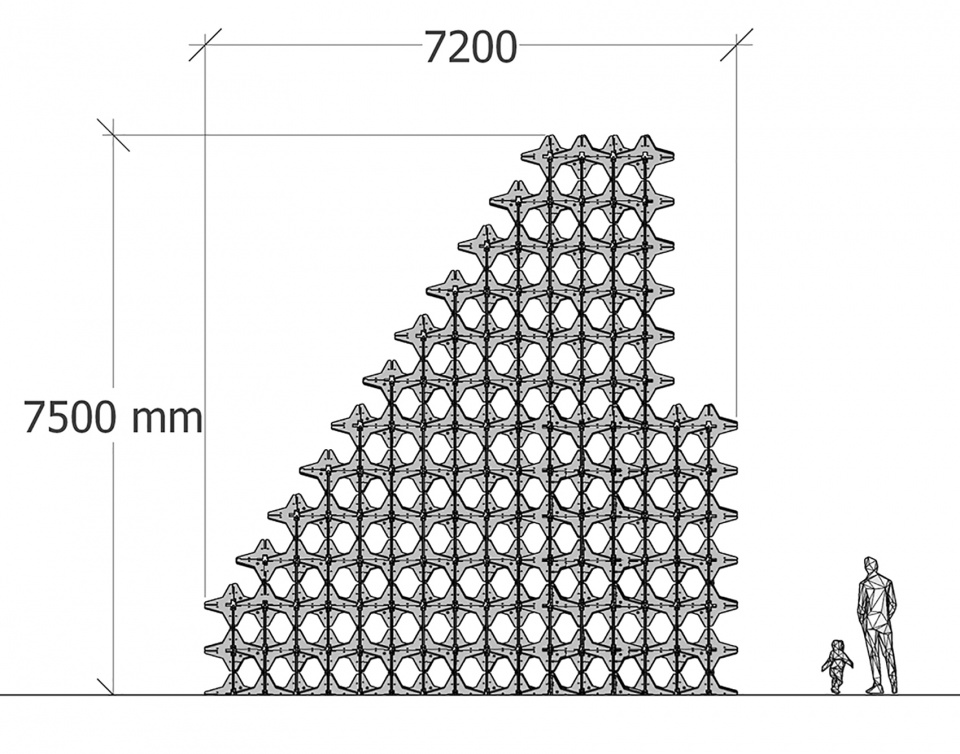
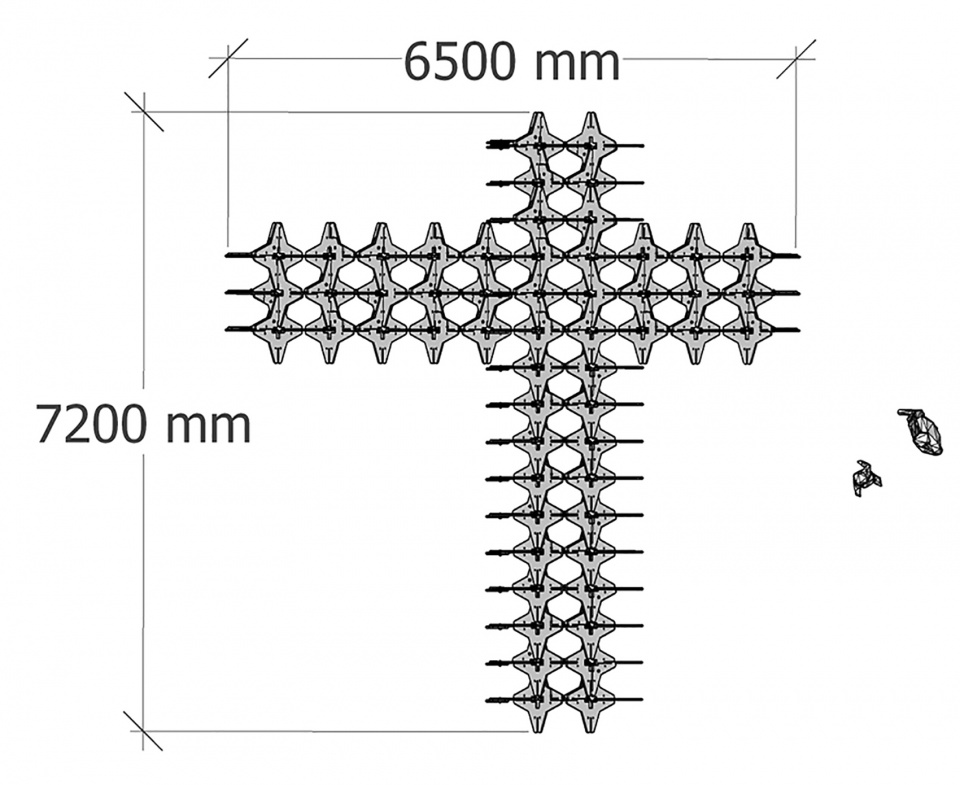
▼装置图纸,Drawings
Project Name: Astral Ascent
Project Type: Installation Art
Project location: Bay Area Book City, Shenzhen, China (Eye of the GBA)
Built status: Built
Design time (from year to month): November 2025
Construction time (start and end year/month): January 2026
Land area (square meters): 50
Building area (square meters): 50
Design Unit: Zhe Wai Yue Fei Architecture Studio
Contact information of the design unit: thewhysz@163.com
Principal Architect: Zheng Yuefei
Structure: Philosophy of Foreign Languages
Construction: Zhe Wai
Materials: clamp, screw
Owner: Eye of the GBA
Photographer: YUEFEI
Project Type: Installation Art
Project location: Bay Area Book City, Shenzhen, China (Eye of the Bay Area)
Built status: Built
Design time (from year to month): November 2025
Construction time (start and end year/month): January 2026
Land area (square meters): 50
Building area (square meters): 50
Design Unit: Zhe Wai Yue Fei Architecture Studio
Contact information of the design unit: thewhysz@163.com
Principal Architect: Zheng Yuefei
Structure: Philosophy of Foreign Languages
Construction: Zhe Wai
Materials: clamp, screw
Owner: Eye of the Bay Area
Photographer: YUEFEI