池州红专记民宿,安徽 / 苏州右见商业
城市中许多承载着历史记忆的废弃空间,往往因时代变迁而逐渐沉寂。本案设计以“在地性”为核心,以“焕新 唤醒 共生”为理念,通过对废弃厂房的更新修复,将在地材料的再生利用、自然生态的敬畏保留与商业功能的合理植入相结合,让旧建筑重获生机。
Many abandoned urban spaces, once the venerable vessels of historical memory, have gradually fallen into silence under the relentless tide of time. This project centers on “Genius Loci” (Spirit of Place), guided by the philosophy of “Regeneration, Awakening, and Symbiosis.” Through the meticulous restoration of a derelict factory, the design weaves together the reclamation of local materials, a profound reverence for the natural ecosystem, and the strategic integration of commercial functions, breathing vibrant new life into the aged structures.
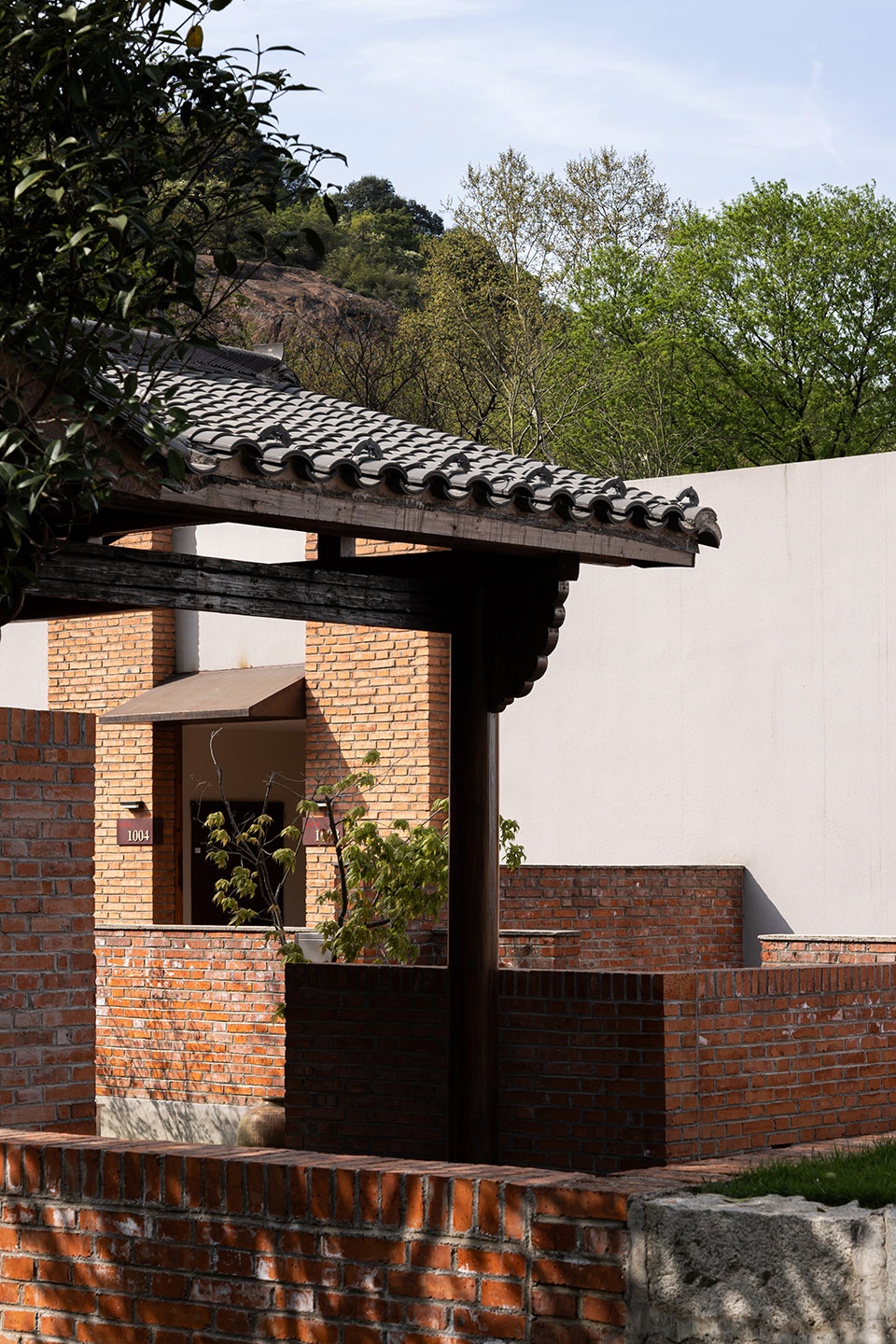
▼旧建筑重获生机,
breathing vibrant new life into the aged structures
设计不仅是对空间形态的重塑,更是对历史文脉的延续、自然价值的尊重与商业逻辑的平衡,探索出一条兼具情感温度、生态价值与商业活力的城市更新路径。
▼项目原貌,original appearance of the project
Design is not merely a reshaping of spatial forms;; it is a continuation of the historical lineage, a tribute to natural value, and a delicate equilibrium of commercial logic. It explores a path for urban renewal that possesses emotional warmth, ecological integrity, and commercial vitality.
▼旧建筑重获生机,
breathing vibrant new life into the aged structures
01前 世
The Past: An Industrial Echo
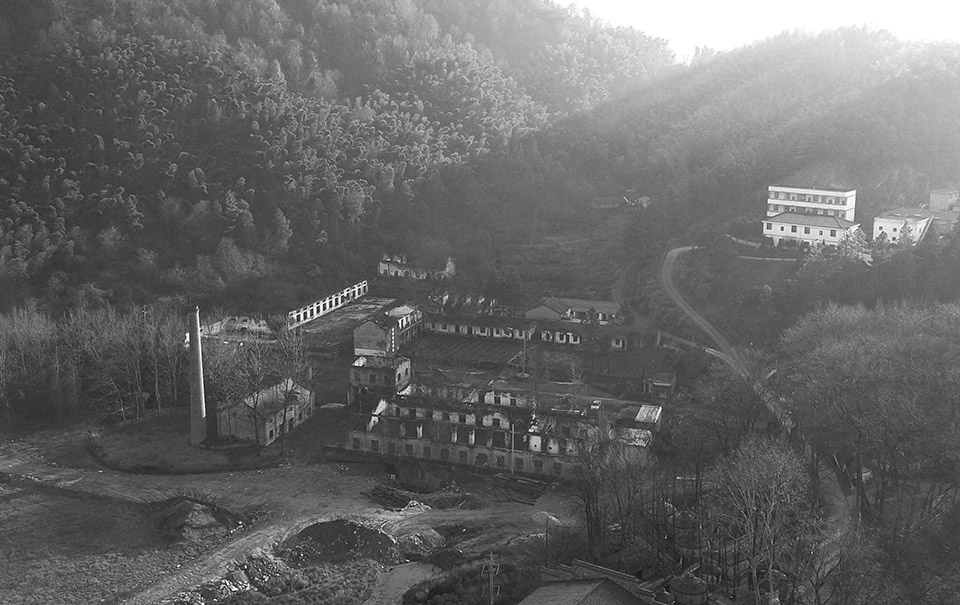
「红专记」的前身,是池州当地一座曾盛极一时的日化厂。在那个工业轰鸣的年代,厂区里机器不停运转,工人往来不息,烟火气与生产声交织,是这片土地当之无愧的经济载体。时光流转,岁月更迭,化工厂渐渐褪去了往日的喧嚣。机器锈迹斑斑,厂房日渐破败,曾经的热闹场域,最终沦为了无人问津的沉寂之地。
▼项目原貌,original appearance of the project
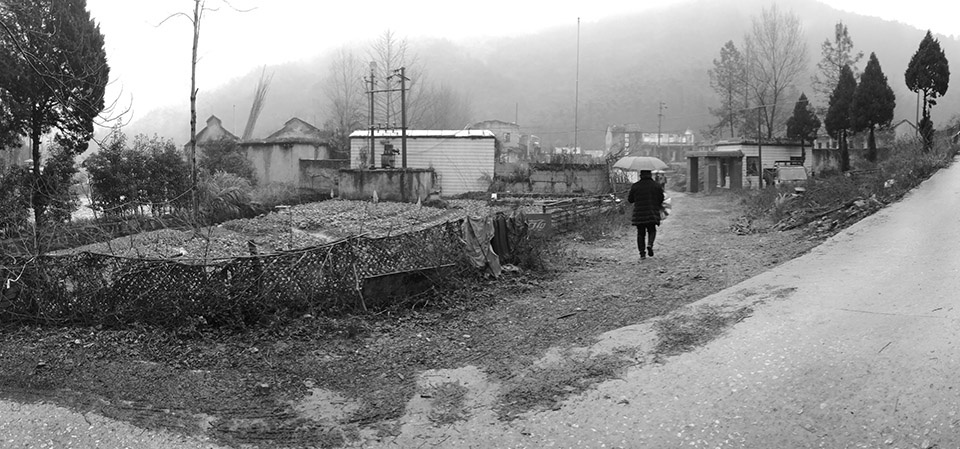
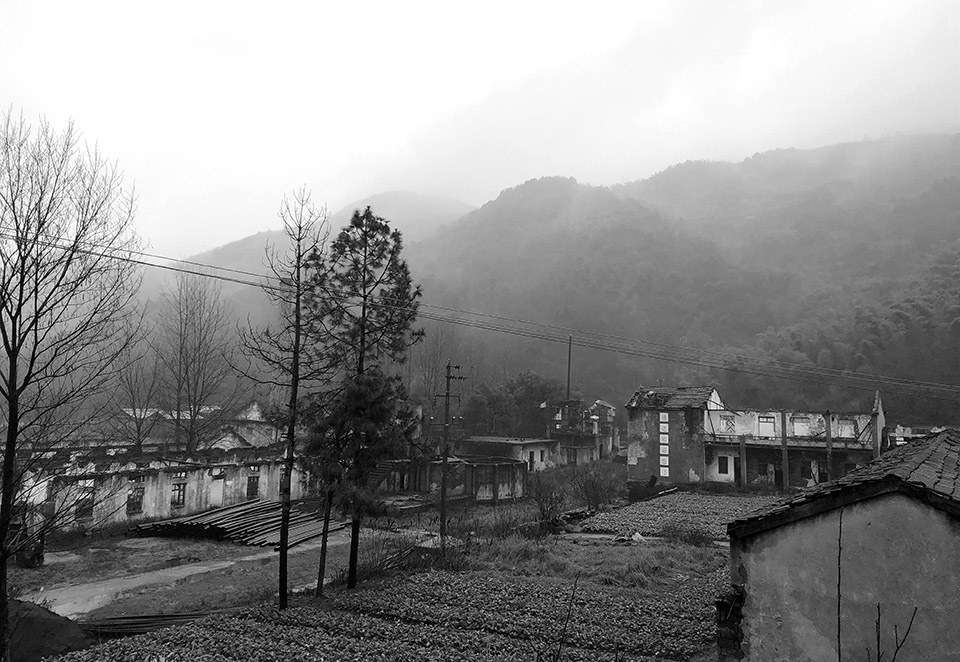
The predecessor of “Hong Zhuan Ji” was a once-thriving daily chemical factory in Chizhou. In that era of industrial crescendo, the rhythmic roar of machinery and the ceaseless flow of workers created a tapestry of production and daily life, making it the undeniable economic heart of the land. As the decades drifted by, the factory’s clamor gradually faded. Machines succumbed to rust, and workshops surrendered to decay; the once-exuberant arena eventually dissolved into a sanctuary of profound silence, forgotten by the world.
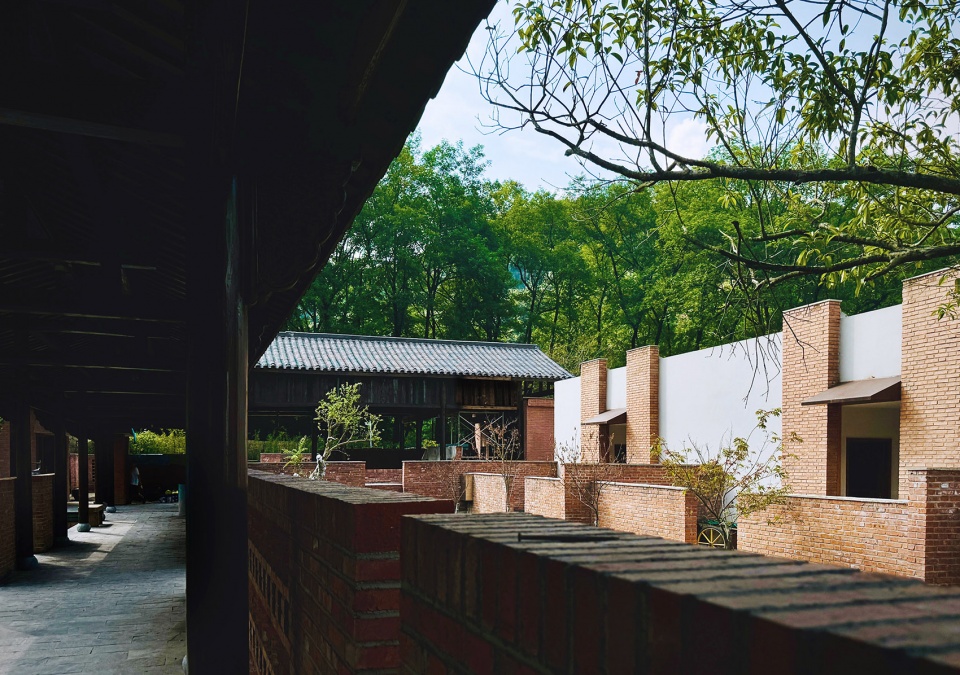
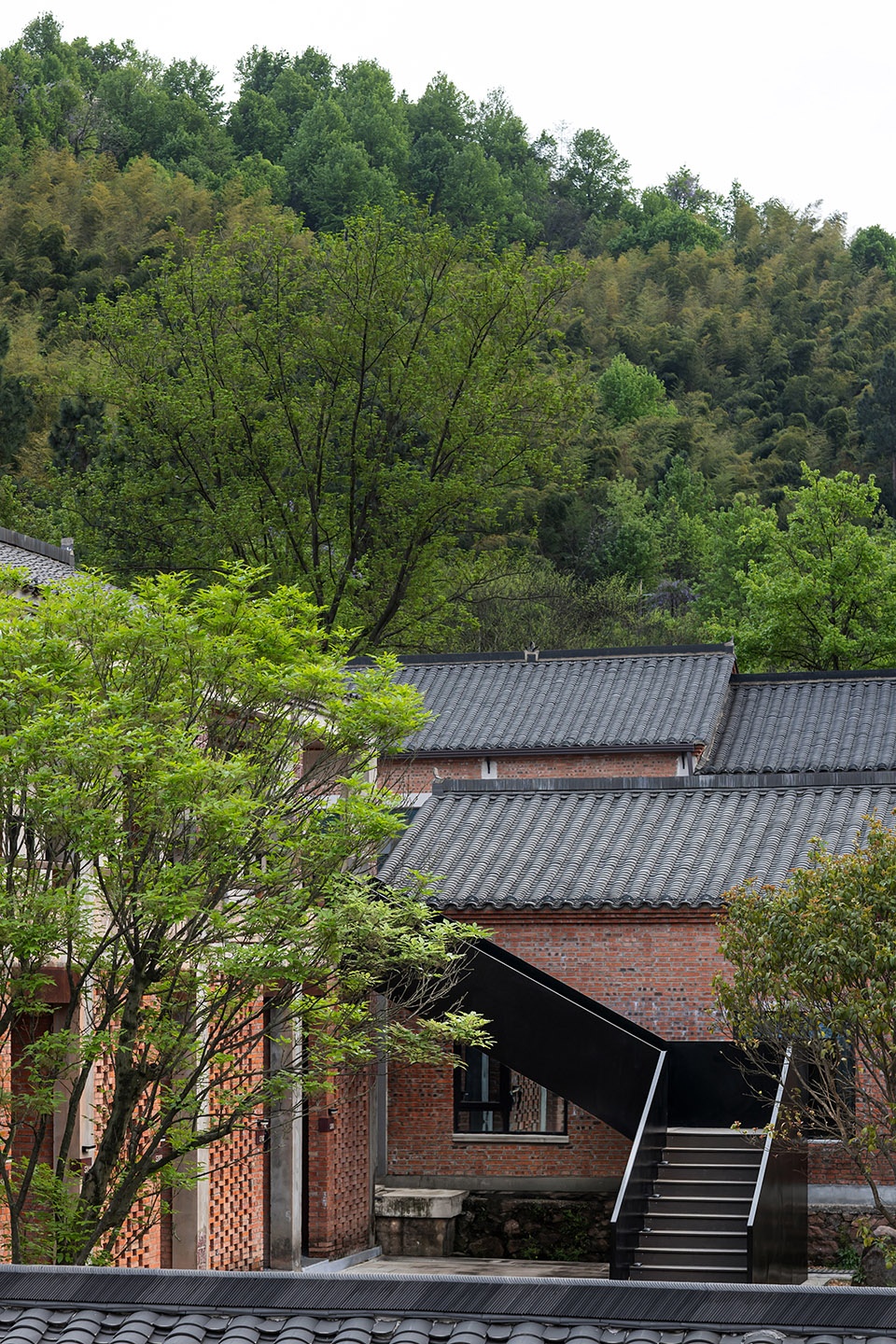
▼红砖庭院,the redbrick courtyard
偶尔有路过的老人,会驻足凝望这片荒芜,看着高高耸起的烟囱,记忆里浮现出它当年热火朝天的模样。但也只是短暂的怅惘,那些鲜活的过往,终究只能尘封在岁月的回忆里。
Occasionally, an elder passing by might pause to gaze at this desolation. Looking up at the towering chimney, visions of its former fervor flicker in their mind. Yet, it is but a fleeting moment of melancholy—those vivid fragments of the past seemed destined to remain sealed within the archives of time.
▼项目原貌,original appearance of the project
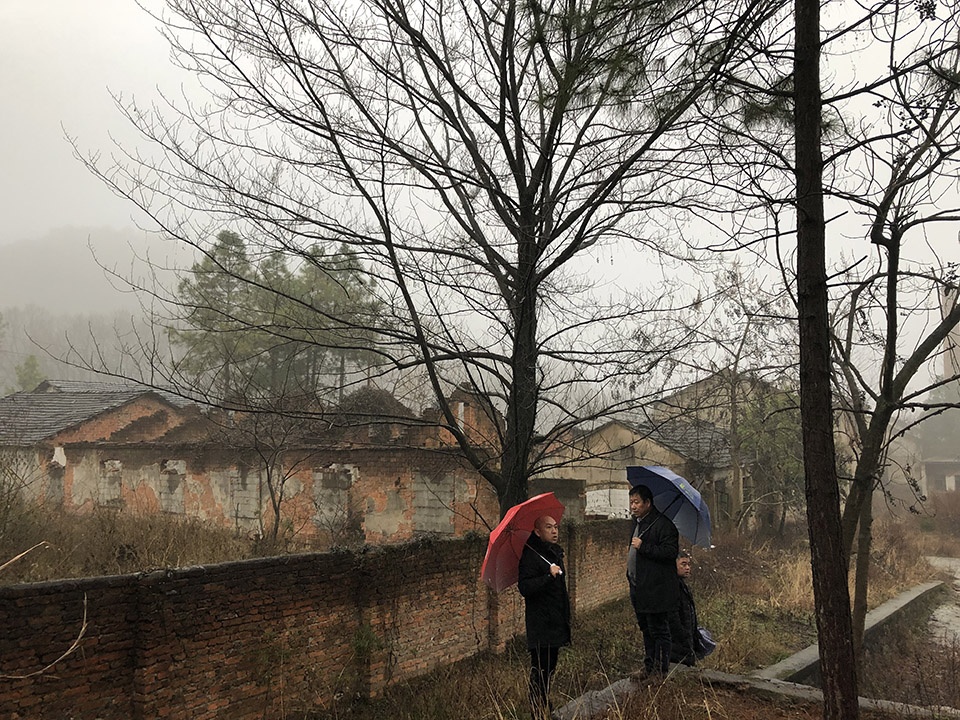
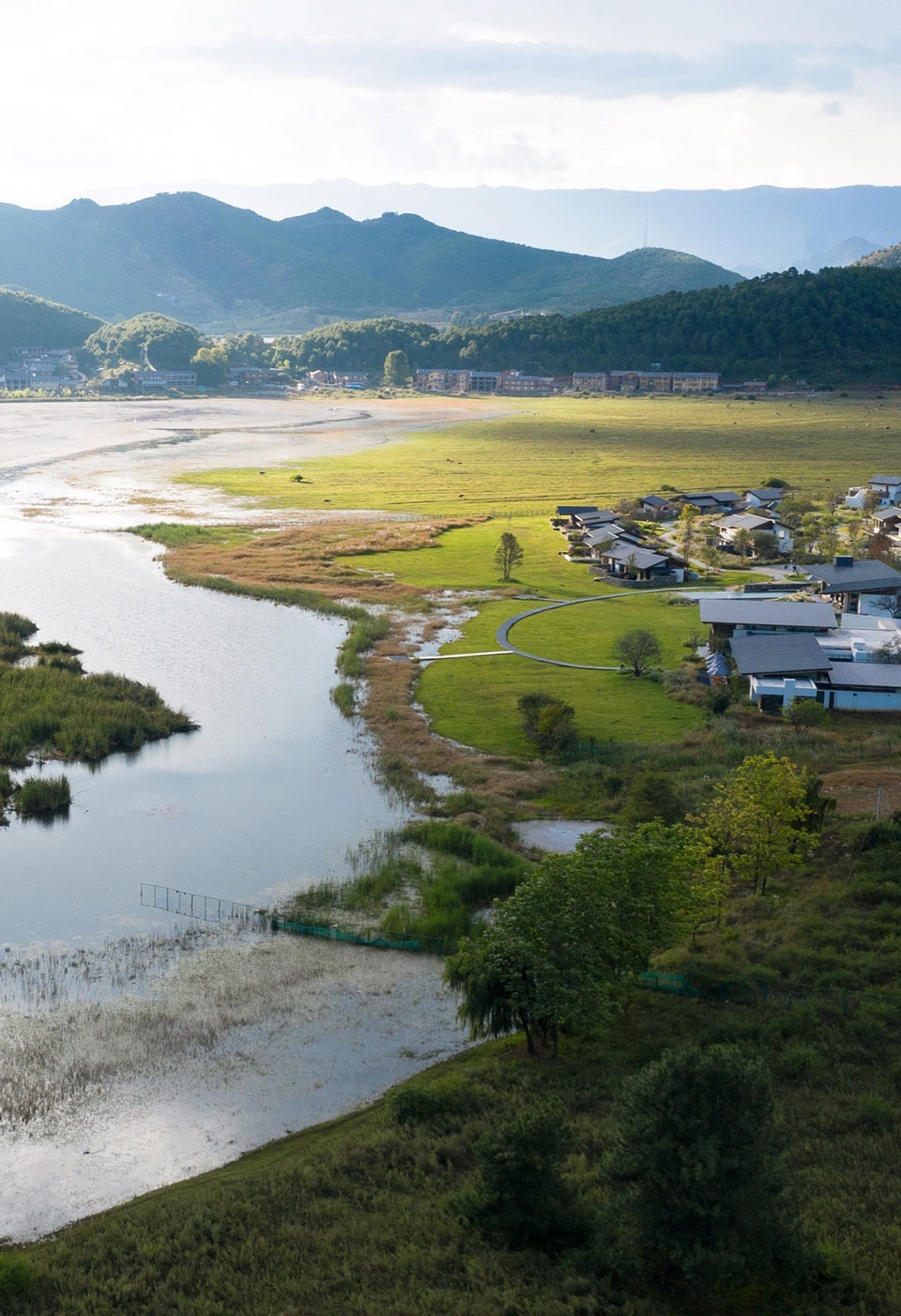
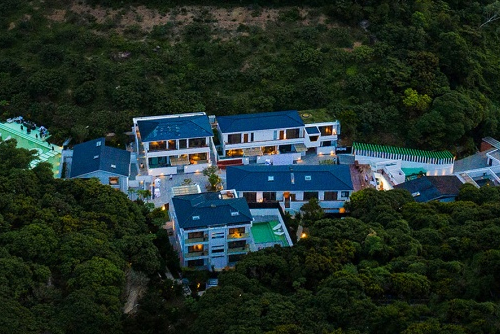
此地坐落于池州的一片山林之中,溪水潺潺,澄澈的水流终年不息,带着山野的清冽与灵动。沿着山路向上行走,一方静谧湖泊便映入眼帘,湖水如镜,将天光云影尽数揽入怀中。这里的自然景致堪称绮丽,四季轮转间皆是不同的画卷。
▼项目原貌,original appearance of the project
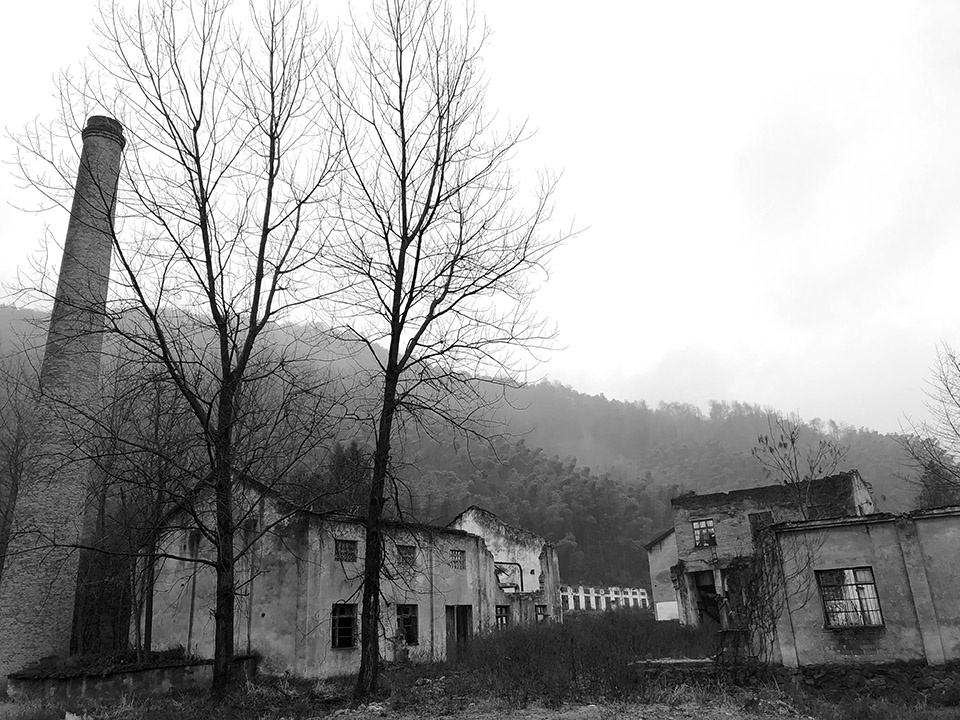
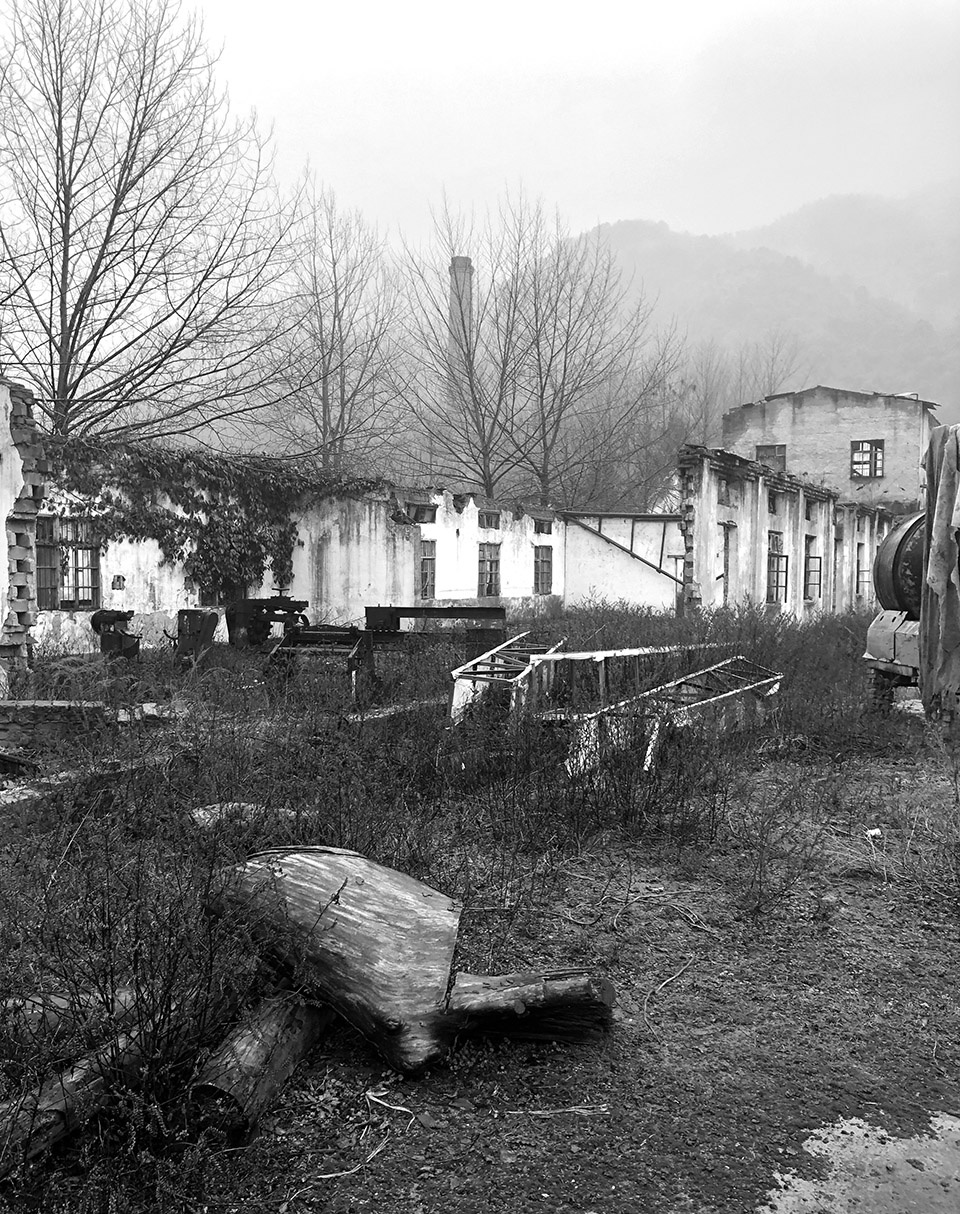
The site is nestled within the mountain forests of Chizhou, where perennial streams babble with a crisp, ethereal vitality. Ascending the mountain path, a tranquil lake reveals itself, its surface like a mirror embracing the shifting light and clouds. The natural scenery here is nothing short of magnificent, unfurling a different poetic scroll with every change of the seasons.
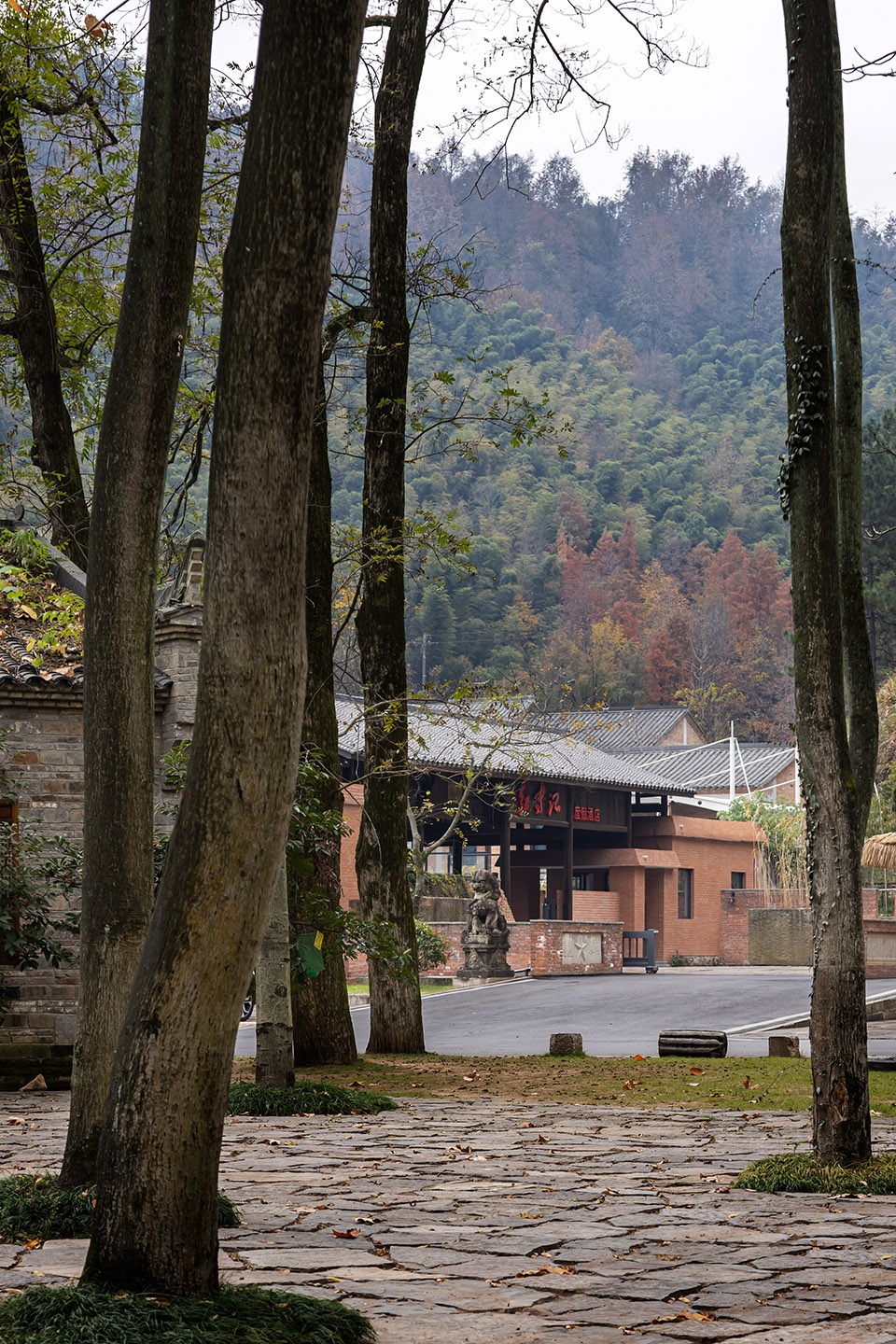
▼项目与山林共生,
a symbiosis between the architecture and the wilderness
02 今生
The Present: A Metamorphosis of Soul
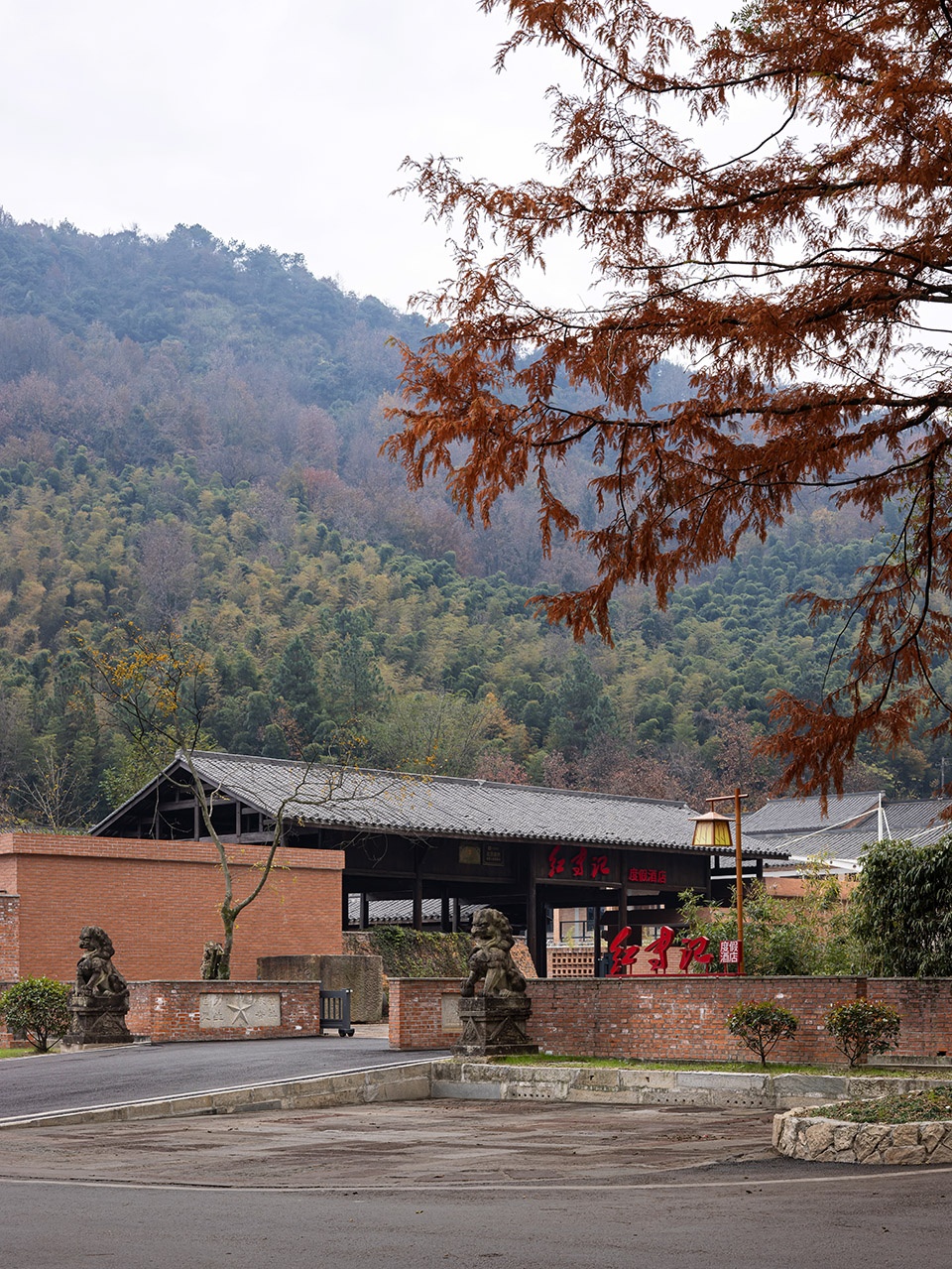
当右见团队初次探访项目的时候,便被周围环境和项目本身的荒废对比触动,他们要做的,就是用设计唤醒这片土地,让项目与山林湖水共生,与在地文脉相融,与商业价值共荣,最终让这片土地重焕新生,成为自然、文化与商业交织的独特空间。
When the U-See Design Team first surveyed the site, they were deeply moved by the stark contrast between the vibrant environment and the desolation of the ruins. Their mission became clear: to awaken this land through design, fostering a symbiosis between the architecture and the wilderness, integrating local cultural heritage with commercial prosperity, and ultimately allowing the land to flourish anew as a unique intersection of nature, culture, and commerce.
▼项目与山林共生,
a symbiosis between the architecture and the wilderness
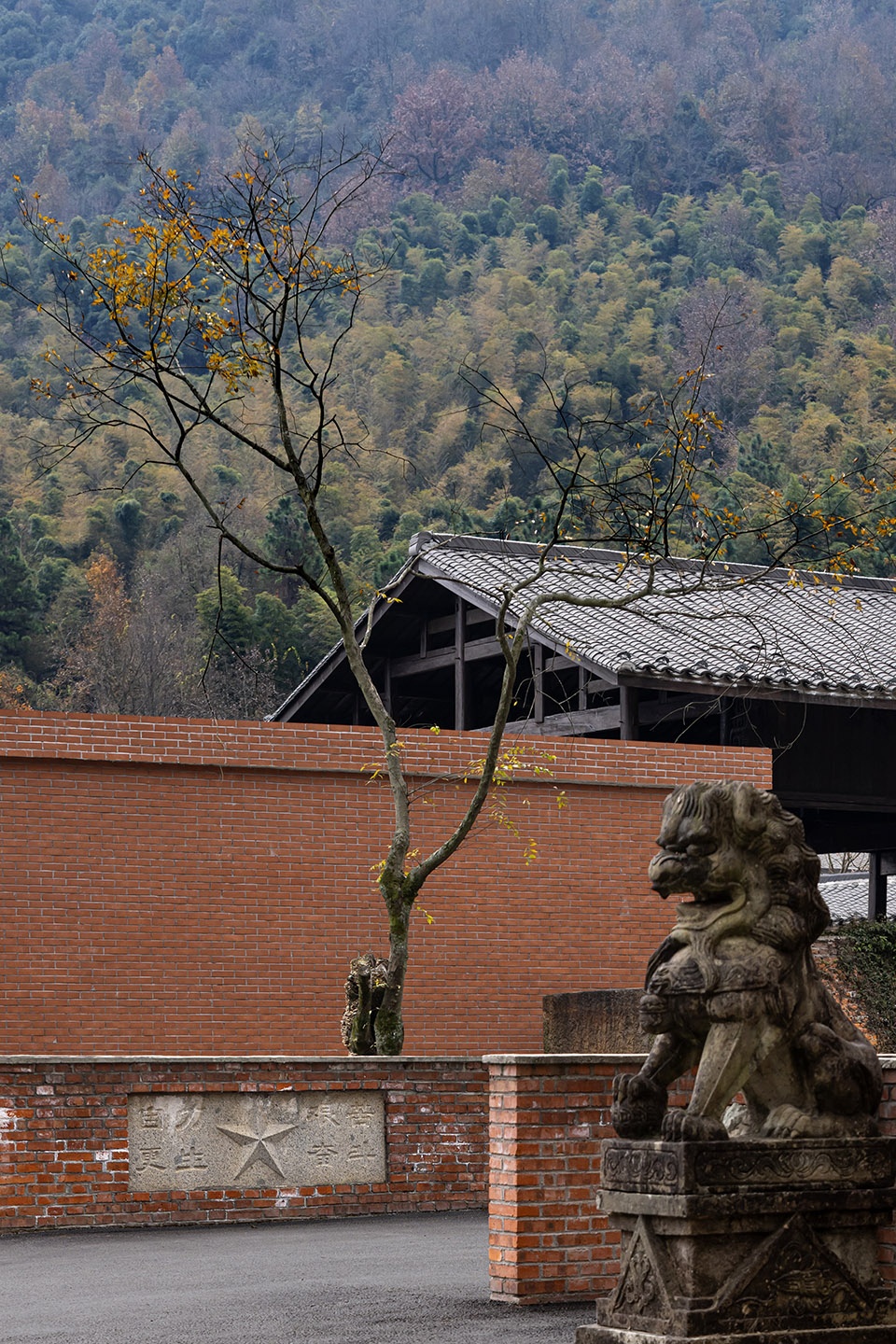
经过六年的焕新,「红专记」唤醒了这里的一切,它的命名蕴含双重深意:一方面取自核心材料“红砖”,另一方面谐音“又红又专”。在设计中被二重解读:“红”是红砖的质朴本色,是历史痕迹的鲜活留存;“专”是对服务业的专业坚守、对在地文化的专注传承、对空间营造的专一打磨,让历史记忆与当代功能形成奇妙共鸣。
After six years of regeneration, “Hong Zhuan Ji” has awakened every corner of the site. Its name carries a dual poetic resonance: literally referencing the primary material, “Red Brick,” while homophonically echoing the historical phrase “Red and Expert” (Yòu Hóng Yòu Zhuān). In the design, this is re-interpreted: “Red” represents the honest essence of red bricks and the vivid preservation of history’s traces; “Expert/Specialized” signifies a professional commitment to hospitality, a dedicated inheritance of local culture, and a singular focus on the craftsmanship of spatial creation, allowing historical memory to resonate wonderfully with contemporary function.
▼庭院俯瞰,overlook the courtyard
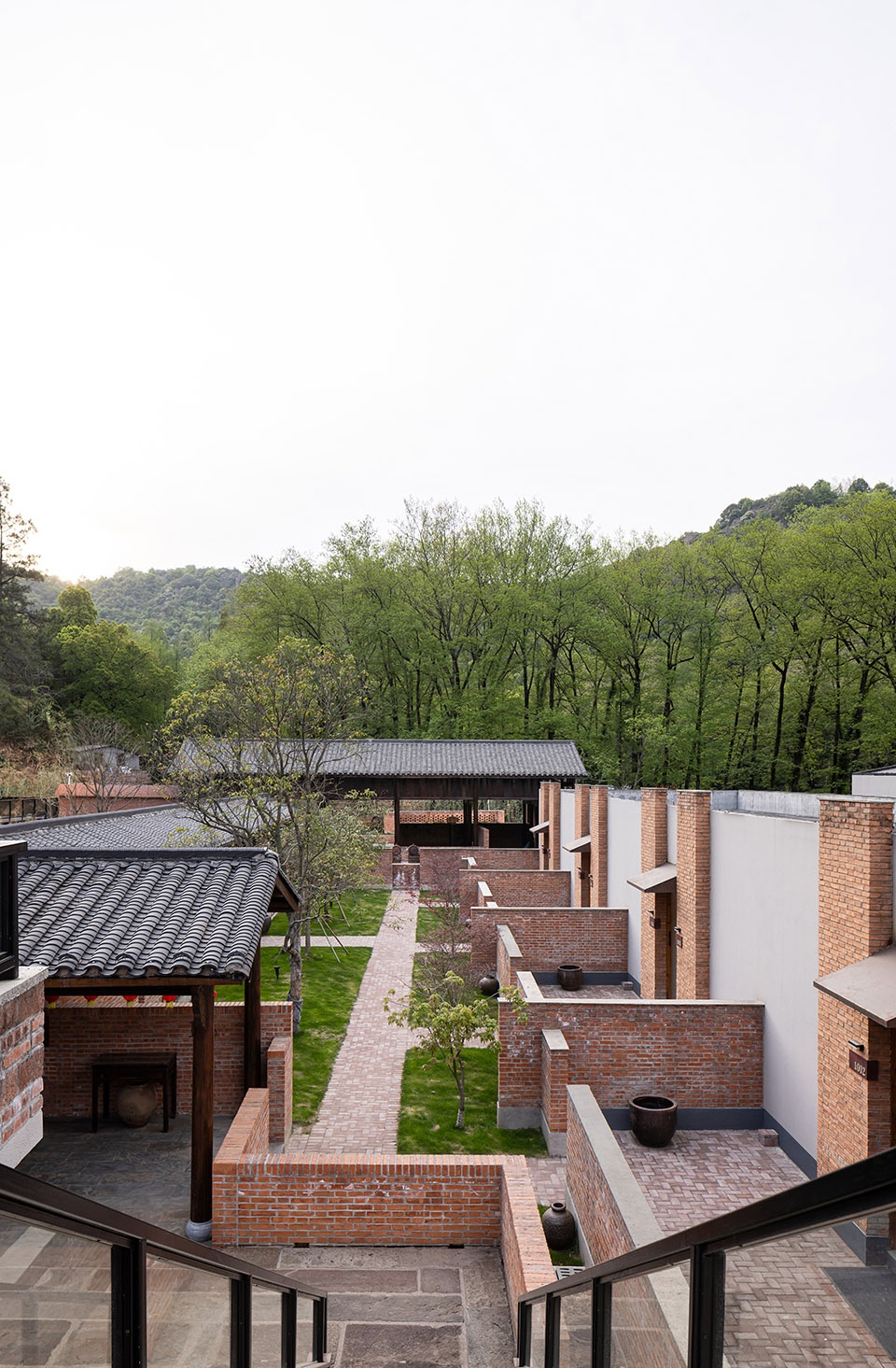
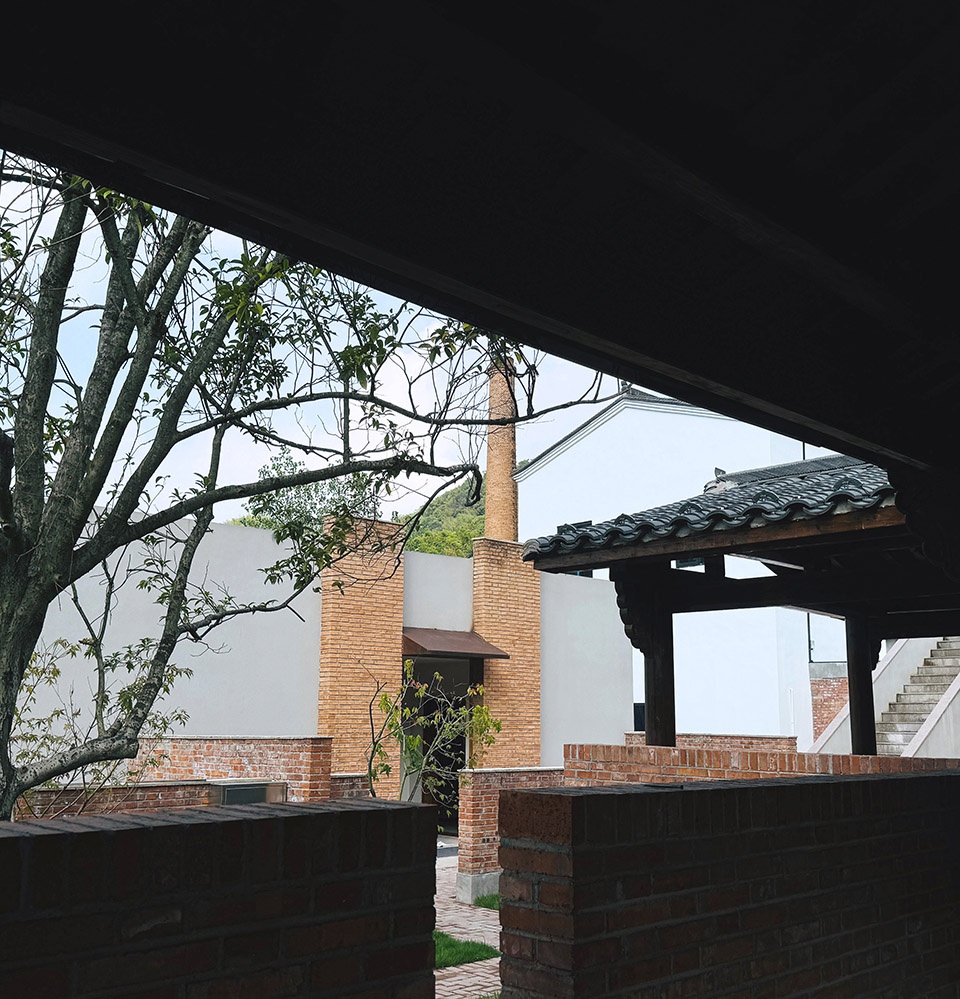
▼红砖庭院,the redbrick courtyard
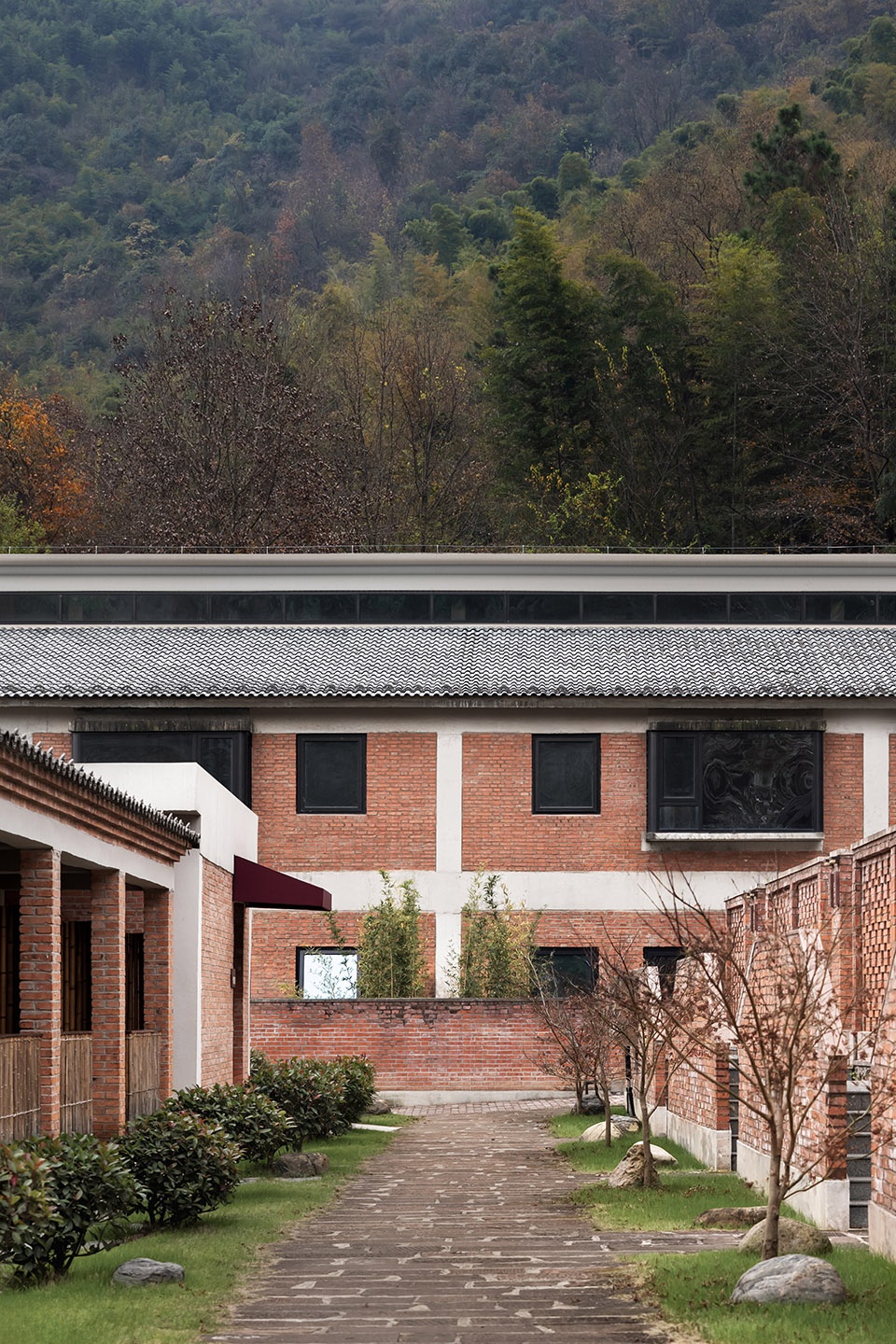
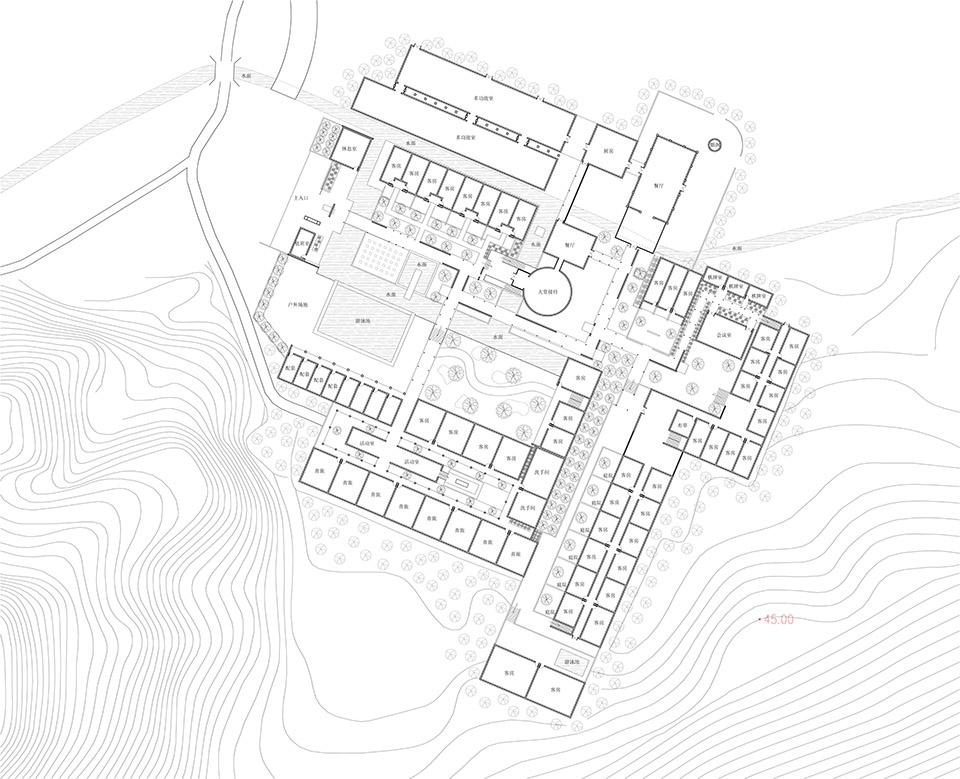
在功能布局上,「红专记」以住宿、餐饮等商业业态为核心,为每个客房打造独立小庭院,低矮的院落设计兼顾私密性与安全感,成为客人晒太阳、放松身心的优质场景;6500方左右的片区内,设置复式与单层客房、包厢、早餐厅、主餐厅等多元商业空间,满足不同使用需求。
In terms of functional layout, the project centers on hospitality and dining. Each guest room is gifted with an independent private courtyard; the low-walled design balances intimacy with a sense of security, creating an ideal setting for basking in the sun and unwinding. Within the roughly 6,500-square-meter area, a diverse array of spaces—including duplex and single-story rooms, private dining suites, a breakfast hall, and a main restaurant—satisfies various lifestyle needs.
▼客房区域,the guest room
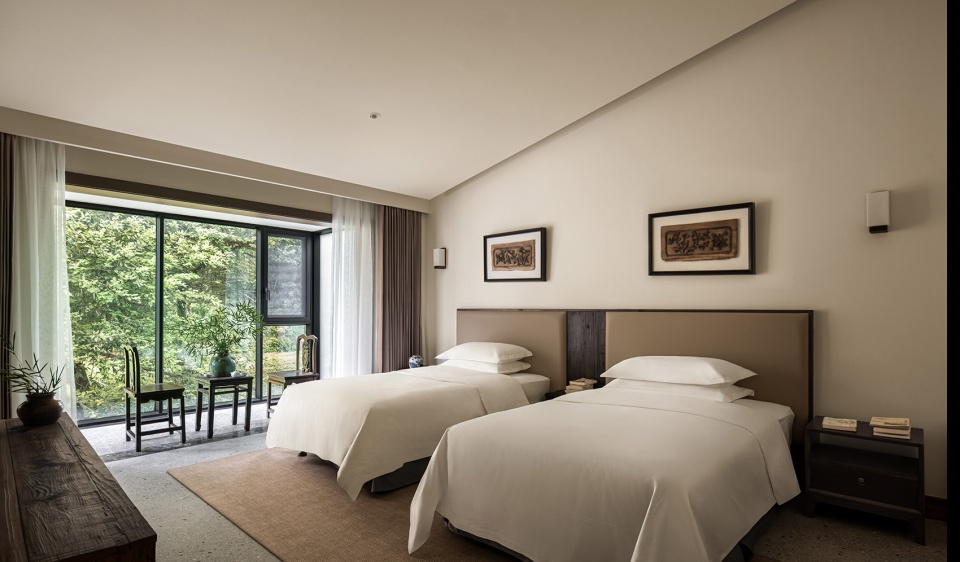
▼民宿内部空间,the interior space of guesthouse
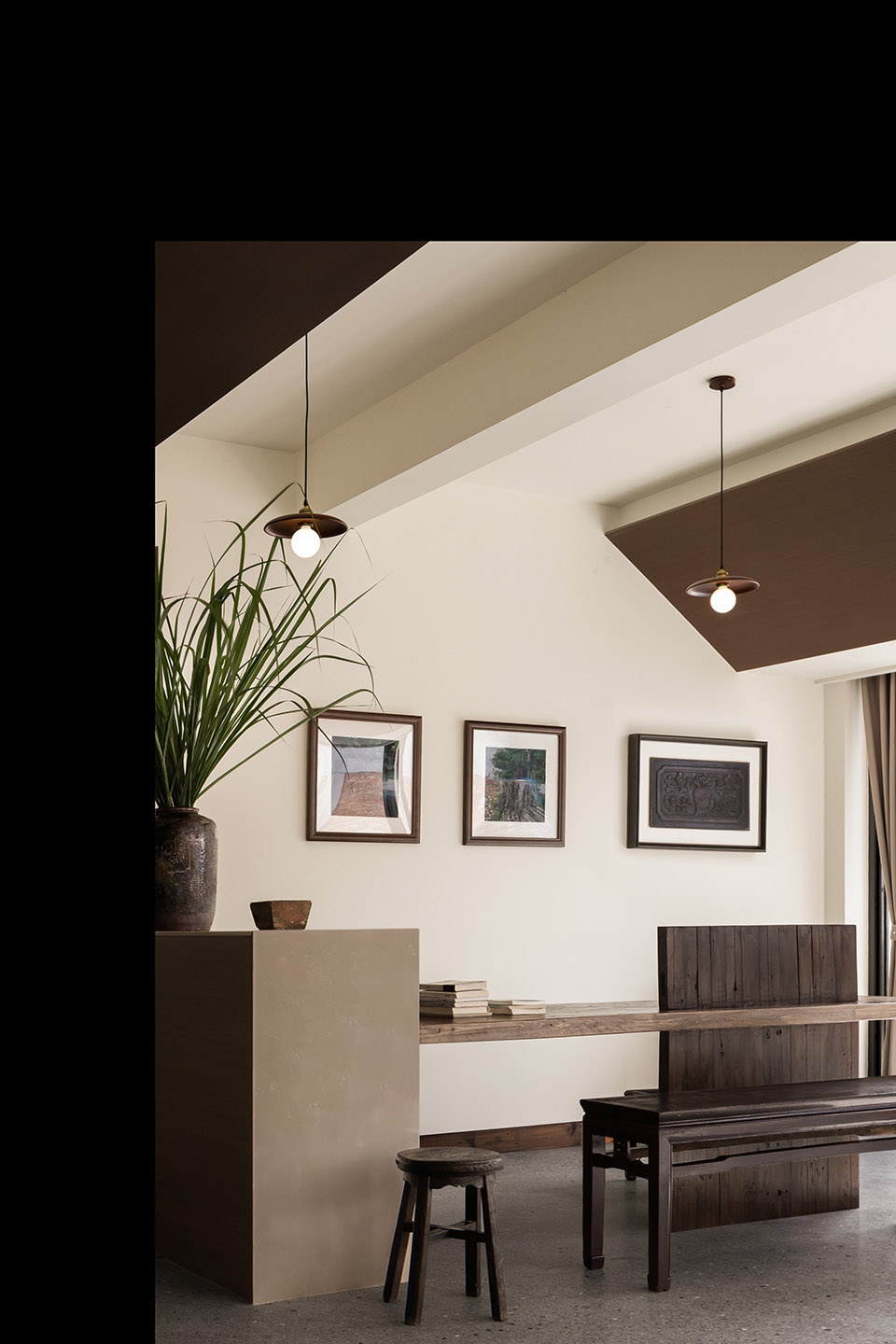
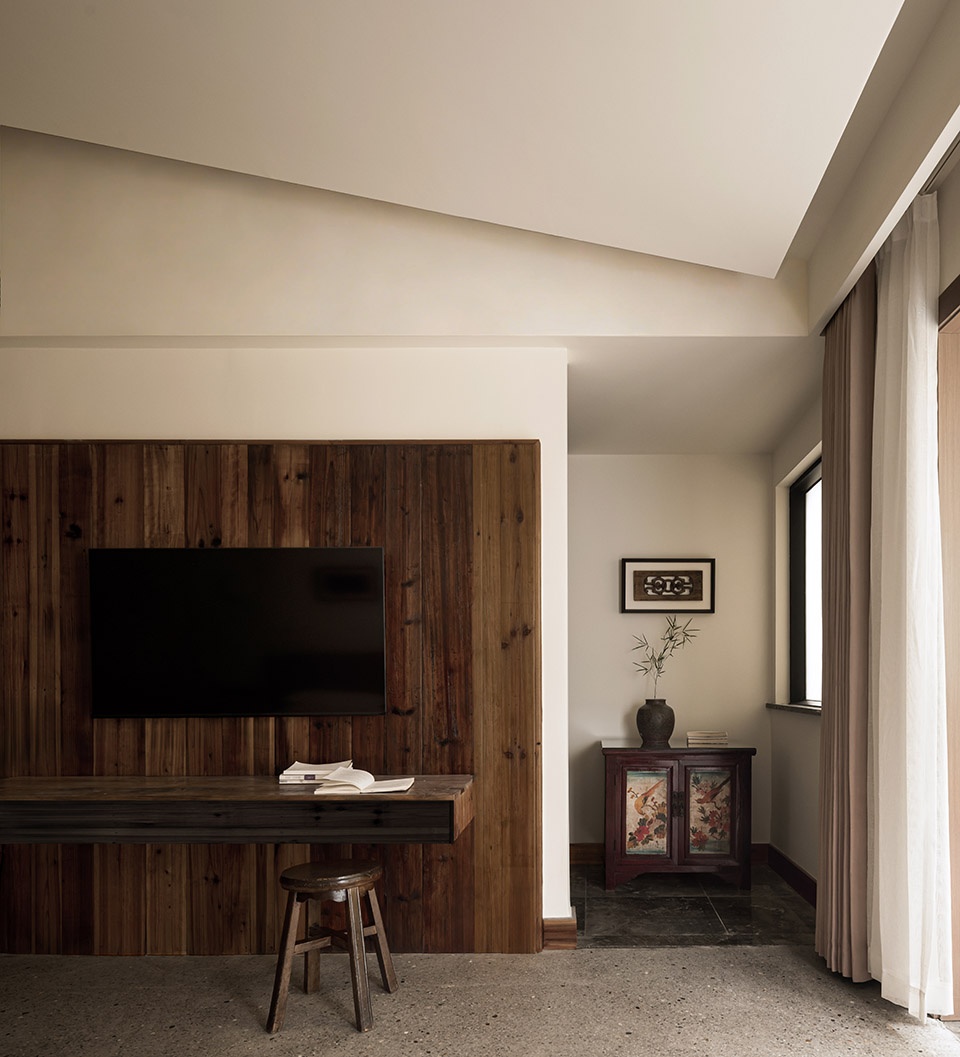
客房空间延续了在地化与再生理念,内部家具均由老建筑拆改材料与废弃旧物二次利用打造而成。从收藏的老八仙桌,到翻新后的旧木椅,再到用老门板改做的书桌台面,每一件家具和器物都带着时光的印记。
The guest rooms extend the philosophy of locality and regeneration. The interior furniture is crafted from materials salvaged during the factory’s deconstruction and repurposed vintage objects. From collected “Eight Immortals” tables to refurbished wooden chairs and desk surfaces fashioned from old door planks, every piece of furniture bears the indelible patina of time.
▼客房区域,the guest room
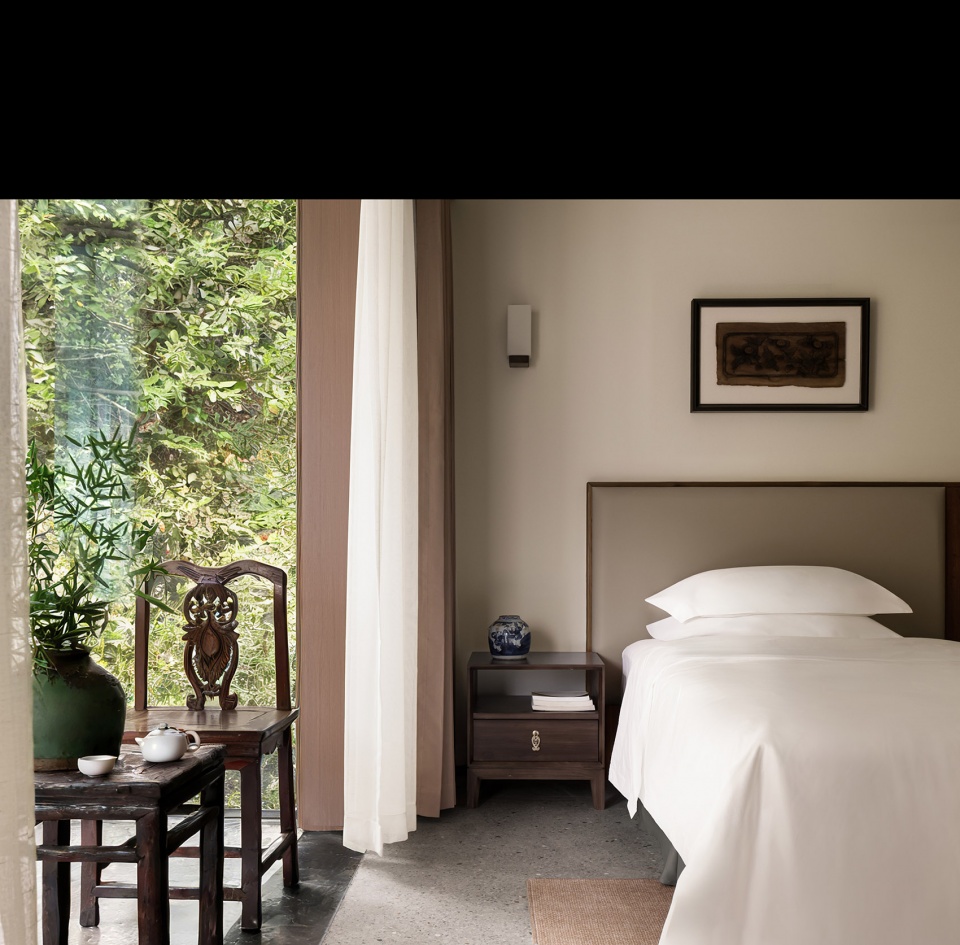
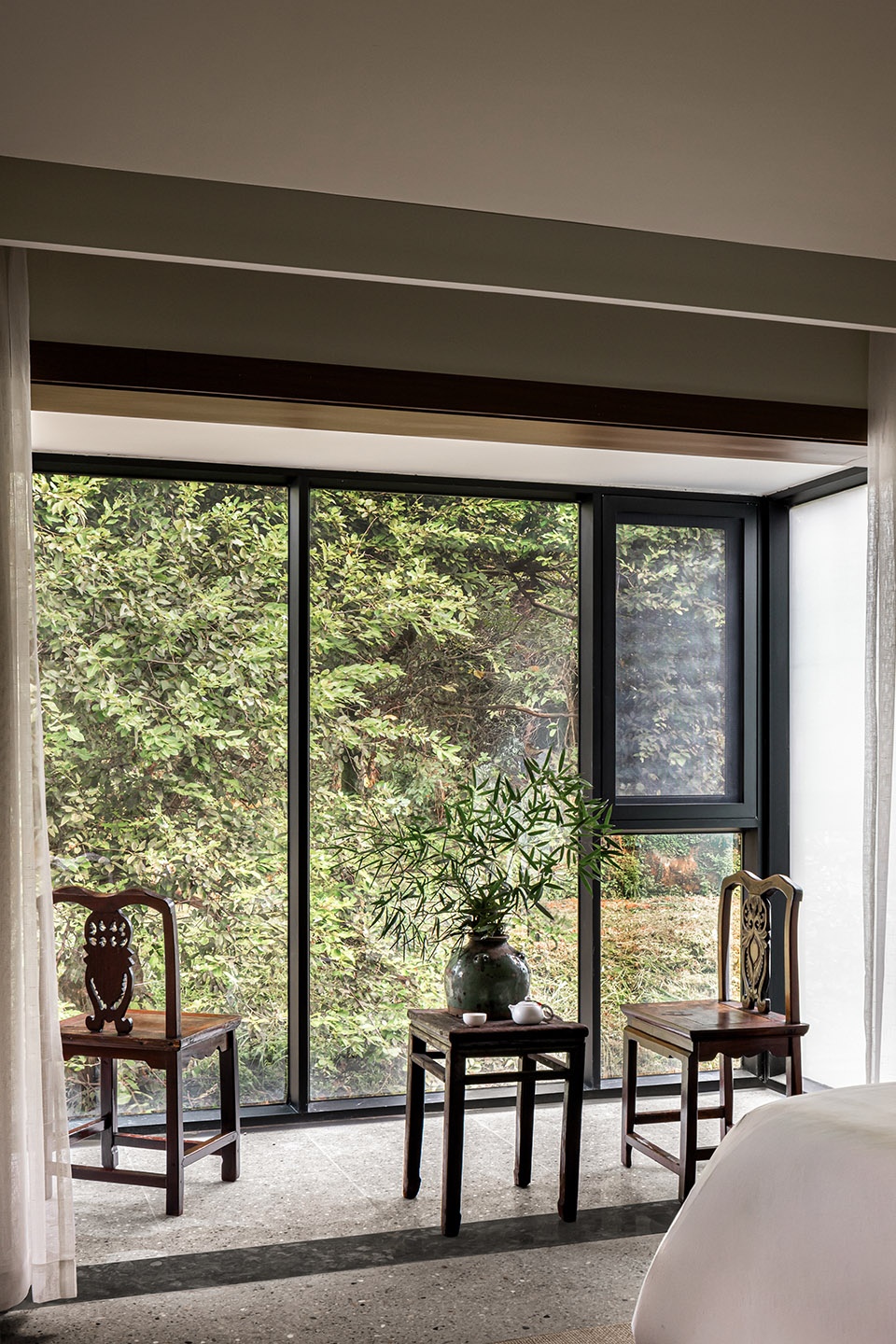
将回收的老木雕残件、旧窗框进行装裱,作为客房墙面的装饰,与窗外的庭院绿意相映成趣。室内不做过多繁复装饰,仅以简洁的红砖墙面、原木构件搭配老物件,既营造出质朴舒适的居住氛围,又让在地文化与再生理念渗透到旅居体验的每一处细节里。
Reclaimed wood carvings and vintage window frames are framed as wall art, creating a rhythmic dialogue with the lush greenery of the courtyards outside. The interiors eschew superfluous decoration, relying instead on simple red brick walls and raw timber components paired with antiquities. This creates a rustic and comfortable dwelling atmosphere, ensuring that local culture and the concept of rebirth permeate every detail of the guest experience.
▼回收的老木雕残件作为客房墙面的装饰,
Reclaimed wood carvings and vintage window frames are framed as wall art
03 对自然的敬畏
Reverence for Nature: A Dialogue with the Earth
设计拒绝纯粹的唯美主义,而是追求商业功能与自然生态的深度融合,让空间既有使用价值,又具生态温度。
The design rejects superficial aestheticism in favor of a profound fusion between commercial utility and ecological integrity, ensuring the space possesses both practical value and an “ecological temperature.”
▼追求商业功能与自然生态的深度融合,
a profound fusion between commercial utility and ecological integrity
在与自然的对话中,始终保持对自然的敬畏。建筑规划时主动避开原有树木,为保护树木重新设计结构,甚至为枯老桩体打造壁龛式景观,让自然成为空间的一部分In its dialogue with the environment,
the project maintains a steadfast reverence for nature. The architectural planning actively avoids existing trees, with structures redesigned to protect them. Even ancient, withered stumps are celebrated within niche-like landscapes, allowing nature to remain an intrinsic part of the spatial narrative.
▼为枯老桩体打造壁龛式景观,
withered stumps are celebrated within niche-like landscapes
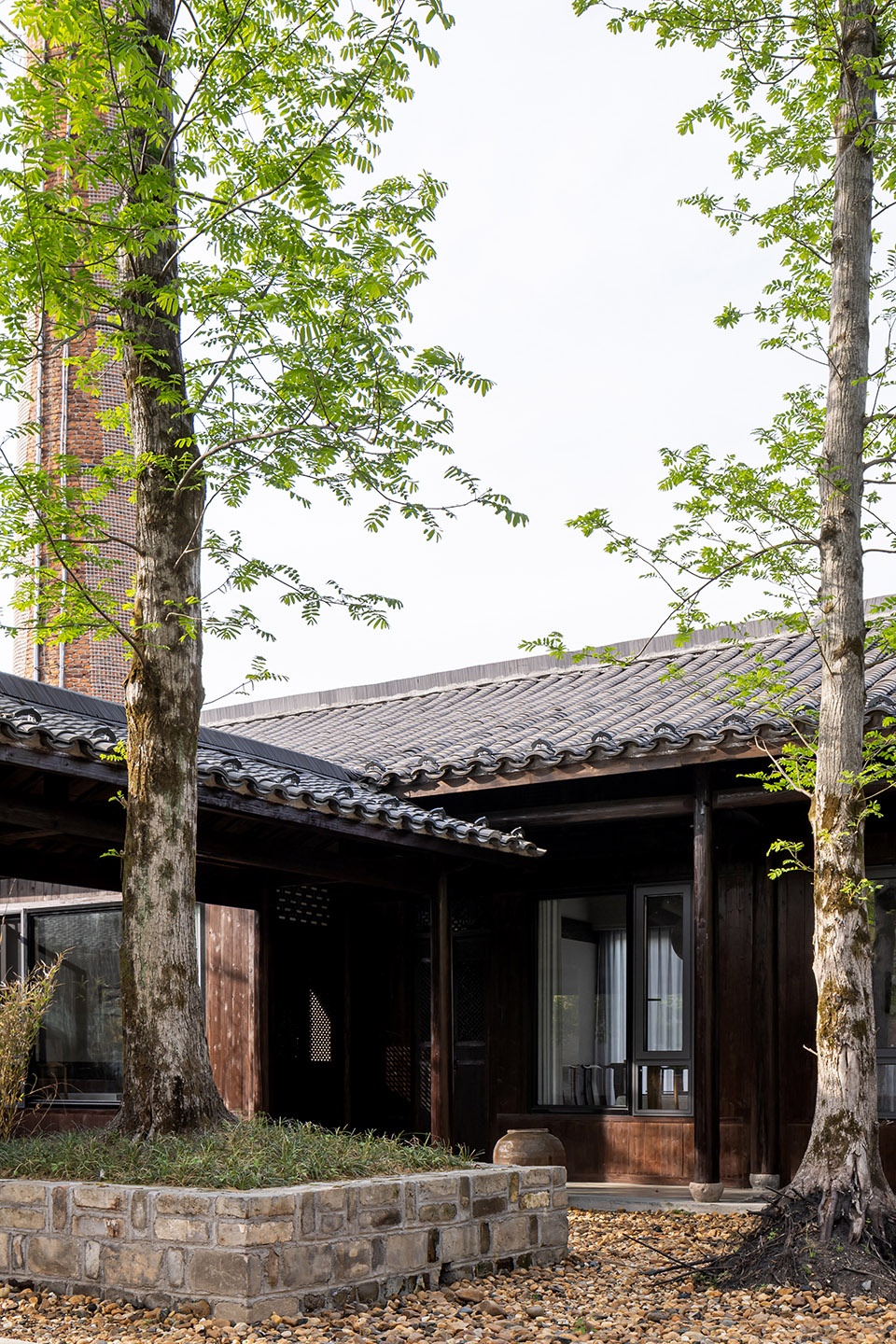
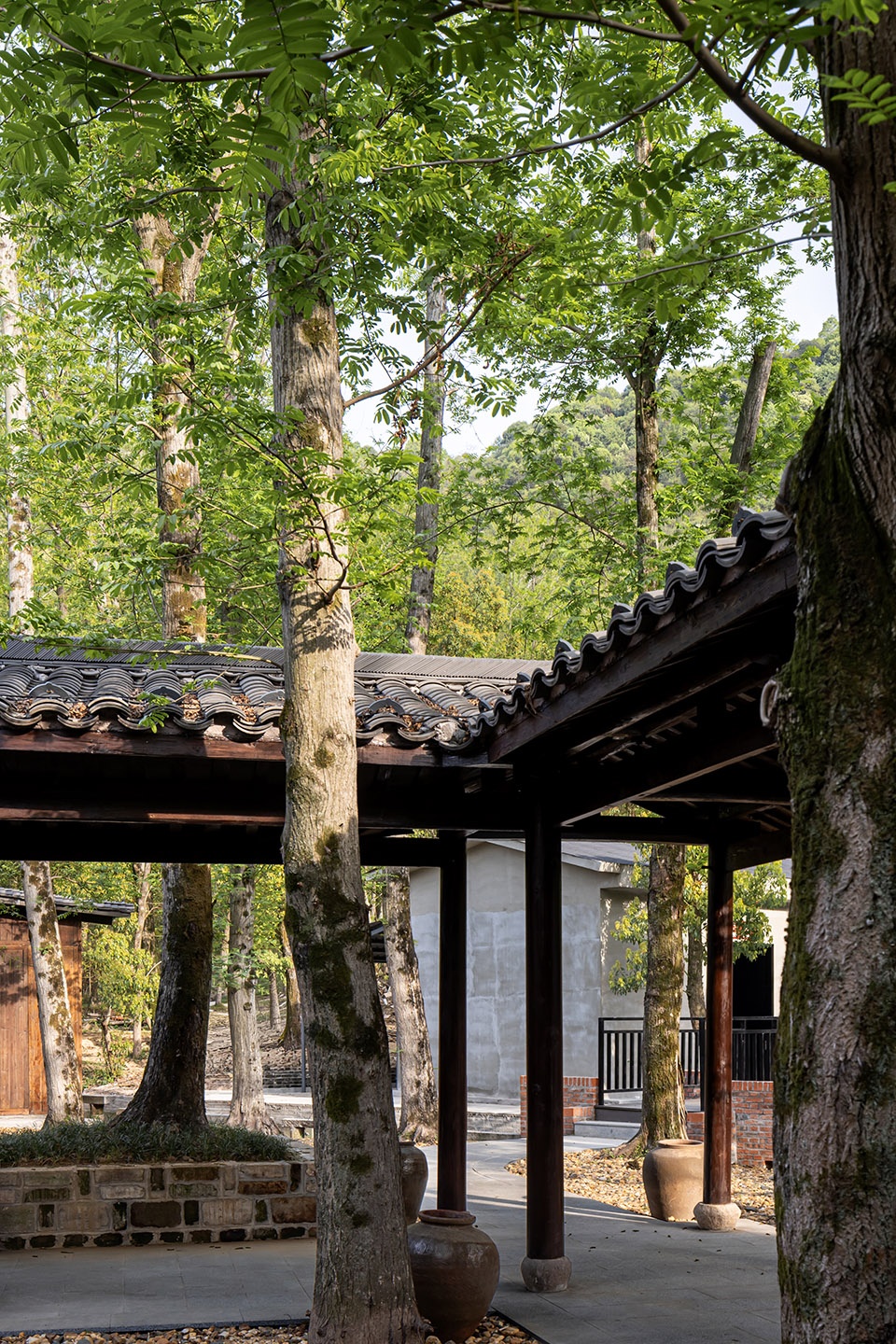
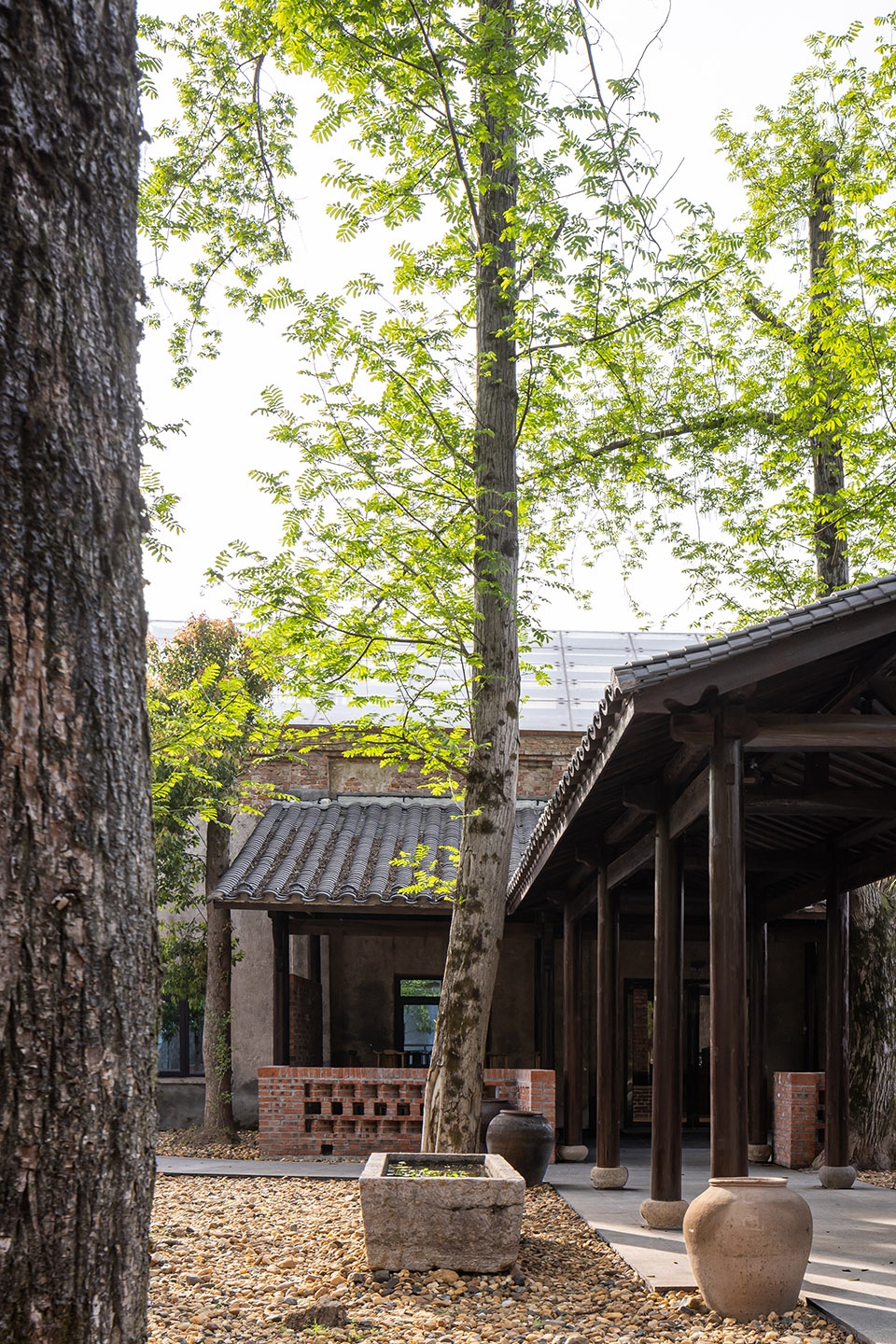
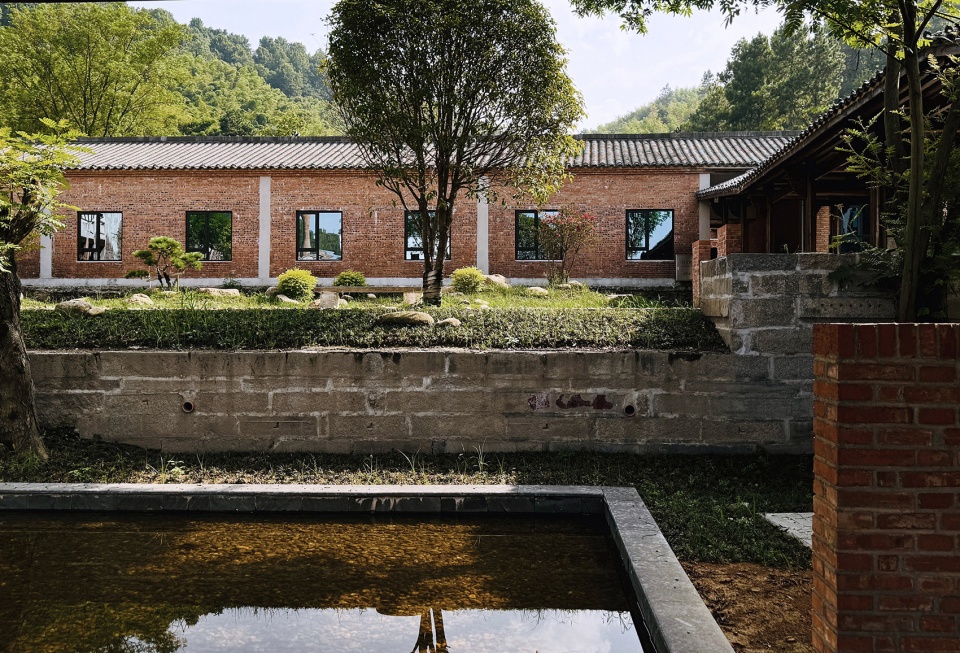
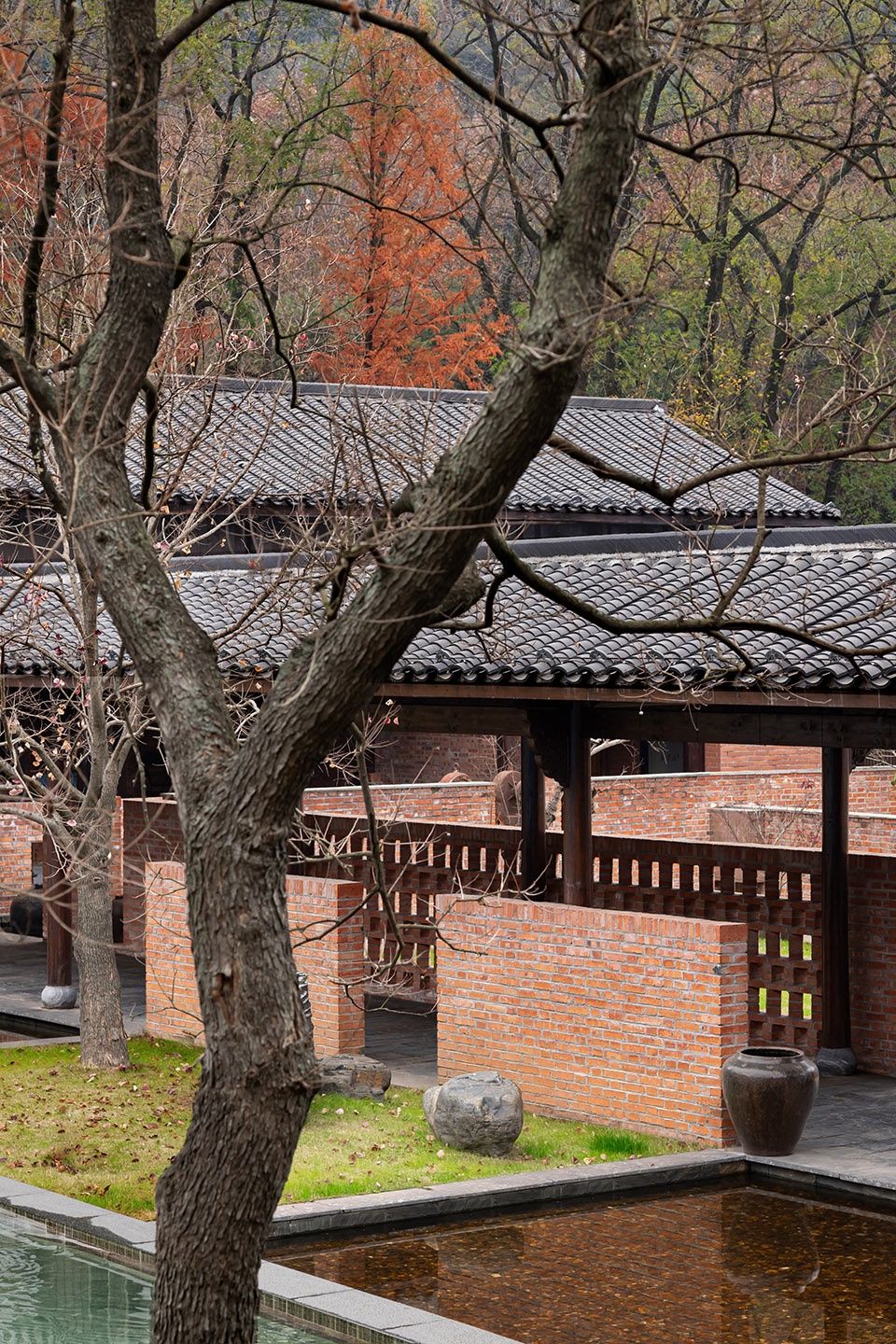
地面仅以草皮与树木简单铺设,墙面保留原生植物,让建筑与自然浑然一体,季节不同,植被色彩各异,与建筑相映成趣,形成如诗如画的场景;引河道自然活水贯穿区域,形成流动的水系景观,既保持水质清澈,又为空间增添灵动气息。
The grounds are simply laid with turf and trees, while the walls retain original climbing flora, allowing architecture and nature to dissolve into one another. As seasons shift, the changing hues of the vegetation play against the buildings to create picturesque scenes. By channeling live water from the riverbed through the site, a fluid aquatic landscape is formed, maintaining water purity while imbuing the space with an ethereal, rhythmic vitality.
▼形成流动的水系景观,a fluid aquatic landscape is formed
▼形成流动的水系景观,a fluid aquatic landscape is formed
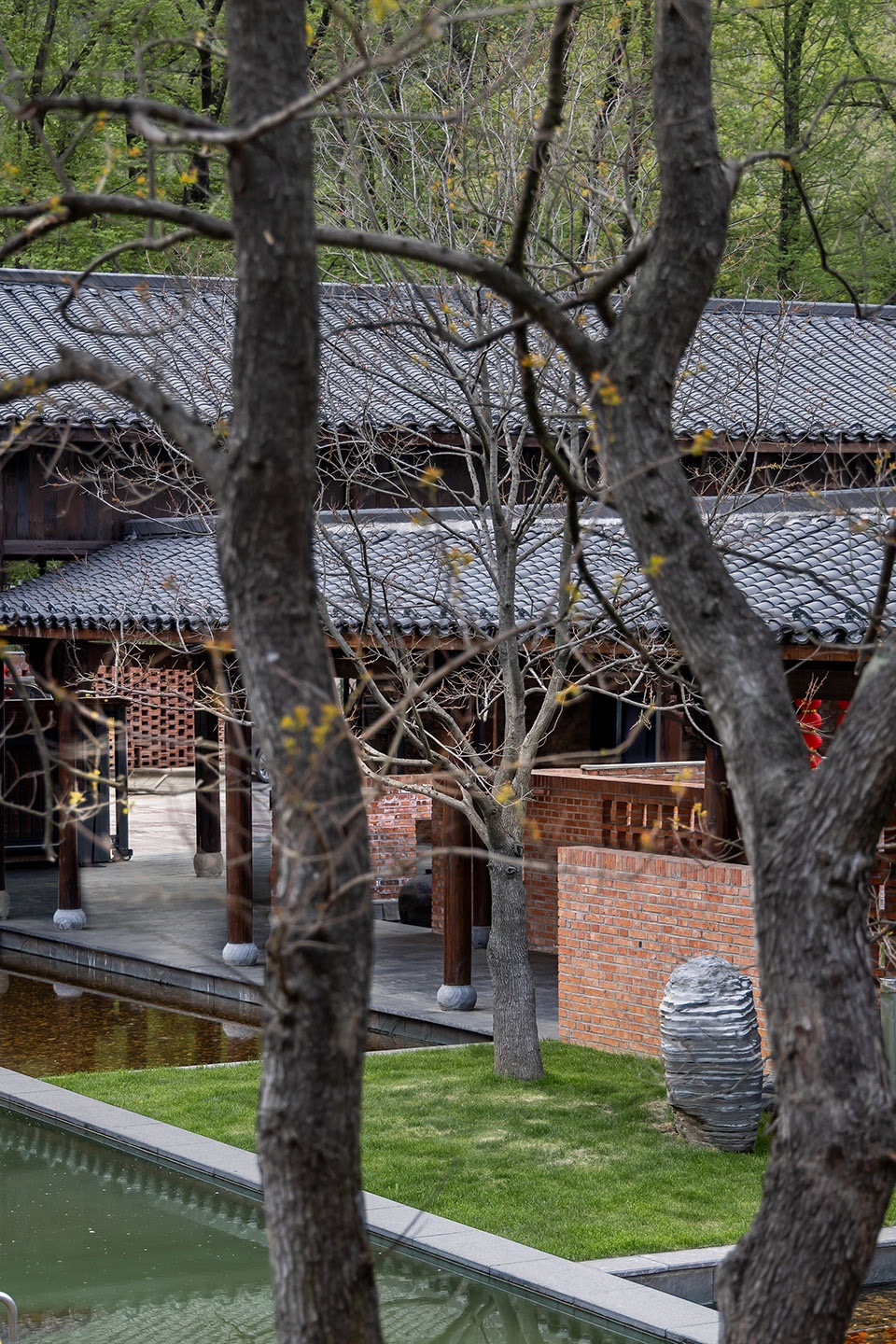
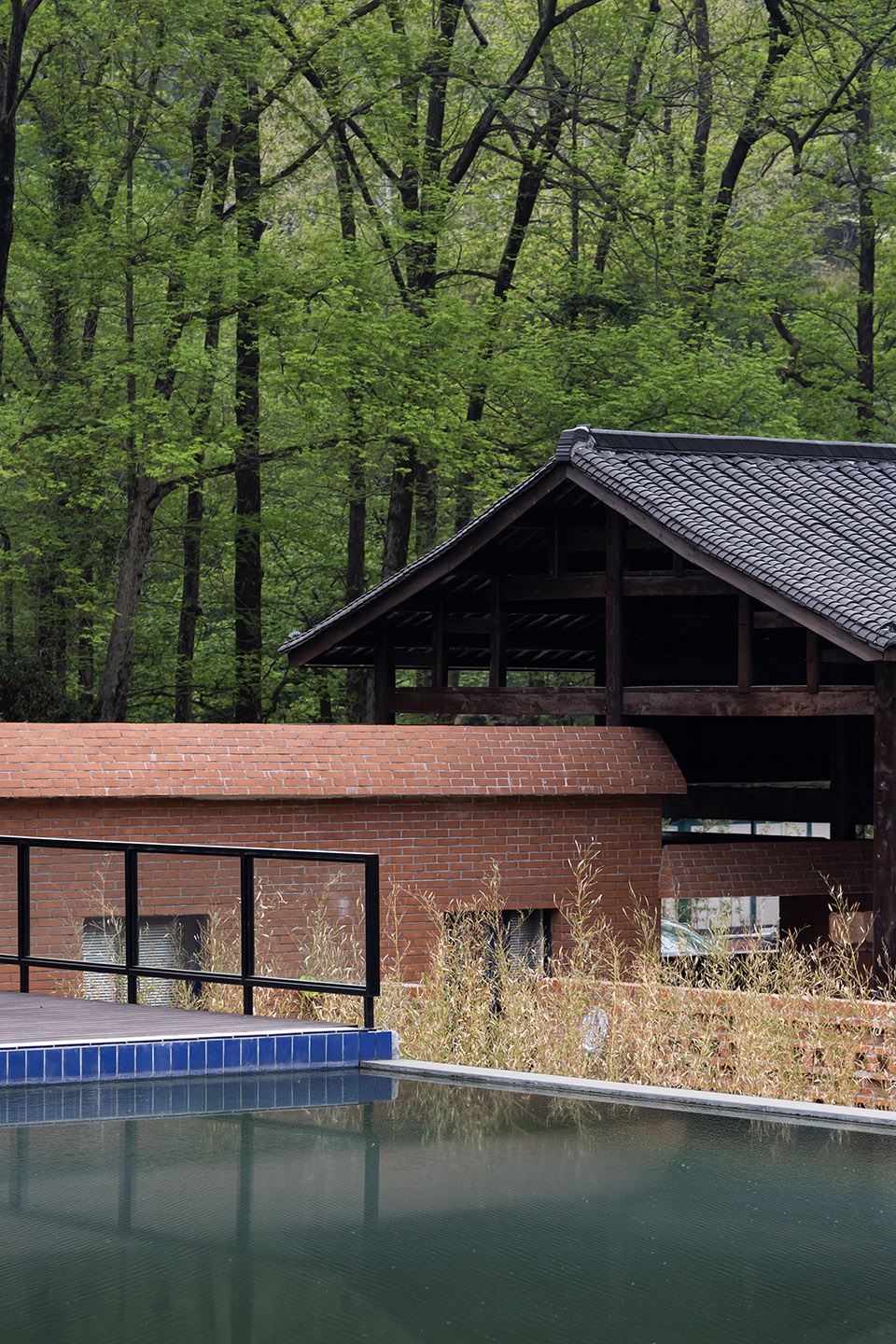
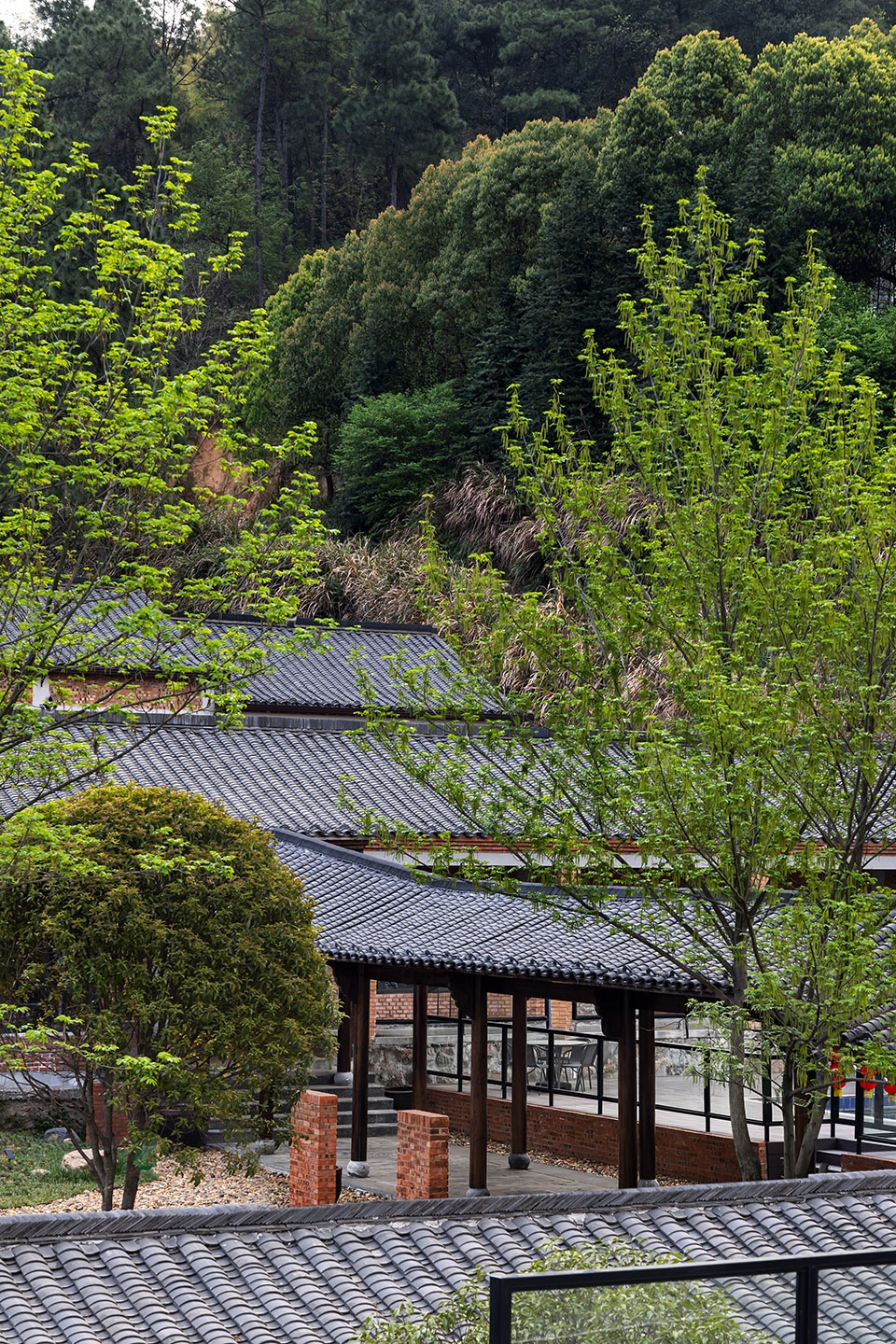
通过木构架廊道、通透式加固柱体、自然屏风式帘幕等设计,实现空间的开闭合宜,既保障商业场景的私密性,又让自然景观与商业空间相互渗透,达成功能与生态的共生。
Through the use of timber-framed corridors, transparent structural columns, and natural screen-like curtains, the design achieves an elegant balance of openness and enclosure. This safeguards the privacy required for commercial scenes while allowing the natural landscape and interior spaces to permeate each other, achieving a symbiosis of function and ecology.
▼木构架廊道,timber-framed corridors
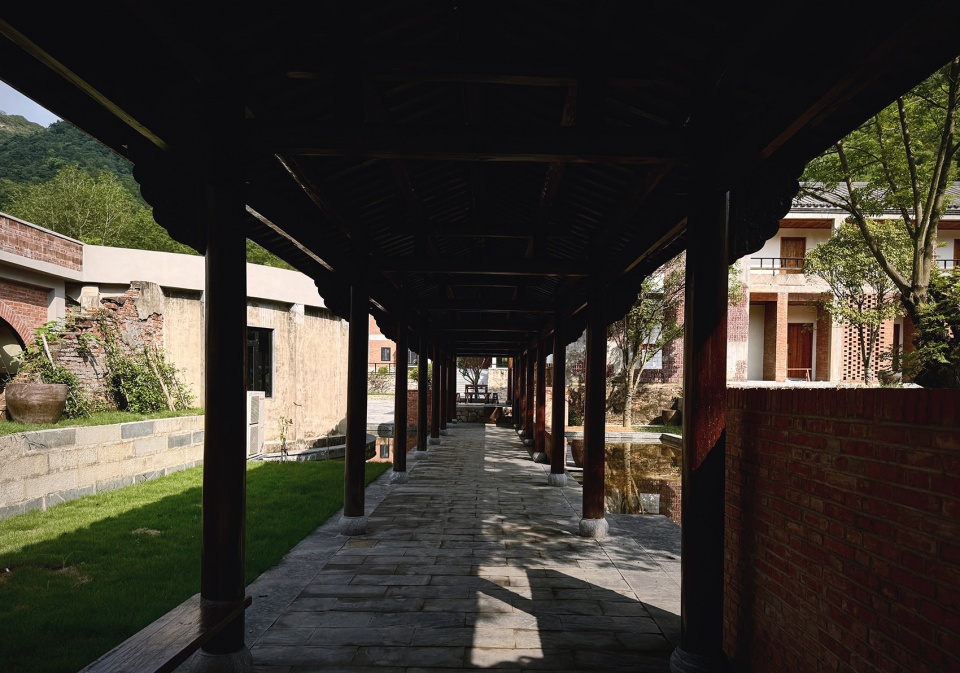
▼自然景观与商业空间相互渗透,
the natural landscape and interior spaces to permeate each other
04 材料的可持续与在地性
Sustainability and Locality of Materials
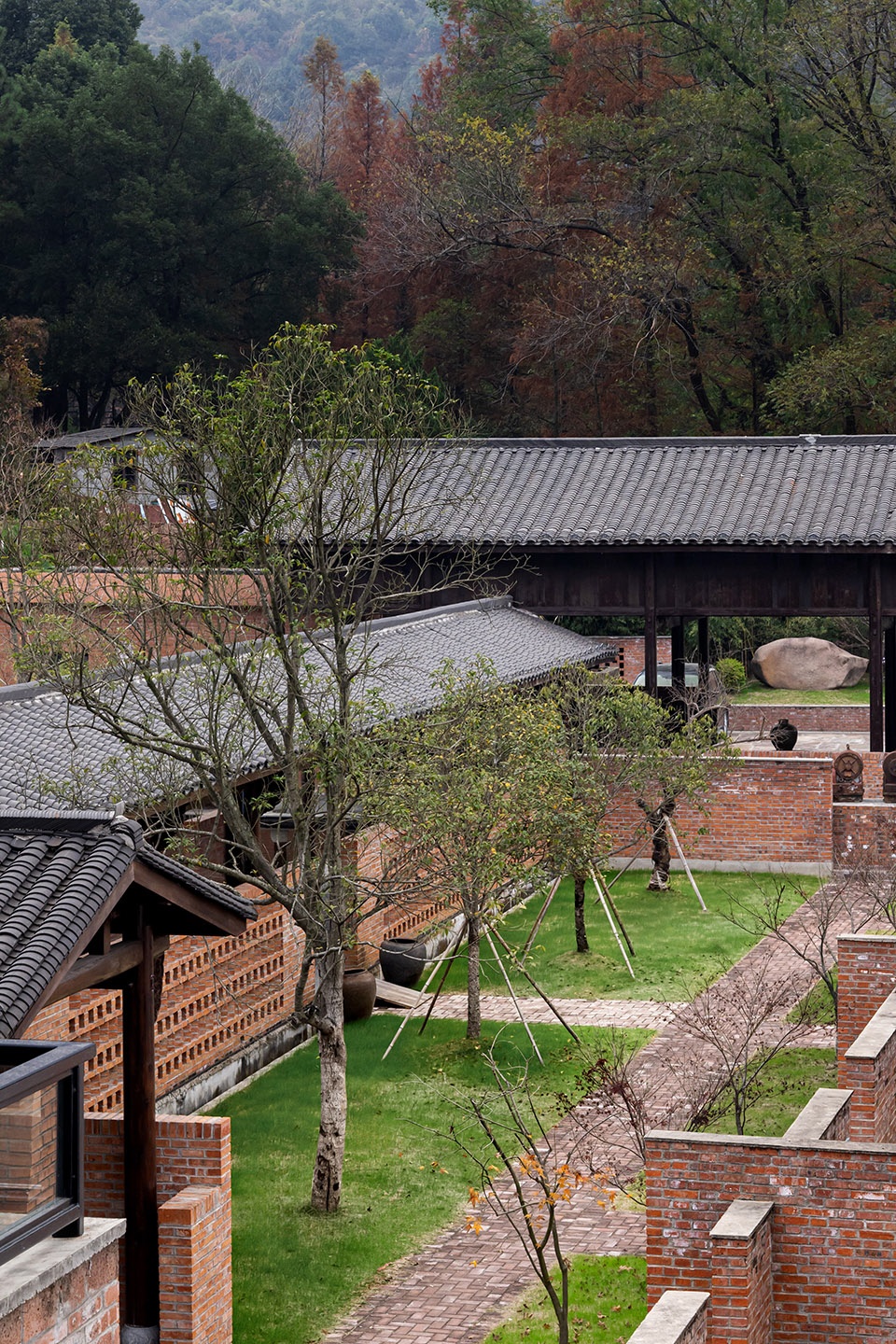
材料运用上,核心选用拆改回收的红砖与清理河道所得的长江石,以最质朴的原始质感贯穿建筑表皮与内侧空间,既降低造价,又赋予空间天然的历史肌理。
Regarding material application, the core palette consists of reclaimed red bricks and Yangtze River stones gathered from riverbed dredging. These materials, with their primitive and tactile textures, permeate both the building’s epidermis and its internal volumes, simultaneously reducing costs and endowing the space with a natural historical grain.
▼质朴的原始质感,materials, with their primitive and tactile textures
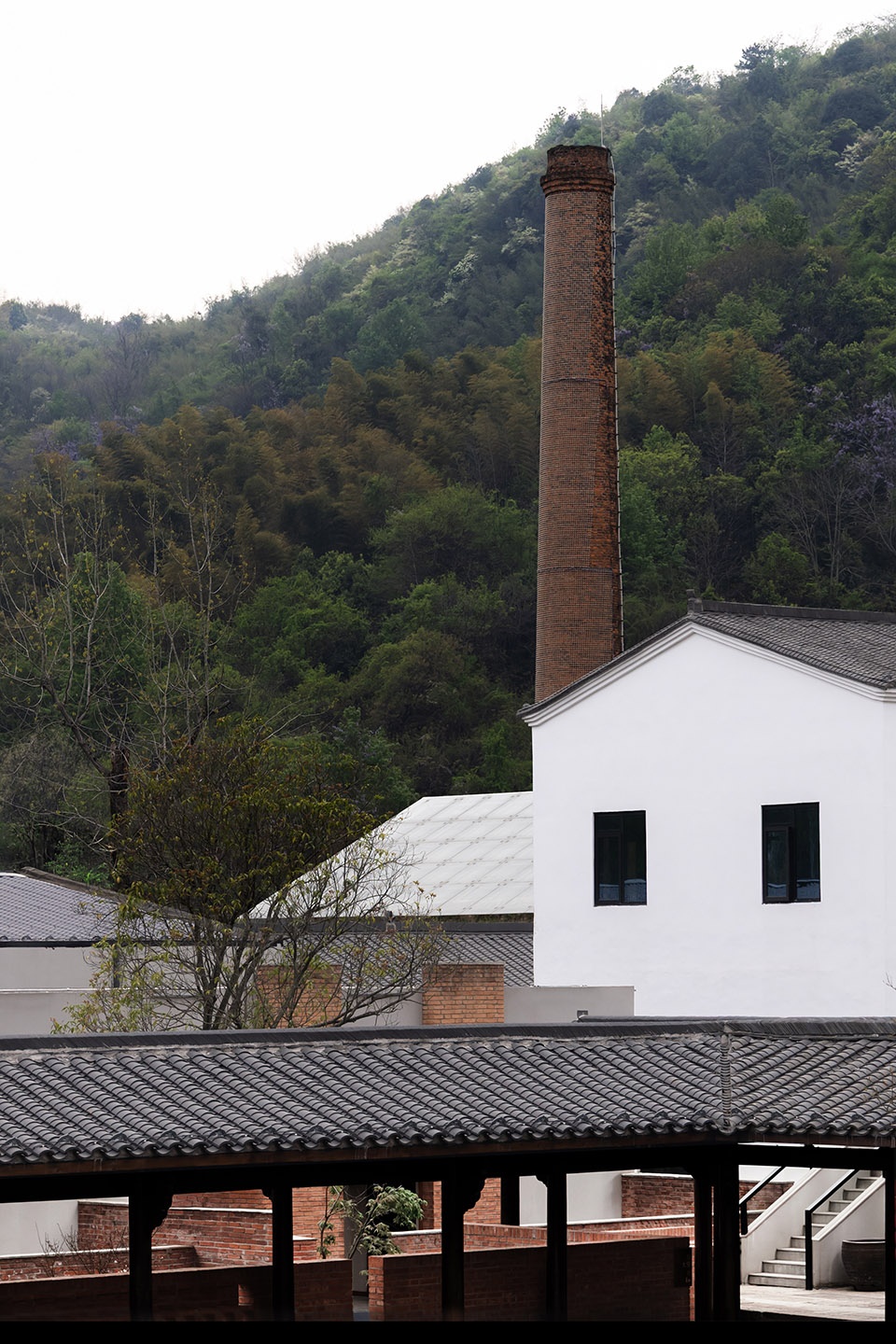
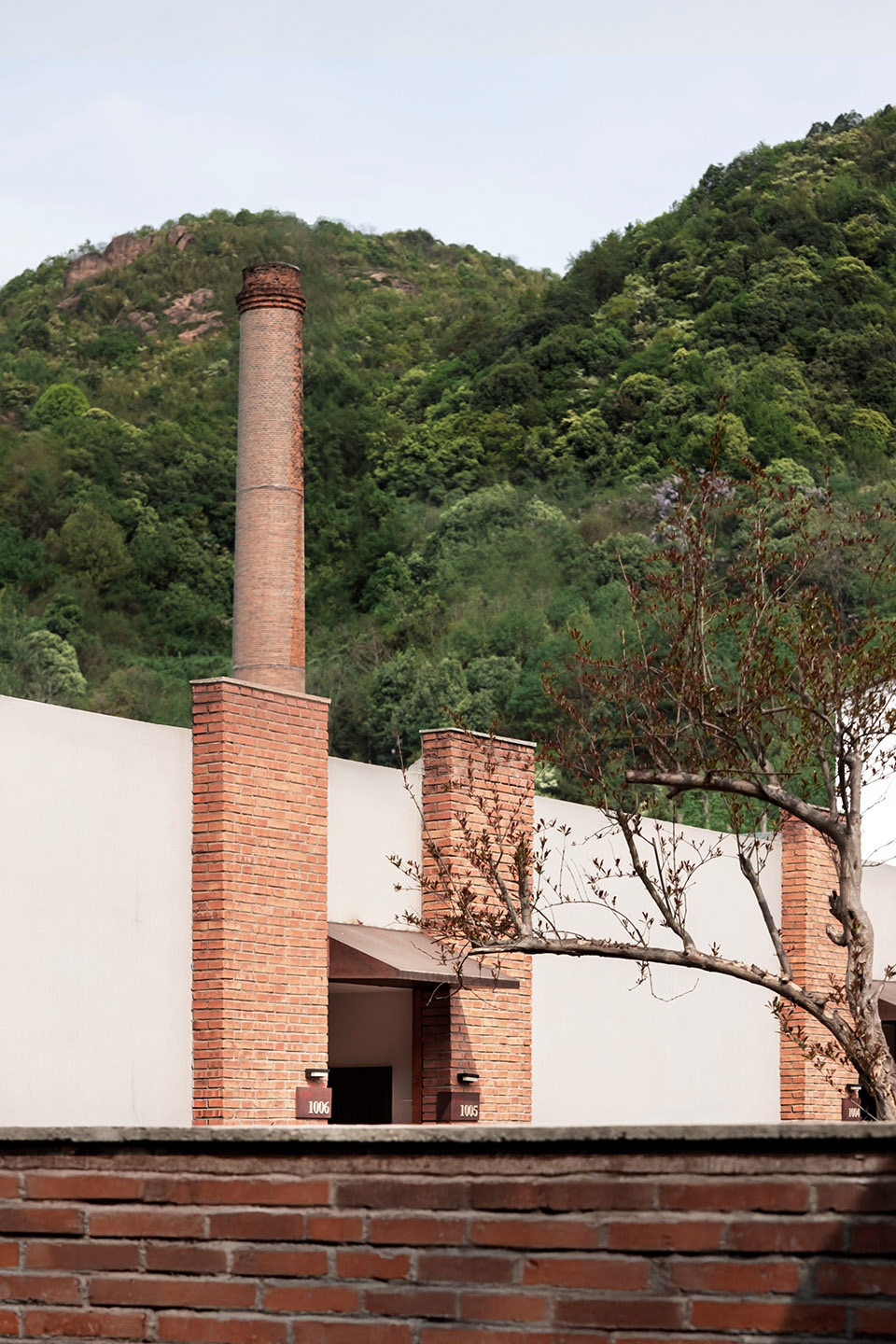
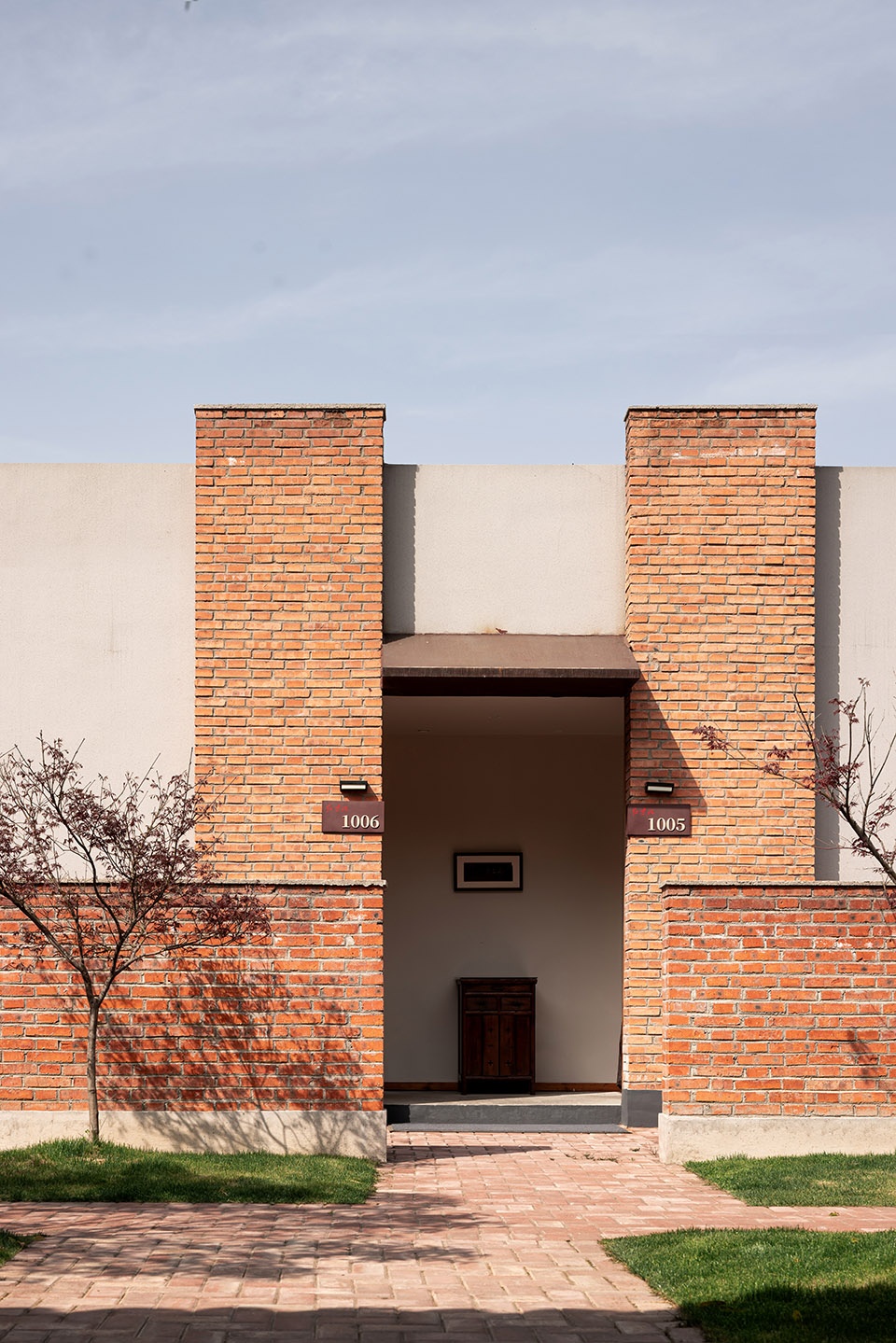
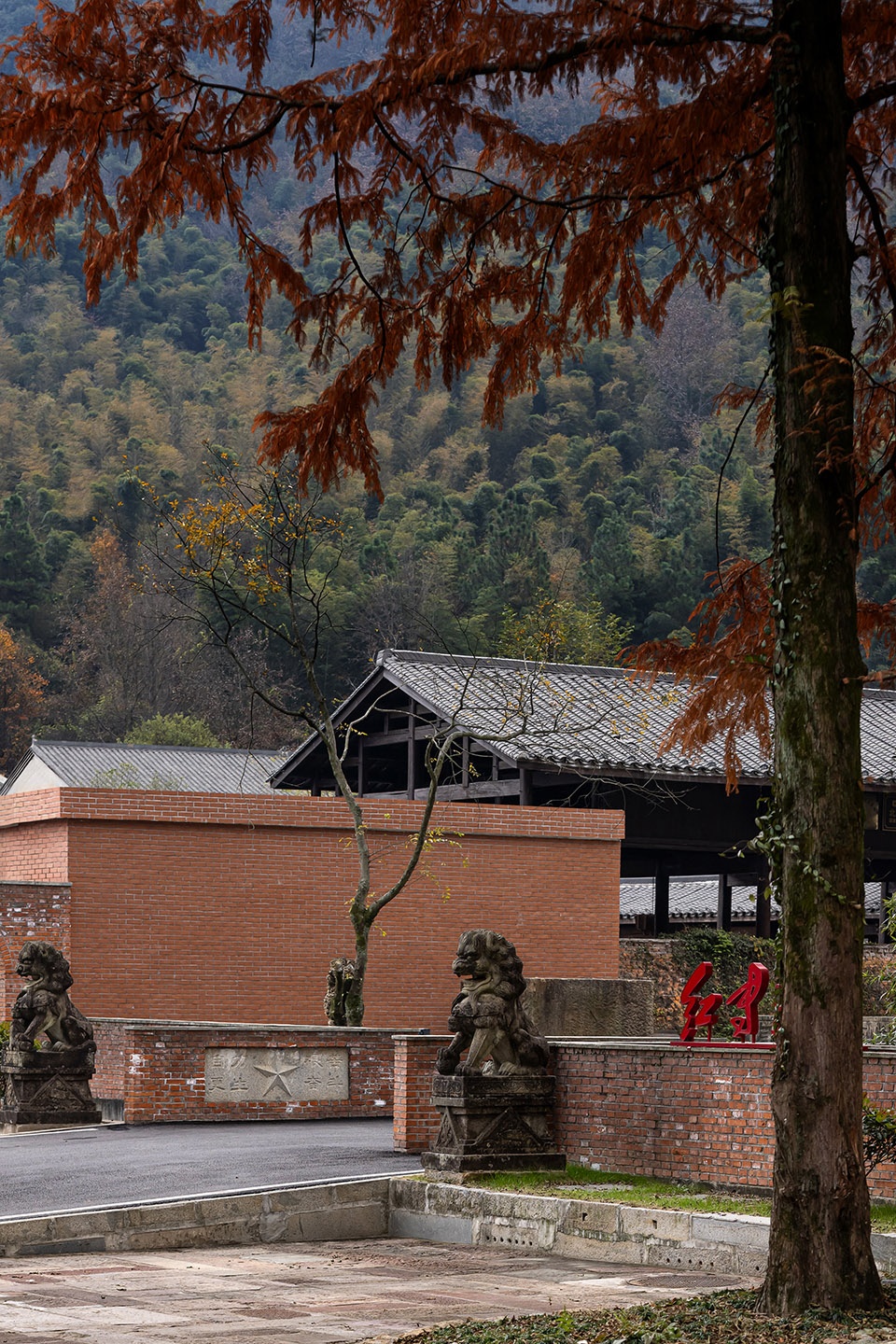
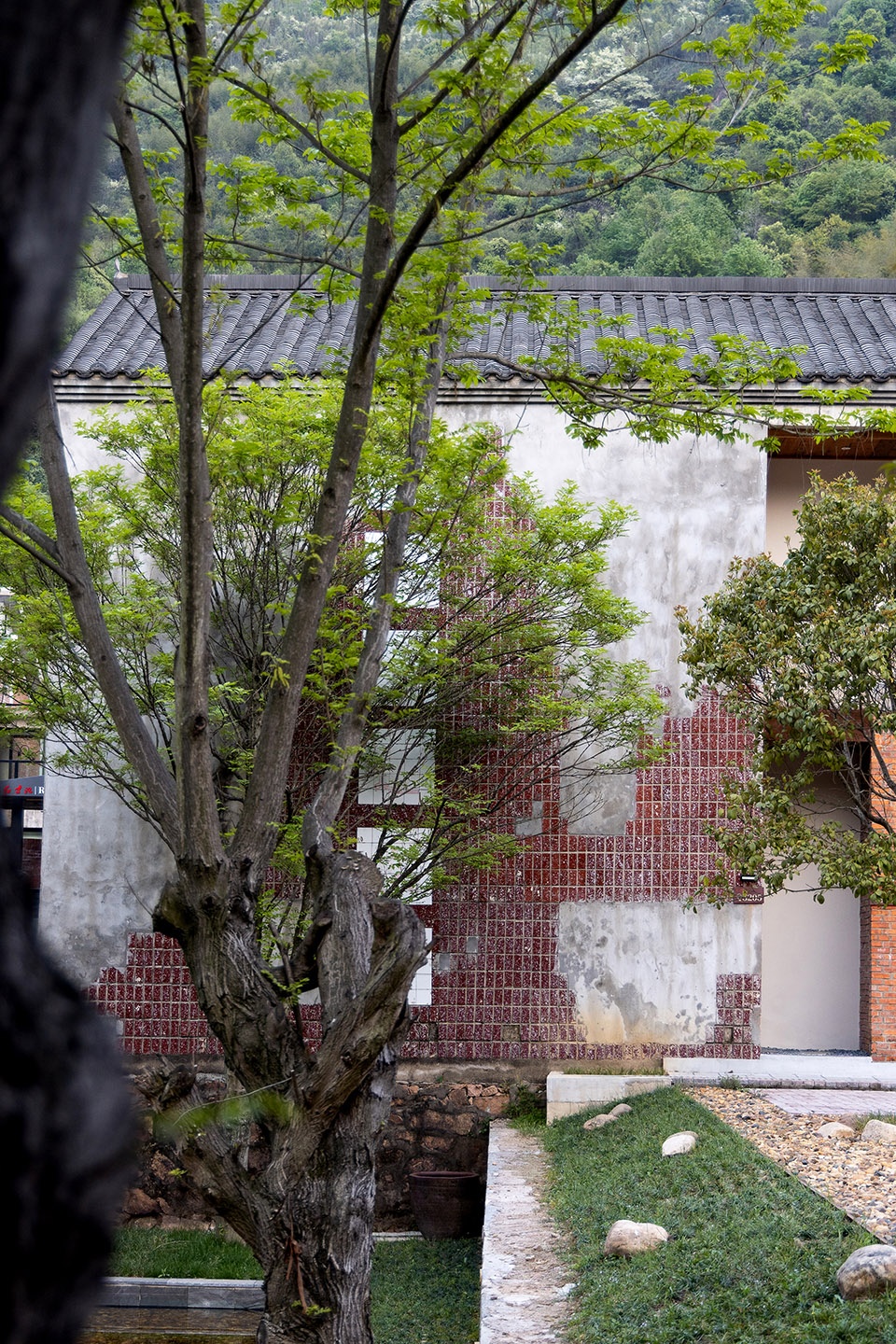
同时,严格保留建筑原有痕迹:墙面上具有时代特征的红色历史性瓷砖、带有标识的白色瓷砖、爬满植物的残墙,以及入口两侧的石狮子、南方大户人家用于消防蓄水的石材设施等,均完整留存,让老建筑的岁月印记得以延续。
Simultaneously, the original vestiges of the buildings are strictly preserved: the iconic red tiles of the era, the marked white tiles, the ivy-covered ruined walls, and even the stone lions at the entrance. Traditional Southern stone fire-cisterns have also been kept intact, ensuring the “memory of the years” continues to pulse within the old structures.
▼具有时代特征的红砖,the iconic red brick of the era
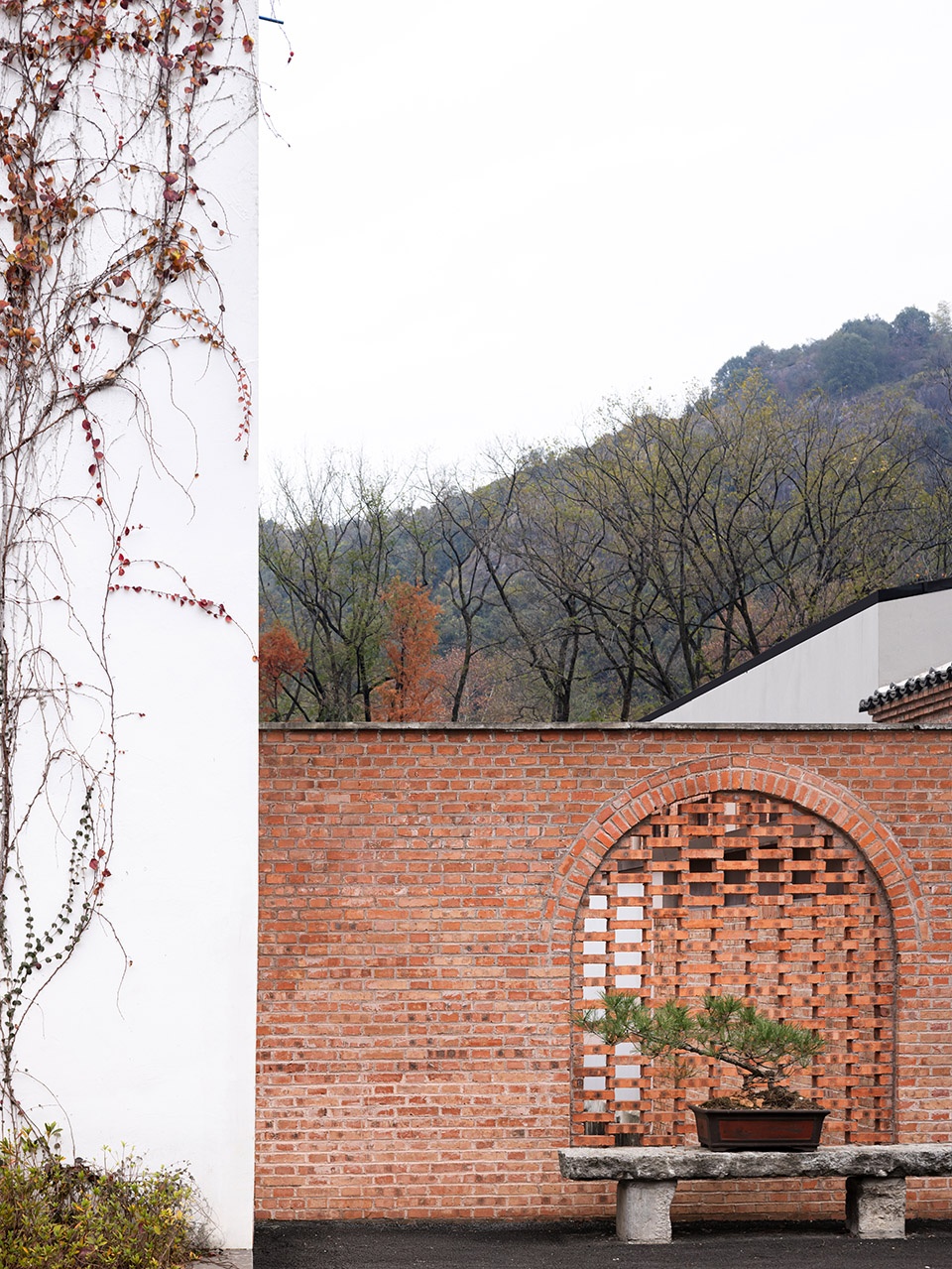
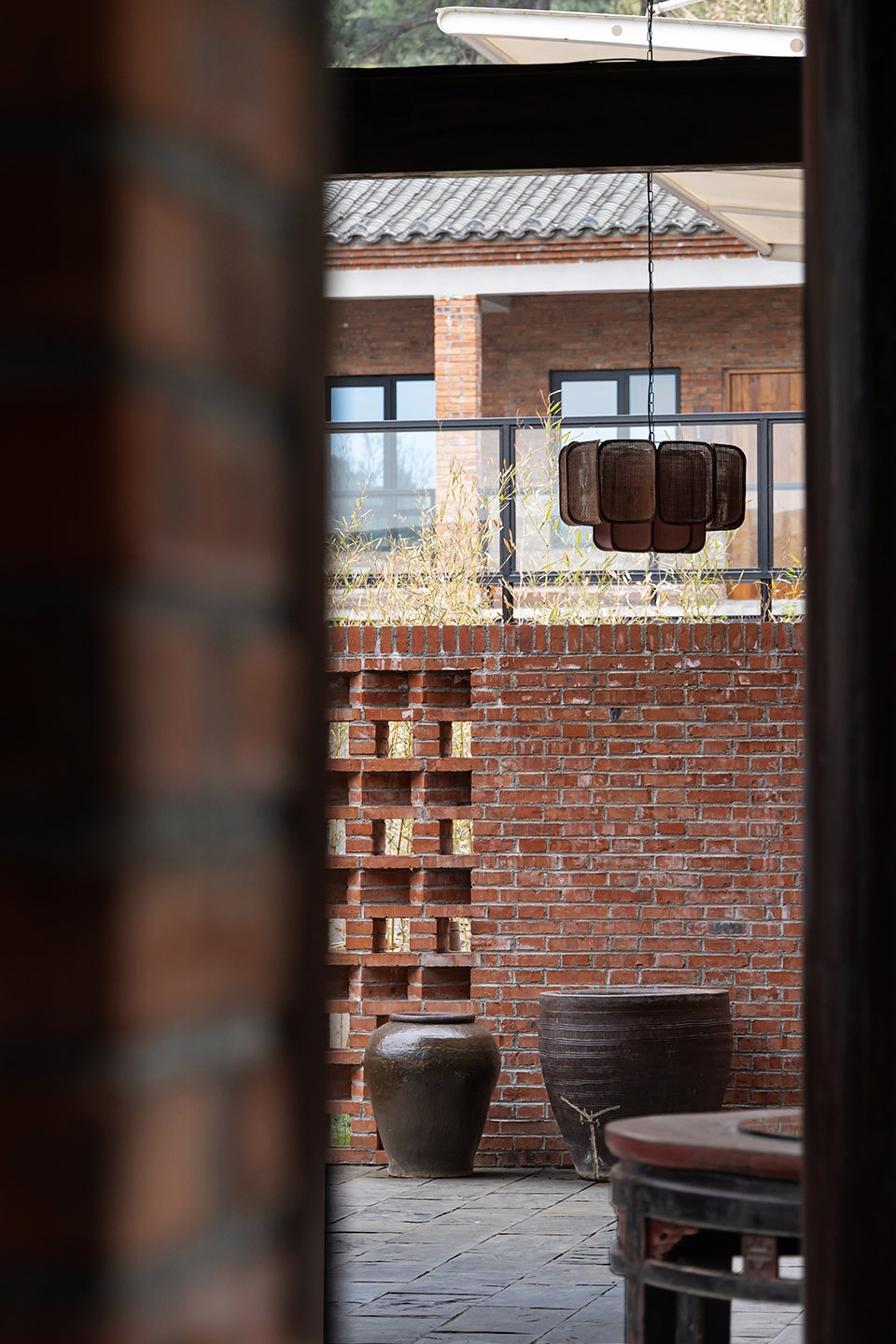
▼具有时代特征的红色历史性瓷砖,the iconic red tiles of the era
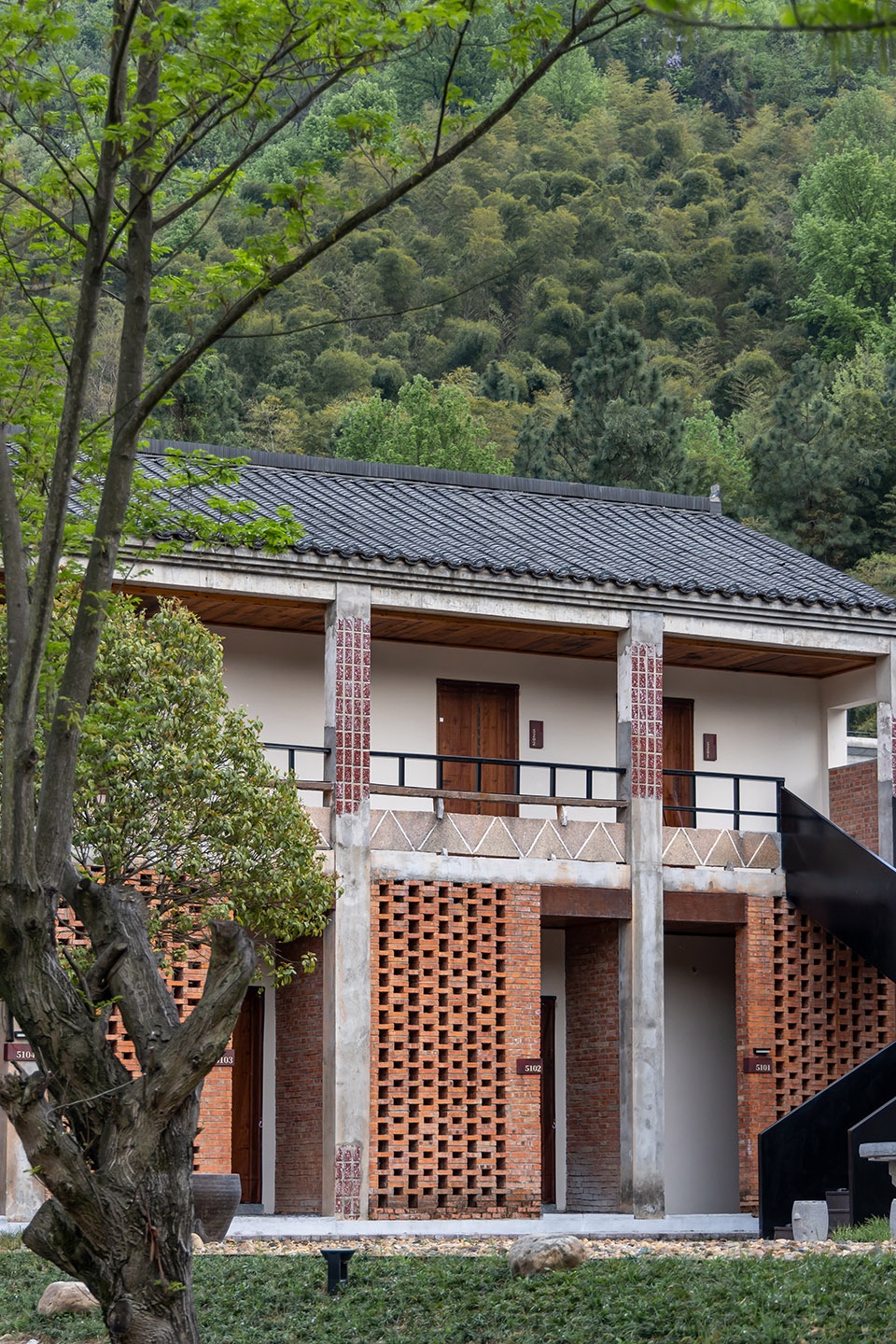
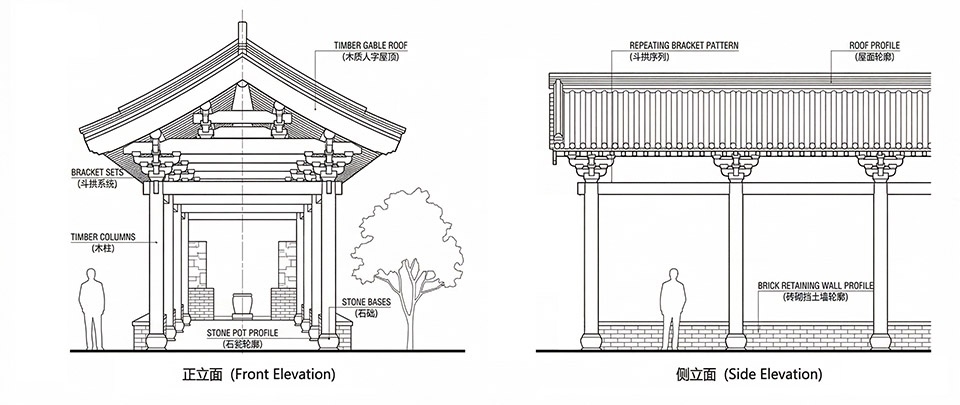
此外,大量回收的老建筑拆件被重新激活 —— 安徽老建筑拆下的木构架搭建起贯穿整个片区的风雨廊道,既实现空间串联与避雨功能,又延续地域建筑基因;老物件的充分利用成为设计亮点,老爷车收藏、旧机器部件化身装置雕塑,甚至废弃锅炉房的锅炉被保留在早餐厅中央,成为唤醒场地记忆的核心元素。
Furthermore, a vast array of salvaged architectural components has been re-activated. Timber frames from old Anhui buildings now form “wind-and-rain” corridors throughout the site, providing both connectivity and shelter while continuing the regional architectural DNA. The creative utilization of vintage objects stands as a design highlight: classic car collections and old machine parts are transformed into sculptural installations, and even the original boiler has been preserved in the center of the breakfast hall, serving as the core element that awakens the site’s memory.
▼贯穿整个片区的风雨廊道,form “wind-and-rain” corridors throughout the site
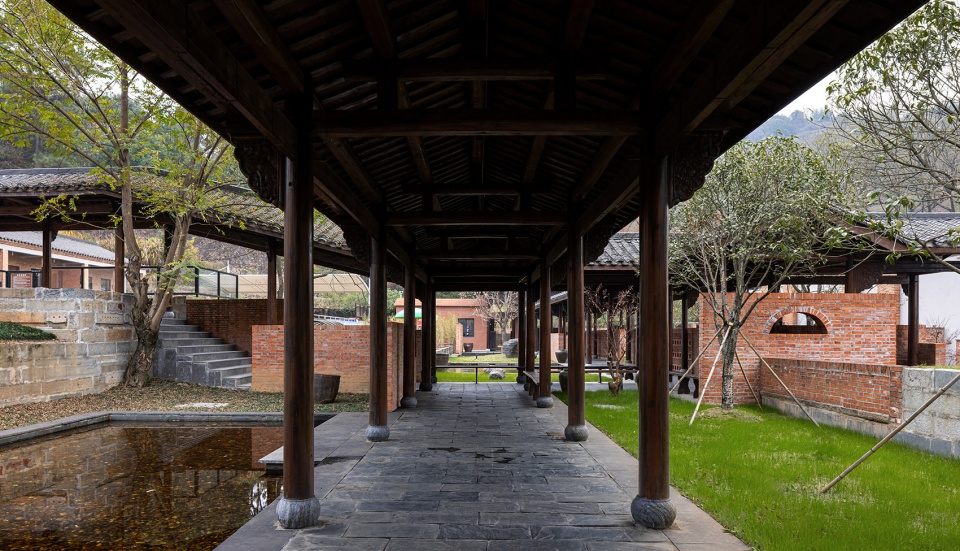
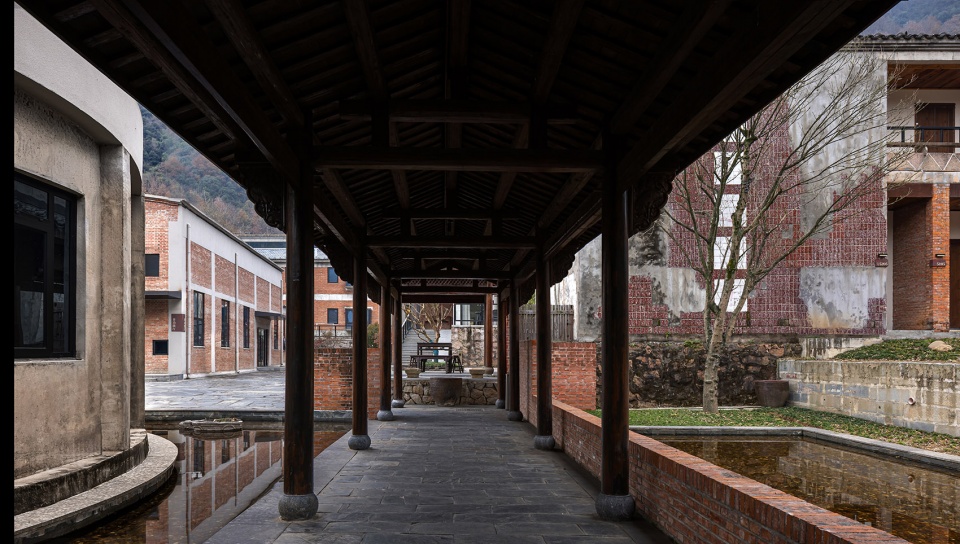
▼实现空间串联与避雨功能,
providing both connectivity and shelter while continuing the regional architectural DNA
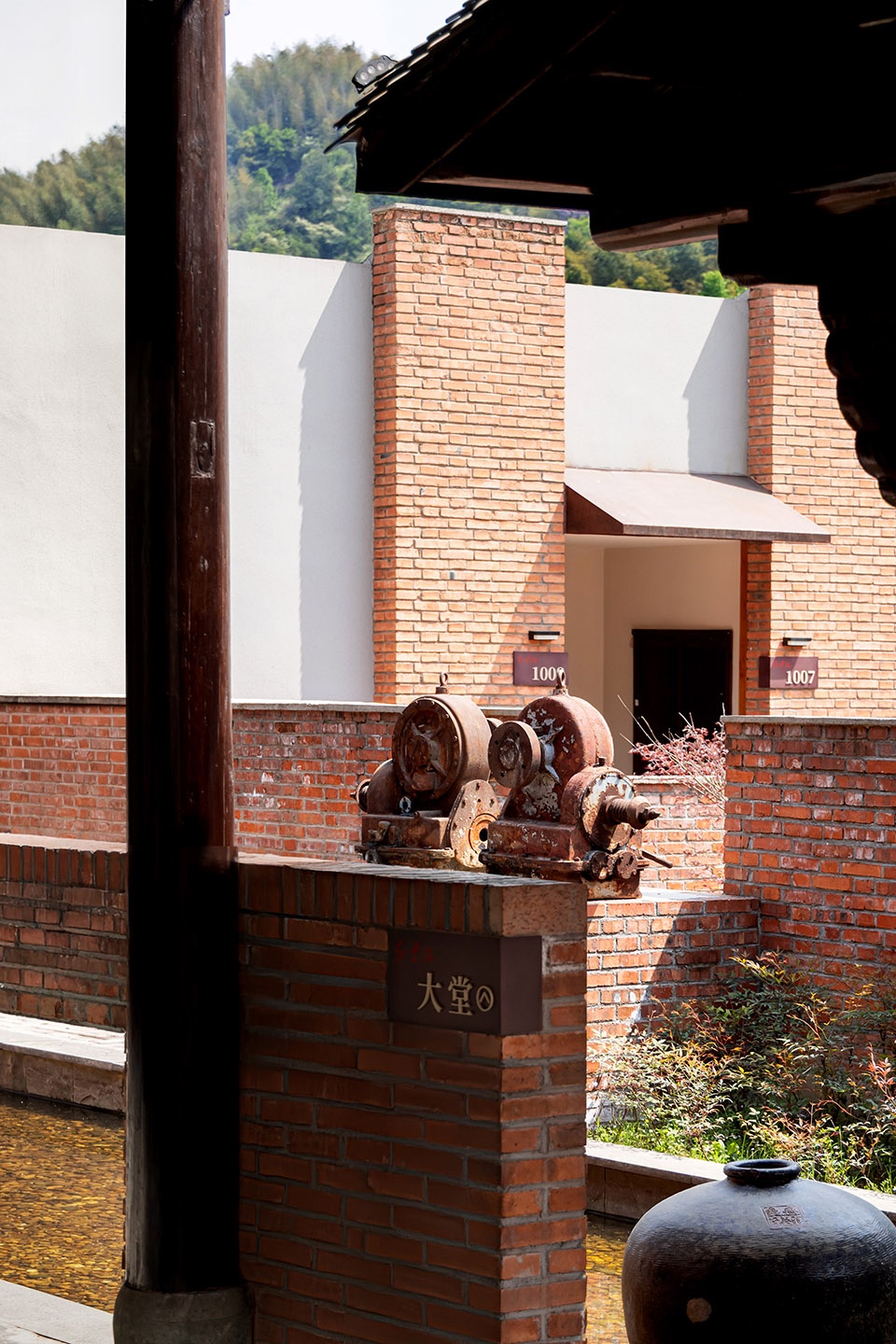
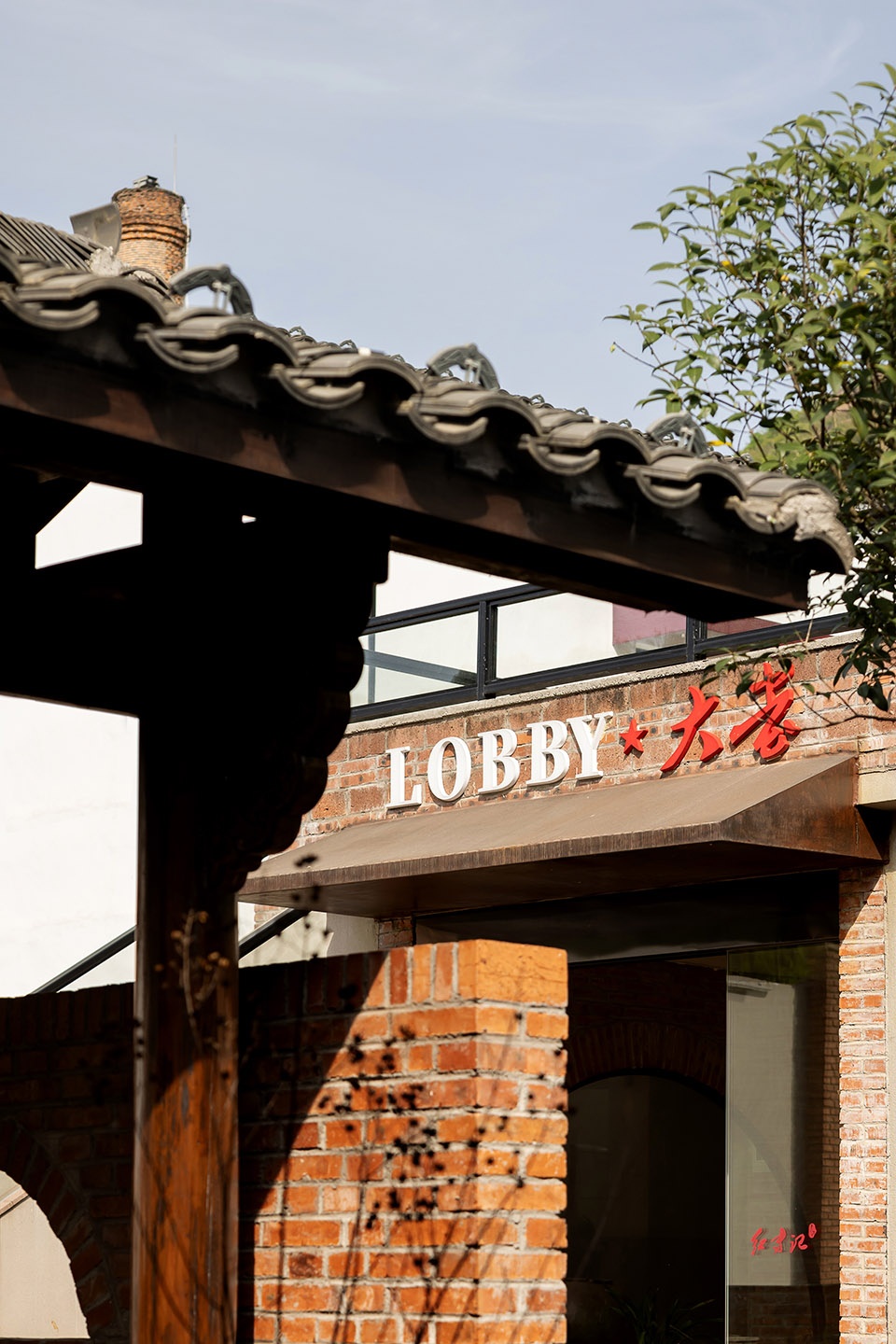
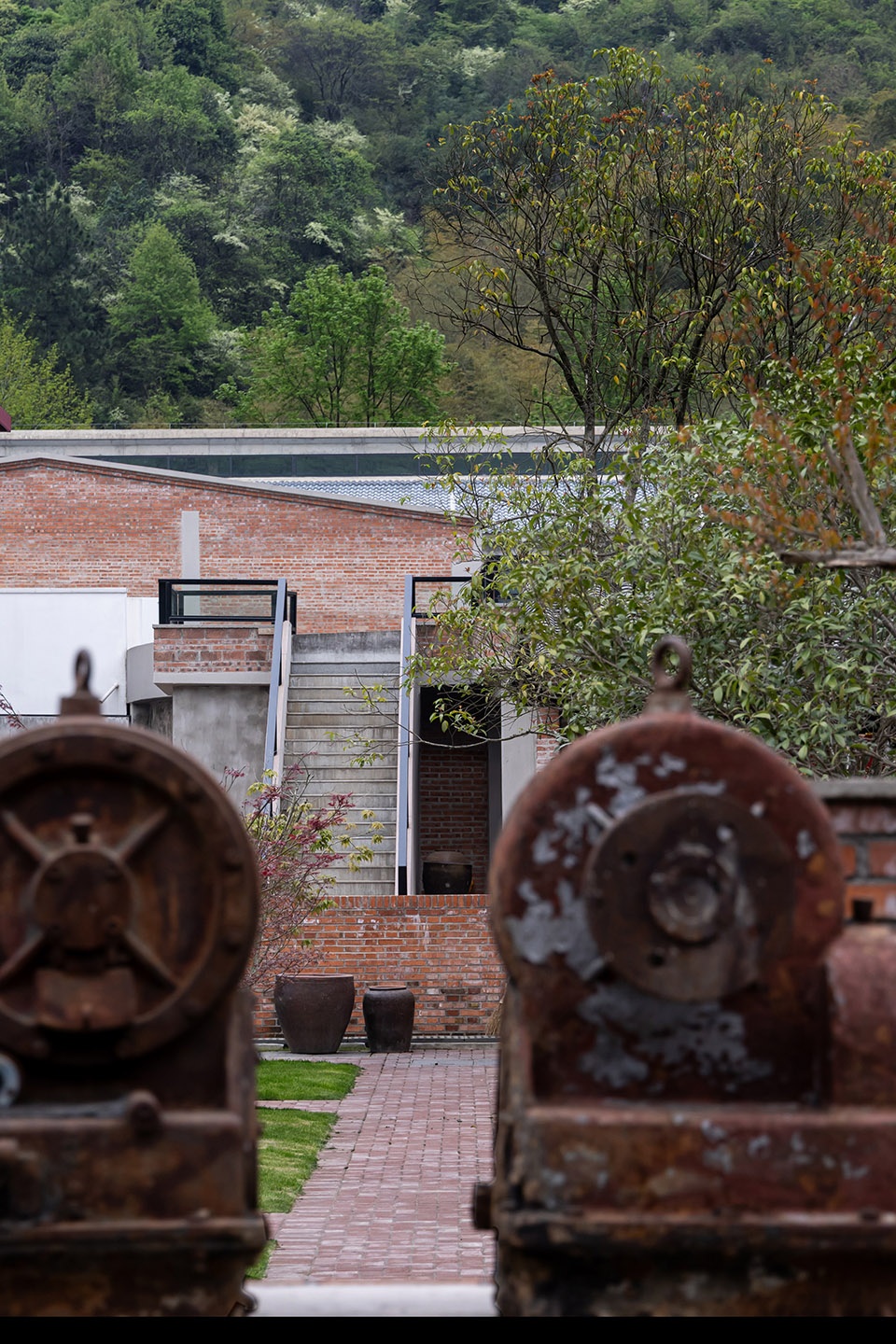
这些在地化材料的创造性应用,搭配「红专记」的精神内核,让废弃空间摆脱破败状态,在保留历史质感的同时,完成从记忆到新生的蜕变。
The creative application of these vernacular materials, paired with the spiritual core of “Hong Zhuan Ji,” allows the abandoned space to escape its state of decay. While retaining its historical texture, the site completes its metamorphosis from memory to rebirth.
▼完成从记忆到新生的蜕变,completes its metamorphosis from memory to rebirth
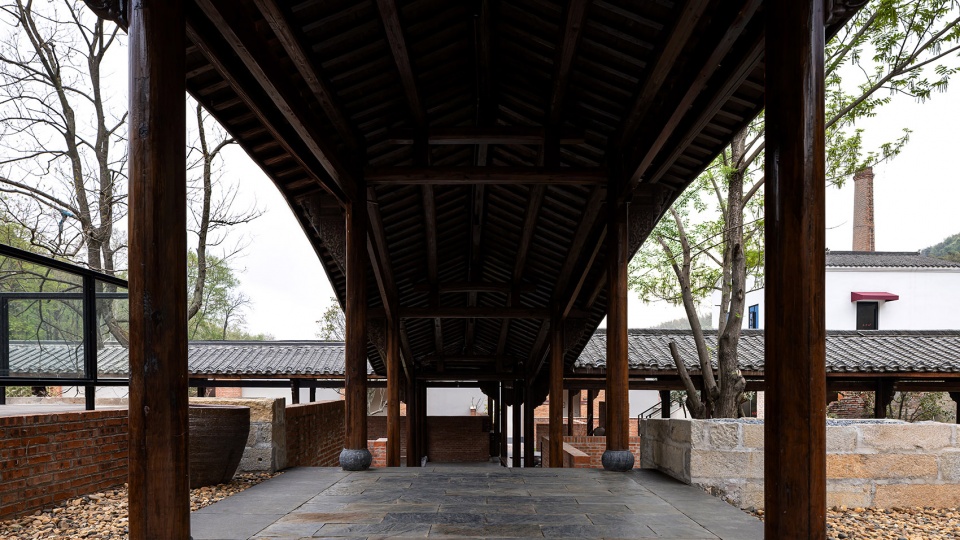
▼完成从记忆到新生的蜕变,
completes its metamorphosis from memory to rebirth
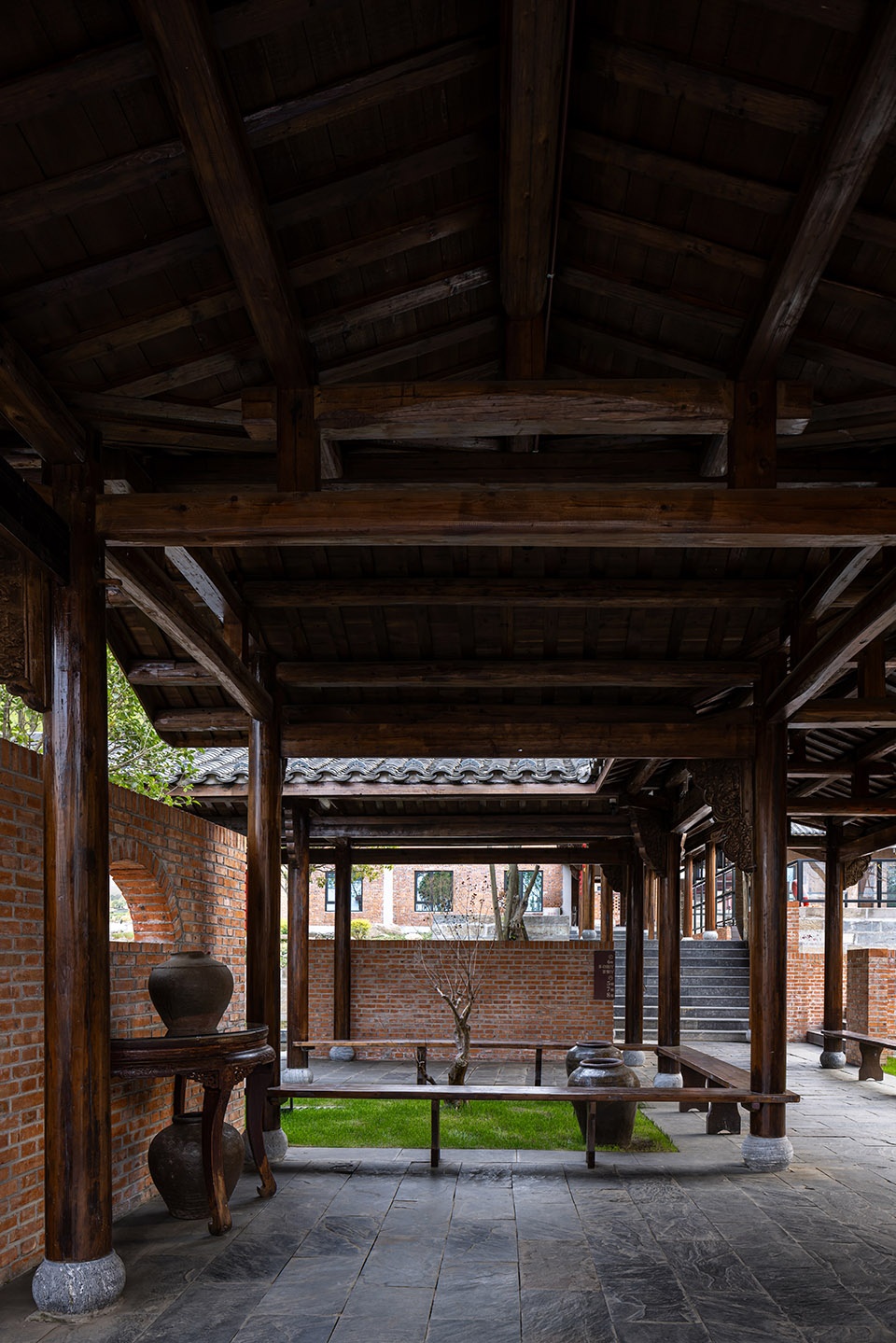
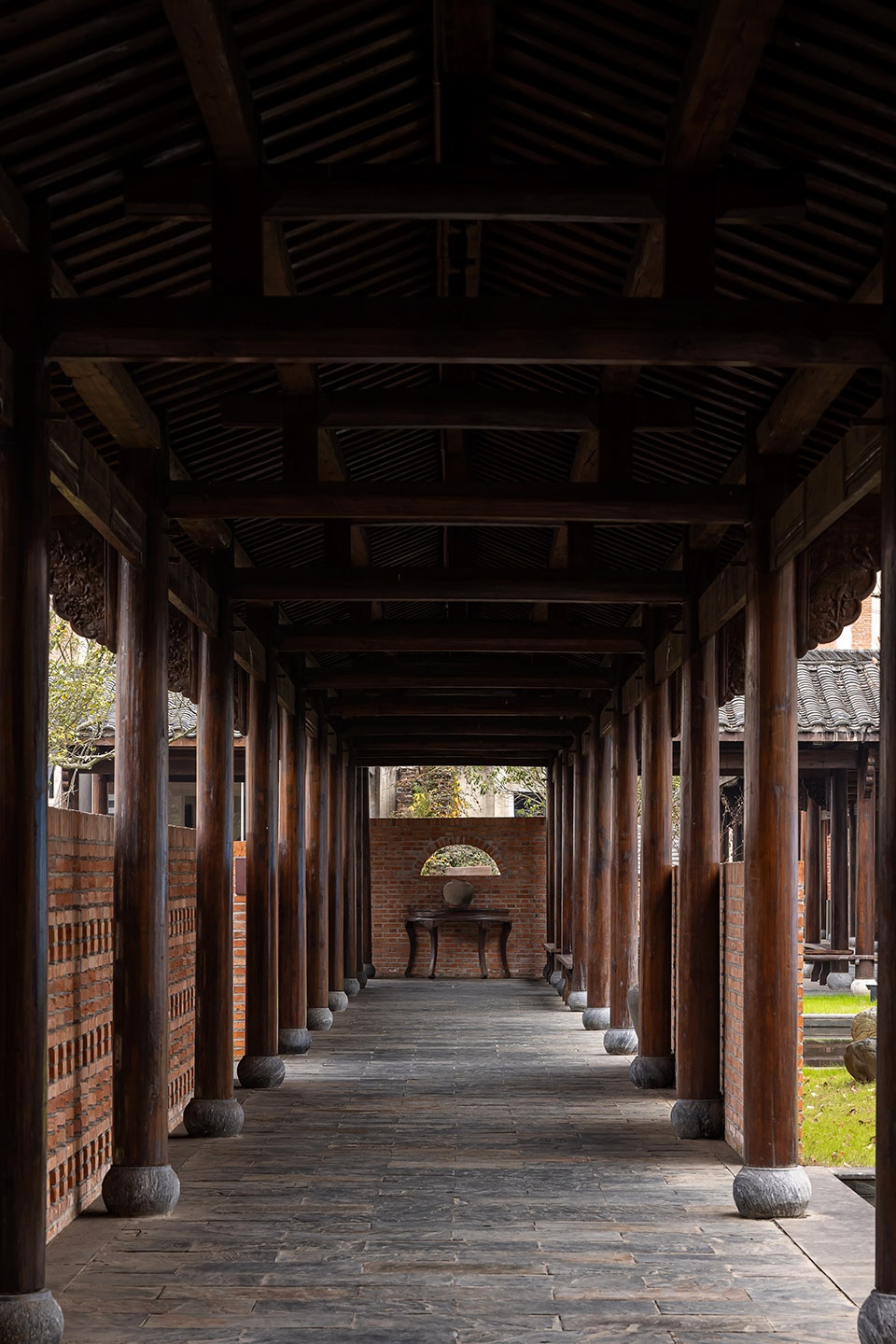
05 探索与实践
Exploration and Practice: A Vision of Rebirth
「红专记」是城市更新与建筑修复领域的一次深度探索与实践,前后历时六载打磨,完成从废弃厂区到特色文旅街区的华丽蜕变。如今的它,已然成为池州本土极具标识性的标杆项目,成功突破业态与领域的边界,既是融合在地文化的特色文旅目的地,也是兼具体验感和服务型商业新空间,更成为当地城市更新的典范之作,收获了行业、市场与官方的多重高度认可。
“Hong Zhuan Ji” represents a profound exploration and practice in the fields of urban renewal and architectural restoration. After six years of meticulous refinement, it has completed its magnificent transformation from a derelict factory into a unique cultural tourism district. Today, it stands as an iconic landmark in Chizhou, successfully transcending the boundaries of traditional business models. It is both a cultural destination rooted in local heritage and a novel commercial space defined by immersive experience, serving as a model for urban renewal and garnering high acclaim from the industry, the market, and official sectors alike.
▼兼具体验感和服务型商业新空间,a novel commercial space defined by immersive experience
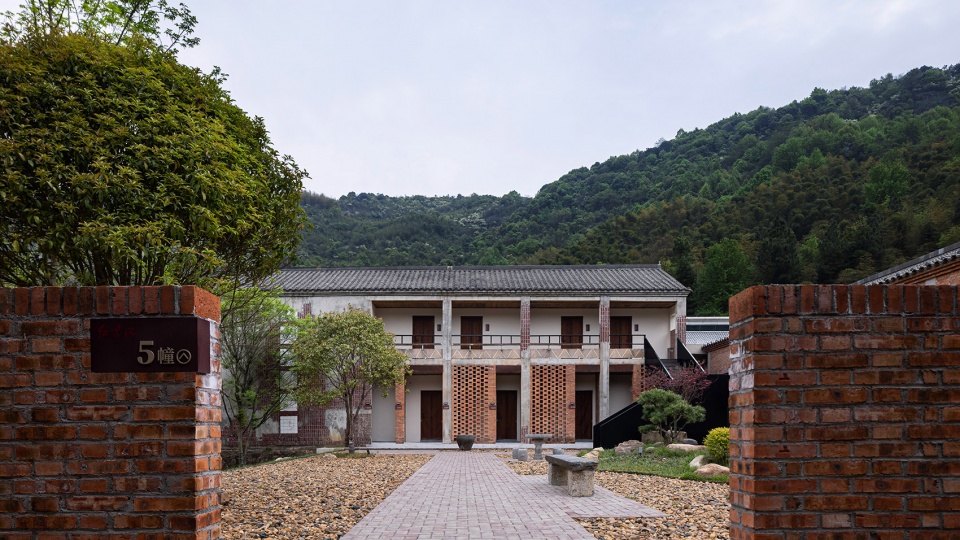
▼兼具体验感和服务型商业新空间,
a novel commercial space defined by immersive experience
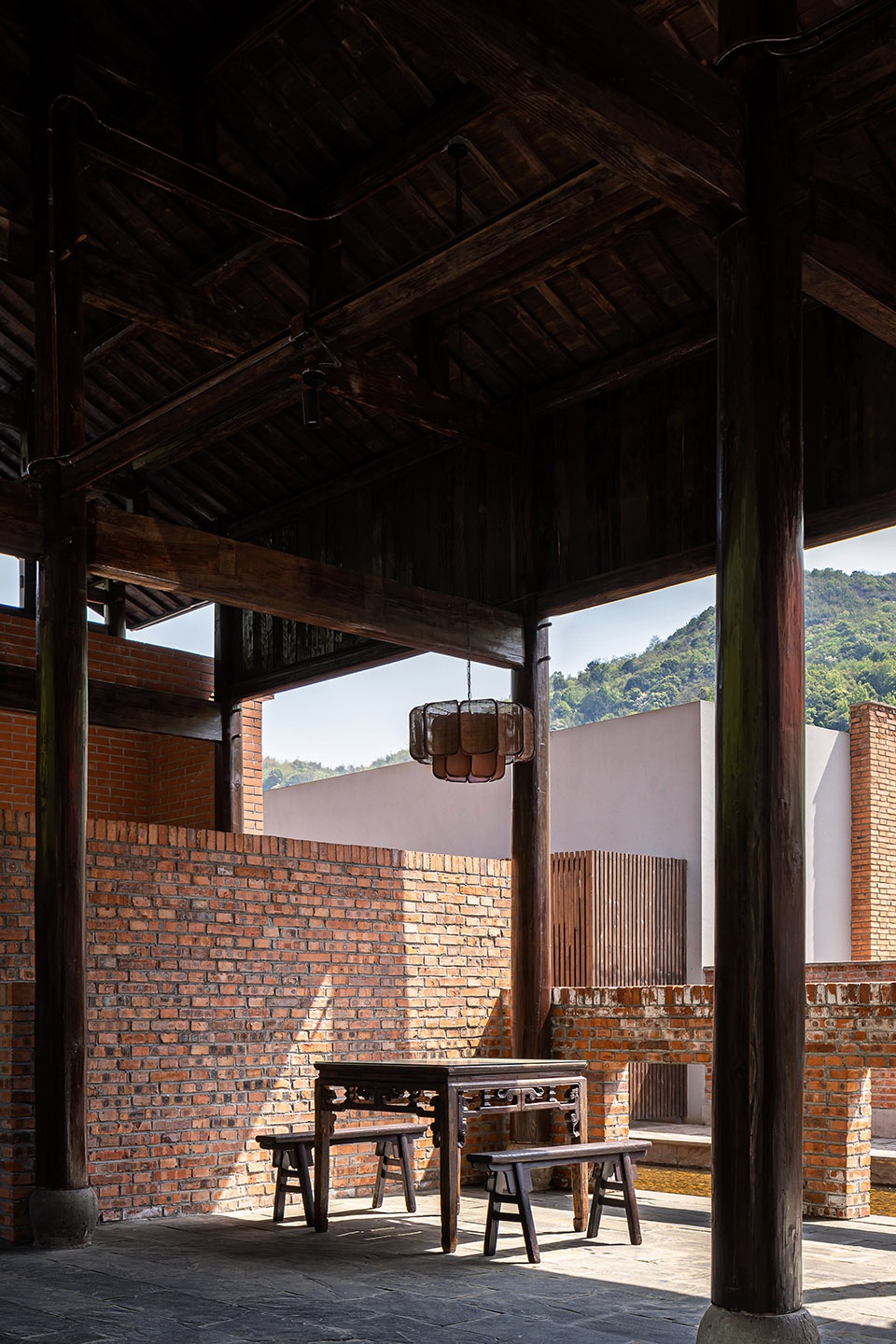
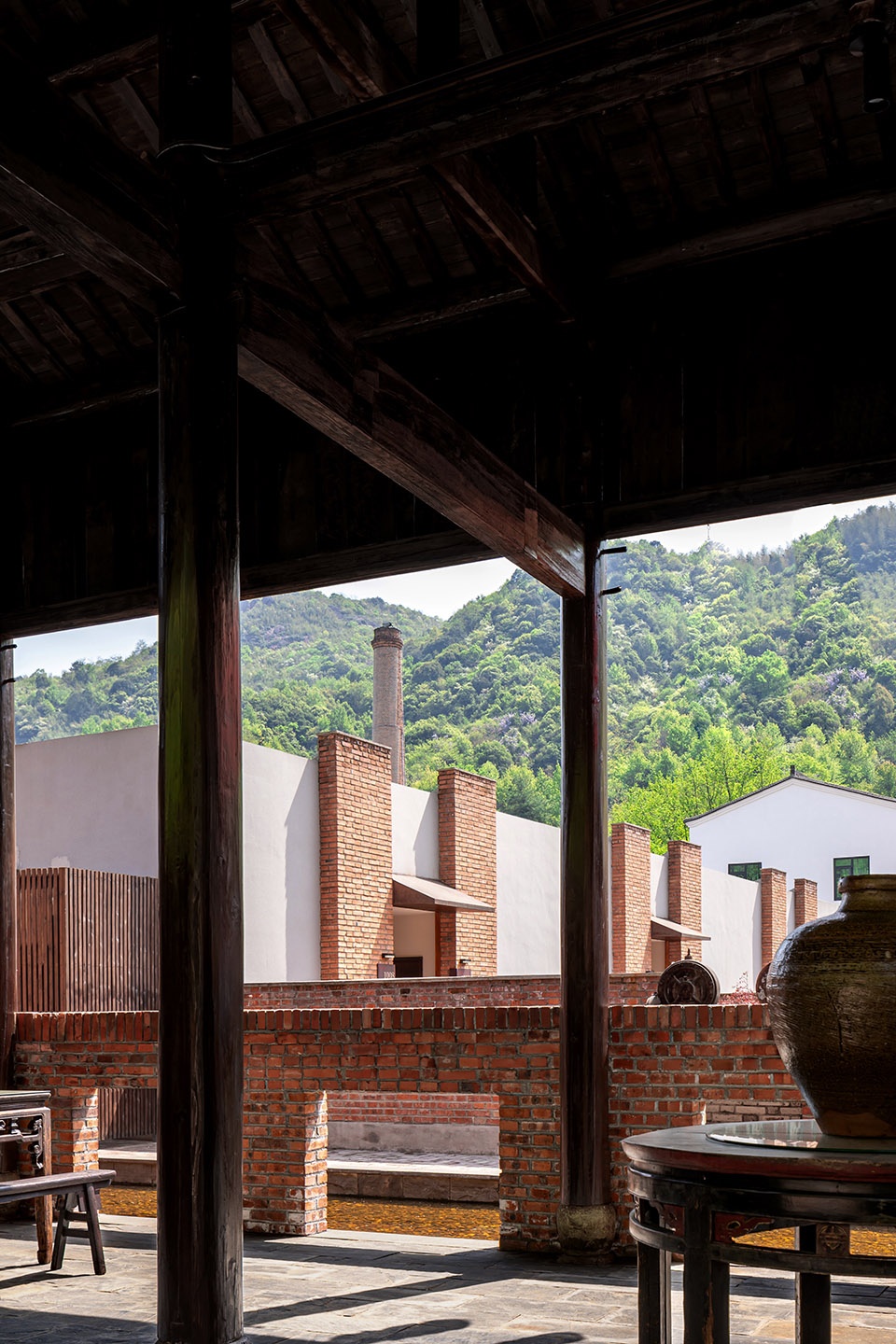
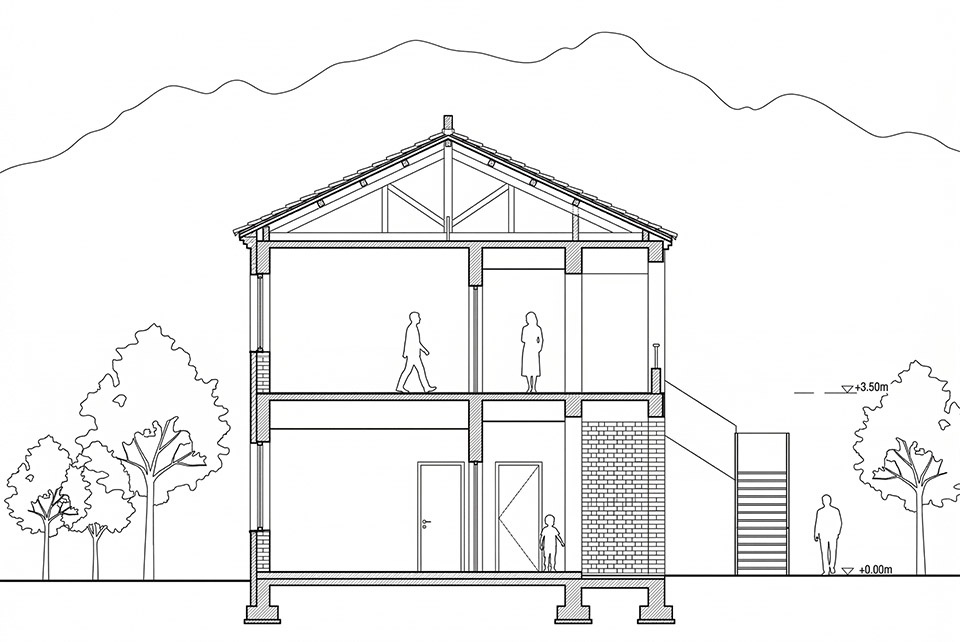
在修复策略上,采用轻干预、重保留的方式,对破败建筑进行加固处理,通过底部支撑柱体、局部加盖等方式保障结构安全,同时保持建筑外立面的历史质感。
The restoration strategy adopts a “Light Intervention, Heavy Preservation” approach. The dilapidated structures were reinforced through base-support columns and partial roofing to ensure structural safety, all while meticulously maintaining the historical texture of the original facades.
▼对破败建筑进行加固处理,the dilapidated structures were reinforced
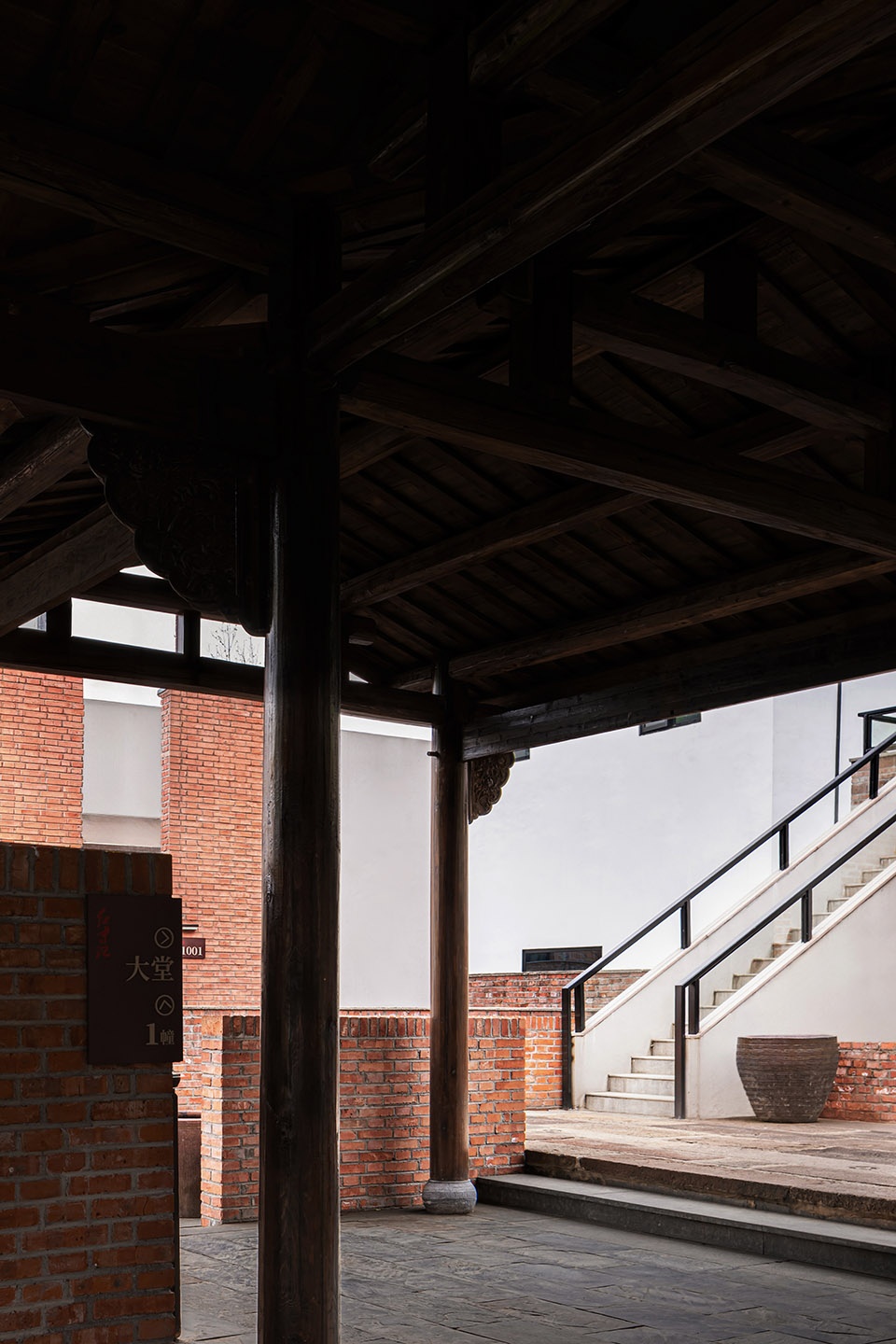
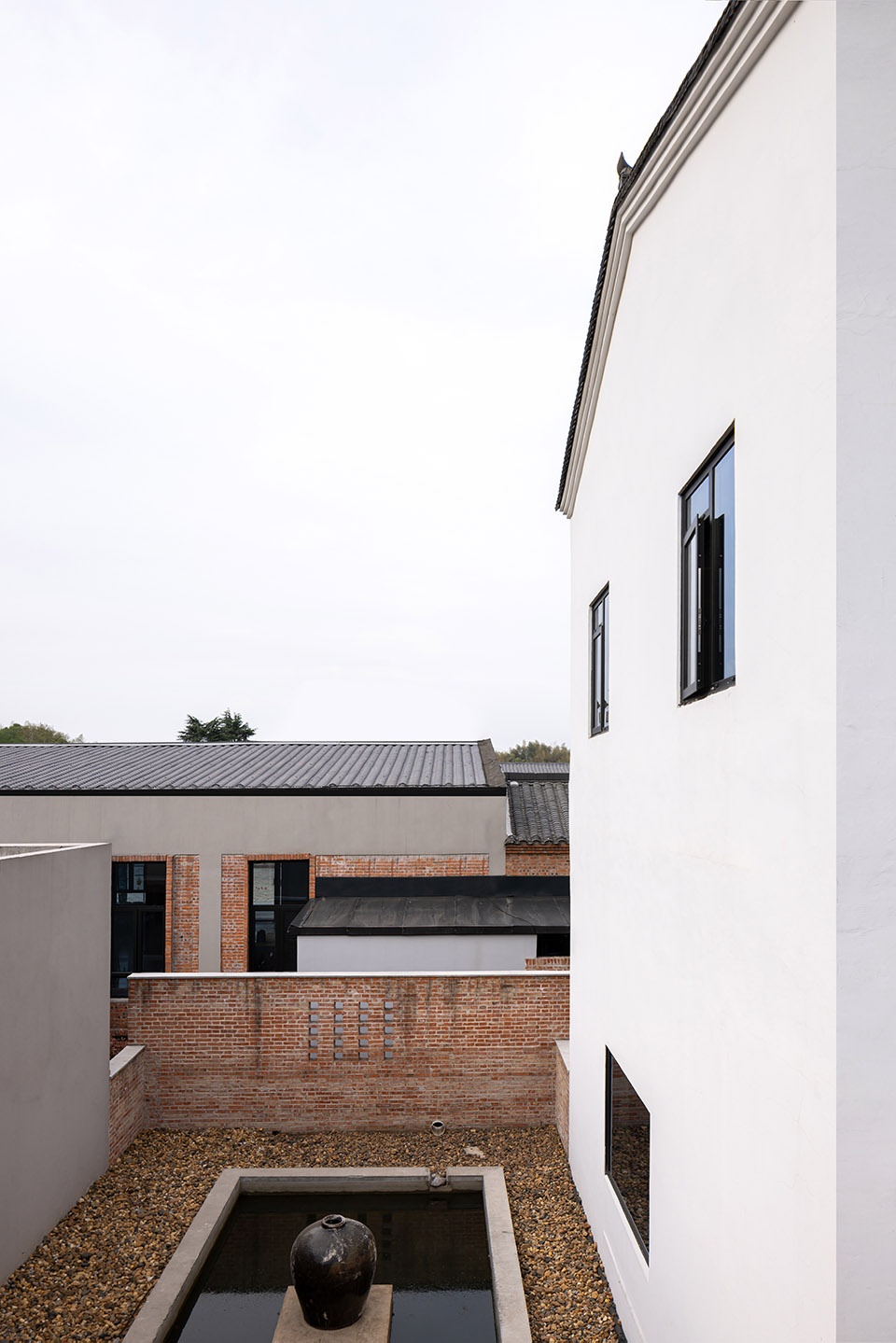
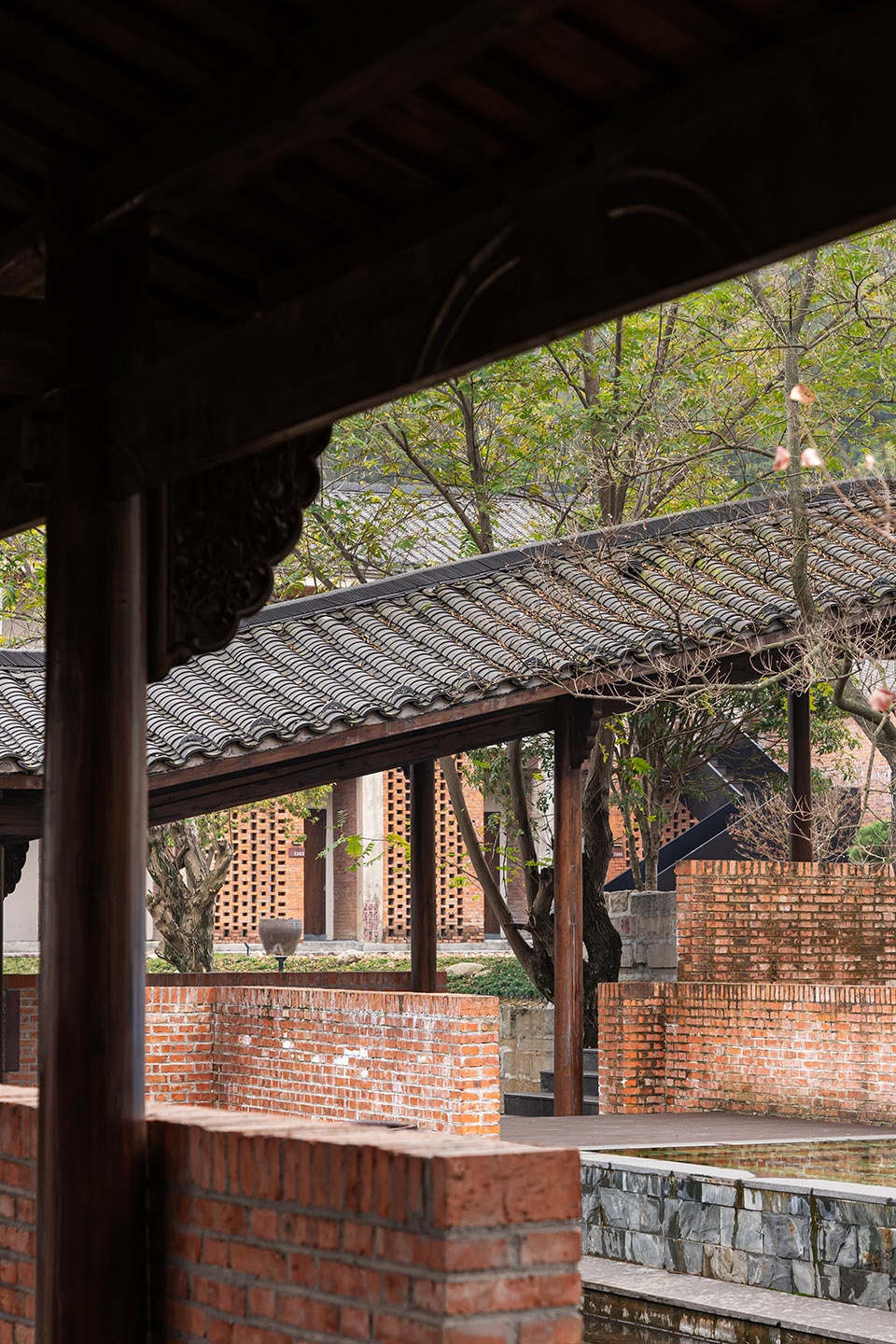
在城市更新维度,项目突破传统边界,将分散的老建筑构件集中修复利用,打造出具有时代感的特色街区,成为池州当地颇具影响力的夜晚旅游节点,为城市引流赋能。
In the dimension of urban renewal, the project breaks traditional boundaries by centrally restoring and utilizing scattered architectural components. This creates a distinctive district with a palpable sense of era, becoming an influential nocturnal tourism node in Chizhou and empowering the city’s cultural reach.
▼打造出具有时代感的特色街区,
creates a distinctive district with a palpable sense of era
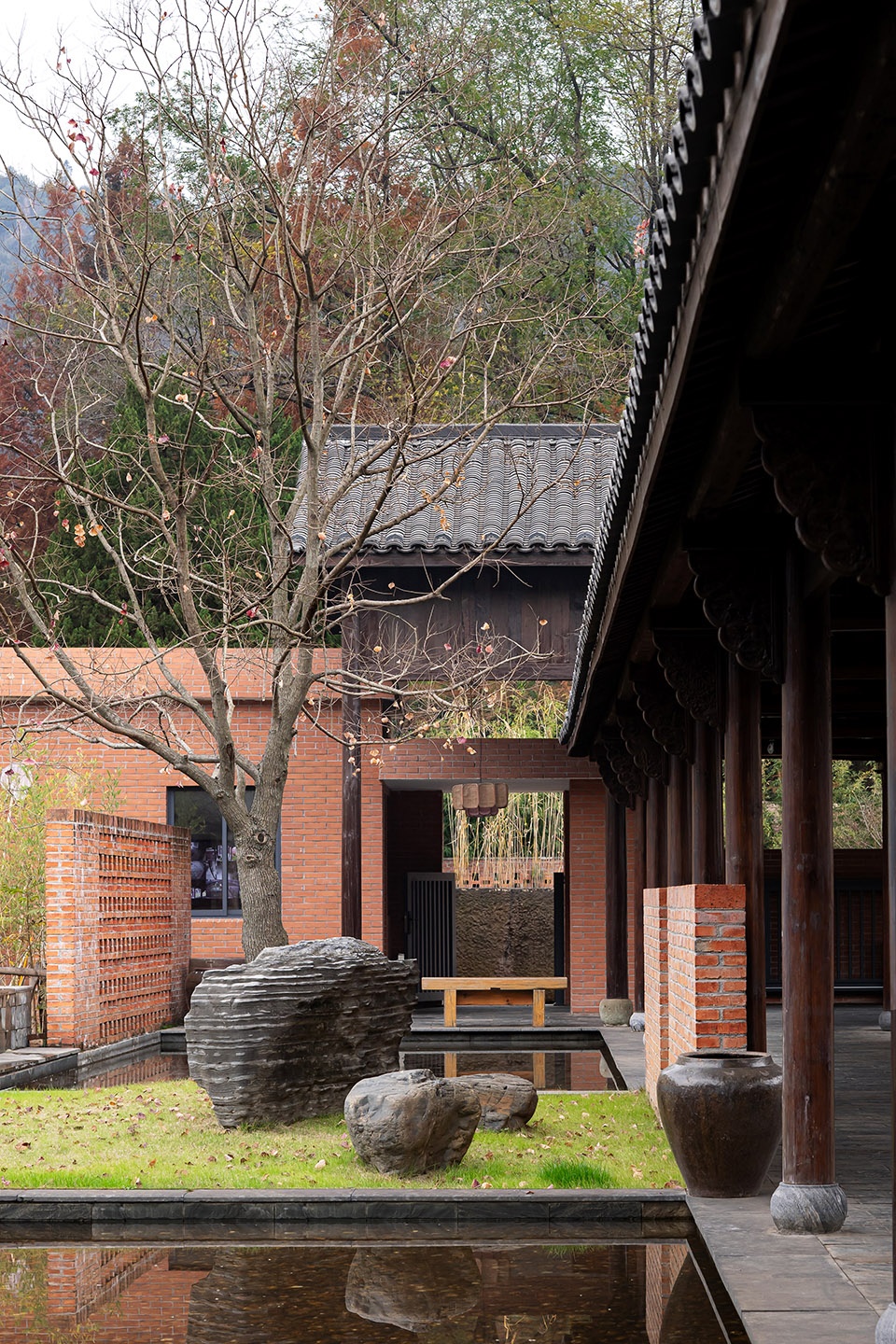
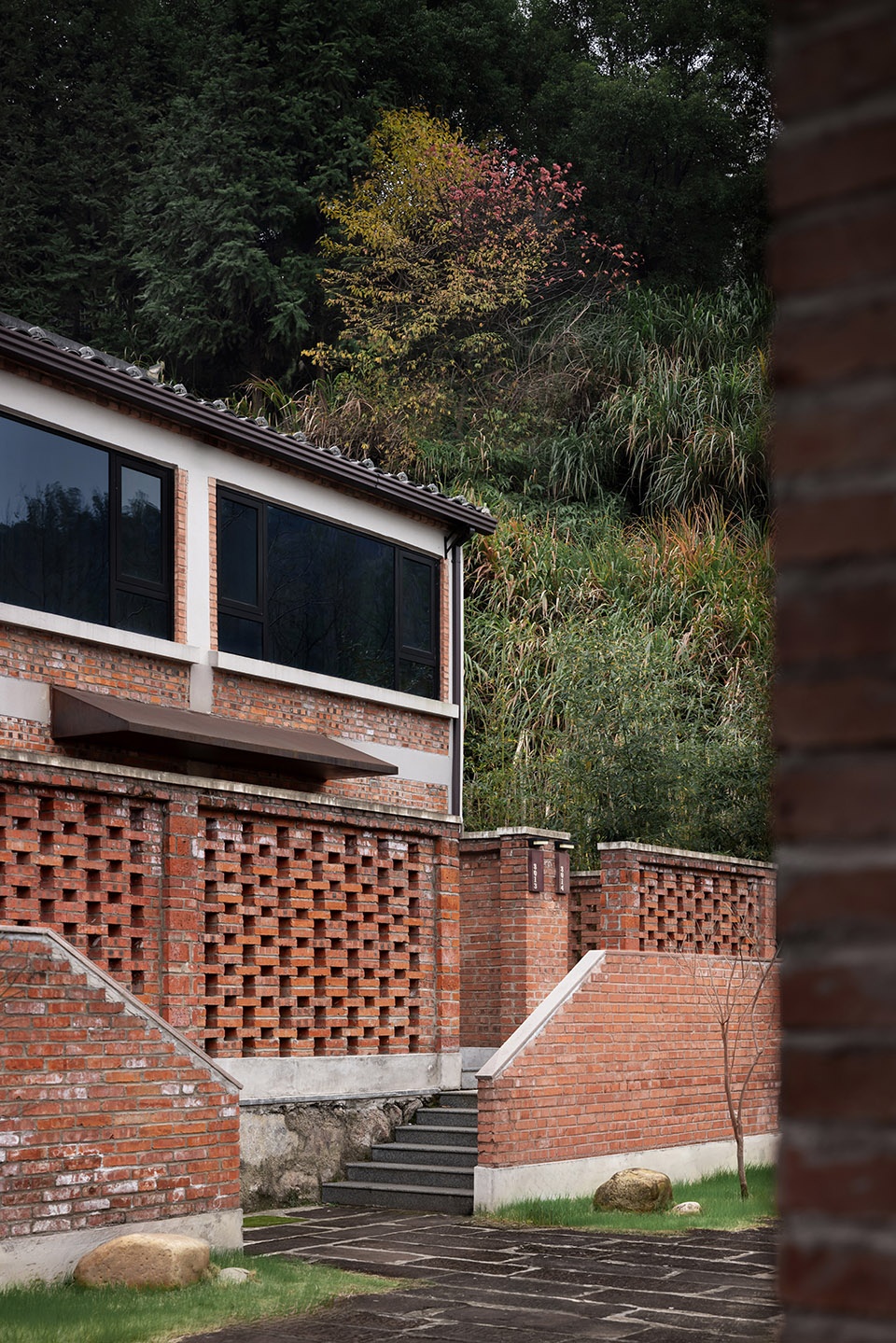
▼让历史建筑的记忆得以延续,
grants the abandoned space sustainable vitality
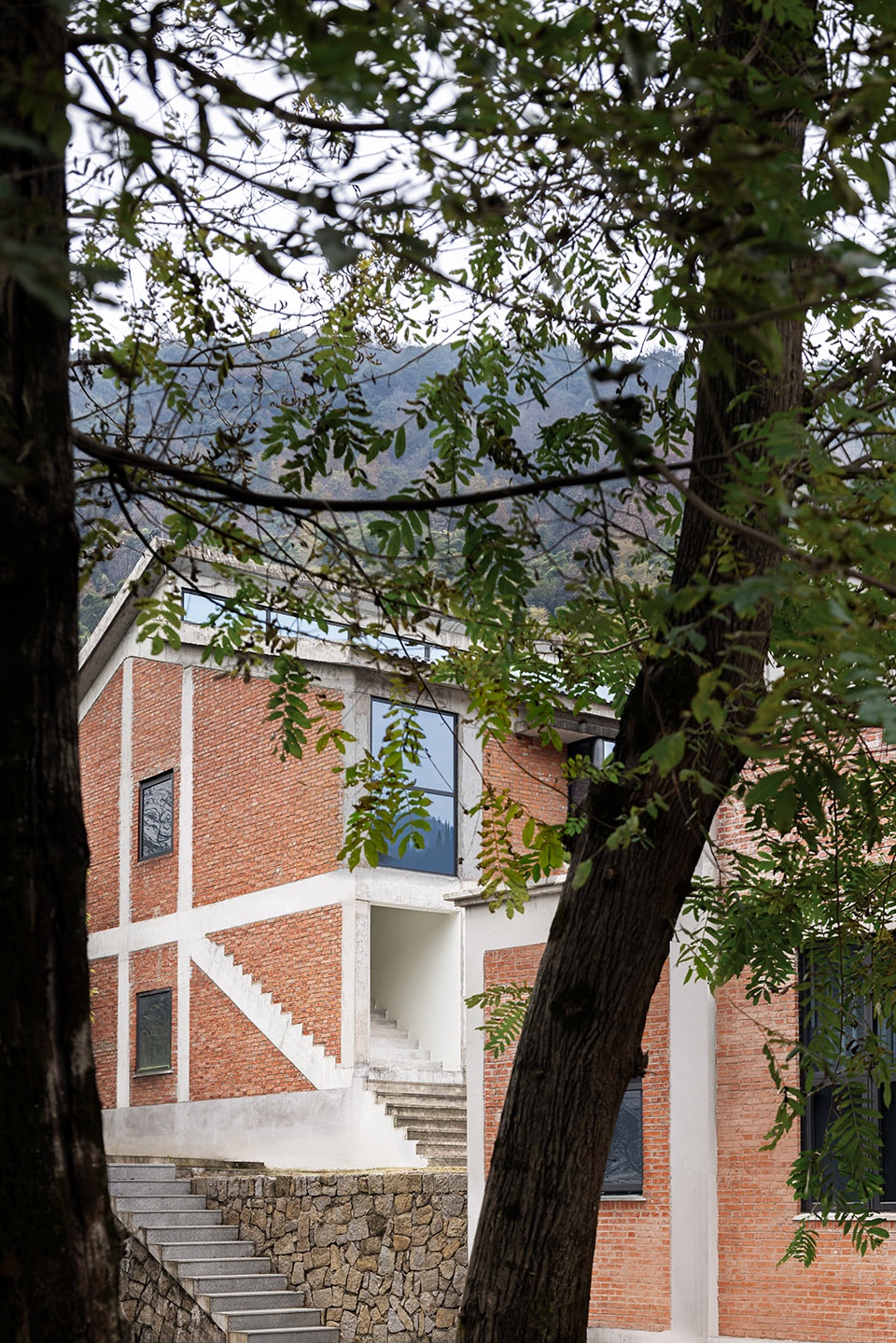
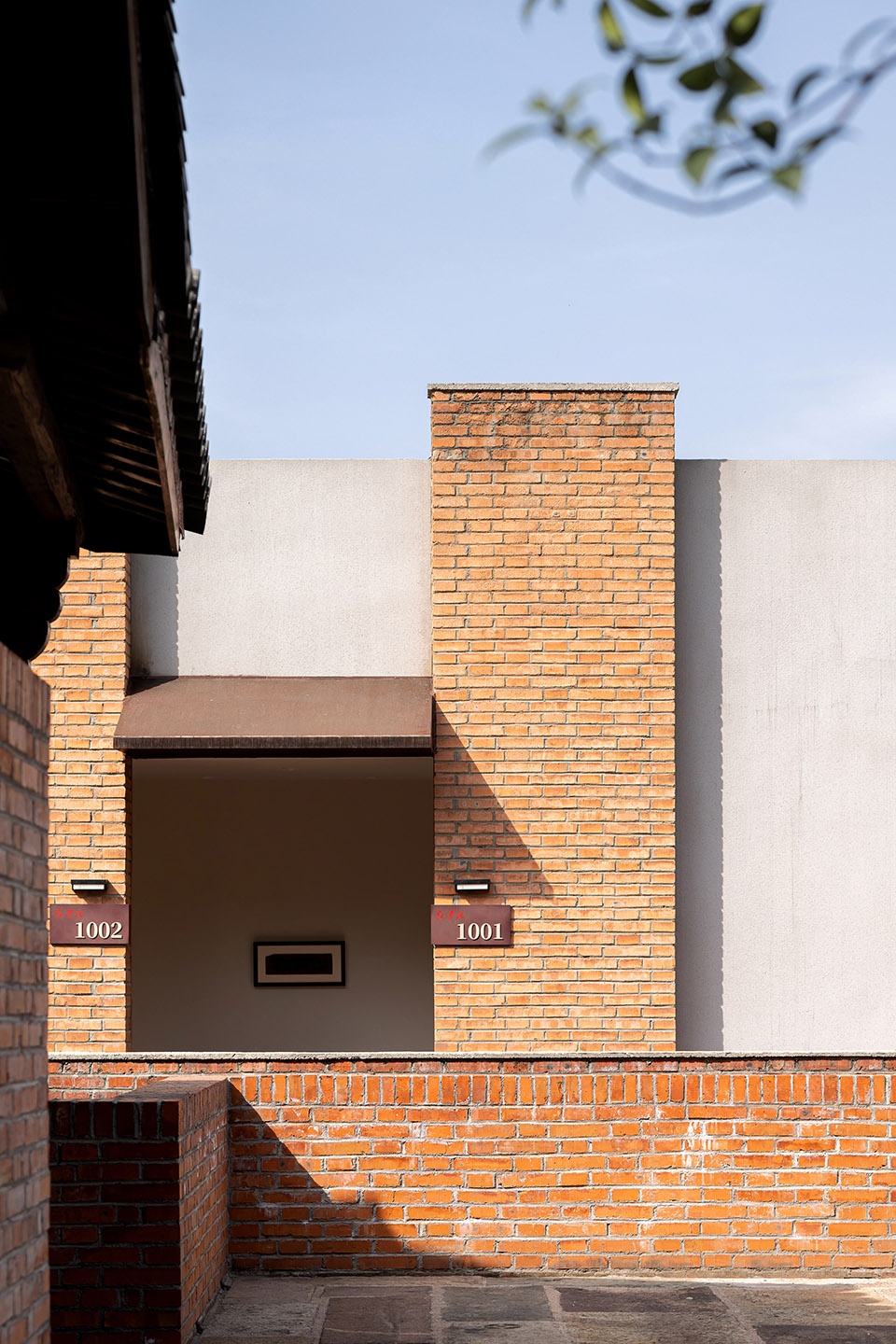
「红专记」既是对特定历史记忆的致敬,也是对当代空间功能的革新;在地材料的再生利用让历史建筑的记忆得以延续,商业与自然的深度融合让废弃空间获得可持续的生命力,轻干预式的修复策略则为城市更新提供了务实有效的实践路径。
“Hong Zhuan Ji” is both a tribute to a specific historical memory and an innovation of contemporary spatial function. The reclamation of local materials ensures the continuity of the building’s soul; the fusion of commerce and nature grants the abandoned space sustainable vitality; and the light-intervention strategy provides a pragmatic and effective path for future urban renewal.
▼获得可持续的生命力,
grants the abandoned space sustainable vitality
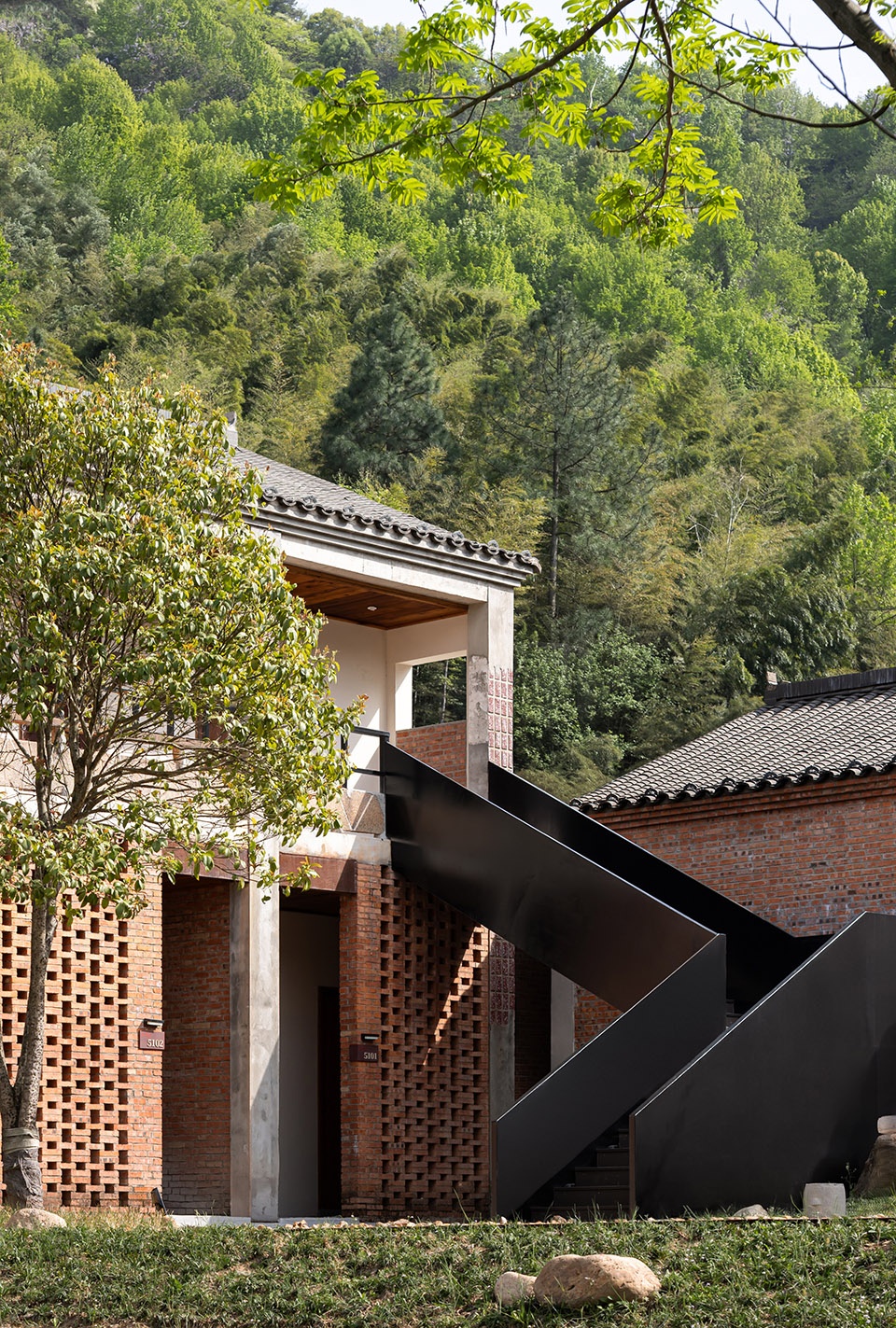
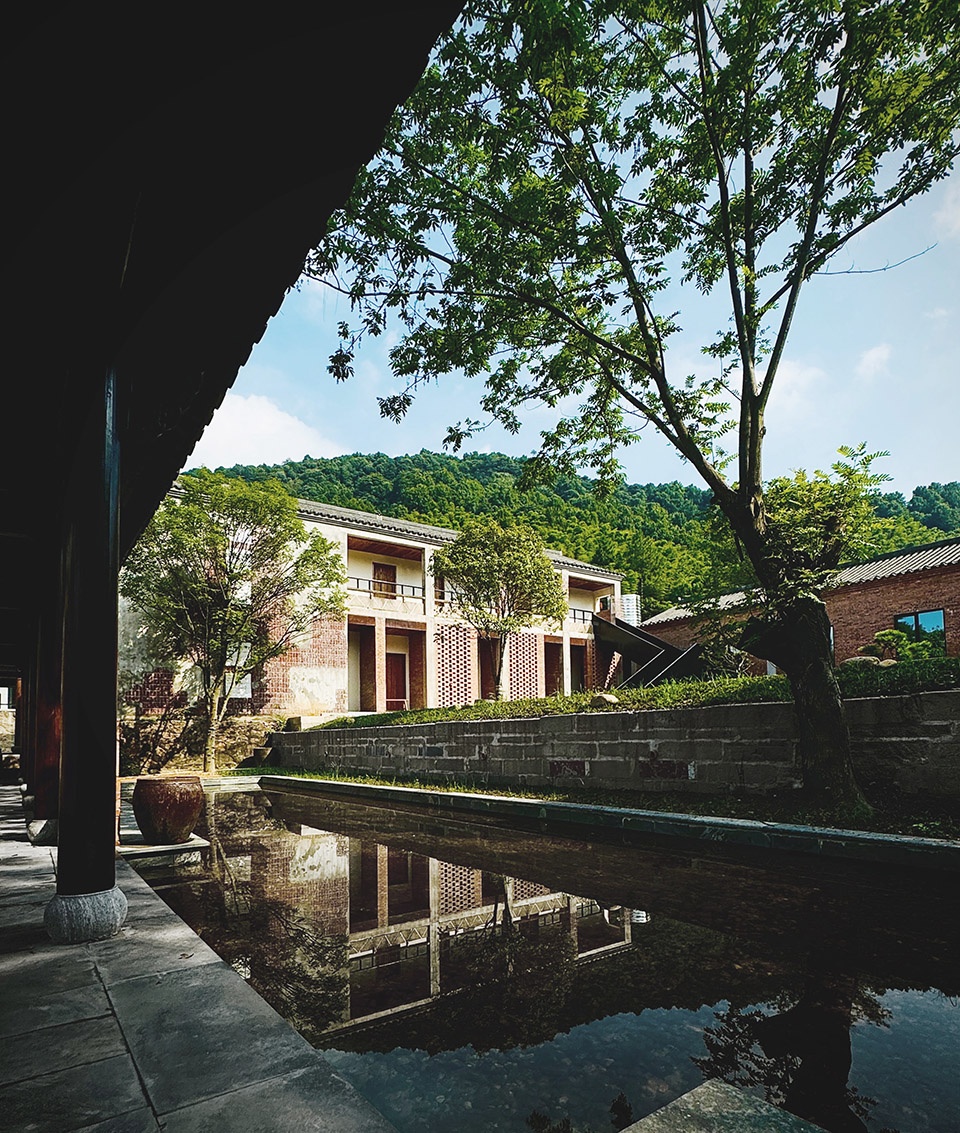
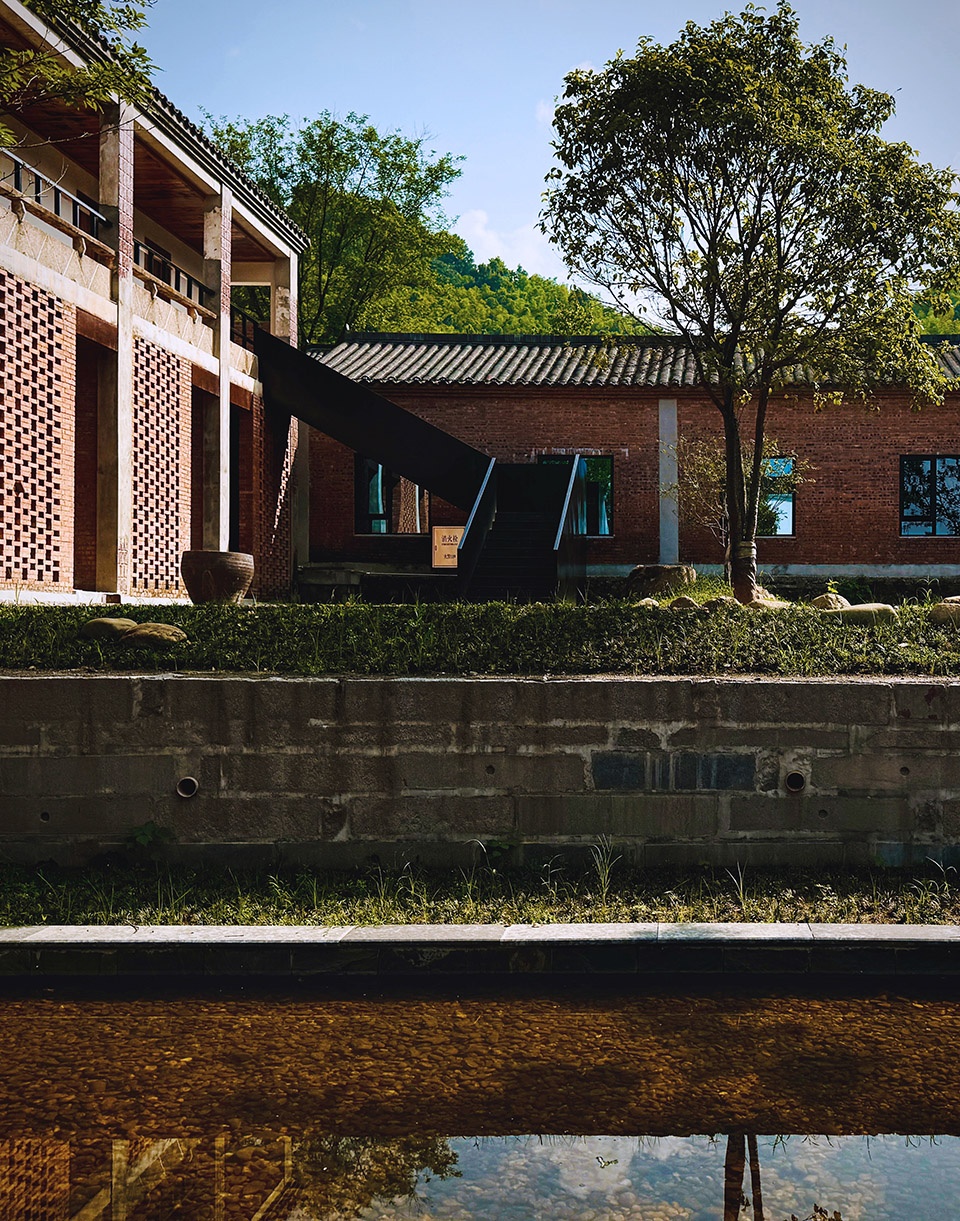
最终,项目实现了历史文脉、自然生态与商业功能的三者共生,证明城市更新不是简单的推倒重建,而是在尊重过往、敬畏自然的基础上,让空间实现记忆与价值的双重新生。
Ultimately,the project achieves a triad of symbiosis: historical context, natural ecology, and commercial function. It proves that urban renewal is not a simple act of demolition and reconstruction, but rather a journey of respecting the past and revering nature, allowing a space to achieve a dual rebirth of memory and value.
▼让空间实现记忆与价值的双重新生,
achieve a dual rebirth of memory and value
▼平面图,plan
▼立面图,elevation
▼剖面图,section
Project Name: Chizhou Hongzhuanji Guesthouse
Location: Chizhou, Anhui
Project Type: Building Renovation、Commercial & Cultural Tourism
Area: 6,500 m²
Start Date: February 2019
Completion Date: September 2024
Design Firm: Suzhou Youjian Commercial Design
Design Director: Wang Tuo
Lead Designers: Zhu Shujun, Yin Fan, Wang Xingming
Design Refinement: Chen Qi, Ji Xinjuan, Jin Qianqian, Zhong Shuaizhang
Photography & Videography: Wu Qirui
Copywriting & Planning: EDG Erdaogang Media