安吉临溪科创中心,浙江湖州 / GLA建筑设计
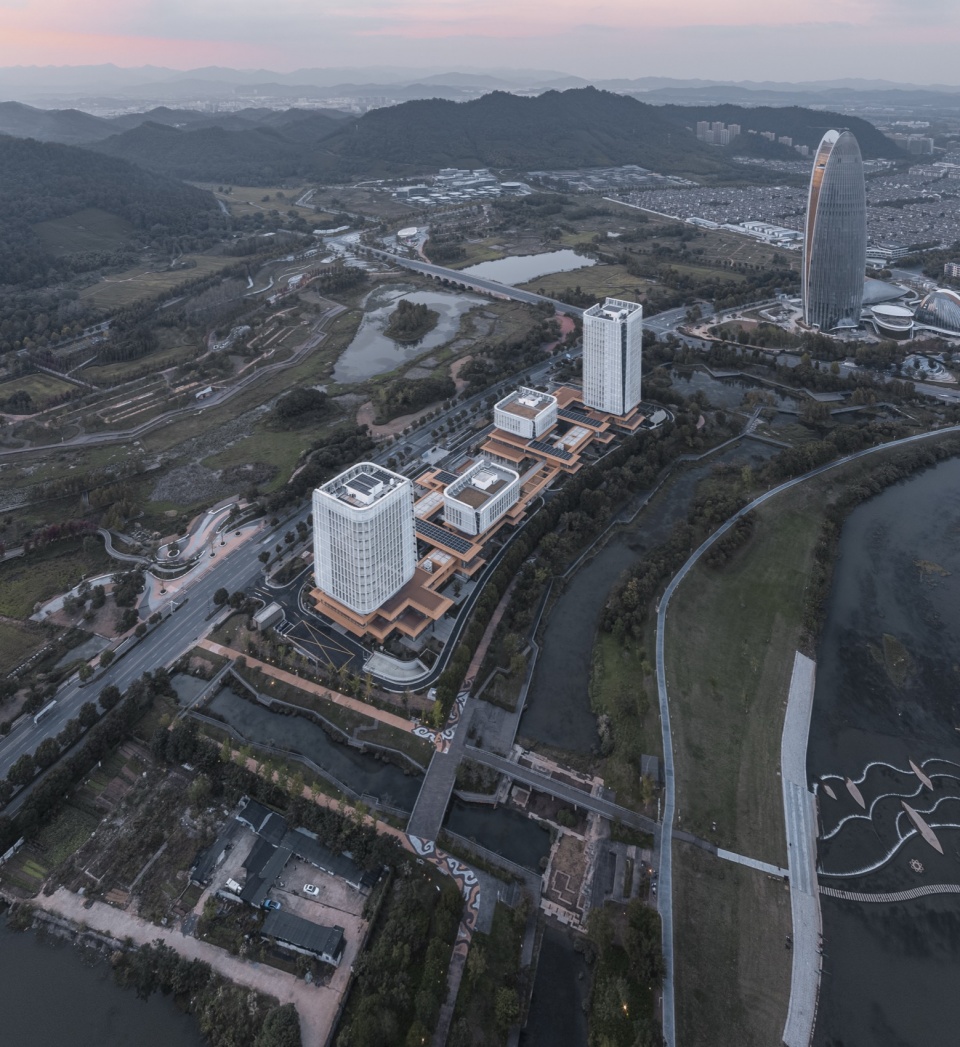
安吉临溪科创中心项目地处城市与自然的交汇处,东临浒溪西邻灵峰湖,两面坐拥优质自然景观的场地条件决定了设计的核心出发点——与周边环境形成互动渗透而非封闭孤立的建筑空间。设计采用“编织”概念,通过小体量透空布局与底层亭廊式设计,营造出亲人尺度的空间感受,让建筑以轻盈空透的姿态融入山水之间。
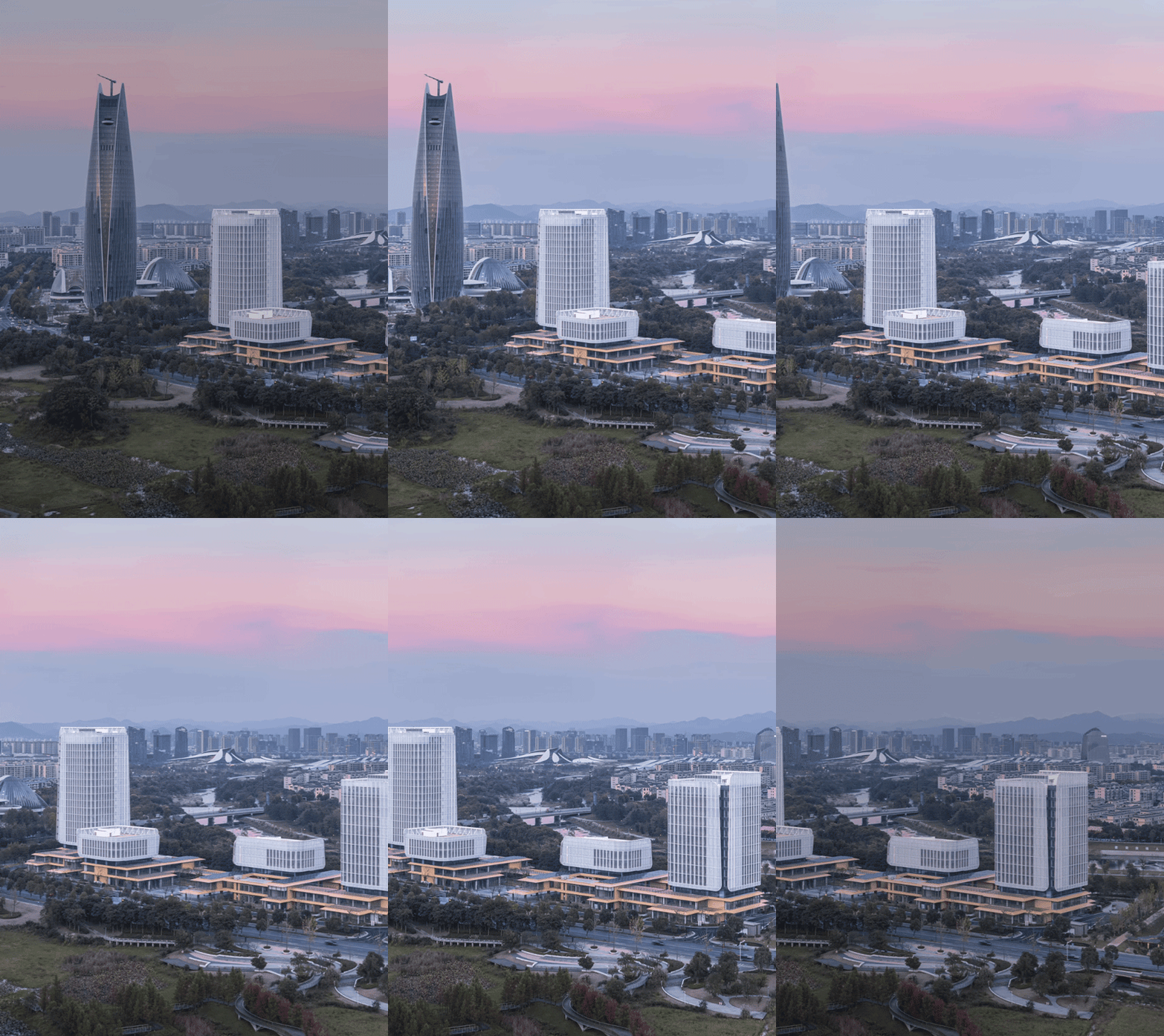
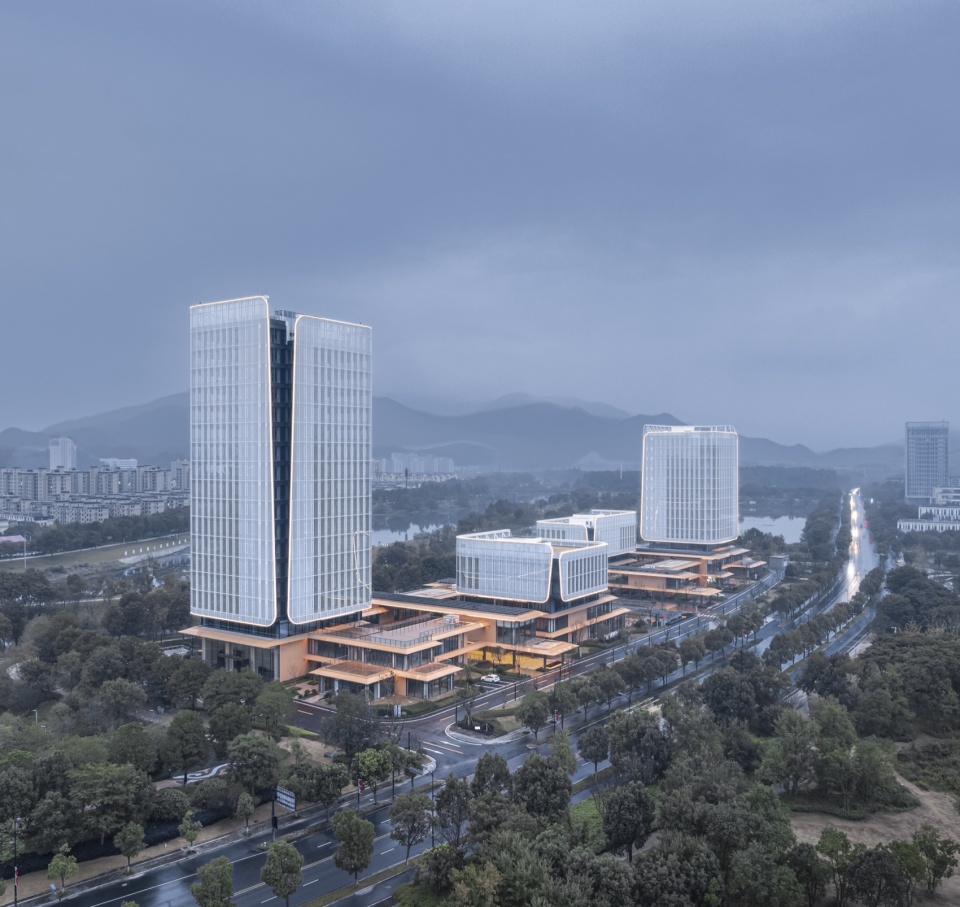
▼塔楼与裙房的体量关系,形成清晰的竖向层级,
The volume relationship between the tower and the podium creates a clear vertical hierarchy
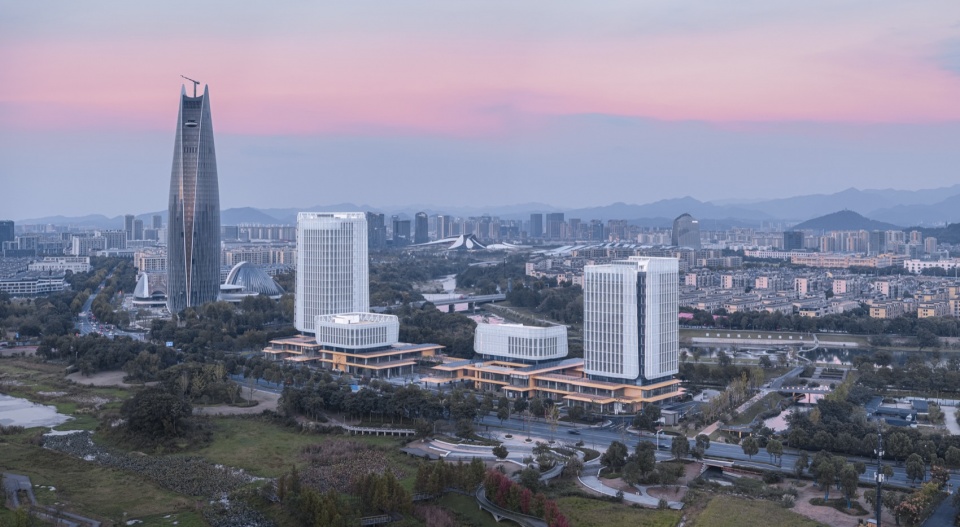
Located at the intersection of the city and nature, the Anji Linxi Innovation Center is flanked by Huxi Stream to the east and Lingfeng Lake to the west. The site’s dual exposure to high-quality natural landscapes defines the core design approach—creating an interactive and permeable architectural space rather than an enclosed and isolated one. Adopting a “weaving” concept, the design uses small-scale, porous volumes and a pavilion-like ground floor to establish a human-scaled spatial experience, allowing the architecture to blend lightly and transparently into the surrounding landscape.
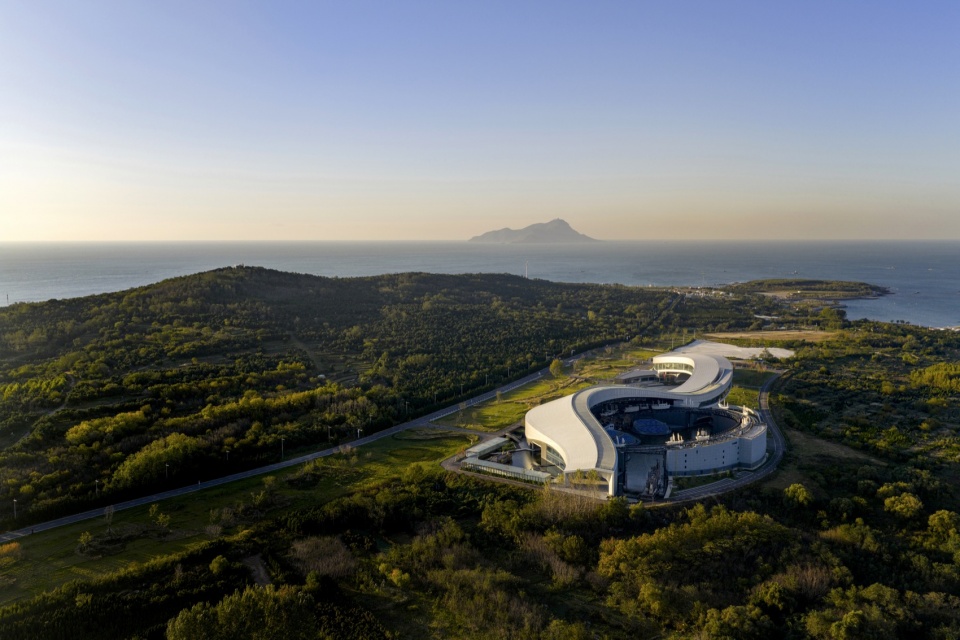
▼项目整体鸟瞰,建筑群以“编织”策略嵌入山水环境,Overall view of the project: The building complex is embedded in the natural landscape through a “weaving” strategy
▼多组团组织形成的整体空间秩序,
The overall spatial order formed by multiple group organizations
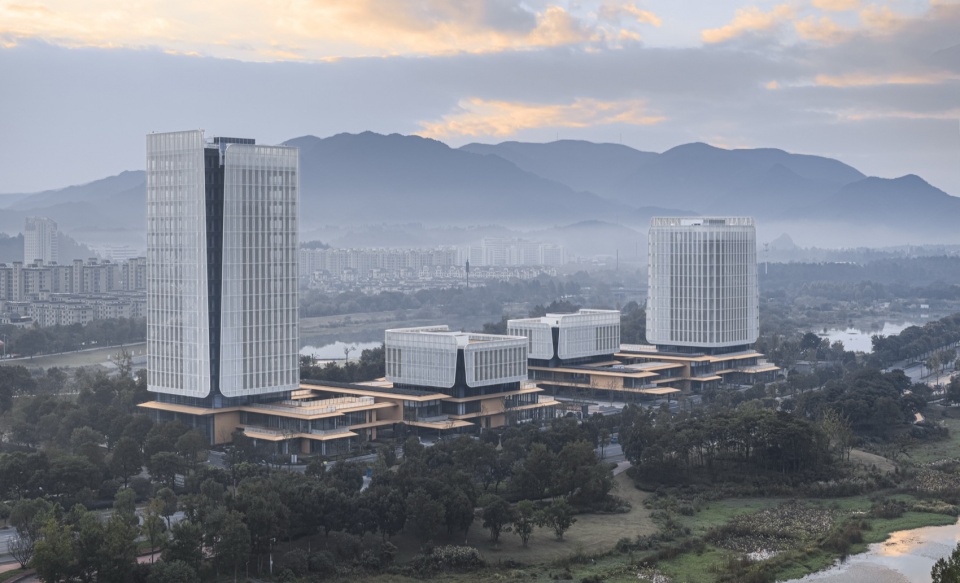
▼沿城市界面展开的体量组合,回应狭长地块条件,The volume arrangement along the urban interface responds to the conditions of the elongated plot
▼场地与周边城市肌理的衔接关系,
The connection relationship between the site and the surrounding urban texture
▼四塔错位布局策略,优化南向采光条件,
The four-tower staggered layout strategy optimizes the south-facing lighting conditions
项目地块南北长、东西窄的狭长格局,并未成为设计局限,而是通过四个点楼的巧妙布置,最大化增加建筑朝南向的日照面,同时控制单体尺寸以减少过大净深,让自然光均匀覆盖室内每一处空间,自然与人和谐共生。
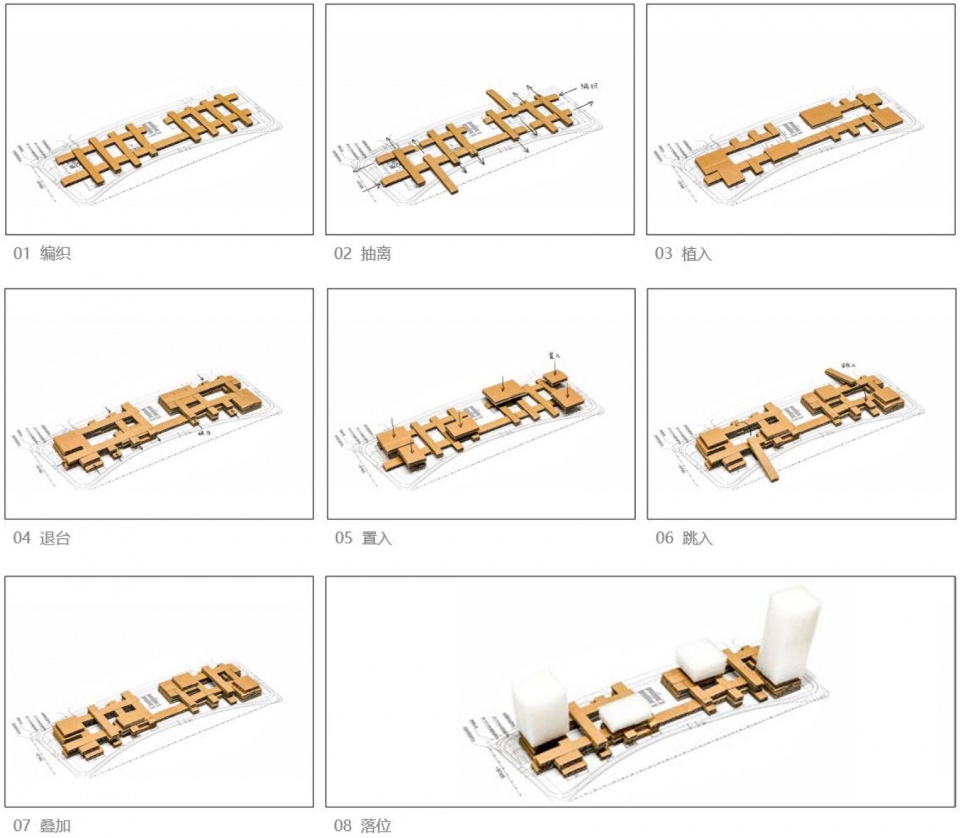
▼形体生成过程,The process of form generation
The elongated site, stretching north–south and narrow in the east–west direction, is not treated as a constraint. Instead, through the strategic placement of four tower blocks, the design maximizes southern exposure while controlling building depth to ensure that natural light evenly reaches all interior spaces, fostering a harmonious coexistence between nature and users.
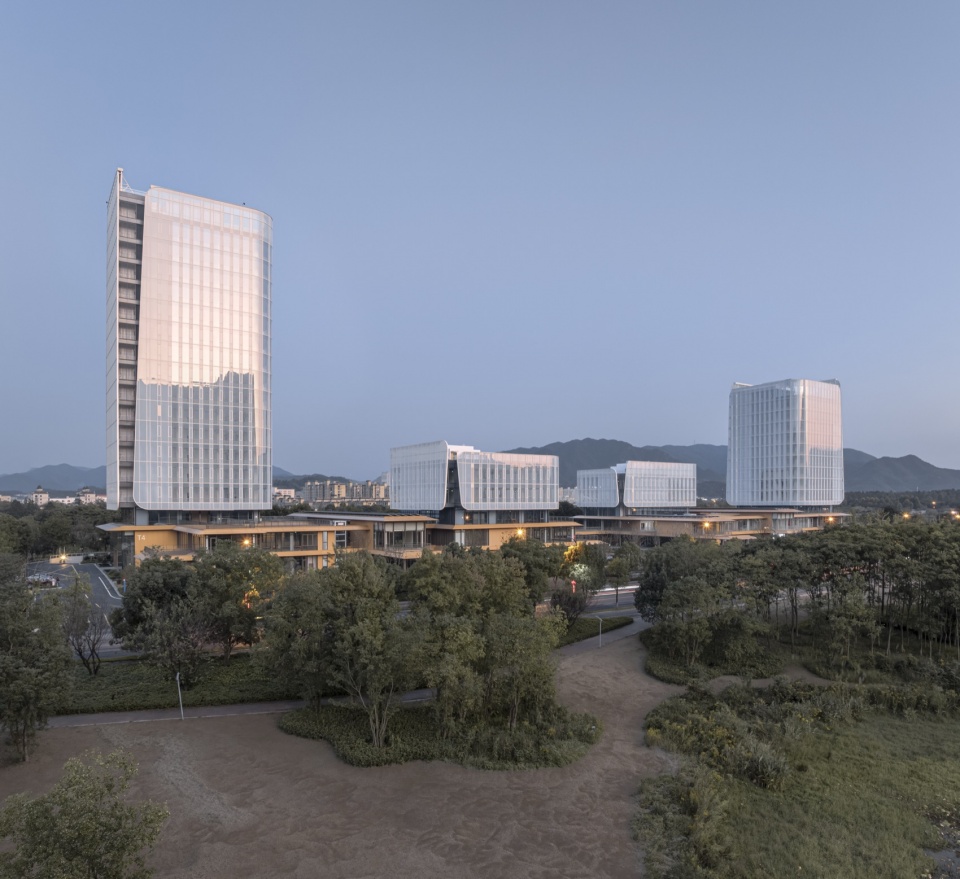
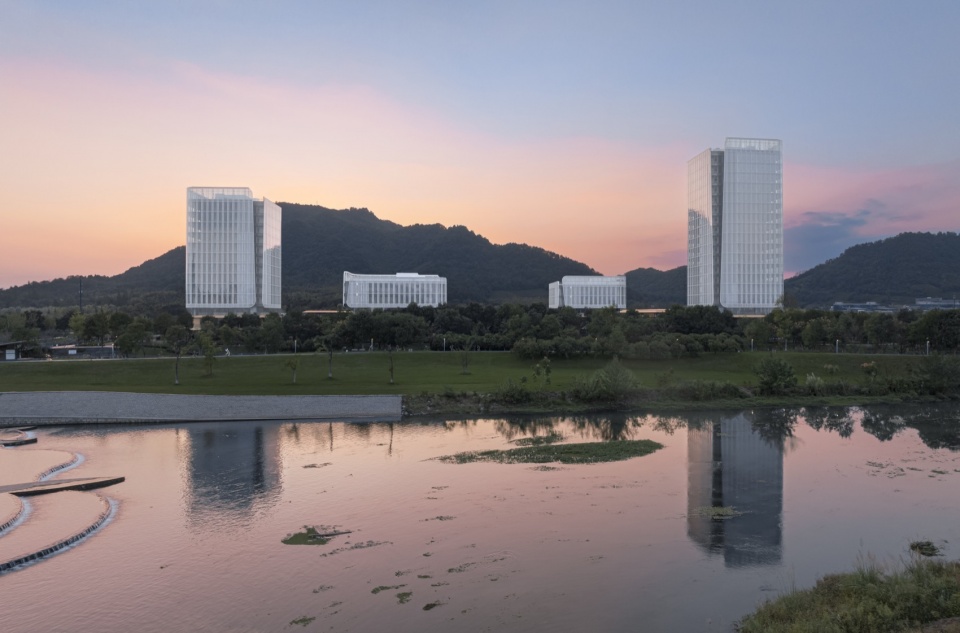
▼建筑群与山体背景的整体构图,The overall composition of the architectural complex against the backdrop of the mountainous terrain
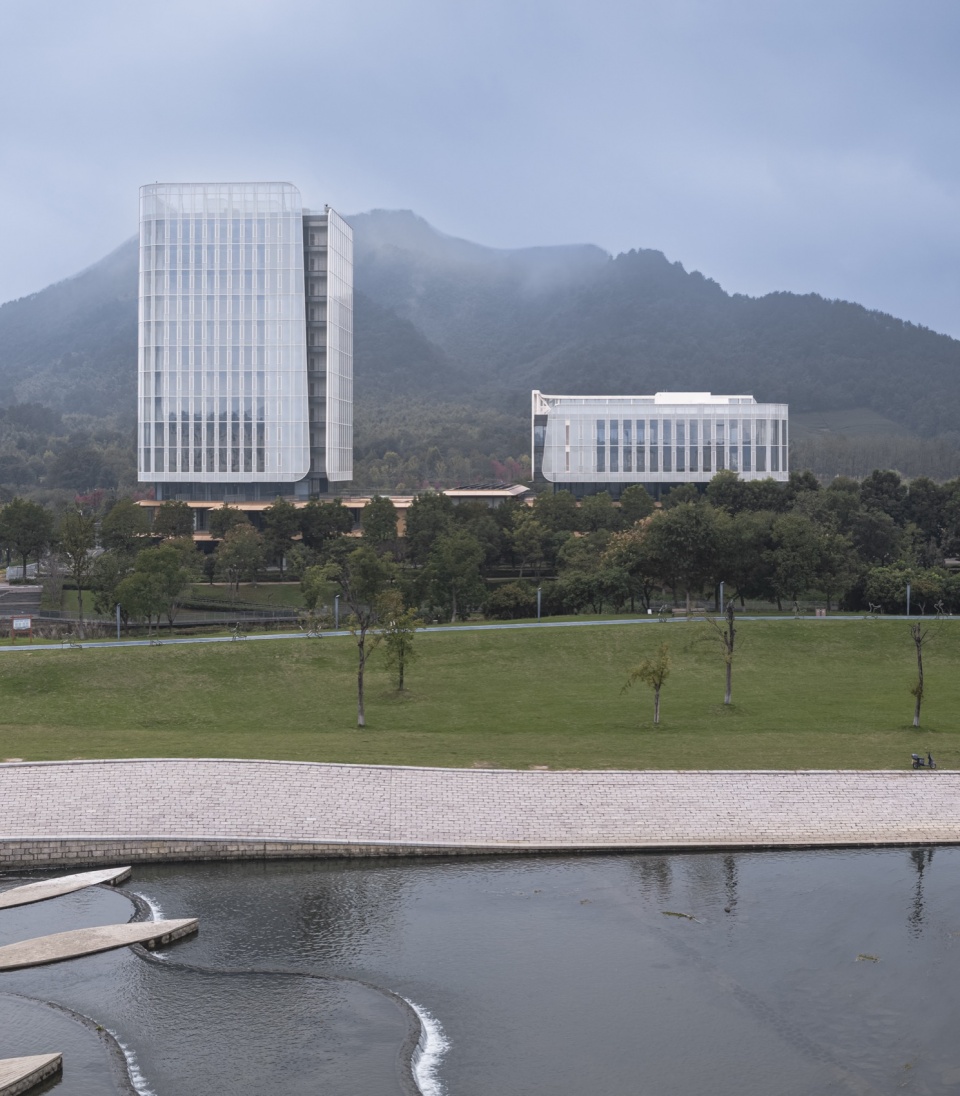
▼建筑与水岸景观的空间互动,
The spatial interaction between architecture and waterfront landscape
亲自然设计作为设计核心原则,是对使用者的深度关怀。设计团队摒弃了单纯追求建筑造型而忽视体验的做法,反复打磨玻璃材质的搭配方案,在保证建筑协调性的同时,让办公者能透过幕墙望见灵峰山景,摆脱传统办公建筑“黑笼子”般的压抑感,实现景观体验的最大化。优先自然通风的设计,让连廊与架空空间在炎热夏季也能形成舒适穿堂风,行走其间无需担忧日晒。
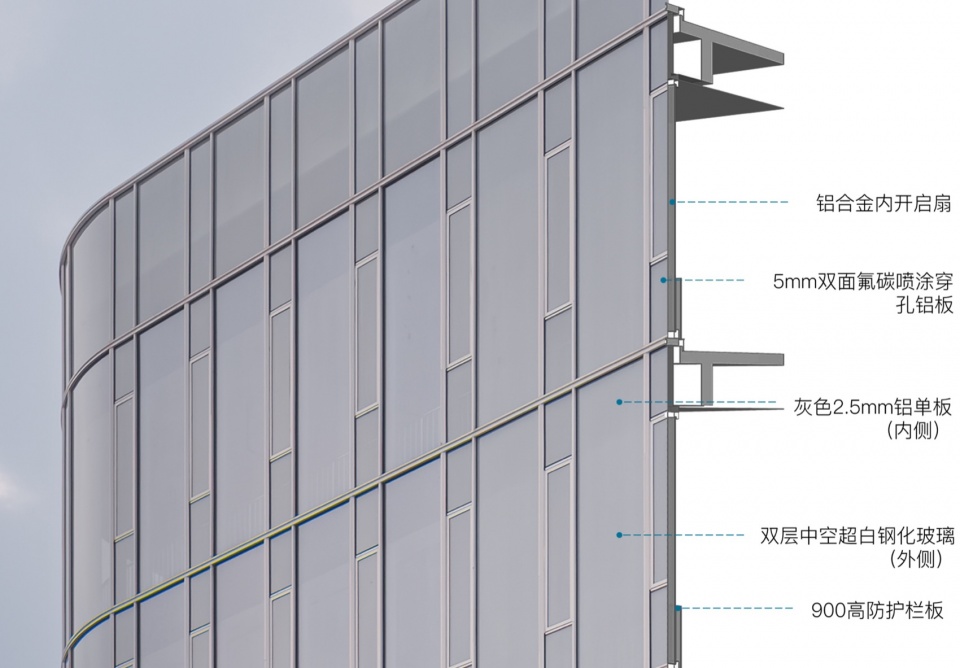
▼墙身大样,Wall drawing
Biophilic design serves as a core principle, reflecting deep care for users. The design team avoids prioritizing form over experience, instead refining glass material strategies to maintain architectural coherence while enabling views of Lingfeng Mountain through the curtain wall. This frees users from the oppressive “black box” condition of conventional office buildings and maximizes landscape engagement. Natural ventilation is prioritized, allowing corridors and elevated spaces to create comfortable cross-breezes even in hot summers, offering shaded and pleasant circulation.
▼幕墙系统的通透表达与环境协调,The transparent expression of the curtain wall system and its coordination with the environment
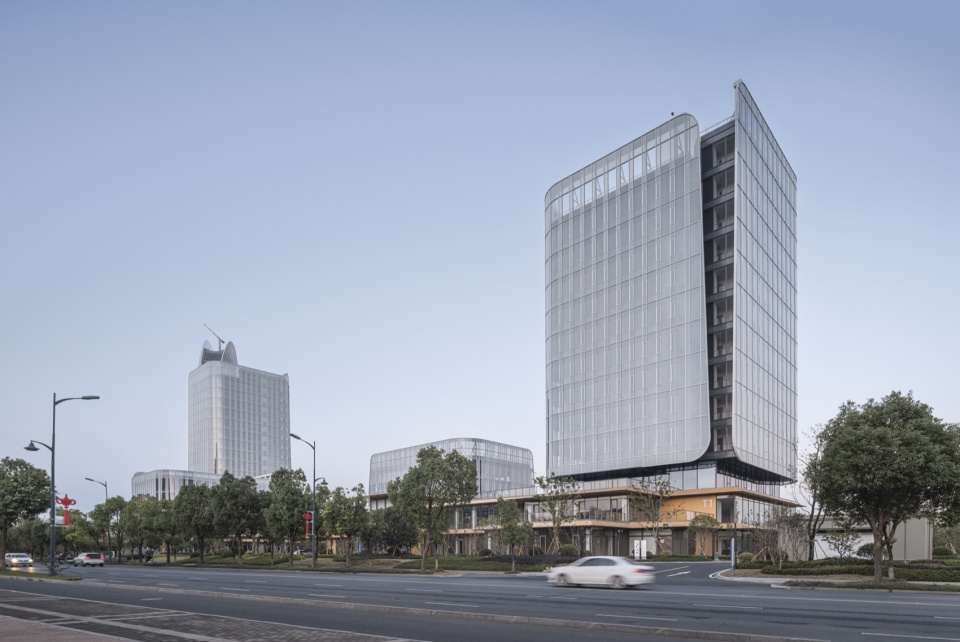
▼通透幕墙弱化内外边界,
Transparent curtain walls reduce the boundaries between the inside and outside
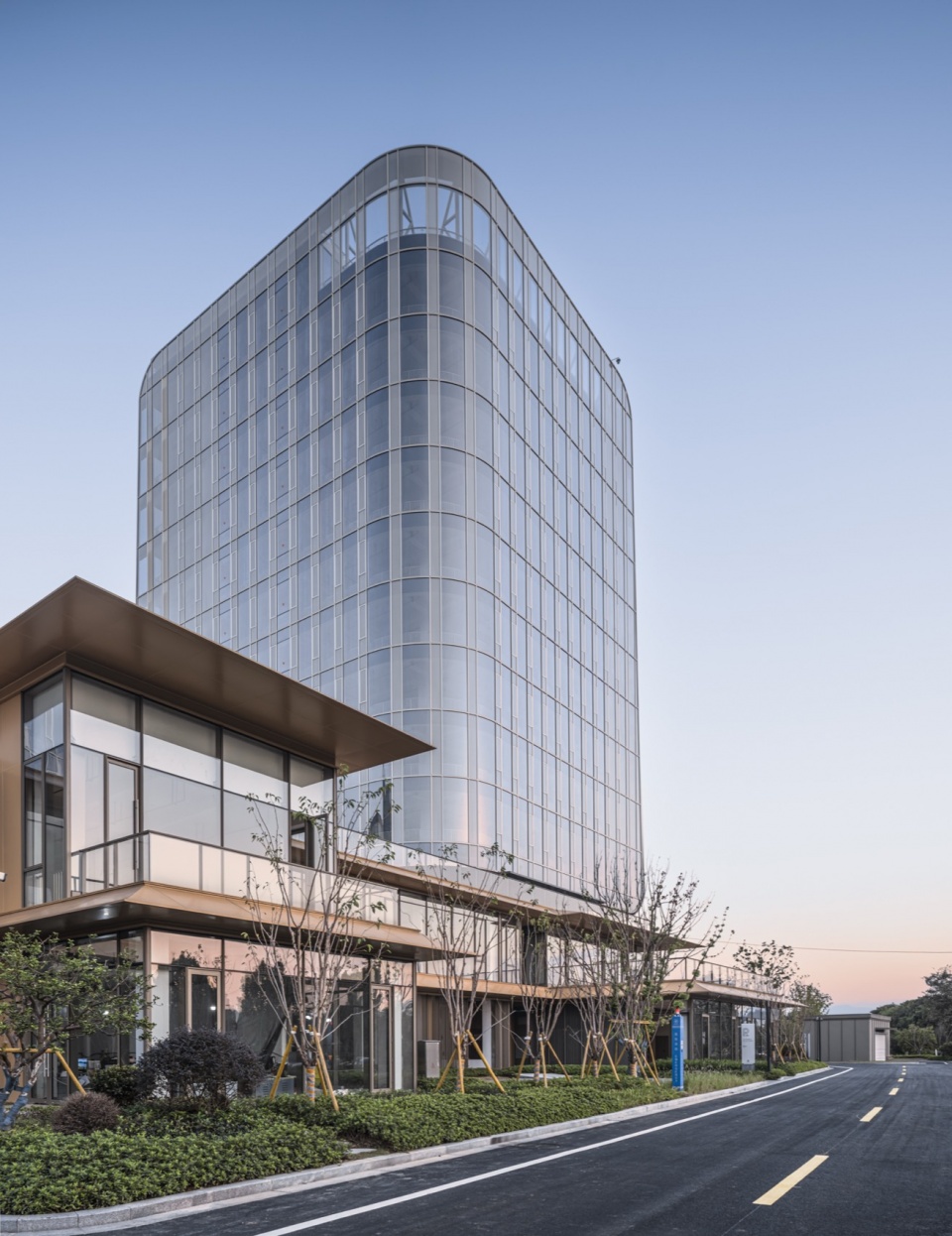
建筑背靠灵峰山自然景致,前拥中心广场,形成室内外互动、山水与建筑交融的核心画面,是项目场景设计的核心亮点。为遮阳避雨设置的连廊、底层架空等空间,更成为使用者交流、放松、闲逛的公共场域,让工作与休闲的切换自然发生。场景设计涵盖人物活动中独处沉思、社交交流、日常休闲、节日活动等多种行为状态。既满足了功能需求,又为使用者提供了精神放松的场域,实现了“丰盈场景”所蕴含的精神与物质双重价值。
With Lingfeng Mountain as a backdrop and a central plaza in front, the project creates a key spatial composition where interior and exterior interact, and architecture merges with landscape. Shaded corridors and elevated ground-level spaces not only provide shelter but also become public zones for communication, relaxation, and casual strolling, enabling a seamless transition between work and leisure. The spatial scenarios accommodate a wide range of activities—from solitary reflection and social interaction to daily leisure and festive events—fulfilling functional needs while offering psychological comfort, embodying both the material and experiential value of a “rich scenario.”
▼塔楼与低区基座的层级关系,
The hierarchical relationship between the tower and the lower base platform
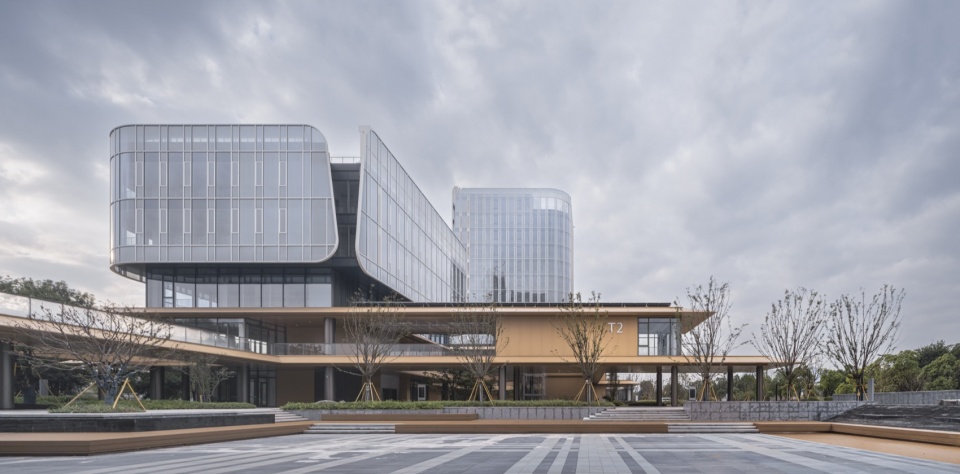
▼底层亭廊式空间构建连续开放的公共界面,
The bottom-level pavilion corridor-style space creates a continuous and open public interface
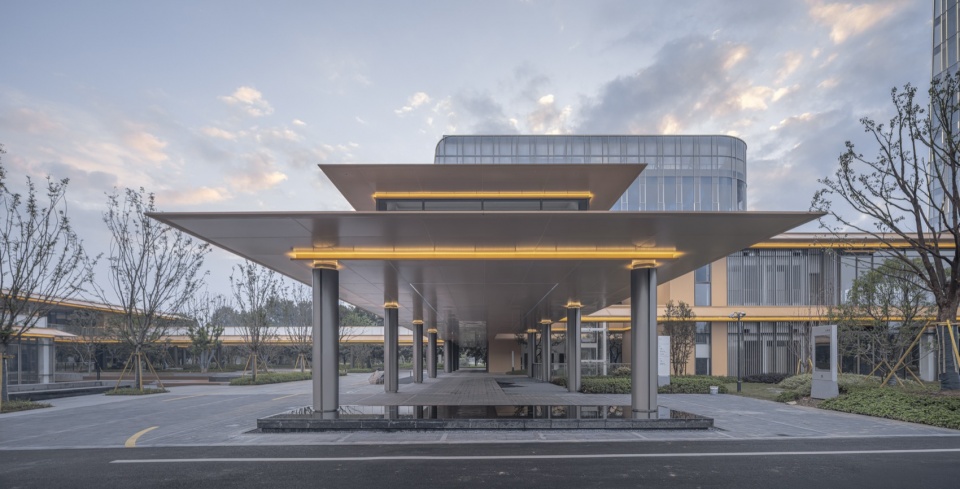
▼架空层灰空间作为气候缓冲与交流场所,
The mezzanine gray space serves as a climate buffer and a place for communication
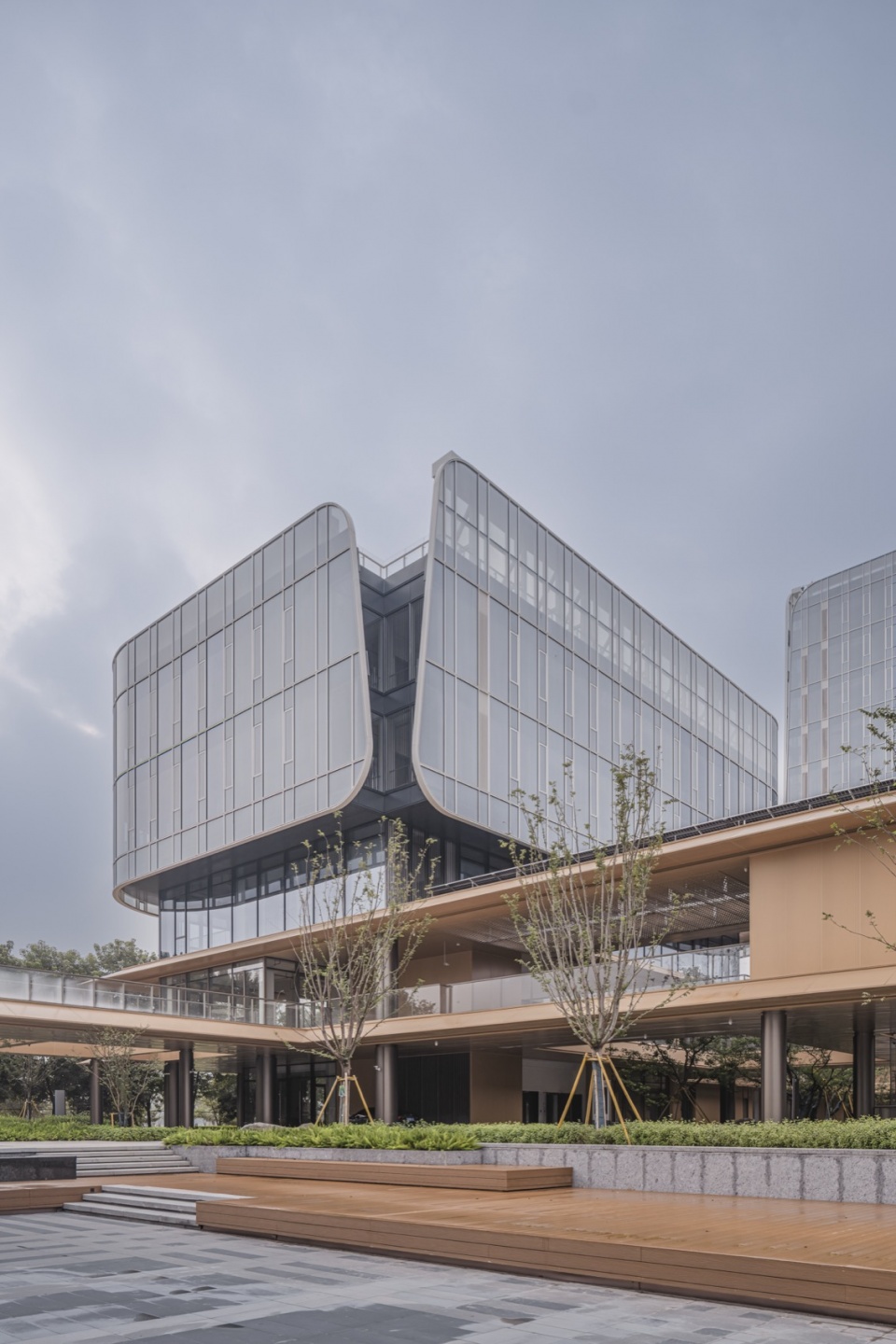
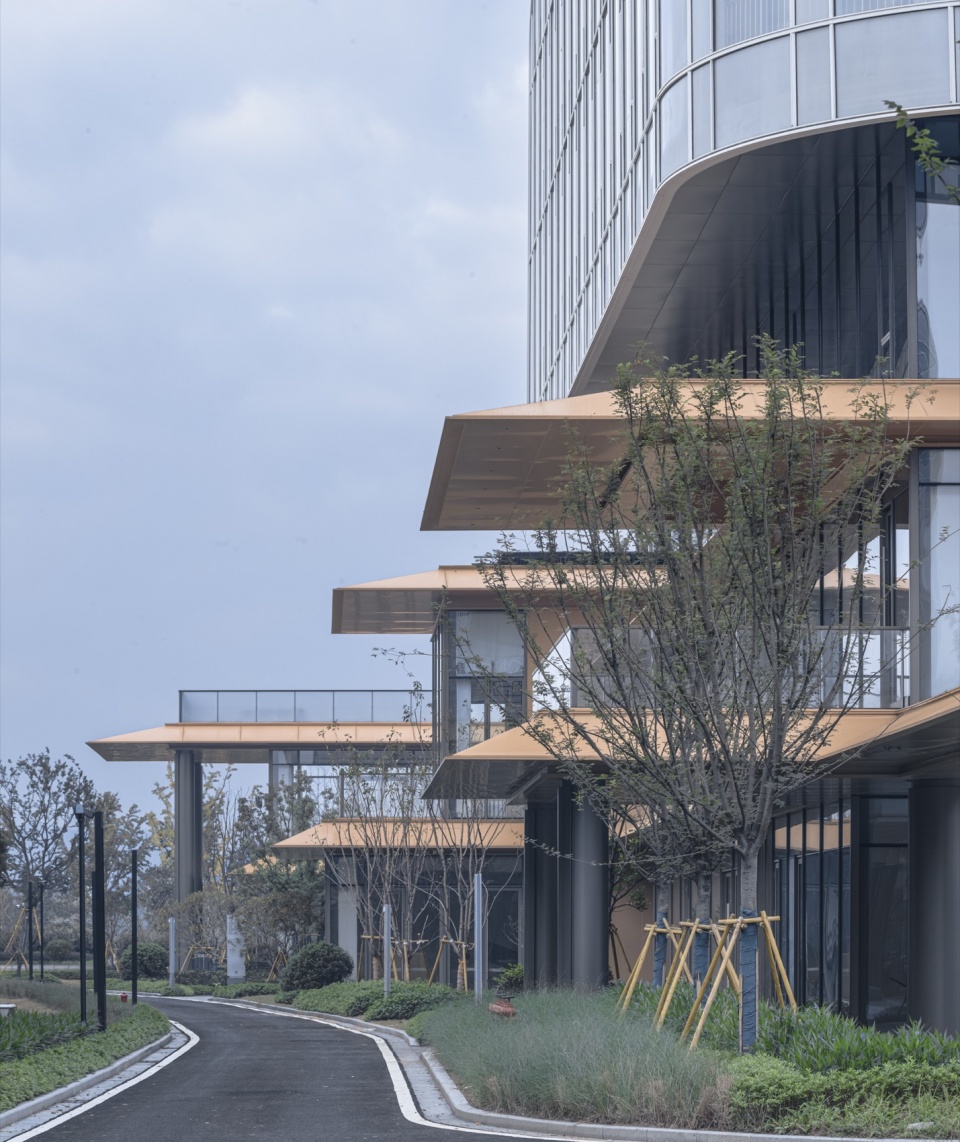
建筑一二层“编织”式布局之上叠加塔楼,在二层与三层形成大量露台,这种叠退设计既实现了类似住宅“赠送空间”的价值发掘,又为使用者提供了与环境互动的专属领域,让二三层办公空间具备更高附加值。
▼编织概念,The concept of weaving
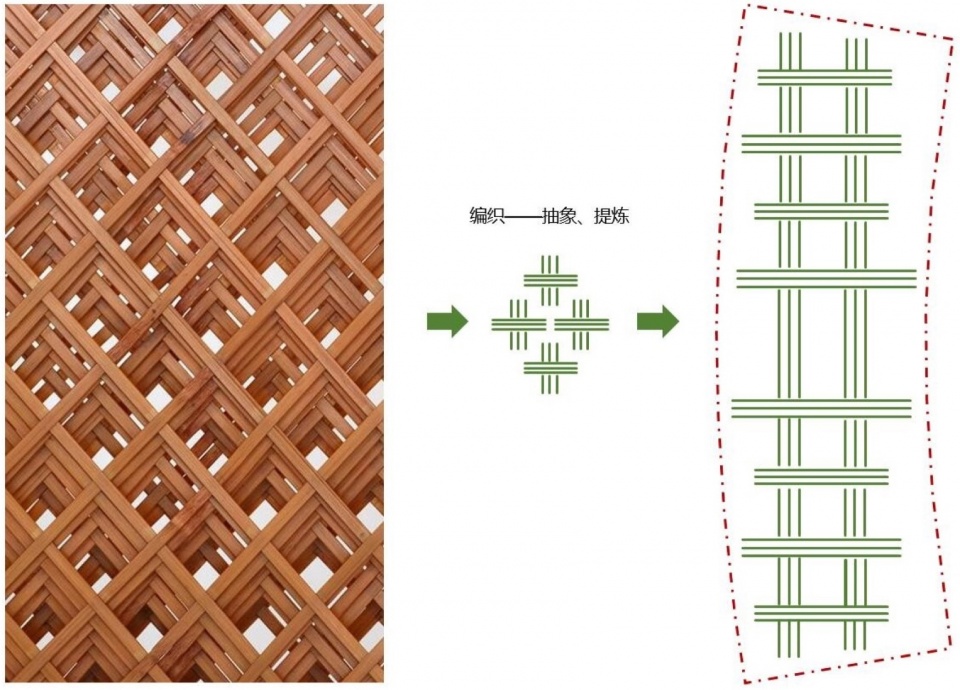
Above the woven podium of the first and second floors, tower volumes are stacked to create a series of terraces on the second and third levels. This stepped configuration captures added spatial value similar to residential bonus spaces, while also providing dedicated outdoor areas for interaction with the surroundings, enhancing the quality of office environments on these levels.
▼细部尺度控制下的亲人空间体验,
The experience of personal space under the control of detailed scale design
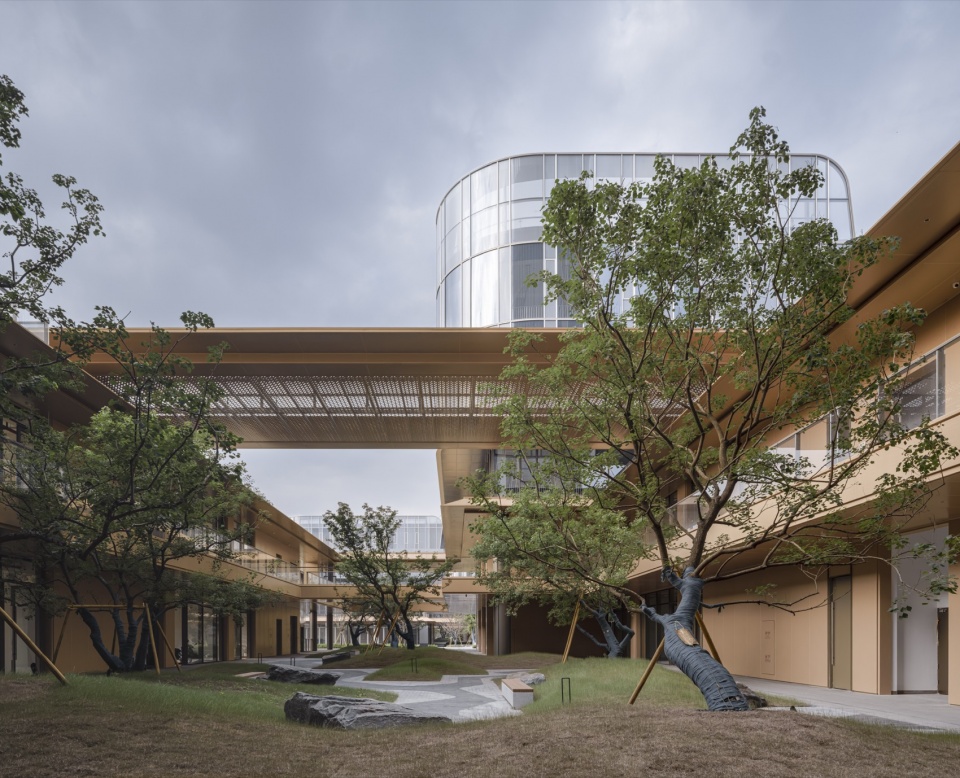
▼内院空间围合,形成相对静谧的交流场所,
The interior space is enclosed, creating a relatively quiet place for communication
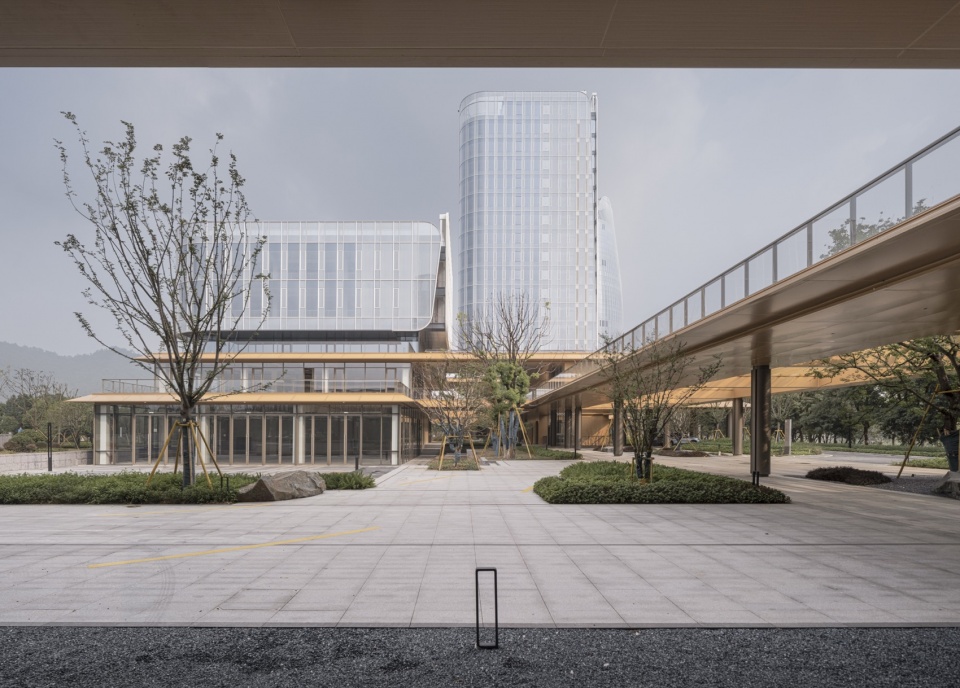
▼内院空间组织,营造相对安静的交流场所,
The interior space layout creates a relatively quiet place for communication
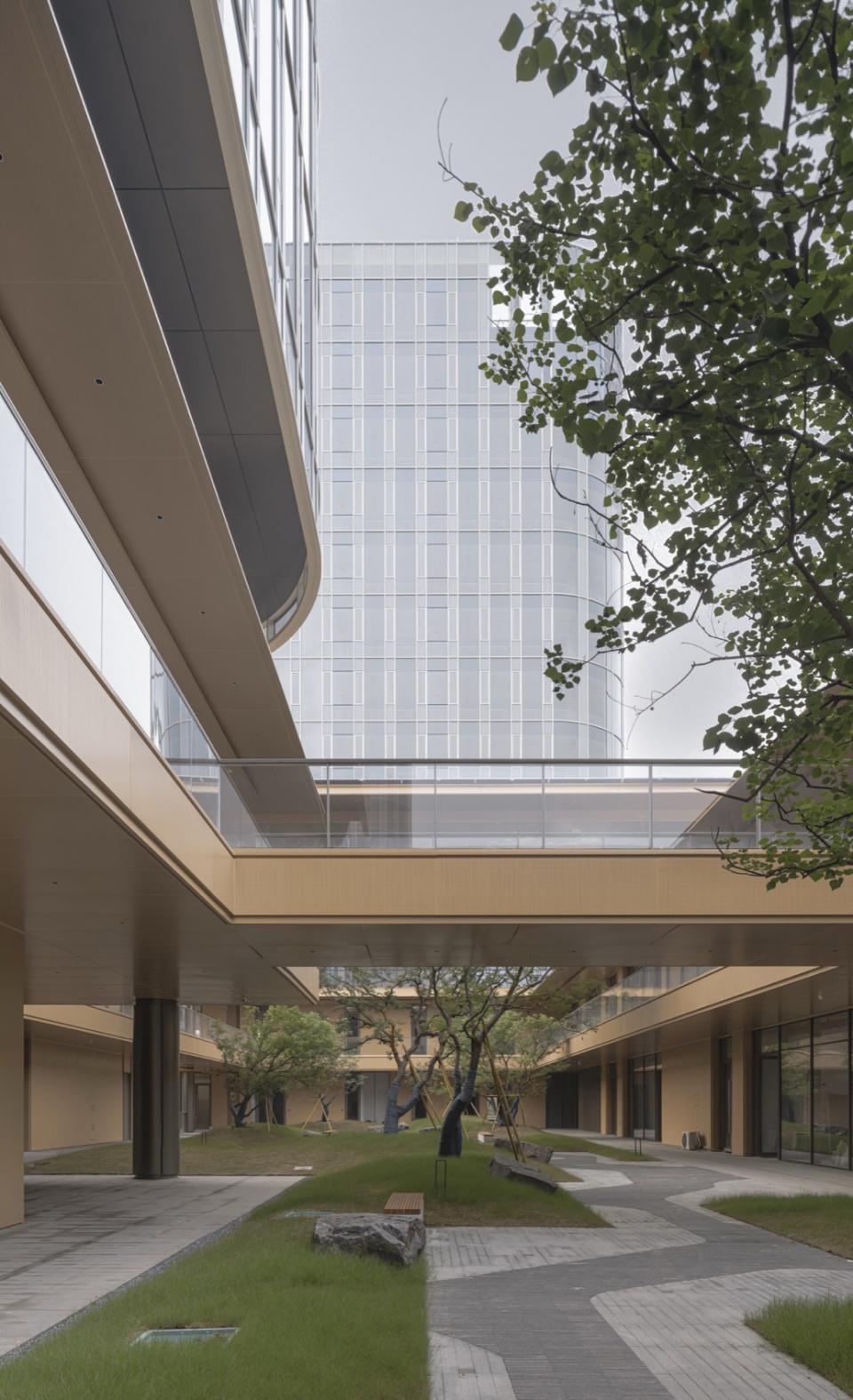
▼退台空间叠加,形成多层次户外场所,
The setback areas are stacked on top of each other, creating multi-level outdoor spaces
塔楼被拆分为四个独立单元,搭配部分偏置核心筒的设计,使空间既适用于整层办公,也可分割为小型单元分栋出售,甚至能根据需求转化为生产研发空间、员工宿舍或酒店,适配产业迭代与功能变化的多种可能,充分体现空间的灵活性与可转换性。裙房入口处预留的无柱大空间,为未来的功能拓展留下了充足余地,体现了对空间资源的珍视与长远考量,对空间价值的多元构建。
The towers are divided into four independent units, combined with partially offset cores, allowing flexibility for whole-floor offices or subdivision into smaller units for sale. They can also be adapted into R&D spaces, staff dormitories, or hotels, accommodating evolving industrial and functional needs, demonstrating high spatial adaptability and transformability. A column-free space at the podium entrance is reserved for future expansion, reflecting a long-term vision and maximizing spatial value.
▼面向灵峰山的开敞界面,引入自然景观,
The open interface facing Lingfeng Mountain incorporates natural landscapes
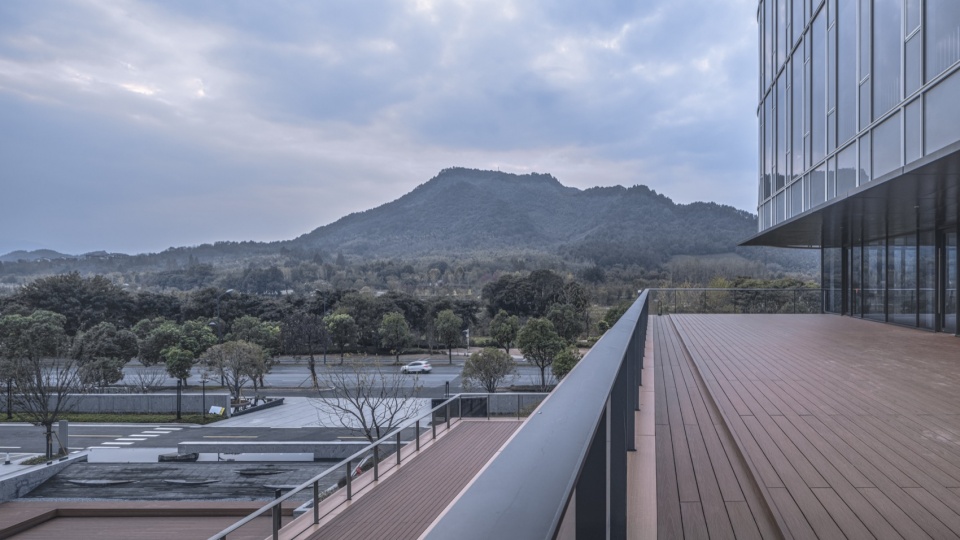
▼建筑与自然景观的渗透关系,
The interpenetration relationship between architecture and natural landscapes
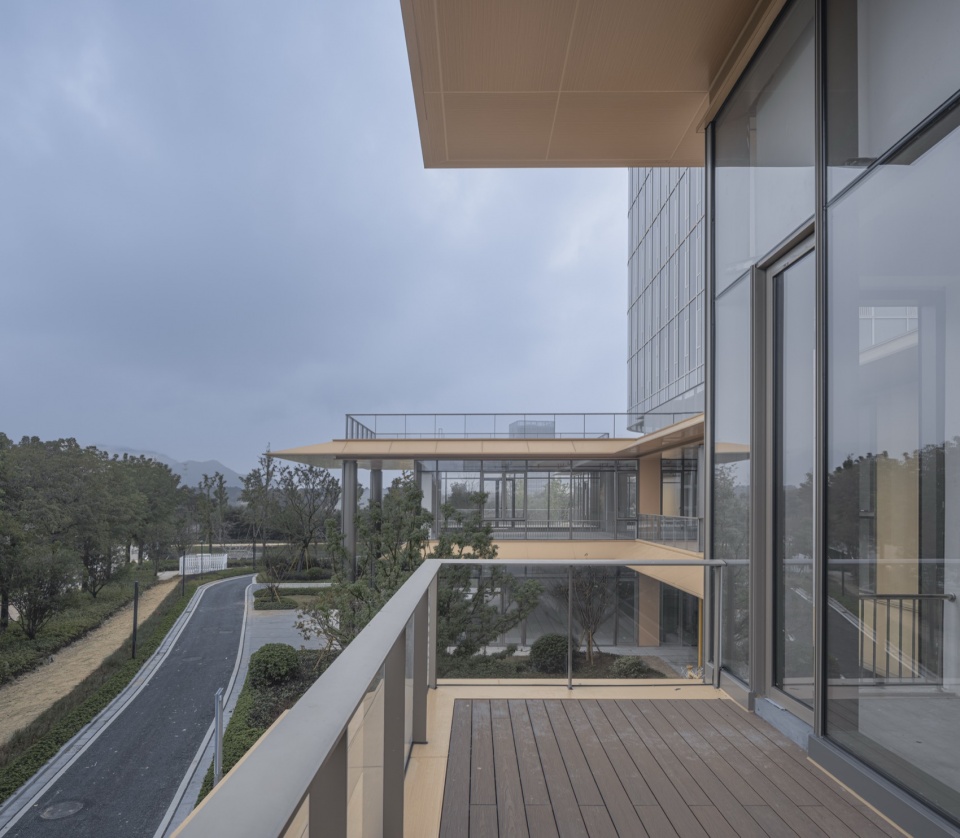
安吉临溪科创中心的设计,将城市与自然、效率与人文、当下需求与未来可能完美平衡,最终形成兼具生态适配性、功能实用性与精神归属感的建筑作品,实现设计理念与实践的有机统一。
The Anji Linxi Innovation Center achieves a balanced integration of city and nature, efficiency and human experience, and present needs and future possibilities. It results in an architectural work that combines ecological responsiveness, functional performance, and a strong sense of place, embodying a cohesive alignment between design intent and built reality.
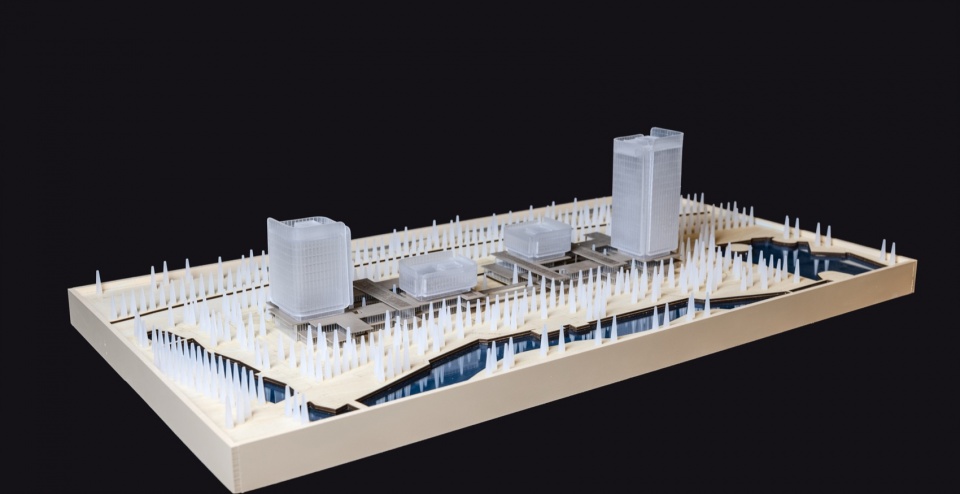
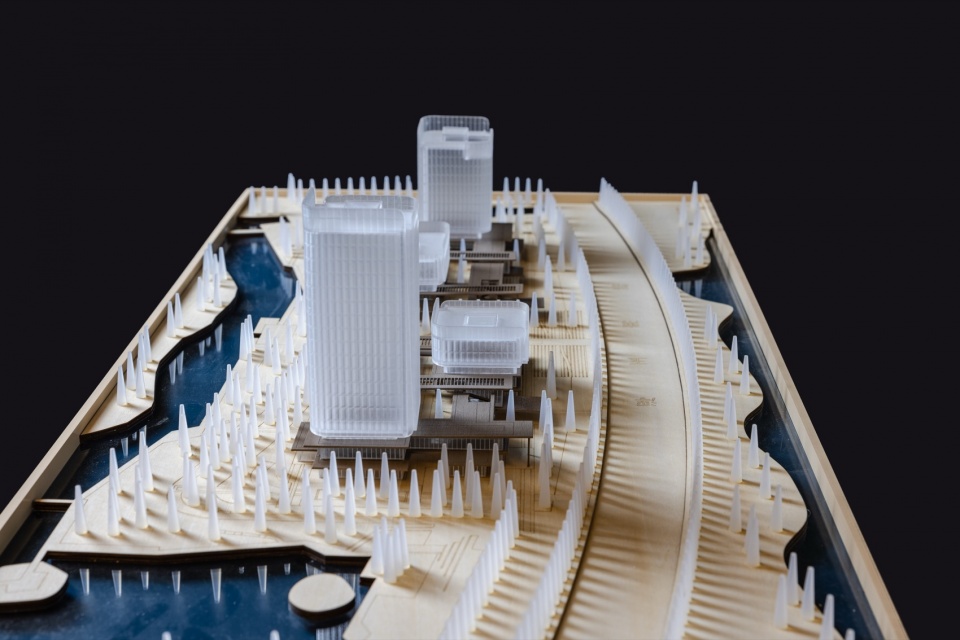
▼模型,model
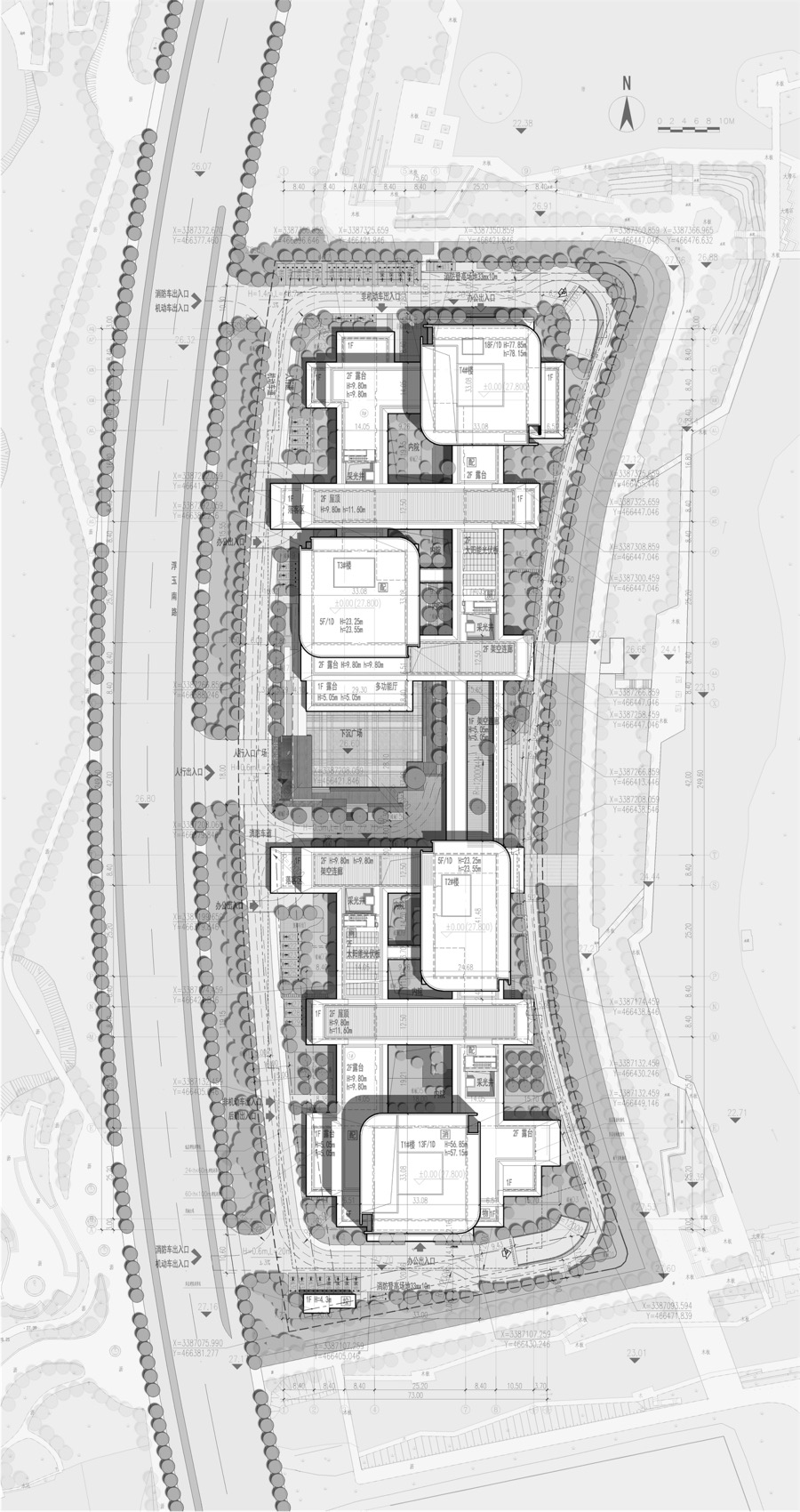
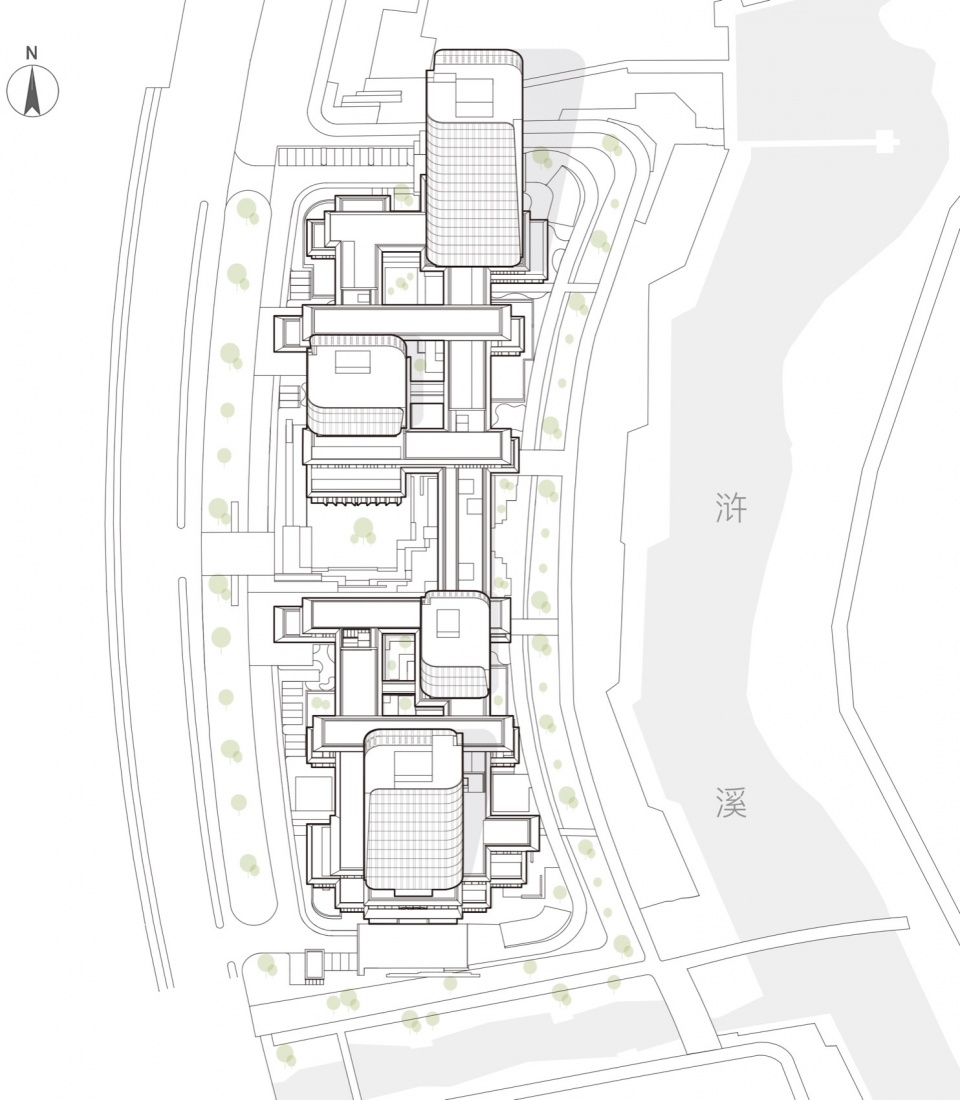
▼总平面,master plan
Project name:Anji Linxi Innovation Center
Project type:Office Building
Design:GLA Architects
Website:http://en.gla.com.cn/
Contact e-mail:gla_press@163.com
Design year:2022
Completion Year:2026
Project location:Anji, Zhejiang Province
Gross built area:67590 ㎡
Photo credit: Yao Li
Partner:[Landscape Design] ZSD
Clients:Anji Jin’an Construction and Development Co., Ltd.