Boulevard 6公寓,西班牙 / Ortega Diago
坐落于吉普斯夸首府一栋拥有百年历史的宅邸之中,这间90平方米的住宅通过对光与影的精妙平衡构建出独特氛围。Ortega Diago 的设计以纵向平面布局为基础,通过不锈钢厨房、黑化松木地板以及经典设计家具,呈现出对中世纪现代主义与工业材料美学的推崇。位于圣塞巴斯蒂安标志性的林荫大道(Boulevard)上,由 Gonzalo Sánchez Ortega 与 Armando Diago 领衔的设计事务所完成了这间90平方米公寓的翻新。项目试图以一种充满对比性的建筑语言,回应当下中性、自然风格室内空间占据主导的趋势。住宅所在建筑建于1900年,设计利用其狭长的空间形态,在历史遗产与当代技术功能之间建立起对话。在经历包括结构加固与地面找平在内的复杂修复过程之后,事务所成功重塑了这一时期建筑原有的尺度感与宁静氛围。
Housed within a century-old estate in the Gipuzkoan capital, this 90 sqm residence is defined by a meticulous balance of light and shadow. Ortega Diago’s proposal champions Mid-Century Modernism and industrial materiality through a longitudinal floor plan, where a stainless steel kitchen, ebonized pine flooring, and iconic designer furniture serve as the primary narrative threads. Located on San Sebastián’s iconic Boulevard, the studio led by Gonzalo Sánchez Ortega and Armando Diago has completed the renovation of a 90 sqm apartment that promotes an architecture of contrasts over the current hegemony of neutral, organic interiors. Located in a building dating back to 1900, the project leverages its elongated morphology to establish a dialogue between historical heritage and contemporary technical functionality. Following a complex rehabilitation process, which included structural reinforcement and floor leveling, the studio has successfully reclaimed the scale and sense of calm inherent to the period’s architecture.
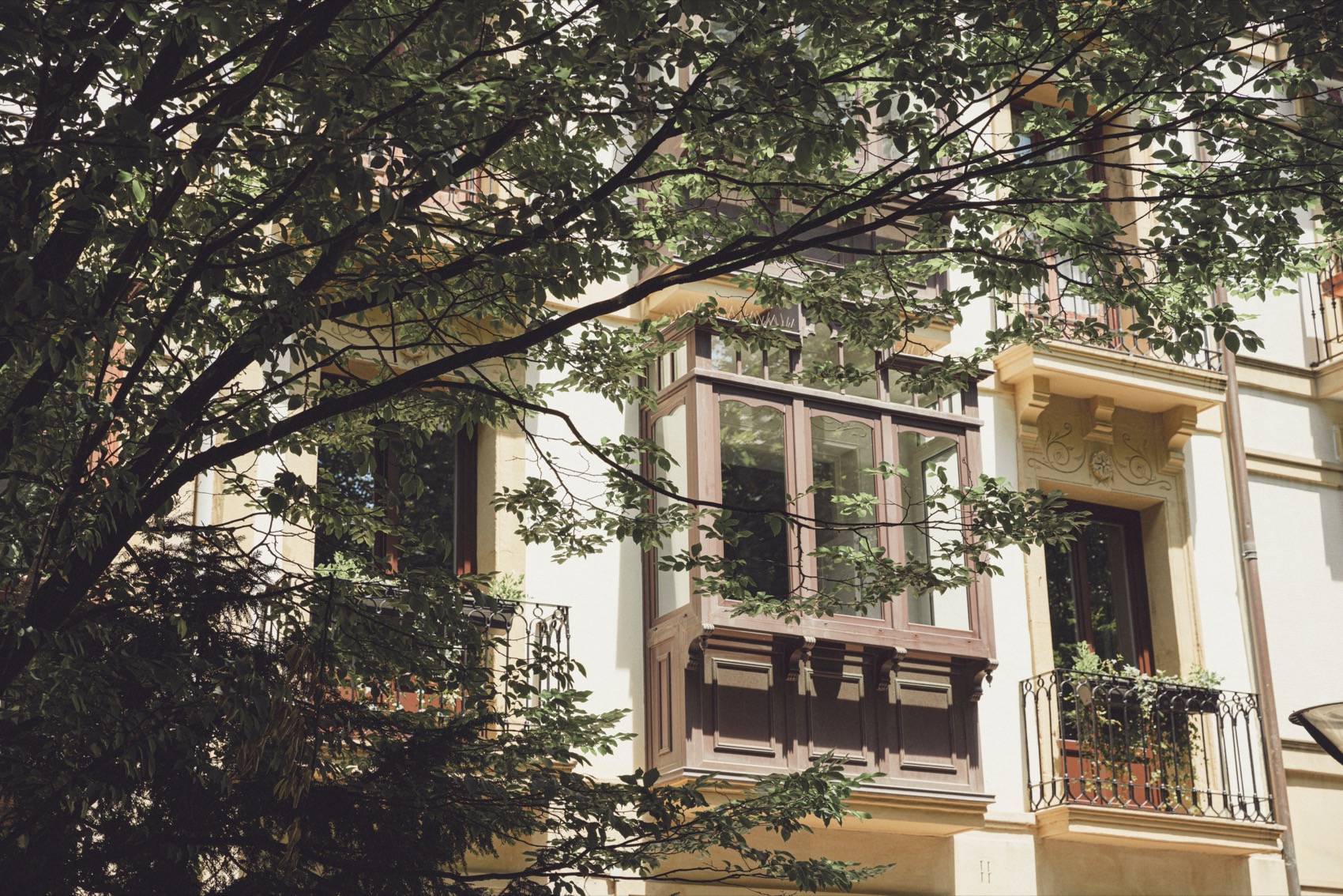
▼窗景与城市绿意相互交织,Windows intertwined with urban greenery
空间序列与体量重构Spatial sequence and volumetric recovery
住宅布局回应了其狭窄而纵深的平面特征,将两种截然不同的城市界面联系在一起。起居空间朝向绿树成荫的林荫大道,而卧室则隐藏于住宅后部,面向一条安静的步行街,从而保证了绝对的静谧。这种布局使自然光得以柔和地穿透整个住宅,形成连续的空间序列。高挑的层高与对多余隔墙的消除,让空间呈现出超越实际面积的开阔感。设计以住宅纵深作为最重要的空间参照,通过对阴影与明暗关系的有意识控制,重新唤起历史建筑中那种令人放松的氛围。
The home’s layout responds to its narrow, deep footprint, connecting two opposing urban realities. While the living area opens toward the leafy landscape of the Boulevard, the bedrooms are tucked away at the rear, facing a quiet pedestrian street that ensures total silence. This distribution allows natural light to filter through the residence subtly, creating a sequence of rooms where high ceilings and the absence of unnecessary partitions create a sense of spaciousness that transcends the physical limits of its dimensions. By using the length of the house as its primary reference point, the intervention captures the inviting atmosphere of historic constructions through a deliberate management of shadow and chiaroscuro.
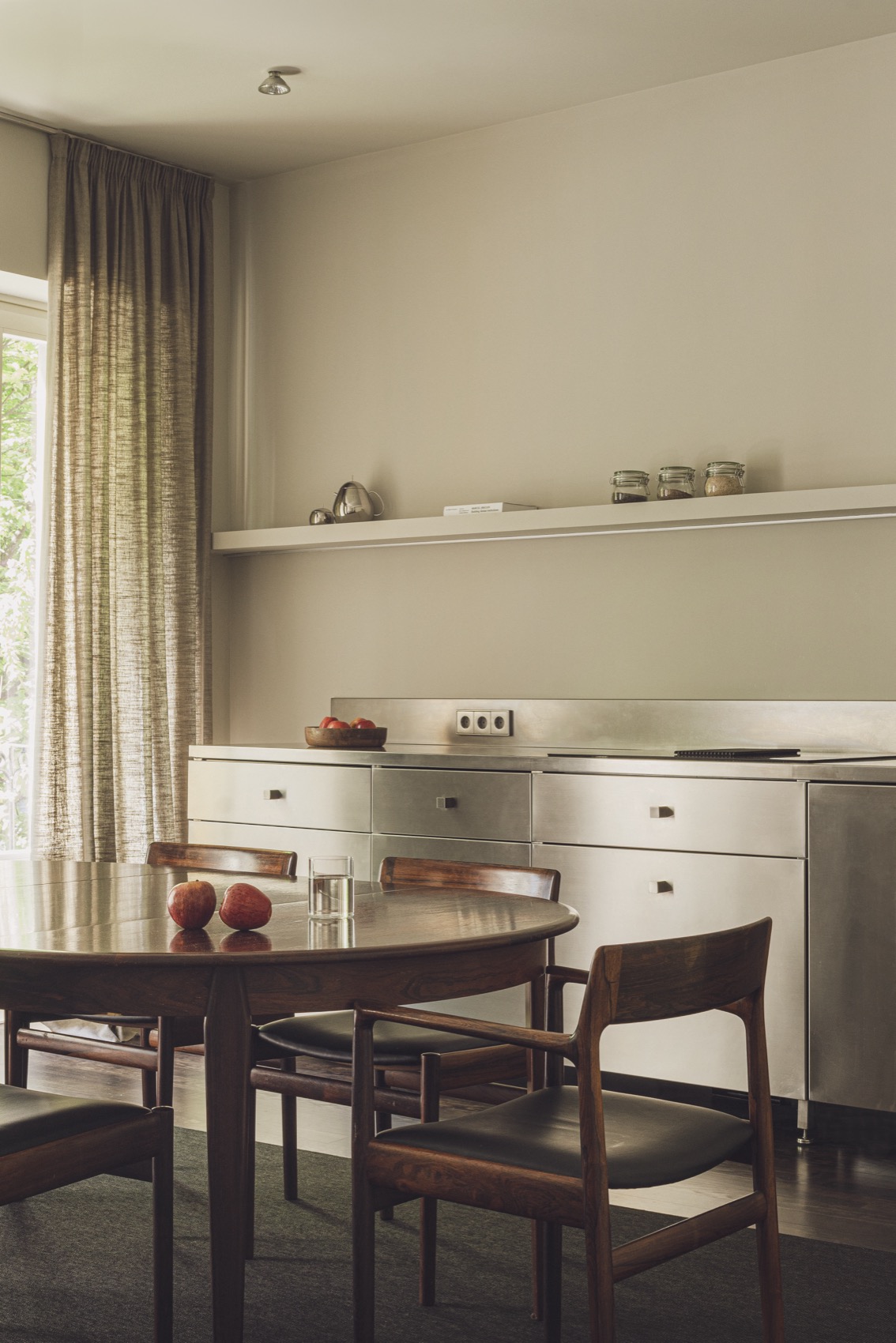
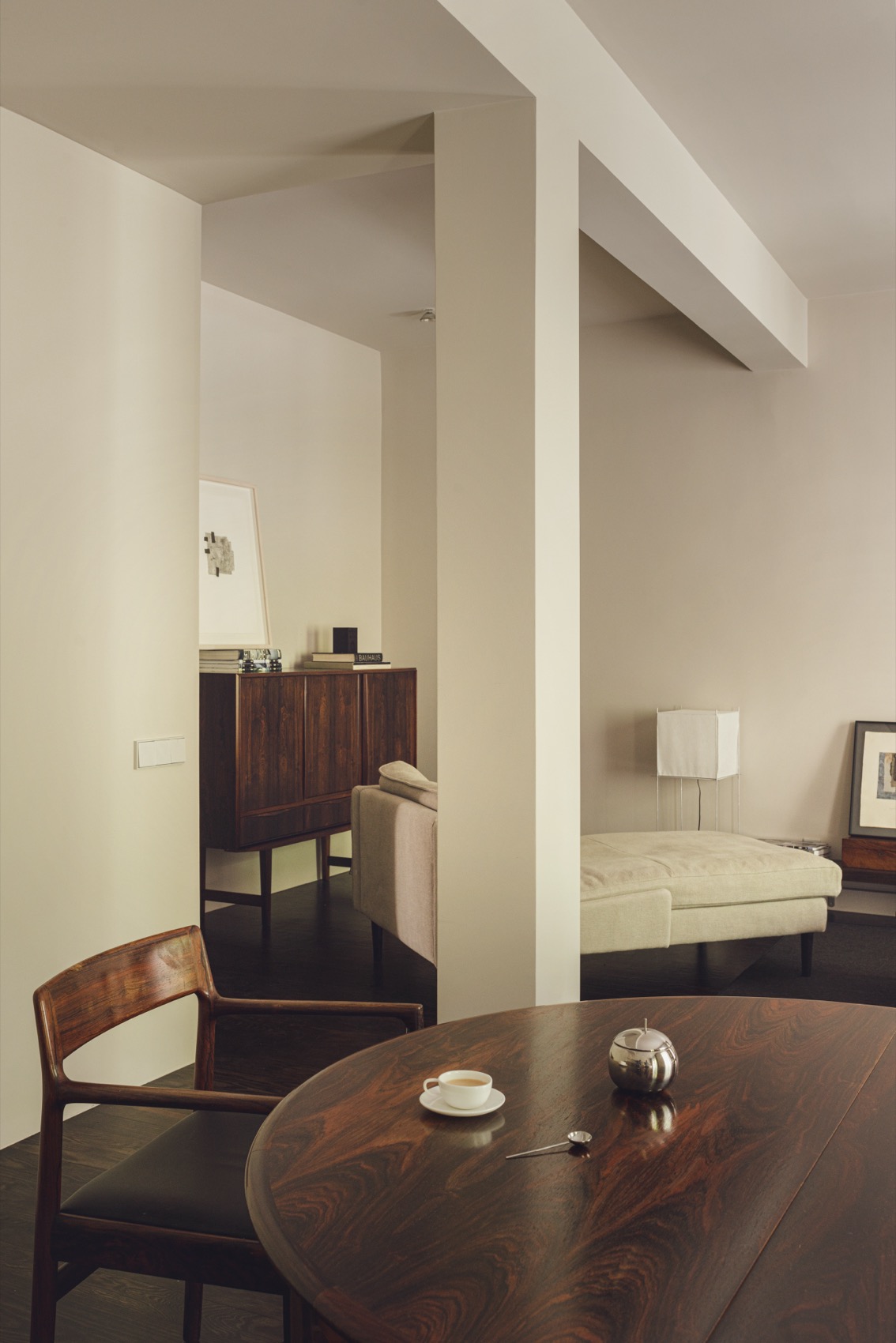
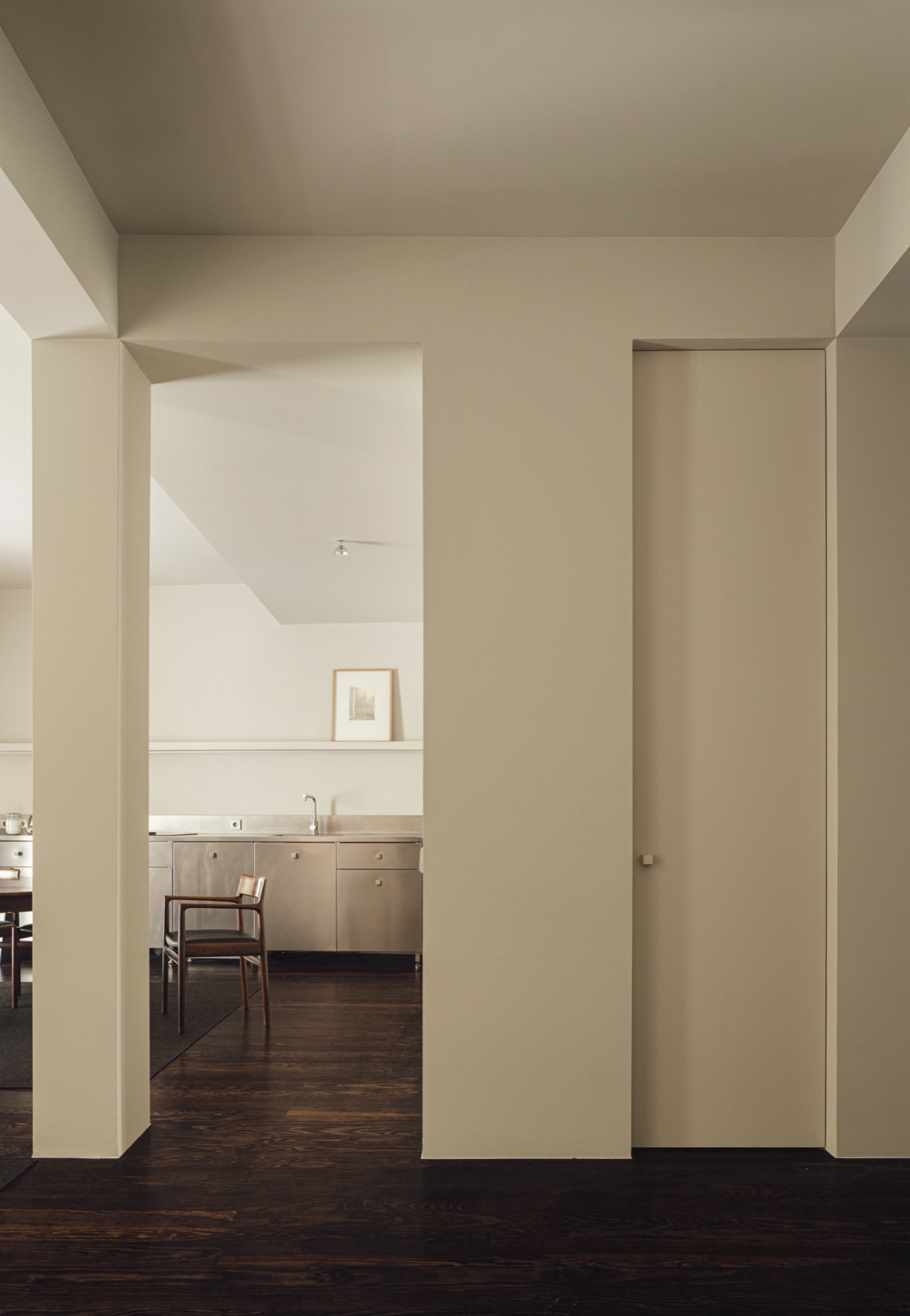
▼厨房与餐厅共享统一材质语言,Kitchen and dining area sharing a unified material palette
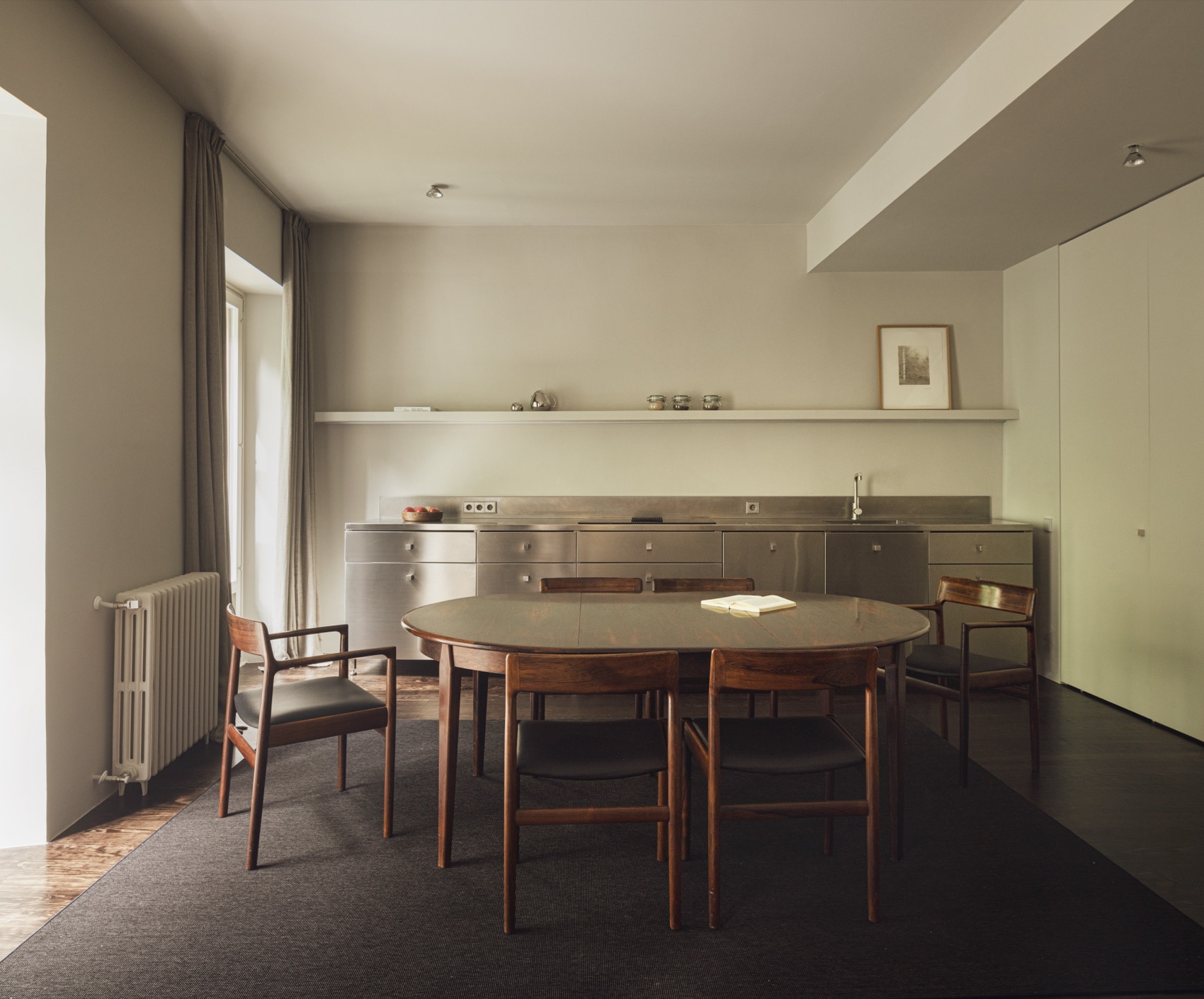
▼自然光照亮餐厨一体空间,Natural light illuminating the dining and kitchen area
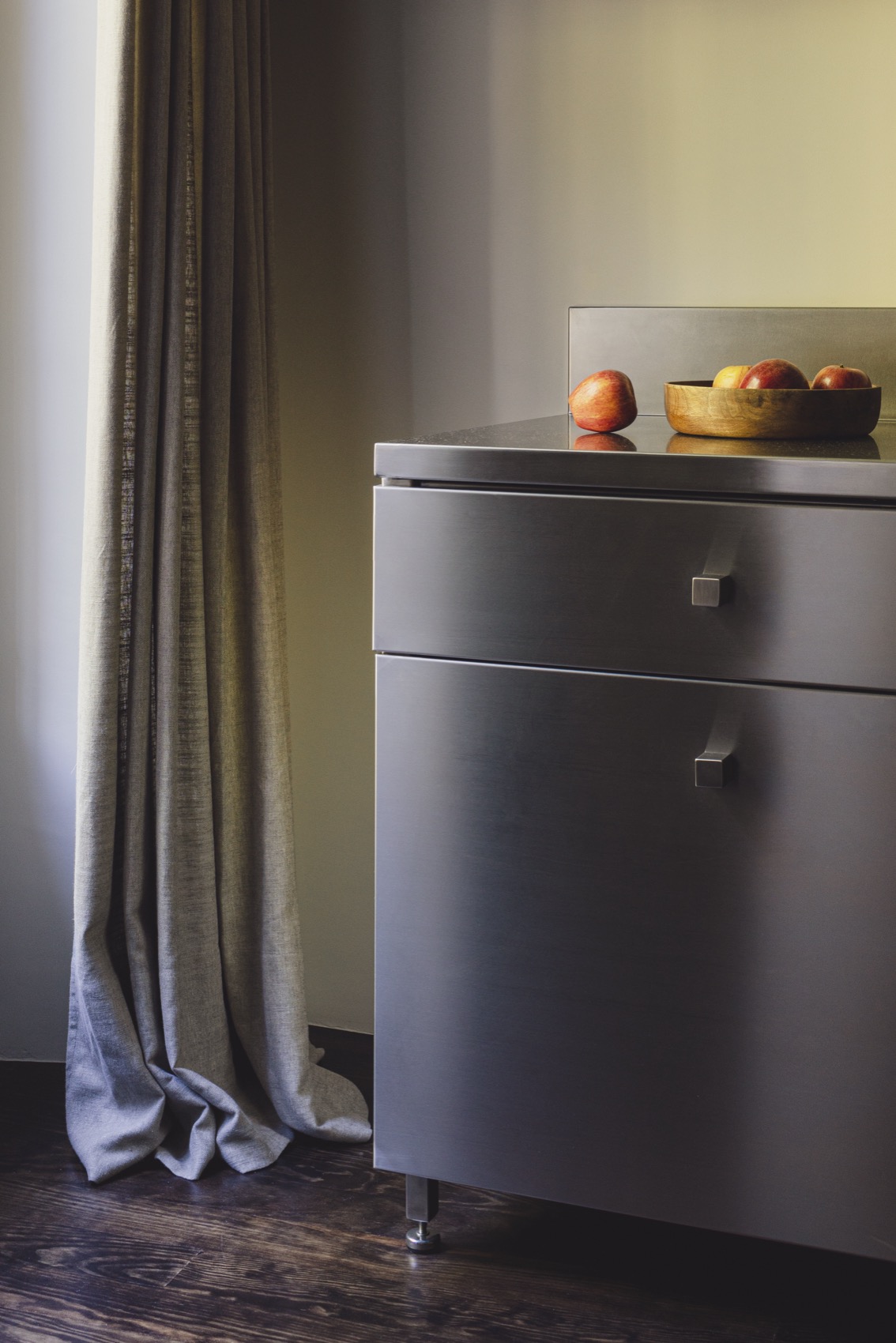
▼不锈钢柜体反射自然光线,
Stainless steel cabinetry reflecting natural light
中世纪精神:不锈钢与深色木材的对照Mid-century ethos: stainless steel vs. dark wood
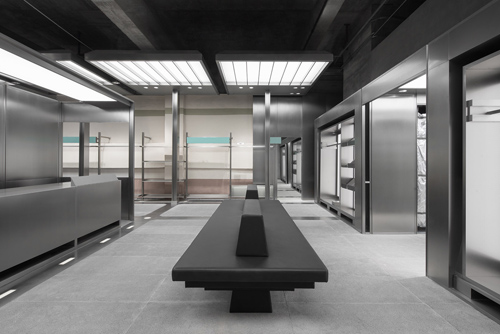
此次翻新的视觉身份建立在一组经过精心筛选的材料之上,设计摒弃纯粹装饰性的表达,转而强调建造本身的真实感。完全以不锈钢包覆的厨房如同一个反射装置,捕捉并回馈来自室外的自然光,同时将街道的绿色景观在视觉上引入住宅内部。
The visual identity of the renovation relies on a curated selection of materials that eschews the purely decorative in favor of constructive honesty. The kitchen, entirely clad in stainless steel, acts as a reflective element that captures and returns exterior light, visually drawing the greenery from the street into the heart of the home.
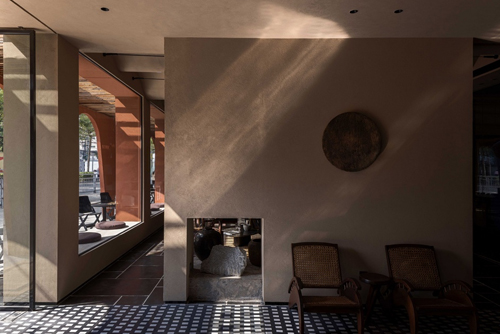
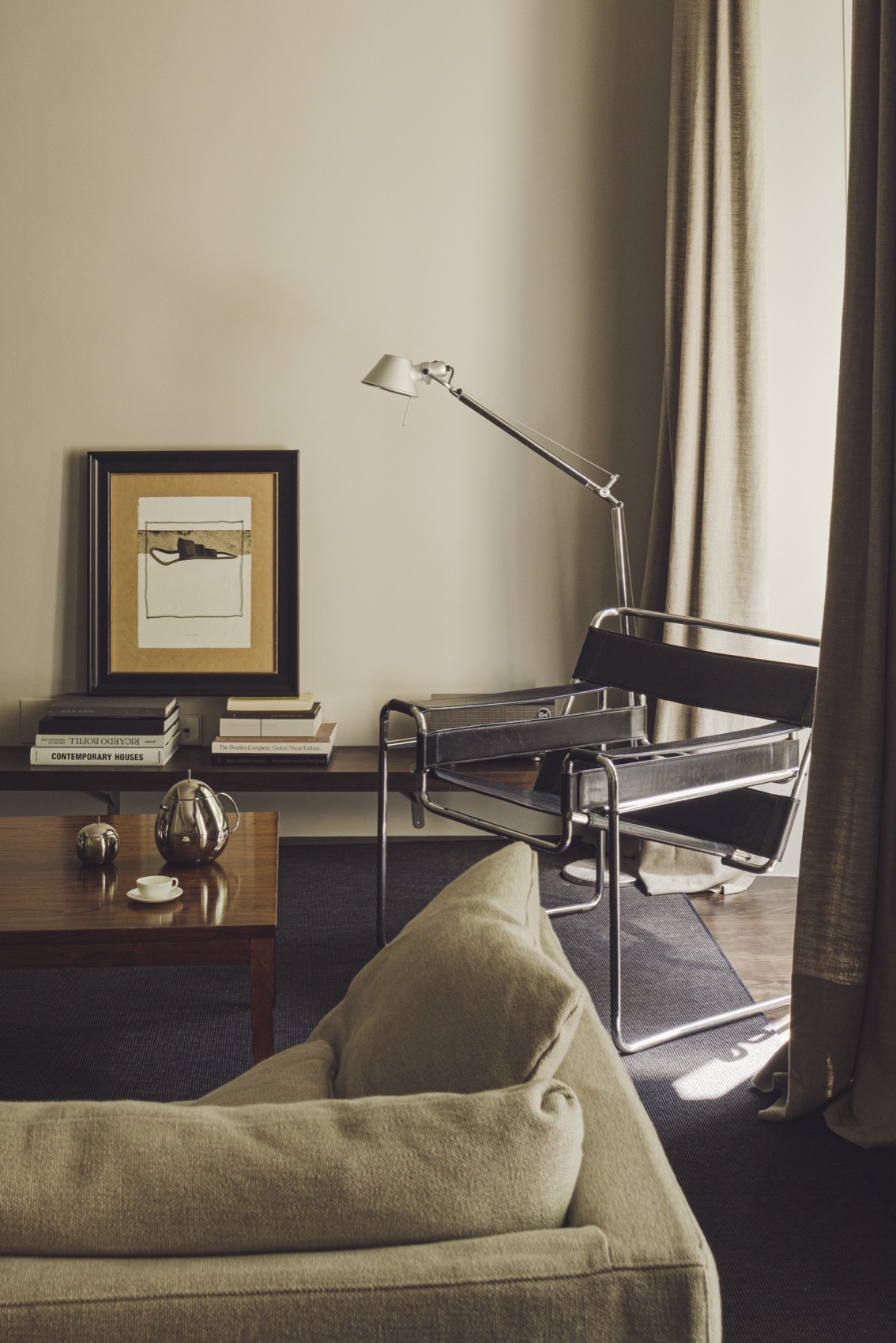
▼经典家具与柔和光影构成起居角落,Classic furniture and soft light shaping the living corner
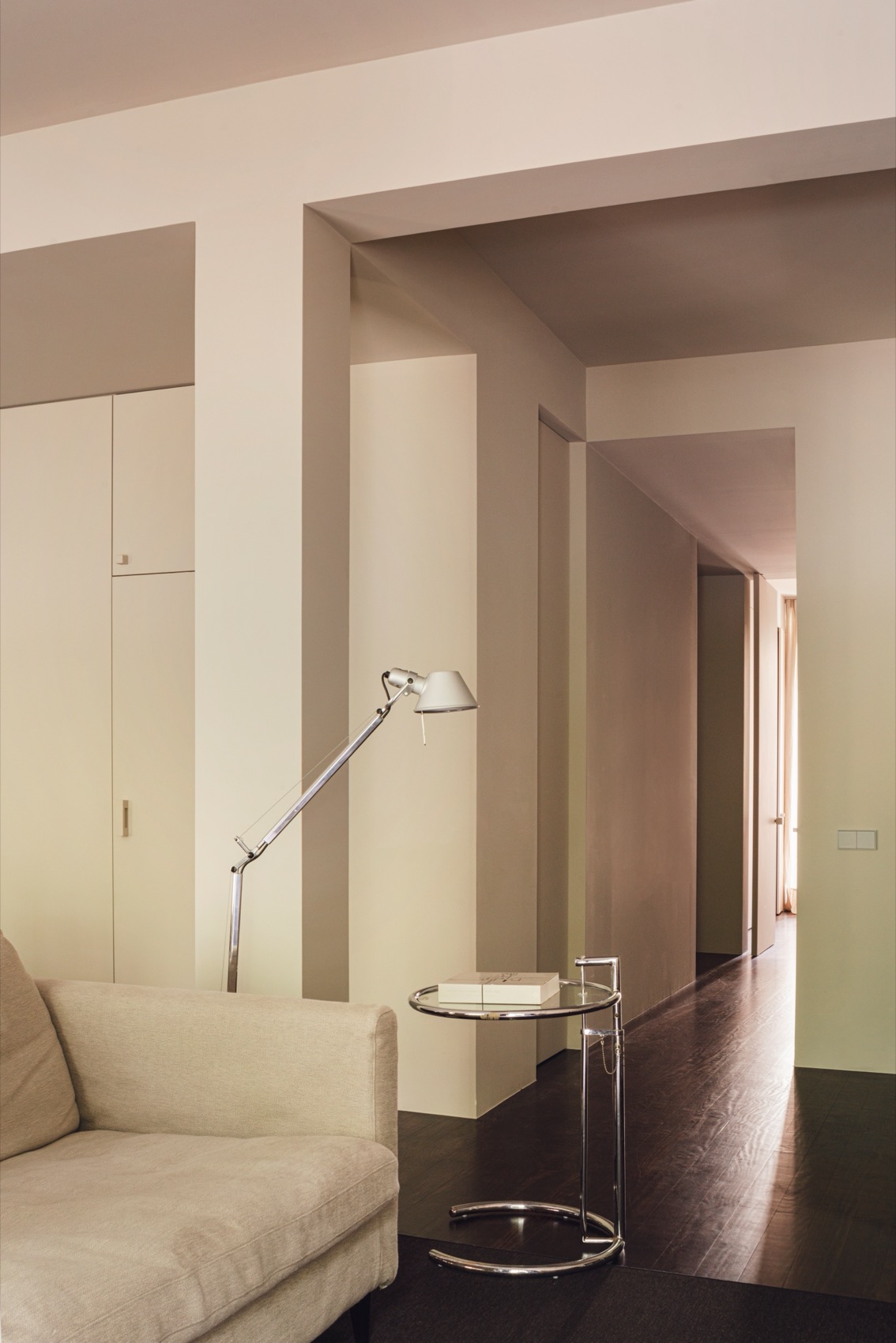
这一金属元素与高品质松木地板形成鲜明对照。地板经过近乎黑色的染色处理,为每个房间增添了深邃感,同时唤起世纪之交住宅中回响的脚步声记忆。设计以光影而非色彩作为空间基调,使公寓在冷暖材质的平衡之中,呈现出克制、永恒而又具有当代气息的美学。
This metallic component finds its counterpoint in the noble pine flooring, treated with a near-black tint that adds depth to every room and evokes the resonant footfall of turn-of-the-century houses. By prioritizing a palette of light and shadow over color, the apartment achieves a sober, timeless aesthetic that remains contemporary through the balance of cold and warm elements.
▼深色木地板延伸空间纵深,Dark wooden flooring extending the spatial depth
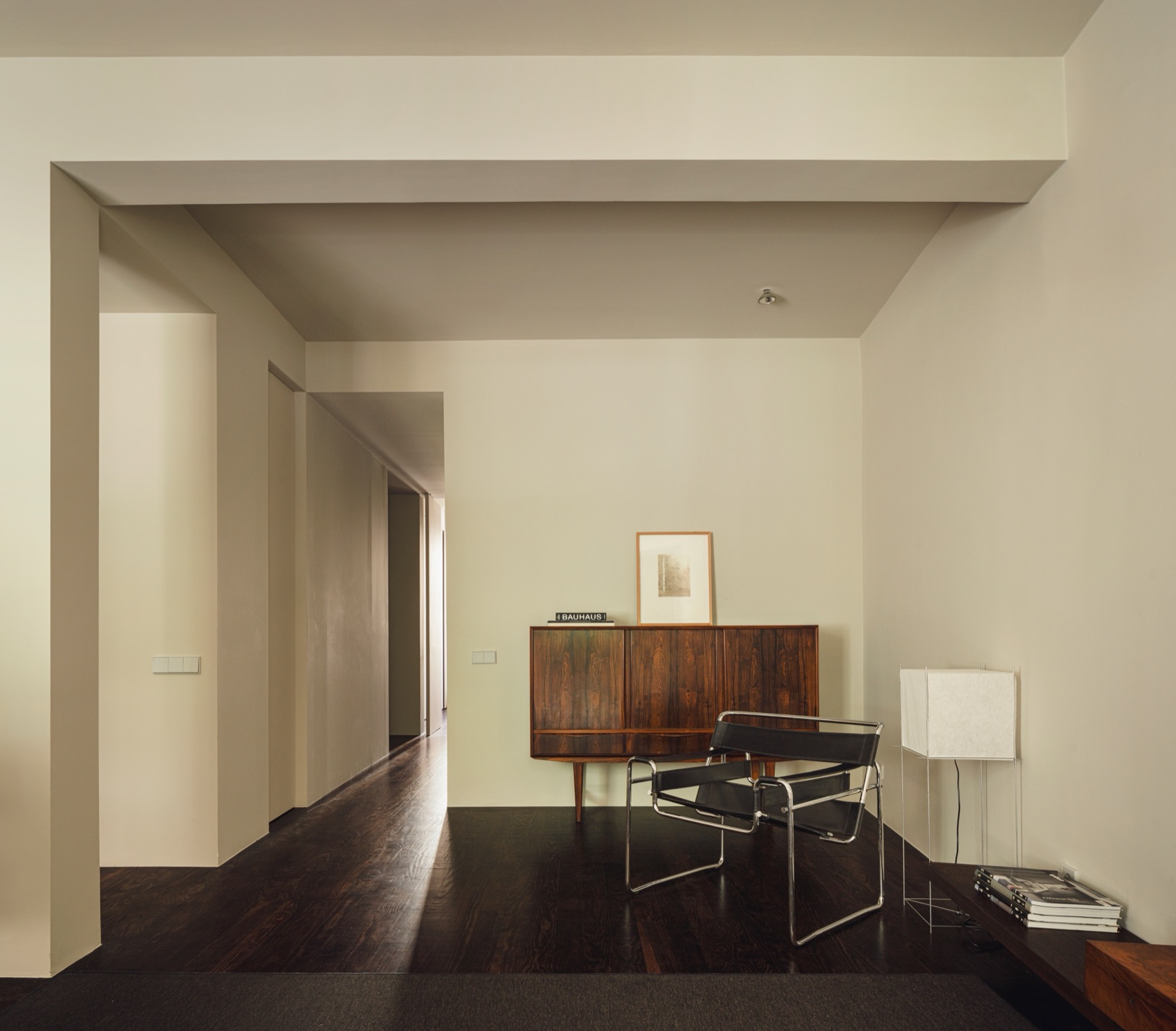
永恒的设计经典Timeless design classics
在中世纪现代主义再次成为设计趋势焦点的当下,Boulevard 6 并未将经典家具视作单纯的陈设或装饰,而是作为构成室内建筑秩序的重要元素。餐厅区域中,Johannes Andersen 为 CFC Silkeborg 设计的桌椅与靠窗摆放的 Marcel Breuer 为 Knoll International 设计的扶手椅共同构成空间场景。与此同时,Eileen Gray 为 Cassina 设计的边桌,以及 Artemide 与 Tadaima 的技术照明系统,也共同融入其中,将跨越百年的设计经典与现代技术融合于一种平静而克制的氛围之中。住宅的每一个角落都自然流露出设计感,而无需依赖任何多余元素,让建筑以一种自然而然的方式融入日常生活。
In an era where Mid-Century Modernism is once again at the forefront of design trends, Boulevard 6 integrates iconic pieces not as mere props or decoration, but as elements that structure the interior architecture. In the dining area, the table and chairs by Johannes Andersen for CFC Silkeborg coexist with Marcel Breuer’s armchair for Knoll International, positioned by the window. The selection is rounded out with classics such as Eileen Gray’s side table for Cassina and technical lighting by Artemide and Tadaima, blending century-old design with modern technology in an atmosphere of calm and sobriety. Every corner of the home breathes design without the need for superfluous elements, allowing the architecture to naturally complement daily life.
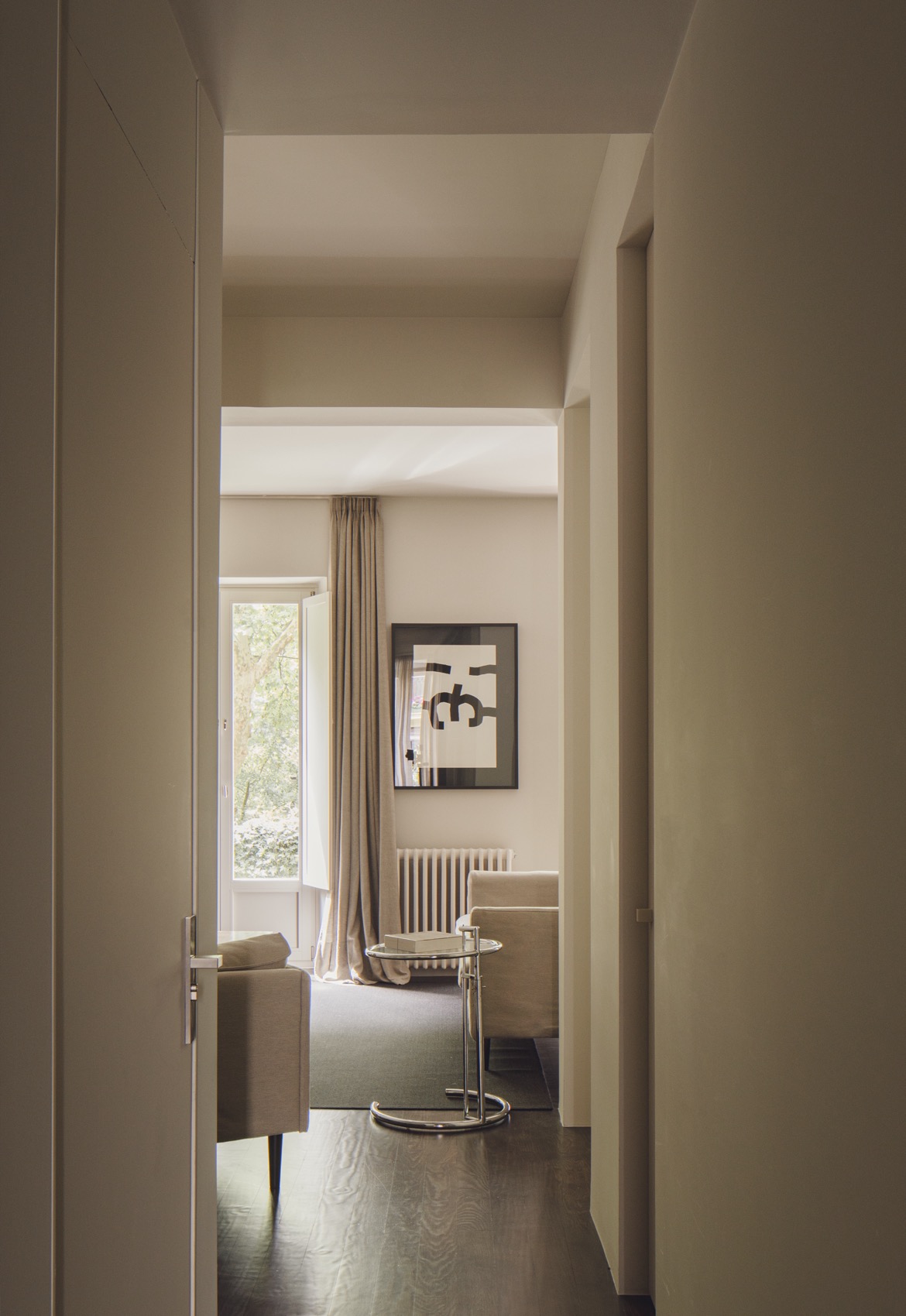
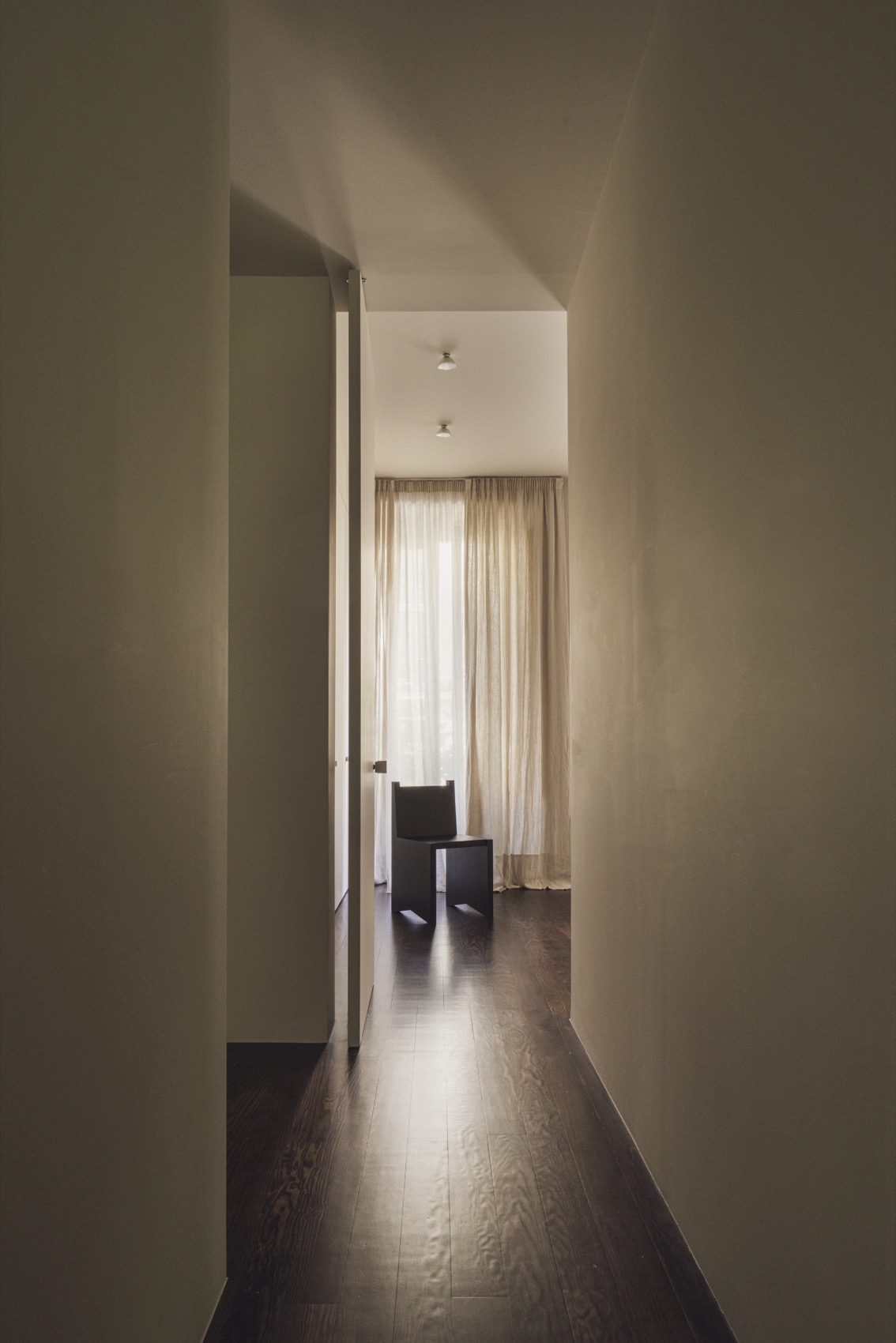
▼走廊与起居区形成连续空间,
Corridor and living area forming a continuous spatial sequence
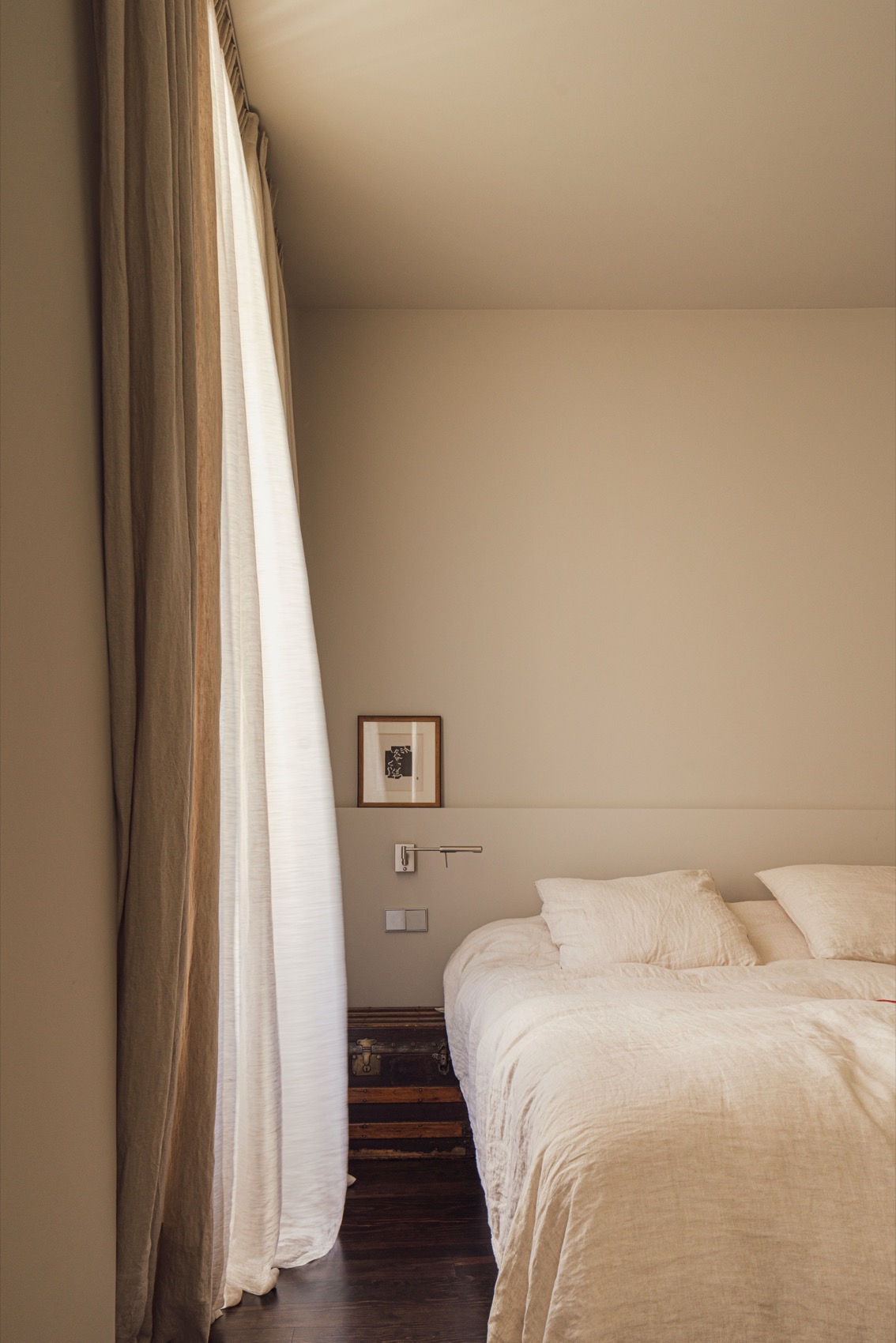
▼卧室以柔和光线营造安静氛围,
Bedroom shaped by soft natural light and a calm atmosphere
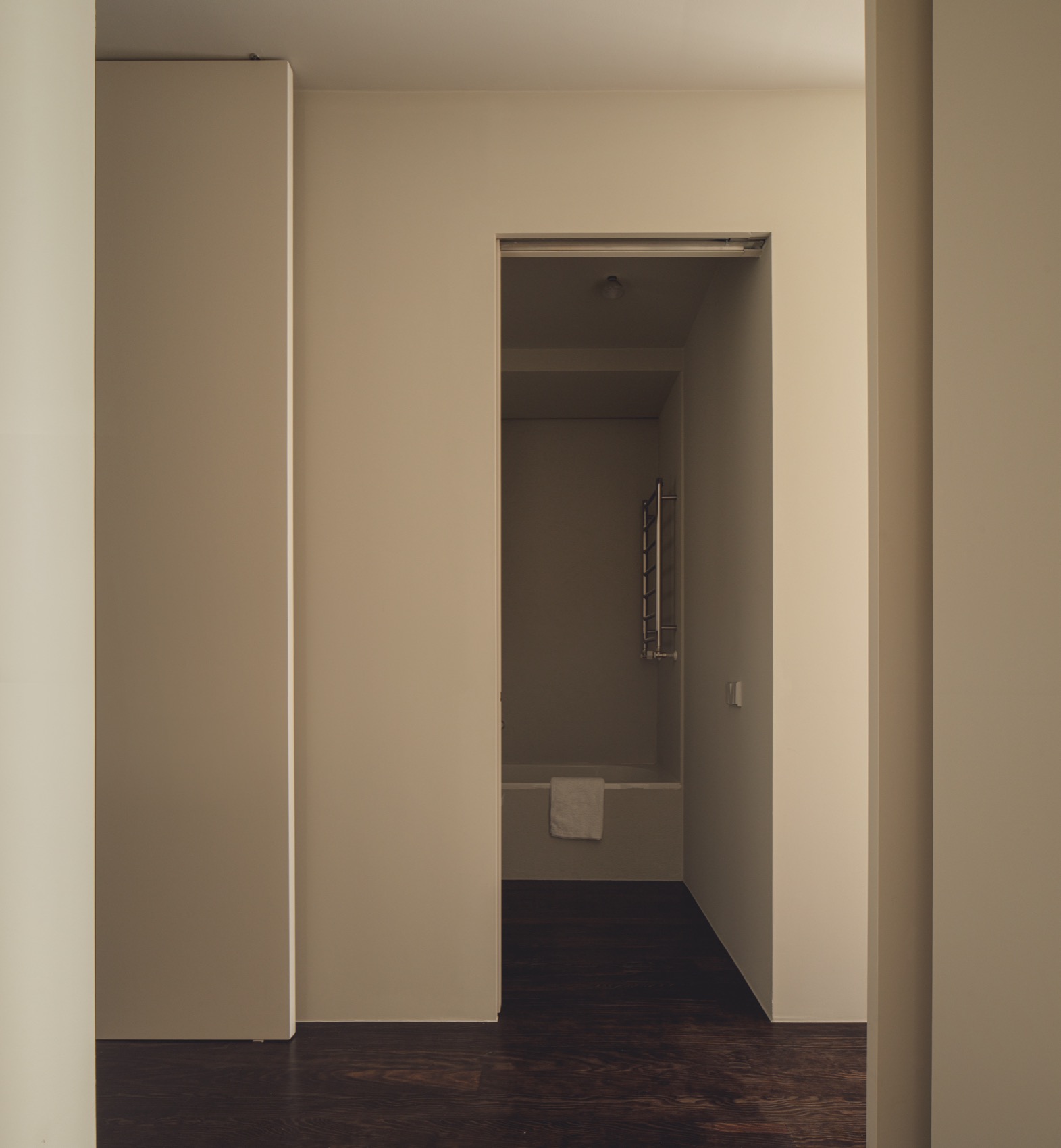
▼简洁开口连接卧室与卫浴空间,
Minimal openings connecting the bedroom and bathroom spaces
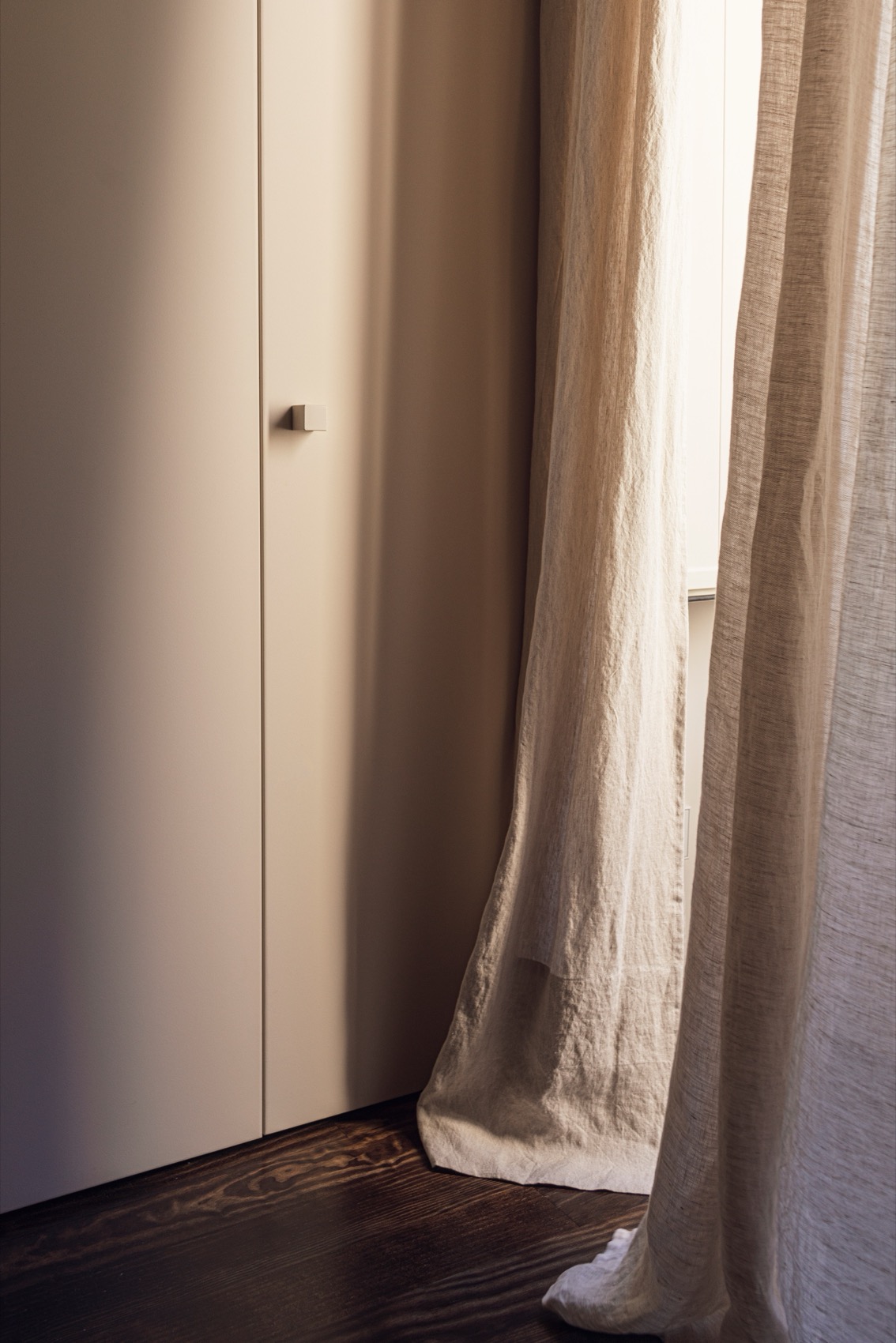
▼亚麻窗帘与深色木地板形成柔和对比,
Linen curtains contrasted with dark timber flooring
PRESS CONTACT
Ana Arnau
hola@anarnau.com
PROJECT DATA
Project I Residential Renovation
Area (sqm) I 90 sqm
Location I San Sebastián
Photography I David Zarzoso
www.davidzarzoso.com
SUPPLIERS
Flooring I Noble pine with near-black tint
Lighting I Artemide (Tolomeo), Benno Premsela paper lamp
for Tadaima
Furniture I Johannes Andersen, Marcel Breuer, Eileen Gray, Sits
Textiles I La Gárgola