青岛科技馆 / gmp
由gmp·冯·格康,玛格及合伙人建筑师事务所设计的青岛科技馆现已落成。这座文化建筑为青岛的城市发展注入了活力。青岛作为中国领先的海洋研究基地之一汇聚了大量国家级科研机构,这些机构也构成了该科技馆的重要展示背景。
With the Qingdao Science & Technology Museum on Hong Island, the architects von Gerkan, Marg and Partners (gmp) have created a cultural facility that provides important momentum for the urban development of Qingdao. As one of China’s leading centers for marine research, the city is home to a large share of the country’s national research institutions, which form the thematic context of the museum.
▼项目鸟瞰,aerial view of the project
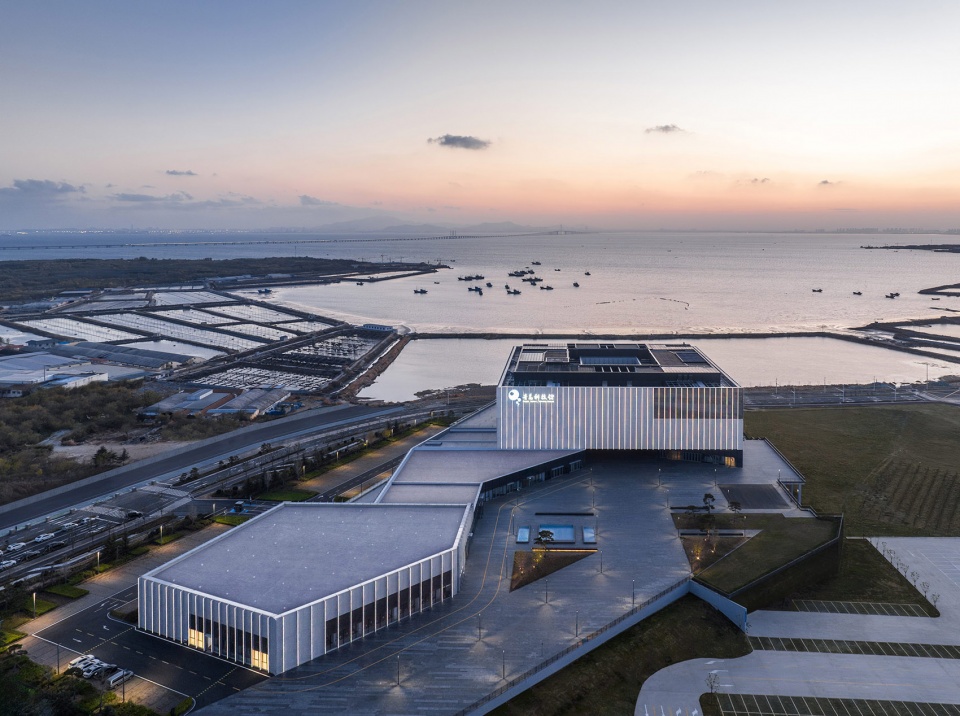
自20世纪80年代以来,这座沿海都市一直沿着胶州湾建设发展:她从海湾东南侧历史老城出发,跨越对岸的开发区,如今已延伸至本项目所在地。与此同时,作为中国海洋大学等院校的所在地,青岛已成为海洋科学研究中心。这座新科技馆的建立进一步强化了该地区的科学与文化形象:它将以往“深藏不露”的科研景观转化为公众可感知的体验,同时也成为带动周边尚未完全开发的滨海地带发展的“催化剂”。该馆最初选址东海东路,后决定迁至胶州湾东北部的现址,这一决策彰显了其在城市长期发展战略中的重要地位。
Since the 1980s, the coastal metropolis has expanded along Jiaozhou Bay: from the historic old town on the southeastern side of the bay, through the development of shoreline areas on the opposite side, and now extending to the current project site. At the same time, Qingdao developed into a center for marine sciences and is the home of Ocean University of China. The new museum further strengthens the scientific and cultural profile of the region: it makes the previously barely-visible research landscape accessible to the public while also serving as a catalyst for the development of the waterfront zone, which until now has remained only partially built up. The decision to build the museum at its current site in the northeastern part of the bay — rather than as part of Qingdao’s seaside promenade, as had been planned originally — underscores its strategic importance for the city’s long-term development.
▼建筑外观,facade of the building
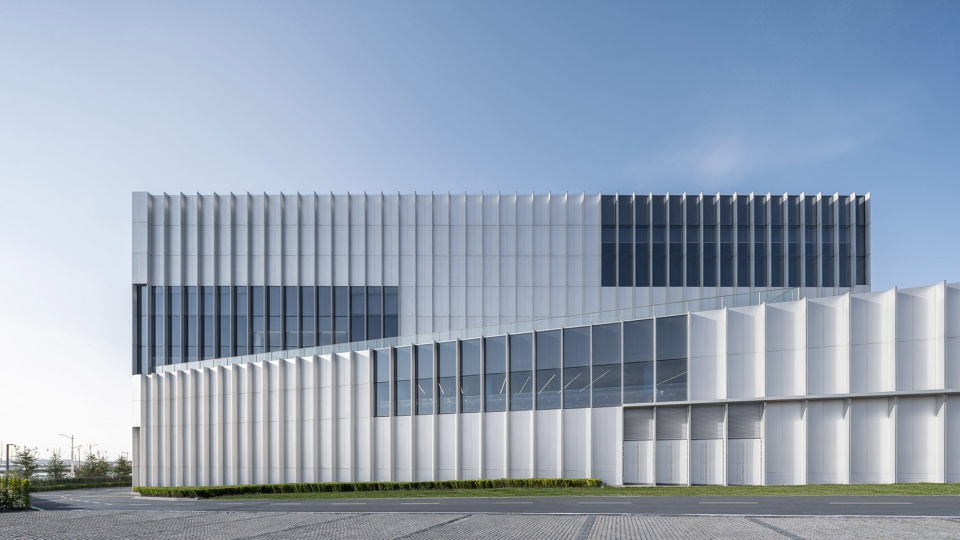
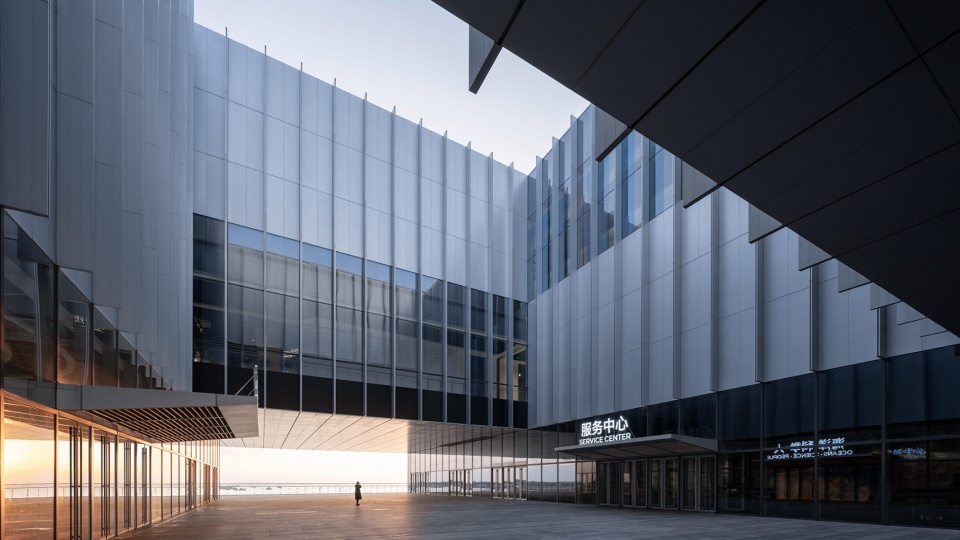
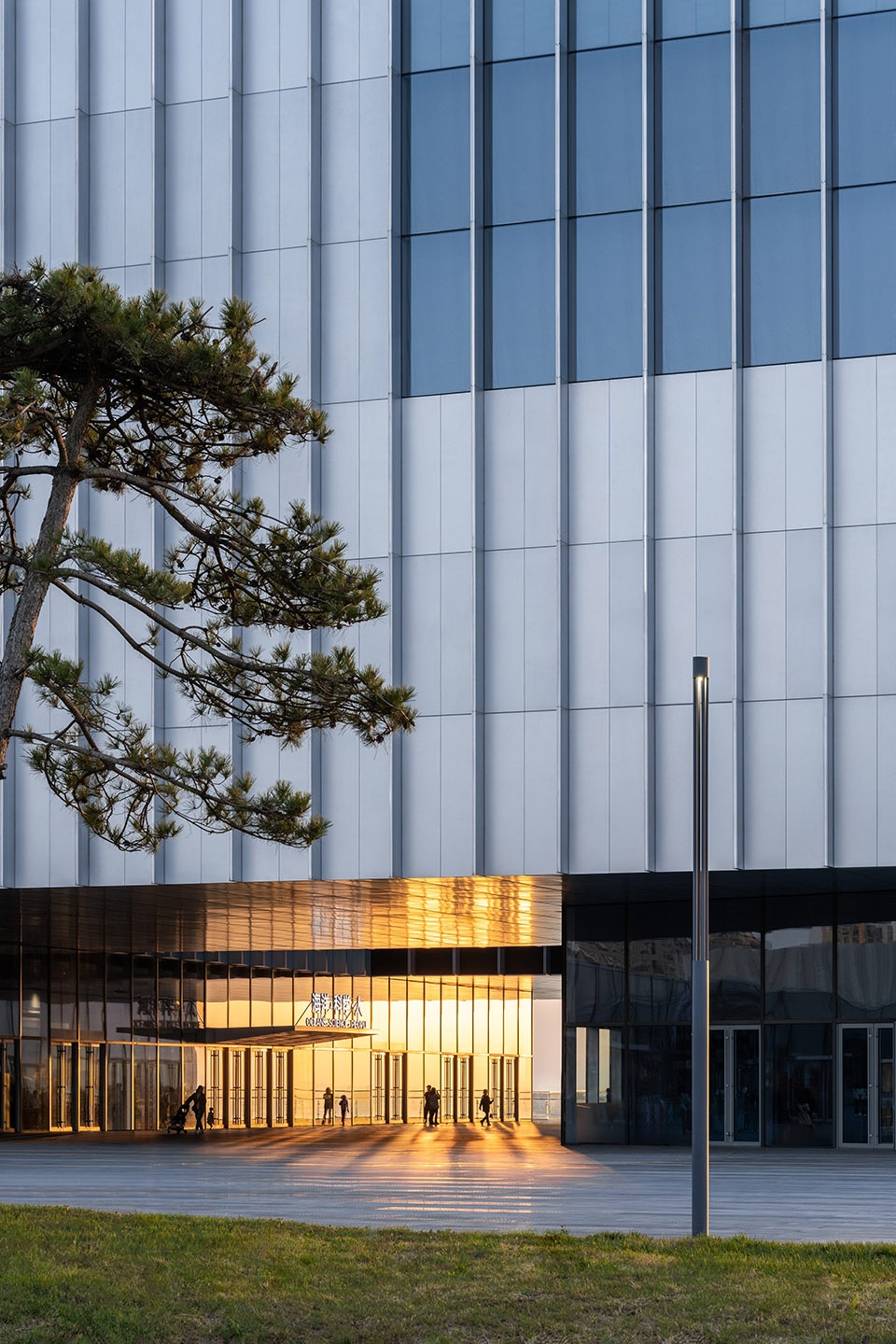
“依水而兴、与水共生”既是展陈内容的焦点,也是建筑设计的主旋律。该科技馆设计为坐落在临水建筑基座上的紧凑立方体。一条公共通道穿过一层直达观景露台,从那里可以俯瞰整个胶州湾。建筑本身成为了一个媒介:动线规划与视觉轴线始终面向海洋,无论在参观科技馆之前还是在其过程中或在其后,海洋始终成为视觉聚焦点。
Life by and with the water is both the thematic focus of the exhibition and the guiding concept of the architecture. The museum has been designed in the shape of a compact cube set on a podium at the water’s edge. A public pathway runs through the ground floor to an observation terrace, opening views across the bay. The building itself emphasizes its message: circulation routes and sightlines are consistently oriented toward the sea, making it an ever-present visual point of reference before, during, and after the museum visit.
▼观景露台,an observation terrace
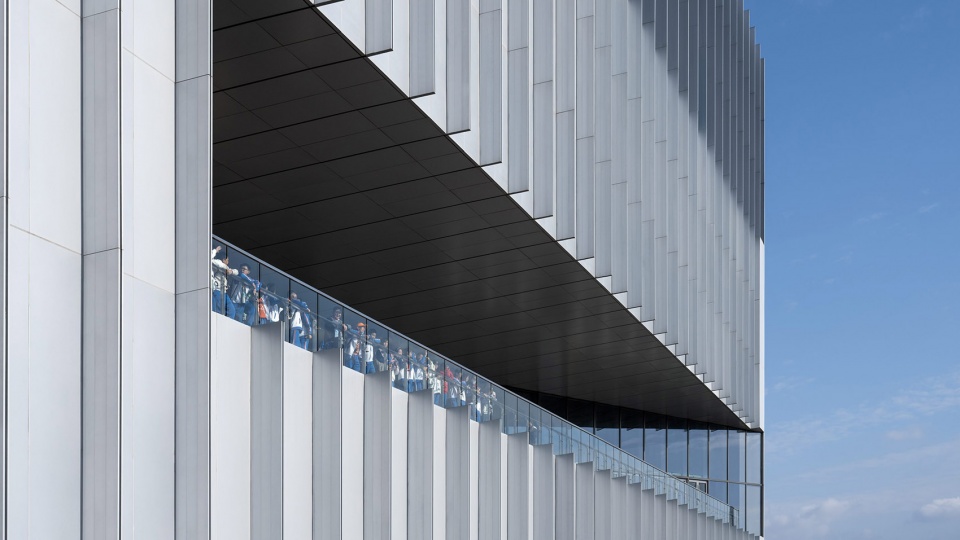
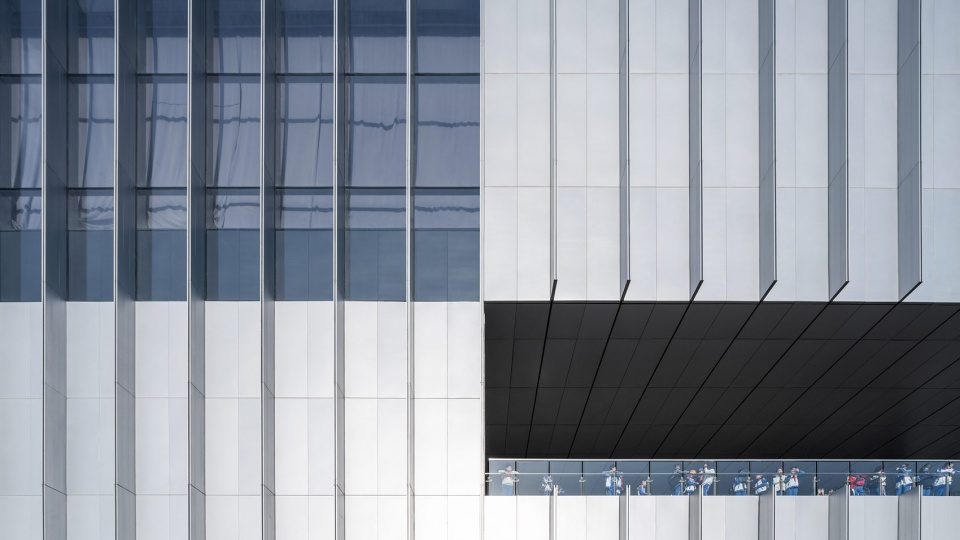
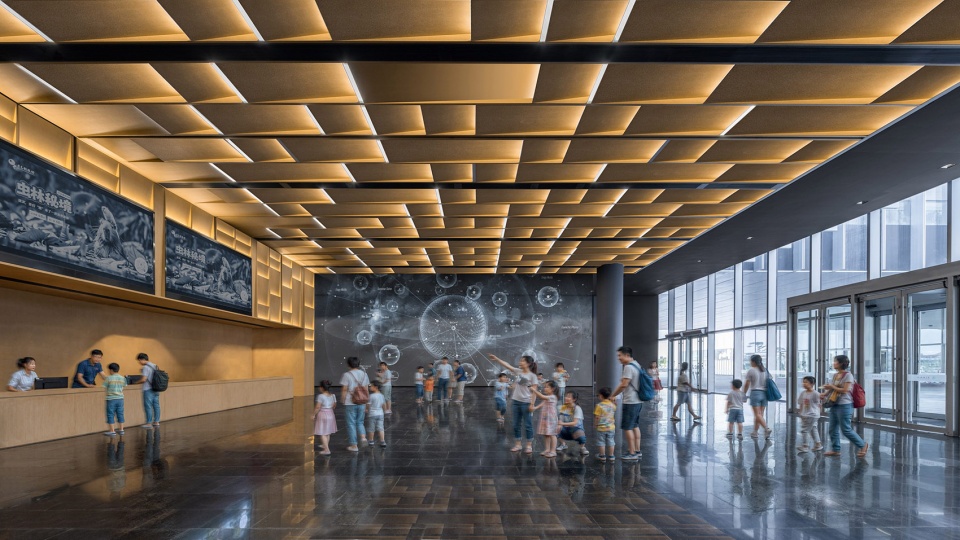
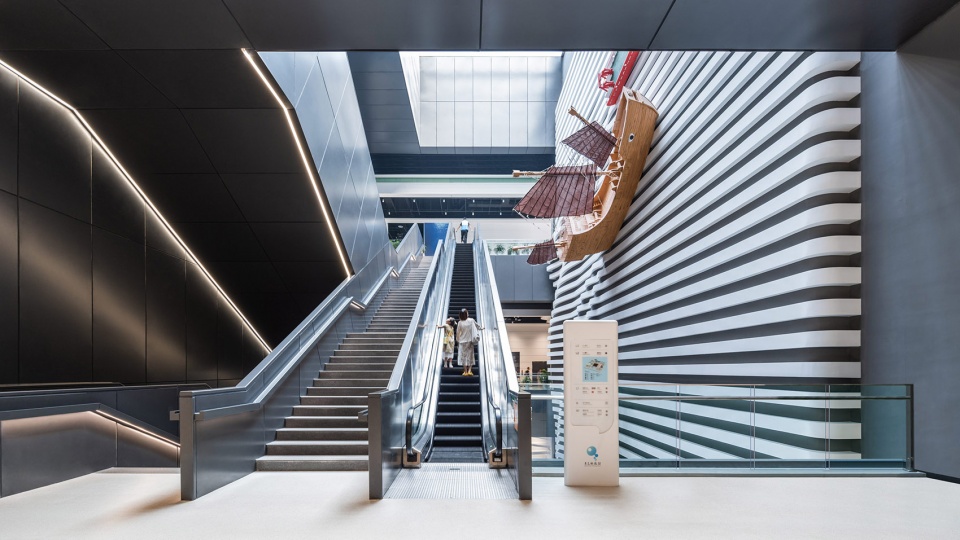
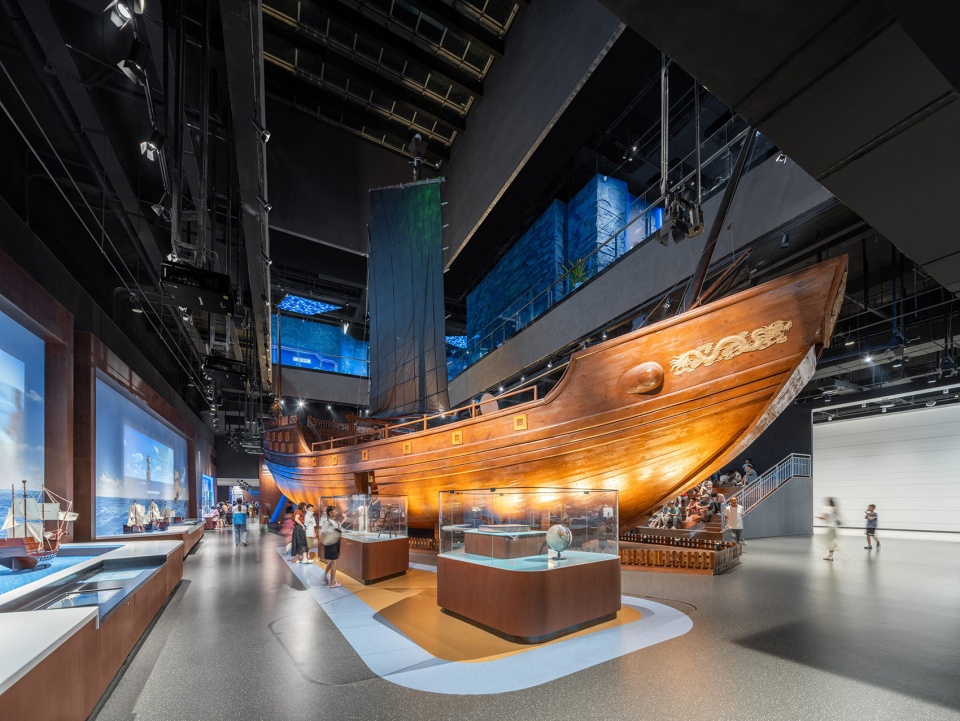
两个入口通过中心庭院连接起不同的功能区域:其中一个入口通往科技馆展厅、咖啡馆和商店;另外一个相对而设的入口则通往会议区域。展览重点呈现海洋历史、现代海洋科研、海洋生物多样性以及航海业的发展。一艘跨越多个楼层的戎克船构成了展览的核心。金属立面上巨大的凹口将海景引入室内,形成了建筑地点与展览内容之间的光影互动。垂直百页勾勒了建筑立面的条理层次,其视觉效果随光线和时间的推移而变化多样。嵌入式的LED灯具确保科技馆在夜间的城市景观中依然清晰可见。
Two entrances lead through a central courtyard to separate functional areas: one entrance provides access to the museum, café, and shop, while a second entrance on the opposite side leads to the conference facilities. The exhibition is devoted to the history of the sea, modern marine research, the diversity of marine habitats, and the development of shipping. The centerpiece of the exhibition consists of a historic wooden junk that is several stories high. Large openings in the metal façade frame views of the sea, thus creating an interplay between the place and the exhibition. Vertical fins provide a visual structure to the building envelope, whose appearance changes depending on the time of day and lighting conditions. Integrated LED elements make the museum visible within the urban landscape at night as well.
▼入口通过中心庭院连接起不同的功能区域,entrances lead through a central courtyard to separate functional areas
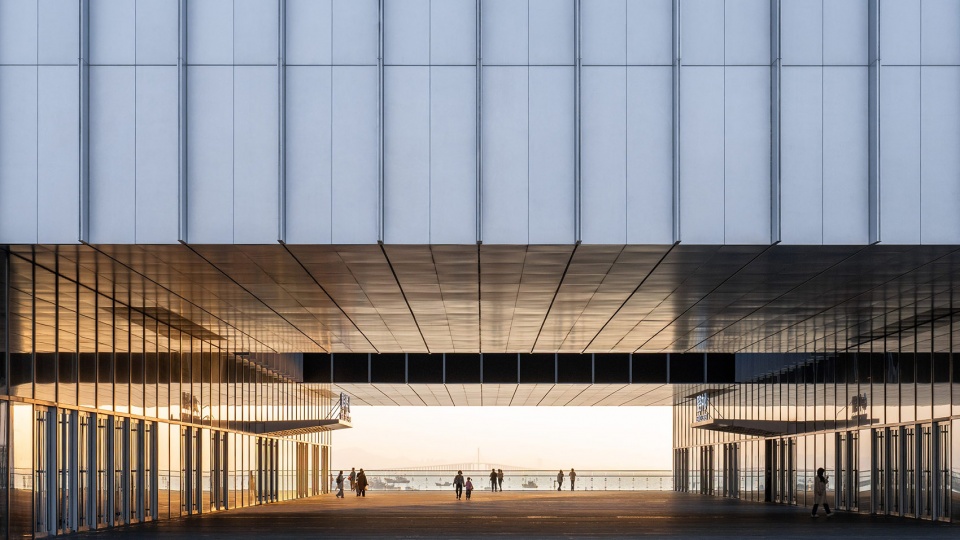
▼入口通过中心庭院连接起不同的功能区域,entrances lead through a central courtyard to separate functional areas
▼入口大堂,lobby at the entrance
▼中庭空间,atrium space
▼展览空间,exhibition space
本项目建设分两期进行:科技馆主体现已竣工,二期工程计划增添海洋馆和天文馆等配套设施,完善建筑整体。
The overall project consists of two construction phases. Now that the museum has been completed, the ensemble is to be expanded in a second phase to include, among other elements, a marine aquarium and a planetarium.
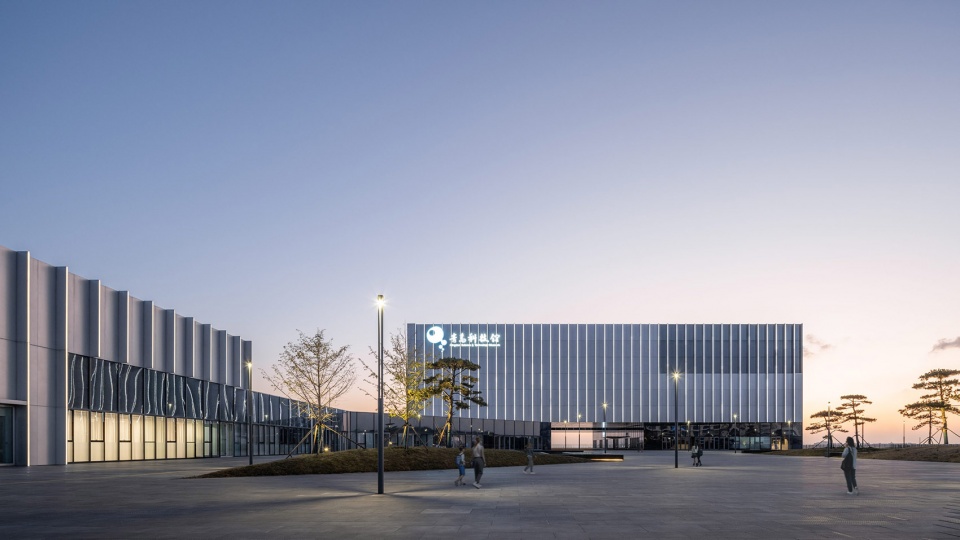
▼傍晚景象,building at dusk
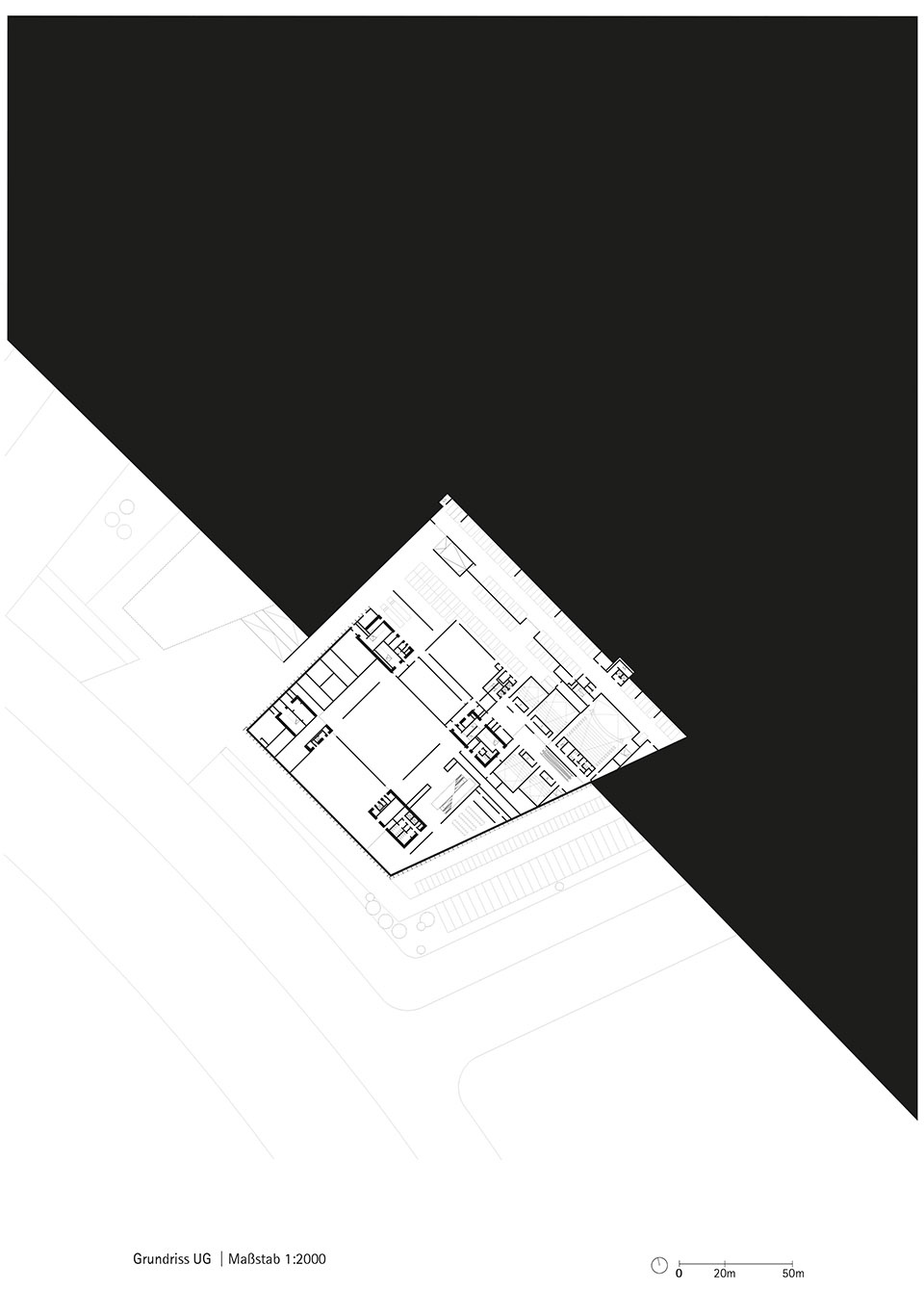
▼地下一层平面图,basement floor plan
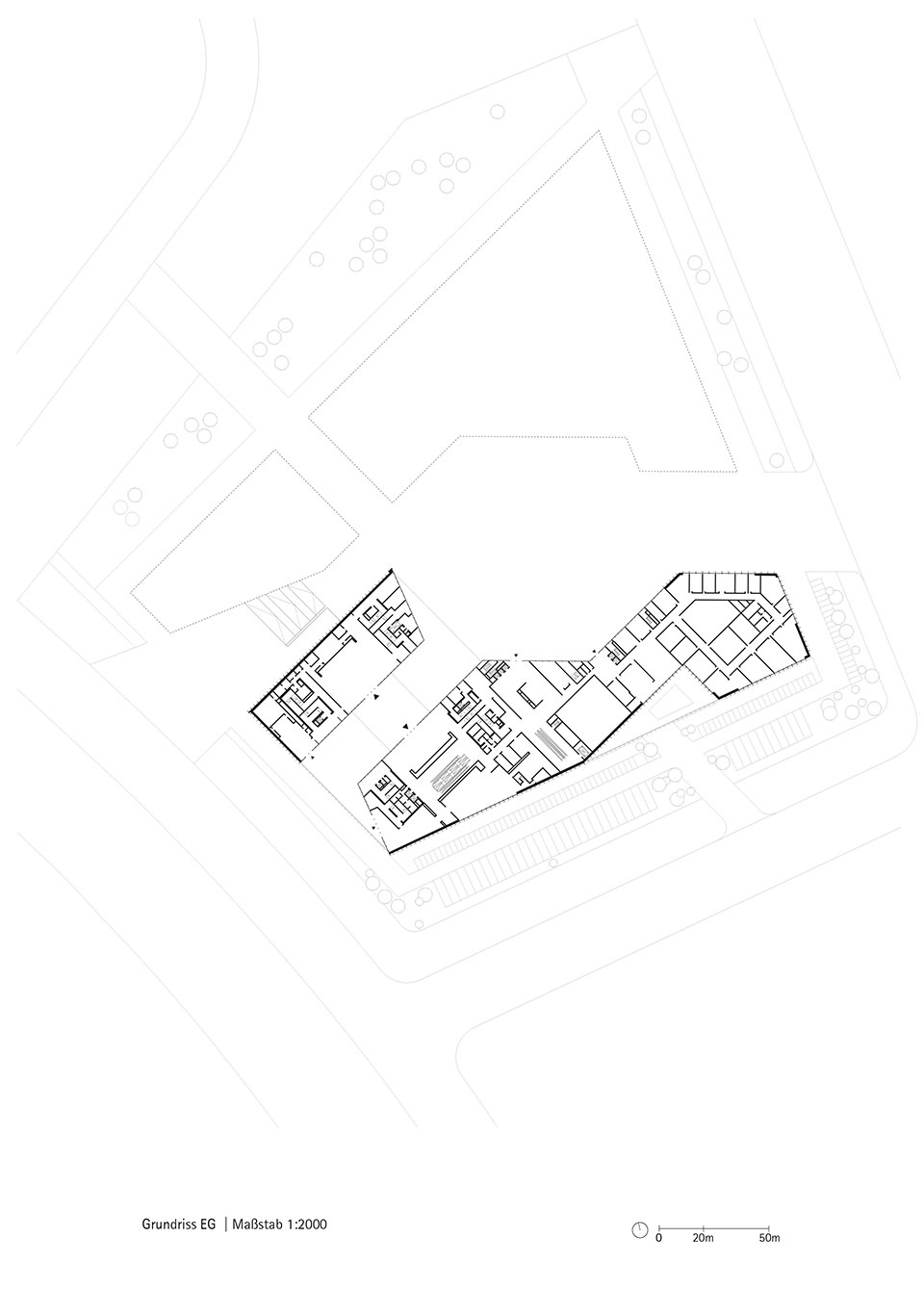
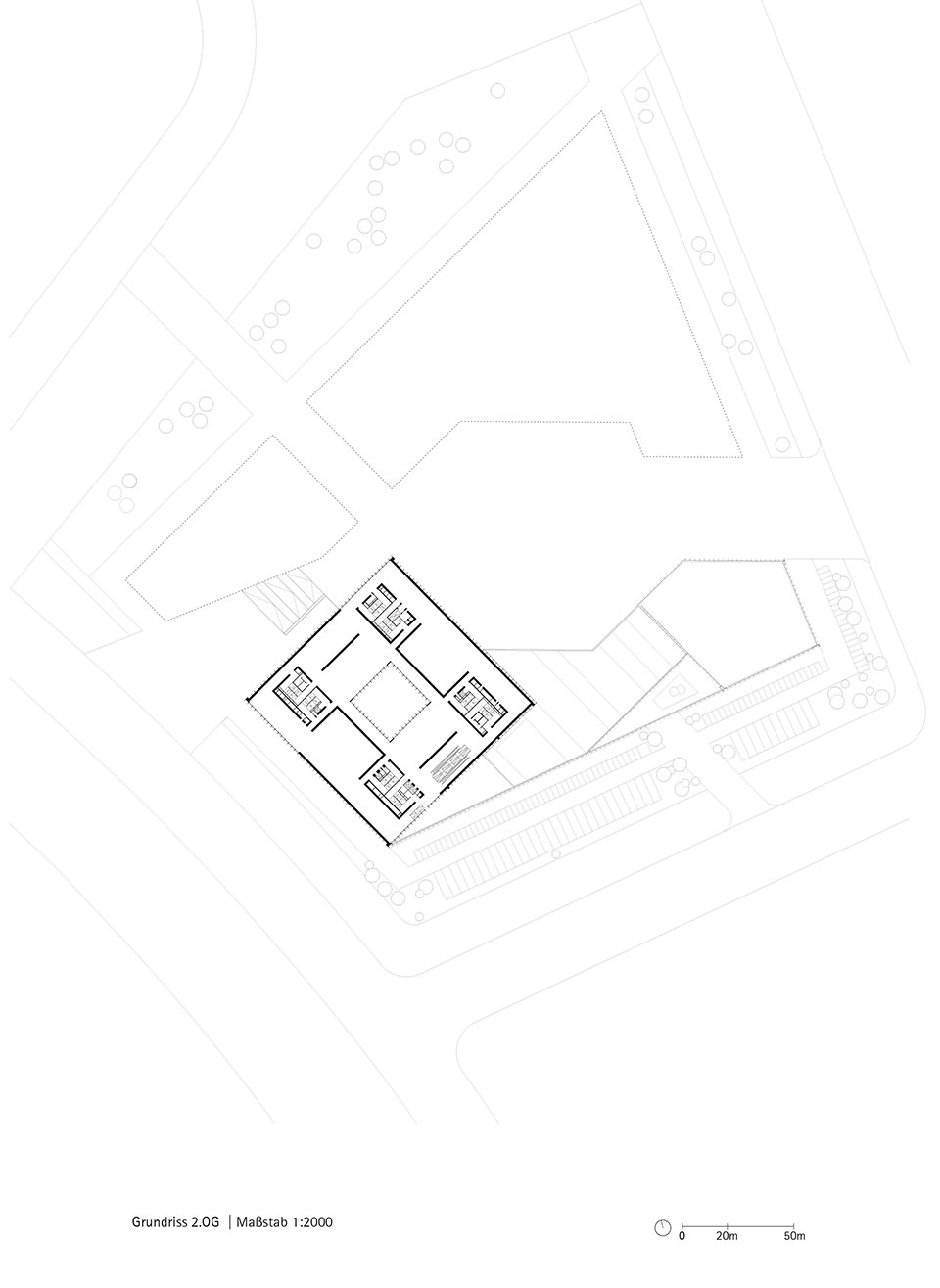
▼二层平面图,first floor plan
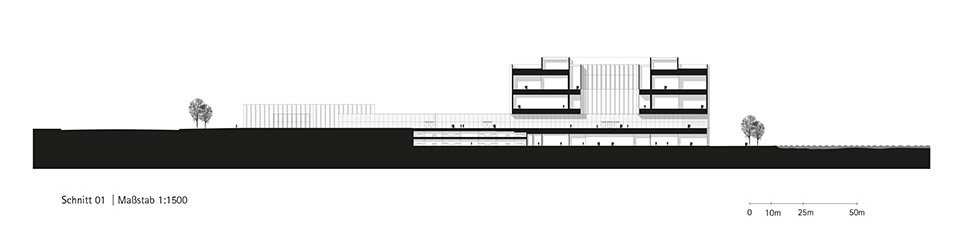
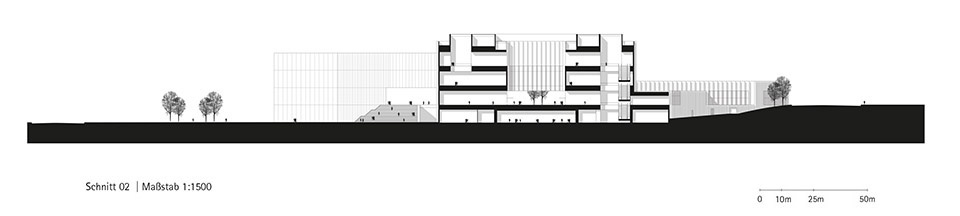
▼剖面图,section
设计:曼哈德·冯·格康与施特凡·胥茨以及尼古拉斯·博兰克
项目负责人:克莱门斯·坎佩曼、陈澜
中国项目管理:李凌
设计团队:安娜·冯·奥洛克、安德烈亚斯·格茨、刘旭达、安德烈亚斯·毛厄、潘昕、克里斯汀·肖耶尔、于海南、郑飞
中方合作设计:上海联创建筑设计有限公司、青岛腾远设计事务所有限公司
业主: 青岛华通国有资本运营(集团)有限责任公司
建筑面积:4万平方米
Design Meinhard von Gerkan and Stephan Schütz with Nicolas Pomränke
Project Lead Clemens Kampermann, Lan Chen
Project Management, China Li Ling
Design Team Anna von Aulock, Andreas Götze, Liu Xuda, Andreas Maue, Pan Xin, Kristin Schoyerer, Yu Hainan, Zheng Fei
Partner Firm in China Shanghai United Design Group Co., Ltd., Qingdao Tengyuan Design Institute Co., Ltd.
Client Qingdao Huatong State-Owned Capital Operation (Group) Co., Ltd.
GFA 40.000 m²