乌得勒支法院H楼改造项目,荷兰 / DP6 & i29
位于乌得勒支Catharijnesingel的原中学建筑,由DP6、i29及其设计团队受中央政府房地产署委托完成改造,如今成为司法与检察系统培训机构SSR的新址。这座庄重的建筑经过细致修复与可持续化更新,使其原有品质重新焕发光彩。同时,项目也加入了一层新的“时间层”,在延续既有建筑语言的同时,回应培训机构的身份与发展愿景。
The former secondary school building on the Catharijnesingel in Utrecht has been transformed by DP6, i29 and their design team, commissioned by the Central Government Real Estate Agency. It now houses SSR, the training institute for the Judiciary and the Public Prosecution Service. The stately building has been carefully restored and made more sustainable, allowing its original qualities to shine once again. A new time-layer has also been added, connecting with the existing architecture while aligning with the identity and ambitions of the training institute.
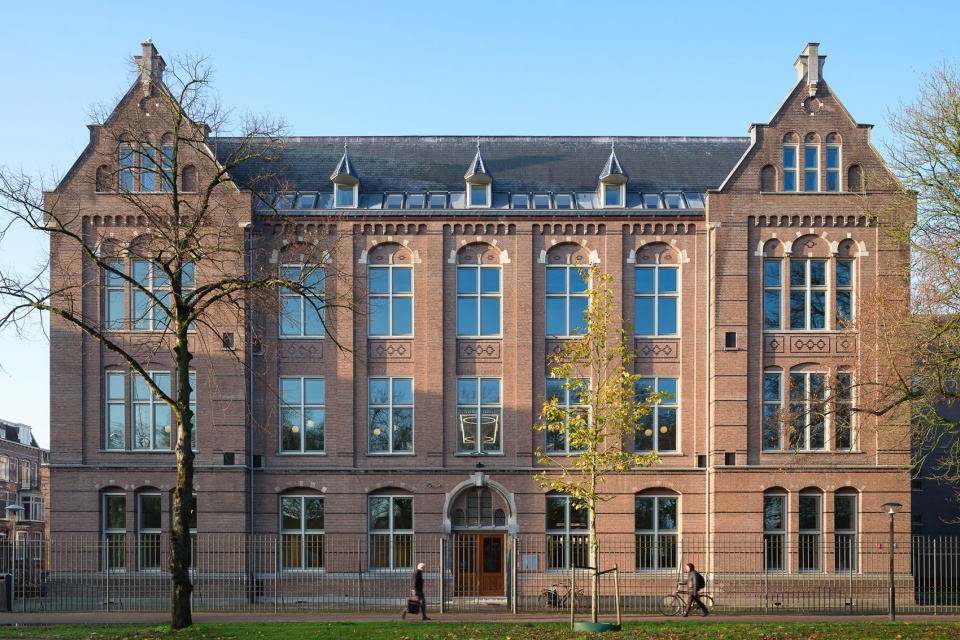
▼项目外观,facade of the project
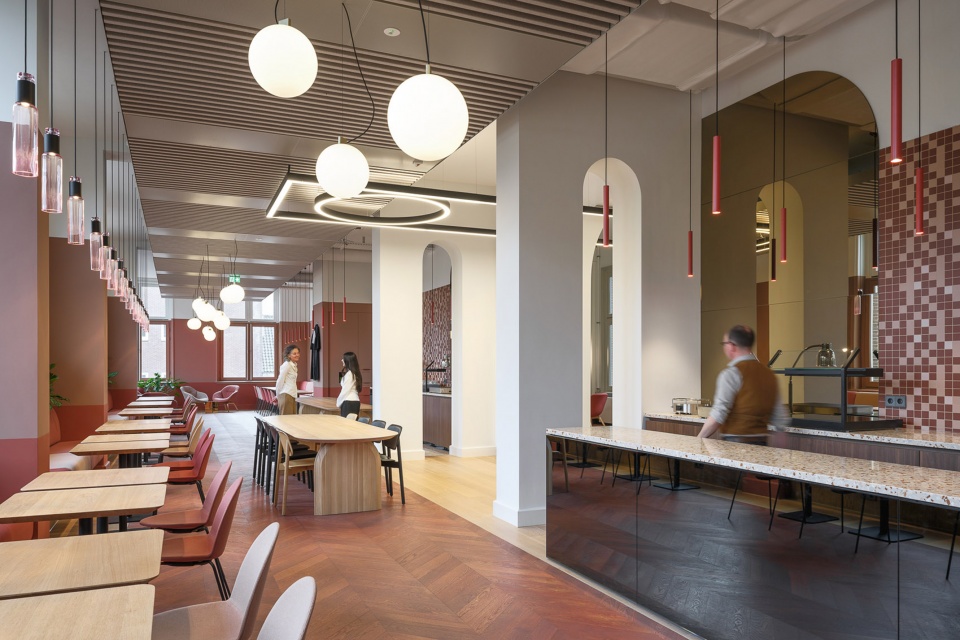
▼室内概览,overview of the interior space
丰富历史与对称布局Rich history and symmetrical layout
H楼建于1903年,坐落于乌得勒支Catharijnesingel沿线,最初作为市立中学,由建筑师F. J. Nieuwenhuis设计。这是一座气质庄重的建筑,采用对称的U形平面布局,拥有长距离视线关系以及宽敞开阔的空间感。
Building H was constructed in 1903 on the Catharijnesingel as a municipal secondary school, designed by architect F. J. Nieuwenhuis. It was a stately building with a symmetrical U shaped floor plan, long sightliness, and a great sense of spaciousness.
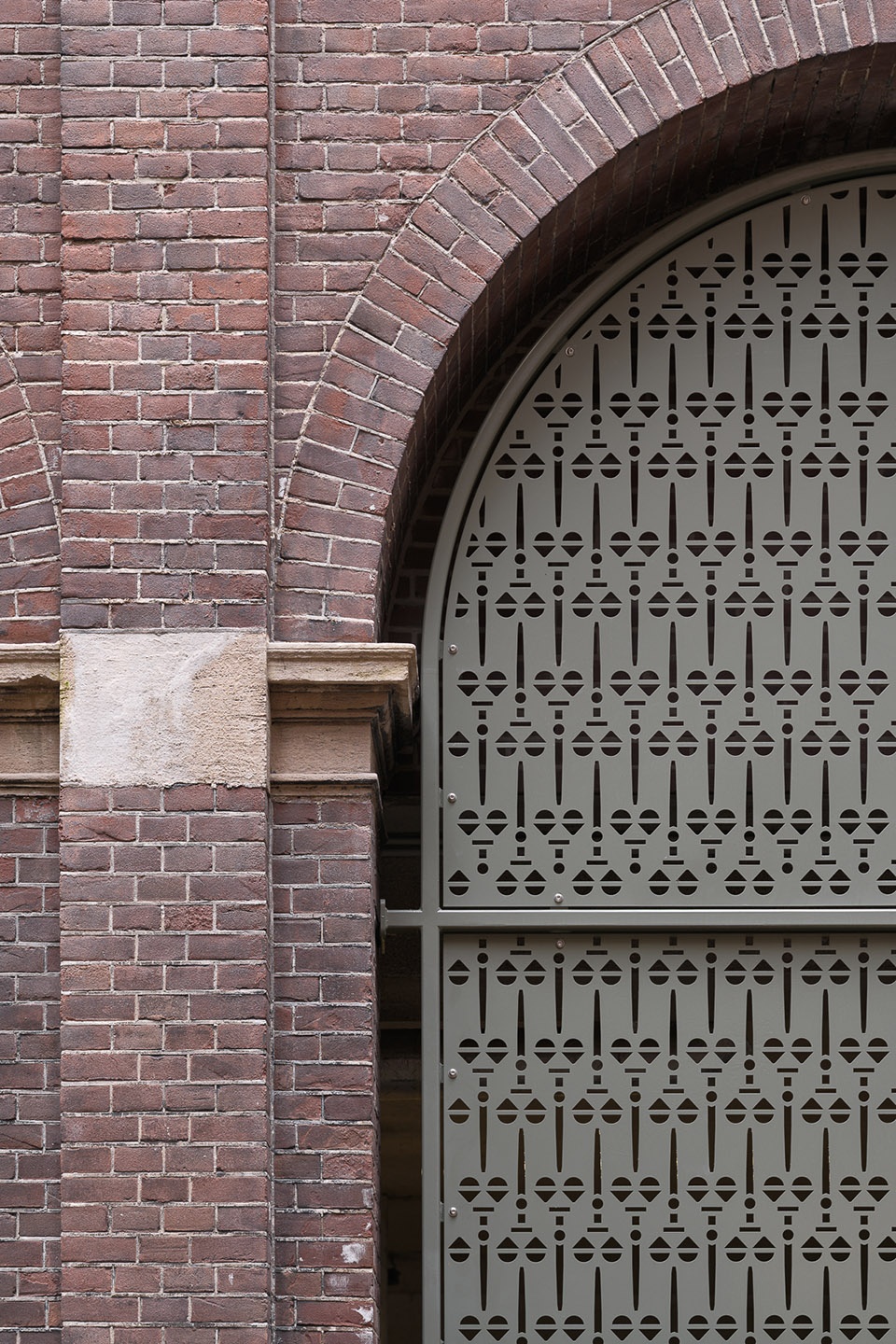
▼外观细部,facade detail
直到约1995年,这座校舍始终作为教育建筑使用。随后,它被改造为新建乌得勒支法院的办公空间,并因此获得了如今的名称“H楼”。原本连续贯通的走廊被封闭改造成办公室,视线关系消失,吊顶也被加装进去。原有入口与楼梯因此失去了大部分功能。
Until around 1995, the school building served as an educational building. It was then converted into office space belonging to the newly constructed Utrecht Courthouse, which gave the building its current name: Building H. Continuous corridors were enclosed to create office spaces, sightlines disappeared and suspended ceilings were added. The original entrance and staircase consequently lost much of their function.
▼对称布局,symmetrical layout
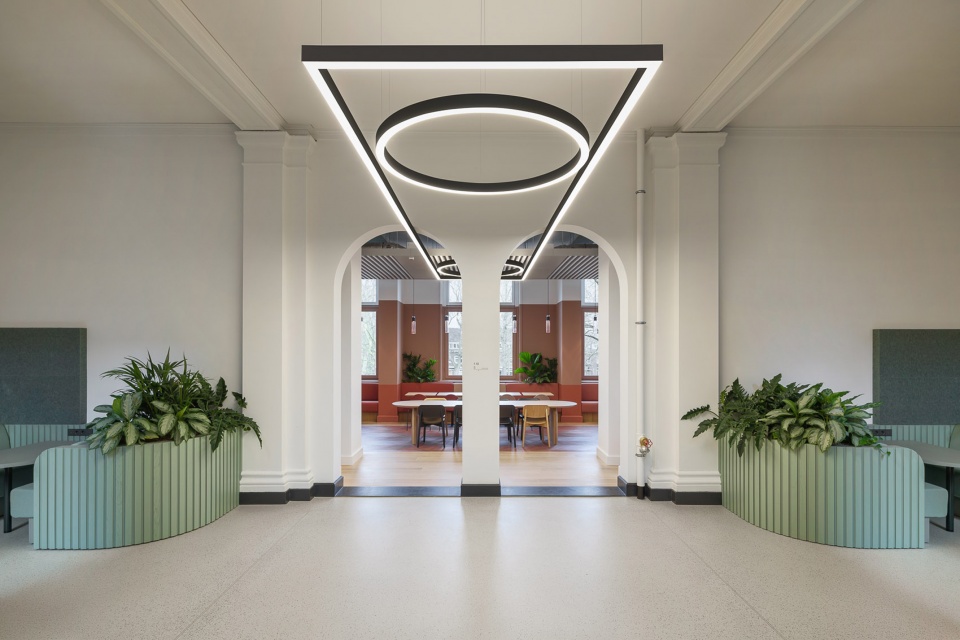
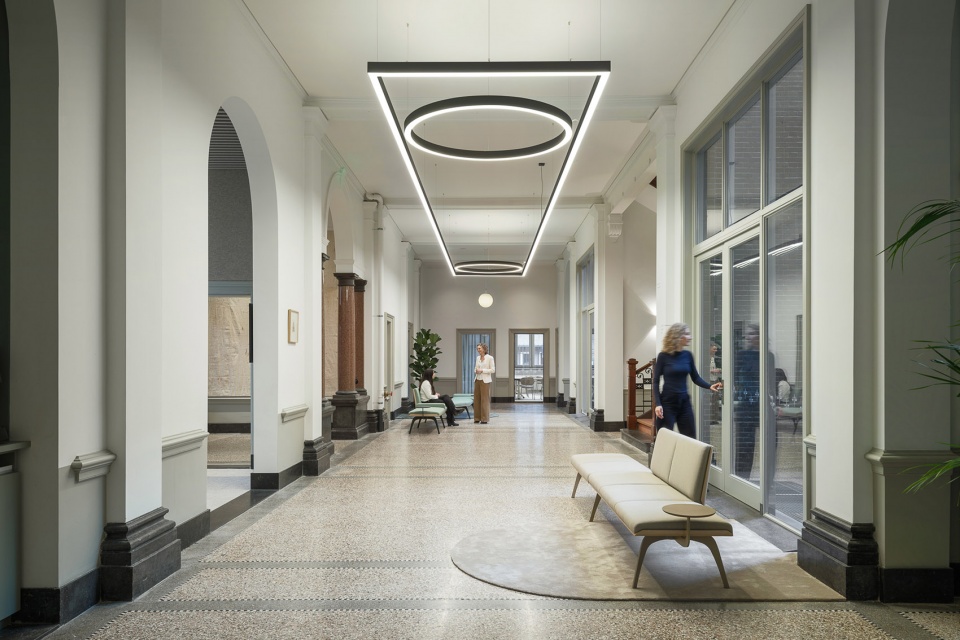
▼对称布局的休息区,symmetrically arranged rest area
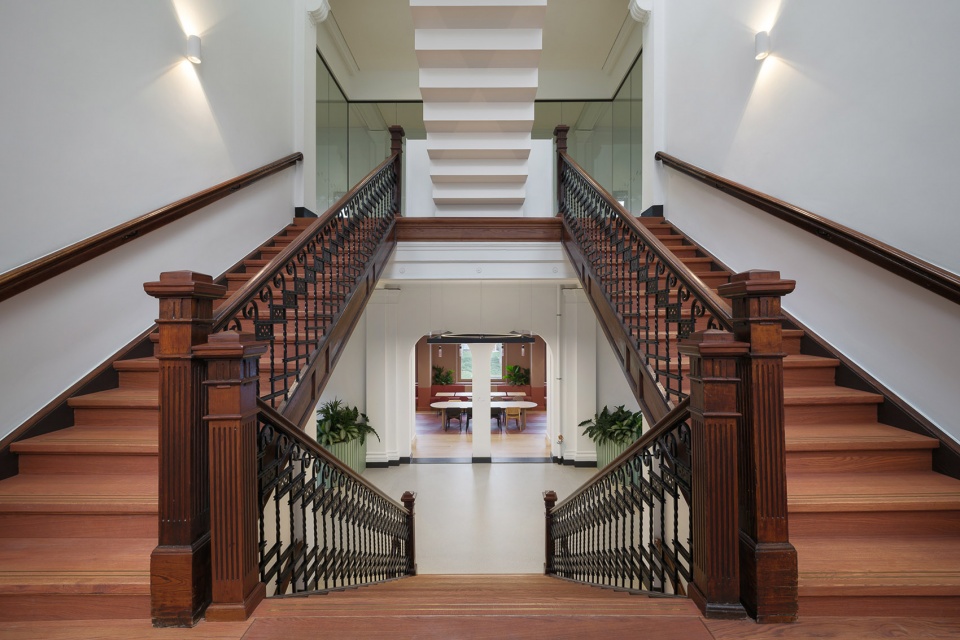
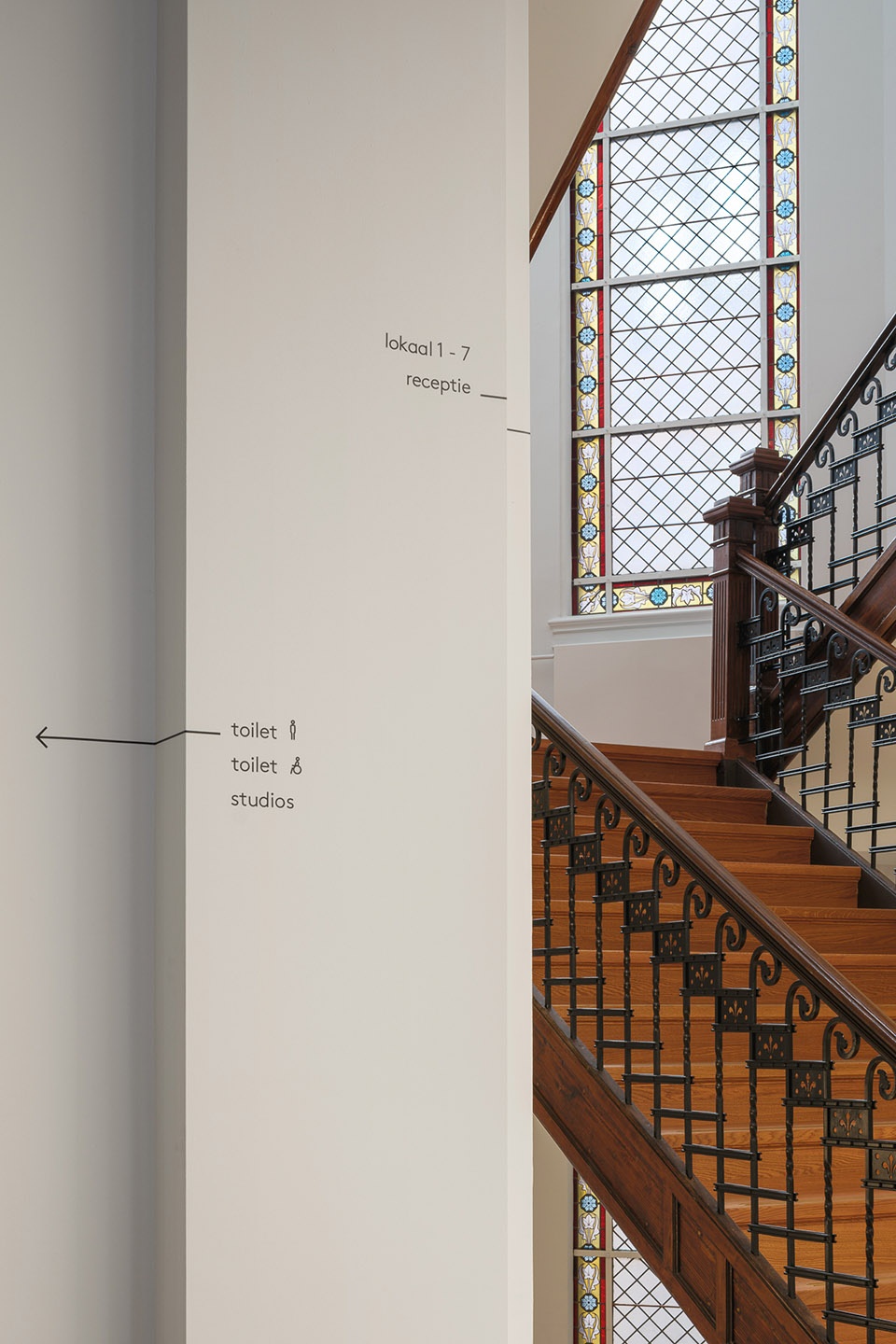
▼修复后的楼梯,staircase after renovation
▼修复后的楼梯及标识细部,
staircase after renovation and signage detail
清晰结构的重现Clear structure restored
P6与i29提出的设计重新凸显了这座历史建筑清晰的空间结构,同时加入了能够体现SSR身份的新层次:一个熟悉、富有创造力且具有亲和力的学习与工作环境,让课程参与者、教师与员工都能感到自在如家。
DP6 and i29 created a design that brings the clear structure of the historic building to the forefront once again, while adding a new layer that reflects SSR’s identity: a familiar, creative and inviting learning and working environment where course participants, teachers and staff feel at home.
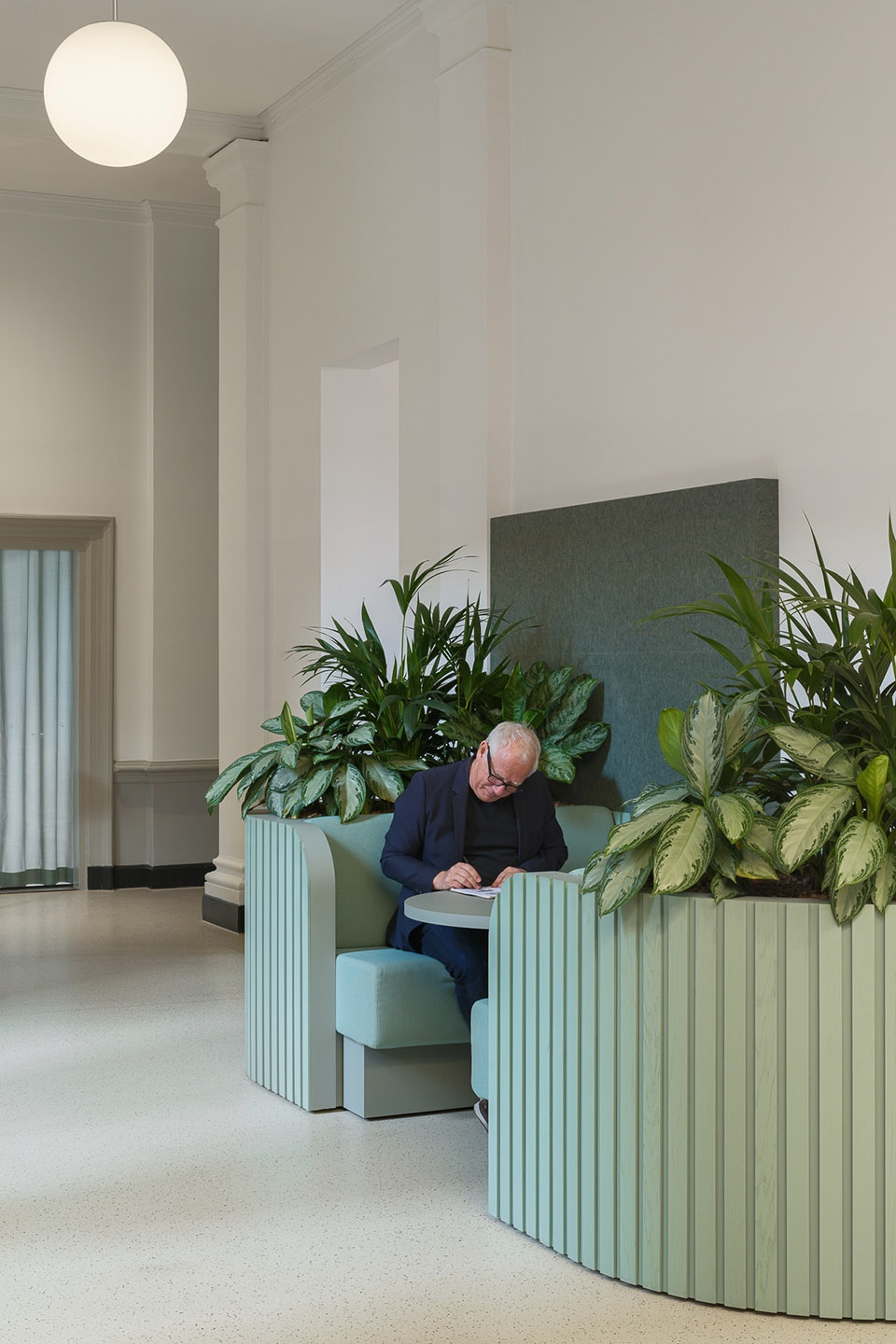
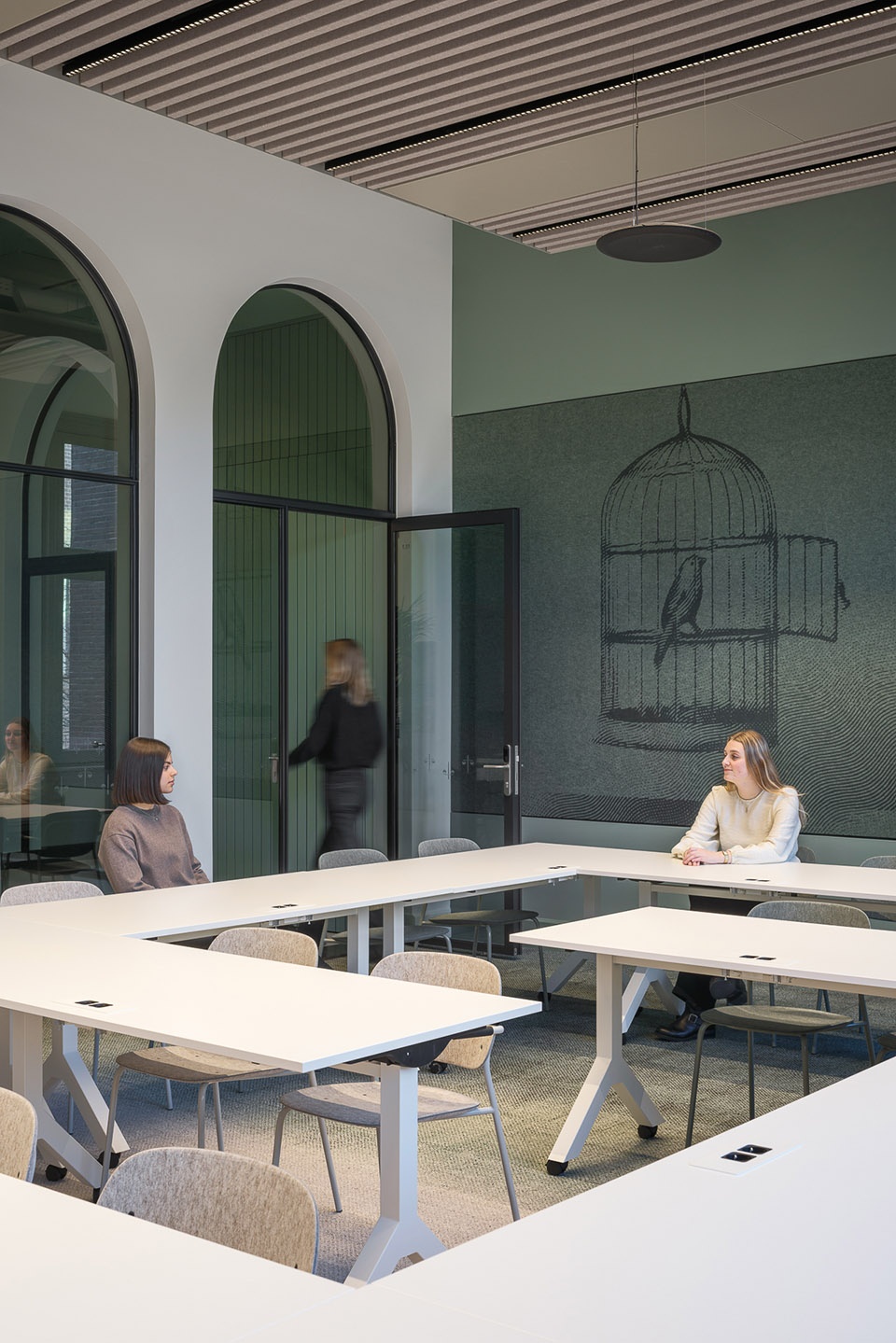
▼富有创造力且具有亲和力的学习与工作环境,a familiar, creative and inviting learning and working environment
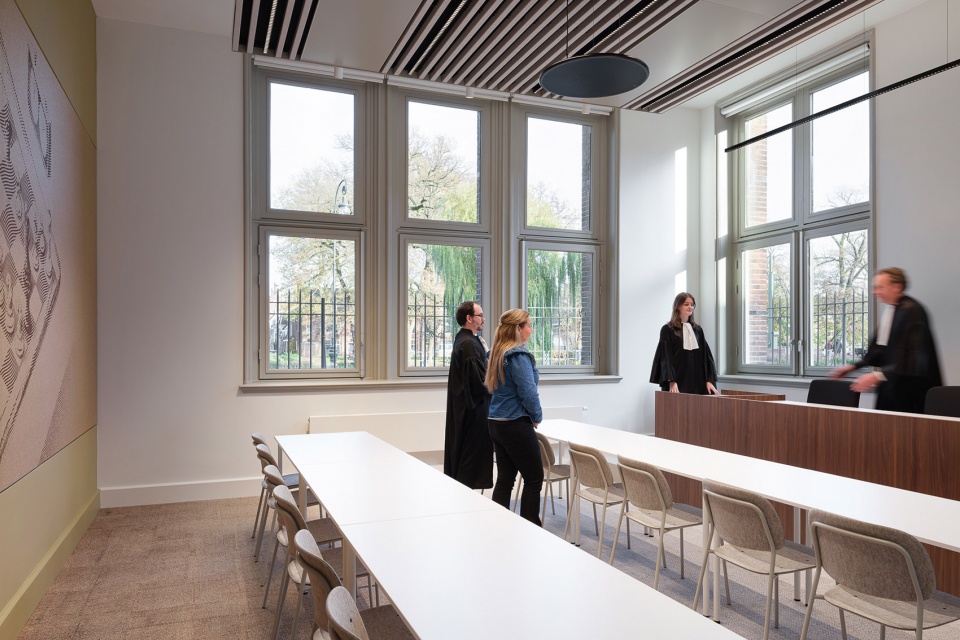
▼富有创造力且具有亲和力的学习与工作环境,
a familiar, creative and inviting learning and working environment
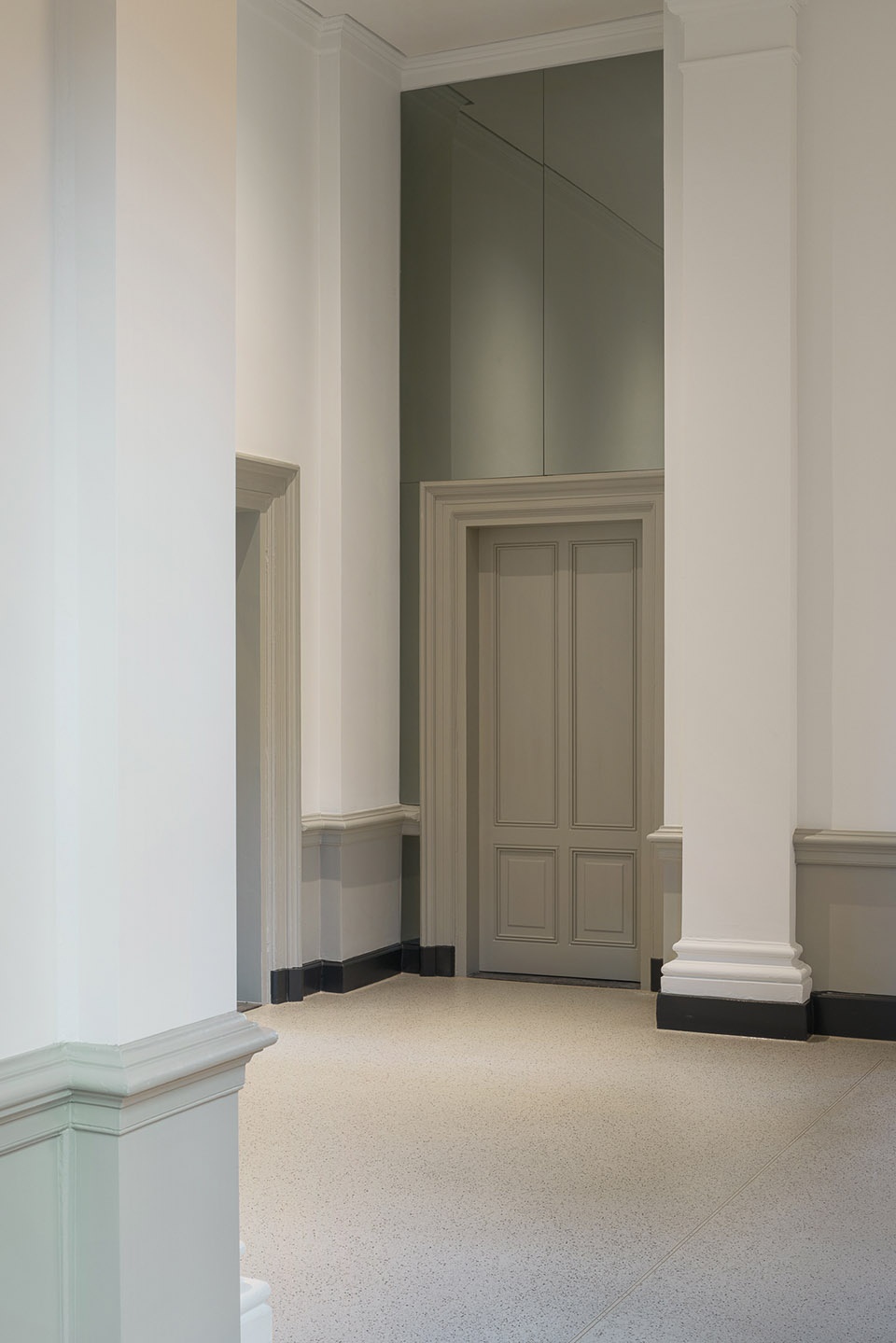
数十年来不断增加的隔墙、入口大厅中的防火分隔、吊顶以及其他冗余元素都被移除。1903年建筑原有的清晰对称结构、高挑空间以及庄重尺度再次得以感知,精细的工艺细节也重新显现。设计通过策略性开口引入透明性与视线联系,增强空间连通性与自然采光。绿色内庭院也从大厅获得通达性——这处位于建筑核心的绿洲,让人与人之间“相遇与学习”的概念延续至室外。
Walls added over the decades, fire separations in the entrance hall, suspended ceilings and other clutter have been removed. The clear symmetrical structure, lofty ceilings and stately spatiality of 1903 are once again perceptible, and the craftsmanship in the detailing has been made visible. Strategic openings have been created to add transparency and sightlines, enhancing spatial connectivity and daylight penetration. The green inner garden has also been made accessible from the hall—an oasis at the heart of the building where the concept of meeting and learning from one another continues outdoors.
▼引入透明性与视线联系,add transparency and sightlines
平衡Balance
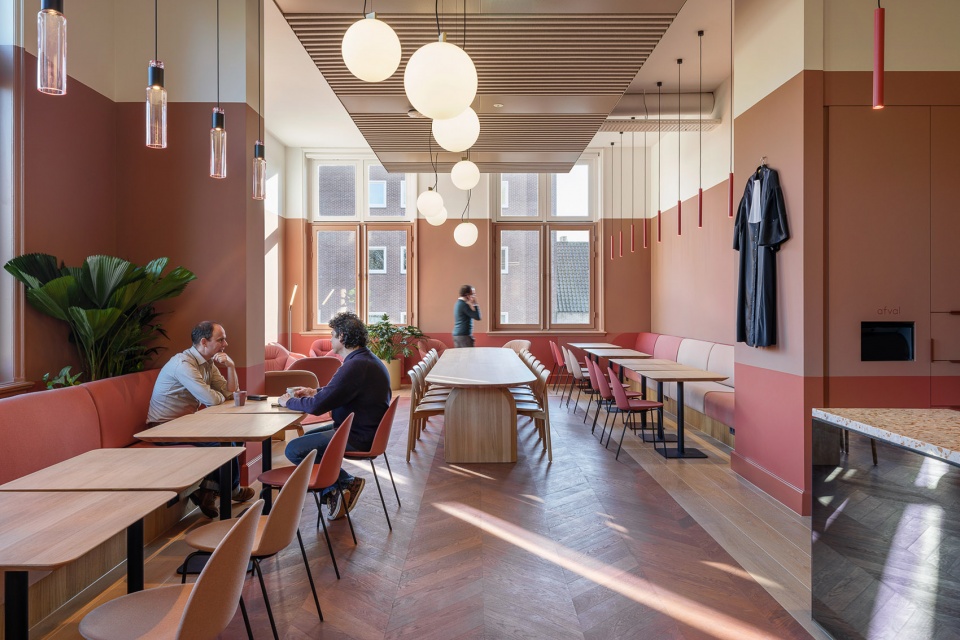
新介入元素设计中的核心原则是“平衡”:旧与新之间、庄重感与居家感之间、圆形与方形之间、柔软与坚硬材料之间、透明性与安全感之间的平衡。“平衡”同样指向正义女神手中的天平,象征着对论点、证据与证词的权衡——也正是司法体系的根基。
The key principle in the design of the new elements is balance: between old and new, between stateliness and homeliness, between round and square forms, between soft and hard materials, between transparency and a sense of security. Balance also refers to the scales of Lady Justice, symbolising the weighing of arguments, evidence and testimonies—and thus the foundation of the judicial system.
▼新与旧之间的平衡,the balance between new and old
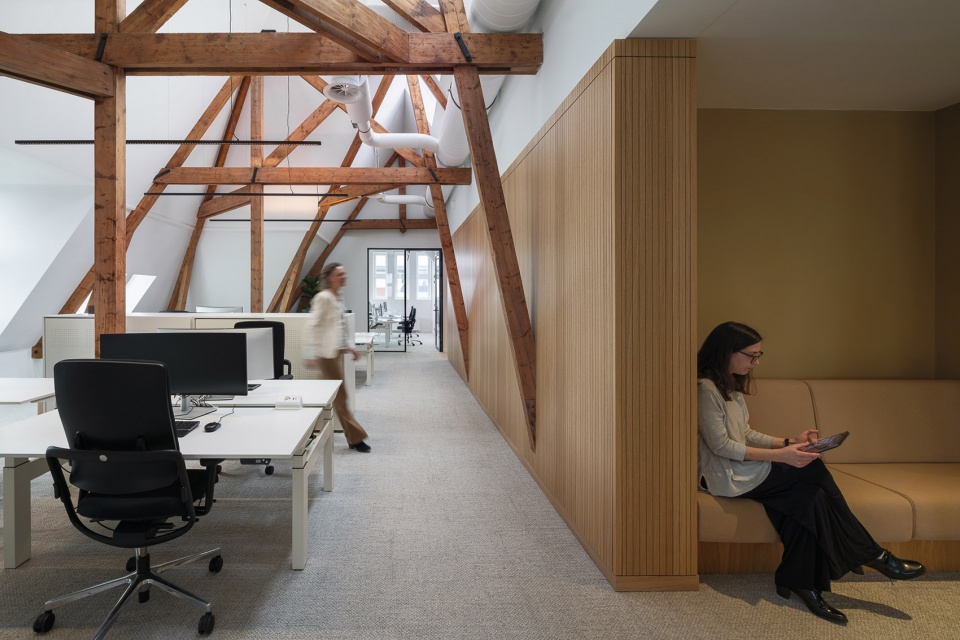
▼统一且具有高品质感的整体氛围,
a unified overall impression has been created
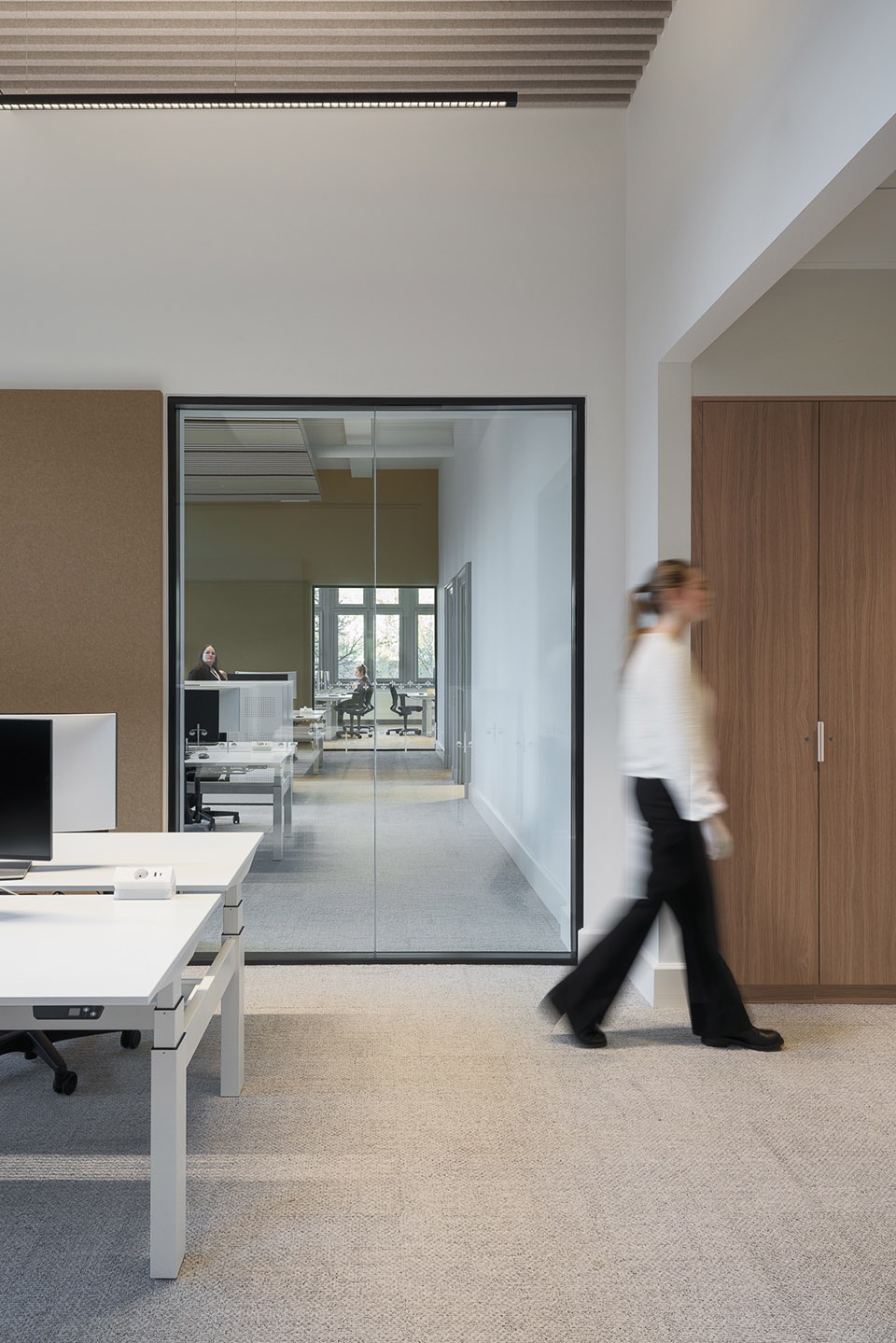
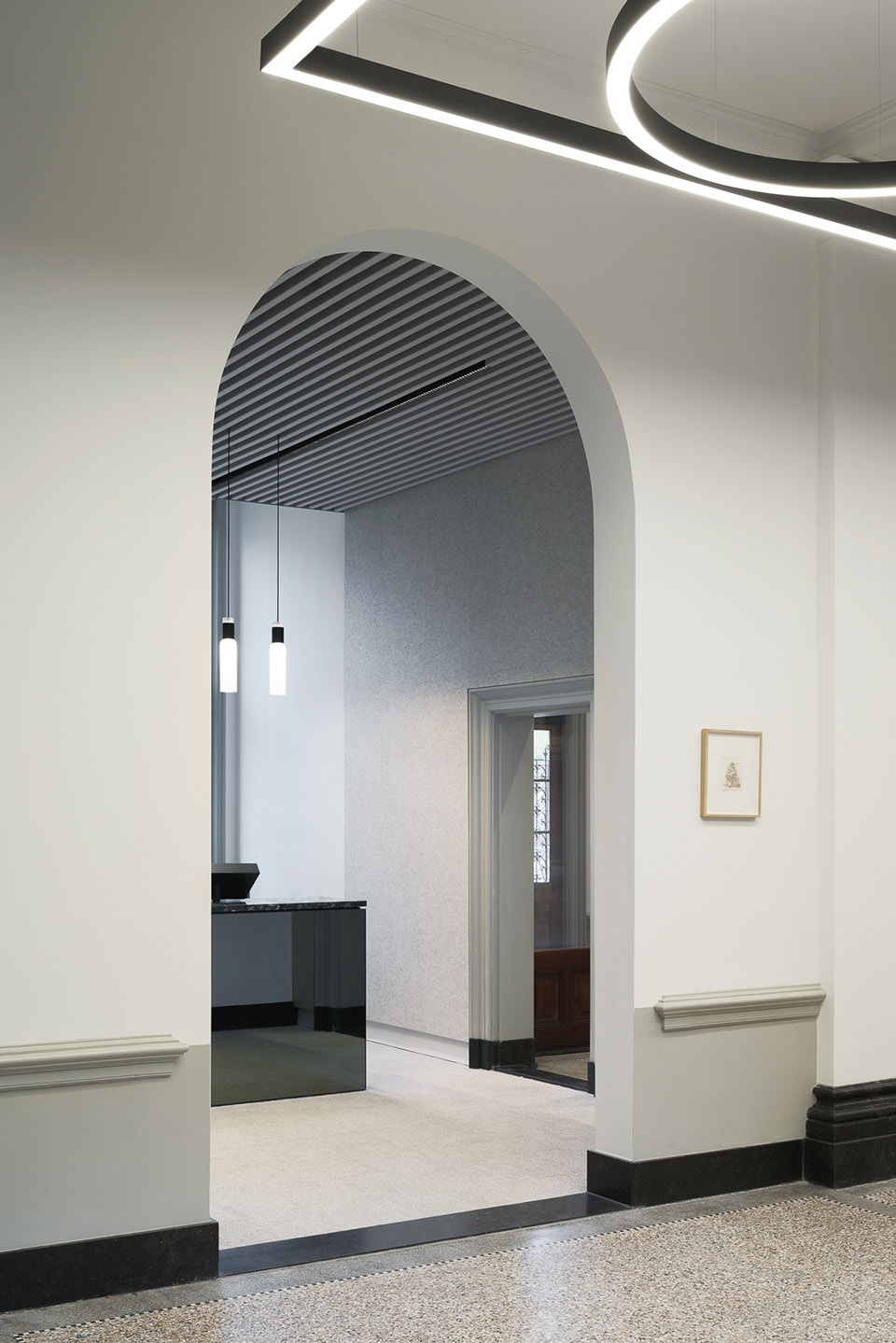
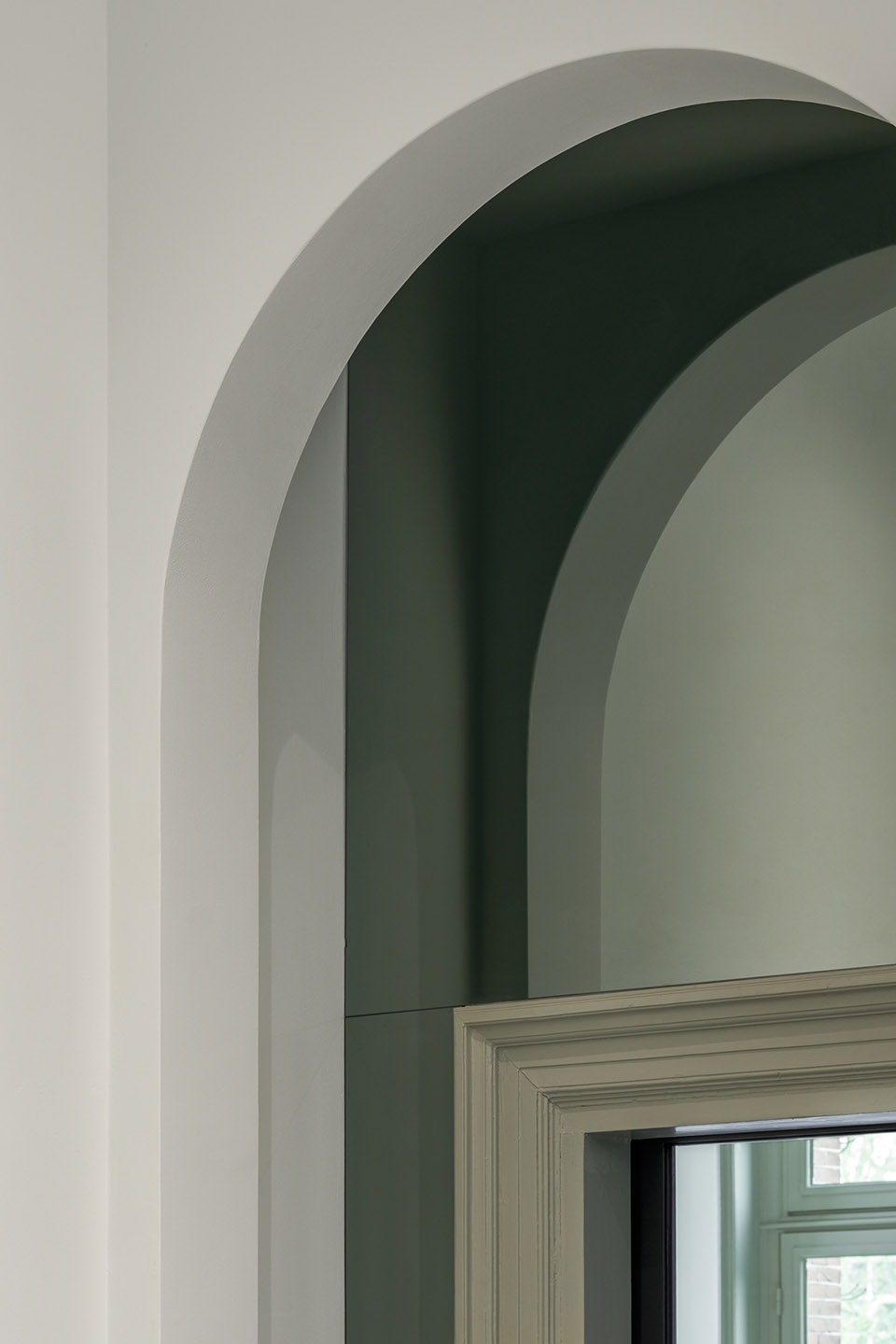
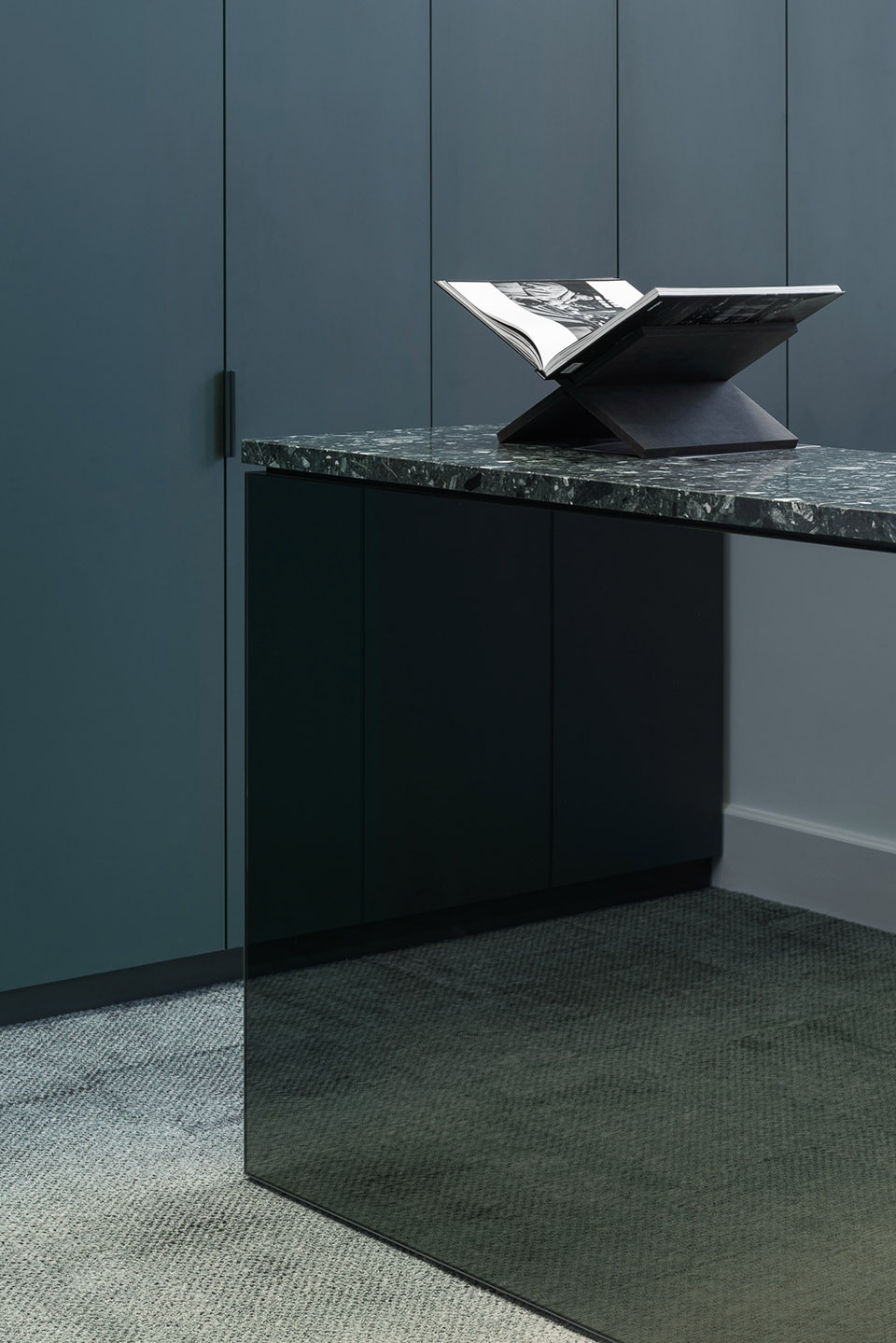
通过在材料、色彩与细部处理上的持续而审慎的选择,项目形成了一种统一且具有高品质感的整体氛围。首层原有的水磨石走廊地面得以修复,而上层则通过带有细腻线性纹理的新型抹灰地坪重新营造出相同的门厅氛围。新加入的深色钢制室内框架与旧结构形成对比,从而保留原有开口的可识别性。统一设计的吊顶岛采用柔软材料,营造舒适声学环境;新的照明装置则串联起不同空间。
Through consistent, carefully considered choices in materials, colour palette and detailing, a unified overall impression has been created—one that radiates high quality. The original terrazzo corridor floors on the ground floor have been restored, and the same vestibule atmosphere has been recreated on the upper floors through a new trowel-finished floor with an elegant lined texture. New dark-steel interior frames contrast with the old, preserving the legibility of the original openings. Soft materials in uniformly designed ceiling islands ensure pleasant acoustics, and new lighting objects connect the various spaces.
▼拱廊造型被保留,the arcade design was retained
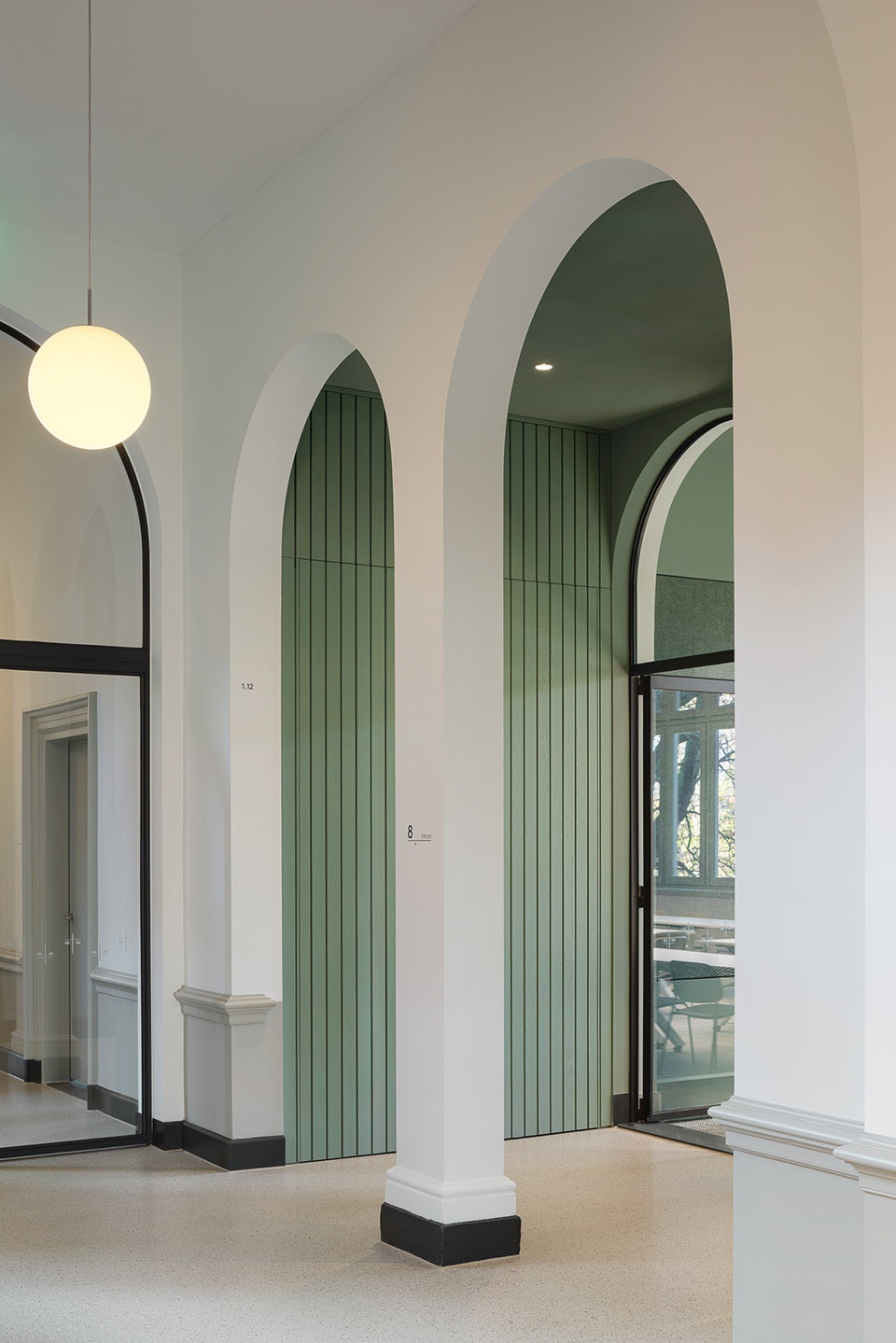
▼原有的水磨石走廊地面得以修复,
The original terrazzo corridor floors on the ground floor have been restored
▼拱廊细部,Details of the arcade
相遇与交流Meeting and interaction
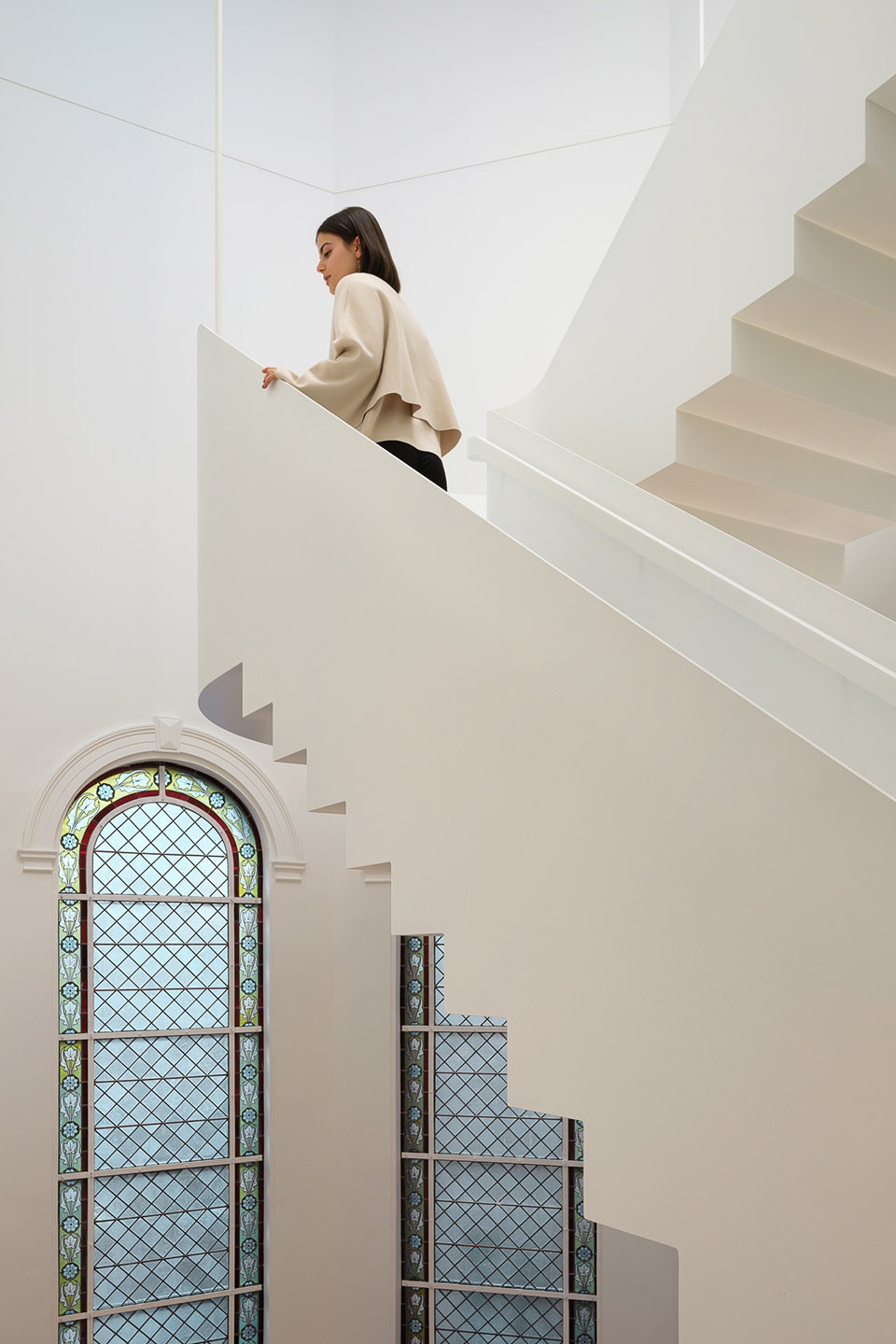
建筑内部设置了多种不同类型的交流空间,以促进互动与协作。课程参与者从恢复原貌的门厅进入建筑:除了醒目的服务台之外,舒适的座席区还可眺望绿色内庭院与纪念性楼梯。一层的社交中心则成为参与者与教师的汇聚之地,提供多样化的交流、学习、工作与休憩场所。下方两层设置了教室与影音工作室,而顶部两层则被设计为SSR的当代开放式办公环境。
Throughout the building, various meeting places have been designed to facilitate interaction and collaboration. Course participants are welcomed in the vestibule, which has been restored to its original state: alongside a prominent service desk, comfortable seating areas offer views of the green inner garden and the monumental staircase. On the first floor, participants and teachers come together in the social hub, which offers a diversity of places to interact, learn, work or relax. The lower two floors contain classrooms and audio-visual studios. The top two floors have been designed as a contemporary, open working environment for SSR.
▼楼梯细部,staircase detail
▼醒目的服务台,a prominent service desk
Design: DP6 & i29
Size: 4000 m2
Contractor: J.P. van Eesteren
Installations: Nelissen ingenieursbureau
Structural engineer: Pieters Bouwtechniek Delft
Building cost: HI-plus Bouwadvies
Restauration expert: Bureau Vlaardingerbroek
Client: Rijksvastgoedbedrijf
User: SSR
Photo’s / Video: Stijn Poelstra