天堂谷景观阶梯,西班牙 / Comas-Pont arquitectes
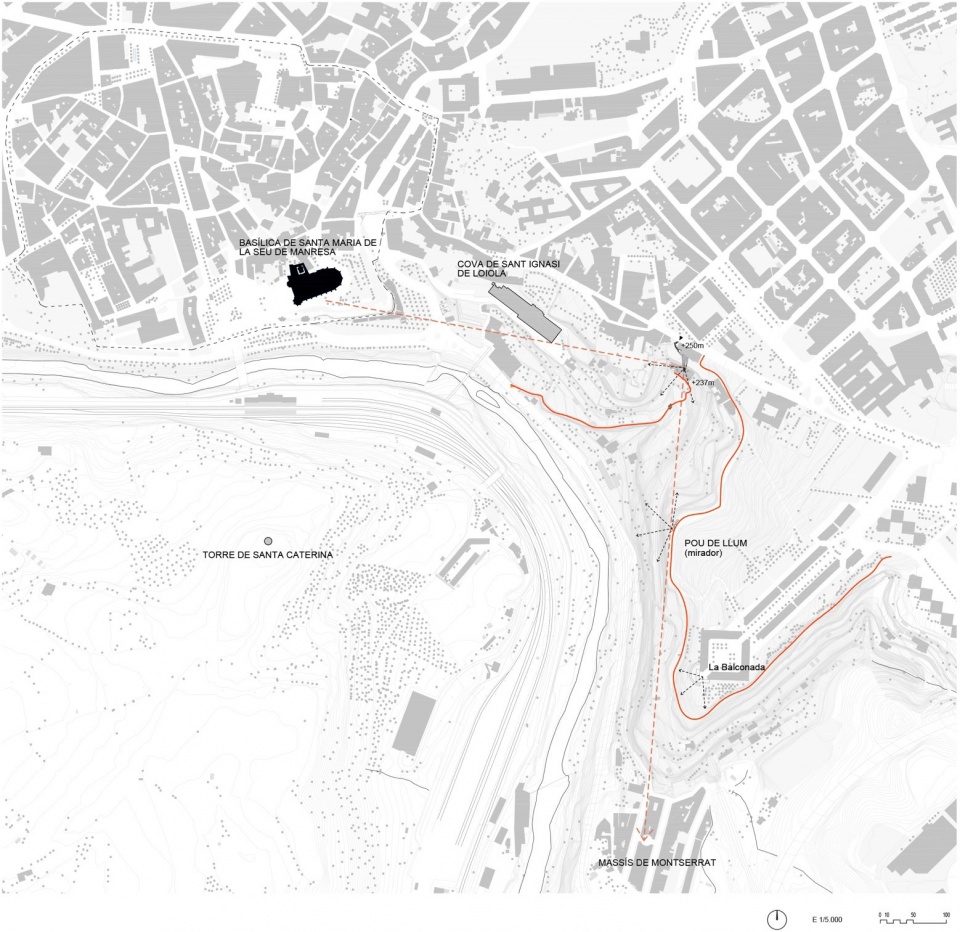
天堂谷(Vall del Paradís)景观阶梯项目,是一次对曼雷萨(Manresa)伊格纳修斯·罗耀拉之路(Camino de Ignacio de Loyola)消失路段的修复性介入。项目重新连接了Pont Vell与Creu del Tort至Pou de Llum之间的路径,恢复了1522年伊格纳修斯·德·罗耀拉在曼雷萨停留并撰写《神操》期间曾行走过的一段历史路线。这条道路同时也是Les Escodines社区居民——尤其是女性——前往Cardener河的重要传统通道。
The Landscape Staircase in the Vall del Paradís is an intervention that recovers a lost section of the Camino de Ignacio de Loyola in Manresa. The project reconnects Pont Vell and Creu del Tort with the Pou de Llum, restoring part of the historic path where Ignatius of Loyola walked in 1522, during his stay in the city when he wrote the Spiritual Exercises. This path was also traditionally used by residents of the Les Escodines neighbourhood, especially women, to reach the Cardener River.
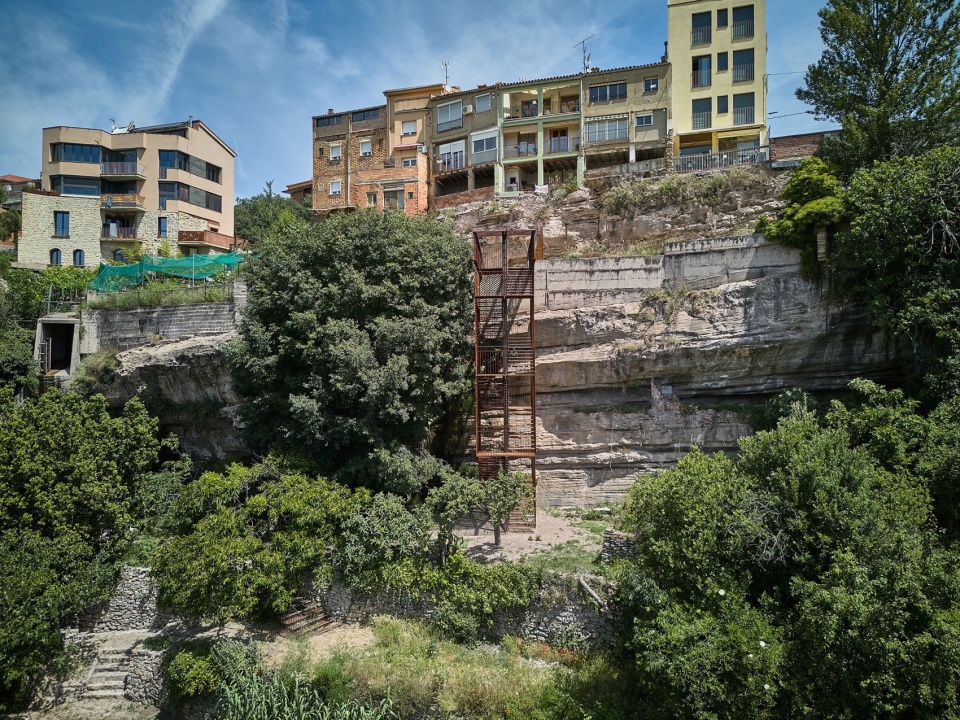
▼崖壁上的景观装置,the landscape installation on the cliff face
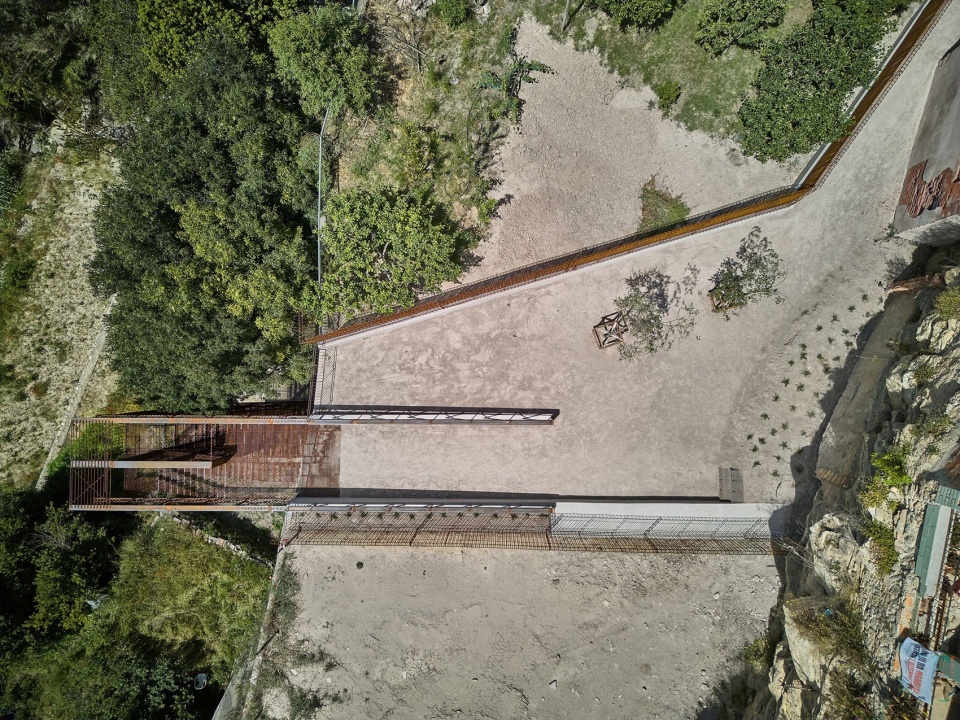
▼顶视图,top view
在项目介入之前,由于复杂地形条件,特别是Creu del Tort与Font de Fans之间陡峭路段的存在,这条路径中最关键的一部分已经消失。此次设计旨在恢复人与Cardener河景观之间历史性的联系,同时尊重周边农业环境、既有植被以及传统干砌石墙系统。
Before the intervention, the most significant part of the route had disappeared due to the difficult terrain, particularly the steep section between Creu del Tort and Font de Fans. The project aims to restore this historical and human connection with the landscape of the Cardener River while respecting the agricultural environment, existing vegetation, and dry-stone walls.
▼项目概览,overview of the project
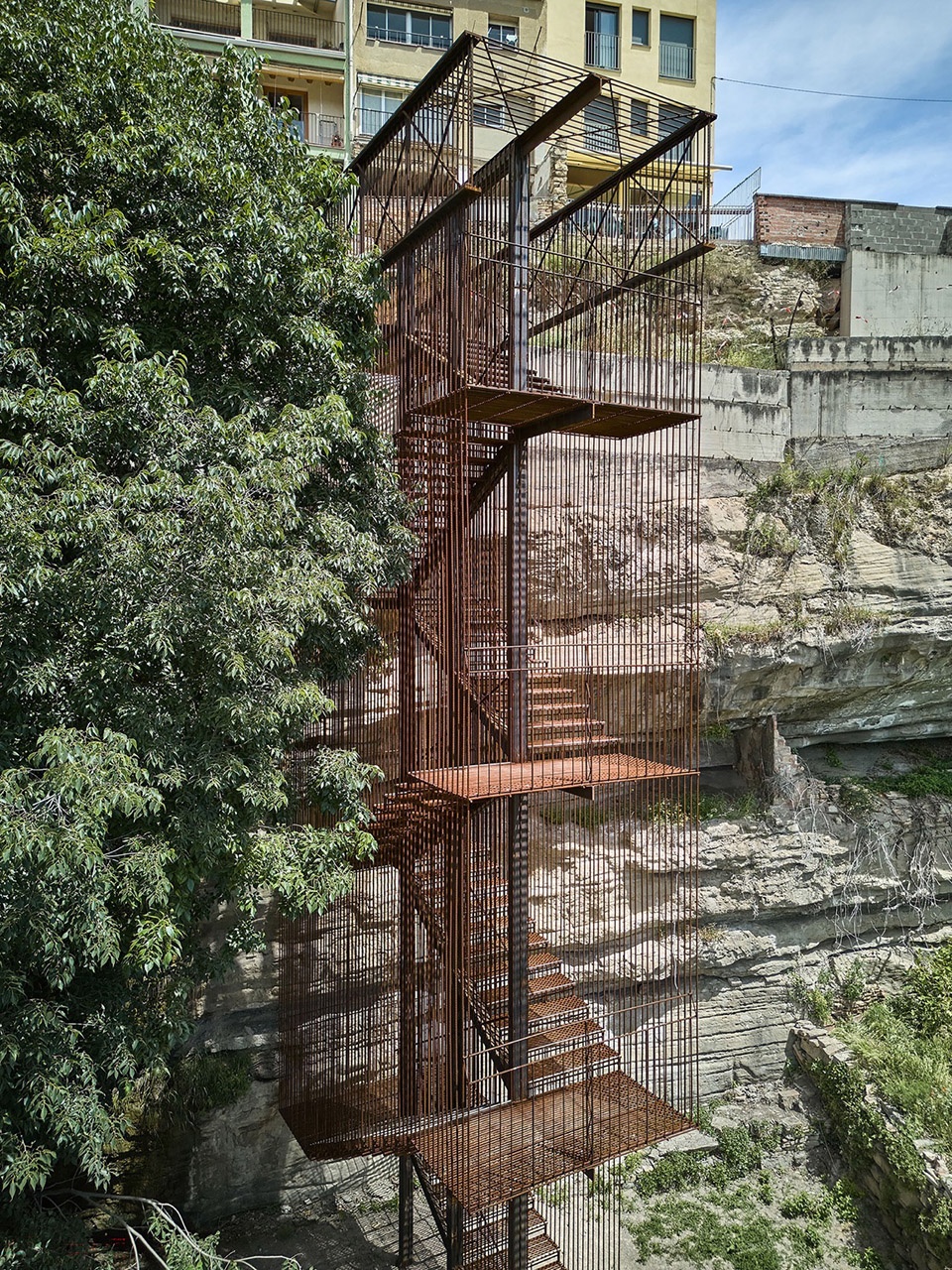
▼观景台,viewing staircase
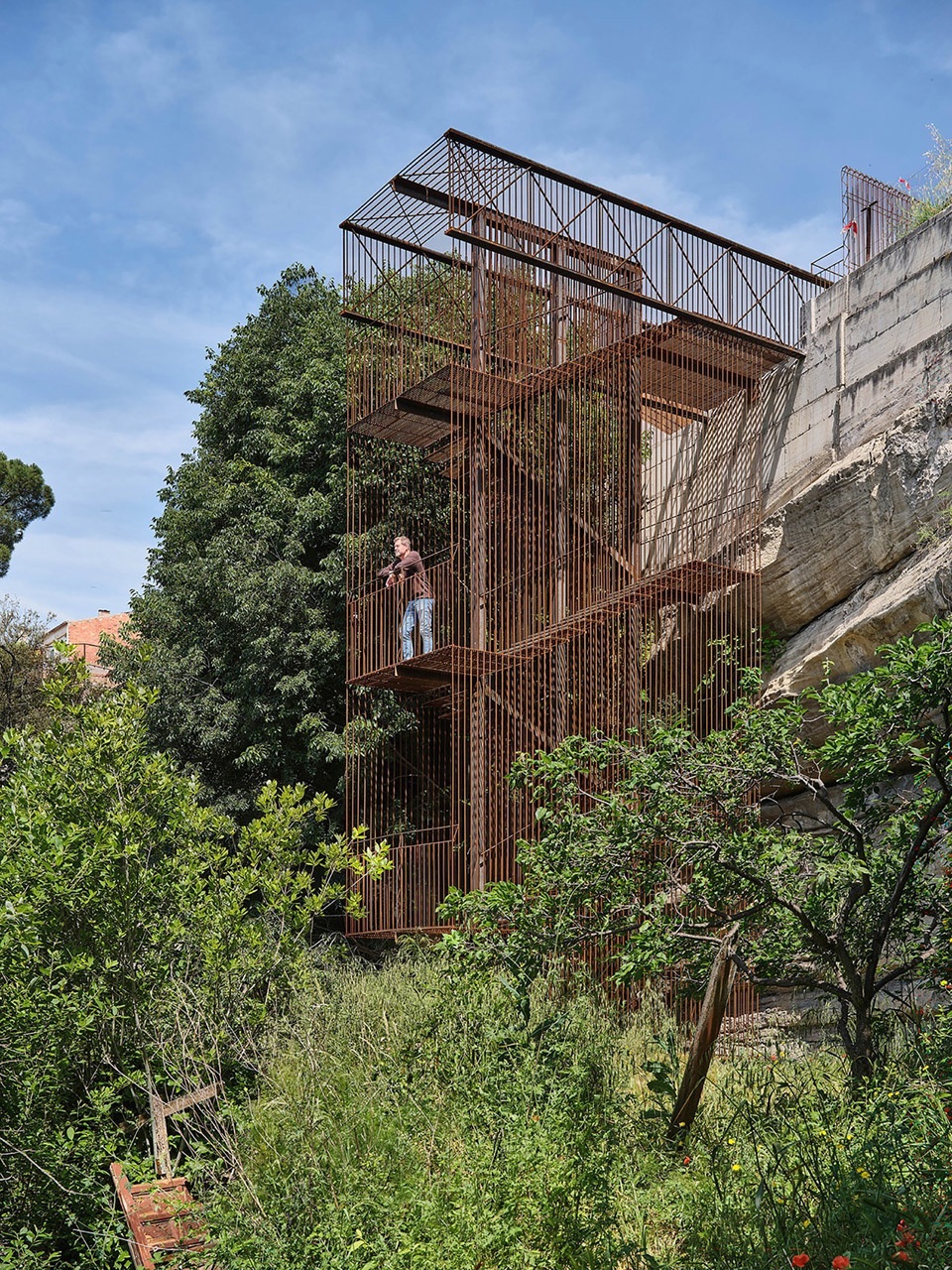
▼钢筋构成的景观装置,a landscape installation made of steel bars
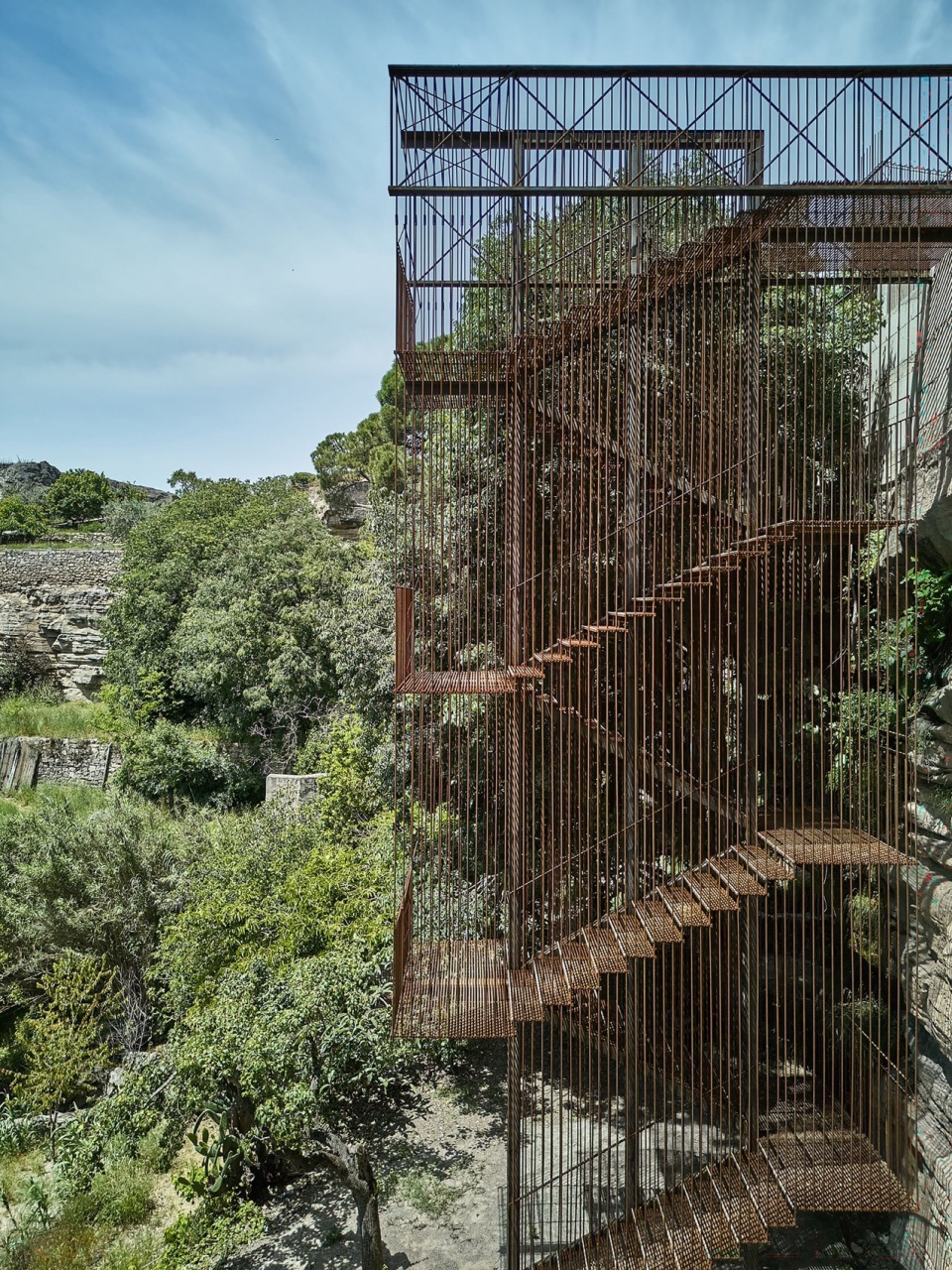
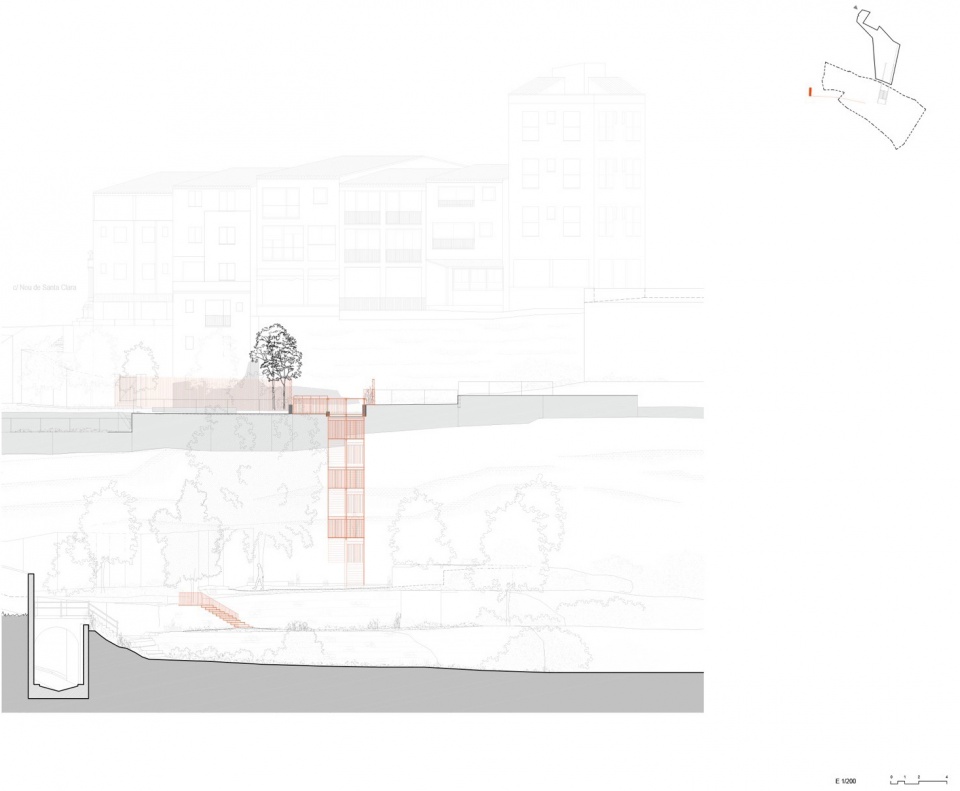
阶梯连接了两层平台之间约13米的高差,并形成一个俯瞰天堂谷、Cardener河以及蒙特塞拉特山(Montserrat)的新观景点。它不仅被视为一条功能性的通道,同时也是一种感知性的空间体验。当人们沿阶梯行进时,身体感知会在贴近岩石与面向景观之间不断切换,在“土地”与“空气”之间形成连续的空间序列,使人与近处环境及远方景观同时建立联系。
The staircase bridges a 13-metre difference in height between two terraces, creating a new viewpoint over the Vall del Paradís, the Cardener River, and Montserrat. It is conceived as both a functional path and a sensory experience. As users move along the staircase, their perception alternates between proximity to the rock and openness to the landscape, generating a sequence between earth and air that connects the individual with both the nearest and farthest surroundings.
▼近景,closer view
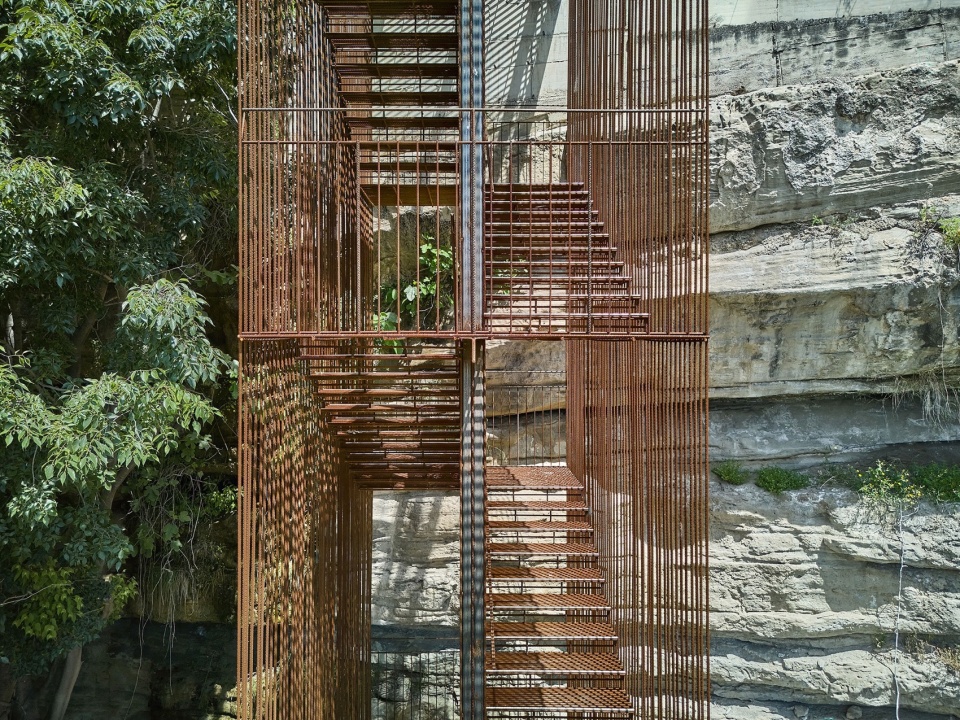
▼入口与通道,entrance and corridor
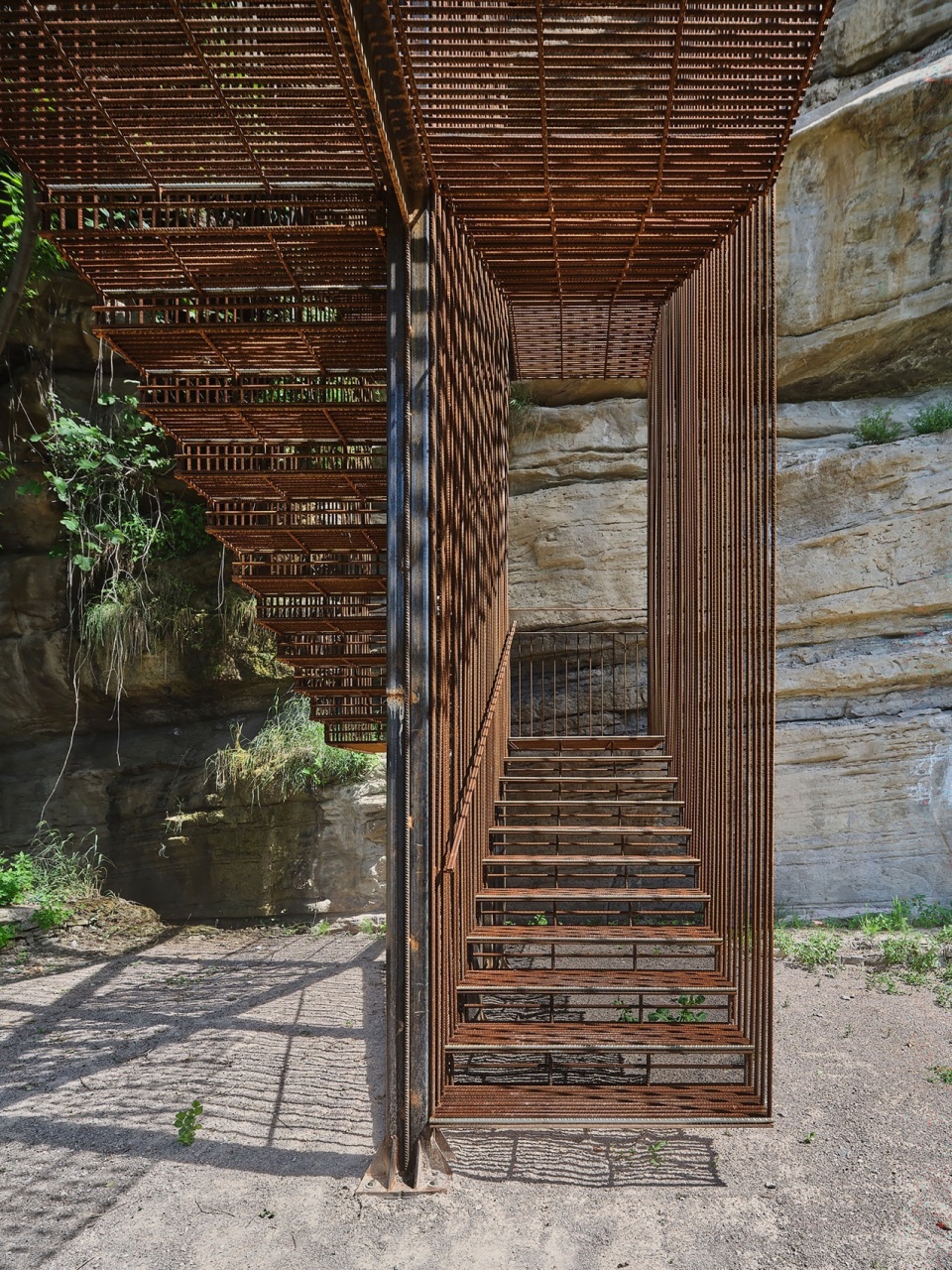
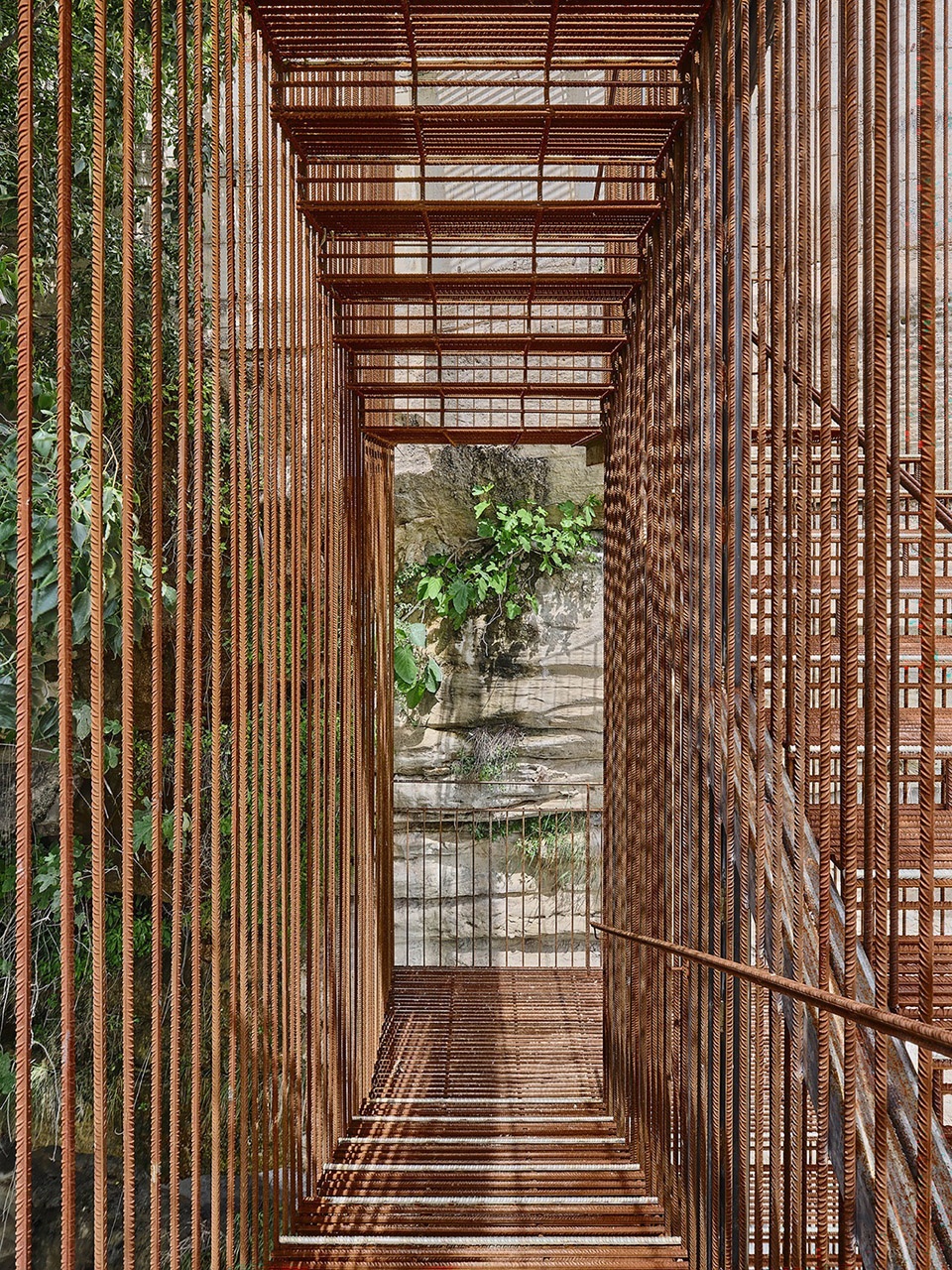
▼楼梯,staircase
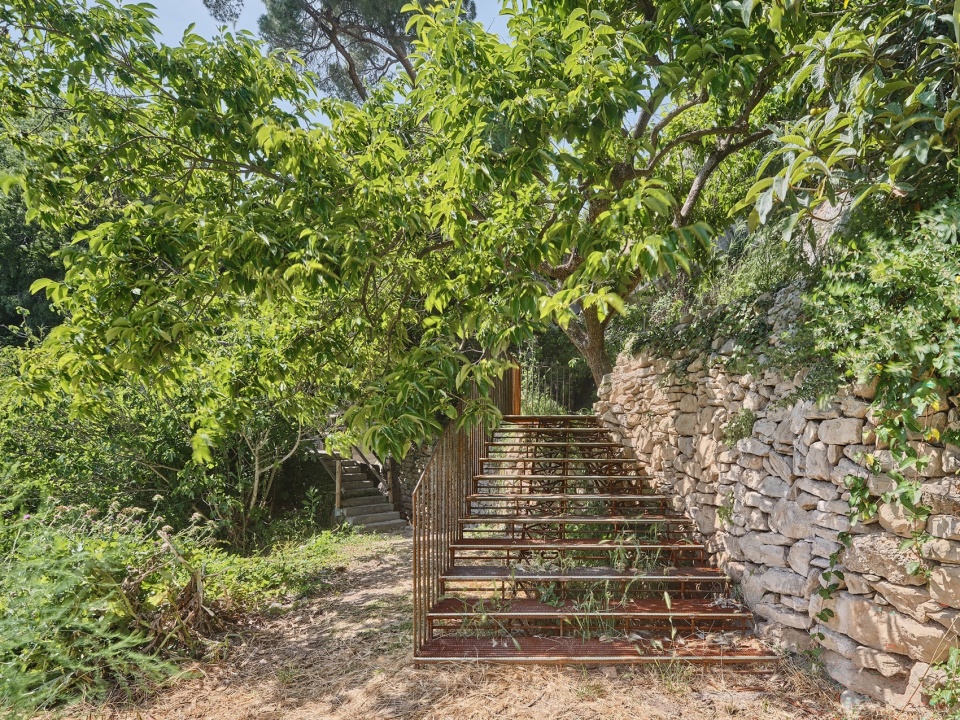
结构本身与岩体保持分离,并被设计为一种具有渗透性的元素,使视线能够穿透其间。一层波纹钢板构成的“幕帘”对景观进行过滤,而非遮挡,在保护与观看之间建立平衡。在结构上,阶梯通过混凝土墙体固定于上层平台,并由此悬挑出金属桁架,用以支撑悬浮的阶梯结构。
The structure is separated from the rock and designed as a permeable element, allowing views through it. A curtain of corrugated steel filters the landscape without blocking it, creating a balance between protection and contemplation. Structurally, the staircase is anchored to the upper terrace with concrete walls, from which metal trusses extend in cantilever to support the suspended staircase.
▼观景平台,viewing platform
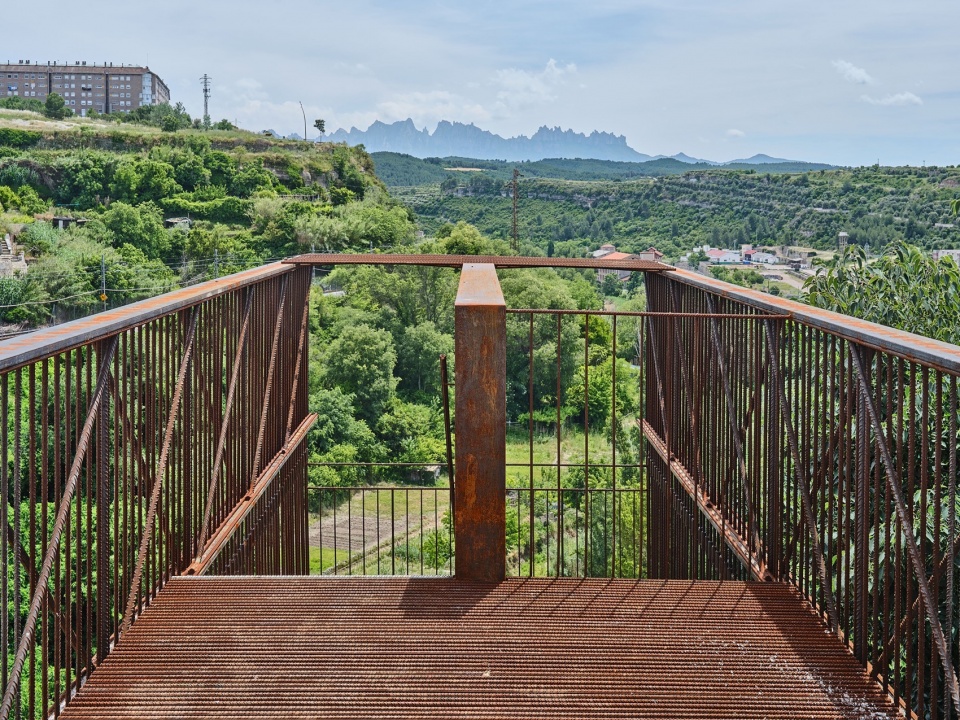
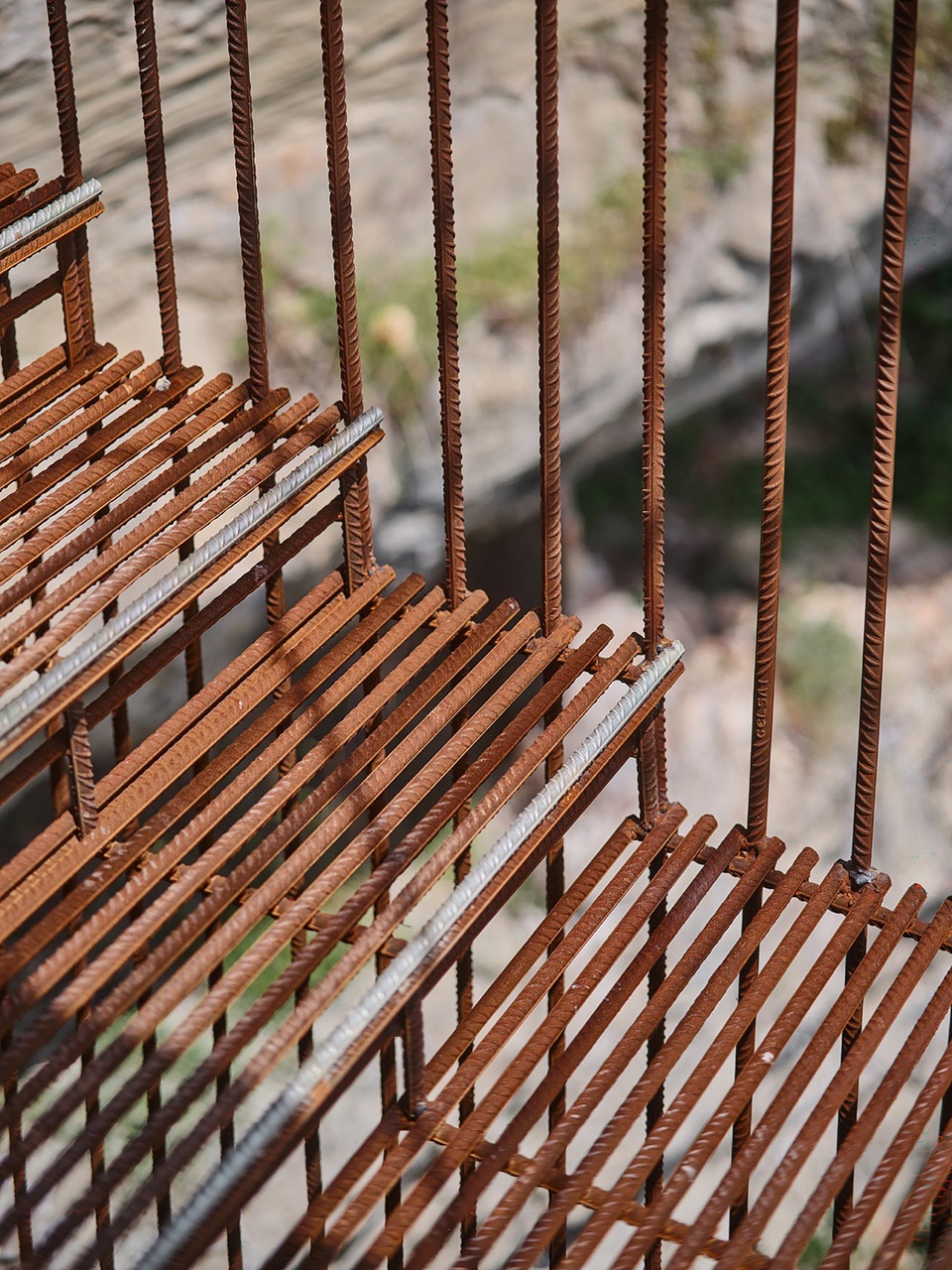
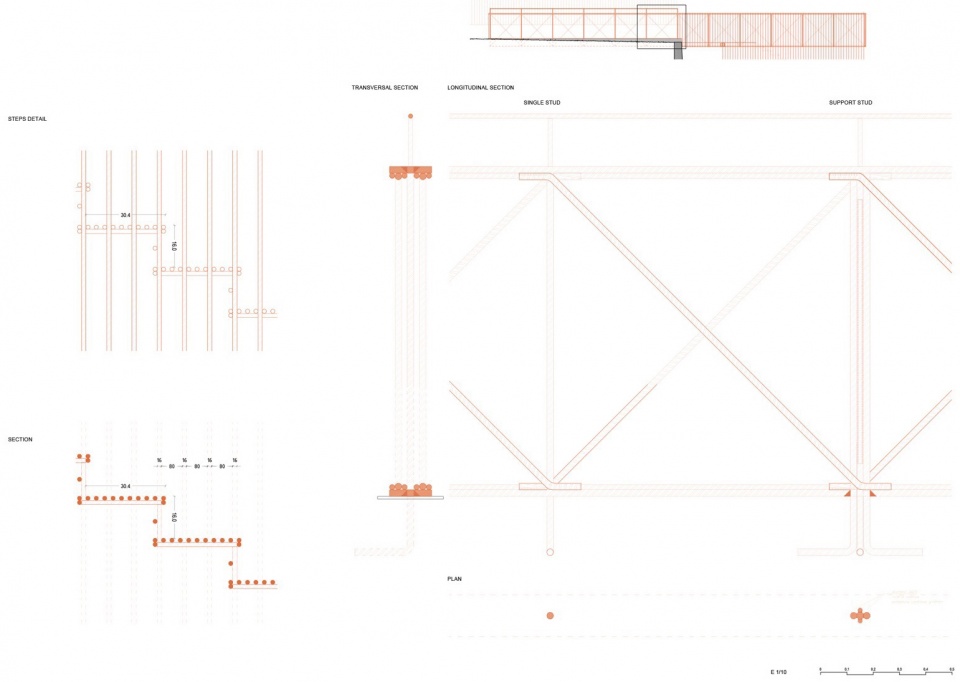
整个项目采用统一的材料语言——钢。所有结构均由重复排列的Ø16毫米波纹钢筋构成,在实现透明性的同时,也回应了一种“仅使用必要材料”的节制伦理。地面铺装同样采用波纹钢构成,并直接铺设于原有地表之上,使雨水能够自然排放,也让土地得以“呼吸”。
The project uses a single material language: steel. The repetition of Ø16 mm corrugated steel bars forms the entire structure, achieving transparency and responding to an ethic of moderation by using only what is necessary. The pavement, also made of corrugated steel, is placed over the existing ground, allowing natural drainage and enabling the ground to breathe.
▼所有结构均由重复排列的Ø16毫米波纹钢筋构成,the repetition of Ø16 mm corrugated steel bars forms the entire structure
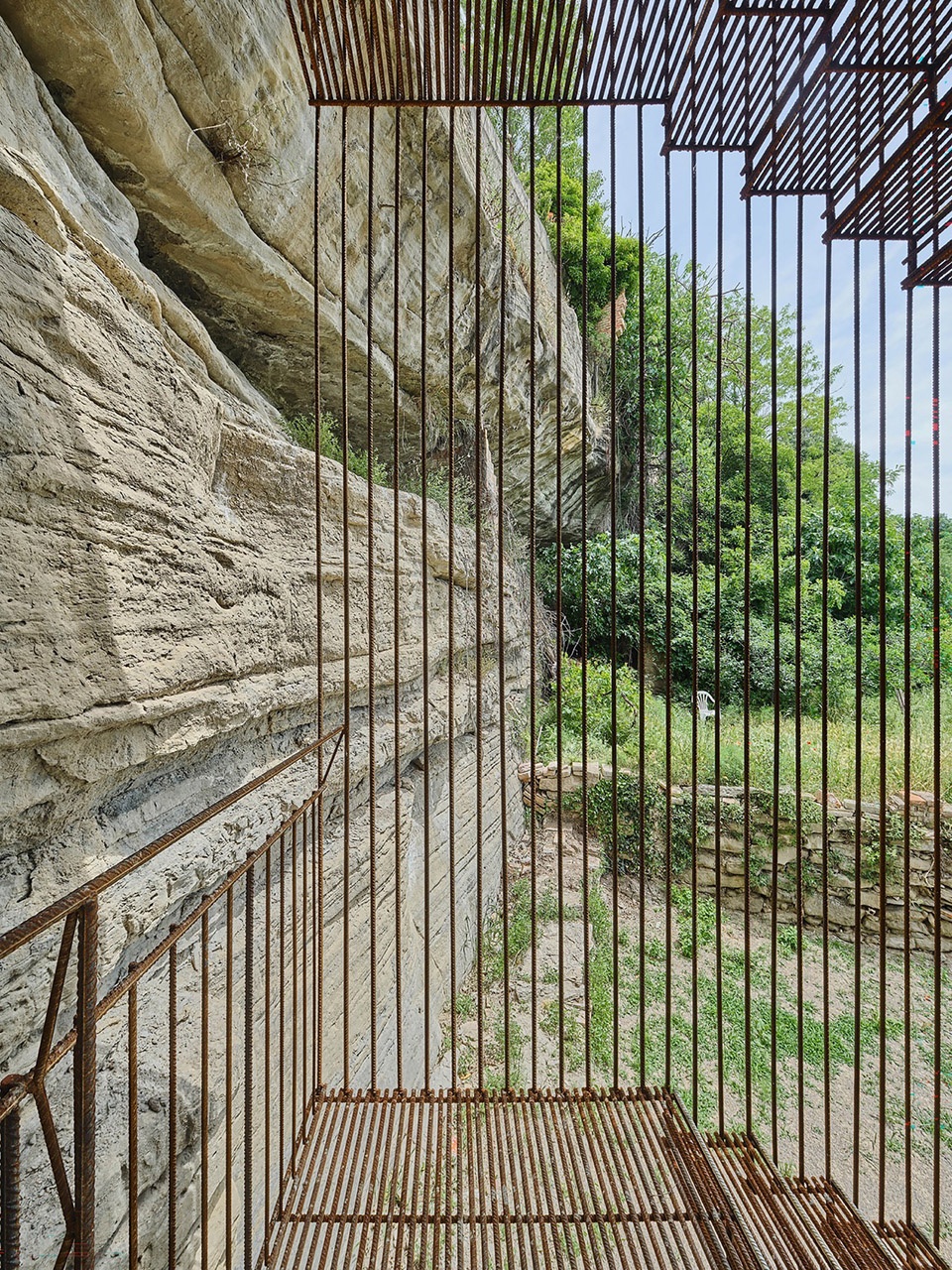
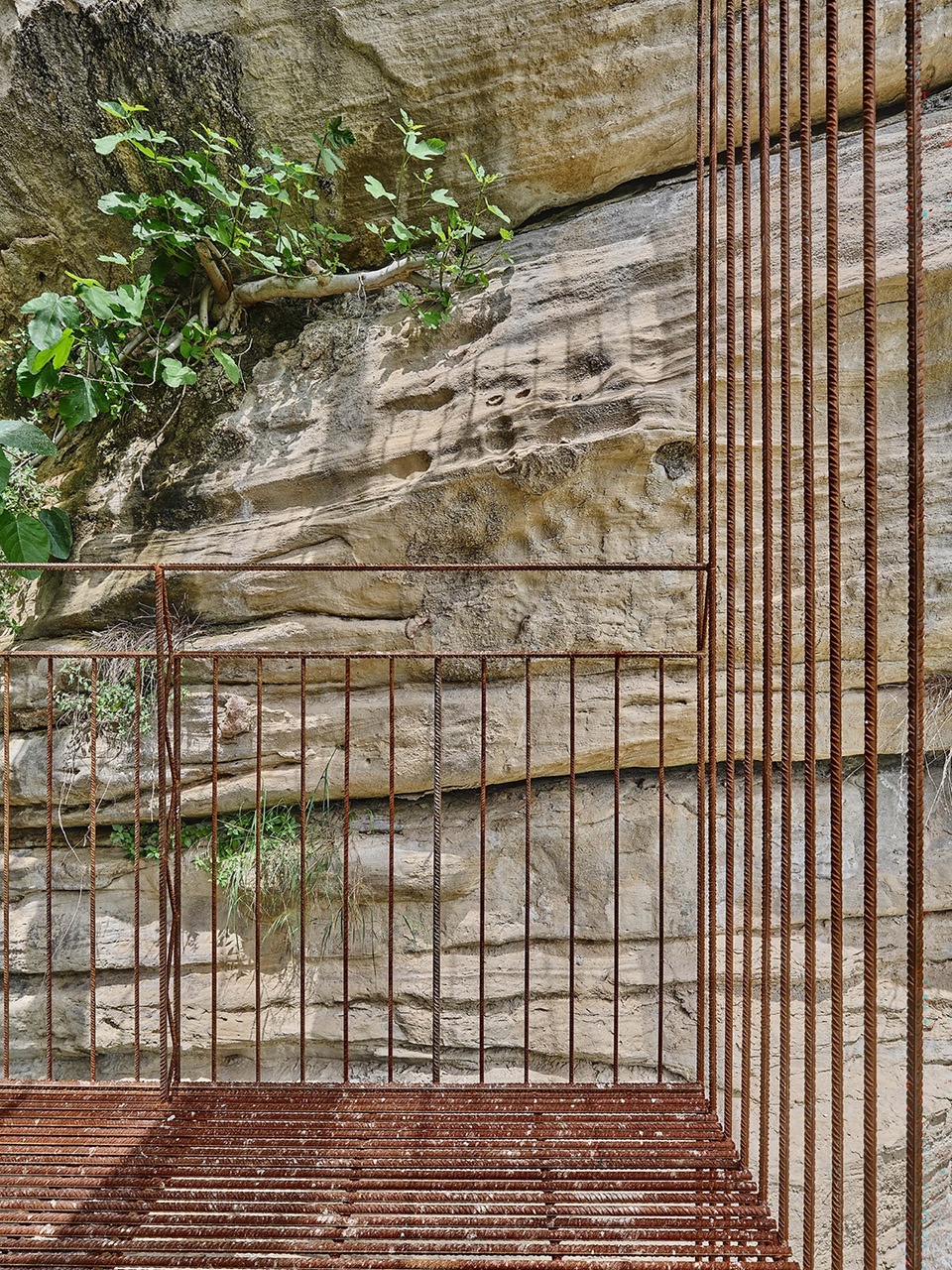
▼钢筋细部,details of the steel bars
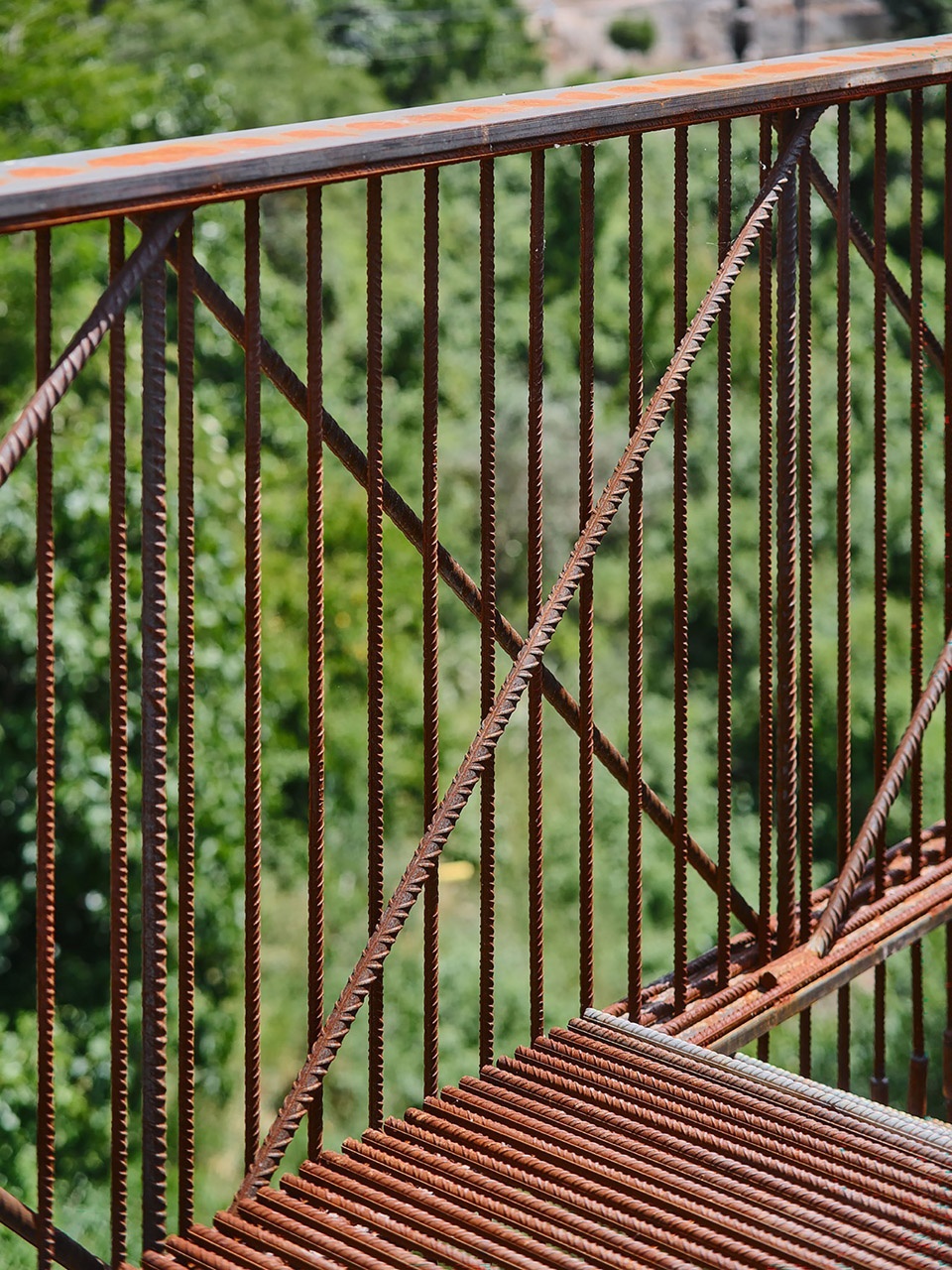
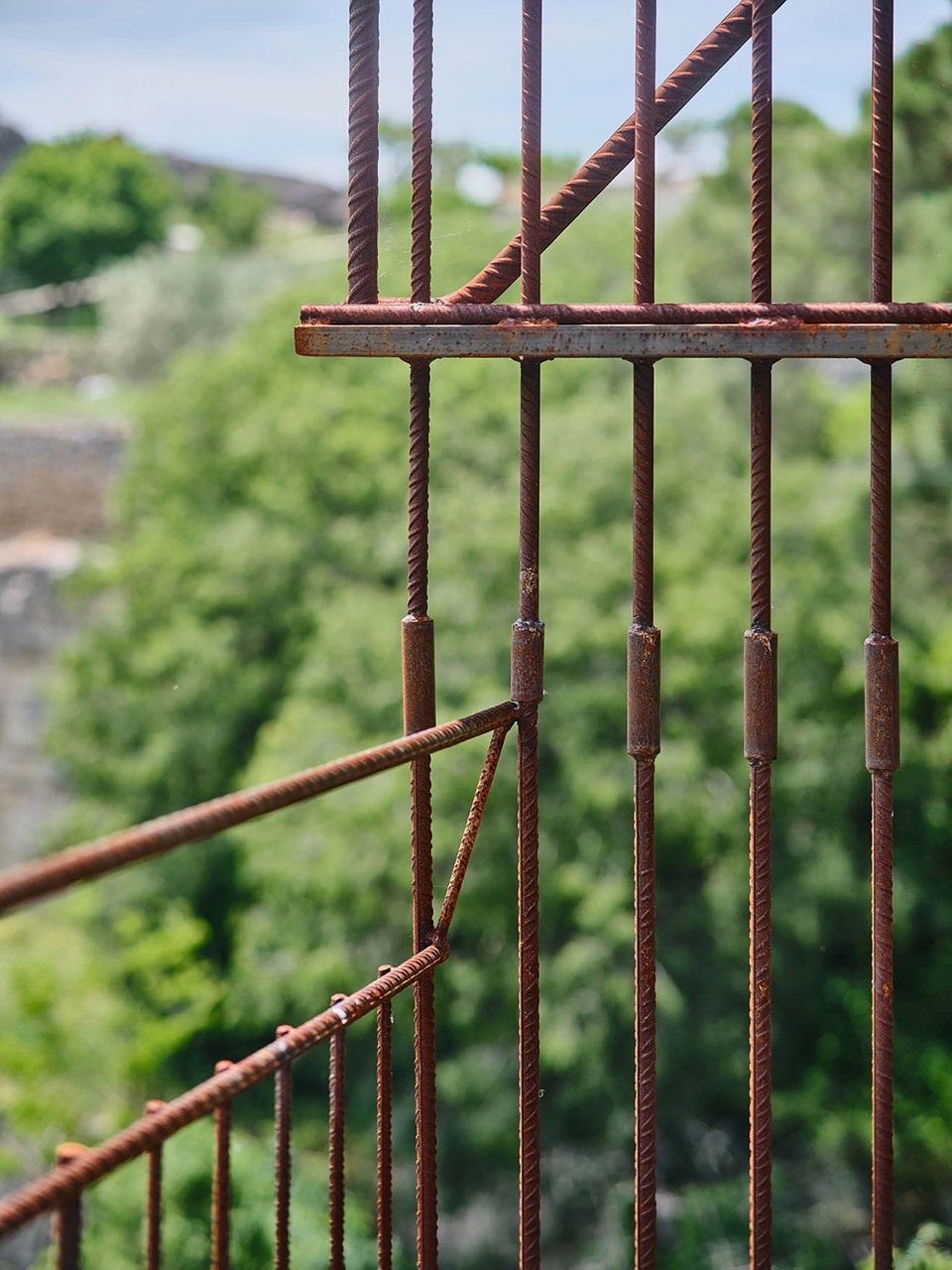
▼踏步细部,details of the steps
这一介入将路径转化为一种身体性的空间体验,并重新赋予城市与蒙特塞拉特山新的观看视角。它重新连接了因地形而被分隔的城市片段,将一处被遗弃的区域转变为兼具功能、社交与景观价值的公共空间,同时进一步强化了山谷本身的自然魅力。
The intervention transforms the route into a bodily experience and provides new perspectives of the city and Montserrat. It reconnects two parts of the city separated by topography and turns an abandoned area into a functional, social, and landscape space, enhancing the natural beauty of the valley.
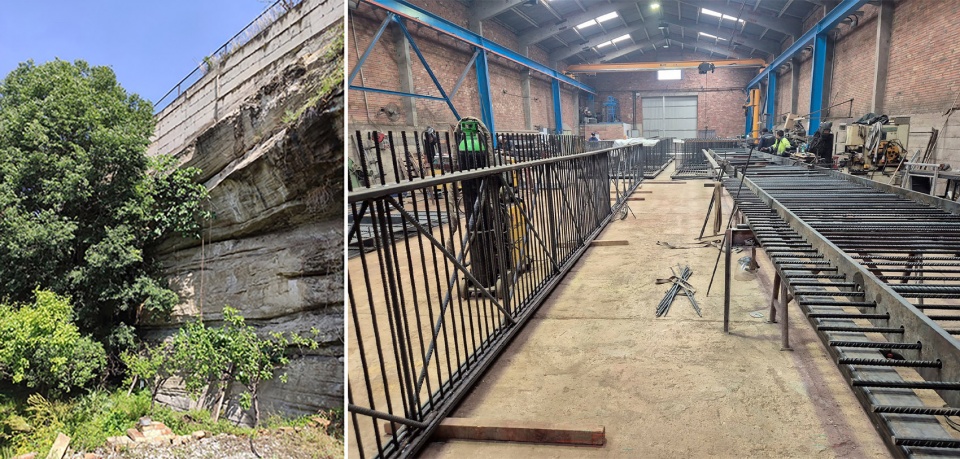
▼施工过程,construction process
▼区位图,location
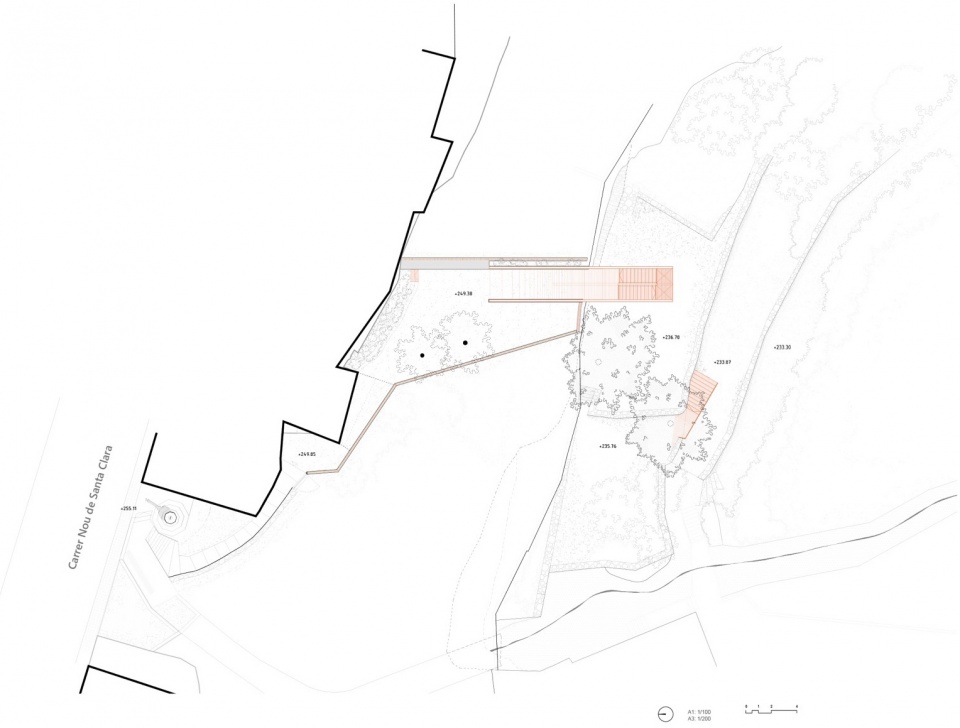
▼平面图,plan
▼立面图,elevation
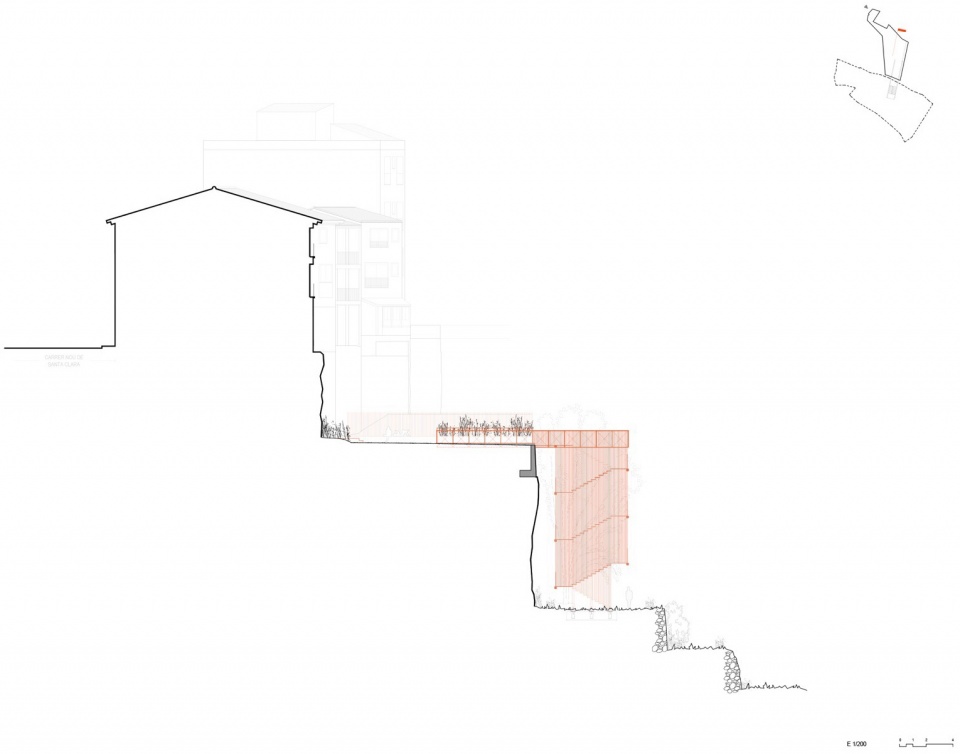
▼立面图,elevation
▼细部详图,drawings of the construction detail
Original name: Escala paisatgística a la Vall del Paradís
English translate: Landscape staircase in la Vall del Paradís
Technical data sheet:
Localtion: Carrer Nou de Santa Clara, núm. 44. 08241 Manresa. Barcelona, Spain.
Start of work: 09/09/2024
End of work: 22/05/2025
Surface: 643m²
Credits: Promoter: Ayuntamiento de Manresa
Architects: Comas-Pont arquitectes (Jordi Comas y Anna Pont)
Structural calculator: Manel Fernàndez
Project management: Comas-Pont arquitectes (Jordi Comas)
Budget control, execution control: Francesc Belart
Construction company: Taller Vidal Amill
Photos: Adrià Goula