卡尔梅旧学校改造项目,西班牙 / Sulkin Marchissio
场地策略与建筑概念 Site Strategy and Architectural Concept
该方案被构想为一次整体性的城市更新行动,在其中,公共空间与建筑被组织为一个统一系统,以整合场地、强化其与城市之间的联系,并创造新的集体使用场景。项目并非仅仅介入既有建筑,而是重新定义建筑、城市留白与流线之间的关系,将建筑理解为服务于集体生活的社会性基础设施。
The proposal is conceived as an integrated urban operation, in which public space and architecture are articulated as a single system capable of integrating the site, strengthening its relationship with the city, and generating new scenarios for collective use. The project does not merely intervene in the existing buildings, but rather redefines the relationships between architecture, urban voids, and circulation, understanding architecture as a social infrastructure in the service of collective life.
▼项目概览,overview of the project
▼建筑外观,building appearance
作为组织核心的公共空间 Public Space as a Structuring Element
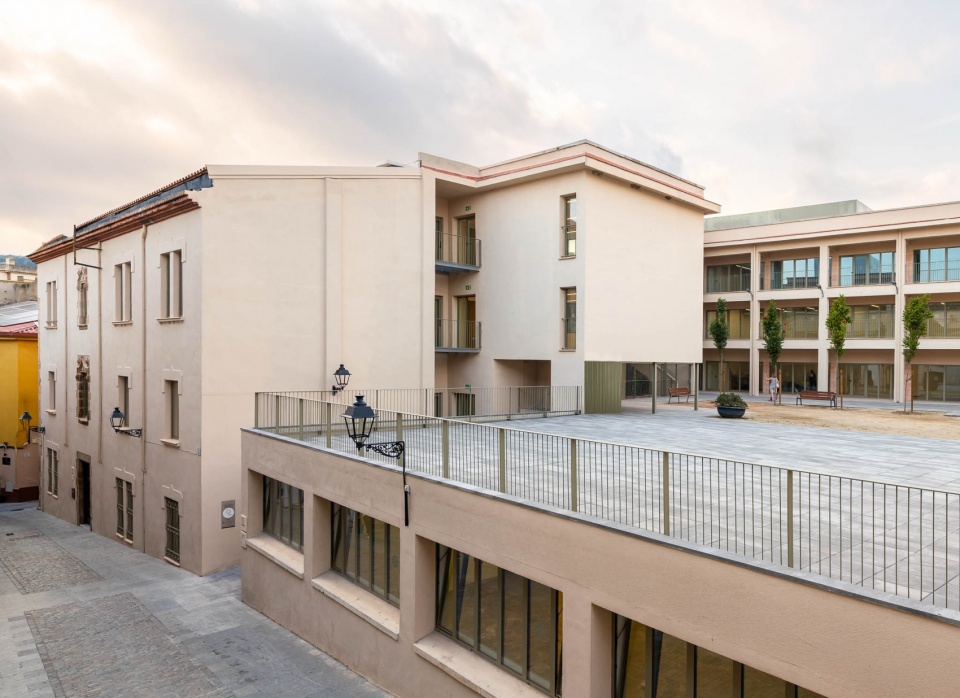
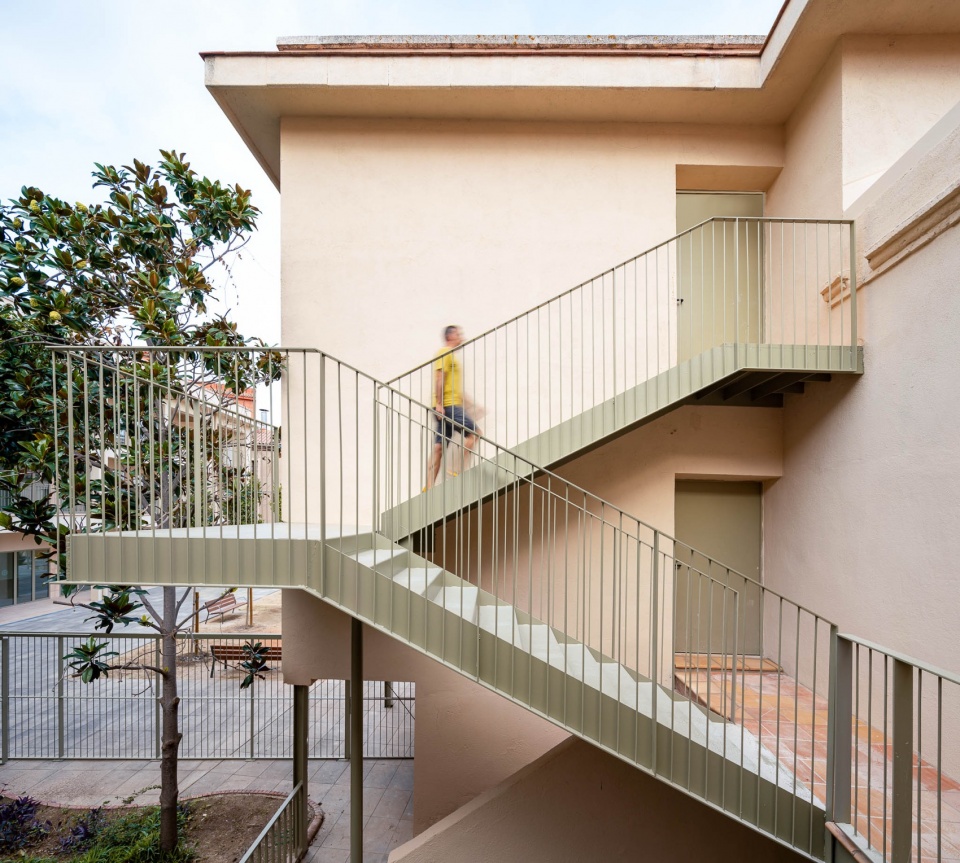
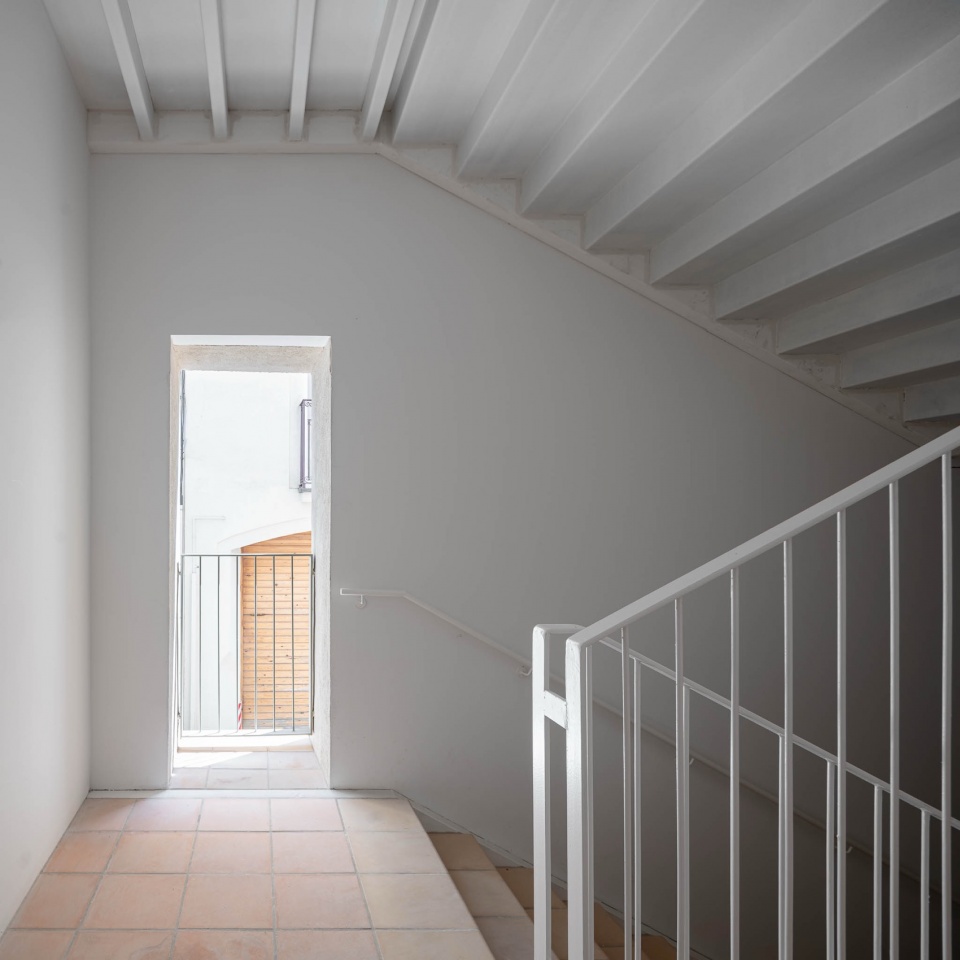
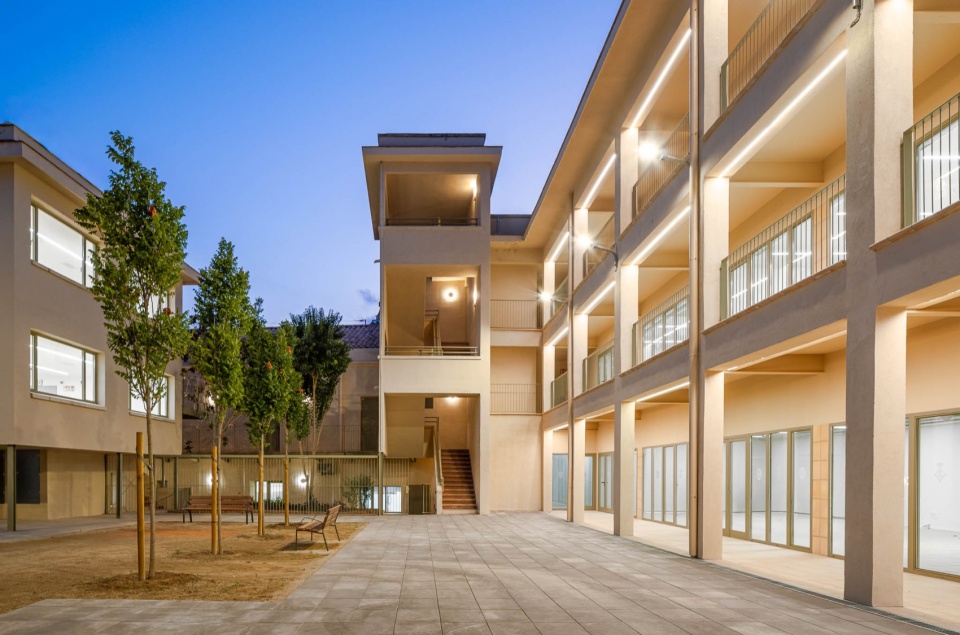
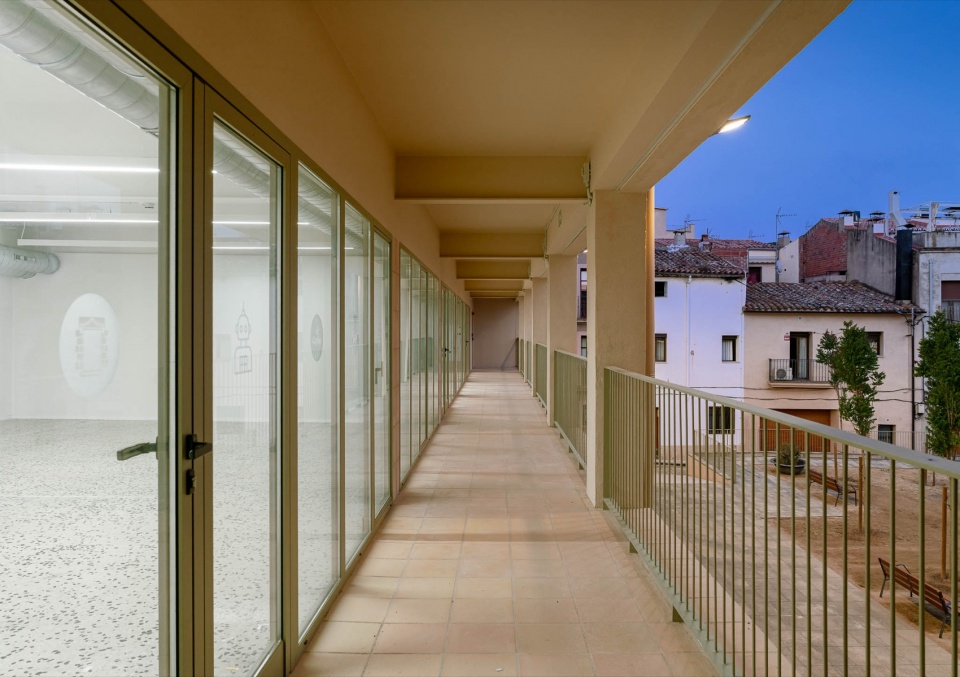
新的公共广场被构想为整个综合体的核心,同时也是城市连接的主要装置。其空间构成强化了来自Bellit街的入口体验,在此建立起一条清晰易读的路径,将礼堂、既有建筑与广场入口串联起来。这一半开放的门槛空间,既作为气候过渡空间,也作为城市过渡空间存在,进一步强化了入口的公共属性以及其作为共享空间的特征。通过调整礼堂墙体高度,项目改善了广场从街道方向的可见性,强调其开放且包容的属性。与此同时,项目通过一条来自Canals街的坡道实现无障碍通行,该坡道直接连接C栋中的工作坊与教室,并自然融入整个综合体的流线系统之中。广场围绕周边建筑的使用功能进行组织,各建筑通过门廊与廊道向广场开放。这些介于室内与室外之间的过渡空间模糊了边界,强化了社会互动,并将建筑活动延伸至公共领域。
▼轴测图,axonometric diagram
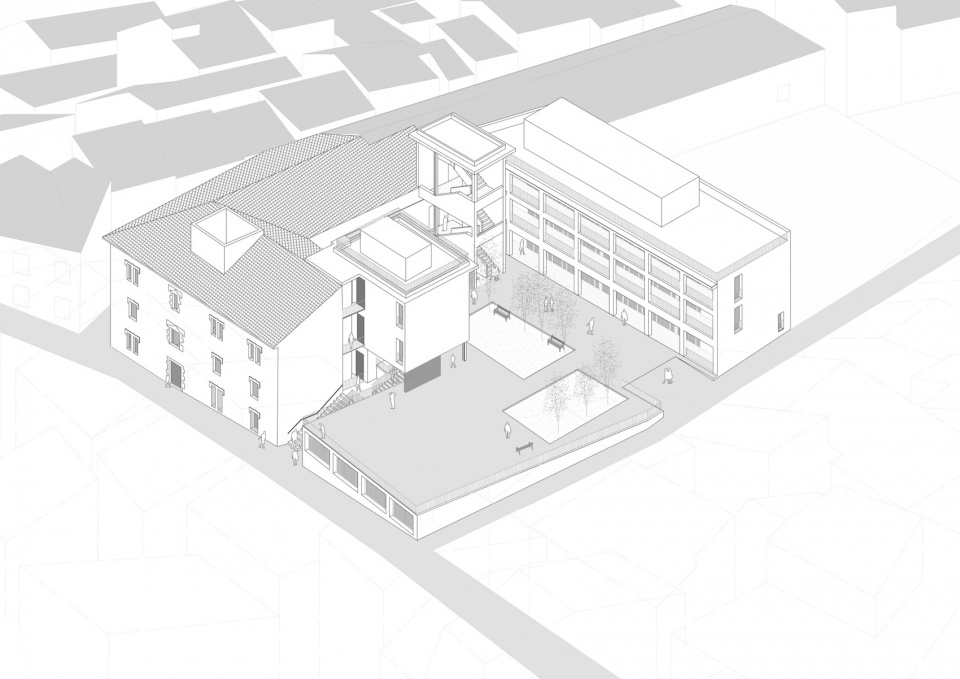
The new public square is conceived as the heart of the complex and as the main device for urban connectivity. Its configuration enhances access from Bellit Street, where a clearly legible route is established, linking the auditorium, the existing building, and the arrival at the square. This semi-covered threshold functions as a space of climatic and urban transition, reinforcing the civic character of the access and its condition as a shared space. The modification of the auditorium wall level improves the visibility of the square from the street, emphasizing its open and inclusive character. Universal accessibility is ensured by means of a ramp from Canals Street, directly connected to the workshops and classrooms of Building C, and naturally integrated into the overall circulation system of the complex. The square is organized in direct relationship with the uses of the surrounding buildings, which open onto it through porches and galleries. These intermediate spaces blur the boundary between interior and exterior, intensifying social interaction and extending building activity into the public realm.
▼门廊,porches
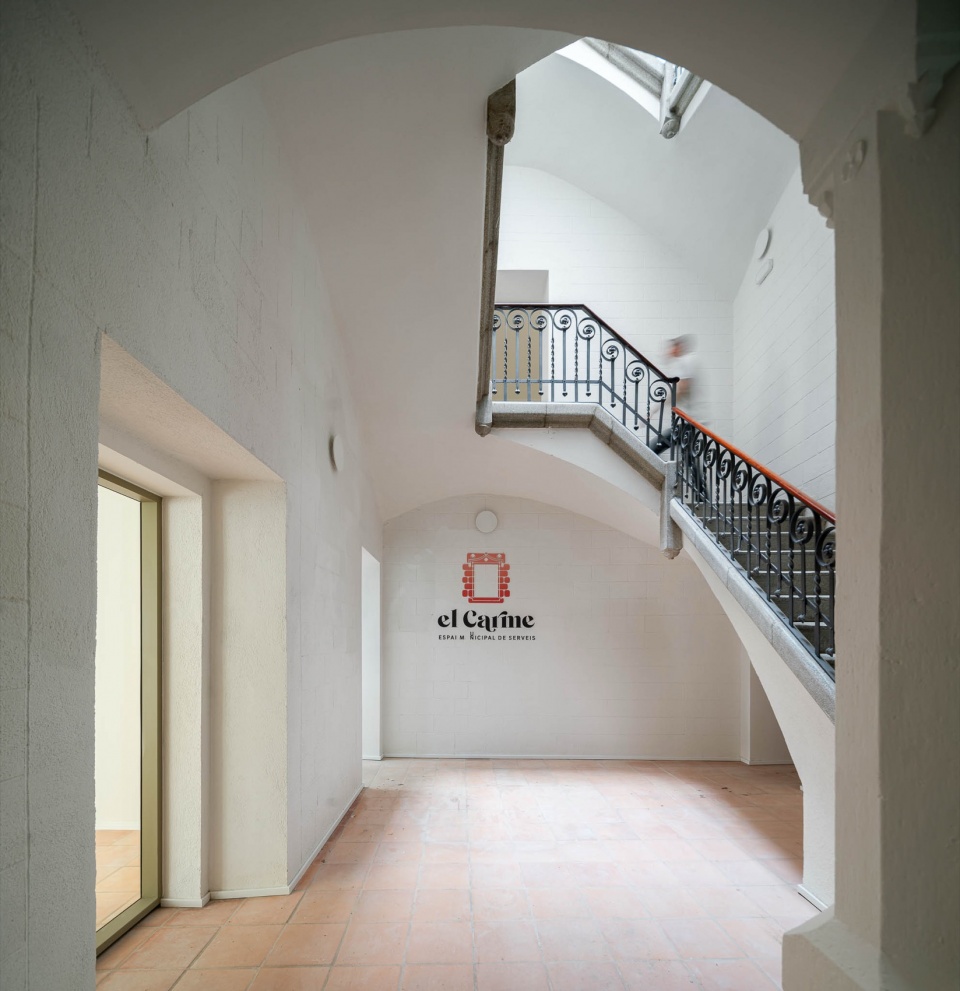
▼楼梯,staircase
作为活动与互动框架的建筑 Architecture as a Framework for Activity and Interaction
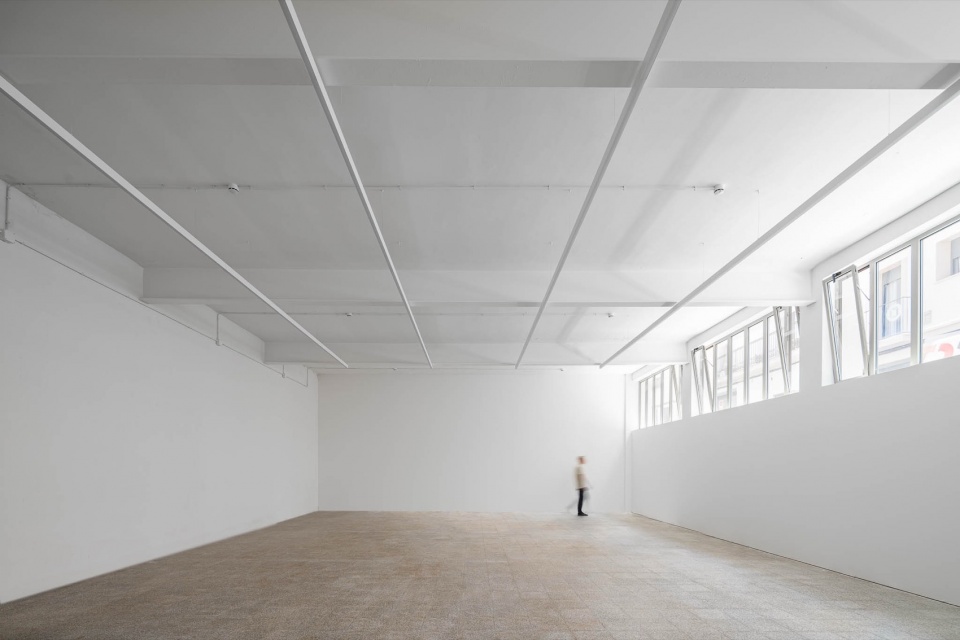
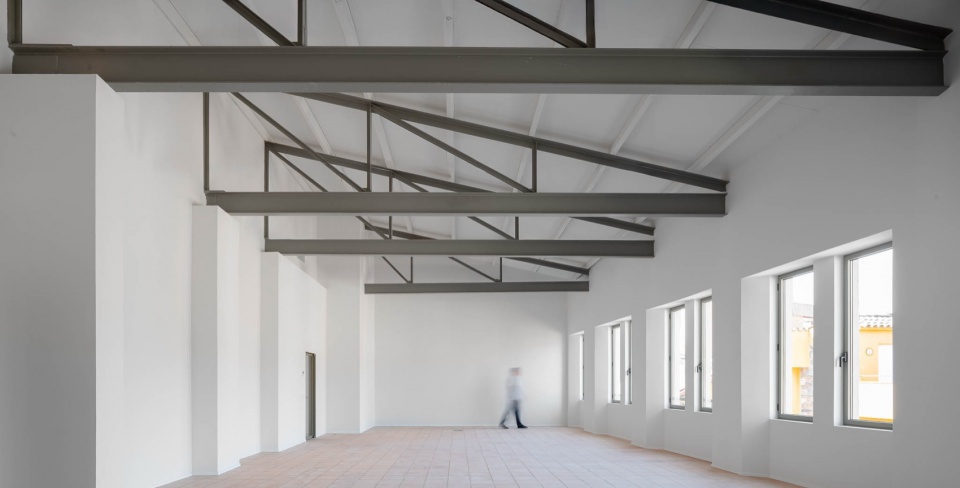
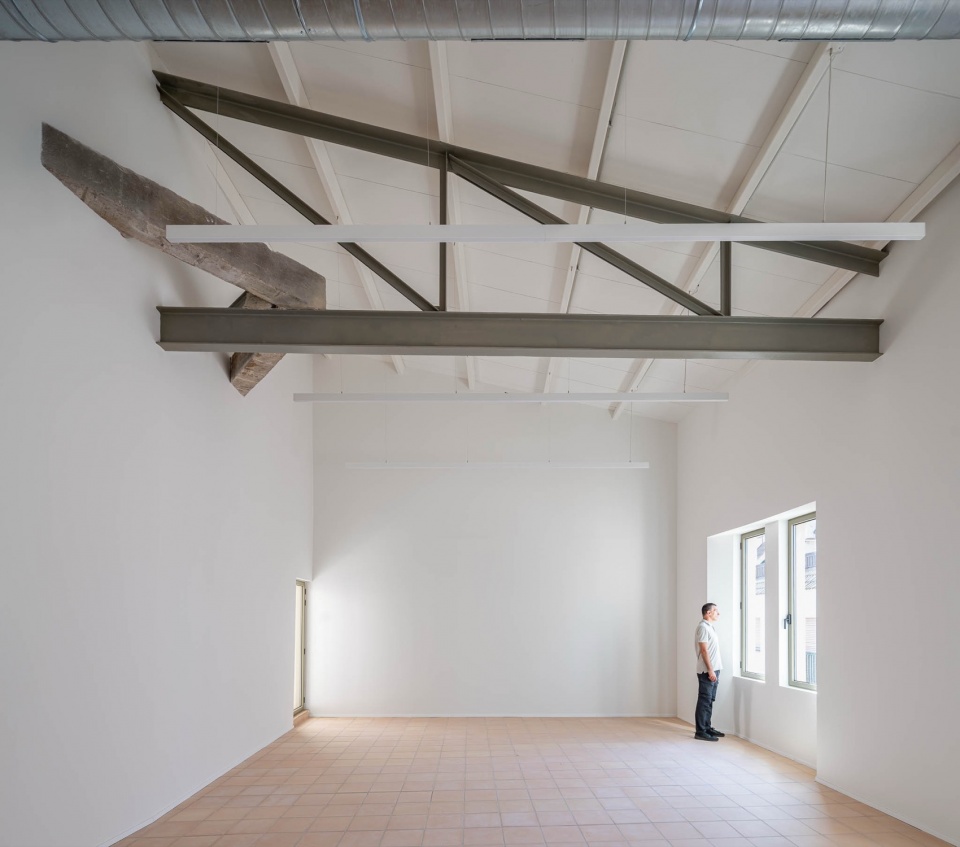
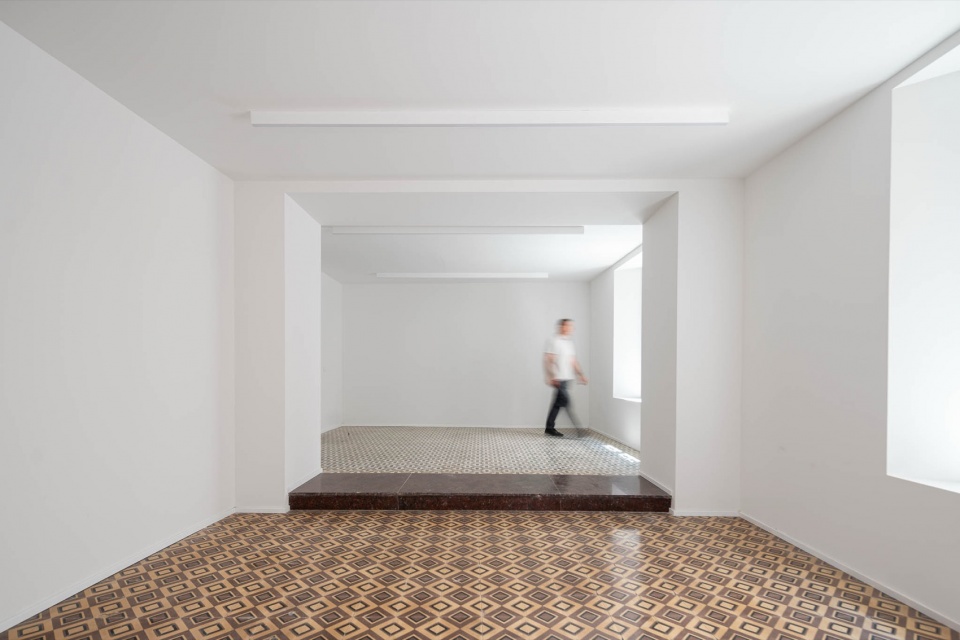
该改造提出了一次深层次的内部空间转型,旨在为建筑提供具备灵活性的空间,以容纳多样化功能并适应未来可能出现的使用场景。A栋内部庭院被重新定义为交流与互动的核心空间,通过首层与二层廊道共同激活,强化整个综合体中的空间与视觉连续性。项目建立在对既有建筑身份特征的尊重之上,保留了原有开口,并完整保护所有受保护构件。改造同时包括屋顶更换、钢结构加固以及围护结构性能提升,并将其视为优化建筑热工性能与室内舒适度的契机。B栋新增体量则引入了一种更为亲密、更具居住尺度感的空间层级,提升了广场品质,并鼓励日常性的公共使用。下层露台的恢复拓展了空间使用的可能性,并在不改变既有结构的前提下,与周边环境建立新的视觉与功能关系。
The intervention proposes a deep interior transformation, aimed at providing the buildings with flexible spaces capable of accommodating diverse programs and adapting to future scenarios of use. The inner courtyard of Building A is redefined as a central space for communication and interaction, activated both at ground level and through the first-floor gallery, reinforcing spatial and visual continuity throughout the complex. The project is based on respect for the identity of the existing building, maintaining its openings and fully preserving all listed elements. The intervention is completed by the replacement of the roof, the reinforcement of the steel structure, and the improvement of the building envelope, understood as an opportunity to optimize thermal performance and interior comfort. The new volume of Building B introduces an intermediate scale, more intimate and domestic, which enhances the quality of the square and encourages everyday appropriation. The recovery of the lower terrace expands the range of possible uses and establishes new visual and functional relationships with the surroundings, without altering the existing structure.
▼室内概览,overview of the interior
功能组织与空间清晰性 Functional Organization and Spatial Clarity
综合体的功能组织建立在明确的使用分层基础之上:首层集中布置最公共、最活跃的功能,而上层则容纳更具特定性的使用内容。这种布局提升了整体空间的可识别性、不同流线的独立性,以及多种活动共存的可能性。
▼轴测图,axonometric diagram
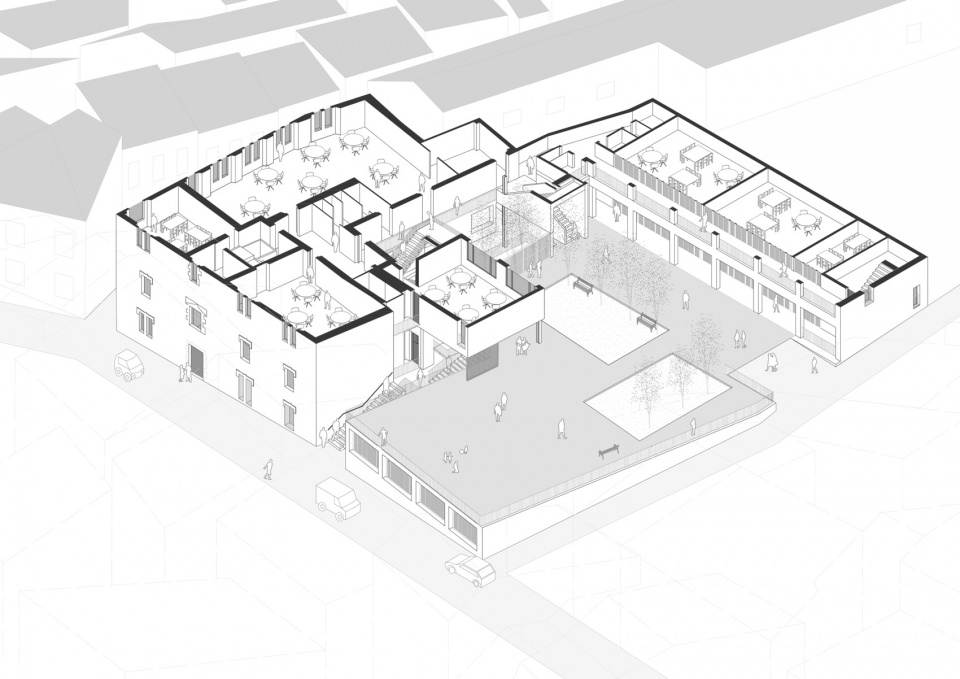
The organization of the complex is based on a clear stratification of uses, with the ground floor concentrating the most public and active programs, while the upper levels accommodate more specific uses. This arrangement enhances the legibility of the complex, the independence of access routes, and the coexistence of diverse activities.
▼夜景,night view
方案优先强调流线清晰性、无障碍可达性以及空间灵活性,将建筑理解为一种能够随时间持续演化、并不断强化其与城市及集体生活关系的开放性框架。
The proposal prioritizes clarity of circulation, universal accessibility, and spatial flexibility, understanding architecture as an open framework capable of evolving over time and strengthening its relationship with the city and collective life.
▼总平面,master plan
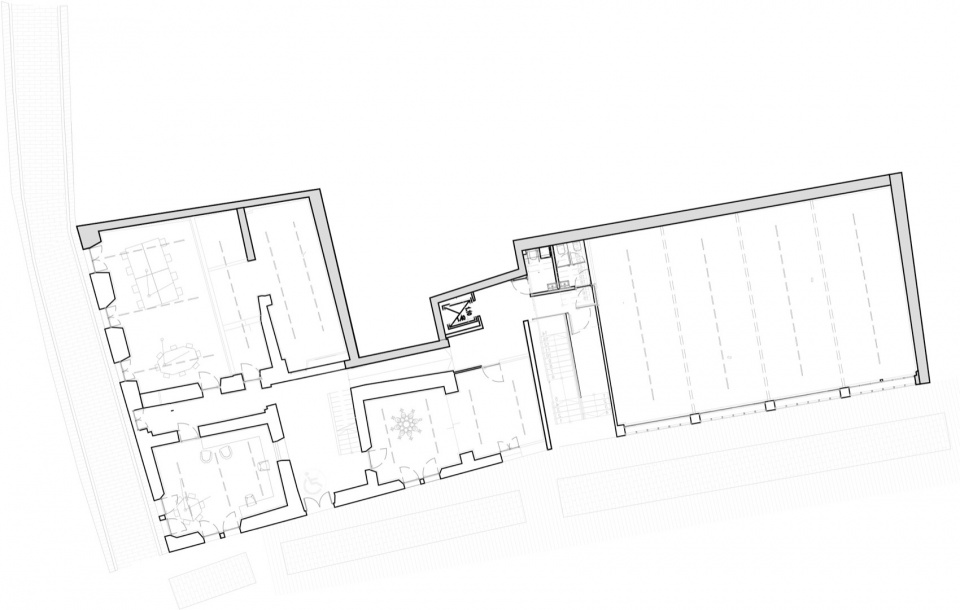
▼首层平面图,ground floor plan
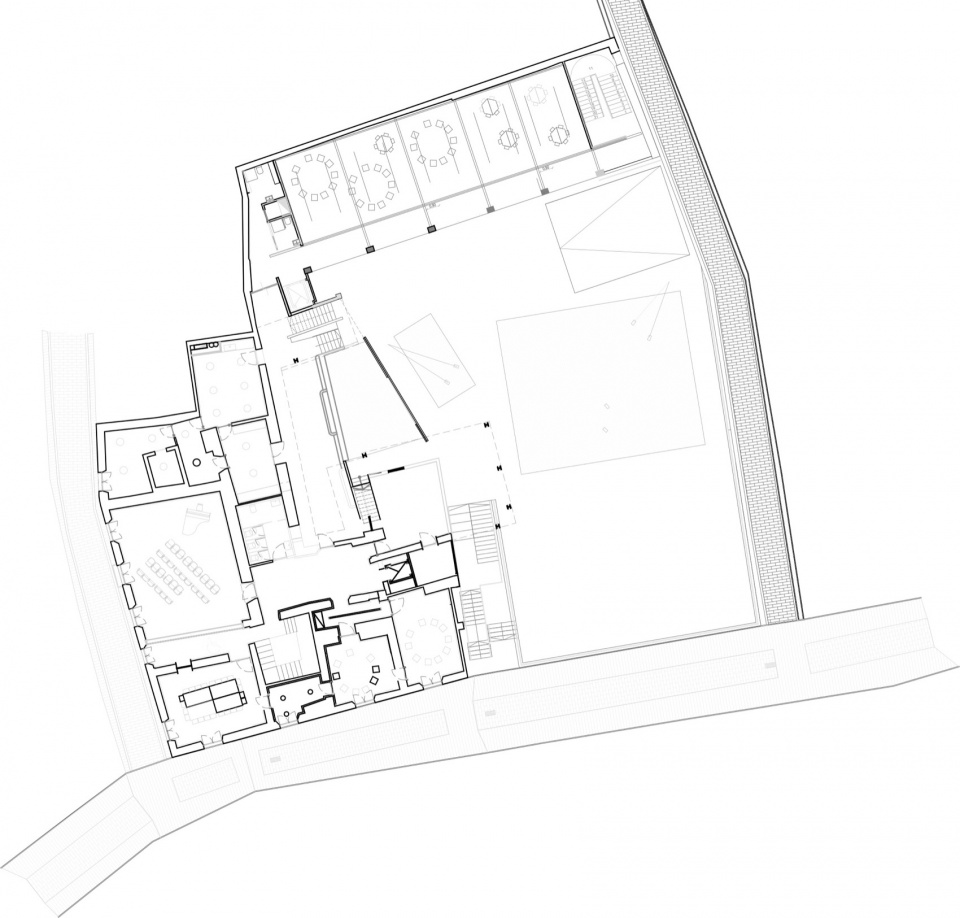
▼二层平面图,first floor plan
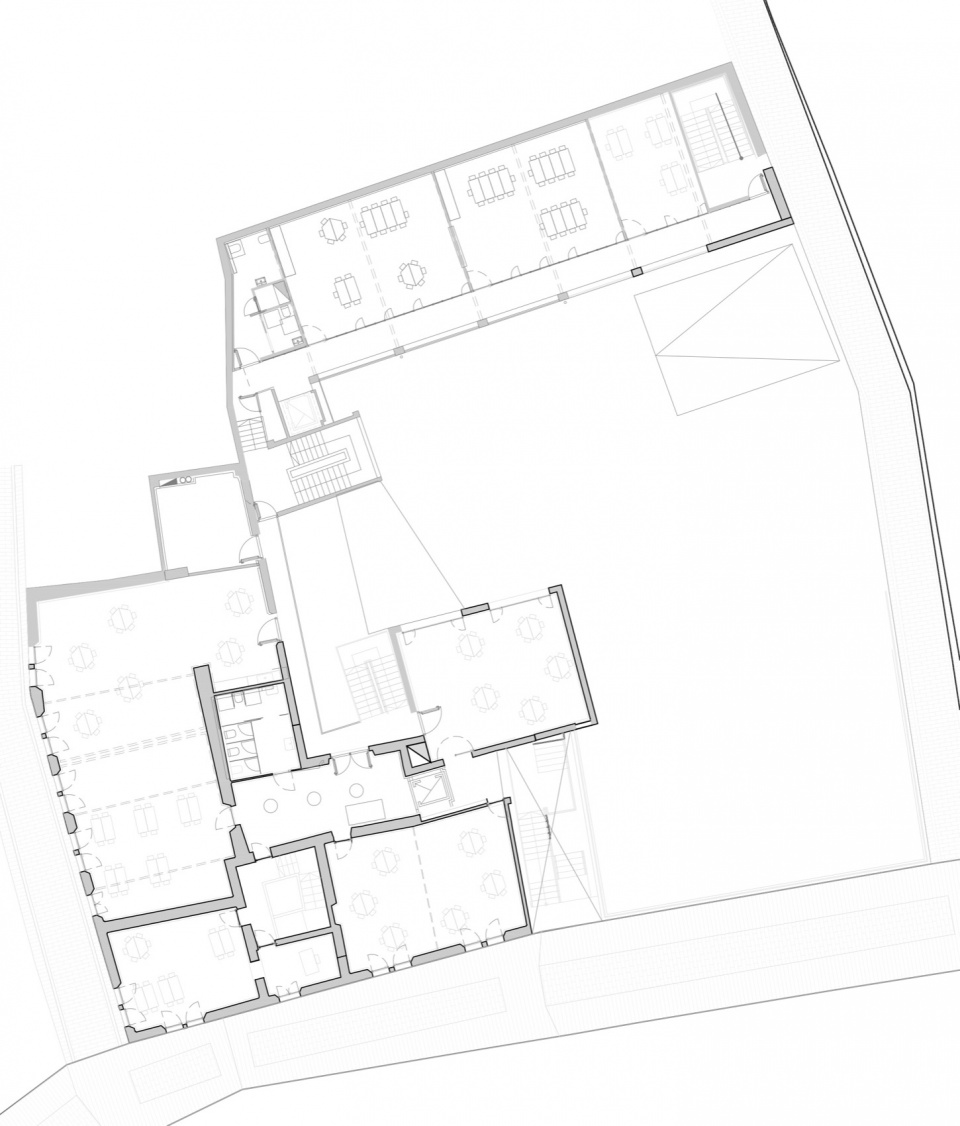
▼三层平面图,second floor plan
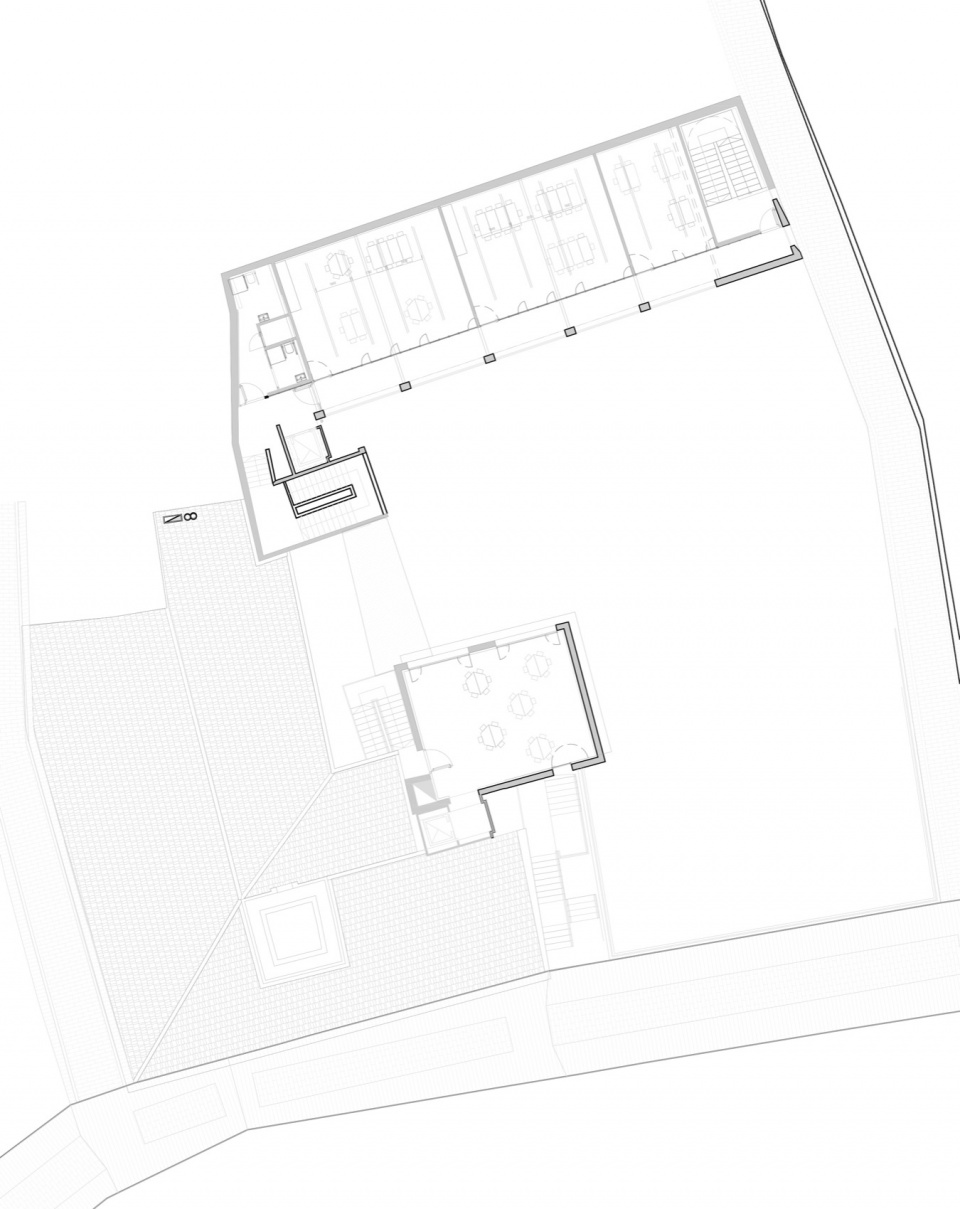
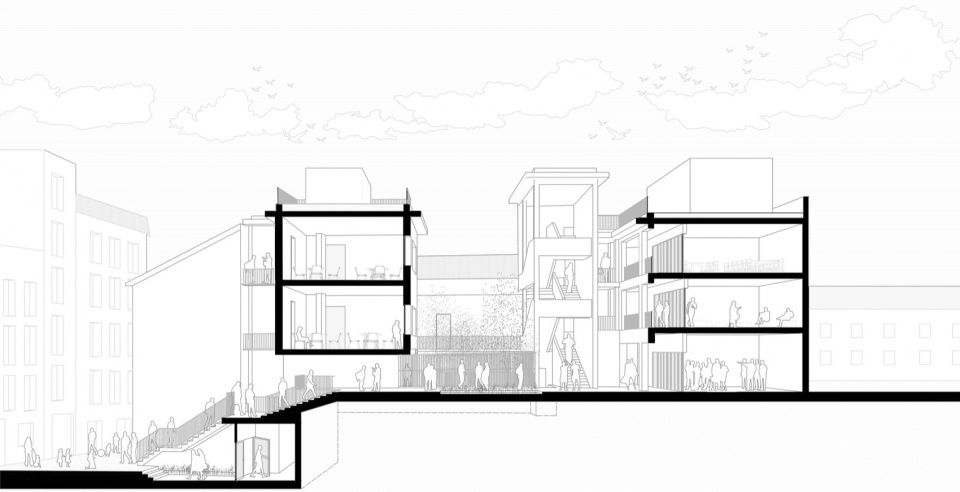
▼剖面,section
REHABILITACIÓ DE L’ANTIGA ESCOLA DEL CARME
Arquitectos autores de Proyecto y dirección de obra: Nestor Sulkin, Walter Marchissio, Fabio Estremera, Juliana Deschamps, Javiera Garvenet
Sitio Web oficina:
Sulkin | Marchissio
https://sulkinmarchissio.com
E-mail contacto oficina: nestor@smar.cat, walter@smar.cat
Ubicación proyecto: Calle Bellit Caldes de Montbui
Año término construcción: 2024/2.025
Superficie construida/Rehabilitados 1.603,37 Sup M2., Sup Cubiertos 319,84(m2), Sup Descubiertos 1.526(m2).
Otros Participantes:
María Tinto, Francisco Carnovale. Técnicos
Construcción: Rehabilitación.
Cálculo Estructural: Static