SaiKhoo住宅,泰国 / Anonym
在住宅设计项目中,以树木作为绝对主角的案例并不常见。而在这座住宅的设计中,常绿大树正是整个构思的起点与核心。业主夫妇决定为不断壮大的家庭建造一座新居时,几乎已经忘记了这块占地1.38英亩、在家族中传承了50年的土地。这片土地历经数代人继承,早已荒置,被树木、植被和湿地重新占据。首次踏勘时,建筑师沿着潮湿且被植物覆盖的小径深入场地,最终来到两棵矗立于场地中央的巨大榕树面前。它们高大挺拔,树冠宽阔而繁茂,景象令人叹为观止。这种庄严与壮美,唯有自然与时间共同塑造才能成就。
It is not very common to see trees take center stage in residential design projects. The perennial evergreens played a crucial role as the protagonists in the genesis of ideas that were later materialized into the design of this house. After making the decision to construct a new home for their growing family, the two owners nearly forgot the 1.38-acre land that has been in their family for 50 years, passed down through multiple generations of descendants. The land had become deserted, as it was inhabited by trees, plants, and wetlands. Upon the first survey, a walk through the damp, plant-covered path led the architects to the two massive banyan trees that stand majestically at the center of the land. These towering giants, with their expansive and beautifully lush canopies, were truly a breathtaking sight. The kind of majesty and beauty that can only be shaped by nature and the passage of time.
▼建筑与自然,Architecture and nature
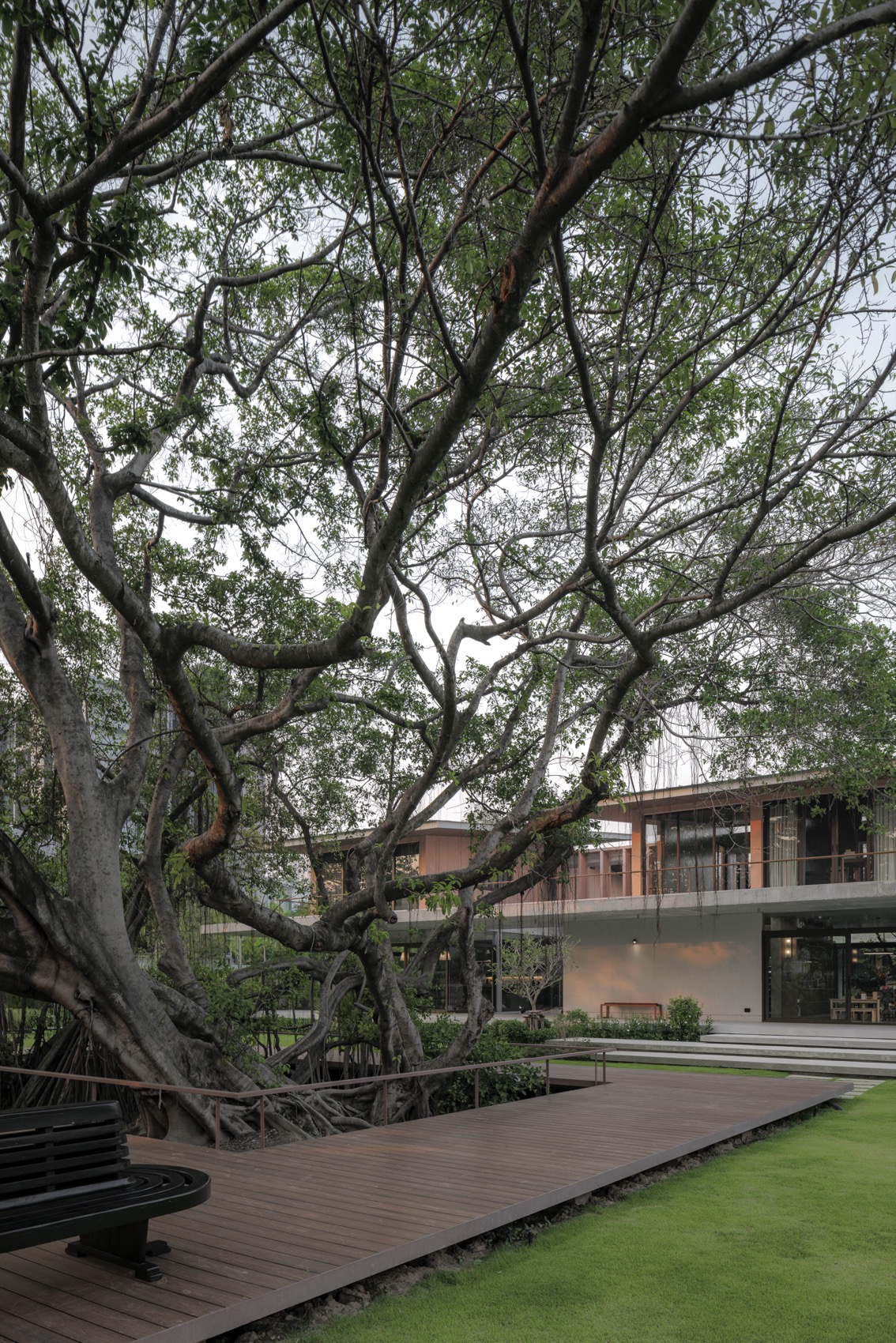
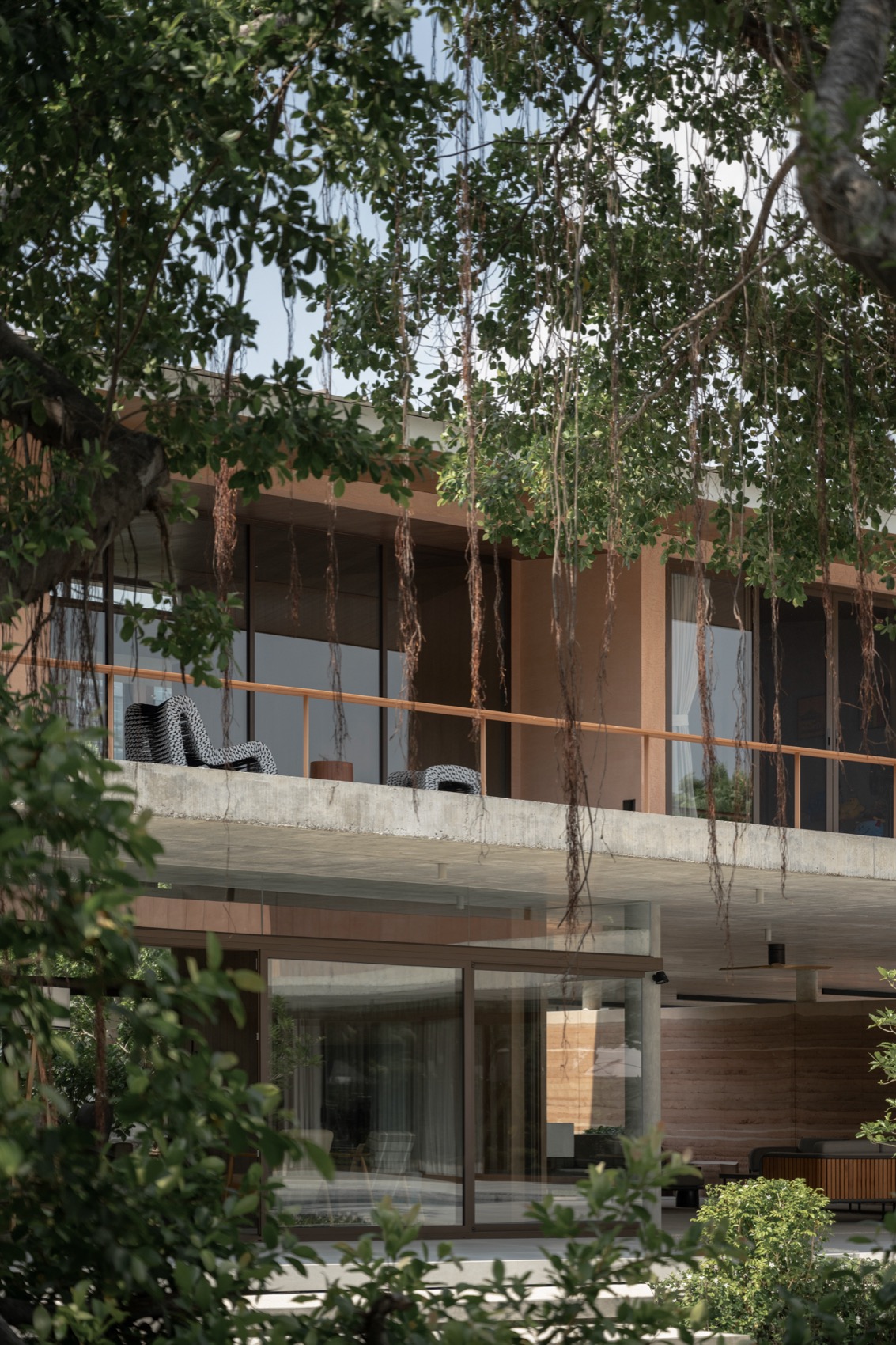
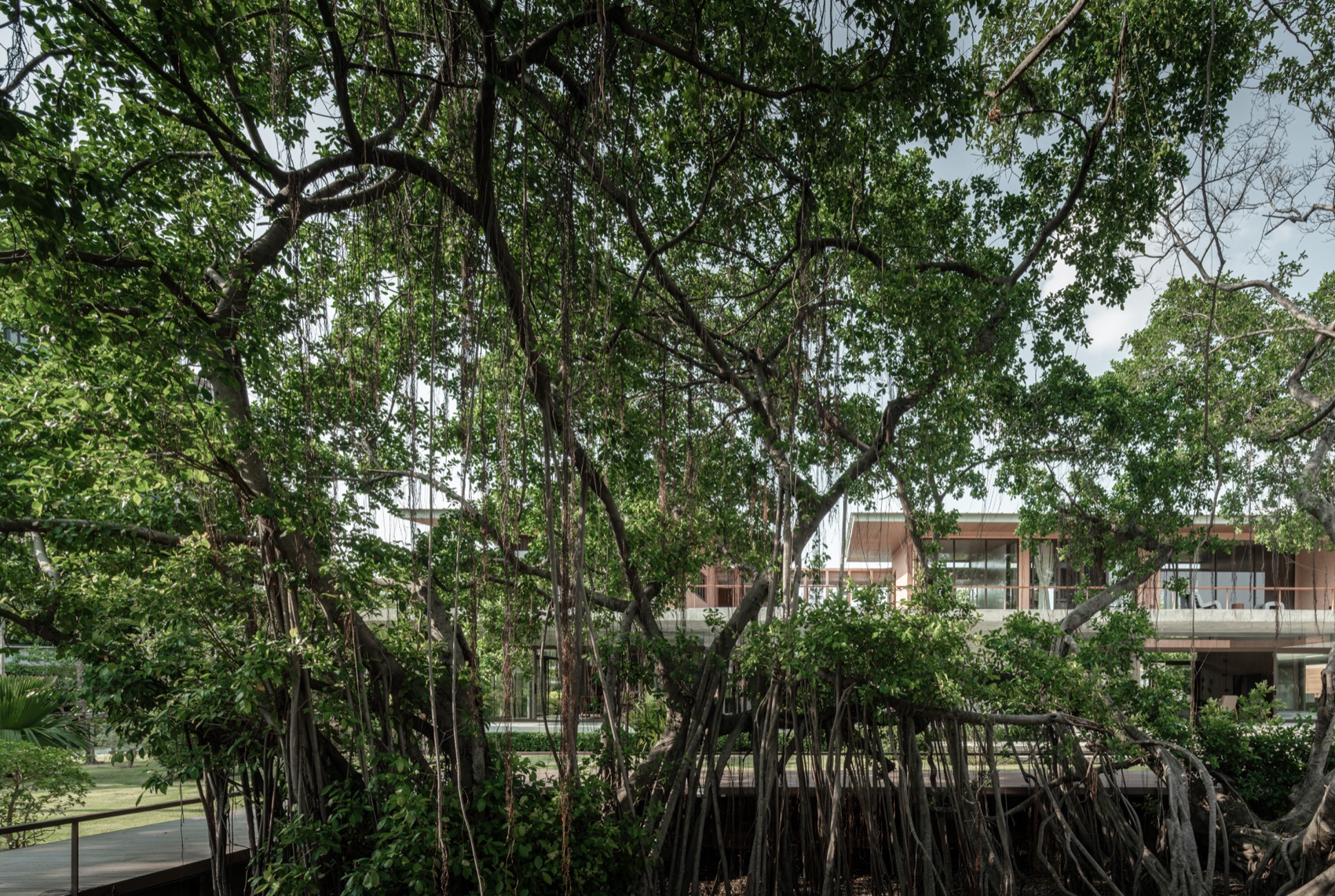
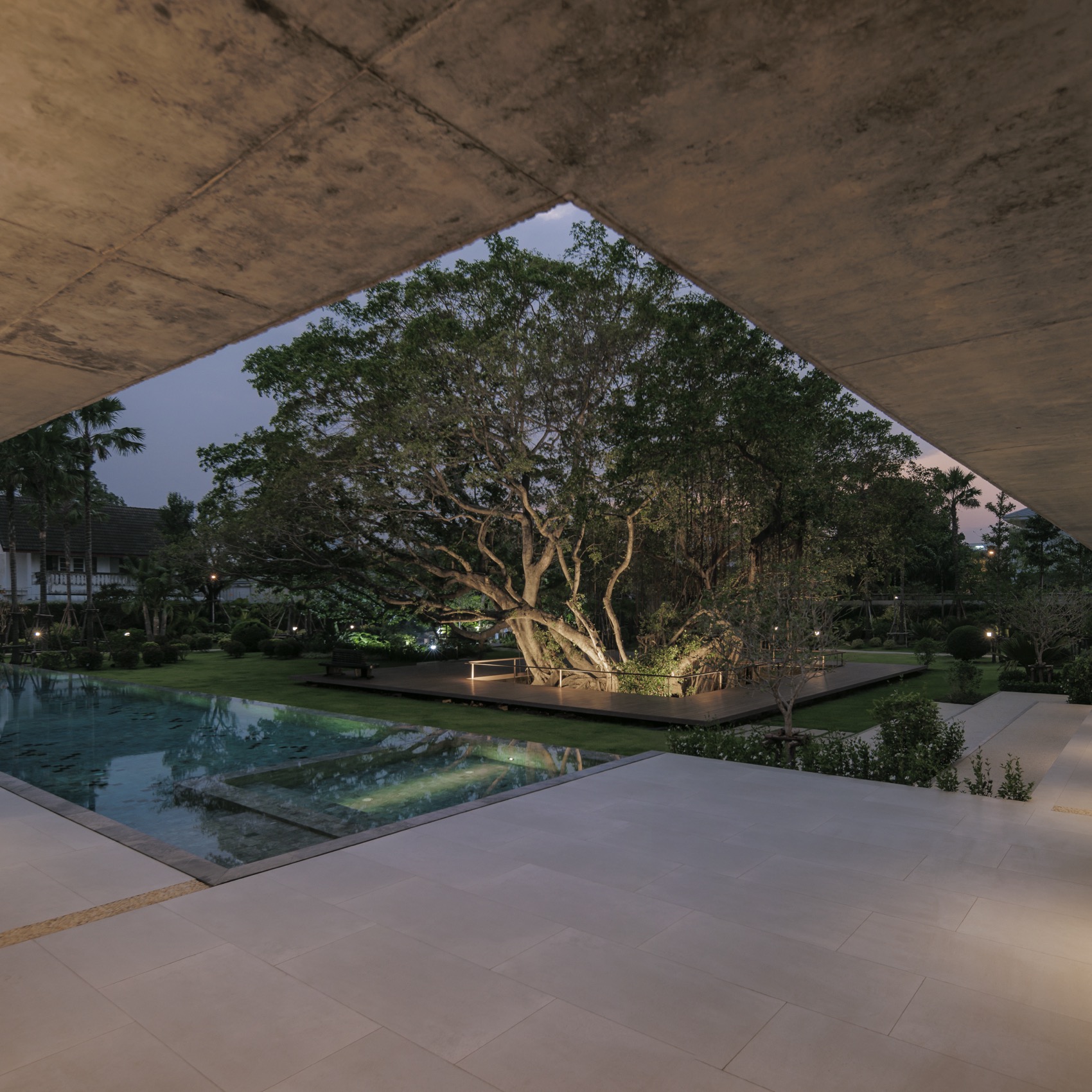
这两棵榕树虽属不同品种,却如同长久相伴的伙伴般共同生长。负责本项目的Anonym事务所主持建筑师Phongphat Ueasangkhomset与Parnduangjai Roojnawate所做的,不仅仅是保留这对珍贵的大树,更是在其周围设计了一圈L形木平台,并以开放式布局组织整个住宅,使家中的每一个空间都能够感受到自然景观的魅力。住宅也因此被命名为“Baan Sai Khoo(双榕之家)”。
The banyan trees belong to different species, yet they have grown together as enduring companions. What Phongphat Ueasangkhomset and Parnduangjai Roojnawate, the two principal architects of Anonym who were assigned to oversee the project, chose to do was not only preserve the pair of large evergreens but also design an L-shaped wooden deck around them and create an open layout that grants every part of the house access to the stunning beauty of nature. That is how the house got the name “Baan Sai Khoo” (twin banyan house).
▼双榕树成为场地核心,Twin banyan trees as the heart of the site
业主此前居住在曼谷市中心的一栋联排住宅中。结婚并组建家庭后,夫妻二人希望建造一座更大、更适合长期生活的新家,为孩子们提供充足的活动与成长空间,让他们能够像自己童年时期一样,在自然环境中自由成长。同时,他们也希望能够更好地照顾年迈的父母,因此决定在新住宅中增设一栋专门为父母设计的独立住宅。这样一来,全家人能够居住在同一处场地中,无需每个周末在两处住宅之间往返奔波才能团聚。
The owners’ previous residence was a townhome located in downtown Bangkok. After getting married and starting a family, the couple agreed to the idea of building a new and larger home that would provide ample space for their children to play and grow, reminiscent of the natural surroundings they had both experienced and cherished during their own childhoods. The couple wanted to ensure that their aging parents were well taken care of, so they decided that the new home would include a separate house specifically designed for their parents. By having everyone nearby, the family no longer needs to commute between two homes every weekend in order to have a family get-together.
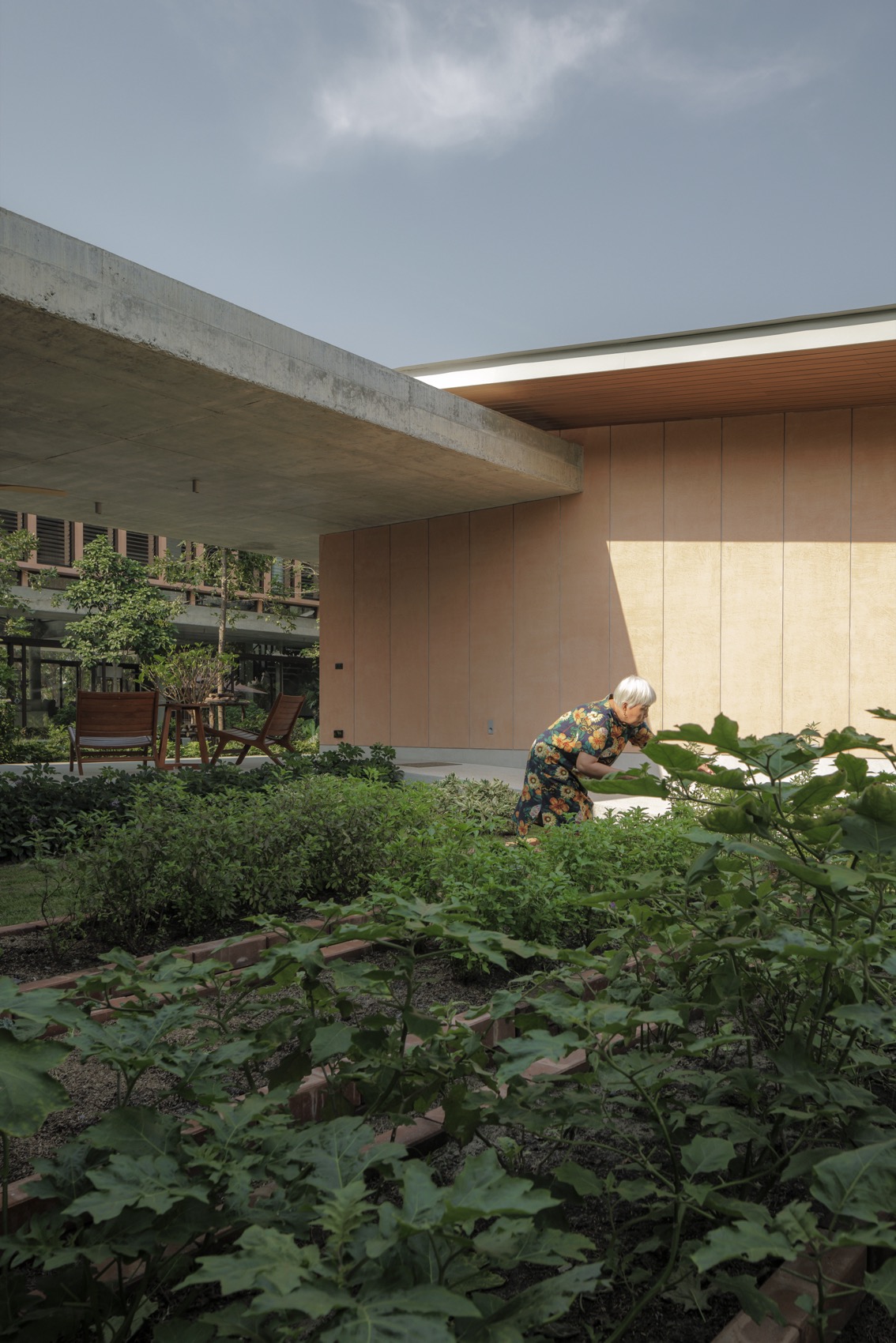
▼长辈日常使用的种植空间,
Planting area for everyday use by the grandparents
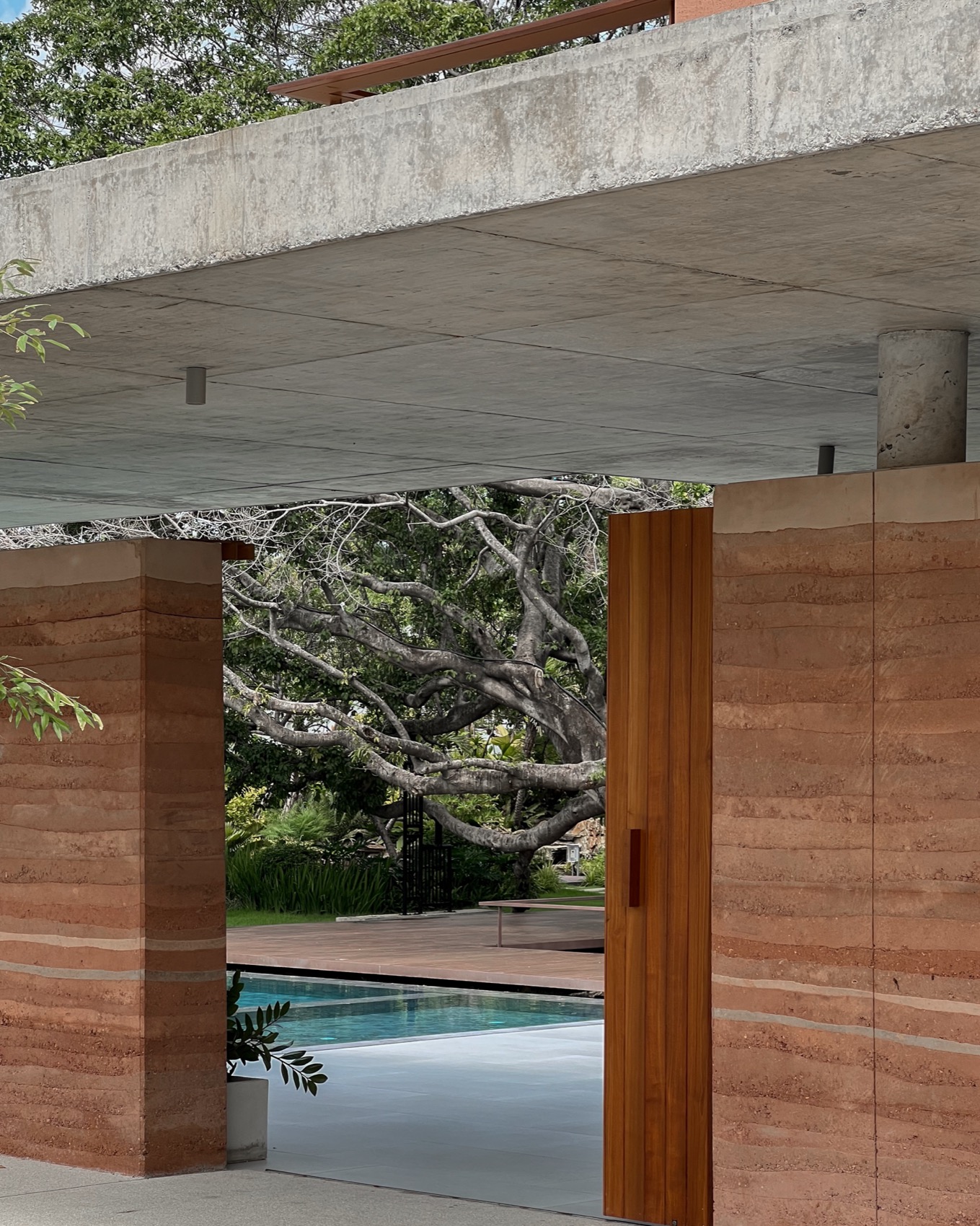
▼入口框景中的泳池景观,
Pool view framed by the entrance
“为了建造这座住宅,我们运来了大量土方来调整地形,因为原有场地地势较低,而且属于湿地区域。我们向建筑师提出,希望家中的每一个空间都具有实际功能,而不仅仅是好看的场所。一个重要的要求是,我们更喜欢自然通风的生活环境,而不是长期待在空调房中。我们热爱自然光,也喜欢空气自由流动。我们希望能够在房子里自由穿行,而不必为了维持空调冷气不断开关房门。我们也希望拥有即使下雨时仍能坐在户外而不会被淋湿的角落;希望孩子们有足够大的空间自由奔跑;希望拥有可以进行日常慢跑和骑行活动的场地;甚至连花园都考虑到了轮椅通行的需求。”
“A significant amount of soil was brought in to adjust the terrain for the construction of this home. This was necessary because the original ground level was considerably low and consisted of wetlands. We told the architects that we wanted each room in the house to have practical functions, not just beautiful-looking space. One important requirement was that we both preferred living spaces with natural air rather than an air-conditioned room. We love the presence of natural light and the circulation of fresh air. We like to be able to move through different parts of the house without having to repeatedly open and close doors in order to keep the cool air inside an air-conditioned room. We would love for our house to have corners where we can sit outside even when it’s raining without getting wet. We wanted spaces for our kids to freely run around, as well as a large enough area for us to do our daily jogging and cycling. We even thought about having a garden that is wheelchair-accessible.”
▼双层通高的起居空间,Double-height living space
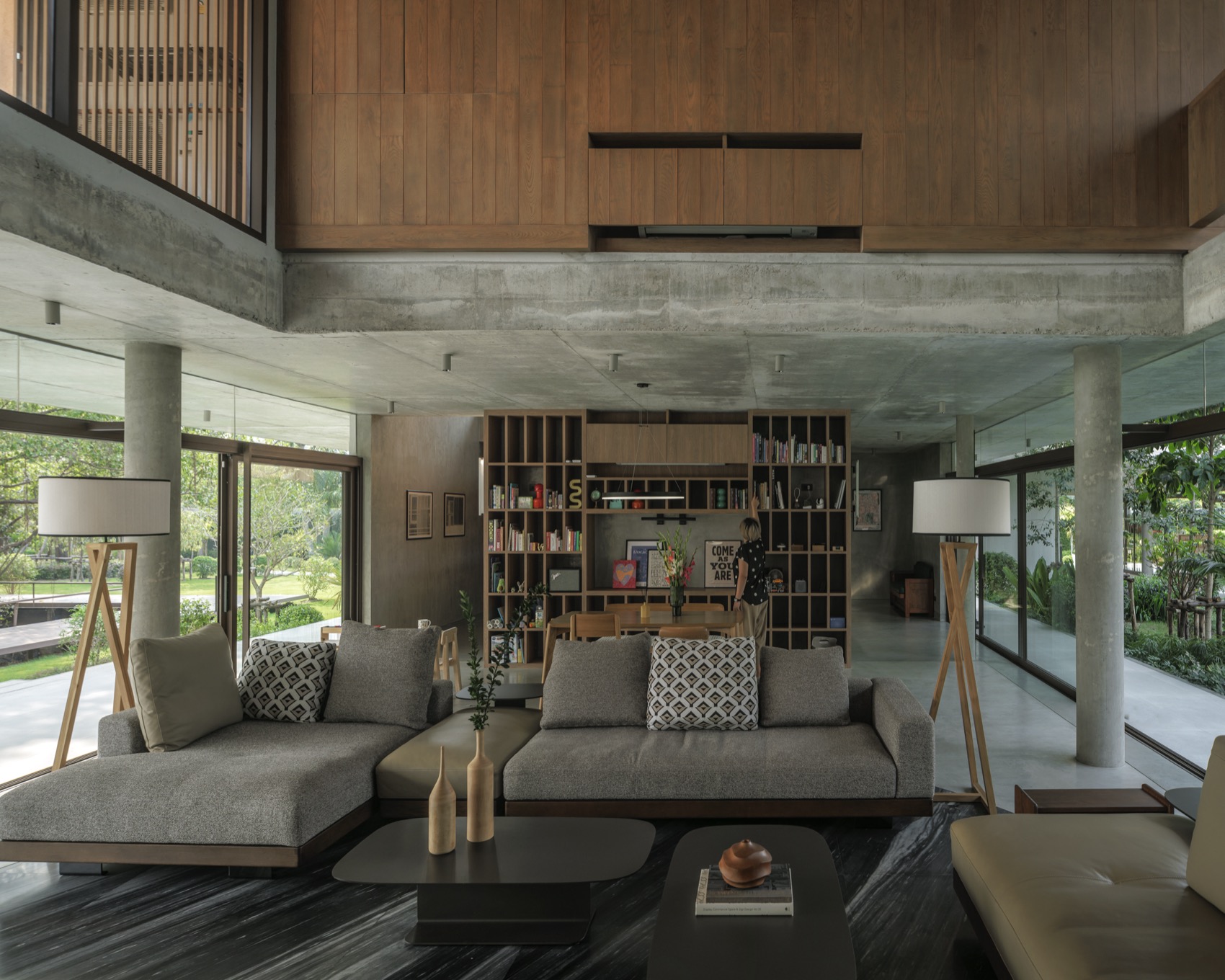
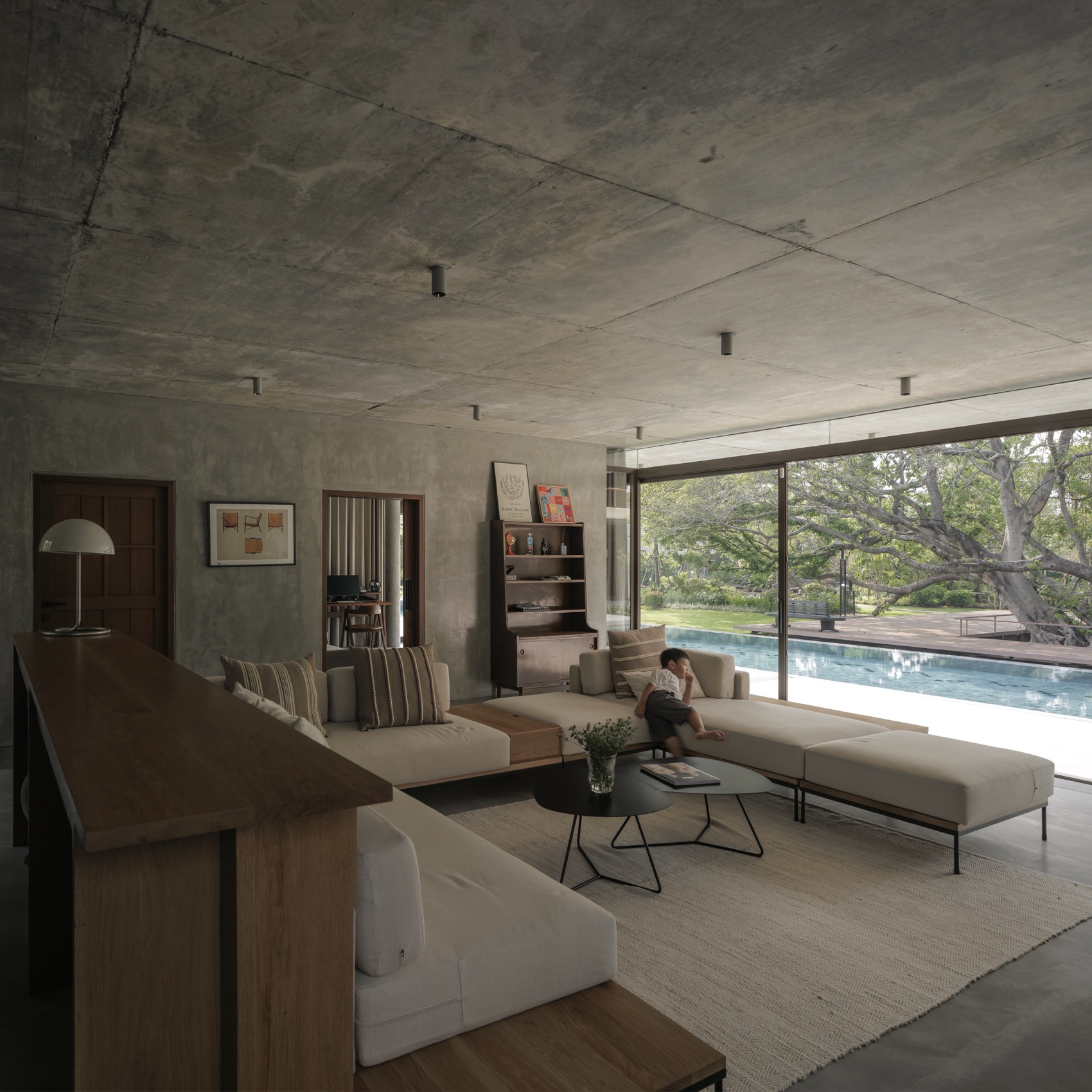
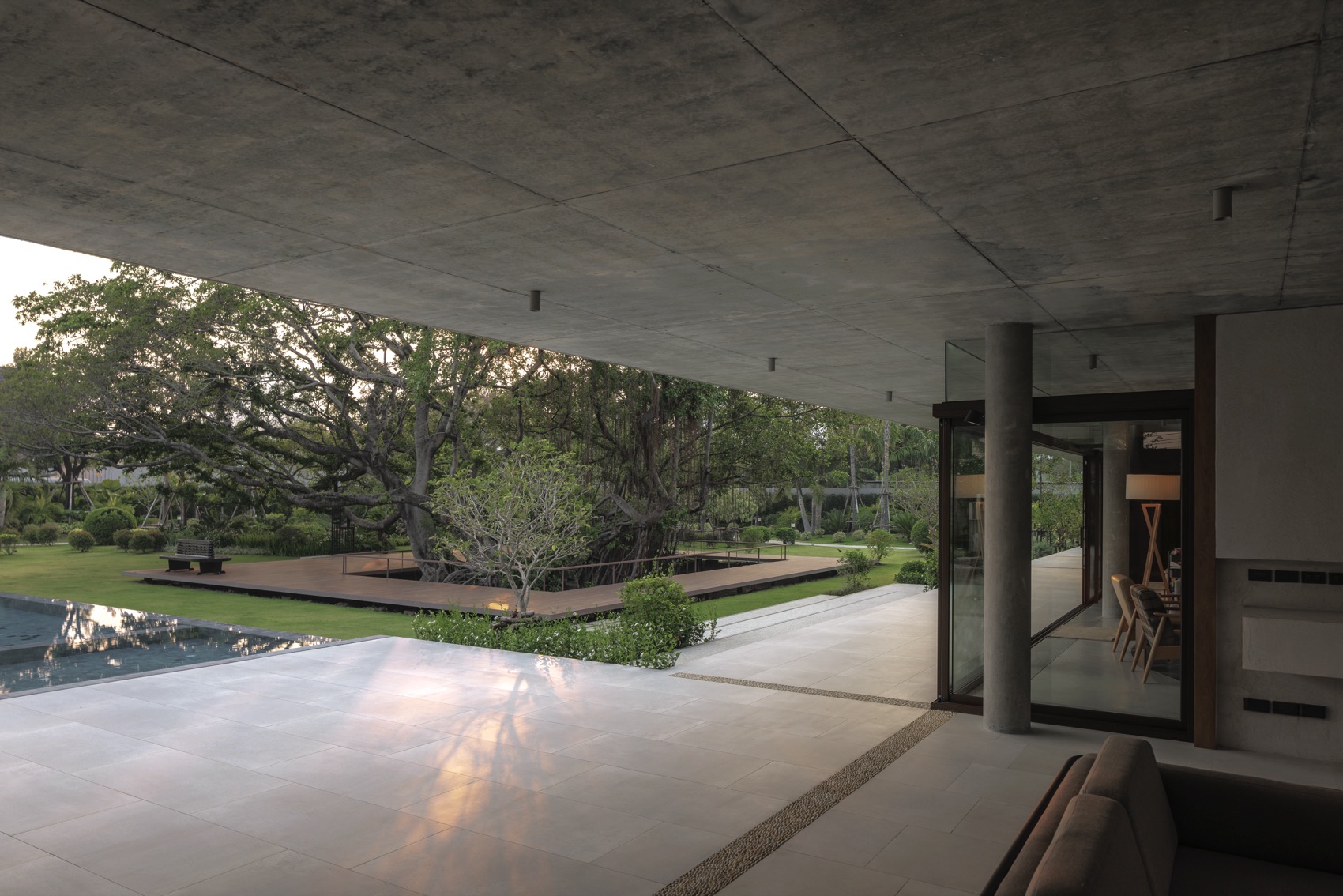
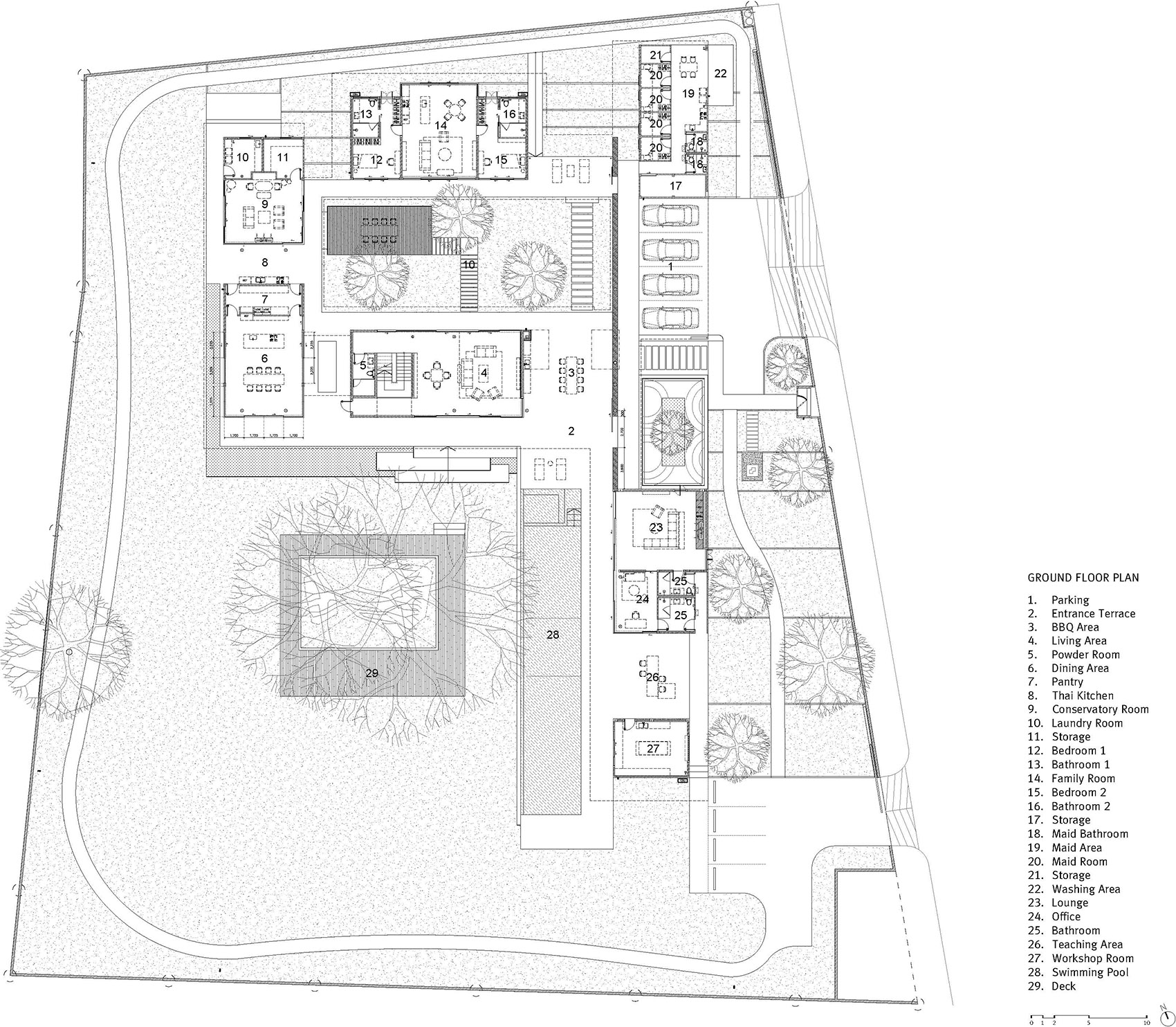
L形平面较短的一翼被规划为男主人专属区域,包括办公室与工作坊。此外,这里还设置了一处半户外空间,用于教授私人潜水课程。该区域与一座长25米、深3米的泳池平行布置,并拥有独立的出入口,以确保位于长边一侧主要生活空间的私密性。建筑师将主起居空间设计为挑高双层通高空间,使其在视觉上与二层的另一间办公室保持联系。这样的设计让业主即使身处不同区域,也能看到孩子和父母在一层活动的情景。两栋建筑之间通过烧烤区和宽敞露台相连接。露台摆放了半户外家具,并覆盖在大型屋檐之下,在遮挡雨水和强烈日照的同时,依然保持舒适自然的空气流动。
The shorter section of the house’s L-shaped layout is dedicated to the male owner’s private quarters, which include his office and workshop. Additionally, there is a semi-outdoor space where he teaches private diving classes. This area runs parallel to the 25-meter-long and 3-meter-deep pool. This part of the house has its own separate entrance and exit to ensure privacy for the main living area, which is situated on the elongated side of the layout. The architects have designed the main living space with a double-volume ceiling, which provides visual access to another office on the upper floor. This design allows the owners to see their sons and parents hanging out on the first floor, even if they are in different parts of the house. The two buildings are connected by a barbecue area and a spacious patio furnished with a set of semi-outdoor furniture and designed to be situated under a canopy that provides protection from rain and excessive sunlight while still allowing for a pleasant natural airflow.
▼面向泳池的半户外用餐区,Semi-outdoor dining area facing the pool
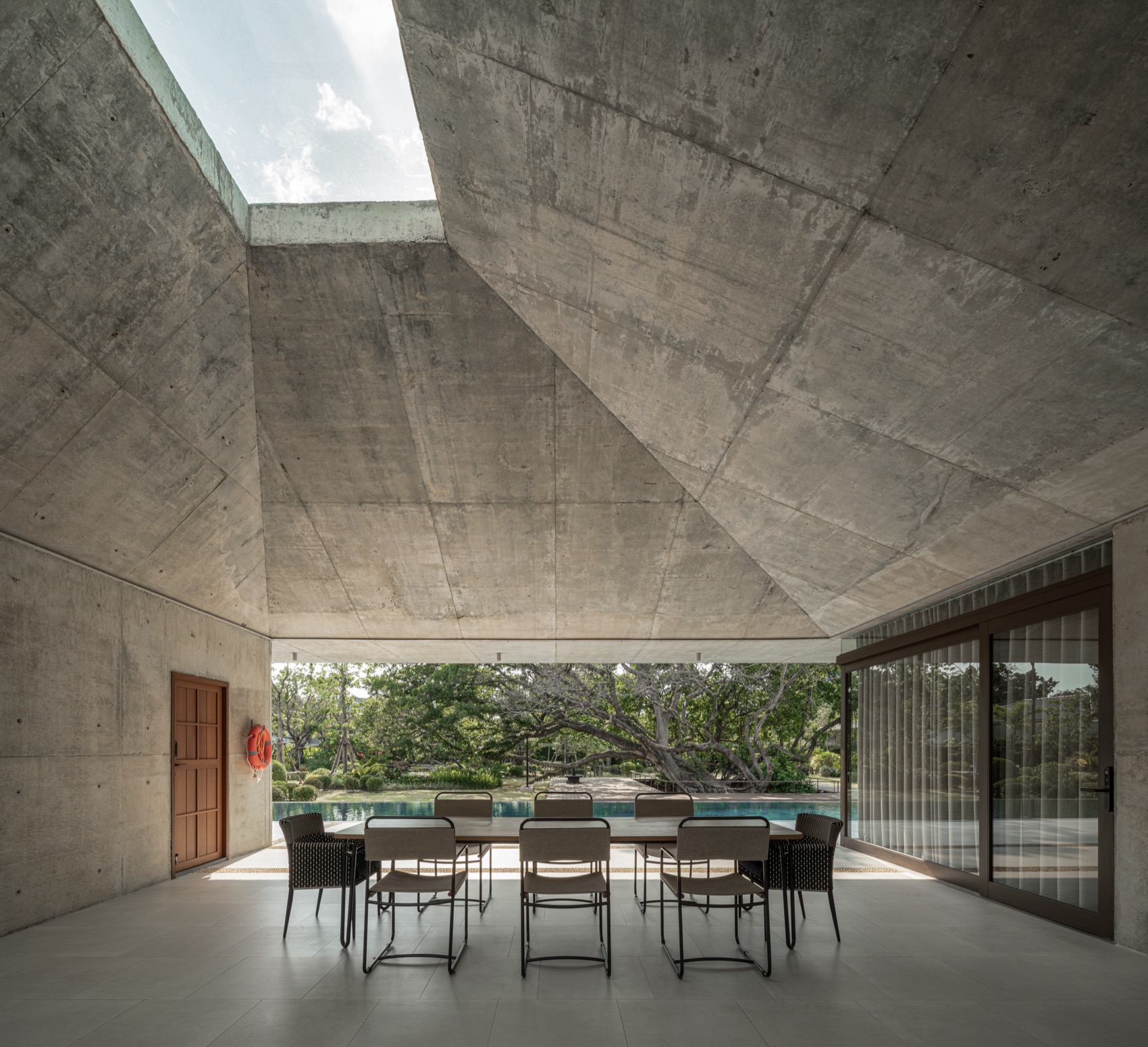
建筑师并未将所有功能整合进单一建筑体量,而是在两栋建筑之间刻意留出空间,形成一处小型庭院。这个庭院既连接又区隔了起居区与餐厅。两栋建筑之间的缝隙同时承担着多重功能:既作为通风口加强自然空气流动、排出热空气,也提供了一处舒适的户外休憩角落。与常见被大量绿植填满的庭院不同,这里在铺满白色碎石的地面中央仅种植了一棵姿态优雅的橄榄树,营造出清凉且富有个性的景观氛围,并为整体生活空间增添了一丝极简气质。
Instead of merging the functional spaces into a single structure, the architects made the decision to create a small courtyard by leaving a space between the two buildings. This courtyard serves the purpose of connecting and separating the living and dining areas at the same time. The space between buildings serves multiple purposes. It acts as a vent that helps enhance natural ventilation and expel hot air. Additionally, it provides a small corner that functions as a cozy outdoor lounging area. In contrast to typical courtyards filled with abundant greenery, this one features a striking olive tree positioned gracefully in the center of the white-gravel floor. This arrangement creates a cool and distinctive landscape, infusing the living space with a touch of minimalism.
▼室内空间与花园景观相连,
Interior space connected to the garden landscape
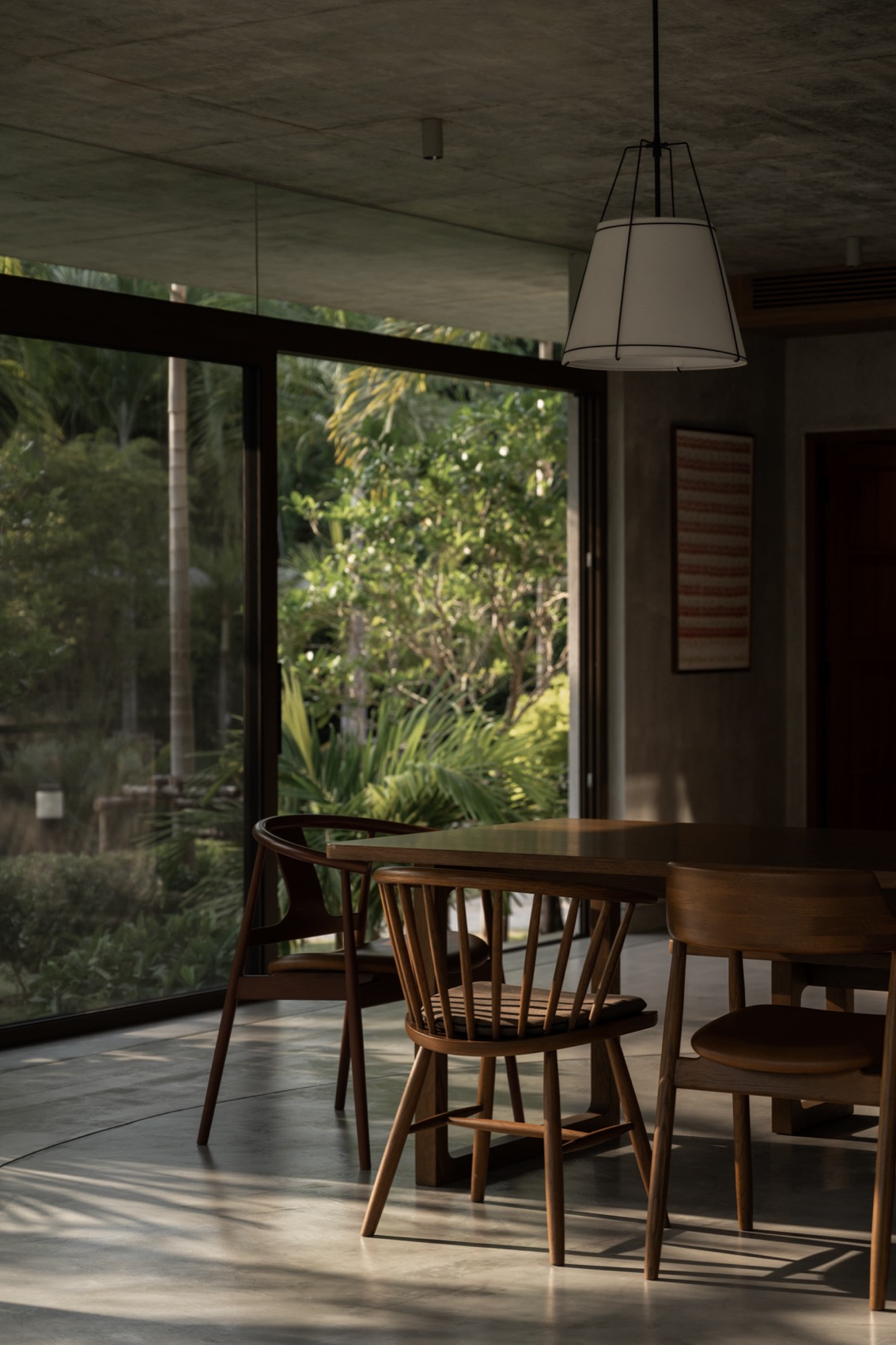
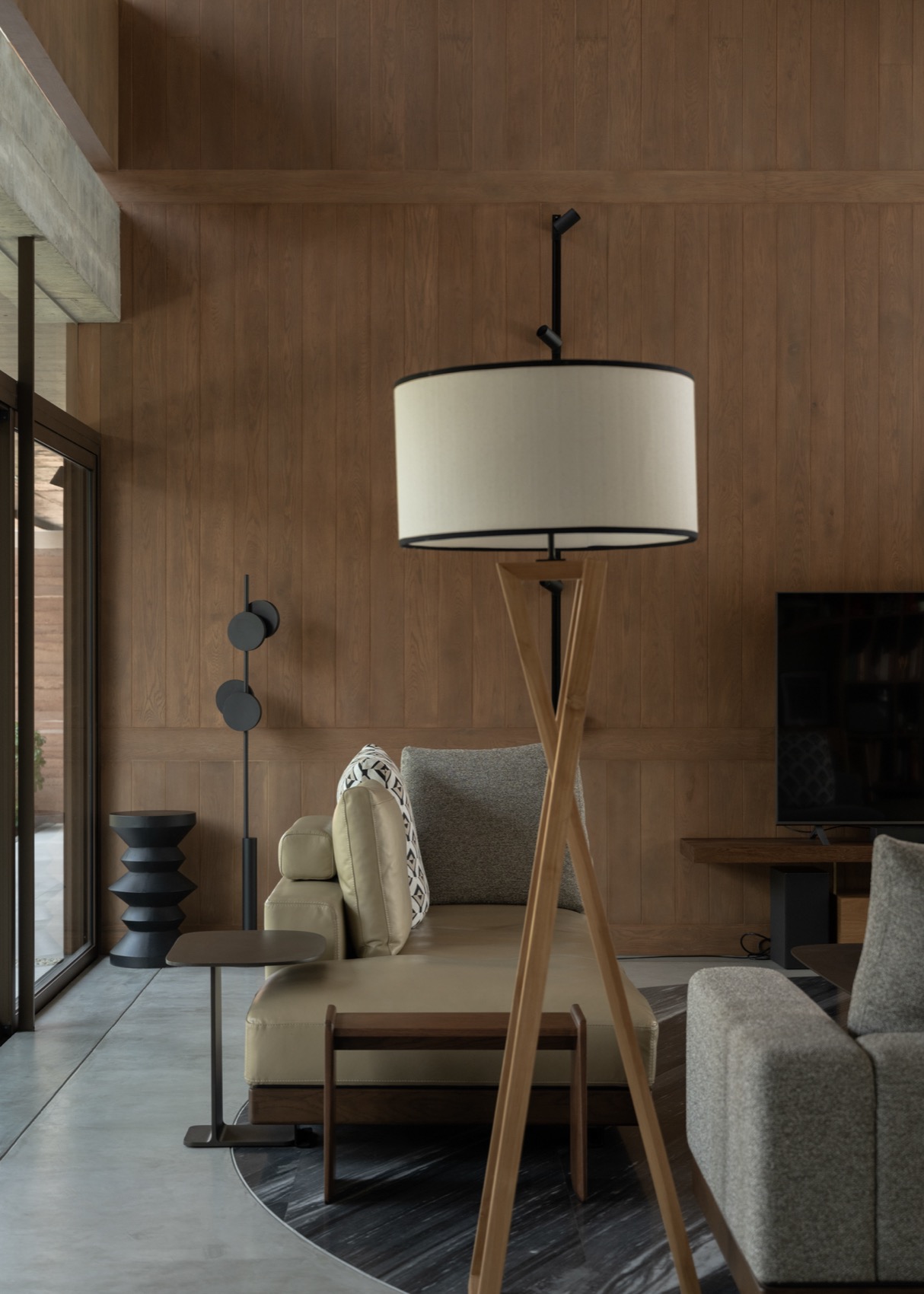
▼木质家具营造温暖氛围,
Warm atmosphere created by timber furnishings
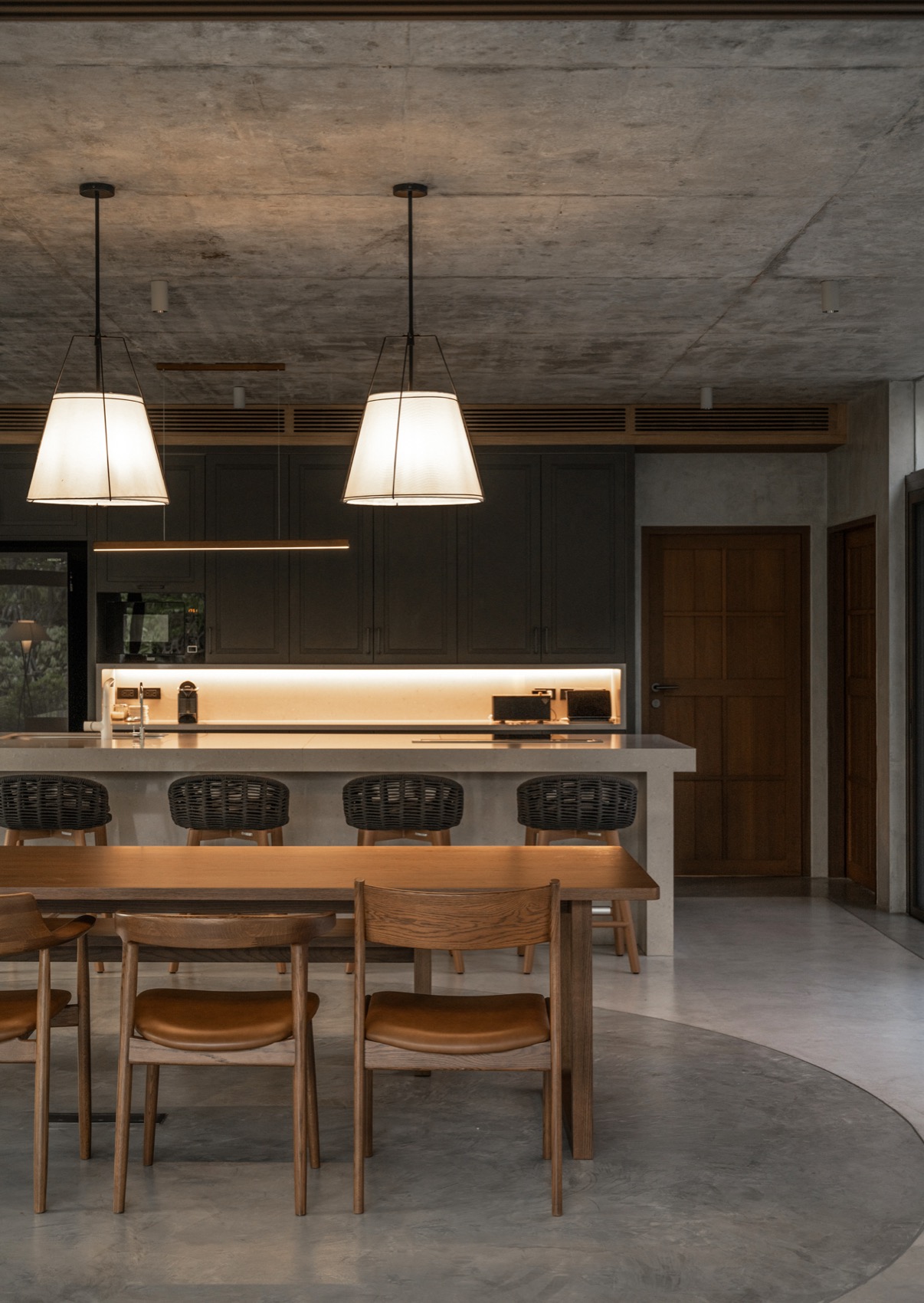
▼高窗引入树梢景观,High window framing the tree canopy
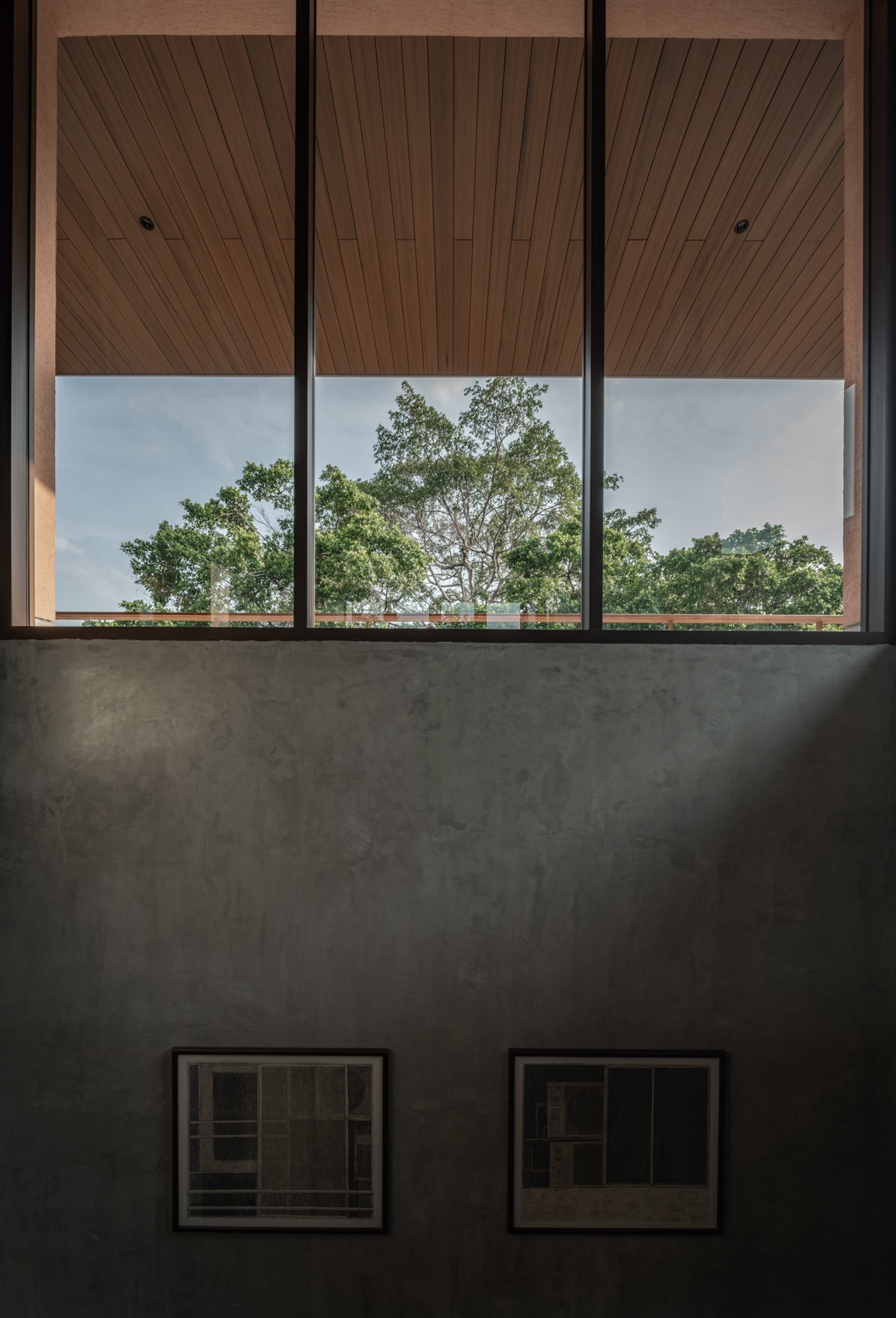
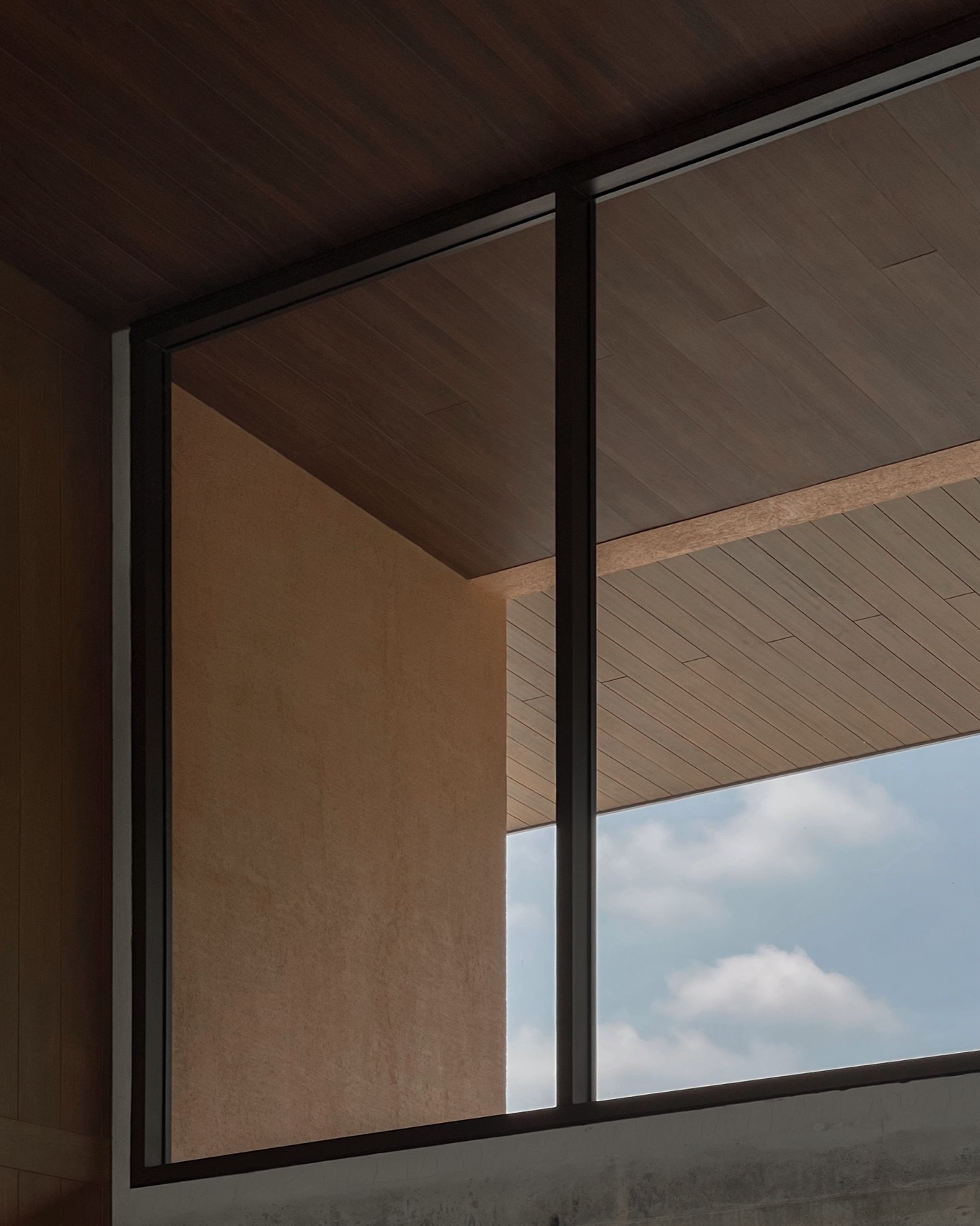
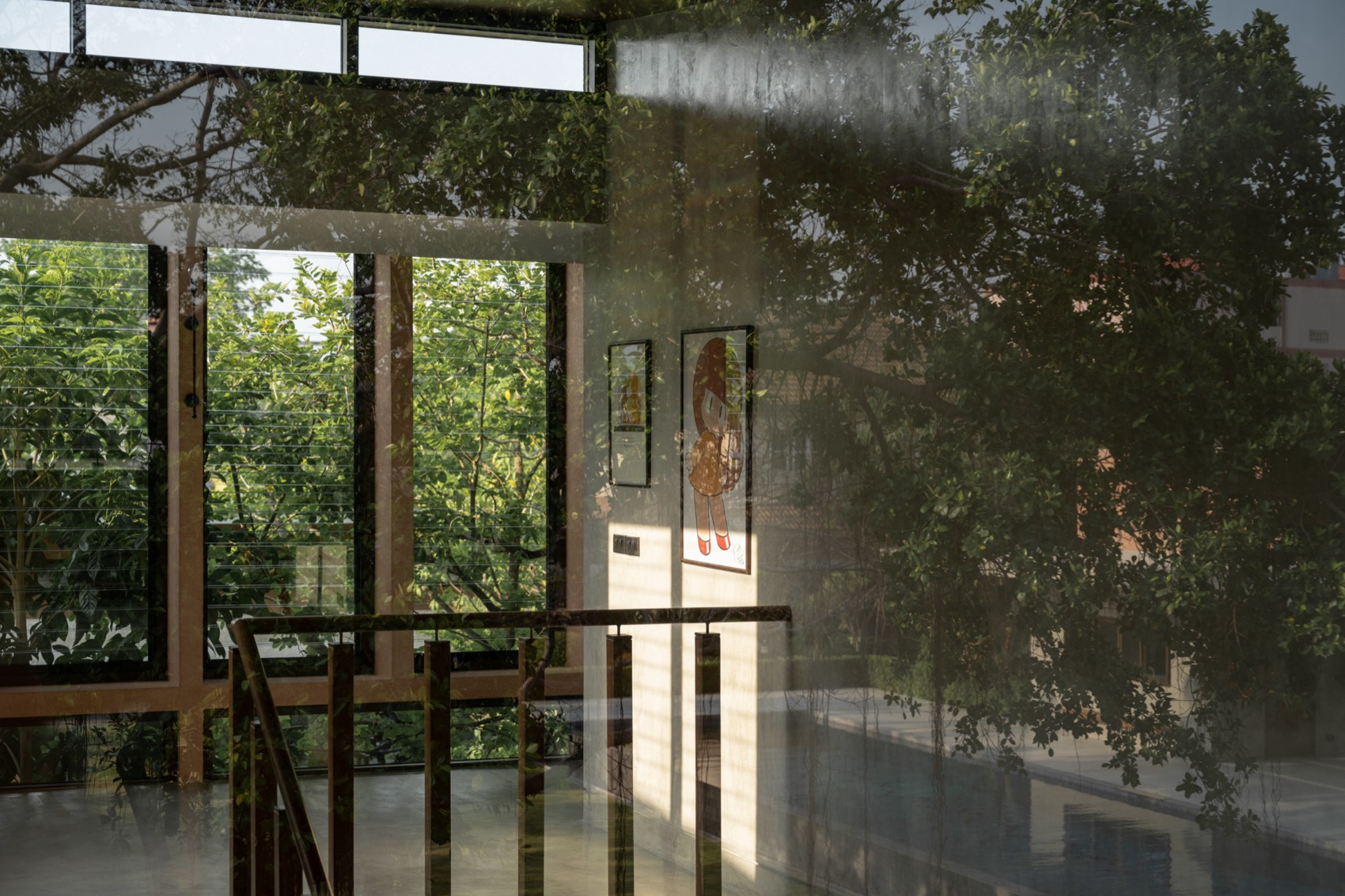
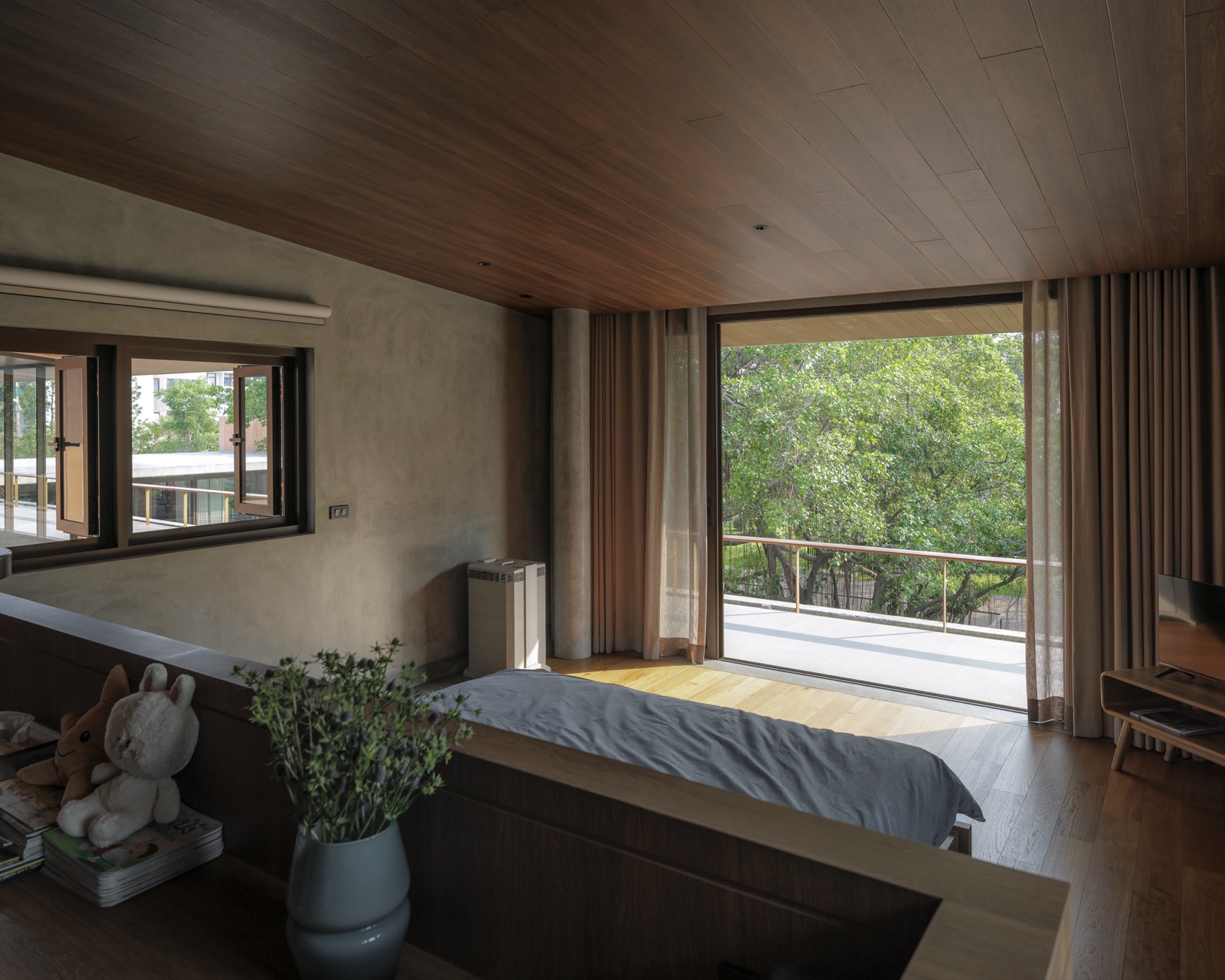
“我们将餐厅从开放式热厨房中独立出来。女主人的生活空间位于住宅后部,整体氛围如同一座玻璃屋:透明玻璃顶上方再覆盖一层屋顶,在阻隔热量的同时引入充足自然光。室内最具活力的亮点是一面由著名视觉艺术家Pomme Chan绘制的艺术墙。场地后方设置了一处中等尺度的庭院,在主住宅与业主父母居所之间形成适当距离。围绕庭院布置的建筑群呈U形布局,低调地隐藏在主住宅之后。这样的组织方式让长辈拥有独立且设施齐全的居住空间,同时又能够像使用自家庭院一样自由享用户外场地、庭院和可食用花园。住宅所有卧室均位于二层。业主希望卧室尺度适中,不需要过度装饰,因为他们大部分时间都在楼下活动。虽然房子面积很大,但仅设置了必要功能。近2米深的大屋檐覆盖着多个半户外生活空间,让家人在一天中的任何时刻都能舒适地享受自然通风。”Anonym设计团队如此解释他们如何将业主的需求转化为真实可居住的空间。
“We divided the building by placing the dining area separate from the open-air hot kitchen. The female owner’s living space is situated towards the rear. The area is designed to resemble the ambiance of a glass house, featuring a transparent glass ceiling that is covered by another layer of roof to provide the space with protection from the heat while still allowing natural light to enter. The highlight of the lively interior is a whimsical accent wall that has been beautifully painted by famous visual artist Pomme Chan. A mid-sized courtyard is situated at the back of the property, creating a certain distance between the main house and the home of the owners’ parents. This cluster of buildings is arranged in a U-shaped layout, surrounding the courtyard and situated discreetly behind the main house. This arrangement provides senior family members with their own private living space, complete with all the necessary amenities, in a separate house. Meanwhile, the grandparents have the ability to access and use the outdoor grounds, including the courtyard and the edible garden, as if it were their own personal front yard garden. All the bedrooms are located on the upper floor of the house. The owners requested bedrooms of a moderate size without any over-the-top decorations, as most of their time is spent downstairs. It is a big house, but it is designed with only the necessary functions. It features various semi-outdoor living areas under a canopy that extends almost 2 meters where everyone can comfortably enjoy natural airflow throughout the day,” the design team from Anonym explained how they translated the ideas and requirements into actual living spaces.
▼玻璃映照树影与艺术陈设,Reflections of trees and artwork on the glazing
▼卧室面向树冠展开视野,Bedroom overlooking the tree canopy
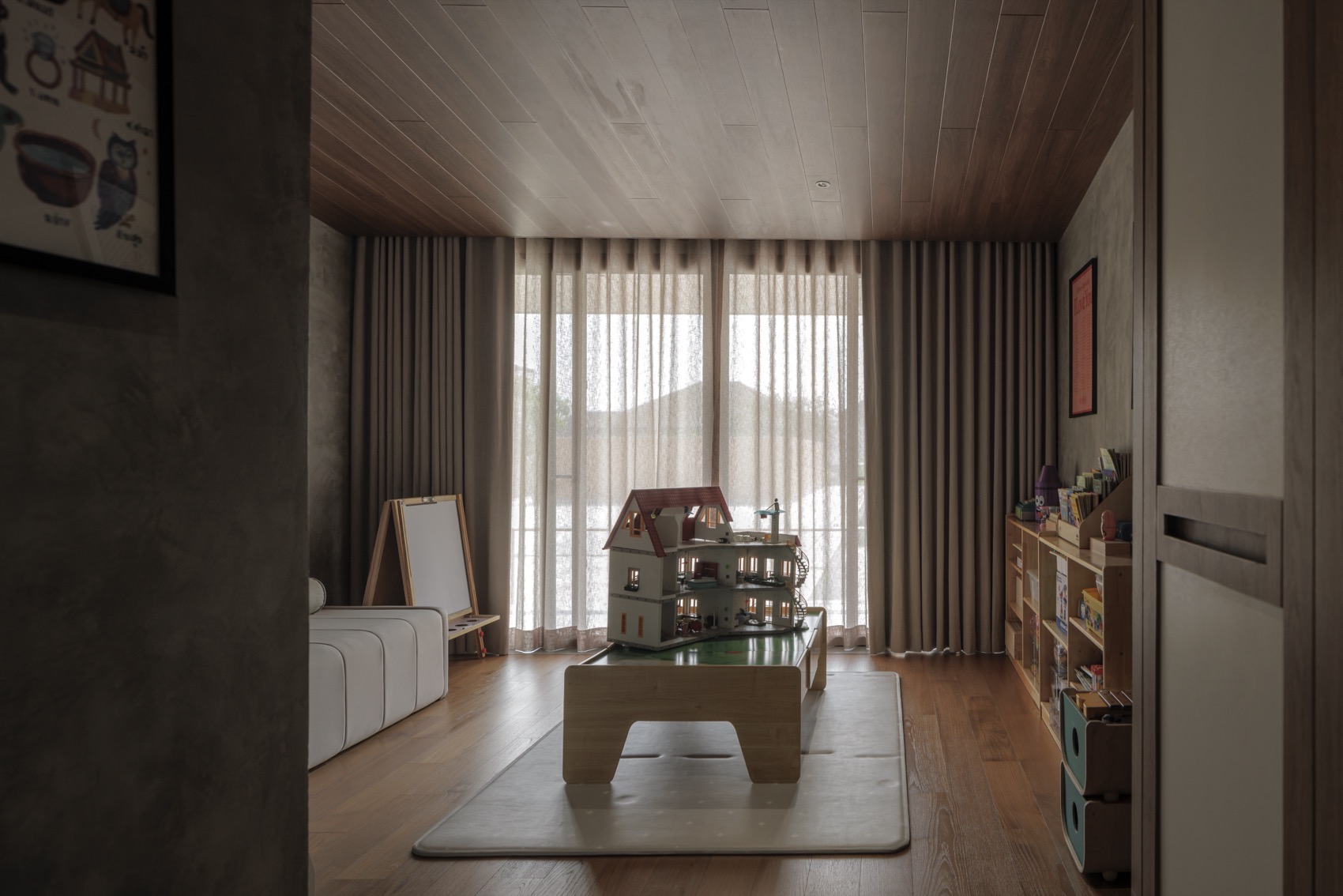
▼面向自然采光的儿童活动室,Children’s playroom with natural daylight
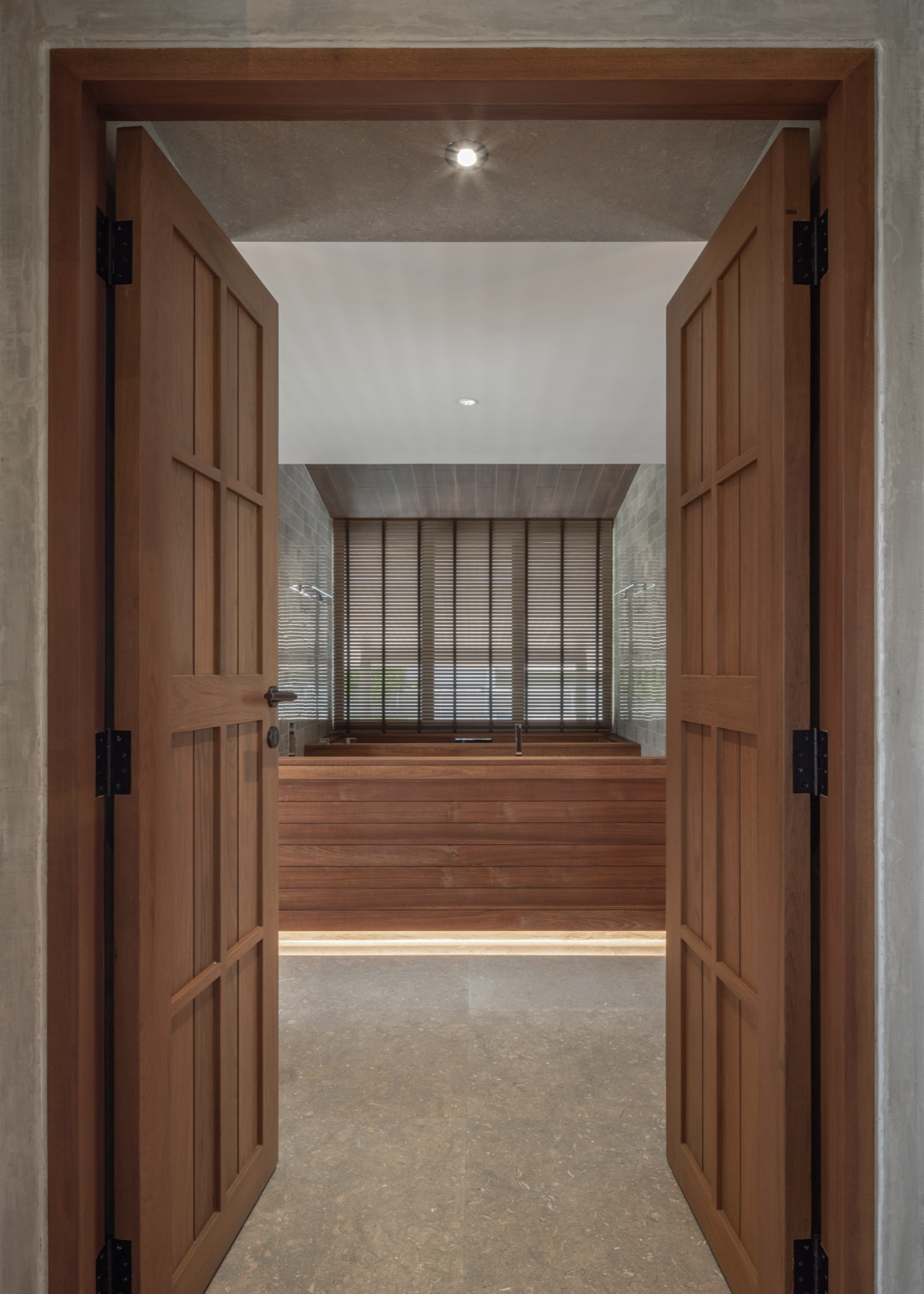
▼通往浴室的木质双开门,
Timber double doors leading to the bathroom
采访接近尾声时,在业主的邀请下,我们一同坐在露台沙发上继续交谈。“在房子尚未完全竣工之前,我们原本只是想暂时搬进来住几天,看看是否还有需要补充的装饰。但结果从那天开始,原本只打算住上一两晚的我们,就再也没有回到旧房子过夜(笑)。我们已经不想再住在城市里了,甚至连度假时也不想去住酒店,因为这座房子拥有我们需要的一切。我们每天都会步行很多路,经常超过一万步;可以锻炼身体、游泳、骑自行车、跳绳、喂鱼,真正像一直梦想的那样生活在自然之中。孩子们也不会整天盯着电视或电子设备,因为他们总能找到许多有趣的事情去做。”
At the invitation of the owners, we all took a seat on the patio sofa as our conversation was coming to an end. “Before the house was fully completed, we made the decision to temporarily move just to see whether there was anything we might want to add to the decoration. But it turned out that since that day, with the initial intention to only spend a couple of nights here, we haven’t really gone back to sleep at the old house again (laughs). We don’t want to live in the city anymore. We don’t even want to spend our vacation at a hotel because this house has everything we need. We all walk a lot—like over 10,000 steps a day. We get to exercise, swim, ride our bicycles, jump rope, feed the fish, and really live our lives in the midst of nature, like we’ve always wanted. Our kids are not glued to the television or gadgets all the time because they have other fun stuff to do all day.”
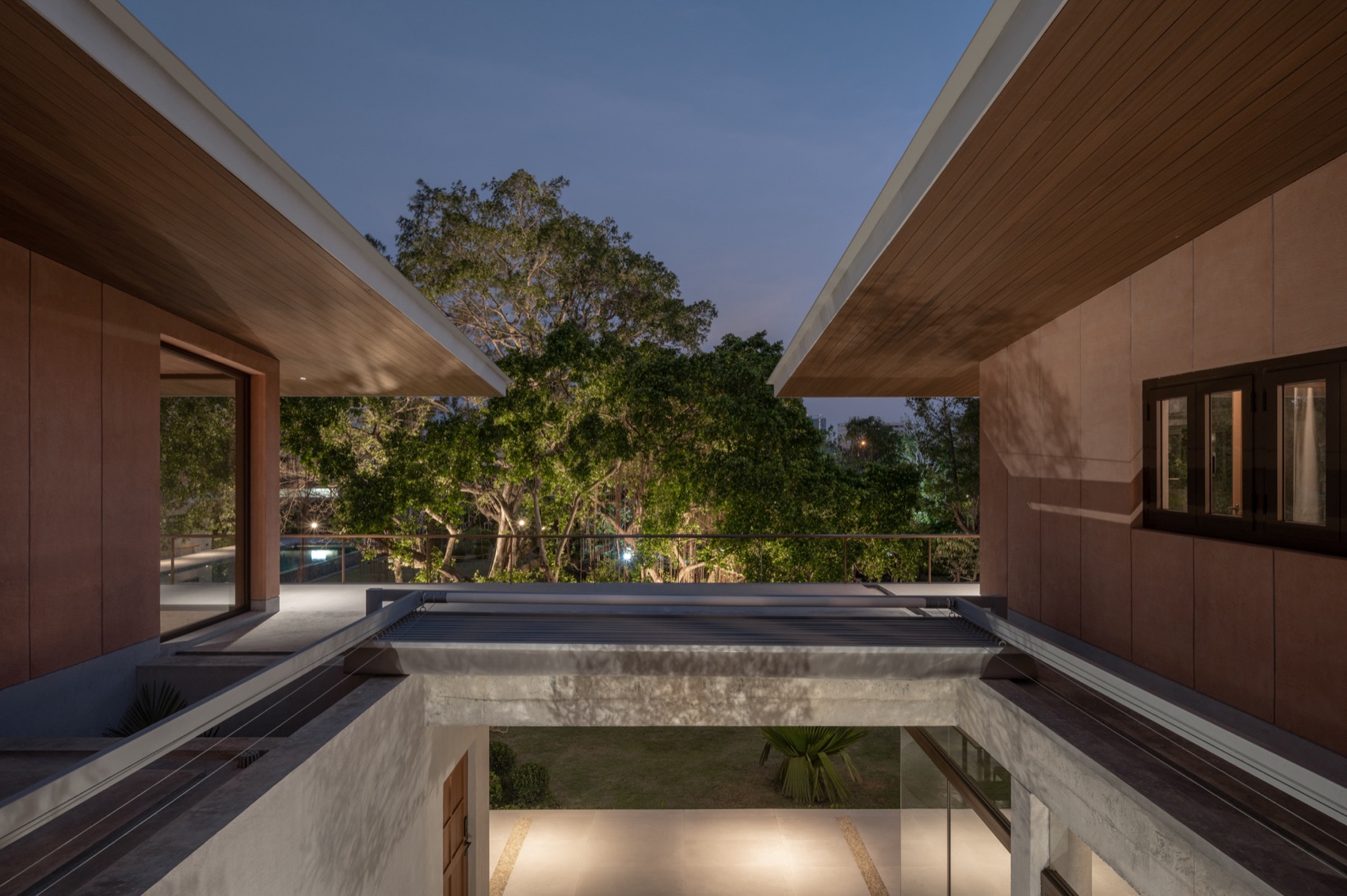
▼屋檐框景中的夜间庭院,Night courtyard framed by the canopy
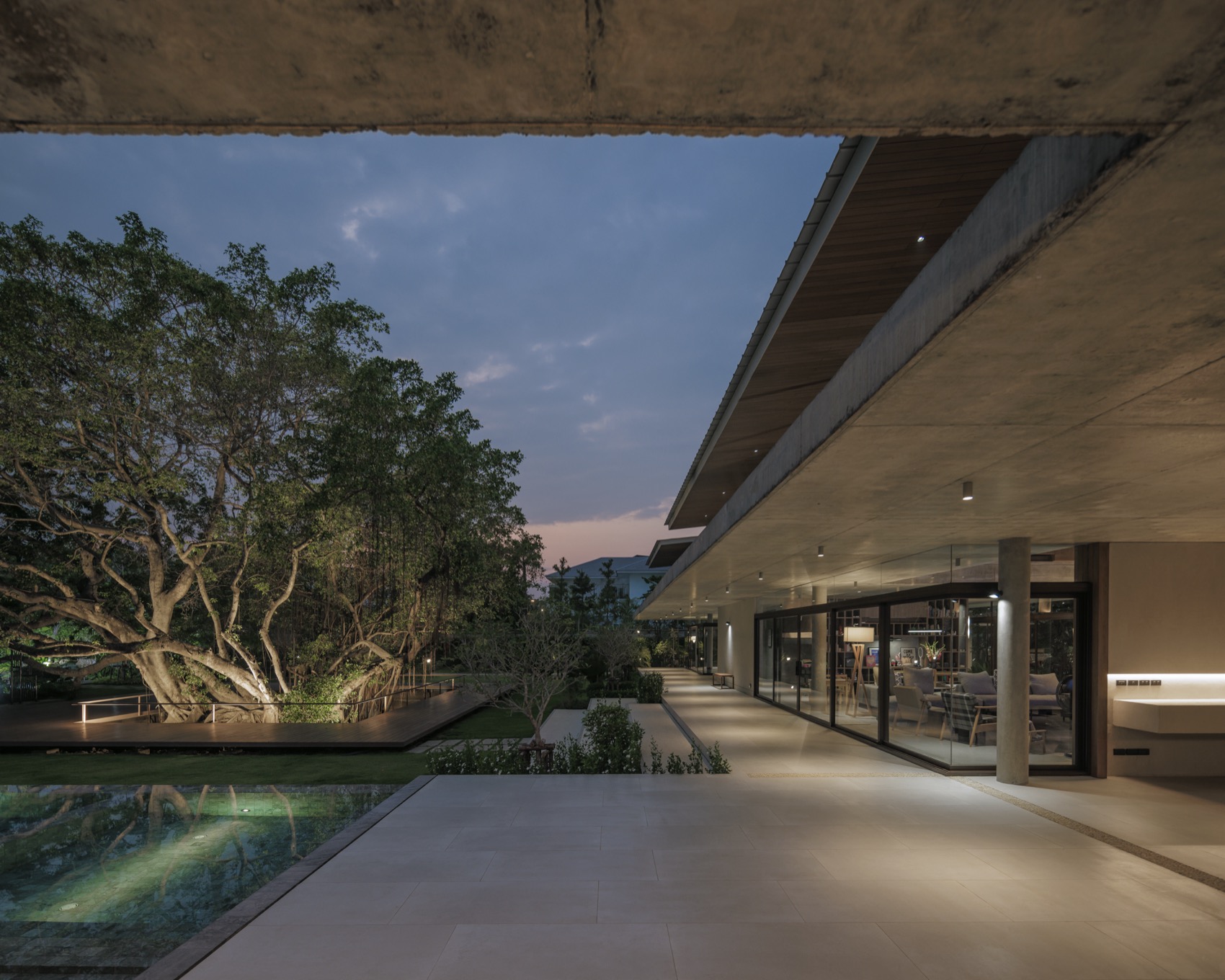
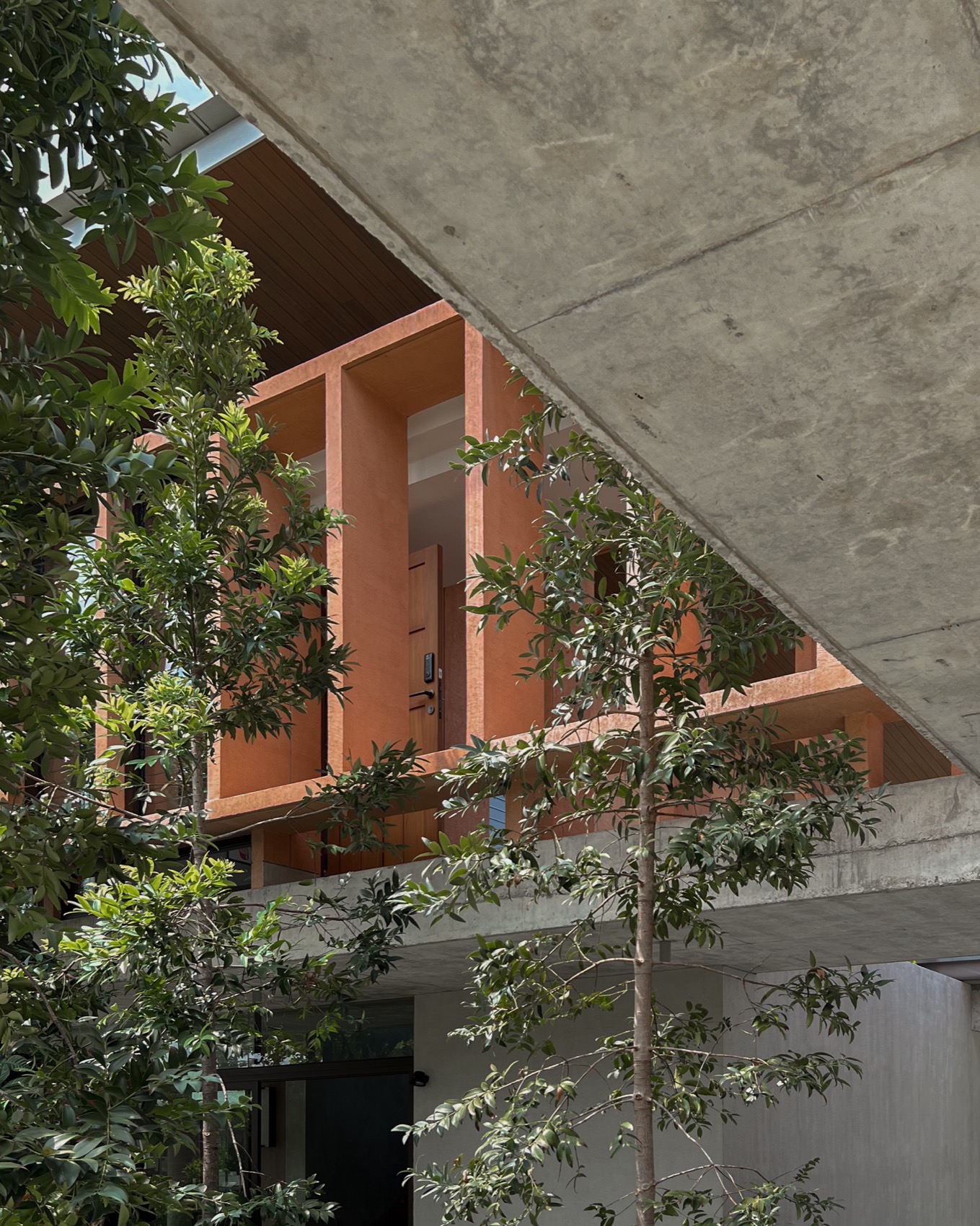
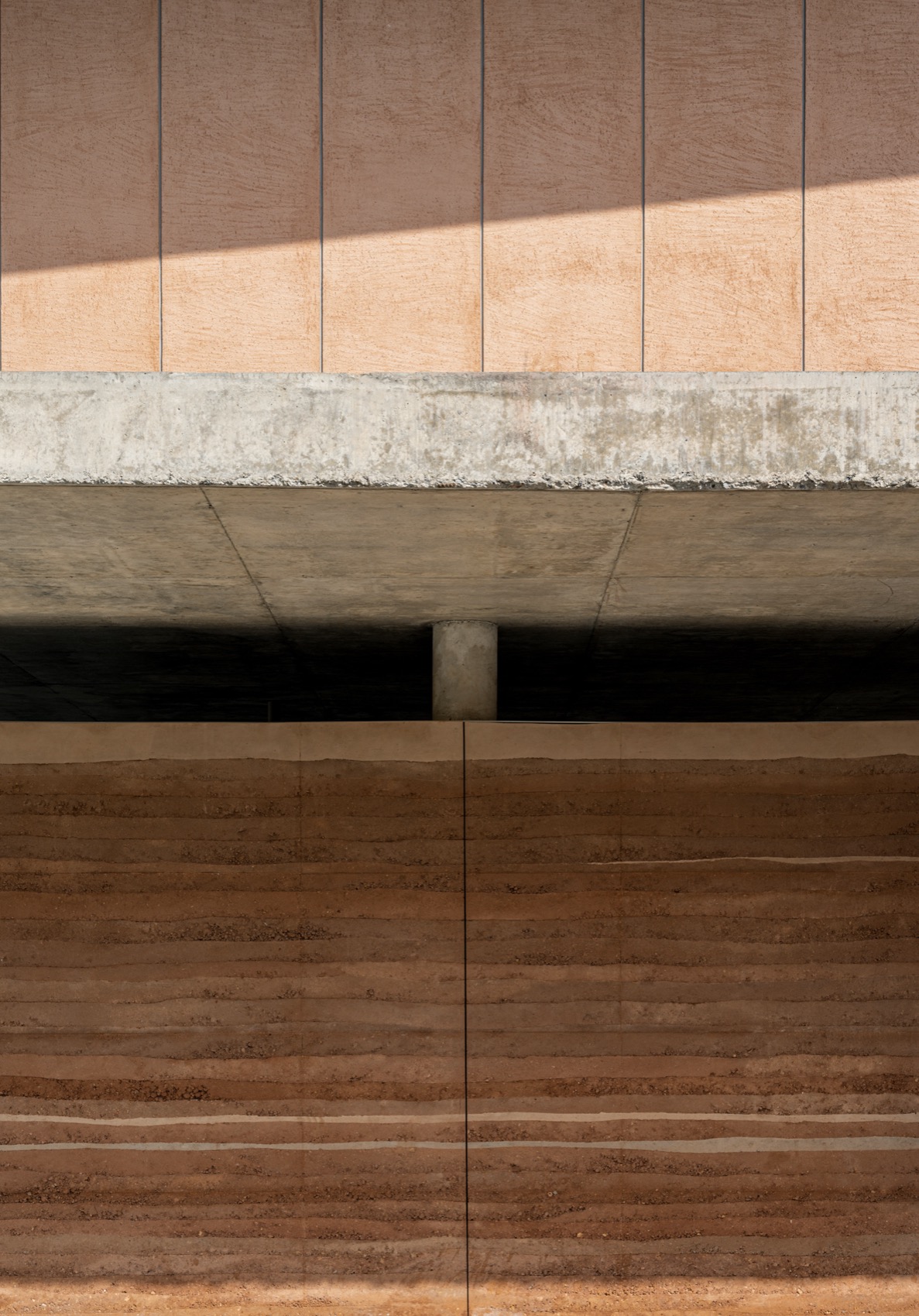
▼建筑立面的材料细部,Material detail of the building facade
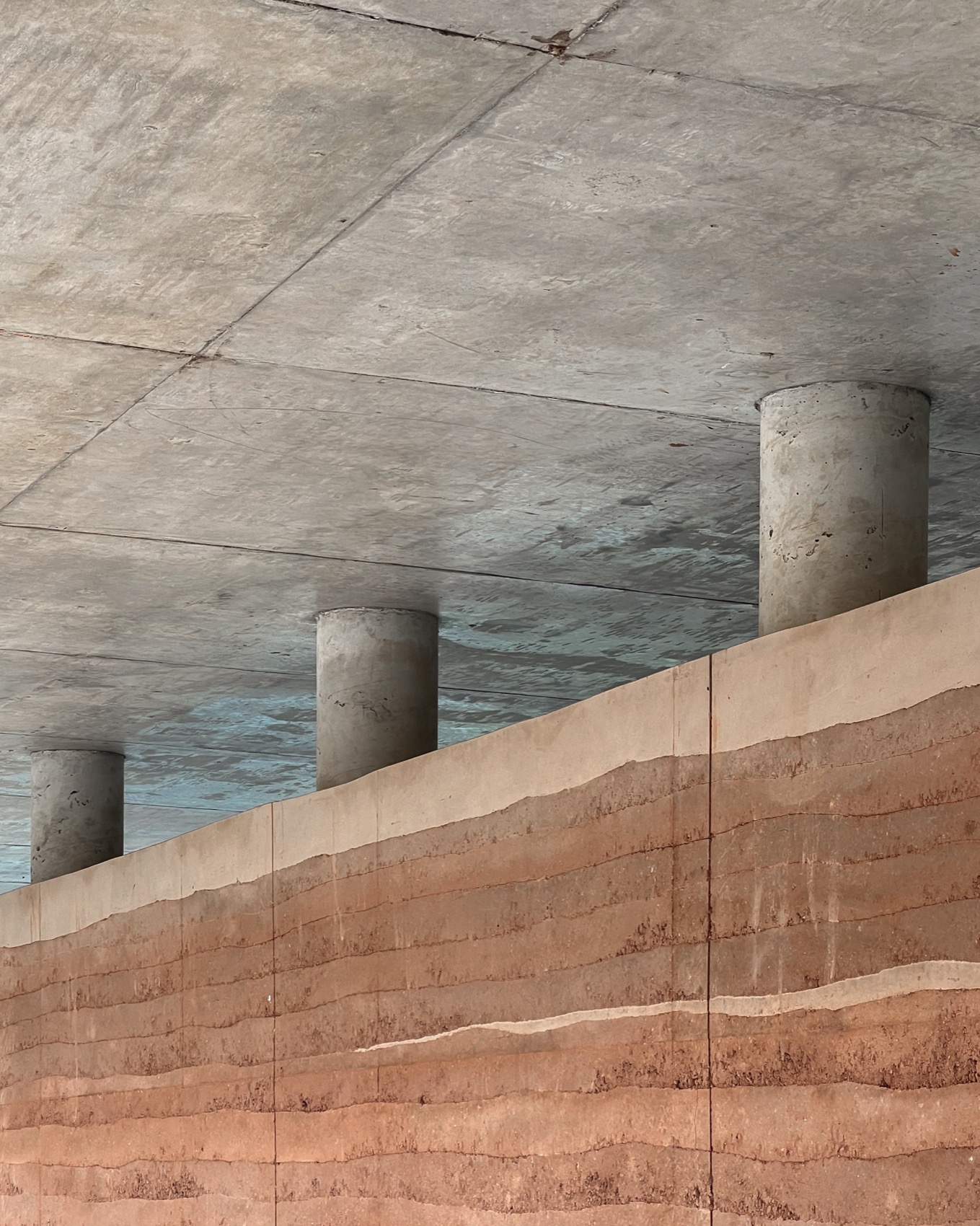
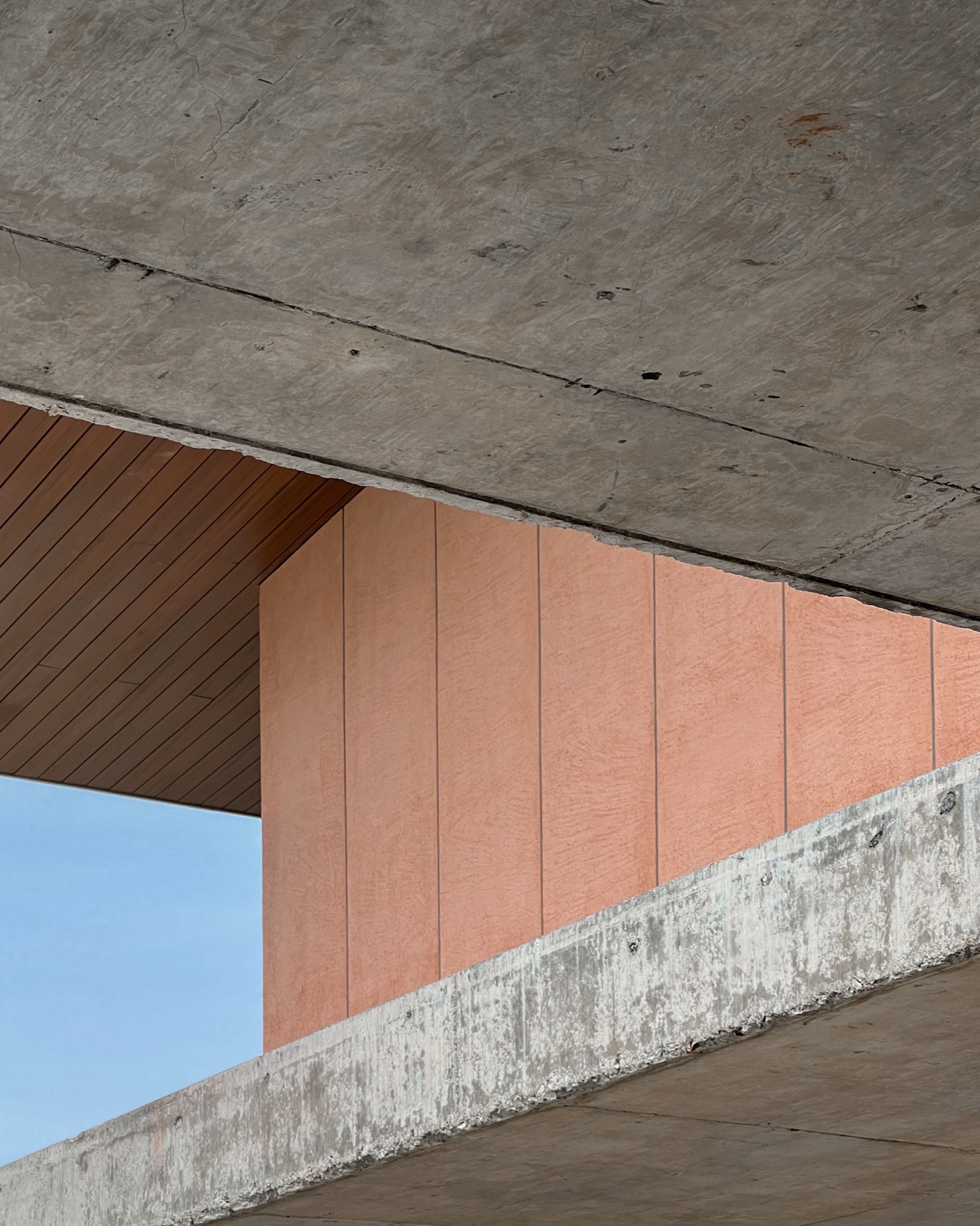
▼建筑转角处的材料表达,
Material expression at the building corner
造访这座住宅时正值盛夏,而最令我们惊喜的是,整栋房子终日都能感受到持续流动的自然微风。宽大的屋檐遮挡了炽烈的夏日阳光,也让半户外休憩空间始终保持凉爽舒适。放眼望去,周围的一切都如同一座精致的泳池别墅,让人忍不住想慵懒地躺下,小憩片刻。
During our visit to the house, which took place in the middle of summer, we were pleasantly surprised by the constant breeze that flowed through the house all day long. This refreshing wind kept the semi-outdoor lounging corner comfortably cool, thanks to the large canopy that provided shade and protected the area from the intense rays of the summer sun. Around us, everything looked like a beautiful pool villa, tempting us to lay back and take a nice nap for a while.
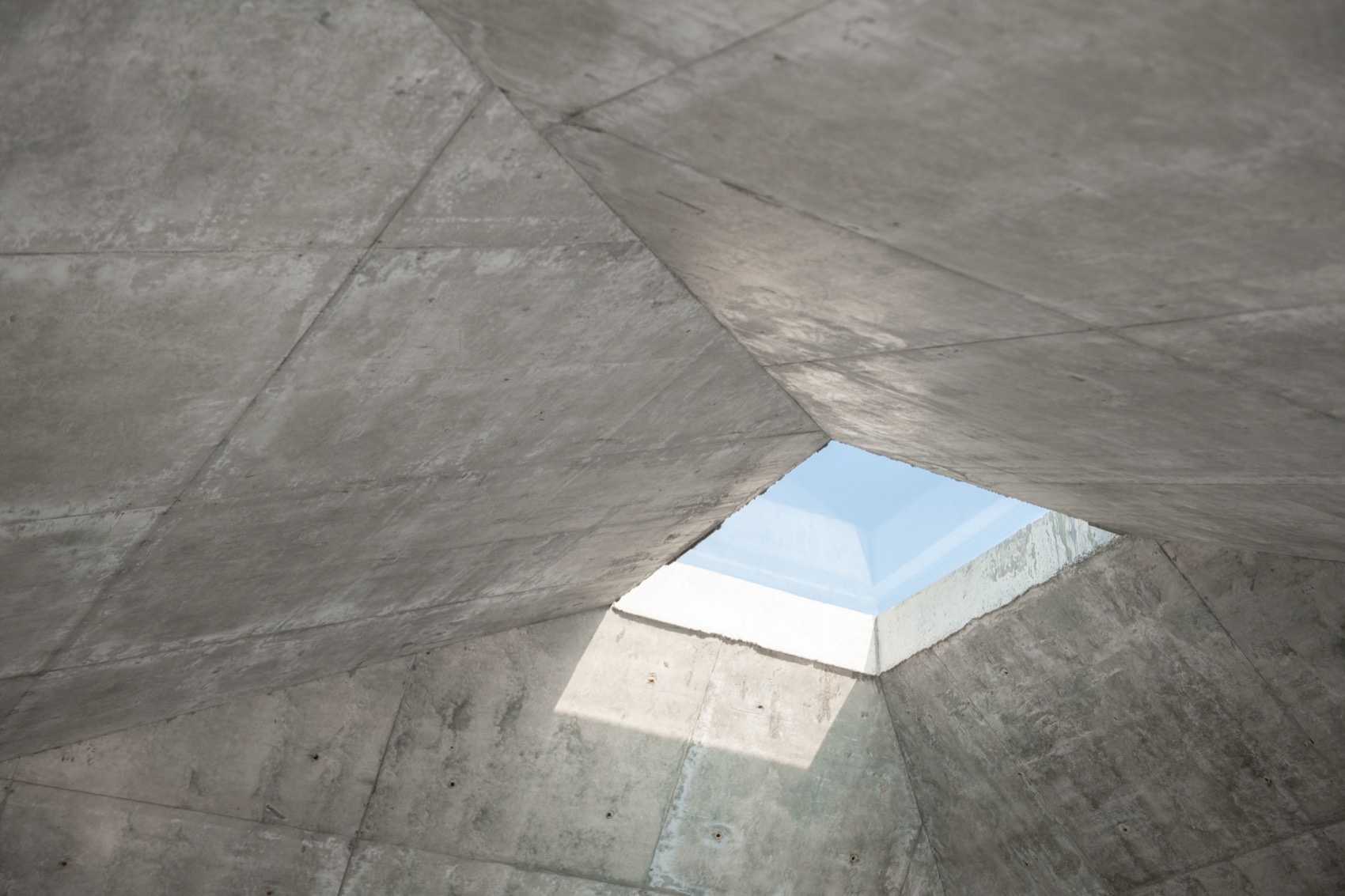
▼天窗引入顶部自然光,Skylight bringing daylight from above
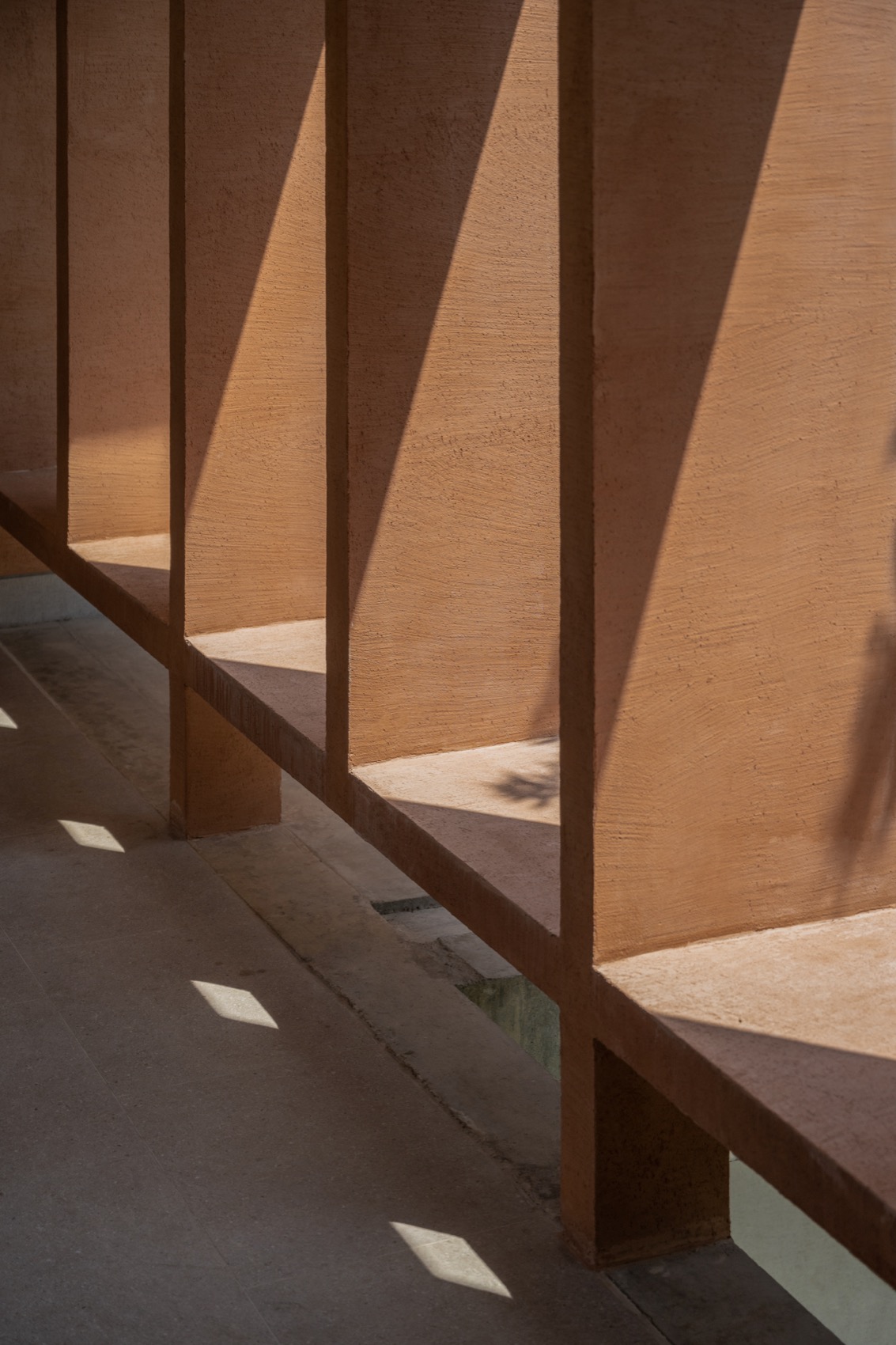
▼廊道中的光影节奏,
Rhythm of light and shadow along the corridor
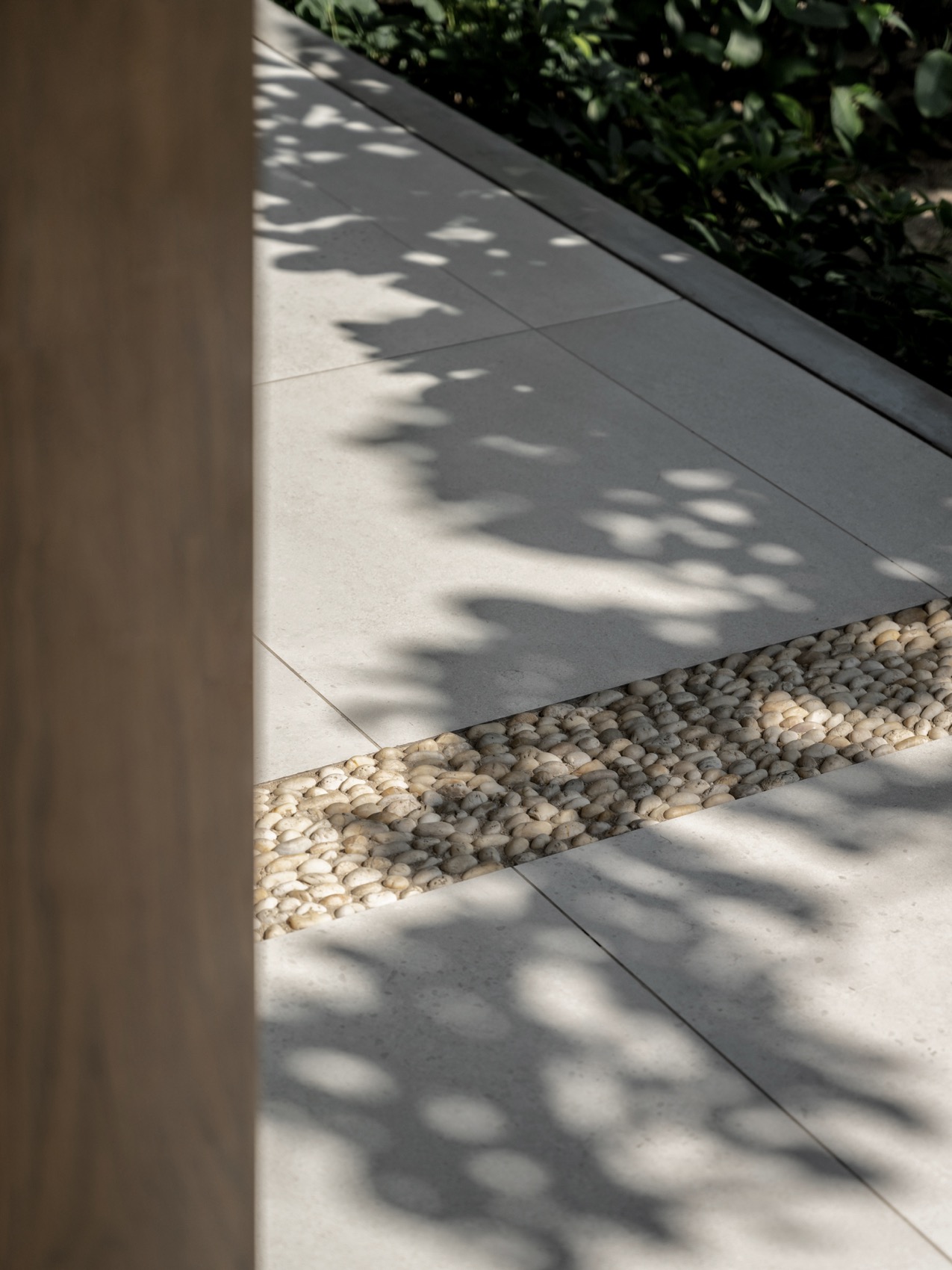
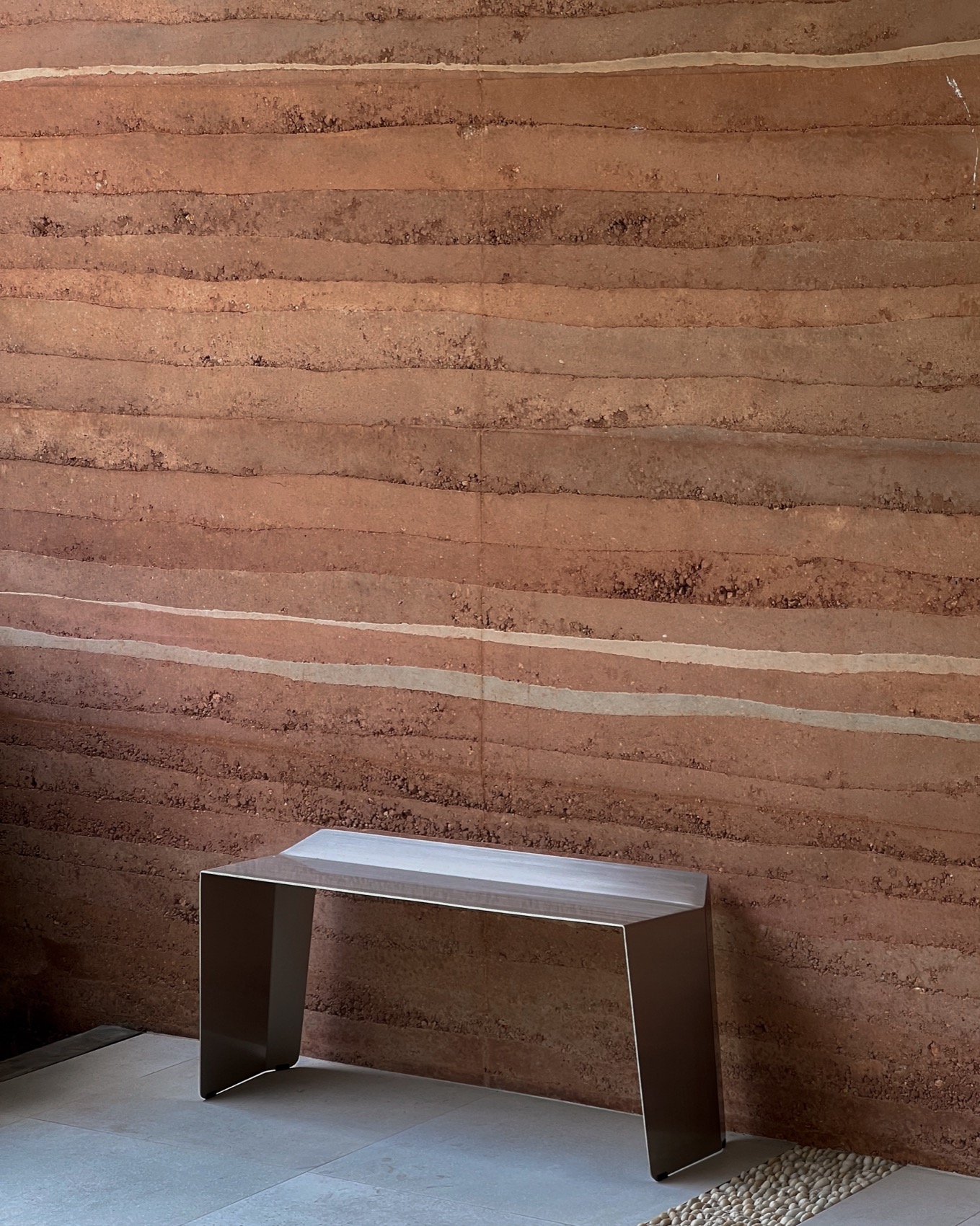
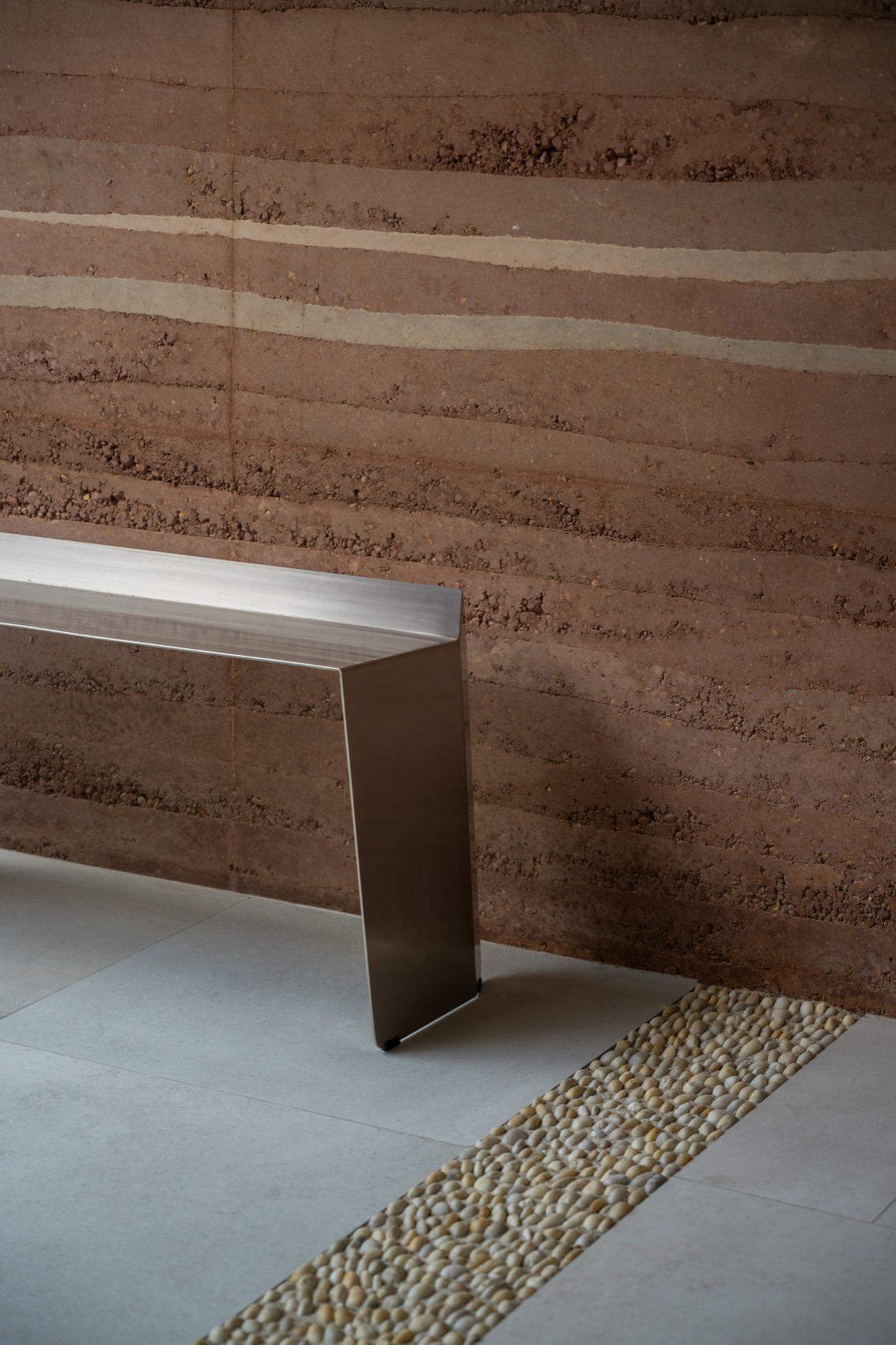
▼墙体肌理与家具陈设,
Wall texture and furniture setting
▼一层平面图,First level floor plan
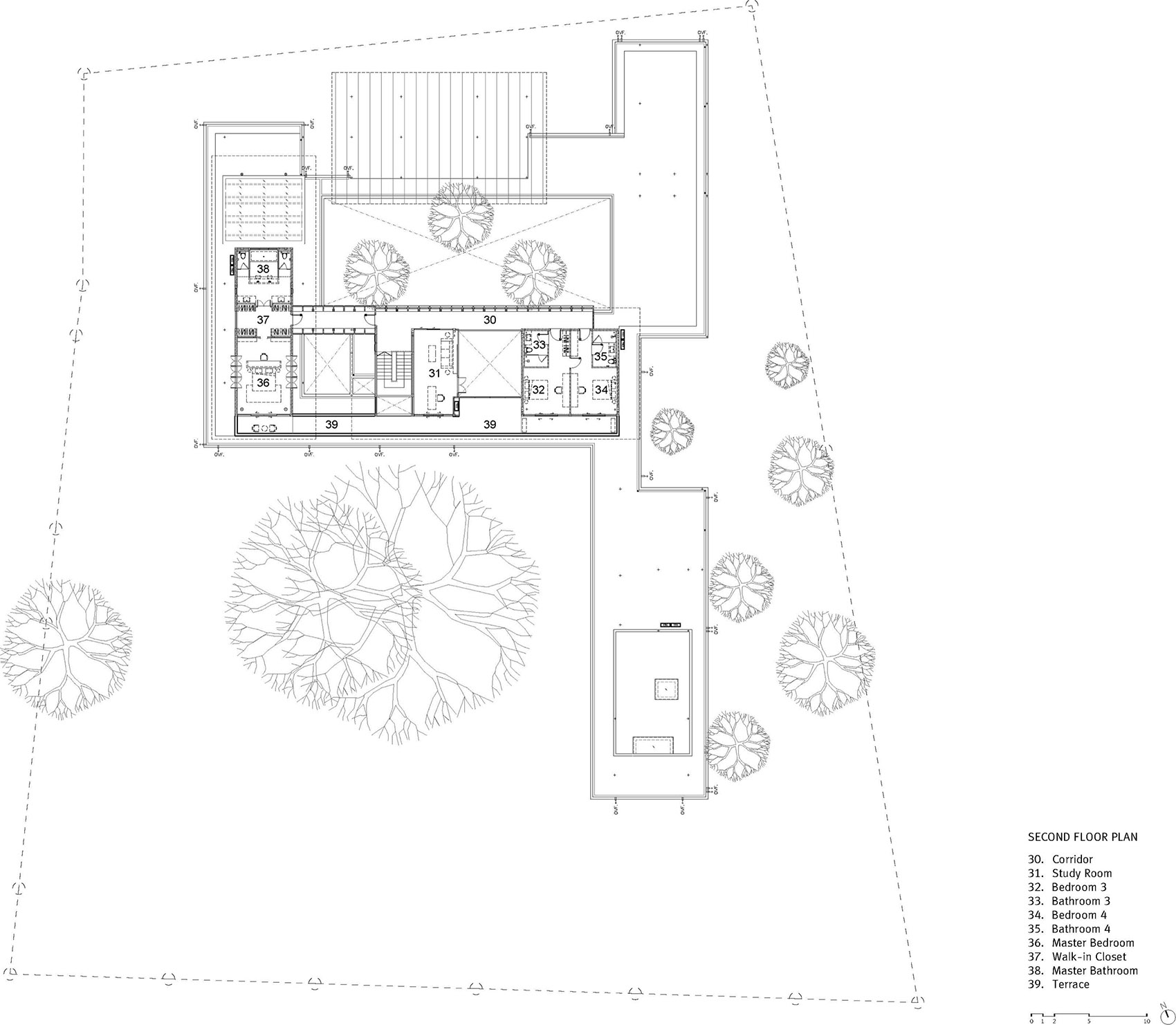
▼二层平面图,Second level floor plan