钢琴与小提琴之家,西班牙 / ENDALT Arquitectes + Josep Eixerés
拆除一栋既有建筑始终是一个艰难的决定。在做出这样的选择之前,必须仔细评估各种可能影响判断的因素;既有建筑的潜力、现状,以及未来使用者的需求,都应被纳入考量。
The decision to demolish an existing building is always a difficult one. Before making such a choice, the circumstances that might tip the balance one way or another must be carefully assessed; the possibilities of the existing structure, its condition, and the needs of those who will inhabit the space must all be considered.
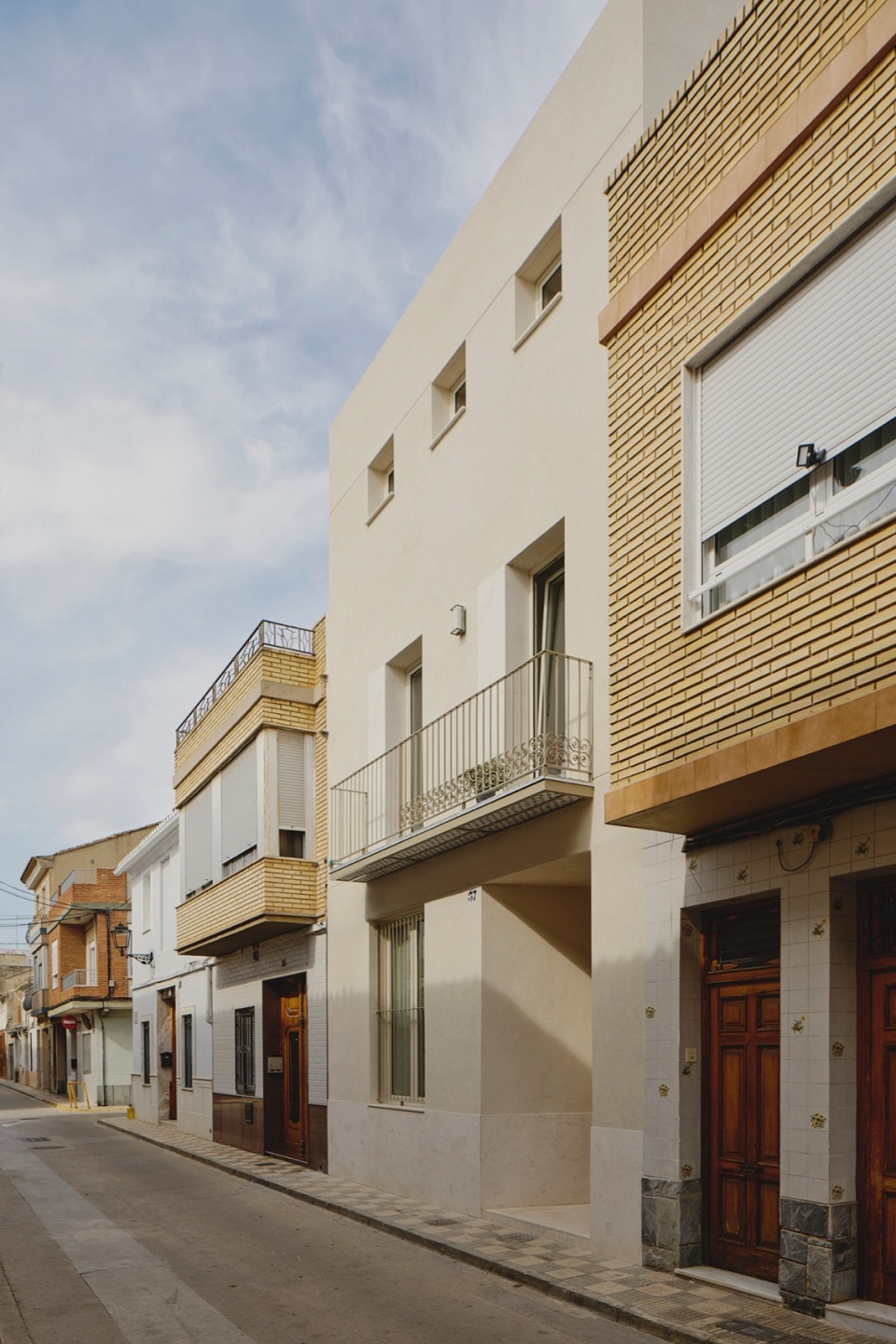
▼入口,entrance
在本项目中,容纳较为复杂的功能需求使我们不得不面对一个矛盾:保留一栋无法满足未来使用者需求的建筑是否有意义?而这样的保留,是否反而会导致它被弃置,并最终走向消失?
In this case, the need to accommodate an extensive program forced us to confront a certain contradiction. Does it make sense to preserve a building that cannot meet the needs of its future occupants? Might this, in fact, lead to its abandonment and, ultimately, its disappearance?
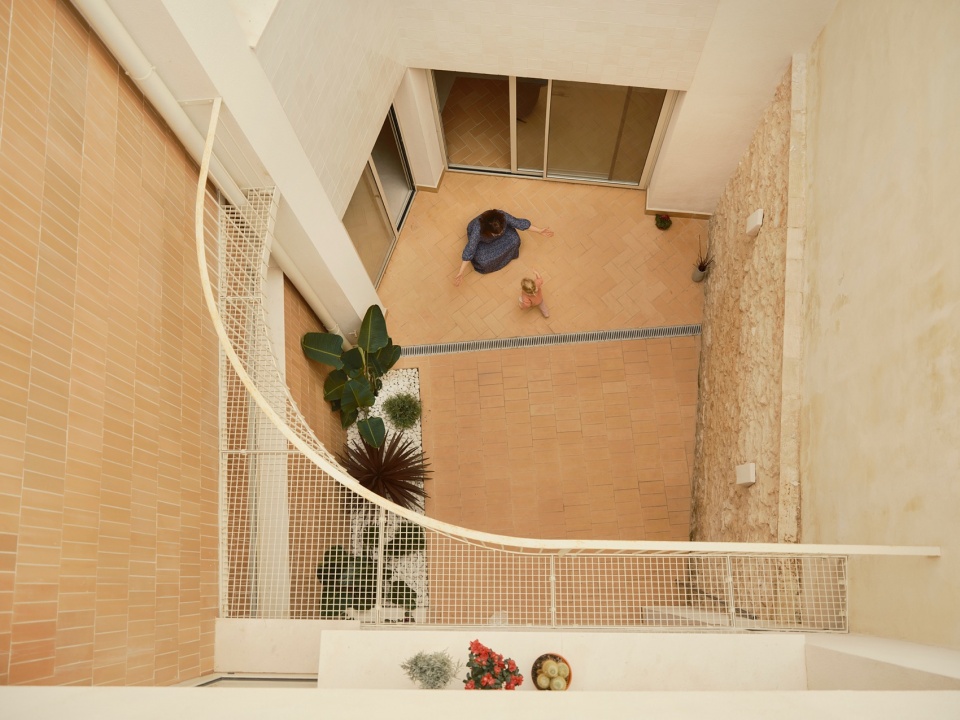
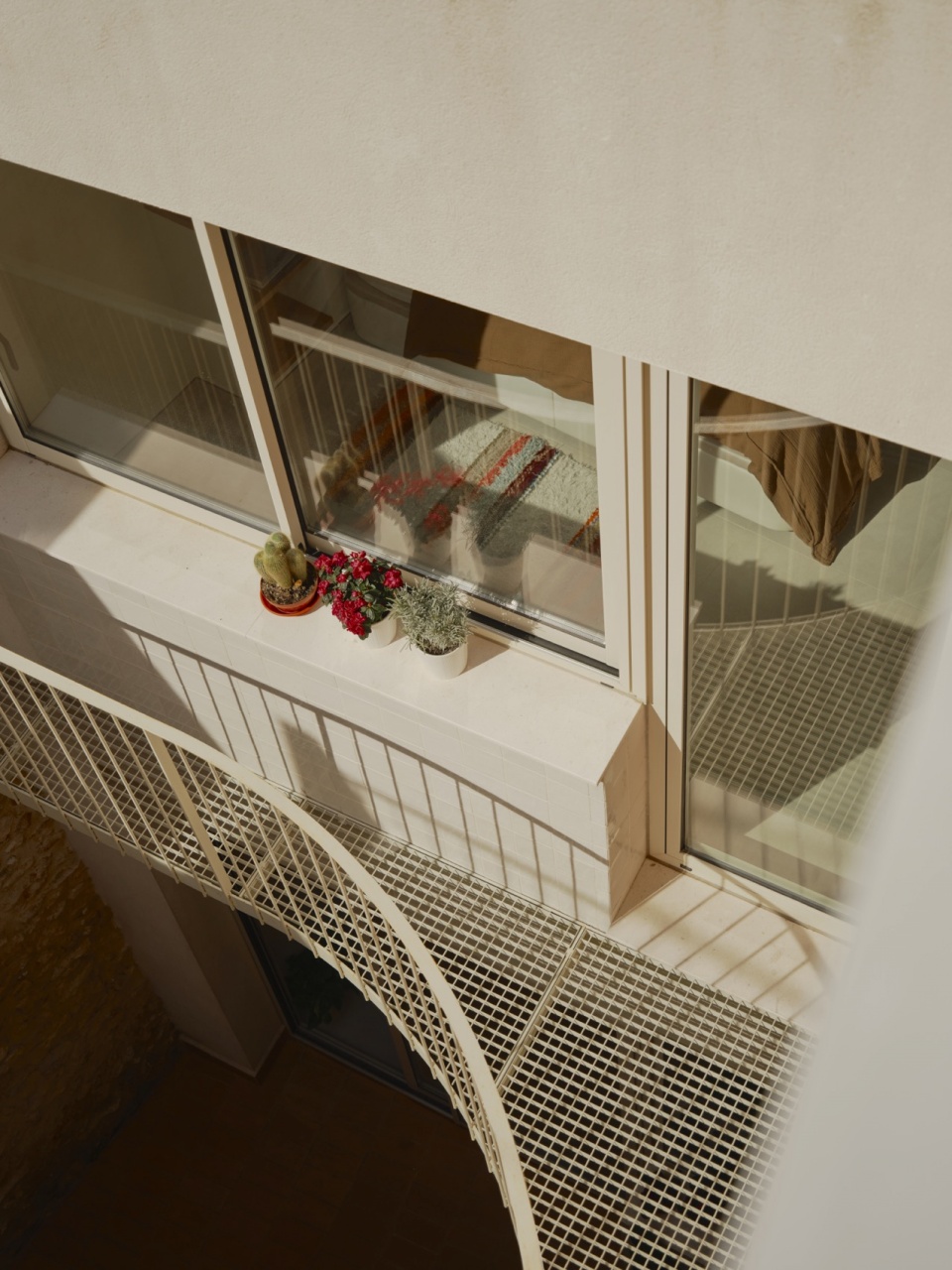
▼顶视,top view
拆除原本位于场地上的那栋建于20世纪30年代的小住宅,不仅意味着对既有立场的重新审视,也为探索当代建筑如何从传统建筑原则中汲取养分提供了契机。或许真正值得保存的,不仅是建筑实体本身,更是支撑其存在的知识体系:它与土地之间的关系、资源的利用方式,以及代代相传的建造技艺。
The decision to demolish the small 1930 house that once occupied the site not only involved questioning a prior position, but also opened up the possibility of exploring how contemporary architecture can draw from the principles of traditional architecture. Perhaps what should be preserved is not only the built object itself, but the knowledge that underpins it: its relationship with the territory, the use of resources, and the techniques passed down through generations.
▼室内概览,overview of the interior
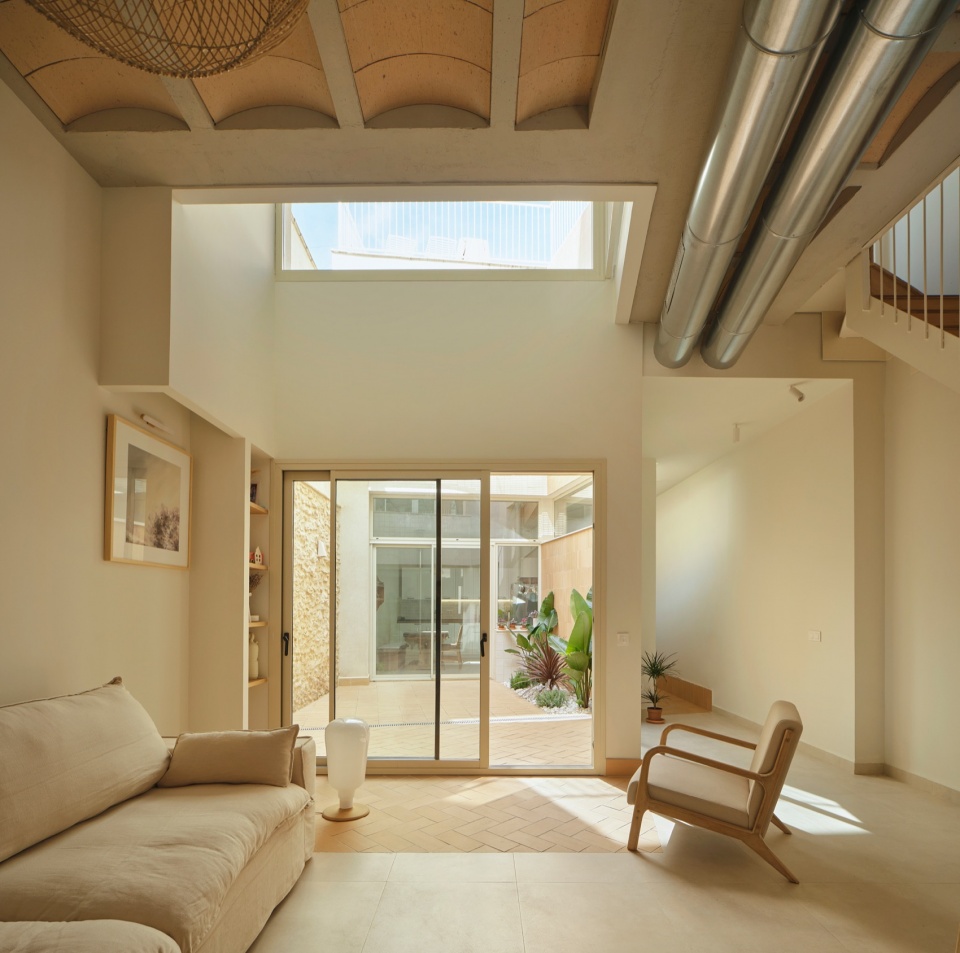
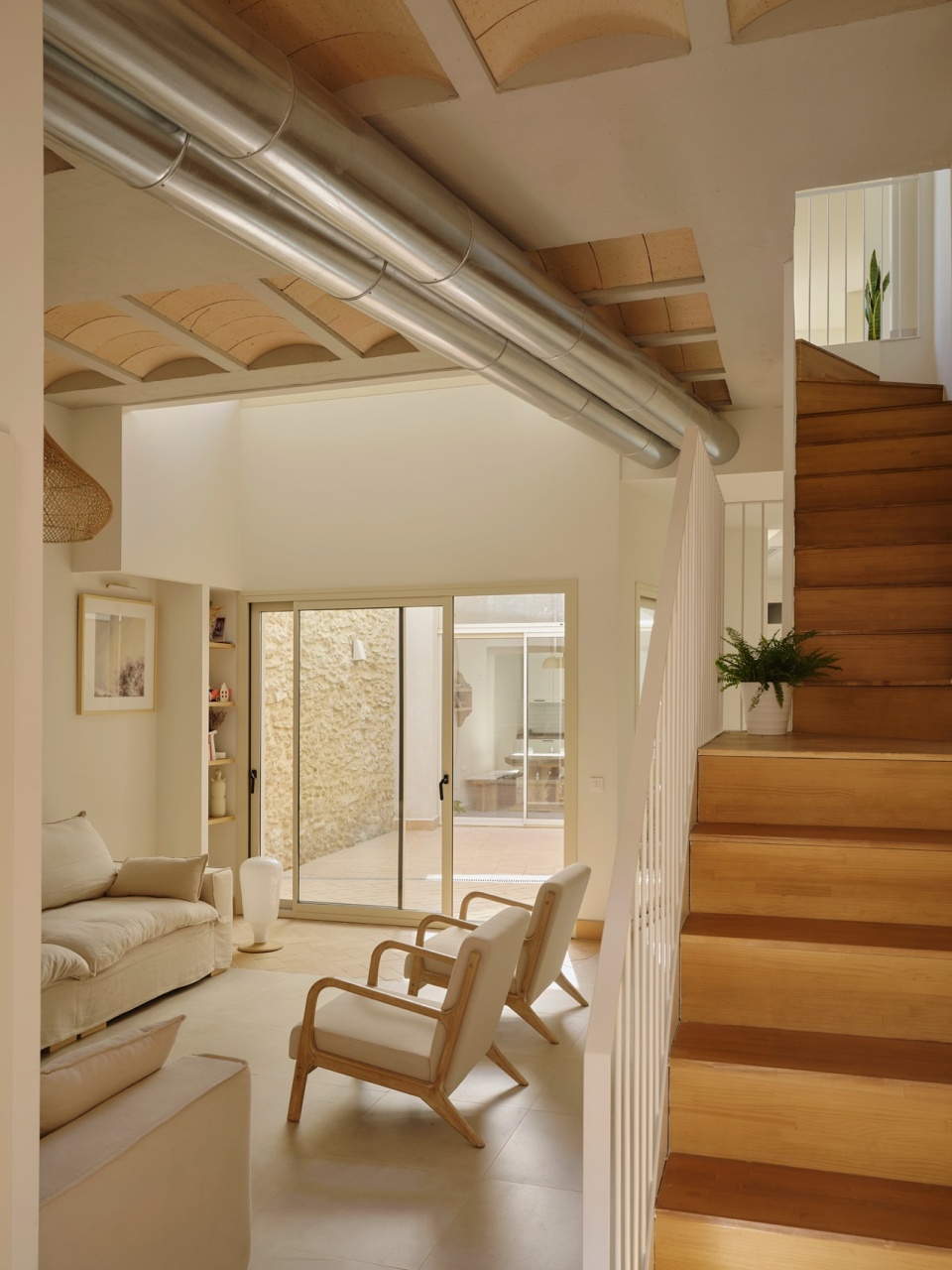
因此,本项目的起点在于希望以当代视角重新诠释一种深深扎根于当地语境的建筑类型。除了重新运用如 revoltón 楼板和木梁坡屋顶等传统建造体系之外,设计最初的思考更集中于理解居住空间与生产空间之间的关系。
Thus, the genesis of this project lies in the desire to reinterpret, from a contemporary perspective, a typology deeply rooted in its context. Beyond the recovery of construction systems such as revoltón floor slabs or pitched roofs with timber joists, the initial reflection focused on understanding the relationship between living spaces and productive spaces.
▼客厅,living room
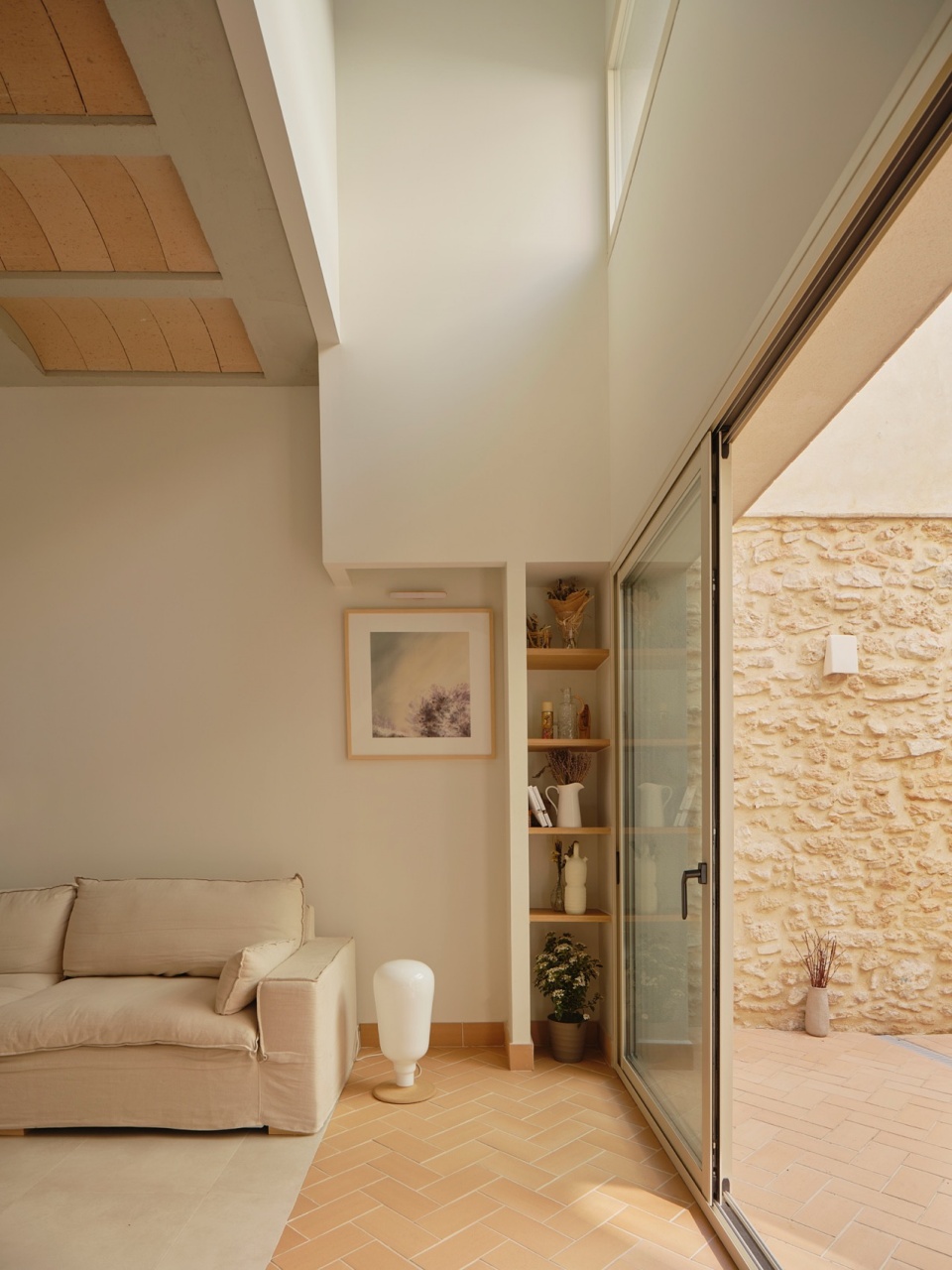
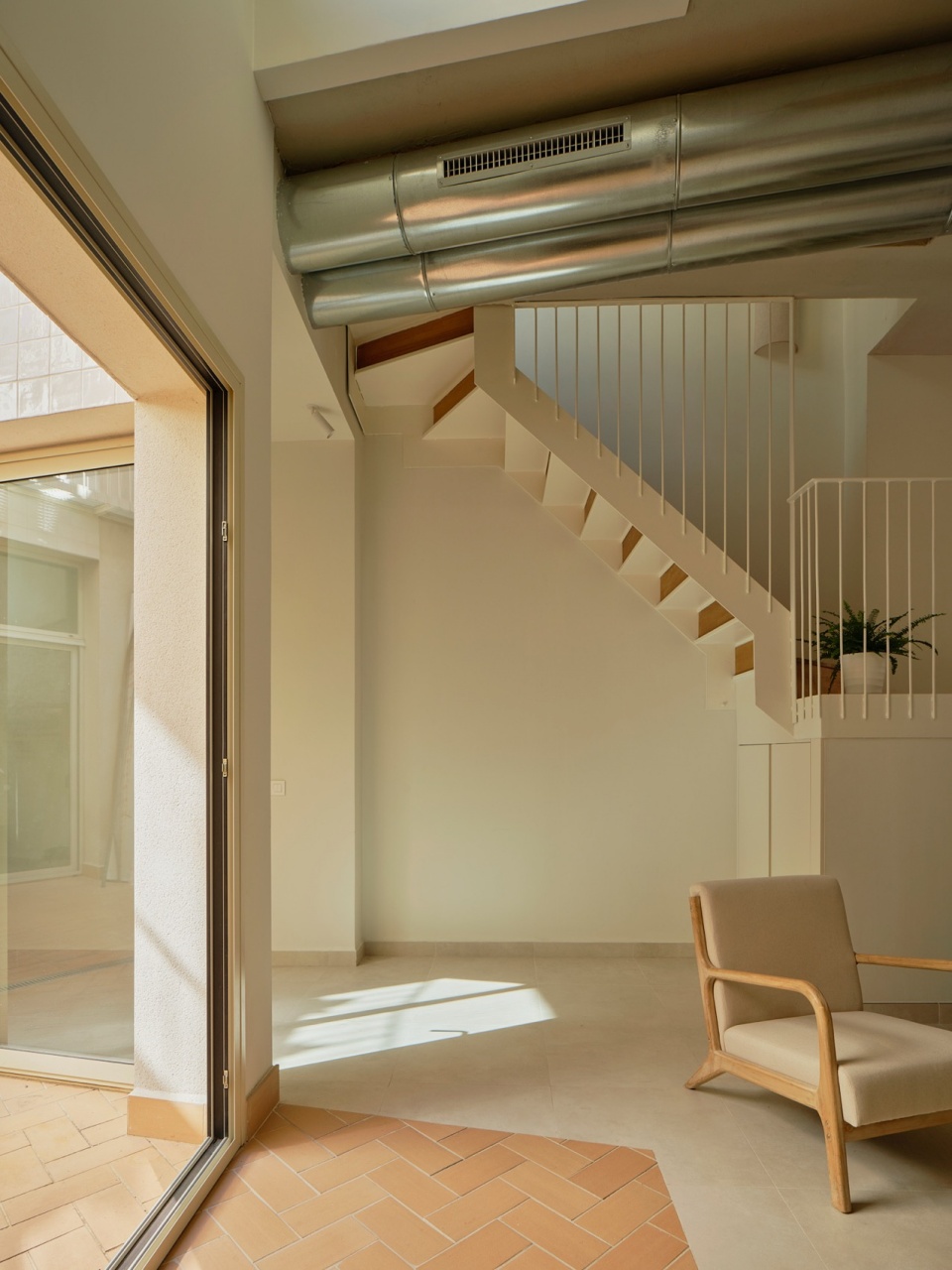
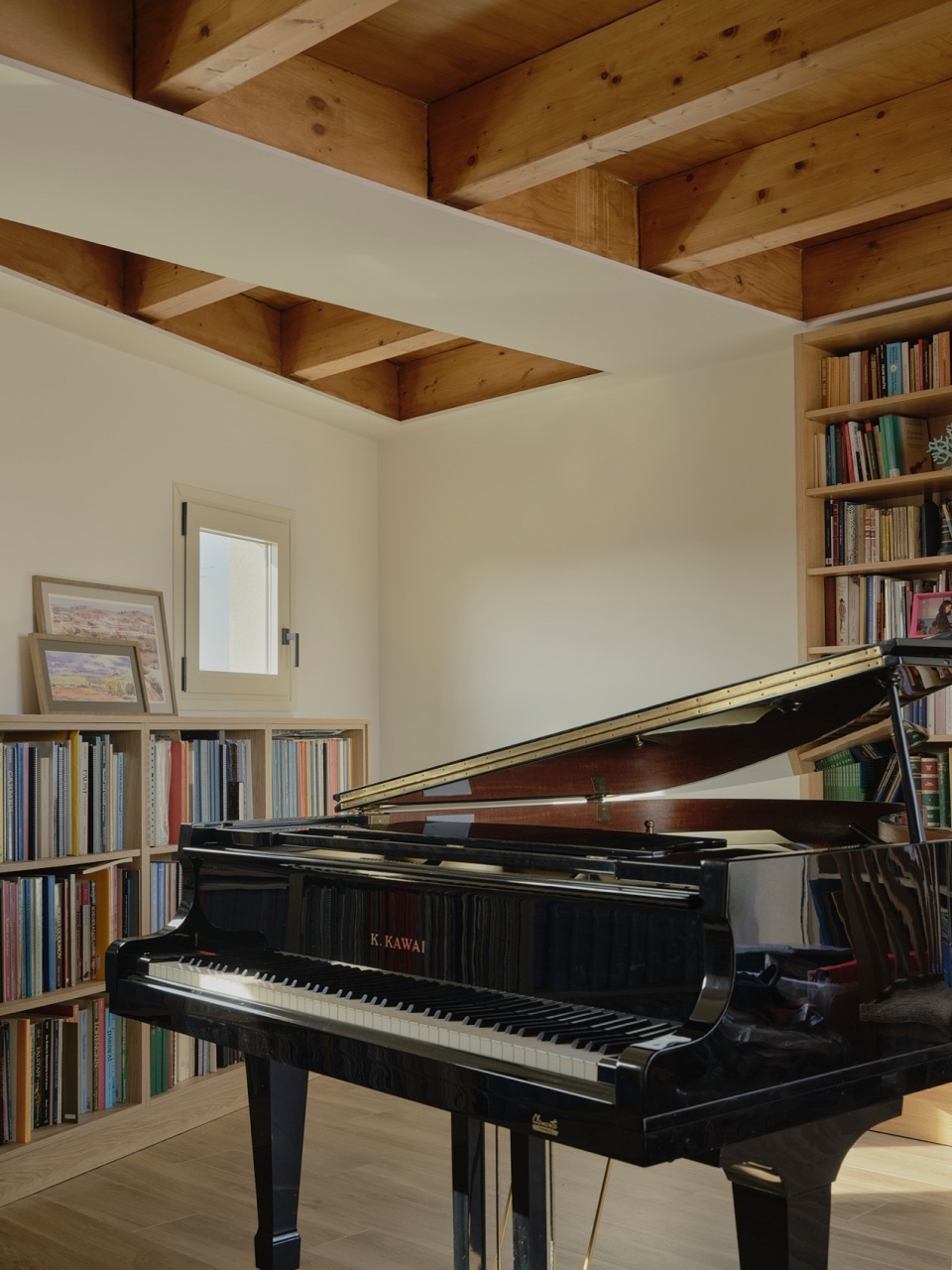
在原有住宅中,与许多传统住宅一样,pallisa 用于饲养牲畜,andana 用于储存收成。如今,这种二元关系被赋予了新的解读:住宅的居住者是职业音乐家,他们的日常生活将创作、教学与排练紧密融合,彼此不可分割。这一特征促使项目纳入专门的音乐活动空间。一层入口旁设置了一间工作室,可在不干扰家庭私密生活的前提下接待学生。顶层的钢琴室采用木结构楼板,以提升声学效果,并在视觉上面向庭院,始终与住宅核心保持联系。
In the original dwelling, as in many others, the pallisa housed animals and the andana stored the harvest. Today, this duality finds a new reading: the inhabitants of the house are professional musicians, and their daily life integrates production, teaching, and rehearsal in an inseparable way. This condition led to the incorporation of specific spaces for musical practice. On the ground floor, next to the entrance, a studio allows students to be received without interfering with domestic privacy. On the top floor, the piano room, built with timber floor structures to enhance acoustic quality, opens visually onto the courtyard, maintaining a connection with the heart of the home.
▼钢琴角,piano corner
在形式上,住宅回应了一块几乎不存在直角关系的复杂地块几何。项目并未试图强加一种僵硬的秩序,而是接纳这一条件,并将其转化为功能布局:卧室和主要起居空间等被服务空间保持正交关系,而不规则性则被转移至交通空间,尤其是中央庭院之中。
Formally, the house reflects the complex geometry of a plot in which right angles disappear. Rather than imposing a rigid order, the project embraces this condition and translates it into the program: the orthogonality of the served spaces—bedrooms and main living areas—shifts irregularity towards circulation spaces and, especially, towards the central courtyard.
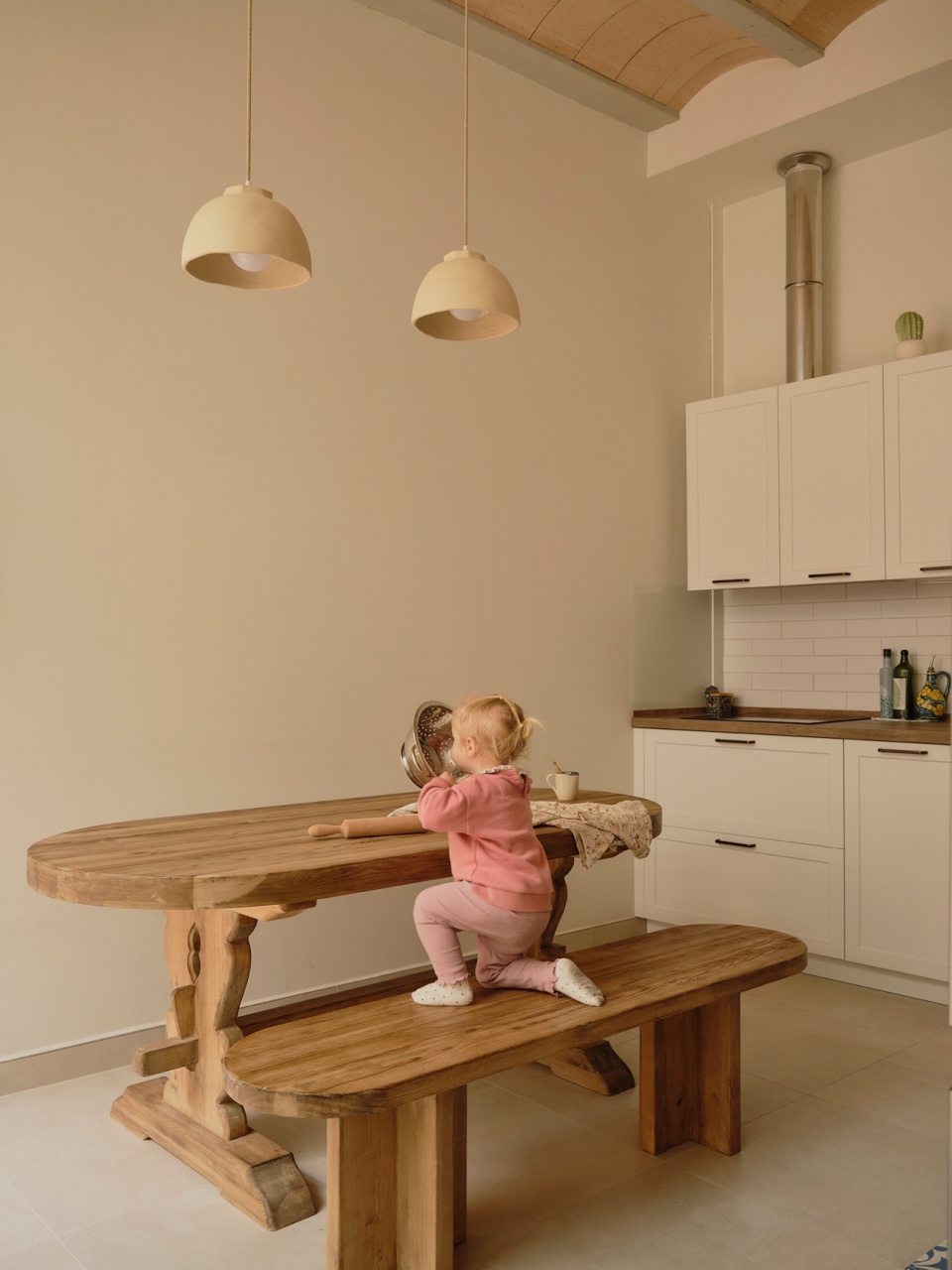
▼厨房和用餐区,kitchen and dining area
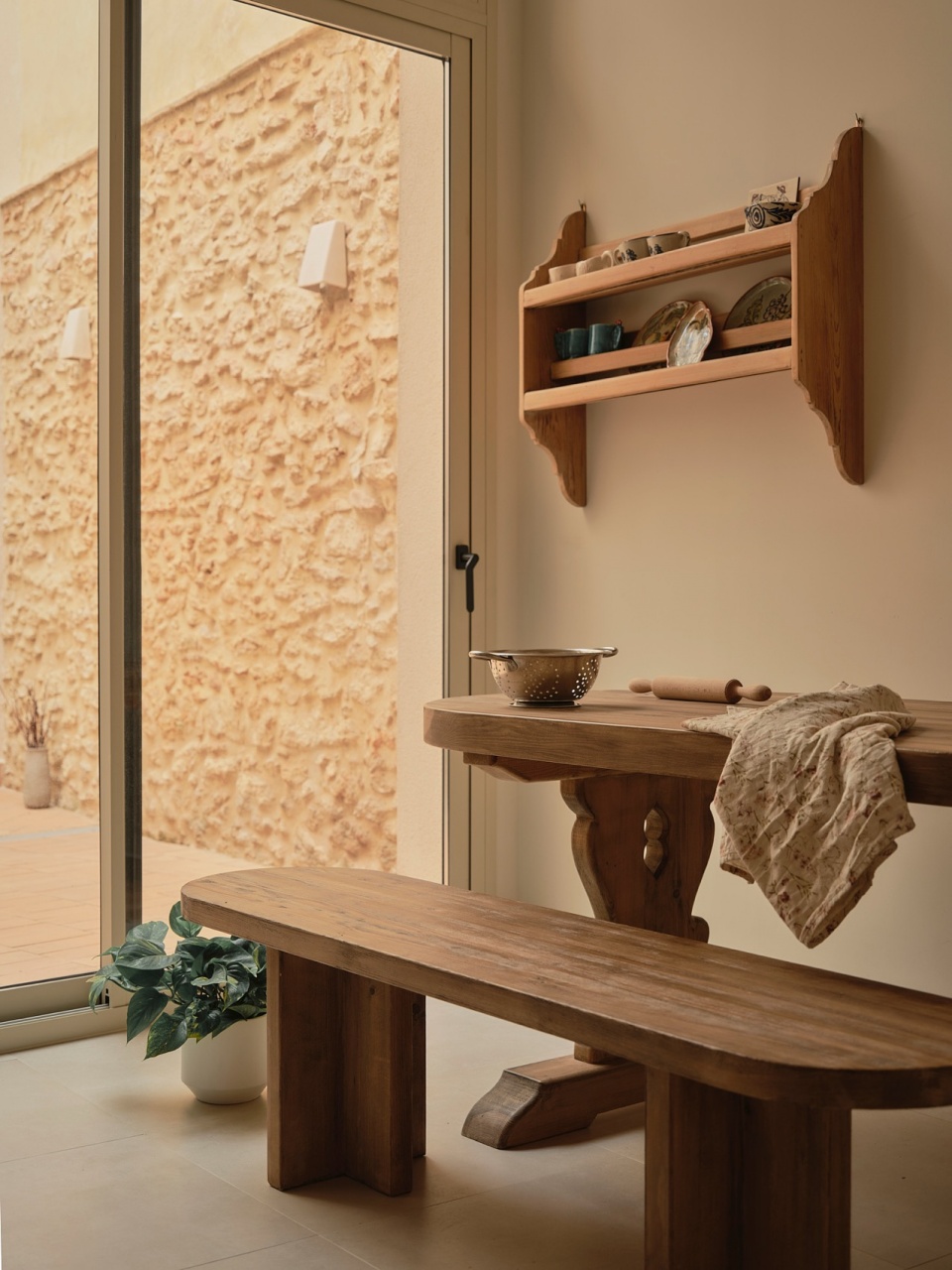
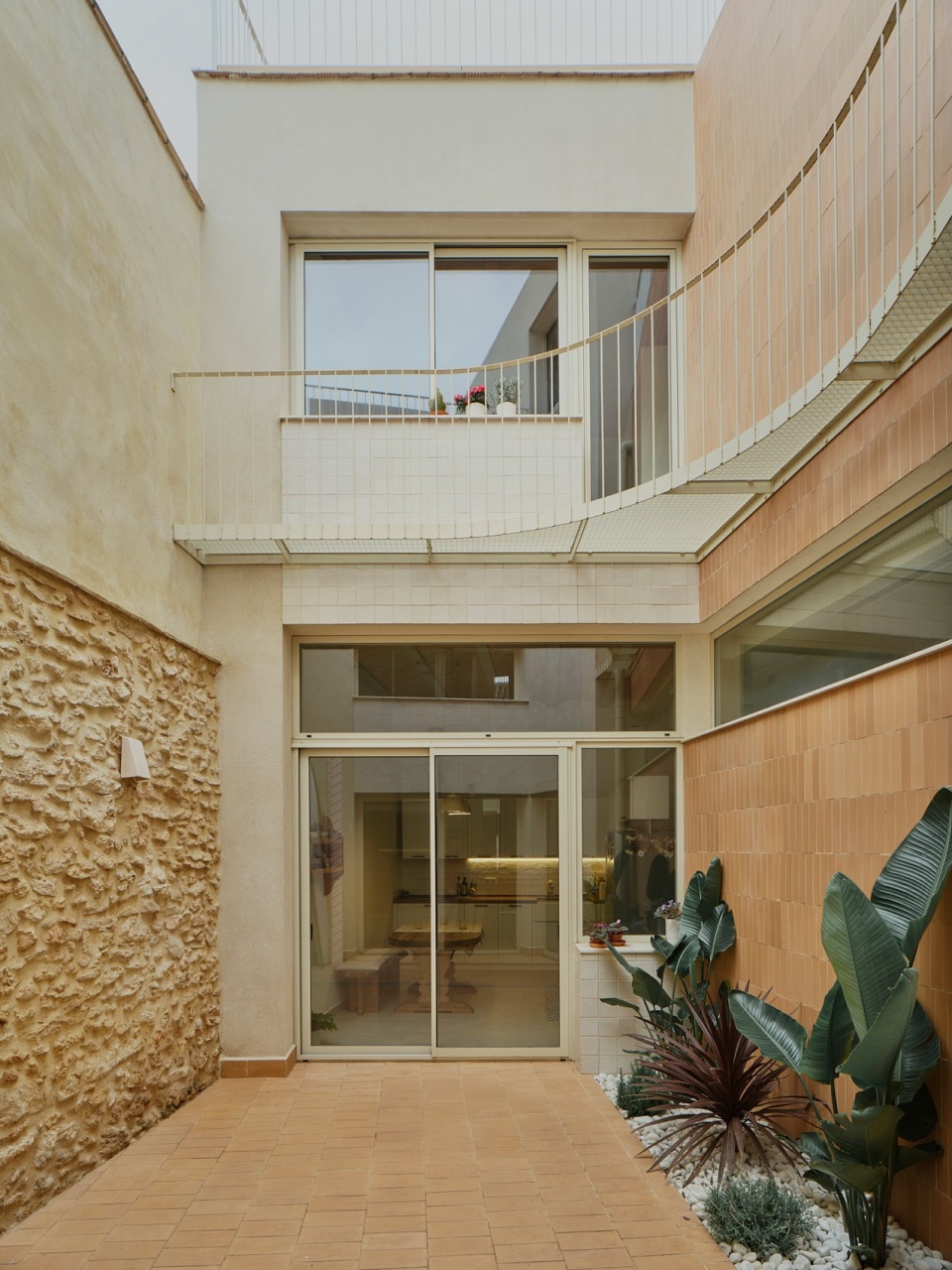
作为住宅真正核心的庭院,被构想为对街道的重新诠释:一个异质且几何复杂的空间。它通过赤陶砖、釉面陶瓷以及传统抹灰等原始的本地材料组合而成,在唤起周边环境记忆的同时,也强化了其兼具家庭性与公共性的特质。
The courtyard, the true core of the house, is conceived as a reinterpretation of the street: a heterogeneous, geometrically complex space, constructed through the combination of raw, local materials—rasilla tiles, glazed ceramics, and traditional renders—that evoke the surroundings while reinforcing both its domestic and collective character.
▼卧室,bed room
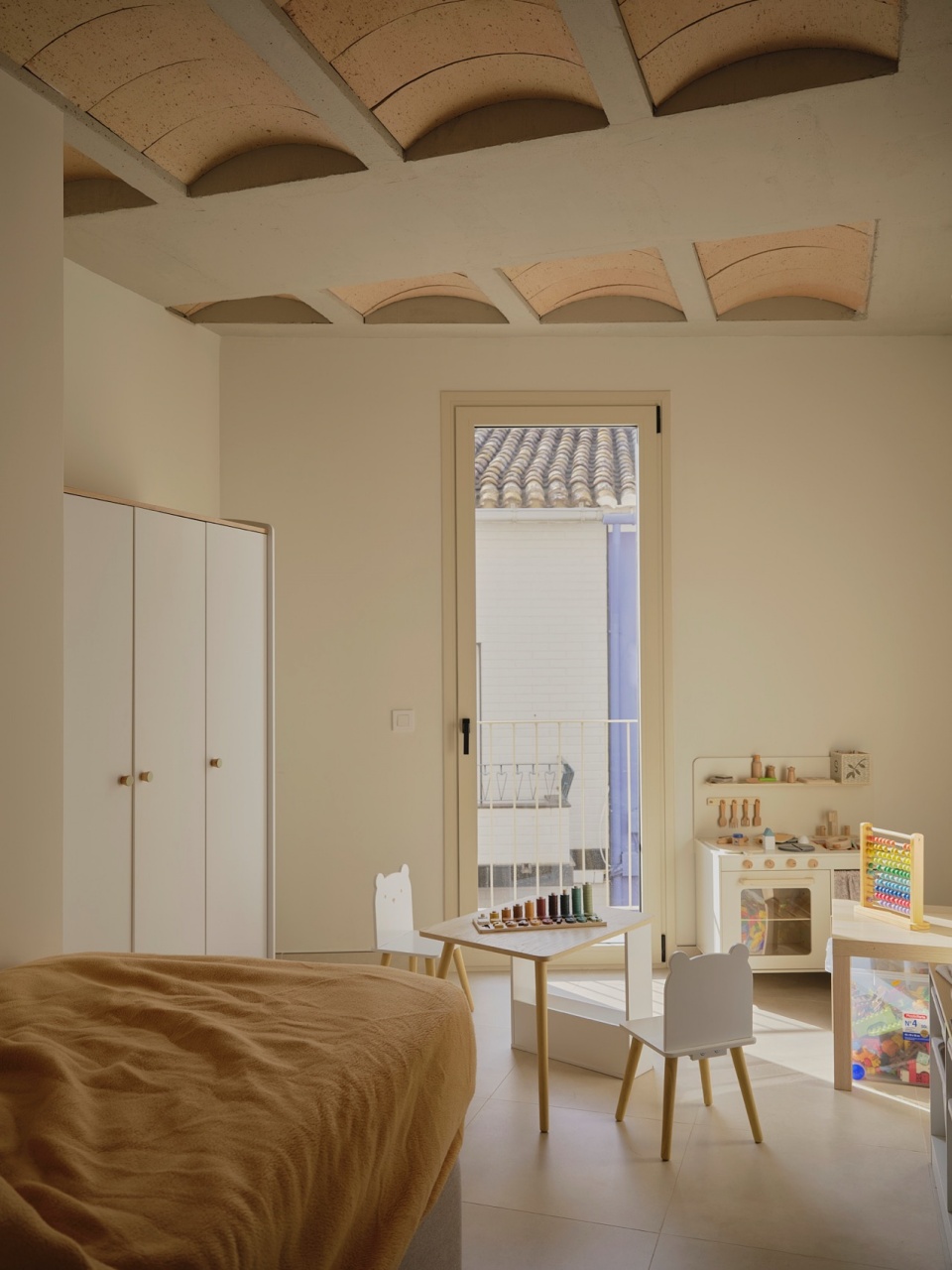
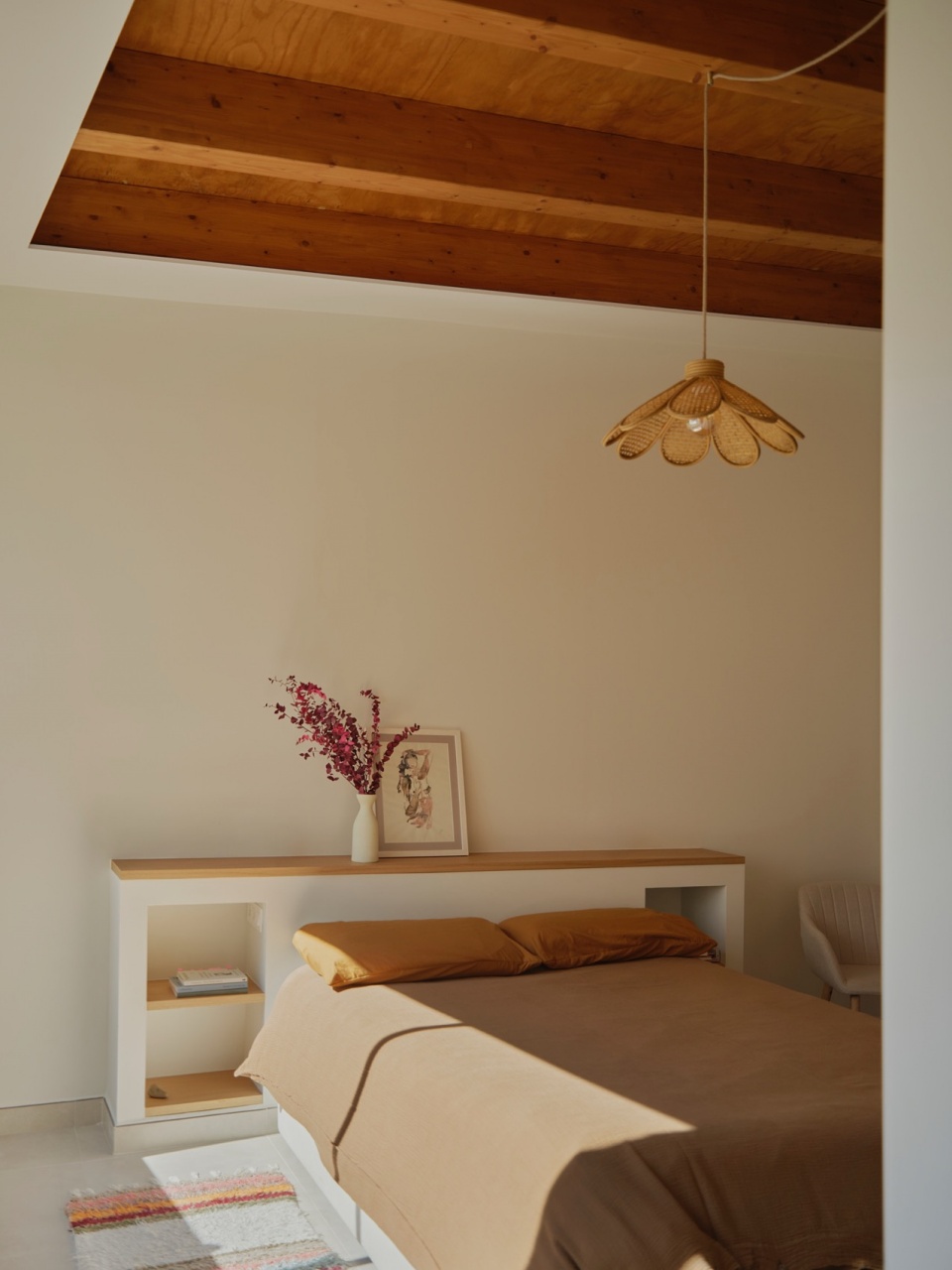
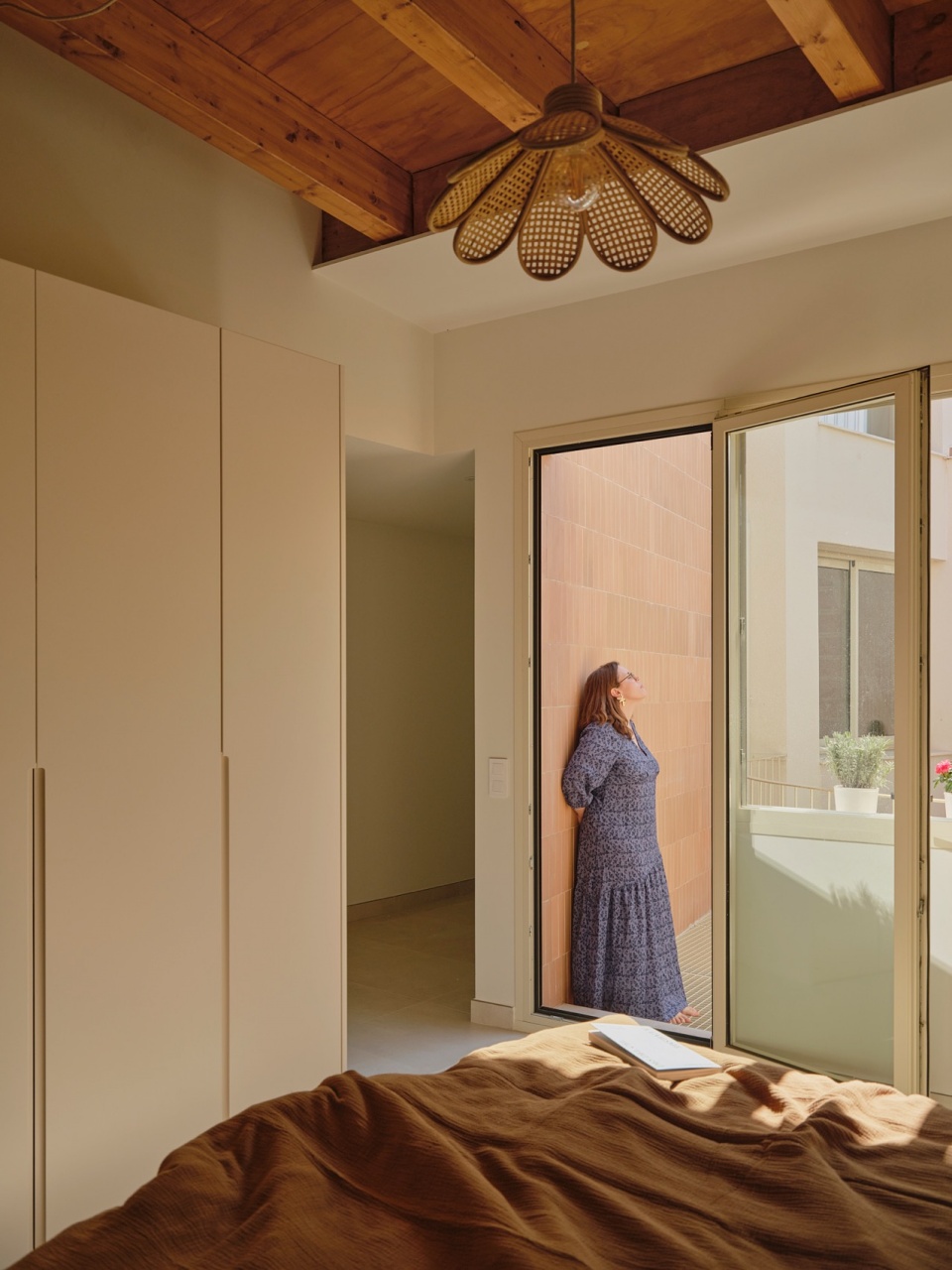
这种丰富的几何关系同样体现在剖面之中。双层通高空间、平屋顶与坡屋顶、露台和阳台共同围绕庭院构建出连续的空间序列。一层的客厅、餐厅和厨房均向这一中心空间敞开;主卧阳台将街道的意象引入室内;而与音乐工作室相连的顶层露台,则进一步优化了庭院的比例关系,并增强了自然光的引入。
This geometric richness is also expressed in section, where double heights, flat and pitched roofs, terraces, and balconies create a spatial sequence around the courtyard. On the ground floor, the living room, dining area, and kitchen open onto this central space; the balcony of the main bedroom introduces an echo of the street into the interior; and the upper-floor terrace, linked to the music studio, helps refine the courtyard’s proportions and enhances the entry of light.
▼庭院,courtyard
从2020年的首次踏勘到2025年的建成,居住者的生活发生了变化,项目本身也随之演变。小提琴演奏家 Fernando 与钢琴演奏家 Aida 见证了他们的居住环境如何不仅需要适应职业需求,也需要回应日常生活中不断发生的变化。这并非一个线性的过程,而是一座在时间中逐步完善、修正和调整的住宅,它承认建筑并非一个封闭的对象,而是一种持续变化的生命现实。
From the first visit in 2020 to the completion of the construction in 2025, the lives of its inhabitants have evolved, and with them, the project itself. Fernando, a violinist, and Aida, a pianist, have seen how their domestic environment needed to adapt not only to their professional requirements but also to the changes inherent in everyday life. Far from being a linear process, the house has been gradually completed, corrected, and adjusted over time, acknowledging that architecture is not a closed object, but a living reality in constant transformation.
▼庭院细部,courtyard details
在历史城区中进行建设不可避免地意味着责任。这不仅仅是在建造一栋住宅,更是在一个充满记忆的城市肌理中开展行动;在这里,每一个决定都会产生超越个体层面的影响。项目并未试图突出自身或强加存在感,而是采取了一种更为克制的态度:融入整体,并将主导权让位于整体环境。立面设计正体现了这种归属感诉求。其构成刻意保持简洁,以传统建筑元素和呼应 Alcàsser 历史城区住宅的几何关系构成。设计避免任何多余装饰,因为真正与环境建立连续性,并非依靠字面化的模仿,而是通过尺度、比例与材料性来实现。
Intervening in a historic center inevitably entails responsibility. It is not merely about building a house, but about acting within a fabric rich in memory, where every decision has an impact beyond the individual. Rather than seeking to stand out or impose itself, this project adopts a quieter attitude: one of integration, of yielding prominence to the whole. The façade, in this sense, responds to this desire to belong. Its composition is deliberately simple, built from traditional elements and a geometry that echoes the houses of Alcàsser’s historic core. Any superfluous ornament is avoided, understanding that true continuity with the surroundings is not achieved through literal imitation, but through scale, proportion, and materiality.
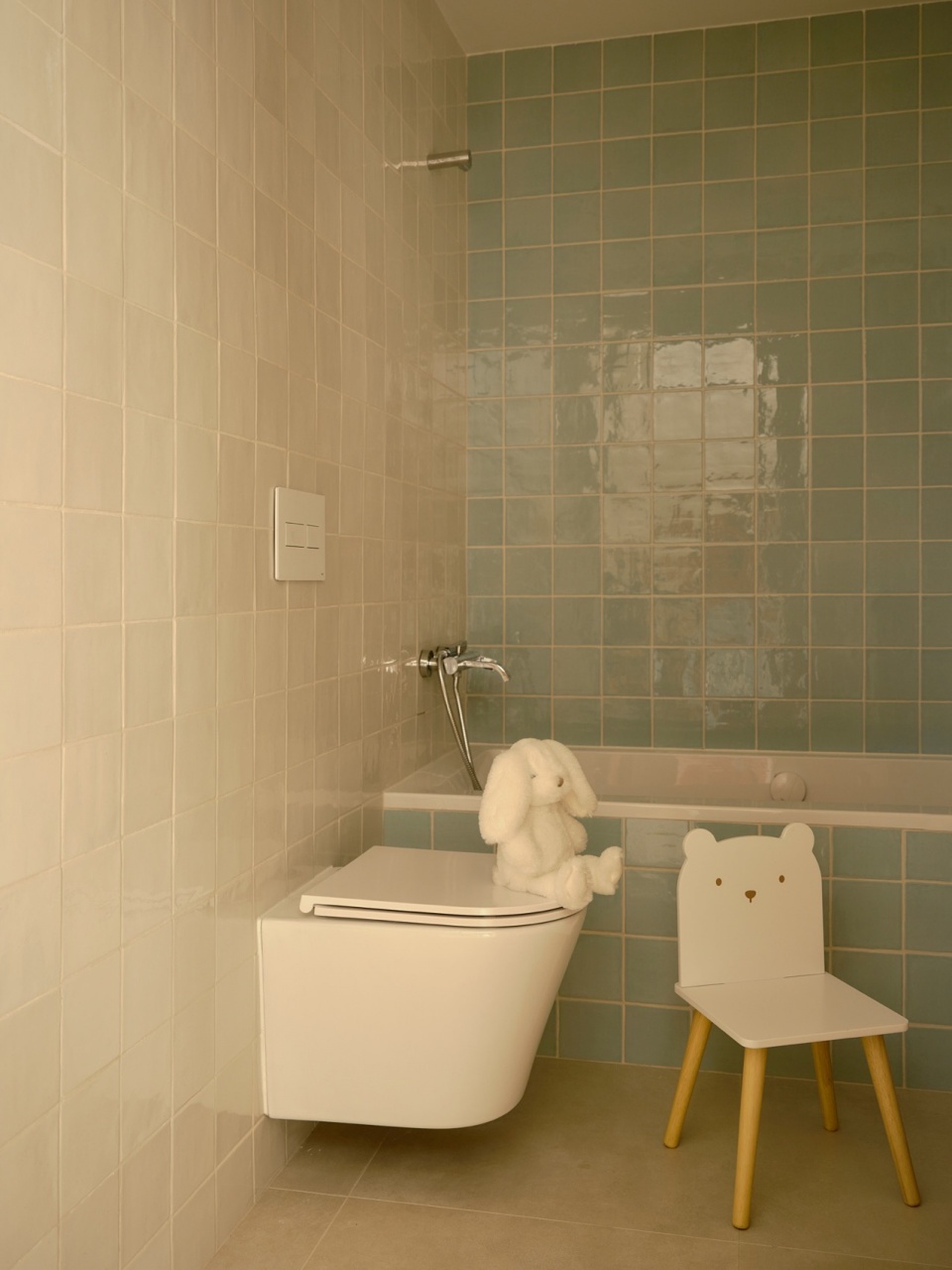
▼卫生间,bathroom
居住与生产、记忆与转化:住宅围绕作为家庭核心的庭院组织这些张力关系。它是对历史城市肌理一次安静而克制的重新诠释。
Living and producing, remembering and transforming: the house articulates these tensions around a courtyard that acts as the domestic heart. A quiet reinterpretation of the historic fabric.
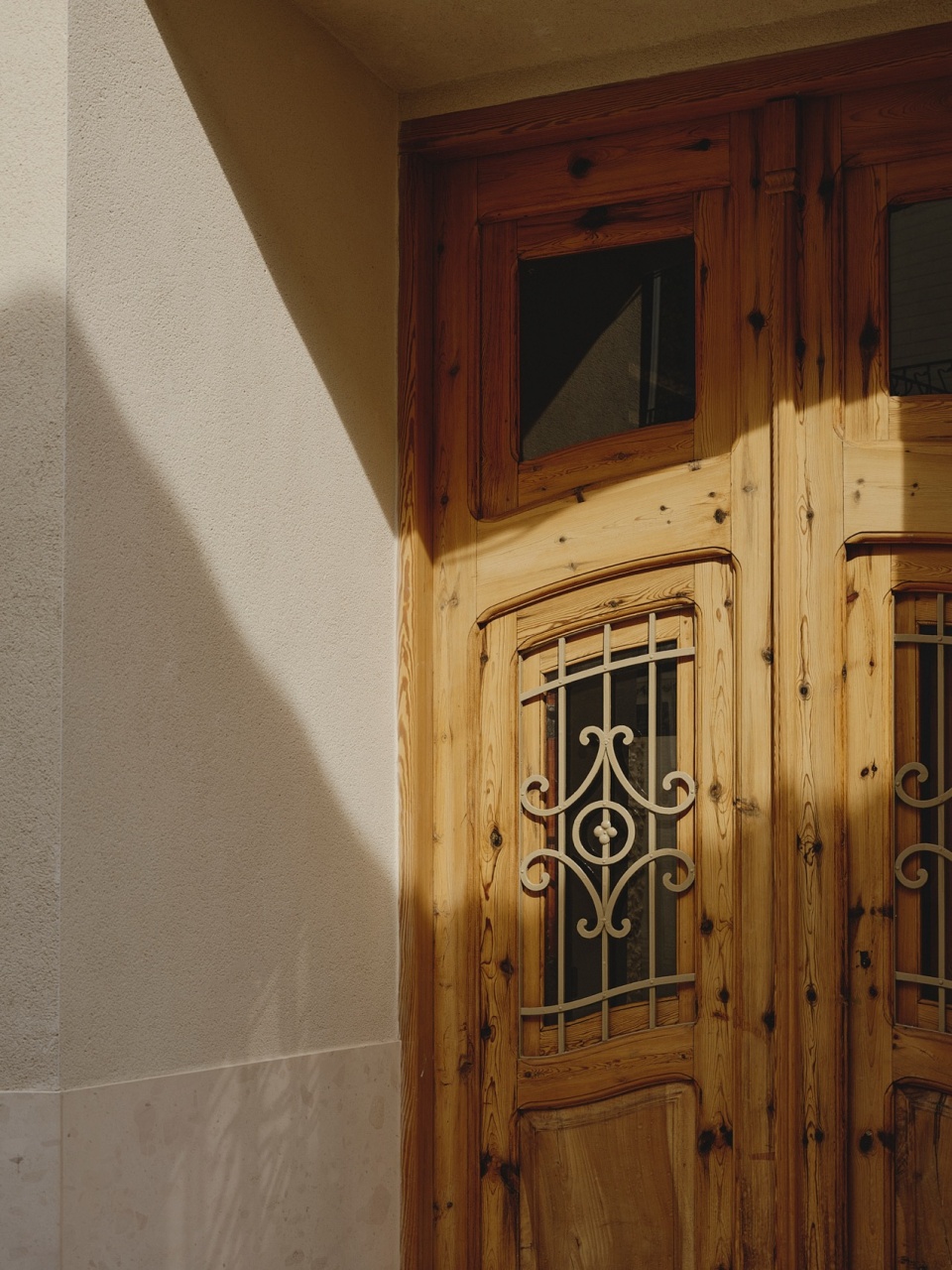
▼门细部,door details
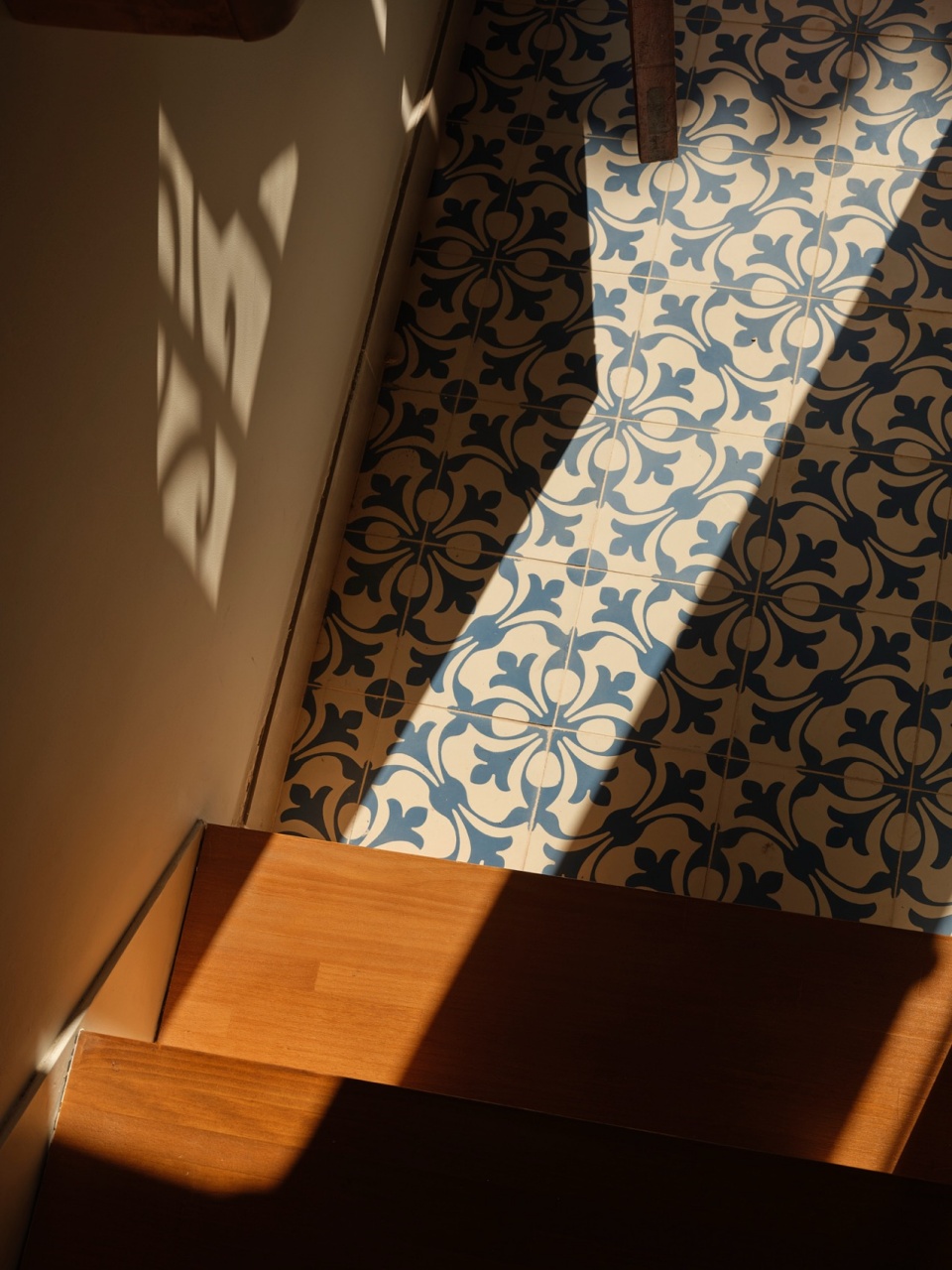
只有一个元素带来了一丝微妙的不协调感:一块带有蓝色图案的水泥花砖。它作为一种私密的表达被纳入设计之中,以回应其中一位业主的过往经历。这个极其细微的细节并未改变整体叙事,却在个人记忆与集体记忆之间建立起联系。
Only one element introduces a slight dissonance: a hydraulic tile with blue motifs, incorporated as an intimate gesture that refers to the past of one of the clients. A minimal detail that, without altering the overall reading, establishes a link between personal memory and collective memory.
▼蓝色图案的水泥花砖,hydraulic tile with blue motifs
因此,这座住宅并不试图成为一个独特而孤立的对象,而是希望成为历经时间积累而形成的场所景观的一部分。这是一种选择陪伴而非彰显自我的建筑。
In this way, the house does not seek to be a singular object, but rather to become part of a landscape built over time. An architecture that, rather than asserting itself, chooses to accompany.
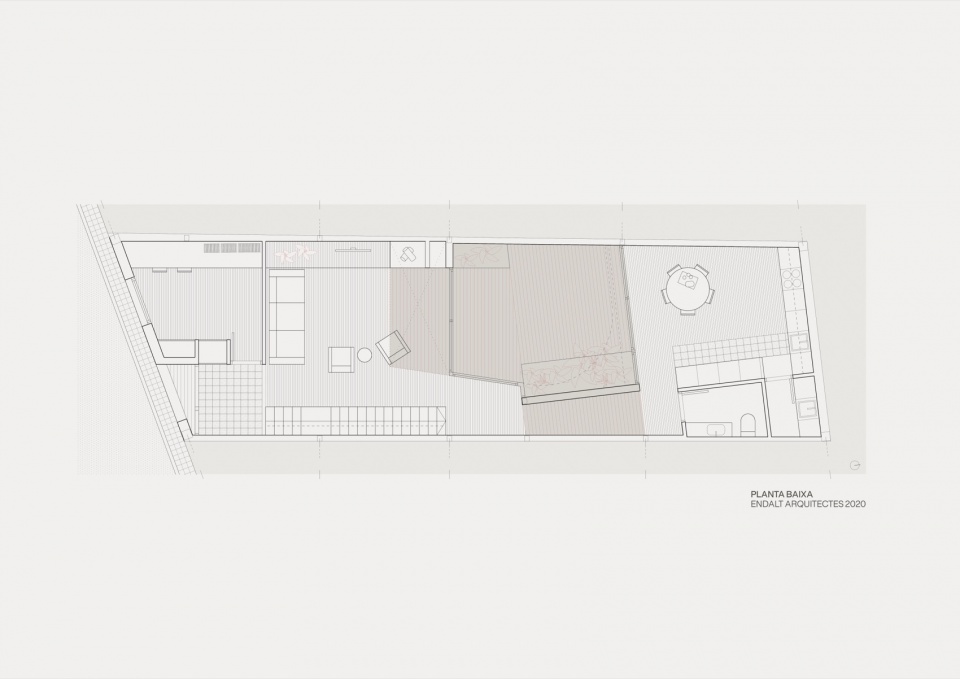
▼首层平面图,ground floor plan
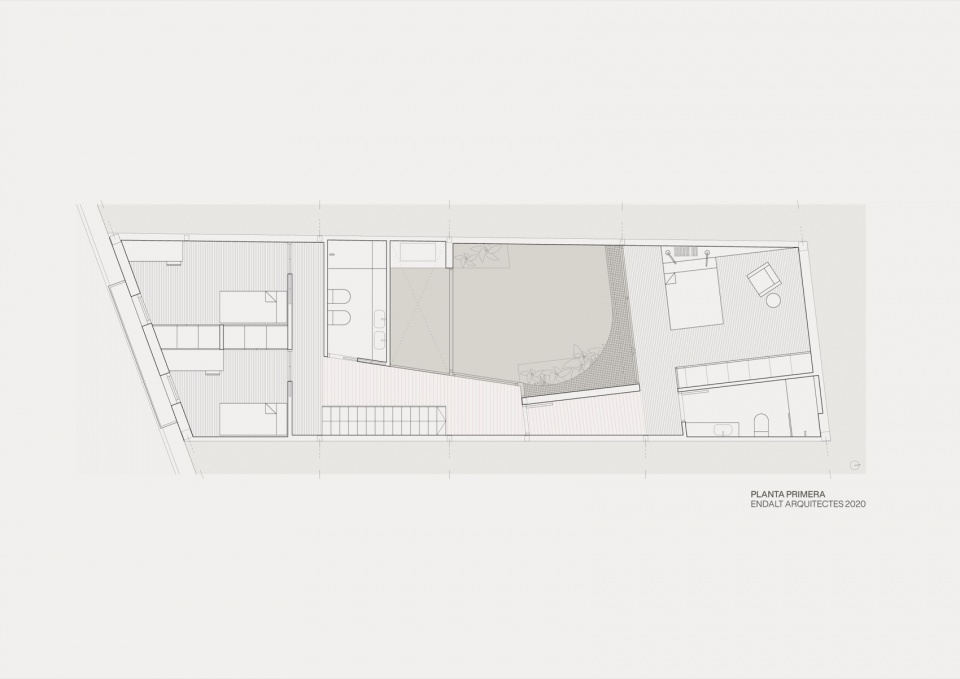
▼二层平面图,first floor plan
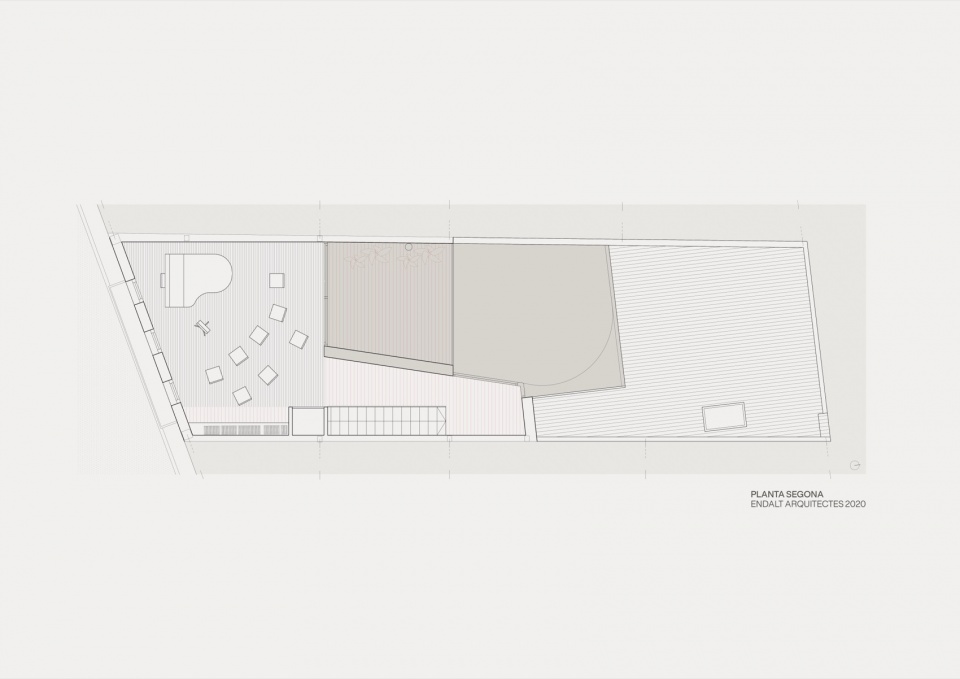
▼三层平面图,second floor plan
Project name: Casa per a piano i violí
Oficina del Studio/Office: ENDALT Arquitectes + Josep Eixerés
Website: www.endaltarquitectes.com
E-mail: endaltarquitectes@gmail.com
Instagram: @endalt_arquitectes
Facebook: endalt arquitectes
Twitter: @ENDALT_arq
Country of studio/office: España
Year of completion: 2025
Built area: 220 m2
Location: Alcàsser (València, España)
Photograpy: David Zarzoso