“正念城市 ”Gelephu国际机场方案,不丹 / BIG
Gelephu国际机场融合了不丹传统工艺与现代创新,采用胶合木建造的模块化网格结构,并装饰有彩绘雕刻。这一设计将在2025年威尼斯建筑双年展“Ancient Future”单元展出,展期从5月持续至9月。
Blending Bhutan’s traditional craftsmanship with modern innovation, Gelephu International Airport is designed for mindful travel and future expansion, featuring a modular diagrid structure made of glulam timber, adorned with painted carvings.The design will be showcased at the 2025 Venice Architecture Biennale, Ancient Future in May and exhibited until September.
▼项目概览,overview of the project
作为不丹的第二座国际机场,Gelephu国际机场位于不丹-印度边境附近,毗邻派塔河,被不丹郁郁葱葱的亚热带森林、群山和河流环绕。机场总占地68,000平方米,由BIG、Arup和Cistri共同规划设计,作为格列普正念城市(Gelephu Mindfulness City, GMC)总体规划的重要组成部分,并与航空工程公司NACO合作建造。机场预计可每日运营123架次航班,到2040年年客流量预计达到130万人次,到2065年增长至550万人次。2025年威尼斯建筑双年展将展出一件机场外立面仿木结构的钻石形装置,由一位不丹艺术家和机器共同雕刻,以实时呈现传统与创新的交融,既展现不丹木雕的历史传承,也探索技术在保护和推进工艺中的作用。
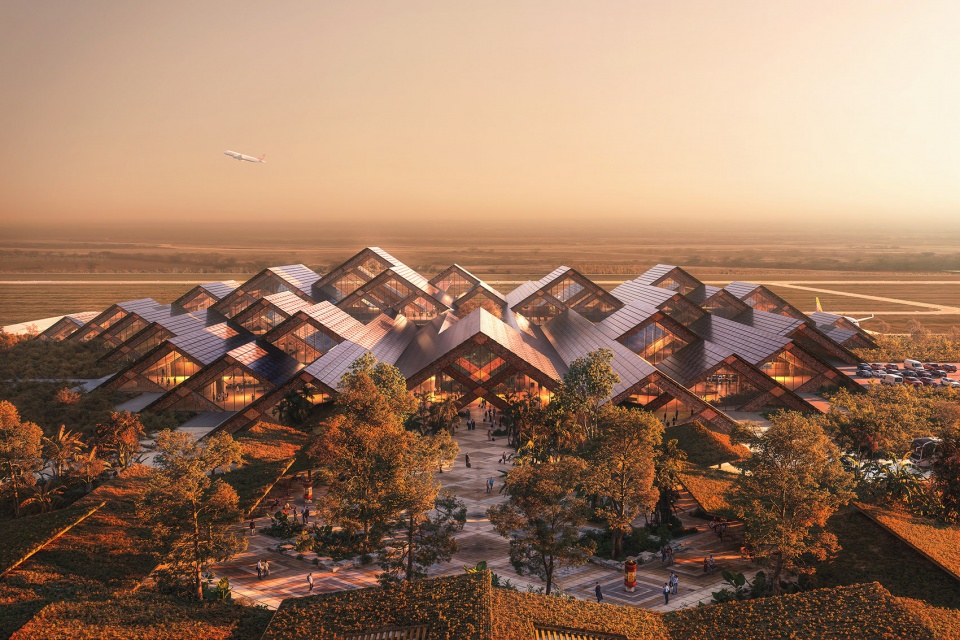
Bhutan ’s second international airport, the Gelephu International Airport is strategically positioned near the Bhutan-Indian border and thePaitha River, surrounded by Bhutan ’s lush subtropical forests, mountains, and rivers. Spanning 68,000 m2, the airport is a collaboration with aviation engineering firm NACO and an integral part of the Gelephu Mindfulness City (GMC) masterplan designed by BIG, Arup, and Cistri. With the capacity to handle 123 flights daily, the airport is projected to welcome 1.3 million passengers annually by 2040, increasing to 5.5 million passengers by 2065. An installation at Venice Architecture Biennale 2025 will feature a timber diamond piece reflecting the airport ’s façade.Sculpted in real time, half by a Bhutanese artist, and half by machine, the exhibit merges tradition with innovation, celebrating Bhutan ’s woodcarving heritage while exploring technology ’s role in preserving and advancing the craft.
▼项目鸟瞰,aerial view of the project
▼机场周围景观,the surrounding landscape
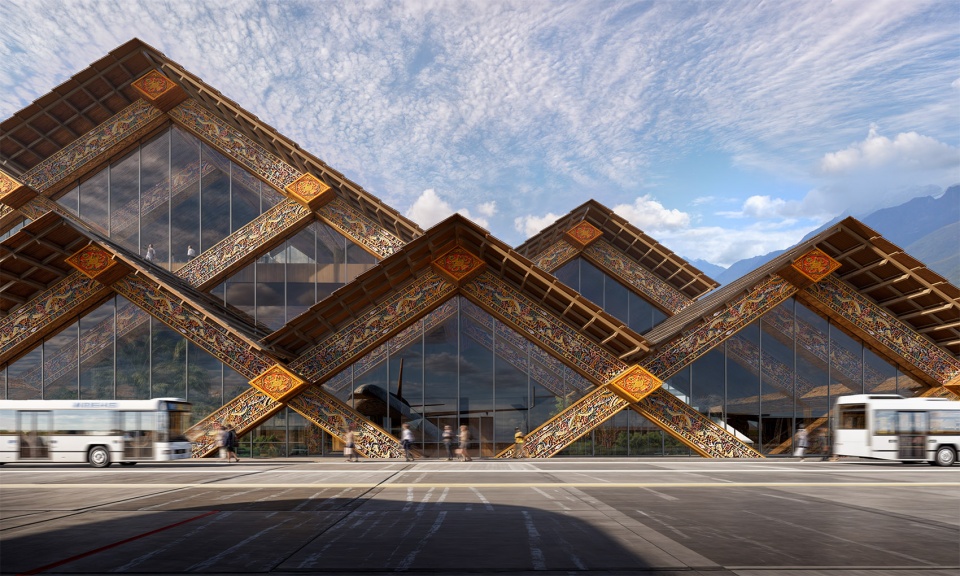
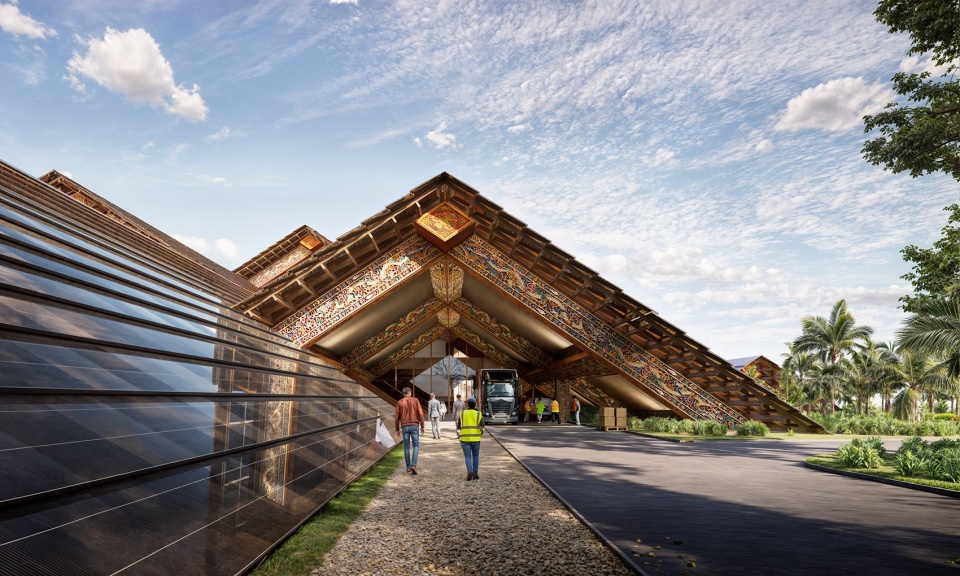
机场的网格结构由本地可持续木材建造,并由不丹工匠雕刻传统木雕装饰。其彩绘外立面灵感源自不丹传统建筑中的“Kachen”——一种被视为结构核心与精神象征的木柱。
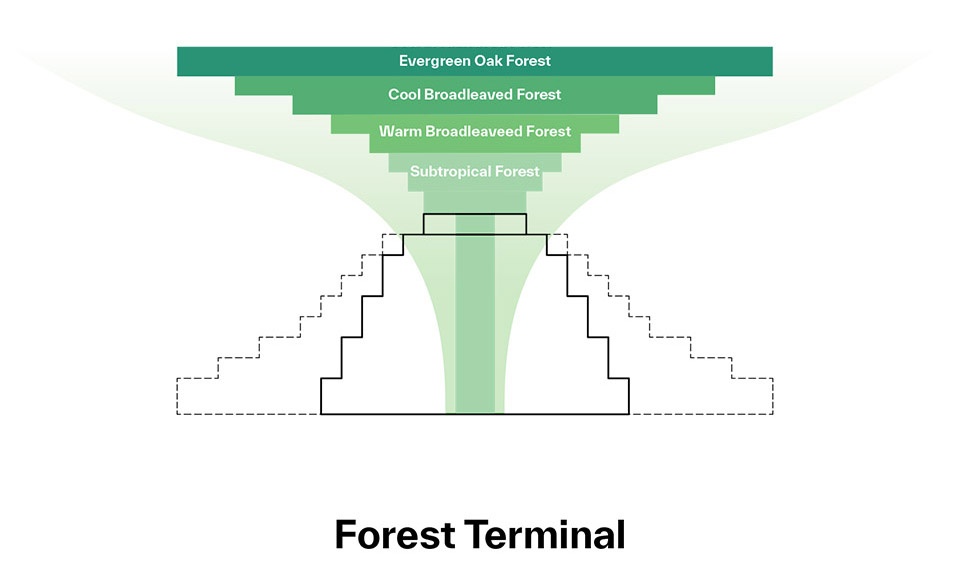
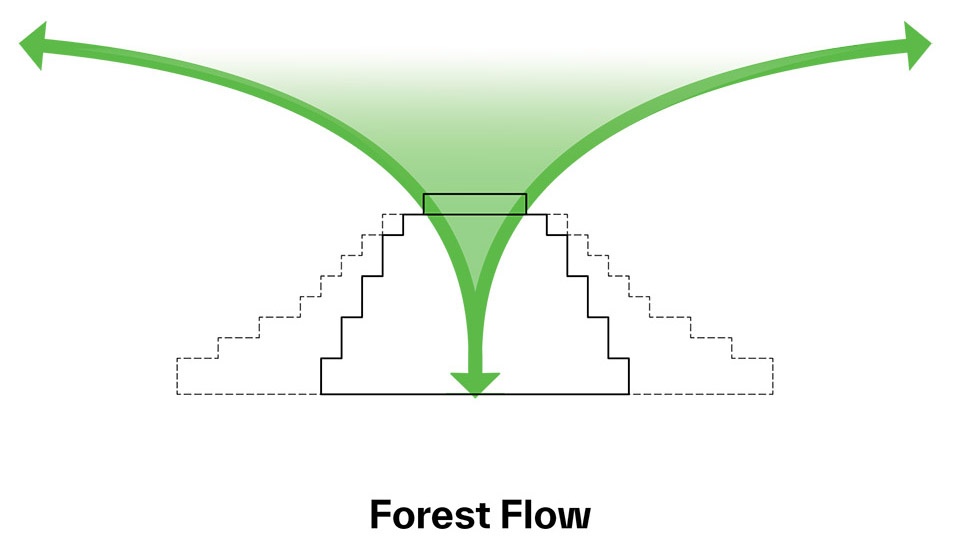
▼丛林航站楼概念,Forest Terminal concept
Set against a backdrop of the Himalayas, the airport ’s diagrid structure is crafted from locally and sustainably sourced timber and adornedwith traditional Bhutanese woodcarvings by local artists. The painted façade draws inspiration from the ‘Kachen, ’ a wooden pillar revered forits structural significance and intricate design, embodying Bhutanese architectural heritage and spiritual symbolism.
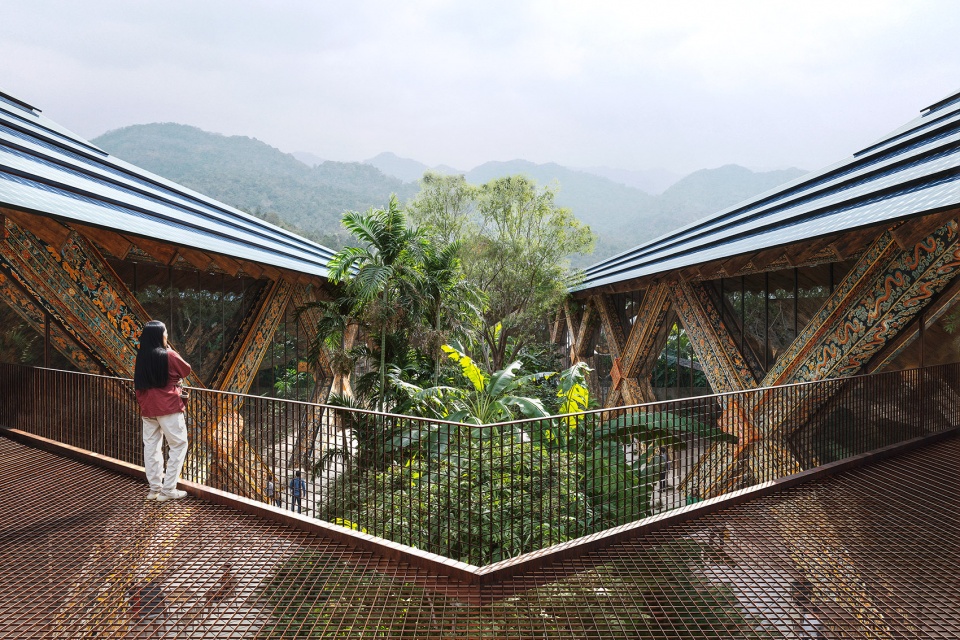
▼庭院景观,the courtyard landscape
机场的结构采用独立木框架,便于拆卸与扩建,以适应GMC未来的发展。此外,屋顶还配备太阳能光伏板,契合不丹作为碳负排国家的环保承诺。
Designed to accommodate GMC’s projected growth, the airport ’s timber frames are structurally independent, allowing for simple disassemblyand expansion. The airport ’s roof features PV panels, in line with Bhutan’s position as a carbon-negative nation.
▼机场内部空间,indoor space
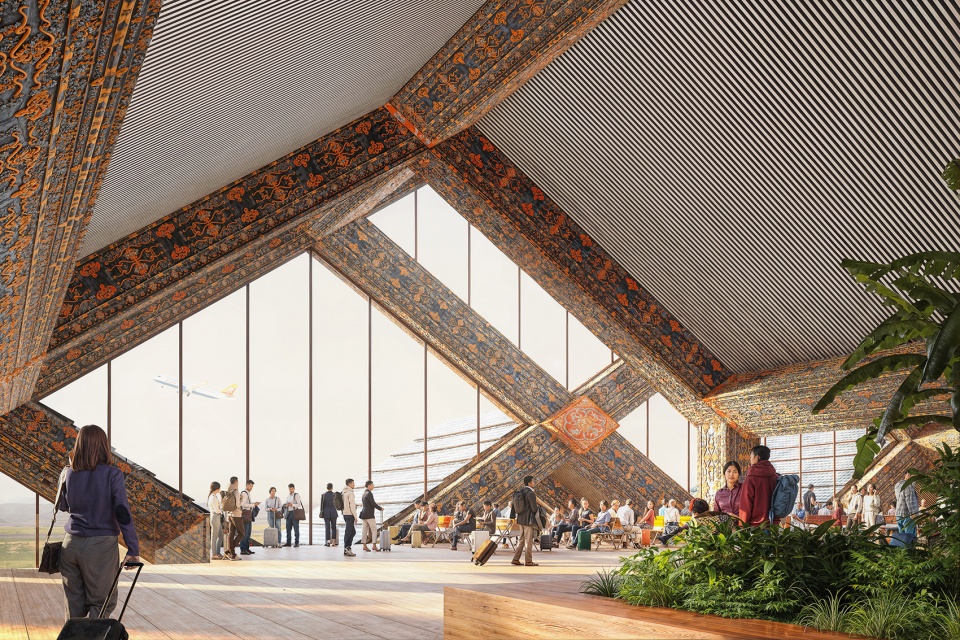
▼机场内部空间,indoor space
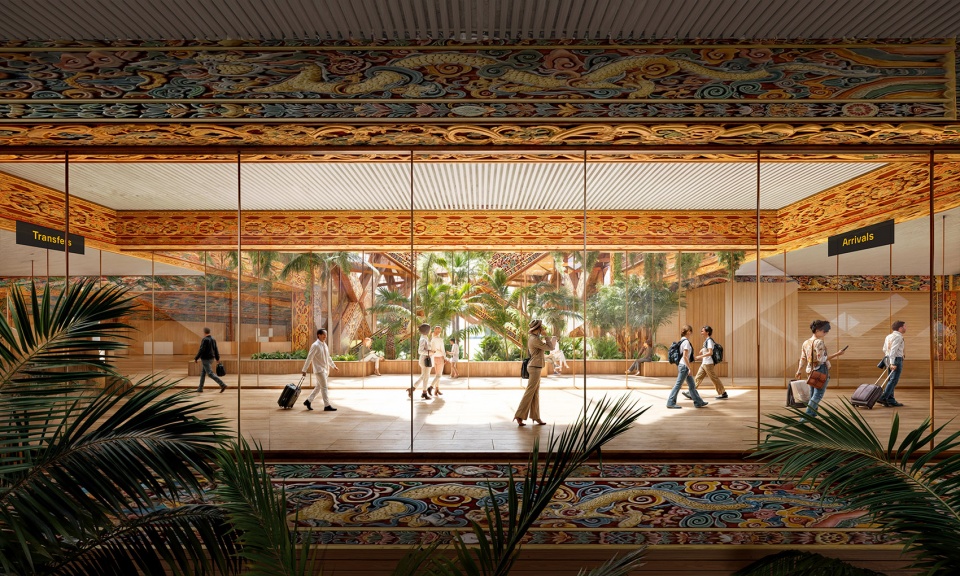
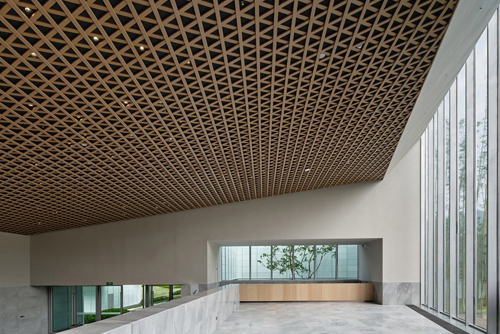
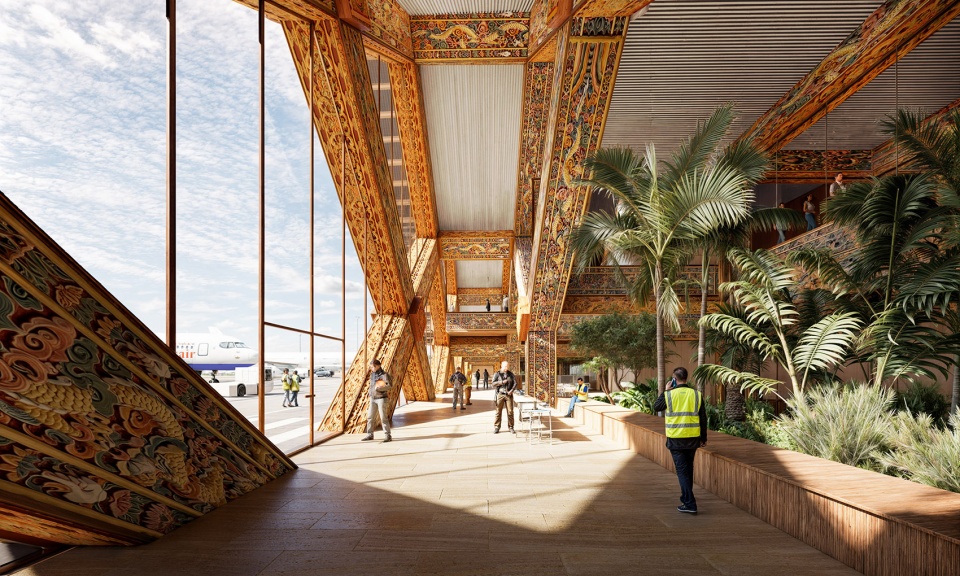
机场建筑采用模块化大规模木结构,提供灵活扩展性,远观如一座风格化的山脉。近看则可发现所有木构件都经过传统雕刻与上色,并装饰有象征不丹过去、现在与未来的三种龙纹。这一设计既传统又前卫,既面向未来,又根植历史文化。
The airport architecture is composed of modular mass timber frames providing flexibility and expandability, resembling a stylized mountainrange at a distance. Upon closer inspection, all the mass timber members are carved and colored according to traditional craft, adorned with three types of dragons representing the past, present, and future of Bhutan. The result is traditional yet avant- garde, forward-reaching and rooted.
▼木构件都经过传统雕刻与上色,all the mass timber members are carved and colored according to traditional craft
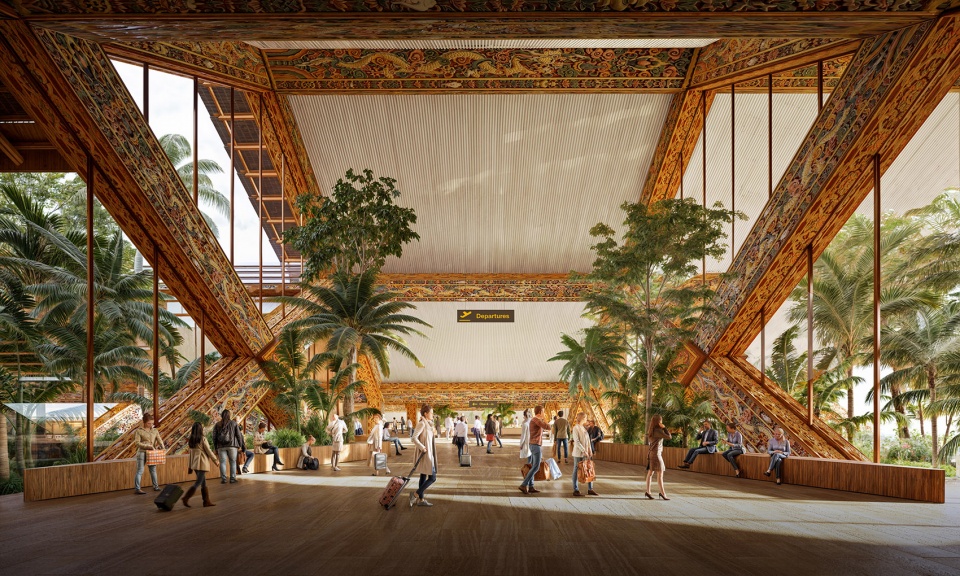
▼传统工艺与色彩的深度融合,unusual embrace of traditional craft and color
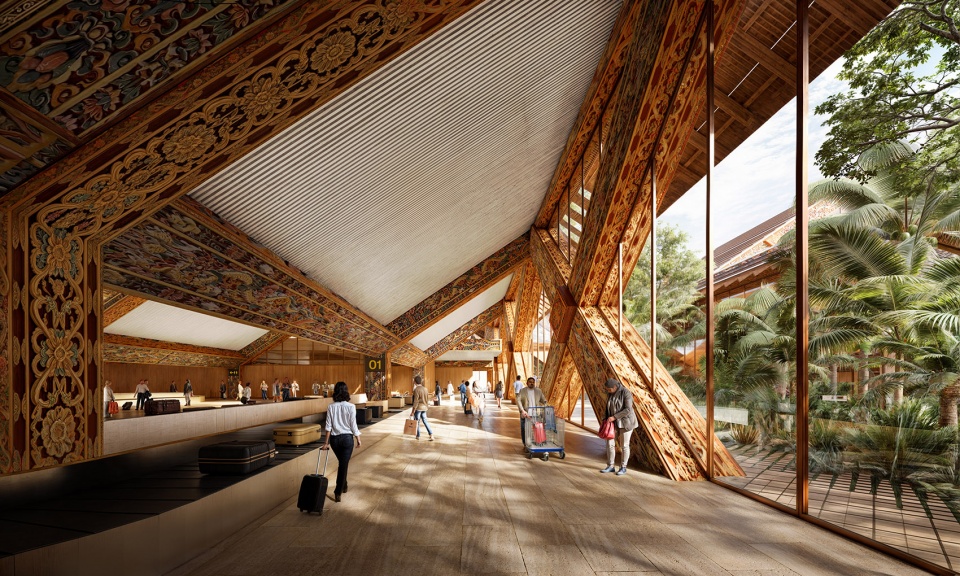
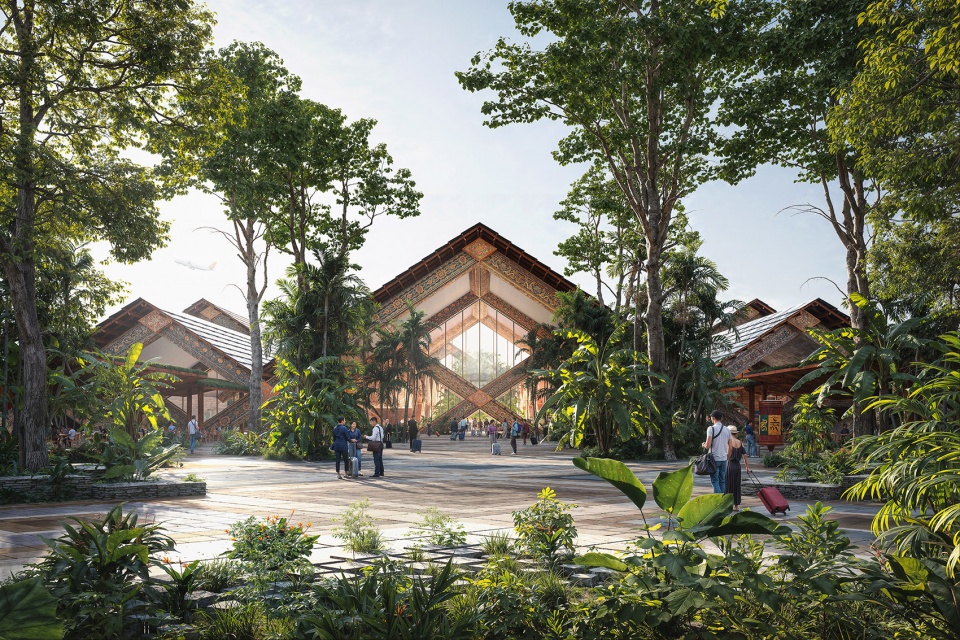
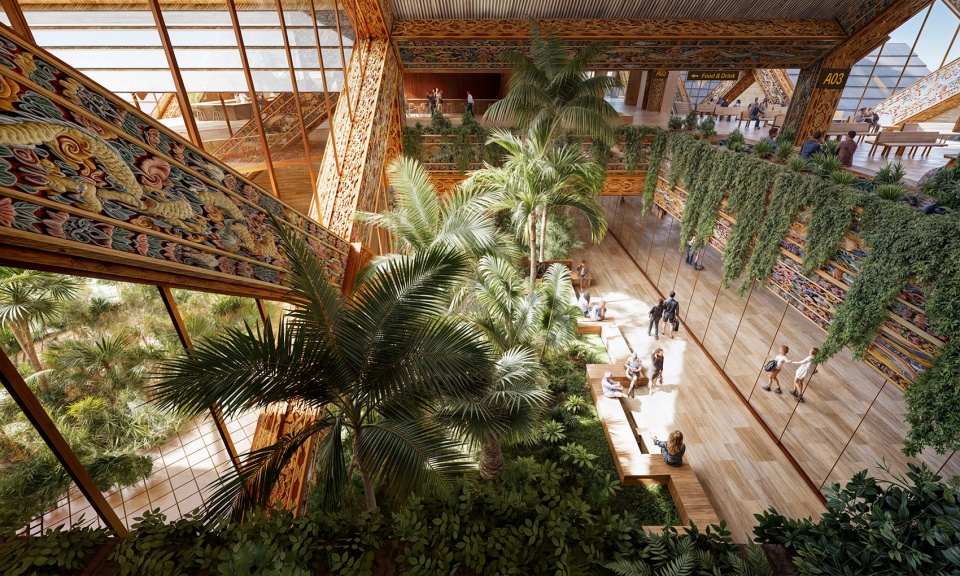
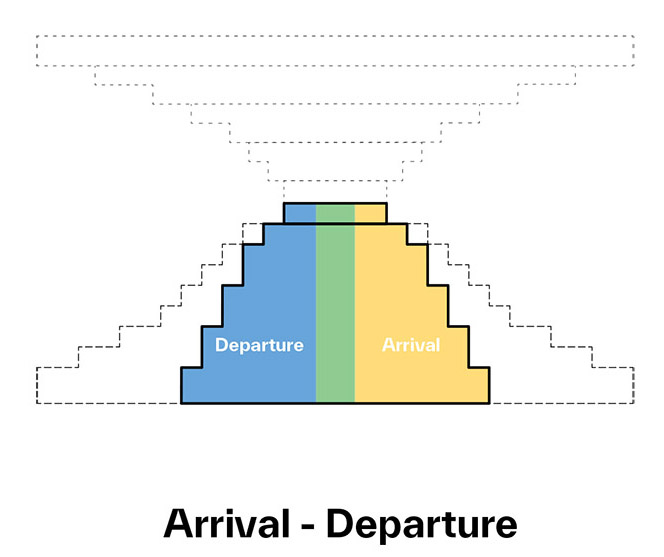
机场入口广场的设计巧妙融合不丹自然景观,分为四个区域,分别种植当地森林中的特色植物。广场内设有由本地天然石材铺设的集会空间,并结合座椅、丰富的绿化和遮阳棚,提供舒适的环境。机场的森林中庭将航站楼分为东西两部分,西侧为国内航班,东侧为国际航班。无论身处机场何处,旅客都可以看到这片绿意盎然的空间——它不仅设有树冠步道,还能吸引本地原生动植物,为旅客提供沉浸式自然体验。
▼剖面,section
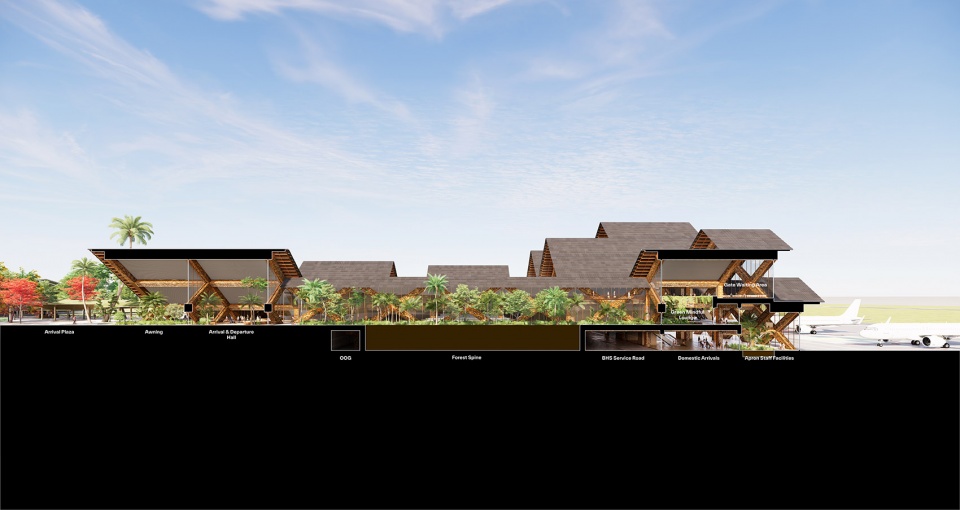
Harmoniously blending into the surrounding natural terrain, the arrival plaza is designed as a series of four zones each dedicated to specificplants found within the forests in Gelephu. A gathering space features paving made from local natural stone and integrated seating areas, while abundant greenery and a canopy provide protection from the elements. Bhutan ’s biodiversity corridors are pulled into the airport and its interior courtyard. Aptly named the Forest Spine, the courtyard divides theterminal into two sections, with domestic flights on the west side and international flights to the east. Visually accessible from anywhere in the airport, the Forest Spine offers travelers a connection to nature even inside the airport, with tranquil green spaces, a treetop walkway, andindigenous fauna.
▼入口广场设计融合了当地自然景观,the arrival plaza dedicated to specific plants found within the local forests
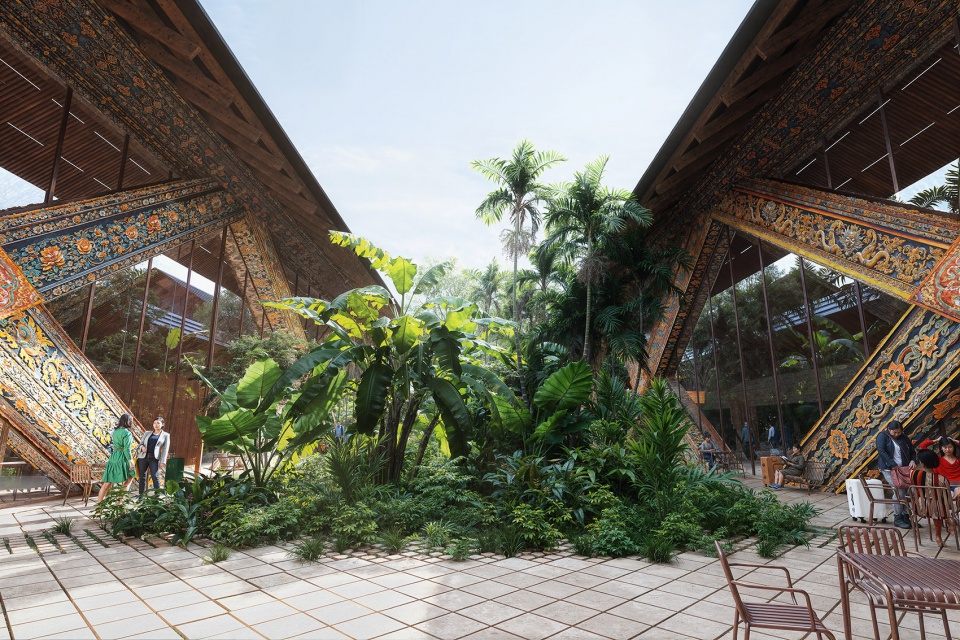
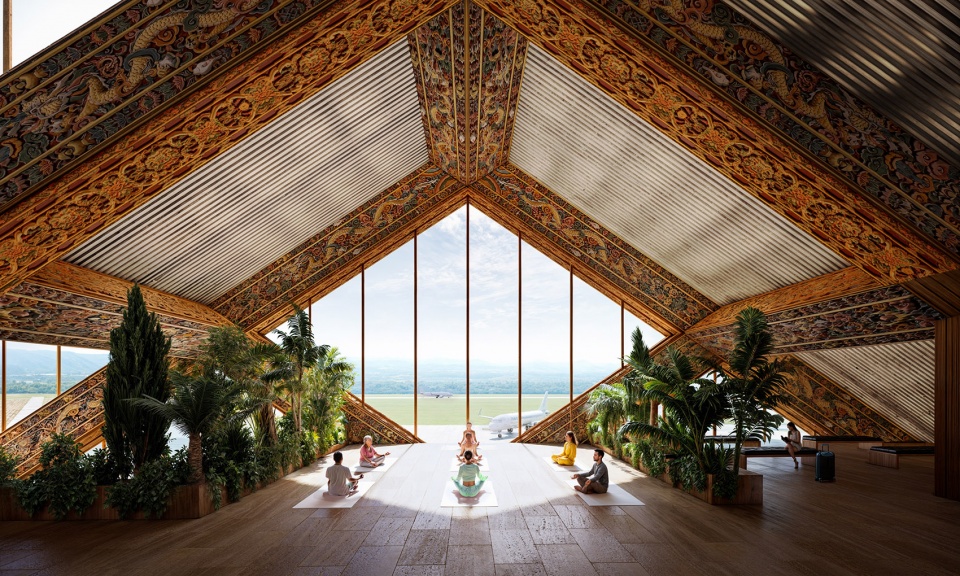
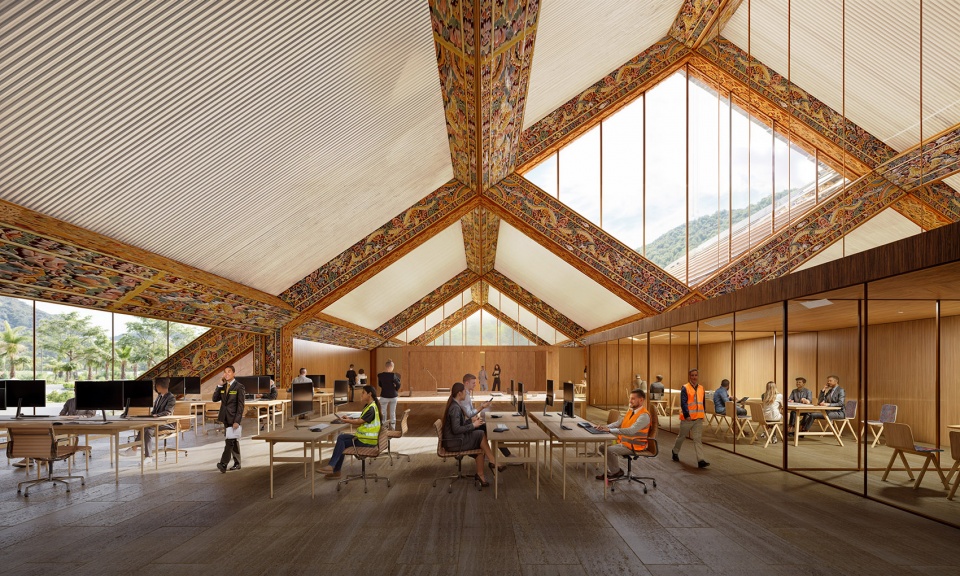
机场的建筑与室内装饰完美展现了不丹丰富的手工艺传统,包括Shing-Zo(木工)、Par-Zo(雕刻)、Lha-Zo(绘画)和 Tshar-Zo(传统编织工艺)。精美的不丹木雕不仅体现在建筑外部,更延伸至内部空间。机场设计旨在通过自然光线与开阔空间,打造正念旅行体验,缓解旅客的出行压力。例如:三层挑高的大门入口;全景落地窗,最大限度引入自然光;室内外休息区,提供瑜伽、颂钵浴(gong bath)与冥想空间,让旅客在旅途中身心放松。
▼剖面,section
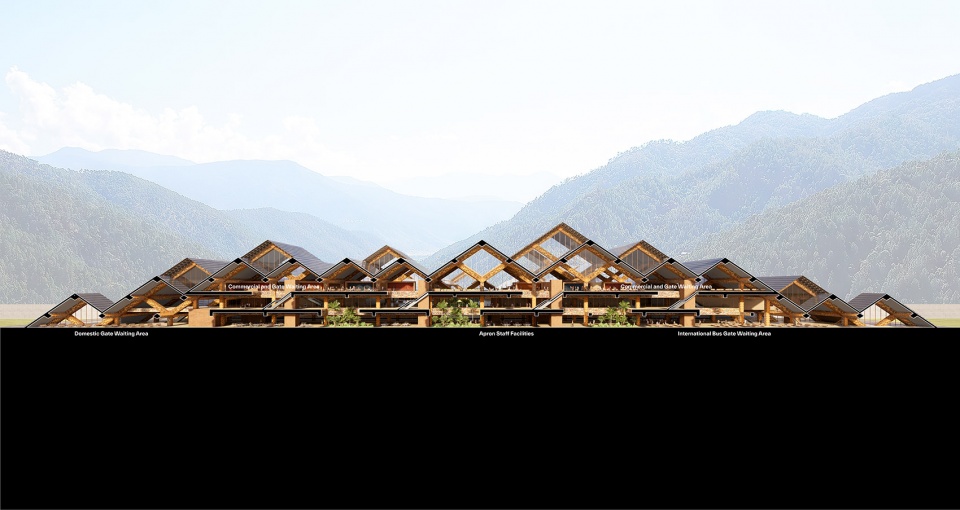
Every aspect of the Gelephu International Airport is a celebration of Bhutanese culture, showcasing regional craftsmanship including Shing-Zo(carpentry), Par-Zo (carving), Lha-Zo (painting), and Tshar-Zo (traditional weaving techniques). The traditional Bhutanese carvings extend fromexterior to interior. Designed to instill mindfulness into the often-stressful experience of traveling, the airport is bathed in natural light, with agrand triple-height entry, expansive floor-to-ceiling windows, and skylights. Indoor and outdoor lounges provide tranquil spaces for yoga, gongbaths, and meditation for travelers to recenter and recharge, embodying Bhutan ’s values of happiness and psychological well-being.
▼室内装饰展现不丹丰富的手工艺传统,indoor decoration showcasing regional traditional craftsmanship
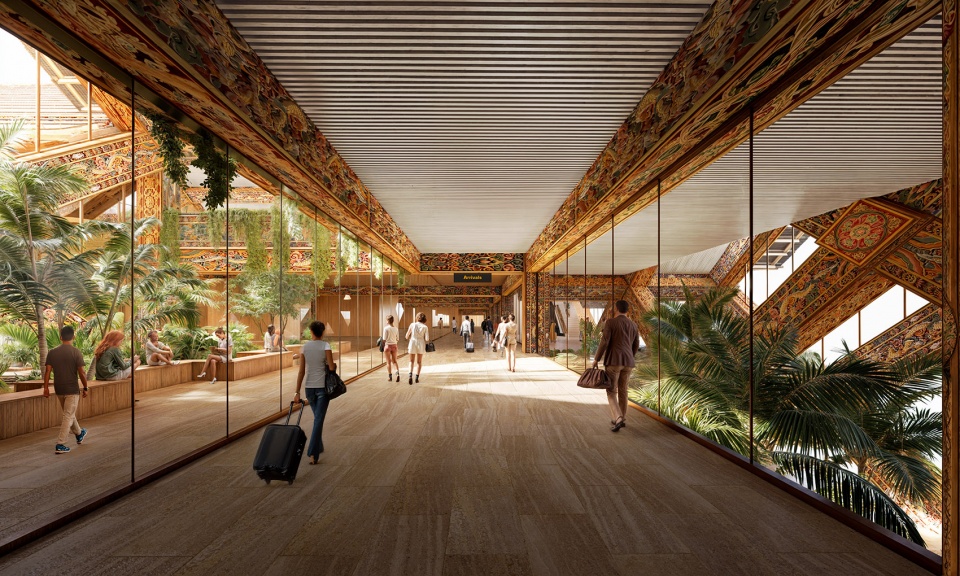
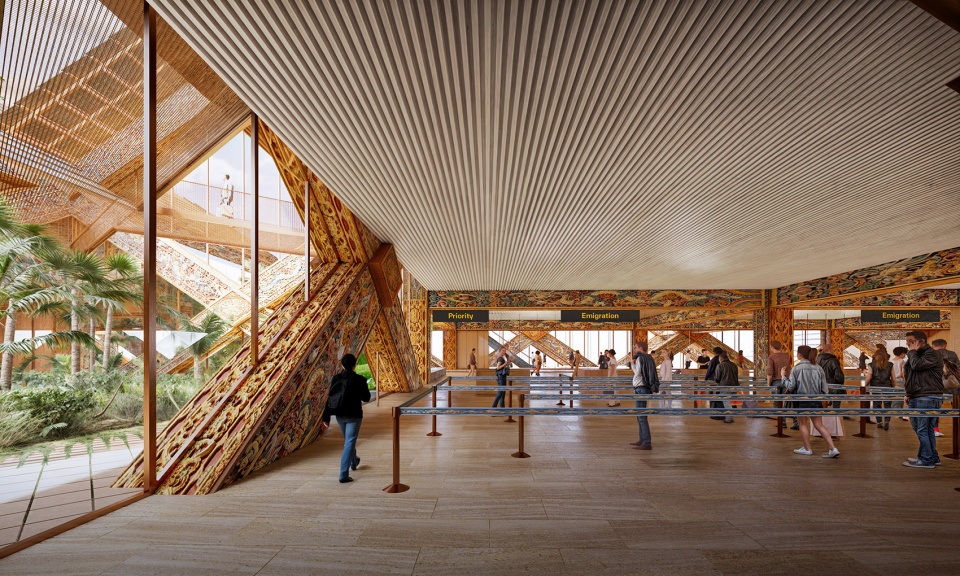
▼最大限度引入自然光,maximize the introduction of natural light
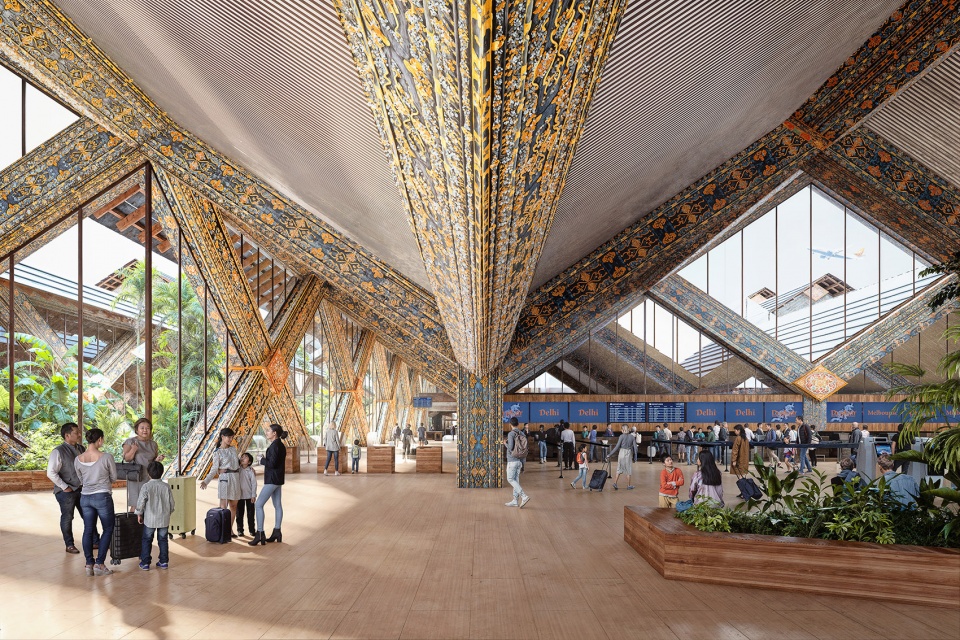
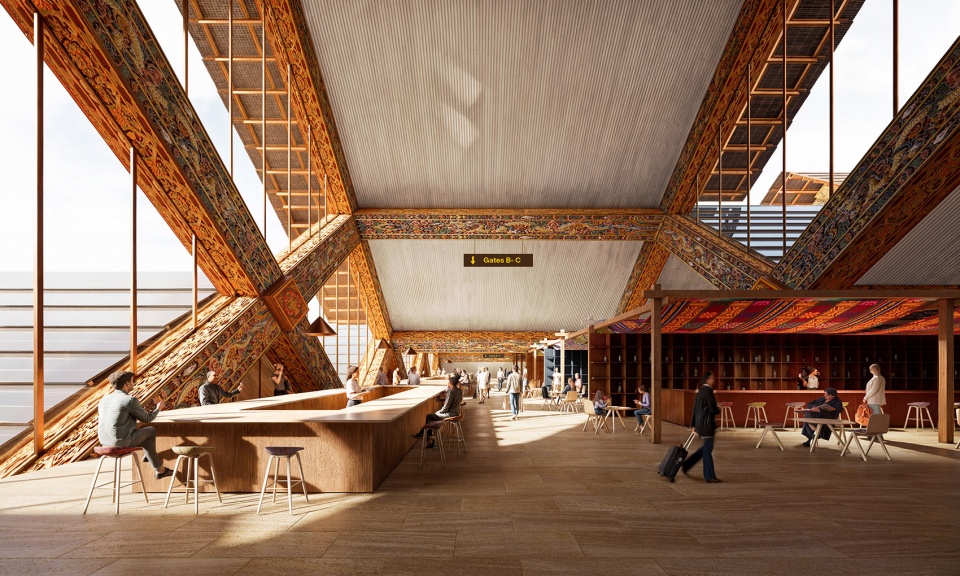
Gelephu国际机场的整体设计围绕旅客体验与运营效率展开,清晰的视觉导向与流线设计确保旅客从抵达至登机的顺畅过渡。登机口设置于上层,与零售及餐饮区相邻,可俯瞰停机坪与壮丽的喜马拉雅山景。
The Gelephu International Airport’s layout is driven by passenger experience and operational efficiency. Intuitive wayfinding through clear visualcues and thoughtfully designed circulation paths ensures a smooth journey from arrival to gate. Gates are situated on the upper level alongside retail and food and beverage areas, offering expansive views of the apron and the dramatic Himalayan landscape.
▼宽敞明亮的空间,generous day lit spaces
机场建筑针对南不丹的亚热带气候,采用被动式环保设计,借鉴不丹传统建筑智慧。木结构不仅吸收空气中的水分,也帮助调节室内湿度,通风屋顶与庭院促进自然空气流通,深挑檐设计提供遮阳并防御强降雨。此外,机场还将成为不丹首个陆上交通枢纽,引入无轨电车与公交系统,无缝连接Gelephu市中心及全国其他地区。
Adapting to the subtropical climate of Southern Bhutan, the airport incorporates climate-responsive, passive designs seen in traditional Bhutanese architecture. Its wooden structure absorbs moisture from the air, helping to regulate indoor humidity, while ventilated roofs and courtyards encourage natural airflow. Outside, extended eaves provide shade and protect against heavy rainfall. The airport will also becomeBhutan ’s first in-land mobility hub, promoting the use of public transportation with easily accessible trackless trams and buses that connect to Gelephu’s revitalized town center and the rest of the country.
▼采用被动式环保设计,employs passive design
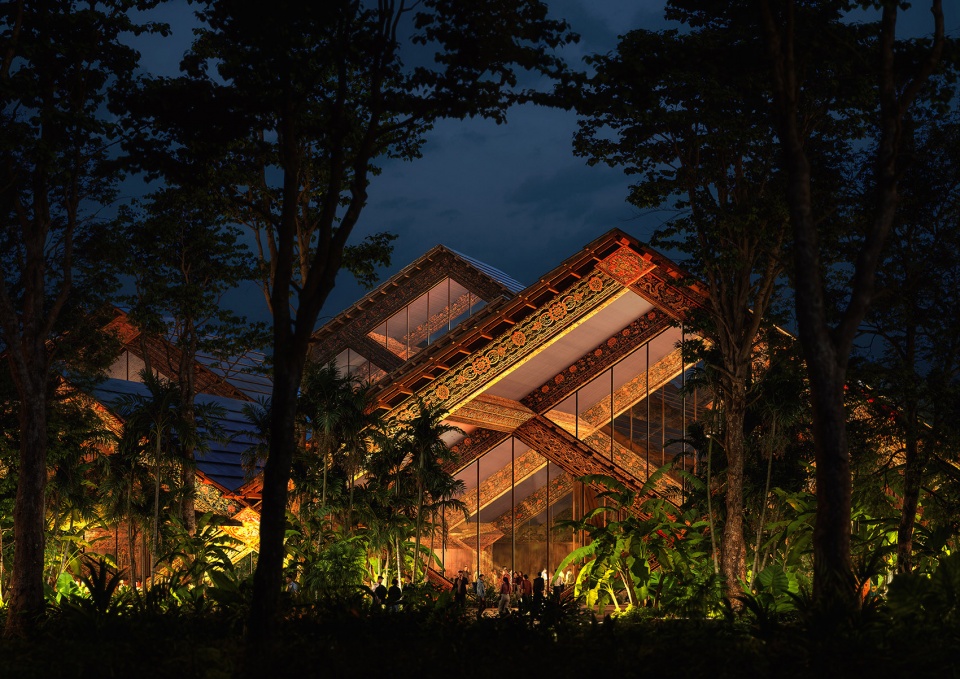
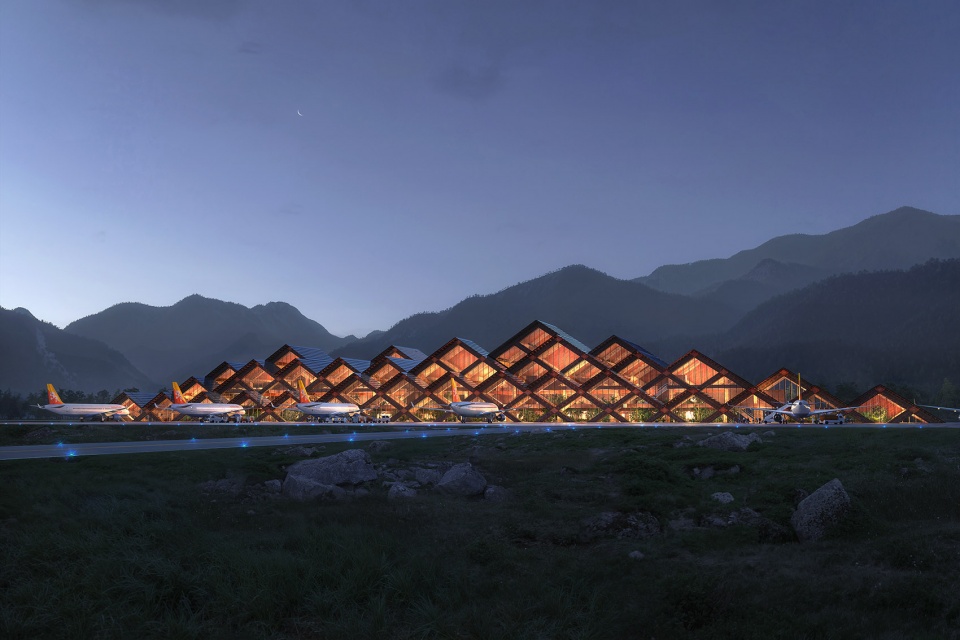
▼夜景,night view
Gelephu国际机场不仅是GMC的全球门户,更是一座承载历史与未来的机场,它将在旅途的每个环节,为旅客营造温暖、沉浸式的体验。机场预计将于2029年正式启用。
Grounded in Bhutanese culture, the Gelephu International Airport aims to establish itself as a global gateway into GMC that honors historywhile embracing the future, creating a welcoming atmosphere that reflects the spirit of GMC at every stage of the journey. The airport is set toopen in 2029.
▼夜景,night view
▼概念示意,Forest Flow concept
▼出发-到达概念示意,Arrival-Departure concept
Size: 731,946 sq ft / 68,000 m2
Location: Gelephu, The Kingdom of Bhutan
Client: The Kingdom of Bhutan
Collaborators: Netherlands Airport Consultants (NACO), Magnolia Quality Development Corporation Limited (MQDC), Changi Airport Plannersand Engineers, Influit, WT Partnership
BIG TEAM
Partners-in-Charge: Bjarke Ingels, Frederik Lyng, Giulia Frittoli
Project Manage: Per Bo Madsen
Design Lead: Sorcha Burke, Dace Gurecka
Team: Andrea Megan Hektor, Chiara Gargiulo, Dalma Ujvari, Jan Magasanik, Mantas Povilaika, Nanna Gyldholm Møller, Nathan AngeloOsena, Nikol Maraj, Will Chuanrui Yu, Dace Gurecka, Xinyu Zhao, Matthew Goodwill