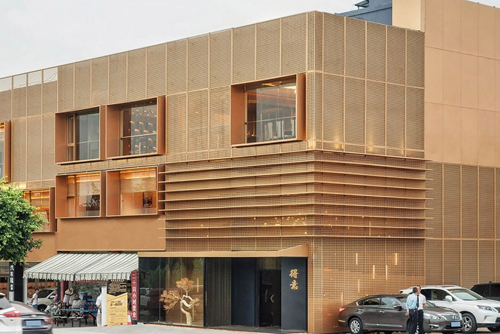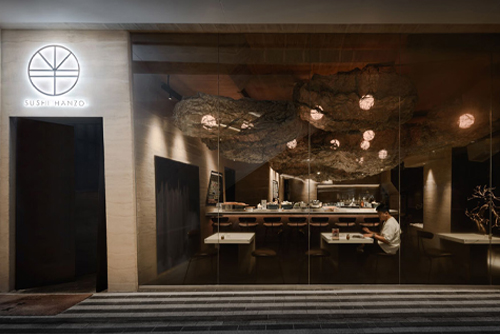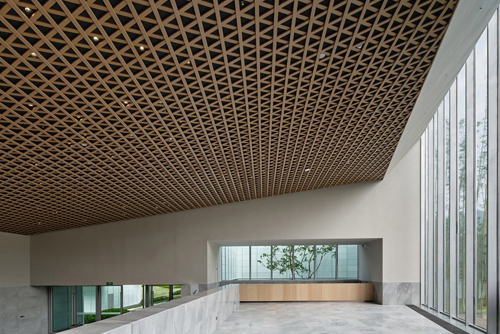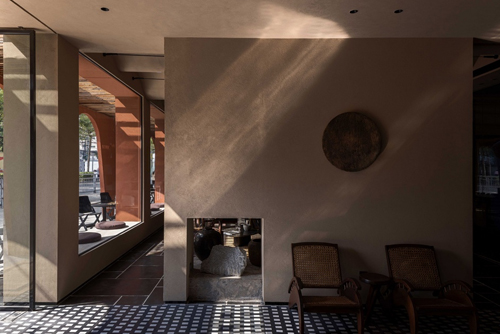
Eco住宅,墨西哥 / Sensacional Dinamica Mexicana
在圣米格利托山脉的边缘与住宅开发区之间,曾有一道围墙划定了墨西哥高原生态系统与城市住区之间的界限。该项目源于一种消解城市与土地之间摩擦关系的愿望。设计并未仅仅将景观作为视觉背景加以框定,而是回应了城市开发对场地生态与地质属性的忽视与否定。项目通过材料的连续性、对地形的精准回应以及对既有地质构造的敏锐解读,将建筑嵌入场地之中,而非以征服自然环境的方式进行建造。
Between the immediate edge of the Sierra de San Miguelito and the residential development, a wall once defined the boundary between the ecosystem of the Mexican Altiplano and the urban subdivision. The project emerges from the intention to dissolve this friction between city and territory. Beyond framing the landscape as a visual backdrop, the proposal responds to the denial of the site’s ecological and geological condition imposed by urban development, provoking instead an architecture that inserts itself into the terrain through material continuity, topographic precision, and a sensitive reading of its pre-existing geological formations, rather than through the colonization of the natural environment.
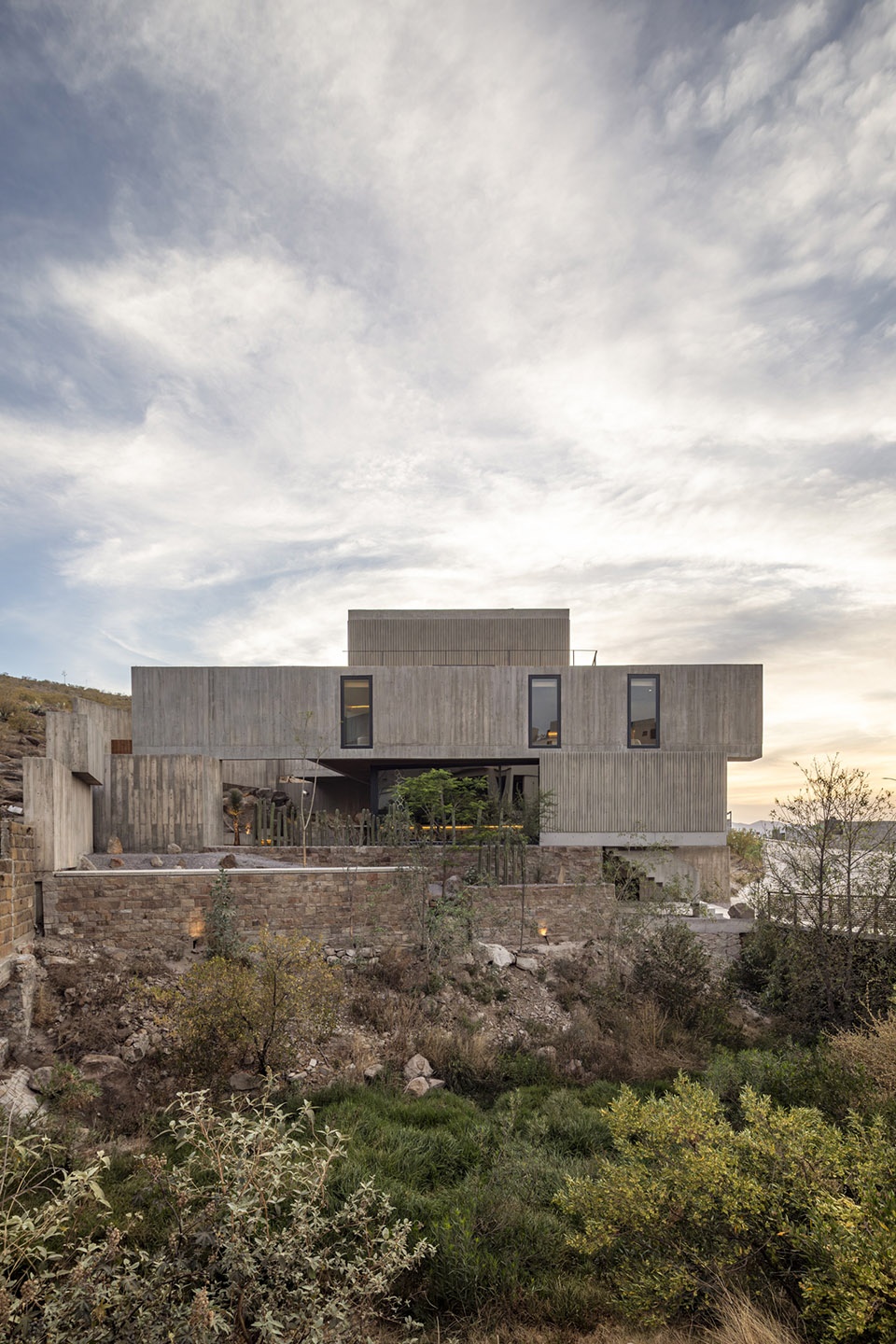
▼项目概览,overview of the project
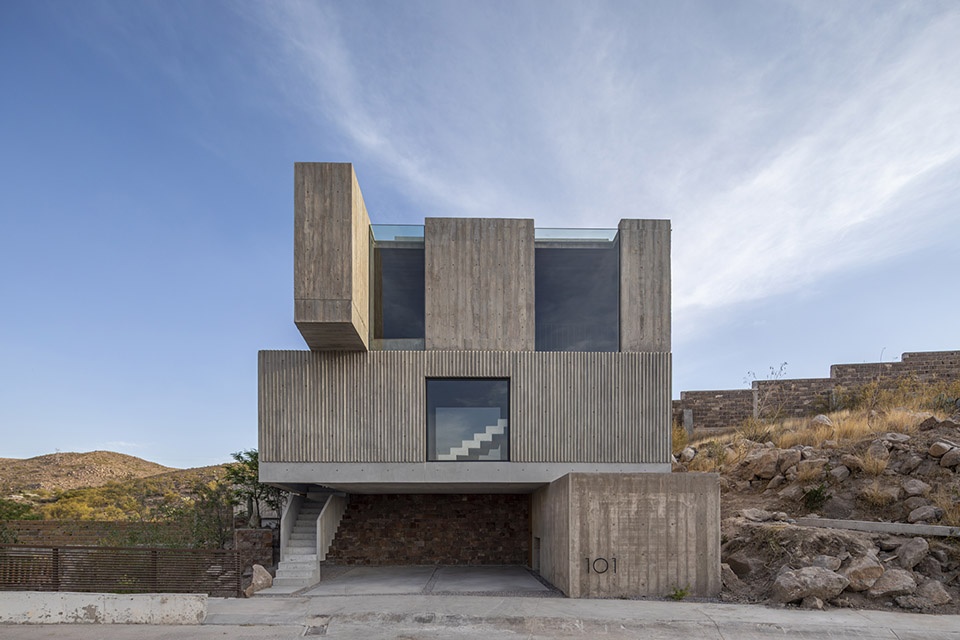
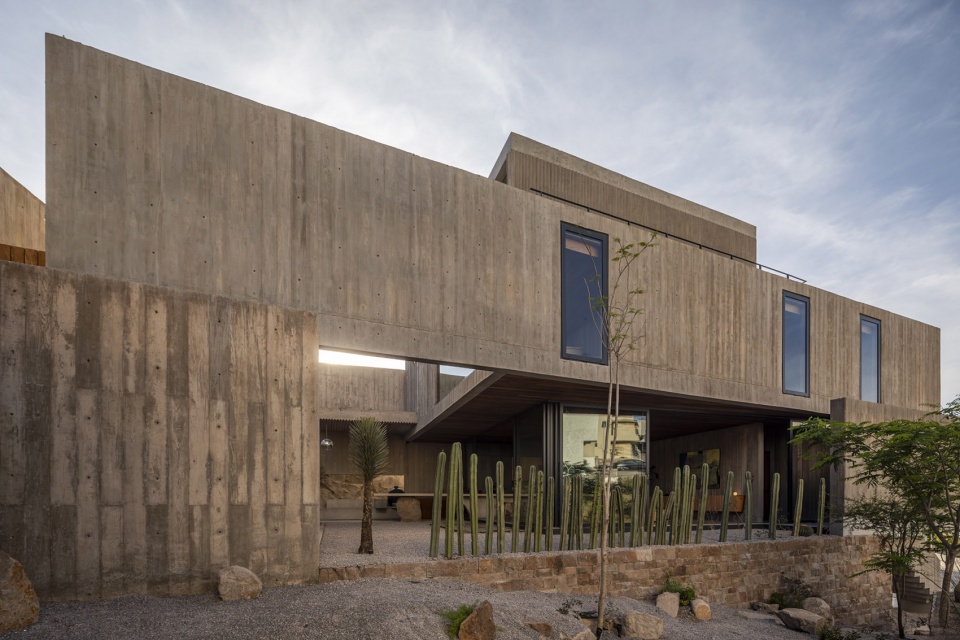
▼项目概览,overview of the project
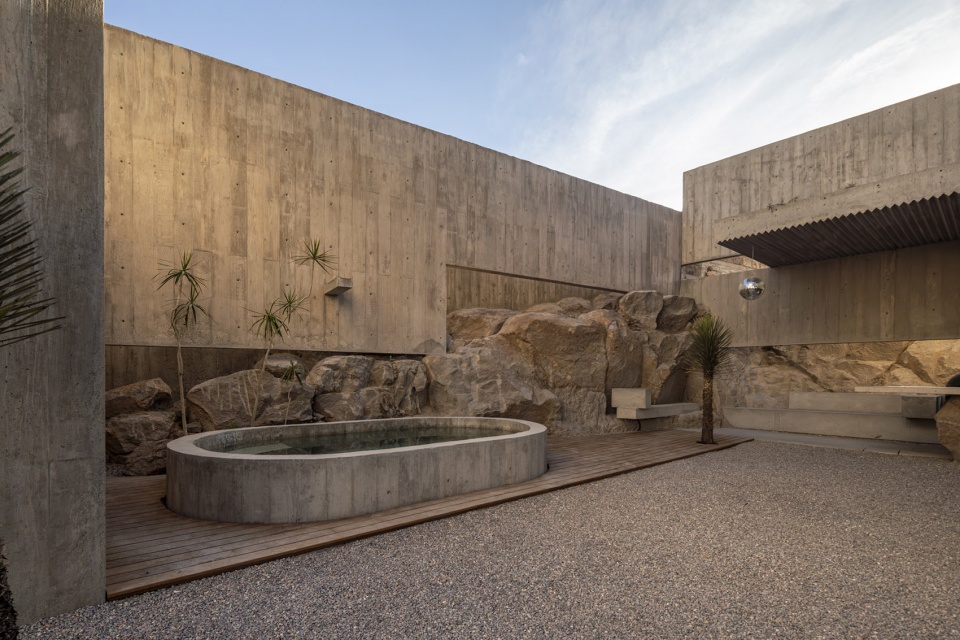
场地中原有的大型岩体被保留下来,作为天然的边界;而那道曾经压迫、遮蔽并削弱这些岩石存在感的围墙则被拆除。项目挑战了住宅区既有的建设规范,并与毗邻的集体土地进行协商,以调和城市扩张与政治及领土边界之间的关系,最终建立起一种基于尊重、生态完整性与共存理念的自然界限。所有传统意义上的围合方式都被取代。岩石不再只是景观元素,而成为项目感知结构的一部分:它们界定空间、引导方向、形成庇护,并在住宅与场地所承载的矿物记忆之间建立起直接联系。住宅从这些岩石中识别出一种先于建筑存在的智慧,并选择以此为基础展开建造。甚至其中一道混凝土墙体也是先依托于岩石之上,再逐渐转化为一个框景装置,以强化这片土地原有的自然状态。
The large existing rock formations were preserved as the site’s natural boundary, while the wall that once oppressed, concealed, and diminished them was demolished. The project challenged the subdivision’s construction regulations and negotiated with the adjacent ejido in order to reconcile urban growth with political and territorial limits, establishing instead a natural threshold founded on respect, ecological integrity, and coexistence. Any conventional gesture of enclosure was replaced. Far beyond landscape elements, the rocks now operate as the project’s perceptual structure: they delimit, orient, contain, and establish a direct relationship between the house and the mineral memory of the site. The house recognizes in them a pre-existing intelligence and chooses to build from that condition. Even one of the concrete walls rests upon the rock formations before transforming into a frame that heightens the natural condition of the territory.
▼大型岩体被保留下来作为天然的边界,existing rock formations were preserved as the site’s natural boundary
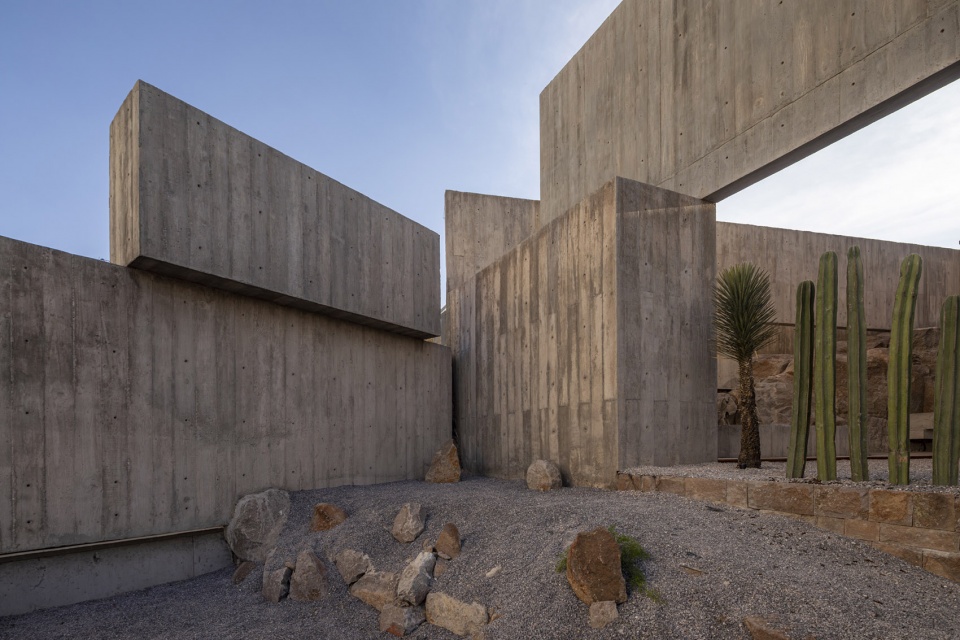
在形式上,项目由一系列清水混凝土体量构成,这些体量经过组织、堆叠与相互平衡,形成一种稳定而均衡的整体,呼应着周边岩石群的构造逻辑。其建筑表达与结构密不可分,源于重量、重力与稳定性之间的关系,并与山地景观形成对应。项目追求的是对当地地质特征的当代构造学诠释,而非简单直接的形式模仿。
Formally, the project is resolved as a composition of exposed concrete volumes that are organized, stacked, and counterbalanced; masses held in equilibrium that evoke the logic of the surrounding rock formations. Its expression is inseparable from its structure, derived from relationships of weight, gravity, and stability in correspondence with the mountain landscape, pursuing a contemporary tectonic reinterpretation of the local geology rather than literal mimicry.
▼住宅由清水混凝土体量构成,a composition of exposed concrete volumes
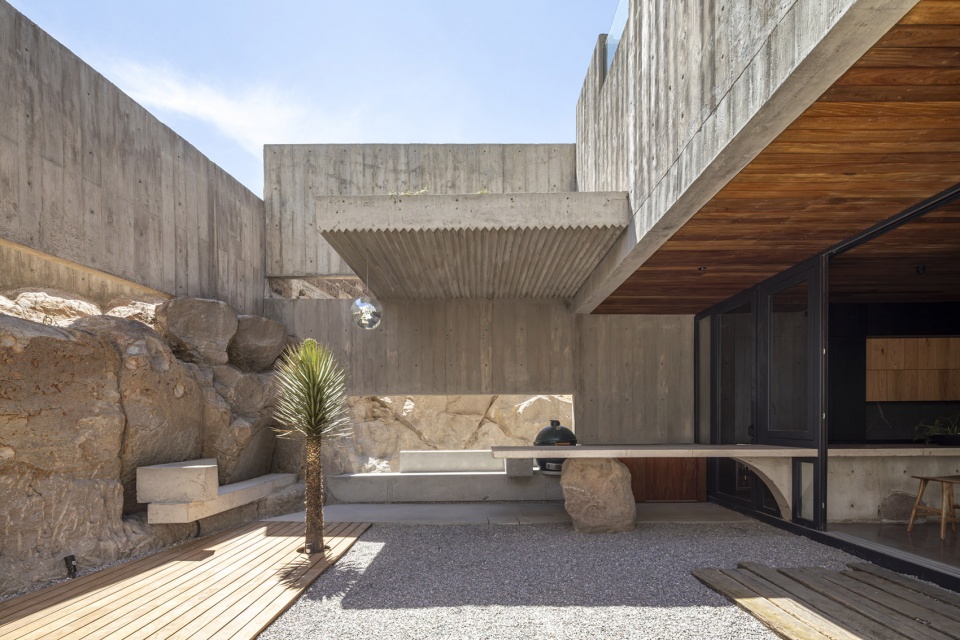
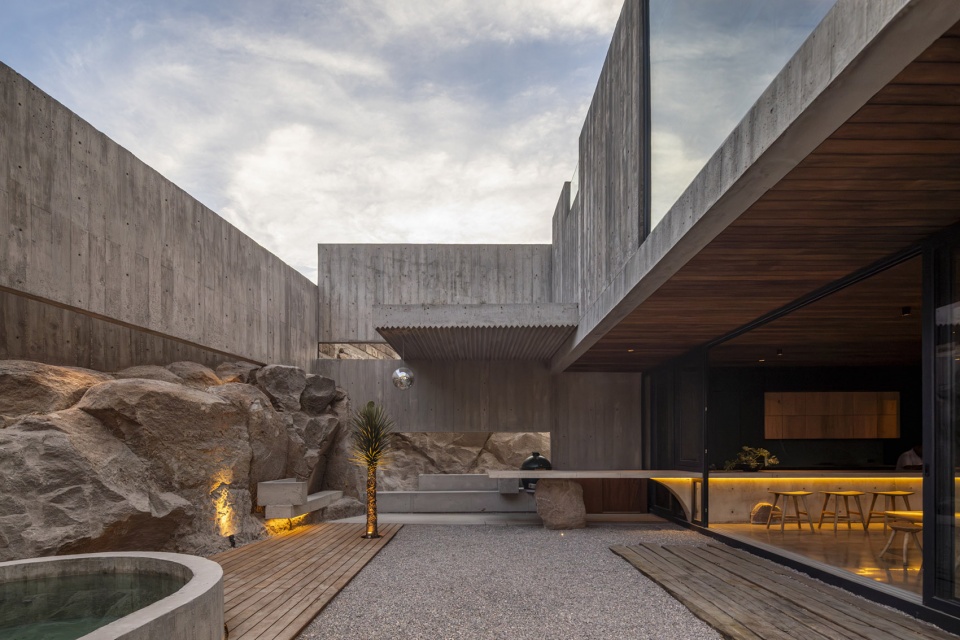
整个建筑群以一种沉静而有力的姿态存在于场地之中,源于对场地的精准解读以及对材料结构性的清晰表达。混凝土既是项目的主要结构材料,也是其核心表现材料。其表面保留了三种不同木模板留下的直接印记。第一种是经过喷砂处理的竖向松木板模板,其天然木纹被完整保留下来,使原本具有矿物属性的混凝土体量获得一种温暖而近乎有机的质感,这种体验在室内尤为明显。第二种是光滑的水平模板肌理,被应用于部分楼板构件之中,用以打破单调感并强调水平延展性。第三种是尺寸为3英寸×3英寸的斜向木构件模板,其形态隐喻当地特有的柱状仙人掌——“Órganos”。通过这一策略,建造工艺与地域景观被紧密联系在一起:工业化材料借助光影与触感获得了鲜明的地域属性。
The ensemble acquires a silent yet forceful presence, emerging from a precise reading of the site and an evident structural expression of its materiality. Concrete constitutes the project’s integral structural and expressive material. Its surface preserves the direct imprint of timber formwork in three distinct formats. First, vertical pine planks with a sandblasted finish register their natural grain, lending the mineral mass a warm and almost organic texture perceived most intimately from within. Second, smooth horizontal formwork sections appear in selected slabs to interrupt monotony and emphasize horizontality. Third, diagonal 3” x 3” timber members evoke the native columnar cacti known locally as órganos.Through this strategy, manufacture and landscape become intertwined: the industrial material acquires territorial resonance through light, shadow, and tactility.
▼打破室内外的边界,break the boundary between the indoor and outdoor space
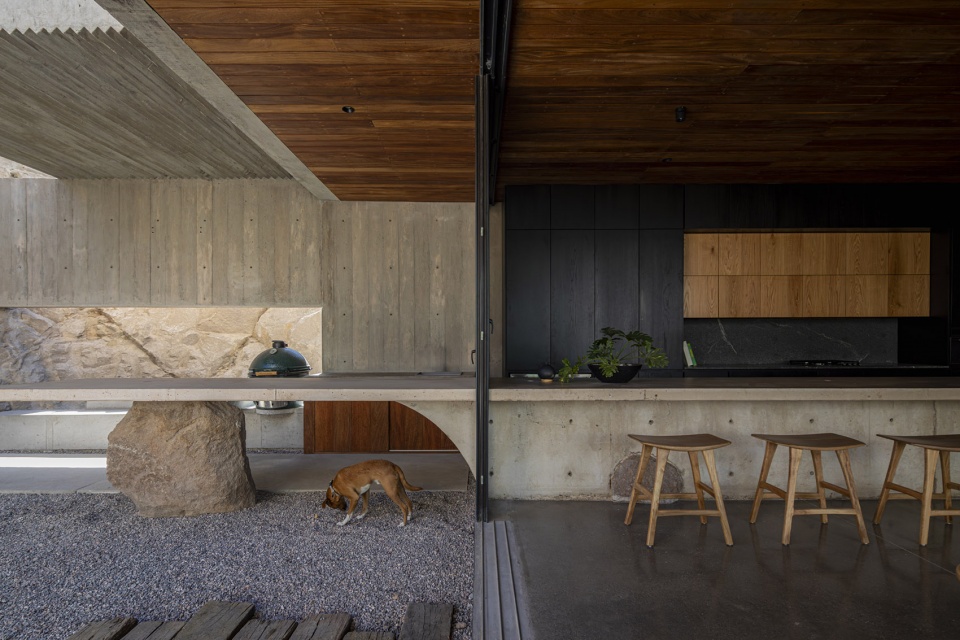
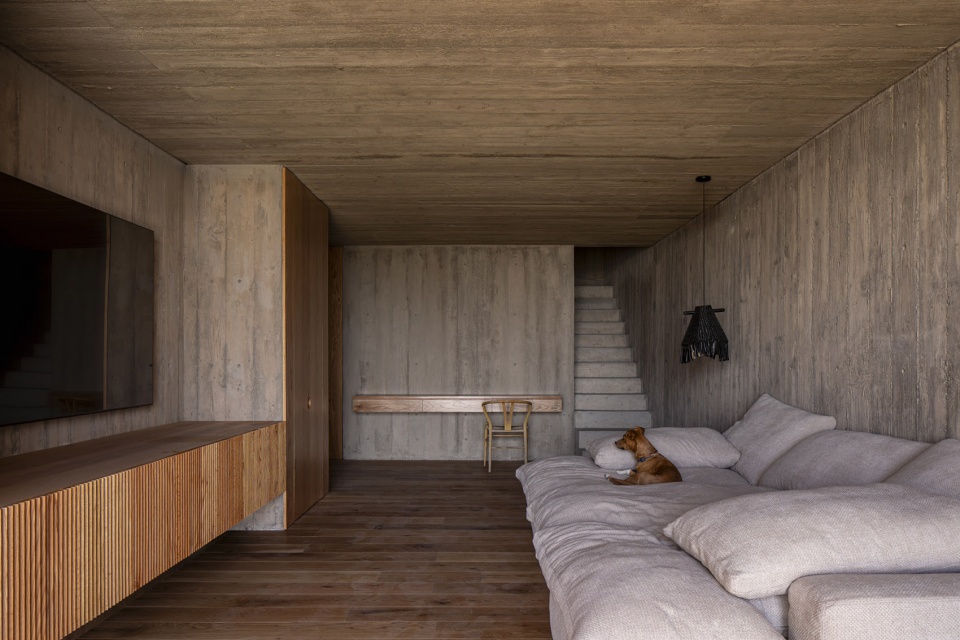
在材料层面,最主要的对比存在于外部如岩石般的建筑表皮与内部空间之间。外立面被视为周边岩石群的延续,而室内则有选择地引入实心橡木,并沿用混凝土结构中所呈现的三种构造语言。竖向木板、斜向雕刻构件以及光滑平面分别出现在地面、天花与固定家具之中。室内由此形成一种热感与感官层面的过渡:木材带来温暖与触感体验,从而平衡混凝土的冷峻与厚重。这种“厚重与温暖、洞穴与庇护、坚硬与舒适”之间的二元关系,共同塑造出一种适宜居住的平衡氛围,进一步强化了住宅作为庇护所的属性。
Materially, the primary contrast occurs between the stone-like exterior envelope —an extension of the surrounding rock formations— and the interior, where solid oak is introduced selectively following the same three tectonic languages present in the concrete structure. Vertical planks, diagonally carved sections, and smooth surfaces reappear in flooring, ceilings, and built-in furnishings. The interiors define a thermal and sensory transition in which wood introduces warmth and tactility, balancing the severity of the concrete. This duality —mass and warmth, cave and shelter, hardness and comfort— constructs an atmosphere of inhabitable equilibrium that reinforces the house’s condition as refuge.
▼室内橡木与清水混凝土的组合,combination of oak and faced concrete
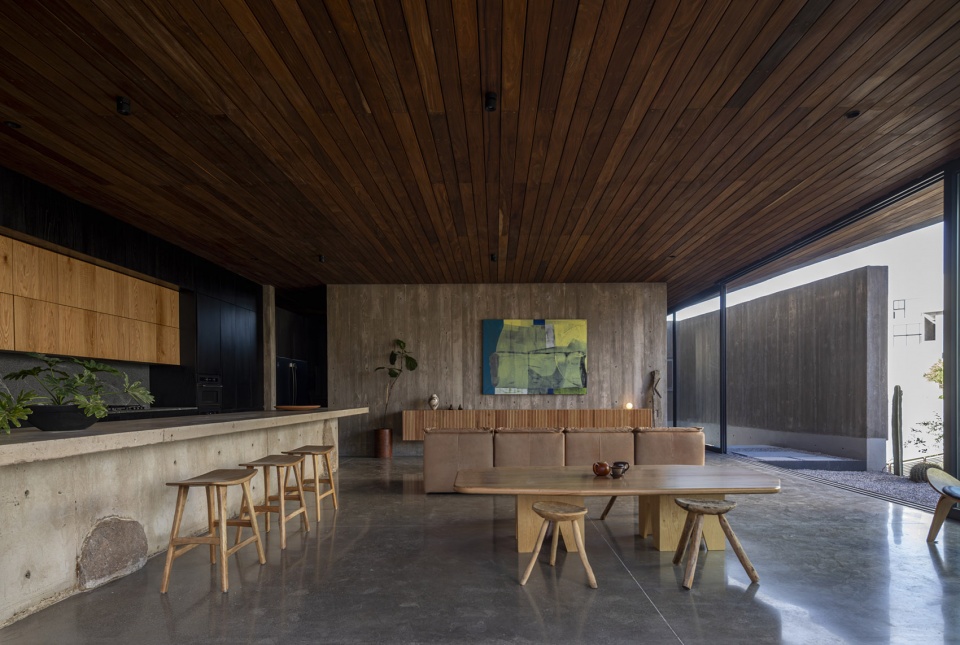
在空间组织上,项目围绕实体与空隙之间的关系展开。光线并非均匀地照亮空间,而是在不断塑造、侵蚀并揭示材料本身。室内空间如同一系列向景观敞开的庇护场所逐渐展开,形成持续变化的明暗层次系统。私密空间以实体感为主,开窗经过精心控制,主要朝向东侧与南侧,以类似洞穴般的空间状态应对高原地区强烈的日照。而与厚重外壳形成对比的是,公共空间向南侧岩石构成的自然边界展开,与地质环境建立直接联系;同时向东侧延伸,面向雨季时承接周边山丘径流的季节性溪流。长距离的视觉轴线将山脉特有的大气现象引入室内,包括晨雾、季节性降雨、地表径流以及北回归线天空不断变化的光线。
Spatially, the project is articulated through the relationship between mass and void. Light does not illuminate uniformly but instead models, erodes, and reveals materiality. The interior unfolds as a sequence of sheltered spaces opened toward the landscape, generating a system of chiaroscuro that continuously transforms the perception of space. In the private areas, mass predominates; openings are strategic, facing east and south in a cave-like condition with limited apertures that temper the harsh sunlight of the plateau. In contrast to the density of the exterior envelope, the social spaces expand southward toward the natural boundary formed by the rocks, establishing a direct relationship with the geology, and eastward toward a seasonal stream carrying runoff from the surrounding hills during the rainy season. Long visual axes capture the atmospheric phenomena characteristic of the Sierra: morning fog, seasonal rains, water runoff, and the shifting luminosity of the Tropic of Cancer sky.
▼向景观敞开的室内空间,sheltered spaces opened toward the landscape
景观作为一种主动发挥作用的边界,同时也是室内空间的延伸,将地域性与自然现象融入日常居住体验之中。场地本身成为住宅的“居住者”之一,而不再只是外部背景。居住于住宅之中,也意味着居住于这片土地之中——这是事务所建筑实践中的核心原则之一。
The landscape operates as an active boundary and an extension of the interior space, integrating territory and phenomenology into the everyday experience of inhabitation. The site itself becomes an inhabitant of the house rather than an external backdrop. To inhabit the house is to inhabit the territory —a fundamental principle within the studio’s architectural practice.
▼将地域性与自然现象融入日常居住体验之中,integrating territory and phenomenology into the everyday experience of inhabitation
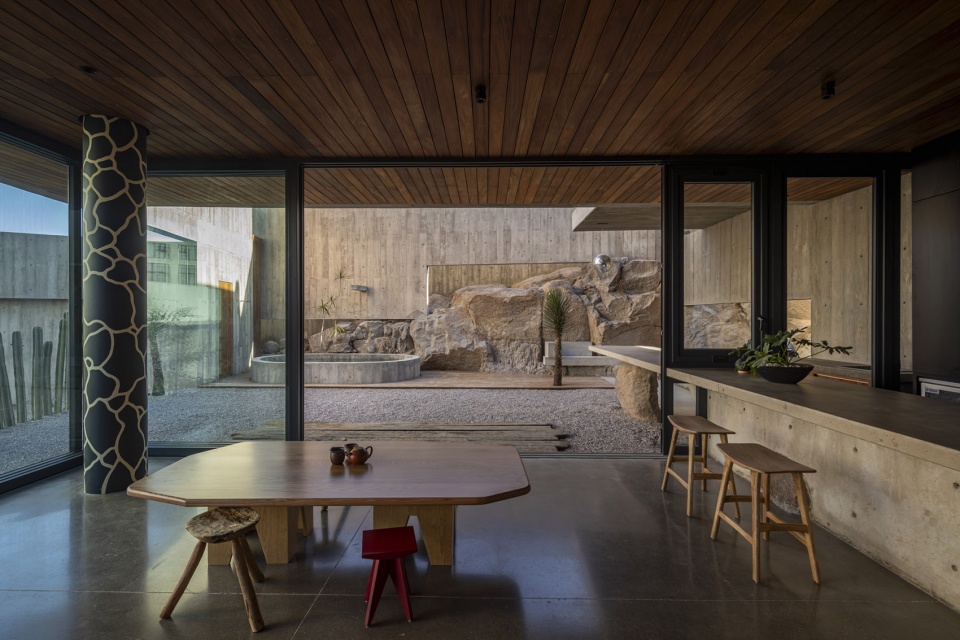
自然光在整个项目中承担着组织空间的重要角色。厚重墙体、岩石群、乡土植被以及不同厚度构件共同创造出深邃的明暗关系,使太阳辐射转化为空间材料。住宅在一天之中持续变化:黎明时呈现浓重而坚实的表面感;正午时则转化为柔和克制的半阴影;黄昏时拉长的阴影逐渐覆盖空间。这里的氛围并不依赖人为装饰,而源于比例、朝向、植被与建筑实体本身。
Natural light plays a structuring role throughout the project. Deep chiaroscuro produced by massive walls, rock formations, endemic vegetation, and variable thicknesses transforms solar radiation into spatial matter. The house changes continuously throughout the day: dense surfaces at dawn, tempered penumbras at midday, elongated shadows toward sunset. Atmosphere does not depend on artifice but on proportion, orientation, vegetation, and constructed mass.
▼窗洞引入自然光,openings introduce the natural lights
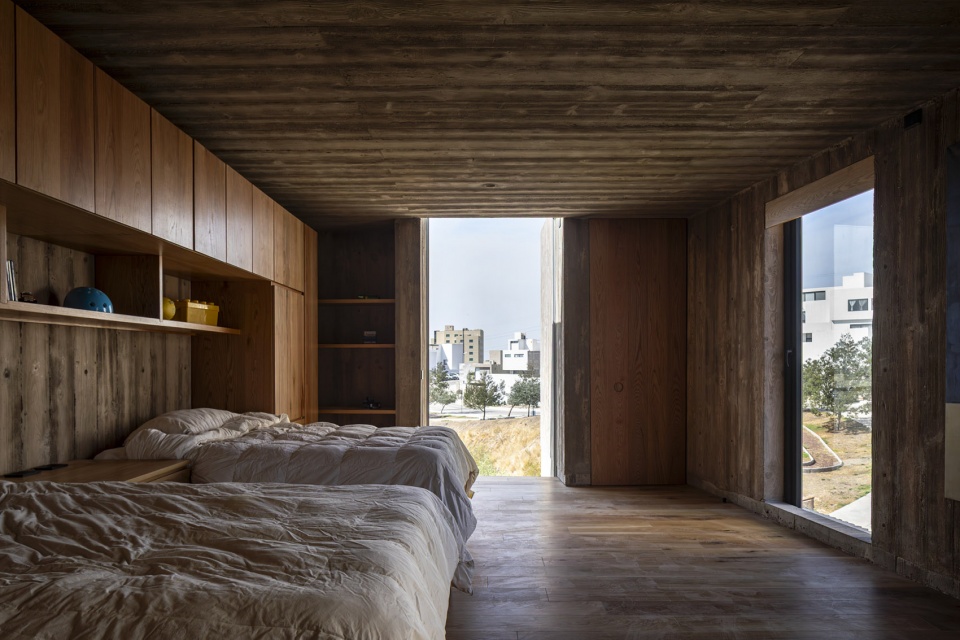
▼天窗引入自然光,skylight introduces the natural lights
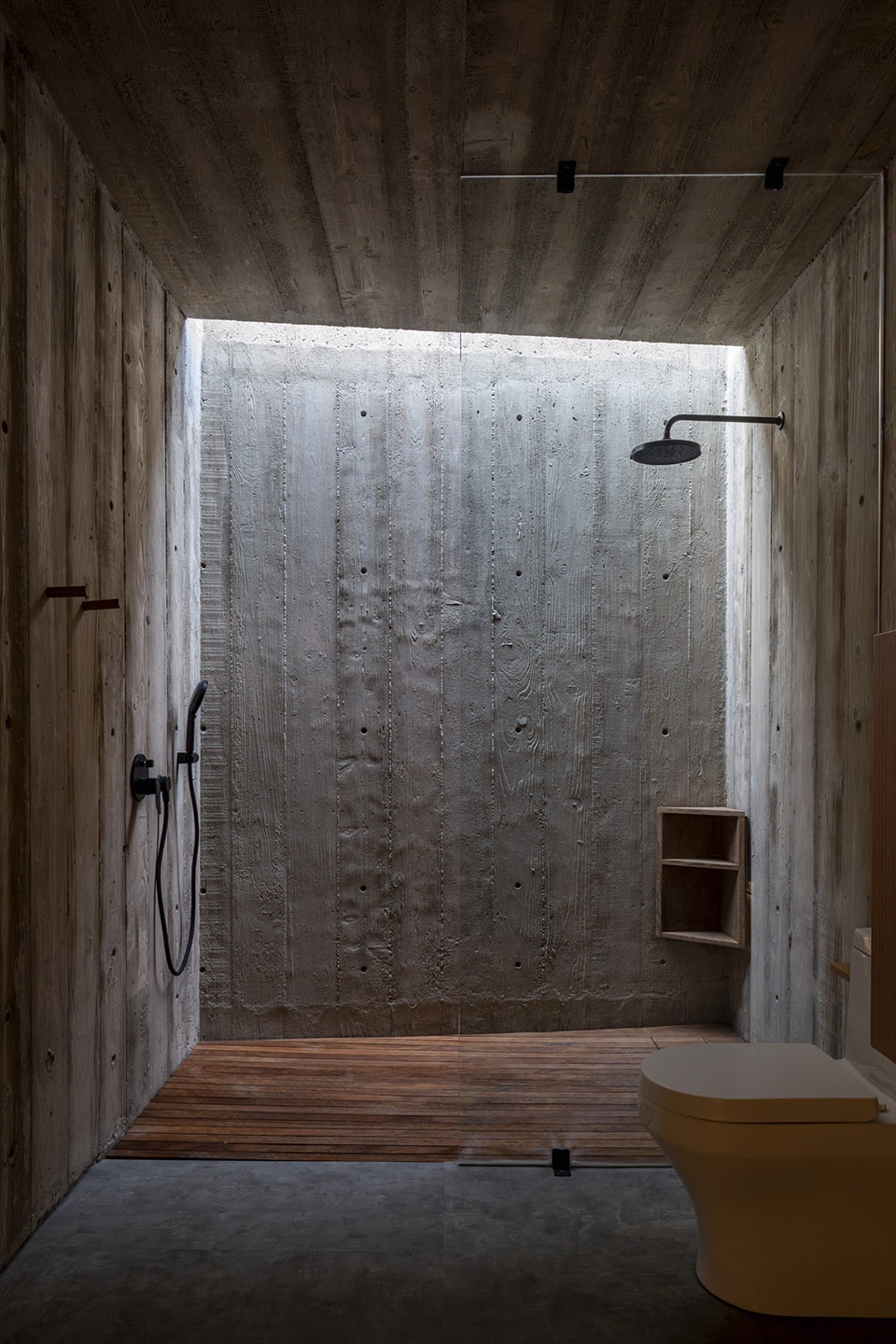
当地原生植被被自然且毫不刻意地纳入建筑之中,成为建筑不可分割的一部分。豆科牧豆树、金合欢、沙漠棕榈以及本地灌木群落共同强化了项目的生态与文化意义。种植适应干旱气候的植物不仅降低了用水需求,也增强了当地生物多样性,并在象征意义上将圣米格利托山脉延伸至场地内部。这里没有传统意义上的花园,取而代之的是山地生态系统本身被重新植入场地,形成与周边景观连续的生物系统。植被调节微气候、过滤光线,并引入一种不同于建筑的时间维度,在恒久与变化之间建立微妙的对照关系。
Endemic vegetation is incorporated naturally and effortlessly as an inseparable component of the architecture. Mesquite trees, huizaches, desert palms, and local scrub vegetation reinforce the project’s ecological and cultural meaning. Planting species adapted to the arid climate reduces water demand, strengthens local biodiversity, and symbolically extends the Sierra into the interior of the site. There is no conventional garden; instead, the mountain itself is replanted as a biological continuity of the surrounding landscape. Vegetation regulates microclimates, filters light, and introduces a temporality distinct from that of architecture, establishing a counterpoint between permanence and change.
▼当地原生植被纳入建筑之中,Endemic vegetation is incorporated naturally and effortlessly as an inseparable component of the architecture
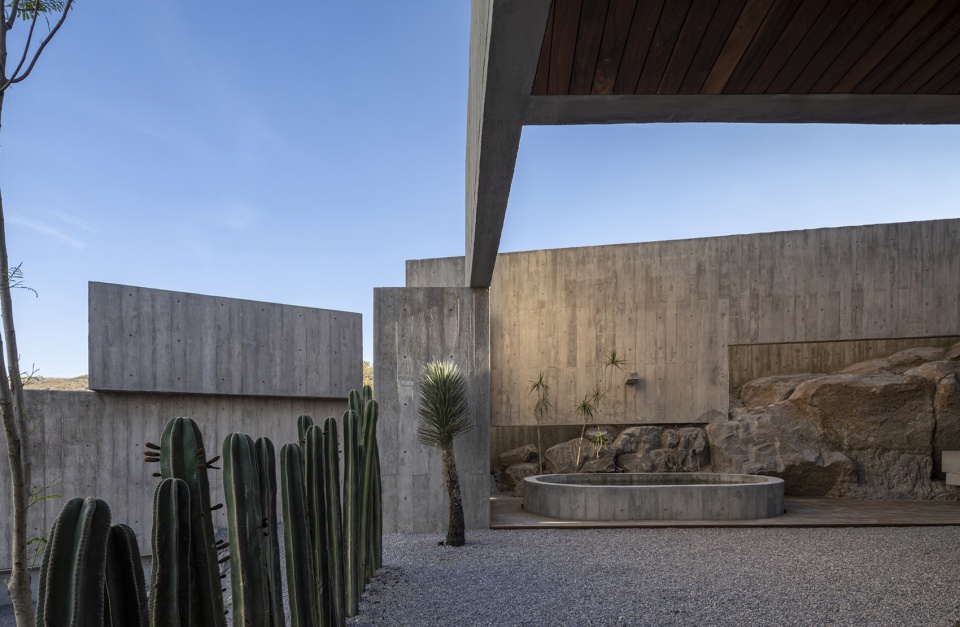
Casa ECO避免通过形式上的张扬来吸引注意,而是试图建立一种扎根于地域特征的当代建筑身份。项目以克制、严谨且情感表达内敛的建筑语言,将混凝土、木材、结构表达、石材、光线与植被转化为独特的空间体验。从根本上说,该项目提出了一种文化立场,以回应那些不仅遗忘、甚至主动否定墨西哥北部景观及其地域身份的城市规划规范。它主张现代性与地域根植性并非对立,而是一种介于自然与居住之间、介于地质土地的永恒性、气候与日常生活之间的调和关系。住宅以一种抵抗、观察并归属的姿态存在,而非追随某种既定的风格语言。它建立起时间塑造的岩石与人手塑造的混凝土之间的对话,形成一种超越形式主义与风格范畴的连续性。
Casa ECO avoids formal spectacle in order to construct a contemporary identity rooted in the specific conditions of the territory. Its response is a sober, technically rigorous, and emotionally restrained architecture capable of transforming concrete, wood, structural expression, stone, light, and vegetation into a singular spatial experience. The project ultimately proposes a cultural position that confronts urban regulations which not only forget but actively deny the territory and identity of northern Mexico’s landscapes. It argues that modernity and rootedness are not opposites, but rather a mediation between nature and dwelling, between the permanence of geological territory, climate, and everyday life. The house resists, observes, and belongs without seeking adherence to a stylistic language. Instead, it constructs a dialogue between stone shaped by time and concrete shaped by the human hand, producing a continuity that transcends formalism and style.
▼傍晚景象,building at dusk
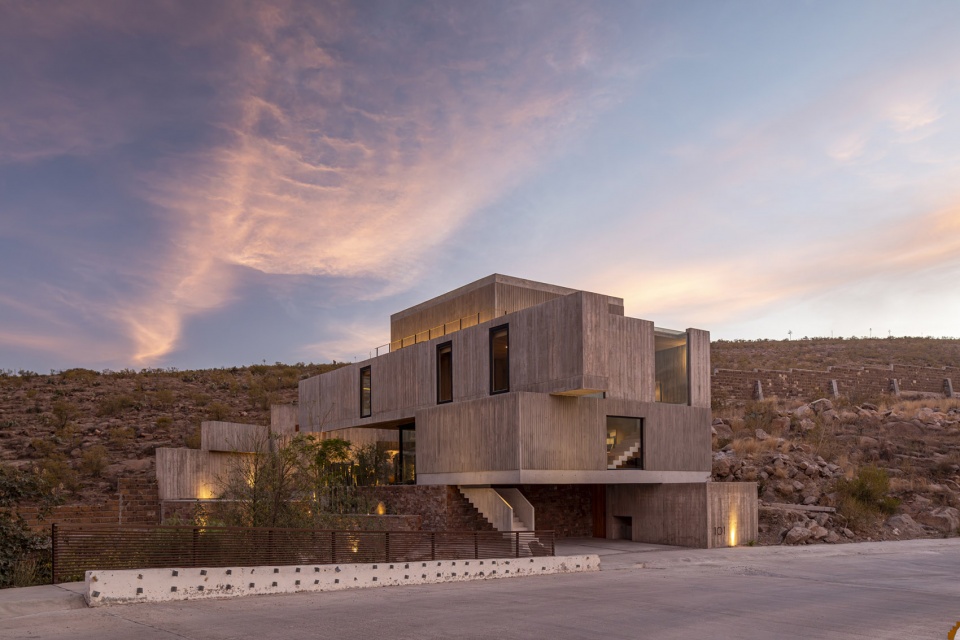
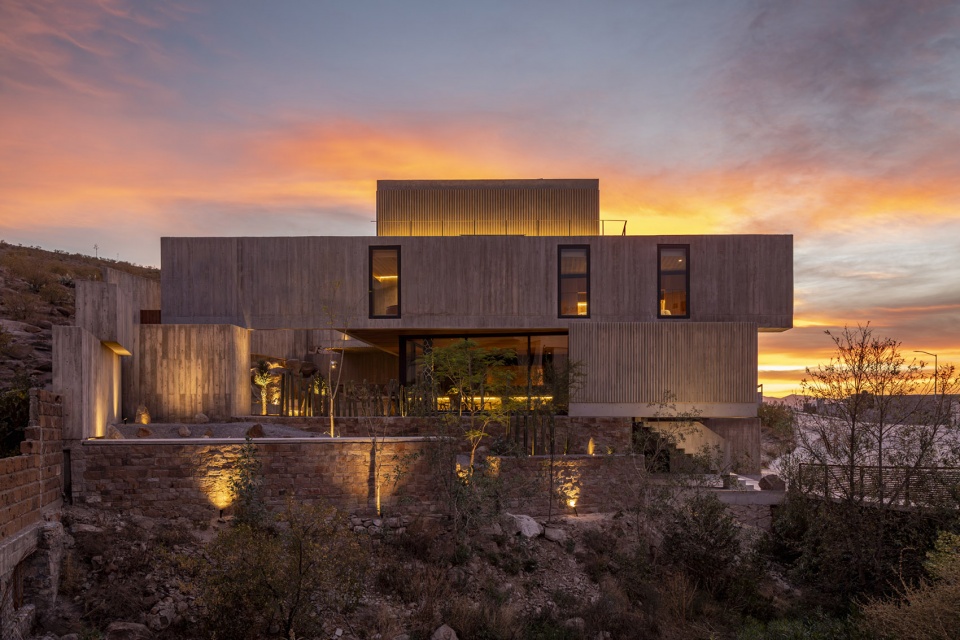
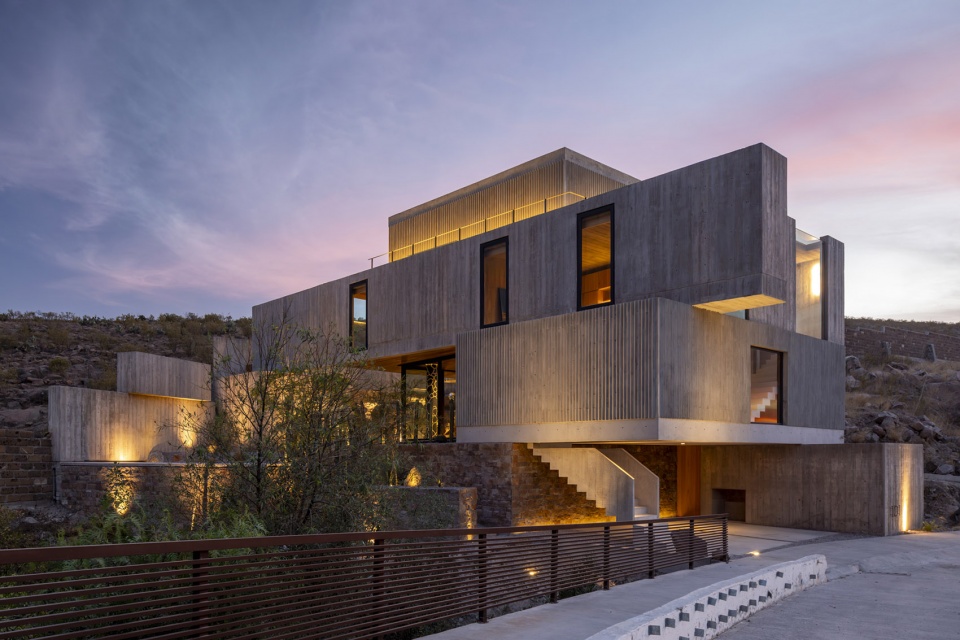
▼傍晚景象,building at dusk
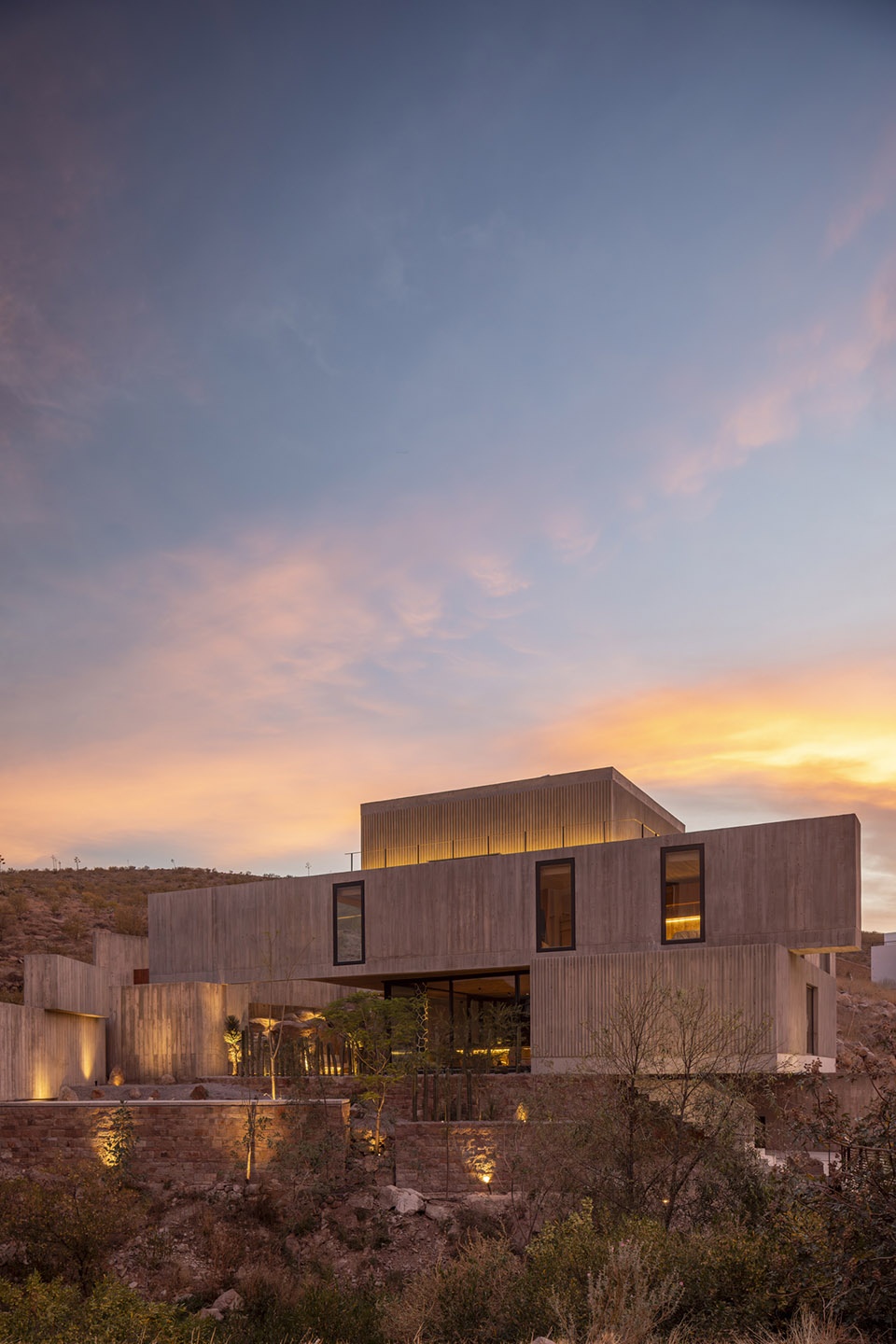
最终,这一项目通过其沉默而坚定的存在,对如何栖居于具有强烈地理特征的土地提出了深刻思考:建筑并非将秩序强加于景观之上,而是遵循土地本身的规则,而非城市化的规则,并以此构建空间、氛围与意义。它既是一种建筑论述,也是一篇建筑宣言——一种以墨西哥高原视角为基础、致力于保护、推广并重塑人们对墨西哥干旱地区认同与自豪感的思想立场。
The result is an architecture that, through its silence, articulates a powerful reflection on how to inhabit territories of profound geographical presence: an architecture that does not impose order upon the landscape, but instead integrates itself into the rules of the territory rather than those of urbanization, operating through them to construct space, atmosphere, and meaning. It becomes both a discourse and a thesis —an ideological position grounded in the preservation, promotion, and pride of Mexico’s arid territories through the lens of the Altiplano.
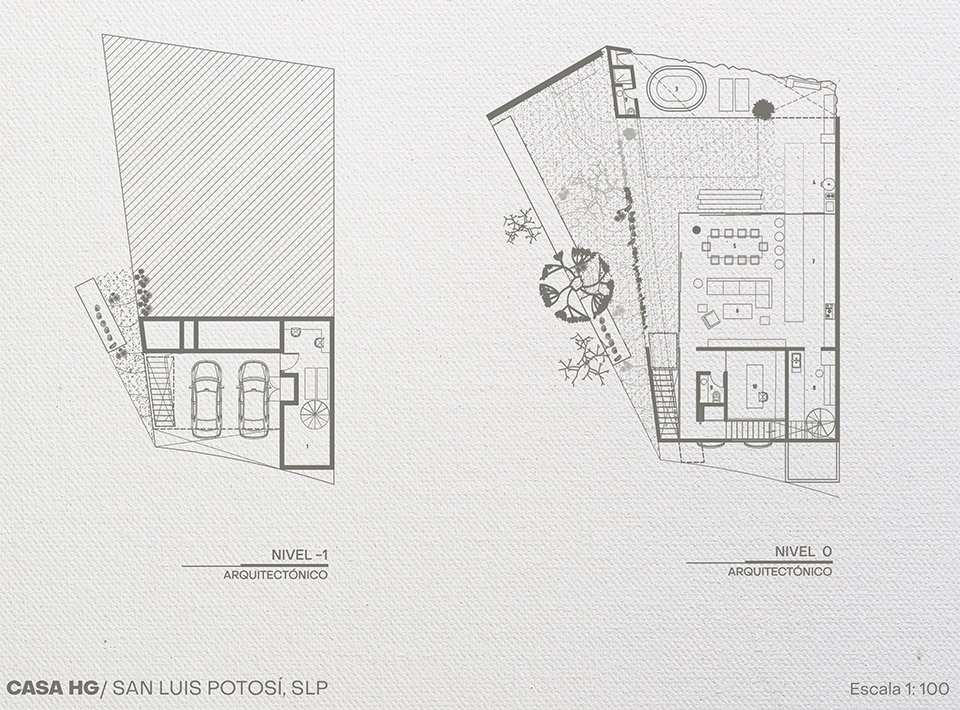
▼一层及地下室平面图,basement and ground floor plan
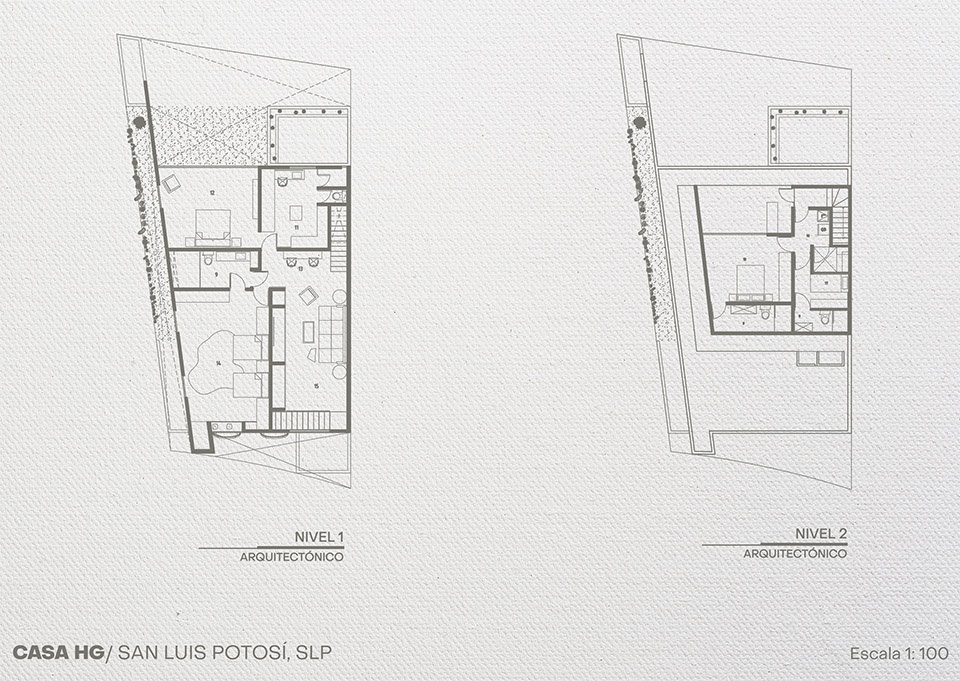
▼二层及三层平面图,first and second floor plan
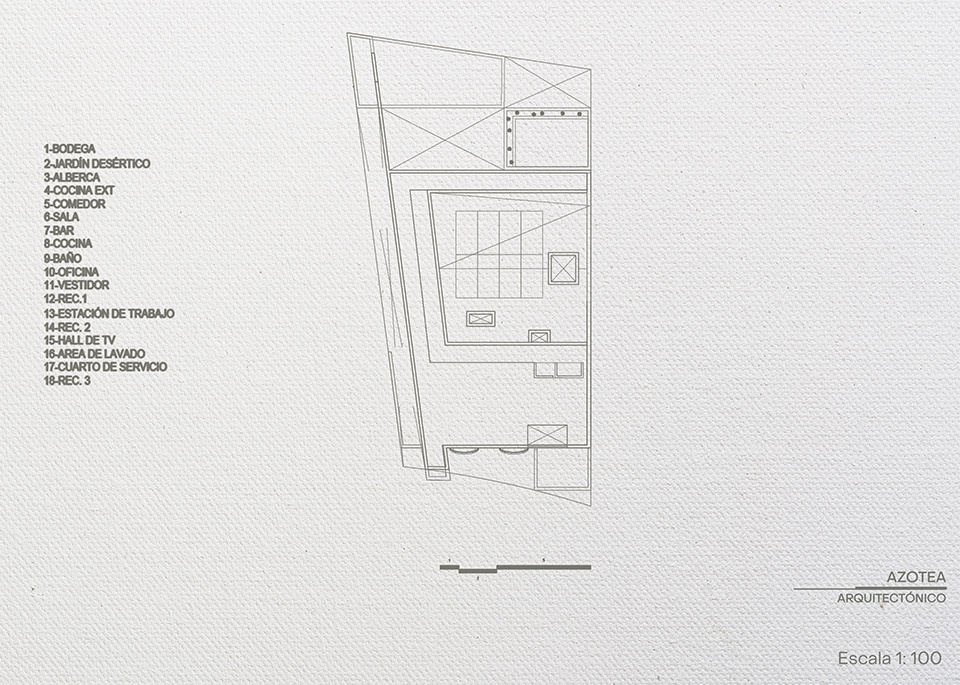
▼屋顶平面图,roof plan
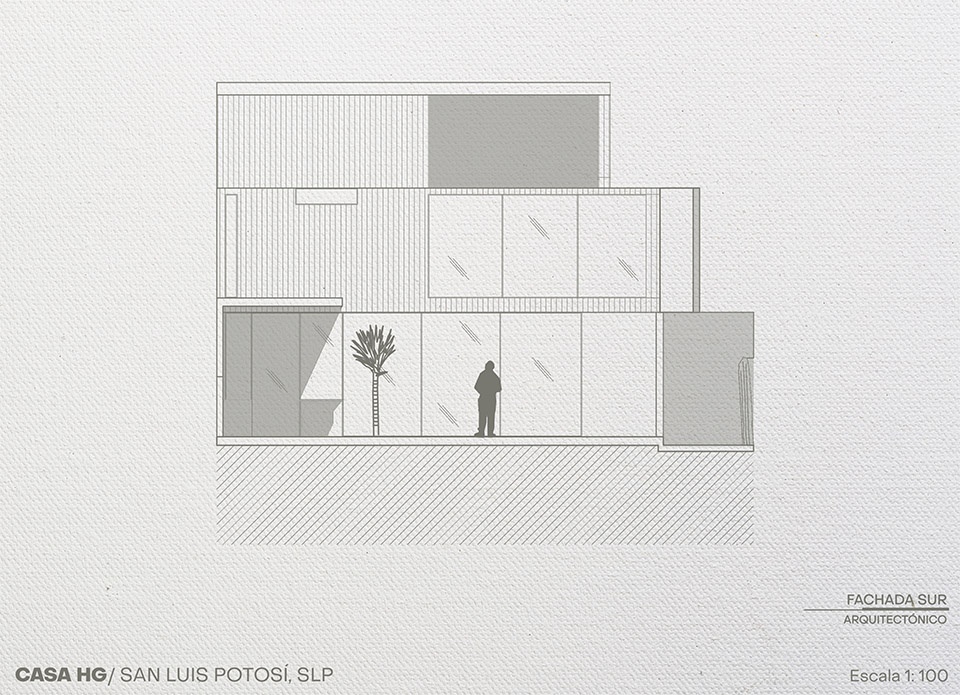
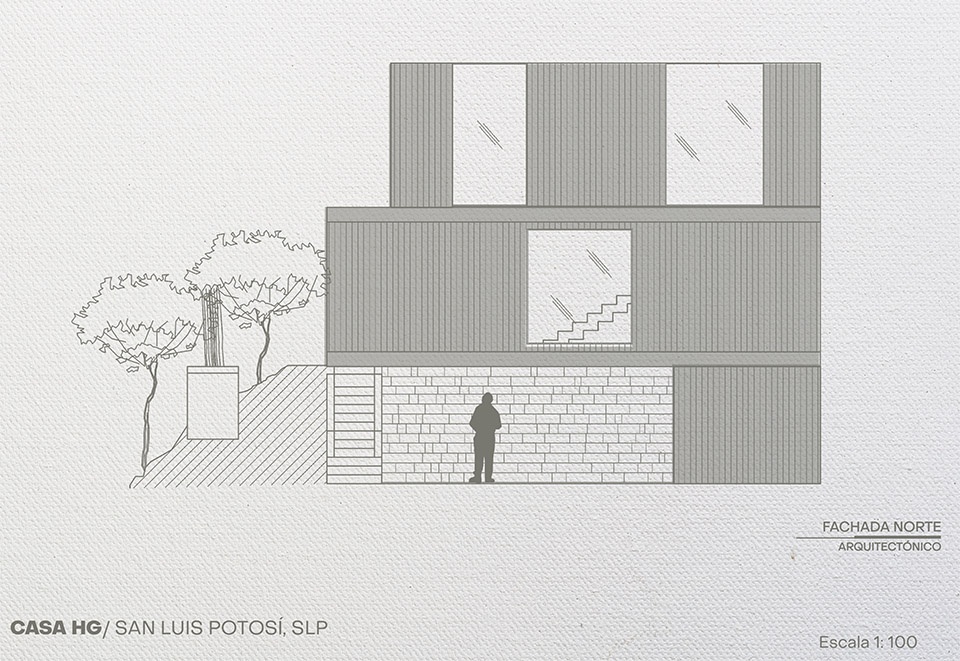
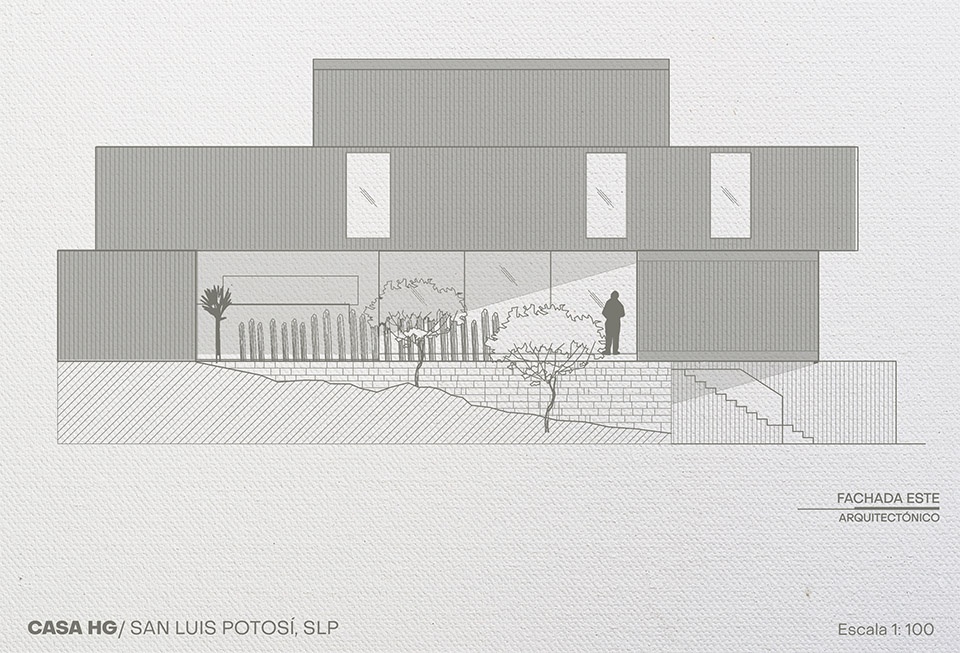
▼立面图,elevation
▼剖面图,section
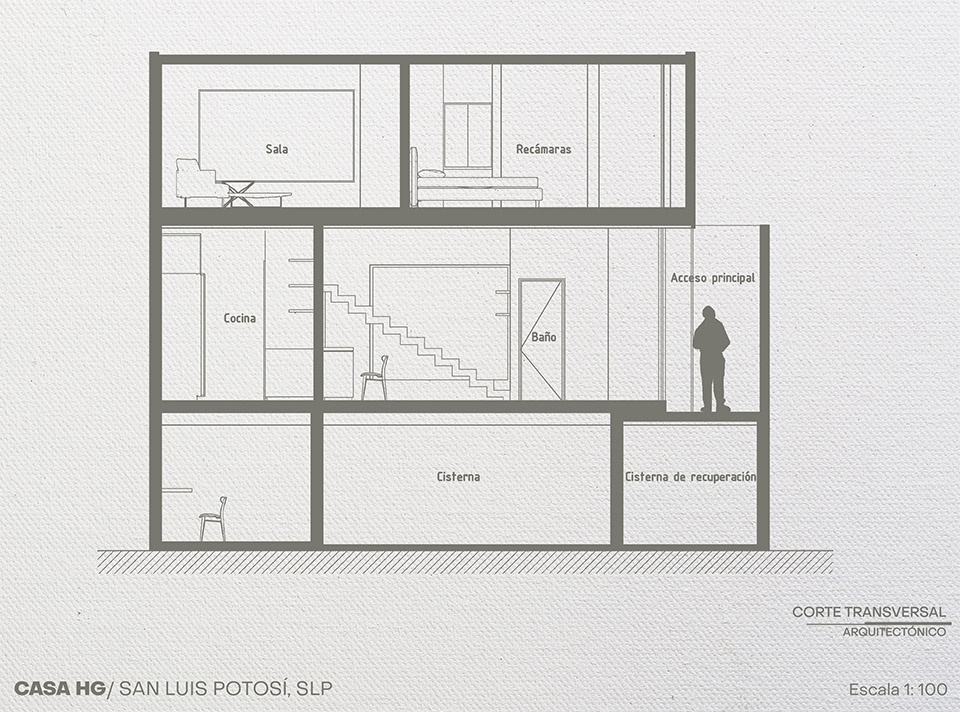
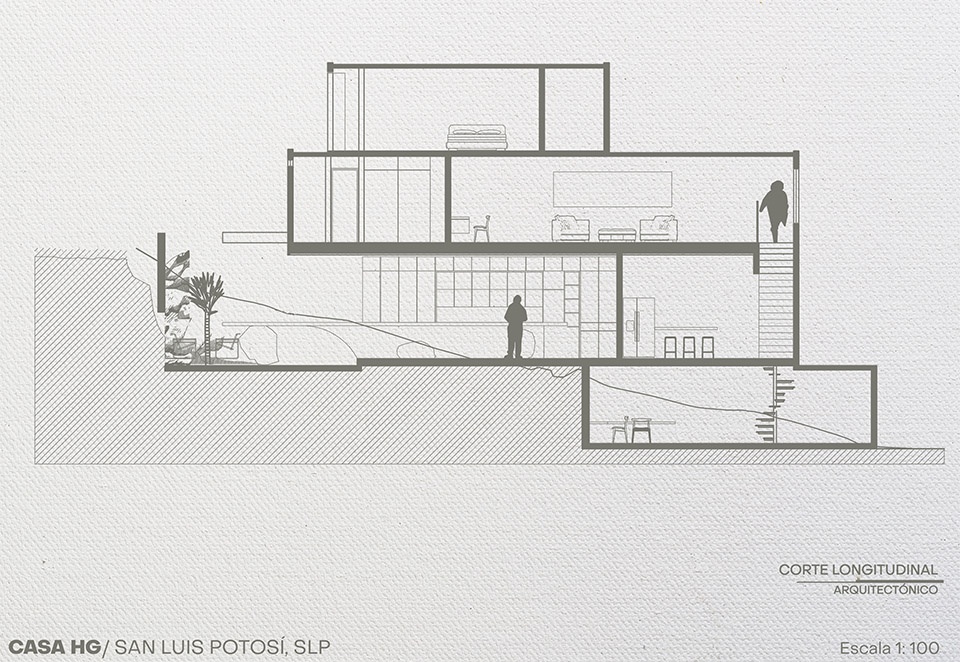
Photo:Onnis Luque