机器人工匠大教堂,西班牙 / IAAC
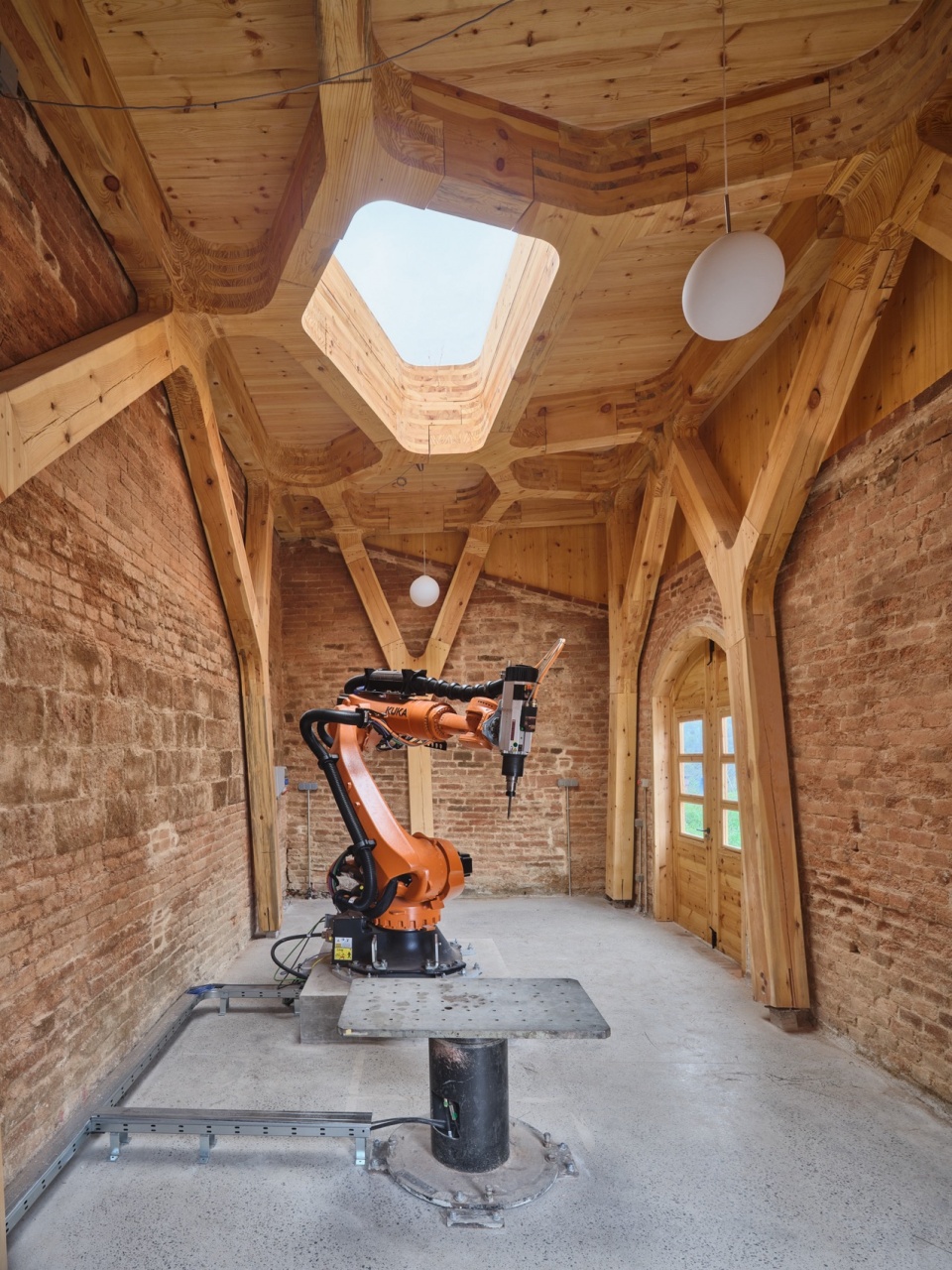
加泰罗尼亚高等建筑研究院(IAAC)的瓦尔达乌拉实验室校园(Valldaura Labs Campus)位于巴塞罗那科尔塞罗拉自然公园(Collserola Natural Park)内,占地135公顷,以在项目中创新应用先进技术而闻名。延续这一实践,实验室引入了一台KUKA工业机器人,这是一种能够进行铣削、木材切割及其他精密作业的多功能设备。作为“高级建筑与生物城市硕士项目”(Master in Advanced Architecture and Biocities,简称 MAEBB)的一部分,来自世界各地的学生团队接受挑战,在四个月内设计并建造一座为这台机器人服务的功能性建筑。
The Valldaura Labs Campus of the Institute for Advanced Architecture of Catalonia (IAAC) is located in the 135-hectare Collserola Natural Park (Barcelona). It is known for its innovative approach to using advanced technologies in its projects. Continuing with this practice, the labs have introduced a KUKA industrial robot, which is a versatile tool capable of milling, cutting wood, and other precision tasks. As part of the Master in Advanced Architecture and Biocities (MAEBB), an international team of students was challenged to design and build a functional house for this robot over a period of four months.
▼项目概览,Overall view
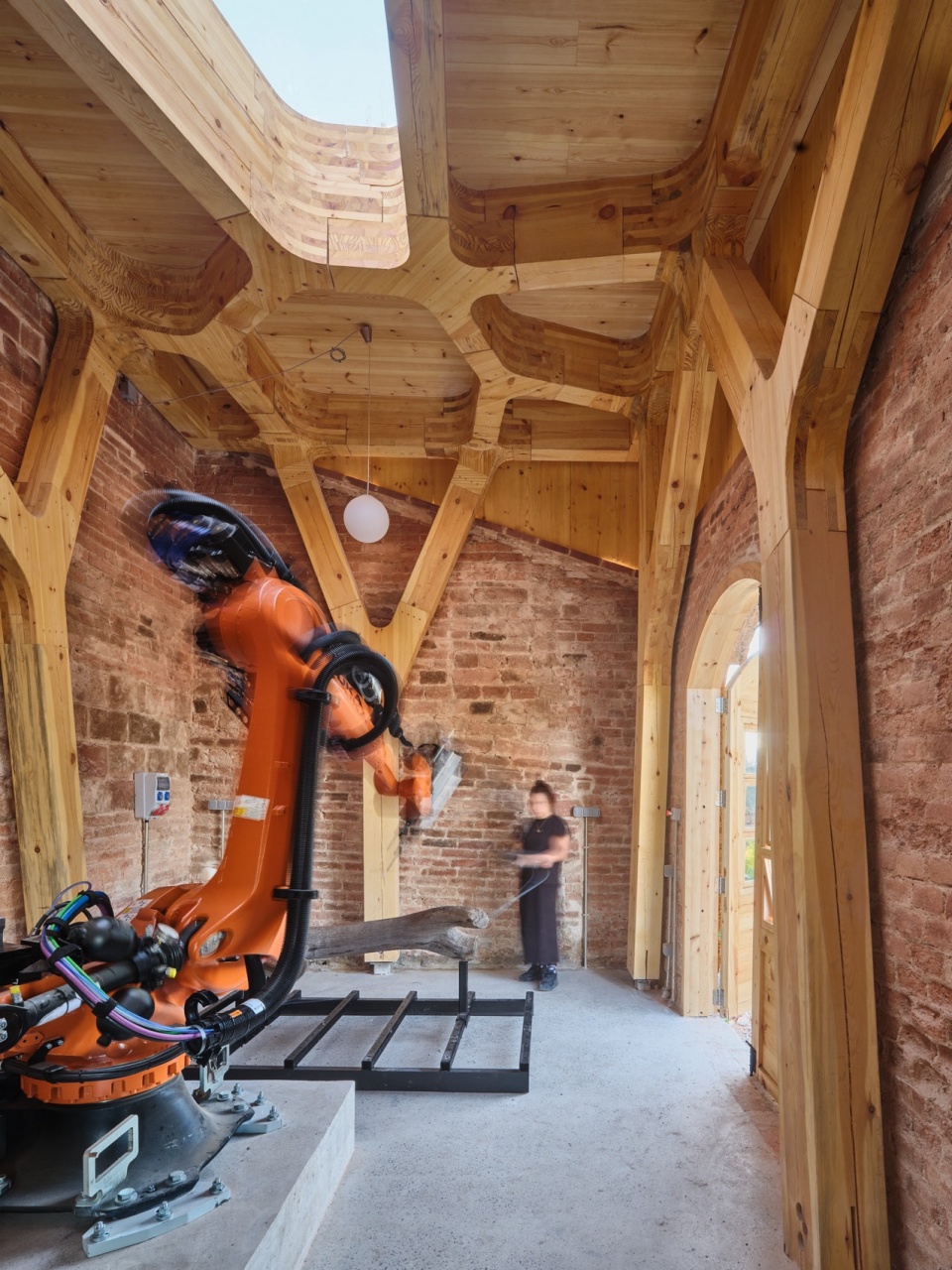
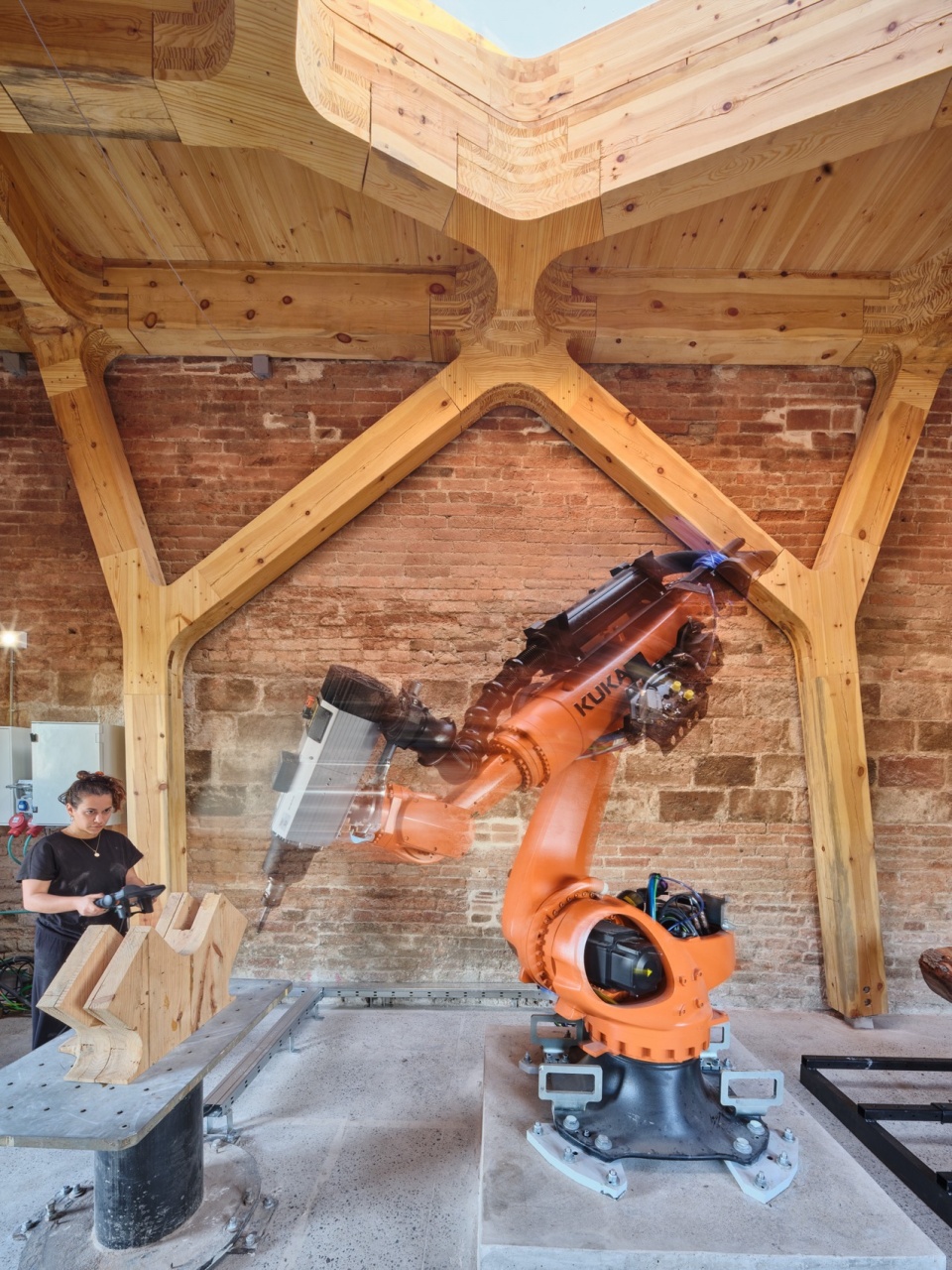
本项目旨在为这台六轴铣削工业机器人建造一个专用的工作空间。建筑采用木结构,设有天窗,整体氛围精致且静谧,微妙地唤起了教堂的空间感。作为对手工艺与科技的共同致敬,这座新建筑被命名为CORA,即“机器人工匠大教堂”(Cathedral of Robotic Artisans)的首字母缩写
The objective of the project was to create a dedicated space to house and operate this 6-axis milling industrial robot. With a wooden structure, skylights and a refined atmosphere, the space subtly echoes the presence of a cathedral. As a tribute to both craftsmanship and technology, the new building has been named CORA, the acronym for Cathedral of Robotic Artisans.
▼工作中的机器人,Robots at work
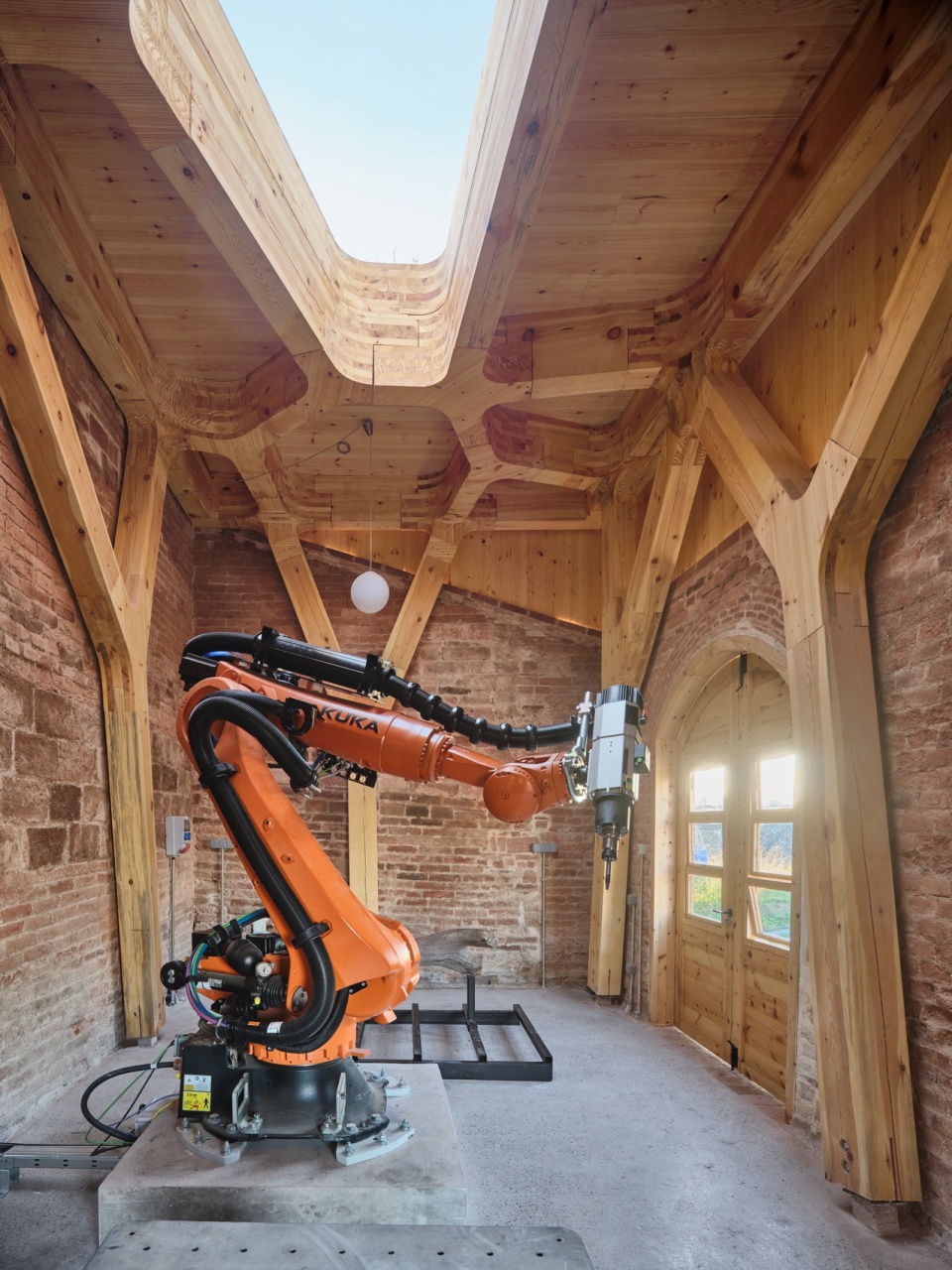
项目的挑战在于,要在一座建于19世纪、最初作为马厩使用的老砖结构,与代表21世纪设计语言的新木结构之间建立对话。新建筑采用自支撑结构,整合了适合机器人作业及人类互动的空间、设施与基础设施。
The project’s challenge has been to establish a dialogue between the old brick structure, built in the 19th century, and originally used as a stable, and a new wooden structure representative of 21st-century design. The new structure was designed to be self-supporting, incorporating appropriate spaces, amenities, and infrastructure for both robotic operations and human interaction.
▼老砖结构的建筑,Old brick building
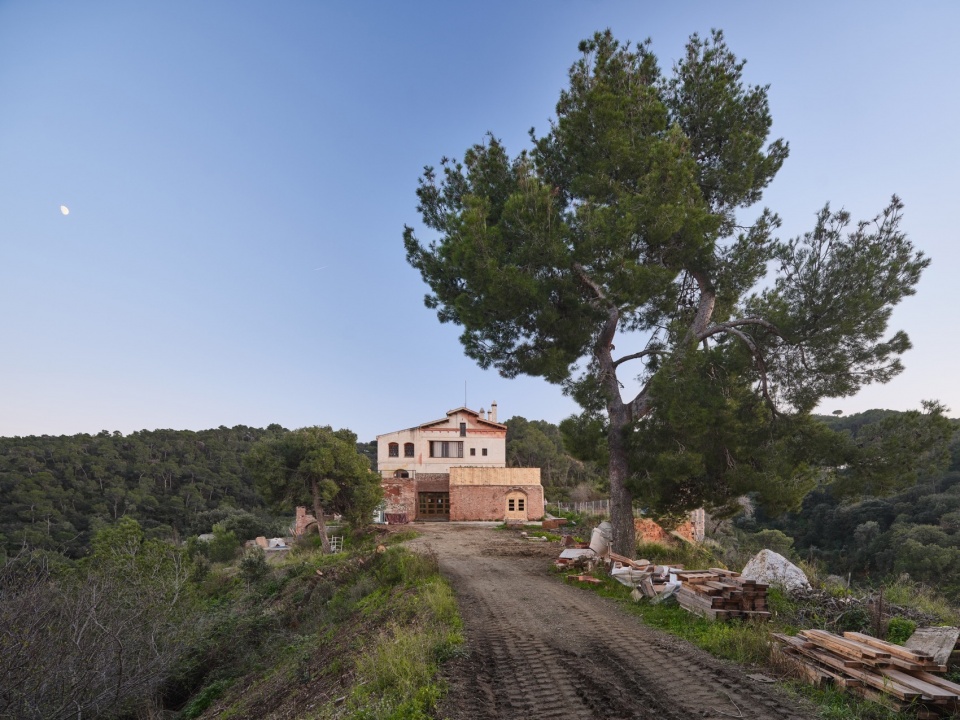
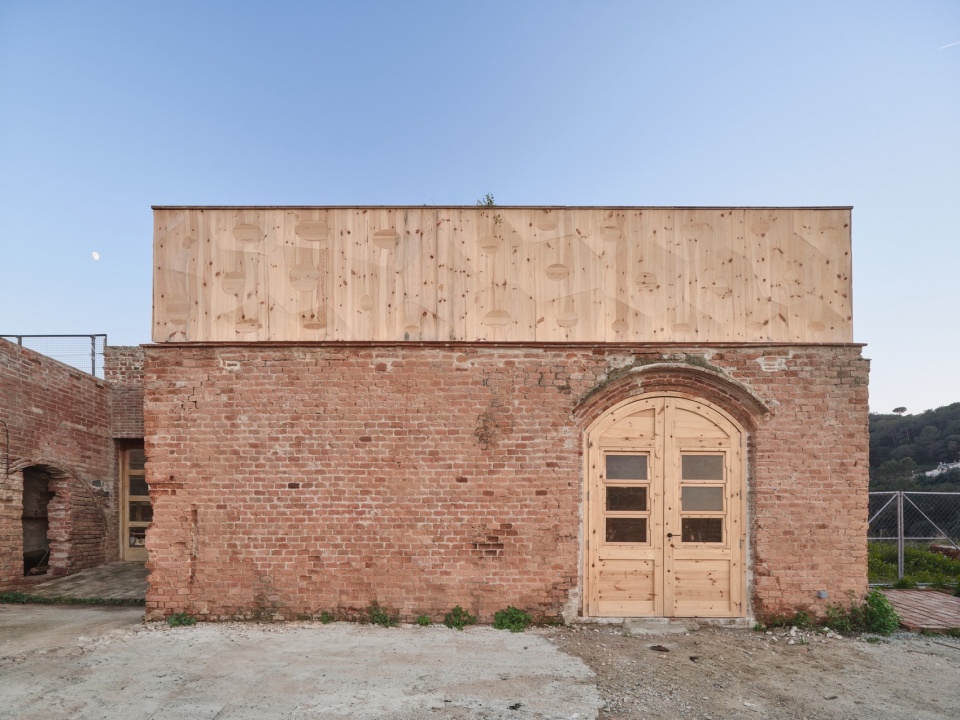
在设计过程中,项目对一座邻近绿色制造实验室(Green Fab Lab,校园内的数字制造与研究中心)的现有建筑进行了改造。原有屋顶被拆除,砖墙则被精心保留、修复和加固,以确保建筑的结构完整性。项目选用木材作为主要建材,使新结构自然融入周边景观与建筑文脉。设计不仅兼顾功能性与美学和谐,还提供了一种可持续的替代建材解决方案。
▼改造前后,before and after
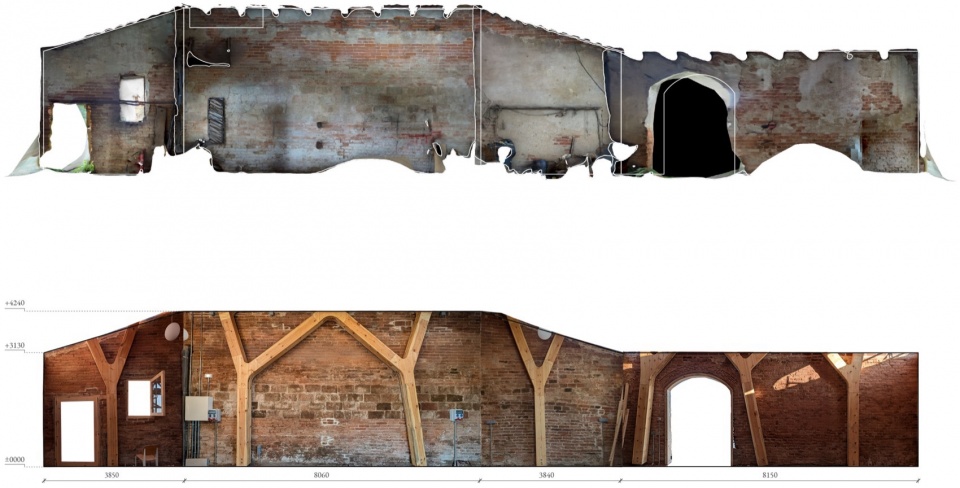
The design of the building involved retrofitting an existing structure adjacent to the Green Fab Lab—the digital manufacturing and research center of the campus-. While the old roof was removed, the brick walls were carefully preserved, restored, and reinforced to maintain the building’s structural integrity. Timber was selected as the primary construction material, seamlessly integrating with the surrounding landscape and architecture. The proposed project ensures functionality and aesthetic harmony, while also offering a sustainable alternative to typical construction materials.
▼建筑立面近景,Facade details
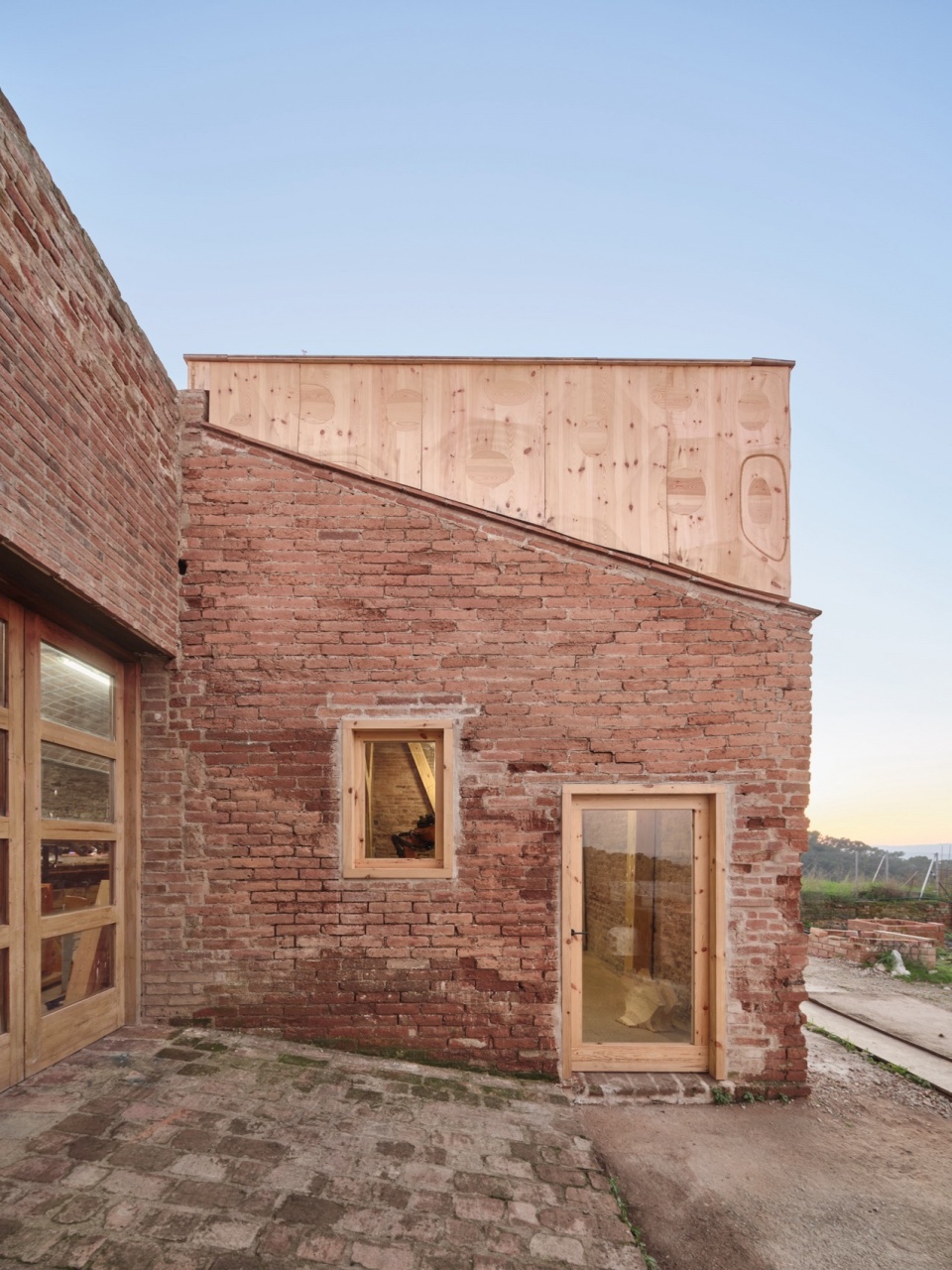
▼木材的使用,Use of wood
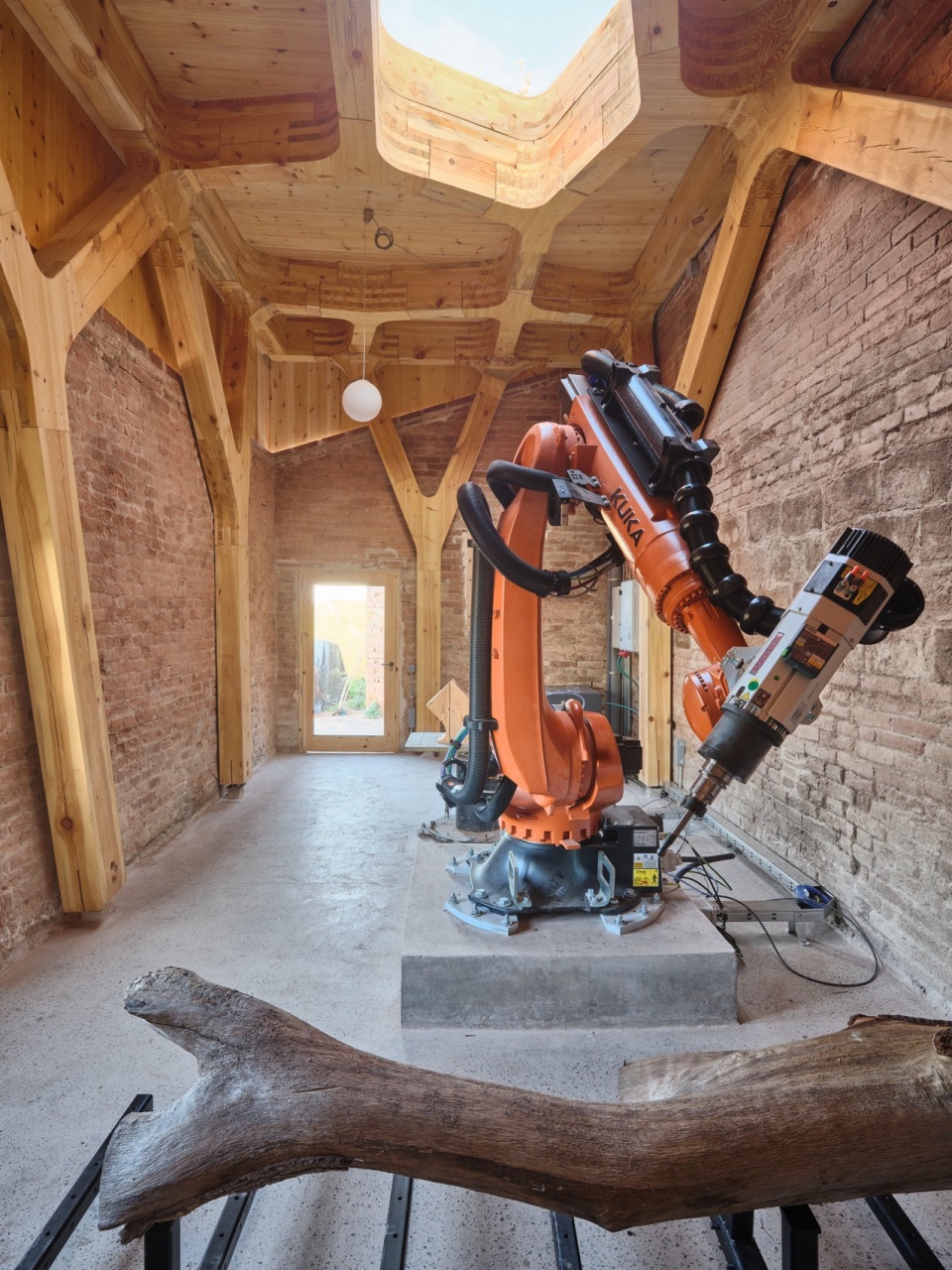
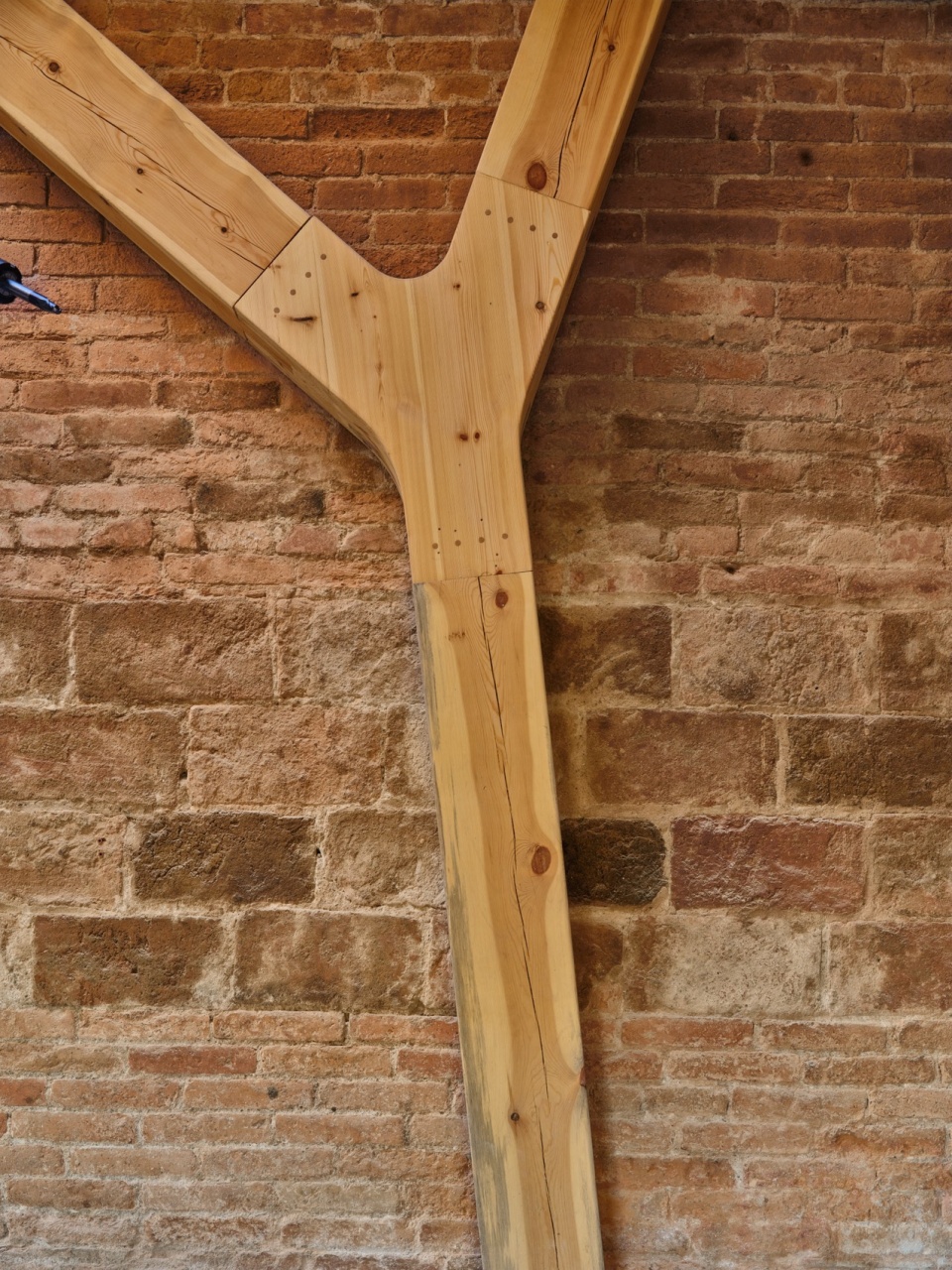
树状结构 An arborescent structure
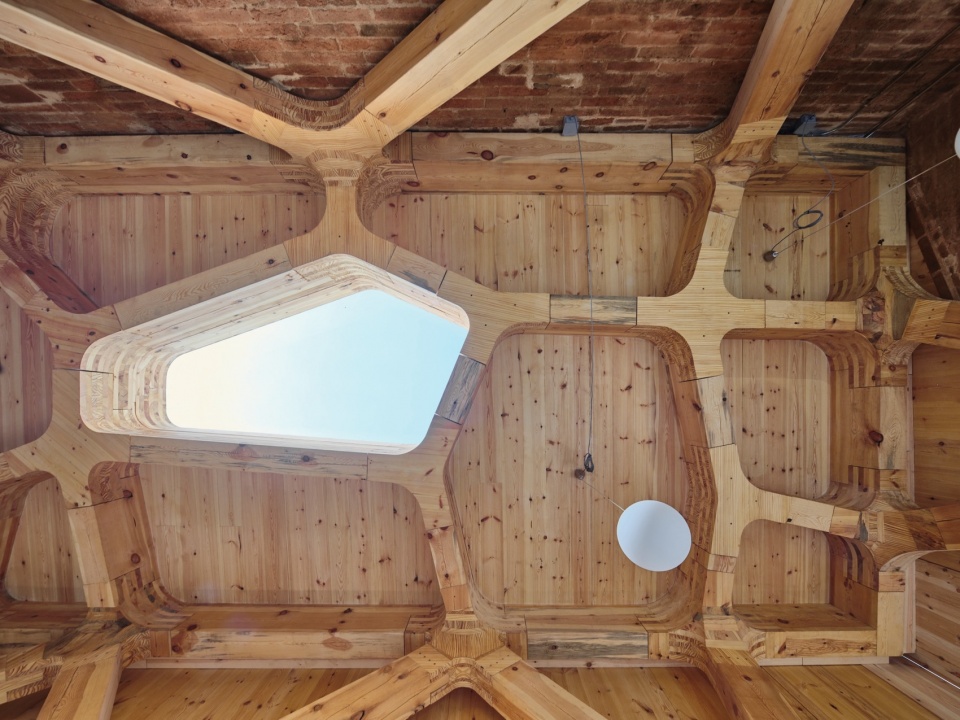
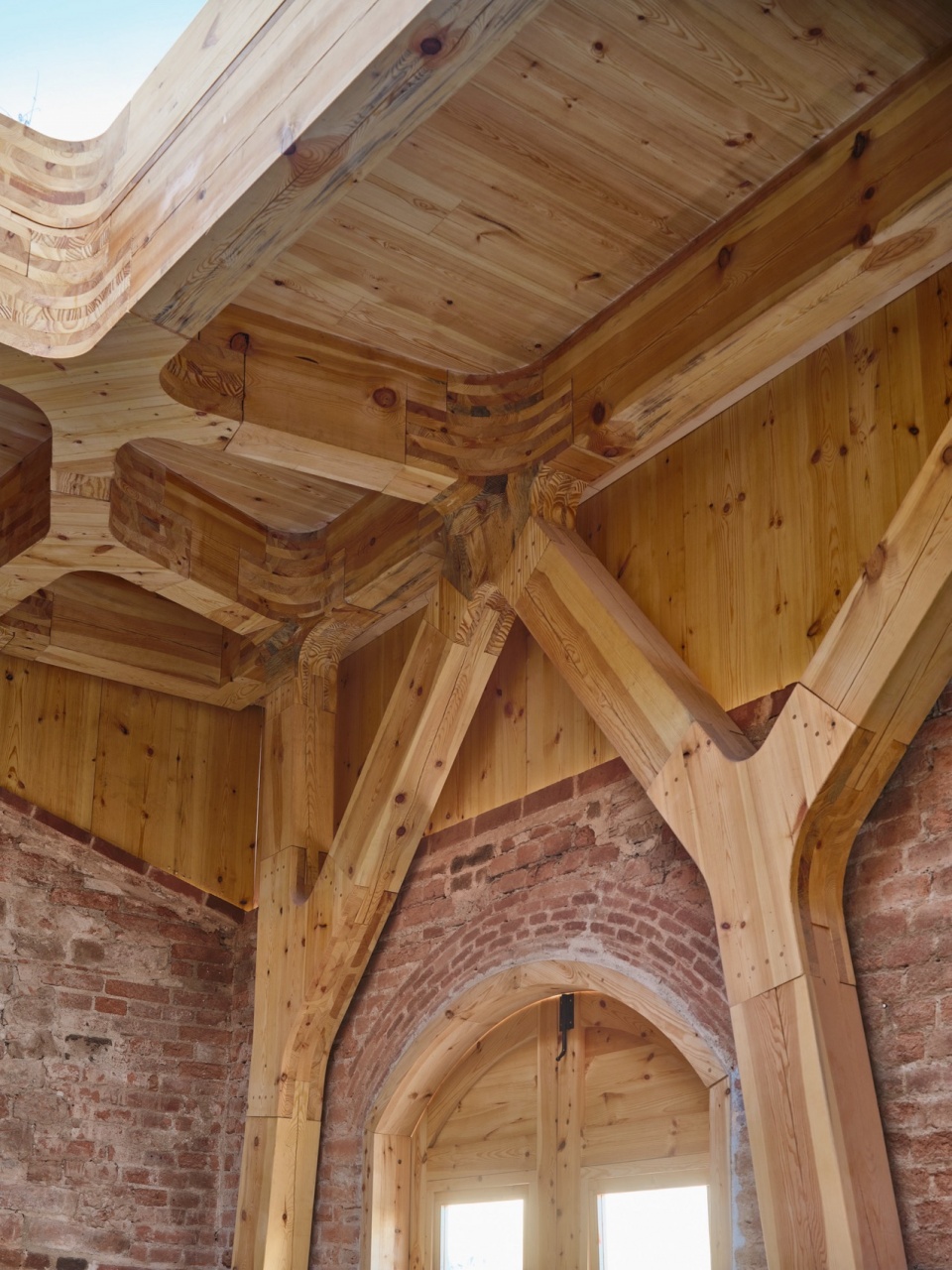
新建筑采用预制、自支撑的木质框架,由七根分叉立柱支撑,象征树干。这些立柱承托起一个Voronoi图案布局的屋顶,屋顶由实木与交叉层压木材(CLT)节点组成。所有连接节点通过数控(CNC)精密加工制成,使结构能够覆盖8.8米 × 4.6米的跨度。所有节点均使用瓦尔达乌拉实验室自制的CLT板材加工而成。由于CNC铣削深度有限,部分节点由四层分别加工的部件胶合而成,从而形成连续统一的结构体。最终呈现出一体化、无缝的结构,既容纳了工作坊所需设施,也承托起一片绿色屋顶。
▼爆炸结构分析,explosion structural analysis
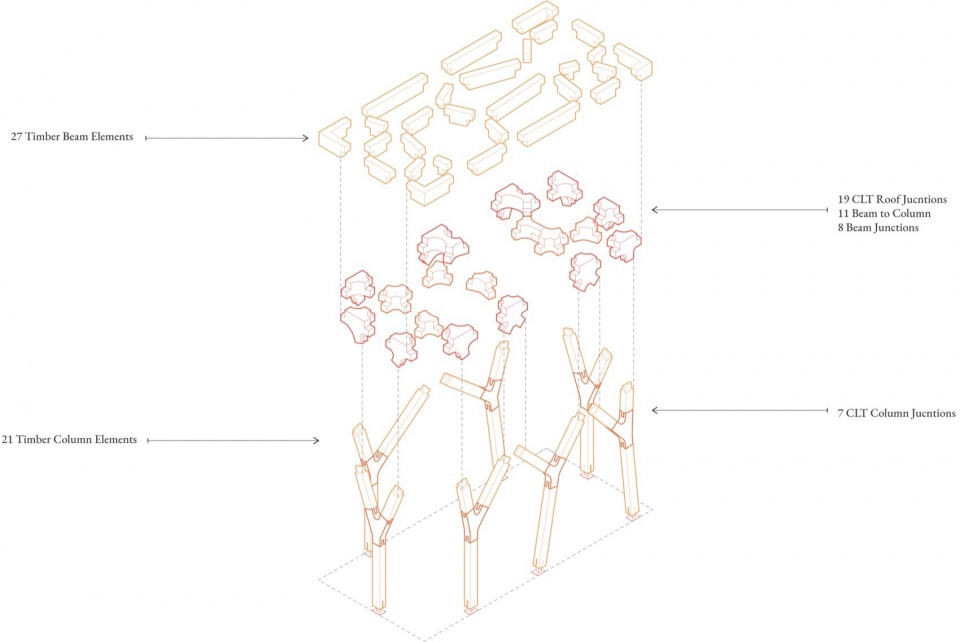
The project features a pre-constructed, self-sustaining timber framework, supported by seven branching columns that represent tree trunks. These columns hold up a Voronoi-style roof, made of solid wood and Cross-Laminated Timber (CLT) joints. The joinery, which is precision crafted through Computer Numerical Control (CNC) machining, enables the structure to span an 8,8 m by 4,6 m area. These joints were fabricated from CLT panels produced at Valldaura Campus Labs. Due to CNC milling depth limitations, some joints were made of four individually milled layers. Then, they were glued together to form cohesive elements. The result is a seamless and unified structural mass that houses the amenities of the workshop while supporting a living green roof.
▼改建的屋顶,Renovated roof
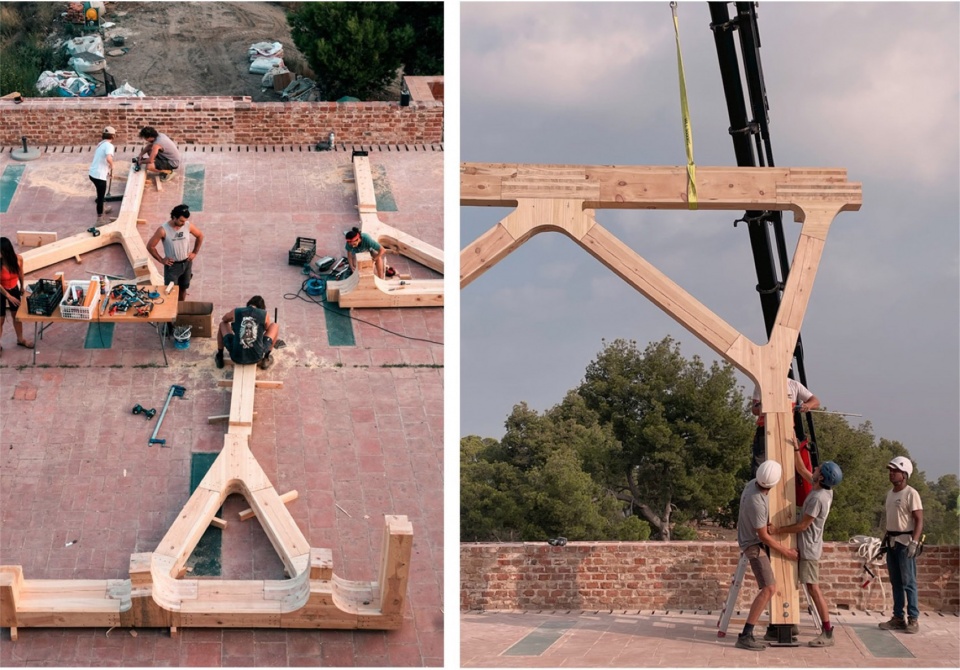
结构柱(200×260毫米)与梁(200×400毫米)结合了传统木作工艺(如半搭接、榫卯连接)与数字制造方法。四面结构在场外预组装完成后,通过起重机吊装到四面砖墙之间,并由专业施工团队加固并锚固于地基之上。
▼连接结构,connection structure
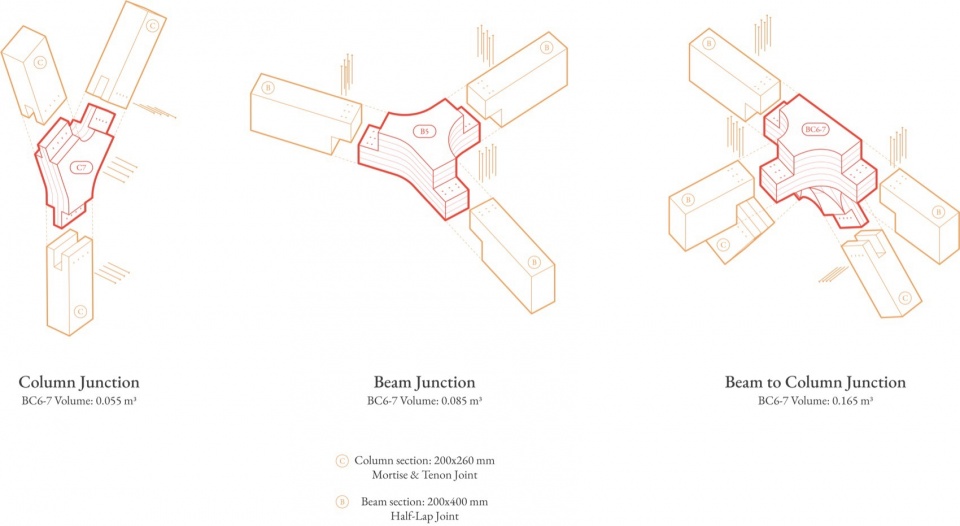
Traditional joinery techniques, such as half lap or mortise and Tenon, were combined with digital fabrication methods to construct the junctions of structural columns (200 x 260 mm) and beams (200 x 400 mm), which are made of solid wood. The four sides of the structure were pre-assembled offsite, then craned into position within the four brick walls, and finally securely bolted to the ground by professional construction workers.
▼安装过程,Installation process
为满足新结构及机器人作业的承重需求,原有地面被开挖,重铸新基础。施工现场浇筑了混凝土基座,用于支撑KUKA机器人。MAEBB学生团队在结构工程师的指导下,完成了钢筋混凝土基础的设计与计算,同时铺设了水磨石地面。水磨石中融入了瓦尔达乌拉庄园遗址中发现的旧砖碎片,为地面赋予了独特且可持续的特质。
To accommodate the new structure and meet the expected structural demands of the robot, the existing floor had to be excavated for a new foundation. A concrete pedestal was placed to support the KUKA industrial robot. A team of MAEBB students, with the assistance of structural engineers, designed and calculated the reinforced concrete foundation and created a terrazzo floor finish. The terrazzo incorporated old bricks found on the Valldaura Estate, giving the floor a unique, sustainable character.
▼学生团队,Student team
建筑外立面由CLT板材构成,外表面通过精密铣削雕刻出Voronoi图案,为建筑表皮带来动态而微妙的肌理。这种设计既确保建筑与自然及历史景观的和谐融合,同时又暗示了内部的新结构。相比之下,立面内侧保持原木质地的自然纹理。
The façade consists of CLT panels, precisely milled on their exterior surfaces to reflect the Voronoi pattern. That creates a dynamic yet subtle design on the building’s envelope. This design approach ensures that the building blends harmoniously with the surrounding natural and historic landscape, while referencing to the new structure that lies within. Contrasly, the interior side of the panels remains raw, preserving the natural texture of the wood.
▼顶部结构,Top structure
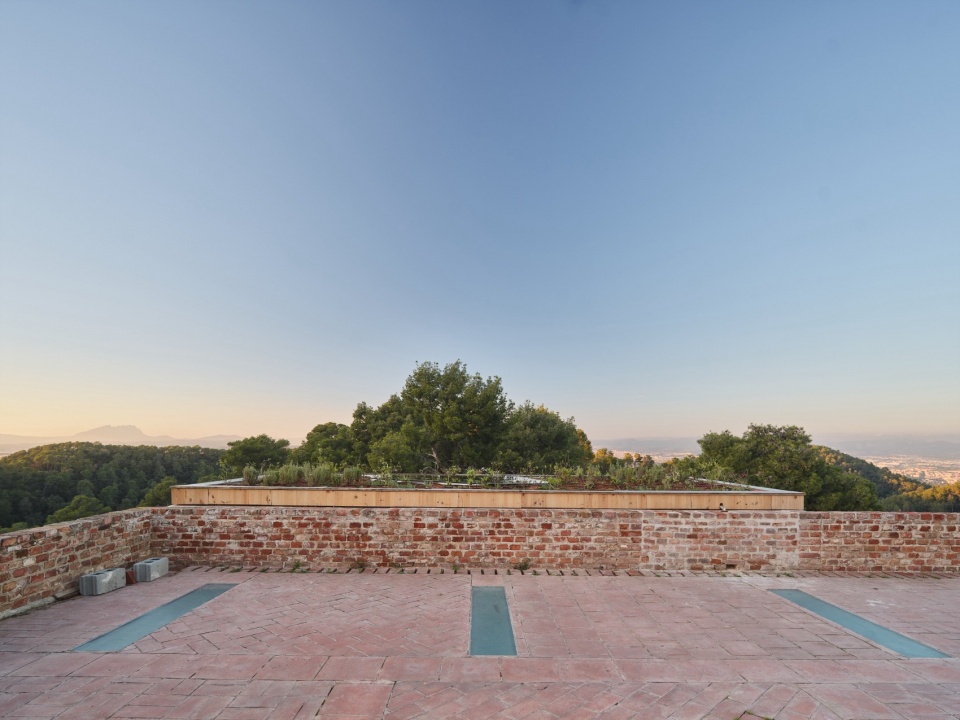
地中海绿色屋顶 Mediterranean green roof
本项目的另一重要目标是最大限度地引入自然光,特别是通过设置在机器人上方的天窗,以及玻璃门与窗户导入光线。木质立面有效遮挡直射阳光,同时通过立面板材实现整体封闭。值得注意的是,立面结构独立于砖墙本体,不承担任何结构荷载,从而保护了历史建筑的完整性。
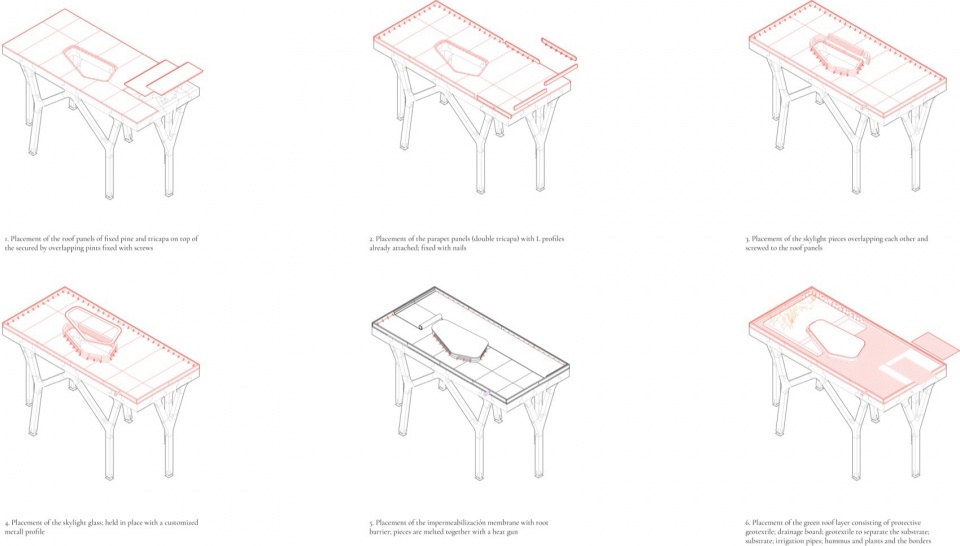
▼屋顶分析图,roof analysis
A key design goal was to maximize natural light within the space, particularly through the skylight above the robot, as well as through glass doors and windows. The wooden façade effectively prevents direct sunlight from penetrating the building, while the panels provide a full enclosure. Notably, the façade is independent of the historic brick walls, carrying no structural load. This preserves the integrity of the existing architecture.
▼天窗,Skylight
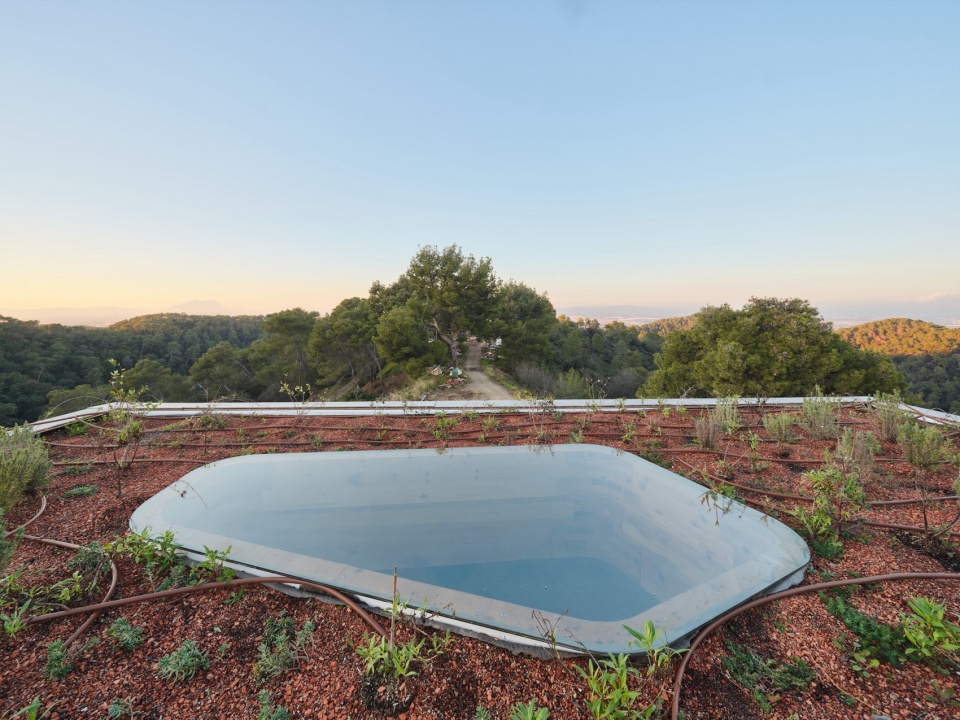
绿色屋顶的第一层为防水隔根膜,采用热焊工艺铺设于木质屋顶板之上。其上依次铺设无纺土工布、排水板和腐殖土层,以支持本地地中海植物的生长。为确保灌溉,屋顶铺设了灌溉管道。所选植物包括金银花、甜香藤、匍匐景天和法国薰衣草,皆因其良好的适应性与观赏价值而入选。目前,CORA已由瓦尔达乌拉实验室团队投入使用,作为原型开发的一部分,助力推进生态设计与先进制造的探索。
The first layer of the green roof is an impermeabilization membrane with root barriers applied by using a heat gun on top of the wooden roof panels. The membrane is followed by a layer of geotextile fabric, drainage board, and hummus, to support the growth of local, autochthonous Mediterranean plant species. To ensure proper hydration, irrigation pipes were installed as the final step. The plants selected for the green roof were common honeysuckle, sweet clematis, creeping sedum, and French lavender. All were selected for their adaptability and aesthetic value. Currently, CORA is being used by the Valldaura Labs team as part of their prototyping initiatives, helping to bring forward new solutions for ecological design and advanced manufacturing.
▼树状结构细部,Arborescent structure details
Project Credits
Direction:
Vicente Guallart, Daniel Ibañez and Michael Salka
Valldaura Executive Director:
Laia Pifarré
Developed by:
The students of the Masters programme in Advanced Ecological Buildings and Biocities (MAEBB), 2023/24 class: Alexander Tamazov, Toni Javor, Emma Rodriguez Berghmans, Neeshi Doshi, Lamprini Makarona, Diana Ruzanska, Alfred Ziad Aramouni, Anushreya Kondapi, Juan Sebastián Batallas Cueva, Marianna Santos Fujii, Varun Sreenath, André Arruda Navarro, Mustafa Teksoy, Oliver Needham, Alireza Shayan, Alkiviaids Avarkiotis. Maya Shoavi, Sharvari Sharath, Sveta Sathyanadhan, Vanessa Marie Alvarado Barrios, Helen Girma, Karla Velarde Sandoval, Kristina Schüssler
Project Management:
Esin Aydemir
Expert Staff:
Bruno Ganem, Marielena Papandreou, Lorenzo Salinas, Viorel Cazacu
Staff:
Pilar Fontanals, Laura Sanchez
Advised by:
Miquel Rodriguez, Elena Orte, Guillermo Sevillano, Ignasi Caus, David Valldeoriola, Silvia Burés, Toni Arola, Ionut Cosenco, Carles Enrich, Firas Safieddine Arturo de la Maza
Sponsors:
Tallfusta, Alberch; Montpart
With the support of:
Parc de Collserola
Ajuntament de Cerdanyola del Vallès
Photography:
Adrià Goula
Communication:
Pati Nunez Agency