科威特驻文莱大使馆 / Architectkidd + Arkitek Rekajaya
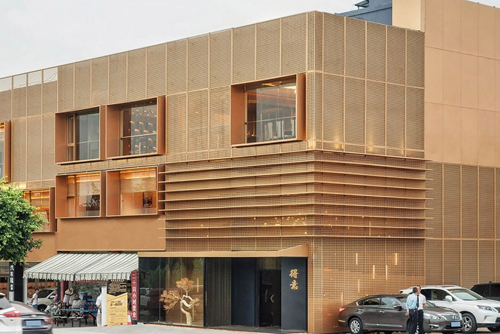
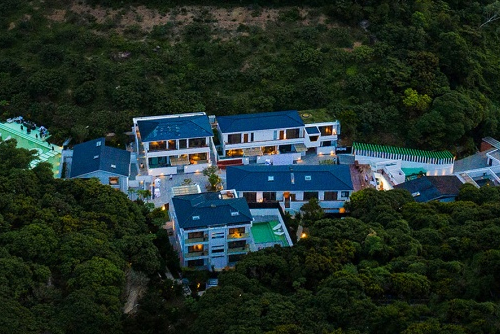
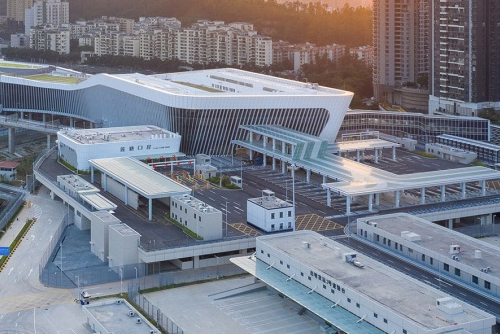
科威特驻文莱大使馆位于斯里巴加湾市的Jalan Kebangsaan区。该项目由科威特外交部委托,携手文莱建筑事务所Arkitek Rekajaya,邀请Architectkidd担纲大使馆及大使官邸的室内空间设计。斯里巴加湾市的大使馆区及Jalan Kebangsaan一带因聚集众多外交使团及政府建筑而具有国际氛围。该地区的建筑多与自然环境融合,即使是城市区域,也广布郁郁葱葱的热带植被、开阔的绿地与花园。
The Embassy of the State of Kuwait in Brunei is located in the Jalan Kebangsaan area in Bandar Seri Begawan. Architectkidd was selected to design the interior spaces for the Embassy and Ambassador residences by the Ministry of Foreign Affairs of Kuwait along with Brunei architecture studio Arkitek Rekajaya. The Embassy District and Jalan Kebangsaan area in Bandar Seri Begawan have an international influence due to the presence of diplomatic missions and governmental buildings. Buildings in the district often blend into their natural surroundings as even urban areas in Brunei possess lush, tropical vegetation with open green spaces and gardens.
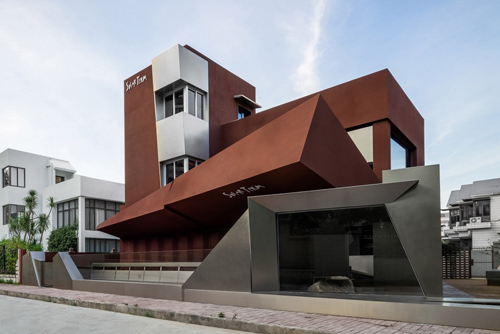
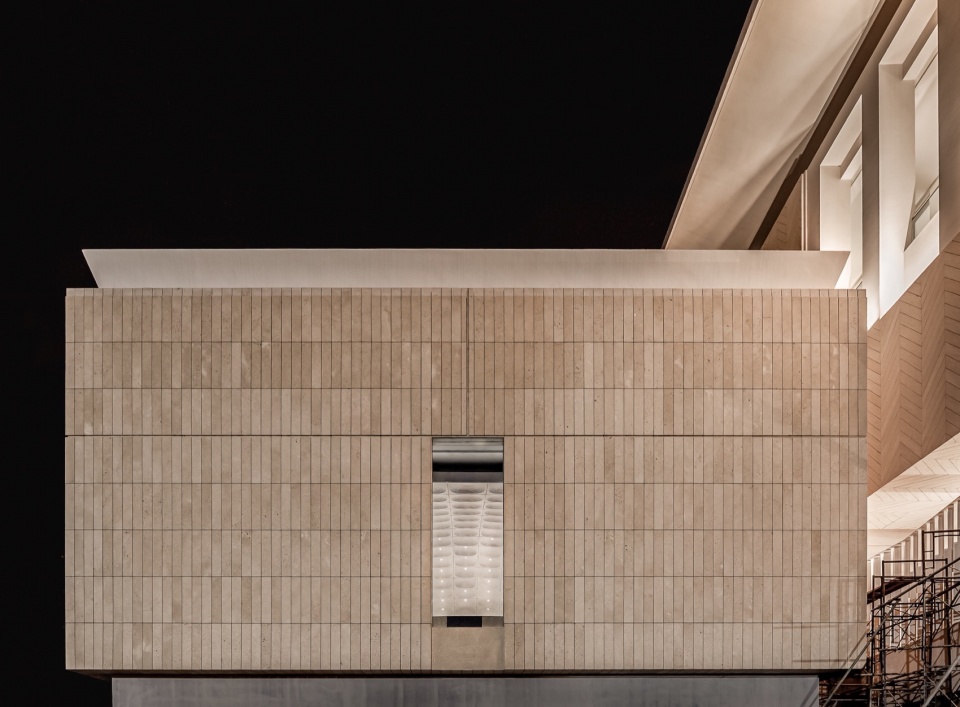
▼项目外观,exterior view of the embassy
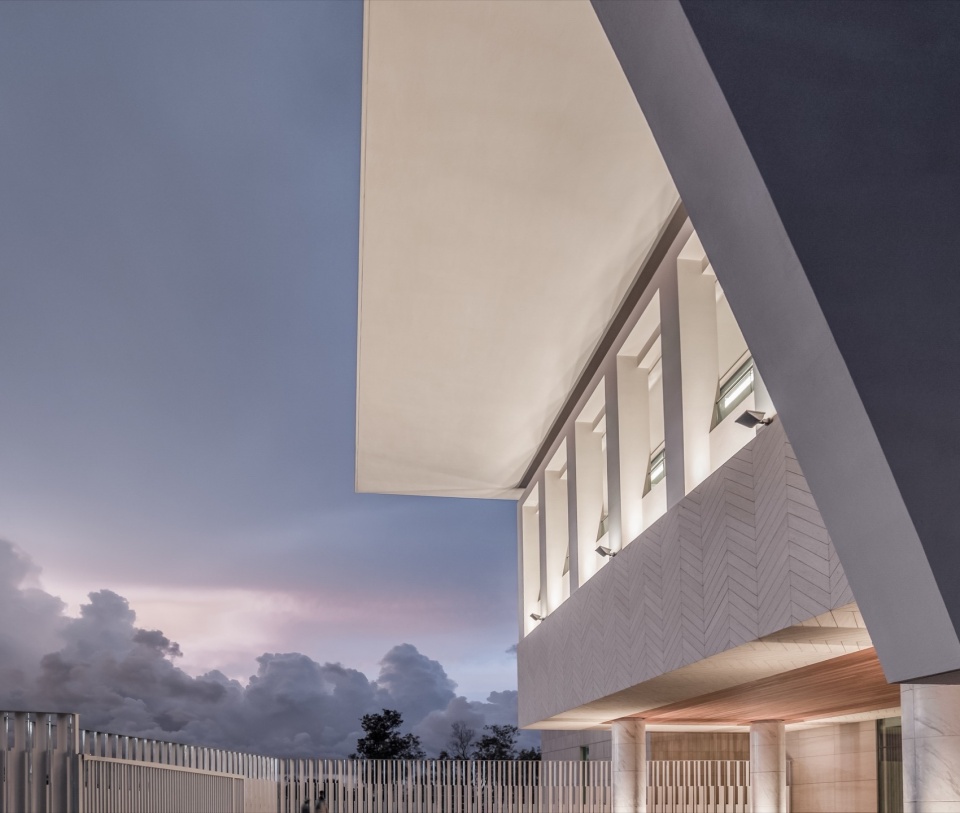
在项目初期,科威特外交部便明确表达,不希望新设计呈现传统科威特建筑风格或伊斯兰建筑特征。因此,Architectkidd并未采取直接的文化符号或表象,而是尝试以更抽象而功能性的方式来体现公共建筑应具备的市民精神与公共美德。我们关注诸如“合作”“开放”“赋能公共空间”等价值观,并通过选材、细节、光线与形体等设计手法加以表达,强调建筑环境作为公共机构及“公民文化”空间的角色。
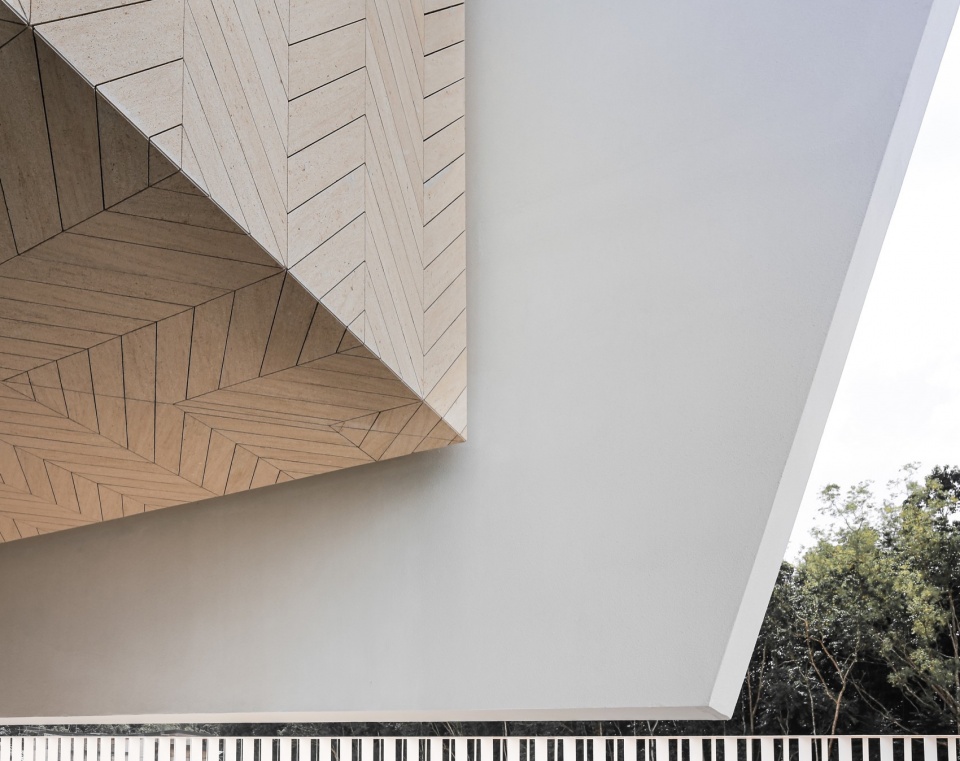
From the beginning the Ministry of Foreign Affairs of Kuwait expressed that they did not want the new design to resemble traditional Kuwaiti architecture or Islamic architecture. Architectkidd looked beyond direct symbolism and overt cultural representations and instead focused on how we could embody civic and public virtues in more abstract and functional ways. We focused on values such as cooperation, openness, and enabling public spaces within our design. We tried to express these values through design choices in materials, details, light, and form – qualities that emphasize the role that the building environment can represent as a public institution and ‘civic cultural’ space.
▼外观细部日景,day view of the details of the facade
▼夜景,night view
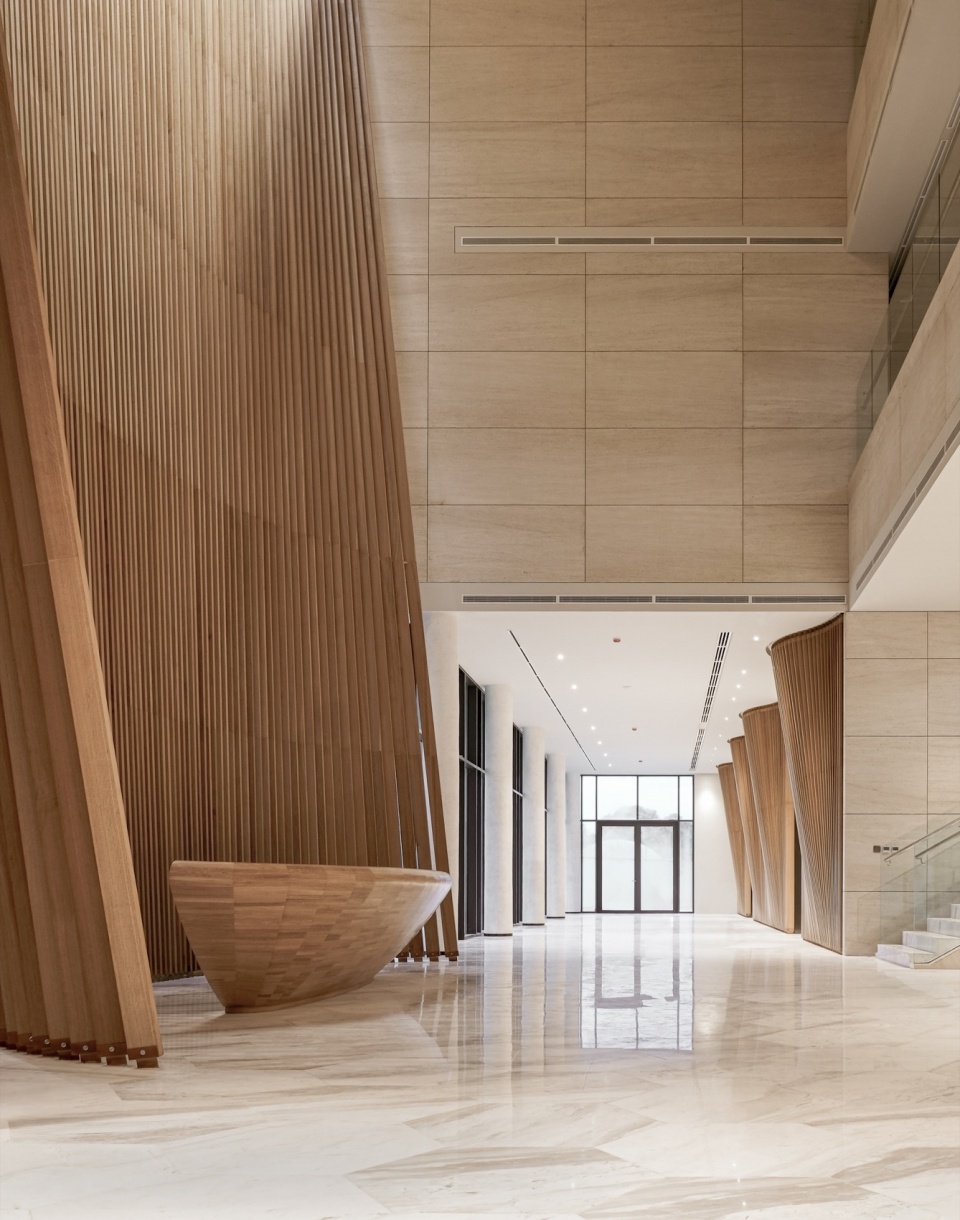
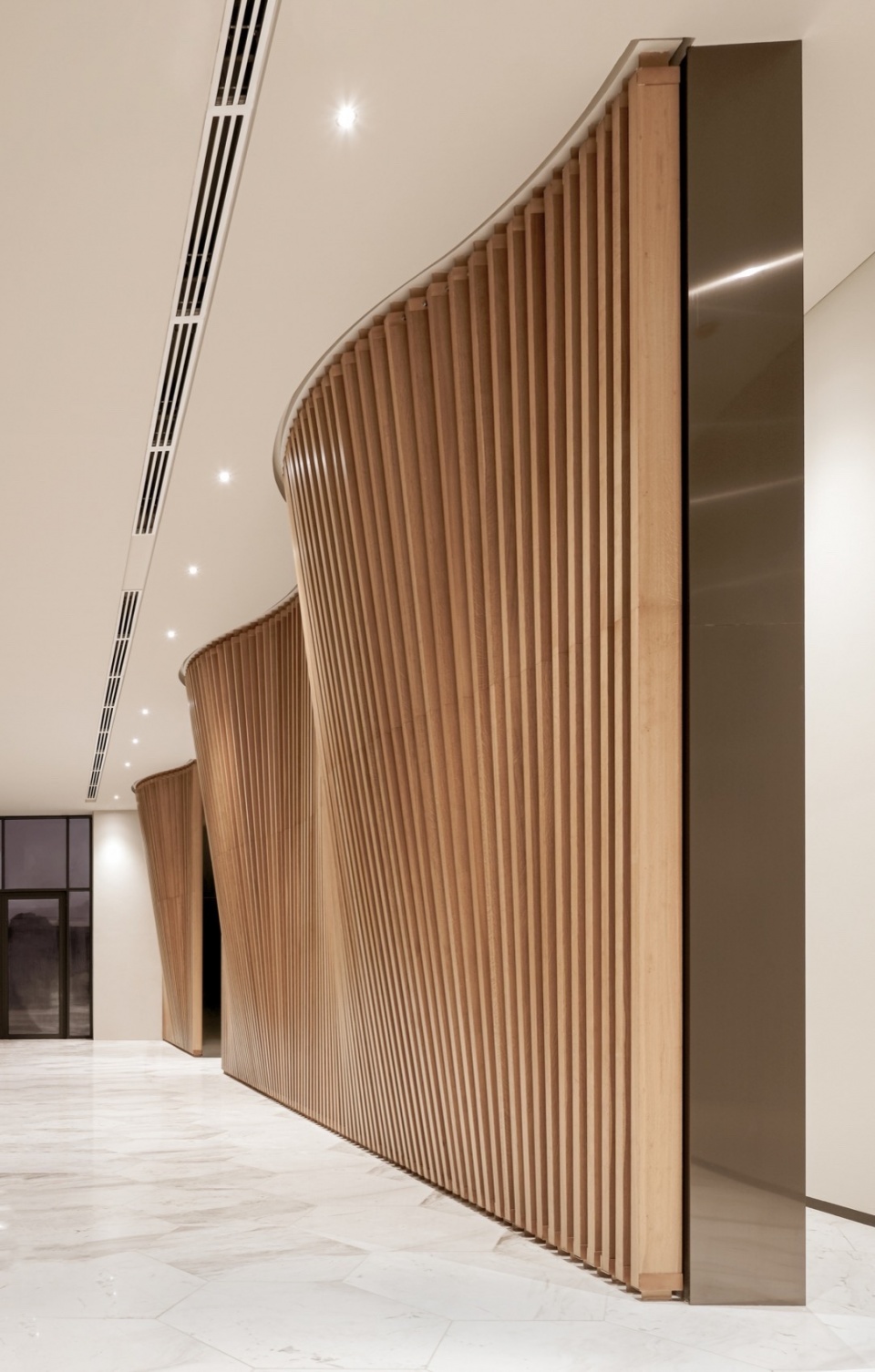
进入大使馆后,首先体验到的是门厅(Foyer)空间,一个带有高天窗的中庭。门厅是通往接待厅、图书馆、办公区等多个功能区域的门户,也是大使馆中最开放的公共空间,具备灵活性,亦可作为接待厅的前区使用。接待厅是整个大使馆的核心与特色空间,为馆方在文莱举办公共与文化活动提供了平台。流动性的室内布局使设计引入了隐性的引导性与空间导视。例如,从入口望向门厅,一排垂直木质格栅柔和地筛落上方的自然光;而展廊与走廊则采用长而弯曲、起伏的木质墙面,引导访客视线朝向中庭与主楼梯延伸。
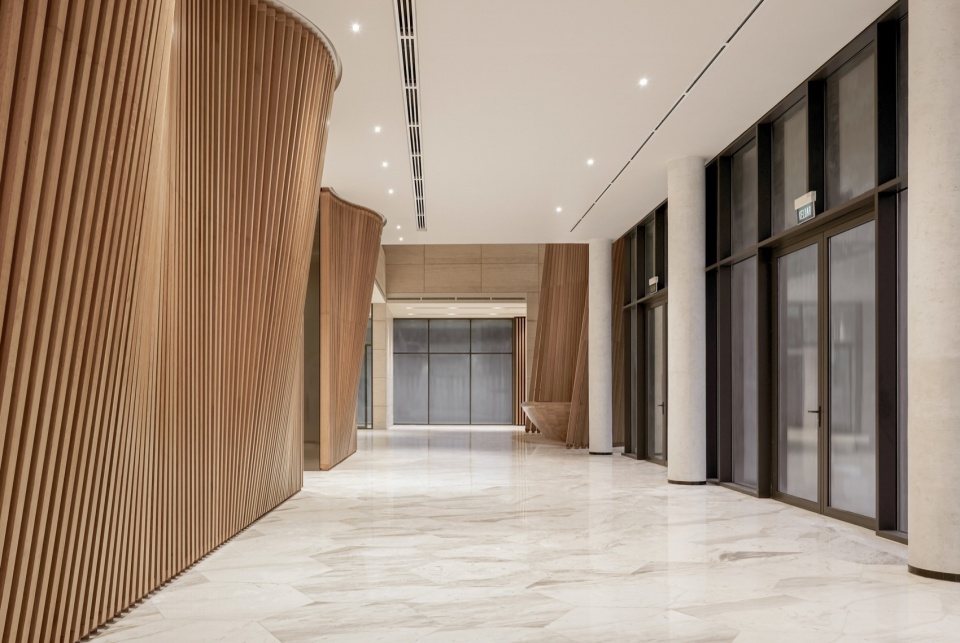
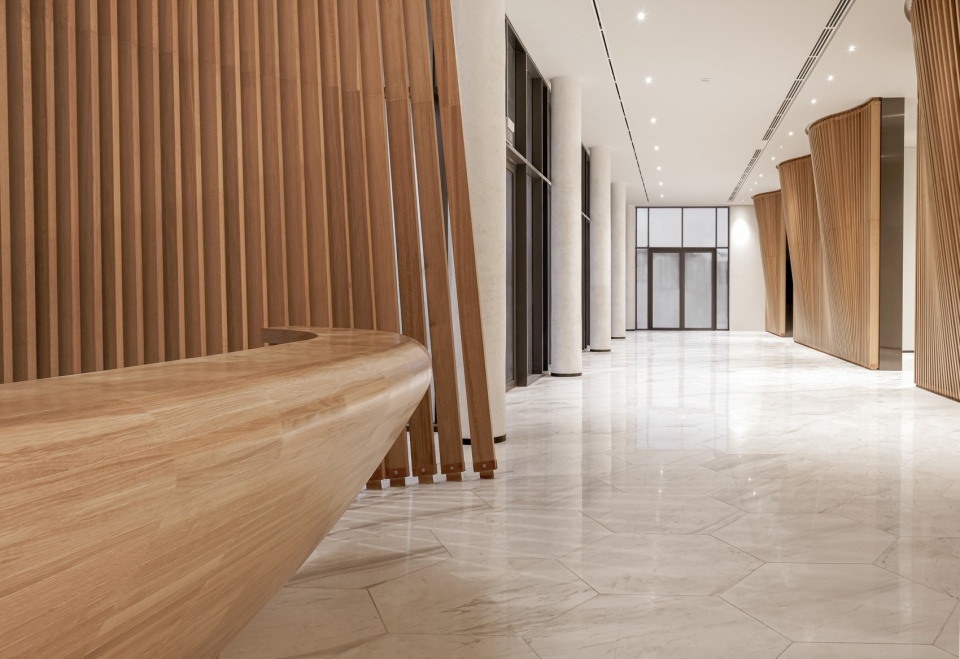
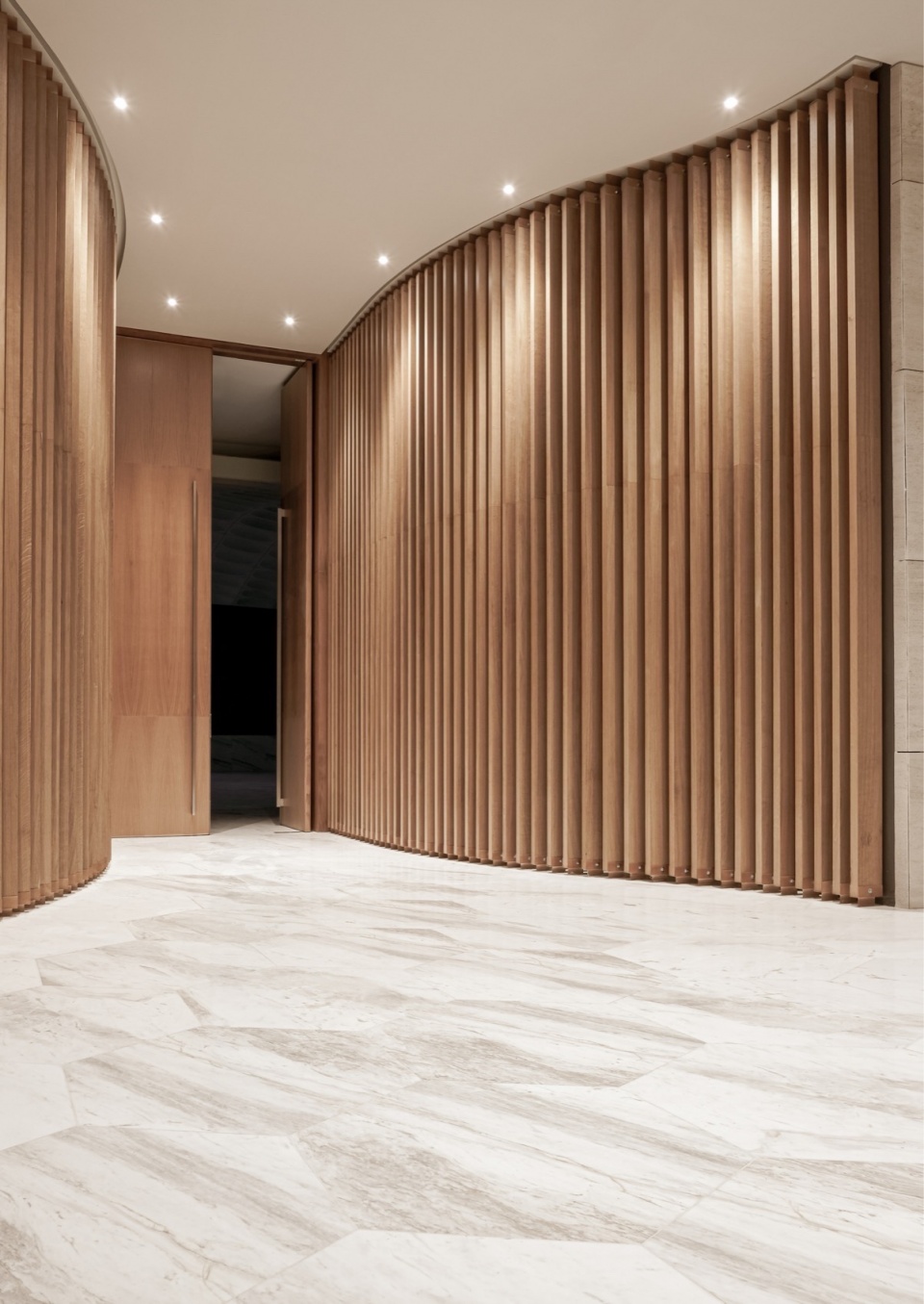
The Foyer is the first experience upon entering the Kuwait Embassy. It features an atrium space with a tall skylight. The Foyer acts as a portal to the reception hall, library, staff offices and other functions. This area is the most public part of the embassy and is an adaptable space that also serves as a prefunction area for the reception hall. The Reception Hall is a distinct space and heart of the embassy. With the Reception Hall, the Kuwait Embassy can now curate and organize public and cultural events in Brunei. The fluid nature of the interior spaces led to the idea for the design to provide subtle directionality and wayfinding within the different spaces. Looking towards the foyer from the entrance for example, a row of vertical wooden louvers filter and project daylight from above. The gallery and hallways have long, curved and rippled wood walls to guide the users’ eyes forward towards the atrium and main staircase.
The materials and finishes were designed to enhance the expansive nature of the interior spaces. They were chosen because they were robust to ensure longevity and practical performance, but also for their ability to enhance visual and tactile qualities of the space.
▼门厅,foyer
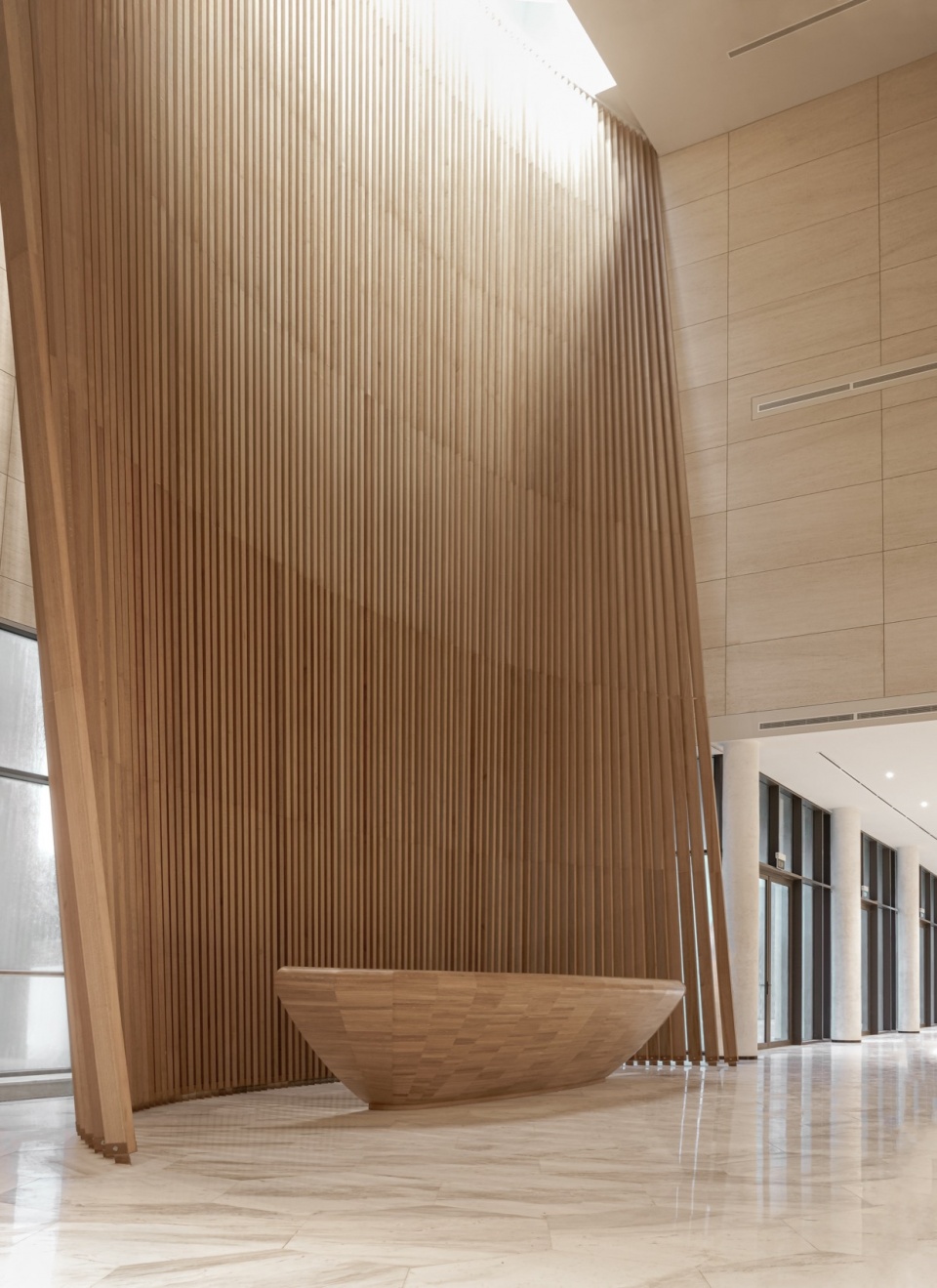
▼接待台,reception desk
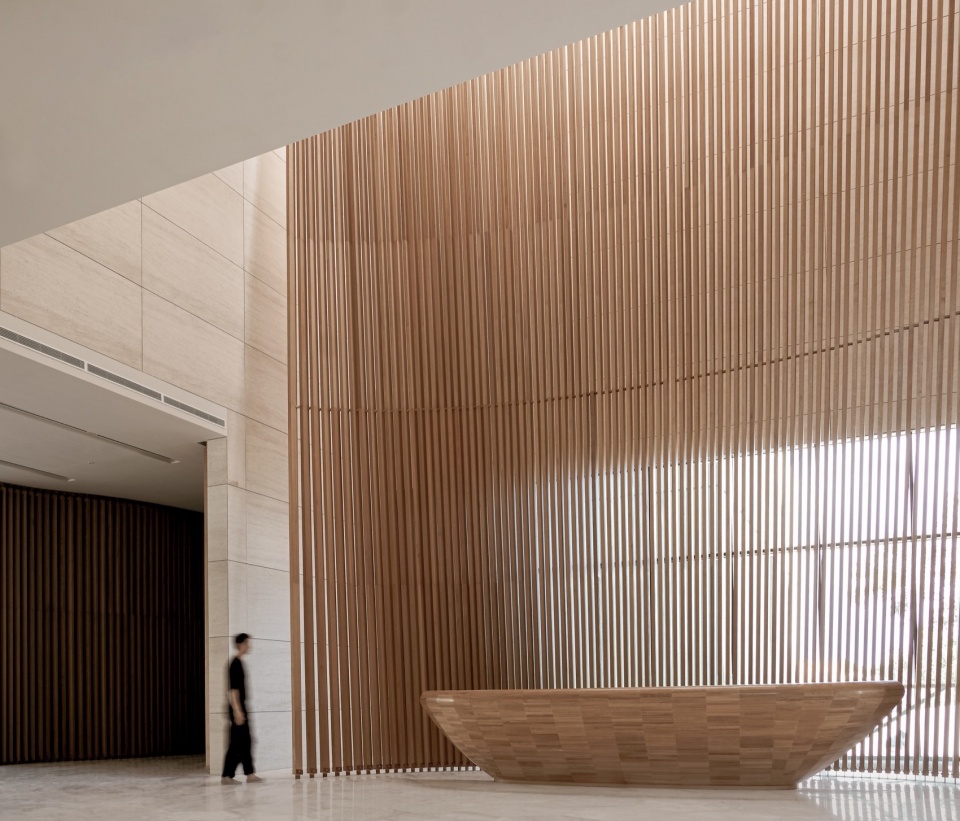
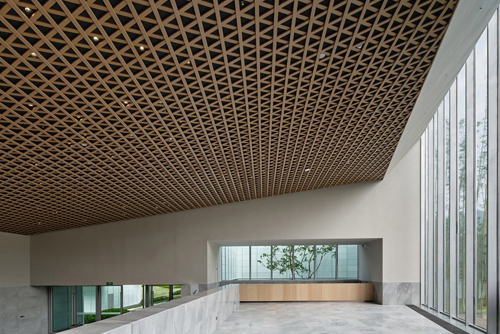
▼温暖的木制格栅,warm timber grille
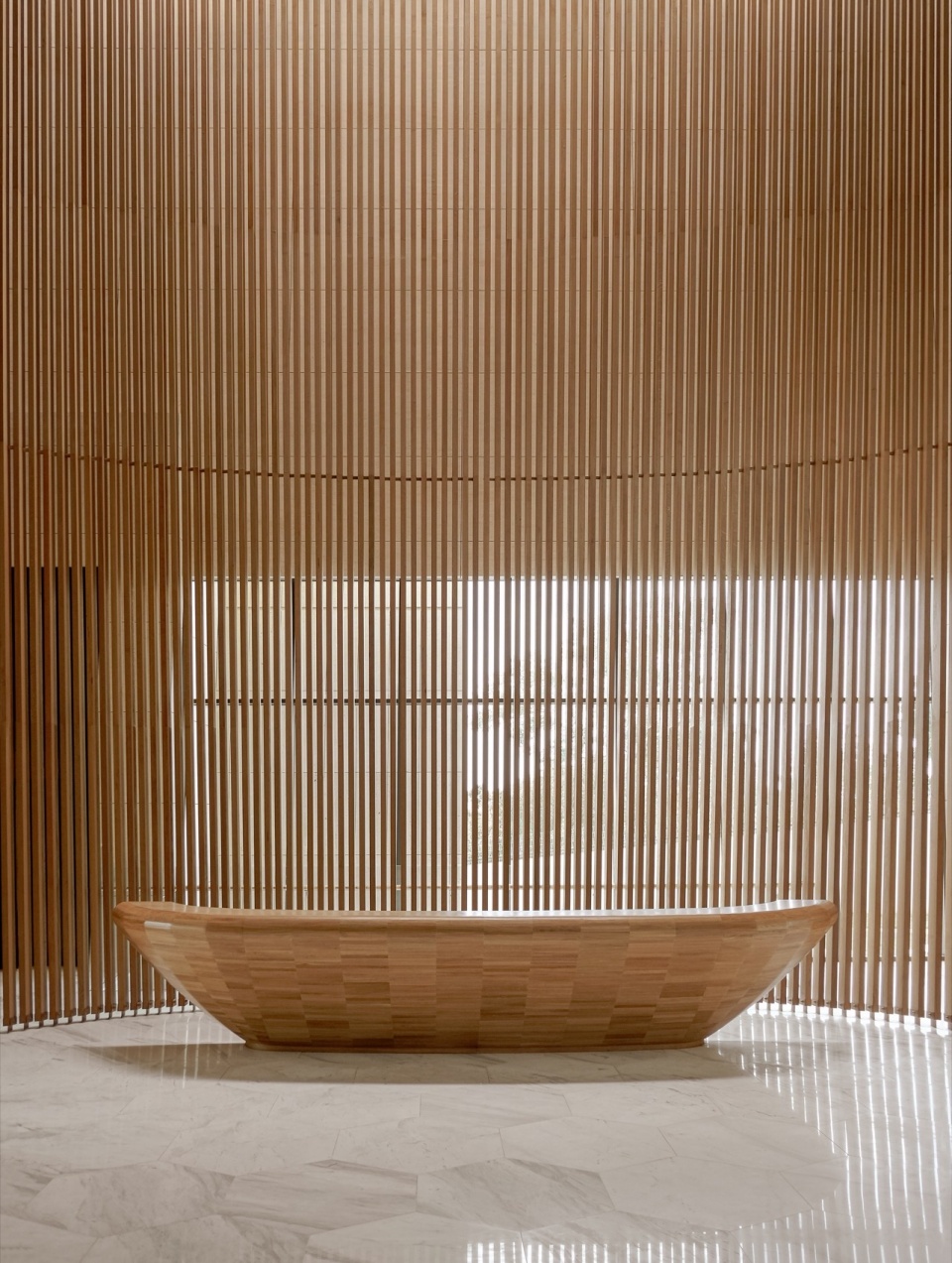
材料与饰面设计旨在强化空间的开阔感。所选材料既强调耐久性与实用性,也注重提升空间的视觉与触觉品质。自然木材与石灰岩等质感材质,以其细腻的光线反射方式赋予空间深度与动感,增强了整体感官体验。天然木色的选择考虑了其在自然光照下的表现,以营造温暖氛围。墙板与大理石地面上的图案设计,也丰富了与空间的多层次互动。
The design of the finishes was key to this. The use of textured surfaces and forms such as natural wood and limestone help reflect light in subtle ways to create a sense of depth and movement. These textures enhance both the visual and tactile experience. The color of the natural wood was selected based on how it reflected daylight to enhance the warmth of the interior space. The patterning of surfaces such as the wall panels and marble stone flooring contributes to a multi-layered interaction with the space.
▼木材与石材的结合,combination of wood and stone
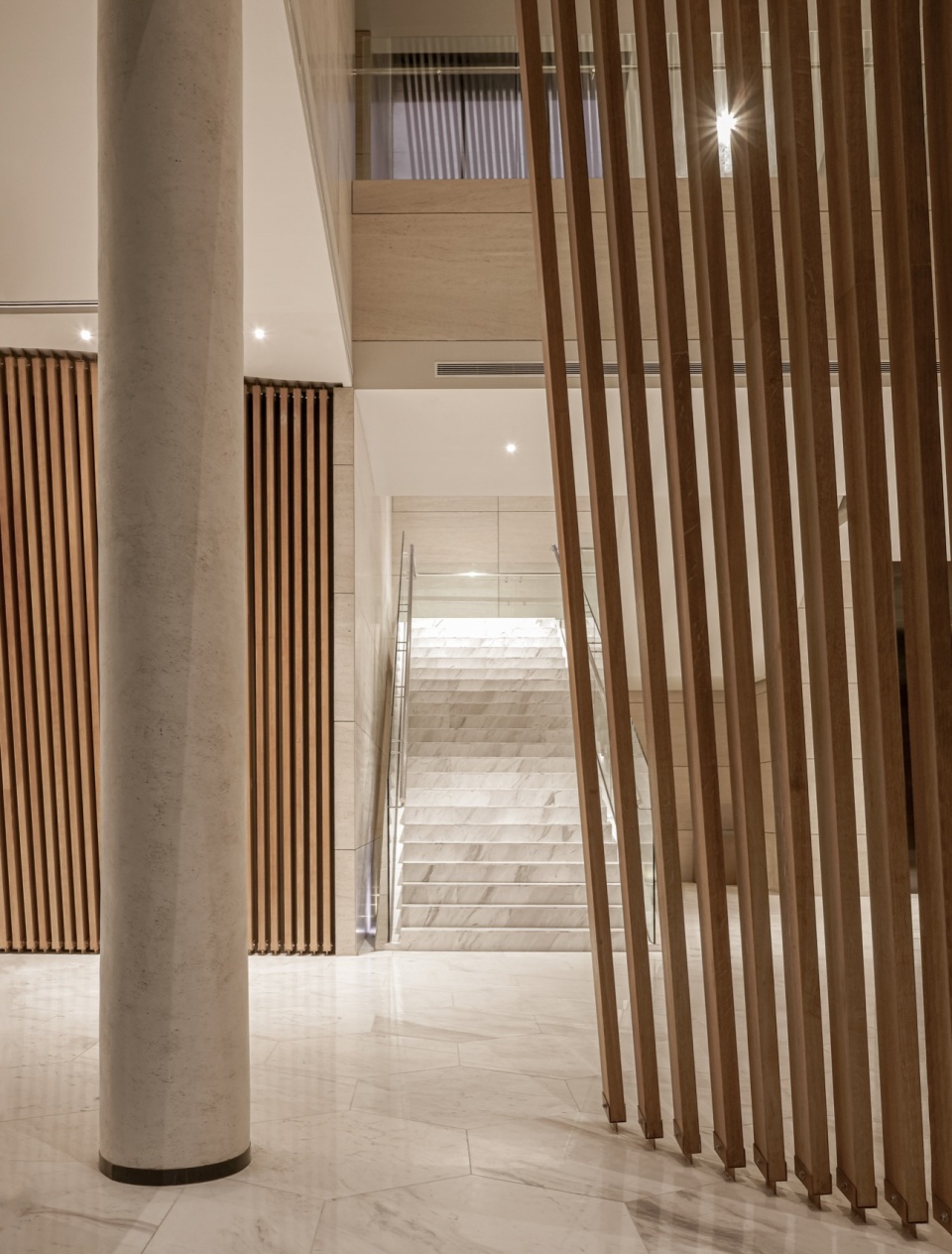
▼中庭,atrium
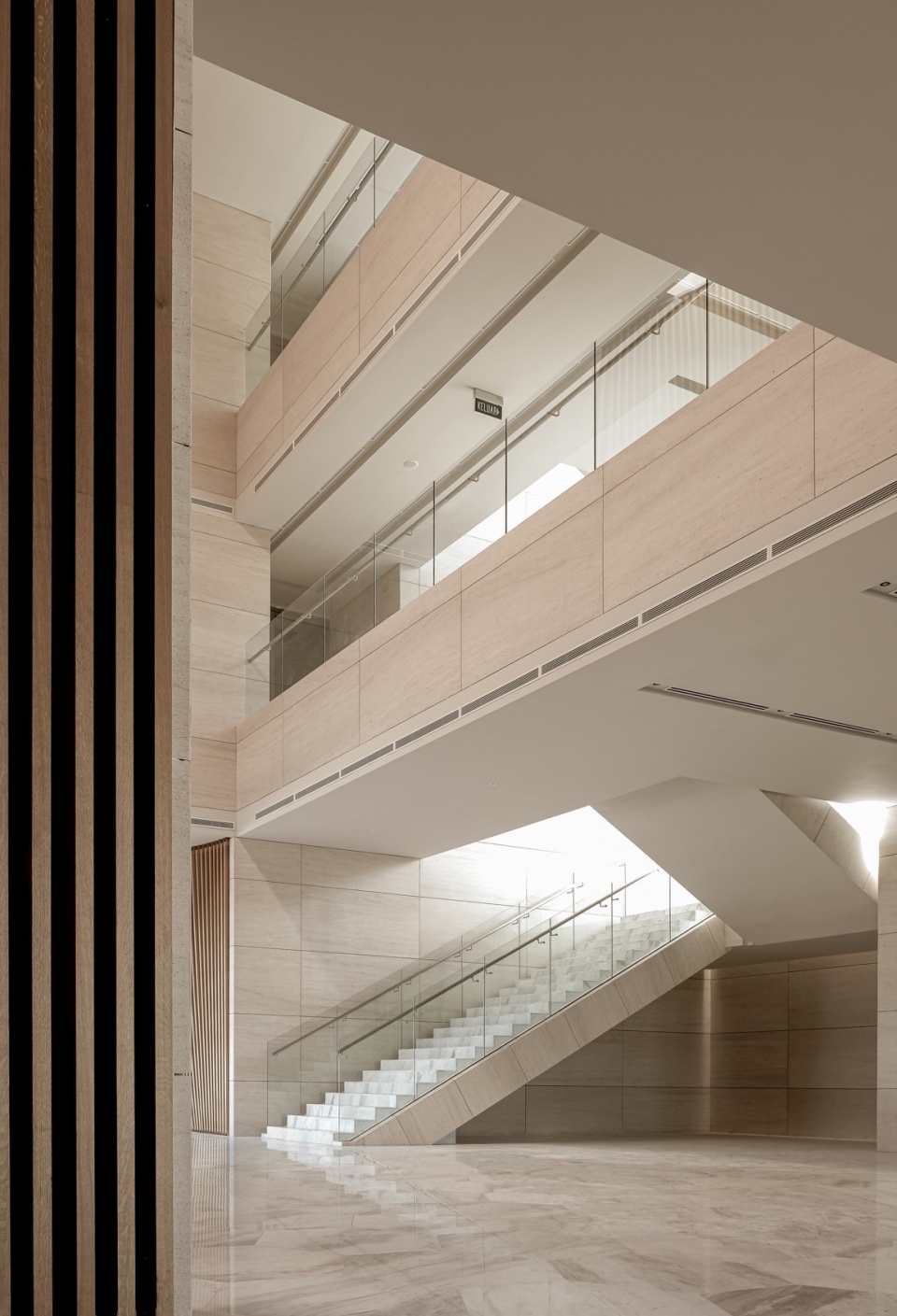
▼楼梯,staircase
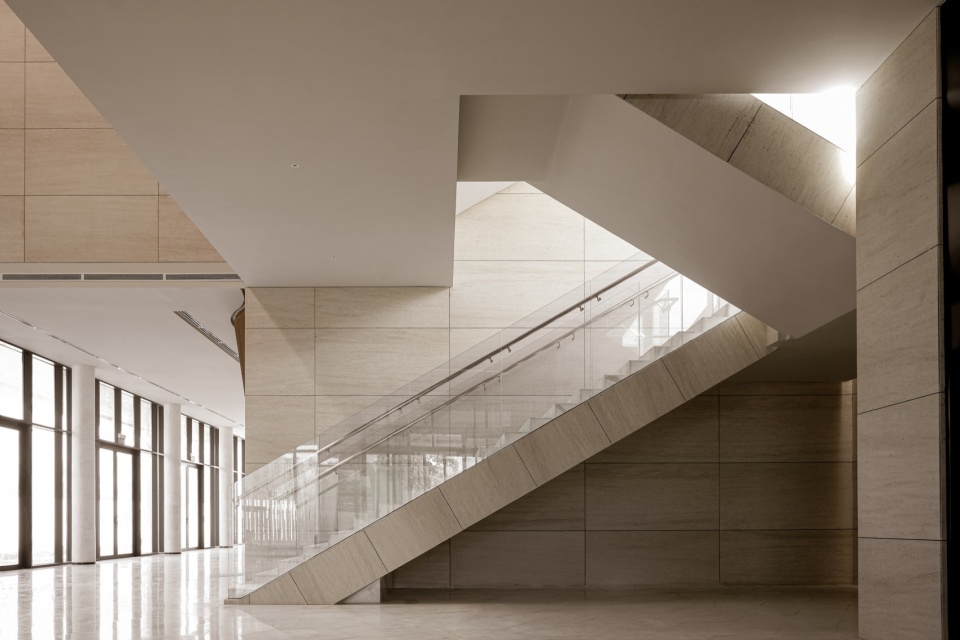
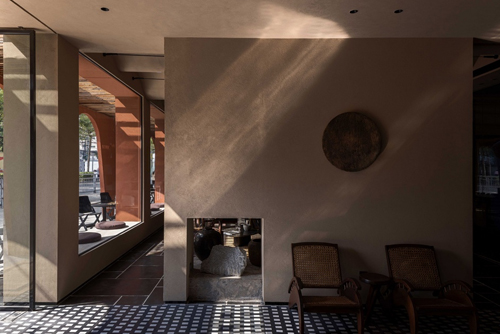
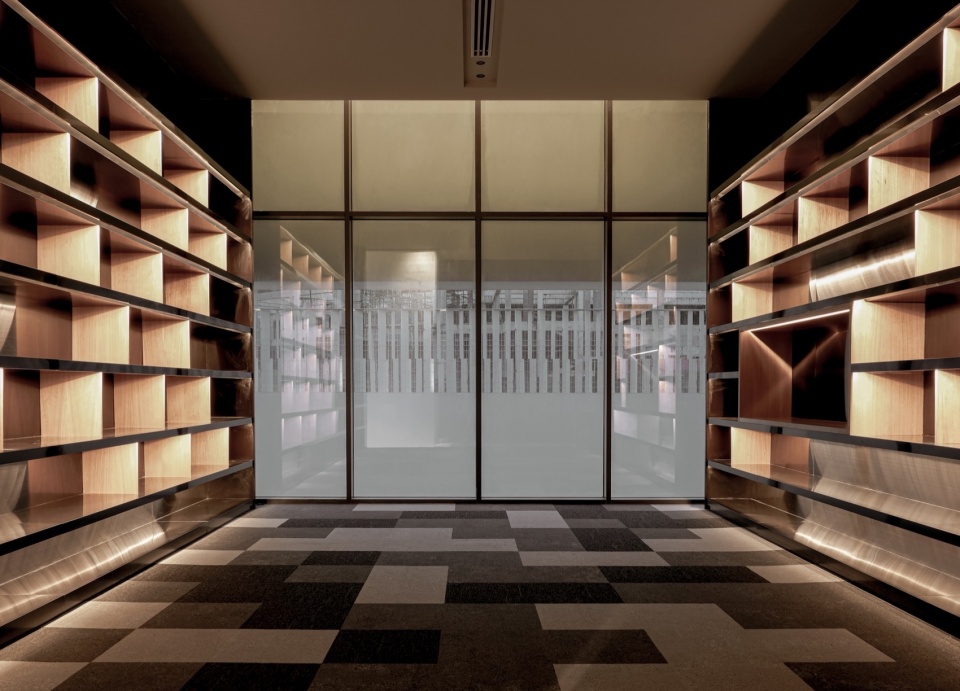
室内设计的目标是营造一种温馨宜人的环境,并在人的行进过程中提供触感上的愉悦体验。材质的肌理与空间的开放性共同营造出沉浸式的空间感受。通过材质与光线、触觉的相互作用,设计意在塑造“感受到的美”,而非仅供观赏的美。对于一座安保等级较高的建筑而言,这种开放感是相对罕见的,它营造了一种非机构化的、欢迎式的氛围,弱化了通常意义上的压迫感。这种透明性的策略也体现在空间视觉的连通性上,使大使馆整体更具连贯感。开放视野使馆内人员大多在自然光下办公,白天基本无需人工照明。
The goal of the interior was to make the environment feel inviting and warm, and to provide moments of tactile delight as one moves through the space. The material textures, combined with the openness of the design, helps to create a more immersive and engaging interior. There was an intention in how the materials interact with light and touch to shape the experience, ensuring that beauty is felt, not just seen. This expansiveness in the interior is unique for a building with heightened security, and helps create a welcoming, non-institutional atmosphere and reduces the sense of confinement that might be expected. The transparent approach continues with interior sightlines and visual connections between the spaces, creating a sense of continuity in the embassy. With unobstructed views of the surrounding areas, embassy staff work mostly in natural light during the daytime hours, with artificial light reduced to a minimum.
▼接待厅,reception hall
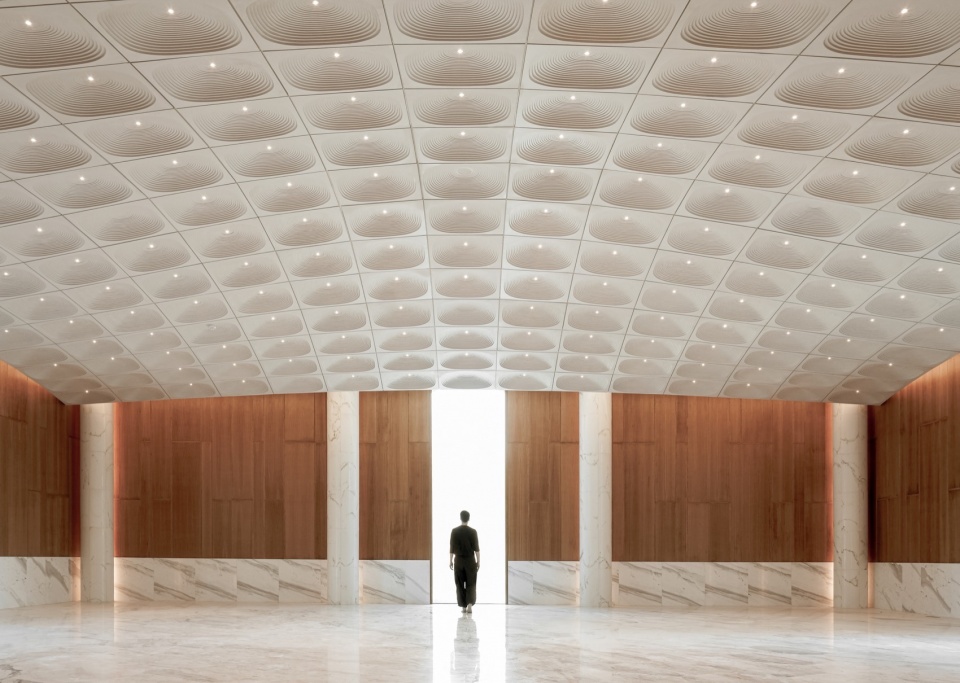
▼温馨宜人的环境,inviting and warm environment
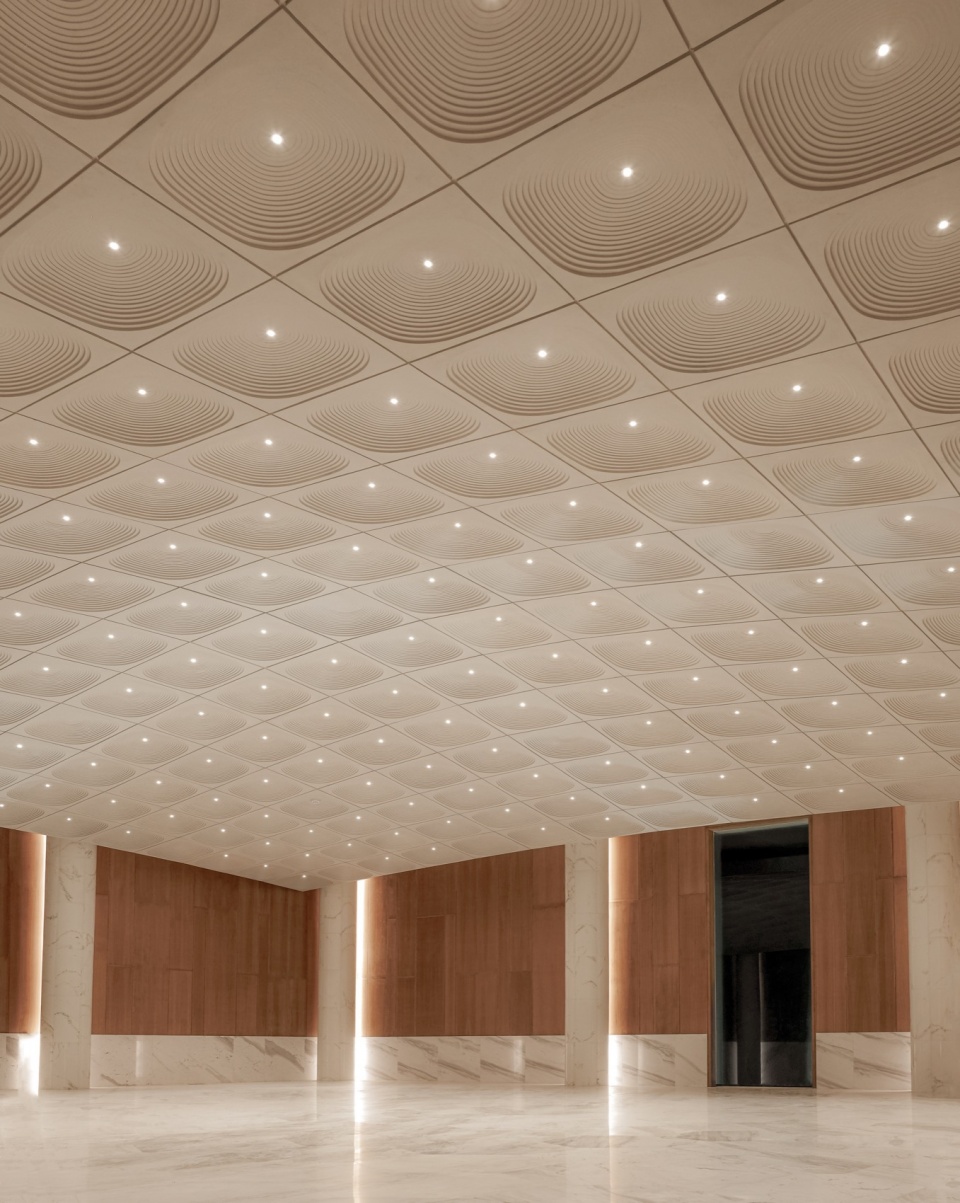
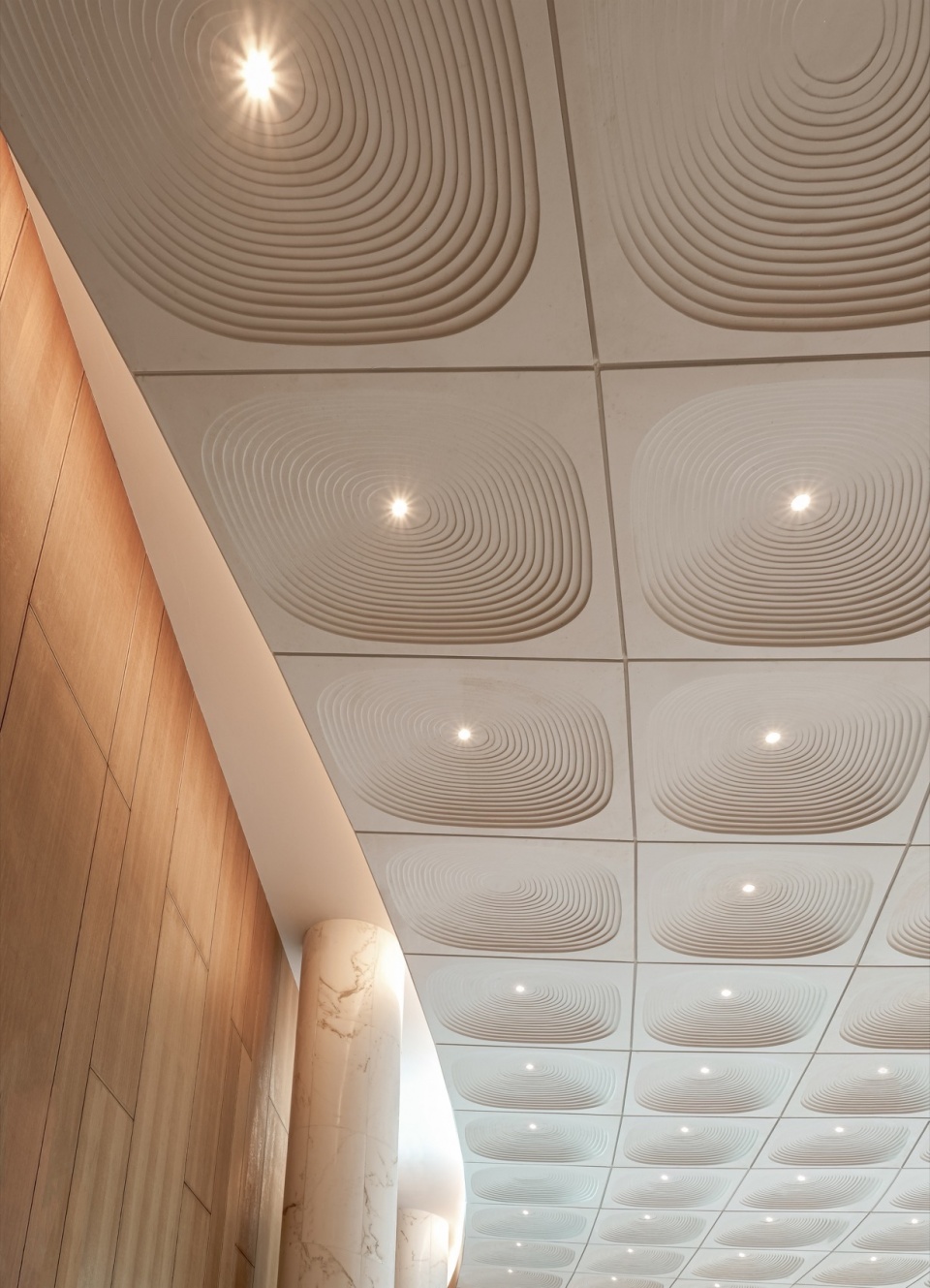
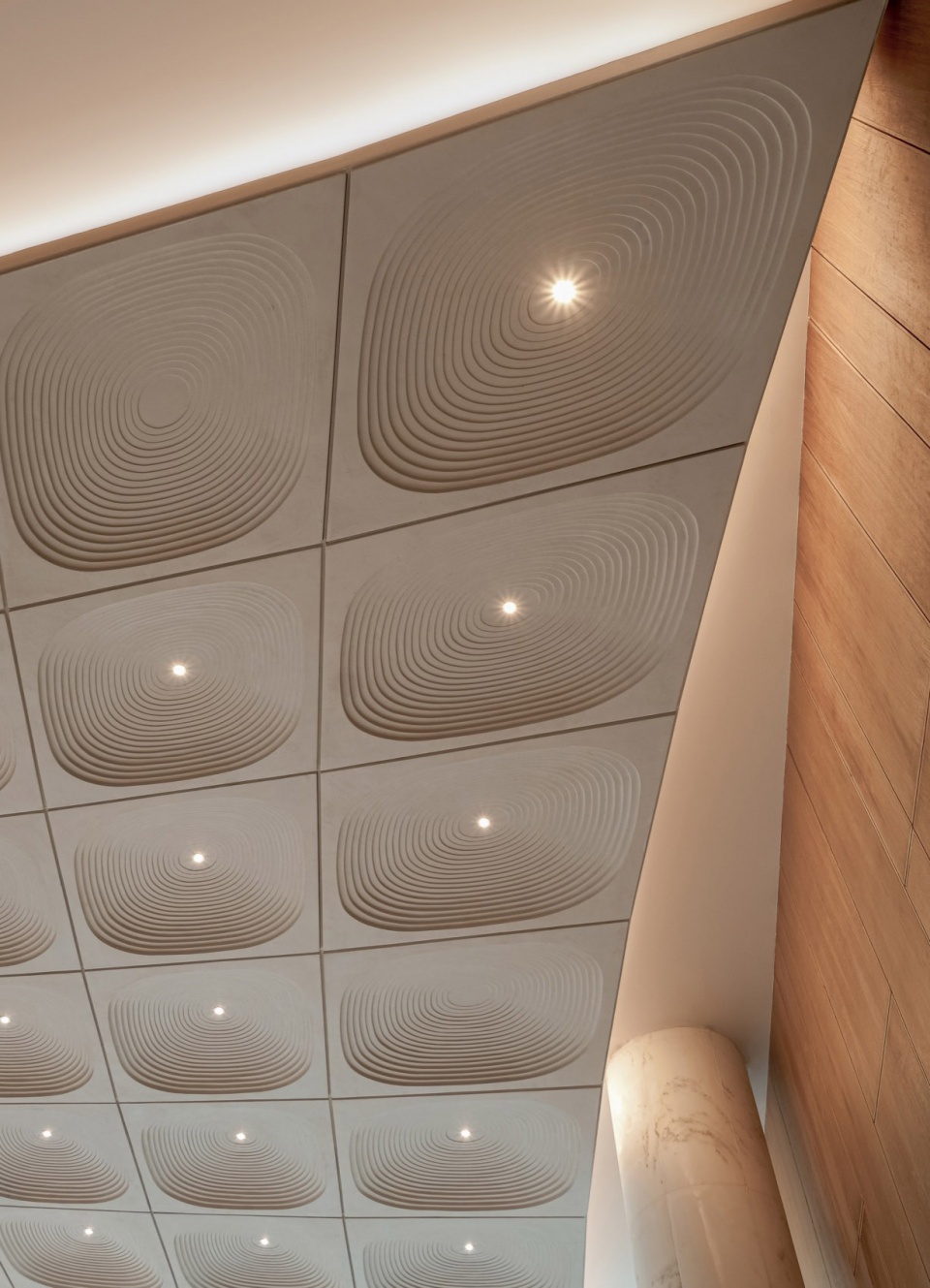
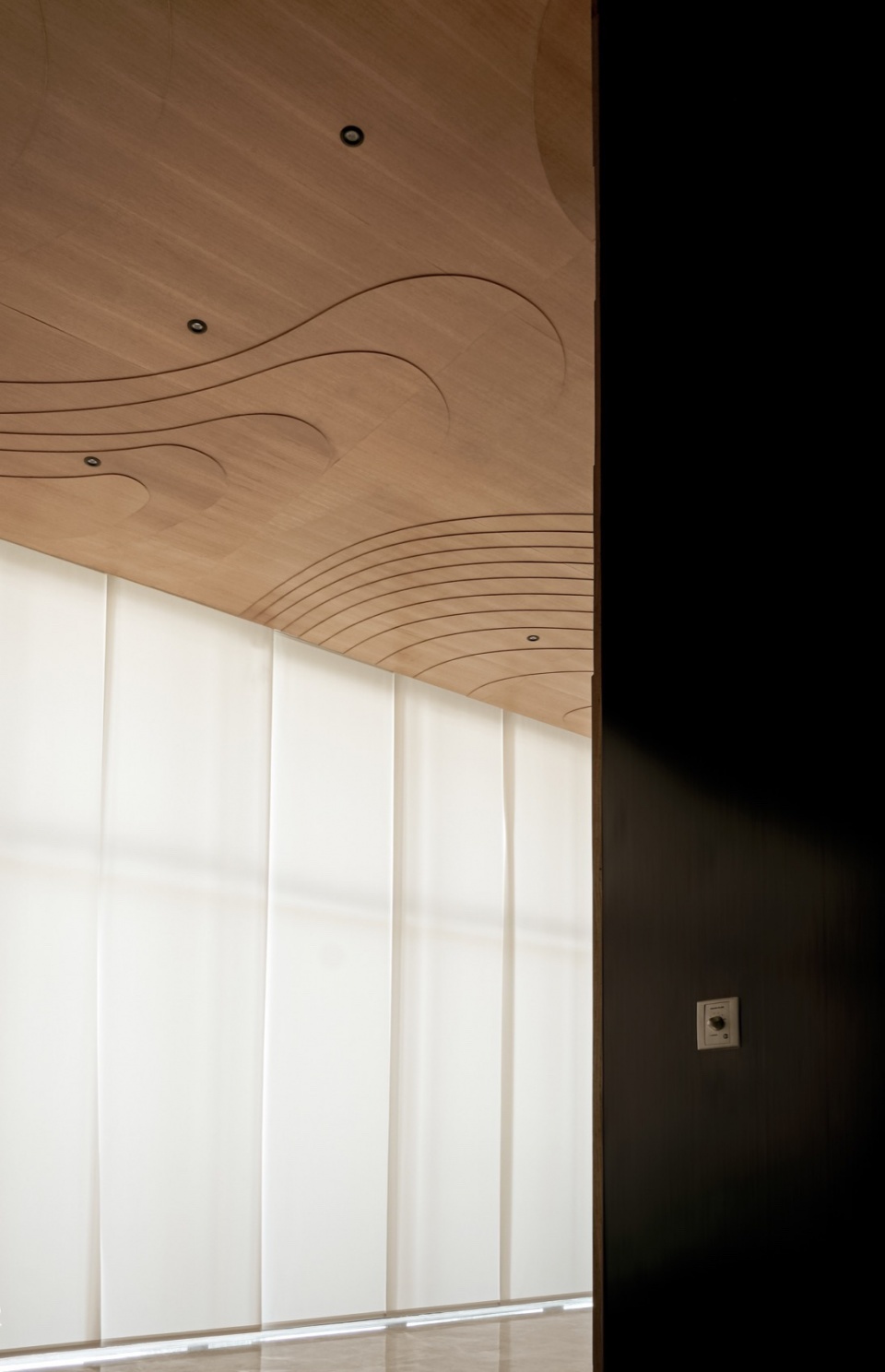
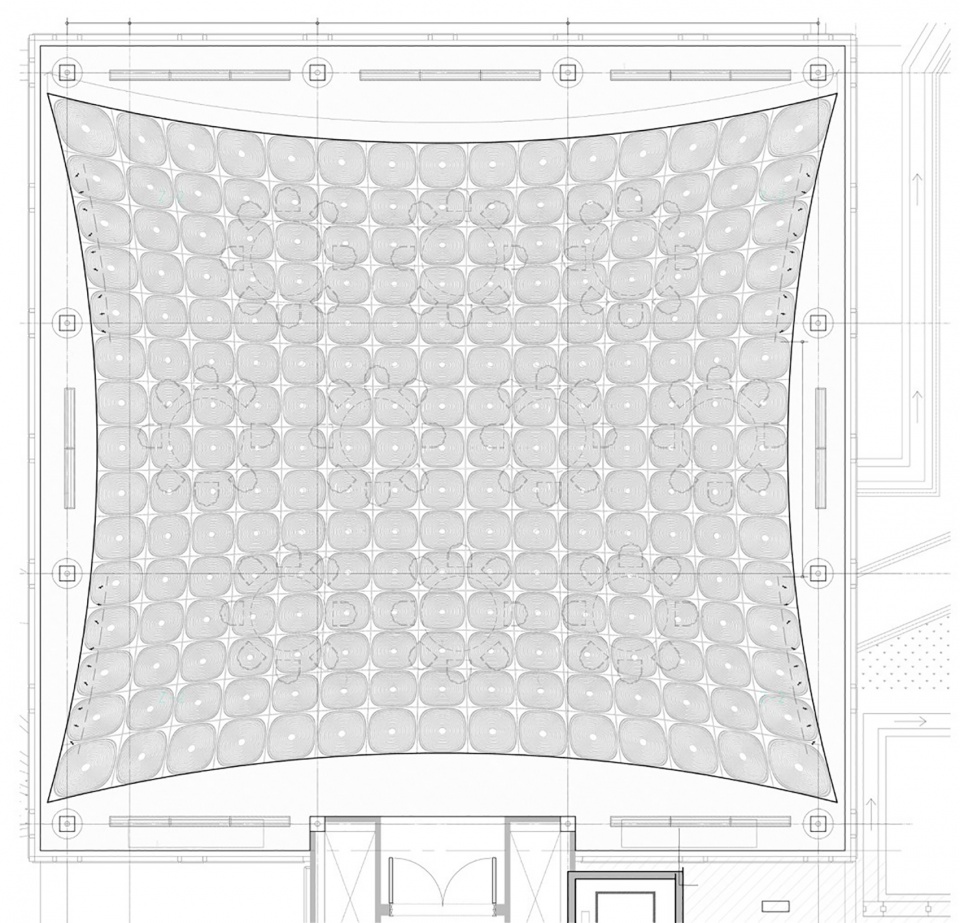
接待厅的吊顶设计尤为引人注目,以一系列同心波浪状的图案构成富有雕塑感的视觉焦点。这些面板由聚合材料雕刻而成,组合后形成具声学性能的三维表面。其律动感为天花板注入流动的张力,而模块的重复又保持了整体语言的统一。嵌入于凹槽中的照明系统强化了细节,营造柔和氛围,丰富了空间体验。
The ceiling design in the reception hall is conceived as a visually striking and crafted pattern of concentric, undulating forms that create a dynamic interplay of depth and texture. Each panel was carved from polymer in shapes that, when combined, form an acoustic-friendly, three-dimensional surface. The sculptural quality of the design adds a sense of movement to the ceiling, while the repetition of the modules ensures a harmonious and unified formal language. Integrated lighting, embedded within the recessed patterns, accentuates the detailing and provides a soft, ambient glow, enriching the spatial experience.
▼同心波浪状的图案构成富有雕塑感的视觉焦点,
the ceiling design in the reception hall is conceived as a visually striking and crafted pattern of concentric
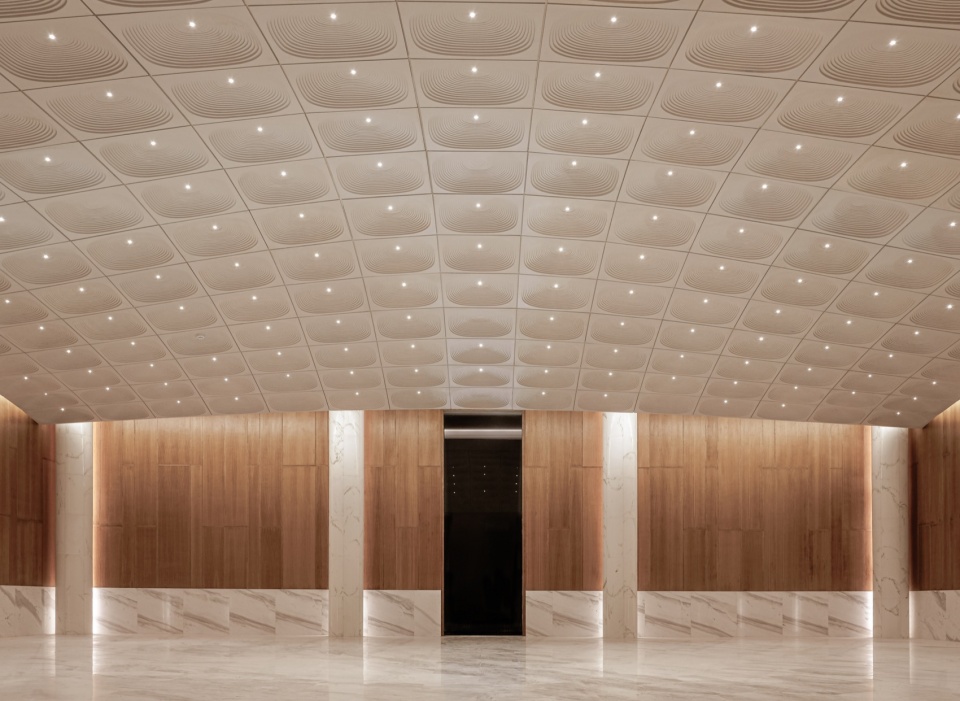
▼天花板细部,details of the ceiling
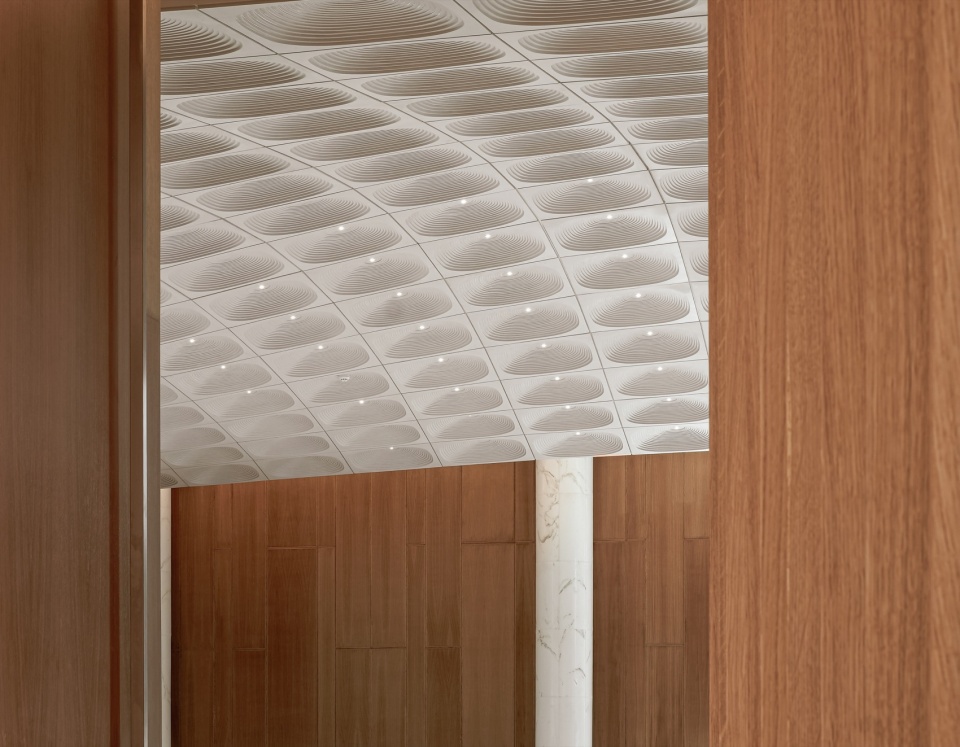
该项目打破了传统大使馆“堡垒式”政府建筑的刻板印象,转而拥抱开放性、流动性与交流性。室内空间并不以防御或威严为导向,而是通过材质语言与空间构成营造一种鼓励互动的氛围。其精致而层次丰富的图案与细节挑战了人们对大使馆“僵硬”“难以亲近”的既定观感。自然材质如木材与大理石的运用,以及柔和光线的渗透,使空间在确保安全的同时,也体现出温暖与待客之道。
This project redefines the perception of an embassy by moving beyond conventional, fortress-like governmental architecture and embracing more openness, fluidity and communication. Rather than creating an imposing or defensive structure, the interior aims to foster an atmosphere of engagement through its material palette and spatial composition. The design, with its intricate patterns, is layered and ever-evolving, challenging the notion that embassies must feel rigid or unapproachable. The integration of natural materials such as wood and marble, along with the soft diffusion of light, creates a welcoming environment that balances the necessary security measures with warmth and hospitality.
▼波浪型的木制饰面墙,wavy wooden decorative wall
▼细部,details
▼其它形式的天花板,ceiling with other pattern
这种设计方法也与文莱的国情产生共鸣——文莱素以传统、富饶和外交关系稳固而著称,近年来也逐步拓展其在接待与旅游领域的影响力。我们希望这座新大使馆不仅是一处外交前哨,更是市民价值观的象征。通过柔化形式与温度、安全与开放之间的界限,它重新定义了大使馆作为文化桥梁的角色。
This design approach resonates with Brunei, a nation that has for a long time been known for its heritage, prosperity and diplomatic ties, and in more recent times, increasing its outlook towards hospitality and tourism. Hopefully the new embassy can transcend its role as a diplomatic outpost and act as an ambassador of civic values with respect. By softening the boundaries between formality and warmth, security and openness, it reimagines the way an embassy can function as a cultural bridge.
▼与墙面结合在一起的储物空间,storage space integrated with the wall
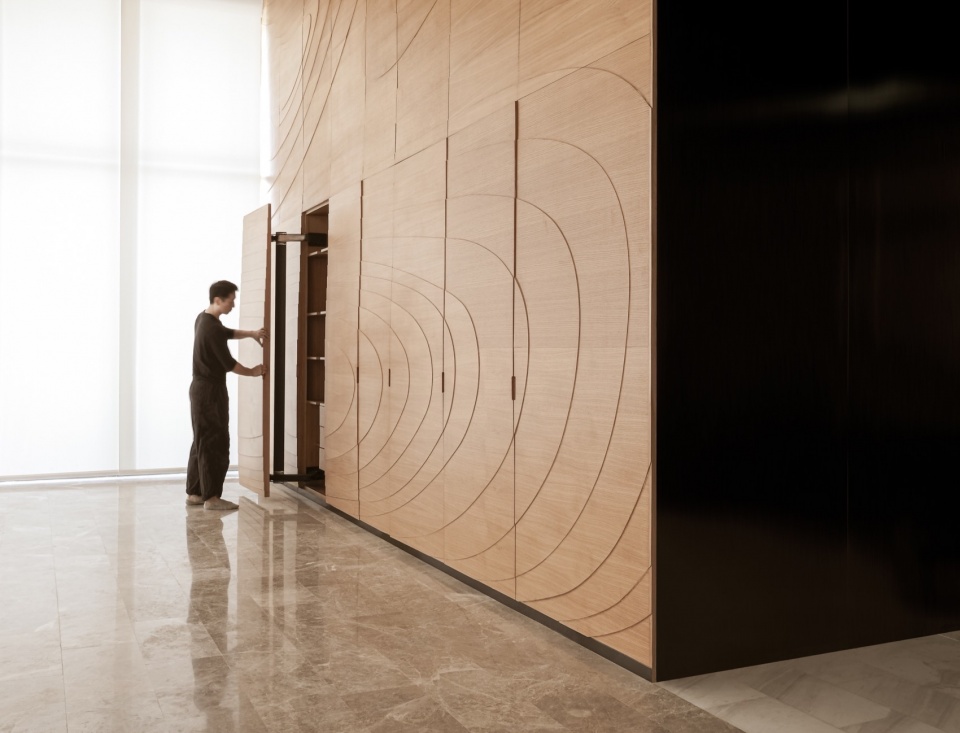
▼室内视角,interior view
我们期望,新的科威特驻文莱大使馆不仅是一个外交枢纽,也能成为对话的平台,成为文莱身份的友好表达。通过开放更多公共通达性,大使馆可使更多民众近距离观察外交实践,让国际关系变得更具可感性与包容性。随着大使馆逐渐拓展其传统职能之外的作用,我们希望本案能为未来外交建筑树立一个新的范式——通过设计让区域关系更加紧密,也让国与国之间的联系更具人文温度。
We hope the new Kuwait Embassy will function not only as a diplomatic hub but also as a platform for dialogue as well as a welcome expression of Brunei’s identity as well. By offering greater public access, the embassy could allow more people to observe diplomacy in action, making international relations feel more tangible and inclusive. As embassies increasingly take on roles beyond their traditional diplomatic functions, we think this project could set a precedent for how design can contribute to a more engaged approach to regional relations and fostering connections among nations.
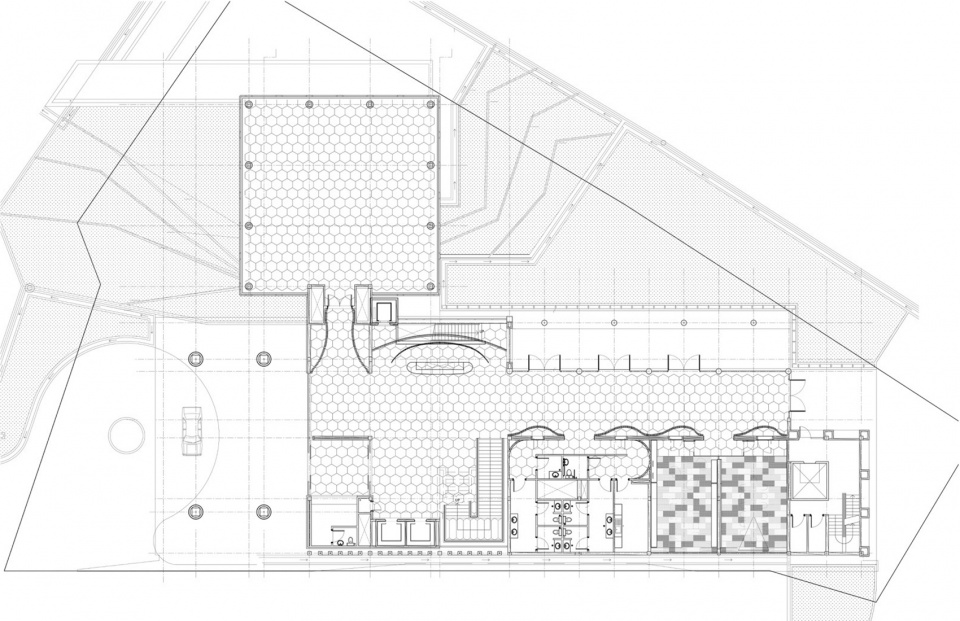
▼平面图,plan
▼接待厅天花板详图,ceiling plan of the reception hall
Project: Embassy of the State of Kuwait
Location: Bandar Seri Begawan, Brunei
Architect: Arkitek RekaJaya
Interior Architect: Architectkidd
Photography: Luke Yeung