第19届威尼斯建筑双年展 & “玻璃地图” / Barkow Leibinger
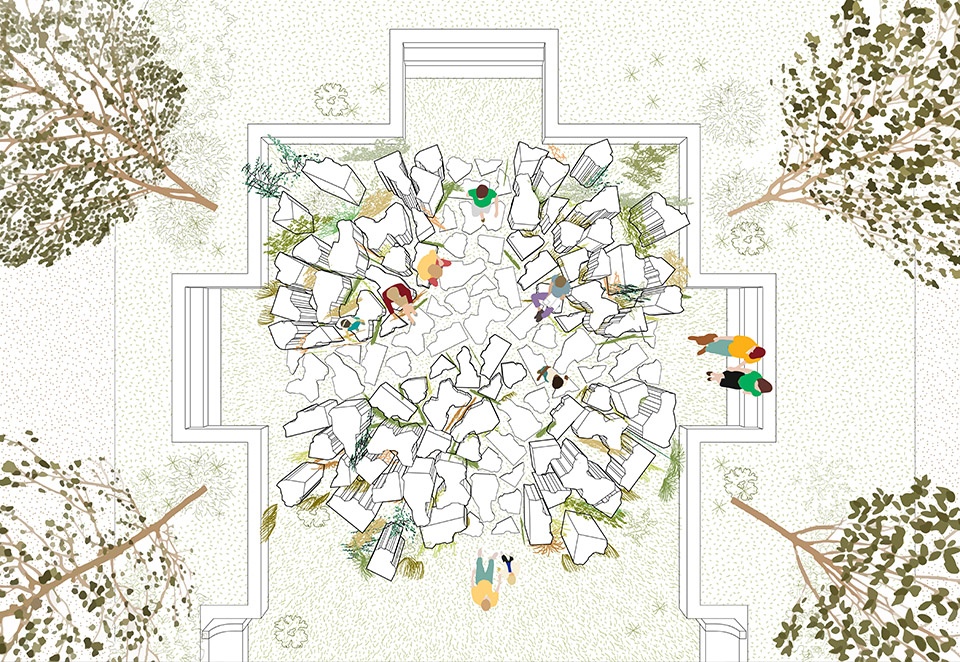
作为对第十九届威尼斯建筑双年展主题“智能:自然的、人工的、集体的(Intelligens: Naturale, Artificiale, Collectiva)”的回应,我们提出了一个“玻璃地图”的构想。威尼斯是一座由多个城市岛屿片段组成的群岛,它们共同构成了这座水上之城。我们将这种集体性转化为一个抽象的地形模型,呈现出不同密度、形状与尺度的组合。这一三维地图将被“特定场地化”地安置在位于Giardini内奥地利馆旁的“Vasca”(下沉花园)中,它既是一片自指性的景观,也是一种指向场地之外城市的参照。
As a response to the 19th Venice Architectural Biennale’s title, “Intelligens: Naturale, Artificiale, Collectiva”, we propose a map of glass. Venice is an archipelago of urban island fragments which collectively form this city on water. This collective is rescaled as an abstracted topographical model of incremental densities, shapes and sizes. This three-dimensional map is re-sited (site specifically) into the “Vasca” (sunken garden) adjacent to the Austrian Pavilion in the Giardini. It is both a self-referential landscape as well as a reference to the city beyond the site.
▼项目鸟瞰,aerial view of the project
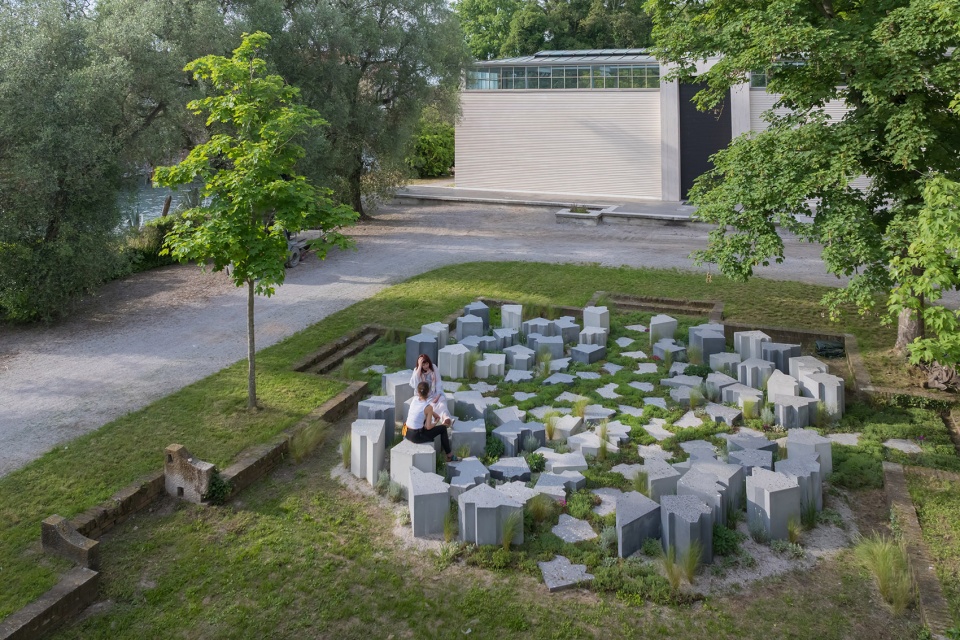
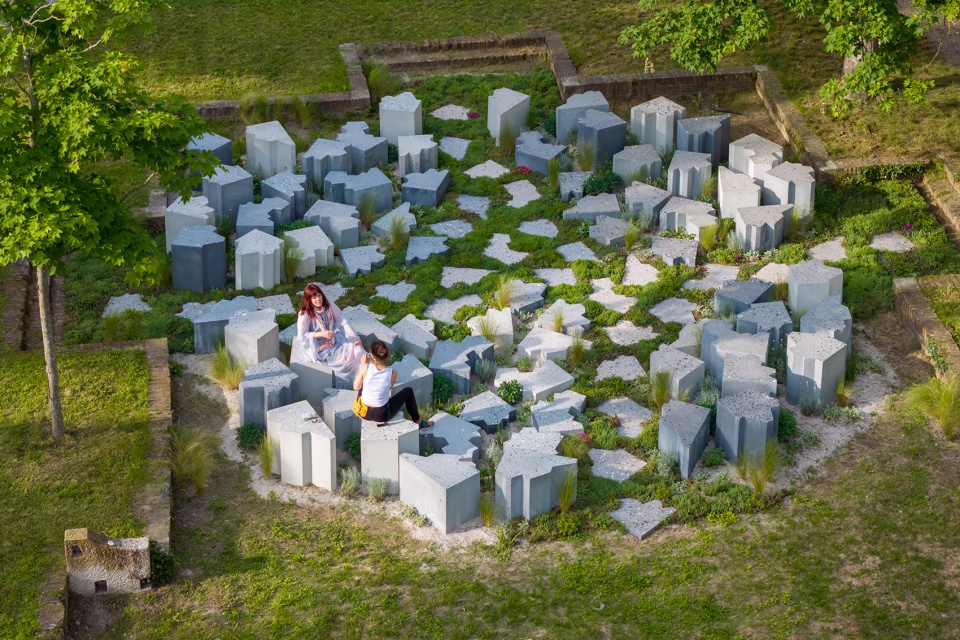
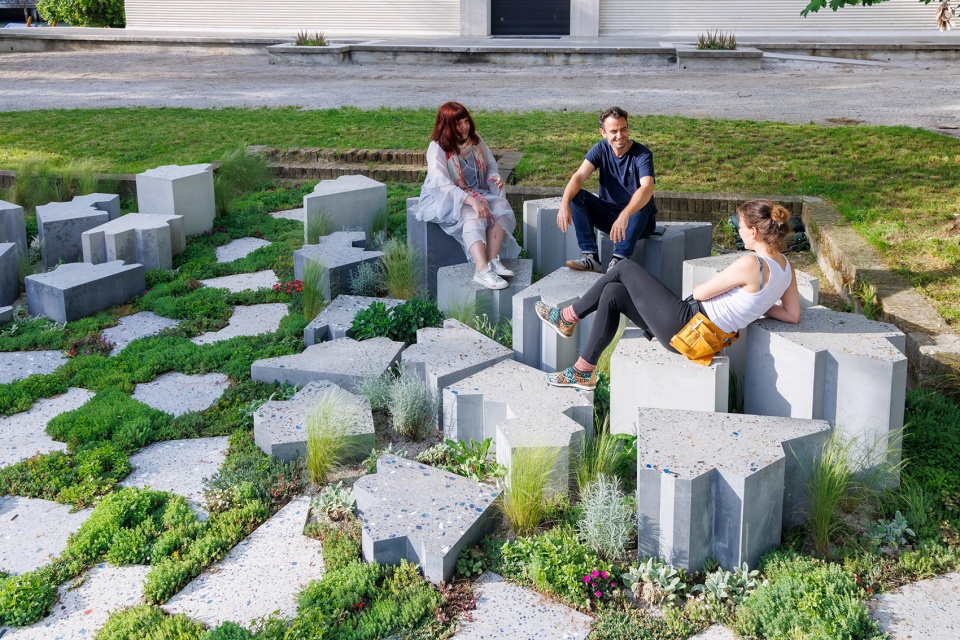
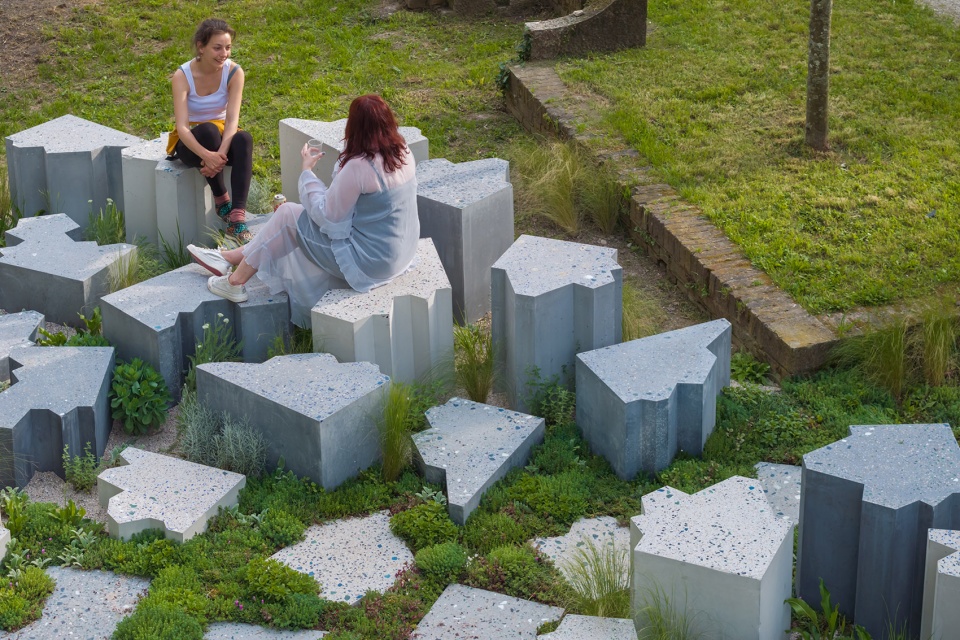
威尼斯首先是一种空间建构,因此我们希望通过这一重缩比例的介入,使城市内部的空间关系变得更具可视性与互联性,正如地图所擅长表达的那样。以微缩方式再现城市,使我们能够以整体视角感知威尼斯这一复杂却可被理解的总体结构——通过其组成部分的汇聚。在其自身形式上,玻璃地图也是一种可供休憩、游玩与放松的装置型“家具景观”,由不同尺度与高度的物体构成,形成可被漫步、坐卧、倚靠的体验式地形。它既是一条路径,也是一处目的地。
▼由地图演变而来的体块,blocks evolved from maps
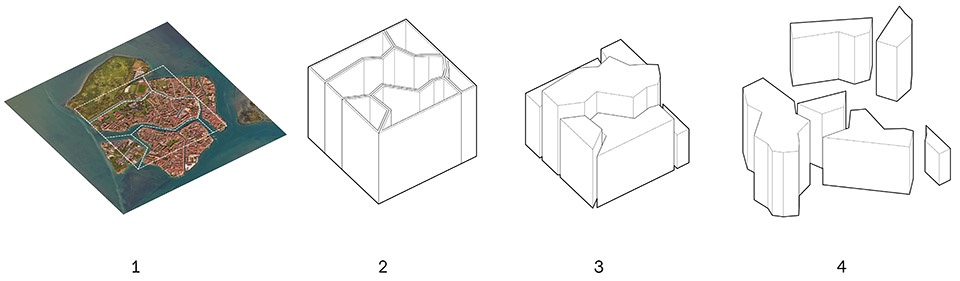
Venice is, first and foremost, a spatial construct, and this re-scaling is intended to make those relationships visible in a more comprehensive and interconnected way, as maps do. Reproduction as a miniature offers a gestalt view of the city as a complex and yet comprehensible entity, through the sum of its parts. As a thing in of itself the map of glass offers a sense of both play, leisure, and rest as a furniture/ installation-scaled landscape of objects of various sizes and heights. One that re-constitutes a map of Venice as an experiential topography which can be walked through, sat on, stood on or laid against. It is meant to be both a path and a destination.
▼可供休憩、游玩与放松的装置型“家具景观”,a sense of both play, leisure, and rest as a furniture/ installation-scaled landscape
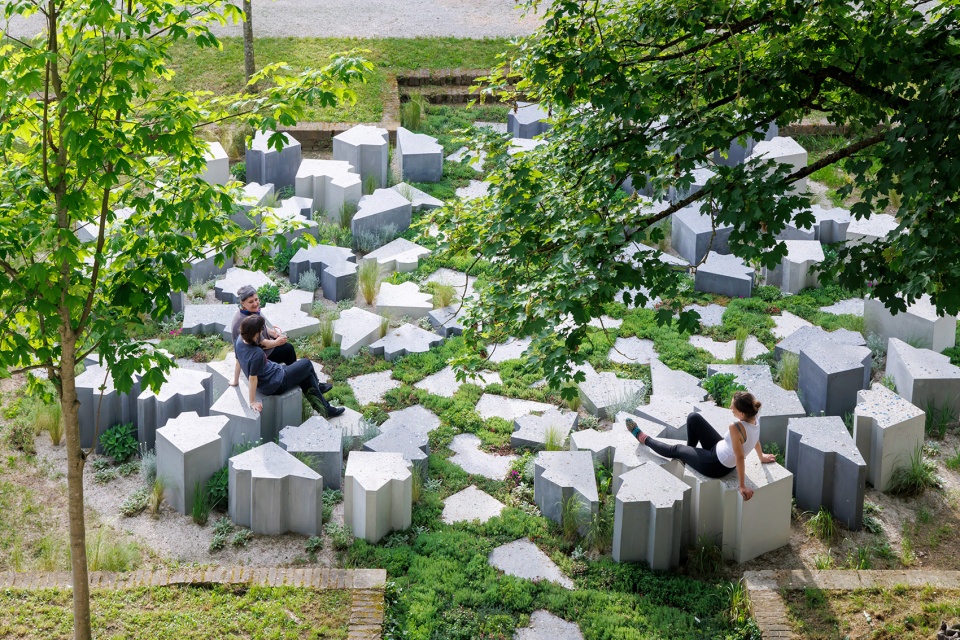
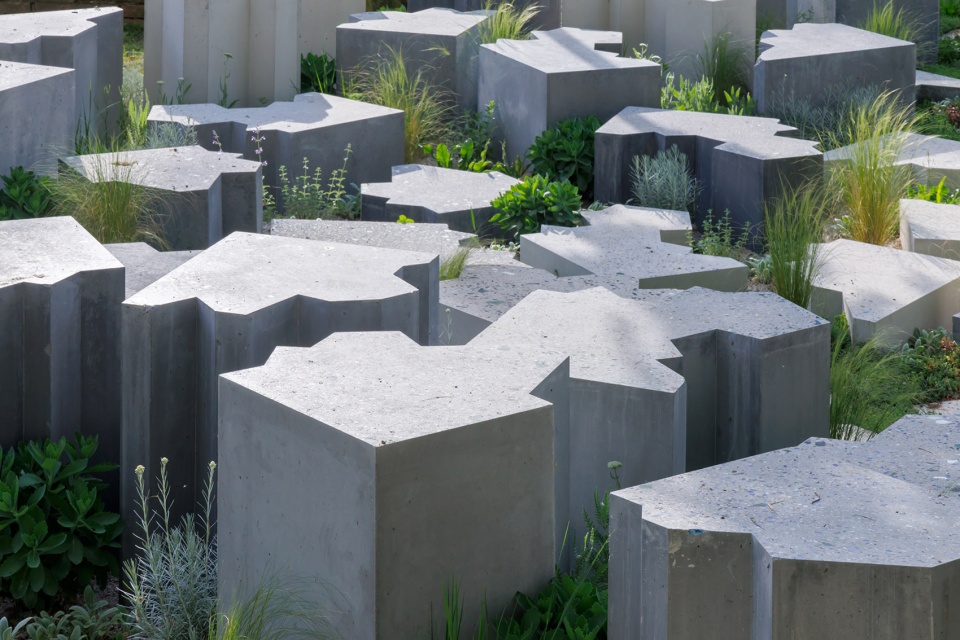
置于这片下沉花园中,玻璃地图的构件被限定并框定于这个空间之内。我们将在花园的缝隙之间种植本地植物,而在作为“垫脚石”的预制砖之间,则种植地被植物(如佛甲草)。
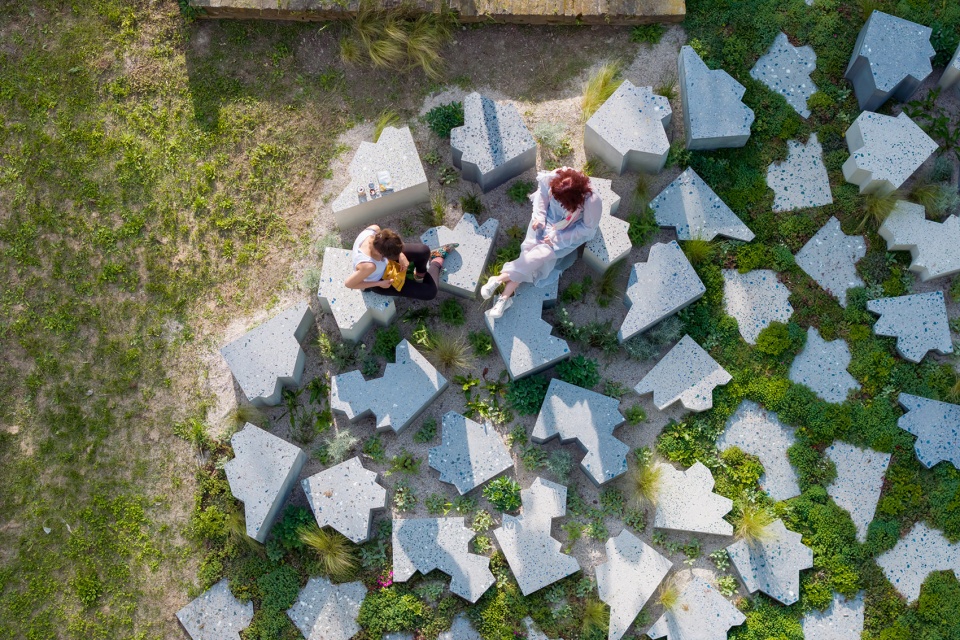
Situated in this sunken garden the blocks are contained and framed within this space. Indigenous plants are placed between the nooks and crannies of the garden while a ground cover (sedum) is planted between the pavers which act as stepping stones.
▼在花园的缝隙之间种植本地植物,indigenous plants are placed between the nooks and crannies of the garden
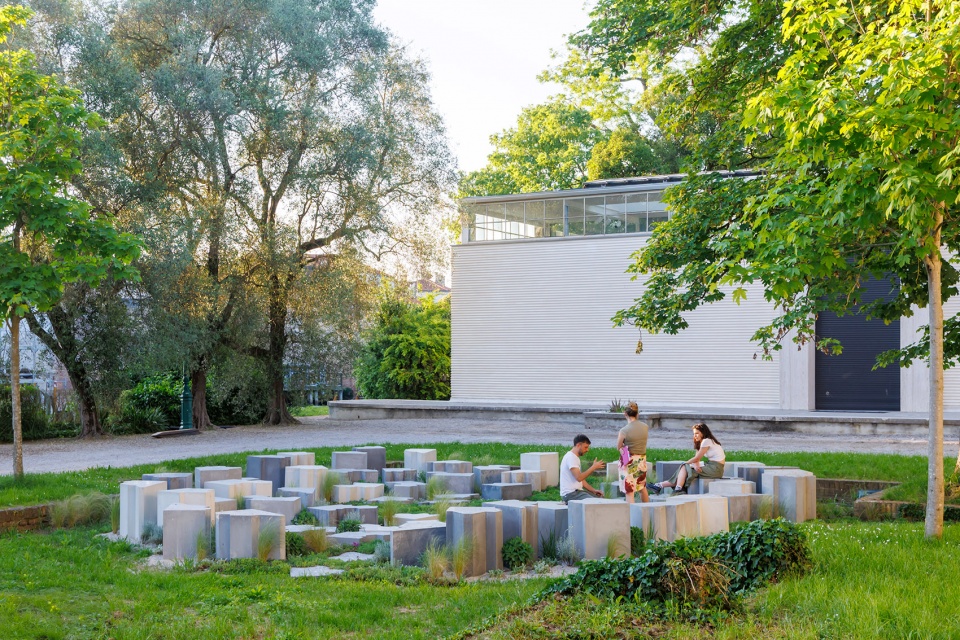
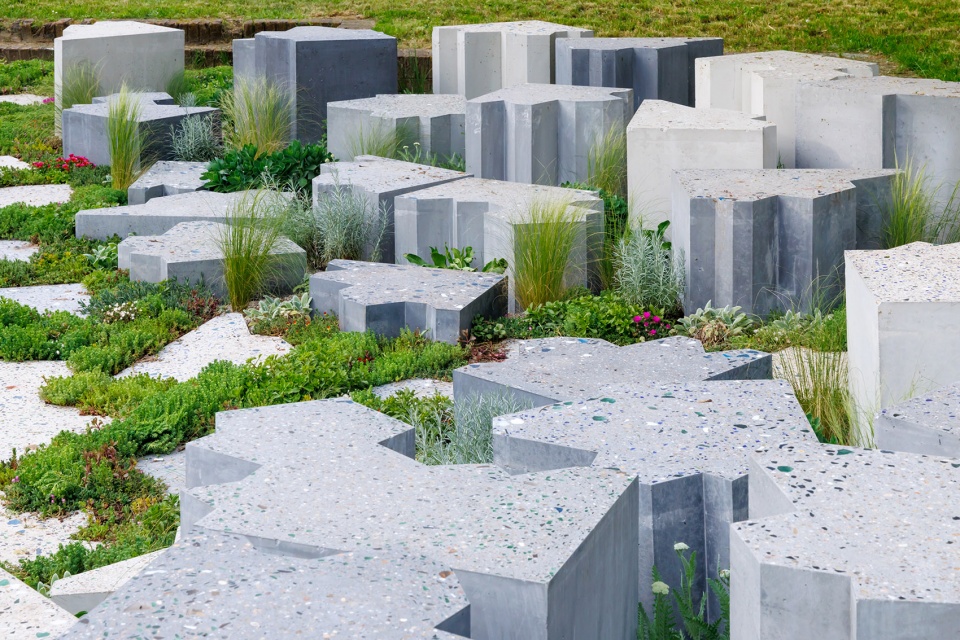
“玻璃地图”的名称也揭示了其材料构成。作为对穆拉诺岛上玻璃工匠与制造者的致敬,这些工匠至今仍在不断生产玻璃制品的同时,也产生了大量废弃玻璃。我们拟将这些废玻璃重新利用,将其与生物基水泥混合,制成类似水磨石的混凝土块体。这种液态材料被倒入木制模具中,待其干燥成型,再脱模获得独一无二的构件。在每一块体块的表面经打磨和抛光后,玻璃碎片便如水磨石般显露出来。
The Map of Glass refers to its material constitution. As glass blowers and fabricators at the island of Murano, and over time, continue to produce both glass objects and glass waste from their processes we intend to repurpose the waste glass as an aggregate bound with a bio-based cement to create terrazzo-like blocks. Once mixed this liquid cement (building material) can be poured into plywood forms, left to dry, then released to produce unique building blocks. The glass fragments are revealed when the material is ground and sanded on top of each object (like terrazzo).
▼利用回收玻璃与生物基水泥混合制成,the waste glass as an aggregate bound with a bio-based cement
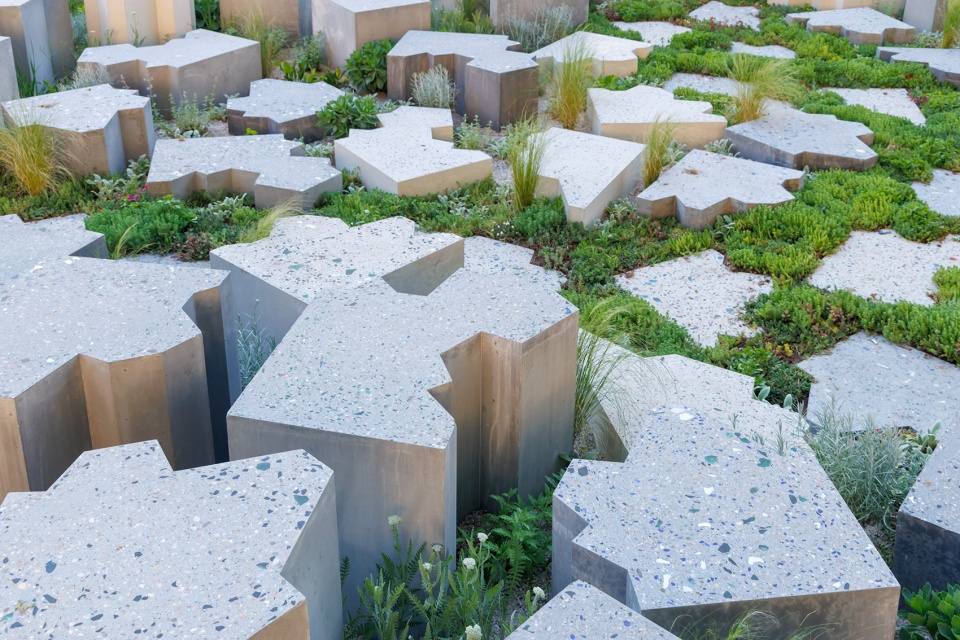
“玻璃地图”一方面通过可缩放的地形再现威尼斯的城市结构,另一方面也用城市自身的物质废弃物建构其形体。它证明了废弃材料可以被转化为有目的且美丽的存在。整个过程包括:收集合适材料、准备浇筑模具、脱模干燥、表面打磨、并最终在双年展期间将构件安置于展场之中。
The Map of Glass both depicts Venice as a re-scalable cartography while being constituted by its material waste. It is also a demonstration that waste can be reconstituted in purposeful and beautiful ways. The process includes collecting the appropriate materials, preparing the formworks for casting, releasing, and drying, sanding to finish, then situating the elements on site for the duration of the Biennale.
▼通过可缩放的地形再现威尼斯的城市结构,depicts Venice as a re-scalable cartography while being constituted
在展览结束后,这一地图可以被拆解:每一块构件都可以被回收、再利用,或单独或组合出售。
At the end of the Biennale the map can be disassembled: the individual pieces can be recycled or sold singularly or in groups.
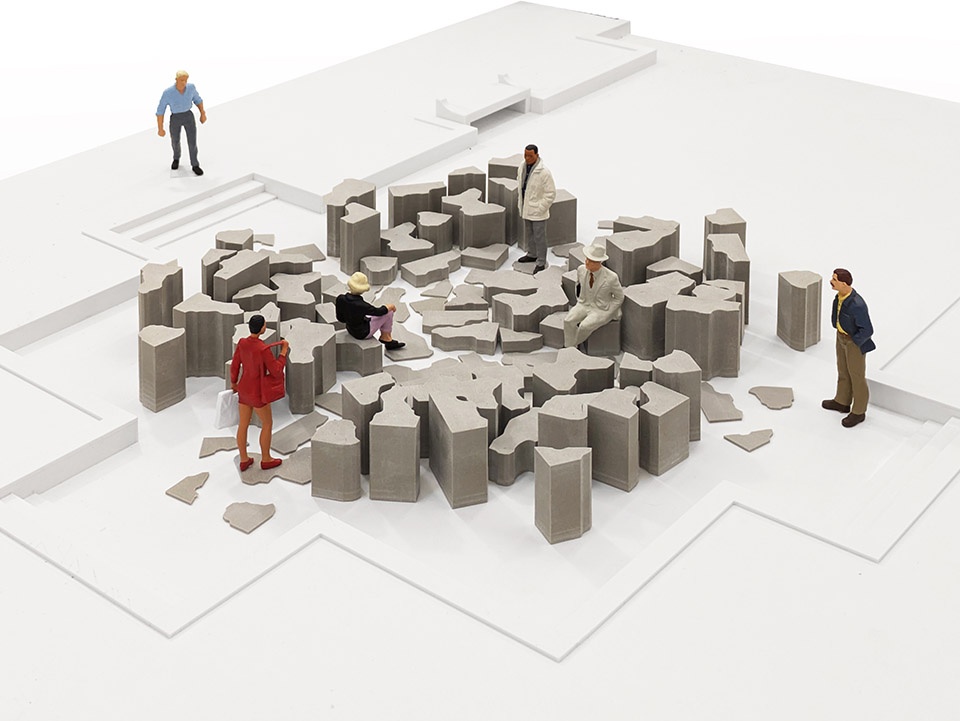
▼模型,model
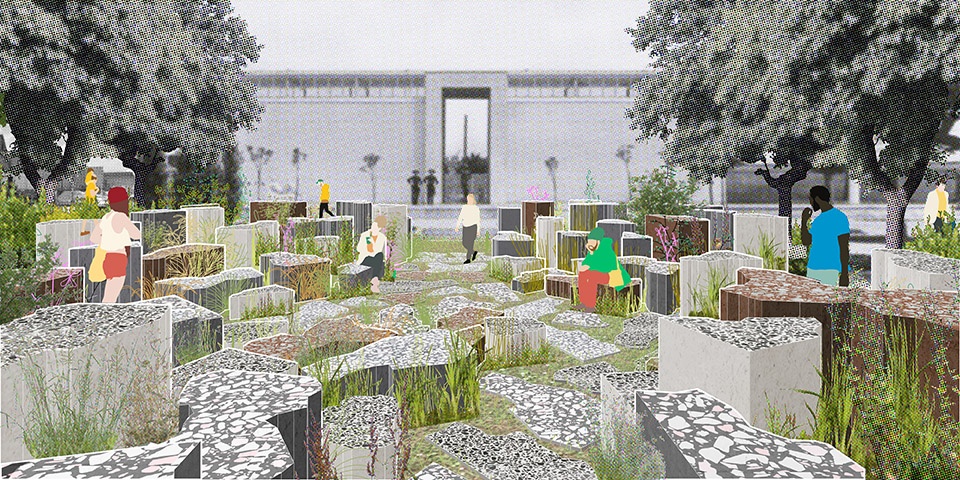
▼概念拼贴,concept collage
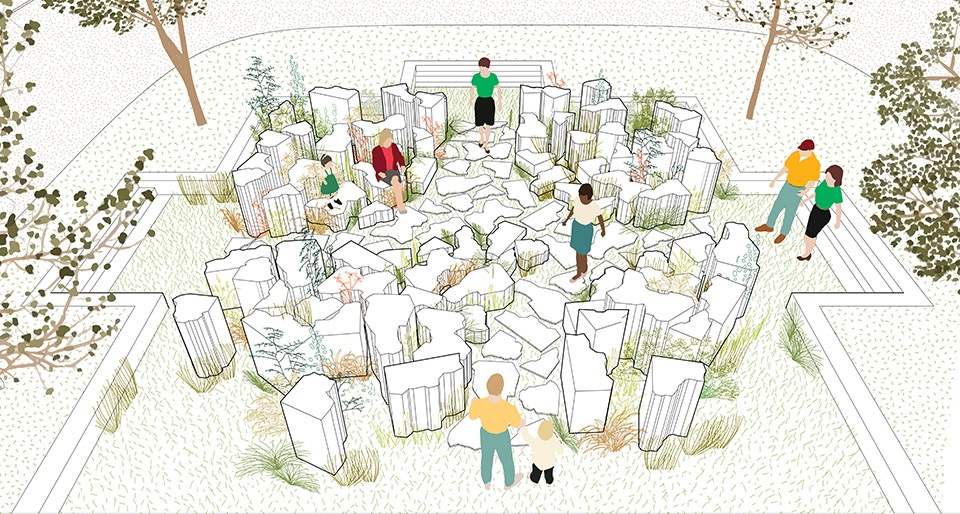
▼概念鸟瞰,concept aerial view
▼概念平面图,concept plan
Location: Venice, Italy
Production: 05/2025
Exhibition: May 10th, 2023 until November 23rd, 2025
Program: Installation
Architects: Barkow Leibinger Schillerstraße 94 10625 Berlin, Deutschland http://www.barkowleibinger.com
Landscape: capattistaubach Mariannenplatz 23 10997 Berlin, Deutschland http://www.capattistaubach.de
Team Barkow Leibinger: Frank Barkow, Regine Leibinger, Jan Blifernez, Andreas Moling, Adin Rimland, Francesca Robustelli
Team capattistaubach: Tancredi Capatti, Matthias Staubach, Mattia Mazzotta
Supporters BNB – Beton und Naturstein Babelsberg Buro Happold
Photos: Iwan Baan, Amsterdam
Drawings: Barkow Leibinger, Berlin, Germany
Press Contact: pr@barkowleibinger.com