Patchwork装置,法国 / Atelier YokYok
Patchwork是Atelier YokYok创作的一件场地特定性临时装置艺术,由Line Up Urban Art策展,作为“Aux bords des paysages”艺术节的一部分,于2025年6月至10月期间在埃罗省Grand Pic Saint Loup地区的多个市镇举办。
Patchwork is a site-specific ephemeral installation by Atelier YokYok, curated by Line Up Urban Art for the event «Aux bords des paysages», organized by the municipalities of Grand Pic Saint Loup in Hérault, between June and October 2025.
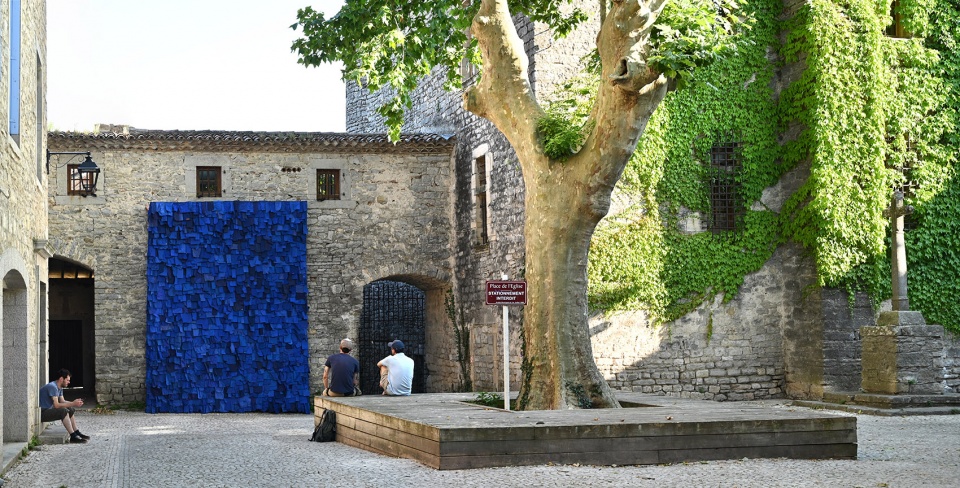
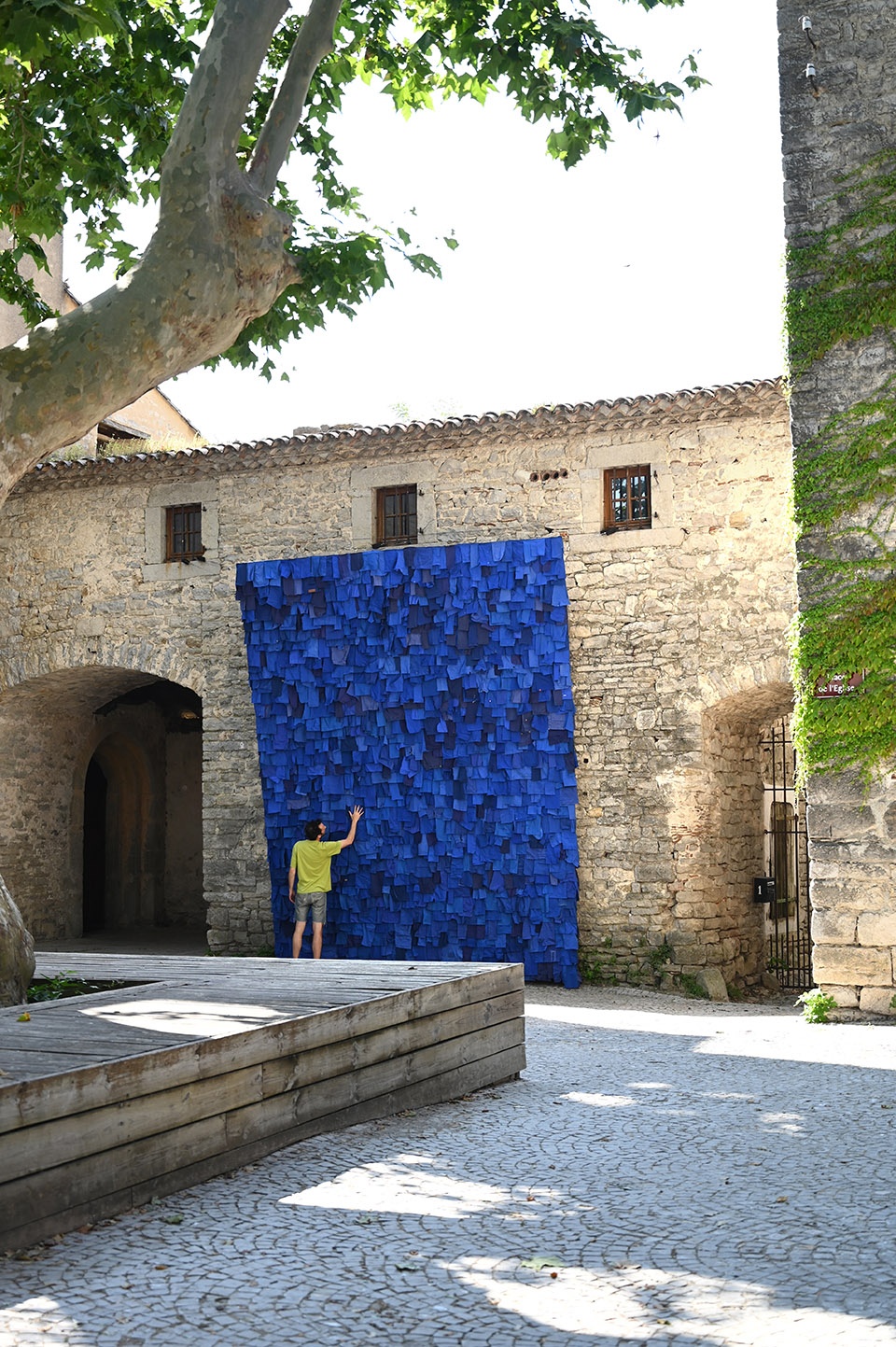
▼装置概览,overview of the installation
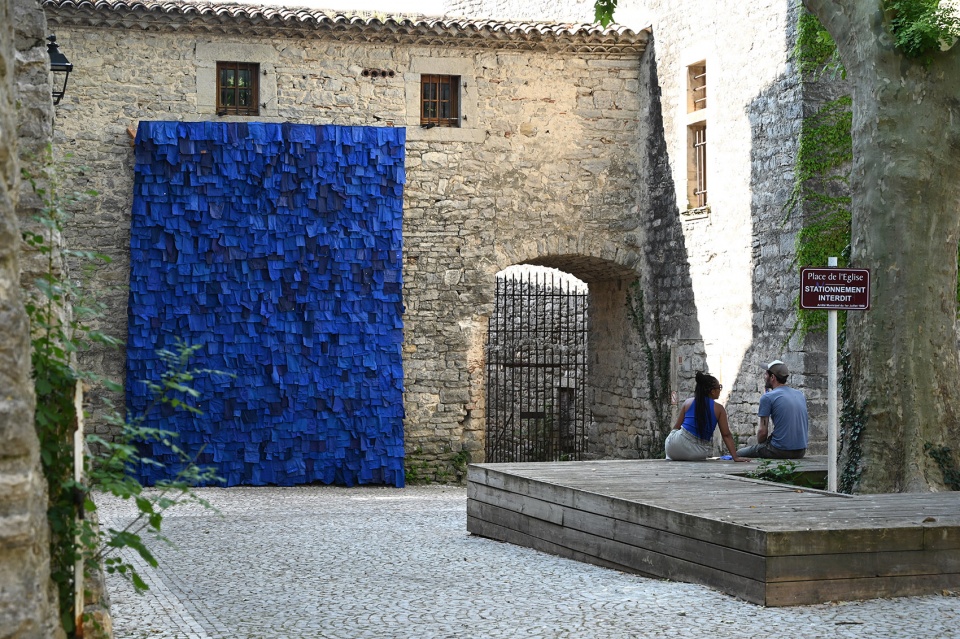
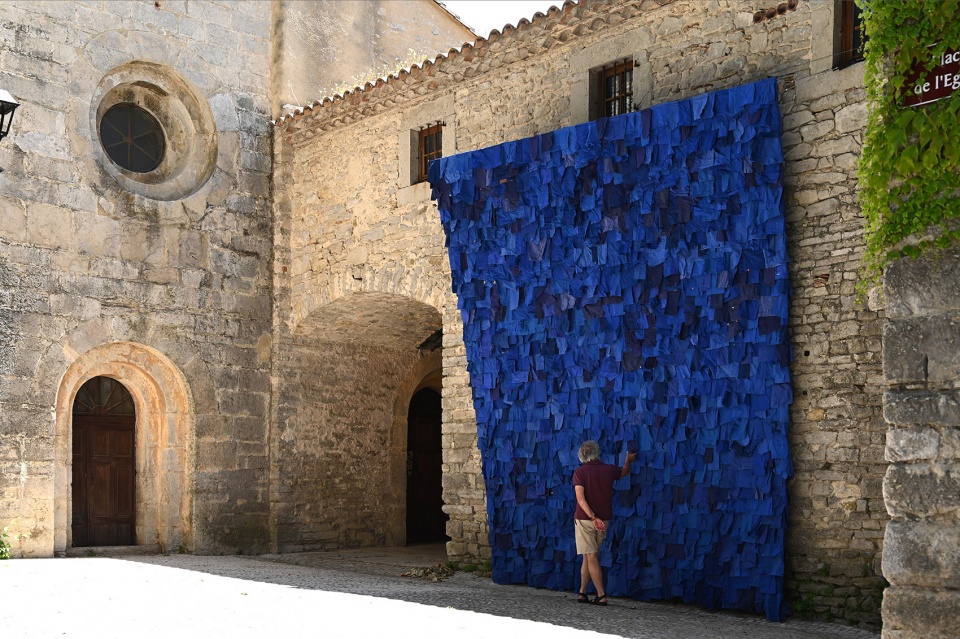
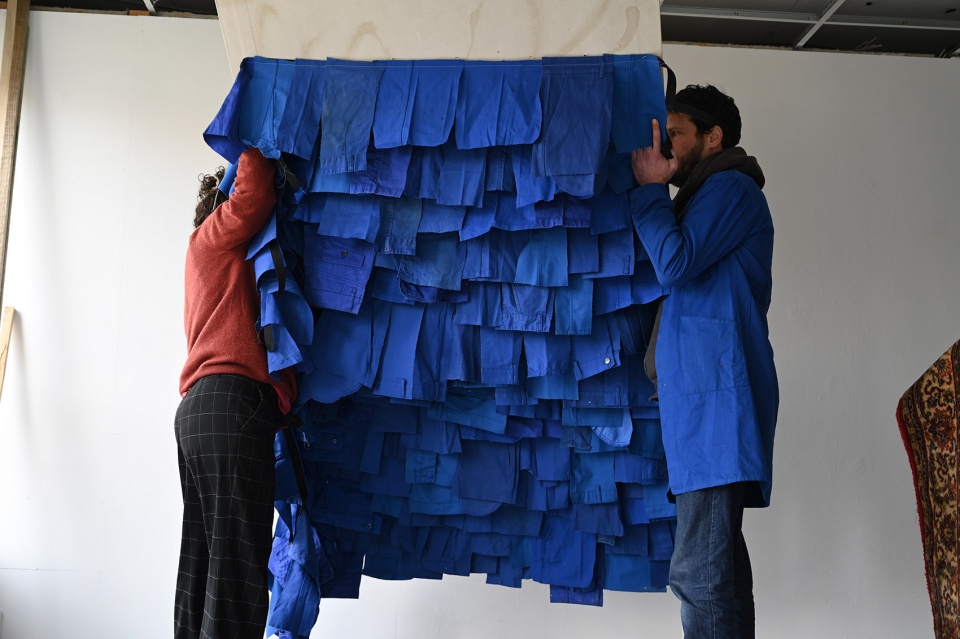
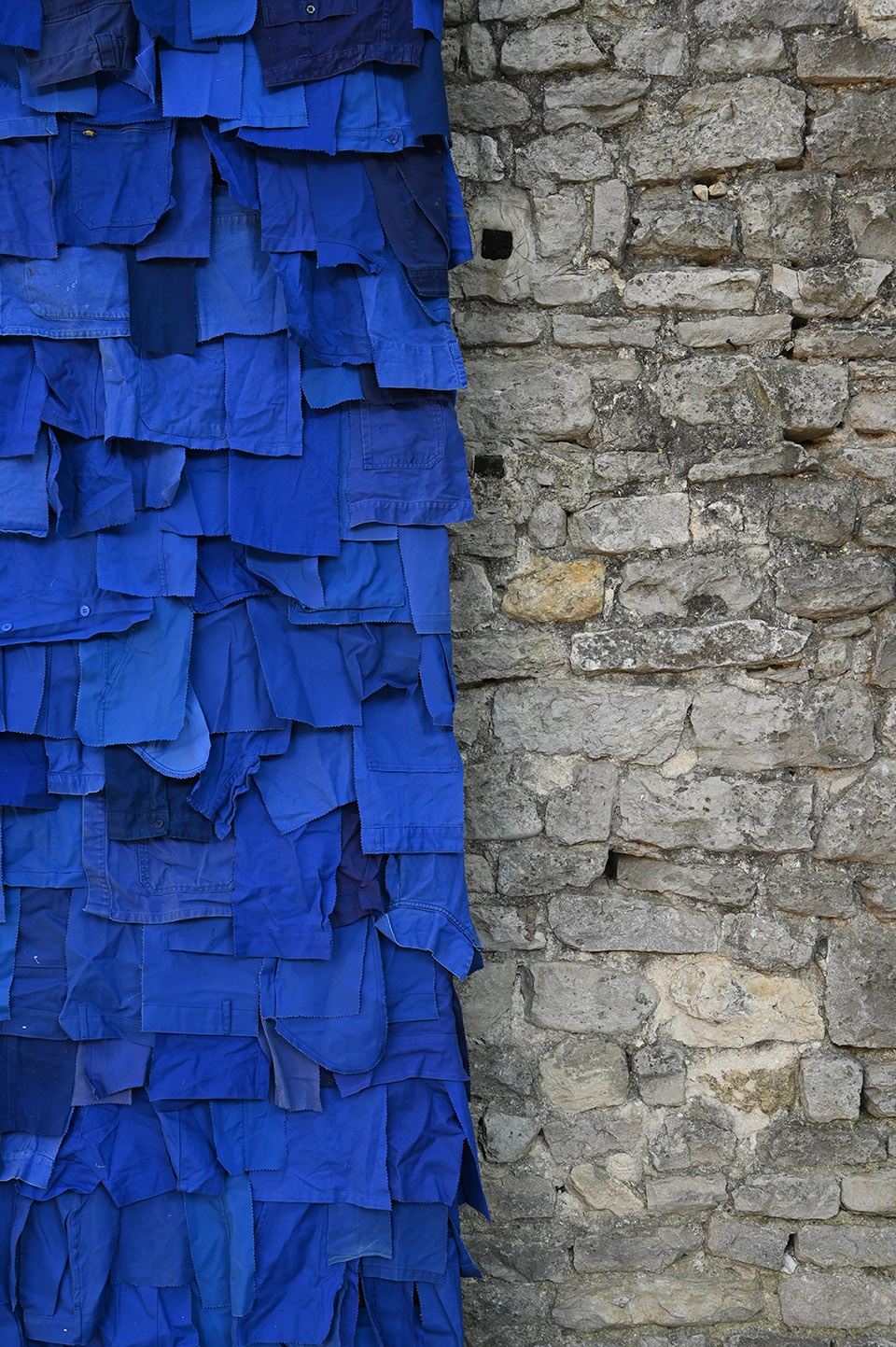
▼回收服饰面料的再生转化,the transformation of reclaimed garment fabrics
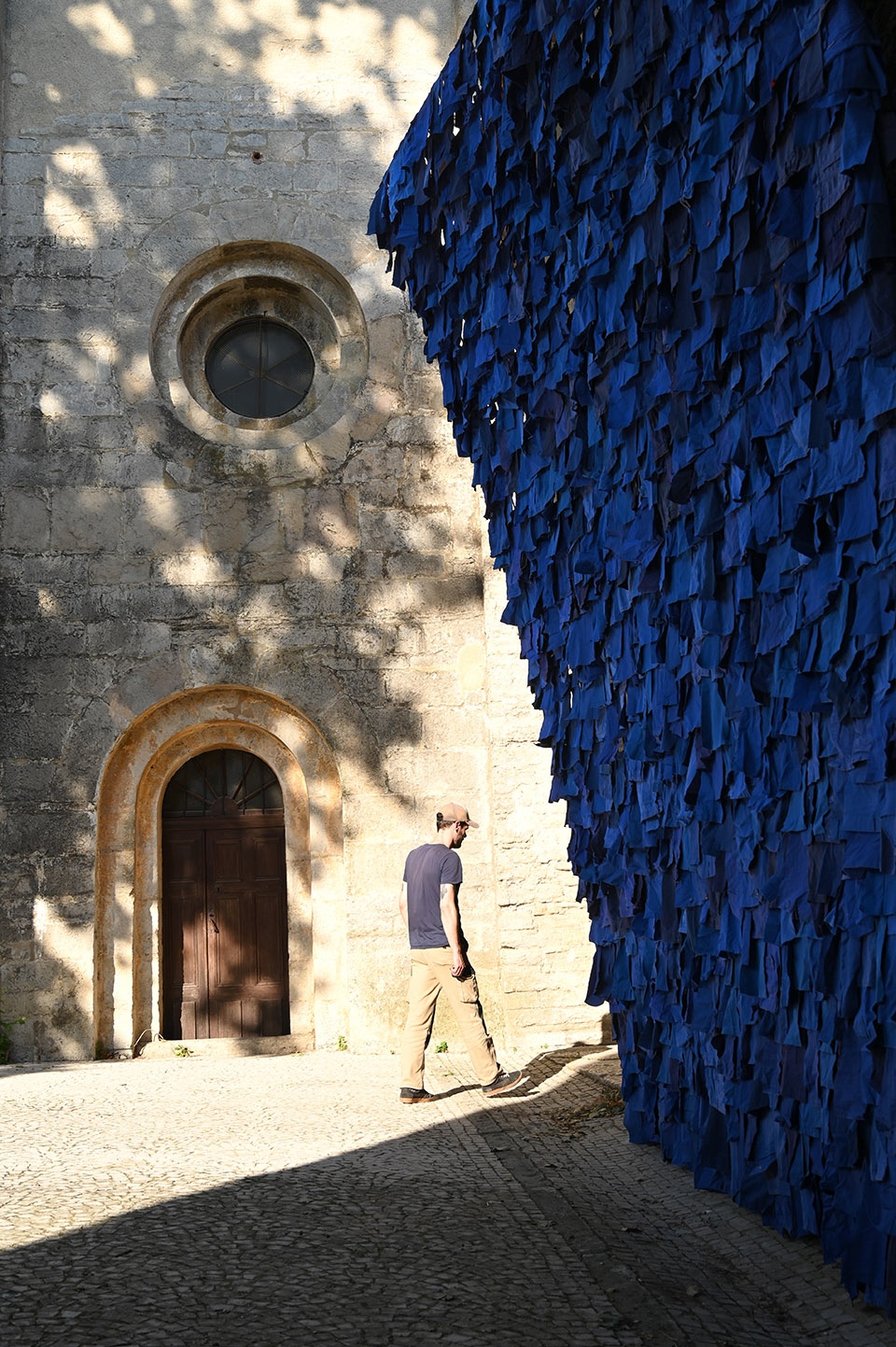
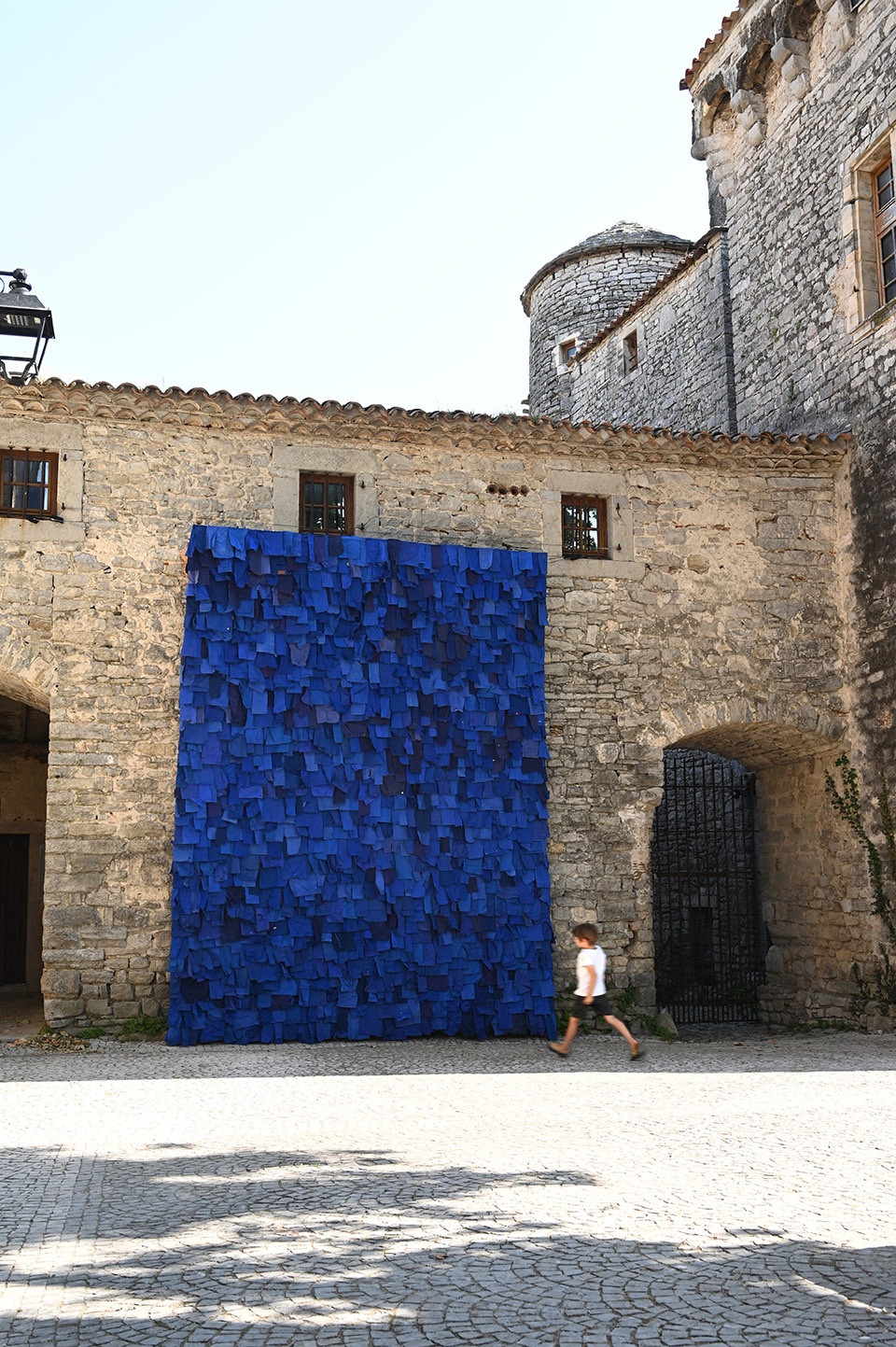
▼磨损的“工装蓝”,the worn “bleu de travail”
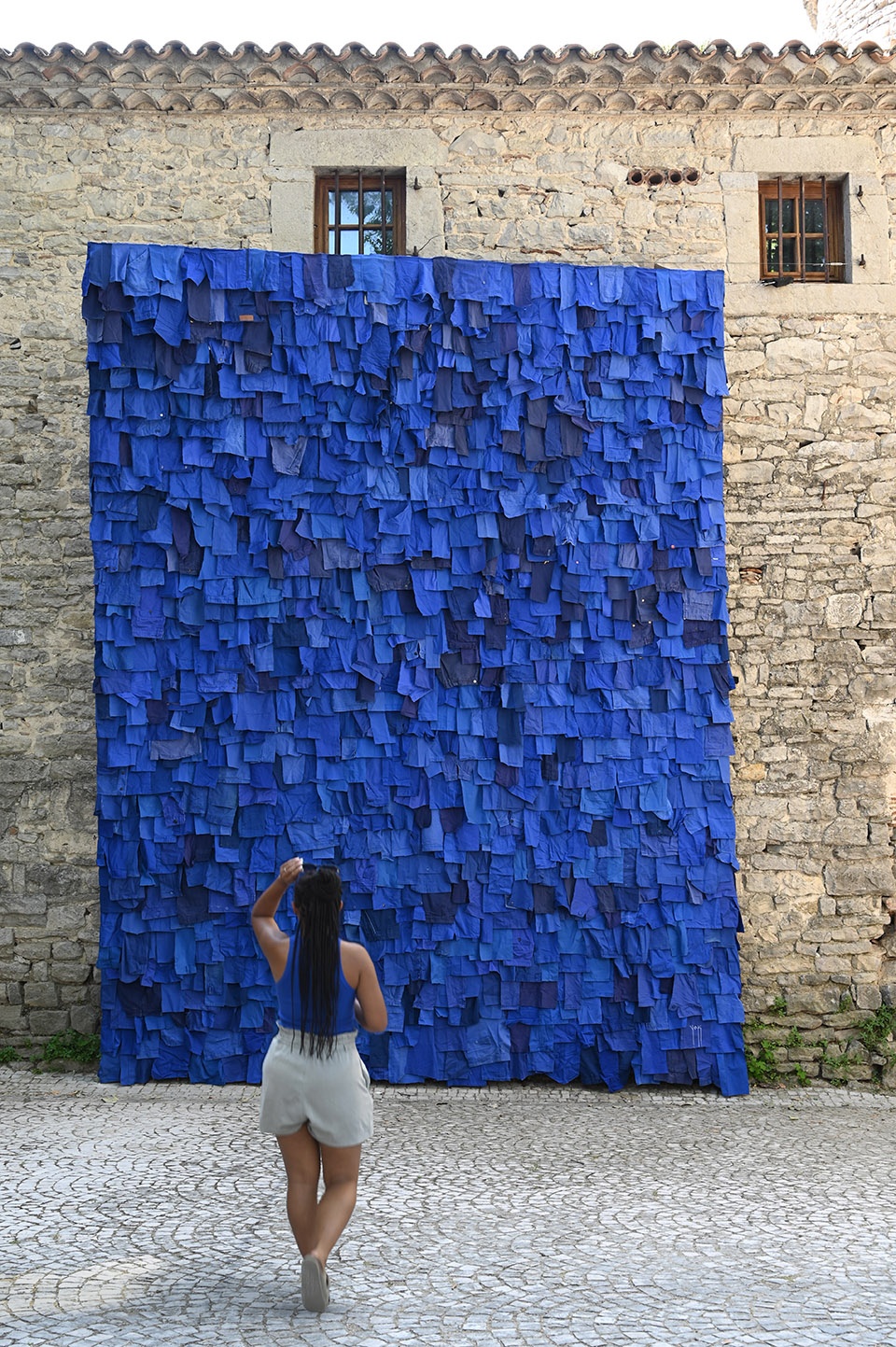
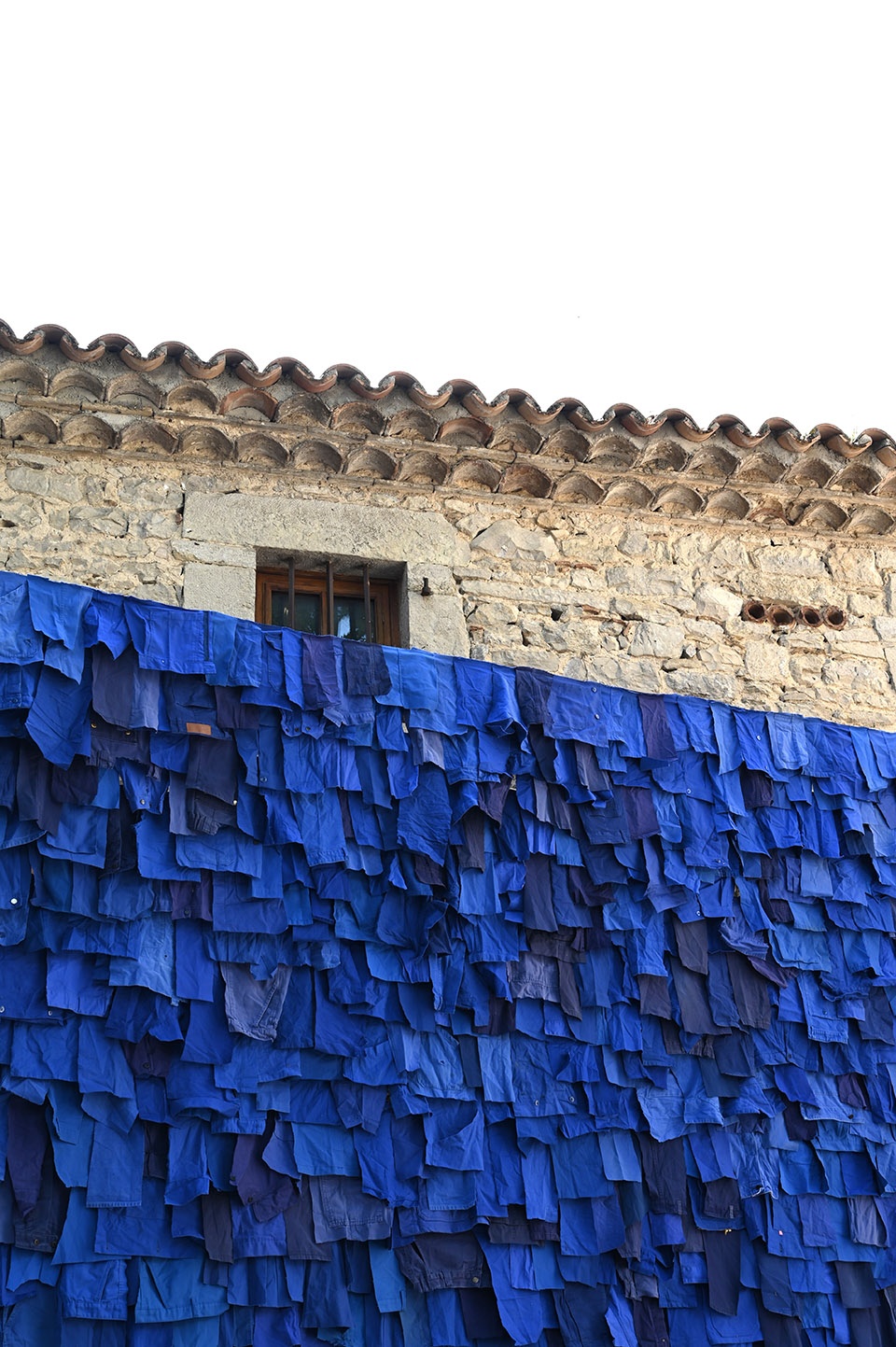
延续其关于“线与色彩”的创作脉络,YokYok此次探索了回收服饰面料的再生转化。在作品中,这些磨损的“工装蓝”(即工装布料的剩余料或库存尾货)唤起了一种以手工与工业为基础的劳动图景,也与YokYok所在的巴黎东郊地区的工人阶层历史产生共鸣。
In continuity with their work on thread and color, YokYok explores the transformation of reclaimed garment fabrics. Here, the worn “bleu de travail” — or surplus and end-of-stock pieces — evokes a craft-based and, above all, industrial activity that resonates with the working-class history of the eastern Paris suburbs, where YokYok is based.
▼唤起了一种以手工与工业为基础的劳动图景,
evokes a craft-based and industrial activity that resonates with the working-class history
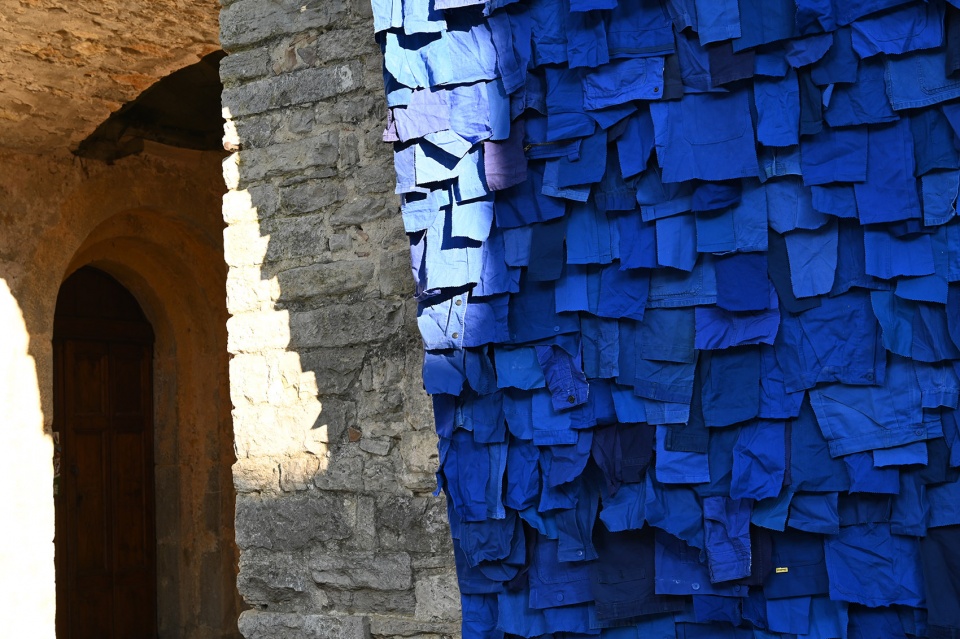
▼碎片化的布料,fragmented aggregation of a distinctive fabric
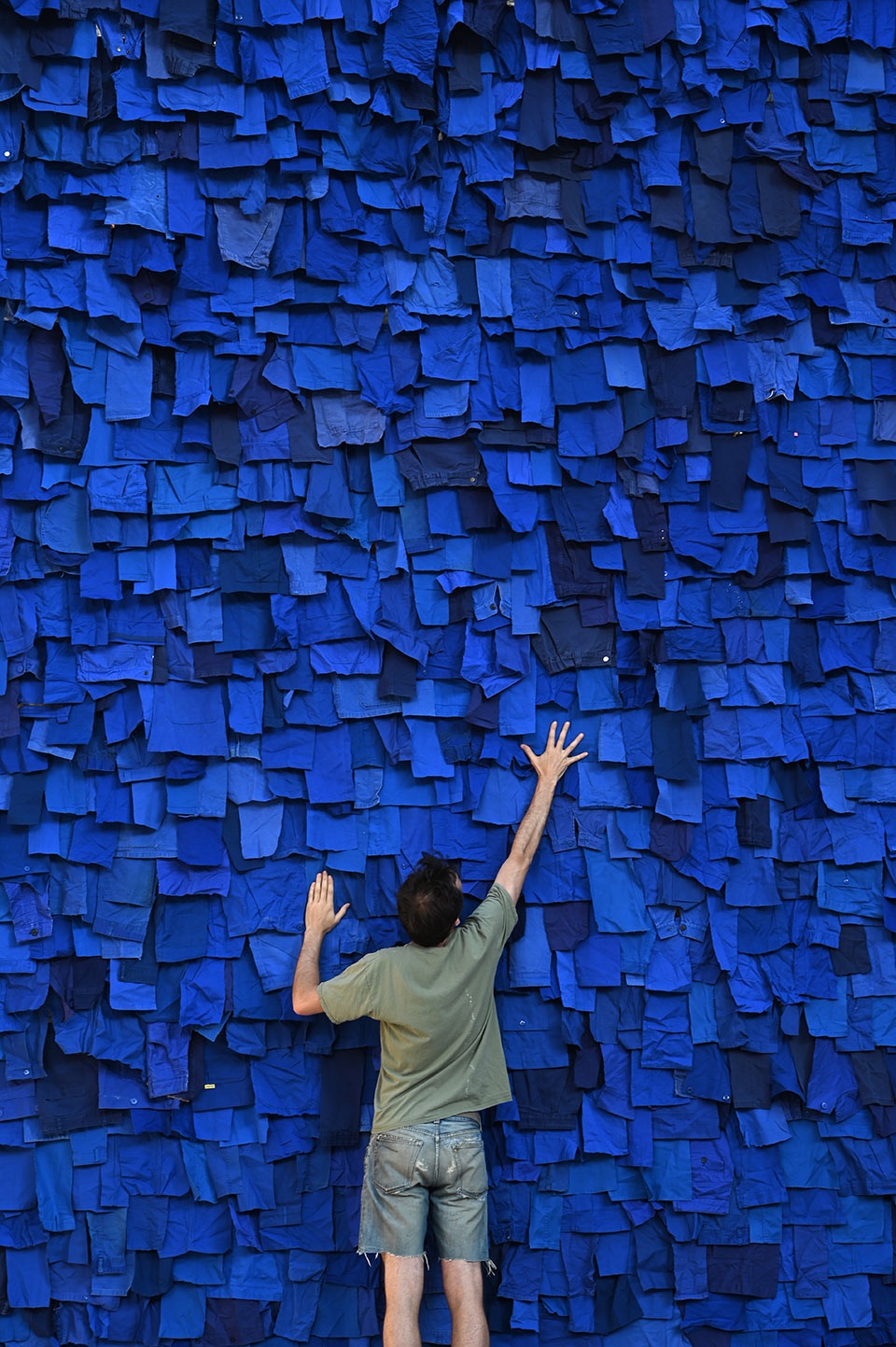
PatchWork装置覆盖于教堂与古堡之间广场的大型墙面之上,展示了由回收工装面料构成的视觉织构。这些碎片化的布料汇聚为一个虚构而统一的“集体形象”,以形式与单色语言共同构筑与劳动世界之间的物理联系。
PatchWork unfolds across the large wall in the square between the church and the castle. The installation showcases reclaimed workwear. This fragmented aggregation of a distinctive fabric reimagines a fictional collective physically tied to the world of labor, united by form and monochrome.
▼作品以如幕帘般的垂挂姿态与环境互动,
like a hanging drape or tapestry, the piece interacts with its setting
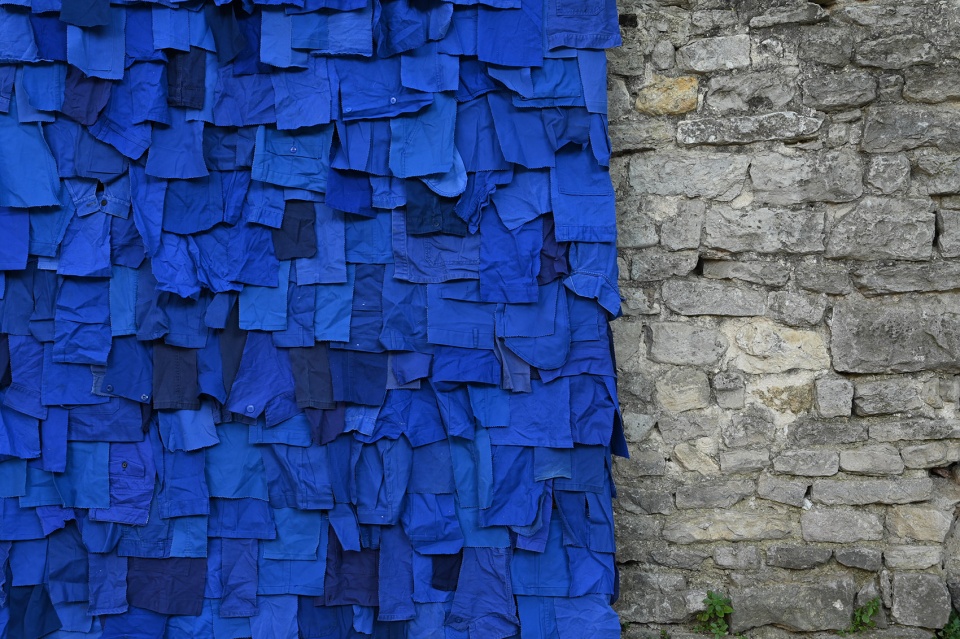
▼一层帷幕般为建筑“穿衣”,dresses the façade like a costume
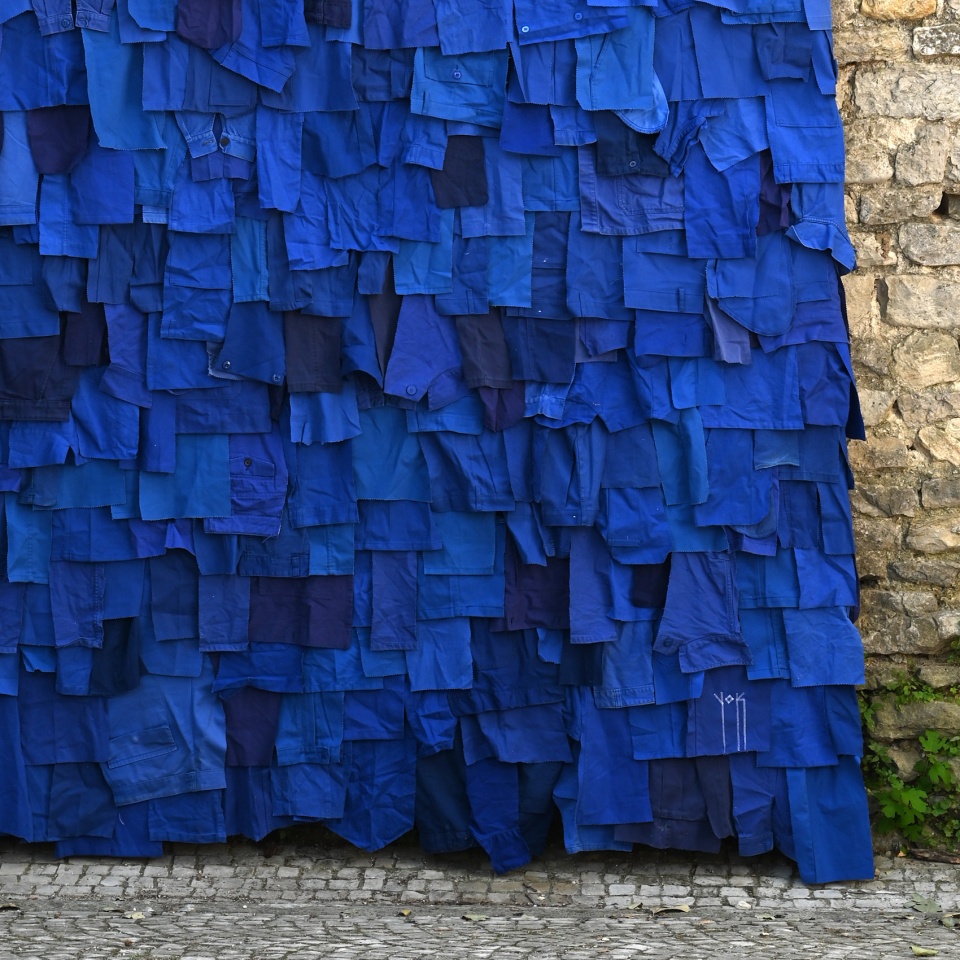
装置像一件服装、一幅挂毯、一层帷幕般为建筑“穿衣”。其轻盈质地可随风而动,在形象上介于布景、衣饰与羽衣之间。作品以如幕帘般的垂挂姿态与环境互动,悬挂于空中,如节庆旗帜般呼应中世纪庆典中的图像语言——旗帜、织物与鲜艳色彩。
The installation dresses the façade like a costume, a tapestry, a curtain. Light and responsive to the wind, it evokes scenery as much as clothing and plumage. Like a hanging drape or tapestry, the piece interacts with its setting. Suspended like a festive banner, it draws on the visual language of medieval celebrations—with their flags, fabrics, and vivid colors.
▼在建筑、材料与时间性之间建立对话,
it plays with the relationship between architecture, material, and temporality
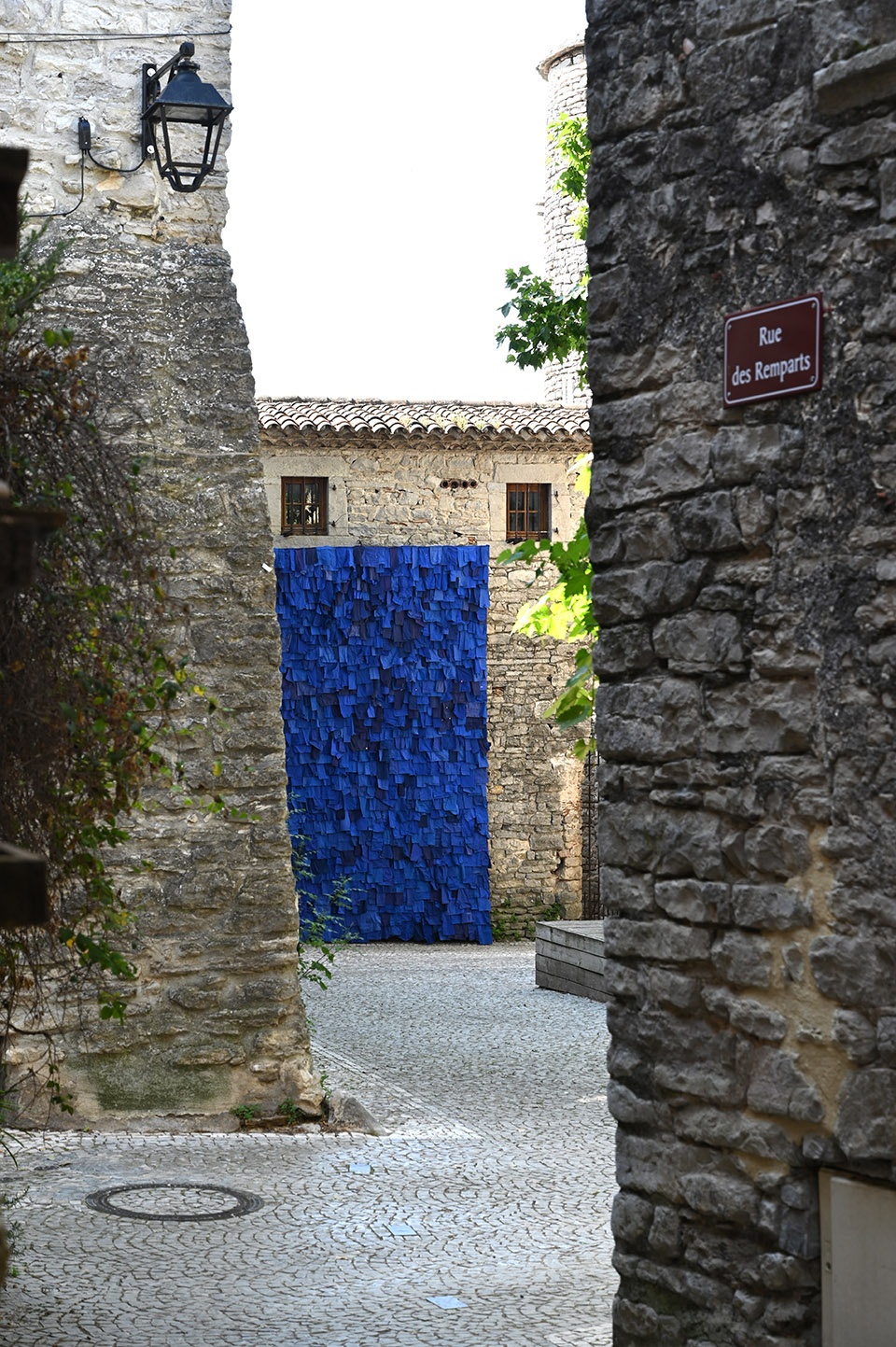
通过轻微的脱离感与似乎偶然的倾斜,这件作品展现出自身的脆弱与精致,与场地坚固厚重的建筑肌理形成鲜明对比。它试图在建筑、材料与时间性之间建立对话。作品将一种柔性、当代的“工业之布”与中世纪和罗马式的石质历史遗产并置,让过往与当下共存于同一空间。
Through a slight detachment and an almost accidental tilt, the piece reveals its delicacy and fragility, contrasting with the imposing strength of the site. It plays with the relationship between architecture, material, and temporality. Patchwork juxtaposes a contemporary, flexible material—tied to industrial times and labor— with a preserved medieval and Romanesque heritage site, dominated by stone.
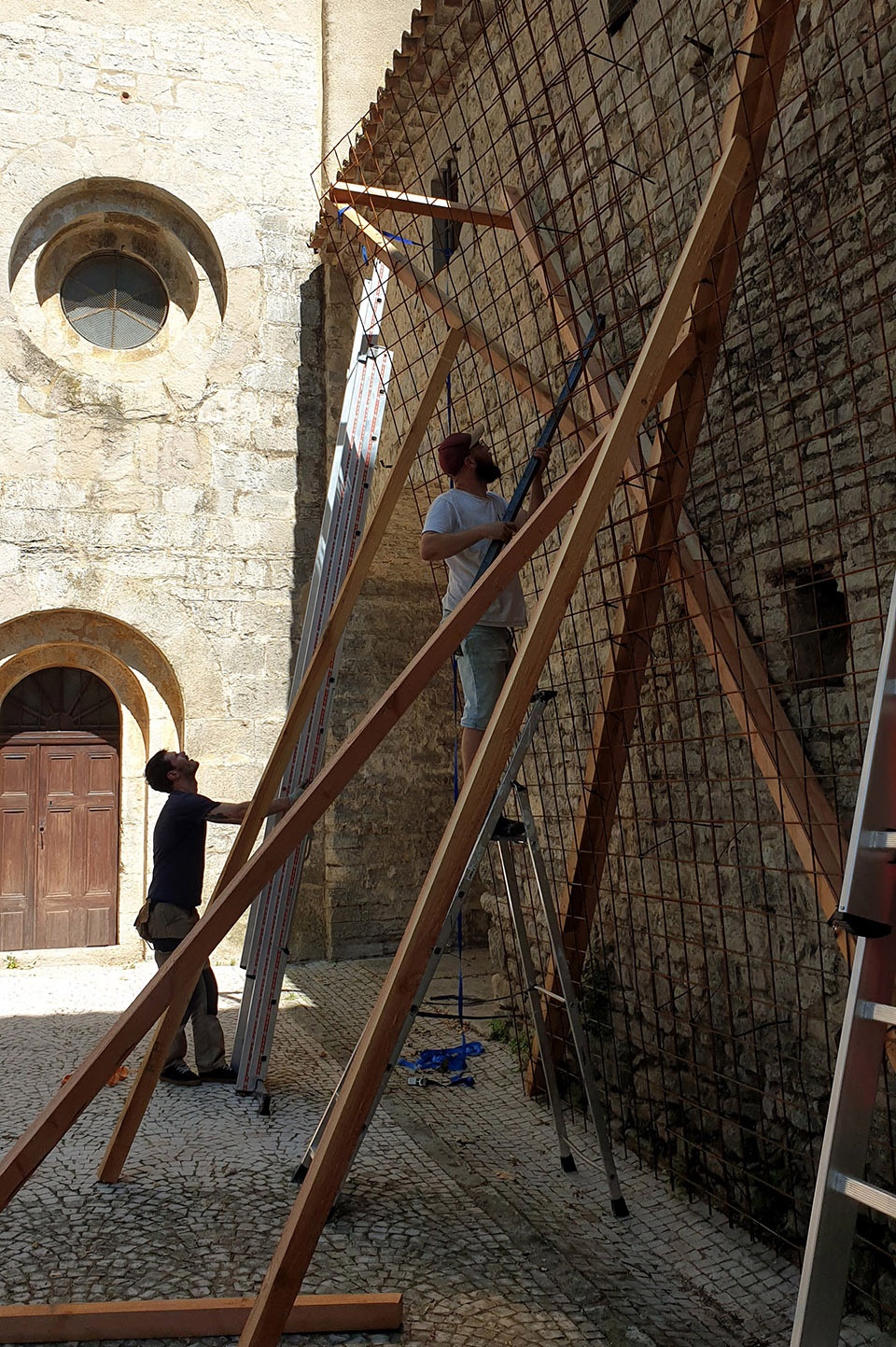
▼搭建过程,build process
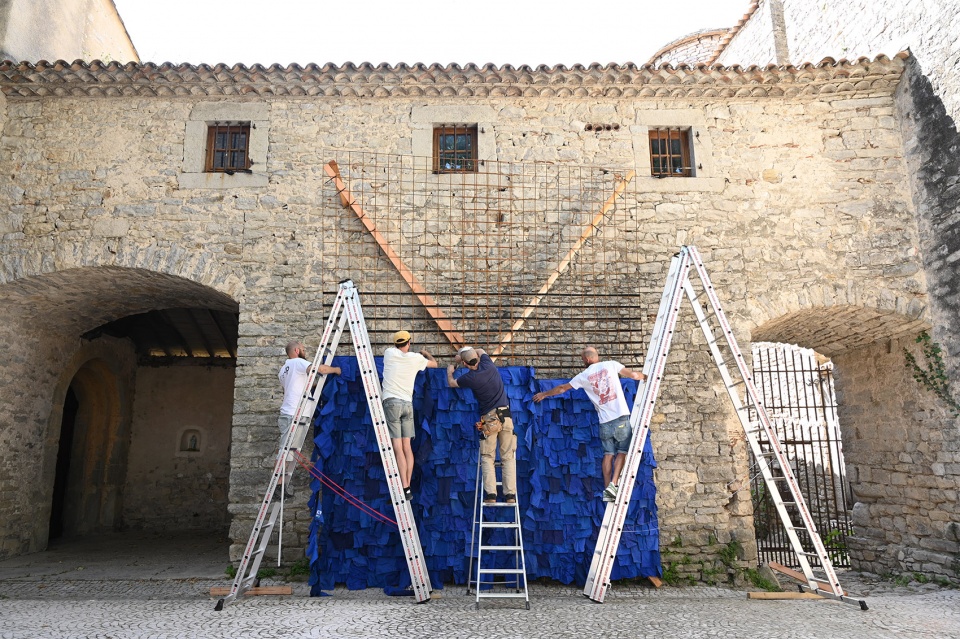
回收面料的使用(包括使用痕迹明显或属于剩余库存)指向了一个既充满活力又高度产出的当代社会。作品回应了那些曾象征着集体劳动与手工精神、如今以历史遗存形式存在的矿物质文化遗产。
Using reclaimed fabric—sometimes worn, or from surplus and end-of-stock—the work speaks of a contemporary era that is both vibrant and over productive. It resonates with a mineral and inert cultural legacy that once embodied collective effort and craftsmanship, now expressed through centuries-old structures.
▼搭建过程,build process
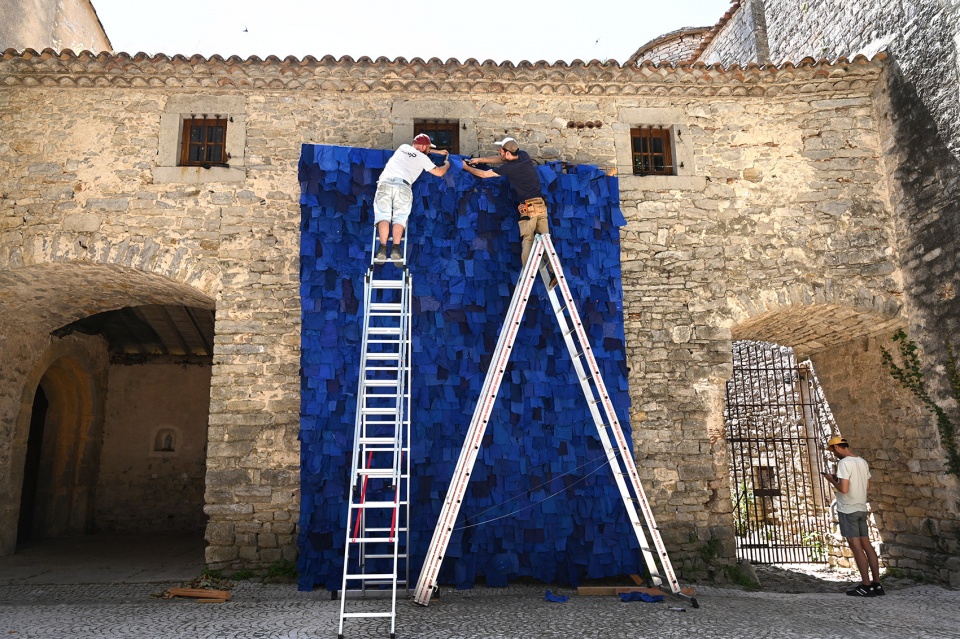
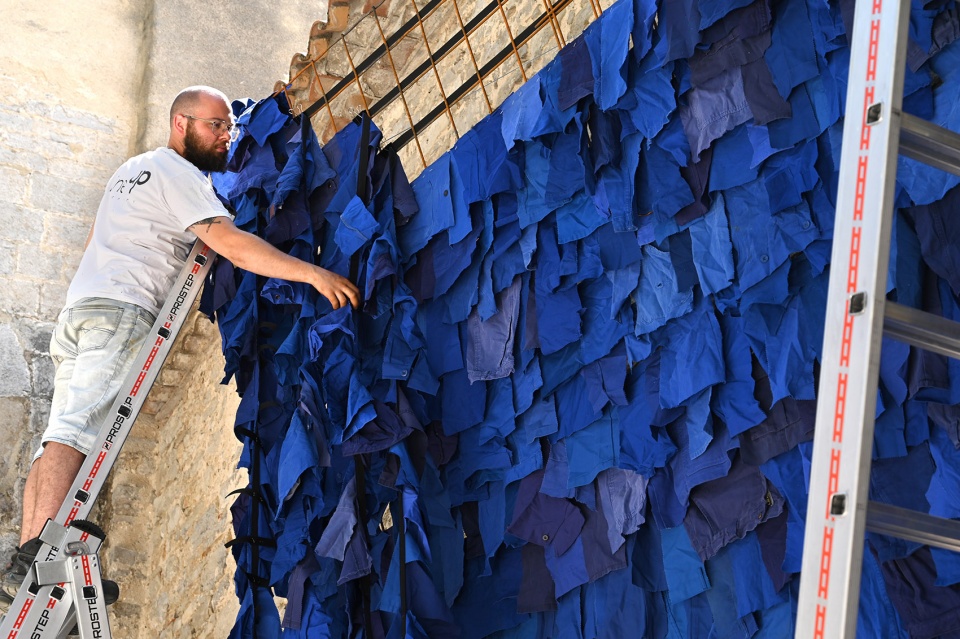
YokYok从纺织艺术、拼布实践与纤维艺术中汲取灵感,通过简洁、低技术的手工方法创造肌理与表面。他们的灵感来源包括包豪斯时期的Anni Albers、当代艺术家Magdalena Abakanowicz与Olga de Amaral,以及空间性强的艺术创作者如Ernesto Neto和塩田千春(Chiharu Shiota)。YokYok关注材料的表现力,同时探索色彩如何与场地发生视觉与情感的对话。
YokYok draws inspiration from textile art, the practice of patchwork, and fiber art to create textures and generate surfaces using simple, low-tech techniques. Their sources of inspiration range from modern and Bauhaus artists like Annie Albers to more contemporary figures such as Magdalena Abakanowicz or Olga de Amaral, as well as more spatial works like those of Ernesto Neto or Chiharu Shiota. YokYok is as interested in materials as in the power of color to engage in a dialogue with the spaces of their in situ installations.
▼通过简洁、低技术的手工方法创造肌理与表面,
create textures and generate surfaces using simple, low-tech techniques
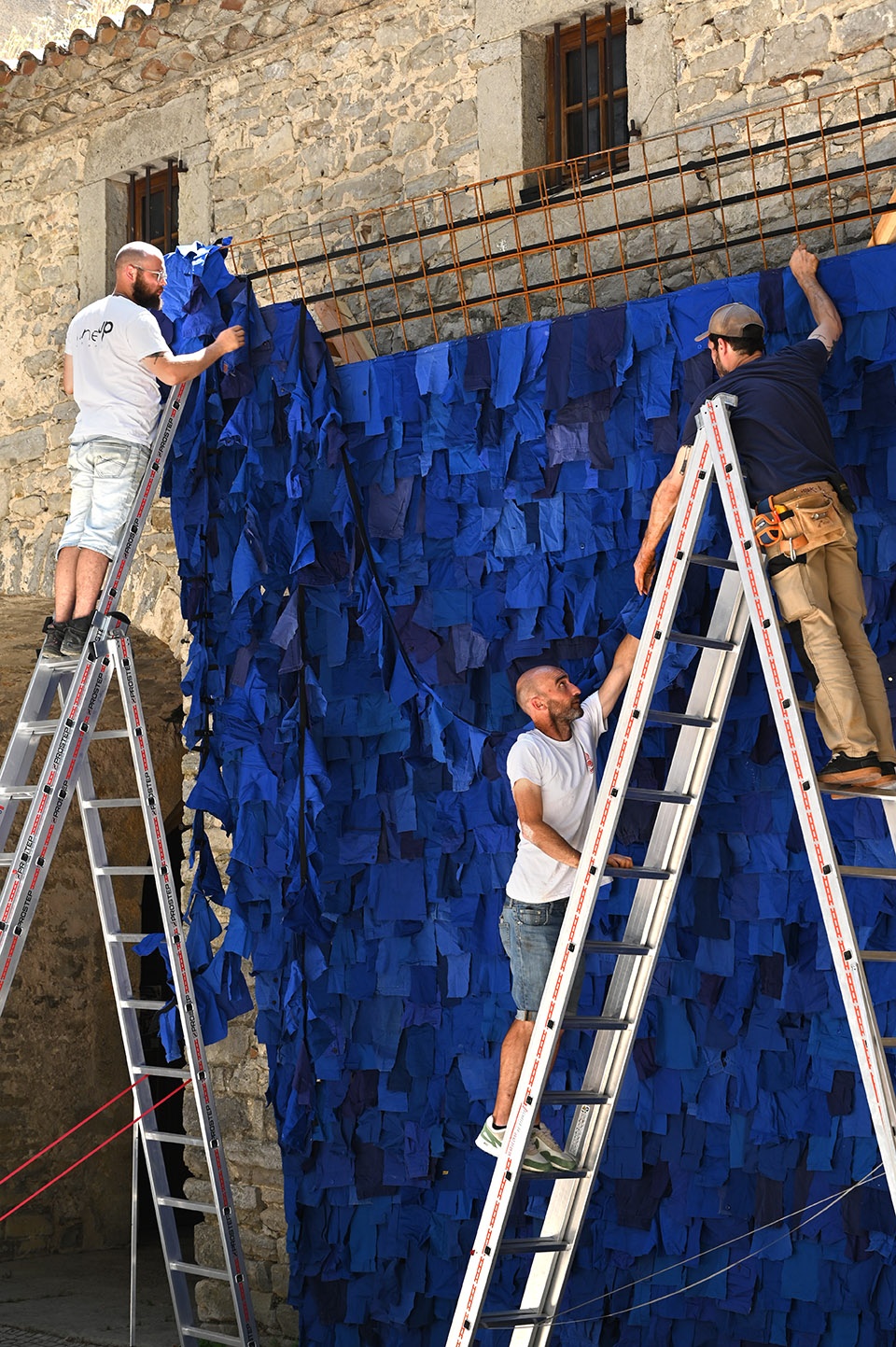
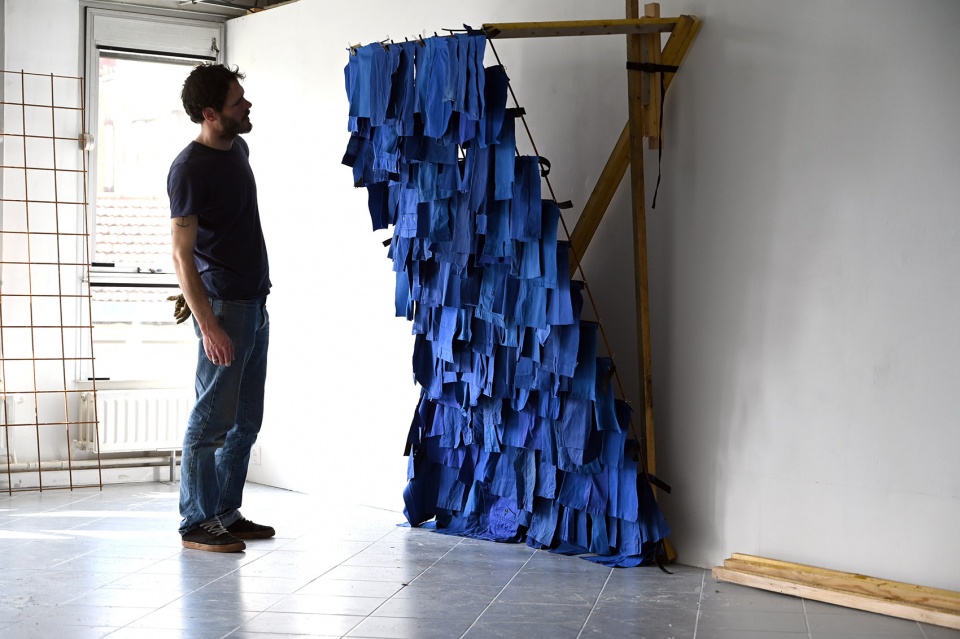
如同一道立起的幕布,这件装置也成为观众自我呈现的背景。其弧形姿态包裹着人,使沉浸式体验更加突出。倾斜打破了原有平面,重力赋予布面以体量,布料间的空隙形成阴影与动感,使装置在静止中获得生命。
Erected like a screen, the installation becomes a backdrop for self-staging in front of abstraction. Its curved form envelops visitors, enhancing the immersive experience. The tilt breaks the flatness of the plane, and gravity gives volume to the surface. The fabric pieces space out, casting shadows and creating motion.
▼测试过程,test progress