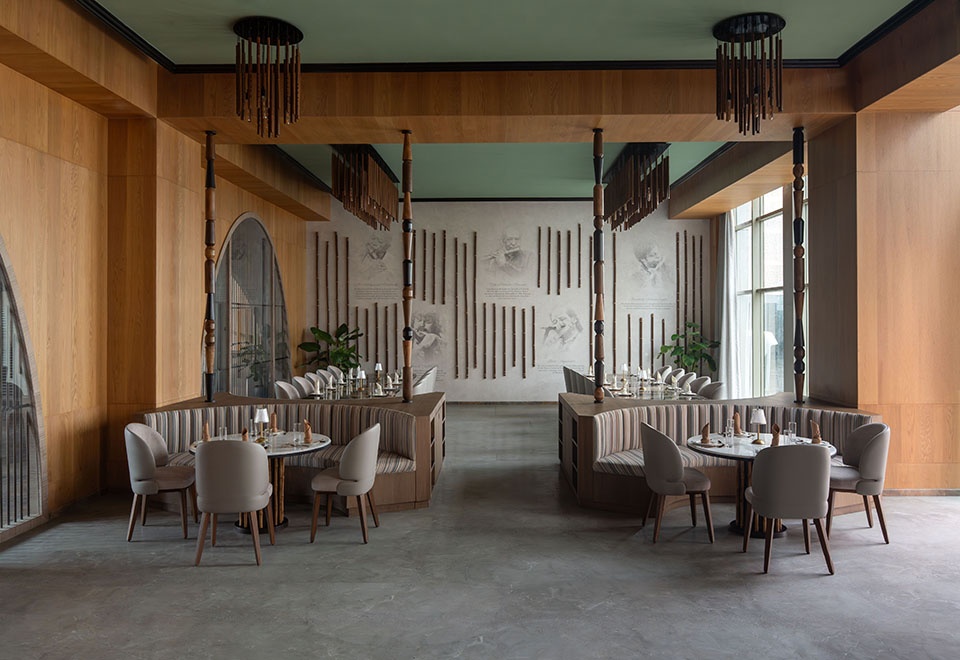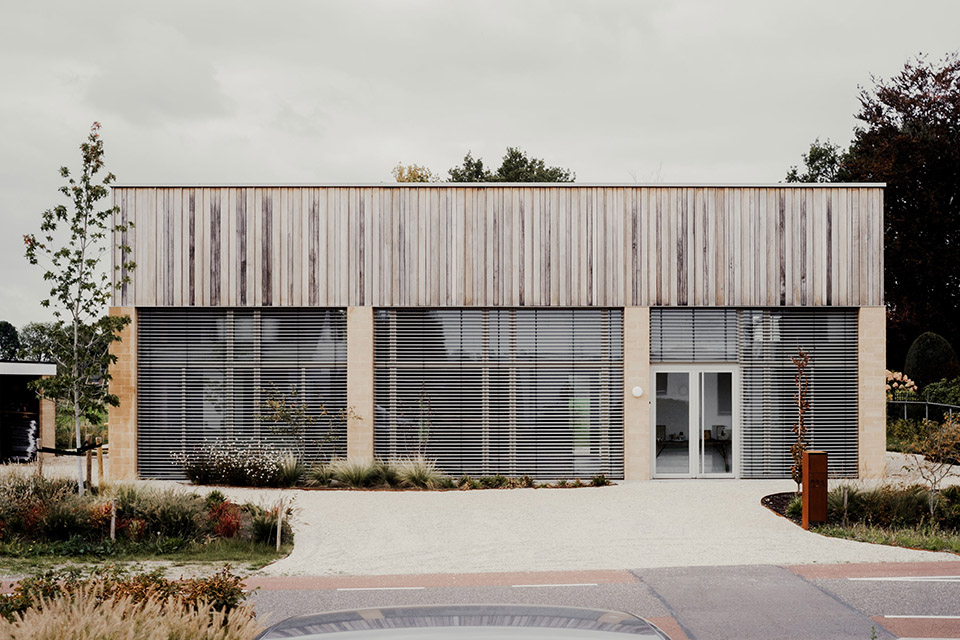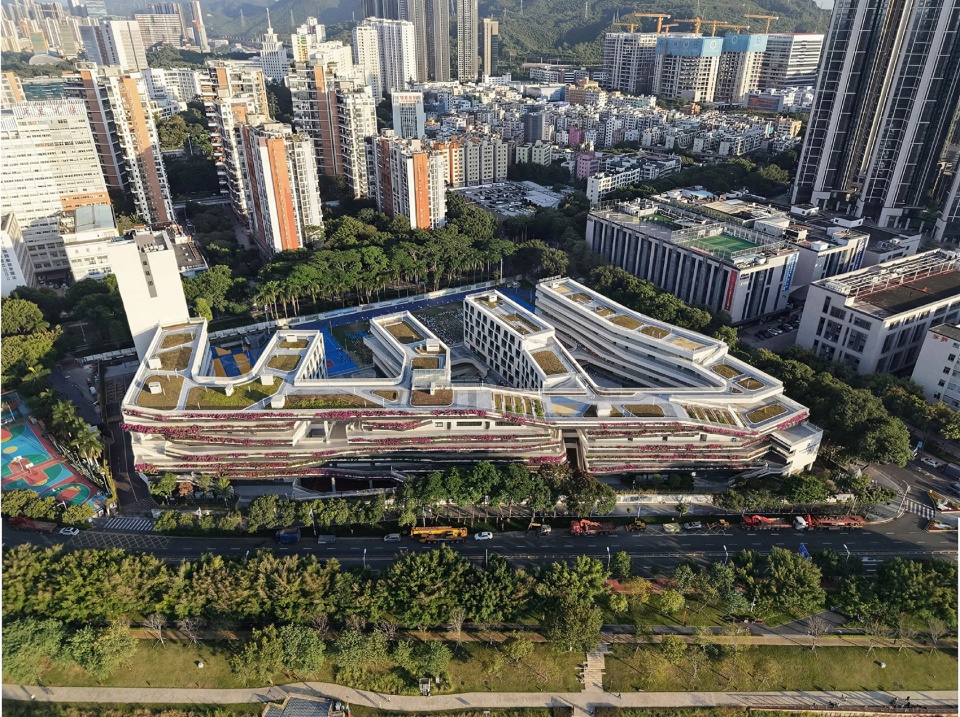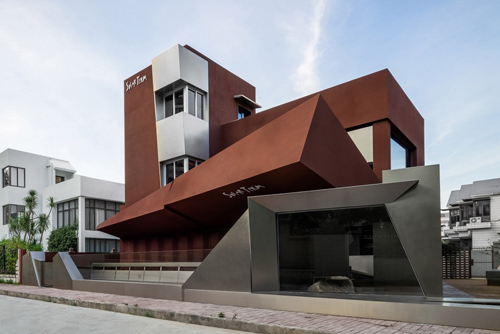
LEBAN蕽场餐厅,西安 / MOS木石设计
01项目背景
Project Background
位于西安西北二环、占地300余亩的米禾农场,前身是汉长安城遗址内的李下壕村,2024年春天,改造后的米禾农场以“田园商业综合体”的微度假模式对外营业,樂班农场餐厅是首批入驻农场的餐饮品牌,也是樂班在西安以“农场餐厅”命名的首店。
Located within the northwest Second Ring Road of Xi’an and covering over 300 acres, Mihe Farm was formerly Lixiahao Village in the Han Dynasty Chang’an City ruins. In the spring of 2024, the revitalized Mihe Farm opened to the public as a “pastoral commercial complex” operating under a micro-vacation model. Le Ban Farm Restaurant, among the first dining brands to open at the farm, is also Le Ban’s flagship location in Xi’an bearing the “Farm Restaurant” name.
▼项目概览,overview of the project
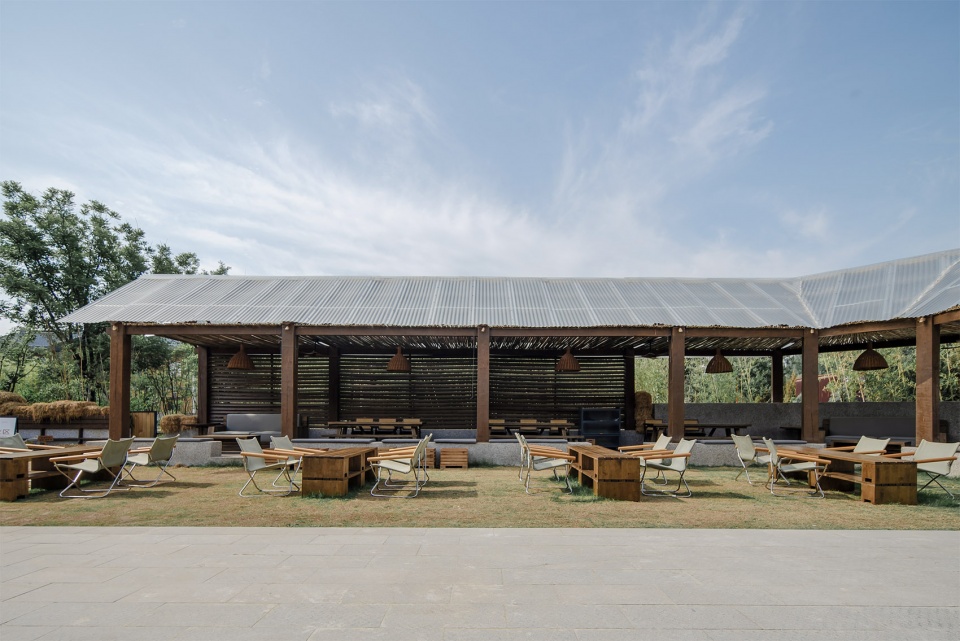
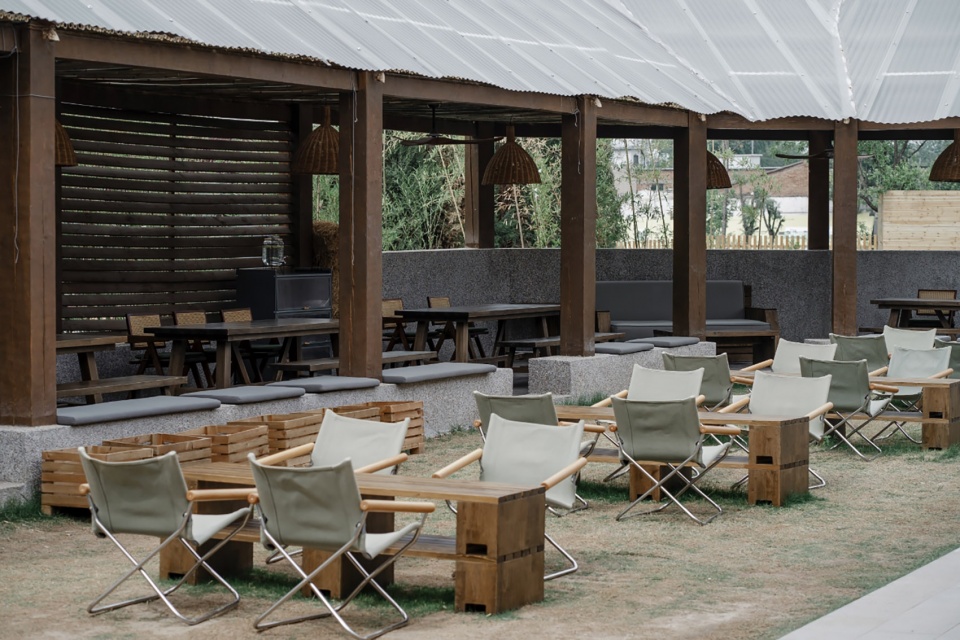
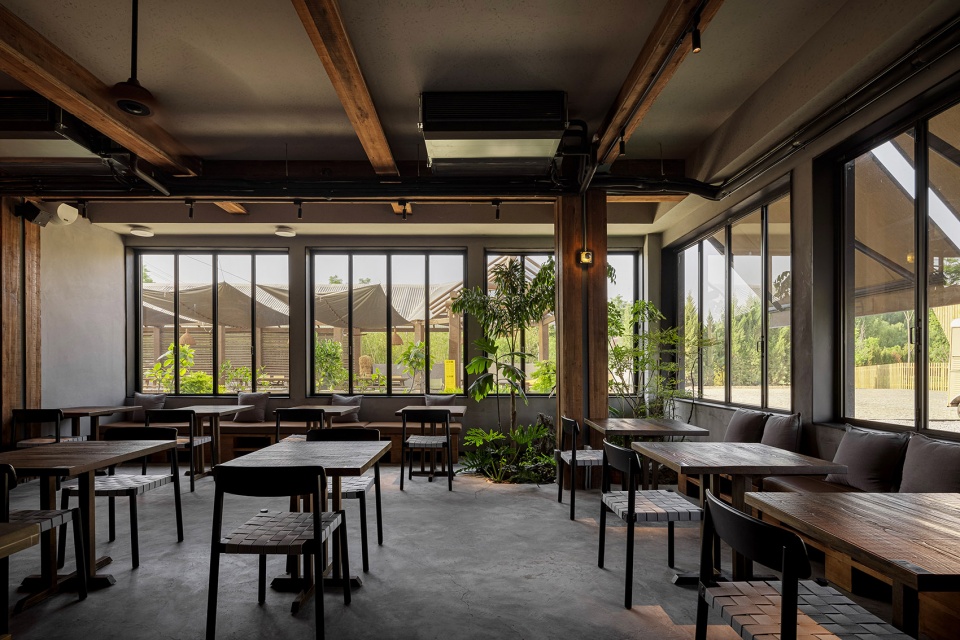
▼项目概览,overview of the project
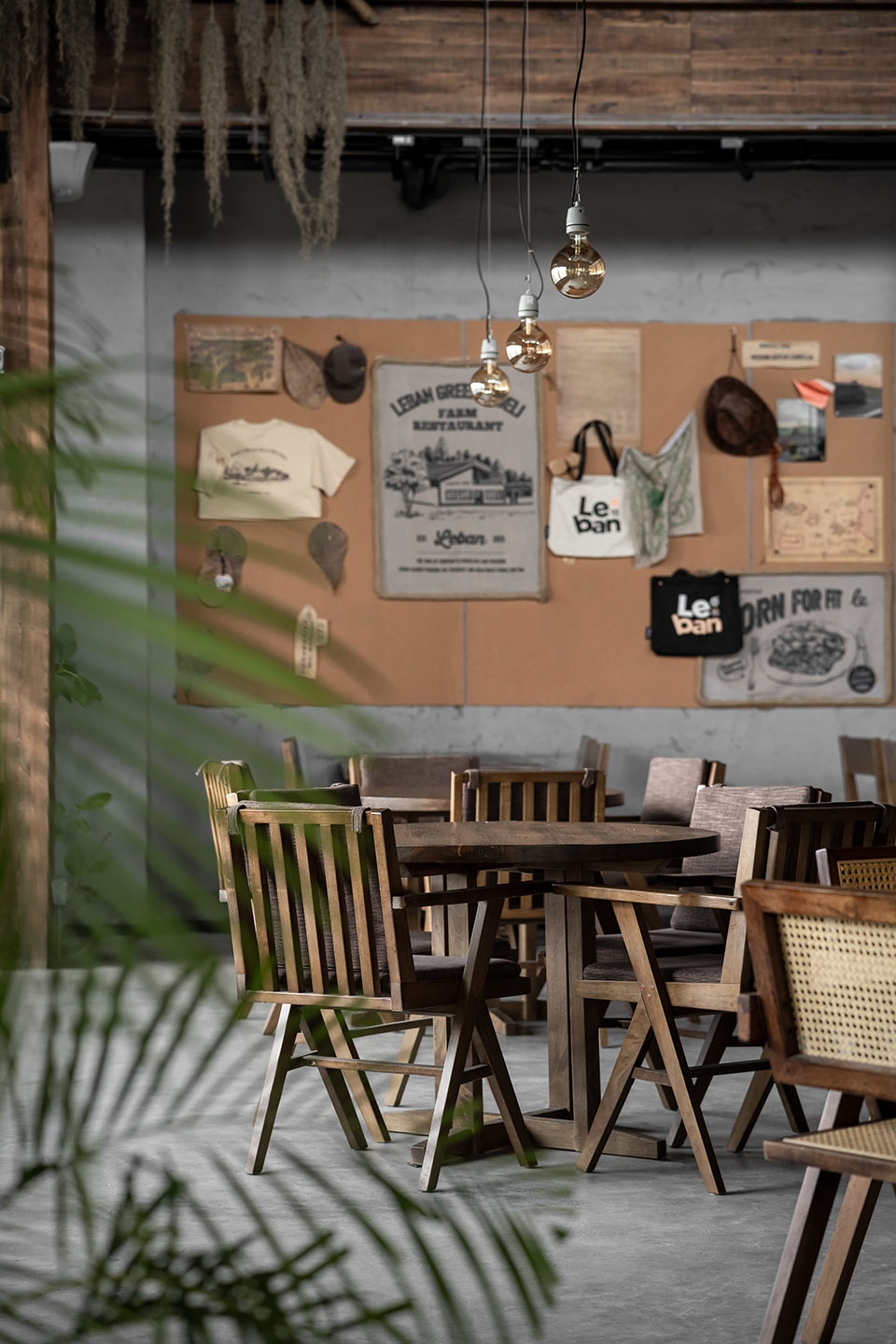
樂班于2013年创立于西安,是一家倡导时尚健康生活方式的休闲餐饮连锁品牌,始终坚持着“传递健康,分享美好”的经营理念。品牌过往在西安和其他城市的门店均落位在城市成熟商圈,选址在米禾农场的樂班农场餐厅,是对当下不断变化的新消费需求,一次全新的探索与尝试。
LeBan, founded in Xi’an in 2013, is a casual dining chain brand advocating a fashionable and healthy lifestyle. Upholding its core philosophy of “Spread Wellness, Share Joy”, the brand has historically positioned all its outlets—across Xi’an and other cities—within established urban commercial districts. The launch of Le Ban Farm Restaurant at Mihe Farm represents a bold experimentation in response to evolving consumer demands, marking the brand’s first venture beyond traditional urban settings.
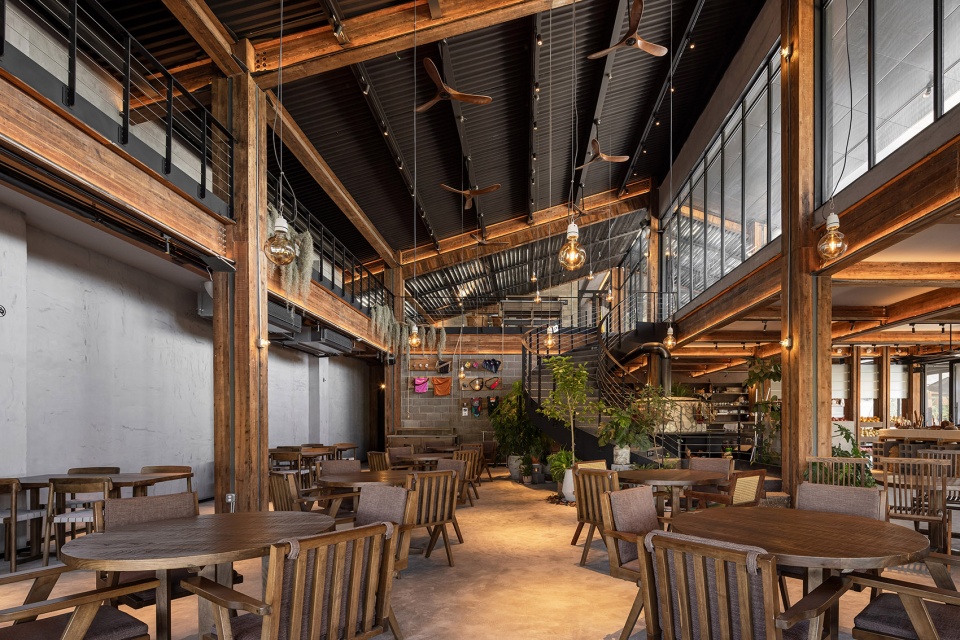
▼空间挑空区域,void space
02核心理念
Core Concept
MOS木石设计与品牌合作多年,当我们第一次来到场地,面对着广阔的田野,品牌推崇有机、健康食物的理念与农场产生了天然地链接,设计只需顺势而为,将空间从“有形”到“无形”,我们希望人们来到这里,不仅是吃一顿饭,更是对田园生活的一种体验。于是,自然、土地、食材、农场的自给自足,构成了设计的核心理念。
▼原始场地情况,original site condition
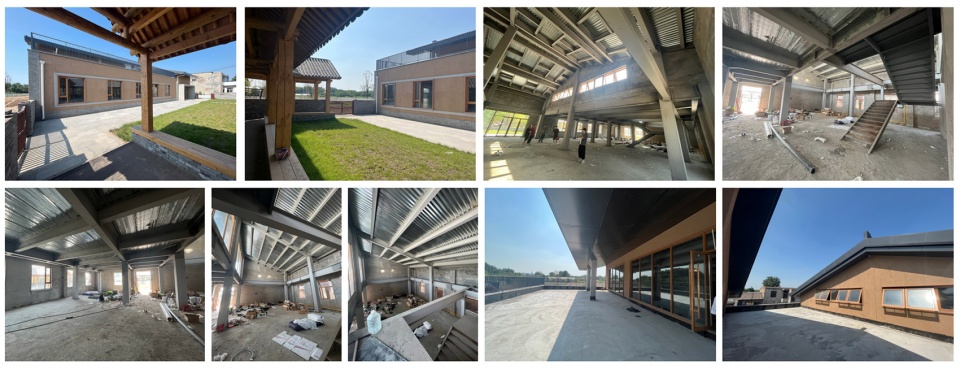
MOS Design has collaborated with the brand for years. Upon our first visit to the site, the vast fields forged an organic connection with the brand’s philosophy of promoting organic, healthy food. The design simply followed this innate harmony, transitioning space from the tangible to the intangible. We envisioned visitors not just consuming a meal, but immersing in an authentic pastoral experience. Thus, nature, soil, ingredients, and the farm’s self-sustaining essence formed the core design concept.
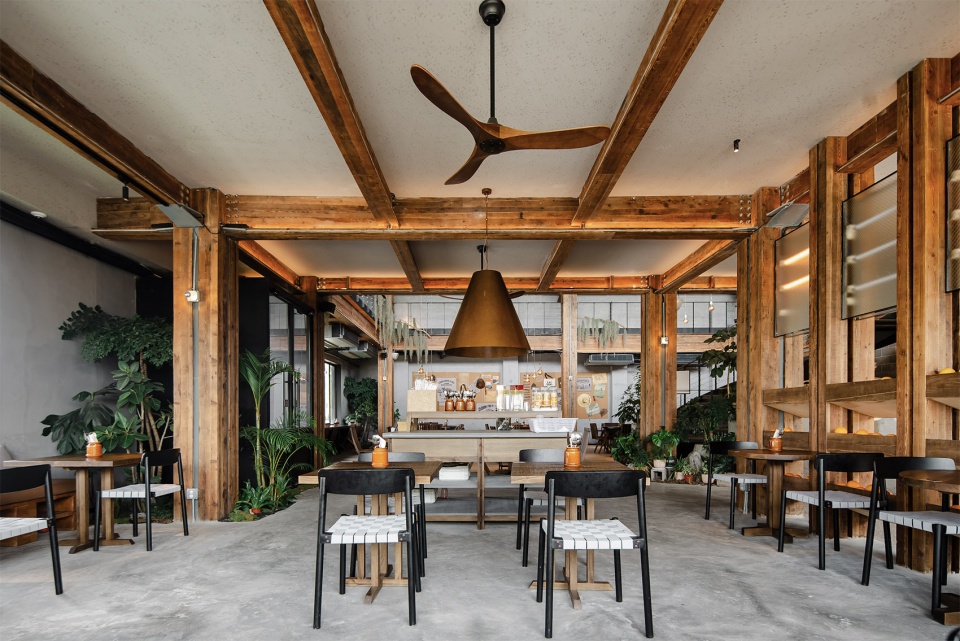
▼餐厅概览,overview of the restaurant
受到设计委托的时候,餐厅所在建筑已经落成,位于米禾农场的入户位置,建筑内部呈柱网框架结构,门窗比例与建筑体量不匹配,造成采光较差,原场地有部分挑空和搭建,楼梯直达户外露台,MOS木石设计负责室内设计部分、建筑外立面和户外景观的改造。
▼分析图,diagram
Upon receiving the design commission, the restaurant structure was already completed at the entrance of Mihe Farm6. The interior featured a column-grid framework structure, yet disproportionate window-to-building ratios resulted in poor natural lighting6. Original site conditions included partial voids and makeshift structures, with a staircase leading directly to an outdoor terrace. MOS Design was commissioned for the interior design, building facade renovation, and outdoor landscape modification.
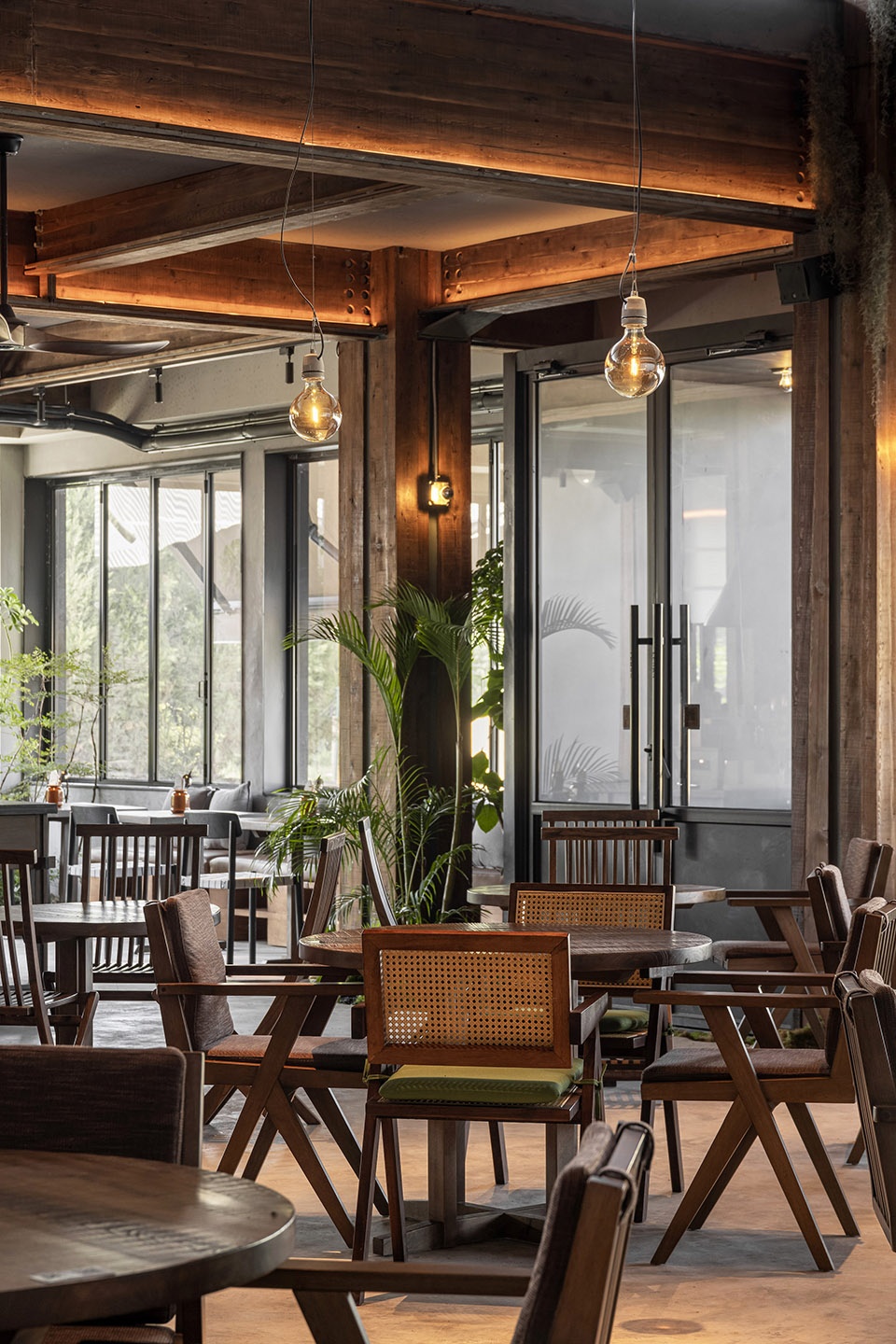
▼吊线的钨丝灯泡,tungsten bulbs with hanging wires
03农场叙事
基于从“有形”到“无形”的场地直觉,设计将门窗调整比例,以更加通透、开放的形式将空间“打开”,与周围的景观产生链接。
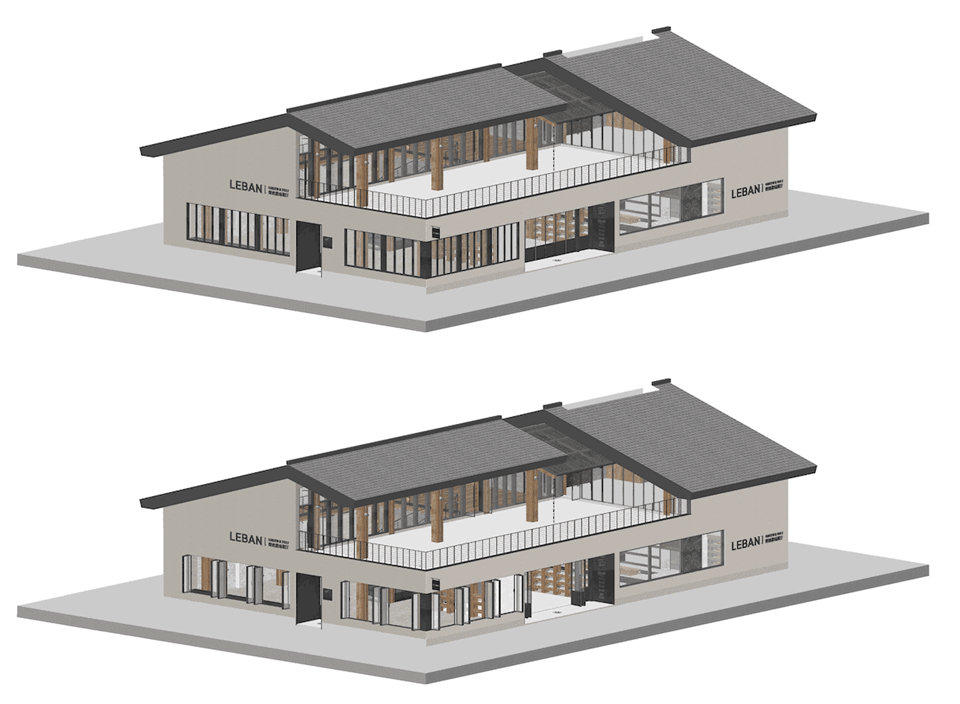
▼立面分析图,facade diagram
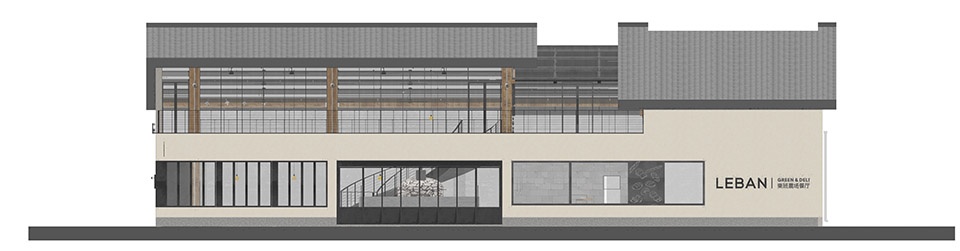
Guided by the site intuition of “from tangible to intangible,” the design reconfigures window and door proportions into more transparent, open forms, effectively “unfolding” the space. This intervention forges a visceral connection with the surrounding landscape, transforming the architecture into a permeable vessel for nature.
▼南侧立面主入口,main entrance on the south façade
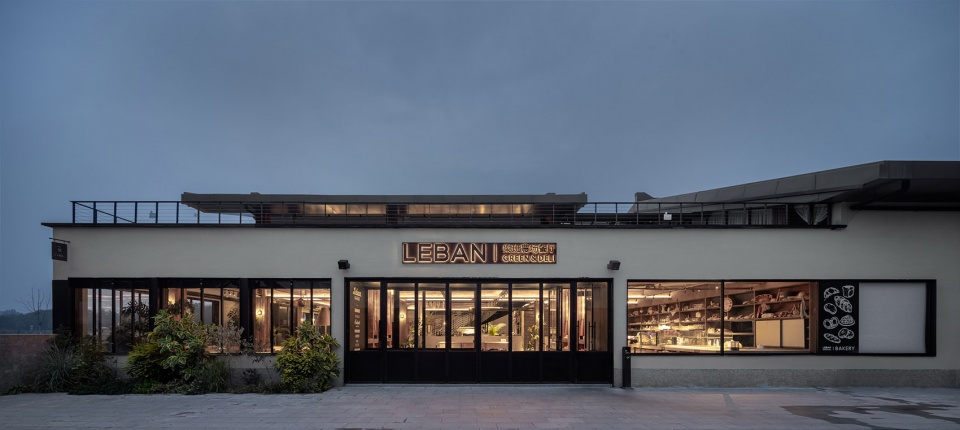
项目外立面使用了土黄色的真石漆,呼应田野大地的肌理和粗犷感,主入口以横长的木质折叠门引入开放视野,释放空间的烟火场景。步入室内,灰色涂料处理的墙面保留了斑驳的工业痕迹,与部分立面使用的加气块砖,产生质地的差异,丰富立面层次。
▼立面分析图,facade diagram
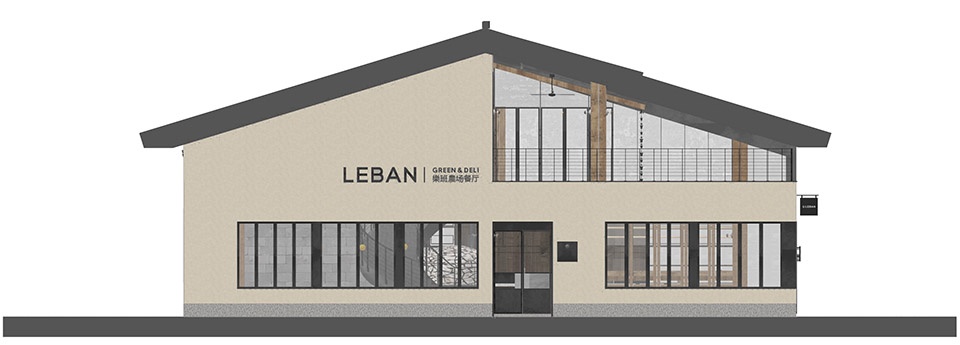
The facade employs ochre-toned mineral paint to echo the rugged texture of farmland soil. At the main entrance, horizontally elongated wood-folding doors frame expansive views, releasing the space into a lively communal atmosphere. Inside, grey plaster walls retain traces of industrial patina, while aerated concrete blocks on partial elevations create textural contrasts that enrich the facade’s layered narrative.
▼西侧立面主入口,main entrance on the west façade
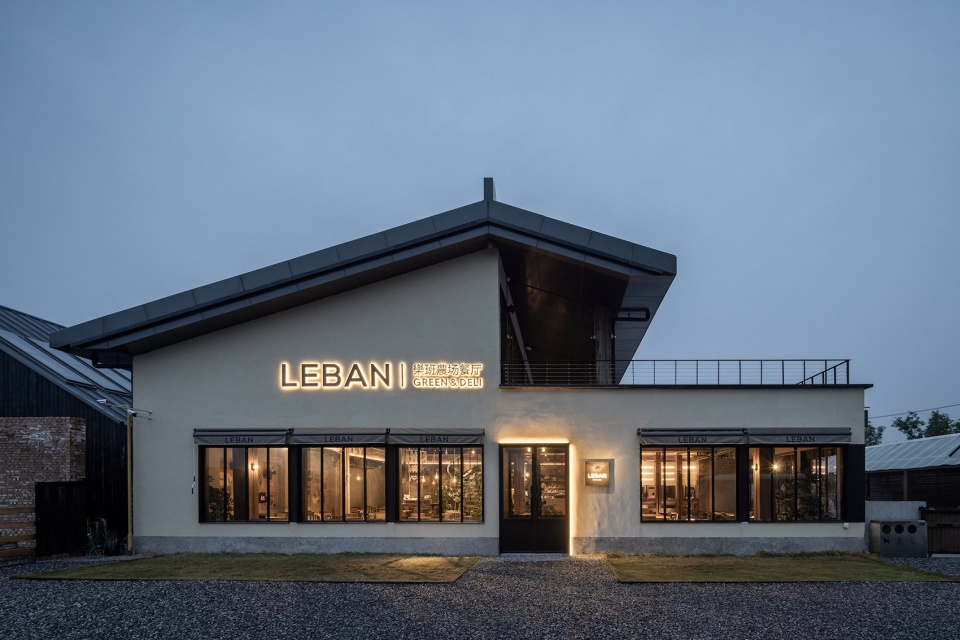
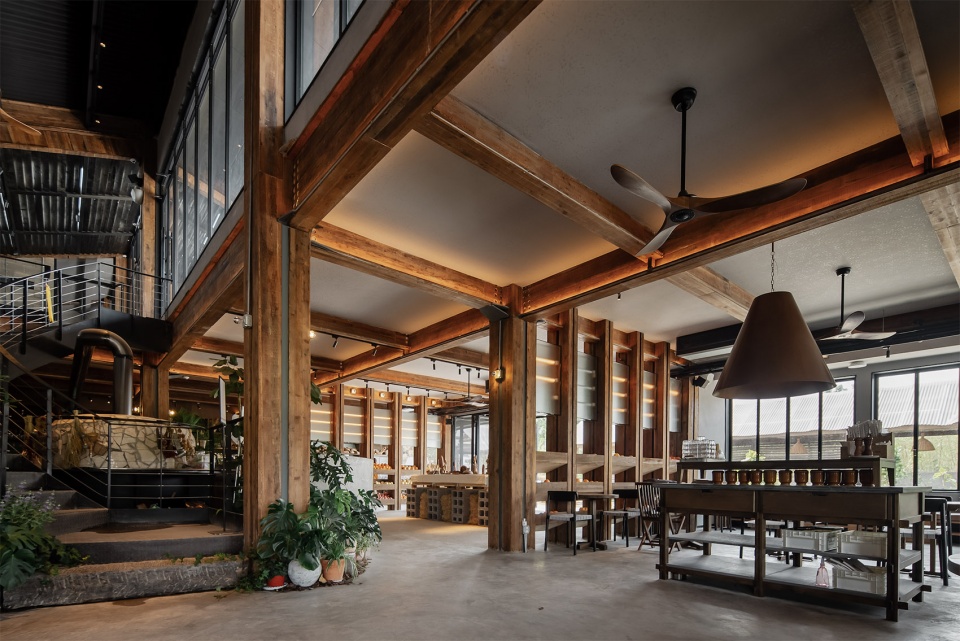
场地原本的梁、柱,由回收的老木板所覆盖,整体构建出线条的秩序感,老木板的颜色、肌理,经过时间沉淀,令人与农场木屋产生天然地联想,铺垫出田园叙事的基调。
▼结构轴测图,structure axonometric
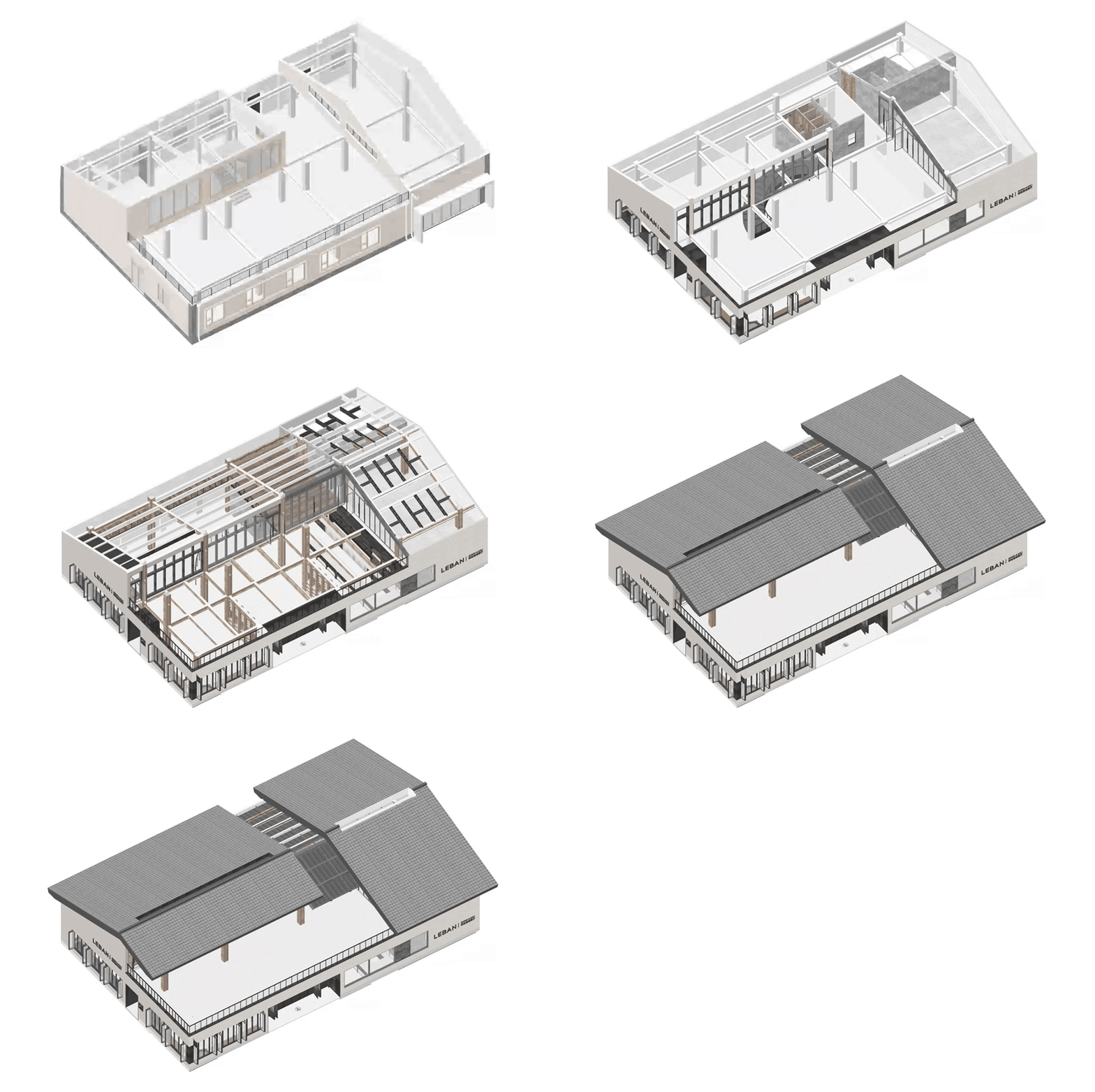
The original beams and columns are clad inreclaimed timber planks, establishing a unified rhythm of linear forms. The wood’stime-worn patina and grainevoke an instinctive association with farmhouse structures, anchoring the spatial narrative
▼老木板与黑色钢板的碰撞,old wood panelling meets black steel plate
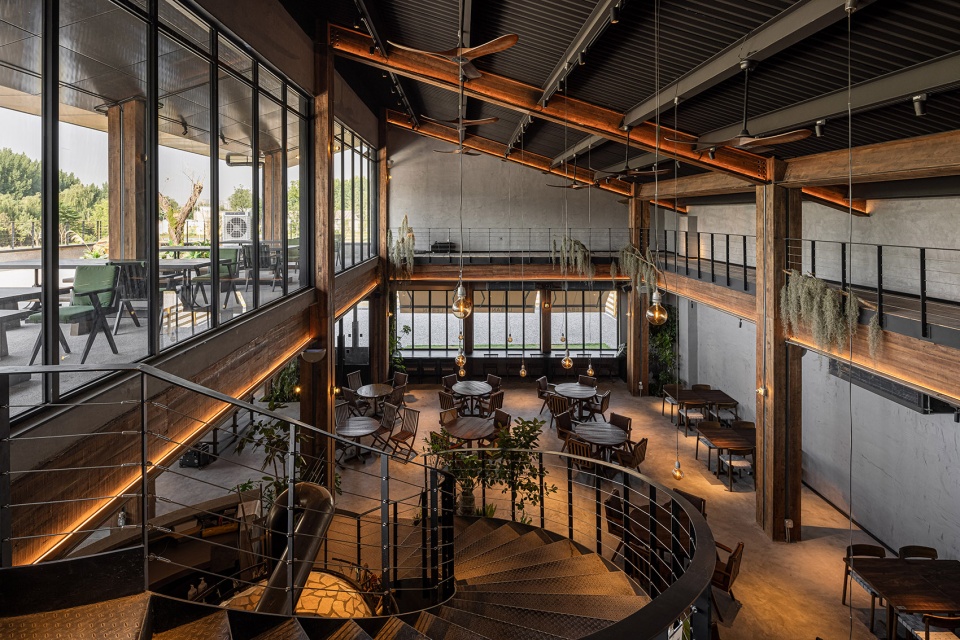
▼“木”梁、柱,old wood beam and column
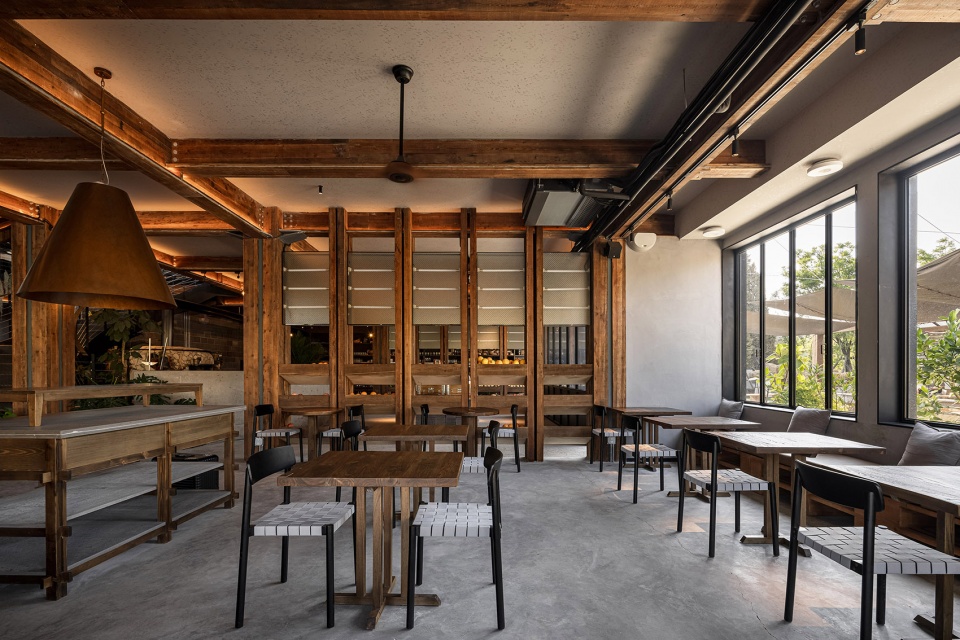
▼延续了木梁元素,continued wood beam elements
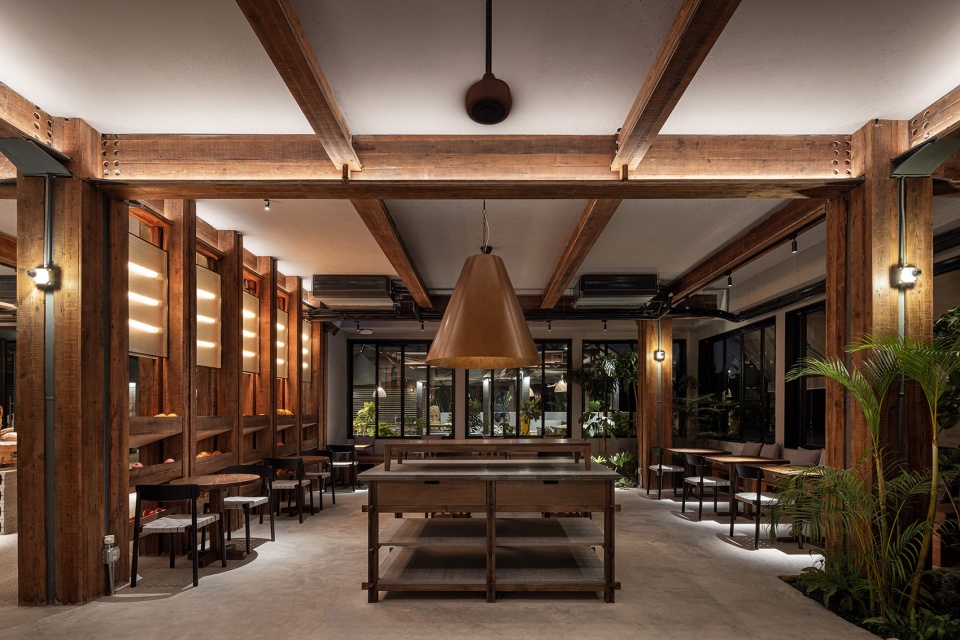
▼主入口处,main entrance
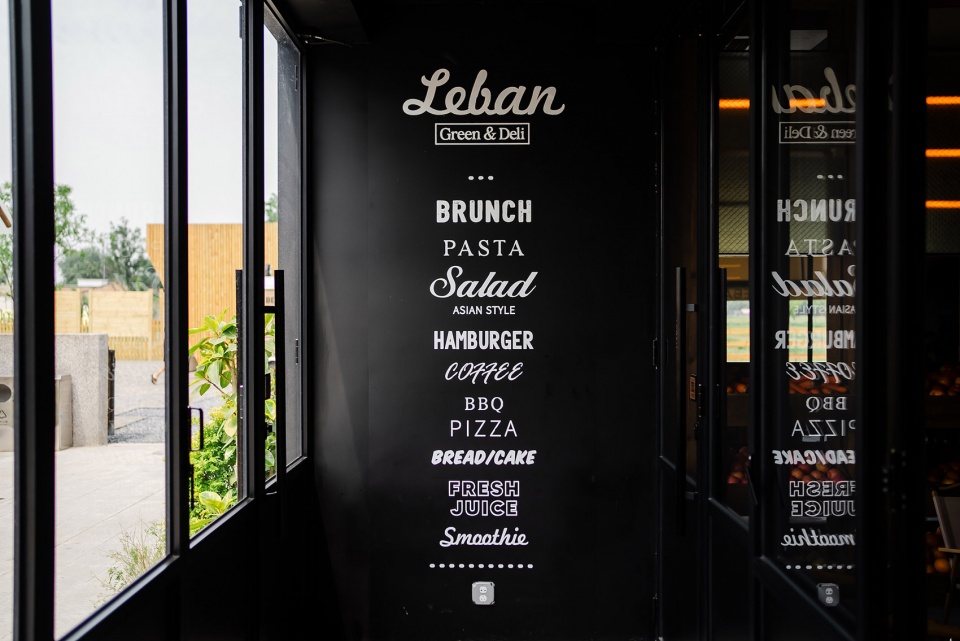
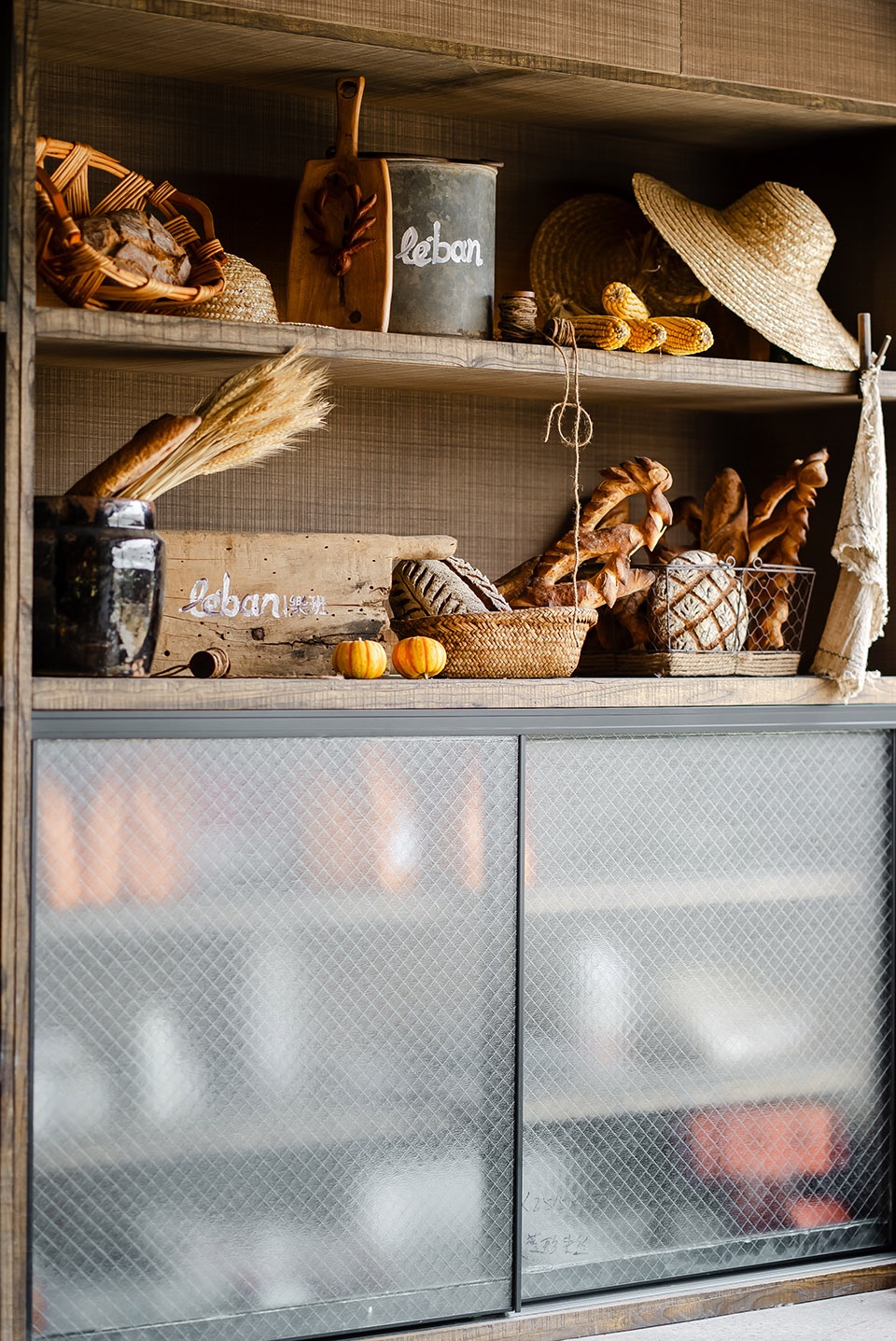
同时,黑色钢板材质的门窗、楼梯扶手、护栏,呈现出锻造的工业技艺,空间部分墙面装有软木板,并将带有品牌元素的创意布艺、植物叶片、草帽等元素固定其上,与空间摆放的新鲜面包、食材、舒展的植物,共同营造出农场生活“自给自足”的手作温度。这样一来,多元材质与天然物料的相互碰撞,展现了农场餐厅的丰富性与趣味性,可持续设计的理念也得到诠释。
▼空间材质的应用,use of various materials

Forged black steel panelsframe windows, doors, stair railings, and guards, embodyingindustrial craftsmanship. Meanwhile,cork-clad wallsserve as organic canvases for brand-embroidered textiles, botanical specimens, and straw hats—curated alongside freshly baked bread, farm produce, and cascading greenery to manifest the”hands-on vitality” of self-sufficient farm life. The deliberate collision of industrial and organic materials—forged steel against cork, reclaimed timber beside fresh botanicals—transforms the space into a dynamic”tangible manifesto” of sustainable design. This dialectic articulates Mihe Farm’s ethos:abundant functionality harmonized with pastoral playfulness.
▼不同材质的组合,combination of various materials
04功能布局
在设计之初,考虑到米禾农场具备种植条件,我们提出“去餐厅化”的概念,即摒弃单一场景,打造“从农场到餐桌”的可游、可感、可食等多元体验。在传统就餐区和后厨区的布局规划基础上,增加了食材展示区、面包工坊和明档披萨炉。
By leveraging Mihe Farm’s agricultural capacity, the design pioneers a”Beyond Restaurant” doctrine—transforming dining into animmersive farm-to-fork odysseywithedible journeys,tactile discovery, andculinary theatre. The spatial matrix expands beyond conventional layouts to integratecrop showcases,artisan bakery workshops, andlive-fire pizza theatres, dismantling the fourth wall between soil and plate.
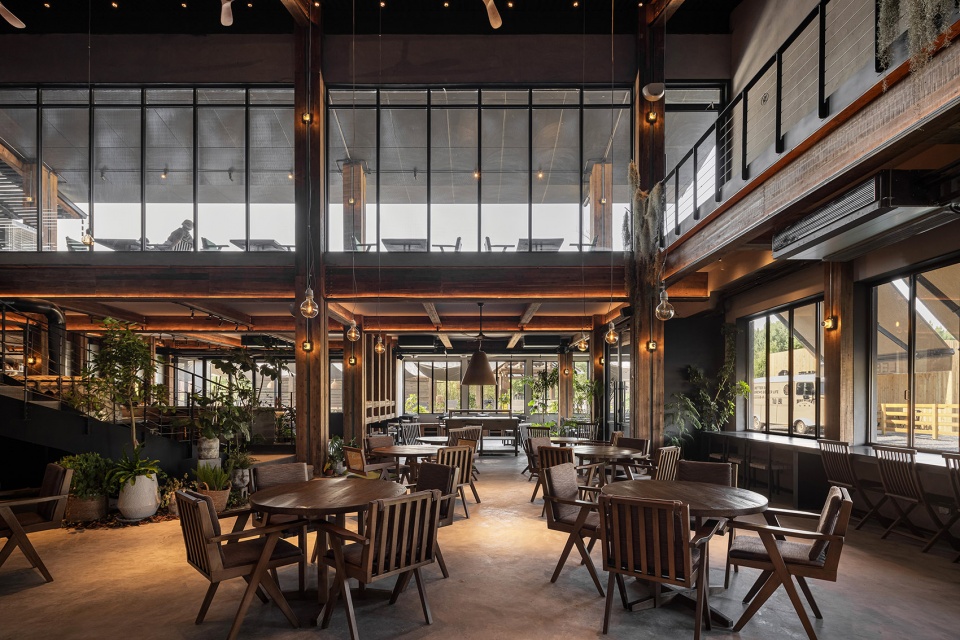
▼开放的餐厅格局,open restaurant layout
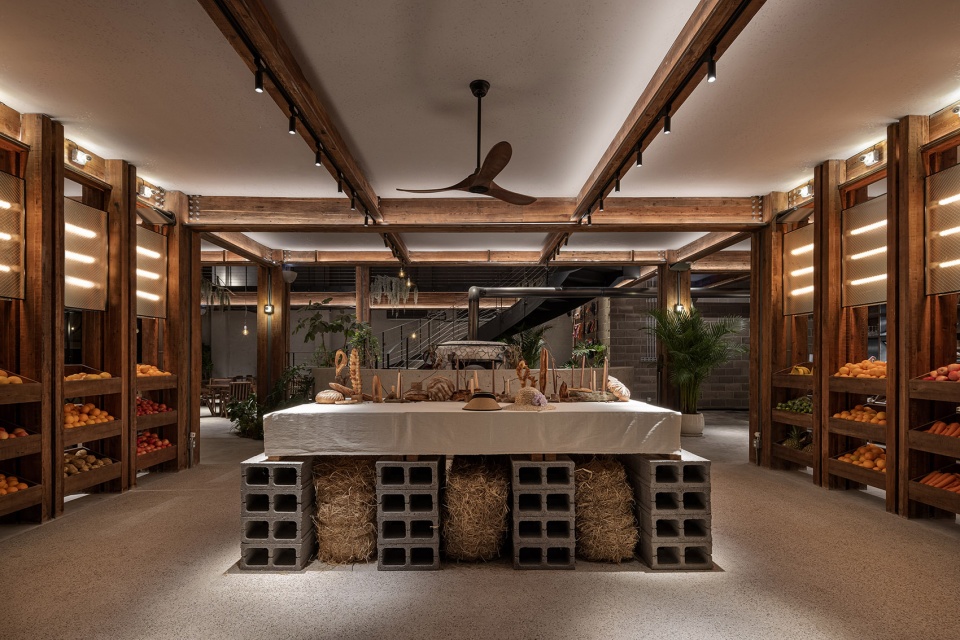
入口两侧设置开放式展架,搭配可拆卸果木箱,实现季节性陈列转换;以空心砖砌筑并搭建木箱的模块化展台上,摆放着造型各异的手工面包。
▼展台分析图,shelving systems analysis
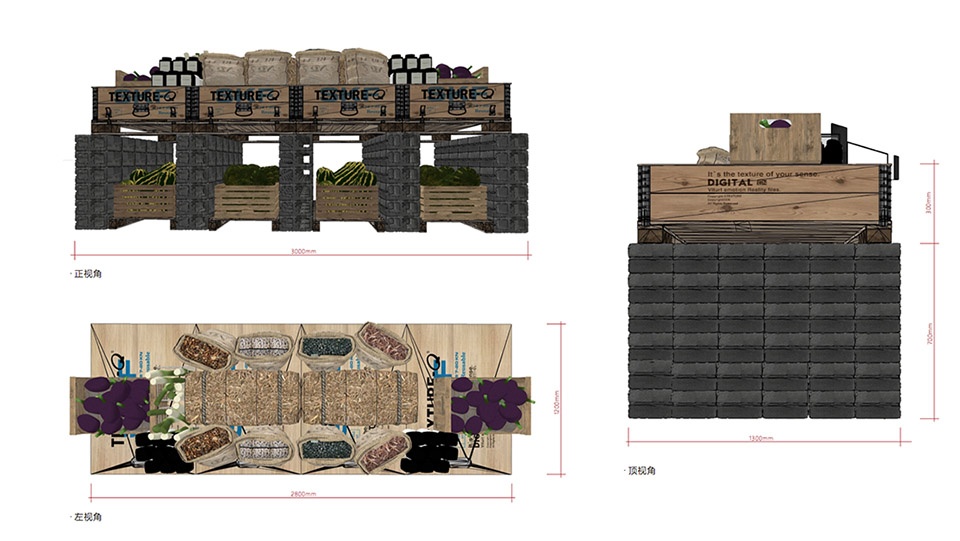
The entrance’s modular theater of seasons are defines hospitality thresholds—open shelving systems+reconfigurable orchard crates+breathing brick terraces transform static lobbies into culturally resonant, agriculturally dynamic portals.
▼空心砖展台和两侧的果木箱,Hollow block stand and fruitwood boxes on both sides
面包工坊位于一层的东南角,即入口右侧,引导顾客自然关注,避免与餐厅经营产生动线重叠,面包工坊提供当日新鲜面包外带,通过建筑南侧立面的玻璃实现对外展示。
▼面包工坊分析图,bakery counter analysis
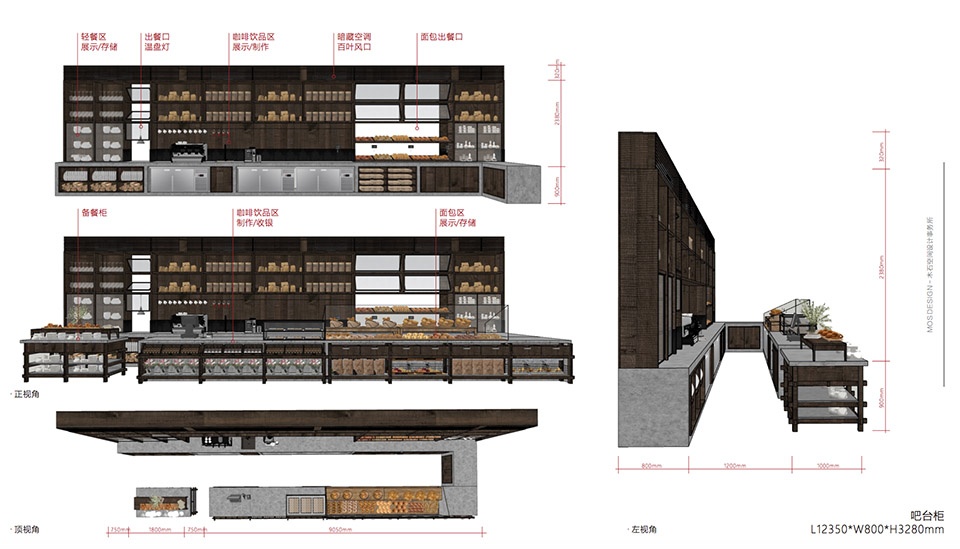
The southeast corner bakery emerges as akinetic landmark, orchestrating entrance choreography, operational solitude, and street-side gastronomic theater through strategic triangulation of sight lines, airflow, and urban engagement.
▼面包工坊柜台,bakery counter
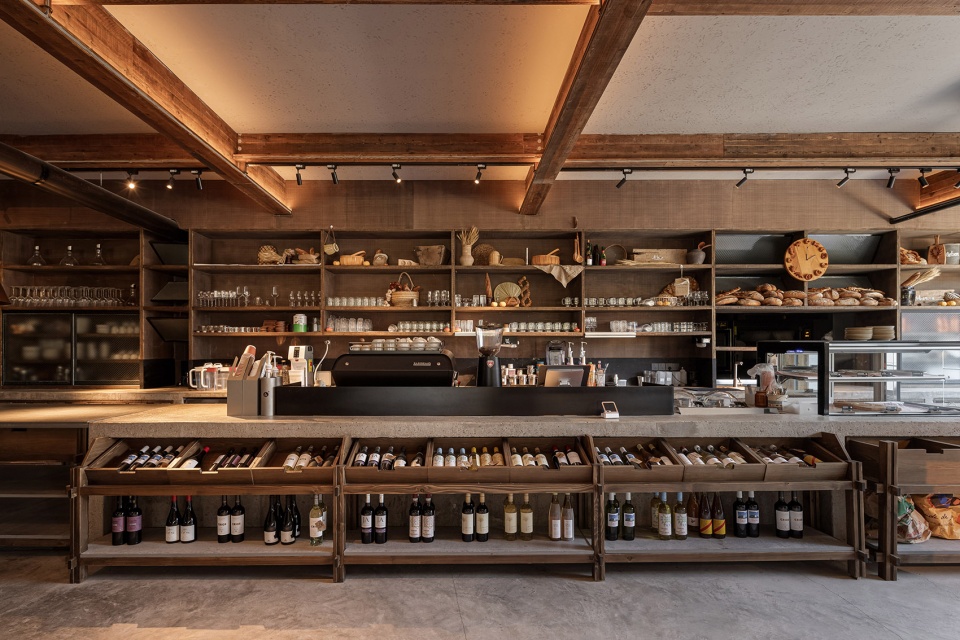
▼面包工坊柜台,bakery counter
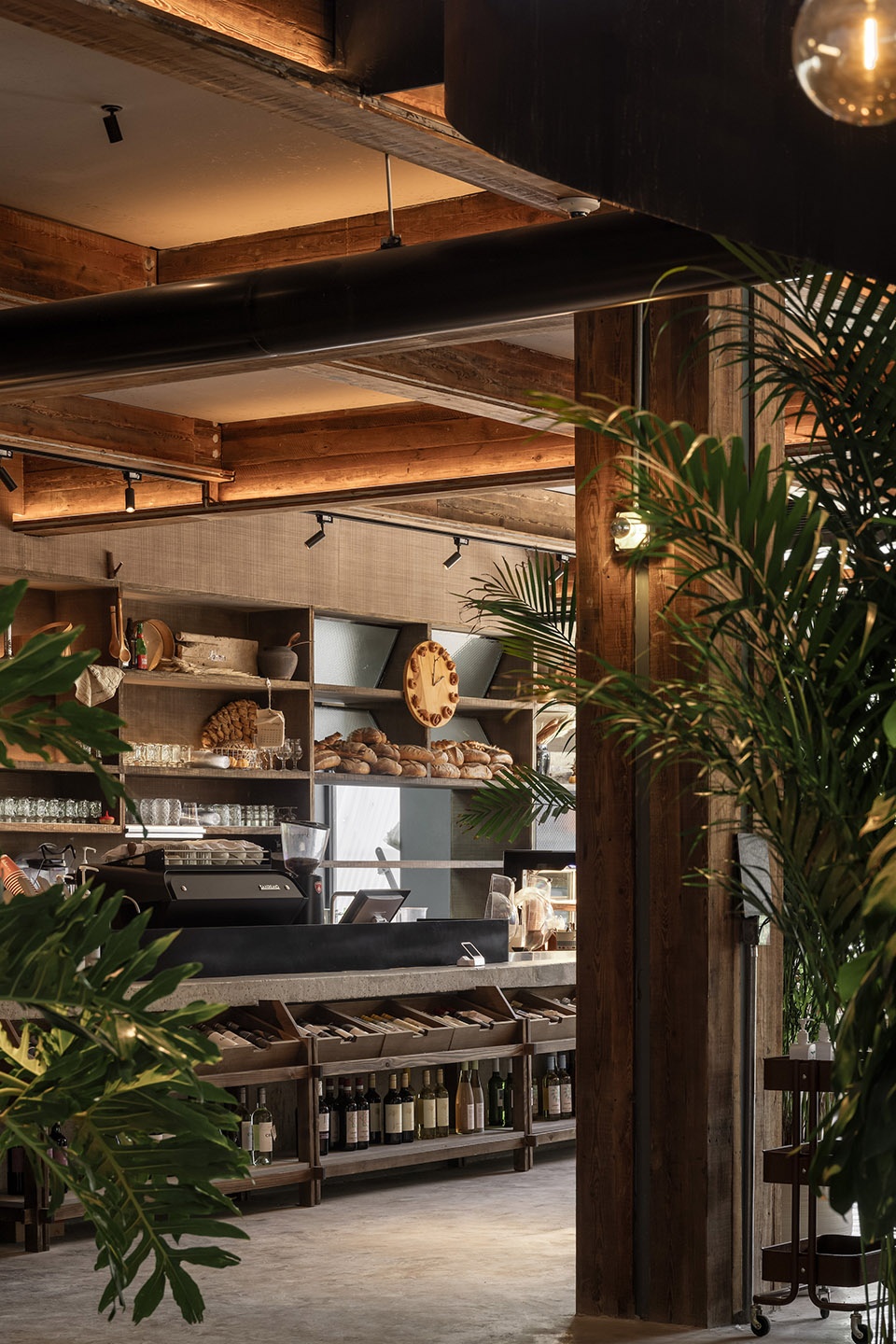
▼面包工坊柜台细部,bakery counter detail
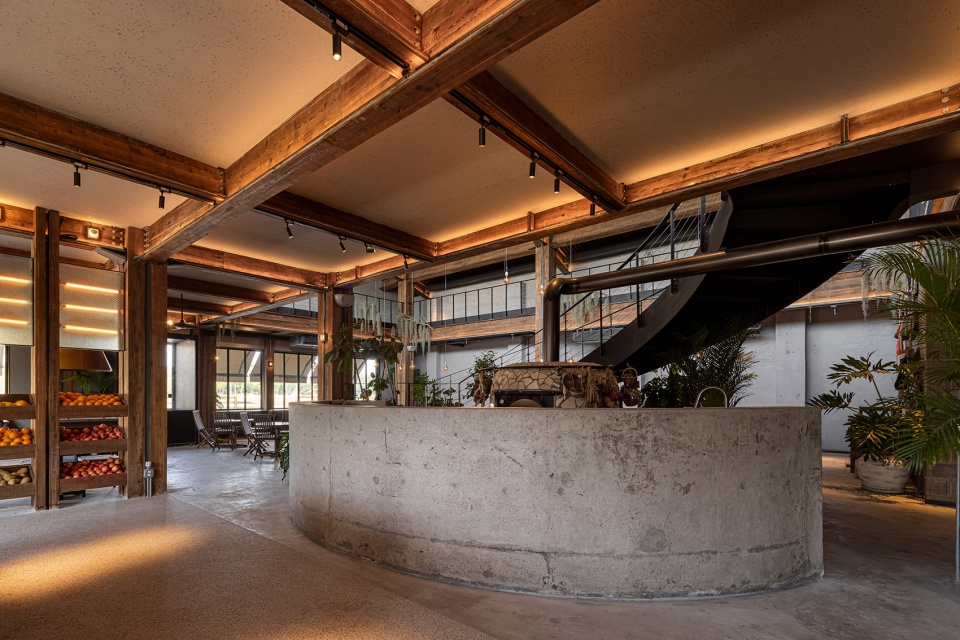
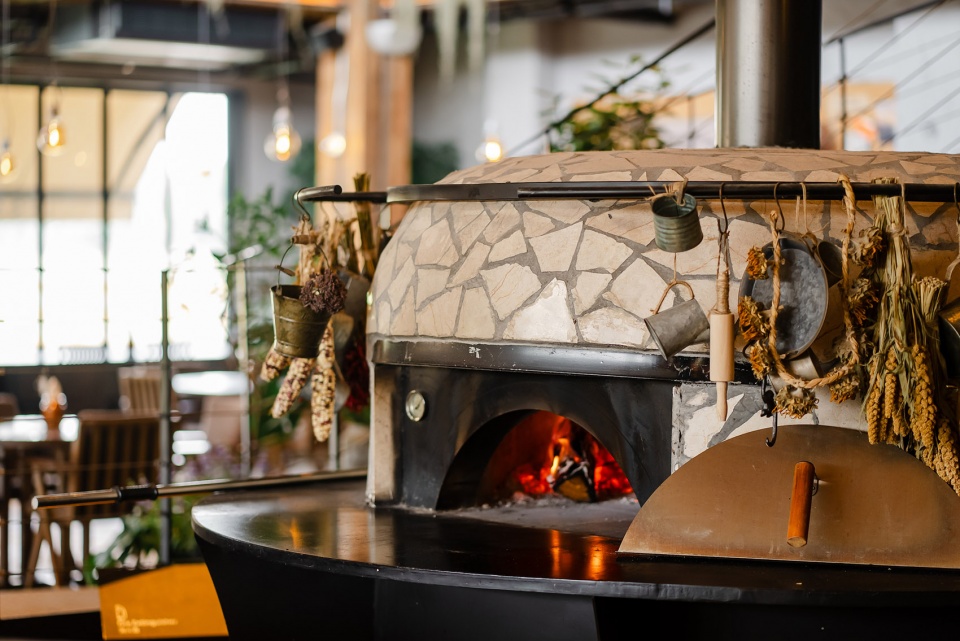
在一层中央区域,我们设置穹顶式明火披萨炉,以水泥砌筑的弧形操作台包裹,与相邻的旋转楼梯形成空间焦点,顾客沿楼梯上下穿行可360度观察披萨制作过程,强化”农场厨房”的仪式感,明火这种最原始的烹饪方式也会让果木和发酵小麦香气四溢,放大食物本真自然的味道。
The central pizza hearth becomes a primal gastronomic compass, fusing architectural choreography, multi-sensory archaeology, and thermal theater through a tectonic dialogue between fire, earth, and human circulation.
▼披萨烤制区,the central pizza hearth
▼披萨烤制区,the central pizza hearth
▼楼梯下留有储存果木的空间,space under the stairs for storing fruit trees
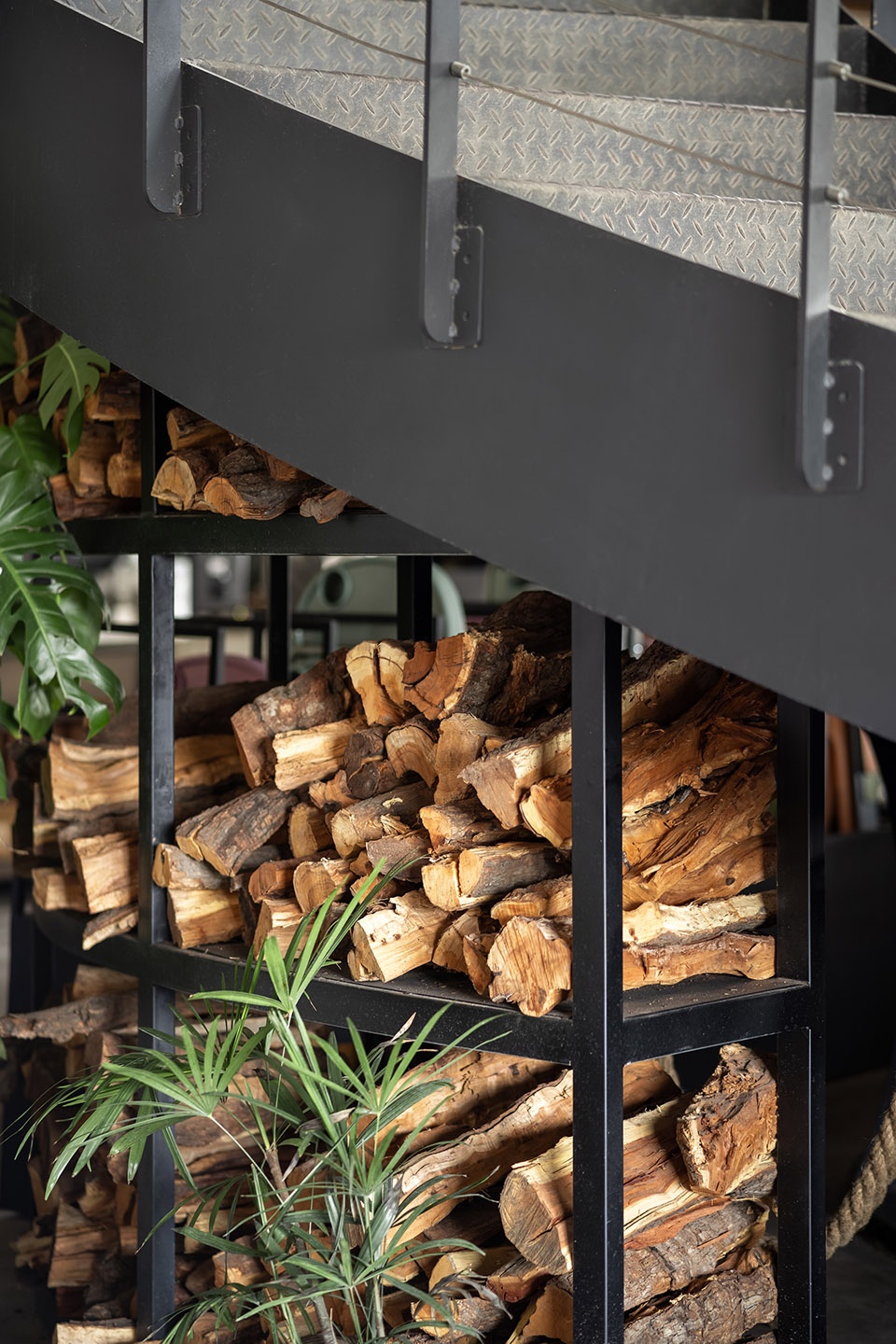
▼旋转楼梯,spiral staircase
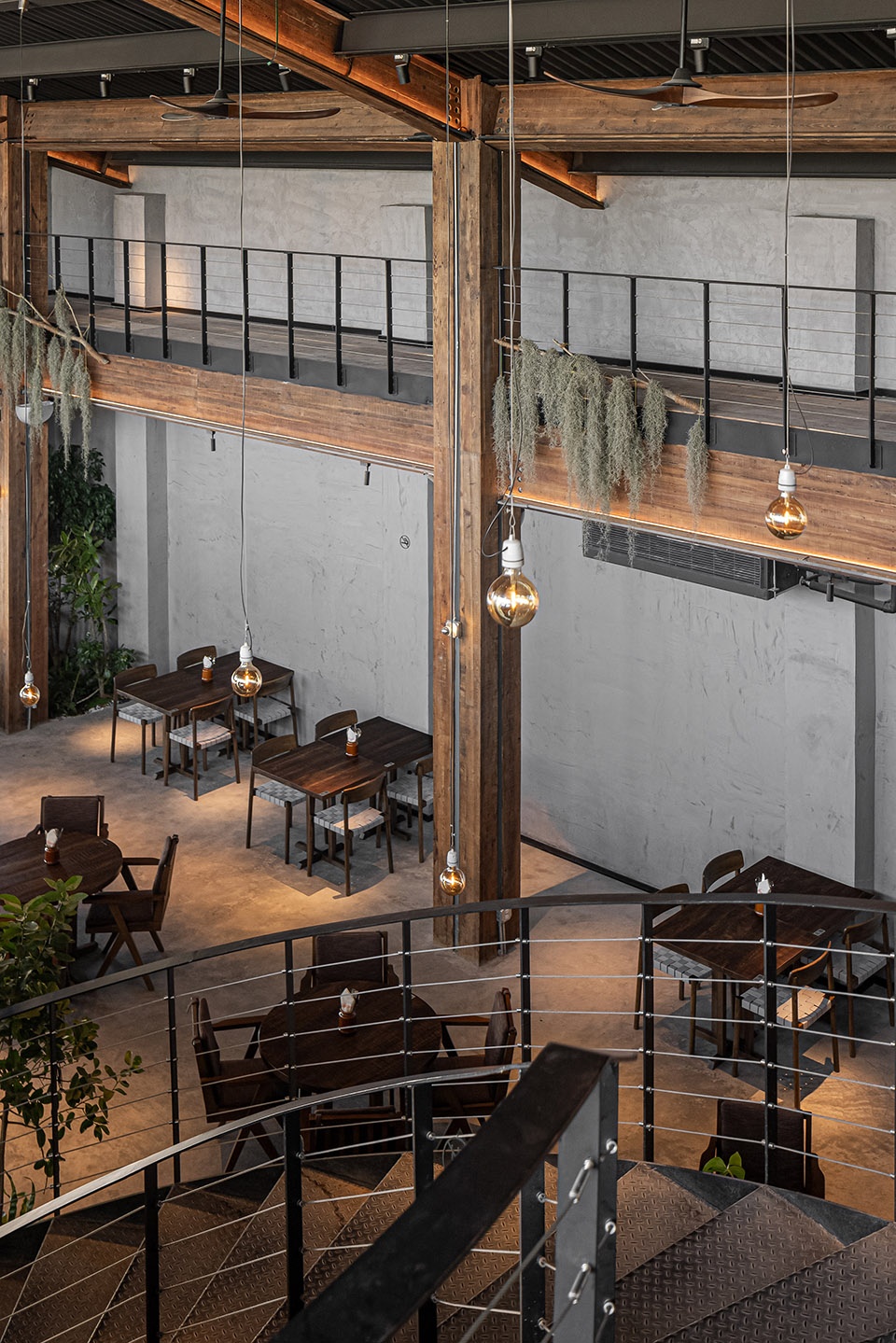
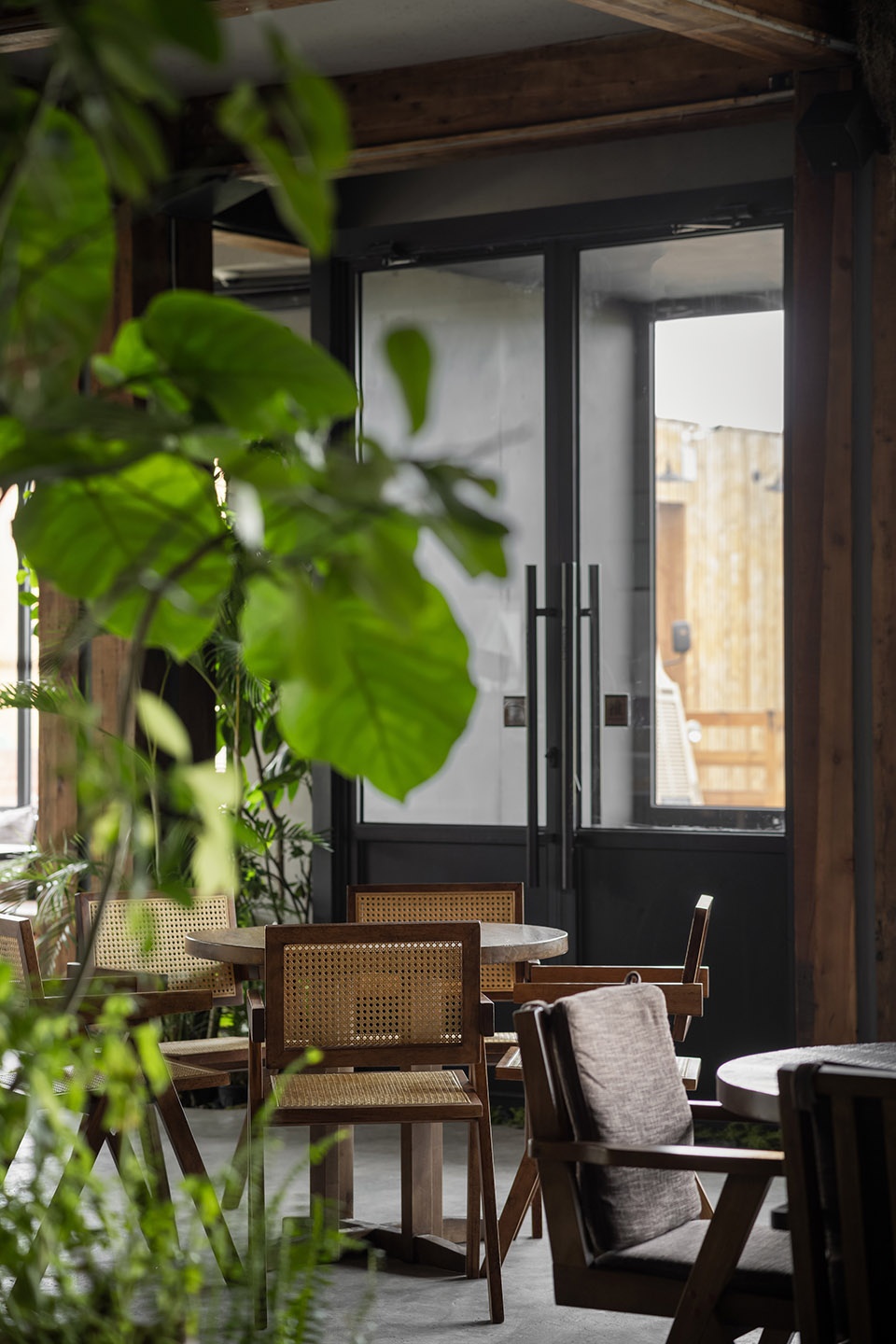
一楼就餐区散落在餐厅的北侧和西南区域,我们将建筑西侧的部分隔墙打开,创造更通透的视野,傍晚时分,面向西边的远处麦田,可收获一场落日余晖。
▼分析图,analysis diagram
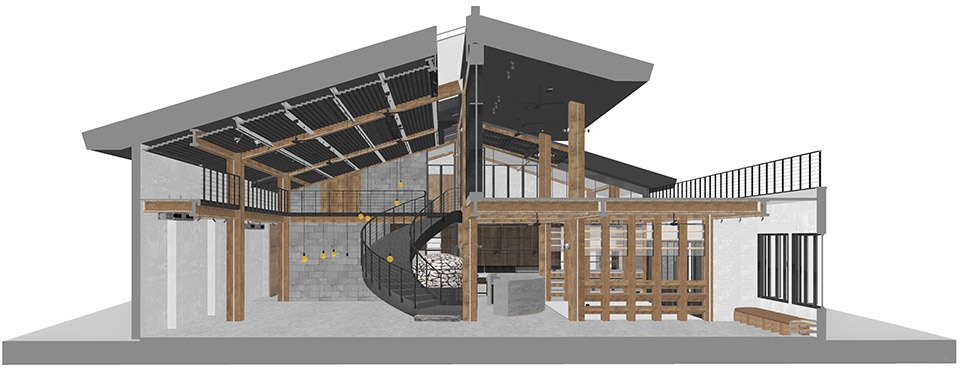
West-facing spatial choreography transforms dining zones into golden-hour observatories, engineering panoramic gastronomic theater through strategic demolition and celestial alignment.
▼一层就餐区,dining zone on the ground floor
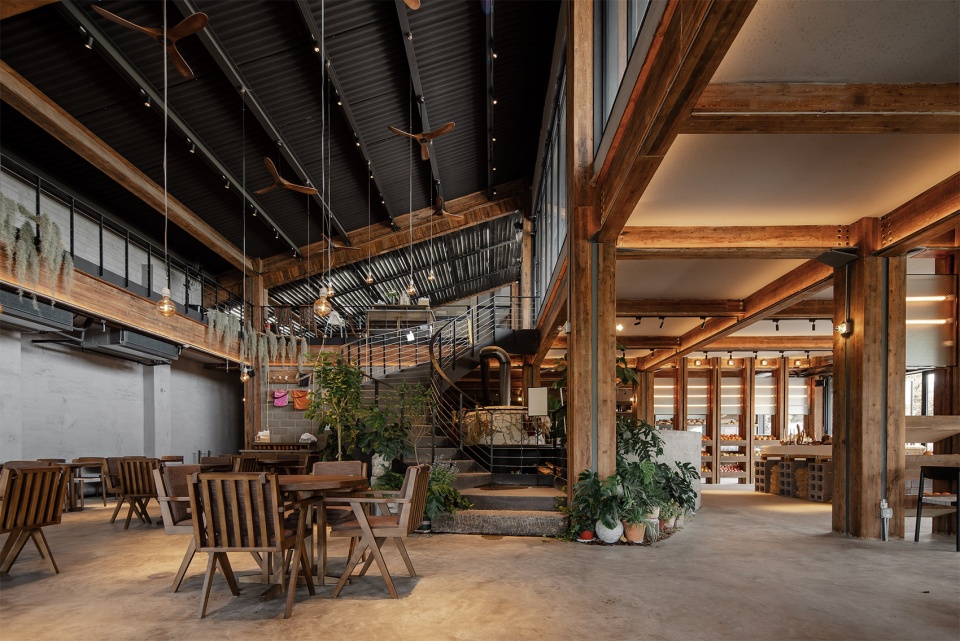
▼一层就餐区,dining zone on the ground floor
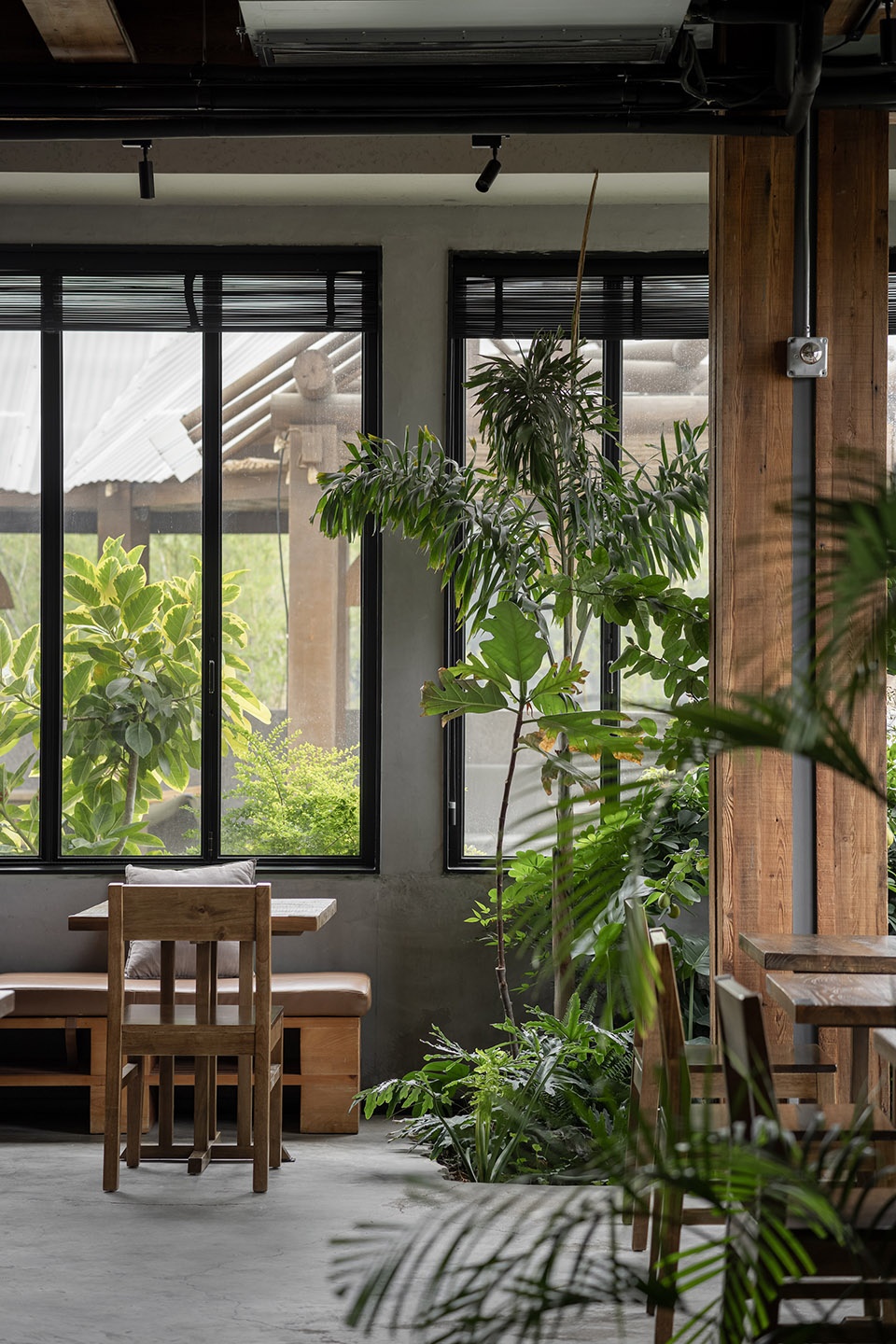
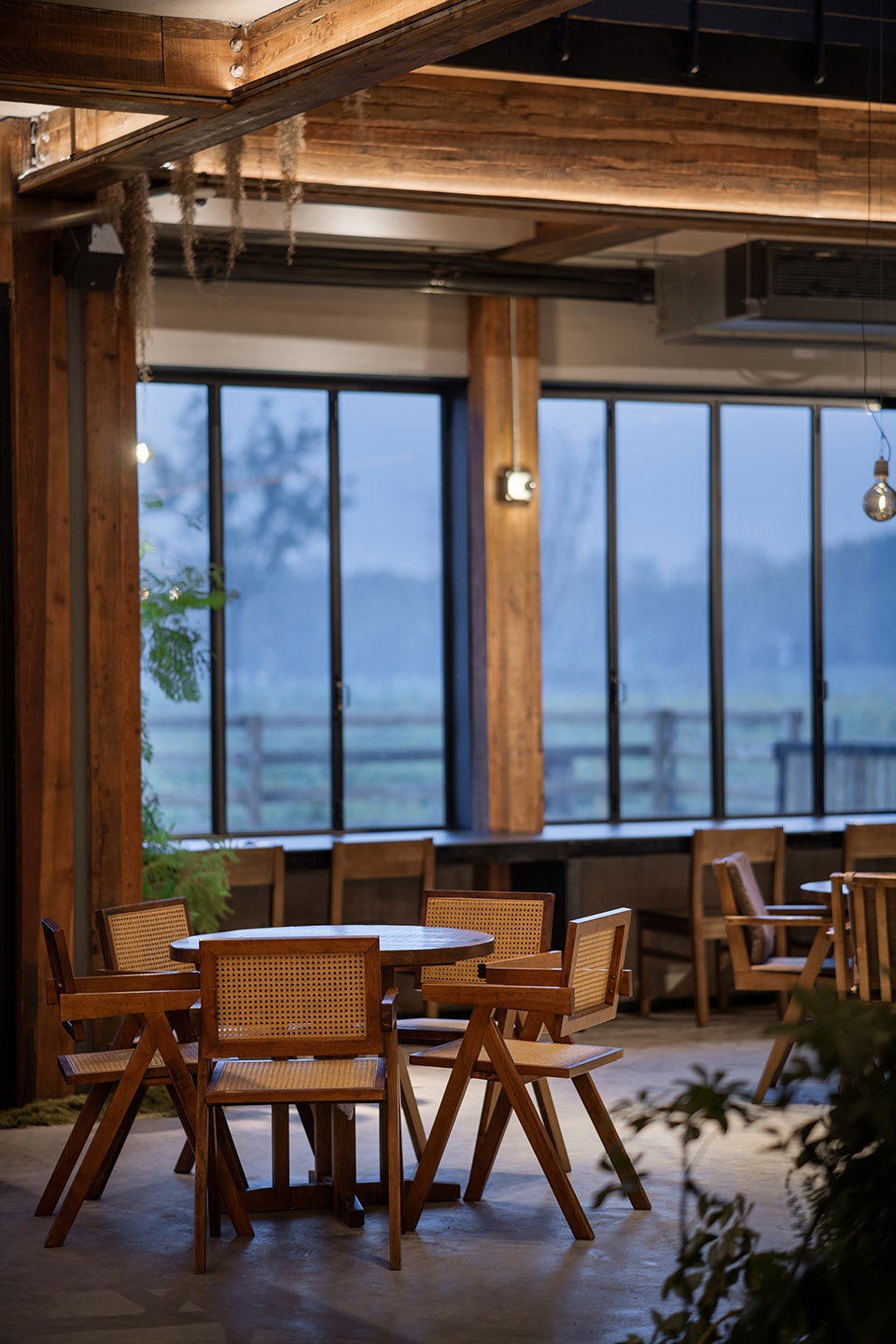
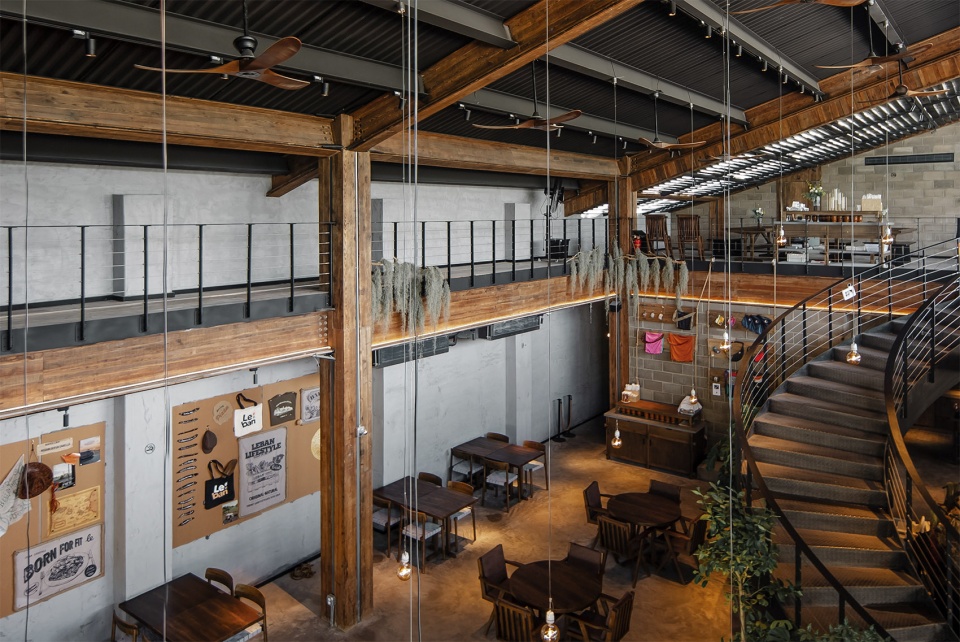
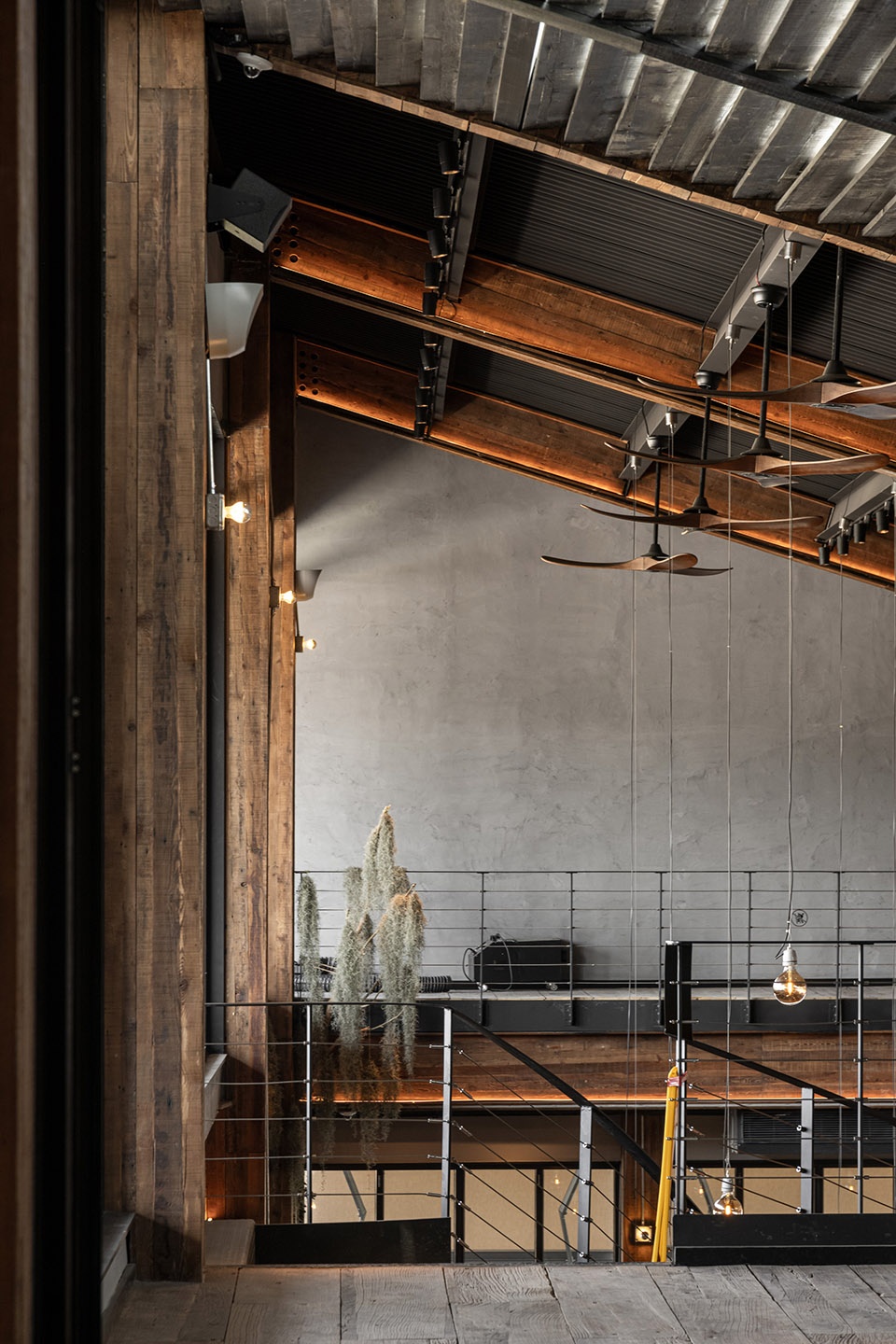
设计保留了原始场地的挑空区,顶部悬挂草木藤艺装置,通过钢结构楼梯衔接一、二层,保证视觉通透性并形成自然气流循环,动线由搭建层区域游走到挑空区,也产生空间尺度感的变化,有着更加开阔的空间感受。
Triple-height void transforms intovertical ecology theater, wherebotanical suspension systems choreograph microclimate circulationandsteel tracery frames spatial sonatas.
▼挑空区,void space
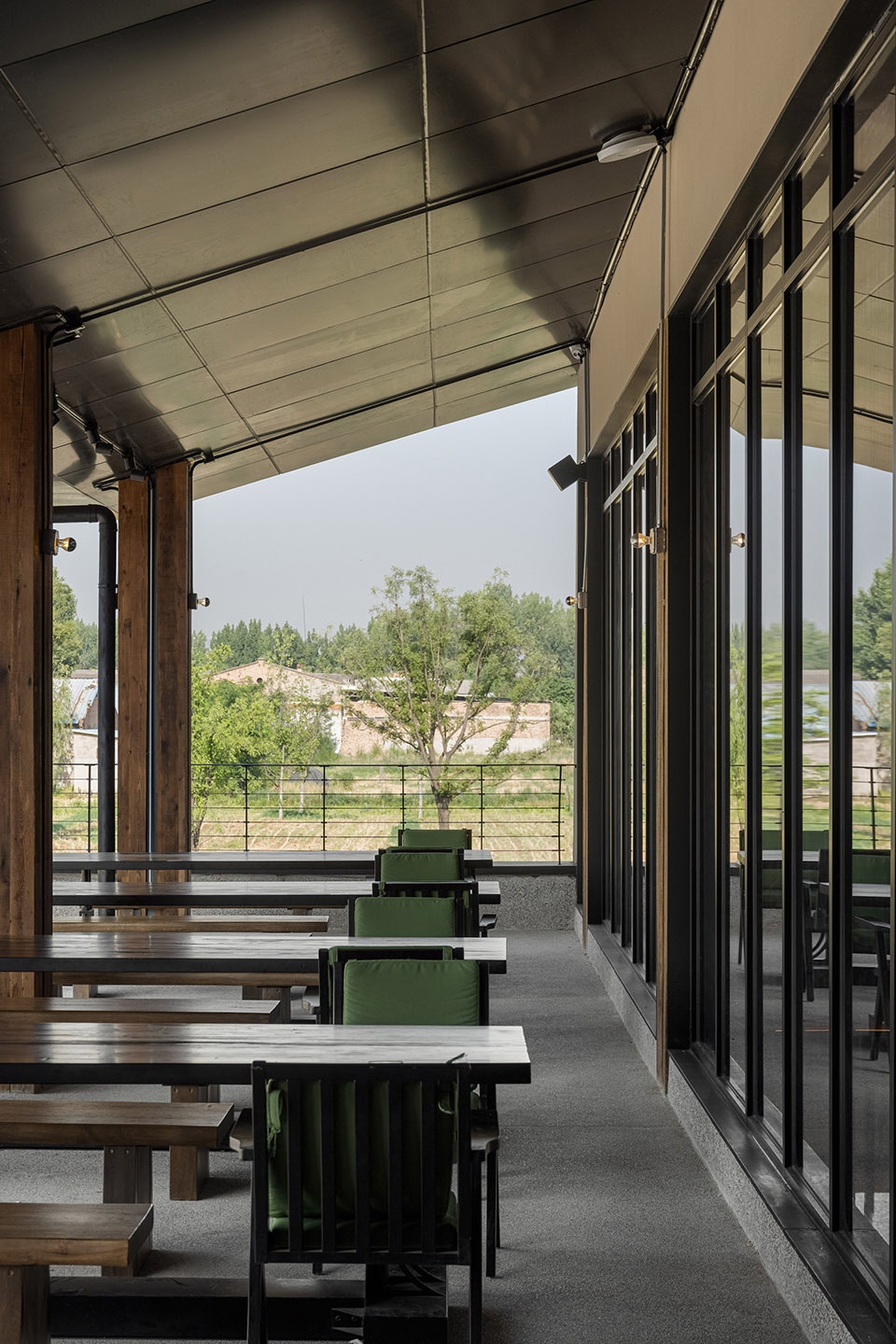
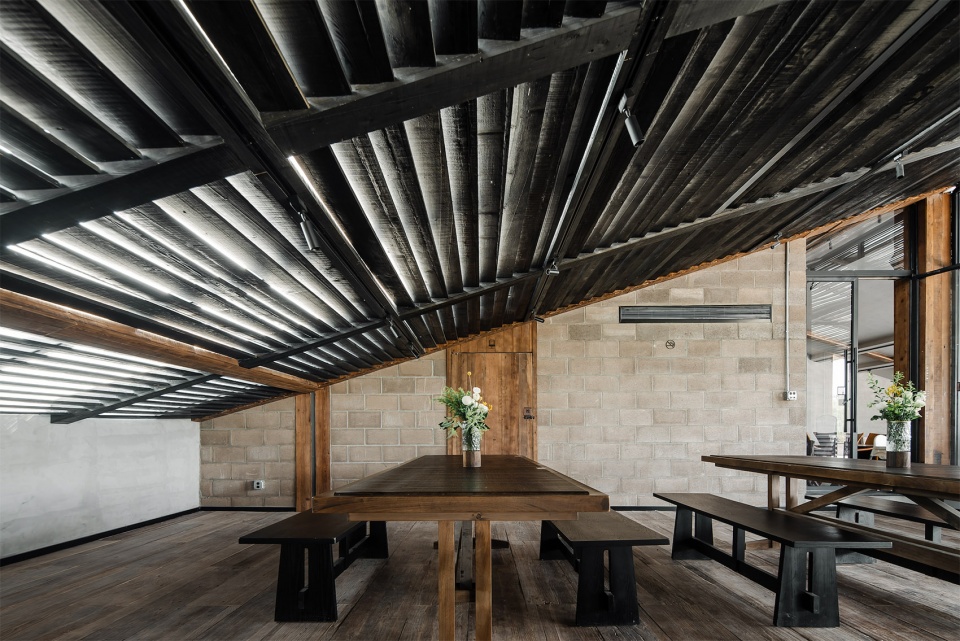
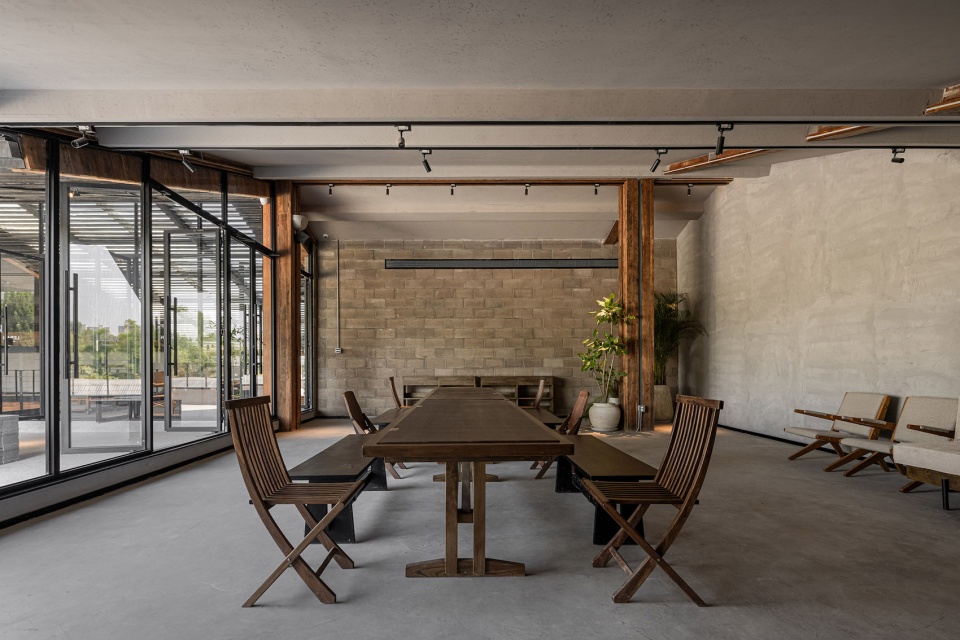
二层露台位于建筑南侧,在遮蔽的屋檐下,设置了户外就餐区,坐在这里,可以全景俯瞰农场。此外,我们在露台搭建了玻璃斜坡屋顶,以增加室内使用面积,在二楼靠近东侧,有一个单独的包间,延续餐厅的设计语言,长条桌可供多人或者团体用餐。
▼搭建部分屋面,analysis of partial roofing
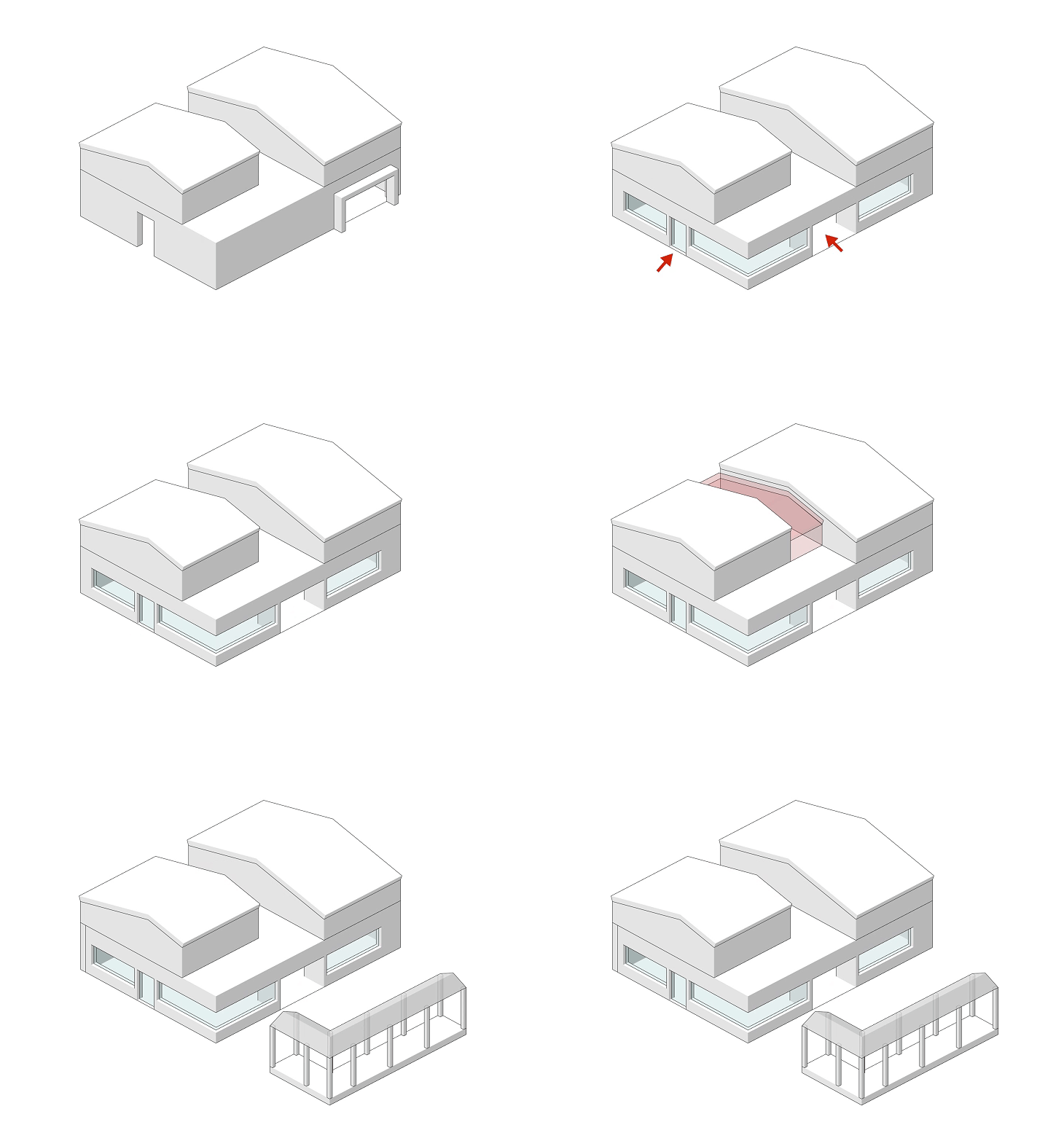
The second-floor terrace is situated on the south side of the building. Sheltered beneath an overhanging eave, it features an outdoor dining area offering panoramic views of the farm. Additionally, asloped glass roofhas been constructed over the terrace to expand the interior usable space. Near the eastern end of the second floor, a private dining room extends the restaurant’s design language, furnished with a communal table accommodating large groups or events.
▼二层室内,the second-floor interior
▼二层户外就餐区,the second-floor outdoor dining area
▼户外的大包间,outdoor private room
05结语
对樂班农场餐厅的设计实践,始于我们对农场型经济当代转型的持续思考,而更具启发意义的是,从餐厅投入经营的数据来看,证明了“农场叙事“的设计策略在餐饮空间中的商业潜力。由此,在后续与品牌的深度合作中,我们挖掘并提炼农场餐厅中有参考价值的部分,结合不同场地特质和商业定位,希望赋予品牌持续不断的商业活力。
Our exploration began with continuous reflection on thecontemporary transformation of farm-based economies. More significantly, operational data since the restaurant’s launch has validated the commercial potential of the “Farm Narrative” design strategy within dining spaces. Building on this, through in-depth collaboration with the brand, we have distilled transferrable design elements from the farm restaurant – adapting them to diverse site conditions and business positioning – to sustainably energize the brand’s commercial vitality.
▼“农场叙事“的设计策略,”Farm Narrative” design strategy
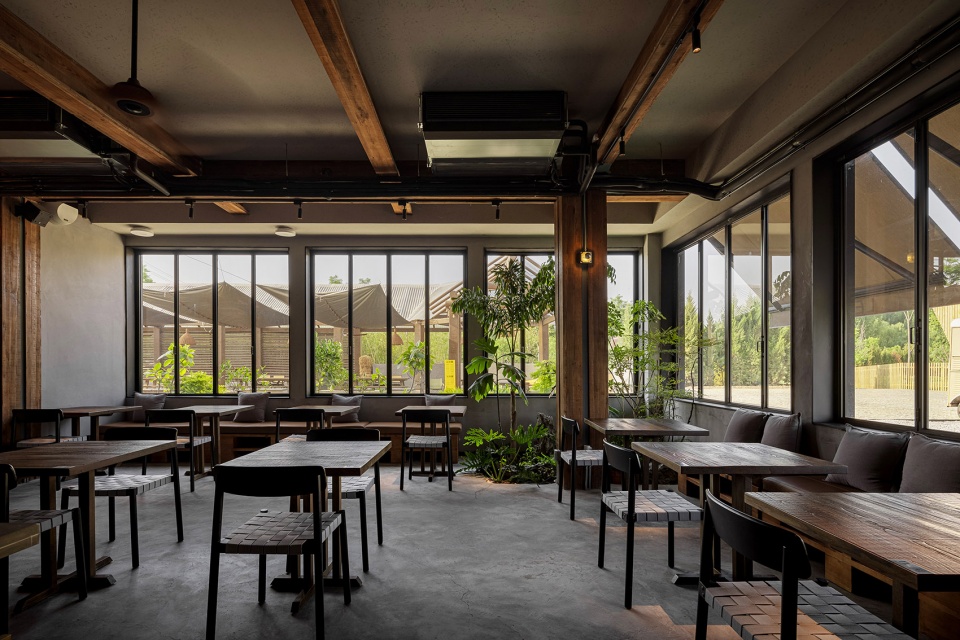
▼室内外的绿植关系,the relationship between indoor and outdoor greenery
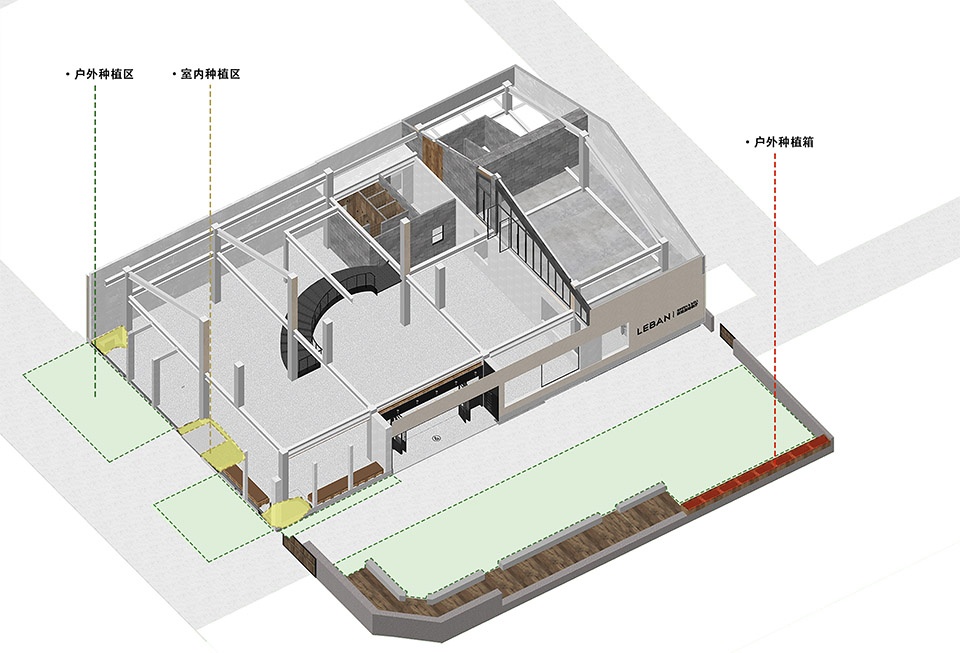
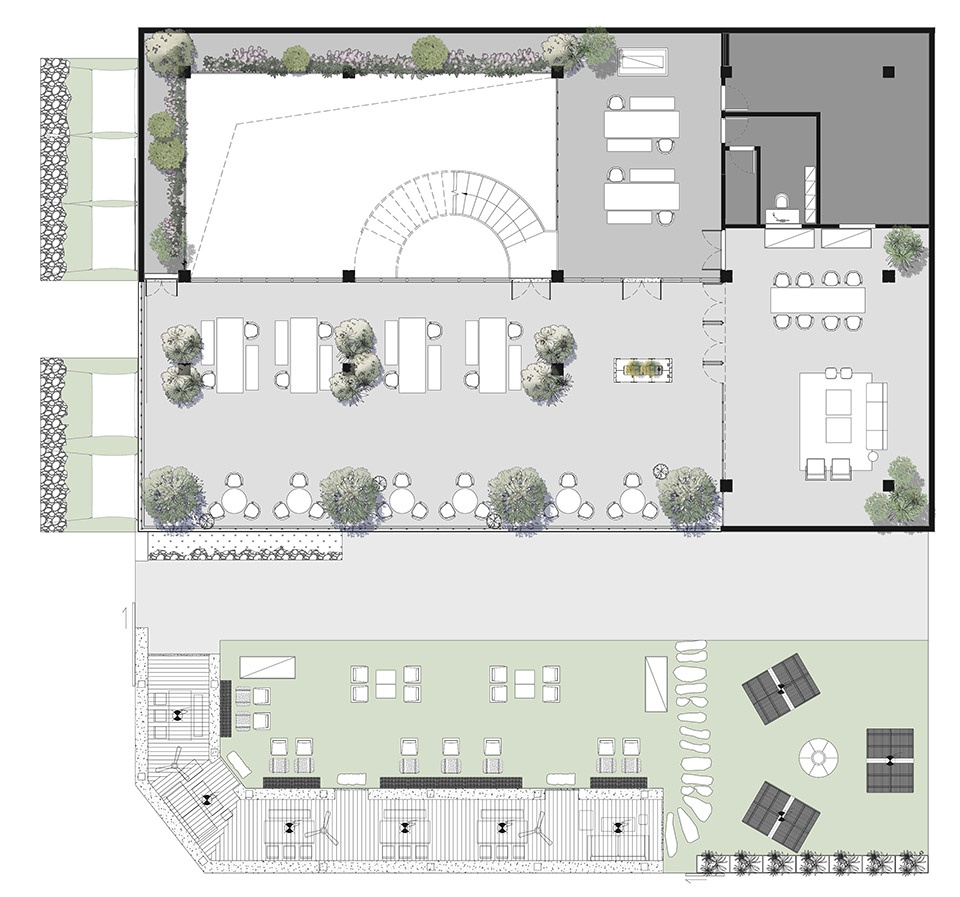
▼一层平面图,ground floor plan
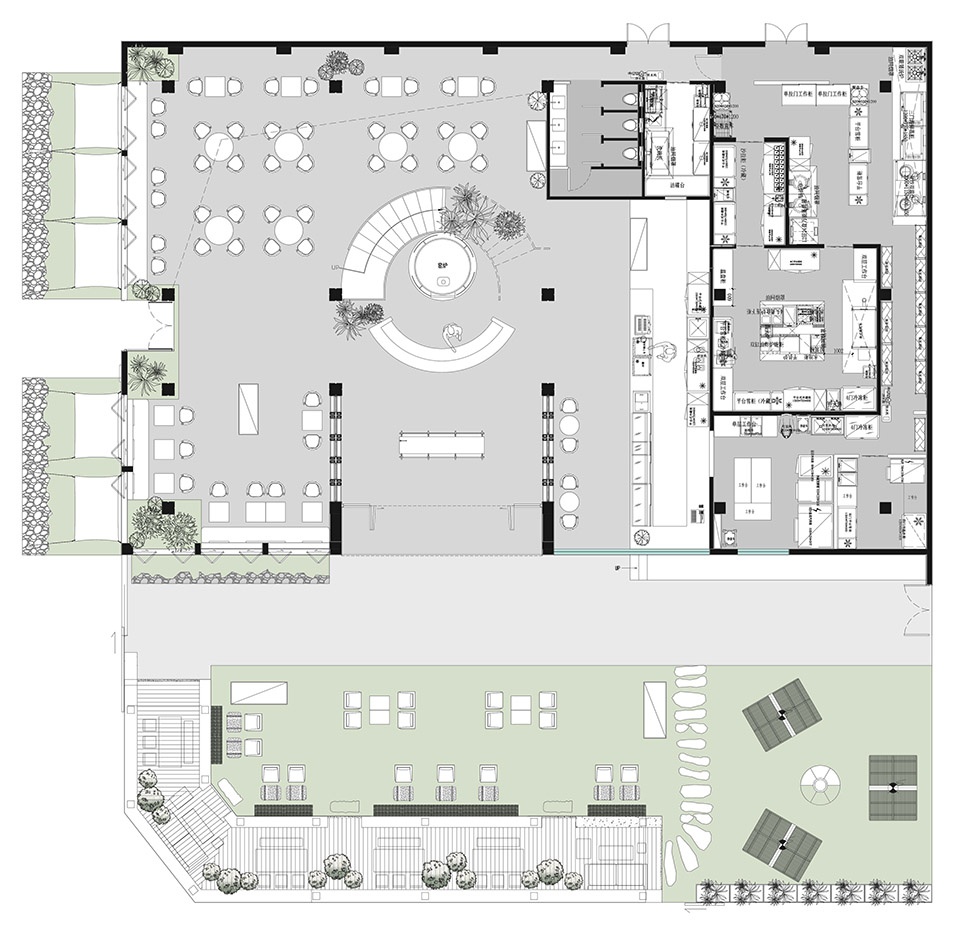
▼二层平面图,first floor plan