重庆粉壁公园兴盛北院 / 悦集建筑设计事务所
01
缘起|项目背景与前置思考
Origin|Project Background & Forward Thinking
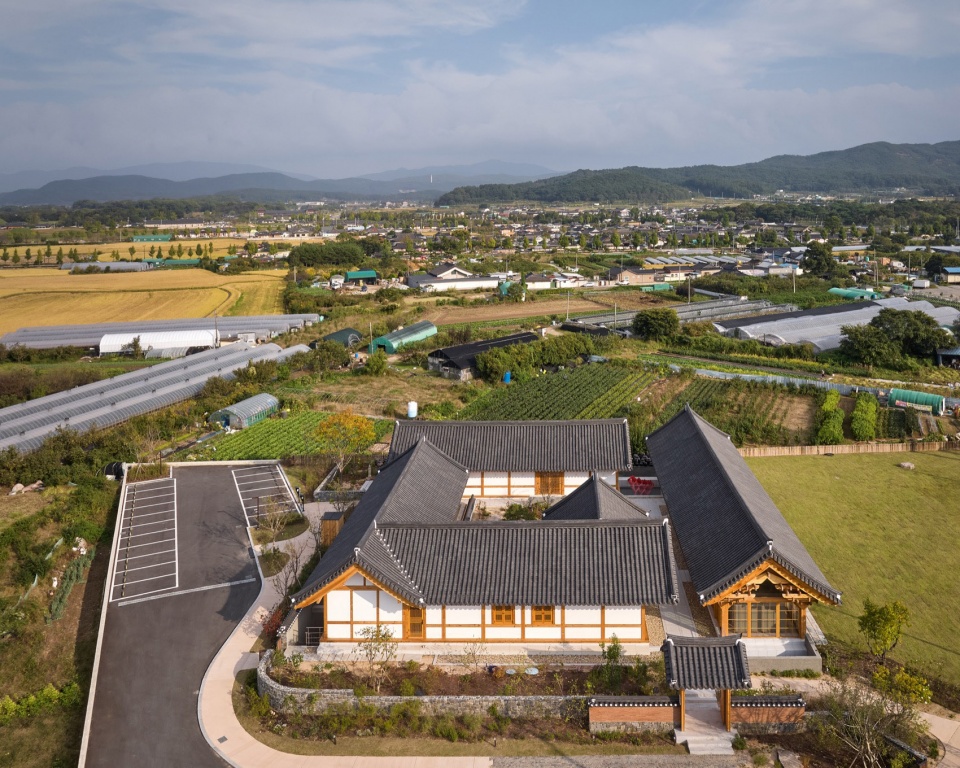
项目位于重庆市两江新区龙盛新城龙兴片区的粉壁公园内,向北是具有600年历史的重庆市历史文化名镇——龙兴古镇,向西连接着开发新区,是衔接城市新与旧的重要活动场所。同时,公园依然保留着一些乡村的肌理与特点,零星的分布着传统的乡舍与农房,也为周边社区市民提供了健身、休闲、娱乐的城市空间。
The project is situated within Fenbi Park in the Longxing Area of Longsheng New Town, Liangjiang New Area, Chongqing. To its north lies the 600-year-old Longxing Ancient Town, a designated historic and cultural town of Chongqing, while to the west it connects with newly developed urban areas, serving as a vibrant hub that bridges Chongqing’s historical heritage and contemporary urban development. Simultaneously, the park retains rural fabric and characteristics, with traditional countryside cottages and farmhouses scattered throughout. It functions as an integrated urban space providing fitness, leisure, and recreational amenities for surrounding communities, seamlessly blending historical preservation with modern urban living needs.
▼建筑与龙兴体育馆对话,Architectural Dialogue with Historic Towns
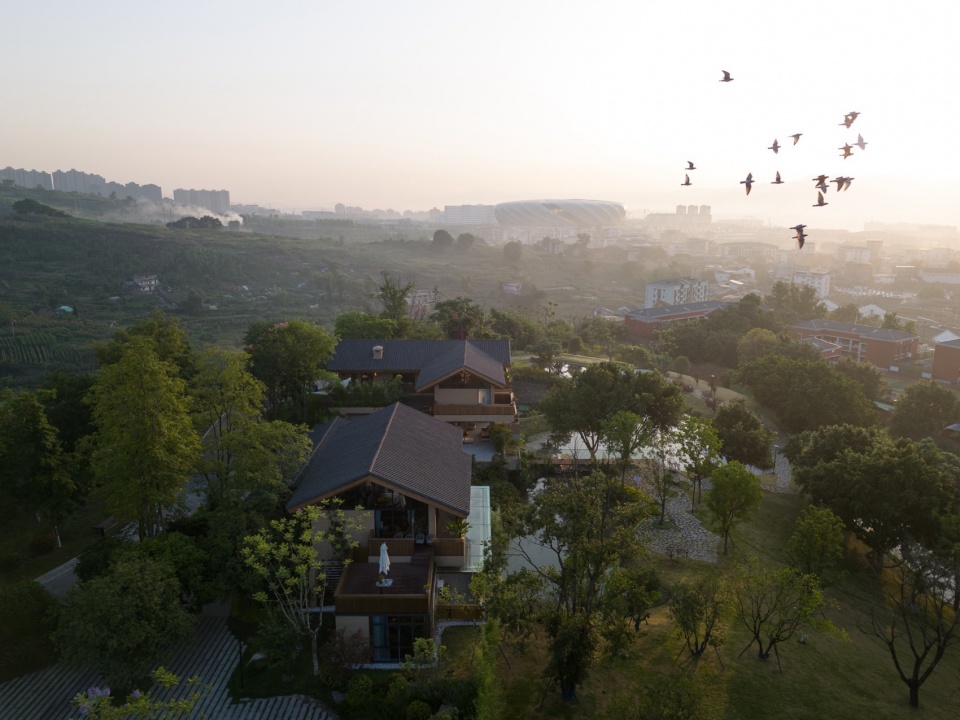
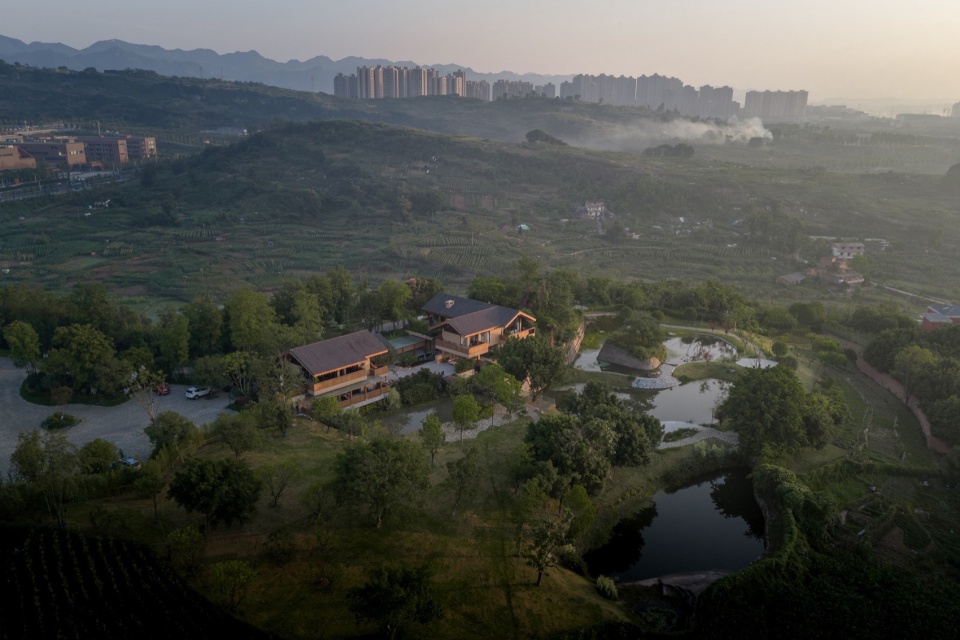
项目作为粉壁公园的地理与视觉中心,包含了公园配套、餐饮服务、等功能,建成后取名为兴盛北院。场地以秋季粉黛乱子草花海景观为核心特色,步道两侧种植有高大芦苇,初秋呈现紫白色与絮白色交织的野趣,飞鸟择木而栖,交织出一幅盎然的生态画卷。而在这样山水林湖环绕的场地之中,如何保持一种“克制”的思考,营造建筑自然叙事的同时,以当代的建筑语言回应周边景观秩序和延续古镇肌理,成为设计上的着手点。
As the geographical and visual core of Fenbi Park, the project integrates supporting facilities, dining services, and other functions. Upon completion, it will be named Xingsheng Beiyuan. The site centers around an autumn spectacle of pink muhly grass (Muhlenbergia capillaris) meadows, with tall reeds lining the pathways. In early autumn, the interplay of purplish-white blooms and fluffy white reed plumes creates a wild yet poetic ambiance, where birds perch on branches, weaving a vibrant ecological tapestry. Within this landscape framed by mountains, rivers, forests, and lakes, the design approach emphasizes architectural restraint. It seeks to harmonize natural storytelling with contemporary architectural language, responding to the surrounding landscape order while preserving the textural continuity of the ancient town’s urban fabric. The project becomes a dialogue between modernity and tradition, where spatial composition respects ecological rhythms and cultural heritage.
▼建筑融入自然环境中,Holistic relationship between architecture and environment
02
转译|肌理的传承与拓扑
Transcoding|The Inheritance and Topology of Fabric
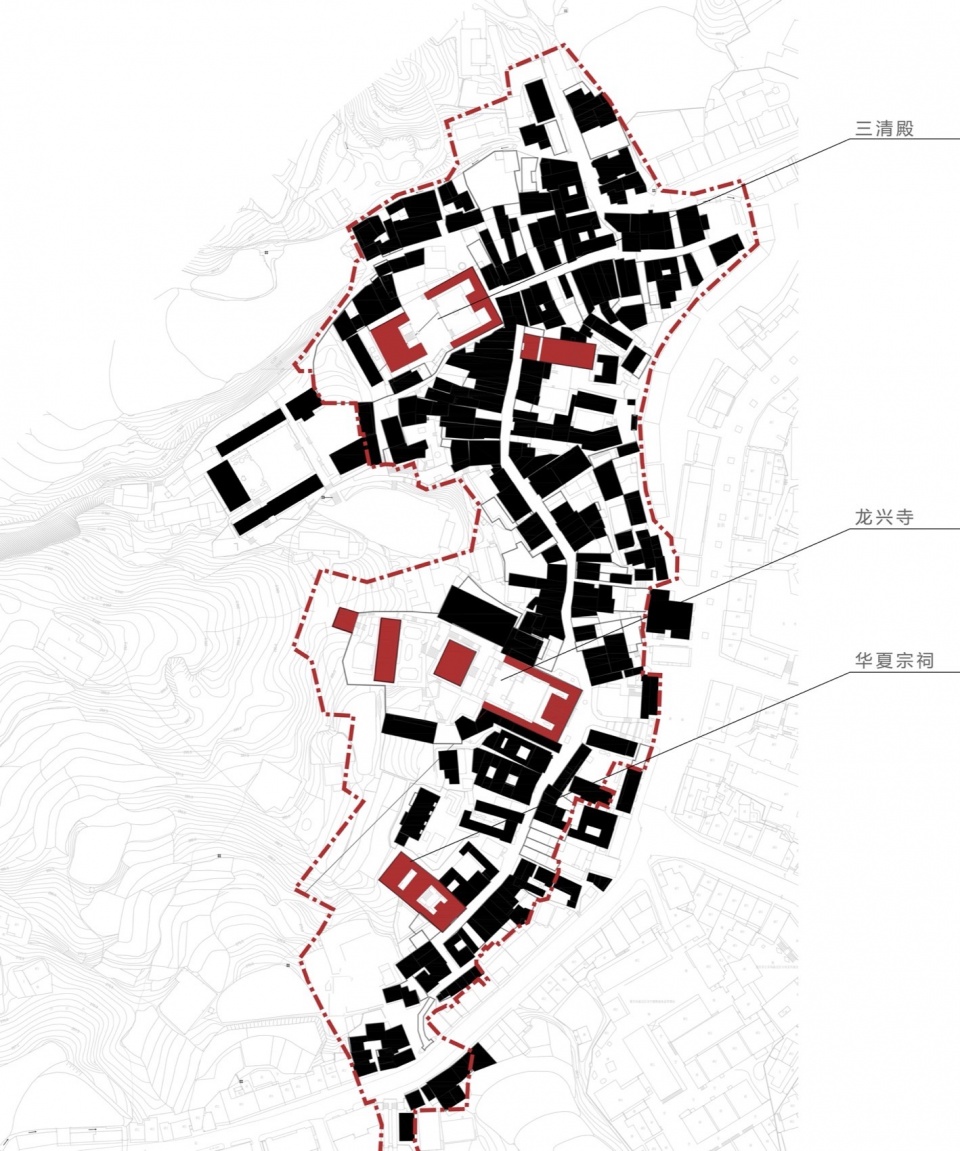
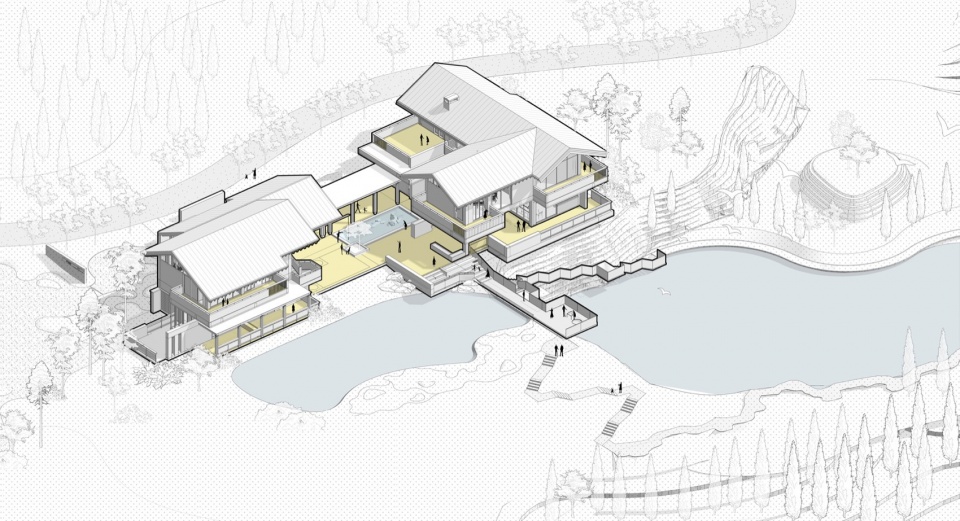
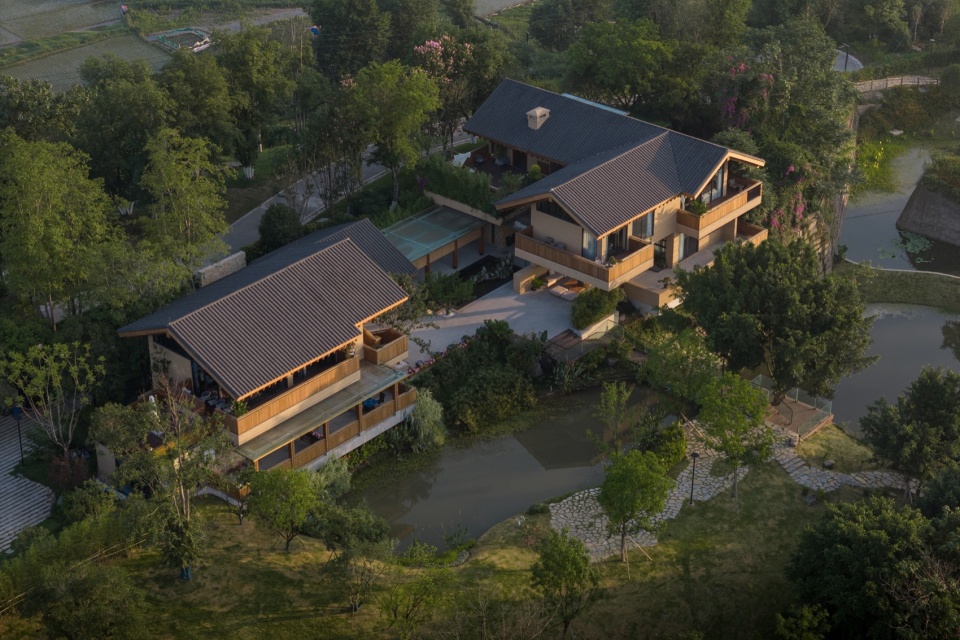
在整体布局上,设计以龙兴古镇传统民居的院落空间为原型进行转译,通过“化整为零”的策略,将传统围合式院落的界面打破,面向湖景形成半开放的“L”形空间组织,同时,最大程度保留场地原有的景观脉络,构建出具有呼吸感的围合关系,又消解体量带来的机构感,使设计深植于场地的地理基因与人文气质之中。
In its overall layout, the design reinterprets the courtyard space prototypes of Longxing Ancient Town’s traditional dwellings through a ‘breaking the whole into parts’ strategy. This approach disrupts the fully enclosed courtyard interface, instead forming a semi-open “L”-shaped spatial organization that opens toward the lake view. While preserving the site’s original landscape fabric to the maximum extent, it creates breathable enclosure relationships that dissolve the institutional bulkiness, grounding the design deeply in the site’s geographical DNA and cultural ethos.
▼古镇肌理的拓扑与转译,Topological Translation of Historic Town Fabric
▼半开放的院落组织,Semi-Enclosed Courtyard Configuration
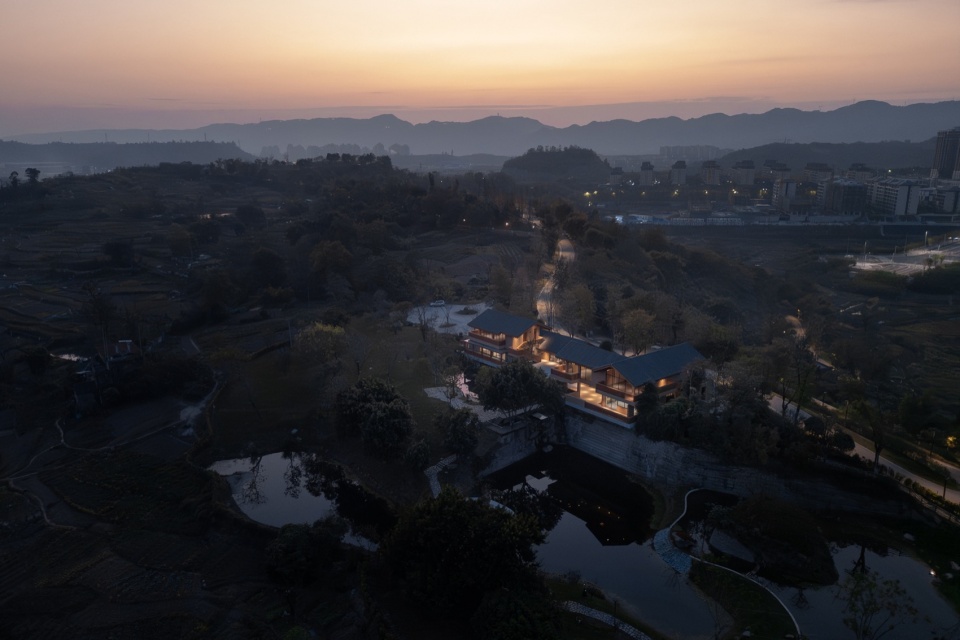
▼夜景鸟瞰,Aerial view in night
03
边界|自然的掩映与显象
Boundaries|Natural Concealment and Architectural Emergence
“奇亭巧榭,构分红紫之丛;层阁重楼,回出云否之上,隐现无穷之态,招摇不尽之春。”
《园冶》中反复强调的”重叠掩映”手法,在现代空间设计中展现出独特魅力,建筑、植物与水体相互掩映,从而在人的视觉感知中,后方的事物呈现出不完整的形象,这种“掩映”的处理方式,赋予人对空间的无限想象。
“Exquisite pavilions and open-air xie (pavilions) emerge like gemstones nestled within crimson and purple blossoms; multi-tiered towers and overlapping chambers rise above the clouds, their forms dancing between concealment and revelation in endless permutation. This eternal sway of spring’s vitality transforms static architecture into a living tableau where nature and human artistry intertwine.”
The”overlapping interplay.”technique emphasized repeatedly in Yuanye (Treatise on Garden Architecture) reveals unique charm in contemporary spatial design. Architectural elements, vegetation, and water features interweave in a layered dialogue, creating incomplete glimpses of rear elements through human visual perception. This “interplay of concealment and revelation.” endows spaces with boundless imaginative potential.
▼面向公园的入口,Park-Oriented Entrance Portal
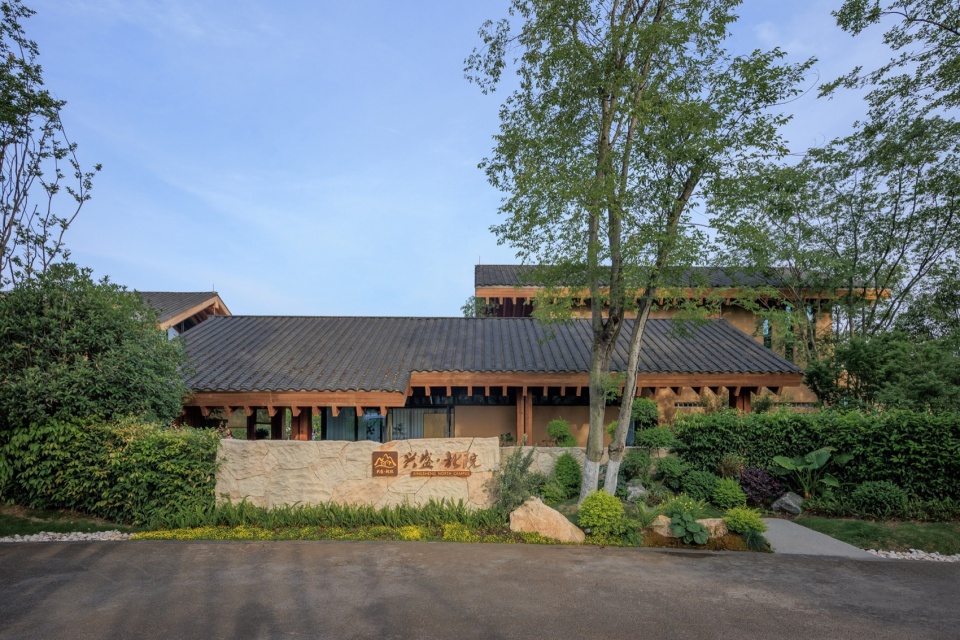
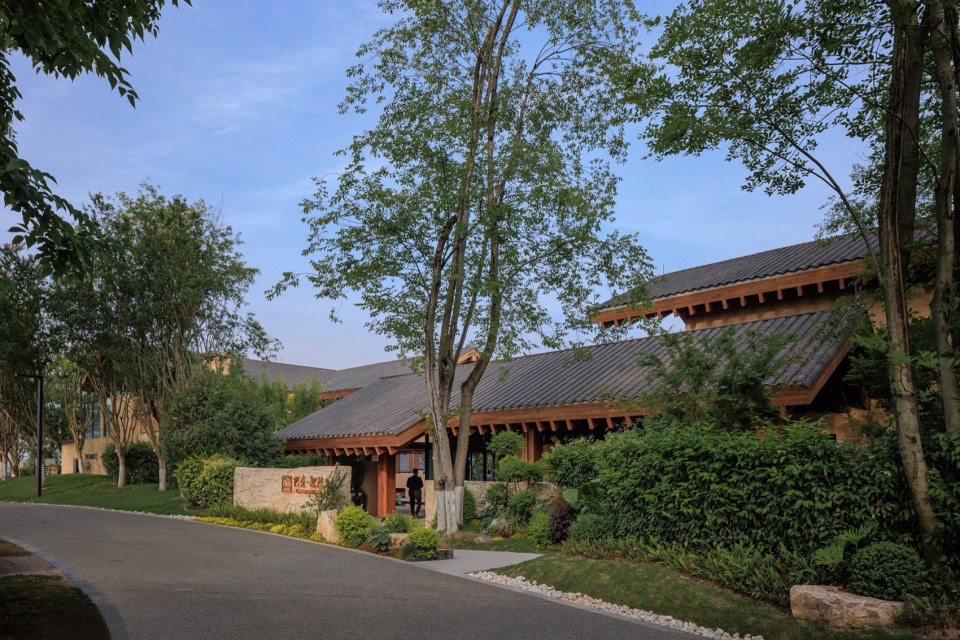
▼建筑“隐”于树木与湖景之中,Architecture Ensconced in Trees and Lakescape
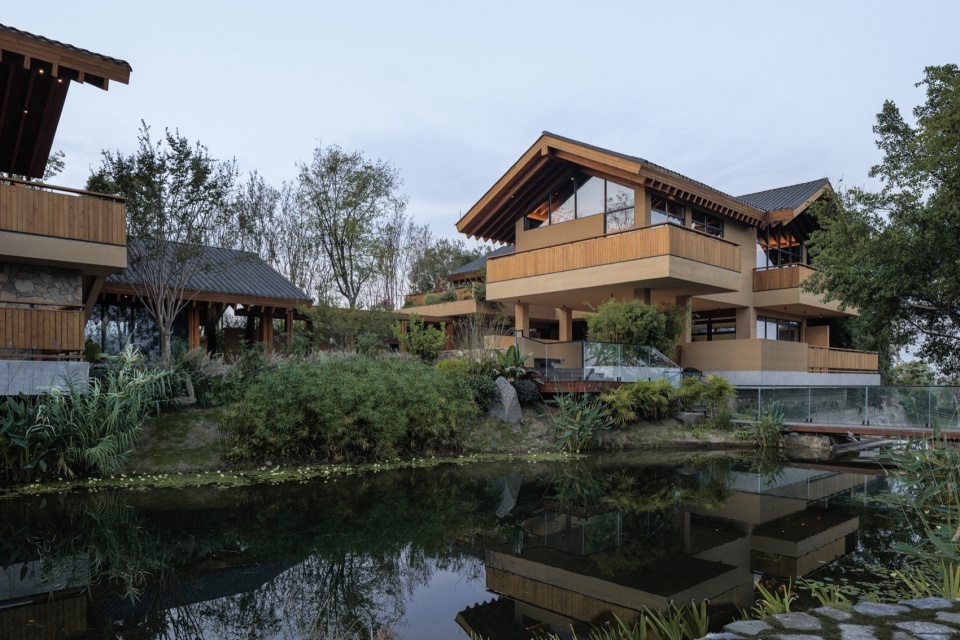
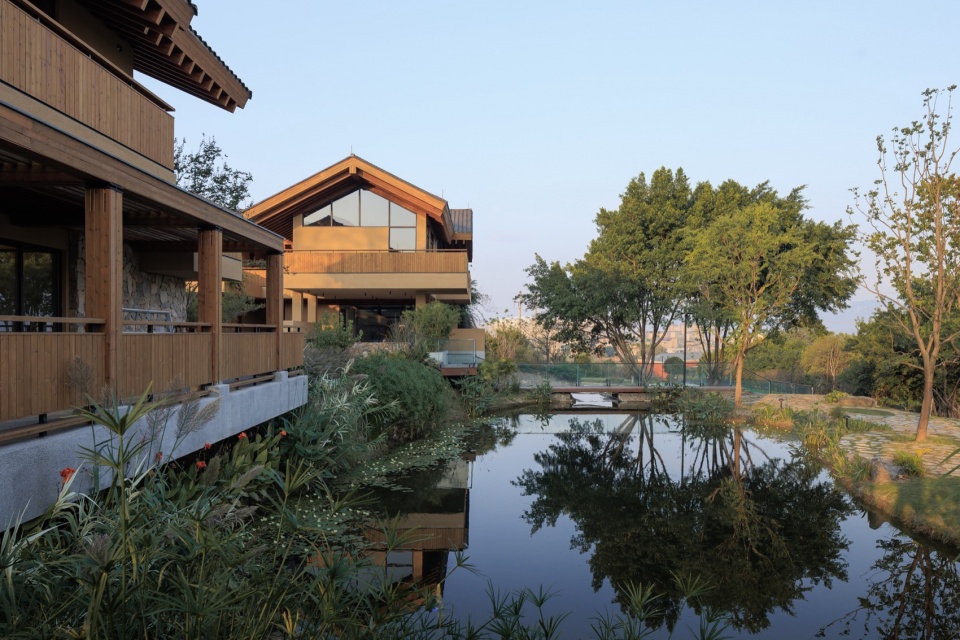
建筑入口借助前院景观、毛石片墙与接待厅的体量,形成遮掩转折的路径,不断地引导来访者的视线,强化进入庭院前景致的变化。当来访者踏入庭院后,山林湖景顷刻映入眼帘,场地中原生的树木掩映在建筑之间婆娑,视觉图景在此展开。
The building entrance employs a concealed and turning path formed by the forecourt landscape, rubble stone walls, and reception hall massing, continuously guiding visitors’ gazes while amplifying the dynamic shift in scenery upon entering the courtyard. Upon stepping into the courtyard, mountain-lake vistas suddenly unfold before visitors’ eyes as indigenous trees interweave gracefully between architectural forms, composing a visual tableau that frames the site’s ecological narrative.
▼入口小径与片墙,Entry Path and Freestanding Wall
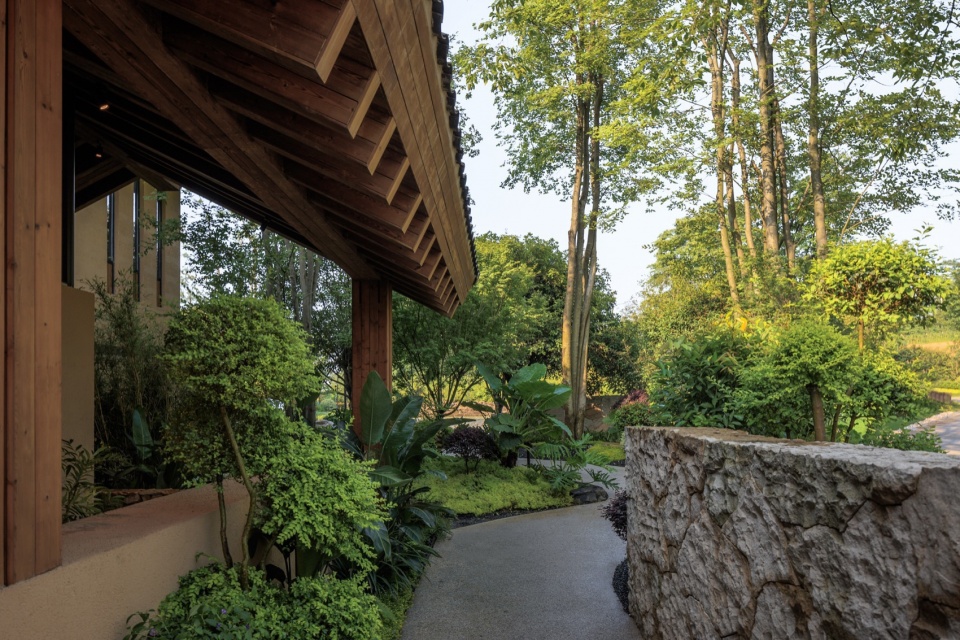
▼进入餐厅前的飞檐一角,
Upturned Eaves Vista at the Dining Approach
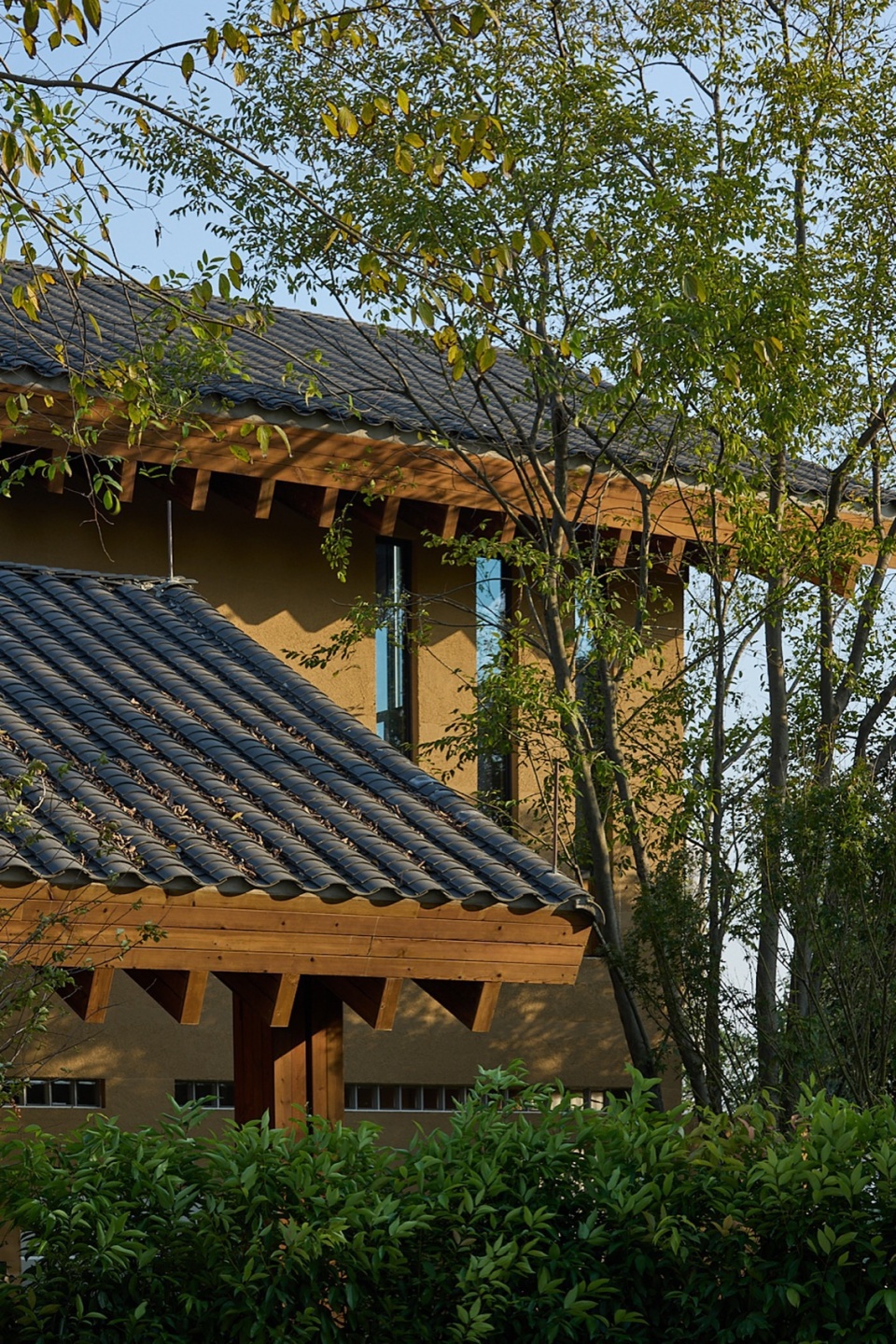
设计最大程度保留了场地原有的景观脉络,将餐厅“隐”于自然的树木与湖景之中,建筑空间也围绕湖景展开,底层设外摆就餐区与咖啡吧,提供了对景的休息空间,而沿湖栈道也为参观者提供了亲水游玩的平台,营造出”视线可穿越、行为可漫游”的体验,也使得来访者完成了从观景者到景观构成者的角色转换,让人们在与自我相处的时光中,找到内心的平静与和谐。
“The design preserves the site’s ecological continuity by weaving the restaurant into its natural tapestry of trees and lakeshore. Spatial organization orbits the lake view – ground floor al fresco dining and a lakeside coffee bar frame contemplative vistas, while a hydrophilic boardwalk extends the promenade into exploratory meandering (漫游). This creates permeable sightlines and free-flowing pathways that dissolve boundaries between observer and landscape, transforming visitors into active participants who rediscover inner calm through immersive self-reflection.”
▼院落与水景的关系,Courtyard-Waterscape Synergy
04
路径|檐下空间的“流动”
The path|Fluid Eaves Space
“深奥曲折,通前达后,全在斯半间中,生出幻境也”,中国古典园林的空间营造中,”廊”与”半间”作为核心衔接要素,构建了独特的空间叙事逻辑,实现了闭合、半开敞及开敞式空间的多维串联,形成建筑与自然、室内与室外、近景与远景之间的无缝连接。这种空间拓展方式,使得园林中的元素通常展现出一种自然而无秩序的状态。“或蟠山腰,或穷水际,通花渡壑,蜿蜒无尽“,自由而散漫。
“Profoundly intricate, connecting the front and the rear, all within this half-space, creating a realm of illusion” – In the spatial composition of Chinese classical gardens, the “lang” (corridor) and “banjian” (semi-enclosed space) serve as pivotal connecting elements. They establish a unique spatial narrative logic that interweaves enclosed, semi-open, and open spaces across multiple dimensions, forming seamless transitions between architecture and nature, indoors and outdoors, foreground and background. This spatial extension method allows garden elements to manifest a state of natural disorder. “Winding through mountain slopes, reaching water’s edge, threading through flower-filled valleys, endless in its meandering path” – free and unrestrained.
▼各层功能示意图,Multi-level Functional Configuration Schematic
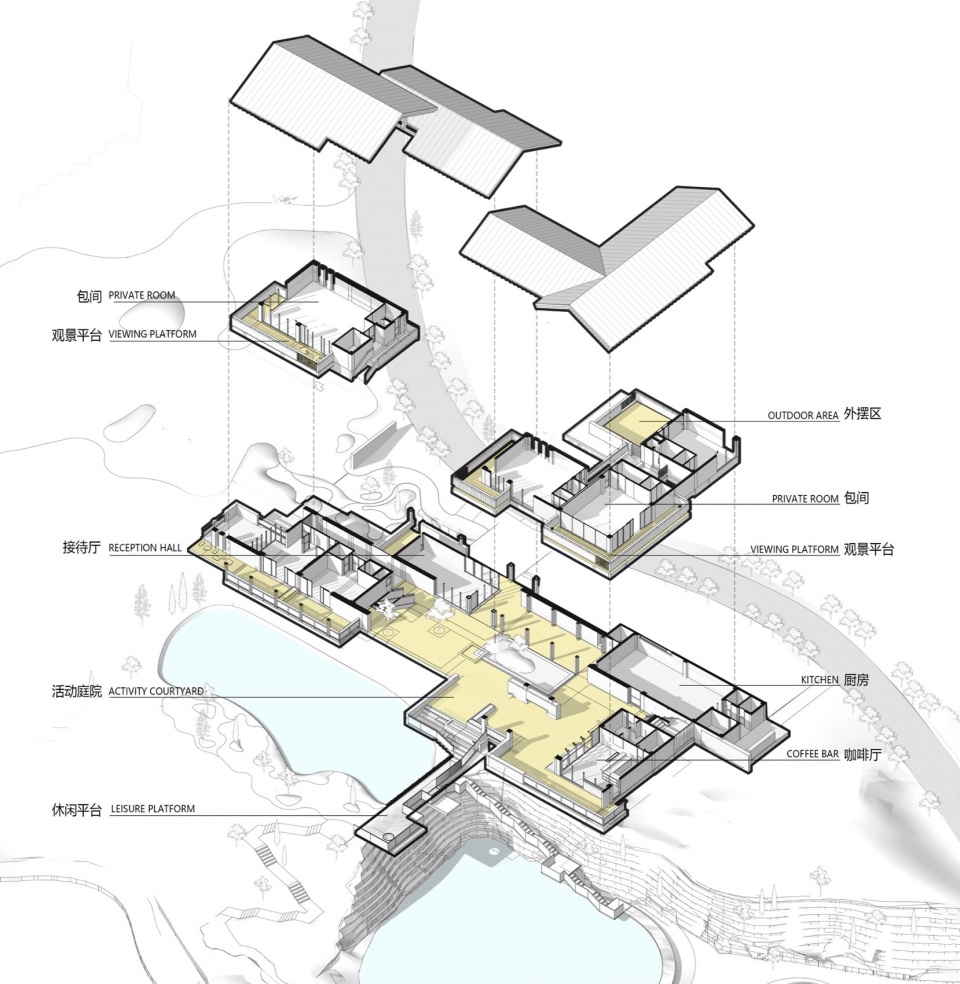
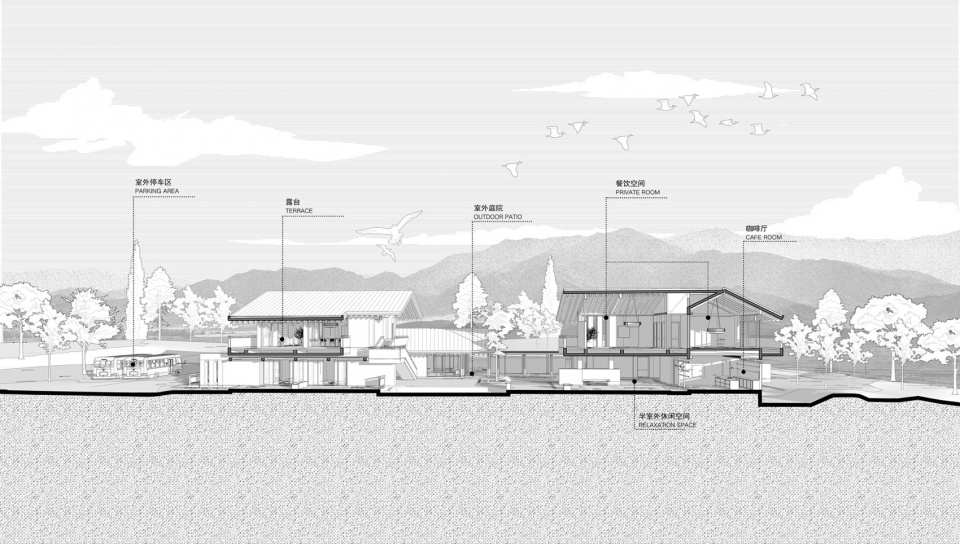
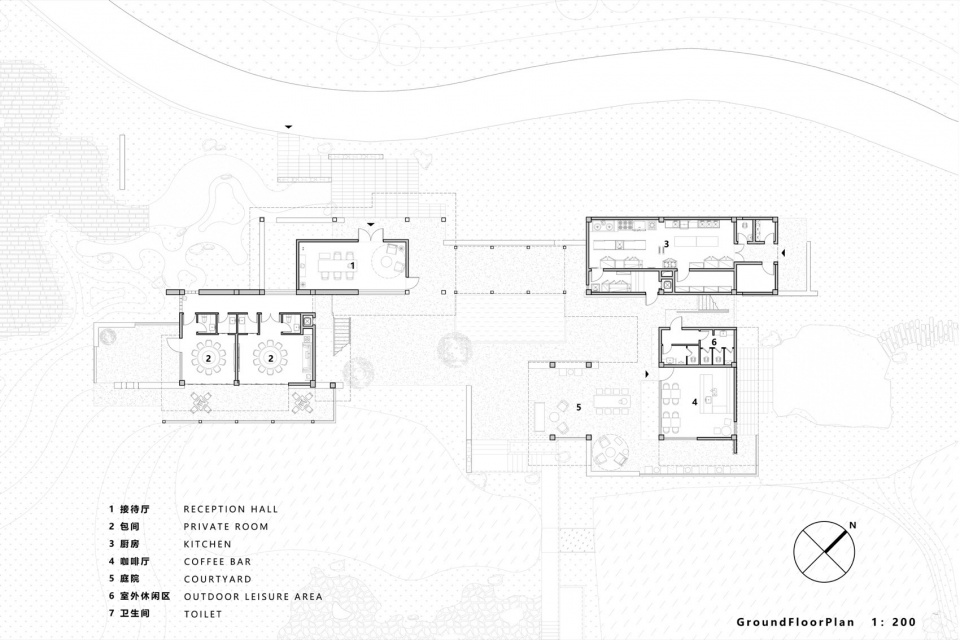
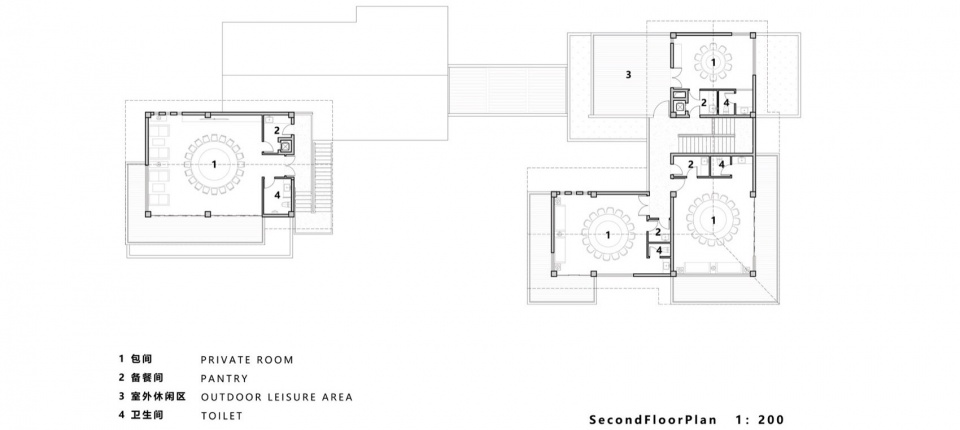
一层为环抱湖面、水平连通的空间。北侧空间容纳了餐厨、咖啡等公共休闲的功能;二层包间、景观露台通过室外楼梯与庭院相连。
The ground floor forms a lake-embracing, horizontally connected space where the northern wing accommodates public leisure functions including dining and coffee areas. On the second floor, private dining rooms and landscape terraces connect to the courtyard via external staircases, creating a seamless dialogue between architecture and nature.
▼从湖面栈道看向建筑Vista from the Lakeside Boardwalk towards Architectural Composition
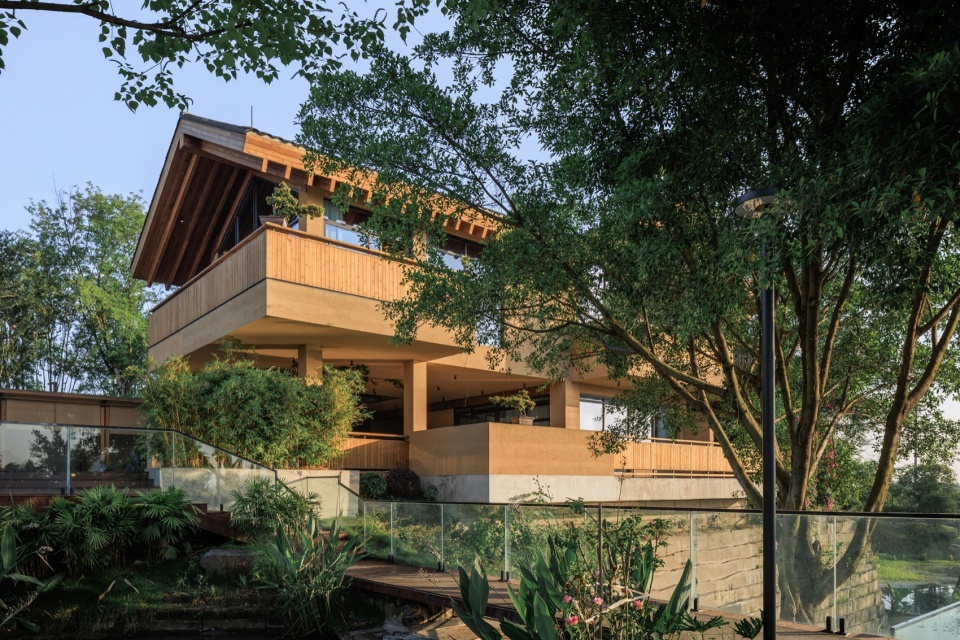
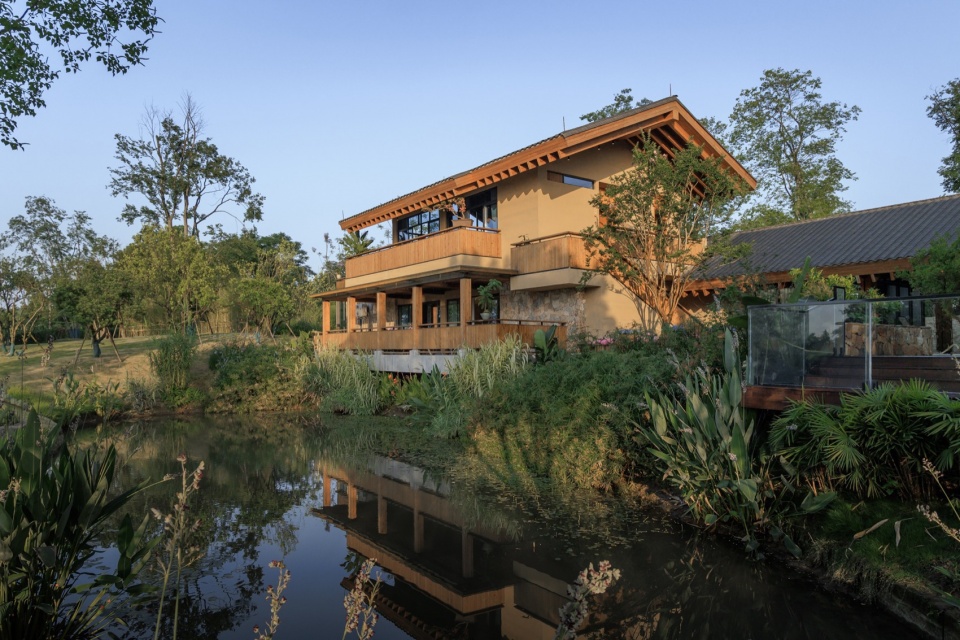
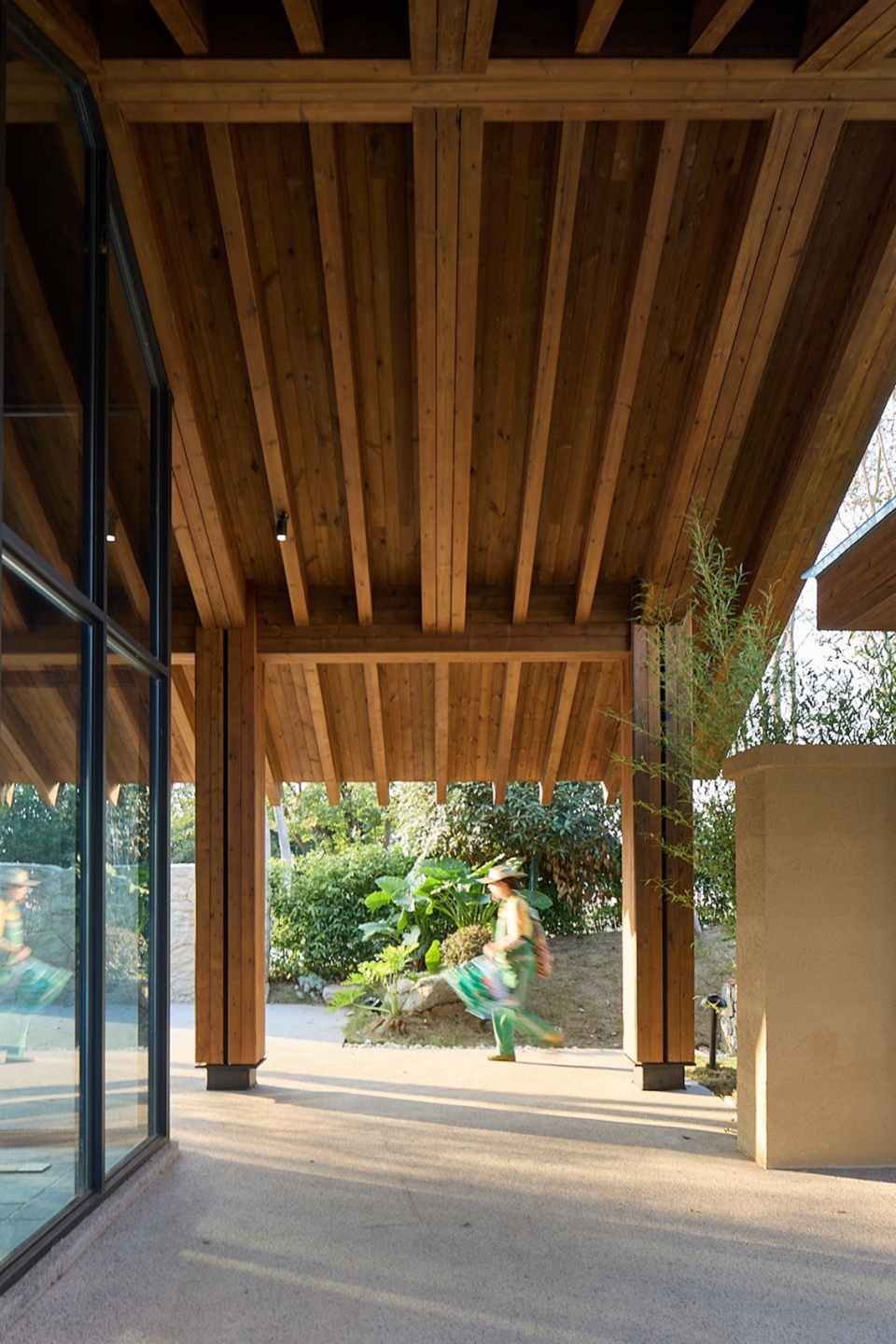
坡屋面向外延伸形成半开放的外廊空间,串联了从开放到私密的多维体验、模糊室内外界限。
The sloping roof extends outward to form a semi-open veranda, choreographing a multidimensional experience that transitions from open to intimate spaces while blurring indoor-outdoor boundaries.
▼多层次的檐下空间,Multi-layered Eaves Zone
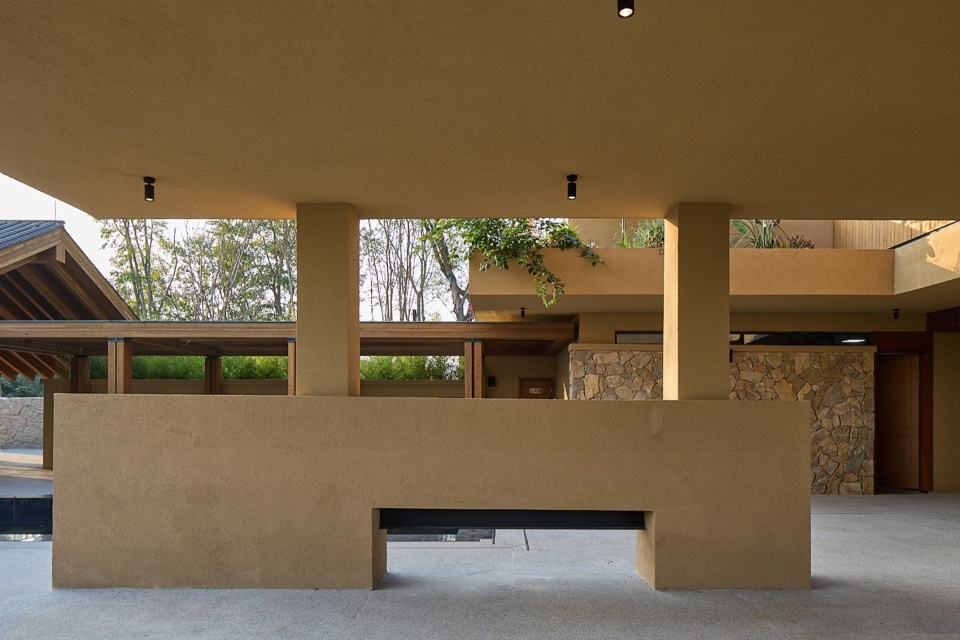
▼围绕庭院的外廊空间,The courtyard-enclosing veranda space
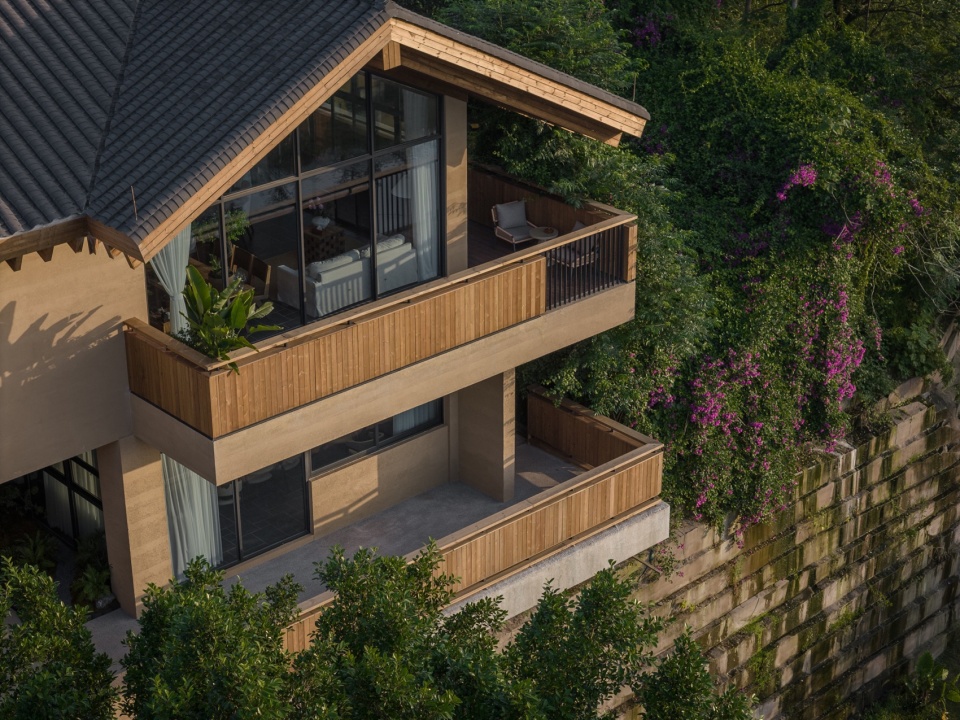
▼二层露台看向公园湖景,Vista from the Second-floor Terrace towards the Park Lake Landscape
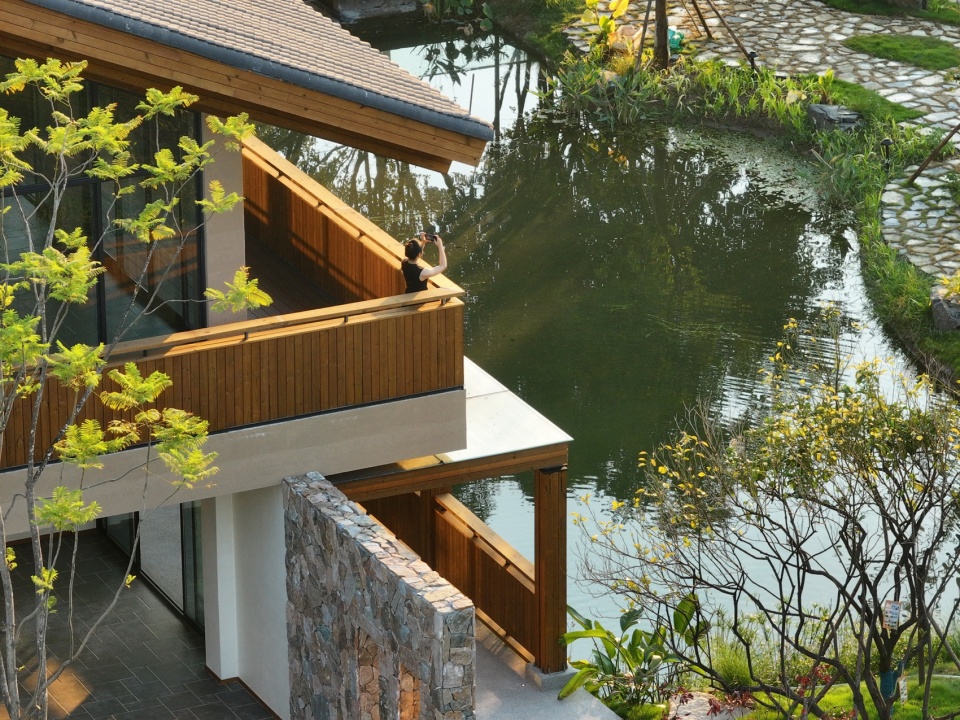
▼观景平台的层叠关系,Tiered Configuration of Viewing Platforms
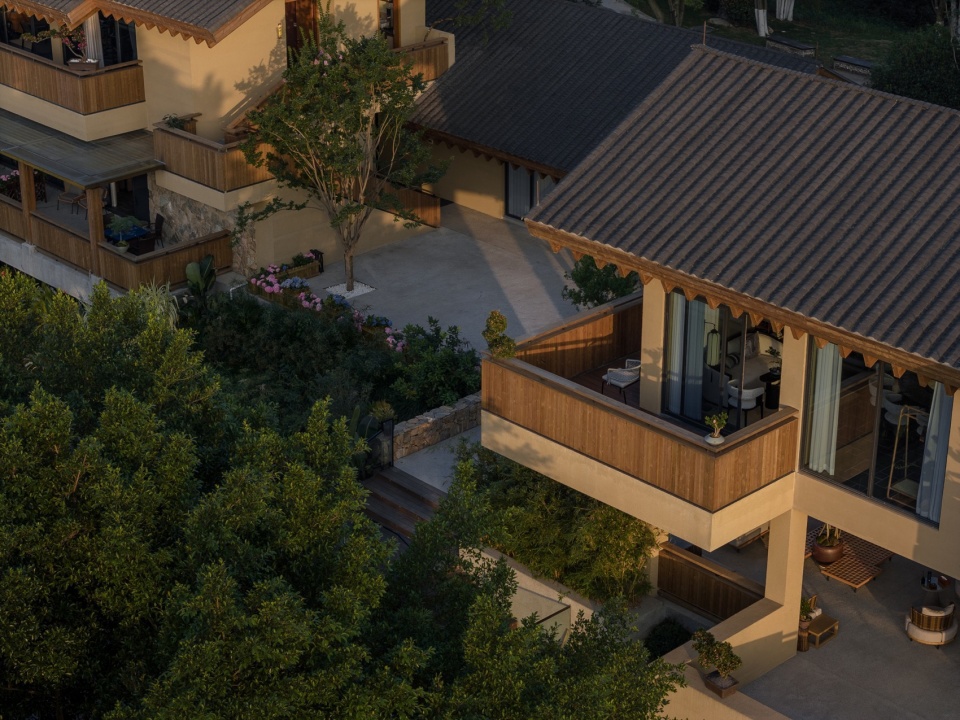
▼就餐区面向景观,The dining area is oriented towards the landscape
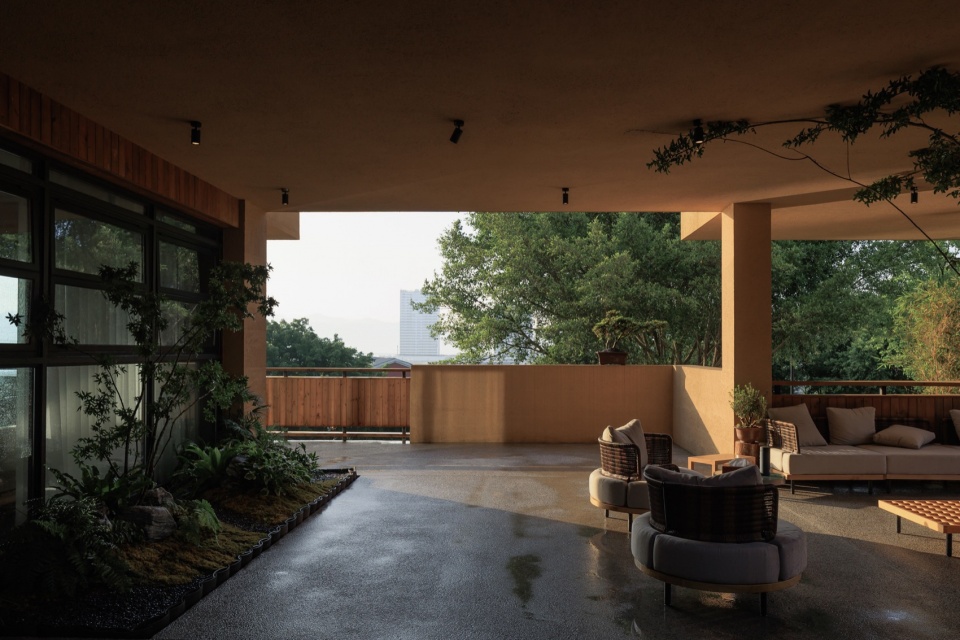
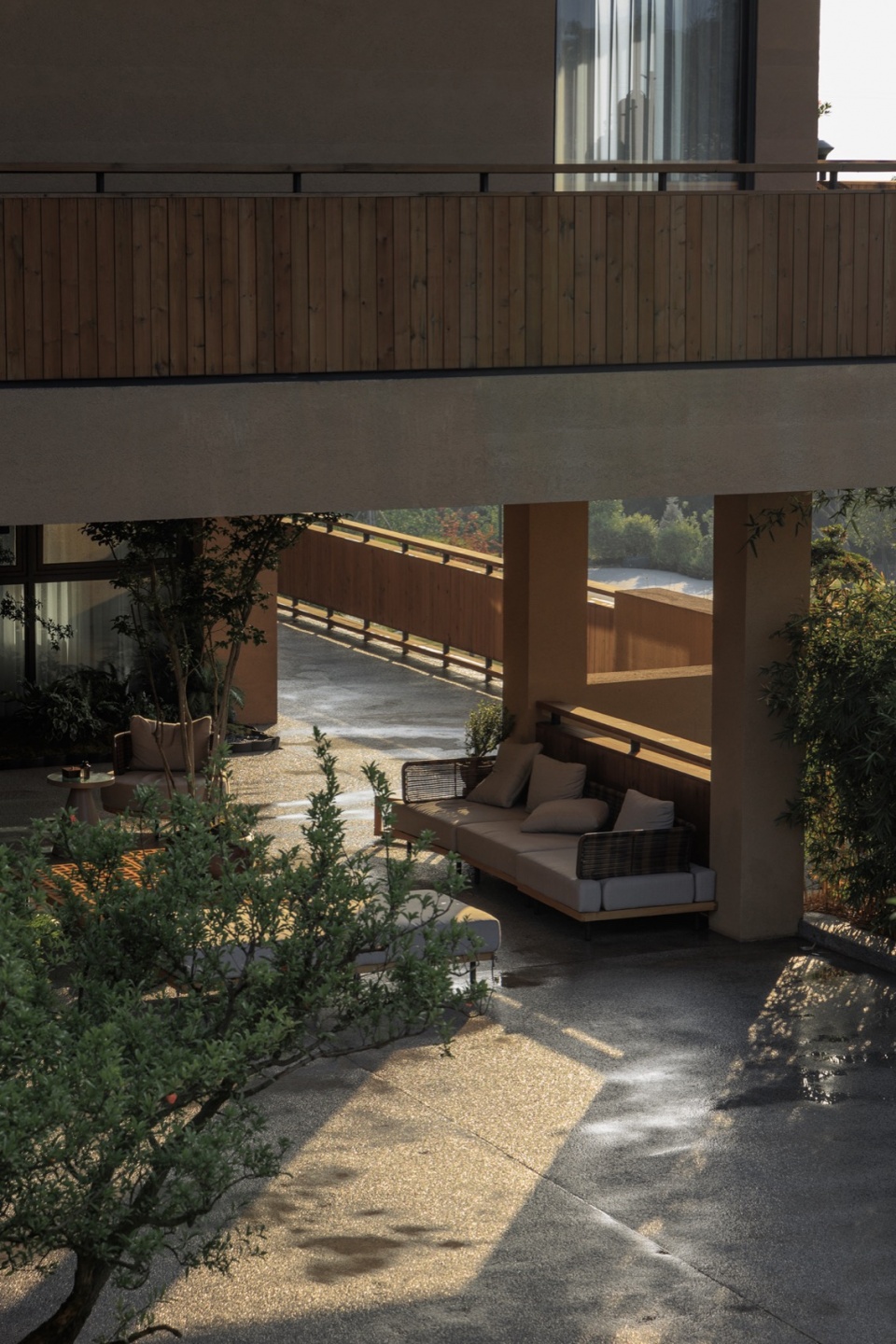
首层局部架空的外摆区,连接湖景与庭院,营造出”清风纳晚凉”的舒适场景,又为访客创造了可坐可倚的平台。
Partially elevated outdoor extensions bridge the lake view and courtyard, weaving a tranquil scene where evening breezes embrace the space. These versatile platforms offer both seating and leaning opportunities, fostering a serene haven that invites visitors to linger in the cooling embrace of dusk.
▼首层外摆就餐区,Partial Elevated Al Fresco Dining Zone
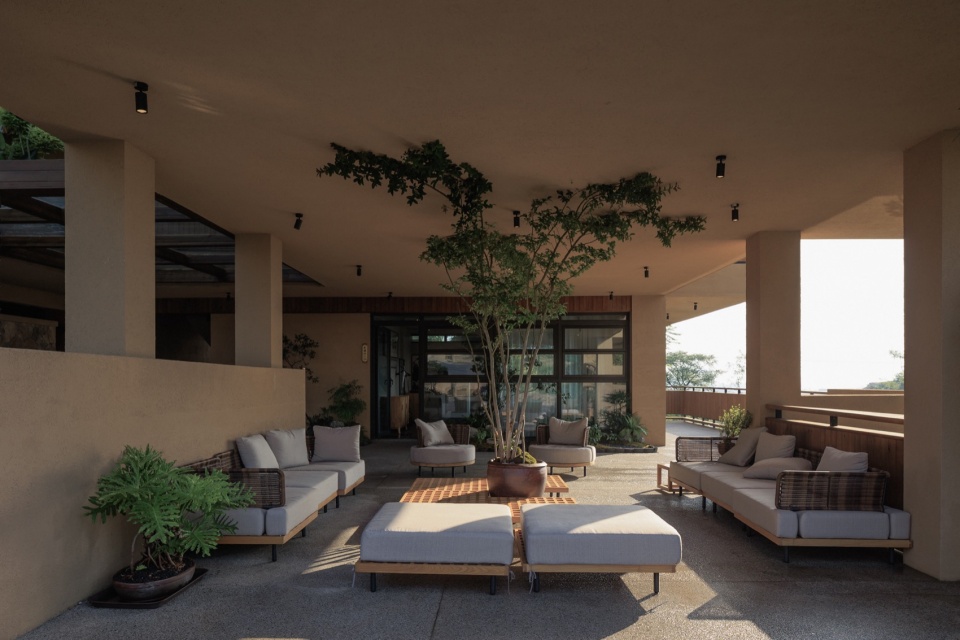
设计以一种既独立又动态统一的流线,融合了片墙,廊、亭等元素,引导人们穿梭、停留与探索,在有限场地中创造出层次丰富的空间体验。
Through a dynamically unified circulation that integrates partition walls, corridors, and pavilions, the design orchestrates movement, pause, and exploration, weaving richly layered spatial experiences within a compact site.
▼首层外摆就餐区,Partial Elevated Al Fresco Dining Zone
05
整合|从建筑到室内的有机统一
Integration|Organic Integration from Architecture to Interior
在这个项目中,建筑已不再是主角,“安逸”的生活状态才是设计力图呈现的重点,团队将设计理念贯彻了从建筑方案到落地、室内的设计到软装把控的每个阶段,实现了从建筑到室内的有机统一。室内设计摒弃繁复装饰,通过米白、灰褐等大地色系与本地石材、竹编等天然材质,构建出与场地山水相呼应的质朴基底。窗户借景入画,勾画出了独特的景观,将自然美景与室内空间的独特艺术相融合。
Architecture recedes into the background as this project prioritizes serene living—a tranquil lifestyle woven into every design phase. From architectural concept to material execution, and interior design to soft furnishings coordination, the team achieved seamless continuity between structure and space. Rejecting ornamental excess, the interior cultivates an earthy foundation using beige, taupe, and local materials like stone and bamboo weaving, echoing the site’s natural topography. Windows act as curated frames, merging mountain-lake vistas with spatial artistry to create a living canvas where architecture and nature converge.
▼自然环绕的包间,The private rooms are framed by nature, blending indoors with the landscape
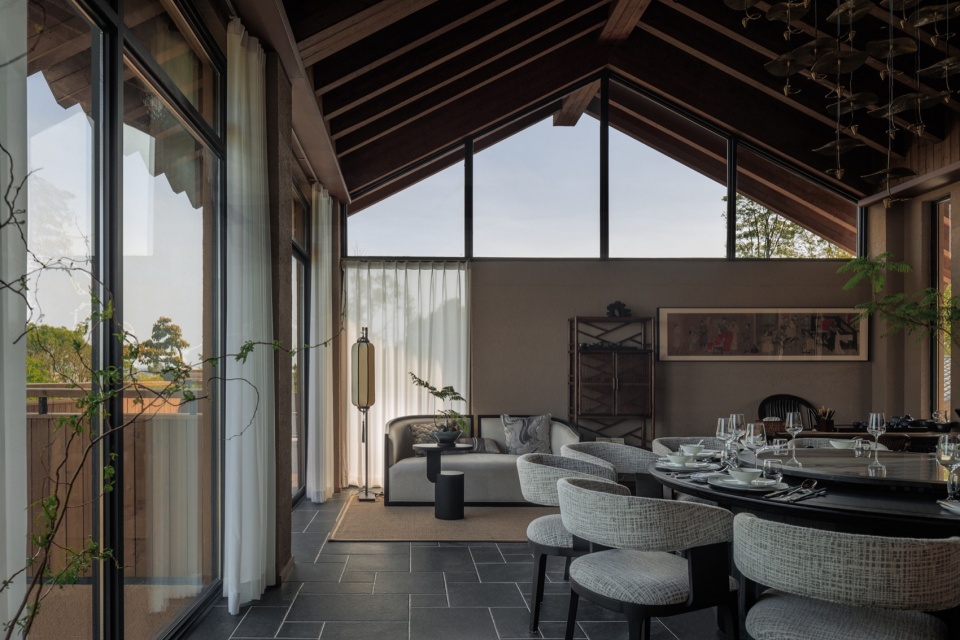
▼场地中保留的三角梅映入窗景,Integrated Preserved Bougainvillea Vista through Architectural Framing
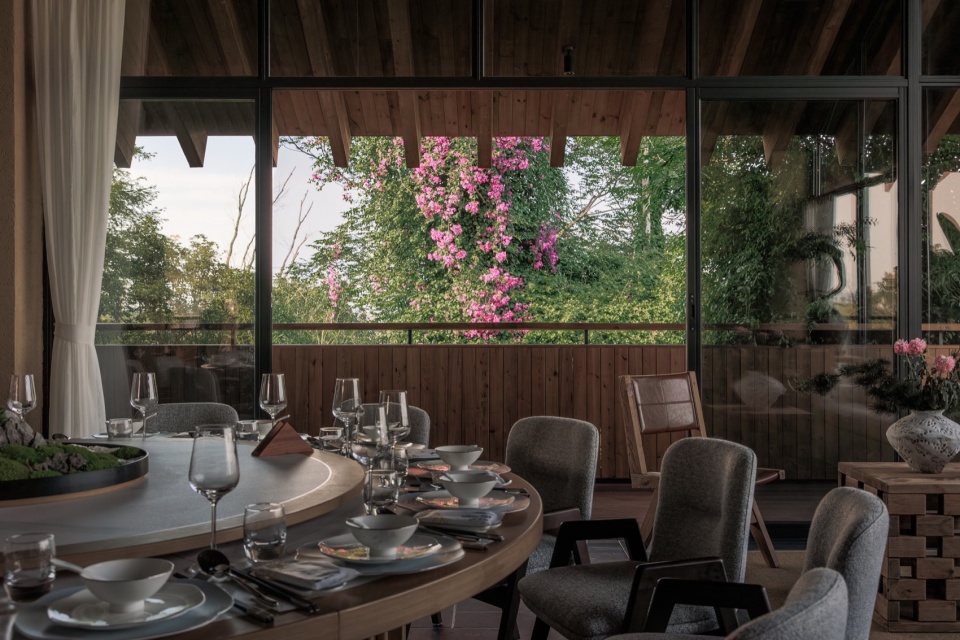
▼质朴与自然的室内空间,Rustic-Natural Interior Spaces
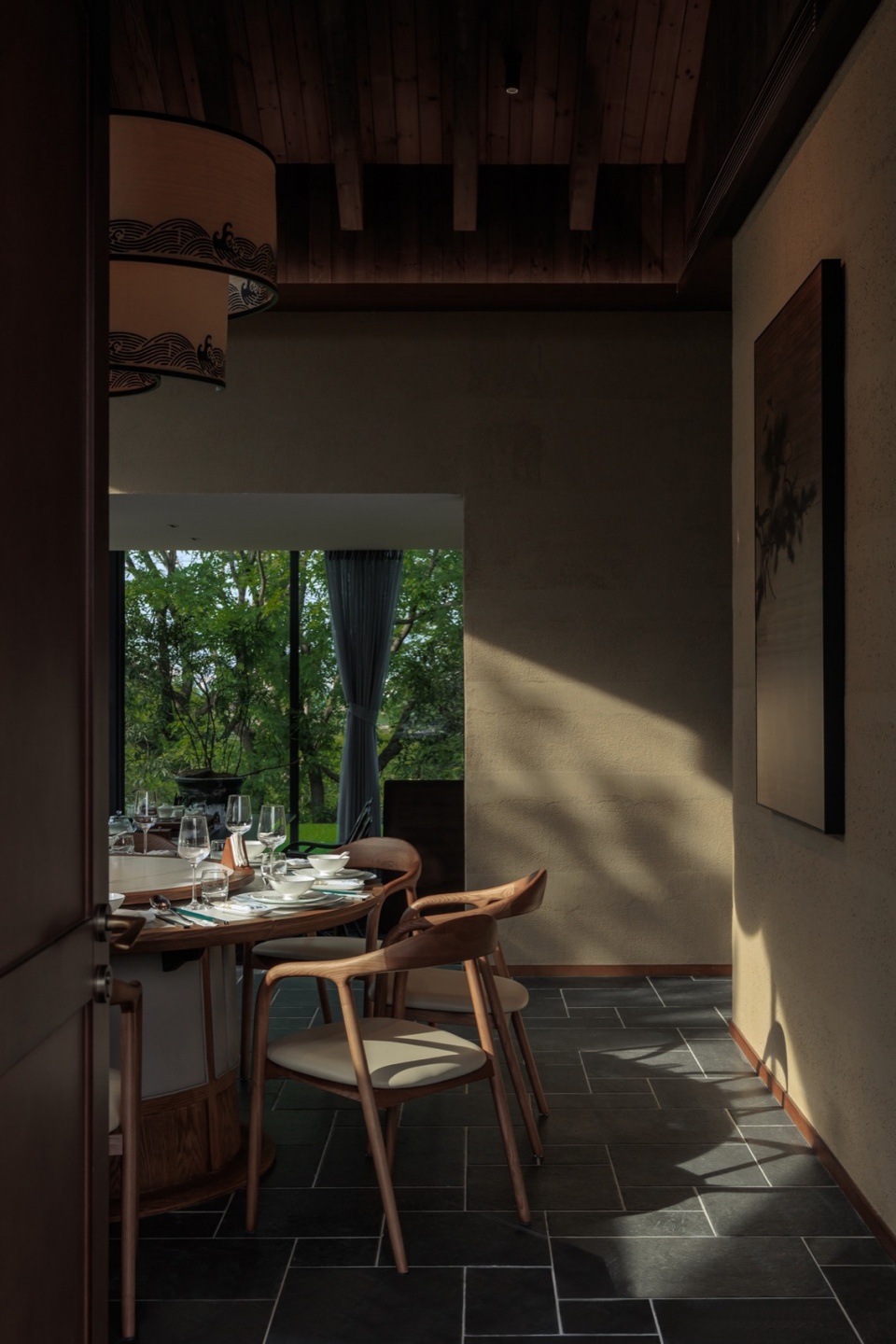
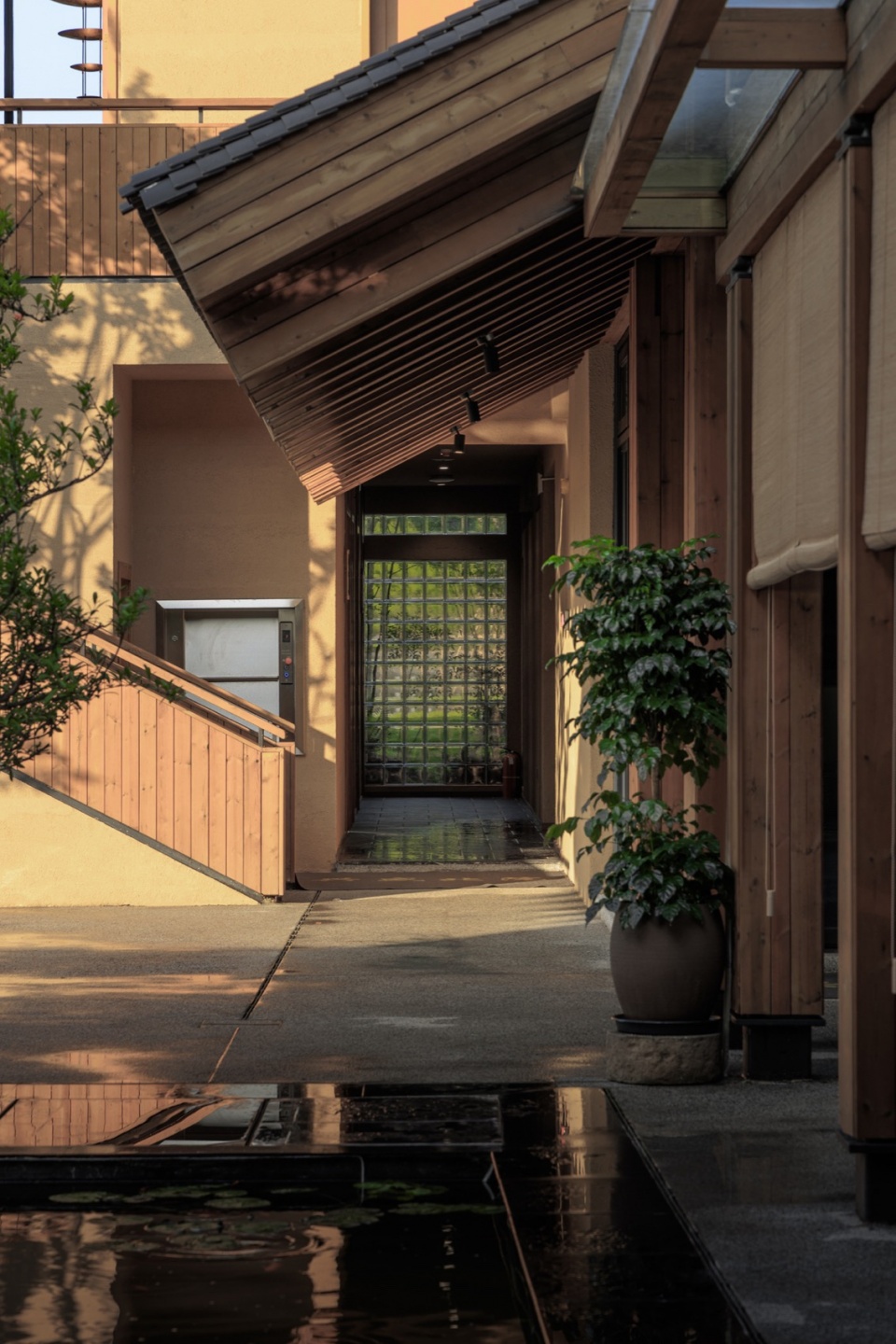
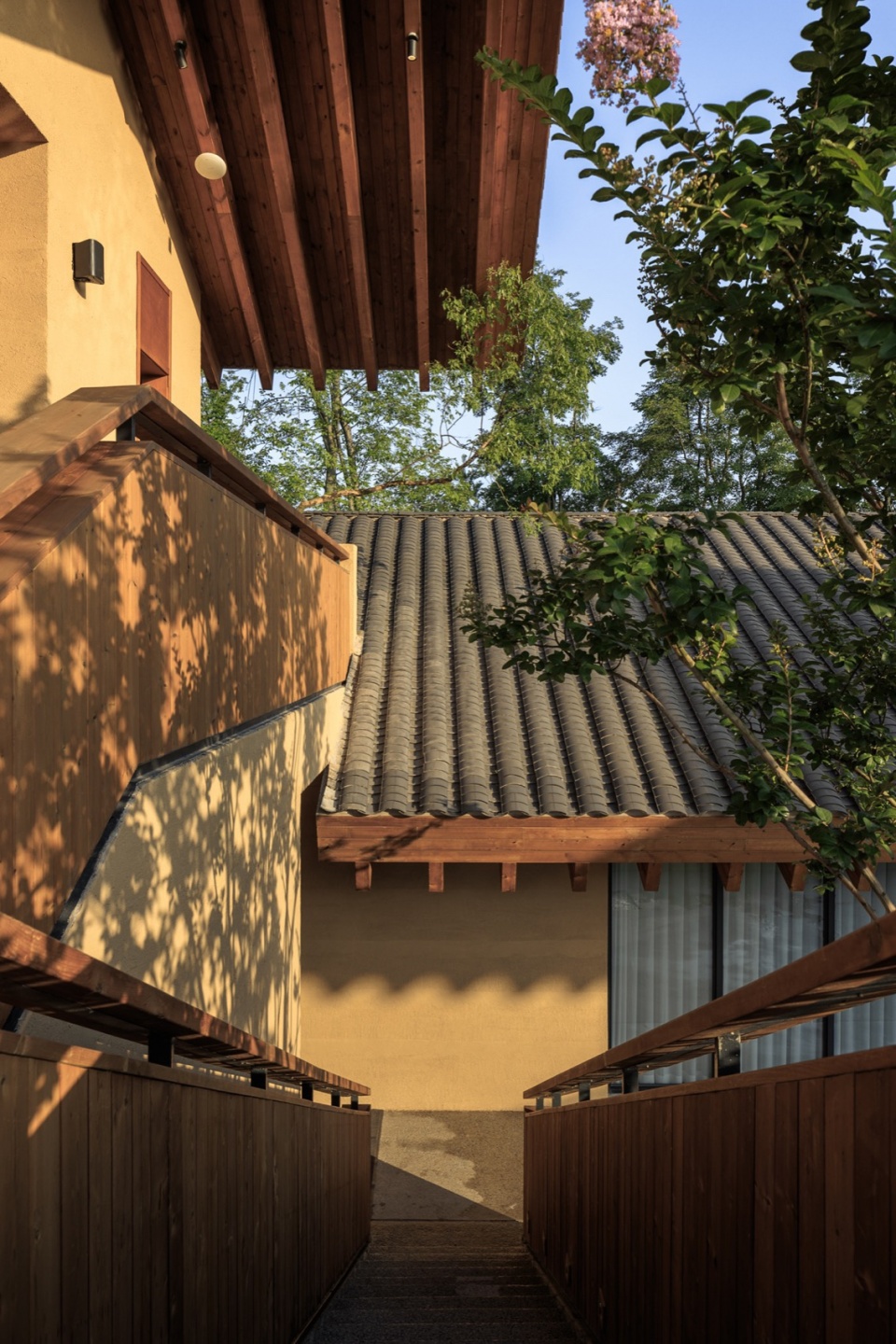
同时,在材料选择上,建筑使用了夯土漆、毛石片墙、防腐木作为立面材质,与公园的温暖而质朴的自然色调相呼应,消解对原始景观的侵扰,木制格栅与虚实有序的开窗节奏形成一幅自然画卷。
In architectural material selection, the project employs rammed earth paint, rough stone veneer walls, and carbonized wood planks. These warm, earthy facade materials harmonize with the park’s natural color palette, minimizing visual intrusion into the original landscape. The wooden grilles and rhythmically arranged openings – alternating between solid and void – compose a living canvas that blends architectural form with natural rhythm.
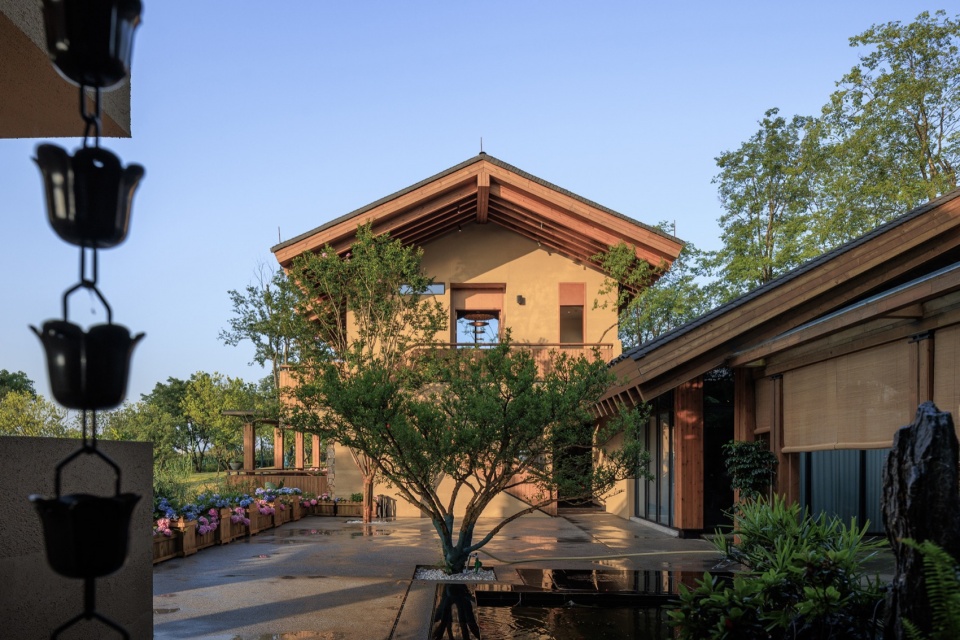
▼庭院中的铃铛雨链,Bell-Shaped Rain Chain
▼立面材质,Facade Materials
我们相信,好的空间应当像这样——既能满足功能需求,又能激发使用者的感知与思考。设计延续场地的文脉肌理的同时,也为市民提供了一个可以放慢脚步、与自然对话的“庇护所”穿过蜿蜒的小径,到达水景环绕的落客庭院,当山风裹挟着松涛声漫过石墙,建筑本身已退居为自然叙事的背景板。
We believe that a well-conceived space should operate in this manner—fulfilling functional requirements while stimulating sensory engagement and contemplation. The design extends the site’s cultural and textural fabric, creating a civic sanctuary where people can pause and engage in dialogue with nature. Meandering pathways lead to a water-feature-framed drop-off court, where mountain breezes carrying the rustle of pine trees sweep across stone walls, and the architecture itself recedes into a backdrop for nature’s narrative.
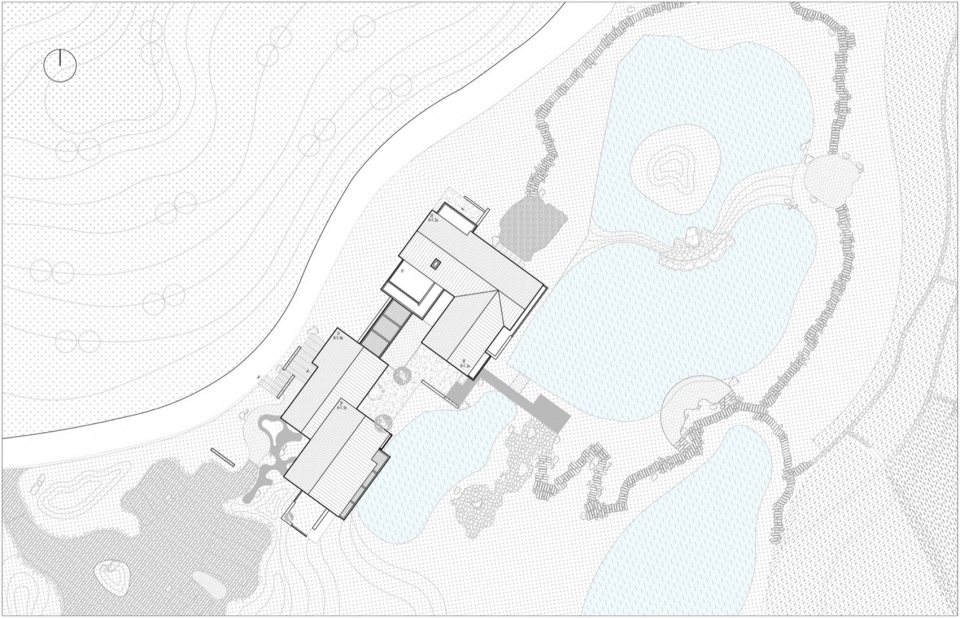
▼总平面图,General layout
▼剖透视图,Sectional Perspective
▼首层平面图,Ground Floor plan
▼二层平面图,Second Floor plan
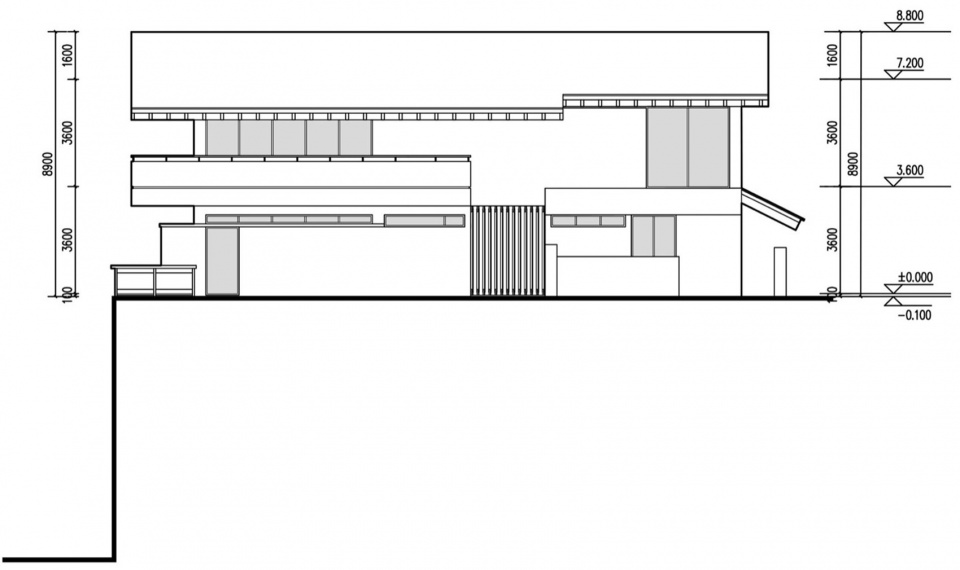
▼西北向立面图,Northwest Elevation

▼东南向立面图,Southeast Elevation

▼西南向立面图,Southwest Elevation
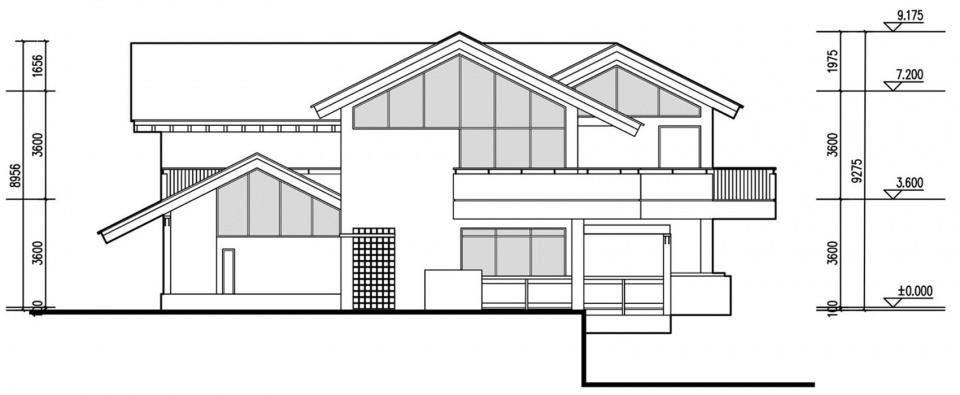
▼东北向立面图,Northeast Elevation
Project name: Fenbi Park Xingsheng North Courtyard
Project Type: Restaurant
Architectural Design: Chongqing Yueji Architectural Design Office,
Construction Drawing Design: Chongqing Hefang Urban Planning and Design Co., Ltd
Contact e-mail: cqyueji@163.com
Design year:2023.06—2023.12
Completion Year:2025.05
Lead Designers: Jun Li, Biao He, Qi Tian (Design Lead)
Design Team:: Kairui Li, Tao Li, Xun Chen,
Project location:Fenbi Park, Liangjiang New Area, Chongqing
Client: Chongqing Liangjiang New Area Longxing Industrial Park Construction and Investment Co., Ltd.
Gross built area:900㎡
Photo credit:PrismImage, Wenyu Chang, Qi Tian