Sauska Tokaj酿酒厂,匈牙利 / BORD Architectural Studio
位于匈牙利联合国教科文组织保护的托卡伊-黑加利亚(Tokaj-Hegyalja)葡萄酒产区,Sauska Tokaj酒庄与周边环境和谐融合。其优雅的悬浮造型仿佛漂浮于葡萄园之上,在与景观相辅相成的同时,亦成为一处醒目的视觉地标。除却建筑之美,这座酒庄在提升该地区旅游业与酿酒声望方面也发挥了重要作用。
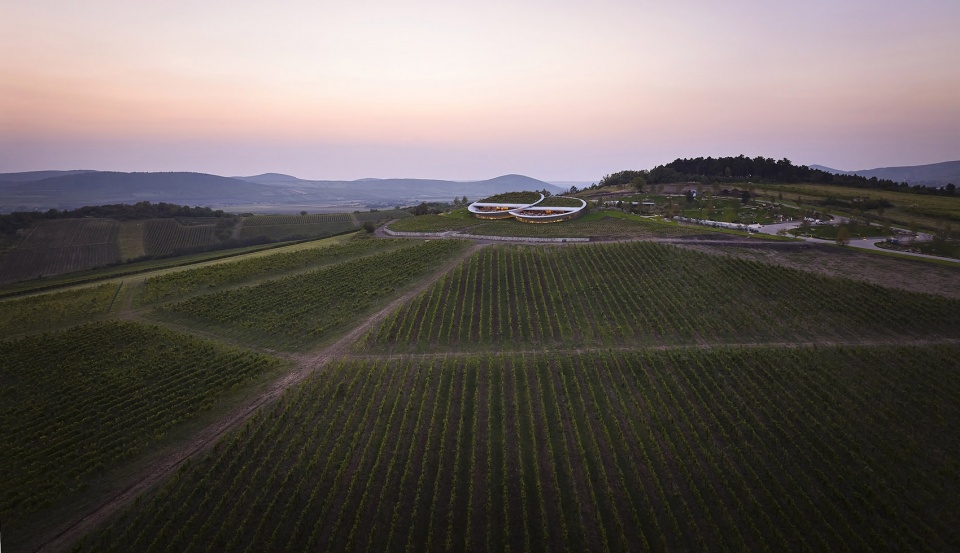
Nestled in the UNESCO-protected Tokaj-Hegyalja wine region of Hungary, the Sauska Tokaj winery blends harmoniously into its surroundings. Its elegant, hovering form appears to float above the vineyards, complementing the landscape while making a striking visual statement. Beyond its architectural beauty, the winery plays a significant role in enhancing the region’s tourism and winemaking prestige.
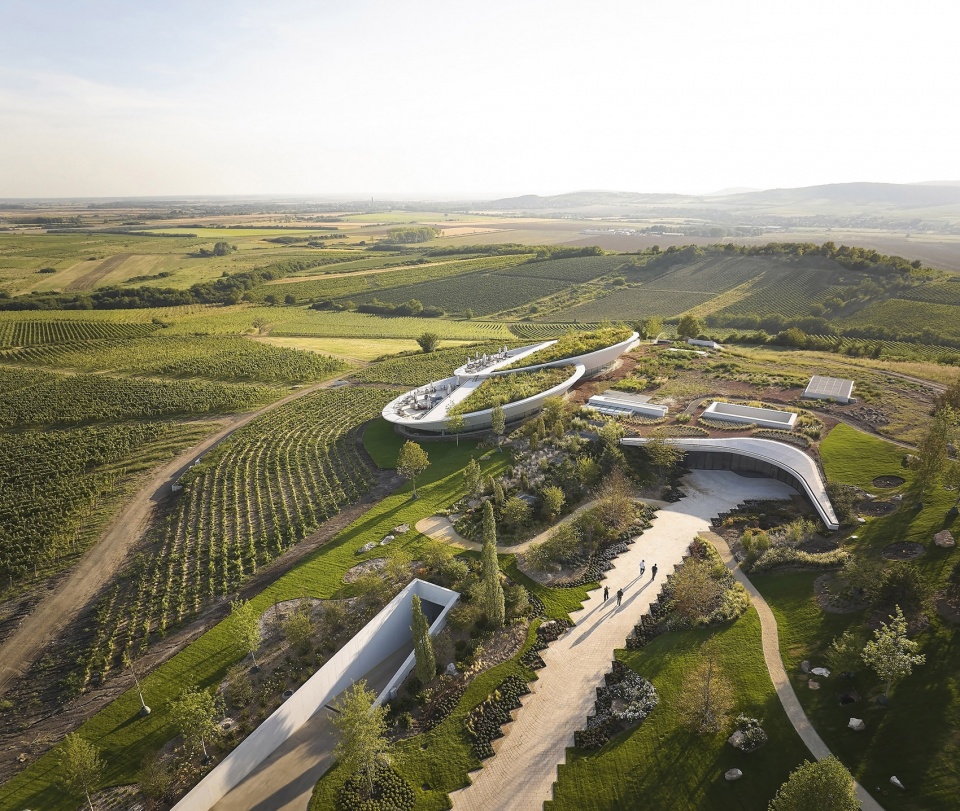
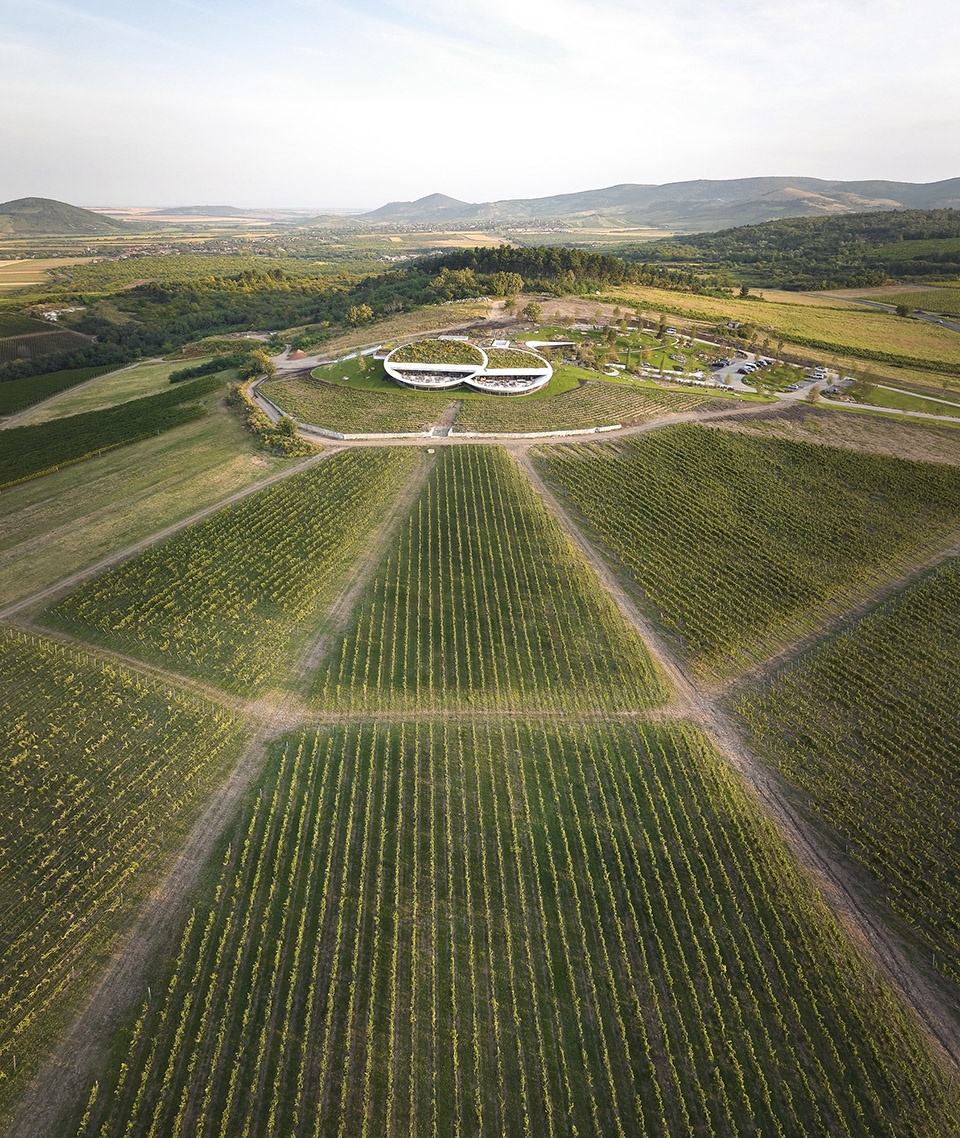
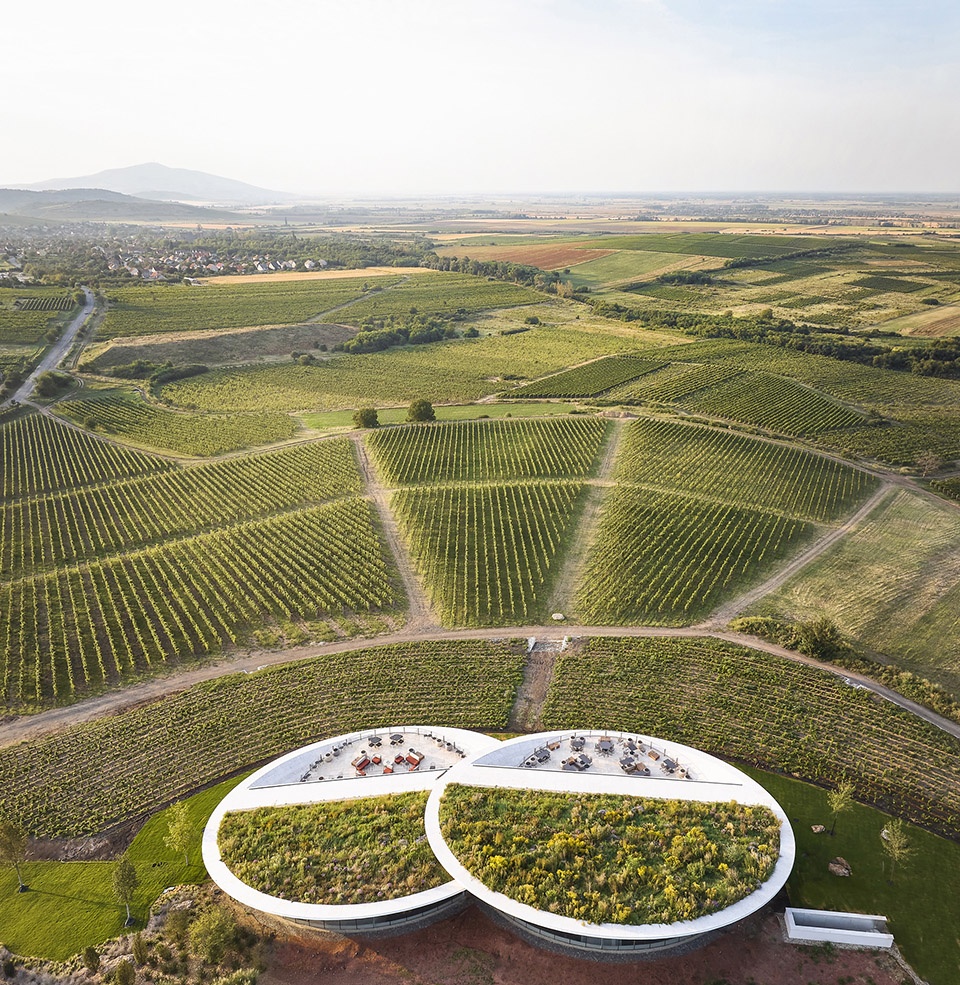
▼项目鸟瞰,aerial view of the project
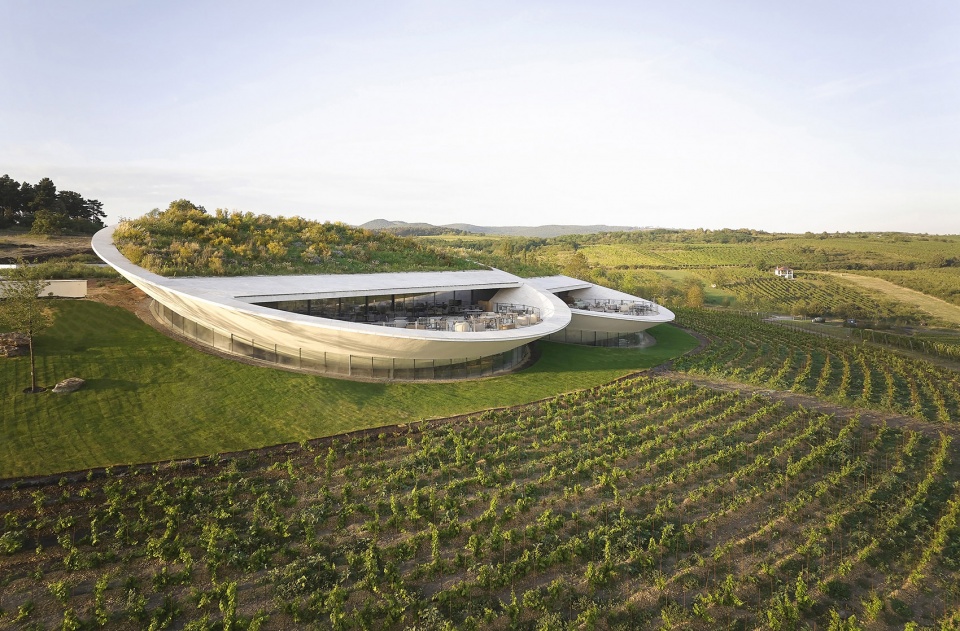
▼项目鸟瞰,aerial view of the project
托卡伊——历史悠久的葡萄酒产区
Tokaj – A Historic Wine Region
托卡伊的火山地貌与大陆性气候,自匈牙利建国之前便已为葡萄栽培创造了理想条件。早期的居民将酒窖凿入流纹岩凝灰岩中,世代以来,这一地区最负盛名的便是传奇的阿苏甜酒(aszú),需在橡木桶中陈酿。社会主义时期,大规模葡萄酒生产占据主导,创新被压制。然而在政治转型之后,自21世纪初以来,现代酒庄与不断增长的旅游业使托卡伊重新焕发生机,尽管基础设施建设仍在持续。Sauska Tokaj酒庄的目标,正是向世界展现托卡伊葡萄酒的活力、复杂性与多样性。
The volcanic terrain and continental climate of Tokaj have created ideal conditions for viticulture for centuries, even before the Hungarian Conquest. Early settlers carved wine cellars into rhyolite tuff, and for generations, the region was best known for its legendary aszú, a sweet wine aged in oak barrels. During the socialist era, large-scale wine production dominated, stifling innovation. However, after the political transition, since the early 2000s, modern wineries and growing tourism have revitalized Tokaj, though infrastructural development remains ongoing. The Sauska Tokaj winery aims to showcase the energy, complexity, and diversity of Tokaj wines to the world.
▼周围的葡萄园,surrounding vineyards
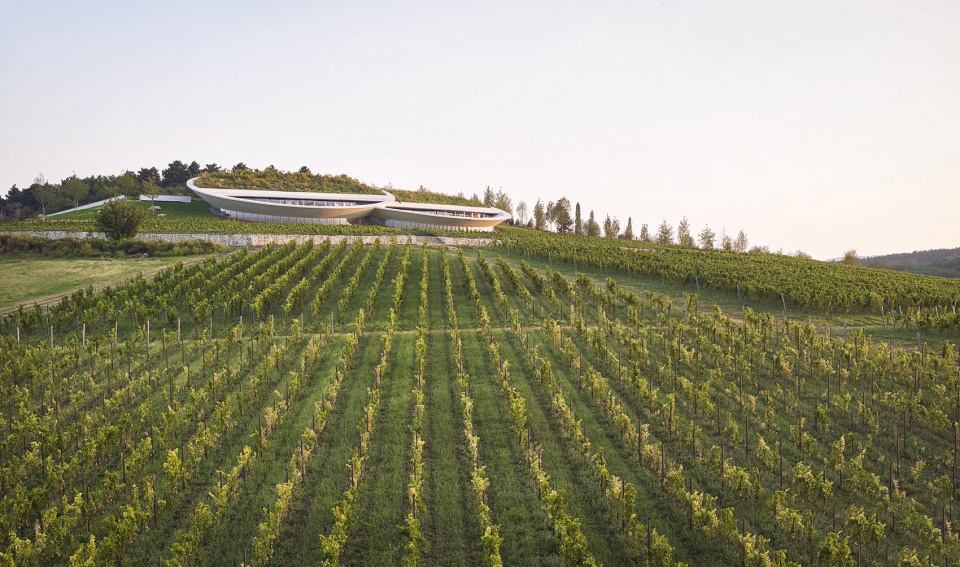
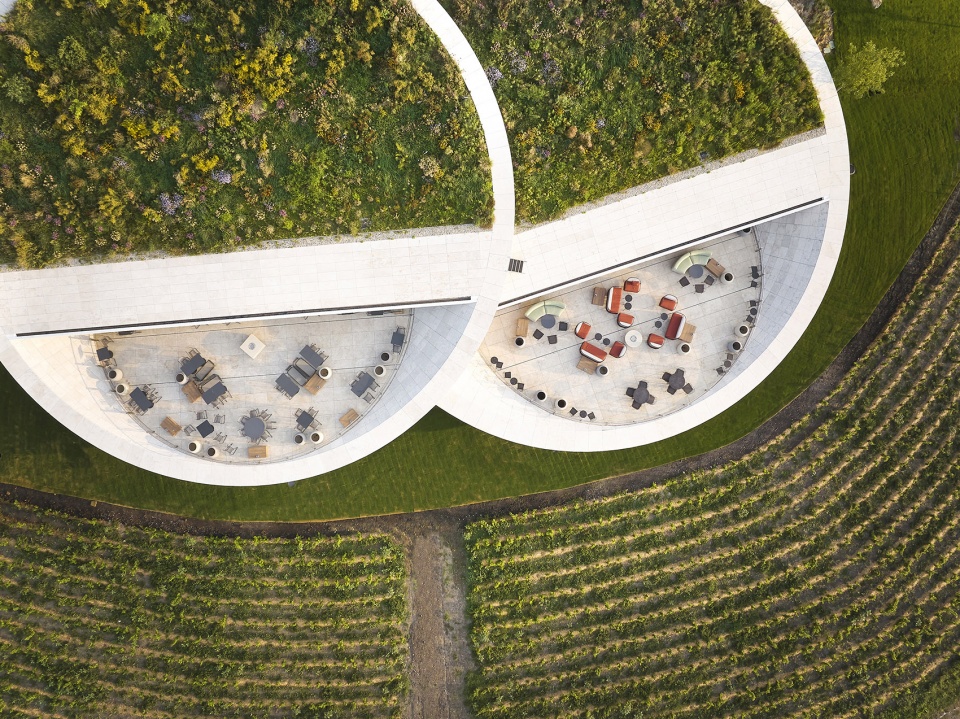
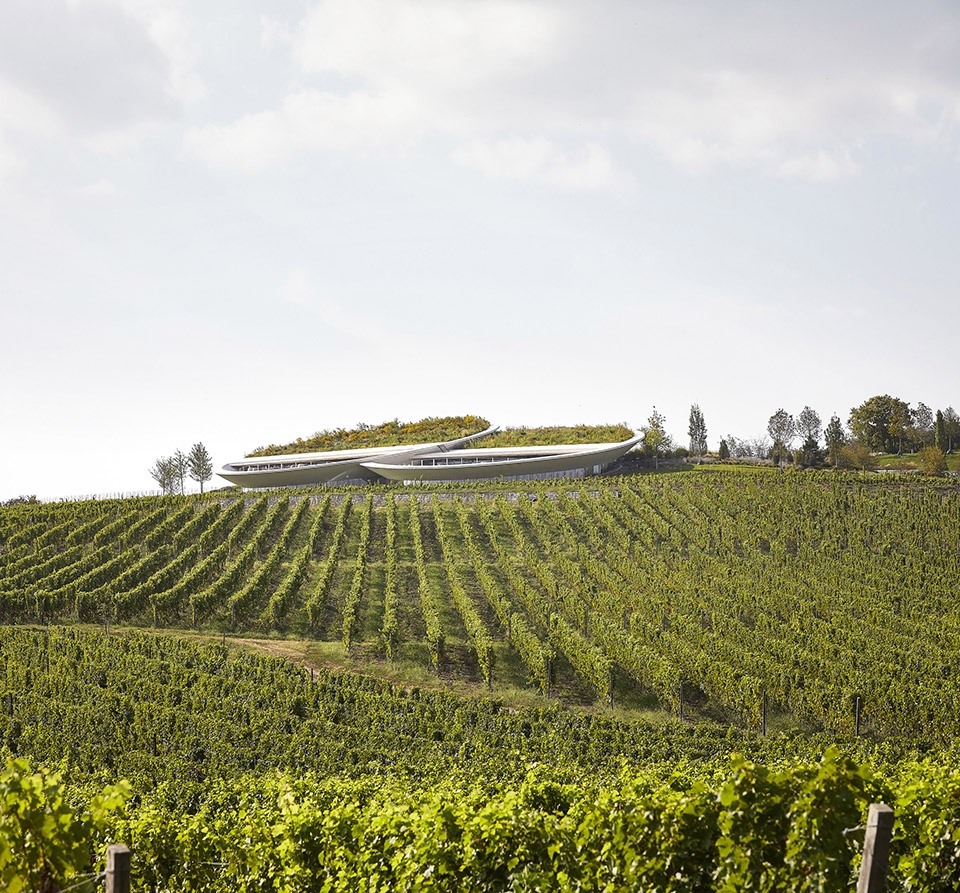
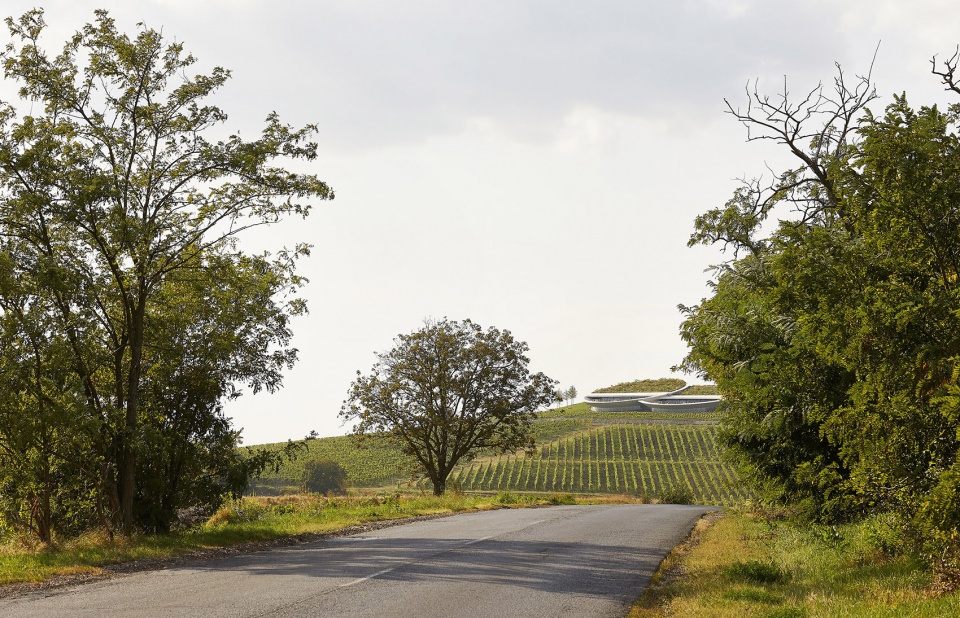
▼建筑位于葡萄园的制高点,the building is located at the highest point of the vineyard
建筑愿景
Architectural Vision
设计的挑战在于创造一个现代而引人注目的酒庄,重点生产清新、干型白葡萄酒和起泡酒。同时,建筑还需具备待客与餐饮功能,使之成为游客的目的地。选址位于葡萄酒产区重要聚落之间的一处制高点,既是灵感的来源,也是挑战所在。
The design challenge was to create a modern, eye-catching winery primarily focused on fresh, dry white wines and sparkling wines. The building also needed to accommodate hospitality and gastronomy, making it a destination for visitors. The location—an elevated site amidst the most significant settlements of the wine region—provided both inspiration and challenge.
▼建筑位于葡萄园的制高点,the building is located at the highest point of the vineyard
设计理念
Design Philosophy
▼看似漂浮的建筑体量,the seemingly floating building volume
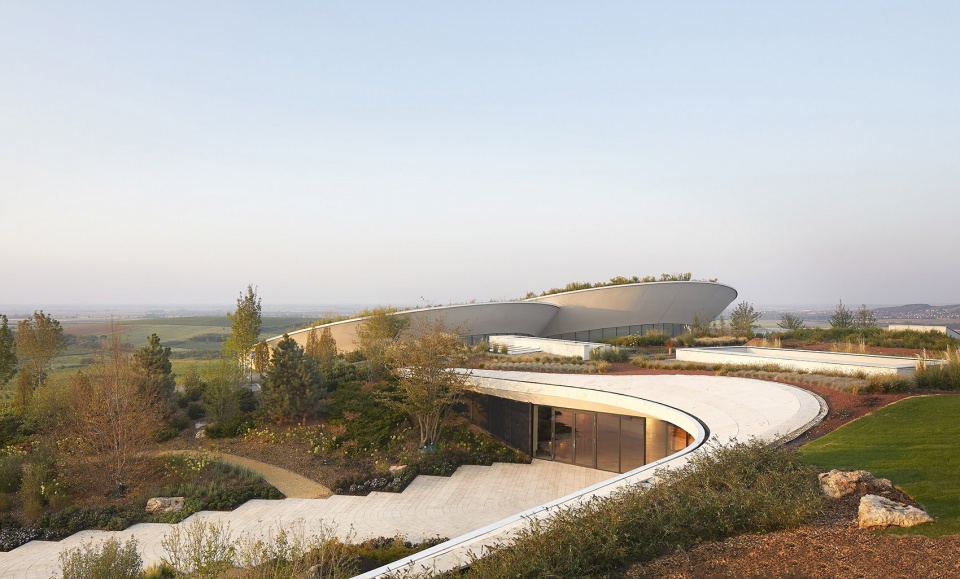
建筑概念源于“未触碰的不可触碰”——起伏葡萄园的景致。设计意在让建筑仿佛轻盈地漂浮于景观之上。设计团队甚至制作了一个懒人沙发模型,幽默地将建筑体量比喻为“山丘长出了眼睛”,赋予景观以生命。
The architectural concept was inspired by the “untouched untouchable” – the view of undulating vineyards. The aim was to make the building appear like a gentle form floating above the landscape. A beanbag model was made as a humorous presentation that depicted the building mass as if the hill had eyes which brought the landscape to life.
▼让建筑仿佛轻盈地漂浮于景观之上,make the building appear like a gentle form floating above the landscape
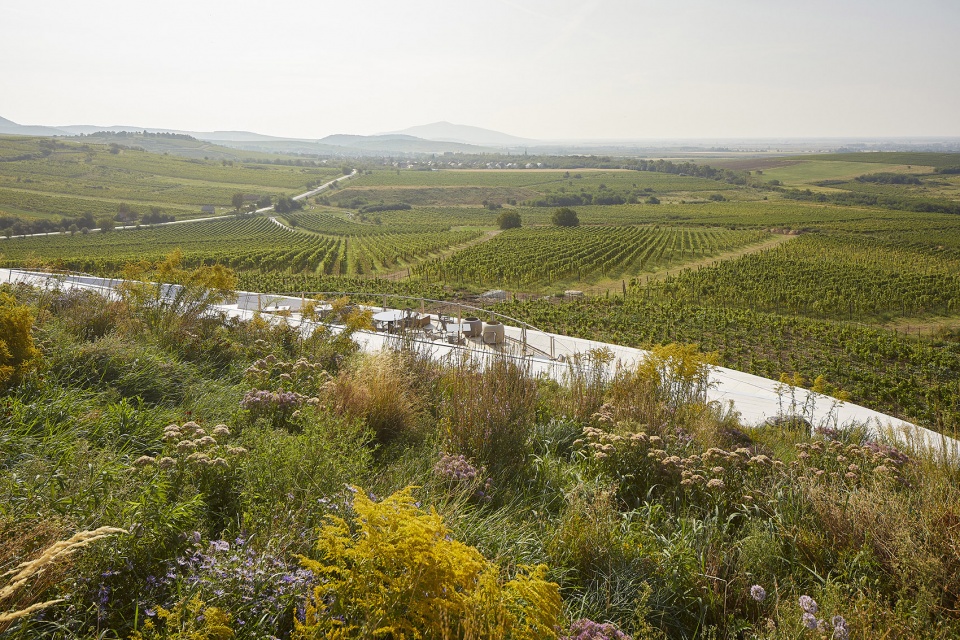
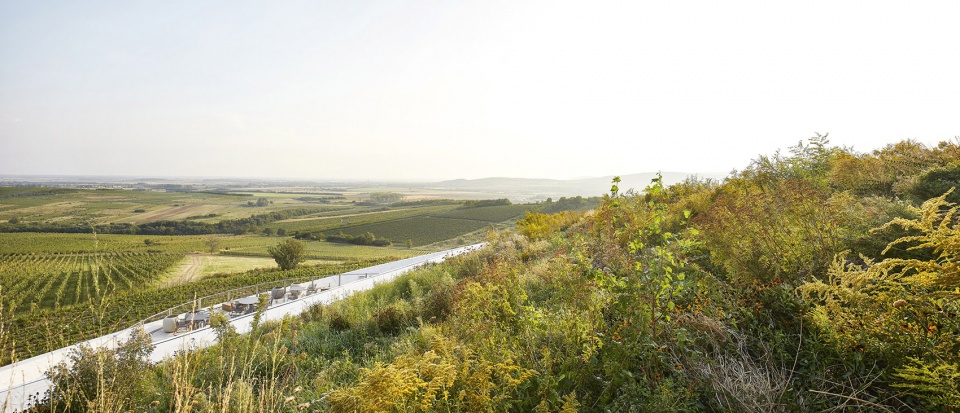
▼从屋顶俯瞰葡萄园,view of the vineyard from the roof
悬浮的地标
A Floating Landmark
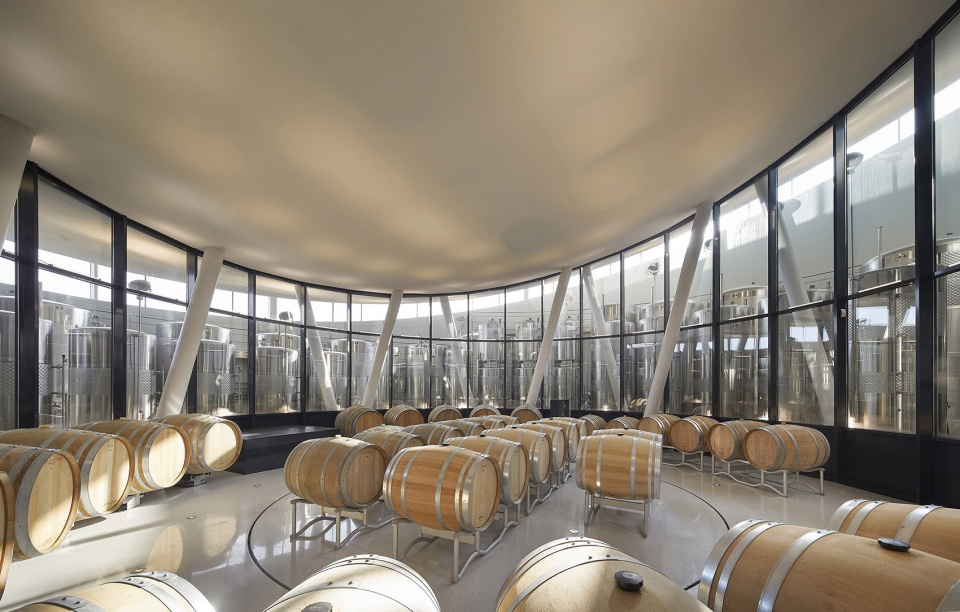
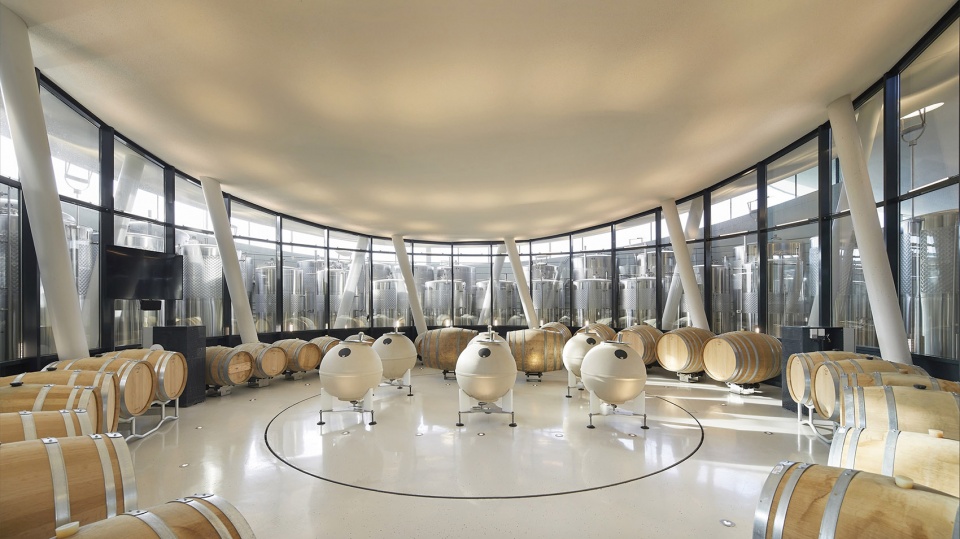
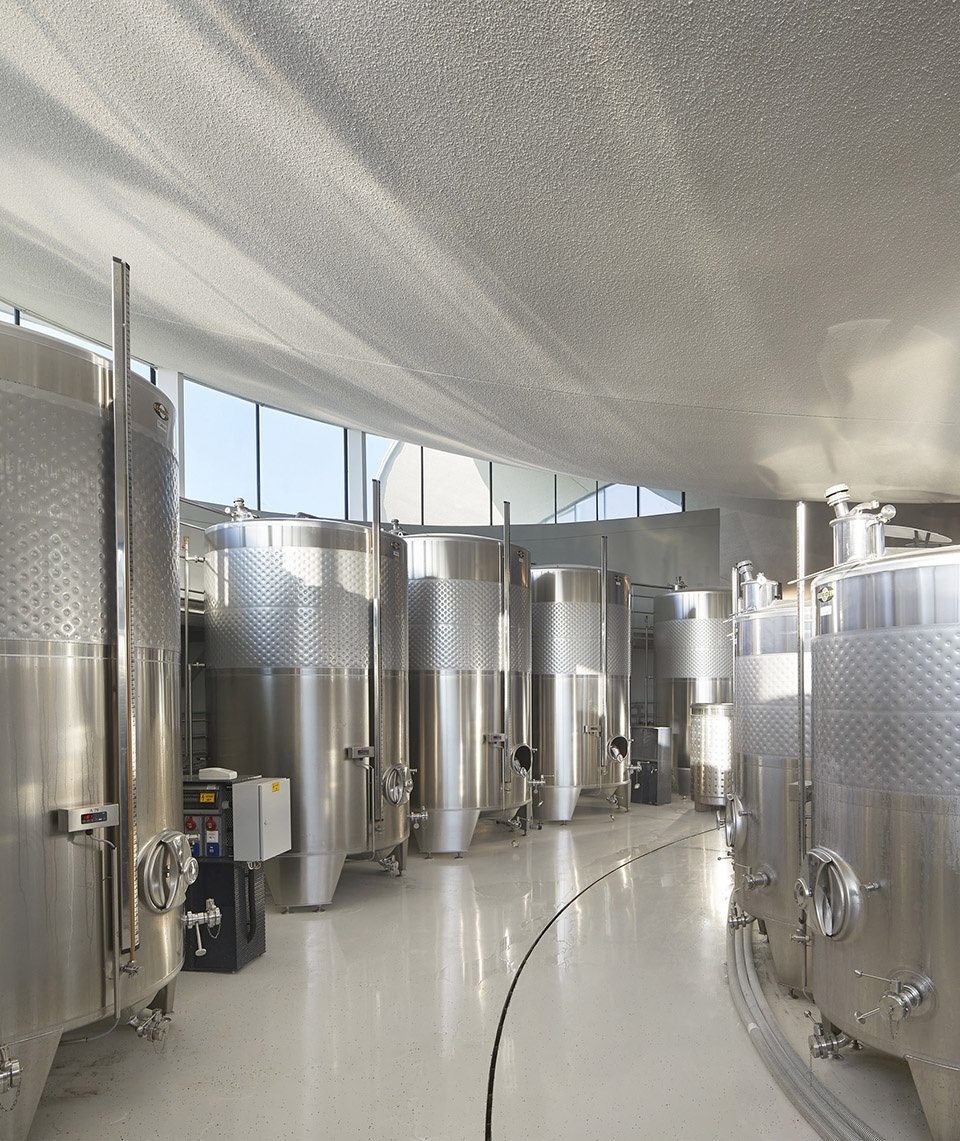
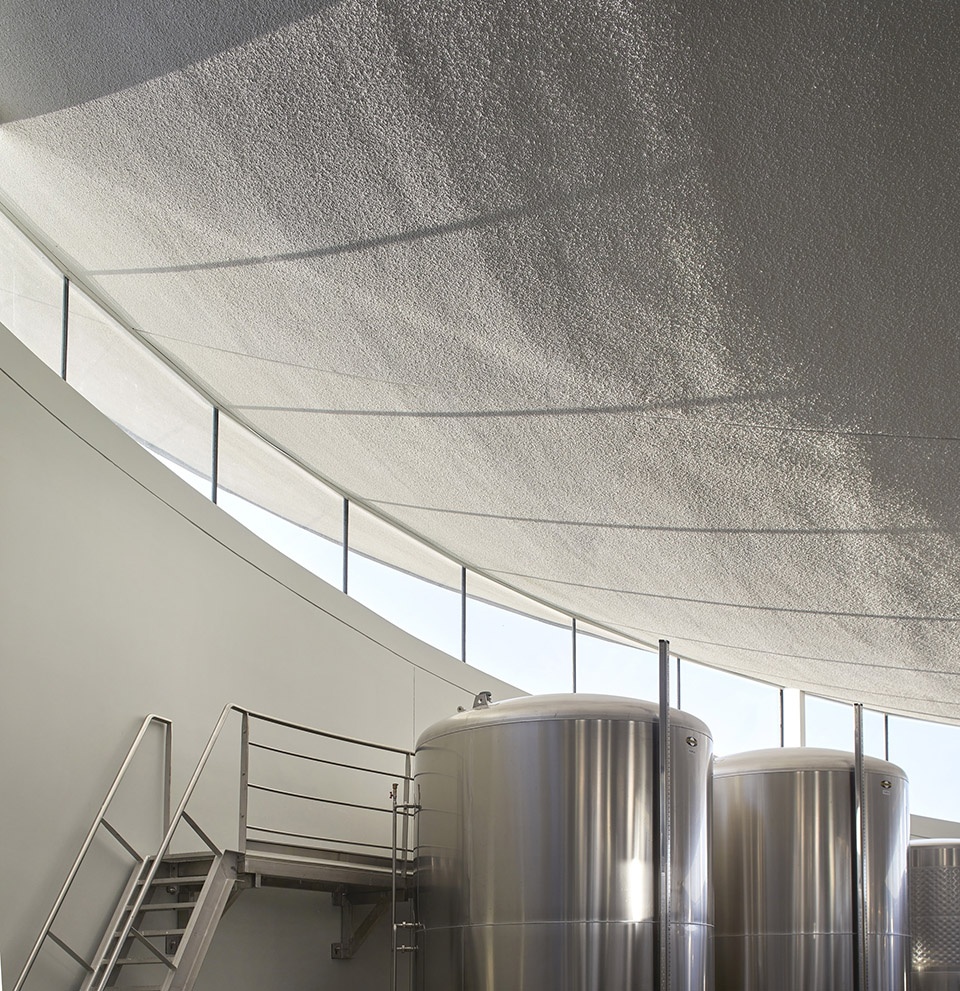
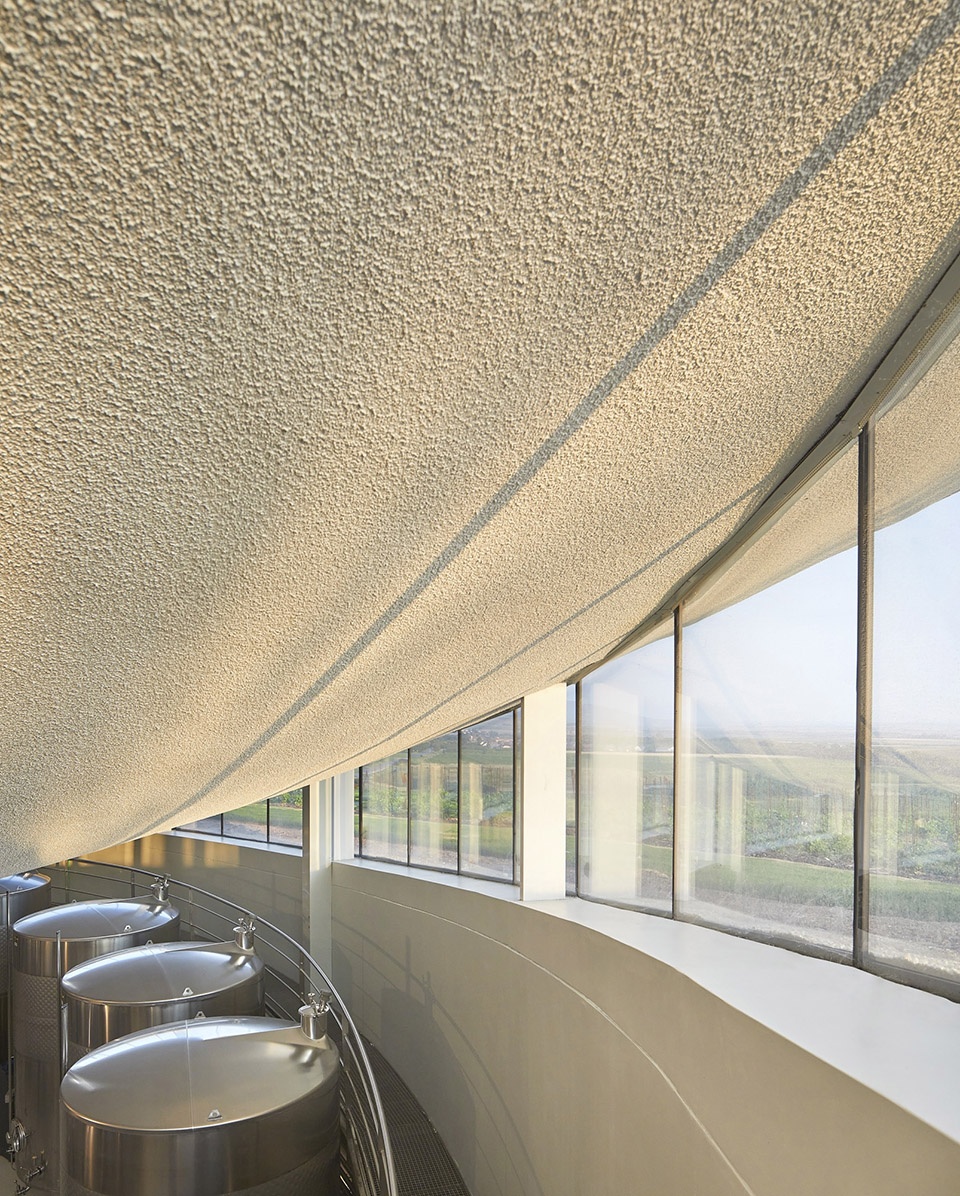
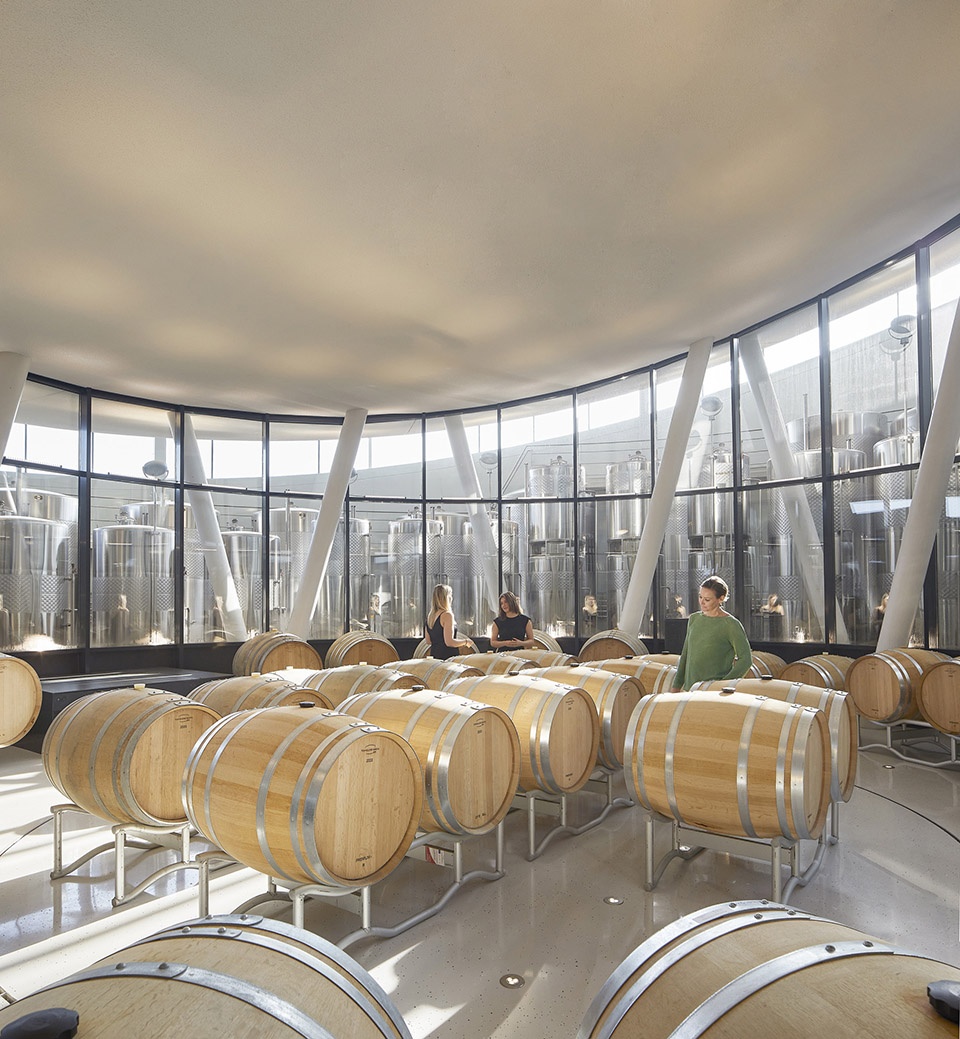
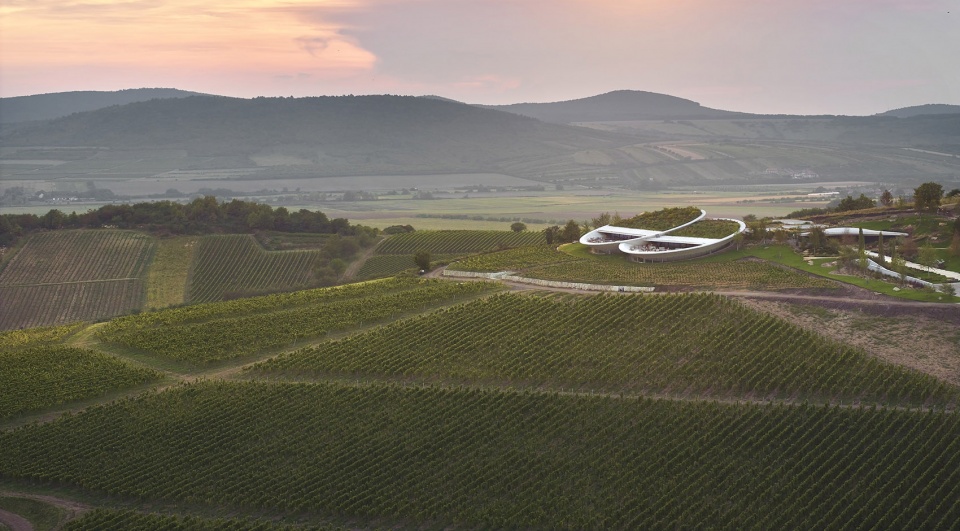
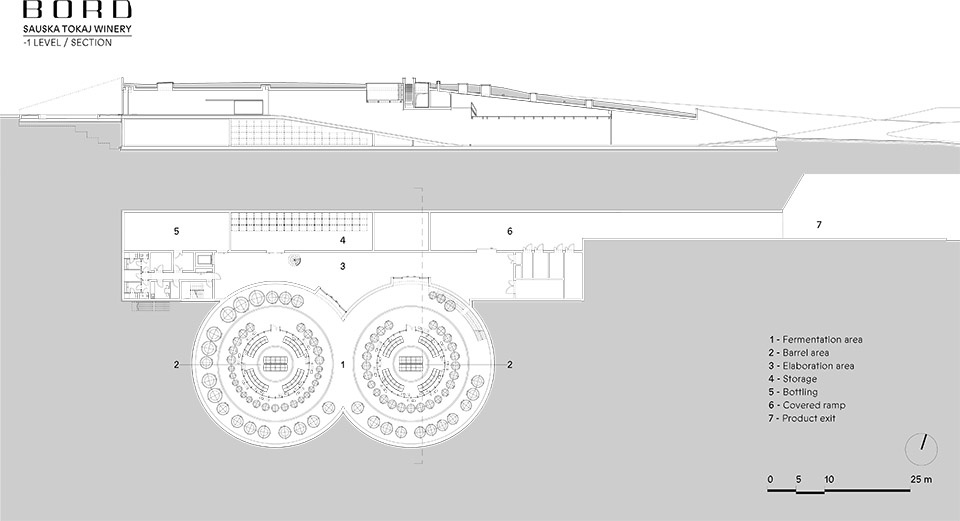
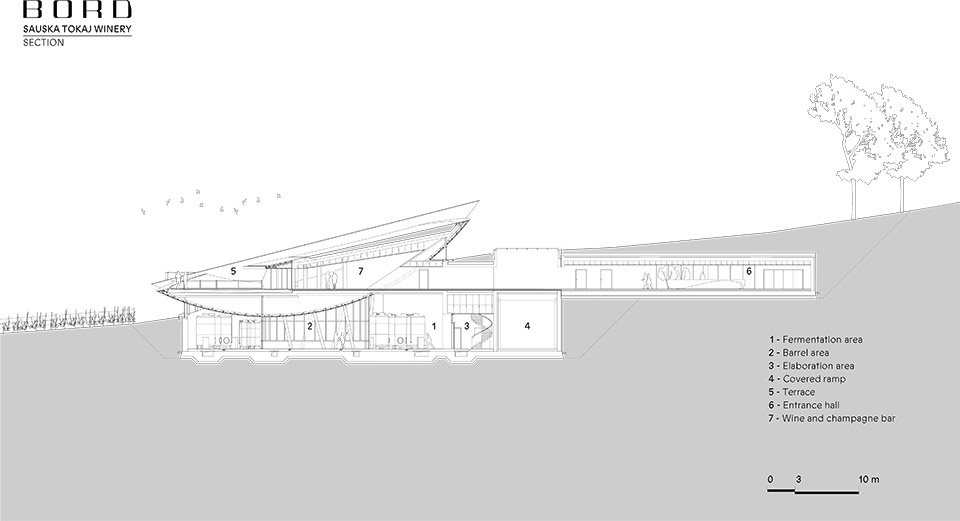
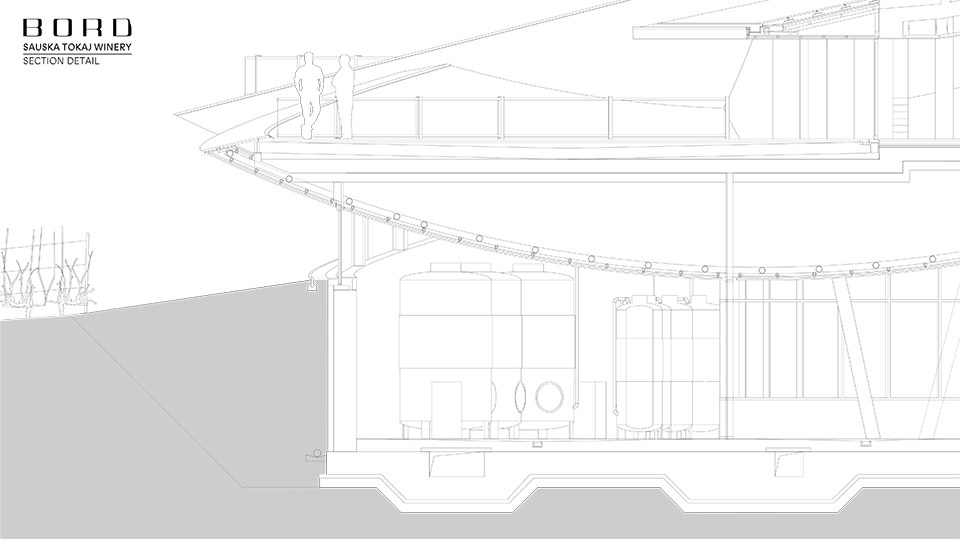
酒庄坐落于帕迪山(Padi Hill)南坡之巅,由两个相交的、直径36米的透镜状体量构成。高悬的结构对游客开放,而需要恒温的功能区——如发酵与储存——则被安置在地下。在地窖层那富有戏剧性的圆形发酵大厅中,不锈钢酒罐以同心圆排列,中央则是木桶陈酿区。其上方,餐厅与酒吧位于透镜形体量之中,由纤细的钢柱支撑。阳光在漂浮形体下方的流动,更加强化了“悬浮”的视觉幻觉。
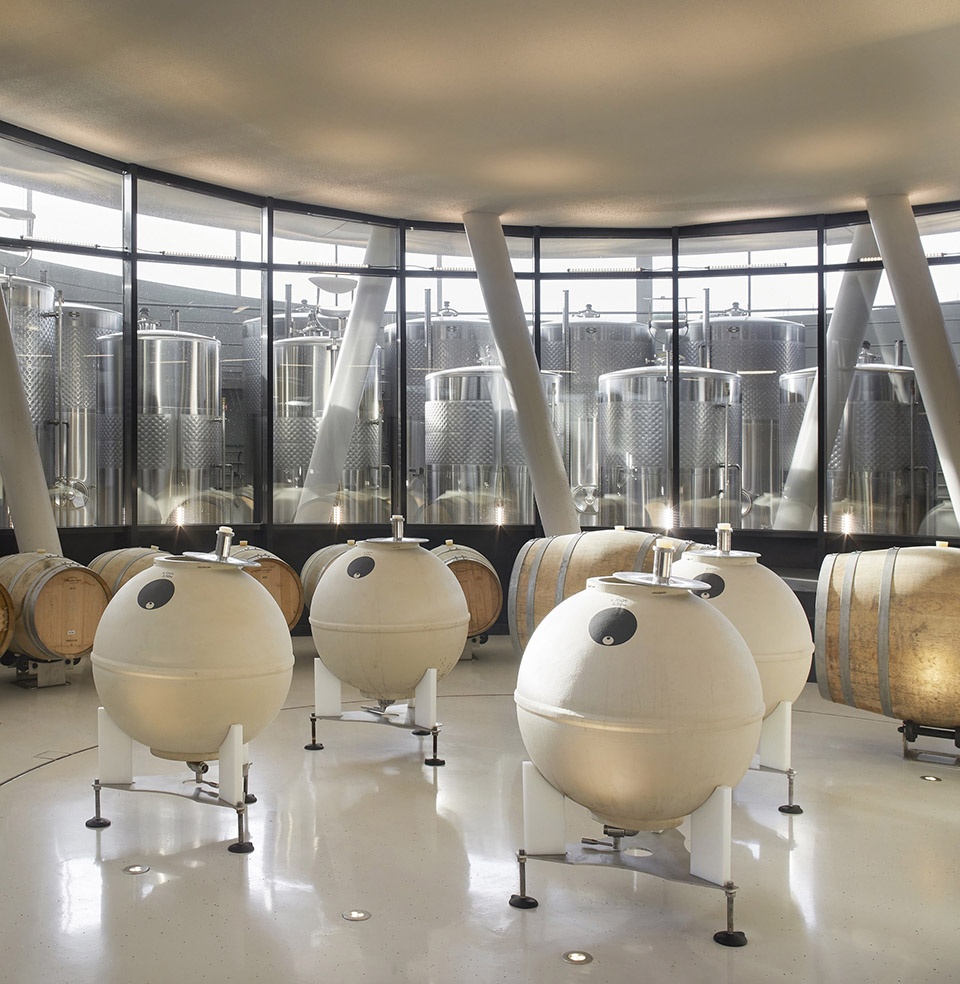
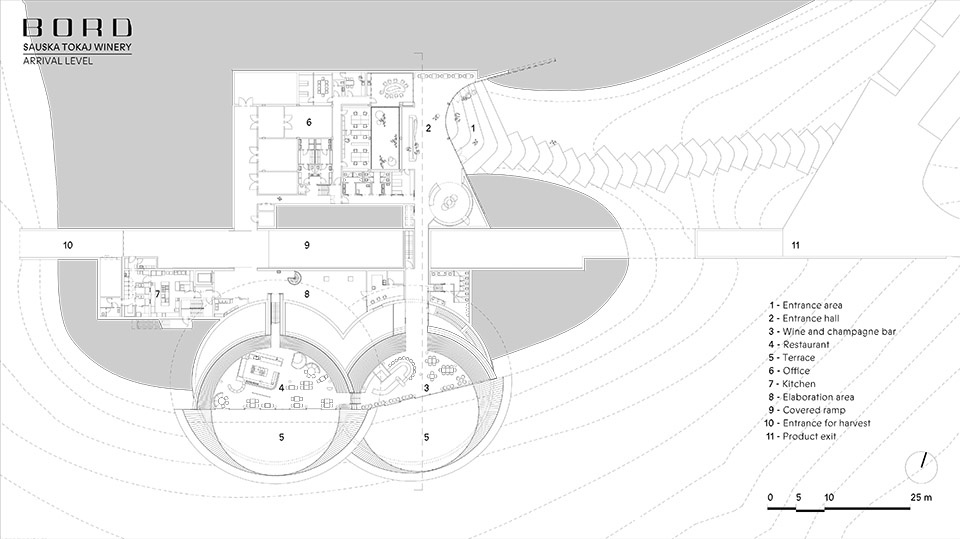
Perched atop the southern slopes of Padi Hill, the winery is defined by two intersecting, 36-meter-wide lens-shaped volumes. These visible, elevated structures are freely accessible to visitors, while the functional areas requiring stable temperatures—such as fermentation and storage—are housed underground. In the dramatic, circular fermentation halls on the cellar level, stainless steel tanks are arranged concentrically around a central wooden barrel aging area. Above this, the restaurant and bar occupy the floating lens structures, supported by slender steel columns. The illusion of levitation is further enhanced by the way sunlight glides across the underside of the hovering forms.
▼富有戏剧性的圆形发酵大厅,the dramatic, circular fermentation halls
▼不锈钢酒罐以同心圆排列,stainless steel tanks are arranged concentrically around
▼中央的木桶陈酿区,a central wooden barrel aging area
到达体验
Arrival Experience
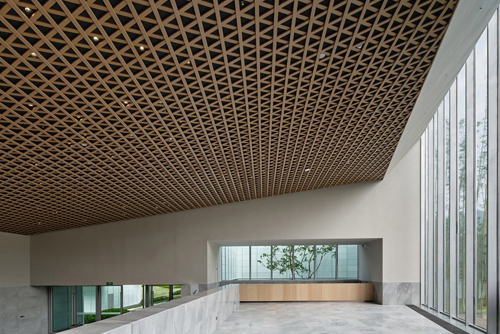
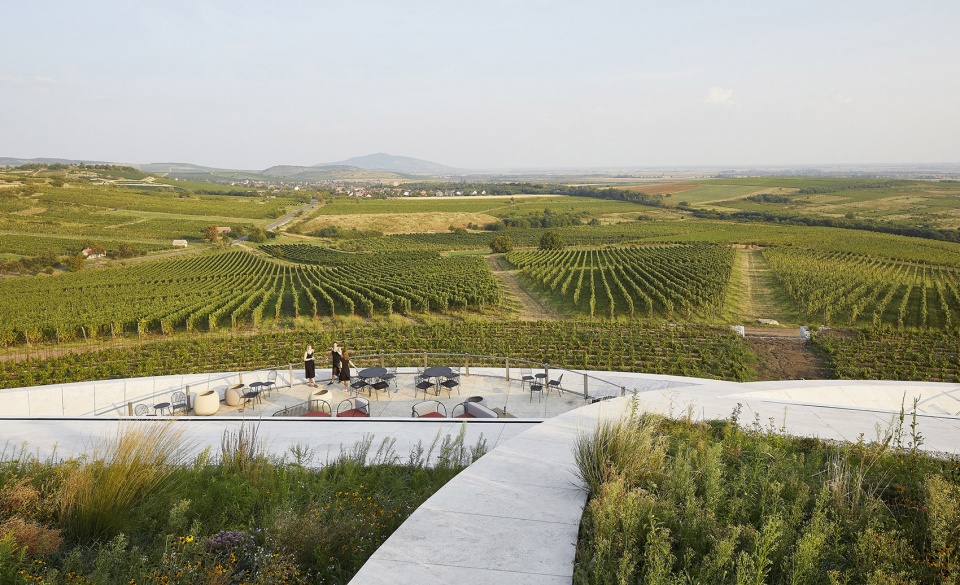
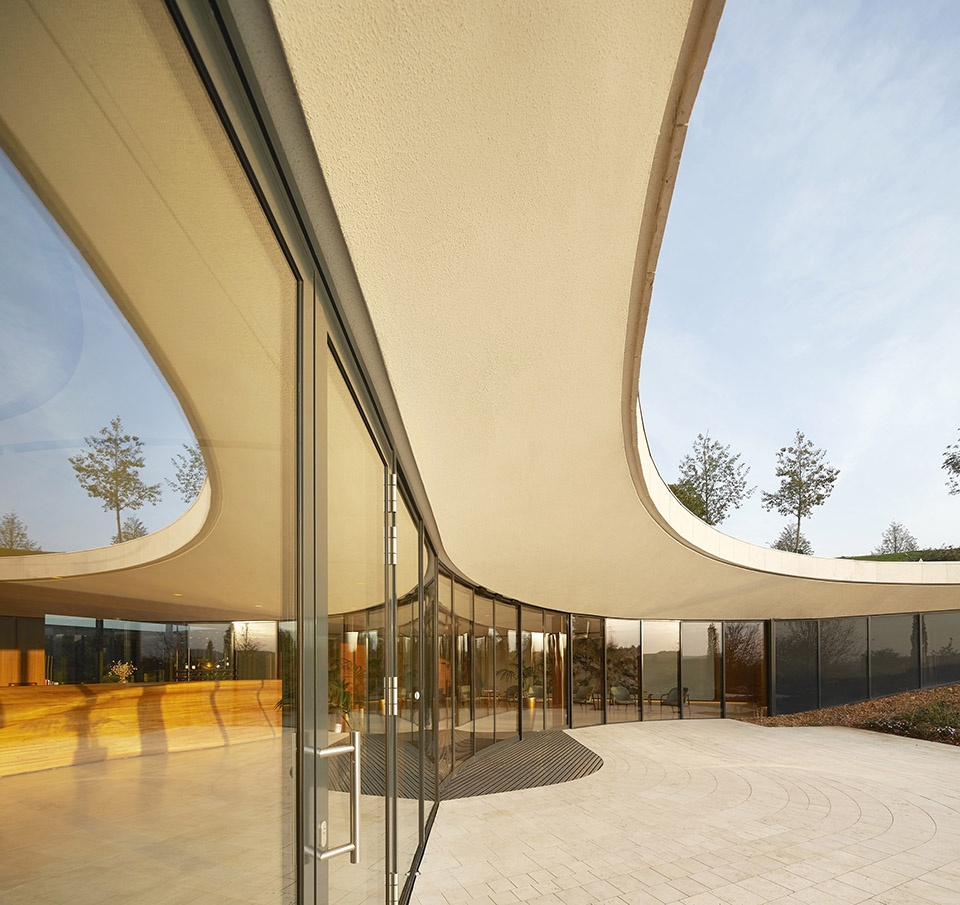
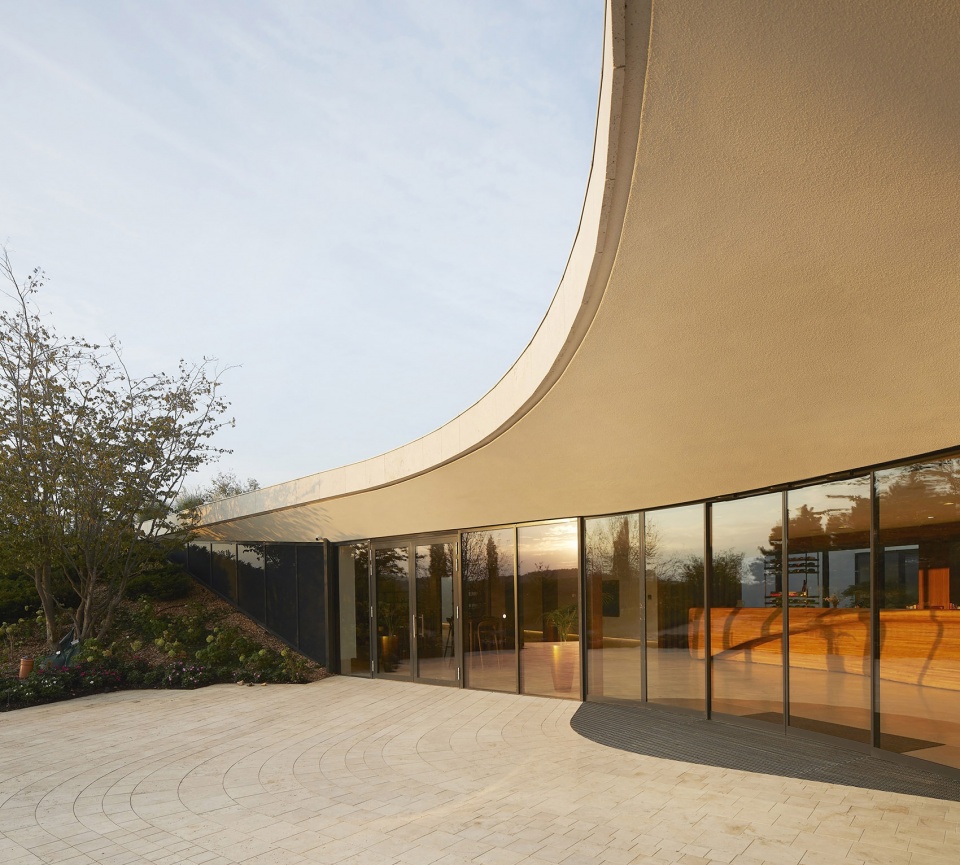
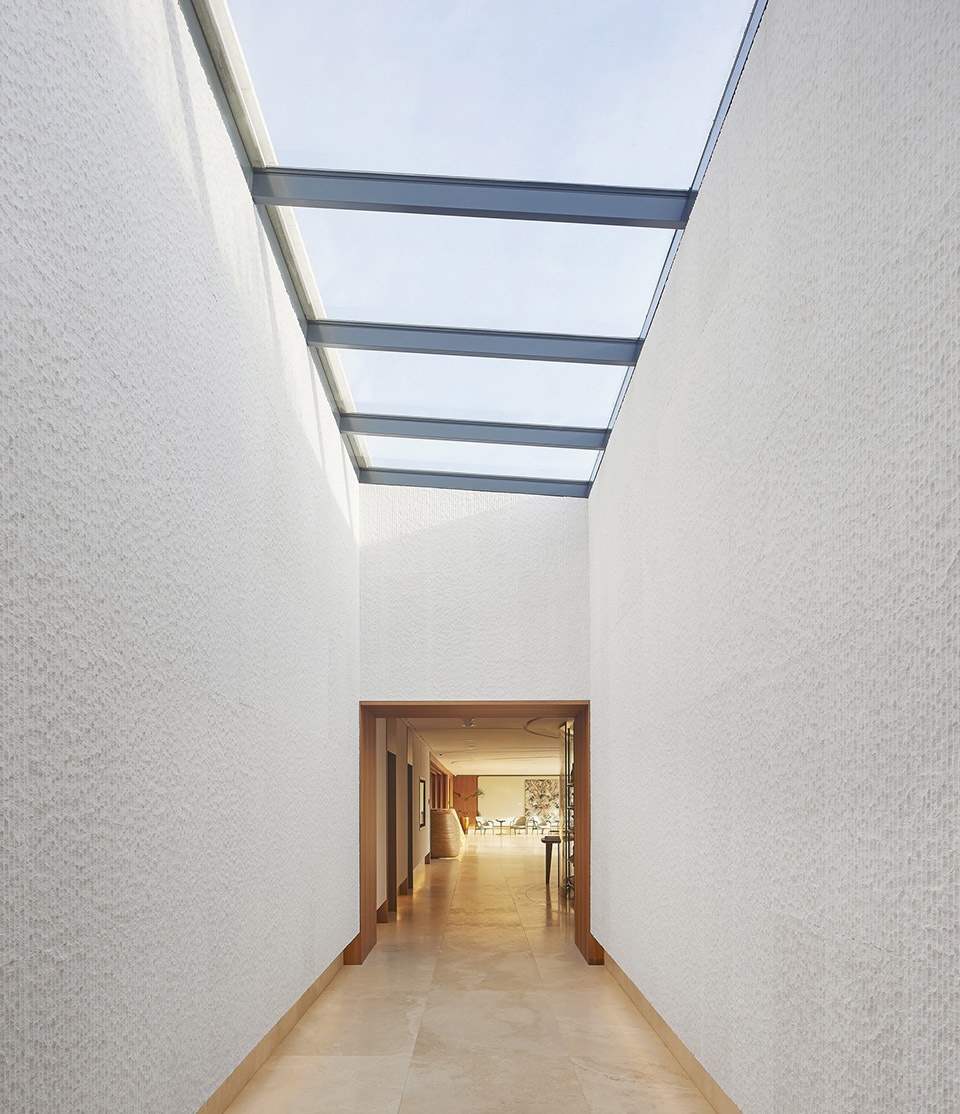
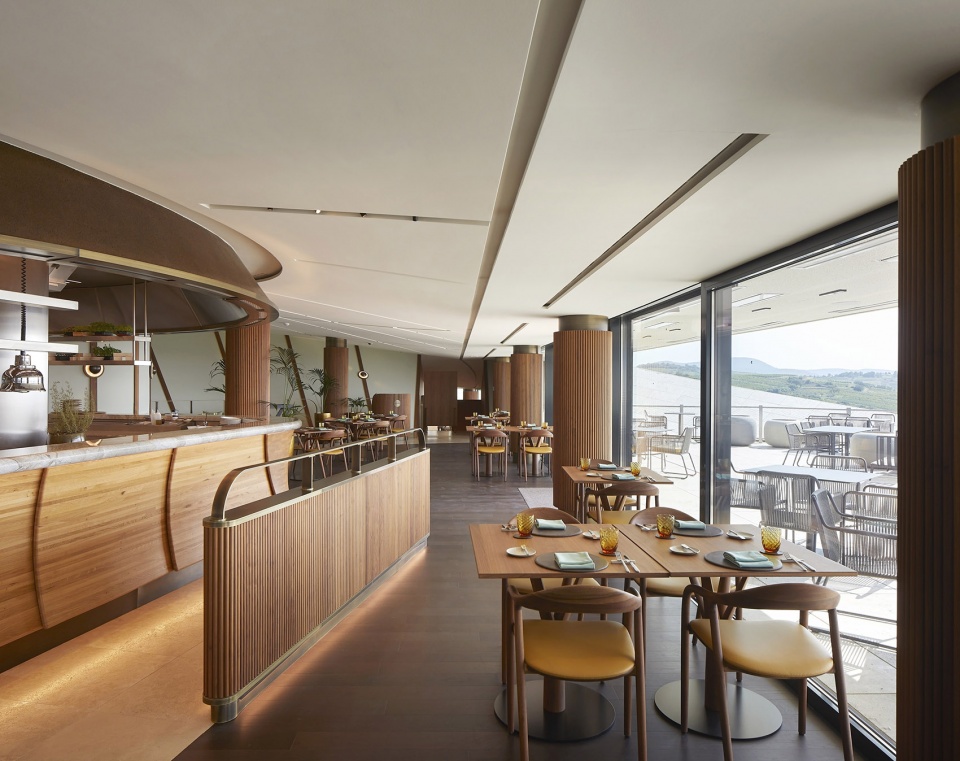
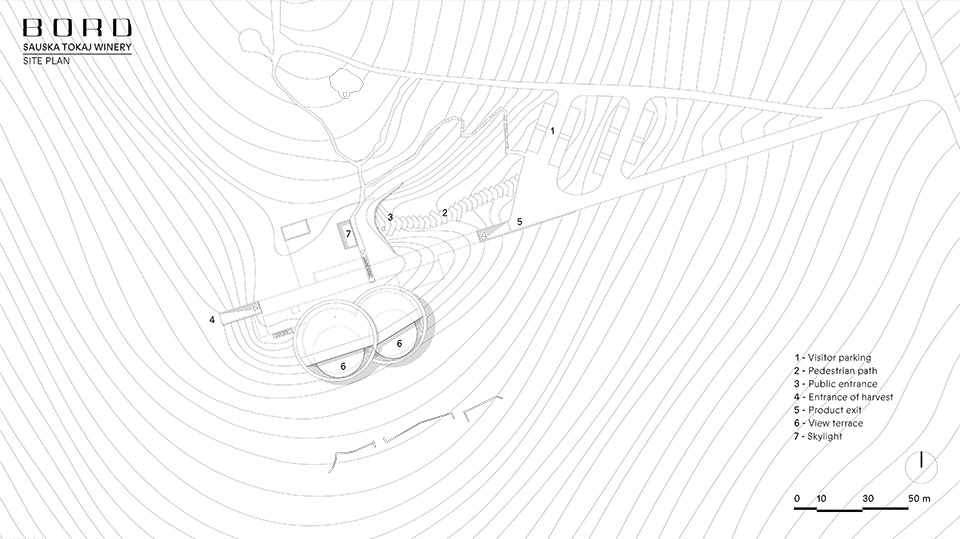
入口被巧妙地嵌入坡地,使雕塑般的建筑得以保持完整的视觉冲击。从停车区延伸而来的宽阔步道,呈现出葡萄园的壮丽景色。来访者首先进入一处私密的过渡空间,延伸至大厅;从这里,一条采光天井走廊通往主要的游客区与全景露台。室内,餐厅与酒吧高耸而弯曲的天花逐渐在视线方向收窄,引导目光延伸至远方。当步入露台,辽阔的景观便在眼前铺展开来,营造出极具冲击力的感官体验。
The entrance is discreetly integrated into the sloping terrain, allowing the sculptural architecture to make an unbroken impact. A wide pathway leads from the parking area, offering breathtaking views of the region’s prized vineyards. Arriving guests step into an intimate transition space that extends into the lobby. From here, a skylit corridor leads to the main visitor areas and the panoramic terrace. Inside, the high, curved ceilings of the restaurant and bar gradually narrow into the direction of the view, drawing the eye outward. As visitors step onto the terrace, the vastness of the landscape unfolds before them, creating a powerful sensory experience.
▼入口被巧妙地嵌入坡地,the entrance is discreetly integrated into the sloping terrain
▼采光天井走廊,a skylit corridor
▼游客区的餐厅和酒吧,restaurant and bar
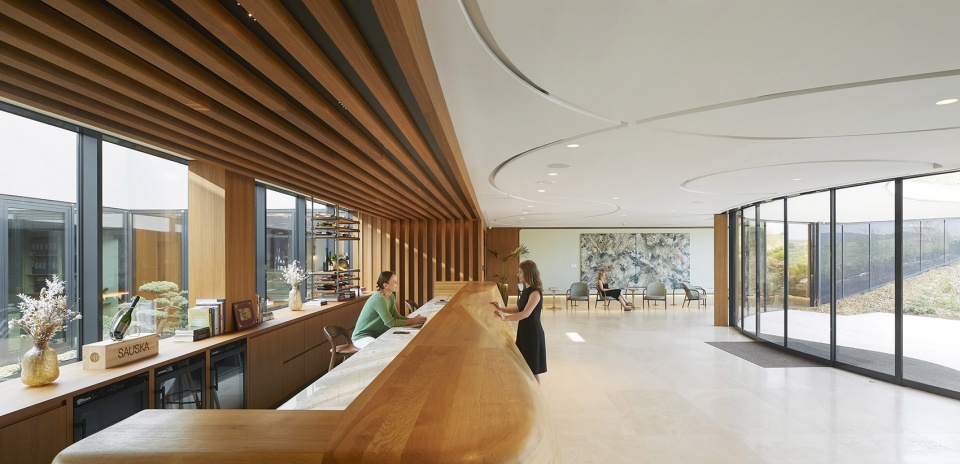
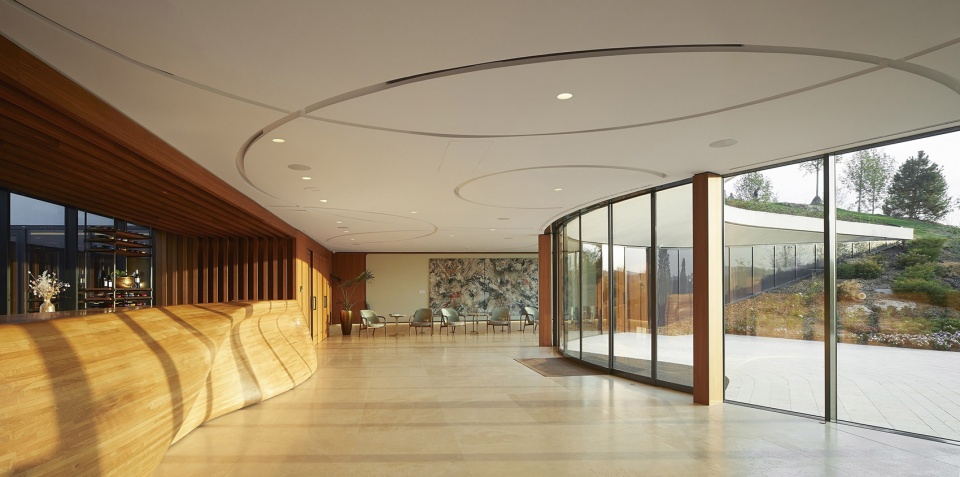
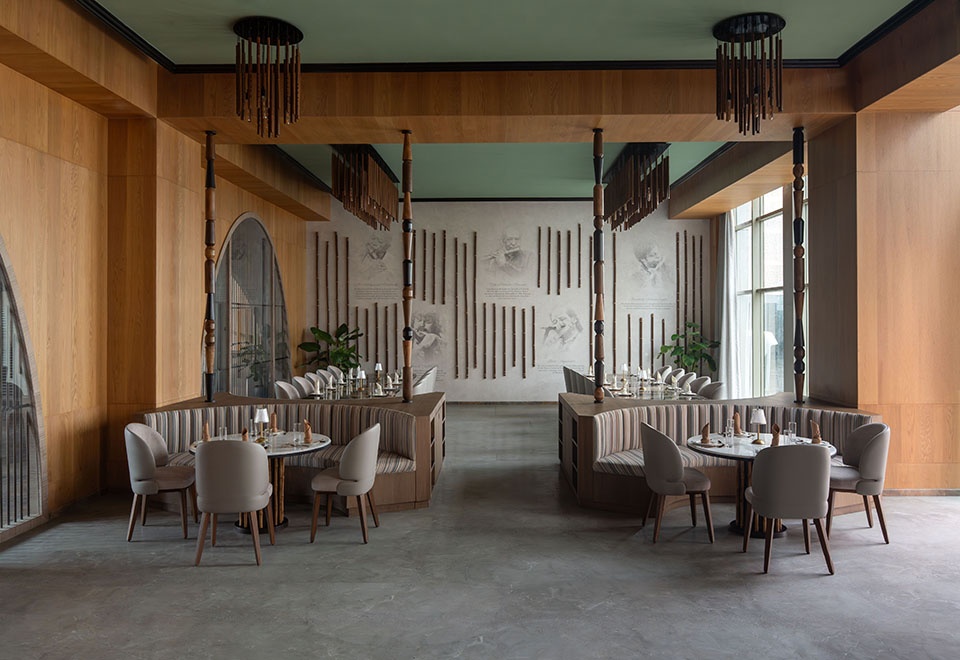
游客区的室内由Tihany Design设计,其灵感源自托卡伊的酿酒传统。天然木材、当地石灰石饰面以及钢材细节,共同营造出精致而温暖的氛围。材料的选择映射出葡萄园的精髓——永恒、自然、优雅。
The interiors of the visitor areas, designed by Tihany Design, draw inspiration from the region’s winemaking traditions. Natural wood surfaces, local limestone cladding, and steel accents create a refined yet welcoming atmosphere. The material palette reflects the essence of the vineyard—timeless, natural, and elegant.
▼游客区的餐厅和酒吧,restaurant and bar
▼夕阳下的建筑,building at dusk
技术背景
Technological Background
酒庄的操作区——压榨、灌装、贴标——被布置为矩形平面,并与发酵空间相连。葡萄的运送与成品酒的出货通过建筑纵向轴线上一条隧道完成,该隧道同时容纳必要的机械设备。酒窖冷冽的金属美学,与悬浮于上方、充满活力与温润色彩的游客空间,形成了鲜明对比。Sauska Tokaj酒庄不仅仅是一个酿酒之所,它更是一座建筑地标,在拥抱现代性的同时庆祝着该地区丰富的遗产。通过将前沿设计与传统融合,它见证了托卡伊精神的不断演进,以及其世界闻名的葡萄酒魅力。
The winery’s operational areas—pressing, bottling, and labeling—are arranged in a rectangular layout and connected to the fermentation spaces. Grapes arrive and finished wines are shipped via a tunnel running along the longitudinal axis of the building. This tunnel also houses essential mechanical equipment. The cold, metallic aesthetic of the cellar contrasts strikingly with the vibrant, warm-toned visitor spaces floating above. The Sauska Tokaj winery is more than just a place for winemaking—it is an architectural landmark that celebrates the region’s rich heritage while embracing modernity. By fusing cutting-edge design with tradition, it stands as a testament to the evolving spirit of Tokaj and its world-renowned wines.
▼场地平面,site plan
▼到达层平面,arrival level plan
▼负一层平面及剖面,basement level plan and section
▼剖面,section
▼剖面细部,section detail
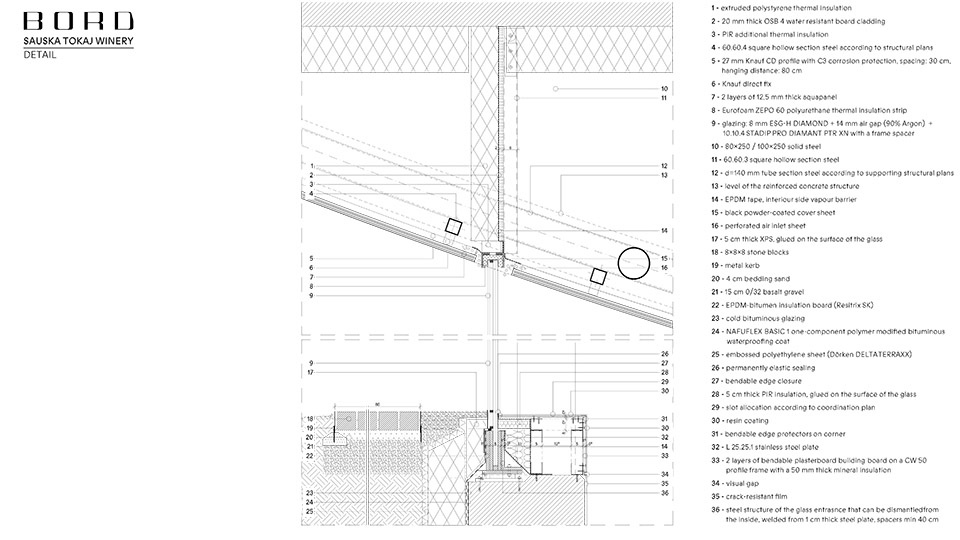
▼细部,detail
Project Name: Sauska Tokaj
Location: 3908, Rátka, Padi-hegy
Gross Floor Area: 5,830m2
Years of Design: 2014-2022
Year of Completion: 2024
Client: Sauska and Partner
General Design: BORD Architectural Studio
Head Architect: Péter Bordás
Coordinating Architect: Csilla Kracker
Architect Team: Robert György Benke, Fruzsina Damásdi, Róbert Gulyás, Ágota Melinda Keresztesi-Angi, András Kéki, Balázs Móser, Györgyi Püspöki, Tamás Tolvaj, Kata Zih
Interior Design: Tihany Design, Alessia Genova, Principal and Adam D. Tihany, Founder
Mechanical Engineering: BORD HVAC Engineering, Zoltán Hollókövi
Structural Design: Hydrastat Engineering, Zsigmond Dezső
Landscape design: Gardenworks, András Kuhn
Garden Expert and Contractor: Barry B. Britton
Photo: Hufton + Crow
Video: SoulCase Studio