Snæfellsjökull国家公园游客中心,冰岛 / Arkis Architects
Snæfellsjökull国家公园游客中心位于冰岛西部斯奈山半岛的渔村Hellissandur,Arkis Architects事务所在2006年举办的国际公开竞赛中荣获一等奖。项目于2020年动工,并于2022年完工。整个建筑严格遵循国际BREEAM可持续认证标准进行设计与建造,强调使用环保材料并最大限度减少废弃物。
The design for the Snæfellsjökull National Park Visitor Center in Hellissandur won first prize in an open competition in 2006. Hellisandur is a small fishing village on Snæfellsnes peninsula in the west of Iceland. Construction began in 2020 and was completed in 2022. The building was fully designed and constructed according to the international BREEAM certification standard, emphasizing environmentally friendly materials and minimizing waste.
▼建筑概览,project overview
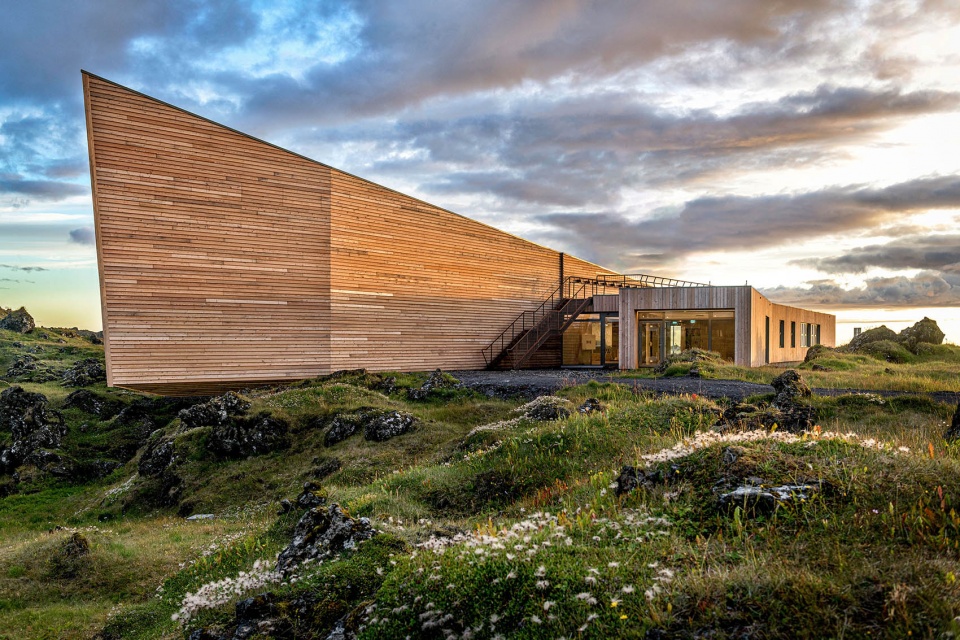
该游客中心不仅仅是一座建筑,更是一条步道、一处观景平台,以及承载文化与自然的活力场所。其形态与功能灵感源自周边的动植物、文化与景观,旨在强化游客在此地的独特体验。
The Visitor Center is more than a building; it is also a walking path, a viewing platform, and a vibrant center of culture and nature. The building form, shape, and use are inspired by the surrounding fauna, culture, and landscape, and is intended to reinforce the visitors’ experiences of their stay.
▼与环境的和谐融合,harmonious integration with the environment
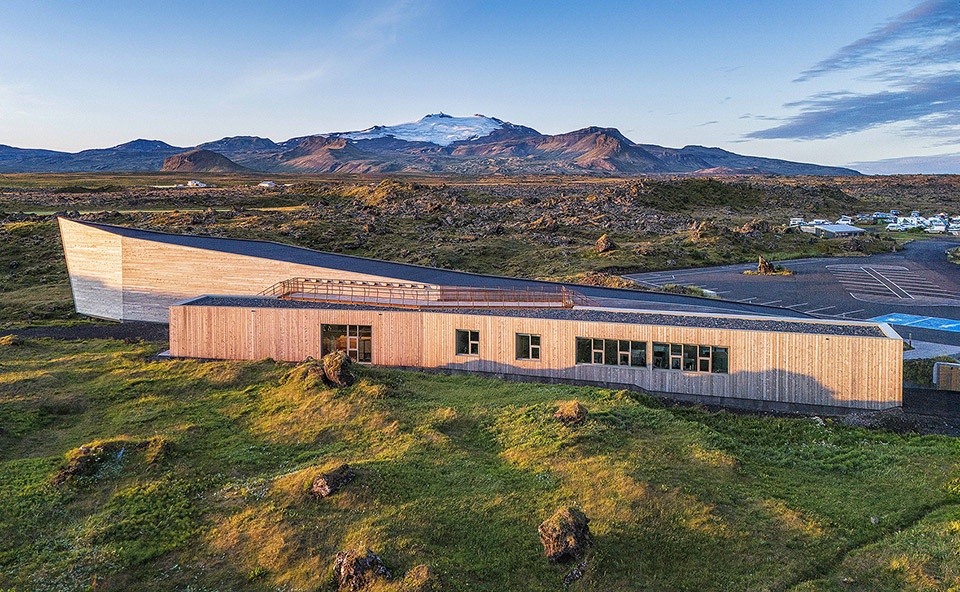
冰川之角Jökulhöfði – Glacial Cape
鲸的双眼位于头部两侧,因此能获得两种不同的环境视角,而非人类与多数动物所习惯的单一视角。在被称为“冰川之角”的游客中心内部或周边,人类的视觉体验亦因此被重新定义,感知到超越寻常的空间体验。
Unlike human eyes, a whale’s eyes are located on each side of the head, which gives the animal two different perspectives on its environment, instead of the one perspective most people and other animals are given. Whether the human eye is inside Glacial Cape, or in its immediate vicinity, it can expect the ordinary perception of the eye to yield other extraordinary experiences.
▼超越寻常的空间体验,extraordinary experiences
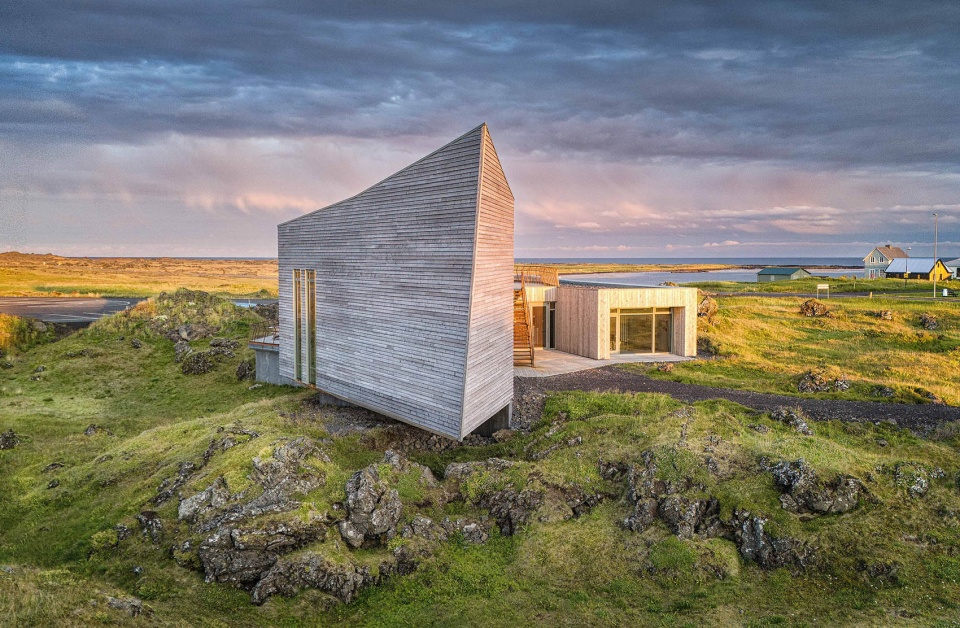
这座“冰川之角”并未支配环境,而是与环境融为一体。游客从主路即可看到建筑的身影,但只有走近时才能真正感受其层次与深度。从停车场通向建筑的小径穿过熔岩原,最初遮挡了视线,而随着靠近,建筑与周围景观逐渐显露,这里也成为文化、教育与休闲活动的交汇之所。路径继续向上延伸,直至建筑顶部的平台,游客们在此可获得观览冰川、大地与海洋的全景视野。
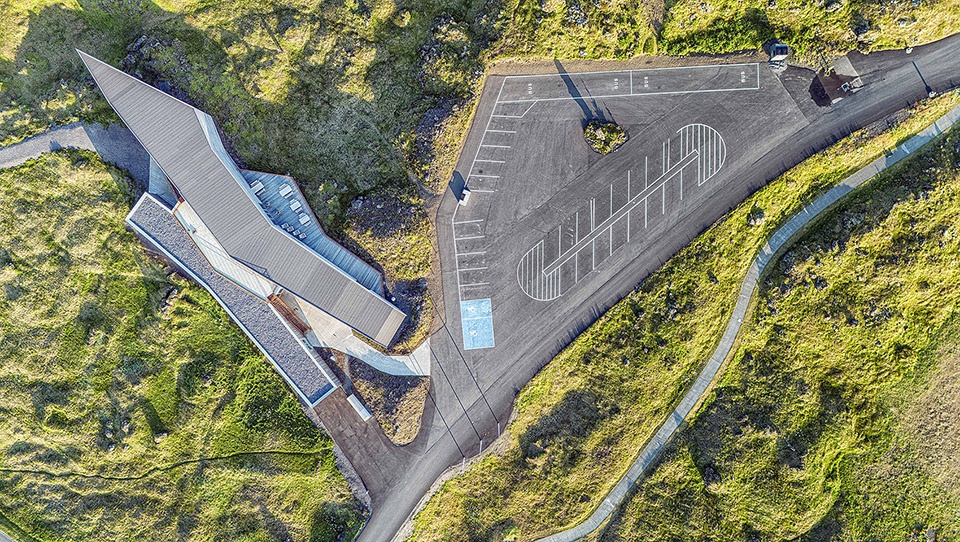
Glacial Cape does not dominate its surroundings, but rather it merges into them. Its presence is easily visible from the main road, but from there no one perceives it fully. Immediately upon arrival the tone is set for different nuances that the building creates in interaction with nature. The trail, from the parking lot to the building, splits a sea of lava around the Cape so the line of sight is limited at first. As one gets closer, the Cape gradually reveals itself and its immediate surroundings. There, a melting pot for cultural, educational, and recreational activities becomes revealed – a melting pot which the Cape is intended to foster. Out of the lava sea, the route continues up the Cape, where unobstructed views extend to the glacier, land, and sea.
▼停车场与建筑,the parking lot and the building
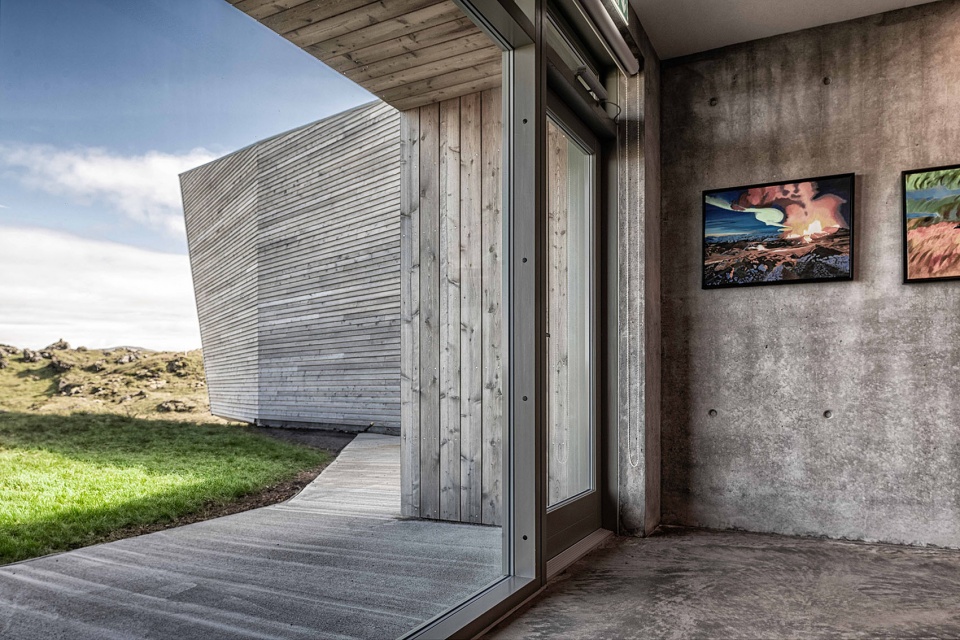
▼建筑与周围景观,building and outdoor landscape
新的设计方法New approach to building design
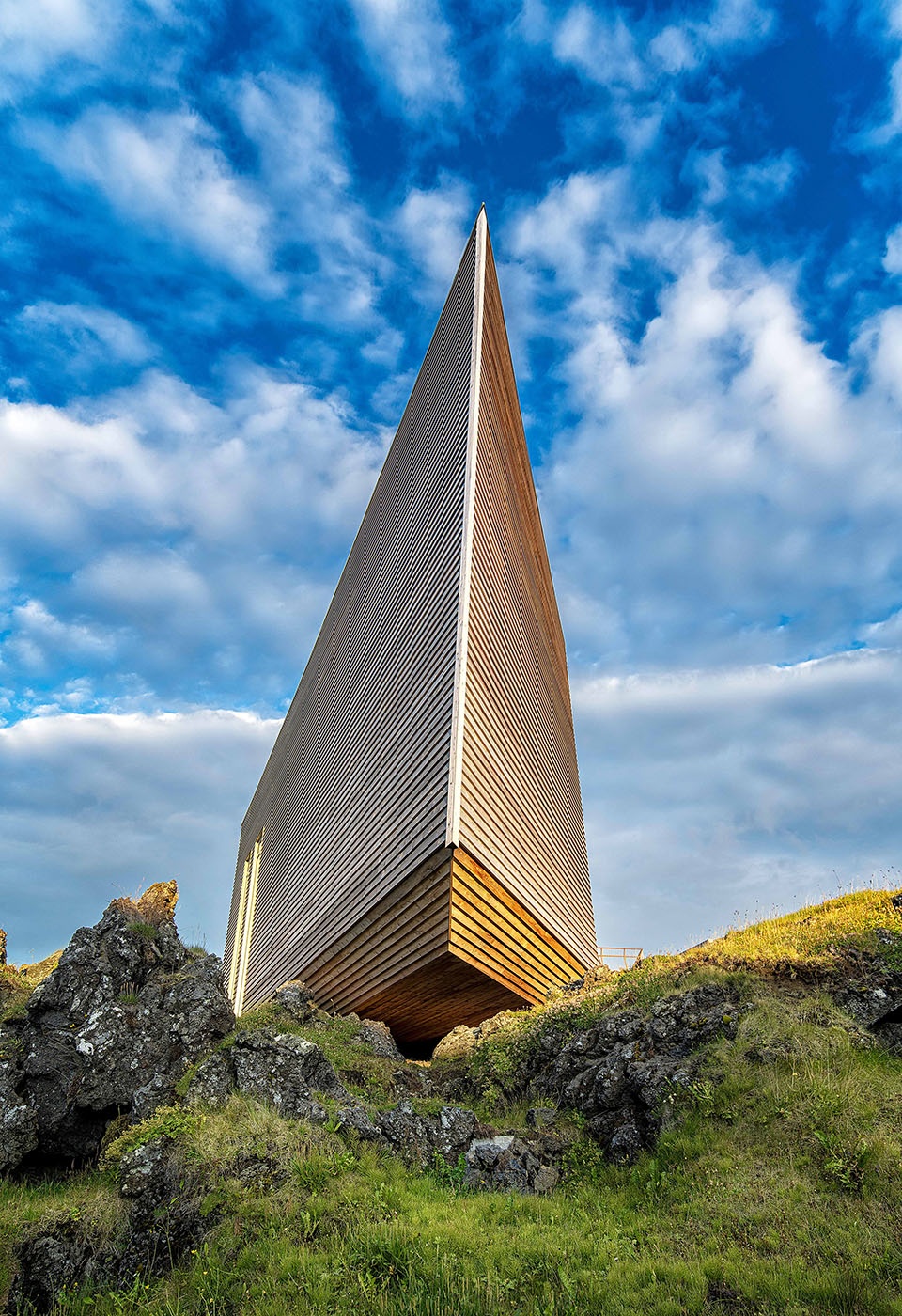
该项目的设计核心目标之一,是在尽可能少扰动场地的前提下建造,旨在达到建筑如同自然“降落”在此处的效果。为实现这一点,建筑部分体量悬挑于熔岩边缘,这在地震多发地区尤为挑战,对建筑的结构系统提出了极高要求。
One of the main goals in designing the building at this location was that it could be constructed with as little disturbance as possible, and that it would feel as though it had landed there fully formed, without any disruption. To achieve this, the design included a part of the building that hovers over the edge of the lava field. This required a new approach to building design in an earthquake-prone area, which places high demands on the structural system — especially when dealing with cantilevered structures, which are very challenging.
▼自然“降落”的建筑,building that naturally ‘landed’
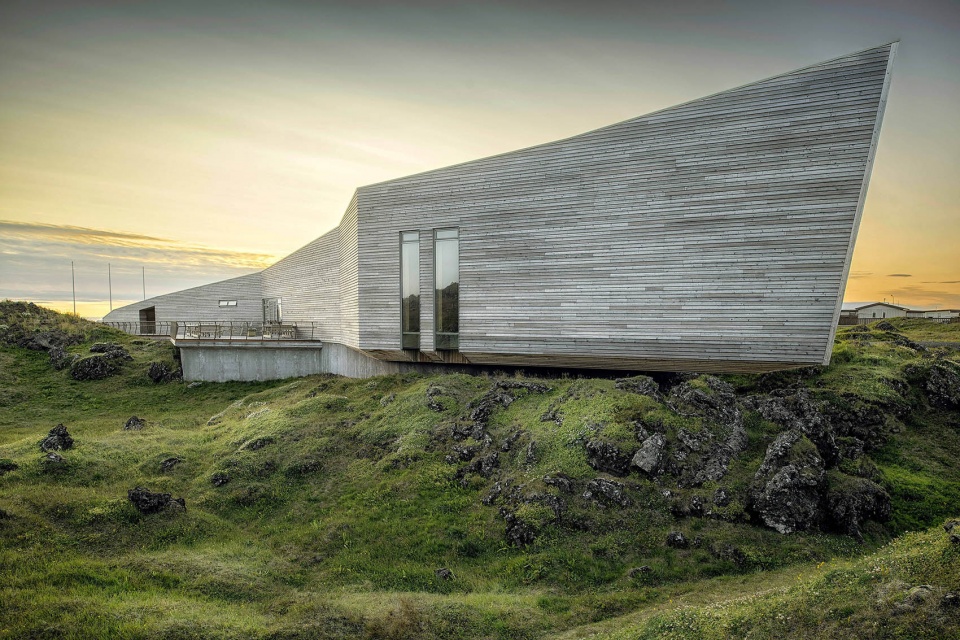
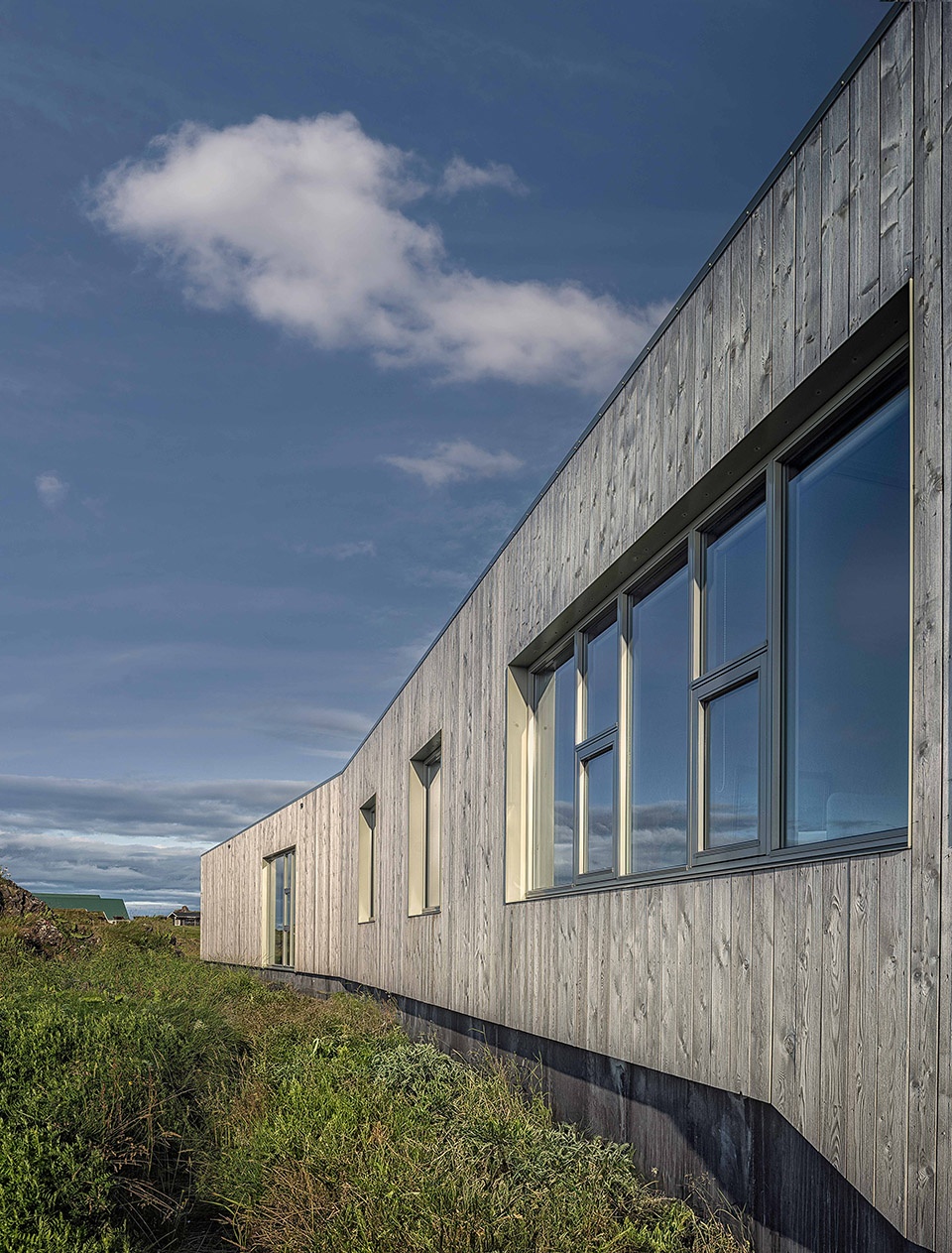
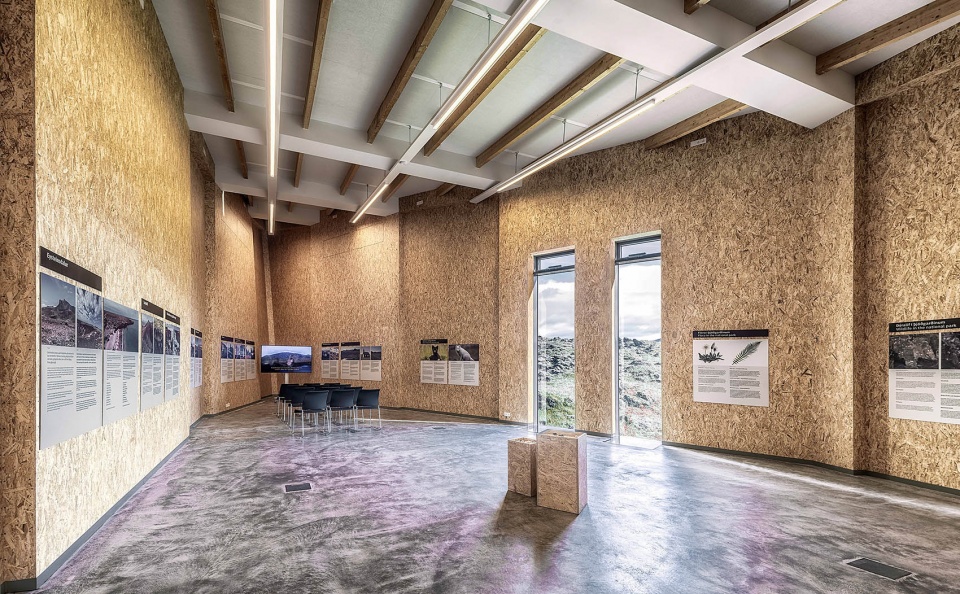
设计概念分为两个部分:“冰川之角”与“鱼骨”。前者为国家公园工作人员的办公设施,后者则容纳展览空间、咖啡厅与讲座区。外立面采用两种不同的木材饰面:“冰川之角”部分为水平木板覆面,“鱼骨”部分则为垂直木板覆面。
The design concept is inspired by the surrounding nature, and is divided into two distinct sections called Glacier Cape and Fishbone. One section is a work facility for the national park staff, and the other contains an exhibition space, café, and lecture facilities. The exterior walls of the building are clad in two different types of timber cladding: on the Glacier Cape part, there is horizontal timber cladding, and on the Fishbone part of the building, there is vertical timber cladding.
▼“冰川之角”部分,the Glacier Cape part
▼“鱼骨”部分,the Fishbone part
▼展览空间,the exhibition space
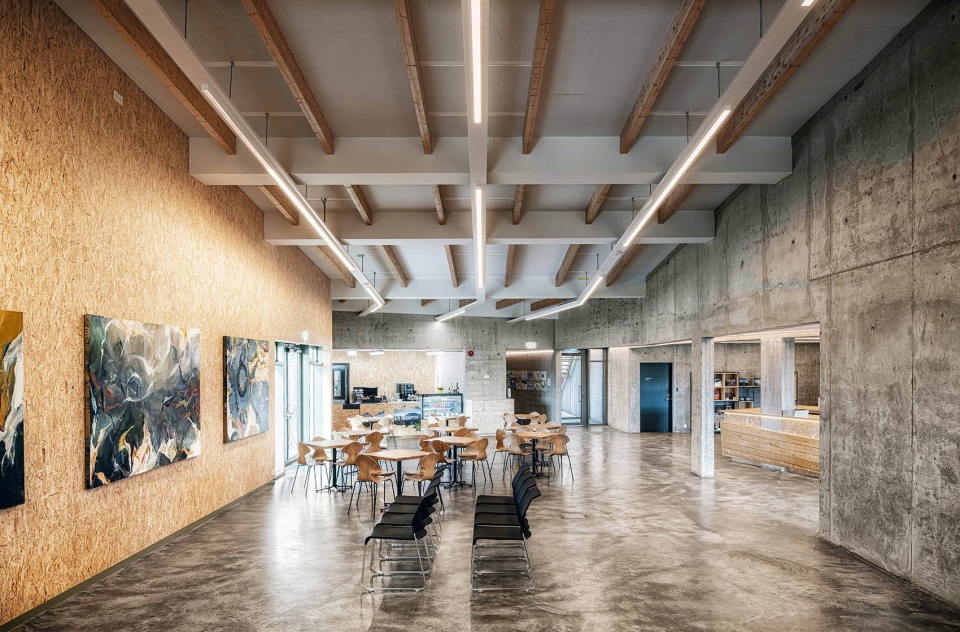
▼讲座区,the lecture facilities
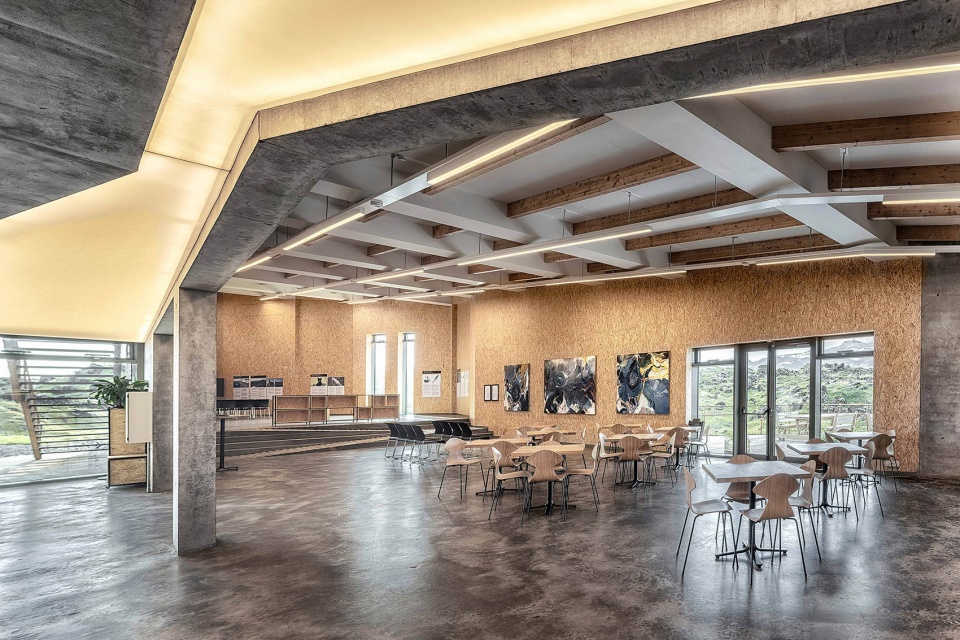
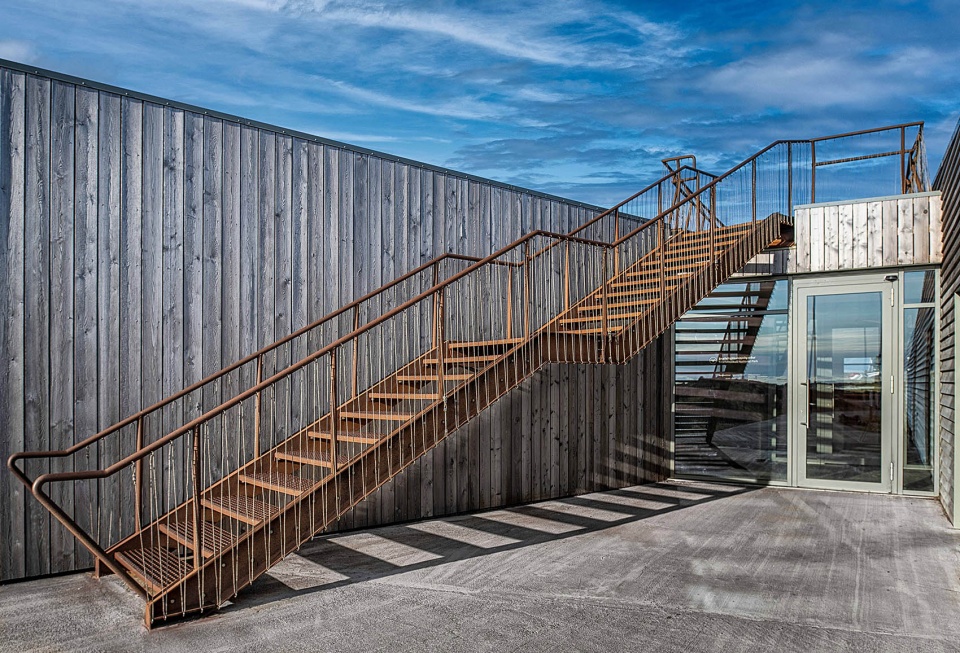
建筑的中轴设有贯通的步道,使游客能够从一侧穿行至另一侧。两侧的楼梯则通向屋顶观景平台,俯瞰Snæfellsjökull冰川与当地的Hellissandur村。
A pathway runs through the center, allowing visitors to walk directly through the building from one side to the other. Stairs on both sides of the building lead up to the rooftop observation deck, which offers panoramic views of Snæfellsjökull glacier and the village Hellisandur.
▼流畅的室内动线,smooth indoor flow
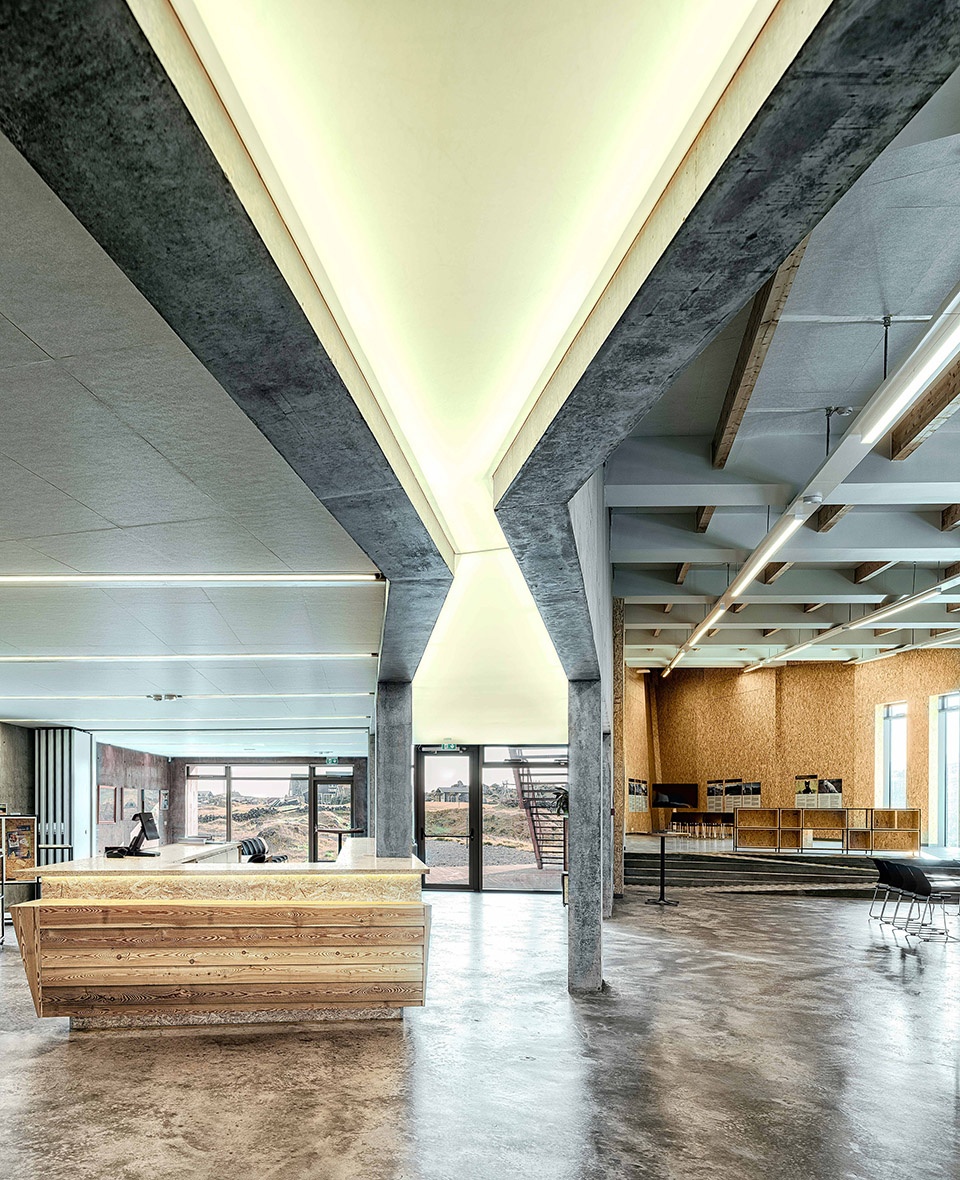
▼宽阔的视野,wide field of vision
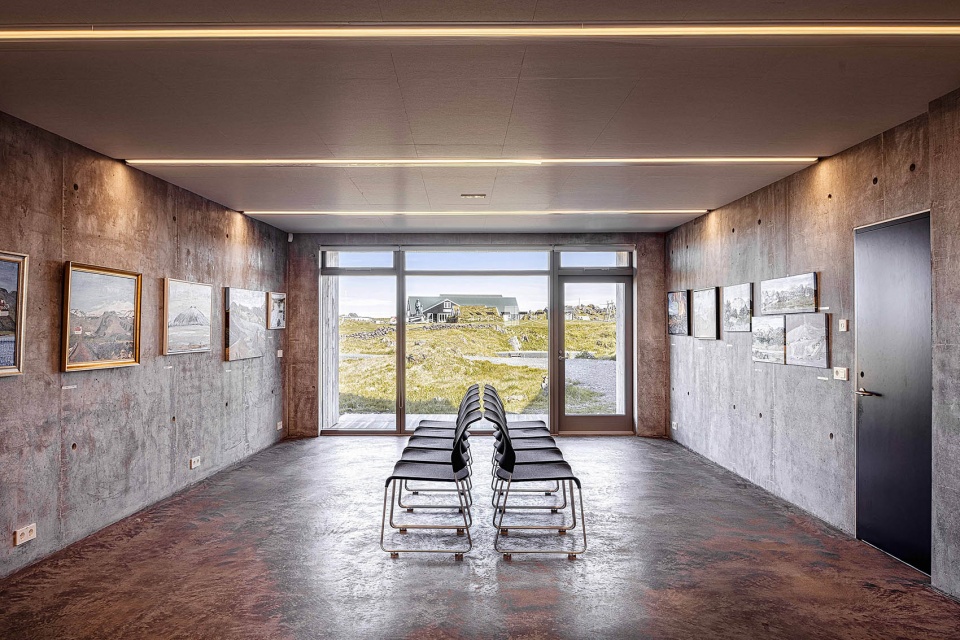
项目的整个施工与运营过程均贯彻环保与可持续理念。所有材料经过严格甄选,要求低维护且可自然风化而不损其耐久性。
The entire construction and operational process follows environmentally responsible practices, with a strong emphasis on sustainability. All materials were carefully selected for their low maintenance requirements—eliminating the need for outdoor maintenance and allowing for natural weathering without compromising durability.
▼户外耐久性,outdoor durability
国际BREEAM可持续认证BREEAM certification
建筑的设计与施工严格遵循国际BREEAM可持续认证标准,强调可持续性与环境责任。全程采用环保材料,并对施工废弃物进行严格的减少、量化与监控。在项目实施过程中,对承包方也提出了严苛的环保要求。此外,所有木材均获得FSC认证,确保来源负责任且在生产过程中全程可追溯。
The building was fully designed and constructed according to the international BREEAM certification standard, which emphasizes sustainability and environmental responsibility. Environmentally friendly materials were used throughout, and all construction waste was carefully minimized, measured, and monitored. Strict environmental requirements were also enforced on the contractor for the duration of the project. Furthermore, all wood used in the building is FSC-certified, ensuring that it is responsibly sourced and fully traceable throughout the production process.
▼完善的步行与骑行路径,well-developed walking and cycling paths
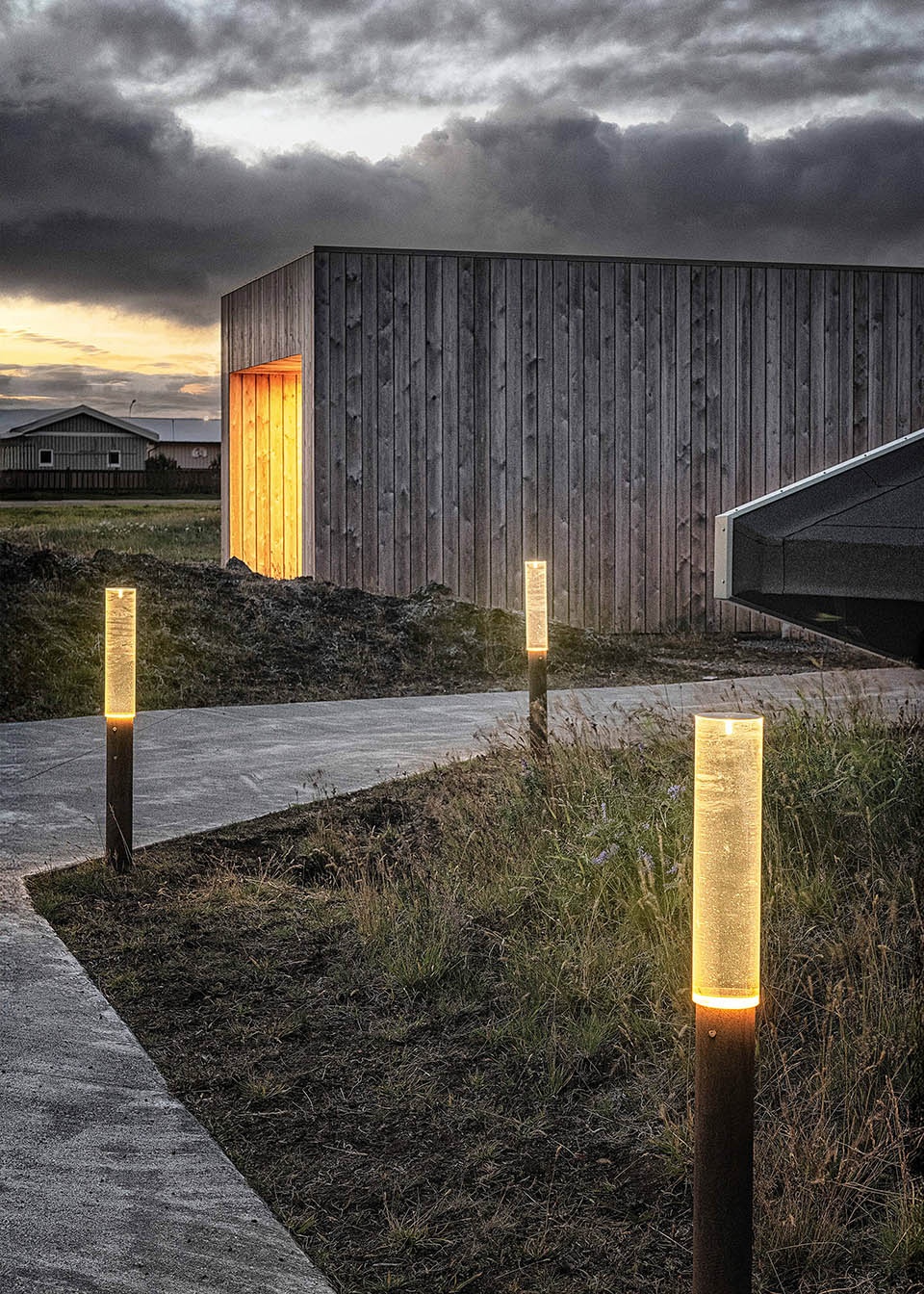
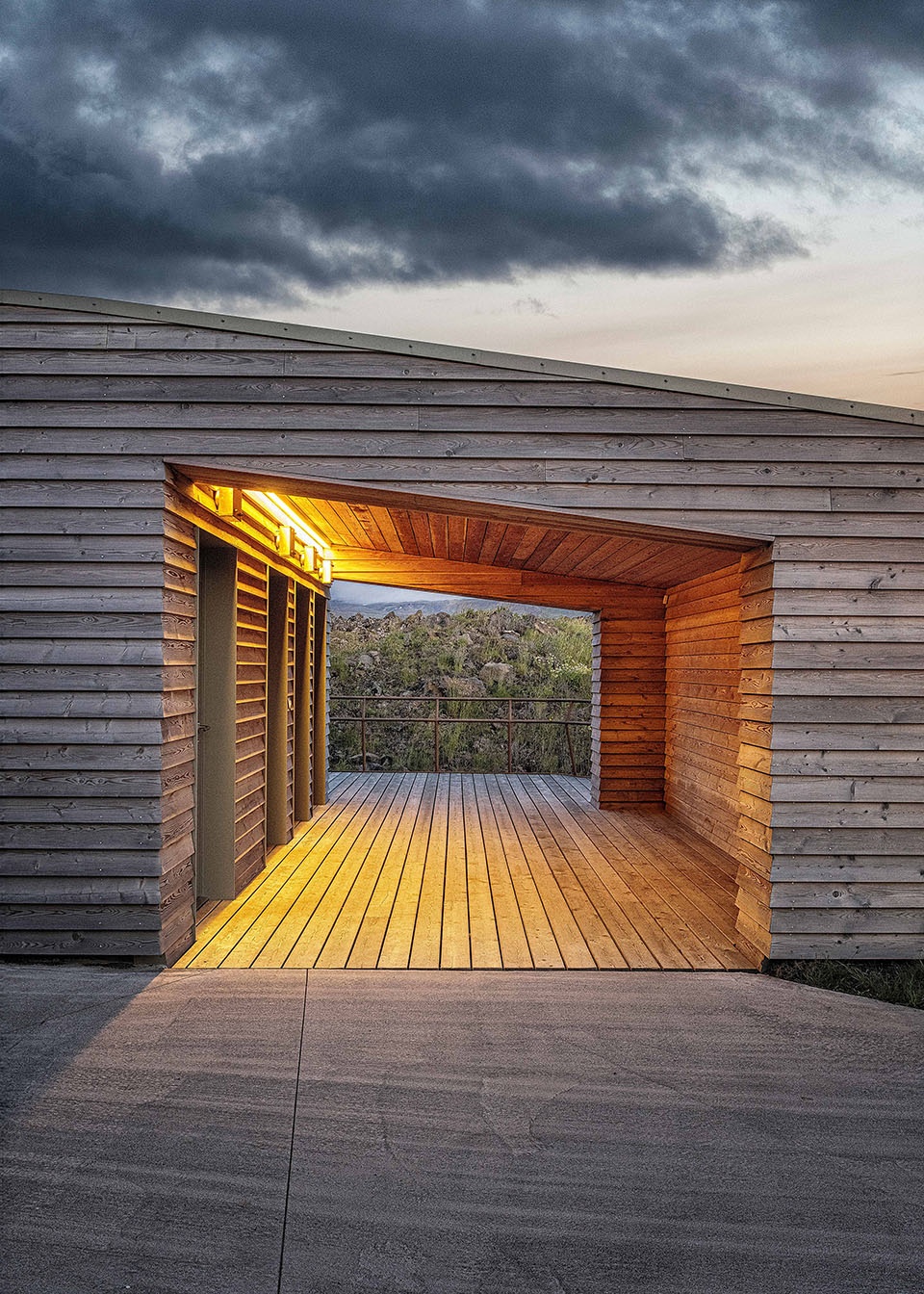
▼夜景,night view
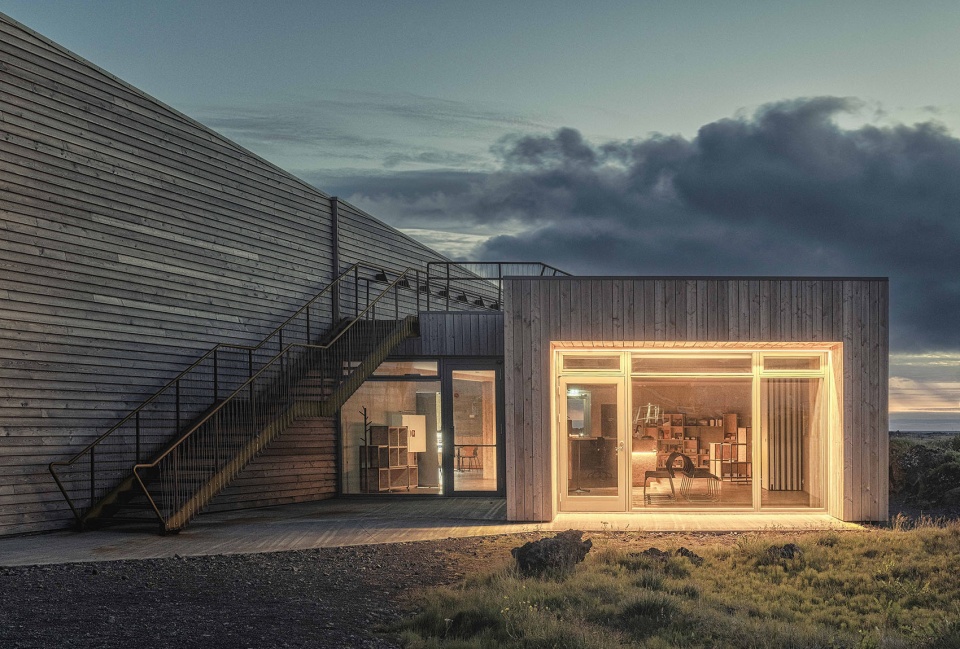
BREEAM认证也关注建筑与更广泛社会因素的联系,包括当地环境、交通体系,以及提升建筑品质与可持续性的创新方案。Snæfellsjökull国家公园游客中心充分体现了这些原则:规划完善的步行与骑行路径将中心与公园紧密相连;建筑从两侧均可进入,并在中轴设有贯通的步道,实现了与自然环境及人群流线的无缝融合。
BREEAM also addresses the connection between building and broader social factors, including the local environment, transportation, and innovative solutions that enhance building quality and sustainability. The National Park Visitor Center reflects these principles with well-developed walking and cycling paths that connect the center to the surrounding park. The building is accessible from both sides, with a pathway running directly through its center, integrating pedestrian access seamlessly into the design.
▼平面图,plan drawing
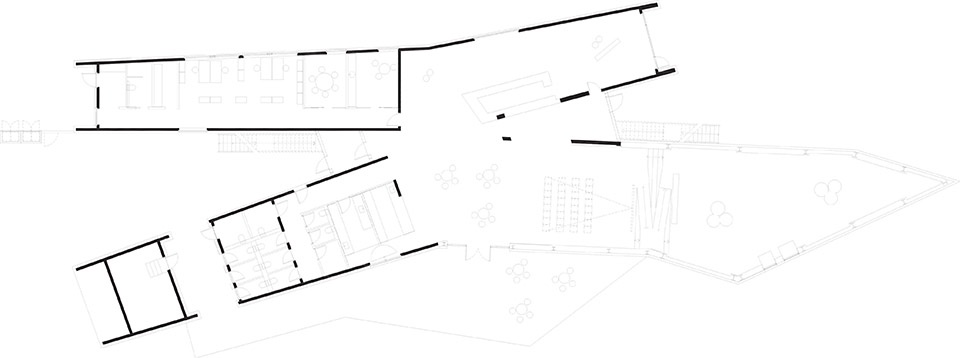
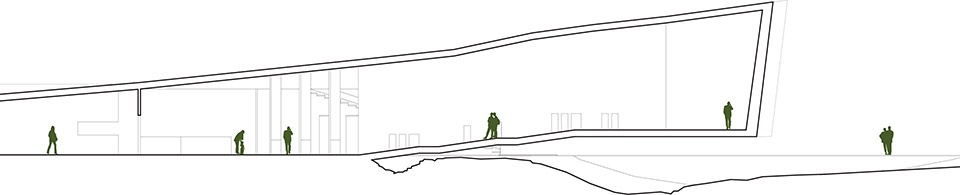
▼剖面图,section drawing
Technical sheet
Project title: Visitor center in Hellisandur
Address: Sandahraun 5, 360 Hellissandur, Iceland
Competition: 1st. prize in an open competition
Building size: 710 m2
Function: Visitor center in Snæfellsnes/Hellissandur
Architects: Arkís arkitektar, Vesturvör 7, 200 Kópavogur, Iceland
Owner/client: The State Construction Agency
Location: N64° 54’ 49.465” W23° 53’ 21.027
Photographer: Karl Vilhjálmsson
Awards: 1st prize in an open competition
Year of completion: 2023