二里头夏都遗址博物馆,河南/建筑
设计理念: “最早中国、华夏之源”
Design concept: "the earliest source of China and China"
1.形体策略
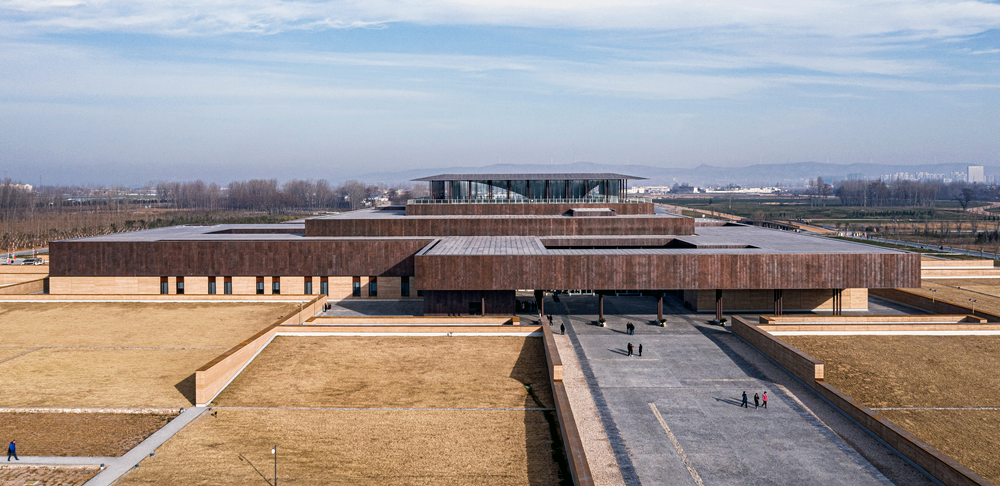
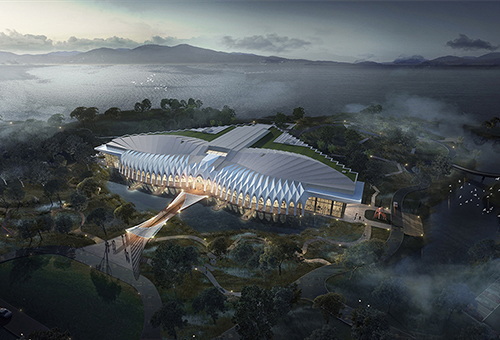
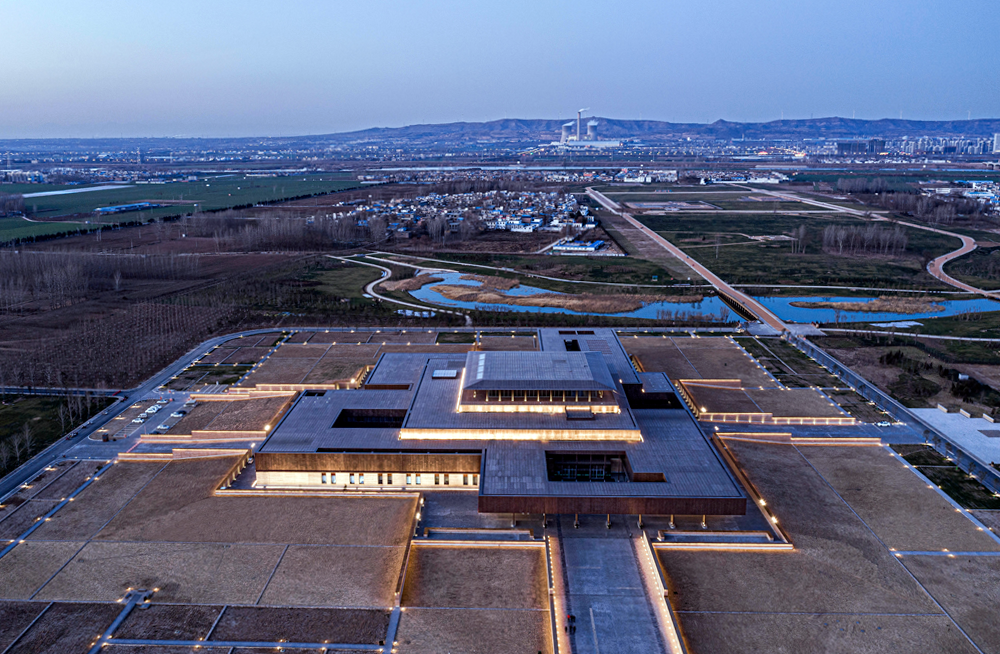
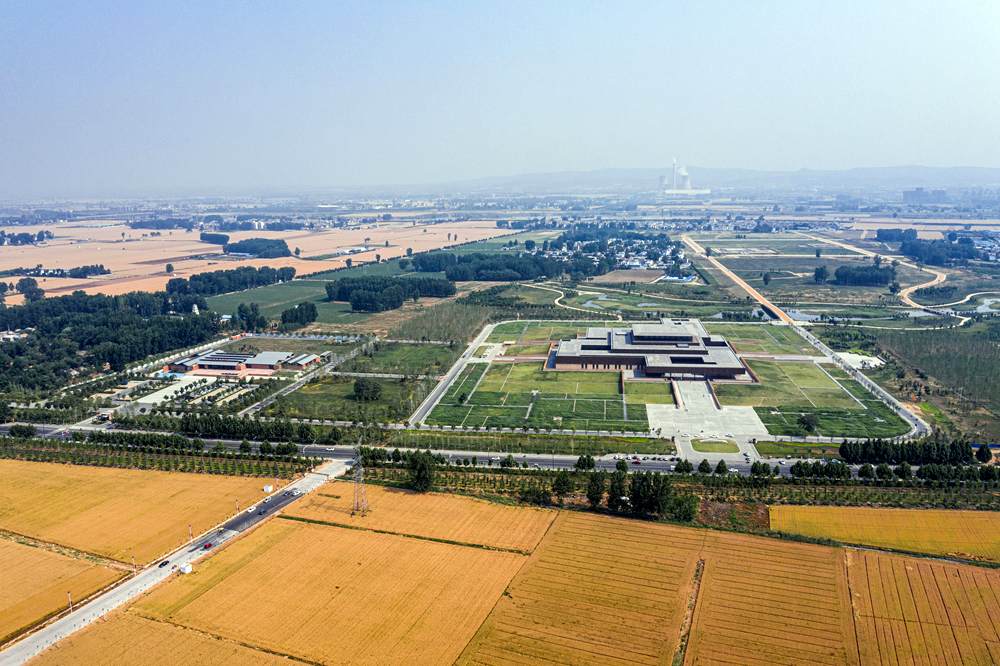
建筑布局与二里头遗址环境的总体风貌相协调,采取水平展开的形体策略,低矮舒展的建筑体量水平延展并由周边向中央逐级升高,形成11~24m高低错落的建筑天际线,与二里头遗址所在的台地特征相呼应。环绕建筑周边退让出足够的农田景观,最大程度减弱大体量建筑对环境的压迫感,保证遗址原生环境的完整性。
1. Shape strategy
The architectural layout is coordinated with the overall style and features of the Erlitou site environment, and the body strategy of horizontal expansion is adopted. The low and stretched building volume extends horizontally and rises from the periphery to the center step by step, forming an 11~24m high and low architectural skyline, which echoes the characteristics of the platform where the Erlitou site is located. Enough farmland landscapes are retreated around the building to minimize the pressure of large-scale buildings on the environment and ensure the integrity of the original environment of the site.
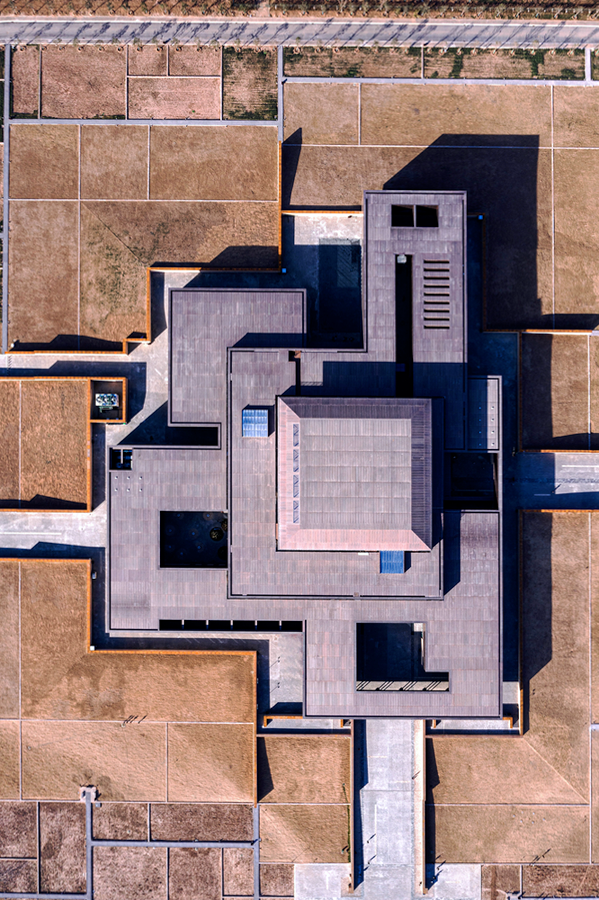
博物馆所在场地曾经是伊洛河的洪水滞留区,针对场地地势低洼所带来的防洪问题,博物馆的基准标高按照历史最高洪水位118米标高设置。博物馆周围设置护坡,利用微地形处理的手法使建筑与周围景观紧密融合。地形起伏隐匿了博物馆的部分体量,使遗址环境和建筑成为融合的整体,建构起遗址博物馆的独特形象。
The site of the museum used to be the flood detention area of the Yiluo River. In view of the flood control problems caused by the low-lying site, the benchmark elevation of the museum is set according to the elevation of 118 meters of the highest flood level in history. Slope protection is set around the museum, and micro terrain processing is used to closely integrate the building with the surrounding landscape. The ups and downs of the terrain hide part of the volume of the museum, making the site environment and architecture become an integrated whole, and building a unique image of the site museum.
2.空间策略
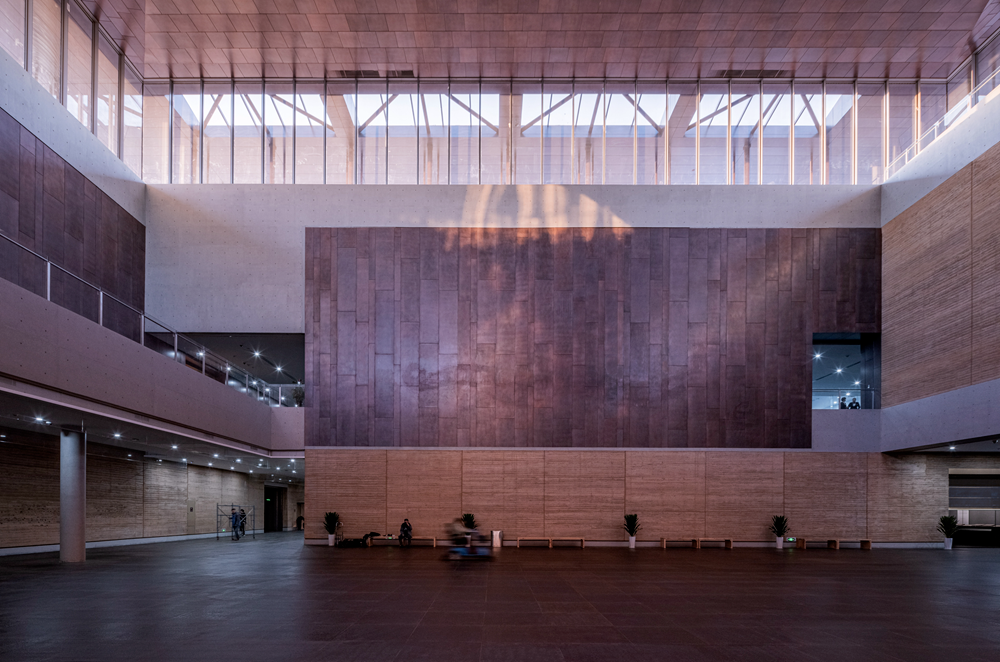
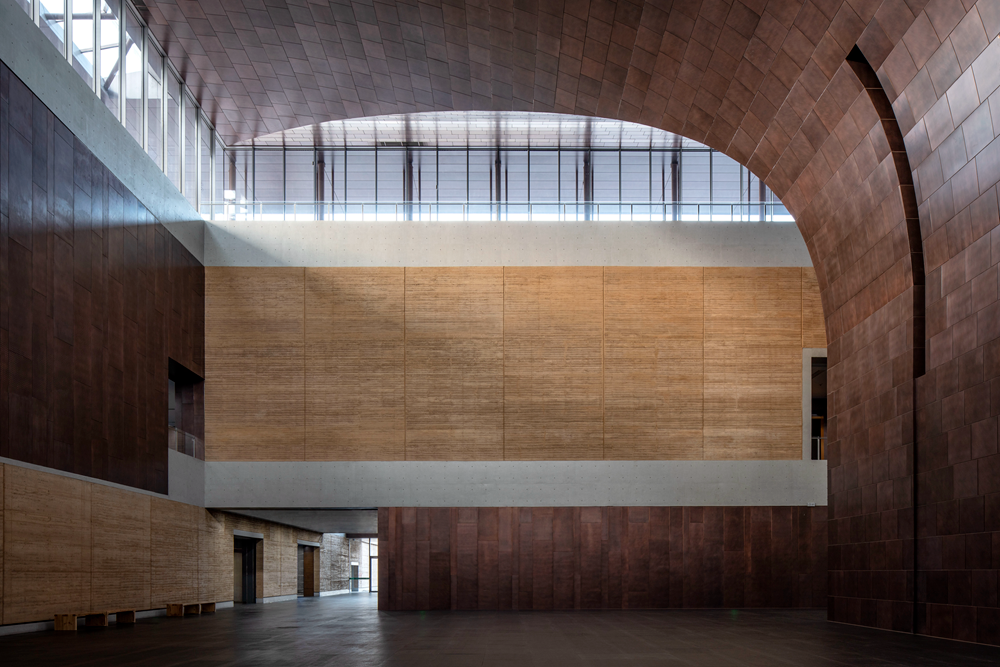
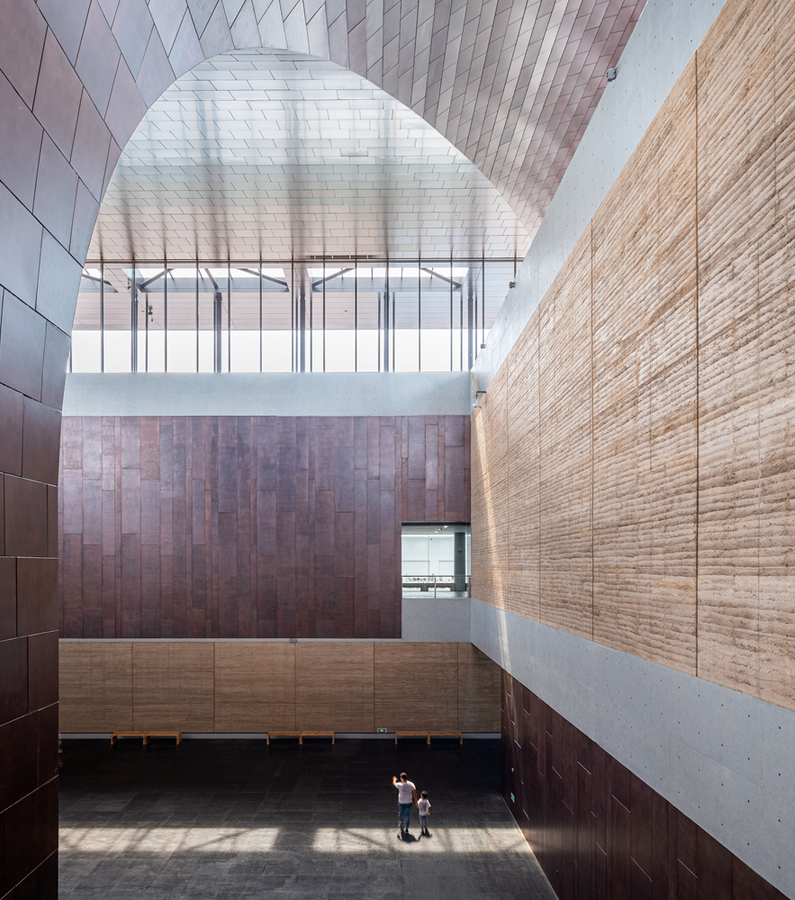
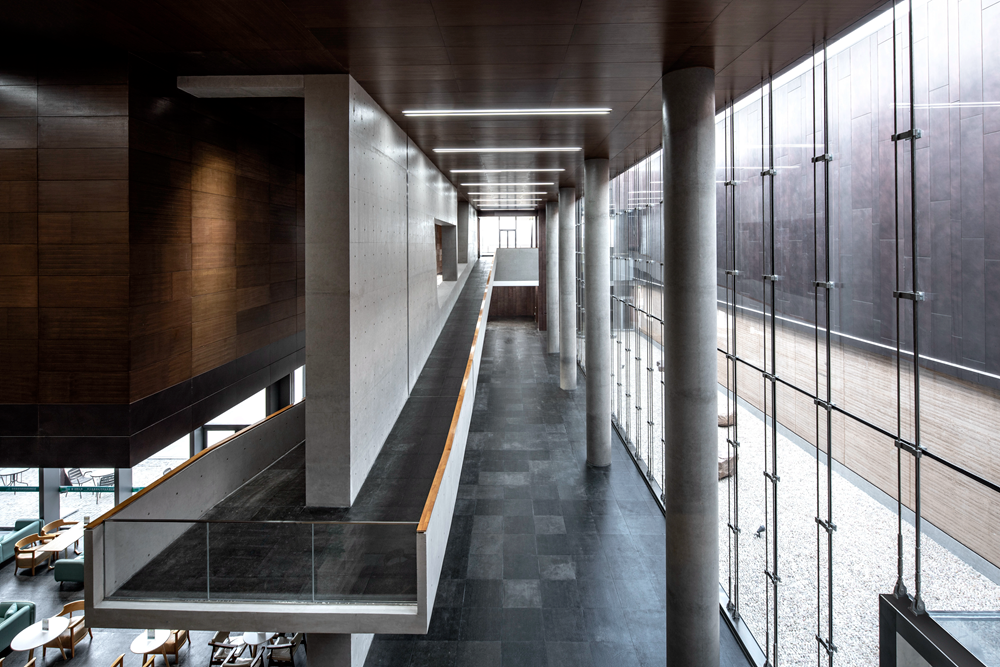
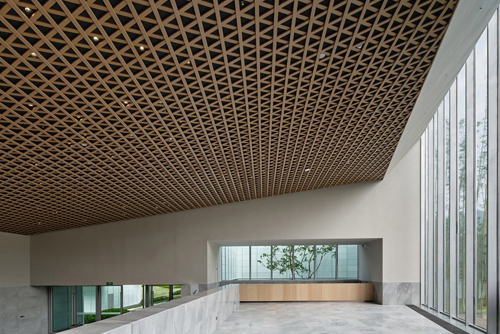
以院落和内庭作为空间组织的核心。在满足办公、研究、管理用房等空间采光通风需求的同时,也成为自然光的媒介并发展出一个完整的公共空间序列。博物馆中央大厅的中央隆起,并在三层设置观光环廊,光线自顶部环廊引入中央大厅,增加了空间的神秘感。以中央大厅为核心,向周边空间渗透延展形成不同的缝隙空间,将观众视线和体验引导至不同的空间节点,在环形流线上穿插设置了形态各异的院落空间,改善了封闭式流线带来的观展疲劳问题。围绕中央大厅组织的空间序列,引导观众最终到达屋顶观光层,将二里头遗址和周边的乡村景观尽收眼底。
2. Space strategy
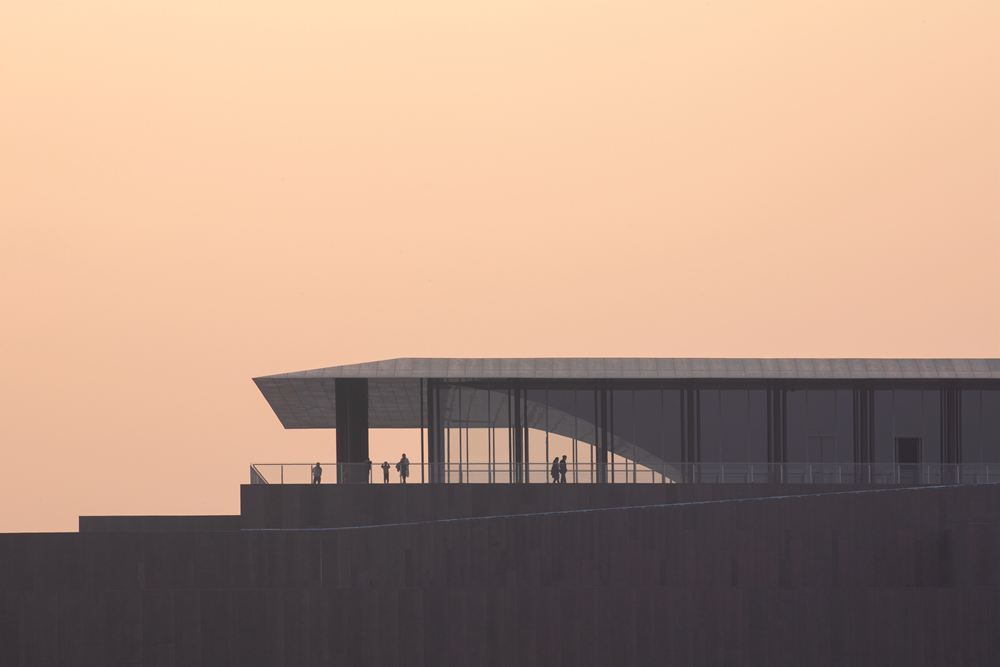
The courtyard and inner court are the core of space organization. While meeting the lighting and ventilation needs of office, research and management rooms, it has also become the medium of natural light and developed a complete public space sequence. The central uplift of the central hall of the museum, and a sightseeing ring gallery is set on the third floor. Light is introduced into the central hall from the top ring Gallery, which increases the mystery of the space. With the central hall as the core, it penetrates and extends into the surrounding space to form different gap spaces, guiding the audience's line of sight and experience to different space nodes. Courtyard spaces of different shapes are interspersed on the circular streamline, which improves the exhibition fatigue caused by the closed streamline. The spatial sequence organized around the central hall will guide the audience to the roof sightseeing floor and have a panoramic view of Erlitou ruins and the surrounding rural landscape.
3.材料策略
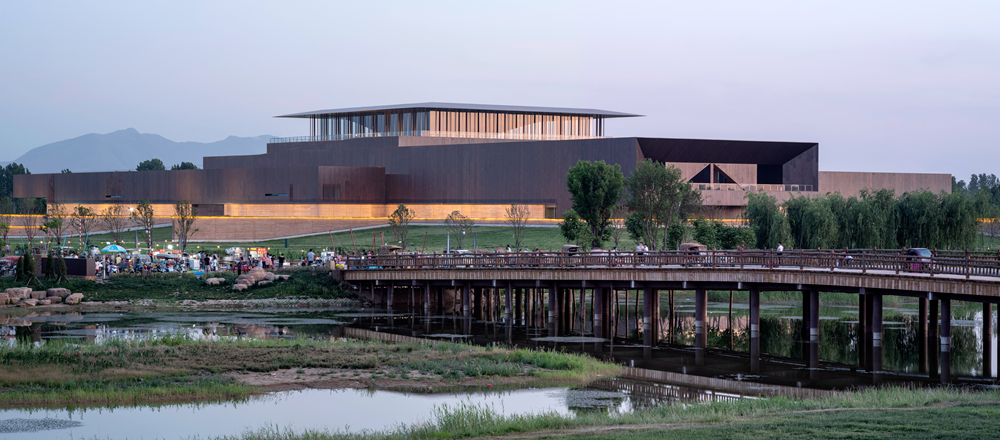
采取建筑、室内、景观一体化的设计策略,紫铜幕墙与手工夯土作为两种重要的材料线索始终贯穿其中。铜和土是与二里头遗址紧密联系的两种材料:二里头遗址发现了距今最早的青铜作坊和青铜礼器;宫城区发现的数十座大型宫殿基址都留下了夯土建造的遗迹。
3. Material strategy
Adopting the design strategy of integrating architecture, interior and landscape, red copper curtain wall and hand rammed earth are two important material clues throughout. Copper and earth are two materials closely related to Erlitou site: the earliest bronze workshop and bronze ritual vessels were found in Erlitou site; The foundation sites of dozens of large palaces found in Miyagi district have left traces of rammed earth construction.
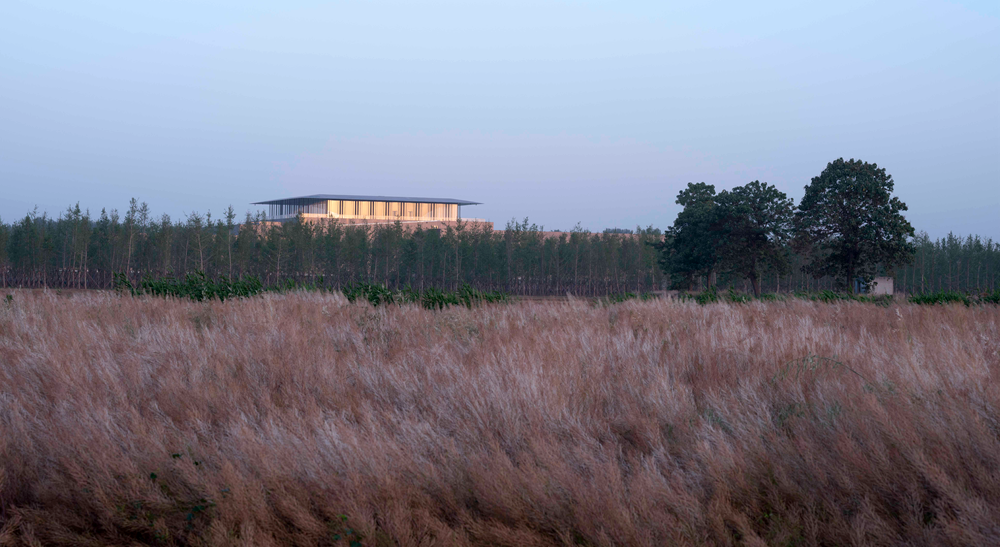
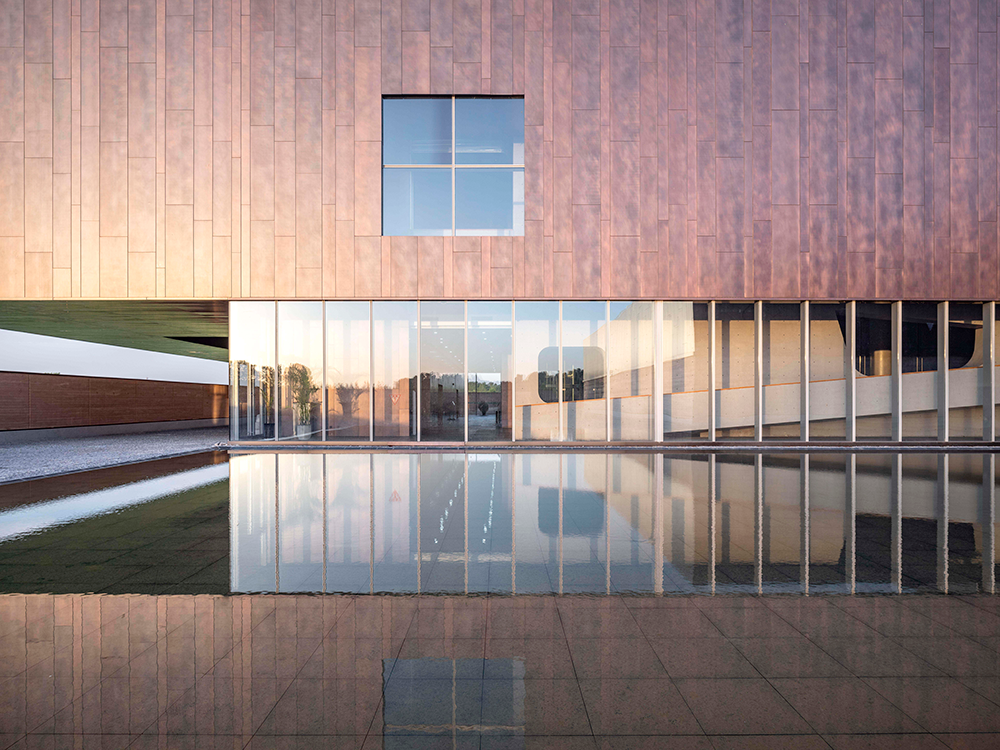
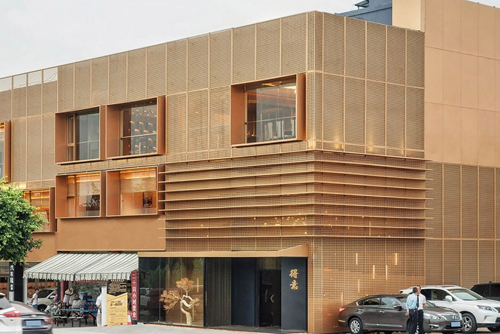
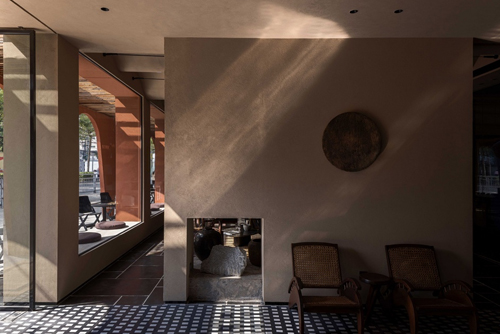
博物馆外墙4.5m标高以上部分以紫铜幕墙为主要材料。深色的紫铜板与夯土产生了鲜明的对比,强化了上部水平向体量的漂浮感,象征着“最早中国”的破土而出。通过不同高度的形体处理、具有宫殿遗址特征的主入口庭院、以及屋顶观光平台的三柱檐廊,形成了具有强烈暗示的二里头文化意向。4.5m标高以下的建筑外墙以及所有的景观挡土墙均以手工夯土墙作为主要材料。现代的夯土筑造技术呈现出古朴而细腻的墙面肌理,作为一种材料线索将观众从室外自然引入室内,夯土包围的内部空间令置身其中的观众处处可以体验到遗址空间的感受。
The part above the elevation of 4.5m of the outer wall of the museum is mainly made of red copper curtain wall. The dark copper plate has a sharp contrast with rammed earth, strengthening the floating sense of the upper horizontal volume, symbolizing the emergence of "the earliest China". Through the shape treatment of different heights, the main entrance courtyard with the characteristics of the Palace site, and the three column eaves Gallery of the roof sightseeing platform, a strongly implied Erlitou cultural intention has been formed. The exterior walls of buildings below the elevation of 4.5m and all landscape retaining walls are mainly made of hand rammed walls. The modern rammed earth construction technology presents a simple and delicate wall texture, which, as a material clue, naturally introduces the audience from the outdoors to the interior. The internal space surrounded by rammed earth enables the audience to experience the feeling of the site space everywhere.